1. Introduction
Zinc oxide (ZnO) nanoparticles, in both pure and doped forms, have attracted significant attention due to their unique optical properties and broad industrial applicability. They are widely incorporated into sunscreens, cosmetics, protective coatings, and antimicrobial formulations because of their ultraviolet (UV) shielding capacity, antimicrobial activity, and photocatalytic behavior, features related to their wide band gap (3.2 eV) and semiconducting nature [
1]. Their strong UV absorbance, chemical stability, and ability to generate reactive oxygen species (ROS) under UV irradiation make them valuable in diverse technological applications.
However, the increasing use of ZnO nanoparticles has raised environmental concerns. Regulation (EC) No. 1223/2009 requires labeling of cosmetics containing nanoparticles, including disclosure of physicochemical and toxicological information [
2]. The International Cooperation on Cosmetic Regulations (ICCR) identifies TiO
2 and ZnO nanoparticles as common inorganic UV filters in personal care products [
3]. Their extensive use, particularly in cosmetics, has led to increasing release into aquatic systems, where no regulatory limits currently exist [
4]. ZnO nanoparticles, recognized for their antimicrobial potency, are among the most toxic engineered nanomaterials to aquatic species [
3].
Doping ZnO with metals such as copper (Cu), silver (Ag), or titanium (Ti) can alter its optical and catalytic properties, potentially enhancing performance while also altering environmental behavior. Silver-doped ZnO (Ag-ZnO) exhibits enhanced antibacterial and photocatalytic activity, making it attractive for biomedical and water-treatment applications. Nonetheless, its heightened reactivity raises concerns about toxicity, bioaccumulation, and ecological impacts. Prior studies have shown alterations in biomarkers associated with nanoparticle-induced oxidative stress, varying with nanoparticle composition and exposure duration [
5].
Silver nanoparticles (AgNPs) themselves display pronounced reactivity due to their high surface area and release of silver ions (Ag
+), a major driver of toxicity. Ag
+ can induce oxidative stress, disrupt redox balance, and lead to lipid peroxidation, protein damage, and DNA fragmentation. Although widely used as antimicrobial agents, AgNPs persist in ecosystems, bioaccumulate in aquatic organisms, disrupt microbial communities, impair algal photosynthesis, and cause chronic toxicity in fish. In soils, they reduce microbial diversity and enzymatic activity, affecting fertility and productivity. ZnO and Ag-ZnO nanoparticles enter aquatic systems primarily through industrial discharges, wastewater effluents, and personal care products [
6], and silver pollution remains a significant environmental concern requiring stricter regulation [
7].
While engineered nanoparticles (ENPs) were developed for beneficial applications, their persistence and transformations in the environment have revealed unintended toxicological effects. Large fractions of inorganic nanoparticles, including TiO
2, ZnO, and Ag, are released through wastewater pathways and accumulate in aquatic and terrestrial ecosystems [
8,
9,
10]. Their presence contributes to bioaccumulation and toxicity in aquatic organisms, underscoring the need for improved risk assessment strategies [
11]. In aquatic systems, ZnO nanoparticles readily dissolve, increasing bioavailability and toxicity. ROS generation can trigger oxidative stress, DNA damage, and tissue disruption, with bioaccumulation reported in gills, liver, and intestinal tissue of exposed fish. Metal doping may further influence toxicity by altering dissolution dynamics or surface chemistry [
12]. ZnO nanoparticles have been detected in marine organisms, causing oxidative stress, reproductive impairment, and mortality, underscoring the need to assess their environmental risks [
13].
ENPs reach aquatic ecosystems at concentrations ranging from ng/L to mg/L, depending on product degradation and effluent discharge. Once released, they undergo dissolution, aggregation, sedimentation, and redox transformations that modify toxicity. These processes facilitate bioaccumulation and biomagnification through the food chain, posing risks to water quality, food security, and human health [
14,
15]. Toxicity depends strongly on particle size, composition, and surface coatings; smaller particles (<50 nm) generally produce more severe effects [
16]. Crustaceans, bacteria, fish, algae, and plants are widely used in nanoecotoxicology, with silver-containing nanoparticles consistently ranked among the most toxic [
16,
17].
Artemia salina, a marine crustacean, is widely used as a bioindicator in nanoecotoxicology due to its high sensitivity, simple cultivation, short life cycle, and transparent body, which facilitate the observation of physiological responses. Numerous studies have validated its reliability for assessing the effects of engineered nanomaterials under different exposure conditions. Evaluating the response of A. salina to pure and doped ZnO nanoparticles provides a biologically relevant model to understand how modifications in nanoparticle composition influence toxicity. This study uses A. salina to assess the acute toxicity of ZnO and Ag-ZnO nanoparticles at multiple concentrations and exposure times, providing quantitative metrics, such as LC50, that are essential for environmental risk assessment.
Although several studies have investigated ZnO nanoparticle toxicity in A. salina and other crustaceans, ecotoxicological data for silver-doped ZnO (Ag-ZnO) remain scarce. Most available reports present LC50 values only for undoped ZnO or compare ZnO with other metal oxides, without offering direct comparisons between pure and Ag-doped ZnO synthesized and tested under identical conditions. As a result, the specific contribution of silver incorporation to acute toxicity in early-life-stage crustaceans remains unclear.
The present work addresses this gap by providing the first side-by-side evaluation of 24 h and 48 h LC
50 values for pure ZnO and Ag-ZnO nanoparticles in
A. salina under controlled synthesis and identical exposure conditions. These findings are also contextualized within the existing literature. For instance, Ates et al. (2013) [
18] reported that smaller ZnO nanoparticles (40–60 nm) produced higher lethal effects in
A. salina larvae, emphasizing the influence of particle size, synthesis route, and experimental conditions on toxicity outcomes. Such observations highlight the importance of standardized comparative assessments, as implemented in this study [
17,
18].
2. Materials and Methods
Zinc acetate dihydrate (Zn(C2H3O2)2·2H2O, Sigma-Aldrich, St. Louis, MO, USA), sodium hydroxide (NaOH, Sigma-Aldrich, St. Louis, MO, USA), polyvinylpyrrolidone (PVP, average Mw ≈ 40,000, Sigma-Aldrich, St. Louis, MO, USA), and ethylene glycol (Fisher Scientific, Waltham, MA, USA) were used for the synthesis of pure ZnO nanoparticles. For the synthesis of silver-doped ZnO (Ag-ZnO) nanoparticles, the same reagents were employed with the addition of silver nitrate (AgNO3, Sigma-Aldrich, St. Louis, MO, USA) as the dopant source. Deionized water was used in all experimental procedures. All chemicals were of analytical grade and used without further purification.
2.1. Synthesis of Pure and Doped ZnO Nanoparticles
Pure and silver-doped zinc oxide nanoparticles (Ag-ZnO) were synthesized through a controlled reflux method. For the preparation of pure ZnO nanoparticles, a reaction mixture was formulated by dissolving 0.5 M zinc (II) acetate dihydrate (Zn(CH3COO)2·2H2O) in 20 mL of ethylene glycol, followed by the addition of 1.0 M sodium hydroxide (NaOH) and 0.015 g of polyvinylpyrrolidone (PVP, Mw ≈ 40,000) as a stabilizing and capping agent. The mixture was transferred to a two-neck round-bottom flask equipped with a reflux condenser and magnetic stirrer, then gradually heated to 197 °C under continuous stirring and maintained at this temperature for 3 h to ensure complete nucleation and growth of ZnO nanocrystals.
Silver-doped ZnO nanoparticles (Ag-ZnO) were synthesized following the same procedure, with the inclusion of silver nitrate (AgNO3), corresponding to a 5 mol% Ag dopant relative to zinc precursor concentration. This specific dopant level was selected based on preliminary optimization studies, which showed that lower Ag contents (1% and 3%) did not result in noticeable incorporation of Ag+ ions into the ZnO lattice.
Upon completion of the reaction, the resulting colloidal suspensions were cooled to room temperature and centrifuged at 5000 rpm for 15 min using membrane centrifuge tubes to separate the solid products. The precipitates were washed repeatedly with deionized water to remove unreacted precursors and byproducts until the supernatant became clear, indicating the absence of residual ions. The purified samples were then dried overnight at 100 °C in an oven to obtain fine nanopowders, which were subsequently stored in airtight containers for further structural, morphological, and optical characterization.
2.2. Characterization Techniques
The optical properties of both pure and silver-doped ZnO nanoparticles were investigated using UV–Visible absorption spectroscopy. The absorption spectra were recorded over 200–900 nm using a UV-2700i spectrophotometer (Shimadzu, Columbia, MD, USA) to analyze the electronic transitions associated with the synthesized nanoparticles. These spectra provided valuable insights into the optical behavior of the materials and revealed the influence of silver incorporation on the band structure of ZnO.
High-resolution transmission electron microscopy (HRTEM) was performed on JEOL-2011 and JEM-ARM200F instruments (JEOL Ltd., Tokyo, Japan), both operated at 200 kV. This technique enabled direct visualization of individual nanoparticles and provided detailed information on their morphology, size distribution, and shape. HRTEM imaging was also essential for assessing particle uniformity and detecting any possible agglomeration or structural defects.
The crystalline structure of the nanoparticles was characterized by electron diffraction (ED), which facilitated the identification of crystal phases and the evaluation of crystallinity in both pure and Ag-ZnO samples. Elemental composition was determined by energy-dispersive X-ray spectroscopy (EDX).
2.3. Toxicity Profile of Pure and Doped ZnO Nanoparticles
The toxicity assessment was conducted using Artemia salina as a model organism. For culture preparation, 20 g of marine salt was dissolved in 500 mL of distilled water to achieve a salinity of approximately 35 g/L, similar to natural seawater. The solution was magnetically stirred for 15 min to ensure complete dissolution. Approximately 10 mg of Artemia salina cysts were hydrated in 10 mL of distilled water for 1 h and then transferred to a fish tank containing the prepared saline solution under continuous aeration. The hatching system was maintained at 26–28 °C, under a 12 h light–12 h dark photoperiod, which is optimal for naupliar development. Newly hatched nauplii (~24 h old) were collected and used immediately for the toxicity assays to ensure consistent organismal age across experiments.
For the toxicity assays, 1500 µL of the saline medium was dispensed into plastic containers marked with reference lines to maintain a constant volume. Ten nauplii were selected under a stereomicroscope and transferred to each test container using a Pasteur pipette. Stock suspensions of pure ZnO and Ag-ZnO nanoparticles were prepared in the same saline medium and dispersed using bath sonication for 20 min to promote homogeneous suspensions and minimize nanoparticle agglomeration. Immediately after sonication, the stock dispersions were diluted to the final test concentrations (0, 10, 50, 100, 200, 300, 500, 750, and 1000 ppm). All suspensions were softly mixed by pipetting prior to exposure to ensure consistent nanoparticle distribution. Each concentration was tested in triplicate to ensure reproducibility.
Exposure containers were kept at the same temperature and photoperiod as the hatching system, without feeding, and were not aerated to avoid physical stress on nauplii and nanoparticle resuspension artifacts. Survival was evaluated at 24 and 48 h of exposure by counting live nauplii under a stereomicroscope. Mortality and viability percentages were calculated for each concentration. Mean values and standard deviations were determined, and results were plotted as viability versus nanoparticle concentration.
To quantify acute toxicity, concentration–response curves were fitted using a nonlinear logistic regression model. Mortality proportions at each concentration were analyzed in RStudio version 4.5.2 (31 October 2025 ucrt), Copyright © 2025 The R Foundation for Statistical Computing, using a log-logistic dose–response model with a binomial error structure, from which the median lethal concentration (LC
50) and 95% confidence intervals (CI) were obtained through maximum likelihood estimation. Differences in toxicity between nanoparticle types and exposure durations were assessed by comparing LC
50 values and their confidence intervals. A significance level of
p < 0.05 was applied for all statistical analyses. This approach provides robust toxicity estimates based on full dose–response modeling, improving upon linear interpolation methods previously reported [
18,
19,
20].
3. Results
3.1. Morphology and Structural Characterization
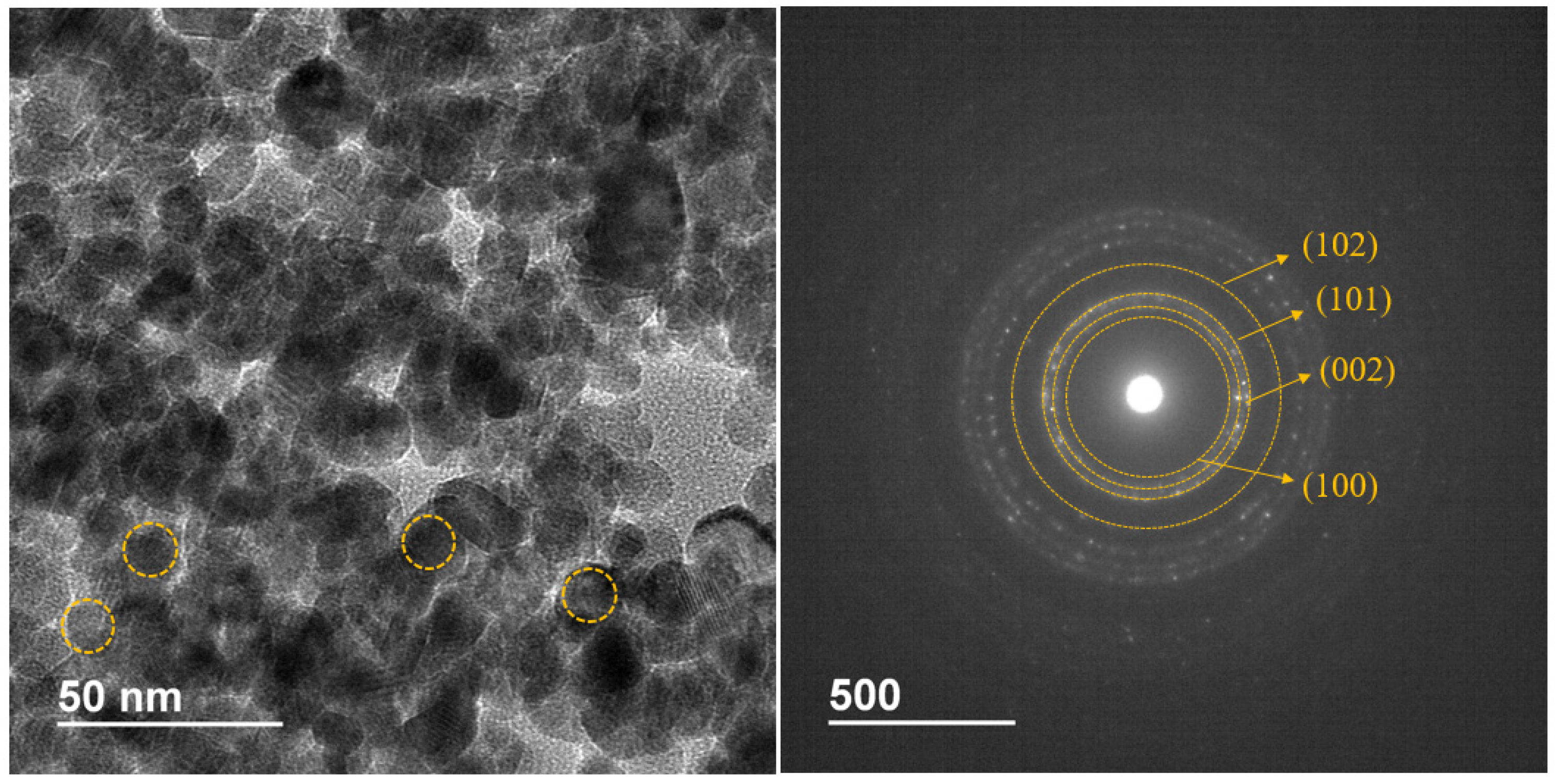
Figure 1-left presents a low-magnification TEM micrograph of pure ZnO nanoparticles with a scale bar of 50 nm. The image shows a wide field of view, with a high degree of agglomeration evident. The particles appear clustered together, forming dense aggregates, a common feature in metal oxide nanoparticles due to their high surface energy. Despite this aggregation, individual nanoparticles can still be distinguished, exhibiting an overall spherical morphology. The particle size distribution is estimated at 10–15 nm, confirming successful nanostructure formation via the reflux synthesis method.
Figure 1-right shows the selected area electron diffraction (SAED) pattern corresponding to the same ZnO sample. The pattern displays a series of concentric bright rings indexed to the (100), (002), (101), and (102) crystallographic planes, characteristic of the hexagonal wurtzite ZnO structure. The sharp and continuous rings indicate good crystallinity and a well-ordered atomic arrangement, confirming the polycrystalline nature of the synthesized ZnO nanoparticles.
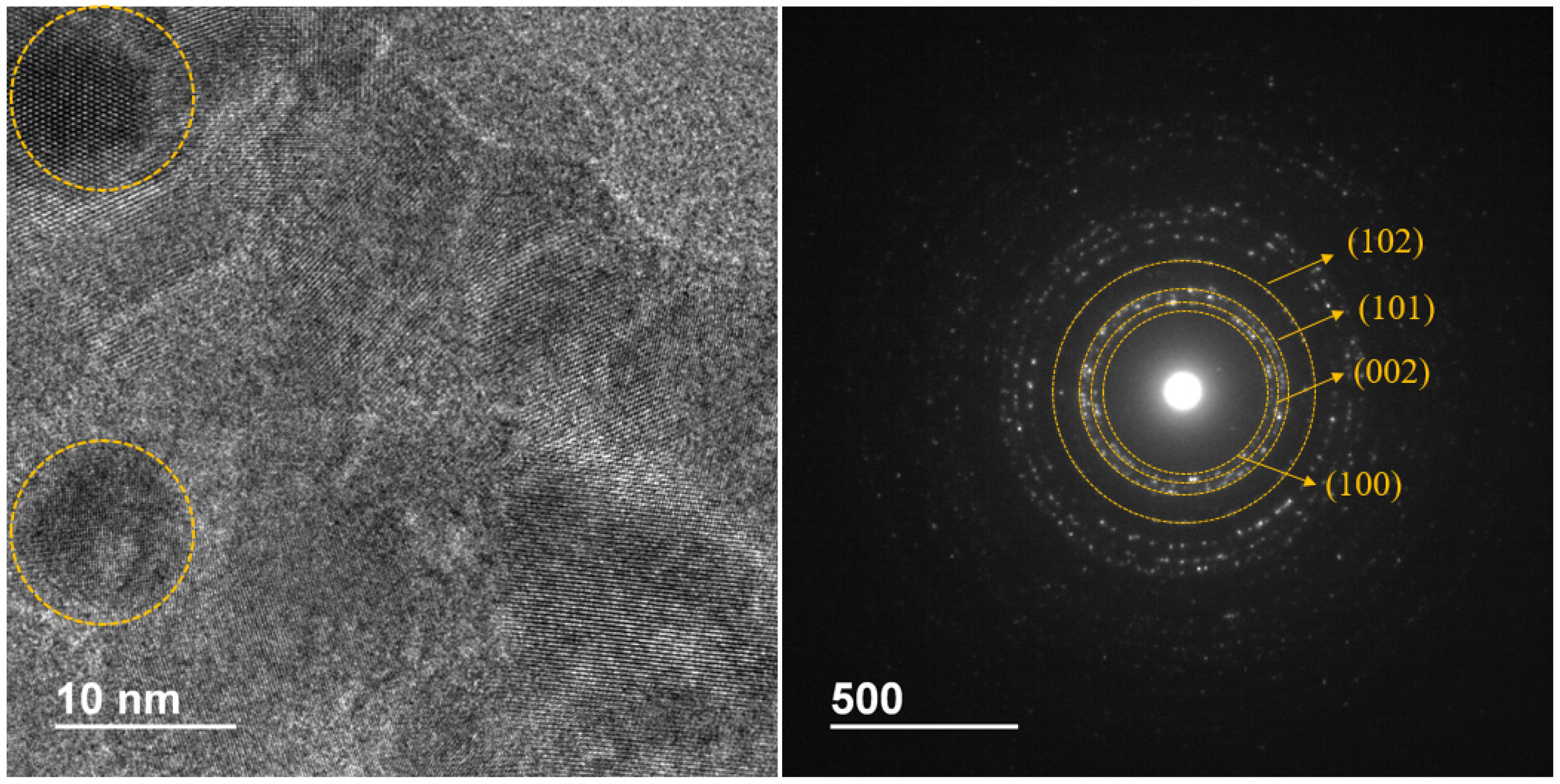
Figure 2-left displays a TEM micrograph of Ag-ZnO nanoparticles at higher magnification, with a scale bar of 10 nm. The image reveals densely packed nanoparticles exhibiting pronounced agglomeration, likely resulting from stronger electrostatic interactions induced by silver incorporation. Despite the clustering, several regions show spherical outlines consistent with those observed in the pure ZnO sample. The slightly irregular fringes compared to pure ZnO suggest localized lattice strain or defect formation caused by the substitution of Zn
2+ with larger Ag
+ ions. These structural distortions may modify the electronic configuration and enhance the photocatalytic behavior of the doped material.
Figure 2-right presents the SAED pattern of Ag-ZnO nanoparticles, which exhibits distinct concentric rings corresponding to the (100), (002), (101), and (102) crystallographic planes. The pattern indicates that the hexagonal wurtzite structure of ZnO is preserved upon Ag doping. The persistence of well-defined rings demonstrates that the doping process did not significantly disrupt the crystalline order, confirming the formation of well-crystallized Ag-ZnO nanoparticles.
Energy-dispersive X-ray spectroscopy (EDX) analyses further verified the elemental composition of both samples. For pure ZnO, the EDX spectrum showed two dominant peaks corresponding to zinc (Zn) and oxygen (O), with atomic percentages of 35.25% and 64.75%, respectively, confirming its purity and stoichiometric composition. In contrast, the EDX spectrum of the Ag-ZnO nanoparticles showed three major peaks attributed to Zn, O, and Ag, with corresponding atomic percentages of 56.2%, 37.8%, and 5.9%, respectively. The presence of a distinct Ag signal confirmed the successful incorporation of silver into the ZnO lattice, in agreement with the intended 5 mol% doping level.
3.2. Optical Characterization
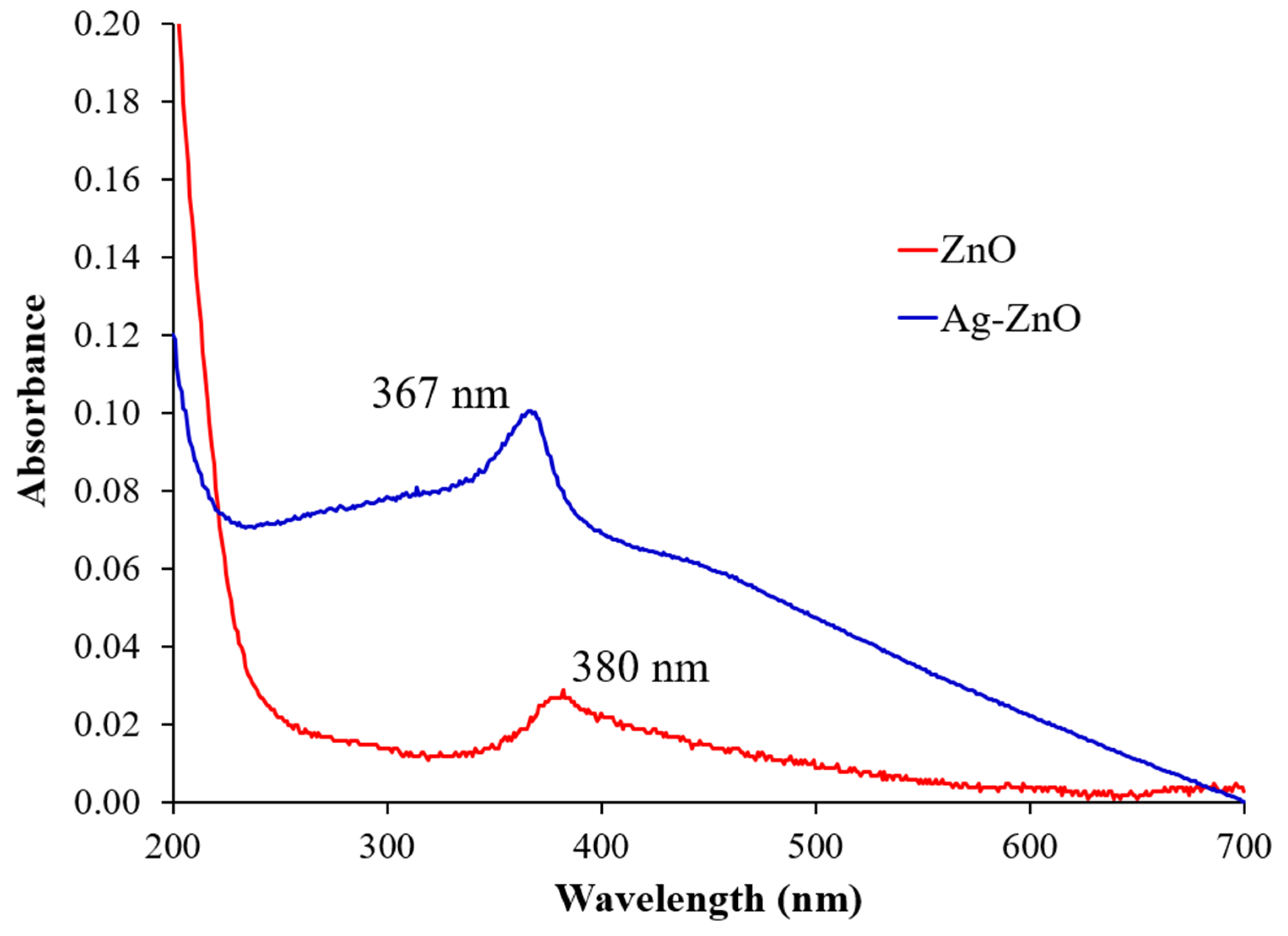
Figure 3 shows the UV-Vis absorbance spectra of pure ZnO (red line) and Ag-ZnO (blue line) nanoparticles, recorded in the wavelength range of 200–700 nm. The spectrum of pure ZnO exhibits a pronounced absorption peak centered at approximately 380 nm, which corresponds to the intrinsic band-to-band transition characteristic of the wurtzite ZnO structure. The sharp absorption edge and steep decline in absorbance below 400 nm indicate a well-defined band gap and high crystallinity of the synthesized ZnO nanoparticles. Beyond this region, the absorbance remains nearly constant and low, confirming that the material primarily absorbs in the ultraviolet region.
In contrast, the Ag-ZnO nanoparticles show a distinct absorption peak at approximately 367 nm, corresponding to a slight blue shift relative to pure ZnO. This shift suggests a small increase in the band gap energy, likely associated with lattice strain, size-confinement effects, and partial substitution of Zn2+ by Ag+ ions, which can alter the electronic band structure. The doped sample also exhibits a broader absorption edge, indicating the presence of defect-related energy states or surface disorder introduced during doping.
Such modifications in the optical response are consistent with structural perturbations that can influence the nanoparticles’ surface reactivity. The increased density of surface defects and altered charge distribution in Ag-ZnO may promote higher generation of reactive oxygen species (ROS) in aqueous environments [
2,
6].
3.3. Surface Characterization
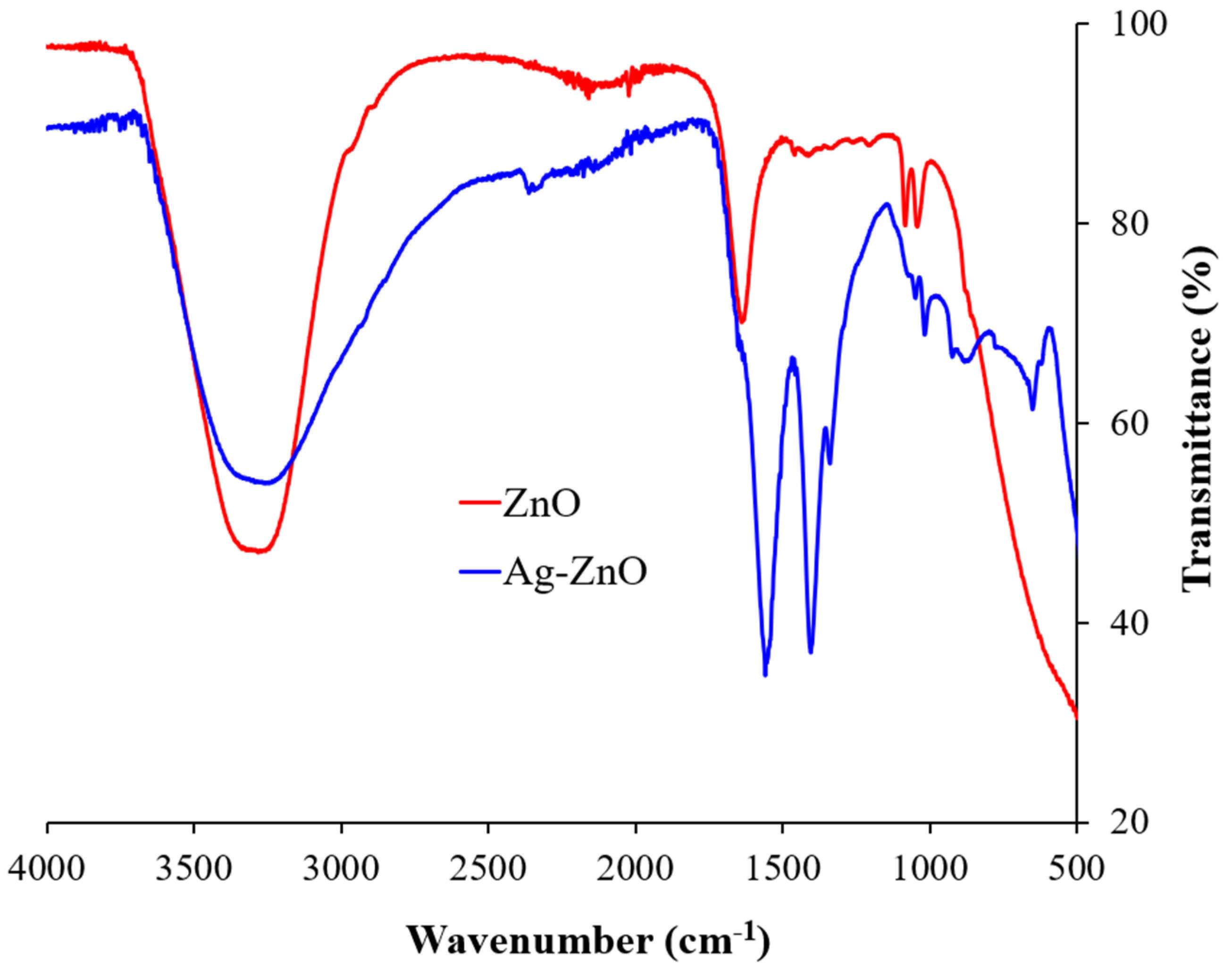
Figure 4 presents the infrared spectra of both undoped and silver-doped ZnO nanoparticles. The spectrum of pure ZnO nanoparticles displays a broad absorption band in the 3400–3200 cm
−1 region, corresponding to the O-H stretching vibration of hydroxyl groups. This feature indicates the presence of surface-adsorbed water molecules or hydroxyl functionalities, commonly observed in nanostructured oxides due to their high surface-to-volume ratio. A weaker band near 1600 cm
−1 is attributed to the bending vibration of H-O-H, further confirming the presence of surface moisture. The strong absorption band appearing below 600 cm
−1 is characteristic of Zn-O stretching vibrations, confirming the successful formation of zinc oxide with a wurtzite-type lattice.
The FTIR spectrum of Ag-ZnO nanoparticles exhibits additional absorption features compared to the undoped sample. Along with the prominent O-H and H-O-H bands, new peaks emerge around 2900 cm
−1, assigned to aliphatic C-H stretching vibrations, likely arising from residual organic species from the synthesis process. Bands observed at 1400-1450cm
−1 are associated with carboxylate (COO
−) or carbonyl (C=O) groups, while absorptions near 1000–1100 cm
−1 correspond to C-O stretching modes, suggesting the presence of alcohol or ether functionalities. The Zn-O stretching band, still evident below 600 cm
−1, appears slightly shifted compared to pure ZnO, indicating minor lattice distortions or strain induced by silver incorporation [
11,
12,
15].
3.4. Toxicity
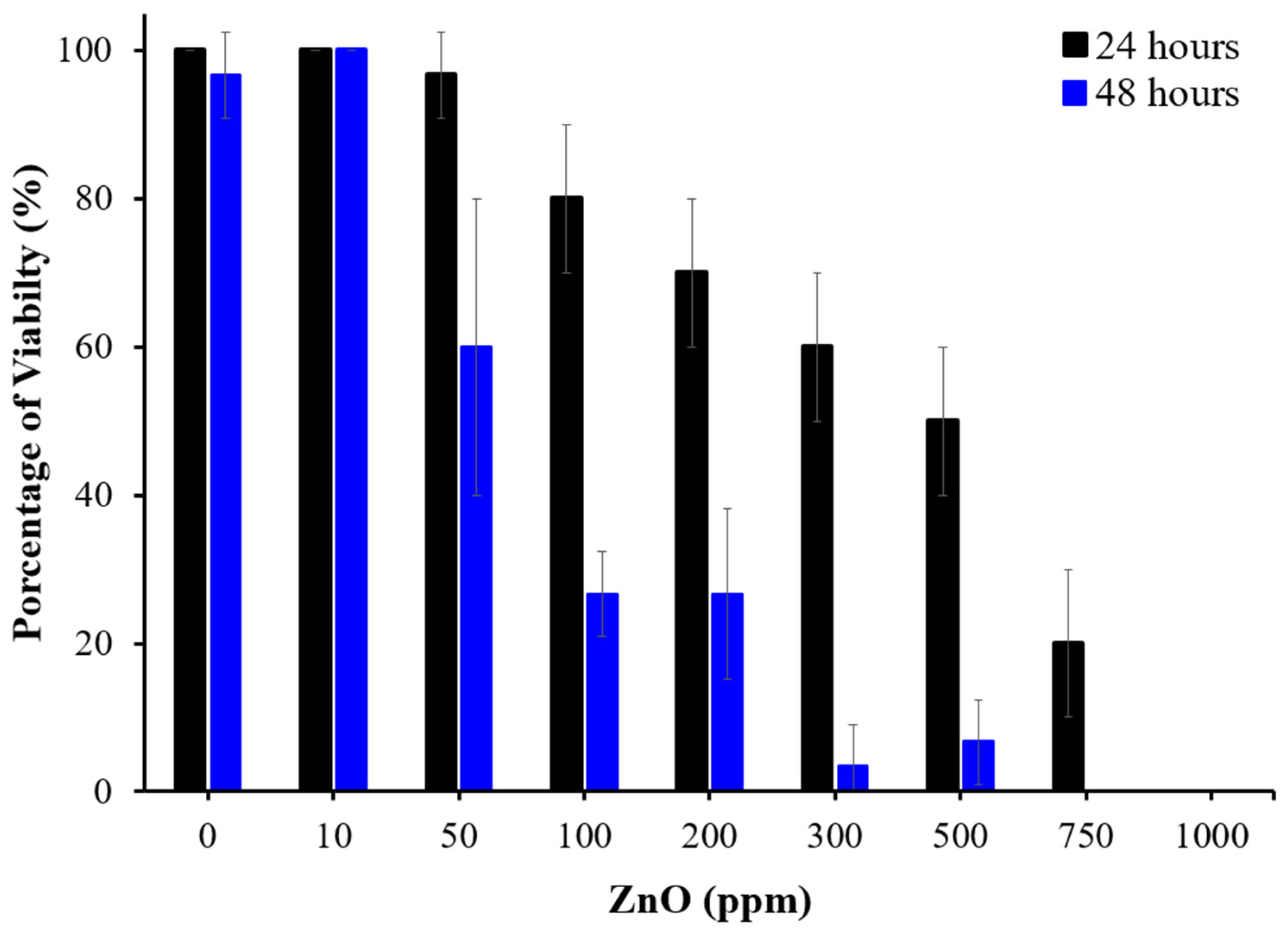
Figure 5 presents the viability of
Artemia salina nauplii after 24 and 48 h of exposure to increasing concentrations of ZnO nanoparticles (0–1000 ppm). A clear concentration- and time-dependent decline in viability was observed. At low concentrations (10–50 ppm), survival remained above 80% after 24 h, but nauplii viability decreased sharply at concentrations ≥ 100 ppm, particularly at 48 h, when survival dropped below 40%. Complete mortality occurred at 1000 ppm after 48 h. This toxicity pattern is consistent with previous reports on ZnO nanoparticles and has been associated with particle aggregation, Zn
2+ dissolution, and oxidative processes in aquatic organisms [
21,
22,
23].
Dose–response modeling confirmed the time-dependent increase in ZnO toxicity, with LC50 decreasing from 358 ppm at 24 h to 64 ppm at 48 h. Similar temporal trends have been described in crustaceans, attributed to progressive surface transformations or gradual ion release in saline environments, which may intensify biological stress over time. Although plausible, these mechanisms were not directly evaluated in this study.
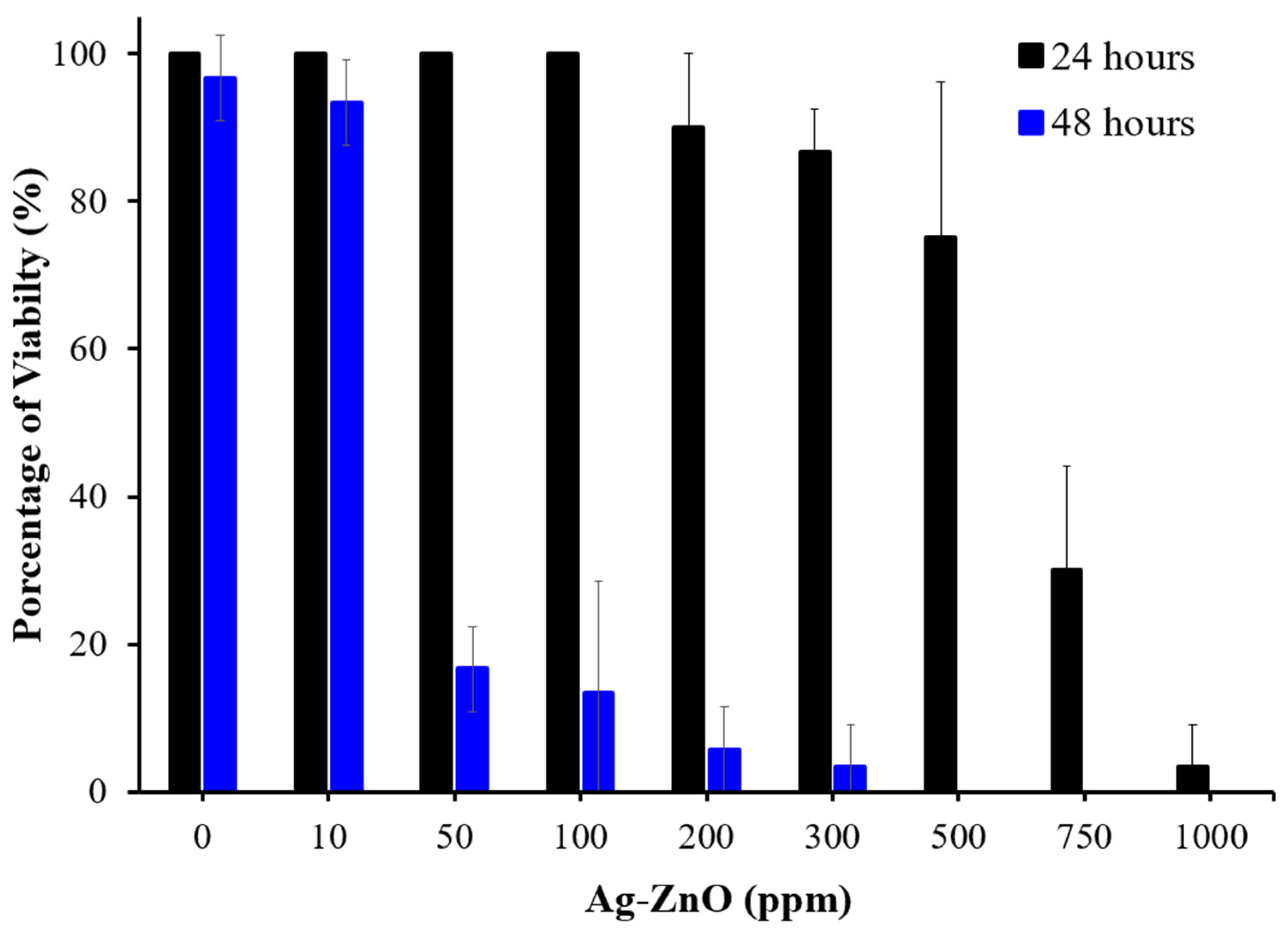
Figure 6 shows the viability of nauplii exposed to Ag-ZnO nanoparticles at concentrations ranging from 0 to 1000 ppm. Compared to pure ZnO, Ag-ZnO produced distinct toxicity patterns. At 24 h, survival remained above 85% at 10 ppm, and toxicity was moderate across the concentration range. The LC
50 for Ag-ZnO at 24 h was 607 ppm, indicating lower short-term toxicity than ZnO. However, at concentrations ≥ 50 ppm, survival declined sharply at 48 h, with complete mortality at 500 ppm. At 48 h, Ag-ZnO was the most toxic treatment, presenting an LC
50 of 28 ppm—substantially lower than that of ZnO at the same exposure duration. This marked increase between 24 and 48 h aligns with the literature describing delayed yet potent effects of silver-containing nanomaterials, potentially driven by gradual Ag
+ release, redox surface reactions, or cumulative metabolic stress. The steep slope parameter observed for Ag-ZnO at 24 h suggests a narrow toxicity threshold, although underlying mechanisms require direct validation.
Earlier LC
50 values estimated via linear interpolation (ZnO: 65.2 ppm; Ag-ZnO: 32.6 ppm) were replaced by statistically robust model-based values. The fitted models captured mortality patterns more accurately and confirmed the strong influence of nanoparticle composition and exposure duration on toxicity. The LC
50 values obtained (ZnO 24 h: 358 ppm; ZnO 48 h: 64 ppm; Ag-ZnO 24 h: 607 ppm; Ag-ZnO 48 h: 28 ppm) demonstrate that silver incorporation does not increase acute toxicity at early exposure times but significantly enhances toxicity after prolonged exposure (
Table 1).
Overall, these findings highlight two key observations: (1) toxicity increases with exposure duration for both nanoparticles, and (2) silver incorporation alters toxicity dynamically, showing limited impact at 24 h but markedly intensifying effects at 48 h. These results emphasize the need to assess doped nanomaterials beyond short-term assays, as early measurements may underestimate environmental risks. Future work incorporating mechanistic endpoints, such as ion-release kinetics, ROS biomarkers, and nanoparticle stability analyses, would help clarify the processes driving these temporal patterns.
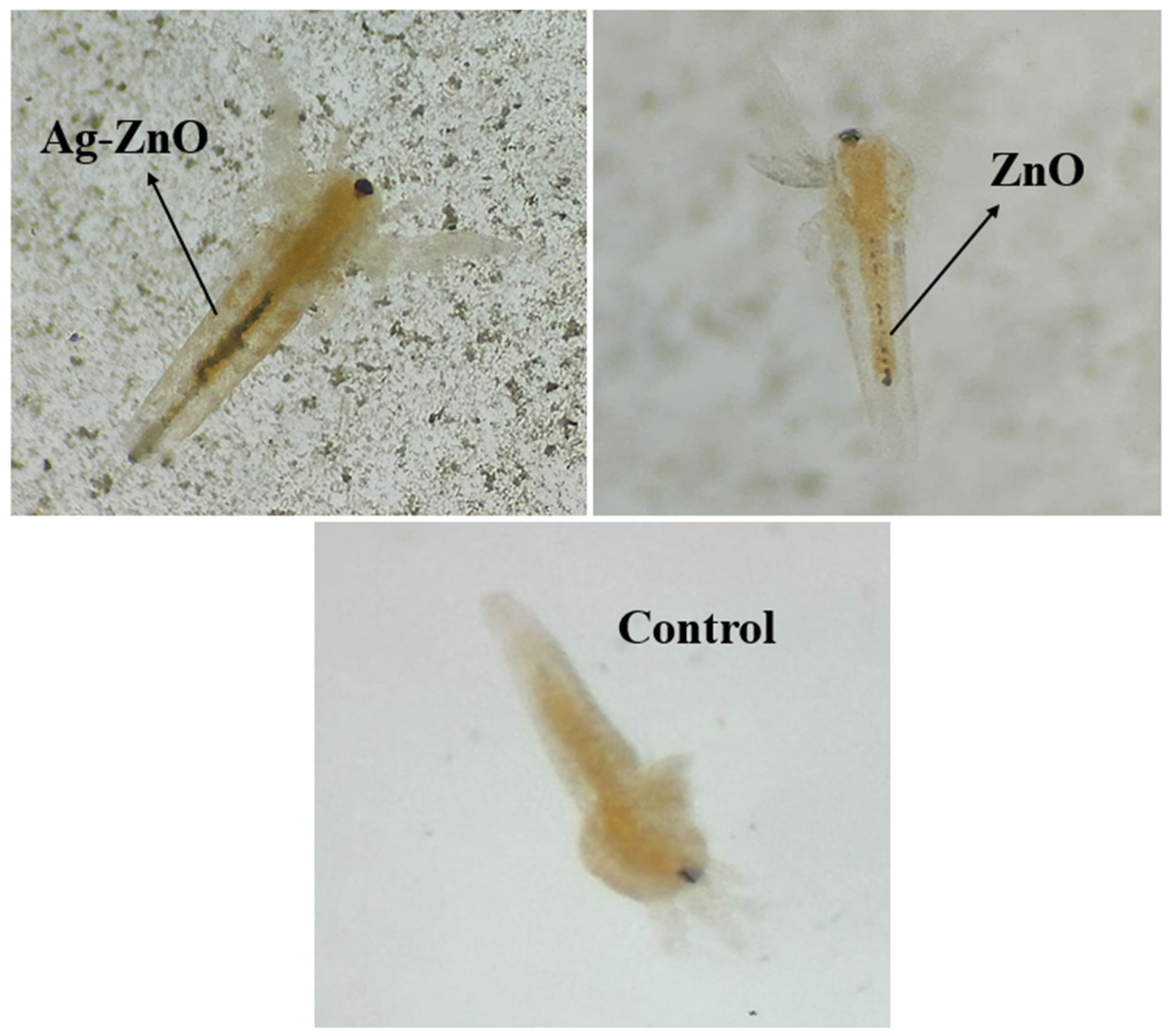
Figure 7 provides visual evidence that both ZnO and Ag-ZnO nanoparticles are ingested and retained in the gastrointestinal tract of
A. salina. This internal accumulation supports the observed toxicity patterns and indicates that ingestion contributes significantly to lethality, especially at higher concentrations and longer exposure times. Nonetheless, ingestion alone cannot fully explain the temporal differences observed, and additional research is needed to differentiate the roles of internalization, dissolution, and nanoparticle-organism interactions.
Finally, this study did not characterize nanoparticle behavior in the exposure medium (e.g., hydrodynamic size, aggregation, ζ-potential, or Zn2+/Ag+ dissolution). These parameters strongly influence bioavailability and toxicity, and their absence limits the ability to link observed effects to specific physicochemical properties. Accordingly, all mechanistic interpretations, including potential ROS generation, membrane interactions, dissolution, or Ag+ release, should be considered literature-supported hypotheses rather than experimentally validated mechanisms. Future studies incorporating dispersion stability and ion-release measurements are essential to distinguish particle-associated from ion-mediated toxicity in ZnO and Ag-ZnO nanoparticles.
4. Conclusions
This study successfully synthesized and characterized pure and silver-doped zinc oxide nanoparticles (ZnO and Ag-ZnO) using a controlled reflux-assisted method. Structural and optical analyses confirmed the formation of crystalline wurtzite nanoparticles with average sizes of 10–30 nm, and silver incorporation produced a slight blue shift in the absorption edge along with minor lattice distortions, indicating subtle electronic modifications.
Toxicity assays using Artemia salina revealed clear concentration- and time-dependent reductions in survival for both nanoparticle types. Dose–response modeling showed a marked decrease in LC50 values with exposure duration, from 358 to 64 ppm for ZnO and from 607 to 28 ppm for Ag-ZnO between 24 and 48 h. These results demonstrate that silver doping does not enhance acute toxicity but significantly increases toxicity after prolonged exposure, suggesting that nanoparticle behavior in saline media evolves over time. However, specific mechanistic pathways were not examined in this study.
Overall, these findings highlight the importance of considering both nanoparticle composition and exposure duration when evaluating ecological risks. While doping can alter the structural and functional properties of ZnO nanoparticles, it may also modify their toxicity profiles in aquatic organisms. Future work should include ion-release measurements, dispersion stability analyses, and mechanistic biomarkers better to elucidate the processes underlying toxicity in doped nanomaterials.