


Abstract
Companilactobacillus farciminis KUJ 25-S was isolated from fermented fish and identified using 16S rRNA gene sequencing with 30.0 g/L of L-LA (L-lactic acid), with 97% LA per sum of DL-LA. The characteristics of LA and its stereoisomers were confirmed using TLC, chiral-HPLC, and enzymatic techniques. Based on various conditions using liquid MRS broth (static condition, glucose 10%, NaCl 5%, 37 °C for 48 h), the highest growth and LA formation of the culture were at a low temperature (25 °C) and decreased at 37, 45, and 55 °C, respectively. The broth could grow and produce acid at an initial pH in the range 4–11, with a low initial pH of 4 promoting the highest LA formation. LA formation and growth were inversely proportional to the NaCl concentration in the 0.5–30% range. High glucose concentrations suppressed LA formation. The growth-promotion effect varied with glucose concentration (5–40%), with the optimum concentration for LA production being 20% glucose. On the other hand, if used in microoxic conditions, the absence of NaCl was more favorable to acidification than the addition of NaCl (5% NaCl). C. farciminis KUJ 25-S was proposed as a suitable method to produce L-LA based on using the appropriate line for further industrial use.
1. Introduction
Polylactic acid (PLA) is a biodegradable polymer that replaces petroleum-based products and compostable thermoplastic and can be produced from renewable sources, primarily lactic acid (LA), using fermentation methods [1,2]. Because the US Food and Drug Administration has determined that this compound is Generally Recognized as Safe, it has a large market potential in the food industry. In addition, it can be made from chemical means or by fermenting food. The global lactic acid market has been predicted to grow at a compound annual growth rate of 8.0% from 2021 to 2028 [3].
Lactic acid bacteria (LAB) have received considerable attention from researchers as industrial microorganisms because they: provide rapid and complete fermentation of inexpensive raw materials; have a low nitrogenous compound requirement; produce high yields of preferred stereospecific LA at low pH and high temperature; have low cell mass production; and produce limited quantities of other byproducts [4].
According to Benthin and Villadsen [5], only a few LAB, including Lactobacillus brevis, L. helveticus, and L. delbrueckii, are capable of producing LA that is optically pure. The complex nutritional requirements and extremely slow growth rates of LAB are the primary limitations of industrial LA fermentation methods. Therefore, it is necessary to cultivate LAB that convert carbohydrates into optically pure LA via a homo-fermentative pathway that requires only small amounts of nutrients in the medium [6].
The known homofermentative lactic acid bacterium C. farciminis has been isolated from meat and meat products [7]. Because it is part of the normal flora in the intestines of the Tilapia fish (tilapia), it is found in a variety of traditional fermented fish products [8,9]. It could be a pleomorphic strain that consistently produces R and S morphotypes with distinct phenotypes, which may explain its in vitro survival and growth abilities, as well as the modulation of exopolysaccharide synthesis and the auto-aggregation profile [10]. It may produce a large amount of L-LA, depending on how much oxygen is available. However, to our knowledge, it does not appear to have been used as the selected strain of the natural flora in fermented fish for L-LA production to produce PLA. Thus, the present study’s objective was to isolate and characterize C. farciminis KUJ 25-S from fermented fish and to determine the optimal conditions for the formation of L-LA for the production of biopolylactic acid. The conditions of aeration and micro-aeration, as well as temperature, pH, NaCl, glucose, and aeration, were the six factors used in the experimental design. Furthermore, it was hoped to propose the components for an appropriate L-LA production line to accelerate commercial production of L-LA by using effective LAB for the industrial sector.
2. Materials and Methods
2.1. Selection of Lactic Acid Bacteria from Naturally Fermented Fish
Different types of traditional fermented fish were utilized from neighborhood markets in Bangkok, Thailand. Before making 10−1 to 10−6 dilutions, an initial 25 g were homogenized in 225 mL of 0.85% sterile NaCl (normal saline). Culture growth was based on the spread plate method, with 0.1 mL of the homogenized solution being spread on De Man Rogosa and Sharpe (MRS) agar (5% glucose, 10% NaCl, 2% CaCO3, pH 5.6; [11]) from (HiMedia Laboratories Pvt. Ltd., Mumbai, Maharashtra, India). The plates were incubated under aerobic conditions at 37 °C for 48 h. An LAB colony that presented a clear zone was chosen. Each colony was isolated twice using the cross-streak plate method before being maintained on MRS agar with 5% glucose, 10% NaCl, and a slant (pH 5.6). Next, catalase-negative, Gram-positive, rod- or cocci-shaped pure LAB strains with high acid production were chosen. Using the titration method, one loop of each pure culture strain was transferred to 3 mL of MRS broth (5% glucose, 10% NaCl, pH 5.6) and incubated at 37 °C for 120 h to search for those that produced large amounts of total LA [12]. As an indicator, 2–3 drops of phenolphthalein were added to a suitable dilution of the fermentation solution supernatant. With 0.5 N sodium hydroxide, the mixed solution was titrated until a pink end point appeared. The lactic acid content was quantified according to Equation (1):
where N is the sodium chloride concentration and V is the volume of sodium hydroxide required for titration to reach the end point.
The top-five lactic acid producers were further screened for their L- or D-lactic acid configuration and concentration using an enzymatic method. The quantity of each LA was determined using a UV method (Megazyme 2018 D-/L-Lactic Acid (D-/L-Lactate) Rapid Assay Kit (Bray Business Park, Bray, Co., Wicklow, Ireland). Based on the L-LA ratio per total DL-LA, the highest concentration of L-LA was greater than 95%. In MRS agar and broth, the cell morphology was characterized using scanning electron microscopy (SEM) and transmission electron microscopy (TEM) and the strain’s production of L-LA was confirmed. Thin layer chromatography (TLC), chiral-high performance liquid chromatography (HPLC), and enzymatic methods confirmed the characteristics of the LA and its stereoisomers.
C. farciminis KUJ 25-S was added to the culture collection of the Thailand Institute of Scientific and Technological Research in Bangkok. Based on De Man et al. [11], the cultures were kept in MRS broth at −20 °C with 20% sterile glycerol added.
2.2. Identification of Lactic Acid Bacteria from Naturally Fermented Fish
The LAB were analyzed according to the method of Axelsson [13] for genus identification and 16S rDNA analysis to determine the species of this genus for the purpose of microbiological identification. The Gram stain and catalase tests, as well as microscopic examination, were used to examine the morphology of the cells. The identification was confirmed by sequencing the 16S rDNA region (Macrogen Inc.; Seoul, Republic of Korea). PCR was carried out using the primers 27F 5′ (AGA GTT TGA TGA TCM TGG CTC AG) 3′ and 1492R 5′ (TAC GGY TAC CTT GTTACG ACT T) 3′. Using EF-Taq (SolGent; Daejeon, Republic of Korea), the PCR reaction was carried out with 20 ng of genomic DNA as the template in a 30 μL reaction mixture consisting of: 35 cycles of 95 °C for 1 min, 55 °C for 1 min, and 72 °C for 1 min each were used to activate Taq polymerase, with a 10 min step at 72 °C at the end. A multiscreen filter plate (Millipore Corp.; Burlington, MA, USA) was used to purify the amplification products. A PRISM BigDye Terminator v3.1 Cycle Sequencing Kit (maker; country) was used to carry out the sequencing reaction. Hi-Di formamide (Applied Biosystems; South San Francisco, CA, USA) was added to the DNA samples that contained the extension products. An ABI Prism 3730XL DNA analyzer (Applied Biosystems; South San Francisco, CA, USA) was used to analyze the mixture after it had been incubated for 5 min at 95 °C and subsequently 5 min on ice.
Sequences obtained from both the forward and reverse primers were assembled using the CAP3 sequence assembly program [14]. Then, the assembled contig was BLASTed to identify the species of bacteria [15]. BLAST analysis was conducted using the NCBI (National Center for Biotechnology Information, Bethesda, MD, USA) web-based BLASTn program. Best-hit sequences and sequences from other Lactobacillus species from GenBank (accessions: NR_028949, NR_042533, NR_117973, AB794060, NR_114398, LC063168, NR_044707) were taken for phylogenetic analysis. Enterococcus faecalis (accession NR_040789) was used as an outgroup. All sequences were aligned using Aliview [16] and phylogenetic analysis used maximum parsimony in MEGAX [17], with a bootstrap value of 1000 replicates.
2.3. Preparation of SEM Samples
In 0.1 M phosphate buffer (pH 7.2), bacterial cells were pre-fixed with 2.5% glutaraldehyde (ProSciTech; Townsville, Queensland, Australia) at room temperature. Then, the samples were rinsed three times for 10 min each time in 0.1 M phosphate buffer (pH 7.2). After being post-fixed for 1 h in distilled water with 1% OsO4, the samples were washed three times for 10 min each time in distilled water. Next, the samples were dehydrated for 15 min each in ethanol concentrations (20%, 40%, 60%, 80%, 100%). After being dried for 1.5 h in a critical point dryer (Quorum K850; Laughton, East Sussex, UK), the dry samples were coated with platinum using a sputter coating unit (Quorum Q150R ES; Laughton, East Sussex, UK) and imaged using a field emission scanning electron microscope (Hitachi SU8020; Schaumburg, IL, USA) for 120 s. The procedure was based on the method of [18,19]. Given the high toxicity of osmium tetroxide, all procedures involving this reagent must be performed in a certified fume hood while wearing appropriate personal protective equipment.
2.4. Preparation of TEM Samples
After collection, the bacterial pellets were rinsed three times in 0.1 M phosphate buffer (pH 7.2) after being washed twice with 0.1 M phosphate buffer (pH 7.2) and fixed in 2.5% glutaraldehyde (ProSciTech; Townsville, Queensland, Australia) for 12 h at 4 °C. After being post-fixed for 2 h in distilled water at room temperature in 1% OsO4 (ProSciTech; Townsville, Queensland, Australia), the samples were washed three times for 10 min each in distilled water. Then, the samples were dehydrated for 10 min in a graded series of 30%, 50%, 70%, 90%, and 100% acetone. For the 100% series, this was carried out three times. For the final steps, the samples were soaked in fresh Spurr’s resin three times for 3 h each, followed by polymerization at 70 °C for 8 h in a vacuum oven. After extensive dehydration, the samples were permeated with acetone at ratios of 2:1, 1:1, and 1:2 [20]. Super-slim segments of the cell pellet were cut, post-stained, and imaged using TEM (HT-7700; Hitachi Innovative America, Inc; Schaumburg, IL, USA) at 80 kV. The procedures were based on the methods of Spurr [20], Reynolds [21], and Bozzola and Russell [22]. Regarding the toxicity and handling precautions for osmium tetroxide, its use requires operation in a fume hood and appropriate personal protective equipment.
2.5. TLC
The lactic acid isomers were identified based on TLC [23] using TLC silica gel F254 aluminum sheets (20 × 20 cm), with a mobile phase of 60:2:6:10:22 (acetone:distilled water:chloroform:ethanol:ammonium-hydroxide). After spraying an indicator (a mixture of methyl red and bromothymol blue in methanol), heated air was used to dry the TLC plate for 3 min in an oven at 165 °C to allow for the development of the red color of the LA on the TLC plate. The retention factor (Rf) of the sample, which was the same as the Rf of the lactic acid standard, served as an indicator of the sample.
2.6. Enzymatic Method for D-L-Lactic Acid Determination
The amount of lactic acid was determined using a UV method (D-/L-Lactic Acid (D-/L-Lactate) (Rapid) Assay Kit; Megazyme 2018).
2.7. HPLC for D-L-Lactic Acid Determination
An HPLC system (Agilent 1100; Santa Clara, CA, USA) equipped with a UV detector at 254 nm was used to determine the concentration of the D-LA and L-LA in samples. A chiral column (SUMICHIRAL OA-5000, 5 μm, 4.6 mm i.d. × 150 mm) was used at 38 °C with 1 mmol/L copper (II) sulfate in the water as a mobile phase at a flow rate of 1 mL min−1. The injection volume of the sample was 30 μL. The configuration was compared to standard D-LA and L-LA. Their quantification was performed under an external standard (0–150 μg/mL) for D-LA and L-LA.
2.8. Optimization of L-Lactic Acid Fermentation Condition
Under statically grown conditions, selected LAB were inoculated into 5 mL of MRS broth (5% NaCl, glucose 10% at 37 °C for 24 h). Scaling-up was performed by transferring the 10 mL cultures into 100 mL of MRS broth (5% NaCl, glucose 10% at 37 °C for 24 h) for 10−6–10−7 cfu/mL inoculum preparation. The cell count and viable number were determined using the trypan blue cell counting method.
In a 50 mL screw-cap tube (16 × 150 mm), a cell culture inoculum (5 mL, 106–107 cfu/mL) was grown in 30 mL of sterile MRS broth (10% glucose, 5% NaCl) with a final pH of 5.6. The culture was incubated at 37 °C under different static conditions, consisting of concentrations of glucose (5%, 10%, 15%, 20%, 40%; Carlo Erba Reagent; Emmendingen, Germany), pH (adjusted using 0.1 N NaOH (KemAus; Cherrybrook, NSW, Australia) or 0.1 M HCl (to 4.0, 5.6, 7.0, 11.0; KemAus; Cherrybrook, NSW, Australia), temperature (25 °C, 37 °C, 45 °C, 55 °C), and NaCl (0%, 0.5%, 5%, 10%, 30%; Carol Erba Reagent; Emmendingen, Germany) in order. Comparisons were undertaken between anaerobic conditions (37 °C for 48 h, 30 mL of MRS broth (0% and 5% NaCl, glucose 10%, and 5 mL inoculum (106–107 cfu/mL)) in a 50 mL screw-cap tube (16 × 150 mm)) and aerobic conditions (37 °C, 48 h, 75 mL of MRS broth (0% and 5% NaCl, glucose 10%, and 5 mL inoculum (106–107 cfu/mL) in 250 mL baffled flasks on a rotary shaker using 100 rpm). The optimum condition was determined based on cell dry weight (mg/mL) and the concentrations of total LA (mg/mL), L-LA (mg/mL), and D-LA (mg/mL). The condition with the highest L-LA concentration was selected.
2.9. Bacteriological Growth Analysis
Cell growth was measured using a spectrophotometer at an optical density wavelength of 600 nm (OD600). OD600 measurements were restricted to the reliable linear range (0–0.7), and samples exceeding this limit were diluted accordingly. The OD of the cell was converted to cell dry weigh (mg/mL) using a calibration curve of cell dry weight (Y) against OD600 (X). Standard curves generated from triplicate biological replicates (n = 3) exhibited excellent linearity with R2 ≥ 0.9990. These conditions ensured accurate quantification of cell concentration across all assays. Under static conditions, 10 mL of inoculum was grown in 100 mL of MRS broth. Then, 10 mL of cell suspension was harvested at 0 h, 2 h, 4 h, 6 h, 8 h, 10 h, 12 h, and 14 h and transferred to a 50 mL centrifuge tube and centrifuged at 5000 rpm for 10 min. The media suspension was poured off and the precipitate was washed twice with sterile water before being diluted to an OD600 of 0.3–0.7. The precipitate was dried at 60 °C until a constant weight was recorded. The practical weight was subtracted from the known tube weight. The OD600 (Y) and cell dried weight (X) were plotted to prepare the calibration curve.
2.10. Statistical Analysis
There were 2–3 replications of the experiments and analysis. Results were expressed as mean ± standard deviation (SD) values. The Excel® 2019 MSO software (64-bit Version 2205; Build 16.0.15225.20278; Microsoft Corp.; Redmond, WA, USA) was used for statistical testing to compare values between treatments using ANOVA. Duncan’s test compared the conditions.
3. Results and Discussion
3.1. Selection of Lactic Acid Bacteria from Naturally Fermented Fish
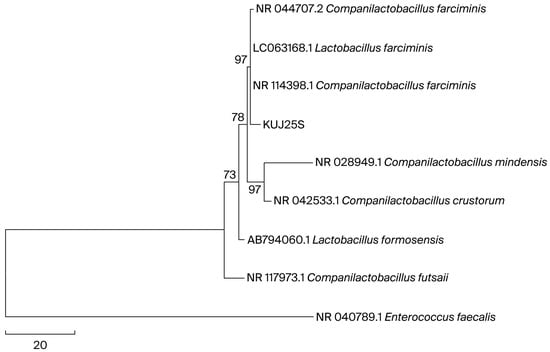
LAB from various fermented fish (Pla-Chou) samples were screened and 142 were isolated. Based on the biochemical and molecular classifications (16S ribosomal RNA gene identification), the LAB samples were C. farciminis KUJ 25-S (formerly known as Lactobacillus farciminis) (Figure 1, Table 1 [24]), with preliminary Lactobacillus biochemical properties (Gram-positive, catalase-negative, rod-shaped) conforming to the standard genus classification method of LAB (Tetrad formation (-); CO2 from glucose (-); growth at 10 °C (-); growth at 45 °C (-); growth in 6.5% NaCl (+); growth in 18% NaCl (-); growth at pH 4.4 (-); growth at pH 9.6 (-); and lactic acid stereoisomer (D-LA)). L-LA production in MRS broth (static conditions at 37 °C 120 h) was 30.0 g/L of L-LA and the amount of L-LA per sum of D-LA was 97%. Strain KUJ 25-S was clearly a strain of C. farciminis, as shown by our phenotypic and phylogenetic analyses. Tilapia intestines naturally contain Lactobacillus [9] that has been reported to have been separated from culture from fermented fish [8]. According to Reuter [7], C. farciminis is a homofermentative LA bacterium. Aldolase enzymes are found in homofermentative LAB, which produce LA as the primary end product, with the process being appealing due to the low cost of commercial-scale production of LA without requiring the removal of byproducts [25]. LAB from fermented fish (Pla-Chou), were chosen because LAB can withstand some osmotic stress (NaCl and glucose) at mesophilic temperatures, which is one of the requirements for industrial use. Other requirements include: being tolerant of a variety of stresses; requiring relatively few nutrients; being genetically accessible; and being able to grow at a variety of temperatures. LAB are known to produce LA, particularly L-LA, in a cell factory [26,27,28]. The current study suggested C. farciminis KUJ 25-S was a suitable candidate.
Figure 1.
Phylogenetic tree constructed using maximum parsimony method showing KUJ 25-S confidently clustered in C. farciminis group. Numbers at branches indicate bootstrap values.
Table 1.
BLAST results of KUJ 25-S sequences (1555 bp) showing top-three sequences as Companilactobacillus farciminis (formerly known as Lactobacillus farciminis) with >99% identity.
3.2. Characterization of Lactic Acid and Its Stereoisomers from C. farciminis KUJ 25-S
The characteristics of LA and its stereoisomers were confirmed based on TLC, chiral-HPLC, and enzymatic techniques.
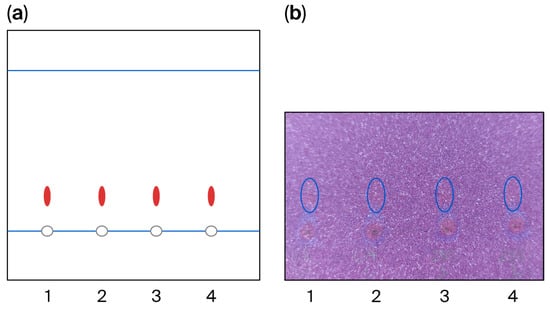
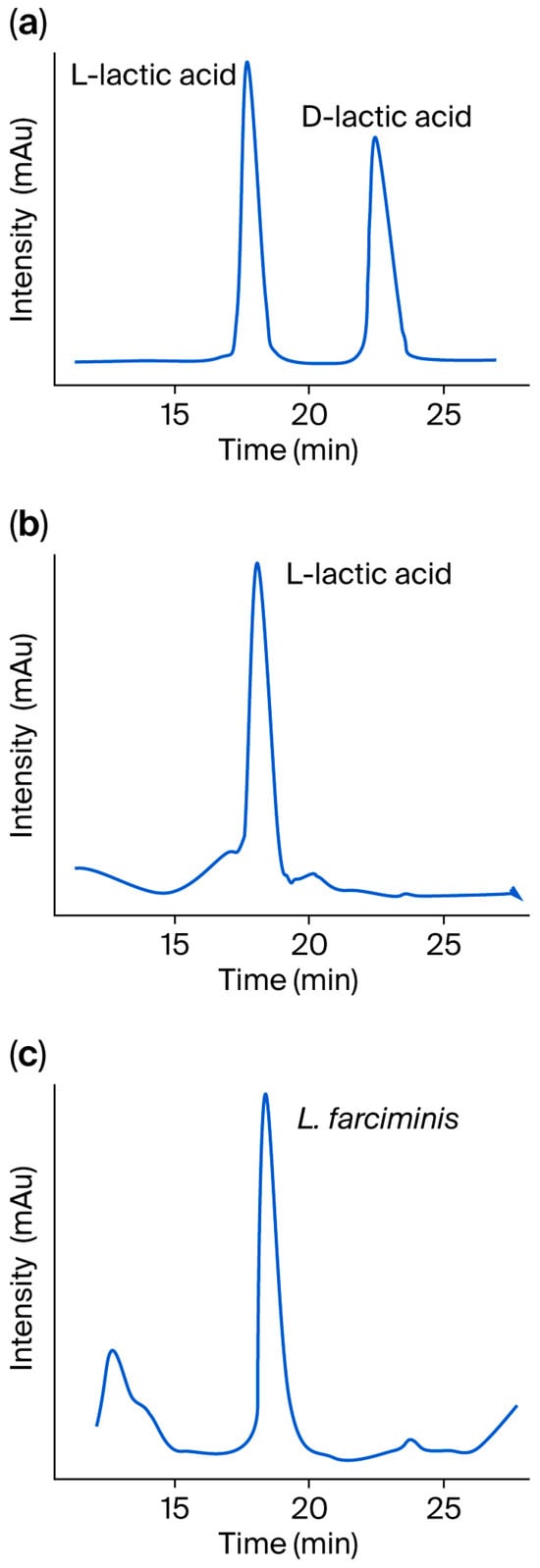
The LA in C. farciminis KUJ 25-S was confirmed for acidification based on TLC. The substance produced by the organism had an Rf value equal to that of the LA standard (0.14), as shown in Figure 2 and the L-LA formation (Figure 3c) was confirmed based on HPLC (Figure 3) using chiral-HPLC. The bacterium produced L-LA and D-LA with retention times of 19.972 min and 24.645 min, corresponding to the L-LA standard (Figure 3a,b) and the D-LA standard (Figure 3a), respectively, and 97% ee for L-LA. This corresponded to the enzyme method based on the specificity of the enzymes L-lactate dehydrogenase and D-lactate dehydrogenase (D-/L-Lactic Acid (D-/L-Lactate) Rapid Assay Kit; Megazyme 2018). The stereo-specificity and optical purity of LA produced from microbial cultures are largely determined by the particular microbe chosen and the specificity of its lactate dehydrogenase enzyme (LDH). L- or D-LDH stereospecific NAD-dependent enzymes change the LA structure when they transform pyruvate into the acid. D-LA, L-LA, or a mixture of the two can be produced using microbial fermentation with varying degrees of optical purity. Both enzymes have been found to be active in some LA producers, such as some species of Lactobacillus [29], which led to the formation of a racemate (DL) or LA with a low optical purity (less than 95%). The isomer’s chiral imperfections may increase the cost of purification, making its lower optical purity a serious issue for the commercial production of LA [30]. Among many factors that can affect the purity of lactic acid in fermentations are temperature, pH, aeration, feeding substrate, and the process of fermentation [29,31,32,33]. C. farciminis KUJ 25-S produced L-LA with an extremely high optical purity (>95%). This characteristic is of particular importance because it would decrease the cost of product recovery if this culture were applied to commercial production.
Figure 2.
Thin layer chromatography (TLC) analysis to validate lactic acid formation from C. farciminis KUJ 25-S (lanes 3 and 4) compared to lactic acid standard (lanes 1 and 2), as shown by same Rf value (0.14) from the picture schematic (a) and TLC plate (b), where red color indicates lactic acid.
Figure 3.
Identification of L-lactic acid formation using chiral HPLC analysis from C. farciminis KUJ 25-S (c) with optical purity 97% in de Man, Rogosa broth (5% NaCl, 10% glucose) at 37 °C for 120 h using static conditions compared to D-lactic acid and L-lactic acid standards (a) and L-lactic acid standard (b).
3.3. Cell Morphology on Solid and Liquid Media of C. farciminis KUJ 25-S
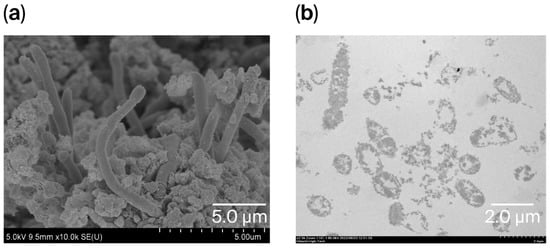
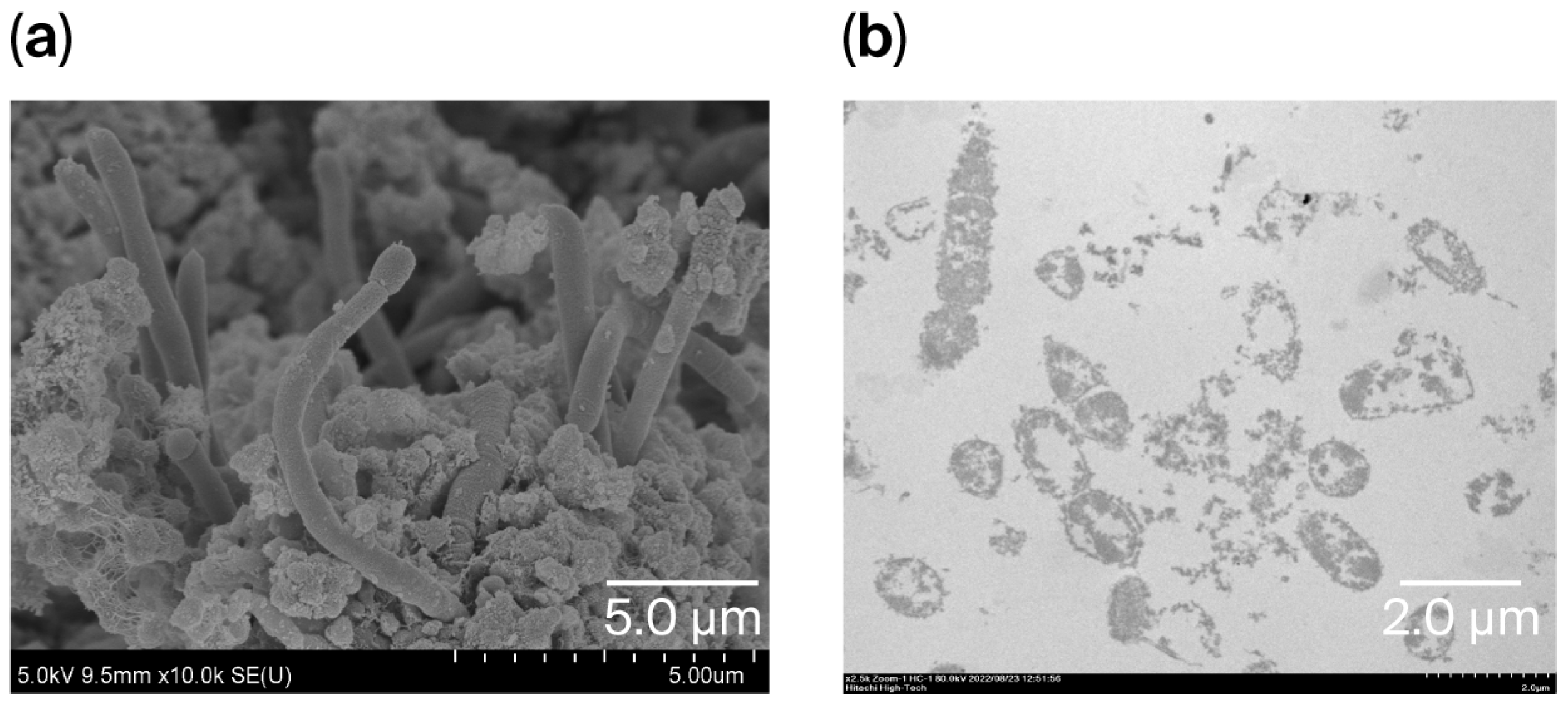
The cellular morphology of C. farciminis KUJ 25-S on solid and liquid MRS medium (glucose 10%, NaCl 5%) incubated at 37 °C for 48 h showed filamentous rods using SEM (Figure 4a) and TEM (Figure 4b), respectively. Other species, such as Lactobacillus leichmanni [34] and L. fructivorans [35], share the cellular morphology of C. farciminis KUJ 25-S as filamentous rods in solid and liquid culture. In addition, based on the aeration conditions, a distinctive cell morphology of the pleomorphic strain has been reported [10], which could be a pleomorphic strain that consistently produces R and S—two morphotypes with distinct phenotypes. This phenomenon may explain in vitro survival and growth abilities, as well as the modulation of exopolysaccharide synthesis and the auto-aggregation profile [10,36].
Figure 4.
Filamentous rod shape of C. farciminis KUJ 25-S on MRS agar (a) and in MRS broth (b) in presence of 5% NaCl and 10% glucose at 37 °C for 48 h using scanning electron microscopy (a) and transmission electron microscopy (b).
3.4. Effect of Temperature on Lactic Acid Formation and Growth
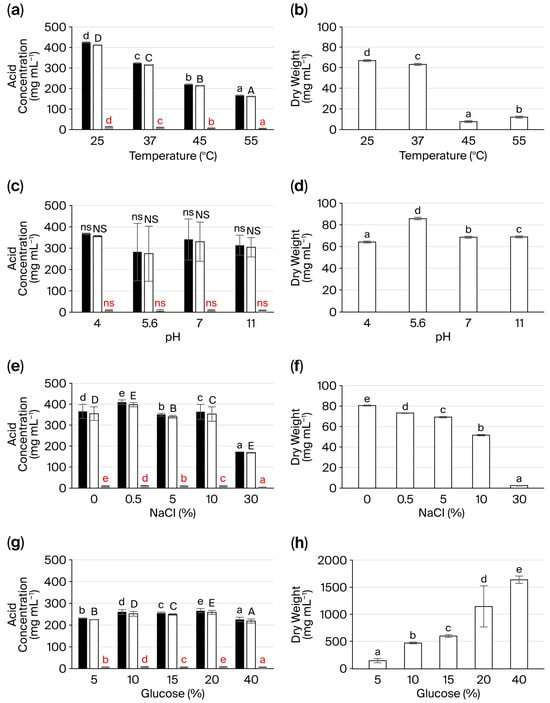
The effect of temperature (25 °C, 37 °C, 45 °C, 55 °C) on total acid, L-LA, and D-LA production (Figure 5a) and growth (dry weight; Figure 5b) of C. farciminis KUJ 25-S was investigated in MRS liquid medium containing 5% NaCl and 10% glucose at 37 °C for 48 h under static conditions. The optimum temperature for L-LA production was 25 °C, yielding an L-LA content of 423.96 ± 33.38 mg/mL and a maximum growth dry weight of 66.87 ± 2.43 mg/mL. Increased temperature and acidification resulted in reduced growth, with significant (p < 0.05) differences observed across temperature levels. L-LA production and growth were inversely related to temperature in C. farciminis KUJ 25-S. Our findings indicated that the fermentation temperature significantly influenced L-LA concentration, particularly between 25 °C and 37 °C, which had a notable impact on bacterial growth and L-LA production. Sriphochanart and Skolpap [37] reported similar effects using a temperature shift strategy. L-LA production and growth were suppressed at 45 °C and 55 °C; however, L-LA formation was preferred over growth at higher temperatures. Significant amounts of L-LA are produced when fermentation temperatures exceed 40 °C [18,32,38,39]. Utilizing thermophilic strains for LAB production offers several advantages, including reducing contamination risk, facilitating non-sterile fermentation to lower energy requirements for sterilizing and cooling media, and expanding the use of solid-state fermentation processes [26,40,41]. Yamini et al. [42] reported that C. farciminis KUJ 25-S was a suitable thermotolerant strain for L-LA production. C. farciminis KUJ 25-S formed L-LA within the 25–55 °C range, performing well under mesophilic fermentation, consistent with Wang et al.’s findings [43].
Figure 5.
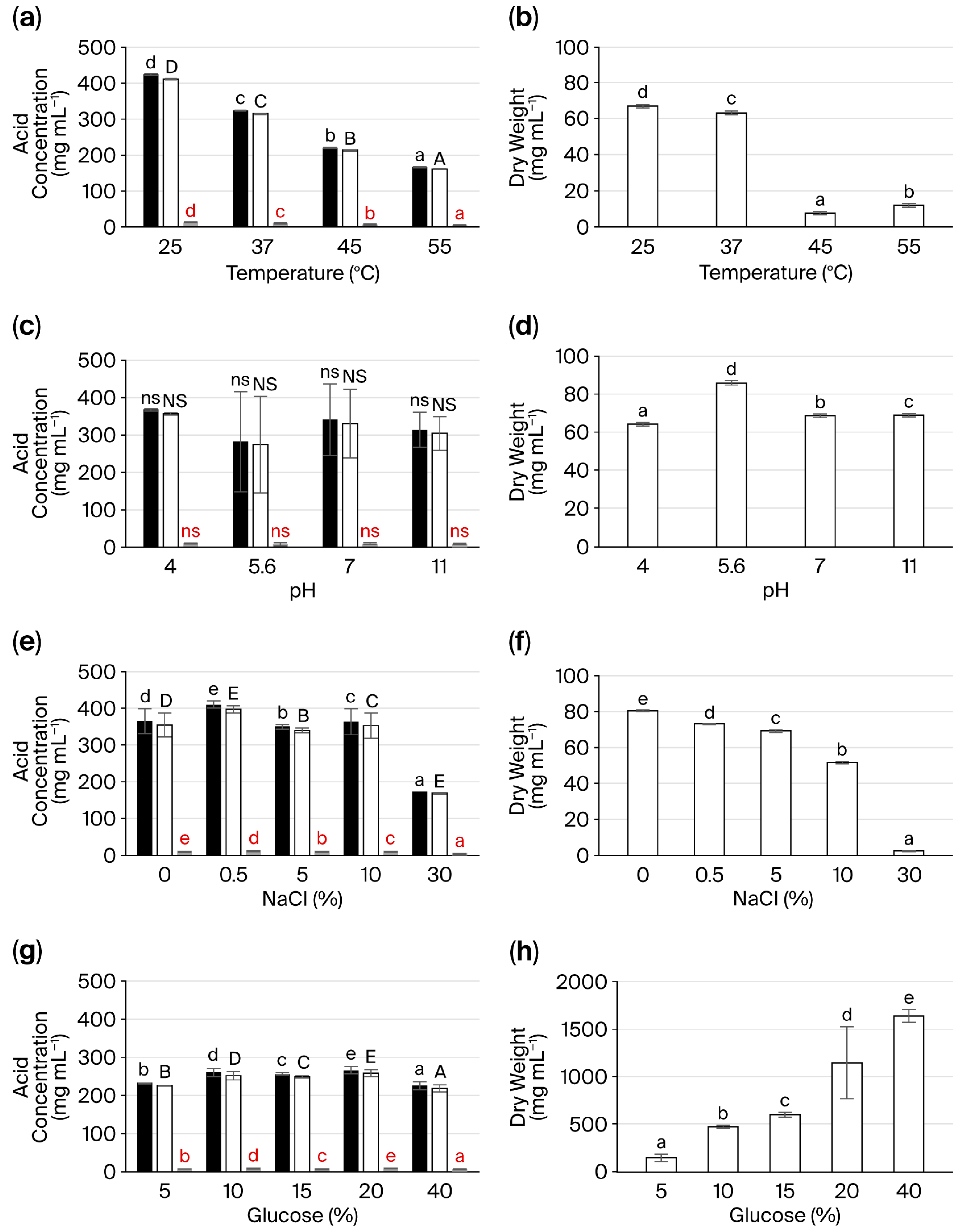
Influence of various temperatures (a,b), pH (c,d), NaCl concentrations (e,f), and glucose concentrations (g,h), on acidification (a,c,e,g) of total lactic acid (■), L-lactic acid (☐) and D-lactic acid (▒), and growth (b,d,f,h) of C. farciminis KUJ 25-S MRS in broth in presence of 5% NaCl and 10% glucose for all treatments except NaCl treatment (0–30% NaCl) and glucose treatment (5–40% glucose) at 37 °C for 48 h using static conditions. Values are means of three independent replicates [panels, (N)]; error bars represent standard deviation. Black and red lowercase letters indicated significant differences at p < 0.05 within each treatment of total lactic acid and D-lactic acid, respectively. Uppercase letters indicate significant difference at p < 0.05 within each treatment of L-lactic acid and “ns” or “NS” indicates not significant.
3.5. Effect of pH on Lactic Acid Formation and Growth
The effect of pH (4, 5.6, 7, 11) on total acid, L-LA, and D-LA production (Figure 5c) and growth (dry weight; Figure 5d) of C. farciminis KUJ 25-S was investigated in MRS liquid medium containing 5% NaCl and 10% glucose at 37 °C for 48 h under static conditions. A pH level of 4 was the optimum for L-LA production, yielding 357.0 ± 3.23 mg/mL L-LA with a dry weight of 85.99 ± 0.30 mg/mL. Increased acidification reduced growth, with significant (p < 0.05) differences observed across pH levels. LAB are known to grow across various neutral and acidic pH ranges, with C. farciminis KUJ 25-S capable of producing L-LA and growing at pH levels of 4–11. L-LA formation was enhanced at pH levels 4, 7, and 11, but growth was inversely related to L-LA production, indicating that acid production suppressed growth under pH stress. Strains of Lactobacillus are beneficial due to their high acid tolerance and ability to be modified for selective D-LA or L-LA synthesis [5,44,45]. LAB resist undesirable drops in intracellular pH by modulating cell membrane fluidity, metabolic adaptation, and stress-induced protein production [46]. An acid-resistant mutant of L. casei reportedly combatted low extracellular pH by enhancing membrane fluidity and producing more monounsaturated fatty acids [47]. Typically, neutralizing agents are used during fermentation to mitigate any negative effects on cellular metabolism caused by an LA buildup [48]. However, the large amounts of neutralizing agents (such as gypsum) used in downstream processes generate environmental problems and complicate purification in commercial operations [49]. The current study challenged C. farciminis KUJ 25-S to grow and produce L-LA at various pH levels without neutralizing agents. High L-LA formation in low pH conditions has been achieved elsewhere using acid-tolerant strains [50]. Alkaliphilic LAB, with optimum growth in the pH range 7.0–11.5, have been reported to reduce bacterial contamination by inhibiting other bacteria at high pH, facilitating easier management of fermentative output [51,52,53,54,55,56]. Alkaliphilic bacteria can create significant quantities of optically pure L-LA [15,57], and C. farciminis KUJ 25-S was similarly challenged to grow and produce L-LA in alkaline environments.
3.6. Effect of NaCl on Lactic Acid Formation and Growth
The effect was investigated of NaCl (0%, 0.5%, 5%, 10%, 30%) on the yields of total acid, L-LA, and D-LA (Figure 5e) and on the growth (dry weight; Figure 5f) of C. farciminis KUJ 25-S grown in MRS liquid medium containing 5% NaCl and 10% glucose at 37 °C for 48 h in static conditions. The optimum NaCl concentration of 0.5% produced an L-LA content of 398.16 ± 32.97 mg/mL with a dry weight of 73.05 ± 0.13 mg/mL. Growth varied with the NaCl concentration, with the maximum growth (80.061 ± 0.13 mg/mL) being at 0% NaCl. For all treatments, there were significant (p < 0.05) growth differences with the NaCl level. C. farciminis KUJ 25-S could produce L-LA and grow in the presence or absence of NaCl. Osmotic stress resistance of the culture for L-LA formation has been reported [58,59], with 30% NaCl repressing growth (<10 mg/mL) nearly 100%, as opposed to LA formation, which could still be produced. With no NaCl addition, the low cost of downstream processing to remove NaCl would be solved [60]. However, a salt-tolerant strain of an LAB is important when seaweed is used as substrate for LA production [61,62,63]. Under stress from a high salt level, growth and acidification resulted in various species of LAB, especially Lactobacilli [64] such as L. plantarum [27] and L. casei [65]. The resistance of Lactobacillus to osmotic stress is related to the saturated fatty acid-to-unsaturated fatty acid ratio in the cell membrane and the cyclopropanation of oleic acid [66]. Characterization of cellular morphology indicated that the evolved strain L. plantarum H11-ES exhibited markedly enhanced cell-membrane and cell-wall integrity, as well as increased cell length, relative to the parental strain. Whole-genome resequencing further identified mutations in poly(glycerol-phosphate) α-glucosyltransferase and ATP-binding cassette transporters, which are likely responsible for the improved salt tolerance by modulating cell-wall architecture and membrane transport processes [67].
3.7. Effect of Glucose on Lactic Acid Production
The effect was investigated of various glucose concentrations (5%, 10%, 15%, 20%, 40%) on the yields of total acid, L-LA, and D-LA (Figure 5g) and on the growth (dry weight; Figure 5h) of C. farciminis KUJ 25-S in MRS liquid medium containing 5% NaCl at 37 °C for 48 h under static conditions. Glucose levels of 10–20% in the medium enhanced L-LA formation, while levels of 5% and 40% decreased it. Growth varied significantly (p < 0.05) with glucose concentration, with higher glucose levels promoting growth and the maximum growth was observed at 40%, indicating C. farciminis KUJ 25-S’s strong adaptation to osmotic stress [28]. This ability to form L-LA in glucose aligned with the results reported in other studies on other Lactobacillus species such as L. casei [68] and L. paracasei [69,70]. For example, the production of L-LA by L. casei NRRL B-441 was inversely proportional to the initial glucose concentration, with a maximum LA concentration of 118.6 g/L using 160 g/L glucose [68]. Similarly, two studies reported L-LA production by L. paracasei with glucose of 95 g/L [69] and 195 g/L [70]. High carbon uptake rates are essential for microbial chemical production, as shown with Enterococcus faecalis [71] and L. lactis [72], and potentially with C. farciminis KUJ 25-S in the presence of glucose. LAB are suitable for industrial production due to their high sugar absorption and conversion rates, in addition to their low biomass yields [25,28]. Commonly, refined sugars, such as glucose or sucrose, are used for LA production; however, their cost poses a challenge, especially with food source carbohydrates [25,26]. Thus, it is crucial to identify alternative substrates such as lignocellulose biomass and agro-industrial wastes [25,26]. C. farciminis KUJ 25-S could be an effective candidate for L-LA production using such substrates.
For Figure 5, It should be noted that some error bars are relatively large, which likely reflects biological heterogeneity in fermentation performance among replicates under the different stress conditions tested. To enhance reliability, all experiments were conducted in three biological replicates (n = 3), and results are presented as mean ± SD. This approach ensures that the observed trends are robust while acknowledging inherent variability associated with stress-intensive conditions.
3.8. Effect of Aeration on Lactic Acid Production
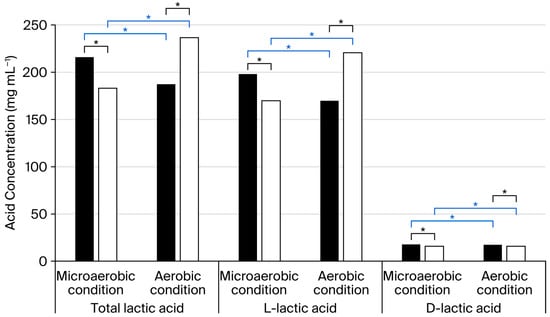
The effect was investigated of NaCl concentrations (0%, 5%) on the production of total acid, L-LA, and D-LA by C. farciminis KUJ 25-S, as shown in Figure 6. The study was conducted in MRS broth with 10% glucose under both anaerobic conditions at 37 °C and aerobic conditions on a rotary shaker at 100 rpm, with 75 mL of the medium in 250 mL flasks at room temperature (30–37 °C) for 48 h. The optimum conditions for L-LA production (236 mg/mL) were 5% NaCl under aerobic conditions. However, anaerobic conditions with 0% NaCl produced a higher L-LA yield than with 5% NaCl. Typically, LAB grow well without O2, though some can be inhibited by its presence [73]. LAB are facultatively anaerobic and produce lactic acid in the presence of glucose [74,75,76]. In the current study, C. farciminis KUJ 25-S showed a preference for producing L-LA under anaerobic conditions, particularly without NaCl, suggesting a cost-effective L-LA production method by eliminating the need for air supply or removal devices and NaCl removal during purification. The current study demonstrated the benefits of using anaerophilic LAB that can tolerate oxygen, aligning with Dedenaro et al.’s findings with C. farciminis ATCC 29644 [35]. Other studies have found aerobic conditions optimal for glucose-based L-LA production such as with L. plantarum [75] and Bacillus coagulans [77]. L. plantarum produced L-LA and D-LA during active growth in glucose broth aerobically but switched to acetate production as the glucose became depleted [75,78,79]. C. farciminis KUJ 25-S produced high L-LA levels under osmotic stress (NaCl), revealing its aerotolerance and adaptation to its ecological niche.
Figure 6.
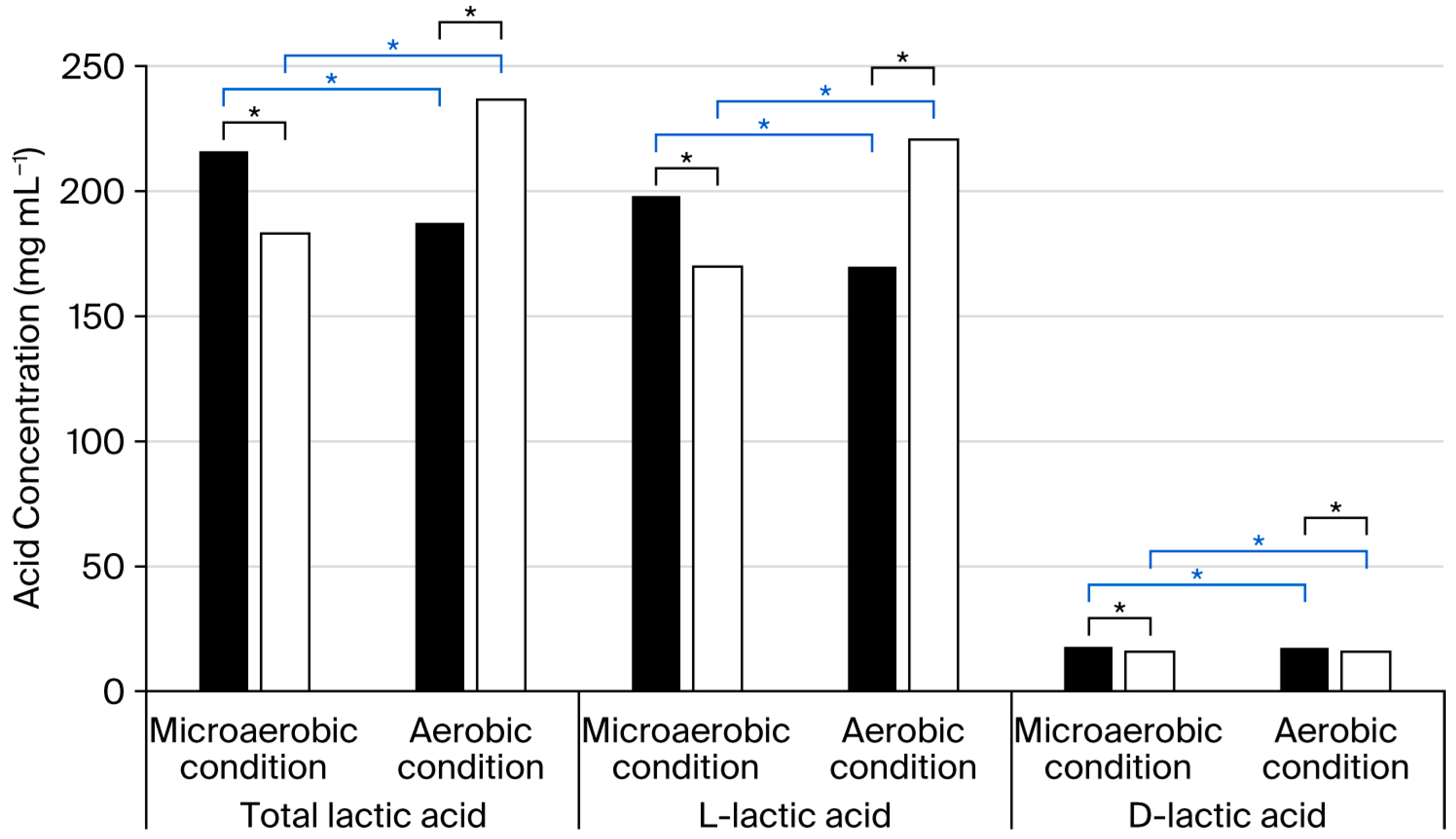
Influence of anaerobic and aerobic conditions on acidification of total lactic acid, L-lactic acid, and D-lactic acid of C. farciminis KUJ 25-S in MRS broth in presence of 0% (■) and 5% (☐) NaCl and 10% glucose at 37 °C for 48 h. Values are means of two independent replicates [panels, (N)]. Means of acid compounds between 0% and 5% NaCl are significantly different (p < 0.05) for each aeration condition. Black asterisk indicates significant difference (p < 0.05) for each aeration condition between 0% and 5% NaCl of each type of acidification. Blue asterisk indicates significant difference (p < 0.05) for each NaCl concentration between anaerobic and aerobic conditions of each type of acidification. Black lines indicate comparisons between 0% and 5% NaCl under each aeration condition, while blue lines indicate comparisons between anaerobic and aerobic conditions at each NaCl level, for each acidification type.
The observation that peak L-LA production occurred under aerobic conditions in the presence of 5% NaCl (Figure 6) may reflect a complex interplay between salt-induced metabolic adjustments and altered intracellular redox homeostasis. Salt stress is known to rewire carbohydrate metabolism and stress-response proteins in LAB, promoting energy-saving adjustments and osmoprotectant accumulation that can sustain metabolic flux toward lactic acid under otherwise inhibitory conditions [70]. Under aerobic or microaerobic conditions, certain LAB can also transition to an oxidative respiratory metabolism when electron-transport cofactors (e.g., heme or menaquinone) or the requisite genetic determinants (cyd operon) are present; such respiration can provide alternative NADH oxidation routes, reduce NADH pressure on lactate dehydrogenase (LDH), and thereby alter flux distribution and end-product profiles [80]. Moreover, experimental and genetic studies indicate that diversion of NADH from LDH toward respiratory or NADH-oxidase pathways (or modulation of LDH activity) can change the rate of lactate formation and its stereochemical outcome, offering a plausible mechanism for the strain’s high L-LA productivity under aerated and saline conditions [81]. Taken together, these lines of evidence suggest that in KUJ 25-S 5% NaCl plus aeration may promote redox balancing and membrane/transport adaptations that favor high flux through L-LDH while maintaining cellular viability—hypotheses that can be directly tested by measuring intracellular NAD+/NADH ratios, oxygen uptake rates, transcript/protein levels of LDH, NADH oxidases and cyd genes, and by assessing the effect of heme/menaquinone supplementation or LDH inhibition on product profiles.
4. Conclusions
In conclusion, the study revealed that C. farciminis KUJ 25-S, isolated from fermented fish, holds considerable potential for L-LA production. This strain had high tolerance to various stress conditions, including temperature, osmotic stress (glucose and NaCl), acidic and alkaline environments, and aeration. C. farciminis KUJ 25-S produced L-LA with high optical purity (>95%) across broad ranges of pH (4–11) and temperature (25–55 °C), with or without NaCl, exhibiting both aerotolerance in the presence of NaCl and glucose and anaerophilic properties in their absence. The strain’s ability to grow and produce L-LA in alkaline environments and under osmotic stress with glucose concentrations of 10–20% further supports its industrial applicability. Optimal L-LA production was observed under aerobic conditions with glucose, presenting a cost-effective method that eliminates the need for air supply or NaCl removal devices. The strain’s robust performance under acidic, saline, and osmotic stress likely arises from coordinated membrane remodeling, osmoprotectant accumulation, and redox-regulated L-lactate dehydrogenase activity, supporting high productivity and stereochemical fidelity, which underscores its suitability for industrial-scale bioprocesses [82,83,84]. The performance comparison in Table 2 highlights the strong industrial promise of C. farciminis KUJ 25-S. To deepen process understanding, future work will involve bioreactor-scale kinetic studies that resolve time-course trajectories of biomass accumulation, substrate utilization, and L-LA formation. These datasets will enable precise determination of µ, volumetric productivity, and Yp/s, forming a quantitative basis for mass-balance evaluation and data-driven process optimization. The resulting process insights will directly advance the downstream objective of converting biologically derived lactic acid into PLA.
Table 2.
Comparison of L-LA production performance and environmental stress tolerance reported for selected LAB strains relative to C. farciminis KUJ 25-S.
Author Contributions
Conceptualization, K.B.; methodology, K.B., V.K. and M.N.; software, K.B. and M.N.; validation, K.B., V.K. and M.N.; formal analysis, K.B.; investigation, K.B.; resources, K.B.; data curation, K.B. and V.K., writing-original draft preparation, K.B. and M.N.; writing-review and editing, K.B.; visualization, K.B. and V.K.; supervision, K.B. and V.K.; project administration, K.B.; funding acquisition, K.B. All authors have read and agreed to the published version of the manuscript.
Funding
This research was funded by the Kasetsart University Research and Development Institute (KURDI), Bangkok, Thailand and grant number FF(KU)32.65.
Data Availability Statement
The original contributions presented in this study are included in the article. Further inquiries can be directed to the corresponding author(s).
Acknowledgments
Suppasit Tienphranon, Pornpat Panput, Areeya Tantiwatchareekul, and Jamjuree Kaeoaram provided technical support.
Conflicts of Interest
The authors decare no conflict of interest.
References
- Ghaffar, T.; Irshad, M.; Anwar, Z.; Aqil, T.; Zulifqar, Z.; Tariq, A.; Mehmood, S. Recent trends in lactic acid biotechnology: A brief review on production to purification. J. Radiat. Res. Appl. Sci. 2014, 7, 222–229. [Google Scholar] [CrossRef] [Scilit]
- Ohara, H. Biorefinery. Appl. Microbiol. Biotechnol. 2003, 62, 474–477. [Google Scholar] [CrossRef] [Scilit] [PubMed]
- Market Research.com. Lactic Acid Market Size, Share & Trends Analysis Report By Raw Material (Sugarcane, Corn, Cassava), By Application (PLA, Food & Beverages), By Region, And Segment Forecasts, 2021–2028, Inc. 2023. Available online: https://www.grandviewresearch.com/industry-analysis/lactic-acid-and-poly-lactic-acid-market (accessed on 11 April 2022).
- Narayanan, N.; Roychoudhury, P.; Srivastava, A. L(+)-Lactic acid fermentation and its product polymerization. Electron. J. Biotechnol. 2004, 7, 167–178. [Google Scholar] [CrossRef] [Scilit]
- Benthin, S.; Villadsen, J. Production of optically pure D-lactate by Lactobacillus bulgaricus and purification by crystallization and liquid/liquid extraction. Appl. Microbiol. Biotechnol. 1995, 42, 426–429. [Google Scholar] [CrossRef]
- Kadam, S.R.; Patil, S.S.; Bastawde, K.B.; Khire, J.M.; Gokhale, D.V. Strain improvement of Lactobacillus delbrueckii NCIM 2365 for lactic acid production. Process Biochem. 2006, 41, 120–126. [Google Scholar] [CrossRef] [Scilit]
- Reuter, G. Lactobacillus alimentarius sp. nov., nom rev. and Lactobacillus farciminis sp. nov., nom. rev. Syst. Appl. Microbiol. 1983, 4, 277–279. [Google Scholar] [CrossRef] [Scilit]
- Tanasupawat, S.; Okada, S.; Komagato, K. Lactic acid bacteria found in fermented fish in Thailand. J. General. Appl. Microbiol. 1998, 44, 193–200. [Google Scholar] [CrossRef] [Scilit]
- Yamini, C.; Sharmila, G.; Muthukumaran, C.; Pavithran, K.; Manojkumar, N. Proteomic perspectives on thermotolerant microbes: An updated review. Mol. Biol. Rep. 2022, 49, 629–646. [Google Scholar] [CrossRef] [Scilit]
- Tareb, R.; Bernardeau, M.; Horvath, P.; Vernoux, J. Rough and smooth morphotypes isolated from Lactobacillus farciminis CNCM I-3699 are two closely-related variants. Int. J. Food Microbiol. 2015, 193, 82–90. [Google Scholar] [CrossRef] [Scilit]
- De Man, J.C.; Rogosa, M.; Sharpe, M.E. A medium for the cultivation of lactobacilli. J. Appl. Bact. 1960, 23, 130–135. [Google Scholar] [CrossRef] [Scilit]
- AOAC. Official Method of Analysis of AOAC International, 17th ed.; Aoac Intl: Rockville, MD, USA, 2000. [Google Scholar]
- Axelsson, L. Lactic Acid Bacteria: Microbiology and Functional Aspects; Marcel Dekker, Inc.: New York, NY, USA, 1998. [Google Scholar]
- Huang, X.; Madan, A. CAP3: A DNA sequence assembly program. Genome Res. 1999, 9, 868–877. [Google Scholar] [CrossRef] [Scilit] [PubMed]
- Calabia, B.P.; Tokiwa, Y.; Aiba, S. Fermentative production of L-(+)-lactic acid by an alkaliphilic marine microorganism. Biotechnol. Lett. 2011, 33, 1429–1433. [Google Scholar] [CrossRef] [Scilit] [PubMed]
- Larsson, A. AliView: A fast and lightweight alignment viewer and editor for large datasets. Bioinformatics 2014, 30, 3276–3278. [Google Scholar] [CrossRef] [Scilit] [PubMed]
- Kumar, S.; Stecher, G.; Li, M.; Knyaz, C.; Tamura, K. MEGA X: Molecular evolutionary genetics analysis across computing platforms. Mol. Biol. Evol. 2018, 35, 1547–1549. [Google Scholar] [CrossRef] [Scilit]
- Gabriet, B.L. Biological Electron Microscope; Van Nostrand Reinhold Company Inc.: New York, NY, USA, 1982; p. 264. [Google Scholar]
- Harris, R. Electron Microscopy in Biotogy: A Practical Approach; Oxford University Press: New York, NY, USA, 1991; p. 308. [Google Scholar]
- Spurr, A.R. A low viscosity epoxy resin embedding medium for electron microscopy. J. Ultrastruct. Res. 1969, 26, 31–43. [Google Scholar] [CrossRef] [Scilit]
- Reynolds, E.S. The use of lead citrate at high pH as an electron opaque stain in electron microscopy. J. Cell Biol. 1963, 17, 208–212. [Google Scholar] [CrossRef] [Scilit]
- Bozzola, J.J.; Russell, L.D. Electron Microscopy Principles and Techniques for Biologists; Jones and Bartlett, John: Boston, MA, USA, 1992. [Google Scholar]
- Lee, K.Y.; So, J.S.; Heo, T.R. Thin layer chromatographic determination of organic acids for rapid identification of bifidobacterial at genus level. J. Microbiol. Methods 2001, 45, 1–6. [Google Scholar] [CrossRef] [Scilit]
- EFSA FEEDAP Panel (EFSA Panel on Additives and Products or Substances used in Animal Feed); Bampidis, V.; Azimonti, G.; Bastos, M.L.; Christensen, H.; Dusemund, B.; Durjava, M.; Kouba, M.; López-Alonso, M.; Puente, S.L.; et al. Scientific opinion on the efficacy of a feed additive consisting of Companilactobacillus farciminis CNCM I-3740 (Biacton®) for chickens and turkeys for fattening (ChemVet dk A/S). EFSA J. 2023, 21, 8049. [Google Scholar] [CrossRef] [Scilit]
- Abdel-Rahman, M.A.; Tashiro, Y.; Sonomoto, K. Recent advances in lactic acid production by microbial fermentation processes. Biotechnol. Adv. 2013, 31, 877–902. [Google Scholar] [CrossRef] [Scilit]
- Abdel-Rahman, M.A.; Sonomoto, K. Opportunities to overcome the current limitations and challenges for efficient microbial production of optically pure lactic acid. J. Biotechnol. 2016, 236, 176–192. [Google Scholar] [CrossRef] [Scilit]
- Ma, J.; Wang, W.; Sun, C.; Gu, L.; Liu, Z.; Yu, W.; Chen, L.; Jiang, Z.; Hou, J. Effects of environmental stresses on the physiological characteristics, adhesion ability and pathogen adhesion inhibition of Lactobacillus plantarum KLDS 1.0328. Process Biochem. 2000, 92, 426–436. [Google Scholar] [CrossRef] [Scilit]
- Sauer, M.; Russmayer, H.; Grabherr, R.; Peterbauer, C.K.; Marx, H. The efficient clade: Lactic acid bacteria for industrial chemical production. Trends Biotechnol. 2017, 35, 756–769. [Google Scholar] [CrossRef] [Scilit] [PubMed]
- Ennahar, S.; Cai, Y.; Fujita, Y. Phylogenetic diversity of lactic acid bacteria associated with paddy rice silage as determined by 16S ribosomal DNA analysis. Appl. Environ. Microbiol. 2003, 69, 444–451. [Google Scholar] [CrossRef] [Scilit] [PubMed]
- Romero-Garcia, S.; Hernández-Bustos, C.; Merino, E.; Gosset, G.; Martinez, A. Homolactic fermentation from glucose and cellobiose using Bacillus subtilis. Microb. Cell Fact. 2009, 8, 23. [Google Scholar] [CrossRef] [Scilit] [PubMed]
- Li, X.; Chen, Y.; Zhao, S.; Chen, H.; Zheng, X.; Luo, J.; Liu, Y. Efficient production of optically pure l-lactic acid from food waste at ambient temperature by regulating key enzyme activity. Water Res. 2015, 70, 148–157. [Google Scholar] [CrossRef] [Scilit]
- Tanaka, T.; Hoshina, M.; Tanabe, S.; Sakai, K.; Ohtsubo, S.; Taniguchi, M. Production of d-lactic acid from defatted rice bran by simultaneous saccharification and fermentation. Bioresour. Technol. 2006, 97, 211–217. [Google Scholar] [CrossRef] [Scilit]
- Tashiro, Y.; Matsumoto, H.; Miyamoto, H.; Okugawa, Y.; Pramod, P.; Miyamoto, H.; Sakai, K. A novel production process for optically pure l-lactic acid from kitchen refuse using a bacterial consortium at high temperatures. Bioresour. Technol. 2013, 146, 672–681. [Google Scholar] [CrossRef] [Scilit]
- Dedenaro, G.; Costa, S.; Rugiero, I.; Pedrini, P.; Tamburini, E. Valorization of agri-food waste via fermentation: Production of l-lactic acid as a building block for the synthesis of biopolymers. Appl. Sci. 2016, 6, 379. [Google Scholar] [CrossRef] [Scilit]
- Wu, C.; Wu, C.; Huang, J.; Zhou, R. Progress in engineering acid stress resistance of lactic acid bacteria. Appl. Microbiol. Biotechnol. 2014, 98, 1055–1063. [Google Scholar] [CrossRef] [Scilit]
- Tareb, R.; Bernardeau, M.; Amiel, C.; Vernoux, J.P. Usefulness of FTIR spectroscopy to distinguish rough and smooth variants of Lactobacillus farciminis CNCM-I-3699. FEMS Microbiol. Lett. 2017, 364, fnw298. [Google Scholar] [CrossRef] [Scilit]
- Sriphochanart, W.; Skolpap, W. Temperature shift and feeding strategies for improving L-lactic acid production by Lactiplantibacillus plantarum in batch and fed-batch cultures. Process Biochem. 2021, 113, 11–21. [Google Scholar] [CrossRef] [Scilit]
- Abdel-Rahman, M.A.; Tashiro, Y.; Zendo, T.; Shibata, K.; Sonomoto, K. Isolation and characterization of lactic acid bacterium for effective fermentation of cellobiose into optically pure homo l-(+)-lactic acid. Appl. Microbiol. Biotechnol. 2011, 89, 1039–1049. [Google Scholar] [CrossRef] [Scilit] [PubMed]
- Gu, S.A.; Jun, C.; Joo, J.C.; Kim, S.; Lee, S.H.; Kim, Y.H. Higher thermostability of l-lactate dehydrogenases is a key factor in decreasing the optical purity of d-lactic acid produced from Lactobacillus coryniformis. Enzyme Microb. Technol. 2014, 58, 29–35. [Google Scholar] [CrossRef] [Scilit]
- Abdel-Rahman, M.A.; Tashiro, Y.; Zendo, T.; Sakai, K.; Sonomoto, K. Enterococcus faecium QU 50: A novel thermophilic lactic acid bacterium for high-yield l-lactic acid production from xylose. FEMS. Microbial. Lett. 2015, 362, 1–7. [Google Scholar] [CrossRef] [Scilit] [PubMed]
- Keller, M.; Loder, A.J.; Basen, M.; Izquierdo, J.; Kelly, R.M.; Adams, M.W. Production of lignofuels and electrofuels by extremely thermophilic microbes. Biofuels 2014, 5, 499–515. [Google Scholar] [CrossRef] [Scilit]
- Yokaryo, H.; Tokiwa, Y. Isolation of alkaliphilic bacteria for production of high optically pure L-(+)-lactic acid. J. Gen. Appl. Microbiol. 2014, 60, 270–275. [Google Scholar] [CrossRef] [Scilit] [PubMed]
- Weiss, N.; Schillinger, U.; Kandler, O. Lactobacillus trichodes, and Lactobacillus heterohiochii, Subjective synonyms of Lactobacillus fructivorans. Syst. Appl. Microbiol. 1983, 44, 507–511. [Google Scholar] [CrossRef] [Scilit]
- Kyla-Nikkila, K.; Hujanen, M.; Leisola, M.; Palva, A. Metabolic engineering of Lactobacillus helveticus CNRZ32 for production of pure L-(+)-lactic acid. Appl. Environ. Microbiol. 2000, 66, 3835–3841. [Google Scholar] [CrossRef] [Scilit]
- Lapierre, L.; Germond, J.E.; Ott, A.; Delley, M.; Mollet, B. D-Lactate dehydrogenase gene (ldhD) inactivation and resulting metabolic effects in the Lactobacillus johnsonii strains La1 and N312. Appl. Environ. Microbiol. 1999, 65, 4002–4007. [Google Scholar] [CrossRef] [Scilit]
- Wu, C.; Zhang, J.; Wang, M.; Du, G.; Chen, J. Lactobacillus casei combats acid stress by maintaining cell membrane functionality. J. Ind. Microbiol. Biotechnol. 2012, 39, 1031–1039. [Google Scholar] [CrossRef] [Scilit]
- Wu, Z.; Wang, S.; Zhang, Q.; Hao, J.; Lin, Y.; Zhang, J.; Li, A. Assessing the intestinal bacterial community of farmed Nile tilapia (Oreochromis niloticus) by high-throughput absolute abundance quantification. Aquaculture 2020, 529, 735688. [Google Scholar] [CrossRef] [Scilit]
- Grabar, T.B.; Zhou, S.; Shanmugam, K.T.; Yomano, L.P.; Ingram, L.O. Methylglyoxal bypass identified as source of chiral contamination in l(+) and d(−)-lactate fermentations by recombinant Escherichia coli. Biotechnol. Lett. 2006, 28, 1527–1535. [Google Scholar] [CrossRef] [Scilit] [PubMed]
- Upadhyaya, B.P.; DeVeaux, L.C.; Christopher, L.P. Metabolic engineering as a tool for enhanced lactic acid production. Trends Biotechnol. 2014, 32, 637–644. [Google Scholar] [CrossRef] [Scilit] [PubMed]
- Adsul, M.G.; Singhvi, M.S.; Gaikaiwari, S.A.; Gokhale, D.V. Development of biocatalysts for production of commodity chemicals from lignocellulosic biomass. Bioresour. Technol. 2011, 102, 4304–4312. [Google Scholar] [CrossRef] [Scilit]
- Ishikawa, M.; Kodama, K.; Yasuda, H.; Okamoto-Kainuma, A.; Koizumi, K.; Yamasato, K. Presence of halophilic and alkaliphilic lactic acid bacteria in various cheeses. Lett. Appl. Microbiol. 2007, 44, 308–313. [Google Scholar] [CrossRef] [Scilit]
- Ishikawa, M.; Nakajima, K.; Yanagi, M.; Yamamoto, Y.; Yamasato, K. Marinilactibacillus psychrotolerans gen. nov., sp. nov., a halophilic and alkaliphilic marine lactic acid bacterium isolated from marine organisms in temperate and subtropical areas of Japan. Int. J. Syst. Evol. Microbiol. 2003, 53, 711–720. [Google Scholar] [CrossRef] [Scilit]
- Nakajima, K.; Hirota, K.; Nodasaka, Y.; Yumoto, I. Alkalibacterium iburiense sp. nov., an obligate alkaliphilile that reduces an indigo dye. Int. J. Syst. Evol. Microbiol. 2005, 55, 1525–1530. [Google Scholar]
- Ntougias, S.; Russell, N.J. Alkalibacterium olivoapovliticus gen. nov., sp. nov., a new obligately alkaliphilic bacterium isolated from edible-olive wash-waters. Int. J. Syst. Evol. Microbiol. 2001, 51, 1161–1170. [Google Scholar] [CrossRef] [Scilit]
- Toffin, L.; Zink, K.; Kato, C.; Pignet, P.; Bidault, A.; Bienvenu, N.; Birrien, J.L.; Prieur, D. Marinilactibacillus piezotolerans sp. nov., a novel marine lactic acid bacterium isolated from deep sub-seafloor sediment of the Nankai Trough. Int. J. Syst. Evol. Microbiol. 2005, 55, 345–351. [Google Scholar] [CrossRef] [Scilit]
- Han, J.; Sun, Z.; Chen, Y.; Guo, J.; Zhang, S.; Ji, C. Adaptive laboratory evolution and mechanisms of salt tolerance in Lactiplantibacillus plantarum. Food Biosci. 2025, 63, 105811. [Google Scholar] [CrossRef] [Scilit]
- Yumoto, I.; Hirota, K.; Nodasaka, Y.; Tokiwa, Y.; Nakajima, K. Alkalibacterium indicireducens sp. nov., an obligate alkaliphilile that reduces an indigo dye. Int. J. Syst. Evol. Microbiol. 2008, 58, 901–905. [Google Scholar] [CrossRef] [Scilit] [PubMed]
- Glaasker, E.; Tjan, F.S.; Steeg, P.F.T.; Konings, W.N.; Poolman, B. Physiological response of Lactobacillus plantarum to salt and nonelectrolyte stress. J. Bacteriol. 1998, 180, 4718–4723. [Google Scholar] [CrossRef] [Scilit] [PubMed]
- van de Guchte, M.; Serror, P.; Chervaux, C.; Smokvina, T.; Ehrlich, S.D.; Maguin, E. Stress responses in lactic acid bacteria. Antonie Van. Leeuwenhoek 2002, 82, 187–216. [Google Scholar] [CrossRef] [Scilit] [PubMed]
- Li, C.; Gao, M.; Zhu, W.; Wang, N.; Ma, X.; Wu, C.; Wang, Q. Recent advances in the separation and purification of lactic acid from fermentation broth. Process Biochem. 2021, 104, 142–151. [Google Scholar] [CrossRef] [Scilit]
- Mala, A.; Bhassu, S.; Taufek, N.M.; Sadali, N.M.; Wang, S.; Mohamed, E.; Nor, A.M. Review: Potential of using lactic acid bacteria as inoculant for seaweed silage towards sustainable aquaculture. Aquac. Rep. 2023, 28, 101440. [Google Scholar] [CrossRef] [Scilit]
- Nagarajan, D.; Chen, C.Y.; Ariyadasa, T.U.; Lee, D.J.; Chang, J.S. Macroalgal biomass as a potential resource for lactic acid fermentation. Chemosphere 2022, 309 Pt 2, 136694. [Google Scholar] [CrossRef] [Scilit]
- Nagarajan, D.; Oktarina, N.; Chen, P.T.; Chen, C.Y.; Lee, D.J.; Chang, J.S. Fermentative lactic acid production from seaweed hydrolysate using Lactobacillus sp. and Weissella sp. Bioresour. Technol. 2022, 344 Pt A, 126166. [Google Scholar] [CrossRef] [Scilit]
- Piuri, M.; Sanchez-Rivas, C.; Ruzal, S.M. Adaptation to high salt in Lactobacillus: Role of peptides and proteolytic enzymes. J. Appl. Microbiol. 2003, 95, 372–379. [Google Scholar] [CrossRef] [Scilit]
- Nezhad, M.H.; Hussain, M.A.; Britz, M.L. Stress responses in probiotic Lactobacillus casei. Crit. Rev. Food Sci. Nutr. 2015, 55, 740–749. [Google Scholar] [CrossRef] [Scilit]
- Gong, X.; Yu, H.; Chen, J.; Han, B. Cell surface properties of Lactobacillus salivarius under osmotic stress. Eur. Food Res. Technol. 2012, 234, 671–678. [Google Scholar] [CrossRef] [Scilit]
- Wang, P.; Wu, Z.; Wu, J.; Pan, D.; Zeng, X.; Cheng, K. Effects of Salt Stress on Carbohydrate Metabolism of Lactobacillus plantarum ATCC 14917. Curr. Microbiol. 2016, 73, 491–497. [Google Scholar] [CrossRef] [Scilit] [PubMed]
- Hujanen, M.; Linko, S.; Linko, Y.Y.; Leisola, M. Optimisation of media and cultivation conditions for L(+)(S)-lactic acid production by Lactobacillus casei NRRL B-441. Appl. Microbiol. Biotechnol. 2001, 56, 126–130. [Google Scholar] [CrossRef] [Scilit] [PubMed]
- Hofvendahl, K.; Hahn-Hägerdal, B. Factors affecting the fermentative lactic acid production from renewable resources. Enzyme Microb. Technol. 2000, 26, 87–107. [Google Scholar] [CrossRef] [Scilit] [PubMed]
- Kuo, Y.C.; Yuan, S.F.; Wang, C.A.; Huang, Y.J.; Guo, G.L.; Hwang, W.S. Production of optically pure L-lactic acid from lignocellulosic hydrolysate by using a newly isolated and D lactate dehydrogenase gene-deficient Lactobacillus paracasei strain. Bioresour. Technol. 2015, 198, 651–657. [Google Scholar] [CrossRef] [Scilit]
- Subramanian, M.R.; Talluri, S.; Christopher, L.P. Production of lactic acid using a new homofermentative Enterococcus faecalis isolate. Microb. Biotechnol. 2015, 8, 221–229. [Google Scholar] [CrossRef] [Scilit]
- Chen, J.; Shen, J.; Hellgren, L.I.; Jensen, P.R.; Solem, C. Adaptation of Lactococcus lactis to high growth temperature leads to a dramatic increase in acidification rate. Sci. Rep. 2015, 5, 14199. [Google Scholar] [CrossRef] [Scilit]
- Condon, S. Responses of lactic acid bacteria to oxygen. FEMS Microbiol. Rev. 1987, 3, 269–280. [Google Scholar] [CrossRef]
- Condon, S. Aerobic metabolism of lactic acid bacteria. Irish J. Food Sci. Technol. 1983, 7, 15–25. [Google Scholar]
- Murphy, M.G.; Condon, S. Correlation of oxygen utilization and hydrogen peroxide accumulation with oxygen induced enzymes in Lactobacillus plantarum cultures. Arch. Microbiol. 1984, 138, 44–48. [Google Scholar] [CrossRef] [Scilit]
- Sun, Z.; Yu, J.; Dan, T.; Zhang, W.; Zhang, H. Lactic Acid Bacteria; Springer: Dordrecht, The Netherlands, 2014. [Google Scholar] [CrossRef] [Scilit]
- Tongpim, S.; Meidong, R.; Poudel, P.; Yoshino, S.; Okugawa, Y.; Tashiro, Y.; Taniguchi, M.; Sakai, K. Isolation of thermophilic L-lactic acid producing bacteria showing homo-fermentative manner under high aeration condition. J. Biosci. Bioeng. 2014, 117, 318–324. [Google Scholar] [CrossRef] [Scilit]
- Brosnan, C.A. Regulation of Oxygen-Dependent Lactate Metabolism by Lactobacillus plantarum. Master’s Thesis, University College Cork, Cork, Ireland, 1984. [Google Scholar]
- Murphy, M.G.; Condon, S. Comparison of aerobic and anaerobic growth of Lactobacillus plantarum in a glucose medium. Arch. Microbiol. 1984, 138, 49–53. [Google Scholar] [CrossRef] [Scilit]
- Brooijmans, R.; Smit, B.; Santos, F.; van Riel, J.; de Vos, M.N.; Hugenholtz, J. Heme and menaquinone induced electron transport in lactic acid bacteria. Microb. Cell Fact. 2009, 8, 28. [Google Scholar] [CrossRef] [Scilit] [PubMed]
- Arioli, S.; Zambelli, D.; Guglielmetti, S.; De Noni, I.; Pedersen, M.B.; Pedersen, P.D.; Bello, F.D.; Mora, D. Increasing the heme-dependent respiratory efficiency of Lactococcus lactis by inhibition of lactate dehydrogenase. Appl. Environ. Microbiol. 2013, 79, 376–380. [Google Scholar] [CrossRef] [Scilit] [PubMed]
- Papadimitriou, K.; Alegría, Á.; Bron, P.A.; de Angelis, M.; Gobbetti, M.; Kleerebezem, M.; Lemos, J.A.; Linares, D.M.; Ross, P.; Stanton, C.; et al. Stress physiology of lactic acid bacteria. Microbiol. Mol. Biol. Rev. 2016, 80, 837–890. [Google Scholar] [CrossRef] [Scilit]
- Konings, W.N.; Lolkema, J.S.; Bolhuis, H.; Van Veen, H.W.; Poolman, B.; Driessen, A.J.M. The role of transport processes in survival of lactic acid bacteria, energy transduction and multidrug resistance. Antonie Van. Leeuwenhoek 1997, 71, 117–128. [Google Scholar] [CrossRef] [Scilit]
- Zhou, Y.; Hua, J. Regulation and mechanisms of L-lactic acid and D-lactic acid production in Baijiu brewing: Insights for flavor optimization and industrial application. Fermentation 2025, 11, 213. [Google Scholar] [CrossRef] [Scilit]
- van der Pol, E.C.; Eggink, G.; Weusthuis, R.A. Production of l (+)-lactic acid from acid pretreated sugarcane bagasse using Bacillus coagulans DSM2314 in a simultaneous saccharification and fermentation strategy. Biotechnol. Biofuels 2016, 9, 248. [Google Scholar] [CrossRef] [Scilit]
- Zhang, F.; Liu, J.; Han, X.; Gao, C.; Ma, C.; Tao, F.; Xu, P. Kinetic characteristics of long-term repeated fed-batch (LtRFb) l-lactic acid fermentation by a Bacillus coagulans strain. Eng. Life Sci. 2020, 20, 562–570. [Google Scholar] [CrossRef] [Scilit]
- Qiu, Z.; Gao, Q.; Bao, J. Engineering Pediococcus acidilactici with xylose assimilation pathway for high titer cellulosic l-lactic acid fermentation. Bioresour. Technol. 2018, 249, 9–15. [Google Scholar] [CrossRef] [Scilit]
- Papadopoulou, E.; de Evgrafov, M.C.R.; Kalea, A.; Tsapekos, P.; Angelidaki, I. Adaptive laboratory evolution to hypersaline conditions of lactic acid bacteria isolated from seaweed. New Biotechnol. 2023, 75, 21–30. [Google Scholar] [CrossRef] [Scilit]

Disclaimer/Publisher’s Note: The statements, opinions and data contained in all publications are solely those of the individual author(s) and contributor(s) and not of MDPI and/or the editor(s). MDPI and/or the editor(s) disclaim responsibility for any injury to people or property resulting from any ideas, methods, instructions or products referred to in the content. |
© 2025 by the authors. Licensee MDPI, Basel, Switzerland. This article is an open access article distributed under the terms and conditions of the Creative Commons Attribution (CC BY) license.