Review

A Critical Review of Multi-Energy Microgrids and Urban Air Mobility

1
College of Air Traffic Management, Civil Aviation University of China, Tianjin 300300, China
2
School of Electrical and Information Engineering, Tianjin University, Tianjin 300072, China
3
DRPT International Incorprated, Perth 6003, Australia
4
Department of Electrical Engineering, School of Automation, Guangdong University of Technology, Guangzhou 510006, China
*
Author to whom correspondence should be addressed.
Thermo 2026, 6(2), 32; https://doi.org/10.3390/thermo6020032
Submission received: 5 March 2026 / Revised: 22 April 2026 / Accepted: 28 April 2026 / Published: 2 May 2026
(This article belongs to the Special Issue Thermal Energy Modeling in Microgrids)

Abstract

This paper offers a critical review of cutting-edge research on multi-energy microgrids (MEMs), with a novel exploration of their potential role in supporting urban air mobility (UAM), specifically electric vertical takeoff and landing (eVTOL) aircraft. While extensive research has focused on improving the economic performance and emission reductions of MEMs, particularly in the context of electric vehicle (EV) charging, there remains a significant gap in understanding how microgrids can support the decarbonization of UAM. The paper examines the opportunities and challenges of integrating microgrids with UAM operations, highlighting the need for more research to optimize energy management systems that balance renewable energy use with the growing demand for aerial transport. Thermal energy storage systems are emphasized as a critical component for addressing transportation energy needs, offering a promising solution to reduce carbon emissions while enhancing system efficiency. This review aims to provide new insights into how the coupling of microgrids and UAM can contribute to the development of economically and environmentally sustainable smart cities.

1. Introduction

The growing demand for clean, resilient, and efficient urban energy systems has led to the development of microgrids (MGs) and transportation technologies such as electric vehicles (EVs) and urban air mobility (UAM), the latter of which has great potential. Microgrids, localized energy networks capable of operating independently or in conjunction with the main grid, are increasingly viewed as crucial components of future smart cities. By integrating renewable energy sources such as solar, wind, and energy storage systems, microgrids enhance energy resilience, reduce carbon emissions, and offer greater operational flexibility in urban areas [1]. These benefits are particularly important as cities transition to more decentralized, sustainable energy systems that emphasize localized control and adaptability.
Simultaneously, UAM, which includes emerging technologies like electric vertical takeoff and landing (eVTOL) aircraft and autonomous aerial vehicles, is gaining attention as a solution to urban congestion and the need for more efficient transportation [2,3]. UAM promises to revolutionize urban logistics and personal mobility by reducing ground traffic, lowering emissions, and providing new, rapid modes of transport in densely populated areas.
MG energy storage typically uses electrochemical cells or batteries due to its relatively high energy and power density [4]. For electric vehicles and UAM technologies, the only option is to use batteries, which could also be integrated into vehicle-to-grid services [5]. However, lithium-ion batteries, the widespread default choice, have significant environmental impact and is a source of pollution and hazards [6]. For smart cities, it is essential to adopt a comprehensive view and consider a system’s life cycle when using technologies to achieve the optimal cost and emission levels [7]. As the adoption of these technologies accelerates, one critical and yet often overlooked technology is thermal energy systems and storage.
Microgrids are well suited to manage the dynamic interplay between thermal and electrical energy flows [8]. From an energy systems perspective, MGs can also integrate combined heat and power (CHP) systems, which generate both electricity and thermal energy [9]. By integrating thermal energy recovery techniques, microgrids can harness waste heat from electrical generation or other sources to maintain a balance between energy generation, storage, and thermal management. In the context of UAM, thermal energy modeling within microgrids can ensure that both the electrical and thermal needs of multi-energy microgrids (MEMs) with eVTOLs, cooling and heating loads, and other UAM vehicles are met efficiently. For example, during UAM vehicle charging and rapid turnaround cycles, microgrids can utilize thermal storage systems to absorb excess heat generated by the vehicles during high current charging, preventing local hotspots and maintaining a stable thermal environment at charging stations and vertiports [10]. This would help optimize charging efficiency and mitigate the risk of overheating, which could lead to performance degradation or safety concerns.
Thermal energy storage (TES) is a key component of MEMs and plays a critical role in supporting heating and cooling and other energy demands including UAM operations. Thermal loads could potentially be used to recycle energy into UAM charging. Energy-intensive UAM systems often operate in urban environments with high variability in energy demand throughout the day [11]. During peak demand periods, especially at vertiports, thermal energy storage could be used to store waste heat generated by the charging process for later use in space heating or other operational needs, where similar systems have been investigated for heat generated during fast EV charging at freeway service stations and e-charging parks [12].
Thermal energy storage (TES) can take several forms, such as phase-change materials or sensible heat storage systems, which absorb and release heat efficiently [13]. These solutions, integrated within the microgrid, can help manage both electrical and thermal energy loads and maintain a stable environment for UAM operations, particularly in high-demand urban areas. UAM systems depend on a reliable, resilient power supply to ensure that vertiports and charging stations can meet the energy demands of multiple vehicles operating in urban airspace. Microgrids, by design, enhance the reliability of energy distribution in the event of grid disturbances, ensuring energy autonomy for UAM infrastructure during power outages or grid instability. Through distributed generation (e.g., solar panels, wind turbines), energy storage, and thermal management systems, microgrids can isolate themselves from the main grid and continue supplying energy and thermal management support to UAM systems.
As UAM systems scale in response to urban mobility needs, microgrids must also scale to meet the increased demand for energy and thermal management. This may involve the expansion of charging infrastructure, additional thermal storage capacity, and enhanced modeling tools to accommodate a larger fleet of UAM vehicles. Scalable microgrid architectures, combined with adaptive thermal management systems, will be crucial for enabling efficient energy use in growing urban airspaces.
This review article explores the emerging field of transport electrification, emphasizing the challenges, methodologies, and opportunities of using MEMs. The objective is to examine how MEMs can support UAM operations through integrated thermal and energy management strategies, ensuring that both electrical and thermal loads are efficiently balanced and optimized for the demands of modern urban environments. Specifically, the relevance stems from the following key aspects:
  • High-power and transient charging demand of UAM: Unlike conventional electric vehicles, eVTOL aircraft require ultra-fast, high-power charging within short turnaround times at vertiports. This creates significant electrical and thermal management challenges for microgrids in addition to renewable intermittency, power balance and stability, and voltage and frequency regulation.
  • Coupling mechanism between thermal microgrids and UAM: The integration point lies in microgrid energy and thermal management with vertiports. Similar to EVs, existing works have demonstrated that thermal microgrids can potentially:
    • Absorb and reuse excess heat generated during fast charging with heat pump technology [12];
    • Fulfill electrical and thermal demand for multi-energy microgrids by optimally charging the eVTOLs [14];
    • Achieve economic and environmental goals with advanced optimization techniques [15].
The specific research questions to be addressed are as follows:
  • What are the limitations of existing MEM optimization frameworks in the transport sector?
  • How can MEMs support the energy and thermal demands of UAM, particularly eVTOL systems?
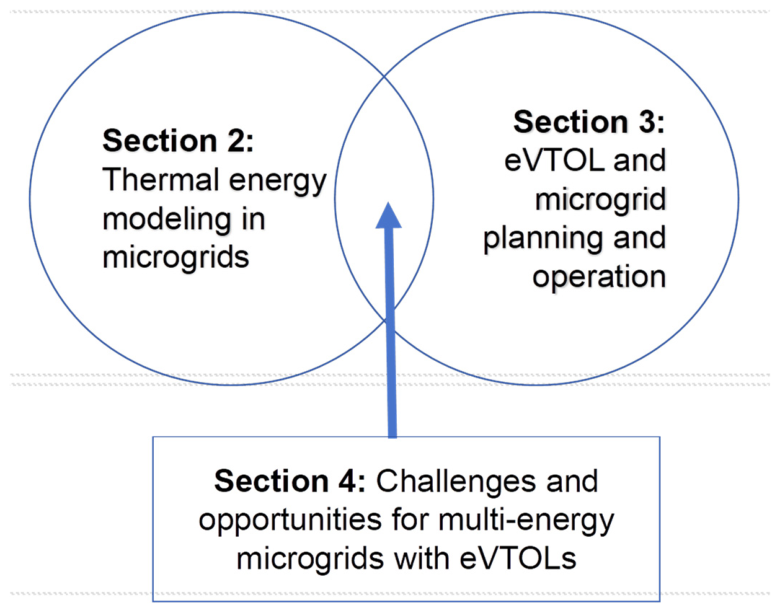
Figure 1 provides the structure of the review paper, and the aim is to identify the challenges and opportunities for MEMs for eVTOLs. Section 2 presents the recent work and discussions of thermal energy modeling in microgrids. Section 3 presents the emerging work of eVTOL and microgrid planning and operation. Section 4 identifies the knowledge gap where eVTOL would benefit from MEMs. Section 5 draws the conclusion.

2. Thermal Energy Modeling in Microgrids

Thermal energy networks have been an integral part of smart MGs and to achieve deep decarbonization. This section presents the latest review, research and development in MEMs and identifies the assets and systems which relate to thermal energy.

2.1. Review Articles

Yan et al. [16] provided a review on the application of thermal energy modeling in optimal energy management of MGs. The work emphasized that TES technology can utilize originally abandoned wind energy and electricity to generate heat, thereby effectively reducing carbon emissions from coal-fired heating and improving air quality. Currently, a large amount of research has focused on the integration of renewable and low-carbon emission power generation technologies but has not yet explored innovative transportation technologies, including eVTOL vehicles.
Twaisan and Barışçı [17] examined the research on MG technologies. The paper also introduces and analyzes the modeling and optimization strategies of distributed energy resources (DER), as well as system control methods for DER and MG. The review results show that applying multimodal indicators, which include financial, technological, ecological, and social aspects of MG, enhances the responsiveness of the community and stakeholders. The considered MG configuration includes multiple combined heat power units, boilers, and diverse DER and distributed generators. Furthermore, compared to grid-connected operation, the overall operating cost of the microgrid is notably higher in isolated mode.

2.2. Research Articles

Dong et al. [18] proposed an optimal scheduling model for an integrated energy microgrid, incorporating hybrid structure electric–thermal energy storage. This model integrates the strengths of both centralized and distributed structures. Meanwhile, the study constructs a bi-level optimization model with the hybrid energy storage operator (HESO) and microgrid users as distinct stakeholders. Through optimal scheduling, the profits of HESO and the energy consumption expenses of the microgrid are evaluated, and the capacity of energy storage facilities is optimized. Introducing HESO into the microgrid can effectively lower the energy consumption cost of users.
Nazari et al. [19] introduced a frequency-based energy management scheme (FEMS) for a residential MG operating in islanded mode, utilizing a lithium-ion battery energy storage system (LIBESS) and DER. During peak-load periods, the LIBESS manages primary frequency regulation and energy control, while the dispatchable DGs take care of the base load. Since thermostatically controlled loads (TCLs) constitute a significant portion of the MG load profile, particularly during summer peak times, the paper explores the use of TESs rather than traditional TCLs to provide cooling energy and maintain indoor temperatures within comfort limits. TESs can supply cooling energy even when the islanded MG faces limited power generation. As a result, the overall energy consumption of the MG and the necessary lithium-ion battery capacity for energy management are significantly reduced. The findings indicate that replacing TCLs entirely with TESs reduces the required lithium-ion battery capacity by 70% compared to the scenario where TCLs are not replaced.
Córdova et al. [1] investigated the coordinated control of TCLs to address short-term power imbalances, focusing on their integration into microgrid operations via aggregate TCL models. Specifically, they developed two computationally efficient and precise aggregate TCL models: one virtual battery model that captures the overall flexibility of TCLs by accounting for solar irradiance heat gains and wall/floor heat transfers, and a frequency transient model that reflects the collective dynamics of TCLs, taking into consideration communication delays, model uncertainty, and time-variability. These proposed aggregate TCL models were subsequently employed to design an effective energy management systems (EMS) that incorporates TCL flexibility and to analyze the effects of TCL integration on microgrid operation and frequency regulation. Detailed computational experiments based on frequency transient and thermal dynamic models are provided, showcasing the accuracy of the developed aggregate TCL models and highlighting the economic and reliability improvements achieved by integrating TCLs in microgrid operations through these models.
Cui et al. [20] pointed out that the swift advancement of Internet and cloud computing technologies has driven the growth of data center scale, leading to a sustained rise in the need for data processing and storage. This trend not only increases energy consumption but also makes thermal management a crucial aspect of energy management in data centers. A capacity configuration approach is introduced for the main thermal management components of data center microgrids, including electric boilers, cooling systems, and heat pumps. This approach not only takes into account the uncertainties of the power source and load but also makes full use of the flexible characteristics of various resources within data centers, such as the adjustment capabilities of diverse batch processing loads, the thermal inertia of air, and the recovery of waste heat, thereby greatly enhancing energy efficiency and improving the system’s economic and flexible performance. Furthermore, a wind power scenario generation method based on conditional least squares generative adversarial networks is proposed to enhance the quality of wind power scenarios, along with the establishment of a stochastic optimization model. Taking a data center microgrid in a specific province as a case study, the model’s effectiveness is demonstrated, and a sensitivity analysis of the related parameters offers valuable guidance for microgrid planning. This research introduces a novel viewpoint and tool for thermal management in data center microgrids and the integrated use of renewable energy, which holds significant importance in promoting the enhancement of energy efficiency and sustainable development in data centers.
Jin et al. [21] emphasized that traditional microgrids encounter issues like high expenses, waste heat, and considerable polluting emissions. Hydrogen energy systems can lower costs and generate zero emissions. Thus, this paper suggests a coscheduling approach for power and equipment waste heat to tackle the economic and environmental dispatch issue in hydrogen microgrids. Initially, the paper constructs a coscheduling model for power and heat in hydrogen microgrids without the inclusion of thermal storage. In terms of optimization techniques, the study integrates the Improved Honey Badger Algorithm, which features piecewise mapping initialization and a segmented optimal decreasing Levy flight strategy. Sensitivity analysis is applied to fine-tune the parameters of the Improved Honey Badger Algorithm and to evaluate its performance against other approaches. Furthermore, the paper introduces a comparison framework based on the Technique for Order Preference by Similarity to Ideal Solution model to determine algorithms that offer the best trade-off between solution quality and efficiency for the economic and environmental dispatch issue in hydrogen microgrids. The overall cost of the hydrogen microgrid is decreased by 16.47% compared to a conventional microgrid. In addition, the Improved Honey Badger Algorithm lowers the total cost of the hydrogen microgrid by 5.5% compared to the standard Honey Badger Algorithm.
Zhang et al. [22] stated that the widespread penetration of renewable resources and the integration of distributed energy coupling equipment drive the advancement of MEMs. Nevertheless, the uncertainties arising from both generation and demand sides make the energy management issue in MEMs a challenging one. Centralized and decentralized approaches often rely on extensive local data that include user information or a precise system model to achieve optimal solutions, which are difficult to acquire in real-world scenarios. Moreover, transmitting such local data might raise privacy issues and create additional communication overhead. To address these challenges, the authors introduced a new physical perception-based federated learning algorithm for optimizing scheduling in MEMs with varying load levels. In light of the potential model leakage risk during model transmission, a data encryption mechanism is added to stop malicious attackers from extracting meaningful information from the model parameters. A deep reinforcement learning approach based on Lagrangian principles is also proposed to maintain safe operations under physical constraints. Consequently, the study constructs an integrated secure energy management framework that accounts for decision-making security, privacy protection, and secure data transmission.
Zheng et al. [23] stated that the energy management of a community-scale microgrid includes scheduling hybrid energy storage to handle both surplus and deficit in the electric power market. Conventional economic scheduling at the community scale depends on model-based techniques that require precise system parameters and reliable uncertainty forecasts. The authors introduced a data-driven reinforcement learning strategy tailored for community-scale microgrids equipped with hybrid energy storage. The chosen method is the soft actor–critic, which is an actor–critic, off-policy, stochastic approach incorporating entropy maximization to maintain a balance between exploration and exploitation. The soft actor–critic-based strategy was implemented for the operation of electrical and thermal storage units under time-of-use electricity pricing and unpredictable renewable energy output. A case study is provided, focusing on community-scale microgrids using actual electricity and heat demand data. The simulation outcomes indicate that the soft actor–critic algorithm outperforms other reinforcement learning techniques across various scenarios, with at least a 3.7% reduction in average training time. Additionally, the suggested storage management system lowers the average daily operation and maintenance expenses by more than 10% in summer and over 20% in winter. Simultaneously, microgrid scheduling using the soft actor–Critic algorithm enables millisecond-level adjustments. The results demonstrate that the algorithm prevents constraint violations, consistently progresses toward the optimal solution, and supports real-time scheduling. Simulations validate the effectiveness of the proposed approach.
Li et al. [24] stated that multi-energy rural microgrids possess both economic potential and the ability to coordinate multiple energy sources, presenting a promising energy management approach in rural regions. The researchers investigated an energy scheduling strategy for a multi-energy rural microgrid incorporating renewable energy and biomass resources, with the goal of meeting rural electricity, heating, natural gas, and irrigation needs in a cost-effective manner. In terms of mathematical formulation, biomass flows are modeled using a differential dynamics approach based on anaerobic biomass fermentation. The irrigation system is precisely formulated by thoroughly considering meteorological data such as ambient temperature and precipitation. To address the uncertainties in precipitation, reservoir inflows, renewable power generation, and electrical and thermal load demands, a two-stage stochastic optimization approach is applied, transforming the proposed model into a stochastic mixed-integer quadratic programming problem. In order to reduce the computational complexity caused by integer variables and improve solving efficiency, a scenario decomposition algorithm known as progressive hedging is utilized to break down the stochastic mixed-integer quadratic programming into subproblems based on scenarios, which are then solved concurrently. Ultimately, the simulation outcomes confirm the efficacy of the proposed multi-energy rural microgrid scheduling approach and the performance of the progressive hedging algorithm.
Komeili et al. [25] stated that the integration of CHP units with DER encourages power systems by establishing MEMs. The authors introduced a day-ahead scheduling strategy for MEMs. Renewable distributed generators are considered essential components of contemporary power systems, potentially increasing the system’s uncertainty. Information gap decision theory is employed to manage the variability of renewable sources. In addition, a scenario-based stochastic method is utilized to represent the uncertainty in electricity prices within this framework. A hybrid optimization model combining stochastic and information gap decision theory approaches is proposed for efficient energy management in MEMs. Based on this strategy, the operation of multi-carrier MG becomes resilient to uncertainties while ensuring minimal profit. The problem is structured as a mixed-integer linear programming formulation. Eventually, the suggested energy management technique is applied to a sample MEM. The outcomes demonstrated how the MG operator’s risk-averse nature can influence her/his decision-making.
Ghasemi et al. [26] studied the dual-objective economic and environmental optimization problem for microgrids modeled as energy hubs, based on distributed generations and CHP units. Due to the implementation of planning for the residential sector, both electric and thermal loads are optimally provided in the proposed approach. In this research, responsive loads and charging–discharging management strategies for EVs are employed to balance the load curve, assisting grid operators in reducing operating costs and environmental pollutant emissions. In other words, through the implementation of demand response programs, electricity consumption has been shifted from peak hours to low-load periods. The charging–discharging management strategy for EVs has also significantly improved the performance of microgrids by charging during low-load hours and discharging during peak hours. It is suggested to further investigate factors related to wind power uncertainty in energy hubs. If possible, nonlinear factors should also be simulated.
Tian et al. [27] stated that the presence of EVs in microgrids is increasing significantly. Nevertheless, the randomness of EV charging patterns creates substantial challenges in harnessing their scheduling potential. To address this, the researchers introduced an optimization approach for MG incorporating EVs with peer-to-peer transactions. This study contributes to the sustainable growth of MG amid widespread EV integration. First, a new collaborative operation model involving peer-to-peer transactions is designed, where influencing factors of EV charging are taken into account to represent its uncertainty, and the process of energy trading within the EV-integrated microgrid in peer-to-peer transactions is outlined. Second, cost models for the MG integrated with EVs are developed. Third, a three-level optimization method is suggested to streamline the solution process. It breaks down the scheduling problem into three manageable subproblems and reorganizes them using Lagrangian relaxation. Lastly, case analyses show that the proposed method improves the distribution of EV loads, lowers the total operating cost of the EV-integrated MG, and boosts the economic performance of each MG involved in peer-to-peer transactions.
Jiang et al. [28] noted that MGs offer an efficient approach to address the challenges of renewable energy sources connected to the grid, thanks to their flexibility and tuning capability. A stochastic optimization strategy was introduced by the authors to engage in energy market operations, taking into account demand response. The findings showed that operating costs were reduced when MGs adopted demand response initiatives. Moreover, demand response could transfer energy usage from peak to off-peak periods and smooth the load profile. Consequently, a scheduling model was introduced for managing energy carriers and reserves, incorporating power and natural gas grid security constraints in interconnected hubs and responsive load involvement by employing the developed water wave optimization algorithm. This model’s objective function focused on reducing the operational expenses of sources supplying electrical and thermal loads in the proposed MG. Water wave optimization is a metaheuristic algorithm derived from the dynamics of water waves. The interactions of waves on the ocean surface are intricate yet fascinating, which can be harnessed to tackle optimization challenges. In this method, each solution is represented as a water wave and evolves within the search space through the mechanisms of propagation, refraction, and decay of water waves or solutions. The adoption of this approach is attributed to its structural simplicity, elitism, and capacity to avoid local optima, facilitated by diverse search operators and generational mutation. The outcomes demonstrated a reduction in operating expenses through the engagement of electrical- and thermal-responsive loads alongside thermal energy storage systems. The model’s results highlighted a relationship between electricity pricing and natural gas usage, suggesting that multi-carrier energy grids need to be analyzed and optimized concurrently.
Yan, Deng, and Li [29] presented an innovative strategy to tackle the complex challenges related to energy hubs, concentrating on a range of issues in energy transmission and generation, especially in gas and electricity networks. A primary focus is on the economic viability of energy hubs, managing uncertainties amplified by the diversity of energy carriers. The developed model includes an energy hub with electrical input and output, covering natural gas, electricity, and thermal energy. Electricity supply is supported by multiple sources, such as bilateral agreements, power market acquisitions, and a cogeneration unit. Thermal energy is delivered through a heating furnace and a tri-generation unit capable of simultaneous cooling, heating, and power. To handle uncertainties in market prices, the model integrates probabilistic assessments for the following day’s electricity rates. Significantly, the model considers the complexities of electric vehicle charging modes, viewing them as a two-way energy resource for both production and consumption, which supports efficient demand-side management. A new crow search-based optimization technique is introduced to manage the inherent complexity, improving both local and global search efficiency. The proposed approach is validated through a detailed case study on a micro-energy grid, analyzing four different scenarios during a typical summer day. The results indicate that Case 2, which integrates photovoltaic and wind turbines, performs considerably better than Case 1, achieving a 10.8% surplus in electricity generation. Moreover, the crow search optimization algorithm shows a 50% enhancement compared to other methods, demonstrating its effectiveness in optimizing microgrid performance.
Abdulnasser et al. [8] claimed that energy hubs are increasingly integrated into microgrids to facilitate the local production, transmission, and preservation of diverse energy types. Nevertheless, challenges remain in creating an operational plan for the various energy resources within the energy hubs to achieve the lowest possible expenses and environmental impacts. This paper introduces a stochastic multi-objective optimization framework for efficient day-ahead scheduling of microgrids through energy hubs. The model effectively coordinates non-dispatchable distributed generation units, such as wind turbines and photovoltaic systems, along with energy storage technologies, including compressed air energy storage and battery storage systems. In addition, the thermal system is constructed by incorporating solar heat collectors, heat produced during compressed air energy storage discharge, and thermal energy storage. The model also addresses the unpredictability associated with wind speed, solar irradiance, and household energy consumption. A demand response program is applied to manage residential and plug-in electric vehicle loads, aiming to smooth the load profile and enhance cost efficiency. After implementing the demand response program, a 9.87% and 21.41% reduction in operational cost and emissions is observed, respectively. Additionally, the cost of purchased electricity and compressed air energy storage operation is reduced by 13.41% and 45.04%, respectively. Several case analyses are carried out, and a comparison with previous studies is made to validate the proposed method. The simulation outcomes confirm the effectiveness of the suggested stochastic strategy for optimal day-ahead scheduling.
Fei et al. [30] asserted that the voyage environment, such as weather conditions, directly affects the propulsion load of a ship and may even challenge its safe journey. The authors introduced a new operation strategy based on weather routing for a multi-energy ship microgrid, which not only manages the heterogeneous onboard energy flows (e.g., electricity, thermal energy, green hydrogen, and freshwater) but also optimizes the voyage route and speed in response to dynamic weather conditions. Specifically, a comprehensive model for weather-based route selection and a propulsion load model dependent on weather are established, considering essential environmental factors like wind, waves, and drifting ice. To reduce the risk from uncertainties in environmental factors and cold ironing costs, a risk-averse two-stage stochastic programming approach combined with a rolling horizon method is applied. In solving the model, a customized progressive hedging algorithm is designed to improve computational efficiency. Case studies based on an actual cruise voyage in a Nordic country verify the effectiveness of the proposed model and the performance of the developed solution techniques.
Correia et al. [31] presented a comprehensive assessment of the technical and economic performance of a building-level microgrid integrating photovoltaic generation, battery energy storage, and electric vehicles within a vehicle-to-building framework. A key contribution of this work lies in its use of real on-site operational data to quantify system efficiencies, offering practical insights into the design and deployment of such microgrid configurations. Through a series of experimental evaluations, the study calculated the overall efficiencies of individual components and the system as a whole under real operating conditions. In addition to technical analysis, an economic evaluation was conducted to examine the benefits of coordinating battery storage with V2B systems, particularly in enhancing operational flexibility and reducing costs. The findings indicate that integrating these resources can significantly improve self-consumption rates and increase system flexibility. However, the effectiveness of leveraging private electric vehicles in public building contexts is limited by user-dependent factors such as parking duration and availability. Moreover, the economic viability of the system is highly sensitive to external conditions, including tariff variability, the capital and degradation costs of energy storage systems, and the efficiencies of the energy conversion chain.
In summary, the aforementioned works demonstrate that MEMs can achieve a lower cost and high efficiency. Several new optimization algorithms were adopted to address the highly nonlinear optimization problem. Table 1 presents the comparison of the work reviewed. Existing approaches to microgrid and multi-energy system optimization remain predominantly energy-centric and exhibit several structural limitations that hinder their applicability to emerging urban mobility systems. Most studies focus heavily on cost minimization, occasionally incorporating emissions or profit, but largely overlook broader system-level objectives such as service efficiency, congestion management, and user-oriented performance metrics, thereby failing to capture the operational complexity of integrated urban systems. Although transportation elements are sometimes included, they are narrowly represented—primarily limited to electric vehicles and, in rare cases, other modes such as ships—while being treated merely as flexible loads or storage resources rather than as dynamic, spatial-temporal traffic systems. This simplification neglects essential features such as routing, scheduling, traffic flow interactions, and multimodal coordination. Furthermore, while some works incorporate stochastic or nonlinear programming optimization techniques, uncertainty modeling is largely confined to the energy domain (e.g., renewable generation and market prices), with little attention given to transportation-related uncertainties such as fluctuating demand patterns or network congestion. The coupling between energy and transportation systems is therefore weak and largely unidirectional, lacking true co-optimization mechanisms that jointly consider mobility behavior and energy constraints. As a result, these approaches fall short of representing integrated, high-density urban environments. In particular, the paradigm of urban air mobility (UAM) is entirely absent, as none of the reviewed studies account for low-altitude, high-frequency operations, eVTOL-specific constraints, vertiport infrastructure, or the need for real-time, distributed traffic management in three-dimensional urban airspace. Consequently, current models lack the scalability, adaptability, and system integration required to support next-generation urban mobility ecosystems, highlighting a significant research gap in incorporating UAM into coupled energy–transportation optimization frameworks.

3. eVTOL and Microgrid Planning and Operation

After reviewing recent studies on MEMs, it is evident that transportation-related energy demand has rarely been incorporated. Therefore, this section focuses on examining the state-of-the-art research at the intersection of UAM and energy systems.

3.1. Review Articles

Su et al. [32] explained that eVTOL aircraft have attracted considerable interest as a fundamental component of UAM, a promising approach to solving urban transportation issues by utilizing low-altitude airspace within cities. Guaranteeing the safe functioning of eVTOL is essential for UAM implementations, which involve multiple specialized areas such as aerodynamics, control, structures, and power systems. The authors comprehensively examine the features of various design layouts, covering multi-rotor, lift + cruise, and tilt-rotor models of eVTOL. The researchers investigated the strengths and weaknesses of each category of eVTOL. Following this, the primary design challenges are explored, and difficulties in the eVTOL control system development are examined from the viewpoints of the general control framework and individual components, such as sensors, actuators, the controller, and the command generator. This work addressed the shortcomings in eVTOL design from a control standpoint and offers several strategies for the application of eVTOL.
Swaminathan et al. [33] remarked that flying cars and eVTOL aircraft might represent the future of personal transportation and taxi services, potentially leading to a significant reduction in greenhouse gas emissions. Currently, more than 250 companies are working on the development of flying cars and eVTOLs, with at least a few models anticipated to enter the commercial market in the near future. The authors outlined the prevailing trends and technologies related to VTOL flight systems and categorized the vehicles to assess their strengths and weaknesses. Most flying cars under development lack VTOL capability due to the high power demands required for takeoff and landing in a vehicle suitable for road use. The researchers suggested powertrain designs for enabling VTOL in flying cars by integrating dual energy sources like fuel cells and batteries. Additionally, the feasibility of employing a single propulsion system for both driving and flying modes was examined. General design principles were provided for the proposed powertrain to evaluate maximum takeoff weight (MTOW), power and energy requirements, and the capacities of the energy sources. Moreover, the technologies of key powertrain elements, including electric motors and power converters, were also addressed.
Xiang et al. [34] pointed out that eVTOL aircraft have become a hotspot in academic research and commercial applications. The authors provided a comprehensive review of the latest research related to autonomous eVTOL. The article analyzes the key technologies involved in autonomous eVTOL, including automatic flight control, sensing and perception, safety and reliability, and decision-making. It also explores the technical, regulatory, and societal challenges associated with the full integration of autonomous eVTOL into advanced air mobility. The authors conclude with a discussion of future development trends and recommendations, emphasizing the crucial importance of integration with air traffic management, urban infrastructure, and human–machine interaction. The article aims to provide valuable reference materials for those engaged in autonomous eVTOL technology research, policy formulation, and industrial development.

3.2. Research Articles

Kim [35] pointed out that mobility on demand represents a new concept of personal transportation that meets passengers’ needs in real time, with UAM being a part of mobility on demand made possible by progress in electric vertical takeoff and landing aircraft. The characteristic of responding to demand in mobility on demand makes scheduling vehicles optimally a challenge, which has drawn considerable interest recently. Nevertheless, existing studies on on mobility demand scheduling often assume a uniform fleet, which may not always be accurate. Kim [35] introduced a fresh approach to the scheduling issue in UAM with a mixed fleet and developed particle swarm optimization and a genetic algorithm that incorporate a greedy method to maintain solution feasibility. These algorithms are applied using a model-predictive control framework to handle the demand-responsive feature effectively. Consequently, they can generate near-optimal results quickly. Through a numerical test involving six distinct fleet compositions, the influence of fleet diversity is examined. The findings reveal that fleet heterogeneity influences both service quality and operational efficiency, showing a balance: more vehicles and seats improve service but reduce efficiency.
Arafat and Moh [36] stated that unmanned aerial vehicles, often referred to as drones, have been utilized in the fight against the COVID-19 pandemic via applications such as delivering medical supplies, conducting aerial spraying, and monitoring public areas. During a pandemic, using drones for delivery is a promising and efficient way to cut down on transportation time, reduce costs, and limit infection exposure. Nevertheless, due to the limited battery life and the restricted capabilities of unmanned aerial vehicles during flight missions, executing multiple deliveries over long distances in one trip is challenging. In this study, we explore methods to prolong drone flight duration by incorporating charging stations and enabling multiple deliveries within a single mission. For long-range, multi-stop deliveries, optimization techniques are essential to design customer delivery networks, charging station placements, and delivery routes. The researchers introduced a joint routing and charging strategy (JRCS) consisting of three stages to achieve multiple deliveries in one trip. The initial stage involved clustering customers in a delivery area based on their proximity to the nearest charging station and the unmanned aerial vehicles’ maximum flight range. The second stage focused on dividing the flight path and determining intersegment routes between the depot, customer locations, and charging stations, considering the maximum flight range and safe flying distance. By integrating drone routes with charging stations, the number of required stations is minimized, and delivery safety is ensured. Lastly, mixed-integer linear programming was formulated to address the drone delivery route issue. Simulation outcomes indicate that the proposed JRCS performs better than current delivery strategies across various performance indicators.
Huang et al. [37] stated that drones will serve as the primary method for transporting goods in delivery services prior to 2040, and the advancement of passenger drones will also expand traditional ground transportation for humans to low-altitude airspace transportation. In recent years, the literature has suggested utilizing renewable power sources, battery swapping, and charging stations to replenish the energy of drones. However, the unpredictability of renewable power generation cannot ensure a consistent supply of electricity for drones. It is also highly likely that numerous drones might require charging simultaneously, leading to bottlenecks at charging stations or battery swapping facilities and disrupting the scheduled operations of drones. Although some studies have proposed using mobile electric vehicles equipped with wireless charging technology to supply power to drones in urgent situations, these methods remain overly simplistic and come with various limitations. Moreover, diverse charging methods, such as fixed charging stations, battery exchange services, and wireless charging for drones, should be available to accommodate the unique requirements of each drone. In light of these issues, the authors introduced a combined routing and charging management strategy to fulfill the operational demands of different drones by offering customized routing and charging plans, while also alleviating the power demand on renewable energy sources during peak hours. The authors conducted multiple simulations to assess the effectiveness of the proposed mechanism. The simulation outcomes demonstrated that the developed algorithm can assist drone operators in meeting the specific operational needs of each individual drone.
Guo et al. [38] investigated the eVTOL aircraft recovery problem arising from airport shuttle and intercity flight use cases in UAM. A unique characteristic of the eVTOL aircraft recovery problem is the allowance of deferred and canceled charging tasks. To enhance recovery flexibility, an optional charging scheme is introduced. The integration of routing and charging in a unified approach distinguishes this problem from traditional aircraft recovery studies, making it significantly more complex. The authors created an integer linear programming model and designed a branch-and-price algorithm to find exact solutions for the eVTOL aircraft recovery problem. For the parallel pricing subproblems, a customized label setting algorithm that leverages the problem’s structure is suggested. Comprehensive experiments are carried out using instances derived from the Beijing–Tianjin–Hebei and Zhejiang Province airport clusters. Results demonstrate that the proposed algorithms can deliver efficient and rapid recovery plans in practical scenarios. The recovery cost difference exceeds 9% when comparing non-flexible charging to the flexible charging approach. The authors also perform sensitivity analysis on a critical factor—the charging time—which influences recovery cost, emphasizing its diminishing marginal value.
Zou et al. [39] formulated an energy scheduling problem for prosumer-based urban areas, where prosumers are regarded as drone charging stations for UAM. In particular, since eVTOL aircraft are considered the anticipated technology for future UAM, the authors focused on eVTOL drone taxis for passenger transportation. The objective is to minimize the overall energy supply–demand imbalance cost. This problem encompasses two key aspects: (1) matching between passengers and eVTOLs, and (2) determining energy balance strategies for each prosumer through power grid energy scheduling. For the first aspect, a destination collision-aware Gale-Shapley Matching Game approach is proposed, which comprehensively considers passengers’ distance preferences, eVTOLs’ remaining energy, and destination collision avoidance. Subsequently, a Hierarchical Agglomerative Clustering-based Multi-Agent Dueling Double Deep Q-Network with Multi-Step Bootstrapping approach is developed, where the input (i.e., energy demand) depends on the output of the first aspect. Specifically, the hierarchical agglomerative clustering method is employed to group all prosumers into several agents, reducing the input feature size for each agent. The multi-agent dueling double deep Q-network with multi-step bootstrapping approach is then applied to determine the optimal grid energy balance strategy for each prosumer. Finally, experimental results demonstrate the effectiveness of the proposed method. Notably, the imbalance cost achieved by the proposed joint method is 128.71×, 12.57×, and 11.72× lower than that of the random energy scheduling approach, independent multi-agent dueling deep Q-network approach, and double deep Q-network per cluster approach, respectively.
Shihab et al. [40] stated that fuel cost has consistently been the primary component of operating expenses for airlines. In the realm of UAM, for a firm offering aerial ridesharing, the expense of electric energy drawn from the power grid will constitute the main cost driver. Unlike conventional fuel, the electricity market is characterized by rapidly changing prices and incentives. It frequently offers significant financial rewards to consumers to assist in maintaining the balance between power generation and consumption. The researchers designed an optimal fleet dispatch framework for eVTOL aircraft to carry passengers and supply power grid services either individually or in combination. Alongside managing vehicle dispatch, the framework can also set optimal prices for passenger trips across various routes and times. The eVTOL fleet operations were influenced by two types of uncertainties: the fluctuating pricing and incentives in the dynamic electricity market, and the unpredictable nature of passenger demand caused by random trip requests. The study explored the balance between several revenue and cost elements for eVTOL fleet management. The main goals of this research include the following: (1) maximizing the first revenue stream from passenger transportation; (2) maximizing the second revenue stream from delivering frequency regulation services to the power grid; and (3) minimizing operational and charging costs. The key advantages of this approach include: (1) increasing the overall revenue from eVTOL fleet operations, leading to a more profitable aerial ridesharing business; (2) decreasing the cost for passengers, thereby making aerial ridesharing more accessible and affordable; and (3) improving the reliability and robustness of modern smart grids. The findings indicate that UAM operators can achieve higher profitability by deploying the eVTOL fleet to offer both aerial travel and power grid services concurrently, rather than focusing on a single service.
Velaz-Acera, Arcauz-Durán, and Borge-Diez [41] conducted a life cycle analysis of the application of eVTOL aircrafts in island systems. Island systems such as the Canary Islands provide an ideal framework for the early-stage application of this technology, as their topographical characteristics and population distribution fall within the autonomy range of eVTOL vehicles, offering residents access to a new service that is faster, more agile, and more efficient than current transportation models. To evaluate the environmental impact, a dual comparison approach was proposed. On one hand, a comparison between different configurations and alternative propulsion systems such as batteries and fuel cells was conducted. On the other hand, comparisons were proposed at two levels: intra-island and inter-island, to fully explore the integration potential of this type of aircraft. One of the most relevant aspects considered is the emissions associated with the charging process itself, which is particularly crucial in isolated systems with a high penetration rate of renewable energy. Based on an established flight mission profile, it is estimated that over the service life of these aircraft, CO2 equivalent emissions can be reduced by up to 50% for intra-island transportation compared to conventional means, while for inter-island travel, emissions can be reduced by up to 45%.
Chen [42] stated that autonomous electric aerial vehicles are expected to bring fundamental changes to urban infrastructure and daily commuting. Currently, electric aerial vehicles, including delivery drones and eVTOL air taxis, are constrained by limited battery endurance and vertiport capacity, making them insufficient for long-range commutes. Chen proposed a joint scheduling methodology to handle optimal routing and charging tasks for the autonomous electric aerial vehicle system. By considering the unique characteristics of on-demand electric aerial vehicles, the joint optimization problem can effectively utilize system resources. The problem is formulated by integrating charging features into the classic vehicle routing problem with time windows. To facilitate solving, Chen further transformed the nonlinear problem into a mixed-integer linear programming problem. Both the problem formulation and operational constraints have been well validated through comprehensive simulations.
Bulusu et al. [43] investigated the potential market for UAM as a multimodal transportation option within a community. To warrant public funding, UAM needs to significantly contribute to urban transportation by handling a large share of city traffic. The researchers created a method to analyze traffic demand, estimating the highest number of individuals who could gain from UAM in a metropolitan setting for specific applications. The study examined three hundred thousand cross-bay commuting journeys in the San Francisco Bay Area. The authors assessed the shift in commuter demand towards UAM based on two levels of flexibility regarding time savings and three levels of vertiport transfer durations. The findings show that, even with high time values and extended transfer times at vertiports, nearly forty-five percent of demand could still benefit from UAM during severe road congestion. When roads are mostly clear, approximately three percent of demand might still find UAM advantageous with the proper balance of commuter adaptability and transfer durations. Lastly, the approach also provides insights into the quantity, placement, and spread of demand across vertiports, which can assist in supporting UAM’s value proposition, policy development, and technological studies.
Yuan et al. [11] argued that to guarantee the sustainability and operational safety of UAM, an integrated optimization of eVTOLs and the power systems supporting these vehicles is necessary. Sensors are crucial for data collection in model optimization, particularly in highly uncertain environments. At the same time, a quantitative evaluation of the eVTOL’s safety level is vital for efficient and clear supervision. This paper tackles the issue of achieving both environmentally friendly and secure eVTOLs by introducing an integrated optimization framework. The framework reduces the operational costs of eVTOLs and power systems while increasing passenger capacity, taking into account the eVTOL’s stored energy as a safety indicator. IEEE 2668, a global standard that employs IDex to measure application maturity, is integrated to evaluate safety levels throughout the optimization procedure. A case study conducted in three Chinese cities demonstrated that eVTOLs can make use of low-cost excess energy.
Having reviewed the aforementioned work, Table 2 presents a comparison of the work and factors considered. The table indicates that current research on emerging air mobility- and drone-based transportation systems is largely centered on operational efficiency- and service-oriented objectives, such as profit maximization, travel time reduction, delivery performance, and quality of service, while energy-related considerations are overwhelmingly neglected. The majority of studies adopt a transport-centric perspective, focusing on routing, scheduling, and fleet allocation, but treat energy either implicitly or not at all, revealing a clear disconnect between mobility optimization and energy system integration. Although a range of system scales is explored—from small networks with limited vehicles and infrastructure to moderately sized vertiport systems—the models generally remain simplified and do not fully capture the complexity of large-scale, high-density urban operations. Methodologically, diverse optimization techniques are employed, including mathematical programming, heuristic and metaheuristic algorithms, and simulation-based approaches, demonstrating active development in solution methods; however, these techniques are typically applied within isolated transportation contexts rather than integrated, multi-system environments. While some studies report improvements in cost, travel time, or emissions, such outcomes are often evaluated without explicitly modeling the underlying energy supply or infrastructure constraints, such as charging availability or power system limitations. Overall, the findings highlight a strong emphasis on operational performance but a lack of holistic system modeling, particularly in terms of energy–transportation coupling, infrastructure coordination, and scalability to real-time urban deployment, pointing to a significant gap in developing truly integrated and sustainable urban air mobility frameworks.

4. Discussion

The integration of MEMs into urban systems has the potential to revolutionize energy management, particularly in terms of reducing operational costs and improving energy efficiency. Microgrids that combine electricity and thermal energy offer significant benefits, such as enhanced reliability, resilience, and the ability to balance energy supply and demand across diverse sectors. These advantages become particularly valuable as urban areas increasingly prioritize sustainability and seek to decarbonize their energy systems. By enabling the efficient use of both electricity and thermal energy, MEMs have the potential to create more adaptable and resilient systems, able to respond to the growing complexities of modern urban infrastructure. This expanded flexibility could reduce dependence on fossil fuel-based energy sources, further contributing to global climate goals.
MEMs offer a promising pathway to support the complex energy and thermal demands of UAM, particularly for electric vertical takeoff and landing eVTOL systems. Unlike conventional power systems, MEMs integrate multiple energy carriers—typically electricity, heat, and sometimes cooling—into a coordinated framework that enables higher efficiency, flexibility, and resilience. In the context of UAM, MEMs can play a critical role in managing the high-power charging requirements of eVTOL fleets, which often involve rapid, intermittent charging events at vertiports. By combining distributed generation (e.g., photovoltaics), energy storage systems (battery and thermal), and flexible loads, MEMs can buffer grid impacts, reduce peak demand, and enhance local energy autonomy. Moreover, MEMs can exploit synergies between electrical and thermal domains, for instance by recovering waste heat from power electronics or charging infrastructure and reallocating it for heating or other uses.
However, existing MEM optimization frameworks face significant limitations when extended to UAM applications. Most traditional models are designed for relatively smooth, predictable load profiles and operate on coarse temporal resolutions (e.g., hourly scheduling). In contrast, eVTOL charging introduces highly dynamic, high-power, and stochastic demand patterns that occur on much shorter timescales (seconds to minutes). These transient behaviors challenge the assumptions of steady-state operation and linearization commonly used in optimization formulations. Additionally, current frameworks often neglect the operational constraints and degradation effects associated with fast charging, such as thermal buildup, battery aging, and power electronics limitations. The coupling between electrical and thermal dynamics is also typically simplified or ignored, leading to suboptimal or even infeasible solutions under real-world UAM conditions. Furthermore, uncertainty in flight schedules, weather, and passenger demand introduces additional complexity that is not adequately captured in deterministic or static optimization approaches.
Thermal energy modeling and storage emerge as key enablers for scalable and efficient UAM infrastructure within MEMs. High-power charging of eVTOLs generates significant heat in batteries, cables, and converters, which must be managed to ensure safety, performance, and longevity. Advanced thermal modeling allows for more accurate representation of these processes, enabling coordinated control strategies that consider both electrical and thermal states for MEMs. Thermal energy storage, such as phase-change materials or hot water systems, can be used to absorb excess heat during peak charging periods and release it later for useful purposes, effectively decoupling thermal generation from demand. This not only improves overall energy efficiency but also reduces the need for active cooling systems and lowers operational costs. Additionally, integrating TES into MEMs enhances system flexibility by providing an additional degree of freedom in energy management, particularly under high variability and uncertainty. MEMs have strong potential to support UAM by providing integrated, flexible energy solutions, but require significant advancements in modeling and optimization to handle the unique challenges of eVTOL operations. Incorporating high-resolution dynamics, uncertainty, and especially thermal processes will be essential for developing robust and scalable UAM energy infrastructure.
MGs typically operate independently from the main grid, using locally generated energy sources such as solar, wind, or bioenergy. They also include mechanisms for energy storage, demand-side management, and distributed thermal energy generation. The coupling of electricity and thermal energy within these systems is advantageous for improving efficiency, as thermal energy can be produced and stored for later use, while electricity generation from renewable sources such as solar and wind power may fluctuate throughout the day and year. The ability to incorporate both energy forms into a microgrid’s design allows for greater overall system efficiency, especially in regions with variable renewable resources. Additionally, such systems offer increased flexibility and reliability, which are crucial in ensuring the continued operation of urban energy infrastructure in the face of potential disruptions or extreme events such as natural disasters or pandemics.
One of the primary motivations for developing MEMs is the reduction in energy costs. Traditional grids, particularly those relying heavily on centralized, fossil-fuel-based power plants, often struggle with inefficiencies and high transmission losses. Microgrids, by contrast, provide localized energy production and consumption, which reduces transmission losses and the associated costs. When designed effectively, MEMs can generate energy locally, store it in batteries or thermal storage systems, and use it more efficiently than traditional grids. Furthermore, by incorporating renewable energy sources, microgrids can reduce the cost of electricity by mitigating the need for imported fossil fuels, which is particularly important in regions where energy security is a growing concern. As such, the economic viability of MEMs is a major selling point, not just in terms of reducing the cost of energy, but also in increasing the resilience and sustainability of energy systems.
While the operational advantages of MEMs are clear, their potential for transforming urban energy infrastructure extends beyond just local energy production and cost reduction. The transportation sector, for example, stands to benefit significantly from the widespread adoption of MG systems. Specifically, much of the research on MG optimization has focused on EVs, which are increasingly seen as key players in reducing urban carbon emissions. EVs, with their growing presence in cities worldwide, represent a significant opportunity to integrate electric mobility into MG systems. The optimization of microgrid operations to accommodate EVs is well-established in the literature, particularly concerning vehicle charging stations, energy management, and demand-side strategies.
However, there remains a notable gap in research that explores the role of microgrids in supporting emerging forms of UAM, such as eVTOL aircraft. UAM is expected to revolutionize urban transport by enabling high-speed, low-emission aerial transportation, which could ease congestion, reduce carbon footprints, and create new opportunities for mobility within cities. With the growing interest in eVTOL technologies, there is an increasing need to understand how microgrids can support their operation and help decarbonize the aviation sector, just as they are being utilized in the ground-based transportation sector. At present, most of the research on UAM and eVTOL operations focuses on aspects such as vehicle design, routing, airspace management, and noise reduction. However, little to no attention has been paid to the energy demands associated with UAM operations and how these might be integrated into existing or future microgrid systems. The question of how MG can decarbonize UAM is therefore a key research challenge of global interest.
The operation of eVTOL aircraft depends on efficient energy systems to ensure their feasibility and sustainability. Unlike conventional aircraft, which are powered by fossil fuels, eVTOLs rely on electric propulsion systems. These vehicles will require significant charging infrastructure, often located in close proximity to urban centers. Given the high energy demand that could arise from the operation of large fleets of eVTOLs, managing this demand in a way that supports grid stability and minimizes environmental impact is a critical challenge. Existing research on MG optimization generally focuses on meeting the energy needs of ground-based electric vehicles, with some attention to the integration of renewable energy sources such as solar and wind power. However, with the introduction of eVTOLs into urban airspace, there is a need to develop optimized strategies for charging and energy management that consider both the dynamic charging requirements of eVTOLs and the intermittent nature of renewable energy production. Additionally, as eVTOLs become more ubiquitous, they may further increase the overall energy demand within MG, potentially straining their capacity to handle both transportation needs and residential or commercial energy demands.
A central issue in the planning of eVTOL operations is the assumption that energy will always be available, with little consideration given to the availability of power from the grid or the microgrid system. This assumption may work in the short term, but as urban areas incorporate more renewable energy sources and the demand for electricity becomes more variable, energy supply management will become increasingly difficult. In the context of microgrids with high renewable penetration, this assumption is particularly problematic. While renewable energy sources such as solar and wind offer significant environmental benefits, they are inherently intermittent, with energy generation fluctuating based on time of day and weather conditions. Without proper energy storage systems and management strategies, this variability could lead to power shortages during periods of high demand, such as when many eVTOLs need to charge simultaneously. Moreover, as the use of UAM technologies increases, the strain on the microgrid could grow, necessitating the development of more sophisticated energy management strategies that take into account the unique characteristics of eVTOL operations.
To address this challenge, future research must focus on developing dynamic, real-time optimization techniques for managing energy supply and demand in microgrids, particularly when considering the unique energy demands of UAM operations. Advanced energy management systems could be used to predict and adapt to fluctuations in energy supply and demand, ensuring that both ground-based and aerial electric vehicles receive the energy they need without overloading the grid. These systems could incorporate data from various sources, such as weather forecasts, renewable energy generation models, and vehicle demand patterns, to optimize energy distribution and minimize the risk of power shortages. Additionally, integrating energy storage systems such as batteries or thermal storage could help to mitigate the impact of renewable energy variability by storing excess energy during periods of low demand and releasing it when demand spikes. This would ensure that the microgrid can continue to function efficiently, even during periods of high eVTOL charging demand.
The potential for mutual benefits between microgrid operations and UAM is also a critical area of investigation. In theory, if both microgrids and UAM operations are optimally managed, they could complement each other in a way that enhances the economic and environmental performance of both systems. For example, microgrids with high renewable energy penetration could be designed to prioritize eVTOL charging during periods of high renewable generation, such as midday for solar or during windy conditions for wind energy. By synchronizing energy demand from UAM operations with renewable energy generation, microgrids could avoid relying on fossil fuel-based power sources during peak periods and reduce overall carbon emissions. Similarly, the demand for eVTOL charging could be used to stabilize the microgrid by providing a new source of load that helps balance the supply and demand for electricity. In this way, microgrids and UAM operations could create a “win-win” situation, where the efficiency of both systems is maximized, and energy costs are minimized.
Moreover, UAM operations could also play a role in supporting microgrid resilience. In the event of an energy shortage or grid failure, eVTOLs could potentially be used to transport energy storage systems or critical supplies to areas in need, further enhancing the overall resilience of the urban infrastructure. This could become particularly valuable in the context of emergency response efforts or natural disasters, where traditional transportation systems may be disrupted. Additionally, by integrating UAM systems into microgrids, cities could take advantage of synergies between different sectors of urban infrastructure, optimizing resource use and ensuring that energy needs are met in an efficient and sustainable manner.
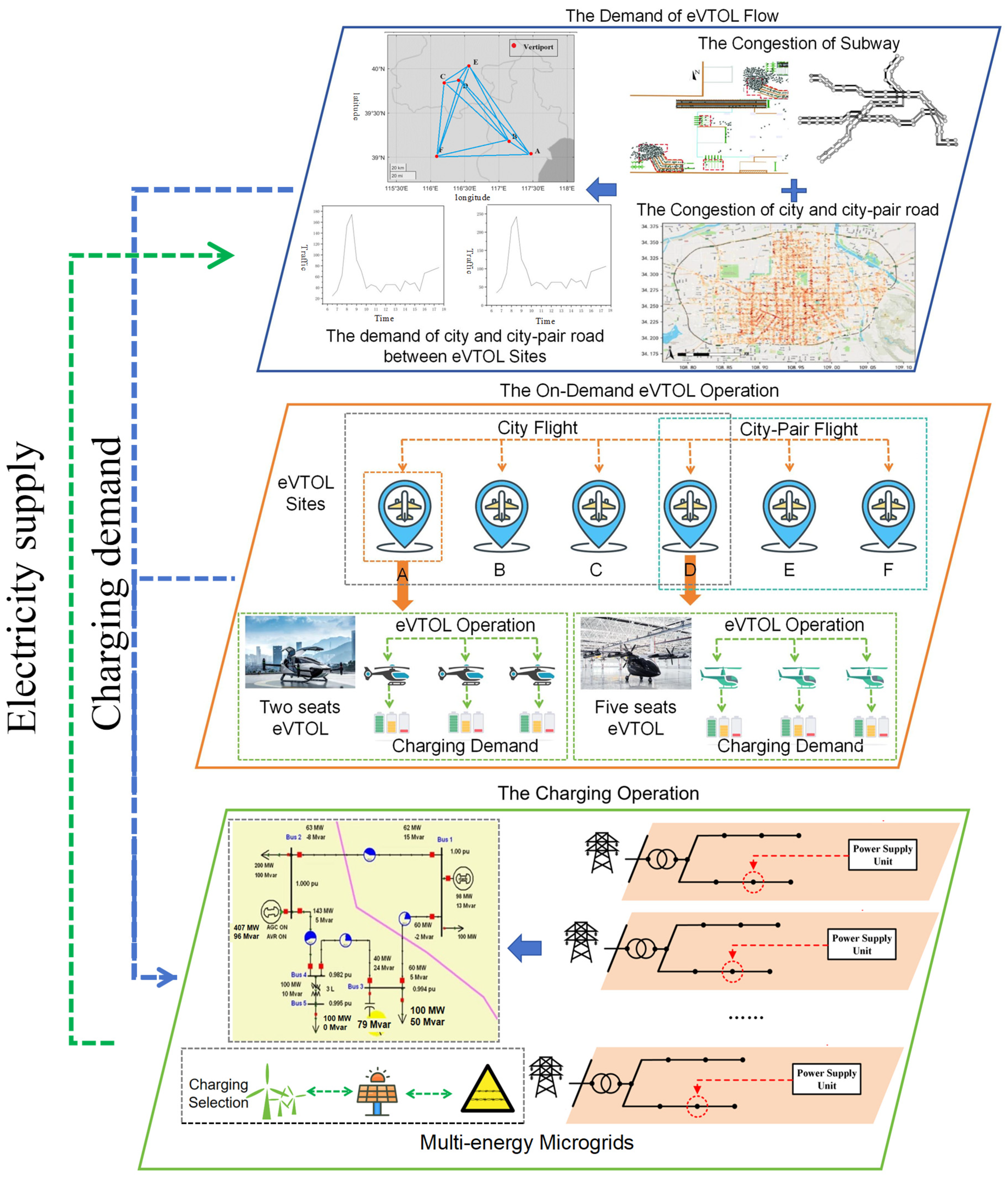
Given the complexity of integrating MG with UAM operations, further research is needed to explore the operational, economic, and environmental implications of this integration. Key questions remain, including how microgrids can best accommodate the unique energy needs of eVTOLs, how energy management systems can be optimized to balance the competing demands of different users, and how the interaction between microgrids and UAM operations can be used to improve the overall resilience and sustainability of urban infrastructure. By addressing these challenges, researchers and practitioners can pave the way for the development of more sustainable, efficient, and resilient urban transportation and energy systems. Figure 2 presents a conceptual framework which shows the relationship between the MEM and UAM systems and eVTOLs, which demonstrates that the decision making for both systems is related and highly complex.

5. Conclusions

MEMs provide an integrated platform to manage the extremely high, fast, and intermittent power demands of eVTOL charging. By coordinating multiple energy carriers—electricity, heat, and potentially cooling—MEMs can combine local renewable generation, battery storage, and grid interaction to supply rapid charging while mitigating peak loads and grid stress. Importantly, MEMs also enable the coupling of electrical and thermal processes, allowing waste heat from high-power charging to be captured, managed, or stored, thereby improving overall system efficiency. This integrated flexibility makes MEMs a critical enabler for scalable, reliable, and cost-effective eVTOL charging infrastructure at vertiports. For the first time, this paper provides a first-time exploration of the relationship between MEMs and urban air mobility. A substantial body of research has been dedicated to enhancing economic efficiency and reducing emissions in MEMs. Moreover, these systems have been demonstrated to effectively meet the charging demands of electric vehicles. Nevertheless, a significant research gap remains concerning the decarbonization of UAM, particularly in understanding how MG can be operated to support the development of an economically viable and cost-effective smart city. Thermal energy storage and related systems are expected to play a crucial role in decarbonizing transportation demand, offering a solution that is both cost-competitive and high-performing.

Author Contributions

Conceptualization, Y.Y., C.S.L., L.L.L. and Z.Z.; resources, Y.Y. and C.S.L.; writing—original draft preparation, Y.Y., C.S.L., L.L.L. and Z.Z. All authors have read and agreed to the published version of the manuscript.

Funding

This research was funded by the Tianjin Natural Science Foundation (24JCQNJC00280) and the National Natural Science Foundation of China (24FAA01845).

Data Availability Statement

No new data were created or analyzed in this study. Data sharing is not applicable to this article.

Conflicts of Interest

The authors declare no conflicts of interest.

Abbreviations

The following abbreviations are used in this manuscript:
CHPCombined heat and power
DERDistributed energy resources
eVTOLElectric vertical takeoff and landing
EVsElectric vehicles
HESOHybrid energy storage operator
MEMsMulti-energy microgrids
MGMicrogrids
TCLThermostatically controlled loads
TESThermal energy storage
UAMUrban air mobility

References

  1. Córdova, S.; Cañizares, C.A.; Lorca, Á.; Olivares, D.E. Aggregate Modeling of Thermostatically Controlled Loads for Microgrid Energy Management Systems. IEEE Trans. Smart Grid 2023, 14, 4169–4181. [Google Scholar] [CrossRef]
  2. Wang, Y.; Li, J.; Yuan, Y.; Lai, C.S. Optimizing Urban Air Mobility: A Ground-Connected Approach to Select Optimal eVTOL Takeoff and Landing Sites for Short-Distance Intercity Travel. IEEE Open J. Veh. Technol. 2025, 6, 216–239. [Google Scholar] [CrossRef]
  3. Laghari, A.A.; Jumani, A.K.; Laghari, R.A.; Nawaz, H. Unmanned Aerial Vehicles: A Review. Cogn. Robot. 2023, 3, 8–22. [Google Scholar] [CrossRef]
  4. Lai, C.S.; Jia, Y.; Lai, L.L.; Xu, Z.; McCulloch, M.D.; Wong, K.P. A Comprehensive Review on Large-Scale Photovoltaic System with Applications of Electrical Energy Storage. Renew. Sustain. Energy Rev. 2017, 78, 439–451. [Google Scholar] [CrossRef]
  5. Xie, H.; Song, G.; Shi, Z.; Zhang, J.; Lin, Z.; Yu, Q.; Fu, H.; Song, X.; Zhang, H. Reinforcement Learning for Vehicle-to-Grid: A Review. Adv. Appl. Energy 2025, 17, 100214. [Google Scholar] [CrossRef]
  6. Mrozik, W.; Rajaeifar, M.A.; Heidrich, O.; Christensen, P. Environmental Impacts, Pollution Sources and Pathways of Spent Lithium-Ion Batteries. Energy Environ. Sci. 2021, 14, 6099–6121. [Google Scholar] [CrossRef]
  7. Lai, C.S.; Jia, Y.; Dong, Z.; Wang, D.; Tao, Y.; Lai, Q.H.; Wong, R.T.K.; Zobaa, A.F.; Wu, R.; Lai, L.L. A Review of Technical Standards for Smart Cities. Clean. Technol. 2020, 2, 290–310. [Google Scholar] [CrossRef]
  8. Abdulnasser, G.; Ali, A.; Shaaban, M.F.; Mohamed, E.E.M. Stochastic Multi-Objectives Optimal Scheduling of Energy Hubs with Responsive Demands in Smart Microgrids. J. Energy Storage 2022, 55, 105536. [Google Scholar] [CrossRef]
  9. Bahramara, S.; Shahrokhi, S.; Sheikhahmadi, P.; Khezri, R.; Muyeen, S.M. Modeling the Risk-Based Decisions of the Microgrid in Day-Ahead Energy and Reserve Markets Considering Stochastic Dispatching of Electrical and Thermal Energy Storages. Energy Convers. Manag. X 2022, 14, 100201. [Google Scholar] [CrossRef]
  10. Dolla, D.A.; Fetene, M.G. Investigations of Phase Change Materials in Battery Thermal Management Systems for Electric Vehicles: A Review. Mater. Res. Express 2024, 11, 012002. [Google Scholar] [CrossRef]
  11. Yuan, Y.; Lai, C.S.; Chi, H.R.; Wang, H.; Tsang, K.F. Power Systems and eVTOL Optimization with Information Exchange for Green and Safe Urban Air Mobility. Sensors 2026, 26, 888. [Google Scholar] [CrossRef]
  12. ZSW. CoolEV—Recovering Waste Heat During Fast Charging. Available online: www.zsw-bw.de/en/projects/energy-transition-system-optimisation/coolev-recovering-waste-heat-during-fast-charging.html (accessed on 15 April 2026).
  13. Lai, C.S.; Locatelli, G.; Pimm, A.; Wu, X.; Lai, L.L. A Review on Long-Term Electrical Power System Modeling with Energy Storage. J. Clean. Prod. 2021, 280, 124298. [Google Scholar] [CrossRef]
  14. Masrur, H.; Shafie-Khah, M.; Hossain, M.J.; Senjyu, T. Multi-Energy Microgrids Incorporating EV Integration: Optimal Design and Resilient Operation. IEEE Trans. Smart Grid 2022, 13, 3508–3518. [Google Scholar] [CrossRef]
  15. Ding, X.; Guo, Q.; Qiannan, T.; Jermsittiparsert, K. Economic and Environmental Assessment of Multi-Energy Microgrids under a Hybrid Optimization Technique. Sustain. Cities Soc. 2021, 65, 102630. [Google Scholar] [CrossRef]
  16. Yan, M.; Wang, D.; Lai, C.S.; Lai, L.L. A Review on Thermal Energy Modelling for Optimal Microgrids Management. Thermo 2021, 1, 63–76. [Google Scholar] [CrossRef]
  17. Twaisan, K.; Barışçı, N. Integrated Distributed Energy Resources (DER) and Microgrids: Modeling and Optimization of DERs. Electronics 2022, 11, 2816. [Google Scholar] [CrossRef]
  18. Dong, H.; Fu, Y.; Jia, Q.; Wen, X. Optimal Dispatch of Integrated Energy Microgrid Considering Hybrid Structured Electric-Thermal Energy Storage. Renew. Energy 2022, 199, 628–639. [Google Scholar] [CrossRef]
  19. Nazari, M.H.; Bagheri-Sanjareh, M.; Hosseinian, S.H. A New Method for Energy Management of Residential Microgrid for Sizing Electrical and Thermal Storage Systems. Sustain. Cities Soc. 2022, 76, 103482. [Google Scholar] [CrossRef]
  20. Cui, Y.; Cheng, Y.; Zhu, H.; Zhao, Y.; Zhong, W. Stochastic Optimization for Capacity Configuration of Data Center Microgrid Thermal Energy Management Equipment Considering Flexible Resources. Int. J. Electr. Power Energy Syst. 2024, 160, 110132. [Google Scholar] [CrossRef]
  21. Jin, G.; Huang, K.; Yang, C.; Xu, J. Day-Ahead Scheduling of Microgrid with Hydrogen Energy Considering Economic and Environmental Objectives. Energy Rep. 2024, 12, 1303–1314. [Google Scholar] [CrossRef]
  22. Zhang, Y.; Ren, Y.; Liu, Z.; Li, H.; Jiang, H.; Xue, Y.; Ou, J.; Hu, R.; Zhang, J.; Gao, D.W. Federated Deep Reinforcement Learning for Varying-Scale Multi-Energy Microgrids Energy Management Considering Comprehensive Security. Appl. Energy 2025, 380, 125072. [Google Scholar] [CrossRef]
  23. Zheng, Y.; Wang, H.; Wang, J.; Wang, Z.; Zhao, Y. Optimal Scheduling Strategy of Electricity and Thermal Energy Storage Based on Soft Actor-Critic Reinforcement Learning Approach. J. Energy Storage 2024, 92, 112084. [Google Scholar] [CrossRef]
  24. Li, W.; Zou, Y.; Yang, H.; Fu, X.; Xiang, S.; Li, Z. Two-Stage Stochastic Energy Scheduling for Multi-Energy Rural Microgrids With Irrigation Systems and Biomass Fermentation. IEEE Trans. Smart Grid 2025, 16, 1075–1087. [Google Scholar] [CrossRef]
  25. Komeili, M.; Nazarian, P.; Safari, A.; Moradlou, M. Robust Optimal Scheduling of CHP-Based Microgrids in Presence of Wind and Photovoltaic Generation Units: An IGDT Approach. Sustain. Cities Soc. 2022, 78, 103566. [Google Scholar] [CrossRef]
  26. Ghasemi, E.; Ranjbaran, A.; Pourhossein, J. Designing Multi-Objective Electric and Thermal Energy Management System of Microgrid in the Presence of Controllable Loads and Electric Vehicles. Electr. Eng. 2024, 106, 1519–1532. [Google Scholar] [CrossRef]
  27. Tian, S.; Xiao, Q.; Li, T.; Jin, Y.; Mu, Y.; Jia, H.; Li, W.; Teodorescu, R.; Guerrero, J.M. An Optimization Strategy for EV-Integrated Microgrids Considering Peer-to-Peer Transactions. Sustainability 2024, 16, 8955. [Google Scholar] [CrossRef]
  28. Jiang, W.; Wang, X.; Huang, H.; Zhang, D.; Ghadimi, N. Optimal Economic Scheduling of Microgrids Considering Renewable Energy Sources Based on Energy Hub Model Using Demand Response and Improved Water Wave Optimization Algorithm. J. Energy Storage 2022, 55, 105311. [Google Scholar] [CrossRef]
  29. Yan, L.; Deng, X.; Li, J. Integrated Energy Hub Optimization in Microgrids: Uncertainty-Aware Modeling and Efficient Operation. Energy 2024, 291, 130391. [Google Scholar] [CrossRef]
  30. Fei, Z.; Zou, Y.; Hua, W.; Banda, O.V.; Guerrero, J.M.; Li, Z. Weather Routing-Based Multi-Energy Ship Microgrid Operation Under Diverse Uncertainties: A Risk-Averse Stochastic Approach. IEEE Trans. Smart Grid 2025, 16, 4648–4659. [Google Scholar] [CrossRef]
  31. Correia, A.F.M.; Moura, P.; De Almeida, A.T. Technical and Economic Assessment of Battery Storage and Vehicle-to-Grid Systems in Building Microgrids. Energies 2022, 15, 8905. [Google Scholar] [CrossRef]
  32. Su, J.; Huang, H.; Zhang, H.; Wang, Y.; Wang, F.-Y. eVTOL Performance Analysis: A Review From Control Perspectives. IEEE Trans. Intell. Veh. 2024, 9, 4877–4889. [Google Scholar] [CrossRef]
  33. Swaminathan, N.; Reddy, S.R.P.; RajaShekara, K.; Haran, K.S. Flying Cars and eVTOLs—Technology Advancements, Powertrain Architectures, and Design. IEEE Trans. Transp. Electrif. 2022, 8, 4105–4117. [Google Scholar] [CrossRef]
  34. Xiang, S.; Xie, A.; Ye, M.; Yan, X.; Han, X.; Niu, H.; Li, Q.; Huang, H. Autonomous eVTOL: A Summary of Researches and Challenges. Green. Energy Intell. Transp. 2024, 3, 100140. [Google Scholar] [CrossRef]
  35. Kim, S.H. Receding Horizon Scheduling of On-Demand Urban Air Mobility With Heterogeneous Fleet. IEEE Trans. Aerosp. Electron. Syst. 2020, 56, 2751–2761. [Google Scholar] [CrossRef]
  36. Arafat, M.Y.; Moh, S. JRCS: Joint Routing and Charging Strategy for Logistics Drones. IEEE Internet Things J. 2022, 9, 21751–21764. [Google Scholar] [CrossRef]
  37. Huang, C.-J.; Hu, K.-W.; Xie, B.Z.; Cheng, H.-W. A Joint Routing and Charging Management for Drones. In Proceedings of the 2023 International Conference on Cyber Management and Engineering (CyMaEn); IEEE: Bangkok, Thailand, 2023; pp. 297–300. [Google Scholar]
  38. Guo, Z.; Hao, M.; Liu, J.; Yu, B.; Jiang, Y. Joint Routing and Charging Optimization for eVTOL Aircraft Recovery. Aerosp. Sci. Technol. 2022, 126, 107595. [Google Scholar] [CrossRef]
  39. Zou, L.; Munir, M.d.S.; Hassan, S.S.; Tun, Y.K.; Nguyen, L.X.; Hong, C.S. Imbalance Cost-Aware Energy Scheduling for Prosumers Towards UAM Charging: A Matching and Multi-Agent DRL Approach. IEEE Trans. Veh. Technol. 2024, 73, 3404–3420. [Google Scholar] [CrossRef]
  40. Shihab, S.A.M.; Wei, P.; Shi, J.; Yu, N. Optimal eVTOL Fleet Dispatch for Urban Air Mobility and Power Grid Services. In Proceedings of the AIAA Aviation 2020 Forum, Virtual Event, 15 June 2020; American Institute of Aeronautics and Astronautics: Reston, VA, USA, 2020. [Google Scholar]
  41. Velaz-Acera, N.; Arcauz-Durán, D.; Borge-Diez, D. Life Cycle Assessment of eVTOL Vehicles in Island Systems. Case Study Canary Islands. Transp. Res. Procedia 2023, 71, 387–394. [Google Scholar] [CrossRef]
  42. Chen, J. Integrated Routing and Charging Scheduling for Autonomous Electric Aerial Vehicle System. In Proceedings of the 2019 IEEE/AIAA 38th Digital Avionics Systems Conference (DASC); IEEE: San Diego, CA, USA, 2019; pp. 1–7. [Google Scholar]
  43. Bulusu, V.; Onat, E.B.; Sengupta, R.; Yedavalli, P.; Macfarlane, J. A Traffic Demand Analysis Method for Urban Air Mobility. IEEE Trans. Intell. Transp. Syst. 2021, 22, 6039–6047. [Google Scholar] [CrossRef]
Figure 1. Paper review structure.
Thermo 06 00032 g001
Figure 2. Conceptual framework of MEM and UAM system operation.
Thermo 06 00032 g002
Table 1. Comparison of reviewed work research objectives, TES and transportation for consideration.
Ref.Objective FunctionIs TES
Considered?
Is Transportation
Considered?
Assets ConsideredOptimization AlgorithmSolution
Tian et al. [27]EV load distribution and operational costA general energy storage model is consideredYes; only EVsWind turbines, EVs, power-to-gas, combined heat and power units, energy storage systems, photovoltaicDistributed optimization with Lagrange multipliersFor MEMs, the operational costs were reduced by 37.36%.
Abdulnasser et al. [8]Operational cost and emissionsYesYes; only EVsWind turbines, EVs, solar heat collectors, energy storage systems, photovoltaicMulti-objective Gray Wolf optimizerA total reduction of 9.87% and 21.41% is achieved in the cost and emission amount, respectively, after applying the demand response program.
Bahramara et al. [9]Operational costYesNoPhotovoltaic, combined heat and power units, energy storage systemsGAMS software with CPLEX solver Microgrid operator’s expected total cost decreases when it participates in the energy market.
Córdova et al. [1]Microgrid operation and frequency regulationNoNoVirtual batteryMixed-integer linear programmingEnergy management system embedding thermostatically controlled load flexibility can enable significant daily savings in the order of 5–6%.
Cui et al. [20]Investment and operational costsNoNoWind turbines, gas turbine, natural gas, data center, electric boilerStochastic optimizationInvestment, operational, and total costs decreased by 33.2%, 4.5%, and 6.08%, respectively.
Dong et al. [18]Income and operational costYesNoWind turbine, photovoltaic, energy storage systems, gas turbine, gas boiler, electric refrigerator, lithium bromide absorption chillerMixed-integer linear programmingThe model can enhance the income of energy storage operators, lower the energy costs for microgrid users, demonstrate the complementary strengths of various energy sources, and increase the efficiency of energy usage.
Fei et al. [30]Operational cost and emissionsYesYes; only ships Fuel cells, seawater desalination units, diesel generatorsRisk-averse stochastic programming modelThe model balances risk and economic performance in the presence of uncertain weather conditions and cold ironing prices.
Ghasemi et al. [26]Operational cost and emissionsYesYes; only EVsCombined heat and power units, renewable distributed generation, boiler, energy storage, EVs, controllable distributed generationEpsilon constraints and maximum–minimum fuzzy methodsThe total cost of operation has been lowered by over 6%, and the expenses related to environmental pollutants have been cut down by approximately 13%.
Jiang et al. [28] Operational cost NoYes; only EVsWind turbine, photovoltaic, energy storage, EVs, gas storageWater wave optimizationElectricity price is correlated with natural gas consumption, suggesting that multi-carrier energy grids need to be optimized and studied together
Jin et al. [21]Operational cost and emissionsA general energy storage model is consideredNoWind turbine, photovoltaic, energy storage, electrolyzer, micro-turbine, fuel cell, gas station, hydrogen storageImproved Honey Badger AlgorithmThe total cost of the hydrogen microgrid is 16.47% lower than that of a conventional microgrid.
Komeili et al. [25]ProfitYesNoGas-fired micro-turbine, wind turbine, photovoltaic, combined heat and power unit, energy storage system, boilerMixed-integer linear programmingGas-fired micro turbine can significantly contribute to lowering the operational expenses of the microgrid when renewable resources are highly integrated.
Li et al. [24]Operational costYesNoAnaerobic biomass, fuel cell, electrolyzer, hydro-turbine, irrigation pump, micro-turbine, wind turbine, thermal tank, Sabatier reactor, photovoltaic, electric boiler/chillerStochastic mixed-integer quadratic programmingThe proposed multi-energy rural microgrids, incorporating biomass energy utilization and irrigation systems, exhibit strong economic performance and adaptability in rural scenarios.
Nazari et al. [19]TES capacity sizeYesNoWind turbine, micro-turbine, fuel cell, photovoltaic, energy storageNot discussedWith thermostatically controlled loads being totally replaced by thermal energy storage, the required lithium-ion battery capacity is decreased by 70% compared to when thermostatically controlled loads are not replaced with thermal energy storage.
Yan et al. [29]Operational costYesYesAbsorption chiller, combined heat and power units, energy storage, electric chiller, energy storage systems, electric vehicles, photovoltaics, wind turbineCrow search optimizationThe crow search optimization algorithm demonstrates a 50% enhancement compared to other approaches like particle swarm optimization, highlighting its effectiveness in obtaining optimal solutions for microgrid performance.
Zhang et al. [22]Operational cost, emissions, and data safety YesNoCombined heat and power unit, energy storage systems, heat pump, gas boiler, photovoltaic, gas boiler, wind turbineFederated deep reinforcement learningA comprehensive and secure federated learning framework is introduced to manage energy in the constructed multi-energy microgrids of varying scale, where each grid functions as an independent entity and engages in peer-to-peer trading with others to achieve local energy balance.
Zheng et al. [23]Operational costYesNoCombined heat and power unit, energy storage systems, heat pump, photovoltaicSoft actor–critic reinforcement learning approachThe suggested storage management approach cuts the average daily operational and maintenance expenses by more than 10% during summer and by more than 20% in winter, respectively.
Correia et al. [31]N/ANoYesPhotovoltaic, energy storage, electric vehicles, buildingsN/A, economic model was used for assessmentCompared to traditional insulated-gate bipolar transistor bidirectional chargers, silicon–carbide technology offers higher operating efficiency, which can improve by 10 to 26% depending on the power applied.
Table 2. Comparison of reviewed work research objectives and if energy supply is considered.
Ref.Objective FunctionIs Energy Supply
Considered?
System ScaleSolutionServed PassengersOptimization MethodAssets Considered
Kim [35]Profit and quality of serviceNo10 vertiports,Profit of up to 2474, unit is not mentionedUp to 99%Heuristic algorithms based on Particle Swarm Optimization and Genetic Algorithm along with a greedy algorithmup to 40 vehicles and 60 seats per fleet mix
Arafat and Moh [36]Delivery timeNoUp to 25 charging stations for dronesThe delivery success ratio can be 1 for fewer than 300 customers.Up to 500 customersClustering and mixed-integer linear programmingUp to 6 drones
Huang et al. [37] Time, distance and charging costNoOne wireless charging station and one battery exchange stationVehicle-to-drone charging was used significantly more for emergency orders compared to other charging methods, such as wireless charging stations and battery swap stations.1225 emergency delivery ordersNot discussed but SimPy (process-based discrete-event simulation) is used Drone number is not discussed.
Guo et al. [38] Recovery cost of eVTOL aircraft routes and the cancellation cost of flightsNoUp to 69 vertiportsUp to 45% cost savingNot discussedBranch-and-price algorithmUp to 100 eVTOLs
Zou [39] Cost, safety, and quality of serviceNo10 vertiportsEnergy supply–demand imbalance cost of 15.58, unit is not mentionedUp to 70 passengersA joint method based on the destination collision-aware matching game and clustering-based MA3DQN with the multi-step bootstrapping approach60 eVTOLs
Velaz-Acera et al. [41]N/ANoNot mentionedThe reduction of
CO2 equivalent emissions is up to 50% in the intra-island area compared to conventional means of transport, while for inter-island travel, emissions are reduced by up to 45%
Not mentionedN/AUp to 56,800 vehicles
Chen [42]Total travel distanceNoNetwork size is 41By integrating the routing strategy with charging scheduling, total travel time can be reducedNot mentionedMixed-integer linear programmingUp to 10 vehicles
Bulusu et al. [43]DistanceNo60 vertiportsUp to 25% travel time saved as compared to a car tripUp to 12,000Not discussedNot discussed
Yuan et al. [11]Energy cost, eVTOL operational cost, safety, quality of serviceYes6 vertiportseVTOLs can utilize inexpensive surplus solar energyUp to 771Hybrid method using Particle Swarm Optimization and Genetic AlgorithmUp to 246 eVTOLs
Disclaimer/Publisher’s Note: The statements, opinions and data contained in all publications are solely those of the individual author(s) and contributor(s) and not of MDPI and/or the editor(s). MDPI and/or the editor(s) disclaim responsibility for any injury to people or property resulting from any ideas, methods, instructions or products referred to in the content.