
Article

Synthesis and Optimization of TiO2 Photocatalyst Using Biomass-Derived Activated Carbon for Photocatalytic Degradation of Methyl Orange


1
Department of Physics, Chemistry and Materials Science, University of Namibia, Windhoek 9000, Namibia
2
Department of Biology, Chemistry and Physics, Namibia University of Science and Technology, Windhoek 9000, Namibia
3
Institute for Hydrogen and Energy Technology, Hof University of Applied Sciences, 95028 Hof, Germany
*
Author to whom correspondence should be addressed.
Photochem 2026, 6(2), 18; https://doi.org/10.3390/photochem6020018
Submission received: 10 December 2025 / Revised: 7 February 2026 / Accepted: 10 February 2026 / Published: 17 April 2026

Abstract

TiO2 is normally a preferred photocatalyst; however, its photocatalytic performance is constrained by its low surface area, wide band gap, and high electron–hole pair recombination rates. The objective of this study was to optimize the photocatalytic efficiency of TiO2 by impregnating it onto activated carbon derived from Senegalia mellifera biomass. The quantitative study involved synthesizing TiO2 using the precipitation technique and preparing AC through both chemical and physical activation methods. The prepared AC samples were impregnated with TiO2 NPs using the wet impregnation method. The physicochemical properties of the samples were examined using several characterization techniques, namely, FTIR, EDS, Raman, UV reflectance, STA, SEM, and BET. The photocatalytic efficiency of AC/TiO2 composites was evaluated through methyl orange degradation. The results showed significant improvement in photocatalytic performance when TiO2 was supported on AC. The modified photocatalyst exhibited enhanced surface area, thus increased active sites for photocatalysis, improving electron–hole separation and reducing recombination. The 50%CO2/AC-0.5TiO2 composite demonstrated superior photocatalytic activity under both UV and visible light irradiation. It showed 52.1% MO removal under visible light and 76.1% MO removal under UV light. The study concludes that biomass-derived AC/TiO2 composites present a promising, cost-effective and sustainable approach of enhancing photocatalytic activities.

1. Introduction

Photocatalytic degradation using titanium dioxide (TiO2) nanoparticles has emerged as an effective method for removing organic pollutants from water, including dyes such as methyl orange. This process harnesses the photocatalytic properties of TiO2 under UV light, which leads to the formation of highly reactive species capable of breaking down complex organic molecules [1,2]. TiO2 was selected as the photocatalyst in this study due to its high chemical stability, non-toxicity, high refractive index, inexpensive cost and strong oxidative capability under irradiation [3,4,5]. Methyl orange (MO), an azo dye commonly used in textiles, is recalcitrant to conventional wastewater treatments, but TiO2-based photocatalysis has proven effective in its degradation [6,7,8]. However, TiO2 exhibits low photocatalytic activity, primarily due to its limited surface area, wide band gap, and low recovery efficiency.
Previous studies have indicated that impregnating TiO2 nanoparticles onto the surfaces of porous materials can significantly enhance their photocatalytic performance [9]. Activated carbon has emerged as a promising support for TiO2 owing to its high mechanical strength and extensive surface area [10]. Recent studies have demonstrated that coupling TiO2 with carbon-based material can significantly enhance photocatalytic performance by improving charge separation, facilitating charge transfer at the carbon-TiO2 interface, increasing adsorption capacity, and extending light utilization [9,10]. Moreover, biomass-derived activated carbons have attracted increasing attention as sustainable supports for photocatalysts due to their pore structures and surface chemistry [11]. Although AC may partially attenuate light penetration, its role as an adsorptive support concentrates pollutant near photocatalytic active sites, increases surface area, improves dispersion of TiO2 NPs and promotes electron–hole separation, resulting in an overall enhancement of photocatalytic efficiency.
Approximately 45 million ha of Namibian land is encroached by bushes including Senegalia mellifera, presenting numerous issues of reduced biodiversity, decreased agricultural productivity, altered water cycles, and increased soil erosion [11,12]. To address these obstacles related to bush encroachment, invasive bush biomass such as Senegalia mellifera can be transformed into activated carbon. This study incorporated titanium dioxide nanoparticles (TiO2 NPs) into various activated carbon samples from Senegalia mellifera to potentially address the aforementioned challenges. When TiO2 is exposed to UV light with energy greater than its band gap, electron–hole pairs are generated as electrons in the valence band are excited to the conduction band, leaving holes behind in the valence band. The holes (h+) can react with adsorbed water molecules to form hydroxyl radicals (•OH), while the electrons (e) can reduce oxygen molecules to form superoxide anion radicals (O2•−). Both of these reactive oxygen species are instrumental in breaking the azo bond (-N=N-) in methyl orange, leading to its degradation into simpler molecules like CO2, H2O, and other less toxic substances [13,14].
Unlike previous studies that primarily focus on chemical activation or fixed activation conditions, this work systematically investigates the influence of CO2-controlled physical activation of Senegalia mellifera biomass on the physicochemical properties and photocatalytic performance of AC/TiO2 composites. The optimization of CO2 concentration during activation provides new insight into tailoring pore structure and surface chemistry to enhance photocatalytic efficiency.

2. Materials and Methods

2.1. Reagents and Glassware

Analytical-grade or chemically pure reagents were employed in the study to ensure the highest standards of quality and precision. 98% sulfuric acid (H2SO4) was supplied by Promark Chemicals, Gauteng, South Africa, while 65% nitric acid (HNO3), acetylacetone (C5H8O2), and 2-propanol (C2H8O) were supplied by Carl Roth, Karlsruhe, Germany. Commercial titanium dioxide p25 (surface area of 50 m2/g and a mean particle size of 25 nm) was purchased from Evonik, Hanau, Germany. Distilled water was utilized in the preparation of all photocatalysts as well as for the photocatalytic efficiency tests.

2.2. Synthesis of Activated Carbon

2.2.1. Synthesis of Activated Carbon Using Sulfuric Acid

Sulphuric acid 98% was used as the activating agent for chemical activation of bush biomass. A 1:2 ratio, i.e., biomass mass to acid volume ratio, was used. Approximately 100 g of Senegalia mellifera biomass was mixed with 200 mL of 98% H2SO4. The mixture was left in the fume hood for 24 h at room temperature. The mixture was then washed using a copious amount of distilled water and filtered using vacuum filtration. The washed mixture was dried in an SNOL E5CCT Muffle Furnace, Snoltherm UAB, at 105 °C for 24 h. After drying, the activated carbon was ground using a mortar and a pestle. This procedure was adapted from Kgabi et al. [15].

2.2.2. Synthesis of Activated Carbon Using CO2 Pyrolysis

Pyrolysis and activation of the bush biomass wood was carried out using procedure adapted from the method by Gradel, University of Bayreuth, Germany [16]. Briefly the pyrolysis and activation was conducted in a, Burny wood gasifier (manufactured by Gradel, University of Bayreuth, Germany [16]) coupled to a Nabertherm RS 80/750/11 Electric Furnace, Nabertherm, Germany and Eheim VISIT 03H Gas Analyzer, Deizisau, Germany. The gasifier was filled with approximately 100 g of biomass wood. Propane gas was used to ignite the flame inside the plant. The plant was fed with 80% nitrogen at a flow rate of 0.5 Nm3/h. After the O2 content inside the gasifier reduced to 0%, the plant was supplied with 20% CO2 at a flow rate of 0.125 Nm3/h, until the gas analyzer read the CO2 content between 18% and 22%. The temperature program of the Nabertherm RS 80/750/11 Electric Furnace was set as follows: (a) heat up from 20 °C to 500 °C in 30 min, (b) un at 500 °C for 1h until no more gases are produced (CH4, H2), (c) Heat up from 500 °C to 800 °C, (d) Run at 800 °C for 70 min (for 30% CO2 conversion) or 140 min (for 50% CO2 conversion). Following this, 30 min were allocated for combustion and ventilation. The resulting activated carbon samples were then stored in a fume hood while awaiting further experimentation.

2.3. Impregnation of Activated Carbon with TiO2 NPs

To impregnate activated carbon with TiO2 NPs, the wet impregnation process was employed according to the method of Ruliza et al. [17] with minor changes. A certain amount TiO2 was dissolved in 100 mL distilled water. 5 g AC was added to the TiO2 suspension. The mixture was stirred using a magnetic stirrer for 6 h at 70 °C. The solvent was removed by rotary evaporation and the residual solids were oven dried for 4 h at 120 °C. The dry sample was calcined at 400 °C for 3 h with an SNOL E5CC-T Muffle Furnace, Utena, Lithuania.

2.4. Physicochemical Characterization of Samples Using Various Instruments

The surface functional groups of the samples were investigated using a Perkin Elmer Spectrum Two FTIR spectrometer (Waltham, MA, USA) in the range of 400 to 4000 cm−1. The surface morphology of the samples was visualized using a Jeol JSM-6360 Scanning Electron Microscope, Tokyo, Japan. Prior to morphology analysis, the samples were coated with a thin layer of gold to enable their electrical conductivity using a Jeol JFC-1200 Fine Coater, Tokyo, Japan. The SEM images were attained by analyzing the samples at a voltage of 10 kV, a working distance of 18 mm and different magnifications: 50×, 200×, 500×, and 1000×. The crystallinity of TiO2 samples was studied using a Raman Spectrometer, Ulm, Germany. This experiment was done at an exposure time of 5000 s, with an average of three readings and maximum power supply of 0.830 kW.
The UV reflectance experiments were carried out using an Ocean Insight USB650UV Miniature Spectrometer, Shenzhen, China, at 50 ms integration time and an average of five measurements per sample. The moisture content of the bush biomass was determined using a Kern DAB 100-3 Moisture Analyzer, Balingen, Germany. This test underwent two trials. The kinetics of the carbon activation by CO2 pyrolysis were predicted using the STA 449 F5 Jupiter Analyzer, NETZSCH, Selb, Germany. The kinetics were studied at three various temperatures: 800, 850 and 900 °C. The porosity of the carbon samples was investigated using a NOVA Touch LX2 Surface Area and Pore Size Analyzer, Graz, Austria. The surface area was obtained based on the Brunauer–Emmett–Teller (BET) theory, while the pore volume was obtained based on the Density Function Theory model. Prior to BET analysis, the samples were degasified at 300 °C for 12 h.

2.5. Photodegradation of Methyl Orange

Photocatalytic degradation experiments of methyl orange were conducted to evaluate the photocatalytic activity of the as-prepared photocatalysts. These tests were performed under both visible light and UV light illumination. LED lamps of 10.314 W (visible light) and 11.988 W (UV light) were employed. The distance between the light source and reactor was kept constant at 7.5 cm for all experiments to ensure consistent photon flux. The studies utilized a 10 mg/L methyl orange stock solution. For each experiment, 8 mg photocatalyst and 8 mL methyl orange solution were combined in the reactor, resulting in a photocatalyst concentration of 1 g/L. Prior to light irradiation, a dark adsorption phase was conducted for 30 min to ensure the adsorption–desorption equilibrium. The reactor was then irradiated for 4 h. Following the degradation test, the resulting solution was filtered using Injekt syringes fitted with Rotilabo Mini-Tip syringe filters, Carl Roth, Karlsruhe, Germany, (0.15 mm, membrane CA, 0.45 µm). The absorbance of the filtered solutions was subsequently analyzed using a Mettler Toledo UV5Bio UV/Vis spectrophotometer, Giessen, Germany. All photocatalytic experiments were performed in triplicate, and the average values were used to obtain the reported spectrums. Six MO standards of 2.5, 5, 10, 15, 20, and 25 mg/L concentrations were prepared and analyzed to obtain a calibration curve. This experimental procedure was adapted from various past studies with minor changes [18,19,20,21,22,23].

3. Results

3.1. Characterization of Commercial TiO2 p25

3.1.1. Surface Functional Groups of Commercial TiO2 p25

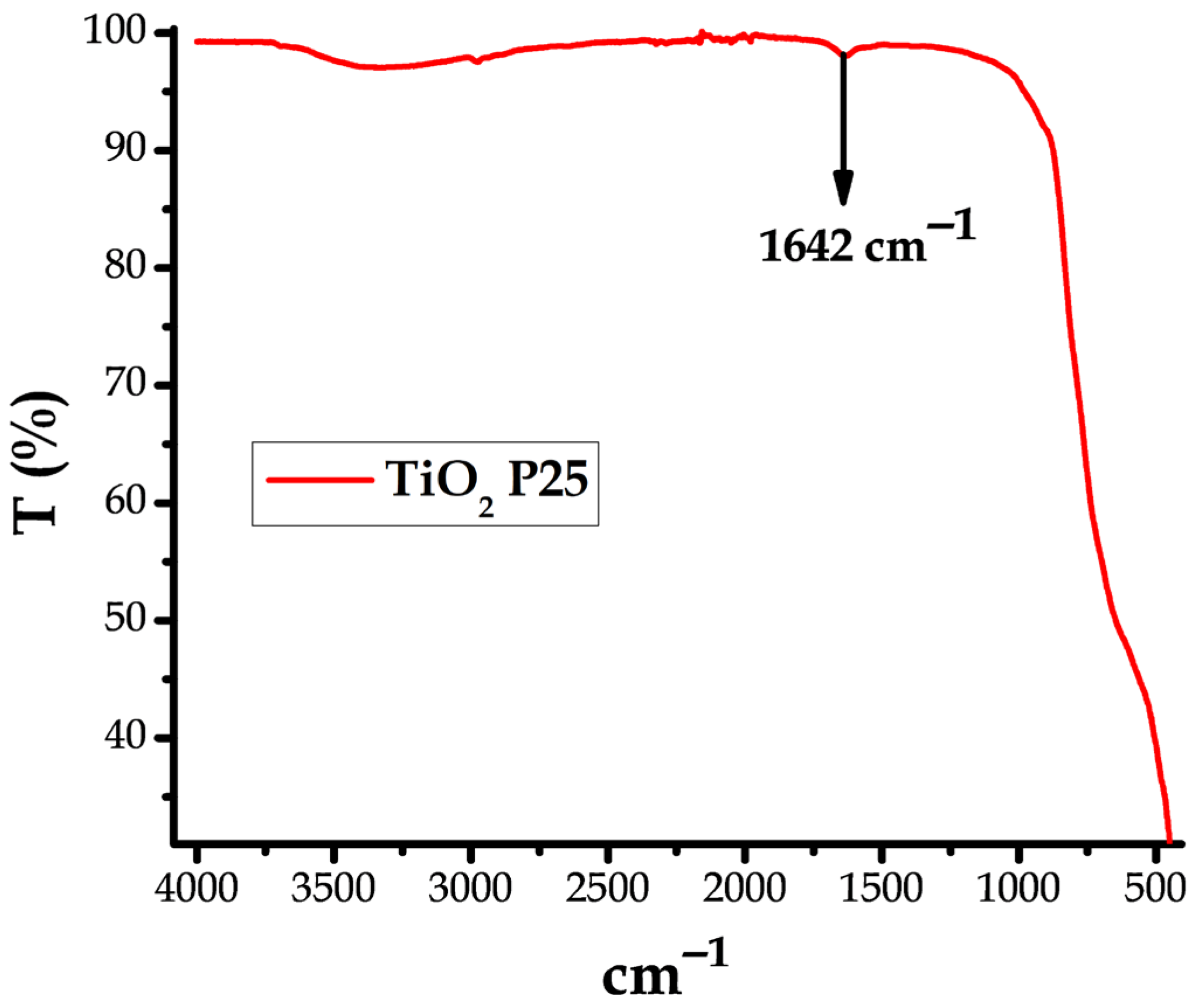
Figure 1 shows the FTIR spectrum of commercial TiO2 p25, which discloses the surface functional groups of the material. The peak observed at 1630 cm−1 corresponds to the bending vibrations of adsorbed water on the TiO2 particles—thus, Ti–OH groups. The broad unlabeled peak observed at around 500–700 cm−1 is typically due to the Ti-O stretching vibrations. No peaks are observed in the higher wavenumber region (above 2000 cm−1), indicating the absence of organic impurities in the sample. This FTIR spectrum matches the expected profile of commercial TiO2 p25 [9,24].

3.1.2. Crystallinity of Commercial TiO2 p25

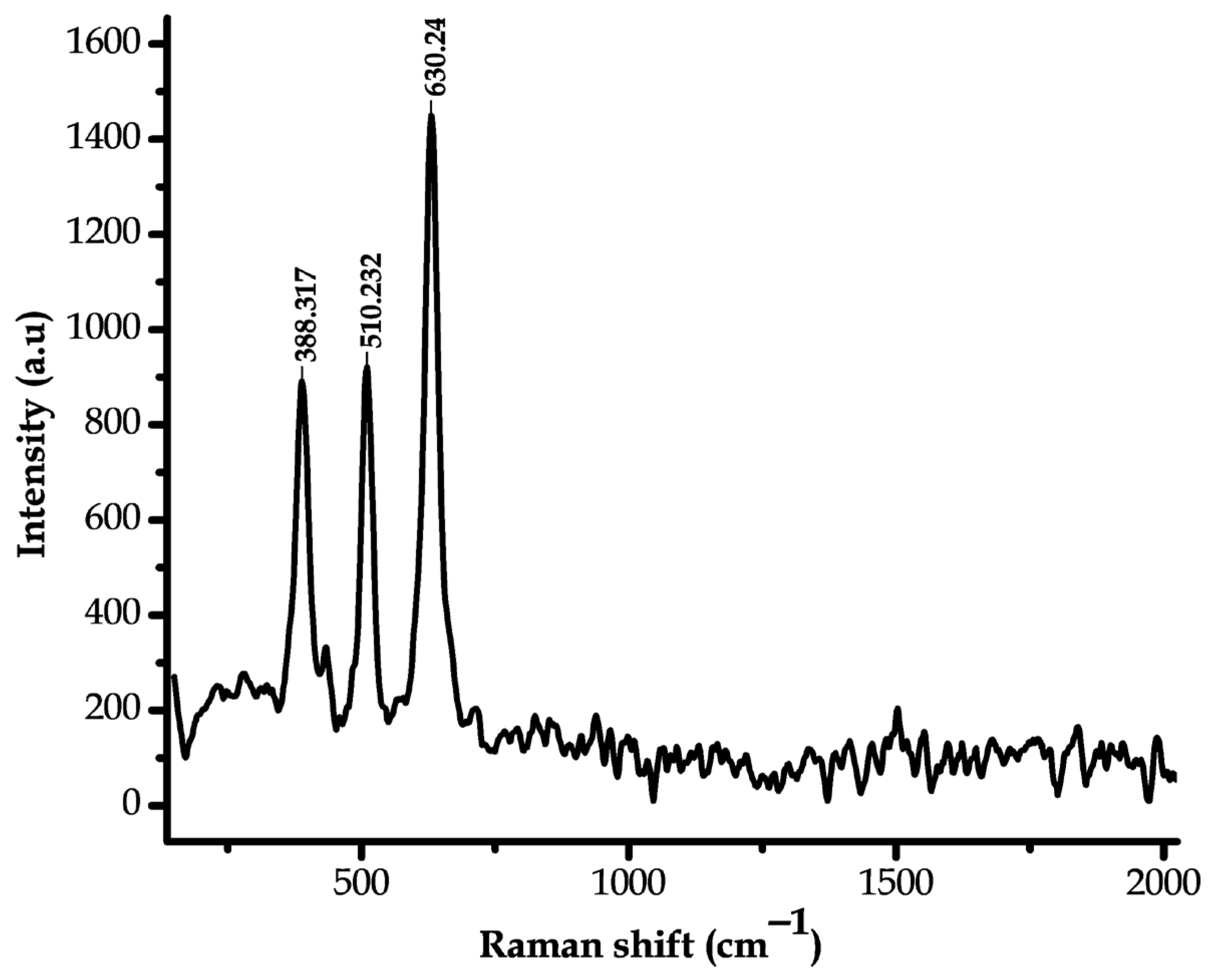
The Raman spectrum of commercial TiO2 p25 (Figure 2) reveals two medium peaks, whereby the peak at 392.127 cm−1 can be attributed to the Eg mode, while the peak at 508.37 cm−1 corresponds to the B1g mode. The strong intense peak detected at 630.241 cm−1 aligns to the A1g mode. In addition, all the observed peaks are prominent characteristic of the anatase phase of TiO2 [25,26]. These specific peaks suggest that commercial TiO2 p25 has a crystalline structure, typical of anatase TiO2. This crystalline phase is considered the best TiO2 phase for optimal photocatalysis [27].

3.1.3. Surface Morphology of Commercial TiO2 p25

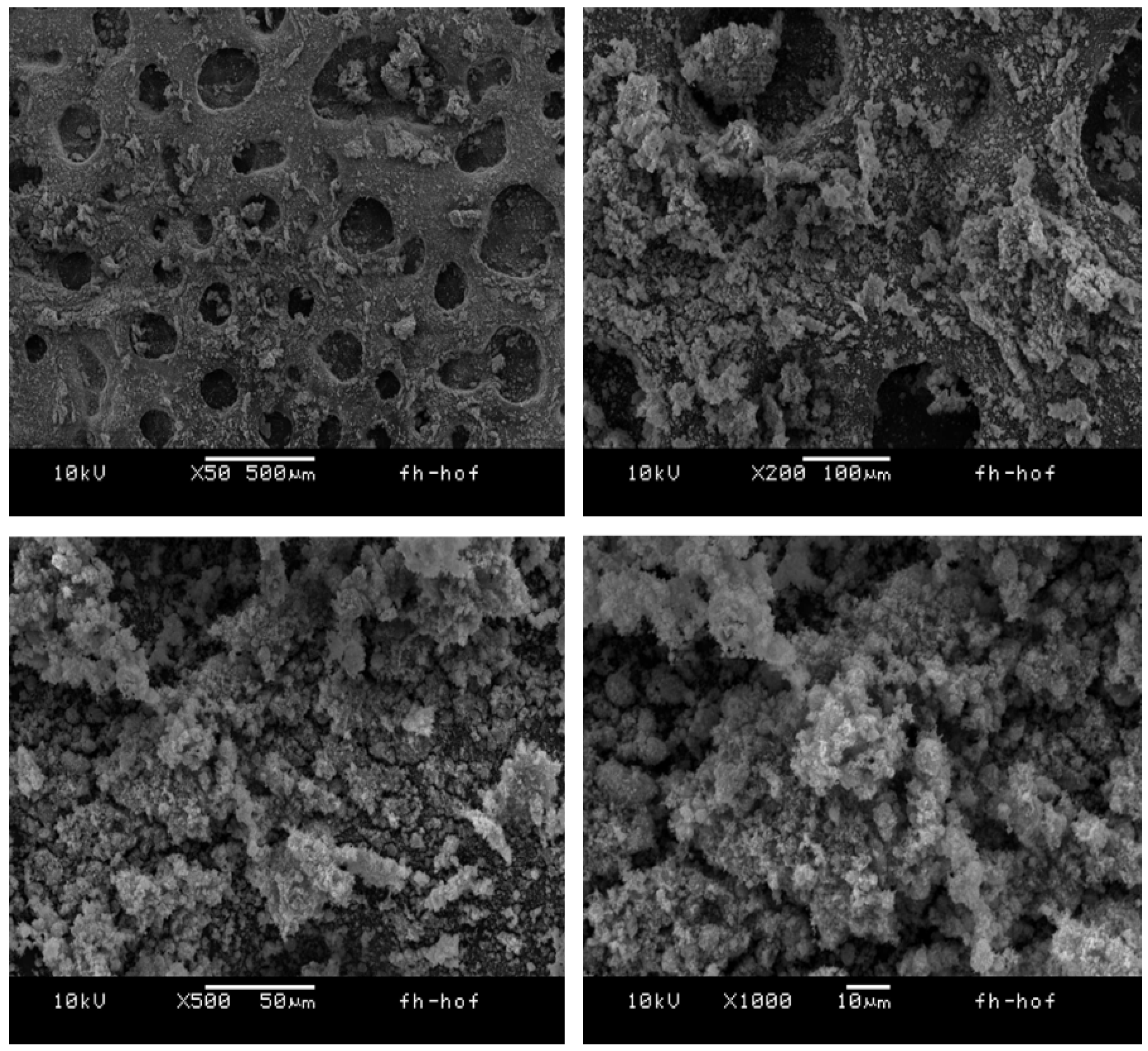
SEM images of commercial TiO2 p25 (Figure 3) show that the particles are fine, agglomerated, and homogeneously distributed throughout the sample. The TiO2 morphology is consistent with findings reported in the literature [28]. According to the manufacturer of the commercial TiO2 used in this study [29], TiO2 p25 has a specific surface area in the range 35–65 m2/g and an average particle size of 25 nm. The average particle size of commercial TiO2 p25 falls within the range of 1–100 nm, classifying them as nanoparticles [30].

3.1.4. UV Reflectance—Band Gap Energy Determination of Commercial TiO2 p25

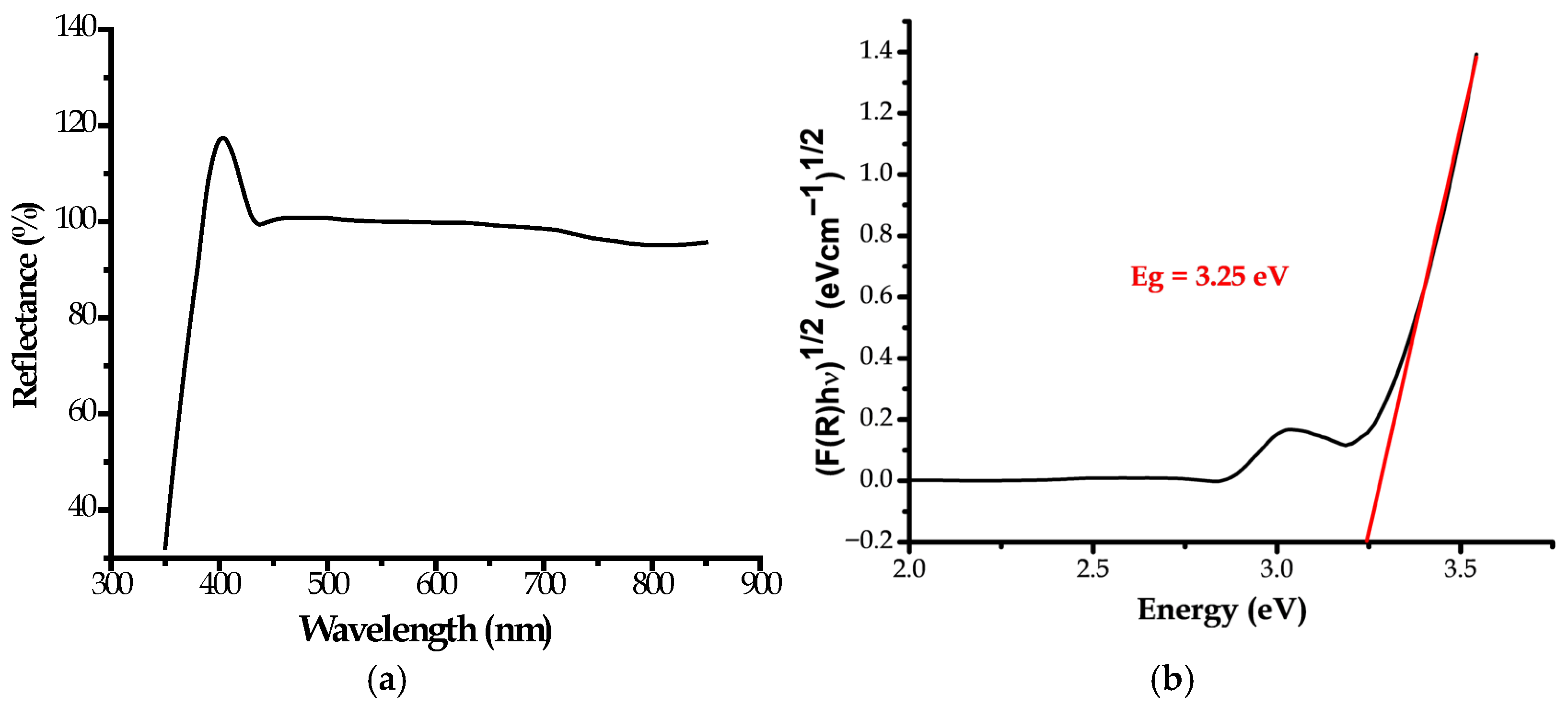
The UV reflectance spectrum of commercial TiO2 (Figure 4a) shows a sharp increase in reflectance around 400 nm, transitioning from the UV to the visible region. The reflectance then stabilizes at a high value above 100% in the visible range, signaling a strong reflectance in this region. This is an indication that commercial TiO2 efficiently absorbs UV light and reflects most of the visible light [31].
The 3.25 eV band gap energy, as estimated by Tauc plot (Figure 4b), corresponds to the absorption of photons within the UV region. This value is consistent with the anatase phase of TiO2 [32]. In addition, the UV reflectance data affirms that commercial TiO2 p25 is well-suited for photocatalytic degradation of dyes using UV light. However, its wide band gap renders it unsuitable for photocatalysis under solar irradiation as it is unable to effectively harness visible light [9].

3.2. Senegalia mellifera Bush Biomass Composition

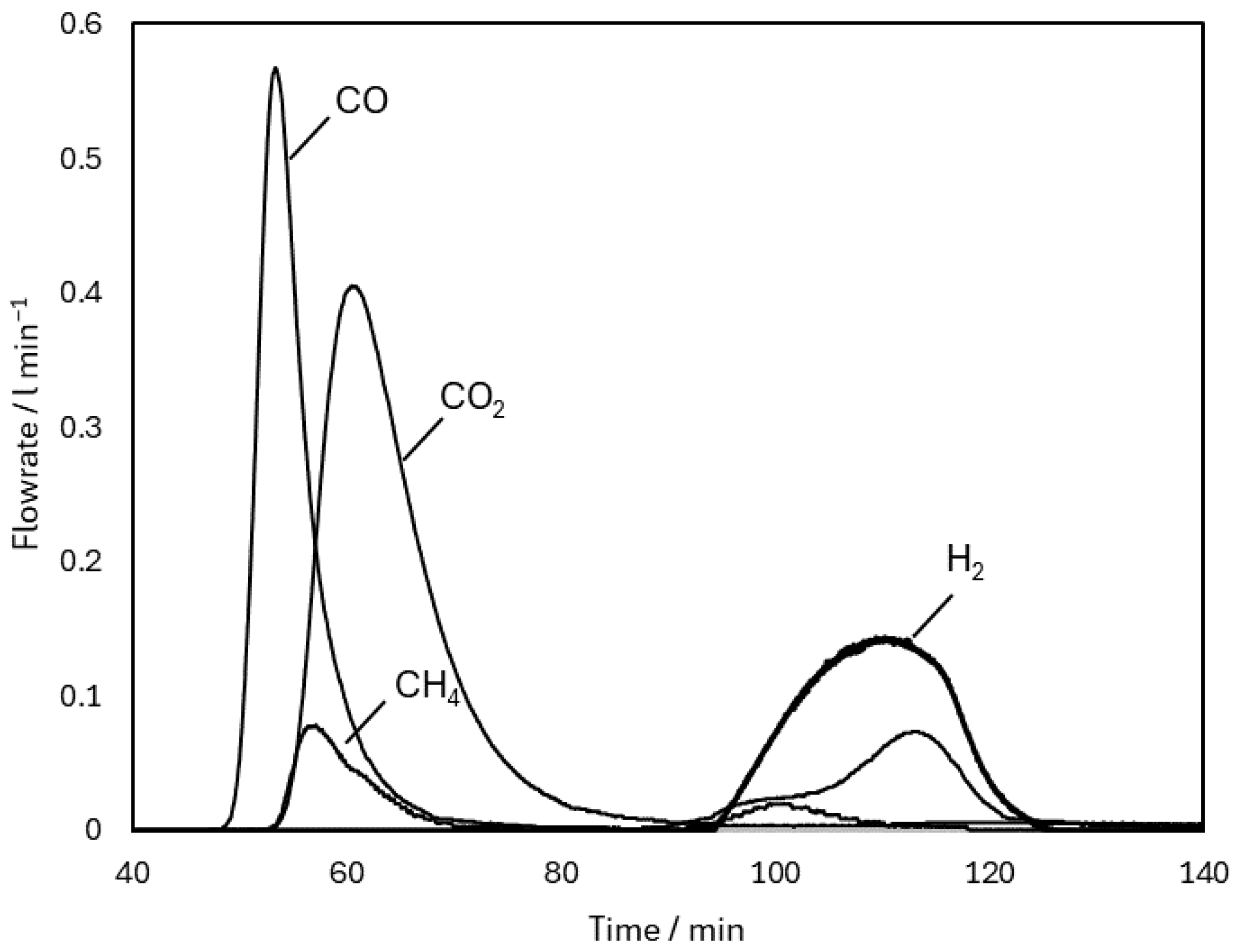
The gas flow rate profile of Senegalia mellifera bush biomass, as indicated (Figure 5), provides insights into the evolution of various gases—CO, CO2, CH4 and H2—each of which plays a distinct role in carbon activation. The sharp peaks of CO and CO2 (around 50–60 min) indicate the rapid decomposition of biomass, which contributes to the development of porosity in carbon through gasification reactions. CH4 appears in smaller quantities, while H2 evolves later (100–120 min), possibly aiding in secondary reactions such as cracking of hydrocarbons and in refining the structure [33].
The bush biomass pyrolysis results in Table 1 show that dried S. mellifera biomass is composed of 25.23% char, 18.42% gases and 56.35% residual oils and ash. The gas yields, particularly CO (6.39 g) and CO2 (6.75 g), highlight significantly gases that can react with the char during activation to enhance its porosity.

3.3. Carbon Activation by CO2 Pyrolysis

The carbon-activation results in Table 2 reveal that 16.5 g activated carbon was produced from 96.8 g biomass via 30% CO2 conversion, while 12.2 g activated carbon was produced from 95.4 g biomass via 50% CO2 conversion. More accurately, carbon was activated through 27.5% and 49.3% CO2 conversion, hence, 30% CO2 conversion and 50% CO2 conversion, respectively. To emphasize this, 27.5% of 22.76 g char reacted with CO2 for 30% CO2 conversion removing carbon atoms from the solid structure of char, creating a network of pores, thereby producing activated carbon. Similarly, for 50% CO2 conversion, 49.3% of 24.07 g char reacted with carbon dioxide to form activated carbon.
Although higher CO2 concentrations (>50%) were not investigated in this study, preliminary TGA observations indicated structural degradation of the carbon matrix at temperatures higher than 800 °C, which would be needed to obtain elevated CO2 levels. Future work will explore higher activation concentrations to further elucidate the relationship between CO2 activation intensity and photocatalytic performance.

3.4. Characterization of Samples

3.4.1. Surface Functional Groups of Samples

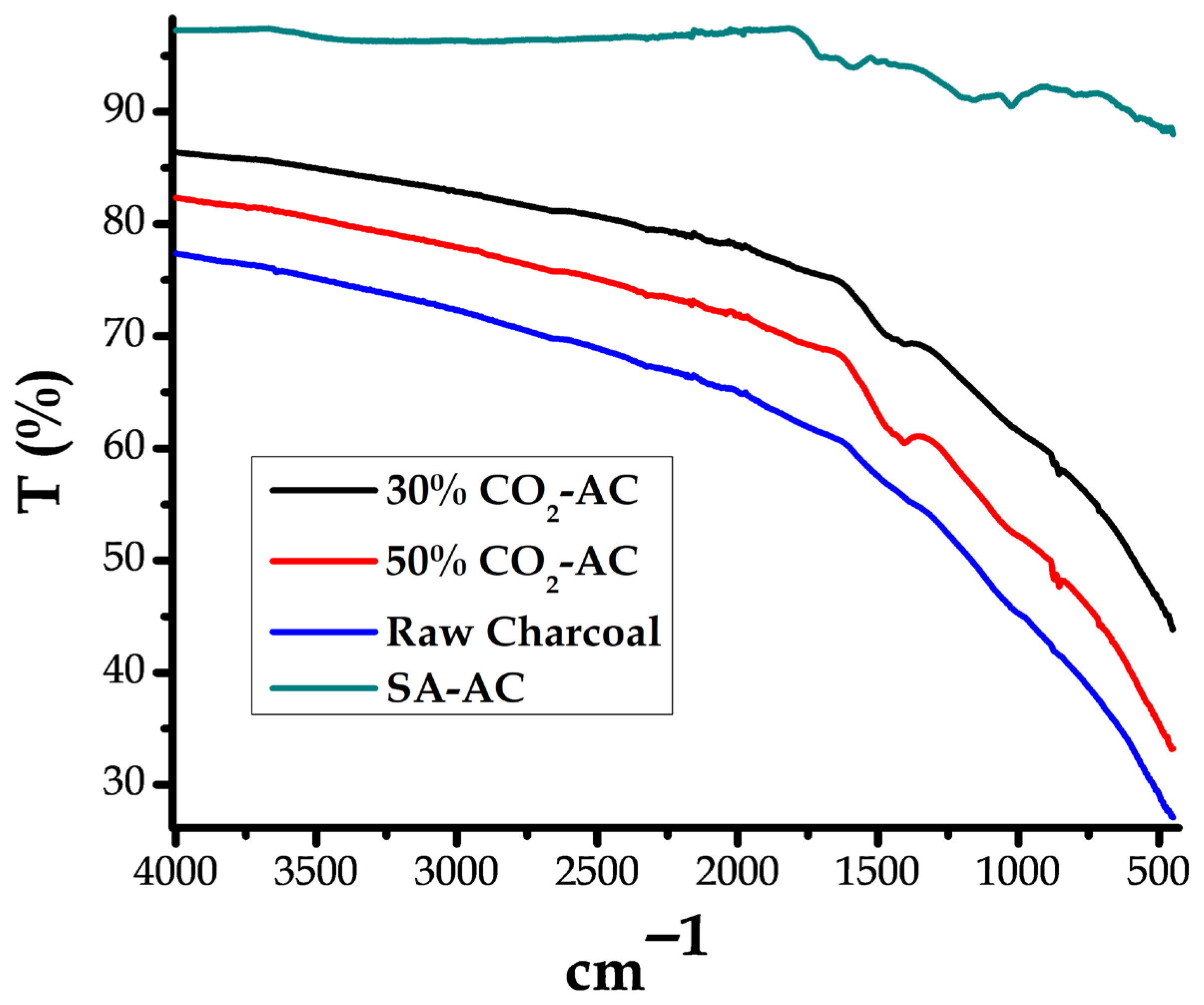
Figure 6 presents the FTIR spectra of various carbon samples as labeled. The raw sample spectrum shows a gradual decline in transmittance, implying that the sample has not undergone chemical activation. It also shows no significant peaks, an indication of the absence of functional groups and a less reactive surface compared to activated carbon. The FTIR spectrum of SA/AC exhibits peaks between 1000 and 1200 cm−1, which could be attributed to S=O stretching vibrations, denoting the presence of sulfonic acid groups (-SO3H) introduced by the activation with sulfuric acid [34].
The FTIR spectra of 30%CO2/AC and 50%CO2/AC appear to be similar with minor differences in transmittance. This suggests that the main functional groups do not change drastically with variation in CO2 conversion. The most prominent features include the broad peaks in the range of 3000–3600 cm−1, which are commonly associated with O-H stretching vibrations. The weak peaks detected near 1600 cm−1 might correspond to C=O stretching vibrations from carbonyl or carboxyl groups formed on the surface of AC [35]. An increase in the oxygen-containing functional groups due to the activation process with CO2 may be the cause of the transmittance decrease observed with conversion levels (30% to 50%).

3.4.2. Surface Morphology of Carbon Samples

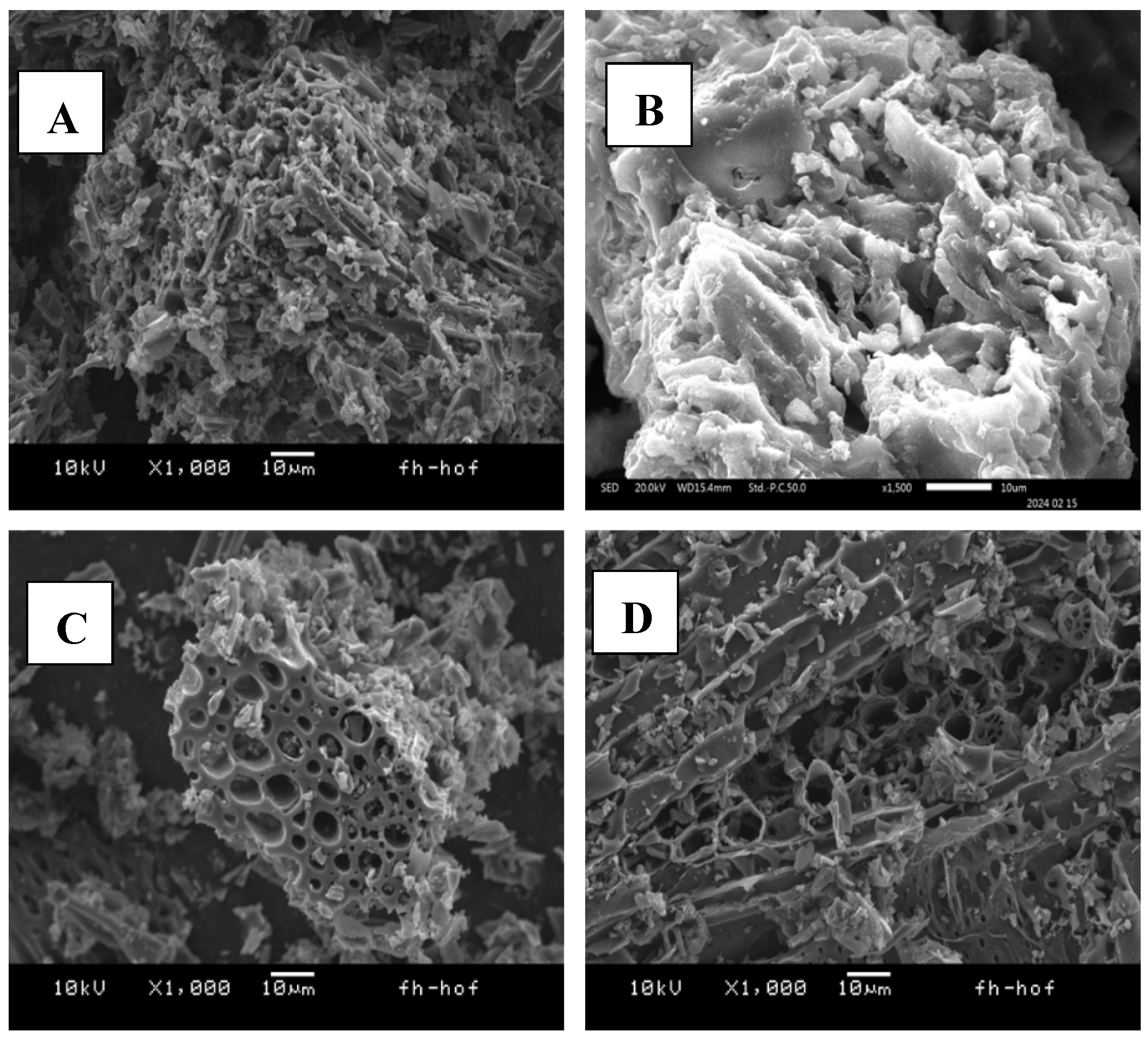
Meanwhile, Figure 7 illustrates the SEM images of the various carbon samples. Raw carbon (Figure 7A) appears to have a coarse and irregular surface structure with several cracks and cervices. There is a noticeable aggregation of the raw carbon particles, contributing to the rough texture of the material. The large, uneven pores observed in the raw carbon result from the pyrolysis process and gas interactions within the S. mellifera biomass, which react with carbon atoms to create the pores.
The surface of SA/AC (Figure 7B) appears rough, with irregularly shaped particles and visible pores and cavities. The SA/AC particles seem to have a fractured and jagged appearance. The surface of 30%CO2/AC (Figure 7C) looks rough, with clusters of small particles attached. There are visible channels and well-defined interconnected pores on the 30%CO2/AC structure. Similarly, 50%CO2/AC (Figure 7D) has a rough, porous surface with channels and small fragments attached. The rough surface and extensive porous network observed in the activated carbon samples imply that these materials are well-suited for adsorption of TiO2 nanoparticles.

3.4.3. Porosity of Carbon Samples

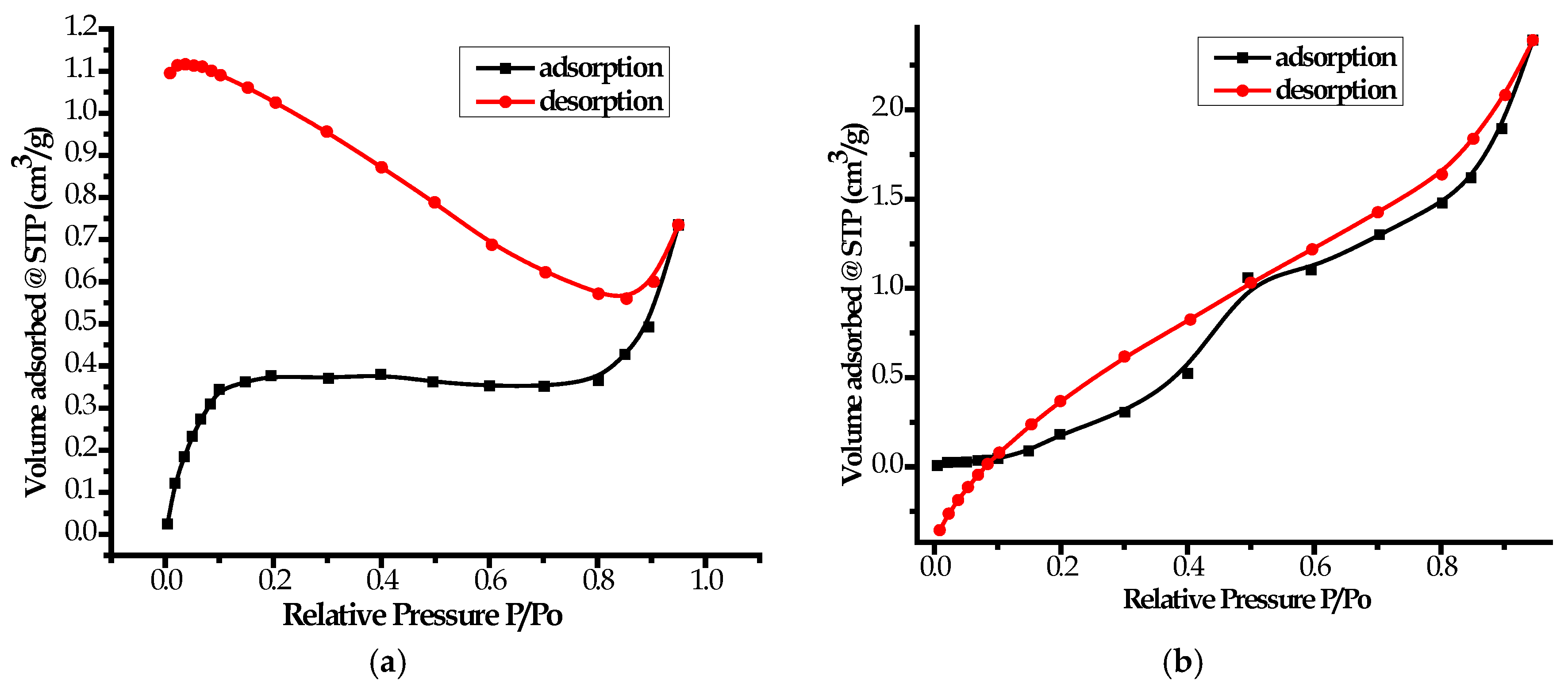
The N2 adsorption–desorption isotherm of raw carbon in Figure 8a exhibits characteristics of a Type IV isotherm, typical for mesoporous materials [36]. This isotherm suggests that raw carbon (Figure 8a) has a porous structure with a significant mesoporous network [37]. This isotherm further shows limited adsorption at low relative pressure, indicating poorly developed porosity and restricted micropore volume.
The N2 adsorption–desorption isotherm of SA/AC (Figure 8b) is a Type III isotherm, characterized by a convex shape towards the P/Po axis. Type III isotherms suggest weak adsorbate–adsorbent interactions [37]. The lack of a significant plateau implies the absence of micropores and minimal mesopore filling. There is no clear hysteresis loop, which indicates the absence of significant porosity. These features arise from acid-induced surface oxidation, pore widening, and structural rearrangement, which enhance surface area but may also lead to non-ideal isotherm behavior. The weak interactions and limited pore structure imply that SA/AC might not be highly efficient in applications requiring strong adsorbent properties.
The isotherm of 30%CO2/AC (Figure 8c) resembles a Type II isotherm, indicative of multilayer adsorption on a non-porous or macroporous material [37,38]. There is a small hysteresis loop visible at mid to high P/Po values, suggesting the presence of a few mesopores. The larger adsorption volume compared to SA/AC suggests that CO2 activation at 30% has created more surface area, making this material more suitable for adsorption applications.
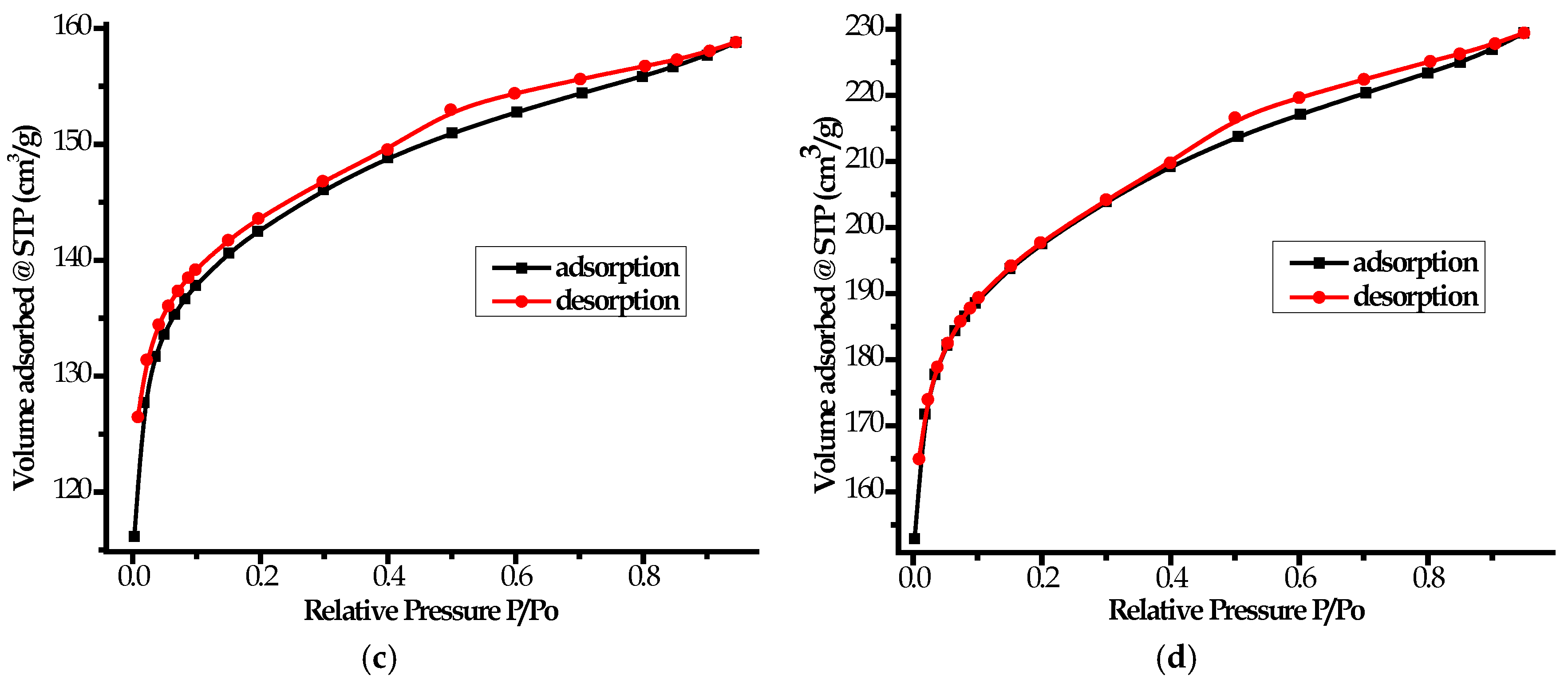
Similar to the 30%CO2/AC, the gas isotherm of 50%CO2/AC (Figure 8d) also appears to follow the Type II pattern but with a higher total adsorption volume. Like the previous graph, there is a slight hysteresis loop at higher pressures, but the overall increase in adsorption capacity is greater, indicating more developed porosity [38]. The 50% CO2 conversion has significantly enhanced the pore structure and surface area compared to the 30%CO2/AC. 50%CO2/AC would perform better in adsorption applications due to higher surface area and the presence of some mesopores.
Table 3 shows the surface area and pore volume of the carbon samples. 50%CO2/AC has the highest surface area and pore volume of 756.509 m2/g and 0.3175 cm3/g respectively, which correlates well with its N2 isotherm showing extensive porosity. On the contrary, SA/AC exhibited the lowest surface area (36.6290 m2/g) and pore volume. This can be attributed to blockage of pores with sulfate groups or oxygen-containing functional groups during acid activation. Furthermore, according to the literature, low-temperature conditions are speculated to lead to a denser structure with fewer pores [34,39,40].

3.5. Characterization of Impregnated Activated Carbon Samples

3.5.1. Surface Functional Groups of Impregnated Activated Carbon Samples

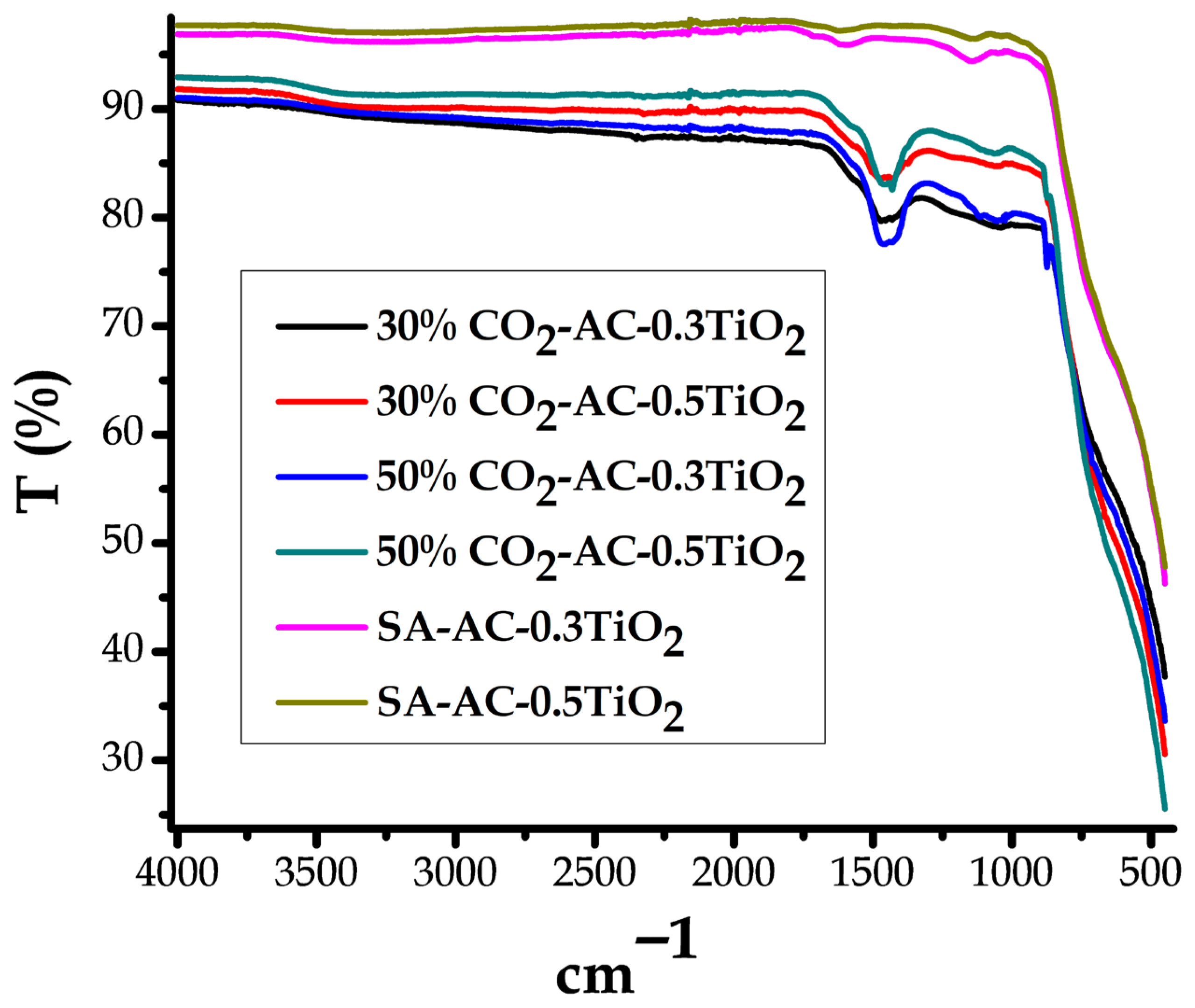
FTIR spectra of various impregnated activated carbon samples are shown in Figure 9. All spectra exhibit broad peaks in the 500–700 cm−1 regions, signaling the Ti-O-Ti stretching vibrations. The variation in intensity across the spectra reflects the difference in TiO2 loading. The broad peaks in all spectra correspond to O-H stretching vibrations, common in both AC and TiO2. The weak peaks near 1600 cm−1 likely correspond to C=O stretching vibrations. Weak broad peaks seen between 1000 and 1200 cm−1 may be attributed to Ti-O-C bonds [35]. These spectra clearly demonstrate the successful impregnation of TiO2 NPs onto the surface of AC.

3.5.2. Surface Morphology of Impregnated Activated-Carbon Samples

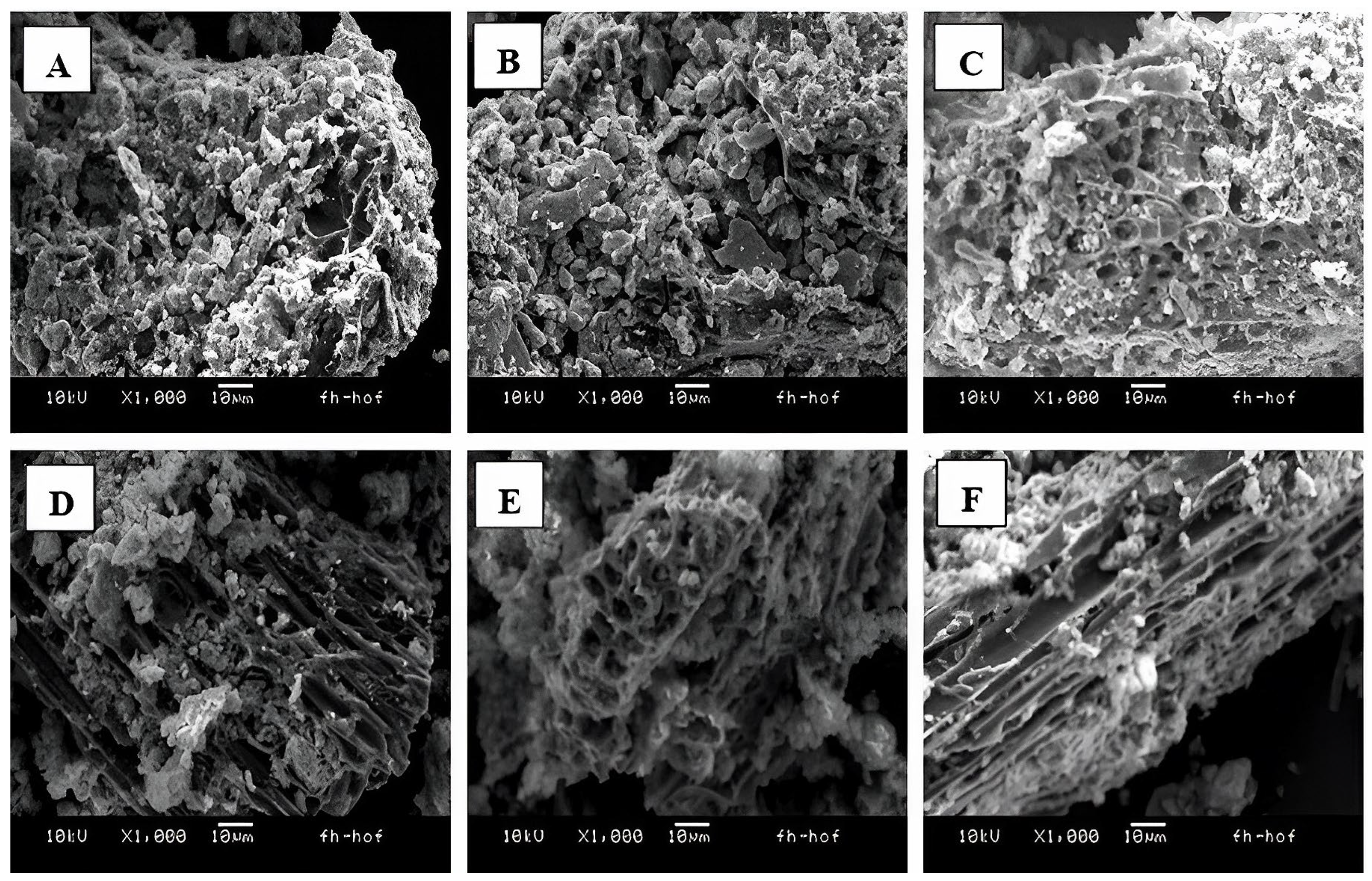
The SEM images of the impregnated composites are shown in Figure 10, whereby SA/AC-0.3TiO2 (Figure 10A) appears to have a rough surface. The TiO2 NPs seem to be well-dispersed across the surface, with visible agglomeration. SA/AC-0.3TiO2’s porous nature remains evident, suggesting that the pores are not entirely filled with TiO2. In contrast, the structure of SA/AC-0.5TiO2 (Figure 10B), appears more densely packed with TiO2 NPs. The agglomeration of the nanoparticles is more pronounced, implying that the higher the loading, the more particle clustering. The surface appears rougher, less porous, and more irregular compared to SA/AC-0.3TiO2, likely due to the higher TiO2 loading. This can affect the overall surface area of SA/AC-0.5TiO2.
The SEM monogram of 30%CO2/AC-0.3TiO2 (Figure 10C) portrays a highly porous surface with interconnected channels and well-defined pores. The distribution of TiO2 NPs within the 30%CO2/AC matrix appears to be uniform. The presence of unfilled pores makes this composite suitable for photocatalysis. The structure of 30%CO2/AC-0.5TiO2 (Figure 10D) looks more compact and layered, with visible ridges and a less porous surface compared to 30%CO2/AC-0.3TiO2. The TiO2 NPs seem to form larger clusters on the surface of 30%CO2/AC-0.5TiO2 (Figure 10E) reducing porosity. Owing to an increased presence of TiO2 NPs, photocatalysis might favor 30%CO2/AC-0.5TiO2 (Figure 10F).
The porous structure of 50%CO2/AC-0.3TiO2 seems somewhat less pronounced compared to the 30%CO2/AC samples, possibly due to the increased CO2 concentration during preparation. In comparison to the previous monograms, the TiO2 distribution is more uniform, but the surface appears less rough, suggesting that the TiO2 NPs are well spread but might not be as deeply embedded in the carbon structure. The surface of 50%CO2/AC-0.5TiO2 is more compact, with fewer pores and a more uniform appearance. The TiO2 NPs seem to have completely filled the carbon’s pores, creating a dense and smooth surface. This may mean that the impregnation results in a denser, less porous structure at higher concentrations of CO2 and TiO2, which could affect the surface area and the material’s suitability for photocatalytic applications.
Surface oxygen-containing functional groups (-OH, -COOH, -C=O) introduced by CO2 activation enhance photocatalytic performance by improving hydrophilicity, dye adsorption, and interfacial charge transfer. These groups act as electron traps prolonging charge carrier lifetimes and facilitating electron migration from TiO2 to the carbon support, thereby reducing recombination rates.

3.5.3. Porosity of Impregnated Carbon Samples

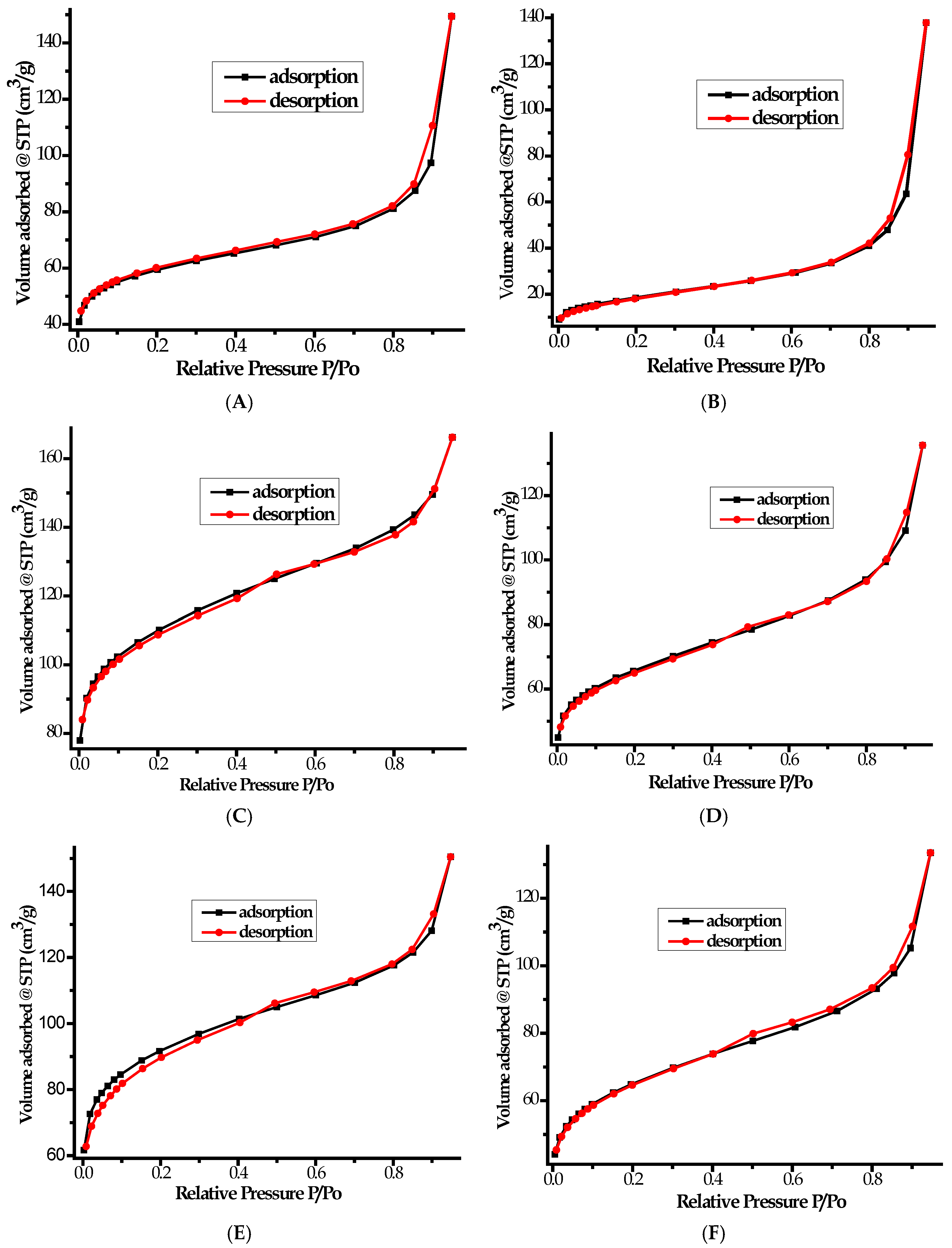
Figure 11 shows the N2 adsorption–desorption isotherms of the impregnated carbon samples. The isotherms of SA/AC-0.3TiO2 (Figure 11A) and SA/AC-0.5TiO2 (Figure 11B) display Type IV behavior, with visible hysteresis loops, suggesting the presence of mesopores. The adsorbed volume increases gradually at higher relative pressures, indicating capillary condensation in mesopores. However, the overall adsorbed volume in SA/AC-0.5TiO2 is slightly lower compared to SA/AC-0.3TiO2, indicating less porosity in SA/AC-0.5TiO2. The SA/AC-0.3TiO2 composite, with its high surface area and better mesoporous structure, might be more effective for photocatalysis compared to the SA/AC-0.5TiO2 composite. This is because excessive TiO2 loading might lead to agglomeration, reducing the number of active sites available for photocatalysis [32].
The isotherms of 30%CO2/AC-0.3TiO2 (Figure 11C) and 30%CO2/AC-0.5TiO2 (Figure 11D) are Type IV isotherms with hysteresis loops, again indicating the presence of mesoporosity. The volume of N2 increases with pressure, followed by a steeper increase at higher relative pressures, which suggests capillary condensation in the mesopores. The higher TiO2 content of the 30%CO2/AC-0.5TiO2 composite filled most of the pores, reducing its surface area. While both composites are suitable for photocatalysis, the 30%CO2/AC-0.3TiO2 may offer better balance of surface area, porosity and TiO2 dispersion, leading to potentially higher photocatalytic efficiency.
Type IV isotherm characteristics are exhibited by the gas isotherms of both 50%CO2/AC-0.3TiO2 (Figure 11E) and 50%CO2/AC-0.5TiO2 (Figure 11F) composites. There are clear hysteresis loops present in both composites, indicative of mesoporous structures. However, the hysteresis loop in 50%CO2/AC-0.5TiO2 is broader, this may suggest potential agglomeration of TiO2 NPs, which can lead to pore blocking and a reduction in surface area. This could negatively impact the photocatalytic efficiency as the active sites might become less accessible.
Table 4 gives the surface area and pore volume parameters of the various impregnated activated carbon samples. These results suggest that 30%CO2/AC-0.3TiO2, which has the highest surface area (406.117 m2/g) and the highest pore volume (0.2119 cm3/g), might offer the best performance in photocatalytic degradation of dyes owing to its high surface area, suitable pore volume and well-dispersed TiO2. Conversely, samples with higher TiO2 loadings show reduced surface areas and pore volume, which could potentially limit their photocatalytic effectiveness.
It is observed that the surface area of SA/AC increased from 36.629 m2/g to 217.998 and 66.047 m2/g after impregnation with 30% TiO2 and 50% TiO2, respectively. The elevation in surface area is likely a result of the creation of new pores, improved dispersion of TiO2 NPs, thermal effects and structural rearrangement within the carbon matrix. The sulfuric acid treatment might have initially restricted the surface area by blocking pores, but the subsequent TiO2 impregnation and calcination process reopened these pores and induced structural changes, expanding the accessible surface area [41,42].
The higher surface area of 30%CO2/AC-TiO2 composites compared to 50%CO2/AC-TiO2 composites, despite the initial lower surface area, is probably due to a combination of factors such as dispersion of TiO2, different surface chemistry interactions, and possibly structural stability during the impregnation process. It is evident that the TiO2 NPs are uniformly dispersed in the composites with lower TiO2 content, while they seem agglomerated in composites with higher TiO2 concentration. The functional groups present on the surface of 30% CO2/AC might favor stronger interactions with TiO2 leading to a better dispersed composite structure. This could prevent the agglomeration of TiO2 thereby maintaining a higher surface area compared to the 50% CO2/AC composite.

3.5.4. UV Reflectance Data of Impregnated Carbon Samples

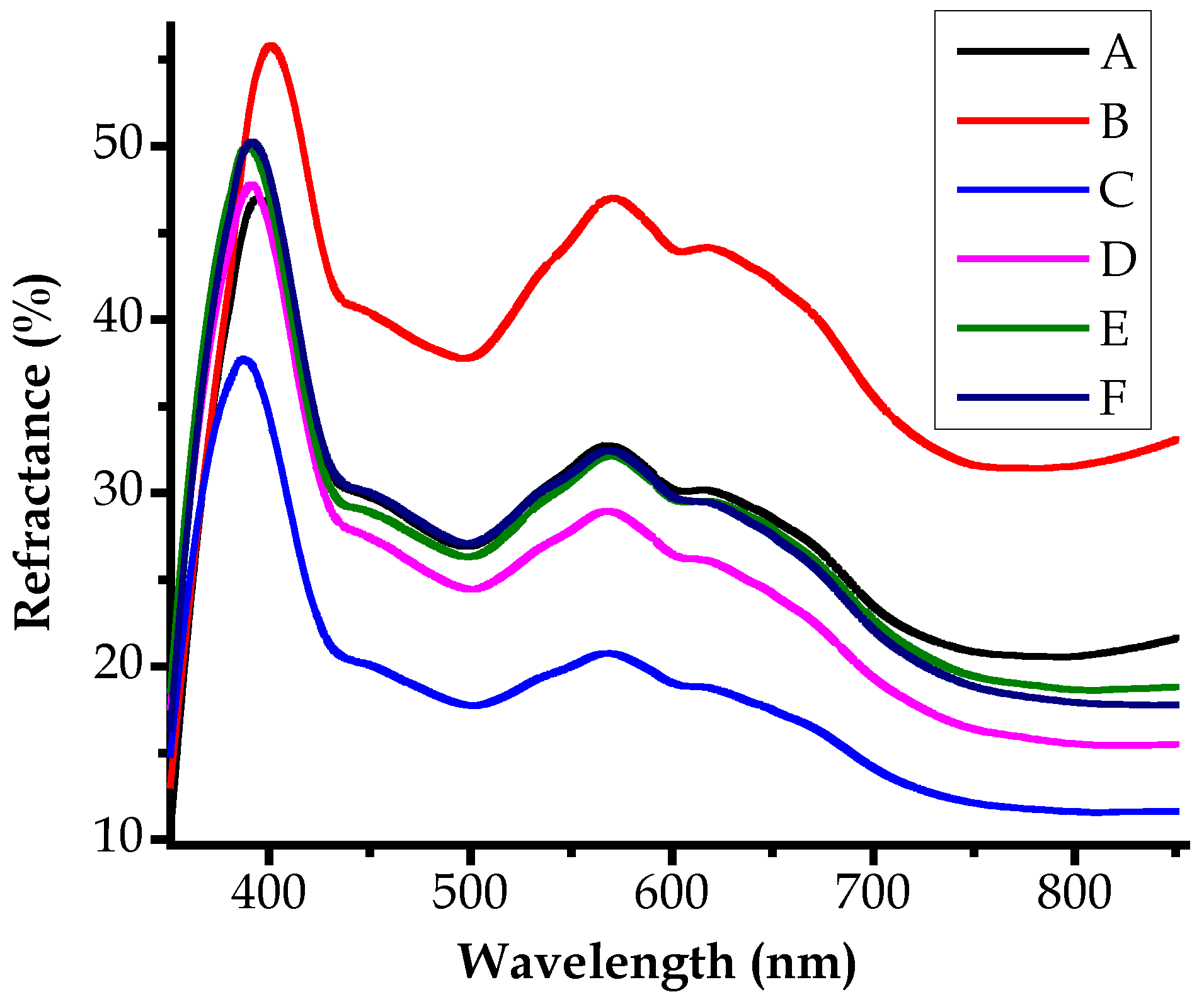
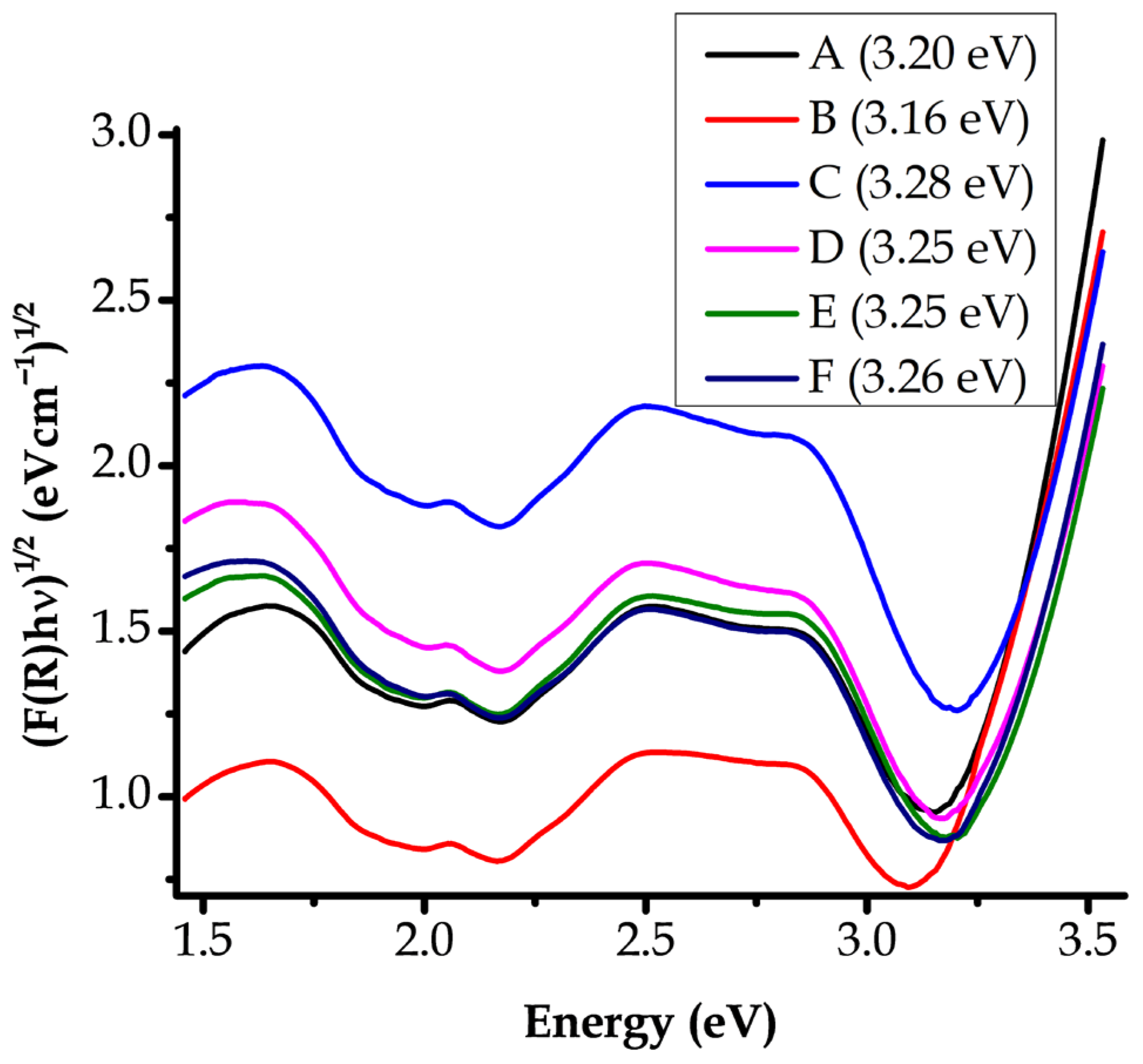
The UV reflectance spectra and band gap energy results for various impregnated activated carbon samples represented (Figure 12 and Figure 13), display their optical properties. The UV reflectance spectra across all samples generally show high reflectance near 400 nm, followed by a decline as the wavelength increases, indicating strong absorption in the UV region, typical of TiO2. There is additional visible light absorption observed in some samples at wavelengths higher than 500 nm, suggesting potentially improved utilization of the solar spectrum. Despite band gap energies remaining close to that of anatase TiO2, the observed visible-light activity can be attributed to adsorption-assisted photocatalysis and carbon-mediated charge transfer. The AC support acts as an electron acceptor and transport pathway, promoting interfacial electron transfer from excited TiO2 and delaying electron–hole recombination [7]. In addition, surface Ti-O-C bonds and oxygen-containing functional groups introduced during CO2 activation enhance the formation of reactive oxygen species (OH and O2·), which contribute to visible light-driven degradation [11,12,32,33]. Therefore, the photocatalytic activity under visible light is mainly governed by synergistic adsorption and charge transfer mechanisms rather than band gap narrowing.
The band gap energies of the impregnated carbon samples range approximately from 3.16 eV to 3.28 eV, slightly comparable to pure anatase TiO2 (3.2 eV). The observed band gap values confirm that these materials are well-suited for UV-driven photocatalytic applications. Increased band gaps in certain samples, such as 30%CO2/AC-0.3TiO2 show enhanced visible light interaction due to surface modifications. These findings imply that impregnation onto AC slightly alters TiO2’s optical properties, improving its potential for dye degradation applications, especially under UV illumination, and possibly extending its effectiveness into the visible spectrum.
Although XRD analysis was not conducted in this study, the successful integration of TiO2 onto activated carbon is supported by consistent evidence from SEM, FTIR, Raman spectroscopy, and UV/Vis reflectance analysis, which collectively confirm TiO2 deposition, interaction with the carbon matrix, and preserved photocatalytic functionality.

3.6. Photodegradation of Methyl Orange (MO)

3.6.1. Calibration Curve of MO

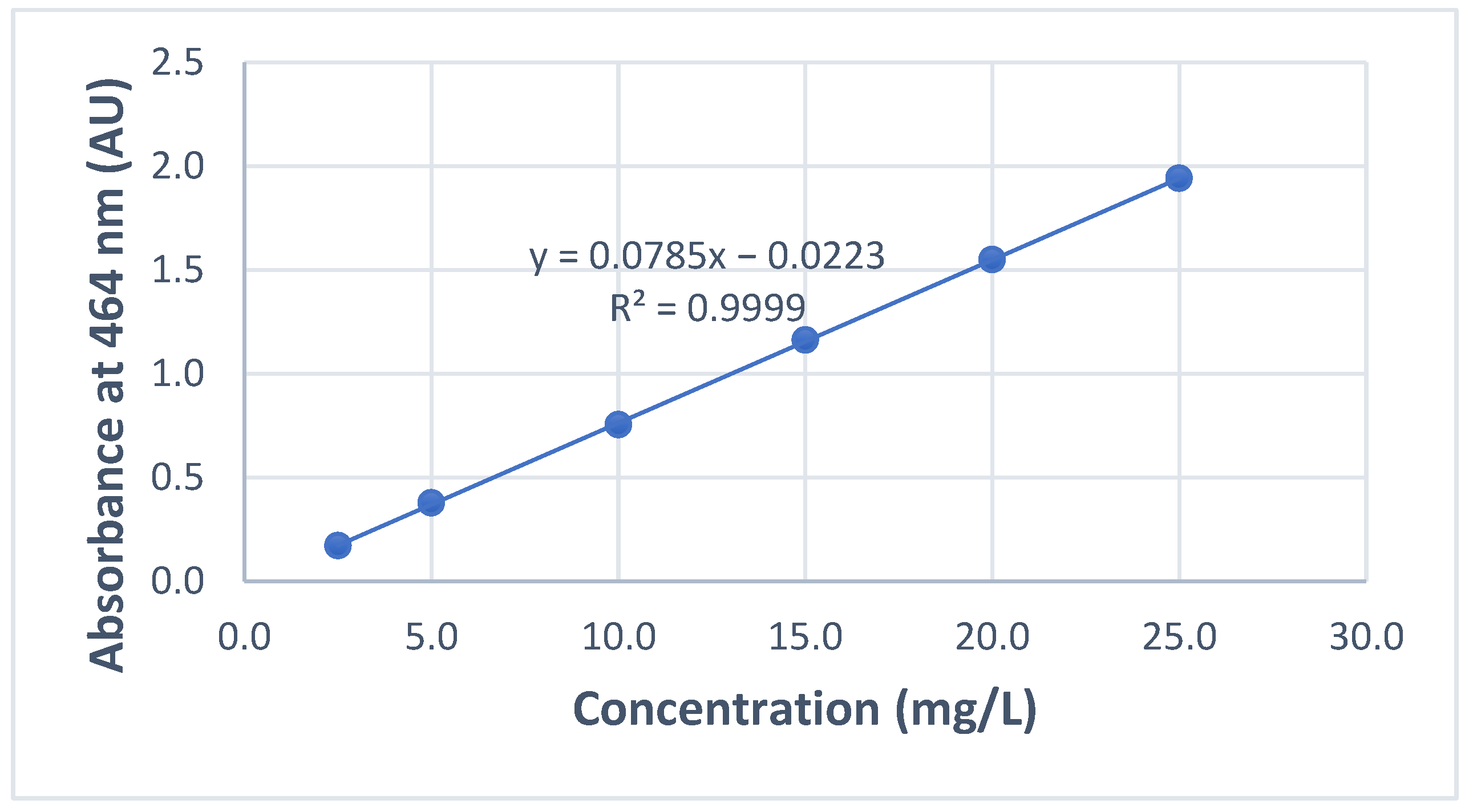
The calibration curve (Figure 14) shows the relationship between the concentration of methyl orange in mg/L and the absorbance at 464 nm in arbitrary units (AU). The data points form a straight line, indicating a linear relationship between concentration and absorbance. This means that as the concentration of methyl orange increases, the absorbance at 464 nm also increases. The equation, y = 0.0785x − 0.022, represents the line of best fit, whereby, y is the absorbance, x is the concentration of MO, 0.0785 is the slope, indicating how much the absorbance increases for each mg/L increase in concentration, and −0.0223 is the y-intercept, representing the absorbance when the concentration is theoretically zero (though it is slightly negative, likely due to instrumental error or baseline correction).
In addition, the R2 value of 0.9999 indicates an almost perfect linear correlation between concentration and absorbance, implying that the data fits the calibration model extremely well [43]. This curve can be used to determine the concentration of methyl orange in unknown samples by measuring their absorbance at 464 nm and using the straight-line equation to calculate the corresponding concentration. Overall, this calibration curve suggests high reliability for quantifying MO concentrations within the range of 0–25 mg/L based on absorbance measurements.

3.6.2. UV/Vis Spectra of Various Photocatalysts

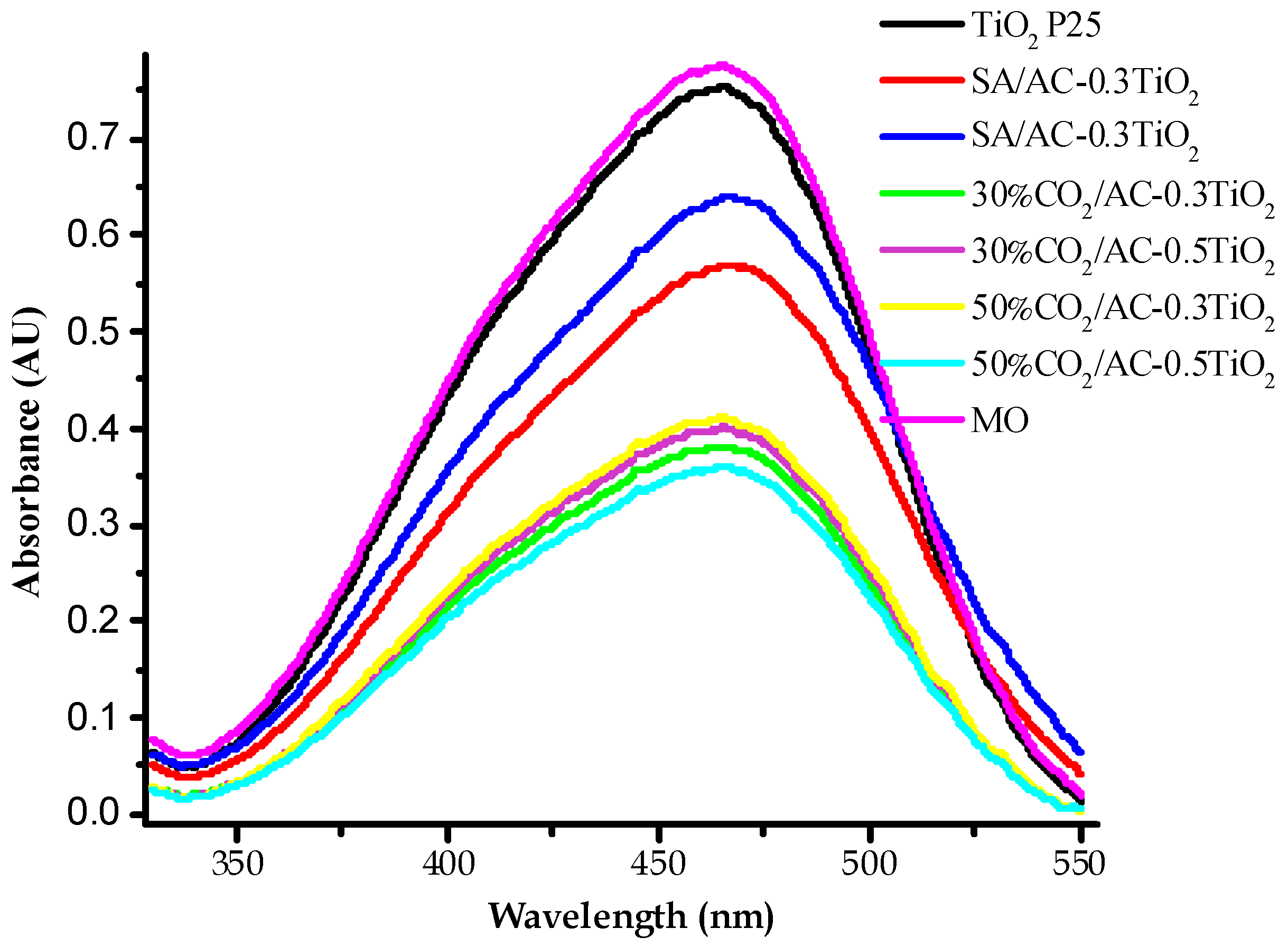
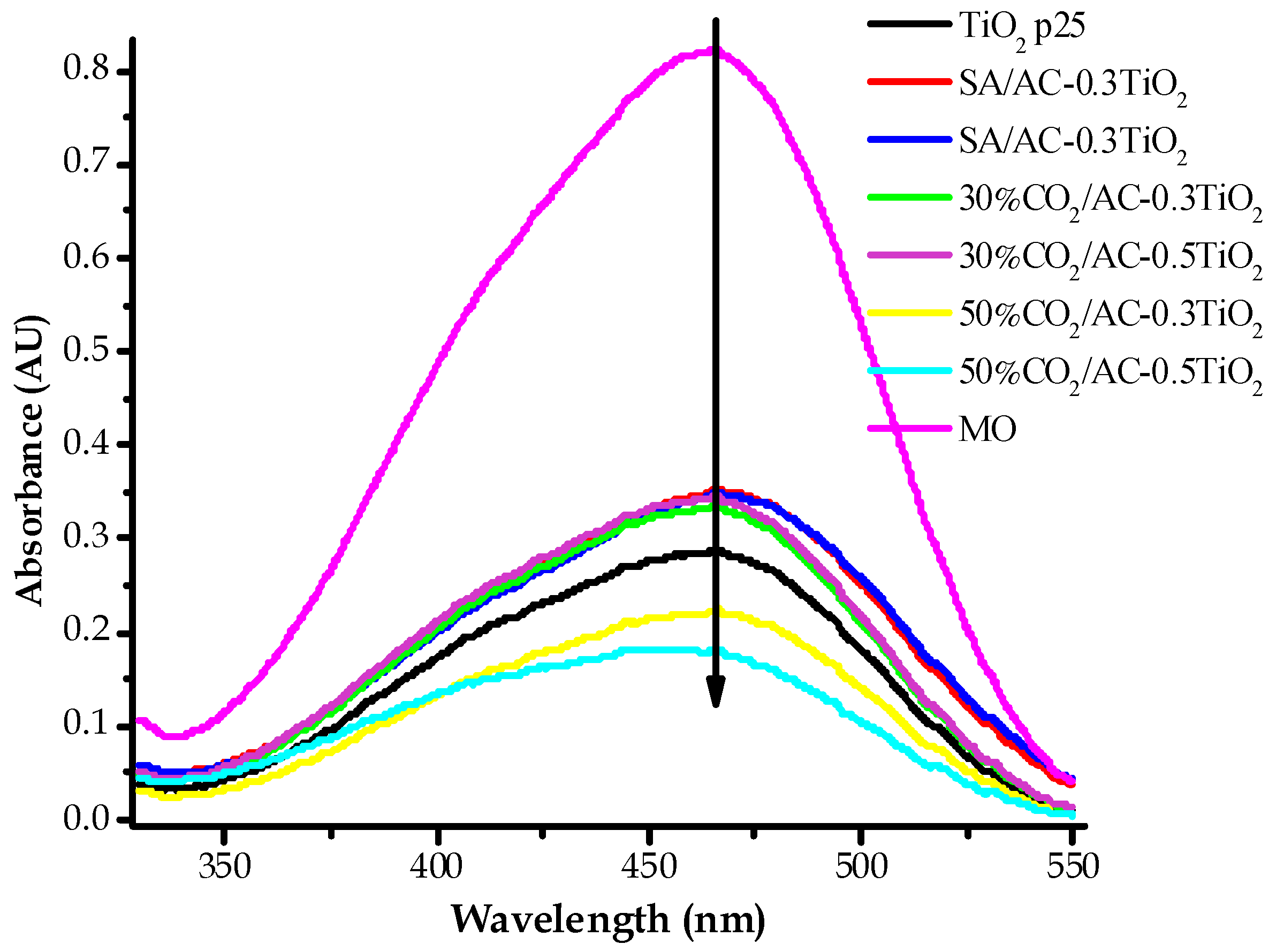
The UV/Vis absorbance spectra (Figure 15) display the photodegradation of MO under visible light using different photocatalysts. The general trend shows that the absorbance of methyl orange decreases as different photocatalysts are applied, indicating its degradation. TiO2 p25 (black line) shows the highest absorbance peak around 464 nm, indicating the least degradation MO. TiO2 typically has limited activity under visible light, as it primarily absorbs UV light [44]. Therefore, it exhibits the lowest efficiency in degrading MO under visible light in this case.
The red line and blue line in the graph (Figure 15) represent SA/AC-0.3TiO2 (Red line) and SA/AC-0.5TiO2, respectively. The sulfonated activated (SA/AC) loaded with different amounts of TiO2 (0.3 and 0.5) exhibit better photocatalytic performance compared to the commercial TiO2 p25. The absorbance is reduced more than TiO2 indicating enhanced photodegradation of methyl orange. This implies that SA/AC improves the visible-light-driven photocatalytic efficiency due to its enhanced surface area and possibly better electron–hole separation from TiO2. About 30%CO2/AC-0.3TiO2 and 30%CO2/AC-0.5TiO2 are represented by the green line and purple line, respectively. The introduction of CO2 by 30% conversion in the modification process results in even better photocatalytic activity. Both the 0.3 and 0.5 TiO2-loaded composites degrade methyl orange more efficiently than the previous SA/AC complexes. This suggests that CO2 treatment might improve the photocatalytic properties, potentially by increasing surface oxygen vacancies, leading to better electron capture and separation.
About 50%CO2/AC-0.3TiO2 and 50%CO2/AC-0.5TiO2 are represented by the yellow line and cyan line, respectively. The 50% CO2-treated samples show the lowest absorbance values, indicating the most efficient degradation of methyl orange. The increased CO2 treatment level further enhances the photocatalytic properties. The 0.5 TiO2-loaded sample appears to perform marginally better than the 0.3 TiO2-loaded sample. This can be attributed to the higher TiO2 content in the 50%CO2/AC-0.5TiO2 composite. Among all the samples, the 50%CO2/AC-0.5TiO2 photocatalyst shows the best performance in degrading MO, followed closely by 50%CO2/AC-0.3TiO2. This suggests that increasing both the CO2 treatment and TiO2 loading enhances the photocatalytic degradation efficiency under visible light. 50% CO2/AC-0.5TiO2 exhibits the highest photocatalytic activity in degrading MO, which often correlates with better electron–hole pair generation, separation, and transfer properties [35].
The UV/Vis absorbance spectra (Figure 16) illustrate the photodegradation of MO using various photocatalysts under UV light. A lower absorbance peak indicates a more significant degradation of methyl orange. As in the previous graph, the TiO2 p25 is the reference photocatalyst. It shows relatively high absorbance compared to most other materials, indicating moderate degradation of methyl orange. TiO2 is well-known for its UV activity, so it performs better under UV light than under visible light, but it still does not exhibit the highest photocatalytic efficiency amongst the samples.
The SA/AC-supported photocatalysts exhibit enhanced photocatalytic efficiency, likely due to increased surface area. Moreover, both 30%CO2/AC-treated samples degrade methyl orange more effectively than the SA/AC-modified samples. This could be due to enhanced charge separation and increased photocatalytic active sites from the surface modification. The 50%CO2/AC-0.5TiO2 sample demonstrates the best performance in degrading MO under UV light, followed by 50%CO2/AC-0.3TiO2. These AC-modified samples show higher photocatalytic activity, likely due to improved electron–hole pair separation, enhanced surface area, and greater availability of active sites [45].
To distinguish adsorption from true photocatalytic degradation, all experiments included a 30 min dark adsorption step prior to illumination. During this period, AC-containing composites showed significant adsorption of methyl orange (up to ~ 18–25%), whereas pure TiO2 exhibited a negligible adsorption (5%). Upon light irradiation, additional removal was observed, which is attributed to photocatalytic degradation. The net photocatalytic contribution can be calculated by subtracting the dark phase adsorption removal from the total removal under illumination, confirming that the enhanced performance of AC/TiO2 composites arises from synergistic adsorption-photocatalysis rather than adsorption alone.

4. Conclusions

This study aimed to optimize the effectiveness of biomass-derived activated carbon supporting TiO2 NPs in photocatalysis. The primary objective was to address the inherent limitations of TiO2, particularly its low photocatalytic efficiency caused by a wide band gap, low surface area and high electron–hole recombination rates. By incorporating TiO2 NPs onto activated carbon synthesized from the biomass of the invasive Senegalia mellifera bush, this research pursued a sustainable and efficient solution to enhance TiO2’s photocatalytic activity.
The study synthesized TiO2 particles using the precipitation method. Biomass-derived AC samples were prepared by employing both chemical activation and physical activation techniques. For chemical activation, 98% H2SO4 was utilized as the activating agent. On the other hand, CO2 pyrolysis was utilized for physical activation, whereby 30% conversion and 50% conversion were exploited. Furthermore, the as-prepared AC samples were impregnated with TiO2 NPs using the wet impregnation method. The physicochemical properties of the samples were examined using several characterization techniques, namely, FTIR, EDS, Raman spectroscopy, UV reflectance spectroscopy, SEM, and BET. The photocatalytic activity of the AC/TiO2 composites was evaluated through methyl orange degradation using UV/Vis spectroscopy.
It was evident that the problem of low TiO2 photocatalytic activity was partially addressed. The study demonstrated that biomass-derived AC can serve as an effective support material for TiO2. By impregnating TiO2 onto AC, the study observed an increase in the photocatalyst’s surface area and porosity, increasing the availability of active sites and promoting better charge separation. This modification resulted in enhanced photocatalytic performance for methyl orange degradation under both UV and visible light irradiation. The success of the AC/TiO2 composites in degrading MO, which has similar photocatalytic mechanisms as in hydrogen production, suggests that the modified composites could similarly facilitate hydrogen evolution reactions. The performance of the 50%CO2/AC-0.5TiO2 composite compares favorably with previously reported AC/TiO2 systems, which typically achieve 40–70% MO removal under UV irradiation and limited visible light activity [7,15,16,17,18,19,20,21].
The use of Senegalia mellifera biomass as a source of AC highlighted the dual benefits of addressing environmental issues while producing valuable materials for advanced photocatalytic applications. This innovative approach demonstrates how biomass from invasive species can be repurposed for high-value, environmentally friendly applications. In addition, the study employed holistic strategies for synthesizing and characterizing the AC/TiO2 composites, utilizing a combination of chemical and physical activation methods and a variety of analytical techniques. This comprehensive approach ensured a robust understanding of the materials’ properties, setting a strong foundation for future studies.
Despite the successes achieved in this study, several areas require further examination to fully reveal the potential of biomass-derived AC-supported TiO2 photocatalysts. This study did not extensively focus on strategies to reduce the band gap to efficiently enhance visible light absorption. While the study used methyl orange degradation as a proxy for photocatalytic activity, direct measurements of hydrogen evolution were limited. The actual hydrogen production capacity via water splitting under realistic conditions needed to be studied and quantified. Moreover, the long-term stability and reusability of the AC/TiO2 composites were not examined.
While the present study focuses on photocatalytic degradation at a fixed initial methyl orange concentration to enable systematic material comparison, future investigations will examine the performance of the optimized AC/TiO2 composite across a range of pollutant concentrations. Such studies will provide insight into adsorption saturation behavior, degradation capacity, and practical operational limits for wastewater treatment applications. Although discoloration of MO was observed, complete mineralization was not confirmed as TOC analysis and intermediate identification were beyond the scope of this study. Future investigations are proposed to focus on TOC removal and identification of degradation pathways to confirm mineralization.
The findings of this study have numerous potential applications. The practical approach of using invasive Senegalia mellifera biomass as a raw material for AC production could be applied in other regions facing similar environmental challenges, where biomass-conversion technologies could be employed to tackle ecological problems while contributing to material development. The optimized AC/TiO2 composites may be deployed in water-splitting reactors to produce hydrogen, contributing to the development of sustainable energy systems. The study also suggests potential applications in wastewater treatment and environment remediation as the photocatalytic composites demonstrated effectiveness in degrading persistent organic pollutants like methyl orange.

Author Contributions

Conceptualization, Supervision, project administration Review/Editing; V.U. and H.M.K.; Experiments, Formal Analysis, Investigation, writing—original draft, J.A.; Supervision; writing—review and editing, project administration, T.P. and A.G. All authors have read and agreed to the published version of the manuscript.

Funding

This work was supported by the Department of Physics, Chemistry, and Materials Science, Faculty of Agriculture, Engineering, and Natural Sciences, University of Namibia, Windhoek. The Department of Biology, Chemistry and Physics, Namibia University of Science and Technology, Namibia. Institut für Wasserstoff- und Energietechnik der Hochschule HOF, Germany. BMBF, SASSCAL and DAAD for collective financial contribution and scholarship funding for this research.

Institutional Review Board Statement

Ethical Clearance Reference Number: SOS-SoS-0246, Date: 25 October 2024. This Ethical Clearance Certificate is issued by the University of Namibia Ethics Committee (REC) in accordance with the University of Namibia’s Research Ethics Policy and Guidelines.

Informed Consent Statement

No human or animal products were used in this research.

Data Availability Statement

The original contributions presented in this study are included in the article. Further inquiries can be directed to the corresponding author.

Conflicts of Interest

The authors declare no conflicts of interest.

References

  1. Zhang, B.; Fang, C.; Ning, J.; Dai, R.; Liu, Y.; Wu, Q.; Zhang, F.; Zhang, W.; Dou, S.; Liu, X. Unusual aliovalent Cd doped γ-Bi2MoO6 nanomaterial for efficient photocatalytic degradation of sulfamethoxazole and rhodamine B under visible light irradiation. Carbon Neutralization 2023, 2, 646–660. [Google Scholar] [CrossRef]
  2. Ning, J.; Zhang, B.; Siqin, L.; Liu, G.; Wu, Q.; Xue, S.; Shao, T.; Zhang, F.; Zhang, W.; Liu, X. Designing advanced S-scheme CdS QDs/La-Bi2WO6 photocatalysts for efficient degradation of RhB. Exploration 2023, 3, 20230050. [Google Scholar] [CrossRef] [PubMed]
  3. Pirsaheb, M.; Hossaini, H.; Nasseri, S.; Azizi, N.; Shahmoradi, B.; Khosravi, T. Optimization of photocatalytic degradation of methyl orange using immobilized scoria-Ni/TiO2 nanoparticles. J. Nanostruct. Chem. 2020, 10, 143–159. [Google Scholar] [CrossRef]
  4. Gellé, A.; Moores, A. Water splitting catalyzed by titanium dioxide decorated with plasmonic nanoparticles. Pure Appl. Chem. 2017, 89, 1817–1827. [Google Scholar] [CrossRef]
  5. Eidsvåg, H.; Bentouba, S.; Vajeeston, P.; Yohi, S.; Velauthapillai, D. TiO2 as a photocatalyst for water splitting—An experimental and theoretical review. Molecules 2021, 26, 1687. [Google Scholar] [CrossRef]
  6. Motamedisade, A.; Heydari, A.; Yin, Y.; Alotabi, A.S.; Andersson, G.G. Enhanced Photocatalytic Degradation of Methyl Orange Using Nitrogen-Functionalized MesoporousTiO2 Decorated with Au9 Nanoclusters. Sol. RRL 2024, 8, 2300943. [Google Scholar] [CrossRef]
  7. Regraguy, B.; Rahmani, M.; Mabrouki, J.; Drhimer, F.; Ellouzi, I.; Mahmou, C.; Dahchour, A.; El Mrabet, M.; El Hajjaji, S. Photocatalytic degradation of methyl orange in the presence of nanoparticles NiSO4/TiO2. Nanotechnol. Environ. Eng. 2022, 7, 157–171. [Google Scholar] [CrossRef]
  8. Subha, P.P.; Jayaraj, M.K. Solar photocatalytic degradation of methyl orange dye using TiO2 nanoparticles synthesised by sol–gel method in neutral medium. J. Exp. Nanosci. 2015, 10, 1106–1115. [Google Scholar] [CrossRef]
  9. Sene, R.A.; Moradi, G.R.; Sharifnia, S.; Rahmani, F. Hydrogen evolution via water splitting using TiO2 nanoparticles immobilized on aluminosilicate mineral: Synergistic effect of porous mineral and TiO2 content. Desalin Water Treat. 2020, 208, 273–286. [Google Scholar] [CrossRef]
  10. Mondol, B.; Sarker, A.; Shareque, A.M.; Dey, S.C.; Islam, M.T.; Das, A.K.; Shamsuddin, S.M.; Molla, A.I.; Sarker, M. Preparation of Activated Carbon/TiO2 Nanohybrids for Photodegradation of Reactive Red-35 Dye Using Sunlight. Photochem 2021, 1, 54–66. [Google Scholar] [CrossRef]
  11. Sandhage-Hofmann, A.; Löffler, J.; Kotzé, E.; Weijers, S.; Wingate, V.; Wundram, D.; Weihermüller, L.; Pape, R.; du Preez, C.C.; Amelung, W. Woody encroachment and related soil properties in different tenure-based management systems of semiarid rangelands. Geoderma 2020, 372, 114399. [Google Scholar] [CrossRef]
  12. Stafford, W.; Birch, C.; Etter, H.; Blanchard, R.; Mudavanhu, S.; Angelstam, P.; Blignaut, J.; Ferreira, L.; Marais, C. The economics of landscape restoration: Benefits of controlling bush encroachment and invasive plant species in South Africa and Namibia. Ecosyst. Serv. 2017, 27, 193–202. [Google Scholar] [CrossRef]
  13. Al-Mamun, R.; Hossain, K.T.; Mondal, S.; Khatun, M.A.; Islam, S.; Khan, Z.H. Synthesis, characterization, and photocatalytic performance of methyl orange in aqueous TiO2 suspension under UV and solar light irradiation. S. Afr. J. Chem. Eng. 2022, 40, 113–125. [Google Scholar]
  14. Lin, S.; Songyuan, L.; Yaochong, F. Facile preparation of ZnO/TiO2 nanocomposite photocatalysts and study of their photocatalytic performance. J. Ovonic Res. 2023, 19, 739–761. [Google Scholar] [CrossRef]
  15. Kgabi, N.; Kwaambwa, H.M.; Mashauri, D.A. Evaluation of the Efficiency of Moringa Oleifera Products as Natural Adsorbents of Heavy Metals in Contaminated Wastewater. Eur. J. Sci. Res. 2017, 144, 382–391. [Google Scholar]
  16. Ingenieurwissenschaften, V.D.F.; Gradel, A.; Eng, M. Gleichstromvergasung von Holzpellets Mit Integrierter Adsorption von Teerkomponenten. 2020. Available online: https://eref.uni-bayreuth.de/id/eprint/66181/ (accessed on 28 June 2021).
  17. Ruliza, M.O.; Agustina, T.E.; Mohadi, R. Impregnation of activated carbon-TiO2 composite and its application in photodegradation of procion red synthetic dye in aqueous medium. IOP Conf. Ser. Earth Environ. Sci. 2018, 105, 012024. [Google Scholar] [CrossRef]
  18. Al-Hamoud, K.; Shaik, M.R.; Khan, M.; Alkhathlan, H.Z.; Adil, S.F.; Kuniyil, M.; Assal, M.E.; Al-Warthan, A.; Siddiqui, M.R.H.; Tahir, M.N.; et al. Pulicaria undulata Extract-Mediated Eco-Friendly Preparation of TiO2Nanoparticles for Photocatalytic Degradation of Methylene Blue and Methyl Orange. ACS Omega 2022, 7, 4812–4820. [Google Scholar] [CrossRef]
  19. Kumar, A. Photodegradation of Methyl Orange in Aqueous Solution by the Visible Light Active Co:La:TiO2 Nanocomposite. Chem. Sci. J. 2017, 8, 1000164. [Google Scholar] [CrossRef]
  20. Nyamukamba, P.; Okoh, O.; Tichagwa, L.; Greyling, C. Preparation of Titanium Dioxide Nanoparticles Immobilized on Polyacrylonitrile Nanofibres for the Photodegradation of Methyl Orange. Int. J. Photoenergy 2016, 2016, 3162976. [Google Scholar] [CrossRef]
  21. Hadi, H.M.; Wahab, H.S. Visible Light Photocatalytic Decolourization of Methyl Orange Using N-Doped TiO2 Nanoparticles. Al-Nahrain J. Sci. 2015, 18, 1–9. [Google Scholar] [CrossRef]
  22. Su, Y.; Yang, Y.; Zhang, H.; Xie, Y.; Wu, Z.; Jiang, Y.; Fukata, N.; Bando, Y.; Wang, Z.L. Enhanced photodegradation of methyl orange with TiO2 nanoparticles using a triboelectric nanogenerator. Nanotechnology 2013, 24, 295401. [Google Scholar] [CrossRef]
  23. Nainani, R.; Thakur, P.; Chaskar, M. Synthesis of Silver Doped TiO2 Nanoparticles for the Improved Photocatalytic Degradation of Methyl Orange. J. Mater. Sci. Eng. B 2012, 2, 52–58. [Google Scholar]
  24. Zhang, J.; Lei, Y.; Cao, S.; Hu, W.; Piao, L.; Chen, X. Photocatalytic hydrogen production from seawater under full solar spectrum without sacrificial reagents using TiO2 nanoparticles. Nano Res. 2022, 15, 2013–2022. [Google Scholar] [CrossRef]
  25. Šćepanović, M.; Aškrabić, S.; Berec, V.; Golubović, A.; Dohčević-Mitrović, Z.; Kremenović, A.; Popović, Z. Characterization of La-Doped TiO2 nanopowders by Raman spectroscopy. Acta Phys. Pol. A 2009, 115, 771–774. [Google Scholar] [CrossRef]
  26. Choi, H.C.; Jung, Y.M.; Bin Kim, S. Size effects in the Raman spectra of TiO2 nanoparticles. Vib. Spectrosc. 2005, 37, 33–38. [Google Scholar] [CrossRef]
  27. Sofi’i, Y.K.; Siswanto, E.; Winarto, W.; Wardana, I.N.G. Development of Bamboo Charcoal and Fragaria Vesca Powder Photocatalysts in Hydrogen Production via Water Splitting. East.-Eur. J. Enterp. Technol. 2020, 6, 80–92. [Google Scholar] [CrossRef]
  28. Siwinska-Stefanska, K.; Paukszta, D.; Piasecki, A.; Jesionowski, T. Synthesis and physicochemical characteristics of titanium dioxide doped with selected metals. Physicochem. Probl. Min. Miner. Process 2014, 50, 265–276. [Google Scholar]
  29. Gmbh ED. AEROXIDE ® TiO2 P 25. 2010. Available online: https://products.evonik.com/assets/or/ld/AEROXIDE_TiO2_P_25_TDS_EN_EN_TDS_PV_52043891_en_GB_WORLD.pdf (accessed on 2 June 2024).
  30. Singh Jassal, P.; Kaur, D.; Prasad, R.; Singh, J. Green synthesis of titanium dioxide nanoparticles: Development and applications. J. Agric. Food Res. 2022, 10, 100361. [Google Scholar] [CrossRef]
  31. Yan, X.; Chen, X. Titanium Dioxide Nanomaterials. Volume 1352, Materials Research Society Symposium Proceedings. 2012. Available online: https://assets.cambridge.org/97816051/13296/frontmatter/9781605113296_frontmatter.pdf (accessed on 2 June 2024).
  32. Group, W.; Name, I.S.; White, P. Titanium dioxide. IARC Monogr. Eval. Carcinog. Risks Hum. 1989, 47, 307–326. [Google Scholar]
  33. Kan, T.; Strezov, V.; Evans, T.J. Lignocellulosic biomass pyrolysis: A review of product properties and effects of pyrolysis parameters. Renew. Sustain. Energy Rev. 2016, 57, 1126–1140. [Google Scholar] [CrossRef]
  34. Kang, Y.J.; Jo, H.K.; Jang, M.H.; Han, G.J.; Yoon, S.J.; Oh, K.; Park, J.I. Acid treatment enhances performance of beads activated carbon for formaldehyde removal. Carbon. Lett. 2023, 33, 397–408. [Google Scholar] [CrossRef]
  35. Belayachi, H.; Bestani, B.; Benderdouche, N.; Belhakem, M. The use of TiO2 immobilized into grape marc-based activated carbon for RB-5 Azo dye photocatalytic degradation. Arab. J. Chem. 2019, 12, 3018–3027. [Google Scholar] [CrossRef]
  36. Khanya, A. BET.pdf. 2019. Available online: https://www.scribd.com/document/696287147/BET (accessed on 3 January 2024).
  37. Matshitse, R. Brunauer-Emmett-Teller (BET) Surface Area Analysis. Available online: https://www.iitk.ac.in/che/PG_research_lab/pdf/resources/BET-TPX-Chemi-reading-material.pdf (accessed on 25 December 2025).
  38. Atkins, P.; de Paula, J.; Friedman, R. Adsorption and desorption. In Physical Chemistry: Quanta, Matter, and Change; W H Freeman & Co.: New York, NY, USA, 2013. [Google Scholar]
  39. Jha, M.K.; Joshi, S.; Sharma, R.K.; Kim, A.; Pant, B.; Park, M.; Pant, H.R. Surface modified activated carbons: Sustainable bio-based materials for environmental remediation. Nanomaterials 2021, 11, 3140. [Google Scholar] [CrossRef] [PubMed]
  40. Heidarinejad, Z.; Dehghani, M.H.; Heidari, M.; Javedan, G.; Ali, I.; Sillanpää, M. Methods for preparation and activation of activated carbon: A review. Environ. Chem. Lett. 2020, 18, 393–415. [Google Scholar] [CrossRef]
  41. Bhungthong, S.; Aussawasathien, D.; Hrimchum, K.; Sriphalang, S.N. Preparation and properties of activated carbon from palm shell by potassium hydroxide impregnation: Effects of processing parameters. Chiang Mai J. Sci. 2018, 45, 462–473. [Google Scholar]
  42. Lee, C.L.; Chin, K.L.; H’nG, P.S.; Hafizuddin, M.S.; Khoo, P.S. Activation Temperature and Particle Size of Palm Kernel Shell vs. the Surface Properties of Activated Carbon. BioResources 2023, 18, 1714–1730. [Google Scholar] [CrossRef]
  43. Barwick, V.J. Preparation of Calibration Curves A Guide to Best Practice; LGC Limited: Surrey, UK, 2019. [Google Scholar] [CrossRef]
  44. Ritcey, A. Nanoparticles: Properties and applications. In Functional Materials: For Energy, Sustainable Development and Biomedical Sciences; De Gruyter: Berlin, Germany, 2014; pp. 101–120. [Google Scholar]
  45. Elsalamony, R. Advances in Photo-catalytic Materials for Environmental Applications. Res. Rev. J. Mater. Sci. 2016, 4, 26–50. [Google Scholar]
Figure 1. FTIR spectrum of commercial TiO2 p25.
Photochem 06 00018 g001
Figure 2. Raman spectrum of commercial titanium dioxide p25.
Photochem 06 00018 g002
Figure 3. SEM monograms of commercial titanium dioxide p25 at magnifications of ×50, ×200, ×500 and ×1000.
Photochem 06 00018 g003
Figure 4. (a) UV reflectance spectrum and (b) Tauc plot of commercial titanium dioxide p25, respectively.
Photochem 06 00018 g004
Figure 5. Gas flow rate profile during S. mellifera biomass pyrolysis over time.
Photochem 06 00018 g005
Figure 6. FTIR spectra of various charcoal samples.
Photochem 06 00018 g006
Figure 7. SEM monograms of (A) raw carbon, (B) SA/AC, (C) 30%CO2/AC, (D) 50%CO2/AC.
Photochem 06 00018 g007
Figure 8. N2 adsorption–desorption isotherm of (a) raw carbon, (b) SA/AC, (c) 30%CO2/AC, (d) 50%CO2/AC.
Photochem 06 00018 g008aPhotochem 06 00018 g008b
Figure 9. FTIR spectra of various impregnated activated carbon samples.
Photochem 06 00018 g009
Figure 10. SEM monograms of (A) SA/AC-0.3TiO2, (B) SA/AC-0.5TiO2, (C) 30%CO2/AC-0.3TiO2, (D) 30%CO2/AC-0.5TiO2, (E) 50%CO2/AC-0.3TiO2, (F) 50%CO2/AC-0.5TiO2.
Photochem 06 00018 g010
Figure 11. N2 adsorption–desorption isotherm of (A) SA/AC-0.3TiO2, (B) SA/AC-0.5TiO2, (C) 30%CO2/AC-0.3TiO2, (D) 30%CO2/AC-0.5TiO2, (E) 50%CO2/AC-0.3TiO2, (F) 50%CO2/AC-0.5TiO2.
Photochem 06 00018 g011
Figure 12. UV reflectance spectrum of (A) SA/AC-0.3TiO2, (B) SA/AC-0.5TiO2, (C) 30%CO2/AC-0.3TiO2, (D) 30%CO2/AC-0.5TiO2, (E) 50%CO2/AC-0.3TiO2, (F) 50%CO2/AC-0.5TiO2.
Photochem 06 00018 g012
Figure 13. Tauc plot of (A) SA/AC-0.3TiO2, (B) SA/AC-0.5TiO2, (C) 30%CO2/AC-0.3TiO2, (D) 30%CO2/AC-0.5TiO2, (E) 50%CO2/AC-0.3TiO2, (F) 50%CO2/AC-0.5TiO2.
Photochem 06 00018 g013
Figure 14. Calibration curve of methyl orange.
Photochem 06 00018 g014
Figure 15. UV/Vis absorbance spectra of photocatalysts during photodegradation of methyl orange under visible light.
Photochem 06 00018 g015
Figure 16. UV/Vis absorbance spectra of photocatalysts during the photodegradation of methyl orange under UV light.
Photochem 06 00018 g016
Table 1. Composition of S. mellifera biomass.
Sum (L)Weight (g)
CO4.636.39
CH40.861.18
H22.543.51
CO24.906.75
Sum12.9317.83
Mass (g)Mass (%)
Sample Mass96.79100
Char Coal24.4225.23
Sum Gas17.8318.42
Residue (Oils and Ash)54.5556.35
Table 2. S. mellifera carbon activation results by CO2 pyrolysis.
PyrolysisActivation
30% CO2 Conversion50% CO2 Conversion
Mass (g)Mass (g)Mass (g)
Biomass sample96.7990.2595.39
Carbon24.4222.7624.07
Activated carbon-16.5012.20
Consumed C-6.2611.87
Actual conversion (%)-27.549.3
Table 3. Surface area and pore volume characteristics of different carbon samples.
Sample IDSurface Area (m2/g)Pore Volume (cm3/g)
Raw93.61100.0608
SA/AC36.62900.0029
30%CO2/AC556.2810.2193
50%CO2/AC756.5090.3175
Table 4. Surface area and pore volume characteristics of different impregnated activated carbon samples.
Sample IDSurface Area (m2/g)Pore Volume (cm3/g)
SA/AC-0.3TiO2217.9980.1553
SA/AC-0.5TiO266.04700.1137
30%CO2/AC-0.3TiO2406.1170.2119
30%CO2/AC-0.5TiO2238.8510.1612
50%CO2/AC-0.3TiO2338.9050.1871
50%CO2/AC-0.5TiO2236.3610.1575
Disclaimer/Publisher’s Note: The statements, opinions and data contained in all publications are solely those of the individual author(s) and contributor(s) and not of MDPI and/or the editor(s). MDPI and/or the editor(s) disclaim responsibility for any injury to people or property resulting from any ideas, methods, instructions or products referred to in the content.