Article

Smartphone-Based Digital Image Processing for Fabric Drape Assessment

Department of Textile Engineering, Faculty of Technology and Metallurgy, Ss. Cyril and Methodius University in Skopje, Ruger Boskovic 16, 1000 Skopje, North Macedonia
*
Author to whom correspondence should be addressed.
Textiles 2025, 5(4), 63; https://doi.org/10.3390/textiles5040063
Submission received: 1 September 2025 / Revised: 9 October 2025 / Accepted: 14 November 2025 / Published: 4 December 2025

Abstract

Fabric drape characterization is vital for textile performance and aesthetics, but the conventional Cusick method is labor-intensive and incompatible with digital workflows. This study assesses a smartphone-enabled digital image processing (DIP) method for fabric drape coefficient (DC) measurement, providing an accessible, low-cost alternative to the Cusick method. Draped specimens of light, medium, and heavy fabrics were imaged at three diameters (24, 30, and 36 cm) using a smartphone positioned at three vertical distances (22, 32, and 42 cm). DCs were determined through pixel-based analysis in Adobe Photoshop®, ImageJ®, and MATLAB®. Statistical comparison against the Cusick method employed F-tests for variance, two-sample t-tests for mean differences, and skewness analysis. No statistically significant differences were found between smartphone DIP (with either the iPhone or Samsung device) and Cusick measurements (p > 0.05). Neither imaging height nor software platform significantly influenced outcomes, though a 22 cm height consistently provided the most stable conditions. ImageJ® was identified as an effective open-source option for reliable analysis. The findings establish a reliable, cost-effective, and portable method for drape evaluation, reducing technical and economic barriers while aligning with Industry 4.0 digitalization. This approach enables broader adoption of reliable textile characterization across research, industry, and domains.

1. Introduction

The textile and fashion industries are undergoing rapid digital transformation, driven by the integration of computational technologies across the product lifecycle—from raw material selection and physical testing to virtual prototyping, digital garment fitting, and advanced manufacturing workflows [1,2,3,4]. This shift is accelerated by advances in sensing, imaging, and data analytics, combined with increasing demands for faster production, higher accuracy, and greater sustainability in global supply chains [5,6,7]. Within this context, the accurate, objective, and reproducible evaluation of fundamental textile properties remains essential, particularly for complex behaviors such as drapeability, which strongly influence both performance and perceptual quality [8,9,10,11].
Fabric drape—the capacity of a material to deform under its own weight—directly affects garment fit, comfort, aesthetic flow, and visual appearance [12]. Despite its importance, drape is one of the most geometrically and mechanically complex textile properties to quantify consistently, as it is highly sensitive to parameters such as bending rigidity, fabric structure, anisotropy, and environmental conditions [13,14,15,16]. This complexity underlines the need for robust, standardized methods capable of delivering accurate and reproducible results.
The Cusick drapemeter has long served as the principal device for quantitative evaluation of fabric drape [17]. The method involves placing a circular specimen over a support disk, projecting its shadow onto a paper ring, and computing the drape coefficient (DC) as the ratio of draped to original area. While internationally standardized, the Cusick method is labor-intensive, operator-dependent, and poorly suited to automated and digital production pipelines [18,19,20]. These limitations are increasingly critical in the era of Industry 4.0, which requires contactless, rapid, and automated measurement systems are required.
To overcome these drawbacks, digital image processing (DIP) has emerged as a promising alternative, offering contactless, repeatable, and scalable evaluation of fabric drape [21,22]. High-resolution imaging combined with segmentation algorithms enables pixel-level extraction of drape parameters across diverse fabric types [23,24]. Established software platforms, including Adobe Photoshop® CC 2017 (v18.1.1, x64 Multilingual), ImageJ®, and MATLAB®, provide reliable contour detection and area quantification, with ImageJ® particularly valued for its open-source accessibility [25,26,27]. When integrated with garment simulation tools such as CLO 3D, DIP further supports the alignment of experimental and virtual workflows [28,29].
However, the adoption of smartphone-based DIP metrology is hindered by the lack of imaging protocols. Critical parameters—camera height, resolution, lighting, and focal alignment—are often inconsistently reported, leading to distortions that compromise drape coefficient calculations [7,30,31]. Camera height is especially influential, as improper calibration produces elliptical deformation or incomplete contour capture, propagating significant errors [32,33]. Without control of such variables, cross-study comparability and industrial scalability remain limited.
Recent DIP studies have largely relied on laboratory-grade imaging systems, while smartphone-based textile measurement remains insufficiently evaluated. Modern smartphones, equipped with high-resolution sensors and advanced optics, offer cost-effective, portable solutions for textile characterization [34,35]. However, empirical comparisons between smartphone and laboratory methods for quantitative drape measurement are still lacking.
This study addresses this gap by introducing a geometry-aware, smartphone-enabled DIP framework for low-cost fabric drape evaluation. The methodology emphasizes comparative evaluation of imaging parameters, particularly camera height, to reduce projection distortion and improve contour fidelity. Experiments were conducted across three camera distances (22, 32, 42 cm) and specimen diameters (24, 30, 36 cm), covering the practical ranges of drapability behaviors. High-resolution images were acquired using a commercial smartphone and analyzed in Photoshop®, ImageJ®, and MATLAB®. Drape coefficients were calculated via standardized segmentation and evaluated against Cusick measurements using F-tests and t-tests.
A key advancement is the demonstration that smartphone-based digital image processing, under standardized conditions, can produce drape coefficients statistically indistinguishable from those obtained with laboratory-grade systems. This lowers cost barriers and expands access to digital textile testing for small- and medium-sized manufacturers, academic laboratories, and on-site applications.
This research contributes in three ways: (i) it statistically compares smartphone-based DIP with conventional Cusick; (ii) it identifies optimal imaging parameters, particularly a 22 cm camera height, for consistent results across fabrics; and (iii) it provides a scalable, cross-platform framework for geometry-aware drape evaluation compatible with Industry 4.0. In the era of digital twins, AI-driven garment simulation, and sustainability imperatives, generating standardized textile property data is crucial. By validating a smartphone-enabled DIP method, this study supports innovation, efficiency, and accessibility in next-generation textile testing and manufacturing.

2. Materials and Methods

2.1. Materials

Woven fabrics exhibiting distinct structural characteristics—mass per unit area, thickness, and yarn density—were selected to represent a broad range of drape behaviors. All fabrics were woven in a twill structure, chosen for its intermediate drapeability and a balanced interlacing pattern that provides mechanical and geometric properties between those of plain and satin weaves [36]. This structure was adopted as a reference for validating the digital image processing (DIP) based drape measurement approach.
The fabrics were classified into three weight groups—lightweight (PB), medium-weight (BK), and heavyweight (YW)—representing typical categories of commercial apparel materials. Their corresponding areal densities were 81.86 g/m2, 113.81 g/m2, and 231.74 g/m2, respectively, established following screening of over 30 candidate fabrics to ensure coverage of light, medium, and heavy drape characteristics. Classification boundaries were defined according to fabric mass distribution: lightweight ≤ 100 g/m2, medium-weight 100–180 g/m2, and heavyweight ≥ 180 g/m2.
The lightweight group comprised 100% polyester (PES) fabric, selected for its uniform filament structure and low bending rigidity, ensuring reproducible drape contours. Medium- and heavyweight groups used polyester/cotton (PES/CO) blends, where cellulose fibers increased stiffness and mass, yielding a balanced dataset for validating the digital image processing (DIP) approach. Detailed structural and physical properties are presented in Table 1. Mass per unit area, thickness, and yarn densities were determined according to ISO 3801 [37], ISO 5084 [38], and BS EN 1049-2 [39], ensuring methodological consistency and reliable comparison among specimens.
For digital image acquisition, two state-of-the-art smartphones were employed to ensure cross-platform validation and universality of the proposed image-based drape assessment system. The iPhone 15 Pro Max (iOS operating system; Apple Inc., Cupartino, CA, USA), procured from an authorized Apple retailer (A1, Skopje, North Macedonia), served as the primary imaging device. It features a 48 MP main camera (f/1.8 aperture), a 12 MP ultra-wide lens (120° field of view, f/2.2), and a 12 MP telephoto lens with 5× optical zoom (f/2.8). The front-facing TrueDepth camera provides 12 MP resolution at f/1.9, supporting ProRAW, ProRes, Smart HDR 5, Night Mode, and Photonic Engine technologies that preserve tonal accuracy and minimize noise under varying illumination. In parallel, the Samsung Galaxy S25 (Android operating system; Samsung Electronics Co., Ltd., Suwon, South Korea), obtained from an authorized Samsung distributor (A1, Skopje, North Macedonia), was used as a secondary device, integrating a 50 MP main wide-angle sensor (f/1.8, 24 mm), a 12 MP ultra-wide lens (120°, f/2.2), and a 10 MP telephoto module with 3× optical zoom (f/2.4), complemented by a 12 MP front camera (f/2.2) featuring AI-driven HDR, Super HDR, Vision Booster, and AI ISP noise reduction. Both systems support professional-grade manual controls (Pro Mode, Expert RAW) for consistent imaging conditions. Collectively, the dual-device setup enabled acquisition of high-resolution, low-distortion images with excellent dynamic range and chromatic accuracy, establishing smartphones as portable, sustainable, and reliable alternatives to laboratory-grade optical systems for quantitative textile drape analysis.

2.2. Drape Coefficient Testing Procedure

Fabric drape evaluation was conducted on three categories of woven fabrics—lightweight, medium-weight, and heavyweight—using a Cusick drape meter (Model 665, James H. Heal & Co. Ltd., Halifax, England). The fabrics differed in mass per unit area, thickness, and warp and weft densities to represent a range of drape behaviors relevant to real-world textile applications. Drape coefficient (DC) measurements were obtained following the British Standard BS 5058:1974 [40] using both the conventional Cusick method and a digital image processing (DIP) approach.
The DIP method employed three widely used image analysis platforms: Adobe Photoshop® 2021 v22.0.0.35, x64 Multilingual (commercial), ImageJ® (open-source), and MATLAB® (commercial). These software environments were selected for their accessibility and proven capabilities in pixel-based draped area segmentation and analysis. ImageJ® offers strong academic utility due to its open-source nature, while Photoshop® and MATLAB® enable high-resolution thresholding, segmentation, and measurement suitable for quantitative textile evaluation. Testing was performed on specimens of 24, 30, and 36 cm in diameter at calibrated camera heights of 22 cm (H22), 32 cm (H32), and 42 cm (H42). Camera heights were determined through preliminary photogrammetric calibration to ensure complete capture of the draped silhouette without truncation or geometric distortion. Three vertical distances—22 cm, 32 cm, and 42 cm—were selected to represent optimal observation zones for top-down imaging using a smartphone camera. The 22 cm height enabled close-up capture of fine edge details in smaller samples, the 32 cm height corresponded to a medium camera-to-specimen distance, and the 42 cm height provided a wider field of view for larger specimens, ensuring a uniform and distortion-free silhouette. Images were captured using two high-resolution smartphones—iPhone 15 Pro Max and Samsung Galaxy S25—to ensure cross-platform reproducibility of digital image processing (DIP) based drape measurements. For the iPhone 15 Pro Max, images were taken at 0.5× optical zoom in Photo mode (12 MP; 3024 × 4032 px), with aperture f/1.78, ISO 100, shutter speed 1/60 s, exposure 0 EV, and white balance 6500 K. ProRAW and Resolution Control options were activated to preserve uncompressed image fidelity, while grid, level, and “view outside the frame” functions ensured geometric alignment and orthogonal framing. For the Samsung Galaxy S25, identical conditions were replicated using Pro Mode: main-wide lens (f/1.7), ISO 100, shutter 1/60 s, exposure 0 EV, and white balance 6500 K. Super HDR and AI noise-reduction features were disabled to maintain raw color capture consistency. All parameters were held constant across both devices to eliminate sensor-related variability and guarantee high repeatability and comparability of drape measurements. All imaging was performed under naturally diffused daylight (overcast conditions) to ensure uniform illumination and eliminate directional shadows that could affect image segmentation. The illumination level at the specimen plane was measured as 980 ± 20 lux using a digital lux meter (TES 1330A, TES Electrical Electronic Corp., Taipei, Taiwan) for all camera heights (22 cm, 32 cm, and 42 cm), confirming consistent lighting conditions throughout the image acquisition process. Fabric specimens were preconditioned under standard atmospheric conditions (20 ± 2 °C, 65 ± 4% RH) to maintain experimental reliability and comparability across trials.

2.3. Drape Coefficient Testing Methods

2.3.1. Conventional Cusick Method (CK)

Circular fabric specimens with diameters of 24 cm, 30 cm, and 36 cm were placed face-up and allowed to drape freely over an 18 cm diameter support disk on a Cusick drape meter, in accordance with BS 5058:1974 [40] (Figure 1). Under gravitational force, the fabric typically deforms into concentric folds around the disk. A preliminary assessment was conducted using a 30 cm diameter specimen, and its corresponding drape coefficient (DC30) was calculated.
According to standard practice, when the DC falls within the range of 30% to 85%, all evaluations should be conducted using a 30 cm diameter specimen. If the DC lies outside this range—i.e., below 30% for very limp fabrics or above 85% for stiffer textiles—additional measurements, tailored to the fabric’s drape behavior, are necessary. Specifically, for highly flexible fabrics with a DC less than 30%, a 24 cm diameter specimen should be tested, designated as DC24. Conversely, for rigid fabrics exhibiting a DC greater than 85%, a 36 cm diameter specimen should be used, represented as DC36.
It is important to note that results obtained from specimens of different diameters are not directly comparable. Therefore, regardless of the fabric characteristics, testing on a 30 cm diameter specimen is mandatory to ensure consistency across samples. The drape coefficient (DC) was calculated using Equation (1) [32].
D C % = ( A s A d A D A d ) · 100
where As represents the area of the shadow of the draped fabric specimen (cm2), Ad denotes the area of the shadow corresponding to the sample holder in its initial flat position (cm2), and AD refers to the area of the shadow of the fabric specimen in its initial, undraped position (cm2).
A DC close to 100% indicates a fabric with low drapability, while a value close to 0% indicates high drapability [32].

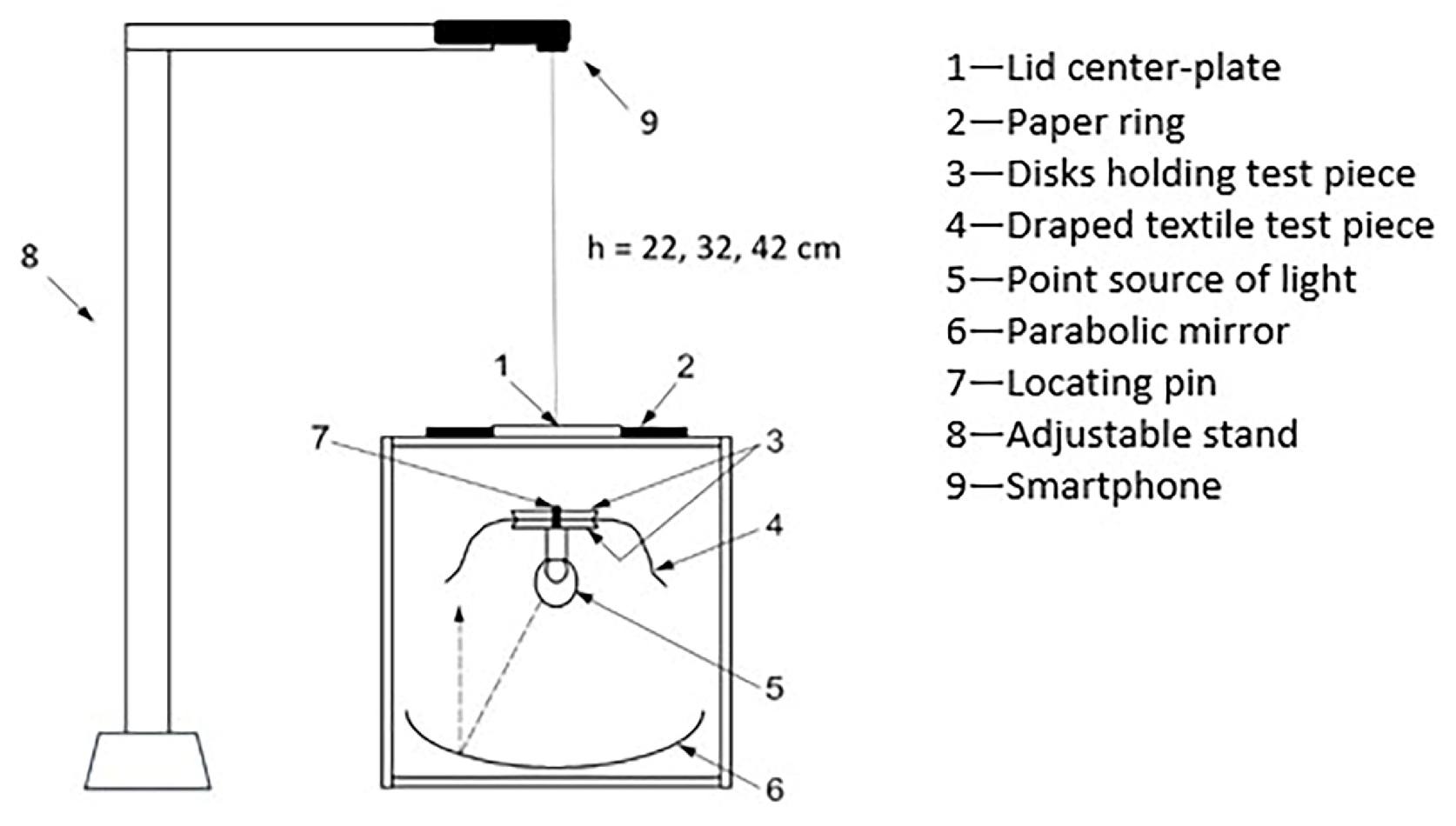
2.3.2. Smartphone-Enabled Digital Image Processing for Fabric Drape Using Photoshop® (SPDIP)

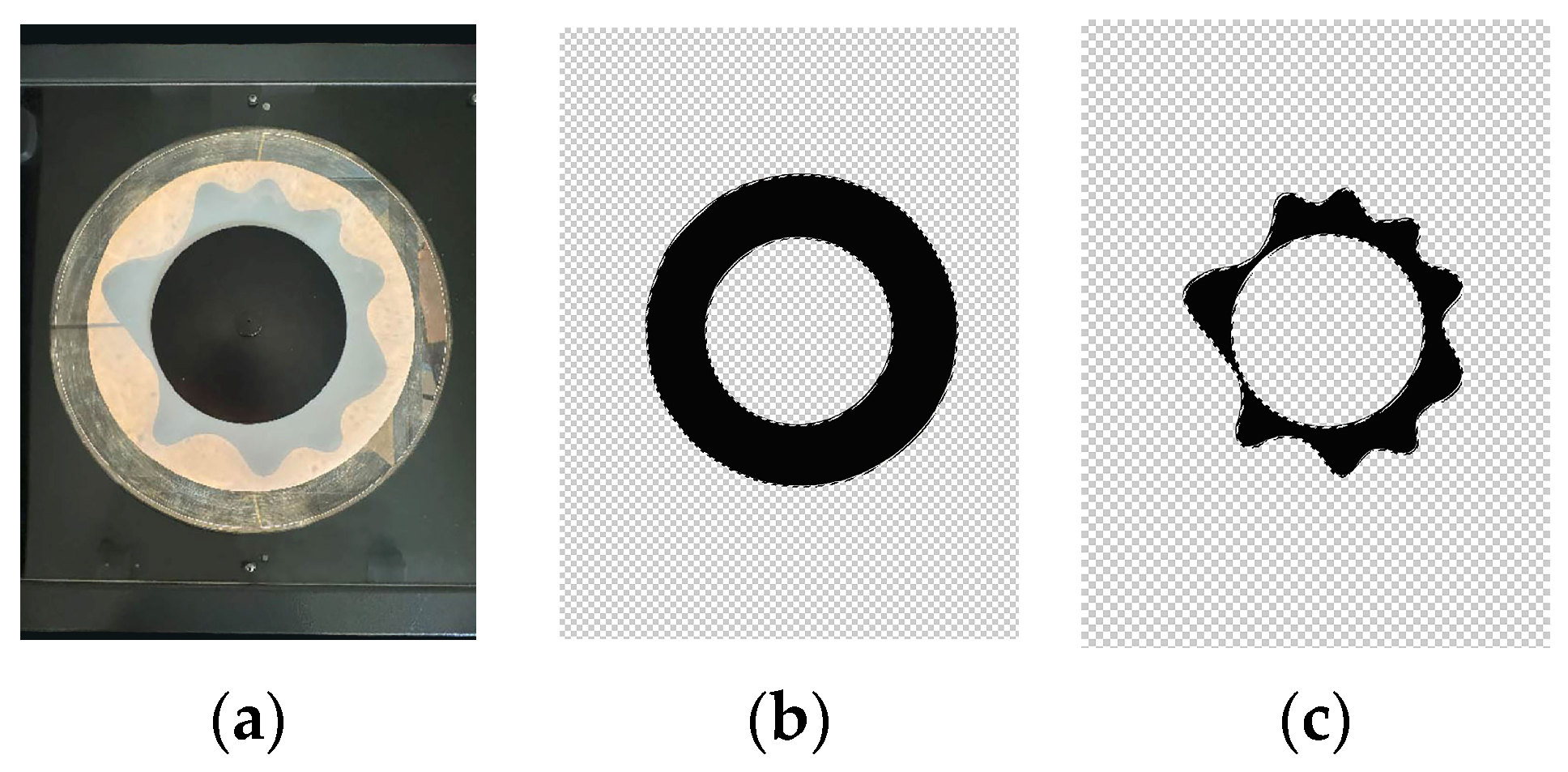
Fabric specimens with diameters of 24 cm, 30 cm, and 36 cm were draped over an 18 cm support disk using a Cusick drape meter. High-resolution images (3024 × 4032 pixels) were captured from a top-down perspective using a smartphone camera (iPhone 15 Pro Max, 0.5× optical zoom) positioned at three vertical distances: 22 cm, 32 cm, and 42 cm above the disk center (Figure 2). The processing sequence began by opening the image (File > Open), followed by conversion to grayscale (Image > Mode > Grayscale). To enhance the fabric–background contrast, brightness, and contrast adjustments were applied via Image > Adjustments > Levels or Brightness/Contrast, depending on image quality. The draped and undraped regions were segmented using the Magic Wand Tool and Quick Selection Tool, with manual tracing (Lasso Tool) employed if edges were not clearly defined. The selected fabric area was isolated (Ctrl + C and Ctrl + V onto a new layer), and the pixel area was extracted using the Info Panel (Window > Info). The drape coefficient (DC) was computed as the ratio of the draped fabric area to the total area of the paper ring according to Equation (2). Captured images were processed in Adobe Photoshop® following a standardized workflow, depicted in Figure 3. As illustrated, the workflow consisted of three primary steps: (a) acquisition of the raw top-view image, (b) segmentation through grayscale adjustment and background removal to distinguish the draped from the undraped areas, and (c) final isolation of the draped area for precise pixel-based area computation.
D C = D A · 100 ( % )
where A represents the number of pixels corresponding to the total projected shadow area of the fabric on the paper ring after draping, D denotes the number of pixels within the shadow region of the draped fabric itself, and DC is the calculated drape coefficient, expressed as a percentage (%).

2.3.3. Smartphone-Enabled Digital Image Processing for Fabric Drape Using ImageJ® (SIDIP)

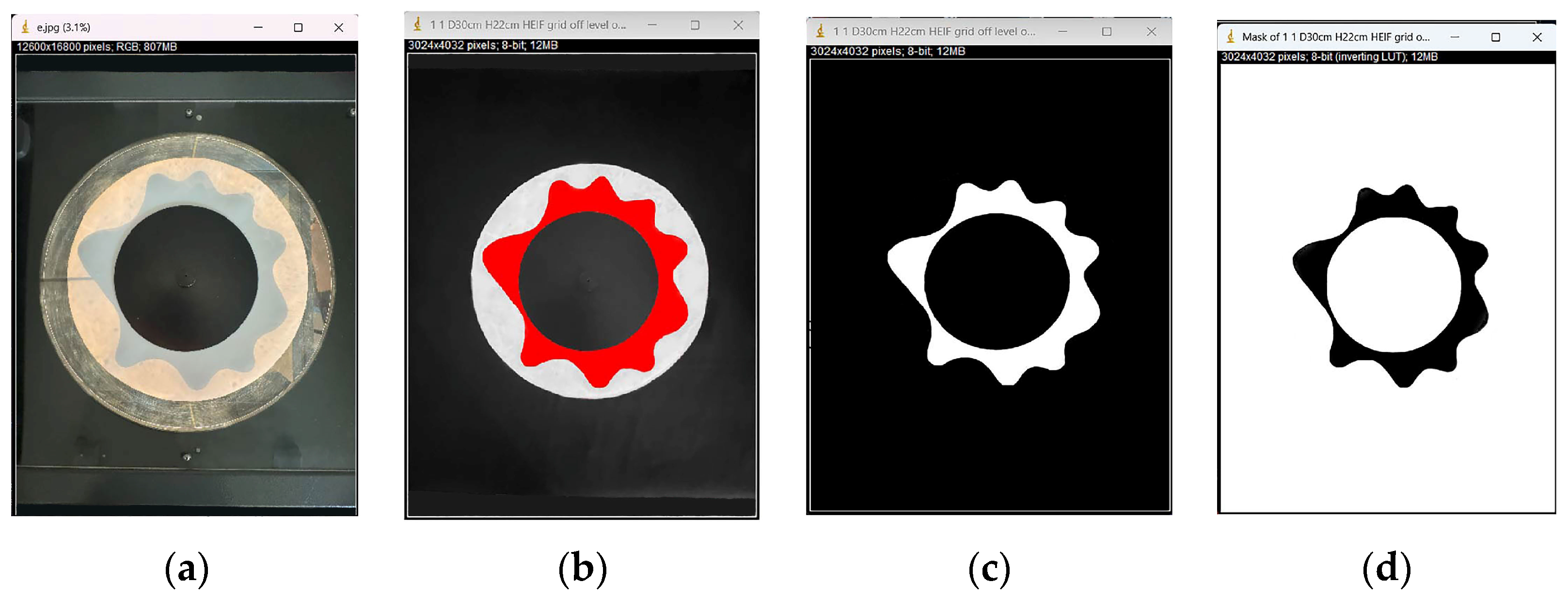
Fabric draping was performed on a Cusick drape meter under controlled and consistent lighting conditions to ensure optimal image clarity and measurement accuracy. Using a smartphone (iPhone 15 Pro Max), top-view images were captured at vertical distances of 22 cm, 32 cm, and 42 cm above the center of the support disk to clearly visualize the draped area (Figure 2). Captured images were imported into ImageJ® by selecting File > Open and navigating to the desired file. Each image was converted to grayscale (Image > Type > 8-bit) to facilitate binary segmentation. A threshold was applied (Image > Adjust > Threshold), with slider adjustments used to accurately distinguish the draped fabric from the background. The draped area was segmented via Analyze > Analyze Particles, setting appropriate parameters to isolate and measure the projected fabric area. Measurements were extracted through Analyze > Measure, with results recorded in pixel units. The drape coefficient (DC) was then calculated using Equation (2), representing the ratio of the projected draped area to the total area of the supporting paper ring. The complete digital image processing workflow is depicted in Figure 4. As illustrated, the procedure comprised four sequential steps: (a) acquisition of a high resolution raw image, (b) application of intensity thresholding to segment the fabric draped area from the background, (c) generation of a binary mask highlighting the draped area, and (d) inversion of the binary mask to enable precise pixel-based area quantification for drape coefficient (DC) calculation.

2.3.4. Smartphone-Enabled Digital Image Processing for Fabric Drape Using MATLAB® (SMDIP)

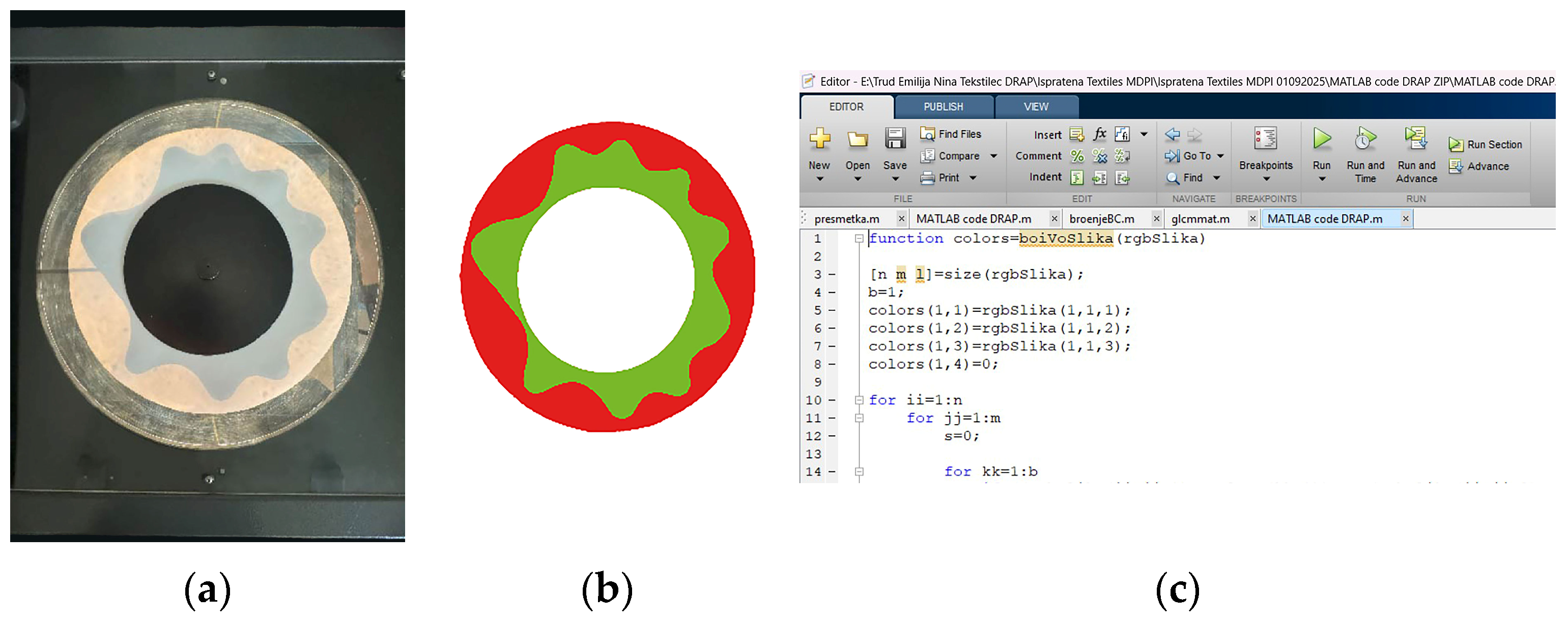
Fabric specimens with diameters of 24 cm, 30 cm, and 36 cm were draped using a Cusick drape meter equipped with an 18 cm diameter support disk. High-resolution images of the draped fabrics were captured using an iPhone 15 Pro Max (0.5× optical zoom), positioned vertically at calibrated distances of 22 cm, 32 cm, and 42 cm above the disk center to capture the full draped area with minimal distortion (Figure 2). Image processing was initially performed using Adobe Photoshop®, where thresholding techniques were applied to segment the fabric from the background. The draped and undraped regions were visually coded in green and red, respectively, to facilitate clear region differentiation. Edge detection tools were employed to enhance contour accuracy. The processed images were subsequently imported into MATLAB®, where a custom algorithm utilizing the regionprops function computed the pixel-based areas of both draped and undraped regions. The drape coefficient (DC) was then calculated from these measurements using a dedicated MATLAB® code (see Supplementary Material Code S1). The complete stepwise workflow for MATLAB®-based DC determination is illustrated in Figure 5, showcasing (a) the original image acquisition, (b) region segmentation map in Adobe Photoshop®, and (c) implementation of the custom processing code in MATLAB®.

2.4. Statistical Framework for Drape Coefficient Reliability Analysis

Statistical analysis was performed using IBM SPSS Statistics to evaluate the reliability, accuracy, and precision of the drape coefficient (DC) measurements obtained through both the conventional Cusick method and the digital image processing (DIP) approach. Initially, normality was assessed by examining skewness (S), a measure of asymmetry in the distribution of values relative to the mean. Skewness values between –1 and +1 are indicative of excellent normality, while values between –2 and +2 are generally acceptable for most physical and engineering sciences [41]. Skewness was computed using Equation (3):
S k e w e n e s s = n ( n 1 ) ( n 2 ) i = 1 n ( x i x ¯ s )
where n is the sample size, xi are individual sample points, x ¯ is the sample mean, and s is the sample standard deviation.
Descriptive statistics (DS) were computed to strengthen the reliability assessment. Standard deviation (SD) was used to evaluate the dispersion of DC values around the mean, while the coefficient of variation (CV) provided a normalized measure of variability relative to the mean value. Absolute error (AE) and relative error (RE) were also determined; AE quantifies the direct deviation from the true value, while RE contextualizes this error as a percentage relative to the expected value, offering an integrated perspective on measurement accuracy and precision.
An F-test (two-sample for variances) was subsequently performed to evaluate the homogeneity of variances between the two measurement methods, assessing whether they produced consistent variability in DC outcomes. Based on the results of the F-tests (mean, M; variance, V; degree of freedom, df; F statistic, FS; p-value; F critical, FC), independent t-tests (mean, M; variance, V; degree of freedom, df; t statistic, tS; p-value; t critical, tC)—two-sample assuming equal variances—were applied to compare the mean DC values (M) obtained from five replicate specimens for each fabric type.
A significance level of 0.05 was adopted throughout the analysis to establish a 95% confidence interval, minimizing the probability of Type I errors—false positives resulting from the erroneous rejection of a true null hypothesis. Skewness analysis was critical in validating the normality assumption required for the application of parametric statistical tests, ensuring that the outcomes of the F-test and t-test were not biased by distributional asymmetries. Five specimens per fabric sample were evaluated under each condition to ensure the robustness, statistical power, and reproducibility of the findings.
Coefficients of compliance were determined using both linear regression and ratio-based approaches to quantify the agreement between smartphone-derived and Cusick-measured drape coefficients, enabling assessment of systematic bias, proportional accuracy, and cross-device consistency.

3. Results and Discussion

Three fabric types—lightweight (PB), medium-weight (BK), and heavyweight (YW)—were examined to represent distinct categories based on mass per unit area and characteristic drape behavior. The weave structure exerts a major influence on fabric drape by determining yarn mobility, surface texture, and interlacing density. In twill weaves, longer float lengths and fewer interlacements permit greater yarn displacement and bending flexibility, resulting in smoother and more compliant folds than those observed in plain weaves [36]. Consequently, twill fabrics generally exhibit higher drape coefficients and more uniform deformation profiles. This intrinsic structural balance between rigidity and flexibility contributed to the stable and reproducible drape contours observed in this study.
For each fabric type, circular specimens with diameters of 24, 30, and 36 cm were prepared and evaluated under three calibrated camera heights—22 cm, 32 cm, and 42 cm above the Cusick drapemeter. To ensure statistical reliability, five replicate specimens were analyzed for each fabric–diameter–height combination. This systematic experimental framework enabled a comprehensive assessment of the influence of imaging geometry and specimen dimensions on drape coefficient (DC) behavior, facilitating direct comparison between the conventional Cusick method and the smartphone-based digital image processing (DIP) approaches for precision evaluation of fabric drape performance.

3.1. Drape Coefficient Reliability Across Fabric Weights: Influence of Camera Height and DIP Software

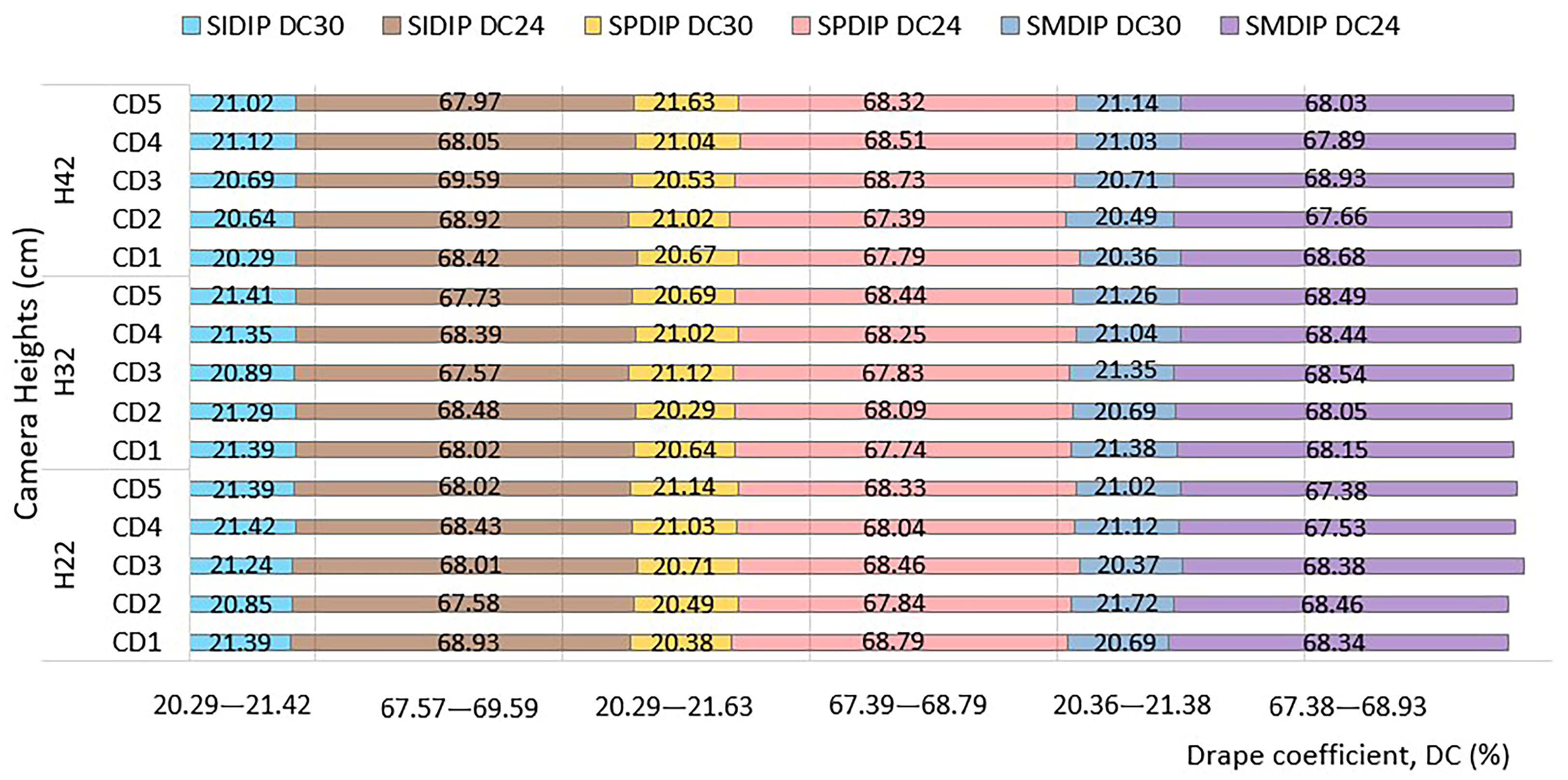
DC values for the lightweight PB fabric, extracted using the iPhone smartphone-based ImageJ® digital image processing (SIDIP) method, are illustrated in Figure 6. Accompanying descriptive statistics—mean (M), standard deviation (SD), coefficient of variation (CV), skewness (S), absolute error (AE), and relative error (RE)—are reported in Table 2, providing a quantitative overview of measurement consistency, distribution symmetry, and accuracy across imaging conditions. At a specimen diameter of 30 cm, the measured DC values across all camera heights ranged from 20.29% to 21.42%, which is below the BS 5058:1974 [40] standard range of 30–85%, thereby indicating insufficient deformation capture. Consequently, a reduced specimen diameter of 24 cm was adopted, yielding DC values between 67.57% and 69.59%, in full compliance with the standard. This adjustment aligns with established textile testing protocols, which recommend adapting specimen dimensions based on material flexibility [42,43]. The skewness values for DC distributions at camera heights of 22 cm, 32 cm, and 42 cm were 0.86, −0.10, and 0.53, respectively—all within the ±1 value indicative of normality, ensuring distribution symmetry and measurement robustness [41]. The mean DCs across heights remained highly stable at 68.59 ± 0.67% (M ± SD) (H22) with 95% confidence, 68.03 ± 0.41% (H32), and 68.19 ± 0.51% (H42), while CV values ranged from 0.61% to 0.98%, and RE values from 1.11% to 1.80%, demonstrating excellent measurement repeatability [44].
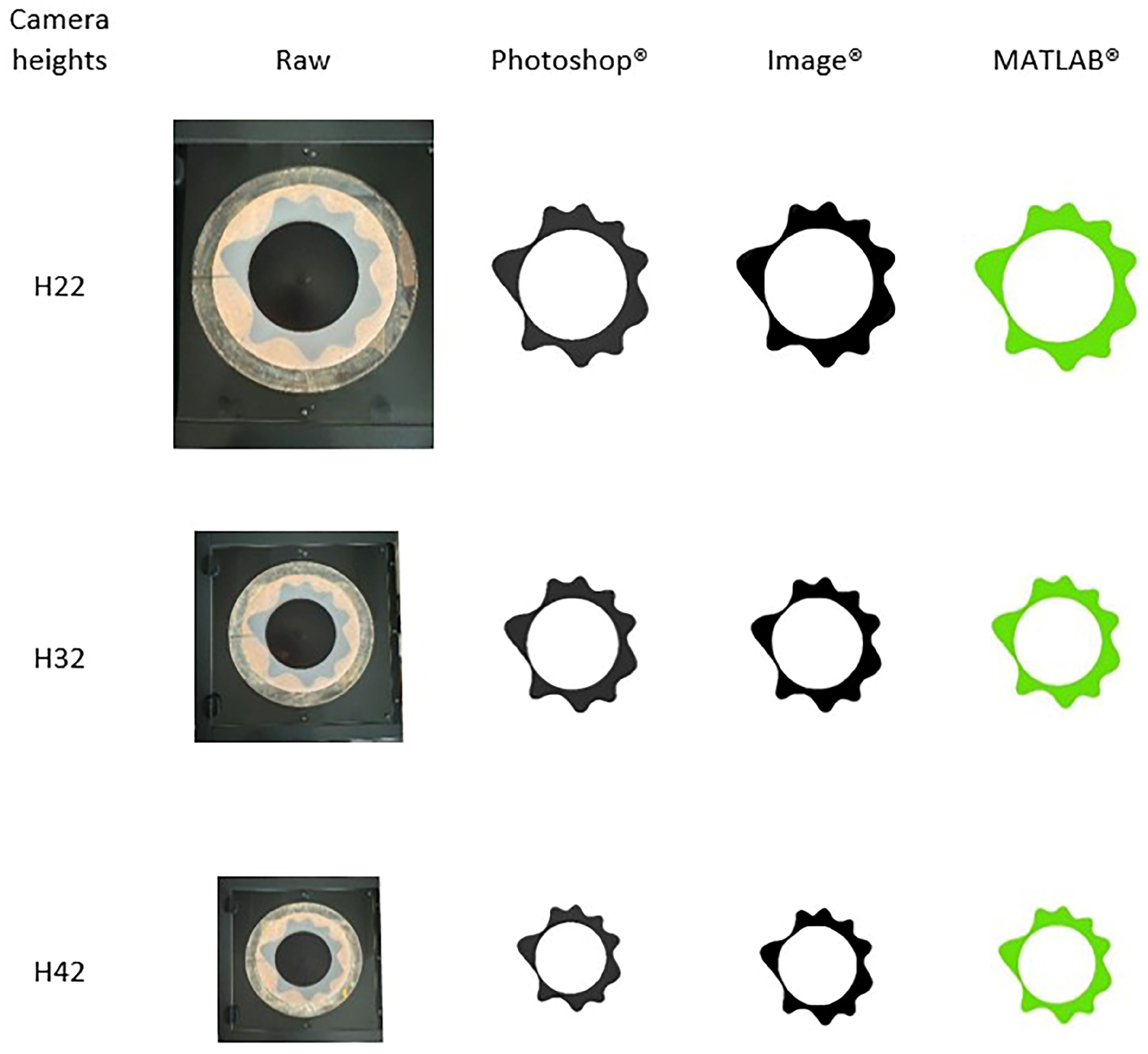
Comparable mean DCs were obtained from the smartphone-based Photoshop® digital image processing (SPDIP) method (67.39–68.79%) and smartphone-based MATLAB® digital image processing (SMDIP) method (67.38–68.93%). For SPDIP, the CV was 0.43–0.80%, with an RE of 0.78–1.48%; for SMDIP, the CV was 0.32–0.79%, with an RE of 0.59–1.46%. These consistent outputs across platforms are visually confirmed in Figure 7, which presents a cross-platform comparison of raw and segmented fabric drape areas across the three camera heights.
Despite slight rendering differences, all platforms preserved the geometric fidelity necessary for accurate pixel-based area calculations. Importantly, although draped areas appeared smaller at higher camera heights due to perspective effects, the application of scale normalization during image analysis ensured that DC values remained invariant. When implemented under standardized imaging and preprocessing conditions, pixel-based segmentation methods yielded reproducible and platform-independent DC values, confirming the robustness and cross-software reliability of the proposed DIP approach [45].
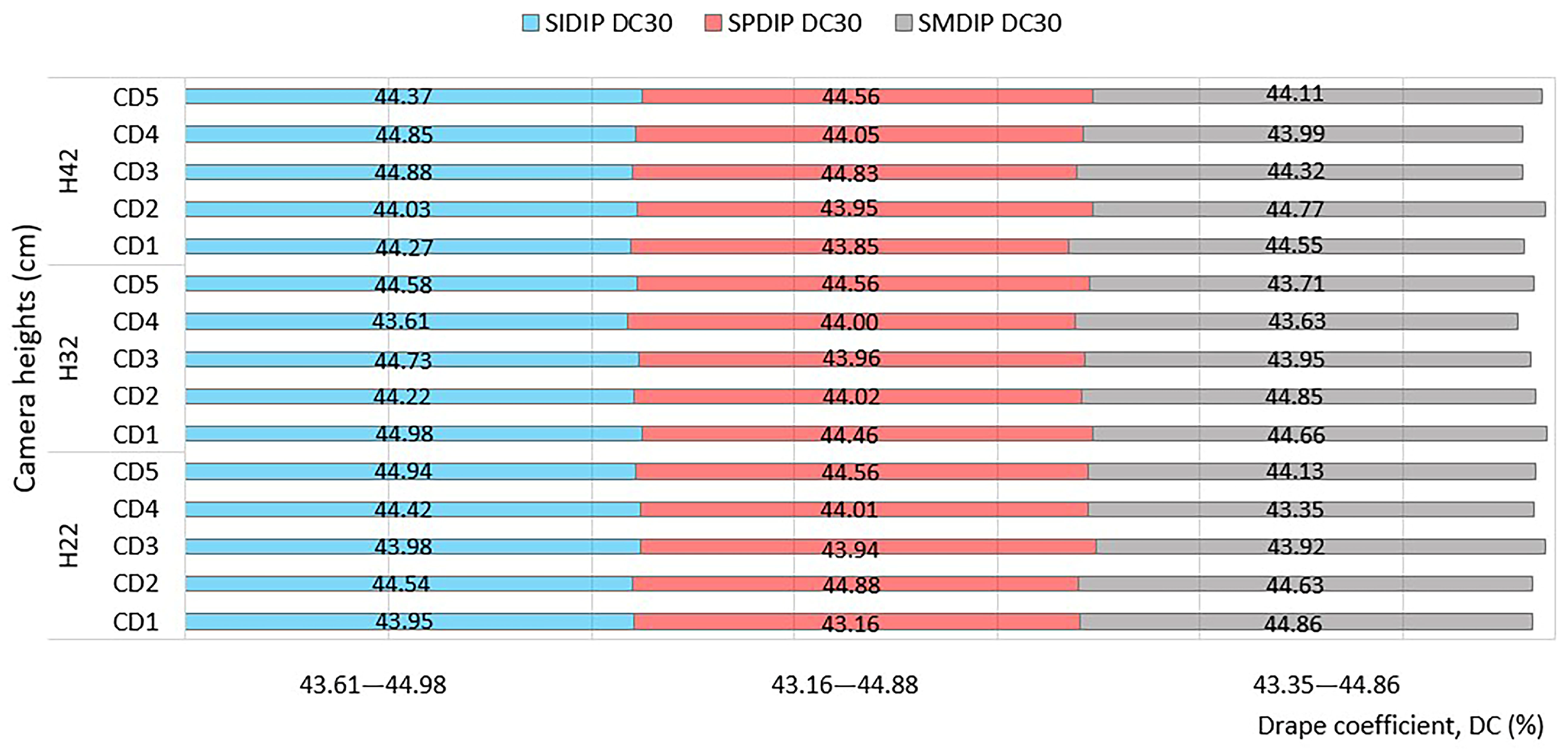
Drape coefficient (DC) values for the medium-weight BK fabric, obtained using the iPhone smartphone-based ImageJ® digital image processing (SIDIP) method, are shown in Figure 8, with descriptive statistics summarized in Table 3. The mean (M), standard deviation (SD), coefficient of variation (CV), skewness (S), absolute error (AE), and relative error (RE) were calculated to quantify measurement consistency and distribution characteristics. Across the three tested camera heights (22, 32, and 42 cm), DC values ranged from 43.61% to 44.98%, indicating strong stability. All values fell within the BS 5058:1974 [40] standard range of 30–85%, confirming the adequacy of the 30 cm specimen diameter for medium-weight fabrics. Statistical indicators further support reliability: skewness values (0.10, –0.95, 0.38) remained within ±1, confirming acceptable normality [41]. The mean DC values were 44.48 ± 0.37% (H22), 44.42 ± 0.53% (H32), and 44.37 ± 0.41% (M ± SD) (H42), while RE values (1.54–2.20%) were well below the 5% threshold for acceptable variability in textile testing [44]. Comparable outcomes were obtained using SPDIP (43.16–44.88%) and SMDIP (43.35–44.86%), with CV values <1.49% and RE values ≤2.74%. This cross-platform agreement reflects the lack of statistically significant differences among DIP tools based on pixel-level segmentation and area computation. Provided that preprocessing procedures such as lighting, grayscale conversion, and thresholding are standardized, the results remain consistent across platforms [45], confirming the robustness and reproducibility of DIP methods for reliable fabric drape assessment.
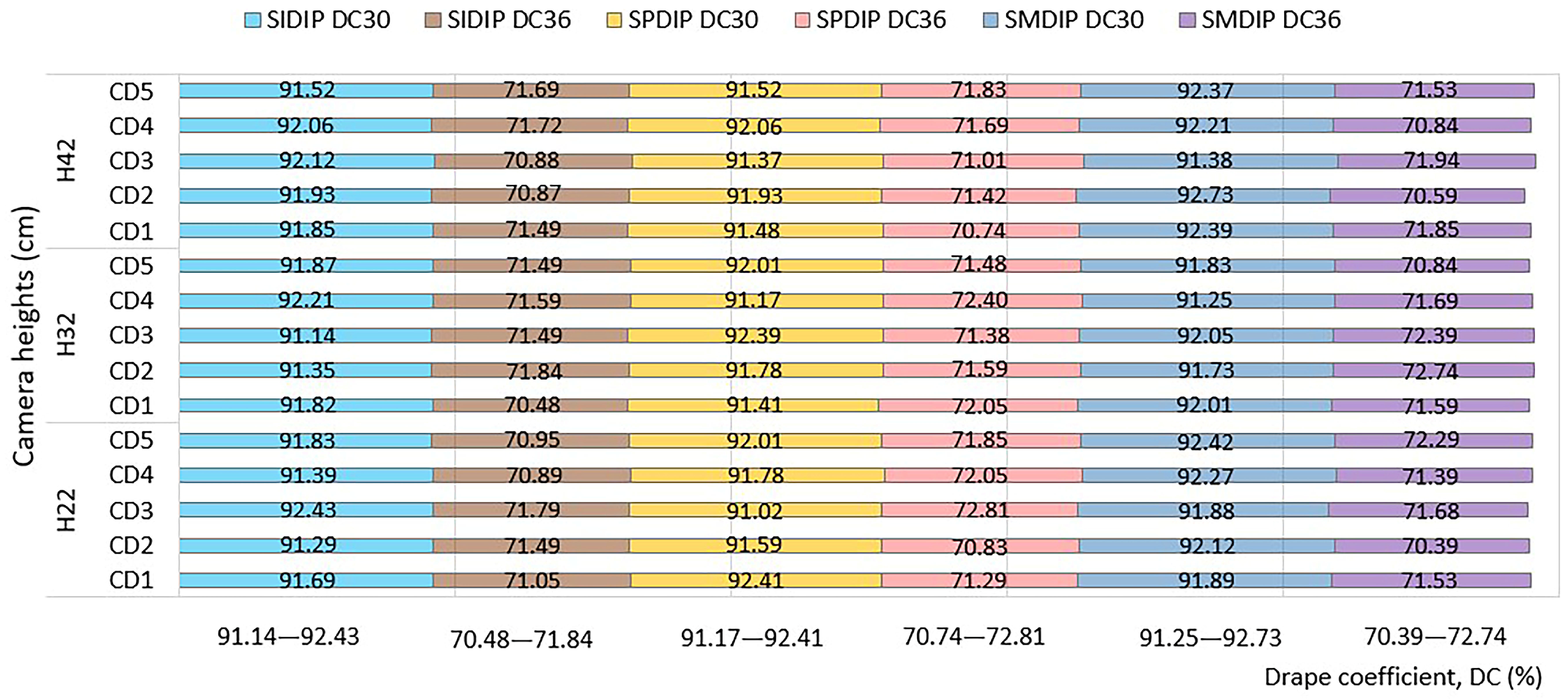
Drape coefficient (DC) values for the heavyweight YW fabric, obtained using the iPhone smartphone-based Photoshop® digital image processing (SIDIP) method, are shown in Figure 9, with descriptive statistics summarized in Table 4. At a 30 cm specimen diameter, DC values ranged from 91.14% to 92.43% across all camera heights, exceeding the BS 5058:1974 [40] standard range of 30–85%. This confirms that a 30 cm diameter is unsuitable for stiff fabrics, as smaller specimens restrict deformation and inflate DC values, consistent with textile testing theory [46]. When the specimen diameter was increased to 36 cm, the DC values decreased to 70.48–71.84%, falling within the recommended range and confirming its appropriateness for rigid fabrics. Supporting indicators included skewness values of 0.62, –0.25, and 0.83 for 22, 32, and 42 cm heights, respectively—all within ±1, confirming acceptable normality [41]. The mean DC values remained stable, while relative error (RE) ranged from 1.00% to 1.95%, well below the 5% repeatability limit [44]. Comparable results were achieved using SPDIP (70.74–72.81%) and SMDIP (70.39–72.74%), with consistent statistical parameters (CV < 1.05%, RE < 1.93%). This cross-platform consistency reflects shared reliance on pixel-based segmentation and standardized preprocessing workflows [45], supporting methodological robustness with no statistically significant differences.

3.2. Reliability of Drape Coefficient Measurements Across Digital Platforms at Varying Camera Heights

The effect of camera placement height on DC measurements obtained via iPhone smartphone-based DIP methods was statistically evaluated using F-tests and t-tests. F-tests were first conducted to assess variance homogeneity in DC values recorded at three camera heights—22 cm (DCH22), 32 cm (DCH32), and 42 cm (DCH42)—for each software platform (Figure 6, Figure 8 and Figure 9). Based on these results, two-sample t-tests assuming equal variances were applied to determine whether the mean DC value significantly differed across height groups.
Table 5 presents the F-test and t-test results for PB fabric across different camera placement heights and software platforms (Photoshop®, ImageJ®, MATLAB®). For the H22–H32 (22 cm and 32 cm camera heights, respectively) comparison, the mean DC values ranged from 68.028 to 68.59, with variances between 0.048 and 0.453. The F statistics (2.658–6.091) were below the critical values (FC = 6.388), and p-values (0.055–0.183) exceeded 0.05, indicating no significant variance differences. Corresponding t-test values (tS = –0.367–1.591) were all below the critical limit (tC = 2.306), with p-values > 0.05, confirming no statistically significant differences in mean values. For H22–H42, mean DC values ranged from 68.018 to 68.59, and variances between 0.136 and 0.453. F statistics (1.091–2.204) remained well below FC, with p-values (0.231–0.468) again above 0.05. The t-test produced values (tS = –0.487 to 1.049) below tC, confirming no significant mean differences. For H32–H42, the PB fabric’s mean DC values (68.018–68.334) and variances (0.048–0.269) showed no significant differences, as F statistics (0.179–0.657), p-values (0.062–0.347), and tS values (–1.057 to 1.255) remained below critical thresholds, confirming measurement stability.
Table 6 summarizes the F-test and t-test results for BK fabric measured across different camera placement heights using three DIP platforms (Photoshop®, ImageJ®, MATLAB®). For the H22–H32 comparison, the mean DC values ranged from 44.11 to 44.348, with variances between 0.082 and 0.434. The F statistics (0.188–2.208) were below the respective critical thresholds (FC = 6.388), and p-values (0.067–0.231) were above 0.05, confirming no significant variance differences. The t-test results yielded values between 0.210 and 0.653 (tS), all below tC = 2.306, with p-values > 0.05, indicating equivalent means.
For H22–H42 (22 cm and 42 cm camera heights, respectively), the mean values ranged from 44.11 to 44.48, with variances between 0.101 and 0.434. F statistics (0.306–0.491) remained below FC, and p-values (0.139–0.254) were nonsignificant. The t statistics (tS = 0.394–1.260) were lower than the critical threshold (tC), and p-values (0.243–0.704) exceeded 0.05, confirming no statistically significant differences in mean values. For H32–H42, the mean values ranged from 43.978 to 44.424, with variances between 0.082 and 0.434. F statistics (0.188–1.652) and p-values (0.067–0.481) indicated no variance differences. Similarly, t-test results (tS = 0.192–0.507) were well below tC, with p-values > 0.05. Overall, the results confirm that DC measurements for BK fabrics remain statistically stable across camera heights and software tools.
Table 7 presents the F-test and t-test results for YW fabric evaluated across different camera placement heights using Photoshop®, ImageJ®, and MATLAB® DIP platforms. For the H22–H32 comparison, the mean DC values ranged from 71.13 to 71.796, with variances between 0.186 and 0.578. The calculated F statistics (FS = 0.346–1.127) were well below the corresponding critical values (FC = 6.388), and the p-values (0.164–0.455) exceeded 0.05, confirming no significant variance differences. The t statistics (tS = –1.108 to –1.572) were below the critical threshold (tC = 2.306), with p-values > 0.05, indicating no significant differences in mean DC values. For H22–H42 (22 cm and 42 cm camera heights, respectively), the mean DC values ranged from 71.13 to 71.766, with variances between 0.152 and 0.570.
F statistics (0.367–1.319) and associated p-values (0.178–0.406) indicated no significant variance differences. Similarly, t-test values (tS = –1.084 to –0.259) were below tC, and p-values (0.310–0.802) further confirmed no statistically significant differences. For H32–H42, the mean values ranged from 71.234 to 71.796, with variances between 0.152 and 0.578. The F-test values (Fs = 0.938–3.809) remained nonsignificant, with p-values (0.112–0.476) above 0.05. The t-test values (tS = 0.036 to 0.900) were all below the critical threshold, with p-values > 0.05. The results demonstrate that YW fabric DC values are consistent across heights and platforms. Among the tested setups for PB, BK, and YW, 22 cm was identified as the optimal height, balancing measurement accuracy with ease of image acquisition. These results align with statistical inference principles [47], and p > 0.05 supports the null hypothesis and confirms DIP-based DC measurement reliability.
The stability of DC values across the three tested camera heights (22, 32, and 42 cm) can be interpreted through photogrammetry principles, central projection geometry, and digital image segmentation theory. When the camera is positioned orthogonally above the specimen with its optical axis perpendicular to the draping plane, perspective distortion is minimized, as warping typically results only from large angular deviations or wide-angle lens effects—conditions absent in this controlled setup [48,49]. Calibrated heights ensured complete frame capture without edge truncation, while the high-resolution smartphone system (3024 × 4032 pixels) provided sufficient pixel density to support accurate edge detection and area computation. Since the DC is calculated as a scale-invariant ratio of draped-to-reference pixel areas, stable image quality across heights preserved measurement integrity. Under controlled lighting and background conditions, segmentation algorithms such as thresholding and region-based analysis operated robustly, enabling Photoshop®, ImageJ®, and MATLAB® to generate near-identical binary outputs. These findings align with prior image analysis research confirming pixel-based area measurement stability under moderate scale variations when distortion is absent [50,51].

3.3. Cross-Platform Reliability in Drape Coefficient Measurement Independent of Camera Height

The differences in DC values obtained from the three DIP platforms—Photoshop®, ImageJ®, and MATLAB® (Figure 6, Figure 8 and Figure 9)—using the iPhone smartphone were statistically assessed through F-tests and t-tests, independent of camera placement height (Table 8). For PB fabrics, the mean DC values ranged from 68.17% to 68.271% across Photoshop®, ImageJ®, and MATLAB®, with variances between 0.158 and 0.312. The F-test results confirmed no significant variance differences, with FS values of 0.506–1.616 below the FC (FC = 2.484; df1 = df2 = 14 at α = 0.05) and with p-values ranging from 0.107 to 0.356. The corresponding t-test values (tS = –0.569 to 0.403) were below the critical limit (tC = 2.048), with p-values > 0.05, indicating no statistically significant differences in mean DC values. For BK fabrics, the mean DC values ranged from 44.162 to 44.423, with low variance estimates (0.172–0.237). F-test results produced Fs values ranging from 0.724 to 1.179, all below FC = 2.484, and p-values of 0.277–0.386. The t-test values (tS = –1.503 to 1.583) were below tC, with p-values > 0.05, confirming no significant differences. For YW fabrics, the mean DC values ranged from 71.314 to 71.628, with variances between 0.305 and 0.406. The F statistics (0.753–1.052) were below FC (FC = 2.484), and the tS values (–1.011 to 1.537) remained within the critical limits (tS < tC), with p-values > 0.05. These results demonstrate that DC measurements remain consistent across software platforms, with no statistically significant differences in the mean or variance.
In all cases, p-values exceeded 0.05, confirming no significant variance or mean DC differences across platforms. Statistical inference theory states that p > 0.05 reflects random variability, not methodological bias [52]. Thus, the null hypothesis is supported. The relative error (RE) remained below 5%, meeting textile metrology repeatability standards [53]. This cross-platform consistency is explained by the shared image-processing architecture of Photoshop®, MATLAB®, and ImageJ®. Despite differences in interface or application, each tool analyzes pixel-based bitmap data. When the same high-resolution image is processed, draped areas are quantified via pixel counts, ensuring DC consistency, provided that segmentation protocols are standardized. All platforms support preprocessing steps such as grayscale conversion, brightness adjustment, and threshold-based segmentation. Under standardized conditions, binary outputs converge, consistent with image analysis theory [54]. ImageJ® was selected for continued analysis due to its open-source status, plugin ecosystem, and suitability for resource-constrained textile testing [25].

3.4. Comparison of Smartphone-Based ImageJ® Digital Image Processing Method and the Cusick Method at Optimal Camera Height

Following confirmation that neither camera height variation nor DIP platform significantly affected DC outcomes, a focused comparison was conducted between the smartphone-based ImageJ® digital image processing method—implemented using the iPhone and Samsung at the optimal camera height of 22 cm—and the conventional Cusick method. This analysis aimed to assess the comparability of results across fabric types and specimen diameters, reinforcing the feasibility of DIP as a valid replacement for mechanical drape testing.
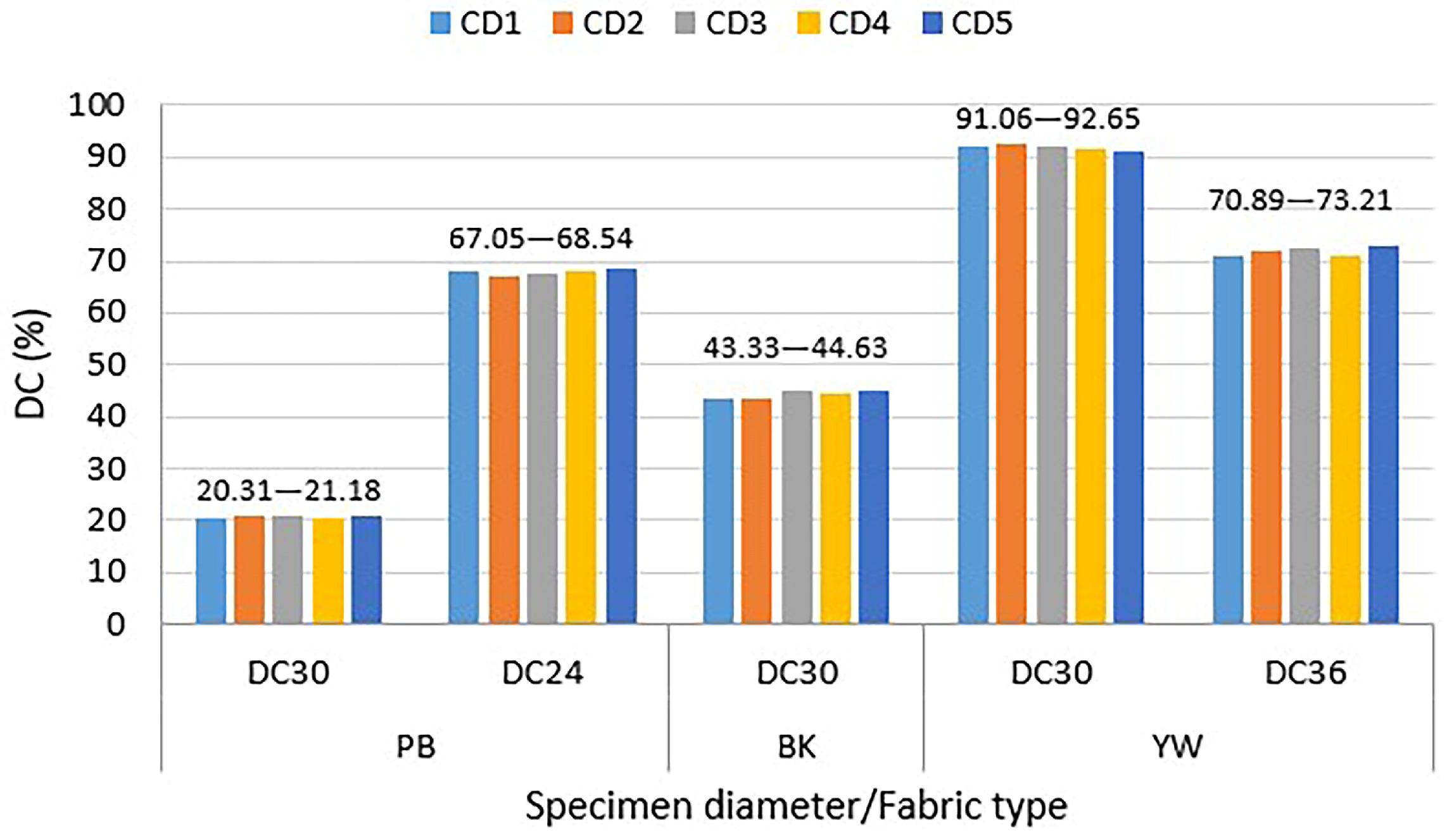
The DC values obtained via the Cusick method are presented in Figure 10. For lightweight PB fabric, 30 cm specimens yielded DCs between 20.31% and 21.18%, below the BS 5058:1974 [40] threshold of 30–85%, indicating insufficient sensitivity for limp fabrics. Reducing the specimen size to 24 cm improved results (67.05–68.54%, mean ± SD = 67.85 ± 0.55%, 95% confidence), consistent with textile testing recommendations to match specimen size with fabric stiffness [25]. For medium-weight BK fabric, 30 cm specimens produced tightly clustered DCs (43.33–44.63%, mean ± SD = 43.88 ± 0.50%) with a relative error of 2.09%, indicating reliable precision. For heavyweight YW fabric, a 36 cm diameter was required to yield valid DC values (70.89–73.21%, mean ± SD = 71.93 ± 0.98%). At 30 cm, DCs exceeded 90%, confirming the inadequacy of smaller specimens for stiffer materials. The coefficient of variation (CV) for PB, BK, and YW fabrics did not exceed 1.36%, while the relative error (RE) remained below 2.5% in all cases, as detailed in Table 9. The corresponding DC values from the SIDIP method (iPhone) closely matched those from the Cusick method, with means of 68.59 ± 0.67% (PB, 24 cm specimen, Table 2, Figure 6), 44.48 ± 0.37% (BK, 30 cm specimen, Table 3, Figure 8), and 71.13 ± 0.45% (YW, 36 cm specimen, Table 4, Figure 9).
Statistical comparisons between the Cusick method (Figure 10) and the iPhone smartphone-based DIP method (Figure 6, Figure 8 and Figure 9) were conducted using F-tests to assess variance homogeneity and t-tests (two-sample assuming equal variances) to compare mean DC values for the three sample designations (PB, BK, and YW) (Table 10). The mean values across the compared groups were relatively consistent, with PB showing means of 67.848 and 68.59, BK with 43.876 and 44.48, and YW with 71.33 and 71.93. Variance estimates were generally low, ranging between 0.139 and 0.957, indicating controlled variability. The F-test results showed that variance differences were not statistically significant at the 95% confidence level. For PB, the F statistic was 0.672 with p = 0.355, for BK it was 1.788 with p = 0.294, and for YW it was 5.314 with p = 0.067. In all cases, the FS values were lower than the corresponding F critical (FC = 6.388; df1 = df2 = 4 at α = 0.05). The t-test results similarly confirmed the absence of significant differences in mean values. For PB, BK, and YW, the calculated t statistics (tS = –1.905, –2.170, and 1.257, respectively) were below the critical value (tC = 2.306), and the associated p-values exceeded 0.05. These outcomes demonstrate that both variance and mean values show no statistically significant differences across the examined groups, suggesting consistency and stability of the measurement method across different sample designations.
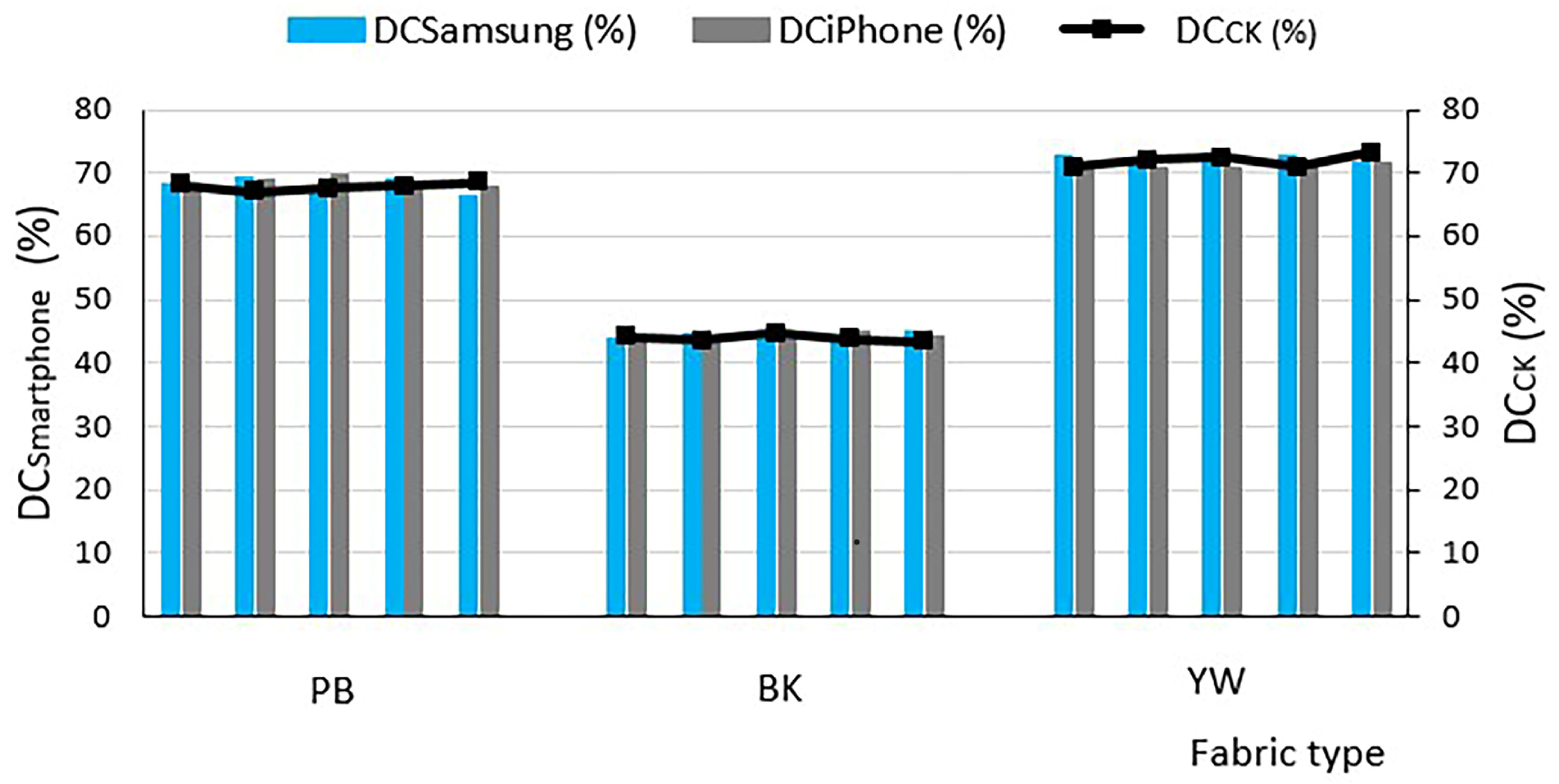
Comparative analysis between the Cusick method and the Samsung smartphone-based ImageJ® DIP method was performed to evaluate the mean DC values across the three fabric types (PB, BK, and YW). As shown in Figure 11, the DC results obtained using both iPhone and Samsung smartphones exhibited trends nearly identical to those using the Cusick reference method. This strong compliance confirms that the optical fidelity and segmentation stability of modern smartphone sensors ensure accurate drape evaluation, while uniform illumination, fixed imaging height (22 cm), and standardized segmentation thresholds minimize measurement variability.
Table 11 presents the statistical comparison between the Cusick reference method (Figure 10) and the Samsung smartphone-based ImageJ® (SIDIP) method (Figure 11) using both F-test and paired t-test procedures. Across all fabric categories—lightweight (PB), medium-weight (BK), and heavyweight (YW)—the mean drape coefficient (DC) values obtained via SIDIP exhibited excellent agreement with those measured using the Cusick method.
Variance ratios from the F-test (Fs = 0.215–3.477 < Fc = 6.388, df = 4, p > 0.05) confirm homogeneity of variance, indicating that the dispersion in smartphone-based measurements does not significantly deviate from that of the Cusick method. The paired t-test results (|tS| = 0.405–1.243 < tc = 2.306, df = 8, p > 0.05) further demonstrate the absence of statistically significant differences between the two methods.
The mean drape coefficient (DC) values obtained using the Cusick method and smartphone-based ImageJ® analysis (Table 12) exhibited a high degree of numerical consistency across all fabric categories. The lightweight (PB) fabric showed DC values of 67.85% (Cusick), 68.59% (iPhone), and 68.09% (Samsung), yielding compliance coefficients (k) of 1.011 and 1.004. For the medium-weight (BK) fabric, the corresponding k values were 1.014 (iPhone/Cusick) and 1.010 (Samsung/Cusick), while for the heavyweight (YW) fabric, k values of 0.989 and 1.007 confirmed near-unity correspondence. These deviations indicate excellent agreement between digital and Cusick measurements. Slightly higher k values (>1) suggest slight overestimation by smartphone sensors, whereas k < 1 reflects minor underestimation attributable to lighting geometry and pixel segmentation precision. Overall, both devices demonstrated statistically compliant results with the Cusick reference, confirming the stability, reproducibility, and material-independent reliability of the smartphone-based SIDIP approach for precise fabric drape evaluation under standardized imaging conditions (22 cm camera height).
The regression analysis between the Cusick reference and smartphone-based ImageJ® measurements (Table 13) demonstrated a statistically robust correlation for both mobile devices. For the iPhone and Samsung, the regression models are expressed in Equations (4) and (5), respectively. The iPhone exhibited a near-unity slope (b = 0.97) with a coefficient of determination R2 = 0.993, confirming that 99.3% of the variability in the Cusick drape coefficient was accurately predicted by the smartphone-based measurements. The intercept (a = 2.03) and narrow confidence interval (0.923–1.019) indicate negligible systematic bias and excellent proportional agreement. Similarly, the Samsung yielded an almost identical performance (b = 0.99, R2 = 0.991), with its 95% confidence interval (0.936–1.052) encompassing the ideal value of unity, validating near-perfect compliance with the reference system. The extremely low p-values confirm that these relationships are highly significant. Collectively, these results verify that the digital image-based approach provides measurement fidelity equivalent to the Cusick apparatus. The close alignment of the two devices, despite differences in camera hardware and internal processing algorithms, demonstrates the robustness, portability, and reproducibility of the smartphone-integrated SIDIP framework for fabric drape evaluation.
D C C u s i c k = 2.0277 + 0.9709 × D C i P h o n e
D C C u s i c k = 0.7463 + 0.9942 × D C S a m s u n g
This statistical comparison is grounded in textile testing and image processing principles. The Cusick method derives the DC mechanically by tracing projected draped areas, while ImageJ® computes them digitally through pixel-based segmentation. Both quantify the DC as the ratio of draped-to-undraped areas, yielding invariant results under standardized conditions [45]. High-resolution smartphone imaging ensures adequate pixel density for precise contour extraction. When mounted at calibrated heights, smartphones provide image quality sufficient for reliable, reproducible DIP-based drape measurement, offering a reliable, scalable alternative to conventional Cusick testing.
However, this study’s comparison of the smartphone-enabled DIP framework for fabric drape evaluation is limited to woven fabrics with twill weaves. Future research should extend testing to include knitted, nonwoven, and elastic textiles to enhance the method’s generalizability across diverse fabric types and mechanical properties.

4. Conclusions

This study introduces a comprehensive framework for digital fabric drape analysis, combining high-resolution smartphone imaging with pixel-based segmentation across multiple software platforms. The proposed method showed no statistically significant differences from the conventional Cusick drape meter, independent of both software environment and camera placement height, thereby demonstrating methodological robustness and cross-platform reliability. Moreover, comparative analysis between the iPhone and Samsung revealed no statistically significant differences in the measured drape coefficients, confirming that neither the smartphone brand nor sensor architectures affects the accuracy of the DIP-based method. Among the tested configurations, a 22 cm camera height consistently produced the most stable and distortion-free measurements across fabric diameters. Of the evaluated tools, ImageJ® proved the most effective, providing accessible, accurate, and reproducible analysis without reliance on proprietary systems. The findings further confirm that, under controlled conditions, smartphone-based imaging can serve as a reliable substitute for laboratory-grade instrumentation. This mobile-enabled approach reduces both technical and economic barriers to precision textile testing, enabling scalable, rapid, and cost-effective drape measurement. Its broad applicability spans research laboratories, industrial practitioners, and educational institutions while also contributing to the formalization of digital image-based drape testing protocols. By integrating portable technologies into textile design, prototyping, and quality control workflows, this method aligns with the ongoing digital transformation in Industry 4.0. However, the current testing is limited to woven fabrics with twill weaves; future research should extend the evaluation to knitted, nonwoven, and elastic structures to enhance generalizability across diverse textile categories.

Supplementary Materials

The following supporting information can be downloaded at: https://doi.org/10.5281/zenodo.17019606, Code S1: MATLAB code for fabric drape coefficient calculation.

Author Contributions

Conceptualization, E.T.; methodology, E.T.; software, E.T. and N.M.; validation, E.T. and N.M.; formal analysis, N.M.; investigation, N.M.; resources, E.T.; data curation, E.T.; writing—original draft preparation, E.T. and N.M.; writing—review and editing, E.T.; visualization, E.T. and N.M.; supervision, E.T.; project administration, E.T. All authors have read and agreed to the published version of the manuscript.

Funding

This research received no external funding.

Data Availability Statement

The original contributions presented in this study are included in the article/supplementary material. Further inquiries can be directed to the corresponding author.

Acknowledgments

The authors extend their sincere gratitude to Bojan Prangoski, for his invaluable contribution to the development of the MATLAB® code utilized in this study. His expertise significantly enhanced the analytical rigor of the research. We deeply appreciate his dedication, insight, and ongoing support.

Conflicts of Interest

The authors declare no conflicts of interest.

References

  1. Gruhu, P.; Koske, D.; Storck, L.J.; Ehrmann, A. Three-dimensional printing by vat photopolymerization on textile fabrics: Method and mechanical properties of the textile/polymer composites. Textiles 2024, 4, 417–425. [Google Scholar] [CrossRef]
  2. Krogh, C.; Broberg, H.P.; Hermansen, M.S.; Olesen, M.A.; Bak, B.V.L.B.; Lindgad, E.; Lund, E. Analysis of the performance of a new concept for automatic draping of wide reinforcement fabrics with pre-shear: A virtual prototyping study. Heliyon 2023, 9, e20263. [Google Scholar] [CrossRef] [PubMed]
  3. Hassan, R.; Acerbi, F.; Rosa, P.; Terzi, S. The role of digital technologies in the circular transition of the textile sector. J. Text. Inst. 2024, 116, 2860–2873. [Google Scholar] [CrossRef]
  4. Bertola, P.; Teunissen, J. Fashion 4.0: Innovating fashion industry through digital transformation. Res. J. Text. Appar. 2018, 22, 352–369. [Google Scholar] [CrossRef]
  5. Knoblich, M.; Al Ktash, M.; Wackenhyt, F.; Jehle, V.; Ostertag, E.; Brecht, M. Applying UV hyperspectral imaging for the quantification of honeydew content of raw cotton via PCA and PLS-R models. Textiles 2023, 3, 287–293. [Google Scholar] [CrossRef]
  6. Nuno, G.; Carvalho, V.; Belsley, M.; Vasconcelos, M.R.; Soares, O.F.; Machado, J. Yarn features extraction using image processing and computer vision—A study with cotton and polyester yarns. Measurement 2015, 68, 1–15. [Google Scholar]
  7. Cao, Q.; Zhou, Y.; Yu, C. Application of image processing technology on testing blending ratio and blending irregularity of blended yarns. Text. Res. J. 2023, 86, 618–635. [Google Scholar] [CrossRef]
  8. Sanad, R.; Cassidy, T.; Cheung, T.L.V. Fabric and garment drape measurement—Part 1. J. Fiber Bioeng. Inform. 2012, 5, 341–358. [Google Scholar] [CrossRef]
  9. Nayak, R.; Cleveland, D.; Joseph, F. Characterization of Sustainable Bacterial Cellulose Fabricated with Vietnames ingredients for Potential Textile Application: Tensile and Handle Properties. Results Eng. 2025, 25, 104030. [Google Scholar] [CrossRef]
  10. Stepien, M.; Frydrych, I. Analysis of the drapeability and bending rigidity of clothing packages—A preliminary study. Textiles 2025, 5, 18. [Google Scholar] [CrossRef]
  11. Kenkare, N.; May-Plumlee, T. Evaluation of drape characteristics in fabrics. Int. J. Cloth. Sci. Technol. 2005, 17, 109–123. [Google Scholar] [CrossRef]
  12. Hunter, L.; Fan JChau, D. Garment drape. In Clothing Appearance and Fit Science and Technology; Woodhead Publishing: Oxford, UK, 2009; pp. 114–134. [Google Scholar]
  13. Shin, B.; Yun, C. Multidimensional analysis for fabric drapability. Fash. Text. 2023, 10, 33. [Google Scholar] [CrossRef]
  14. Kim, J.; Kim, Y.J.; Shim, M.; Jun, Y.; Yun, C. Prediction and categorization of fabric drapability for 3D garment virtualization. Int. J. Cloth. Sci. Technol. 2020, 32, 523–535. [Google Scholar] [CrossRef]
  15. El Messiry, M.; El-Tarfawy, S. Investigation of fabric drape-flexural rigidity relation: Modified fabric drape coefficient. J. Text. Inst. 2020, 111, 416–423. [Google Scholar] [CrossRef]
  16. Matusiak, M. Influence of the structural parameters of woven fabrics on their drapeability. Fibres Text. East. Eur. 2017, 25, 56–64. [Google Scholar] [CrossRef]
  17. Cusick, G.E. The measurement of fabric drape. J. Text. Inst. 1965, 59, 253–260. [Google Scholar] [CrossRef]
  18. Javaid, M.; Haleem, A.; Singh, P.R.; Sinha, K.A. Digital economy to improve the culture of industry 4.0: A study on features, implementation and challenges. Green Technol. Sustain. 2024, 2, 100083. [Google Scholar] [CrossRef]
  19. Pan, N.; Lin, C.; Xu, J. A new method for measuring fabric drape with a novel parameter for classifying fabrics. Fibers 2019, 7, 70. [Google Scholar] [CrossRef]
  20. Zlatev, Z.; Indrie, L.; Ilieva, J.; Secan, C.; Tripa, S. Determination of used textiles drape characteristics for circular economy. Ind. Textila 2023, 74, 57–66. [Google Scholar] [CrossRef]
  21. Mitchell, M.R.; Link, R.E.; Kown, E.S.; Yoon, S.Y.; Sul, I.H.; Kim, S.; Park, C.K. A quantitative fabric drape evaluation system using image-processing technology, part 2: Effect of fabric properties on drape parameters. J. Test. Eval. 2010, 38, 102361. [Google Scholar]
  22. Jeong, Y. A study of fabric-drape behaviour with image analysis Part I: Measurement, characterisation, and instability. J. Text. Inst. 1998, 89, 59–69. [Google Scholar] [CrossRef]
  23. Adbin, Y.; Taha, I. Description of Draping Behaviour of Woven Fabrics Over Single Curvatures by Image Processing and Simulation Techniques. Compos. Part B Eng. 2013, 45, 3792–3799. [Google Scholar]
  24. Bhowmick, M.; Basu, G. Portable digital drape meter with a unique sensor-based measurement system. Measurement 2021, 171, 108745. [Google Scholar] [CrossRef]
  25. Duong, D.P.; Luong, T.T.P.; Phan, D.N.; Thang, T.V. Correlation between material properties and actual–simulated drape of textile products. Results Eng. 2024, 22, 102077. [Google Scholar] [CrossRef]
  26. Sarac, T.; Stepanović, J.; Ćirković, N. Analysis of a fabric drape profile. Text. Technol. 2018, 25, 27–34. [Google Scholar]
  27. Indrie, L.; Ilieva, J.; Zlatev, Z.; Oana, P.I. An algorithm for the analysis of static hanging drape. Ind. Textilă. 2024, 74, 154–162. [Google Scholar] [CrossRef]
  28. Kim, J.; Lee, J.S. Investigating parameters affecting the real and virtual drapability of silk fabrics for traditional Hanbok. Fash. Text. 2024, 11, 21. [Google Scholar] [CrossRef]
  29. Huang, S.; Huang, L. CLO3D-Based 3D virtual fitting technology of down jacket and simulation research on dynamic effect of cloth. Wirel. Commun. Mob. Comput. 2022, 2022, 5835026. [Google Scholar] [CrossRef]
  30. Wang, Y.M.; Yu, S.Y.; Ren, S.; Cheng, S.; Liu, J.Z. Close-range industrial photogrammetry and application: Review and outlook. Proc. SPIE 2020, 11568, 152–162. [Google Scholar]
  31. Tuan-Anh, N.; Oanh, V.T.; Hau, T.N. Experimental model of determining drape coefficient of fabric through image analyzing techniques. J. Tech. Educ. Sci. 2022, 17, 121–127. [Google Scholar] [CrossRef]
  32. Ragab, A.; Fouda, A.; El-Deeb, H.; Hemdan, A.T. A simple method for measuring fabric drape using digital image processing. J. Text. Sci. Eng. 2017, 7, 1000320. [Google Scholar]
  33. Kim, J. A study on the fabric drape evaluation using a 3D scanning system based on depth camera with elevating device. J. Fash. Bus. 2015, 19, 28–41. [Google Scholar] [CrossRef]
  34. Kalinowska, K.; Wojnowski, W.; Tobiszewski, M. Smartphones as tools for equitable food quality assessment. Trends Food Sci. Technol. 2021, 111, 271–279. [Google Scholar] [CrossRef]
  35. Gomez, M.M.; Julian, E.; Armengou, L.; Pividori, I.M. Evaluating smartphone-based optical readouts for immunoassays in human and veterinary healthcare: A comparative study. Talanta 2024, 275, 126106. [Google Scholar] [CrossRef]
  36. Begum, M.S.; Milašius, R. Factors of weave estimation and the effect of weave structure on fabric properties: A review. Fibers 2022, 10, 74. [Google Scholar] [CrossRef]
  37. ISO 3801:1977; Textiles—Woven Fabric—Determination of Mass per Unit Length and Mass per Unit Area. ISO: Geneva, Switzerland, 1977.
  38. ISO 5084:1996; Textiles—Determination of Thickness of Textiles and Textile Products. ISO: Geneva, Switzerland, 1996.
  39. BS EN 1049-2:1994; Textiles—Woven Fabrics—Construction—Methods of Analysis—Part 2: Determination of Number of Threads per Unit Length. BSI: London, UK, 1994.
  40. BS 5058:1974; Method for the Assessment of Drape of Fabrics by the Use of the Drape Meter. BSI: London, UK, 1974.
  41. Hair, J.F.; Hult, G.T.M.; Ringle, C.M.; Sarstedt, M. A Primer of Partial Least Squares Structural Equation Modeling (PLS-SEM), 3rd ed.; Sage: Thousand Oaks, CA, USA, 2022; pp. 1–39. [Google Scholar]
  42. Stylios, G.K.; Powell, N.J. Engineering the drapability of textile fabrics. Int. J. Cloth. Sci. Technol. 2003, 15, 211–217. [Google Scholar] [CrossRef]
  43. Collier, B.J. Measurement of fabric drape and its relation to fabric mechanical properties and subjective evaluation. Cloth. Text. Res. J. 1991, 10, 46–52. [Google Scholar] [CrossRef]
  44. Ly, N.G. Error analysis of measurements made with KES-F system. Text. Res. J. 1989, 59, 17–25. [Google Scholar] [CrossRef]
  45. Kollias, S.; Delopoulos, A. Multiresolution invariant image recognition. Expert Syst. 2002, 3, 701–740. [Google Scholar]
  46. Vandermeulen, W.; Puzzolante, J.L.; Scibetta, M. Understanding of tensile test results on small size specimens of certified reference material BCR-661. J. Test. Eval. 2017, 45, 20150377. [Google Scholar] [CrossRef]
  47. Neumann, N.M.; Plastino, A.; Pinto Jonior, J.A.; Freitas, A.A. Is p-value 0.05 enough? A study on the statistical evaluation of classifiers. Knowl. Eng. Rev. 2020, 36, 242–248. [Google Scholar] [CrossRef]
  48. Carroll, R.; Agrawal, M.; Agarwala, A. Optimizing content-preserving projections for wide-angle images. ACM Trans. Graph. 2009, 28, 43. [Google Scholar] [CrossRef]
  49. Pribanić, T.; Cifrek, M.; Tonković, S. Effects of image distortion and resolution on 3D reconstruction systems. In Proceedings of the First International Workshop on Image and Signal Processing and Analysis, Pula, Croatia, 14–15 June 2000; pp. 183–188. [Google Scholar]
  50. Minwalla, C.; Shen, E.; Thomas, P.; Hornsey, R. Correlation-based measurements of camera magnification and scale factor. IEEE Sens. J. 2009, 9, 699–706. [Google Scholar] [CrossRef]
  51. Palenichka, R.M.; Zscherpel, U. Robust binary segmentation of radiographic images by using multiscale relevance function. In Proceedings of the SPIE 3691, Nonlinear Image Processing XI, San Jose, CA, USA, 3 March 2000. [Google Scholar]
  52. Greenland, S.; Senn, S.J.; Rothman, K.J.; Carlin, J.B.; Poole, C.; Goodman, S.N.; Altman, D.G. Statistical tests, p values, confidence intervals, and power: A guide to misinterpretations. Eur. J. Epidemiol. 2016, 31, 337–350. [Google Scholar] [CrossRef]
  53. Morton, T.H. Composition tolerances in the manufacture of two-component textile fabrics: Part II—The control of composition variation in textile manufacture. J. Text. Inst. 1977, 68, 209–215. [Google Scholar] [CrossRef]
  54. Simfukwe, M.; Peng, B.; Li, T. Fusion of measures for image segmentation evaluation. Int. J. Comput. Intell. Syst. 2019, 12, 379–386. [Google Scholar] [CrossRef]
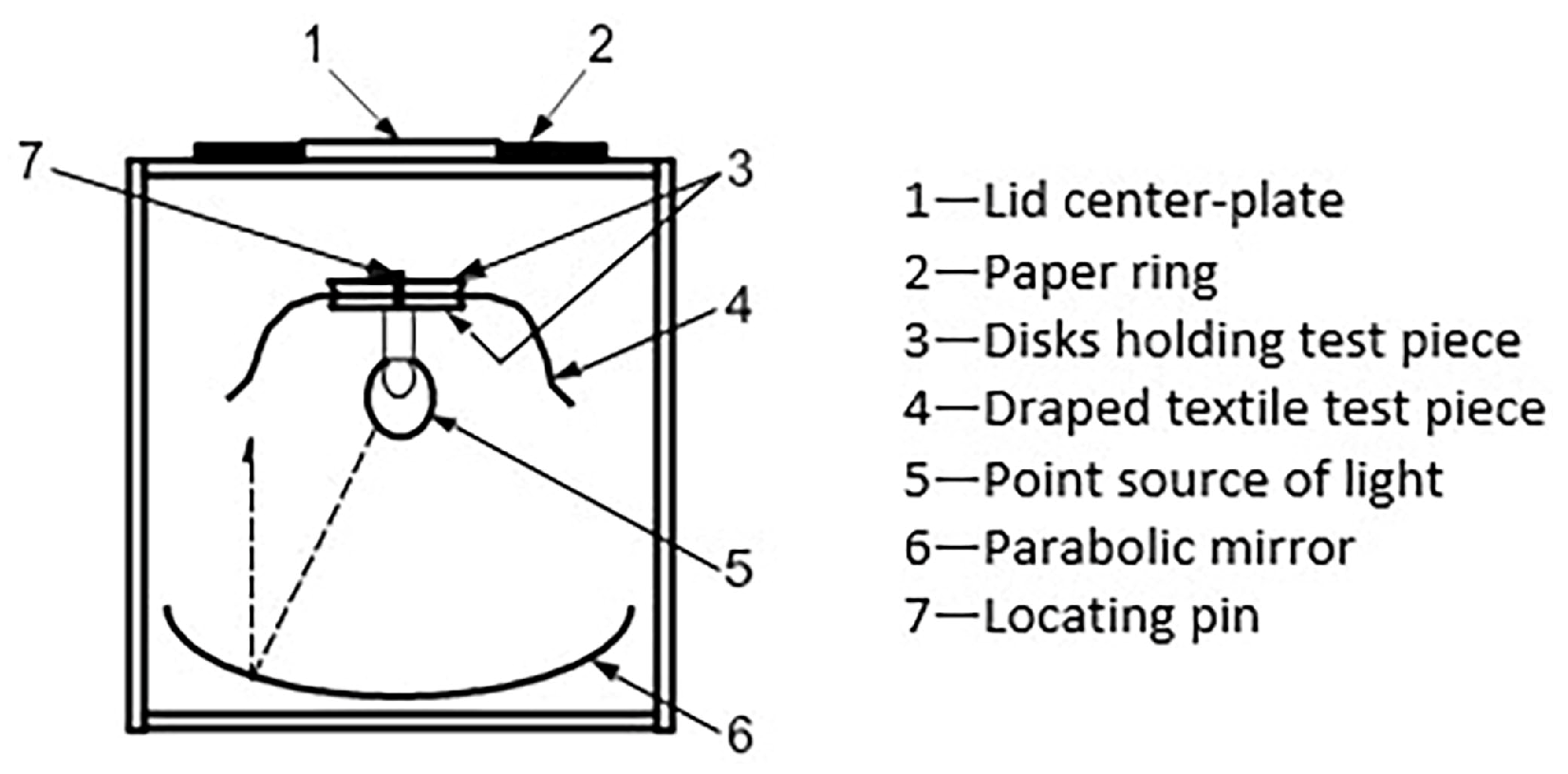
Figure 1. Traditional Cusick drap meter for fabric drape measurement.
Textiles 05 00063 g001
Figure 2. Smartphone-based imaging system for drape analysis.
Textiles 05 00063 g002
Figure 3. Photoshop®-based workflow for drape coefficient (DC) determination: (a) original image segmentation, (b) segmentation of draped and undraped areas, (c) draped area isolation.
Textiles 05 00063 g003
Figure 4. ImageJ®-based workflow for drape coefficient (DC) determination: (a) original top-view image; (b) threshold-based segmentation; (c) binary mask generation; (d) inverted binary mask for area quantification.
Textiles 05 00063 g004
Figure 5. MATLAB®-based workflow for drape coefficient (DC) determination: (a) image acquisition; (b) region segmentation; (c) code implementation.
Textiles 05 00063 g005
Figure 6. Drape coefficients (DCs) for lightweight fabric (PB) across three camera heights and two specimen diameters (30 cm and 24 cm).
Textiles 05 00063 g006
Figure 10. Drape coefficients (DCs) variation across fabric types and specimen diameters determined using the Cusick method.
Textiles 05 00063 g010
Figure 7. Visual comparison of fabric draped areas captured and processed under varied conditions. Left column: raw image at 22 cm, 32 cm, and 42 cm. Next columns: segmented outputs from Photoshop®, ImageJ®, and MATLAB®.
Textiles 05 00063 g007
Figure 8. Drape coefficient (DC) distribution for medium-weight BK fabric across software platforms (Photoshop®, ImageJ®, MATLAB®) and with specimen diameter 30 cm at three camera heights (22 cm, 32 cm, and 42 cm).
Textiles 05 00063 g008
Figure 9. Drape coefficients (DCs) for heavyweight YW fabric across three camera heights and two specimen diameters (30 cm and 36 cm).
Textiles 05 00063 g009
Figure 11. Comparison of drape coefficient (DC) values from the Samsung smartphone-based ImageJ® DIP method, Cusick reference, and iPhone measurements for PB, BK, and YW fabrics at 22 cm height.
Textiles 05 00063 g011
Table 1. Physical and structural specifications of fabric samples used in this study.
Sample
Mark
Fabric
Type
Chemical
Composition
Fabric WeaveYarn Linear Density (Tex)Mass per Unit Area (g/m2)Fabric Thickness (mm)Fabric Density
WarpWeftdwarp (cm−1)dweft (cm−1)
PBLight100% PES Twill111581.860.214432
BKMedium60% PES/40% cottonTwill1624113.810.205533
YWHeavy60% PES/40% cottonTwill3654231.740.433518
Table 2. Descriptive statistics for drape coefficients (DCs) obtained via digital image processing method for PB fabric at 24 cm specimen diameter across software platforms and camera heights.
DS 1DCSIDIP (%)DCSPDIP (%)DCSMDIP (%)
H22H32H42H22H32H42H22H32H42
M (%)68.5968.0368.1968.1568.0768.2968.2468.3368.02
SD (%)0.670.410.510.550.290.370.540.220.52
CV (%)0.980.610.750.800.430.540.790.320.76
AE1.240.760.941.010.530.680.990.400.95
RE1.801.111.371.480.780.991.460.591.40
S0.86−0.100.53−0.580.110.160.45−0.60−0.62
1 Descriptive statistics.
Table 5. F-test and t-test results of PB fabric across camera heights for each DIP software tool.
DC (%) Different Camera Placement Heights Analysis OutputF-TestAnalysis Outputt-Test
SPDIPSIDIPSMDIPSPDIPSIDIPSMDIP
DCH22 vs. DCH32M168.14868.59068.238M168.14868.59068.238
M268.07068.02868.334M268.07068.02868.334
V10.3010.4530.293V10.3010.4530.293
V20.0840.1710.048V20.08410.1710.048
df444df888
FS3.5752.6586.091tS0.2811.591−0.367
p0.1220.1830.055p0.7860.1500.723
FC6.3886.3886.388tC2.3062.3062.306
DCH22 vs. DCH42M168.14868.59068.238M168.14868.59068.238
M268.29268.19468.018M268.29268.19468.018
V10.3010.4530.293V10.3010.4530.293
V20.1360.2600.269V20.1360.2600.269
df444df888
FS2.2041.7471.091tS−0.4871.0490.656
p0.2310.3010.468p0.6390.3250.530
FC6.3886.3886.388tC2.3062.3062.306
DCH32 vs. DCH42M168.07068.02868.334M168.07068.02868.334
M268.29268.19468.018M268.29268.19468.018
V10.0840.1710.048V10.0840.1710.048
V20.1360.2600.269V20.1360.2600.269
df444df888
FS0.6160.6570.179tS−1.057−0.5661.255
p0.3250.3470.062p0.3210.5870.245
FC6.3886.3886.388tC2.3062.3062.306
Table 6. F-test and t-test results of BK fabric across camera heights for each DIP software tool.
DC (%) Different Camera Placement Heights Analysis OutputF-TestAnalysis Outputt-Test
SPDIPSIDIPSMDIPSPDIPSIDIPSMDIP
DCH22 vs. DCH32M144.24844.20044.348M144.24844.20044.348
M244.20044.11044.160M244.20044.11044.160
V10.1810.0820.101V10.18060.0820.101
V20.0820.4340.313V20.0820.4340.313
df444df888
FS2.2080.1880.323tS0.2100.2800.653
p0.2310.0670.149p0.8390.7860.532
FC6.3886.3886.388tC2.3062.3062.306
DCH22 vs. DCH42M144.24844.48044.348M144.24844.48044.348
M244.11044.42443.978M244.11044.36643.978
V10.1810.1390.101V10.1810.1390.101
V20.4340.2830.330V20.4340.1710.330
df444df888
FS0.4160.4910.306tS0.3940.4581.260
p0.2080.2540.139p0.7040.6590.243
FC6.3886.3886.388tC2.3062.3062.306
DCH32 vs. DCH42M144.20044.42444.160M144.20044.42444.160
M244.11044.36643.978M244.11044.36643.978
V10.0820.2830.313V10.0820.2830.313
V20.4340.1710.330V20.4340.1710.330
df444df888
FS0.1881.6520.950tS0.2800.1920.507
p0.0670.3190.480p0.7860.8520.626
FC6.3886.3886.388tC2.3062.3062.306
Table 7. F-test and t-test results of YW fabric across camera heights for each DIP software tool.
DC (%) Different Camera Placement Heights Analysis OutputF-TestAnalysis Outputt-Test
SPDIPSIDIPSMDIPSPDIPSIDIPSMDIP
DCH22 vs. DCH32M171.33871.13071.350M171.33871.13071.350
M271.78071.57871.796M271.7871.57871.796
V10.2090.2000.367V10.2090.2000.367
V20.1860.5780.444V20.1860.5780.444
df444df888
FS1.1270.3460.827tS−1.572−1.135−1.108
p0.4550.1640.429p0.1550.2890.300
FC6.3886.3886.388tC2.3062.3062.306
DCH22 vs. DCH42M171.33871.13071.350M171.33871.13071.350
M271.76671.23471.456M271.76671.23471.456
V10.2090.2000.367V10.2090.2000.367
V20.5700.1520.473V20.5700.1520.473
df444df888
FS0.3671.3190.776tS−1.084−0.392−0.259
p0.1780.3970.406p0.3100.7050.802
FC6.3886.3886.388tC2.3062.3032.306
DCH32 vs. DCH42M171.78071.57871.796M171.78071.57871.796
M271.76671.23471.456M271.76671.23471.456
V10.1860.5780.444V10.1860.5780.444
V20.5780.1520.473V20.5700.1520.473
df444df888
FS0.3263.8090.938tS0.0360.9000.794
p0.1520.1120.476p0.9720.3940.450
FC6.3886.3886.388tC2.3062.3062.306
Table 8. F-test and t-test results across DIP software platforms, independent of camera height.
Fabric TypeAnalysis OutputF-TestAnalysis Outputt-Test
DCSPDIP vs. DCSIDIP 1DCSPDIP vs. DCSMDIP 1DCSIDIP vs. DCSMDIP 1DCSPDIP vs. DCSIDIP 1DCSPDIP vs. DCSMDIP 1DCSIDIP vs. DCSMDIP 1
PBM168.17068.17068.271M168.1768.17068.271
M268.27168.19768.197M268.27168.19768.197
V10.1580.1580.312V10.1580.1580.312
V20.3120.1930.193V20.3120.1930.193
df141414df282828
FS0.5060.8181.616tS−0.569−0.1740.403
p0.1070.3560.190p0.5740.8630.690
FC2.4842.4842.484tC2.0482.0482.048
BKM144.18644.18644.423M144.18644.18644.423
M244.42344.16244.162M244.42344.16244.162
V10.2030.2020.172V10.2030.2030.172
V20.1720.2370.237V20.1720.2370.237
df141414df282828
FS1.1790.8540.724tS−1.5030.1401.583
p0.3810.3860.277p0.1440.8900.125
FC2.4842.4842.484tC2.0482.0482.048
YWM171.62871.62871.314M171.62871.62871.31
M271.31471.53471.534M271.31471.53471.53
V10.3210.3210.305V10.3210.3210.305
V20.3050.4060.406V20.3050.4060.406
df141414df282828
FS1.0520.7910.753tS1.5370.427−1.011
p0.4630.3340.301p0.1360.6730.321
FC2.4842.4842.484tC2.0482.0482.048
1 DCSPDIP—drape coefficient obtained using the smartphone-based Photoshop® DIP method; DCSIDIP—drape coefficient obtained using the smartphone-based ImageJ® DIP method; DCSMDIP—Drape coefficient obtained using the smartphone-based MATLAB® DIP method.
Table 9. Descriptive statistics for the drape coefficient (DC) obtained via conventional Cusick methods for PB fabric at 24 cm specimen diameter, BK fabric at 30 cm specimen diameter, and YW fabric at 36 cm specimen diameter.
DS 1DCCK
PBBKYW
M (%)67.8543.8871.93
SD (%)0.550.500.98
CV (%)0.811.141.36
AE (%)1.010.921.80
RE (%)1.492.092.50
S−0.430.831.19
1 Descriptive statistics.
Table 3. Descriptive statistics for drape coefficients (DCs) obtained via digital image processing methods for BK fabric at 30 cm specimen diameter across software platforms and camera heights.
DS 1DCSIDIP (%)DCSPDIP (%)DCSMDIP (%)
H22H32H42H22H32H42H22H32H42
M (%)44.4844.4244.3744.2544.2044.1144.3544.1643.98
SD (%)0.370.530.410.420.290.660.320.560.57
CV (%)0.841.200.930.960.651.490.721.271.31
AE0.680.980.760.780.531.210.581.031.05
RE1.542.201.711.761.192.741.322.332.40
S0.10−0.950.380.700.65−0.450.310.480.87
1 Descriptive statistics.
Table 4. Descriptive statistics for the drape coefficient (DC) obtained via digital image processing methods for YW fabric at 36 cm specimen diameter across software platforms and camera heights.
DS 1DCSIDIP (%)DCSPDIP (%)DCSMDIP (%)
H22H32H42H22H32H42H22H32H42
M (%)71.1371.5871.2371.3471.7871.7771.3571.8071.46
SD (%)0.450.760.390.460.430.760.610.670.69
CV (%)0.631.060.550.640.601.050.850.930.96
AE0.821.400.720.840.791.391.111.221.26
RE1.161.951.001.181.101.931.561.701.77
S0.62−0.250.83−0.370.830.22−0.44−0.51−0.79
1 Descriptive statistics.
Table 10. F-test and t-test: comparison of Cusick and iPhone smartphone-based ImageJ® digital image processing (SIDIP) methods across specimen diameters at a 22 cm camera height.
Sample DesignationAnalysis Output(PB)
DCCK24 vs. DCSIDIP24 1
(BK)
DCCK30 vs. DCSIDIP30 1
(YW)
DCCK36 vs. DCSIDIP36 1
F-testM167.84843.87671.930
M268.59044.48071.330
V10.3050.2480.957
V20.4530.1390.180
df444
Fs0.6721.7885.314
p0.3550.2940.067
FC6.3886.3886.388
t-testM167.84843.87671.930
M268.59044.48071.330
V10.3050.2480.958
V20.4530.1390.180
df888
ts−1.905−2.1701.257
p0.0930.0620.244
tC2.3062.3062.306
1 DCCK24, DCCK30, DCCK36—drape coefficients obtained with the Cusick method for specimens with diameters of 24 cm, 30 cm, and 36 cm, respectively; DCSIDIP24, DCSIDIP30, DCSIDIP36—drape coefficients obtained with the smartphone-based ImageJ® digital image processing method for specimens with diameters of 24 cm, 30 cm, and 36 cm.
Table 11. F-test and t-test: Comparison of Cusick and Samsung smartphone-based ImageJ® digital image processing (SIDIP) methods across specimen diameters at a 22 cm camera height.
Sample DesignationAnalysis Output(PB)
DCCK24 vs. DCSIDIP24 1
(BK)
DCCK30 vs. DCSIDIP30 1
(YW)
DCCK36 vs. DCSIDIP36 1
F-test M167.84843.87671.93
M268.08644.21672.47
V10.3040.2480.958
V21.4170.1250.275
df444
Fs0.2151.9793.477
p0.0820.2620.127
FC6.3886.3886.388
t-testM167.84843.87671.93
M268.08644.21672.47
V10.3040.2480.958
V21.4170.1250.275
df888
ts−0.405−1.243−1.086
p0.6950.2480.308
tC2.3062.3062.306
1 DCCK24, DCCK30, DCCK36—drape coefficients obtained by the Cusick method for specimens with diameters of 24 cm, 30 cm, and 36 cm, respectively; DCSIDIP24, DCSIDIP30, DCSIDIP36—drape coefficients obtained by the smartphone-based ImageJ® digital image processing method for specimens with diameters of 24 cm, 30 cm, and 36 cm.
Table 12. Mean drape coefficients (DCs) and compliance coefficients (k) between Cusick and smartphone-based ImageJ® methods (iPhone, Samsung) for fabrics at 22 cm height.
Fabric TypeMean DCCK (%)Mean DCiPhone (%)Mean DCSamsung (%)k (iPhone/Cusick)k (Samsung/Cusick)
PB67.8568.5968.091.0111.004
BK43.8844.4844.321.0141.010
YW71.9371.1372.430.9891.007
Table 13. Regression analysis between the Cusick reference method and smartphone-based ImageJ® measurements (iPhone and Samsung) for determining coefficients of compliance in fabric drape assessment.
DeviceIntercept (a)Slope (b = Coefficient of Compliance)R2p-Value95% Confidence Interval (b)
iPhone2.030.970.9931.57 × 10−150.923–1.019
Samsung0.750.990.9911.48 × 10−140.936–1.052
Disclaimer/Publisher’s Note: The statements, opinions and data contained in all publications are solely those of the individual author(s) and contributor(s) and not of MDPI and/or the editor(s). MDPI and/or the editor(s) disclaim responsibility for any injury to people or property resulting from any ideas, methods, instructions or products referred to in the content.