


Abstract
Background/Objectives: Biomechanical research in surfing provides important insights into performance optimization and injury prevention, but the evidence remains fragmented across multiple domains. Methods: This scoping review aimed to systematically organize the existing literature on surfing biomechanics and evaluate the quality of the included studies. Searches were conducted by two independent reviewers in PubMed, Scopus, and Web of Science in accordance with the PRISMA Extension for Scoping Reviews. Systematic searches were performed up to 31 July 2025 using Boolean operators guided by the PECO framework. Methodological quality was assessed using the Downs and Black Quality Assessment Checklist. Results: Of the 195 records identified, 53 duplicates were removed. Following screening and fulltext review, 26 studies were included. Five studies employed randomized controlled designs, while 21 were non-randomized. Publications ranged from 2010 to 2025, with the majority conducted in Australia (65.4%). A total of 490 healthy surfers (mean age: 22.9 ± 16.1 years) were analyzed, with sample sizes ranging from 6 to 42 participants. Research topics included anthropometry, paddling biomechanics, aerial maneuvers, core and trunk strength and mobility, lower-limb function, frontside bottom turns, and pop-up performance. The studies’ methodological quality score was 11.7 points with substantial inter-reviewer agreement (κ = 0.77). Research on surf biomechanics remains limited in volume and exhibits methodological heterogeneity. Conclusions: Although existing studies provide valuable insights into key performance actions, further high-quality and standardized research on performance phases (e.g., paddling, pop-up, turns, aerials) and with different research designs (e.g., longitudinal, sex inclusive, ecological designs integrating lab and in-water measures) is needed.
1. Introduction
Surfing is a sport practiced in natural aquatic environments in which the athlete performs maneuvers on the surface of a wave using a board. Originally considered a recreational activity, surfing has undergone significant professionalization in recent decades and is now recognized as an Olympic sport [1]. This evolution has increased the performance demand on athletes, driving scientific interest across multiple fields of research, both in-water and in dryland environments [2].
Among the multiple factors that influence surfing performance, technique plays a central role, as the maneuvers performed by surfers are the main scoring criteria in competitions [3]. Beyond technical execution, other elements such as decision-making or wave selection [4,5], strength [6], and metabolic responses [7] also directly impact performance outcomes and can distinguish competitive levels. Although these strategic aspects often rely on a solid technical foundation, there are complex and multifactorial factors that might explain the high-performance surfing.
The most frequent and fundamental actions in surfing include paddling, the pop-up (transition from prone to standing), trimming (gliding along the wave face), bottom turns, top turns, cutbacks, and aerial maneuvers [8]. Each of these actions imposes different biomechanical and physiological demands, requiring specific coordination, balance, and force production depending on the wave characteristics and maneuver intent. For instance, paddling can account for up to 50% of the total session time and is essential for positioning and wave catching, whereas the pop-up is considered a key transition that must be executed rapidly and efficiently to set up any scoring opportunity [9]. Maneuvers such as bottom turns and cutbacks are often decisive for performance evaluation, as they demonstrate the surfer’s ability to generate speed, change direction, and maintain flow in key sections of the wave [8].
Understanding the biomechanical demands and technical characteristics of these key actions is essential for optimizing performance and training strategies. In recent years, there has been a notable increase in the number of studies exploring biomechanical variables in surfing, reflecting growing interest in understanding the technical determinants of the sport. For instance, research has analyzed the kinematics and kinetics of specific maneuvers to identify efficient movement patterns and performance indicators, e.g., [10,11]. Other studies have focused on analyzing the effect of strength capacity during the transition from paddling to the standing position (pop-up), a critical phase for wave success, e.g., [12,13]. Furthermore, the use of three-dimensional motion capture systems, inertial sensors, and force platforms has enabled precise measurements of surfers’ body dynamics both in controlled and uncontrolled environments, e.g., [14,15]. These technological advances, combined with more refined methodological approaches, have contributed to a deeper understanding of the technical aspects of surfing, providing scientific support for technique training and equipment development.
Despite this growing body of evidence, existing systematic reviews on surfing have predominantly focused on areas such as injury prevention [16], talent identification [17], or psychological benefits for people with disabilities [18], with none addressing biomechanics specifically. Given the importance of technique for sports performance in surfing, it is relevant to update the state of the art regarding scientific production in this area.
Therefore, this scoping review aims to map and critically analyze the literature on surfing biomechanics, identifying trends, gaps, and potential practical applications for athletes, coaches, and researchers.
2. Methods
This scoping review was conducted following the Preferred Reporting Items for Systematic Reviews and Meta-Analyses (PRISMA) 2020 statement [19] and the PRISMA Extension for Scoping Reviews (PRISMA-ScR) guidelines [20]. Protocol registration was made on the Open Science Framework database (https://doi.org/10.17605/OSF.IO/QYTG7).
2.1. Eligibility Criteria
Firstly, peer-reviewed articles relevant to the current review scope and published in English were considered for inclusion. Non-peer-reviewed articles/journals, reviews (i.e., qualitative reviews, systematic reviews, meta-analyses), books, book chapters, commentaries, editorials, letters to the editor, overviews, dissertations, theses, or trial registrations were excluded from the analysis. Table 1 depicts the inclusion criteria defined according to the PECO (Population, Exposure, Comparator, and Outcome) framework.
Table 1.
Search strategy and inclusion/exclusion criteria based on the PECO framework.
2.2. Information Sources and Search Strategy
The literature search was conducted from December 2024 to 31 July 2025 across three electronic databases: PubMed, Scopus, and Web of Science. The Boolean search method (including AND, OR, NOT) was used to identify studies related to surfing outcomes. In each database, the search terms had to be presented in the title, abstract, or keywords fields (using the search by “title/abstract”, “title-abstract-key”, and “topic”, respectively).
2.3. Selection Process and Data Extraction
Following the database search, records were independently evaluated by two authors and consolidated into a single list using Zotero software (v. 7.0) to remove duplicates. All data was analyzed by titles and abstracts and then with full-text selection, tailoring the information into a Microsoft® Excel 2016 worksheet (Microsoft Corporation, Redmond, WA, USA) created for data summary. The same authors performed data extraction to gather information on surf outcomes. In case of disagreements, a third author provided arbitration to reach a consensus. Finally, the information was synthesized by (i) author(s) and year of publication, (ii) participants (group, sample size, sex, age), (iii) aim (assessed domains and variables), (iv) methodology (assessed domains and variables), (v) main findings, and (vi) quality score.
2.4. Quality Assessment
The Downs and Black Quality Assessment Checklist [21] was used to determine the quality of the studies included, based on the following criteria: (1) reporting, (2) external validity, (3) internal validity (bias and confounding), and (4) power. This tool has already been used in previous reviews within the sport sciences field, e.g., [22,23]. The original version has 27 items with a maximum score of 32 points; however, few adaptations were necessary, according to the focus of the studies included. Specifically, Items 4, 8, 9, 14, 15, 17, 22, 23, 24, 25, and 26 were not considered for non-randomized studies but were considered for those that were randomized. Two authors performed the quality assessment and doubts were solved by a third author. Inter-rater agreement in the scoring procedure was quantified using Cohen’s Kappa coefficient (κ) and interpreted according to Landis and Koch’s suggestion [24]: (i) no agreement if κ < 0, (ii) poor agreement if 0 < κ < 0.19, (iii) fair agreement if 0.20 < κ < 0.39, (iv) moderate agreement if 0.40 < κ < 0.59, (v) substantial agreement if 0.60 < κ < 0.79, and (vi) almost perfect agreement if 0.80 < κ < 1.00. Study quality was classified as (i) low, with a score ≤50%; (ii) good, with a score between 51% and 75%; and (iii) excellent, with a score >75% [25].
3. Results
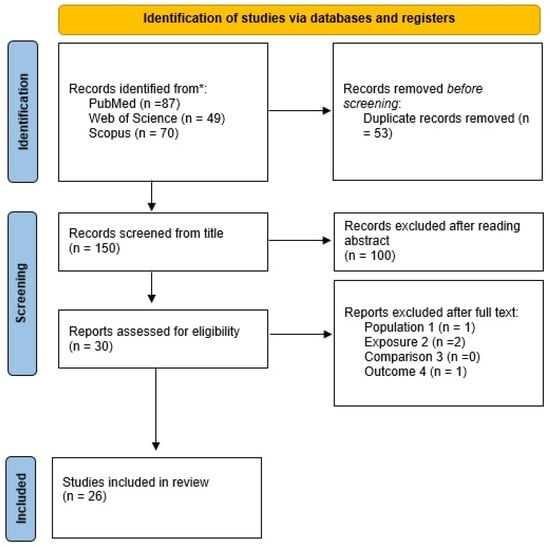
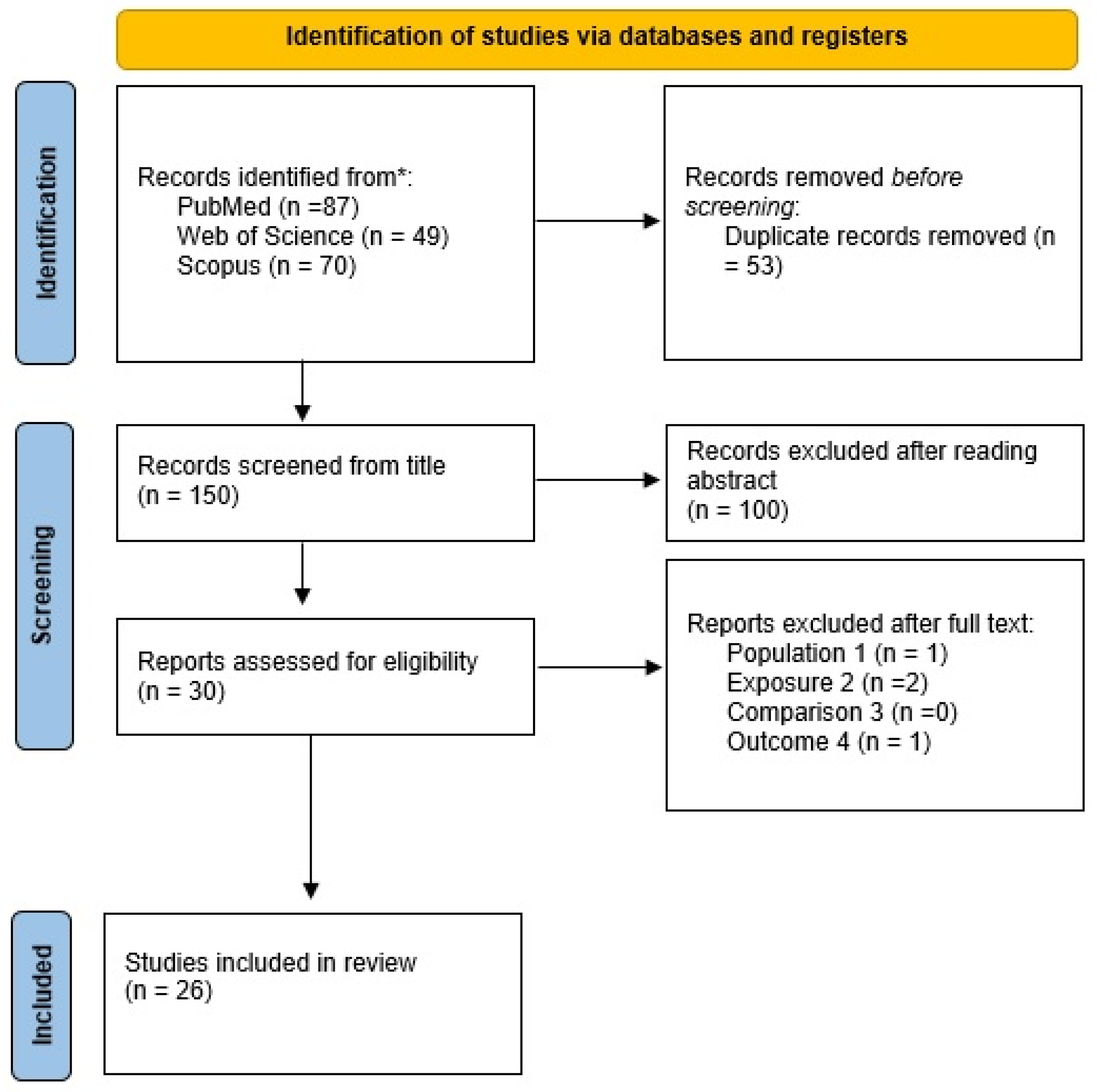
The initial search identified 195 studies, of which 53 duplicates were removed. The title and abstract screening were conducted for the remaining 142 studies, followed by full-text review of 28 studies. Finally, 26 studies met the inclusion criteria and were included in the present review. Figure 1 describes the search and screening processes used in the current review.
Figure 1.
Search and screening processes displayed as a PRISMA 2020 flow diagram.
3.1. Study Characteristics
The main characteristics of the included studies are shown in Table 2. Twenty-one studies presented a non-randomized controlled design, while five studies were randomized. Publications spanned from 2010 to 2025. Regarding the country of publication, 17 studies were from Australia (65.4%), 5 from Portugal (19.2%), 2 from USA (7.7%), one from Germany (3.9%), and 1 from Brazil (3.9%). The 26 studies collected data from 490 healthy surfers whose mean age was 22.9 ± 16.1 years. The selected sample size often ranged from 6 to 42 participants. The total of studies included focused on the anthropometry [26], paddle moment [6,27,28,29,30,31,32], aerials [11,33,34,35,36,37], core training [38], trunk strength [26,39] and mobility [40,41,42], lower body strength [28,43] and mobility [41,44], pop-ups [10,12,45] drops [46] and frontside bottom turns [47].
Table 2.
List of the included studies and main characteristics.
3.2. Quality of Included Studies
The methodological quality of the 26 included studies had a mean score of 11.7 points. The reliability between the two reviewers showed substantial agreement (κ = 0.77).
4. Discussion
This scoping review mapped and critically evaluated the peer-reviewed literature on surfing biomechanics, highlighting the current state, research priorities, and methodological limitations within this emerging field. Despite growing scientific interest following surfing’s inclusion in the Olympic Games, the volume of biomechanical research remains limited, with considerable heterogeneity in study design, measurement approaches, and performance outcomes. Collectively, the available evidence is insufficient to fully support standardized, evidence-based practices in surfing performance.
4.1. Publication Trends and Study Populations
The temporal distribution of publications suggests that research on surfing biomechanics has primarily developed over the past decade, reflecting a delayed scientific engagement with action and board sports compared with more traditional sports. There is a strong geographical concentration of studies in Australia [6,11,26,27,28,30,31,32,33,34,35,36,40,44,45,46,47], followed by a lesser extent in Portugal [10,29,37,41,42]. This reflects the intersection of surfing culture, access to high-performance athletes, and established sports science infrastructure. However, this concentration limits the generalizability of findings across different environmental conditions, competitive levels, and surfing populations, particularly given the global diversity of wave characteristics and training contexts.
4.2. Biomechanical Themes by Performance Phase
Across performance phases, paddling biomechanics was the most extensively investigated action [6,26,27,28,29,30,31,32]. This predominance likely reflects both the recognized importance of paddling for wave acquisition and the relative feasibility of biomechanical assessment in controlled or semicontrolled conditions [29,30,31,32]. Elite surfers generally exhibited greater thoracic rotation, improved trunk–pelvis coordination, and stroke characteristics associated with enhanced propulsion efficiency [40]. Nevertheless, most paddling studies have relied on cross-sectional designs with small sample sizes, e.g., [26,30], which limits causal interpretation and the ability to distinguish training effects from inherent anthropometric or technical differences. Furthermore, sex-based comparisons should be interpreted with caution due to the underrepresentation of female surfers and the frequent absence of sex-specific analytical frameworks.
The take-off or pop-up phases, although critical for successful wave riding, remain underrepresented in the literature, e.g., [10,45]. Existing studies suggest that faster execution and greater force production are associated with increased muscle mass and lower-limb power [10,37]. However, many assessments have been conducted in simulated or laboratory-based settings, e.g., [12,33,34,35,36,45]. Such conditions may not adequately reflect the dynamic constraints of real surfing, where board instability, wave velocity, and time pressure substantially influence movement strategies. As a result, the ecological validity of the current take-off biomechanics findings remains limited.
Biomechanical analyses of maneuvers such as bottom turns, cutbacks, and aerials are particularly rare, despite their central role in competitive performance. Available evidence indicates functional asymmetry between the lower limbs, with the front leg primarily contributing to force production and weight distribution, and the rear leg playing a stabilizing role [10,43]. More experienced surfers consistently demonstrate greater joint ranges of motion and more effective force application [46]. However, methodological inconsistencies in maneuver definition, performance criteria, and outcome measures restrict meaningful comparison across studies. In addition, the frequent analysis of isolated maneuvers fails to capture the sequential and cumulative biomechanical demands of competitive surfing.
4.3. Training Interventions, Fatigue, and Neuromuscular Performance
Training-related studies indicate that structured strength and conditioning programs may enhance surfing efficiency and reduce injury risk [6,26,28,37,38,45]. Nevertheless, the evidence is largely indirect, with limited use of longitudinal or randomized controlled designs. Observed reductions in speed, peak velocity, and neuromuscular performance following prolonged surf sessions suggest the presence of fatigue-related performance decrements [28]. However, the biomechanical mechanisms underlying these changes remain poorly understood. This limitation restricts the translation of findings into concrete training load or recovery recommendations.
4.4. Methodological Limitations and Reporting Gaps
Methodological quality across studies was moderate, with substantial inter-reviewer agreement, revealing several recurring limitations. These included insufficient reporting of the environmental conditions, surfer attire, warm-up and familiarization procedures, and stance selection. Such lack of reporting reduces reproducibility and complicates the interpretation of biomechanical outcomes. The lack of standardized protocols and reporting guidelines specific to surfing biomechanics represents a major barrier to progress in the field.
4.5. Conceptual Framework and Future Directions
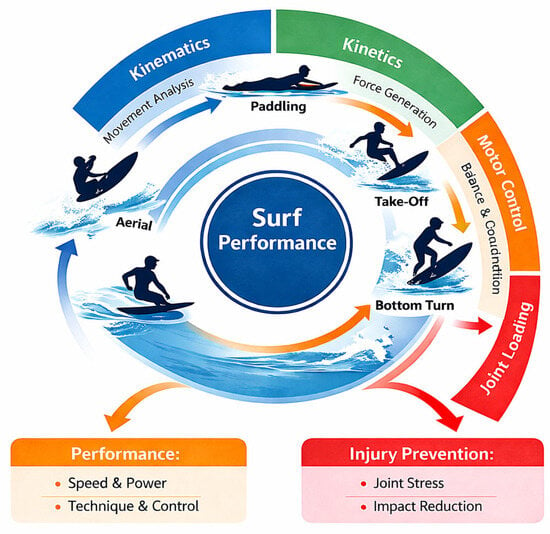
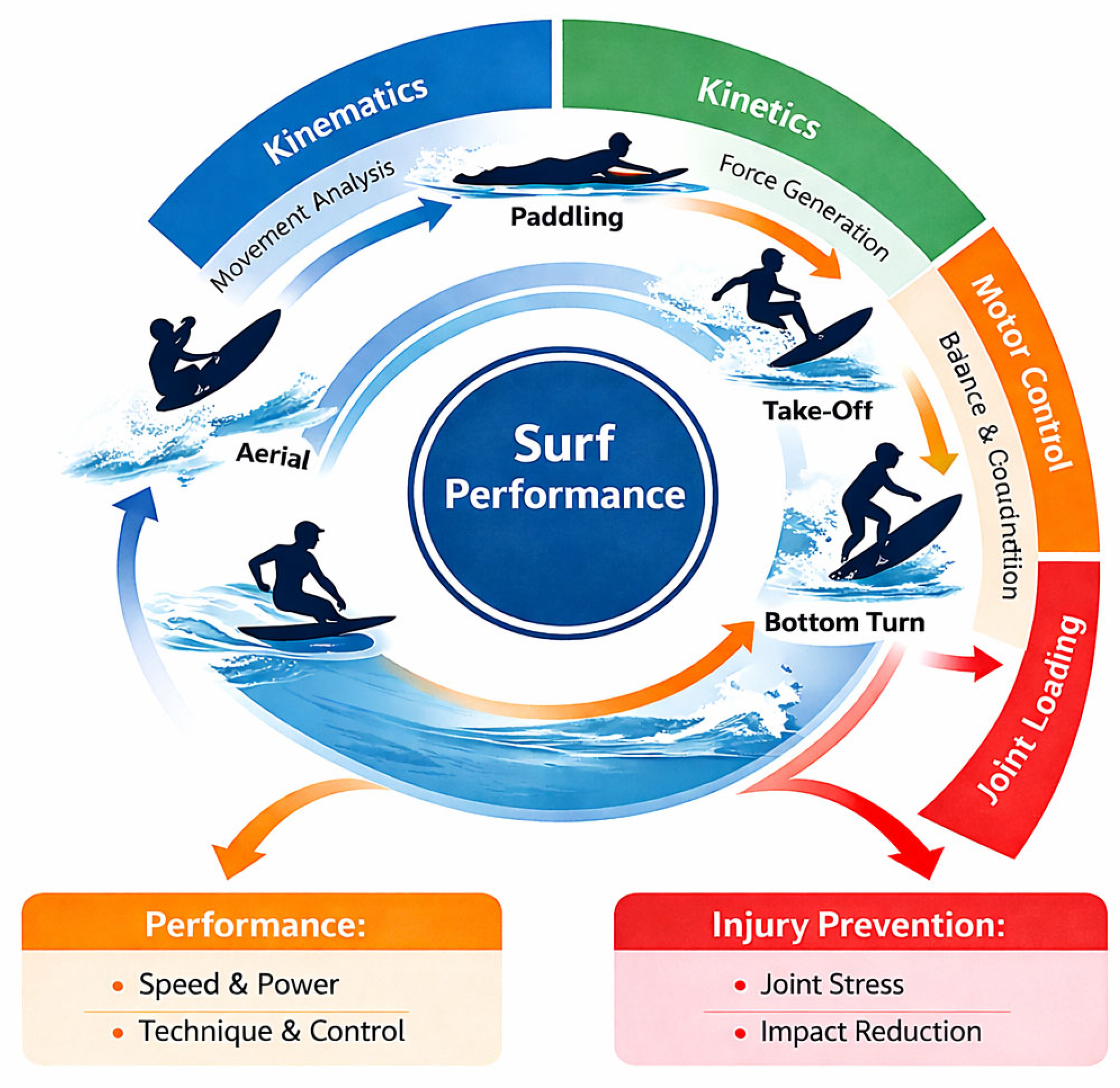
Based on the evidence synthesized in this review, a biomechanical framework of surfing performance is proposed (Figure 2), integrating key movement phases with the relevant biomechanical determinants and injury-related mechanisms. In line with this conceptual model, future research should move beyond descriptive analyses and adopt a structured testing framework aligned with the key technical phases of surfing performance. Key biomechanical variables requiring systematic assessment include stroke efficiency and shoulder or lumbar stress during paddling. Moreover, the rate of force development and intersegmental coordination during all maneuvers should be prioritized. These determinants should be examined through an integrated multi-context approach combining laboratory neuromuscular profiling, in-field inertial sensing technologies, and computational modelling of joint loading and board–wave interactions. This would enable the identification of factors that could limit performance while simultaneously quantifying the mechanical stress exposure associated with injury risk. Notably, performance optimization and injury prevention should be considered interdependent outcomes, as many biomechanical variables underpin both competitive success and the limit of body tolerance to some technical positions while surfing.
Figure 2.
Integrated biomechanical framework of surfing performance and injury prevention.
Despite the growing body of literature, several unresolved and controversial issues in surfing remain insufficiently examined from a biomechanical perspective. First, the relationship between competitive level and objective mechanical efficiency remains unclear, raising the hypothesis that greater competitive scoring may be associated with reduced mechanical variability and more physical condition in both dryland and in-water contexts. Second, the inherently asymmetric stance in surfing raises the question of whether chronic inter-limb asymmetries enhance force production or instead increase cumulative joint loading and injury risk. Third, the progressive emphasis on aerial maneuvers prompts debate regarding the trade-off between vertical impulse generation and impact related to joint stress, suggesting the need to quantify whether performance gains scale proportionally with mechanical load exposure. Finally, the large time spent in paddling actions may represent either a necessary adaptation for wave acquisition or a dependent risk factor for shoulder and lumbar overuse injuries. The biomechanical analysis of the spectrum from beginner to recreational surfers may be missing as well and could be a topic of interest in the future. Based on the methodological limitations identified across studies, a reporting checklist (Table 3) is proposed to support methodological standardization in future surfing biomechanics research.
Table 3.
Proposed reporting checklist for surfing biomechanics studies.
The emergence of wave pools offers additional opportunities for controlled, repeatable biomechanical assessments while maintaining a degree of ecological validity. Future research should prioritize standardized reporting, larger and more diverse samples, inclusion of elite and female surfers, and the integration of more laboratory measurement with in-water performance metrics. Longitudinal and intervention designs are particularly needed to establish causal relationships among biomechanical variables, training strategies, and performance outcomes.
5. Conclusions
Surfing biomechanics research remains in an early developmental stage. Existing research has primarily focused on anthropometry, paddling biomechanics, aerial maneuvers, core and trunk strength and mobility, lower limb function, and pop-up performance. While these studies provide valuable insights into key performance actions, substantial methodological and conceptual gaps persist. Addressing these limitations through standardized, high-quality, and ecologically valid research is essential to advance biomechanical understanding and support evidence-based practice in surfing.
Author Contributions
Conceptualization, M.J.V.D.S. and M.J.C.; methodology, M.J.V.D.S. and M.J.C.; investigation, M.J.V.D.S., M.L.M. and C.C.S.; writing—original draft preparation, M.J.V.D.S. and M.J.C.; writing—review and editing, M.L.M. and C.C.S.; supervision, M.J.C. All authors have read and agreed to the published version of the manuscript.
Funding
This work was supported by National Funds by FCT—Foundation for Science and Technology, under the projects UID/04045/2025 (https://doi.org/10.54499/UID/04045/2025), UID/PRR/04045/2025 (https://doi.org/10.54499/UID/PRR/04045/2025) and UID/PRR2/04045/2025. (https://doi.org/10.54499/UID/PRR2/04045/2025).).
Institutional Review Board Statement
Not applicable.
Informed Consent Statement
Not applicable.
Data Availability Statement
The authors confirm that the data supporting the findings of this review are available within this article.
Conflicts of Interest
The authors declare no conflicts of interest.
References
- Rice, E.L. Surfing. J. Sports Med. Phys. Fit. 2021, 61, 1098–1103. [Google Scholar] [CrossRef] [Scilit] [PubMed]
- Dann, R.; Duhig, S.; Roberts, L.; Kelly, V.; Renshaw, I.; Headrick, J. A principled approach to skill acquisition in competitive surfing: Embracing representative learning design. Int. J. Sports Sci. Coach. 2024, 19, 2534–2547. [Google Scholar] [CrossRef] [Scilit]
- Forsyth, J.R.; de la Harpe, R.; Riddiford-Harland, D.L.; Whitting, J.W.; Steele, J.R. Analysis of scoring of maneuvers performed in elite men’s professional surfing competitions. Int. J. Sports Physiol. Perform. 2017, 12, 1243–1248. [Google Scholar] [CrossRef] [Scilit]
- Barlow, M.J.; Gresty, K.; Findlay, M.; Cooke, C.B.; Davidson, M.A. The effect of wave conditions and surfer ability on performance and the physiological response of recreational surfers. J. Strength Cond. Res. 2014, 28, 2946–2953. [Google Scholar] [CrossRef] [Scilit]
- Tietzmann, L.E.; Roesler, H.; Pereira, S.M. The influence of wave size on the performance of surfers in the World Surf League. Rev. Bras. Cineantropom. Desempenho Hum. 2024, 26, e84434. [Google Scholar] [CrossRef] [Scilit]
- Coyne, J.O.C.; Tran, T.T.; Secomb, J.L.; Lundgren, L.E.; Farley, O.R.L.; Newton, R.U.; Sheppard, J.M. Maximal strength training improves surfboard sprint and endurance paddling performance in competitive and recreational surfers. J. Strength Cond. Res. 2017, 31, 244–253. [Google Scholar] [CrossRef] [Scilit]
- Loveless, D.J.; Minahan, C. Peak aerobic power and paddling efficiency in recreational and competitive junior male surfers. Eur. J. Sport Sci. 2010, 10, 407–415. [Google Scholar] [CrossRef] [Scilit]
- Farley, O.R.; Abbiss, C.R.; Sheppard, J.M. Performance analysis of surfing: A review. J. Strength Cond. Res. 2017, 31, 260–271. [Google Scholar] [CrossRef] [Scilit]
- Mendez-Villanueva, A.; Bishop, D.; Hamer, P. Activity profile of world-class professional surfers during competition: A case study. J. Strength Cond. Res. 2006, 20, 477–482. [Google Scholar] [CrossRef] [Scilit] [PubMed]
- Borgonovo-Santos, M.; Telles, T.; Nessler, J.; de Castro, M.P.; Fernandes, R.J.; Vilas-Boas, J.P. Are the kinetics and kinematics of the surf pop-up related to the anthropometric characteristics of the surfer? Sensors 2021, 21, 1783. [Google Scholar] [CrossRef] [Scilit]
- Forsyth, J.R.; Riddiford-Harland, D.L.; Whitting, J.W.; Sheppard, J.M.; Steele, J.R. Understanding successful and unsuccessful landings of aerial maneuver variations in professional surfing. Scand. J. Med. Sci. Sports 2018, 28, 1615–1624. [Google Scholar] [CrossRef] [Scilit] [PubMed]
- Eurich, A.D.; Brown, L.E.; Coburn, J.W.; Noffal, G.J.; Nguyen, D.; Khamoui, A.V.; Uribe, B.P. Performance differences between sexes in the pop-up phase of surfing. J. Strength Cond. Res. 2010, 24, 2821–2825. [Google Scholar] [CrossRef] [Scilit]
- Fernandez-Gamboa, I.; Yanci, J.; Granados, C.; Freemyer, B.; Camara, J. Sex differences in competitive surfers’ generic and specific strength capacity. Biol. Sport 2020, 37, 49–57. [Google Scholar] [CrossRef] [Scilit]
- de Bona, D.D.; Marques, M.A.; Borgonovo-Santos, M.; Correia, M.V. Monitoring of plantar forces and surfboard movement: Alternative to understand the injuries mechanism. In Proceedings of the 2014 IEEE International Symposium on Medical Measurements and Applications (MeMeA 2014), Lisboa, Portugal, 11–12 June 2014; pp. 1–4. [Google Scholar] [CrossRef] [Scilit]
- Lestrade, K.; Guérard, S.; Lanusse, P.; Viot, P. Biomechanics of surfing: Development and validation of an instrumented surfboard to measure surfboard kinetics. In Proceedings of the 33rd International Conference of Biomechanics in Sports (ISBS 2015), Poitiers, France, 29 June–3 July 2015. [Google Scholar]
- McArthur, K.; Jorgensen, D.; Climstein, M.; Furness, J. Epidemiology of acute injuries in surfing: Type, location, mechanism, severity, and incidence: A systematic review. Sports 2020, 8, 25. [Google Scholar] [CrossRef] [Scilit] [PubMed]
- Klingner, F.C.; Klingner, F.P.; Elferink-Gemser, M.T. Riding to the top—A systematic review on multidimensional performance indicators in surfing. Int. J. Sports Sci. Coach. 2021, 17, 655–682. [Google Scholar] [CrossRef] [Scilit]
- Carneiro, L.; Clemente, F.M.; Claudino, J.G.; Ferreira, J.; Ramirez-Campillo, R.; Afonso, J. Surf therapy for people with mental health disorders: A systematic review of randomized and non-randomized controlled trials. BMC Complement. Med. Ther. 2024, 24, 376. [Google Scholar] [CrossRef] [Scilit]
- Page, M.J.; McKenzie, J.E.; Bossuyt, P.M.; Boutron, I.; Hoffmann, T.C.; Mulrow, C.D.; Shamseer, L.; Tetzlaff, J.M.; Akl, E.A.; Brennan, S.E.; et al. The PRISMA 2020 statement: An updated guideline for reporting systematic reviews. BMJ 2021, 372, n71. [Google Scholar] [CrossRef] [Scilit]
- Tricco, A.C.; Lillie, E.; Zarin, W.; O’Brien, K.K.; Colquhoun, H.; Levac, D.; Moher, D.; Peters, M.D.J.; Horsley, T.; Weeks, L.; et al. PRISMA extension for scoping reviews (PRISMA-ScR): Checklist and explanation. Ann. Intern. Med. 2018, 169, 467–473. [Google Scholar] [CrossRef] [Scilit]
- Downs, S.H.; Black, N. The feasibility of creating a checklist for the assessment of the methodological quality both of randomised and non-randomised studies of health care interventions. J. Epidemiol. Community Health 1998, 52, 377–384. [Google Scholar] [CrossRef] [Scilit]
- Costa, M.J.; Bragada, J.A.; Marinho, D.A.; Silva, A.J.; Barbosa, T.M. Longitudinal interventions in elite swimming: A systematic review based on energetics, biomechanics, and performance. J. Strength Cond. Res. 2012, 26, 2006–2016. [Google Scholar] [CrossRef] [Scilit]
- Santos, C.C.; Marinho, D.A.; Neiva, H.P.; Costa, M.J. Propulsive forces in human competitive swimming: A systematic review on direct assessment methods. Sports Biomech. 2021, 23, 1263–1283. [Google Scholar] [CrossRef] [Scilit]
- Landis, J.R.; Koch, G.G. The measurement of observer agreement for categorical data. Biometrics 1977, 33, 159–174. [Google Scholar] [CrossRef] [Scilit] [PubMed]
- Sarmento, H.; Clemente, F.M.; Araújo, D.; Davids, K.; McRobert, A.; Figueiredo, A. What performance analysts need to know about research trends in association football (2012–2016): A systematic review. Sports Med. 2017, 48, 799–836. [Google Scholar] [CrossRef] [Scilit] [PubMed]
- Sheppard, J.M.; McNamara, P.; Osborne, M.; Andrews, M.; Oliveira Borges, T.; Walshe, P.; Chapman, D.W. Association between anthropometry and upper-body strength qualities with sprint paddling performance in competitive wave surfers. J. Strength Cond. Res. 2012, 26, 3345–3348. [Google Scholar] [CrossRef] [Scilit]
- Sheppard, J.M.; Osborne, M.; Chapman, D.W.; Andrews, M.; McNamara, P. Technique adjustments influence the performance of sprint paddling in competitive male surfers. Int. J. Sports Sci. Coach. 2013, 8, 43–51. [Google Scholar] [CrossRef] [Scilit]
- Secomb, J.L.; Sheppard, J.M.; Dascombe, B.J. Reductions in sprint paddling ability and countermovement jump performance after surfing training. J. Strength Cond. Res. 2015, 29, 1937–1942. [Google Scholar] [CrossRef] [Scilit]
- Borgonovo-Santos, M.; Zacca, R.; Fernandes, R.J.; Vilas-Boas, J.P. The impact of a single surfing paddling cycle on fatigue and energy cost. Sci. Rep. 2021, 11, 4566. [Google Scholar] [CrossRef] [Scilit]
- Denny, A.L.; Parsonage, J.; Chalkley, D.; Headrick, J.; MacDonald, L.; Gosney, S.P.; Keogh, J.; Minahan, C. Paddle-to-podium: A constraints-led approach to sprint-paddle training in competitive Australian female surfers. Int. J. Sports Sci. Coach. 2025, ahead of print. [Google Scholar] [CrossRef] [Scilit]
- Gosney, S.; MacDonald, L.; Parsonage, J.; Worsey, M.; Keogh, J.; Chalkley, D.; Meier, B.; Denny, A.; Webster, H.; Minahan, C. Stroke characteristics are associated with sprint-paddling performance in female and male competitive surfers. Sports Biomech. 2025, 1–17. [Google Scholar] [CrossRef] [Scilit]
- Gosney, S.; Minahan, C.; Parsonage, J.; MacDonald, L.; Denny, A.; Worsey, M. Monitoring sprint-paddling technique in elite and sub-elite surfers using inertial sensors. Sports Eng. 2025, 28, 44. [Google Scholar] [CrossRef] [Scilit]
- Lundgren, L.E.; Tran, T.T.; Nimphius, S.; Raymond, E.; Secomb, J.L.; Farley, O.R.L.; Newton, R.U.; Sheppard, J.M. Comparison of impact forces, accelerations and ankle range of motion in surfing-related landing tasks. J. Sports Sci. 2016, 34, 1051–1057. [Google Scholar] [CrossRef] [Scilit] [PubMed]
- Forsyth, J.R.; Riddiford-Harland, D.L.; Whitting, J.W.; Sheppard, J.M.; Steele, J.R. Training for success: Do simulated aerial landings replicate successful aerial landings performed in the ocean? Scand. J. Med. Sci. Sports 2020, 30, 878–884. [Google Scholar] [CrossRef] [Scilit] [PubMed]
- Forsyth, J.R.; Tsai, M.-C.; Sheppard, J.M.; Whitting, J.W.; Riddiford-Harland, D.L.; Steele, J.R. Can we predict the landing performance of simulated aerials in surfing? J. Sports Sci. 2021, 39, 2567–2576. [Google Scholar] [CrossRef] [Scilit] [PubMed]
- Forsyth, J.R.; Richards, C.J.; Tsai, M.-C.; Whitting, J.W.; Riddiford-Harland, D.L.; Sheppard, J.M.; Steele, J.R. Rate of loading, but not lower limb kinematics or muscle activity, is moderated by limb and aerial variation when surfers land aerials. J. Sports Sci. 2021, 39, 1780–1788. [Google Scholar] [CrossRef] [Scilit]
- Seixas, P.; Oliveira, R.; Carita, I.; Davis, I.; Moreira, M. Effect of a sensorimotor training program for aerial maneuvers in junior surfers. Appl. Sci. 2024, 14, 10159. [Google Scholar] [CrossRef] [Scilit]
- Axel, T.A.; Crussemeyer, J.; Dean, K.; Young, D.E. Field test performance of junior competitive surf athletes following a core strength training program. Int. J. Exerc. Sci. 2018, 11, 696–707. [Google Scholar] [CrossRef] [Scilit]
- Geber, S.; Cavalcante, B.; Germano-Soares, A.; Montes, R.; Silva, A.; Veloso, T.; Silva, J.; Santos, M. Relationship between propulsive force of the arm, body composition and isokinetic muscle strength indicators in surfers. Rev. Bras. Cineantropom. Desempenho Hum. 2018, 20, 342–351. [Google Scholar] [CrossRef] [Scilit]
- Furness, J.; Climstein, M.; Sheppard, J.M.; Abbott, A.; Hing, W. Clinical methods to quantify trunk mobility in an elite male surfing population. Phys. Ther. Sport 2016, 19, 28–35. [Google Scholar] [CrossRef] [Scilit]
- Silva, B.; Clemente, F.M.; Martins, F.M. Associations between functional movement screen scores and performance variables in surf athletes. J. Sports Med. Phys. Fit. 2018, 58, 583–590. [Google Scholar] [CrossRef] [Scilit]
- Silva, B.; Cruz, G.; Rocha-Rodrigues, S.; Clemente, F.M. Monitoring physical performance and training load in young surf athletes. J. Hum. Sport Exerc. 2021, 16, 261–272. [Google Scholar] [CrossRef] [Scilit]
- Weiss, A.; Lluch, È.; Masmoudi, I.; Doellinger, M.; Heinrich, D.; Koelewijn, A. Simulating surfing with optimal control: Sensor fusion for biomechanical analysis. Multibody Syst. Dyn. 2025, ahead of print. [Google Scholar] [CrossRef] [Scilit]
- Dowse, R.A.; Secomb, J.L.; Bruton, M.; Parsonage, J.; Ferrier, B.; Waddington, G.; Nimphius, S. Ankle proprioception in male and female surfers and the implications of motor experience and lower-body strength. J. Strength Cond. Res. 2022, 36, 3497–3504. [Google Scholar] [CrossRef] [Scilit]
- Parsonage, J.; Secomb, J.L.; Sheppard, J.M.; Ferrier, B.K.; Dowse, R.A.; Nimphius, S. Upper-body strength measures and pop-up performance of stronger and weaker surfers. J. Strength Cond. Res. 2020, 34, 2982–2989. [Google Scholar] [CrossRef] [Scilit]
- Bruton, M.R.; Adams, R.D.; O’Dwyer, N.J. Sex differences in drop landing: More apparent in recreational surfers than in competitive surfers or nonsurfers. Percept. Mot. Skills 2017, 124, 992–1008. [Google Scholar] [CrossRef] [Scilit] [PubMed]
- Whitting, J.W.; Brinsmead, R.; Forsyth, J.R.; Hollier, J.; Crowley-McHattan, Z.J. A qualitative analysis to determine the critical features of a frontside bottom turn in professional surfing. Scand. J. Med. Sci. Sports 2024, 34, e14755. [Google Scholar] [CrossRef] [Scilit] [PubMed]

Disclaimer/Publisher’s Note: The statements, opinions and data contained in all publications are solely those of the individual author(s) and contributor(s) and not of MDPI and/or the editor(s). MDPI and/or the editor(s) disclaim responsibility for any injury to people or property resulting from any ideas, methods, instructions or products referred to in the content. |
© 2026 by the authors. Licensee MDPI, Basel, Switzerland. This article is an open access article distributed under the terms and conditions of the Creative Commons Attribution (CC BY) license.