3. Results
3.1. Demographic Data of Respondents
A total of 331 veterinary professionals participated in the survey. The respondents’ ages ranged from 24 to 69 years, with a mean age of 38.65 ± 8.96 years. Most participants were female (80.7%; n = 267), while 19.0% (n = 63) were male, and 0.3% (n = 1) preferred not to reveal their gender.
Regarding nationality, 98.2% (n = 325) of respondents identified as Portuguese, and 1.8% (n = 6) as belonging to other nationalities.
In terms of geographical distribution, the most significant proportion of respondents worked in the North (32.0%, n = 106), followed by the Lisbon Metropolitan Area (23.3%, n = 77), the Center (18.7%, n = 62), and the Azores (13.0%, n = 43). Smaller proportions were based on Alentejo (4.5%; n = 15), Algarve (4.2%; n = 14), and Madeira (2.4%; n = 8). A minority of respondents reported practicing across multiple regions, accounting for the remaining 1.9% (n = 6).
Regarding professional practice, most veterinarians surveyed (61.9%, n = 205) worked in companion animal clinics. This was followed by municipal veterinary positions, 9.4% (n = 31), large animal practice, 7.9% (n = 26), mixed practice with companion and production animals, 3.9% (n = 13), shelter medicine, 2.7% (n = 9), wildlife or zoo animal medicine, 1.2% (n = 4), and others, 12.1% (n = 40).
The number of years since graduation ranged from 1 to 42, with a mean of 13.57 ± 8.99.
3.2. Experience with Chained Dogs in Veterinary Practice
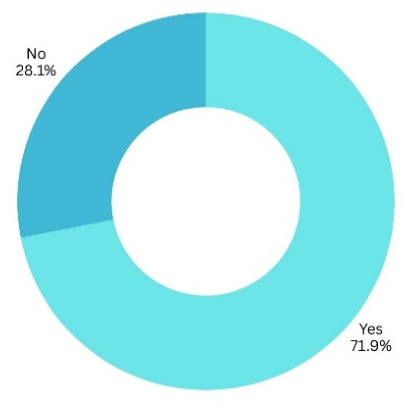
The majority of veterinarians (71.9%,
n = 238) reported observing chained dogs continuously in their practice, while 28.1% (
n = 93) reported not observing chained dogs (
Figure 1).
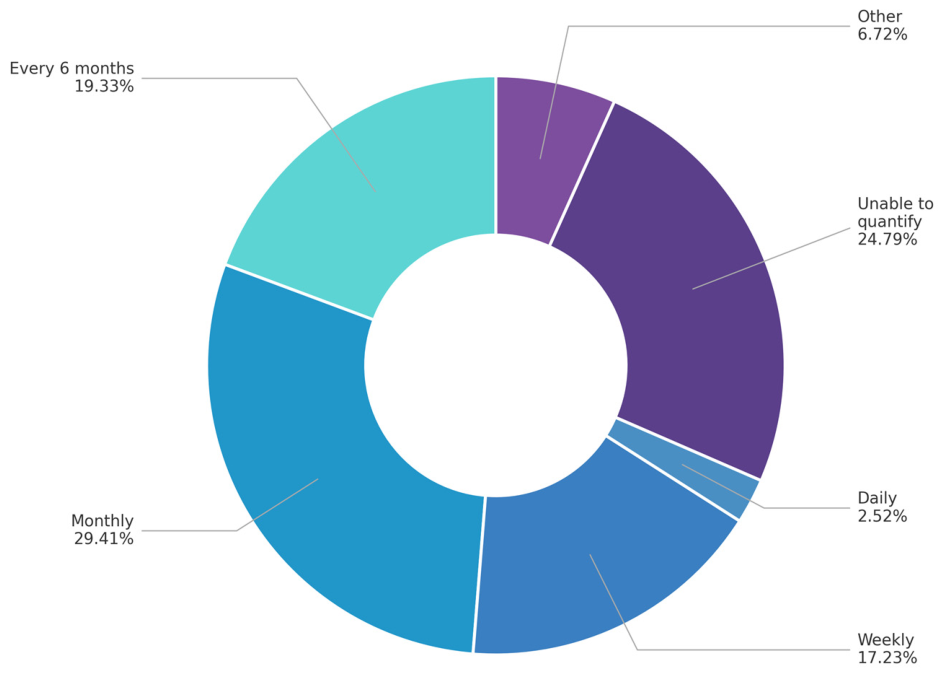
For the frequency of new cases, 29.41% (
n = 70) of respondents reported observing new cases monthly, followed by 24.79% (
n = 59), who reported being unable to quantify the frequency. Additionally, 19.33% (
n = 46) observed at least one new case every six months, 17.23% (
n = 41) identified new cases weekly, and 6.72% (
n = 16) reported observing new cases at other frequencies. Only 2.52% (
n = 6) reported observing new cases of continuously tethered dogs daily.
Figure 2 presents the reported frequency with which veterinarians encountered tethered dogs in their professional practice.
Veterinarians most frequently report observing chained dogs during activities involving other animals unrelated to the chained individual, with 74% reporting exposure in such contexts. Observations were described as frequent or very frequent by 30.2% of respondents, while 43.7% reported occasional encounters and 17.2% described them as rare.
Chained dogs were commonly observed during clinical visits to the animals’ places of confinement, with 80.7% of veterinarians reporting such observations. In contrast, although 69.3% of respondents encountered chained dogs in veterinary clinics, only a small proportion (10.5%) classified these encounters as frequent or very frequent.
Additionally, 62.2% of respondents reported receiving complaints about chained dogs, whereas 37.8% reported not receiving such reports.
3.3. Suitability of Tethering Conditions
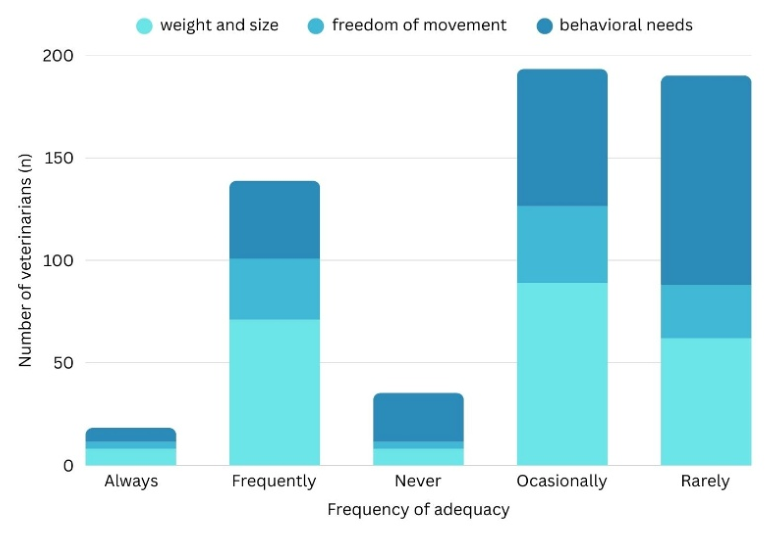
Veterinarians were asked to evaluate the adequacy of tethering practices about three key aspects: the appropriateness of the chain’s weight and dimensions relative to the animal’s weight and size, the chain’s length in terms of freedom of movement, and the chain’s length in relation to the dog’s behavioral needs. As shown in
Figure 3, responses were predominantly concentrated in the categories “occasionally adequate” and “rarely adequate,” particularly for freedom of movement and behavioral needs, indicating a widespread perception of inadequate tethering conditions.
Most veterinarians indicated that the chains used were generally not adequate for the animals’ weight and size. Overall, 67.2% (n = 160) reported inadequate chains, including 31.9% (n = 76) who stated that chains were only occasionally adequate, 30.7% (n = 73) who described them as rarely adequate, and 5.5% (n = 13) who reported that chains were never adequate. In contrast, 31.5% (n = 75) of the veterinarians indicated that the chains were frequently adequate for the animals’ weight and size.
Most veterinarians (n = 238) reported that the chains used were generally inadequate. Overall, 66.9% (n = 159) indicated inadequate chain length, including 37.4% (n = 89) who reported that chains were only occasionally adequate, 26.1% (n = 62) who described them as rarely adequate, and 3.4% (n = 8) who stated that they were never adequate. In contrast, 33.2% (n = 79) of veterinarians reported that the chain length was frequently or always adequate: 29.8% (n = 71) reported frequent adequacy, and 3.4% (n = 8) reported always adequate.
When asked if chains were usually long enough to meet dogs’ behavioral needs, most veterinarians (n = 238) reported that chain length is generally inadequate. Overall, 81.1% (n = 193) classified chain length as inadequate, including 28.2% (n = 67) who indicated that chains were only occasionally sufficient, 42.9% (n = 102) who reported that they were rarely sufficient, and 10.1% (n = 24) who stated that chains were never sufficient. In contrast, only 18.9% (n = 45) of veterinarians reported adequate chain length, with 16.0% (n = 38) indicating frequent adequacy, and 2.9% (n = 7) reporting that chains were always sufficient.
3.4. Impact of Tethering on Health and Welfare
Most veterinarians (68.9%; n = 164) reported that tethered animals had worse general health outcomes. In addition, 17.6% (n = 42) reported that the general health of chained and unchained animals was similar, 0.8% (n = 2) considered chained animals to be in better condition, and 12.6% (n = 30) stated that they had no opinion on the matter.
For the majority of veterinarians (69.2%), chained dogs, overall, exhibited behavioral differences compared with unchained dogs, while only 3.8% (
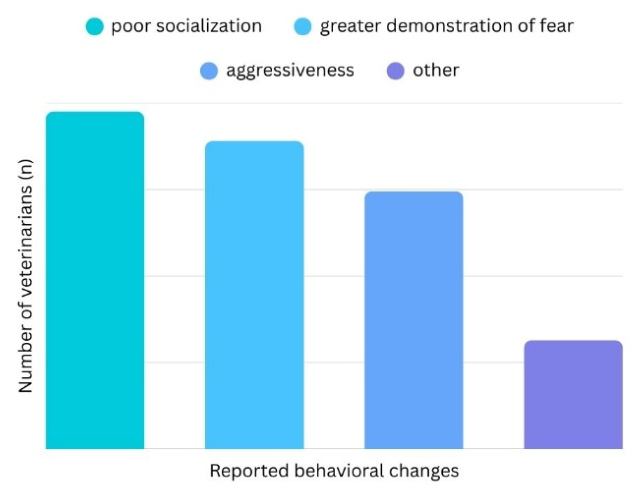
n = 9) reported no differences. When specifying the types of negative behavioral outcomes, 81.9% (
n = 195) of respondents observed poor socialization, 74.8% (
n = 178) reported greater fear, and 62.6% (
n = 149) noted increased aggressiveness. Also, 26.5% (
n = 63) identified other negative behavioral differences, as shown in
Figure 4.
The majority of veterinarians reported that chains were associated with animal injuries, with only 2.9% (n = 7) indicating that chains never caused such injuries. Injuries were reported as frequent by 18.9% of the veterinarians (n = 45), while 5.5% (n = 13) indicated that they always occurred. Additionally, 38.7% (n = 92) of the veterinarians reported that injuries occurred occasionally, whereas 34.0% (n = 81) indicated that injuries rarely occurred.
Among the injuries observed in chained animals, 82.4% (n = 196) of veterinarians reported alopecia at the site of tethering, making it the most frequently observed lesion. Additionally, 47.1% (n = 112) of the respondents identified poor muscle condition due to a lack of exercise, and 23.5% (n = 56) reported musculoskeletal pain or injuries at the chain site. Only 15.1% (n = 36) of the veterinarians reported observing other types of injuries.
Among the veterinarians who provided additional descriptions of the injuries observed in the chained animals, a wide range of other lesions were reported. The most frequently mentioned categories included dermatological injuries, such as alopecia, localized or deep wounds, and skin infections, which were often associated with poor hygiene or the use of embedded collars. Several veterinarians also described traumatic injuries resulting from chains wrapping around limbs, forceful impacts against the chain, garrotes, or musculoskeletal trauma. Other complications included abscesses, tracheal injuries (e.g., tracheitis and cough), dental lesions, intervertebral disk herniation, pododermatitis, myiasis-related injuries from flies, and obesity. Additionally, some veterinarians reported generalized poor body condition, increased susceptibility to infectious diseases, and behavioral or physical alterations stemming from repetitive movements in confined spaces.
3.5. Reasons for Dog Tethering
According to veterinarians’ experience, the main reasons for tethering animals were practical concerns related to preventing escape, identified by 80.3% of respondents (n = 191). Behavioral issues, such as aggressive dogs, were cited by 34% (n = 81) of veterinarians as a contributing factor, while 35.3% (n = 84) pointed to a lack of information among owners as a contributing factor. Additionally, 11.3% (n = 27) of respondents reported other reasons not covered by the predefined options, and 52.5% (n = 125) reported a lack of empathy from the owners.
Among the additional reasons veterinarians cited for tethering dogs, many emphasized its use to guard property, livestock, or agricultural equipment, and to deter intruders or secure strategic locations, particularly in rural or farming environments. Cultural and traditional factors were frequently mentioned, with some respondents citing inherited practices or local customs that normalize tethering. Economic and structural limitations were highlighted as another common reason, including owners’ lack of financial means to build proper fencing or kennels to safely contain the animals. Additionally, practical safety concerns were described, such as avoiding accidents near roads and minimizing property damage when owners lack the time, ability, or knowledge to train and socialize their dogs.
3.6. Information and Legislative Perspectives
Increased availability of information on this topic was perceived by 33.6% (n = 80) of veterinarians as a measure that would reduce the frequency of tethering. Conversely, 15.5% (n = 37) of participants believed that greater access to information would not affect the prevalence of tethering. The remaining 50.9% (n = 121) indicated that increased information might reduce tethering but were uncertain about its actual impact.
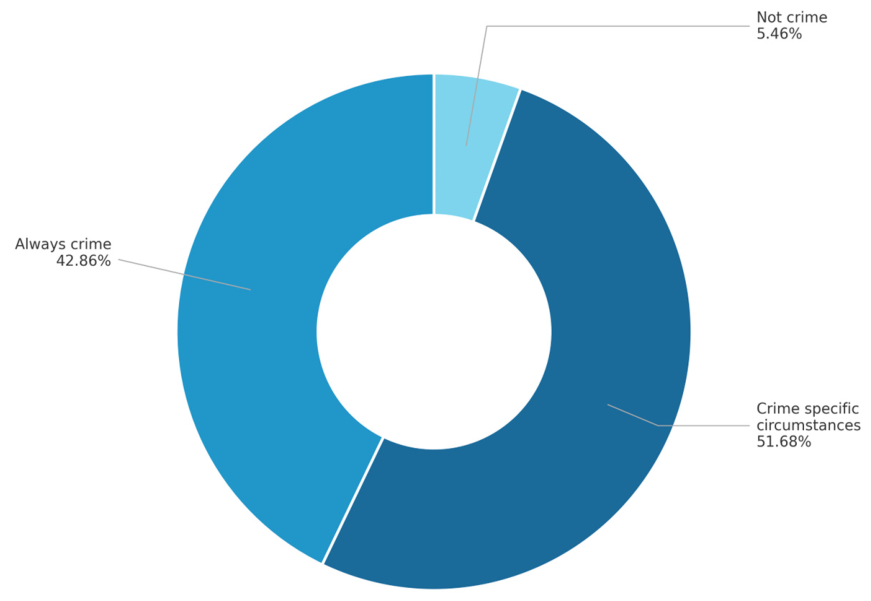
Concerning whether tethering companion animals should be considered a criminal offense, only 5.46% (
n = 13) of respondents stated that it should not be criminalized under any circumstances. In contrast, the vast majority supported some degree of criminalization: 42.86% (
n = 102) considered that tethering should always be classified as a crime, and 51.68% (
n = 123) believed it should be criminalized only under specific circumstances (
Figure 5).
3.7. Demographic and Professional Factors Influencing the Observation of Chained Dogs
Regional analysis revealed significant differences (p < 0.001) in the frequency with which the veterinarians reported encountering chained dogs. In the autonomous regions and predominantly rural areas, the vast majority of professionals reported observing chained dogs: 90.7% (39/43) in the Azores, 87.5% (7/8) in Madeira, 83.9% (52/62) in the Center, and 80.0% (12/15) in Alentejo. In the North, 69.8% (74/106) of the respondents reported encountering chained dogs, and in the Lisbon Metropolitan Area, 50.6% (39/77) of the veterinarians reported observing chained dogs.
Analysis of the veterinary practice area and observations of chained dogs revealed differences. Veterinarians working in shelter medicine (100%), municipal veterinary roles (100%), and mixed practice with companion and production animals (100%) universally reported encountering chained dogs in their professional experiences. Those working in animal production practice also showed a high proportion, with 80.8% reporting such encounters. Among veterinarians working primarily in companion animal clinics, 67.6% reported having observed chained dogs. The association between the area of practice and the observation of chained dogs was statistically significant (p < 0.001).
Multivariable logistic regression analysis confirmed that professional role was independently associated with frequent exposure to tethered dogs. Municipal and shelter veterinarians had significantly higher odds of frequent exposure than companion animal practitioners (OR = 2.69, 95% CI: 1.27–5.70, p = 0.015), independent of geographic setting (OR = 0.98, p = ns).
3.8. Factors Influencing Veterinarians’ Support for Criminalizing Dog Tethering
No demographic or professional variables were significantly associated with veterinarians’ opinions on the criminalization of dog tethering. Similarly, the frequency of professional contact with chained dogs, the context in which these animals were encountered (clinical consultations, complaints, or non-clinical situations), and the perceived adequacy of chains in terms of weight support or lesion occurrence were not significantly associated with the participants’ opinions regarding the criminalization of the practice.
In contrast, several welfare-related perceptions and clinical observations were significantly associated with opinions on criminalization across the three response categories (‘Always’, ‘Under specific circumstances’, ‘Never’). Observation of poor muscle condition due to insufficient exercise was associated with increased endorsement of ‘Always’ criminalization (p = 0.013). Reports of fear-related behavior were associated with lower endorsement of ‘Always’ criminalization and comparatively greater endorsement of ‘Under specific circumstances’ (p = 0.027).
Perceived owner motivations were also significantly associated with opinions on criminalization. Veterinarians who identified owners’ lack of empathy as a reason for tethering were significantly more likely to select ‘Always’ (p < 0.001). Conversely, veterinarians who attributed tethering primarily to practical concerns related to preventing escape were significantly less likely to select ‘Always’ and more likely to select ‘Under specific circumstances’ (p = 0.002).
Other perceived motivations, including lack of information and behavioral management difficulties, were not significantly associated with opinions on criminalization (p > 0.05).
The multivariable logistic regression model shows that a poor muscle condition was independently associated with support for unconditional criminalization (OR = 2.15, 95% CI: 1.27–3.62, p = 0.006), and age was also a significant positive predictor (r = 0.137, p = 0.035). Practice type, geographic setting, and sex were not independently associated with criminalization attitudes after adjustment.
4. Discussion
Continuous dog tethering is widely recognized as a practice that may compromise animal welfare and pose risks to public safety, particularly when prolonged and associated with social deprivation [
2,
4,
20]. However, despite the veterinary profession’s central role in safeguarding animal welfare, little is known about veterinarians’ perspectives on dog tethering, its perceived consequences, and their views on its regulation.
The present study aimed to measure veterinary professionals’ perceptions and impressions regarding prolonged, chronic, and poorly supervised tethering. The findings of the present study indicate that this condition seems to be common in Portuguese veterinary practice. According to respondents, tethered dogs were most frequently observed in contexts not directly related to the chained animal itself, particularly during visits by veterinarians working in practices that involve production animals, who attended to other animals at the place of confinement. This indirect exposure suggests that respondents perceived tethering practices as embedded in broader farm or household management systems and that these practices may not always be the primary reason for veterinary consultation. These findings are consistent with the significantly higher exposure reported by veterinarians working in rural areas compared with those practicing in urban areas, such as the Lisbon Metropolitan Area. This regional disparity indicates that geographical and infrastructural factors may influence containment strategies. In rural environments, where properties are larger, animals are often kept outdoors, and secure fencing or structured containment systems may be less accessible or financially feasible, tethering may be perceived as a practical management solution. Similar associations between environmental context, management practices, and confinement strategies have been described in other animal welfare studies [
21].
In addition to veterinarians working with farm animals, professionals in shelter medicine and municipal veterinary services also reported consistently encountering tethered dogs. In contrast, clinicians working primarily with companion animals in urban settings reported lower exposure rates, possibly reflecting differences in housing structures, urban containment norms, and closer supervision of pets.
Shelter and municipal veterinarians are more likely to be involved in cases related to neglect, abandonment, or public complaints, which may increase their exposure to inadequate confinement practices [
22,
23]. Furthermore, a considerable proportion of respondents reported receiving complaints concerning tethered dogs. On one hand, this pattern may reflect increasing public awareness and sensitivity toward animal welfare, as well as growing recognition of tethering as a potentially problematic practice. On the other hand, it also underscores how veterinarians are perceived by the public not only as healthcare providers but also as intermediaries in welfare-related conflicts, contributing to owner education, early identification of risk situations, and, in some cases, legal or regulatory processes [
24,
25,
26].
Beyond exposure frequency, the perceived adequacy of tethering conditions is a critical dimension of the present findings. Most veterinarians considered the chains used to be inadequate, particularly with respect to freedom of movement and the ability to meet dogs’ behavioral needs, suggesting that tethering, as commonly practiced, may inherently conflict with established animal welfare principles [
27,
28]. Additionally, the majority of respondents reported a general perception of poorer health in chained dogs compared to non-chained animals, recognizing that tethering is frequently associated with both physical and behavioral impairments. In our study, most veterinarians reported behavioral differences between chained and unchained dogs, with only a very small proportion (3.8%) indicating no observable differences. Poor socialization, increased fearfulness, and greater aggressiveness were the most frequently reported impressions among participating veterinarians. These perceptions are consistent with a substantial body of published evidence on the behavioral consequences of prolonged spatial restriction. Prolonged spatial restriction has been suggested in the literature to contribute to frustration, stress reactivity, and defensive behavioral responses, particularly in contexts involving perceived intrusion near valued resources. Confinement to a limited and constant area may also intensify protective or territorial tendencies, potentially explaining the frequent reports of fear-related and aggressive manifestations [
29,
30,
31].
Behavioral disturbances, as described by several authors, can lead to problems such as accidents, stress-induced dermatitis [
32], leash-pulling injuries [
33], separation anxiety [
34], and aggression between dogs [
35,
36], that may negatively affect the quality of life for the dog and the owner [
35,
36,
37]. They also affect the human–animal bond and are one of the leading causes of abandonment and euthanasia of dogs [
37,
38,
39,
40,
41]. Behavioral alterations may also be associated with an increased risk of bite incidents. A dog’s temperament, living environment, and the quality of its interactions with owners play a fundamental role in preventing aggressive behavior [
42]. Several studies indicate that a considerable proportion of dog-bite-related fatalities involve tethered dogs, particularly in incidents involving children [
12,
43,
44,
45]. In line with this evidence, the American Veterinary Medical Association Task Force on Canine Aggression advises against prolonged tethering, emphasizing the importance of socialization and behavioral health in reducing the risk of bites [
20].
Regarding physical consequences, dermatological lesions, particularly alopecia at the site of restraint, were the most frequently reported injuries among participating veterinarians. These findings are consistent with the literature, which describes chronic mechanical friction, pressure from collars or chains, and inadequate monitoring as common causes of such lesions [
17,
46,
47]. Additionally, a substantial proportion of veterinarians reported poor muscle condition associated with restricted exercise, a finding consistent with published evidence linking reduced mobility over prolonged periods to muscular atrophy, decreased physical conditioning, and secondary orthopedic discomfort, particularly in medium- and large-breed dogs kept outdoors [
6,
48]. Beyond localized injuries, respondents described a wide spectrum of complications, including traumatic lesions from entanglement, tracheal irritation, musculoskeletal pain, and infections associated with poor hygiene. The diversity of conditions reported by participating veterinarians suggests that continuous tethering may act as both a direct source of injury and an indirect risk factor contributing to generalized deterioration in health status.
Beyond its direct welfare implications, the use of heavy chains in dog confinement has been specifically associated with illegal dogfighting operations. Heavy chaining is characteristic of the housing and conditioning of dogs in illegal fighting, breeding, and training situations [
49]. Although the scope of dogfighting in Portugal has not been systematically documented, its occurrence cannot be ruled out, given that dogfighting remains a widespread global phenomenon, persisting clandestinely even in jurisdictions where it is prohibited, including across the European Union [
50,
51]. Dog fighting has been associated with other serious criminal activities, including illegal gambling, drug trafficking, and organized crime networks [
51], reinforcing the importance of veterinary vigilance.
In this context, familiarity with the physical signs associated with tethering takes on additional forensic significance. The weight of the chain relative to the dog’s body weight is a relevant indicator not only of welfare compromise but also of potential criminal activity, in dogfighting situations, forcing dogs to drag heavy chains is deliberately used as a form of physical conditioning, and this ratio has been used as forensic evidence in criminal proceedings in the United States. In many US states, veterinary reporting of suspected dogfighting activity is legally mandated, making recognition of tethering-associated physical signs, including chain-induced dermatological lesions, collar injuries, and musculoskeletal changes, an important component of forensic veterinary practice [
49]. Although no equivalent mandatory reporting obligation currently exists in Portugal under the existing legal framework, the findings of this study, documenting veterinarians’ frequent clinical observation of such signs, suggest that awareness of their potential forensic significance should be incorporated into veterinary education and professional guidelines in Portugal.
Veterinarians were also asked about their perceptions regarding owners’ motivations for tethering dogs. Prevention of escape emerged as the most frequently cited reason in respondents’ experience, suggesting that tethering is often used as a practical containment strategy rather than solely as an act of intentional neglect. Similar motivations have been reported in previous studies, in which tethering is commonly employed for containment, guarding, and general management. Cultural traditions, economic constraints, and lack of access to appropriate infrastructure may further contribute to the persistence of tethering in certain contexts [
11,
52]. Nevertheless, reliance on physical restraint may signal structural shortcomings, such as inadequate fencing or poor housing conditions, particularly in rural environments where dogs frequently serve guarding functions. In addition to identifying insufficient owner knowledge as a contributing factor, many veterinarians in our study also indicated that increased access to information could reduce the frequency of tethering. In this context, veterinarians are uniquely positioned to play a central role in promoting responsible ownership, preventive education, and welfare-oriented management practices through targeted educational initiatives and client guidance [
53,
54].
Since in some regions, continuous tethering may be socially normalized and embedded in longstanding management traditions, effective strategies to reduce it should adopt a multifaceted approach that combines regulatory measures, education, and structural support, while accounting for the socioeconomic and cultural realities that influence owner decision-making. Promoting practical alternatives to prolonged tethering, such as secure enclosures, adequate environmental enrichment, and appropriate behavioral management, may help reduce the practice sustainably. Increasing awareness of dogs’ social and exercise needs may improve welfare outcomes and strengthen the human–animal bond, potentially reducing abandonment and euthanasia associated with behavioral problems [
7,
18,
19]. Moreover, guiding the appropriate use of restraint devices and creating safe, stimulating environments may help mitigate both welfare risks and public safety concerns, particularly regarding child–dog interactions [
53].
Remarkably, Portugal has no specific legislation addressing dog tethering directly. Decree-Law No. 276/2001 establishes general welfare obligations requiring adequate space for physical exercise, access to shelter, and protection from adverse climatic conditions (Articles 7, 8, and 9) [
55]. However, unlike several other jurisdictions that have enacted dedicated tethering statutes, Portuguese law addresses the practice only indirectly, through general animal welfare provisions that apply to all companion animals regardless of the method of confinement. The legislation does not explicitly prohibit tethering, nor does it define measurable criteria for its assessment, such as maximum tethering duration, minimum chain length, or chain weight requirements [
55]. Law No. 69/2014, of 29 August, subsequently introduced criminal provisions for animal abuse under Article 387 of the Penal Code [
56], and Law No. 8/2017, of 3 March, formally recognized animals as sentient beings under civil law [
57]. However, it remains legally unclear whether chronic restraint in inadequate conditions meets the threshold for criminal abuse, given the absence of specific definitional criteria.
In contrast, several states and municipalities in the United States have enacted specific tethering legislation, with regulations addressing minimum tether length, commonly required to be at least three times the length of the dog or a minimum of 10–15 feet, maximum tether weight, prohibited collar types, maximum tethering duration ranging from 30 min to 14 h depending on the jurisdiction, and mandatory access to water, shelter, and shade. Several states also impose weather-specific restrictions, prohibiting tethering during extreme heat, cold, or weather emergencies [
58]. This comparative perspective highlights the regulatory gap between Portugal’s general welfare obligations and the more specific, enforceable standards adopted elsewhere. It underscores that the absence of operational legal standards renders the assessment of tethering adequacy inherently reliant on professional judgment, precisely what the present study set out to capture.
Within this regulatory context, veterinarians were asked whether dog tethering should be considered a criminal offense, and if so, whether it should be prohibited under all circumstances, only in specific situations, or not criminalized at all. The majority of respondent veterinarians support some degree of criminalization, reflecting an ethical position grounded in clinical experience and welfare assessment rather than demographic or professional characteristics. The division between unconditional (always) and conditional criminalization suggests that veterinarians recognize the contextual complexity of tethering practices. While prolonged or restrictive tethering may constitute a clear welfare violation, certain temporary or controlled forms of restraint may still be perceived as management tools rather than inherently abusive practices. Support for ‘Always’ criminalization was significantly associated with direct clinical indicators of compromised physical welfare, particularly poor muscle condition resulting from insufficient exercise. This suggests that observable, tangible, and chronic physical deterioration plays a decisive role in shaping stricter ethical and regulatory positions. Physical deconditioning may be perceived not merely as a secondary consequence, but as clear evidence of sustained welfare impairment.
The results of the multivariable analyses further support these interpretations. After adjusting for potential confounders, including region, sex, age, and practice type, poor muscle condition remained the only clinical variable independently associated with unconditional support for criminalization (OR = 2.15, p = 0.006), confirming that tangible, observable physical deterioration carries particular weight in shaping professional regulatory attitudes. Similarly, the finding that Municipal/Shelter veterinarians had significantly higher odds of frequent exposure to tethered animals (OR = 2.69, p = 0.015), independently of geographic setting, highlights the role of professional context rather than geography in determining exposure patterns.
These findings indicate that veterinarians’ ethical positioning is strongly anchored in observable and clinically verifiable indicators of compromised welfare. Restricted movement directly limits dogs’ ability to engage in species-specific behaviors such as exploration, locomotion, and social interaction, all of which are central to positive welfare and psychological stability. The prominence of these physical markers in shaping attitudes toward regulation suggests that tangible, measurable consequences carry particular weight in professional judgment. From an ethical standpoint, prolonged tethering challenges multiple dimensions of the Five Freedoms framework, particularly the freedoms to express normal behavior and to be free from fear and distress. Even when minimum legal standards are formally met, long-term tethering may still compromise psychological welfare, as highlighted in European analyses of dog tethering [
11].
The absence of associations between demographic variables and attitudes toward criminalization in our study suggests that concern regarding the welfare implications of tethering is broadly shared across the profession. This pattern may reflect the increasing integration of animal welfare science into veterinary education and professional identity [
21,
59,
60,
61]. At the same time, the influence of perceived owner motivations, such as containment needs or practical constraints, underscores the issue’s complexity. Effective policy responses may therefore require balanced strategies that combine regulatory measures with education, structural support, and access to humane containment alternatives.
Interestingly, in our study, reports of fear-related behavior were associated with lower endorsement of ‘Always’ criminalization and relatively greater selection of ‘Under specific circumstances’. This finding may reflect professional awareness that fear responses are multifactorial and cannot be attributed exclusively to tethering. Fear may result from inadequate early socialization, prior traumatic experiences, inconsistent human interaction, or broader environmental deprivation [
62,
63,
64]. Consequently, some veterinarians may consider that criminalization alone is insufficient to address the complex determinants of emotional dysregulation, favoring instead integrated approaches that combine regulation, education, environmental enrichment, and behavioral intervention.
Perceptions of the motivations underlying tethering practices were also significantly associated with attitudes toward criminalization. Veterinarians who attributed tethering to owners’ lack of empathy were more likely to support unconditional (always) criminalization, suggesting that moral evaluation of owner intent may influence regulatory positioning. In contrast, those who perceived tethering primarily as a practical containment strategy were less inclined to favor criminalization, possibly reflecting recognition of contextual or structural constraints. These findings indicate that professional attitudes are shaped not only by observed welfare consequences but also by underlying interpretations of owner responsibility and intentionality. The absence of significant associations for factors such as lack of information or behavioral management difficulties further suggests that empathy-related judgments may carry particular ethical weight in shaping support for punitive measures.
Several limitations should be considered when interpreting these findings. The study relied on veterinarians’ self-reported perceptions rather than standardized clinical assessments, which may introduce subjective interpretation and recall bias, although these perceptions reflect cumulative professional experience and repeated exposure to welfare conditions across diverse contexts. The cross-sectional design precludes causal inference regarding the relationship between tethering practices and observed outcomes.
The recruitment strategy, based on online distribution through professional networks and personal contacts, is susceptible to self-selection bias, as veterinarians with a pre-existing interest in animal welfare may have been disproportionately likely to participate. Furthermore, no response rate could be calculated due to the multi-channel recruitment approach, and the results should not be generalized to all Portuguese veterinarians.
The behavioral and welfare constructs assessed, including socialization, fear, aggressiveness, and behavioral needs, were not operationally defined in the questionnaire, and responses reflect broad professional impressions rather than standardized clinical criteria. The resulting percentages should therefore be interpreted as indicators of professional perception rather than objective measures of prevalence or clinical frequency. Formal psychometric validation of the instrument was beyond the scope of this exploratory study and represents a priority for future research.
Despite these limitations, the study could offer relevant insight into the prevalence and perceived consequences of dog tethering from the perspective of veterinary professionals in Portugal. Given their clinical role and direct contact with both animals and owners, veterinarians are uniquely positioned to identify welfare concerns, contribute to owner education, and inform policy discussions. The findings underscore the importance of promoting humane alternatives to prolonged tethering, including secure containment systems, environmental enrichment, and appropriate behavioral management strategies. Community-based initiatives offer a promising complementary approach to regulatory measures. A notable example is The Fence Project in Des Moines, Iowa (USA), in which local humane organizations coordinate volunteers to construct fencing and dog houses using donated materials for owners willing to unchain their animals [
65]. This model directly addresses structural and economic barriers to humane containment, offering a practical alternative that relies on punitive enforcement. Adaptation of similar initiatives to the Portuguese context, potentially in partnership with municipal veterinary services, local shelters, and animal welfare associations, could meaningfully reduce chronic tethering, particularly in rural areas where financial constraints and limited infrastructure are frequently cited as primary motivations.
Regulatory measures should specify minimum standards for key parameters, including tethering duration, frequency of release, minimum chain length, maximum chain weight, prohibited collar types, mandatory access to shelter and water, level of supervision, and provision of environmental enrichment, consistent with the welfare principles established in Portuguese legislation and with the more specific regulatory standards adopted in other jurisdictions.
A critical dimension complementing this legal analysis is the perceived effectiveness of enforcement. Despite progressive legislative advances, concerns have been raised regarding the gap between existing legislation and its practical application in Portugal. The effectiveness of anti-cruelty enforcement mechanisms has been questioned, with sanctions perceived as insufficiently severe to deter, and prosecution rates remaining low [
66]. Furthermore, some convictions under Penal Code animal cruelty provisions have been challenged on appeal, with courts questioning the legislation’s constitutional basis [
67], creating legal uncertainty that may further undermine the deterrent effect of existing provisions. Future studies should systematically assess veterinary professionals’ perceptions of enforcement effectiveness, as these perceptions may significantly influence legislative impact and veterinarians’ willingness to report suspected welfare violations.
Future research should also consider the potential influence of cultural and religious beliefs, which may shape attitudes toward animals and perceptions of the acceptability of certain management practices in specific geographical contexts. Integrating these dimensions into broader cross-cultural studies could yield valuable insights and may inspire interdisciplinary research beyond the veterinary field. Future research should also prioritize longitudinal and observational designs to objectively assess the relationship between restraint practices, living conditions, and canine welfare outcomes. Such evidence would strengthen the empirical basis for regulatory decisions and support the development of evidence-based welfare policies.