
Survey of Cellular Autofluorescence Variation in Saliva Deposits: Implications for Estimating Time Since Deposition


Abstract
1. Introduction
2. Materials and Methods
2.1. Sample Collection
2.2. Imaging Flow Cytometry
2.3. Data Analysis
3. Results
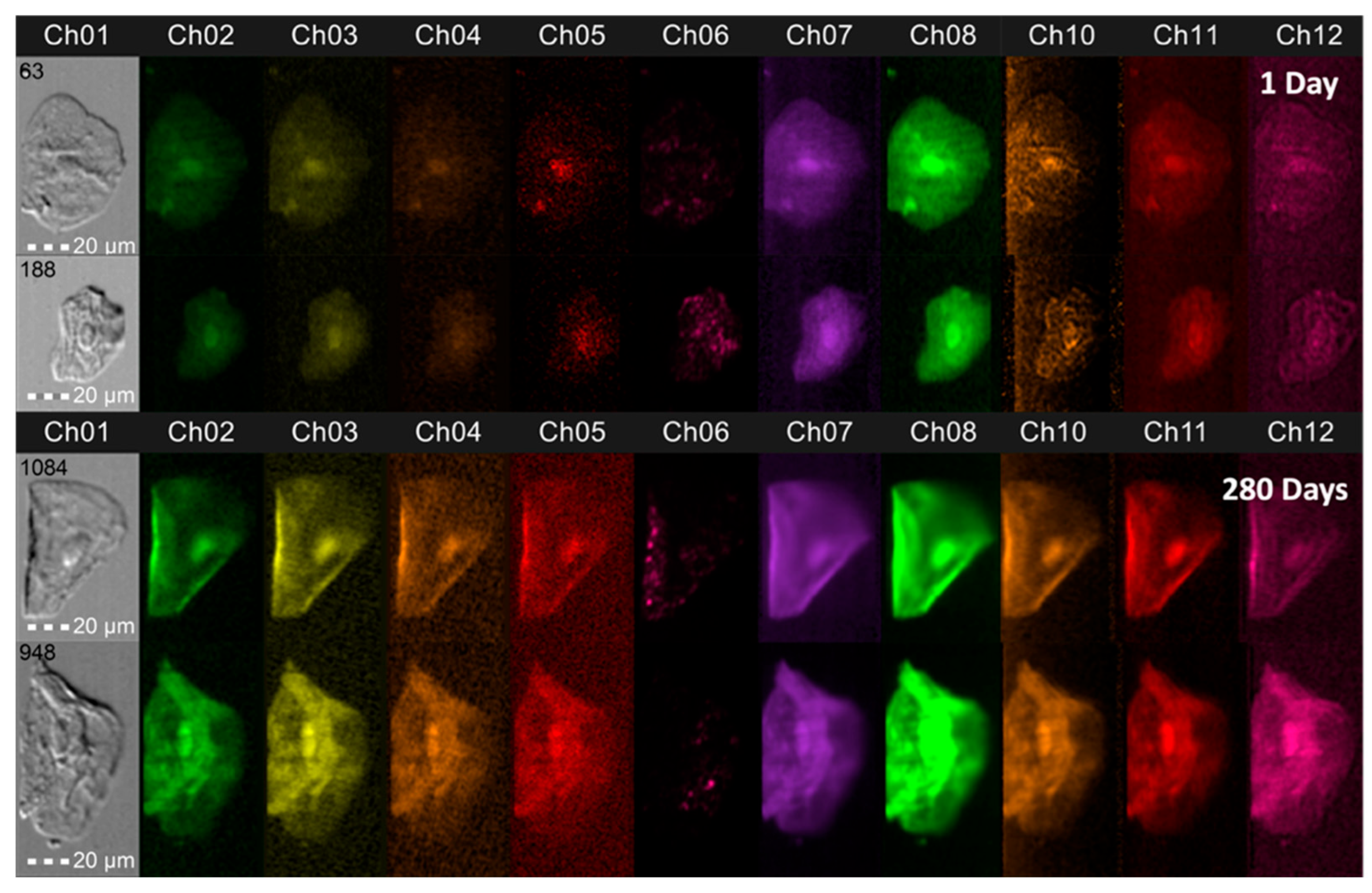
3.1. Autofluorescence Signatures in Single Contributor Cell Populations
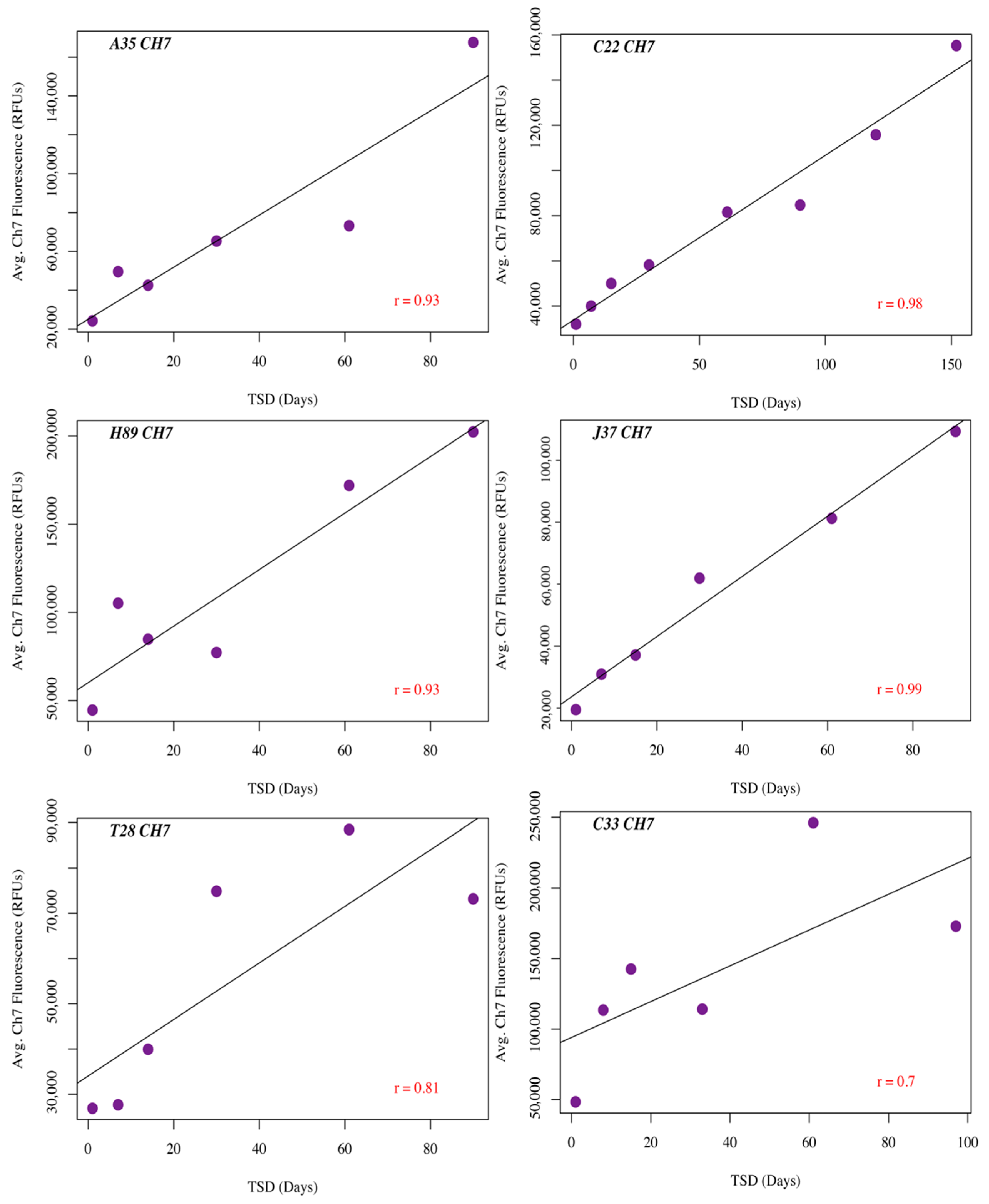
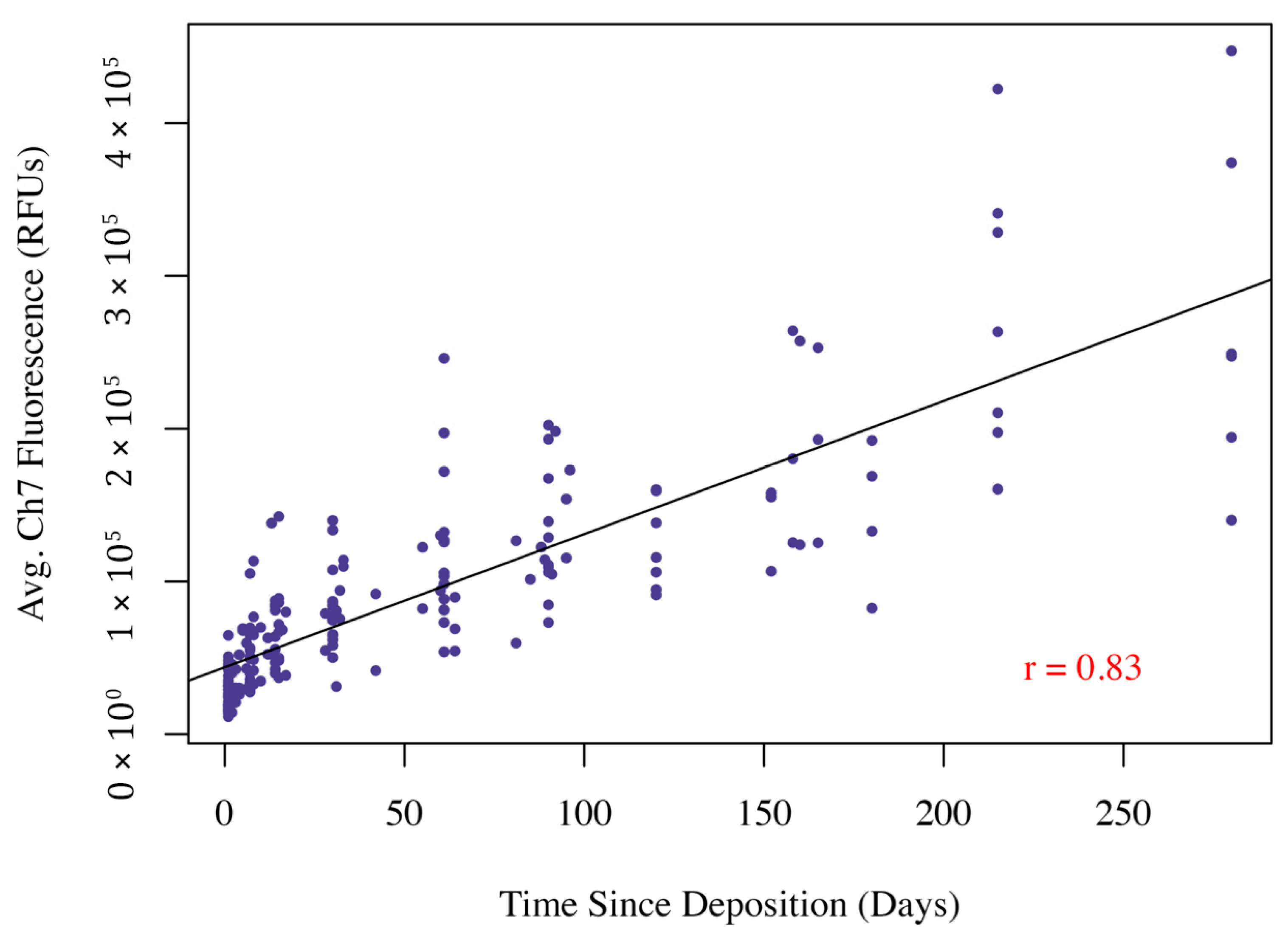
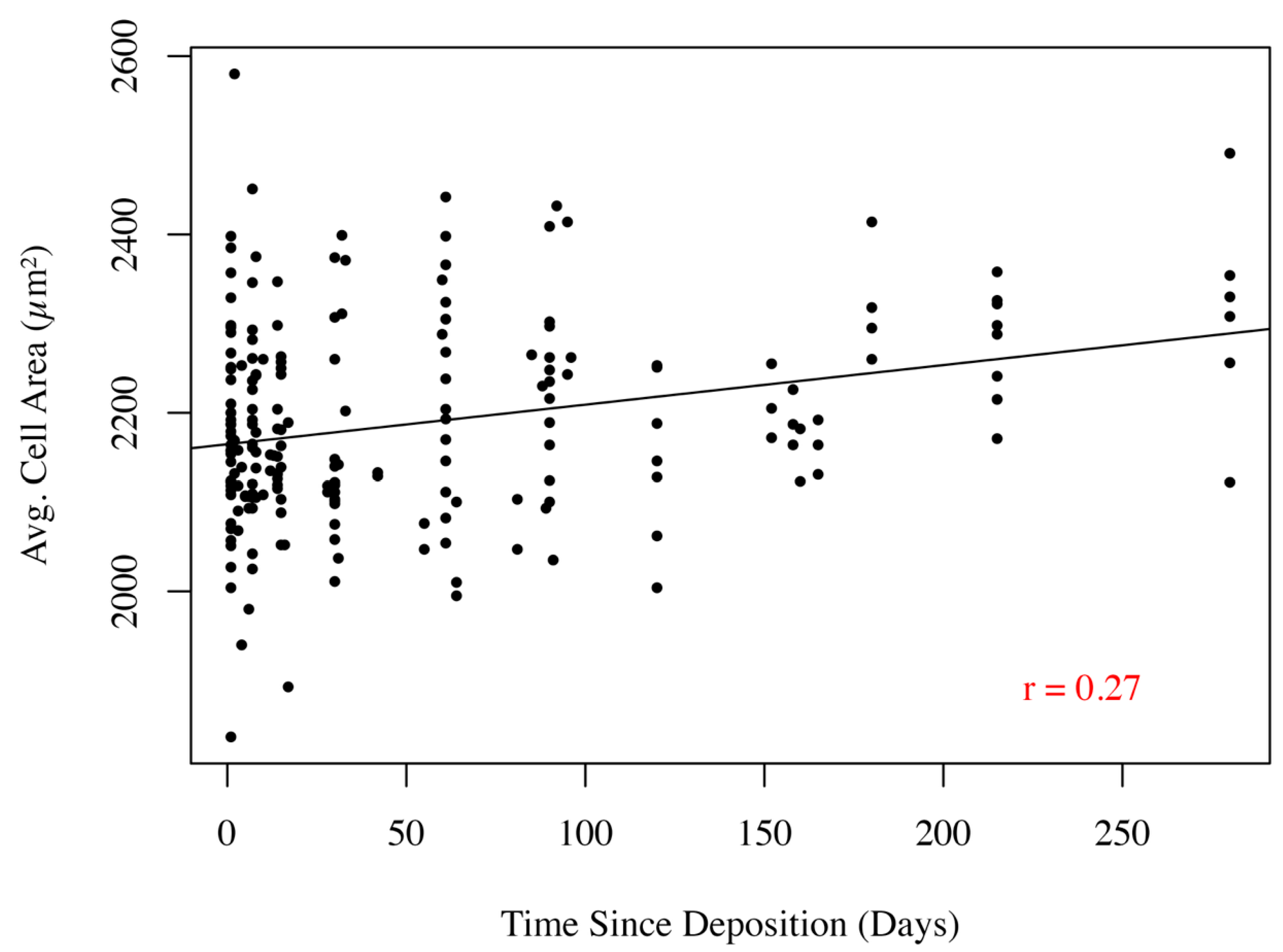
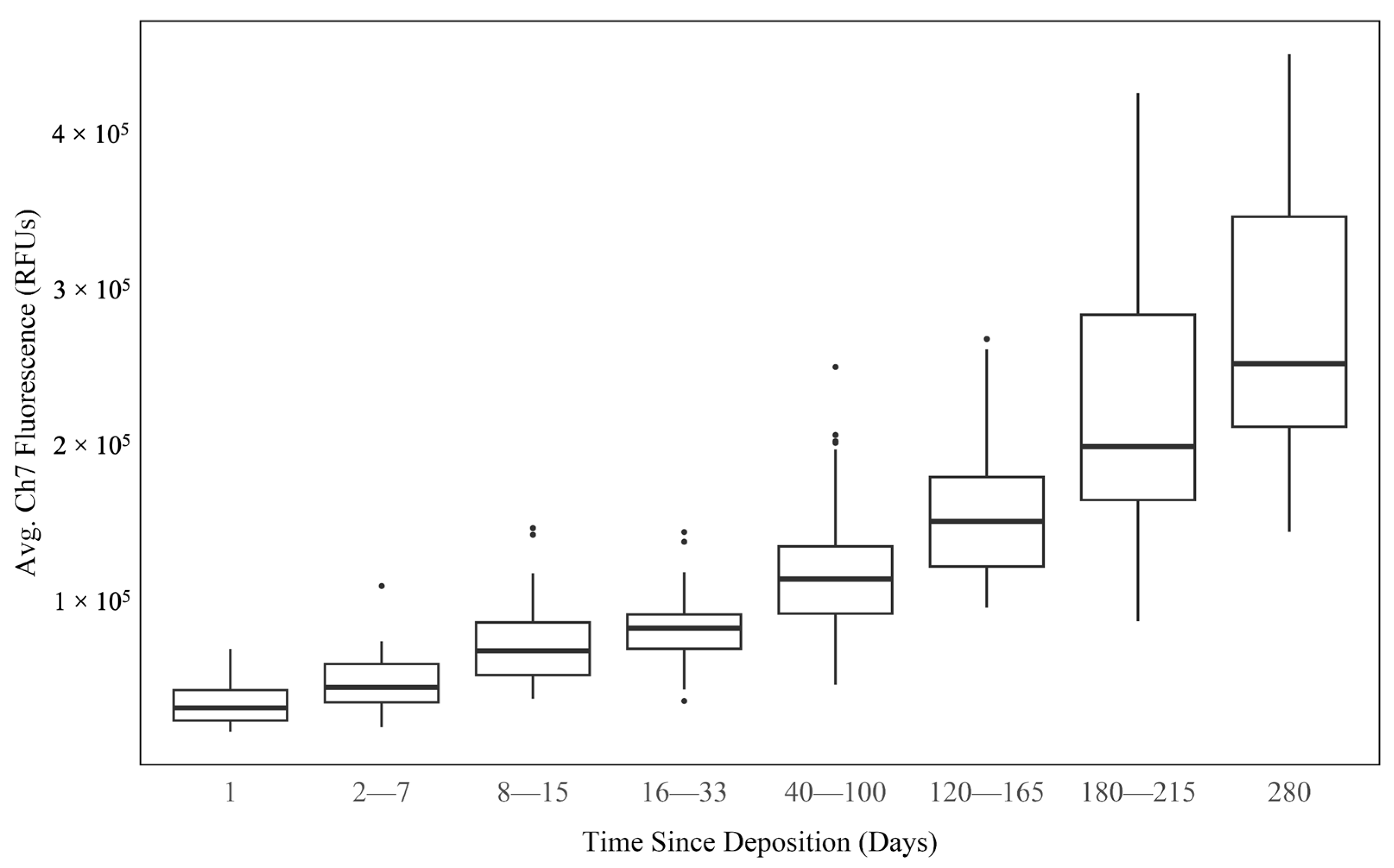
3.2. Comparison of Autofluorescence Variation with TSD and Across Contributor Cell Populations
3.3. Estimating TSD for Unknown Samples Using Autofluorescence Profiles
4. Discussion
5. Conclusions
Supplementary Materials
Author Contributions
Funding
Institutional Review Board Statement
Informed Consent Statement
Data Availability Statement
Conflicts of Interest
References
- Butler, J.M.; Iyer, H.; Press, R.; Taylor, M.K.; Vallone, P.M.; Willis, S. DNA Mixture Interpretation: A NIST Scientific Foundation Review; National Institute of Standards and Technology: Gaithersburg, MD, USA, 2024. [CrossRef]
- De Wolff, T.R.; Aarts, L.H.J.; van den Berge, M.; Boyko, T.; van Oorschot, R.A.H.; Zuidberg, M.; Kokshoorn, B. Prevalence of DNA of regular occupants in vehicles. Forensic Sci. Int. 2021, 320, 110713. [Google Scholar] [CrossRef]
- Onofri, M.; Tommolini, F.; Severini, S.; Gambelunghe, C.; Lancia, M.; Carlini, L.; Carnevali, E. Trace DNA Transfer in Co-Working Spaces: The Importance of Background DNA Analysis. Int. J. Mol. Sci. 2024, 25, 2207. [Google Scholar] [CrossRef]
- Shin, J.; Choi, S.; Yang, J.S.; Song, J.; Choi, J.S.; Jung, H.-I. Smart Forensic Phone: Colorimetric analysis of a bloodstain for age estimation using a smartphone. Sens. Actuators B Chem. 2017, 243, 221–225. [Google Scholar] [CrossRef]
- Marrone, A.; La Russa, D.; Montesanto, A.; Lagani, V.; La Russa, M.F.; Pellegrino, D. Short and long time bloodstains age determination by colorimetric analysis: A pilot study. Molecules 2021, 26, 6272. [Google Scholar] [CrossRef] [PubMed]
- Cheng, F.; Li, W.; Ji, Z.; Li, J.; Hu, W.; Zhao, M.; Yu, D.; Simayijiang, H.; Yan, J. Estimation of bloodstain deposition time within a 24-h day-night cycle with rhythmic mRNA based on a machine learning algorithm. Forensic Sci. Int. Genet. 2023, 66, 102910. [Google Scholar] [CrossRef] [PubMed]
- Bauer, M.; Polzin, S.; Patzelt, D. Quantification of RNA degradation by semi-quantitative duplex and competitive RT-PCR: A possible indicator of the age of bloodstains? Forensic Sci. Int. 2003, 138, 94–103. [Google Scholar] [CrossRef]
- Elliot, C.; Stotebury, T.E.; Shafer, A.B. A diagnostic relationship between the RNA Integrity Number equivalent and Time Since Deposition of blood. J. Forensic Sci. 2021, 67, 1776–1785. [Google Scholar]
- Marrone, A.; La Russa, D.; Barberio, L.; Murfuni, M.S.; Gaspari, M.; Pellegrino, D. Forensic Proteomics for the Discovery of New post mortem Interval Biomarkers: A Preliminary Study. Int. J. Mol. Sci. 2023, 24, 14627. [Google Scholar] [CrossRef]
- Heo Tmoo Gwon, S.Y.; Yang, J.H.; Hyun, S.H.; Kang, H.G.; Sung, H.J. Hemoglobin subunit beta protein as a novel marker for time since deposition of bloodstains at crime scenes. Forensic Sci. Int. 2022, 336, 111348. [Google Scholar] [CrossRef]
- Schneider, T.D.; Kraemer, T.; Steuer, A.E. Untargeted Metabolomics Profiling for Determination of the Time since Deposition of Biofluids in a Forensic Context: A Proof-of-Concept for Urine, Saliva, and Semen in Addition to Blood. Anal. Chem. 2023, 95, 16575–16584. [Google Scholar] [CrossRef]
- Weber, A.; Wójtowicz, A.; Wietecha-Posłuszny, R.; Lednev, I.K. Raman Spectroscopy for the Time since Deposition Estimation of a Menstrual Bloodstain. Sensors 2024, 24, 3262. [Google Scholar] [CrossRef]
- Zhang, R.; Wang, P.; Chen, J.; Tian, Y.; Gao, J. Age estimation of bloodstains based on Raman spectroscopy and chemometrics. Spectrochim. Acta-Part. A Mol. Biomol. Spectrosc. 2022, 290, 122284. [Google Scholar] [CrossRef] [PubMed]
- Doty, K.C.; McLaughlin, G.; Lednev, I.K. A Raman “spectroscopic clock” for bloodstain age determination: The first week after deposition. Anal. Bioanal. Chem. 2016, 408, 3993–4001. [Google Scholar] [CrossRef] [PubMed]
- Ackermann, K.; Ballantyne, K.N.; Kayser, M. Estimating trace deposition time with circadian biomarkers: A prospective and versatile tool for crime scene reconstruction. Int. J. Legal Med. 2010, 124, 387–395. [Google Scholar] [CrossRef]
- Díez López, C.; Kayser, M.; Vidaki, A. Estimating the Time Since Deposition of Saliva Stains With a Targeted Bacterial DNA Approach: A Proof-of-Principle Study. Front. Microbiol. 2021, 12, 647933. [Google Scholar] [CrossRef]
- Wang, H.; Bian, C.; Kong, L.; An, Y.; Du, Y.; Tian, J. A Novel Adaptive Parameter Search Elastic Net Method for Fluorescent Molecular Tomography. IEEE Trans. Med. Imaging 2021, 40, 1484–1498. [Google Scholar] [CrossRef]
- Dou, S.; Ma, G.; Liang, Y.; Shen, J.; Zhao, G.; Fu, G.; Fu, L.; Cong, B.; Li, S. Construction of the time since deposition (TsD) model in saliva stains with 16S rRNA full-length sequencing technology and microbial markers. Int. J. Legal Med. 2025, 139, 1019–1030. [Google Scholar] [CrossRef]
- Wang, J.; Cheng, X.; Zhang, J.; Liu, Z.; Cheng, F.; Yan, J.; Zhang, G. Estimating the time since deposition (TsD) in saliva stains using temporal changes in microbial markers. Forensic Sci. Int. Genet. 2022, 60, 102747. [Google Scholar] [CrossRef]
- Croce, A.C.; Bottiroli, G. Autofluorescence spectroscopy and imaging: A tool for biomedical research and diagnosis. Eur. J. Histochem. 2014, 58, 320–337. [Google Scholar] [CrossRef] [PubMed]
- Kolenc, O.I.; Quinn, K.P. Evaluating cell metabolism through autofluorescence imaging of NAD(P)H and FAD. Antioxid. Redox Signal. 2019, 30, 875–889. [Google Scholar] [CrossRef]
- Malak, M.; James, J.; Grantham, J.; Ericson, M.B. Contribution of autofluorescence from intracellular proteins in multiphoton fluorescence lifetime imaging. Sci. Rep. 2022, 12, 16584. [Google Scholar] [CrossRef]
- Gillies, R.; Zonios, G.; Anderson, R.R.; Kollias, N. Fluorescence excitation spectroscopy provides information about human skin in vivo. J. Investig. Dermatol. 2000, 115, 704–707. [Google Scholar] [CrossRef]
- Weber, A.; Wójtowicz, A.; Lednev, I.K. Post deposition aging of bloodstains probed by steady-state fluorescence spectroscopy. J. Photochem. Photobiol. B Biol. 2021, 221, 112251. [Google Scholar] [CrossRef]
- Mc Shine, S.; Suhling, K.; Beavil, A.; Daniel, B.; Frascione, N. The applicability of fluorescence lifetime to determine the time since the deposition of biological stains. Anal. Methods 2017, 9, 2007–2013. [Google Scholar] [CrossRef]
- Weber, A.; Lednev, I.K. Brightness of blood: Review of fluorescence spectroscopy analysis of bloodstains. Front. Anal. Sci. 2022, 2, 906532. [Google Scholar] [CrossRef]
- Brocato, E.R.; Philpott, M.K.; Connon, C.C.; Ehrhardt, C.J. Rapid differentiation of epithelial cell types in aged biological samples using autofluorescence and morphological signatures. PLoS ONE 2018, 13, e0197701. [Google Scholar] [CrossRef]
- Gentry, A.E.; Ingram, S.; Philpott, M.K.; Archer, K.J.; Ehrhardt, C.J. Preliminary assessment of three quantitative approaches for estimating time-sincedeposition from autofluorescence and morphological profiles of cell populations from forensic biological samples. PLoS ONE 2023, 18, e0292789. [Google Scholar] [CrossRef] [PubMed]
- Stanciu, C.E.; Philpott, M.K.; Bustamante, E.E.; Kwon, Y.J.; Ehrhardt, C.J. Analysis of red autofluorescence (650–670nm) in epidermal cell populations and its potential for distinguishing contributors to “touch” biological samples. F1000Research 2016, 5, 180. [Google Scholar] [CrossRef]
- Ingram, S.; DeCorte, A.; Gentry, A.E.; Philpott, M.K.; Moldenhauer, T.; Stadler, S.; Steinberg, C.; Millman, J.; Ehrhardt, C.J. Differentiation of vaginal cells from epidermal cells using morphological and autofluorescence properties: Implications for sexual assault casework involving digital penetration. Forensic Sci. Int. Genet. 2023, 66, 102909. [Google Scholar] [CrossRef]
- Azouaoui, D.; Choinière, M.R.; Khan, M.; Sayfi, S.; Jaffer, S.; Yousef, S.; Patten, D.A.; Green, A.E.; Menzies, K.J. Meta-analysis of NAD(P)(H) quantification results exhibits variability across mammalian tissues. Sci. Rep. 2023, 13, 2464. [Google Scholar] [CrossRef] [PubMed]
- Lin, B.; Urayama, S.; Saroufeem, R.M.G.; Matthews, D.L.; Demos, S.G. Characterizing the origin of autofluorescence in human esophageal epithelium under ultraviolet excitation. Opt. Express 2010, 18, 21074. [Google Scholar] [CrossRef]
- Teruya, T.; Goga, H.; Yanagida, M. Human age-declined saliva metabolic markers determined by LC–MS. Sci. Rep. 2021, 11, 18135. [Google Scholar] [CrossRef]
- Feng, F.K.; E, L.L.; Kong, X.P.; Wang, D.S.; Liu, H.C. Lipofuscin in saliva and plasma and its association with age in healthy adults. Aging Clin. Exp. Res. 2015, 27, 573–580. [Google Scholar] [CrossRef]
- Tóthová, L.; Kamodyová, N.; Červenka, T.; Celec, P. Salivary markers of oxidative stress in oral diseases. Front. Cell Infect. Microbiol. 2015, 5, 73. [Google Scholar] [CrossRef]
- Hu, Z.; Bhattacharya, S.; Butte, A.J. Application of Machine Learning for Cytometry Data. Front. Immunol. 2022, 12, 787574. [Google Scholar] [CrossRef]
- Rajput, D.; Wang, W.J.; Chen, C.C. Evaluation of a decided sample size in machine learning applications. BMC Bioinform. 2023, 24, 48. [Google Scholar] [CrossRef] [PubMed]
- Schneider, T.D.; Roschitzki, B.; Grossmann, J.; Kraemer, T.; Steuer, A.E. Determination of the Time since Deposition of Blood Traces Utilizing a Liquid Chromatography-Mass Spectrometry-Based Proteomics Approach. Anal. Chem. 2022, 94, 10695–10704. [Google Scholar] [CrossRef] [PubMed]
- Takamura, A.; Watanabe, D.; Shimada, R.; Ozawa, T. Comprehensive modeling of bloodstain aging by multivariate Raman spectral resolution with kinetics. Commun. Chem. 2019, 2, 115. [Google Scholar] [CrossRef]
- Megyesi, M.; Nawrocki, S.; Haskell, N. Using Accumulated Degree-Days to Estimate the Postmortem Interval from Decomposed Human Remains. J. Forensic Sci. 2005, 50, 1–9. [Google Scholar] [CrossRef]



| Time Since Deposition | |||||
|---|---|---|---|---|---|
| 1 Day | 10–20 Days | 30–65 Days | 80–165 Days | ≥180 Days | |
| Average Residual 1 | 8 | 21 | 23 | 35 | 82 |
Disclaimer/Publisher’s Note: The statements, opinions and data contained in all publications are solely those of the individual author(s) and contributor(s) and not of MDPI and/or the editor(s). MDPI and/or the editor(s) disclaim responsibility for any injury to people or property resulting from any ideas, methods, instructions or products referred to in the content. |
© 2026 by the authors. Licensee MDPI, Basel, Switzerland. This article is an open access article distributed under the terms and conditions of the Creative Commons Attribution (CC BY) license.
Share and Cite
DeCorte, A.; Wolfe, G.; Philpott, M.K.; Ehrhardt, C.J. Survey of Cellular Autofluorescence Variation in Saliva Deposits: Implications for Estimating Time Since Deposition. Forensic Sci. 2026, 6, 36. https://doi.org/10.3390/forensicsci6020036
DeCorte A, Wolfe G, Philpott MK, Ehrhardt CJ. Survey of Cellular Autofluorescence Variation in Saliva Deposits: Implications for Estimating Time Since Deposition. Forensic Sciences. 2026; 6(2):36. https://doi.org/10.3390/forensicsci6020036
Chicago/Turabian StyleDeCorte, Arianna, Gabrielle Wolfe, M. Katherine Philpott, and Christopher J. Ehrhardt. 2026. "Survey of Cellular Autofluorescence Variation in Saliva Deposits: Implications for Estimating Time Since Deposition" Forensic Sciences 6, no. 2: 36. https://doi.org/10.3390/forensicsci6020036
APA StyleDeCorte, A., Wolfe, G., Philpott, M. K., & Ehrhardt, C. J. (2026). Survey of Cellular Autofluorescence Variation in Saliva Deposits: Implications for Estimating Time Since Deposition. Forensic Sciences, 6(2), 36. https://doi.org/10.3390/forensicsci6020036