Article

Forensic Analysis of Skeletal Remains Recovered from the Second World War Mass Grave of Ossero: From Biases to Uncertainties


by
Monica Concato
1,
Barbara Di Stefano
1,
Raffaella Vetrini
1,
Aurora Carnio
1,
Maximo Leonardo Franzoni
1,
Maria Grazia Calvano
2,
Solange Sorçaburu Ciglieri
1,
Francesco Introna
2 and
Paolo Fattorini
1,*
1
Department of Medicine, Surgery and Health, University of Trieste, 34149 Trieste, Italy
2
Section of Legal Medicine, Interdisciplinary Department of Medicine (DIM), University-Hospital of Bari, 70124 Bari, Italy
*
Author to whom correspondence should be addressed.
Forensic Sci. 2026, 6(1), 21; https://doi.org/10.3390/forensicsci6010021
Submission received: 27 November 2025 / Revised: 17 January 2026 / Accepted: 17 February 2026 / Published: 20 February 2026

Abstract

Background/Objectives: Personal identification is a cornerstone of Forensic Medicine. Historical records indicated that 27 Italian soldiers were executed by Tito’s army in April 1945 and buried in the mass grave of Ossero (Cres Island, Croatia). Methods: The remains, exhumed in 2019 by Croatian authorities and transferred to the Sacrario d’Oltremare (Bari, Italy), underwent radiographic and anthropological analyses. Genetic analysis was later performed on 147 bone samples, leading to the identification of 10 soldiers. Results: Anthropological analyses revealed commingled remains of at least 34 individuals (15–45 years; 161–181 cm), including eight skeletal elements of female sex. Forensic examination confirmed cranial and post-cranial gunshot wounds. Conclusions: Extensive commingling and fragmentation of the remains prevented full reconstruction of individual skeletons, yet comparison with ante-mortem data supported their identification as the aforementioned soldiers. Unexpected findings, including historically undocumented females, were confirmed by DNA analysis. These findings underscore the value of a multidisciplinary approach to optimize recovery and subsequent forensic and genetic investigations.

1. Introduction

Forensic analysis address the recovery and identification of human remains [1,2]. It is widely applied in the investigation of mass graves [2], allowing experts to determine some key parameters such as minimum number of individuals [3], sex [4,5,6], stature [7,8,9,10], and age at death [11,12].
The literature reports variability regarding both the number of individuals and deposition modalities [13]. Jessee and Skinner [13] define a mass grave as any site containing two or more associated bodies, either indiscriminately or intentionally placed, of victims who were killed through extra-judicial, summary, or arbitrary executions, excluding individuals who perished in armed conflicts or recognized large-scale disasters [13]. Human remains in mass graves are frequently fragmented, incomplete and commingled and therefore difficult to identify [2]. Misidentification risks are significant due to the presence of non-osseous materials (wood, pottery, plastics, stones) or animal remains. Therefore, identification relies on three diagnostic levels: gross skeletal anatomy, bone macrostructure, and bone microstructure [14,15,16].
Disaster victim identification (DVI) protocols aim to restore identity to the deceased and address the issue of missing persons [17,18,19]. The first internationally accepted guidelines were introduced in 1984 and are regularly updated every five years, involving disciplines such as odontology, pathology/anthropology, fingerprint analysis, and genetic profiling [20,21]. These guidelines outline five sequential phases that should be carried out in the identification process, involving scene examination, the collection of post-mortem and ante-mortem samples, and reconciliation [20]. Human remains collected on these scenes should therefore be processed through photography, fingerprinting, imaging, and DNA sampling, while families provide personal data and genetic material [20].
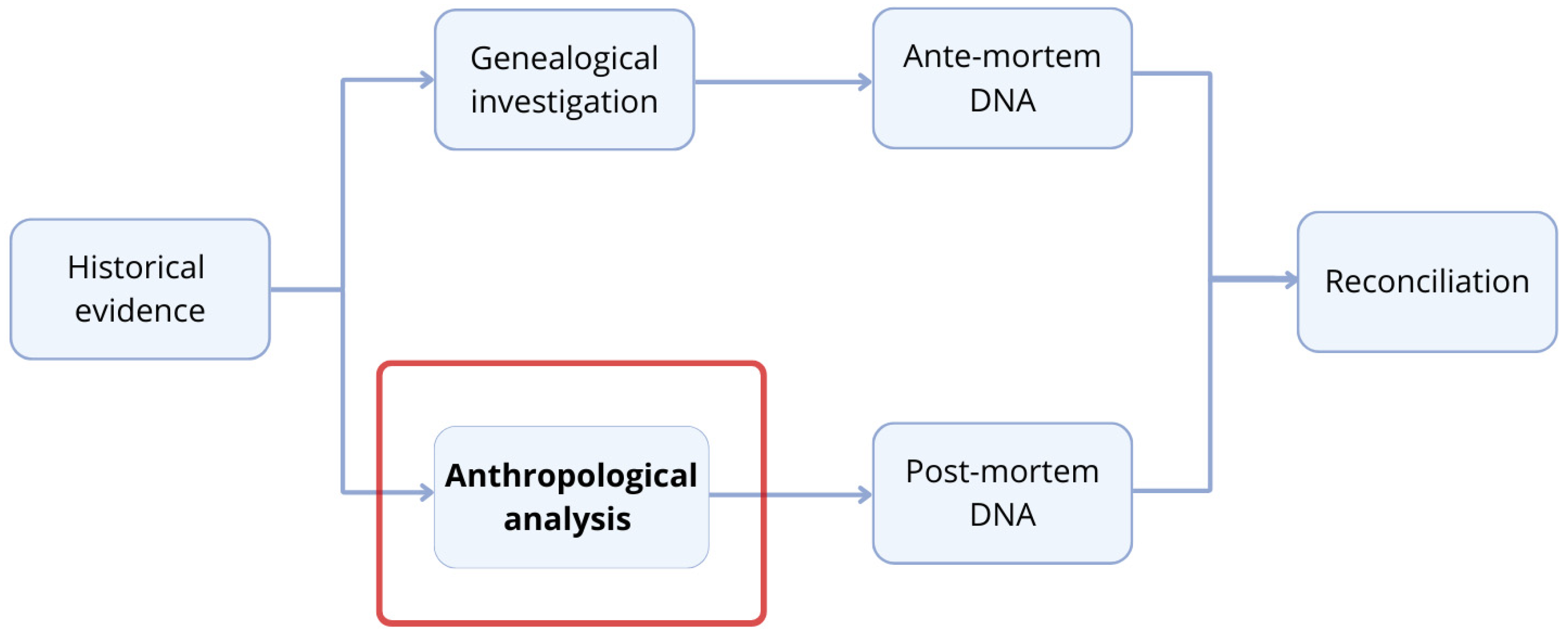
This study represents the preliminary phase of a broader project aimed at confirming the identity—in accordance with the available historical sources—of 27 Italian soldiers who died during World War II on the island of Cres (current Croatia—Kingdom of Italy, at the time of the WWII). A list of names, discovered on the reverse of an original tax receipt—likely compiled at the time of the events—clarified the identities of 21 of the 27 soldiers mentioned in historical sources. These names were later confirmed by the National Association of Families of the Fallen and Missing of the Repubblica Sociale Italiana (RSI) in 2008. Excavations, supervised by Croatian authorities, began in 2019, uncovering a large number of skeletal remains, subsequently placed in 27 caskets and transferred to the Bari War Memorial (Italy). On 13 January 2022, the Ministry of Defense (Onorcaduti) formalized an agreement with the University of Bari and the University of Trieste for the identification of skeletal remains. The former conducted the forensic anthropological investigation described herein. Its primary aim was to identify the minimum number of individuals present in the grave and to assess the extent of commingling of the remains in order to guide the sampling for subsequent genetic analyses. The anthropological study also allowed the collection of additional incidental information, such as evidence of trauma, which is of particular relevance from a historical perspective. Genetic analyses were performed at the University of Trieste following completion of this first phase as indicated in Figure 1 [1,22].

2. Materials and Methods

The morphological and metric assessment of the remains was conducted by a forensic anthropologist team. The resulting data were subsequently independently reviewed and cross-checked by the personnel involved in the later phase of genetic analysis [1], where feasible, in order to ensure consistency and reduce observer-related variability. When present, the mandible and/or maxilla were assessed for their dental formula by a forensic odontologist—a topic that will not be addressed in the present article.

2.1. Post-Mortem Data Collection

Each of the 27 caskets underwent radiological examination to detect radiopaque foreign bodies that could assist in identification. Upon opening the caskets, residues of personal belongings were also recorded. After excluding animal bones through a macroscopic assessment, the remains in each casket were arranged in anatomical position and photographed. No metric or non-metric assessment of ancestry was performed.
Macroscopic morphological analysis classified bones as complete (C), incomplete (IN), or fragmented (FR). Characteristics were recorded and tabulated as shown in Tables S1 and S2.
The observational study of the remains allowed for an assessment of firearm-related injuries. Lesions were numbered, photographed and categorized according to location, dimensions (diameter for circular and axes for oval), and characteristics of bone loss.
Pathological alterations (e.g., osteoporosis, infectious disease) and congenital anomalies were also macroscopically investigated.

2.2. Anthropometric Analysis

As described in Table S3, skeletal sex determination was performed using long bones through metric analysis based on discriminant functions, whose applicability has been described by Colonna et al. [23]. Age-at-death estimation employed Ubelaker’s method [12] for long bones, the Suchey–Brooks [24] and Meindl–Lovejoy [25] methods for pelvic bones, and the Acsádi and Nemeskéri [26] method for cranial vault bones. Finally, stature estimation was conducted using the Trotter–Gleser [10], Ronchi [9], and Introna methods [7].

2.3. Minimum Number of Individuals

The minimum number of individuals (MNI) was calculated using the pairs of femurs—complete or incomplete—using both a mathematical summation and Chapman’s formula, which estimates the minimum likely number of individuals (MLNI):
M N I = max i = 1   R 1 ,   i = 1   L 1
M L N I = ( ( R + 1 ) × ( L + 1 ) ) ( P + 1 ) 1
where R is the number of right femurs found, L is the number of left femurs, and P indicates the number of paired femurs [27].

2.4. Ante-Mortem Data Collection

Through the RSI Foundation—Historical Institute (Fondazione RSI—Istituto Storico)—names, birth dates, and birthplaces of 18 soldiers were retrieved (and named S.1 to S.18). Eight out of ten military service records from State Archives included stature and, in five cases, dental condition.

2.5. Reconciliation

Once the “primary” individual for each casket was identified—defined as the likely unique individual to whom the greatest number of measured skeletal segments can be attributed—any additional skeletal elements exhibiting metric characteristics inconsistent with this individual were transferred to separate caskets (see Table S3).
Following the reorganization of the remains, the ante-mortem data of 18 soldiers were considered in order to attempt individual identification.

3. Results

3.1. Radiological Assessments

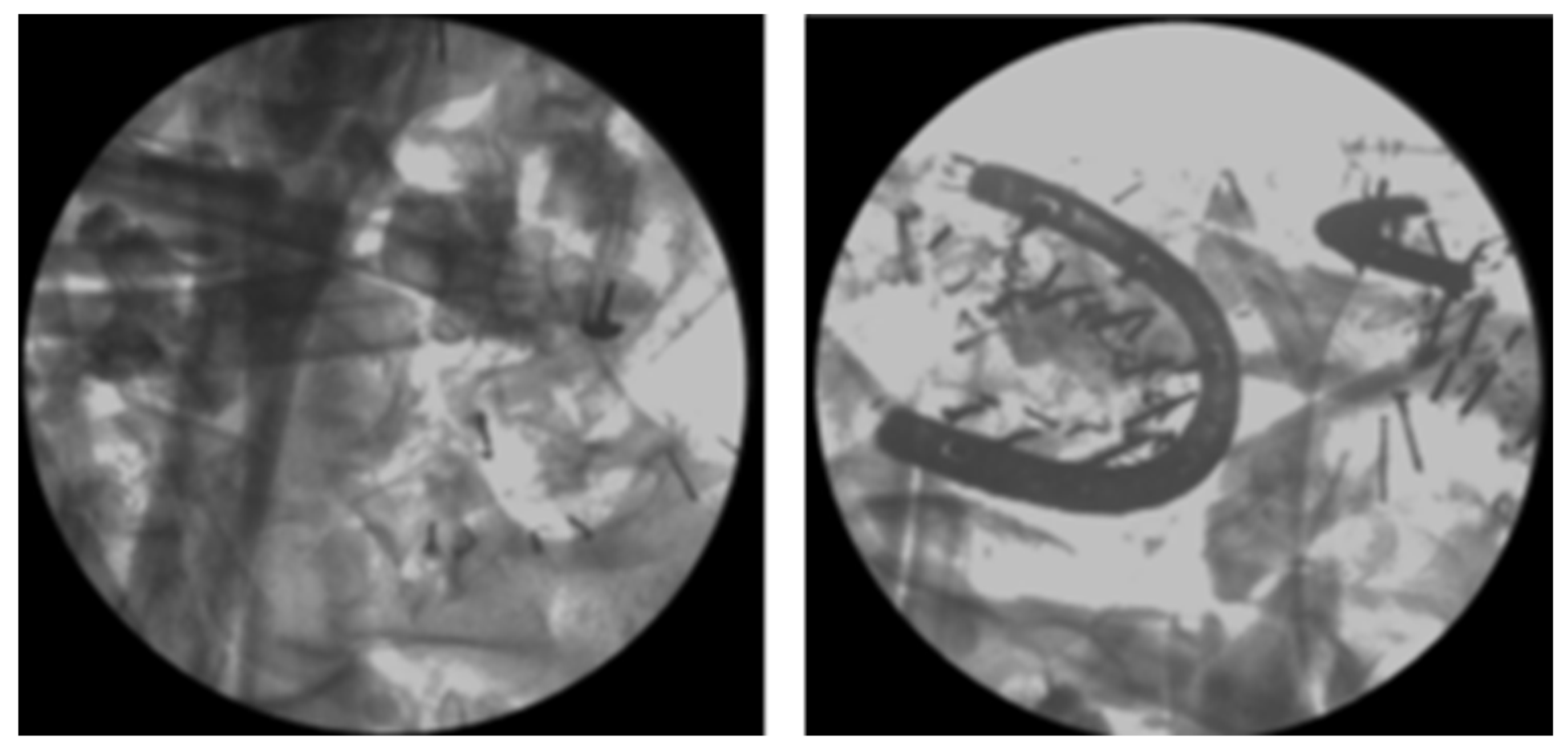
The radiographs performed on each of the 27 caskets revealed the presence of metallic elements in the caskets. Specifically, metallic elements were identified in four caskets, as detailed in Table 1 and Figure 2.

3.2. Personal Belongings

In addition to the metallic elements, residues of personal belongings, primarily clothing, were recovered during the anthropological analysis of the caskets (Table 2).

3.3. Anthropological Assessment

3.3.1. Composition and Preservation of the Skeletal Remains

The human origin of the remains was confirmed, with only 7 bones out of the total identified as of animal origin (bovine). European ethnicity was hypothesized for each casket.
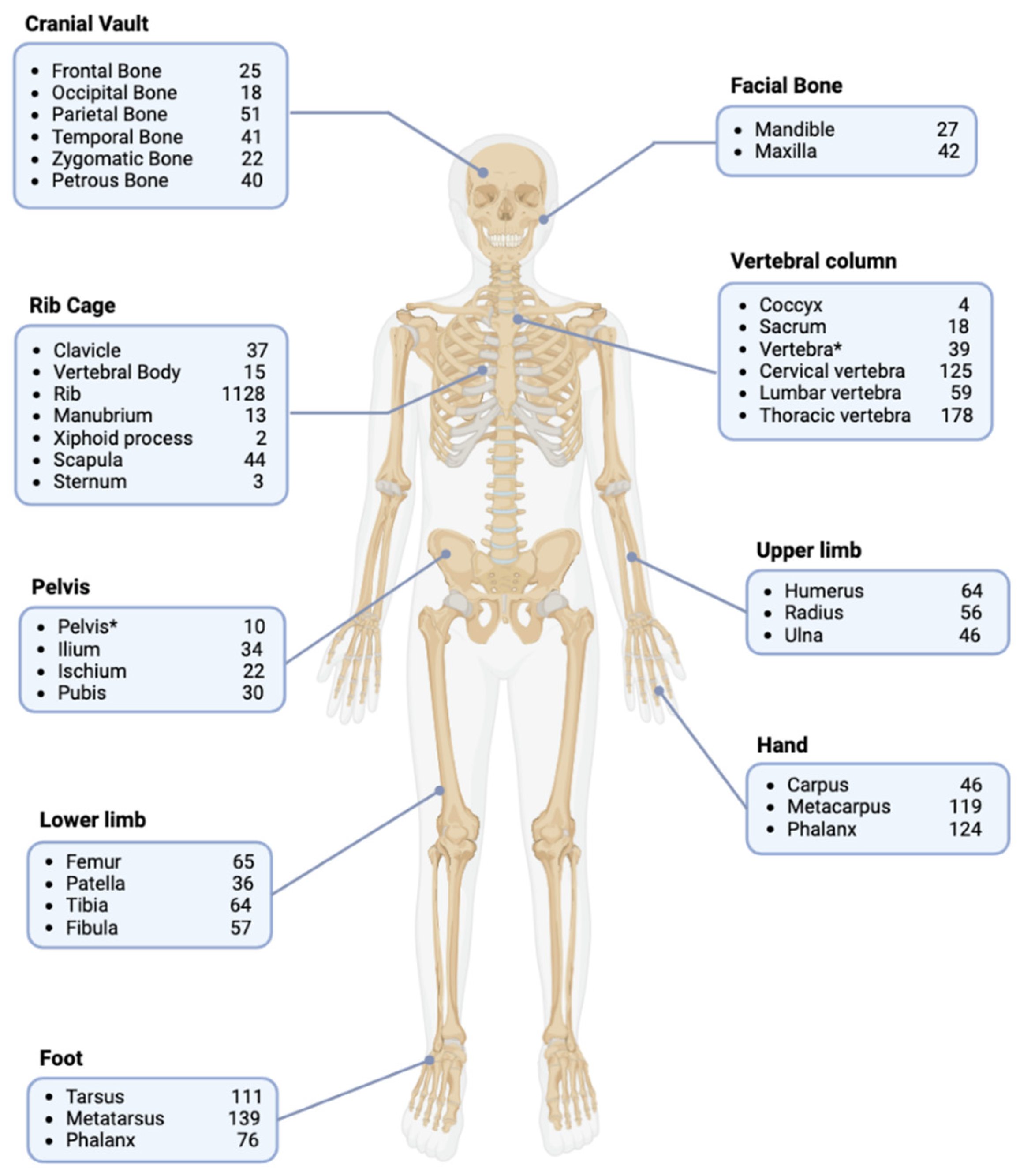
From the opening of the 27 caskets, a total of 3030 skeletal elements were recovered, including 197 bones of the cranial vault, 1242 bones of the rib cage, 423 from the vertebral column, 96 of the pelvis, 166 from the upper limbs, and 222 from the lower limbs (Figure 3).
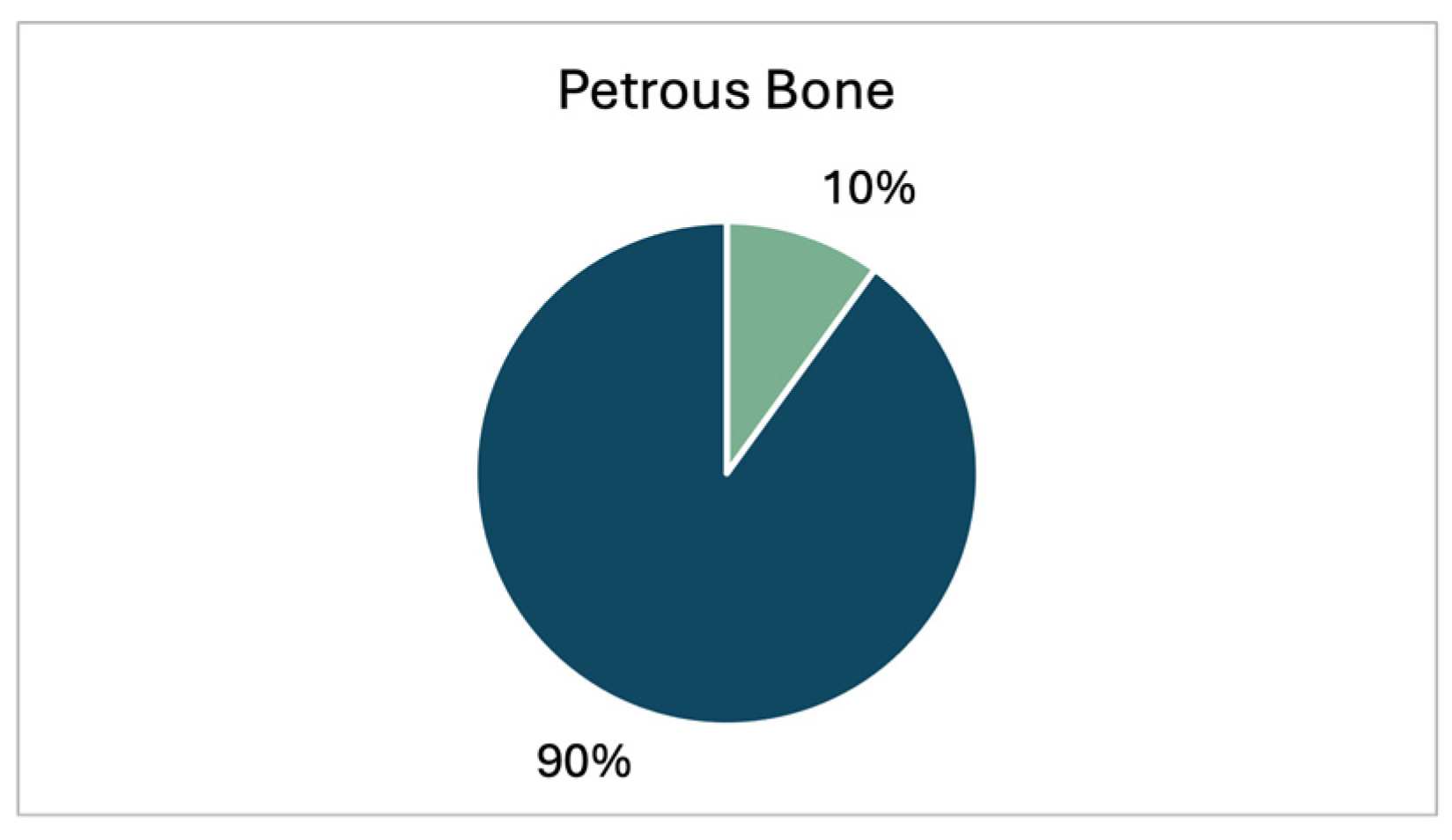
Among the exhumed bones belonging to the cranial vault, 40 petrous bones were recovered: 21 right and 19 left. Of these, 10.0% were complete and intact, whereas 90.0% were incomplete and fragmented (see also Figure 4).
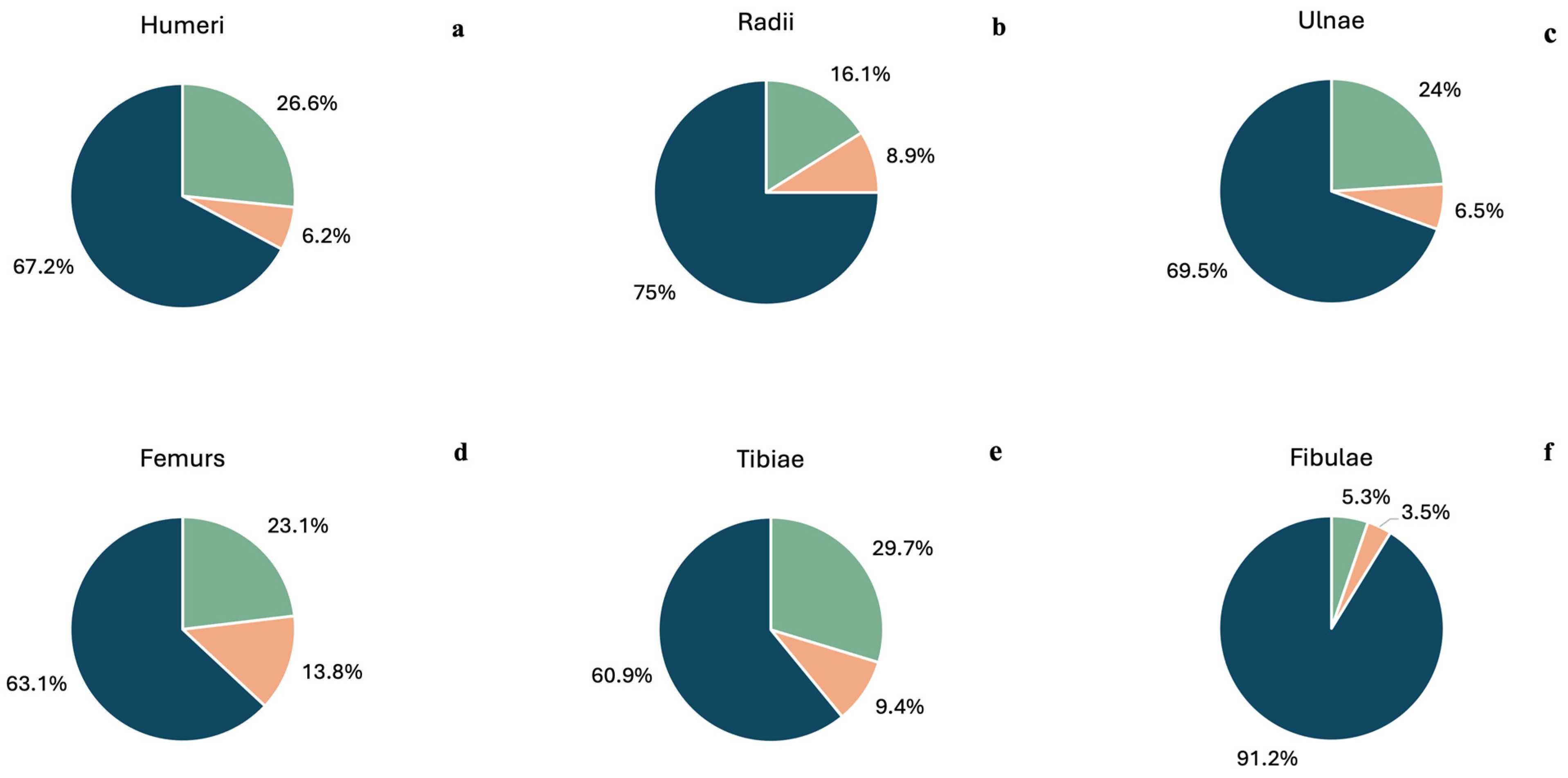
Figure 5 shows the features of the long bones examined in this study. Overall, 61–91% of bones were fragmented and incomplete, and 3–14% of the bones were complete and fragmented, whereas no more than 5–26% of the bones were complete, depending on the bone type and its physiological properties [2,3,4,5,6,7,8,9,10].
Greenish areas were identified on the surface of eight skeletal remains (internal surface of frontal bone contained in casket 3, right humerus contained in casket 20 at the fracture site, external surface of the occipital bone and anterior face of left scapula contained in casket 21, right ulna contained in casket 22, parietal bone contained in casket 23, hard palate of maxillary bone and cervical vertebrae C1–C2 contained in casket 24).

3.3.2. Anthropometric Analysis

Supernumerary Bones and Additional Caskets
According to the anthropometric analysis of the single skeletal elements, it was possible to identify a primary individual for each of the 27 caskets. The supernumerary bones found were deposited, in accordance with their anthropometric characteristics, into five additional caskets, for a total of 32 caskets. This allowed the hypothesis of the presence of five further unidentified individuals (Appendix A Table A1).
Minimum Number of Individuals
To estimate the minimum number of individuals (MNI) replaced in the 32 caskets, Chapman’s formula [27] was used. In particular, the paired femurs were used to estimate the minimum number of individuals to whom the bones belong.
The MNI was 34, above the previously estimated value of 32. The Minimum Likely Number of Individuals was even higher (40), as expected.
Sex Estimation
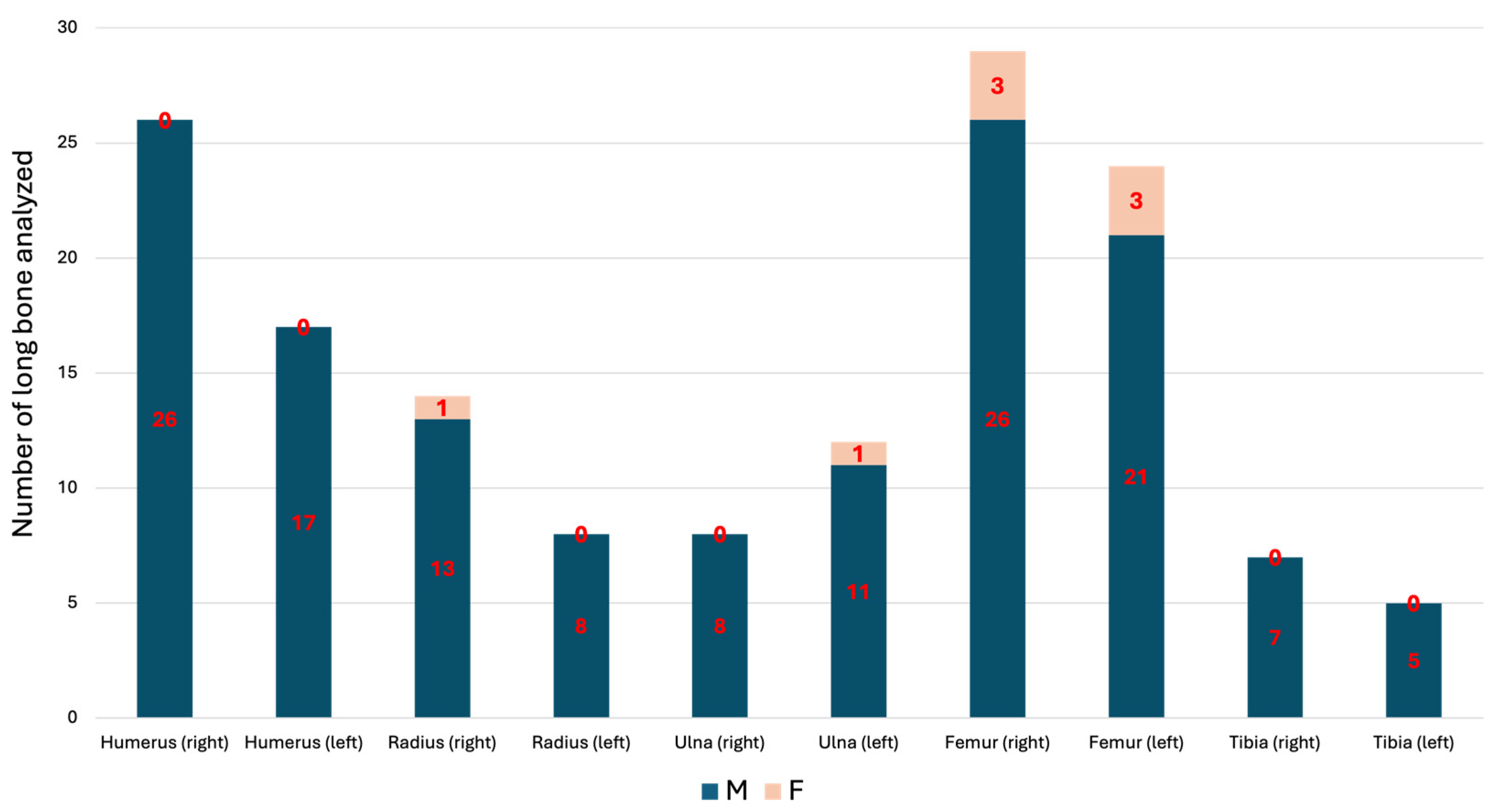
One hundred-fifty long bones were used for sex estimation (53 femurs, 43 humeri, 22 radii, 12 tibiae, 20 ulnae). Out of them, eight skeletal elements were classified as female (see Figure 6).
All right humeri (26) were classified as male, with an error margin of 6.2% to 13.7%; among the left humeri (17), all were male (error margin of 7.5% to 17.5%). Among the right radii (14), 13 were male (error margin of 7.5% to 12.50%) and 1 was female (casket 8; error margin of 11.2%); all left radii (8) were classified as male, with an error margin of 7.5% to 16.2%. All right ulnae (8) were classified as male, with an error margin of 5.0% to 17.5%; among the left ulnae (12), 11 were male (error margin of 5.0% to 17.5%) and 1 was female (casket 16; error margin of 5.0%). Among the right femurs (29), 26 were male (error margin of 17.5% to 28.7%) and 3 were female (in caskets 3, 7, and 15; error margin of 17.5% to 28.7%); among the left femurs (24), 21 were male (error margin of 15.0% to 28.7%) and 3 were female (1 in casket 3 and 2 in casket 19; error margin of 21.2% to 28.7%). All right tibiae (7) and all left tibiae (5) were classified as male, with an error margin between 7.5% and 27.5%.
Age at Death and Height
A total of 188 bones were used for age estimation (54 femurs, 44 humeri, 21 radii, 12 tibiae, 19 ulnae, 29 pelvi and 9 cranial vaults). As shown in Table A1, most skeletons (29) belonged to individuals between 15 and 30 years old. Among these, 9 skeletons were assigned an age range of 15–20 years, and 20 skeletons were assigned an age range of 20–29 years, while caskets 22 and 26 were assigned an age range of 30–35 years. Only the individual in casket 12 was estimated to be between 40 and 45 years old.
A total of 113 long bones were used for stature estimation (45 femurs, 27 humeri, 18 radii, 6 tibiae, 17 ulnae). As shown in Table A1, stature estimates ranged from 161 cm to 181 cm, with 16 skeletons measuring between 166 cm and 170 cm.

3.4. Trauma-Related Lesions

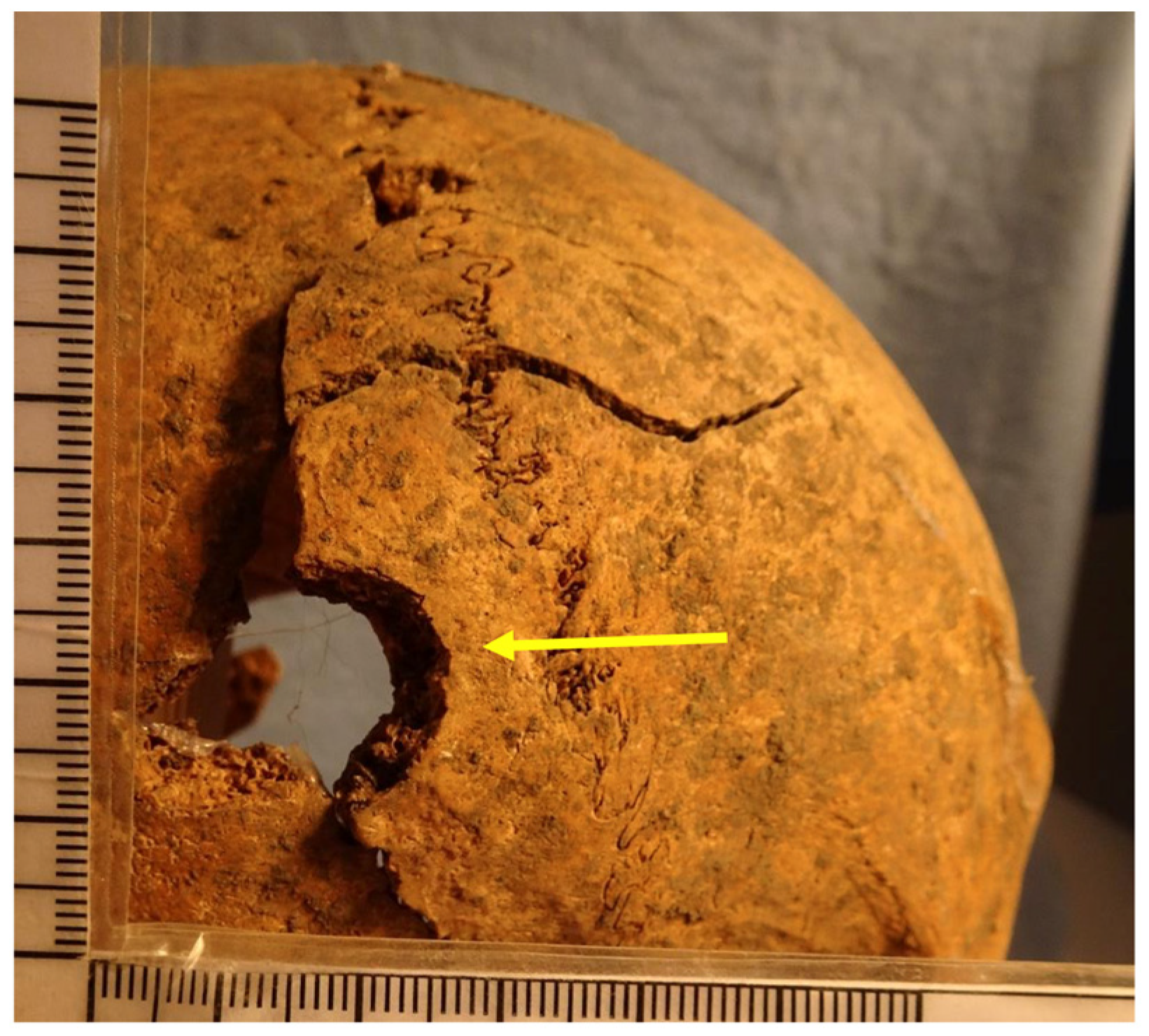
Analysis of the human remains recovered from the caskets focused on the presence and nature of gunshot lesions (see example in Figure 7).
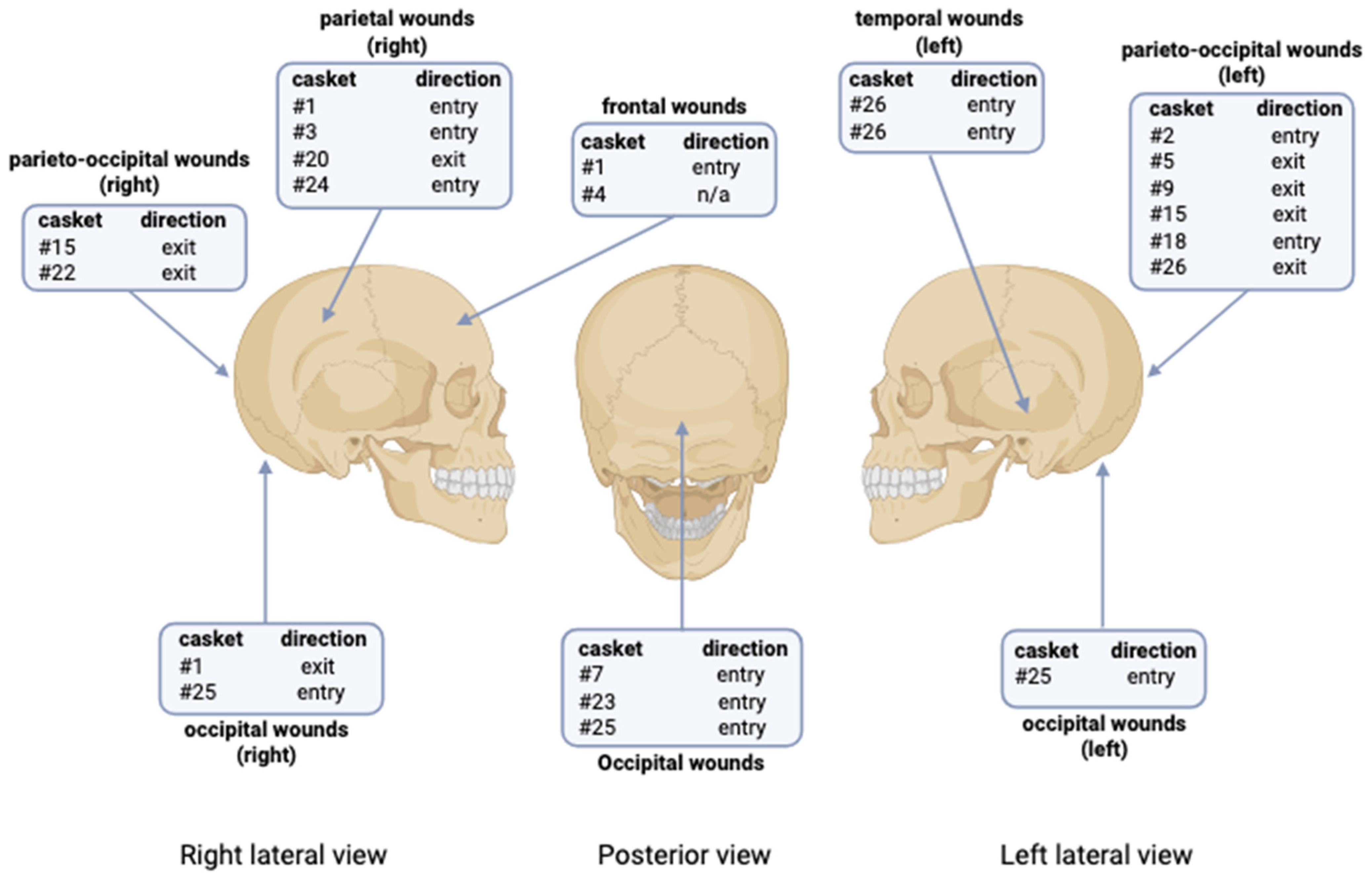
As shown in Figure 8, a total of 22 gunshot wounds were identified on 15 skulls or fragments of neurocranial bones, of which 13 were considered entry wounds, 8 exit wounds, and 1 indeterminate. Eleven of these skulls sustained only a single bullet hole. The remaining 4 displayed multiple wounds: one skull (contained in casket 15) showed two wounds, while three others exhibited three bullet-related injuries (contained in caskets 1, 25 and 26). Specifically, the cranial remains in casket 1 presented two entry wounds and one exit wound; the skull remains from casket 25 had three distinct entry wounds, and the skull remains from casket 26 showed two entry wounds and one exit wound. Among 81.8% of the gunshot wounds were located in the parieto-occipital region; of these, 10 were entry wounds, and 8 were exit wounds. A total of 9.1% of the gunshot wounds were located in the left temporal region (a total of 2 entry wounds), and 9.1% in the frontal region (1 entry wound and 1 indeterminate). Definitive identification of the bullet trajectory—oblique anterior trajectory, with superior to inferior direction—was possible for the lesions affecting the skull contained in casket 1 only. In all remaining cases, the direction of fire was not determined.
As for the long bones, a single gunshot wound was identified on the right humerus from casket 20. Among the other skeletal elements, peri-mortem lesions from gunshots were identified in the vertebrae (1 bullet hole in a vertebra from casket 7), 6 in the pelvic bones (one in the sacrum contained in casket 21, one in the ilium found in each of caskets 9,11, 14, 24 and 27), and two in the scapulae (2 bullet holes in the left scapula contained in casket 14), for a total of 8 caskets out of 32.
The gunshot wounds generally had a round shape (25 lesions out of 33), while 4 were oval, 2 were irregular and 1 had a rectangular shape. The gunshot wound suffered by the right humerus in casket 20 caused a comminuted fracture rather than a defined hole in the bone.
At the cranial level, the entry holes had a minimum diameter ranging from 1.0 to 2.5 cm (mean = 1.47 ± 0.57 cm; median = 1.25 cm), while the exit holes had a minimum diameter ranging from 1.0 to 2.0 cm (mean = 1.45 ± 0.5 cm; median = 1.25 cm). Regarding the postcranial elements, the minimum diameter of the holes ranged from 0.9 to 2.5 cm (mean = 1.44 ± 0.57 cm; median = 1.0 cm).

3.5. Additional Lesions

The examined skeletal elements did not show any congenital abnormalities or pathological changes. A pre-mortem fracture with bony callus was identified in the diaphysis of the left tibia in casket 9.

3.6. Reconciliation with Ante-Mortem Data

As reported in Section 3.3.2, the relocation of supernumerary elements incompatible with the primary individual of each of the original 27 caskets allowed the creation of five additional caskets, resulting in a total of 32 caskets (see Appendix A Table A1), belonging to at least 34 different individuals.
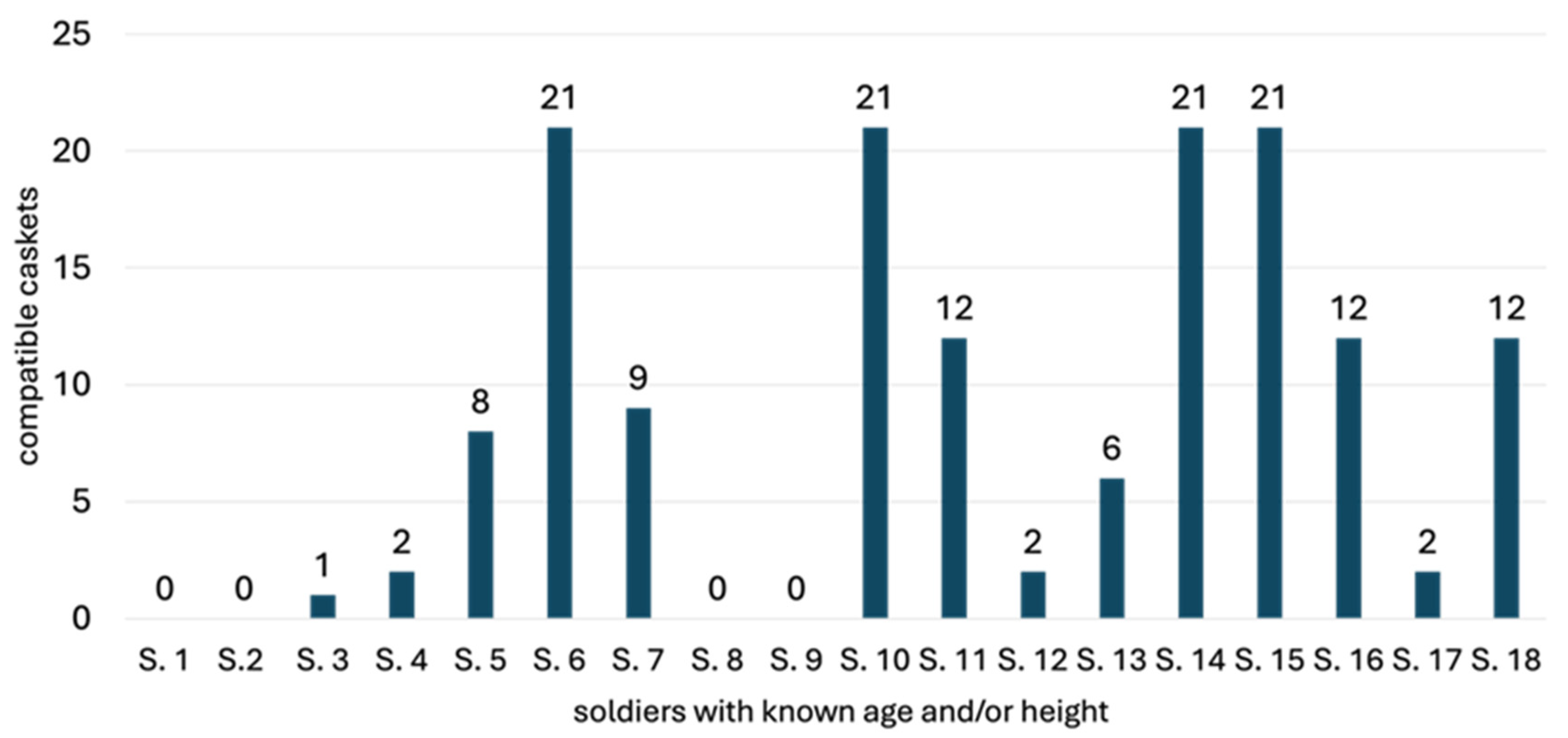
With this limit, an attempt was made to tentatively establish a correspondence between the 18 soldiers for whom ante-mortem data (age and height) were available and the remains present in each casket. Anthropological analysis revealed overlapping characteristics among several soldiers, preventing a one-to-one correspondence. As a result, 14 individuals could potentially be assigned to multiple caskets (up to 21 caskets for soldiers). Lastly, as shown in Figure 9, four soldiers could not be assigned to any casket.
In conclusion, this approach proved to be of scarce practical help. Likely, several biases were involved, both in ante- and post-mortem data collection.

4. Discussion

The poor state of preservation, extensive commingling, and absence of several skeletal elements significantly hindered reconstruction, making both morphological analysis and the identification of soldiers particularly challenging. Nevertheless, the amount of information obtained was substantial and is discussed below.

4.1. Identification of the Individuals

Mass fatality incidents are typically marked by initial scene chaos and involve a large volume of evidence, along with numerous cases of human remains that are often fragmented and commingled. Careful planning of all operations—starting with the management of the initial scene—is therefore essential [2]. A thorough scene assessment enables an accurate estimation of the time and personnel required [28], reducing the risk of errors that could necessitate re-excavation [2].
Successful DVI operations rely on the coordinated efforts of multidisciplinary teams involving numerous professionals [2,28]. In addition to pathologists, odontologists, and radiologists—who typically join at later stages—forensic archeologists and anthropologists play a critical role from the outset [2,28]. The application of archeological techniques to expose remains in situ enables the recognition of even highly fragmented elements, preventing the loss of material, which could compromise or delay victim identification [28]. Forensic anthropologists are responsible for the identification, sorting, differentiation, and reassociation of remains, a process that begins directly at the scene [2,28].
Techniques such as scene gridding, three-dimensional searches, and digital surveys can greatly improve scene organization, while stratigraphic methods help define the nature of the site [2]. Stratigraphic excavation, based on the principle that older layers lie deeper and more recent ones closer to the surface, enables estimation of the period to which the bones belong. However, certain processes—such as animal activity—may disturb stratification [29]. Excavation should aim to maximize data recovery while minimizing damage to fragile ancient remains, typically using small tools such as chisels and brushes [29]. Standardized protocols are therefore essential, incorporating international guidelines, checklists for recording information, and databases to harmonize data collection and extract key details, such as the minimum number of individuals or injuries possibly leading to death.
Because this project involved multiple authorities from different nations, only limited information was available at the beginning of the study regarding the excavation techniques employed. It remains unclear whether archeological or stratigraphic methods were used, what type of machinery was involved—which may have further fragmented the remains and was only known later—or whether personal items or bullets were recovered and, if so, where they were stored. This lack of information represents the first major obstacle to our study, as several primary data points that could have supported identification were missing. An attempt to fill this informational gap was made through radiological examination and the search for personal belongings; however, in our case, these proved to be insufficiently informative.
In cases where skeletal elements belong to multiple individuals and are commingled, the primary goal is to determine whether the samples correspond to the presumed population in terms of ethnicity, biological sex, age at death, and stature. In our specific case, European ancestry was inferred based on the available historical documents and the gravestone placed at the Ossero (Croatia), while measurements of the remains allowed the determination of other useful characteristics.
Anthropological data are essential for establishing the prior probability that a bone belongs to a specific individual. This step enables the grouping of skeletal elements, which is critical for subsequent probabilistic calculations used in DNA analyses [30]. In our case, from the very beginning—during the opening and preliminary assessment of the 27 caskets—the extent of fragmentation and commingling of the skeletal remains was evident, with numerous supernumerary elements. Anthropological data helped match known individuals consistent with the observed characteristics, thereby narrowing the pool of potential pairings and guiding subsequent genetic testing.
Because the more robust bones—such as the humerus and femur—were more frequently preserved, metric analysis of long bones was prioritized for sex estimation rather than cranial and pelvic morphological characteristics, which were largely incomplete. The presence of eight female skeletal elements was unexpected. Although historical sources indicated that the remains belonged to males, the estimated maximum error for skeletal sex estimation was 28.7%, supporting the reliability of this finding. Subsequent genetic analyses following the anthropological assessments confirmed the presence of 11 skeletal elements belonging to six female individuals [1].
Regarding age at death, several studies confirm the reliability of non-metric techniques for age estimation despite inter-observer variability. The Meindl and Lovejoy method [25], focusing on the auricular surface of the ilium, shows an error rate between 3% (18–29 years) and 9% (40–49 years). The Suchey and Brooks method [24], based on the pubic symphysis, shows accuracies of 83% in males and 75% in females, with greater accuracy in younger individuals. The cranial suture obliteration method of Acsadi and Nemeskeri [26]—used in this study in only 9 caskets due to fragmentation—has an error rate ranging from 12% (<20 years) to 16% (41–45 years). Studies of epiphyseal fusion confirm that fusion age can be used to assess whether an individual is a minor. With these limitations, our results on age at death can be considered reliable.
Stature estimates ranged from 161 cm to 181 cm, with 16 skeletons measuring between 166 cm and 170 cm. Heights calculated using the Trotter and Gleser equations [10] have a maximum standard deviation of 4.3 cm. Estimates obtained with the Ronchi method [9] show the following uncertainties: humerus 3.8 cm, radius 3.4 cm, ulna 3.3 cm, femur and tibia 3.1 cm. The statistical significance of the Introna regression formulas [7] was confirmed by the authors, with standard errors of 1.39 for the humerus, 1.23 for the radius, 1.59 for the ulna, 0.28 for the femur, and 0.29 for the tibia in male remains. Therefore, these results can be considered reliable. The availability of ante-mortem data for age and stature was limited—only 18 birth dates and eight height measurements from military records. The minimum enlistment height (153 cm) in Italy during WWII [31] was not helpful, as none of the analyzed skeletons fell below this threshold. Age alone was also insufficient for identification, since both skeletons and soldiers fell within similar age ranges. While the comparison of ante-mortem and post-mortem data suggests that the group of remains could correspond to the group of soldiers for whom information is available, cross-matching age and stature data did not allow the identification of individual soldiers to specific caskets.
The limited discriminatory power of the anthropological analysis is partly attributable to uncertainties in age and stature estimates, but primarily to the likelihood that each casket contained remains from more than one individual, despite efforts to reconstruct skeletons using morphological and metric characteristics. In our study, the comparison of anthropometric measurements was performed to support reassociation of the remains. For this purpose, the individual possessing the largest number of compatible skeletal elements was designated as “primary”, while supernumerary bones were located in additional caskets. The process increased the number of caskets from 27 to 32, each presumably containing the remains of a single individual—a finding later contradicted by genetic analyses [1]. This approach explains the discrepancy between the minimum number of individuals estimated from the petrous bone count and the number of caskets.
Another major limitation was the evident loss of certain skeletal elements, such as the petrous bones—only 21 right and 19 left were recovered. This prevented accurate estimation of the minimum number of individuals: 34 based on femoral laterality, 40 using Chapman’s formula. Nevertheless, MNI [32] remained a fundamental starting point for the genetic identification operations conducted during the second phase of the project, e.g., DNA typing [1].
The genetic investigations conducted during the second phase of the project further confirmed the essential role of anthropometric analyses. DNA analysis revealed extensive commingling, with skeletal elements from the same individual distributed across different caskets, preventing the assignment of individuals to specific caskets. Despite the excellent results achieved—30 unique almost full profiles—the analyses also highlighted the significant loss of key skeletal elements whose presence might have enabled the identification of additional genotypes [1]. In particular, among the 38 petrous bones that yielded genetic profiles, only 13 pairs were successfully matched. This indicates that at least 28 petrous bones—considered the most performing bone type for genetic typing—remained in the mass grave.

4.2. Evaluation of Trauma

Despite not constituting the primary objective of the study, observations regarding injury patterns were noted. After initially considering the assessment of both firearm-related and blunt force trauma injuries, the lack of detailed information about the excavation procedures—combined with the possible use of heavy equipment during the excavation—led to the exclusion of the former, in order to minimize the risk of inaccuracies.
In the present study, firearm-related injury patterns predominantly affected the head, with multiple gunshot wounds per skull in nine cases. They were identified by assessing the location and characteristics of the wounds according to the more recent literature [33]. Beveling on the internal cranial table, along with sharp lesion edges, is characteristic of entry wounds, which typically present a round or oval shape. Exit wounds, by contrast, display beveling on the external cranial table and have a more irregular outline compared to entry wounds [34,35].
Consistent with other research on mass graves [36], the severe fragmentation of the skulls allowed certain identification of a single trajectory only (skull contained in casket 1), in which case both the entry and exit wounds were present and appeared to be aligned in the skull. In all remaining cases, the direction of fire could only be inferred from the location of the wound, without a precise morphological evaluation of the lesions [33]. Entry wounds located in the frontal region may correspond to shots fired from the front, whereas entry wounds located in the occipital or parieto-occipital regions may be attributable to shots fired from behind. A similar line of reasoning may be applied to shots involving the parietal bone.
Although no single directional pattern could be identified for the cranial vault injuries, and taking into account fragmentation and the loss of numerous bone fragments, the additional finding of gunshot injuries to the vertebrae (2 cases), scapulae (2 cases), pelvis (5 cases), and one humerus (1 case) could support historical accounts indicating that the soldiers were executed by firing squad and suggests that the cranial injuries previously described may represent “finishing shots.” These, however, remain hypothetical considerations, given that the skeletal evidence alone is insufficient to determine the motive and intention of the perpetrator [36].
Comparisons with skeletal trauma from more recent mass graves, including those from the Balkan Wars, have shown that victims of human rights violations primarily exhibit gunshot wounds to the head and chest [37]. The predominance of cranial gunshot wounds over post-cranial injuries in our study is consistent with the violent manner of death of these individuals: it is unlikely that such injuries were sustained in combat, as the perpetrators clearly targeted the head with intent to kill.
During the macroscopic analysis of the remains, eight bones—both cranial and post-cranial—displayed areas of greenish discoloration described in the preservation section, attributable to prolonged contact with copper-containing objects. In archeology, this phenomenon is typically observed when skeletons are found wearing metal jewelry [38]. In this case, excluding the possibility that the discoloration was caused by coins (for which there is no confirmation), these stains are believed to result from prolonged contact with bullets that remained in place and may have been lost during excavation or collected separately. In the present case, it may be speculated that, in the case of the cranial bones, the presence of an oxidized area on the inner surface could indicate a retained bullet, and that the humeral fracture might have been caused by a gunshot.
In forensic science, considerable attention has been devoted to terminal ballistics over the years. However, most studies focus on the characteristics of soft tissues surrounding bullet wounds, meaning that the samples examined in the literature generally consist of bodies with limited decomposition. When dealing with skeletal remains, determining the exact type of firearm used is therefore challenging. Studies on ballistic trauma in the cranial vault have shown that the minimum diameter of entry wounds can indicate weapon caliber: when a bullet strikes bone at high velocity, the bone does not respond plastically, resulting in clean fracture lines. The tissue loss caused by 0.38-caliber bullets is greater than that caused by 0.22- or 0.25-caliber rounds; however, there is no significant difference between lesions produced by 0.22- and 0.25-caliber bullets. While such models do not allow precise determination of firearm caliber, they do enable differentiation between small- and large-caliber weapons, providing useful information for forensic investigations [39,40]. These findings have also been confirmed using long bones. A study based on Sus scrofa humeri showed that entry wounds produced by 0.22-caliber bullets have a smaller diameter than those caused by 0.38-caliber bullets. Specifically, the median diameter of entry wounds from 0.22-caliber bullets is 8.00 mm, whereas those from 0.38-caliber bullets have a median diameter of 9.69 mm [41]. Based on the analysis of the minimum diameter of the entry wounds identified in the recovered remains, it is therefore possible to hypothesize that the perpetrators used large-caliber weapons: indeed, the skulls present entry wounds with diameters ranging from 1.0 cm to 3.0 cm (mean = 1.54 ± 0.21 cm; median = 1.25 cm). The areas of the entry holes range from 0.79 to 4.91 cm2 (mean = 3.52 ± 1.48 cm2; median = 1.28 cm2).

5. Limitations of the Study

This study has several limitations that should be considered when evaluating the results. First, information regarding the excavation procedures and the criteria used for initially sorting the samples into the 27 caskets was not available. Second, a considerable number of skeletal remains were either missing or highly fragmented. In addition, the incomplete availability of ante-mortem data, combined with the extensive commingling of the remains, limited the possibility of establishing a one-to-one correspondence between individuals and skeletal assemblages through anthropological analysis. A definitive correspondence could not be achieved even in the second phase of the study, because financial and time constraints limited the possibility of obtaining genetic profiles for all bone samples. The genetic typing of thousands of bone samples, in fact, is not realistic.

6. Conclusions

Due to the extensive commingling and fragmentation of the remains and the loss of numerous elements, it was not possible to precisely reconstruct individual skeletons or associate each bone with its respective casket or identity. Nevertheless, comparing the obtained biological profiles with the available ante-mortem data was essential to avoid dismissing the hypothesis that the remains belonged to the aforementioned soldiers. The analyses revealed commingled remains of at least 34 individuals, aged 15–45 years and measuring 161–181 cm in stature, including female individuals—results almost entirely confirmed by genetic analyses [1]. Forensic analysis confirmed a violent cause of death resulting from cranial gunshot wounds.
The high degree of commingling observed in these skeletal remains represents a major challenge in forensic practice. To minimize this bias, a well-organized multidisciplinary approach supported by a precise and standardized database is recommended [2,28,42]. In particular, the presence of forensic archeologists and anthropologists during the recovery of the remains could ensure the use of accurate methodologies and significantly reduce the effort required for subsequent genetic profiling [2,28].

Supplementary Materials

The following supporting information can be downloaded at https://www.mdpi.com/article/10.3390/forensicsci6010021/s1; Table S1: Relevant measurements for metric analysis of long bones; Table S2: Relevant measurements for metric analysis of other irregular, short and long bones; Table S3: Anthropometric investigations.

Author Contributions

Conceptualization, M.C., B.D.S. and P.F.; formal analysis, M.L.F., M.C., R.V., F.I. and B.D.S.; validation, S.S.C. and F.I.; funding, P.F.; software, M.G.C. and M.L.F.; technical support, A.C.; writing—original draft preparation, B.D.S., R.V., M.C. and P.F.; writing—review and editing, P.F. and M.C. All authors have read and agreed to the published version of the manuscript.

Funding

This study was partially financially supported by Comunità di Lussino, Trieste, Italy.

Institutional Review Board Statement

All methods, including genetic data storage, were performed in accordance with the guidelines and regulations of the Ethics Committee of the University of Trieste Committee (prot. 129/29.03.2023), Trieste, Italy.

Informed Consent Statement

The present study does not involve living subjects; therefore, no Informed Consent Statement is required. The study was approved by the Ethics Committee of the University of Trieste on 19 March 2023.

Data Availability Statement

Data is contained within the article or Supplementary Material. Other data presented in this study are available on request from the Corresponding Author.

Acknowledgments

The authors wish to thank Licia Giadrossi and Federico Scopinich (Comunità di Lussino, Trieste, Italy) for promoting the fundraising that partially supported this study, and Riccardo Maculan for his invaluable help in setting up the ante-mortem database. We also thank Emiliana Giacomello for the support.

Conflicts of Interest

The authors declare no conflicts of interest.

Abbreviations

The following abbreviations are used in this manuscript:
MNIMinimum Number of Individuals
MLNIMinimum Likely Number of Individuals
WWIISecond World War

Appendix A

Table A1. Age at death and height of the individuals contained in each casket, along with the cause of death. The asterisk (*) indicates caskets in which skeletal elements belonging to additional individuals were recovered.
CasketAge at DeathHeightTraumatic Injuries
118–20163.78–175.843 gunshot wounds (skull)
220–25162.69–175.092 gunshot wounds (skull)
3 *15–20164.41–168.032 gunshot wounds (skull)
4 *20–24163.47–165.42
5 *19–20169.261 gunshot wounds (skull)
620–25166.40–167.38
7 *18–20171.632 gunshot wounds (skull)
8 *25–30162.68–170.74
9 *15–20166.03–174.441 gunshot wounds (skull)
1020–25168.68
1125–30171.03–181.462 gunshot wounds (skull)
12 *40–45173.57–174.75
13 *25–30169.15–169.50
14 *20–24162.39–171.933 gunshot wounds (iliac–scapular region)
15 *15–20167.16–174.062 gunshot wounds (skull)
16 *25–30170.15–172.00
17 *15–20166.83–167.14
1820–24174.46–177.411 gunshot wounds (skull)
19 *20–24166.03–168.46
20 *15–20176.79–177.482 gunshot wounds (skull)
21 *15–20163.68–165.522 gunshot wounds (sacral–scapular region)
22 *30–34169.90–173.241 gunshot wounds (skull)
2325–30170.74–174.201 gunshot wounds (skull)
2425–30171.00–174.381 gunshot wounds (skull)
25 *25–30169.66–171.403 gunshot wounds (skull)
26 *30–35177.26–178.983 gunshot wounds (skull)
2720–24166.83–168.641 gunshot wound (iliac region)
2820–24167.38
2915–20165.21–164.40
3020–25167.38
3120–25167.96
3220–25176.79

References

  1. Di Stefano, B.; Bertoglio, B.; Melchionda, F.; Concato, M.; Sorçaburu Ciglieri, S.; Bosetti, A.; Grignani, P.; Azzalini, E.; Addoum, Y.; Vetrini, R.; et al. Molecular Identification of the Italian Soldiers Found in the Second World War Mass Grave of Ossero. Genes 2025, 16, 326. [Google Scholar] [CrossRef]
  2. Hanson, I.; Fenn, J. A review of the contributions of forensic archaeology and anthropology to the process of disaster victim identification. J. Forensic Sci. 2024, 69, 1637–1657. [Google Scholar] [CrossRef] [PubMed]
  3. Vaduvesković, I.; Djuric, M. Mass grave complexity effects on the minimum number of individuals estimation. Forensic Sci. Med. Pathol. 2020, 16, 57–64. [Google Scholar] [CrossRef]
  4. Işcan, M.Y.; Derrik, K. Determination of sex from the sacroiliac joint: A visual assessment technique. Fla. Sci. 1984, 47, 94–98. [Google Scholar]
  5. Krishan, K.; Chatterjee, P.M.; Kanchan, T.; Kaur, S.; Baryah, N.; Singh, R.K. A review of sex estimation techniques during examination of skeletal remains in forensic anthropology casework. Forensic Sci. Int. 2016, 261, 165.e1–165.e8. [Google Scholar] [CrossRef]
  6. Phenice, T.W. A newly developed visual method of sexing the os pubis. Am. J. Phys. Anthropol. 1969, 30, 297–301. [Google Scholar] [CrossRef]
  7. Introna, F.; Dell’Erba, A.S.; Campobasso, C.P.; Di Vella, G.; Dragone, M. Determinazione dell’altezza in vita da misurazioni di ossa lunghe. Riv. Ital. Med. Leg. 1995, 17, 1197–1206. [Google Scholar]
  8. Langley, N.R.; Tersigni-Tarrant, M.T.A. (Eds.) Forensic Anthropology: A Comprehensive Introduction, 2nd ed.; CRC Press: Boca Raton, FL, USA, 2017; ISBN 978-1-315-30003-0. [Google Scholar]
  9. Ronchi, E.; Paoletti, R.; Zoja, R. Identificazione della statura: Studio sui resti scheletrici di 91 cadaveri esumati. Arch. Med. Leg. Assicur. 1990, 12, 474–495. [Google Scholar]
  10. Trotter, M.; Gleser, G.C. Estimation of stature from long bones of American Whites and Negroes. Am. J. Phys. Anthropol. 1952, 10, 463–514. [Google Scholar] [CrossRef] [PubMed]
  11. Iscan, M.Y.; Steyn, M. Chapter 3. Sex. In The Human Skeleton in Forensic Medicine; Charles C Thomas Pub Ltd.: Springfield, IL, USA, 2013; 516p, ISBN 978-0-398-08878-1. [Google Scholar]
  12. Ubelaker, D.H.; Khosrowshahi, H. Estimation of age in forensic anthropology: Historical perspective and recent methodological advances. Forensic Sci. Res. 2019, 4, 1–9. [Google Scholar] [CrossRef]
  13. Jessee, E.; Skinner, M. A typology of mass grave and mass grave-related sites. Forensic Sci. Int. 2005, 152, 55–59. [Google Scholar] [CrossRef]
  14. Hillier, M.L.; Bell, L.S. Differentiating Human Bone from Animal Bone: A Review of Histological Methods. J. Forensic Sci. 2007, 52, 249–263. [Google Scholar] [CrossRef] [PubMed]
  15. Morales, J.-P.; Roa, H.I.; Zavando, D.; Suazo Galdames, I. Determination of the Species from Skeletal Remains Through Histomorphometric Evaluation and Discriminant Analysis. Int. J. Morphol. 2012, 30, 1035–1041. [Google Scholar] [CrossRef][Green Version]
  16. Watson, J.T.; McClelland, J. Distinguishing Human from Non-Human Animal Bone; Arizona State Museum, University of Arizon: Tucson, AZ, USA, 2018. [Google Scholar]
  17. Interpol. Disaster Victim Identification; Interpol: Lyon, France, 1996; Resolution No. AGN/65/RES/13. [Google Scholar]
  18. International Committee of the Red Cross. Geneva Convention for the Amelioration of the Condition of the Wounded and Sick in Armed Forces in the Field; International Committee of the Red Cross: Geneva, Switzerland, 12 August 1949; 75 UNTS 31. [Google Scholar]
  19. United Nations. Human Rights and Forensic Science; Commission on Human Rights Resolution 1993/33; United Nations: Geneva, Switzerland, 1993. [Google Scholar]
  20. Interpol. Disaster Victim Identification (DVI). Available online: https://www.interpol.int/How-we-work/Forensics/Disaster-Victim-Identification-DVI (accessed on 27 November 2025).
  21. Interpol. Distaster Victim Identification Guide 2023; Interpol: Lyon, France, 2023. [Google Scholar]
  22. Di Stefano, B.; Zupanič Pajnič, I.; Concato, M.; Bertoglio, B.; Calvano, M.G.; Sorçaburu Ciglieri, S.; Bosetti, A.; Grignani, P.; Addoum, Y.; Vetrini, R.; et al. Evaluation of a New DNA Extraction Method on Challenging Bone Samples Recovered from a WWII Mass Grave. Genes 2024, 15, 672. [Google Scholar] [CrossRef]
  23. Colonna, M.; Scattarella, V.; Introna, F.; De Lucia, A.; Pesce Delfino, V. Determinazione scheletrica del sesso nella popolazione pugliese contemporanea. Med. Leg. Quad. Camerti 1980, II, 117–128. [Google Scholar]
  24. Brooks, S.; Suchey, J.M. Skeletal age determination based on the os pubis: A comparison of the Acsadi-Nemeskeri and Suchey-Brooks methods. Hum. Evol. 1990, 5, 227–238. [Google Scholar] [CrossRef]
  25. Lovejoy, C.O.; Meindl, R.S.; Pryzbeck, T.R.; Mensforth, R.P. Chronological metamorphosis of the auricular surface of the ilium: A new method for the determination of adult skeletal age at death. Am. J. Phys. Anthropol. 1985, 68, 15–28. [Google Scholar] [CrossRef] [PubMed]
  26. Acsadi, G.; Nemeskeri, J. History of Human Life Span and Mortality. Curr. Anthropol. 1974, 15, 495–507. [Google Scholar]
  27. Chapman, D.G. Some Properties of the Hypergeometric Distribution with Applications to Zoological Sample Censuses; University of California Press: Berkeley, CA, USA, 1951; Volume 1, pp. 131–159. Available online: http://catalog.hathitrust.org/Record/005761134 (accessed on 27 November 2025).
  28. Mundorff, A.Z. Integrating forensic anthropology into disaster victim identification. Forensic Sci. Med. Pathol. 2012, 8, 131–139. [Google Scholar] [CrossRef]
  29. To, D. Forensic Archaeology: Survey Methods, Scene Documentation, Excavation, and Recovery Methods. In Forensic Anthropology: A Comprehensive Introduction; Langley, N.R., Tersigni-Tarrant, M.A., Eds.; CRC Press: Boca Raton, FL, USA, 2017; pp. 36–56. [Google Scholar]
  30. Prieto, L.; Ruiz, Y.; Hernandis, E.; Carracedo, Á. DNA test evaluation in large-scale identification cases of missing persons. Span. J. Leg. Med. 2022, 48, 124–132. [Google Scholar] [CrossRef]
  31. Mauri, A. Il re soldato. L’immagine di Vittorio Emanuele III nella prima metà del XX° secolo attraverso le copertine della Domenica del Corriere. Italies 2015, 19, 159–180. [Google Scholar] [CrossRef]
  32. Adams, B.J.; Konigsberg, L.W. Estimation of the most likely number of individuals from commingled human skeletal remains. Am. J. Phys. Anthropol. 2004, 125, 138–151. [Google Scholar] [CrossRef]
  33. Berryman, H.E. A systematic approach to the interpretation of gunshot wound trauma to the cranium. Forensic Sci. Int. 2019, 301, 306–317. [Google Scholar] [CrossRef]
  34. Quatrehomme, G.; I̊şcan, M.Y. Analysis of beveling in gunshot entrance wounds. Forensic Sci. Int. 1998, 93, 45–60. [Google Scholar] [CrossRef]
  35. Quatrehomme, G.; Yaşar I̊şcan, M. Gunshot wounds to the skull: Comparison of entries and exits. Forensic Sci. Int. 1998, 94, 141–146. [Google Scholar] [CrossRef] [PubMed]
  36. Haliti, D.; Swales, D.; Robinson, A. Analysis of skeletal trauma on the bodies found in a mass grave. Int. J. Legal Med. 2023, 137, 157–167. [Google Scholar] [CrossRef]
  37. Baraybar, J.P. Variation of gunshot injury patterns in mortality associated with human rights abuses and armed conflict: An exploratory study. Sci. Justice 2015, 55, 355–362. [Google Scholar] [CrossRef] [PubMed]
  38. Dupras, T.L.; Schultz, J. Taphonomic Bone Staining and Color Changes in Forensic Contexts. In Manual of Forensic Taphonomy; CRC Press: Boca Raton, FL, USA, 2013; p. 26. ISBN 978-0-429-25174-0. [Google Scholar]
  39. Ross, A. Caliber Estimation from Cranial Entrance Defect Measurements. J. Forensic Sci. 1996, 41, 629–633. [Google Scholar] [CrossRef]
  40. Paschall, A.; Ross, A.H. Bone mineral density and wounding capacity of handguns: Implications for estimation of caliber. Int. J. Legal Med. 2017, 131, 161–166. [Google Scholar] [CrossRef]
  41. Henwood, B.J.; Oost, T.S.; Fairgrieve, S.I. Bullet Caliber and Type Categorization from Gunshot Wounds in Sus Scrofa (Linnaeus) Long Bone. J. Forensic Sci. 2019, 64, 1139–1144. [Google Scholar] [CrossRef]
  42. Llamas, B.; Valverde, G.; Fehren-Schmitz, L.; Weyrich, L.S.; Cooper, A.; Haak, W. From the field to the laboratory: Controlling DNA contamination in human ancient DNA research in the high-throughput sequencing era. STAR Sci. Technol. Archaeol. Res. 2017, 3, 1–14. [Google Scholar] [CrossRef]
Figure 1. DVI workflow. The development of the anthropological investigation described in the present study is shown in the red box.
Forensicsci 06 00021 g001
Figure 2. X-ray of casket 7 showing a horseshoe.
Forensicsci 06 00021 g002
Figure 3. Summary of recovered skeletal elements and fragment counts. Asterisks (*) denote undetermined fragments that could not be assigned to specific anatomical subtypes.
Forensicsci 06 00021 g003
Figure 4. Percentage of complete and intact (green) and incomplete and fragmented (blue) petrous bones.
Forensicsci 06 00021 g004
Figure 5. Percentage of complete (green), complete and fragmented (orange), and incomplete and fragmented (blue) skeletal elements for: (a) humeri, (b) radii, (c) ulnae, (d) femurs, (e) tibiae, and (f) fibulae.
Forensicsci 06 00021 g005
Figure 6. Long bone elements classified as male or female. y-axis: number of long bones.
Forensicsci 06 00021 g006
Figure 7. Gunshot lesion on the skull (pointed by the arrow).
Forensicsci 06 00021 g007
Figure 8. Distribution of gunshot wounds in the neurocranium, with information on laterality, caskets, and wound direction.
Forensicsci 06 00021 g008
Figure 9. Number of caskets (y-axis) associated with each individual (S.1 to S.18 on x-axis) based on available data.
Forensicsci 06 00021 g009
Table 1. Metallic elements identified within the caskets via radiography.
CasketMetallic Elements
72 horseshoes and nails
141 nail
23metallic fragments of various shapes and sizes
241 irregularly shaped metallic fragment and nails
Table 2. Clothing residues and personal effects found within the caskets.
CasketClothing and Personal Effects
21 button
72 fabric fragments, 2 plastic fragments with nails attributable to a shoe sole
111 button
261 button
Disclaimer/Publisher’s Note: The statements, opinions and data contained in all publications are solely those of the individual author(s) and contributor(s) and not of MDPI and/or the editor(s). MDPI and/or the editor(s) disclaim responsibility for any injury to people or property resulting from any ideas, methods, instructions or products referred to in the content.