Review

Polymeric Sorbents in Environmental Protection-Removal of Hydrocarbons and Toxic Chemical Pollutants from Water: A Review


by
Bakary Tamboura
,
Anastasia Konstantinova
,
Aleksey Kotenko
and
Evgeniy Chistyakov
*
Department of Chemical Technology of Plastics, Mendeleev University of Chemical Technology of Russia, Miusskaya Sq., 9, Moscow 125047, Russia
*
Author to whom correspondence should be addressed.
Macromol 2026, 6(2), 28; https://doi.org/10.3390/macromol6020028
Submission received: 29 March 2026 / Revised: 3 May 2026 / Accepted: 6 May 2026 / Published: 8 May 2026

Abstract

This review analyzes the advances over a five-year period in the development of polymeric sorbents for the purification of aqueous media from key classes of pollutants: hydrocarbons (crude oil, diesel fuel), organic dyes, pharmaceuticals (antibiotics), pesticides, herbicides, volatile organic compounds, and polycyclic aromatic hydrocarbons. Attention is paid to the analysis of structure-property-performance relationships, with an emphasis on comparing materials derived from renewable natural feedstocks (such as cellulose, chitosan, terpenes, vegetable oils, and aloe vera) with synthetic polymers. The analysis reveals that biopolymer-based sorbents exhibit comparable or superior sorption capacities combined with environmental safety, biodegradability, and low cost. The key sorption mechanisms include physical adsorption, hydrophobic interactions, and electrostatic interactions. Despite persisting challenges related to scalability, stability in real-world environments, and the need for efficient regeneration protocols, a convergent approach that combines the advantages of modified natural polymers and functional synthetic components appears to be the most promising strategy for developing cost-effective and sustainable technologies for the restoration of water quality.

1. Introduction

Water, a fundamental element for all forms of life and a key link in terrestrial and aquatic ecosystems, is currently facing an unprecedented pollution crisis, exacerbated by anthropogenic pressures and climate change [1]. This multidimensional crisis directly threatens ecology, public health, and ecosystem integrity on a global scale [2,3]. Two main phenomena characterize this issue: accidental petroleum spills, whose frequency and destructive potential persist despite regulatory measures [4,5], and the chronic contamination by toxic chemical pollutants originating from industrial activities, agriculture, and urban centers [6,7]. Collectively, these phenomena contribute to the cumulative degradation of surface water and groundwater quality, jeopardizing their usability [8].
Oil spills resulting from maritime accidents [9], pipeline leaks [10], or offshore platform incidents [11] lead to the release of hydrocarbons with devastating consequences. The immediate impact on fauna (marine mammals, seabirds, fish) is often massive, causing mortality through oil coating, hypothermia, or intoxication [12,13]. Long-term effects are equally alarming: persistent petroleum components accumulate in bottom sediments, enter trophic networks, and can induce sublethal effects, including developmental abnormalities, reproductive impairment, and immunotoxicity in exposed organisms, thereby affecting population resilience [14,15,16]. The socioeconomic consequences, including losses in fisheries, aquaculture, and tourism sectors, can be immense and persist for decades [17,18].
Simultaneously, aquatic environments are subject to concealed contamination by a wide range of emerging and persistent pollutants, particularly dyes from the textile and paint industries. Industrial effluents constitute the primary source of heavy metals [19] and recalcitrant synthetic organic compounds [20]. Intensive agricultural practices contribute to the proliferation of nutrients (nitrogen, phosphorus), leading to eutrophication and harmful algal blooms, as well as the introduction of numerous pesticides and herbicides [21,22]. Domestic and hospital discharges, in turn, carry pharmaceutical residues, personal care products, and endocrine disruptors, the presence of which at trace levels poses ecological and sanitary risks [23,24]. The pervasive distribution of microplastics, acting as potential vectors for pollutants and pathogens, further compounds this concerning picture [25,26]. Chronic exposure to complex mixtures induces toxic stress in aquatic organisms, potentially leading to disruption of community structure and loss of biodiversity, while also creating potential risks to human health through drinking water [27,28].
In the face of this dual threat, conventional remediation technologies exhibit significant limitations. Mechanical containment and collection methods (booms, skimmers) demonstrate reduced effectiveness under adverse weather conditions and when dealing with emulsions or thin oil slicks [29,30]. Chemical dispersants, although facilitating dispersal, do not eliminate the contamination and may enhance toxicity to marine life by increasing the bioavailability of hydrocarbons [31,32]. Advanced oxidation processes, effective against certain micropollutants, can be costly, energy-intensive, and may generate undesirable byproducts [33]. Bioremediation, in turn, is often dependent on environmental conditions and may be too slow for emergency response [34]. Consequently, there exists a critical need for the development of more efficient, selective, economically viable, and inherently greener treatment strategies capable of physically removing pollutants from the aqueous phase [35,36].
Within this evolving technological landscape, sorption materials, and particularly polymeric sorbents, have garnered significant scientific and technical interest as potential first-response solutions [37,38]. Their mechanism of action is based on the selective immobilization of pollutant molecules (sorbate) onto their surface or within their porous structure. The principal advantage of sorption materials lies in the possibility of fine-tuning their properties through targeted synthesis depending on the intended application. Thus, they can exhibit very high sorption capacities, often exceeding their own mass by severalfold, owing to their large specific surface area and nanoscale porous structure [39,40]. Their selectivity can be tailored via chemical surface modification: the introduction of hydrophobic functional groups facilitates hydrocarbon capture [41], whereas chelating or charged groups target metals or ionic dyes [42,43]. Furthermore, many polymeric sorbents offer prospects for regeneration and reuse, enhancing the economic and environmental sustainability of the process [44,45].
A notable trend of the past decade has been the shift toward biocompatible and biodegradable polymers derived from renewable biomass (cellulose, chitosan, lignin, proteins) or agro-industrial waste [46,47,48]. These “green” materials aim to combine high efficiency with low environmental impact, reducing dependence on fossil resources and adding value to byproducts [49,50]. Concurrently, advanced functionalization strategies, such as chemical grafting, crosslinking with bioactive molecules, or combination with nanomaterials, enable the creation of sorbents with multifunctional properties: enhanced sorption, facilitated magnetic recovery, or additional antibacterial activity [51,52,53].
Several review articles in the scientific literature address the development and application of sorption materials for the remediation of aqueous media from various classes of pollutants. For instance, reviews have examined the use of porous carbon materials, mesoporous silica, and metal-organic frameworks for the removal of polycyclic aromatic hydrocarbons and phenolic compounds [54], as well as the application of natural lignocellulosic sorbents for oil spill remediation with a focus on environmental and economic viability [55,56]. Particular attention has been devoted to sorbents based on nanoclays for dye removal from textile effluents [57] and to nanomaterials for the removal of pharmaceutical residues [58]. Data on the application of carbon and polymeric sorbents for water purification from pesticides have been systematized [59], including studies on acrylonitrile-divinylbenzene copolymers [60]. Furthermore, the potential of hypercrosslinked polymers for the capture of volatile organic compounds [61], novel sorbents for solid-phase extraction of polar pollutants [62], and modern sample preparation methods for the determination of polycyclic aromatic hydrocarbons using metal-organic frameworks, carbonaceous materials, and molecularly imprinted polymers [63] has been analyzed. However, many of the existing reviews are narrowly focused, covering limited classes of pollutants, or fail to account for recent advances related to the use of renewable feedstocks and hybrid materials.
The present review aims to fill this gap by presenting a systematic analysis of the advances over the last five years in the field of polymeric sorbents for water purification, with a focus on two key areas: the removal of hydrocarbons (crude oil, diesel fuel) and the elimination of toxic chemical pollutants (dyes, antibiotics, pesticides, volatile organic compounds, polycyclic aromatic hydrocarbons). Special attention is given to structure-property-performance relationships, the comparison of materials derived from renewable natural feedstocks with synthetic polymers, and the assessment of challenges related to scalability, environmental sustainability, and the prospects for transitioning from laboratory research to practical application.

2. Sorbents for Oil and Petroleum Products

Spills of petroleum products in the marine environment represent a serious challenge for the preservation of human health and the environment [64]. This is particularly critical when such spills occur in oceans, where they lead to catastrophic consequences for marine ecosystems [12]. The main sources of these spills include natural seepage from oil fields [11], exploration activities [17], oil extraction and refining [10], as well as its transportation [4,9]. The first major spill was recorded in 1907 during the wreck of the vessel Thomas W. Lawson off the uninhabited island of Annet, resulting in the discharge of 2.25 million gallons of light paraffinic oil into the sea [65].
Numerous methods exist for the remediation of hydrocarbon spills in marine environments. To prevent the spread of oil on the ocean surface, techniques such as the deployment of floating booms or barriers are employed, followed by the collection of the thus-contained oil. However, these methods are highly dependent on climatic factors, such as currents and wind conditions [66]. Similarly, dispersants and surfactant-based detergents can be used to remove oil in marine environments [31]. These methods help mitigate marine oil pollution but do not affect the actual removal of oil from the sea. Such measures severely contaminate the seabed and are toxic to benthic organisms [5,67].
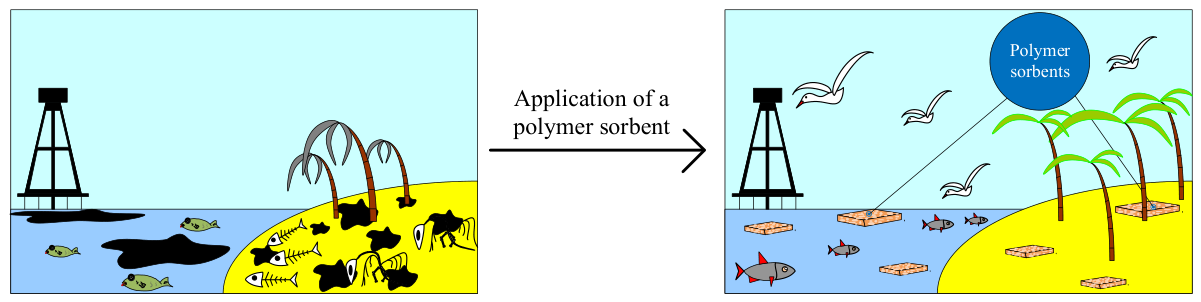
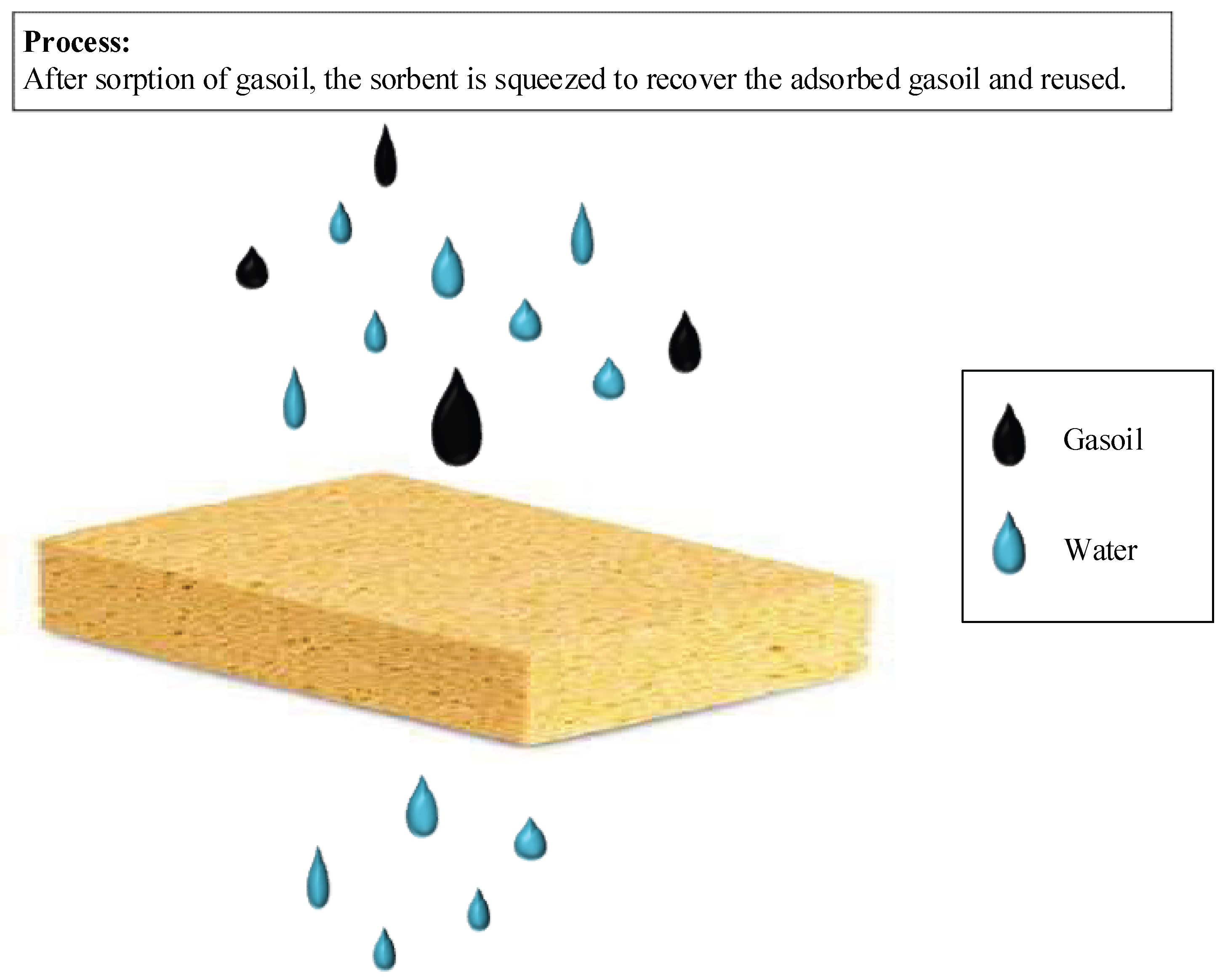
Skimmers [29], sorption devices, as well as means for temporary storage and separation of oil from other pollutants, are widely used for oil removal from the ocean surface [38]. Among these, sorbents are most commonly employed for the active removal and containment of oil, demonstrating particular effectiveness in collecting oil slicks, both in water and on land [68]. These sorbents can be of organic, inorganic, or synthetic origin [37]. Figure 1 illustrates the application of polymeric sorbents on the sea surface and on land for the preservation of flora and fauna.

2.1. Sorbents for Diesel Fuel

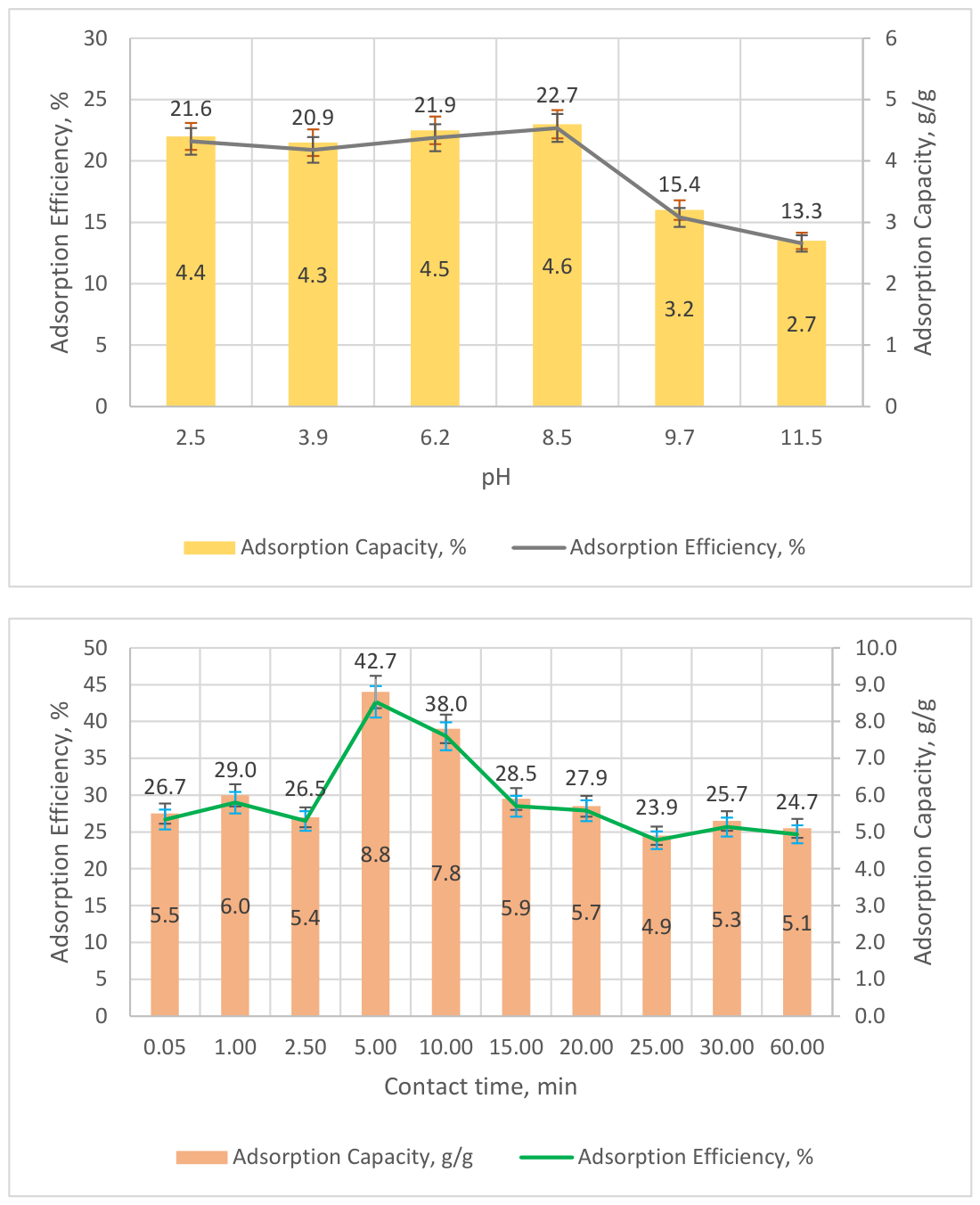
Natural polymers can be used to create sorption materials for the absorption of diesel fuel. To this end, Vu et al. [69] obtained a sorbent via the hydrothermal treatment of aloe vera leaves at temperatures ranging from 180 to 220 °C with reaction times of 2 to 8 h. Their study demonstrated that the effect of hydrothermal treatment time on diesel fuel sorption capacity was temperature-dependent. For hydrochars obtained at 180 °C, the sorption capacity decreased with increasing hydrothermal treatment time, whereas for samples prepared at 220 °C, the sorption capacity increased with time. This is attributed to the fact that prolonged hydrothermal treatment at 180 °C disrupts the developing porous structure and increases surface hydrophilicity, thereby reducing affinity for diesel fuel, whereas at 220 °C, additional treatment time optimizes the material structure for hydrocarbon sorption [70]. Specifically, this occurs through the formation of more graphite-like and hydrophobic carbon structures [53], the creation of a greater number of stable pores [71], and enhanced surface hydrophobicity [39] due to aromatization processes, carbon condensation, and the reduction of oxygen-containing groups, respectively. For this type of material, a sorption capacity of 4.6 g of diesel fuel per gram of sorbent is achieved at pH 8.5 (Figure 2). The sorption kinetics of diesel fuel by the material obtained via hydrothermal treatment of aloe vera leaves show a maximum observed kinetic uptake of 8800 mg/g sorbent and a maximum efficiency of 42.7% at a contact time of 5.0 min. Sorption is described by a mechanism involving physical sorption followed by chemisorption as the rate-limiting step.
Research on the development of sorbents from natural polymers according to the method of Vu et al. for diesel fuel remediation demonstrates promising yet highly variable approaches. The method enables the attainment of very high specific sorption capacity (up to 8800 mg/g); however, the preparation process is energy-intensive and critically dependent on a delicate balance between temperature and time. Furthermore, the efficiency of such sorbents is strongly influenced by the pH of the medium. This combination of factors has led to significant interest in naturally derived compounds with well-defined chemical structures.
In line with this perspective, Tajari et al. [45] developed magnetic carbon aerogels based on cellulose (derived from Prosopis farcta) incorporating Fe3O4 nanoparticles as an additive and zinc nitrate. The material was designated cellulose@Fe3O4@ZIF-8. Its specific surface area is 7.33 m2·g−1, with a total pore volume of 0.027 cm3·g−1 (determined by the Brunauer-Emmett-Teller (BET) method), which is attributed to the confinement of Fe3O4@ZIF-8 within the cellulose structure of the resulting polymeric sorbent. Owing to the presence of hydrocarbon bonds and cellulose in the cellulose@Fe3O4@ZIF-8 material, diesel fuel droplets exhibit a larger contact angle on its surface than water droplets. Sorption by this sorbent represents a significant advantage for its practical application under diverse conditions. Nevertheless, its maximum sorption capacity is achieved at pH 7.5. The primary sorption mechanism for this material is physical sorption, governed by physical interactions and thermodynamically driven by an increase in entropy. In other words, sorption is driven by van der Waals forces and, more specifically, by the hydrophobic effect. This material exhibits positive entropy due to the phenomenon of the solvation shell: water molecules form a clathrate-like structure around hydrophobic surfaces, so that when diesel fuel molecules approach the surface, they displace water molecules into the solution. This mechanism is illustrated in Figure 3. For reuse, the obtained sorbent can be recovered using a magnet and subsequently wrung out. The material withstands eight sorption/desorption cycles, after which its sorption capacity decreases by less than 10%.
The development by Tajari et al. exemplifies an engineering solution where priority is placed on application-oriented properties: magnetic handling, pH stability (in contrast to the study in [69]), and excellent regenerability (8 cycles). However, these functional advantages are achieved at the expense of textural characteristics: the extremely low specific surface area (7.33 m2/g) and pore volume indicate that the cellulose@Fe3O4@ZIF-8 material, despite being designated an “aerogel,” does not possess a well-developed nanoporous structure, and the study in [45] lacks an investigation of the sorption kinetics of the obtained material. Its efficiency is based primarily on surface hydrophobicity and the water displacement effect, rather than on high-capacity internal sorption.
Thus, for the removal of diesel fuel from aqueous environments, the most promising approach involves the use of natural substances, such as aloe vera, or naturally derived organic compounds. The main advantage of their use lies in their availability in large quantities, which is necessary for the industrial-scale production of such polymeric sorbents. However, the maximum sorption capacity of materials based on natural substances such as aloe vera (42.7%, i.e., 8800 mg/g) significantly exceeds the maximum sorption capacity of cellulose doped with iron oxide and ZIF-8 (7000 mg/g). Moreover, aloe vera contains a multitude of substances, including polysaccharides, vitamins, minerals, enzymes, amino acids, and other compounds, which vary depending on the natural source, leading to the conclusion that the use of natural substances is highly promising for diesel fuel removal. Nevertheless, it should be noted that further research must focus on the careful selection of natural materials to create substances with the maximum number of pendant chemical groups, such as amino or carboxyl groups, and appropriate pore sizes to ensure optimal diesel fuel sorption.

2.2. Oil Sorbents

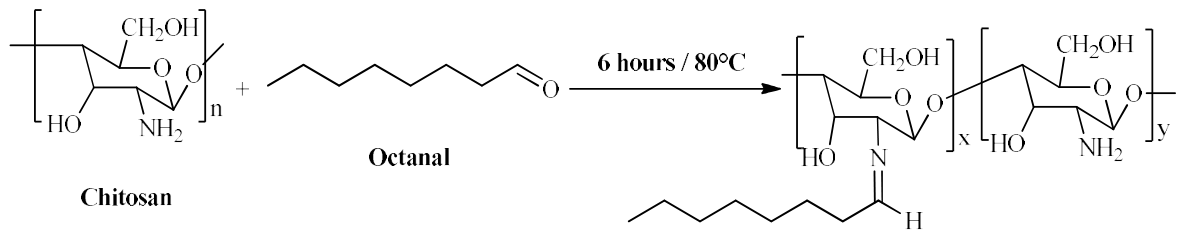
Polymeric sorbents for crude oil can be developed based on chitosan [72], as demonstrated by Ewieda et al. [41], who obtained a material by modifying chitosan with octanal via formation of azomethine groups, as shown in Figure 4. The reaction enables the replacement of hydrophilic amino groups of chitosan with hydrophobic groups, reducing its water sorption capacity and enhancing its hydrophobicity. Chitosan is soluble in aqueous media only at pH < 6 due to intermolecular and intramolecular interactions, primarily attributed to hydrogen bonding and its semicrystalline nature [52]. However, through the introduction of hydrophobic groups, as described above, the water solubility of chitosan can be reduced from 96.37% to 0.19% for the material with 5% octanal grafting (chitosan-g-octanal) at pH 5. TGA shows that the chitosan-g-octanal material exhibits a lower mass loss rate compared to chitosan, indicating improved thermal stability and lower desorption. The sorption kinetics of the aforementioned sorbents are investigated using pseudo-first-order, pseudo-second-order, and intraparticle diffusion kinetic models. The pseudo-second-order kinetic model best describes the sorption kinetics of crude oil by chitosan-g-octanal. Chitosan-g-octanal material possesses favorable sorption capacity for crude oil, with the emergence of new sorption sites and increased sorption capacity, characterized by the endothermic nature of sorption.
The use of plant-derived compounds represents an important direction in the production of sorbents for oil removal from the environment [46,49]. They offer the following advantages: they are renewable and biodegradable, exhibit low environmental toxicity, and their hydrophobicity and affinity for hydrocarbons enhance selective sorption [73]. Plant-derived compounds enable the functionalization of biomass-based porous supports; their application increases the value of agricultural byproducts while reducing waste [74]. They are compatible with bioremediation methods and, finally, their life cycle reduces the carbon footprint. Overall, they represent an environmentally friendly and sustainable solution for ecosystem protection [50].
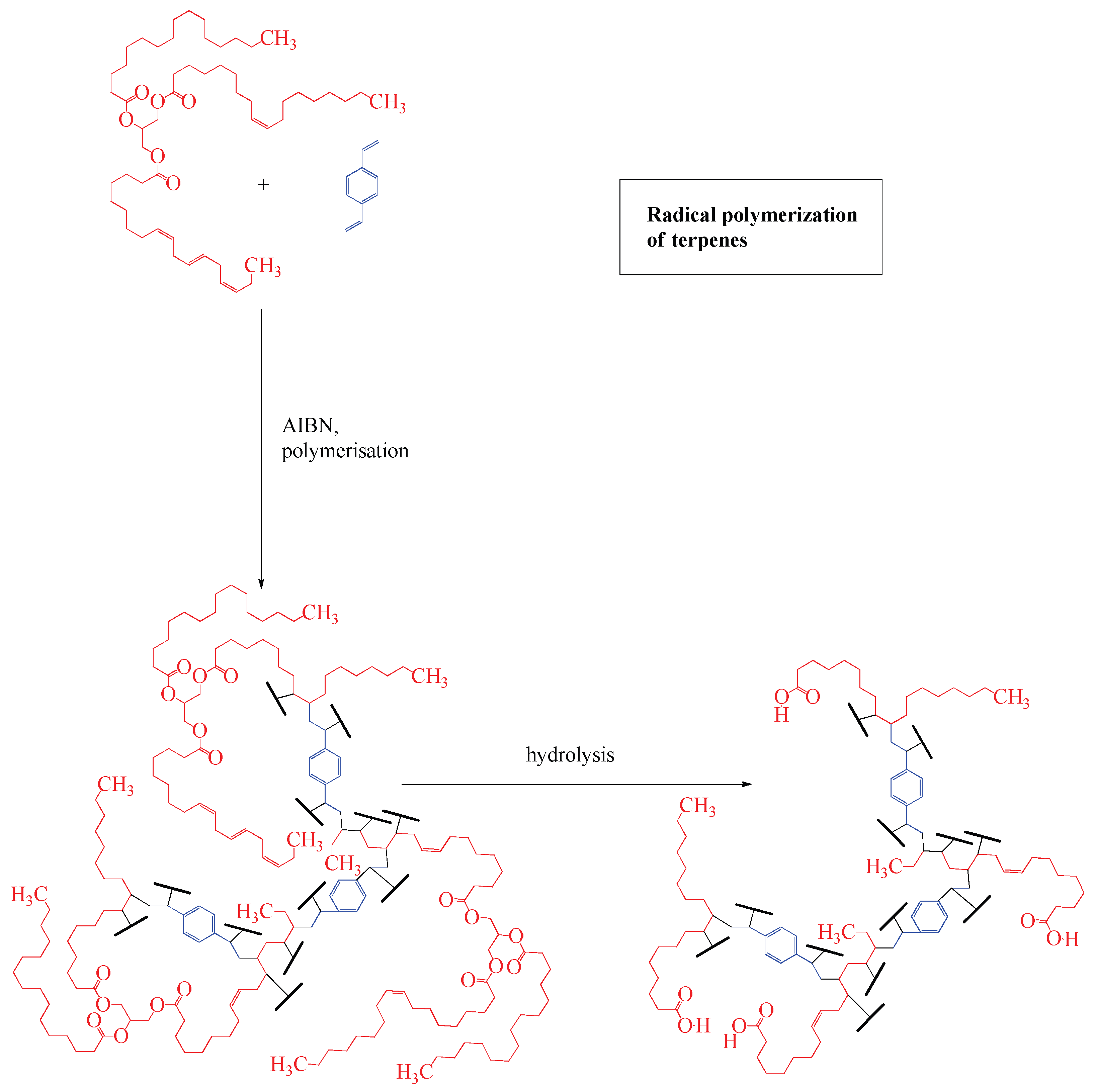
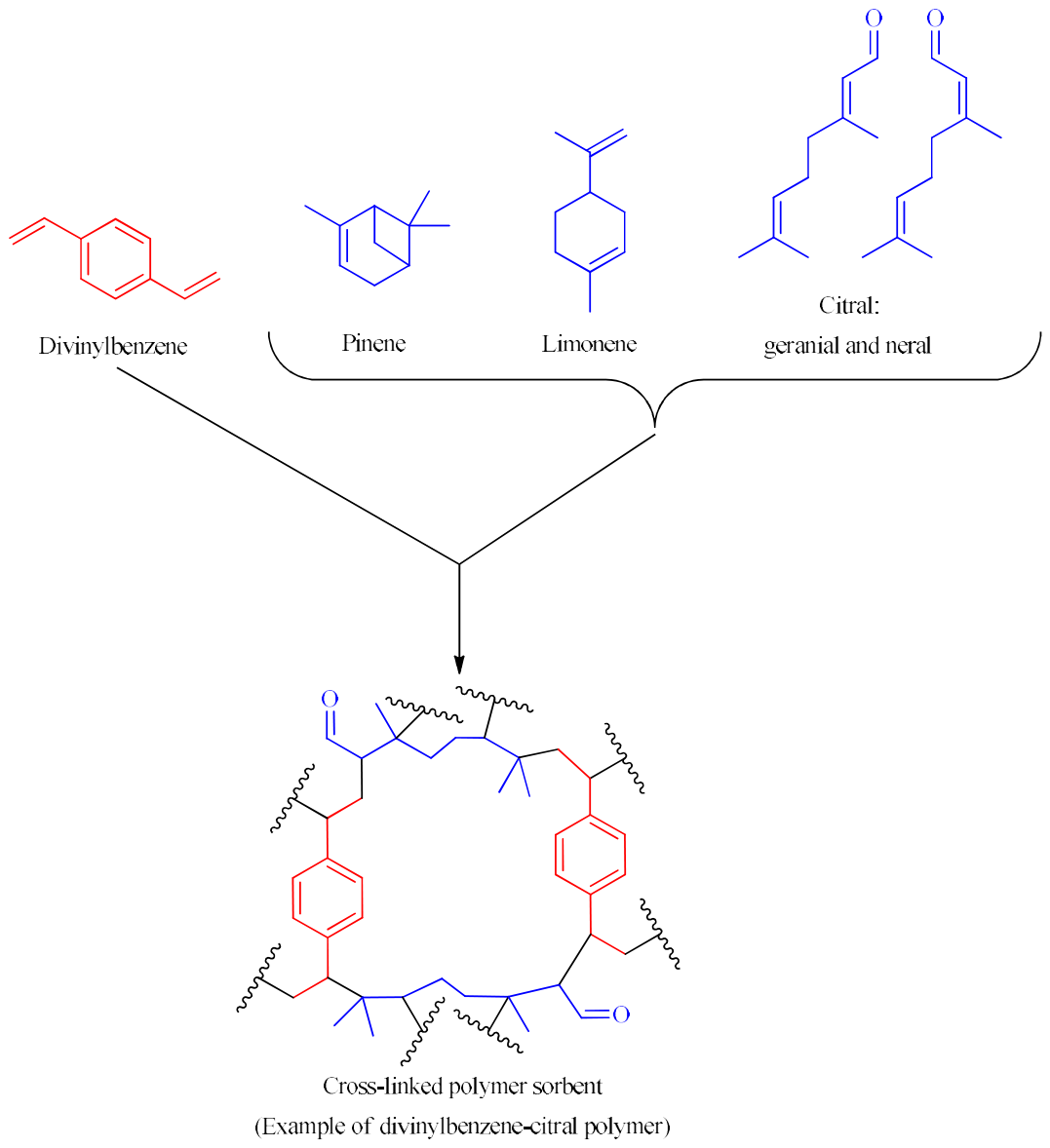
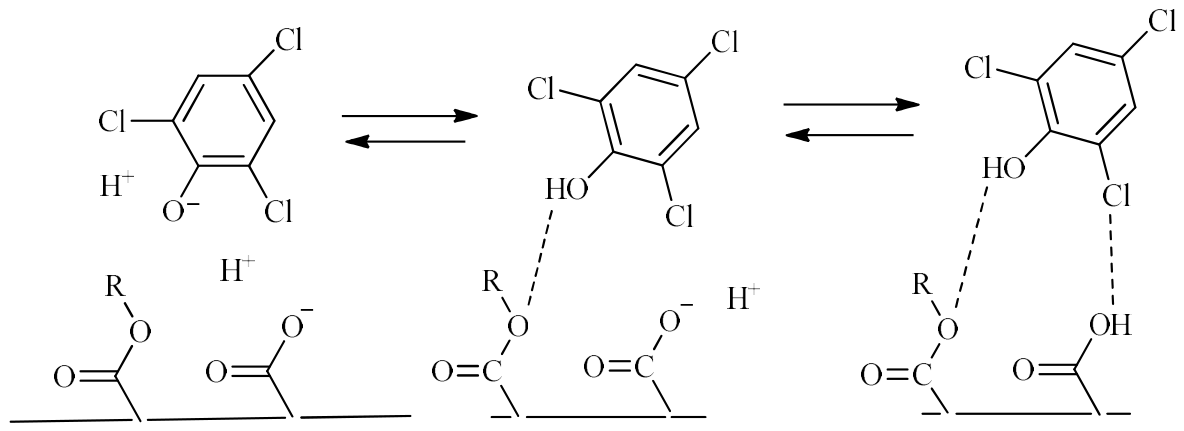
For this reason, in contrast to the work in [41], Sobiesak et al. [51] developed sorbents based on divinylbenzene using citral, limonene, pinene, argan oil, linseed oil, and rapeseed oil as crosslinking agents, as shown in Figure 5 for citral, limonene, and pinene, and in Figure 6 for the reactions with triglycerides of argan, linseed, and rapeseed oils. The resulting polymers based on citral and limonene exhibit a significantly more porous structure compared to the others. To elucidate the sorption mechanism of the polymers crosslinked with natural compounds, the authors investigated the sorption of trichlorophenol, with sorbents based on citral and limonene showing the best sorption performance [75,76,77]. The sorption mechanism is illustrated in Figure 7. Despite the numerous advantages of the developed material, the authors in [51] unfortunately did not investigate the sorption of crude oil itself. The sorption of trichlorophenol was studied, the mechanism of which differs from that of nonpolar hydrocarbons (involving π-π interactions and hydrogen bonding of the polar substance).
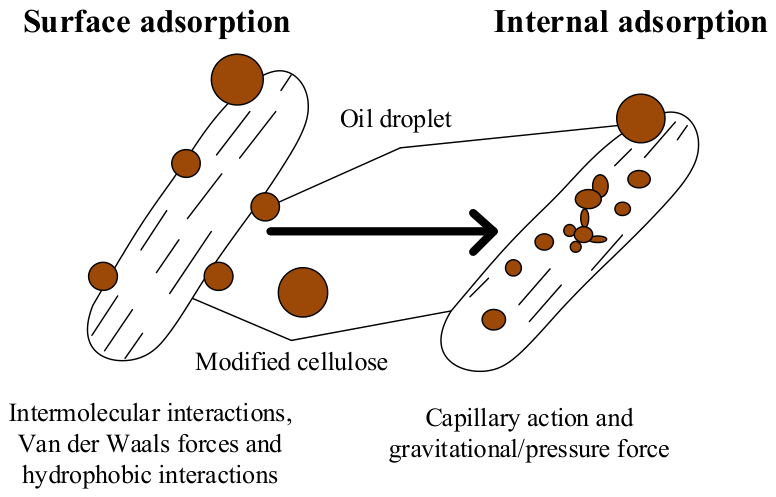
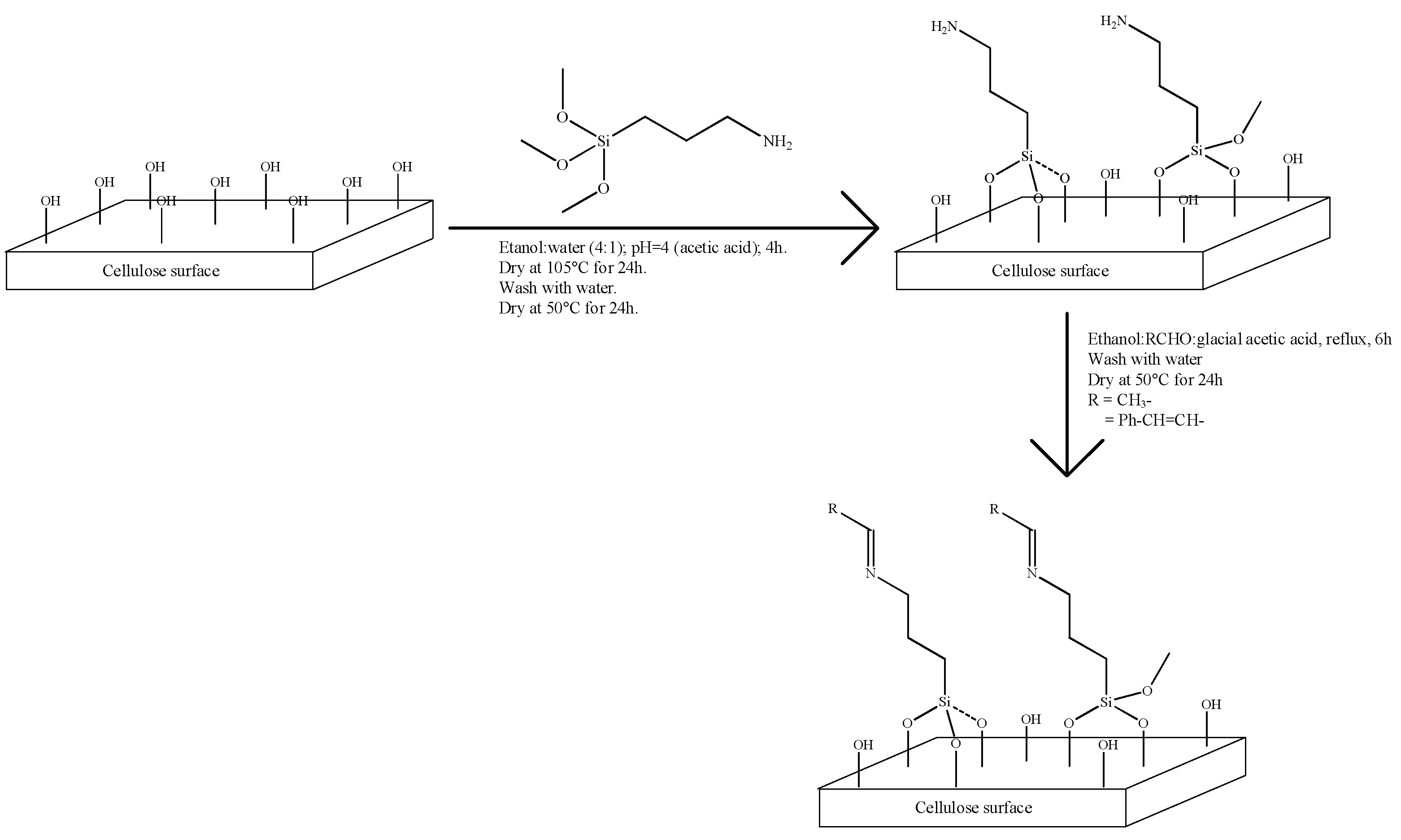
Similarly, to the work in [41], Kandil et al. [78] obtained a polymeric sorbent by modifying a natural substance. Authors modify cellulose pulp with aminopropyltriethoxysilane and acetaldehyde, as well as with cinnamaldehyde, according to the scheme presented in Figure 8. Thermal degradation of the resulting polymers occurs through the thermal removal of adsorbed water at 50–150 °C. Cellulose decomposition takes place at 280–390 °C, corresponding to the cleavage of glycosidic bonds, depolymerization, and the release of volatile decomposition products. However, due to the hydrophobic and bulky nature of cinnamaldehyde, the polymers modified with cinnamaldehyde are more hydrophobic than those modified with acetaldehyde. In their study, the authors investigated the sorption of toluene, hexane, xylene, sunflower/soybean oil, silicone oil, and motor oil by these materials. Cellulose modified with aldehydes exhibits higher sorption capacity toward oils and hydrocarbon solvents compared to unmodified cellulose, which is attributed to the creation of hydrophobic groups on its surface. The sorption stages of this material involve the attraction of oil droplets to the fiber surface via intermolecular interactions (van der Waals forces), as well as hydrophobic interactions arising from its modification with cinnamaldehyde and acetaldehyde, as illustrated in Figure 9. Furthermore, such materials exhibit good reusability, withstanding 10 sorption/desorption cycles: the initial sorption values for polymers modified with cinnamaldehyde and acetaldehyde are 47,000 mg/g and 34,000 mg/g, respectively, decreasing to 20,000 mg/g and 17,000 mg/g after these cycles.
The work [78] demonstrates excellent application-oriented performance but does not provide structural justification, the reason why the developed material works, and thus how to improve its stability. Progress in this field requires combining both approaches: purposefully designing materials with controlled porosity while simultaneously testing them under conditions that closely mimic real-world applications, with mandatory evaluation of cyclic stability and mechanical strength.
Thus, biocompatible polymeric sorbents offer a highly efficient and sustainable solution for combating oil pollution. Their development from renewable resources such as cellulose or chitosan combines high hydrophobic affinity, tailored porosity, and generally facile recovery. Their functionalization further enhances selectivity and sorption capacity.
A key advantage of these materials is their reusability, demonstrating good stability over multiple application cycles. Consequently, biocompatible polymeric sorbents are emerging as an environmentally friendly and efficient alternative, holding promise for the remediation of water bodies and the protection of marine and terrestrial ecosystems.
As with sorbents for diesel fuel, natural substances and naturally derived organic compounds are widely employed for the fabrication of crude oil sorbents. Natural substances such as oils (argan, linseed, and rapeseed) contain triglycerides and unsaturated fatty acids. Thus, they can be used for copolymerization with dienes such as divinylbenzene via radical polymerization to create three-dimensional structures. Similarly, unsaturated natural compounds such as terpenes-citral, limonene, and pinene-can also be copolymerized in the same manner. In the case of naturally derived organic frameworks, specifically chitosan or cellulose, their modification with dialdehydes enables the formation of three-dimensional structures. During the reaction between chitosan or cellulose and dialdehydes, the amino groups (hydrophilic groups) of chitosan or hydroxyl groups of cellulose react to form imine groups or acetals groups, respectively, rendering the resulting material more hydrophobic and, consequently, more prone to oil sorption. This hydrophobicity can also be achieved through the Schiff base reaction of chitosan with monofunctional aldehydes. The maximum sorption capacities of chitosan modified with octanal, and cellulose modified with acetaldehyde and cinnamaldehyde, are 30,000 mg/g, 34,000 mg/g, and 47,000 mg/g, respectively, demonstrating high sorption capacity. However, similarly to the conclusion drawn in Section 2.1 of this article, natural substances appear to be superior candidates with higher sorption capacity, but the studies presented above are based on the sorption of 2-chlorophenol, 2,4-dichlorophenol, and 2,4,6-trichlorophenol by natural substances such as citral, limonene, pinene, argan oil, linseed oil, and rapeseed oil, with sorption efficiencies reaching 90%.
Therefore, natural substances and terpenes represent promising candidates for the development of polymeric sorbents for oil removal. However, direct evidence for crude oil sorption using terpene-based polymers is currently lacking, as existing studies have focused on chlorinated phenols. Chitosan and cellulose modified with aldehydes show high initial capacities (up to 47,000 mg/g), but significant capacity loss upon reuse (≈40–50% after 10 cycles) must be addressed. Further research is needed to evaluate performance under real marine conditions, improve cyclic stability, and enable direct comparisons with synthetic sorbents before natural-based sorbents can be considered a primary approach for oil spill remediation.

3. Sorbents for Toxic Chemical Substances

Water quality worldwide is significantly deteriorating due to undesirable discharges that propagate through aquatic environments [79]. These pollutants originate mainly from three sources: volcanic zones, which release thermal and acidic effluents; wastewater and domestic waste generated in residential areas, collected via sewer networks and subsequently either treated or discharged untreated into watercourses; and finally, industrial waste, which may be rich in organic matter (e.g., from dairies, food processing plants, or slaughterhouses) or, conversely, poor in organic matter but rich in chemical products (chemical plants, mining operations, textile factories) [80].
Among these pollutants are organic and inorganic chemical substances, sedimentary materials, and radioactive substances [81].
Eutrophication of water bodies represents a serious challenge for the preservation of drinking water resources. This phenomenon, characterized by excessive algal growth, affects numerous lakes and reservoirs [82]. Beyond aesthetic concerns, such algal blooms cause unpleasant odors and tastes and can lead to the production of toxins posing potential risks to human health [83].
Its development is primarily driven by a combination of specific environmental conditions: high temperatures, intense solar radiation, and, above all, increased availability of nutrients, particularly in the form of nitrates, phosphates, and carbon dioxide [82,84]. These parameters explain the pronounced seasonality of the phenomenon, with blooms occurring predominantly during summer and being almost absent in winter [82].
In the most extreme cases, typically observed in late summer or early autumn, algal densities can reach such levels that the water takes on the appearance of “pea soup,” indicative of massive algal blooms [85].
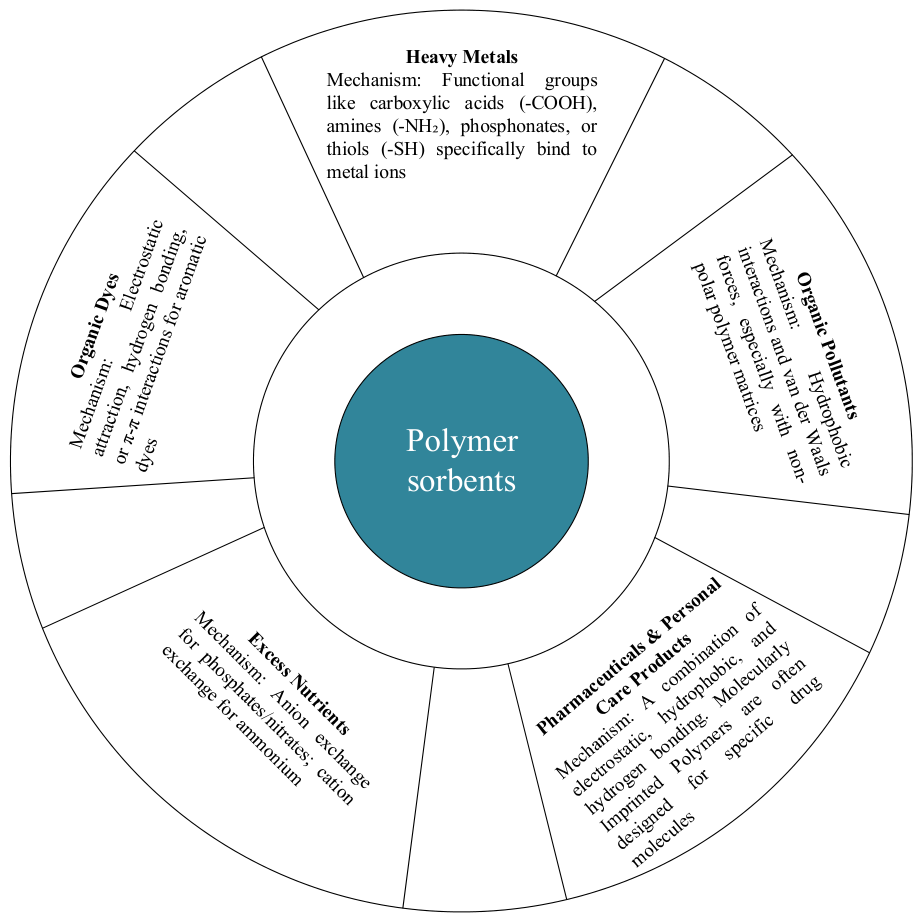
Effective methods are required to remove these pollutants [86]. Polymeric sorbents offer a highly efficient solution: they capture pollutants through their porous structure and functional groups [87]. Being versatile, they can target various pollutants [88,89]. Furthermore, these sorbents are stable, reusable, and cost-effective [90,91]. Their application is crucial for treating polluted waters and protecting the environment [92]. Thus, polymeric sorbents are indispensable for ensuring clean and safe water for all [86,88]. The application areas of polymeric sorbents in aquatic environments are illustrated in Figure 10.

3.1. Dye Sorbents

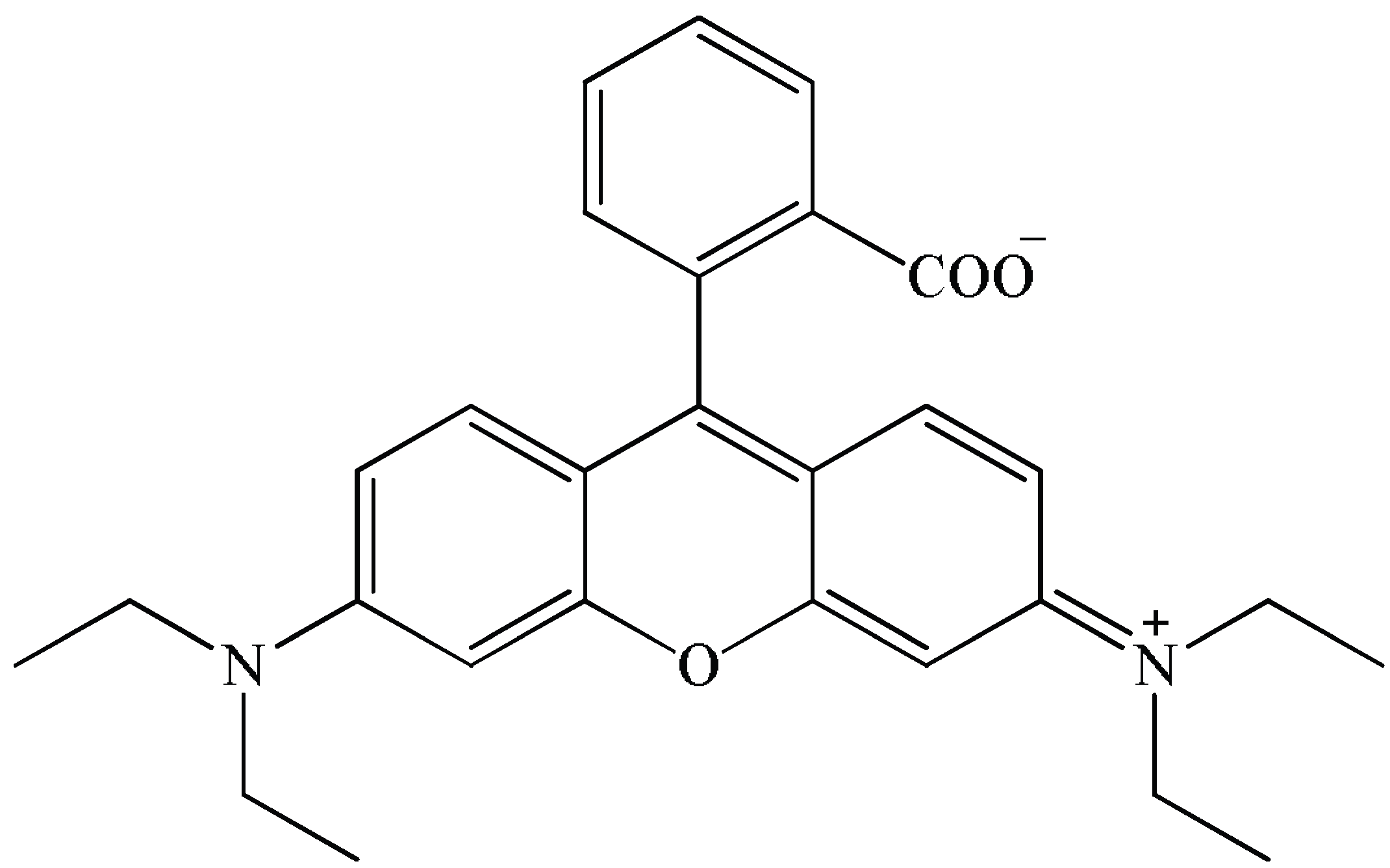
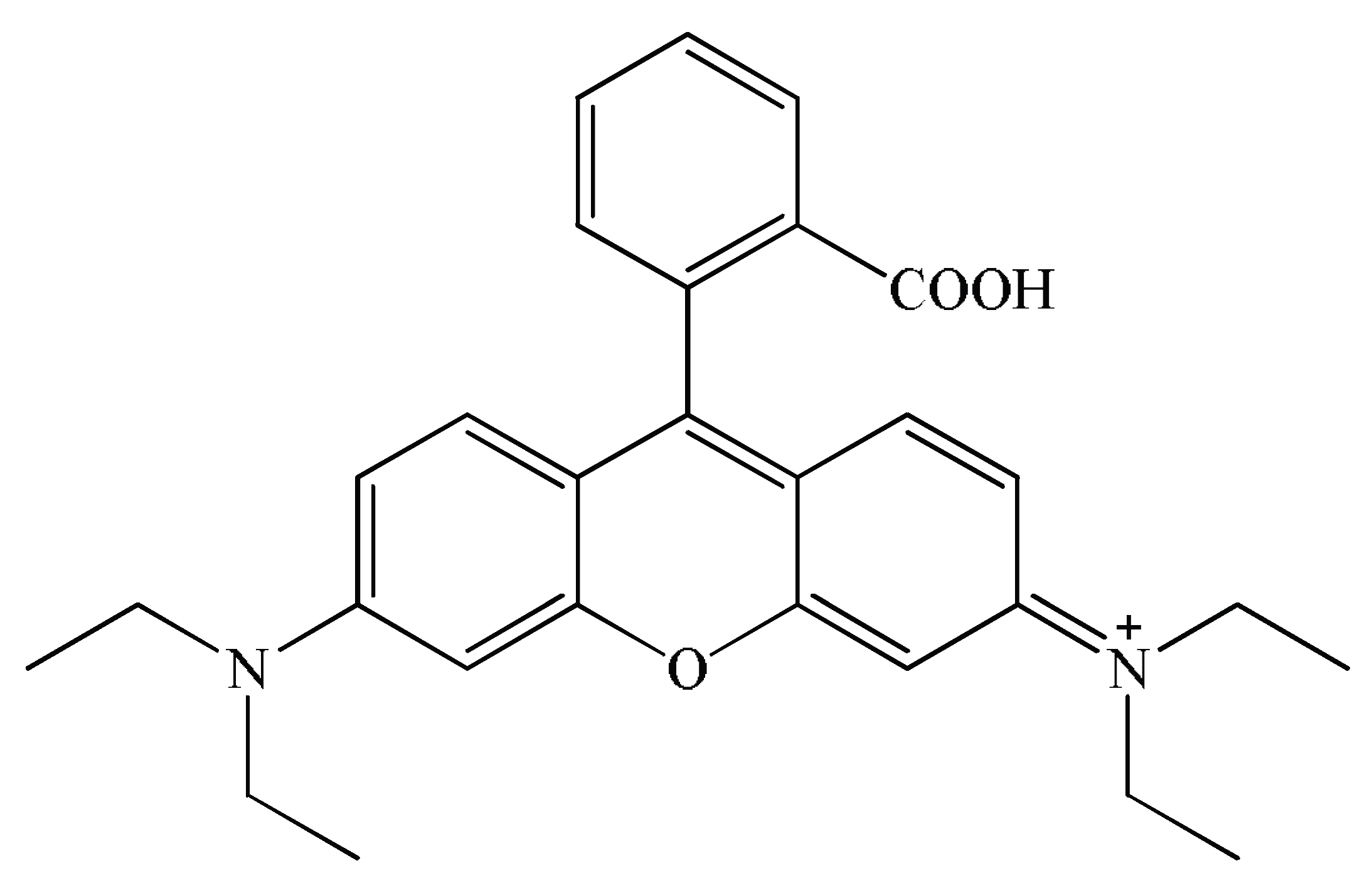
Among cationic organic dyes, rhodamine B and methylene blue pose a threat to aquatic ecosystems [91]. Rhodamine B is a toxic dye for flora and fauna: it disrupts photosynthesis in aquatic plants [92] and can induce oxidative stress, genetic damage, and even mortality in organisms at high doses [87]; it is also suspected of being carcinogenic [93]. Methylene blue, although sometimes used in low doses in aquariums, becomes harmful in aquatic environments: it reduces light penetration, thereby inhibiting photosynthesis, and decreases dissolved oxygen concentrations, leading to asphyxiation of organisms [94]; it can also cause chronic poisoning in aquatic animals [95]. Both dyes impair water quality, damage ecosystems, and threaten biodiversity; their persistence can lead to long-term negative effects within food chains [96].

3.1.1. Synthetic Dye Sorbents

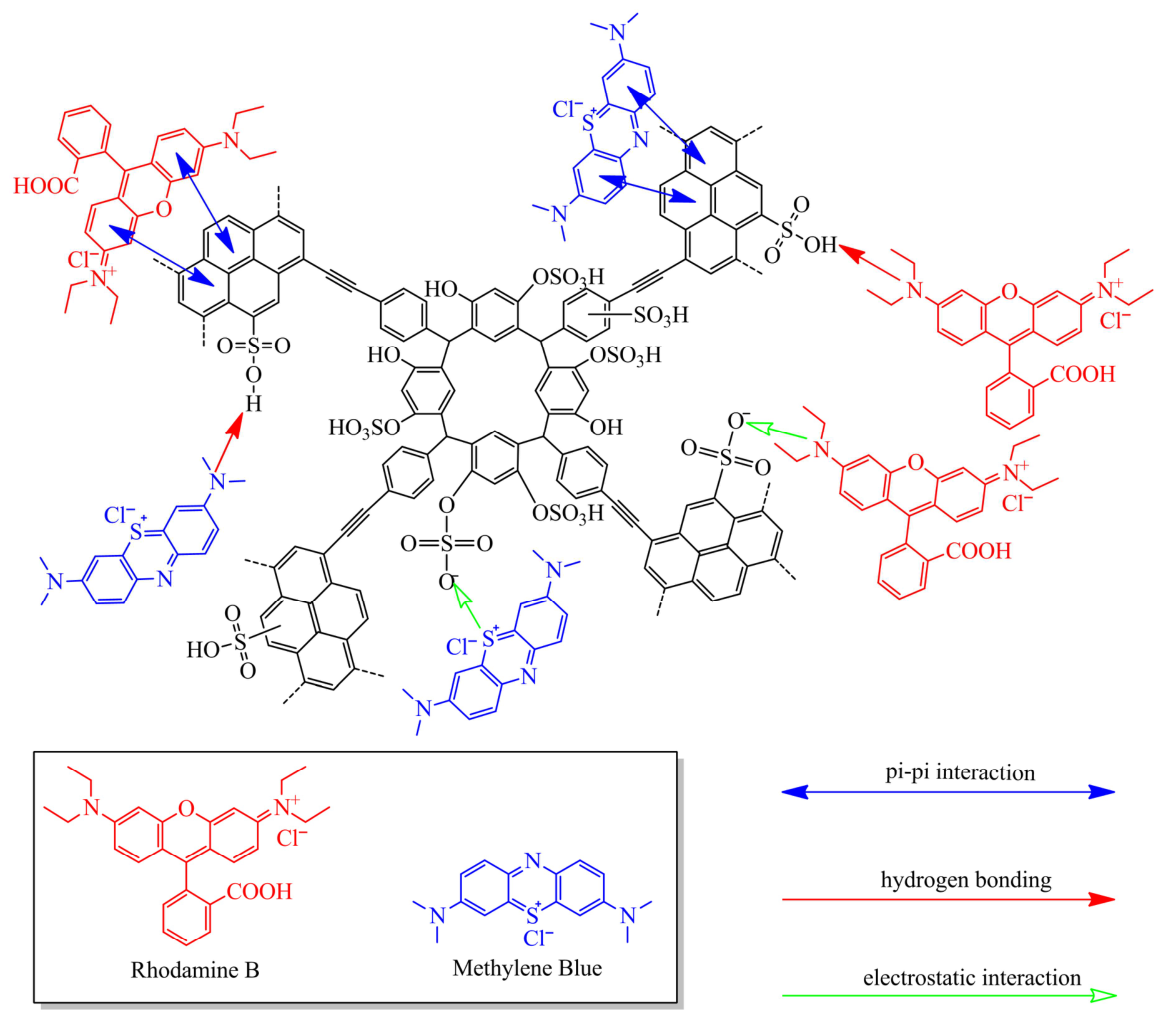
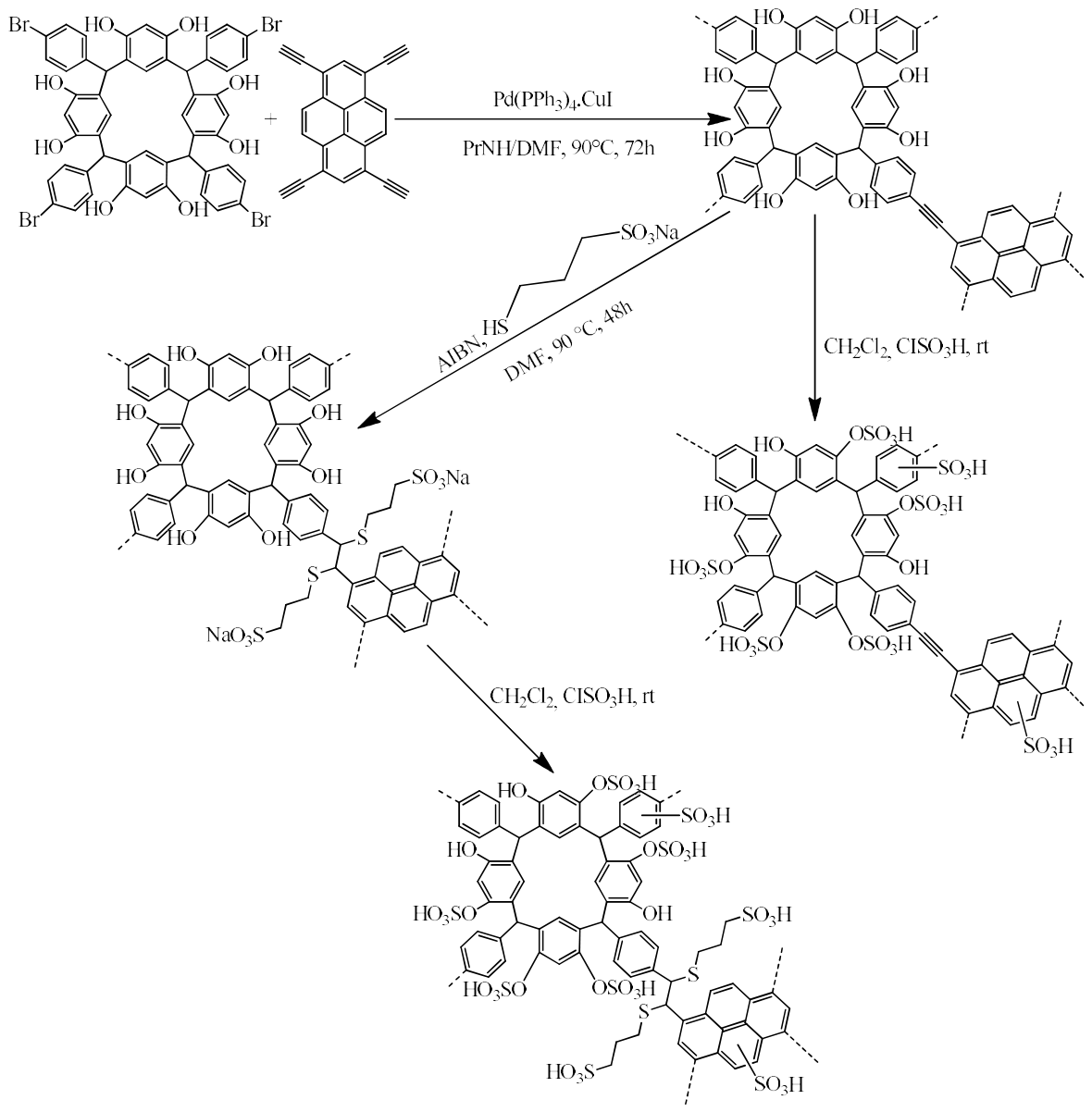
For the removal of persistent organic compounds at low concentrations from water, Tian et al. [97] developed an anionic porous organic polymer based on calixarene modified with sulfonate groups (Capy-S), synthesized via the Sonogashira-Hagihara cross-polycondensation (from 1,3,6,8-tetraethynylpyrene and tetrakis(triphenylphosphine)palladium), as shown in Figure 11. The Capy-S polymers exhibit BET specific surface areas (Equation (1) [98]) ranging from 3 to 119 m2/g, with enhanced hydrophilicity. Owing to their high degree of functionalization and numerous active sites, these polymers sorb cationic organic dyes through intermolecular interactions. The Capy-S polymers demonstrate sorption rates and capacities for organic dyes that are 99% higher than those of calixarene. The Langmuir isotherm model best describes the behavior of the Capy-S polymers, indicating monolayer sorption. The negative ΔH value for methylene blue points to the exothermic nature of its sorption, whereas the positive ΔH value for rhodamine B suggests endothermic sorption. The sorption process for both dyes is spontaneous (ΔG < 0) with an increase in system disorder (ΔS > 0). These polymers exhibit optimal sorption performance for rhodamine B at neutral pH and for methylene blue under alkaline pH conditions. This sorption occurs according to the scheme presented in Figure 12.
P / P 0 V a ( 1 P / P 0 ) = 1 V m C + C 1 V m C P P 0
P, equilibrium pressure.
P0, saturation pressure of the adsorbate gas at the experimental temperature.
Va, volume of adsorbed gas (under standard conditions).
Vm, volume of gas required to form an adsorbed monolayer on the surface.
C, BET constant related to the enthalpy of sorption.
Tian et al. [97] presented an elegant example of molecular design by synthesizing and thoroughly characterizing an anionic porous organic polymer (Capy-S) based on calixarene. In contrast to many studies where the sorption mechanism remains hypothetical, here a deep thermodynamic analysis was conducted, clearly demonstrating the distinct nature of the process for the two dyes (exothermic and endothermic), which is an undeniable strength. However, the work has significant shortcomings related to its practical orientation. The main flaw is the irrelevance of the selected model pollutants. Unlike, for example, the work of Kandil et al. [41], who tested their sorbents directly on oils and hydrocarbons, the sorbates chosen here are too “convenient”: they possess a pronounced charge that is ideally complementary to the sulfonate groups of the polymer, and are present at high concentrations that are easily detectable. Real micropollutants (pesticides, pharmaceuticals) are often neutral, hydrophobic, and occur at trace levels, and their sorption requires different mechanisms and material properties.
In connection with the question of predominant electrostatic interactions raised by Tian et al. [97], the originality of the work by Zhao et al. [99] lies in the choice of acidic experimental conditions (pH 2–3), which allow for the neutralization of the dyes and thus enable the isolation and specific study of the role of π-π and hydrophobic forces. To this end, they developed an N-doped porous carbon material intended for the extraction of four dyes, commercially designated basic fuchsin (BF), methylene blue (MB), eosin Y (EY), and rhodamine B (RB), by synthesizing the commercial triblock copolymer Pluronic F127 and polyazine derived from hydrazine hydrate and glyoxal, used as a structuring surfactant and a precursor, respectively. This material demonstrates superior sorption capacities for BF, MB, EY, and RB: 0.92, 0.83, 1.23, and 1.83 mmol·g−1, respectively, primarily due to the fact that at this stage all dyes are in their unprotonated form (pKa or pKa1 < pH), with π-π interactions or hydrophobic interactions serving as the main driving force for sorption. The protonated and deprotonated forms of these dyes are presented in Table 1.
The negative ΔG° values for the tested dyes indicate the spontaneous nature of sorption onto the material, with a gradual decrease, but not less than 24 kJ·mol−1, suggesting a sorption mechanism governed by physical electrostatic interactions and/or a pore-filling mechanism. The ΔH° values of 17.27, 8.60, 37.57, and 61.89 kJ·mol−1 for MB, BF, EY, and RB, respectively, indicate an endothermic process, while the positive ΔS° values of 109.67, 82.78, 183.45, and 271.50 J·mol−1·K−1 indicate an increase in disorder during the sorption process. The interpretation of the thermodynamic parameters warrants nuance: the ΔH° values, although all positive, exhibit widely varying magnitudes depending on the dye (from 8.60 to 61.89 kJ·mol−1), calling into question the homogeneity of the mechanisms involved beyond the simple distinction between electrostatic and hydrophobic interactions.
Du et al. developed a porous polymer based on Boron-DIPYrromethene (BODIPY) [100], namely BDP-CPP-1 (with tris(4-ethynylphenyl)amine) and BDP-CPP-2 (with tetrakis (4-ethynylphenyl)ethene). The use of the resulting polymer enabled the removal of 39% and 43% of rhodamine B molecules within 60 min, respectively. The adsorption capacities ranging from 50.6 to 55.3 mg·g−1. However, these values appear lower compared to analogs, which is likely attributable to the moderate specific surface area and hydrophobic nature of the resulting polymers. Nevertheless, the authors’ approach is distinctive in its use of BODIPY, which is rarely employed as a matrix for porous polymers, representing an interesting conceptual demonstration from a fundamental perspective.
The sorption of dyes by synthetic polymeric sorbents holds great promise in this field. These types of polymers offer the advantage of enabling tunable properties of the resulting materials, given the well-defined and unique structures of the monomers, additives, and initiators. They also allow for the development of composites with complex architectures, for example, calixarene with sulfonate groups derived from 1,3,6,8-tetraethynylpyrene and tetrakis(triphenylphosphine)palladium (obtained via Sonogashira-Hagihara cross-polycondensation); N-doped porous carbon (with polyazine and F127) and boron-dipyrromethene (obtained via Sonogashira cross-coupling), exhibiting sorption capacities for methylene blue (270–1381 mg/g) and rhodamine B (183–1796 mg/g); methylene blue (0.83 mmol/g), basic fuchsin (0.92 mmol/g), eosin Y (1.23 mmol/g), rhodamine B (1.83 mmol/g); and rhodamine B (55.3 mg/g), respectively. However, to ensure the availability of sufficient raw materials and the absence of environmental hazards, there is growing interest in natural substances.

3.1.2. Naturally Derived Sorbents for Dye Sorption

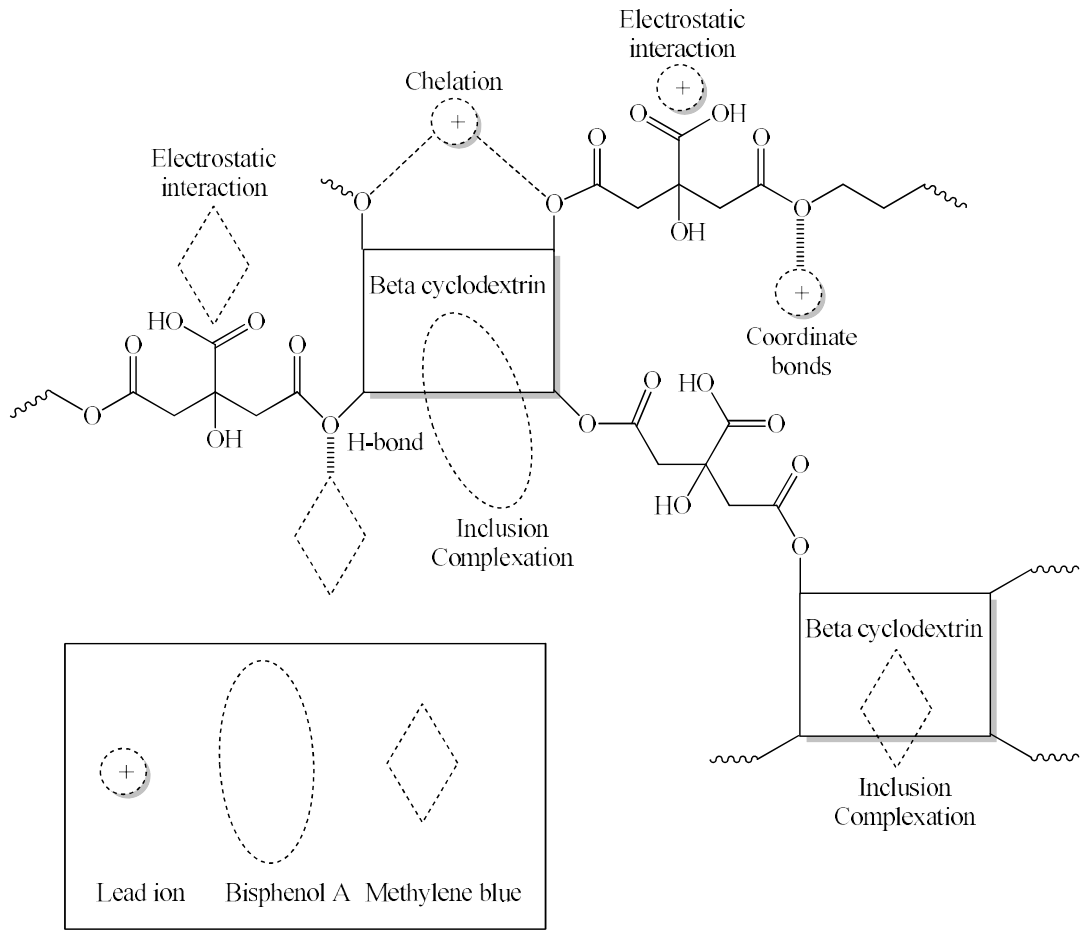
Altayan et al. [101] developed a polymeric biosorbent (βCD-CA-PEG) via the esterification reaction of beta-cyclodextrin and citric acid with polyethylene glycol (Figure 13) for the removal of methylene blue, Pb2+ ions, and bisphenol A from aqueous media. According to the BET method, the βCD-CA-PEG material has a measurable surface area of less than 10 m2/g. The sorption of methylene blue occurs rapidly within the first 20 min, reaching over 80% of the maximum sorption capacity, after which the rate slows until sorption equilibrium is attained. The sorption mechanism is illustrated in Figure 14. Maximum sorption capacities of 85.67 mg/g and 563.18 mg/g for bisphenol A and methylene blue, respectively.
The work by Altayan et al. [101] represents an interesting example of the development of a multifunctional biosorbent based on beta-cyclodextrin, an accessible and environmentally friendly material. Unlike many studies that focus on a single class of pollutants, the authors evaluated the sorption capacity of their material toward three different types of contaminants: a cationic dye (methylene blue), a heavy metal (Pb2+), and a persistent organic micropollutant (bisphenol A). This is an undeniable strength, as it demonstrates the potential versatility of the sorbent based on various interaction mechanisms (inclusion within the cyclodextrin cavity, ion exchange, complexation). Nevertheless, the work has several significant methodological shortcomings and gaps. The foremost among these is the extremely low textural characteristics of the material. The finding that the material is non-porous or macroporous with a surface area of less than 10 m2/g effectively implies that its claimed high capacity (e.g., 563 mg/g for methylene blue) is provided not by a well-developed internal structure but solely by the chemical affinity of functional groups on the limited external surface. This severely restricts its practical potential for treating large volumes of water, where a high specific surface area is critically important. Furthermore, the authors did not investigate key parameters for application: the selectivity of the sorbent in multicomponent mixtures (e.g., whether bisphenol A would compete with the dye or metal ions), or the influence of water hardness and natural organic matter on sorption efficiency.
In light of the limitations of bio-based materials, particularly their low specific surface area and the lack of data on their selectivity in complex matrices, an alternative strategy involves enhancing mechanical and textural properties through the incorporation of nanostructured fillers. With this objective, Rostamian et al. [102] developed polymeric materials based on poly(glycerol sebacate) modified with graphene oxide nanoparticles, which were in turn grafted with chitosan. Such a material exhibits a maximum sorption capacity for methylene blue of 178 mg per gram of polymer. Although the approach of reinforcement with nanomaterials appears promising from a conceptual standpoint, the potential risk of graphene oxide nanoparticle release into the treated environment remains a key consideration for any real-world application in water purification.
Beyond these environmental considerations associated with the use of nanomaterials, another approach involves the direct utilization of natural resources without employing potentially releasable synthetic fillers. For instance, Narayan et al. [103] developed a polymeric material for the removal of Congo red from aqueous media based on polyacrylonitrile (PAN) and Moringa oleifera (MO), obtained via solution homogenization followed by electrospinning. The maximum sorption capacity of Congo red by the PAN/MO nanofibrous material is 55.56 mg·g−1. The sorbent is positively charged due to the protonation of amino groups, resulting in electrostatic attraction between the bio-based sorbent and the anionic dye. This biomass utilization strategy offers the advantage of combining the use of naturally derived materials with water purification, representing the most favorable approach from an environmental perspective. However, the maximum sorption capacity of 55.56 mg·g−1 remains modest compared to other recent bio-based sorbents, raising questions about the cost-effectiveness of the electrospinning process employed.
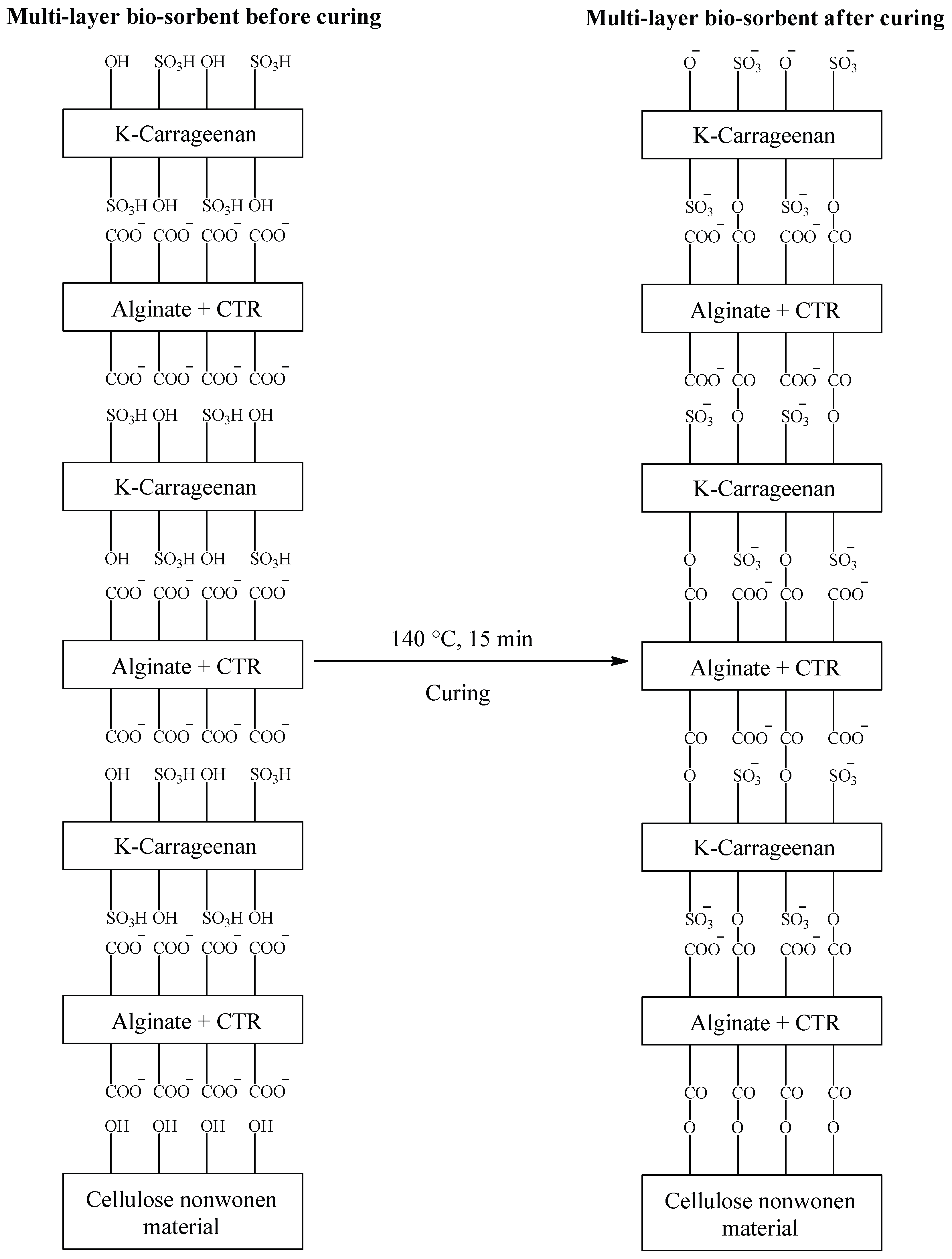
Given the modest performance of the PAN/Moringa composite, a more sophisticated strategy involves increasing the functional group density through controlled polyelectrolyte assembly. With this aim, Ammar et al. [104] developed a multilayer biopolymeric biosorbent material from polyelectrolytes. The first layer consists of sodium alginate, and the second layer consists of citric acid and κ-carrageenan (Figure 15). The resulting system was coated onto nonwoven cellulose fabric. The obtained material exhibits optimal sorption properties for methylene blue at pH 6. Under these conditions, the sorbent surface becomes negatively charged, favoring electrostatic interaction with methylene blue, with a sorption equilibrium time of 120 min. The maximum sorption capacities for methylene blue are 124.4 mg/g and 522.4 mg/g for the untreated and grafted materials, respectively, attributed to the grafting of new functional groups (carboxylate and sulfonate groups) onto the cellulose surface. The multilayer polyelectrolyte assembly approach offers a significant advantage in substantially increasing the density of functional groups, as evidenced by more than a fourfold increase in sorption capacity after grafting (from 124.4 to 522.4 mg·g−1). The crosslinking strategy on a nonwoven textile support also provides an advantage for practical applications, facilitating the handling of the biosorbent during the methylene blue recovery process. However, the equilibrium time of 120 min is relatively long compared to other nanostructured sorbents, which may limit process efficiency for large-scale applications requiring rapid kinetics.
The problem of relatively slow sorption kinetics of multilayer assemblies is overcome by using natural supports with a porous and hydrophilic structure, which provide faster access to functional groups. It is for this purpose that Galloni et al. [105] developed a sorbent based on loofah modified with polyaniline for high selective sorption of cationic dyes, in particular rhodamine and methylene blue, and anionic dyes, especially methyl orange, in aqueous solution. The sorption kinetics of these pollutants by this material follow the pseudo-second-order kinetic law. The material demonstrates a sorption capacity for methyl orange of 100% and reduces the content of methylene blue and rhodamine by 70%. The system maintains high sorption activity for five consecutive cycles. The use of loofah combines availability, low cost, and a porous structure that facilitates accessibility to functional groups. Modification with polyaniline appears particularly advantageous for modulating the surface charge as a function of pH and thus broadening the spectrum of action of the material toward both cationic and anionic dyes.
Similarly to the work in [105], where a sorbent was obtained by modifying substances of natural origin, Abuessawy et al. [106] developed a polymeric sorbent material for the removal of alizarin red from aqueous media by a reaction between chitosan and 1-((4-amino-5-thioxo-4,5-dihydro-1H-1,2,4-triazol-3-yl)methyl)-4,6-dimethyl-2-oxo-1,2-dihydropyridine-3-carbonitrile, with a sorption capacity of 162 mg/g in acidic medium. This material has a sorption equilibrium time of 50 min. This approach of functionalizing chitosan with an original triazole-pyridine repeating unit exhibits a sorption capacity of 162 mg·g−1 for alizarin red, a dye known for its difficulty to remove. An equilibrium time of 50 min, shorter than that of many biosorbents, is also a positive point for potential application.
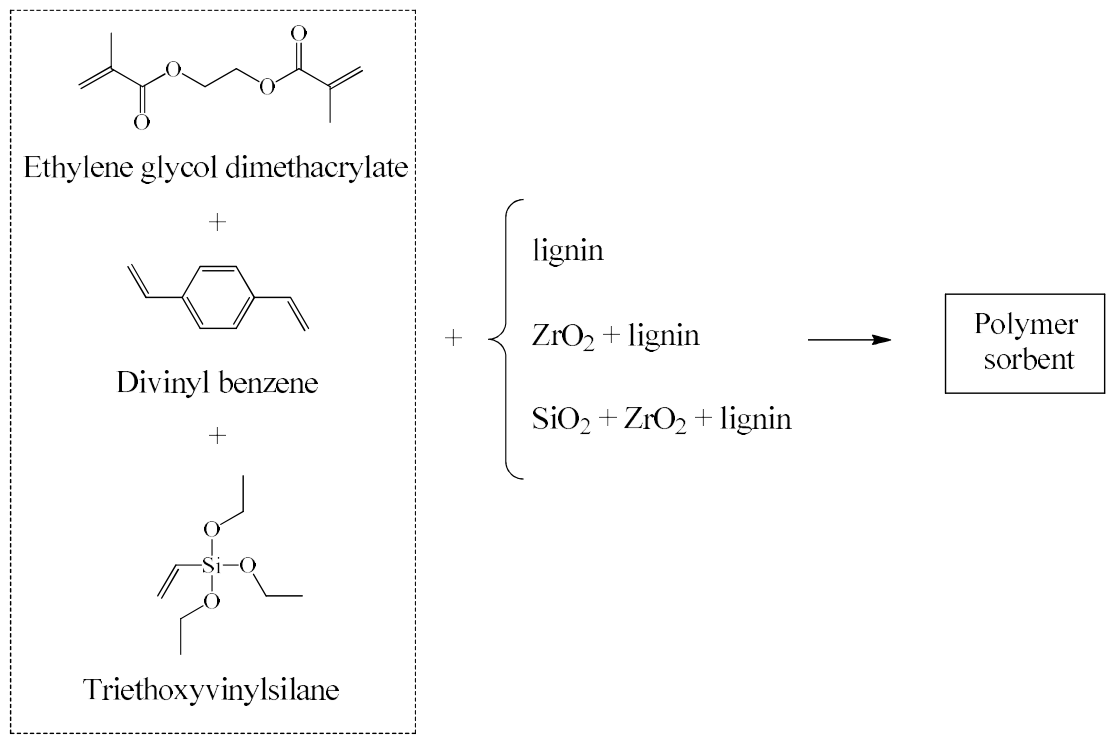
In addition to the complex chemical functionalization of chitosan, an alternative strategy consists of using the controlled porosity of synthetic polymer matrices while simultaneously incorporating natural or modified fillers to improve their characteristics. Based on this approach, Wawrzkiewicz et al. [107] developed a sorbent obtained by suspension polymerization of divinylbenzene, ethylene glycol dimethacrylate, triethoxyvinylsilane, and lignin or its form (Figure 16) modified with ZrO2 and SiO2 (Figure 16), for the removal of the hazardous organic dyes C.I. Basic Yellow 2 (BY2) and C.I. Basic Blue 3 (BB3) from textile wastewater. For this material, the specific surface area (BET) values are in the range of 63 to 281 m2/g, the total pore volumes reach 0.594 cm3/g, and the average pore sizes are about 5–12 nm. The maximum sorption capacity of this material can reach 49.8 mg·g−1 for BB3 and 49.3 mg g−1 for BY2. This hybrid of natural and synthetic materials represents a promising route to combine performance and an environmentally responsible approach.
Despite the potential of hybrids of synthetic matrices and natural fillers, their modest sorption capacity encourages the exploration of alternative routes where bio-based materials are no longer merely an additive but become the foundation of the sorption function. Thus, Gollakota et al. [108] developed a sorbent from Sterculia nut seeds functionalized with chitosan and sodium alginate for the extraction of the anionic dye Reactive Red 120, with specific surface areas of 7.81 m2/g and 5.58 m2/g and maximum sorption capacities of 79.35 mg/g and 60.27 mg/g, respectively. The obtained materials withstand two to three sorption/desorption cycles. This approach, in which the bio-based material is the main component rather than merely an additive, has the advantage of utilizing an under-exploited natural resource (Sterculia nut seeds) while maintaining a sorption capacity superior to that obtained by Wawrzkiewicz et al. with their synthetic matrices.
Despite the high-performance characteristics, the limited reusability of the Sterculia nut seed-based material (only two to three cycles) suggests insufficient stability for sustainable application. To address this drawback while maintaining the bio-based approach, one strategy involves strengthening the natural matrix through chemical crosslinking and incorporating nanoparticles with additional properties. To this end, Ibrahim et al. [109] developed a composite of modified poly(amidoamine) sawdust and epichlorohydrin as a crosslinking agent, with the addition of titanium oxide (TiO2) and zinc oxide (ZnO) nanoparticles immobilized on the modified sawdust, for the removal of the acid dye Alphanol® Fast Blue and the heavy metal ions Cu2+, Co2+, Cr6+, Cd2+, and Mn7+ from aqueous media. This material exhibits a maximum equilibrium sorption capacity of 200 mg·g−1 for the uptake of the acid dye. This reinforcement strategy via chemical crosslinking and nanoparticle incorporation offers an undeniable advantage by significantly increasing sorption capacity while imparting substantial versatility toward multiple pollutants. Furthermore, the immobilization of TiO2 and ZnO on the lignocellulosic matrix opens interesting prospects for potential photocatalytic applications in combination with sorption.
It can be concluded that polymeric sorbents are highly suitable for the removal of dyes from water. Synthetic sorbents (based on calixarenes, BODIPY) offer high selectivity and well-developed surface area (up to 281 m2/g) owing to controlled pore and functional group design. Natural sorbents (chitosan, cyclodextrin, lignin) are environmentally friendly, accessible, and after modification achieve high capacities (up to 563 mg/g), although they are inferior to synthetic counterparts in terms of specific surface area and kinetics. The most promising are hybrid materials, which combine the structural advantages of synthetic polymers with the environmental friendliness of natural components for efficient wastewater treatment.

3.2. Antibiotics and Pharmaceutical Compounds

Aquatic environments, as the ultimate reservoirs of anthropogenic discharges, face serious pollutants including antibiotics and pharmaceutical products [110]. Their widespread use in human and veterinary medicine [111], combined with multiple pathways of dissemination such as inadequately treated urban [112] and agricultural effluents [113], leads to the persistent presence of trace contaminants in water bodies, necessitating the development of sorption materials for their removal.
For example, Zafar et al. [114] developed a polymeric sorbent based on silicone (polydimethylsiloxane) for the removal of antibiotics (ofloxacin (pKa1 = 5.77 and pKa2 = 8.44), oxytetracycline (pKa1 = 3.57, pKa2 = 7.49, and pKa3 = 9.44), ciprofloxacin (pKa1 = 5.9 and pKa2 = 8.9), and sulfamethoxazole (pKa1 = 1.7 and pKa2 = 5.7)) from aqueous media. The optimal pH values for the sorption of ciprofloxacin, ofloxacin, oxytetracycline, and sulfamethoxazole are 2, 10, 4, and 2, respectively. The sorption mechanism of the antibiotics by these polymeric sorbents, exhibiting sorption in the order: ofloxacin > oxytetracycline > ciprofloxacin > sulfamethoxazole. The sorption is primarily governed by chemisorption via ion exchange on the heterogeneous surface of the sorbent, with sorption rates exceeding desorption rates. The sorption of ofloxacin and sulfamethoxazole follows the Langmuir isotherm model. The sorption of ciprofloxacin and oxytetracycline follows the Freundlich isotherm model. Thus, this polymeric material exhibits sorption capacities for ciprofloxacin, ofloxacin, oxytetracycline, and sulfamethoxazole of 0.157, 0.1283, 0.1379, and 0.1300 kg/m3/year, respectively.
However, the results of study [114] raise questions, as the authors present sorption capacity in an extremely non-standard and difficult-to-interpret dimension (kg/m3/year). For evaluating sorbent efficiency, the commonly accepted units are mass of sorbate per mass of sorbent (mg/g or mmol/g), which allow for proper comparison of materials with different densities and facilitate comparison with literature data. The use of volumetric-temporal characteristics does not allow for assessment of the specific efficiency of the material nor conclusions regarding its competitiveness relative to existing sorbents for antibiotic removal.
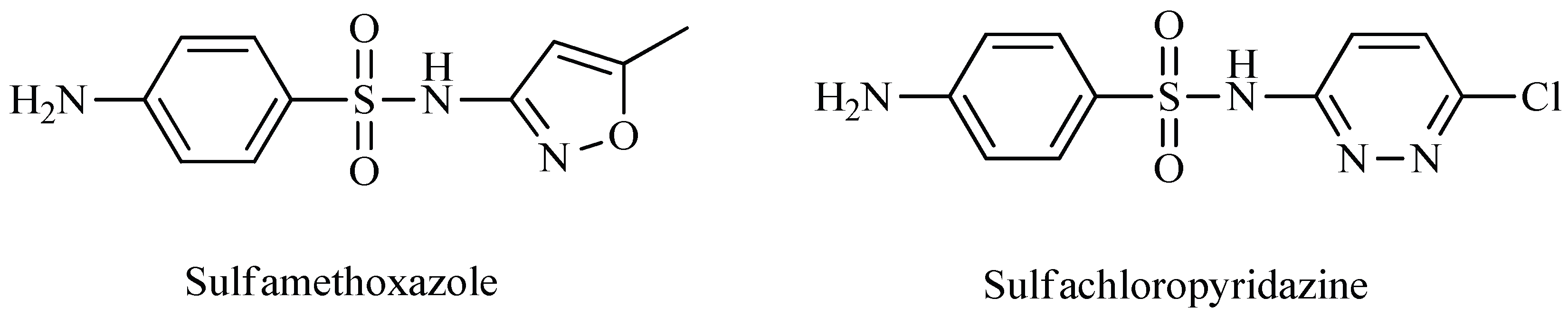
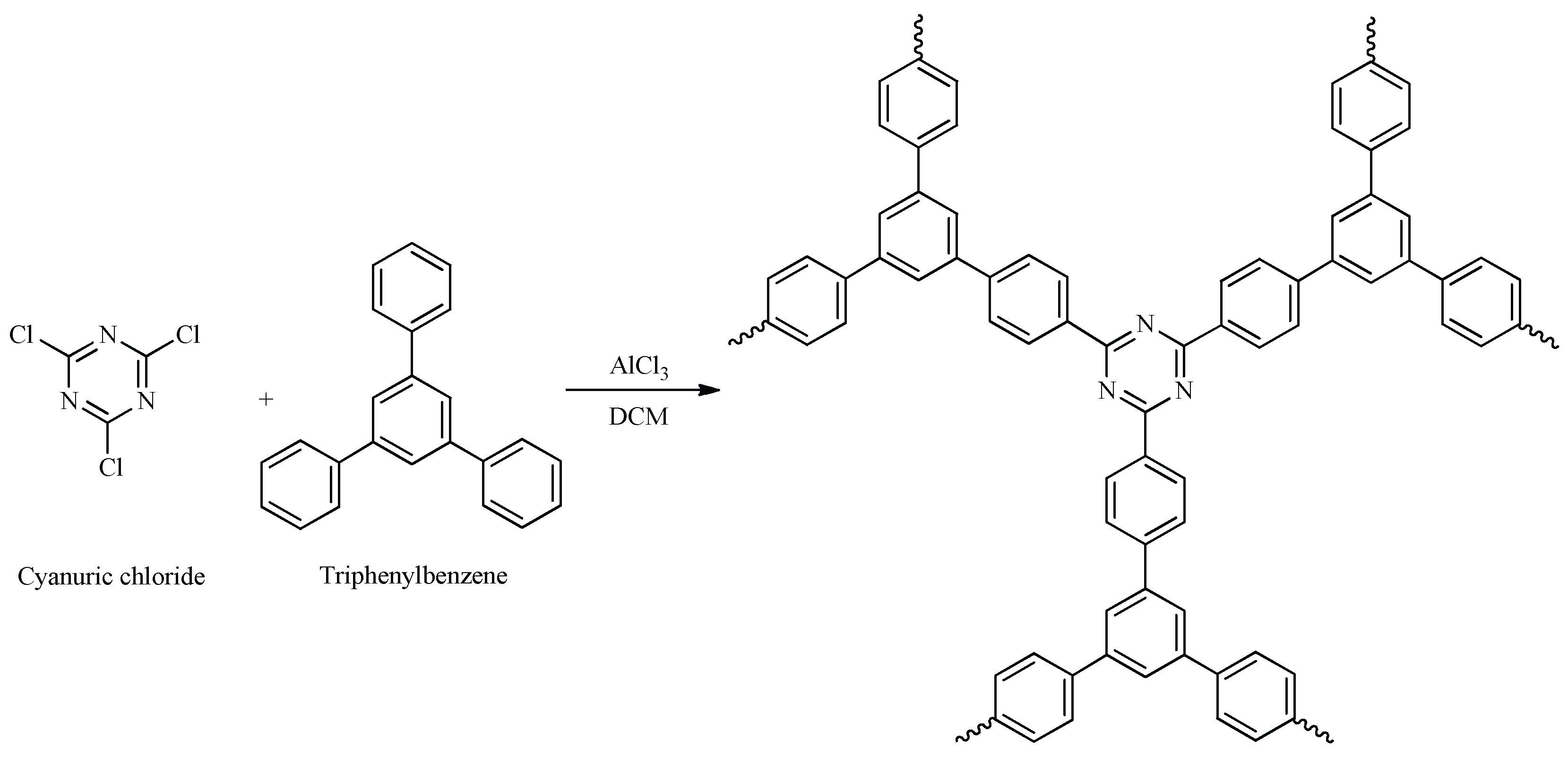
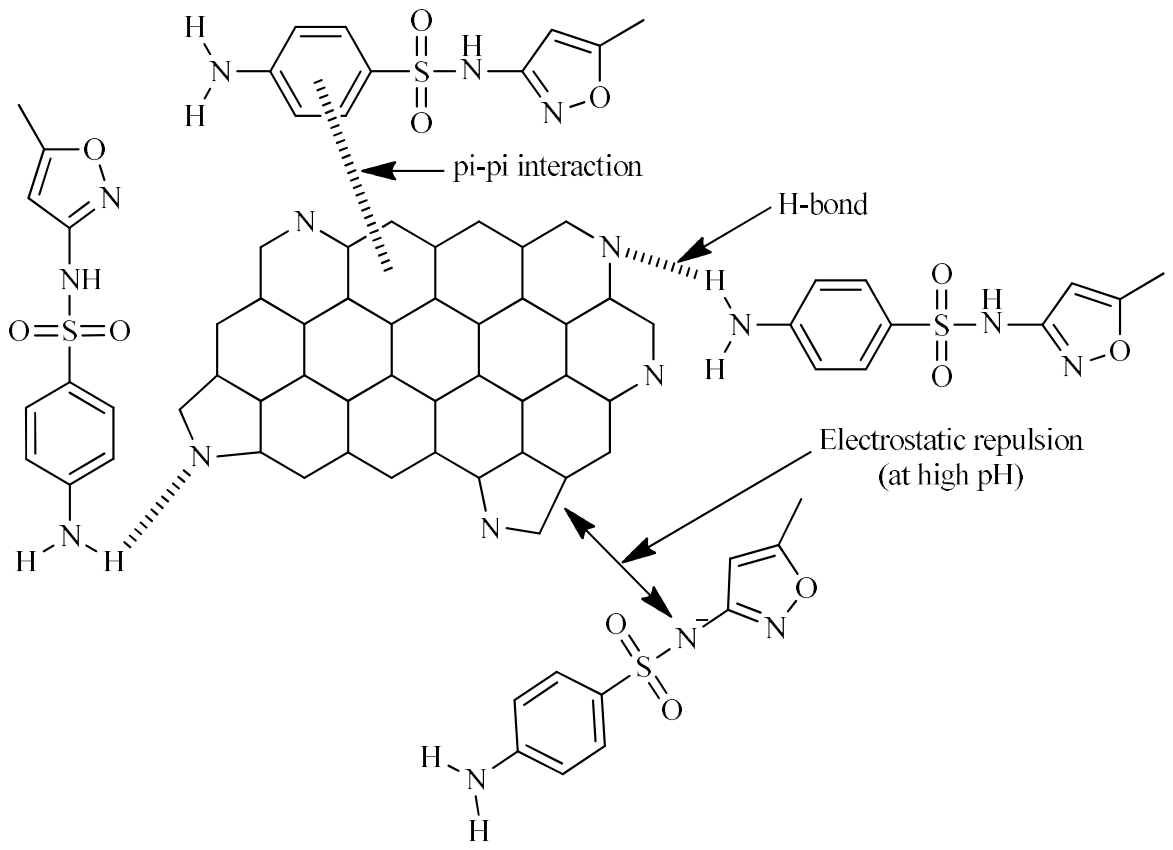
Greater clarity characterizes the study by Ahmed et al. [115], who adopted a fundamentally different approach by purposefully creating a mesoporous carbon material with high specific surface area to enhance sorption, given that silicone polymer lacks a well-developed porous structure. The authors developed a nitrogen-doped mesoporous carbon material obtained by pyrolysis of a microporous triazine polymer (based on 1,3,5-triphenylbenzene and cyanuric chloride) with Zn(OH)2 additive for the removal of sulfamethoxazole and sulfachloropyridazine (Figure 17) from aqueous media, as shown in Figure 18. This material demonstrates superior sorption performance for sulfamethoxazole (514 mg/g) and sulfachloropyridazine (430 mg/g).
The optimal sorption time for sulfachloropyridazine and sulfamethoxazole by this polymeric sorbent is 1–4 h. This sorbent exhibits the best sorption performance at neutral pH. Increasing the specific surface area of the sorbents enhances their high sorption capacity, which is attributed to the high porosity that can strengthen van der Waals interactions. The mechanism is illustrated in Figure 19.
The deliberate use of pyrolysis of a triazine polymer with zinc additive to create porosity and nitrogen doping to enhance chemical affinity toward organic pollutants is of great interest. Unlike many studies, the research [115] establishes a logical connection between material design (porosity, doping) and the proposed mechanism of action (van der Waals interactions, π-π interactions).
The approach that establishes a clear link between material structure (porosity, nitrogen doping) and interaction mechanisms with pollutants (π-π, van der Waals) finds a logical continuation in molecular recognition strategies. This objective was pursued by Hu et al. [116], who developed a polymer obtained via self-stabilized precipitation copolymerization of maleic anhydride with styrene, functionalized with glycidyl methacrylate. The polymer was used for the selective sorption of norfloxacin in aqueous media in mixtures with enrofloxacin and levofloxacin, which have similar structures, and exhibited a maximum sorption capacity of 149.3 mg/g within 60 min for norfloxacin, significantly higher than the sorption capacities for enrofloxacin and levofloxacin, which were 37.6 and 41.3 mg/g, respectively. This material demonstrates facile desorption under acidic conditions and withstands four sorption/desorption cycles. The molecular imprinting approach here offers the significant advantage of providing remarkable selectivity, enabling the separation of norfloxacin from its structural analogs (enrofloxacin, levofloxacin), which is a rare achievement in the field of polymeric sorbents.
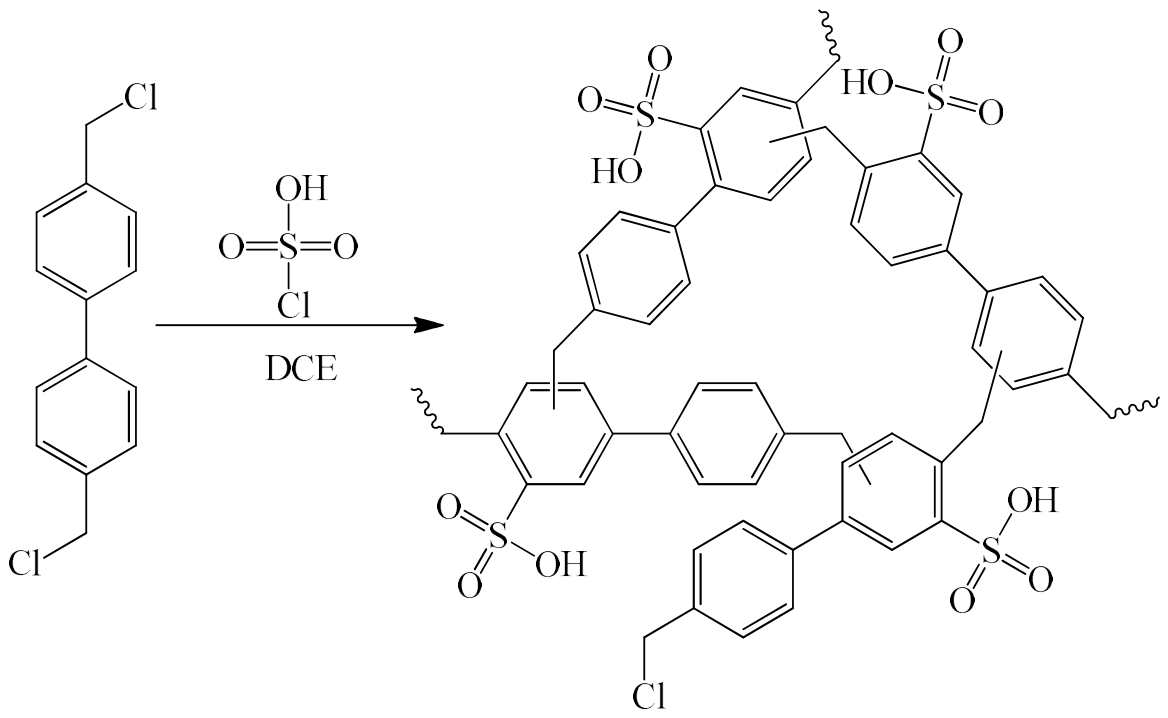
Despite the undeniable advantages in selectivity, the sorption capacity of the material developed in [117] remains relatively moderate, stimulating the search for new approaches to create sorbents with higher uptake performance. A fundamentally different solution was proposed by Wolska et al. [118], who developed a one-step synthesis of novel highly sulfonated hypercrosslinked polymers (Figure 20) for the extraction of ciprofloxacin from aqueous media, with a maximum sorption capacity of the material reaching 757.7 mg·g−1. This value is primarily attributed to the unique synergy between the high specific surface area of the polymers and the high content and accessibility of SO3H groups.
The substantial sorption capacity places the material of Wolska et al. among the most effective sorbents for the removal of the widely used antibiotic ciprofloxacin, frequently detected in wastewater. The optimization between specific surface area and sulfonic group density represents a rational approach, enabling the maximization of both the accessibility and reactivity of ionic interaction sites. The claimed selectivity toward polar pollutants in cationic or zwitterionic form is also a key advantage for targeted applications.
Further development of research on high-performance sorbents for antibiotics is associated with expanding the range of target pollutants and exploring new types of polymeric matrices. In this context, metal-organic frameworks and related structures have attracted researchers’ attention. Thus, Chernomorova et al. [119] developed a sorption material based on cobalt terephthalate for the extraction of cephalosporins from aqueous media with a high sorption capacity of 520.0 mg/g. Sorption is best described by the pseudo-second-order kinetic model and the Freundlich isotherm model. The achieved sorption capacity for cephalosporins places the material of Chernomorova et al. among the most effective sorbents for this class of antibiotics, indicating promising prospects for development.
Parallel to the development of high-capacity sorbents for major classes of antibiotics, a direction focused on creating materials for the determination of trace pollutants in natural waters is actively advancing. In this regard, sorbents that provide not only high extraction efficiency but also low detection limits are of particular importance. An example of such an approach is the work by Garcinuño et al. [120], who developed a molecularly imprinted polymer for the quantitative extraction of cloxacillin at trace concentrations, using methacrylic acid as a functional monomer and ethylene glycol dimethacrylate as a crosslinking agent. The limits of detection and limits of quantification were 0.29 and 0.37 μg·L−1, and 0.8 and 0.98 μg·L−1 for drinking water and river water, respectively.
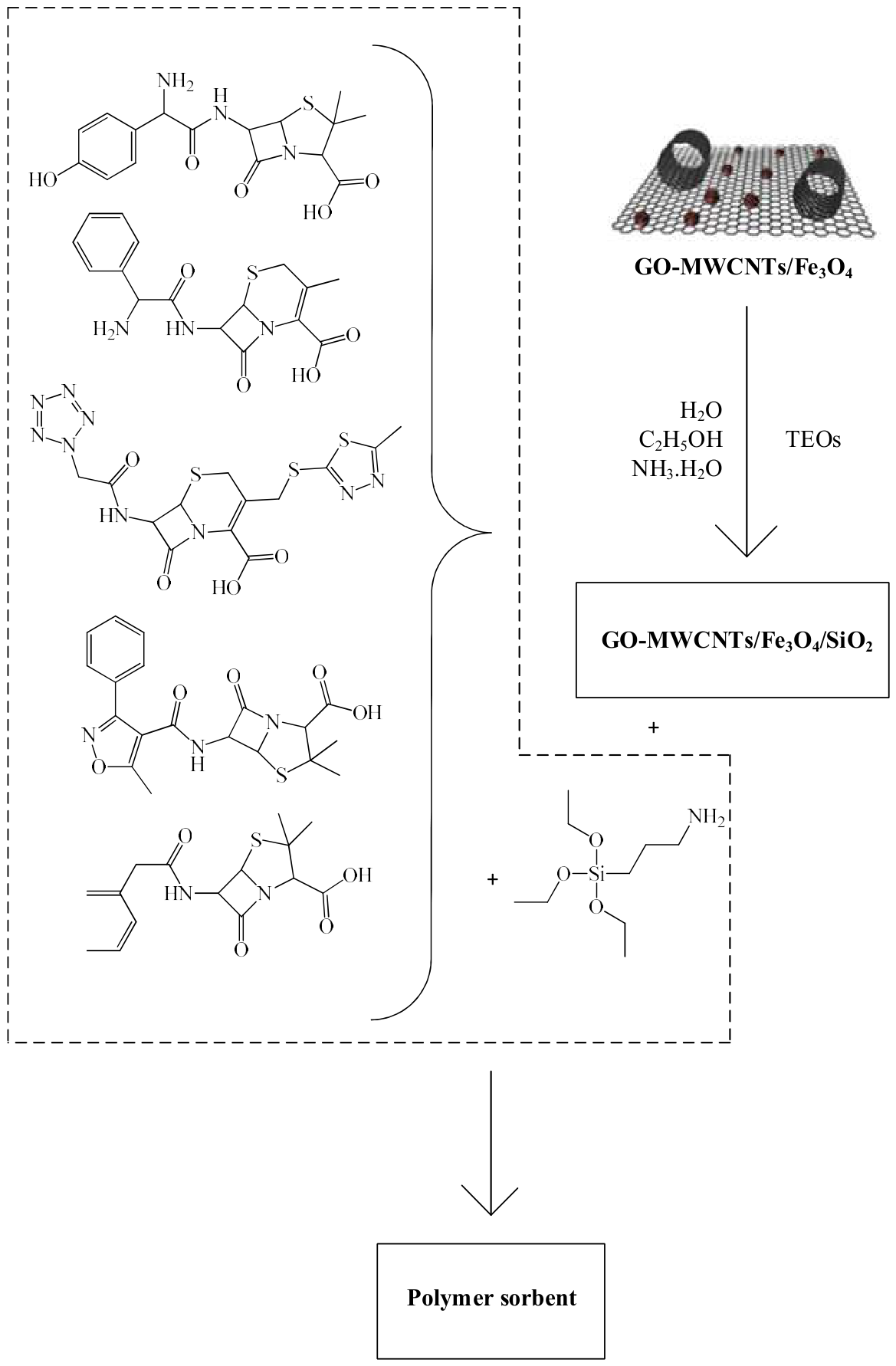
The further development of synthetic sorption materials is linked to the creation of hybrid systems that combine the advantages of different components. Of particular interest are magnetic composites that combine the high sorption capacity of carbon materials with the ability for effective separation from the aqueous medium under an external magnetic field. An example of this approach is the work by Wang et al. [121], who developed hybrid magnetic carbon-containing polymeric materials based on graphene oxide and metal oxides such as iron (II, III) oxide and silicon (Figure 21), for the extraction of β-lactams such as amoxicillin, cephalexin, cefazolin, penicillin G, and oxacillin. Such a material demonstrates superior sorption characteristics toward the aforementioned pollutants in neutral aqueous media because, in acidic media, hydrogen ions interact with the hydroxyl and amino groups of the polymers, thereby inhibiting their binding with the pollutants and reducing sorption capacity. In alkaline media, deprotonation becomes more likely. The -NH2 and -OH groups on the obtained polymers interact with the -COOH, -OH, -NH2, and other groups of the above-mentioned pollutants via hydrogen bonds, facilitating sorption. Thus, the criteria governing the sorption of the obtained material are hydrogen bonding and the imprinting effect, with the sites on the material being unevenly distributed. The originality of this work lies in the optimal combination of multiple functionalities within a single material: sorption capability via hydrogen bonding provided by the functionalized polymers, magnetic response facilitating sorbent recovery (owing to iron oxides), and versatility toward the broad family of β-lactam antibiotics (five tested molecules).
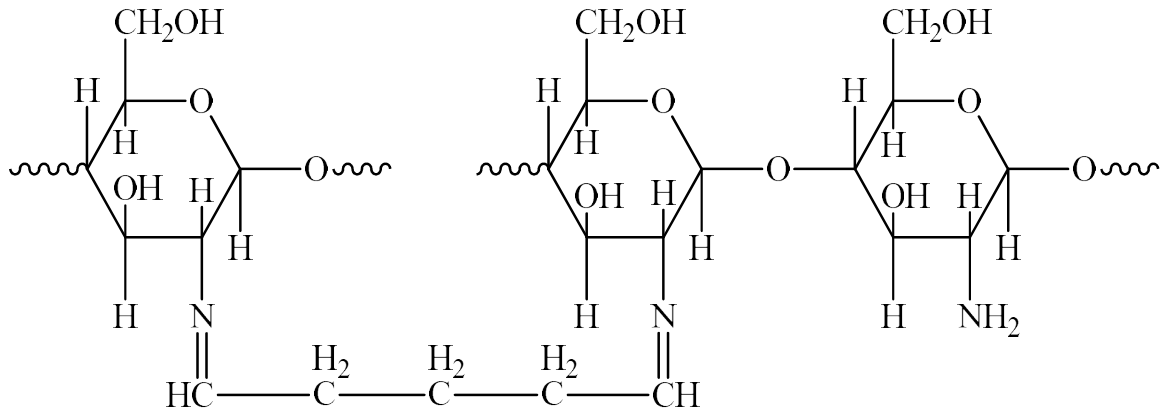
Alongside synthetic polymers, natural biopolymers are attracting increasing attention from researchers due to their renewability, biocompatibility, and biodegradability. Among these, chitosan occupies a special place, as it contains reactive amino and hydroxyl groups that enable effective interaction with various classes of pollutants. An example of the rational use of this biopolymer is the work by Wang et al. [116], who developed a magnetic polymeric material based on crosslinked chitosan (Figure 22) containing iron oxide particles for the simultaneous removal of norfloxacin, sulfadiazine, Cu(II), and Ni(II) from aqueous media, with maximum sorption capacities of 412.63, 214.07, 141.70, and 113.07 mg·g−1, respectively. The sorption mechanism of these pollutants by the polymeric materials involving electrostatic interactions, coordination, π-π stacking, hydrogen bonding, and hydrophobic effects. This approach offers the significant advantage of combining versatility with very high sorption capacities, particularly for norfloxacin, which competes with the best specialized sorbents.
Further development of research on natural polymers for antibiotic sorption is associated with expanding the range of biopolymer matrices used and developing new methods for their functionalization. Of particular interest in this context is alginate, which can form stable hydrogels and be effectively modified with various functional groups. Thus, Soltanieh et al. [122] developed a polymeric material via in situ copolymerization of alginate grafted with poly(3-aminophenol) and doped with silver for the removal of neomycin from contaminated waters. The maximum sorption capacity of this pollutant by the polymer is 625 mg/g; sorption is best described by the Freundlich isotherm and follows the pseudo-second-order kinetic model, exhibiting an exothermic and spontaneous nature. This sorption mechanism is based on intermolecular interactions between the functional groups (amine, alcohol, and imine groups) of the obtained material and neomycin. This targeted approach yields a sorption capacity of 625 mg·g−1 for neomycin, placing this material among the most effective for the removal of this antibiotic. The originality of the synthesis via in situ polymerization of alginate grafted with poly(3-aminophenol) and decorated with silver nanoparticles provides the advantage of numerous functional groups (amine, alcohol, and imine groups), favoring multiple interactions with the target molecule.
A natural progression in the approach to modifying natural polysaccharides involves not only the introduction of additional functional groups but also the grafting of entire polymer chains capable of radically altering the sorption properties of the original matrix. This strategy was implemented by Papageorgiou et al. [123], who developed sorption materials by grafting poly(ethyleneimine) and poly(acrylamide) onto the chitosan structure for the effective removal of carbamazepine, cyclophosphamide, adefovir, levofloxacin, metronidazole, glibenclamide, and trimethoprim from aqueous media. The optimal pH for the sorption of these pollutants is 4, which is primarily explained by the fact that when the solution pH is below the pKa, the adsorbates become positively charged, whereas when pH > pKa, the adsorbates exist in anionic form. For amphoteric compounds, when pKa1 < pH < pKa2, they remain neutral. Most of the pharmaceutical products in the mixture exist in cationic form, with the exception of adefovir, which is neutral, and metronidazole, which is negatively charged. Thus, the sorption mechanism of metronidazole involves electrostatic attraction between its negatively charged moieties (hydroxyl groups) and the cationic surface of the sorbents. The sorption of this material follows the pseudo-second-order kinetic model. This study stands out for its ambition: simultaneous testing of seven pharmaceutical pollutants with contrasting acid-base properties (cationic, anionic, neutral, amphoteric), which accurately reflects the complexity of real effluents. The detailed analysis of the behavior of each molecule as a function of pH, correlating with their respective pKa values, demonstrates a thorough mechanistic approach too often neglected in studies examining only one pollutant at a time. Demonstrating that at pH 4 the cationic surface of the material can simultaneously electrostatically attract metronidazole (negatively charged) while interacting with the cationic forms of other molecules through other (unspecified) mechanisms represents notable progress.
Analysis of the studies presented above indicates the great potential of polymeric sorbents for the removal of pharmaceutical pollutants. The diversity of synthetic and natural polymers demonstrates a wide range of sorption efficiencies toward various antibiotics. However, several objective challenges exist: many synthesized polymers require complex multi-step production processes, which increases their cost and limits scalability; some sorbents exhibit selectivity only toward certain classes of compounds, reducing their versatility; the efficiency of natural polymers often lags behind that of synthetic ones, and their stability under various environmental conditions requires further investigation. Future prospects lie in the development of hybrid and composite materials that combine the advantages of synthetic and natural components, the development of simpler and more environmentally friendly synthesis methods, and in-depth studies of sorption and desorption mechanisms to create regenerable systems. Overall, the technology possesses significant potential but requires optimization for practical implementation in wastewater treatment systems.

3.3. Pesticides, Herbicides, Volatile Organic Compounds, and Polycyclic Aromatic Hydrocarbons

The presence of persistent pollutants in aquatic environments poses a serious ecological threat. Pesticides and herbicides originating from agricultural activities enter water bodies, disrupting ecosystems [124]. Volatile organic compounds and polycyclic aromatic hydrocarbons from industrial and urban activities further exacerbate this toxic contamination [125]. To address the challenges of removing such pollutants, researchers are developing various treatment methods, including sorption onto specific sorbents. These materials, designed to capture and retain the aforementioned pollutants, offer a promising solution for restoring water quality and protecting aquatic environments [126].
Seebunrueng et al. [127] developed a thermosensitive magnetic molecularly imprinted polymer using iron hydroxide as a magnetic support, based on methacrylic acid and N-isopropylacrylamide as monomers, N,N-methylenebisacrylamide as a crosslinking agent, and mixed iron hydroxide nanoparticles as an additive, for the removal of o-phenylphenol, diazinon, fenitrothion, fenthion, parathion-ethyl, and ethion. The resulting polymer exhibits sorption capacities for diazinon, fenitrothion, fenthion, parathion-ethyl, and ethion of 83, 97, 102, 101, and 80 mg/g, respectively. Analysis using the Scatchard Equation (2) [128] revealed that the developed polymer possesses high binding affinity for all of the aforementioned pesticides. In polymeric adsorbents, their adsorption capacity depends on hydrogen bonding and hydrophobic interactions, as well as on high specific surface area.
Q e C e = Q m a x Q e K d
Qe, the amount of pesticide bound to TMMIP or TMNIP at equilibrium;
Qmax, the maximum binding capacity;
Ce, the free (equilibrium) concentration of the analyte;
Kd, the dissociation constant.
The combination of the ability to perform desorption using magnets and the “smart” temperature-dependent behavior described in the work by Seebunrueng et al. [127] is highly promising. The authors reported specific and sufficiently high sorption capacities for a range of organophosphorus pesticides (from 80 to 102 mg/g), which favorably distinguishes this work from studies where the capacity is either low or not specified at all. However, as in many other studies, selectivity in multicomponent mixtures and effectiveness at environmentally relevant (trace) concentrations were not investigated.
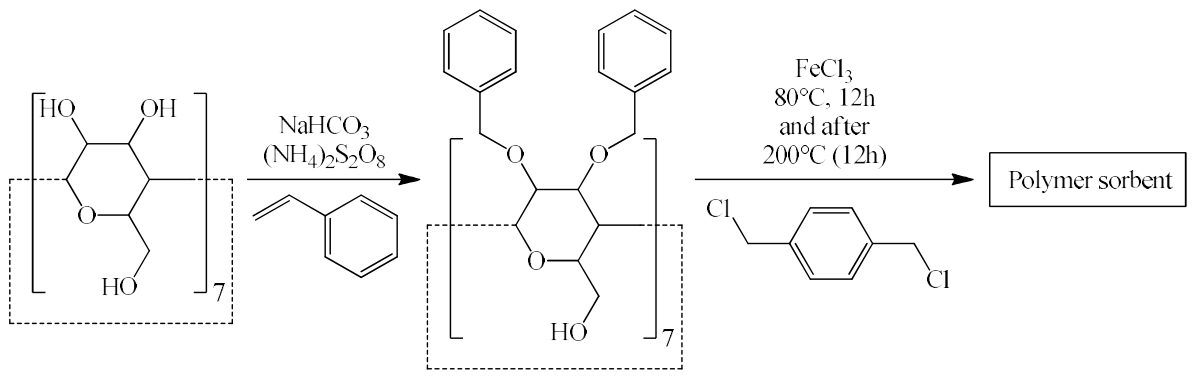
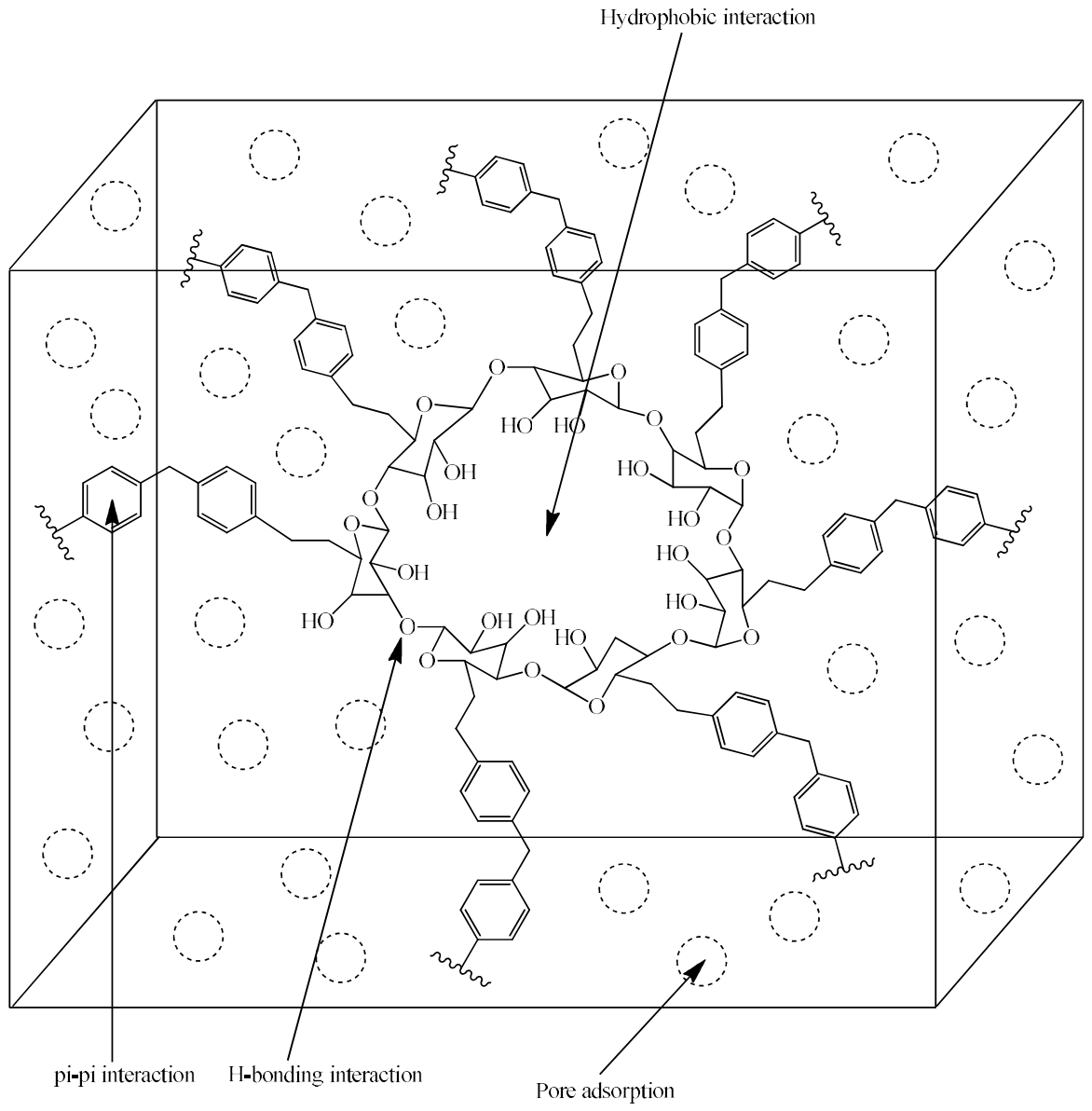
An alternative approach to creating selective sorbents that does not require the complex synthesis of molecular imprints is the use of natural macrocyclic compounds. The most well-known representative of such compounds is β-cyclodextrin, which possesses a hydrophobic cavity within its structure that selectively binds various organic molecules. This strategy was implemented by Guo et al. [129], who obtained β-cyclodextrin-grafted styrene according to the scheme presented in Figure 23.
This polymer exhibits the highest sorption capacities for cyanazine, metribuzin, simetryn, and promazine: 15.3, 12.7, 15.5, and 15.4 mg/g, respectively. The sorption mechanism of β-cyclodextrin-grafted styrene is illustrated in Figure 24. This polymer is most effective at pH 5–6, which naturally limits its application in alkaline and acidic media.
The study [129] is a model example in which a well-known complexing agent (cyclodextrin) is immobilized onto a polymer matrix to impart selective properties. The main advantages of the work are the use of an accessible and biocompatible material, β-cyclodextrin, as well as the presentation of specific numerical values of sorption capacity for four different pesticides. However, several shortcomings and gaps can be identified, such as the low-capacity values (12–15 mg/g) compared to modern sorption materials, including other cyclodextrin-based polymers or porous carbons. For similar sorbates, the capacity is often an order of magnitude higher. Therefore, the question arises regarding the practical relevance of using this particular material.
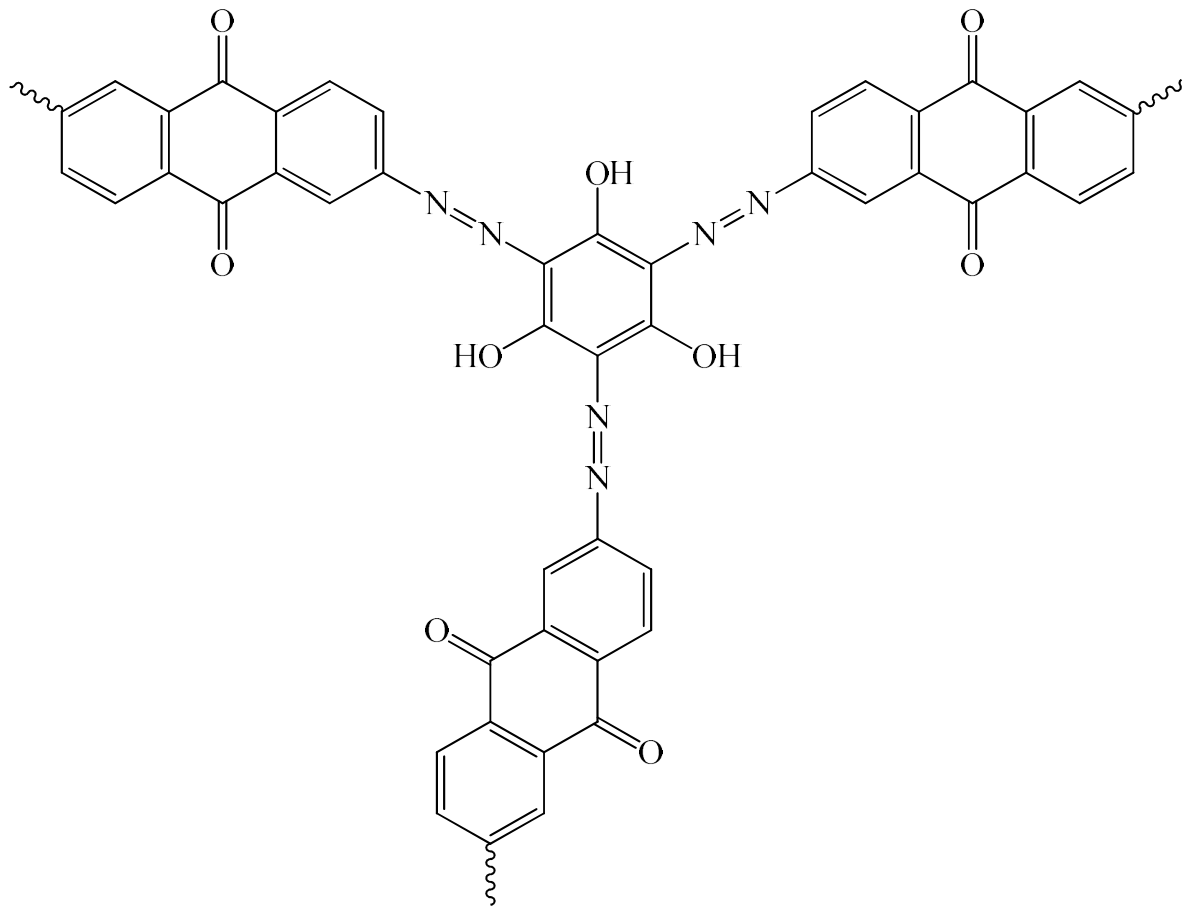
A fundamentally different approach to the creation of polymeric sorbents, aimed at forming a well-developed porous structure directly during synthesis, was implemented by Selahle et al. [130]. In contrast to the immobilization of pre-formed macrocycles onto a polymer matrix, the authors employed the diazo coupling reaction to obtain nanostructured materials based on ortho-hydroxyazobenzene (Figure 25). This method, relatively uncommon in the field of sorption, enabled the formation of a mesoporous structure with a specific surface area of 251 m2·g−1, which significantly expands the material’s potential for the extraction of various classes of pollutants. Sorption is primarily driven by interactions between the positive charges present on the obtained material and the negative charges of steroid hormones and neonicotinoid insecticides, with an optimal pH for sorption of 6.5. The kinetics for the pollutants 17β-estradiol, hydrocortisone, imidacloprid, and thiacloprid are best described by the Langmuir model. The originality of this work lies in the synthesis of materials based on ortho-hydroxyazobenzene via the diazo coupling reaction, a relatively rare approach in the field of sorption that enables the formation of a mesoporous structure with a respectable specific surface area of 251 m2·g−1. The versatility of the material, capable of extracting both steroid hormones (17β-estradiol, hydrocortisone) and neonicotinoid insecticides (imidacloprid, thiacloprid), is an undeniable advantage for environmental applications where different classes of pollutants coexist.
Developing the concept of using natural compounds for the creation of sorption materials, the work by An et al. [131] is noteworthy. In this study, proanthocyanidin-a plant polyphenol-was employed as a basis for the synthesis of a magnetic nanoporous polymer. In contrast to the previous study, where synthesis was carried out via the diazo coupling method, in this work the authors utilized a pre-existing natural polymer, modifying it to impart magnetic properties and form a porous structure. This approach not only enabled multiple interaction mechanisms with neonicotinoid insecticides but also, for the first time among the studies reviewed, confirmed the proposed sorption mechanisms through density functional theory calculations for the extraction of thiamethoxam, imidacloprid, acetamiprid, and thiacloprid. The sorption mechanism is primarily attributed to hydrogen bonding, π-π stacking, and electrostatic interactions between the obtained material and the neonicotinoids. The maximum sorption capacity of the polymeric material is 15.82 mg·g−1 for thiamethoxam, 15.01 mg·g−1 for imidacloprid, 16.93 mg·g−1 for acetamiprid, and 16.52 mg·g−1 for thiacloprid. The pH of the contaminated solutions strongly influences the sorption capacity of the neonicotinoids by the obtained material. Specifically, at pH 2–6, the optimal sorption values are observed, mainly due to the degradation of neonicotinoids in alkaline media. The sorption mechanism of these pollutants was investigated using DFT, and it was determined that this sorption is driven by hydrogen bonding, π-π interactions, and electrostatic interactions. The main contribution of this study lies in combining a classical experimental approach with DFT modeling, enabling the confirmation at the molecular level of the proposed interactions (hydrogen bonds, π-π, and electrostatic interactions).
The use of hydrophobic polymer materials represents a promising approach for the removal of nonpolar volatile toxic contaminants from water. One such sorbent material was developed by Zhu et al. [132] and tested for the extraction of benzene dissolved in water. The sorbent was synthesized via a mechanochemical reaction of 2-[3,5-di(naphthalen-2-yl)phenyl]naphthalene with dichloromethane (via Friedel-Crafts reaction) in the presence of AlCl3. The resulting polymer, designated MSHMP-1, exhibits a water contact angle of 162° and a diesel oil contact angle of 0°. This hydrophobicity enables the material to efficiently sorb nonpolar organic compounds from aqueous media without significant competitive water uptake. The maximum dynamic sorption capacity of MSHMP-1 for benzene (at a benzene concentration of 2.48 mg/L) reached 326 mg/g.
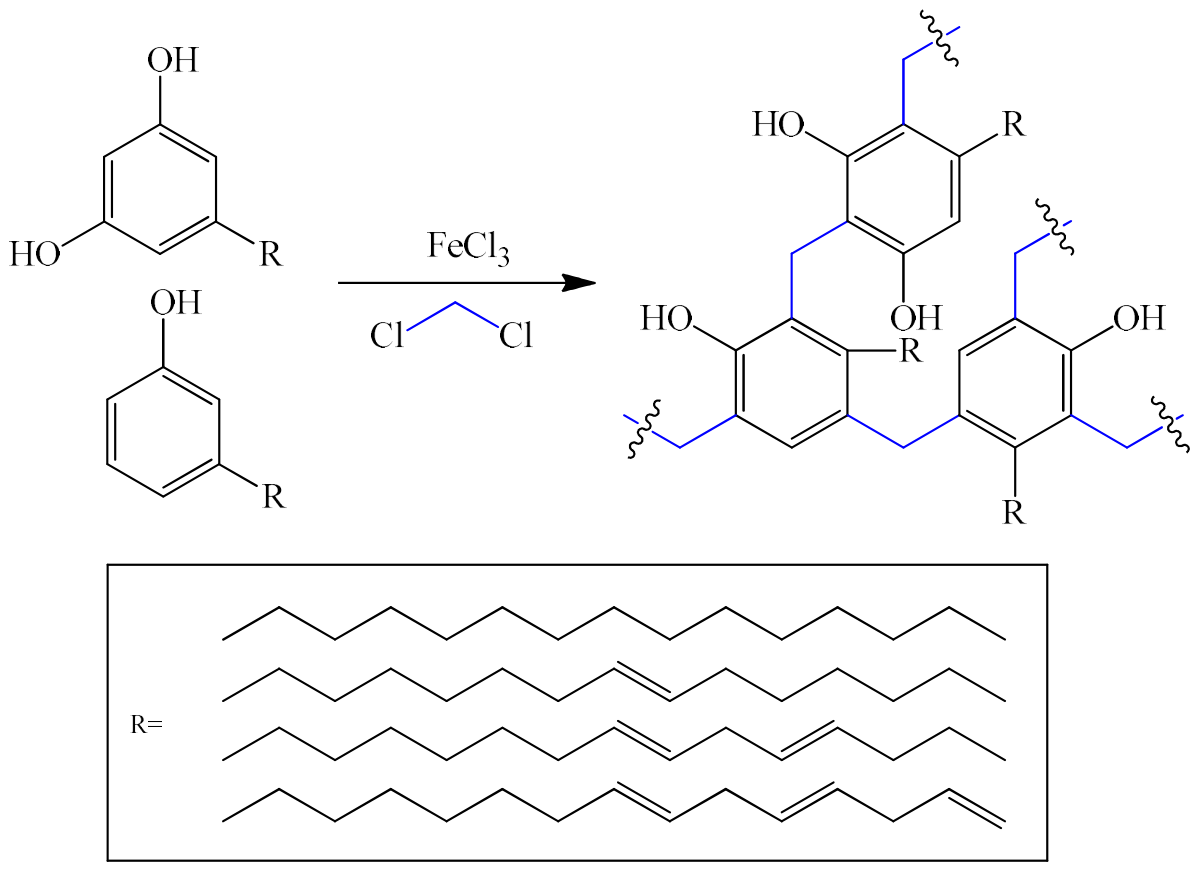
However, although hydrophobic materials are effective for the extraction of volatile organic compounds, hypercrosslinked polymers attract considerable interest due to their high chemical stability in acidic, alkaline, and organic media. In this context, Liu et al. [133] synthesized such polymers according to the scheme illustrated in Figure 26, using cashew nut shell liquid as biomonomers. Iron(III) chloride was employed as the polycondensation catalyst. The resulting sorbents, designated CNSL-HCP1, CNSL-HCP2, CNSL-HCP3, CNSL-HCP4, and CNSL-HCP5, obtained with different FeCl3 contents (20, 30, 35, 40, and 45 mmol, respectively), exhibited BET-specific surface areas of 28, 36, 40, 93, and 41 m2/g, pore volumes of 0.059, 0.073, 0.085, 0.149, and 0.097 cm3/g, and pore diameters of 2.38, 2.38, 1.83, 2.38, and 2.00 nm, respectively. The most efficient material was CNSL-HCP4, demonstrating maximum sorption capacities for o-xylene, benzene, and acetone of 217, 25, and 7 mg/g, respectively.
One advantage of these materials over other naturally derived sorbents, such as cellulose-based sorbents [78], is the very slight decrease in their sorption capacity even after five cycles of use, making them effective and suitable for repeated application.
Although the use of natural compounds represents a promising approach, as in [133], synthetic polymers remain highly useful due to their potential ability to sorb large amounts of pollutants and withstand a greater number of sorption/desorption cycles for the removal of polycyclic aromatic hydrocarbons (solid under standard conditions), which are potentially hazardous substances that enter water through industrial effluents. In this context, Krishnan et al. [134] developed thermoplastics (polysulfone, polystyrene, and polycarbonate) with a mesoporous structure obtained via nanocrystallization-induced phase separation by rapid freezing, followed by sulfonation reactions to increase the hydrophilicity of the resulting materials. This was necessary because the parent polymers are highly hydrophobic, leading to slow penetration of PAH-containing water into the sorbent. The BET-specific surface areas of sulfonated polystyrene, polysulfone, and polycarbonate are 185, 178, and 176 m2/g, with pore sizes of 8, 9, and 5 nm, respectively. To evaluate the sorption efficiency for fluorene, pyrene, and fluoranthene, quasi-saturated solutions of these polycyclic aromatic hydrocarbons at a concentration of 0.1 µg/L were used, with a sorbent dosage of 60 g/L. The maximum sorption efficiencies are presented in Table 2.
The developed polymeric sorbent materials exhibit high maximum sorption efficiencies for polycyclic aromatic hydrocarbons and the potential for reusability even after 10 sorption/desorption cycles. Desorption of pollutants from the sulfonated mesoporous polymer samples was achieved with nearly 100% efficiency using solvent elution (with methanol). However, although the work [134] demonstrated effective removal of toxic substances from water, the authors did not report the maximum sorption capacities of the developed materials in mg/g, providing only the maximum efficiency values, which hinders comparison with similar studies.
For the removal of polycyclic aromatic hydrocarbons, sorbent materials based on naturally derived compounds can also be effectively employed. For instance, Saleh et al. [135] used activated carbon derived from date pits combined with an acrylic acid-crotonic acid copolymer to fabricate a polymeric sorbent for the simultaneous removal of naphthalene and fluorene from water. The maximum sorption capacity of the developed material for the naphthalene-fluorene mixture (unfortunately, the authors did not specify the mixture ratio) was estimated to be 2.76 mg/g. The negative ΔG° values for the adsorption of the PAH mixture (−10.25, −10.01, −11.92, and −12.66 kJ·mol−1 at 298, 308, 318, and 328 K, respectively) indicate that the thermodynamic feasibility and spontaneity of PAH sorption by this sorbent increase with rising temperature from 298 to 328 K. Similarly, the ΔH° value (14.0 kJ·mol−1) confirms the endothermic nature of the simultaneous PAH sorption. The positive ΔS° value (81.39 J·mol−1·K−1) suggests a decrease in randomness at the solid-liquid interface. Reference [135] presents an interesting study on the simultaneous sorption of two PAHs. However, although the maximum sorption capacity for the naphthalene-fluorene mixture is reported, the individual sorption capacities for each of these two pollutants are not provided, which hinders understanding of whether the sorbent is universal or selective.
The studies reviewed in this section demonstrate the significant potential of polymeric sorbents for the removal of a wide range of persistent organic pollutants, including pesticides, hormones, volatile organic compounds, and polycyclic aromatic hydrocarbons. The sorption capacities of state-of-the-art materials can reach 326 mg/g for benzene [132] and 80–102 mg/g for organophosphorus pesticides [127]. Natural polymers (cyclodextrins, proanthocyanidins, biomass waste) exhibit biocompatibility, whereas synthetic polymers (hydrophobic, hypercrosslinked, mesoporous) generally display higher capacities and better reusability. However, several shortcomings hinder the practical implementation of the developed polymeric sorbents: insufficient assessment of quantitative sorption-desorption data; lack of testing under real environmental conditions; neglect of the influence of coexisting impurities; complexity of sorbent synthesis; disregard of economic and logistical factors; and lack of consideration of regeneration methods and disposal of pollutants and spent materials. Future efforts should focus on simpler, more economical, and environmentally friendly methods for the synthesis of polymeric sorbents, taking into account locally available feedstock in regions at risk of contamination, evaluation of materials under real-world conditions considering local flora and fauna, and the use of computational modeling, machine learning, and artificial intelligence to comprehensively assess all factors influencing the development and operation of the designed material. Ultimately, the removal of organic pollutants from water using polymeric sorbents is an achievable goal, but overcoming the aforementioned methodological and technological barriers is necessary to transition from laboratory-scale studies to industrial applications.

4. Conclusions

A review of the current literature confirms a growing interest in the development of polymer adsorbents for the removal of various pollutants, including hydrocarbons, dyes, pharmaceuticals, pesticides, VOCs, and PAHs. The use of renewable natural substances as a basis for new sorbent materials appears promising. Materials derived from terpenes, vegetable oils, aloe vera, chitosan, cellulose, or proanthocyanidins combine environmental safety with accessibility. Under specific conditions, their performance matches or exceeds that of synthetic analogs, as illustrated by the exceptional capacities of aloe vera-derived hydrochar for diesel fuel (8800 mg/g) or modified cellulose for motor oil (47,000 mg/g). Synthetic polymers (hyper-cross-linked, sulfonated mesoporous, molecularly imprinted) offer their own advantages: record capacities for ciprofloxacin (757.7 mg/g) or benzene (326 mg/g), high selectivity, and good reusability.
Direct comparisons between these two classes remain difficult, however, due to the heterogeneity of experimental conditions (pollutants, concentration ranges, pH, temperature, evaluation metrics). Furthermore, evidence for sorption mechanisms, particularly for terpene-based polymers, remains indirect, as no crude oil sorption studies have been conducted using these materials.
Several bottlenecks hinder practical scale-up. The scalability and cost-effectiveness of syntheses remain problematic. Few studies validate their results under realistic environmental conditions (organic matter, competing ions, complex mixtures). Regeneration protocols are often insufficient or show significant loss of cyclic stability after only a few cycles. Some studies fail to report capacities in mg/g, rendering any comparison impossible. Effectiveness at environmentally relevant trace concentrations and selectivity in complex matrices are rarely documented.
Thus, although the transition toward “greener” sorption technologies is scientifically sound and necessary, it must account for these limitations. Categorical claims of universal superiority of one material class are not justified by the current evidence. Future progress will require standardized comparative studies, validation under real-world conditions, robust regeneration protocols, and balanced reporting of both advantages and limitations. A convergent approach combining the best of natural and synthetic materials through hybrid systems is particularly promising. The field remains dynamic, but overcoming these bottlenecks is essential for transitioning from laboratory achievements to industrial applications.

Author Contributions

Conceptualization, A.K. (Aleksey Kotenko); validation, A.K. (Anastasia Konstantinova) and E.C.; investigation, B.T. and A.K. (Aleksey Kotenko); writing-original draft preparation, B.T. and E.C.; writing-review and editing, B.T. and E.C.; visualization, B.T. and A.K. (Anastasia Konstantinova); supervision, E.C. All authors have read and agreed to the published version of the manuscript.

Funding

This research was funded by the Russian Science Foundation Grant No. 25-29-01292, https://rscf.ru/project/25-29-01292/ (25 March 2026).

Institutional Review Board Statement

Not applicable.

Data Availability Statement

No new data was created or analyzed in this study.

Acknowledgments

During the preparation of this manuscript/study, the authors utilized Deepseek to refine language and grammar.

Conflicts of Interest

The authors declare no conflicts of interest.

Abbreviations

The following abbreviations are used in this manuscript:
βCD-CA-PEGBeta-cyclodextrin and citric acid with polyethylene glycol
BETBrunauer-Emmett-Teller
BFBasic Fuchsin
BODIPYBoron-dipyrromethene
Capy-SCalixarene modified with Sulfonate groups
Chitosan-g-OctanalChitosan grafting Octanal
EYEosin Y
MBMethylene Blue
MOMoringa Oleifera
PANPolyacrylonitrile
ZIF-8Zeolitic Imidazolate Framework-8

References

  1. Water, U.N. Progress on Change in Water-Use Efficiency: Global Status and Acceleration Needs for SDG Indicator 6.4.1; Food and Agriculture Organization: Rome, Italy, 2021; Volume 1. [Google Scholar]
  2. Jain, S.; Srivastava, A.; Khadke, L.; Chatterjee, U.; Elbeltagi, A. Global-Scale Water Security and Desertification Management Amidst Climate Change. Environ. Sci. Pollut. Res. 2024, 31, 58720–58744. [Google Scholar] [CrossRef]
  3. Herrfahrdt-Pähle, E.; Houdret, A.; Dombrowsky, I.; Cullmann, J.; Mukherji, A.; Unver, O.; Varady, R. Empowering Global Water Governance: Taking the 2023 UN Water Conference Outcomes Forward to Address the Current Water Crises. Water Int. 2025, 50, 4–10. [Google Scholar] [CrossRef]
  4. Ellos, D.M.; Bacosa, H.P. A Review of the Multifaceted Impact and Implications of Oil Spills and Marine Disasters in Asia. Discov. Ocean. 2025, 2, 41. [Google Scholar] [CrossRef]
  5. Vasconcelos, R.N.; Lima, A.T.C.; Lentini, C.A.D.; Miranda, J.G.V.; de Mendonça, L.F.F.; Costa, D.P.; Duverger, S.G.; Cambui, E.C.B. Trends in Oil Spill Modeling: A Review of the Literature. Water 2025, 17, 2300. [Google Scholar] [CrossRef]
  6. Oriji, A.Y.; Isaac, G.O.; Ojo, R.F. Emerging Contaminants in Drinking Water: Global Perspective. In Emerging Contaminants in Food and Food Products; CRC Press: Boca Raton, FL, USA, 2024; pp. 44–60. [Google Scholar]
  7. Mary Ealias, A.; Meda, G.; Tanzil, K. Recent Progress in Sustainable Treatment Technologies for the Removal of Emerging Contaminants from Wastewater: A Review on Occurrence, Global Status and Impact on Biota. Rev. Environ. Contam. Toxicol. 2024, 262, 16. [Google Scholar] [CrossRef]
  8. Jones, E.R.; Bierkens, M.F.P.; Wanders, N.; Sutanudjaja, E.H.; van Beek, L.P.; van Vliet, M.T. Current Wastewater Treatment Targets Are Insufficient to Protect Surface Water Quality. Commun. Earth Environ. 2022, 3, 221. [Google Scholar] [CrossRef]
  9. Wang, J.; Zhou, Y.; Zhuang, L.; Shi, L.; Zhang, S. Study on the Critical Factors and Hot Spots of Crude Oil Tanker Accidents. Ocean Coast. Manag. 2022, 217, 106010. [Google Scholar] [CrossRef]
  10. Hejri, S.; Jaafarzadeh, N.; Sabzalipour, S.; Farrokhian, F.; Davami, A.H. Identification and Ranking of Oil Pollution by Developing a Preventive Management and Emergency Response Model Against Pollution: A Case Study of a Mega Port on the Northern Coast of the Persian Gulf. Reg. Stud. Mar. Sci. 2024, 80, 103908. [Google Scholar] [CrossRef]
  11. Serov, P.; Mattingsdal, R.; Winsborrow, M.; Patton, H.; Andreassen, K. Widespread Natural Methane and Oil Leakage from Sub-Marine Arctic Reservoirs. Nat. Commun. 2023, 14, 1782. [Google Scholar] [CrossRef]
  12. Murawski, S.A.; Schwing, P.T.; Patterson, W.F.; Sutton, T.T.; Montagna, P.A.; Milligan, R.J.; Joye, S.B.; Thomas, L.; Kilborn, J.P.; Paris, C.B.; et al. Vulnerability and Resilience of Living Marine Resources to the Deepwater Horizon Oil Spill: An Overview. Front. Mar. Sci. 2023, 10, 1202250. [Google Scholar] [CrossRef]
  13. Murawski, S.A.; Kilborn, J.P.; Bejarano, A.C.; Chagaris, D.; Donaldson, D.; Hernandez, F.J., Jr.; MacDonald, T.C.; Newton, C.; Peebles, E.; Robinson, K.L. A Synthesis of Deepwater Horizon Impacts on Coastal and Nearshore Living Marine Resources. Front. Mar. Sci. 2021, 7, 594862. [Google Scholar] [CrossRef]
  14. Incardona, J.P.; Linbo, T.L.; Cameron, J.R.; French, B.L.; Bolton, J.L.; Gregg, J.L.; Donald, C.E.; Hershberger, P.K.; Scholz, N.L. Biological Responses of Pacific herring Embryos to Crude Oil Are Quantifiable at Exposure Levels Below Conventional Limits of Quantitation for PAHs in Water and Tissues. Environ. Sci. Technol. 2023, 57, 19214–19222. [Google Scholar] [CrossRef] [PubMed]
  15. Takeshita, R.; Bursian, S.J.; Colegrove, K.M.; Collier, T.K.; Deak, K.; Dean, K.M.; De Guise, S.; DiPinto, L.M.; Elferink, C.J.; Esbaugh, A.J.; et al. A Review of the Toxicology of Oil in Vertebrates: What We Have Learned Following the Deepwater Horizon Oil Spill. J. Toxicol. Environ. Health Part B 2021, 24, 355–394. [Google Scholar] [CrossRef] [PubMed]
  16. Fritt-Rasmussen, J.; Møller, E.F.; Kyhn, L.A.; Wegeberg, S.; Lassen, P.; Cooper, D.; Gustavson, K. Biodegradation, Bioaccumulation and Toxicity of Oil Spill Herding Agents in Arctic Waters as Part of an Ecotoxicological Screening. Water Air Soil Pollut. 2021, 232, 380. [Google Scholar] [CrossRef]
  17. D’Affonseca, F.M.; Reis, F.A.G.V.; dos Santos Corrêa, C.V.; Wieczorek, A.; do Carmo Giordano, L.; Marques, M.L.; Rodrigues, F.H.; Costa, D.M.; de Andrade Kolya, A.; Veiga, V.M.; et al. Environmental Sensitivity Index Maps to Manage Oil Spill Risks: A Review and Perspectives. Ocean Coast. Manag. 2023, 239, 106590. [Google Scholar] [CrossRef]
  18. Iskakov, B.; Nurakynov, S.; Dabas, J.; Zhantayev, Z.; Balakay, L.; Dedova, T.; Yelisseyeva, A.; Sydyk, N. Enhancing Environmental Sensitivity and Vulnerability Assessments for Oil Spill Responses in the Caspian Sea. Sustainability 2024, 16, 9566. [Google Scholar] [CrossRef]
  19. Chowdhury, F.N.; Rahman, M.M. Source and Distribution of Heavy Metal and Their Effects on Human Health. In Heavy Metal Toxicity: Human Health Impact and Mitigation Strategies; Springer Nature: Cham, Switzerland, 2024; pp. 45–98. [Google Scholar]
  20. Wang, W.; Park, S.; Choi, B.G.; Oh, J.E. Occurrence and Removal of Benzotriazole and Benzothiazole in Drinking Water Treatment Plants. Environ. Pollut. 2023, 316, 120563. [Google Scholar] [CrossRef]
  21. Zahoor, I.; Mushtaq, A. Water Pollution from Agricultural Activities: A Critical Global Review. Int. J. Chem. Biochem. Sci. 2023, 23, 164–176. [Google Scholar]
  22. Tang, F.H.M.; Lenzen, M.; McBratney, A.; Maggi, F. Risk of Pesticide Pollution at the Global Scale. Nat. Geosci. 2021, 14, 206–210. [Google Scholar] [CrossRef]
  23. Wilkinson, J.L.; Boxall, A.B.A.; Kolpin, D.W.; Leung, K.M.Y.; Lai, R.W.S.; Galbán-Malagón, C.; Adell, A.D.; Mondon, J.; Metian, M.; Marchant, R.A.; et al. Pharmaceutical Pollution of the World’s Rivers. Proc. Natl. Acad. Sci. USA 2022, 119, e2113947119. [Google Scholar] [CrossRef]
  24. Vaudreuil, M.A.; Munoz, G.; Duy, S.V.; Sauvé, S. Tracking Down Pharmaceutical Pollution in Surface Waters of the St. Lawrence River and Its Major Tributaries. Sci. Total Environ. 2024, 912, 168680. [Google Scholar] [CrossRef] [PubMed]
  25. Gopalakrishnan, K.K.; Sivakumar, R.; Kashian, D. The Microplastics Cycle: An In-Depth Look at a Complex Topic. Appl. Sci. 2023, 13, 10999. [Google Scholar] [CrossRef]
  26. Priya, P.; Sabarmathi, A. Control Strategies for Fractional Order Soil Micro Plastic Pollution Model and Preserving Nutrient Cycle Integrity. Multiscale Multidiscip. Model. Exp. Des. 2024, 7, 4589–4604. [Google Scholar] [CrossRef]
  27. Clark, S.N.; Anenberg, S.C.; Brauer, M. Global Burden of Disease from Environmental Factors. Annu. Rev. Public Health 2025, 46, 233–251. [Google Scholar] [CrossRef]
  28. Carlson, C.J.; Alam, M.S.; North, M.A.; Onyango, E.; Stewart-Ibarra, A.M. The Health Burden of Climate Change: A Call for Global Scientific Action. PLoS Clim. 2023, 2, e0000126. [Google Scholar] [CrossRef]
  29. Motorin, D.; Roozbahani, H.; Handroos, H. Development of a Novel Method for Estimating and Planning Automatic Skimmer Operation in Response to Offshore Oil Spills. J. Environ. Manag. 2022, 318, 115451. [Google Scholar] [CrossRef]
  30. Etkin, D.S.; Nedwed, T.J. Effectiveness of Mechanical Recovery for Large Offshore Oil Spills. Mar. Pollut. Bull. 2021, 163, 111848. [Google Scholar] [CrossRef]
  31. Adofo, Y.K.; Nyankson, E.; Agyei-Tuffour, B. Dispersants as an Oil Spill Clean-Up Technique in the Marine Environment: A Review. Heliyon 2022, 8, e10191. [Google Scholar] [CrossRef]
  32. Saharan, Y.; Singh, J.; Goyat, R.; Umar, A.; Ibrahim, A.A.; Akbar, S.; Baskoutas, S. Recent Advances in Soil Cleanup Technologies for Oil Spills: A Systematic Review. Water Air Soil Pollut. 2023, 234, 503. [Google Scholar] [CrossRef]
  33. Hübner, U.; Spahr, S.; Lutze, H.; Wieland, A.; Rüting, S.; Gernjak, W.; Wenk, J. Advanced Oxidation Processes for Water and Wastewater Treatment-Guidance for Systematic Future Research. Heliyon 2024, 10, e31181. [Google Scholar] [CrossRef] [PubMed]
  34. Chicca, I.; Becarelli, S.; Di Gregorio, S. Microbial Involvement in the Bioremediation of Total Petroleum Hydrocarbon Polluted Soils: Challenges and Perspectives. Environments 2022, 9, 52. [Google Scholar] [CrossRef]
  35. Yadav, S.; Sharma, N.; Dalal, A.; Panghal, P.; Sharma, A.K.; Surender, K. Cutting-Edge Regeneration Technologies for Saturated Adsorbents: A Systematic Review on Pathways to Circular Wastewater Treatment System. Environ. Monit. Assess. 2025, 197, 215. [Google Scholar] [CrossRef] [PubMed]
  36. Saleh, T.A. Materials, Nanomaterials, Nanocomposites, and Methods Used for the Treatment and Removal of Hazardous Pollutants from Wastewater: Treatment Technologies for Water Recycling and Sustainability. Nano-Struct. Nano-Objects 2024, 39, 101231. [Google Scholar] [CrossRef]
  37. Haridharan, N.; Sundar, D.; Kurrupasamy, L.; Anandan, S.; Liu, C.H.; Wu, J.J. Oil Spills Adsorption and Cleanup by Polymeric Materials: A Review. Polym. Adv. Technol. 2022, 33, 1353–1384. [Google Scholar] [CrossRef]
  38. Gote, M.G.; Dhila, H.H.; Muley, S.R. Advanced Synthetic and Bio-Based Sorbents for Oil Spill Clean-Up: A Review of Novel Trends. Nat. Environ. Pollut. Technol. 2023, 22, 39–61. [Google Scholar] [CrossRef]
  39. Wang, Q.; Luo, B.; Wang, Z.; Hu, Y.; Du, M. Pore Engineering in Biomass-Derived Carbon Materials for Enhanced Energy, Catalysis, and Environmental Applications. Molecules 2024, 29, 5172. [Google Scholar] [CrossRef] [PubMed]
  40. Nogueira, J.H.G.F. Carbon-Based Nanomaterials from Renewable Sources for Water Treatment Applications. Ph.D. Thesis, Universidade de Aveiro, Aveiro, Portugal, 2024. [Google Scholar]
  41. Eweida, B.Y.; Omer, A.M.; Tamer, T.M.; Soliman, H.A.E.M.; Zaatot, A.A.; Mohy-Eldin, M.S. Kinetics, Isotherms and Thermodynamics of Oil Spills Removal by Novel Amphiphilic Chitosan-g-Octanal Schiff Base Polymer Developed by Click Grafting Technique. Polym. Bull. 2023, 80, 4813–4840. [Google Scholar] [CrossRef]
  42. Tran, H.N. Applying Linear Forms of Pseudo-Second-Order Kinetic Model for Feasibly Identifying Errors in the Initial Periods of Time-Dependent Adsorption Datasets. Water 2023, 15, 1231. [Google Scholar] [CrossRef]
  43. Bullen, J.C.; Saleesongsom, S.; Gallagher, K.; Weiss, D.J. A Revised Pseudo-Second-Order Kinetic Model for Adsorption, Sensitive to Changes in Adsorbate and Adsorbent Concentrations. Langmuir 2021, 37, 3189–3201. [Google Scholar] [CrossRef]
  44. Yang, Y.; Li, X.; Wan, C.; Zhang, Z.; Cao, W.; Wang, G.; Wu, Y. A Comprehensive Review of Cellulose Nanomaterials for Adsorption of Wastewater Pollutants: Focus on Dye and Heavy Metal Cr Adsorption and Oil/Water Separation. Collagen Leather 2024, 6, 35. [Google Scholar] [CrossRef]
  45. Tajari, E.; Bashiri, H. Synthesis and Efficiency of the Cellulose@Fe3O4@ZIF-8 Carbon Aerogel Magnetic in the Removal of Gasoil from Aqueous Solutions. Sci. Rep. 2025, 15, 39851. [Google Scholar] [CrossRef]
  46. Muthukumaran, P.; Suresh Babu, P.; Karthikeyan, S.; Kamaraj, M.; Aravind, J. Tailored Natural Polymers: A Useful Eco-Friendly Sustainable Tool for the Mitigation of Emerging Pollutants: A Review. Int. J. Environ. Sci. Technol. 2021, 18, 2491–2510. [Google Scholar] [CrossRef]
  47. Fierascu, R.C.; Fierascu, I.; Matei, R.I.; Manaila-Maximean, D. Natural and Natural-Based Polymers: Recent Developments in Management of Emerging Pollutants. Polymers 2023, 15, 2063. [Google Scholar] [CrossRef]
  48. Ouyang, D.; Lei, X.; Zheng, H. Recent Advances in Biomass-Based Materials for Oil Spill Cleanup. Nanomaterials 2023, 13, 620. [Google Scholar] [CrossRef] [PubMed]
  49. Samir, A.; Ashour, F.H.; Abdel Hakim, A.A.; Bassyouni, M. Recent Advances in Biodegradable Polymers for Sustainable Applications. npj Mater. Degrad. 2022, 6, 68. [Google Scholar] [CrossRef]
  50. Sukumaran, N.P.; Gopi, S. Overview of Biopolymers: Resources, Demands, Sustainability, and Life Cycle Assessment Modeling and Simulation. In Biopolymers and Their Industrial Applications; Elsevier: Amsterdam, The Netherlands, 2021; pp. 1–19. [Google Scholar]
  51. Sobiesiak, M. New Bio-Based Polymer Sorbents out of Terpene Compounds or Vegetable Oils: Synthesis, Properties, Analysis of Sorption Processes. Polymers 2022, 14, 5389. [Google Scholar] [CrossRef]
  52. Petroni, S.; Tagliaro, I.; Antonini, C.; D’Arienzo, M.; Orsini, S.F.; Mano, J.F.; Brancato, V.; Borges, J.; Cipolla, L. Chitosan-Based Biomaterials: Insights into Chemistry, Properties, Devices, and Their Biomedical Applications. Mar. Drugs 2023, 21, 147. [Google Scholar] [CrossRef]
  53. Yu, S.; He, J.; Zhang, Z.; Sun, Z.; Xie, M.; Xu, Y.; Bie, X.; Li, Q.; Zhang, Y.; Sevilla, M. Towards Negative Emissions: Hydro-thermal Carbonization of Biomass for Sustainable Carbon Materials. Adv. Mater. 2024, 36, 2307412. [Google Scholar] [CrossRef] [PubMed]
  54. Zango, Z.U.; Sambudi, N.S.; Jumbri, K.; Ramli, A.; Abu Bakar, N.H.H.; Saad, B.; Rozaini, M.N.H.; Isiyaka, H.A.; Osman, A.M.O.; Sulieman, A. An Overview and Evaluation of Highly Porous Adsorbent Materials for Polycyclic Aromatic Hydrocarbons and Phenols Removal from Wastewater. Water 2020, 12, 2921. [Google Scholar] [CrossRef]
  55. Zamparas, M.; Tzivras, D.; Dracopoulos, V.; Ioannides, T. Application of Sorbents for Oil Spill Cleanup Focusing on Natural-Based Modified Materials: A Review. Molecules 2020, 25, 4522. [Google Scholar] [CrossRef]
  56. Asadpour, R.; Sapari, N.B.; Tuan, Z.Z.; Jusoh, H.; Riahi, A.; Uka, O.K. Application of Sorbent Materials in Oil Spill Management: A Review. Casp. J. Appl. Sci. Res. 2013, 2, 46–58. [Google Scholar]
  57. Lopez-Rodriguez, D.; Mico-Vicent, B.; Jordán-Núñez, J.; Bonet-Aracil, M.; Bou-Belda, E. Uses of Nanoclays and Adsorbents for Dye Recovery: A Textile Industry Review. Appl. Sci. 2021, 11, 11422. [Google Scholar] [CrossRef]
  58. Aguilar-Pérez, K.M.; Avilés-Castrillo, J.I.; Ruiz-Pulido, G. Nano-Sorbent Materials for Pharmaceutical-Based Wastewater Effluents—An Overview. Case Stud. Chem. Environ. Eng. 2020, 2, 100028. [Google Scholar] [CrossRef]
  59. Kyriakopoulos, G.; Doulia, D. Adsorption of Pesticides on Carbonaceous and Polymeric Materials from Aqueous Solutions: A Review. Sep. Purif. Rev. 2006, 35, 97–191. [Google Scholar] [CrossRef]
  60. Trochimczuk, A.W.; Streat, M.; Malik, D.J. Sorption of Pesticides and Herbicides on Highly Polar Polymeric Sorbents. Sep. Sci. Technol. 2003, 38, 1813–1827. [Google Scholar] [CrossRef]
  61. Ahmadi, Y.; Kim, K.H. Recent Progress in the Development of Hyper-Cross-Linked Polymers for Adsorption of Gaseous Volatile Organic Compounds. Polym. Rev. 2023, 63, 365–393. [Google Scholar] [CrossRef]
  62. Masqué, N.; Marcé, R.M.; Borrull, F. New Polymeric and Other Types of Sorbents for Solid-Phase Extraction of Polar Organic Micropollutants from Environmental Water. TrAC Trends Anal. Chem. 1998, 17, 384–394. [Google Scholar] [CrossRef]
  63. Manousi, N.; Zachariadis, G.A. Recent Advances in the Extraction of Polycyclic Aromatic Hydrocarbons from Environmental Samples. Molecules 2020, 25, 2182. [Google Scholar] [CrossRef]
  64. Asif, Z.; Chen, Z.; An, C.; Dong, J. Environmental Impacts and Challenges Associated with Oil Spills on Shorelines. J. Mar. Sci. Eng. 2022, 10, 762. [Google Scholar] [CrossRef]
  65. Mody, C.C. The Oil Spillover: Prospecting for Oil in Innovation Studies and the History of Technology. Hist. Technol. 2024, 40, 149–172. [Google Scholar] [CrossRef]
  66. Ogbuka, J.C.; Nwanmuoh, E.E.; Ogbo, A.I.; Achoru, F.E. Offshore Oil Spill Response Base and Management of Deepwater/Offshore Oil Resources in the Nigerian Marine Waters: A Review. Int. J. Environ. Impacts 2022, 5, 65–81. [Google Scholar] [CrossRef]
  67. Arnold, S.; Stewart, P.A.; Pratt, G.C.; Ramachandran, G.; Kwok, R.K.; Engel, L.S.; Sandler, D.P.; Stenzel, M.R. Estimation of Aerosol Concentrations of Oil Dispersants COREXIT™ EC9527A and EC9500A During the Deepwater Horizon Oil Spill Response and Clean-Up Operations. Ann. Work Expo. Health 2022, 66, i188–i202. [Google Scholar] [PubMed]
  68. Gertsena, M.M.; Arlyapova, V.A.; Perelomova, L.V.; Kharkova, A.S.; Golysheva, A.N.; Atroshchenko, Y.M.; Cardinale, A.M.; Reverberi, A.P. Environmental Implications of Energy Sources: A Review on Technologies for Cleaning Oil-Contaminated Ecosystems. Energies 2024, 17, 3561. [Google Scholar] [CrossRef]
  69. Vu, N.T.; Trang, L.H.; Thuy, C.N.; Nguyen, T.-A.T.; Yabalak, E.; Kalderis, D. Treatment of Diesel Oil-Contaminated Water Using Hydrochar Derived from the Hydrothermal Carbonization of Aloe Vera Leaves. Water Air Soil Pollut. 2025, 236, 237. [Google Scholar] [CrossRef]
  70. Li, Q.; Li, F.; Yang, Y.; Yan, H. Preparation, Structure Control and Application of Straw-Based Hydrothermal Carbon: A Review. Bull. Mater. Sci. 2025, 48, 123. [Google Scholar] [CrossRef]
  71. Aminzai, M.T.; Yabalak, E. Advanced Polymeric Membranes for Environmental Remediation: Emerging Roles of Hydrochar and Biochar Composites. J. Mater. Sci. 2025, 60, 18710–18733. [Google Scholar] [CrossRef]
  72. Ibrahim, A.; Elkady, M.F.; Yoshitake, T.; Khaireldin, W.; Eldemerdash, U.N. High-Performance Eco-Friendly Chitosan Composite for Separation and Remediation of Oil Spill in an Aqueous Environment. Nanotechnol. Environ. Eng. 2025, 10, 31. [Google Scholar] [CrossRef]
  73. Palamà, I.E.; Grieco, M.; Ursini, O.; D’Amone, E.; D’Amone, S.; Cortese, B. Materials and Methodologies for Tuning Surface Wettability and Oil/Water Separation Mechanisms. In Oil–Water Mixtures and Emulsions, Volume 2: Advanced Materials for Separation and Treatment; American Chemical Society: Washington, DC, USA, 2022; pp. 165–244. [Google Scholar]
  74. Thai, Q.B.; Nguyen, S.T.; Ho, D.K.; Tran, T.D.; Huynh, D.M.; Do, N.H.N.; Luu, T.P.; Le, P.K.; Le, D.K.; Phan-Thien, N. Cellulose-Based Aerogels from Sugarcane Bagasse for Oil Spill-Cleaning and Heat Insulation Applications. Carbohydr. Polym. 2020, 228, 115365. [Google Scholar] [CrossRef]
  75. Nan, N.; Hu, W.; Wang, J. Lignin-Based Porous Biomaterials for Medical and Pharmaceutical Applications. Biomedicines 2022, 10, 747. [Google Scholar] [CrossRef]
  76. Vieira, T.; Becegato, V.A.; Paulino, A.T. Equilibrium Isotherms, Kinetics, and Thermodynamics of the Adsorption of 2,4-Dichlorophenoxyacetic Acid to Chitosan-Based Hydrogels. Water Air Soil Pollut. 2021, 232, 60. [Google Scholar] [CrossRef]
  77. Qiang, H.; Wang, J.; Liu, H.; Zhu, Y. From Vanillin to Biobased Aromatic Polymers. Polym. Chem. 2023, 14, 4255–4274. [Google Scholar] [CrossRef]
  78. Kandil, H.; Rivilla, I.; Labidi, J. Cellulose Pulp Functionalization with Acetaldehyde and Cinnamaldehyde for Efficient Oil Removal from Wastewater. Surf. Interfaces 2025, 52, 107601. [Google Scholar]
  79. Kintzi, A.; Daturpalli, S.; Battagliarin, G.; Zumstein, M. Biodegradation of Water-Soluble Polymers by Wastewater Microorganisms: Challenging Laboratory Testing Protocols. Environ. Sci. Technol. 2024, 58, 15246–15256. [Google Scholar] [CrossRef]
  80. Ringler, C.; Agbonlahor, M.; Baye, K.; Barron, J.; Hafeez, M.; Lundqvist, J.; Meenakshi, J.V.; Mehta, L.; Mekonnen, D.; Rojas-Ortuste, F.; et al. Water for Food Systems and Nutrition. In Science and Innovations for Food Systems Transformation; Springer: Berlin/Heidelberg, Germany, 2023; Volume 497. [Google Scholar]
  81. Nekrasova, N.A.; Milyutin, V.V.; Kaptakov, V.O.; Kozlitin, E.A. Inorganic Sorbents for Wastewater Treatment from Radioactive Contaminants. Inorganics 2023, 11, 126. [Google Scholar] [CrossRef]
  82. Lee, M.; Stock, C.A.; Shevliakova, E.; Malyshev, S.; Beaudor, M.; Vuichard, N. Uneven Consequences of Global Climate Mitigation Pathways on Regional Water Quality in the 21st Century. Nat. Commun. 2024, 15, 5464. [Google Scholar] [CrossRef]
  83. Visser, P.M.; McKay, R.M.; Bullerjahn, G.S. (Eds.) Ecology and Molecular Biology of Bloom-Forming Cyanobacteria; Frontiers Media SA: Lausanne, Switzerland, 2024. [Google Scholar]
  84. Banerji, A.; Benesh, K. Incorporating Microbial Species Interaction in Management of Freshwater Toxic Cyanobacteria: A Systems Science Challenge. Ecologies 2022, 3, 570–587. [Google Scholar] [CrossRef]
  85. Trainer, V.L.; King, T.L. SoundToxins: A Research and Monitoring Partnership for Harmful Phytoplankton in Washington State. Toxins 2023, 15, 189. [Google Scholar] [CrossRef]
  86. Gupta, R. Chemistry in Wastewater Treatment: Urban Applications. In Waste Management for Smart Cities; Springer Nature: Singapore, 2024; pp. 135–160. [Google Scholar]
  87. Sreevidya, C.P.; Ajitha, V.; Manoj Kumar, T.M.; Manomi, S.; Bhavya, K. BIF-Induced ROS-Mediated Cytotoxicity and Genotoxicity in Embryonic Cell Culture of Daphnia magna. Aquat. Toxicol. 2025, 280, 107285. [Google Scholar]
  88. Hao, J.; Wang, L.; Wang, X.; Wang, J.; He, M.; Zhang, X.; Wang, J.; Nie, L.; Li, J. Preparation, Modification and Antifouling Properties of Polyaniline Conductive Membranes for Water Treatment: A Comprehensive Review. Environ. Sci. Water Res. Technol. 2024, 10, 105–127. [Google Scholar] [CrossRef]
  89. AlKhaldi, H.; AlHarthi, S.; AlHarthi, S.; AlGhamdic, H.A.; AlZahranic, Y.M.; Mahmoudd, S.A.; Amind, L.G.; Al-Shaalan, N.H.; Boraief, W.E.; Attia, M.S.; et al. Sustainable Polymeric Adsorbents for Adsorption-Based Water Remediation and Pathogen Deactivation: A Review. RSC Adv. 2024, 14, 33143–33190. [Google Scholar] [PubMed]
  90. Ali, H.; Ismail, A.M. Recyclable and Biodegradable Ag@Chitosan Nanocomposite Beads Synthesized in One-Step for Catalytic Hydrogenation of 4-Nitrophenol. J. Polym. Environ. 2022, 30, 3379–3390. [Google Scholar] [CrossRef]
  91. Yunusa, U.; Usman, B.; Ibrahim, M.B. Cationic Dyes Removal from Wastewater by Adsorptive Method: A Systematic In-Depth Review. Alger. J. Chem. Eng. 2021, 1, 6–40. [Google Scholar]
  92. Sudarshan, S.; Bharti, V.S.; Harikrishnan, S.; Shukla, S.P.; RathiBhuvaneswari, G. Eco-Toxicological Effect of a Commercial Dye Rhodamine B on Freshwater Microalgae Chlorella vulgaris. Arch. Microbiol. 2022, 204, 658. [Google Scholar] [CrossRef]
  93. Middleton, D.R.S.; Wedekind, R.; Hall, A.L.; Suonio, E.; DeBono, N.; Vermeulen, R.; Fritschi, L.; Stewart, P.A.; Schubauer-Berigan, M.K. Critical Reviews of Exposure Assessment in Carcinogenic Hazard Identification: The IARC Monographs Experience. Occup. Environ. Med. 2024, 81, 366–372. [Google Scholar] [CrossRef]
  94. Li, S.; Cui, Y.; Wen, M.; Ji, G. Toxic Effects of Methylene Blue on the Growth, Reproduction and Physiology of Daphnia magna. Toxics 2023, 11, 594. [Google Scholar] [CrossRef]
  95. Chak, P.K.; Singh, D.P. Study on Acute and Sub-Lethal Toxicity of Methylene Blue on Freshwater Fish, Labeo rohita: Behavioral and Physiological Insights. J. Exp. Zool. India 2025, 28, 1–9. [Google Scholar]
  96. Zhang, X.; Xiong, W.; Wu, Q.; Nian, K.; Pan, X.; Crump, D.; Wang, X.; Lin, Y.; Zhang, X.; Zhang, R. Bioaccumulation, Trophic Transfer, and Biotransformation of Polychlorinated Diphenyl Ethers in a Simulated Aquatic Food Chain. Environ. Sci. Technol. 2023, 57, 5751–5760. [Google Scholar] [CrossRef]
  97. Tian, L.; Zhou, S.; Zhao, J.; Xu, Q.; Li, N.; Chen, D.; Li, H.; He, J.; Lu, J. Sulfonate-Modified Calixarene-Based Porous Organic Polymers for Electrostatic Enhancement and Efficient Rapid Removal of Cationic Dyes in Water. J. Hazard. Mater. 2023, 441, 129873. [Google Scholar] [CrossRef] [PubMed]
  98. Seifi, S.; Levacher, D.; Razakamanantsoa, A.; Sebaibi, N. Microstructure of Dry Mortars Without Cement: Specific Surface Area, Pore Size and Volume Distribution Analysis. Appl. Sci. 2023, 13, 5616. [Google Scholar] [CrossRef]
  99. Zhao, S.; Chen, F.; Zhu, X.; Liu, W.; Wu, C.; Zhang, J.; Ren, S.; Yan, Z.; Cao, W.; Zhang, Q.; et al. An Azine-Based Polymer Derived Hierarchically Porous N-Doped Carbon for Hydrophilic Dyes Removal. J. Hazard. Mater. 2021, 413, 125299. [Google Scholar] [CrossRef] [PubMed]
  100. Du, X.H.; Jiang, Z.; Liu, Z.; Xu, C. BODIPY-Linked Conjugated Porous Polymers for Dye Wastewater Treatment. Microporous Mesoporous Mater. 2022, 332, 111711. [Google Scholar] [CrossRef]
  101. Altayan, M.M.; Tzoupanos, N.; Barjenbruch, M. Polymer Based on Beta-Cyclodextrin for the Removal of Bisphenol A, Methylene Blue and Lead (II): Preparation, Characterization, and Investigation of Adsorption Capacity. J. Mol. Liq. 2023, 390, 122822. [Google Scholar] [CrossRef]
  102. Rostamian, M.; Hosseini, H.; Fakhri, V.; Talouki, P.Y.; Farahani, M.; Gharehtzpeh, A.J.; Goodarzi, V.; Su, C.-H. Introducing a Bio Sorbent for Removal of Methylene Blue Dye Based on Flexible Poly (Glycerol Sebacate)/Chitosan/Graphene Oxide Ecofriendly Nanocomposites. Chemosphere 2022, 289, 133219. [Google Scholar] [PubMed]
  103. Narayan, M.; Sadasivam, R.; Packirisamy, G.; Pichiah, S. Electrospun Polyacrylonitrile-Moringa Olifera Based Nanofibrous Bio-Sorbent for Remediation of Congo Red Dye. J. Environ. Manag. 2022, 317, 115294. [Google Scholar]
  104. Ammar, C.; Alminderej, F.M.; EL-Ghoul, Y.; Jabli, M.; Shafiquzzaman, M. Preparation and Characterization of a New Polymeric Multi-Layered Material Based K-Carrageenan and Alginate for Efficient Bio-Sorption of Methylene Blue Dye. Polymers 2021, 13, 411. [Google Scholar] [CrossRef]
  105. Galloni, M.G.; Bortolotto, V.; Falletta, E.; Bianchi, C.L. pH-Driven Selective Adsorption of Multi-Dyes Solutions by Loofah Sponge and Polyaniline-Modified Loofah Sponge. Polymers 2022, 14, 4897. [Google Scholar]
  106. Abuessawy, A.; Fouda, A.; Abdel-Rahman, A.A.H.; Hawata, M.A.; Hamad, N.A. A New Modified Heterocyclic-Magnetite Chitosan Nanocomposite for Efficient Alizarin Red Dye Removal: Adsorption Analysis and Antibacterial Activity. J. Polym. Environ. 2024, 32, 826–841. [Google Scholar] [CrossRef]
  107. Wawrzkiewicz, M.; Podkościelna, B.; Jesionowski, T.; Klapiszewski, Ł. Funsctionalized Microspheres with Co-Participated Lignin Hybrids as a Novel Sorbents for Toxic CI Basic Yellow 2 and CI Basic Blue 3 Dyes Removal from Textile Sewage. Ind. Crops Prod. 2022, 180, 114785. [Google Scholar] [CrossRef]
  108. Gollakota, A.R.K.; Subbaiah, M.V.; Shu, C.M.; Sarangi, P.K.; Wen, J.C. Polymer Functionalized Hazel Sterculia Hydrogel Beads for Adsorption of Anionic Azo Dye RR120 from Industrial Streams. Process Saf. Environ. Prot. 2023, 175, 665–676. [Google Scholar]
  109. Ibrahim, N.A.; Abdellatif, F.H.H.; Hasanin, M.S.; Abdellatif, M.M. Fabrication, Characterization, and Potential Application of Modified Sawdust Sorbents for Efficient Removal of Heavy Metal Ions and Anionic Dye from Aqueous Solutions. J. Clean. Prod. 2022, 332, 130021. [Google Scholar] [CrossRef]
  110. Golovko, O.; Örn, S.; Sörengård, M.; Frieberg, K.; Nassazzi, W.; Lai, F.Y.; Ahrens, L. Occurrence and Removal of Chemicals of Emerging Concern in Wastewater Treatment Plants and Their Impact on Receiving Water Systems. Sci. Total Environ. 2021, 754, 142122. [Google Scholar]
  111. Fazaludeen Koya, S.; Ganesh, S.; Selvaraj, S.; Wirtz, V.J.; Galea, S.; Rockers, P.C. Antibiotic Consumption in India: Geographical Variations and Temporal Changes Between 2011 and 2019. JAC-Antimicrob. Resist. 2022, 4, 112. [Google Scholar]
  112. Montes, R.; Méndez, S.; Cobas, J.; Carro, N.; Neuparth, T.; Alves, N.; Santos, M.M.; Quintana, J.B.; Rodil, R. Occurrence of Persistent and Mobile Chemicals and Other Contaminants of Emerging Concern in Spanish and Portuguese Wastewater Treatment Plants, Transnational River Basins and Coastal Water. Sci. Total Environ. 2023, 885, 163737. [Google Scholar] [CrossRef] [PubMed]
  113. Rogowska, J.; Gałęzowska, G.; Zimmermann, A. Challenges and Current Trends in Preventing Antimicrobial Resistance in EU Water Law Context. Antibiotics 2025, 14, 18. [Google Scholar]
  114. Zafar, R.; Nabi, D.; Al-Huqail, A.A.; Jamil, U.; Khan, S.J.; Ahmed, Z.; Arshad, M. Efficient and Simultaneous Removal of Four Antibiotics with Silicone Polymer Adsorbent from Aqueous Solution. Emerg. Contam. 2023, 9, 100258. [Google Scholar] [CrossRef]
  115. Ahmed, I.; Lee, H.J.; Jhung, S.H. Covalent-Organic Polymer-Derived Carbons: An Effective Adsorbent to Remove Sulfonamide Antibiotics from Water. Chem. Eng. J. 2022, 437, 135386. [Google Scholar]
  116. Wang, M.; You, X.Y. Efficient Adsorption of Antibiotics and Heavy Metals from Aqueous Solution by Structural Designed PSSMA-Functionalized-Chitosan Magnetic Composite. Chem. Eng. J. 2023, 454, 140417. [Google Scholar]
  117. Hu, Y.; Zhang, C.; Jian, Z.; Chen, D.; Ma, Y.; Yang, W. Surface-Imprinted Polymer Microsphere Based on Self-Stabilized Precipitation Polymerization for Selective Removal of Norfloxacin. Appl. Surf. Sci. 2022, 574, 151706. [Google Scholar]
  118. Wolska, J.; Frankowski, M.; Jenczyk, J.; Wolski, L. Highly Sulfonated Hyper-Cross-Linked Polymers as Promising Adsorbents for Efficient and Selective Removal of Ciprofloxacin from Water. Sep. Purif. Technol. 2024, 343, 127147. [Google Scholar]
  119. Chernomorova, M.A.; Myakinina, M.S.; Zhinzhilo, V.A.; Uflyand, I.E. Analytical Determination of Cephalosporin Antibiotics Using Coordination Polymer Based on Cobalt Terephthalate as a Sorbent. Polymers 2023, 15, 548. [Google Scholar] [CrossRef] [PubMed]
  120. Garcinuño, R.M.; Collado, E.J.; Paniagua, G.; Bravo, J.C.; Fernández Hernando, P. Assessment of Molecularly Imprinted Polymers as Selective Solid-Phase Extraction Sorbents for the Detection of Cloxacillin in Drinking and River Water. Polymers 2023, 15, 4314. [Google Scholar] [CrossRef]
  121. Wang, Y.; Ma, X.; Peng, Y.; Liu, Y.; Zhang, H. Selective and Fast Removal and Determination of β-Lactam Antibiotics in Aqueous Solution Using Multiple Templates Imprinted Polymers Based on Magnetic Hybrid Carbon Material. J. Hazard. Mater. 2021, 416, 126098. [Google Scholar] [CrossRef]
  122. Soltanieh, S.; Zare, E.N.; Ghomi, M.; Afruzi, F.H. Neomycin Antibiotic Removal by Antimicrobial Nanobiosorbent Based on Sodium Alginate-Grafted-Poly (3-Aminophenol)/Silver-Decorated Metal-Organic Frameworks. Carbohydr. Polym. Technol. Appl. 2024, 7, 100489. [Google Scholar]
  123. Papageorgiou, M.; Maroulas, K.N.; Evgenidou, E.; Bikiaris, D.N.; Kyzas, G.Z.; Lambropoulou, D.A. Simultaneous Removal of Seven Pharmaceutical Compounds from a Water Mixture Using Modified Chitosan Adsorbent Materials. Macromol 2024, 4, 304–319. [Google Scholar] [CrossRef]
  124. Carvalho, R.; Guedes, P.; Mateus, E.P.; Silva, V.; Tyrologou, P.; Koukouzas, N.; Ribeiro, A.B.; Couto, N. Soil Contamination in Europe Unveiled: A Review of Pesticides and Metabolites to Watch. Open Res. Eur. 2025, 5, 257. [Google Scholar] [CrossRef]
  125. Zhang, Y.; Xiong, J.; Zhou, J.; Liu, Y.; Zhang, Q. Polycyclic Aromatic Hydrocarbons Removal from Stormwater Runoff by Bioretention Cells: A Review. Environ. Sci. Process. Impacts 2026, 28, 11–26. [Google Scholar] [CrossRef]
  126. Liu, X.; Li, Y.; Chen, Z.; Yang, H.; Cai, Y.; Wang, S.; Chen, J.; Hu, B.; Huang, Q.; Shen, C.; et al. Advanced Porous Nanomaterials as Superior Adsorbents for Environmental Pollutants Removal from Aqueous Solutions. Crit. Rev. Environ. Sci. Technol. 2023, 53, 1289–1309. [Google Scholar] [CrossRef]
  127. Seebunrueng, K.; Tamuang, S.; Jarujamrus, P.; Saengsuwan, S.; Patdhanagul, N.; Areerob, Y.; Sansuk, S.; Srijaranai, S. Eco-Friendly Thermosensitive Magnetic-Molecularly-Imprinted Polymer Adsorbent in Dispersive Solid-Phase Microextraction for Gas Chromatographic Determination of Organophosphorus Pesticides in Fruit Samples. Food Chem. 2024, 430, 137069. [Google Scholar]
  128. Hu, H.; Ren, Z.; Xi, Y.; Fang, L.; Fang, D.; Yang, L.; Shao, P.; Shi, H.; Yu, K.; Luo, X. Insights into the Role of Cross-Linking Agents on Polymer Template Effect: A Case Study of Anionic Imprinted Polymers. Chem. Eng. J. 2021, 420, 129611. [Google Scholar] [CrossRef]
  129. Guo, L.; Wang, Q.; Wu, Q.; Wang, C.; Chen, B. β-Cyclodextrin Based Magnetic Hyper-Crosslinked Polymer: A Recyclable Adsorbent for Effective Preconcentration of Triazine Herbicides in Complex Sample Matrices. Food Chem. 2025, 463, 141219. [Google Scholar]
  130. Selahle, S.K.; Mpupa, A.; Nqombolo, A.; Nomngongo, P.N. A Nanostructured o-Hydroxyazobenzene Porous Organic Polymer as an Effective Sorbent for the Extraction and Preconcentration of Selected Hormones and Insecticides in River Water. Microchem. J. 2022, 181, 107791. [Google Scholar] [CrossRef]
  131. An, Y.; Wang, J.; Jiang, S.; Li, M.; Li, S.; Wang, Q.; Hao, L.; Wang, C.; Wang, Z.; Zhou, J.; et al. Synthesis of Natural Proanthocyanidin Based Novel Magnetic Nanoporous Organic Polymer as Advanced Sorbent for Neonicotinoid Insecticides. Food Chem. 2022, 373, 131572. [Google Scholar] [CrossRef]
  132. Zhu, H.; Gong, L.; Jiang, L.; Alonso-Segura, D. Green Synthesis of a Superhydrophobic Porous Organic Polymer for the Removal of Volatile Organic Compounds at High Humidity. Sci. Total Environ. 2024, 946, 174073. [Google Scholar] [CrossRef] [PubMed]
  133. Liu, Z.; Liu, H.; Wang, Y.; Yu, H.; Wang, J. Preparation of hypercrosslinked polymers with cashew nut shell liquid for removal of volatile organic compounds. Polym. Eng. Sci. 2022, 62, 1823–1832. [Google Scholar] [CrossRef]
  134. Krishnan, M.R.; Alsharaeh, E.H. Rapid Removal of Polycyclic Aromatic Hydrocarbons from Water Using Sulfonated Mesoporous Polymeric Adsorbents. Environ. Nanotechnol. Monit. Manag. 2024, 22, 100986. [Google Scholar] [CrossRef]
  135. Saleh, T.A.; Sarı, A.; Tuzen, M. Simultaneous Removal of Polyaromatic Hydrocarbons from Water Using Polymer Modified Carbon. Biomass Convers. Biorefin. 2024, 14, 567–576. [Google Scholar] [CrossRef]
Figure 1. Polymeric sorbents for hydrocarbon collection in marine and coastal environments.
Macromol 06 00028 g001
Figure 2. Factors affecting diesel fuel sorption by a sorbent obtained via hydrothermal treatment of aloe vera leaves [69].
Macromol 06 00028 g002
Figure 3. Sorption mechanism of the cellulose@Fe3O4@ZIF-8 material [45].
Macromol 06 00028 g003
Figure 4. Schematic representation of the preparation of octanyl chitosan [41].
Macromol 06 00028 g004
Figure 5. Polymeric sorbents based on divinylbenzene with citral, limonene, and pinene [51].
Macromol 06 00028 g005
Figure 6. Polymeric sorbents based on divinylbenzene and triglycerides of argan, linseed, and rapeseed oils [51].
Macromol 06 00028 g006
Figure 7. Schematic representation of acid-base equilibria at the interface of the oil-containing polymer and the phenol solution [51].
Macromol 06 00028 g007
Figure 8. Scheme of cellulose modification with silanes and aldehydes [78].
Macromol 06 00028 g008
Figure 9. Sorption mechanism of cellulose modified with aldehydes [78].
Macromol 06 00028 g009
Figure 10. Application of polymeric sorbents for the removal of toxic chemical products in aquatic environments.
Macromol 06 00028 g010
Figure 11. Scheme for the preparation of the Capy-S material [97].
Macromol 06 00028 g011
Figure 12. Sorption of rhodamine B and methylene blue by the Capy-S polymer [97].
Macromol 06 00028 g012
Figure 13. Scheme for the preparation of βCD-CA-PEG [101].
Macromol 06 00028 g013
Figure 14. Sorption mechanism of methylene blue, Pb2+ ions, and bisphenol A by the βCD-CA-PEG sorbent [101].
Macromol 06 00028 g014
Figure 15. Biopolymeric sorbent material from polyelectrolytes [104].
Macromol 06 00028 g015
Figure 16. Polymer based on divinylbenzene, ethylene glycol dimethacrylate, triethoxyvinylsilane, and lignin [107].
Macromol 06 00028 g016
Figure 17. Chemical structure of sulfamethoxazole and sulfachloropyridazine [115].
Macromol 06 00028 g017
Figure 18. Scheme for the preparation of the polymeric sorbent based on 1,3,5-triphenylbenzene and cyanuric chloride [115].
Macromol 06 00028 g018
Figure 19. Sorption mechanism of sulfamethoxazole by the polymer based on 1,3,5-triphenylbenzene and cyanuric chloride [115].
Macromol 06 00028 g019
Figure 20. Polymeric sorbent containing SO3H groups [118].
Macromol 06 00028 g020
Figure 21. Polymeric sorbents based on graphene oxide and metal oxides, such as iron (II, III) oxide and silicon, for the sorption of β-lactams [121].
Macromol 06 00028 g021
Figure 22. Chitosan crosslinked with glutaraldehyde [116].
Macromol 06 00028 g022
Figure 23. Scheme for the preparation of β-cyclodextrin-grafted styrene [129].
Macromol 06 00028 g023
Figure 24. Sorption mechanism of β-cyclodextrin-grafted styrene [129].
Macromol 06 00028 g024
Figure 25. Polymer based on ortho-hydroxyazobenzene with a mesoporous structure [130].
Macromol 06 00028 g025
Figure 26. Synthesis of the polymer based on cashew nut shell liquid [132].
Macromol 06 00028 g026
Table 1. Protonated and deprotonated forms of BF, MB, EY, and RB.
ContaminantDeprotonated FormsProtonated Forms
BFMacromol 06 00028 i001Macromol 06 00028 i002
MBMacromol 06 00028 i003Macromol 06 00028 i004
EYMacromol 06 00028 i005Macromol 06 00028 i006
RBMacromol 06 00028 i007Macromol 06 00028 i008
Table 2. Maximum sorption efficiencies of fluorene, pyrene, and fluoranthene by sulfonated polystyrene, polysulfone, and polycarbonate [134].
FluoranthenePyreneFluorene
Sulfonated polystyrene91%95%98%
Sulfonated polysulfone93%95%98%
Sulfonated polycarbonate95%97%98%
Disclaimer/Publisher’s Note: The statements, opinions and data contained in all publications are solely those of the individual author(s) and contributor(s) and not of MDPI and/or the editor(s). MDPI and/or the editor(s) disclaim responsibility for any injury to people or property resulting from any ideas, methods, instructions or products referred to in the content.