
Sustainable Hospitality in Protected Areas: The Role of Perceived Eco-Social Performance in Fostering Community Pro-Sustainable Tourism Intention Through Community Environmental Attachment


Abstract
1. Introduction
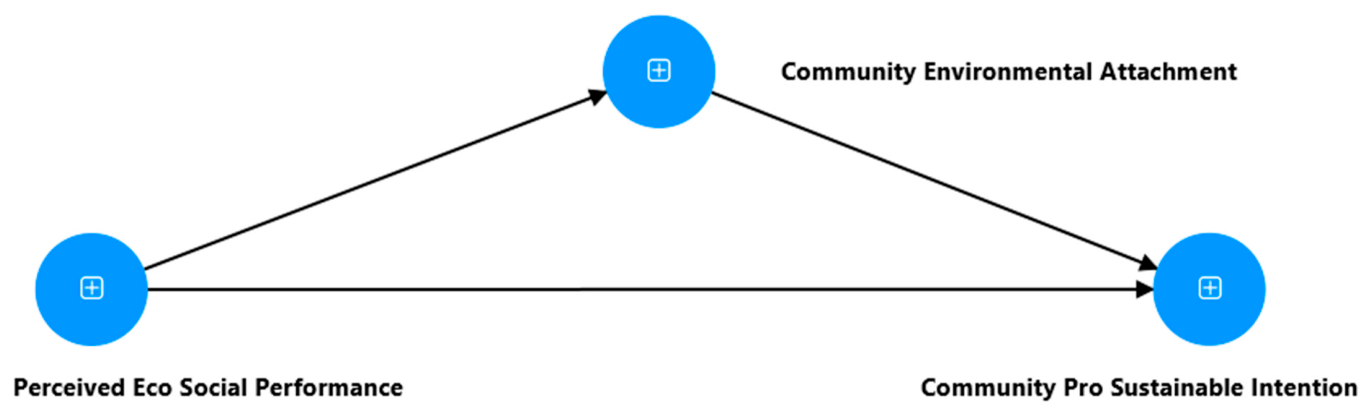
2. Literature Review and Conceptual Framework
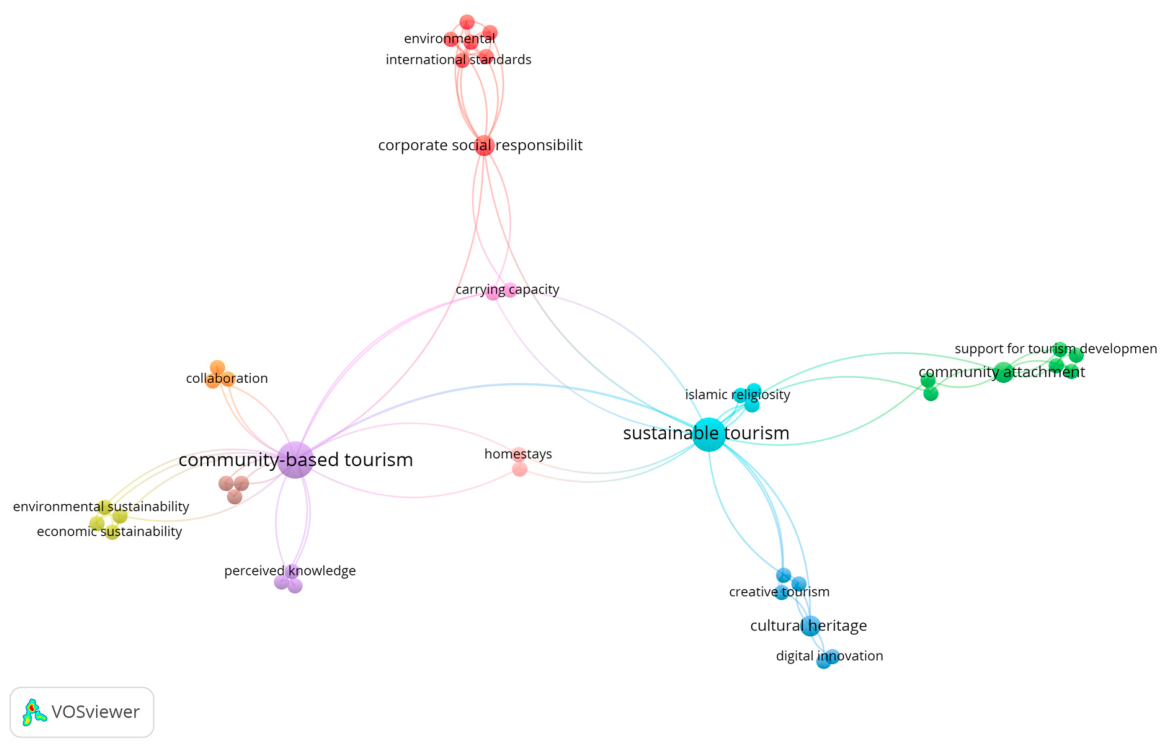
2.1. Sustainable Hospitality in Protected Areas
2.2. Perceived Eco-Social Performance
2.3. Community Environmental Attachment
2.4. Community Pro-Sustainable Tourism Intention
2.5. Perceived Eco-Social Performance and Community Environmental Attachment
2.6. Community Environmental Attachment and Community Pro-Sustainable Tourism Intention
2.7. Perceived Eco-Social Performance and Community Pro-Sustainable Tourism Intention
2.8. Mediating Role of Community Environmental Attachment
3. Methodology
3.1. Research Design
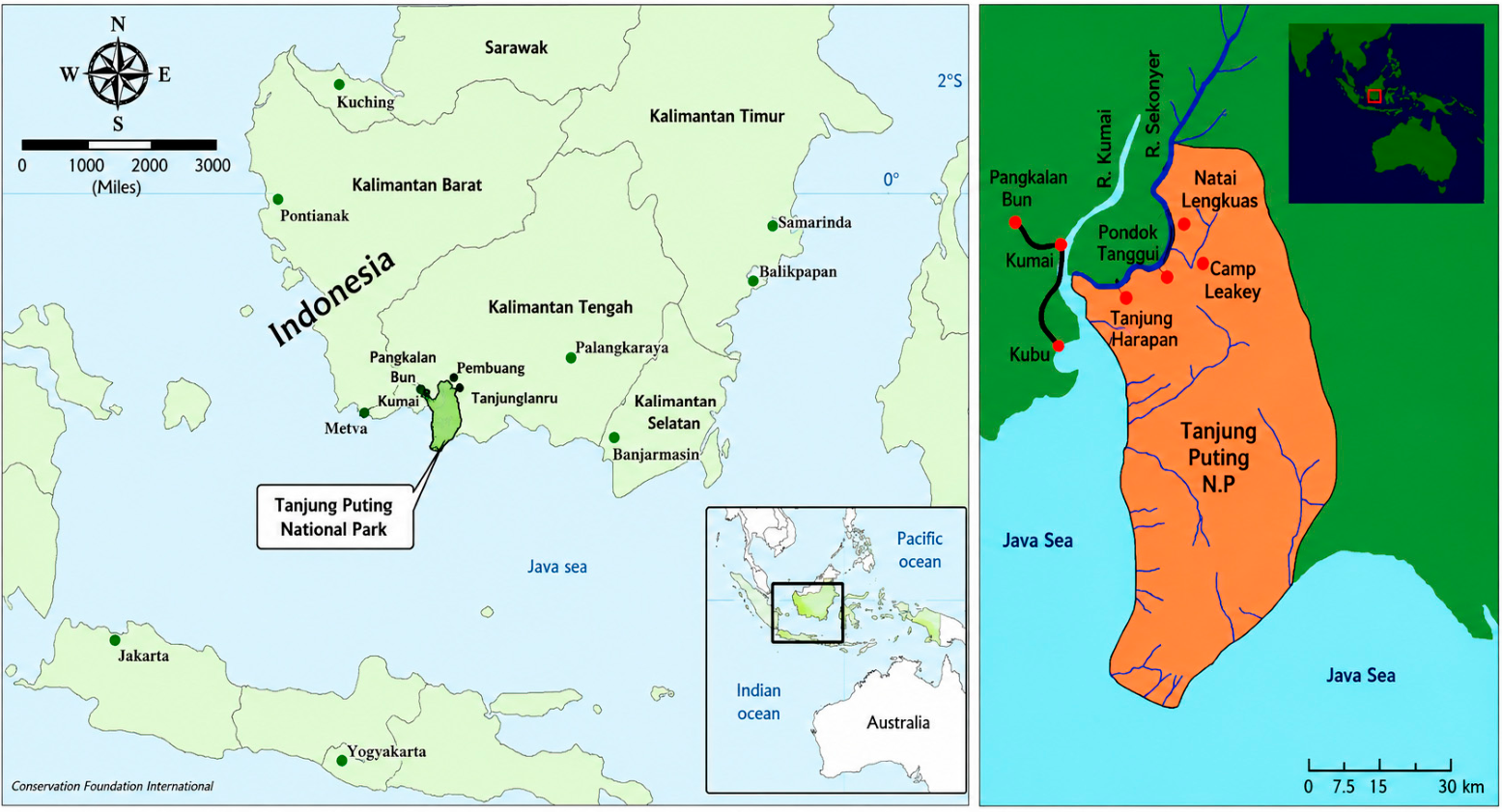
3.2. Study Setting
3.3. Sampling and Data Collection Procedures
3.3.1. Quantitative Data Collection
3.3.2. Qualitative Data Collection
3.4. Measurement of Variables and Instrument Development
3.5. Data Analysis Techniques
3.6. Common Method Bias
4. Results
4.1. Quantitative Results
4.1.1. Measurement Model Assessment
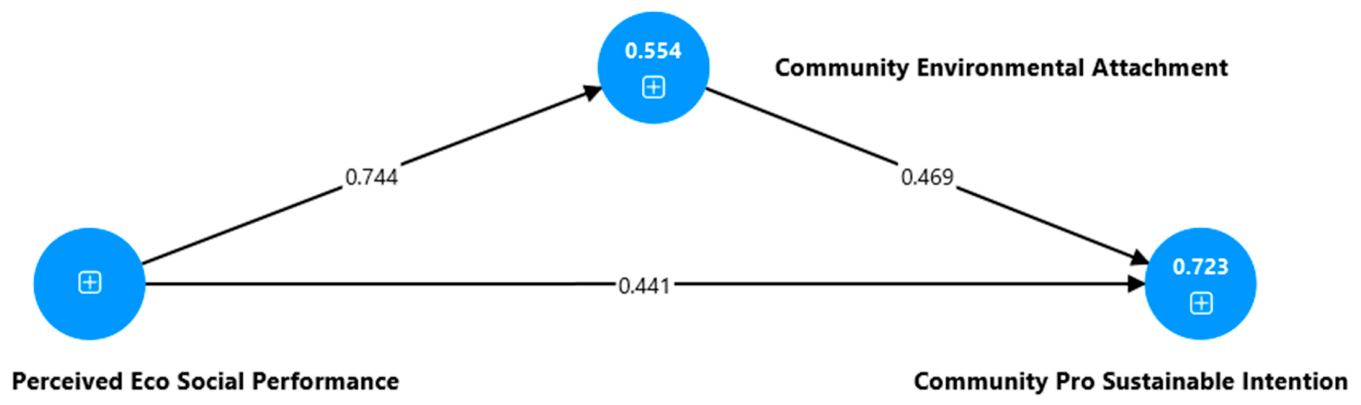
4.1.2. Structural Model Assessment
4.1.3. Hypothesis Testing
4.2. Qualitative Results
5. Discussion
6. Conclusions
7. Limitations and Future Research
Author Contributions
Funding
Institutional Review Board Statement
Informed Consent Statement
Data Availability Statement
Acknowledgments
Conflicts of Interest
References
- Abbasian, S., Onn, G., & Arnautovic, D. (2020). Overtourism in Dubrovnik in the eyes of local tourism employees: A qualitative study. Cogent Social Sciences, 6(1), 1775944. [Google Scholar] [CrossRef]
- Abushammala, H., & Ghulam, S. T. (2023). Impact of residents’ demographics on their knowledge, attitudes, and practices towards waste management at the household level in the United Arab Emirates. Sustainability, 15(1), 685. [Google Scholar] [CrossRef]
- Ahmad, H., Yaqub, M., & Lee, S. H. (2024). Environmental-, social-, and governance-related factors for business investment and sustainability: A scientometric review of global trends. Environment, Development and Sustainability, 26(2), 2965–2987. [Google Scholar] [CrossRef]
- Anderson, D. J., & Krettenauer, T. (2021). Connectedness to nature and pro-environmental behaviour from early adolescence to adulthood: A comparison of urban and rural Canada. Sustainability, 13(7), 3655. [Google Scholar] [CrossRef]
- Andrianambinina, F. O. D., Schuurman, D., Rakotoarijaona, M. A., Razanajovy, C. N., Ramparany, H. M., Rafanoharana, S. C., Rasamuel, H. A., Faragher, K. D., Waeber, P. O., & Wilmé, L. (2023). Boost the resilience of protected areas to shocks by reducing their dependency on tourism. PLoS ONE, 18(4), e0278591. [Google Scholar] [CrossRef] [PubMed]
- Aytekin, A., Keles, H., Uslu, F., Keles, A., Yayla, O., Tarinc, A., & Ergun, G. S. (2023). The effect of responsible tourism perception on place attachment and support for sustainable tourism development: The moderator role of environmental awareness. Sustainability, 15(7), 5865. [Google Scholar] [CrossRef]
- Baggio, R. (2020a). Digital ecosystems, complexity, and tourism networks. In Handbook of e-tourism. Springer. [Google Scholar] [CrossRef]
- Baggio, R. (2020b). Tourism destinations: A universality conjecture based on network science. Annals of Tourism Research, 82, 102929. [Google Scholar] [CrossRef]
- Baloch, Q. B., Shah, S. N., Iqbal, N., Sheeraz, M., Asadullah, M., Mahar, S., & Khan, A. U. (2023). Impact of tourism development upon environmental sustainability: A suggested framework for sustainable ecotourism. Environmental Science and Pollution Research, 30(3), 5917–5930. [Google Scholar] [CrossRef]
- Băbăț, A.-F., Mazilu, M., Niță, A., Drăguleasa, I.-A., & Grigore, M. (2023). Tourism and travel competitiveness index: From theoretical definition to practical analysis in Romania. Sustainability, 15(13), 10157. [Google Scholar] [CrossRef]
- Becchetti, L., Bobbio, E., Prizia, F., & Semplici, L. (2022). Going deeper into the S of ESG: A relational approach to the definition of social responsibility. Sustainability, 14(15), 9668. [Google Scholar] [CrossRef]
- Becken, S., & Loehr, J. (2022). Tourism governance and enabling drivers for intensifying climate action. Journal of Sustainable Tourism, 32(9), 1743–1761. [Google Scholar] [CrossRef]
- Bellato, L., & Cheer, J. M. (2021). Inclusive and regenerative urban tourism: Capacity development perspectives. International Journal of Tourism Cities, 7(4), 943–961. [Google Scholar] [CrossRef]
- Blanco-Cerradelo, L., Diéguez-Castrillón, M. I., Fraiz-Brea, J. A., & Gueimonde-Canto, A. (2022). Protected areas and tourism resources: Toward sustainable management. Land, 11(11), 2059. [Google Scholar] [CrossRef]
- Blázquez-Salom, M., Cladera, M., & Sard, M. (2023). Identifying the sustainability indicators of overtourism and undertourism in Majorca. Journal of Sustainable Tourism, 31(7), 1694–1718. [Google Scholar] [CrossRef]
- Blešić, I., Pivac, T., Kovačić, S., Cimbaljević, M., Lukić, T., Bubalo Živković, M., Đerčan, B., & Bjelajac, D. (2022). Place attachment, cultural involvement, and residents’ attitudes towards tourism development: The case of Novi Sad, the European capital of culture 2022. Sustainability, 14(15), 9103. [Google Scholar] [CrossRef]
- Brennan, B. S., Kessler, D., Luo, Y., & Bae, K. M. (2026). Sustaining the modern pilgrimage: Governance, community impacts, and environmental challenges on Korea’s Jeju Olle Trail. Sustainability, 18(3), 1540. [Google Scholar] [CrossRef]
- Camatti, N., Bertocchi, D., Carić, H., & van der Borg, J. (2020). A digital response system to mitigate overtourism. The case of Dubrovnik. Journal of Travel & Tourism Marketing, 37(8–9), 887–901. [Google Scholar] [CrossRef]
- Camilleri, M. A. (2026). Environmental, social and governance (ESG) factors for sustainable tourism development: The way forward toward destination resilience and growth. Business Strategy and the Environment, 35(3), 4057–4082. [Google Scholar] [CrossRef]
- Carvalho, R., Costa, C., & Ferreira, A. (2023). Creative tourism consumption: Framing the creative habitus through a Bourdieusian lens. Sustainability, 15(3), 2281. [Google Scholar] [CrossRef]
- Casimiro, D., Ventura, M. A., Botelho, A. Z., & Guerreiro, J. (2022). Ecotourism in marine protected areas as a tool to valuate natural capital and enhance good marine governance: A review. Frontiers in Marine Science, 9, 1002677. [Google Scholar] [CrossRef]
- Chang, C.-L., McAleer, M., & Ramos, V. (2020). A charter for sustainable tourism after COVID-19. Sustainability, 12(9), 3671. [Google Scholar] [CrossRef]
- Chatkaewnapanon, Y., & Lee, T. J. (2022). Planning sustainable community-based tourism in the context of Thailand: Community, development, and the foresight tools. Sustainability, 14(12), 7413. [Google Scholar] [CrossRef]
- Creswell, J. W., & Clark, V. L. P. (2018). Designing and conducting mixed methods research (3rd ed.). SAGE Publications Inc. [Google Scholar]
- Creswell, J. W., & Creswell, J. D. (2022). Research design: Qualitative, quantitative, and mixed methods approaches. SAGE Publications. Available online: https://books.google.co.id/books?id=Pr2VEAAAQBAJ (accessed on 5 May 2026).
- Cui, S., Han, Z., Yan, X., Li, X., Zhao, W., Liu, C., Li, X., & Zhong, J. (2022). Link ecological and social composite systems to construct sustainable landscape patterns: A new framework based on ecosystem service flows. Remote Sensing, 14(18), 4663. [Google Scholar] [CrossRef]
- Čapienė, A., Rūtelionė, A., & Krukowski, K. (2022). Engaging in sustainable consumption: Exploring the influence of environmental attitudes, values, personal norms, and perceived responsibility. Sustainability, 14(16), 10290. [Google Scholar] [CrossRef]
- Dai, C. (2022). Incorporating local stakeholders’ voices and knowledge into conservation decisions: A case study on the Chinese Hwamei (Garrulax canorus Linnaeus, 1758) in Taijiang, Guizhou, China. Journal of Ethnobiology and Ethnomedicine, 18(1), 63. [Google Scholar] [CrossRef] [PubMed]
- Damnjanović, I. (2020). Overtourism effects: Positive and negative impacts for sustainable development BT—Industry, innovation and infrastructure (W. Leal Filho, A. M. Azul, L. Brandli, A. Lange Salvia, & T. Wall, Eds.; pp. 1–11). Springer International Publishing. [Google Scholar] [CrossRef]
- Danielsen, F., Enghoff, M., Poulsen, M. K., Funder, M., Jensen, P. M., & Burgess, N. D. (2021). The concept, practice, application, and results of locally based monitoring of the environment. BioScience, 71(5), 484–502. [Google Scholar] [CrossRef]
- de Araújo, A. F., Marques, M. I. A., Candeias, M. T. R., & Vieira, A. L. (2022). Willingness to pay for sustainable destinations: A structural approach. Sustainability, 14(5), 2548. [Google Scholar] [CrossRef]
- Deshani, S. H., Rana, V., & Agrawat, P. (2025). Navigating green hospitality: Gen Z’s role in shaping sustainable hotel practices through conjoint analysis. International Journal of Management and Sustainability, 14(3), 803–813. [Google Scholar] [CrossRef]
- Dong, F., Guo, Y., Cheng, D., & Gu, X. (2025). Does the environmental fit of tourists in agricultural heritage sites promote pro-environmental behavior?—Exploring the mediating role of place attachment. Journal of Resources and Ecology, 16(4), 1196–1206. [Google Scholar] [CrossRef]
- Đurkin Badurina, J., Klapan, M., & Soldić Frleta, D. (2023). Stakeholders’ collaboration in the development of an authentic gastronomic offering in rural areas: Example of the Ravni Kotari region in Croatia. Sustainability, 15(5), 4649. [Google Scholar] [CrossRef]
- Egresi, I., Prakash, S. L., Maduraperruma, B., Withanage, A., Weerasingha, A., Dezsi, Ş., & Răcăşan, B. S. (2021). What affects support for wetland tourism? A case study from Sri Lanka. Sustainability, 13(16), 8802. [Google Scholar] [CrossRef]
- Elshaer, I. A., Alyahya, M., Azazz, A. M. S., & Fayyad, S. (2024). Community attachment to AlUla heritage site and tourists’ green consumption: The role of support for green tourism development. Heritage, 7(6), 2651–2667. [Google Scholar] [CrossRef]
- Firza, N., Antonucci, L., Crocetta, C., d’Ovidio, F. D., & Monaco, A. (2023). Spatial analysis to investigate the relationship between tourism and wellbeing in Italy. Social Indicators Research, 175(3), 1027–1043. [Google Scholar] [CrossRef]
- Friesinger, J. G., Haugland, S. H., & Vederhus, J. K. (2022). The significance of the social and material environment to place attachment and quality of life: Findings from a large population-based health survey. Health and Quality of Life Outcomes, 20(1), 135. [Google Scholar] [CrossRef]
- Frossard, V., Sabatier, P., Bruel, R., Vagnon, C., Tissot, N., Curt-Grand-Gaudin, N., & Perga, M. E. (2023). Intense touristic activities exceed climate change to shape aquatic communities in a mountain lake. Aquatic Sciences, 85(3), 71. [Google Scholar] [CrossRef]
- Gannon, M., Rasoolimanesh, S. M., & Taheri, B. (2021). Assessing the mediating role of residents’ perceptions toward tourism development. Journal of Travel Research, 60(1), 149–171. [Google Scholar] [CrossRef]
- Gautam, V. (2020). Examining environmental friendly behaviors of tourists towards sustainable development. Journal of Environmental Management, 276, 111292. [Google Scholar] [CrossRef]
- Gogitidze, G., Nadareishvili, N., Harun, R., Arion, I. D., & Muresan, I. C. (2023). Exploring residents’ perceptions towards tourism development—A case study of the Adjara mountain area. Sustainability, 15(1), 492. [Google Scholar] [CrossRef]
- Gomes, S., & Lopes, J. M. (2023). Insights for pro-sustainable tourist behavior: The role of sustainable destination information and pro-sustainable tourist habits. Sustainability, 15(11), 8856. [Google Scholar] [CrossRef]
- Gössling, S. (2020). Risks, resilience, and pathways to sustainable aviation: A COVID-19 perspective. Journal of Air Transport Management, 89, 101933. [Google Scholar] [CrossRef]
- Grabowska-Chenczke, O., Wajchman-Świtalska, S., & Woźniak, M. (2022). Psychological well-being and nature relatedness. Forests, 13(7), 1048. [Google Scholar] [CrossRef]
- Guerra, R. J. d. C., & Gonçalves, E. C. C. (2024). Co-creation of sustainable tourism and hospitality experiences: Education and organizations in search of new business models. Sustainability, 16(1), 321. [Google Scholar] [CrossRef]
- Guo, Y., Wang, B., Li, W., & Xu, H. (2024). Deciphering the impacts of environmental perceptions on place attachment from the perspective of place of origin: A case study of rural China. Applied Geography, 162, 103165. [Google Scholar] [CrossRef]
- Gupta, A., Zhu, H., Bhammar, H., Earley, E., Filipski, M., Narain, U., Spencer, P., Whitney, E., & Taylor, J. E. (2023). Economic impact of nature-based tourism. PLoS ONE, 18(4), e0282912. [Google Scholar] [CrossRef] [PubMed]
- Hair, J. F., Jr., Hult, G. T. M., Ringle, C. M., & Sarstedt, M. (2022). A primer on partial least squares structural equation modeling (PLS-SEM) (3rd ed., Vol. 3). SAGE Publications, Inc. [Google Scholar]
- Hall, C. M. (2025). On flickering, tipping points, trajectories, transitions, transformations, regime shifts, and resiliences in tourism: Why resilient does not mean better and why change is not always sustainable. Via Tourism Review, 27(27). [Google Scholar] [CrossRef]
- Hall, C. M., Prayag, G., & Fang, S. (2024). Destination transitions and resilience following trigger events and transformative moments. Scandinavian Journal of Hospitality and Tourism, 24(4–5), 390–411. [Google Scholar] [CrossRef]
- Hirvilammi, T., & Koch, M. (2020). Sustainable welfare beyond growth. Sustainability, 12(5), 1824. [Google Scholar] [CrossRef]
- Hoarau-Heemstra, H., Wigger, K., Pashkevich, A., & James, L. (2025). Coastal tourism communities in transition: Change practices, innovation, and governance for resilient futures. Scandinavian Journal of Hospitality and Tourism, 25(3), 205–214. [Google Scholar] [CrossRef]
- Hu, F., Kong, W., Innes, J. L., Wu, W., Sunderland, T., & Wang, G. (2022). Residents’ perceptions toward tourism development: A case study from Grand Canyon National Park, USA. Sustainability, 14(20), 13128. [Google Scholar] [CrossRef]
- Ibrahim, M. S. N., Johari, S., Adam Assim, M. I. S., Mohammad Afandi, S. H., Khan, W. R., & Hassan, S. (2023). Community well-being dimensions in Gunung Mulu National Park, Sarawak, Malaysian Borneo. Humanities and Social Sciences Communications, 10(1), 226. [Google Scholar] [CrossRef]
- Jeelani, P., Shah, S. A., Dar, S. N., & Rashid, H. (2023). Sustainability constructs of mountain tourism development: The evaluation of stakeholders’ perception using SUS-TAS. Environment, Development and Sustainability, 25(8), 8299–8317. [Google Scholar] [CrossRef]
- Juliana, J., Djakasaputra, A., Pramezwary, A., Lemy, D. M., & Anwar, M. M. (2025a). How social media influencers drive tourist motivation and engagement: The case of nature tourism. Journal of Quality Assurance in Hospitality & Tourism. Advanced online publication. [Google Scholar] [CrossRef]
- Juliana, J., Indra, F., Sianipar, R., Djakasaputra, A., & Effendy, L. (2025b). Reimagining heritage tourism through co-creation: Insights from Prenggan tourism village, Yogyakarta. Sustainability, 17(24), 11112. [Google Scholar] [CrossRef]
- Juliana, J., Pramezwary, A., Djakasaputra, A., Anwar, M. M., & Jie, F. (2025c). The missing link in urban tourism: Connecting leisure, accessibility and resident participation for enhanced value. Cogent Social Sciences, 11(1), 2556473. [Google Scholar] [CrossRef]
- Juliana, J., Pramezwary, A., Lemy, D. M., Teguh, F., Djakasaputra, A., & Sianipar, R. (2022). Antecedents experiential commitment and consequences in willingness to post photo and behavioral intention toward the destination. International Journal of Design and Nature and Ecodynamics, 17(4), 547–556. [Google Scholar] [CrossRef]
- Juliana, J., Sianipar, R., Lemy, D. M., Pramezwary, A., Pramono, R., & Djakasaputra, A. (2023). Factors influencing visitor satisfaction and revisit intention in Lombok tourism: The role of holistic experience, experience quality, and vivid memory. International Journal of Sustainable Development and Planning, 18(8), 2503–2511. [Google Scholar] [CrossRef]
- Juliana, J., Sihombing, S. O., & Antonio, F. (2025d). Unveiling memorable tourism experiences effect on positive EWOM: Focus on the role of positive and negative emotion. Cogent Social Sciences, 11(1), 2557073. [Google Scholar] [CrossRef]
- Kasim, A., Jailani, S. N., Mokhtar, M. F., Radha, J. Z. R. R. R., Khuadthong, B., & Fong, M. L. S. (2023). Community perceptions on the critical success factors of hotels’ community-based corporate social responsibility. Sustainability, 15(12), 9842. [Google Scholar] [CrossRef]
- Kencebay, B., & Ertugan, A. (2025). Understanding the mediating effect of brand equity on sustainability and omnichannel operation and phygital experience. Sustainability, 17(5), 1878. [Google Scholar] [CrossRef]
- Khalil, M. A., Khalil, R., & Khalil, M. K. (2024). Environmental, social and governance (ESG)—Augmented investments in innovation and firms’ value: A fixed-effects panel regression of Asian economies. China Finance Review International, 14(1), 76–102. [Google Scholar] [CrossRef]
- Kim, K., Wang, Y., Shi, J., Guo, W., Zhou, Z., & Liu, Z. (2023). Structural relationship between ecotourism motivation, satisfaction, place attachment, and environmentally responsible behavior intention in nature-based camping. Sustainability, 15(11), 8668. [Google Scholar] [CrossRef]
- Kokkhangplu, A., Onlamai, W., Chokpreedapanich, T., & Phikul, K. (2023). What predicts behavioral intention in eco-friendly hotels? The roles of tourist’s perceived value and satisfaction: A case study of Thailand. Sustainability, 15(4), 3219. [Google Scholar] [CrossRef]
- Kyaw, K., Pindado, J., & de-la-Torre, C. (2022). Disentangling the bidirectional relationships across the corporate sustainable development indicators. Social Indicators Research, 163(1), 297–320. [Google Scholar] [CrossRef] [PubMed]
- Lauer, M., Wencélius, J., Dawson, P., Holbrook, S. J., Lester, S. E., Miller, S. D., Nelson-Maney, S., Rassweiler, A., & Schmitt, R. J. (2024). Livelihood diversity and fishing skill during COVID-19 lockdowns in French Polynesia. Frontiers in Marine Science, 11, 1451270. [Google Scholar] [CrossRef]
- Lecusay, R., Mrak, L., & Nilsson, M. (2022). What is community in early childhood education and care for sustainability? Exploring communities of learners in Swedish preschool provision. International Journal of Early Childhood, 54(1), 51–74. [Google Scholar] [CrossRef]
- Lemy, D. M., Juliana, J., Kusumo, H. K. E., & Brian, R. (2026). Tourist ethics and environmental awareness under overtourism pressure: A systematic review and qualitative study of behavioral intention. Societies, 16(3), 87. [Google Scholar] [CrossRef]
- Lennert, A. E., van der Wal, R., Zhang, J., Hausner, V. H., Ancin Murguzur, F. J., & Miles, M. W. (2023). Rich local knowledge despite high transience in an Arctic community experiencing rapid environmental change. Humanities and Social Sciences Communications, 10(1), 782. [Google Scholar] [CrossRef]
- Li, H., Qu, P., & Luo, F. (2022). Impact of tourists’ perceived value and sense of social responsibility on the low-carbon consumption behavior intention: A case study of Zhangjiajie National Forest Park. Forests, 13(10), 1594. [Google Scholar] [CrossRef]
- Li, S., Li, H., Song, H., & Chen, M. (2021). Mitigating tourism social costs during a pandemic: Evaluating residents’ perceptions and behavioral intentions. Journal of Travel Research, 61(3), 493–510. [Google Scholar] [CrossRef]
- Li, Y., Wang, B., & Cui, M. (2022). Environmental concern, environmental knowledge, and residents’ water conservation behavior: Evidence from China. Water, 14(13), 2087. [Google Scholar] [CrossRef]
- Lu, S., Zhou, Z., & Lu, Y. (2022). Rural residents’ perceptions, attitudes, and environmentally responsible behaviors towards garbage exchange supermarkets: An example from Huangshan City in China. Sustainability, 14(14), 8577. [Google Scholar] [CrossRef]
- Magnusson, T., Karabag, S. F., Wigger, K., & Andersson, G. (2023). Sustainability transitions in tourism: On the transformation of a fragmented sector. Tourism Geographies, 26(2), 157–172. [Google Scholar] [CrossRef]
- Makhitha, K. M. (2025). South African township consumers’ recycling engagement and their actual recycling behavior. Sustainability, 17(10), 4570. [Google Scholar] [CrossRef]
- Manojlović, B., Cvetković, V. M., Renner, R., Grozdanić, G., & Perošević, N. (2025). The influence of socio-demographic factors on local attitudes towards sustainable tourism development in Skadar Lake and Durmitor National Parks, Montenegro. Sustainability, 17(7), 3200. [Google Scholar] [CrossRef]
- Matović, S., Lović Obradović, S., & Gajić, T. (2025). Sustainable tourism in protected areas: Comparative governance and lessons from Tara and Triglav National Parks. Sustainability, 17(15), 7048. [Google Scholar] [CrossRef]
- Molina, B., Eljuri, G., & Roigé Ventura, X. (2025). Citizens’ perceptions of world heritage values: The case of Cuenca, Ecuador. Journal of Cultural Heritage Management and Sustainable Development, 15(3), 597–612. [Google Scholar] [CrossRef]
- Mondol, N., Hossain, E., & Sardar, S. (2025). Unveiling the drivers of young tourists’ environmentally responsible behavior: A study on cox’s Bazar, Bangladesh–The world’s longest sea beach. Tourism in Marine Environments, 20(4), 325–342. [Google Scholar] [CrossRef]
- Nag, A., & Mishra, S. (2023). Stakeholders’ perception and competitiveness of heritage towns: A systematic literature review. Tourism Management Perspectives, 48, 101156. [Google Scholar] [CrossRef]
- Nag, A., & Mishra, S. (2024). Sustainable competitive advantage in heritage tourism: Leveraging cultural legacy in a data-driven world. In R. P. Singh Kaurav, & V. Mishra (Eds.), Review of technologies and disruptive business strategies (Vol. 3). Emerald Publishing Limited. [Google Scholar] [CrossRef]
- Nag, A., & Rathore, A. S. (2025a). Balancing bias and sustainability in heritage tourism. In M. Abrar, M. Nawaz, & F. Kiran (Eds.), Destination branding and bias in ecotourism (pp. 217–266). IGI Global Scientific Publishing. [Google Scholar] [CrossRef]
- Nag, A., & Rathore, A. S. (2025b). Beyond daylight: The night index as a framework for regenerative tourism for social development. In B. Sousa, L. Arantes, & S. Bhartiya (Eds.), Regenerative tourism for social development (pp. 311–338). IGI Global Scientific Publishing. [Google Scholar]
- Nasr, E., Emeagwali, O. L., Aljuhmani, H. Y., & Al-Geitany, S. (2022). Destination social responsibility and residents’ environmentally responsible behavior: Assessing the mediating role of community attachment and involvement. Sustainability, 14(21), 14153. [Google Scholar] [CrossRef]
- Nassani, A. A., Yousaf, Z., Radulescu, M., & Haffar, M. (2022). Environmental performance through environmental resources conservation efforts: Does corporate social responsibility authenticity act as mediator? Sustainability, 14(4), 2330. [Google Scholar] [CrossRef]
- Nawawi, N. B., Syamsudin, S. B., & Andin, C. (2020). Community-based tourism through cooperatives in Sabah, Malaysia. In Cooperatives and social innovation: Experiences from the Asia Pacific region (pp. 63–77). Springer. [Google Scholar] [CrossRef]
- Niewiadomski, P., & Brouder, P. (2024). From ‘sustainable tourism’ to ‘sustainability transitions in tourism’? Tourism Geographies, 26(2), 141–150. [Google Scholar] [CrossRef]
- Niewiadomski, P., & Mellon, V. (2023). Transitioning towards sustainable tourism in the outer Hebrides: An evolutionary investigation. Tourism Geographies, 26(2), 214–236. [Google Scholar] [CrossRef]
- Nowacki, M., Kowalczyk-Anioł, J., & Chawla, Y. (2023). Gen Z’s attitude towards green image destinations, green tourism and behavioural intention regarding green holiday destination choice: A study in Poland and India. Sustainability, 15(10), 7860. [Google Scholar] [CrossRef]
- Omoyajowo, K., Danjin, M., Omoyajowo, K., Odipe, O., Mwadi, B., May, A., Ogunyebi, A., & Rabie, M. (2024). Exploring the interplay of environmental conservation within spirituality and multicultural perspective: Insights from a cross-sectional study. Environment, Development and Sustainability, 26(7), 16957–16985. [Google Scholar] [CrossRef]
- Ortiz, S. D. (2024). Fostering inclusive management and community participation: Lessons from the field. Studies in Conservation, 69, 263–269. [Google Scholar] [CrossRef]
- Pabian, A., & Pabian, B. (2022). Profile of a sustainable manager from the perspective of pro-ecological and pro-social management of energy company. Energies, 15(4), 1363. [Google Scholar] [CrossRef]
- Pangarso, A., Astuti, E. S., & Raharjo, K. (2024). Enhancing Sustained Competitive Advantage in Indonesian Non-vocation Private Tertiary Education Institutions. SAGE Journals, 14, 1–17. [Google Scholar] [CrossRef]
- Panwanitdumrong, K., & Chen, C. (2022). Are tourists willing to pay for a marine litter-free coastal attraction to achieve tourism sustainability? Case study of Libong Island, Thailand. Sustainability, 14(8), 4808. [Google Scholar] [CrossRef]
- Papatheodorou, A., Vlassi, E., & Karachalis, N. (2025). Developing sustainable tourism destinations in times of transition: Economic and social resilience in destination communities and the new role of DDMMOs—Editorial note. Sustainability, 17(8), 3538. [Google Scholar] [CrossRef]
- Pasanchay, K., & Schott, C. (2021). Community-based tourism homestays’ capacity to advance the sustainable development goals: A holistic sustainable livelihood perspective. Tourism Management Perspectives, 37, 100784. [Google Scholar] [CrossRef]
- Pellaton, R., Lellei-Kovács, E., & Báldi, A. (2022). Cultural ecosystem services in European grasslands: A systematic review of threats. Ambio, 51(12), 2462–2477. [Google Scholar] [CrossRef]
- Petit, G., Sablayrolles, C., & Yannou-Le Bris, G. (2018). Combining eco-social and environmental indicators to assess the sustainability performance of a food value chain: A case study. Journal of Cleaner Production, 191, 135–143. [Google Scholar] [CrossRef]
- Potting, J., Thomas, J. B. E., & Gröndahl, F. (2022). Stakeholder participation in sustainability assessment of non-wicked problems: The case of a future seaweed industry in Sweden. Ambio, 51(4), 901–913. [Google Scholar] [CrossRef] [PubMed]
- Pramono, R., & Juliana, J. (2025). Beyond tourism: Community empowerment and resilience in rural Indonesia. Tourism and Hospitality, 6(4), 210. [Google Scholar] [CrossRef]
- Preziosi, M., Acampora, A., Lucchetti, M. C., & Merli, R. (2022). Delighting hotel guests with sustainability: Revamping importance-performance analysis in the light of the three-factor theory of customer satisfaction. Sustainability, 14(6), 3575. [Google Scholar] [CrossRef]
- Pukkala, T. (2021). Measuring the social performance of forest management. Journal of Forestry Research, 32(5), 1803–1818. [Google Scholar] [CrossRef]
- Quintana-García, C., Marchante-Lara, M., & Benavides-Chicón, C. G. (2022). Towards sustainable development: Environmental innovation, cleaner production performance, and reputation. Corporate Social Responsibility and Environmental Management, 29(5), 1330–1340. [Google Scholar] [CrossRef]
- Ramesh, S. (2022). Community engagement in tourism: A win-win for businesses and locals. Journal of Social Responsibility, Tourism and Hospitality, 2(2), 23–28. [Google Scholar] [CrossRef]
- Rivas-Aceves, S., & Schmidt, S. (2022). Sustainable gardening for economic inclusion, poverty reduction, and culture preservation. Sustainability, 14(23), 15743. [Google Scholar] [CrossRef]
- Roberts, C., Reynolds, J., & Dolasinski, M. J. (2022). Meta-analysis of tourism sustainability research: 2019–2021. Sustainability, 14(6), 3303. [Google Scholar] [CrossRef]
- Robina-Ramírez, R., Sánchez, M. S. O., Jiménez-Naranjo, H. V., & Castro-Serrano, J. (2021). Tourism governance during the COVID-19 pandemic crisis: A proposal for a sustainable model to restore the tourism industry. Environment, Development and Sustainability, 24(5), 6391–6412. [Google Scholar] [CrossRef]
- Romero, A. V., Durán-Román, J. L., Rio, J. A. J., & Collado-González, J. C. (2025). Business management of sustainable destinations and its effect on ecotourism entrepreneurship to mitigate overtourism. Humanities and Social Sciences Communications, 12(1), 817. [Google Scholar] [CrossRef]
- Saarinen, J. (2021). Is being responsible sustainable in tourism? Connections and critical differences. Sustainability, 13(12), 6599. [Google Scholar] [CrossRef]
- Saarinen, J., & Gill, A. M. (2018). Tourism, resilience, and governance strategies in the transition towards sustainability. In Resilient destinations and tourism. Routledge. [Google Scholar] [CrossRef]
- Salama, W., Nor El Deen, M., Albakhit, A., & Zaki, K. (2022). Understanding the connection between sustainable human resource management and the hotel business outcomes: Evidence from the green-certified hotels of Egypt. Sustainability, 14(9), 5647. [Google Scholar] [CrossRef]
- Salazar-Sepúlveda, G., Vega-Muñoz, A., Contreras-Barraza, N., Zada, M., & Adsuar, J. C. (2022). Indigenous forestry tourism dimensions: A systematic review. Forests, 13(2), 298. [Google Scholar] [CrossRef]
- Santos, L. L., Cardoso, L., Araújo-Vila, N., & Fraiz-Brea, J. A. (2020). Sustainability perceptions in tourism and hospitality: A mixed-method bibliometric approach. Sustainability, 12(21), 8852. [Google Scholar] [CrossRef]
- Sarnacchiaro, P., & Ariante, I. (2025). Composite indicators for deep diving into residents’ perception of tourism impacts. Quality & Quantity. Advanced online publication. [Google Scholar] [CrossRef]
- Scannell, L., & Gifford, R. (2017). The experienced psychological benefits of place attachment. Journal of Environmental Psychology, 51, 256–269. [Google Scholar] [CrossRef]
- Sierra-Barón, W., Olivos-Jara, P., Gómez-Acosta, A., & Navarro, O. (2023). Environmental identity, connectedness with nature, and well-being as predictors of pro-environmental behavior, and their comparison between inhabitants of rural and urban areas. Sustainability, 15(5), 4525. [Google Scholar] [CrossRef]
- Silitonga, P., Juliana, J., Rini, G. P., & Sitohang, A. P. S. (2025). Unveiling the outcome of the implementation of experiential value co-creation on the behavioral intention of online travelers. Tourism and Hospitality, 6(3), 157. [Google Scholar] [CrossRef]
- Song, J., & Kang, J. (2023). The relationship between marine sports tourist destinations, social responsibility, and environmentally responsible behavior. Sustainability, 15(10), 7739. [Google Scholar] [CrossRef]
- Svoray, T., Dorman, M., Abu-Kaf, S., Shahar, G., & Gifford, R. (2022). Nature and happiness in an individualist and a collectivist culture. Scientific Reports, 12(1), 7701. [Google Scholar] [CrossRef] [PubMed]
- Šerić, M., Patrizi, M., Ceccotti, F., & Vernuccio, M. (2024). Resident perspectives unveiled: The role of a sustainable destination image in shaping pro-sustainable responses. Journal of Retailing and Consumer Services, 81, 103985. [Google Scholar] [CrossRef]
- Štrba, Ľ., Kolačkovská, J., Kršák, B., Sidor, C., & Lukáč, M. (2022). Perception of the impacts of tourism by the administrations of protected areas and sustainable tourism (un)development in Slovakia. Sustainability, 14(11), 6696. [Google Scholar] [CrossRef]
- Thananusak, T., & Suriyankietkaew, S. (2023). Unpacking key sustainability drivers for sustainable social enterprises: A community-based tourism perspective. Sustainability, 15(4), 3401. [Google Scholar] [CrossRef]
- Tian, H., & Chen, S. (2023). Structural analysis of environmental literacy of urban residents in China—Based on the questionnaire survey of Qingdao residents. Sustainability, 15(6), 5552. [Google Scholar] [CrossRef]
- Traskevich, A., & Fontanari, M. (2021). Tourism potentials in post-COVID19: The concept of destination resilience for advanced sustainable management in tourism. Tourism Planning & Development, 20(1), 12–36. [Google Scholar] [CrossRef]
- Trigo, A., & Silva, P. (2022). Sustainable development directions for wine tourism in Douro wine region, Portugal. Sustainability, 14(7), 3949. [Google Scholar] [CrossRef]
- Trišić, I., Privitera, D., Štetić, S., Genov, G., & Stanić Jovanović, S. (2022). Sustainable tourism in protected area—A case of Fruška Gora National Park, Vojvodina (Northern Serbia). Sustainability, 14(21), 14548. [Google Scholar] [CrossRef]
- Uehara, T., Sakurai, R., & Hidaka, T. (2022). The importance of relational values in gaining people’s support and promoting their involvement in social-ecological system management: A comparative analysis. Frontiers in Marine Science, 9, 1001180. [Google Scholar] [CrossRef]
- Uslu, A., Erul, E., Santos, J. A. C., Obradović, S., & Custódio Santos, M. (2023). Determinants of residents’ support for sustainable tourism development: An empirical study in Midyat, Turkey. Sustainability, 15(13), 10013. [Google Scholar] [CrossRef]
- Usmonova, G., Alieva, D., & León, C. J. (2022). Yurt invited: Combining tourists and stakeholders perceptions of sustainable community-based tourism in central Asia. Sustainability, 14(13), 7540. [Google Scholar] [CrossRef]
- Wang, B., He, S., Sun, Y., & Min, Q. (2022). Giving voice to tourists: Improving the governance of protected areas through tourists’ perceptions and expectations. Forests, 13(9), 1523. [Google Scholar] [CrossRef]
- Wang, Q., Liao, Y., & Gao, J. (2022). Rural residents’ intention to participate in pro-poor tourism in southern Xinjiang: A theory of planned behavior perspective. Sustainability, 14(14), 8653. [Google Scholar] [CrossRef]
- Wang, S., Berbekova, A., & Uysal, M. (2021). Is this about feeling? The interplay of emotional well-being, solidarity, and residents’ attitude. Journal of Travel Research, 60(6), 1180–1195. [Google Scholar] [CrossRef]
- Wang, Y., Zhao, R., Yan, Z., Wang, M., Pan, Y., & Wu, R. (2023). A comparative study of environmental responsibility behavior in ecotourism from the perceptions of residents and tourists: A case of Qilian Mountains National Park in China. PLoS ONE, 18(2), e0281119. [Google Scholar] [CrossRef]
- Wilkinson, T., & Coles, T. (2023). Do tourists want sustainability transitions? Visitor attitudes to destination trajectories during COVID-19. Tourism Geographies, 26(2), 274–291. [Google Scholar] [CrossRef]
- Wu, J., Font, X., & Liu, J. (2021). The elusive impact of pro-environmental intention on holiday on pro-environmental behaviour at home. Tourism Management, 85, 104283. [Google Scholar] [CrossRef]
- Yan, Q., Zhang, Z., Er, C., & Wang, W. (2024). The mechanism of internal and external efficacy influences residents’ pro-environmental behavior through environmental willingness. PLoS ONE, 19(3), e0298378. [Google Scholar] [CrossRef]
- Yan, W., Zhang, L., Duan, X., & Wu, F. (2023). Strategic approaches to realize sustainable neighborhoods in urban renewal: A case study of Banan, Chongqing, China. Sustainability, 15(4), 3515. [Google Scholar] [CrossRef]
- Yoshida, Y., Matsuda, H., Fukushi, K., Takeuchi, K., & Watanabe, R. (2022). The missing intangibles: Nature’s contributions to human wellbeing through place attachment and social capital. Sustainability Science, 17(3), 809–822. [Google Scholar] [CrossRef]
- Zaman, U., Aktan, M., Agrusa, J., & Khwaja, M. G. (2023). Linking regenerative travel and residents’ support for tourism development in Kaua’i Island (Hawaii): Moderating-mediating effects of travel-shaming and foreign tourist attractiveness. Journal of Travel Research, 62(4), 782–801. [Google Scholar] [CrossRef]
- Zanchini, R., Moresino, C. M., Novelli, S., Sacchi, G., Blanc, S., & Brun, F. (2025). What influences tourists’ choice of protected natural areas? The role of ecosystem services. Sustainability, 17(23), 10525. [Google Scholar] [CrossRef]
- Zavaleta Chavez Arroyo, F. O., Sánchez Pantaleón, A. J., Navarro-Mendoza, Y. P., & Esparza-Huamanchumo, R. M. (2023). Community tourism conditions and sustainable management of a community tourism association: The case of Cruz Pata, Peru. Sustainability, 15(5), 4401. [Google Scholar] [CrossRef]
- Zárate-Altamirano, S., Rebolledo-López, D. C., & Parra-López, E. (2022). Community tourism strategic planning—Convergent model proposal as applied to a municipality in Mexico. Sustainability, 14(23), 15945. [Google Scholar] [CrossRef]
- Zhang, L., & Wu, L. (2021). Community environment perception on depression: The mediating role of subjective social class. International Journal of Environmental Research and Public Health, 18(15), 8083. [Google Scholar] [CrossRef]
- Zhou, B., Liu, S., Yu, H., Zhu, D., & Xiong, Q. (2022). Perceived benefits and forest tourists consumption intention: Environmental protection attitude and resource utilization attitude as mediators. Forests, 13(5), 812. [Google Scholar] [CrossRef]
- Zimmermann, K., & Graziano, P. (2020). Mapping different worlds of eco-welfare states. Sustainability, 12(5), 1819. [Google Scholar] [CrossRef]
- Zuo, D., Li, C., Lin, M., Chen, P., & Kong, X. (2022). Tourism, residents agent practice and traditional residential landscapes at a cultural heritage site: The case study of Hongcun village, China. Sustainability, 14(8), 4423. [Google Scholar] [CrossRef]



| Construct | Item | Factor Loading | VIF |
|---|---|---|---|
| Perceived eco-social performance (ESP) a = 0.907, rho_a = 0.911, CR = 0.928, AVE = 0.684 | ESP 1 | 0.790 | 2.19 |
| ESP 3 | 0.799 | 2.78 | |
| ESP 4 | 0.820 | 2.46 | |
| ESP 5 | 0.852 | 2.28 | |
| ESP 6 | 0.878 | 1.78 | |
| Community pro-sustainable intention (PSTI) a = 0.794, rho_a = 0.803, CR = 0.880, AVE = 0.712 | PSTI 1 | 0.806 | 2.03 |
| PSTI 2 | 0.715 | 2.20 | |
| PSTI 3 | 0.892 | 2.67 | |
| PSTI 4 | 0.860 | 1.63 | |
| PSTI 5 | 0.743 | 2.21 | |
| PSTI 6 | 0.753 | 2.78 | |
| Community environmental attachment (CEA) a = 0.898, rho_a = 0.900, CR = 0.936, AVE = 0.830 | CEA 1 | 0.803 | 2.35 |
| CEA 2 | 0.798 | 2.26 | |
| CEA 3 | 0.716 | 1.97 | |
| CEA 4 | 0.918 | 2.77 | |
| CEA 5 | 0.801 | 2.87 |
| HTMT | |||
|---|---|---|---|
| Community Environmental Attachment (CEA) | Community Pro Sustainable Intention (PSTI) | Perceived Eco Social Performance (ESP) | |
| Community Environmental Attachment (CEA) | |||
| Community Pro-Sustainable Intention (PSTI) | 0.828 | ||
| Perceived Eco Social Performance (ESP) | 0.85 | 0.85 | |
| R2 | Q2 | Interpretation | |
|---|---|---|---|
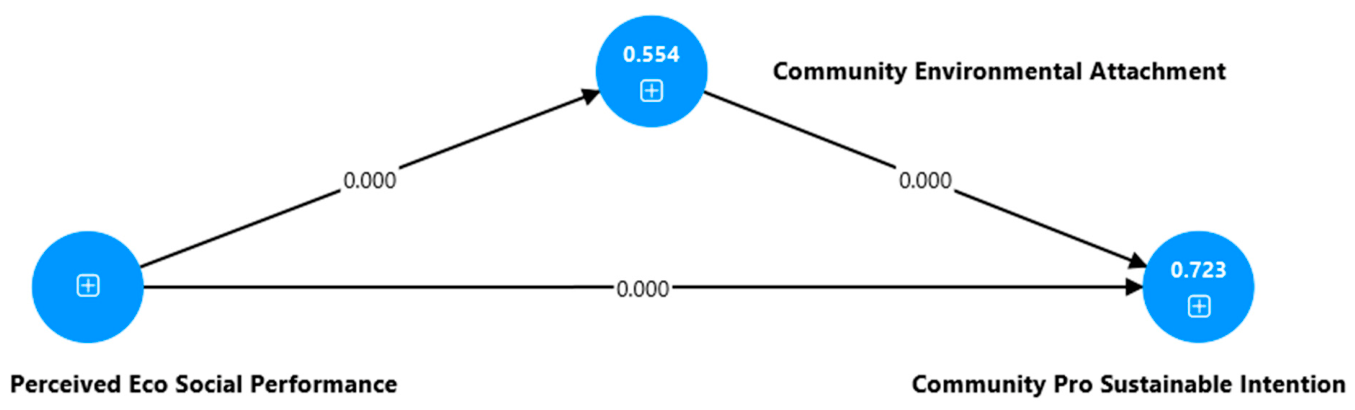
| Community Environmental Attachment CEA) | 0.554 | 0.546 | Moderate-to-strong explanatory power and high predictive relevance |
| Community Pro-Sustainable Tourism Intention (PSTI) | 0.723 | 0.618 | Strong explanatory power and very strong predictive relevance |
| Hypothesis | Original Sample (O) | Sample Mean (M) | Standard Deviation (STDEV) | T Statistics (|O/STDEV|) | p Values |
|---|---|---|---|---|---|
| Community Environmental Attachment (CEA) -> Community Pro-Sustainable Intention (PSTI) | 0.494 | 0.494 | 0.073 | 6.733 | 0.000 |
| Perceived Eco Social Performance (ESP) -> Community Environmental Attachment (CEA) | 0.744 | 0.746 | 0.04 | 18.485 | 0.000 |
| Perceived Eco Social Performance (ESP) -> Community Pro-Sustainable Intention (PSTI) | 0.414 | 0.415 | 0.076 | 5.412 | 0.000 |
| Perceived Eco Social Performance (ESP) -> Community Environmental Attachment (CEA) -> Community Pro-Sustainable Intention (PSTI) | 0.367 | 0.368 | 0.06 | 6.156 | 0.000 |
| Theme | Description | Community Perspectives |
|---|---|---|
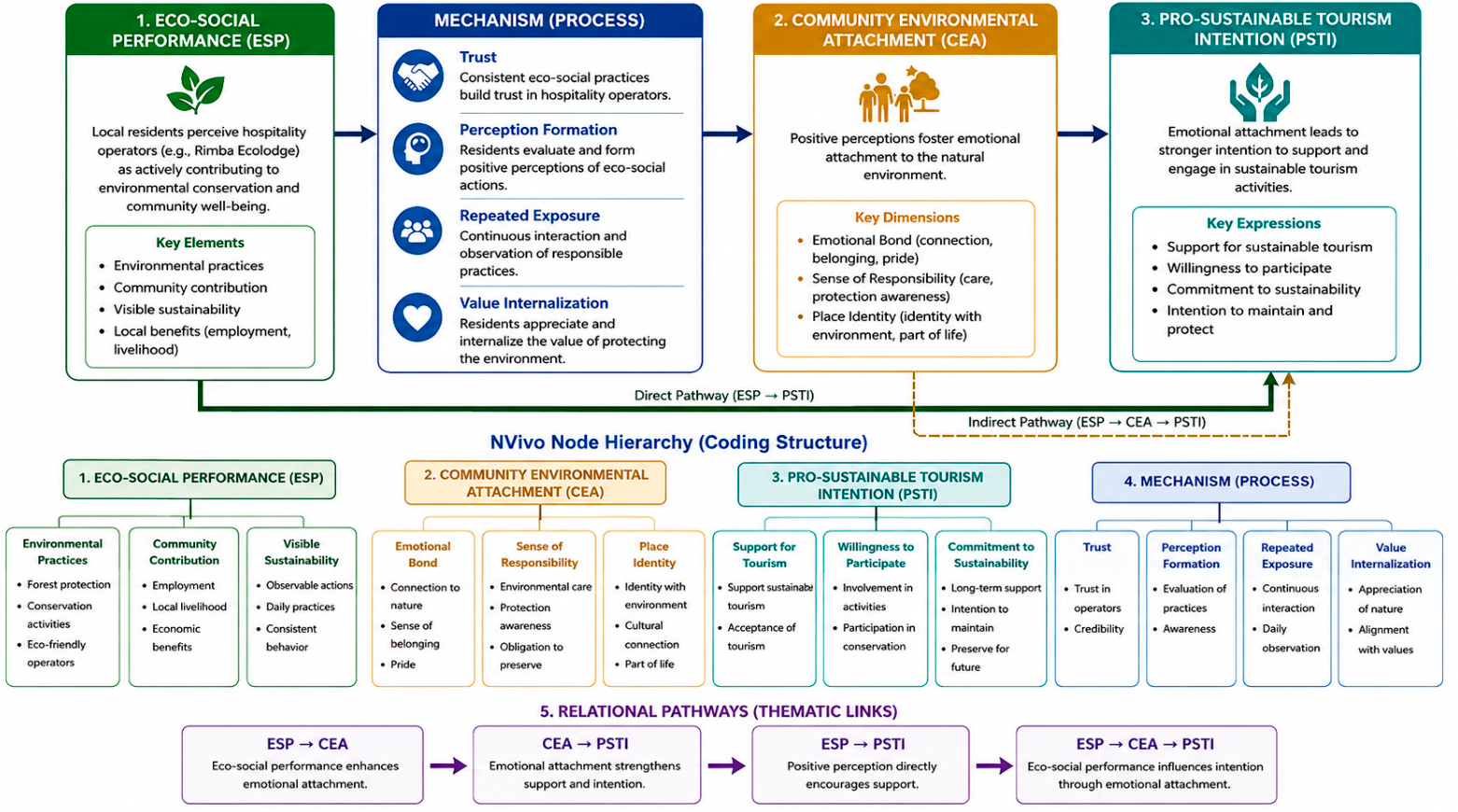
| Perceived Eco-Social Performance (Environmental Practices & Community Contribution) | Local residents perceive hospitality operators, particularly Rimba Ecolodge, as actively contributing to environmental conservation within the protected area while providing social and economic benefits, including employment and support for local livelihoods. These contributions are positively recognized and closely associated with expectations of sustained environmental responsibility. | “They take care of the forest and do not damage the environment, which is very important for us.” “Many local people get jobs from this place, and it helps our community.” |
| Trust toward Hospitality Operators | Consistent eco-social practices implemented by hospitality operators strengthen trust among local residents. This trust develops through repeated observation of responsible environmental actions within the protected area context. | “We trust them because they show real effort in protecting nature and helping the community.” |
| Community Environmental Attachment (Emotional Bond) | Residents express strong emotional connections to the protected natural environment, which is closely linked to their daily lives and shaped through continuous interaction with the surrounding ecosystem. | “This forest is part of our life; we feel connected to it.” |
| Community Environmental Attachment (Sense of Responsibility) | Emotional attachment fosters a sense of responsibility to protect the natural environment, particularly as community livelihoods are closely tied to ecological sustainability within the protected area. | “Because we depend on this environment, we feel responsible to protect it.” |
| Community Environmental Attachment (Place Identity) | The protected natural environment is perceived as a core element of community identity, reinforcing a shared sense of belonging and cultural continuity. | “Our identity is closely related to this forest and river.” |
| Community Pro-Sustainable Tourism Intention (Support for Sustainable Hospitality Practices) | Residents express support for tourism activities that are guided by environmentally responsible hospitality practices. This support is conditional upon the continued commitment of operators to conservation within the protected area. | “We support tourism as long as it protects nature.” |
| Community Pro-Sustainable Tourism Intention (Willingness to Participate) | Local communities show willingness to engage in sustainability initiatives led by hospitality operators, particularly when these activities contribute to both environmental protection and local livelihoods. | “We are willing to be involved if these activities help protect the environment.” |
| Direct Relationship (ESP → PSTI) | Positive perceptions of eco-social performance by hospitality operators directly encourage community support for tourism activities, especially when environmental protection is clearly visible within the protected area. | “If they continue protecting nature, we will support these activities.” |
| Mediating Mechanism (ESP → CEA) | Eco-social practices implemented by hospitality operators enhance emotional attachment by reinforcing the perceived value of environmental protection in everyday life. | “Seeing them protect the forest makes us appreciate our environment even more.” |
| Mediating Mechanism (CEA → PSTI) | Emotional attachment to the environment translates into a stronger intention to support sustainable tourism practices led by responsible hospitality operators. | “Because we love this place, we want activities that keep it safe.” |
| Integrated Mechanism (ESP → CEA → PSTI) | The findings indicate that the eco-social performance of hospitality operators influences community support through emotional attachment, particularly when conservation efforts are consistently demonstrated within the protected area. | “When they take care of nature, we feel closer to it and more willing to support these activities.” |
Disclaimer/Publisher’s Note: The statements, opinions and data contained in all publications are solely those of the individual author(s) and contributor(s) and not of MDPI and/or the editor(s). MDPI and/or the editor(s) disclaim responsibility for any injury to people or property resulting from any ideas, methods, instructions or products referred to in the content. |
© 2026 by the authors. Licensee MDPI, Basel, Switzerland. This article is an open access article distributed under the terms and conditions of the Creative Commons Attribution (CC BY) license.
Share and Cite
Kusumo, H.K.E.; Lemy, D.M.; Hulu, M.; Kurniawan, J.; Juliana, J. Sustainable Hospitality in Protected Areas: The Role of Perceived Eco-Social Performance in Fostering Community Pro-Sustainable Tourism Intention Through Community Environmental Attachment. Tour. Hosp. 2026, 7, 140. https://doi.org/10.3390/tourhosp7050140
Kusumo HKE, Lemy DM, Hulu M, Kurniawan J, Juliana J. Sustainable Hospitality in Protected Areas: The Role of Perceived Eco-Social Performance in Fostering Community Pro-Sustainable Tourism Intention Through Community Environmental Attachment. Tourism and Hospitality. 2026; 7(5):140. https://doi.org/10.3390/tourhosp7050140
Chicago/Turabian StyleKusumo, Henricus Kurniawan Elang, Diena M. Lemy, Meitolo Hulu, Johannes Kurniawan, and Juliana Juliana. 2026. "Sustainable Hospitality in Protected Areas: The Role of Perceived Eco-Social Performance in Fostering Community Pro-Sustainable Tourism Intention Through Community Environmental Attachment" Tourism and Hospitality 7, no. 5: 140. https://doi.org/10.3390/tourhosp7050140
APA StyleKusumo, H. K. E., Lemy, D. M., Hulu, M., Kurniawan, J., & Juliana, J. (2026). Sustainable Hospitality in Protected Areas: The Role of Perceived Eco-Social Performance in Fostering Community Pro-Sustainable Tourism Intention Through Community Environmental Attachment. Tourism and Hospitality, 7(5), 140. https://doi.org/10.3390/tourhosp7050140