Article

Examining the Service Perceptions of Visitors at National Botanical Gardens in South Africa

Centre of Sustainable Tourism and Innovation, Department of Tourism Management, Faculty of Management Sciences, Tshwane University of Technology, Pretoria 0183, South Africa
*
Author to whom correspondence should be addressed.
J. Zool. Bot. Gard. 2026, 7(2), 19; https://doi.org/10.3390/jzbg7020019
Submission received: 18 March 2026 / Revised: 12 April 2026 / Accepted: 30 April 2026 / Published: 12 May 2026

Abstract

In today’s tourism industry, service quality is essential for differentiation and achieving sustainable competitive advantage. While much research on service quality exists for the private sector, a notable gap remains regarding service dynamics in non-profit public recreational spaces in emerging economies. This study fills that gap by examining service quality (SQ) at National Botanical Gardens (NBGs) in South Africa, focusing on visitor perceptions of SQ importance and performance. Using an adapted Importance–Performance Analysis (IPA) framework, the research explores how visitor expectations compare with actual experiences. A quantitative approach was adopted, with structured questionnaires given to a convenience sample of visitors at key gardens like Pretoria and Walter Sisulu NBGs. Data analysis centred on correlation coefficients to assess the relationship between perceived importance and actual performance. The findings reveal a generally strong, statistically significant positive correlation; however, some attributes show a ‘weak correlation,’ indicating critical service gaps often overlooked by traditional management models. These insights demonstrate that, in natural attraction settings, visitor-perceived importance primarily drives satisfaction with performance. In addition to offering the South African National Biodiversity Institute (SANBI) a strategic plan to boost visitor retention, this study advances the academic discussion by challenging existing SQ models within non-profit recreational sectors. It lays a vital empirical groundwork for future research on public-sector service excellence in the Global South.

1. Introduction

Once regarded as research centres and key educational hubs, botanical gardens have evolved to become affordable and accessible green spaces that bring garden tourism to urban dwellers’ doorsteps [1,2]. Despite their affordability and accessibility, botanical gardens, like any other attraction, are caught in a spiral of place-based competition, fiercely vying with other nature-based attractions for visitor patronage [3,4,5]. To maintain a competitive edge, botanical gardens, like other nature-based attractions, have moved beyond basic offerings and have strategically refined service attributes to curate high-quality experiences [1,6]. This shift is driven by changing visitor expectations: modern travellers seek more than passive engagement, prioritising meaningful, personalised interactions that resonate on a deeper level [7,8]. Consequently, botanical gardens are pivoting from education-heavy, product-centric models toward a customer-focused, experience-centred paradigm. Central to this paradigm is the provision of high-quality service.
Service quality (SQ) is a monolithic construct that measures how an organisation delivers service relative to customer expectations. Defined as the nexus between service delivery and customer expectations, SQ remains a pivotal metric for organisational performance [9]. This is partly because delivering high SQ eliminates service defects while improving the fitness of the service or product [10]. Consequently, organisations that offer high SQ attain tangible outcomes such as increased market share and customer satisfaction [11,12].
In today’s hyper-transparent economy, SQ is essential for differentiation and serves as a primary determinant of customer citizenship behaviour [13]. Organisations that consistently deliver SQ build psychological trust equity, and hence can protect themselves during crises and reduce the long-term costs of customer acquisition. This view is supported by [14,15,16], who highlighted that SQ reduces switching anxiety, builds a reservoir of goodwill (psychological equity) that acts as a buffer during crises and reduces long-term marketing costs, resulting in customer retention, which is significantly cheaper than acquisition. Therefore, integrating SQ into the core operational strategy enables botanical gardens to meet the evolving digital and ethical expectations of the contemporary market.
The strategic importance of SQ as a competitive advantage for destination competitiveness has been analysed in recent tourism reviews, e.g., [11,12,17,18,19,20,21,22]. In some reviews, digital service quality and safety-oriented SQ have been identified as improving market competitiveness and organisational performance [21]. Some scholars’ reviews suggest that high SQ performance leads to destination loyalty, which is the ultimate performance metric for tourism boards [17]. Refs. [19,22] moved beyond simple satisfaction and analysed SQ as a competitive weapon that differentiates homogenous products in a crowded global market. Ref. [23] explored the link between SQ importance and performance and identified importance as an indicator of performance. Despite a plethora of studies on SQ importance, existing research remains heavily concentrated on SQ importance in mainstream commercial ventures in the developed world [24]. As such, the academic community has not yet fully extended this granular SQ importance analysis to performance in the localised niche context of botanical gardens in emerging economies [25]. While studies in developed countries often focus on optimising established, high-tech service environments, research in National Botanical Gardens (NGBs) in developing contexts, which face the fundamental challenge of balancing ecological conservation with socioeconomic survival, is lacking. In South Africa, NBGs are not merely leisure parks, they are critical frontiers for protecting global biodiversity while simultaneously struggling for socioeconomic survival. There is currently a scarcity of SQ importance–performance data that accounts for these informal service dynamics and resource-constrained environments. To bridge these gaps, this study seeks to answer the following research questions:
RQ1: What are the key service quality attributes that determine visitor priorities in the context of South African NBGs?
RQ2: How does the perceived importance of these attributes align with the actual performance of the gardens?
RQ3: How can nature-based SQ models be adapted to account for the socio-environmental pressures of an emerging economy?
By investigating these attributes, this study contributes to a more pluralistic knowledge system. It moves beyond the optimisation of high-tech service environments typical of developed nations to theorise service dynamics in contexts where ecological conservation and visitor experience must be balanced amid resource scarcity.

2. Literature Review

2.1. Botanical Gardens SQ Attributes

Service quality (SQ) remains one of the most rigorously debated constructs within the service marketing literature. This debate is primarily attributable to the fact that SQ is not a monolithic entity; rather, it constitutes a multidimensional framework of distinct yet interrelated attributes that collectively orchestrate the visitor experience. Consistent with broader service trends, SQ within botanical gardens is multifaceted as visitors perceive these spaces not merely as taxonomic plant repositories, but as restorative service landscapes [12,26,27,28,29]. While established paradigms such as SERVQUAL and SERVPERF advocate for a standardised five-dimensional multi-criteria decision analysis, they often lack the contextual granularity required for specialised botanical gardens. Furthermore, most SQ research in this field originates from Global North contexts, which may not account for the specific socio-economic and safety nuances of NBGs in South Africa. Consequently, this study proposes multi-dimensional framework to address these contextual oversights proposing a bespoke seven-dimensional framework tailored to NGBs, encompassing: (1) environmental and natural experience, (2) education and conservation, (3) safety and security, (4) access and logistics, (5) facilities and amenities, (6) food and beverage quality, and (7) general service value.

2.1.1. Environmental and Natural Experience

Botanical gardens have experienced a paradigm shift. Once regarded as static displays of biodiversity, botanical gardens are now understood as dynamic restorative landscapes that have moved beyond offering superficial aesthetic appeal toward a deeper, more meaningful engagement with biological ecosystems. While scholars such as [1,30] adopt a functional view, framing these botanical gardens as important venues for local escapism and domestic exploration, Ref. [31] elevates this discussion by identifying visual beauty as a cognitive trigger. Under this perspective, the environment is not a passive setting but a psychological tool that evokes emotional memories and helps reduce stress, a point supported by [32]. However, Refs. [33,34] challenge the idea that visual aesthetics alone are enough to define a high-quality experience in botanical gardens. They argue that the true measure of SQ depends on the integrity of the ecosystem itself, especially its biodiversity and preservation standards. This suggests that if the ecological health of the botanical garden is compromised, the psychological benefits for visitors may be lessened, regardless of outward appearance. Therefore, as summarised by [35], the modern environmental experience is best viewed as a synergistic result: a delicate balance between offering a space for accessible human enjoyment and ensuring the rigorous scientific conservation of the living collection. While Refs. [33,34] over-rely on visual aesthetics as the primary proxy for quality, they overlook the ecological integrity gap where gardens may look beautiful but fail to meet the scientific biodiversity standards expected by modern, eco-conscious visitors. This study addresses this by integrating biological ecosystem engagement as a quality indicator rather than just aesthetic appeal.

2.1.2. Education and Conservation

The education and conservation aspects of SQ in botanical gardens are vital for their survival. While traditional views might see education as a secondary addition to the aesthetic experience, modern scholars argue that these elements are the core pillars of a garden’s unique value. Recent research by [26,27] indicates that visitors are increasingly looking for meaningful engagement in botanical gardens. They assert that the quality of interpretive signage and the transparency of conservation efforts are no longer just educational tools but are key factors influencing perceived value. This challenges the earlier leisure-focused view, suggesting that if a garden communicates its conservation mission effectively, it can deepen the visitor’s sense of meaningful experience. However, Ref. [28] offers a more detailed perspective, noting that for education to enhance SQ, it must be delivered through gentle pedagogical methods that do not disrupt the restorative nature of the landscape. This idea is supported by [12,29], who stress that green SQ and the intangible story behind the botanical garden are what truly foster long-term visitor loyalty. This implies that while physical conservation is essential, educational efforts are what turn that conservation into a psychological connection with visitors. In the end, education and conservation work together in a feedback loop where scientific rigour provides the content, and high-quality educational delivery makes the information accessible, elevating the botanical garden from a simple park to a prestigious living laboratory [35]. While existing literature assumes a high level of environmental literacy among visitors, there is a dearth of research on how education/conservation attributes perform in South African NBGs, where visitors come from diverse educational backgrounds and may perceive conservation through different cultural lenses.

2.1.3. Facilities and Amenities

The availability of quality botanical garden facilities and amenities is crucial for public enjoyment and visitor experience [36]. Notable facilities and amenities in a botanical garden include cafeterias, restaurants, braai areas, kiosks, picnic spots, gift shops, ample restrooms, accessibility for people with disabilities or special needs, sufficient parking, children’s facilities, and comfortable seating and relaxation areas. According to [31,37], the quality of these facilities and amenities may enhance visitors’ understanding and appreciation of botanical gardens. Offering quality facilities and amenities also enhances performance [12], thereby influencing visitors’ willingness to revisit [29,38].

2.1.4. Safety and Security

A memorable experience at any attraction depends on how safe visitors feel [39]. Scholars such as [14,15] argue that safety is a primary antecedent to psychological comfort. In large-scale NBGs, where terrain can be rugged or isolated, the quality of security measures, such as visible staff presence, well-lit pathways, and clear emergency protocols, serves as a silent communicator of organisational care. This silent service acts as a foundational layer of quality; without it, the aesthetic and educational attributes of the garden cannot be fully appreciated. This view is supported by [18], who highlight that in a post-crisis global environment, security has evolved into a high-order quality indicator that directly influences a visitor’s willingness to engage with wilder or more biodiverse sections of the garden. According to [40], two main safety aspects in tourism influence a positive experience: physical safety and social safety. Physical safety involves protecting visitors from injuries and natural hazards, which can be achieved by implementing safety measures to minimise these risks [40]. Social safety includes safeguarding visitors from other visitors, ensuring tourists feel welcome and encouraged to have positive interactions. Therefore, safe and secure botanical gardens are more likely to attract high visitor numbers than those that are insecure and unsafe [41]. While international studies [18,40,41] focus on social safety (tourist interactions), they often ignore the structural safety concerns inherent in large-scale, rugged South African terrains. In this study’s context, security is not just a service extra but a silent communicator of organisational care. If security is perceived as low, all other high-performing attributes (like biodiversity or education) become irrelevant to the visitor.

2.1.5. Food, Beverages, and Quality

Another decisive factor shaping visitors’ SQ experience is the availability of high-quality food and beverage options [42]. Ref. [42] identified the condition of restaurants, cafes, and street vendors as important in visit decision-making. This perspective is supported by [43,44], who observed that food and beverage services serve not only as amenities but also as attractions, providing visitors with opportunities to connect with the destination, enhance their overall experience, and shape the destination’s image. Similarly, Ref. [43] notes that visitors seek not only high-quality food and drinks but also a warm and welcoming atmosphere. Therefore, a positive service experience, including friendly interactions and excellent service, adds value and depth to the visitor experience [43].

2.1.6. General Service and Value

According to [25,45], entertainment and recreational activities are important to the visitor experience in botanical gardens. This is partly because botanical gardens provide social spaces where visitors can connect emotionally, play, work, and socialise within their local communities [1,2,46,47]. While entertainment and recreation are important, perceived value is crucial to the visitor experience because it reflects the balance between benefits and overall costs. Visitors may enjoy features such as fresh air, educational opportunities, appreciation of nature, viewing plant collections, and access to tourist facilities [36], but they always compare these benefits against the price they would pay for these services. Therefore, visitors are willing to pay more at botanical gardens that offer additional recreational services and less at those that do not. Ref. [36] agrees that customer satisfaction and interest in botanical gardens increase when perceptions of pricing are positive relative to SQ.

2.1.7. Access and Logistics

Another most important botanical garden SQ dimension is access and logistics. Modern reviews frame access and logistics as a critical bridge between the visitor and the natural landscape. Refs. [11,48] posit that the logistical flow, including navigational ease, disability access, and the seamlessness of transit, is what permits the restorative service landscape to be inclusive rather than exclusive. When logistics are managed with high quality, they become invisible, allowing the visitor to focus entirely on the environmental experience [7]. As Ref. [20] emphasises, the strategic importance of these dimensions lies in their ability to reduce visitation friction. By ensuring that a garden is both safe to explore and easy to navigate, management successfully transforms a potentially daunting natural space into a welcoming, high-performance service environment. Achieving this depends on proper maintenance, which promotes fresh air and provides open spaces for activities [49]. While literature confirms the importance of SQ dimensions to visitor experience in botanical gardens, it is unclear how visitors perceive their importance and performance at NBGs in South Africa. As such, this study aims to assess visitors’ perceptions of the importance and performance of these attributes.

2.2. Theoretical Underpinnings

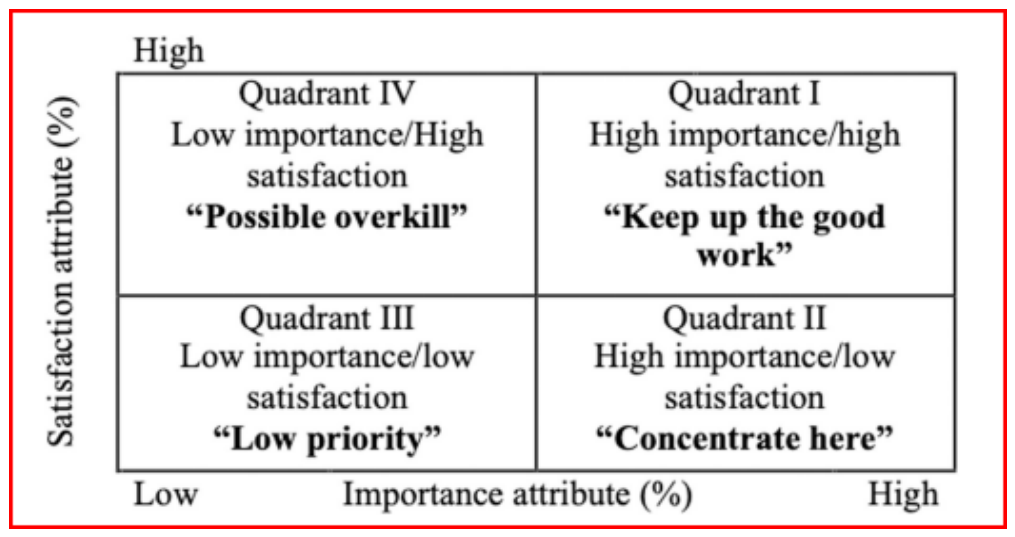
Various models have been proposed to assess SQ attributes. While the SERVQUAL and SERVPERF models are widely used, e.g., [30,32,33,36], the evolving nature of tourist attractions and visitor demands has led to the introduction of new measures. Among others, the Importance–Performance Analysis (IPA) has emerged as a critical diagnostic tool partly because the SERVQUAL and the SERVPERF models identify SQ attribute “gaps” but do not tell us if those gaps matter to the visitor. Secondly, the former models are associated with rigidity, whereas the latter has contextual flexibility, and hence was adopted for this study. Originally proposed by [50], IPA is a staple in marketing, tourism, and service management research [51]. It is a strategic management tool that evaluates how visitors perceive the importance of specific service attributes relative to the garden’s actual performance in delivering those attributes. At its core, the theory suggests that satisfaction is a function of two dimensions: how important a feature is to the user and how well the organisation performs on that feature. The IPA can be visualised as a landscape plot divided into four distinct horticultural zones, as shown in Figure 1.
In a botanical garden, the horizontal axis measures the importance of tangible and intangible attributes, while the vertical axis tracks their current performance. Quadrant I include SQ attributes that visitors consider essential and that the botanical garden should execute flawlessly. These are high-importance, high-performance attributes that garden managers can use to attract clients and gain a competitive edge. The strategy here is simple: “keep up the good work” to maintain the edge. Quadrant II represents SQ attributes that guests highly value but currently underperform; therefore, it is the most critical area for a curator to focus on. As such, the botanical garden manager should “concentrate here,” and resources should be diverted to ensure they meet visitor expectations. Quadrant III represents SQ attributes characterised by both low importance and low performance; these are “low priority” areas. Quadrant IV represents SQ attributes that perform exceptionally well but contribute little to the visitor experience; therefore, there is a “possible overkill.”

3. Materials and Methods

3.1. Study Area

South Africa boasts remarkable NBGs with diverse flora. The country’s network of NBGs is managed, maintained, and expanded by the South African National Biodiversity Institute (SANBI), a parastatal organisation under the South African National Department of Environment, Forestry, and Fisheries. SANBI oversees 11 NBGs spreading across various South African provinces, including: Free State (Bloemfontein in Free State), Harold Porter (Cape Town in the Western Cape), Karoo Desert (Worcester in Western Cape province), Kirstenbosch (Cape Town in Western Cape), Lowveld (Mbombela in Mpumalanga), KwaZulu-Natal (Pietermaritzburg in KwaZulu-Natal), Kwelera (East London in the Eastern Cape), Pretoria (Pretoria in Gauteng), Walter Sisulu (Johannesburg in Gauteng., Thohoyandou (Thohoyandou in Limpopo), and Hantam (Bokkeveld Plateau in the Northern Cape ) [52]. The first 10 are conservation gardens, blending cultivated collections with natural vegetation areas, while Hantam is classified as a ‘natural or wild garden’. Originally designed as conservation and educational hubs, South African NBGs have also become popular attractions for urban dwellers [1,53]. Although primarily spaces for leisure and enjoyment, NBGs in South Africa face intense competition from well-established nature-based attractions like national parks and game reserves. To remain competitive, NBGs in South Africa now offer various amenities, including service restaurants, educational and interpretive facilities, tours, theatrical and musical performances, events, and venue hire options [6]. While these features aim to give NBGs a unique identity and competitive edge, how visitors perceive their importance and effectiveness remains unclear. Therefore, it is necessary to assess tourists’ perceptions of the importance and performance of SQ attributes and how these factors interact.

3.2. Research Design and Sampling Strategy

This study adopted a quantitative research design utilising a cross-sectional survey to assess visitor perceptions across South Africa’s NBGs. Given an annual visitor population of approximately 1.24 million [54], the study targeted adult visitors using a non-probability convenience sampling approach. This method was selected due to the practical constraints of accessing a comprehensive, centralised national registry for true random selection. To ensure statistical representativeness, the target sample size was determined using Raosoft parameters (95% confidence level and a 5% margin of error), yielding a minimum requirement of 385 respondents. Data collection utilised a hybrid distribution model with field surveys and digital surveys: Physical questionnaires were distributed in high-traffic zones at the Pretoria and Walter Sisulu NBGs. To minimise selection bias and duplication, a “one-adult-per-group” rule was enforced. On the digital surveys, an electronic version of the instrument was emailed to a stratified list from the SANBI database, encompassing all 11 NBGs. From the distribution effort, 201 usable responses were retrieved. While the resulting 52% response rate sits below the 85% gold standard often cited in controlled environments [55], it is considered robust for field-based research involving transient, leisure-seeking populations. The final dataset exhibited sufficient demographic and geographic diversity to support the validity of the findings.

3.3. Instrumentation and Data Collection

The primary research instrument was a structured questionnaire featuring closed-ended questions. The attributes used were derived from a comprehensive review of service marketing literature [21,32,33,35,40,41] and contextually adapted to suit the botanical and horticultural sector. The instrument comprised three distinct sections: Section A included demographic variables. Section B evaluated the perceived importance of seven service dimensions that were categorised under environmental/nature experience, educational conservation, facilities and amenities, safety and security, food and beverage quality, access and logistics, and general service and value. Items were measured on a five-point Likert scale (1 = not important; 5 = extremely important). Section C replicated the dimensions from Section B to gauge actual garden performance, measured from 1 (very dissatisfied) to 5 (very satisfied). Before full implementation, a pilot study (n = 10) was conducted. Feedback from this phase led to minor linguistic adjustments and a reduction in questionnaire length to improve completion rates. Data were analysed using the Statistical Package for the Social Sciences (SPSS version 30). Descriptive analysis was used to analyse the results. Analysis of Variance (ANOVA) was used to evaluate the change between importance and performance.

3.4. Validity and Reliability

The instrument underwent a two-stage rigorous evaluation. Firstly, a qualitative validation was carried out. Content and face validity were established through an expert panel consisting of tourism specialists, place marketing academics, and a statistician. This ensured that the Importance–Performance Analysis (IPA) framework was correctly operationalised for the NBG context. Secondly, empirical reliability was checked. Post data collection, internal consistency was measured via Cronbach’s alpha. The results indicated strong reliability; importance constructs ranged from 0.697 to 0.830, and performance constructs ranged from 0.634 to 0.85. All dimensions surpassed the acceptable exploratory threshold of 0.60, with most exceeding the 0.70 benchmark, confirming high construct stability and instrument reliability.

4. Results

4.1. Demographic Characteristics of the Respondents

The demographic analysis of respondents shows that the majority were female (n = 139, 69%), with males accounting for n = 60 (30%). Previous studies in different contexts by [20] support these findings, with females outnumbering males. More than half of respondents were married (n = 111, 57%), while 41 were single (21%) and 49 did not disclose their marital status (22%), which contrasts with [21]’s finding that the majority were single. In terms of education, the highest percentage held national diplomas (n = 59, 30%), followed by high school matric (n = 42, 21%), bachelor’s degrees (n = 32, 16%), and honours degrees (n = 31, 15%). Regarding employment, 71 respondents were employed (36%), 57 were self-employed (29%), and 48 were unemployed (24%). Most lived within 11–30 km of the NBGs (n = 75, 38%) or within 10 km or less (n = 63, 32%), reflecting the likely influence of urban residents, as proximity increases the likelihood of visiting. About 80% (n = 157) of respondents travelled to the botanical garden by car, which aligns with most living within 30 km. In terms of visit frequency, most visited regularly (n = 79, 40%), while others visited a few times annually (n = 50, 25%). The main sources of information about NBGs were friends and relatives (n = 51, 26%), radio (n = 43, 22%), and the South African NBI website/internet (n = 34, 17%).

4.2. Descriptive Results

Respondents’ Perceptions of SQ Importance and Performance at NBGs

The study aimed to assess how respondents rated the importance and performance of various SQ attributes at NBGs. In this context, 32 items identified were first used to measure SQ importance and were tested using a 5-point Likert scale, with 1 indicating not important and 5 indicating extremely important. The descriptive results are shown in Table 1 below.
From Table 1, it is evident that respondents consider the SQ attributes provided at the NBGs to be important. The results show that respondents perceived all SQ attributes as important, with a minimum mean score of 3.19, falling into the ‘important’ category, while the highest score was 4.57, categorised as ‘very important’. Although respondents rated these variables above average, some variation was observed. The most important service attributes were: ‘NBGs offer the chance to be close to nature,’ with a mean of 4.57. This was followed by ‘I feel safe in the NBGs’ (4.56). The third most important attribute was ‘NBGs offer beautiful natural scenery and landscapes’, with a mean of 4.50. The fourth most important variable was conservation learning (4.29). These results align with a study by [20] at the South African National Zoological Garden and are supported by the review by scholars such as [14,15,30,31,33,35] who also found safety, fun, relaxation and accessibility as enhancing experience in botanical gardens. Despite being rated above average, variables such as ‘NBGs have children’s facilities’ and ‘NBGs offer a variety of food and beverages’ received the lowest ratings, with mean scores of 3.19 and 3.23, respectively. These results concur with [20] in a zoo where food and beverage were the least important variable. A Cronbach’s alpha was used to assess the internal consistency of the test items. The lowest alpha among the items measuring SQ importance was 0.685, while the highest was 0.9336. The average alpha score was 0.783, which is more than 0.60, indicating reliable results [56].
The items used to measure SQ importance were adopted and modified to evaluate respondents’ perceptions of service performance at the NBGs. The 32 items were rated on a five-point Likert scale, with 1 indicating very dissatisfied and 5 indicating very satisfied. The descriptive results in Table 1 show respondents’ ratings from visitors’ perspective of SQ attributes performance at NBGs in South Africa. Regarding SQ performance, respondents were generally satisfied with the SQ at NBGs, with mean ratings ranging from a high of 4.50 to a low of 3.35. The attributes that performed highest included: ‘NBGs have beautiful natural scenery and landscapes,’ with a mean value of 4.39. This was followed by ‘NBGs offer green space’ and ‘NBGs offer opportunities to be close to nature,’ both attaining a mean value of 4.35. The lowest-rated service performance attributes were: ‘there is an on-site first aid kit and fire alarms at NBGs’ with a mean value of 3.35, ‘there is easy accessibility of public transport (taxi, bus) at NBGs’ (3.36), ‘food and beverage at NBGs is worth the value for money’ (3.37), ‘there is safe and convenient transport to NBGs’ (3.38), and ‘there are high-quality educational and conservation programmes on offer at NBGs’ (3.39).
A comparison of the importance and performance was performed, and some disparities were revealed. In this case, some constructs showed a positive difference while others showed a negative difference. The most negative mean differences were found in: NBGs offer opportunities for learning about fauna and flora (−0.56); NBGs have adequate toilet facilities (−0.58), and NBGs offer facilities for persons with disabilities/special needs (−0.59). On the other hand, the most positive mean differences were observed in: NBGs have children’s facilities (+0.48); there are quality cafeterias, restaurants, and gift shops at NBGs (+0.37); NBGs offer a variety of food and beverages (+0.35), and NBGs offer fun and relaxing experiences (+0.34).

4.3. ANOVA Analysis of the SQ Attributes

A Wilcoxon signed-rank non-parametric test was performed on the 32 SQ variables to evaluate the change between importance and performance. Table 2 below shows the results.
Based on the results, variations were noted among the variables, with some showing a positive shift from importance to performance and others a negative shift. A positive shift meant that more responded positively than negatively, indicating that they found SQ attributes important, but may not have been entirely satisfied with their performance at the NBGs. Among the 32 variables, 13 had a p-value under 0.05 (*), demonstrating a significant positive shift between SQ importance and performance. In essence, for these variables, respondents regarded SQ as important and were satisfied with their performance in NBGs. This confirms a meaningful link between service importance and performance. Variables reflecting a positive shift include, but are not limited to: NBGs offer opportunities to be in close contact with nature, and NBGs offer opportunities for learning about conservation. The results align with recent findings by [6], who emphasised that post-pandemic visitors in South Africa increasingly prioritise local nature-based attractions for mental well-being and stress relief. Additionally, variables such as ‘quality of food and beverage facilities’, ‘hygiene/cleanliness of food and beverage facilities’, ‘educational and conservation programmes’, and ‘overall cleanliness’ also showed p-values below 0.05, indicating a positive shift from service experience to performance. These results align with prior studies emphasising the strong connection between SQ and customer satisfaction, which ultimately influences visitors’ intentions to revisit [8]. Ref. [23] also highlights that high SQ boosts tourist satisfaction, potentially fostering loyalty to a destination. The remaining 19 variables had p-values above 0.05, indicating a negative shift from service importance to performance. In these cases, performance scores were higher than importance scores.

5. Discussion

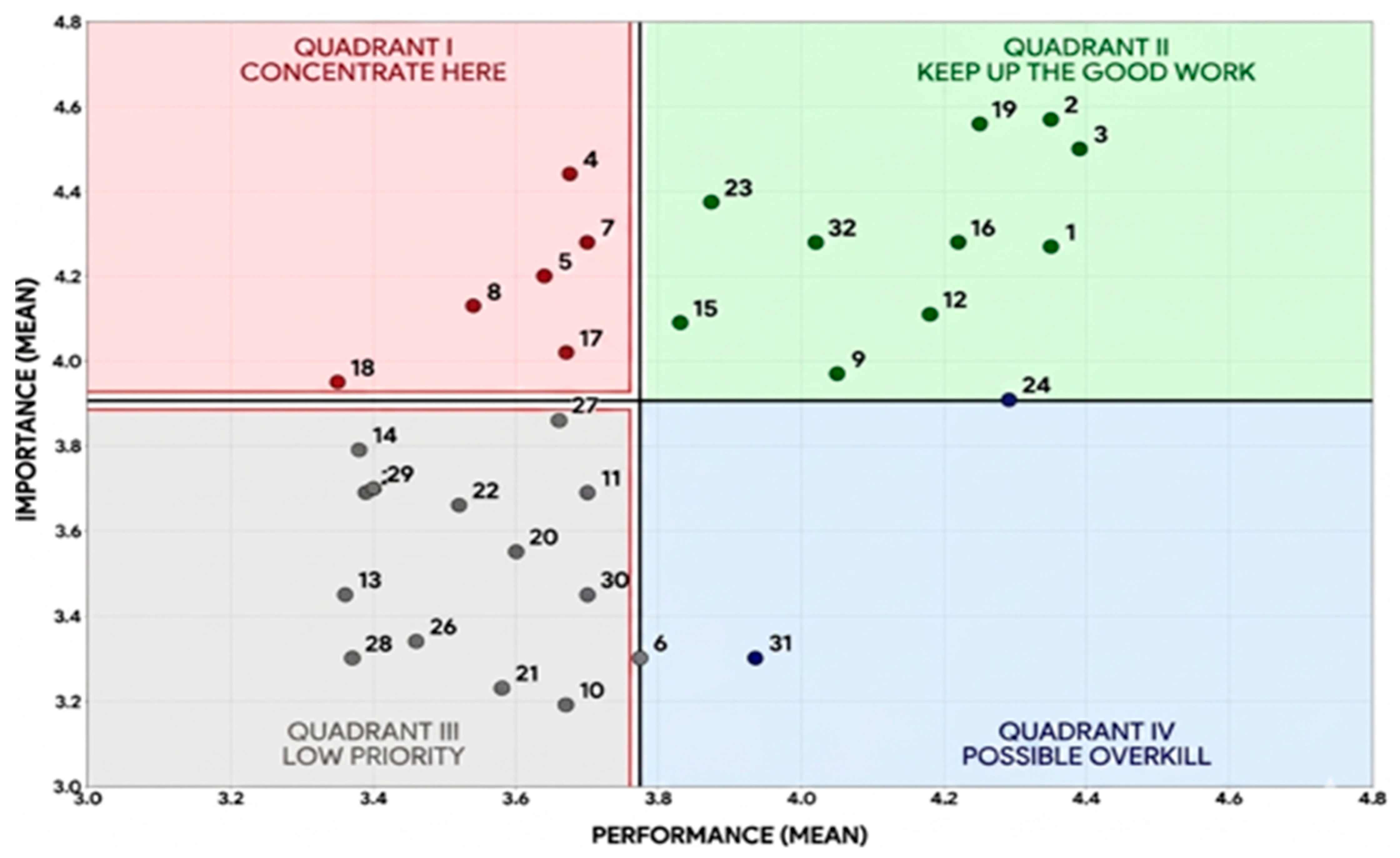
The results of this study offer critical insights into the service attributes driving visitor satisfaction at South African National Botanical Gardens (NBGs). By utilising Importance–Performance Analysis (IPA), the 32 attributes of the NBG were mapped onto a two-dimensional (IPA) grid, as shown in Figure 2. This strategic tool categorised the results into four distinct quadrants to guide management action: Quadrant 1: “Concentrate Here”—high importance but low performance; these are critical areas requiring immediate improvement at the NBGs. Quadrant 2: “Keep Up the Good Work”—high importance and high performance; these represent the botanical garden’s core strengths that should be maintained. Quadrant 3: “Low Priority”—low importance and low performance; these attributes do not require significant resource allocation. Quadrant 4: “Possible Overkill”—low importance but high performance; resources here might be better redirected to more critical areas. Figure 2 provides a visual framework for prioritising institutional efforts based on visitor feedback.

5.1. Alignment of Core Value Propositions and Competitive Advantage

The IPA grid (Figure 2) confirms that the South African NBGs’ primary competitive advantage is rooted in their natural and botanical core. The “Keep Up the Good Work” quadrant reveals a significant congruence between visitor priorities and institutional performance regarding natural scenery, green spaces (1, 2, 3), and overall cleanliness (32). This finding is in line with previous tourism studies by [31,32,33,34], who affirmed that visitors to botanical gardens are often concerned about the natural scenery. From an academic perspective, this alignment suggests that SANBI is successfully fulfilling the biophilic needs of its constituents, where the fundamental motivation for visitation (immersion in nature) is being met with high efficiency. This high performance in core areas establishes a foundational level of psychological safety and satisfaction, which is a prerequisite for repeat visitation and positive word-of-mouth. However, maintaining this status requires constant vigilance against environmental degradation to ensure these core assets do not slide into lower-performance quadrants.

5.2. The Inclusivity–Safety Gap: Critical Service Failures

The most significant academic and practical contribution of this study lies in identifying the “Concentrate Here” quadrant, which highlights a disconnect between SANBI’s institutional mandate and visitor experience. Specifically, the gaps in disability access (8), educational programming (4, 5), and emergency infrastructure (18) represent critical service failures. While the gardens excel in providing passive nature experiences, they struggle with active and inclusive service delivery. The deficit in accessibility suggests that NBGs are not yet fully realising their potential as inclusive public spaces. Furthermore, the gap in educational performance, despite high visitor importance, indicates that the transition from a pleasure garden to a learning centre is incomplete. These findings suggest that management must move beyond aesthetic maintenance to prioritise structural inclusivity and interpretive depth.

5.3. Strategic Resource Optimisation and Reallocation

A key insight derived from the IPA synthesis is the necessity for resource pivoting. The presence of attributes in the “Low Priority” (Quadrant 3) and “Possible Overkill” (Quadrant 4) categories provides a clear mandate for budget reallocation. Visitors indicated that while staff appearance (30) and quality of restaurants (6) are satisfactory, they are not primary drivers of their experience. Consequently, the academic knowledge gleaned here is that in the context of South African NBGs, functional safety and accessibility trump secondary amenities. Management is encouraged to strategically shift resources away from over-delivered areas, such as excessive investment in food variety (20) or children’s facilities beyond the current scope and redirect them toward closing the high-risk gaps in safety and education. This strategic shift ensures that the garden’s operational budget is aligned with the actual value drivers identified by the contemporary visitor.

6. Conclusions

The findings clearly demonstrate that perceived SQ attributes at NBGs in South Africa are regarded as important and satisfactory by visitors. The gardens’ effective delivery of their main natural features and cleanliness are key factors driving high satisfaction. To further improve visitor satisfaction (which can ultimately improve visitor retention), management should build on the attributes showing statistically significant findings (p < 0.05). Continuing to invest in and promote educational and conservation programmes, along with ensuring the availability and quality of essential facilities such as toilets, disability access, and health and safety measures, are crucial areas where better SQ results in increased satisfaction. By emphasising both core offerings and vital infrastructure, the NBGs can strengthen positive visitor experiences, which can potentially result in repeat visits, supporting the idea that satisfaction directly leads to destination loyalty. Unlike general tourism research, this study provides a context-specific hierarchy of intervention for non-profit gardens, arguing that in a resource-constrained environment, managerial success is defined not by doing everything better, but by the strategic withdrawal from Quadrant III to salvage the critical service failures in Quadrant I.
While this study established a clear relationship between service attribute importance and performance, its cross-sectional design limits the potential influence on retention. As such, future research should employ a longitudinal approach to directly model the causal relationship between SQ importance and performance. Furthermore, qualitative studies (such as focus groups or in-depth interviews) could provide a richer context to understand why satisfaction is low in areas like learning and conservation, offering actionable insights for curriculum development.

Author Contributions

Conceptualisation, M.K.; methodology, M.K.; formal analysis, M.K.; investigation, S.B.; resources, U.P.H. and S.B.; data curation, U.P.H. and S.B.; writing—original draft preparation, M.K.; writing—review and editing, U.P.H. and S.B.; supervision, U.P.H. and S.B. All authors have read and agreed to the published version of the manuscript.

Funding

This research received no external funding.

Institutional Review Board Statement

The study was conducted in accordance with the Declaration of Helsinki, and approved by the Human Research Ethics Committee of TUT on 14 March 2024 (protocol code 140324).

Informed Consent Statement

Informed consent was obtained from all subjects involved in the study.

Data Availability Statement

The original contributions presented in this study are included in this article. Further inquiries can be directed to the corresponding author.

Conflicts of Interest

The authors declare no conflicts of interest.

Abbreviations

The following abbreviations are used in this manuscript:
SANBISouth African National Biodiversity Institute
NBGsNational Botanical Gardens
SASouth Africa
SQService Quality

References

  1. Middel, I.J.; Bouwer, S.C.; Hermann, U.P. Nature-based urban tourism attractions: Resident perceptions of the benefits of visitation to a botanical garden in South Africa. Int. J. Tour. Cities 2025, 11, 500–512. [Google Scholar] [CrossRef]
  2. Funsten, M.; Borsellino, F.; Schimmenti, M. Botanical gardens as places of urban well-being: A review. Sustainability 2020, 12, 4984. [Google Scholar] [CrossRef]
  3. Hossain, M.S.; Sambasivan, M.; Abuelhassan, A.E.; Khalifa, G.S.A. Factors influencing customer citizenship behaviour in the hospitality industry. Ann. Leis. Res. 2023, 26, 65–88. [Google Scholar] [CrossRef]
  4. Phori, M.M.; Kuseni, M. The neglected critical factors in branding tourism destinations: Evidence from Gauteng, South Africa. In Understanding Place and Destination Branding; Edward Elgar Publishing: Cheltenham, UK, 2025; pp. 68–86. [Google Scholar]
  5. Kuseni, M.; Aardt, I.; Boshoff, L. Auxiliary issues of branding tourism destinations: A case of Gauteng, South Africa. Geo J. Tour. Geosites 2021, 37, 725–731. [Google Scholar] [CrossRef]
  6. Hermann, U.P.; Bouwer, S.C. Motives to Visit Urban Ecotourism Sites: A Study of a Botanical Garden in South Africa. J. Environ. Manag. Tour. 2023, 14, 563–574. [Google Scholar] [CrossRef]
  7. Abdul Jabar, M.; Mohamad Helmi, N.F.I.; Mohd Najib, N.; Mohamad Yasin, M.I.N.; Abdul Jabar, S.; Abdul Jabar, M.S. Exploring visitors’ satisfaction towards conservation activities at botanical gardens. Gading J. Soc. Sci. 2024, 27, 109–117. [Google Scholar] [CrossRef]
  8. Mandić, A.; Spenceley, A.; Fennell, D.A. (Eds.) Handbook on Managing Nature-Based Tourism Destinations Amid Climate Change; Edward Elgar Publishing: Cheltenham, UK, 2024. [Google Scholar]
  9. Ying-Yen, L.; Studio, L. Analysing the importance of service quality and customer satisfaction in the tourism industry. Int. J. Organ. Innov. 2022, 15, 10–24. [Google Scholar]
  10. Kanyama, J.; Nurittamont, W.; Siripipatthanakul, S. Hotel service quality and its effect on customer loyalty. The case of Ubon Ratchathani, Thailand, during the COVID-19 pandemic. J. Manag. Bus. Health Care Educ. 2022, 1, 1–20. [Google Scholar]
  11. Nguyen, N.V.; Ngoc, T.T.B. Service Quality as a Catalyst for Competitive Advantage and Business Performance in the Hotel Industry: An Empirical Analysis by PLS-SEM Algorithm. Int. J. Anal. Appl. 2024, 22, 141. [Google Scholar] [CrossRef]
  12. Dumitrascu, A.V.; Teodorescu, C.; Cioclu, A. Accessibility and Tourist Satisfaction—Influencing Factors for Tourism in Dobrogea, Romania. Sustainability 2023, 15, 7525. [Google Scholar] [CrossRef]
  13. Díaz-Meneses, G.; Amador-Marrero, M. Visitor experience at Viera y Clavijo Botanic Garden: Satisfaction and Loyalty Antecedents. J. Outdoor Recreat. Tour. 2024, 47, 100778. [Google Scholar] [CrossRef]
  14. Desai, S.; Radia, K.N.; Aagja, J.P. Psychological comfort and customer engagement in services: Mediating role of relationship quality. J. Serv. Mark. 2025, 39, 1068–1085. [Google Scholar] [CrossRef]
  15. Wibawa, A.B.; Utama, A.P.; Titis, P. Impact of service quality on purchase intentions with consumer confidence as mediators. Eur. J. Manag. Mark. Stud. 2024, 9, 112–130. [Google Scholar] [CrossRef]
  16. Divya, D.; Savita, S.; Kaur, S. Unveiling excellence in Indian healthcare: A patient-centric PRISMA analysis of hospital service quality, patient satisfaction and loyalty. Int. J. Pharm. Healthc. Mark. 2025, 19, 874–892. [Google Scholar] [CrossRef]
  17. Chen, C.F.; Tsai, D.C. Importance–performance analysis of destination attributes: A case study of cultural heritage sites. J. Sustain. Tour. 2020, 28, 1642–1660. [Google Scholar]
  18. Guzel, Ö.; Alkan, Ö.; Doğan, K. Identifying the importance and performance of service attributes in the tourism industry: A fuzzy approach. Soft Comput. 2021, 25, 9875–9891. [Google Scholar]
  19. Olya, H.; Al-Ansi, A.; Han, H. Assessing the performance of service attributes in the hospitality industry: A comparison of IPA and Fuzzy-IPA. Int. J. Contemp. Hosp. Manag. 2021, 33, 855–878. [Google Scholar]
  20. Ngwenya, P.J.; Hermann, U.P.; Welthagen, L.C. Assessing visitor satisfaction at a South African zoo by means of an importance-performance analysis. Int. J. Leis. Tour. Mark. 2023, 8, 36–52. [Google Scholar] [CrossRef]
  21. Nguyen, T.H.; Khoa, T.T. Sustainable tourism development in traditional craft villages: An importance-performance analysis in Vietnam. J. Cult. Herit. Manag. Sustain. Dev. 2023, 13, 712–730. [Google Scholar] [CrossRef]
  22. Hultman, M.; Strandberg, C.; Oghazi, P. The role of destination personality and service attribute performance in creating visitor loyalty. Tour. Manag. Perspect. 2021, 37, 100779. [Google Scholar] [CrossRef]
  23. Günaydın, Y. Service quality in hospitality businesses and its effect on revisit intention during the COVID-19 pandemic. J. Tour. Theory Res. 2022, 8, 185–198. [Google Scholar] [CrossRef]
  24. Hanna, S.; Rowley, J.; Keegan, B. Place and Destination Branding: A Review and Conceptual Mapping of the Domain. Eur. Manag. Rev. 2020, 18, 105–117. [Google Scholar] [CrossRef]
  25. Benfield, R.W. New Directions in Garden Tourism; CABI: Wallingford, UK, 2021. [Google Scholar]
  26. Rather, R.A.; Hollebeek, L.D.; Rasoolimanesh, S.M. First-time versus repeat tourism customer engagement, experience, and value co-creation: An empirical investigation of corporate excellence. J. Travel Res. 2022, 61, 549–564. [Google Scholar] [CrossRef]
  27. Antony, J.; Sunder, M.V.; Kanapathy, K.; Gijo, E.V. Service quality and its impact on business excellence: A systematic review and directions for future research. Total Qual. Manag. Bus. Excell. 2022, 33, 1245–1268. [Google Scholar]
  28. Nguyen Phu, T.; Nguyen Thi Thu, H. Assessment of tourism service quality for traditional craft villages in Da Nang city, Vietnam. Cogent Soc. Sci. 2022, 8, 2108636. [Google Scholar] [CrossRef]
  29. Hermawan, H.; Wijayanti, A.; Nugroho, D.S. Loyalty on ecotourism analysed using the factors of tourist attraction, safety, and amenities, with satisfaction as an intervening variable. Afr. J. Hosp. Tour. Leis. 2019, 8, 1–19. Available online: https://www.researchgate.net/publication/336640121_Loyalty_on_Ecotourism_analysed_using_the_factors_of_tourist_attraction_safety_and_amenities_with_satisfaction_as_an_intervening_variable (accessed on 12 April 2026).
  30. Helen, O.O.; Praise, E.E. Assessment of tourists’ perception and satisfaction in Agodi Park and gardens, Ibadan as a nature-based tourism attraction. Granthaalayah 2020, 8, 144–159. [Google Scholar] [CrossRef]
  31. Buckley, R. Nature tourism and mental health: Parks, happiness, and causation. J. Sustain. Tour. 2020, 28, 1409–1424. [Google Scholar] [CrossRef]
  32. Zhang, H.; Zhang, X.; Yang, Y.; Ma, J. From nature experience to visitors’ pro-environmental behaviour: The role of perceived restorativeness and well-being. J. Sustain. Tour. 2023, 32, 861–882. [Google Scholar] [CrossRef]
  33. Velmurugan, S.; Thazhathethil, B.V.; George, B. A study of visitor impact management practices and visitor satisfaction at Eravikulam National Park, India. Int. J. Geoheritage Parks 2021, 9, 463–479. [Google Scholar] [CrossRef]
  34. Mandić, A.; Balić, K.; Mikulić, D. Understanding visitor satisfaction in nature-based trail events. Anatolia 2025, 37, 61–81. [Google Scholar] [CrossRef]
  35. Sahabuddin, M.; Alam, M.S.; Nekmahmud, M. How do perceived and environmental values influence tourist satisfaction, loyalty, and environmental awareness? Environ. Dev. Sustain. 2024, 28, 7817–7840. [Google Scholar] [CrossRef]
  36. Affandi, N.N.B.; Ariffin, A.; Ahmad, H.; Yusof, A.; Ahmad, N.L. Visitor satisfaction and loyalty in public parks: A case study of recreational parks in Kuala Lumpur. J. Bus. Soc. Rev. Emerg. Econ. 2020, 6, 1187–1198. [Google Scholar]
  37. Crilley, G.; Hills, J.; Cairncross, G.; Moskwa, E. Identifying Visitor Service Quality in Australian Regional Botanic Gardens. Ann. Leis. Res. 2010, 13, 476–496. [Google Scholar] [CrossRef]
  38. Biswas, C.; Omar, H.; Rashid-Radha, J.Z.R.R. The impact of tourist attractions and accessibility on tourists’ satisfaction: The moderating role of tourists’ age. Geo J. Tour. Geosites 2020, 32, 1202–1208. [Google Scholar] [CrossRef]
  39. George, R. Tourism Safety and Security: A South African Perspective; Oxford University Press: Cape Town, South Africa, 2021. [Google Scholar]
  40. Mata, C.; Pereira, C.; Carvalhinho, L. Safety measures and risk analysis for Outdoor recreation technicians and practitioners: A systematic review. Sustainability 2022, 14, 3332. [Google Scholar] [CrossRef]
  41. Esfandiar, K.; Pearce, J.; Dowling, R.; Goh, E. Pro-environmental behaviours in protected areas: A systematic literature review and future research directions. Tour. Manag. Perspect. 2022, 41, 100943. [Google Scholar] [CrossRef]
  42. Robinson, P.; Lück, M.; Smith, S. Food and beverage. In Tourism; CABI: Wallingford, UK, 2020; pp. 152–166. [Google Scholar]
  43. Ahanu, E.L.; Christofani, G. The Importance of the food and beverage sector in tourism and an anomaly in conventional hospitality standards. In Proceedings of the Geo Tourism International Conference; Politeknik Pariwisata Medan: Sumatera Utara, Indonesia, 2025; Volume 1. [Google Scholar]
  44. Stone, M.J.; Migacz, S.; Wolf, E. Beyond the journey: The lasting impact of culinary tourism activities. Curr. Issues Tour. 2018, 22, 147–152. [Google Scholar] [CrossRef]
  45. Catahan, N.; Hopwood, M.; Suraweera, P. Botanic Garden Tourism, Social Value, Health, and Well-Being. J. Zool. Bot. Gard. 2024, 5, 187–199. [Google Scholar] [CrossRef]
  46. Yilmaz, K.T.; Vural, C.; Yilmaz, S. Sensory experiences and visitor satisfaction in urban green spaces. Urban For. Urban Green. 2023, 87, 127976. [Google Scholar] [CrossRef]
  47. Lee, J.S. The effect of aesthetic elements of urban parks on visitors’ satisfaction and behavioural intentions. Urban For. Urban Green. 2020, 56, 126873. [Google Scholar] [CrossRef]
  48. Hsu, C.L.; Chen, M.C.; Yang, S.Y. Exploring the importance-performance of sustainable tourism attributes in rural areas. Sustainability 2021, 13, 8412. [Google Scholar]
  49. Che Rose, S.; Basri, N.A.H. Factors influencing visitors’ satisfaction at recreational parks. J. Tour. Hosp. Culin. Arts 2019, 11, 1–11. [Google Scholar]
  50. Martilla, J.A.; James, J.C. Importance-Performance Analysis. J. Mark. 1977, 41, 77–79. [Google Scholar] [CrossRef]
  51. Wu, C.-H.; Kuo, P.-L.; Yang, C.-H.; Chang, Y.-C.; Chen, T.-L. Importance–Performance Analysis (IPA) in Analysing the Satisfaction of Administrative Support in Teaching Practice Research Programs. Sustainability 2023, 15, 1943. [Google Scholar] [CrossRef]
  52. Sebola, R.J.; Willis, C.K. The South African National Biodiversity Institute (SANBI) and its national botanical gardens: A historical review. S. Afr. J. Bot. 2025, 184, 1292–1312. [Google Scholar] [CrossRef]
  53. Arnolds, J.L.; Guo, D. Plant Conservation in National Botanical Gardens of South Africa. J. Geosci. Environ. Prot. 2024, 12, 145–162. [Google Scholar] [CrossRef]
  54. SANParks; ISPA; SANBI. 2024/25 Annual Reports, with Deputy Minister. 2025. Available online: https://www.sanbi.org/wp-content/uploads/2025/10/Annual-Report-2024-25.pdf (accessed on 20 January 2025).
  55. Cohen, L.; Manion, L.; Morrison, K. Research Methods in Education, 6th ed.; Routledge: New York, NY, USA, 2008. [Google Scholar]
  56. Cronbach, L.J. Coefficient alpha and the internal structure of tests. Psychometrika 1951, 16, 297–334. [Google Scholar] [CrossRef]
Figure 1. Importance–Performance Analysis grid.
Jzbg 07 00019 g001
Figure 2. South African National Botanical Gardens IPA.
Jzbg 07 00019 g002
Table 1. South African NBGs SQ attributes’ importance and performance.
Service Attribute Construct and VariableImportance
(M)
Importance
(SD)
Alpha (α)Performance
(M)
Performance
(SD)
Alpha (α)Mean Diff.
NBGs offer green space4.271.180.6934.351.010.827+0.08
NBGs offer the opportunity to be close to nature4.570.660.6854.351.040.823−0.22
NBGs have beautiful natural scenery and landscapes4.500.650.6874.390.900.839−0.11
NBGs offer opportunities to learn about the value of conservation4.380.770.6913.780.930.845−0.6
NBGs offer opportunities of learning about fauna and flora4.200.930.7913.640.940.867−0.56
There are quality cafeterias, restaurants, and gift shops at NBGs3.411.090.8033.781.050.600+0.37
NBGs have adequate toilet facilities4.280.850.8013.701.060.643−0.58
NBGs offer facilities for persons with disability/special needs4.130.900.8103.540.900.643−0.59
NBGs have sufficient parking facilities 3.970.910.7984.050.950.659+0.08
NBGs have children’s facilities (cableway, jungle train, etc.)3.191.310.8303.670.910.665+0.48
NBGs have adequate seating and relaxation areas3.691.110.7703.700.840.737+0.01
It is easy to access NBGs4.110.820.7954.180.820.633+0.07
There is easy accessibility of public transport (taxi, bus) at SANBGs3.451.190.7223.360.860.553−0.09
There is safe and convenient transport to NBGs3.791.150.7183.380.810.480−0.41
They are signage and general information to guide visitors at NBGs4.090.880.7873.830.910.585−0.26
There is a safe parking area at NBGs4.280.770.7234.220.740.749−0.06
There are enough security personnel available at NBGs4.021.010.6983.670.910.707−0.35
There are on-site first aid kits and fire alarms at NBGs3.951.070.7343.350.860.791−0.6
I feel safe at NBGs4.560.690.8194.250.870.672−0.31
Food and beverage facilities are available at NBGs3.551.190.7883.601.090.872+0.05
NBGs offer a variety of food and beverages3.231.310.7603.581.080.863+0.35
NBGs offer high-quality food and beverages 3.661.140.7813.521.100.869−0.14
There is high cleanliness of food and beverage facilities at NBGs4.290.870.8863.780.970.966−0.51
NBGs offer the experience of a fun and relaxing3.911.000.7934.250.890.806+0.34
There are high-quality educational and conservation programmes3.690.970.7333.390.890.626−0.3
There are ample general activities and events offered at NBGs3.341.040.7403.460.890.667+0.12
The entrance ticket is worth the value for money at NBGs3.860.010.8543.661.000.622−0.2
Food and beverages at NBGs are worth the value for money3.301.090.7833.370.920.653+0.07
NBGs offer discounts for groups and pensioners 3.701.100.7963.400.870.485−0.3
The appearance of staff at NBGs is good3.451.020.7733.700.820.678+0.25
There is high staff friendliness and general hospitality at NBGs3.900.880.6973.850.860.652−0.05
There is cleanliness at NBGs in general4.280.840.7554.021.030.842−0.26
Table 2. The change between SQ importance and performance at NBGs in SA.
Service Attribute Construct and VariablePositives
(n)
Negatives
(n)
Z-
Value
p-ValueSig.
NBGs offer green space4565−1.3330.182ns
NBGs offer the opportunity to be close to nature58332.7770.005**
NBGs have beautiful natural scenery and landscapes49540.7310.464ns
NBGs offer opportunities to learn about the value of conservation4071−4.0130.071ns
NBGs offer opportunities of learning about fauna and flora110306.4320.000***
There are quality cafeterias, restaurants, and gift shops at NBGs108355.4970.000***
NBGs have adequate toilet facilities79542.7270.006**
NBGs offer facilities for persons with disability/special needs96454.9520.000***
NBGs have sufficient parking facilities 86375.3760.000***
NBGs have children’s facilities (cableway, jungle train, etc.)4566−1.7290.083ns
NBGs have adequate seating and relaxation areas3893−5.1960.094ns
It is easy to access NBGs6367−0.1010.919ns
There is easy accessibility of public transport (taxi, bus) at SANBGs.60590.1820.855ns
There is safe and convenient transport to NBGs86513.2150.001**
They are signage and general information to guide visitors at NBGs99505.210.000***
There is a safe parking area at NBGs71373.7080.002**
There are enough security personnel available at NBGs60590.1820.855ns
There are on-site first aid kits and fire alarms at NBGs5396−3.2870.432ns
I feel safe at NBGs5974−1.150.250ns
Food and beverage facilities are available at NBGs5890−3.3090.091ns
NBGs offer a variety of food and beverages77650.7270.013*
NBGs offer high-quality food and beverages 91454.5630.000***
There is high cleanliness of food and beverage facilities at NBGs5769−0.9050.365ns
NBGs offer the experience of a fun and relaxing5972−1.3580.174ns
There are high-quality educational and conservation programmes78640.4840.628ns
There are ample general activities and events offered at NBGs85452.4380.014*
The entrance ticket is worth the value for money at NBGs5085−2.9440.730ns
Food and beverages at NBGs are worth the value for money60610.1350.892ns
NBGs offer discounts for groups and pensioners 64432.3020.021*
The appearance of staff at NBGs is good5967−1.1040.269ns
There is high staff friendliness and general hospitality at NBGs77601.9080.056ns
There is cleanliness at NBGs in general80641.920.054ns
n = 201. Z-values represent the standardised test statistic. Significance levels: *** p < 0.001; ** p < 0.01; * p < 0.05; ns = not significant p ≥ 0.05.
Disclaimer/Publisher’s Note: The statements, opinions and data contained in all publications are solely those of the individual author(s) and contributor(s) and not of MDPI and/or the editor(s). MDPI and/or the editor(s) disclaim responsibility for any injury to people or property resulting from any ideas, methods, instructions or products referred to in the content.