1. Introduction
Global food security faces increasing challenges due to the progressive loss of arable land, particularly in arid and semi-arid regions [
1]. Protected cultivation has emerged as a key strategy to ensure stable vegetable production and meet growing demand [
2].
Under greenhouse conditions, ambient atmospheric carbon dioxide (CO
2) often limits photosynthesis. In closed or poorly ventilated greenhouses, daytime CO
2 levels may decline to 150–250 ppm due to rapid photosynthetic uptake [
3,
4]. These values are significantly lower than ambient concentrations (400–420 ppm) and can suppress plant growth. Increasing CO
2 concentrations to 600–1000 ppm enhances photosynthesis and productivity in many crops [
5]. Reported increases in net photosynthesis range from 10 to 50%, while biomass or yield improvements range from 20 to 70% in greenhouse vegetables and leafy crops [
6,
7,
8]. Therefore, CO
2 enrichment has become a common practice in greenhouse production.
Several methods are used to supply CO
2, including bottled gas, pure CO
2 from industrial sources, and on-site fuel combustion [
9]. Among these, combustion-based systems using natural gas or propane are widely adopted due to their low cost and simple operation [
10,
11]. These systems also provide useful heat during cooler periods.
Under ideal conditions, combustion converts hydrocarbons into CO
2 and water. However, incomplete combustion may generate by-products such as CO, NO
2, SO
2, particulate matter (PM
2.5 and PM
10), and O
3 [
12,
13,
14]. These pollutants are included in the World Health Organization (WHO) Global Air Quality Guidelines due to their impact on human health [
15]. CO is associated with cardiopulmonary and neurological effects, while NO
2 and SO
2 are linked to respiratory and cardiovascular diseases [
16,
17,
18]. Particulate matter is strongly related to increased mortality, stroke, COPD, and cognitive decline [
17,
18]. O
3 exposure contributes to asthma exacerbations, lung inflammation, and short-term mortality [
19]. Consequently, these pollutants may degrade indoor air quality and pose risks to greenhouse workers, particularly in semi-confined environments.
Previous studies have reported variable results regarding the performance of combustion-based CO
2 enrichment systems. From an agronomic perspective, crop responses are species-specific. In lettuce, enrichment around 700 ppm enhances growth and antioxidant capacity [
20]. In cucumber, concentrations of 400–500 ppm increase fruit biomass with minor effects on leaf area index [
21]. In ornamental rose, higher CO
2 levels (800–2500 ppm) promote fresh mass of cut flowers [
22]. In tomato, enrichment at 800–900 ppm improves fruit nutritional and sensory quality [
23]. These findings support the use of CO
2 enrichment to improve productivity and product quality.
From an engineering perspective, propane combustion is suitable for CO
2 enrichment. Complete combustion of propane (C
3H
8) produces three moles of CO
2 per mole of fuel, equivalent to approximately 2.9–3.0 kg CO
2 per kg of propane [
24]. However, under real greenhouse conditions, this efficiency is strongly limited by ventilation losses. CO
2 enrichment becomes inefficient when ventilation rates exceed 0.020 m
3 s
−1 m
−2 [
24]. Under these conditions, the CO
2 demand required to maintain target concentrations increases rapidly. Experimental studies have reported ventilation rates of 0.042–0.07 m
3 s
−1 m
−2, requiring CO
2 injection rates of approximately 1.8 kg h
−1 [
25]. Consequently, enrichment becomes impractical during periods of high ventilation. In semi-open greenhouses, enrichment efficiencies may be as low as 2% for vegetative biomass and 6% for fruit biomass [
21].
In addition to performance limitations, combustion-based systems may affect indoor air quality. These systems can emit CO, NO
x, and particulate matter, with emission levels dependent on burner performance, maintenance, and air–fuel ratio [
12,
13,
14]. Under steady-state operation, CO concentrations inside greenhouses are typically below 5–10 ppm. These values remain within occupational exposure limits, such as 25 ppm (8 h TWA), recommended by NIOSH, or 35 ppm (1 h), established by WHO [
26,
27]. However, transient CO peaks between 50 and 200 ppm have been reported during ignition or incomplete combustion [
28]. NO
x concentrations are generally low (<1–5 ppm) but may increase locally under high-temperature conditions [
29]. Ventilation plays a dual role by reducing pollutant accumulation while also decreasing CO
2 enrichment efficiency [
21].
Most previous studies have focused primarily on crop responses or the energy performance of CO
2 enrichment systems [
3,
8,
10,
30]. In contrast, comprehensive assessments of indoor air quality and occupational exposure under real greenhouse conditions remain limited [
9]. Existing guidelines are often based on industrial environments and may not represent semi-confined agricultural systems. These systems are characterized by intermittent combustion, variable ventilation, and high humidity [
31,
32]. Consequently, there is a lack of high-resolution field studies capturing transient emissions and worker exposure patterns.
In this context, the present study evaluates the operation of a propane-based CO2 enrichment system in an advanced greenhouse under real operating conditions. The work integrates three complementary perspectives that are often addressed separately in previous studies: (i) the dynamics of CO2 enrichment under practical greenhouse conditions, (ii) the characterization of combustion-derived air pollutants associated with the enrichment process, and (iii) the assessment of indoor air quality and occupational safety in semi-confined agricultural environments. The aim of this study is to evaluate system performance, pollutant emissions, and occupational safety.
The main novelty of this study lies in the combined field-based analysis of enrichment performance, pollutant dynamics, and worker exposure using high-temporal-resolution monitoring. In addition, two operational indicators are introduced to evaluate system behavior. The first is the Combustion Efficiency Index (CEI). It quantifies the effectiveness of CO2 enrichment relative to theoretical production. The second is the Incomplete Combustion Ratio (ICR). It provides an indicator of combustion quality. This is based on the relationship between CO and CO2 concentrations.
These results provide new experimental evidence on the environmental performance and safety of propane-based CO2 enrichment systems. They contribute to improved monitoring strategies and safer operational guidelines for protected agriculture.
2. Materials and Methods
2.1. Study Site and Climate
The experiment was conducted at the Escuela Técnica Superior de Ingeniería de Montes, Forestal y del Medio Natural, Universidad Politécnica de Madrid, Spain. The site is located in a transition zone between cold semi-arid (BSk) and continental Mediterranean (Csa) climates. The experiment was conducted from 1 January to 18 May 2025, covering the winter and spring seasons in the study area. Outdoor temperature during the experimental period ranged between −5.9 and 36.9 °C, with mean values of 7.7 °C during Period 1 (January–February) and 13.4 °C during Period 2 (March–May) [
33].
2.2. Greenhouse Description and Experimental Design
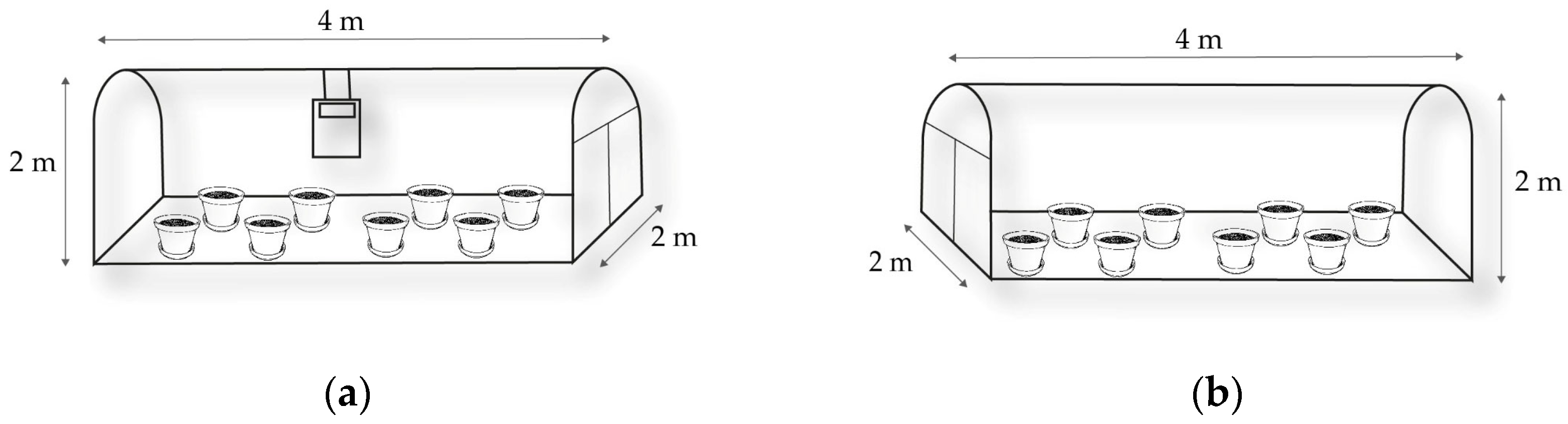
Two adjacent greenhouse modules were used in the study. Each module measured 4 m in length, 2 m in width, and 2 m in height. The structures were tubular and covered with polyethylene plastic film. The distance between the modules was 1 m. Both greenhouses were managed under similar agronomic practices. Wheat (
Triticum durum L.) and maize (
Zea mays L.
saccharata) were cultivated during the study. Irrigation was adjusted according to crop development and plant needs. Soil moisture was continuously monitored using sensors to ensure adequate water availability in the root zone. One module was equipped with a CO
2 enrichment system and is referred to as the Enriched Module. The second module had no enrichment and is referred to as the Control Module. The control module did not include any internal ventilation fan.
Figure 1 illustrates the schematic layout of the two greenhouse modules. Additional images of the experimental setup are provided in the
Supplementary Materials (Figure S1).
2.3. CO2 Enrichment System
CO2 was supplied in the enriched module using a propane combustion generator. The system consisted of a Pro-Leaf CO2 Generator with eight burners, controlled by a PPM-B1 CO2 controller. The nominal thermal power was 6.5 kW, and the nominal CO2 production was 780 dm3 h−1.
The generator was installed at the center of the greenhouse. A circulation fan was used to distribute the combustion gases. The controller maintained a CO2 setpoint of 1000 ppm, within an adjustable range of 400–2000 ppm, and an accuracy of ±100 ppm.
Two operation modes were applied during the experiment. The first mode consisted of continuous operation, day and night, from 1 January to 28 February. The second mode operated only during daylight hours (approximately from 08:00 to 20:00) and was deactivated at night, from 1 March to 18 May. These modes were used to evaluate CO2 retention capacity within the greenhouse structure. They also allowed the assessment of the influence of ventilation on enrichment efficiency and pollutant dynamics under real operating conditions. The generator was activated when CO2 concentration dropped below the setpoint. Propane consumption was monitored by weekly weighing of the gas cylinder.
2.4. Ventilation Conditions
The greenhouse modules had no side or roof windows. Ventilation relied on passive air exchange through the structure, without dedicated ventilation openings. Air exchange occurred through structural permeability, including joints, small gaps, and material discontinuities.
In the enriched module, forced ventilation was provided by a circulation fan (Kunft KBF2379, Kunft, Lisbon, Portugal) installed near the center of the module to promote air mixing. The fan operated for 10 min after the burner was activated. Both modules were opened during working hours once or twice per week. No additional heating systems were used. The greenhouses remained closed for the majority of the experiment.
2.5. Air Quality Monitoring System
Indoor air quality was monitored using Kunak sensor platforms (Kunak Technologies S.L., Pamplona, Spain). Each greenhouse contained one Kunak AIR Lite unit. The enriched module also included one Kunak AIR Pro unit to measure combustion-related trace gases. The control module did not include the AIR Pro unit, as combustion-derived pollutants were only present in the enriched module. All sensors were installed 1 m above ground level. Measurements were recorded every 5 min and transmitted to the Kunak AIR Cloud platform. This is a cloud-based system for real-time data visualization, analysis, and remote management of air quality data. The AIR Lite units measured CO2, PM2.5, PM10, temperature, relative humidity, and atmospheric pressure. The AIR Pro unit additionally measured CO, NO, NO2, SO2, and O3.
Electrochemical sensors were used for all trace gases, while CO2 was measured using non-dispersive infrared technology. The measurement ranges and resolutions followed manufacturer specifications.
2.6. Sensor Calibration and Data Quality Control
Sensors were calibrated before deployment. Weekly field checks were conducted throughout the experiment. The units were temporarily taken outdoors for baseline verification and adjustment. Automatic calibration routines were applied following manufacturer procedures.
Short data gaps occurred during calibration and occasional maintenance. These interruptions typically lasted a few hours. Invalid and missing records were removed during data cleaning prior to analysis.
2.7. Data Analysis
Data acquisition and initial quality control were performed using the Kunak AIR Cloud platform (Kunak Technologies S.L., Pamplona, Spain), accessed in 2025. This cloud-based software collects, stores, visualizes, validates, and exports time series data from the Kunak AIR sensors. The platform automatically flags data as valid, temporarily invalid, or invalid based on predefined thresholds and validation rules. User-driven validation was also applied using the platform’s validation tools to confirm or correct data status, following the manufacturer’s standard procedures. Summary statistics and time-based aggregates, such as hourly and daily averages, were generated using the platform’s reporting tools. Cleaned and validated data were exported for subsequent analysis of temporal patterns, ratio calculations, and comparison with occupational and environmental guidelines.
2.8. Combustion Performance Indicators
Theoretical CO
2 production was estimated from propane consumption using stoichiometric combustion, assuming complete oxidation according to the reaction:
An operational enrichment ratio (CEI) was defined to quantify the fraction of theoretically produced CO2 present inside the greenhouse module at a given time. This ratio was calculated as the excess CO2 mass in the enriched module relative to the control module. Concentrations were converted to mass using the ideal gas law and normalized by the theoretical CO2 production derived from propane consumption.
Additionally, an incomplete combustion ratio (ICR) was defined to assess combustion quality. This ratio is based on the CO/CO
2 relationship, which is widely used as an indicator of combustion efficiency in combustion systems [
34]. In this study, the ICR was calculated using coincident peak concentrations during burner activation events, representing worst-case transient conditions.
3. Results
3.1. Overview of Air Quality Parameters in Both Modules
During the monitoring period from January to May, data from the enriched module are presented for two operation modes: Period 1 (continuous burner operation, from 1 January to 28 February) and Period 2 (diurnal-only operation, from 1 March to 18 May). These results are compared with the control module, which operated without CO
2 enrichment throughout the entire period.
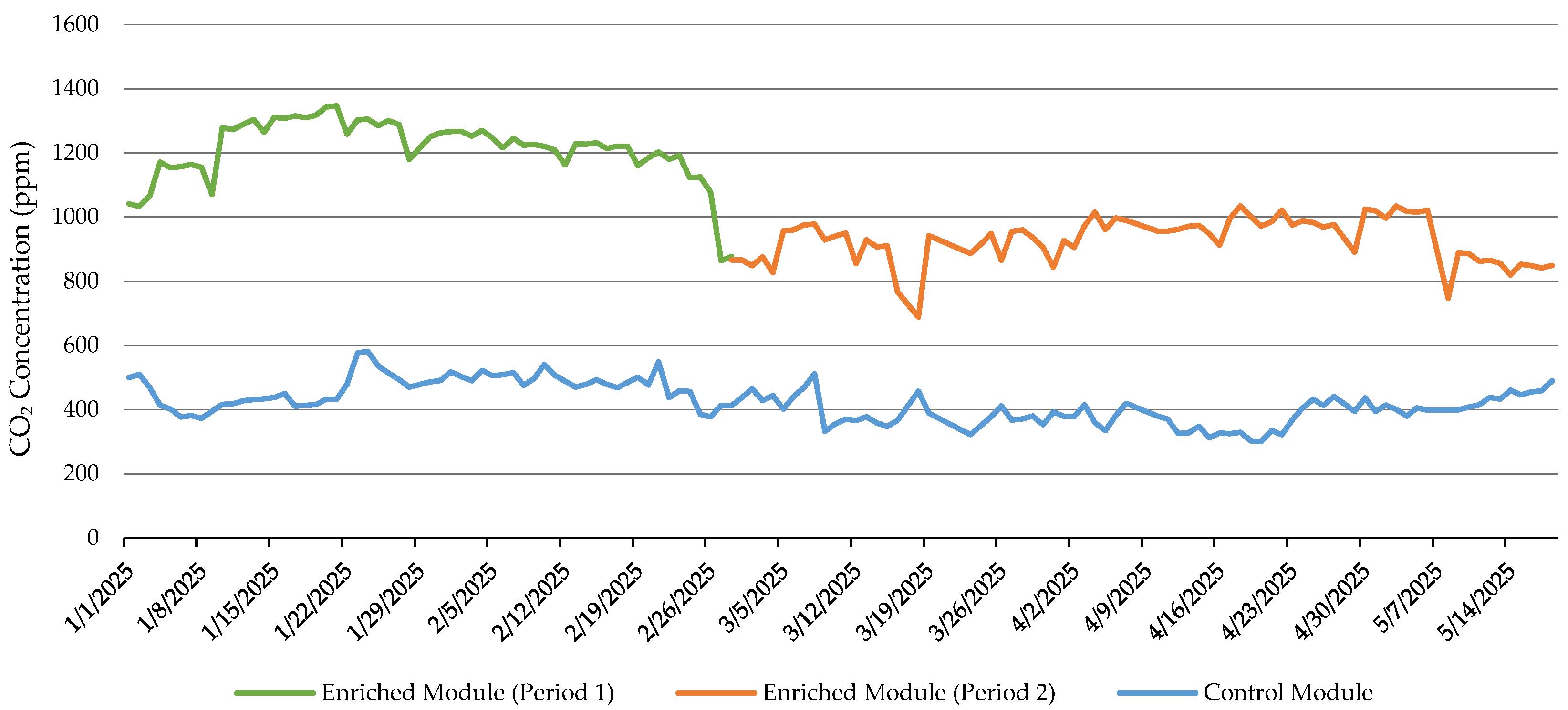
Figure 2 shows the temporal variations in CO
2 concentrations across the different operation modes of the enriched module and the control module during the monitoring period.
In the enriched module, mean CO2 concentrations were approximately 1200 ppm during continuous operation and 935 ppm during diurnal-only operation. In the control module, the mean was around 440 ppm. Peak concentrations were also higher in the enriched module, confirming effective CO2 enrichment.
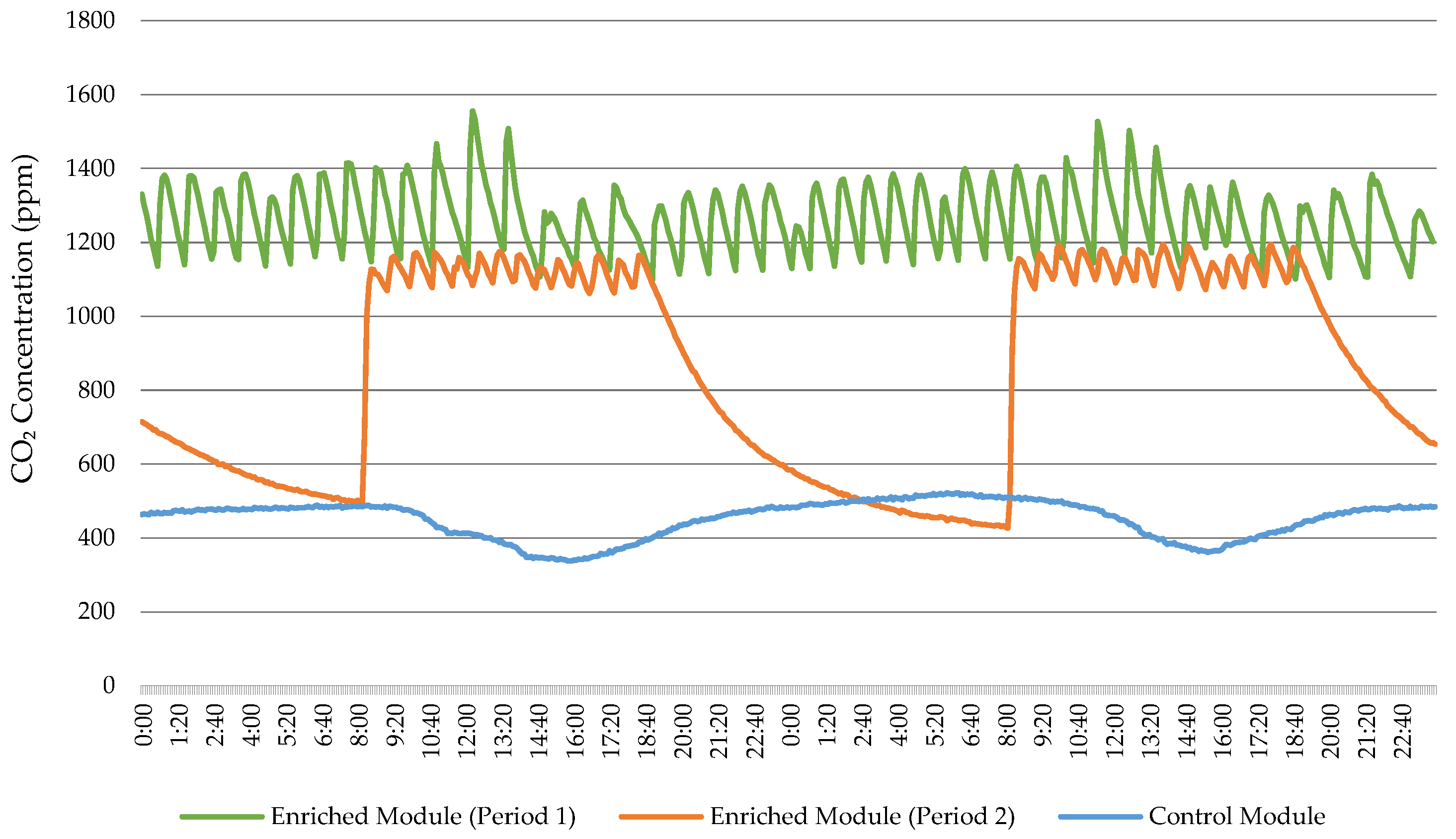
High-resolution data (5 min intervals) revealed clear daily patterns in the enriched module. CO2 concentrations rapidly increased after burner activation, often exceeding 1200 ppm. Once the setpoint was reached, the burner shut down, and CO2 decreased until the system restarted, creating a cyclic enrichment pattern.
During nighttime, CO2 remained elevated in continuous operation, while in diurnal-only operation, the burner was off and CO2 decreased toward background levels. The control module showed low variability, with concentrations between 390 and 520 ppm.
Higher peak concentrations were observed in continuous operation, explained by higher background CO
2 levels. System inertia and sensor response time also contributed to transient overshoots above the setpoint, reaching peaks of 1300–1400 ppm.
Figure 3 illustrates a typical day of CO
2 concentration dynamics, with 5 min interval data, for both operation modes of the enriched module (Period 1 and Period 2) and the control module.
In addition to CO
2, the burner released other gaseous and particulate emissions, including particulate matter (PM
2.5, and PM
10) and volatile organic compounds (VOCs).
Table 1 provides a summary of the descriptive statistics for all monitored parameters, comparing both operation modes in the enriched and control modules.
Particulate matter concentrations showed moderate differences. PM2.5 levels were higher in the enriched module during continuous operation, while the control module had lower values. Elevated PM events in the enriched module coincided with burner activation and fan operation, suggesting contributions from combustion aerosols and particle resuspension.
VOCs showed the largest variability. Mean concentrations were higher in the enriched module, with significant peaks observed during continuous operation, indicating short-lived but intense episodes.
Environmental variables (temperature, relative humidity, pressure, and dew point) were similar in both modules and operation modes. These similarities suggest that changes in CO
2, particulate matter, and VOCs were primarily driven by the combustion-based enrichment. Overall,
Table 1 indicates that CO
2 concentrations were markedly higher in the enriched module, while particulate matter and VOCs showed moderate increases, and environmental variables remained largely unchanged between modules.
3.2. Emission Behavior of Combustion-Derived Pollutants (Only Propane Module)
Combustion-derived pollutants were monitored exclusively in the propane-enriched module using the Kunak AIR Pro sensor. The gases analyzed were CO, NO, NO2, SO2, and O3. This section focuses on their temporal behavior, correlation with burner operation, and differences between the two operation modes.
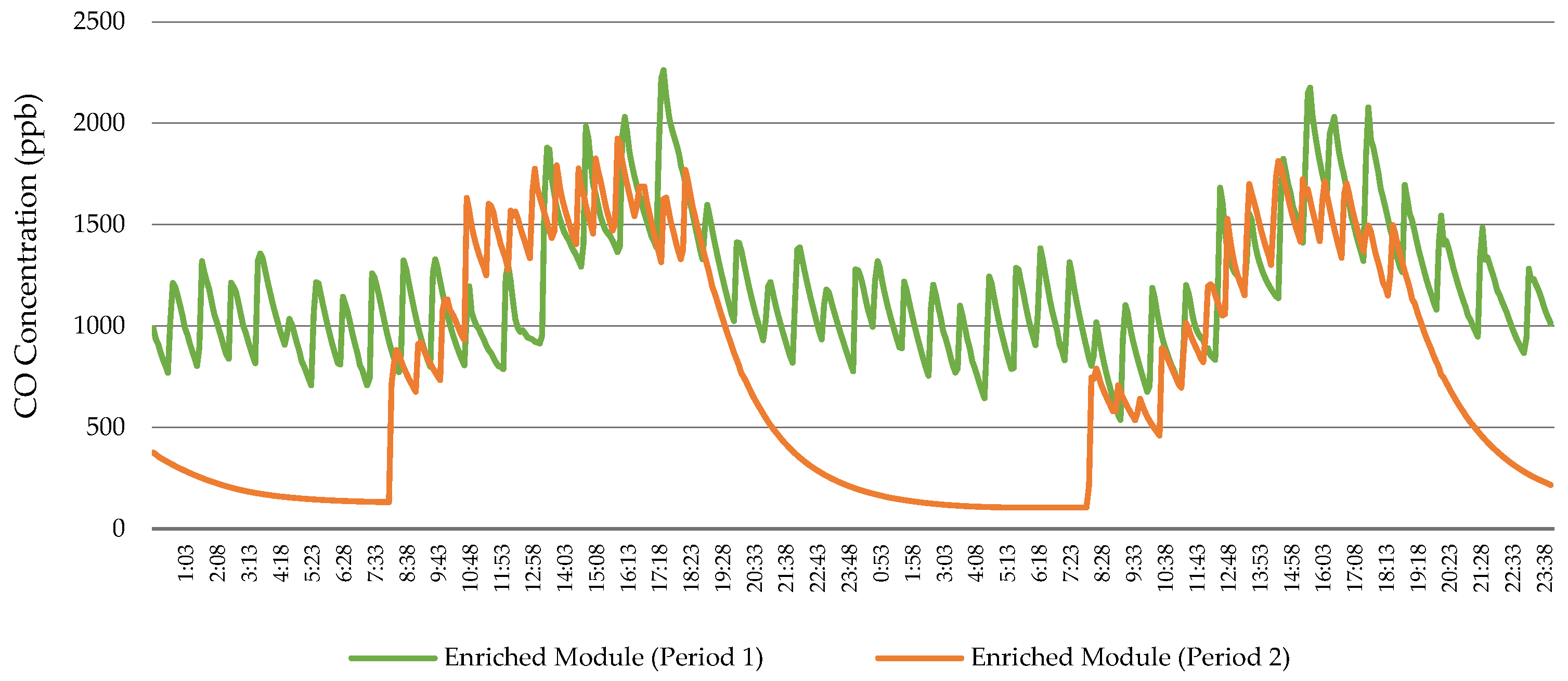
CO concentrations showed a clear temporal association with CO
2 enrichment cycles, with peaks occurring shortly after burner activation and declining after shutdown. The rise to peak values typically took 5–10 min, while the decay lasted around 30 min, as shown in
Figure 4. During the diurnal-only period, CO showed a strong correlation with CO
2 (
r ≈ 0.79). In continuous operation, the correlation was weaker (
r ≈ 0.21).
In the diurnal period, CO levels returned to near-background levels (around 100 ppb) between enrichment events. In contrast, during continuous operation, baseline CO remained elevated at around 600 ppb, with slightly higher peak values. Additionally, maximum CO concentrations coincided with the highest recorded temperatures in both operational phases. These findings suggest that CO is closely tied to burner activity and exhibits different temporal behavior depending on the operation mode.
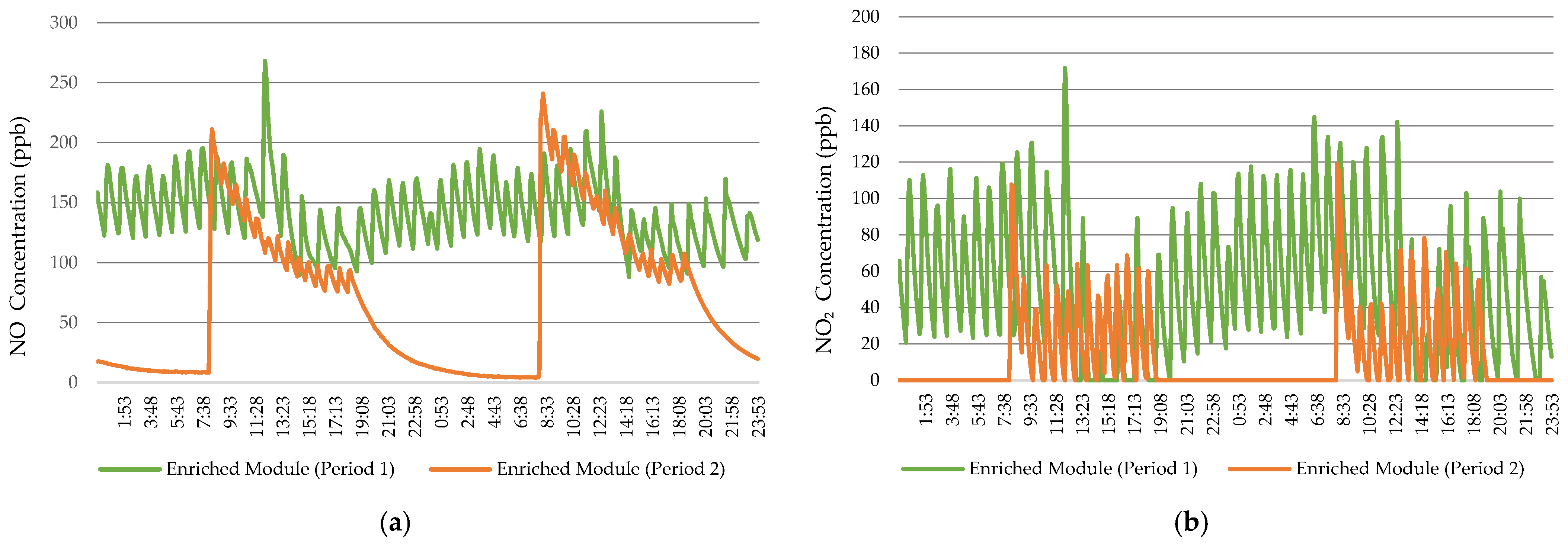
NO and NO
2 exhibited recurrent peaks linked to burner activation in both operation modes (
Figure 5). Both gases increased almost simultaneously after ignition in both periods, indicating a rapid response of nitrogen oxides to combustion events.
During the diurnal-only period, concentrations returned to near-baseline levels between enrichment cycles. In contrast, during continuous operation, nitrogen oxide levels decreased at night but did not reach zero, with minimum values around 9 ppb, followed by increases up to approximately 100 ppb.
Peak intensities were generally higher during colder periods, although some variability was observed. A strong correlation with CO2 was noted for both NO and NO2, with r ≈ 0.80 and r ≈ 0.50, respectively.
These results demonstrate that nitrogen oxides were closely linked to burner operation, with distinct temporal behavior depending on the operation mode.
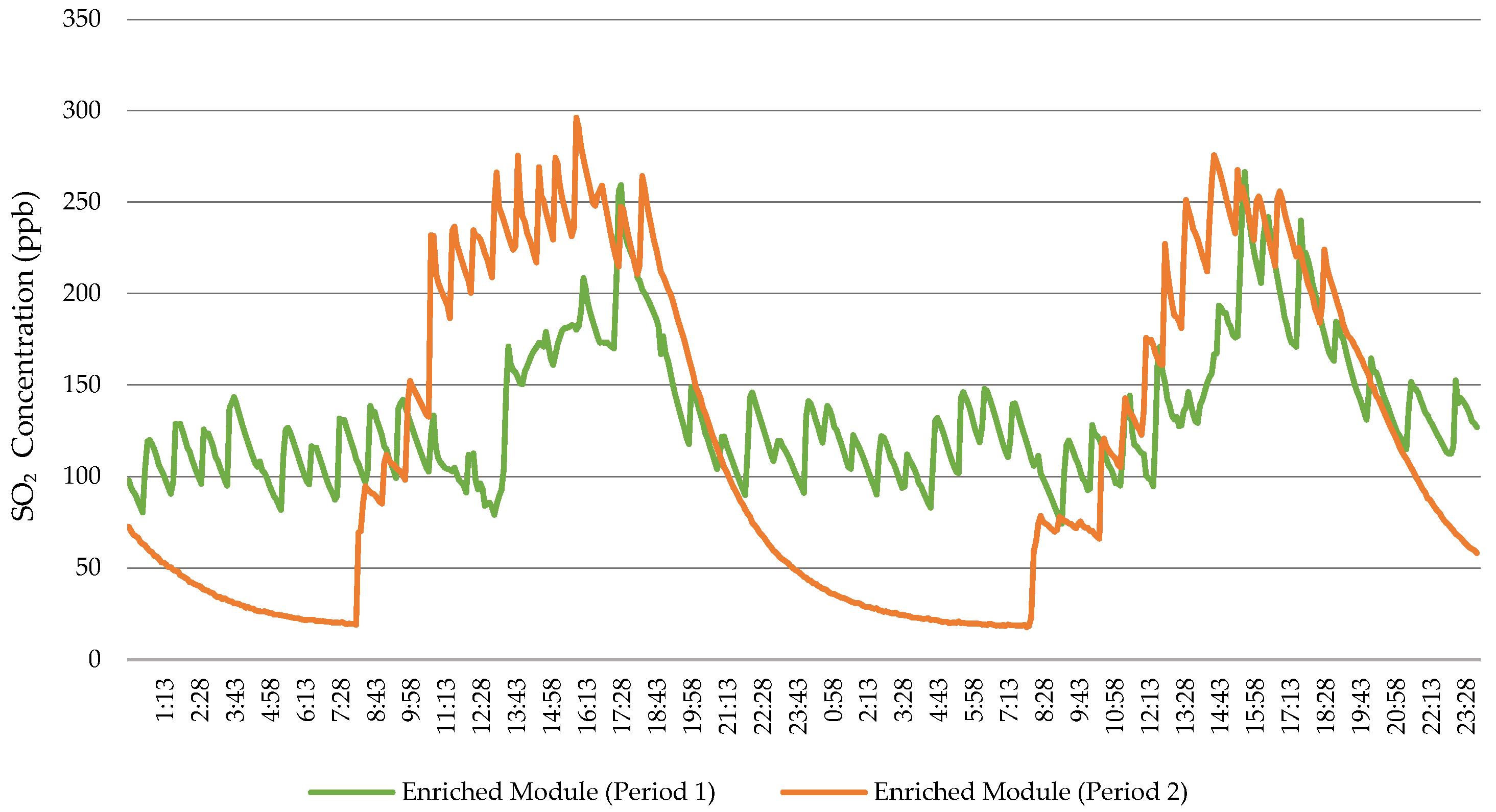
SO
2 concentrations exhibited recurrent increases during each enrichment cycle in both operation modes. Levels rose rapidly during burner activation and gradually declined after shutdown, closely following the CO
2 pattern (
Figure 6). Typical SO
2 concentrations remained around 180 ppb, with more pronounced peaks observed during the afternoon. Between enrichment cycles, SO
2 levels decreased toward baseline values, with no evidence of progressive accumulation over time.
The temporal behavior of SO2 was similar in both operation modes, with the primary differences reflecting the duration of burner operation. A strong correlation with CO2 was observed (r ≈ 0.67). These results suggest that SO2 emissions were consistently associated with propane combustion under the tested conditions.
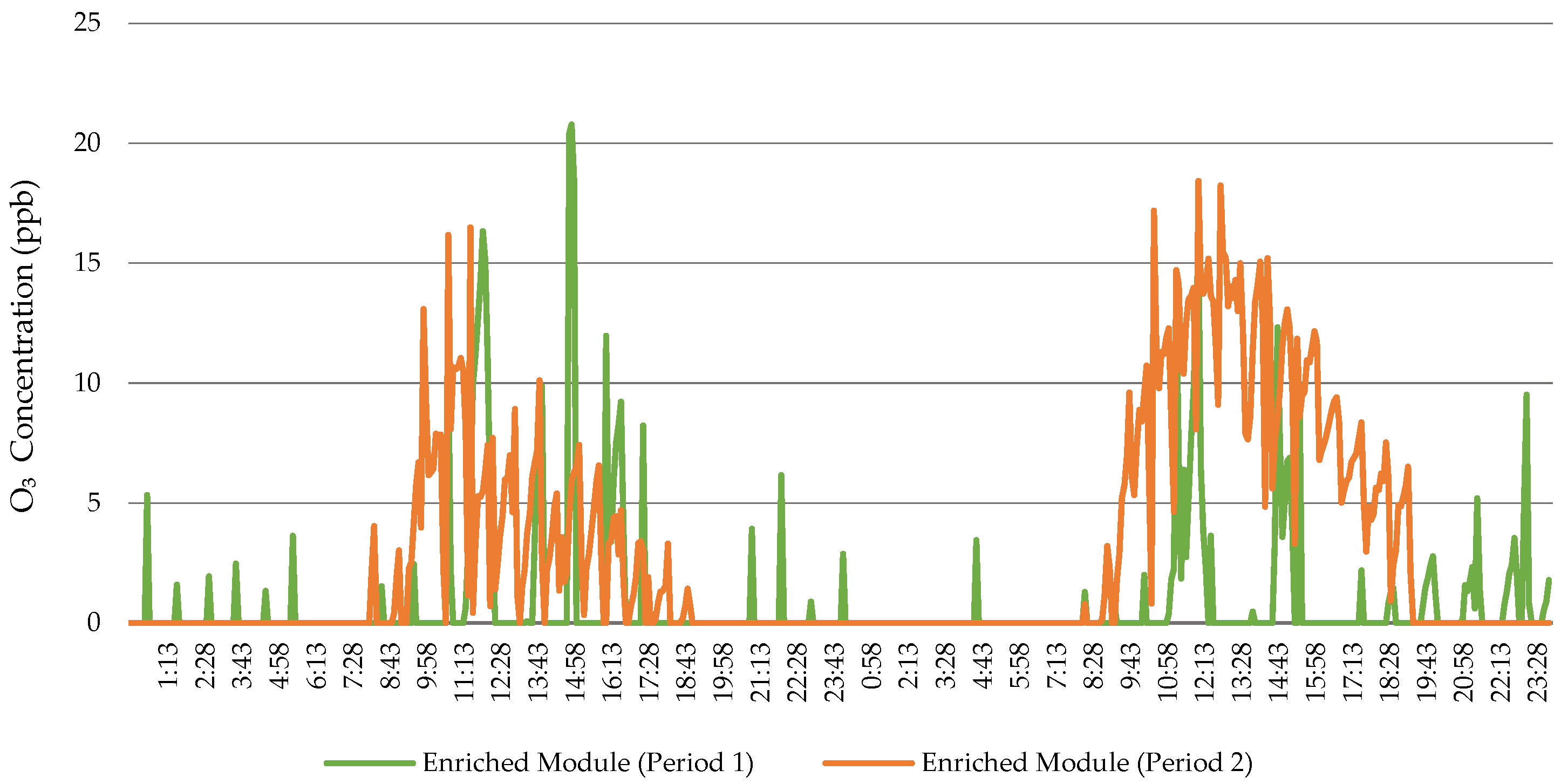
O
3 was detected exclusively during daytime periods in the propane-enriched module, with no ozone observed during nighttime, even when the burner was operating in continuous mode (
Figure 7). Short-lived O
3 peaks coincided with enrichment cycles characterized by elevated CO
2 and the presence of solar radiation. O
3 concentrations remained low throughout the monitoring period, with no evidence of sustained accumulation. A weak correlation between O
3 and CO
2 was observed (
r ≈ 0.24).
These results suggest that O3 was an episodic component of the indoor atmosphere, exhibiting a clear diurnal pattern.
These findings indicate that CO
2, CO, SO
2, and O
3 were consistently linked to burner activity, with distinct temporal behaviors under continuous and diurnal-only operation modes. The analysis also highlighted associations between pollutant concentrations and environmental variables, particularly temperature and solar radiation. The main results, including pollutant concentrations and their dynamics across different operation modes, are summarized in
Table 2. Overall, combustion-related pollutants showed higher mean concentrations during continuous operation, while peak values remained similar across both modes, reflecting transient emissions associated with burner activity.
3.3. Indoor Air Quality and Compliance with Exposure Limits
Indoor air quality in the enriched module was evaluated by comparing the measured concentrations with occupational exposure limits established by the Instituto Nacional de Seguridad y Salud en el Trabajo (INSST) and with WHO air quality guidelines (
Table 3). Specifically, peak concentrations, 8 h moving averages, a24 h4-h moving averages were compared with short-term exposure limits (STEL), time-weighted average (TWA) limits, and WHO guidelines, respectively.
As shown in
Table 3, all measured pollutant concentrations remained well below the corresponding occupational exposure limits and WHO guideline values. CO
2 concentrations remained below occupational thresholds, 8 hth both peak values and 8 h moving averages well below the corresponding TWA and STEL limits. Carbon monoxide concentrations were low and 8 hent-driven, with maximum 8-h averages and peak values below the applicable limits. Nitrogen oxides showed short-term increases during burner operation but remained below reference limits for both NO and NO
2 when evaluated using 8-h moving averages and peak concentrations. Sulfur dioxide exhibited moderate short-term values during enrichment events but remained below short-term exposure limits. Ozone was detected only during 8 hlight, with both 8-h moving averages and peak values within occupational reference ranges. Particulate matter concentrations were low24 hrall, with maximum 24-h moving averages for PM
2.5 and PM
10 well below WHO guideline values.
Comparison with occupational exposure limits and air quality guidelines indicates that propane-based CO2 enrichment did not result in hazardous indoor air conditions under the monitored operating conditions. Short-term peaks were observed for several pollutants, but moving averages remained below applicable limits.
3.4. Combustion Performance and Operational Effectiveness of the CO2 Generator
The performance of the propane-based CO2 generator was evaluated using theoretical combustion principles and sensor-based measurements. Two complementary indicators were applied to assess enrichment effectiveness and combustion quality.
Under ideal conditions, propane combustion follows the stoichiometric reaction:
From this reaction, complete combustion of propane produces about 2.99 kg of CO2 per kilogram of fuel. This value defines the theoretical maximum CO2 production and provides a reference for evaluating generator performance.
Propane consumption was estimated from gravimetric cylinder measurements. During continuous operation, 3.23 kg of propane was consumed, corresponding to 9.68 kg of theoretical CO2. During diurnal-only operation, consumption reached 4.39 kg, equivalent to 13.13 kg of theoretical CO2.
The effective contribution of this CO2 to greenhouse enrichment was evaluated by estimating the excess CO2 mass present in the enriched module relative to the control. Mean concentration differences were converted to mass using the ideal gas law and the module volume (20.5 m3), representing instantaneous CO2 retention.
The resulting excess CO
2 mass was about 25.9 g during Period 1 and 17.7 g during Period 2. An operational enrichment ratio was then defined as:
This ratio quantifies the fraction of theoretically produced CO2 that is present inside the module at a given time.
The CEI reached 2.67 × 10⁻³ during Period 1 and decreased to 1.35 × 10⁻³ during Period 2. These low values indicate that only a small fraction of the generated CO2 is retained in the semi-confined structure at any moment. The lower ratio during diurnal-only operation reflects reduced nighttime accumulation and more effective daily dilution.
Combustion quality was evaluated using the incomplete combustion ratio:
This ratio was calculated using coincident peak concentrations observed during burner activation events. Peak values were used to characterize worst-case transient combustion conditions and to avoid dilution effects when the burner was inactive.
During Period 1, peak CO reached 2.88 ppm while peak CO2 reached 1523 ppm, yielding an ICR of 1.89 × 10⁻³. During Period 2, peak CO was 2.95 ppm and peak CO2 reached 1578 ppm, resulting in an ICR of 1.87 × 10⁻³. The similarity of these values indicates consistent combustion behavior across both operation modes.
Overall, the combined analysis shows that the propane generator produced CO2 in line with theoretical expectations, while only a small fraction was retained inside the greenhouse at any time due to continuous air exchange. At the same time, the low CO/CO2 ratios observed during peak operation indicate predominantly complete combustion, with carbon monoxide formation limited to short transient events.
Table 4 summarizes propane consumption, theoretical CO
2 production, excess CO
2 mass, and the two performance indicators for both operation periods. The results indicate that only a very small fraction of the theoretically produced CO
2 was retained in the greenhouse (low CEI values), while combustion performance remained consistent across both periods (stable ICR values).
4. Discussion
From a broader perspective, propane-based CO
2 enrichment systems present both advantages and limitations. From an agronomic standpoint, they allow effective control of CO
2 concentrations within optimal ranges for plant photosynthesis. This supports increased biomass production and improved plant performance under controlled conditions, as demonstrated in previous work derived from the same experimental setup [
6].
Operationally, these systems are simple and reliable. They provide a continuous and on-demand CO2 supply. In addition, they can also provide heat during colder periods.
However, these benefits are accompanied by relevant drawbacks. Under real conditions, combustion may be incomplete [
12,
13]. This can generate pollutants such as CO, NO
2, SO
2, particulate matter (PM
2.5 and PM
10), and O
3 [
14,
16]. These compounds are recognized as harmful to human health and are included in international air quality guidelines [
15]. Their exposure is associated with respiratory, cardiovascular, and neurological effects, especially in poorly ventilated environments [
17,
19,
36].
In this study, pollutant concentrations remained below occupational limits. However, short-term peaks were observed during burner activation. These transient events may represent a potential risk under inadequate ventilation conditions. In addition, CO2 retention efficiency was low, indicating significant losses due to air exchange. Finally, the dependence on fossil fuel combustion raises concerns regarding energy use and long-term sustainability.
4.1. CO2 Retention and Combustion Performance in the Context of Previous Studies
The results indicate that the propane-based CO
2 enrichment system was effective in increasing CO
2 concentrations to levels suitable for greenhouse crop photosynthesis under both operating regimes. CO
2 concentrations consistently reached values within the optimal range reported for many greenhouse crops [
37].
However, the operational enrichment ratio (CEI) remained low in both periods. This indicates that only a small fraction of the generated CO
2 was retained inside the greenhouse at any given time. This limited retention was primarily constrained by air exchange and natural ventilation, which are inherent to semi-confined greenhouse structures [
38,
39].
These observations are consistent with previous studies on CO
2 enrichment in greenhouse environments. Nurmalisa et al. [
40] and Molina-Aiz et al. [
41] reported that CO
2 retention in semi-confined greenhouses is strongly influenced by natural ventilation, air exchange, and structural leakage. Similarly, recent reviews indicate that CO
2 generated by propane-based systems is often diluted or lost due to the dynamic nature of greenhouse ventilation. This effect is particularly relevant in structures with limited airtightness or without active ventilation control [
9,
30].
Regarding combustion performance, the low Incomplete Combustion Ratio (ICR) observed in this study is consistent with previous research on propane combustion. Several studies have shown that stable combustion conditions, sufficient oxygen availability, adequate residence time, near-stoichiometric operation, and appropriate burner geometry contribute to minimizing CO emissions during steady-state operation [
42,
43,
44,
45,
46]. In addition, flame stability has been identified as a key factor controlling pollutant emissions under varying operating conditions, including propane flames diluted with CO
2 [
47].
In contrast to steady-state operation, several studies have reported that transient phases, particularly burner start-up and initial stabilization, are associated with short-term increases in CO emissions. These peaks are commonly attributed to temporary changes in air–fuel mixing, flame development, and thermal conditions during ignition. Similar behavior has been documented in propane combustion systems under variable operating conditions [
48,
49], which is consistent with the transient CO peaks observed in this study.
4.2. Operational Efficiency and Safety: Comparison with Alternative CO2 Enrichment Systems
Although the propane-based CO2 enrichment system proved effective in supplying CO2, the results highlight the need to improve CO2 retention. This can be achieved through optimized ventilation control and structural measures to reduce losses. Retention efficiency remains a key limitation in semi-confined greenhouse environments.
Several technologies are currently used to supply CO
2 in greenhouses. Each presents specific advantages and drawbacks in terms of efficiency, environmental impact, operational control, and cost. Based on the origin of CO
2, enrichment systems can be classified into four main categories: combustion-based systems, pure CO
2 supply, biological decomposition and fermentation, and CO
2 capture technologies [
50].
Combustion-based systems, such as propane burners, are widely adopted due to their simplicity, continuous CO
2 generation, and relatively low initial costs. They can also provide useful heat during colder periods. However, these systems are associated with environmental impacts. They may emit combustion-related pollutants, including CO, NO
x, and particulate matter [
11,
51,
52,
53]. In addition, the energy demand of propane-based CO
2 generation ranges approximately from 5675 to 17,027 kJ per kg of CO
2 produced [
9,
50], which affects overall system sustainability.
The use of pure CO
2, supplied through cylinders, tanks, or centralized distribution systems, allows precise control of CO
2 concentrations and avoids the emission of combustion by-products. Nevertheless, operational costs are generally higher due to gas production, transport, and storage requirements [
30,
54]. While on-site energy consumption is low, upstream CO
2 production or CO
2 hydrate generation can be energy-intensive, depending on the source [
50].
Biological systems based on biomass decomposition or fermentation offer a low-cost and potentially more sustainable alternative. These systems use locally available organic materials to release CO
2 and require no direct energy input [
50]. However, their practical application is limited. CO
2 generation rates are unstable, and undesirable by-products such as ammonia and odors may be released, depending on process conditions [
10,
11,
55,
56].
Finally, CO
2 capture technologies, either from industrial point sources or directly from ambient air, represent a promising option for reducing net greenhouse gas emissions while supplying CO
2 for protected agriculture. Despite their potential, these technologies remain costly and require advanced infrastructure, with reported energy demands ranging from 810 to 2880 kJ per kg of CO
2 captured [
57,
58].
Overall, propane-based CO
2 enrichment systems demonstrated satisfactory performance in this study. However, their reliance on fossil fuels raises concerns about long-term sustainability and operating costs. The integration of alternative CO
2 sources, renewable energy inputs, and improved retention strategies may support the transition toward more efficient and lower-carbon greenhouse production system [
9,
14,
54,
59].
4.3. Occupational Safety Limits and Operational Protocols
Strict compliance with occupational safety limits for contaminants such as CO, NO2, and SO2 is essential when operating propane-based CO2 enrichment systems in greenhouse environments. In this study, the maximum measured concentrations of these pollutants did not exceed the reference values established by occupational health authorities. However, transient emissions were detected during generator start-up and shutdown phases, which could pose health risks if not properly managed.
Although time-weighted average (TWA) limits for CO and NO2 were not exceeded, short-duration exposure peaks were observed. These peaks occurred mainly during burner ignition and under conditions of insufficient ventilation. Even if brief, such events highlight the importance of well-defined operational protocols, including adequate ventilation strategies and continuous real-time monitoring, to ensure safe working conditions.
Previous studies have emphasized the relevance of continuous air quality monitoring in enclosed or semi-enclosed occupational environments such as greenhouses. Research by Lee et al. [
60] and Rama et al. [
36] indicates that real-time monitoring of gases like CO and NO
2 is critical for protecting workers, particularly in combustion-based systems operating in partially sealed structures. In addition, the implementation of preventive maintenance and ventilation protocols has been shown to significantly reduce short-term pollution peaks and associated risks.
Comparative studies by Moreno et al. [
61] and Watson et al. [
62] have reported that combustion-based CO
2 enrichment systems require stricter ventilation management than alternative methods. These studies demonstrated that systems lacking active ventilation or operating with inadequate air exchange present a higher risk of prolonged exposure to hazardous gases.
In this context, safety standards and operational protocols should be adapted to the specific characteristics of each greenhouse installation, especially when combustion-based enrichment is used. The implementation of early warning systems, defined safety thresholds during generator start-up, and clear procedures for responding to elevated CO2 or pollutant concentrations can substantially reduce occupational health risks.
Additional strategies to reduce pollutant emissions include improving burner efficiency and air–fuel mixing to minimize incomplete combustion [
30,
31,
32,
34]. Optimizing ventilation management can help limit pollutant accumulation within the greenhouse environment [
61,
62]. Finally, regular maintenance and calibration of combustion equipment are also essential to ensure stable operating conditions and prevent efficiency losses associated with equipment degradation [
63].
4.4. Limitations and Future Research Directions
This study has several limitations that should be considered when interpreting the results. The experimental analysis was conducted in a single advanced greenhouse module. This limits the extrapolation of the findings to other greenhouse configurations. Structural features such as the semi-confined design, the absence of dedicated ventilation openings, and specific air exchange patterns may differ from those of larger or more tightly sealed commercial greenhouses.
Environmental variables, including air temperature and relative humidity, were continuously monitored. However, their influence on CO2 retention, dispersion dynamics, and combustion-related emissions was not assessed through a dedicated multivariate or mechanistic analysis. Although qualitative relationships were observed, a more detailed evaluation would require targeted experimental designs or advanced statistical modeling.
Another limitation concerns the monitoring setup in the control module, which did not include sensors for all combustion-related pollutants. As a result, direct comparisons for gases such as CO, NO2, and SO2 between enriched and non-enriched conditions were not possible. While this does not affect the interpretation of combustion behavior in the propane module, it may introduce uncertainty when estimating background concentrations and pollutant dispersion.
In addition, the assessment of enrichment performance was based on instantaneous CO2 mass retention within the module. This approach provides a representative snapshot of enrichment effectiveness. However, it does not capture cumulative CO2 delivery or losses driven by dynamic ventilation. Future studies should integrate airflow measurements or tracer-based techniques to better quantify CO2 exchange processes.
Future research should focus on improving CO2 retention in semi-confined or partially ventilated greenhouse environments. This includes optimizing ventilation control strategies, enhancing structural airtightness, and characterizing air exchange under varying climatic conditions. The integration of dynamic airflow modeling would further improve the understanding of CO2 dispersion and retention.
Further studies should explore alternative CO
2 sources and fuels with lower environmental impacts. These include industrial CO
2 reuse, biological fermentation systems, and hybrid solutions combining renewable energy with CO
2 enrichment. Comparative assessments of these technologies in terms of emissions, energy efficiency, operational costs, and safety would support the selection of more sustainable enrichment strategies [
50].
Long-term investigations are also needed to evaluate the effects of CO2 enrichment on crop performance, including growth, yield, and quality, under real operating conditions. These studies should account for seasonal variability and interactions with environmental parameters such as temperature, humidity, and light.
Finally, greater emphasis should be placed on occupational exposure and worker safety, particularly in combustion-based systems. Extended monitoring campaigns and exposure assessments would improve the understanding of cumulative exposure to combustion-related pollutants and the effectiveness of operational protocols. Studies addressing the trade-offs between CO2 retention, agronomic benefits, and occupational safety will be essential to assess the long-term sustainability of propane-based CO2 enrichment systems.
5. Conclusions
This study evaluated the performance, emissions, and safety of a propane-based CO2 enrichment system under real greenhouse operating conditions. The system effectively increased CO2 concentrations to agronomic target levels. Mean values reached approximately 1197 ppm and 935 ppm during continuous and diurnal-only operation, respectively, compared to 440 ppm in the control module. Peak concentrations ranged between 1523 and 1578 ppm during enrichment cycles.
Despite effective enrichment, CO2 retention was low. CEI values ranged from 1.35 × 10⁻³ to 2.67 × 10⁻³, while excess CO2 mass in the greenhouse air was limited to 17.7–25.9 g. These results indicate substantial CO2 losses due to air exchange. Ventilation therefore represents the main limiting factor for enrichment efficiency in semi-confined greenhouse systems.
Combustion-derived pollutants (CO, NO, NO2, SO2, and O3) showed a clear temporal association with burner operation. Peak concentrations reached 2.95 ppm for CO, 0.356 ppm for NO, 0.153 ppm for NO2, and 0.479 ppm for SO2. However, both peak values and moving averages remained below occupational exposure limits established by INSST and WHO guidelines. This confirms that the system can operate within safe air quality conditions under the tested configuration.
The incomplete combustion ratio (ICR) remained stable, with values between 1.87 × 10⁻³ and 1.89 × 10⁻³ across both operating modes. This indicates consistent combustion performance and limited CO formation. Transient emissions were mainly associated with ignition phases.
Overall, the study demonstrates that propane-based CO2 enrichment is an effective and operationally safe strategy under controlled conditions. However, its efficiency is strongly constrained by CO2 losses. Improving CO2 retention through optimized ventilation management and structural design should be a key priority. This would enhance both system performance and sustainability in greenhouse production.




 ,
,