
Article

Development and Optimization of an Indirect Sandwich ELISA for Detection of Foot-And-Mouth Disease Virus Serotype O


by
Muhammad Mujahid Amjed
,
Khushi Muhammad
,
Masood Rabbani
,
Aman Ullah Khan
,
Muhammad Mubashar Beig
and
Muhammad Asad Ali
*
Institute of Microbiology, University of Veterinary and Animal Sciences, Lahore 54000, Pakistan
*
Author to whom correspondence should be addressed.
Immuno 2026, 6(2), 31; https://doi.org/10.3390/immuno6020031
Submission received: 11 March 2026 / Revised: 24 April 2026 / Accepted: 28 April 2026 / Published: 4 May 2026
(This article belongs to the Section Infectious Immunology and Vaccines)

Abstract

Foot-and-Mouth Disease (FMD) is caused by the FMD virus. Indirect Sandwich Enzyme-Linked Immunosorbent Assay (IS-ELISA) was standardized to characterize the FMD serotype “O” virus. Total protein content in the guinea pig serum (whole serum), ammonium sulfate precipitated guinea pig serum (ASPGPS) protein and ion-exchange-based purified guinea pig serum (IEGPS) protein was measured as 52 µg/mL, 24 µg/mL and 10 µg/mL respectively. The whole serum of guinea pigs and rabbits showed the 1:32 and 1:64 anti-FMD serotype “O” virus neutralizing antibody titers, while the anti-FMD serotype “O” virus neutralizing antibody titer was 1:128 in the IEGPS proteins. IEGPS protein with 1:128 neutralizing antibody titers were used as capture/trapping antibodies in the standardization of the assay. The IEGPS protein 1:1000 diluted with 10 µg/mL of protein content was found to be optimum for capture/trapping antibodies. To cover residual blank spaces, different available blocking buffers were evaluated and Skimmed Milk Solution 5% in Phosphate-Buffered Saline (PBS5%) proved best amongst blocking buffers. Coating of 1:1000 diluted IEGPS at 37 °C for 1 h followed by storage at 4 °C for overnight was best for incubation time. FMD serotype “O” virus 1:100 diluted was optimum in IS-ELISA. Similarly rabbit anti-FMD serotype “O” virus specific immune serum 1:10,000 diluted and goat anti-rabbit IgG horseradish peroxidase conjugate 1:4000 diluted were found to be optimum during the standardization of the assay. Lastly ELISA plates proved to be best amongst the available plates for assay. In each experiment, the plateau region, test background and plate background were recorded. Lastly it became possible for the establishment of an optimized and potentially cost-effective IS-ELISA requiring further diagnostic validation in research and diagnostic laboratories in the country.

1. Introduction

Foot-and-Mouth Disease (FMD) is among the most economically crippling transboundary animal diseases, which severely impacts livestock production, food security, and global commerce. Foot-and-Mouth Disease Virus (FMDV) is an aphthovirus that causes the disease and the virus has high genetic and antigenic diversity [1]. Serotype O is the most prevalent and most common of the seven immunologically distinct serotypes and the cause of most outbreaks around the world. The surveillance and fast diagnosis of this serotype are the key elements of FMD control and eradication programs [2].
The timely response to the outbreak, the control of movement, and the strategy of vaccination depend on the early and accurate detection of FMDV. Virus isolation, virus neutralization tests, and molecular assays, which are conventional methods of diagnosis, are highly specific and require special laboratory facilities, trained staff, and a long turn-around time [3]. These restrictions reduce their use in large-scale surveillance especially in endemic and resource-constrained environments. Serological assays, in particular, enzyme-linked immunosorbent assays (ELISAs), consequently, are significant in population-wide surveillance [4].
Various types of ELISA have been developed to be used in FMD diagnosis, but most of the current assays have limitations in terms of sensitivity, serotype specificity and field strength. Commercial kits can be expensive, relying on imported reagents, or not optimized to local viral strains found in endemic areas. Moreover, decreased assay sensitivity may lead to a false-negative, which compromises surveillance efforts and slows down the control of the disease. A sensitive, reliable and locally adaptable diagnostic assay against FMDV serotype O is therefore very much needed [5].
The benefits of the indirect sandwich ELISA platforms include the ability to combine high specificity with increased signal amplification, and thus it is especially effective in the detection of low antigen or antibody concentrations. Standardization of assay constituents such as antigen concentration and antibody dilutions should be properly carried out to ensure optimal performance in diagnostics. Such assays have the potential to be useful in outbreak investigation and routine surveillance when strictly validated against reference methods. It is particularly important to field validate to ascertain the reliability of the assays in the actual situation [6].
The current study focuses on the design and optimization of an indirect sandwich ELISA with high sensitivity in the detection of the FMDV serotype O. Optimization and evaluation of the assay were performed under controlled laboratory conditions using experimentally derived samples and reference methods such as the virus neutralization test. The aim of the current study is to have a solid and viable diagnostic instrument to enhance FMD serotype O surveillance and control activities within endemic regions. Formal diagnostic accuracy parameters (sensitivity, specificity) were not determined in this study and will be addressed in future validation studies.

2. Materials and Methods

2.1. Experimental Design

The present research used the controlled laboratory-based experimental research design to design, and optimize, Indirect Sandwich Enzyme Linked Immunosorbent Assay (IS-ELISA) to detect the Foot-and-Mouth Disease Virus (FMDV) serotype O. The experiment workflow involved (i) virus and vaccinal antigens propagation, (ii) hyperimmune serum of laboratory animals, (iii) immunoglobulins purification and characterization, (iv) systematizing the assays with systematic optimization of key parameters, and (v) validation by the virus neutralization test [7]. All the experiments were carried out in a standardized laboratory situation at the Department of Microbiology, University of Veterinary and Animal Sciences (UVAS), Lahore, Pakistan.

2.2. Virus and Vaccine Procurement

Foot-and-Mouth Disease Virus (FMDV) serotype O cultured on the BHK-21 cell line [8]. An oil-adjuvanted FMDV serotype O vaccine (UVAC-FMD®) was sourced from the Department of Microbiology, University of Veterinary and Animal Sciences (UVAS), Lahore, Pakistan.

2.3. Experimental Animals and Ethical Approval

Ten guinea pigs were procured from the Lahore Zoo and kept in Laboratory Animal Rooms at the Department of Microbiology, UVAS, Lahore, Pakistan. De-worming of the animals was done using oxfendazole (1 mL/5 kg body weight) and they were randomly divided into two groups (A and B; n = 5 each). Ten healthy rabbits were purchased from the Tollinton Market, Lahore, Pakistan, and confined in the Laboratory Animal Rooms at the Department of Microbiology, UVAS, and were treated with amprolium (30 g/L drinking water for three days) and oxfendazole (1 mL/5 kg body weight). Rabbits were also divided into experimental (Group A) and control (Group B) groups (n = 5 each). All procedures were performed in compliance with internationally accepted laboratory animal care guidelines and ethical approval was obtained from the Ethical Review Committee of UVAS, Lahore, Pakistan, before the study.

2.4. Raising of Hyperimmune Serum

Guinea pigs and rabbits in Group A were immunized with oil-adjuvanted FMDV serotype O vaccine (0.5 mL/animal) by subcutaneous injection of a priming dose followed by a booster dose on day 21. Group B comprised guinea pigs and rabbits that were not immunized and worked as controls. Sterile disposable syringes were used to collect blood samples of all animals on day 21 after booster vaccination. Serum was separated by centrifugation at 400× g within 5 min and stored in labeled vials and kept at −20 °C until further use [9].

2.5. Purification of Guinea Pig Immunoglobulins

Ammonium sulfate precipitation was used for the purification of guinea pig immunoglobulins. Serum was slowly saturated with ammonium sulfate under gentle mixing and thereafter it was centrifuged, dialyzed against phosphate-buffered saline (PBS; pH 7.2) and concentrated by reverse dialysis with 60 percent sucrose. Immunoglobulins were purified and stored at −70 °C until further use [10]. Additional purification was done with diethylaminoethyl (DEAE) cellulose ion-exchange chromatography. The resin was prepared, equilibrated and packed into a chromatography column; serum samples were eluted using a defined phosphate buffer gradient. Protein-containing fractions of the first absorbance peak were pooled, dialyzed, quantified and stored to be used in downstream applications [11].

2.6. Estimation of Protein

The Ammonium Sulphate Precipitated Guinea Pig Serum (ASPGPS) protein and ion-exchange-based purified guinea pig serum (IEGPS) protein were subjected to protein estimation through column chromatography. Serum samples from animals within each group (n = 5) were pooled prior to protein estimation and downstream applications to obtain sufficient volume and reduce individual variability. Each of the protein solutions was transferred to a quartz cuvette and the absorbance was recorded at 280 nm against a reference cuvette containing only Phosphate-Buffered Saline (PBS; pH: 7.2) as protein solvent. Absorbance of the protein solution was recorded at 260 nm. Protein estimation of the solutions was determined by the following equation.
Protein concentration (mg/mL) = 1.55 A280 − 0.76 A260 [12].

2.7. Virus Neutralization Test

The neutralizing antibody titers against the Foot-and-Mouth Disease Virus serotype O of serotype O were determined by performing a virus neutralization assay under the standard method. Rabbit and guinea pig serum was heat-inactivated (56 °C, 30 min), and two-fold serial dilutions (1:2–1:256) were done in PBS (pH 7.2). The diluted FMDV serotype O suspension of 100 TCID50 was combined with the same amount of diluted serum and incubated, then added to confluent monolayers of BHK-21 cells grown in 96-well plates in MEM-199 supplemented with 5% fetal calf serum. Appropriate controls were the virus control, cell control, and negative serum control. Plates were incubated at 37 °C for 48 h and cytopathic effects (CPE) were observed under an inverted microscope. The cells were then fixed and stained using ethanol and crystal violet (0.5%) respectively, and then absorbance was measured at 590 nm. The highest serum dilution that inhibited CPE was used as neutralizing titers. The assay was performed to confirm the functional activity and specificity of the produced antibodies prior to their use in ELISA development [13].

2.8. Indirect Sandwich Enzyme-Linked Immunosorbent Assay

The detection of FMDV serotype O using an indirect sandwich ELISA (IS-ELISA) was standardized by loading the guinea pig anti-FMDV serotype O serum diluted 1:10 in coating buffer onto the Maxisorp ELISA plates and letting it incubate at 37 °C, then overnight at 4 °C. Plates were incubated in PBS-Tween (PBST) and non-specific binding was prevented by blocking the plates with 5% skim milk in PBS. Whole inactivated Foot-and-Mouth Disease Virus (FMDV) serotype O, propagated in BHK-21 cell culture and used without further purification, served as the antigen. The virus suspension was diluted (1:10 in PBST) prior to application in ELISA. It was then added and incubated at 37 °C for 1 h. Then, rabbit anti-FMDV serotype O serum (1:10 dilution) was used as the detective antibody and incubated under the same conditions after the process. It was then supplemented with horseradish peroxidase (HRP)-conjugated goat anti-rabbit IgG dilution of 1:4000. O-phenylenediamine dihydrochloride (OPD) substrate was used to develop the color in the presence of hydrogen peroxide in citrate buffer and the reaction was ended by the addition of the stopping solution. An ELISA microplate reader was used to record the optical density (OD) at 490 nm [14].

2.9. Optimization of the IS-ELISA Technique

The optimization of the indirect sandwich ELISA was done through the testing of the important assay parameters that would give optimum sensitivity and specificity. Guinea pig immune serum (capture antibody) at different dilutions of 1:10, 1:100, 1:1000, 1:10,000, and 1:100,000 was placed on ELISA plates with coating buffer (pH 9.6, 0.05 M) to identify the best dilution to use in antigen capture. Normal guinea pig serum was added correspondingly as negative controls, and a blank well was used as a background control. Plates coated with ASPGPS and IEGPS protein fractions were also assayed, and the rest of the IS-ELISA procedures were followed, and the results were registered as optical density (OD) values. Blocking agents including skimmed milk, horse serum, fetal calf serum, Tween-20, lactalbumin hydrolysate, and bovine serum albumin were assessed on Maxisorp flat-bottom ELISA plates. Plates were coated and then incubated with diluted rabbit serum and the effectiveness of each blocking agent in inhibiting non-specific binding was determined by HRP-conjugated goat anti-rabbit IgG [15].
ELISA plates were coated by 100 µL of guinea pig antiserum (IEGPS) in coating buffer (dilution 1:1000) to identify the best coating conditions. Plates were incubated under three different conditions: 1 h incubation at 37 °C and then incubation overnight at 4 °C, overnight incubation at 4 °C and only 1 h incubation at 37 °C [16]. FMDV serotype O antigen (1:10–1:100,000) was diluted in antigen diluting buffer and tested in the IS-ELISA to identify optimal antigen concentration in the assay, and Newcastle Disease virus dilutions were used as negative controls. Anti-FMDV serotype O serum in the rabbit immune serum was also tested in serial dilutions (1:10–100,000) to determine the optimal concentration of the detector antibody and a normal rabbit serum was used as a negative control. A blank well was used to compare all reactions and record results in terms of optical density (OD) [17].
To determine how plate characteristics affect assay performance, IS-ELISA was done on three plate types: Maxisorp flat-bottom immunoplates, standard polystyrene flat-bottom ELISA plates, and U-shaped cell culture plates. U-shaped cell culture plates were included to evaluate the effect of plate geometry and surface-binding properties on antigen–antibody interactions [18]. Goat anti-rabbit IgG conjugated with HRP was tested at serial dilutions between 1:2000 and 1:32,000 to identify the ideal working concentration. The rest of the procedures of the IS-ELISA were performed as detailed above and the performance of the assays was evaluated according to the obtained OD [19].

2.10. Statistical Analysis

All results were subjected to statistical analysis. Mean and Standard Deviation (SD) were calculated and compared using one-way analysis of variance (Minitab software program 21.1.0) [20].

3. Results

Indirect Sandwich Enzyme-Linked Immunosorbent Assay (IS-ELISA) was optimized to characterize Foot-and-Mouth Disease (FMD) serotype “O” virus. Oil-adjuvanted FMDV serotype O vaccine caused mild and short-term swelling at the inoculation site as well as produced anti-FMDV serotype O antibodies in vaccinated guinea pigs and rabbits. Whole serum of guinea pigs had a total protein concentration of 52 µg/mL, and partially purified ASPGPS and ion-exchange-purified IEGPS fractions had 24 µg/mL and 10 µg/mL of total protein concentration, respectively, as shown in Table 1.
Guinea pig immune serum neutralized FMDV serotype O in a dose-dependent manner maintaining the integrity of the BHK-21 monolayer at a high OD measured at a wavelength of 590 nm and high relative cell survival at lower dilution conditions; virus-only controls had an insignificant OD measured at the same wavelength, as shown in Table 2.
Rabbit immune serum also exhibited progressive loss of neutralization with dilution and good coverage at 1:2 to 1:16 and poor coverage at 1:256. The cell control wells were BHK-21 with high optical density values (2.42 ± 0.01) with about 86 percent relative cell survival and virus control wells had low optical density values (0.35 ± 0.02) and near total monolayer destruction, as shown in Table 3.
Ion-exchange-purified guinea pig immunoglobulin fraction (IEGPS) had strong neutralizing properties up to 1:128, which showed that functional anti-FMDV antibodies were conserved throughout the purification process. Optimal neutralizing activity was at the 1:2 dilution (OD at 490 nm = 2.405 + 0.013) with 85 percent relative cell survival, and a gradual decrease in OD value and cell survival was seen with an increase in serum dilution. The stability and functional integrity of the purified immunoglobulin fraction was confirmed by the fact that the purified antibody fraction retained 41% relative cell survival at 1:128 dilution, as shown in Table 4. The OD values of virus control wells were negligible (0.350 ± 0.008) with nearly 100% destruction of the BHK-21 monolayer whereas the cell control wells exhibited high OD values of 2.450 ± 0.046 that translated to 86 percent relative cell survival.
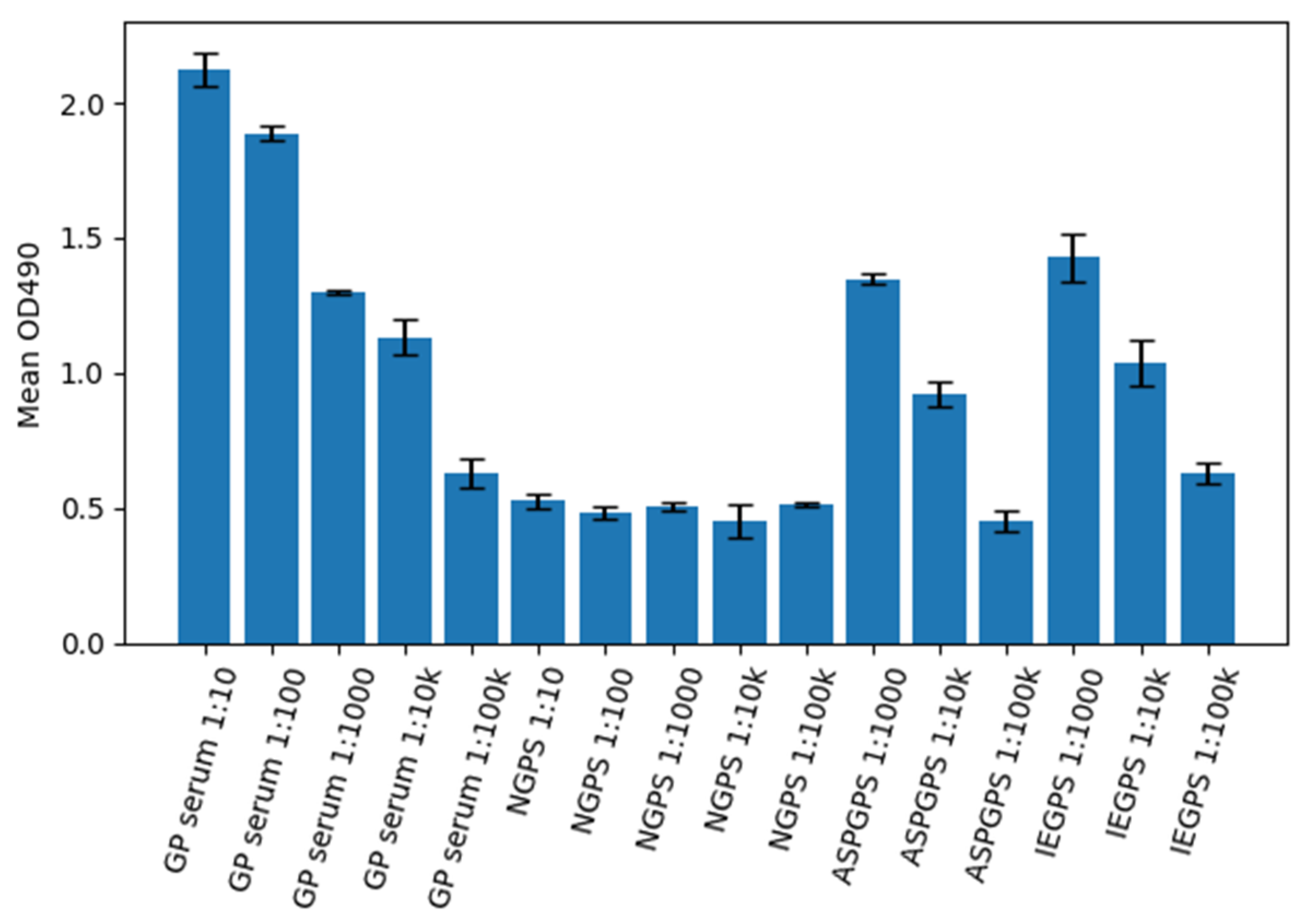
Serial dilutions of whole immune serum, ASPGPS, and IEGPS were coated on immunoplates to choose the best capture reagent. The whole guinea pig immune serum generated the highest OD values of lower dilutions and the mean OD of the serum measured at 490 nm was 2.125 + 0.064 at a dilution of 1:10; however, the signal intensity declined steadily with the dilution. Of the purified fractions, the dilution of 1:1000 of IEGPS yielded the highest signal (1.428 ± 0.090) relative to ASPGPS, and thus it was a good candidate for the optimal concentration of capture antibodies to be used in further optimization of the assay. As a comparison, normal guinea pig serum (NGPS) as a negative control conditionally brought low OD values (0.45–0.53), which is an assurance of low non-specific binding, as shown in Figure 1.
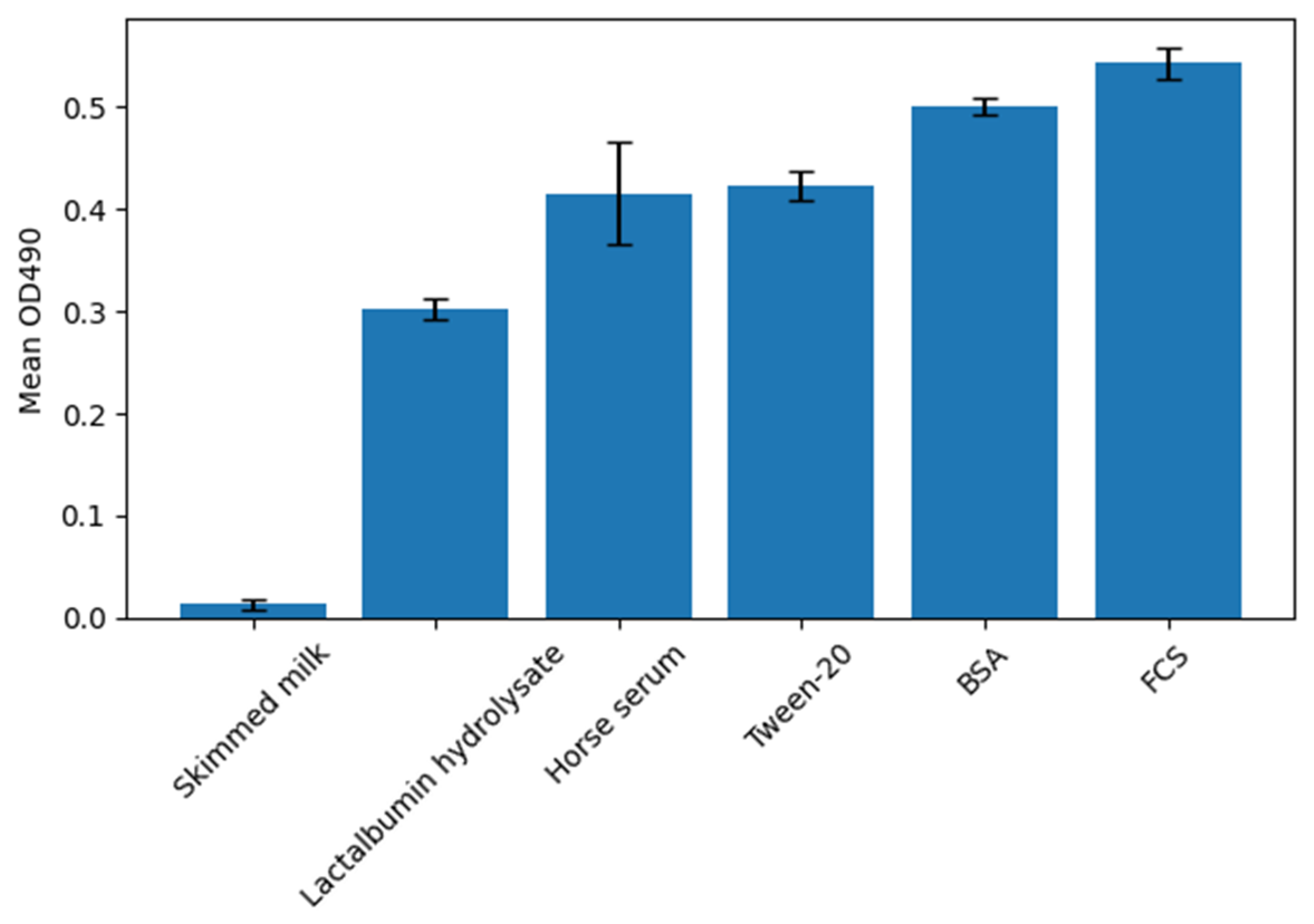
Out of six candidate blocking reagents, skimmed milk produced the least background signal which was an indication of better non-specific binding prevention in the environment that is tested. The fetal calf serum (FCS), bovine serum albumin (BSA), and horse serum yielded relatively high results of OD, indicating relatively low blocking ability. Background signals of lactalbumin hydrolysate and Tween-20 were moderate; though, it was also not as effective as skimmed milk. Thus, skimmed milk was chosen as the best blocking reagent to be used in the optimization of IS-ELISA and standardization of assays, as shown in Figure 2.
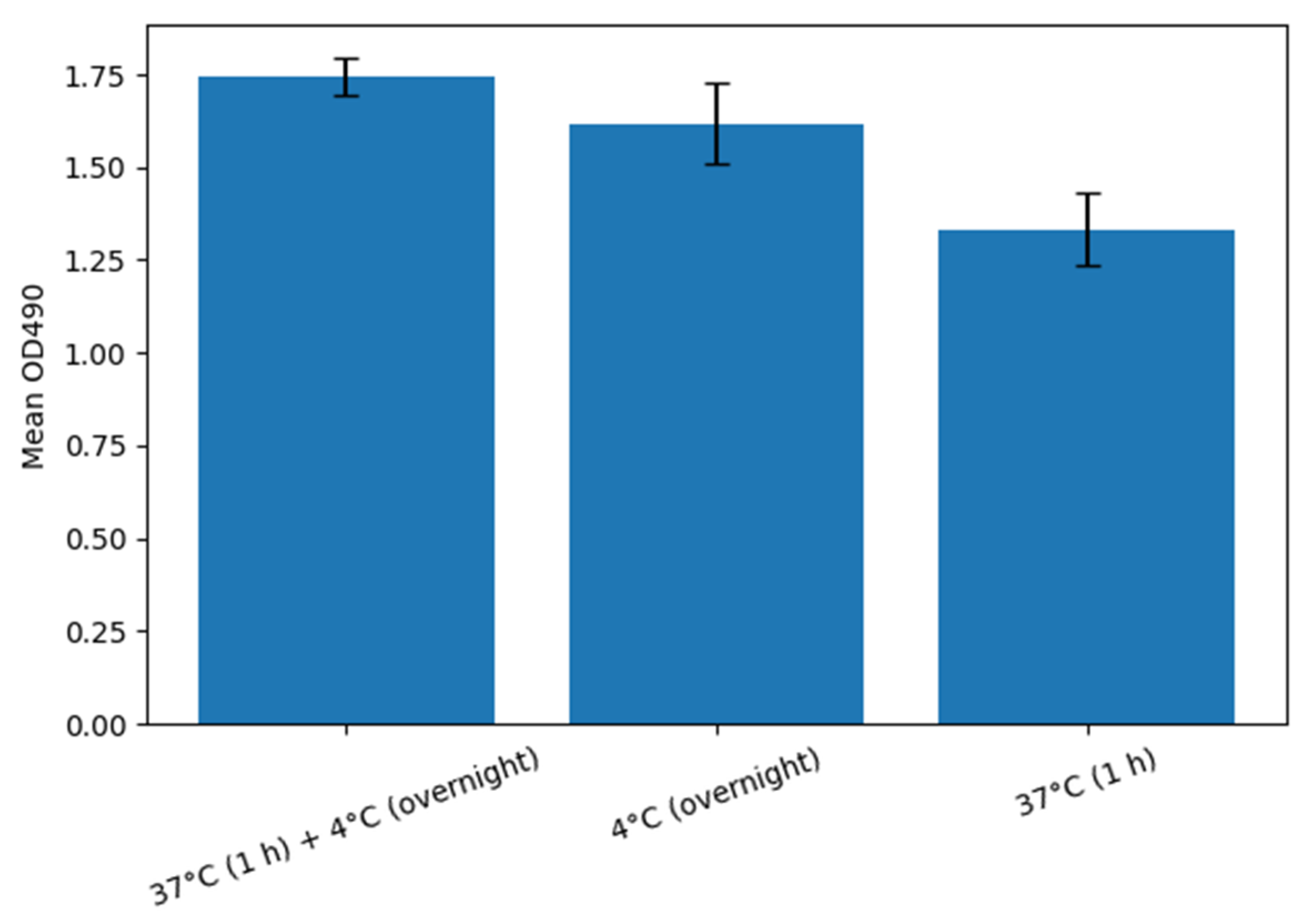
The coating of IEGPS (1:1000) at 37 °C during 1 h, followed by an overnight incubation period at 4 °C, gave the highest OD value at 490 nm. This value was thus chosen as the optimum coating conditions. Plates incubated overnight at 4 °C yielded slightly lower OD values, and plates incubated at 37 °C for 1 h yielded relatively lower signal intensity. This observation indicates that the combined incubation condition led to efficient adsorption of capture antibodies on the plate surface, as shown in Figure 3.
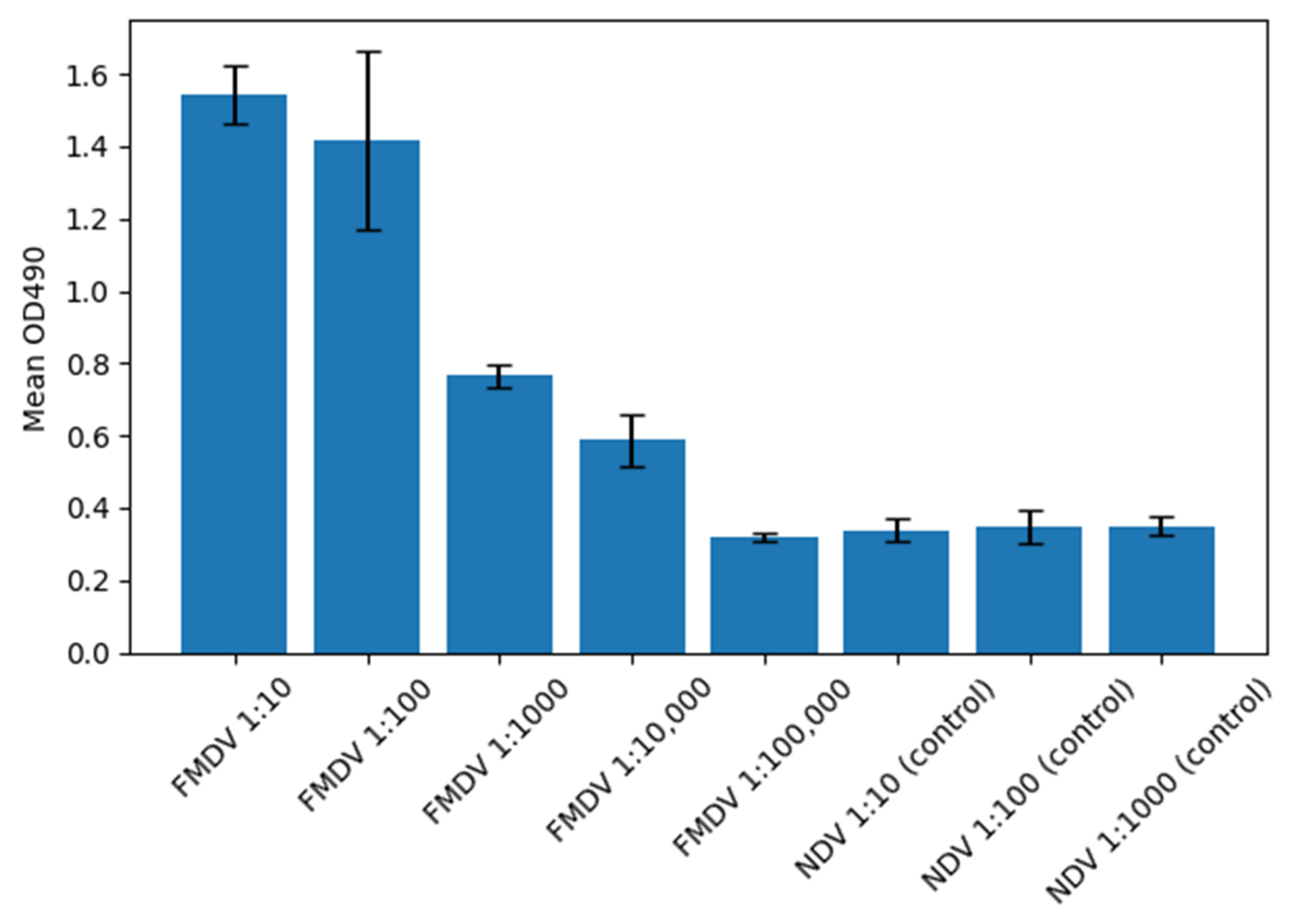
The FMDV antigen titration showed the most prominent signal at the 1:10–1:100 dilution, and the NDV negative signal stayed consistently low at all dilutions; thus, 1:100 was chosen as the working dilution to be used in the optimization. A gradual decrease in OD value at 490 nm was observed as the antigen dilution changed to 1:100,000. By contrast, NDV control antigen demonstrated stable low OD values (0.33–0.35) at all dilutions tested, which proves the specificity of the test to FMDV serotype O antigen, as shown in Figure 4.
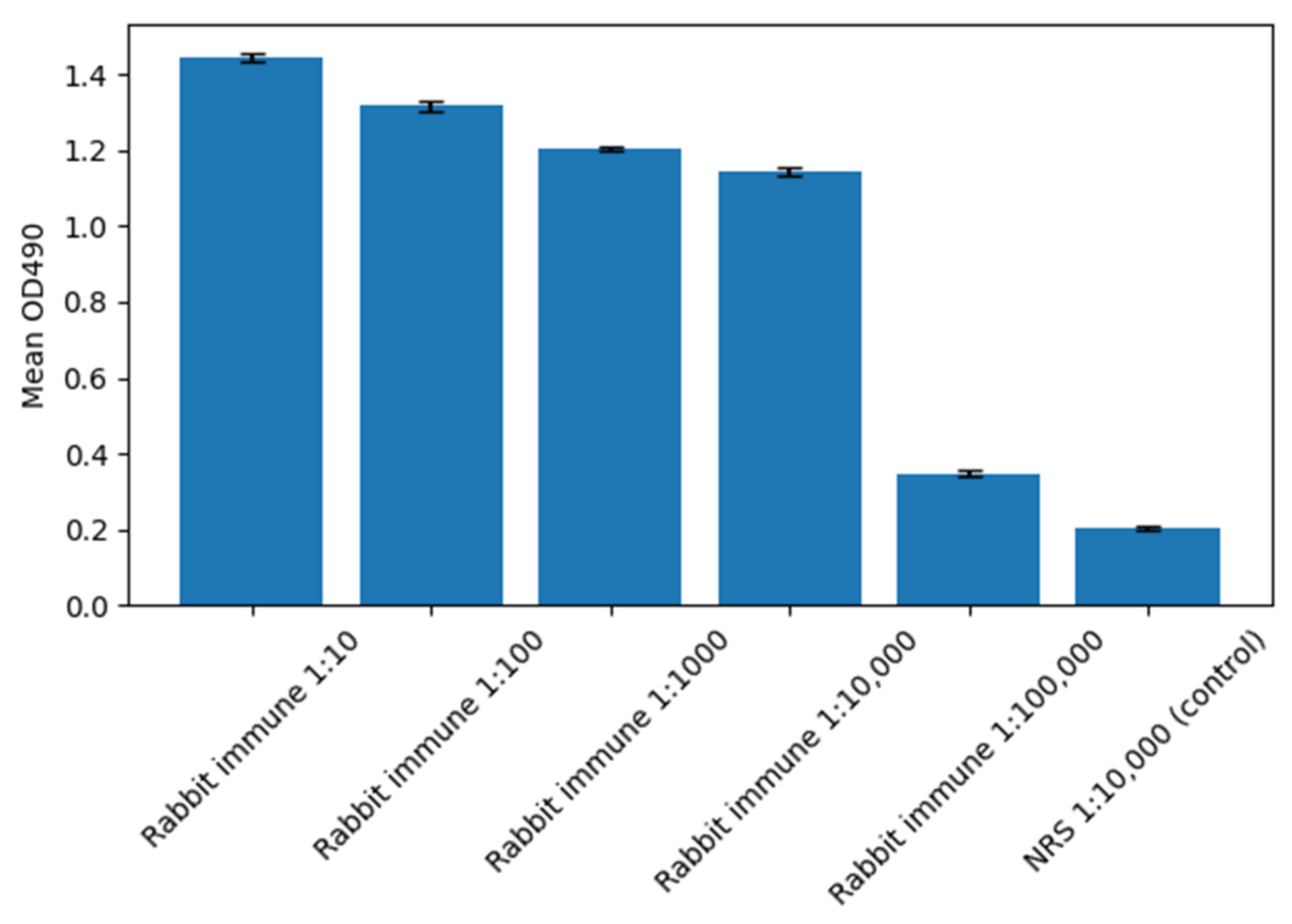
Rabbit immune serum titration showed that 1:10,000 dilution still produced a strong OD value at 490 nm response and low background in normal rabbit serum controls, which justified its choice as the working detector dilution. There was gradual decrease in the OD values as the immune serum was diluted 1:10 to 1:100,000 showing the reduced antigen–antibody interaction in low antibody concentrations. Normal rabbit serum (NRS) as a negative control gave very low OD values (0.203 ± 0.005), which verified low non-specific binding, as shown in Figure 5.
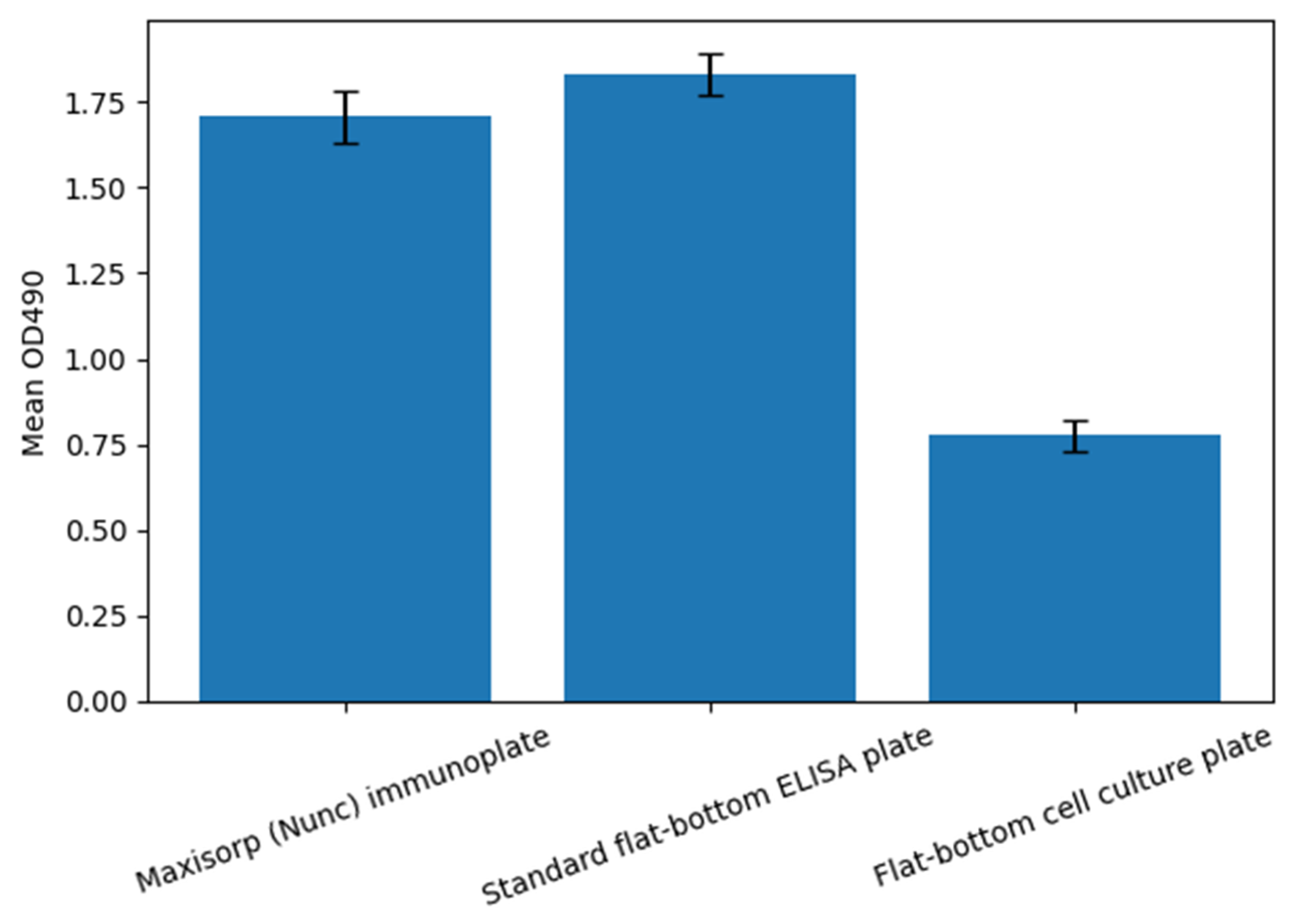
Among the tested plate formats, Maxisorp immunoplates were found to generate high positive OD values at 490 nm, with the cell culture plates displaying lower values of OD by significant margins, thus demonstrating less binding capacity in ELISA application. Maxisorp plates were chosen over the standard flat-bottom ELISA plates even though the standard ELISA plates yielded similar signals because of their greater binding capacity and reproducibility of proteins attached to them, as shown in Figure 6.
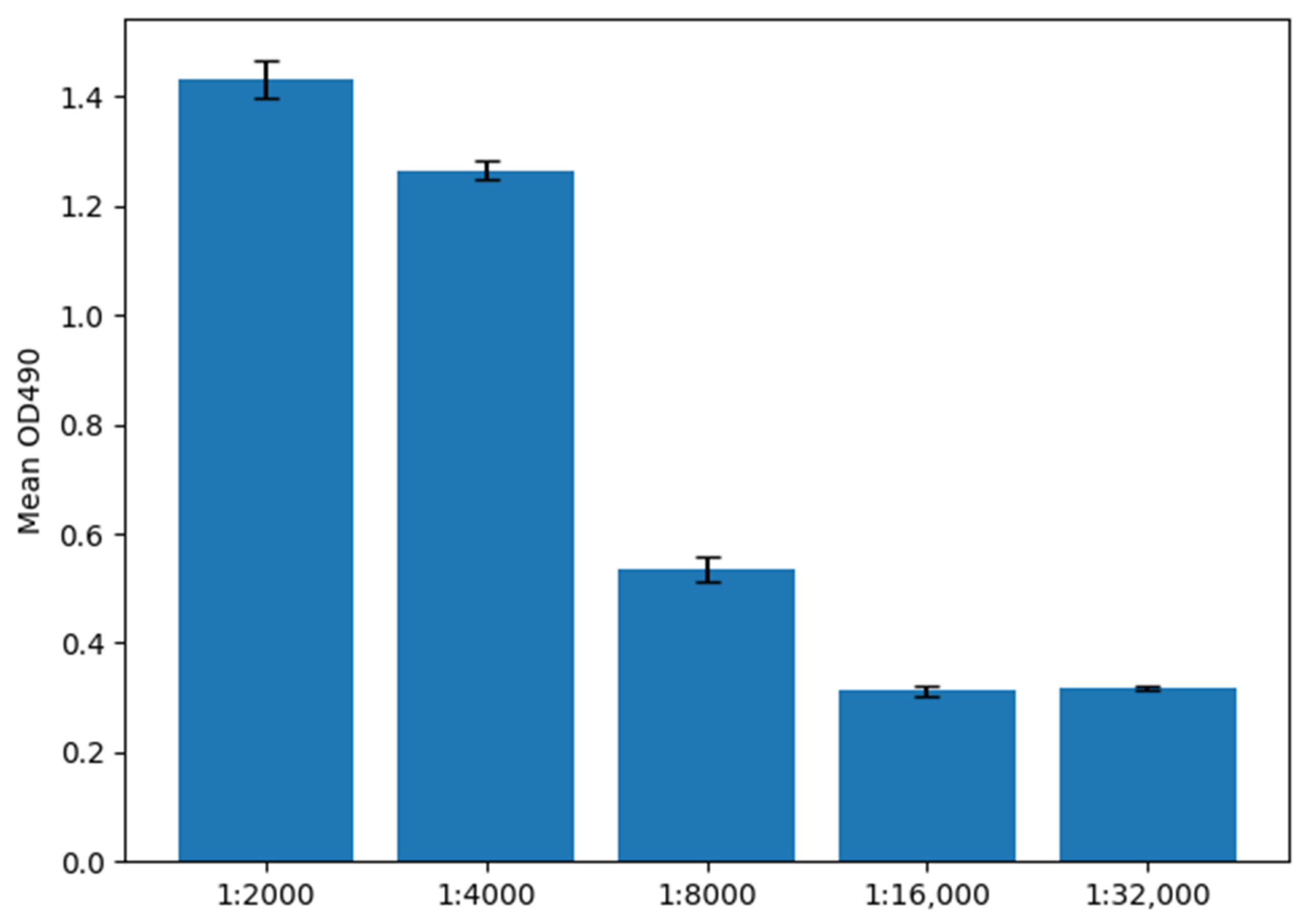
Similarly, titration of the goat anti-rabbit IgG conjugated with the HRP showed a progressive reduction in the OD values with more dilution of the conjugate. The highest OD value was observed at the 1:2000 dilution, although there is a higher chance of a high background since there is too much enzyme activity. While a 1:4000 dilution offered a good signal with a better signal-to-background ratio, which made it the most appropriate working dilution of the IS-ELISA, as shown in Figure 7.

4. Discussion

Foot-and-Mouth Disease (FMD) is among the most economically painful transboundary viral diseases that afflict cloven-hoofed animals across the globe. Fast and dependable diagnostic resources are thus needed in the early detection, surveillance, and effective management of outbreaks [21]. In this paper, an indirect sandwich ELISA (IS-ELISA) was streamlined to identify and characterize FMDV serotype O, and several crucial assay parameters were optimally tested to enhance sensitivity and specificity. The current results indicate that the optimized IS-ELISA was able to detect FMDV serotype O and that the biological reagents produced in the assay were functionally active. The transient and mild swelling that has been seen following the use of the oil-adjuvanted vaccine is reported in similar studies since the oil adjuvants are intended to increase local retention of antigen and promote a greater humoral response and this results in higher-titer anti-FMDV antibodies. The same immunogenic effect in this study was corroborated by the subsequent neutralizing antibody recovery in guinea pigs and rabbits as well as the high ELISA reactivity in the immune sera and in the fraction of purified immunoglobulins [22].
This gradual decrease in total protein concentrations in whole guinea pig serum (52 µg/mL) to ASPGPS (24 µg/mL) and then to IEGPS (10 µg/mL) is also in line with the purification strategy employed in this study. A whole serum has a complex mixture of albumin, globulins, complement proteins and other serum constituents and ammonium sulfate precipitation still enriches immunoglobulins with some non-Ig proteins still co-precipitated [23]. The ion-exchange purification further eliminates non-specifically bound proteins which lowers total protein yield and enhances immunological specificity of the preparation. This is the reason why despite the lowest overall protein concentration, the IEGPS fraction outperformed ASPGPS as a capture reagent in the ELISA: the total protein mass is not the key variable in plate coating, but the fraction of functional, antigen-specific immunoglobulin that can be used to bind the antigen. The results of the current study support this with IEGPS producing larger OD values than ASPGPS at similar dilutions [24].
Neutralization is based on the properties of antibodies to bind the exposed viral epitopes and prevent viral adherence, entry, or further replication in the susceptible cells; thus, preserved BHK-21 monolayers at low serum dilutions suggest that the induced antibodies were not only present, but also biologically active [25]. It is not surprising that cell protection would decrease progressively with serially diluted sera, since a decreasing number of antibody molecules would be available to saturate a viral particle and inhibit infection. Notably, it is important to mention that the presence of quantifiable neutralizing activity in the purified fraction of IEGPS demonstrates that the purification process did not simply concentrate inactive protein but instead preserved the activity of antibodies. This is of special importance in terms of assay development, as capture antibodies in sandwich ELISA have to be both specific and structurally intact in order to effectively immobilize target antigen on the solid phase [26].
Although ion-exchange purification reduced the overall protein yield, it improved the functional enrichment of antigen-specific immunoglobulins and reduced background-associated serum components. The present work was conducted at laboratory scale to optimize assay performance; therefore, purification recovery and production scalability for commercialization require further study. A similar study conducted provide evidence that the specificity and stability of the antibody preparation can be seen in the results obtained with the ion-exchange purified guinea pig immunoglobulin fraction (IEGPS). Although the total protein concentration of the purified fraction was less than the whole serum, the purified antibodies still had a strong neutralizing capacity up to 1:128 dilutions, which indicates that the purification procedure successfully concentrated active anti-FMDV immunoglobulins and removed non-specific serum proteins. Immunologically, these results imply that neutralizing efficiency is not determined by the concentration of total proteins in the antibody, but by the quality of the antibody. Although neutralizing activity is not a requirement for antigen detection assays, it was assessed in this study to validate the biological activity and specificity of the generated antibodies. This step provided confidence in the immunological relevance and structural integrity of the antibodies used in the ELISA system [27].
The current IS-ELISA has an optimization profile consistent with the biologic and analytic behavior of a polyclonal antibody-based antigen-capture system of FMDV. In traditional FMD antigen-detection ELISA, three interconnected factors have a strong influence on a successful assay: affinity and purity of the capture antibody, ability to block unoccupied binding sites, and choice of reagent dilution to achieve the greatest separation between true signal and background noise [6]. This increased signal at lower dilutions with whole guinea pig immune serum is due to the highest absolute number of anti-FMDV immunoglobulin to be passively adsorbed onto the plate, which must be found in whole serum. Dilution also caused the coating density of a particular antibody to decrease, ultimately decreasing the quantity of antigen-binding sites and consequently decreasing OD values [28].
In this study, IEGPS, at 1:1000 ions, was even better than ASPGPS when purified fractions are compared, which greatly indicates that ion-exchange purification enriched the functionally relevant population of immunoglobulins and eliminated competing serum proteins that may be capable of interfering with adsorption or antigen availability on the plate surface. The superior performance of IEGPS is that the purified fraction of the protein displays antigenic determinants better enabling greater and more stable antigen–antibody interaction [29]. This increases the immunogenicity and the sensitivity of assays due to the increased exposure of epitopes. ASPGPS, on the contrary, has antigenic components, which could be relatively less accessible and immunologically reactive in their epitopes, leading to decreased binding efficiency and poor overall detectability [30].
Skimmed milk is a better blocking agent due to its biochemical composition and its capacity to occupy nonspecific binding sites on polystyrene plates in indirect sandwich ELISA. The skimmed milk is a blend of proteins (mainly the casein and whey proteins) which have amphipathic properties that enable them to strongly absorb hydrophobic surfaces in microtiter wells. Casein especially is an efficient source of a saturable protein layer, which prevents nonspecific adsorption of antibodies, enzyme conjugates or other assay parts. This removes the background signal and enhances the signal-to-noise ratio that is important in sensitive immunoassays [31]. Blocking agents like fetal calf serum (FCS) and horse serum harbor heterogeneous proteins, growth factors or immunoglobulins which can be detected by antibodies or conjugates as a nonspecific reaction with the antibodies, increasing the background reactivity. Bovine serum albumin is a single purified protein and therefore it might not bind on a surface as effectively as a protein mixture found in skimmed milk resulting in incomplete blocking [32].
The greater efficiency of the combined condition of coating at 37 °C for 1 h and overnight at 4 °C is mechanically plausible. The incubation at 37 °C favors the capture antibody to adsorb onto the Maxisorp surface whereas the incubation at 4 °C favors the stabilization of the coated layer and enhances retention of antibody conformation conducive to the binding of antigens. When the coating was done at 37 °C alone, the adsorption was quicker and less permanent; when it was done at 4 °C alone, the adsorption was slower and less extensive. This trend is quite consistent with the overall ELISA optimization practice established in similar studies, in which a brief warm adsorption step followed by cold stabilization tends to enhance coating uniformity and end-result analysis signal [33].
The antigen titration experiment indicated that the ELISA response was clearly concentration dependent with the highest OD 90 values at 1:10 and 1:100 FMDV dilution and a gradual decrease in signal at higher antigen dilution. The reason behind this trend is that the more antigen there, is the more antigen–antibody complex can be formed between the captured FMDV particles and the detector antibodies, producing greater colorimetric signs. The more the antigen is diluted, the fewer viral particles can react with the coated antibodies and thus the less the sandwich complex formed and thus the lower the OD values [34]. Conversely, the NDV control antigen always gave extremely low OD values at all dilutions, and this confirms that the antibodies in the assay are specifically specific to FMDV serotype O and they do not cross-react with other irrelevant viral antigens. The same antigen-dependent ELISA response patterns have been observed in previous FMDV diagnostic studies, which indicated that optimum antigen detection was observed at intermediate dilution levels that were sufficient to maintain a strong signal but reduced the nonspecific binding [35].
Comparisons of various plate types showed that Maxisorp immunoplates and standard polystyrene flat-bottom ELISA plates provided significantly high OD values compared with u-shaped cell culture plates, showing that plate surface chemistry is a key determinant in antigen–antibody immobilization within ELISA systems. The reduced signal using cell culture plates is attributed to their lower protein-binding capacity since the plates are normally made to allow cell attachment and not protein adsorption [36]. Although standard polystyrene ELISA plates showed comparable OD values, Maxisorp high-binding plates were selected due to their enhanced protein adsorption capacity, improved coating uniformity, and greater inter-assay reproducibility, which are critical for the development of a reliable diagnostic assay. High-binding immunoplates like Maxisorp are specially designed with altered polystyrene surfaces that can specifically facilitate passive adsorption of immunoglobulins using hydrophobic and electrostatic interactions. This enhanced immobilization enhances the density and optimal positioning of capture antibodies on the plate surface, which will lead to a stronger antigen binding and ultimately give high ELISA signals [37].
Despite similar OD values with the standard flat-bottom ELISA plates, Maxisorp plates are chosen to further optimize the assays because the plates are more reproducible and have a consistent protein binding capacity needed in the standardization of diagnostic assays. These results have been observed with other immunoassay development studies, which have achieved high binding plate enhancements in immunoassays by offering a high degree of homogeneity in antibody coating in the wells of the plate. Previous studies of FMDV antigen detection ELISA also reported the significance of plate surface characteristics in assay performance, with ideal immuno-plates giving better antigen binding and minimizing inter-assay variations [38].
The dilution of the HRP-conjugated goat anti-rabbit IgG also demonstrated the significance of background noise in ELISA systems against signal intensity. The greatest OD values were recorded at 1:2000 conjugate dilution, a phenomenon that is consistent with the fact that with increased concentration of enzyme-labeled antibodies, the number of enzyme molecules attached to antigen–antibody complexes rises, and thus, it has an amplified substrate conversion and color development. Too much enzyme may cause more nonspecific binding and background signal, resulting in loss of assay specificity and decrease in signal-to-noise ratio [39].
The reason that 1:4000 dilution of the conjugate was chosen as an ideal working dilution was that it had both a good positive signal and minimal interference with the background. The observation aligns with the earlier studies on ELISA optimization, where moderate conjugate dilutions offered superior analysis results as opposed to high-concentrated conjugate solutions. The same observations have been reported in FMDV diagnostic ELISA systems, in which the optimization of enzyme conjugate concentration has greatly enhanced assay sensitivity and reproducibility due to the avoidance of excessive enzyme activity and non-specific interactions [20].
The systematic optimization of assay parameters—including capture antibody, blocking reagent, antigen and antibody dilutions, plate format, and conjugate concentration—significantly improved the sensitivity and specificity of the developed IS-ELISA for detection of FMDV serotype O. These findings demonstrate that careful immunochemical optimization is essential for establishing a robust, reproducible, and diagnostically reliable ELISA suitable for laboratory and field surveillance of Foot-and-Mouth Disease.
A major limitation of the present study is the absence of large-scale field validation and direct comparison with internationally recognized commercial FMD diagnostic kits. Additionally, formal statistical agreement analyses, such as receiver operating characteristic (ROC) curve analysis and Cohen’s kappa, were not performed. These evaluations are critical for establishing diagnostic accuracy, including sensitivity, specificity, and agreement with established reference assays. Future studies should therefore incorporate well-characterized field samples, comparative validation against gold-standard commercial kits, and robust statistical analyses to comprehensively assess the performance and reliability of the developed assay.

5. Conclusions

The current research has achieved the reliable diagnostic assay of indirect sandwich ELISA (IS-ELISA) based detection of the Foot-and-Mouth Disease Virus (FMDV) serotype O by significantly optimizing the important parameters of this assay. The optimized assay showed high antigen-specific detection without much background interference and clear differentiation between a positive and negative sample. Consequently, the established IS-ELISA is a promising and optimized assay with potential diagnostic utility, pending further validation and scalability assessment for surveillance of the FMDV serotype O.

Author Contributions

M.M.A. and M.M.B. performed the laboratory experiments and field validation of the assay. K.M., M.R. and M.A.A. conceptualized the study, supervised the research work, and critically reviewed the final manuscript. A.U.K. assisted in the analysis and interpretation of the data. M.M.B. prepared the initial draft and finalized the manuscript, which was subsequently reviewed and approved by all authors. All authors have read and agreed to the published version of the manuscript.

Funding

This research received no external funding and was conducted using the facilities and resources available at the Institute of Microbiology, University of Veterinary and Animal Sciences (UVAS), Lahore, Pakistan.

Institutional Review Board Statement

All experimental procedures involving viral samples were conducted in accordance with institutional biosafety and laboratory guidelines at the Institute of Microbiology, University of Veterinary and Animal Sciences (UVAS), Lahore, Pakistan. The study complied with established laboratory safety and ethical standards for handling infectious agents.

Data Availability Statement

The data supporting the findings of this study will be made available by the corresponding author upon reasonable request.

Conflicts of Interest

The authors declare no conflicts of interest.

References

  1. Gortázar, C.; Barroso, P.; Nova, R.; Cáceres, G. The role of wildlife in the epidemiology and control of Foot-and-mouth-disease And Similar Transboundary (FAST) animal diseases: A review. Transbound. Emerg. Dis. 2022, 69, 2462–2473. [Google Scholar] [CrossRef]
  2. Wubshet, A.K.; Dai, J.; Li, Q.; Zhang, J. Review on outbreak dynamics, the endemic serotypes, and diversified topotypic profiles of foot and mouth disease virus isolates in Ethiopia from 2008 to 2018. Viruses 2019, 11, 1076. [Google Scholar] [CrossRef]
  3. Shimelis, E.; Tesfaye, S.; Tadesse, F. Diagnostic overview of foot-and-mouth disease viruse (FMDV). South Asian Res. J. Agric. Fish. 2023, 5, 36–44. [Google Scholar] [CrossRef]
  4. Zia, M.A.; Dobson, S.J.; Rowlands, D.J.; Stonehouse, N.J.; Shah, M.S.; Habib, M. Development of an ELISA to distinguish between foot-and-mouth disease virus infected and vaccinated animals utilising the viral non-structural protein 3ABC. J. Med. Microbiol. 2022, 71, 001516. [Google Scholar] [CrossRef] [PubMed]
  5. Zhang, Y.; Wang, R.; Bai, M.; Wang, X.; Dong, H.; Li, J.; Mu, S.; Miao, H.; Song, J.; Sun, S. Development of a competitive ELISA method based on VLPs detecting the antibodies of serotype A FMDV. J. Virol. Methods 2022, 300, 114406. [Google Scholar] [CrossRef]
  6. Wong, C.L.; Yong, C.Y.; Ong, H.K.; Ho, K.L.; Tan, W.S. Advances in the diagnosis of foot-and-mouth disease. Front. Vet. Sci. 2020, 7, 477. [Google Scholar] [CrossRef] [PubMed]
  7. Hernández, C.A.; Pérez-Bernal, M.; Abreu, D.; Valdivia, O.; Delgado, M.; Dorta, D.; Domínguez, A.G.; Pérez, E.R.; Sánchez-Ríos, J.M. Step-by-step full factorial design to optimize a quantitative sandwich ELISA. Anal. Biochem. 2023, 674, 115195. [Google Scholar] [CrossRef]
  8. Ullah, M.A.; Hoque, M.N.; Nasiruddin, K.M.; Rahman, M.B.; Rauf, F. Molecular detection and adaptation of FMD virus serotype type O in BHK-21 cell line by RT-PCR. Asian J. Med. Biol. Res. 2023, 9, 14–22. [Google Scholar] [CrossRef]
  9. Munir, A.; Anjum, A.; Altaf, I.; Awan, A. Immuno-affinity chromatography for purification of IgG from hyper-immune sera raised against 146S fraction of Foot and Mouth Disease Virus for diagnostic purposes. Pol. J. Vet. Sci. 2023, 26, 393–399. [Google Scholar] [CrossRef] [PubMed]
  10. Ran, X.; Yang, Z.; Bai, M.; Zhang, Y.; Wen, X.; Guo, H.; Sun, S. Development and validation of a competitive ELISA based on bacterium-original virus-like particles of serotype O foot-and-mouth disease virus for detecting serum antibodies. Appl. Microbiol. Biotechnol. 2019, 103, 3015–3024. [Google Scholar] [CrossRef]
  11. Hossienizadeh, S.M.J.; Bagheri, M.; Alizadeh, M.; Rahimi, M.; Azimi, S.M.; Kamalzade, M.; Es-Haghi, A.; Ghassempour, A. Two dimensional anion exchange-size exclusion chromatography combined with mathematical modeling for downstream processing of foot and mouth disease vaccine. J. Chromatogr. A 2021, 1643, 462070. [Google Scholar] [CrossRef] [PubMed]
  12. Jain, B.; Tewari, A.; Prasad, M.; Kadian, S.K. A novel approach for estimation of anti-FMDV protective immunity generated in multiple vaccinated field animals. Acta Virol. 2022, 66, 90. [Google Scholar] [CrossRef]
  13. He, Y.; Li, K.; Cao, Y.; Sun, Z.; Li, P.; Bao, H.; Wang, S.; Zhu, G.; Bai, X.; Sun, P. Structures of Foot-and-mouth Disease Virus with neutralizing antibodies derived from recovered natural host reveal a mechanism for cross-serotype neutralization. PLoS Pathog. 2021, 17, e1009507. [Google Scholar] [CrossRef]
  14. Fu, Y.; Li, D.; Cao, Y.; Zhou, P.; Li, K.; Zhao, Z.; Li, P.; Bai, X.; Bao, H.; Wang, S. Development of a double-antibody sandwich ELISA for rapidly quantitative detection of residual non-structural proteins in inactivated foot-and-mouth disease virus vaccines. J. Virol. Methods 2023, 314, 114676. [Google Scholar] [CrossRef]
  15. Chen, J.; Shi, Z.; Luo, J.; Jia, C.; Zhang, X.; Wei, J.; Li, S.; Zhu, Y.; Xi, T.; Zhou, J. Development and optimization of a double antigen sandwich ELISA detecting for Senecavirus A antibodies based on VP2 protein. Microbiol. Spectr. 2024, 12, e02043-24. [Google Scholar] [CrossRef] [PubMed]
  16. Chen, Y.-J.; Chen, M.; Hsieh, Y.-C.; Su, Y.-C.; Wang, C.-H.; Cheng, C.-M.; Kao, A.-P.; Wang, K.-H.; Cheng, J.-J.; Chuang, K.-H. Development of a highly sensitive enzyme-linked immunosorbent assay (ELISA) through use of poly-protein G-expressing cell-based microplates. Sci. Rep. 2018, 8, 17868. [Google Scholar] [CrossRef]
  17. Deng, J.; Li, X.; Zheng, D.; Wang, Y.; Chen, L.; Song, H.; Wang, T.; Huang, Y.; Pang, W.; Tian, K. Establishment and application of an indirect ELISA for porcine circovirus 3. Arch. Virol. 2018, 163, 479–482. [Google Scholar] [CrossRef]
  18. Cao, Y.; Li, K.; Xing, X.; Zhu, G.; Fu, Y.; Bao, H.; Bai, X.; Sun, P.; Li, P.; Zhang, J. Development and validation of a competitive ELISA based on bovine monoclonal antibodies for the detection of neutralizing antibodies against foot-and-mouth disease virus serotype A. J. Clin. Microbiol. 2022, 60, e02142-21. [Google Scholar] [CrossRef]
  19. Yogisharadhya, R.; Kumar, A.; Bhanuprakash, V.; Shivachandra, S.B. Evaluation of a recombinant major envelope protein (F1L) based indirect-ELISA for sero-diagnosis of orf in sheep and goats. J. Virol. Methods 2018, 261, 112–120. [Google Scholar] [CrossRef] [PubMed]
  20. Seoke, L.; Fosgate, G.T.; Opperman, P.A.; Malesa, R.P.; Lazarus, D.D.; Sirdar, M.M.; Heath, L. Optimization of a foot-and-mouth disease virus Southern African Territories–specific solid-phase competitive ELISA for small ruminant serum samples. J. Vet. Diagn. Investig. 2024, 36, 192–204. [Google Scholar] [CrossRef]
  21. Raoof, H.S. Foot and Mouth Disease (FMD). Assiut Vet. Med. J. 2024, 70, 1–8. [Google Scholar] [CrossRef]
  22. Yang, K.; Song, H.; Shi, X.; Ru, J.; Tan, S.; Teng, Z.; Dong, H.; Guo, H.; Wei, F.; Sun, S. Preparation of a polysaccharide adjuvant and its application in the production of a foot-and-mouth disease virus-like particles vaccine. Biochem. Eng. J. 2022, 184, 108479. [Google Scholar] [CrossRef]
  23. Razak, A.; Altaf, I.; Anjum, A.A.; Awan, A.R.; Awan, F.N. Optimization of Size Exclusion Chromatography for the Purification and Quantification of Foot and Mouth Disease Virus Serotype “O”. Pak. J. Zool. 2023, 2023, 1–10. [Google Scholar] [CrossRef]
  24. Reese, H.; Bordelon, T.; Shanahan, C.; Crapanzano, M.; Sly, J.; Menegatti, S. Novel peptoid-based adsorbents for purifying IgM and IgG from polyclonal and recombinant sources. J. Chromatogr. B 2020, 1137, 121909. [Google Scholar] [CrossRef]
  25. Murin, C.D.; Wilson, I.A.; Ward, A.B. Antibody responses to viral infections: A structural perspective across three different enveloped viruses. Nat. Microbiol. 2019, 4, 734–747. [Google Scholar] [CrossRef] [PubMed]
  26. Gan, S.Y.; Tye, G.J.; Chew, A.L.; Ng, W.K.; Lai, N.S. Linker-mediated oriented antibody immobilisation strategies for a more efficient immunosensor and diagnostic applications: A review. Biosens. Bioelectron. 2023, 14, 100379. [Google Scholar] [CrossRef]
  27. Wang, Y.; Zhang, P.; Liu, S.; Zhang, Y.; Zhao, T.; Huang, W.; He, C.; Yu, Y.; Wang, L.; Wan, M. Purification of IgG from sera of rabbit and guinea pig by flow-through mode ion-exchange chromatography using DEAE sepharose fast flow column. Chromatographia 2011, 74, 209–214. [Google Scholar] [CrossRef]
  28. Benincasa, M.; Gemmellaro, S.; Boretto, F.; Iturriza, M.; Canals, R.; Rondini, S.; Rossi, O.; Mancini, F. ELISA method to assign weight-based antibody concentration to antigen-specific Ig in sera. J. Immunol. Methods 2026, 547, 114037. [Google Scholar] [CrossRef]
  29. Mahboob, A.; Fatma, N.; Faraz, A.; Pervez, M.; Khan, M.A.; Husain, A. Advancements in the conservation of the conformational epitope of membrane protein immunogens. Front. Immunol. 2025, 16, 1538871. [Google Scholar] [CrossRef]
  30. Ke, X.; Cao, Z.; Weng, Z.; Xie, Y.; Wu, F.; Liu, X.; Zhou, S.; Lian, M.; Liu, T.; Sun, R. Progress Toward Antigenic Epitopes of African Swine Fever Virus and Their Identification. Transbound. Emerg. Dis. 2025, 2025, 2111189. [Google Scholar] [CrossRef]
  31. Andriola, D.D.; Ferreira, G.N.; Candelário, J.M.; Piazenski, I.N.; Biavatti, M.; Sakamoto, L.B.; Minozzo, J.C.; Soccol, V.T. Validated cost-effective casein-based blocking buffers for enhanced neurocysticercosis ELISA accuracy. Diagn. Microbiol. Infect. Dis. 2025, 113, 117033. [Google Scholar] [CrossRef]
  32. Harmsen, M.M.; Ackerschott, B.; de Smit, H. Serum immunoglobulin or albumin binding single-domain antibodies that enable tailored half-life extension of biologics in multiple animal species. Front. Immunol. 2024, 15, 1346328. [Google Scholar] [CrossRef]
  33. Ferrero, I.; Dewilde, S.; Poletti, P.; Canepa, B.; Giachino, E.; Dall’Ara, P.; Filipe, J. Development of a New Indirect ELISA Test for the Detection of Anti-Feline Coronavirus Antibodies in Cats. Vet. Sci. 2025, 12, 245. [Google Scholar] [CrossRef]
  34. Muñoz, C.; Nieto, A.; Gayá, A.; Martínez, J.; Vives, J. New experimental criteria for optimization of solid-phase antigen concentration and stability in ELISA. J. Immunol. Methods 1986, 94, 137–144. [Google Scholar] [CrossRef]
  35. Das, M.; Kumar, S. Recombinant phosphoprotein based single serum dilution ELISA for rapid serological detection of Newcastle disease virus. J. Virol. Methods 2015, 225, 64–69. [Google Scholar] [CrossRef] [PubMed]
  36. Gülden, M.; Schreiner, J.; Seibert, H. In vitro toxicity testing with microplate cell cultures: Impact of cell binding. Toxicology 2015, 332, 41–51. [Google Scholar] [CrossRef] [PubMed]
  37. Nowak, J.; Watala, C.; Boncler, M. Antibody binding, platelet adhesion, and protein adsorption on various polymer surfaces. Blood Coagul. Fibrinolysis 2014, 25, 52–60. [Google Scholar] [CrossRef] [PubMed]
  38. Lilyanna, S.; Ng, E.M.W.; Moriguchi, S.; Chan, S.P.; Kokawa, R.; Huynh, S.H.; Chong, P.J.; Ng, Y.X.; Richards, A.M.; Ng, T.W. Variability in microplate surface properties and its impact on ELISA. J. Appl. Lab. Med. 2018, 2, 687–699. [Google Scholar] [CrossRef]
  39. Chang, Y.; Li, D.; Zhao, J.; Zhao, H.; Xu, X.; Han, L.; Zhao, F.; Geng, J.; Fu, C.; Wei, J. Development and evaluation of immunoglobulin-binding-proteins based ELISA for serological diagnosis of foot-and-mouth disease virus in domestic animals. Int. J. Biol. Macromol. 2025, 339, 149649. [Google Scholar] [CrossRef]
Figure 1. Optimization of capture antibody concentration for indirect sandwich ELISA (IS-ELISA).
Immuno 06 00031 g001
Figure 2. Comparison of blocking agents for optimization of IS-ELISA.
Immuno 06 00031 g002
Figure 3. Effect of coating incubation conditions on IS-ELISA performance.
Immuno 06 00031 g003
Figure 4. Optimization of FMDV antigen concentration for IS-ELISA.
Immuno 06 00031 g004
Figure 5. Optimization of detector antibody dilution for indirect sandwich ELISA (IS-ELISA).
Immuno 06 00031 g005
Figure 6. Effect of plate type on IS-ELISA performance.
Immuno 06 00031 g006
Figure 7. Optimization of HRP-conjugate dilution for indirect sandwich ELISA (IS-ELISA).
Immuno 06 00031 g007
Table 1. Protein concentration of guinea pig serum preparations.
SampleProtein Concentration (µg/mL)
Whole guinea pig serum52
ASPGPS (ammonium sulfate precipitated)24
IEGPS (ion-exchange purified)10
Values represent pooled serum samples (n = 5 per group).
Table 2. Virus neutralization assay (guinea pig whole serum).
Dilution/ControlMean OD at 590 nm ± SDRelative Cell Survival (%)
1:22.423 ± 0.02185
1:42.152 ± 0.02974
1:81.938 ± 0.02566
1:161.708 ± 0.01556
1:321.393 ± 0.02943
1:641.013 ± 0.00528
1:1281.030 ± 0.04727
1:2560.360 ± 0.0141
Virus control0.350 ± 0.0080.4
Serum control0.330 ± 0.008−0.4
Cell control2.443 ± 0.04886
Table 3. Virus neutralization assay (rabbit whole serum).
Dilution/ControlMean OD at 590 nm ± SDRelative Cell Survival (%)
1:22.413 ± 0.05386
1:42.098 ± 0.11672
1:81.733 ± 0.07857
1:161.615 ± 0.04053
1:321.453 ± 0.02546
1:641.190 ± 0.11435
1:1281.063 ± 0.06430
1:2560.360 ± 0.0141
Virus control0.348 ± 0.0130.4
Serum control0.330 ± 0.008−0.4
Cell control2.423 ± 0.04786
Table 4. Virus neutralization assay (IEGPS).
Dilution/ControlMean OD at 590 nm ± SDRelative Cell Survival (%)
1:22.405 ± 0.01385
1:42.210 ± 0.00876
1:82.085 ± 0.01371
1:161.900 ± 0.02864
1:321.663 ± 0.08954
1:641.480 ± 0.06547
1:1281.338 ± 0.03441
1:2560.355 ± 0.0101
Virus control0.350 ± 0.0080.4
Serum control0.330 ± 0.008−0.4
Cell control2.450 ± 0.04686
Disclaimer/Publisher’s Note: The statements, opinions and data contained in all publications are solely those of the individual author(s) and contributor(s) and not of MDPI and/or the editor(s). MDPI and/or the editor(s) disclaim responsibility for any injury to people or property resulting from any ideas, methods, instructions or products referred to in the content.