Article

Trust Dynamics and Economic Implications of Generative AI Adoption in Digital Journalism

by
Maksim Iavich
1,* and
Tsotne Ivanishvili
2
1
Department of Computer Science, Caucasus University, Tbilisi 0102, Georgia
2
Faculty of Arts, The University of Hong Kong, Hong Kong, China
*
Author to whom correspondence should be addressed.
Journal. Media 2026, 7(2), 102; https://doi.org/10.3390/journalmedia7020102
Submission received: 24 February 2026 / Revised: 5 May 2026 / Accepted: 9 May 2026 / Published: 14 May 2026

Abstract

Digital news organizations increasingly adopt generative artificial intelligence (GenAI) under conditions of economic strain and platform dependency. While AI integration is often framed as a strategy for operational efficiency, its institutional implications extend beyond productivity gains. This study examines how different governance approaches to GenAI adoption—specifically variations in transparency, disclosure, and oversight practices—correspond to shifts in audience engagement and financial performance. Using a comparative mixed-methods design, we analyze three prominent cases between 2022 and 2025—CNET, Gizmodo, and The New York Times—representing, respectively, covert AI use with limited disclosure, transparent but poorly managed deployment, and proactive ethical and legally grounded positioning. To operationalize audience stability, we introduce two behavioral indicators: the Engagement Resilience Index (ERI), measuring depth and consistency of user engagement; and the Market Turbulence Ratio (MTR), capturing post-incident volatility in audience behavior. The findings indicate that AI deployment strategies associated with limited disclosure or weak governance correspond with increased engagement instability and revenue contraction, whereas approaches framed through institutional accountability and ethical positioning align with more stable or positive performance trajectories. The results suggest that AI integration functions not merely as a technological shift but as a governance-mediated signal interpreted by audiences in economic terms. These dynamics highlight the centrality of institutional trust in shaping the sustainability of digital journalism in the age of automation.

1. Introduction

Digital news organizations faced sustained economic pressure over the past decade and, therefore, the advertising revenues declined. Audience access depends on large digital platforms. The algorithms and distribution logics of these platforms remain outside newsroom control. In this situation, public trust and financial sustainability are no longer separate dimensions of institutional performance. Editorial credibility now has immediate economic consequences (Picard, 2014; Nielsen & Ganter, 2018). Generative artificial intelligence (GenAI) is already actively used in newsroom workflows. News organizations frame GenAI as a tool for efficiency. It can reduce production costs. However, GenAI integration also affects established concepts of authorship, accountability, and oversight. Industry analyses often stress scalability and productivity gains. They devote less attention to audience interpretation of AI use. It usually happens when disclosure practices are unclear or governance mechanisms are weak (Thurman et al., 2019; Diakopoulos, 2019). Perceptions of opacity may influence reputational standing and change measurable patterns of audience behavior. Existing research examined journalists’ attitudes toward AI (Cools & Diakopoulos, 2024); as a result, it documented forms of audience skepticism toward automated content (Longoni & Cian, 2022). Fewer studies systematically connected governance decisions to observable financial outcomes. Trust is a central concept in journalism. For now, its economic dimension in the context of AI adoption remains insufficiently specified (Nishal et al., 2024; Kohring & Matthes, 2007; Tsfati & Cappella, 2003; Tsfati & Ariely, 2014; Fawzi et al., 2021; Mangold et al., 2024) and our study addresses this gap. We use a comparative mixed-methods analysis of CNET, Gizmodo, and The New York Times between 2022 and 2025. Each case represents a distinct approach to AI governance; we introduce two indicators to assess audience stability and use both of them. The Engagement Resilience Index (ERI) captures the depth and consistency of user engagement and the Market Turbulence Ratio (MTR) measures fluctuations in post-incident interaction patterns. We use these two metrics together. We then conduct a structured examination of how AI governance choices correspond with shifts in engagement and revenue trajectories.

2. Literature Review and Conceptual Framework

2.1. Financial Vulnerability in Digital News and the Economic Role of Trust

The financial situation of digital news businesses is described in detail as increasingly unstable. It is described both in the academic and industry literature (Picard, 2014; Nielsen & Ganter, 2018; Song, 2025). The revenue models focused on advertisement, previously dominant, have become weaker and less stable in the setting of the combined pressures of platform intermediation, rapid technological change, and the changing audience behavior (Song, 2025). News organizations have faced greater exposure to volatility and declining profit margins, because digital distribution channels have become increasingly controlled by major platform intermediaries (Nielsen & Ganter, 2018; Rashidian et al., 2019; Cornia et al., 2018). In response, academic research and industry analyses offered strategies needed for building direct relationships with audiences. They proposed subscription models, membership programs, and premium advertising formats as instruments for stabilizing income and reducing dependence on platform-driven distribution (Shukla et al., 2025; Nielsen & Ganter, 2018; Rashidian et al., 2019; Newman et al., 2024). Therefore, the role of the audience can be reconsidered. Nowadays, audiences are more than just passive recipients of news. By paying attention, being loyal, and being eager to return, they actively engage in the operations of journalistic organizations. Because of this, the relationship between audiences and media organizations evolves from a simple transaction into structural dependency (Picard, 2014; Nielsen & Ganter, 2018; Uth et al., 2025).
However, trust is not limited to the domain of professional values (Hanitzsch et al., 2018; Strömbäck et al., 2020; Fletcher & Park, 2017; Tsfati, 2010). It has real, material repercussions. McKinsey & Company industry assessments (Makieu et al., 2025) show that audience confidence can cause engagement to decrease by up to 40%—though this figure derives from a non-peer-reviewed industry report and should be treated as indicative rather than definitive. Academic research on digital media economics also claims that audience is sensitive to institutional credibility signals (Chyi & Lee, 2013). Revenue loss is a direct result of such sort of deterioration. In these settings, trustworthiness can be understood as economic factor that determines an organization’s viability rather than just a normative commitment. Therefore, it has implications for the AI era. Reputational risk is not the only danger associated with technological decisions that can compromise perceived trustworthiness. Their financial risk is quantifiable. When there is the problem with trust, the measurable audience behavior changes. It leads to a reduction in page visits, higher bounce rates and to lower session duration. It can also lead to increased subscription cancelations. Each of these directly influences advertising revenue and reader revenue, and as a result, decreases overall monetization rates. Industry models allow us to convert these behavioral shifts into concrete revenue estimates and this is demonstrated in the case analyses presented in this study. In other words, trust functions as a strategic asset and a professional standard at the same time. Additionally, it has a significant impact on long-term stability in both professions (Picard, 2014; Strömbäck et al., 2020).

2.2. Generative AI in Journalism: Promise and Risk

There is both excitement and concern surrounding the use of GenAI in journalistic operations. GenAI is commonly viewed as an operational improvement solution within the context of industrial discourse (Nishal & Diakopoulos, 2025; Deloitte, 2024; Newman et al., 2024). According to reports from consulting firms like Deloitte, it may speed up production cycles, automate repetitive tasks, and increase customization in newsroom settings (Nishal & Diakopoulos, 2025; Schapals & Porlezza, 2020). Therefore, AI adoption is interpreted primarily as a response to structural economic pressure and the need for efficiency (Schapals & Porlezza, 2020; Nishal & Diakopoulos, 2025; Picard, 2014; Newman et al., 2024).
Academic research presents rather similar, but more nuanced, perspectives (Nishal & Diakopoulos, 2025; Schapals & Porlezza, 2020). GenAI does not substitute journalists, but it is an instrument intended to assist editorial judgment. When routine activities such as transcription, summarization, or initial drafting are delegated to automated systems, journalists have more time to concentrate on analytical and investigative tasks. Multiple case-based academic studies indicate that newsroom professionals show conditional acceptance of these applications, particularly when their implementation is transparent, and professionalism is maintained (Makwambeni & Makwambeni, 2025; Cools & Diakopoulos, 2024; Broussard et al., 2019).
At the same time, empirical findings identify persistent pressure in audience perception (Longoni & Cian, 2022; Jia et al., 2024; Wang & Huang, 2024; Mitova et al., 2025). Experimental studies show that news that are explicitly labeled as AI-generated are often evaluated as less credible, even if the informational quality is still comparable to human-authored material (Zhang & Abdullah, 2026). This response cannot be understood only as concerns about technical problems. It reflects doubts about ethical sensitivity, contextual awareness, and responsibility; these attributes are associated with journalistic authority.
The researchers also identify the additional risks (Bartleman et al., 2026; Nishal & Diakopoulos, 2025; Cools & Diakopoulos, 2024). These include the inaccuracies, frequently described by audience as hallucinations (Song, 2025), the amplification of biases that are contained in training datasets, and blurred lines of editorial accountability in AI adoption (Bartleman et al., 2026). Thus, when governance mechanisms and disclosure practices lack clarity, these problems are no longer just technical problems. As we show in the cases analyzed in this research, they may affect institutional reputation and generate large economic implications.

2.3. Conceptualizing and Operationalizing Credibility

A large body of research has examined trust in journalism as a multidimensional construct, but few studies have systematically linked trust dynamics to measurable financial outcomes in the context of AI adoption. This construct is shaped by institutional performance, audience predispositions, and media system characteristics. Foundational work by Tsfati and Cappella (2003) and Kohring and Matthes (2007) conceptualized trust as a relational and measurable construct. Later studies emphasized its variability across audiences and contexts (Tsfati & Cappella, 2003; Kohring & Matthes, 2007). More recent research in digital journalism shows that platform environments and algorithmic distribution increasingly mediate trust (Fawzi et al., 2021; Mangold et al., 2024). These studies collectively claim that trust is not uniform across audiences and it must be understood as structurally conditioned and dynamically negotiated.
Credibility is often characterized as multidimensional and dependent on context (Tsfati, 2010; Hindman, 2017; Metzger & Flanagin, 2015). It cannot be easily presented as a single measurable index. At the same time, empirical research must be conducted with operational clarity. For this reason, credibility in this study is not understood only as an abstract notion. We examine it through observable manifestations in audience behavior and public discourse.
Based on the studies in journalism ethics and audience reception (Hindman, 2017), (Nechushtai & David, 2025), perceived credibility can be treated as a composite result that depends on AI-based organizational decisions. Indicators of behavior, which include engagement stability and traffic variation, are considered together with discursive reactions, which are expressed in public comments. These signals can be interpreted as evidence of how audiences assess the behavior of an institution (Tsfati, 2010).
Beyond self-reported survey responses, trustworthiness may be tracked when institutional choices are accompanied by quantifiable changes in audience behavior. It implies that credibility may be seen as it develops in actual media environments.
From this perspective, perceived credibility may be viewed as a composite construct with two main dimensions:
  • Sentiment Orientation: This involves analyzing the overall emotional valence of audience reactions, categorizing them as positive, neutral, or negative.
  • Narrative Framing: This involves identifying the dominant interpretive frameworks audiences employ to make sense of an incident.
These five frames are grounded in established concepts in journalism studies and media credibility research. Transparency is widely theorized as a mechanism needed to rebuild public trust in news organizations by disclosure of editorial processes (Karlsson, 2010; Vos & Craft, 2017). Accuracy and error detection are foundational concepts in journalistic authority and are central to credibility research since Gaziano and McGrath (1986) and Kohring and Matthes (2007). Editorial competence refers to the perceived quality of human oversight and professional judgment in news production (Diakopoulos, 2019; Cools & Diakopoulos, 2024). Ethical expectations encompass audiences’ normative assumptions about responsible journalism practice (Hanitzsch et al., 2018; Nechushtai & David, 2025). Institutional legitimacy reflects the degree needed for organization’s conduct to seem consistent with its claimed professional identity and public role (Gieryn, 1983; Tsfati, 2010).
  • Transparency and Trust;
  • Accuracy and Error Detection;
  • Editorial Competence;
  • Ethical Expectations;
  • Institutional Legitimacy.
The first frame examines whether the usage of AI was made obvious. The second storyline investigates if AI-generated information has factual inconsistencies. The third one examines the effectiveness of editorial and human supervision procedures. The fourth story examines whether an organization’s activities are consistent with accepted ethical norms. The fifth examines if the organization’s overall conduct strengthens or erodes the public’s perception of its institutional legitimacy, including its long-term credibility, authority, and accountability.
We break down the complex concept of trust into components that can be distinguished analytically using this technique. This kind of organization makes it possible to transform the idea from an abstract debate into an empirical evaluation. It offers a more precise framework for analyzing the institutional and governance circumstances that allow AI integration into journalism to continue to be successful.

2.4. The Missing Link: From Perception to Economic Impact

This leaves a gap that has yet to be addressed. Previous studies seldom examine the economic outcomes of AI in detail. The major part of the literature focuses on separate areas, such as journalists’ attitudes, audience skepticism measured in laboratory settings, and technical system design (Mitova et al., 2025; Haughey, 2025; Psychari, 2025). Industry reports from global organizations such as INMA (Lehrman, 2021) and WAN-IFRA (Radcliffe et al., 2024) claim that transparency is important for audience loyalty, but they lack largely detailed, case-based data on audience behavior and corresponding financial effects (Cornia et al., 2018; Rashidian et al., 2019).
A unified model is notably absent that empirically links the following stages: AI deployment strategy, public credibility judgments, audience engagement behavior, and financial performance. Media economics theory claims that this connection exists and that declining trust leads to audience loss and lower engagement (Picard, 2014; Strömbäck et al., 2020; Chyi & Lee, 2013). However, they do not study and illustrate the important details, such as page views. These studies do not show instability in audience behavior and are therefore poor indicators of emerging trust issues. Audience engagement is broadly defined as the cognitive, emotional, and behavioral interactions between users and media content; it encompasses active and sustained orientations toward news consumption (Broersma, 2019; Steensen et al., 2020). Consistency of engagement refers to the regularity and predictability of these interactions over time; it includes metrics such as return visits, session duration, and pages per visit. These metrics serve as behavioral indicators of audience loyalty and institutional trust (Strömbäck et al., 2020; Chyi & Lee, 2013; Newman et al., 2024). Engagement stability, as distinct from aggregate traffic volume, checks if an organization maintains a reliable and durable relationship with its audience or it experiences volatile, incident-driven fluctuations (Steensen et al., 2020; Uth et al., 2025).
Therefore, this study examines the stability of audience engagement, focusing on the consistency and predictability of user interactions over time. This approach enables a more accurate assessment of the organization’s actual condition and traces the influence of generative AI on journalism.

2.5. Research Gap and This Study’s Conceptual Model

This study fills this gap by going beyond perceptions of the audience. To achieve this, we examine the entire chain of the influence of GenAI on the audience, and we check how AI decisions influence long-term sustainability. For this, we develop a unified conceptual model and test it, which indicates how AI decisions at news organizations lead to measurable economic outcomes. To develop the model, we construct the following five steps:
  • The starting action: This is the first move of the organization related to AI integration. It could be a debatable choice, such as deploying AI without being transparent, or it could be a firm announcement to the users that they will use AI ethically.
  • Public reaction/shifting trust: This step analyzes the response of the audience. It studies how public conversation and comments change in tone and content, how it changes the credibility of the news organization, and how it changes the trust of the audience.
  • Audience behavior over time: It measures how the loyalty and predictability of the audience change. We use the following metrics for this: the Engagement Resilience Index (ERI), which shows how the audience stays with this organization; and the Market Turbulence Ratio (MTR), using which we check the change in the attention of the audience.
  • Resulting Traffic Trend: This is the concrete outcome on audience numbers, showing a clear upward or downward trend in total visits and views.
  • Final Financial Impact: This translates the traffic trend into a monetary result, using accepted industry models to estimate the economic gain or loss.
By applying this model to different real-world situations, we show that it can be used as a practical tool for analysis. It shows a direct link between an organization’s AI strategy and its financial performance; therefore, it relates the theoretical ethics discussed in academia with the practical strategic decisions made in newsrooms.

3. Methodology

3.1. Research Design and Rationale

This study investigates how GenAI employed by news organizations strategies affects audience trust, engagement, and influence on financial sustainability. For this we adopt a comparative case study approach supplemented by mixed-methods analysis (Yin, 2018; Creswell & Plano Clark, 2017). This study is based on the real-world incidents that took place between 2022 and 2025. It is based on the empirical observation of real-world newsroom practices (Bartleman et al., 2026). We ensure that its findings are directly relevant to strategic choices faced by media organizations. We focus the analysis on three news outlets selected for their distinct deployment strategies; we do this to reflect the different ways of generative AI adoption:
  • CNET, where undisclosed use of GenAI contributed to a perception of misrepresentation that fostered a narrative centered on deception.
  • Gizmodo, which pursued a transparent but inadequately managed AI rollout; as a result, a crisis framed around organizational competence occurred.
  • The New York Times had explicitly articulated ethical standards and a legally cautious approach to AI adoption, which supported a narrative of institutional legitimacy.
The cases were selected to maximize variation on the independent variable of interest—AI governance approach—while allowing other organizational attributes (scale, market position, legacy status) to vary. This heterogeneity is intentional and methodologically justified by the logic of theoretical sampling (Flyvbjerg, 2006; Yin, 2018). If we had selected three similar organizations (e.g., three mid-sized digital natives), we could not determine whether observed effects derive from governance differences or from shared structural vulnerabilities. By contrast, showing that a causal mechanism linking governance to trust and financial outcomes operates across structurally dissimilar organizations—a technology-focused digital outlet (CNET), a mid-sized digital native (Gizmodo), and a large legacy institution (The New York Times)—suggests that the mechanism is robust and not an artifact of a single organizational type. The governance archetypes (covert non-disclosure, poorly managed deployment, proactive ethical positioning) were specified before case selection based on the prior literature (Karlsson, 2010; Diakopoulos, 2019; Robinson & Rousseau, 1994). Cases were then selected to instantiate these pre-defined archetypes. This is not a posteriori justification; it is theory-driven sampling. We acknowledge, however, that structural differences between organizations—such as brand equity, audience loyalty base, and monetization model—may independently account for some portion of the observed variation in magnitude. We address this by focusing on directional changes within each case rather than cross-case magnitude comparison, and by treating findings as indicative of governance-specific patterns rather than definitive causal proofs (see Section 3.5).
The selection was also based on the availability of consistent behavioral and discourse data across the defined observation window. For this study, “consistent data” required three criteria: (a) Semrush and SimilarWeb traffic data (total visits, pages/visit, session duration, bounce rate) available for all 12 months centered on each incident (6 months pre-incident, incident month, 6 months post-incident); (b) at least 400 social media posts from Twitter/X (via Nitter) and Reddit retrievable for sentiment analysis for each case; and (c) no major platform algorithm changes coinciding with the incident windows. These criteria were met for all three cases (see Table 1 for data availability summary).
The selection was based on the visibility of governance decisions in public reporting. Each case was selected only because its governance approach was transparently observable through publicly verifiable sources. For CNET, covert non-disclosure was confirmed by Futurism’s investigation (15 January 2023), which revealed that CNET had been quietly publishing AI-written articles without prominent disclosure, and by subsequent correction logs published by CNET itself. For Gizmodo, overt but poorly managed deployment was documented by staff statements made public on 5 July 2023, and by coverage in The Verge (6 July 2023), Variety (6 July 2023), and the Washington Post (8 July 2023), all reporting on the factually erroneous first AI-generated article. For The New York Times, proactive ethical positioning was explicitly stated in its public legal filing against OpenAI (NYT v. OpenAI, 1:23-cv-11195, filed 27 December 2023) and in its subsequent editorial AI guidelines. These sources are cited in Section 3.1 and the reference list.
The cases were deliberately selected from different organizational scales and market positions—a technology-focused digital outlet (CNET), a mid-sized digital native publication (Gizmodo), and a large legacy news institution (The New York Times)—to maximize variation on the independent variable of interest (AI governance approach) rather than to achieve statistical representativeness. This heterogeneity is intentional and methodologically justified by the logic of theoretical sampling (Yin, 2018; Flyvbjerg, 2006), which prioritizes analytical generalization about mechanisms over statistical generalization about populations. The cases were not selected to be matched or comparable in organizational size, revenue, or audience reach. Instead, they were selected because each represents a distinct and analytically separable governance archetype (Fiss, 2011) in relation to AI adoption: covert non-disclosure (CNET), poorly managed deployment (Gizmodo), and proactive ethical-defensive positioning (The New York Times). These archetypes were specified before case selection based on the prior literature (Karlsson, 2010; Diakopoulos, 2019; Robinson & Rousseau, 1994). This is therefore theory-driven sampling, not a posteriori justification.
The unit of analysis in this study is not the organization itself, but the governance decision and its observable correlates for audience trust and financial performance. By “governance decision” we refer to an organization’s choices regarding transparency (whether AI use is disclosed), disclosure practices (how and when AI use is communicated to audiences), and institutional positioning (whether AI adoption is framed as ethical, defensive, or efficiency-driven). By “observable correlates for audience trust and financial performance” we refer to the operationalized outcomes measured in this study: shifts in sentiment and narrative framing (Section 3.3.2), changes in engagement stability measured by ERI and MTR (Section 3.3.3), and estimated revenue impacts (Section 3.3.4). This focused case selection makes it easier to identify what we term “narrative-based dynamics”—defined as recurring patterns of audience interpretation triggered by specific governance actions, as operationalized through the five narrative frames in Section 3.3.2 (Transparency, Accuracy, Competence, Ethics, Legitimacy). These dynamics may inform understanding of analogous governance situations in other news organizations, but they are not claimed to represent the entire digital news ecosystem statistically. Findings are interpreted as analytically generalizable to governance archetypes rather than empirically generalizable to the population of news outlets (Stake, 1995; Flyvbjerg, 2006). By maximizing analytical variation across contrasting governance conditions, the comparative design allows causal mechanisms to be traced more clearly (Yin, 2018; Flyvbjerg, 2006). Structural differences between organizations are acknowledged as a limitation (see Section 3.5).
For each case study, a twelve-month observation window centered on the AI-related incident was examined (six months pre-incident, the incident month, and six months post-incident). This enables the comparison of engagement and performance patterns that precede and follow the event within each case. While the cases differ in organizational scale, audience size, and market positioning, the analysis focuses on directional changes (e.g., percentage increase or decrease in traffic, ERI, and MTR) and governance-related dynamics rather than absolute performance levels. This allows for a comparison at the level of mechanisms rather than organizational equivalence, consistent with theoretical sampling methodology (Flyvbjerg, 2006; Yin, 2018). Directional comparison is valid here because all three cases share the same causal trigger (a public AI governance event) and the same response mechanism (audience engagement change), even if the magnitude of response differs due to organizational scale.

3.2. Data Sources and Triangulation Strategy

To improve the reliability of the findings, the study integrates multiple data streams using a triangulation approach that encompasses behavioral analytics. This study also analyzes discourse-based signals, internally derived financial estimates, and studies the external industry standards. This multi-source approach mitigates the limitations associated with relying on any single data type and it strengthens the validity of our conclusions. See Table 1. We applied a systematic data homogenization procedure to ensure comparability across sources. First, traffic metrics from Semrush and SimilarWeb were cross-validated against each other to identify and correct systematic platform-level discrepancies before we used them in the ERI and MTR calculations. The more conservative estimate was adopted where figures diverged by more than 5%. Second, sentiment coding from Nitter (Twitter/X) and Reddit was conducted using a single unified codebook; for this, we applied the same five narrative-frame categories. This was done consistently across both platforms. Inter-rater reliability was calculated for a 20% random sample of coded posts, and it showed Cohen’s kappa of ≥0.72 across all categories, which indicated substantial agreement. Third, all financial estimates were derived from a single standardized revenue-modeling formula, which was applied uniformly to all three cases. This was done based on platform-specific monetization rates and RPM benchmarks sourced from industry reports (Deloitte, 2024; Bernard, 2023), as detailed in Section 3.3. Despite these standardization procedures, residual measurement error cannot be fully eliminated due to the use of third-party analytics platforms and estimated financial data. The findings must not be interpreted as precise measurements or as audited financial statements, but as approximations of real-world dynamics.

3.3. Operationalization of Variables and Metrics

This study employs one independent variable and three dependent variables. AI Deployment Strategy is the independent variable. It is operationalized categorically based on each outlet’s disclosure practices and governance approach at the time of the incident: covert use (CNET), overt but poorly managed use (Gizmodo), and proactive ethical-defensive positioning (NYT). The three benchmarks are: (1) Perceived Credibility, measured through sentiment orientation and narrative framing of social media reactions; (2) Audience Engagement Stability, measured through the Engagement Resilience Index (ERI) and the Market Turbulence Ratio (MTR), both derived from normalized behavioral metrics (pages per visit, session duration, bounce rate); and (3) Financial Impact, estimated through a standardized revenue model using monetizable visits and industry-standard RPM benchmarks. We provide full operationalization of each variable in the subsections below.

3.3.1. Independent Variable: AI Deployment Strategy

Categorization according to incident attributes and disclosure practices was as follows:
  • CNET: Covert AI Use—“Deception Narrative”;
  • Gizmodo: Overt but Low-Quality AI Use—“Competence Narrative”;
  • The New York Times: Defensive Ethical Action—“Legitimacy Narrative”.
Incident attributes refer to the observable characteristics of an organizational event that shapes public interpretation. It includes the nature of the triggering action, its timing, and the degree to which it conflicts with established professional norms (Gieryn, 1983; Robinson & Rousseau, 1994). Disclosure practices refer to the extent and manner in which an organization communicates its use of AI to its audiences, and by this it encompasses proactive transparency and reactive acknowledgment of errors or omissions at the same time (Karlsson, 2010; Vos & Craft, 2017; Diakopoulos, 2019).

3.3.2. Dependent Variable 1: Perceived Credibility

Perceived credibility was operationalized as a two-dimensional construct, measured through content analysis of social interactions.
1. Dimension A: Sentiment Orientation
This dimension involved the manual classific1. ation of each post or reaction as Positive, Neutral, or Negative. The percentage for each sentiment category was calculated as follows:
Sentiment   % = Number   of   reactions   in   category Total   reactions × 100 ,
2. Dimension B: Narrative Framing
The second dimension was derived from thematic analysis, which identified five core narrative frames:
  • Transparency and Trust;
  • Accuracy and Error Detection;
  • Editorial Competence;
  • Ethical Expectations;
  • Institutional Legitimacy.

3.3.3. Dependent Variable 2: Audience Engagement Stability

We developed two novel indices to advance beyond aggregate traffic metrics. The Engagement Resilience Index (ERI) is a composite score (0–10) that measures the depth and stability of audience engagement. It was calculated by normalizing three key behavioral metrics:
  • Pages per visit (PPV)—higher values indicate better engagement.
  • Average session duration (ASD)—higher values indicate better engagement.
  • Bounce rate (BR)—lower values indicate better engagement.
Calculation Steps:
PPV norm = PPV     PPV min PPV max     PPV min × 10 , ASD norm = ASD ASD min ASD max ASD min × 10 , BR inv = 1 BR     BR min BR max     BR min × 10 , ERI = PPV norm + ASD norm + BR inv 3 ,
A high or rising ERI indicates a loyal and deeply engaged audience; a falling or low ERI indicates disengagement and fragility.
Market Turbulence Ratio (MTR) is used to measure the post-incident behavioral volatility, it is calculated as the coefficient of variation (CV) across the three core engagement metrics in the 3-month period after the AI incident occurred:
MTR = σ metrics μ metrics ,
where σ metrics is the standard deviation and μ metrics   is the mean of PPV, ASD, and inverted BR scores in the post-incident window.
A high MTR indicates audience flight or erratic behavior, caused by reputational shock; a low MTR indicates stability.

3.3.4. Dependent Variable 3: Financial Impact

We received the modeled revenue estimates using industry-standard monetization assumptions, as the internal financial data was unavailable. The financial model applies a simplified and standardized revenue estimation approach based on industry-accepted advertising yield (RPM) and monetizable traffic share. While this approach does not capture the full complexity of hybrid revenue models (e.g., subscriptions, sponsorships), it ensures consistency across cases and allows for comparative analysis of directional financial impact under uniform assumptions.
At step 1 we calculatemonetizable visits:
Monetizable   Visits = Total   Visits × Industry   Monetization   Rate ,
  • Tech Media (CNET, Gizmodo): 29%;
  • Premium News (NYT): 77%.
At step 2 we calculate the Estimated Monthly Revenue:
Estimated   Revenue = Monetizable   Visits 1000 × RPM ,
  • RPM Benchmarks: $15 (Tech Media), $35 (Premium News).
Finally at step 3 we calculate the Annualized Impact
Annualized   Revenue   Change = Δ Monthly   Revenue × 12 ,

3.4. Analytical Sequence

The analysis was conducted using the following sequential and explanatory design:
  • Descriptive Analysis: Trend mapping of traffic and engagement metrics.
  • Sentiment and Narrative Analysis: Qualitative coding of social discourse.
  • Index Calculation: Derivation of ERI and MTR scores.
  • Financial Modeling: Revenue estimation and impact projection.
  • Cross-Case Synthesis: Identification of causal patterns and validation against industry benchmarks.
These five steps are causally linked and not merely sequential. Descriptive analysis (Step 1) establishes baseline traffic patterns and identifies the temporal boundaries of each incident. Sentiment and narrative analysis (Step 2) operationalizes credibility by capturing how audiences publicly interpreted each organization’s AI-related decisions, providing the qualitative dimension of the causal model. ERI and MTR calculation (Step 3) translates those credibility signals into behavioral indices, it measures whether and how deeply audience engagement shifted in response. Financial modeling (Step 4) converts behavioral outcomes into economic estimates, it completes the chain from governance choice to monetary impact. Finally, cross-case synthesis (Step 5) tests whether this causal sequence holds consistently across all three governance archetypes, thereby it validates the generalizability of the proposed model within the bounds of this study.

3.5. Limitations and Mitigations

  • Generalizability: Limited to three cases; mitigated by the theoretical sampling of archetypes.
  • Financial Data: Reliance on modeled estimates; mitigated by the use of conservative industry benchmarks.
  • Causality: Acknowledgment of possible external confounders; mitigated by longitudinal before/after design and triangulation.
  • Sentiment Coding: Manual classification can introduce coder bias; it can be mitigated by consistent rule application and a dual-review process.
  • Data Source Constraints: Traffic data from Semrush and SimilarWeb are commercial estimates rather than verified first-party analytics; cross-validation between platforms was used to reduce measurement error, but residual uncertainty remains. Additionally, Nitter’s access to Twitter/X data became restricted in mid-2023 following policy changes by the platform; this may have introduced temporal inconsistencies in the CNET and Gizmodo social discourse datasets, which the analysis acknowledges where relevant.
  • Index Validity: The ERI and MTR are composite indices developed specifically for this study and have not been independently validated in prior research. They must be understood as operational proxies, needed for stability engagement and not as established psychometric instruments. Future studies could test their external validity using primary financial data and a wider range of news organizations.
In addition, the study treats audience reactions as aggregated signals received from observable behavioral and discursive data. This approach does not account for audience segmentation (e.g., demographic, ideological, or subscription-based differences) or the presence of less visible user groups, whose responses may not be captured in public discourse or engagement metrics.

4. Results

4.1. Quantitative Analysis: Traffic and Economic Impact

4.1.1. CNET: The “Deception” Pathway

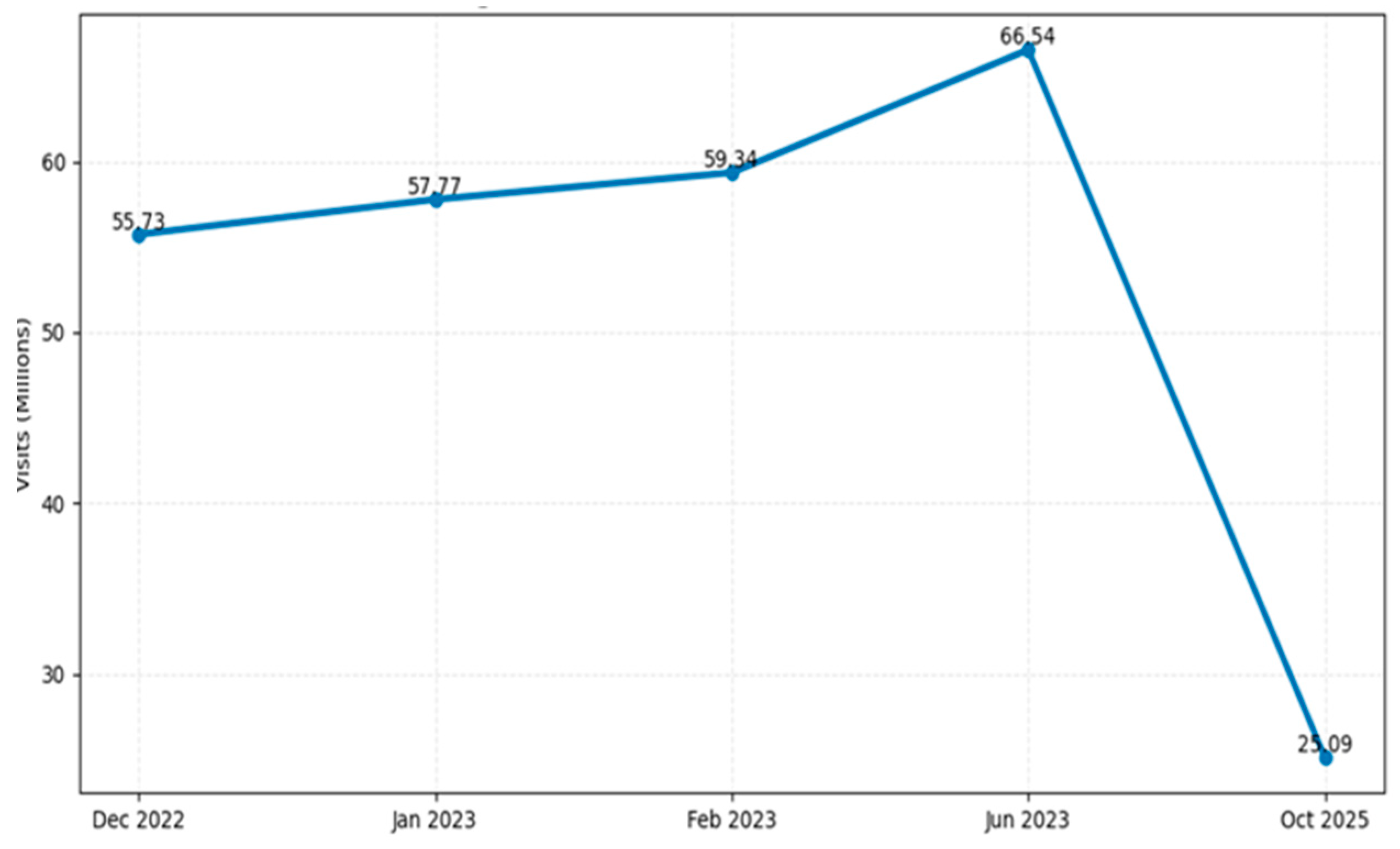
CNET’s integration of AI, carried out covertly with an error-prone model, generated a strong narrative of deception. As is illustrated in Figure 1, monthly website visits initially increased from 55.7 M in December 2022 to 66.5 M in June 2023. This short-term growth was likely driven by scandal curiosity. After this growth, traffic collapsed to 25.1 M by October 2025. This results in a net decline of approximately 55%.
Through financial modeling, the economic impact of this collapse was assessed. Based on a tech media monetization rate of 29% and an RPM benchmark of $15, estimated monthly revenue grew to approximately $289,000, and after this, dropped to $109,000. This loss is translated to an annualized revenue loss of about $1.6 million, as is illustrated in Table 2.
This outcome aligns with Deloitte’s “Trust Imperative” research, and it means that public trust crises can reduce market capitalization by 20–60%. CNET’s 55% traffic loss places this case near the upper boundary of that range, highlighting the significant financial impact of credibility erosion.

4.1.2. Gizmodo: The “Competence” Pathway

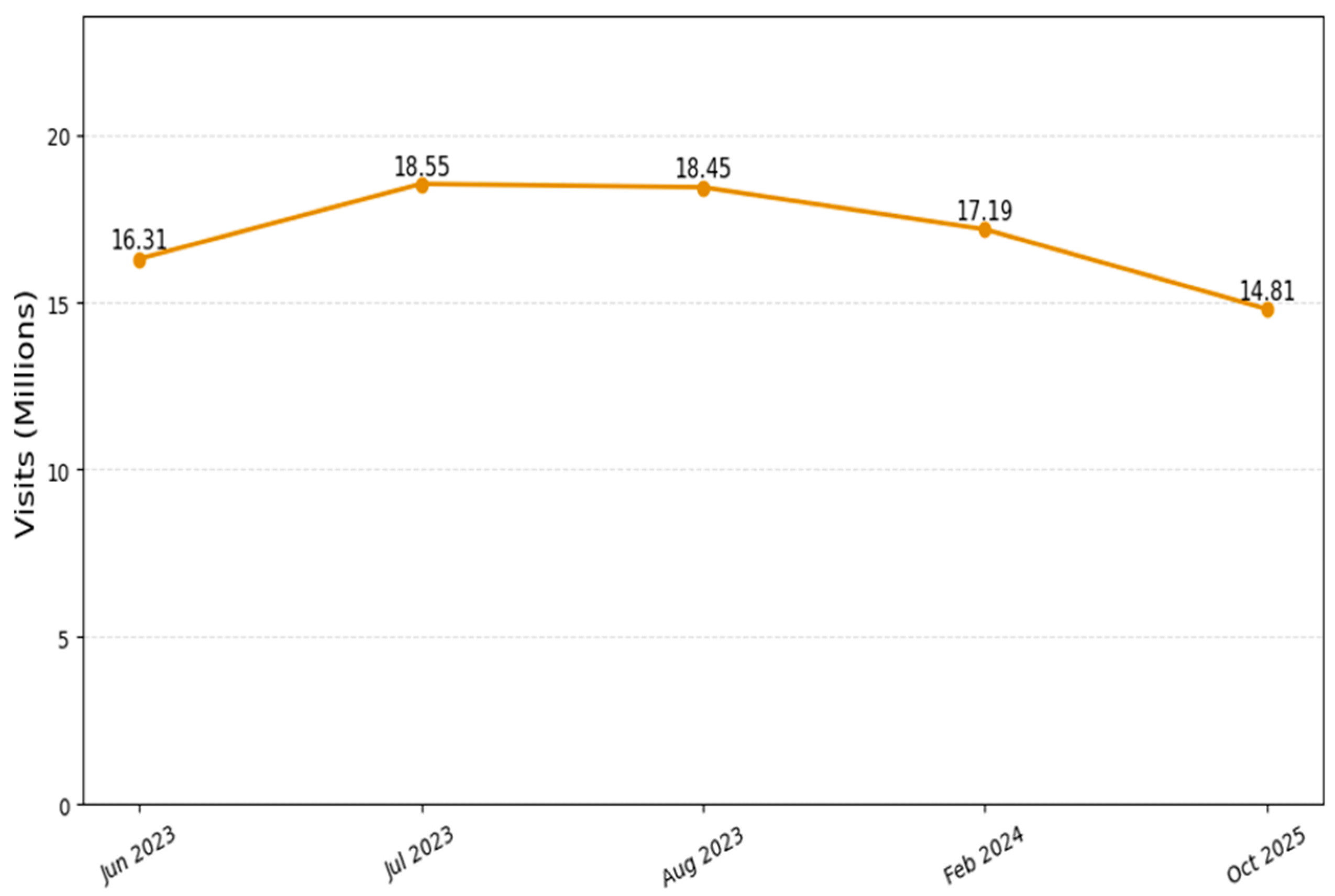
AI adoption by Gizmodo was overt but poorly executed, which led to a competence narrative. The traffic remained rather stable, with a monthly range of 16.3 M to 14.8 M visits; see Figure 2. This reflects a moderate traffic decline of 9.2% without a so-called catastrophic collapse.
Therefore, the financial impact was also rather modest. We estimated the monthly revenue, and it remained between $71,000 and $64,000 according to our calculations; it resulted in an annualized loss of approximately $79,300. See Table 3.
Deloitte’s case of responsible AI integration shows that limited, controlled use cases lead to much lower reputational risk. Gizmodo’s stable metrics show us the AI must be implemented carefully, avoiding the high-risk strategy that led to CNET’s financial and reputation loss.

4.1.3. The New York Times: The “Legitimacy” Pathway

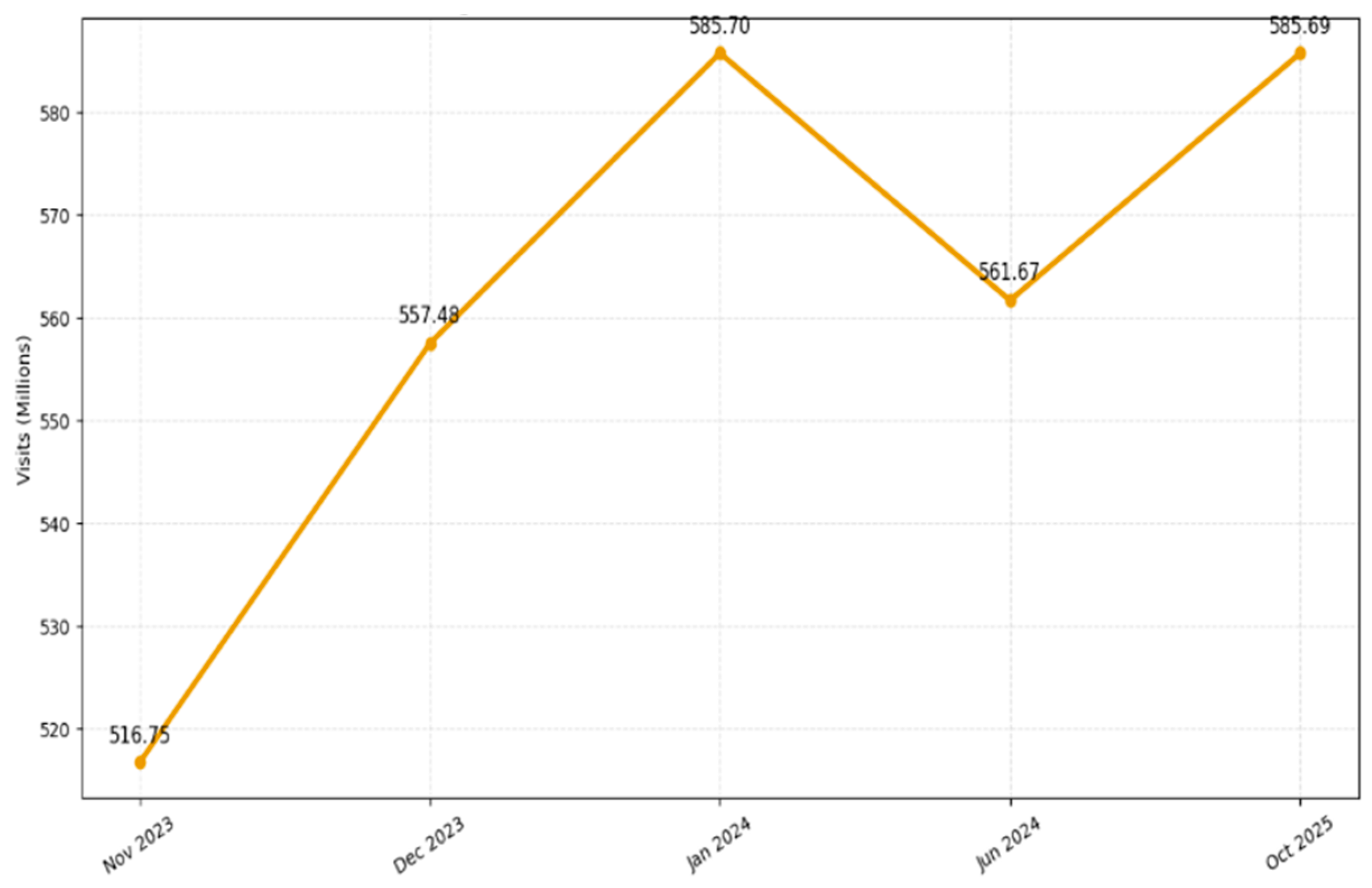
The NYT’s defensive legal action against unethical integration of OpenAI and Microsoft caused a legitimacy narrative, which greatly enhanced its institutional authority. Their traffic consistently grew, rising from 516 M to 585 M monthly visits (Figure 3), which is an increase of 13.3%.
Therefore, the financial impact was also rather modest. We estimated the monthly revenue, which indicates an improvement in financial performance. After applying the premium news monetization rate of 77% and an RPM benchmark equal to $35, calculated monthly revenue grew to a value of $15.8 M, which means an annualized revenue gain of approximately $22.3 million. See Table 4.
The McKinsey organization emphasizes that the industry rules are shaped by industry leaders rather than just those who protect themselves against disruption. The NYT’s lawsuit is a strategic action to protect its main asset, which is its original content, which was needed to reinforce the trust of the brand, which is absolutely consistent with Deloitte’s approaches to managing legal and regulatory AI risks proactively.

4.2. Qualitative Analysis: Sentiment and Credibility

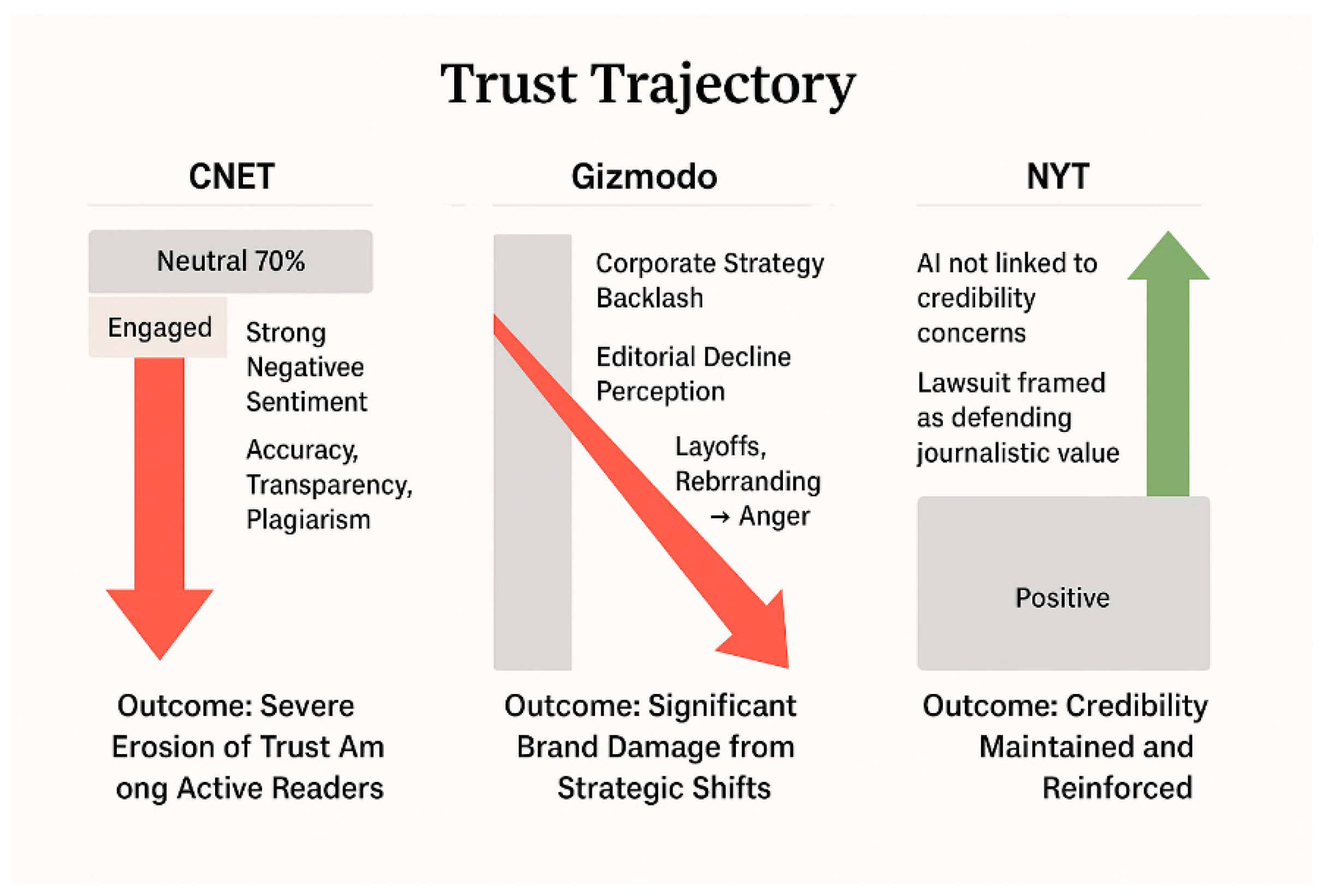
Trust dynamics towards three major media giants demonstrate how AI adoption, corporate strategy, and ethical controversies influence audience perception. CNET’s neutral but very engaged audience focused on negative sentiment related to accuracy and plagiarism. Gizmodo faced negative reaction because of layoffs and rebranding, which caused anger and a perception of editorial decline. In contrast, The New York Times succeeded in avoiding linking AI to credibility loss, and instead of this, they framed its legal actions as defending journalistic integrity, thereby maintaining trust. See Figure 4.

4.2.1. CNET: Erosion of Trust

Sentiment analysis of 614 social media reactions showed that 70% of total reactions were neutral; they consisted of automated headline shares and link reposts. However, the negative sentiment dominated among the evaluative comments; the percentage of negative sentiment comments was 82%, and these comments were mainly related to:
  • Transparency breaches;
  • Erosion of trust;
  • Factual inaccuracies and plagiarism.
It is important to note that the large quantity of neutral aggregate data masks the so-called “silent crisis of trust” among engaged, active audiences, who are the representatives of the most critical segment for credibility and loyalty support.

4.2.2. Gizmodo: Brand Damage via Strategic Missteps

Analysis of 533 evaluative reactions showed 50% of negative sentiment, which is much higher than CNET’s evaluative subset. The criticism in the comments was focused less on factual errors and more on:
  • Corporate decision-making;
  • Layoffs and rebranding;
  • Perceived decline in editorial quality.
Gizmodo’s credibility suffered not from a discrete AI error but from a broader perception that AI adoption symbolized a compromise of its core editorial identity and quality standards.

4.2.3. The New York Times: Reinforcement of Institutional Legitimacy

Sentiment analysis of 492 reactions showed very neutral and positive sentiment; 62% was positive. The discussion was centered on the NYT’s role as a defender of journalistic integrity, which contained a minimal amount of criticism related to the organization itself.
The NYT successfully framed its actions related to AI integration as ethical and defensive ones; thereby they protected themselves from credibility damage and reinforced brand authority.

4.3. Engagement Stability Metrics: ERI and MTR

4.3.1. Engagement Resilience Index (ERI) Trends

  • CNET: ERI decreased from 5.47 to 4.21, which means a significant erosion of engagement depth and audience loyalty.
  • Gizmodo: ERI fell from 6.10 to 4.80, reflecting a notable drop in engagement stability.
  • NYT: ERI strengthened from 7.20 to 8.38, signaling enhanced audience resilience and loyalty.

4.3.2. Market Turbulence Ratio (MTR) Volatility

  • CNET: MTR spiked to “Very High” (0.48), indicating severe post-incident behavioral volatility.
  • Gizmodo: MTR remained “High” (0.39), reflecting sustained audience instability.
  • NYT: MTR stayed “Low” (0.18), confirming stable, predictable engagement patterns.
These patterns are summarized in Table 5, which compares engagement stability in three cases.
ERI and MTR are introduced here as operational indices, but because of their ability to translate abstract credibility dynamics into measurable behavioral patterns, they can be applied more broadly. In further research these tools can be extended across larger datasets and different media environments to test their robustness and comparative utility.

4.4. Cross-Case Synthesis: Validating the Causal Chain

Our findings from the three cases provide evidence supporting our proposed causal mechanism for each individual case of a negative causal chain. The negative path from CNET and Gizmodo suggests that hidden or low-quality AI used in articles creates the perception of deception or incompetency of the author, which causes negative audience sentiments and leads to the decline of the engagement resilience index (ERI), an increased market turbulence ratio (MTR), and ultimately the loss of traffic and revenue. The positive path from The New York Times states that ethical and transparent use of AI in articles will generate supportive legitimacy narratives, which increases positive audience sentiment. This leads to an increase in ERI, a low MTR, and thus an increase in traffic and revenue.
Table 6 shows the overall integrated causal model showing the relationships between AI narrative framing, audience sentiment, engagement stability, traffic variability and revenue in the three cases. The data confirms the stated relationships: negativity narratives are associated with declines in engagement and revenue, while legitimacy-based narratives are associated with positive growth paths.

4.5. Industry Benchmark Validation

The results are consistent with, and further develop, several core observations identified in prominent industry reports:
  • First, McKinsey & Company (2024) warns that AI-driven efficiency gains of 20–30% can be negated by brand damage, a risk exemplified by CNET’s collapse.
  • Deloitte (2024) identifies trust erosion as a primary predictor of revenue contraction; CNET’s 55% traffic loss significantly exceeds typical sector declines of 5–12%.
  • INMA/WAN-IFRA highlights transparency and ethical positioning as drivers of audience loyalty, a principle clearly illustrated by The New York Times’ traffic growth of +13.3%.
The alignment between the case-level findings and these broader benchmarks provides indicative support for the external validity and potential broader applicability of the proposed causal framework.

5. Discussion

The results of this comparative case analysis reveal a clear divergence that is consequential. It shows how three news organizations navigated AI integration, strategic change, and audience trust. These three organizations represent distinct governance archetypes and not a representative sample of the industry. These findings must be understood as indicative of governance-specific dynamics. These dynamics exist within the particular organizational and temporal contexts, which we studied in the paper. We must emphasize that the findings are not generalizable to the broader population of media organizations, and further empirical validation must be applied. In this discussion section, we interpret three results and examine their wider ramifications. We also situate them within the current discourse on media credibility and institutional trust.

5.1. Interpretation of Key Findings

The following interpretations from observed patterns in the selected cases are derived and they must be understood as indicative and not as definitive explanations of underlying mechanisms.
The New York Times, Gizmodo, and CNET all have different trust trajectories that show more than just responses to specific incidents. They show how viewers understand the true priorities of each institution.
CNET’s situation describes a larger conflict around the use of generative AI without adequate openness. The response was precise and well-stated. It was neither superficial nor random and caused the erosion of confidence, which resulted from critical analysis rather than apathy. According to research on the black box nature of AI systems, this can undermine trust in fields that rely on knowledge and precision (Diakopoulos, 2019). Since the alleged violation violated fundamental journalistic standards, especially violating accuracy and appropriate credit, CNET’s attempts to keep a balanced and technical tone were unsuccessful.
The case of Gizmodo demonstrates that audiences usually do not view organizational changes as solely financial choices. Rebranding, layoffs, and the apparent deterioration in journalistic quality were all interpreted as indicators of the organization’s goals. This might be characterized as a violation of the implicit expectations between an institution and its audience, known as the “psychological contract” (Robinson & Rousseau, 1994). The reaction evolved from dissatisfaction to value-based criticism, which may have long-term effects on the legitimacy of a business.
In contrast, The New York Times illustrates a case that warrants careful interpretation. Its positive engagement trajectory that follows the lawsuit against OpenAI and Microsoft could be attributed to proactive narrative control, as a defense of journalistic values such as the deliberate framing of a legal action. It successfully separates the technical–legal issue of AI use from its integration into the working process, and it positions itself as a principled institutional actor and not as a passive victim of technological disruption. However, an alternative explanation must be acknowledged: the NYT is itself a prominent subject of media coverage, and its lawsuit was an inherently newsworthy event that may have generated attention and traffic independently of any governance quality. This confounding factor is consistent with the broader limitation of observational case studies, where causal attribution is difficult to isolate (Yin, 2018). Nevertheless, the qualitative sentiment analysis presented in Section 4.2 suggests that audience reactions were predominantly framed around institutional legitimacy and journalistic integrity rather than mere curiosity. It provides partial support for the governance-based interpretation. When we frame its lawsuit as a protection of journalistic value, the NYT engaged in so-called boundary work (Gieryn, 1983), and actively define what it represents and what it defends. This strategy helps to strengthen credibility; it emphasizes what the institution stands for and not only what it opposes. Whether organizations with different institutional profiles can replicate this effect remains an open question.

5.2. Theoretical and Practical Implications

This research illustrates an important principle—that trust within an organization is not a constant but rather an evolving concept that continues to develop through the stories that the organization creates and retains. Trust is built upon existing frameworks such as the “source credibility theory,” which demonstrates that each of the individual components of trust, such as integrity and transparency, cannot be assessed or interpreted independent of one another as they are all evaluated by means of the story or narrative, or the greater whole which tells the purpose and identity of the organization. The data also provides significant implications for the economic aspects regarding the media. The data provide the evidence that achieving short-term operational efficiency (by laying people off, aggressively automating, etc.) may create a tremendous amount of long-term loss in the trust of the organization if those actions erode the foundational narrative that connects the news organization to its audience.
While the results have some meaning for overall media governance, given the limited evidentiary base of three case studies, caution should be taken in developing prescriptive recommendations from these data. However, the data do indicate that AI governance decisions are related to audience trust in such a way that audience engagement and revenue can be significantly impacted; transparency and disclosure decisions—as well as narrative framing—can have an immediate impact on engagement and revenue pathways. Thus, the value of doing a credibility risk analysis when developing AI deployment plans at the beginning stages would be more efficient than using the reactive management of reputation as an afterthought. In moving beyond these indicative patterns and developing actionable governance frameworks, the need for future empirical research with larger, representative samples is clear.

5.3. Limitations

Our conclusions are shaped by the chosen methodology. While the case study approach provides rich, detailed insights, it is focused on three theoretically sampled governance archetypes rather than a representative sample of the news media industry. Therefore, our findings cannot be statistically generalized to all news and media organizations. They must be understood as analytical generalizations—that is, as evidence that a proposed theoretical relationship holds under specific governance conditions—rather than as empirical generalizations about the industry as a whole.

6. Conclusions and Future Directions

The results of this comparative case analysis reveal a clear and consequential divergence in how major media organizations behave in the complex process of the adoption of new technological, AI integration, strategic change, and audience trust. This discussion section interprets these findings, studies their broader implications, and situates these findings within the existing discourse of media credibility and its trust.

6.1. Conclusions

The present study investigates strategic decision making in the context of generative AI adoption in digital newspapers. Moreover, strategic decisions are related to changes in audience trust and economic outcomes. The authors undertook a comparative analysis of CNET, Gizmodo, and The New York Times to identify commonalities in the way each news organization has responded to changes in audience engagement and revenue trajectories, and the authors concluded that those connections are evidence of a consistent pattern of governance decisions affecting both audience engagement and revenue trajectories (with governance decisions being defined as decisions made by the organization on how to govern itself). Governance decisions include such things as transparency, disclosure, and institutional positioning. In this context, trust is not only a normative or perceptual construct, but it is also a mechanism by which trust mediates between the organizations’ decision making and observable behavior and financial consequences. The authors derived from three theoretical, purposeful sampling cases and encourage the reader to use caution in generalizing these to other governance contextually driven dynamics. CNET provides one example of how technological innovation can erode institutional trust due to a lack of transparency, and/or latent conflict with established journalistic norms and values. However, the structural damage done by the erosion of trust cannot only be attributed to a technology-related failure; it is also due to a perceived discrepancy between the original intention of the technology and the resulting user experience. There was a disconnect between the way the organization acted and the professional standards it stated that it upheld in relation to its audience members. The audience experienced silence and these silences contained no information nor any clear governing authority; therefore, because of this silence, the audience interpreted these silences as representative of a lack of credibility on the part of that organization. To summarize: while there was no issue with the technology itself, the challenge was with the institution’s managerial and communicational capacity with regard to the decision made.
Gizmodo is a similar but entirely different example. Some of the actions of the organization internally have been perceived by outsiders as either operational or financial changes. However, these outsiders have interpreted these actions as an expression of the values of the organization. Furthermore, the audience and the readers had a reaction that went beyond a momentary frustration due to the discrepancy that existed between the editorial identity of the outlet and the manner in which it conducted itself. The re-evaluation went into more depth beyond a technical issue; rather, it prompted the question as to whether or not the organization could still be trusted according to its own criteria.
On the other hand, the New York Times presented an opposite scenario. They established an audience with a stabilizing perspective through careful placement of credible sources. Because of this meticulous placement of sources, the New York Times had a solid foundation in establishing their credibility via journalistic ethics and institutional responsibility. In addition to preventing criticism via their strategic communication process, the New York Times also established their own credibility by ensuring that their actions aligned with recognized professional standards. Together, these examples lead to a single conclusion. The audience uses the manner in which an organization conducts itself as a measure of its institutional reliability and credibility. People do not only evaluate decisions about technology, income or editorial policies using logical and rational criteria; they also evaluate them using the framework provided by institutions. Finally, they interpret consistency between words and actions.

6.2. Future Directions

The implications of this study are far-reaching and suggest many possibilities for future research beyond the three examples reviewed. The next step is to go from just short-term observations to developing longitudinal methods for monitoring trust dynamics over time as well as to create a standardized framework that can link subscription retention rates with qualitative changes in brand image over several years, so it can be determined whether the trajectories identified here (especially those associated with decreased transparency) represent either permanent or temporary changes due to a technological transition. Combining behavioral indications with cognitive perception tests might also be beneficial. Although they only capture visible interaction patterns, the Engagement Resilience Index and Market Turbulence Ratio are helpful proxies for engagement stability. Modeling how audiences truly understand AI disclosure procedures and institutional responsibility may be made easier with the use of complementary survey data. Testing the association between governance techniques and credibility assessments would be more accurate if behavioral and perceptual data were combined.
If the patterns observed in this study are replicated in future research, they would suggest that newsroom management might benefit from integrating credibility considerations into AI deployment planning. A potential avenue for further investigation is whether diagnostic instruments based on the ERI and MTR could help organizations anticipate reputational risk prior to implementation. However, such applications remain speculative at this stage and require validation through experimental or longitudinal studies.
Lastly, the association our study finds between institutional sustainability, governance practices, and technological development is not specific to media. In industries like healthcare and higher education, where automated technologies are progressively influencing public trust and professional authority, similar dynamics are beginning to emerge. Comparative studies in these areas might help determine if the trends we saw are unique to the cultural and economic circumstances of digital journalism or represent a larger institutional change.

Author Contributions

Conceptualization, T.I. and M.I.; methodology, T.I.; software, T.I.; valida-tion, M.I.; formal analysis, M.I. and T.I.; investigation, M.I. and T.I.; resources, M.I.; data curation, T.I.; writing—original draft preparation, T.I.; writing—review and editing, M.I.; visualization, M.I.; supervision, M.I.; project administration, T.I. All authors have read and agreed to the published version of the manuscript.

Funding

This research received no external funding.

Institutional Review Board Statement

Not applicable.

Informed Consent Statement

Not applicable.

Data Availability Statement

The original contributions presented in this study are included in the article. Further inquiries can be directed to the corresponding author.

Conflicts of Interest

The authors declare no conflicts of interest.

References

  1. Bartleman, M., Schapals, A. K., & Dubois, E. (2026). Generative AI and the new landscape of automated journalism: A systematized review of 185 studies (2012–2024). Journalism and Media, 7(1), 39. [Google Scholar] [CrossRef]
  2. Bernard, A. (2023). News media at the dawn of generative AI. International News Media Association (INMA). Available online: https://www.inma.org/report-detail.cfm?pubid=20239 (accessed on 8 May 2026).
  3. Broersma, M. (2019). Audience engagement. In T. P. Vos, & F. Hanusch (Eds.), The international encyclopedia of journalism studies (pp. 1–6). Wiley. [Google Scholar] [CrossRef]
  4. Broussard, M., Diakopoulos, N., Guzman, A. L., Abebe, R., Dupagne, M., & Chuan, C.-H. (2019). Artificial intelligence and journalism: Exploring new frontiers. Journalism & Mass Communication Quarterly, 96(3), 673–695. [Google Scholar]
  5. Chyi, H. I., & Lee, A. M. (2013). Online news consumption: A structural model linking preference, use, and paying intent. Digital Journalism, 1(2), 194–211. [Google Scholar] [CrossRef]
  6. Cools, H., & Diakopoulos, N. (2024). Uses of generative AI in the newsroom: Mapping journalists’ perceptions of perils and possibilities. Journalism Practice, 20, 878–896. [Google Scholar] [CrossRef]
  7. Cornia, A., Sehl, A., & Nielsen, R. K. (2018). Private sector news, social media distribution, and algorithm change. Reuters Institute for the Study of Journalism. [Google Scholar]
  8. Creswell, J. W., & Plano Clark, V. L. (2017). Designing and conducting mixed methods research (3rd ed.). Sage. [Google Scholar]
  9. Deloitte. (2024). Digital media trends: Spending time in a fractured media landscape. Deloitte Insights. Available online: https://www.deloitte.com/us/en/insights/industry/technology/digital-media-trends-consumption-habits-survey/2024.html (accessed on 8 May 2026).
  10. Diakopoulos, N. (2019). Automating the news: How algorithms are rewriting the media. Harvard University Press. [Google Scholar]
  11. Fawzi, N., Steindl, N., Obermaier, M., Prochazka, F., Arlt, D., Blöbaum, B., Dohle, M., Engelke, K. M., Hanitzsch, T., Jackob, N., Jakobs, I., Klawier, T., Post, S., Reinemann, C., Schweiger, W., & Ziegele, M. (2021). Concepts, causes and consequences of trust in news media: A literature review and framework. Annals of the International Communication Association, 45(2), 154–174. [Google Scholar] [CrossRef]
  12. Fiss, P. C. (2011). Building better causal theories: A fuzzy set approach to typologies in organizational research. Academy of Management Journal, 54(2), 393–420. [Google Scholar] [CrossRef]
  13. Fletcher, R., & Park, S. (2017). The impact of trust in the news media on online news consumption and participation. Digital Journalism, 5(10), 1281–1299. [Google Scholar] [CrossRef]
  14. Flyvbjerg, B. (2006). Five misunderstandings about case-study research. Qualitative Inquiry, 12(2), 219–245. [Google Scholar] [CrossRef]
  15. Gaziano, C., & McGrath, K. (1986). Measuring the concept of credibility. Journalism Quarterly, 63(3), 451–462. [Google Scholar] [CrossRef]
  16. Gieryn, T. F. (1983). Boundary-work and the demarcation of science from non-science: Strains and interests in professional ideologies of scientists. American Sociological Review, 48, 781–795. [Google Scholar] [CrossRef]
  17. Hanitzsch, T., Van Dalen, A., & Steindl, N. (2018). Caught in the nexus: A comparative and longitudinal analysis of public trust in the press. The International Journal of Press/Politics, 23(1), 3–23. [Google Scholar] [CrossRef]
  18. Haughey, M. M. (2025). Truth-seeking as collaborative work: Expert-journalist infrastructure in high-stakes news moments [Ph.D. thesis, University of Washington]. [Google Scholar]
  19. Hindman, M. (2017). Journalism ethics and digital audience data. In Remaking the news: Essays on the future of journalism scholarship in the digital age (pp. 177–194). The MIT Press. [Google Scholar]
  20. Jia, H., Appelman, A., Wu, M., & Bien-Aimé, S. (2024). News bylines and perceived AI authorship: Effects on source and message credibility. Computers in Human Behavior: Artificial Humans, 2(2), 100093. [Google Scholar] [CrossRef]
  21. Karlsson, M. (2010). Rituals of transparency: Evaluating online news outlets’ uses of transparency rituals in the United States, United Kingdom and Sweden. Journalism Studies, 11(4), 535–545. [Google Scholar] [CrossRef]
  22. Kohring, M., & Matthes, J. (2007). Trust in news media: Development and validation of a multidimensional scale. Communication Research, 34(2), 231–252. [Google Scholar] [CrossRef]
  23. Lehrman, S. (2021). How news brands are rebuilding trust. International News Media Association (INMA). Available online: https://www.inma.org/report/how-news-brands-are-rebuilding-trust (accessed on 8 May 2026).
  24. Longoni, C., & Cian, L. (2022). Artificial intelligence in utilitarian vs. hedonic contexts: The “word-of-machine” effect. Journal of Marketing, 86(1), 91–108. [Google Scholar] [CrossRef]
  25. Makieu, P., Amara, K. M., Jalloh, M., & Forde, N. A. H. (2025). Transformative impacts of AI on digital media: An analysis of industry-specific trends, economic outcomes, and consumer trust (2020–2025). Journal of Advance Research in Computer Science & Engineering, 10, 49–65. [Google Scholar]
  26. Makwambeni, B., & Makwambeni, P. R. (2025). Ethical issues surrounding the use of generative artificial intelligence in news production. In T. Matsilele, & L. A. Tshuma (Eds.), Generative AI in African news media: Opportunities and challenges (pp. 139–154). Routledge. [Google Scholar]
  27. Mangold, F., Bachl, M., & Prochazka, F. (2024). How news audiences allocate trust in the digital age: A figuration perspective. Journalism & Mass Communication Quarterly, 101(4), 955–980. [Google Scholar] [CrossRef]
  28. McKinsey & Company. (2024). The state of AI in early 2024: Gen AI adoption spikes and starts to generate value. McKinsey Global Survey. Available online: https://www.mckinsey.com/capabilities/quantumblack/our-insights/the-state-of-ai-2024 (accessed on 8 May 2026).
  29. Metzger, M. J., & Flanagin, A. J. (2015). Psychological approaches to credibility assessment online. In The handbook of the psychology of communication technology (pp. 445–466). Wiley-Blackwell. [Google Scholar]
  30. Mitova, E., Blassnig, S., Strikovic, E., Urman, A., Hannak, A., de Vreese, C., & Esser, F. (2025). Exploring public attitudes toward generative AI for news across four countries. Journal of Quantitative Description: Digital Media, 5, 1–63. [Google Scholar] [CrossRef]
  31. Nechushtai, E., & David, Y. (2025). Money, politics, or ethics? Perceptions of the factors influencing journalists’ work. The International Journal of Press/Politics. [Google Scholar] [CrossRef]
  32. Newman, N., Fletcher, R., Robertson, C. T., Ross Arguedas, A., & Nielsen, R. K. (2024). Reuters institute digital news report 2024. Reuters Institute for the Study of Journalism, Oxford University. [Google Scholar]
  33. Nielsen, R. K., & Ganter, S. A. (2018). Dealing with digital intermediaries: A case study of the relations between publishers and platforms. New Media & Society, 20(4), 1600–1617. [Google Scholar]
  34. Nishal, S., & Diakopoulos, N. (2025). Values as problems, principles, and tensions in sociotechnical system design for journalism. In Proceedings of the 2025 ACM designing interactive systems conference. Association for Computing Machinery. [Google Scholar]
  35. Nishal, S., Li, C., & Diakopoulos, N. (2024). Domain-specific evaluation strategies for AI in journalism. arXiv, arXiv:2403.17911. [Google Scholar] [CrossRef]
  36. Picard, R. G. (2014). Twilight or new dawn of journalism? Evidence from the changing news ecosystem. Journalism Practice, 8(5), 488–498. [Google Scholar] [CrossRef]
  37. Psychari, E. E. (2025). Designing the future newsroom: Using human-centred design for audience-oriented innovation in four leading legacy newspapers. Implications for journalism [Ph.D. thesis, Dublin City University]. [Google Scholar]
  38. Radcliffe, D., Nel, F. P., Hendrickson, T., & Roper, D. (2024). World press trends outlook 2023–2024. World Association of News Publishers. [Google Scholar]
  39. Rashidian, N., Brown, P. D., Hansen, E., Bell, E. J., & Albright, J. R. (2019). Friend and foe: The platform press at the heart of journalism. Tow Center for Digital Journalism, Columbia University. [Google Scholar]
  40. Robinson, S. L., & Rousseau, D. M. (1994). Violating the psychological contract: Not the exception but the norm. Journal of Organizational Behavior, 15(3), 245–259. [Google Scholar] [CrossRef]
  41. Schapals, A. K., & Porlezza, C. (2020). Assistance or resistance? Evaluating the intersection of automated journalism and journalistic role conceptions. Media and Communication, 8(3), 16–26. [Google Scholar] [CrossRef]
  42. Shukla, S., Kumari, R., & Thakur, D. S. (2025). Effectiveness of subscription model in modern marketing. International Journal for Novel Research in Economics, Finance and Management, 3, 269–281. [Google Scholar]
  43. Song, S. X. (2025). Digital vs. traditional advertising and the recognition of brand intangible assets. Management Science, 71(3), 2035–2055. [Google Scholar] [CrossRef]
  44. Stake, R. E. (1995). The art of case study research. SAGE Publications. [Google Scholar]
  45. Steensen, S., Ferrer-Conill, R., & Peters, C. (2020). (Against a) theory of audience engagement with news. Journalism Studies, 21(12), 1662–1680. [Google Scholar] [CrossRef]
  46. Strömbäck, J., Tsfati, Y., Boomgaarden, H., Damstra, A., Lindgren, E., Vliegenthart, R., & Lindholm, T. (2020). News media trust and its impact on media use: Toward a framework for future research. Annals of the International Communication Association, 44(2), 139–156. [Google Scholar] [CrossRef]
  47. Thurman, N., Moeller, J., Helberger, N., & Trilling, D. (2019). My friends, editors, algorithms, and I: Examining audience attitudes to news selection. Digital Journalism, 7(4), 447–469. [Google Scholar] [CrossRef]
  48. Tsfati, Y. (2010). Online news exposure and trust in the mainstream media: Exploring possible associations. American Behavioral Scientist, 54(1), 22–42. [Google Scholar] [CrossRef]
  49. Tsfati, Y., & Ariely, G. (2014). Individual and contextual correlates of trust in media across 44 countries. Communication Research, 41(6), 760–782. [Google Scholar] [CrossRef]
  50. Tsfati, Y., & Cappella, J. N. (2003). Do people watch what they do not trust? Exploring the association between news media skepticism and exposure. Communication Research, 30(5), 504–529. [Google Scholar] [CrossRef]
  51. Uth, B., Stehle, H., Wilhelm, C., Detel, H., & Podschuweit, N. (2025). The journalism-audience relationship in the digital age: A theoretical literature review. Journalism, 26(1), 45–64. [Google Scholar] [CrossRef]
  52. Vos, T. P., & Craft, S. (2017). The discursive construction of journalistic transparency. Journalism Studies, 18(12), 1505–1522. [Google Scholar] [CrossRef]
  53. Wang, S., & Huang, G. (2024). The impact of machine authorship on news audience perceptions: A meta-analysis of experimental studies. Communication Research, 51(7), 815–842. [Google Scholar] [CrossRef]
  54. Yin, R. K. (2018). Case study research and applications (Vol. 6). Sage. [Google Scholar]
  55. Zhang, Q., & Abdullah, F. (2026). Hedonic beats utilitarian: Differential effects of AI chatbots and AR/VR on consumer engagement in e-commerce. Journal of Theoretical and Applied Electronic Commerce Research, 21(2), 60. [Google Scholar] [CrossRef]
Figure 1. CNET’s total visits over time.
Journalmedia 07 00102 g001
Figure 2. Gizmodo’s total visits over time.
Journalmedia 07 00102 g002
Figure 3. NYT’s total visits over time.
Journalmedia 07 00102 g003
Figure 4. Trust trajectory analysis of three media outlets.
Journalmedia 07 00102 g004
Table 1. Data sources and rationale.
ResourceData ProvidedPurpose in AnalysisJustification for Use
Semrush & SimilarWeb (via analytics sheets)- Website Visits
- Unique Visitors
- Pages/Visit
- Avg. Visit Duration
- Bounce Rate
- Geographic Distribution
To quantify audience engagement behavior and traffic volatility.To meet the requirements of data needed for the research, we had the following constraints: We could find consistent historical traffic from 2022 to 2024 only on commercial websites, with a paid subscription. Free or alternative tools could not provide the data depth, historical reach, or metric uniformity essential for a rigorous, comparative analysis over time. Therefore, we had to use the trial options, with corresponding limitations, but Semrush gave us the full trial version for free for 7 days, which was absolutely enough.
Nitter & Reddit (via sentiment coding sheets)- Public Tweets & Posts
- User Sentiment (Positive, Neutral, Negative)
- Narrative Frames (Transparency, Accuracy, Competence, Ethics, Legitimacy)
To operationalize and measure perceived credibility through organic public discourse.To get data from Twitter, we used Nitter as the primary source because of its functionality, which included particularly efficient historical search and structured data export. It allowed us to conduct the large-scale analysis required for this study. We also used data from Reddit, where we found richer, community-driven discussions that frequently contained nuanced criticisms, that was more informative than individual tweets.
Internal Calculations & Modeling- Market Turbulence Ratio (MTR)
- Engagement Resilience Index (ERI)
- Monetizable Visits
- Estimated Revenue
To derive standardized metrics for engagement stability and financial impact.Proprietary calculations were necessary to synthesize raw metrics into comparative indices (ERI, MTR) and to model financial outcomes where private revenue data was inaccessible.
McKinsey, Deloitte & Industry Reports (INMA, WAN-IFRA)- Industry-wide AI adoption trends
- Economic impact projections
- Trust-erosion benchmarks
- Digital media indexes
To provide external industry context and validate findings against established market norms.These sources are widely regarded as authoritative within strategic industry research, offering well-established methodological rigor and credible reference points for contextualizing the case-specific findings.
Table 2. CNET traffic and revenue trajectory.
PeriodVisits (M)Estimated Monthly RevenueERIMTR
Dec 2022 (Pre)55.7$241,5005.47Low
Jun 2023 (Peak)66.5$289,0005.02Very High
Oct 2025 (Post)25.1$109,0004.21High
Table 3. Gizmodo traffic and revenue summary.
MetricPre-IncidentPost-IncidentChange
Avg. Monthly Visits16.3 M14.8 M−9.2%
Avg. Monthly Revenue~$71,000~$64,000$7000
ERI6.104.80−1.30
MTRLowHighIncreased
Table 4. NYT traffic and revenue growth.
PeriodVisits (M)Estimated Monthly RevenueERIMTR
Pre-Lawsuit516~$13.9 M7.20Low
Post-Lawsuit585~$15.8 M8.38Low
Table 5. Engagement stability comparison.
CaseERI ChangeMTR LevelInterpretation
CNET−1.26Very HighSevere trust erosion, audience flight
Gizmodo−1.30HighQuality concerns, unstable engagement
NYT+1.18LowReinforced trust, stable growth
Table 6. Unified causal outcomes.
CaseNarrativeDominant SentimentERI TrendMTRTraffic ΔRevenue Impact
CNETDeceptionNegative (82% eval)Very High−55%$1.6 M/year
GizmodoCompetenceNegative (50% eval)High−9.2%$79 K/year
NYTLegitimacyPositive (62% eval)Low+13.3%+$22.3 M/year
Disclaimer/Publisher’s Note: The statements, opinions and data contained in all publications are solely those of the individual author(s) and contributor(s) and not of MDPI and/or the editor(s). MDPI and/or the editor(s) disclaim responsibility for any injury to people or property resulting from any ideas, methods, instructions or products referred to in the content.