Proceeding Paper

Understanding the Behavior of CSS Under Dry and Wet Weather Conditions for Predictive Maintenance Applications †
by
Natnael Hailu Mamo
1,*,
Roberto Gueli
2,
Giovanni Maria Farinella
3,
Luca Cavallaro
1 and
Rosaria Ester Musumeci
1
1
Department of Civil Engineering and Architecture, University of Catania, 95123 Catania, Italy
2
EHT Research and Development Unit, EHT S.C.p.A. Viale Africa, 31, 95129 Catania, Italy
3
Department of Mathematics and Computer Science, University of Catania, 95123 Catania, Italy
*
Author to whom correspondence should be addressed.
Presented at II International Conference on Challenges and Perspectives in Urban Water Management Systems (CSDU-CSSI DAYS 25), Trieste, Italy, 18–19 November 2025.
Eng. Proc. 2026, 135(1), 22; https://doi.org/10.3390/engproc2026135022
Published: 12 May 2026

Abstract

Predictive Maintenance (PdM) approach in Combined Sewer Systems (CSS) is gaining momentum due to advances in sensor technology, affordability and availability of data, and the rise of machine learning and data analytics. This study aims to characterize the general behavior of CSS under Dry and Wet weather conditions. To achieve this, 10 min resolution precipitation and water level data were collected from nearby SIAS stations and AMAP radar water level sensors, installed at the outlet chamber of the CSS, respectively. Precipitation data was used to segment continuous time series data into Dry Weather Flow (DWF) and Wet Weather Flow (WWF). DWF analysis exhibited unique flow patterns that strongly correlated with water consumption behaviors of households. For wet weather, a comparison was made between key rainfall parameters (depth, intensity) and peak water level data, and nonlinear relationships were observed that highlight the complex rainfall–runoff process. These findings underscore the need for separate predictive models tailored to DWF and WWF characteristics. Integrating high-resolution sensor data with machine learning models such as Long Short-Term Memory (LSTM) networks and anomaly detection, Autoencoders can enhance PdM, improving CSS management and reducing risks of blockage events and infrastructure failures.

1. Introduction

Combined Sewer Systems (CSS) are vital for managing wastewater and stormwater from households and urban drainage catchments, respectively, ensuring effective urban water management. Flow in CSS varies seasonally: during dry periods, a significant portion comes from household wastewater, resulting in a unique diurnal cyclic pattern (morning and evening peaks), whereas in wet periods, the majority of contributions come from stormwater, which results in sharp spikes in water level [1,2]. Frequent overflow, blockage, and infrastructure failure pose challenges to managing CSS. The variability in Dry and Wet Weather Flow adds difficulties in predicting and preventing these issues effectively. Advances in sensor technology and data availability and the rise of machine learning models have enabled Predictive Maintenance (PdM), which leverages real-time data and predictive models to mitigate these risks.
However, current PdM models fail to consider the distinct characteristics of DWF and WWF, limiting their ability to improve the detection of anomaly and blockage events in CSS. Several previous studies such as [3,4,5,6] utilized data-driven approaches—predominantly Artificial Neural Networks (ANNs)—to identify blockage events, but very few studies have been done to demonstrate how segmenting time series data into DWF and WWF may improve predictive model efficiency.
This study aims to characterize CSS behavior under Dry and Wet weather conditions using high-temporal-resolution precipitation and water level data collected across 32 municipalities in Palermo Province. By segmenting continuous time series data into DWF and WWF, we analyze diurnal flow patterns related to household activities and nonlinear relationships between rainfall characteristics (depth, intensity) and peak water levels.
This paper is structured as follows: Section 2 describes the data collection and seg-mentation methodology, Section 3 presents the analysis results, and Section 4 discusses implications for PdM in CSS.

2. Methodology

2.1. Case Study

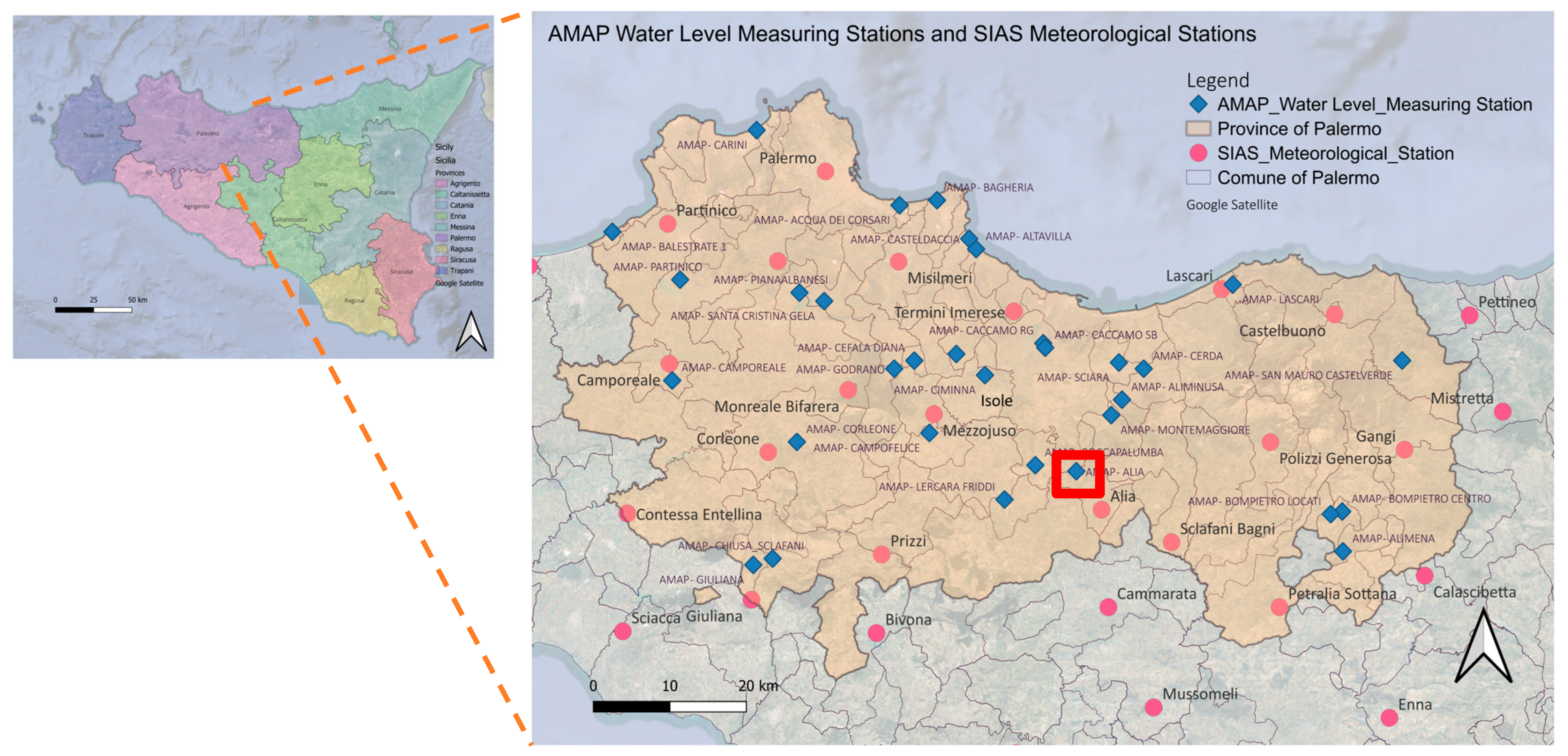
The study was conducted in Palermo Province, Sicily, where there are 32 water level-measuring sensors operated by Azienda Municipalizzata Acquedotto di Palermo (AMAP) S.p.A that are installed at CSS outlet chambers across 32 municipalities. These sensors record high-resolution water level data at 10 min time intervals, which are stored in an online database. To study the rainfall–runoff process, 25 rainfall stations from Servizio Informativo Agrometeorologico Siciliano (SIAS) database with 10 min temporal resolutions were selected (Figure 1).
To illustrate our work, Alia station was selected since it provides a long, continuous record with minimal data errors, and it is situated close to a neighboring rainfall station.

2.2. Data Segmentation and Analysis

A custom script was developed in Python (version 3.12.3) for data processing and analysis, utilizing NumPy [7] and Pandas [8] libraries. It was used to segment continuous time series data into DWF and WWF. The script looped through each 24 h (Midnight–Midnight to align with DWF diurnal flow pattern) period and checked for precipitation above a threshold of 0.2 mm within a 24 h period or the period between midnight and 6 h (Cross-Correlation analysis was used to determine Lag Time) before midnight of the previous day to account for the lag effect of the previous day’s precipitation on the current-day water level. Periods with precipitation above a threshold value were classified as WWF; otherwise, they were marked as DWF. The segmented data were analyzed to identify diurnal DWF patterns linked to household consumption and nonlinear WWF responses to rainfall parameters (depth, intensity).

3. Results and Discussion

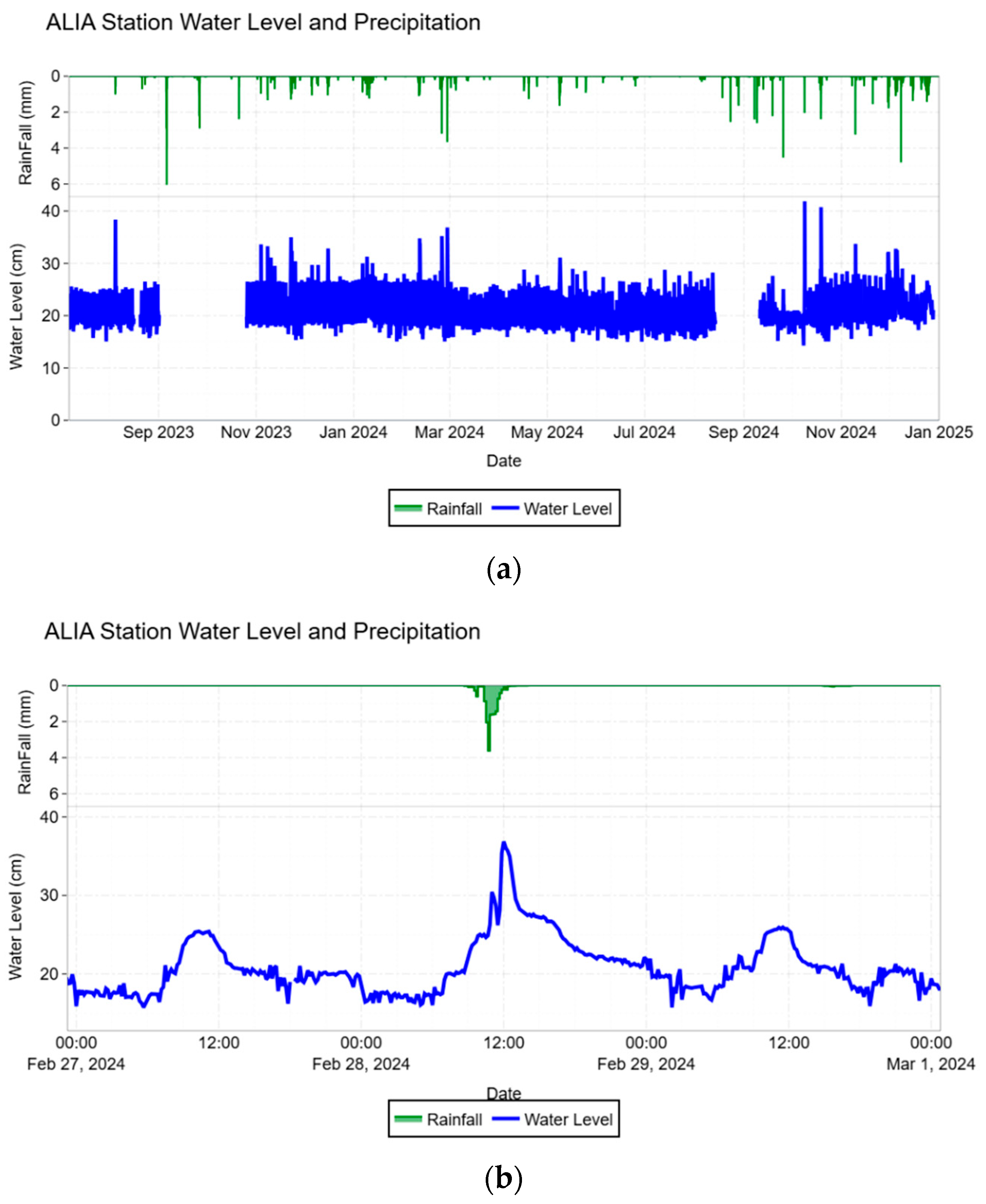
Raw time series data were preprocessed to remove anomalies and to impute missing values. Figure 2a illustrates long-term continuous water level data from the Alia station and corresponding rainfall data from nearby stations, while Figure 2b provides a detailed view of the DWF and WWF patterns integrated within the dataset.

3.1. DWF and WWF Data Extraction

Continuous water level time series data were segmented into DWF and WWF periods. The time series data for the Alia station ranges from 7 July 2023 to 31 December 2024, covering a total of 544days, out of which 320 days (60% of the total dataset) are classified as DWF. But due to issues with data quality, only 260 days of data were used for DWF analysis. On the other hand, WWF was determined by filtering out the DWF dataset from the original continuous time series data. From the WWF dataset, 115 rainfall–runoff events, which caused a noticeable increase in the water level, were identified and used for WWF analysis.

3.2. Dry Weather Flow Analysis

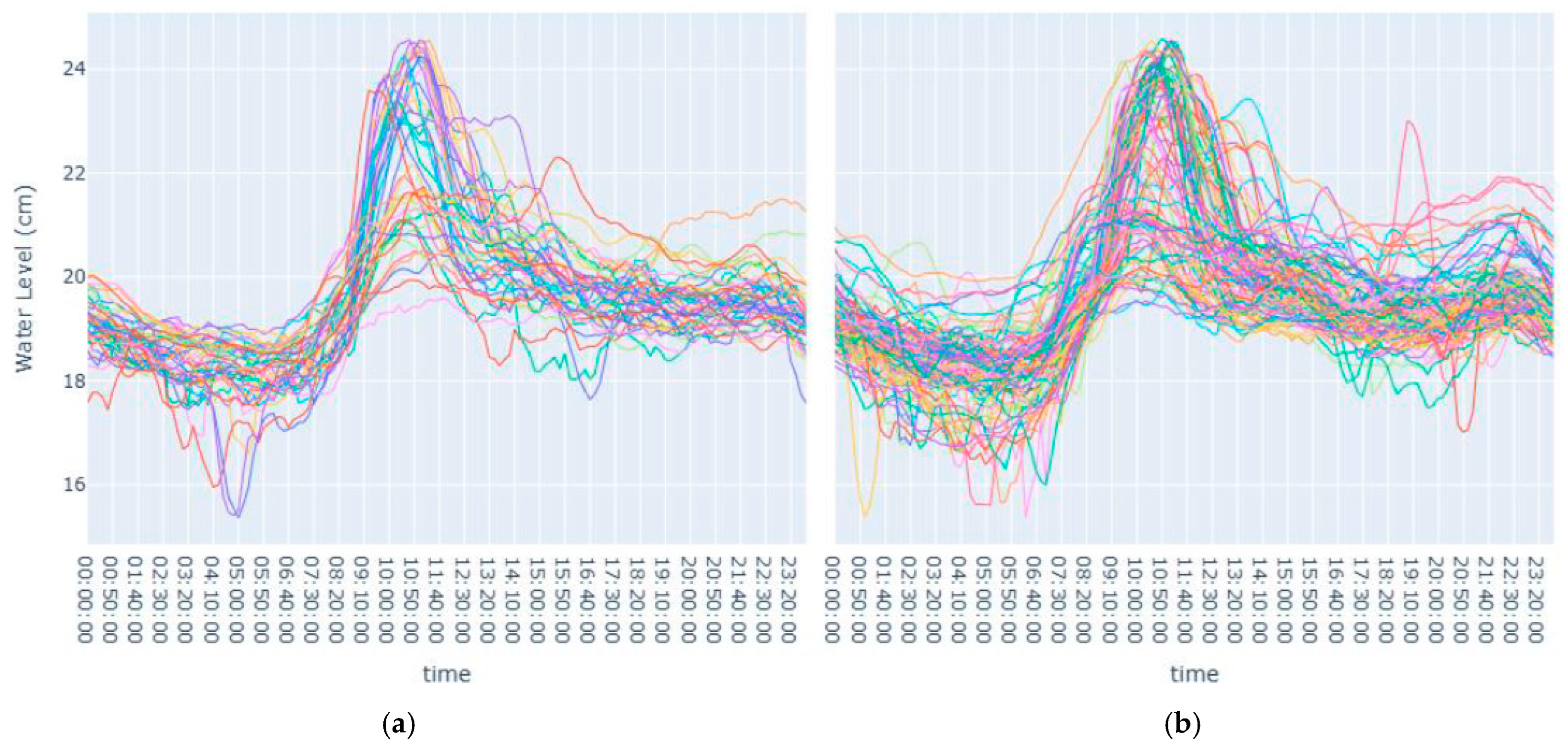
After isolating DWF, analysis was carried out to extract unique flow patterns. The time series data were grouped, anomalous data points were removed, and the resulting diurnal flows were plotted to show variations (Figure 3).
Although the general flow pattern remains similar, minor differences were observed. The weekend flows exhibit a unimodal flow pattern with one major peak in the morning followed by relatively constant flow throughout the day (Figure 3a); which can be explained by the consistent water consumption that occurs during weekends. In contrast, weekdays display a bimodal flow pattern with two distinct peaks corresponding to morning and evening household activities (Figure 3b).

3.3. Wet Weather Flow Analysis

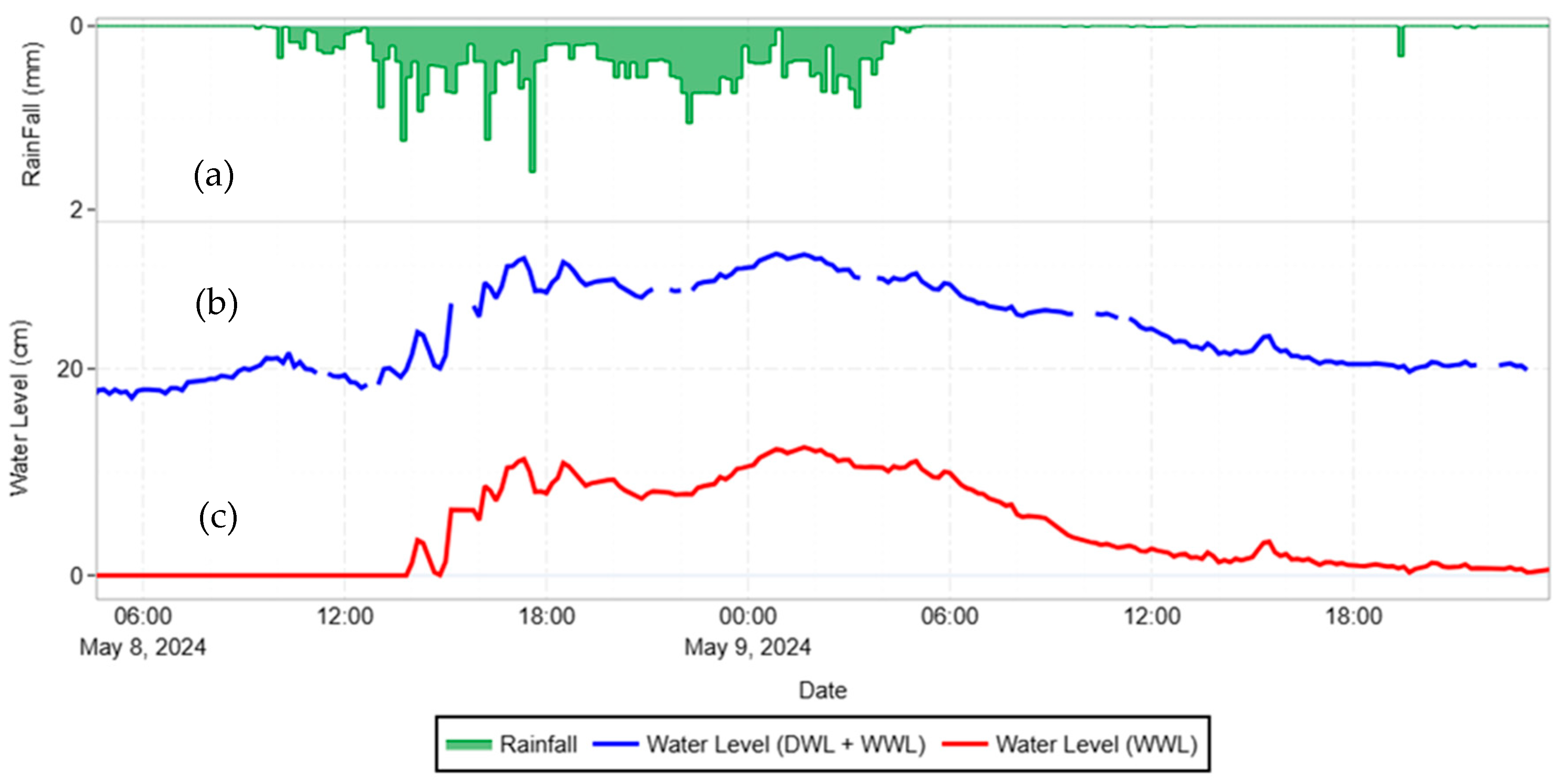
WWF in CSS is a combination of DWF and storm runoff. DWF is filtered out from the time-series data to focus more on the relationship between rainfall and runoff (water level). Event-based rainfall–runoff analysis was implemented, and all rainfall events and corresponding runoff hydrographs were extracted from the time series data. Figure 4 represents an example of extracted rainfall-runoff event, including rainfall and the corresponding water level response.
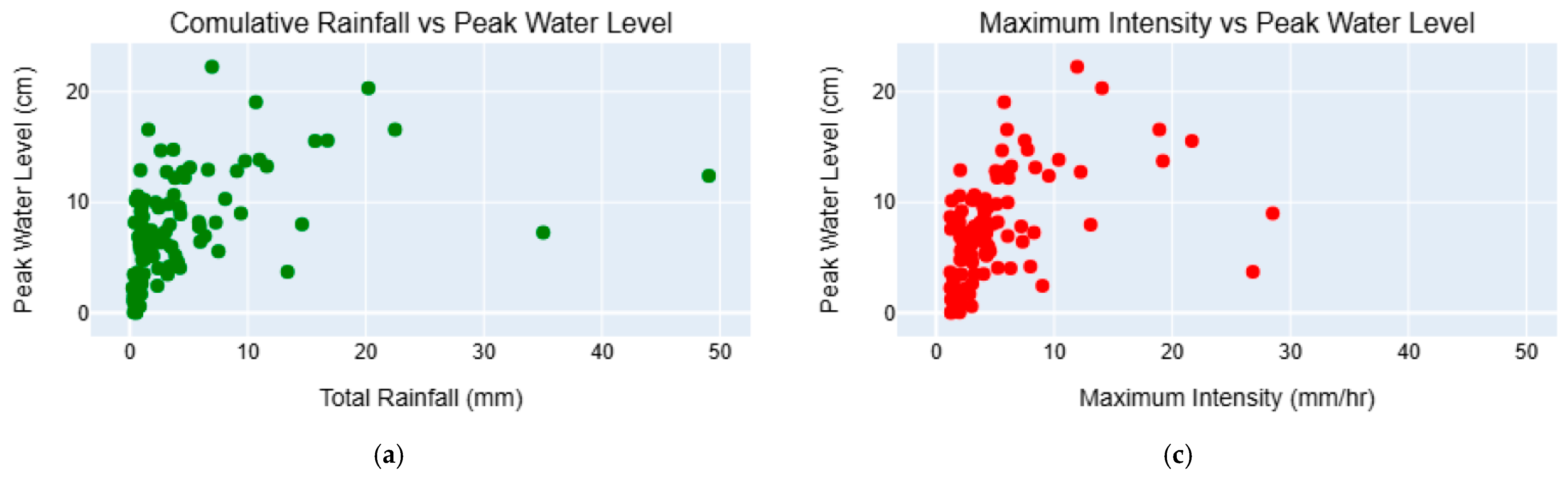
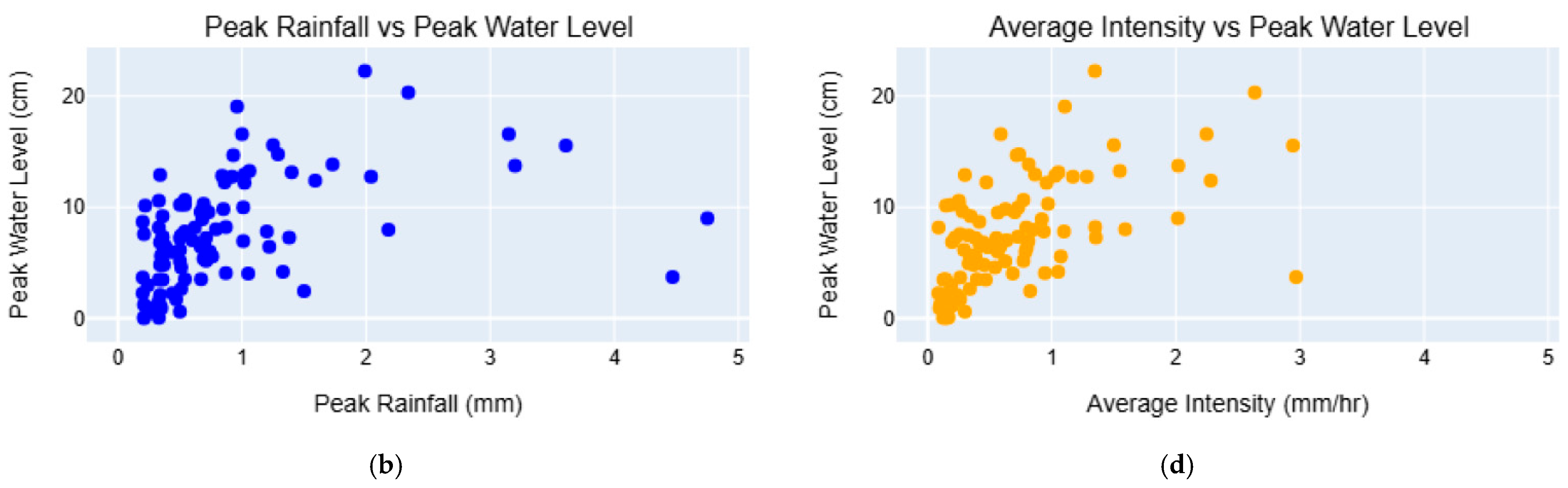
For each rainfall–runoff event, relationships were analyzed between rainfall characteristics (cumulative and peak rainfall, average and maximum rainfall intensity) and peak water level. Rainfall parameters were plotted against peak water level (Figure 5), in which nonlinear relationships were observed. In general, cumulative rainfall (Figure 5a), peak rainfall (Figure 5b), and maximum rainfall intensity (Figure 5c) show a positive correlation with peak water levels, especially at lower values, whereas the average intensity (Figure 5d) has weaker, more variable relationships with peak water levels.
These findings are consistent with previous hydrological studies that report nonlinear relationships between rainfall and drainage catchment response.

4. Conclusions

This study demonstrated the potential benefit of splitting CSS time series data into DWF and WWF to better understand the system behavior under Dry and Wet weather conditions. A custom Python script was developed to automate the segmentation process, using precipitation to distinguish between DWF and WWF. The analysis of the segmented data demonstrated that DWF exhibited a unique flow pattern that aligned with household water consumptions, while WWF displays nonlinear rainfall–runoff relationships. The procedures used to segment the continuous time series dataset and the analysis results can be used for future studies, including training machine learning models and enhancing Predictive Maintenance of CSS.

Author Contributions

Conceptualization, N.H.M., R.E.M. and R.G.; methodology, N.H.M., R.E.M. and R.G.; software, N.H.M. and G.M.F.; validation, R.E.M. and R.G.; formal analysis, N.H.M.; writing—original draft preparation, N.H.M.; writing—review and editing, N.H.M., R.E.M. and R.G.; R.E.M., R.G. and L.C.; funding acquisition, R.E.M. and R.G. All authors have read and agreed to the published version of the manuscript.

Funding

Water 4.0—Technologies for the convergence between Industry 4.0 and integrated water cycle (Project No. F/160041/01-04/X41) co-founded by the Italian Ministry of Enterprises and Made in Italy under Decree No. 472 of 23 February 2024.

Informed Consent Statement

Not applicable.

Data Availability Statement

The data will be made available upon reasonable request.

Conflicts of Interest

Author Roberto Gueli was employed by the company EHT Research and Development Unit. The remaining authors declare that the research was conducted in the absence of any commercial or financial relationships that could be construed as a potential conflict of interest.

Abbreviations

The following abbreviations are used in this manuscript:
AMAPAzienda Municipalizzata Acquedotto di Palermo
SIASServizio Informativo Agrometeorologico Siciliano
CSSCombined Sewer System
DWFDry Weather Flow
WWFWet Weather Flow
PdMPredictive Maintenance

References

  1. Combined Sewers—An Overview|ScienceDirect Topics. Available online: https://www.sciencedirect.com/topics/engineering/combined-sewers (accessed on 3 September 2025).
  2. Perry, W.B.; Ahmadian, R.; Munday, M.; Jones, O.; Ormerod, S.J.; Durance, I. Addressing the Challenges of Combined Sewer Overflows. Environ. Pollut. 2024, 343, 123225. [Google Scholar] [CrossRef] [PubMed]
  3. Rosin, T.R.; Kapelan, Z.; Keedwell, E.; Romano, M. Near Real-Time Detection of Blockages in the Proximity of Combined Sewer Overflows Using Evolutionary ANNs and Statistical Process Control. J. Hydroinform. 2022, 24, 259–273. [Google Scholar] [CrossRef]
  4. Shepherd, W.; Mounce, S.; Sailor, G.; Gaffney, J.; Shah, N.; Smith, N.; Cartwright, A.; Boxall, J. Cloud-Based Artificial Intelligence Analytics to Assess Combined Sewer Overflow Performance. J. Water Resour. Plan. Manag. 2023, 149, 04023051. [Google Scholar] [CrossRef]
  5. Bailey, J.; Harris, E.; Keedwell, E.; Djordjevic, S.; Kapelan, Z. The Use of Telemetry Data for the Identification of Issues at Com-bined Sewer Overflows. Procedia Eng. 2016, 154, 1201–1208. [Google Scholar] [CrossRef]
  6. Russo, S.; Disch, A.; Blumensaat, F.; Villez, K. Anomaly Detection Using Deep Autoencoders for In-Situ Wastewater Systems Monitoring Data. arXiv 2020. [Google Scholar] [CrossRef]
  7. Harris, C.R.; Millman, K.J.; van der Walt, S.J.; Gommers, R.; Virtanen, P.; Cournapeau, D.; Wieser, E.; Taylor, J.; Berg, S.; Smith, N.J.; et al. Array Programming with NumPy. Nature 2020, 585, 357–362. [Google Scholar] [CrossRef] [PubMed]
  8. McKinney, W. Data Structures for Statistical Computing in Python. SciPy. 2010. Available online: https://proceedings.scipy.org/articles/Majora-92bf1922-00a (accessed on 28 October 2025).
Figure 1. Map of study area, with rainfall and water level-measuring stations (Station AMAP Alia, marked with Red-box, is used for the case study).
Engproc 135 00022 g001
Figure 2. (a) Water level and rainfall data for the full time series from 7 July 2023 to 31 December 2024, prior to data splitting. (b) A detailed subplot showing the daily diurnal pattern of Dry Weather Flow (DWF) and rainfall-induced spikes during Wet Weather Flow (WWF) in the Combined Sewer System (CSS).
Engproc 135 00022 g002
Figure 3. DWF patterns clustered by diurnal flow, where each line represents a single day’s water level profile driven primarily by human water consumption behavior: (a) weekend flows and (b) weekday flows.
Engproc 135 00022 g003
Figure 4. Example of an extracted rainfall–runoff event: (a) rainfall, (b) combined flow (DWF + WWF) before removing DWF and (c) isolated WWF representing the direct runoff response after removing DWF.
Engproc 135 00022 g004
Figure 5. Relationship between rainfall parameters and peak water levels, where each point represents a single rainfall-runoff event (a) cumulative rainfall, (b) maximum intensity, (c) peak rainfall, and (d) average intensity.
Engproc 135 00022 g005aEngproc 135 00022 g005b
Disclaimer/Publisher’s Note: The statements, opinions and data contained in all publications are solely those of the individual author(s) and contributor(s) and not of MDPI and/or the editor(s). MDPI and/or the editor(s) disclaim responsibility for any injury to people or property resulting from any ideas, methods, instructions or products referred to in the content.