Proceeding Paper

Hydraulic Modelling in Unsteady-State Conditions: PRV Analysis in the Trieste Water Network †
1
AcegasApsAmga SpA, Via del Teatro 5, 34121 Trieste, Italy
2
Department of Civil and Environmental Engineering, University of Perugia Via G. Duranti 93, 06125 Perugia, Italy
*
Author to whom correspondence should be addressed.
Presented at II International Conference on Challenges and Perspectives in Urban Water Management Systems (CSDU-CSSI DAYS 25), Trieste, Italy, 18–19 November 2025.
Eng. Proc. 2026, 135(1), 12; https://doi.org/10.3390/engproc2026135012
Published: 8 May 2026

Abstract

The ongoing evolution of hydraulic modelling software has expanded its application to increasingly complex scenarios, including unsteady-state situations. This study investigates the modelling of a portion of the Water Distribution System in the city of Trieste executed by using a commercial software. The results highlight the software’s ability to capture the dynamic behaviour of the system and provide insights for optimizing pressure control.

1. Introduction

The rapid development of information technology and the increasing computational capabilities of modern tools, combined with the increasing interest of water utilities in the more efficient analysis and management of Water Distribution Networks (WDNs), have led to significant advancement in WDN hydraulic simulation (e.g., WDN pressure-driven analysis, i.e., [1]).
The present research investigates the potential of advanced hydraulic modelling soft-ware to simulate unsteady-state conditions in complex water networks. In particular, the study explores how water supply operators can leverage such tools to better understand and control transient events. The analysis focuses on the Trieste water supply and distribution system, with specific attention to a Pressure Management Area (PMA) in which the pressure is regulated by a Pressure Reducing Valve (PRV), a device known to induce transient phenomena within the network [2].

2. Trieste’s Water Distribution Network Description

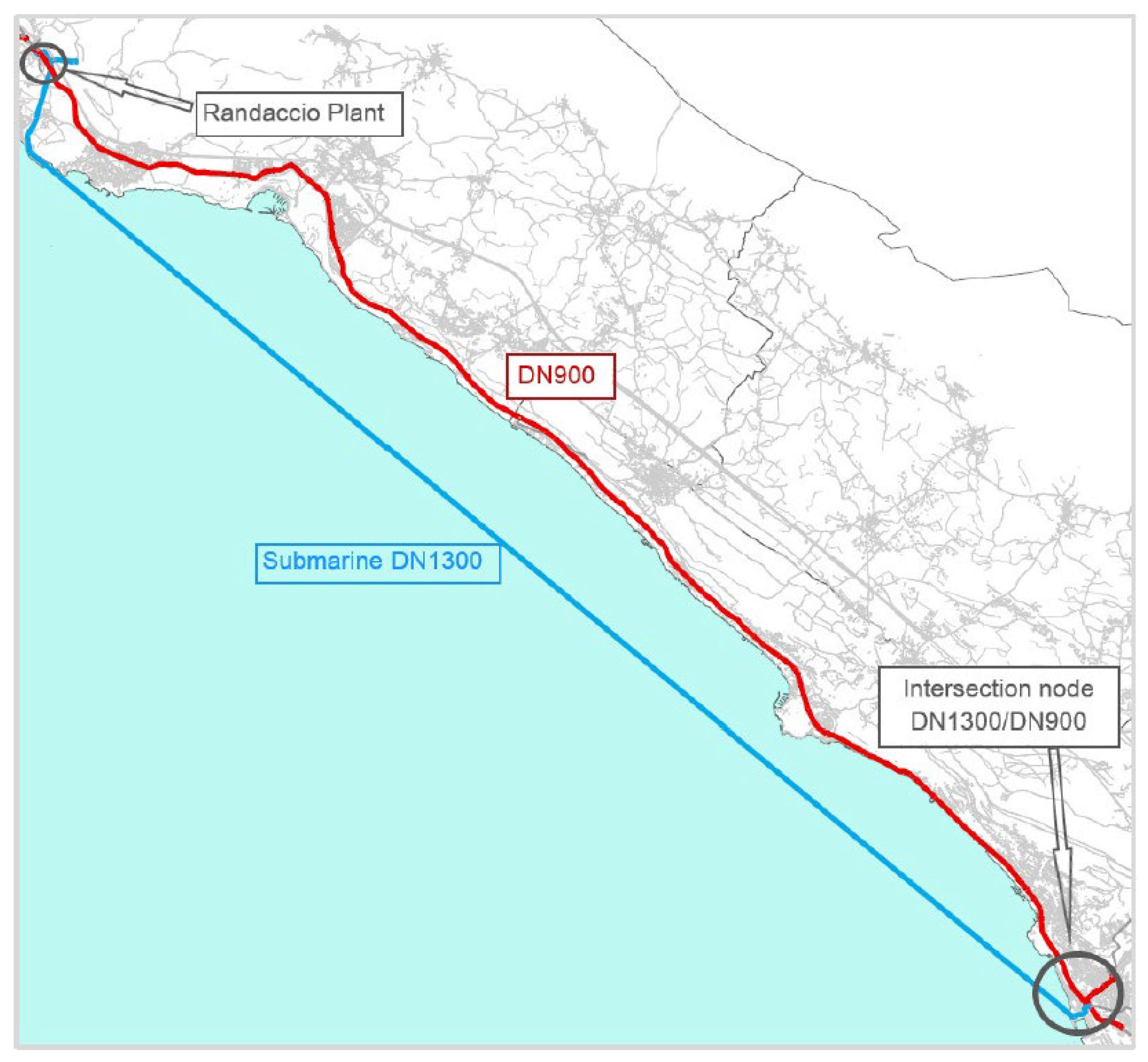
Trieste is a city and seaport in northeastern Italy, with a population of about 200,000. It is the capital and largest city of the autonomous region of Friuli-Venezia Giulia, located at the head of the Gulf of Trieste, on a narrow strip of Italian territory between the Adriatic Sea and Slovenia. The urban area lies at the foot of a steep escarpment descending abruptly from the Karst Plateau towards the sea, with surrounding karst hills reaching an elevation up to 458 metres above sea level. Water for the city of Trieste is supplied by 13 wells to the Randaccio pumping station, where it is treated and then pumped through a dual-pipe system managed by AcegasApsAmga SpA (Hera Group). This system (Figure 1) ensures a continuous supply and provides redundancy in the case of operational issues with one of the pipelines. It consists of a 900 mm diameter pipeline, almost a century old, running under the coastal road to Trieste, and a 1300 mm diameter subsea pipeline that submerges near the city of Duino and remerges at Molo 0 of Porto Franco Vecchio, where it connects with the other transmission main. From this junction, the network branches into a complex system of numerous meshes, reservoirs, and pumping stations serving the territories of Trieste, San Dorligo della Valle Dolina and Muggia, supplying about 85,000 inhabitants.
Due to this rough and hilly territory, with elevation differences of up to 500 m above sea level, managing Trieste’s water network poses significant challenges. For this reason, a large number of reservoirs and PRVs have been installed throughout the service area to regulate pressure and enhance operational stability.

3. Hydraulic Model of Villaggio del Pescatore

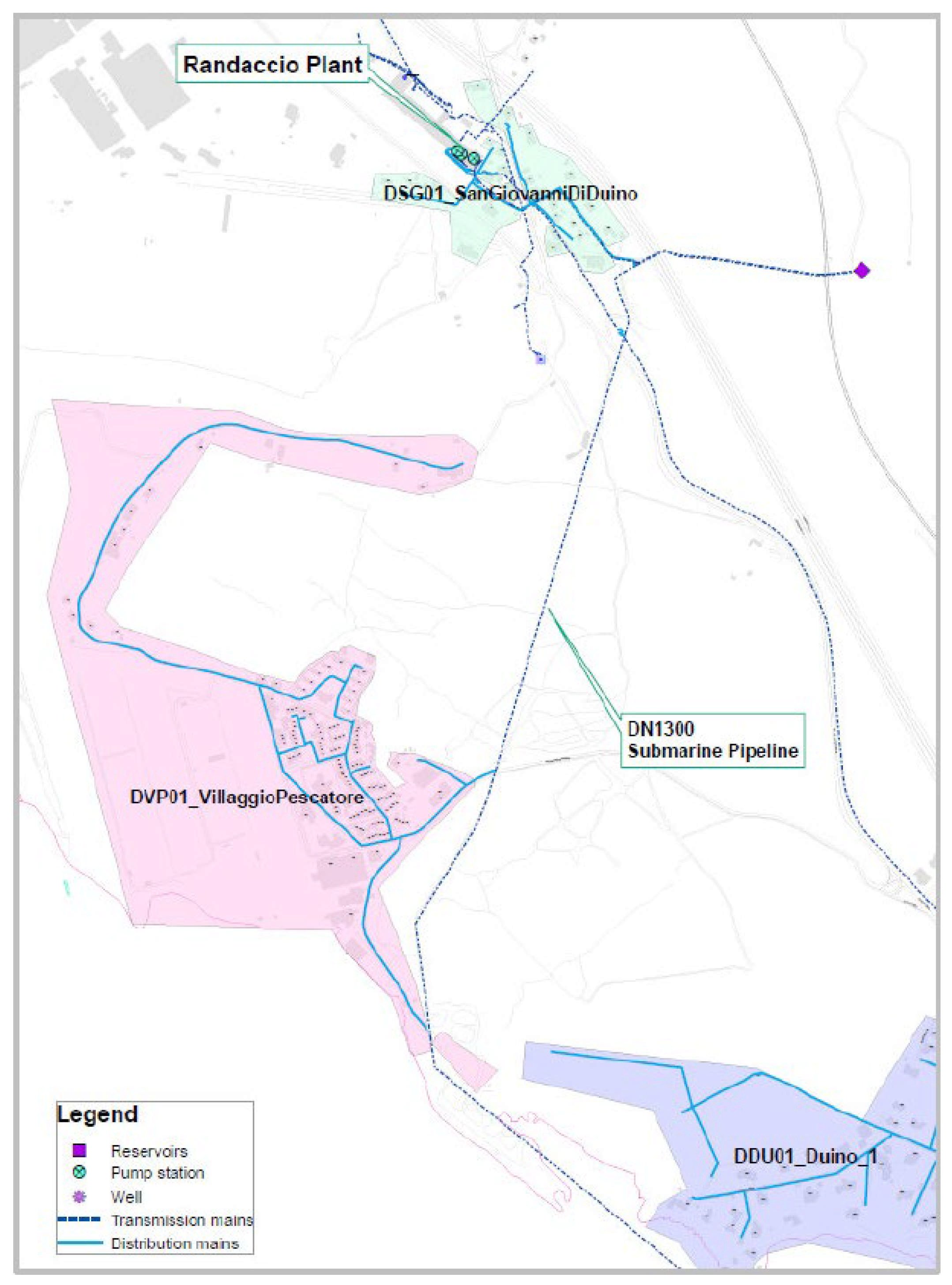
Villaggio del Pescatore is a small tourist town located in the Duino-Aurisina municipality, within the Province of Trieste. With a population of about 350 inhabitants, it is situated just 1 km south of the Randaccio Station and is supplied directly by the DN1300. This area is not so extensive, making it easy to trace the model boundary conditions and to quantify the inflows and outflows. These two factors are essential for developing an effective and reliable hydraulic model, initially for steady-state simulations and then for the unsteady-state analyses. The modelled portion of the WDN is shown in Figure 2.

3.1. Problem Description

An additional reason for selecting this portion of the WDN is its suitability for testing modelling software under transient conditions. Multiple field measurement campaigns have revealed anomalous pressure variations caused by the PRV located at the entrance of Villaggio del Pescatore, with the amplitude exceeding 10 m. In addition to the field measurements and valve adjustments carried out in recent years [2], this study addresses the same phenomenon from a modelling perspective. Unsteady-state simulations were performed using Infoworks WS Pro, recreating the same transients that occur in reality quite precisely.

3.2. Infoworks WS Pro

InfoWorks WS Pro, developed by Innovyze (Autodesk Inc.), is a comprehensive and flexible software platform for the management of water supply systems. It enables utilities, government agencies, and engineering organizations to simulate normal, emergency and catastrophic conditions in both steady-state and transient regimes, thereby improving network management and facilitating proactive decision-making [2].
InfoWorks WS Pro includes a “Transient Simulation” (InfoWorks TS) run type for analyzing pressures and flows during transients at selected locations in the network. It can model transients triggered by changes in pump station operation, valve maneuvers, or sudden variations in nodal demand. These simulations can also be used to assess the performance of surge protection devices. The software computes hydraulic transient flow conditions using the Lagrangian Time-Driven Wave Characteristic Method, which tracks the propagation of pressure waves throughout the system and their interaction with singularities and anomalies within the network [3]. This approach assumes frictionless, elastic pipes and, although it is less accurate than the traditional Method of Characteristics, it significantly reduces computational time while reliably capturing the initial phase of transient phenomena. Moreover, the software allows the incorporation of surge-protection devices—such as side-discharge orifices, open and closed surge tanks, and pressure relief valves—into the hydraulic model to evaluate their performance under transient conditions.

3.3. Construction of the Model

To build the model it is necessary to define the boundary conditions of the system. For the transmission main, the Randaccio plant was selected as the system’s inlet node: specifically, at that node, the inlet pressure was fixed to match the measured value. At the downstream end section of the transmission main immediately before the pipeline sub-merges into the sea, the outlet flow was likewise fixed to the corresponding measured value. Another key input parameter was the customer demand, which drives all hydraulic simulation. Billed consumption data were used for each customer, while the demand pattern, which describes the variations in time in water use, was calculated by Infoworks WS Pro based on the flow measurements entering the Villaggio del Pescatore PMA in the modelled part of the WDN.
The model was first calibrated under steady-state conditions, achieving good agreement between simulated and observed values. This steady-state phase represents the pretransient condition and provided the foundation for the subsequent unsteady-state simulations.

4. Results of Transient Simulation

The transient phenomena simulated were those generated by the PRV located at the entrance to the Villaggio del Pescatore PMA. This valve, oversized for the pipeline in which it is installed, must constantly reduce the pressure by approximately 4 bar. Operating in a nearly closed position, it generates anomalous pressure waves that propagate both upstream and downstream, leading to frequent and fast fluctuations. To model these fluctuations as accurately as possible in the software, a time series representing the valve’s percentage of closure was developed. The time series used a very short timestep of 0.02 s, with closure values ranging from 2.2% to 3% over a 100 s unsteady-state simulation. This input pattern represents the transient behaviour of the PRV. An important parameter for the unsteady-state simulation is the pressure wave speed. Based on previous studies [4,5] the pressure wave speed in the subsea transmission main was set to 1172 m/s, and is considered equal for the PMA pipes. Once these parameters were defined, the simulation was run for 100 s for the nighttime conditions, with a computational accuracy of 0.4 L/s.
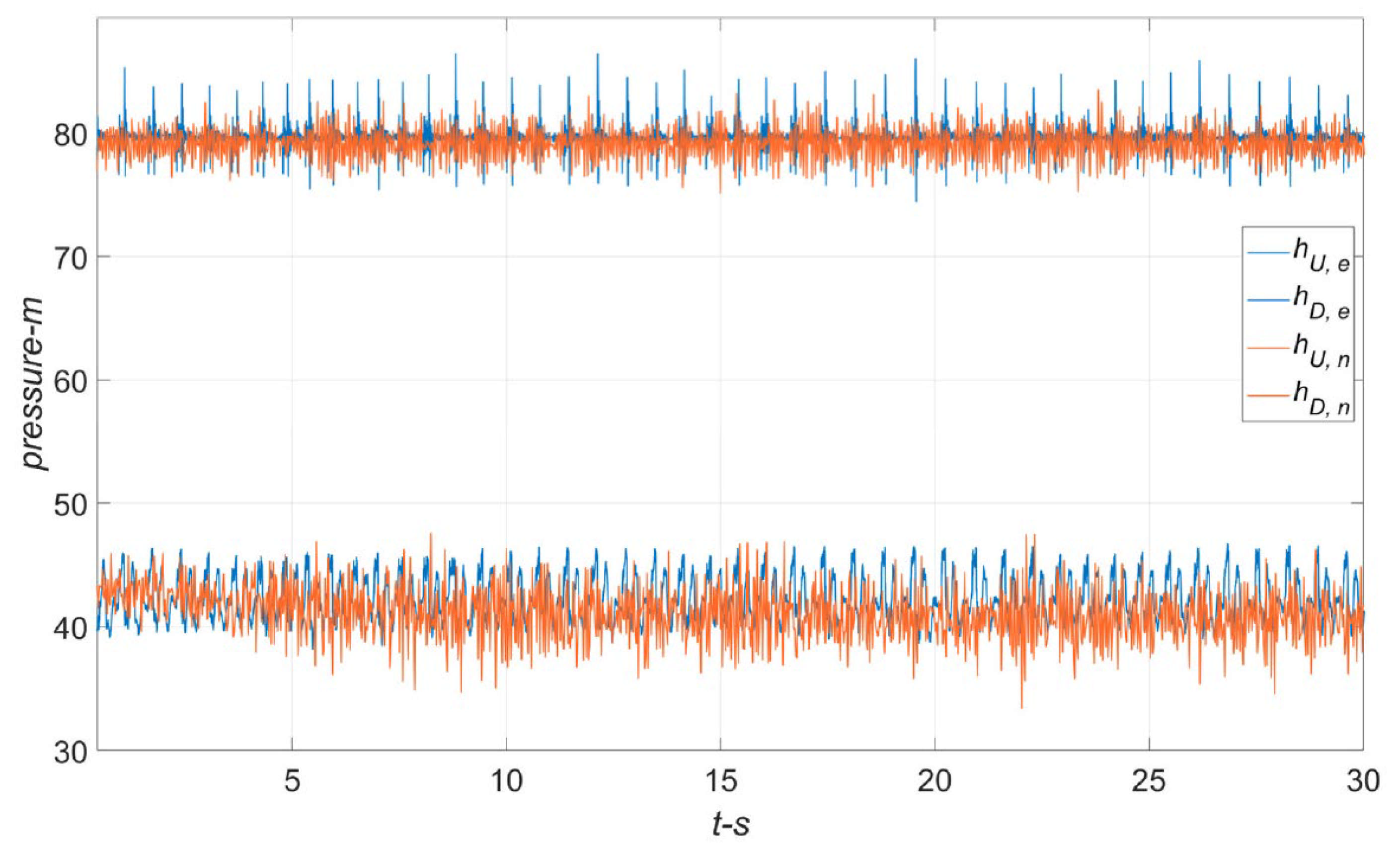
The initial results are presented in Figure 3, which compares the measured and simulated pressure signals at sections immediately upstream and downstream of the PRV.
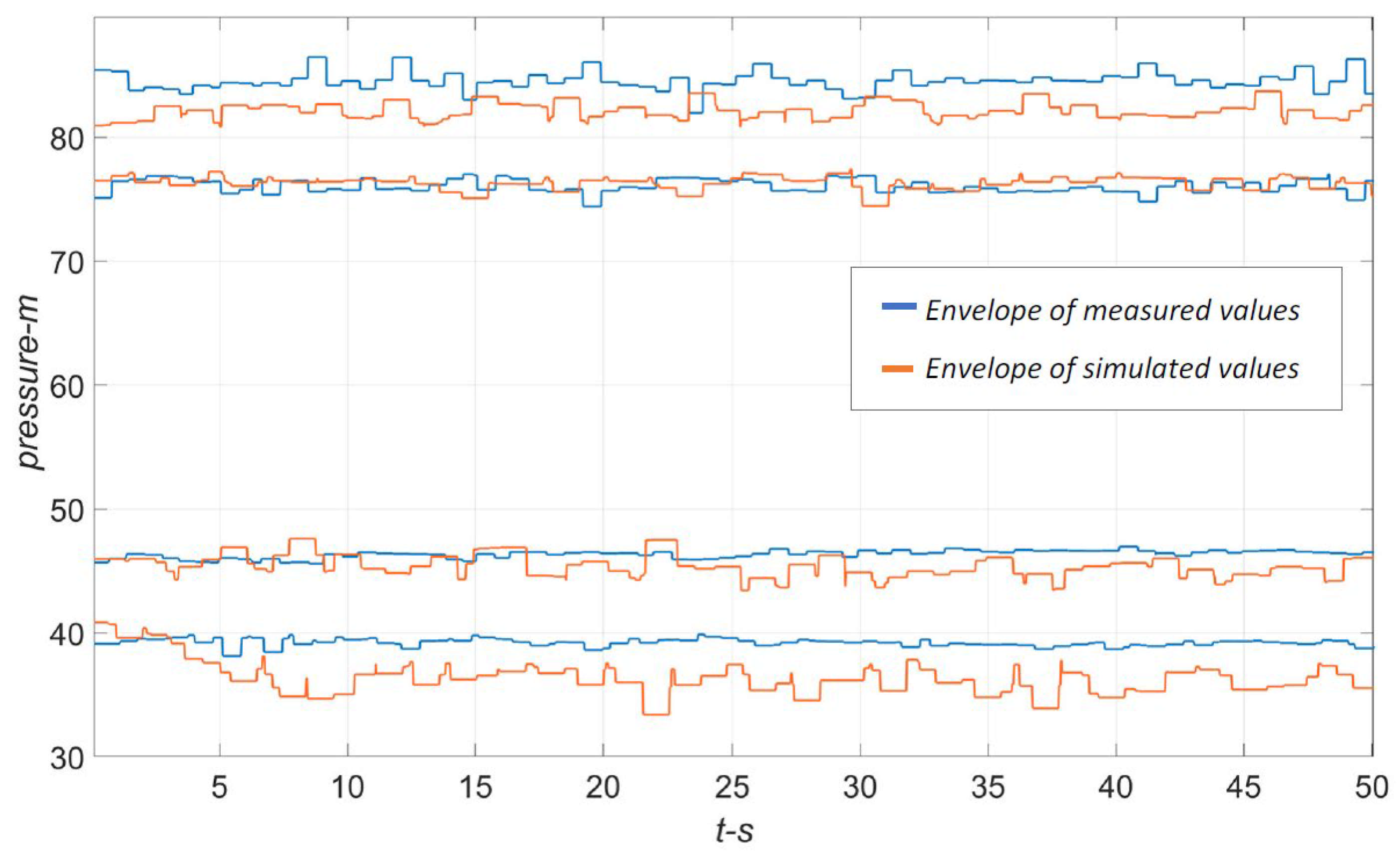
Figure 4 illustrates the upper and lower envelopes of the signal, which are used to evaluate the consistency between the measured and calculated peak pressure values.
The graphs show good correspondence between measurements and simulations, highlighting the large head fluctuations on both sides of the valve. Although the model does not reproduce the exact time pattern, it successfully captures the measured pressure variations, which are the key parameter when designing potential protection devices.

5. Conclusions

This study demonstrates the effectiveness of hydraulic modelling software—specifically InfoWorks WS Pro—in simulating transient phenomena within complex urban water distribution networks. The case study of Trieste, and in particular the Villaggio del Pescatore area, highlighted the challenges posed by pressure fluctuations induced by an oversized Pressure Reducing Valve. Through detailed unsteady-state simulations, it was possible to reproduce the pressure wave dynamics observed in the field, achieving a good agreement between measured and simulated data.
The findings confirm that transient modelling is a valuable tool for water utilities, enabling a deeper understanding of network behaviour under dynamic conditions and supporting informed decision-making for infrastructure management.
Future work should focus on identifying optimal strategies to mitigate such transient events and on extending the modelling approach to other critical areas of the WDN managed by AcegaApsAmga S.p.A. This would allow further testing of the software’s capabilities and support the design and implementation of the appropriate protection devices for the network.

Author Contributions

Conceptualization, S.P., L.T., A.R., C.C., B.B., and S.M.; methodology, S.P., L.T., A.R., C.C., B.B., and S.M.; software, S.P., L.T., and A.R.; validation, S.P., L.T., A.R., C.C., and S.M.; formal analysis, S.P., L.T., A.R., C.C., and S.M.; investigation, S.P., L.T., A.R., C.C., and S.M.; resources, L.T., A.R., C.C., B.B., and S.M.; data curation, S.P., L.T., A.R., C.C., and S.M.; writing-original draft preparation, S.P., C.C., and S.M.; writing-review and editing, S.P., C.C., and S.M.; visualization, S.P.; supervision, L.T., A.R., C.C., and S.M.; project administration, C.C. and S.M.; funding acquisition, C.C. and S.M. All authors have read and agreed to the published version of the manuscript.

Funding

This research has been jointly supported by the University of Perugia “Fondi di ricerca di Ateneo-Edizione 2022” and by the European Union—Next Generation EU, Mission 4, Component 2 under the Project of Relevant Interest PRIN2022 (D.D. 104/2022 MUR) “Hybrid Transient-Machine Learning Approach for Anomaly Detection and Classification in Water Transmission Mains (TANDEM)” (project 2022FR5FB7; CUP: J53D23002110006). This work was carried out within the project MORE4WATER, which has received funding from MUR (Italy), FCT (Portugal), Fapesc (Brazil), and the European Union’s Horizon Europe Programme under the 2022 Joint Transnational Call of the European Partnership Water4All (Grant Agreement n° 101060874).

Institutional Review Board Statement

Not applicable.

Informed Consent Statement

Not applicable.

Data Availability Statement

The data that support the findings of this study are available from AcegasApsAmga SpA. Restrictions apply to the availability of these data, which were used under license for this study. Data are available from the authors upon reasonable request and with the permission of AcegasApsAmga SpA.

Acknowledgments

This work was supported by the project MORE4WATER, which has received funding from MUR (Italy), FCT (Portugal), Fapesc (Brazil), and the European Union’s Horizon Eu-rope Programme under the 2022 Joint Transnational Call of the European Partnership Water4All (Grant Agreement n°101060874).

Conflicts of Interest

Author S. Prapotnich and L. Tirello were employed by the company AcegasApsAmga SpA. The remaining authors declare that the research was conducted in the absence of any commercial or financial relationships that could be construed as a potential conflict of interest.

Abbreviations

The following abbreviations are used in this manuscript:
PMAPressure Management Area
WDNWater Distribution Network

References

  1. Giustolisi, O. Digital Water Kowledge Application and Hydroinformatics; DICATECH, Politecnico di Bari (2023); Taylor & Francis: Philadelphia, PA, USA, 2023; Volume 1. [Google Scholar]
  2. Capponi, C.; Veritti, L.; Tirello, L.; Rubin, A.; Brunone, B.; Meniconi, S. Swinging pressure reducing valve in a real water distribution network: Where is the catch? Phys. Fluids 2025, 37, 075202. [Google Scholar] [CrossRef]
  3. Innovyze. Infoworks WS Pro, Version 2022; Innovyze: Portland, OR, USA. Available online: https://innovyze.com/ (accessed on 15 April 2026).
  4. Meniconi, S.; Brunone, B.; Tirello, L.; Rubin, A.; Cifrodelli, M.; Capponi, C. Transient Tests for Checking the Trieste Subsea Pipeline: Toward Field Tests. J. Mar. Sci. Eng. 2024, 12, 374. [Google Scholar] [CrossRef]
  5. Meniconi, S.; Brunone, B.; Tirello, L.; Rubin, A.; Cifrodelli, M.; Capponi, C. Transient Tests for Checking the Trieste Subsea Pipeline: Diving into Fault Detection. J. Mar. Sci. Eng. 2024, 12, 391. [Google Scholar] [CrossRef]
Figure 1. Schematic layout of the transmission mains of the Trieste WDN.
Engproc 135 00012 g001
Figure 2. Modelled portion of the Trieste WDN, showing the Randaccio plant, the transmission main, and the Villaggio del Pescatore PMA highlighted in pink.
Engproc 135 00012 g002
Figure 3. Pressure signals immediately upstream and downstream of the PRV: comparison between experimental vs. numerical simulation results.
Engproc 135 00012 g003
Figure 4. Upper and lower envelopes of the experimental and numerical pressure signal.
Engproc 135 00012 g004
Disclaimer/Publisher’s Note: The statements, opinions and data contained in all publications are solely those of the individual author(s) and contributor(s) and not of MDPI and/or the editor(s). MDPI and/or the editor(s) disclaim responsibility for any injury to people or property resulting from any ideas, methods, instructions or products referred to in the content.