Mild Cognitive Impairment Identification System Based on Physiological Characteristics and Interactive Games †
 ,
,
Abstract
1. Introduction
2. Related Work
2.1. Biomarker Sensing Technology
2.2. MCI Forecast and Analysis
3. Game Interactive System
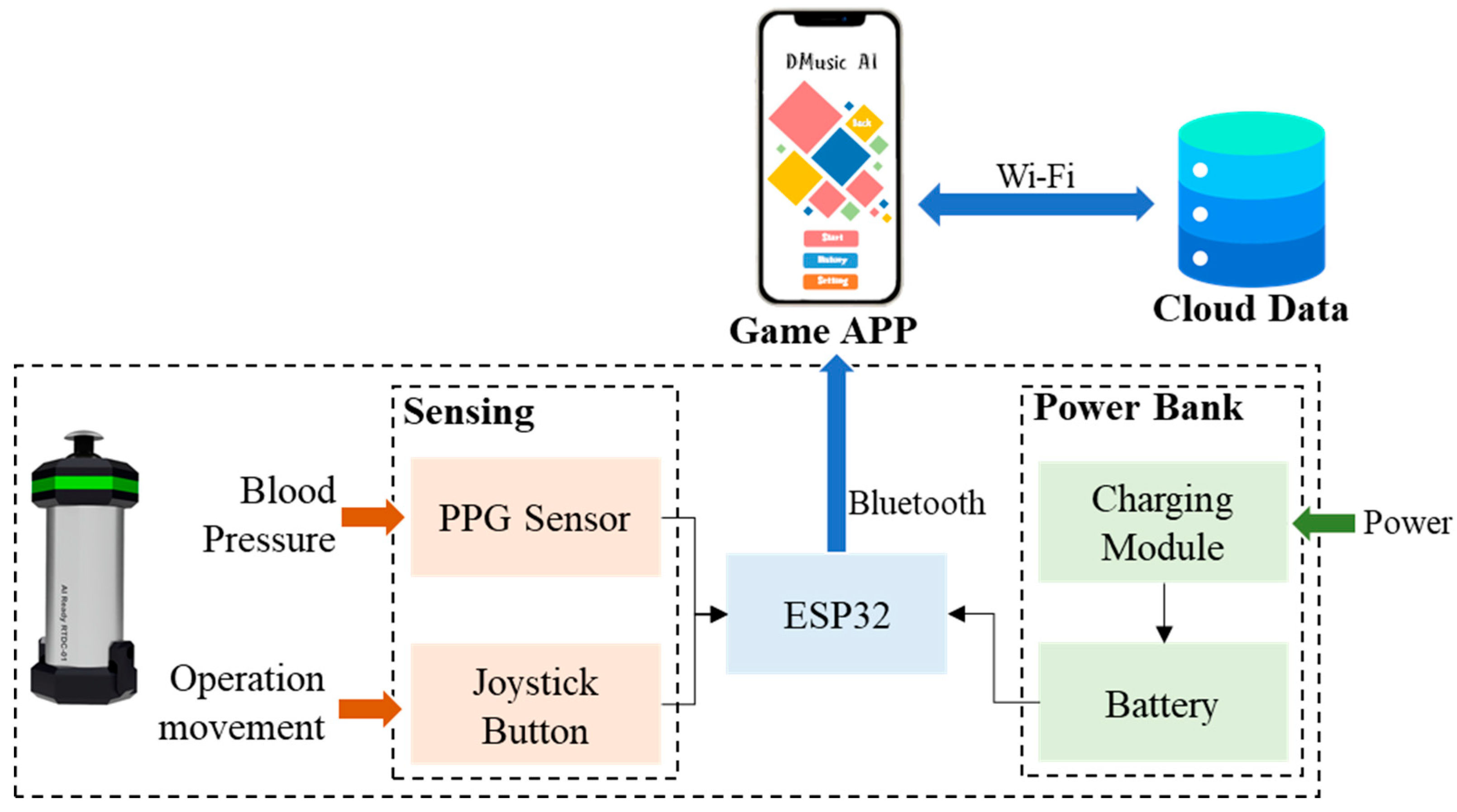
3.1. System Architecture
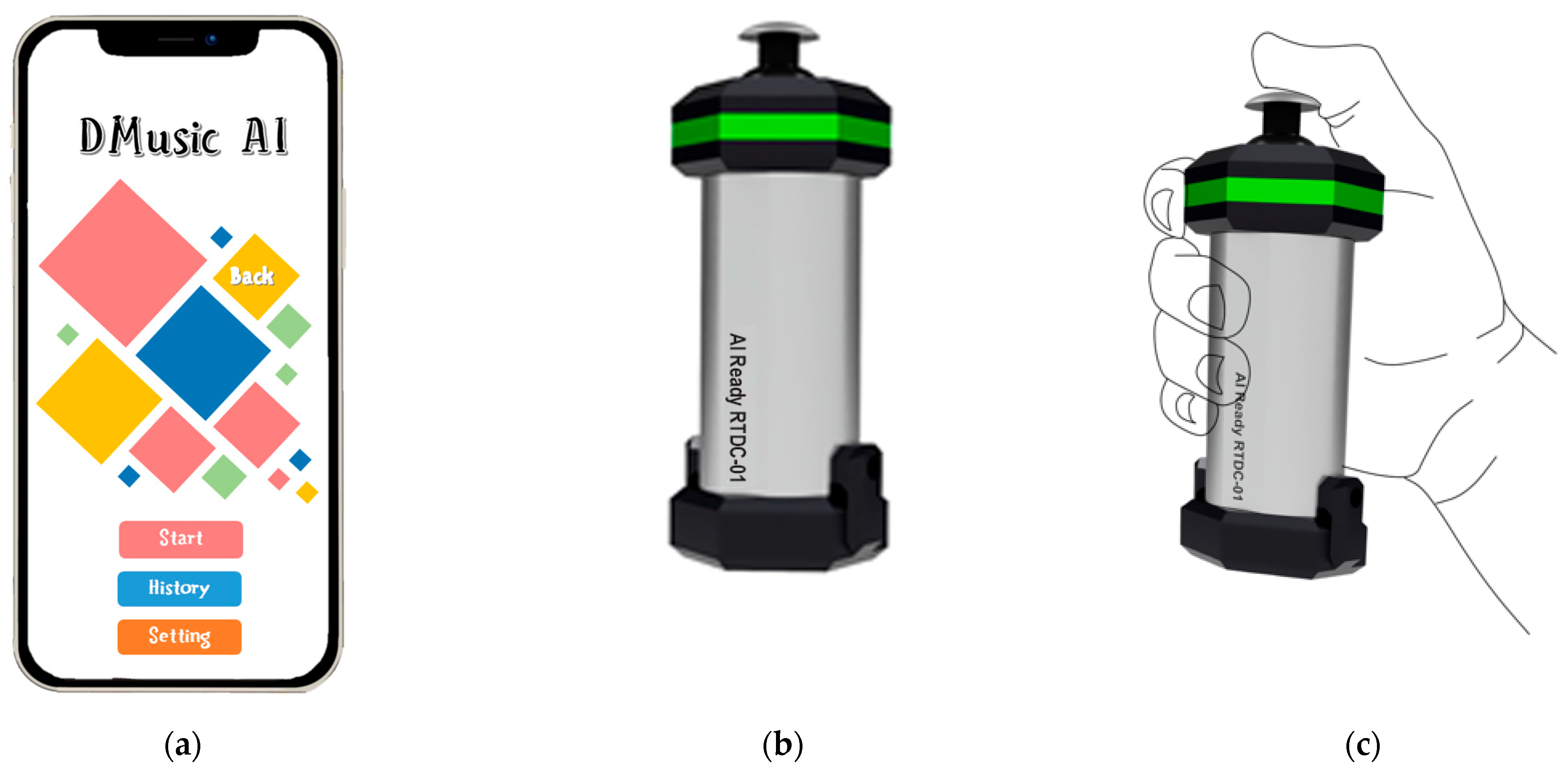
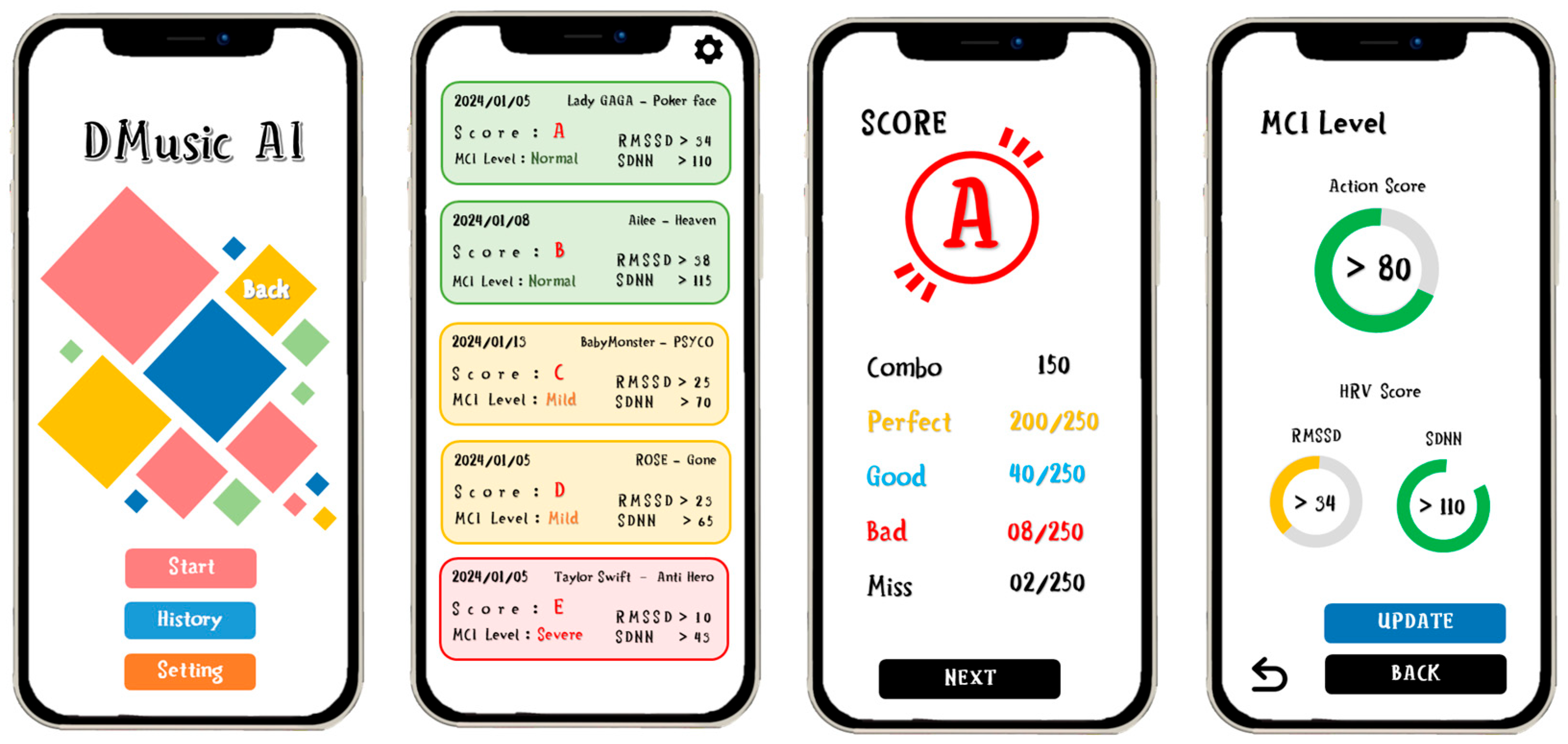
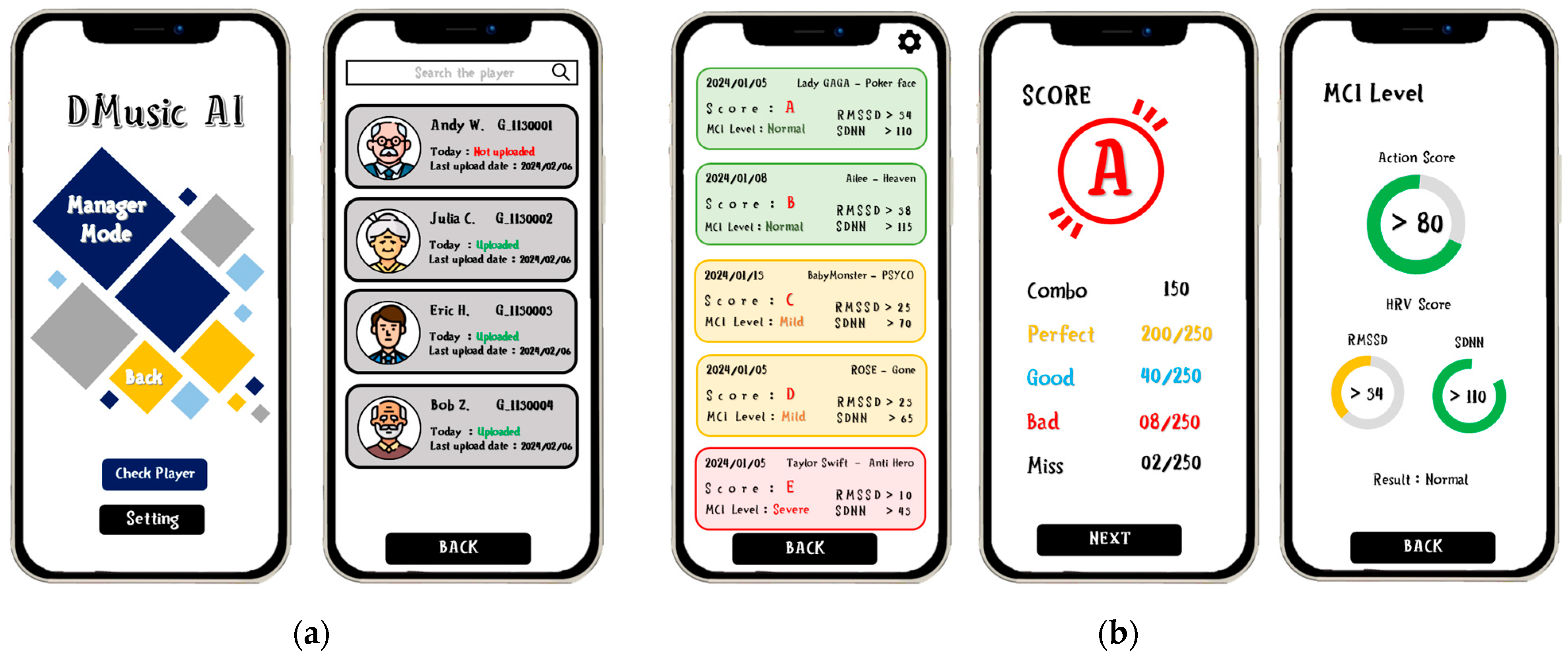
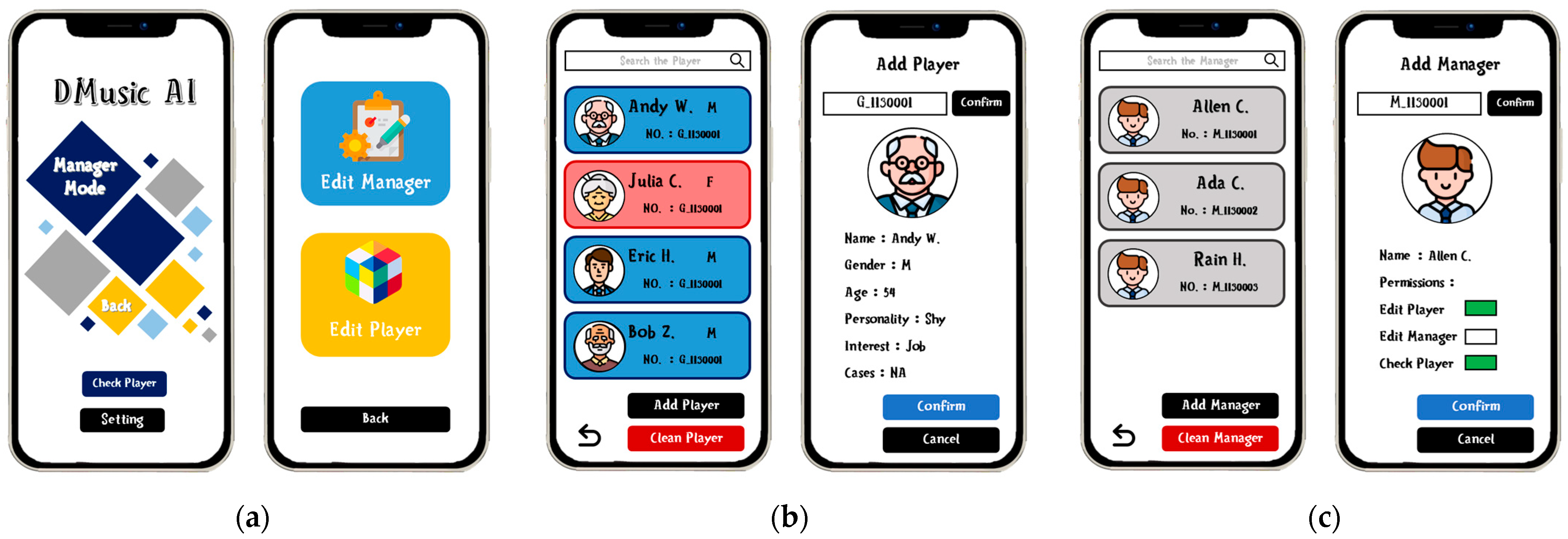
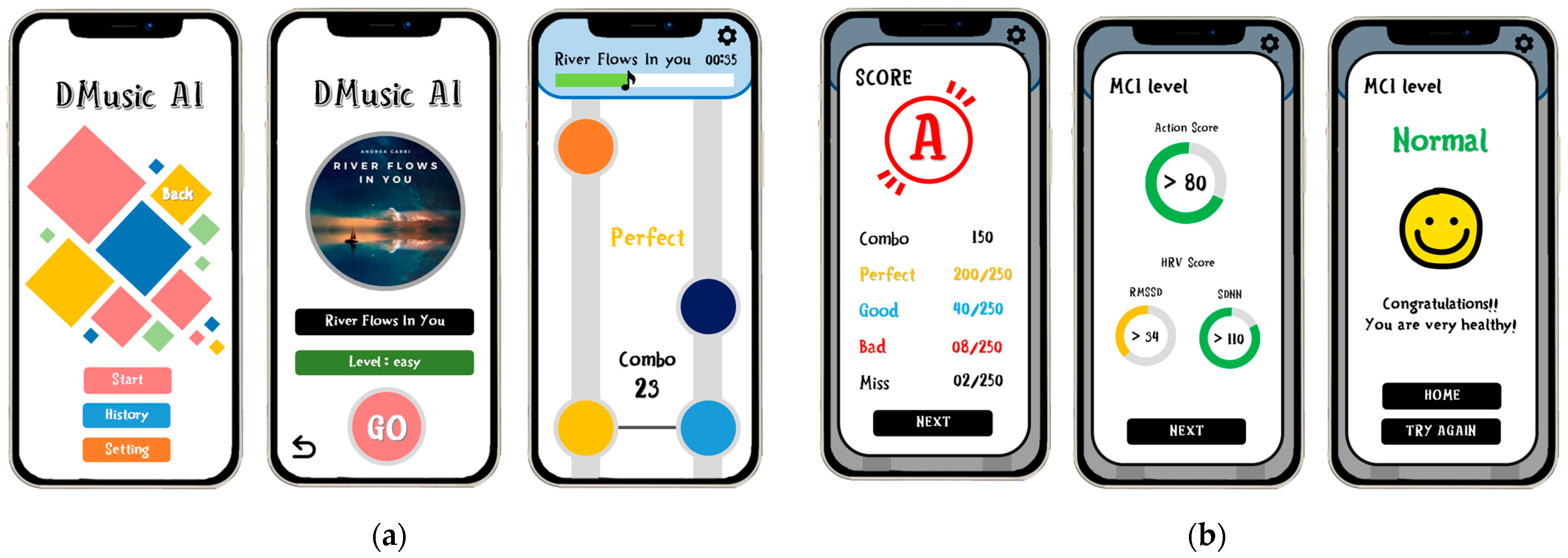
3.2. Music Interactive Game App Design
4. Dementia Prevention Prediction Model
Experimental Results
5. Conclusions
Author Contributions
Funding
Institutional Review Board Statement
Informed Consent Statement
Data Availability Statement
Conflicts of Interest
References
- Jain, V.; Nankar, O.; Jerrish, D.J.; Gite, S.; Patil, S.; Kotecha, K. A novel AI-based system for detection and severity prediction of dementia using MRI. IEEE Access 2021, 9, 154324–154346. [Google Scholar] [CrossRef]
- Tawhid, M.N.A.; Siuly, S.; Kabir, E.; Li, Y. Exploring frequency band-based biomarkers of EEG signals for mild cognitive impairment detection. IEEE Trans. Neural Syst. Rehabil. Eng. 2023, 32, 189–199. [Google Scholar] [CrossRef] [PubMed]
- Bhargava, Y.; Sumanth, S.; Deshmukh, A.; Baths, V. A Peek into the Minds of Game Developers and Neuroscience Researchers collaborating on Cognition Assessing Games. IEEE Access 2025, 13, 62674–62690. [Google Scholar] [CrossRef]
- Kim, J.; Cheon, S.; Lim, J. IoT-based unobtrusive physical activity monitoring system for predicting dementia. IEEE Access 2022, 10, 26078–26089. [Google Scholar] [CrossRef]
- Godkin, F.E.; Turner, E.; Demnati, Y.; Vert, A.; Roberts, A.; Swartz, R.H.; McLaughlin, P.M.; Weber, K.S.; Thai, V.; Beyer, K.B.; et al. Feasibility of a continuous, multi-sensor remote health monitoring approach in persons living with neurodegenerative disease. J. Neurol. 2022, 269, 2673–2686. [Google Scholar] [CrossRef] [PubMed]
- Lim, J. A smart healthcare-based system for classification of dementia using deep learning. Digit. Health 2022, 8, 20552076221131667. [Google Scholar] [CrossRef] [PubMed]
- Alharbi, E.A.; Jones, J.M.; Alomainy, A. Non-invasive solutions to identify distinctions between healthy and mild cognitive impairments participants. IEEE J. Transl. Eng. Health Med. 2022, 10, 2700206. [Google Scholar] [CrossRef] [PubMed]
- Addae, S.; Kim, J.; Smith, A.; Kang, M.; Rajana, P. Smart solutions for detecting, predicting, monitoring, and managing dementia in the elderly: A survey. IEEE Access 2024, 12, 100026–100056. [Google Scholar] [CrossRef]
- Perugia, G.; Díaz-Boladeras, M.; Catala-Mallofré, A.; Barakova, E.I.; Rauterberg, M. ENGAGE-DEM: A model of engagement of people with dementia. IEEE Trans. Affect. Comput. 2020, 13, 926–943. [Google Scholar] [CrossRef]
- Ge, R.; Wang, Z.; Yuan, X.; Li, Q.; Gao, Y.; Liu, H.; Fan, Z.; Bu, L. The effects of two game interaction modes on cortical activation in subjects of different ages: A functional near-infrared spectroscopy study. IEEE Access 2021, 9, 11405–11415. [Google Scholar] [CrossRef]
- Unbehaun, D.; Taugerbeck, S.; Aal, K.; Vaziri, D.D.; Lehmann, J.; Tolmie, P.; Wieching, R.; Wulf, V. Notes of memories: Fostering social interaction, activity and reminiscence through an interactive music exergame developed for people with dementia and their caregivers. Hum.–Comput. Interact. 2021, 36, 439–472. [Google Scholar] [CrossRef]
- Sproviero, W.; Winchester, L.; Newby, D.; Fernandes, M.; Shi, L.; Goodday, S.M.; Prats-Uribe, A.; Alhambra, D.P.; Buckley, N.J.; Nevado-Holgado, A.J. High blood pressure and risk of dementia: A two-sample Mendelian randomization study in the UK Biobank. Biol. Psychiatry 2021, 89, 817–824. [Google Scholar] [CrossRef] [PubMed]
- Wu, C.-Y.; Ho, C.-Y.; Yang, Y.-H. Developing biomarkers for the skin: Biomarkers for the diagnosis and prediction of treatment outcomes of Alzheimer’s disease. Int. J. Mol. Sci. 2023, 24, 8478. [Google Scholar] [CrossRef] [PubMed]
- Zhao, P.; Hui, J.; Mao, H.; Ma, G.; Liu, H. Multi-stage microfluidic capture arrays for detecting various Alzheimer’s disease biomarkers in saliva. In Proceedings of the 2021 21st International Conference on Solid-State Sensors, Actuators and Microsystems (Transducers), Orlando, FL, USA, 20–24 June 2021; IEEE: Piscataway, NJ, USA, 2021; pp. 984–987. [Google Scholar]
- Okunishi, T.; Zheng, C.; Bouazizi, M.; Ohtsuki, T.; Kitazawa, M.; Horigome, T.; Kishimoto, T. Dementia and MCI Detection Based on Comprehensive Facial Expression Analysis from Videos During Conversation. IEEE J. Biomed. Health Inform. 2025, 29, 3537–3548. [Google Scholar] [CrossRef] [PubMed]
- Khosroazad, S.; Abedi, A.; Hayes, M.J. Sleep signal analysis for early detection of Alzheimer’s disease and related dementia (ADRD). IEEE J. Biomed. Health Inform. 2023, 27, 2264–2275. [Google Scholar] [CrossRef] [PubMed]
- Griffis, J.C.; Allendorfer, J.B.; Szaflarski, J.P. Voxel-based Gaussian naïve Bayes classification of ischemic stroke lesions in individual T1-weighted MRI scans. J. Neurosci. Methods 2016, 257, 97–108. [Google Scholar] [CrossRef] [PubMed]
- Xanthopoulos, P.; Pardalos, P.M.; Trafalis, T.B.; Xanthopoulos, P.; Pardalos, P.M.; Trafalis, T.B. Linear discriminant analysis. In Robust Data Mining; Springer: Berlin/Heidelberg, Germany, 2013; pp. 27–33. [Google Scholar]
- Cox, D.R. The regression analysis of binary sequences. J. R. Stat. Soc. Ser. B Stat. Methodol. 1958, 20, 215–232. [Google Scholar] [CrossRef]
- Sokolova, M.; Lapalme, G. A systematic analysis of performance measures for classification tasks. Inf. Process. Manag. 2009, 45, 427–437. [Google Scholar] [CrossRef]





| Accuracy | Precision | Recall | F1-Score | |
|---|---|---|---|---|
| GNB | 0.524 | 0.500 | 0.400 | 0.444 |
| LDA | 0.714 | 0.750 | 0.600 | 0.667 |
| Logistic Regression | 0.714 | 0.700 | 0.700 | 0.700 |
Disclaimer/Publisher’s Note: The statements, opinions and data contained in all publications are solely those of the individual author(s) and contributor(s) and not of MDPI and/or the editor(s). MDPI and/or the editor(s) disclaim responsibility for any injury to people or property resulting from any ideas, methods, instructions or products referred to in the content. |
© 2026 by the authors. Licensee MDPI, Basel, Switzerland. This article is an open access article distributed under the terms and conditions of the Creative Commons Attribution (CC BY) license.
Share and Cite
Chung, M.-A.; Zhang, Z.-X.; Zhang, J.-H.; Hsu, C.-C.; Yao, Y.-J.; Chou, J.-H.; Hsieh, M.-C.; Chai, S.-Y.; Huang, S.-J.; Chen, K.-X.; et al. Mild Cognitive Impairment Identification System Based on Physiological Characteristics and Interactive Games. Eng. Proc. 2026, 128, 19. https://doi.org/10.3390/engproc2026128019
Chung M-A, Zhang Z-X, Zhang J-H, Hsu C-C, Yao Y-J, Chou J-H, Hsieh M-C, Chai S-Y, Huang S-J, Chen K-X, et al. Mild Cognitive Impairment Identification System Based on Physiological Characteristics and Interactive Games. Engineering Proceedings. 2026; 128(1):19. https://doi.org/10.3390/engproc2026128019
Chicago/Turabian StyleChung, Ming-An, Zhi-Xuan Zhang, Jun-Hao Zhang, Chia-Chun Hsu, Yi-Ju Yao, Jin-Hong Chou, Ming-Chun Hsieh, Sung-Yun Chai, Shang-Jui Huang, Kai-Xiang Chen, and et al. 2026. "Mild Cognitive Impairment Identification System Based on Physiological Characteristics and Interactive Games" Engineering Proceedings 128, no. 1: 19. https://doi.org/10.3390/engproc2026128019
APA StyleChung, M.-A., Zhang, Z.-X., Zhang, J.-H., Hsu, C.-C., Yao, Y.-J., Chou, J.-H., Hsieh, M.-C., Chai, S.-Y., Huang, S.-J., Chen, K.-X., Lin, C.-W., & Chen, P.-H. (2026). Mild Cognitive Impairment Identification System Based on Physiological Characteristics and Interactive Games. Engineering Proceedings, 128(1), 19. https://doi.org/10.3390/engproc2026128019