Review

Inhibition of SGLT1: The Alternative Way Toward Incretin Protection

by
Alessio Mazzieri
1,* and
Livia Maria Rita Marcon
2
1
Diabetes Clinic, Hospital of Città di Castello, USL Umbria 1, 06012 Perugia, Italy
2
Department of Endocrinology, Metabolic Diseases and Nutrition, ASST-Brianza, 20900 Monza e Brianza, Italy
*
Author to whom correspondence should be addressed.
Diabetology 2026, 7(5), 83; https://doi.org/10.3390/diabetology7050083
Submission received: 27 December 2025 / Revised: 28 March 2026 / Accepted: 20 April 2026 / Published: 28 April 2026
(This article belongs to the Special Issue Early Intervention and Treatment Strategies for Diabetes)

Abstract

Sodium glucose-1 cotransporter (SGLT1) is a low-capacity, high-affinity glucose transporter expressed in the proximal renal tubule. It is also expressed in different human tissues and, primarily, in the brush border of the small intestine. At this level, SGLT1 inhibition results in an increase in glucose supply to the distal intestine with a reduction in intestinal pH and a consequent alteration of the intestinal microbiota. Specifically, SGLT1 inhibitors (SGLT1is) lead to an intensification of the production of short-chain fatty acids (SCFAs) and an enhancement of the incretin pathway. Potential mechanisms by which SGLT1is could reduce the occurrence of stroke and myocardial infarction may therefore involve the anti-inflammatory, anti-fibrotic and anti-atherosclerotic effects associated with an increased production of endogenous glucagon-like peptide-1 (GLP-1).

1. Introduction

Under physiological conditions, the absence of glycosuria in humans occurs due to the reabsorption of the filtered glucose load by specific sodium-glucose cotransporters located at the brush edge of proximal tubular cells [1]. Normally, the role of renal sodium-glucose 1 cotransporter (SGLT1) is quantitatively negligible compared to that of sodium glucose 2 cotransporter (SGLT2) [2]. However, in individuals with uncontrolled type 2 diabetes, in which the blood glucose concentration exceeds the renal threshold and saturates SGLT2 in the proximal tubule, or under the SGLT2 inhibitor (SGLT2i) treatment, the contribution of SGLT1 becomes prominent [3,4,5]. Under these conditions, SGLT1 inhibition is associated with an increase in glucose supply to the late terminal part of the proximal tubules [6]. Unlike SGLT2, which is expressed exclusively in renal proximal tubular cells, SGLT1 shows an extra-renal distribution. Specifically, the expression of SGLT1 has been observed in intestinal cells, in the heart (though it is unclear whether it appears on myocardial or vascular endothelial cells), and in the central nervous system cells [7]. Apart from the well-known role in the intestinal cells, where SGLT1 promotes glucose absorption, the pathophysiological significance of these transporters in other extra-renal tissues remains not fully clear. Considering the contribution of SGLT1 in renal and intestinal glucose reabsorption, SGLT1i are a potential treatment for patients with diabetes. The inhibition of SGLT1 positively influences carbohydrate metabolism by reducing glucose uptake in the gut and by amplifying the glycosuria observed both in patients with uncontrolled diabetes and during SGLT2i administration. Interestingly, through intestinal glucose reabsorption, SGLT1i may increase the release of endogenous glucagon-like peptide-1 (GLP-1) by intestinal L-cells, contributing also to the hypoglycemic and pleiotropic effects of the incretin pathway [7,8]. To date, scientific research has led to the development and marketing of hypoglycemic drugs acting through SGLT1 inhibition: canagliflozin (SGLT2i and partial SGLT1i) and sotagliflozin (double SGLT1/2 inhibitor) [9,10]. The following sections describe experimental and clinical studies that have shown the stimulation of the incretin pathway through canagliflozin and sotagliflozin. We subsequently describe the possible mechanisms behind the relationship between the SGLT1 inhibition and the enhancement of incretin axis.

2. Experimental and Clinical Evidence Regarding Stimulation of Incretin Pathway Through Canagliflozin

Some authors have investigated the effect of canagliflozin on plasma levels of GLP-1 in non-diabetic and diabetic rodents [8]. In male C57BL6J mice (non-diabetic control mice), canagliflozin (10 mg/kg) significantly increased plasma GLP-1 at 15 and 30 min during an oral glucose tolerance assay (OGTT) compared to vehicle, and a marked increase was observed in combination with sitagliptin (10 mg/kg).
Polidori et al. evaluated the effects of canagliflozin on intestinal glucose absorption in twenty healthy individuals in a crossover study [11]. Canagliflozin decreased postprandial levels of glucose and insulin with delayed glucose absorption and consequent altered distal gut hormone secretion, with variations in levels of GLP-1 and other intestinal and anoretic peptides, including glucose-dependent insulinotropic peptide (GIP) and peptide YY (PYY) [12,13]. Specifically, canagliflozin increased postprandial GLP-1 levels by 35% vs. placebo, it reduced postprandial GIP levels by 50% vs. placebo, and it increased postprandial PYY levels by 60% vs. placebo. The negative effect on GIP secretion is not yet fully clear.
The effect of canagliflozin on GLP-1 levels was also investigated in patients with type 2 diabetes [14]. A study showed that 100 mg daily of canagliflozin for three days significantly increased plasma GLP-1 levels from baseline by approximately two-fold, whereas no significant change was observed for 3 days of observation in a control group without canagliflozin.

3. Experimental and Clinical Evidence Regarding the Stimulation of the Incretin Pathway Through Sotagliflozin

Experimental evidence showed that sotagliflozin significantly increased GLP-1 and PYY blood levels in mice from 30 min to 6 h after a challenge test [15]. The elevation of circulating GLP-1 and PYY was significantly associated with an increase in the glucose supply in the small intestine, cecum, and colon compared to the vehicle group. The glucose rise was maintained for 6 h, suggesting that the inhibition of SGLT1 in the gastrointestinal tract is sustained for a relatively long time. Additionally, increased glucose levels in the gastrointestinal tract were associated with a reduction in pH at the cecum level and with a consequent stimulation of incretin hormone secretion. Significant increases in GLP-1 and PYY blood levels and in intestinal glucose supply were also observed in SGLT1-/- mice (littermates of SGLT1+/+ mice) after the challenge test. Specifically, the peak level of GLP-1 in SGLT1-/- mice occurred 1 h after the meal test, corresponding to the peak of glucose levels in the small intestine [15]. However, the observed incretin response in knockout animals has not been fully understood.
Nowadays clinical evidence is limited in this field. In 12 healthy individuals (10 in treatment and two in placebo among them), sotagliflozin significantly increased GLP-1 and PYY blood levels and significantly reduced postprandial glucose compared to placebo after breakfast [16]. In a single-dose study of sotagliflozin at 300 mg in 12 patients with type 2 diabetes, there was a significant increase in urine glucose excretion (UGE) during the day after dosing, as well as significant increases in GLP-1 and PYY blood levels and a significant reduction in plasmatic glucose and insulin levels between 0 and 13 h [17].

4. Stimulation of the Incretin Pathway Through SGLT1i: Mechanisms and Clinical Aspects

In the intestine, incretin hormones are secreted from gut enteroendocrine cells in response to dietary-derived stimuli [18]. The alterations in the gut microbiome associated with obesity and type 2 diabetes trigger inflammation, gut permeability, and insulin sensitivity [19]. Specifically, type 2 diabetes is characterized by a decrease in short-chain fatty acid (SCFA) production in the gut microbiota [20]. Also, aging can cause a reduction in SCFAs in the gut microbiome, which is related to a weaking of immune defense and an increase in systemic inflammation with a potential impact on cardiovascular damage [21]. Normally, SCFAs moderate food intake and stimulate the incretin pathway, contributing to its pleiotropic effects and cardiovascular protection [22].
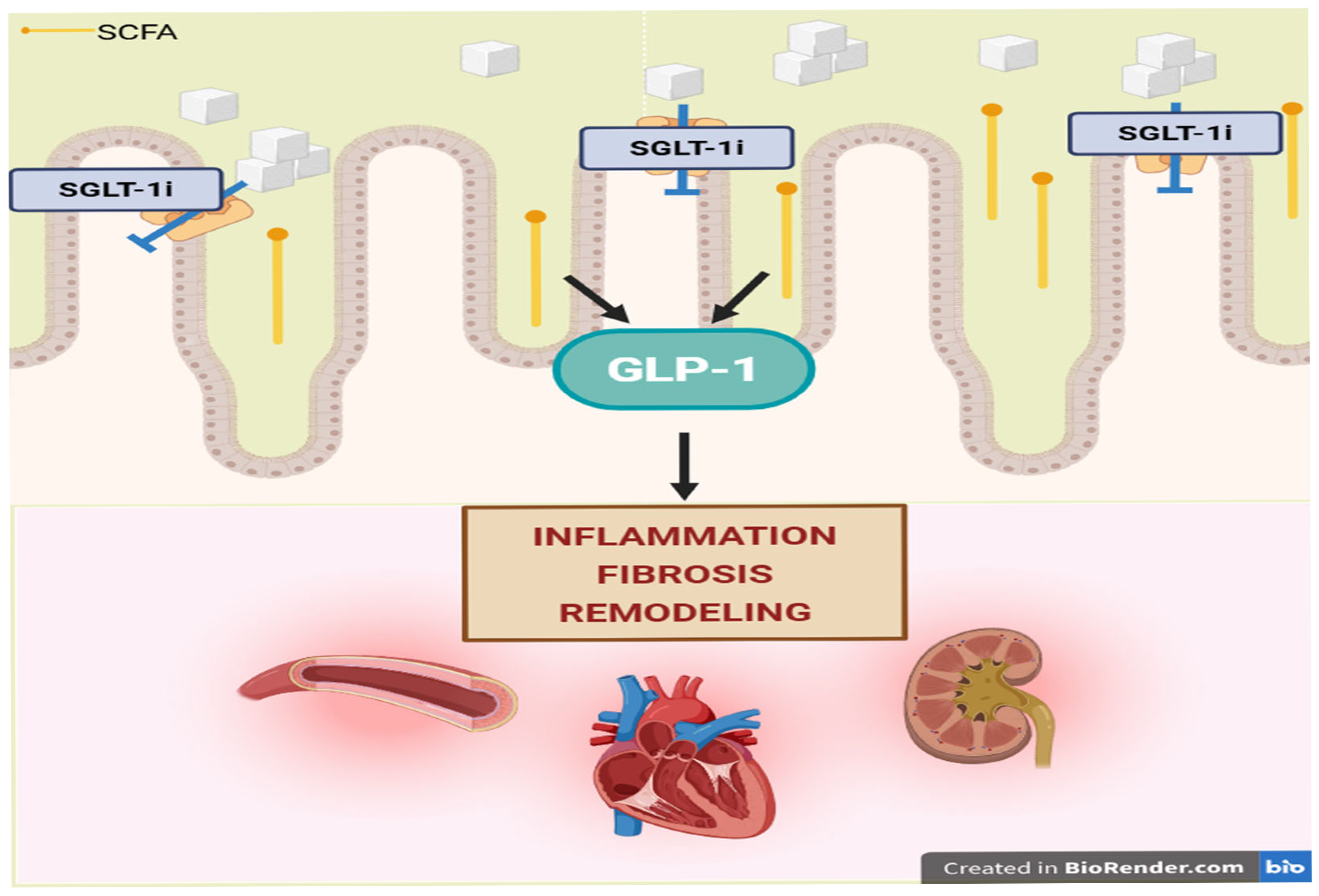
Therefore, the cardiovascular risk could be influenced by the alterations in the gut microbiome because of an intensification of the production of SCFAs mediated by SGLT1 inhibition. Selective inhibition of SGLT1 in the early gut results in an increase in glucose supply in the distal gut and colon [23], reducing colon pH probably through the glycolytic pathway. Intestinal glucose is metabolized by the gut microbiome, with increased SCFA production [24] and consequent stimulation of GLP-1 endogenous production [25] (Figure 1).
However, preclinical evidence showed that phloridzin-mediated SGLT1 inhibition partially inhibited GIP, GLP-1, and PYY secretion by 45%, suggesting that other pathways are involved in modulating incretin peptide secretion [18]. Despite conflicting experimental evidence, some authors hypothesize that changes in distal intestinal luminal glucose concentration as a result of SGLT1 inhibition might favor a gut microbiome producing SCFAs with a consequent promotion of endogenous GLP-1 release [24]. An increase in native GLP-1 may suppress thrombus growth at both venous and arterial shear rates [26], as well as contribute to an increase in atherosclerotic plaque stability [27]. In fact, potential mechanisms by which SGLT1is reduce stroke and myocardial infarction are related to the stimulation of endogenous GLP-1 production, which decreases platelet activation and increases atherosclerotic plaque stability [28]. The mechanisms associated with the reduction in nonfatal and fatal stroke, as well as nonfatal and fatal myocardial infarction, remain to be determined, but they could be related largely to the effect of SGLT1is on endogenous GLP-1 and to the alterations in the gut microbiome. Conversely, the effects of SGLT1 inhibition on the microbiome in patients with type 2 diabetes and heart failure (HF) have been incompletely studied, but they could also be important since altering the microbiome is associated with hypertension and stroke risk [29]. Mendelian randomization trials examining missense variants associated with decreased SGLT1 function have been associated with a decrease in HF incidence [30]. This may be related in part to the stimulation of SGLT1is on GLP-1 release, which influences appetite and weight loss and could be important for the prevention of heart failure. It has been discovered that individuals with type 2 diabetes and abdominal obesity have a higher risk of developing heart failure than those with type 2 diabetes without abdominal obesity and those with abdominal obesity but without type 2 diabetes [30].
For instance, SGLT1/2i sotagliflozin reduced the occurrence of cardiovascular mortality and hospitalizations for HF in diabetic people with HF [31] and with CKD [32] in a similar manner to SGLT2is, but, in addition, it reduced the incidence of nonfatal and fatal stroke by >30% and nonfatal and fatal myocardial infarction (MI) by >30% [32]. These results are greater than those observed with SGLT2is [33] and many receptor agonists of GLP-1 [34]. These findings suggest that sotagliflozin is related to mechanisms other than reduced blood pressure, visceral obesity, and myocardial oxygen demand. In fact, an increase in endogenous GLP-1 through sotagliflozin is likely to explain these results, but further investigations are needed.
Certainly, cardiovascular protection mediated by SGLT1 inhibition through the alteration of gut microbiome is of potential importance and warrants further investigation.

5. The Role of Cardiac and Cerebral SGLT1

The protective effect that SGLT1 inhibition has on cardiac and cerebral health is likely related to the expression of SGLT1 in the heart and the brain [35]. The experimental evidence shows that SGLT1 expression is increased in cultured endothelial cells from small vessels in the bovine brain under hypoxic conditions [36]. In the heart, SGLT1 overexpression increases myocyte size, collagen 1 gene expression, and interstitial fibrosis in mice undergoing cardiac ischemia, regardless of glucose levels [37]. Interestingly, pretreatment of mice with a selective SGLT1i KGA-2727 showed protective effects against cardiac remodeling and heart failure in mice after left anterior descending coronary artery occlusion [38]. SGLT1 has also been observed to be upregulated in patients with diabetic cardiomyopathy [39] and it is associated with an increase in NADPH oxidase 2 and, consequently, with an increase in reactive oxygen species in myocardial ischemia models, while SGLT1 knockdown attenuates ischemic/reperfusion injury [38]. However, the indeterminate mechanisms linking SGLT1 inhibition to the reduction in myocardial infarction and stroke require further exploration. At the brain level, it has been suggested that SGLT1 contributes to vascular cognitive impairment, and SGLT1 inhibition improves cerebral blood flow in a model of cognitive impairment of small vessel disease [40].
Nonetheless, considering the effect of SGLT1 inhibition on the gut microbiome and the direct effect of inhibition of SGLT1 expression in the brain and heart, there are several ways in which SGLT1 inhibition could favorably alter the cardiovascular risk.

6. Safety Profile of SGLT1 Inhibition

The SGLT1-mediated renal glucose absorption is significantly increased when SGLT2 transporters are inhibited [3]. This compensatory mechanism may account for the absence of the risk of hypoglycemia after SGLT2i administration. Therefore, the simultaneous inhibition SGLT1/2 could theoretically increase the number of episodes of hypoglycemia. However, the rate of documented hypoglycemic events is lower in patients with type 1 diabetes treated with sotagliflozin than in placebo-treated patients, while the rate of severe hypoglycemic events is similar in the sotagliflozin and the placebo group (3% vs. 2.4%) [41]. Although the hypoglycemic risk is rare when these drugs are used as monotherapy or in combination with metformin, it can be more frequent in combination with insulin or sulfonylureas or in the case of limited carbohydrate intake [2].
Since SGLT1 transporters are responsible for intestinal glucose absorption, the inhibition of intestinal SGLT1 may be associated with osmotic diarrhea. In fact, increased incidence of diarrhea was observed after sotagliflozin administration in patients with type 1 diabetes, although in most cases diarrhea was mild to moderate and transient (4.1 vs. 2.3% in the sotagliflozin and the placebo group, respectively) [41]. On the other hand, diarrhea, as well as exaggerated osmotic diuresis and natriuresis after SGLT1/2 inhibition by canagliflozin, could lead to volume depletion [42]. Hypovolemia mediated by SGLT1 inhibition may increase the magnitude of ketonemia and the potential risk of diabetic ketoacidosis (DKA) [10,42]. However, especially in patients with type 1 diabetes, the risk of DKA could be minimized by the appropriate patient selection and the titration of the daily insulin dose [43].

7. Conclusions

SGLT1 is a low-capacity, high-affinity glucose transporter expressed in the proximal renal tubule [1]. It is also present in the capillaries of the heart, brain, and skeletal muscle and, mainly, in the brush border of the small intestine [44]. The inhibition of intestinal SGLT1 results in an increase in glucose supply to the distal intestine, with a decrease in intestinal pH and, consequently, an increase in the production of SCFAs by microbiota and the stimulation of GLP-1 [28]. In fact, potential mechanisms by which SGLT1 inhibitors reduce stroke and myocardial infarction are related to the stimulation of endogenous GLP-1 production [28].
Interestingly, both canagliflozin and sotagliflozin increase the circulating levels of GLP-1 [17,45,46], which are also enhanced when these drugs are co-administered with DPP4 inhibitors [8,16,47]. The detailed mechanisms are not fully evident, but the effect may be partially mediated by the passage of glucose from the upper to the lower intestine based on the inhibition of SGLT1 expressed on endothelial cells of the upper small intestine [16,46]. However, empagliflozin, a highly selective SGLT2 inhibitor, has recently been shown to increase circulating GLP-1 [48], although the effect was relatively mild. It is not yet fully clear whether the stimulation of GLP-1 production is specific of non-selective SGLT2 inhibitors such as canagliflozin and sotagliflozin. However, this effect may provide additional benefits in the treatment of type 2 diabetes. The clinical significance of cardiovascular protection provided by increased levels of GLP-1 through SGLT1 inhibition remains unclear, and all the mechanisms underlying this pathway have yet to be explained.

Author Contributions

Conceptualization, A.M.; validation, A.M. and L.M.R.M.; writing—original draft preparation, A.M.; writing—review and editing, A.M. and L.M.R.M.; visualization, A.M.; supervision, A.M. All authors have read and agreed to the published version of the manuscript.

Funding

This research received no external funding.

Institutional Review Board Statement

Not applicable.

Informed Consent Statement

Not applicable.

Data Availability Statement

No new data were created or analyzed in this study.

Conflicts of Interest

The authors declare no conflicts of interest.

References

  1. Vallon, V. Glucose transporters in the kidney in health and disease. Pflug. Arch.-Eur. J. Physiol. 2020, 472, 1345–1370. [Google Scholar] [CrossRef]
  2. Tsimihodimos, V.; Filippas-Ntekouan, S.; Elisaf, M. SGLT1 inhibition: Pros and cons. Eur. J. Pharmacol. 2018, 838, 153–156. [Google Scholar] [CrossRef] [PubMed]
  3. Abdul-Ghani, M.A.; DeFronzo, R.A.; Norton, L. Novel hypothesis to explain why SGLT2 inhibitors inhibit only 30-50% of filtered glucose load in humans. Diabetes 2013, 62, 3324–3328. [Google Scholar] [CrossRef]
  4. Norton, L.; Shannon, C.E.; Fourcaudot, M.; Hu, C.; Wang, N.; Ren, W.; Song, J.; Abdul-Ghani, M.; DeFronzo, R.A.; Ren, J.; et al. Sodium-glucose co-transporter (SGLT) and glucose transporter (GLUT) expression in the kidney of type 2 diabetic subjects. Diabetes Obes. Metab. 2017, 19, 1322–1326. [Google Scholar] [CrossRef]
  5. Solini, A.; Rossi, C.; Mazzanti, C.M.; Proietti, A.; Koepsell, H.; Ferrannini, E. Sodium-glucose co-transporter (SGLT)2 and SGLT1 renal expression in patients with type 2 diabetes. Diabetes Obes. Metab. 2017, 19, 1289–1294. [Google Scholar] [CrossRef] [PubMed]
  6. Rieg, T.; Masuda, T.; Gerasimova, M.; Mayoux, E.; Platt, K.; Powell, D.R.; Thomson, S.C.; Koepsell, H.; Vallon, V. Increase in SGLT1-mediated transport explains renal glucose reabsorption during genetic and pharmacological SGLT2 inhibition in euglycemia. Am. J. Physiol. Ren. Physiol. 2014, 306, F188–F193. [Google Scholar] [CrossRef] [PubMed]
  7. Song, P.; Onishi, A.; Koepsell, H.; Vallon, V. Sodium glucose cotransporter SGLT1 as a therapeutic target in diabetes mellitus. Expert Opin. Ther. Targets 2016, 20, 1109–1125. [Google Scholar] [CrossRef]
  8. Oguma, T.; Nakayama, K.; Kuriyama, C.; Matsushita, Y.; Yoshida, K.; Hikida, K.; Obokata, N.; Tsuda-Tsukimoto, M.; Saito, A.; Arakawa, K.; et al. Intestinal Sodium Glucose Cotransporter 1 Inhibition Enhances Glucagon-Like Peptide-1 Secretion in Normal and Diabetic Rodents. J. Pharmacol. Exp. Ther. 2015, 354, 279–289. [Google Scholar] [CrossRef]
  9. Dobbins, R.L.; Greenway, F.L.; Chen, L.; Liu, Y.; Breed, S.L.; Andrews, S.M.; Wald, J.A.; Walker, A.; Smith, C.D. Selective sodium-dependent glucose transporter 1 inhibitors block glucose absorption and impair glucose-dependent insulinotropic peptide release. Am. J. Physiol. Gastrointest. Liver Physiol. 2015, 308, G946–G954. [Google Scholar] [CrossRef]
  10. Rosenstock, J.; Cefalu, W.T.; Lapuerta, P.; Zambrowicz, B.; Ogbaa, I.; Banks, P.; Sands, A. Greater dose-ranging effects on A1C levels than on glucosuria with LX4211, a dual inhibitor of SGLT1 and SGLT2, in patients with type 2 diabetes on metformin monotherapy. Diabetes Care 2015, 38, 431–438. [Google Scholar] [CrossRef]
  11. Polidori, D.; Sha, S.; Mudaliar, S.; Ciaraldi, T.P.; Ghosh, A.; Vaccaro, N.; Farrell, K.; Rothenberg, P.; Henry, R.R. Canagliflozin lowers postprandial glucose and insulin by delaying intestinal glucose absorption in addition to increasing urinary glucose excretion: Results of a randomized, placebo-controlled study. Diabetes Care 2013, 36, 2154–2161. [Google Scholar] [CrossRef]
  12. Koda, S.; Date, Y.; Murakami, N.; Shimbara, T.; Hanada, T.; Toshinai, K.; Niijima, A.; Furuya, M.; Inomata, N.; Osuye, K.; et al. The role of the vagal nerve in peripheral PYY3-36-induced feeding reduction in rats. Endocrinology 2005, 146, 2369–2375. [Google Scholar] [CrossRef]
  13. De Silva, A.; Bloom, S.R. Gut Hormones and Appetite Control: A Focus on PYY and GLP-1 as Therapeutic Targets in Obesity. Gut Liver 2012, 6, 10–20. [Google Scholar] [CrossRef]
  14. Takebayashi, K.; Hara, K.; Terasawa, T.; Naruse, R.; Suetsugu, M.; Tsuchiya, T.; Inukai, T. Effect of canagliflozin on circulating active GLP-1 levels in patients with type 2 diabetes: A randomized trial. Endocr. J. 2017, 64, 923–931. [Google Scholar] [CrossRef]
  15. Powell, D.R.; Smith, M.; Greer, J.; Harris, A.; Zhao, S.; DaCosta, C.; Mseeh, F.; Shadoan, M.K.; Sands, A.; Zambrowicz, B.; et al. LX4211 increases serum glucagon-like peptide 1 and peptide YY levels by reducing sodium/glucose cotransporter 1 (SGLT1)-mediated absorption of intestinal glucose. J. Pharmacol. Exp. Ther. 2013, 345, 250–259. [Google Scholar] [CrossRef] [PubMed]
  16. Zambrowicz, B.; Ding, Z.M.; Ogbaa, I.; Frazier, K.; Banks, P.; Turnage, A.; Freiman, J.; Smith, M.; Ruff, D.; Sands, A.; et al. Effects of LX4211, a dual SGLT1/SGLT2 inhibitor, plus sitagliptin on postprandial active GLP-1 and glycemic control in type 2 diabetes. Clin. Ther. 2013, 35, 273–285.e7. [Google Scholar] [CrossRef]
  17. Zambrowicz, B.; Freiman, J.; Brown, P.M.; Frazier, K.S.; Turnage, A.; Bronner, J.; Ruff, D.; Shadoan, M.; Banks, P.; Mseeh, F.; et al. LX4211, a dual SGLT1/SGLT2 inhibitor, improved glycemic control in patients with type 2 diabetes in a randomized, placebo-controlled trial. Clin. Pharmacol. Ther. 2012, 92, 158–169. [Google Scholar] [CrossRef]
  18. Mace, O.J.; Schindler, M.; Patel, S. The regulation of K- and L-cell activity by GLUT2 and the calcium-sensing receptor CasR in rat small intestine. J. Physiol. 2012, 590, 2917–2936. [Google Scholar] [CrossRef] [PubMed]
  19. Aw, W.; Fukuda, S. Understanding the role of the gut ecosystem in diabetes mellitus. J. Diabetes Investig. 2018, 9, 5–12. [Google Scholar] [CrossRef]
  20. Qin, J.; Li, Y.; Cai, Z.; Li, S.; Zhu, J.; Zhang, F.; Liang, S.; Zhang, W.; Guan, Y.; Shen, D.; et al. A metagenome-wide association study of gut microbiota in type 2 diabetes. Nature 2012, 490, 55–60. [Google Scholar] [CrossRef] [PubMed]
  21. Nagpal, R.; Mainali, R.; Ahmadi, S.; Wang, S.; Singh, R.; Kavanagh, K.; Kitzman, D.W.; Kushugulova, A.; Marotta, F.; Yadav, H. Gut microbiome and aging: Physiological and mechanistic insights. Nutr. Healthy Aging 2018, 4, 267–285. [Google Scholar] [CrossRef] [PubMed]
  22. Fusco, W.; Lorenzo, M.B.; Cintoni, M.; Porcari, S.; Rinninella, E.; Kaitsas, F.; Lener, E.; Mele, M.C.; Gasbarrini, A.; Collado, M.C.; et al. Short-Chain Fatty-Acid-Producing Bacteria: Key Components of the Human Gut Microbiota. Nutrients 2023, 15, 2211. [Google Scholar] [CrossRef] [PubMed]
  23. Goodwin, N.C.; Ding, Z.M.; Harrison, B.A.; Strobel, E.D.; Harris, A.L.; Smith, M.; Thompson, A.Y.; Xiong, W.; Mseeh, F.; Bruce, D.J.; et al. Discovery of LX2761, a Sodium-Dependent Glucose Cotransporter 1 (SGLT1) Inhibitor Restricted to the Intestinal Lumen, for the Treatment of Diabetes. J. Med. Chem. 2017, 60, 710–721. [Google Scholar] [CrossRef] [PubMed]
  24. Dominguez Rieg, J.A.; Rieg, T. What does sodium-glucose co-transporter 1 inhibition add: Prospects for dual inhibition. Diabetes Obes. Metab. 2019, 21, 43–52. [Google Scholar] [CrossRef]
  25. Xie, C.; Qi, C.; Zhang, J.; Wang, W.; Meng, X.; Aikepaer, A.; Lin, Y.; Su, C.; Liu, Y.; Feng, X.; et al. When short-chain fatty acids meet type 2 diabetes mellitus: Revealing mechanisms, envisioning therapies. Biochem. Pharmacol. 2025, 233, 116791. [Google Scholar] [CrossRef]
  26. Sternkopf, M.; Nagy, M.; Baaten, C.; Kuijpers, M.J.E.; Tullemans, B.M.E.; Wirth, J.; Theelen, W.; Mastenbroek, T.G.; Lehrke, M.; Winnerling, B.; et al. Native, Intact Glucagon-Like Peptide 1 Is a Natural Suppressor of Thrombus Growth Under Physiological Flow Conditions. Arter. Thromb. Vasc. Biol. 2020, 40, e65–e77. [Google Scholar] [CrossRef]
  27. Burgmaier, M.; Liberman, A.; Mollmann, J.; Kahles, F.; Reith, S.; Lebherz, C.; Marx, N.; Lehrke, M. Glucagon-like peptide-1 (GLP-1) and its split products GLP-1(9-37) and GLP-1(28-37) stabilize atherosclerotic lesions in apoe−/− mice. Atherosclerosis 2013, 231, 427–435. [Google Scholar] [CrossRef]
  28. Cefalo, C.M.A.; Cinti, F.; Moffa, S.; Impronta, F.; Sorice, G.P.; Mezza, T.; Pontecorvi, A.; Giaccari, A. Sotagliflozin, the first dual SGLT inhibitor: Current outlook and perspectives. Cardiovasc. Diabetol. 2019, 18, 20. [Google Scholar] [CrossRef]
  29. Pitt, B.; Bhatt, D.L. Does SGLT1 Inhibition Add Benefit to SGLT2 Inhibition in Type 2 Diabetes? Circulation 2021, 144, 4–6. [Google Scholar] [CrossRef]
  30. Seidelmann, S.B.; Feofanova, E.; Yu, B.; Franceschini, N.; Claggett, B.; Kuokkanen, M.; Puolijoki, H.; Ebeling, T.; Perola, M.; Salomaa, V.; et al. Genetic Variants in SGLT1, Glucose Tolerance, and Cardiometabolic Risk. J. Am. Coll. Cardiol. 2018, 72, 1763–1773. [Google Scholar] [CrossRef]
  31. Bhatt, D.L.; Szarek, M.; Steg, P.G.; Cannon, C.P.; Leiter, L.A.; McGuire, D.K.; Lewis, J.B.; Riddle, M.C.; Voors, A.A.; Metra, M.; et al. Sotagliflozin in Patients with Diabetes and Recent Worsening Heart Failure. N. Engl. J. Med. 2021, 384, 117–128. [Google Scholar] [CrossRef]
  32. Bhatt, D.L.; Szarek, M.; Pitt, B.; Cannon, C.P.; Leiter, L.A.; McGuire, D.K.; Lewis, J.B.; Riddle, M.C.; Inzucchi, S.E.; Kosiborod, M.N.; et al. Sotagliflozin in Patients with Diabetes and Chronic Kidney Disease. N. Engl. J. Med. 2021, 384, 129–139. [Google Scholar] [CrossRef]
  33. McGuire, D.K.; Shih, W.J.; Cosentino, F.; Charbonnel, B.; Cherney, D.Z.I.; Dagogo-Jack, S.; Pratley, R.; Greenberg, M.; Wang, S.; Huyck, S.; et al. Association of SGLT2 Inhibitors With Cardiovascular and Kidney Outcomes in Patients with Type 2 Diabetes: A Meta-analysis. JAMA Cardiol. 2021, 6, 148–158. [Google Scholar] [CrossRef] [PubMed]
  34. Gerstein, H.C.; Colhoun, H.M.; Dagenais, G.R.; Diaz, R.; Lakshmanan, M.; Pais, P.; Probstfield, J.; Riesmeyer, J.S.; Riddle, M.C.; Ryden, L.; et al. Dulaglutide and cardiovascular outcomes in type 2 diabetes (REWIND): A double-blind, randomised placebo-controlled trial. Lancet 2019, 394, 121–130. [Google Scholar] [CrossRef]
  35. Banerjee, S.K.; McGaffin, K.R.; Pastor-Soler, N.M.; Ahmad, F. SGLT1 is a novel cardiac glucose transporter that is perturbed in disease states. Cardiovasc. Res. 2009, 84, 111–118. [Google Scholar] [CrossRef] [PubMed]
  36. Vemula, S.; Roder, K.E.; Yang, T.; Bhat, G.J.; Thekkumkara, T.J.; Abbruscato, T.J. A functional role for sodium-dependent glucose transport across the blood-brain barrier during oxygen glucose deprivation. J. Pharmacol. Exp. Ther. 2009, 328, 487–495. [Google Scholar] [CrossRef] [PubMed]
  37. Sawa, Y.; Saito, M.; Ishida, N.; Ibi, M.; Matsushita, N.; Morino, Y.; Taira, E.; Hirose, M. Pretreatment with KGA-2727, a selective SGLT1 inhibitor, is protective against myocardial infarction-induced ventricular remodeling and heart failure in mice. J. Pharmacol. Sci. 2020, 142, 16–25. [Google Scholar] [CrossRef]
  38. Li, Z.; Agrawal, V.; Ramratnam, M.; Sharma, R.K.; D’Auria, S.; Sincoular, A.; Jakubiak, M.; Music, M.L.; Kutschke, W.J.; Huang, X.N.; et al. Cardiac sodium-dependent glucose cotransporter 1 is a novel mediator of ischaemia/reperfusion injury. Cardiovasc. Res. 2019, 115, 1646–1658. [Google Scholar] [CrossRef]
  39. Lin, N.; Lin, H.; Yang, Q.; Lu, W.; Sun, Z.; Sun, S.; Meng, L.; Chi, J.; Guo, H. SGLT1 Inhibition Attenuates Apoptosis in Diabetic Cardiomyopathy via the JNK and p38 Pathway. Front. Pharmacol. 2020, 11, 598353. [Google Scholar] [CrossRef]
  40. Ishida, N.; Saito, M.; Sato, S.; Tezuka, Y.; Sanbe, A.; Taira, E.; Hirose, M. Mizagliflozin, a selective SGLT1 inhibitor, improves vascular cognitive impairment in a mouse model of small vessel disease. Pharmacol. Res. Perspect. 2021, 9, e00869. [Google Scholar] [CrossRef]
  41. Garg, S.K.; Henry, R.R.; Banks, P.; Buse, J.B.; Davies, M.J.; Fulcher, G.R.; Pozzilli, P.; Gesty-Palmer, D.; Lapuerta, P.; Simo, R.; et al. Effects of Sotagliflozin Added to Insulin in Patients with Type 1 Diabetes. N. Engl. J. Med. 2017, 377, 2337–2348. [Google Scholar] [CrossRef] [PubMed]
  42. Neal, B.; Perkovic, V.; Mahaffey, K.W.; de Zeeuw, D.; Fulcher, G.; Erondu, N.; Shaw, W.; Law, G.; Desai, M.; Matthews, D.R.; et al. Canagliflozin and Cardiovascular and Renal Events in Type 2 Diabetes. N. Engl. J. Med. 2017, 377, 644–657. [Google Scholar] [CrossRef] [PubMed]
  43. Musso, G.; Gambino, R.; Cassader, M.; Paschetta, E. Efficacy and safety of dual SGLT 1/2 inhibitor sotagliflozin in type 1 diabetes: Meta-analysis of randomised controlled trials. BMJ 2019, 365, l1328. [Google Scholar] [CrossRef] [PubMed]
  44. Zhao, M.; Li, N.; Zhou, H. SGLT1: A Potential Drug Target for Cardiovascular Disease. Drug. Des. Dev. Ther. 2023, 17, 2011–2023. [Google Scholar] [CrossRef]
  45. Cariou, B.; Charbonnel, B. Sotagliflozin as a potential treatment for type 2 diabetes mellitus. Expert Opin. Investig. Drugs 2015, 24, 1647–1656. [Google Scholar] [CrossRef]
  46. Lapuerta, P.; Zambrowicz, B.; Strumph, P.; Sands, A. Development of sotagliflozin, a dual sodium-dependent glucose transporter 1/2 inhibitor. Diab. Vasc. Dis. Res. 2015, 12, 101–110. [Google Scholar] [CrossRef]
  47. Oguma, T.; Kuriyama, C.; Nakayama, K.; Matsushita, Y.; Yoshida, K.; Kiuchi, S.; Ikenaga, Y.; Nakamaru, Y.; Hikida, K.; Saito, A.; et al. The effect of combined treatment with canagliflozin and teneligliptin on glucose intolerance in Zucker diabetic fatty rats. J. Pharmacol. Sci. 2015, 127, 456–461. [Google Scholar] [CrossRef]
  48. Ferrannini, E.; Muscelli, E.; Frascerra, S.; Baldi, S.; Mari, A.; Heise, T.; Broedl, U.C.; Woerle, H.J. Metabolic response to sodium-glucose cotransporter 2 inhibition in type 2 diabetic patients. J. Clin. Investig. 2014, 124, 499–508. [Google Scholar] [CrossRef]
Figure 1. The figure shows how SGLT1 inhibitors increase the intestinal glucose supply, leading to a reduction in colon pH as the excess glucose is metabolized by the gut microbiome. The net effects include increased short-chain fatty acid (SCFAs) levels and the stimulation of endogenous GLP-1 production. This pathway leads to anti-inflammatory, anti-fibrotic, and anti-atherosclerotic effects on vessels, the heart, and kidneys.
Diabetology 07 00083 g001
Disclaimer/Publisher’s Note: The statements, opinions and data contained in all publications are solely those of the individual author(s) and contributor(s) and not of MDPI and/or the editor(s). MDPI and/or the editor(s) disclaim responsibility for any injury to people or property resulting from any ideas, methods, instructions or products referred to in the content.