Review

Recent Advancements in Electrode Materials for Hydrogen Production via Hydrogen Sulfide (H2S) Electrolysis


1
Institute of Polymers, Bulgarian Academy of Sciences, Acad. G. Bonchev Street, 1113 Sofia, Bulgaria
2
Energy Institute, Istanbul Technical University, Maslak, 34467 Istanbul, Turkey
3
Institute of Electrochemistry and Energy Systems “Academician Evgeni Budevski”, Bulgarian Academy of Sciences, Acad. G. Bonchev Street, 1113 Sofia, Bulgaria
*
Authors to whom correspondence should be addressed.
Hydrogen 2026, 7(2), 58; https://doi.org/10.3390/hydrogen7020058
Submission received: 28 March 2026 / Revised: 25 April 2026 / Accepted: 27 April 2026 / Published: 30 April 2026

Abstract

The production of green hydrogen via aqueous electrolysis of hydrogen sulfide (H2S) holds significant potential to address challenges related to sustainable energy generation and environmental protection. The electrocatalytic splitting of water polluted with highly toxic H2S is attractive for industrial applications because the process: (i) is less power-consuming than direct thermal H2S decomposition; (ii) achieves high Faradaic efficiencies for hydrogen production; and (iii) yields elemental sulfur as an added-value by-product. This review covers a brief discussion on sulfide-containing water sources and electrochemical methods for hydrogen production from H2S, specifically Direct, Indirect, and Electrochemical Membrane Reactor (EMR) systems. To become commercially and economically attractive, these approaches require improvements in electrolysis efficiency through the development of low-cost electrode materials that are resistant to sulfur poisoning and corrosion, while possessing high catalytic activity, enhanced stability, and durability. Early research focused on carbon-based materials combined with noble metal oxides, transition metal compounds, and related materials. Since their practical performance is limited, investigations have shifted toward nanostructured electrocatalysts with unique crystal structures and designs, which show significantly improved efficiency for H2S electrolysis. This review highlights the potential of H2S electrolysis for hydrogen production, giving special attention to recent advancements in electrode materials.

1. Introduction

Hydrogen sulfide (H2S) poses environmental risks as a toxic, strong-smelling, and corrosive gas that must be carefully treated [1]. Large quantities of H2S are generated as by-products from hydrodesulfurization processes, steelmaking, and natural gas or geothermal sources [2,3,4]. For example, the Black Sea contains a substantial concentration of H2S beginning at around 200 m beneath the surface. The predicted potential of this H2S reservoir as a hydrogen source is around 4.6 × 10⁹ tons [5].
To remove H2S from natural gas fields and refineries, the Claus process is currently utilized as the primary, industrially matured technology. The process converts H2S to sulfur at two stages, as shown by Equation (1):
H2S + 3/2O2 → H2O + SO2, and SO2 + 2H2S → 3/xSx↓ + 2H2O
In addition to elemental sulfur, water is generated as a byproduct of the sulfide oxidation process. However, the sulfur recovery efficiency remains insufficient, requiring temperatures higher than 900 °C. Furthermore, SO2 and CO2 emissions present significant challenges that must be overcome. To explore alternative pathways, scientists are developing thermal, biological, plasma, electrochemical, and photocatalytic technologies to achieve efficient H2S conversion [1,2,3,4,5,6].
H2S electrocatalytic decomposition is a promising technique for generating hydrogen while mitigating environmental pollutants. Despite its potential, the practical application of this technology has been hindered by the absence of highly effective electrocatalysts. Nevertheless, research has focused primarily on the valorization of harmful and abundant industrial H2S waste [7]. Electrochemical techniques offer several advantages, including operational simplicity, cost-effectiveness, environmental sustainability, and rapid response. The integration of electrolyzers with desalination units powered by waste heat facilitates a circular, closed-loop framework. This approach effectively mitigates freshwater supply constraints. Experimental data confirm have confirmed that this synergy produces high-purity water with a conductivity of 13.8 μS/cm, exceeding conventional tap water standards and fulfilling the rigorous requirements for commercial electrolyzer feedstocks [8].
The freshwater supply remains a critical challenge for hydrogen production via electrolysis. To provide a broader perspective on the limitations of current processes, this study highlights the potential benefits of utilizing hydrogen sulfide as an alternative. While theoretical calculations often assume a raw water intake of approximately 18 L/kg-H2 for ‘hydrogen ceiling’ estimates, practical requirements are significantly higher. When accounting for cooling and balance-of-plant demands, the total water consumption ranges from 30 to 70 L/kg-H2, underscoring a persistent and unsustainable demand for freshwater resources [8].
Consequently, H2S electrolysis offers a stable and reliable method for generating hydrogen while simultaneously eliminating this harmful gas from water and air [9,10,11]. Aqueous electrolysis is currently a well-studied approach, capable of achieving efficiencies above 60%. However, reducing the polarization of electrochemical reactions remains essential to further enhance conversion efficiency and minimize power consumption. To this end, various methods for aqueous electrolysis have been developed specifically for wastewater treatment applications. For example, nitrogen species, organic compounds, suspended particles, bacterial pollutants, metals, and dissolved ions are among the various contaminants found in urban wastewater that hinder direct electrolysis. To overcome these challenges, membrane-based systems and highly alkaline electrolytes (e.g., 5 M KOH or NaOH) have been proposed for the aqueous electrolysis of polluted water [9,10,11,12,13]. Chauhan et al. reported that pH stability and wastewater quality are crucial for hydrogen generation in microbial electrolysis cells, where an appropriate electrolyte formulation helps prevent adverse side reactions and maintain efficient hydrogen production [12]. Jiang et al. investigated hybrid systems, such as the direct osmosis–alkaline aqueous electrolysis configuration. This setup uses KOH as a shared solute and allows for high-rate hydrogen production directly from wastewater while maintaining low energy consumption [13]. Cassol et al. explored real wastewater containing sulfur pollutants and discovered that readily oxidizable species, like sulfite and sulfide, can significantly lower anodic overpotential and reduce electricity consumption. This approach offers both pollution removal and enhanced hydrogen generation through reactions such as H2S and SO2 oxidation [14]. The kinetically slow anodic process of the oxygen evolution reaction (OER) limits its practical application. Kim et al. highlighted that developing sulfur-tolerant anodic reactions allows for a strategic shift, prioritizing the sulfide oxidation reaction (SOR) over the OER for more efficient hydrogen production [15]. This approach addresses the kinetic limitations of conventional water splitting by leveraging the direct oxidation of hydrogen sulfide. H2S electrolysis involves cathodic H2 evolution and anodic SOR at a low cell voltage [16]. Replacing the OER with the SOR reduces the electrolysis potential from 1.23 V (aqueous electrolysis) to 0.14 V (H2S electrolysis), resulting in significant energy savings for pure H2 generation. This low electrolysis potential is determined by the formation enthalpy of H2S (−21 kJ/mol) resulting in lower oxidation potential (+0.14 V). Therefore, H2S splitting is thermodynamically more favorable than water splitting (−286 kJ/mol and +1.23 V). The deactivation of electrodes due to poisoning by various forms of elemental sulfur is the main problem preventing the commercialization of electrochemical H2S electrolysis [17,18,19].
Alkali electrolysis is more favorable for H2S oxidation due to the formation of soluble polysulfide compounds in the solution compared to acidic electrolytes. H2S electrolysis in the alkaline solution involves multiple chemical and electrochemical steps. The SOR reaction will take place at the anode, instead of the slower OER reaction, Alkali electrolysis is more favorable for H2S oxidation due to formation of soluble polysulfide compounds in the solution compared to acid electrolytes. H2S electrolysis in the alkaline solution involves multiple chemical and electrochemical steps. An SOR reaction will take place at the anode, instead of the slower OER reaction, and H2S electrolysis can quickly create hydrogen at the cathode. From a thermodynamic point of view, the SOR requires significantly less energy (i.e., ΔG∗ = 33.44 kJ mol−1 or voltage > 0.17 V) and exhibits a lower potential than the OER. Consequently, H2S electrolysis offers dual benefits by simultaneously eliminating an atmospheric pollutant and providing a cost-effective source of hydrogen. Due to the gas-evolving nature of the OER, large amounts of bubbles are produced, covering the electrode surface and hindering mass transport and kinetics. In conventional water splitting, the OER occurs at the anode and the HER at the cathode; the coupling of these two gas-producing processes presents a safety risk, as it could result in a highly explosive mixture if the gases are not effectively separated. Since SOR does not evolve gas, it eliminates the risk of creating an explosive gas mixture. Additionally, the sulfur recovered from H2S electrolysis can be utilized as a fertilizer, an active electrode material in sulfur-based batteries, and in the polymer and sulfuric acid (H2SO4) production industries. However, the widespread implementation of this sustainable electrolysis is hindered by the absence of active, stable, and affordable electrocatalysts. To date, H2S electrolysis has been investigated using noble-metal catalysts such as RuO2, Pt/C, as well as non-noble metal sulfides and oxides. The loss of active materials and the accumulation of non-conductive sulfur coating on the electrode surface prevent the direct conversion of sulfides to sulfur. This passivation blocks the active sites, leading to rapid activity degradation. To overcome this sulfur accumulation, researchers are focusing on developing stable, durable, and cost-effective catalysts for green hydrogen production [9,19,20,21,22].
H2S and dissolved sulfides are two well-known and hazardous contaminants. By utilizing the two-electron SOR, the electrochemical method presents an attractive strategy for the simultaneous recovery of sulfur resources and the conversion of chemical energy into useful products. Sulfide pollutants act as potential electron donors that can reduce the cost of electrochemical production, as demonstrated by sulfide/air fuel cells and sulfide-depolarized electrolysis systems [23,24].

2. Sulfide-Containing Waters

H2S is a highly poisonous and corrosive gas, frequently encountered as a byproduct in industrial processes such as coal mining, petroleum refining, and anaerobic wastewater treatment [25,26]. Beyond its environmental impact, H2S is also found in significant concentrations within natural anoxic marine basins, where sulfate-reducing bacteria convert sulfates into sulfides under anaerobic conditions [27,28,29,30]. From an electrochemical standpoint, the presence of dissolved sulfides in these water bodies represents both an environmental challenge and a potential resource for hydrogen production [31,32,33]. To overcome electrode poisoning or passivation, the high reactivity of sulfide species must be addressed as a major challenge for standard electrolysis [34,35,36]. Consequently, there is a critical need to develop advanced electrode materials with high catalytic activity and long-term stability, specifically optimized for sulfide-containing electrolytes [37,38].

2.1. Sources and Characteristics of Industrial Wastewater Containing H2S

H2S, a common contaminant in natural and industrial gases, poses significant risks to industrial equipment, public health, and environmental safety [39].
Over the past century, the conversion and capture of H2S have remained persistent environmental and economic concern. Due to its toxicity and corrosive nature, removing this substance from process streams is a critical requirement for both safety and economic reasons. The dissolution of H2S in water leads to the formation of acidic solutions, which cause severe corrosion in industrial equipment and pipelines. Beyond its corrosivity, the presence of H2S in fuel gases results in catalyst poisoning and a significant reduction in heating value, further complicating its industrial management. It’s interesting to note that the combustion of polluted gases produces SO2 and other hazardous SO, which contribute to acid rain. Furthermore, even at low concentrations, H2S is a dangerous gas that can create complications. While 1000–2000 parts per million instantly kills a person, prolonged exposure to about 5 parts per million irritates the eyes and respiratory system. Therefore, reducing and controlling H2S emissions is crucial to enhancing global climate change and all aspects of life [40,41,42,43,44,45].
In oil and gas reservoirs, sulfate (SO42−) can undergo microbial sulfate reduction or thermochemical sulfate reduction to produce H2S. The presence of sulfate-reducing bacteria in reinjected reclaimed water can significantly exacerbate reservoir souring, leading to increased H2S concentrations. Consequently, total sulfide concentrations in produced water can reach levels of several thousand milligrams per liter. This sulfide-laden effluent is frequently discharged into open lagoons, where the release of gaseous H2S poses a severe respiratory hazard to operational personnel and local wildlife. Dissolved H2S in water dissociates into aqueous, bisulfide ions (HS), and sulfide ions (S2−), each of which has an S oxidation state of −2. This speciation is strictly pH-dependent, with values of 7.02 and 13.9 at zero ionic strength [20]. Thus, HS and H2S are the predominant species in most natural aquatic systems (pH between 6.5 and 8.5). More sulfides will be in the gas phase as H2S and evaporate from the water into the air at lower pH values. There are hazards to both the environment and human health [46].

2.2. Distribution of Waters Naturally Contaminated with H2S

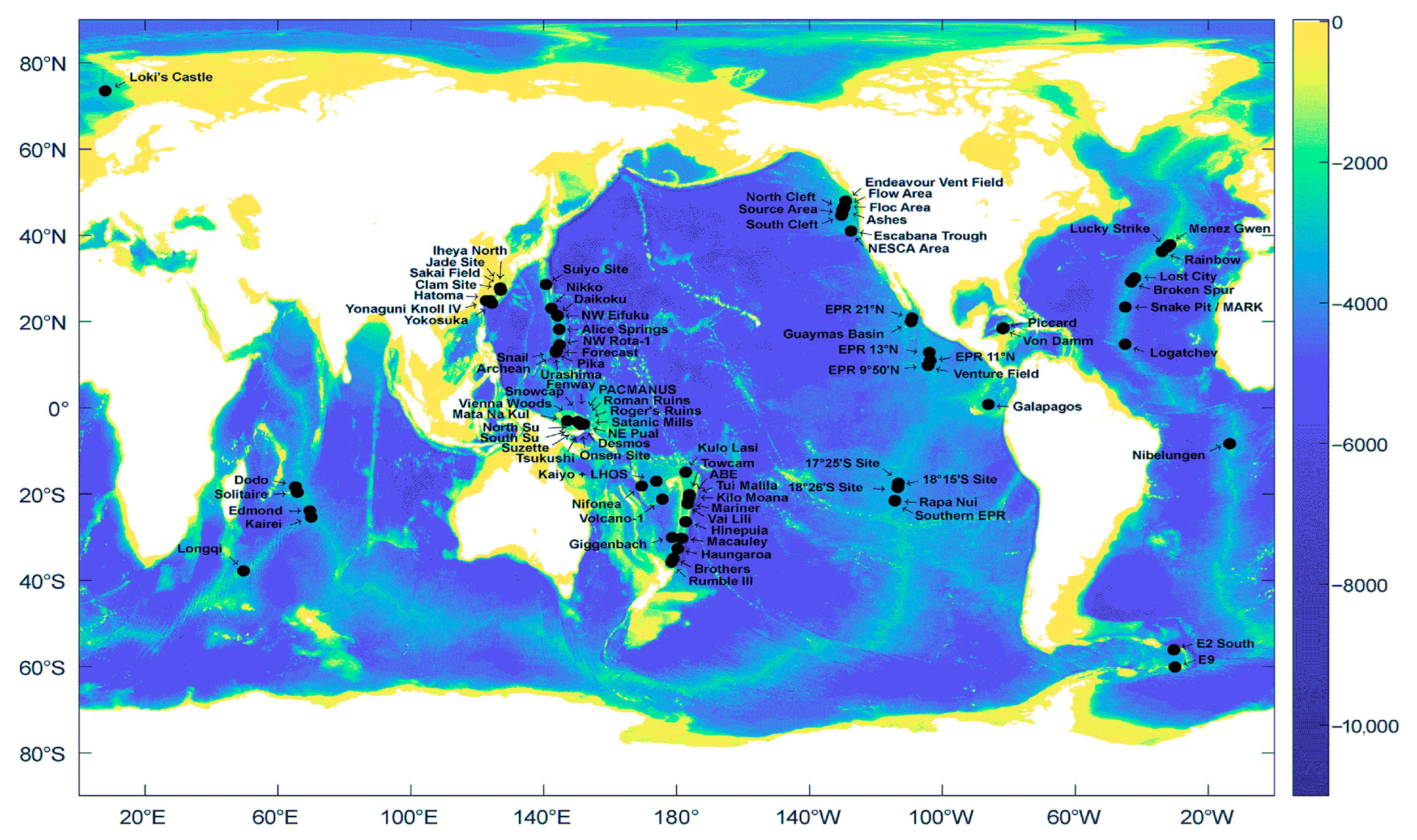
In deep-sea environments, hydrothermal vents, and cold seeps release H2S-rich reducing fluids, which serve as the energy source for chemoautotrophic primary production in diverse benthic ecosystems. Vents and seeps both use chemosynthesis, but because of their diverse geochemical characteristics, they create two different kinds of ecosystems. While methane seeps are found along continental margins and subduction zones where hydrocarbons escape from buried reservoirs beneath the sediment, hydrothermal vents are located at mid-ocean ridges, back-arc basins, and other volcanically and tectonically active regions of the seafloor. Hydrothermal vent fluids generally exhibit greater toxicity than those from seeps, driven by elevated H2S levels. These variations in chemical composition are a direct consequence of the differing geological frameworks of each system (Figure 1) [47,48,49,50,51].
Special attention is given to the Manus Basin, which contains fifteen vent fields within a relatively small region [52].
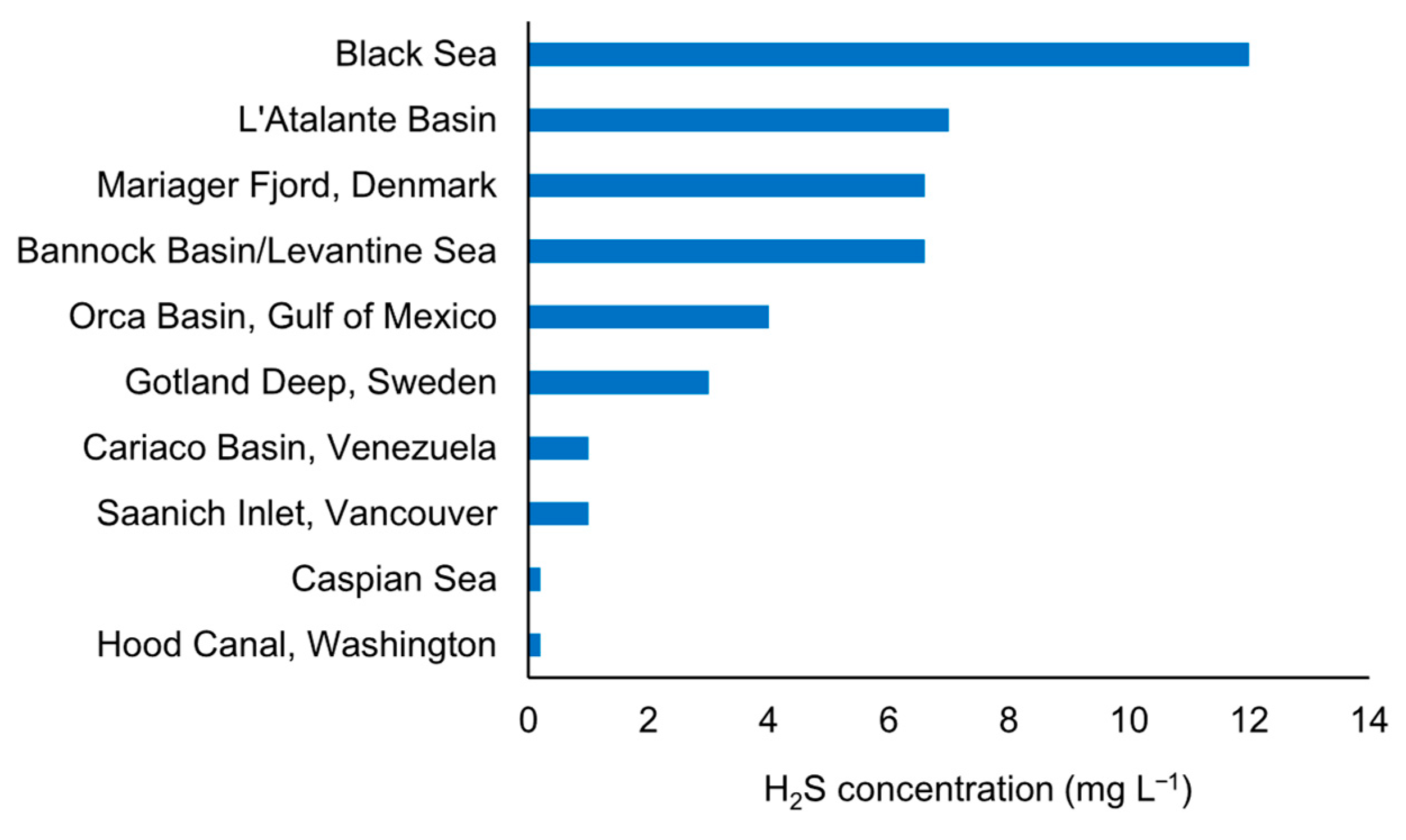
Anaerobic waters around the world contain various concentrations of sulfides. For example, sulfide levels up to 6.5 mg/L have been detected in Israeli groundwater. Similar values (7.5 mg/L) have been observed in groundwater sources in Jordan and Syria, while sulfide concentrations in the Kuban region of southern Russia can exceed 10 mg/L [53,54,55,56].
Figure 2 was constructed by the authors based on data reported in [52,53,54,55,56,57,58,59,60,61,62,63].
High concentrations of H2S (Figure 2), reaching up to 200 mg/L, have been detected in groundwater systems globally. H2S-containing waters are found across the United States, Mexico, Australia, southern Pakistan, and East Africa. In the Black Sea, sulfide concentrations reach up to 12 mg/L in the deeper anaerobic zones [57,58,59,60,61,62,63].

3. Electrochemical Methods for Hydrogen Production from Hydrogen Sulfide (H2S)

In contrast to chemical or thermochemical processes, the reverse reaction in electrochemical systems proceeds at a negligible rate, meaning it can be disregarded [64,65]. Consequently, the conversion of H2S is assumed to be complete and irreversible [14,66]. Another significant advantage of electrochemical procedures is their ability to operate at extremely low reagent concentrations. For instance, effective H2S conversion has been demonstrated at levels as low as 8–10 mg/L, such as those found in the anoxic waters of the Black Sea [1,67,68]. The production of hydrogen via aqueous electrolysis is a well-established and mature technology. Several types of processes exist, including alkaline electrolysis with inorganic membranes, alkaline aqueous electrolysis, high-temperature electrolysis, intermediate-temperature (200–400 °C) electrolysis, and solid polymer electrolyte (SPE) electrolysis [66]. Some of these systems can be adapted for
H2S electrolysis; however, electrode passivation by sulfur remains a critical challenge not encountered in conventional water electrolysis. Since 1989 three distinct methods for
H2S electrolysis have been studied: direct electrolysis, indirect electrolysis [69], and electrochemical membrane reactor (EMR) systems [66,68,69,70,71,72,73,74,75,76,77,78,79,80,81,82,83,84,85,86,87,88].
The electrolysis of H2S is thermodynamically more favorable compared with water electrolysis as is shown in Equations (2) and (3):
H2O → H2 + 1/2 O2    ΔG = 237.1 kJ/mol (25 °C)
H2S → H2 + 1/2 S2    ΔG = 33.1 kJ/mol (25 °C

3.1. Direct Electrochemical H2S Splitting

Compared with the electrolytic decomposition of water, the direct electrolysis of H2S requires significantly less energy. In aqueous solutions, this process leads to the formation of H2 at the cathode via a reduction reaction and elemental sulfur (S0) at the anode through an oxidation process. Although high-purity H2 can be produced at the cathode, the accumulation of sulfur on the anode surface causes significant passivation, which eventually impedes or completely halts the electrolysis process [4].
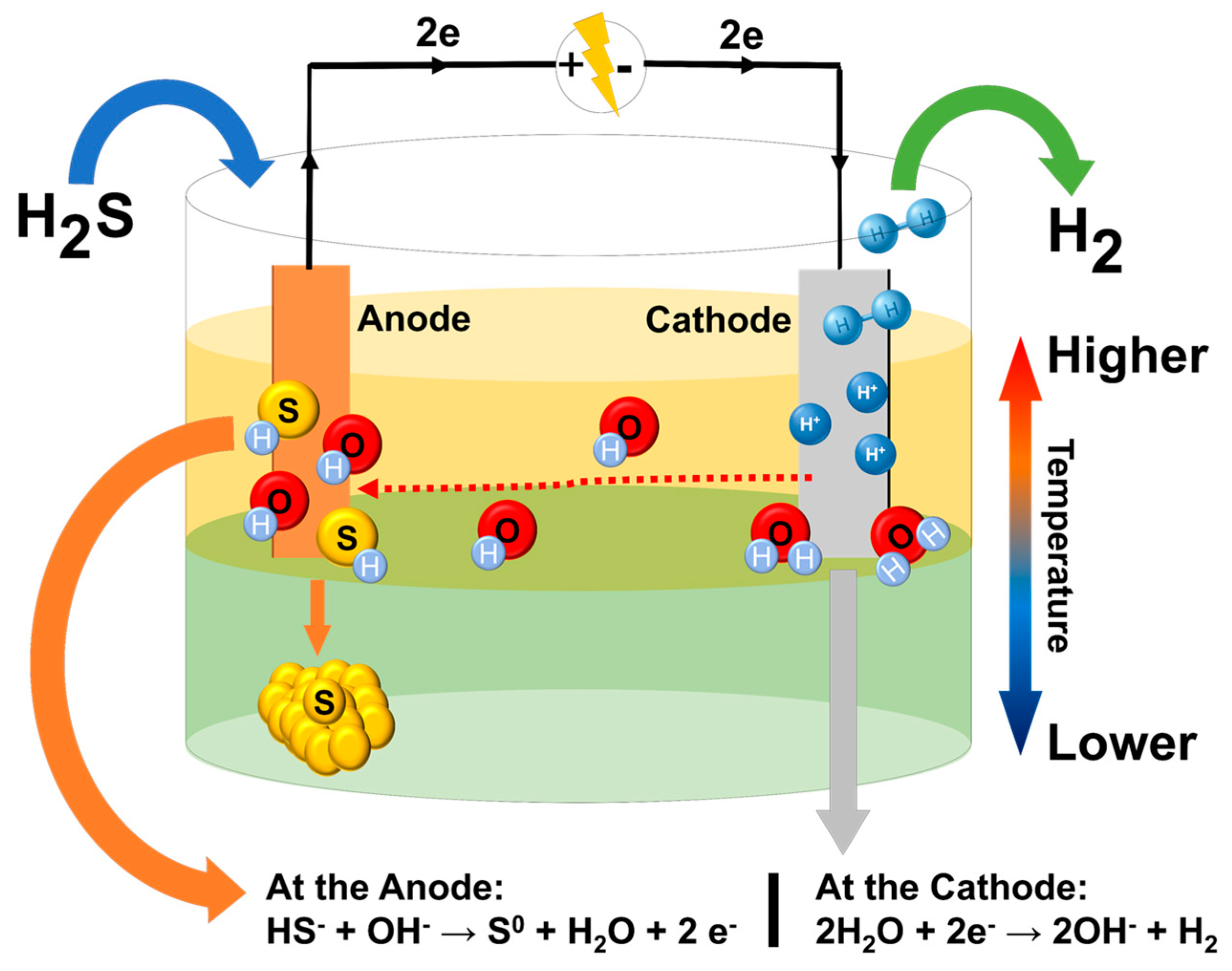
Alkaline electrolytes are frequently utilized in recent studies to develop catalysts for the direct SOR, ensuring that the unstable reactant H2S and its products remain in the aqueous phase. Research on the direct alkaline SOR focuses significantly on the effects of highly alkaline conditions on the stability and activity of electrocatalysts. High pH levels can potentially corrode electrode materials, leading to the leaching of active catalyst components into the electrolyte [69]. Additionally, catalyst performance is prone to degradation during long-term operation due to sulfur passivation following direct oxidation [70,71]. Consequently, catalytic design strategies have evolved to mitigate performance degradation caused by sulfur. In contrast to conventional catalysts prone to sulfur passivation, sulfur-tolerant materials enable stable SOR in effective H2S-splitting systems. The SOR is fundamental to H2S decomposition, with significant implications for both H2 generation and the removal of toxic H2S. Therefore, the development of efficient, durable, and sulfur-resistant electrocatalysts is crucial. Designing improved catalysts requires a thorough understanding of the SOR mechanism [72]. However, H2S electrolysis presents challenges due to the gas’s low solubility and the poor electrical conductivity of elemental sulfur. Typically, electrolysis is conducted in either acidic or alkaline electrolytes (Figure 3).
H2S electrolysis in an alkaline solution involves multiple chemical and electrochemical steps. In the alkaline medium, sulfur is formed at the anode, and hydrogen is released at the cathode, according to Equations (4)–(7):
Cathode: 2H2O + 2e → 2OH + H2
The hydroxyl ions react with dissolved HS ions to produce elemental sulfur at the anode:
Anode: OH + HS → H2O + S0 + 2e
Polysulfides are also formed at the anode:
2OH + 2HS → 2H2O + S22− + 2e
The deactivation of electrodes due to poisoning by various forms of elemental sulfur is the primary challenge preventing the commercialization of electrochemical H2S electrolysis.
In acidic media, the overall reaction is as follows:
H2S → S0 + H2
For the generation of thiosulfates, elemental sulfur undergoes further chemical reactions with sulfites or sulfides in the solution. Numerous intermediate reactions occur; a general representation is given in Equation (8):
SO32− + S0 ↔ S2O32−
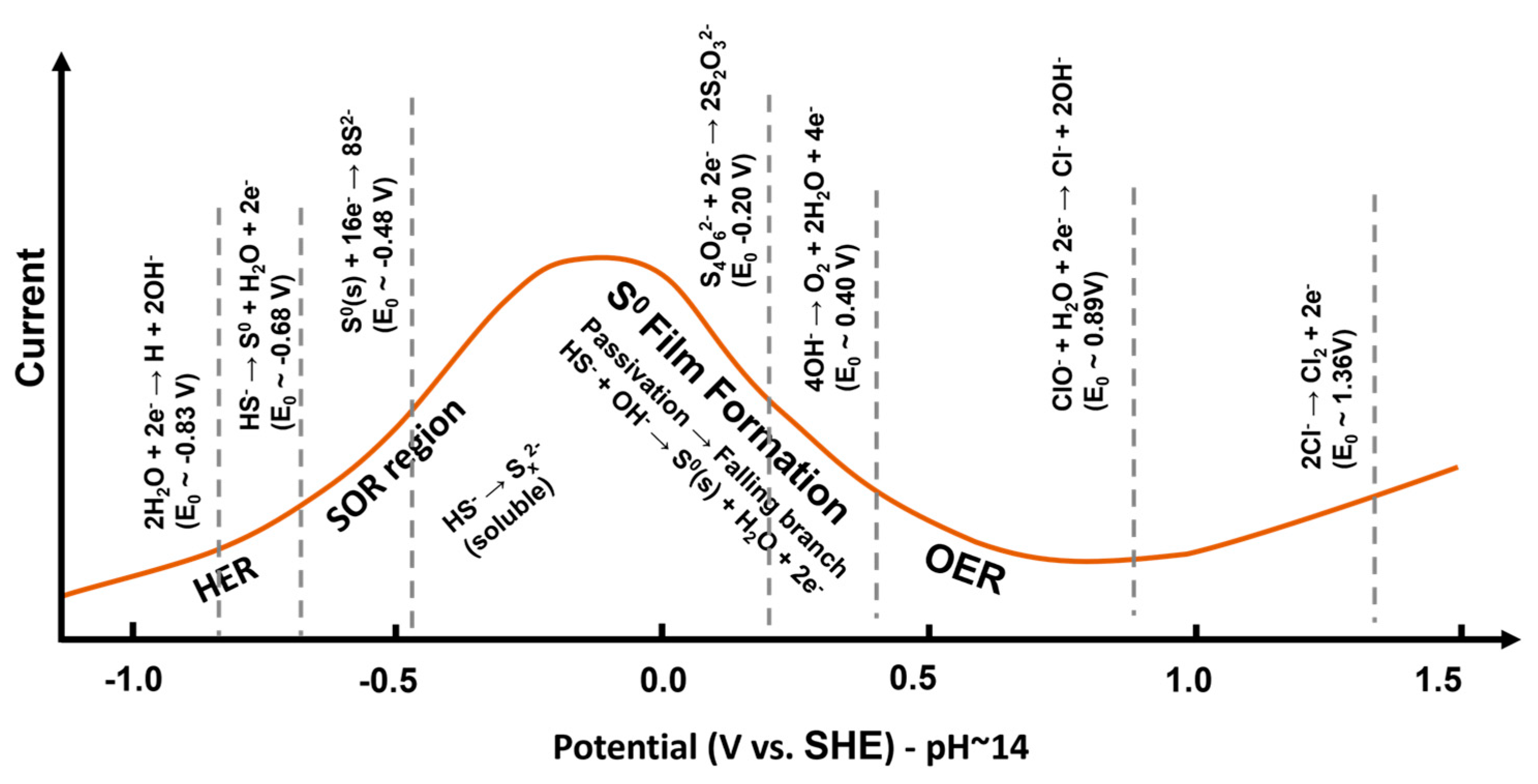
Nazari et al. identify key electrochemical processes in alkaline media (pH ≈ 14) with NaCl and H2S, including HER, sulfide oxidation (SOR) yielding S0, OER, and chlorine evolution, dependent on potential [32]. These reaction mechanisms and potential regions outlined in Figure 4, are crucial for distinguishing selective, non-corrosive processes from undesired competitive reactions.
Despite the much lower energy requirements for this decomposition compared to the decomposition of water, the system remains challenging to implement due to the passivation of the electrodes by sulfur, the difficulties in treating and removing sulfur, and the emergence of undesired secondary electrochemical reactions [14,72,73,74]. Several techniques—including the use of organic vapors and solvents [75], porous electrodes at higher temperatures, and higher concentrations of alkaline solutions—have been employed to reduce or eliminate sulfur deposition on the anode [7,67,68,76,77].

3.2. Indirect Electrochemical of H2S Splitting

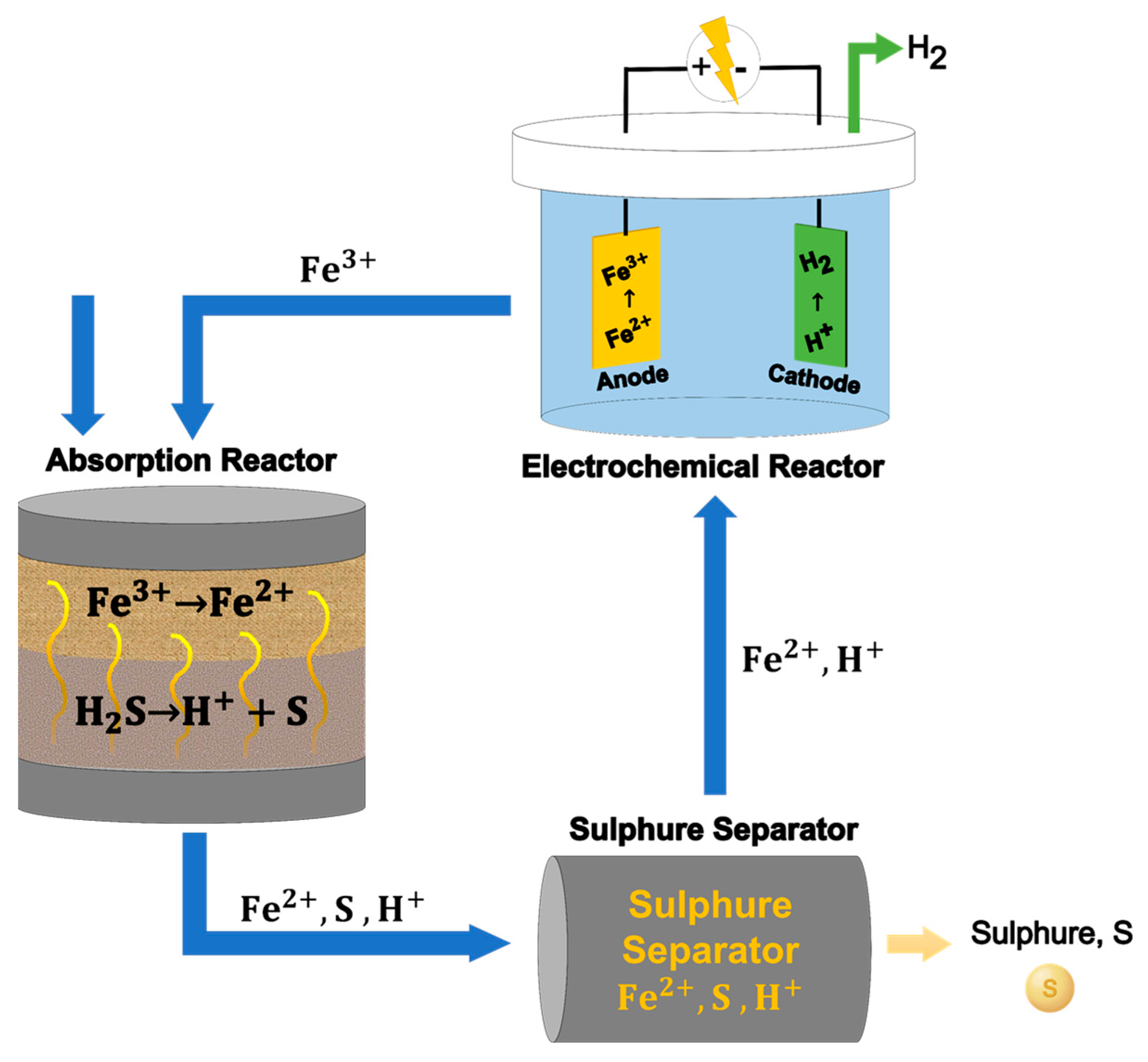
A two-stage electrochemical method for separating H2 and S is referred to as the indirect electrolysis of H2S. In the first stage, an intermediate product is created when H2S is oxidized through interaction with iodine or iron chelate. In the second stage, hydrogen is generated at the cathode via electrolysis, while the intermediate product is regenerated at the anode.
The advantage of the indirect electrolysis method is that sulfur extraction is facilitated, as the initial H2S reaction is decoupled from the electrolytic process (Figure 5) [78].
Indirect H2S conversion in an acidic solution was reported for the first time using the I3−/I redox couple [79]. Hydrogen gas is produced simultaneously with soluble triiodide (I3−), as shown in Equation (9). The H2S gas reacts with the electrolyte solution containing triiodide, resulting in an impure sulfur product recovered in a characteristic sticky, amorphous form. Subsequent recrystallization from toluene yields high-purity elemental sulfur. The reaction of H2S with iodine proceeds according to Equation (10). While the process is highly efficient for H2 production, it operates effectively only at high temperatures and current densities:
3H2O + I → IO3+ 3H2—electrochemically
3H2S + IO3 → 3H2O + 3S + I—chemically
In the case of indirect electrolysis of H2S with Fe3+/Fe2+ solution as the electrochemical intermediate for sulfur separation, a lower electrolysis voltage was obtained [15]. Among various types of electrolytic reactors utilizing iron chelates, the highest absorption of H2S has been achieved using the Fe-Cl hybrid process [80,81,82]. In this system, H2S is converted into elemental sulfur and hydrogen by absorption into acidic ferric chloride (FeCl3). It reacts with Fe3+ to produce solid elemental sulfur while reducing Fe3+ to Fe2+. The resulting FeCl2 is then oxidized back to FeCl3 via electrolytic regeneration, simultaneously producing H2 at the cathode.
Similar to iron, the VO2+/VO2+ redox couple in an acidic solution oxidizes H2S to elemental sulfur. The intermediate is then regenerated anodically, while hydrogen is produced at the cathode, according to the following reactions (Equations (11)–(14)) [80]:
Absorption reaction
2(VO2)+ + 2H+ + H2S → 2(VO2)+ + 2H2O + S↓
Electrolysis reaction
Anode: 2(VO2)+ + 2H2O → 2(VO2)+ + 4H+ + 2e
Cathode: 2H+ + 2e → H2
Overall: H2S → S↓ + H2
The standard Gibbs free energy change (G0) of the absorption reaction is negative. The standard electrode potential E0 of (VO2)+/(VO)2+ is 0.991 V, the E0 of (S/S2−) is 0.142 V, and the potential difference for H2S absorption is 0.849 V. The theoretical voltage required for the electrochemical process is slightly over 1.0 V. Therefore, using (VO2)+/(VO)2+ as an electrochemical intermediate—which forms the foundation of this experimental work—is theoretically feasible [81].
Parametric analysis, conducted to ascertain how operational parameters affect the absorption and electrochemical reactions, indicates that H2S absorption increases with temperature, exceeding 90% at 50 °C. At 45 °C, the current efficiency of the electrolysis reaction can reach 97% with extended electrolysis time. In the aqueous electrolyte, the concentration of (VO)2+ is limited to less than 0.65 mol/kg, while the optimal proton concentrations are 7 mol/kg in the H2O system [80,81].
A three-phase indirect electrolysis (solid–liquid-gas) system utilizing CS2-N and Ni-Mo2C has been developed to efficiently split H2S into elemental sulfur and valuable H2. The benefits of Ni-Mo2C, a porous metallic material, include a high-porosity architecture, excellent stability, evenly distributed Ni with adjustable concentrations (2–10 wt%), and efficient H2S adsorption/activation capabilities. Additionally, the CS2-N medium exhibits exceptional sulfur solubility, current responsiveness, and electrochemical activity. As a heterogeneous redox mediator, solid-phase Ni-Mo2C has shown exceptional electrocatalytic performance, achieving an H2S removal efficiency of up to 99% and elemental sulfur recovery in the liquid phase (yield up to 95%). Concurrently, H2 is generated in the gas phase (~1.32 mL min−1), resulting in a promising three-phase indirect electrolysis process [88].
The indirect approach for producing H2 and S from H2S via electrolysis has several key disadvantages, most of which are related to the highly corrosive acidic environment. The produced sulfur is often of low quality and requires additional purification (e.g., with toluene) at high temperatures to match the high-purity sulfur produced by the traditional Claus process. These factors render the process more expensive than direct electrolysis [75].

3.3. Electrochemical Membrane Reactor (EMR) Systems for H2S Splitting

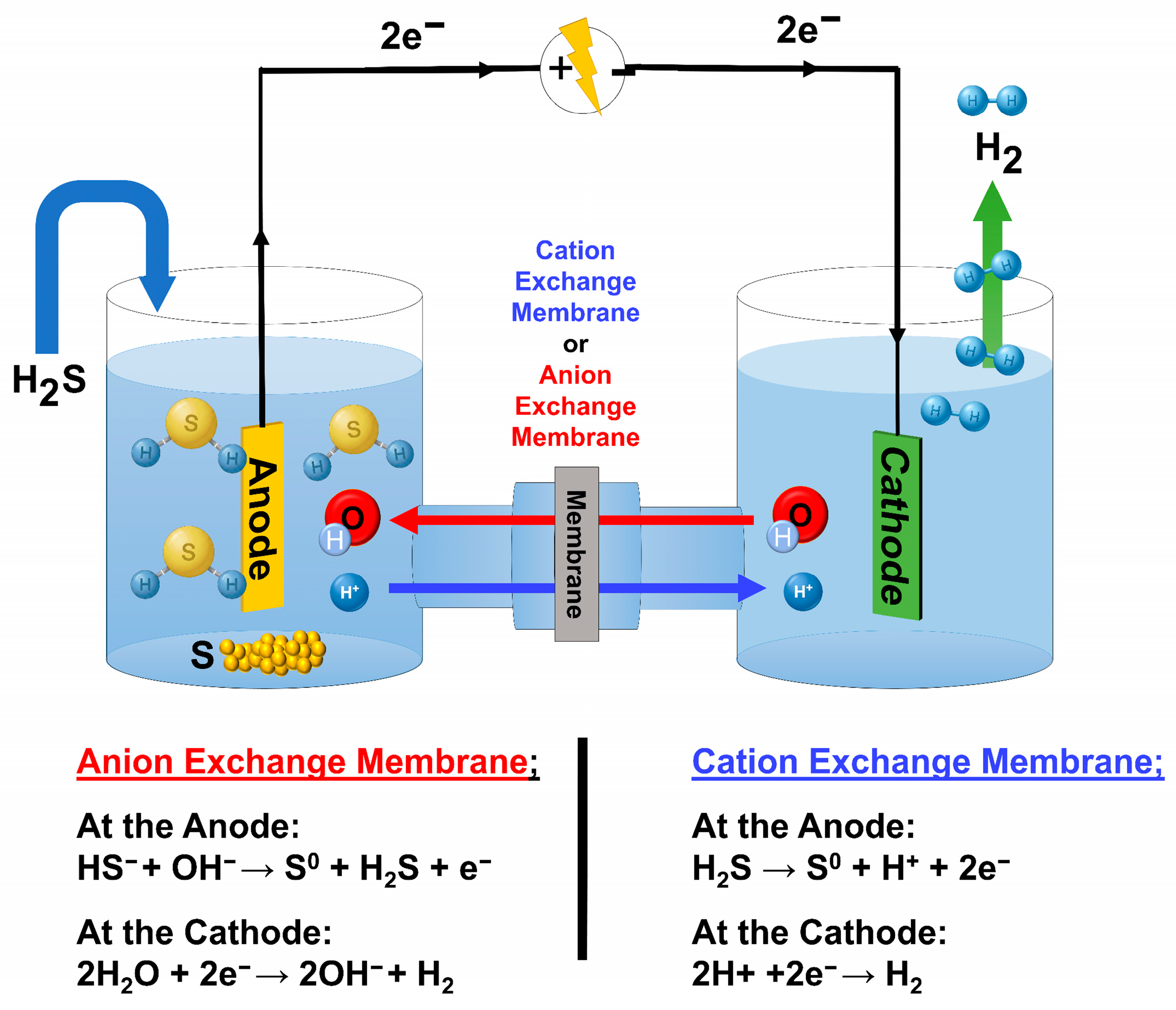
These methods utilize high-temperature electrochemical cells with ceramic (solid oxide) membranes. These proton-conducting membranes are often composed of zirconate doped with yttrium to enhance their ionic conductivity. The ability of such electrochemical reactors to decompose H2S and produce H2 has been extensively investigated. The anode represents the primary challenge, as it must be chemically stable, electrically conductive, and possess high catalytic activity. Chuang et al. deposited metal catalysts onto a CeO2 substrate using a wet impregnation technique. Their catalytic performance, in terms of activity and stability during the H2S decomposition process, was evaluated under both anhydrous and hydrated conditions. The catalysts with 20 wt% and 30 wt% Co loading on CeO2 exhibited the best performance, based on their physicochemical and electrochemical evaluations. These catalysts exhibit high H2S conversion rates both in the presence and absence of H2O. The conversion rates are comparable to those reported for thermal processes. The active components of the catalysts undergo in situ sulfurization upon exposure to the feedstock mixture, which accounts for their exceptional stability (Figure 6) [83].
Ipsakis et al. evaluated the potential for hydrogen production through the electrocatalytic decomposition of H2S sourced directly from the Black Sea. The process utilizes H2S found in saltwater to produce H2 and H2S. Based on a micro structured proton-conducting ceramic membrane, the reactor treats gaseous H2S diluted with 1 vol% water vapor. Yttrium-doped barium zirconate ((BaZr0.85Y0.15O3−δ) has been employed as a solid electrolyte. La0.6Sr0.4Co0.2Fe0.8O3−d perovskite-type oxides have been employed as cathodes, while transition metal catalysts with Co, Ni, Fe, and Cu supported by Ceria and LaCrO3 composites have been investigated as anode materials. At temperatures between 873 and 1123 K, Co/CeO2 composites exhibited superior H2S conversion in both wet and dry environments. Thermodynamically, the presence of water promotes H2 production, leading to higher yields [84].
An H2S-O2–proton-conducting solid-state electrochemical cell was investigated. The cell was operated in both fuel cell and electrolysis modes for extended periods at temperatures of 120–145 °C and pressures ranging from 235 to 510 kPa. In fuel cell mode, the system yielded electricity, steam, and liquid sulfur. Operating at elevated pressures ensured that the Nafion membrane remained hydrated, preventing dehydration at the working temperatures. MoS2, Pd/C, Pt/C, and Pd-Pt/C anode catalysts, incorporated with 35% PTFE-treated carbon, demonstrated excellent stability and durability. The anode catalyst sites remained unobstructed and resistant to sulfur poisoning. Furthermore, the membrane was impermeable to H2S, ensuring high selectivity [83].
In addition to optimizing seawater resources for low-energy hydrogen production, the hybrid seawater electrolysis system provides an environmentally friendly pathway for sulfur removal and industrial wastewater management. However, challenges such as catalyst poisoning and corrosion—driven by sulfur precipitates and seawater salts—hinder the development of highly active and stable electrocatalysts [85].
The electrolytic oxidation of H2S is a promising energy conversion method that facilitates the recovery of pollutants, providing high-value sulfur compounds in addition to H2 [86].

4. Advancing Electrode Materials for H2S Electrolysis

The electrocatalytic decomposition of H2S represents a viable strategy for simultaneous hydrogen production and environmental remediation. However, this H2 production technology remains under-investigated, primarily due to the scarcity of cost-effective and highly efficient electrocatalysts. Furthermore, the scientific community has insufficiently addressed the challenges posed by the extremely hazardous and abundant H2S waste generated by industrial processes [7].
Investigating the electrolysis of pure water, as well as streams containing CO2, H2S or other impurities, is becoming increasingly critical. Such processes enable the synthesis of various value-added products at significantly reduced cell voltages [87,88]. Indirect H2S electrolysis focuses on identifying innovative redox mediators to minimize electron transfer overpotential, thereby preventing sulfur passivation and its accumulation on the electrode surface. Most reported systems for H2S decomposition via indirect electrolysis rely on homogeneous redox mediators in alkaline solutions or monoethanolamine organic solvents. However, these systems often face difficulties in mediator recovery and poor sulfur solubility [22,23]. An alternative approach involves the use of redox electrocatalysts (redox mediators) combined with sulfur-soluble organic solvents, such as CS2. The design of cost-effective, robust catalysts and electrolyte solvents with high electrical conductivity and sulfur solubility is essential for sustainable H2 production. Such systems stabilize electrode by preventing sulfur buildup. For instance, the system proposed by Liu et al. addresses the “sulfur passivation” challenge by utilizing a CS2-based cosolvent electrolyte that keeps the sulfur dissolved during the reaction [22,88,89].
Based on the materials presented in Table 1—specifically sulfides, phosphides, and MOF-derived catalysts—the development of attractive electrocatalysts, combined with sulfur-dissolving electrolytes, represents a promising pathway to overcome passivation and yield valuable products such as elemental sulfur and polysulfides.
The characteristics of state-of-the-art electrocatalysts for aqueous H2S electrolysis are presented in Table 1. The main experimental conditions such as electrolyte/membrane type, operating temperature (Temp.), current density (j), Faradaic efficiency (FE), onset potential (Eonset) V vs. RHE for SOR, and durability-are summarized.
The electrocatalytic performance metrics presented in Table 1 indicate that 3D-structured catalysts achieve maximum Faradaic efficiency (FE) values of 98–100% in direct electrolysis, while exhibiting favorable onset potentials and sustained long-term stability. In electrochemical membrane systems, sulfide and selenide-based catalysts show high FE values between 97.4% and 98%. Notably, the onset potential for sulfide catalysts align closely with the theoretical thermodynamic values required for H2S electrolysis. The data for indirect electrolysis suggest that MOF-derived phosphide catalysts are highly effective for the HER during H2S splitting.

5. Technical Economic Analysis and Scale-Up Prospects

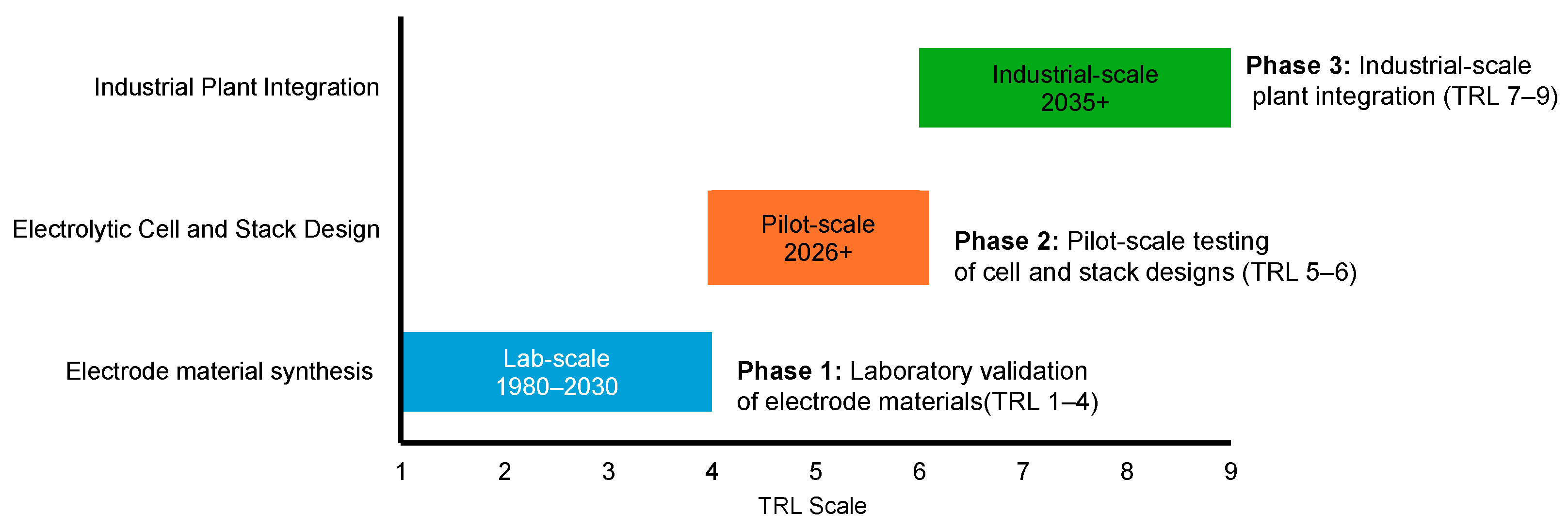
The transition of H2S electrolysis-based hydrogen production from laboratory research to industrial application requires addressing critical engineering and economic barriers. Based on the literature reviewed, Figure 6 presents a roadmap for the technological development of the process, divided into three phases according to Technology Readiness Levels (TRL).
Figure 7 was constructed by the authors based on the analyzed literature and recent technological advancements [1,2,3,4,5,6,7,8,9,10,11,12,13,14,15,16,17,18,19,20,21,22,23,24,25,26,27,28,29,30,31,32,33,34,35,36,37,38,39,40,41,42,43,44,45,46,47,48,49,50,51,52,53,54,55,56,57,58,59,60,61,62,63,64,65,66,67,68,69,70,71,72,73,74,75,76,77,78,79,80,81,82,83,84,85,86,87,88,89,90,91,92,93,94,95,96,97,98,99,100,101,102,103,104,105,106,107].

5.1. Scale-Up Challenges

While Phase 1 (TRL 1–4) focuses on the development of advanced electrode materials, the transition to Phase 2 (TRL 5–6) requires optimization electrolysis cell and stack designs. The primary challenges in this stage are related to the stability of electrodes in aggressive sulfide environments and the management of anodic sulfur passivation. The implementation of self-supporting electrodes and innovative flow configurations is essential to maintain high current densities under industrial conditions. Beyond the technical challenge of electrode passivation, the industrial scaling of H2S electrolysis is further complicated by stringent safety regulations and logistical constraints; the high toxicity and flammability of H2S necessitate specialized infrastructure and high initial investment in safety protocols, which can offset the lower energy costs of the process [27]. The transition toward industrial-scale H2S splitting is supported by the high performance of modified cobalt phthalocyanine catalysts, which deliver 152 mA cm−2 in simulated seawater with high efficiency. This evidence supports the transformation of environmental hazards into energy assets, suggesting that natural H2S reservoirs can be effectively harnessed for clean hydrogen production without compromising electrochemical stability [32]. Overcoming the efficiency losses typical of industrial scaling requires significant reductions in internal resistance; the observed drop in impedance and charge transfer resistance as current density increases directly addresses this challenge. By maintaining faster reaction kinetics and lower interfacial resistance at operational voltages, the H2S-FeCl3 hybrid system presents a viable strategy for minimizing long-term operational costs (OPEX) in large-scale hydrogen infrastructure [11].

5.2. Economic Challenges

The projected levelized cost of H2 by alkaline electrolysis of H2S would be significantly lower than that of conventional water electrolysis, mainly due to the lower energy consumption. Given the theoretical water decomposition voltage of 1.23 V, for H2S sulfide it is only about 0.17–0.21 V. At the current time, considering the cost of electricity, for pilot-scale industrial production of hydrogen from hydrogen sulfide LCoH: would be between €1.50 and €3.00 per kg. For comparison, conventional alkaline electrolysis of water in Europe averages between €4.30 and €10.50/kg according to the European Hydrogen Observatory. The energy efficiency for hydrogen sulfide 3–5 kW/h kg H2 is over 10 times lower than conventional water electrolysis 50–55 kW/h per kg H2. The CAPEX (Capital Expenditure) ratio for existing alkaline electrolyzers is between €600 and €1200/kW. Industrial electrolyzers for H2S electrolysis may require more expensive materials in their production due to overcoming passivation and corrosion such as electrode refinement, which may increase the investment by about 10–15%. The resulting by-products such as polysulfides and sulfur (€0.30–€0.60/kg) would contribute to the additional operating costs for cleaning up the necessary increased operating costs by €0.30–€0.60/kg [103].
Hybrid configurations combining double-pass reverse osmosis desalination with renewable hydrogen plants present a robust solution for enhancing system autonomy in isolated regions. Research indicates that the financial burden of water treatment is marginal compared to the total hydrogen production cost, thereby validating the economic sustainability of such coupled systems in environments facing water scarcity [104].
According to Lashgari et al., implementing copper-based anodes in direct alkaline electrolysis enables the cost-effective conversion of toxic H2S into hydrogen fuel and valuable CuS semiconductors, with an estimated cost of 3–6 USD/kg H2. This co-production strategy improves economic feasibility by generating valuable byproducts alongside hydrogen production [105].

5.3. Future Roadmap

As shown in Figure 6, pilot trials (Phase 2) are expected to intensify after 2026, with a primary focus on long-term operational stability. In January 2026, a large-scale industrial demonstration project, developed under the supervision of Academician Li Kang at the Dalian Institute of Chemical Physics (DICP), Chinese Academy of Sciences, successfully concluded its pilot phase [106].
Full industrial integration (Phase 3, TRL 7–9) is projected for the period beyond 2035, when hydrogen and sulfur separation technologies are expected to reach maturity, allowing for their seamless incorporation into large-scale gas processing and wastewater treatment plants.

6. Conclusions

There is a strong potential for hydrogen production through the electrochemical splitting of hydrogen sulfide (H2S) present as an effluent in the anode stream. Efficient H2S splitting is feasible in both flow-cell and zero-gap configurations utilizing membrane electrode assemblies (MEAs). Notably, flow-cell systems allow for the separate utilization of catholyte and anolyte, enhancing operational flexibility. Electrolysis systems utilizing H2S, Na2S, and other sulfur-containing electrolytes significantly reduce anodic polarization. This drives the overall cell potential below 1.5 V, resulting in substantially lower power requirements compared to conventional alkaline (KOH) or seawater electrolysis. These advantages in anodic polarization can be coupled with CO2 reduction, enabling the simultaneous mitigation of two significant sources of environmental pollution. The development of advanced CS2-solvents, combined with improved redox mediators, will enhance the efficiency and stability of electrodes used to produce sulfur, polysulfides, and hydrogen from H2S.
Recent developments in 3D catalysts have shown great promise for sulfide oxidation in direct electrolysis. These materials achieve exceptional Faradaic efficiencies of 98–100% and maintain stability for over 300–500 h. Specifically, the sulfide, phosphide, and metal oxide catalysts reviewed here represent a major step forward in developing efficient electrodes for H2S splitting.
Despite its potential, there are several drawbacks to converting H2S via electrochemical processes, primarily due to the degradation of electrode materials and sulfur poisoning. To overcome the passivation of the anode—caused by insoluble sulfur products that block active catalytic sites—catalysts based on nickel compounds, metal selenides, and metal sulfides may be utilized. However, long-term material stability and durability tests remain essential. Recent advancements in electrocatalysts for the SOR and HER, combined with process optimizations (e.g., zero-gap vs. flow-cell configurations), are expected to overcome these disadvantages. Ultimately, it is feasible to develop a cost-effective and environmentally sustainable electrochemical process for simultaneous H2S elimination and H2 production.
In conclusion, the efficiency of hydrogen sulfide electrolysis depends heavily on the chosen method and materials. Direct electrolysis offers low operating voltage [78], while membrane systems provide high-purity products like sulfur and polysulfides. However, the high cost and sensitivity of membranes remain barriers to industrial use. Alternatively, indirect electrolysis is effective for treating sulfur-rich industrial waters [68] and reduces electrode passivation [17], despite its higher voltage (1.5 V) and mediator degradation [12]. The primary challenge for direct methods—electrode passivation—can be addressed through pulse electrolysis [107] and the future development of nickel-based composite catalysts.
Future commercialization will be accelerated by integrating Machine Learning and High-Throughput Screening to rapidly identify sulfur-tolerant catalysts, moving beyond traditional trial-and-error methods. The implementation of ‘Digital Twins’ and IoT-based sensors allow for the real-time optimization of operational parameters to minimize passivation. This technological integration also plays a crucial role in ensuring industrial safety and enhancing system reliability. Ultimately, coupling AI-driven forecasting with decentralized H2S splitting units offers a sustainable and flexible solution for industrial waste management. This approach effectively addresses environmental challenges while simultaneously meeting the growing global demand for green hydrogen.

Author Contributions

Conceptualization, I.T. and D.U.; methodology, I.T., M.S.Y., G.R., K.P. and D.U.; software, I.T., M.S.Y. and D.U.; validation, M.S.Y., G.R. and K.P.; formal analysis, D.U.; investigation, I.T., M.S.Y., G.R., K.P. and D.U.; resources, I.T., M.S.Y. and D.U.; data curation, I.T. and D.U.; writing—original draft preparation, I.T. and D.U.; writing—review and editing, I.T. and D.U.; visualization, I.T., C.T., M.S.Y. and G.R.; supervision, D.U.; project administration, D.U. and M.S.Y.; funding acquisition, I.T. and D.U. All authors have read and agreed to the published version of the manuscript.

Funding

This research received no external funding.

Data Availability Statement

The raw data supporting the conclusions of this article will be made available by the authors on request.

Acknowledgments

The authors gratefully acknowledge the institutional and administrative support provided by the Bulgarian Academy of Sciences (Bilateral agreement between BAS and TÜBİTAK-International cooperation within the framework of inter-academic contracts and agreements) for the project titled “Flow through Electrolysis of H2S for Hydrogen Production (H2SEA),” with number IC-TR/8/2023-2025. Support is also acknowledged from the 8th Call of the Southeast Asia—Europe Joint Funding Scheme (JFS) 2023 for Technology, Research, and Innovation (SEA-EU JFS JFS23STI-186) and the National Science Fund at the Bulgarian Ministry of Education and Science of the project No KP-6-DO 02/3-05.12.2024, “Advanced Sea Water Electrolysis Technologies for Production of Green Hydrogen”—SeaWhy, and support received from ITU BAP MGA-44040 and the “The Scientific and Technological Research Council of Turkey (TUBITAK)”, through project numbers 224N741 and 123N020.

Conflicts of Interest

The authors declare no conflicts of interest.

Abbreviations

The following abbreviations are used in this manuscript:
OEROxygen evolution reaction
HERHydrogen evolution reaction
SORSulfide oxidation process
PTFEPolytetrafluoroethylene
EMRElectrochemical membrane reactor
FEFaradaic efficiency

References

  1. Naman, S.A.; Ture, I.E.; Veziroglu, T.N. Proto-type of replicable industrial Black Sea H2S gas extraction plant. In Macro-Engineering Seawater in Unique Environments; Beltran, V., Latorre, P., Eds.; Springer: Berlin/Heidelberg, Germany, 2011; pp. 289–301. [Google Scholar] [CrossRef]
  2. Gabriel, D.; Deshusses, M.A. Retrofitting existing chemical scrubbers to biotrickling filters for H2S emission control. Proc. Natl. Acad. Sci. USA 2003, 100, 6308–6312. [Google Scholar] [CrossRef]
  3. Hansen, N.G.; Rindel, K. Bioscrubber for treating waste gases from waste water treatment plants. In Bioreactors for Waste Gas Treatment; Springer: Dordrecht, The Netherlands, 2001; pp. 285–298. [Google Scholar] [CrossRef]
  4. Predicala, B.; Nemati, M.; Stade, S.; Laguë, C. Control of H2S emission from swine manure using Na-nitrite and Na-molybdate. J. Hazard. Mater. 2008, 154, 300–309. [Google Scholar] [CrossRef]
  5. Demirbas, A. Hydrogen sulfide from the black sea for hydrogen production. Energy Sources Part A 2009, 31, 1866–1872. [Google Scholar] [CrossRef]
  6. Wang, Z.; Wang, Q.N.; Ma, W.; Liu, T.; Zhang, W.; Zhou, P.; Li, M.; Liu, X.; Chang, Q.; Zheng, H.; et al. Hydrogen Sulfide Splitting into Hydrogen and Sulfur through Off-Field Electrocatalysis. Environ. Sci. Technol. 2024, 58, 10515–10523. [Google Scholar] [CrossRef]
  7. Garg, K.; Kumar, M.; Kaur, S.; Nagaiah, T.C. Electrochemical Production of Hydrogen from Hydrogen Sulfide Using Cobalt Cadmium Sulfide. ACS Appl. Mater. Interfaces 2023, 15, 27845–27852. [Google Scholar] [CrossRef]
  8. Kumar, P.; Date, A.; Das, R.K.; Shabani, B. Electrolyser and fuel cell waste-heat-powered desalination enabling water–energy circularity in renewable hydrogen systems: An experimental proof of concept. Appl. Therm. Eng. 2026, 293, 130429. [Google Scholar] [CrossRef]
  9. Dan, M.; Zhang, Q.; Yu, S.; Prakash, A.; Lin, Y.; Zhou, Y. Noble-metal-free MnS/In2S3 composite as highly efficient visible light driven photocatalyst for H2 production from H2S. Appl. Catal. B Environ. 2017, 217, 530–539. [Google Scholar] [CrossRef]
  10. Ishaq, M.; Dincer, I. Hydrogen production from hydrogen sulfide via a uniquely designed electrolysis process: Experimental investigation. Fuel 2026, 406, 137096. [Google Scholar] [CrossRef]
  11. Modi, K.H.; Sahatiya, P.; Pataniya, P.M.; Sumesh, C.K. Vertically aligned NiFeP@Ni nanotubes for efficient electrochemical production of green hydrogen and sulfur: Circular economy meets sustainable energy. Renew. Energy 2026, 256, 124070. [Google Scholar] [CrossRef]
  12. Chauhan, D.; Ahn, Y.H. Alkaline electrolysis of wastewater and low-quality water. J. Clean. Prod. 2023, 397, 136613. [Google Scholar] [CrossRef]
  13. Jiang, Y.; Liang, P.; Zhang, C.; Bian, Y.; Sun, X.; Zhang, H.; Huang, X. Periodic polarity reversal for stabilizing the pH in two-chamber microbial electrolysis cells. Appl. Energy 2016, 165, 670–675. [Google Scholar] [CrossRef]
  14. Cassol, G.S.; Shang, C.; An, A.K.; Khanzada, N.K.; Ciucci, F.; Manzotti, A.; Westerhoff, P.; Song, Y.; Ling, L. Ultra-fast green hydrogen production from municipal wastewater by an integrated forward osmosis-alkaline water electrolysis system. Nat. Commun. 2024, 15, 2617. [Google Scholar] [CrossRef]
  15. Wei, J.; Wu, X. The potential of coupled water electrolysis with electrochemical wastewater treatments. Int. J. Hydrogen Energy 2024, 68, 745–754. [Google Scholar] [CrossRef]
  16. Kim, K.; Lee, C. Recent progress in electrochemical hydrogen sulfide splitting: Strategies for enabling Sulfur-tolerant anodic reactions. Chem. Eng. J. 2023, 469, 143861. [Google Scholar] [CrossRef]
  17. Chen, C.; Geng, X.; Liu, H.; Chen, Y.; Deng, X. Advances in Electrocatalytic Hydrogen Sulfide Splitting for Sulfur Recovery: From Reaction Mechanisms to Application. Catalysts 2025, 15, 1019. [Google Scholar] [CrossRef]
  18. Kumar, M.; Nagaiah, T.C. Efficient production of hydrogen from H2S via electrolysis using a CoFeS2 catalyst. J. Mater. Chem. A 2022, 10, 7048–7057. [Google Scholar] [CrossRef]
  19. Kumar, M.; Nagaiah, T.C. Pure hydrogen and sulfur production from H2S by an electrochemical approach using a NiCu–MoS2 catalyst. J. Mater. Chem. A 2022, 10, 13031–13041. [Google Scholar] [CrossRef]
  20. Reverberi, A.P.; Klemeš, J.J.; Varbanov, P.S.; Fabiano, B. A review on hydrogen production from hydrogen sulphide by chemical and photochemical methods. J. Clean. Prod. 2016, 136, 72–80. [Google Scholar] [CrossRef]
  21. Liu, G.; Wang, Y.; Guo, A. Cobalt-doped cadmium sulfide boosting three-phase indirect electrolysis decomposition. J. Phys. Conf. Ser. 2025, 3064, 012015. [Google Scholar] [CrossRef]
  22. Ma, Y.; Jin, X.; Hu, Y.; Huang, Q.; Wang, Z. Recovery of hydrogen and sulfur by electrolysis of ionized H2S in an amine-containing organic electrolyte with highly temperature-dependent sulfur solubility. Energy Fuel 2020, 34, 7756–7762. [Google Scholar] [CrossRef]
  23. Li, J.; Wang, R.; Dou, S. Electrolytic cell–assisted polyoxometalate based redox mediator for H2S conversion to elemental sulphur and hydrogen. Chem. Eng. J. 2021, 404, 127090. [Google Scholar] [CrossRef]
  24. Ateya, B.G.; Al-Kharafi, F.M. Anodic oxidation of sulfide ions from chloride brines. Electrochem. Commun. 2002, 4, 231–238. [Google Scholar] [CrossRef]
  25. Wei, J.; Wu, X. Electrochemical processes for simultaneous sulfur and energy recoveries from sulfide-containing wastewater. Sep. Purif. Technol. 2024, 348, 127621. [Google Scholar] [CrossRef]
  26. Batterman, S.; Grant-Alfieri, A.; Seo, S.H. Low level exposure to hydrogen sulfide: A review of emissions, community exposure, health effects, and exposure guidelines. Crit. Rev. Toxicol. 2023, 53, 244–295. [Google Scholar] [CrossRef]
  27. Vakili, M.; Koutník, P.; Kohout, J. Addressing Hydrogen Sulfide Corrosion in Oil and Gas Industries: A Sustainable Perspective. Sustainability 2024, 16, 1661. [Google Scholar] [CrossRef]
  28. Yücel, M.; Soylu, B.B.; Ermiş, E.; Alımlı, N.; Gülmez, Z.A. The Black Sea as an Extreme Habitat of Earth’s Ocean: Biogeochemical Functioning, Unique Ecosystems, and Astrobiological Relevance. Annu. Rev. Earth Planet. Sci. 2026; in press. [CrossRef]
  29. Fakhraee, M.; Crockford, P.W.; Bauer, K.W.; Pasquier, V.; Sugiyama, I.; Katsev, S.; Raven, M.R.; Gomes, M.; Philippot, P.; Crowe, S.A.; et al. The history of Earth’s sulfur cycle. Nat. Rev. Earth Environ. 2025, 6, 106–125. [Google Scholar] [CrossRef]
  30. Eskova, A.I.; Isaeva, I.V. Diversity of Culturable Sulfate-Reducing Bacterial Consortia and Species Capable of Hydrocarbon Degradation Isolated from Marine Environments. Ecologies 2026, 7, 31. [Google Scholar] [CrossRef]
  31. Harshita; Chandra, S.; Banerjee, S.; Pandit, S.; Jadhav, D.A.; Gill, H.S.; Kankeu, E.F.; Rajeev, M. Sulfate-reducing bacteria as natural bioelectrochemical catalysts: Unveiling their role in extracellular electron transfer. Biocatal. Biotransform. 2026, 44, 125–148. [Google Scholar] [CrossRef]
  32. Nazari, F.; Türkmen, K.; Burat, A.K.; Yavuz, N.; Sarioglan, A.; Yazici, M.S. Electrocatalytic splitting of low-concentration H2S in alkaline seawater using cobalt phthalocyanine. Int. J. Hydrogen Energy 2026, 231, 154909. [Google Scholar] [CrossRef]
  33. Feng, Z.; Zhang, M.; Gu, C.; Zhang, A.; Wang, L. Seawater Electrolysis: Challenges, Recent Advances, and Future Perspectives. Adv. Sustain. Syst. 2025, 9, 2400689. [Google Scholar] [CrossRef]
  34. Kim, J.; Kim, J.; Seo, J.H.; Lee, J.K.; Oh, M.H.; Jang, H.W. Challenges and strategies in catalysts design towards efficient and durable alkaline seawater electrolysis for green hydrogen production. Energy Mater. 2025, 5, 500076. [Google Scholar] [CrossRef]
  35. Fayemi, O.E.; Atofarati, E.O.; Kanu-Uchenna, O.R.; Enweremadu, C.C. Seawater electrolysis for hydrogen production: Challenges, innovations, and future pathways. Int. J. Green Energy 2025, 1–22. [Google Scholar] [CrossRef]
  36. Li, S.; Wang, K.; Wang, G.; Liu, L.; Liang, D.; Xie, Y.; Lv, X. Chlorine Evolution Suppression in Seawater Electrolysis: From Mechanistic Insights and Catalyst Design to Device-Level Innovations. ChemSusChem 2026, 19, e202502005. [Google Scholar] [CrossRef]
  37. Qu, J.; Chen, X.; Xie, H.; Gao, S.; Wang, D.; Yin, H. Anode electrolysis of sulfides. Proc. Natl. Acad. Sci. USA 2022, 119, e2202884119. [Google Scholar] [CrossRef]
  38. Zhang, L.; Chen, M.; Xiao, L.; Wu, Y.; Liu, Q.; Hu, G.; Liu, X. Recent Advancement in Electrocatalytic Water Splitting Facilitated by the Sulfide Oxidation Reaction. ACS Appl. Energy Mater. 2025, 8, 5612–5624. [Google Scholar] [CrossRef]
  39. Zhang, C.; Li, A.Z.; Yuan, B.J.; Liu, X.; Liu, Y.; Kong, K.; Shi, Q.; Zhang, Y.; Luo, Y.; Li, S.; et al. Electrochemical valorization of H2S in natural gas to sulfate under mild conditions. Nat. Commun. 2025, 16, 7175. [Google Scholar] [CrossRef]
  40. Gao, F.; Li, J.; Yang, C.; Zhang, W.; Huang, H.; Peng, Z.; Gong, T. Advances on research of H2S removal by deep eutectic solvents as green solvent. Nat. Gas Ind. B 2025, 12, 26–36. [Google Scholar] [CrossRef]
  41. Georgiadis, A.G.; Charisiou, N.; Yentekakis, I.V.; Goula, M.A. Hydrogen Sulfide (H2S) Removal via MOFs. Materials 2020, 13, 3640. [Google Scholar] [CrossRef]
  42. Zhang, L.; Qiu, Y.Y.; Sharma, K.R.; Shi, T.; Song, Y.; Sun, J.; Liang, Z.; Yuan, Z.; Jiang, F. Hydrogen sulfide control in sewer systems: A critical review of recent progress. Water Res. 2023, 240, 120046. [Google Scholar] [CrossRef]
  43. Zulkefli, N.N.; Veeran, L.S.M.; Noor Azam, A.M.I.; Masdar, M.S.; Wan Isahak, W.N.R. Effect of Bimetallic-Activated Carbon Impregnation on Adsorption-Desorption Performance for Hydrogen Sulfide (H2S) Capture. Materials 2022, 15, 5409. [Google Scholar] [CrossRef]
  44. M.D. Group. The Dangers of Hydrogen Sulfide Exposure. MDG Bio News 2023. Available online: https://www.mdgbio.com/news/the-dangers-of-hydrogen-sulfide-exposure/ (accessed on 18 February 2023).
  45. Aminuddin, M.S.; Bustam, M.A.; Johari, K. Latest technological advances and insights into capture and removal of hydrogen sulfide: A critical review. RSC Sustain. 2024, 2, 757–803. [Google Scholar] [CrossRef]
  46. Schovan, S.; McEachern, G.; Seeger, A.; Nguyen, V.V.; Burkes, B.; Adhikary, A.; Schweitzer, L.E. Remediation of Sulfides in Produced Waters of the Oil and Gas Industry Using Hydrogen Peroxide. Water 2024, 16, 1987. [Google Scholar] [CrossRef]
  47. Corliss, J.B.; Dymond, J.; Gordon, L.I.; Edmond, J.M.; von Herzen, R.P.; Ballard, R.D.; Green, K.; Williams, D.; Bainbridge, A.; Crane, K.; et al. Submarine Thermal Springs on the Galápagos Rift. Science 1979, 203, 1073–1083. [Google Scholar] [CrossRef]
  48. Van Dover, C.L.; German, C.R.; Speer, K.G.; Parson, L.M.; Vrijenhoek, R.C. Evolution and biogeography of deep-sea vent and seep invertebrates. Science 2002, 295, 1253–1257. [Google Scholar] [CrossRef]
  49. Govenar, B. Shaping vent and seep communities: Habitat provision and modification by foundation species. In The Vent and Seep Biota; Springer: Dordrecht, The Netherlands, 2010; pp. 403–432. [Google Scholar] [CrossRef]
  50. Le Bris, N.; Arnaud-Haond, S.; Beaulieu, S.; Cordes, E.; Hilario, A.; Rogers, A.; van de Gaever, S.; Watanabe, H. Hydrothermal vents and cold seeps. In First Global Integrated Marine Assessment; United Nations: New York, NY, USA, 2017; pp. 853–862. [Google Scholar] [CrossRef]
  51. Sun, Y.; Wang, M.; Zhong, Z.; Chen, H.; Wang, H.; Zhou, L.; Cao, L.; Fu, L.; Zhang, H.; Lian, C.; et al. Adaption to hydrogen sulfide-rich environments: Strategies for active detoxification in deep-sea symbiotic mussels, Gigantidas platifrons. Sci. Total Environ. 2022, 804, 150054. [Google Scholar] [CrossRef]
  52. Diehl, A.; Bach, W. MARHYS (MARine HYdrothermal Solutions) Database: A global compilation of marine hydrothermal vent fluid, end member, and seawater compositions. Geochem. Geophys. Geosyst. 2020, 21, e2020GC009385. [Google Scholar] [CrossRef]
  53. Hultsch, V.; Grischek, T.; Worch, E. Untersuchung der Bedeutung von Polysulfiden Für Die Trinkwasseraufbereitung Investigation of the Significance of Polysulfides for Drinking Water Treatment; Abschlussbericht BMBF 02WT9962/6; Technische Universität Dresden: Dresden, Germany, 2003; pp. 1–154. Available online: https://edocs.tib.eu/files/e01fb02/372525083.pdf (accessed on 22 May 2024).
  54. Kattan, Z. Effects of sulphate reduction and geogenic CO2 incorporation on the determination of 14C groundwater ages—A case study of the Palaeogene groundwater system in north-eastern Syria. Hydrogeol. J. 2002, 10, 495–508. [Google Scholar] [CrossRef]
  55. Zakharikhina, L.; Litvinenko, Y.; Ryndin, A.; Saburov, R.; Shevelev, S.; Vareljyan, G. Geochemical Characterization of Natural Groundwater on the Southern Slopes of the Caucasus Mountains on the Russian Black Sea Coast. Water 2022, 14, 2170. [Google Scholar] [CrossRef]
  56. Donner, J. Aufbereitung Schwefelwasserstoffhaltiger Wässer Durch Katalytische Oxidation an Porphyrinmodifizierten Kohlenstoffhaltigen Materialien. Ph.D. Dissertation, Technische Universität Dresden, Dresden, Germany, 2009. Available online: https://nbn-resolving.org/urn:nbn:de:bsz:14-ds-1236021478050-88453 (accessed on 20 March 2026).
  57. Yao, W.; Millero, F.J. The chemistry of the anoxic waters in the Framvaren Fjord, Norway. Aquat. Geochem. 1995, 1, 53–88. [Google Scholar] [CrossRef]
  58. Lamontagne, S.; Hicks, W.S.; Fitzpatrick, R.W.; Rogers, S. Sulfidic materials in dryland river wetlands. J. Mar. Freshw. Res. 2006, 57, 775–788. [Google Scholar] [CrossRef]
  59. Adams, D.D.; Ochola, S.O. A review of sediment gas cycling in lakes with reference to Lake Victoria. In The East African Great Lakes: Limnology, Palaeolimnology and Biodiversity; Springer: Dordrecht, The Netherlands, 2002; pp. 277–305. [Google Scholar] [CrossRef]
  60. Tobler, M.; Schlupp, I.; Heubel, K.U.; Riesch, R.; Garcia de Leon, J.F.; Giere, O.; Plath, M. Life on the edge: Hydrogen sulfide and the fish communities of a Mexican cave and surrounding waters. Extremophiles 2006, 10, 577–585. [Google Scholar] [CrossRef]
  61. Dohnalek, D.A.; FitzPatrick, J.A. The chemistry of reduced sulfur species and their removal from groundwater supplies. J. Am. Water Work. Assoc. 1983, 75, 298–308. [Google Scholar] [CrossRef]
  62. Eremeeva, L.V.; Degterev, A.K. Estimation of the upwelling rate of deep waters in the Black Sea from the H2S vertical distribution. Phys. Oceanogr. 1993, 4, 85–87. [Google Scholar] [CrossRef]
  63. Chang, Q.; Huang, L.; McKenzie, K.; Carere, C.; Stott, M.; Nicol, A.; Dempsey, D. Influence of hydrogen sulfide on gas-water interface in underground hydrogen storage. J. Energy Storage 2024, 97, 112766. [Google Scholar] [CrossRef]
  64. Schuetz, G.H. Processes for the indirect splitting of water. Int. J. Hydrogen Energy 1985, 10, 439–446. [Google Scholar] [CrossRef]
  65. Steinberg, M.; Cheng, H.C. Modern and prospective technologies for hydrogen production from fossil fuels. Int. J. Hydrogen Energy 1989, 14, 797–820. [Google Scholar] [CrossRef]
  66. Zaman, J.; Chakma, A. Production of hydrogen and sulfur from hydrogen sulfide. Fuel Process. Technol. 1995, 41, 159–198. [Google Scholar] [CrossRef]
  67. Petrov, K.; Srinivasan, S. Low temperature removal of hydrogen sulfide from sour gas and its utilization for hydrogen and sulfur production. Int. J. Hydrogen Energy 1996, 21, 163–169. [Google Scholar] [CrossRef]
  68. Petrov, K.; Dimitrov, D.; Uzun, D. The Black Sea Problem—Possible Solutions; Lambert Academic Publishing: Saarbrücken, Germany, 2018. [Google Scholar]
  69. Ntagia, E.; Fiset, E.; da Silva Lima, L.; Pikaar, I.; Zhang, X.; Jeremiasse, A.W.; Prévoteau, A.; Rabaey, K. Anode materials for sulfide oxidation in alkaline wastewater: An activity and stability performance comparison. Water Res. 2019, 149, 111–119. [Google Scholar] [CrossRef] [PubMed]
  70. Anani, A.A.; Mao, Z.; White, R.E.; Srinivasan, S.; Appleby, A.J. Electrochemical Production of Hydrogen and Sulfur by Low-Temperature Decomposition of Hydrogen Sulfide in an Aqueous Alkaline Solution. J. Electrochem. Soc. 1990, 137, 2703–2709. [Google Scholar] [CrossRef]
  71. Yu, Z.; Deng, Z.; Li, Y.; Wang, X. Advances in Electrocatalyst Design and Mechanism for Sulfide Oxidation Reaction in Hydrogen Sulfide Splitting. Adv. Funct. Mater. 2024, 34, 2403435. [Google Scholar] [CrossRef]
  72. Bolmer, P.W. Method for Producing Hydrogen and Sulfur from Hydrogen Sulfide. U.S. Patent 3,249,522, 3 May 1966. [Google Scholar]
  73. Bolmer, P.W. Electrochemical Process for the Production of Hydrogen and Sulfur. U.S. Patent 3,409,520, 5 November 1968. [Google Scholar]
  74. Yang, H.; Long, X.; Liu, F.; Zhou, J.; Chen, N.; Feng, R.; Zhang, Y.; Fu, X.Z.; Luo, J.L.; Zhao, B. Interfacial engineering of defects-enriched RuO2-Co3O4-x/Cobalt Foam heterojunctions with modulated Ru-O-Co electronic bridges for long-term efficient sulfur removal and direct alkaline seawater hydrogen production. Appl. Catal. B Environ. Energy 2025, 366, 125037. [Google Scholar] [CrossRef]
  75. Chen, Y.; Wen, M.; Ding, T.; Fan, R.; Liu, Q.; Liu, Z.; Peng, Z. Recent progress in electrochemical decomposition of hydrogen sulfide for sulfur recovery and hydrogen production. Front. Chem. 2025, 13, 1698815. [Google Scholar] [CrossRef]
  76. Mao, Z.; Anani, A.; White, R.E.; Srinivason, S.; Appleby, A.J. A Modified Electrochemical Process for the Decomposition of Hydrogen Sulfide in an Aqueous Alkaline Solution. J. Electrochem. Soc. 1991, 138, 1299. [Google Scholar] [CrossRef]
  77. Petrov, K.M.; Uzun, D.R. Simultaneous Electrocatalytic Reactions of Sulphur Compounds. In Advances in Chemistry Research; Nova Science: Hauppauge, NY, USA, 2019; Volume 49, Chapter 2; Available online: https://novapublishers.com/shop/advances-in-chemistry-research-volume-49/ (accessed on 20 March 2026).
  78. Velazquez-Rizo, M.; Cavazos Sepulveda, A.C. Low-temperature direct electrochemical splitting of H2S. Front. Chem. Eng. 2023, 4, 1087435. [Google Scholar] [CrossRef]
  79. Kalina, D.W.; Maas, E.T. Indirect hydrogen sulfide conversion—I. An acidic electrochemical process. Int. J. Hydrogen Energy 1985, 10, 157. [Google Scholar] [CrossRef]
  80. Huang, H.; Yu, Y.; Chung, K.H. Recovery of Hydrogen and Sulfur by Indirect Electrolysis of Hydrogen Sulfide. Energy Fuels 2009, 23, 4420–4425. [Google Scholar] [CrossRef]
  81. Zhong, S.; Skyllas-Kazacos, M. Electrochemical behaviour of vanadium(V)/vanadium(IV) redox couple at graphite electrodes. J. Power Sources 1992, 39, 1–9. [Google Scholar] [CrossRef]
  82. Olson, D.C. Method of Removing Hydrogen Sulfide from Gases. U.S. Patent 4,443,423, 17 April 1984. [Google Scholar]
  83. Chuang, K.T.; Donini, J.C.; Sanger, A.R.; Slavov, S.V. A proton-conducting solid state H2S–O2 fuel cell: 2. Production of liquid sulfur at 120–145 °C. Int. J. Hydrogen Energy 2000, 25, 887–894. [Google Scholar] [CrossRef]
  84. Ipsakis, D.; Kraia, T.; Marnellos, G.E.; Ouzounidou, M.; Voutetakis, S.; Dittmeyer, R.; Dubbe, A.; Haas-Santo, K.; Konsolakis, M.; Figen, H.E.; et al. An electrocatalytic membrane-assisted process for hydrogen production from H2S in Black Sea: Preliminary results. Int. J. Hydrogen Energy 2015, 40, 7530–7538. [Google Scholar] [CrossRef]
  85. Oloore, L.E.; Adeoye, A.E.; Alotaibi, M.; Alansi, A.M.; Qasem, N.A.A.; Qahtan, T.F. From theory to practice: Evolving methods and challenges in green hydrogen production. Renew. Sustain. Energy Rev. 2026, 226, 116244. [Google Scholar] [CrossRef]
  86. Kong, W.; Mao, J.; Peng, Q.; Qin, S.; Shi, L.; Wu, A.; Xu, S.; Shi, J.; Liu, Y.; Ma, Y. Sustainable and efficient H2S electrolysis enhanced by acetate-based ionic liquid. Chem. Pap. 2025, 79, 7769–7785. [Google Scholar] [CrossRef]
  87. Wang, G.; Chen, A.; Chen, Y.; Qiao, F.; Wang, J.; Yang, N.; Zhang, H.; Wen, Z. Advancements in electrochemical synthesis: Expanding from water electrolysis to dual-value-added products. eScience 2025, 5, 100333. [Google Scholar] [CrossRef]
  88. Liu, G.; Wang, Y.; Duan, H.; Song, C.; Xia, W.; Liu, H.; Yu, F.; Guo, A. A Cosolvent Electrolyte Boosting H2S Decomposition via Three-Phase Indirect Electrolysis. Energy Environ. Mater. 2026, 9, e70123. [Google Scholar] [CrossRef]
  89. Li, X.; Yu, W.; Wang, Y.; Liu, R.; Yu, Q.; Hu, R.; Jiang, X.; Gao, Q.; Liu, H.; Yu, J.; et al. Metal-encapsulated nitrogen-doped carbon nanotube arrays electrode for enhancing sulfion oxidation reaction and hydrogen evolution reaction by regulating of intermediate adsorption. Chin. Chem. Lett. 2024, 35, 109166. [Google Scholar] [CrossRef]
  90. Zhang, M.; Guan, J.; Tu, Y.; Chen, S.; Wang, Y.; Wang, S.; Yu, L.; Ma, C.; Deng, D.; Bao, X. Highly efficient H2 production from H2S via a robust graphene-encapsulated metal catalyst. Energy Environ. Sci. 2020, 13, 119–126. [Google Scholar] [CrossRef]
  91. Sinha, N.; Das, C.; Pal, S.; Roy, P. Energy-Saving H2 Production through H2S Electrolysis Accompanying Solid Sulfur Recovery Using a Ni3S2/Ni3N Heterostructure as the Electrocatalyst. ACS Appl. Energy Mater. 2025, 8, 13631–13644. [Google Scholar] [CrossRef]
  92. Huo, J.; Liu, Q.; Liu, X.; Cheng, X.; Chen, D.; Li, N.; Liao, K.; Xu, Q.; Lu, J. Sulfur Recovery Assisted Electrochemical Water Splitting for H2 Production Using CoMo-Based Nanorod Arrays Catalysts. ACS Mater. Lett. 2024, 6, 2633–2641. [Google Scholar] [CrossRef]
  93. Ding, T.; Cen, N.; Fan, R.; Li, L.; Du, Y.; Tang, C.; Guo, H.; Li, Y.; Liu, Z. Fe2NiSe4 Nanowires Array for Highly Efficient Electrochemical H2S Splitting and Simultaneous Energy-Saving H2 Production. Processes 2024, 12, 2111. [Google Scholar] [CrossRef]
  94. Tan, H.; Yu, Z.; Zhang, C.; Lin, F.; Ma, S.; Huang, H.; Li, H.; Dehua, X.; Liu, L. Self-supported NiTe@NiMo electrodes enabling efficient sulfion oxidation reaction toward energy-saving and chlorine-free hybrid seawater electrolysis at high current densities. Energy Environ. Sci. 2025, 18, 1440–1451. [Google Scholar] [CrossRef]
  95. Ma, W.; Han, J.; Yu, W.; Yang, D.; Wang, H.; Zong, X.; Li, C. Integrating Perovskite Photovoltaics and Noble-Metal-Free Catalysts toward Efficient Solar Energy Conversion and H2S Splitting. ACS Catal. 2016, 6, 6198–6206. [Google Scholar] [CrossRef]
  96. Zhou, Q.; Shen, Z.; Zhu, C.; Li, J.; Ding, Z.; Wang, P.; Pan, F.; Zhang, Z.; Ma, H.; Wang, S.; et al. Nitrogen-Doped CoP Electrocatalysts for Coupled Hydrogen Evolution and Sulfur Generation with Low Energy Consumption. Adv. Mater. 2018, 30, 1800140. [Google Scholar] [CrossRef] [PubMed]
  97. Yang, M.; Ding, J.; Wang, Z.; Zhang, J.; Peng, P.; Liu, X. NiMo-based alloy and its sulfides for energy-saving hydrogen production via sulfion oxidation assisted alkaline seawater splitting. Chin. Chem. Lett. 2025, 36, 110861. [Google Scholar] [CrossRef]
  98. Huang, H.; Shang, J.; Yu, Y.; Chung, K.H. Recovery of hydrogen from hydrogen sulfide by indirect electrolysis process. Int. J. Hydrogen Energy 2019, 44, 5108–5113. [Google Scholar] [CrossRef]
  99. Zhang, M.; Wang, Z.; Jiang, L.; Bo, X.; Cui, X.; Deng, D. Highly Effective and Durable Integrated-Chainmail Electrode for H2 Production through H2S Electrolysis. Angew. Chem. Int. Ed. 2025, 64, e202502032. [Google Scholar] [CrossRef]
  100. Huo, J.; Jin, L.; Chen, C.; Chen, D.; Xu, Z.; Wilfred, C.D.; Xu, Q.; Lu, J. Improving the Sulfurophobicity of the NiS-Doping CoS Electrocatalyst Boosts the Low-Energy-Consumption Sulfide Oxidation Reaction Process. ACS Appl. Mater. Interfaces 2023, 15, 43976–43984. [Google Scholar] [CrossRef]
  101. Qin, S.; Peng, Q.; Kong, W.; Xue, R.; Xu, C.; Shi, J.; Liu, Y.; Ma, Y. Self-supported bifunctional P–CoSe/NF electrodes for high efficiency and durability hydrogen production coupled with sulfion valorization. Int. J. Hydrogen Energy 2024, 95, 840–848. [Google Scholar] [CrossRef]
  102. Mbah, J.; Krakow, B.; Stefanakos, E.; Wolan, J. Electrolytic Splitting of H2S Using CsHSO4 Membrane. J. Electrochem. Soc. 2008, 155, E166. [Google Scholar] [CrossRef]
  103. European Hydrogen Observatory. Cost of Hydrogen Production. Available online: https://observatory.clean-hydrogen.europa.eu/hydrogen-landscape/production-trade-and-cost/cost-hydrogen-production (accessed on 18 April 2026).
  104. Kumar, P.; Date, A.; Shabani, B. Techno-economic analysis of an integrated desalination-renewable-hydrogen system for zero-emission freshwater and electricity production. Energy Convers. Manag. 2026, 353, 121231. [Google Scholar] [CrossRef]
  105. Lashgari, M.; Sabeti-Khabbazmoayed, M.; Konsolakis, M. A cost-effective H2S pollutant electro-transformation to hydrogen clean fuel and value-added semiconducting materials: A green alternative to Claus process. J. Ind. Eng. Chem. 2023, 122, 326–333. [Google Scholar] [CrossRef]
  106. Chinese Green Innovation Project. Chinese Green Innovation Project Produces Hydrogen from Waste Gas. Available online: https://english.cas.cn/newsroom/cas-in-media/202601/t20260107_1145348.shtml (accessed on 7 January 2026).
  107. Hou, Z.; Ma, Y.; Wu, Y.; Cao, W.; Guo, Z.; Wang, C. Pulsed Electrolysis Prevents Sulfur Poisoning for Sustained Sulfide Valorization. Adv. Mater. 2026, e73096. [Google Scholar] [CrossRef]
Figure 1. Global distribution of vent fields included in the database. The dataset covers vent sites across all major geological features of the world’s oceans.
Hydrogen 07 00058 g001
Figure 2. Distribution of H2S concentrations in various anoxic marine basins and fjords.
Hydrogen 07 00058 g002
Figure 3. Schematic diagram of the direct electrolysis of H2S of simultaneous H2 production and sulfur recovery.
Hydrogen 07 00058 g003
Figure 4. Potential–reaction model for H2S reactions in the alkaline seawater environment (adapted from [32]).
Hydrogen 07 00058 g004
Figure 5. Mechanism of indirect electrochemical H2S splitting using a polyvalent metal ion redox couple (e.g., Fe3+/Fe2+) as an electron carrier.
Hydrogen 07 00058 g005
Figure 6. Schematic configuration of an Electrochemical Membrane Reactor (EMR) for continuous H2S splitting and simultaneous product separation.
Hydrogen 07 00058 g006
Figure 7. Roadmap for the transition of H2S electrolysis from laboratory-scale research to industrial applications.
Hydrogen 07 00058 g007
Table 1. Summary of recently reported electrocatalysts and their performance metrics for hydrogen production via H2S electrolysis.
H2S Electrolysis MethodType of Catalytic MaterialsCatalystsElectrolyte/MembraneTemp.
(°C)
J
(mA.cm−2)
FE
(%)
Eonset
(V)
Durability
(h)
Ref.
Direct
electrolysis
BifunctionalCo@N-CNTs/CC1 mol/L NaOH +
2% H2S
~25100-0.22120[89]
3DCoNi
(N-graphene)
1 M NaOH +
2% H2S
-30980.25500[90]
Hybrid CatalystsNi3N/Ni3S21 M H2S +
1 M NaOH
~2510-0.25100[91]
Metal oxideCoMoO4@NF1.0 M NaOH +
1.0 M Na2S
-100-0.27150[92]
BifunctionalNiFeP@Ni1 M NaOH +
0.5 M Na2S
~25288-0.3325[11]
SelenideFe2NiSe4/FeNi31.0 M NaOH +
1.0 M Na2S
100980.4413.3[93]
3D NanocompositesNiTe@NiMo/NF1 M NaOH +
0.5 M NaCl +
1 M Na2S·9H2O
~255001000.55300[94]
Indirect electrolysisPerovskite/
Phosphide
Mo–W–PNafion 117
0.5 M H2SO4
Fe/Fe redox mediators
-−10
HER
100
HER
−65
HER
12[95]
MOFN-doped CoP0.5 M H2SO4-−1095.7−4220[96]
Bifunctional, Metal oxideRuO2-Co3O4-x/
Co Foam
1.0 M NaOH/
Nafion 117/
1 M Na2S·9H2O
~25100930.32 1000[74]
-Co(C8H4N2)43 M Na2S + 0.3 M NaCl + 1 M KOH25152 mA/cm2 @ 0.75 V860.32 [32]
Metal sulfidenp-NiMo-S1 mol/L KOH 1 mol/L Na2S + seawater-50-0.36-[97]
-Graphite clothNafon® 117/2 M Na2S·9H2O70--0.7-[98]
Electrochemical Membrane systemsMetal sulfide/
bifunctional
CoFeS2Nafon® 117~80-97.80.23120[18]
Metal sulfideCoCd(x:y)SnNafion N-117~25-98.000.25120[7]
3D HybridNi@NC foam1 M NaOH +
1 M Na2S
~25100-0.31300[99]
Metal sulfideNiS-CoS/NiCo1.0 M NaOH +
1 M Na2S
-100-0.34-[100]
Metal phosphideP–CoSe/NF1.0 M NaOH + 1.0 M Na2S + Nafion-117~252097.40.362216[101]
-RuO2/p-C6H4Cl2/CsHSO4/Pt blackNa2S +
CsHSO4
150---8[102]
Disclaimer/Publisher’s Note: The statements, opinions and data contained in all publications are solely those of the individual author(s) and contributor(s) and not of MDPI and/or the editor(s). MDPI and/or the editor(s) disclaim responsibility for any injury to people or property resulting from any ideas, methods, instructions or products referred to in the content.