Communication

Effect of Blue Light on Coaggregation Between Fusobacterium nucleatum and Streptococcus sanguinis


1
Department of Prosthodontics, Goldschleger School of Dental Medicine, Tel Aviv University, Tel Aviv 6997801, Israel
2
Department of Endodontics and Dental Trauma, Rambam Health Care Campus, Haifa 3109601, Israel
*
Author to whom correspondence should be addressed.
Biophysica 2026, 6(3), 37; https://doi.org/10.3390/biophysica6030037
Submission received: 25 January 2026 / Revised: 22 March 2026 / Accepted: 23 April 2026 / Published: 30 April 2026

Abstract

Coaggregation by bridging bacteria such as Fusobacterium nucleatum is considered a key element in dental biofilm development and maturation. Previous studies showed that sublethal exposure to blue light caused damage to cell membrane integrity. The aim of the present study was to test the effect of blue light phototoxicity on this bacterium’s ability to coaggregate with the early colonizer Streptococcus sanguinis. Fusobacterium nucleatum bacterial cells were suspended in coaggregation buffer (CAB) and exposed to blue light (400–500 nm) for 0, 70, 140 and 280 s (i.e., fluences of 0, 96, 192 and 384 J/cm2, respectively). Following blue light exposure, samples were mixed with Streptococcus sanguinis suspensions and coaggregation was measured using a visual scale, spectrophotometric analysis and light microscopy. Results showed that blue light exposure significantly reduced the ability of Fusobacterium nucleatum to coaggregate with Streptococcus sanguinis. These results suggest that blue light antibacterial phototoxicity may be considered as a viable option in preventing dental biofilm-related conditions.

1. Introduction

Unlike the mucosal surfaces of the oral cavity, dental surfaces are non-shedding surfaces that allow, especially in the absence of proper oral hygiene practice, for the accumulation and maturation of the dental biofilm, a process that has been associated with oral malodor and gum disease [1,2]. Dental biofilm formation is a stepwise process that begins with the adsorption of salivary proteins to the tooth surface, creating the acquired pellicle. This pellicle enables early colonizing bacteria such as streptococci and actinomyces to adhere. When left undisturbed, filamentous bacteria such as Fusobacterium nucleatum may thrive, forming a bridge between the early colonizers and late colonizers that are often pathogenic and may induce inflammation [3,4].
The formation of a multispecies biofilm requires the connection of genetically distinct bacteria via coaggregation, a term traditionally involving a bond between a polypeptide adhesin on one bacterium and a carbohydrate receptor on the other [5]. There is ample evidence that coaggregation is specific between certain bacteria [6] and that it serves more than just a structural bond among multispecies biofilm, but it also enables metabolic integration of commensals and pathogens [7]. Thus, it provides a key step in dental biofilm maturation and resulting pathogenicity.
It has been shown that Fusobacterium nucleatum is able to coaggregate with Streptococcus sanguinis as well as other oral bacteria through specific membrane proteins such as RadD and Aid1 [3]. In a previous study, we showed that blue light phototoxicity may cause membrane damage in Fusobacterium nucleatum [8]. Therefore, we hypothesized that blue light may reduce the ability of Fusobacterium nucleatum to coaggregate with other bacteria. The aim of the present study was to test the effect of blue light phototoxicity on the ability of Fusobacterium nucleatum to coaggregate with Streptococcus sanguinis.

2. Materials and Methods

2.1. Light Source

A high-intensity non-coherent visible light, known in dentistry as the plasma-arc, i.e., a xenon light source supplemented with a filter (wavelengths of 400–500 nm) (Sapphire® Supreme, Den-Mat®, Lompoc, CA, USA) fitted with a 9 mm diameter light-guiding tip, was applied. The average light power (1500 mW/cm2, “SC” mode) was measured with the unit’s built-in power meter prior to each experiment.

2.2. Bacterial Strain and Growth Conditions

Fusobacterium nucleatum (PK1594) was cultured in brain heart infusion (BHI) broth at 37 °C for 72 h under anaerobic conditions using an anaerobic jar and kit (GasPack® EZ, BD, Winnersh, UK). Streptococcus sanguinis (PK488) was cultured in brain heart infusion (BHI) broth at 37 °C for 72 h under aerobic conditions.

2.3. Minimal Inhibitory Dose (MID)

In a preliminary experiment, Fusobacterium nucleatum suspensions (1 OD600, 106 CFU/mL, 200 µL) were placed in 48-well- plates separated from each other by a methylene blue-filled well in order to prevent “cross contamination” of light exposure between them and exposed to intermittent light (5 s) for a total exposure time of 0 to 280 s in 20 s intervals equivalent to fluences of 0 to 384 J/cm2. Treated samples (10 µL) were inoculated onto fresh BHI medium (200 µL) in a 96-well plate and incubated at 37 °C for 72 h under anaerobic conditions.
Consequently, 140 s (192 J/cm2, respectively) was determined as MID by measuring turbidity using a spectrophotometer (600 nm).

2.4. Experimental Protocol

Bacterial suspensions (1 mL) were spun down (5000× g, 5 min) and the supernatant was discarded and replaced with coaggregation buffer (CAB) [7] adjusted to a turbidity of 0.4 OD (600 nm). Fusobacterium nucleatum suspension samples (100 µL) were placed in glass tubes (12 × 75 mm, Kimble, Dover, OH, USA) under ambient conditions (25 °C) and exposed to intermittent blue light (5 s) from a constant distance (5 mm) for a total exposure time of 70,140 and 280 s [8] equivalent to light fluence of 96,192 and 384 J/cm2 as well as non-exposed controls. Following light exposure, samples were added with Streptococcus sanguinis suspension (100 µL) and vortexed for 30 s. Ten minutes [9] after vortexing, the bacterial mixtures were examined for coaggregation using (i) visual scale (0–4) scores [10] with descriptions as follows: 0-None, 1-Faint, 2-Mild, 3-Medium, 4-Strong, (ii) spectrophotometric (600 nm) analysis of the supernatant [10,11] and (iii) maximal particle size of the bacterial aggregates measured by digital analysis (ImageJ, NIH, https://bio.tools/imagej_nih, accessed on 22 March 2026) of methylene blue-stained bacterial mixture slides using light microscopy.

2.5. Statistical Analysis

To compare the effect of the various treatments on measured parameters, ANOVA was applied with post hoc pairwise comparisons according to Dunnett & Scheffe. Tests applied were two-tailed and p ≤ 0.05 was considered statistically significant. Experiments were conducted in six replicates.

3. Results

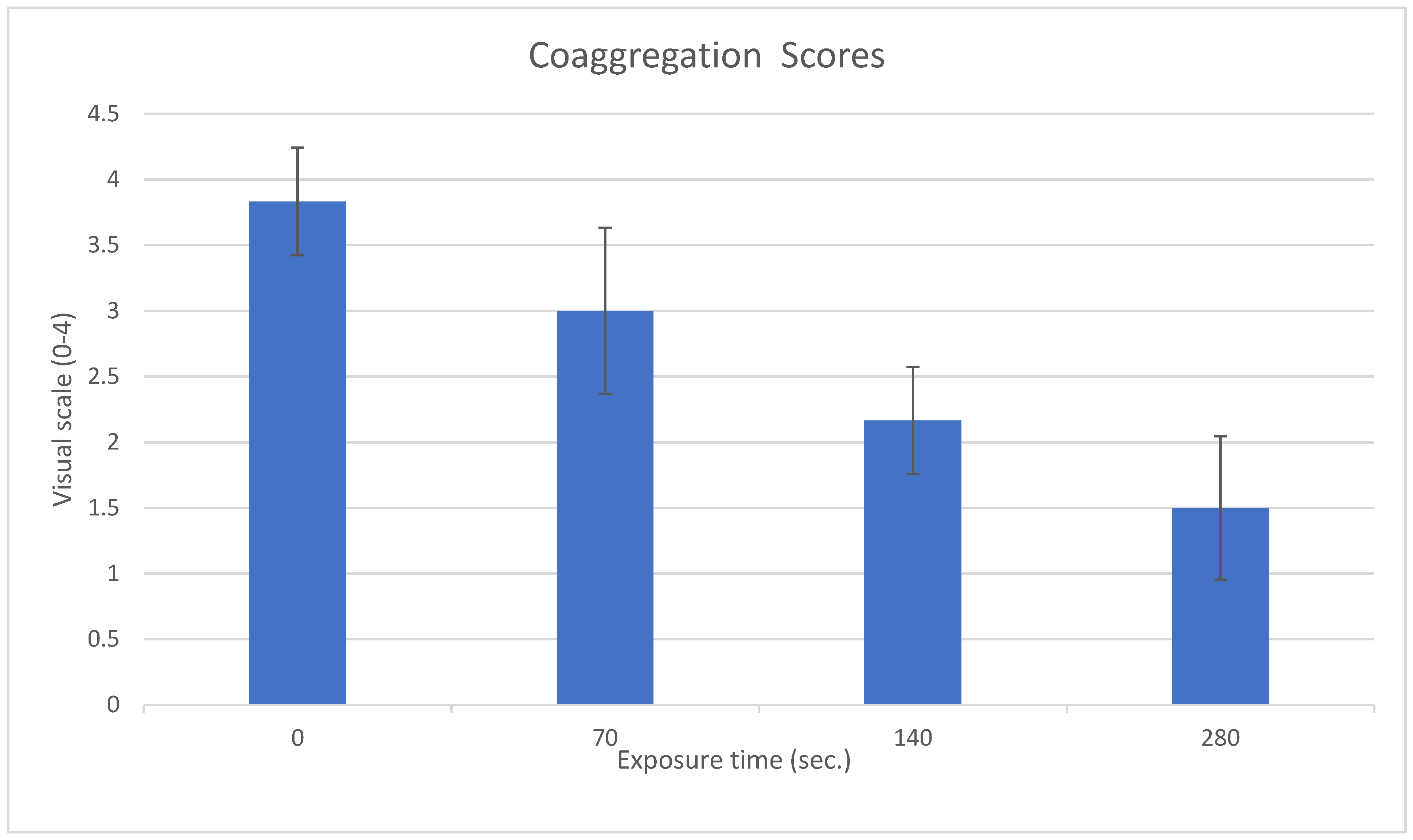
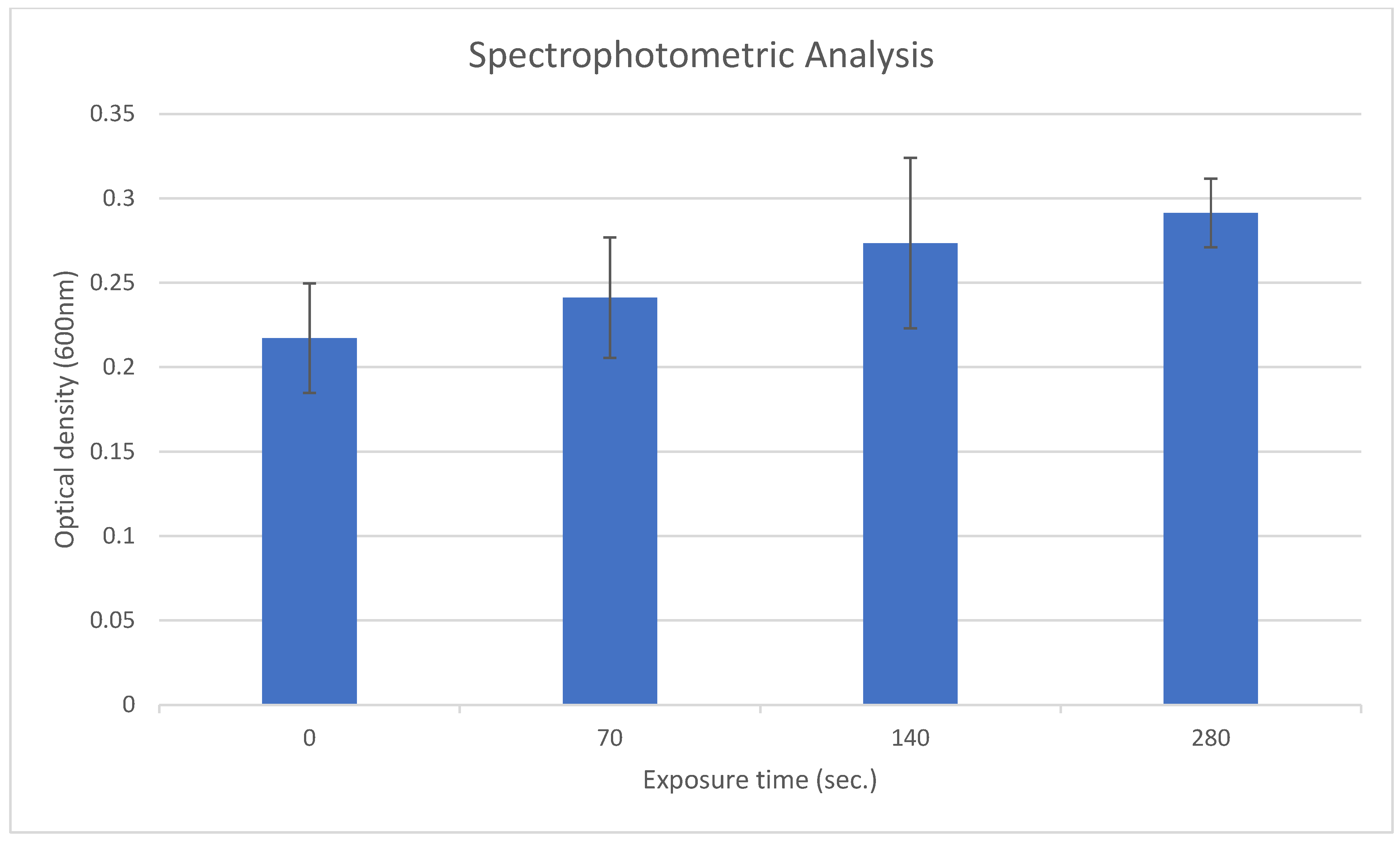
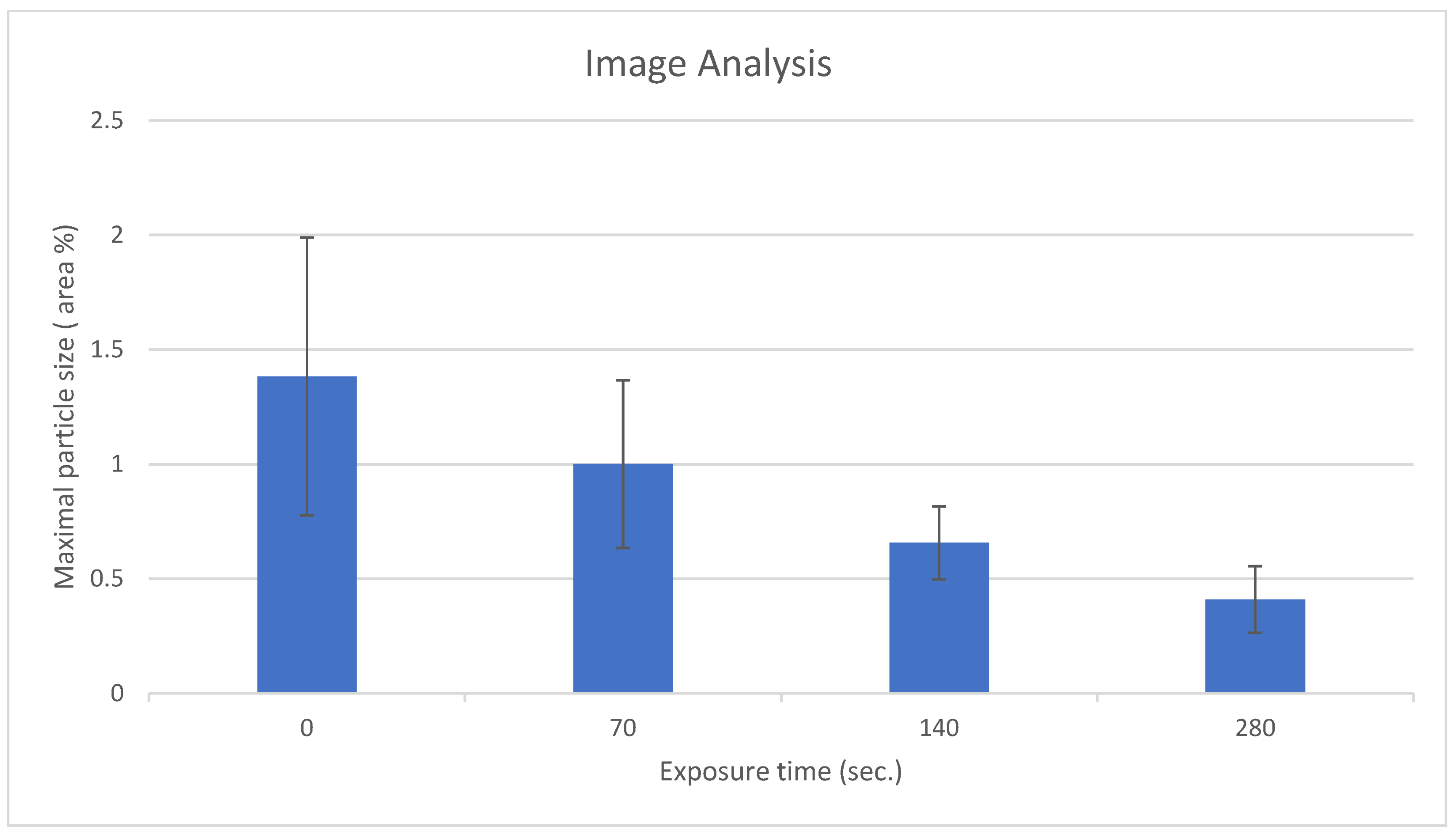
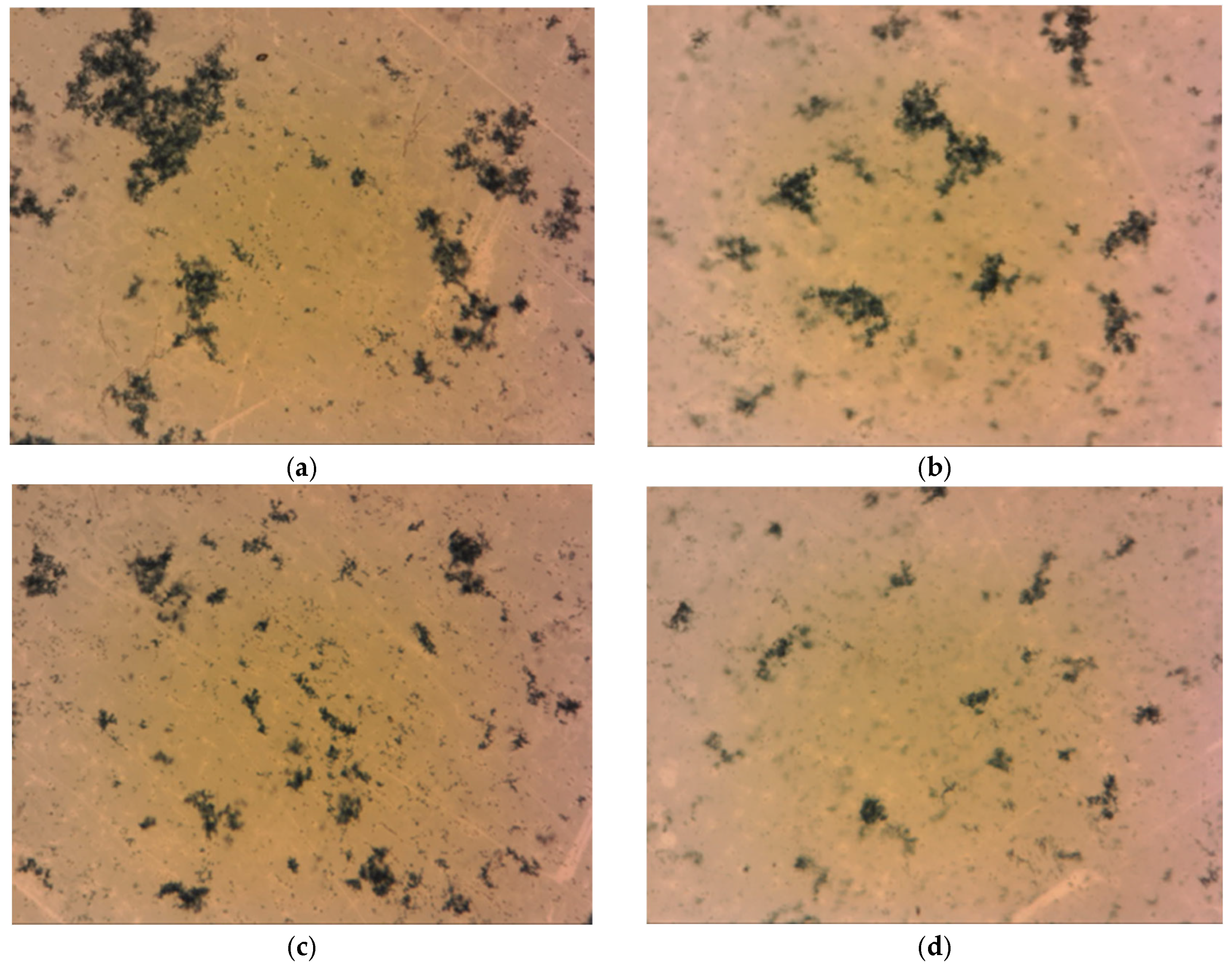
The effect of the various blue light exposure times on the coaggregation between Fusobacterium nucleatum and Streptococcus sanguinis was measured using a visual scale, spectrophotometry and light microscopy and is presented in Figure 1, Figure 2, Figure 3 and Figure 4. Both visual scale scores and image analysis showed a statistically significant reduction in coaggregation-related parameters following 140 s of blue light exposure, demonstrating a 44% reduction in visual scale scores (p = 0.006) and a 52% reduction in maximal particle size (p = 0.005) as compared with the non-exposed control. However, spectrophotometric measurements in the present study, although demonstrating an increase in turbidity concomitant with the increase in blue light exposure times, could only show statistically significant differences following 280 s of blue light exposure (p = 0.005).

4. Discussion

Understanding the impact of blue light phototoxicity on bacterial cells has emerged as a significant area of research, particularly concerning its effects on bacterial membrane integrity. Previous studies have demonstrated the damaging effects of blue light on cell membranes [11], particularly evident in Gram-negative bacteria such as Fusobacterium nucleatum and effective even in sublethal dosages (i.e., below MID exposures) [8,12,13].
Since coaggregation in Fusobacterium nucleatum is mostly mediated by adhesins, polypeptides that are situated on its outer membrane [14], we assumed that blue light irradiation of this bacterium would hinder its ability to form coaggregation. Indeed, the results of the present study confirmed that exposing Fusobacterium nucleatum to blue light reduces its ability to coaggregate with Streptococcus sanguinis.
Due to its capability to bind both early and late colonizers, Fusobacterium nucleatum has a key role in inter-species adherence and multispecies biofilm formation. It has two main outer membrane arginine-inhibitable adhesins called RadD and Aid1 that help this organism to bind Gram-positive bacteria such as Streptococcus sanguinis [15]. Other researchers have shown that eliminating the radD gene results in a notable decrease in the formation of biofilms composed of Fusobacterium nucleatum. Moreover, the Aid1 function relies on the presence of RadD for its activity [16,17]. It is possible that blue light-induced oxidative damage may play a part in this. Further study is warranted to determine whether the effect of blue light affects the function of any of these proteins.
Coaggregation plays a key role in the formation and maturation of dental biofilms [6], yet quantifying this process remains challenging. Despite its many limitations, such as being a semi-quantitative and subjective method, the visual scale remains the gold standard due to its simplicity and widespread acceptance [18]. More quantitative methods employing spectrophotometric measurements or light or fluorescent microscopy have been suggested [19,20]. However, these methods are often technically challenging and hard to reproduce. In the present study we employed two additional methods (spectrophotometry and light microscopy) adjacent to the visual scale. The spectrophotometric analysis seemed to be less sensitive to the differences between the various exposure times as compared with the visual scale scores. This may be attributed to the initial turbidity of the sample versus the percentage of coaggregated bacteria. On the other hand, the digital analysis of the light microscopy images, specifically regarding maximal particle size, showed promise.
The rising challenge of bacterial resistance to antimicrobial therapy underscores the pressing need for innovative approaches. In this context, exploring non-traditional antimicrobial agents such as light-based therapies suggests an alternative to conventional approaches. In this respect, targeting the bacterium’s ability to form and mature biofilms can be considered as an anti-virulence approach [18]. Thus, reducing the pathogenicity of the microorganism without promoting the emergence of resistance through natural selection.
While blue light therapy shows promise as an alternative therapeutic approach, it is essential to acknowledge its potential risks and limitations. Prolonged or excessive exposure to blue light has been associated with adverse effects on human health, including potential damage to retinal cells and soft tissues and disruption of circadian rhythms [19,21]. Additionally, there is still a need for further research to fully understand the long-term effects and safety profile of blue light therapy. Therefore, while exploring blue light phototoxicity in bacterial interactions holds potential, caution must be exercised, including the use of appropriate protective measures to ensure its safe and effective application in clinical settings.
Within the limitations of an in vitro study, the results of the present study suggest that the phototoxic effect of blue light on Fusobacterium nucleatum may hinder its ability to coaggregate. Thus, underscoring the potential impact of blue light phototoxicity on this bacterium, particularly in the context of dental biofilm-associated conditions. However, this topic warrants further investigation.

5. Conclusions

Findings of the present study suggest that blue light phototoxicity at a fluence of 192 J/cm2 may reduce the ability of Fusobacterium nucleatum to coaggregate by 50% and offer an alternative approach to preventing dental biofilm-related conditions.

Author Contributions

Conceptualization, N.S.; methodology, N.S. and U.J.; formal analysis, U.J. and S.L.; investigation, S.A. and S.D.; resources, S.L.; data curation, N.S., S.A. and S.D.; writing—original draft preparation, N.S.; writing—review and editing, S.D. and U.J.; visualization, S.D.; supervision, N.S.; project administration, U.J. All authors have read and agreed to the published version of the manuscript.

Funding

This research received no external funding.

Data Availability Statement

The original contributions presented in this study are included in the article. Further inquiries can be directed to the corresponding author.

Conflicts of Interest

The authors declare no conflicts of interest.

References

  1. Abebe, G.M. Oral biofilm and its impact on oral health, psychological and social interaction. Int. J. Oral. Dent. Health 2021, 7, 127. [Google Scholar]
  2. Zhao, T.; Chen, J.; Liu, S.; Yang, J.; Wu, J.; Miao, L.; Sun, W. Transcriptome analysis of Fusobacterium nucleatum reveals differential gene expression patterns in the biofilm versus plank-tonic cells. Biochem. Biophys. Res. Commun. 2022, 593, 151–157. [Google Scholar] [CrossRef]
  3. Bradshaw, D.J.; Marsh, P.D.; Watson, G.K.; Allison, C. Role of Fusobacterium nucleatum and coaggregation in anaerobe survival in planktonic and biofilm oral microbial communities during aeration. Infect. Immun. 1998, 66, 4729–4732. [Google Scholar] [CrossRef]
  4. Hojo, K.; Nagaoka, S.; Ohshima, T.; Maeda, N. Bacterial Interactions in Dental Biofilm Development. J. Dent. Res. 2009, 88, 982–990. [Google Scholar] [CrossRef]
  5. Kolenbrander, P.E.; Andersen, R.N.; Blehert, D.S.; Egland, P.G.; Foster, J.S.; Palmer, R.J. Communication among oral bacteria. Microbiol. Mol. Biol. Rev. 2002, 66, 486–505. [Google Scholar] [CrossRef] [PubMed]
  6. Kolenbrander, P.E.; Ganeshkumar, N.; Cassels, F.J.; Hughes, C.V. Coaggregation: Specific adherence among human oral plaque bacteria. FASEB J. 1993, 7, 406–413. [Google Scholar] [CrossRef] [PubMed]
  7. Sakanaka, A.; Kuboniwa, M.; Shimma, S.; Alghamdi, S.A.; Mayumi, S.; Lamont, R.J.; Fukusaki, E.; Amano, A. Fusobacterium nucleatum metabolically integrates commensals and pathogens in oral biofilms. Msystems 2022, 7, e00170-22. [Google Scholar] [CrossRef] [PubMed]
  8. Jeffet, U.; Shimon, R.; Sterer, N. Effect of high intensity blue light on fusobacterium nucleatum membrane integrity. Photochem. Photobiol. 2020, 96, 178–181. [Google Scholar] [CrossRef] [PubMed]
  9. Yang, R.; Liu, T.; Pang, C.; Cai, Y.; Lin, Z.; Guo, L.; Wei, X. The Regulatory Effect of Coaggregation Between Fusobacterium nucleatum and Streptococcus gordonii on the Synergistic Virulence to Human Gingival Epithelial Cells. Front. Cell. Infect. Microbiol. 2022, 12, 879423. [Google Scholar] [CrossRef]
  10. Cisar, J.; E Kolenbrander, P.; McIntire, F.C. Specificity of coaggregation reactions between human oral streptococci and strains of Actinomyces viscosus or Actinomyces naeslundii. Infect. Immun. 1979, 24, 742–752. [Google Scholar] [CrossRef]
  11. Gibbons, R.J.; Nygaard, M. Interbacterial aggregation of plaque bacteria. Arch. Oral Biol. 1970, 15, 1397–1400. [Google Scholar] [CrossRef] [PubMed]
  12. dos Anjos, C.; Leanse, L.G.; Ribeiro, M.S.; Sellera, F.P.; Dropa, M.; Arana-Chavez, V.E.; Lincopan, N.; Baptista, M.S.; Pogliani, F.C.; Dai, T.; et al. New Insights into the Bacterial Targets of Antimicrobial Blue Light. Microbiol. Spectr. 2023, 11, e0283322. [Google Scholar] [CrossRef]
  13. Shany-Kdoshim, S.; Polak, D.; Houri-Haddad, Y.; Feuerstein, O. Killing mechanism of bacteria within multi-species biofilm by blue light. J. Oral Microbiol. 2019, 11, 1628577. [Google Scholar] [CrossRef] [PubMed]
  14. Wu, C.; Chen, Y.-W.; Scheible, M.; Chang, C.; Wittchen, M.; Lee, J.H.; Luong, T.T.; Tiner, B.L.; Tauch, A.; Das, A.; et al. Genetic and molecular determinants of polymicrobial interactions in Fusobacterium nucleatum. Proc. Natl. Acad. Sci. USA 2021, 118, e2006482118. [Google Scholar] [CrossRef]
  15. Kaplan, C.W.; Lux, R.; Haake, S.K.; Shi, W. The Fusobacterium nucleatum outer membrane protein RadD is an arginine-inhibitable adhesin required for inter-species adherence and the structured architecture of multispecies biofilm. Mol. Microbiol. 2009, 71, 35–47. [Google Scholar] [CrossRef] [PubMed]
  16. Kaplan, A.; Kaplan, C.W.; He, X.; McHardy, I.; Shi, W.; Lux, R. Characterization of aid1, a novel gene involved in Fusobacterium nucleatum interspecies interactions. Microb. Ecol. 2014, 68, 379–387. [Google Scholar] [CrossRef]
  17. Guo, L.; Shokeen, B.; He, X.; Shi, W.; Lux, R. Streptococcus mutans SpaP binds to RadD of Fusobacterium nucleatum ssp. polymorphum. Mol. Oral Microbiol. 2017, 32, 355–364. [Google Scholar] [CrossRef]
  18. Ashkanane, A.; Gomez, G.F.; Levon, J.; Windsor, L.J.; Eckert, G.J.; Gregory, R.L. Nicotine upregulates coaggregation of Candida albicans and Streptococcus mutans. J. Prosthodont. 2019, 28, 790–796. [Google Scholar] [CrossRef]
  19. Fleitas Martínez, O.; Cardoso, M.H.; Ribeiro, S.M.; Franco, O.L. Recent advances in anti-virulence therapeutic strategies with a focus on dismantling bacterial membrane microdomains, toxin neutralization, quorum-sensing interference and biofilm inhibition. Front. Cell. Infect. Microbiol. 2019, 9, 74. [Google Scholar] [CrossRef]
  20. Wataha, J.C.; Lockwood, P.E.; Lewis, J.B.; Rueggeberg, F.A.; Messer, R.L. Biological effects of blue light from dental curing units. Dent. Mater. 2004, 20, 150–157. [Google Scholar] [CrossRef]
  21. Tosini, G.; Ferguson, I.; Tsubota, K. Effects of blue light on the circadian system and eye physiology. Mol. Vis. 2016, 22, 61. [Google Scholar] [CrossRef]
Figure 1. Shows the mean results (±SD) of the coaggregation scores measured using a visual scale of 0–4 for the various exposure times as indicated.
Biophysica 06 00037 g001
Figure 2. Shows the mean results (±SD) of the spectrophotometric analysis measuring supernatant turbidity at a wavelength of 600 nm, for the various exposure times as indicated.
Biophysica 06 00037 g002
Figure 3. Shows the mean results (±SD) of the light microscopy image analysis measuring maximal particle size in area percentage of the microscopic field for the various exposure times as indicated.
Biophysica 06 00037 g003
Figure 4. Light microscopy images (×400) showing coaggregation particles (stained with methylene blue) following blue light exposures: (a) no exposure control; (b) 70 s.; (c) 140 s.; and (d) 280 s.
Biophysica 06 00037 g004
Disclaimer/Publisher’s Note: The statements, opinions and data contained in all publications are solely those of the individual author(s) and contributor(s) and not of MDPI and/or the editor(s). MDPI and/or the editor(s) disclaim responsibility for any injury to people or property resulting from any ideas, methods, instructions or products referred to in the content.