
Article

Computational Analysis of Microalgal Proteins with Potential Thrombolytic Effects
by
Yanara Alessandra Santana Moura
1,
Andreza Pereira de Amorim
1,
Maria Carla Santana de Arruda
1,
Marllyn Marques da Silva
1,
Ana Lúcia Figueiredo Porto
1,
Vladimir N. Uversky
2 and
Raquel Pedrosa Bezerra
1,*
1
Department of Animal Morphology and Physiology, Rural Federal University of Pernambuco (UFRPE), Dom Manoel de Medeiros Avenue, Recife 52171-900, PE, Brazil
2
Department of Molecular Medicine, USF Health Byrd Alzheimer’s Institute, Morsani College of Medicine, University of South Florida, Tampa, FL 33612, USA
*
Author to whom correspondence should be addressed.
Biophysica 2026, 6(1), 7; https://doi.org/10.3390/biophysica6010007
Submission received: 23 December 2025 / Revised: 14 January 2026 / Accepted: 20 January 2026 / Published: 23 January 2026

Abstract

Thrombosis is a cardiovascular disease characterized by the pathological formation of a fibrin clot in blood vessels. Currently available fibrinolytic enzymes have some limitations, including severe side effects, high cost, short half-life, and low fibrin specificity. Proteins from microalgae and cyanobacteria have various biological effects and are emerging as promising sources for fibrinolytic enzymes. In this study, bioinformatics tools were used to evaluate the intrinsic disorder predisposition of microalgal fibrinolytic proteins, their capability to undergo liquid–liquid phase separation (LLPS), and the presence of disorder-based functional regions, and short linear motifs (SLiMs). Analysis revealed that these proteins are predominantly hydrophilic and exhibit acidic (pI 3.96–6.49) or basic (pI 8.05–11.0) isoelectric points. Most of them are expected to be moderately (61.4%) or highly disordered proteins (6.8%) and associated with LLPS, with nine proteins being predicted to behave as droplet drivers (i.e., being capable of spontaneous LLPS), and twenty-five proteins being expected to be droplet clients. These observations suggest that LLPS may be related to the regulation of the functionality of microalgal fibrinolytic proteins. The majority of these proteins belong to the blood coagulation inhibitor (disintegrin) 1 hit superfamily, which can inhibit fibrinogen binding to integrin receptors, preventing platelet aggregation. Furthermore, the SLiM-centered analysis indicated that the main motifs found in these proteins are MOD_GlcNHglycan and CLV_PCSK_SKI1_1, which can also play different roles in thrombolytic activity. Finally, Fisher and conservation analysis indicated that CLV_NRD_NRD_1, CLV_PCSK_FUR_1, CLV_PCSK_PC7_1, and MOD_Cter_Amidation motifs are enriched in intrinsically disordered regions (IDRs) of these proteins, showing significant conservation and suggesting compatibility with proteolytic activation and post-translational processing. These data provide important information regarding microalgal proteins with potential thrombolytic effects, which can be realized through protein–protein interactions mediated by SLiMs present in intrinsically disordered regions (IDRs). Additional analyses should be conducted to confirm these observations using experimental in vitro and in vivo approaches.

1. Introduction

Thrombosis is a cardiovascular disease (CVD) caused by excessive deposition of fibrin in blood vessels, leading to abnormal blood clotting, which can result in ischemic heart disease, acute myocardial infarction, heart attack, or pulmonary embolism [1,2]. Commercially available fibrinolytic enzymes from various sources, such as streptokinase, urokinase, recombinant tissue plasminogen activator (rt-PA), reteplase, and tenecteplase, are currently used in clinical applications; however, these drugs present severe side effects, including hemorrhagic events, brain edema, and stroke [3].
Alternatively, photosynthetic microorganisms comprise a diverse group of eukaryotic microalgae and prokaryotic cyanobacteria, which are found in nearly all ecosystems [4]. These organisms are often exploited due to their ability to synthesize and accumulate variable concentrations of bioactive compounds, such as polysaccharides, fatty acids, pigments, peptides, and proteins, promising for pharmacological applications [5,6]. Specifically, microalgal and cyanobacterial proteins have been investigated for their promising anticancer, anti-inflammatory, antioxidant, antihypertensive, antimicrobial, and fibrinolytic activities [7,8,9,10,11].
In particular, proteins from various microalgal and cyanobacterial species have demonstrated effectiveness in thrombolytic therapy in vitro, exhibiting promising fibrinolytic activities [12,13,14,15]. However, additional studies are needed to understand how these proteins interact with other proteins involved in the coagulation system and, consequently, to identify their possible side effects and their role in blood clotting disorders. For this purpose, bioinformatics tools can be used to predict, design, and engineer protein structures and interactions [16].
Various protein–protein interactions are mediated by short linear motifs (SLiMs), which are functional protein microdomains that usually occur in intrinsically disordered proteins/regions (IDPs or IDRs) [17]. IDPs or IDRs are biologically active proteins or regions that cannot spontaneously form well-defined and rigid 3D structures [18]. The prediction of SLiMs and IDP/IDR from protein sequence data using computational methods has been rapidly growing in the last few years. However, only a few studies have focused on the identification and characterization of these parameters in proteins obtained from photosynthetic microorganisms [19].
Furthermore, intrinsic disorder in proteins is tightly linked to their ability to undergo liquid–liquid phase separation (LLPS), an important biological process known to have different physiological outcomes and related to a multitude of physiological and pathological cellular events [20,21,22,23,24,25,26,27,28,29,30,31,32,33,34,35,36,37]. In fact, LLPS represents a driving force in the biogenesis of various membrane-less organelles (MLOs) [21,38], also known as biomolecular condensates, which are dynamic, droplet-like structures that concentrate specific biomolecules to facilitate diverse physiological outcomes, and which are commonly found in the cytoplasm and nucleus of various cells [25,39,40]. LLPS subdivides the cytoplasm and nucleus into functional microdomains, allowing multiple biochemical reactions to proceed simultaneously without interference [41,42,43,44,45,46,47]. Therefore, the formation of droplet-like structures through LLPS concentrates specific molecules, limiting their interaction volume and enhancing the efficiency of their interactions [48]. In certain cases, liquid–liquid phase transition (LLPT) acts as a protective mechanism for cells responding to stress stimuli, as exemplified by stress granules (SGs) that form during cellular stress (e.g., heat shock or viral infection) to sequester untranslated mRNAs and protect them from degradation [32,49]. A key feature of these LLPS-driven structures is their reversibility. Under normal physiological conditions, SGs are transient; when stress is relieved, they disassemble to release sequestered mRNAs and proteins, allowing the cell to resume translation and growth. However, persistent or chronic stress (often associated with aging or genetic mutations) can cause these liquid-like granules to transition into solid-like, irreversible aggregates, which are implicated in neurodegenerative diseases, such as amyotrophic lateral sclerosis (ALS), frontotemporal dementia (FTD), Alzheimer’s disease (AD), and Parkinson’s disease (PD) [47,50,51,52,53,54,55,56]. Proteins capable of undergoing LLPS typically contain long IDRs or intrinsically disordered domains (IDDs) [26,57,58,59,60,61]. These disordered regions facilitate the weak, multivalent interactions (such as polyelectrostatic, cation–π, π-π, and hydrophobic interactions) necessary for phase separation [58,61,62,63,64,65,66,67]. The inherent flexibility and low sequence complexity of IDRs are crucial for forming these dynamic condensates, rather than rigid, ordered structures.
In this study, the intrinsic disorder propensity, LLPS predisposition, and prevalence of functional linear motifs in proteins with thrombolytic activity from microalgae and cyanobacteria were investigated.

2. Materials and Methods

2.1. Protein Datasets

The protein sequences (n = 44) were retrieved from the UniProtKB database (http://www.uniprot.org/; accessed on 21 April 2025) based on functional annotations and sequence homology to proteins involved in thrombolysis-related processes. Initial searches combining microalgae or cyanobacteria terms with the keywords “thrombolytic” or “thrombolysis” did not return relevant entries. Therefore, sequence retrieval was guided by keywords associated with related functional categories, including “microalgae AND thrombolysis”, “cyanobacteria AND thrombolysis” “cyanobacteria AND plasminogen activator”, “Chlorophyta AND plasminogen activator”, “Chlorophyta AND plasmin”, “cyanobacteria AND plasmin”, “microalgae AND plasmin”, “cyanobacteria AND coagulation”, and “microalgae AND coagulation” as search keywords. Proteins with thrombolytic activity, plasmin-binding proteins, or those similar to plasminogen or plasmin were included in this study. The dataset was restricted exclusively to proteins derived from microalgae and cyanobacteria. Proteins were analyzed using their amino acid sequences in FASTA format.

2.2. Evaluation of Amino Acid Composition

The protein stability prediction was evaluated using the Protparam platform (http://web.expasy.org/protparam/; accessed on 1 July 2025) [68], whereas the percentages of apolar and polar amino acid residues were calculated with EMBOSS PEPSTATS (https://www.ebi.ac.uk/Tools/seqstats/emboss_pepstats/; accessed on 1 August 2024) [69].

2.3. Evaluation of the Intrinsic Disorder Predisposition

The intrinsic disorder propensities of all proteins were evaluated using the Rapid Intrinsic Disorder Analysis Online (RIDAO) web platform [70]. RIDAO combines the results of six per-residue disorder predictors (PONDR® FIT, PONDR® VSL2, PONDR® VL3, PONDR® VLXT, IUPred Short, and IUPred Long) to generate the disorder profiles of the individual query proteins. A mean disorder score (MDS) was calculated for each query protein as an average of all the per-residue disorder scores. Proteins were classified as highly ordered (MDS < 0.15), moderately disordered or flexible (0.15 < MDS < 0.5), and highly disordered (MDS ≥ 0.5 [71]. Additionally, RIDAO outputs were used to calculate the percent of predicted intrinsically disordered residues (PPIDR) for each protein averaged over all predictors. Then, proteins were classified as ordered (PPIDR < 10%), moderately disordered (10% ≤ PPIDR < 30%), and highly disordered (PPIDR ≥ 30%) [72].
Results from charge–hydropathy (CH) and cumulative distribution function (CDF) were analyzed using the RIDAO platform. The combination of these two binary predictors enables the distinction of highly ordered proteins from proteins with extended disorder (native coils and native pre-molten globules), and molten globular or hybrid proteins (flexible structure) [73].

2.4. Evaluation of the Predisposition for Liquid–Liquid Phase Separation

The liquid–liquid phase separation (LLPS) potential of analyzed proteins was evaluated using the FuzDrop platform [74]. FuzDrop is a sequence-based computational tool that predicts LLPS behavior based on physicochemical features, such as sequence complexity and interaction motifs including cation–π and hydrophobic contacts. For each protein, the probability of undergoing LLPS (pLLPS) was calculated and used for subsequent classification. Here, the proteins with a pLLPS value of ≥0.60 were classified as droplet drivers, i.e., proteins capable of autonomous phase separation. The proteins with pLLPS < 0.60 but containing droplet-promoting regions (DPRs, i.e., regions consisting of consecutive residues with residue-level droplet-promoting probabilities (pDP) of 0.60 or higher) were classified as droplet clients. These proteins may require partner interactions to participate in condensates. Finally, proteins with pLLPS < 0.60 and with no DPRs were considered unlikely to be involved in the LLPS process as either drivers or clients in a cellular context. Furthermore, context-dependent interaction regions (CDIRs) were found as sequence segments containing residues with interaction mode divergence (i.e., the potential for residues to switch between different binding modes, e.g., from disordered to ordered or vice versa) with SBIND ≥ 2.25, indicating that their binding behavior is sensitive to cellular environments [75].

2.5. Search for Short Linear Motifs (SLiMs)

The search for SLiMs in all query proteins was performed in the Eukaryotic Linear Motifs platform (ELM, www.elm.eu.org; accessed on 25 July 2025) [76]. All protein sequences were retrieved from the NCBI reference database in FASTA format. To identify human-like sequence motifs in the query proteins, the context information was set as Homo sapiens with a 0.1 motif probability cutoff. SLiMs can provide information about the molecular function of proteins independently of their 3D structure and cell compartment. The conservation of predicted motifs was investigated in all proteins studied in this study.

2.6. Enrichment Analysis of SLIMs in IDRs

SLiM occurrences were mapped onto protein sequences using motif coordinates. IDRs were defined at the residue level using a disorder score cutoff of 0.5 and merged into continuous intervals. A motif was considered IDR-associated only when fully contained within an IDR. Statistical enrichment was evaluated as described in the Section 2.8.

2.7. Sequence Conservation Analysis of Enriched Motifs

Sequence conservation of enriched motifs was assessed using motif-centered sequence windows. For each SLiM, a sequence window comprising the motif core and seven flanking residues on each side was extracted from the corresponding protein sequence, and only complete windows were retained. Amino acid frequencies and positional preferences were analyzed across all windows for each motif. Positional sequence conservation was evaluated using Shannon entropy, allowing comparison between motif core positions and flanking regions. Sequence logos were generated from motif-centered sequence windows using the Skylign web server [77].

2.8. Statistical Analysis

Statistical analyses were performed using standard bioinformatics and statistical approaches. Enrichment of short linear motifs in intrinsically disordered regions was assessed using Fisher’s exact test with Benjamini–Hochberg false discovery rate correction. Adjusted q-values < 0.05 were considered statistically significant.

3. Results and Discussion

3.1. Study of Amino Acid Composition

Table 1 shows that the theoretical pI values of proteins ranged from 3.96 to 11. An acidic pI (86.4% of proteins; n = 38) was found to be predominant compared to a basic pI (13.6% of proteins; n = 6). Since the pH of human blood is around 7.4, normal blood proteins tend to avoid this pI region, preventing charge neutrality and subsequent precipitation [78]. Consistently, none of the proteins in this study had a pI near 7.4, which is a physicochemical feature commonly observed among proteins involved in thrombosis.
Furthermore, according to the results, all proteins showed more apolar amino acids (A + C + F + G + I + L + M + P + V + W + Y; 55.9%) than polar residues (D + E + H + K + N + Q + R + S + T + Z; 44.0%) (Table 2). Despite this, the Grand Average of Hydropathicity (GRAVY) values indicate that most proteins (93.2%; n = 41) are globally hydrophilic (GRAVY < 0.0) (Table 1). Similarly, lectins analyzed by Bezerra et al. [19] also contain more apolar residues while maintaining negative GRAVY values. This apparent discrepancy can be explained by the structural arrangement of residues, where more apolar residues are often buried in the protein core, whereas polar residues dominate the surface, promoting solubility in aqueous environments [79]. Considering these proteins as potential alternative thrombolytic agents, their aqueous solubility may be an important advantage since it enhances initial mobility within bodily fluids [80].

3.2. Evaluation of the Intrinsic Disorder Predisposition and LLPS Potential

3.2.1. Analysis of the Prevalence of Intrinsic Disorder

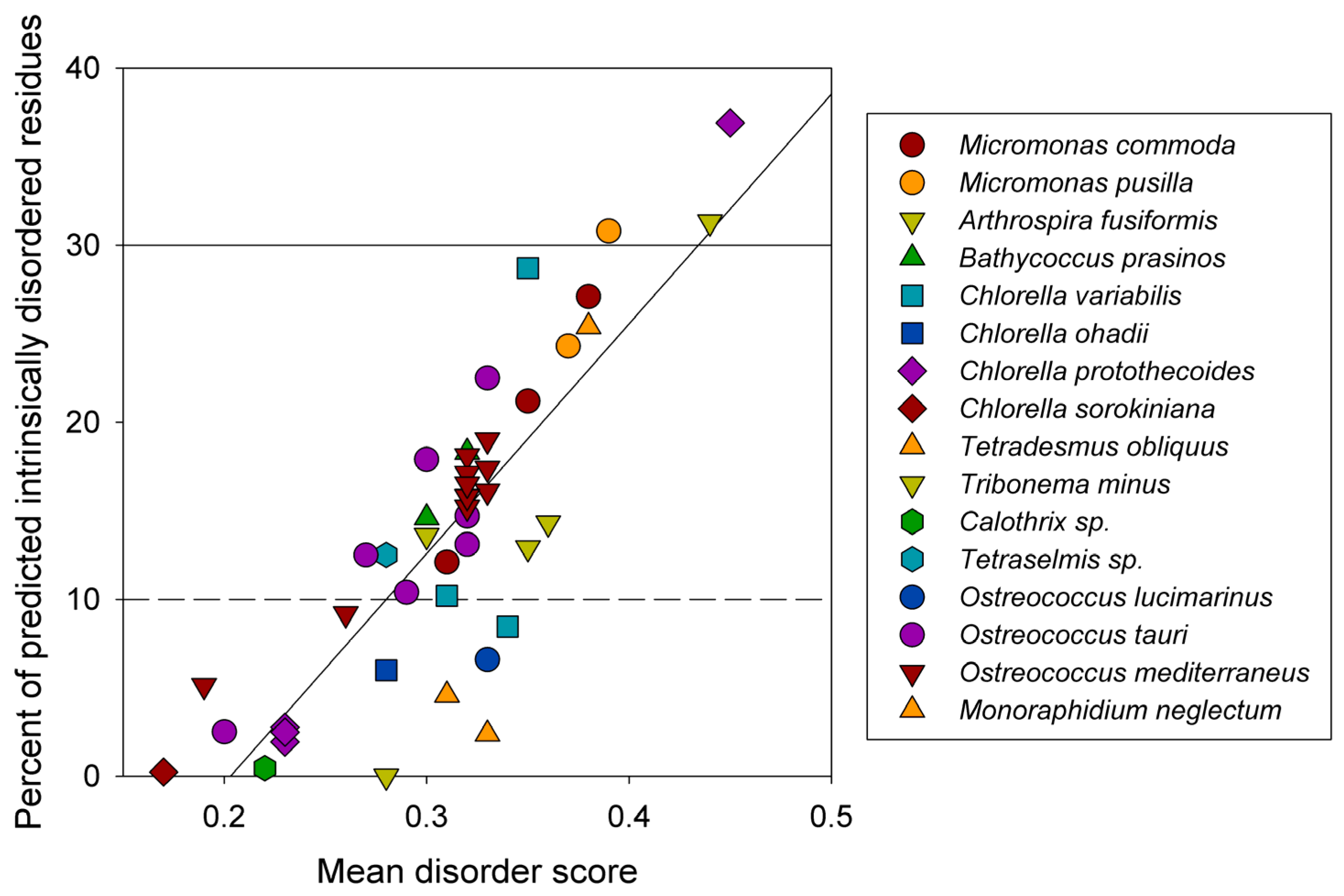
The propensity for intrinsic disorder was estimated using the PPIDR values obtained from the RIDAO platform, which combines the results of different disorder predictors, including PONDR® FIT, PONDR® VSL2, PONDR® VL3, PONDR® VLXT, IUPred Short, and IUPred Long. Table 1 summarizes the results of these analyses by presenting MDS and PPIDR values for all the proteins analyzed in this study, whereas Figure 1 represents these data in the form of a PPIDR vs. MDS plot. The PPIDR data showed that most of the proteins (61.4%; n = 27) are moderately disordered (10.2% ≤ PPIDR ≤ 28.7%), while 31.8% (n = 14) can be classified as highly ordered, and 6.8% (n = 3) are highly disordered (30.8% ≤ PPIDR ≤ 36.9%).
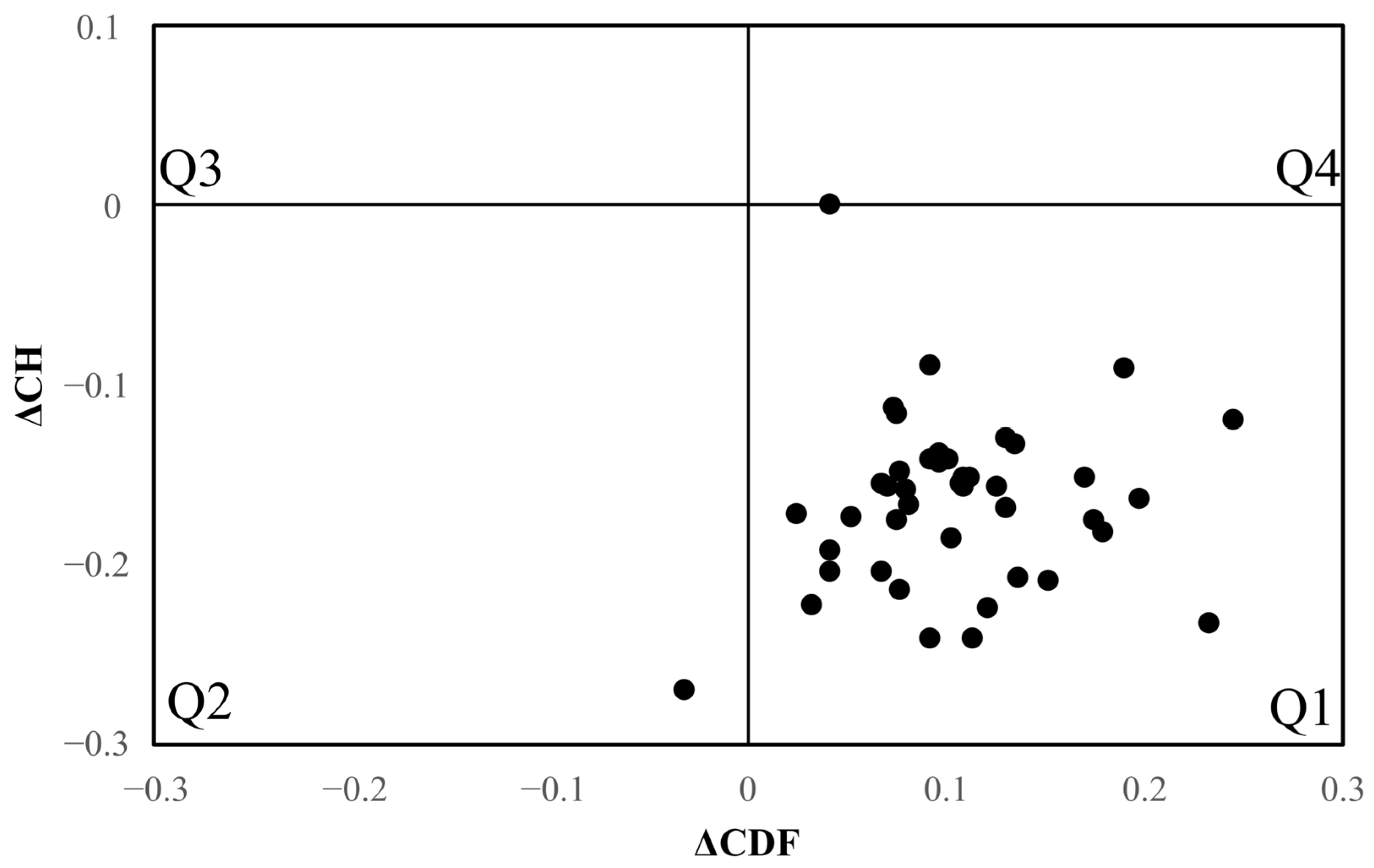
Next, we combined the outputs of charge–hydropathy (CH) and cumulative distribution function (CDF) to classify proteins as ordered, molten globular or hybrid (flexible structure), or highly disordered (Figure 2). Most proteins (95.4%; n = 42) are found in Q1 of the ΔCH-ΔCDF plot (i.e., ordered proteins). Differently, 2.2% (n = 1) of the proteins are located in Q2, classifying them as molten globular or hybrid proteins (contains ordered and disordered regions), while 2.2% (n = 1) are placed in Q4, related to proteins with an inconsistent structural profile. These data corroborate the PPIDR values, which predicted 93.2% of the proteins to be ordered or moderately disordered, suggesting that many of these proteins are largely folded but contain some intrinsically disordered segments.
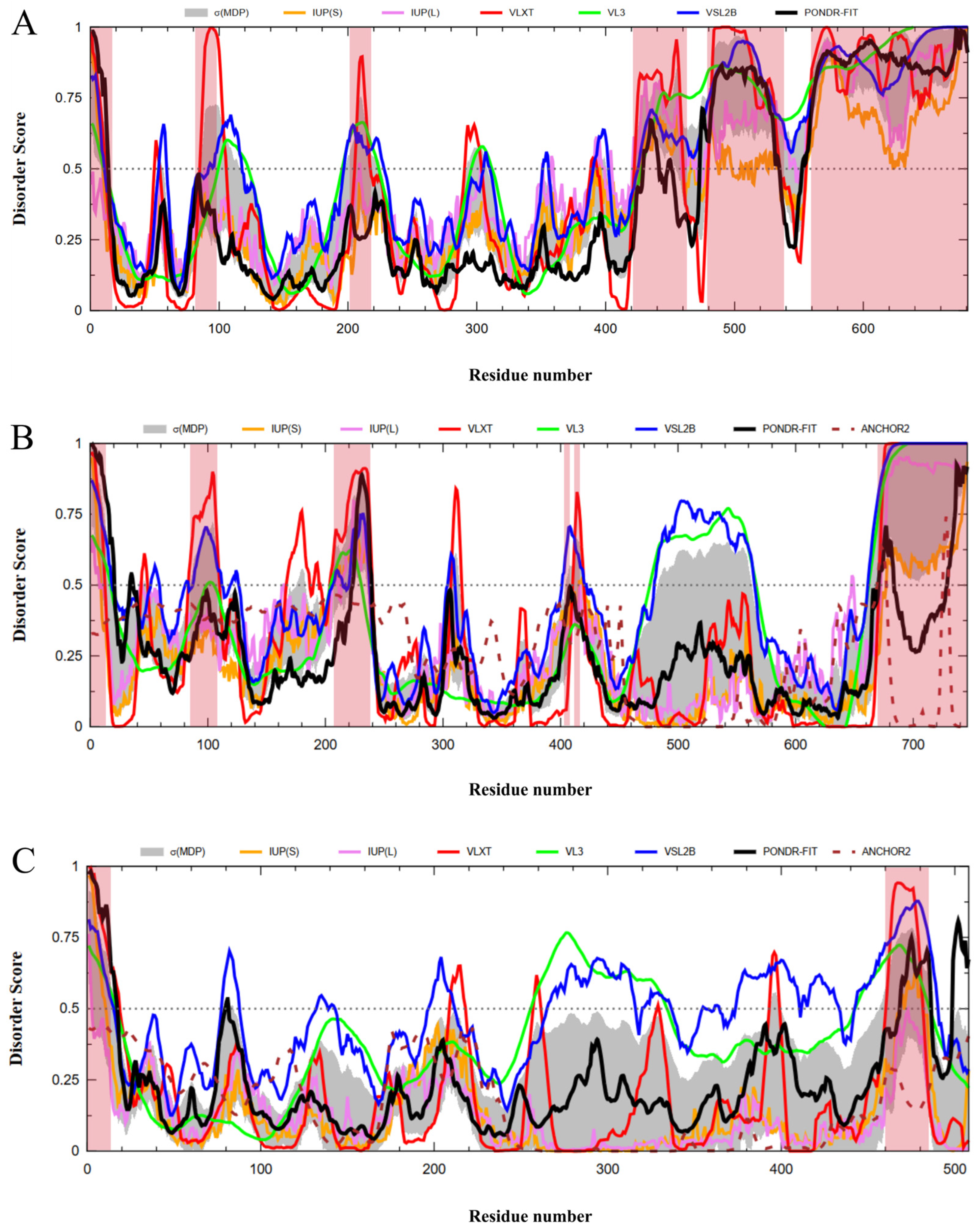
To illustrate the spectrum of disorder, representative proteins were analyzed in more detail and are summarized in Figure 3A–C. The A0A3M7KU67_AUXPR protein is predicted to be highly disordered (PPIDR = 36.9%), with three long disordered regions (LDRs; residues 424–461; 475–539; and 553–681) and some short disordered regions (SDRs) (as illustrated by Figure 3A). Similarly, the A0A7S0PM18_9CHLO protein is predicted to be moderately disordered (PPIDR = 18.1%) and contains two LDRs (residues 207–238 and 670–746) along with four SDRs (Figure 3B). By contrast, the A0A7S0WF41_9CHLO protein is predicted to be highly ordered (PPIDR = 5.12%) and displays two SDRs and no LDR (Figure 3C). SDRs are often related to flexible linkers or loops in folded proteins, while LDRs (>30 consecutive residues) can have distinct functions, including protein–protein recognition, since they are structurally and functionally independent of the rest of the protein [81]. These mechanisms are compatible with molecular contexts where flexibility is required, including those described in thrombolysis.
The highest PPIDR value (36.9%) was observed in the A0A3M7KU67_AUXPR protein from the microalga Chlorella protothecoides (Table 1). According to the UniProt database, this protein is classified as a member of the pectin lyase-related family, specifically within the plasmin- and fibronectin-binding protein A subfamily. In general, the plasmin- and fibronectin-binding protein A subfamily (PfbA) represents proteins found in the Streptococcus pneumoniae pathogen that possess fibronectin, plasminogen, and plasmin human serum albumin-binding activities [82]. Previous studies have shown that several plasminogen-binding proteins from pathogens can also activate them to plasmin, causing fibrin degradation to facilitate the migration and invasion of these pathogens to different tissues in the host [83]. Therefore, this protein may represent a candidate for thrombolytic investigation due to its potential fibrinolytic activity.
Among the moderately disordered proteins, peptidase M12B domain-containing proteins are the most frequent (33.3%; n = 9), followed by disintegrin domain-containing proteins (18.5%; n = 5), and peptidase M12B-ADAM/reprolysin proteins (11.1%; n = 3). Interestingly, these groups are correlated evolutionarily and functionally, since peptidase M12B proteins are a family of metalloendopeptidases that includes, for example, a disintegrin and metalloproteinase (ADAMs) in vertebrates and reprolysins in snake venoms [84,85]. In particular, the ADAM/reprolysin protein subfamily has a reprolysin-like catalytic enzyme domain involved in Zn2+ ion binding and peptide cleavage activity, and, frequently, a disintegrin domain that can inhibit platelet aggregation via integrin binding [86].
Reprolysins represent a class of proteins with thrombolytic potential. For example, the reprolysin batroxase shows thrombolytic, fibrinolytic, and fibrinogenolytic effects [87]. It is capable of degrading both fibrinogen and fibrin and can cleave fibrin in a plasmin-like manner (i.e., independently of the conversion of plasminogen to plasmin). In vivo studies have shown about 80% thrombus reduction, comparable to the 85% reduction achieved with alteplase [88]. Similarly, fibrolase is also a reprolysin with plasmin-like thrombolytic effects and fibrinogenolytic and fibrinolytic activities. Additionally, fibrolase showed thrombolytic effects in a reoccluding carotid arterial thrombosis model in canines [89].
Additionally, most of the moderately disordered (77.7%) and highly disordered (66.6%) proteins belong to the blood coagulation inhibitor (disintegrin) 1 hit superfamily. Several studies have investigated the anti-thrombotic potential of disintegrins, which inhibit fibrinogen binding to integrin receptor αIIbβ3, preventing platelet aggregation [90]. In particular, the disintegrin saxatilin effectively and safely dissolved thrombi in mice through inhibition of multiple integrins by action on platelets [91]. Additionally, disintegrins also show anti-adhesive and anti-migration effects on tumor cells, as well as anti-angiogenesis properties [90].
Although most of the studied proteins were predicted to be ordered or moderately disordered (93.2%), the limited presence of some IDRs (especially LDRs) can provide functional advantages. It is well established that the flexibility of IDRs allows interactions with multiple partners with fast binding kinetics and low-affinity, high-specificity partnerships [92]. Such structural flexibility may be relevant in thrombolysis-related biological contexts, facilitating interactions with multiple hemostatic partners, including plasminogen, fibrin, or integrins. Notably, some fibrinolytic enzymes currently used in clinical applications (e.g., streptokinase, urokinase, and tissue plasminogen activator) also contain predicted intrinsically disordered segments when assessed using the same disorder cutoff (0.5).

3.2.2. Evaluation of the LLPS Potential

Table 1 summarizes the results of the analysis of the LLPS predisposition of the microalgal proteins with potential thrombolytic effects. This analysis revealed that nine proteins (peptidase S8/S53 domain-containing protein (A0A383VDN2_TETOB); uncharacterized proteins A0A7S0KUD9_MICPS, A0A7S0IAP2_MICPS, and A0A3M7KU67_AUXPR; propeptide/ADAM family protein fusion (C1DYF0_MICCC); peptidase M12B domain-containing protein (C1E837_MICCC); disintegrin domain-containing proteins A0A836CNS5_9STRA and E1ZTB9_CHLVA; and peptidase M12B, ADAM/reprolysin (A0A090M0L4_OSTTA)) are characterized by high LLPS potential, indicating that they have a strong tendency to form their own liquid condensates, acting as scaffolds. These proteins were predicted by FuzDrop to have pLLPS ≥ 0.6, meaning that they can spontaneously form liquid-like droplets (biomolecular condensates) crucial for many cellular functions and can thereby act as “droplet drivers”. Furthermore, 25 microalgal proteins were predicted to act as “droplet clients”, as they are not expected to spontaneously undergo LLPS (their pLLPS values are below the 0.6 threshold) but contain specific “droplet-promoting regions” (DPRs) allowing them to be recruited into pre-existing droplets (formed by “droplet drivers”) via low-specificity interactions, essentially acting as cargo or partners that condense with other molecules, often involving IDRs. This classification helps distinguish proteins that initiate droplet formation (drivers) from those that participate in them (clients), highlighting that most proteins can become part of cellular condensates.
Therefore, this analysis suggests a strong relationship between the potential thrombolytic effects of the microalgal proteins studied and LLPS, with the majority of the proteins (~80.0%) identified as either droplet drivers (20.45%) or droplet clients (56.82%). These findings indicate that LLPS may be linked to the biological activities of these proteins. LLPS provides a unique biochemical environment that can increase local concentrations of enzymes and substrates, thereby accelerating reaction rates or protecting active molecules from degradation. These observations suggest that microalgae are a sophisticated source of “functional ingredients” and metabolites for cardiovascular health. They also provide a new angle for better understanding of the known roles of microalgal proteins and microalgal protein-derived bioactive peptides relevant in cardiovascular disease (CVD) management [93,94].
Since LLPS is most commonly described in intracellular compartments (e.g., cytoplasm and nucleus), in the context of the present study, LLPS-related features are considered from a biophysical perspective, reflecting intrinsic disorder, multivalency, and interaction propensity rather than implying the formation of stable condensates in extracellular environments. In such contexts, these properties may facilitate transient clustering, complex formation, and interaction-mediated modulation of proteolytic processes, including those associated with thrombolysis.

3.2.3. Prevalence of Regions with Context-Dependent Interactions

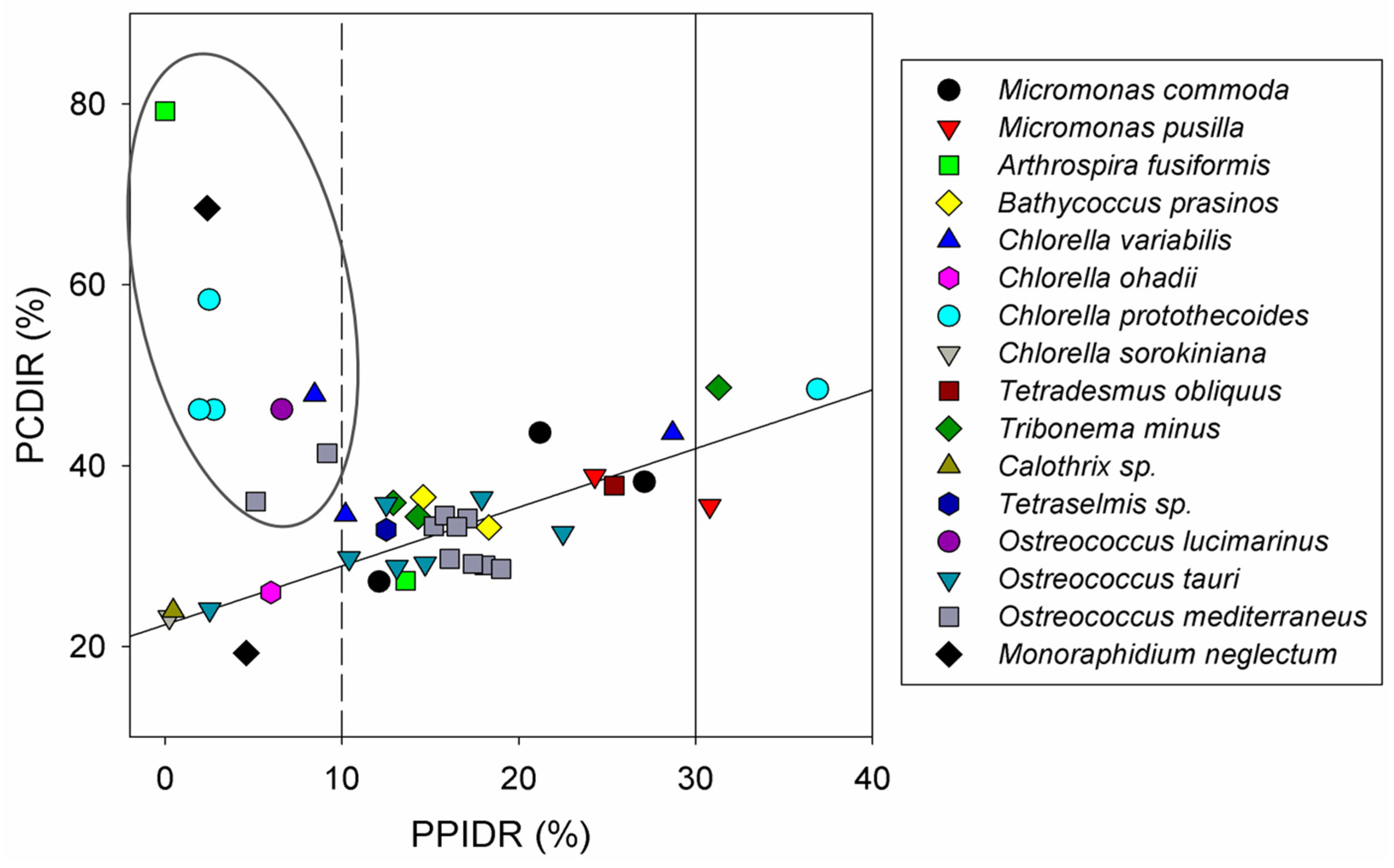
Protein interactions are dynamic, contingent upon the cellular environment, specific subcellular location, available binding partners, and post-translational modifications. The bound structure itself can display significant heterogeneity or disorder depending on these cellular conditions. To address these possibilities, the FuzPred method was developed, where the ability of a residue to switch between different binding modes is characterized by its binding mode entropy (SBIND) value, which is computed as the Shannon entropy of the binding mode distribution determined by observing the behavior of a residue across a wide variety of potential interaction partners [75]. The application of this tool to a query protein allows regions with context-dependent binding modes or context-dependent interaction regions (CDIRs) to be found. Table 1 summarizes the results of the corresponding analysis of microalgal proteins with potential thrombolytic effects in the form of the percentage of residues involved in the formation of these CDIRs (PCDIR). Proteins are characterized by the median PCDIR value of 34.5 ± 11.5%, showing a PCDIR spread from 19.29% to 79.17%. Curiously, for the majority of proteins, there is a linear correlation between PCIDR and PPIDR (see Figure 4). The noticeable exceptions to this rule are nine proteins (C-phycocyanin beta subunit (P84341); disintegrin domain-containing proteins (A0A0D2LXY9, A0A7S0WF41, A4S2Y0, E1ZTB8); polygalacturonases (A0A1D1ZP00 and A0A1D1ZVE1); putative polygalacturonase (A0A087SUF0); and peptidase M12B domain-containing protein (A0A7S0Z6G4)) characterized by low PPIDR values and exceptionally high PCIDR values. Curiously, most of these proteins (located within the oval in Figure 4) contain numerous cysteine residues, which are unique due to their thiol groups forming disulfide bonds under oxidizing conditions. The formation or reduction of these bonds acts as a molecular switch, significantly impacting protein conformation. Therefore, it is not surprising that these proteins are expected to have long redox-sensitive disordered regions as this follows from their analysis using IUPred2A [95]. In fact, the following redox-sensitive disordered regions were found in these proteins: A0A0D2LXY9 (residues 1–216 and 233–291), A0A1D1ZP00 (residues 226–247), A0A1D1ZVE1 (residues 226–246), A0A087SUF0 (residues 196–216), A0A7S0WF41 (residues 196–215 and 244–401), A4S2Y0 (residues 1–105), E1ZTB8 (residues 31–555), and A0A7S0Z6G4 (186–407 and 427–455). Since cysteines are considered by most disorder predictors to be a strong order-promoting signal, the high cysteine content of these proteins explains their low PPIDR values, whereas the capability of cysteine residues to undergo reversible thiol oxidation in response to the oxidation status of the molecular environment explains their high PCIDR.

3.3. Identification of Functional Motifs

3.3.1. Occurrence and Distribution

Briefly, we looked at the presence of short linear motifs (SLiMs), which are a distinct class of conserved protein functional regions that are involved in many cellular pathways, including the cell cycle, endocytosis, cytoskeleton dynamics, and intracellular signal transduction. In addition, most SLiMs are found within structurally flexible IDRs of a proteome and mediate various protein–protein interactions [96,97]. The presence of SLiMs was evaluated using the ELM platform. In the proteins investigated in this study, the conserved motifs found were MOD (post-translational modification sites; n = 983), CLV (proteolytic cleavage sites; n = 450), and LIG (ligand binding sites; n = 3) types.
In particular, MOD_GlcNHglycan is predicted to be the most frequent motif for 84.0% of the proteins, representing 36.3% of all the motifs found in our analysis. This motif is a glycosaminoglycan attachment site that allows post-translational modification in proteins through linking to glycosaminoglycans (GAGs) [98]. The high prevalence of MOD_GlcNHglycan among the proteins analyzed suggests a potential effect of GAGs that can enhance or regulate the thrombolytic activity of the proteins. As is well known, GAGs induce conformational changes upon their binding to target proteins, thereby changing their catalytic activity, increasing protein stability, or exposing functional binding regions on the target proteins [99]. For example, heparin is a known GAG that stimulates the activity of tissue plasminogen activators (tPAs), enhancing interactions with fibrin and substrate efficiency [100]. Similarly, the presence of MOD_GlcNHglycan motifs in the proteins possibly acts to modulate the efficiency and substrate accessibility of these proteins through their binding to GAG.
Moreover, the CLV_PCSK_SKI1_1 motif was also frequent, representing 14.1% of the valid motifs identified in the studied proteins, followed by MOD_OFUCOSY (12.4%). The CLV_PCSK_SKI1_1 motif is a cleavage site for substilisin-like proprotein convertases, such as SKI-1/S1P, which convert latent precursor proteins into their biologically active forms [101]. Consequently, thrombolytic proteins containing this motif may be synthesized as inactive precursors that require proteolytic cleavage to exert their functions. Primarily, this process is important for controlling the activity of mammalian prohormones and peptide precursors, preventing inappropriate or premature biological effects [102]. Therefore, the CLV_PCSK_SKI1_1 motif could likely act as a regulatory feature, modulating the activation of thrombolytic proteins in a controlled manner.
Furthermore, the MOD_OFUCOSY motifs are potential O-fucosylation sites for attachment of a fucose residue to a serine. This process is a post-translational modification typically found on epidermal growth factor (EGF)-like domains of thrombolytic proteins, including urokinase plasminogen activator (uPA), tissue plasminogen activator (tPA), alteplase, desmoteplase, and several blood coagulation factors [103,104]. In general, this modification serves as a quality control mechanism before the protein is secreted, since fucosylation deficits in EGF-like domains of thrombolytic compounds are commonly associated with their impaired secretion [104,105]. In this sense, although O-fucosylation does not affect thrombolysis directly, it can indirectly modulate thrombolytic activity by ensuring correct structural formation, collaborating with the activation of thrombolytic agent receptors, and facilitating interactions of the EGF domain with target molecules, such as fibrin or plasminogen.
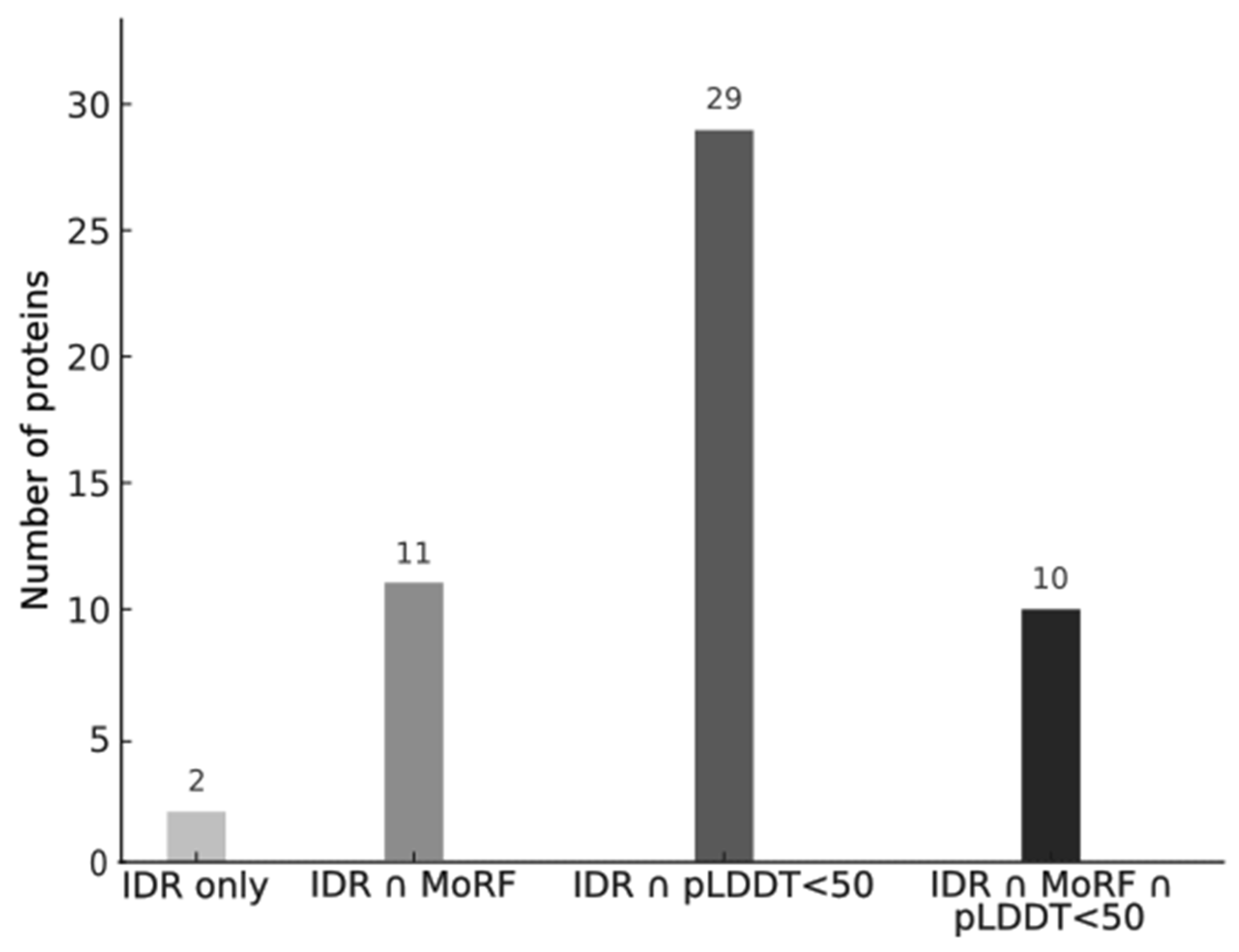
In addition, the 44 microalgal proteins included in this analysis were also investigated regarding the presence of SLiMs within IDRs (Figure 5). Results showed that 32 proteins (72.7%) contained at least one SLiM embedded within IDRs (MDP ≥ 0.5), corresponding to 265 motifs. In general, IDRs are structurally flexible and thus capable of binding multiple partners; in addition, SLiMs often mediate partner recognition and contribute to the formation of protein–protein interactions within IDRs [106]. Therefore, the enrichment of SLiMs in IDRs is functionally relevant in the thrombolytic context, since it may facilitate interactions with fibrin, plasminogen, and other components of the coagulation cascade.
In parallel, 45 of these motifs (17.0%) (corresponding to 11 of the 32 proteins; 34.4%; Figure 5) are found in ANCHOR-predicted molecular recognition features (MoRFs). MoRFs refer to disordered segments within IDRs with some tendency to have a disorder-to-order transition while interacting with specific partners [107], suggesting the importance of intrinsic disorder for these interactions.
Additionally, these 32 proteins (those with SLiMs in IDRs) were also analyzed regarding the correlation between IDRs and pLDDT values. The pLDDT values are a score for each residue that indicates the estimated level of confidence for the predicted structure. Briefly, pLDDT values below 50 are classified as extremely low confidence, and this behavior is often observed in IDRs [108]. Therefore, the analysis of AlphaFold-predicted structures showed that 218 out of 265 SLiMs in IDRs (82.3%) exhibited ≥50% of residues with pLDDT < 50, supporting the intrinsically disordered nature of these motifs (identified in 29 proteins; 90.6%; Figure 5). Such structural instability strengthens the functional plausibility of these regions as accessible sites for protease recognition and cleavage in the thrombolytic context.
Collectively, SLiMs in our dataset were frequently located within intrinsically disordered regions, occasionally overlapping MoRFs, and generally associated with regions of low pLDDT. This convergence of multiple predictors supports that these motifs are often in structurally accessible segments, compatible with proteolytic recognition or post-translational modification. However, the relative biological importance of individual motifs cannot be inferred solely from frequency or location, and therefore requires statistical enrichment analysis to identify candidates with non-random distributions.

3.3.2. Statistical Enrichment of SLiMs in IDRs

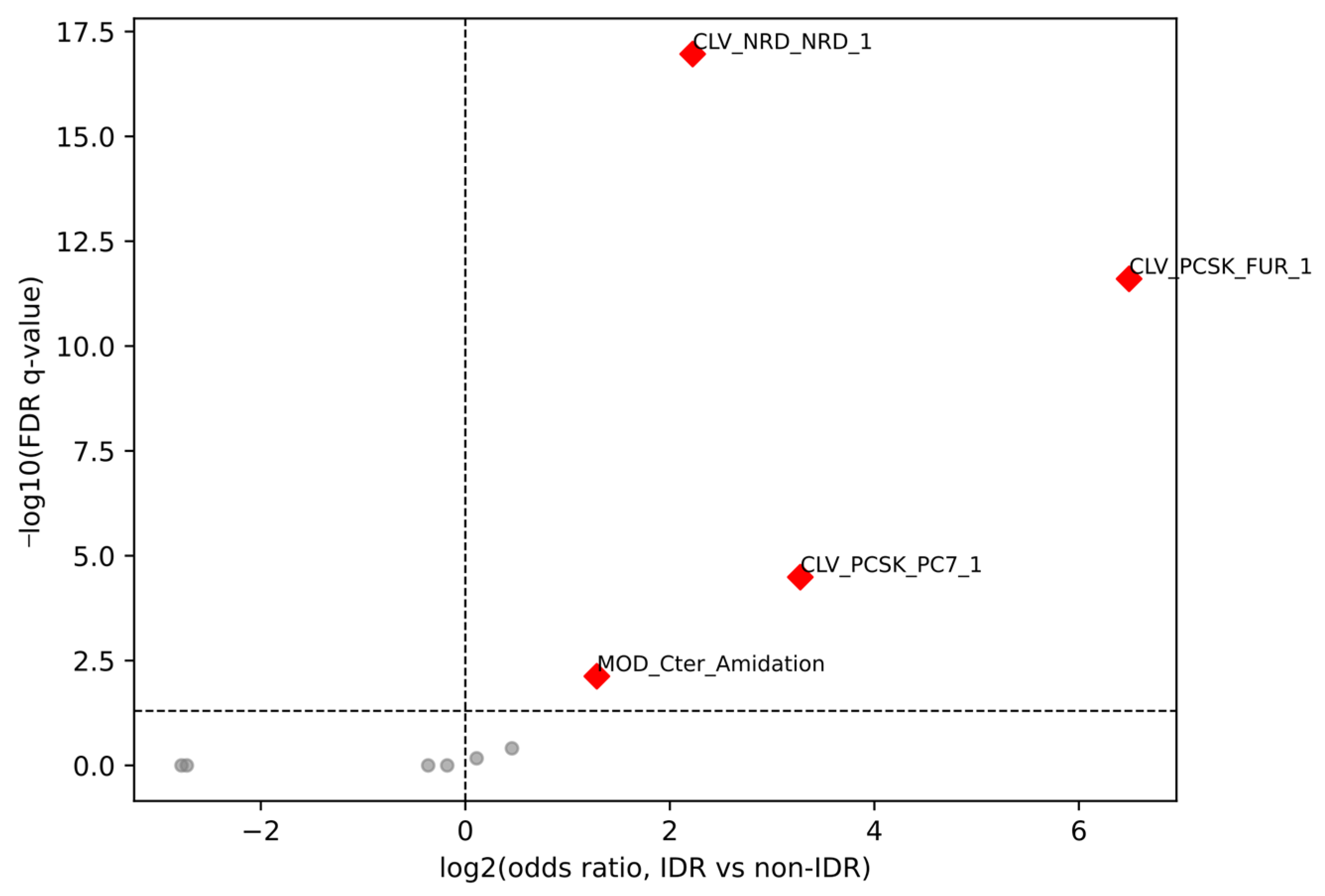
To investigate whether motifs are preferentially located in IDRs, Fisher’s exact test was applied with FDR correction, comparing SLiM frequencies in IDRs versus ordered regions. The results of this analysis are summarized in Figure 6.
The analysis identified four SLiMs with significant overrepresentation in disordered contexts (FDR q < 0.05). In particular, CLV_NRD_NRD_1 showed strong enrichment within IDRs (p < 0.05). This motif is a dibasic convertase cleavage site typically recognized by Nardilysin (NRDC). Previous studies have shown that NRDC enhances the activity of a disintegrin and metalloprotease to release an ectodomain of membrane proteins [109]. Notably, 91.3% of the proteins with SLiMs fully embedded in IDRs belong to the disintegrin superfamily. In this context, the recurrent presence of CLV_NRD_NRD_1 motifs in disintegrin-like microalgal proteins suggests that these proteins may undergo proteolytic activation in the extracellular environment, facilitated by their structural accessibility within IDRs.
Furthermore, two additional cleavage motifs were also significantly enriched—CLV_PCSK_FUR_1 and CLV_PCSK_PC7_1—both corresponding to subtilisin-like proprotein convertase cleavage sites. Together, these data suggest that multiple microalgal thrombolytic candidates may require proteolytic activation, a regulatory mechanism similar to the conversion of single-chain precursors of mammalian uPA into their fully active two-chain forms [110].
Moreover, the enrichment analysis also identified the MOD_Cter_Amidation motif as significantly more frequent in IDRs. This motif is a common site for C-terminal amidation, a post-translational modification that generally occurs in hormones and neuropeptides, enhancing stability and allowing biological activity of peptides [111,112]. Its occurrence in disordered regions of microalgal proteins may stabilize motifs and facilitate thrombolytic effects.
Beyond their role in proteolytic activation, the enrichment of disordered motifs also has broader implications for protein interaction behavior. Since intrinsically disordered regions and short linear motifs are known to mediate multiple transient interactions, some of these interactions may occur with unintended molecular partners. From this perspective, proteins enriched in highly flexible regions could exhibit expanded interaction profiles, potentially influencing their specificity. Although such considerations require experimental validation, the present analyses provide a biophysical basis for prioritizing candidates based not only on functional potential but also on interaction propensity.

3.3.3. Conservation of Enriched Motifs

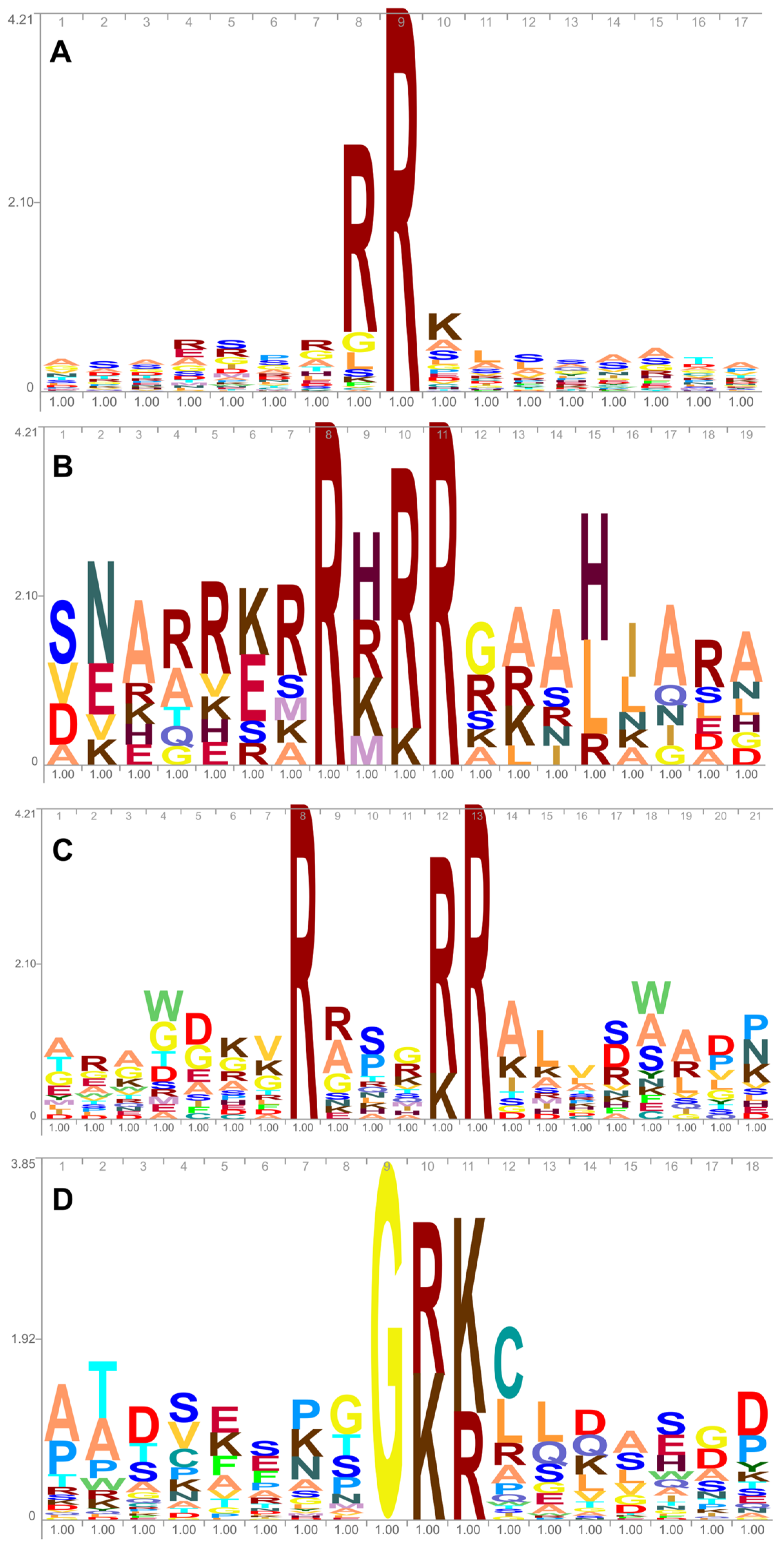
To evaluate the functional plausibility of enriched motifs, we analyzed the evolutionary conservation of their cores and flanking regions (±7 residues) (Figure 7). For CLV_NRD_NRD_1, 131 windows were recovered, showing strict conservation of the central arginine residues (position 2: R, 100%; position 1: R, 75.6%), while the lysine at position 3 was less conserved (32.8%). Flanking residues displayed relatively high entropy (≥3.4 bits), suggesting poor conservation. As expected, functional cores tend to be more conserved than flanking regions, consistent with the concept of SLiMs as islands of conservation within rapidly evolving IDRs [113].
For CLV_PCSK_FUR_1 (eight windows), the core displayed strong conservation of the dibasic “RR” pair (positions 1 and 4: 100%), with frequent arginine at position 3 (87.5%). In contrast, position 2 was less conserved (37.5%; entropy = 1.9 bits), indicating moderate conservation. Similarly, CLV_PCSK_PC7_1 (17 windows) showed conserved arginines at positions 1 (100%), 5 (82.4%), and 6 (100%), whereas positions 2–4 were more variable (23.5–29.4%; entropy ≥ 2.5 bits). Finally, MOD_Cter_Amidation (53 windows) revealed strict conservation of glycine at position 2 (100%), followed by a moderately conserved RK pair at positions 3–4 (51% and 64%; entropy ≈ 1 bit).
Together, these results indicate that proteolytic cleavage motifs (CLV_NRD_NRD_1, CLV_PCSK_FUR_1, CLV_PCSK_PC7_1) possess strongly conserved dibasic cores, while MOD_Cter_Amidation is characterized by strict glycine conservation and moderate variability in its RK pair. The conservation of these cores supports their potential functional relevance in extracellular proteolytic processing, providing a mechanistic link between microalgal proteins and thrombolytic activity [113].

4. Conclusions

In this study, we applied a structural and sequence-based bioinformatics analysis to characterize proteins derived from microalgae and cyanobacteria with potential relevance to thrombolysis processes. Although the present work is based exclusively on in silico analyses and does not demonstrate thrombolytic activity experimentally, the convergence of intrinsic disorder, motif enrichment in IDRs, and conservation of key residues supports the hypothesis that the analyzed proteins may participate in proteolytic and interaction-mediated mechanisms associated with thrombolysis. Taken together, these findings establish a systematic computational approach for the identification and prioritization of microalgal and cyanobacterial proteins for future experimental investigation in thrombolysis-related contexts. Rather than making functional or predictive claims, the results provide a biophysical perspective on sequence-encoded characteristics associated with intrinsic disorder that may help guide downstream biochemical and functional studies aimed at exploring novel bioactive molecules from microalgal sources.

Author Contributions

Conceptualization, Y.A.S.M. and R.P.B.; methodology, Y.A.S.M. and V.N.U.; software, Y.A.S.M.; validation, Y.A.S.M., R.P.B., and V.N.U.; formal analysis, Y.A.S.M., R.P.B., and M.M.d.S.; investigation, Y.A.S.M., A.P.d.A., and M.C.S.d.A.; resources, A.L.F.P.; data curation, Y.A.S.M.; writing—original draft preparation, Y.A.S.M.; writing—review and editing, Y.A.S.M., R.P.B., and V.N.U.; visualization, Y.A.S.M.; supervision, R.P.B., A.L.F.P., M.M.d.S., and V.N.U.; project administration, R.P.B.; funding acquisition, A.L.F.P. All authors have read and agreed to the published version of the manuscript.

Funding

This research was funded by Foundation of Science and Technology of the State of Pernambuco (FACEPE) grant numbers APQ-0486-9.26/22 and APQ-1480-2.08/22, and a productivity grant from the National Council for Research and Development [306064/2022-7].

Data Availability Statement

All data analyzed in this study are derived from publicly available databases and are included in the article.

Acknowledgments

The authors acknowledge the Center of Biotechnology (NUBIOTEC, Recife, Brazil) and the Laboratory of Technology of Bioactives (LABTECBIO, Recife, Brazil).

Conflicts of Interest

The authors declare no conflicts of interest. The funders had no role in the design of the study; in the collection, analyses, or interpretation of data; in the writing of the manuscript; or in the decision to publish the results.

Abbreviations

The following abbreviations are used in this manuscript:
LLPSLiquid–liquid phase separation
SLiMsShort linear motifs
IDRsIntrinsically disordered regions
IDPsIntrinsically disordered proteins
CVDCardiovascular disease
rt-PARecombinant tissue plasminogen activator
MLOsMembrane-less organelles
LLPTLiquid–liquid phase transition
SGsStress granules
ALSAmyotrophic lateral sclerosis
FTDFrontotemporal dementia
ADAlzheimer’s disease
PDParkinson’s disease
IDDsIntrinsically disordered domains
MDSMean disorder score
PPIDRPercent of predicted intrinsically disordered residues
CHCharge–hydropathy
CDFCumulative distribution function
DPRsDroplet-promoting regions
CDIRsContext-dependent interaction regions
GRAVYGrand Average of Hydropathicity
LDRsLong disordered regions
SDRsShort disordered regions
PCDIRPercentage of residues involved in the formation of CDIRs
GAGsGlycosaminoglycans
t-PAsTissue plasminogen activators
u-PAsUrokinase plasminogen activators
MoRFsMolecular recognition features

References

  1. Al Farraj, D.A.; Kumar, T.S.J.; Vijayaraghavan, P.; Elshikh, M.S.; Alkufeidy, R.M.; Alkubaisi, N.A.; Alshammari, M.K. Enhanced Production, Purification and Biochemical Characterization of Therapeutic Potential Fibrinolytic Enzyme from a New Bacillus Flexus from Marine Environment. J. King Saud Univ.-Sci. 2020, 32, 3174–3180. [Google Scholar] [CrossRef]
  2. Katrolia, P.; Liu, X.; Zhao, Y.; Kopparapu, N.K.; Zheng, X. Gene Cloning, Expression and Homology Modeling of First Fibrinolytic Enzyme from Mushroom (Cordyceps Militaris). Int. J. Biol. Macromol. 2020, 146, 897–906. [Google Scholar] [CrossRef]
  3. Altaf, F.; Wu, S.; Kasim, V. Role of Fibrinolytic Enzymes in Anti-Thrombosis Therapy. Front. Mol. Biosci. 2021, 8, 680397. [Google Scholar] [CrossRef]
  4. Dawiec-Liśniewska, A.; Podstawczyk, D.; Bastrzyk, A.; Czuba, K.; Pacyna-Iwanicka, K.; Okoro, O.V.; Shavandi, A. New Trends in Biotechnological Applications of Photosynthetic Microorganisms. Biotechnol. Adv. 2022, 59, 107988. [Google Scholar] [CrossRef] [PubMed]
  5. Morais Junior, W.G.; Gorgich, M.; Corrêa, P.S.; Martins, A.A.; Mata, T.M.; Caetano, N.S. Microalgae for Biotechnological Applications: Cultivation, Harvesting and Biomass Processing. Aquaculture 2020, 528, 735562. [Google Scholar] [CrossRef]
  6. Yin, Z.; Zhu, L.; Li, S.; Hu, T.; Chu, R.; Mo, F.; Hu, D.; Liu, C.; Li, B. A Comprehensive Review on Cultivation and Harvesting of Microalgae for Biodiesel Production: Environmental Pollution Control and Future Directions. Bioresour. Technol. 2020, 301, 122804. [Google Scholar] [CrossRef]
  7. da Silva, M.R.O.B.; Moura, Y.A.S.; Converti, A.; Porto, A.L.F.; Viana Marques, D.d.A.; Bezerra, R.P. Assessment of the Potential of Dunaliella Microalgae for Different Biotechnological Applications: A Systematic Review. Algal Res. 2021, 58, 102396. [Google Scholar] [CrossRef]
  8. Derbel, H.; Elleuch, J.; Mahfoudh, W.; Michaud, P.; Fendri, I.; Abdelkafi, S. In Vitro Antioxidant and Anti-Inflammatory Activities of Bioactive Proteins and Peptides from Rhodomonas Sp. Appl. Sci. 2023, 13, 3202. [Google Scholar] [CrossRef]
  9. Nur Fadillah, S.; Natsir, H.; Ahmad, A.; Karim, A.; Taba, P.; Nur fadillah, S. Extraction and Fractionation of Active Protein from Microalgae Nitzschia Sp. as Antimicrobial Agent. Egypt. J. Chem. 2022, 66, 95–100. [Google Scholar] [CrossRef]
  10. Bleakley, S.; Hayes, M. Functional and Bioactive Properties of Protein Extracts Generated from Spirulina Platensis and Isochrysis Galbana T-Iso. Appl. Sci. 2021, 11, 3964. [Google Scholar] [CrossRef]
  11. Barzkar, N.; Jahromi, S.T.; Vianello, F. Marine Microbial Fibrinolytic Enzymes: An Overview of Source, Production, Biochemical Properties and Thrombolytic Activity. Mar. Drugs 2022, 20, 46. [Google Scholar] [CrossRef]
  12. de Barros, P.D.S.; Silva, P.E.C.E.; Nascimento, T.P.; Costa, R.M.P.B.; Bezerra, R.P.; Porto, A.L.F. Fibrinolytic Enzyme from Arthrospira Platensis Cultivated in Medium Culture Supplemented with Corn Steep Liquor. Int. J. Biol. Macromol. 2020, 164, 3446–3453. [Google Scholar] [CrossRef]
  13. Moura, Y.A.S.; De Souza, A.T.V.; Da Costa e Silva, P.E.; Da Silva, M.M.; Porto, A.L.F.; Bezerra, R.P. Fibrinolytic Enzyme from Green Microalgae: A New Potential Drug for Thrombolytic Therapy? Phycology 2023, 3, 436–446. [Google Scholar] [CrossRef]
  14. e Silva, P.E.d.C.; de Barros, R.C.; Albuquerque, W.W.C.; Brandão, R.M.P.; Bezerra, R.P.; Porto, A.L.F. In Vitro Thrombolytic Activity of a Purified Fibrinolytic Enzyme from Chlorella Vulgaris. J. Chromatogr. B 2018, 1092, 524–529. [Google Scholar] [CrossRef]
  15. Silva, G.; Cerqueira, K.; Rodrigues, J.; Silva, K.; Coelho, D.; Souza, R. Cultivation of Microalgae Chlorella Vulgaris in Open Reactor for Bioethanol Production. Phycology 2023, 3, 325–336. [Google Scholar] [CrossRef]
  16. Marchand, A.; Van Hall-Beauvais, A.K.; Correia, B.E. Computational Design of Novel Protein–Protein Interactions—An Overview on Methodological Approaches and Applications. Curr. Opin. Struct. Biol. 2022, 74, 102370. [Google Scholar] [CrossRef]
  17. Edwards, R.J.; Palopoli, N. Computational Prediction of Short Linear Motifs from Protein Sequences. In Computational Peptidology; Springer: Berlin/Heidelberg, Germany, 2015; pp. 89–141. [Google Scholar]
  18. Ashraf, H.N.; Uversky, V.N. Intrinsic Disorder in the Host Proteins Entrapped in Rabies Virus Particles. Viruses 2024, 16, 916. [Google Scholar] [CrossRef] [PubMed]
  19. Bezerra, R.P.; Conniff, A.S.; Uversky, V.N. Comparative Study of Structures and Functional Motifs in Lectins from the Commercially Important Photosynthetic Microorganisms. Biochimie 2022, 201, 63–74. [Google Scholar] [CrossRef] [PubMed]
  20. Hyman, A.A.; Weber, C.A.; Jülicher, F. Liquid-Liquid Phase Separation in Biology. Annu. Rev. Cell Dev. Biol. 2014, 30, 39–58. [Google Scholar] [CrossRef]
  21. Uversky, V.N.; Kuznetsova, I.M.; Turoverov, K.K.; Zaslavsky, B. Intrinsically Disordered Proteins as Crucial Constituents of Cellular Aqueous Two Phase Systems and Coacervates. FEBS Lett. 2015, 589, 15–22. [Google Scholar] [CrossRef] [PubMed]
  22. Uversky, V.N. Intrinsically Disordered Proteins in Overcrowded Milieu: Membrane-Less Organelles, Phase Separation, and Intrinsic Disorder. Curr. Opin. Struct. Biol. 2017, 44, 18–30. [Google Scholar] [CrossRef]
  23. Uversky, V.N. Protein Intrinsic Disorder-Based Liquid-Liquid Phase Transitions in Biological Systems: Complex Coacervates and Membrane-Less Organelles. Adv. Colloid Interface Sci. 2017, 239, 97–114. [Google Scholar] [CrossRef]
  24. Banani, S.F.; Lee, H.O.; Hyman, A.A.; Rosen, M.K. Biomolecular Condensates: Organizers of Cellular Biochemistry. Nat. Rev. Mol. Cell Biol. 2017, 18, 285–298. [Google Scholar] [CrossRef]
  25. Uversky, V.N. The Roles of Intrinsic Disorder-Based Liquid-Liquid Phase Transitions in the “Dr. Jekyll-Mr. Hyde” Behavior of Proteins Involved in Amyotrophic Lateral Sclerosis and Frontotemporal Lobar Degeneration. Autophagy 2017, 13, 2115–2162. [Google Scholar] [CrossRef] [PubMed]
  26. Darling, A.L.; Liu, Y.; Oldfield, C.J.; Uversky, V.N. Intrinsically Disordered Proteome of Human Membrane-Less Organelles. Proteomics 2018, 18, e1700193. [Google Scholar] [CrossRef] [PubMed]
  27. Wheeler, R.J.; Hyman, A.A. Controlling Compartmentalization by Non-Membrane-Bound Organelles. Philos. Trans. R. Soc. Lond. B Biol. Sci. 2018, 373, 20170193. [Google Scholar] [CrossRef]
  28. Fonin, A.V.; Darling, A.L.; Kuznetsova, I.M.; Turoverov, K.K.; Uversky, V.N. Intrinsically Disordered Proteins in Crowded Milieu: When Chaos Prevails within the Cellular Gumbo. Cell. Mol. Life Sci. CMLS 2018, 75, 3907–3929. [Google Scholar] [CrossRef]
  29. Turoverov, K.K.; Kuznetsova, I.M.; Fonin, A.V.; Darling, A.L.; Zaslavsky, B.Y.; Uversky, V.N. Stochasticity of Biological Soft Matter: Emerging Concepts in Intrinsically Disordered Proteins and Biological Phase Separation. Trends Biochem. Sci. 2019, 44, 716–728. [Google Scholar] [CrossRef] [PubMed]
  30. Darling, A.L.; Zaslavsky, B.Y.; Uversky, V.N. Intrinsic Disorder-Based Emergence in Cellular Biology: Physiological and Pathological Liquid-Liquid Phase Transitions in Cells. Polymers 2019, 11, 990. [Google Scholar] [CrossRef]
  31. Uversky, V.N. Recent Developments in the Field of Intrinsically Disordered Proteins: Intrinsic Disorder-Based Emergence in Cellular Biology in Light of the Physiological and Pathological Liquid-Liquid Phase Transitions. Annu. Rev. Biophys. 2021, 50, 135–156. [Google Scholar] [CrossRef]
  32. Alberti, S.; Hyman, A.A. Biomolecular Condensates at the Nexus of Cellular Stress, Protein Aggregation Disease and Ageing. Nat. Rev. Mol. Cell Biol. 2021, 22, 196–213. [Google Scholar] [CrossRef]
  33. Nesterov, S.V.; Ilyinsky, N.S.; Uversky, V.N. Liquid-Liquid Phase Separation as a Common Organizing Principle of Intracellular Space and Biomembranes Providing Dynamic Adaptive Responses. Biochim. Biophys. Acta Mol. Cell Res. 2021, 1868, 119102. [Google Scholar] [CrossRef] [PubMed]
  34. Antifeeva, I.A.; Fonin, A.V.; Fefilova, A.S.; Stepanenko, O.V.; Povarova, O.I.; Silonov, S.A.; Kuznetsova, I.M.; Uversky, V.N.; Turoverov, K.K. Liquid-Liquid Phase Separation as an Organizing Principle of Intracellular Space: Overview of the Evolution of the Cell Compartmentalization Concept. Cell. Mol. Life Sci. CMLS 2022, 79, 251. [Google Scholar] [CrossRef]
  35. Fonin, A.V.; Antifeeva, I.A.; Kuznetsova, I.M.; Turoverov, K.K.; Zaslavsky, B.Y.; Kulkarni, P.; Uversky, V.N. Biological Soft Matter: Intrinsically Disordered Proteins in Liquid-Liquid Phase Separation and Biomolecular Condensates. Essays Biochem. 2022, 66, 831–847. [Google Scholar] [CrossRef]
  36. Sabari, B.R.; Hyman, A.A.; Hnisz, D. Functional Specificity in Biomolecular Condensates Revealed by Genetic Complementation. Nat. Rev. Genet. 2025, 26, 279–290. [Google Scholar] [CrossRef]
  37. Nesterov, S.V.; Ilyinsky, N.S.; Fonin, A.V.; Uversky, V.N. Signal Transduction by Phase Separation-Unnoticed Revolution in Molecular Biology. J. Mol. Recognit. JMR 2025, 38, e70003. [Google Scholar] [CrossRef] [PubMed]
  38. Brangwynne, C.P.; Eckmann, C.R.; Courson, D.S.; Rybarska, A.; Hoege, C.; Gharakhani, J.; Jülicher, F.; Hyman, A.A. Germline P Granules Are Liquid Droplets That Localize by Controlled Dissolution/Condensation. Science 2009, 324, 1729–1732. [Google Scholar] [CrossRef]
  39. Zaslavsky, B.Y.; Uversky, V.N. In Aqua Veritas: The Indispensable yet Mostly Ignored Role of Water in Phase Separation and Membrane-Less Organelles. Biochemistry 2018, 57, 2437–2451. [Google Scholar] [CrossRef]
  40. Darling, A.L.; Uversky, V.N. Known Types of Membrane-Less Organelles and Biomolecular Condensates. In Droplets of Life; Elsevier: Amsterdam, The Netherlands, 2023; pp. 271–335. ISBN 978-0-12-823967-4. [Google Scholar]
  41. Brangwynne, C.P.; Mitchison, T.J.; Hyman, A.A. Active Liquid-like Behavior of Nucleoli Determines Their Size and Shape in Xenopus Laevis Oocytes. Proc. Natl. Acad. Sci. USA 2011, 108, 4334–4339. [Google Scholar] [CrossRef]
  42. Lee, C.F.; Brangwynne, C.P.; Gharakhani, J.; Hyman, A.A.; Jülicher, F. Spatial Organization of the Cell Cytoplasm by Position-Dependent Phase Separation. Phys. Rev. Lett. 2013, 111, 088101. [Google Scholar] [CrossRef] [PubMed]
  43. Shin, Y.; Brangwynne, C.P. Liquid Phase Condensation in Cell Physiology and Disease. Science 2017, 357, eaaf4382. [Google Scholar] [CrossRef]
  44. Laflamme, G.; Mekhail, K. Biomolecular Condensates as Arbiters of Biochemical Reactions inside the Nucleus. Commun. Biol. 2020, 3, 773. [Google Scholar] [CrossRef]
  45. Zhang, J.Z.; Mehta, S.; Zhang, J. Liquid-Liquid Phase Separation: A Principal Organizer of the Cell’s Biochemical Activity Architecture. Trends Pharmacol. Sci. 2021, 42, 845–856. [Google Scholar] [CrossRef]
  46. Su, Q.; Mehta, S.; Zhang, J. Liquid-Liquid Phase Separation: Orchestrating Cell Signaling through Time and Space. Mol. Cell 2021, 81, 4137–4146. [Google Scholar] [CrossRef]
  47. Thakur, D.K.; Padole, S.; Sarkar, T.; Arumugam, S.; Chattopadhyay, S. Liquid-Liquid Phase Separation: Mechanisms, Roles, and Implications in Cellular Function and Disease. FASEB BioAdv. 2025, 7, e70054. [Google Scholar] [CrossRef] [PubMed]
  48. Nesterov, S.V.; Ilyinsky, N.S.; Plokhikh, K.S.; Manuylov, V.D.; Chesnokov, Y.M.; Vasilov, R.G.; Kuznetsova, I.M.; Turoverov, K.K.; Gordeliy, V.I.; Fonin, A.V.; et al. Order Wrapped in Chaos: On the Roles of Intrinsically Disordered Proteins and RNAs in the Arrangement of the Mitochondrial Enzymatic Machines. Int. J. Biol. Macromol. 2024, 267, 131455. [Google Scholar] [CrossRef]
  49. sHuang, H.-S.; Chen, L.; Chi, J.-X.; Lai, S.-Y.; Pi, J.; Shao, Y.-M.; Xu, J.-F. Stress Granules and Cell Death: Crosstalk and Potential Therapeutic Strategies in Infectious Diseases. Cell Death Dis. 2025, 16, 495. [Google Scholar] [CrossRef]
  50. Mahboubi, H.; Stochaj, U. Cytoplasmic Stress Granules: Dynamic Modulators of Cell Signaling and Disease. Biochim. Biophys. Acta Mol. Basis Dis. 2017, 1863, 884–895. [Google Scholar] [CrossRef] [PubMed]
  51. Babinchak, W.M.; Surewicz, W.K. Liquid-Liquid Phase Separation and Its Mechanistic Role in Pathological Protein Aggregation. J. Mol. Biol. 2020, 432, 1910–1925. [Google Scholar] [CrossRef] [PubMed]
  52. Darling, A.L.; Shorter, J. Combating Deleterious Phase Transitions in Neurodegenerative Disease. Biochim. Biophys. Acta Mol. Cell Res. 2021, 1868, 118984. [Google Scholar] [CrossRef]
  53. Ahmad, A.; Uversky, V.N.; Khan, R.H. Aberrant Liquid-Liquid Phase Separation and Amyloid Aggregation of Proteins Related to Neurodegenerative Diseases. Int. J. Biol. Macromol. 2022, 220, 703–720. [Google Scholar] [CrossRef]
  54. Song, J. Molecular Mechanisms of Phase Separation and Amyloidosis of ALS/FTD-Linked FUS and TDP-43. Aging Dis. 2024, 15, 2084–2112. [Google Scholar] [CrossRef]
  55. Torun, A.; Tuğral, H.; Banerjee, S. Crosstalk Between Phase-Separated Membraneless Condensates and Membrane-Bound Organelles in Cellular Function and Disease. Adv. Exp. Med. Biol. 2025, 1483, 141–169. [Google Scholar] [CrossRef]
  56. Yuan, L.; Mao, L.-H.; Huang, Y.-Y.; Outeiro, T.F.; Li, W.; Vieira, T.C.R.G.; Li, J.-Y. Stress Granules: Emerging Players in Neurodegenerative Diseases. Transl. Neurodegener. 2025, 14, 22. [Google Scholar] [CrossRef]
  57. Murthy, A.C.; Fawzi, N.L. The (Un)Structural Biology of Biomolecular Liquid-Liquid Phase Separation Using NMR Spectroscopy. J. Biol. Chem. 2020, 295, 2375–2384. [Google Scholar] [CrossRef]
  58. Borcherds, W.; Bremer, A.; Borgia, M.B.; Mittag, T. How Do Intrinsically Disordered Protein Regions Encode a Driving Force for Liquid-Liquid Phase Separation? Curr. Opin. Struct. Biol. 2021, 67, 41–50. [Google Scholar] [CrossRef] [PubMed]
  59. Martin, E.W.; Holehouse, A.S. Intrinsically Disordered Protein Regions and Phase Separation: Sequence Determinants of Assembly or Lack Thereof. Emerg. Top. Life Sci. 2020, 4, 307–329. [Google Scholar] [CrossRef] [PubMed]
  60. Brocca, S.; Grandori, R.; Longhi, S.; Uversky, V. Liquid-Liquid Phase Separation by Intrinsically Disordered Protein Regions of Viruses: Roles in Viral Life Cycle and Control of Virus-Host Interactions. Int. J. Mol. Sci. 2020, 21, 9045. [Google Scholar] [CrossRef] [PubMed]
  61. Lin, Y.; Currie, S.L.; Rosen, M.K. Intrinsically Disordered Sequences Enable Modulation of Protein Phase Separation through Distributed Tyrosine Motifs. J. Biol. Chem. 2017, 292, 19110–19120. [Google Scholar] [CrossRef]
  62. Vernon, R.M.; Chong, P.A.; Tsang, B.; Kim, T.H.; Bah, A.; Farber, P.; Lin, H.; Forman-Kay, J.D. Pi-Pi Contacts Are an Overlooked Protein Feature Relevant to Phase Separation. eLife 2018, 7, e31486. [Google Scholar] [CrossRef]
  63. Lin, Y.-H.; Forman-Kay, J.D.; Chan, H.S. Theories for Sequence-Dependent Phase Behaviors of Biomolecular Condensates. Biochemistry 2018, 57, 2499–2508. [Google Scholar] [CrossRef] [PubMed]
  64. Gomes, E.; Shorter, J. The Molecular Language of Membraneless Organelles. J. Biol. Chem. 2019, 294, 7115–7127. [Google Scholar] [CrossRef] [PubMed]
  65. Das, S.; Lin, Y.-H.; Vernon, R.M.; Forman-Kay, J.D.; Chan, H.S. Comparative Roles of Charge, π, and Hydrophobic Interactions in Sequence-Dependent Phase Separation of Intrinsically Disordered Proteins. Proc. Natl. Acad. Sci. USA 2020, 117, 28795–28805. [Google Scholar] [CrossRef]
  66. Dougherty, D.A. The Cation-π Interaction in Chemistry and Biology. Chem. Rev. 2025, 125, 2793–2808. [Google Scholar] [CrossRef] [PubMed]
  67. Xiao, L.; Xia, K. Functions of Intrinsically Disordered Regions. Biology 2025, 14, 810. [Google Scholar] [CrossRef]
  68. Gasteiger, E.; Hoogland, C.; Gattiker, A.; Duvaud, S.; Wilkins, M.R.; Appel, R.D.; Bairoch, A. Protein Identification and Analysis Tools on the ExPASy Server. In The Proteomics Protocols Handbook; Walker, J.M., Ed.; Humana Press: Totowa, NJ, USA, 2005; pp. 571–607. ISBN 978-1-58829-343-5. [Google Scholar]
  69. Madeira, F.; Madhusoodanan, N.; Lee, J.; Eusebi, A.; Niewielska, A.; Tivey, A.R.N.; Lopez, R.; Butcher, S. The EMBL-EBI Job Dispatcher Sequence Analysis Tools Framework in 2024. Nucleic Acids Res. 2024, 52, W521–W525. [Google Scholar] [CrossRef]
  70. Dayhoff, G.W.; Uversky, V.N. Rapid Prediction and Analysis of Protein Intrinsic Disorder. Protein Sci. 2022, 31, e4496. [Google Scholar] [CrossRef]
  71. Mohammed, A.; Uversky, V. Intrinsic Disorder as a Natural Preservative: High Levels of Intrinsic Disorder in Proteins Found in the 2600-Year-Old Human Brain. Biology 2022, 11, 1704. [Google Scholar] [CrossRef]
  72. Uversky, V.N. Analyzing IDPs in Interactomes. In Intrinsically Disordered Proteins: Methods and Protocols; Springer: New York, NY, USA, 2020; pp. 895–945. [Google Scholar]
  73. Huang, F.; Oldfield, C.J.; Xue, B.; Hsu, W.-L.; Meng, J.; Liu, X.; Shen, L.; Romero, P.; Uversky, V.N.; Dunker, A.K. Improving Protein Order-Disorder Classification Using Charge-Hydropathy Plots. BMC Bioinformatics 2014, 15, S4. [Google Scholar] [CrossRef]
  74. Hardenberg, M.; Horvath, A.; Ambrus, V.; Fuxreiter, M.; Vendruscolo, M. Widespread Occurrence of the Droplet State of Proteins in the Human Proteome. Proc. Natl. Acad. Sci. USA 2020, 117, 33254–33262. [Google Scholar] [CrossRef]
  75. Horvath, A.; Miskei, M.; Ambrus, V.; Vendruscolo, M.; Fuxreiter, M. Sequence-Based Prediction of Protein Binding Mode Landscapes. PLoS Comput. Biol. 2020, 16, e1007864. [Google Scholar] [CrossRef]
  76. Kumar, M.; Michael, S.; Alvarado-Valverde, J.; Zeke, A.; Lazar, T.; Glavina, J.; Nagy-Kanta, E.; Donagh, J.M.; Kalman, Z.E.; Pascarelli, S.; et al. ELM—The Eukaryotic Linear Motif Resource—2024 Update. Nucleic Acids Res. 2024, 52, D442–D455. [Google Scholar] [CrossRef]
  77. Wheeler, T.J.; Clements, J.; Finn, R.D. Skylign: A Tool for Creating Informative, Interactive Logos Representing Sequence Alignments and Profile Hidden Markov Models. BMC Bioinform. 2014, 15, 7. [Google Scholar] [CrossRef] [PubMed]
  78. Pirmoradian, M.; Aarsland, D.; Zubarev, R. Isoelectric Point Region pI ≈ 7.4 as a Treasure Island of Abnormal Proteoforms in Blood. Discoveries 2016, 4, e67. [Google Scholar] [CrossRef]
  79. Carugo, O. Solvent Accessible Surface of Globular Proteins: How Exposed and Buried Amino Acid Residues Are Divided. OA Biol. 2013, 1, 1. [Google Scholar]
  80. Hawthorne, D.; Pannala, A.; Sandeman, S.; Lloyd, A. Sustained and Targeted Delivery of Hydrophilic Drug Compounds: A Review of Existing and Novel Technologies from Bench to Bedside. J. Drug Deliv. Sci. Technol. 2022, 78, 103936. [Google Scholar] [CrossRef]
  81. Monzon, A.M.; Necci, M.; Quaglia, F.; Walsh, I.; Zanotti, G.; Piovesan, D.; Tosatto, S.C.E. Experimentally Determined Long Intrinsically Disordered Protein Regions Are Now Abundant in the Protein Data Bank. Int. J. Mol. Sci. 2020, 21, 4496. [Google Scholar] [CrossRef]
  82. Yamaguchi, M.; Terao, Y.; Mori, Y.; Hamada, S.; Kawabata, S. PfbA, a Novel Plasmin- and Fibronectin-Binding Protein of Streptococcus Pneumoniae, Contributes to Fibronectin-Dependent Adhesion and Antiphagocytosis. J. Biol. Chem. 2008, 283, 36272–36279. [Google Scholar] [CrossRef]
  83. Ayón-Núñez, D.A.; Fragoso, G.; Bobes, R.J.; Laclette, J.P. Plasminogen-Binding Proteins as an Evasion Mechanism of the Host’s Innate Immunity in Infectious Diseases. Biosci. Rep. 2018, 38, BSR20180705. [Google Scholar] [CrossRef] [PubMed]
  84. Bond, J.S.; Beynon, R.J. The Astacin Family of Metalloendopeptidases. Protein Sci. 1995, 4, 1247–1261. [Google Scholar] [CrossRef] [PubMed]
  85. Seals, D.F.; Courtneidge, S.A. The ADAMs Family of Metalloproteases: Multidomain Proteins with Multiple Functions. Genes Dev. 2003, 17, 7–30. [Google Scholar] [CrossRef]
  86. Chellapandi, P. Structural, Functional and Therapeutic Aspects of Snake Venom Metalloproteinases. Mini-Rev. Org. Chem. 2014, 11, 28–44. [Google Scholar] [CrossRef]
  87. Rawlings, N.D. Baxtroxase. In Handbook of Proteolytic Enzymes; Elsevier: Amsterdam, The Netherlands, 2025; pp. 1093–1094. ISBN 978-0-443-28849-4. [Google Scholar]
  88. Jacob-Ferreira, A.L.; Menaldo, D.L.; Bernardes, C.P.; Sartim, M.A.; De Angelis, C.D.; Tanus-Santos, J.E.; Sampaio, S.V. Evaluation of the in Vivo Thrombolytic Activity of a Metalloprotease from Bothrops Atrox Venom Using a Model of Venous Thrombosis. Toxicon 2016, 109, 18–25. [Google Scholar] [CrossRef]
  89. Markland, F.S.; Swenson, S. Fibrolase: Trials and Tribulations. Toxins 2010, 2, 793–808. [Google Scholar] [CrossRef]
  90. Kuo, Y.-J.; Chung, C.-H.; Huang, T.-F. From Discovery of Snake Venom Disintegrins to A Safer Therapeutic Antithrombotic Agent. Toxins 2019, 11, 372. [Google Scholar] [CrossRef]
  91. Kwon, I.; Hong, S.-Y.; Kim, Y.D.; Nam, H.S.; Kang, S.; Yang, S.-H.; Heo, J.H. Thrombolytic Effects of the Snake Venom Disintegrin Saxatilin Determined by Novel Assessment Methods: A FeCl3-Induced Thrombosis Model in Mice. PLoS ONE 2013, 8, e81165. [Google Scholar] [CrossRef]
  92. Wong, E.T.C.; So, V.; Guron, M.; Kuechler, E.R.; Malhis, N.; Bui, J.M.; Gsponer, J. Protein–Protein Interactions Mediated by Intrinsically Disordered Protein Regions Are Enriched in Missense Mutations. Biomolecules 2020, 10, 1097. [Google Scholar] [CrossRef]
  93. Ejike, C.E.C.C.; Collins, S.A.; Balasuriya, N.; Swanson, A.K.; Mason, B.; Udenigwe, C.C. Prospects of Microalgae Proteins in Producing Peptide-Based Functional Foods for Promoting Cardiovascular Health. Trends Food Sci. Technol. 2017, 59, 30–36. [Google Scholar] [CrossRef]
  94. Ejike, C.E.C.C.; Ezeorba, T.P.C.; Ajah, O.; Udenigwe, C.C. Big Things, Small Packages: An Update on Microalgae as Sustainable Sources of Nutraceutical Peptides for Promoting Cardiovascular Health. Glob. Chall. 2023, 7, 2200162. [Google Scholar] [CrossRef] [PubMed]
  95. Mészáros, B.; Erdos, G.; Dosztányi, Z. IUPred2A: Context-Dependent Prediction of Protein Disorder as a Function of Redox State and Protein Binding. Nucleic Acids Res. 2018, 46, W329–W337. [Google Scholar] [CrossRef] [PubMed]
  96. Davey, N.E.; Van Roey, K.; Weatheritt, R.J.; Toedt, G.; Uyar, B.; Altenberg, B.; Budd, A.; Diella, F.; Dinkel, H.; Gibson, T.J. Attributes of Short Linear Motifs. Mol. BioSyst. 2012, 8, 268–281. [Google Scholar] [CrossRef]
  97. Kumar, M.; Michael, S.; Alvarado-Valverde, J.; Mészáros, B.; Sámano-Sánchez, H.; Zeke, A.; Dobson, L.; Lazar, T.; Örd, M.; Nagpal, A.; et al. The Eukaryotic Linear Motif Resource: 2022 Release. Nucleic Acids Res. 2022, 50, D497–D508. [Google Scholar] [CrossRef]
  98. Esko, J.D.; Kimata, K.K.; Lindahl, U.L. Proteoglycans and Sulfated Glycosaminoglycans. In Essentials of Glycobiology; Cold Spring Harbor Laboratory Press: Woodbury, NY, USA, 2009. [Google Scholar]
  99. Georges, S.; Heymann, D.; Padrines, M. Modulatory Effects of Proteoglycans on Proteinase Activities. In Proteoglycans; Rédini, F., Ed.; Methods in Molecular Biology; Humana Press: Totowa, NJ, USA, 2012; Volume 836, pp. 307–322. ISBN 978-1-61779-497-1. [Google Scholar]
  100. Stein, P.L.; Van Zonneveld, A.J.; Pannekoek, H.; Strickland, S. Structural Domains of Human Tissue-Type Plasminogen Activator That Confer Stimulation by Heparin. J. Biol. Chem. 1989, 264, 15441–15444. [Google Scholar] [CrossRef]
  101. Fuller, J.A.; Brun-Zinkernagel, A.-M.; Clark, A.F.; Wordinger, R.J. Subtilisin-like Proprotein Convertase Expression, Localization, and Activity in the Human Retina and Optic Nerve Head. Investig. Opthalmology Vis. Sci. 2009, 50, 5759. [Google Scholar] [CrossRef]
  102. Al Rifai, O.; Chow, J.; Lacombe, J.; Julien, C.; Faubert, D.; Susan-Resiga, D.; Essalmani, R.; Creemers, J.W.M.; Seidah, N.G.; Ferron, M. Proprotein Convertase Furin Regulates Osteocalcin and Bone Endocrine Function. J. Clin. Investig. 2017, 127, 4104–4117. [Google Scholar] [CrossRef] [PubMed]
  103. Takeuchi, H.; Haltiwanger, R.S. Significance of Glycosylation in Notch Signaling. Biochem. Biophys. Res. Commun. 2014, 453, 235–242. [Google Scholar] [CrossRef]
  104. Toul, M.; Slonkova, V.; Mican, J.; Urminsky, A.; Tomkova, M.; Sedlak, E.; Bednar, D.; Damborsky, J.; Hernychova, L.; Prokop, Z. Identification, Characterization, and Engineering of Glycosylation in Thrombolytics. Biotechnol. Adv. 2023, 66, 108174. [Google Scholar] [CrossRef] [PubMed]
  105. Holdener, B.C.; Haltiwanger, R.S. Protein O-Fucosylation: Structure and Function. Curr. Opin. Struct. Biol. 2019, 56, 78–86. [Google Scholar] [CrossRef]
  106. Maiti, S.; De, S. Identification of Potential Short Linear Motifs (SLiMs) in Intrinsically Disordered Sequences of Proteins by Fast Time-Scale Backbone Dynamics. J. Magn. Reson. Open 2022, 10–11, 100029. [Google Scholar] [CrossRef]
  107. Vacic, V.; Oldfield, C.J.; Mohan, A.; Radivojac, P.; Cortese, M.S.; Uversky, V.N.; Dunker, A.K. Characterization of Molecular Recognition Features, MoRFs, and Their Binding Partners. J. Proteome Res. 2007, 6, 2351–2366. [Google Scholar] [CrossRef] [PubMed]
  108. Carugo, O. pLDDT Values in AlphaFold2 Protein Models Are Unrelated to Globular Protein Local Flexibility. Crystals 2023, 13, 1560. [Google Scholar] [CrossRef]
  109. Ohno, M.; Shiomi, H.; Baba, O.; Yano, M.; Aizawa, T.; Nakano-Matsumura, Y.; Yamagami, S.; Kato, M.; Ohya, M.; Chen, P.-M.; et al. Auxiliary Roles of Nardilysin in the Early Diagnosis of Acute Coronary Syndrome: A Prospective Cohort Study, the Nardi-ACS Study. Intern. Emerg. Med. 2024, 19, 649–659. [Google Scholar] [CrossRef]
  110. Torres-Paris, C.; Chen, Y.; Xiao, L.; Song, H.J.; Chen, P.; Komives, E.A. The Autoactivation of Human Single-Chain Urokinase-Type Plasminogen Activator (uPA). J. Biol. Chem. 2023, 299, 105179. [Google Scholar] [CrossRef]
  111. Da Silva, A.V.R.; De Souza, B.M.; Dos Santos Cabrera, M.P.; Dias, N.B.; Gomes, P.C.; Neto, J.R.; Stabeli, R.G.; Palma, M.S. The Effects of the C-Terminal Amidation of Mastoparans on Their Biological Actions and Interactions with Membrane-Mimetic Systems. Biochim. Biophys. Acta BBA-Biomembr. 2014, 1838, 2357–2368. [Google Scholar] [CrossRef] [PubMed]
  112. Hymel, D.; Wojcik, F.; Halskov, K.S.; Hogendorf, W.F.J.; Wong, S.C.; Williams, B.M.; Mortensen, A.R.; Cox, N.; Misquith, A.; Holländer, N.B.; et al. Photochemically-Enabled, Post-Translational Production of C-Terminal Amides. Nat. Commun. 2024, 15, 7162. [Google Scholar] [CrossRef] [PubMed]
  113. Krystkowiak, I.; Davey, N.E. SLiMSearch: A Framework for Proteome-Wide Discovery and Annotation of Functional Modules in Intrinsically Disordered Regions. Nucleic Acids Res. 2017, 45, W464–W469. [Google Scholar] [CrossRef] [PubMed]
Figure 1. Intrinsic disorder predispositions of proteins from different microalgal and cyanobacterial species as evaluated by PPIDR vs. MDS plot. Based on their MDS values, proteins are classified as highly ordered (MDS < 0.15), moderately disordered or flexible (0.15 < MDS < 0.5), and highly disordered (MDS ≥ 0.5). Additionally, proteins can be classified based on their PPIDR values as ordered (PPIDR < 10%), moderately disordered (10% ≤ PPIDR < 30%), and highly disordered (PPIDR ≥ 30%). Based on their MDS values, all analyzed proteins are expected to be moderately disordered (the whole range of MDS values shown in the figure spans from 0.15 to 0.5). PPIDR-based thresholds are shown by solid (30%) and dashed lines (10%). Proteins from different species are shown by differently colored and shaped symbols.
Biophysica 06 00007 g001
Figure 2. Analysis of the intrinsic disorder predispositions of protein from different microalgal and cyanobacterial species in the form of a ΔCH-ΔCDF plot. Each black point represents an individual protein analyzed in this study. The proteins are divided into 4 quadrants: Q1 (CH < 0, CDF > 0), representing structured or folded proteins; Q2 (CH < 0, CDF < 0), proteins that are either molten globular or hybrid; Q3 (CH > 0, CDF < 0), comprising unfolded proteins; and Q4 (CH > 0, CDF > 0), proteins predicted to be disordered according to the CH plot but ordered according to the CDF plot (unusual quadrant) [73].
Biophysica 06 00007 g002
Figure 3. Intrinsic disorder prediction of proteins: (A) A0A3M7KU67_AUXPR from Chlorella protothecoides; (B) A0A7S0PM18_9CHLO from Ostreococcus mediterraneus; (C) A0A7S0WF41_9CHLO from Ostreococcus mediterraneus. Disorder scores above the threshold 0.5 characterize residues/regions predicted to be disordered. Red shaded regions indicate IDRs identified based on disorder score values above the defined threshold.
Biophysica 06 00007 g003
Figure 4. Correlation between the PCDIR and PPIDR of the microalgal proteins with potential thrombolytic effects. The oval highlights proteins that deviate from the overall linear correlation between PPIDR and PCIDR, characterized by low PPIDR and exceptionally high PCIDR values (see main text for details).
Biophysica 06 00007 g004
Figure 5. Protein counts showing SLiMs fully embedded in IDRs and their overlap with MoRF regions and/or low-confidence residues (pLDDT < 50).
Biophysica 06 00007 g005
Figure 6. Volcano plot of motif enrichment in IDRs. X-axis: log2 (odds ratio); Y-axis: −log10 (FDR q-value). Significant motifs (q < 0.05) are shown as diamonds and labeled, whereas non-significant motifs are shown in gray. Dashed lines indicate thresholds.
Biophysica 06 00007 g006
Figure 7. Sequence logo representation of the (A) CLV_NRD_NRD_1, (B) CLV_PCSK_FUR_1, (C) CLV_PCSK_PC7_1, and (D) MOD_Cter_Amidation motifs generated using motif-centered sequence windows. The height of each residue reflects its positional conservation across all motif occurrences, highlighting preferential enrichment of basic residues within the motif core. Letters represent amino acids, and colors follow standard sequence logo conventions based on amino acid properties.
Biophysica 06 00007 g007
Table 1. Some physicochemical characteristics, intrinsic disorder predispositions (mean disorder scores and percent of predicted intrinsically disordered residues, PPIDR (%)), liquid–liquid phase separation (LLPS) potential of the microalgal and cyanobacterial proteins (propensity of LLPS (pLLPS), number of droplet-promoting regions (NDPR), and percent of residues involved in the formation of context-dependent interaction regions (CDIR (%)).
SpeciesProteinProtein Length (AA)Isoelectric PointMean Disorder ScorePPIDR (%)GravypLLPSNDPRCDIR (%)
Micromonas commodaC1DYF0_MICCC11154.830.3827.1−0.160.9779938.21
C1E837_MICCC11896.490.3521.2−0.290.90501243.65
C1E1H1_MICCC5225.100.3112.1−0.300.2950127.20
Micromonas pusillaA0A7S0KUD9_MICPS7374.610.3930.8−0.310.9803635.55
A0A7S0IAP2_MICPS8034.710.3724.3−0.300.8486538.85
Arthrospira fusiformisP84341453.960.280.000.160.2185079.17
P843404411.00.3013.60.110.1134027.27
Bathycoccus prasinosK8FA42_9CHLO7604.860.3218.3−0.400.4128433.16
K8E921_9CHLO9454.680.3014.6−0.270.4281636.51
Chlorella variabilisE1ZTB9_CHLVA4914.730.3528.7−0.180.6597143.58
E1ZTB8_CHLVA5564.860.348.45−0.150.2430047.84
E1ZE28_CHLVA5764.520.3110.2−0.040.2619134.55
Chlorella ohadiiA0AAD5DP03_9CHLO4855.170.285.98−0.190.2027125.98
Chlorella protothecoidesA0A087SUF0_AUXPR4338.400.232.77−0.160.2132146.19
A0A3M7KU67_AUXPR6819.610.4536.9−0.500.7435548.46
A0A1D1ZVE1_AUXPR4638.310.231.94−0.100.2665146.22
A0A1D1ZP00_AUXPR2818.050.232.49−0.050.3564158.36
Chlorella sorokinianaA0A2P6TJC8_CHLSO4136.290.170.24−0.080.1599023.24
Tetradesmus obliquusA0A383VDN2_TETOB6548.520.3825.40.060.9901537.77
Tribonema minusA0A835YPY9_9STRA6495.990.3614.3−0.270.3291134.36
A0A835YY44_9STRA5495.180.3512.9−0.310.3153035.88
A0A836CNS5_9STRA7224.880.4431.3−0.750.6864648.61
Calothrix sp.A0A930TDX2_9CYAN6526.080.220.46−0.340.1791023.93
Tetraselmis sp.A0A061S7Z9_9CHLO3926.220.2812.5−0.340.5166332.91
Ostreococcus lucimarinusA4S2Y0_OSTLU1064.120.336.60−0.290.2449046.23
Ostreococcus tauriA0A090M4X0_OSTTA10475.450.3322.5−0.180.4783532.57
A0A090M4J6_OSTTA8095.000.3213.1−0.240.3667228.80
A0A090M0L4_OSTTA9925.200.3017.9−0.090.6622536.39
A0A1Y5IRA1_OSTTA5565.120.202.52−0.090.1644024.10
A0A1Y5IJH3_OSTTA8095.100.3214.7−0.230.4358229.17
A0A1Y5IJ98_OSTTA11415.820.2712.5−0.040.4922535.76
A0A1Y5IGW2_OSTTA6624.620.2910.4−0.180.2520129.76
Ostreococcus mediterraneusA0A7S0Z6G4_9CHLO4694.760.269.17−0.340.3100341.36
A0A7S0WF41_9CHLO5084.130.195.12−0.070.2225036.02
A0A7S0PM62_9CHLO7485.450.3215.2−0.310.4114333.29
A0A7S0PM18_9CHLO7465.510.3218.1−0.280.4246228.95
A0A7S0KGD8_9CHLO7445.620.3217.1−0.300.4100234.14
A0A7S0KFG4_9CHLO7515.450.3316.1−0.320.4028429.69
A0A7S0KED1_9CHLO7465.940.3215.8−0.310.4330434.45
A0A7S0KE65_9CHLO7495.520.3319.0−0.290.4140328.57
A0A7S0KDN6_9CHLO7495.200.3317.4−0.320.3831329.11
A0A7S0KDN1_9CHLO7465.200.3216.5−0.310.3925233.24
Monoraphidium neglectumA0A0D2LXY9_9CHLO3364.360.332.38−0.150.3644168.45
A0A0D2J5D5_9CHLO4155.210.314.58−0.240.1904019.28
Table 2. Amino acid composition of all the proteins. Polar residues = D + E + H + K + N + Q + R + S + T + Z; apolar residues = A + C + F + G + I + L + M + P + V + W + Y.
SpeciesProteinAmino Acid (%)
Polar ResiduesNon-Polar Residues
Micromonas commodaC1DYF0_MICCC41.758.3
C1E837_MICCC44.655.4
C1E1H1_MICCC44.455.6
Micromonas pusillaA0A7S0KUD9_MICPS43.356.7
A0A7S0IAP2_MICPS43.256.8
Arthrospira fusiformisP8434146.753.3
P8434043.254.5
Bathycoccus prasinosK8FA42_9CHLO48.451.6
K8E921_9CHLO49.250.8
Chlorella variabilisE1ZTB9_CHLVA42.257.8
E1ZTB8_CHLVA43.956.1
E1ZE28_CHLVA39.260.8
Chlorella ohadiiA0AAD5DP03_9CHLO42.157.9
Chlorella protothecoidesA0A087SUF0_AUXPR41.658.4
A0A3M7KU67_AUXPR45.754.3
A0A1D1ZVE1_AUXPR41.059.0
A0A1D1ZP00_AUXPR40.659.4
Chlorella sorokinianaA0A2P6TJC8_CHLSO41.658.4
Tetradesmus obliquusA0A383VDN2_TETOB37.962.1
Tribonema minusA0A835YPY9_9STRA43.656.4
A0A835YY44_9STRA43.756.3
A0A836CNS5_9STRA48.151.9
Calothrix sp.A0A930TDX2_9CYAN48.052.0
Tetraselmis sp.A0A061S7Z9_9CHLO42.657.4
Ostreococcus lucimarinusA4S2Y0_OSTLU49.150.9
Ostreococcus tauriA0A090M4X0_OSTTA40.359.7
A0A090M4J6_OSTTA46.054.0
A0A090M0L4_OSTTA41.758.3
A0A1Y5IRA1_OSTTA43.756.3
A0A1Y5IJH3_OSTTA45.954.1
A0A1Y5IJ98_OSTTA43.356.7
A0A1Y5IGW2_OSTTA44.755.3
Ostreococcus mediterraneusA0A7S0Z6G4_9CHLO48.451.6
A0A7S0WF41_9CHLO48.251.8
A0A7S0PM62_9CHLO44.056.0
A0A7S0PM18_9CHLO43.356.7
A0A7S0KGD8_9CHLO44.255.8
A0A7S0KFG4_9CHLO44.155.9
A0A7S0KED1_9CHLO44.056.0
A0A7S0KE65_9CHLO43.456.6
A0A7S0KDN6_9CHLO44.355.7
A0A7S0KDN1_9CHLO44.255.8
Monoraphidium neglectumA0A0D2LXY9_9CHLO43.256.8
A0A0D2J5D5_9CHLO44.655.4
Disclaimer/Publisher’s Note: The statements, opinions and data contained in all publications are solely those of the individual author(s) and contributor(s) and not of MDPI and/or the editor(s). MDPI and/or the editor(s) disclaim responsibility for any injury to people or property resulting from any ideas, methods, instructions or products referred to in the content.