1. Introduction
Recent advances in Fused Deposition Modeling (FDM) have shown that the mechanical performance of 3D-printed parts is governed not only by material choice but also by process parameters. Filament selection, guided by strength requirements, loading conditions, and sustainability, affects stiffness, ductility, and impact resistance. For example, PLA offers higher stiffness and modulus, while ABS provides greater ductility and toughness. Environmental sensitivity, processing conditions, and material sustainability further influence part performance and energy efficiency, making the interplay between material and process critical in additive manufacturing [
1,
2].
Once the material is chosen, FDM process parameters govern part quality and mechanical behavior [
3]. Nozzle temperature affects interlayer bonding and dimensional accuracy: too high causes over-extrusion, and too low weakens adhesion. Bed temperature influences adhesion and warping [
4]. Printing speed balances productivity and strength, while a higher layer height reduces build time but can lower tensile strength due to fewer interfaces and higher stress concentrations [
5].
Build orientation strongly affects both mechanical performance and sustainability. Some orientations require more support, increasing material use, printing time, and energy [
6]. Critically, orientation dictates load transmission: a vertical tensile specimen loads interlayer bonds, while a flat specimen aligns the load along deposited filaments. This illustrates load-path alignment, where strength depends on stress carried by continuous filaments versus weaker interlayer adhesion.
This concept of load-path alignment extends beyond build orientation and is strongly influenced by the internal infill architecture. Different infill patterns create distinct internal load-bearing networks, and some of them align more effectively with applied forces than others. Infill patterns that promote continuous material paths in the direction of loading can enhance stress transfer and delay failure, whereas patterns that rely heavily on interlayer bonding may be more susceptible to delamination and premature fracture. In our previous work, infill density is shown to positively influence tensile strength; however, it is also noted that density alone does not fully explain performance variations across different configurations [
5]. This observation motivated an investigation of the combined influence of infill density and infill pattern.
Building on this foundation, this research aims to systematically examine the role of infill patterns in governing load-path alignment, mechanical performance, and sustainability metrics in FDM-printed PLA components. By analyzing mechanical responses alongside resource-based indicators such as printing time, energy consumption, and material usage, this work seeks to achieve a more comprehensive understanding of infill architecture optimization for both structural efficiency and sustainable manufacturing outcomes.
A substantial body of literature has investigated the influence of infill patterns on the mechanical behavior of FDM-printed components, with studies targeting different loading conditions and performance metrics. Several researchers have examined the role of infill architecture under compressive loading, reporting notable variations in strength and deformation behavior across patterns such as grid, honeycomb, and gyroid structures [
7,
8,
9,
10]. Other studies have focused on flexural performance, demonstrating the significant effects of infill geometry on bending stiffness and failure behavior [
11,
12]. In impact resistance, infill patterns alter the crack initiation and propagation mechanisms under dynamic loading [
9,
13], impacting the modulus of elasticity [
14,
15]. In addition to these loading modes, tensile behavior remains one of the most widely investigated properties due to its relevance to structural integrity and failure prediction. A review paper reported that a triangular infill pattern outperforms grid and honeycomb infill patterns for flexural and tensile loading and that honeycomb outperforms triangular. These studies used different infill density levels, and the latter used recycled material. The study also reported that a concentric infill pattern has superior performance under tensile loading for PLA and ABS [
16].
Several tensile-focused studies have compared different infill patterns while examining yield strength, tensile modulus, and ultimate strength. One such investigation evaluated honeycomb, grid, triangular, and gyroid infill patterns, concluding that a triangular infill pattern exhibited superior tensile performance compared to the other configurations [
17], while another study reported triangular being outperformed by a line infill pattern [
7]. However, the primary emphasis of that study is on the effects of infill density and build orientation, with infill pattern serving as a secondary factor. As a result, the reported conclusions are strongly coupled with density and orientation effects rather than the intrinsic load-carrying behavior of the infill geometries themselves. Other studies reported zigzag and concentric [
18], tri-hexagonal [
19], and concentric and gyroid [
20] infill patterns outperforming other infill patterns under tensile loading.
A similar trend was observed in a study where an analysis of variance identified infill density as the most influential parameter governing tensile strength [
21]. While the authors confirmed that increasing density improves tensile performance within a given infill pattern, they also reported an important observation: across different infill patterns, certain lower-density configurations outperformed higher-density counterparts. This finding, based on grid, triangular, and gyroid infill patterns, highlights that density alone does not fully explain tensile performance and suggests that infill architecture plays a critical role in stress transmission.
Other investigations have examined infill patterns from a structural design perspective. For example, studies comparing honeycomb and grid infill patterns analyzed the influence of strut thickness on tensile behavior, emphasizing localized structural features rather than global infill geometry [
22]. Failure mode analysis has also received attention, particularly for triangular and honeycomb patterns, where the tensile modulus is found to be higher for a honeycomb infill pattern. In these cases, failure was observed to initiate at nodal junctions following shell fracture, underscoring the importance of internal connectivity and stress concentration zones [
23]. Comparable outcomes were reported in studies where a honeycomb infill pattern outperformed Hilbert curve, gyroid, and star-shaped patterns in tensile strength, with the authors attributing this behavior to the effective cross-sectional area aligned with the tensile loading direction [
24].
Broader review studies have reinforced these findings by highlighting infill density [
25] and build orientation as dominant factors influencing tensile strength, noting that complex geometries such as a honeycomb infill pattern can improve force distribution within the structure [
26]. Despite differences in materials, printers, and testing protocols, several common themes emerge across these studies: (a) infill patterns are primarily treated as geometric shapes, and (b) mechanical enhancement is often achieved by increasing infill density, thereby increasing material usage.
However, this density-driven approach raises concerns from a sustainability and resource-efficiency perspective. Increasing material content to enhance strength directly affects printing time, energy consumption, and material waste, which contradicts the broader objectives of sustainable AM. Alternative strategies to enhance mechanical performance without simply increasing density remain underexplored. One such approach was demonstrated in flexural studies, where hexagonal, triangular, square, and square–diagonal infill patterns were investigated at lower densities. The study argued that certain geometries can accommodate deformation and redistribute stresses more effectively, reducing internal stress buildup while maintaining structural integrity [
12].
More recent work has begun to explore infill patterns from a load-path perspective rather than purely geometric classification. For instance, the influence of load alignment on impact resistance was investigated using concentric, linear, and zigzag infill patterns, revealing that mesostructural continuity plays a critical role in crack propagation and energy absorption [
13]. These findings suggest that infill patterns that align material deposition with the applied loading directions may outperform denser but poorly aligned structures.
Building on these insights, this research formulates the infill pattern selection as a multi-objective optimization problem, where mechanical performance and sustainability objectives are optimized simultaneously. While increasing infill density generally improves strength within a given pattern, it also increases material use, extends printing time, and increases energy consumption, creating inherent trade-offs between mechanical performance and resource efficiency.
This research, therefore, focuses on evaluating lightweight infill pattern alternatives that can outperform denser configurations under tensile loading while minimizing resource demand. The focus is on the role of load-path alignment within different infill architectures, contrasting geometrically complex patterns with those that provide more continuous and aligned material pathways. To enable systematic comparison across competing objectives, mechanical properties are normalized for material usage, energy consumption, and printing time, allowing for the identification of infill patterns that offer optimal compromises rather than a single maximum response.
By integrating mechanical performance metrics with resource-based efficiency indicators, this work addresses a key gap in the existing literature and provides a multi-objective decision framework for selecting infill patterns that balance strength, durability, and sustainable manufacturing objectives in FDM processes.
2. Materials and Specimen Preparation
Black PLA filament is used to fabricate all tensile specimens in accordance with ASTM D638 Type I standards [
27] on an Ender-3 Pro 3D printer (Shenzhen Creality 3D Technology Co., Ltd., Shenzhen, China). PLA is selected due to its widespread use in FDM, its suitability for mechanical characterization, and its relevance to sustainable manufacturing. As a bio-based thermoplastic derived from renewable sources such as corn starch or sugarcane, PLA offers industrial biodegradability and lower environmental impact than petroleum-based polymers. From a processing standpoint, PLA prints reliably at low extrusion temperatures with minimal warping, enabling stable deposition and highly repeatable tensile testing. Its well-characterized stiffness and tensile response make it appropriate for evaluating the influence of infill architecture, density, and skin layers. The filament used in this study is 1.75 mm black PLA supplied by AMZ3D, with a dimensional tolerance of ±0.03 mm. It is provided vacuum-sealed with desiccant, and the manufacturer recommends a nozzle temperature of 180–210 °C and a bed temperature of 0–50 °C, which align with the printing parameters applied in this research.
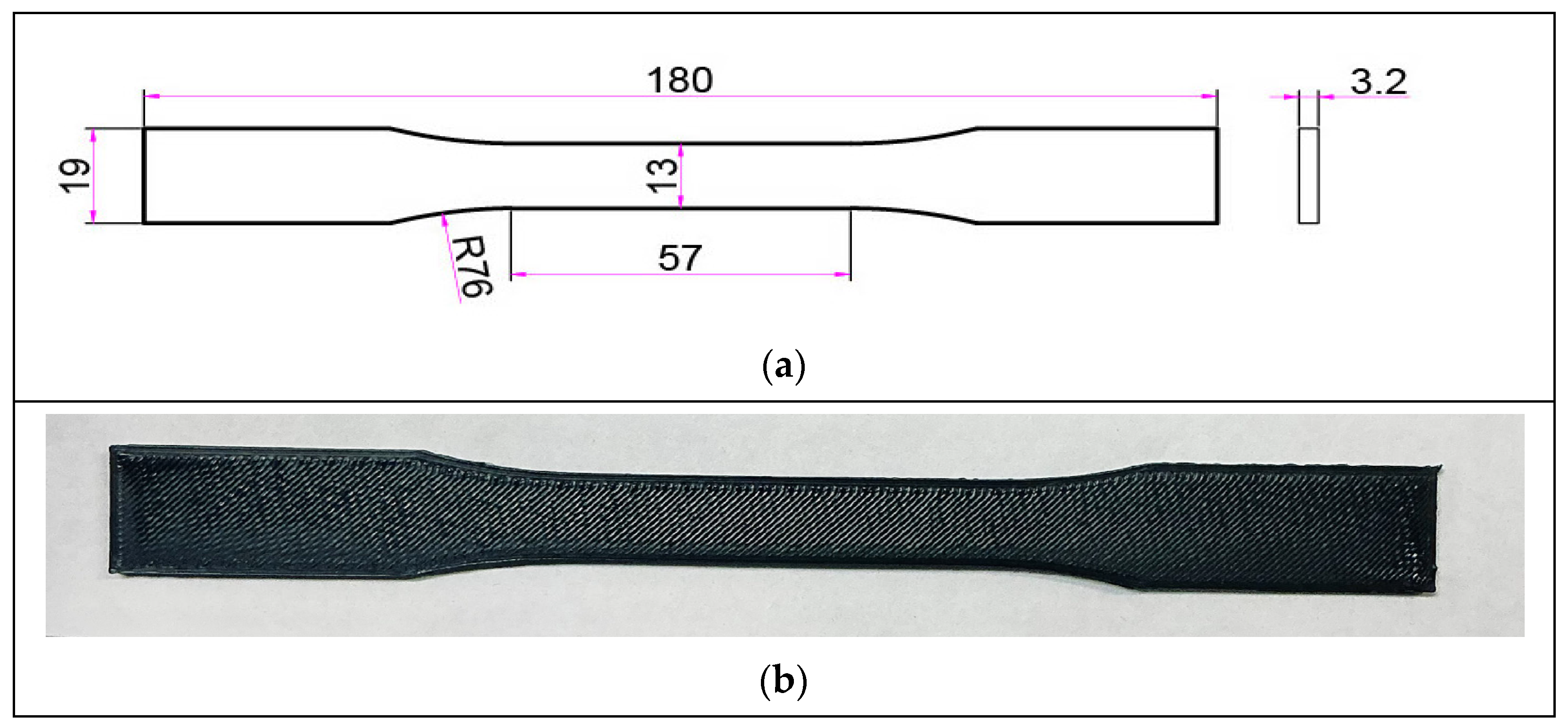
Tensile specimens are designed in AutoCAD 2025 according to the ASTM D638 Type I tensile geometry, which is the standard configuration for testing rigid polymer materials such as PLA. The Type I profile ensures consistent gauge dimensions, controlled stress distribution, and compatibility with widely reported tensile methodologies. The finalized CAD models are exported as STL files and processed using PrusaSlicer 2.9.2 to generate G-code for printing.
Figure 1a,b shows the ASTM Type I CAD model and the corresponding printed specimens.
2.1. Infill Patterns and Process Parameters
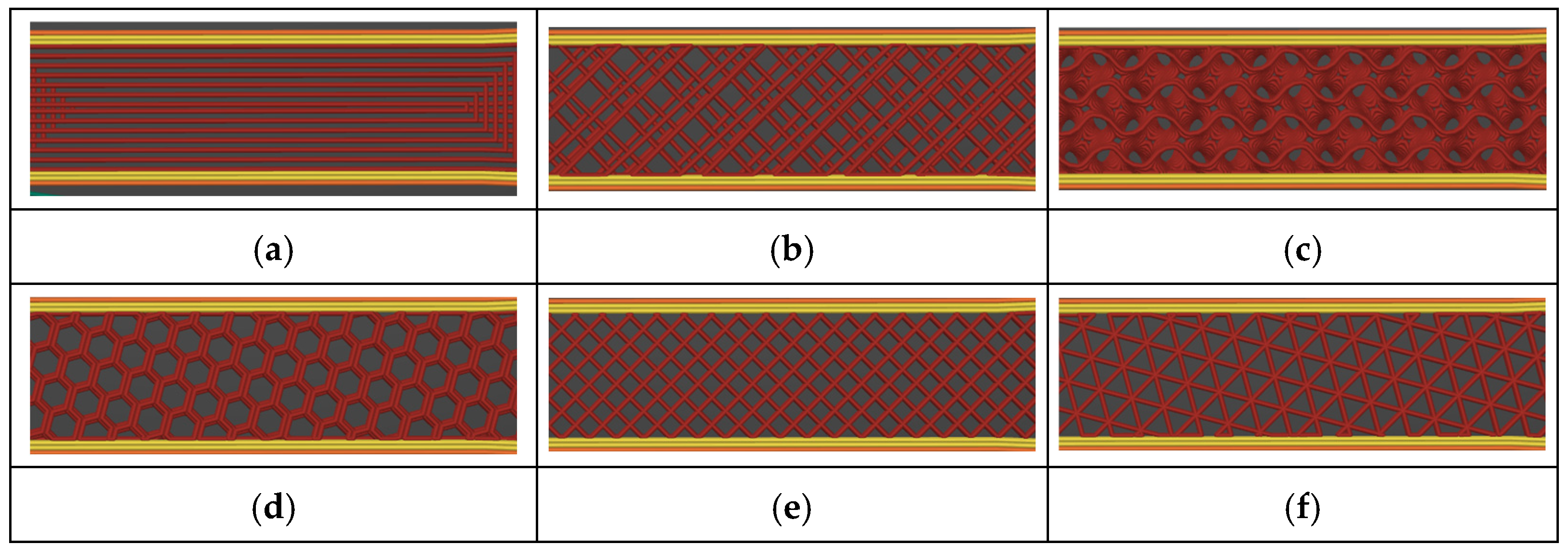
This research considers six infill patterns, as shown in
Figure 2, and three infill density levels of 50%, 75%, and 90%. These patterns are selected because prior studies consistently identify them as the highest-performing geometries for tensile loading, making them suitable candidates for a focused comparison of top-tier architectures. The chosen density levels represent a deliberate balance between practical manufacturability and relevance to the literature. The 50% and 75% densities fall within the commonly reported mid-to-high density range used in mechanical evaluations of PLA, enabling the study to capture how tensile properties evolve across meaningful, widely studied intervals. A 90% density is chosen instead of 100% because certain patterns, such as hexagon, grid, triangle, and gyroid, retain inherent internal voids based on their mathematical structure; forcing these patterns to 100% would remove their defining characteristics and eliminate the geometric advantages under applied loads. Additionally, most slicing software does not generate a true solid configuration for these patterns, making 90% the highest practical level that preserves structural identity while approaching near-solid behavior.
Three skin layer levels (0, 1, and 2) are also investigated to capture the role of surface reinforcement on tensile performance. The 0-layer condition isolates the mechanical contribution of the infill architecture alone, while 1 and 2 layers represent common practical configurations used in functional printing, where surface shells improve part integrity, delay crack initiation, and contribute marginally to load carrying. All other printing parameters are held constant based on widely accepted recommendations for PLA FDM printing, as summarized in
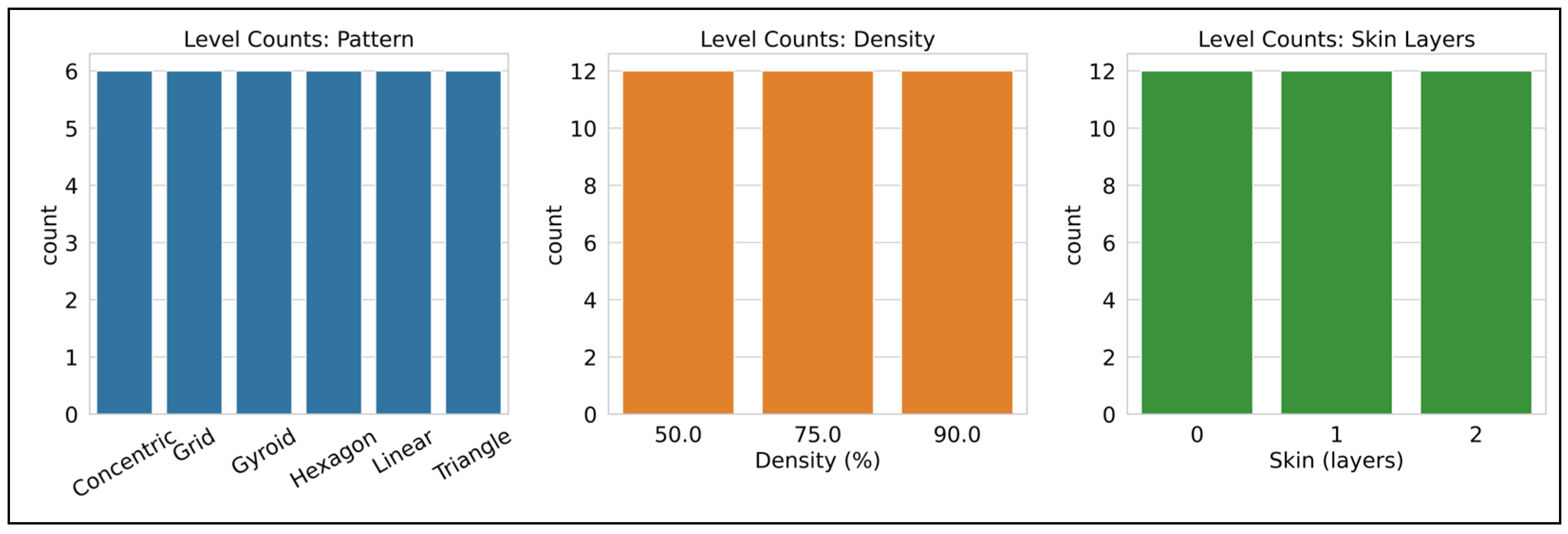
Table 1. To systematically study the influence of these parameters and their interactions, a 2L36 orthogonal array is employed, with factor levels illustrated in
Figure 3.
2.2. Mechanical and Sustainability Metrics
Key mechanical properties evaluated include peak stress, peak load, modulus, yield stress, break strain, and break energy. These metrics provide a comprehensive assessment of tensile strength, stiffness, ductility, and toughness of printed parts. Sustainability metrics included printing time, energy consumption, and material usage, reflecting resource efficiency. All properties and metrics with standard units are presented in
Table 2.
2.3. Experimental Setup and Measurements
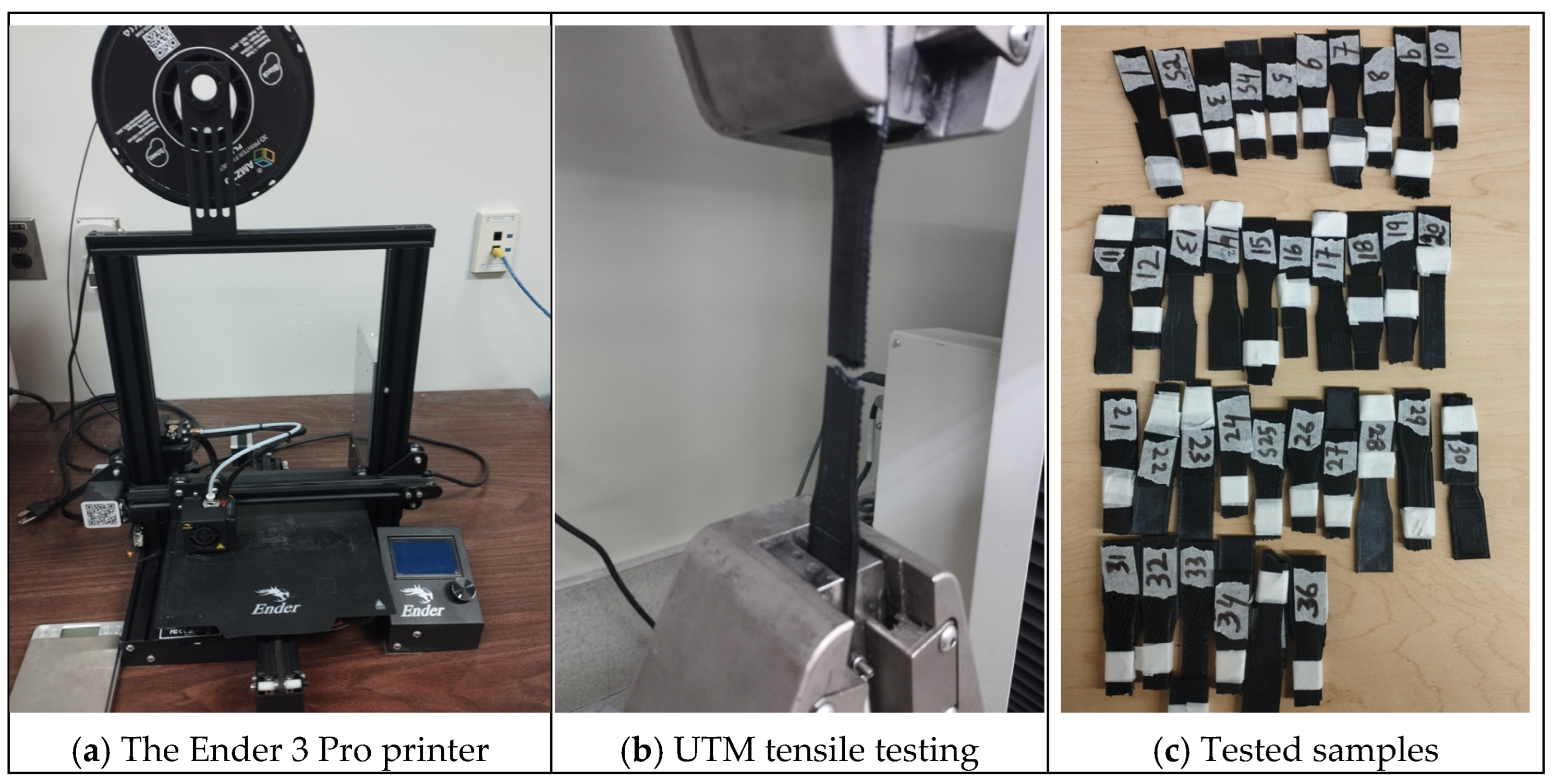
Specimens are printed and tested under controlled laboratory conditions maintained at 21 °C using an Ender-3 Pro FDM 3D printer (
Figure 4a) operating in an open, non-enclosed environment. The printer nozzle and heated bed are brought to their target temperatures and allowed to stabilize before each print, and the build plate is cleaned to ensure consistent adhesion. Manual bed levelling is performed before printing to ensure uniform first-layer deposition across all samples. After printing, specimens are left to cool to room temperature on the build surface to minimize warping before removal.
Dimensional verification is performed for each specimen to ensure accurate calculation of tensile properties. The width and thickness of the narrow-gauge section are measured using a calibrated vernier caliper following a zero-error check. Only the central gauge section dimensions are recorded, as this region defines the cross-sectional area used for stress calculations. Using individual specimen measurements ensured that FDM-induced dimensional variability did not affect the calculated tensile stress and modulus.
Tensile testing was conducted using a universal testing machine (UTM) (
Figure 4b), operating in the same 21 °C laboratory environment. The machine ran the MTS Simplified Tensile 1-3542 testing method, which controlled data acquisition and break detection automatically. Test parameters configured by the machine included a grip separation of 75 mm, a test speed of 5 mm/min, a slack pre-load of 4.448 N, a break threshold of 2.224 N, a break sensitivity of 90%, a yield offset of 0.002 mm/mm, and a data acquisition rate of 10 Hz. The break marker drop was set at 50% load, and the machine recorded elongation and load continuously throughout the test. All load, extension, strain, and break-event data were obtained directly from the UTM’s internal calibrated sensors.
All printed and tested specimens corresponding to the evaluated parameter combinations are shown in
Figure 4c, demonstrating uniform manufacturing quality and consistency of the testing procedure.
2.4. Statistical Analysis and Visualization
For statistical analysis, two-way ANOVA is performed to evaluate the effect of pattern and density on each mechanical property. The Python dictionary “anova_results” is used to store ANOVA tables for each metric, while “tukey_results” holds Tukey’s post hoc HSD comparisons. Analyses were performed in Python 3.12 using Google Colab. Normalized performance scores and resource-based efficiencies are calculated and organized in dictionaries such as “avg_metric_scores”, along with temporary dictionaries for efficiencies per gram, per kWh, and per minute. Data visualization, including bar plots and composite figures, is performed using “matplotlib.pyplot” and “seaborn”. These structured data containers and plotting tools allow for systematic storage, access, and visualization of mechanical and sustainability performance metrics across all infill patterns.
The systematically prepared specimens and carefully controlled process parameters allow for precise evaluation of mechanical performance and sustainability metrics. Using the ANOVA and normalized efficiency analyses described above, the subsequent results section presents both metric-by-metric performance and resource-normalized efficiencies, highlighting the relative advantages of different infill patterns in terms of strength, stiffness, toughness, and sustainable resource utilization.
3. Results
In this section, we discuss the ANOVA analysis, interaction plots, resource mechanical efficiency, comparative performance of infill patterns and effects of skin layers.
3.1. ANOVA Analysis
A two-way ANOVA is conducted to assess the effects of infill pattern and density on the mechanical properties of PLA parts, including peak load, peak stress, strain at break, modulus, energy-to-break, and stress at yield (
Table 3). The analysis reveals that density is the most significant factor for peak load (F = 37.89,
p < 0.001), modulus (F = 44.46,
p < 0.001), and stress at yield (F = 24.53,
p < 0.001), while infill pattern strongly influences peak stress (F = 11.52,
p < 0.001), strain at break (F = 10.99,
p < 0.001), and energy-to-break (F = 12.51,
p < 0.001). Interaction effects between pattern and density are not statistically significant (η
2 < 0.11), indicating that the effect of pattern is largely independent of density.
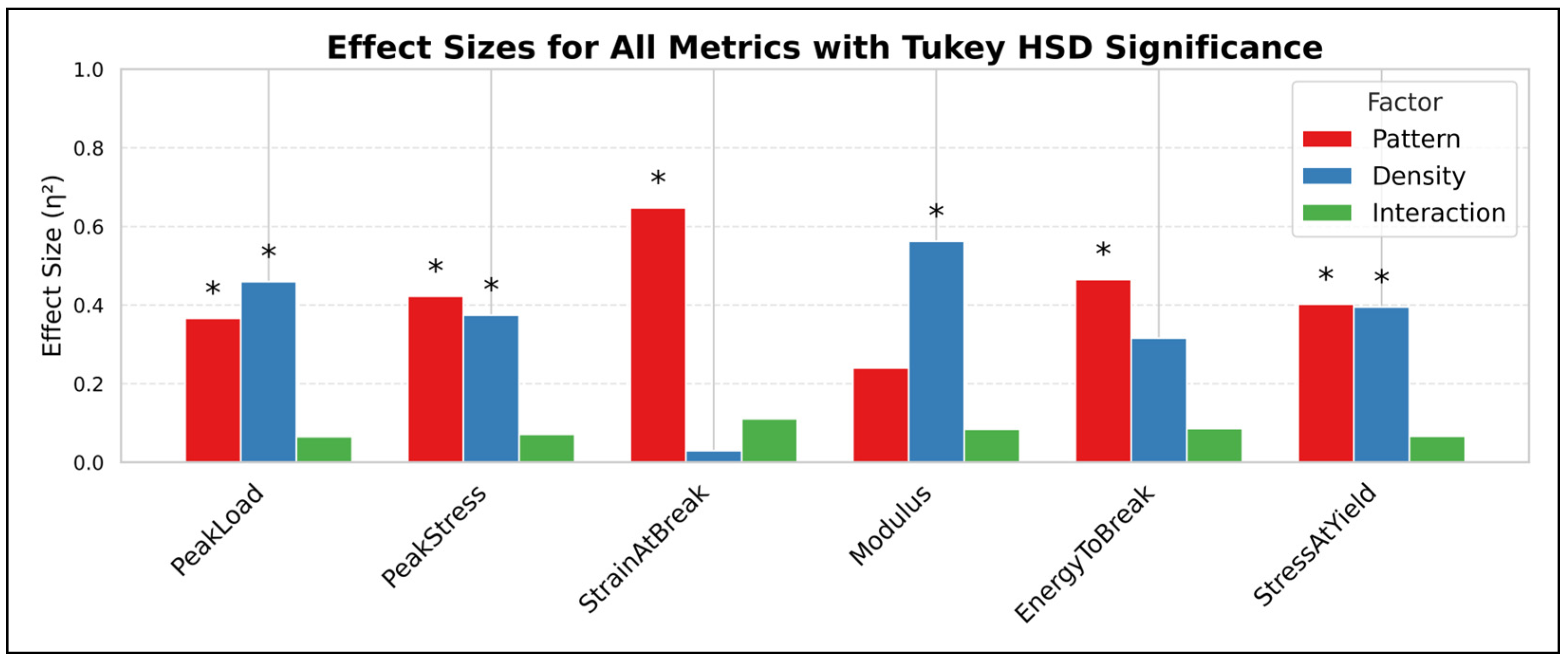
Effect size analysis (η
2) quantifies the relative contribution of each factor (
Figure 5), confirming that density dominates strength and stiffness-related properties (η
2 = 0.46–0.56), whereas pattern primarily controls ductility and energy absorption (η
2 = 0.40–0.65). In
Figure 5, asterisks (*) denote statistically significant effects (p < 0.05). Tukey’s post hoc HSD comparisons further demonstrate statistically significant differences between specific density levels and pattern types, such as concentric differing from grid or triangle patterns (
p < 0.05).
Table 3 summarizes the effect sizes for all mechanical metrics, providing a comprehensive overview of the statistical influence of each process parameter.
These results suggest that, in FDM PLA printing, adjusting density is the most effective strategy to enhance part strength and stiffness, while pattern selection is more relevant for tuning ductility and energy absorption, highlighting the importance of considering both parameters for optimized mechanical performance.
3.2. Interaction Plots for Different Infill Patterns Across Various Metrics
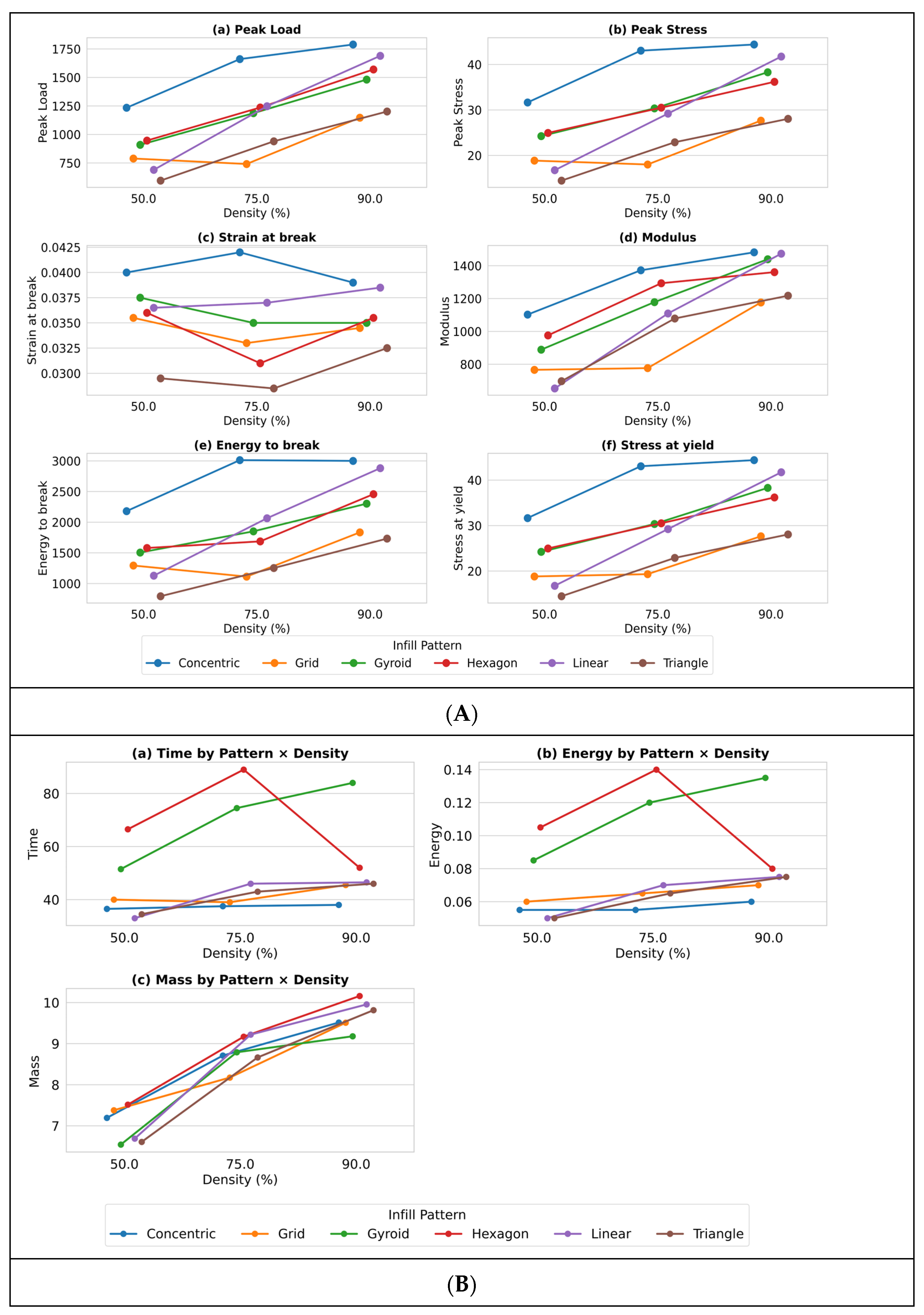
While the ANOVA results highlight density as the most statistically significant factor, the interaction plots in
Figure 6A provide deeper practical insights into how density and infill pattern together influence mechanical performance. Each subplot shows a clear trend that increasing density generally improves strength-related metrics, but the degree of improvement varies substantially across patterns. Concentric stands out as the most efficient pattern across all densities, consistently achieving the highest peak load, peak stress, modulus, and yield stress. This indicates that concentric not only benefits from higher density but also leverages its geometry to distribute loads more effectively, resulting in superior structural integrity. Linear follows as the second-best performer, showing steady improvement with density, but it never reaches the performance level of concentric. Patterns such as grid, gyroid, and hexagon exhibit moderate gains with increasing density, yet their overall performance remains lower, suggesting that their internal geometry does not translate density into strength as effectively. Triangle performs worst across most metrics, with minimal improvement even at the highest density, making it unsuitable for tensile-strength-critical applications.
Interestingly, break strain does not follow the same linear trend as the other metrics. For several patterns, including grid and triangle, strain decreases at mid density before recovering slightly at high density, indicating that higher density does not always enhance ductility. Energy-to-break mirrors the strength trends, with concentric again leading by a wide margin, reinforcing its ability to absorb energy and resist failure. These observations demonstrate that while density is important, pattern selection is equally critical. Simply increasing density cannot compensate for an inefficient pattern. Choosing an optimized pattern, such as a concentric pattern, can deliver superior strength and energy absorption even at moderate densities, reducing material usage and print time while maintaining mechanical reliability.
A similar trend is observed for the sustainability metrics in
Figure 6B. Concentric at 75% density again outperforms most patterns at 90% density in mechanical performance while maintaining lower printing time, energy consumption, and mass. Tukey’s post hoc tests confirm that at 90% density, concentric is significantly stronger than grid and triangle, reinforcing its advantage. Patterns such as hexagons and gyroids tend to be more time and energy-intensive, particularly at mid densities, whereas concentric, linear, and grid remain more efficient. These observations highlight that while statistical analysis identifies density as a key factor, the choice of infill pattern can have a more substantial practical impact across multiple performance metrics.
In summary, a concentric configuration at 75% density emerges as optimal, delivering high mechanical strength with reduced time, energy, and material use compared to higher-density alternatives. This underscores the importance of considering individual pattern–density interactions rather than relying solely on collective significance tests when optimizing for strength, efficiency, and sustainability in AM.
3.3. Resource Mechanical Efficiency of Different Infill Patterns
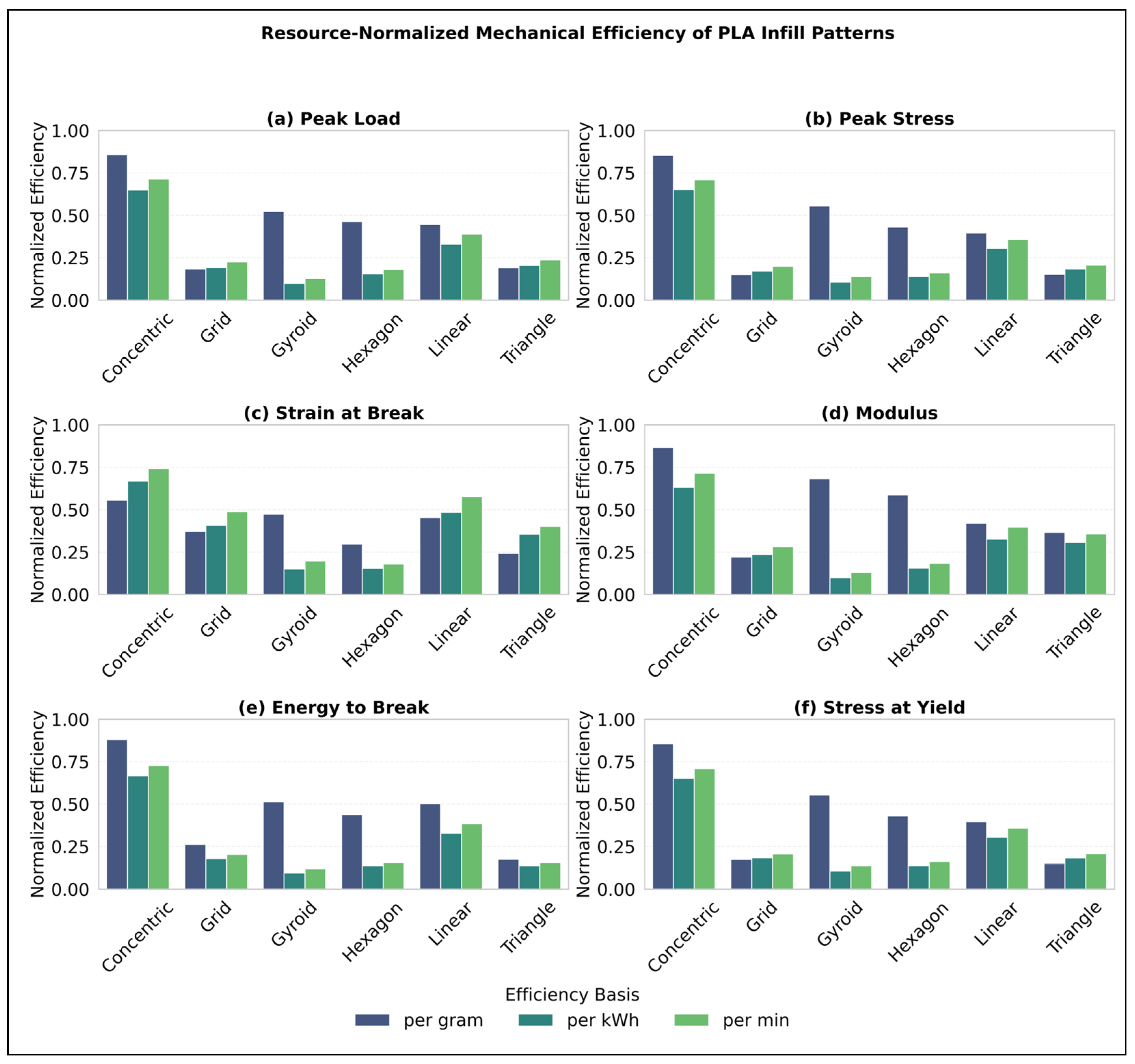
Figure 7 illustrates the resource-normalized mechanical efficiency of six different infill patterns across six key mechanical metrics: peak load, peak stress, break strain, modulus, break energy, and yield stress. These metrics collectively describe the mechanical behavior of FDM-printed PLA parts. Peak load and peak stress indicate the maximum load that the part can withstand before failure, modulus reflects stiffness and resistance to elastic deformation, break strain quantifies the ductility and flexibility, break energy measures the energy absorbed before fracture, and yield stress represents the stress level at which the material begins to deform plastically. Together, these metrics provide a comprehensive view of strength, stiffness, toughness, and ductility.
To enable fair comparison across different units and scales, all efficiency values are normalized to a 0–1 range using min–max normalization:
where
and
represent the minimum and maximum values of the metric across all samples, and
is the normalized value.
For resource-based metrics where lower values are preferable (mass, energy consumption, and printing time), an inverted normalization is applied:
where
is a normalized efficiency metric that always increases with “better” performance.
Each bar in
Figure 7 represents the normalized mechanical efficiency per unit resource, specifically per gram of material (g
−1), per kWh of energy (kWh
−1), and per minute of manufacturing time (min
−1). This approach quantifies how efficiently each infill pattern converts resources into mechanical performance, linking structural behavior to sustainability considerations.
Among all infill patterns, the concentric pattern consistently achieves the highest normalized efficiency for all six mechanical metrics. For peak stress, shown in
Figure 7a, the concentric infill shows efficiency values of 0.85 per gram, 0.65 per kWh, and 0.71 per minute, indicating that it delivers more stress per unit resource than any other pattern. For modulus, shown in
Figure 7d, concentric achieves 0.87 per gram, 0.63 per kWh, and 0.72 per minute, demonstrating its ability to produce stiffer parts efficiently. For break energy, shown in
Figure 7e, for toughness, the concentric pattern reaches 0.88 per gram, 0.67 per kWh, and 0.73 per minute, highlighting superior energy absorption relative to the resources consumed.
Other patterns perform differently depending on the metric and resource. Gyroid exhibits moderate efficiency per gram, ranging from 0.47 to 0.68 across different metrics, but its efficiency per kWh and per minute is low, often below 0.15, indicating that it requires more energy and time related to its mechanical performance. Hexagon shows intermediate performance, with an efficiency per gram between 0.30 and 0.59 and lower efficiency per kWh and per minute. Linear achieves moderate efficiency for some metrics, particularly per gram and per minute, but it remains lower than concentric overall. Triangle and grid consistently show the lowest efficiency scores, often between 0.10 and 0.38, demonstrating that these patterns are less resource-effective, despite occasionally achieving moderate absolute mechanical values.
The break strain, shown in
Figure 7c, indicates that ductility is highest for concentric (0.56 per gram, 0.67 per kWh, 0.74 per minute), closely followed by linear, highlighting their superior ability to absorb deformation efficiently. Yield stress also favors concentric (0.85 per gram, 0.65 per kWh, 0.71 per minute), reflecting efficient early resistance to plastic deformation. For peak load, concentric achieves 0.86 per gram, 0.65 per kWh, and 0.72 per minute, demonstrating the highest load-bearing efficiency.
Overall,
Figure 7 demonstrates that a concentric infill pattern provides the most favorable balance between mechanical performance and resource utilization across all six key metrics. By consistently maximizing mechanical efficiency per unit material, energy, and time, concentric emerges as the most efficient and sustainable choice among the investigated infill patterns. Evaluating mechanical performance in relation to resource consumption enables informed decisions when optimizing FDM printing parameters, supporting both structural reliability and sustainability goals.
3.4. Comparative Performance of Different Infill Patterns Across Various Metrics
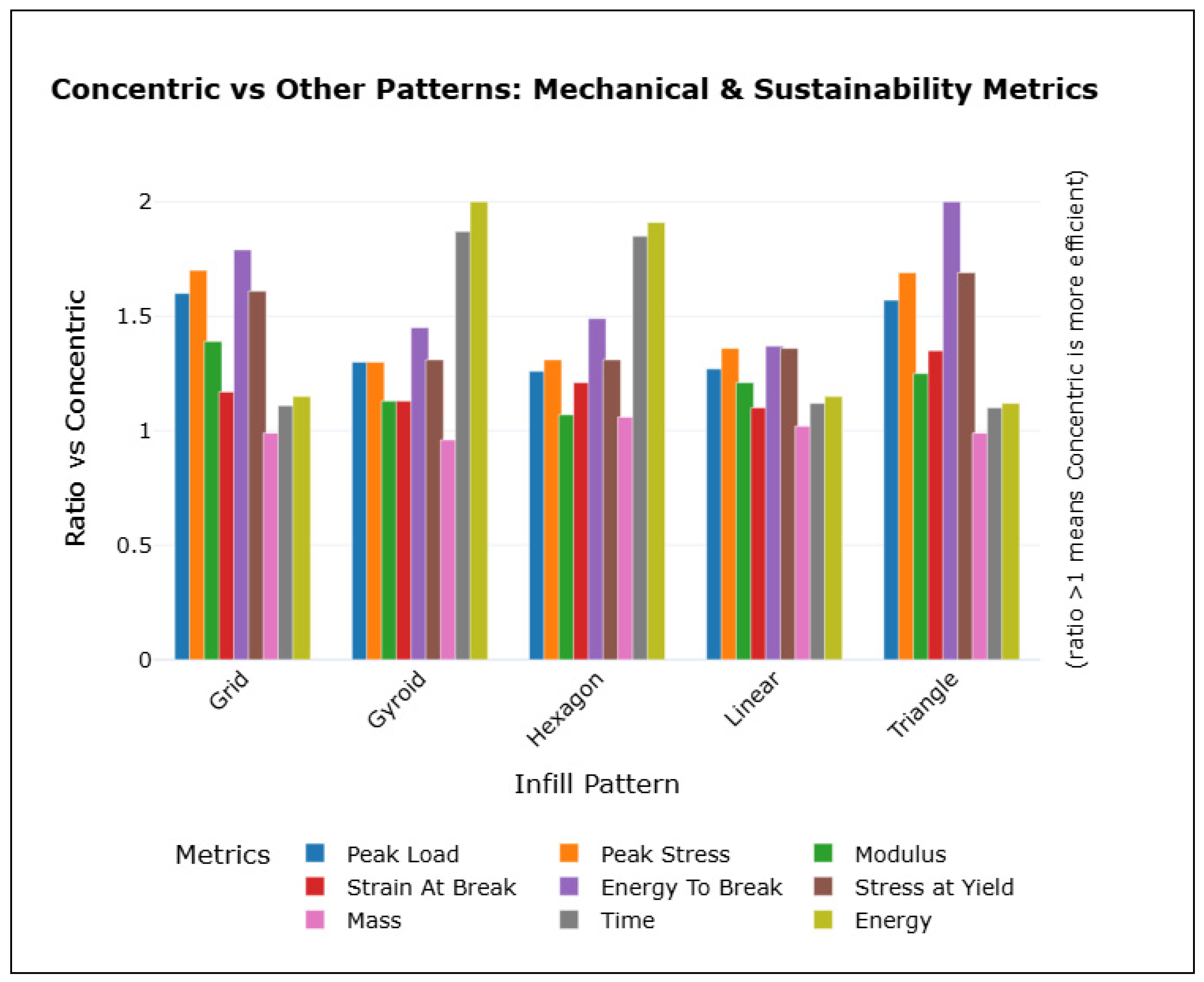
Figure 8 and
Table 4 summarize the comparative performance of different infill patterns relative to concentric, which is used as the baseline (ratio = 1). In this analysis, a ratio greater than 1 indicates that concentric outperforms the other pattern for that metric. Overall, concentric demonstrates clear advantages in mechanical performance, printing time, and energy efficiency. Specifically, concentric achieves higher peak load, peak stress, modulus, break strain, break energy, and yield stress compared to all other infill patterns, indicating superior strength, stiffness, and ductility. Among the alternatives, grid and triangle patterns are closest to concentric in mechanical performance, with ratios ranging from ~1.17–1.93, while gyroid and hexagon show more moderate performance (ratios ~1.13–1.45). In terms of printing efficiency, concentric prints are faster than all other patterns, as shown by time ratios greater than 1; the gyroid and hexagon patterns take the longest, highlighting their lower productivity. Similarly, concentric is more energy-efficient, with all other patterns consuming more energy (energy ratios > 1), again with gyroid and hexagon showing the largest disadvantages. Mass ratios indicate minor trade-offs: while the gyroid pattern slightly reduces mass (ratio < 1), other patterns are comparable or slightly heavier than concentric. Taken together, these results suggest that concentric is the optimal pattern for maximizing mechanical properties while maintaining speed and energy efficiency. Other patterns can offer minor advantages in mass reduction but at the cost of longer print times and higher energy consumption.
Figure 7 and
Table 4 together provide a comprehensive view of how infill pattern selection influences performance, enabling informed trade-offs in FDM PLA printing.
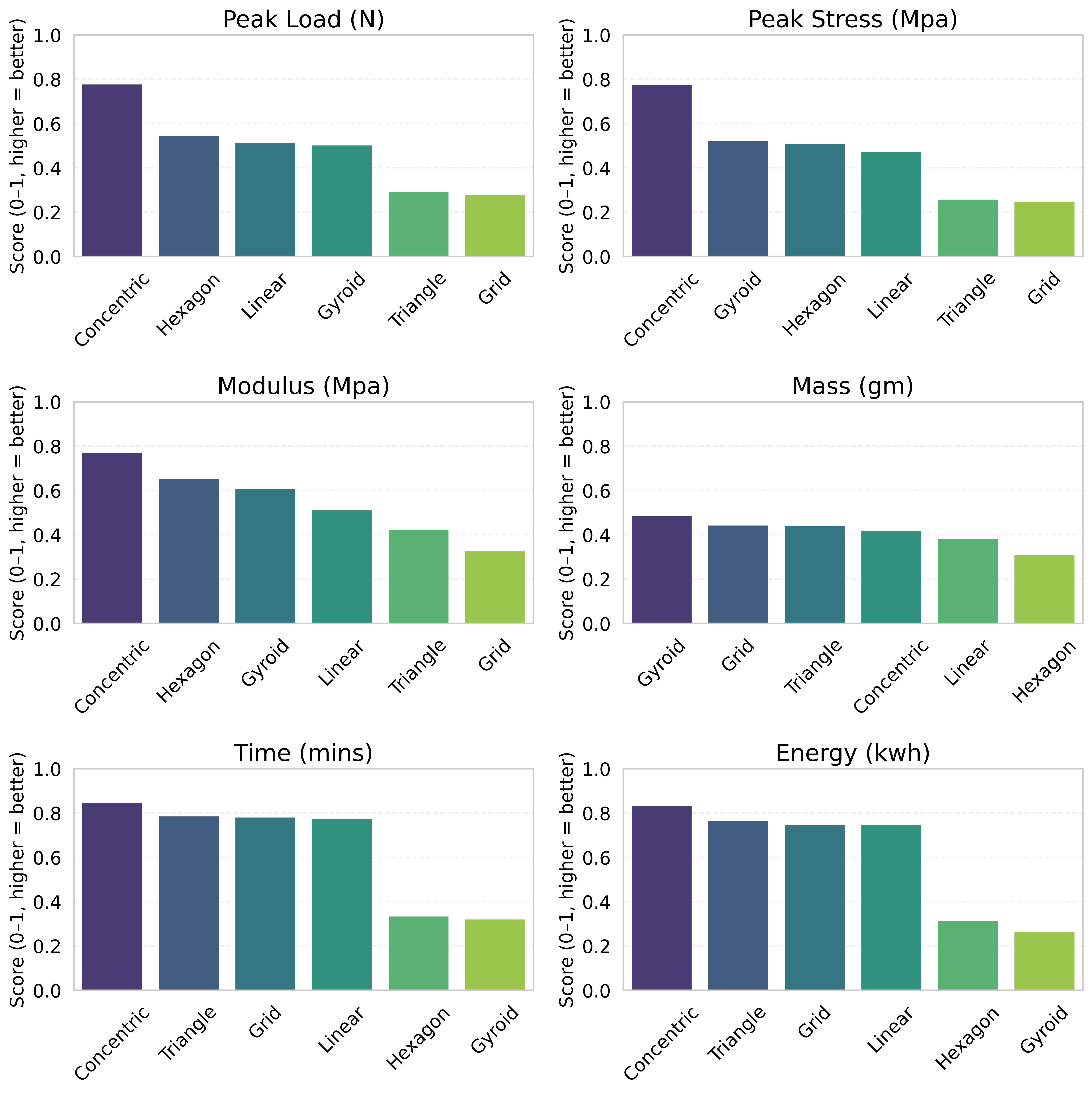
To systematically evaluate the influence of infill pattern on both mechanical and sustainability-related performance,
Figure 9 presents the normalized performance scores for all considered metrics, where values closer to unity indicate superior relative performance within the experimental dataset. This normalization enables direct comparison across metrics with different physical units while avoiding bias toward any single property.
Across most mechanical metrics, the concentric infill pattern consistently yields higher normalized scores than the other patterns. In particular, the yield stress score for concentric is approximately 1.2–1.5 times higher than that for gyroid and hexagon, while its peak load and peak stress scores exceed the lowest-performing patterns by approximately 1.3–1.8 times. These trends indicate that, within the investigated parameter space, the concentric deposition strategy is associated with improved load-bearing capability and stiffness. While the exact micromechanical mechanisms are not directly resolved in this study, the observed behavior is consistent with improved stress distribution arising from continuous, closed-loop filament paths.
For deformation- and toughness-related properties, including break strain and break energy, the concentric infill pattern again demonstrates favorable performance. As shown in
Figure 8, its normalized scores exceed those of grid and linear patterns by approximately 1.1–1.3 times for break strain and by 1.2–2.1 times for break energy. The triangle infill pattern also shows relatively high performance in these metrics, suggesting that geometries promoting directional continuity may enhance energy absorption prior to failure. These results suggest that the concentric infill pattern does not merely maximize stiffness or strength but maintains a balanced response between strength and ductility.
Sustainability metrics further support this observation. For mass, printing time, and energy consumption, the concentric pattern achieves normalized scores that are generally 10–15% higher than those of the gyroid and hexagon. This indicates that the mechanical advantages of the concentric infill pattern are achieved without increased material use or processing inefficiency. In contrast, gyroid and hexagon patterns, while exhibiting moderate mechanical performance, tend to require higher material input and longer printing durations, which lowers their relative sustainability scores. The grid infill pattern shows intermediate behavior, achieving acceptable strength but comparatively lower energy efficiency.
The cumulative effect of these metric-level trends is quantified in
Table 5, which reports the average performance score across all metrics for each infill pattern. The concentric infill pattern achieves the highest overall score (~0.8), confirming that its superior performance is consistent across both mechanical and sustainability dimensions rather than driven by a single dominant metric. Other patterns exhibit notably lower average scores, reflecting inherent trade-offs among strength, ductility, and resource efficiency.
Overall, the combined analysis of metric-specific normalized scores (
Figure 9) and aggregate performance scores (
Table 5) demonstrates that, within the scope of the present dataset, the concentric infill pattern provides the most balanced and robust performance profile, frequently exceeding alternative infill patterns by factors of 1.1–2.1 depending on the metric considered. This integrated evaluation framework reduces the risk of misleading conclusions based on isolated properties and provides a more comprehensive basis for infill selection in FDM-printed PLA components, particularly when both mechanical performance and sustainability considerations are of interest.
3.5. Effect of Skin Layers on Peak Stress
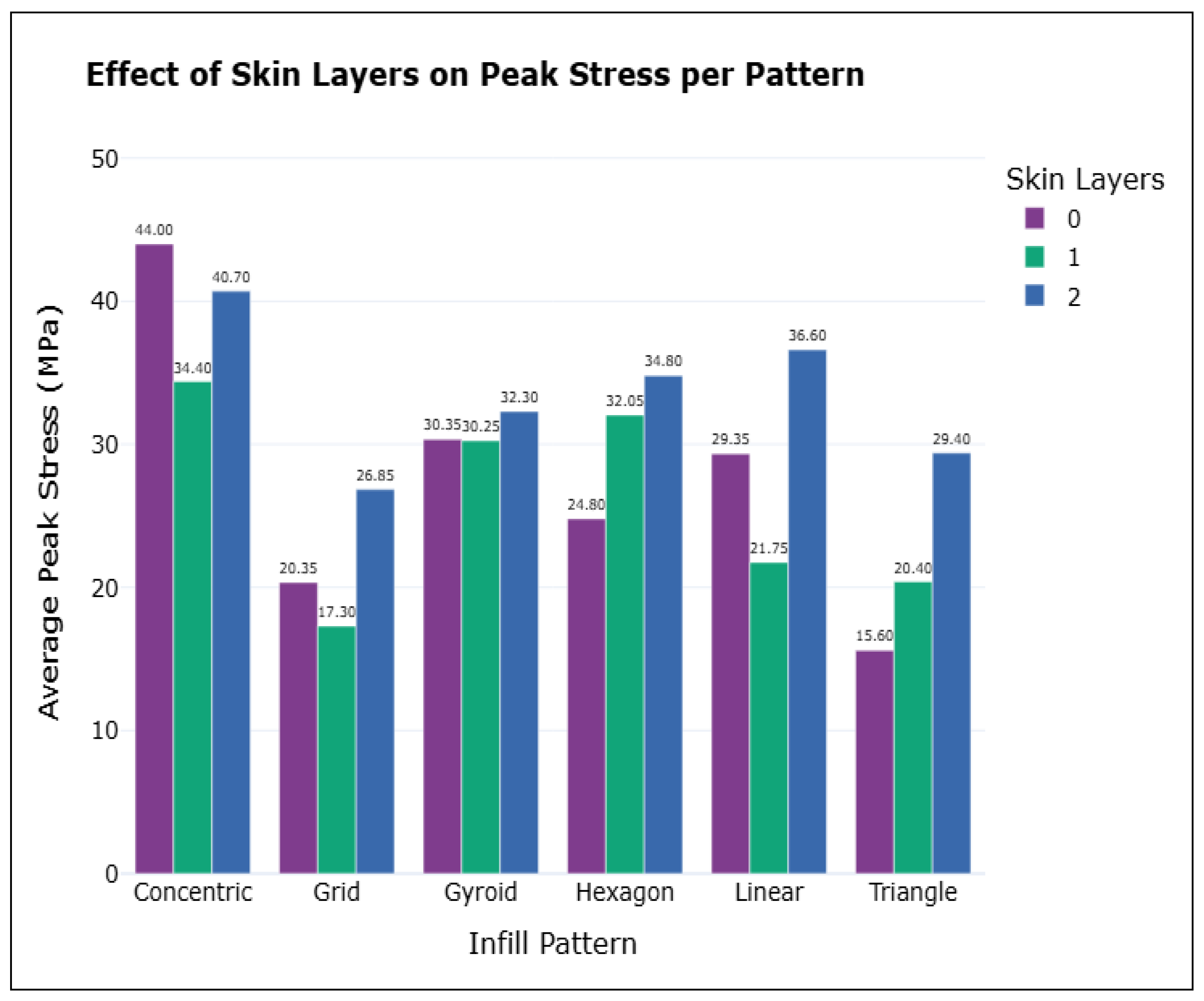
The effect of skin layers on peak stress across different infill patterns is illustrated in
Figure 10. Since skin layers are required in functional parts to provide surface integrity and structural continuity, particularly for infill patterns with inherent internal gaps such as gyroid, hexagon, triangle, grid, and concentric, understanding their influence on mechanical performance is important. When skin layers are introduced, they are accommodated within the same overall specimen thickness, which results in a redistribution of material from the infill region to the outer skins rather than an increase in total material volume. Consequently, the infill height and contribution are reduced while the continuous outer layers become more dominant in load transfer.
The results reveal that the influence of skin layers is strongly dependent on the infill pattern and its load-path alignment. For the concentric infill pattern, which is inherently well aligned with the tensile loading direction, adding skin layers reduces peak stress. This can be attributed to the disruption of the optimal load-aligned concentric paths by the monotonic skin layers, which alters stress distribution and reduces the effectiveness of the aligned material layers. In contrast, for geometric infill patterns such as grids, hexagons, and triangles, the addition of skin layers generally increases peak stress. In these cases, the skin layers provide more continuous load-bearing paths than the underlying geometric infill, thereby improving load transfer and enhancing tensile performance. The gyroid pattern shows comparatively moderate sensitivity to skin layers, reflecting its three-dimensional continuous architecture and more isotropic load distribution.
Overall, our results demonstrate that the mechanical impact of skin layers is governed not by increased material usage but by the redistribution of material and the resulting changes in load-path alignment. This highlights that tensile performance in FDM-printed PLA components can be optimized through strategic material placement and infill–skin interaction rather than by simply increasing infill density or material consumption. From a sustainability perspective, this finding reinforces the idea that improved mechanical efficiency can be achieved without additional material, time, or energy input, provided that the infill pattern and skin configuration are appropriately selected.
4. Discussion
The variations in tensile performance across different infill geometries can be explained using structural mechanics principles, with concepts from irreversible thermodynamics serving as a qualitative framework for describing energy dissipation during deformation. In this scenario, thermodynamic principles are applied to enhance the mechanical interpretation by linking irreversible deformation mechanisms to entropy generation rather than acting as a standalone analytical model. Mechanical deformation of polymer structures is inherently irreversible, and part of the applied mechanical work is dissipated through mechanisms such as plastic deformation at filament junctions, interlayer debonding, and microcrack initiation. According to the second law of thermodynamics for non-equilibrium systems, the internal entropy production must satisfy:
where
represents the rate of entropy generated by irreversible processes within the material [
28,
29].
In the present infill study, patterns with more filament intersections, such as grid, triangular, and hexagonal geometries, exhibited lower tensile strength than concentric and linear patterns. These intersections act as localized stress-concentration sites where load must be transferred between filaments, promoting localized plastic deformation and microdamage. As a result, a larger fraction of the applied mechanical work is dissipated, leading to greater entropy generation during deformation.
The relationship between dissipated mechanical work and entropy generation can be expressed through the Gouy–Stodola relation,
which states that the useful work destroyed due to irreversibility is proportional to the entropy generated in the system [
29]. In the context of the present results, infill patterns with a higher density of filament junctions increase the number of sites where irreversible deformation can occur, thereby increasing
Sgen and reducing the effective load-bearing efficiency of the structure.
This structural effect can be characterized using a junction density parameter,
where
Nj represents the number of filament intersection nodes within a volume
. Lattice-type infills such as hexagonal, triangular, and grid patterns exhibit larger values of
, whereas concentric and linear infills contain significantly fewer junctions. The higher junction density increases stress localization and promotes earlier damage initiation, which explains the reduced tensile strength observed in the experimental results.
Filament orientation relative to the loading direction also plays a critical role in determining the effective load transfer within the printed structure. In composite micromechanics, the stress contribution of a filament oriented at an angle
to the applied tensile direction can be approximated by,
where
is the axial stress carried along the filament direction [
30,
31]. In the present study, concentric and linear infills align a greater fraction of filaments parallel to the tensile loading direction, maximizing
and allowing for more efficient load transfer through the structure. In contrast, triangular and grid patterns contain many filaments oriented at larger angles relative to the loading axis, thereby reducing the effective stress contribution of individual filaments and lowering the overall tensile strength.
At the molecular scale, deformation of polymer networks is associated with changes in configurational entropy. The entropy change associated with deformation can be approximated as,
where
represents the number of polymer chains,
is Boltzmann’s constant, and
are the principal stretch ratios describing deformation along each axis [
32]. When stress concentrations occur at filament junctions, localized deformation increases the magnitude of these stretch ratios, leading to greater configurational entropy changes and increased energy dissipation during failure.
The relatively strong performance of the gyroid pattern observed in the experimental results can also be interpreted within this framework. Unlike lattice-based geometries, the gyroid structure forms a smooth continuous topology without sharp node intersections. This reduces stress concentration and distributes deformation more uniformly throughout the structure, lowering localized entropy production compared with patterns containing discrete filament junctions.
Consequently, the experimentally observed ranking of tensile performance among infill geometries is qualitatively consistent with increasing structural disorder and entropy generation associated with junction density and filament orientation:
where patterns containing a larger number of intersecting filaments are expected to produce greater entropy during deformation due to increased energy dissipation and damage localization.
5. Conclusions
This study demonstrates that the infill topology plays a dominant role in governing the mechanical performance of FDM-printed PLA components, while infill density provides a secondary contribution within a given pattern. Based on the aggregated mechanical performance metrics, the concentric infill pattern exhibited the highest average performance score (0.80), followed by triangular (0.75), grid (0.73), and linear (0.71) patterns, whereas hexagonal (0.69) and gyroid (0.66) showed comparatively lower overall performance. Infill architectures characterized by continuous, load-aligned filament paths consistently delivered superior tensile strength, stiffness, and energy absorption compared with lattice-type geometries.
The observed performance differences can be explained by filament orientation, load-path continuity, and junction density. Lattice-type patterns exhibited higher normalized peak load and energy-to-break values (exceeding 1.7 and 2.0, respectively), indicating increased stress concentration and greater energy dissipation associated with filament intersections. In contrast, load-aligned architectures demonstrate improved load transfer efficiency, with normalized modulus values of approximately 1.22–1.46 and reduced irreversible deformation.
Statistical analysis confirmed that infill pattern significantly influences all mechanical responses (p < 0.001) with large effect sizes (η2 up to 0.65 for strain at break), while interaction effects between pattern and density were not significant. When mechanical performance is evaluated alongside resource utilization, concentric and linear infills also show superior performance per unit mass, printing time, and energy consumption.
Overall, the results indicate that informed infill topology selection is more effective than increasing density alone for tensile-loaded FDM-PLA components. Favoring load-aligned architectures with continuous filament trajectories enables improved mechanical performance while maintaining efficient use of material, time, and energy, offering a practical pathway toward stronger and more resource-efficient additively manufactured polymer parts.