1. Introduction
In recent years, with the expansion of the distribution network and the implementation of the ecological strategy of ‘carbon neutrality and carbon peak’, the forest coverage rate has increased, resulting in an increase in the probability of trees touching wires. The current of the tree branch near or in contact with the wire arc discharge fault of the tree branch is very small, and the characteristics are not obvious, which makes it difficult for the protection device to respond in time and accurately. At the same time, it is also one of the most difficult faults to be detected by the patrol personnel [
1,
2]. China’s distribution lines are generally set up at a height of 6 to 10 m. If the surrounding trees grow rapidly, they are easy to approach or exceed the height of the wire. The branches may contact or overlap the wire under the action of wind, which may cause a transient ground fault [
3]. A distribution network fault igniting a mountain fire has a high contingency. Its concealment and suddenness, and its single fire area are larger than those of other fire sources [
4]. In the actual fault detection, the tree line fault is often misjudged as a disturbance and ignored because of its unobvious characteristics, resulting in frequent faults. If there are flammable materials such as trees around, it may lead to carbonization and combustion of branches, which can easily cause fire accidents and greatly threaten the safety of production and life [
5,
6].
For the study of arc faults in distribution networks, many researchers at home and abroad have carried out magnetohydrodynamic (MHD) arc simulations using finite-element methods. Helence Rachard, for example, developed a two-dimensional arc model to analyze the influence of an external magnetic field on arc shape and motion [
7], although their model was fully enclosed. Li Xingwen et al. established a two-dimensional MHD mathematical model of air-circuit-breaker arc plasma [
8], and used simulations to investigate the relationships among arc radius, electric field strength, and current, as well as the effect of an external magnetic field on arc motion. By means of MHD finite-element simulation models, the dynamic evolution of arcs under different influencing factors can be investigated and analyzed more intuitively. Meanwhile, extensive experimental studies have also been conducted worldwide on the phenomenon of transmission and distribution lines contacting trees and triggering wildfires. The research shows that with the continuous discharge of the tree line, there is a risk that the vegetation will be ignited under the action of arc and leakage current. Especially when the fault occurs in remote mountainous areas, and the protection system fails to respond effectively, it will easily lead to wildfires [
9,
10]. Yin et al. studied the influence of water content on the leakage current of touching trees, revealed the peak variation law, and established a prediction model [
11]. Liang et al. established a time-varying model of single-phase contact tree fault resistance for wire contact tree faults [
12]. Jiang et al. analyzed the arc characteristics and combustion behavior of tree-wire discharge faults, with a primary focus on exploring the stage-wise variation in leakage current and harmonic signatures [
3]. Although some studies have addressed tree–line contact and flame bridging, the understanding is still incomplete. The discharge morphology, fault characteristics, and ignition mechanism under different wind speeds, branch moisture contents, and conductor types are not fully clarified. In addition, the periodic physical processes of the fault are rarely studied. This limits effective monitoring and early warning of wildfire-related faults.
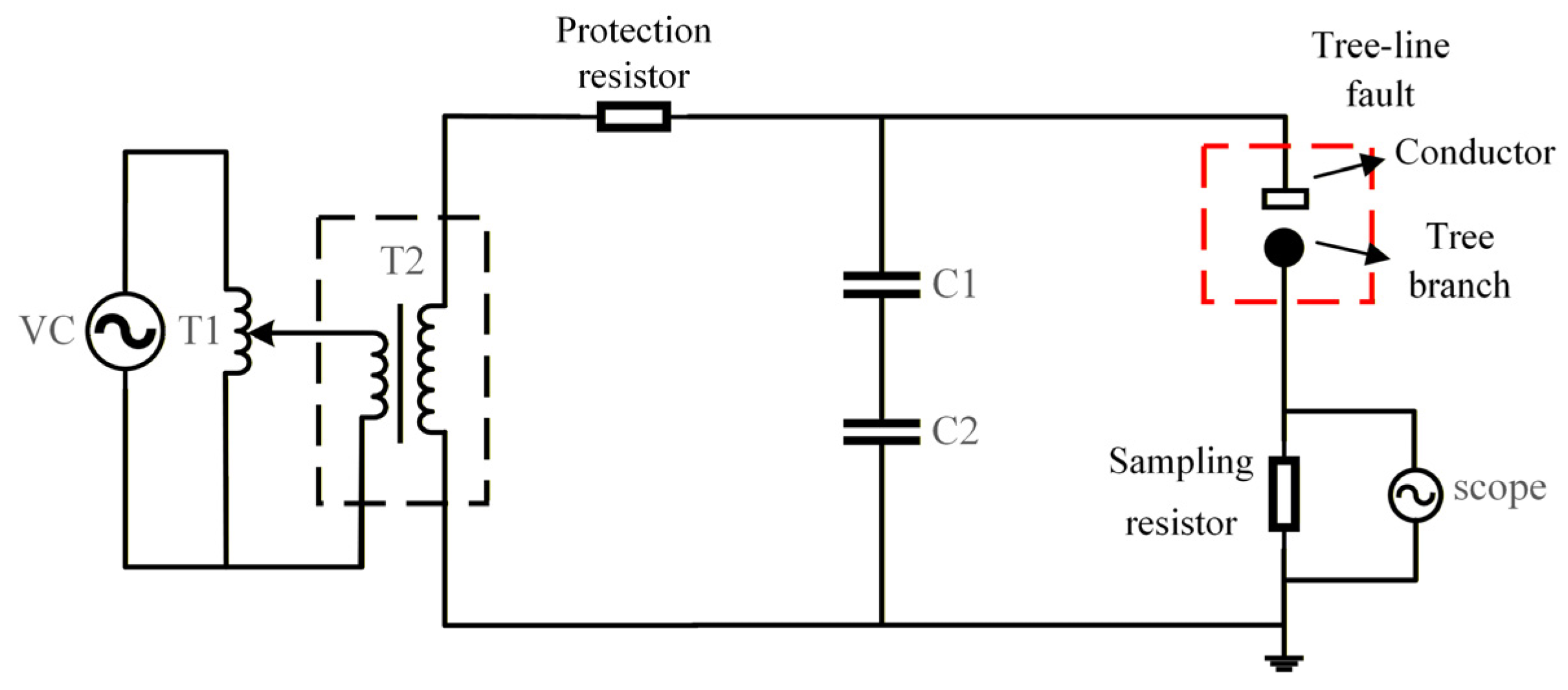
In this paper, the arc development process of tree-contact grounding faults is investigated by establishing a two-dimensional multi-physics model of the tree-contact arc based on magnetohydrodynamics and constructing a 10 kV distribution-line tree-contact arcing fault test platform. The characteristic behavior of tree-contact arc faults is analyzed, and the extracted fault features provide support for the identification of wildfires initiated by tree-line discharges.
2. Construction of the Tree-Line Arc Simulation Model
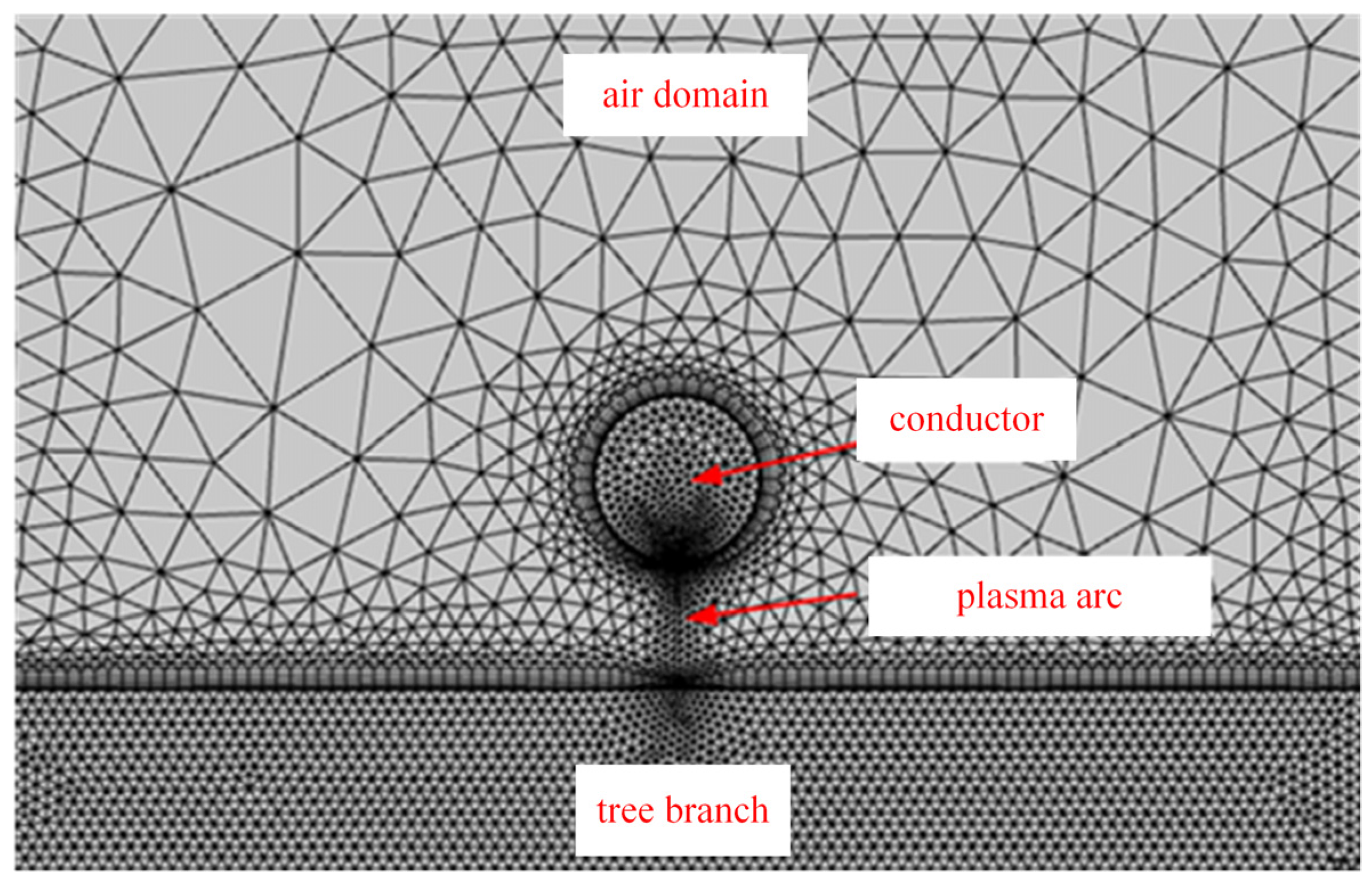
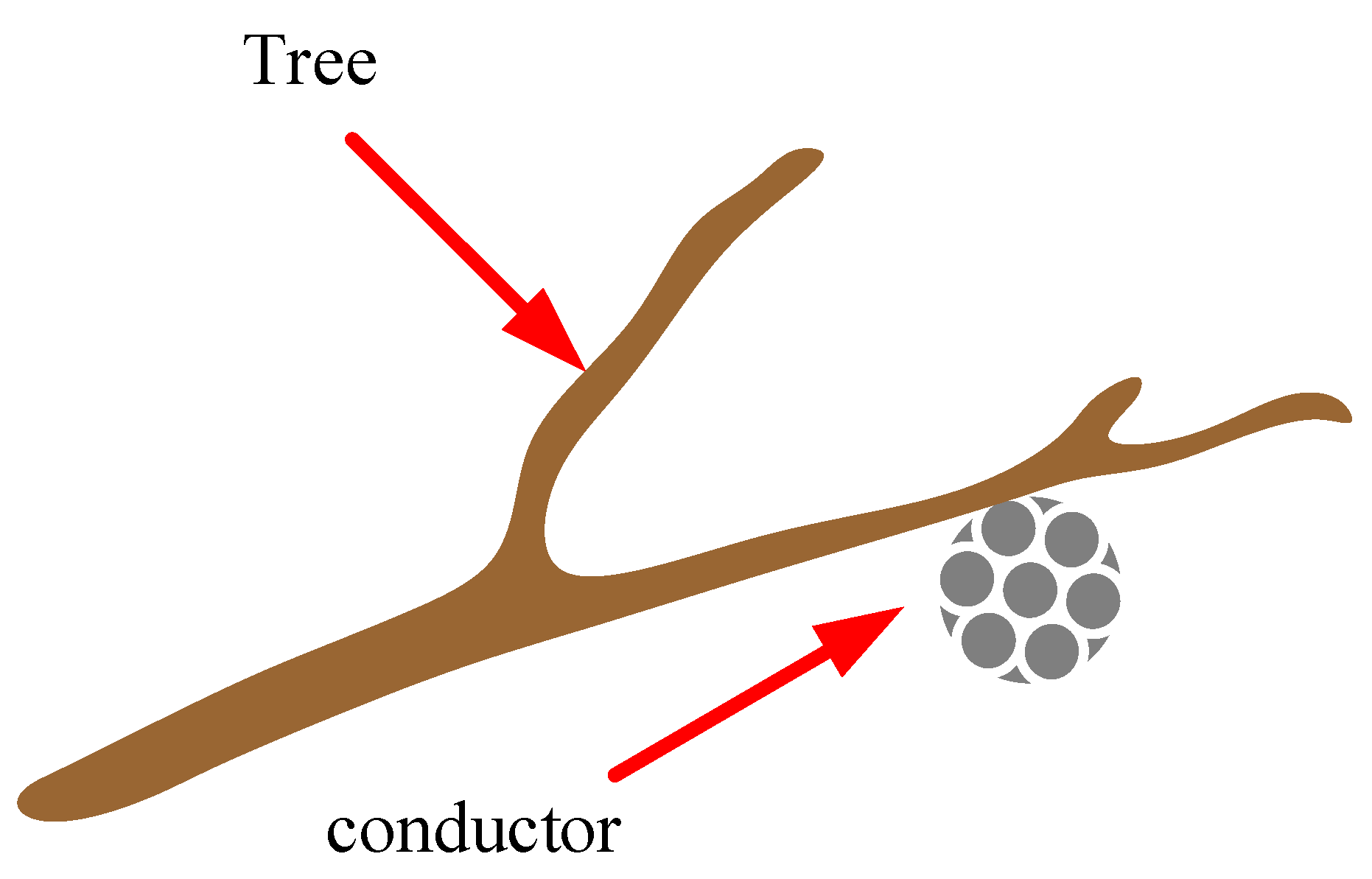
In this work, the tree–line discharge is described using a two-dimensional multiphysics model, as shown in
Figure 1. To improve numerical stability and reduce computational cost, the geometry is simplified to a cross-section. In this section, the branch and the conductor are orthogonal. A plasma arc column is assumed to be already formed at the start of the simulation. The bare conductor is modeled as a stranded aluminum wire with a cross-sectional area of 95 mm
2, which is common in 10 kV distribution lines. The covered conductor is modeled as an insulated wire with a cross-sectional area of 120 mm
2. The branch diameter is set to 15 mm, consistent with the experimental samples. The branch and the conductor serve as the two electrodes of the arc.
A large surrounding air region is included. Open boundary conditions are applied at the outer boundaries. This reduces boundary effects on the flow around the branch, electrodes, and plasma column. It also improves convergence and better reflects real conditions. The domain is meshed with a free triangular grid. The minimum and maximum element sizes are 0.0022 mm and 15.4 mm, respectively.
In the model, the tree branch and the conductor are the two electrodes of the arc, and the materials that are mainly considered in the simulation include the density, electrical conductivity, specific heat capacity, and thermal conductivity. The specific parameter setting is listed in
Table 1.
The dynamic change in the arc plasma is the result of the joint effect of several physical fields, such as the electric field, magnetic field, flow field, and temperature field, and thus it shows very complicated physical behavior. In order to simply the model reasonably, the following basic assumptions were made [
3]:
- (1)
The very early igniting stage of the arc is left out. Simulation begins with an existing plasma column between the branch and conductor and considers it to be in a state of local thermodynamic equilibrium.
- (2)
In addition to these species, additional species such as metal vapor, carbonaceous vapor, and similar species are not included, and they are not considered in the influence of transport and radiation properties.
- (3)
The motion of the arc plasma is assumed to be laminar and not turbulent.
- (4)
The arc is regarded as optically thin, meaning that self-absorption of radiation is small compared with the total radiative loss.
- (5)
The electromagnetic force and magnetic pressure generated by the self-induced magnetic field are much smaller than the gas pressure and buoyancy, so their influence on the arc shape and flow field is negligible. Therefore, the self-induced magnetic field of the arc is ignored.
Under these assumptions, and within the framework of magnetohydrodynamics, the present work solves a set of coupled governing equations consisting of the electromagnetic field equations together with the conservation equations for mass, momentum, and energy.
(1) Electromagnetic field equation
For the equation presented, σ denotes the electrical conductivity, φ represents the electric potential, A stands for the magnetic vector potential, E signifies the electric field strength, μ0 represents the magnetic permeability of vacuum, and J refers to the current density.
(2) Mass conservation equation
For the equation presented, ρ denotes the density, v represents the flow velocity, and t stands for the time.
(3) Momentum conservation equation
For the equation presented, I denotes the unit tensor, μ represents the dynamic viscosity of the plasma, p stands for the pressure, J refers to the current density, and B signifies the magnetic flux density.
(4) Energy conservation equation
It has cp for specific heat at constant pressure, T for temperature, k for thermal conductivity, kB for the Boltzmann constant, Q for electric charge, and εn for net volumetric emission.
In the established arc plasma model, the conductor is specified as the anode, and the bottom boundary is grounded with the electric potential set to 0. The tree branch is defined as the cathode. The boundaries of the surrounding air domain are treated as open boundaries, where the left side is specified as the inlet for natural wind and the right side as the outlet. The gas pressure is set to one standard atmosphere, and the temperature to 293.15 K.
In the simulation, both the bare conductor and the insulated conductor are selected as commonly used types for 10 kV distribution lines. The simulation parameter comparison is shown in
Table 2 below.
5. Test Results and Analysis
5.1. Analysis of Tree Wire Arc Discharge Test Phenomenon
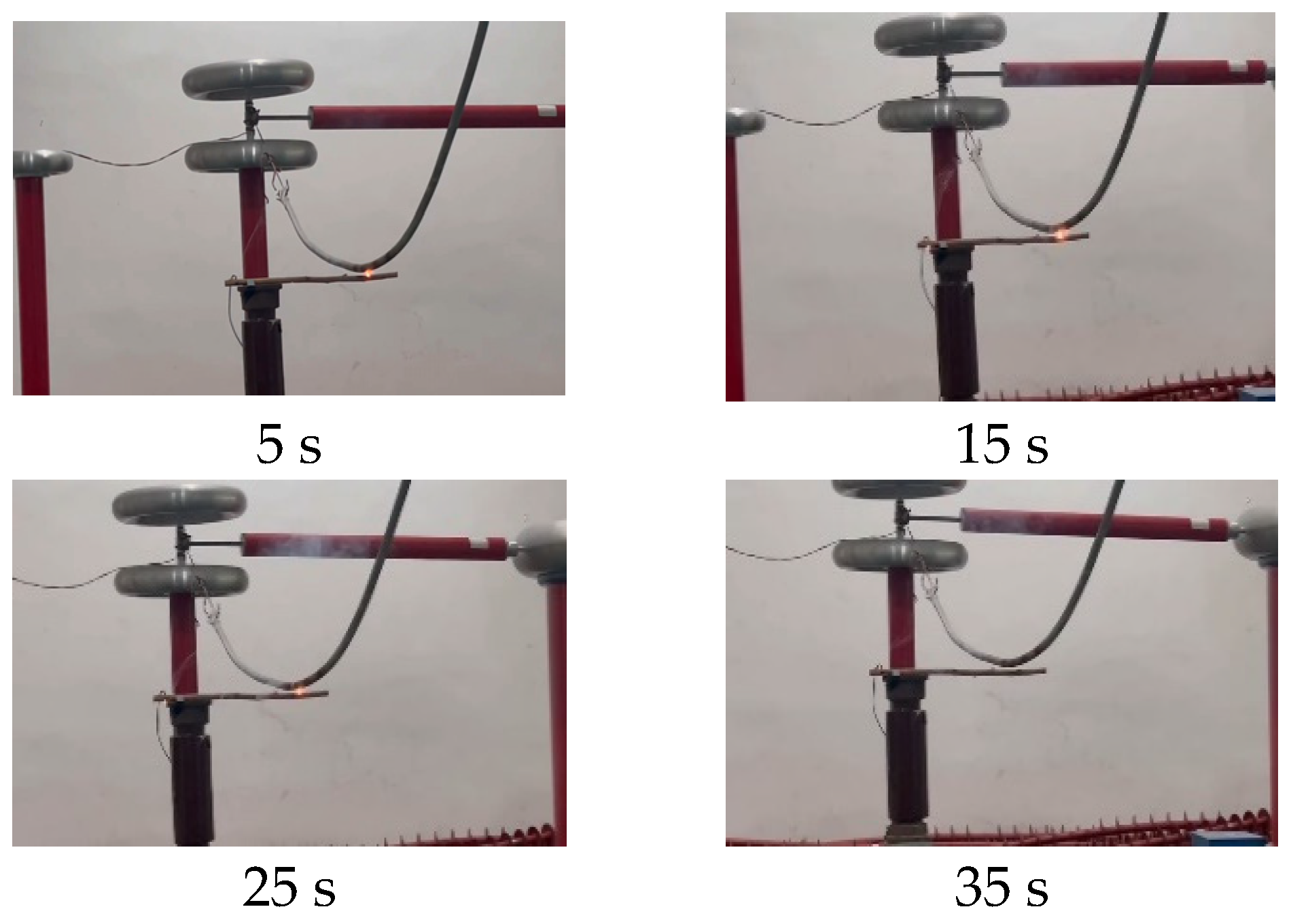
During the test, the increase in the sag of the simulated wire is connected horizontally and vertically to the branch sample. The relative water content of the branch sample is controlled at about 50%, the tree line spacing is set to 0.6 cm, and the ambient temperature is maintained at about 25 °C. The number of repeated experiments under the same conditions was not less than 10 times. Combining multiple sets of tests, the whole ignition process of the eucalyptus wire arc discharge test is shown in
Figure 10.
According to the experimental observations, the ignition process can be roughly divided into four stages: initial arc generation, carbonization-channel development, water-vapor loss, and arc extinction. According to
Figure 4, in the initial stage of the fault, a weak discharge appears between the branch and the conductor, accompanied by transient luminescence, electric sparks, and a sharp sound. As the fault develops, a stable arc channel is formed between them. The arc column gradually thickens and chars the branch, and the surface carbonizes to form a carbonized channel, which enhances conductivity; as a result, the arc brightness and discharge intensity increase, and the insulation capability of the vegetation continues to decline. With increasing discharge duration and expansion of the conducting area, a large amount of internal water vapor is lost, the branch temperature rises rapidly, and moisture evaporates along the carbonized channel, accompanied by a piercing squeal, while flame combustion intensifies. When the moisture content drops to a low level, and the carbonized channel extends to its limit, the highly unstable arc is finally extinguished when the branch is instantaneously broken down.
5.2. Tree-Line Arc Discharge Fault Tree Branch Temperature Monitoring
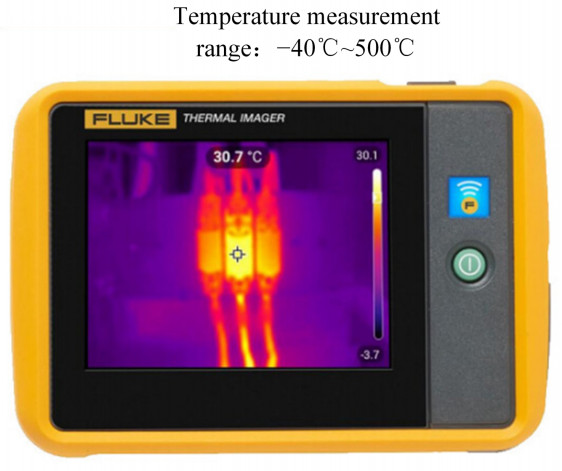
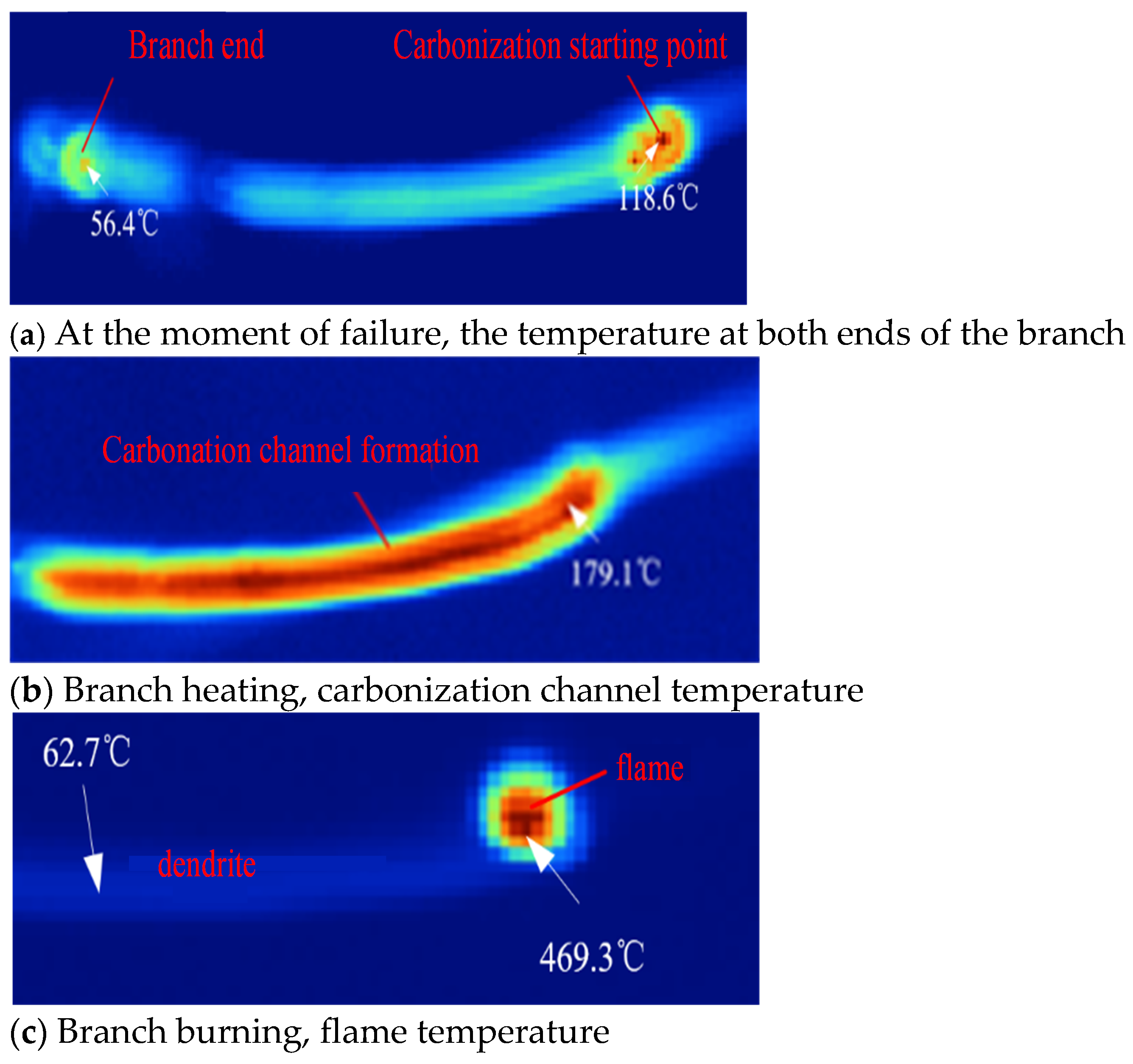
Due to the limited temperature measurement range of the infrared thermometer, it is impossible to accurately monitor the high-temperature arc of the tree branch. Therefore, this paper mainly monitors the temperature of the tree branch and the wire discharge poles. The temperature change during the fault development is shown in
Figure 10.
It can be seen from
Figure 11a that the fault point will heat up rapidly in a short time, the temperature near the fault point is high and accompanied by Mars scintillation, and the temperature at the end of the branch grounding also gradually increases, which is significantly higher than the temperature in the middle of the branch. The arc fault discharge occurred about 20 s, the overall temperature of the branch reached 100 °C, and a large amount of water vapor began to evaporate. After 30 s, with the development of the carbonization channel, the overall temperature of the branch gradually increased, and the main high-temperature area was concentrated near the carbonization channel, which could reach hundreds of degrees Celsius. As shown in
Figure 11b, when the arc fault stops, the maximum temperature of the branch can reach 179.1 °C, which is closely related to the type and moisture content of the branch. As shown in
Figure 11c, during the development of the carbonization channel, when the temperature of the fault point rises to about 250 °C, the branches begin to burn, and the temperature can reach 469.3 °C.
5.3. Effect of Wind Speed on Tree-Wire Arc Discharge
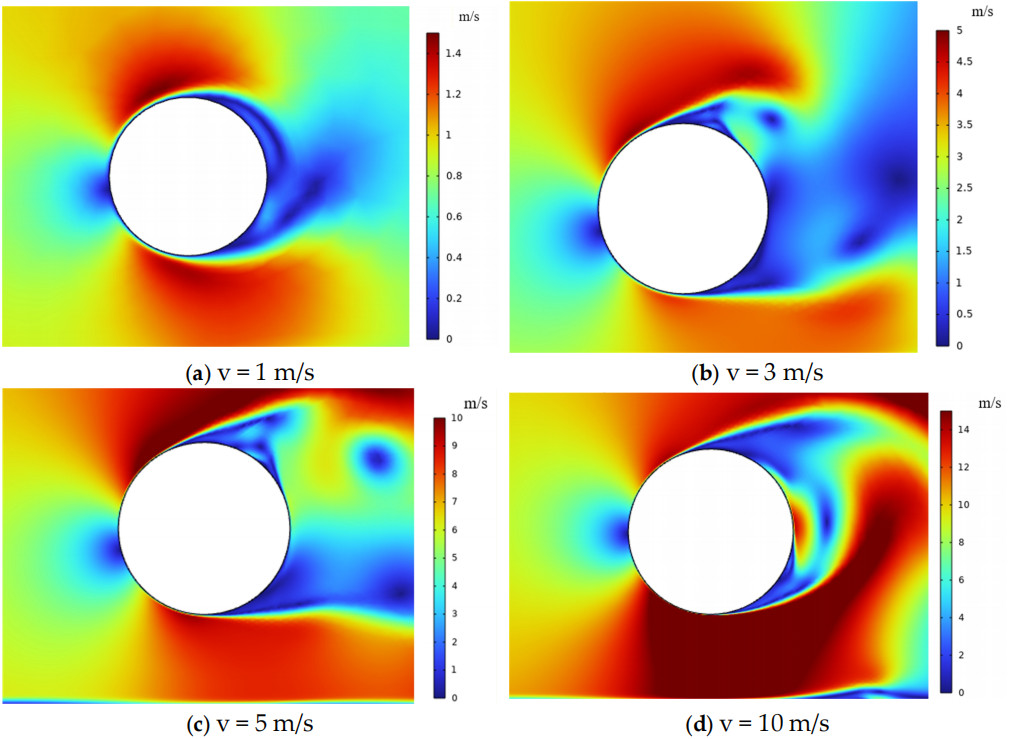
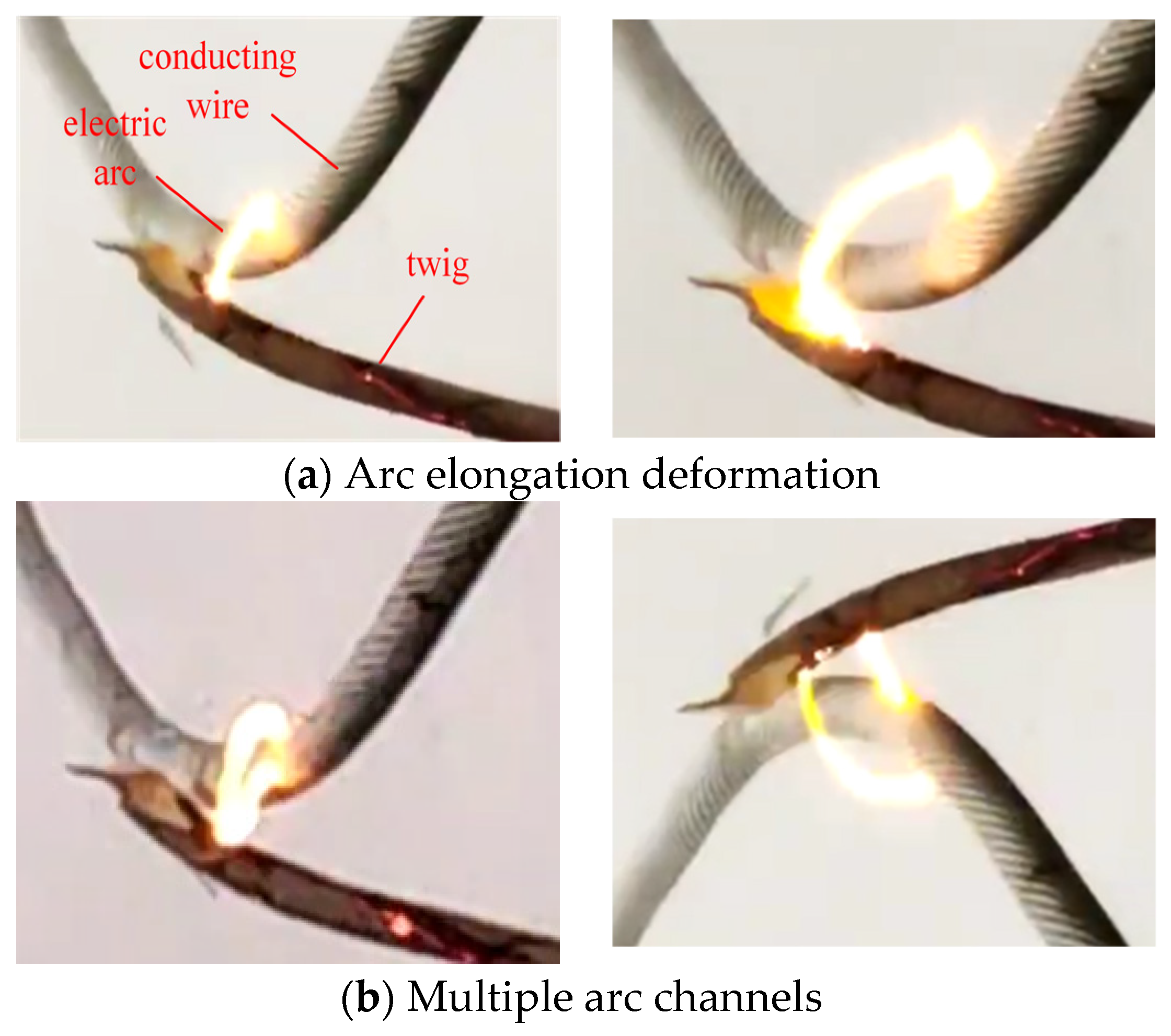
The wind has a considerable impact on the arc discharge of the tree line. High wind speeds will lead to branches burning and fire spreading quickly. As shown in
Figure 12, the increase in wind speed will aggravate the arc deformation, such as extension, distortion, or splitting. The movement of electrons and ions in the plasma channel driven by wind may lead to the expansion and splitting of the arc channel, forming multiple interlaced channels, increasing the heat dissipation area, reducing the temperature, and affecting the arc stability.
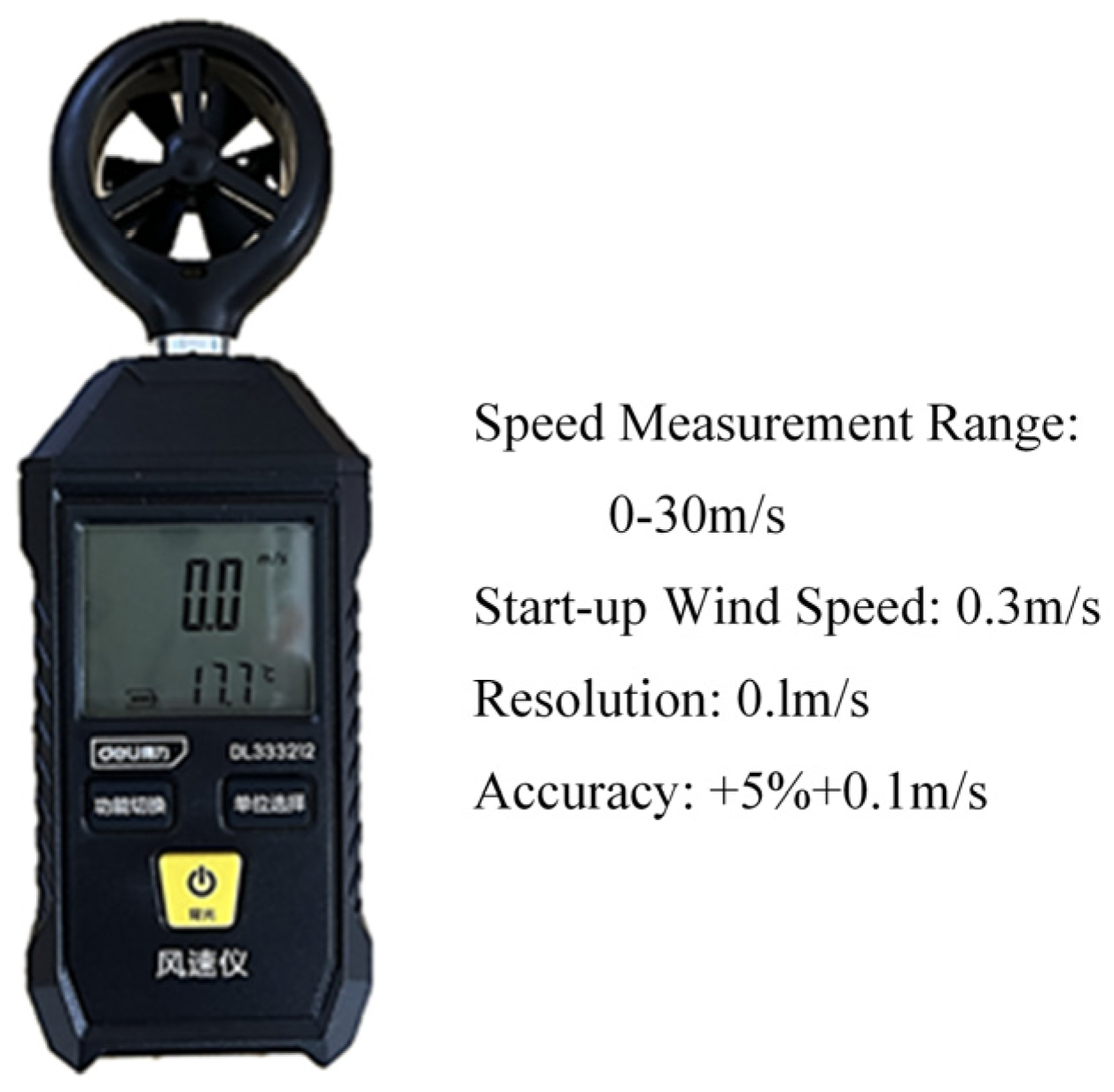
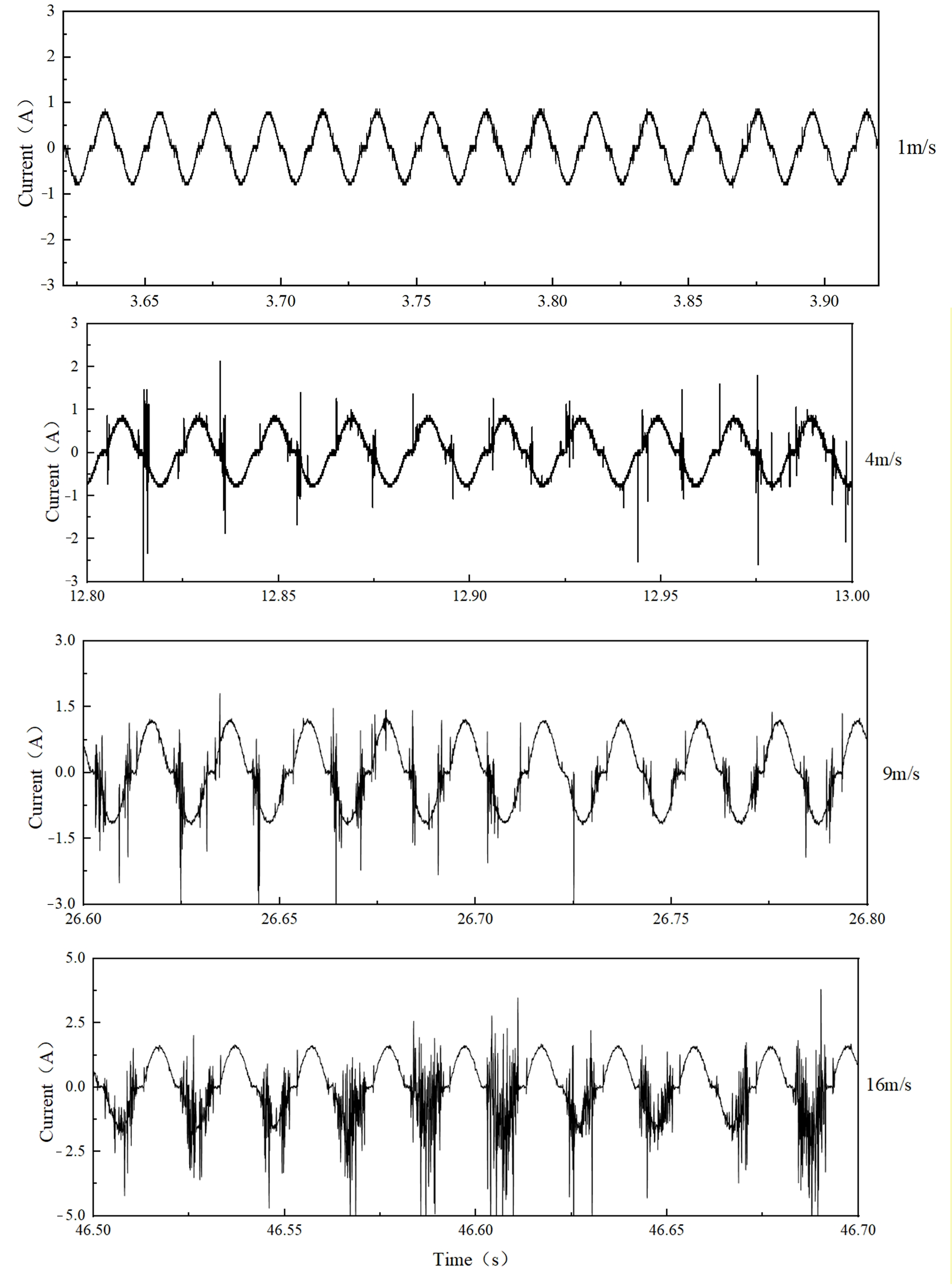
In this paper, the wind speed is controlled by adjusting the gear of the fan and the distance between the air outlet and the fault point. The wind speed is adjusted to 1 m/s, 4 m/s, 9 m/s, and 16 m/s to simulate the strength of natural wind. The simulation test is carried out to explore the influence of wind speed on the leakage current in the process of tree-line arc discharge. The waveform characteristics of tree-line arc discharge leakage current with different wind speeds are shown in
Figure 13.
Due to the wind effect, the current waveform shows spikes and deformation to different degrees. At wind speeds of 1 m/s and 4 m/s, the current amplitude is about 0.8 A. At 9 m/s, it increases to about 2 A. At 16 m/s, it reaches about 5 A. As wind speed increases, more high-frequency components appear in the waveform. This is especially clear at 9 m/s and 16 m/s. Sharp disturbance pulses and spikes become much more frequent, which indicates increased current instability. Besides the pulses and spikes, a distorted peak may appear near the “zero-crossing” under wind. This arc-related peak is associated with residual plasma between the electrodes. The arc channel contains hot and highly ionized gas. Under stronger wind, the ionized gas around the arc is more easily blown away. This makes the plasma density more non-uniform. Fluctuations in the ionized gas density can cause the arc resistance to change rapidly. As a result, the current becomes unstable, and peaks appear in the waveform. Stronger wind intensifies these processes. The peak amplitude becomes larger, and the waveform instability rises markedly.
5.4. The Influence of Water Content on Fault Current Waveform
Moisture content belongs to the category of influencing factors of tree wire arc discharge. The paper investigates the influence of moisture content on the tree wire discharge. In the process of testing the development of tree line discharge fault with water content, it is found that the development process of tree line arc discharge is obviously different when vegetation with different water content occurs. In this paper, the leakage current and fault waveform are analyzed and studied.
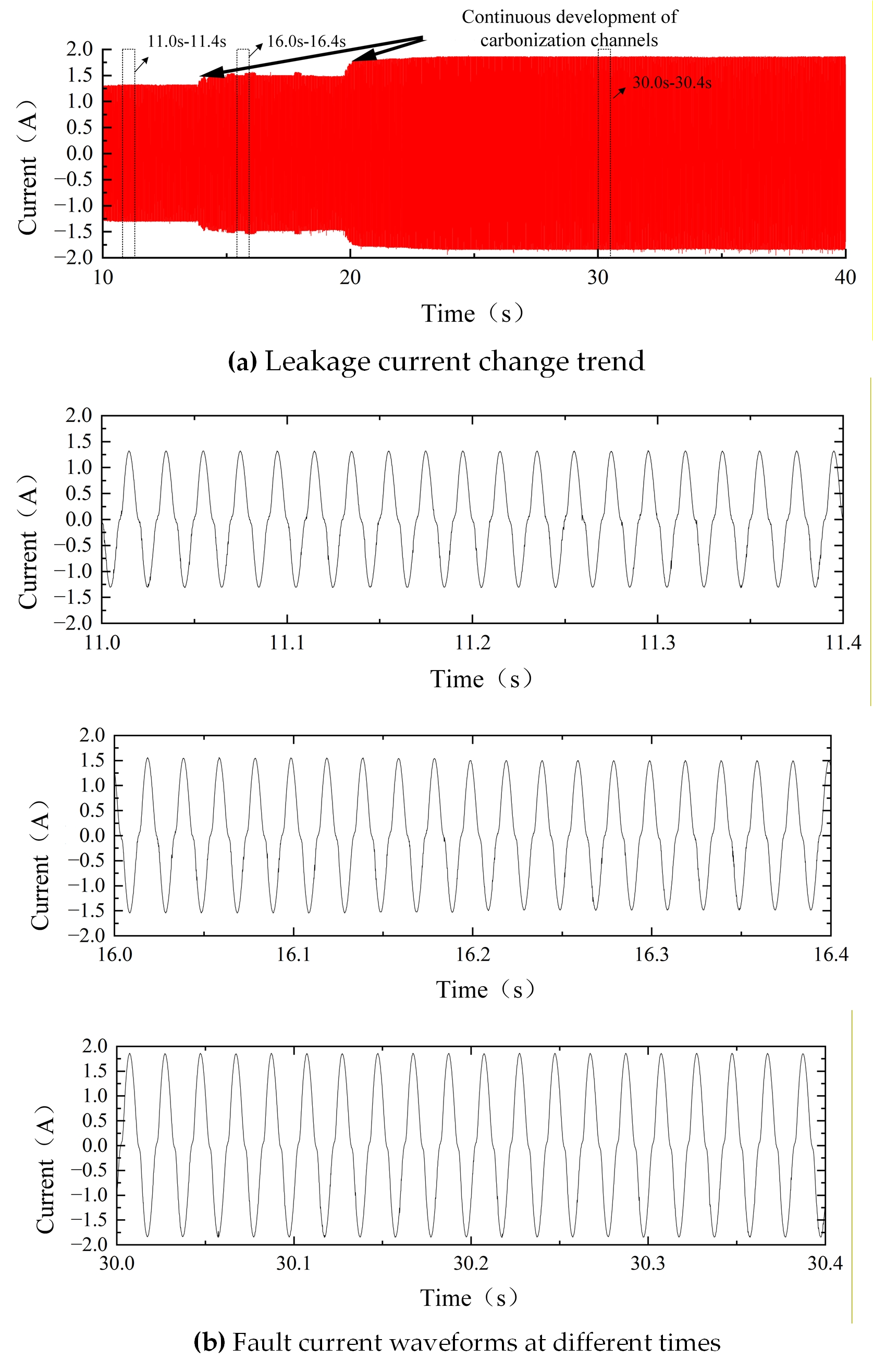
For the branches with 64% high water content, the specific fault leakage current trend and waveform characteristics are shown in
Figure 14.
From
Figure 14, it can be seen that the overall waveform is a power-frequency AC signal, approximately sinusoidal, with a basically stable frequency. For the branch with 60% moisture content, the leakage current amplitude is about 1.25–2 A and remains relatively stable. In the period of 11.0–11.4 s, the current amplitude is small, and the waveform is relatively smooth and symmetrical. By 16.0–16.4 s, as the carbonization channel develops, the current amplitude increases significantly, and the waveform becomes slightly distorted. During 30.0–30.4 s, the current is nearly saturated, with the largest and stable amplitude, and small spikes appear locally, indicating a stable discharge state after the formation of the carbonization channel. In the process of arc discharge fault of the branch tree line with 64% high water content, the carbonization channel will gradually show an upward trend of current amplitude with the continuous and stable development of the fault. This is because the high moisture content of the branches in the arc discharge process causes the water gradually evaporate, forming a carbonization channel, which makes the arc more stable. In this case, the fault current waveform shows the characteristics of smooth and no burr. This is because the carbonization channel of the high moisture content branch can effectively guide the arc, so that the current waveform will not exhibit obvious distortion during the development process. In addition, the current change at ‘zero’ is not a flat straight line, but a curve similar to the current waveform development trend. This shows that in the process of fault, the change trend of current is continuous and smooth, and there is no obvious waveform distortion.
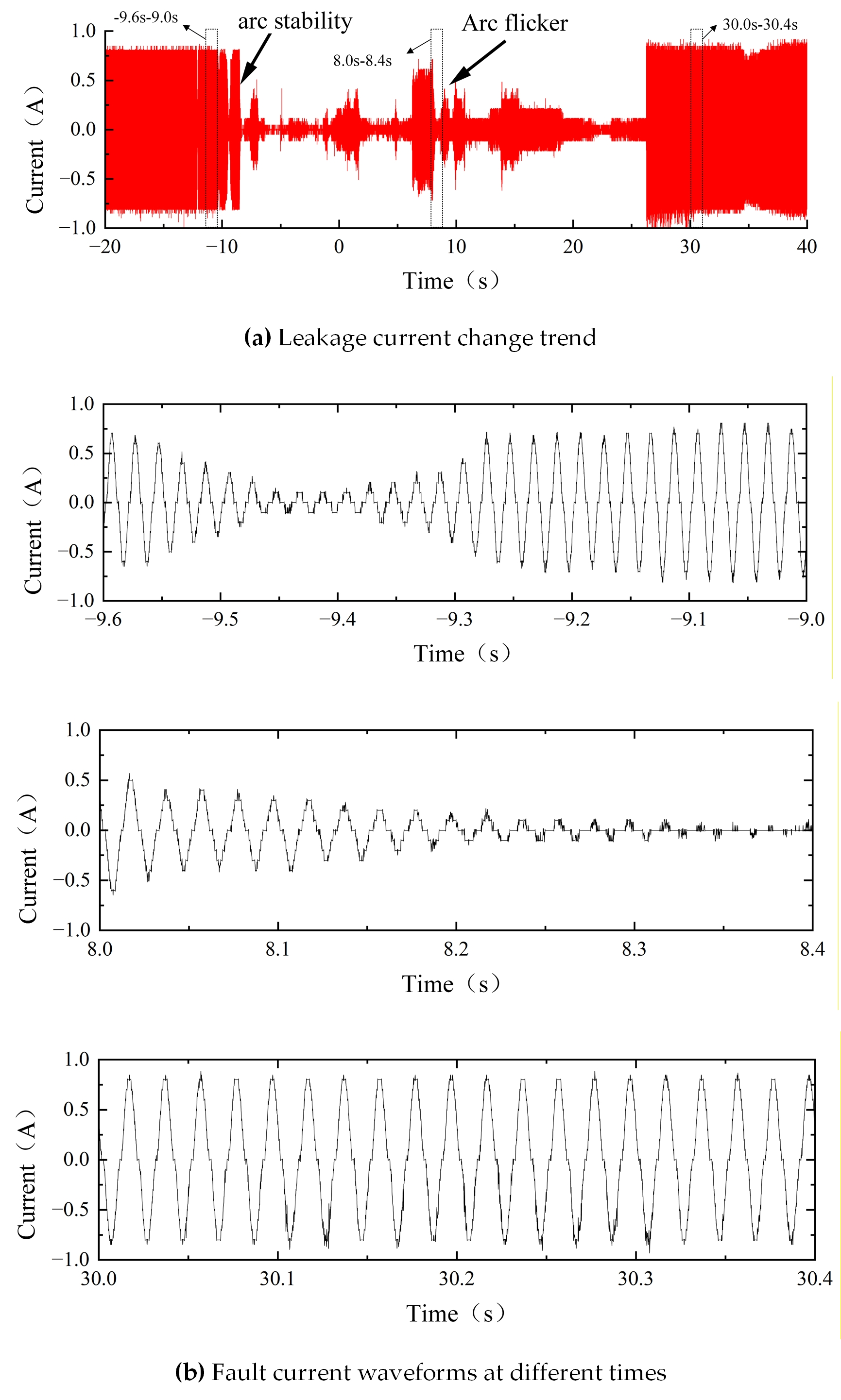
For the branches with a low moisture content of 30%, the trend and characteristic waveform of fault leakage current are shown in
Figure 15.
From the figure, the overall current still appears as a power-frequency, approximately sinusoidal waveform, but its amplitude is significantly smaller than that under the high-moisture-content condition. For the branch with 30% moisture content, the leakage current amplitude is about 0.1–0.8 A. During −9.6–−9.0 s, the current amplitude gradually increases from a small value, and the waveform is relatively smooth and symmetrical, indicating the progressive establishment of the arc. In 8.0–8.4 s, the current amplitude decays rapidly and exhibits obvious intermittency and fluctuations, corresponding to an arc-flickering, easily extinguished state. During 30.0–30.4 s, the current stabilizes at about 1 A, with a regular waveform and little distortion, representing a stable leakage-current stage under low moisture content. During tree–line arc faults with a 30% low-moisture branch, the carbonized channel develops intermittently. The arc flickers continuously, and the fault current waveform shows many burrs. However, unlike the wind-affected cases, there is no obvious pulse spike after the “current zero crossing”. When the current amplitude is small, the “zero-rest time” becomes longer, which reflects a weaker arc condition. Compared with high-moisture branches, the current amplitude is much lower. The waveform is also less smooth. Overall, the tree–line arc discharge is more unstable. During fault development, the arc is more likely to extinguish and reignite repeatedly.