Delayed Presentation of Nasal Glioma—Case Report and Literature Review

 , , and
Abstract
1. Introduction
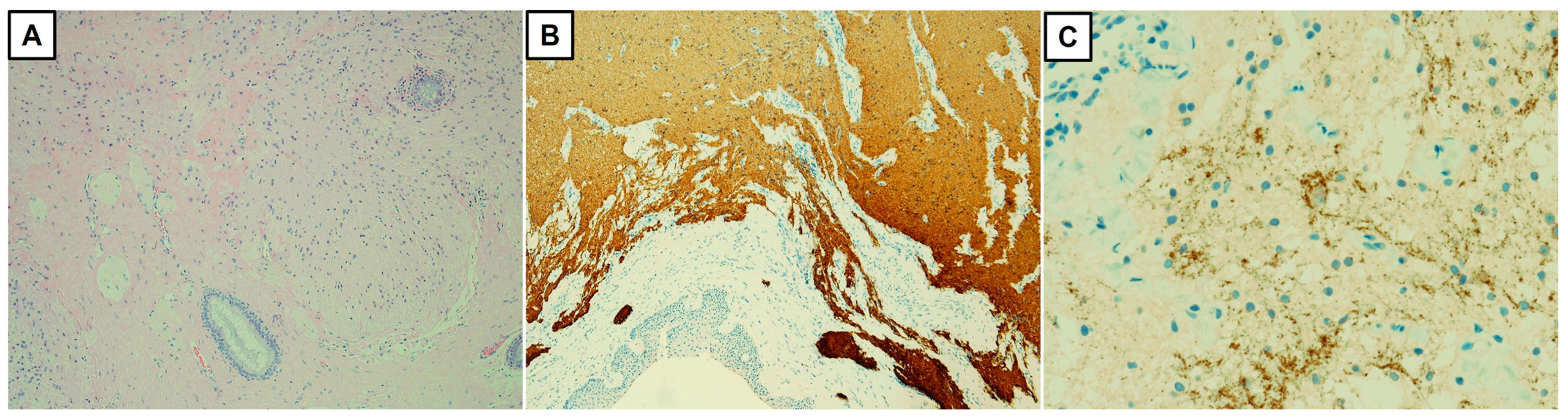
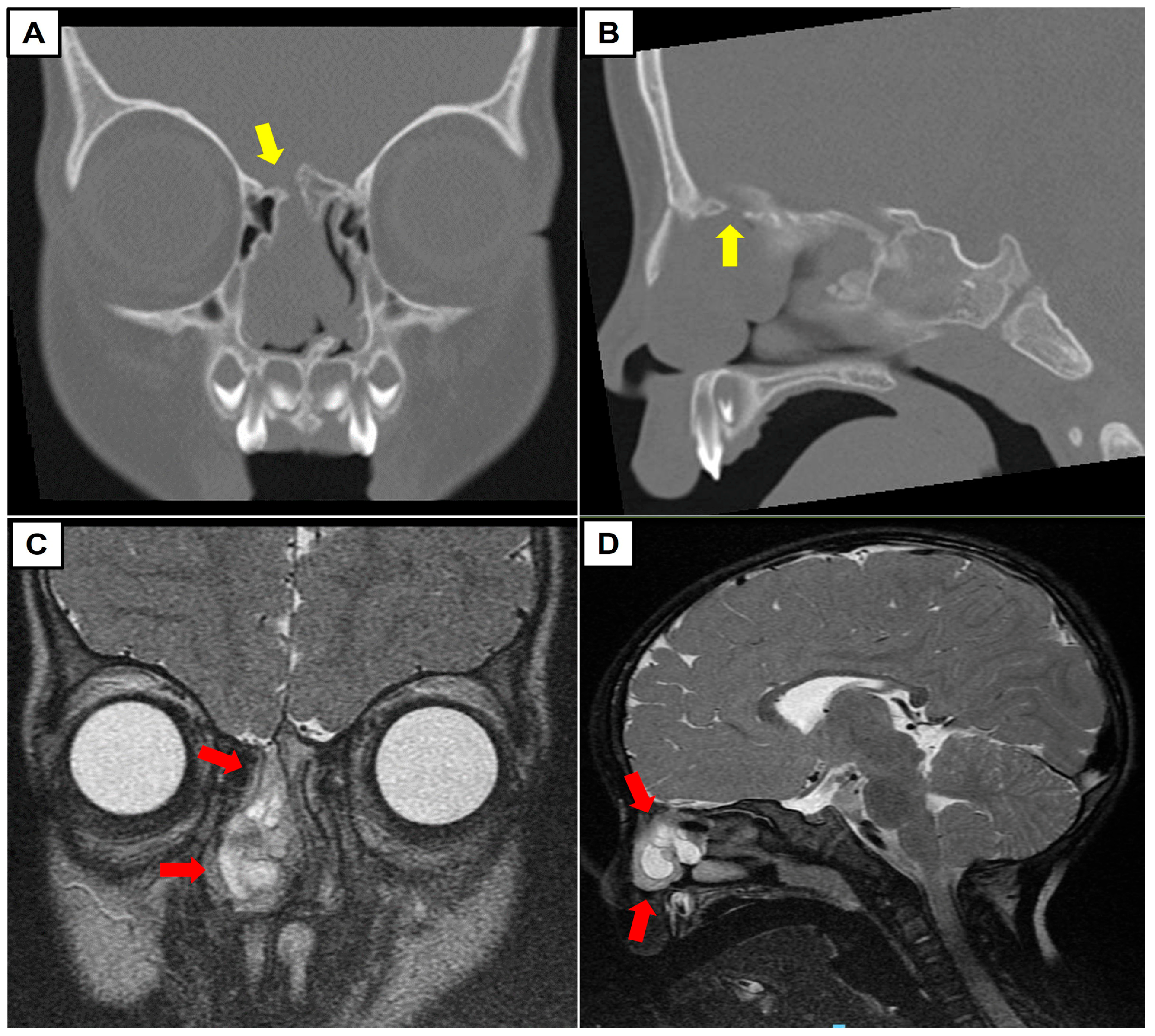
2. Case Description
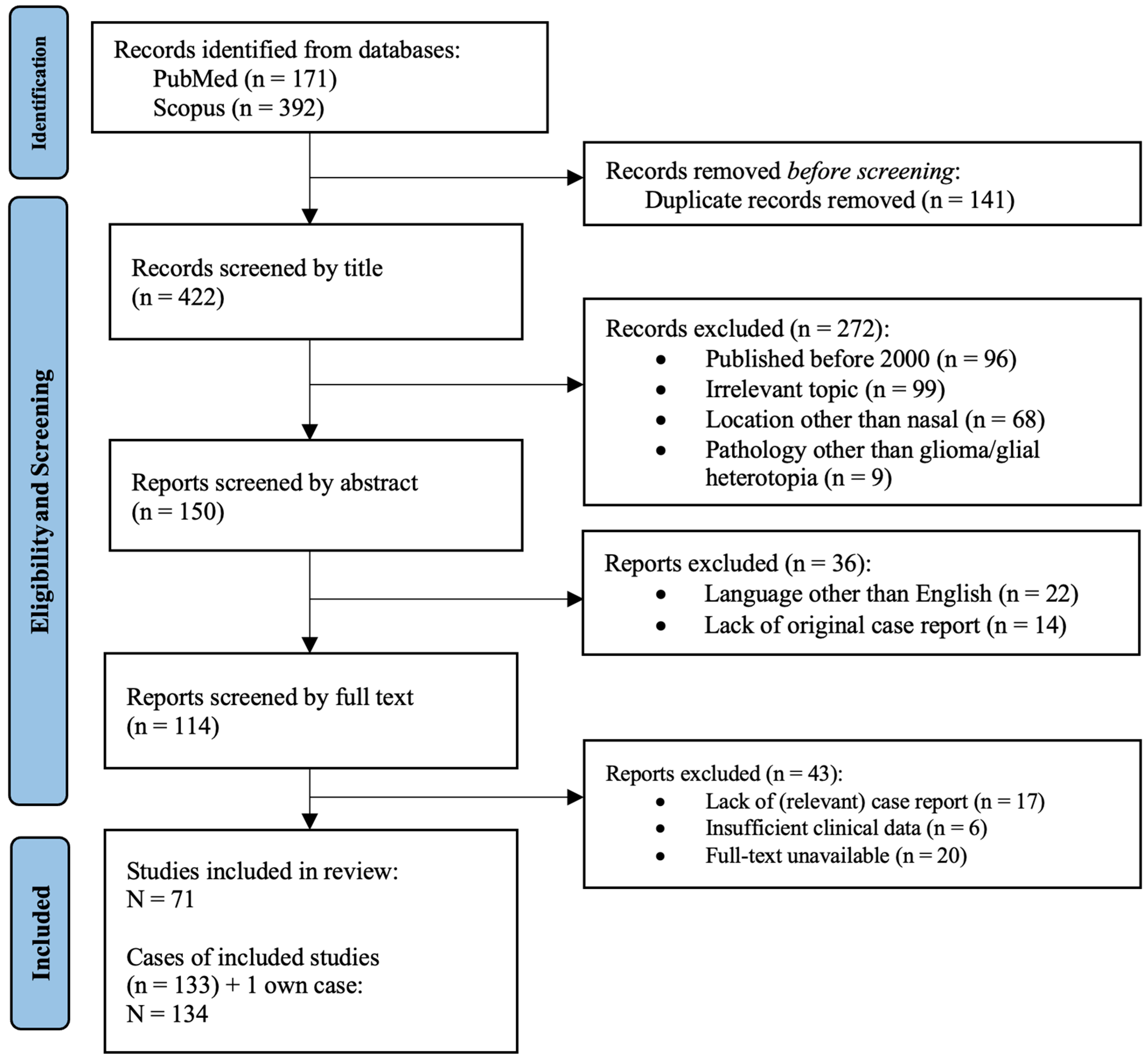
3. Systematic Literature Review
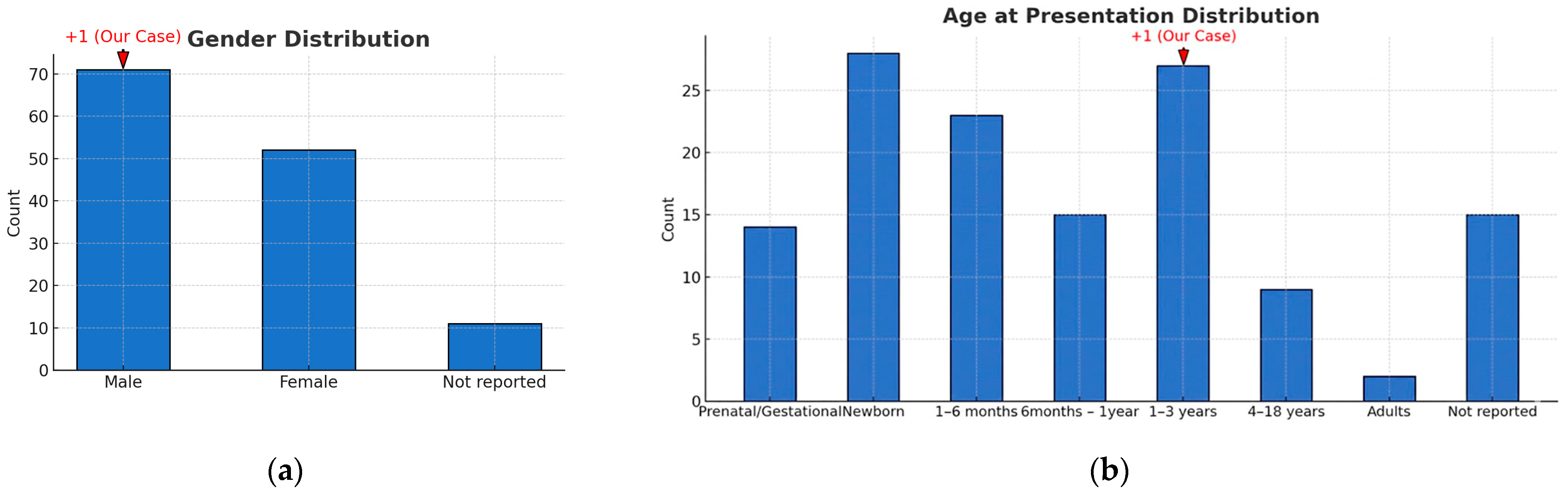
3.1. Demographic Characteristics
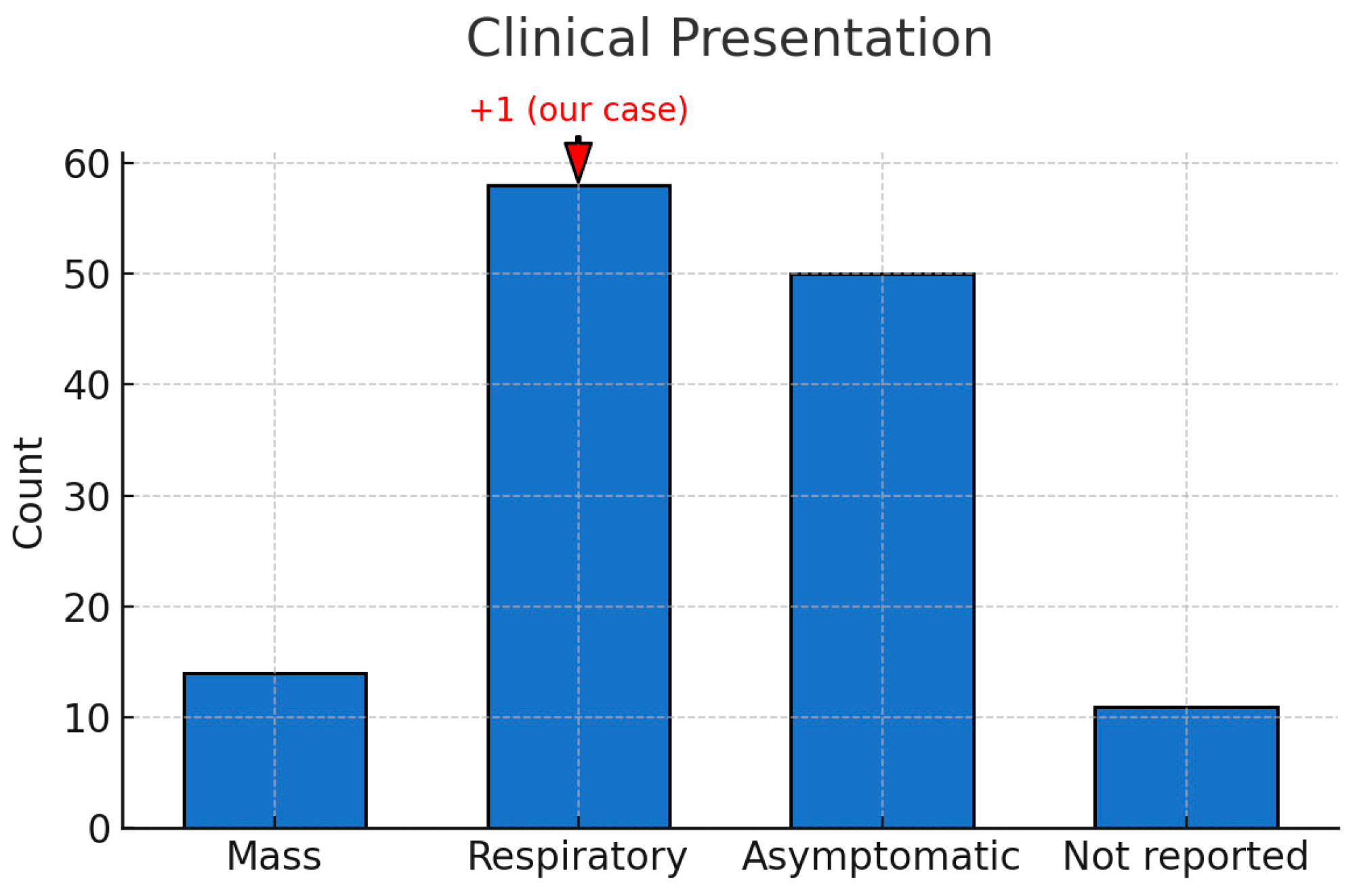
3.2. Clinical Presentation
3.3. Diagnostic Methods and Imaging Features
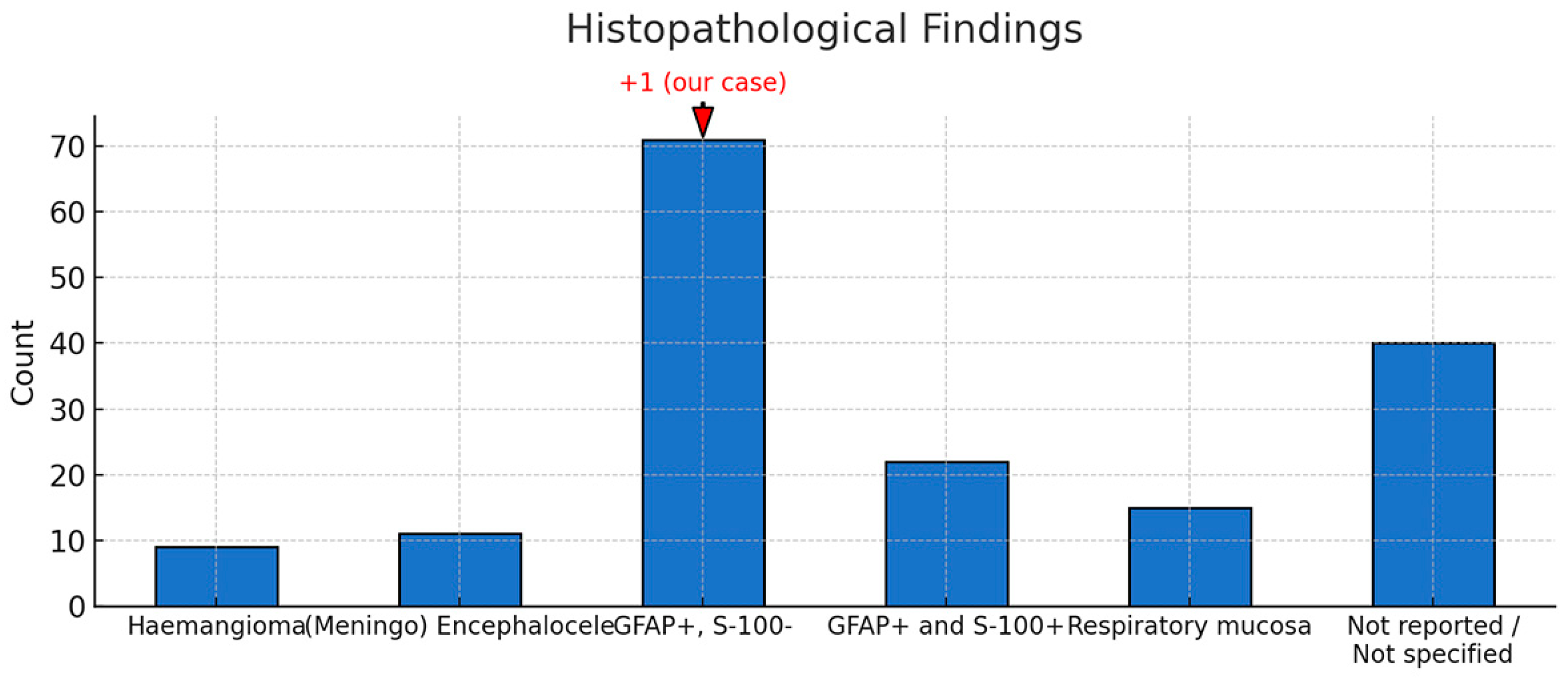
3.4. Histopathological Findings
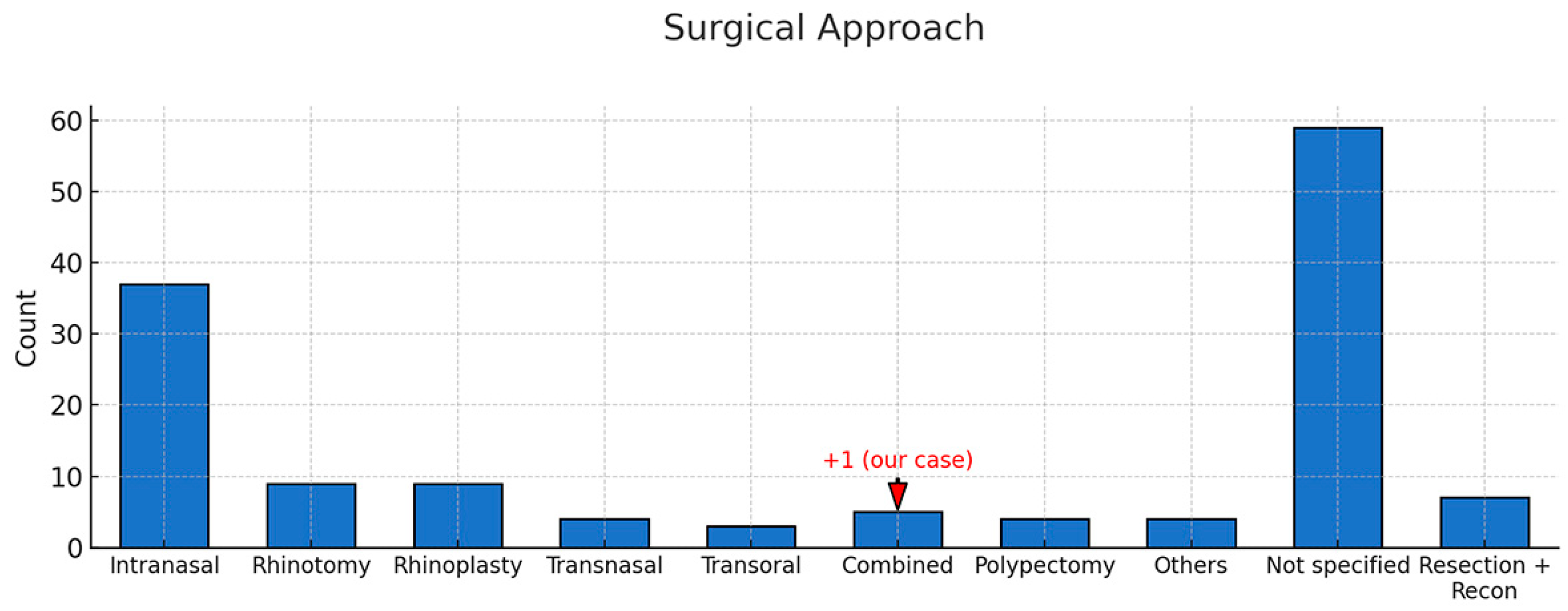
3.5. Surgical Management and Outcomes
4. Discussion
4.1. Overview of Nasal Gliomas
4.2. Neural Tube Defects: Prevention Is Key
5. Conclusions
Author Contributions
Funding
Institutional Review Board Statement
Informed Consent Statement
Data Availability Statement
Acknowledgments
Conflicts of Interest
References
- Ajose-Popoola, O.; Lin, H.W.; Silvera, V.M.; Teot, L.A.; Madsen, J.R.; Meara, J.G.; Rahbar, R. Nasal glioma: Prenatal diagnosis and multidisciplinary surgical approach. Skull Base Rep. 2011, 1, 83–88. [Google Scholar] [CrossRef] [PubMed]
- Julie, C.-P.; Sophie, B.; Frédérique, D.; Arnaud, G. Nasal glial heterotopia: Four case reports with a review of literature. Oral Maxillofac. Surg. Cases 2019, 5, 100107. [Google Scholar] [CrossRef]
- Baxter, D.J.; Shroff, M. Congenital midface abnormalities. Neuroimaging Clin. N. Am. 2011, 21, 563–584. [Google Scholar] [CrossRef]
- Gallego Compte, M.; Menter, T.; Guertler, N.; Negoias, S. Nasal glial heterotopia: A systematic review of the literature and case report. Acta Otorhinolaryngol. Ital. 2022, 42, 317–324. [Google Scholar] [CrossRef]
- Gan, W.; Xiang, Y.; Tang, Y.; He, X.; Hu, J.; Yang, F.; Liu, S.; Xian, J.; Meng, J. A CARE-compliant article: Extranasal glial heterotopia in a female infant: A case report. Medicine 2018, 97, e12000. [Google Scholar] [CrossRef] [PubMed]
- Yan, Y.Y.; Zhou, Z.Y.; Bi, J.; Fu, Y. Nasal glial heterotopia in children: Two case reports and literature review. Int. J. Pediatr. Otorhinolaryngol. 2020, 129, 109728. [Google Scholar] [CrossRef]
- Salati, S.A.; Rather, A.A. Congenital intranasal glioma. Case Rep. Surg. 2011, 2011, 175209. [Google Scholar] [CrossRef]
- Page, M.J.; McKenzie, J.E.; Bossuyt, P.M.; Boutron, I.; Hoffmann, T.C.; Mulrow, C.D.; Shamseer, L.; Tetzlaff, J.M.; Akl, E.A.; Brennan, S.E.; et al. The PRISMA 2020 statement: An updated guideline for reporting systematic reviews. BMJ 2021, 372, n71. [Google Scholar] [CrossRef]
- Liberati, A.; Altman, D.G.; Tetzlaff, J.; Mulrow, C.; Gøtzsche, P.C.; Ioannidis, J.P.A.; Clarke, M.; Devereaux, P.J.; Kleijnen, J.; Moher, D. The PRISMA statement for reporting systematic reviews and meta-analyses of studies that evaluate health care interventions: Explanation and elaboration. J. Clin. Epidemiol. 2009, 62, e1–e34. [Google Scholar] [CrossRef]
- Zhang, W.; Tang, L.; Wang, P.; Ge, W.; Ni, X. Intranasal glial heterotopia in a male infant: A case report. Medicine 2020, 99, e21200. [Google Scholar] [CrossRef]
- Sharma, J.K.; Pippal, S.K.; Sethi, Y.; Arora, S.; Raghuwanshi, S.K. Nasal glioma: A case report. Indian J. Otolaryngol. Head Neck Surg. 2006, 58, 413–415. [Google Scholar] [CrossRef]
- Swain, S.K.; Samal, R.; Sahu, M.C. Isolated nasal septal neuroglial heterotopia—A case report. Pediatr. Pol. 2015, 90, 323–327. [Google Scholar] [CrossRef]
- Tahlan, K.; Tanveer, N.; Kumar, H.; Diwan, H. A Rare Case of Nasal Glial Heterotopia in an Infant. J. Cutan. Aesthet. Surg. 2020, 13, 233–236. [Google Scholar] [CrossRef]
- Talwar, O.P.; Pradhan, S.; Swami, R. Nasal glioma: A case report. Kathmandu Univ. Med. J. (KUMJ) 2007, 5, 114–115. [Google Scholar]
- Gasparella, P.; Singer, G.; Spendel, S.; Nagy, E.; Eder, H.; Klaritsch, P.; Till, H.; Haxhija, E. Nasal glial heterotopia: A rare interdisciplinary surgical challenge in newborns. La Pediatr. Medica E Chir. 2021, 43, 240. [Google Scholar] [CrossRef] [PubMed]
- Ellouze, N.; Born, J.; Hoyoux, C.; Michotte, A.; Retz, C.; Tebache, M.; Piette, C. Nasal heterotopia versus pilocytic astrocytoma: A narrow border. Neurochirurgie 2015, 61, 279–282. [Google Scholar] [CrossRef] [PubMed]
- Bonne, N.X.; Zago, S.; Hosana, G.; Vinchon, M.; Van den Abbeele, T.; Fayoux, P. Endonasal endoscopic approach for removal of intranasal nasal glial heterotopias. Rhinology 2012, 50, 211–217. [Google Scholar] [CrossRef]
- Iacob, D.; Fufezan, O.; Popa-Stănilă, R.; Topoe, M. Frontonasal glioma—Diagnostic difficulties. Med. Pharm. Rep. 2021, 94, S33–S35. [Google Scholar] [CrossRef]
- Okumura, M.; Francisco, R.P.V.; Lucato, L.T.; Zerbini, M.C.N.; Zugaib, M. Prenatal detection and postnatal management of an intranasal glioma. J. Pediatr. Surg. 2012, 47, 1951–1954. [Google Scholar] [CrossRef]
- Rahbar, R.; Shah, P.; Mulliken, J.B.; Robson, C.D.; Perez-Atayde, A.R.; Proctor, M.R.; Kenna, M.A.; Scott, M.R.; McGill, T.J.; Healy, G.B. The Presentation and Management of Nasal Dermoid: A 30-Year Experience. Arch. Otolaryngol.-Head Neck Surg. 2003, 129, 464–471. [Google Scholar] [CrossRef]
- Schauer, A.; Harvey, N.T.; Vijayasekaran, S.; Wood, B.A. Unusual Case of Combined Gliomeningeal Heterotopia on the Nose of an Infant. Am. J. Dermatopathol. 2018, 40, 515–518. [Google Scholar] [CrossRef]
- Boyer, A.C.; Krishnan, A.; Goncalves, L.F.; Williams, L.; Chaiyasate, K. Prenatal Diagnosis of Nasal Glioma Associated with Metopic Craniosynostosis: Case Report and Review of the Literature. J. Radiol. Case Rep. 2015, 9, 1–8. [Google Scholar] [CrossRef]
- Brucknerová, I.; Mach, M.; Dubovický, M.; Ujházy, E. Does nasal neuroglial heterotopia represent a risk for the newborn during delivery? Neuroendocrinol. Lett. 2014, 35, 211–213. [Google Scholar]
- Al-Ammar, A.Y.; Al Noumas, H.S.; Alqahtani, M. A midline nasopharyngeal heterotopic neuroglial tissue. J. Laryngol. Otol. 2006, 120, E25. [Google Scholar] [CrossRef]
- Bailey, N.A. A congenital extranasal glioma in a newborn. SAGE Open Med. Case Rep. 2022, 10, 2050313x221144515. [Google Scholar] [CrossRef]
- Amin, A.; Monabati, A.; Kumar, P.V.; Hashemi, S.B. Nasal glioma (neuroglial heterotopia) mimicking an astrocytoma: Case report. Ear Nose Throat J. 2005, 84, 657–658. [Google Scholar] [CrossRef] [PubMed]
- Chandna, S.; Mehta, M.A.; Kulkarni, A.K. Nasal Glial Heterotopia with Cleft Palate. J. Indian Assoc. Pediatr. Surg. 2018, 23, 39–41. [Google Scholar] [CrossRef] [PubMed]
- Wu, C.L.; Tsao, L.Y.; Yang, A.D.; Chen, M.K. Endoscopic surgery for nasal glioma mimicking encephalocele in infancy. Skull Base 2008, 18, 401–404. [Google Scholar] [CrossRef] [PubMed]
- Charles, N.C.; Lisman, R.D.; Patel, P.; Callahan, A.B. Nasal Glioma: A Rare Cause of Congenital Inner Canthal Swelling. Ophthalmic Plast. Reconstr. Surg. 2018, 34, e93–e95. [Google Scholar] [CrossRef]
- Dasgupta, N.; Bentz, M. Nasal Gliomas: Identification and Differentiation From Hemangiomas. J. Craniofacial Surg. 2003, 14, 736–738. [Google Scholar] [CrossRef]
- Datta, S.; Bhutoria, B.; Banerjee, U.; Nigam, M. Glial heterotopia presenting as nasal polyp—Report of two cases. Bangladesh J. Med. Sci. 2013, 12, 104–107. [Google Scholar] [CrossRef]
- De Biasio, P.; Scarso, E.; Prefumo, F.; Odella, C.; Rossi, A.; Venturini, P.L. Prenatal diagnosis of a nasal glioma in the mid trimester. Ultrasound Obstet. Gynecol. 2006, 27, 571–573. [Google Scholar] [CrossRef]
- Deotale, S.; Wankhade, R.; Dawande, P.; Bankar, N. Unveiling Nasal Glial Heterotopia: A Pathological Perspective. Cureus 2024, 16, e59341. [Google Scholar] [CrossRef] [PubMed]
- Irkoren, S.; Selman Ozkan, H.; Karaca, H. Nasal Glioma Presenting with Strabismus. Ophthalmic Plast. Reconstr. Surg. 2015, 31, e57–e59. [Google Scholar] [CrossRef]
- Kardon, D.E. Nasal glial heterotopia. Arch. Pathol. Lab. Med. 2000, 124, 1849. [Google Scholar] [CrossRef]
- Lartizien, R.; Durand, C.; Blaise, S.; Morand, B. Nasal glial heterotopia or congenital hemangioma? A case report. J. Stomatol. Oral Maxillofac. Surg. 2017, 118, 298–301. [Google Scholar] [CrossRef]
- Maeda, K.; Furuno, K.; Chong, P.F.; Morioka, T. Nasopharyngeal glial heterotopia with delayed postoperative meningitis. BMJ Case Rep. 2017, 2017, bcr-2017. [Google Scholar] [CrossRef]
- Maharaj, S. Pediatric Nasal Glial Heterotopia. Ear Nose Throat J. 2022, 101, NP83–NP85. [Google Scholar] [CrossRef]
- Verney, Y.; Zanolla, G.; Teixeira, R.; Oliveira, L.C. Midline Nasal Mass in Infancy: A Nasal Glioma Case Report. Eur. J. Pediatr. Surg. 2001, 11, 324–327. [Google Scholar] [CrossRef]
- Penner, C.R.; Thompson, L. Nasal glial heterotopia: A clinicopathologic and immunophenotypic analysis of 10 cases with a review of the literature. Ann. Diagn. Pathol. 2003, 7, 354–359. [Google Scholar] [CrossRef] [PubMed]
- Pereyra-Rodríguez, J.J.; Bernabeu-Wittel, J.; Fajardo, M.; Torre, C.; Sánchez-Gallego, F. Nasal glial heterotopia (nasal glioma). J. Pediatr. 2010, 156, 688–688.e1. [Google Scholar] [CrossRef]
- Pakkasjärvi, N.; Salminen, P.; Kalajoki-Helmiö, T.; Rintala, R.; Pitkäranta, A. Respiratory distress secondary to nasopharyngeal glial heterotopia. Eur. J. Pediatr. Surg. 2008, 18, 117–118. [Google Scholar] [CrossRef] [PubMed]
- Chung, K.; Seo, J.; On, H. A case of nasal glial heterotopia with complete excision. Int. J. Dermatol. 2015, 54, e246–e247. [Google Scholar] [CrossRef]
- Niedzielska, G.; Niedzielski, A.; Kotowski, M. Nasal ganglioglioma--difficulties in radiological imaging. Int. J. Pediatr. Otorhinolaryngol. 2008, 72, 285–287. [Google Scholar] [CrossRef]
- Narang, V.; Jindal, S.; Garg, B.; Kaur, H.; Soni, A. Intranasal glioma (Nasal heterotopia): A rare cause of nasal polyp in neonates. Indian J. Pathol. Microbiol. 2022, 65, 911–913. [Google Scholar] [CrossRef] [PubMed]
- Ramadass, T.; Narayanan, N.; Rao, P.; Parameswaran, A. Glial Heterotopia in ENT-Two Case Reports and Review of Literature. Indian J. Otolaryngol. Head Neck Surg. 2011, 63, 407–410. [Google Scholar] [CrossRef] [PubMed]
- Thaker, B.; Bhardwaj, S. Infantile Nasal Glial Heterotopia—A Case Report. JK Sci. 2023, 25, 176–177. [Google Scholar]
- De Felice, C.; Bonasoni, M.; Lituania, M.; Tonni, G. Prenatal ultrasound and histological diagnosis of fetal nasal glioma (heterotopic central nervous system tissue): Report of a new case and review of the literature. Arch. Gynecol. Obstet. 2011, 283, 55–59. [Google Scholar] [CrossRef]
- Ma, K.H.; Cheung, K.L. Nasal glioma. Hong Kong Med. J. 2006, 12, 477–479. [Google Scholar]
- Gilani, A.; Kleinschmidt-DeMasters, B.K. Histopathologic features of nasal glial heterotopia (nasal glioma). Childs Nerv. Syst. 2022, 38, 63–75. [Google Scholar] [CrossRef]
- Grzegorczyk, V.; Brasseur-Daudruy, M.; Labadie, G.; Cellier, C.; Verspyck, E. Prenatal diagnosis of a nasal glioma. Pediatr. Radiol. 2010, 40, 1706–1709. [Google Scholar] [CrossRef]
- Gu, Y.; Hao, Y.; Zhao, Y. Glial heterotopia: Report of two cases. Otolaryngol. Case Rep. 2022, 24, 100442. [Google Scholar] [CrossRef]
- Highton, L.R.; Pay, A.D. An unusual midline nasal mass in a newborn. J. Plast. Reconstr. Aesthetic Surg. 2009, 62, 695–696. [Google Scholar] [CrossRef] [PubMed]
- Horn, D.L.; Klein, N.; McSoley, T. External rhinoplasty excision of a nasal tip glioma in a 6-month-old infant: Case report and review of the literature. Int. J. Pediatr. Otorhinolaryngol. Extra 2010, 5, 79–84. [Google Scholar] [CrossRef]
- Friel, M.T.; Flores, R.L. Resection of Nasal Glial Heterotopia Using a Nasal Subunit Approach. Ochsner J. 2018, 18, 176–179. [Google Scholar] [CrossRef]
- Rezaei, E.; Shams Hojjati, Y. Misdiagnosed Extranasal Mass: Report of A 2-Year Old Child with Maltreated Rare Nasal Neuroglial Heterotopia. World J. Plast. Surg. 2019, 8, 122–124. [Google Scholar] [CrossRef]
- Sayegh, O.; Jumei’an, A.; Ababneh, H.; Azaizeh, A.; Alnaser, M.; Aljader, M.; Ellati, R.; Al Bdour, M. Ectopic Nasal Septum Neuroglial Tissue: A Case Review. Plast. Reconstr. Surg. Glob. Open 2024, 12, e6145. [Google Scholar] [CrossRef]
- Schroth, M.; Wolf, S.; Bentzien, S.C.; Wagner, M.; Rupprecht, T. Relapsing nasal glioma in a three-week-old infant. Med. Pediatr. Oncol. 2000, 34, 375–376. [Google Scholar] [CrossRef]
- Shafqat, A.; Shafqat, S.; Magableh, H.M.F.; Shaik, A.; Elshaer, A.N.; Alfehaid, W.K.; Hatatah, N.; Islam, S.S. Radiologic Diagnosis of Nasal Gliomas with an Illustrative Case Report. Indian J. Otolaryngol. Head Neck Surg. 2022, 74, 4623–4627. [Google Scholar] [CrossRef]
- Adil, E.; Robson, C.; Perez-Atayde, A.; Heffernan, C.; Moritz, E.; Goumnerova, L.; Rahbar, R. Congenital nasal neuroglial heterotopia and encephaloceles: An update on current evaluation and management. Laryngoscope 2016, 126, 2161–2167. [Google Scholar] [CrossRef] [PubMed]
- Zhang, W.; Tang, L.; Ge, W. Intranasal glial heterotopia in an infant boy. Pediatr. Investig. 2021, 5, 69–72. [Google Scholar] [CrossRef] [PubMed]
- Bajaj, M.S.; Kashyap, S.; Wagh, V.B.; Pathak, H.; Shrey, D. Glial heterotopia of the orbit and extranasal region: An unusual entity. Clin. Exp. Ophthalmol. 2005, 33, 513–515. [Google Scholar] [CrossRef]
- Nair, V.; Hosur, B.; Mathur, A.; Singh, V.; Sharma, P.; Bhalla, A. Nasoglial Heterotopia Presenting as a Facial Arteriovenous Malformation in a Child. Neurol. India 2024, 72, 675–676. [Google Scholar] [CrossRef] [PubMed]
- Taege, C.; Musil, A.; Klohs, G.; Rath, F.W. Cerebral Heterotopia Appearing as an Extranasal Polyp. Eur. J. Pediatr. Surg. 2001, 11, 268–270. [Google Scholar] [CrossRef] [PubMed]
- Nada, V.; Dejan, V.; Dragan, D.; Ljiljana, J. Nasal glioma. Arch. Oncol. 2006, 14, 57–59. [Google Scholar]
- Altissimi, G.; Ascani, S.; Falcetti, S.; Cazzato, C.; Bravi, I. Central nervous system tissue heterotopia of the nose: Case report and review of the literature. Acta Otorhinolaryngol. Ital. 2009, 29, 218–221. [Google Scholar]
- Chan, J.K.; Lau, W.H. Nasal astrocytoma or nasal glial heterotopia? Arch. Pathol. Lab. Med. 1989, 113, 943–945. [Google Scholar]
- Pusapati, S.; Gudipudi, U.D.T.; Penumetcha, K.R. Nasal Glial Heterotopia: An Unusual Cause of Lump on the Nose in a Child- A Case Report. Indian Pediatr. Case Rep. 2025, 5, 43–46. [Google Scholar] [CrossRef]
- Kałużna-Młynarczyk, A.; Pucher, B.; Sroczyński, J.; Kotowski, M.; Adamczyk, P.; Szydłowski, J. Nasal glial heterotopia—Clinical manifestation in 2.5 month-old boy. Pol. Otorhino Rev. 2019, 8, 43–48. [Google Scholar] [CrossRef]
- Hedlund, G. Congenital frontonasal masses: Developmental anatomy, malformations, and MR imaging. Pediatr. Radiol. 2006, 36, 647–662. [Google Scholar] [CrossRef]
- Morgan, D.W.; Evans, J.N. Developmental nasal anomalies. J. Laryngol. Otol. 1990, 104, 394–403. [Google Scholar] [CrossRef] [PubMed]
- Barkovich, A.J.; Vandermarck, P.; Edwards, M.S.; Cogen, P.H. Congenital nasal masses: CT and MR imaging features in 16 cases. AJNR Am. J. Neuroradiol. 1991, 12, 105–116. [Google Scholar]
- Hughes, G.B.; Sharpino, G.; Hunt, W.; Tucker, H.M. Management of the congenital midline nasal mass: A review. Head Neck Surg. 1980, 2, 222–233. [Google Scholar] [CrossRef]
- Younus, M.; Coode, P.E. Nasal glioma and encephalocele: Two separate entities. Report of two cases. J. Neurosurg. 1986, 64, 516–519. [Google Scholar] [CrossRef] [PubMed]
- Kuwar Chhetri, P.; Das, J.M. Neuroanatomy, Neural Tube Development and Stages. In StatPearls [Internet]; StatPearls Publishing: Treasure Island, FL, USA, 2026. [Google Scholar]
- Markovic, I.; Bosnjakovic, P.; Milenkovic, Z. Occipital Encephalocele: Cause, Incidence, Neuroimaging and Surgical Management. Curr. Pediatr. Rev. 2020, 16, 200–205. [Google Scholar] [CrossRef] [PubMed]
- Nugraha, H.G.; Sobana, M.; Gantini, T. Nasofrontal encephalocele: A case report with literature and management review. Radiol. Case Rep. 2024, 19, 1907–1912. [Google Scholar] [CrossRef] [PubMed]
- Moses, M.A.; Green, B.C.; Cugno, S.; Hayward, R.D.; Jeelani, N.U.O.; Britto, J.A.; Bulstrode, N.W.; Dunaway, D.J. The Management of Midline Frontonasal Dermoids: A Review of 55 Cases at a Tertiary Referral Center and a Protocol for Treatment. Plast. Reconstr. Surg. 2015, 135, 187–196. [Google Scholar] [CrossRef]
- Kotowski, M.; Szydlowski, J. Radiological diagnostics in nasal dermoids: Pitfalls, predictive values and literature analysis. Int. J. Pediatr. Otorhinolaryngol. 2021, 149, 110842. [Google Scholar] [CrossRef]
- Midyett, F.A.; Mukherji, S.K. (Eds.) Nasal Glioma. In Skull Base Imaging: The Essentials; Springer International Publishing: Cham, Switzerland, 2020; pp. 125–129. [Google Scholar] [CrossRef]
- Abdel Razek, A.A.K.; Gamaleldin, O.A.; Elsebaie, N.A. Peripheral Nerve Sheath Tumors of Head and Neck: Imaging-Based Review of World Health Organization Classification. J. Comput. Assist. Tomogr. 2020, 44, 928–940. [Google Scholar] [CrossRef]
- Kancherla, V. Neural tube defects: A review of global prevalence, causes, and primary prevention. Child’s Nerv. Syst. 2023, 39, 1703–1710. [Google Scholar] [CrossRef]
- Copp, A.J.; Stanier, P.; Greene, N.D. Neural tube defects: Recent advances, unsolved questions, and controversies. Lancet Neurol. 2013, 12, 799–810. [Google Scholar] [CrossRef]
- Low, S.Y.Y.; Low, D.C.Y.; Seow, W.T. Spinal Dysraphism-Perspectives from a Southeast Asian Pediatric Neurosurgical Unit. World Neurosurg. 2023, 172, 98–99. [Google Scholar] [CrossRef]
- Crider, K.S.; Qi, Y.P.; Yeung, L.F.; Mai, C.T.; Head Zauche, L.; Wang, A.; Daniels, K.; Williams, J.L. Folic Acid and the Prevention of Birth Defects: 30 Years of Opportunity and Controversies. Annu. Rev. Nutr. 2022, 42, 423–452. [Google Scholar] [CrossRef]
- Czeizel, A.E.; Dudás, I. Prevention of the first occurrence of neural-tube defects by periconceptional vitamin supplementation. N. Engl. J. Med. 1992, 327, 1832–1835. [Google Scholar] [CrossRef]
- Berry, R.J.; Li, Z.; Erickson, J.D.; Li, S.; Moore, C.A.; Wang, H.; Mulinare, J.; Zhao, P.; Wong, L.Y.; Gindler, J.; et al. Prevention of neural-tube defects with folic acid in China. China-U.S. Collaborative Project for Neural Tube Defect Prevention. N. Engl. J. Med. 1999, 341, 1485–1490. [Google Scholar] [CrossRef] [PubMed]
- MRC Vitamin Study Research Group. Prevention of neural tube defects: Results of the Medical Research Council Vitamin Study. Lancet 1991, 338, 131–137. [Google Scholar] [CrossRef]
- Smith, A.D.; Sobczyńska-Malefora, A.; Green, R.; Reynolds, E.H.; Refsum, H. Mandatory food fortification with folic acid. Lancet Glob. Health 2022, 10, e1389. [Google Scholar] [CrossRef] [PubMed]
- Caceres, A.; Blount, J.P.; Messing-Jünger, M.; Chatterjee, S.; Fieggen, G.; Salomao, J.F. The International Society for Pediatric Neurosurgery resolution on mandatory folic acid fortification of staple foods for prevention of spina bifida and anencephaly and associated disability and child mortality. Childs Nerv. Syst. 2021, 37, 1809–1812. [Google Scholar] [CrossRef] [PubMed]



| Variable of Interest | Papers Included (n = 133; Patient Number (%)) | Our Case (n = 1) | |
|---|---|---|---|
| Gender | Male | 70 (52.6%) | Yes |
| Female | 52 (39.1%) | - | |
| Not specified | 11 (8.3%) | - | |
| Age at presentation | Antenatal | 14 (10.5%) | - |
| Newborn | 28 (21.1%) | - | |
| 1 to <6 months old | 23 (17.3%) | - | |
| 6 to <12 months old | 15 (11.3%) | - | |
| 1 to <3 years old | 27 (20.3%) | Yes | |
| ≥3 years old | 11 (8.3%) | - | |
| Not reported | 15 (11/3%) | - | |
| Clinical presentation | Mass identified in antenatal scan | 14 (10.5%) | - |
| Respiratory symptoms | 58 (43.6%) | Yes (OSA) | |
| Asymptomatic external mass | 50 (37.6%) | - | |
| Not reported | 11 (8.3%) | - | |
| Diagnostic methods | Endoscopic examination (in addition to radiologic imaging) | 15 (11.3%) | - |
| MRI scan only | 56 (42.1%) | - | |
| CT scan only | 26 (19.5%) | - | |
| Both MRI and CT scan modalities | 30 (22.6%) | Yes | |
| US only/US with another modality | 20 (15%) | - | |
| Not reported | 18 (13.5%) | - | |
| Imaging features * | Cystic component | 5 (3.8%) | Yes |
| No intracranial connection | 86 (64.7%) | - | |
| Presence of deformity/bony defects | 16 (12%) | Yes (cribriform plate) | |
| No specific features mentioned | 26 (19.5%) | - | |
| Differential diagnoses | Hemangioma | 9 (6.8%) | - |
| Encephalocele | 11 (8.3%) | Yes | |
| Surgical approach | Endonasal | 42 (31.6%) | - |
| Rhinotomy/Rhinoplasty | 9 (6.85%) | - | |
| Transoral | 3 (2.3%) | - | |
| Polypectomy | 4 (3%) | - | |
| Combined approach (endoscopic and open surgery) | 5 (3.8%) | - | |
| Open craniofacial approach | 5 (3.8%) | - | |
| Open craniofacial approach with reconstruction | 7 (5.3%) | Yes | |
| Not reported | 58 (43.6%) | - | |
| Histopathology findings | GFAP positive only/neurofibrillary background only | 71 (53.4%) | Yes (also synaptophysin positive) |
| GFAP and S-100 protein positive | 22 (16.5%) | - | |
| Presence of respiratory mucosa | 15 (11.3%) | - | |
| Not reported/features not specifically described | 40 (30.1%) | - | |
| Postoperative outcomes | No complications, including satisfactory cosmesis and well-healed wounds | 94 (70.7%) | Yes (at 10 years follow-up) |
| Recurrence/Re-operation | 9 (6.8%) | - | |
| CSF leak/infection | 6 (4.5%) | - | |
| Death | 1 (0.8%) | - | |
| Not reported | 23 (17.3%) | - |
| Developmental Anomaly | Incidence (Live Births) | Pathogenesis | Typical MRI Features | Recommended Treatment |
|---|---|---|---|---|
| Encephalocele | 1 in 5000 to 10,000 | Incomplete separation of the surface ectoderm from neuroectoderm during neural fold closure [76]. | Herniated brain tissue in midline of anterior skull base defect that is iso- to hypointense on T1 and hyperintense on T2-weighted sequences [77]. | For all three conditions, surgical excision of lesion whereby complete removal is necessary to prevent recurrence. |
| Nasal dermoid cyst | 1 in 20,000 to 40,000 | Incomplete obliteration of neuroectoderm in frontonasal region [20]. | Well-circumscribed lesion that is hyper or variable in signal intensity on T1 and hyperintense on T2-weighted sequences [78,79] | |
| Nasal glioma | 1 in 20,000 to 40,000 | Faulty closure of anterior neuropore (fonticulus frontalis) [33]. | Isointense signals to brain parenchyma on T1 and hyperintense on T2 (gliosis). No obvious intracranial connection or CSF surrounding lesion [80]. |
Disclaimer/Publisher’s Note: The statements, opinions and data contained in all publications are solely those of the individual author(s) and contributor(s) and not of MDPI and/or the editor(s). MDPI and/or the editor(s) disclaim responsibility for any injury to people or property resulting from any ideas, methods, instructions or products referred to in the content. |
© 2026 by the authors. Licensee MDPI, Basel, Switzerland. This article is an open access article distributed under the terms and conditions of the Creative Commons Attribution (CC BY) license.
Share and Cite
Kaur, P.; Wu, Y.; Tan, H.K.K.; Aw, S.J.; Seow, W.T.; Low, S.Y.Y. Delayed Presentation of Nasal Glioma—Case Report and Literature Review. Surgeries 2026, 7, 56. https://doi.org/10.3390/surgeries7020056
Kaur P, Wu Y, Tan HKK, Aw SJ, Seow WT, Low SYY. Delayed Presentation of Nasal Glioma—Case Report and Literature Review. Surgeries. 2026; 7(2):56. https://doi.org/10.3390/surgeries7020056
Chicago/Turabian StyleKaur, Prabhpreet, Yilong Wu, Henry K. K. Tan, Sze Jet Aw, Wan Tew Seow, and Sharon Y. Y. Low. 2026. "Delayed Presentation of Nasal Glioma—Case Report and Literature Review" Surgeries 7, no. 2: 56. https://doi.org/10.3390/surgeries7020056
APA StyleKaur, P., Wu, Y., Tan, H. K. K., Aw, S. J., Seow, W. T., & Low, S. Y. Y. (2026). Delayed Presentation of Nasal Glioma—Case Report and Literature Review. Surgeries, 7(2), 56. https://doi.org/10.3390/surgeries7020056