Systematic Review

Robotic Surgery Conservative Approaches for Uterine Adenomyosis: A Systematic Review
1
Department of Obstetrics and Gynecology, Ospedale S.G. Moscati, 83100 Avellino, Italy
2
Obstetrics and Gynecology Unit, Department of Woman, Child and General and Specialized Surgery, University of Campania “Luigi Vanvitelli”, 80138 Naples, Italy
3
Dubai Academic Health Corporation, Dubai 505054, United Arab Emirates
*
Author to whom correspondence should be addressed.
Surgeries 2026, 7(2), 52; https://doi.org/10.3390/surgeries7020052
Submission received: 2 March 2026 / Revised: 19 March 2026 / Accepted: 15 April 2026 / Published: 23 April 2026
(This article belongs to the Section Minimally Invasive and Robotic Surgery Group)

Abstract

Background/Objectives: Adenomyosis is a common disorder of the uterus in those of reproductive age. Robotic-assisted surgery has been adopted to address the technical challenges of adenomyomectomy. This systematic review evaluated the current evidence regarding the feasibility, safety, and clinical outcomes of robotic-assisted conservative surgery for uterine adenomyosis. Methods: A systematic review of literature was performed on five databases, from the beginning to 21 December 2025, to identify studies reporting robotic-assisted uterus-sparing surgical approaches to adenomyosis. Data were collected on patient characteristics, surgical techniques used, pre- and post-operative pain, fertility outcomes, and complications. Risk of bias was evaluated using the ROBINS-I framework. Results: A total of 514 articles were found; six studies met the inclusion criteria. Most included studies were small and retrospective. The operative time ranged from 279 to 147 min. Mean blood loss ranged between 25 and 296 mL with a low rate of conversion and perioperative complications. Dysmenorrhea improved after surgery as reflected by the post operative visual analog scale pain score and serum CA-125 level. Few reproductive data were collected about successive spontaneous pregnancies. Risk of bias was serious or moderate in all studies included. Conclusions: Robotic-assisted conservative surgery for adenomyosis may represent a feasible and safe option for women with symptomatic adenomyosis who wish preserve the uterus, with a positive impact on patients’ symptoms. Large prospective, multicenter studies with standardized protocols and long-term follow-up are needed to clarify the real impact of robotic surgery in adenomyosis management.

1. Introduction

Adenomyosis is a common disorder of the uterus and is associated with uterine alterations, heavy menstrual bleeding, pelvic pain, and infertility [1]. It is characterized by endometrial epithelial cells and stromal fibroblasts abnormally found in the myometrium [1]. Transvaginal ultrasonography and magnetic resonance imaging are used to establish the diagnosis before hysterectomy [2]. Several authors linked adenomyosis to an increased risk of infertility [3,4]. Adenomyosis can cause severe, progressive, and even sexual and daily lifestyle impairment [5,6]. Adenomyosis frequently coexists with leiomyomas and endometriosis, suggesting a shared pathogenic mechanism including hyperestrogenism and inflammatory, environmental, and genetic alterations that may complicate management [7,8,9]. Different studies have found an explanation for the decreased fertility that might be linked to uterine peristalsis, decreasing endometrial receptivity and chronic inflammation in the uterine microenvironment [10,11]. Management options focus on fertility preservation and symptom control [12]. Historically, hysterectomy used to be the only treatment strategy for symptomatic adenomyosis in those of non-reproductive age [13]. Women of reproductive age who want to preserve the uterus can opt for different therapeutic options. The most common drugs taken as first-line treatments are hormonal contraceptives, progestins, gonadotropin-releasing hormone agonists, and levonorgestrel-releasing intrauterine systems [14]. These therapies often provide temporary symptomatic relief but are not commonly effective in the long term and are commonly associated with symptom re-emergence following discontinuation [15]. On the other hand, side effects and contraindications can restrict long-term medical treatment [16]. In this scenario, for patients who are refractory or unsuitable for long-term medical treatment or those with focal adenomyoma, conservative surgeries could be offered [17]. Adenomyomectomy, that is, removing adenomyotic tissue and reconstructing the wall of the uterine cavity, is an alternative treatment option for selected patients with treatment-resistant symptoms or infertility [18]. Adenomyomectomy is an exceedingly technically challenging procedure, with no distinction between diseased and normal myometrium, as well as grave intraoperative bleeding and demanding multilayer uterine reconstruction, being key considerations [19]. Complete adenomyosis excision is difficult to achieve [20]. These challenges are particularly pronounced in diffuse disease. Meanwhile, minimally invasive surgery has transformed gynecologic practice, improving patient outcomes and satisfaction [21]. Laparoscopic adenomyomectomy is possible with acceptable outcomes in some cases; however, it is among the most complex surgeries in benign gynecology [22]. Instrument rigidity, limited degrees of freedom, and the two-dimensional visibility of the surgical site limit accurate dissection and proper myometrial reconstruction of uterine integrity [23]. Robotic-assisted surgery was developed to reduce these limitations [24]. Robotic platforms provide three-dimensional, high-definition visualization, tremor-filtered instruments, and wristed instruments of higher dexterity for dissection and complex suturing [25]. Technological innovations are important in conservative surgery for adenomyosis, where the aim is to balance between the removal of pathological tissue and functional myometrium. Conservative adenomyosis operations have been reported to have better results in the past 10 years, with more information about their feasibility, symptom improvement, and perioperative outcome. Clinical evidence for robotic-assisted conservative surgery for uterine adenomyosis remains limited [26]. This review summarizes the available evidence on robotic surgery in the conservative management of adenomyosis, using novel data to provide a critique, and identifies priorities for future studies.

2. Materials and Methods

2.1. Eligibility Criteria, Information Sources, and Search Strategy

This systematic review was conducted using the following databases: PubMed, Scopus, EMBASE, CENTRAL, and ClinicalTrials.gov. Database search was conducted from inception to 21 December 2025, with the terms “robotic surgical procedures” and “adenomyosis”. The complete search strategy for the different databases is reported in Appendix A, Table A1. We included only studies that reported robotic conservative surgery for adenomyosis. Articles without robotic surgery or without a conservative approach (e.g., those that include hysterectomy) were excluded. Our focus was on the conservative and minimally invasive management of a common condition, such as uterine adenomyosis. We included only studies that involve human subjects. Date, language, geographical, or small sample size restrictions were not applied to our research. Case reports and case series were included, while reviews, meta-analyses, editorial letters, and abstracts were excluded from our research. The systematic review was performed using the PRISMA guidelines (Supplementary Table S1) and was registered with the following code CRD420251239958 in the International Prospective Register of Systematic Reviews (PROSPERO). Given the small number of available studies, we also included small case series (n < 5) to avoid potential bias, and no language limitation was applied.

2.2. Study Selection

Two independent reviewers (M.I. and E.A.) performed the study selection to identify articles. Duplicates were removed. During the screening, two authors independently screened all the papers following the inclusion criteria (M.I. and E.A.). If the articles selected did not report on conservative robotic conservative surgery or if adenomyosis was not reported, articles were excluded by these two independent reviewers (M.I. and E.A.). If the two reviewers (M.I. and E.A.) did not reach a consensus or in case of disagreement, a third reviewer (M.L.V.) was referred. Due to the heterogeneous data obtained, a quantitative analysis and a pooled quantitative analysis were not available, and detailed stratification according to adenomyosis phenotype or adjuvant therapy was not consistently reported across studies.

2.3. Data Extraction

Two reviewers (M.I. and E.A.) independently extracted data from each included study using a standardized data-collection form. Disagreements about data extraction were resolved by discussion with a senior reviewer (M.L.V.). We extracted data about: (a) study information (researcher, year of publication date, country, study design, and sample size); (b) surgery information (patient age, surgical technique, follow-up, operative time, blood loss, conversion rate, complication rate, and hospital stay days); (c) clinical and reproductive outcomes (visual analog scale scores of pre- and post operative pain, CA-125 pre- and post operative, symptom recurrence, and pregnancy); (d) technique and instrumentation data (uterine closure, energy source, adhesion prevention, and robotic platform).

2.4. Assessment of Risk of Bias

The Cochrane risk of bias in non-randomized studies of interventions (ROBINS-I) tool for observational studies [27] was adopted for the risk of bias evaluation by two independent reviewers (M.I. and E.A.) with a third reviewer consultation in case of disagreement (M.L.V).

3. Results

3.1. Study Selection and Characteristics

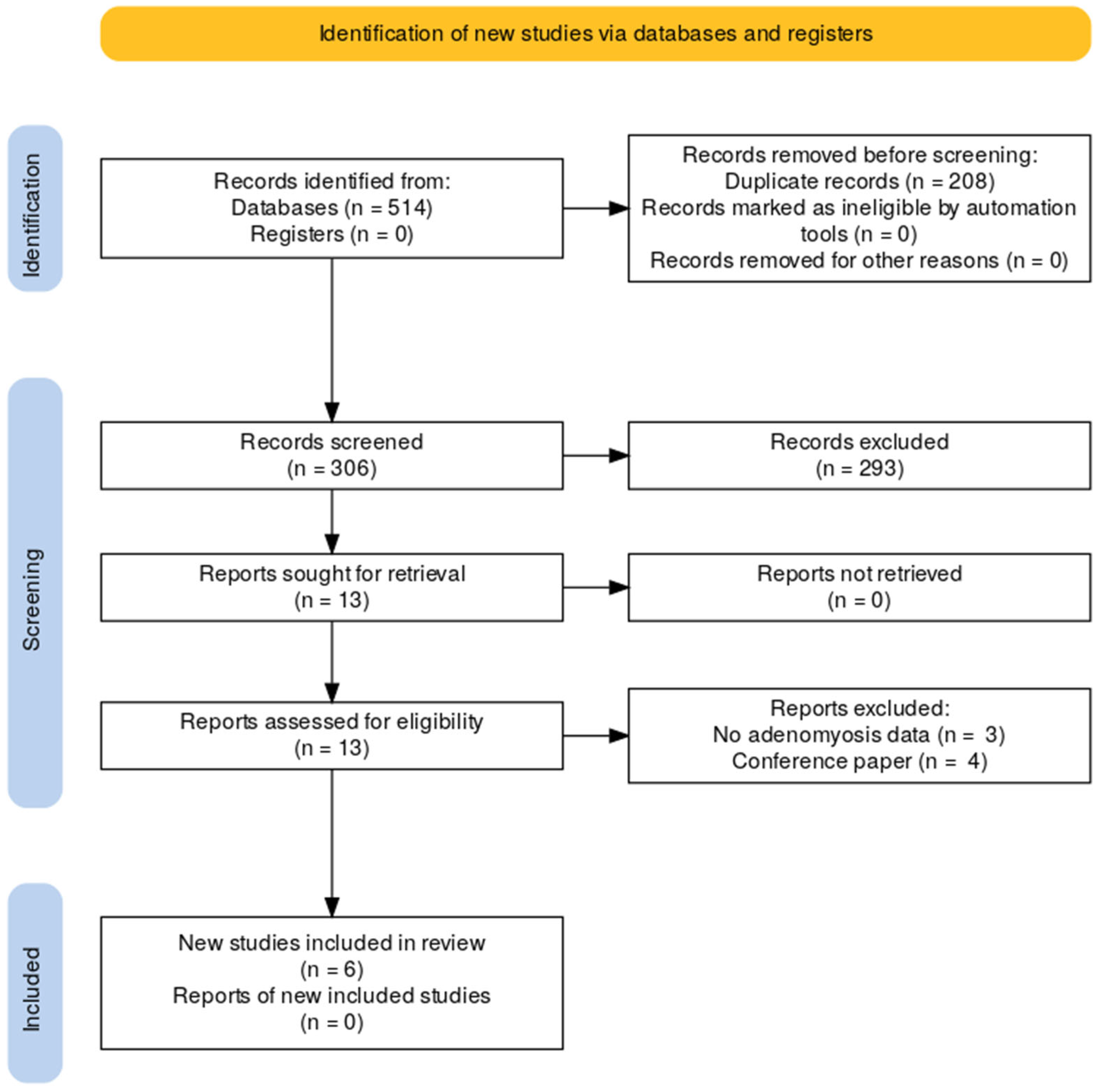
A total of 514 studies were identified on the database, and 208 duplicates were removed (Figure 1). After the record screening, 13 were assessed, and only six met the criteria. All the included papers reported a uterus-sparing conservative robotic surgical approach for confirmed uterine adenomyosis [19,28,29,30,31,32].
The majority of the studies included [28,29,30,31,32] are small retrospective series (less than 50 patients included) or single-center studies; only one study was a prospective study (Table 1) [19]. One study had a considerable number of patients included [32]. The age of the included patients was in the reproductive period and ranged from 25 to 50 years (Table 1). The follow-up varied from 1 w to 76 months [19,28,29,30]. Five studies originated from East Asia (Korea and China) [19,28,29,30,32] and one from the United States of America [31]. All studies investigated uterus-conservative robotic-assisted adenomyomectomy. Three studies compared robotic techniques versus laparoscopy or transumbilical laparoendoscopic single-site surgery (LESS) [19,30,32]. Due to the limited number of studies and heterogeneity of reporting, a structured narrative synthesis was performed considering surgical technique, follow-up duration, and reported clinical outcomes. Several clinically relevant data, such as abnormal uterine bleeding, quality-of-life measures, and fertility outcomes were not reported in the included studies.

3.2. Intraoperative and Perioperative Outcomes

Five studies reported that the operative time ranged from a mean of 147.4 to 279.8 min, and the estimated intraoperative blood loss varied largely across studies from 25 mL to 300 mL (Table 2). Perioperative complications were uncommon in the available studies [30,31]. Three studies did not report the complication rate [26,28,32]. Only Chong et al. reported five cases of fever, ileus, and pelvic abscess [19] (Table 2). Length of hospital stay ranged from outpatient management to 5.1 days. Conversion rate was zero and was reported only by Shim et al. [30].

3.3. Clinical and Reproductive Outcomes

Three studies reported pre- and post-visual analog scale (VAS) scores for pain evaluation, with better pain control after surgery [19,28,29]. Preoperative VAS ranged from 7.5 to 9.0, with postoperative scores near to zero (Table 3). CA125 levels followed the same trend: preoperative values 85 to 125 U/mL, and postoperative levels ranging from 6 to 13 U/mL. Symptom recurrence was evaluated in two studies, with a range of 7–12% [19,30]. Pregnancies were reported only by one study, with three pregnancies [28].

3.4. Surgical Technique and Instrumentation

The robotic procedures include uterine reconstruction using layered closure techniques. Different energy sources were reported: monopolar and bipolar electrosurgery, harmonic scalpel devices, and CO2 lasers. Adhesion prevention strategies were reported in three studies: anti-adhesive barriers and peritoneal lavage [19,28,31]. Robotic platforms were described in three studies and included the da Vinci S, Si, and Xi systems [28,30,32]. All the data about the surgical technique details are shown in Table 4.

3.5. Risk of Bias Assessment

Four studies, assessed using the ROBINS-I framework, showed a serious or critical risk of bias, and two studies had a moderate overall risk. This was due to the study design of the studies included (case series), the small sample sizes (only one study had adequate sample sizes), limited comparability between the studies, or incomplete outcome assessment (especially the pregnancy outcomes). The risk of bias is reported in Table 5.

4. Discussion

This systematic review provides a review of the current evidence regarding conservative robotic conservative surgery for uterine adenomyosis. The main conclusion of this review is the evidence for robotic surgery as a minimally invasive method in certain women with symptomatic adenomyosis who need uterine conservation, which provides acceptable surgical feasibility and clinically significant relief from symptoms such as dysmenorrhea and menorrhagia. The studies included in the review showed a low incidence of intraoperative complications, low conversion requirements, and good short- and long-term follow-up outcomes for robotic adenomyomectomy. These findings suggest a potential role for robotic-assisted conservative surgery in this challenging clinical scenario; however, several outcomes (complications and reproductive outcomes) were reported across the included studies, and our conclusions are not generalizable. The clinical benefit appeared adequate for conservative clinical management of adenomyosis. By removing specific uterine adenomyotic tissue and reconstructing myometrial architecture, robotic conservative surgery could relieve the symptoms of myometrial hyperplasia, inflammation, and improper uterine peristalsis while maintaining uterine integrity [33]. Robotic platforms provide enhanced dexterity, three-dimensional visualization, and tremor filtration, which may be particularly advantageous in adenomyomectomy, where precise dissection and multilayer myometrial closure are critical in order to minimize bleeding, preserve uterine integrity, and prevent postoperative morbidity. The reduction in pain scores and serum CA-125 scores found in different studies indicates not only mechanical decompression of the diseased tissue, but also a reduction of the inflammatory milieu commonly associated with adenomyosis [34]. When placed in a larger literature review context, the results of this review found a solid correlation with previous studies where laparoscopic conservative surgery has been described as an effective but challenging modality [35,36]. Conventional laparoscopy has been shown to improve symptoms and have acceptable reproductive outcomes in selected cases [37,38]. Robotic assistance provides support for suturing in deep myometrial defects and permits more radical yet effective excision of adenomyotic lesions with a reassuring, feasible profile. This review has several limitations that limit the generalizability of these findings. First, the heterogeneity of surgical techniques and selection criteria for patients across different studies. In addition, there was an elevated variability in the disease phenotypes, from focal adenomyomas to diffuse myometrial lesions. The absence of a uniform outcome and preoperative classification system, imaging criteria, and surgical algorithms limits a direct comparison between outcomes. At least four studies add evidence that reduces our outcomes analysis: surgical treatment was combined with adjuvant medical therapy (GnRH agonists, oral contraceptives, progestins, or intrauterine devices) [19,26,29,30]. Conversely, different strengths are present. We performed an extensive review of the literature regarding a growing surgical practice, and we focused on robotic approaches tailored to uterine preservation. Different data were integrated to explore the potential benefits and limitations of robotic surgery in adenomyosis in the context of actual clinical practice. Moreover, the inclusion of perioperative, symptomatic, and technical outcomes provides a complex evaluation of feasibility beyond mere operative techniques. We aim to perform this review to support future research on this topic. Additional studies are necessary to obtain data on subsequent pregnancy rates, uterine rupture, and obstetric outcomes after robotic conservative surgery for adenomyosis [39]. Additionally, data are necessary to explore different subgroup populations, such as women with extensive diffuse disease, severe comorbidities, or advanced age. All these efforts are necessary to acquire robust evidence to support valid counseling in adenomyosis strategies.

5. Conclusions

This systematic review suggests that robotic-assisted conservative surgery may be an acceptable and feasible option for selected women with symptomatic uterine adenomyosis, who wish to preserve the uterus. Although further multicenter, large prospective studies including standard diagnosis, surgical protocol, and long-term follow-up are needed to establish the necessary role of robotic surgery in the treatment algorithm of adenomyosis.

Supplementary Materials

The following supporting information can be downloaded at https://www.mdpi.com/article/10.3390/surgeries7020052/s1, Supplementary Table S1: PRISMA 2020 Checklist.

Author Contributions

Conceptualization, M.L.V. and M.A.; methodology, P.D.F. and F.C.; validation, A.C. and E.P.; formal analysis, E.A.; investigation, E.A. and M.I.; data curation, E.A. and M.I.; writing—original draft preparation, D.P.; writing—review and editing, M.L.V.; visualization, A.C. and E.P.; supervision, P.D.F. and F.C.; All authors have read and agreed to the published version of the manuscript.

Funding

This research received no external funding.

Institutional Review Board Statement

Not applicable.

Informed Consent Statement

Not applicable.

Data Availability Statement

The original contributions presented in this study are included in the article. Further inquiries can be directed to the corresponding author.

Conflicts of Interest

Author Dr. Fatima Cherifi was employed by the company Dubai Academic Health Corporation. The remaining authors declare that the research was conducted in the absence of any commercial or financial relationships that could be construed as a potential conflict of interest.

Abbreviations

The following abbreviations are used in this manuscript:
VASvisual analog scale scores
LESStransumbilical laparoendoscopic single-site surgery

Appendix A

Table A1. Detailed search strategy for the systematic review.
VariableSearch Strategy
Database searchedCochrane Central Register of Controlled Trials (CENTRAL) and ClinicalTrials.gov, PubMed, Scopus, and EMBASE from inception of each database until 21 December 2025.
Search strategy for Pubmed(“Robotics”[Mesh] OR “Robotic Surgical Procedures”[Mesh] OR (“robot*”[tiab] AND (surg*[tiab] OR operat*[tiab] OR proced*[tiab])) OR “robot-assisted”[tiab] OR “robot assisted”[tiab] OR “robotic-assisted”[tiab] OR “robotically assisted”[tiab] OR “telerobot*”[tiab] OR “tele-robot*”[tiab] OR “computer-assisted surg*”[tiab] OR “computer assisted surg*”[tiab] OR “da vinci”[tiab] ) AND (“Adenomyosis”[Mesh] OR adenomyo*[tiab] OR “uterine adenomyo*”[tiab] OR (“adenomyo*”[tiab] AND uterus[tiab]) OR (“adenomyo*”[tiab] AND uterine[tiab]))
Cochrane Central Register of Controlled Trials (CENTRAL)(robotics OR “robotic surgical procedures” OR (robot* AND (surg* OR operat* OR proced*)) OR “robot-assisted” OR “robot assisted” OR “robotic-assisted” OR “robotically assisted” OR telerobot* OR “tele-robot*” OR “computer-assisted surg*” OR “computer assisted surg*” OR “da vinci”)
AND (adenomyosis OR adenomyo* OR “uterine adenomyo*” OR (adenomyo* AND uterus) OR (adenomyo* AND uterine))
Scopus(robotics OR “robot-assisted” OR “robot assisted” OR “robotic-assisted” OR (robot* W/3 (surg* OR operat* OR proced*)) OR telerobot* OR (“computer assisted” W/3 surg*) OR “da vinci”) AND (adenomyo* OR “uterine adenomyo*” OR (adenomyo* W/3 (uterus OR uterine)))
EMBASE(  ‘robot’/exp
    OR ‘robot assisted surgery’/exp
    OR (robot* NEAR/3 (surg* OR operat* OR proced*)):ti,ab,kw
    OR ‘robot-assisted’:ti,ab,kw
    OR ‘robot assisted’:ti,ab,kw
    OR ‘robotic-assisted’:ti,ab,kw
    OR telerobot*:ti,ab,kw
    OR (‘computer assisted’ NEAR/3 surg*):ti,ab,kw
    OR ‘da vinci’:ti,ab,kw)
AND
(  ‘adenomyosis uteri’/exp
    OR adenomyo*:ti,ab,kw
    OR ‘uterine adenomyo*’:ti,ab,kw
    OR (adenomyo* NEAR/3 (uterus OR uterine)):ti,ab,kw)
Clinical Trial(robotics OR “robotic surgical procedures” OR (robot* AND (surg* OR operat* OR proced*)) OR “robot-assisted” OR “robot assisted” OR “robotic-assisted” OR “robotically assisted” OR telerobot* OR “tele-robot*” OR “computer-assisted surg*” OR “computer assisted surg*” OR “da vinci”)
AND
(adenomyosis OR adenomyo* OR “uterine adenomyo*” OR (adenomyo* AND uterus) OR (adenomyo* AND uterine))
Other sourcesThe reference lists of selected articles were hand-searched to identify any relevant articles.

References

  1. Zhai, J.; Vannuccini, S.; Petraglia, F.; Giudice, L.C. Adenomyosis: Mechanisms and Pathogenesis. Semin. Reprod. Med. 2020, 38, 129–143. [Google Scholar] [CrossRef]
  2. Reinhold, C.; Tafazoli, F.; Mehio, A.; Wang, L.; Atri, M.; Siegelman, E.S.; Rohoman, L. Uterine Adenomyosis: Endovaginal US and MR Imaging Features with Histopathologic Correlation. RadioGraphics 1999, 19, S147–S160. [Google Scholar] [CrossRef]
  3. Moawad, G.; Kheil, M.H.; Ayoubi, J.M.; Klebanoff, J.S.; Rahman, S.; Sharara, F.I. Adenomyosis and infertility. J. Assist. Reprod. Genet. 2022, 39, 1027–1031. [Google Scholar] [CrossRef]
  4. Harada, T.; Khine, Y.M.; Kaponis, A.; Nikellis, T.; Decavalas, G.; Taniguchi, F. The Impact of Adenomyosis on Women’s Fertility. Obstet. Gynecol. Surv. 2016, 71, 557–568. [Google Scholar] [CrossRef]
  5. Alcalde, A.M.; Martínez-Zamora, M.Á.; Gracia, M.; Ros, C.; Rius, M.; Nicolás, I.; Carmona, F. Impact of Adenomyosis on Women’s Psychological Health and Work Productivity: A Comparative Cross-Sectional Study. J. Women’s Health 2021, 30, 1653–1659. [Google Scholar] [CrossRef] [PubMed]
  6. Ekin, M.; Cengiz, H.; Öztürk, E.; Kaya, C.; Yaşar, L. Genitourinary symptoms in patients with adenomyosis. Int. Urogynecol. J. 2013, 24, 509–512. [Google Scholar] [CrossRef] [PubMed]
  7. Matalliotakis, M.; Tsakiridis, I.; Matalliotaki, C.; Krithinakis, K.; Spandidos, D.; Dagklis, T.; Mamopoulos, A.; Kalogiannidis, I. Coexistence of gynecological pathology with endometriosis and adenomyosis. Mol. Clin. Oncol. 2025, 24, 12. [Google Scholar] [CrossRef] [PubMed]
  8. Bulun, S.E.; Yildiz, S.; Adli, M.; Chakravarti, D.; Parker, J.B.; Milad, M.; Yang, L.; Chaudhari, A.; Tsai, S.; Wei, J.J.; et al. Endometriosis and adenomyosis: Shared pathophysiology. Fertil. Steril. 2023, 119, 746–750. [Google Scholar] [CrossRef]
  9. Verit, F.F.; Yucel, O. Endometriosis, Leiomyoma and Adenomyosis: The Risk of Gynecologic Malignancy. Asian Pac. J. Cancer Prev. 2013, 14, 5589–5597. [Google Scholar] [CrossRef]
  10. Pathare, A.D.S.; Loid, M.; Saare, M.; Gidlöf, S.B.; Zamani Esteki, M.; Acharya, G.; Yang, L.; Chaudhari, A.; Tsai, S.; Wei, J.J.; et al. Endometrial receptivity in women of advanced age: An underrated factor in infertility. Hum. Reprod. Update 2023, 29, 773–793. [Google Scholar] [CrossRef]
  11. Sun, P.; Zhang, C.; Wang, W.; Ma, H. Mechanism of Endometrial Receptivity Affected by Fibroids. Am. J. Reprod. Immunol. 2024, 92, e70022. [Google Scholar] [CrossRef] [PubMed]
  12. Vannuccini, S.; Luisi, S.; Tosti, C.; Sorbi, F.; Petraglia, F. Role of medical therapy in the management of uterine adenomyosis. Fertil. Steril. 2018, 109, 398–405. [Google Scholar] [CrossRef] [PubMed]
  13. Moldassarina, R.S. Modern view on the diagnostics and treatment of adenomyosis. Arch. Gynecol. Obstet. 2023, 308, 171–181. [Google Scholar] [CrossRef] [PubMed]
  14. Tosti, C.; Troìa, L.; Vannuccini, S.; Lazzeri, L.; Luisi, S.; Petraglia, F. Current and Future Medical Treatment of Adenomyosis. J. Endometr. Pelvic Pain Disord. 2016, 8, 127–135. [Google Scholar] [CrossRef]
  15. Etrusco, A.; Barra, F.; Chiantera, V.; Ferrero, S.; Bogliolo, S.; Evangelisti, G.; Oral, E.; Pastore, M.; Izzotti, A.; Venezia, R.; et al. Current Medical Therapy for Adenomyosis: From Bench to Bedside. Drugs 2023, 83, 1595–1611. [Google Scholar] [CrossRef]
  16. Pontis, A.; D’Alterio, M.N.; Pirarba, S.; de Angelis, C.; Tinelli, R.; Angioni, S. Adenomyosis: A systematic review of medical treatment. Gynecol. Endocrinol. 2016, 32, 696–700. [Google Scholar] [CrossRef]
  17. Younes, G.; Tulandi, T. Conservative Surgery for Adenomyosis and Results: A Systematic Review. J. Minim. Invasive Gynecol. 2018, 25, 265–276. [Google Scholar] [CrossRef]
  18. Osada, H. Uterine adenomyosis and adenomyoma: The surgical approach. Fertil. Steril. 2018, 109, 406–417. [Google Scholar] [CrossRef]
  19. Chong, G.O.; Lee, Y.H.; Hong, D.G.; Cho, Y.L.; Lee, Y.S. Long-Term Efficacy of Laparoscopic or Robotic Adenomyomectomy with or without Medical Treatment for Severely Symptomatic Adenomyosis. Gynecol. Obstet. Investig. 2016, 81, 346–352. [Google Scholar] [CrossRef]
  20. Thain, S.; Tan, H.H. Approaches to adenomyomectomy. Gynecol. Minim. Invasive Ther. 2015, 4, 49–54. [Google Scholar] [CrossRef]
  21. Peters, A.; Siripong, N.; Wang, L.; Donnellan, N.M. Enhanced recovery after surgery outcomes in minimally invasive nonhysterectomy gynecologic procedures. Am. J. Obstet. Gynecol. 2020, 223, 234.e1–234.e8. [Google Scholar] [CrossRef]
  22. Huang, X.; Huang, Q.; Chen, S.; Zhang, J.; Lin, K.; Zhang, X. Efficacy of laparoscopic adenomyomectomy using double-flap method for diffuse uterine adenomyosis. BMC Women’s Health 2015, 15, 24. [Google Scholar] [CrossRef]
  23. Takeuchi, H.; Kitade, M.; Kikuchi, I.; Shimanuki, H.; Kumakiri, J.; Kitano, T.; Kinoshita, K. Laparoscopic adenomyomectomy and hysteroplasty: A novel method. J. Minim. Invasive Gynecol. 2006, 13, 150–154. [Google Scholar] [CrossRef] [PubMed]
  24. Cianci, S.; Arcieri, M.; Vizzielli, G.; Martinelli, C.; Granese, R.; La Verde, M.; Fagotti, A.; Fanfani, F.; Scambia, G.; Ercoli, A. Robotic Pelvic Exenteration for Gynecologic Malignancies, Anatomic Landmarks, and Surgical Steps: A Systematic Review. Front. Surg. 2021, 8, 790152. [Google Scholar] [CrossRef] [PubMed]
  25. Alkatout, I.; O’Sullivan, O.; Peters, G.; Maass, N. Expanding Robotic-Assisted Surgery in Gynecology Using the Potential of an Advanced Robotic System. Medicina 2023, 60, 53. [Google Scholar] [CrossRef] [PubMed]
  26. Hijazi, A.; Chung, Y.J.; Song, J.Y.; Kim, M.R. Robot-assisted laparoscopic adenomyomectomy: A review of literature. Gynecol. Robot. Surg. 2021, 2, 9–13. [Google Scholar] [CrossRef]
  27. Sterne, J.A.; Hernán, M.A.; Reeves, B.C.; Savović, J.; Berkman, N.D.; Viswanathan, M.; Henry, D.; Altman, D.G.; Ansari, M.T.; Boutron, I.; et al. ROBINS-I: A tool for assessing risk of bias in non-randomised studies of interventions. BMJ 2016, 355, i4919. [Google Scholar] [CrossRef]
  28. Hijazi, A.; Chung, Y.J.; Sinan, N.; Kang, H.; Ko, M.; Lee, S.; Song, J.Y.; Kim, M.-R. A novel technique for myometrial defect closure after robot-assisted laparoscopic adenomyomectomy: A retrospective cohort study. Taiwan. J. Obstet. Gynecol. 2022, 61, 75–79. [Google Scholar] [CrossRef]
  29. Chung, Y.J.; Kang, S.Y.; Choi, M.R.; Cho, H.H.; Kim, J.H.; Kim, M.R. Robot-Assisted Laparoscopic Adenomyomectomy for Patients Who Want to Preserve Fertility. Yonsei Med. J. 2016, 57, 1531. [Google Scholar] [CrossRef]
  30. Shim, J.I.; Jo Ehye Kim, M.; Kim, M.K.; Kim, M.L.; Yun, B.S.; Seong, S.J.; Jung, Y.W. A comparison of surgical outcomes between robot and laparoscopy-assisted adenomyomectomy. Medicine 2019, 98, e15466. [Google Scholar] [CrossRef]
  31. Barton, S.E.; Gargiulo, A.R. Robot-assisted laparoscopic myomectomy and adenomyomectomy with a flexible CO2 laser device. J. Robot. Surg. 2013, 7, 157–162. [Google Scholar] [CrossRef] [PubMed]
  32. Zhao, J.; Liao, Y.; Huang, J.; Cheng, J.; Xiong, J.; Liao, J.; Zhang, W. Robot-assisted versus transumbilical laparoendoscopic single-site surgery in gynecological procedures: A retrospective comparative analysis of efficacy. Intell. Surg. 2025, 8, 76–83. [Google Scholar] [CrossRef]
  33. Kuijsters, N.P.M.; Methorst, W.G.; Kortenhorst, M.S.Q.; Rabotti, C.; Mischi, M.; Schoot, B.C. Uterine peristalsis and fertility: Current knowledge and future perspectives: A review and meta-analysis. Reprod. Biomed. Online 2017, 35, 50–71. [Google Scholar] [CrossRef] [PubMed]
  34. Bourdon, M.; Santulli, P.; Jeljeli, M.; Vannuccini, S.; Marcellin, L.; Doridot, L.; Petraglia, F.; Batteux, F.; Chapron, C. Immunological changes associated with adenomyosis: A systematic review. Hum. Reprod. Update 2021, 27, 108–129. [Google Scholar] [CrossRef]
  35. Kwack, J.Y.; Im, K.S.; Kwon, Y. Conservative surgery of uterine adenomyosis via laparoscopic versus laparotomic approach in a single institution. J. Obstet. Gynaecol. Res. 2018, 44, 1268–1273. [Google Scholar] [CrossRef]
  36. Raffone, A.; Raimondo, D.; Oliviero, A.; Raspollini, A.; Travaglino, A.; Torella, M.; Riemma, G.; La Verde, M.; De Franciscis, P.; Casadio, P.; et al. The Use of near Infra-Red Radiation Imaging after Injection of Indocyanine Green (NIR–ICG) during Laparoscopic Treatment of Benign Gynecologic Conditions: Towards Minimalized Surgery. A Systematic Review of Literature. Medicina 2022, 58, 792. [Google Scholar] [CrossRef]
  37. Kwack, J.Y.; Kwon, Y.S. Laparoscopic Surgery for Focal Adenomyosis. JSLS J. Soc. Laparosc. Robot. Surg. 2017, 21, e2017.00014. [Google Scholar] [CrossRef]
  38. Surico, D.; Aquino, C.I.; Vigone, A.; Ferrante, D.; Baldi, S.; Bracci, B.; Libretti, A.; Remorgida, V. Robot-assisted hysterectomy for endometrial cancer: Is there a correlation between uterine diameters, pelvic volume, and surgical outcomes? J. Robot. Surg. 2025, 19, 661. [Google Scholar] [CrossRef]
  39. Parker, W.H.; Einarsson, J.; Istre, O.; Dubuisson, J.B. Risk Factors for Uterine Rupture after Laparoscopic Myomectomy. J. Minim. Invasive Gynecol. 2010, 17, 551–554. [Google Scholar] [CrossRef]
Figure 1. The PRISMA flow diagram of the studies included.
Surgeries 07 00052 g001
Table 1. Characteristics of included studies.
Study (Year)CountryDesignn.Mean Age (y)Surgical TechniqueFollow-Up (mo)
Hijazi et al., [28]KoreaRetrospective cohort3435.6 ± 5.3Robot-assisted adenomyomectomy1 w and 3 mo
Chung et al., [29]KoreaCase series433 ± 3Robot-assisted adenomyomectomy25
Chong et al., [19]KoreaProspective3339 ± 5Laparoscopic/Robotic ± GnRH38–76
Shim et al., [30]KoreaRetrospective comparative4341 (25–50)Laparoscopic vs. Robotic4.5 (1–24)
Barton et al., [31]USACase series1341.9 ± 4.9Robotic + flexible CO2 laserNR
Zhao et al., [32]ChinaRetrospective comparative157350–52R-LESS vs. TU-LESSNR
Table 2. Intraoperative and perioperative outcomes.
StudyOperative Time (min)Blood Loss (mL)Conversion (%)Complications (%)Hospital Stay (Days)
Hijazi et al., [28]279.82 ± 69.02296.47 ± 160.77NRNR2.71 ± 0.68
Chung et al., [29]159.25 ± 93.06117.5 ± 56.78NRNR2.5 ± 0.5
Chong et al., [19]147 ± 5236 ± 37NR5 (15%)5.1 ± 2.2
Shim et al., [30]160300006.0
Barton et al., [31]16925NR00
Zhao et al., [32]NRNRNRNRNR
Table 3. Clinical and reproductive outcomes.
StudyVAS Pain (Pre)VAS Pain (Post)CA-125 Pre (U/mL)CA-125 PostSymptom Recurrence (%)Pregnancies
Hijazi [28]8.6 ± 1.120.06 ± 0.3121.7 ± 1176.95 ± 2.60NR3
Chung [29]9.0 ± 1.410104.09 ± 125.396.17 ± 1.97NRNR
Chong [19]7.8 ± 2.50.3 ± 0.9 (12 mo)85.4 ± 88.213.9 ± 13.0 (12 mo)12NR
Shim [30]7.5NR106.3NR7NR
Barton [31]NRNRNRNRNRNR
Zhao [32]NRNRNRNRNRNR
Table 4. Operative technique and instrumentation.
StudyUterine ClosureEnergy SourceAdhesion PreventionRobotic Platform
Hijazi [28]Layered, Stratafix + PDSMonopolar + bipolarAnti-adhesive barrierda Vinci S or Xi
Chung [29]Layeredcurved monopolar scissors + PK bipolar forcepsNRNR
Chong [19]LayeredMonopolar/HarmonicBarrier + lavageNR
Shim [30]2–3 layersMonopolarNRda Vinci Si
Barton [31]Multilayer, barbed suturesCO2 laserInterceedNR
Zhao [32]NRNRNRVinci Xi
Table 5. Risk of Bias Assessment (ROBINS-I).
StudyD1D2D3D4D5D6D7Overall
Hijazi [28]SeriousModerateLowModerateModerateModerateModerateSerious
Chung [29]SeriousSeriousLowLowLowModerateModerateSerious
Chong [19]ModerateModerateLowLowModerateModerateModerateModerate
Shim [30]SeriousModerateLowModerateModerateModerateModerateSerious
Barton [31]SeriousSeriousLowLowLowModerateModerateSerious
Zhao [32]ModerateModerateLowLowLowModerateModerateModerate
Legend: D1: confounding; D2: selection of participants; D3: classification of interventions; D4: deviations from intended interventions; D5: missing data; D6: measurement of outcomes; D7: selection of the reported result.
Disclaimer/Publisher’s Note: The statements, opinions and data contained in all publications are solely those of the individual author(s) and contributor(s) and not of MDPI and/or the editor(s). MDPI and/or the editor(s) disclaim responsibility for any injury to people or property resulting from any ideas, methods, instructions or products referred to in the content.