Article

The Effect of Marginal Ischemia on Colonic Anastomotic Leakage: A Rat Model

1
Medical School for International Health, Ben-Gurion University of the Negev, Be’er Sheva 8410501, Israel
2
Department of General Surgery B, Soroka University Medical Center, Be’er Sheva 8410101, Israel
3
Saban Pediatric Medical Center, Soroka University Medical Center, Be’er Sheva 8410101, Israel
*
Author to whom correspondence should be addressed.
These authors contributed equally to this work.
Surgeries 2026, 7(2), 46; https://doi.org/10.3390/surgeries7020046
Submission received: 1 December 2025 / Revised: 16 March 2026 / Accepted: 18 March 2026 / Published: 10 April 2026

Abstract

Background: Anastomotic leakage remains a serious complication of colorectal surgery, often linked to impaired blood supply at the incision site. Objective: To develop and validate a reproducible rat model of colonic anastomotic leakage induced by graded mesocolon ischemia. Methods: Of 144 operated rats, 138 survived surgery and underwent end-to-end colonic anastomosis with five levels of mesocolon ligation (0–2 cm of unilateral mesocolic ischemia). Postoperative outcomes, including anastomotic integrity, abscess formation, and mortality, were assessed on postoperative day 10. Anastomotic bursting pressures were also measured in a subset of animals. Results: Leak rates increased with ischemia severity: 0% in controls, 16.7% at 0.2 cm, 42.6% at 0.4 cm, 95.8% at 1 cm, and 100% at 2 cm (p < 0.0001, trend test). Bursting pressures decreased progressively with increasing anastomotic severity. The 0.4 cm ischemia condition produced a reproducible intermediate leak rate suitable for experimental interventions. Conclusions: This rat model reliably induces graded anastomotic leaks and can serve as a platform for testing strategies to prevent leakage in high-risk colorectal surgery.

1. Introduction

Despite substantial advances in colorectal surgery, anastomotic leakage remains a common and serious complication in colorectal surgery, occurring in approximately 3–7% of cases, with mortality rates ranging from 2–4% [1,2]. Furthermore, the leakage rate for low rectal anastomoses may be even higher, reaching up to 27% in some reports [3,4,5,6,7]. Anastomotic leakage is multifactorial in etiology, and ischemia of the colonic margins is considered one of the most important contributing factors [8]. Known risk factors include smoking, coronary artery disease, and hypertension. Patients with these comorbidities often suffer from microvascular disease that impairs tissue perfusion, especially in the anastomotic area, which may lead to ischemia and subsequently increase the risk of leakage [9,10,11]. This complication may significantly alter the postoperative course, potentially resulting in fever, abscess formation, sepsis, metabolic disturbances, and/or multiorgan failure [12]. However, no existing animal model has demonstrated a direct link between marginal ischemia and anastomotic leakage. Therefore, the aim of the present study was to develop a rat model with varying degrees of ischemia at the colonic incision margins to test this relationship. A validated model of this nature could assist in evaluating new interventions intended to reduce the incidence of anastomotic leakage, particularly in high-risk patients [1]. Animal models remain essential tools for understanding pathophysiological mechanisms and for evaluating interventions aimed at preventing anastomotic leakage. Most experimental models in this field have utilized rats to establish colonic anastomoses [12,13,14]. Other animal models, such as pigs and dogs, have also been used. However, these models are associated with ethical concerns, high costs and logistical limitations, making rodent models more practical and commonly used [15,16,17,18]. Several studies in the literature have focused on optimizing the development of models that reliably induce anastomotic leaks in rodents. These efforts have included evaluating appropriate analgesic protocols, determining the ideal number of sutures, and adopting absorbable sutures, all of which have contributed to refining these experimental models. Accordingly, future research may focus on identifying predisposing factors that elevate the risk of leakage. Recognizing such factors may aid surgeons in selecting appropriate patients for primary anastomosis and ultimately reduce postoperative morbidity and mortality [19]. Our model simulates a mechanical injury to the intestinal wall by applying localized pressure to the mesenteric side of the bowel, in a manner resembling conditions such as intestinal strangulation, segmental ischemia, or trauma. The model is based on creating a partial obstruction of blood flow in the mesenteric vessels of the bowel segment, with end-to-end anastomosis performed afterward. This simulation allows evaluation of various factors affecting anastomotic healing, such as blood supply, age, systemic diseases, pharmacologic interventions, and more.

2. Materials and Methods

A total of 144 rats were used in this experimental study conducted at the animal facility of Soroka University Medical Center. For the study, male Wistar rats weighing approximately 300 g were used and underwent open surgery via laparotomy. Anesthesia was induced and maintained with isoflurane inhalation (Baxter Healthcare Corporation, Deerfield, IL, USA) 3–4% induction, 1.5–2% maintenance in oxygen. Anesthesia was initiated immediately before skin incision using isoflurane inhalation and was maintained throughout the surgical procedure. All animals received postoperative analgesia with Dipyrone (metamizole sodium; Teva Pharmaceutical Industries, Petah Tikva, Israel) 250 mg/kg in drinking water every 8 h, which was started immediately after surgery for 72 h. The procedure involved transection of the transverse colon followed by an end-to-end anastomosis, performed using a single-layer, interrupted suture technique with six 5-0 Vicryl stitches (polyglactin; Ethicon Inc., Somerville, NJ, USA). The average duration of the primary surgery was 20–25 min. The experimental groups were defined based on the degree of ischemia applied to the mesocolon, simulating varying levels of vascular injury. Ischemia was induced by mechanical ligation of the mesocolic vessels supplying the bowel segment adjacent to the anastomotic site. After identifying the mesenteric arcade, a defined segment of the mesocolon was isolated and ligated using multiple 5-0 Vicryl ties placed around the vascular pedicle at the predetermined distance from the anastomosis without vessel transection. No clips or thermal coagulation were used in order to avoid collateral tissue injury and ensure a strictly mechanical occlusion model. The degree of vascular injury to the mesocolon was modulated as follows:
  • Group 1 (control)—resection without mesocolon injury.
  • Group 2—0.2 cm ischemic segment on one side of the mesocolon.
  • Group 3—0.4 cm ischemic segment on one side of the mesocolon.
  • Group 4—1 cm ischemic segment on one side of the mesocolon.
  • Group 5—2 cm ischemic segment on one side of the mesocolon.
Group sizes were initially comparable; however, interim observations identified the 0.4 cm ischemia condition as the most reproducible intermediate model. To enhance statistical robustness and confirm reproducibility of this condition, additional animals were prospectively allocated to this group. Consequently, the final sample size of the 0.4 cm cohort exceeded that of the other experimental groups. The length of the ischemic segment (0.2, 0.4, 1, or 2 cm) was measured intraoperatively using a sterile millimeter ruler placed along the mesenteric border before ligation. Measurements were obtained with the mesentery in a relaxed, non-tensioned state to ensure consistency. The measured point was marked using a sterile needle, and ligation was performed at that exact location prior to transection and anastomosis. All rats were monitored for 20 min postoperatively to assess bleeding and recovery from anesthesia. The rats were then returned to their cages with free access to food and water. Ten days after the primary surgery, a second laparotomy was performed to evaluate the healing of the anastomosis and assess for complications such as anastomotic leak, peritonitis, or other causes of morbidity and mortality. Animals that died before the scheduled relaparotomy underwent immediate necropsy. Anastomotic leakage was diagnosed based on one or more of the following findings: visible disruption of the suture line, fecal contamination of the peritoneal cavity and peri-anastomotic abscess formation. Bursting pressure measurements were performed as a predefined secondary endpoint to assess the mechanical integrity of the anastomosis. This analysis was conducted on a separate subset of animals that survived until postoperative day 10. Animals that died early due to generalized peritonitis or severe septic complications (predominantly in the 1 cm and 2 cm groups) were not included in the mechanical testing analysis. At relaparotomy on day 10, a 4–5 cm colonic segment containing the anastomosis was resected. The distal end was ligated, and the proximal end was connected via a catheter to an infusion pump delivering room air at a constant rate of 5 mL/min. Intraluminal pressure was continuously monitored using a calibrated digital manometer. Bursting pressure was defined as the maximal pressure recorded immediately before a sudden pressure drop associated with visible air leakage from the anastomotic site. All measurements were performed by the same investigator to minimize interobserver variability. Humane endpoints included inability to ambulate, severe weight loss (>20%), persistent anorexia (>24 h), signs of severe distress, or moribund condition. Animals meeting these criteria were planned to be euthanized immediately. Animals that died before day 10 succumbed to septic complications related to anastomotic leakage and were examined immediately postmortem. All animals were otherwise operated (to evaluate the anastomosis) at day 10, and euthanized afterwards with high doses of anesthesia. All procedures were performed using standard aseptic surgical techniques, including sterile instruments, sterile gloves, and surgical field preparation. Animals were continuously monitored during anesthesia for respiratory pattern and general physiological condition. Animals were housed in standard laboratory cages under controlled environmental conditions with a 12 h light/dark cycle, temperature of approximately 22 ± 2 °C, and appropriate bedding. Animals had ad libitum access to standard laboratory chow and water throughout the study period, including the postoperative period. Animals were observed daily for signs of distress, wound complications, and general health status during the postoperative observation period.

3. Statistical Analysis

All statistical analyses were performed using SPSS software version 26 (IBM Corp., Armonk, NY, USA). Categorical variables, including anastomotic leakage rates and postoperative outcomes, were expressed as frequencies and percentages. Comparisons between experimental groups were performed using the chi-square test. A chi-square test for trend was additionally applied to assess the dose–response relationship between the extent of mesocolon ischemia and the incidence of anastomotic leakage. Continuous variables, including bursting pressure measurements, were presented as mean ± standard deviation (SD). Comparisons between groups were performed using one-way analysis of variance (ANOVA). Post hoc pairwise comparisons were conducted using Tukey’s test when appropriate. A p-value < 0.05 was considered statistically significant. A post hoc power analysis was conducted for the primary endpoint using a Cochran–Armitage test for trend across the five ordered ischemia groups. Based on the observed leakage rates (0%, 18%, 43%, 96%, and 100%) and the actual group sizes (total n = 138), the statistical power to detect a linear dose–response relationship at α = 0.05 exceeded 0.99. These findings indicate that the study was adequately powered to detect a graded association between ischemia length and anastomotic leakage incidence.

4. Results

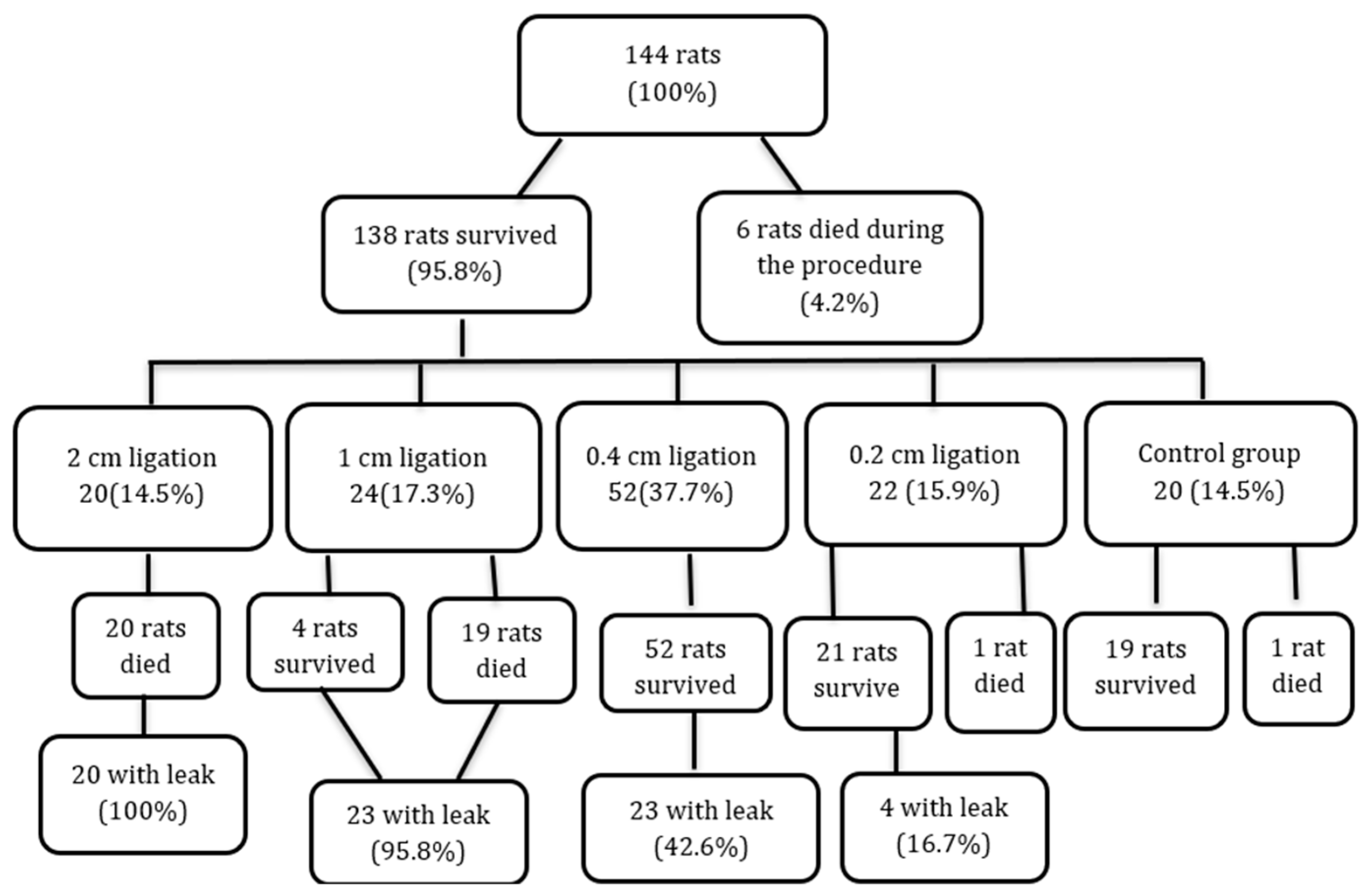
A total of 144 rats underwent attempted transverse colonic transection and end-to-end anastomosis during the study period. Six animals (4.2%) died intraoperatively due to anesthesia- or procedure-related complications and were excluded from further analysis. The remaining animals were observed for 10 postoperative days and allocated to five experimental groups according to the length of mesocolon ischemia induced adjacent to the anastomotic site, as detailed in the study flow diagram (Figure 1). All procedures were performed under standardized conditions, including identical anesthetic technique, six interrupted 5-0 Vicryl sutures for the anastomosis, uniform postoperative analgesia, and unrestricted access to food and water. No antibiotics were administered.
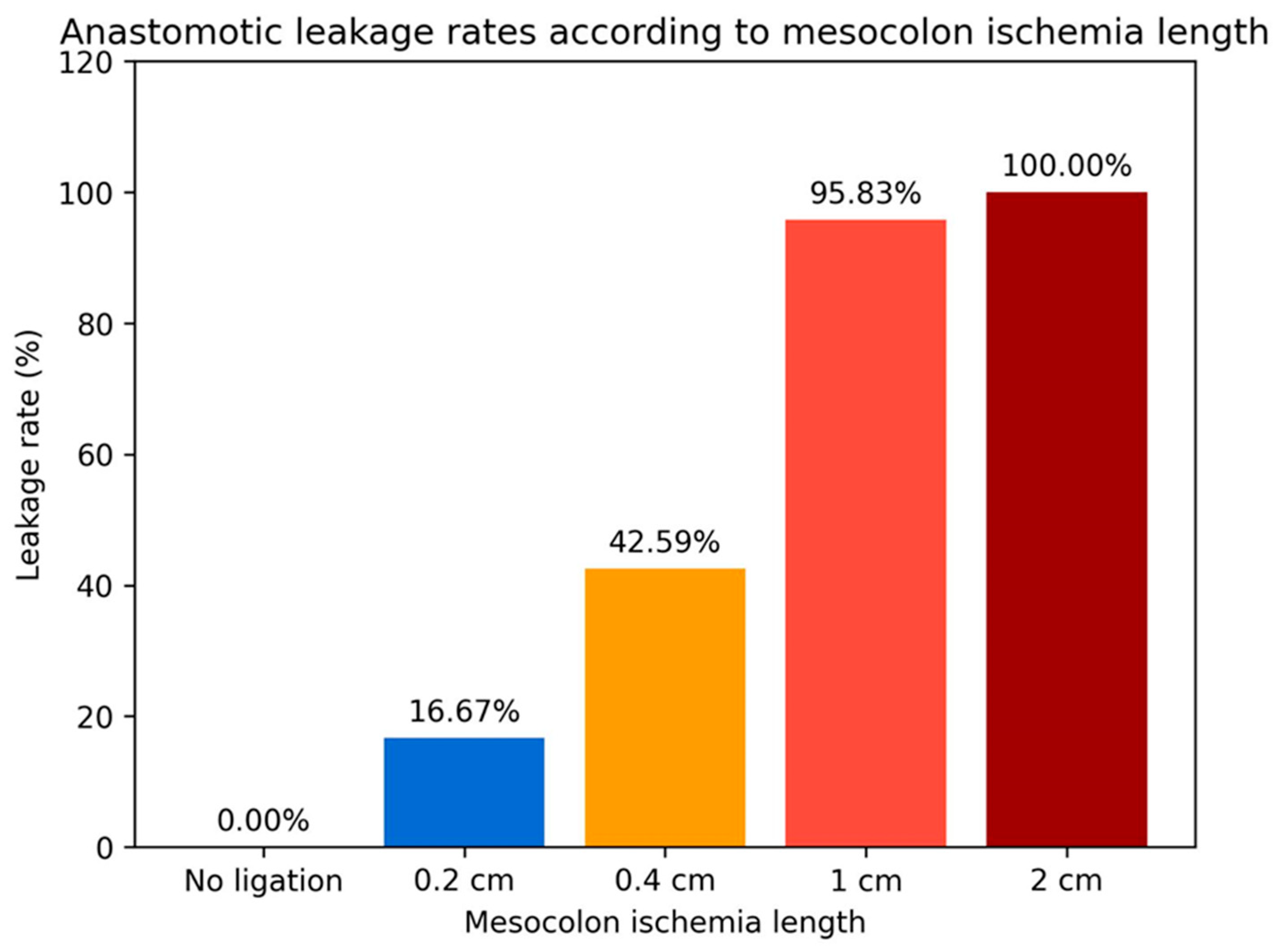
Postoperative mortality increased progressively with the severity of mesocolic ischemia. Early postoperative mortality was low in the control and 0.2 cm groups (1/20 and 1/22, respectively), absent in the 0.4 cm group, and markedly higher in the 1 cm group (19/24, 79.2%). In the 2 cm group, all animals (20/20) died before completion of follow-up. Anastomotic leakage rates demonstrated a clear graded relationship with the extent of mesocolon ligation (Table 1, Figure 2).
No leaks were observed in the control group (0/20, 0%; 95% CI 0–15%). Leakage occurred in 4 of 22 rats in the 0.2 cm ischemia group (16.7%; 95% CI 7–36%), in 23 of 52 rats in the 0.4 cm group (42.6%; 95% CI 30–56%), in 23 of 24 rats in the 1 cm group (95.8%; 95% CI 79–99%), and in all 20 animals in the 2 cm group (100%; 95% CI 84–100%). In the 1 cm and 2 cm ischemia groups, all animals died before day 10. Leakage diagnosis in this group was based on postmortem findings at necropsy (except for one rat in the 1 cm group, which died intraoperatively).
Comparison between groups using the chi-square test demonstrated a highly significant difference in leakage rates (p < 0.0001). Furthermore, a chi-square test for trend confirmed a statistically significant dose–response relationship between increasing ischemia length and leakage incidence (p < 0.0001).
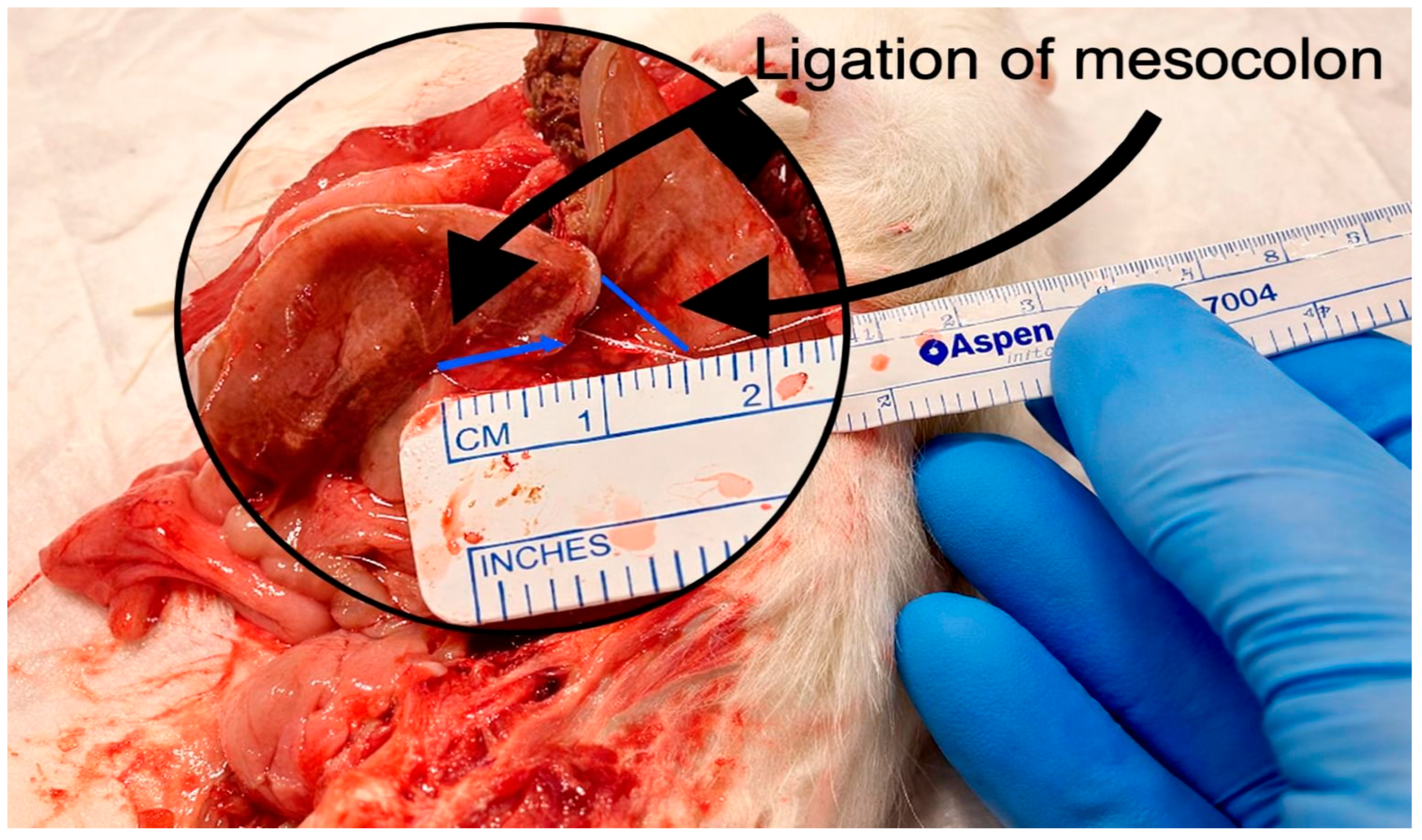
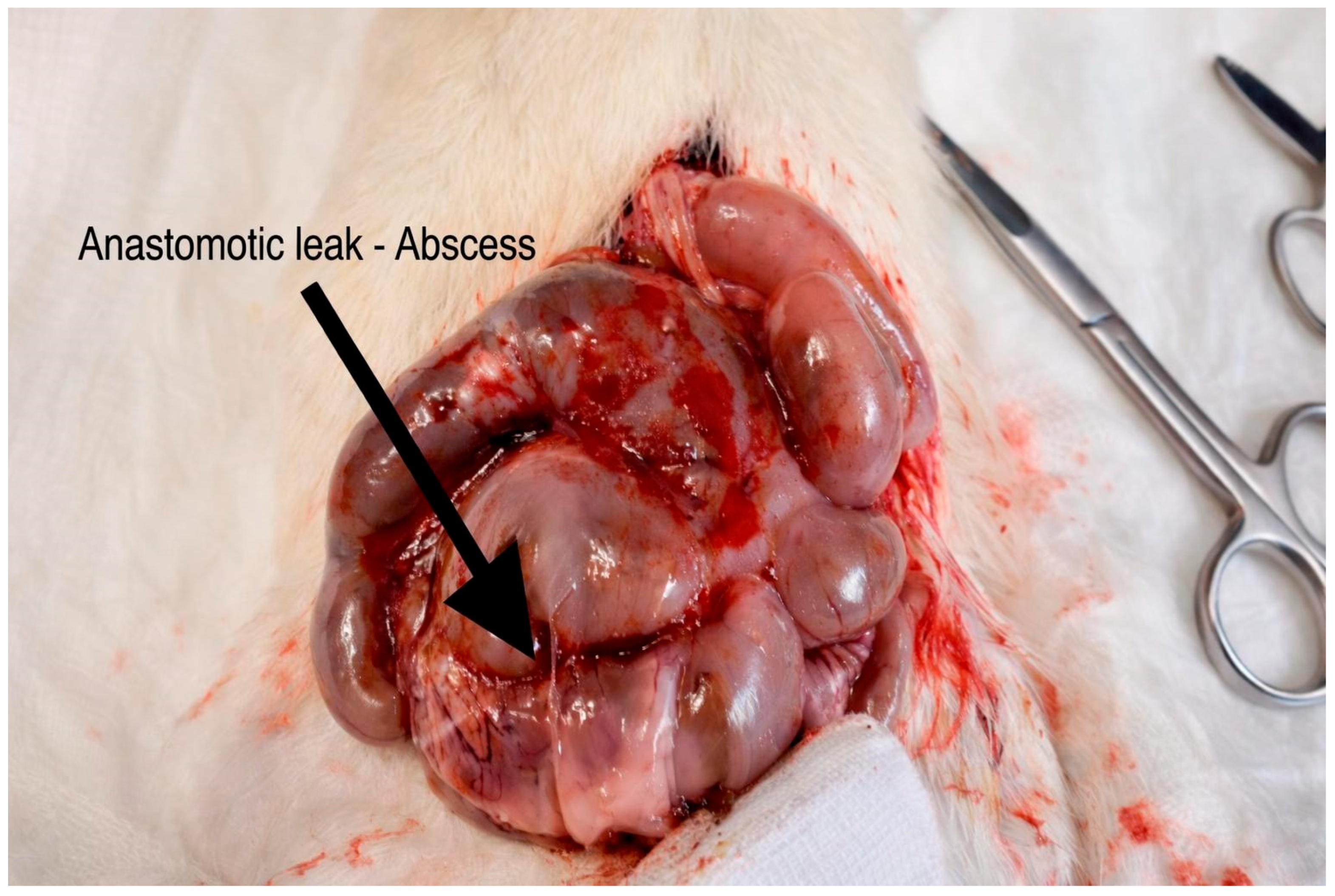
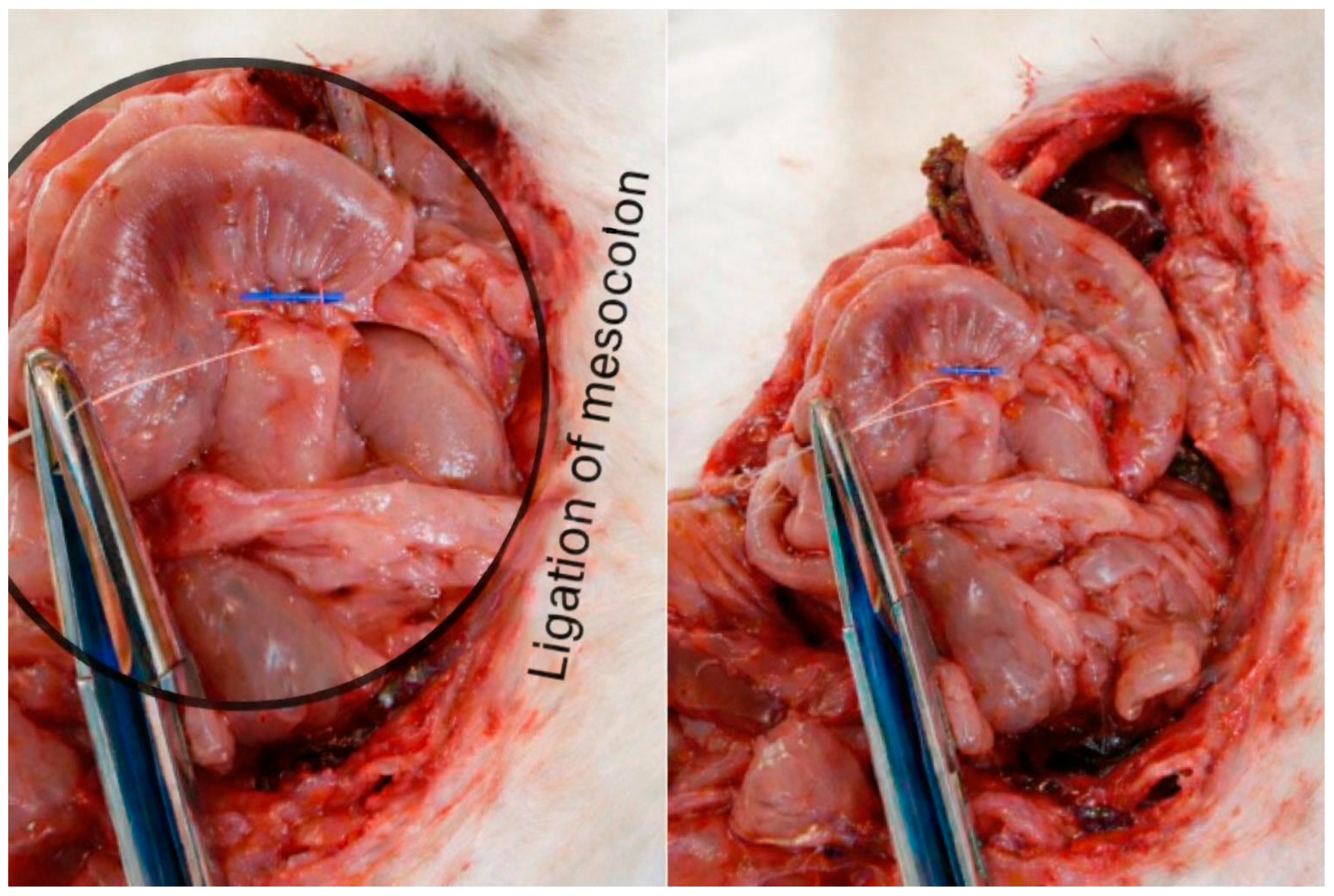
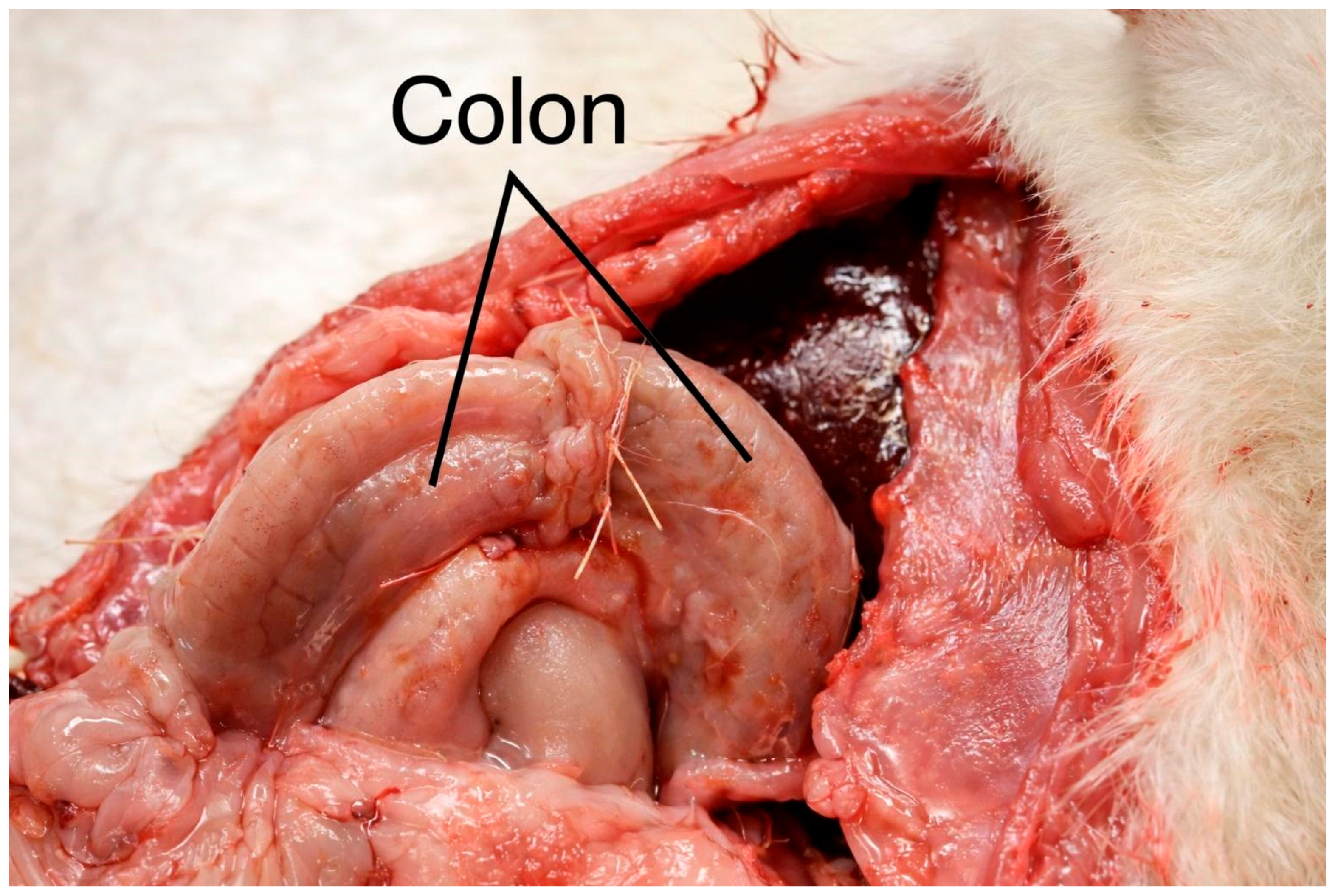
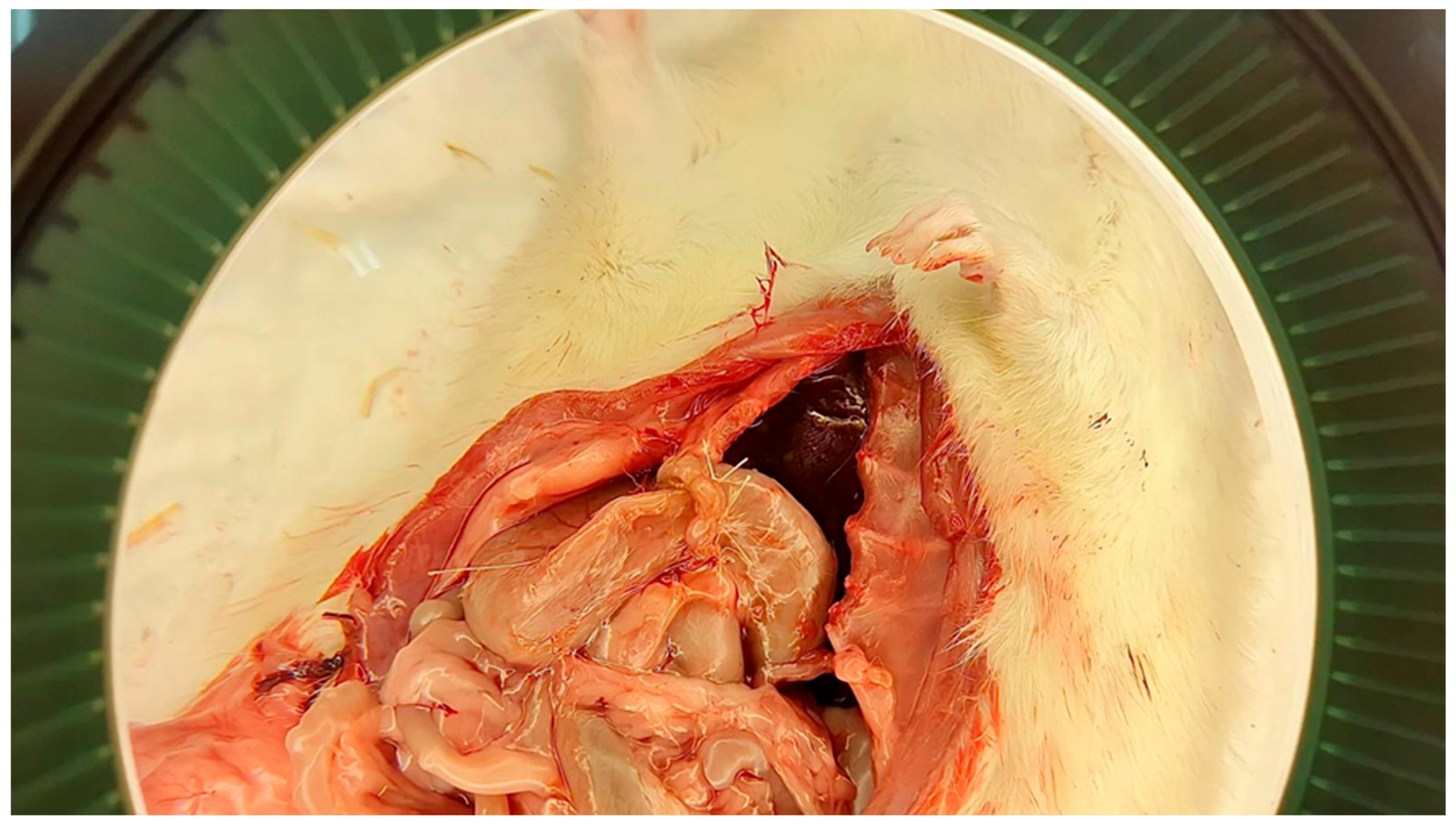
Macroscopic evaluation at relaparotomy on postoperative day 10 revealed intact anastomoses without abscess or peritonitis in the control group. In contrast, increasing degrees of ischemia were associated with progressive pathological findings, including perianastomotic abscess formation, fibrin deposition, localized purulent collections, diffuse peritonitis, and complete anastomotic dehiscence in the higher ischemia groups. Representative intraoperative images demonstrating standardized measurement of mesocolon ligation length are presented in Figure 3 and Figure 4, while postoperative macroscopic findings are shown in Figure 5 and Figure 6. Macroscopic evaluation of the anastomotic site following ischemic injury is presented in Figure 7.
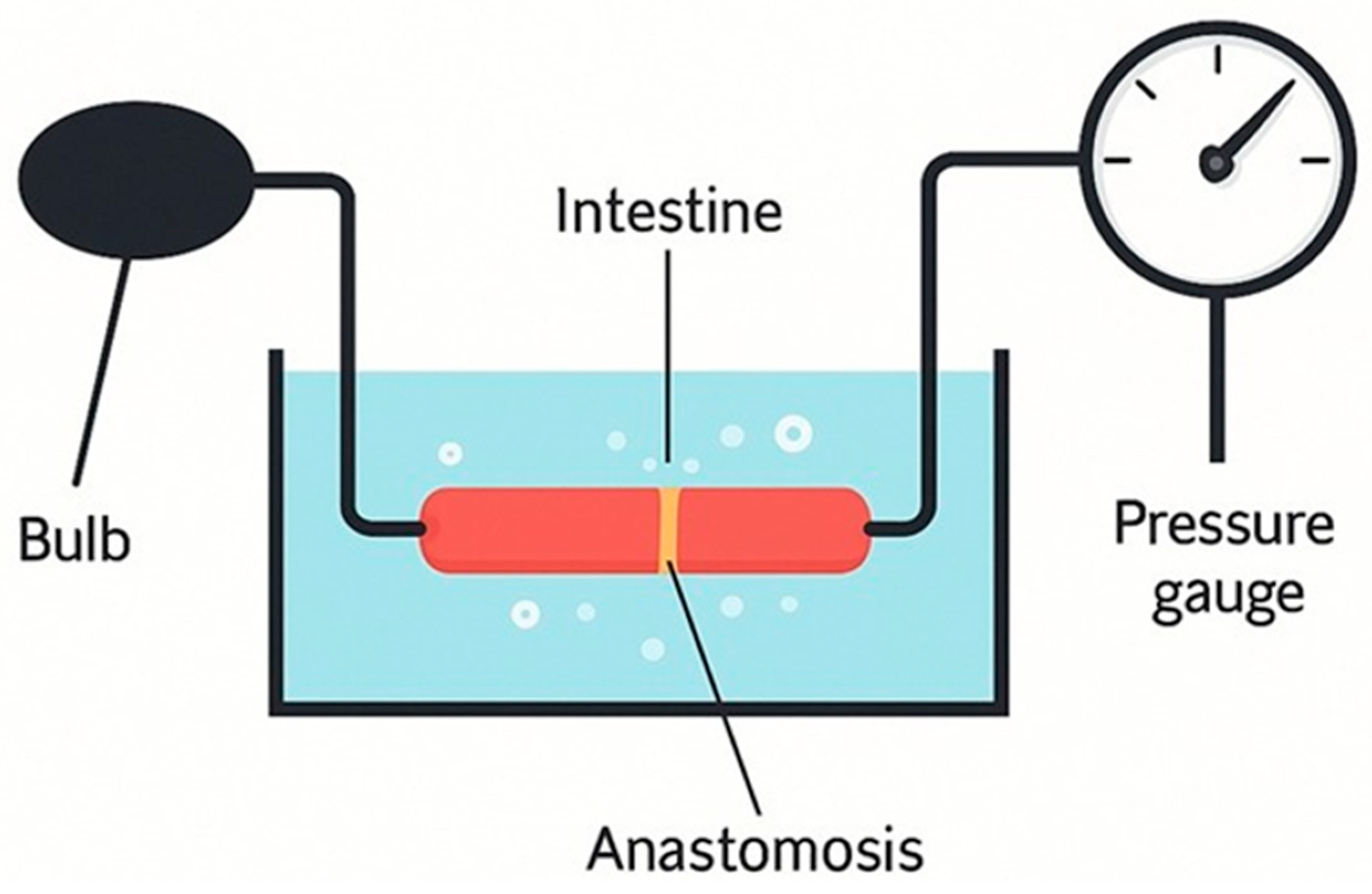
Mechanical integrity of the anastomosis was assessed by bursting pressure measurements obtained 10 days postoperatively using the standardized apparatus illustrated in Figure 8. Ten specimens per condition were analyzed. Bursting pressure measurements were obtained from 40 animals (10 per condition), classified according to the macroscopic status of the anastomosis at day 10 rather than by ischemia group alone. The resected bowel segment was connected to a pump delivering air at a constant rate, while pressure was monitored using a calibrated manometer. Rupture was defined as a sudden pressure drop accompanied by visible air leakage. The analyzed conditions included: native unoperated colon, intact anastomosis without complications, anastomosis with localized abscess formation, and anastomosis with macroscopic perforation. Mean bursting pressure was highest in the native colon (312 ± 25 mmHg), significantly lower in intact anastomoses (145 ± 18 mmHg), and progressively reduced in anastomoses complicated by abscess (85 ± 14 mmHg) and perforation (40 ± 10 mmHg). (Table 2).
One-way ANOVA demonstrated a statistically significant difference among groups (p < 0.001). Post hoc Tukey analysis confirmed significant pairwise differences between all conditions (p < 0.05 for each comparison).
These findings confirm a clear, graded relationship between the length of induced mesocolon ischemia and postoperative outcomes, including mortality, anastomotic leakage, and mechanical weakening of the anastomosis.

5. Discussion

Several experimental studies have investigated ischemia-based models of the anastomotic margins in laboratory animals. Pommergaard et al. demonstrated that a murine model closely replicates anastomotic leakage in humans. This model has high clinical relevance, as leakage in the model resembles the outcomes of leakage in humans. They showed, in the murine model, an increased rate of colonic anastomotic leakage when the anastomosis was performed with four absorbable sutures compared to a control group with eight absorbable sutures (40% vs. 0%, p = 0.003). Weight loss was more pronounced, and the vitality index was also significantly lower in these animals (p < 0.001) [1]. In the murine model described by Pommergaard et al. (2015) [1], impaired healing was primarily induced through technical modulation of the anastomosis and alteration of vascular arcade flow, thereby indirectly compromising perfusion. In contrast, the present model isolates mesocolic vascular interruption as the primary independent variable, with ischemia precisely quantified in centimeters (0.2–2 cm). This methodological distinction allows the establishment of a controlled ischemic gradient and a statistically validated dose–response relationship (p < 0.0001), which may offer advantages for reproducibility and interventional testing. At the same time, the Pommergaard model may better simulate microvascular compromise encountered in clinical settings, and therefore, the two approaches should be viewed as complementary rather than competitive experimental paradigms. Boersema and colleagues concluded that hyperbaric oxygen therapy improves the healing of ischemic anastomoses in rats and benefits postoperative re nal function. They used 40 rats that underwent colectomy with ischemic anastomosis. The rats were divided into a group receiving hyperbaric oxygen treatment (HBOT) for 10 days and a control group without HBOT. In the HBOT group, no anastomotic leakage was observed, compared to a leakage rate of 37.5% in the control group [2]. Henne-Bruns D. determined that placing a polyglycolic acid (PGA) mesh over the colonic anastomotic line impairs healing in rats, possibly due to reduced contact between the anastomosis and the omentum. In this study, 75 rats underwent transverse colon transection with single-layer anastomosis. In half of the rats, six sutures were placed, and in the other half, four sutures. In half of the animals in each group, a PGA mesh was placed to cover the anastomosis [3]. In another study in pigs, significant anastomotic separation and marginal ischemia were not reliable predictors for developing intra-abdominal abscess, peritonitis, or sepsis. In this study, 12 pigs underwent end-to-end anastomosis of the descending colon, with ligation of the mesenteric vessels 5 cm from each side of the anastomosis. No clinical leakage was demonstrated, even in animals with maximal ischemia [4]. A Dutch research group concluded that weight loss and deterioration in the vitality index are good predictors for an anastomotic leakage model in mice. They compared an end-to-end colonic anastomosis using 12 interrupted sutures to an anastomosis with 5 interrupted sutures. In mice without leakage, there was weight loss for 2–3 days postoperatively, followed by stabilization. In contrast, in mice with leakage, weight loss continued beyond day five. Variability in vitality index values was also observed [5]. It is evident that there is no consensus among researchers regarding the optimal model for anastomotic leakage, with the main difficulty being the lack of a uniform, consistent rodent model that would allow for significant and efficient follow-up studies. In the present study, we developed a reproducible experimental model with rats without consistent leakage rates in end-to-end colonic anastomoses by ligating the mesocolon at varying lengths on each side of the anastomosis in rats. During the study, we aimed to maintain uniformity across all parameters, including the number of sutures, suture type, rat weight, and other factors, to avoid influencing the results or introducing bias. Anesthesia was achieved with isoflurane gas. All anastomoses were constructed with six sutures using 5-0 coated Vicryl. Following the initial surgical procedure, the rats were given unlimited access to food and water, in addition to analgesics. Notably, no antibiotics were administered. In the control group (rats without mesocolic ligation), the leakage rate was 0%. In the group with 0.2 cm mesocolon ligation on the side of the mesocolon, the leakage rate was 16.7%. In the group with 0.4 cm ligation on the side of the mesocolon, the leakage rate was 44.23%. In the last two groups, with 1 cm and 2 cm ligation lengths, leakage occurred in nearly all animals. Although ischemia is widely recognized as a risk factor for leakage, the observed graded response likely reflects disruption of multiple interrelated biological pathways. Oxygen deprivation may lead to mitochondrial dysfunction and ATP depletion, impairing fibroblast proliferation and collagen synthesis at the anastomotic site. In addition, ischemia–reperfusion may generate oxidative stress and endothelial dysfunction, promoting microvascular thrombosis and further perfusion compromise. Increased mucosal permeability under ischemic conditions may also facilitate bacterial translocation, potentially contributing to abscess formation observed in intermediate ischemia groups. These mechanisms together suggest that anastomotic leakage represents the culmination of progressive cellular and microvascular failure rather than a purely mechanical suture disruption. As shown in the attached tables and diagrams, a consistent leakage rate was observed in the group with 0.4 cm ligation on each side of the mesocolon. In addition, bursting pressure measurements were performed 10 days after anastomosis creation, comparing the control group to the mesocolon-ligation groups. A significant difference was found between unoperated intestines and those after surgery. It should be noted that although differences in bursting pressure were observed among postoperative anastomoses with varying mesocolon ligation lengths, these differences were relatively small. Several limitations must be acknowledged. The angioarchitecture of the rat mesentery differs from human vascular anatomy, particularly regarding collateral circulation patterns and vessel caliber. Furthermore, the thickness and cellular composition of the rat intestinal wall, as well as the composition of the intestinal microbiota, differ substantially from human physiology and may influence healing dynamics. Importantly, this model induces acute mechanical ischemia, whereas in clinical practice, anastomotic leakage often develops on the background of chronic microvascular insufficiency associated with diabetes, smoking, or atherosclerosis. Therefore, while the present model isolates ischemia as a controlled experimental variable, direct extrapolation to human clinical settings should be undertaken cautiously. The absence of histological confirmation of ischemia and inflammatory response represents a limitation of the present study and should be addressed in future investigations. The consistent leakage rate, as described above, can serve for future studies using this model to evaluate the effects of additional variables, such as smoking, antibiotic use, etc. The impact of these factors can be measured according to changes in the leakage rate established in this model. The model provides a robust platform for testing different approaches and innovative technologies aimed at preventing leakage in colorectal surgery. Possible interventions include prophylactic antibiotic use, biological glues, novel suture materials, blood supply assessment technologies for the anastomosis, and other methods. We consider this model a successful platform for future research.

6. Conclusions

The data demonstrate a consistent and reproducible model in which increasing mesocolon ischemia produces a graded increase in postoperative mortality, anastomotic leakage rates, and mechanical weakening of the anastomotic site. The 0.4 cm ischemia group yielded an intermediate and reproducible leakage rate of approximately 43%, suggesting its suitability as a standardized experimental condition for future interventional studies aimed at reducing anastomotic leak incidence.

Author Contributions

Conceptualization, G.B., A.O., Y.V. and D.L.; Software, I.V., N.A. and N.N.C.; Formal analysis, G.H. and I.K.; Investigation, E.Q., S.Y. and S.A.F.; Data curation, D.L. and D.C.; Writing—original draft, G.B. and G.H.; Writing—review & editing, G.B., G.H., A.O., I.K., Y.V., E.Q., I.V., N.A., S.Y. and S.A.F.; Visualization, G.H.; Supervision, N.N.C. and D.C. All authors have read and agreed to the published version of the manuscript.

Funding

This research received no external funding.

Institutional Review Board Statement

This study was approved by the Helsinki Committee of Soroka University Medical Center (approval number: 0465-23-SOR). All animal experiments were conducted in accordance with the ethical standards of the Institutional Animal Care and Use Committee (IACUC) of Ben-Gurion University of the Negev, Israel. The study protocol was reviewed and approved prior to initiation.

Informed Consent Statement

Not applicable.

Data Availability Statement

The data presented in this study are available from the corresponding author upon reasonable request.

Acknowledgments

The authors would like to thank the staff of the Animal Facility at Soroka University Medical Center for their assistance with animal care and maintenance throughout the study. We also acknowledge the technical support provided by the Department of General Surgery B, Soroka University Medical Center.

Conflicts of Interest

The authors declare no conflicts of interest.

References

  1. Pommergaard, H.-C.; Achiam, M.P.; Burcharth, J.; Rosenberg, J. Impaired Blood Supply in the Colonic Anastomosis in Mice Compromises Healing. Int. Surg. 2015, 100, 70–76. [Google Scholar] [CrossRef] [PubMed]
  2. National Database for Colorectal Cancer. Danish Colorectal Cancer Group: Annual Report. 2009. Available online: https://dccg.dk/wp-content/uploads/2023/07/DCCG-Arsrapport-2019.pdf (accessed on 1 February 2026).
  3. Boccola, M.A.; Buettner, P.G.; Rozen, W.M.; Siu, S.K.; Stevenson, A.R.; Stitz, R.; Ho, Y.H. Risk factors and outcomes for anastomotic leakage in colorectal surgery: A single-institution analysis of 1576 patients. World J. Surg. 2011, 35, 186–195. [Google Scholar] [CrossRef] [PubMed]
  4. Borowski, D.W.; Bradburn, D.M.; Mills, S.J.; Bharathan, B.; Wilson, R.G.; Ratcliffe, A.A.; Kelly, S.B. Volume outcome analysis of colorectal cancer-related outcomes. Br. J. Surg. 2010, 97, 1416–1430. [Google Scholar] [CrossRef] [PubMed]
  5. Goriainov, V.; Miles, A.J. Anastomotic leak rate and outcome for laparoscopic intra-corporeal stapled anastomosis. J. Minimal Access Surg. 2010, 6, 6–10. [Google Scholar] [CrossRef] [PubMed]
  6. Buchs, N.C.; Gervaz, P.; Secic, M.; Bucher, P.; Mugnier-Konrad, B.; Morel, P. Incidence, consequences, and risk factors for anastomotic dehiscence after colorectal surgery: A prospective monocentric study. Int. J. Color. Dis. 2008, 23, 265–270. [Google Scholar] [CrossRef] [PubMed]
  7. Thornton, M.; Joshi, H.; Vimalachandran, C.; Heath, R.; Carter, P.; Gur, U.; Rooney, P. Management and outcome of colorectal anastomotic leaks. Int. J. Color. Dis. 2011, 26, 313–320. [Google Scholar] [CrossRef] [PubMed]
  8. Akasu, T.; Takawa, M.; Yamamoto, S.; Yamaguchi, T.; Fujita, S.; Moriya, Y. Risk factors for anastomotic leakage following intersphincteric resection for very low rectal adenocarcinoma. J. Gastrointest. Surg. 2010, 14, 104–111. [Google Scholar] [CrossRef] [PubMed]
  9. Fawcett, A.; Shembekar, M.; Church, J.S.; Vashisht, R.; Springall, R.G.; Nott, D.M. Smoking, hypertension, and colonic anastomotic healing; a combined clinical and histopathological study. Gut 1996, 38, 714–718. [Google Scholar] [CrossRef] [PubMed]
  10. Kim, M.J.; Shin, R.; Oh, H.K.; Park, J.W.; Jeong, S.Y.; Park, J.G. The impact of heavy smoking on anastomotic leakage and stricture after low anterior resection in rectal cancer patients. World J. Surg. 2011, 35, 2806–2810. [Google Scholar] [CrossRef] [PubMed]
  11. Kruschewski, M.; Rieger, H.; Pohlen, U.; Hotz, H.G.; Buhr, H.J. Risk factors for clinical anastomotic leakage and postoperative mortality in elective surgery for rectal cancer. Int. J. Color. Dis. 2007, 22, 919–927. [Google Scholar] [CrossRef] [PubMed]
  12. Peel, A.L.; Taylor, E.W. Proposed definitions for the audit of postoperative infection: A discussion paper. Surgical Infection Study Group. Ann. R. Coll. Surg. Engl. 1991, 73, 385–388. [Google Scholar]
  13. Henne-Bruns, D.; Kreischer, H.P.; Schmiegelow, P.; Kremer, B. Reinforcement of colon anastomoses with polyglycolic acid mesh: An experimental study. Eur. Surg. Res. 1990, 22, 224–230. [Google Scholar] [CrossRef] [PubMed]
  14. Houston, K.A.; Rotstein, O.D. Fibrin sealant in high-risk colonic anastomoses. Arch. Surg. 1988, 123, 230–234. [Google Scholar] [CrossRef] [PubMed]
  15. Van der Ham, A.C.; Kort, W.J.; Weijma, I.M.; Jeekel, H. Transient protection of incomplete colonic anastomoses with fibrin sealant: An experimental study in the rat. J. Surg. Res. 1993, 55, 256–260. [Google Scholar] [CrossRef] [PubMed]
  16. Pommergaard, H.C.; Rosenberg, J.; Scumacher-Petersen, C.; Achiam, M. Choosing the best animal species to mimic clinical colon anastomotic leakage in humans: A qualitative systematic review. Eur. Surg. Res. 2011, 47, 173–181. [Google Scholar] [CrossRef] [PubMed]
  17. Gulati, S.M.; Thusoo, T.K.; Kakar, A.; Iyenger, B.; Pandey, K.K. Comparative study of free omental, peritoneal, Dacron velour, and marlex mesh reinforcement of large-bowel anastomosis: An experimental study. Dis. Colon Rectum 1982, 25, 517–521. [Google Scholar] [CrossRef] [PubMed]
  18. Nordentoft, T.; Sorensen, M. Leakage of colon anastomoses: Development of an experimental model in pigs. Eur. Surg. Res. 2007, 39, 14–16. [Google Scholar] [CrossRef] [PubMed]
  19. Pommergaard, H.-C. Experimental evaluation of clinical colon anastomotic leakage. Dan. Med. J. 2014, 61, B4821. [Google Scholar] [PubMed]
Figure 1. Flowchart illustrates rat allocation, survival and postoperative outcomes across experimental groups.
Surgeries 07 00046 g001
Figure 2. Anastomotic leakage rates according to mesocolon ligation length.
Surgeries 07 00046 g002
Figure 3. Measurement of mesocolic ligation length.
Surgeries 07 00046 g003
Figure 4. Measurement of mesocolic ligation length (ruler and magnification).
Surgeries 07 00046 g004
Figure 5. Postoperative appearance of ischemic colonic anastomosis.
Surgeries 07 00046 g005
Figure 6. Macroscopic appearance of the colon following mesocolon ligation.
Surgeries 07 00046 g006
Figure 7. Representative macroscopic image of the anastomotic site.
Surgeries 07 00046 g007
Figure 8. Schematic illustration of the bursting pressure measurement model.
Surgeries 07 00046 g008
Table 1. Summary table of outcomes by mesocolon ischemia severity.
GroupSurvivedEarly Post-Op Mortality (<24 h)Leak (n)Total (n)Leak Rate %, (95% CI)p-Value
Control (0 cm)1910200.0 (0–15)
0.2 cm ischemia21142216.7 (7–36)
0.4 cm ischemia520235242.6 (30–56)
1 cm ischemia419232495.8 (79–99)
2 cm ischemia0202020100 (84–100)<0.0001
Table 2. Bursting pressure measurements according to anastomotic condition.
ConditionNumber of Animals, nMean ± SD (mmHg)p-Value
No anastomosis10312 ± 25<0.001
Intact anastomosis10145 ± 18
Abscess at anastomosis1085 ± 14
Perforation1040 ± 10
Disclaimer/Publisher’s Note: The statements, opinions and data contained in all publications are solely those of the individual author(s) and contributor(s) and not of MDPI and/or the editor(s). MDPI and/or the editor(s) disclaim responsibility for any injury to people or property resulting from any ideas, methods, instructions or products referred to in the content.