Review

From Agricultural Food Waste to Edible and Biodegradable Films: A Smart and Sustainable Approach to Meat Packaging


1
Division of Applied Life Science (BK21 Four), Gyeongsang National University, Jinju 52852, Republic of Korea
2
Department of Poultry Science, Bangladesh Agricultural University, Mymensingh 2202, Bangladesh
3
Graduate Training Institute, Bangladesh Agricultural University, Mymensingh 2202, Bangladesh
4
Institute of Agriculture & Life Science, Gyeongsang National University, Jinju 52852, Republic of Korea
*
Authors to whom correspondence should be addressed.
Sustain. Chem. 2026, 7(2), 23; https://doi.org/10.3390/suschem7020023
Submission received: 20 February 2026 / Revised: 28 April 2026 / Accepted: 5 May 2026 / Published: 18 May 2026

Abstract

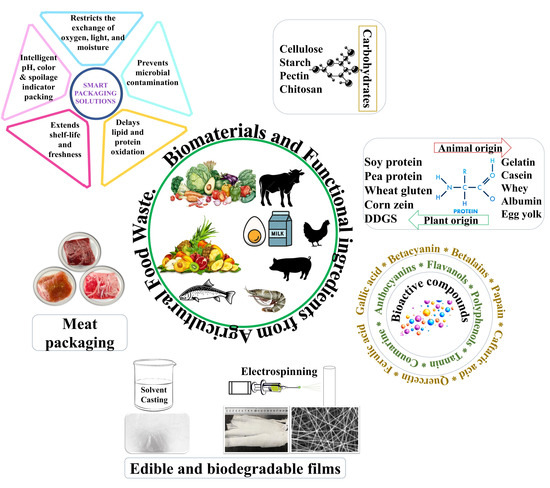
Research on edible and biodegradable film packaging (EBFP) has increased significantly to explore sustainable alternatives to synthetic packaging and mitigate its environmental impacts. Biomaterials extracted from agricultural food waste (AFW) may be utilized for the fabrication of EBFP as an alternative packaging for meat and meat products. The focal point of this review is to explore the potential AFW biomaterials and bioactive compounds available in industry, and their utilization techniques for fabricating EBFP with ideal mechanical parameters suitable for use as a packaging material. Moreover, research studies have been summarized related to EBFP’s efficacy on meat shelf life, physicochemical, oxidative, and microbial qualities during storage experiments. EBFP fabricated with AFW biomaterials, such as proteins, carbohydrates, essential oils, and bioactive compounds, exhibits favorable film-forming capacity, mechanical properties, barrier properties, biodegradability, and synergy with meat. Latest advances in the application of AFW biomaterials and bioactive compounds based on EBFP for meat packaging are directed toward novel fabrication processes such as electrospinning, solvent casting, and combination of both to produce a hybrid film, which markedly improves the mechanical and barrier properties. Moreover, including bioactive materials from AFW enhances the antioxidant and antimicrobial properties of EBFP to combat the oxidative rancidity and bacteria, fungi, and molds in meat to prolong shelf life. Incorporation of AFW biomaterials and bioactive compounds has improved the intelligent properties of EBFP, which has been effectively used in meat packaging to detect freshness and spoilage of meat through color and pH changes.

Graphical Abstract

1. Introduction

In the last five years, substantial focus has been given to agricultural food waste (AFW). AFW is described as edible and inedible portions that are discarded during primary agricultural production and post-harvest management, storage, and food processing steps, excluding reprocessing into biofuel, animal feed, or fertilizers [1]. The FAO’s State of Food and Agriculture report indicates that about 14 percent of global food, valued at $400 billion yearly, is lost post-harvest prior to reaching the consumers. FAO estimates indicated a global food wastage volume of around 1.6 billion tons annually, with fruits exhibiting one of the highest losses. The pre-harvest losses remain inadequately documented, with fruits and vegetables seeing losses of up to 25%. In field investigations (e.g., Ethiopia, Kenya), pre-harvest corn damages range from 5% to 18%, affected by pests and improper practices; harvesting losses contribute an additional 5.2% for maize [1]. AFW generates 8–10 percent of global greenhouse gas emissions (GHGs), aggravating climate instability and adverse weather changes, including droughts and flooding [1].
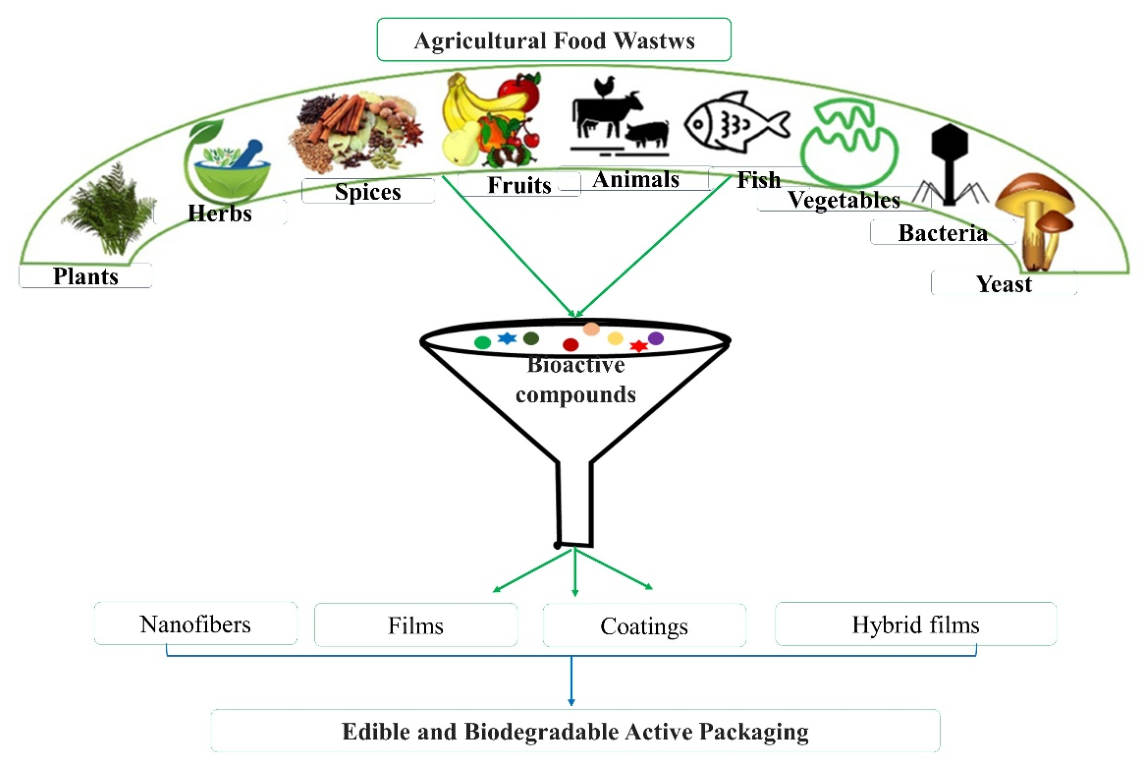
AFW from fruit and vegetables is a significant source for extracting essential biomaterials and bioactive compounds for fabricating edible and biodegradable film packaging (EBFP). AFW from various plant components, such as skin, peel, seed, pomace, husk, and straw, is abundant in polymers like polysaccharides and proteins, which are the primary raw ingredients utilized in the formulations of EBFP [2,3,4,5]. The existence of additional molecules, specifically polyphenols, is well-documented and is accountable for antioxidant, antimicrobial, and many other health benefits [6]. These bioactive chemicals enhance the functionality of EBFP and the nutritional value for consumers [5].
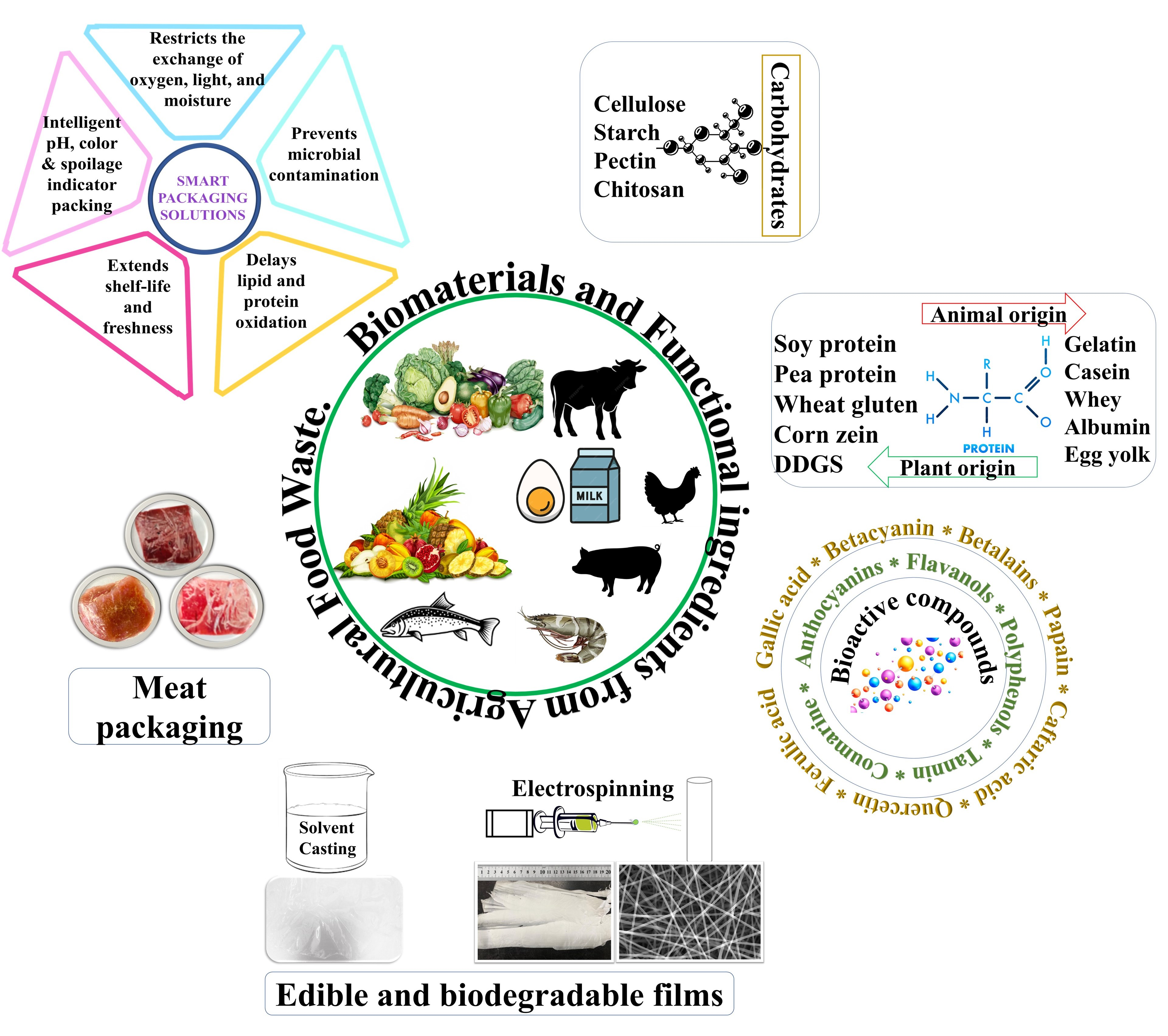
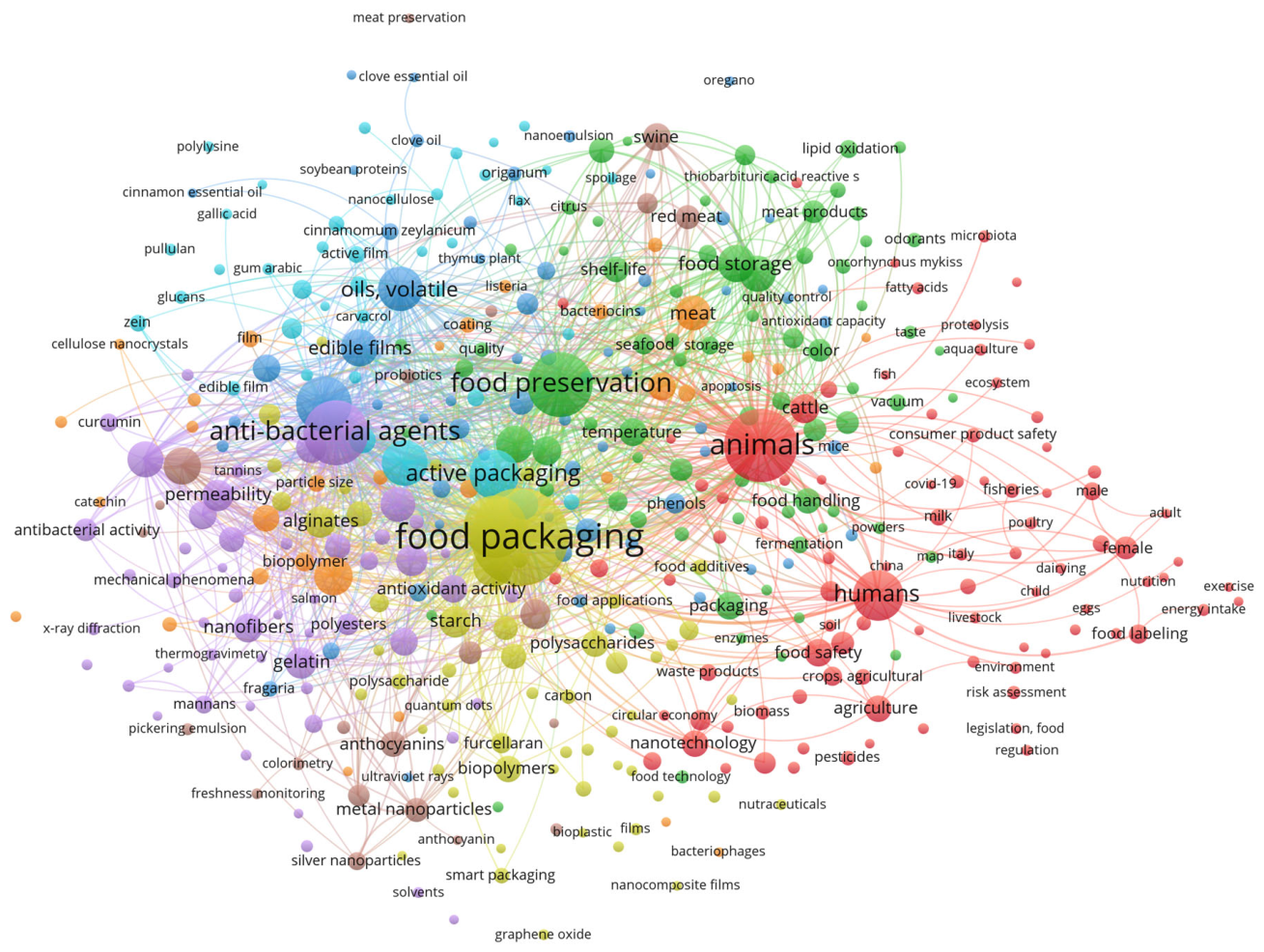
Nowadays researchers emphasize the economic feasibility of AFW in the fabrication of EBFP. Main AFW biomaterials are generated from fruit and vegetable processing, comprising seeds, pulp, skins, and pomace, and represent 10–35% of the initial product, whereas roots and tubers contribute 40–50% of total waste [7]. Utilizing biomaterials to produce EBFP from AFW of grains, fruits, vegetables, animals, seafoods, milk, egg, etc., could be a sustainable substitute for synthetic polymer packaging. EBFP made with AFW biomaterials enhances physical, mechanical, and functional qualities, thereby preserving the quality and shelf life of meat during transport and storage [8]. An increasing focus on AFW biomaterials for fabricating EBFP for meat, fish, fruits, vegetables, and other food items has been observed by researchers [9,10,11]. The application of AFW EBFP could be a sustainable solution toward environmental safety and the circular economy. Bibliometric analysis of the PubMed database (https://pubmed.ncbi.nlm.nih.gov/advanced/ accessed on 14 May 2025) on the application of AFW EBFP shows a diverse relationship pattern as illustrated in Figure 1, which represents an intensive correlation between food packaging, preservation, food safety, and human health. Food packaging stands out as the most critical factor, followed by biodegradable active packaging and functional ingredients. The figure underscores the growing interest in food safety and environmental sustainability through EBFP.
Meat and meat products, due to their substantial nutritional value in terms of protein, fat, and other micronutrients, are more prone to rapid spoilage and necessitate packaging with bioactive ingredients to prolong their shelf life [12]. The deterioration of meat mainly involves fat and protein oxidation, which is exacerbated by additional moisture, oxygen, light, and temperature. These issues necessitate the implementation of novel techniques like active, intelligent, and biodegradable packaging to protect meat from oxidation and microbial deterioration [6,11,13,14]. Moreover, the incorporation of bioactive compounds in EBFP extracted from AFW offers potential physiological and health benefits to the consumers [8,15,16]. Thus, EBFP made from AFW can be extensively explored as an appropriate substitute for synthetic polymer-based packaging. AFW provides essential polymers for EBFP production, such as banana peel starch, which facilitates solvent cast films with increased tensile strength for pork preservation [17]; cassava peel cellulose produces electrospun nanofibers that enhance chicken meat texture [4]; pumpkin seed cake proteins generate hybrid films through combined techniques, enhancing barrier properties against oxidation in beef [18]. The AFW-derived examples, detailed in the next chapters, illustrate effective polymer extraction and utilization, connecting waste valorization to advancements in meat-specific packaging.
Researchers have redirected their attention to the development of sustainable packaging by utilizing biomaterials extracted from AFW to supplant traditional synthetic packaging. In this article, the literature was methodically sourced from PubMed, Scopus, and Google Scholar on 14 May 2025, employing the keywords: “agricultural food waste” AND (“edible film” OR “biodegradable film” OR “active packaging”) AND (“meat” OR “meat products” OR “pork” OR “beef” OR “chicken”). The inclusion criteria consisted of peer-reviewed articles from the last 10 years that exhibited AFW-derived polymers in EBFP production, emphasizing meat and perishable items. Exclusions were made for non-AFW sources and non-film studies. Out of 1247 initial findings, 106 publications were chosen following title/abstract screening (n = 387) and full-text assessment based on methodological rigor and relevance to meat packing performance. This review emphasized the available and potential biomaterials from AFW, techniques to incorporate them and fabricate EBFP with standard mechanical strengths, and, finally, EBFP application to meat during storage. This study may serve as a potential benchmark for future research targeting proper utilization of AFW in EBFP development for meat and meat products.
Recent reviews of EBP have advanced sustainable packaging knowledge but largely overlooked the integrated application of agricultural food waste (AFW) biomaterials specifically for meat preservation, leaving critical gaps in translating AFW-based EBP into practical application [2]. For example, while general surveys cover AFW biomaterials for EBP across foods (e.g., fruits and general perishables), they emphasize broad characterizations like moisture barriers without dissecting meat-specific challenges such as high-fat oxidation or microbial spoilage in pork/beef/chicken [19]. Similarly, meat-focused reviews document edible films’ materiality but predominate pre-2023 data, neglecting recent hybrid ES/SC techniques from AFW (e.g., zein–theaflavin [20] and pumpkin seed proteins [18]) that achieve superior tensile strengths (20–35 MPa) and shelf life extensions (up to 12 days) [6].
This review fills these gaps by exclusively targeting AFW-derived EBFP for meat packaging, systematically tracing the full valorization chain—from extraction (e.g., peels and seeds) through fabrication techniques (SC/ES hybrids) to quantitative performance outcomes like WVP, antimicrobial potency, and intelligent color/pH indicators. Unlike intelligent packaging overviews that span multiple foods without AFW specificity, we integrate 2024–2025 advances (106 post-2015 studies), highlighting trade-offs (barrier vs. flexibility) and meat-tailored synergies (e.g., O2 barriers for beef rancidity). By bibliometric mapping (Figure 1) and comparative Table 1, Table 2 and Table 3, this positions AFW EBFP as a circular economy benchmark, uniquely advancing meat science toward scalable, bioactive, zero-waste solutions absent in prior works.

2. Edible Biodegradable Films

Edible biodegradable films (EBFs) are biodegradable, fine, and thin sheets fabricated with one or more biomaterials and have diverse applications in the packaging industry, biomedical sector, cellular agriculture, etc. Over the past few years, EBF has been used as a packaging material for meat, fruit, and other food products as a potential substitute for synthetic packaging to preserve environmental safety [21]. EBFP market is gradually growing and was assessed at around USD 2.70 billion in 2021 and is expected to have steady growth at a compound annual growth rate (CAGR) of 7.7% from 2022 to 2030 [2]. Ages ago, EBFP was used to preserve fruits, vegetables, meat, and fish with the application of animal fat and waxes. In recent years, EBFP has been restored through the application of novel and sophisticated techniques such as active and intelligent packaging and has drawn attention from the scientific and industrial community for meat and food packaging [4]. Active packaging engages with food or its environment by releasing or absorbing compounds (e.g., essential oils for antimicrobial purposes, oxygen scavengers) to prolong shelf life and improve the safety of meat, whereas intelligent packaging assesses food quality through indicators (e.g., pH-sensitive colorimetric changes, time–temperature integrators) without modifying the product. In AFW EBFP, active packaging provides AFW-derived antimicrobials protecting microbial deterioration, while intelligent packaging indicates meat deterioration status by color transitions.
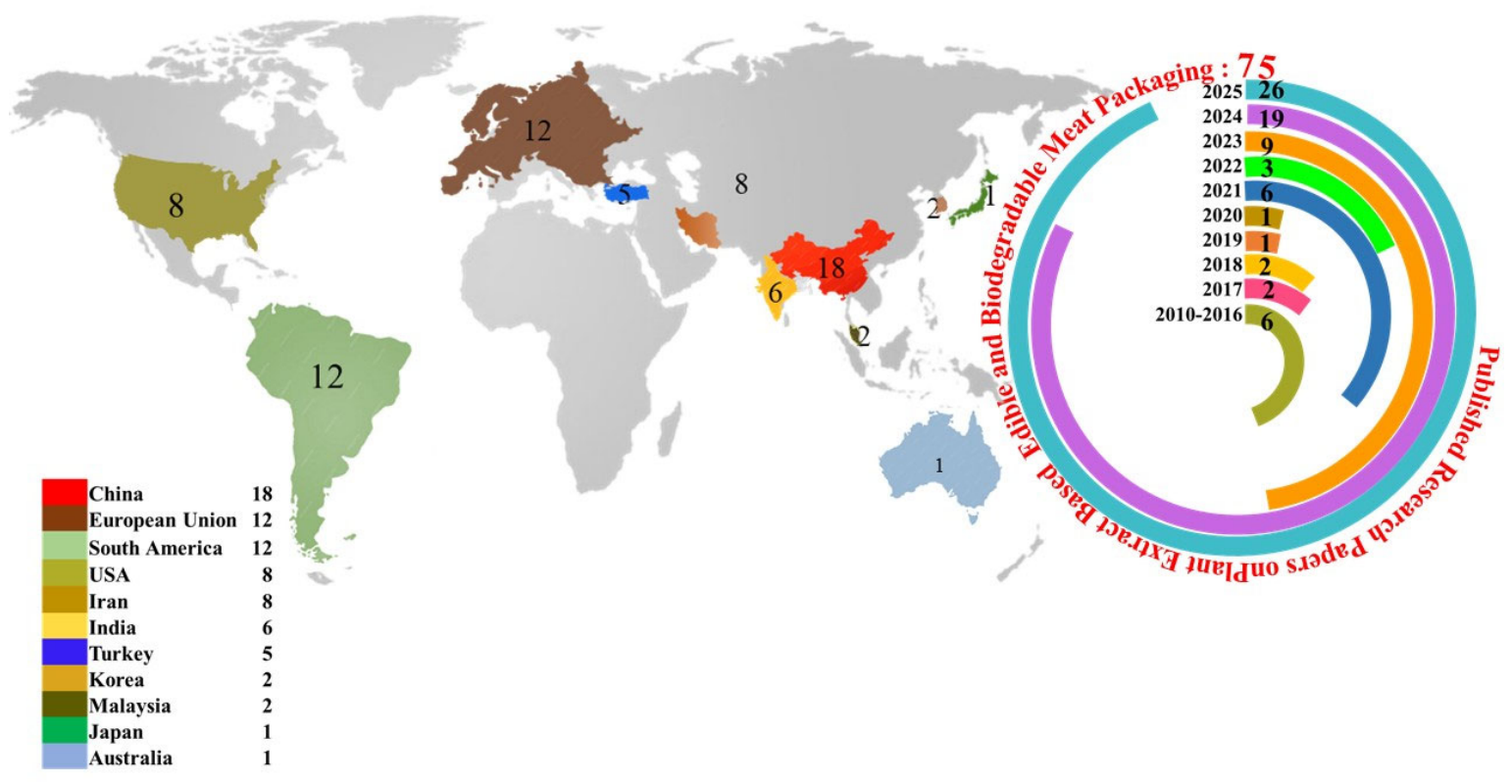
Research on AFW EBFP has experienced a significant surge in the application to meat from different species. The rising trend indicates an increasing global interest in sustainable packaging, especially for meat, as it has always been treated as a high-value, nutritious product by consumers [22]. Research on AFW EBFP has increased significantly over the past decade, as reported in Figure 2 and Figure 3, and a fivefold increase in publications has been observed. This could be explained by the meat scientist’s focus on innovation for environmental and food safety.

2.1. Fabrication Techniques for EBFP

EBFP is an innovative approach to preserving food by releasing bioactive compounds [19]. Solvent casting (SC) and electrospinning (ES) are the principal techniques that have gained widespread attention in food active packaging [21]. These two novel techniques possess numerous benefits, e.g., porous and larger surface area, better mechanical and thermal properties, and encapsulation of bioactive ingredients, which further improve the antioxidant and antimicrobial features of EBFP [23].

2.1.1. Solvent Casting

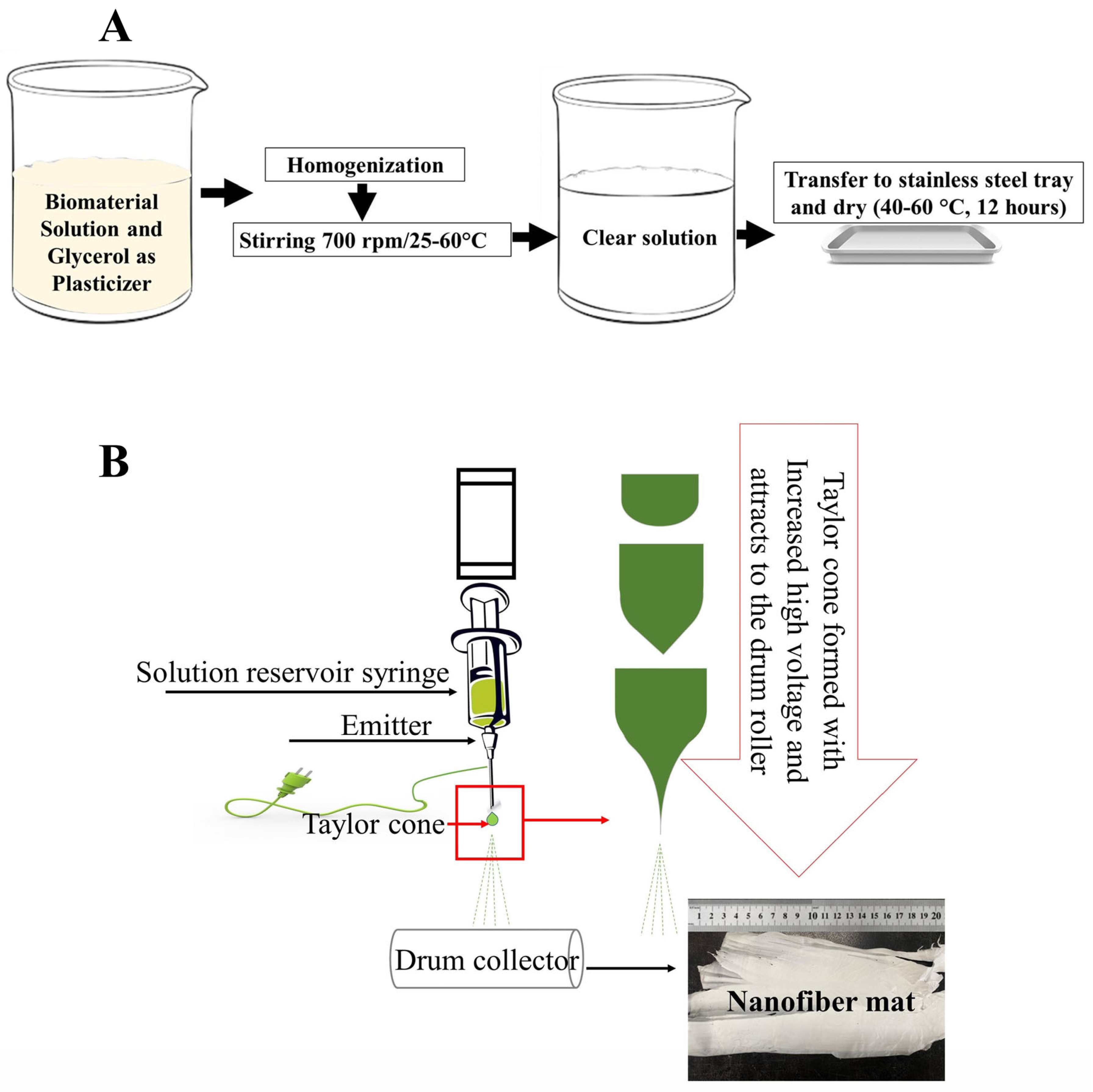
SC is the most facile and efficient technique for incorporating diverse biomaterials into the fabrication of EBFP. SC has recently become more widely accepted as a sustainable alternative to traditional poly packaging, which is consistent with escalating environmental concerns over non-biodegradable microplastic waste. Incorporating AFW biomaterials such as starch, proteins, and polysaccharides, SC promotes the shelf life of meat and muscle foods. Furthermore, it facilitates the integration of functional materials with antioxidative and antimicrobial potentials [24]. In the first phase, a solution is prepared with one or more biomaterials along with glycerol or sorbitol as a plasticizer to strengthen the mechanical parameters and to fit as a packaging material. In the next phase, this solution is usually transferred into a tray or Petri dish for drying for 6 to 12 h at a temperature range of 40–60 °C. In the final stage, the dried film is collected by peeling off and applied to any food surface [25]. The schematic representation of EBFP fabrication in the SC technique is shown in Figure 4A. Due to the porous surface, SC EBFP can encapsulate bioactive materials, which can act as antioxidant or antimicrobial active packaging [6]. SC technique is commended for its easy usage and inexpensiveness, enabling the scalable production of EBFP appropriate for application in meat preservation. As research progresses in EBFP fabrication using SC, the emphasis transitions to enhancing the mechanical strengths and barrier capacity against oxygen and water to enhance meat safety and quality, simultaneously emphasizing environmental sustainability [26].

2.1.2. Electrospinning

ES is a novel technique that can transform a very low volume of biomaterial solution (10 mL) into nanofibers (NFs) with a larger surface area and enhanced porosity. Unique spider web-like NFs can easily encapsulate a wide range of bioactive compounds. ES NFs can be indisputably applicable in tissue regeneration, cell culture, wound healing, food packaging, microchips, and many other industries [21]. ES involves a biomaterial solution, syringe pump, emitter, high-voltage electricity, and conductive roller drum collector. A high-voltage electrostatic field ejects the polymer solution from the emitter and forms a spherical Taylor cone. The Taylor cone sprays the biomaterial solution on the roller drum at high electric voltage, where it is stretched and solidified into NFs, as shown in Figure 4B [21].
ES can fabricate NFs with different patterns to bring diverse functionality in EBFP, and the absence of heat application preserves the bioactive and functional compounds. The large surface area and porous structure facilitate gas transfer from the meat surface and encapsulation of bioactive compounds. A unique feature of ES is its ability to incorporate diverse biomaterials from unconventional sources like AFW with natural functional values for NF fabrication. This can significantly improve the efficiency of food packaging systems [20].
Researchers have succeeded in fabricating EBFP either alone or in combination with SC and ES, and applied it to meat, fish, and fruits. A summary of these studies has been documented in Table 1, and it delineates that EBFP made with SC and ES showed strong antioxidative, antimicrobial, and shelf life enhancement activities. Recent developments in EBFP have demonstrated the adaptability and efficacy of hybrid EBFP (HBEBFP) made from AFW biomaterials for longer preservation of meat and other food items. Wang et al. [20] developed HBEBFP by combining zein and tea theaflavin using green ES, which demonstrated strong mechanical qualities. Moreover, due to its effective antioxidant and antibacterial qualities, it effectively lowers the decay of meat. HBEBFP made using a combination of SC and ES, with a synergistic blend of gelatin, purple sweet potato anthocyanin, and ε-polylysine, effectively extended the shelf life of pork by six days compared to the control group. Moreover, it was used as color-changing intelligent packaging system to assess the spoilage condition of meat. HBEBFP color changed to pink, beige, and sage, indicating fresh, medium fresh, and rotten meat, respectively [11]. Jebel et al. [6] applied the SC and ES techniques to fabricate HBEBFP using gelatin, eggplant skin extract, and savory essential oil, which had superior water barrier properties, maintained a stable pH, and prevented oxidative rancidity and bacterial counts in trout fish. Intelligent HBEBFP was fabricated using SC and ES with salep and chickpea anthocyanin, which efficiently decreased oxidation and bacterial count in fish and shrimp meat. Additionally, this HBEBFP showed changes in total color difference values at different stages of the storage study, indicating its efficiency as a spoilage indicator [25]. EBFP fabricated from botulin extracted from the bark of the birch tree using the ES technique, infused with bioactive agents, provided robust antioxidative and bactericidal protection for different fruit, prolonged shelf life, and preserved taste characteristics [27]. These EBFPs, produced using SC or ES, offer a sustainable and ecological substitute to conventional packaging. Table 1 summarizes recent research on active edible and biodegradable film packaging (EBFP) fabricated from agricultural food waste (AFW) biomaterials, applied primarily to meat and select perishables. It details key parameters including biomaterial sources (e.g., zein/tea theaflavin from crop byproducts) [20], film types (hybrid and intelligent) [11,25], fabrication methods (solvent casting and electrospinning) [6,28], physical/mechanical qualities (e.g., water vapor barrier and tensile strength), potent activities (antioxidative, bactericidal against S. aureus/E. coli), target foods (pork, fish), and practical outcomes like extended shelf life (up to 6 days for pork) or spoilage detection via color changes. This table illustrates AFW-to-EBFP linkages, with hybrid films showing superior meat preservation synergy. Table 1 reveals distinct performance hierarchies across mechanical, barrier, antimicrobial/antioxidant, and shelf life metrics, with hybrid films generally outperforming single-matrix systems due to synergistic polymer interactions and bioactive potentials; for instance, hybrid ES/SC films with zein–tea theaflavin (fiber diameter 484–705 nm, superior tensile strength via uniform nanofiber morphology) [20]. In another experiment ethyl cellulose–gelatin–purple sweet potato anthocyanin/ε-polylysine (WVP 7.8 × 10⁻¹¹ g m−1 s−1 Pa−1) hybrid film [11] exhibited tensile strengths of 20–35 MPa and optimal oxygen transmission rates, far surpassing brittle protein-only films (15–25 MPa) or flexible carbohydrate matrices (5–15 MPa) [29], as the former leveraged ES’s high surface area for enhanced crosslinking and plasticizer distribution (e.g., glycerol reducing WVTR by 40–60%) [30]. Barrier properties follow a similar trend, with zein–gelatin blends and core-shell ES fabricated cinnamon essential oil films achieved low O2 permeability (superior to starch- or pectin-only, which suffer high WVTR of 30–50 g/m2/day by hydrophobic nanofiber alignment) and pH-triggered cinnamon essential oil release (68.9–98.2% efficiency) [31], effectively mitigating meat oxidation where pure polysaccharides fail due to moisture sensitivity. Antimicrobial/antioxidant efficacy peaks in hybrids incorporating AFW bioactive compounds from eggplant skin extract–savory essential oil (3 –> 3 log CFU reduction vs. S. aureus/E. coli via double-layer diffusion) [6] or salep, black chickpea anthocyanins (sustained TBARS reduction) [25], outperforming natural-only blends by 2–3 logs through controlled release and quorum-sensing disruption, though synthetic additives (e.g., polyvinylidene fluoride–roselle anthocyanin–cinnamon essential oil) edge naturals in persistence at 4 °C [28]. Shelf life extensions are most pronounced in intelligent hybrids (e.g., 6 days for pork via ethyl cellulose gelatin, color shifts from pink to sage indicating TVB-N spikes [11]; 12 days for Nile tilapia via gelatin–chitosan–PLA–betel leaf [32], balancing barriers with bioactivity, yet trade-offs emerge: high-barrier rigid hybrids (e.g., pullulan–chitin–curcumin, low WVTR) sacrifice flexibility (elongation < 20%) for mechanical robustness, while natural AFW blends (e.g., gelatin–PVA–eggplant [6]) prioritize flexibility/antimicrobial synergy over O2 impermeability, risking rancidity in high-fat meats unless plasticized—necessitating tailored AFW sourcing (e.g., zein for O2 barriers and starch pectin for cost-effective flexibility) to optimize for specific meats like pork (needing antimicrobial focus) vs. beef (barrier priority) [33,34]. These insights underscore hybrid ES/SC strategies’ superiority for meat EBFP, urging future AFW optimizations via nanocellulose crosslinking to resolve flexibility–barrier dichotomies without synthetics.
Table 1. Active packaging fabrication and application on food materials.
Biomaterial UsedType of FilmMethodPhysical and Mechanical QualitiesMechanism Improving the Physical and Mechanical Properties Potent ActivityFood TypePractical ApplicationReference
Zein, 95% purity; tea theaflavin, 80% purity (0.6–4%).HB Green ESSmooth and uniform surfaces, superior mechanical properties (diameter increased from 484 nm to 705 nm).TF addition altered the secondary and crystalline structure of zein fibers, increasing its viscosity (425.67 mPa·s to 824.67 mPa·s. PorkAntibacterial activity against S. aureus and S. paratyphi B in cold fresh pork. Decreased TVB-N, total viable count, pH, weight loss, and TBARS.[20]
Ethyl cellulose, gelatin, purple sweet potato anthocyanin, ε-polylysine.HB IF SC and ESGood water vapor barrier properties (7.8 × 10⁻¹¹ gm−1 s−1 Pa−1).Gelatin content in the film had a large number of amino acids, which endowed better hydrophobicityBactericidal, antioxidantPorkProlonged shelf life of pork up to additional 6 days. Effective color change indicator packaging.[11]
Eudragit® L100 polymer, cinnamon essential oil (CEO).Core shellCESFaster release rate of CEO from 68.9% to 98.2% with increasing pH; good hydrophobic nature with the WCA value of 121.45°. Hydrophobicity is related to the aggregate hydrophobic matrix of L100 and CEO. PorkIndicated good antibacterial efficacy against E. coli and S. aureus. The film successfully extended the shelf life of pork loin by 3 days.[30]
Polyvinylidene fluoride, roselle anthocyanin, CEO.HB ESHydrophobic and stable in buffer solutions.These are related to the typical hydrophobic property of CEO; when added in the films, the penetration of water slowed down and decreased the water solubility significantly. PorkEffectively prolonged the shelf life of pork by 2 days at 4 °C.[27]
Gelatin, polyvinyl alcohol (PVA), eggplant skin extract, savory essential oil.Double-layer IFSC and ESSmooth surface, a uniform fibrillar structure, superior color indication, water barrier, and mechanical properties.The mechanical properties were influenced by lower concentrations of essential oils, which can improve the strength and modulus of the film; higher concentrations may increase flexibility but reduce tensile strength. FishEffective in spoilage detection in trout fish. Controlled pH, oxidation, and microbial changes during storage.[6]
Salep (0–8% w/w), β-cyclodextrin, black chickpea anthocyanins. Double-layer HBIFSC and ESHigh thermal stability.The fabrication of the double-layer film formed a nanofibrillar structure and assisted in better thermal stability. FishThe color of the film changed from red to pink and then to olive during increasing storage time of fish filet and shrimp.[24]
Gelatin, chitosan, polylactic acid, betel leaf extract.HBESNanofiber with lower water vapor permeability and enhanced mechanical properties.Betel leaf extract improved the thickness of the film, and enhanced mechanical properties. FishMicrobial growth and lipid oxidation of Nile tilapia slices were delayed up to 12 days of refrigerated storage.[31]
Pullulan, chitin, curcumin, anthocyanins.HBIFESBetter mechanical strength.The combination of curcumin and anthocyanin increased the tensile strength and elongation break.Bactericidal, antioxidantFishIntelligent color-changing packaging for Plectorhynchus cinctus (crescent sweetlips fish).[5]
Birch tree betulin, hydroxypropyl-beta-cyclodextrin.HBESNanofibers with decreased water solubility and increased thermal stability.The present study confirmed that betulin was efficiently enclosed within the cavity of the films and improved the water solubility and thermal stability. StrawberryEffectively preserved strawberries in vitro.[26]
Carvacrol, gelatin, chitosan.HBESImproved elongation at break.The inclusion of carvacrol formed intermolecular hydrogen bonds with gelatin/chitosan polymer network and resulted in better mechanical qualities. Bactericidal, antioxidantStrawberry, PepperShelf life is effectively extended. [9]
HB, hybrid; ES, electrospinning; SC, solvent casting; CES, core shell electrospinning; IF, intelligent film; TVB-N, total volatile basic nitrogen; TBARS, thiobarbituric acid reactive substances; PVA, polyvinyl alcohol.
Table 2 summarizes the research studies on EBFP that have the potential to be used in EBFP applications, although they remain unexplored on meat. Recent advancements in ES core shell EBFP have indicated the possibilities of AFW-based HBEBFP. Studies confirmed that onion skin extract and starches from sweet potato were used to fabricate thermally stable fibers (100–180 °C) and inhibit E. coli and S. aureus growth [35]. Corn zein with different essential oils can efficiently fabricate HBEBFP with significant antibacterial capabilities and can serve as an intriguing packaging solution for meat [36]. PVA, curcumin, potato starch, and black tea polyphenol HBEBFP exhibited antioxidative properties and controlled release functionalities, which can be potentially beneficial for shelf life and spoilage detection application in meat [37,38]. Innovations encompassed AFW biomaterials such as bamboo leaf extract combined with polylactic acid, jaboticaba fruit peel extract with chitosan, and feather keratin hydrolysates with polycaprolactone, resulting in enhanced barrier, as well as structural and antioxidative properties [39,40,41]. These findings collectively illustrate the potential of AFW biomaterial-based EBFP’s application on meat and meat products to extend keeping quality during storage. These studies must be carried forward to the practical application on meat for shelf life assessment and quality attributes.
Table 2. Potential active packaging materials for practical application on food materials.
Biomaterial UsedType of FilmMethodPhysical and Mechanical QualitiesPotent ActivityReference
Yellow and white sweet potato starches, red onion skin extract (0, 3, 6, and 9%, w/w).HBESThermal-resistant fibers (100–180 °C).Bactericidal against Escherichia coli and Staphylococcus aureus.[35]
Rosemary essential oil, zein.HBES Bactericidal against S. aureus and E. coli. [36]
Curcumin, potato starch.HBCES, ESThermal stability at 180 °C for 2 h. Antioxidant.[37]
Black tea polyphenols, PVA.HBESControlled release materials for active food packaging.Antioxidant.[38]
Polylactic acid, bamboo leaf extract.HBESMechanically stable for packaging applications. [39]
Jaboticaba peel extract and chitosan.HBSC and ESImproved barrier properties and thermal stability.Bactericidal against E. coli and S. aureus.[40]
Starch, tea polyphenols.HBESImproved hydrophobicity. [35]
Red onion bulb extract, zein.HBESIncreased hydrophobicity. Potential to protect and mask the pungent smell of volatile fatty acids of onion.Antioxidant.[35]
Poly caprolactone, feather keratin Hydrolysates.HBESAdequate structural continuity of fibers.Antioxidant.[41]
HB, hybrid; ES, electrospinning; SC, solvent casting; CES, core shell electrospinning.

3. Biomaterials from Agricultural Food Waste in Edible Film Formulation

Natural and edible biomaterials extracted from AFW have recently become popular research topics in fabricating EBFP. The primary sources of AFW are wheat, rice, corn, vegetables, fruit, roots, and tubers. Annually, around 65 kg of food is wasted per individual, consisting of 25% vegetables, 24% grains, and 12% fruit as the predominant components of AFW. A major portion of this AFW is being used for either biogas production or animal feed manufacturing. The rest of the unutilized AFW is being dumped or cremated [42]. Potential biomaterials can be extracted from this large quantity of AFW for the fabrication of EBFP or in other industries. Fruit, vegetables, herbs, and other potential AFW contain bioactive functional components like polyphenols, flavanols, and tannins, which can also be extracted for the incorporation in EBFP to enhance mechanical, antioxidative, antibacterial, and health-enhancing qualities [19,43]. The variable performances of AFW biomaterials as EBFP applied to meat has been illustrated in Table 3.
Table 3. Comparative performance of EBFP biomaterials in meat packaging.
PropertyProteins (Gelatin/Zein)Carbohydrates (Starch/Pectin/Cellulose)Hybrids (Protein-Polysaccharide)References
Tensile strengthFilms formed with higher tensile strength (15–25 MPa), although a little brittle in nature but had well stability.Tensile strength was lower than that of proteins (5–15 MPa), so film was more flexible but weaker.Hybrid films had highest strength (20–35 MPa); optimal as meat packaging material.[28,44]
WVTRModerate to high moisture sensitivity; 30–50% better stability than starch alone.Poor (high WVTR); needs plasticizers to stabilize as meat packaging material.WVTR reduced by 40–60%; furthermore, addition of glycerol/nanocellulose lowered WVTR.[29]
OTRGood oxygen barrier ability when applied to meat as packaging material on meat with high fat content.Produced films with moderate OTR values, but changed with different carbohydrate sources.Superior OTR in formed films. Furthermore, hybrid films with zein and gelatin blends showed ideal OTR.[32]
AntimicrobialStrong activity against S. aureus and E.coli (approximately 2 log reduction) especially with essential oils.Showed moderate antimicrobial activity. Chitosan was an exception with low antimicrobial activity.Hybrid films showed excellent antimicrobial activity and showed more than 3 log reduction in total bacterial count.[33]
AntioxidantReduction in TBARS values.Moderate reduction in TBARS, but the addition of anthocyanins enhanced antioxidant activity.Highest reduction in TBARS with sustained release activity.[45]
Shelf life extensionStorage duration was extended by additional 4 days in pork and chicken meat.Storage duration extended for 2 to 3 days in chicken meat and beef.Shelf life extended for 6 days in pork and additionally served as an intelligent film and color indicator to detect spoilage of meat.[19]
WVTR, Water vapor transmission Rate; OTR, oxygen transmission rate; TBARS, thiobarbituric acid reactive substances.

3.1. Protein

The major constituent of AFW is animal and plant protein. Animal proteins stand ahead of plant proteins due to the presence of all essential amino acids. The meat and fish industries generate a considerable quantity of collagen and gelatin, which have proven qualities in efficient EBFP preparation. Although some essential amino acids are absent, plant proteins are known as complete proteins and can be efficiently formed into EBFP. Both animal and plant proteins extracted from AFW have a proven capacity to form EBFP with strong mechanical qualities and can bring down the production cost of EBFP and ensure food safety due to their natural attributes [6,46].

3.1.1. Animal Protein

Due to easy availability, gelatin is the first preference for EBFP fabrication by the researchers and industry. Industrially, gelatin from animal AFW, like meat trimmings, skins, bones, poultry wastes, and fish byproducts, is a key polymer for EBFP in meat packaging, offering superior film-forming, oxygen barrier, and antimicrobial properties. A significant number of recent studies has shown the industrial-scale efficacy of gelatin in forming EBFP for meat preservation. Jridi et al. [47] industrially fabricated gelatin/alginate/black peel extract to efficiently extend beef shelf life. Combined application of SC and ES has been used by Jebel, Roufegarinejad, Alizadeh and Amjadi [6] to develop HBEBFP using fish gelatin, PVA, and eggplant skin extract. This HBEBFP demonstrated standard water barrier and mechanical characteristics. Furthermore, HBEBFP effectively detected spoilage in trout fish while controlling pH, oxidation, and microbial changes during storage. HBEBFP, made with SC and composed of fish gelatin, pectin, and lemongrass essential oil, exhibited superior mechanical strength, transparency, thickness, and antibacterial activity. Furthermore, application on chicken breast retained the textural and color parameters, as well as the overall quality during refrigerated storage [48].
Casein, the major dairy protein group obtained from surplus underutilized milk, can make insoluble EBFP with higher oxygen retention characteristics and coarse texture [49]. Casein can produce semi-transparent, water-insoluble films and better oxygen barrier properties to control oxidative degradation and microbiological growth [50]. Whey is a by-product obtained from cheese or casein production, and it exhibits superior oxygen barrier properties and flavor components with high permeability to water vapor when formed into EBFP. Keratin, the major structural protein component of hair and feathers, is a high-quality protein source with good film-forming capacity. Bhat et al. [16] recently fabricated HBEBFP with goat hair keratin and carrageenan, which successfully encapsulated N. nucifera seed extract with sustained release capacity. Furthermore, the film has good structural integrity and can be efficiently used for meat packaging. Albumin and yolk from broken and wasted eggs could be a good source of protein for EBFP production. Khan et al. [51] successfully fabricated HBEBFP with SC from egg yolk, gelatin, cellulose, and E-poly-l-lysine with higher resistance to water vapor, enhanced transparency, potent antibacterial activity, and the ability to decompose in soil after seven days. This HBEBFP retarded oxidative degradation and the total viable count in chicken meat up to eight days during refrigerated storage. Egg albumin incorporation in EBFP can improve its mechanical properties, transparency, and elasticity. Qin et al. [52] developed HBEBFP with egg albumin, chitosan, pectin, tannic acid, and nisin for chilled pork packaging. This study revealed that water retention quality was better, and color, texture, and taste were retained in pork meat up to 12 days of chilled storage. Moreover, TVB-N values and microbiological counts were lowered compared to the control. Specifically, predominant spoilage bacteria, Myroides and Acinetobacter, were suppressed.

3.1.2. Plant Protein

Plant protein sources like soy protein, wheat gluten, corn zein, lentil, pea, mung bean, sesame, pumpkin seed, and distilled dried grains possess an attractive film-forming ability. Moreover, they can be produced into HBEBFP with strong mechanical characteristics like higher tensile strength, elongation at break, lower in vitro degradation, lower solubility, better gas barrier properties, and glossiness [53,54]. In recent years, high quantities of waste generated from the pumpkin seed oil industry in the form of cake or meal have been successfully utilized for developing EBFP. Thulasisingh et al. [55] described the impacts of incorporating pumpkin oil cake into HBEBFP and gelatin. The swelling capacity and protein solubility of HBEBFP were similar to those of gelatin film in a pure form. Additionally, HBEBFP exhibited improved elongation break compared to pure gelatin films. EBFP was successfully developed using SC with protein from defatted pumpkin seeds and pumpkin peels with soy lecithin. These films had strong mechanical qualities, lower solubility, and higher resistance to water vapor [18]. Corn zein can form a high-strength, glossy, yet brittle film with good moisture and oxygen barrier characteristics. Arab Ahmadi and Alemi [53] developed EBFP with corn zein and coriander extract to extend carp fish filets’ shelf life and quality parameters. The prepared EBFP reduced TBA values in packed filets. The bacterial counts were lowered in the EBFP-packed samples during refrigerated storage. EBFP extended the storage duration of carp fish with higher sensory qualities.
Motalebinejad et al. [54] fabricated EBFP using SC with corn zein, sumac fruit extract, and thymus essential oil with better mechanical properties and lower water vapor permeability. This EBFP improved the quality parameters and prolonged the shelf life of chicken meat during chilled storage compared to traditional polyethylene/polypropylene packaging. Another high-quality protein source from AFW are distillers dried grains with soluble (DDGS), a byproduct from ethanol production, derived from corn, wheat, and barley, which have high potential in good HBEBFP formation capacity using the SC method, with attractive color and partially translucent quality, for use in meat and food packaging [56].

3.2. Carbohydrates

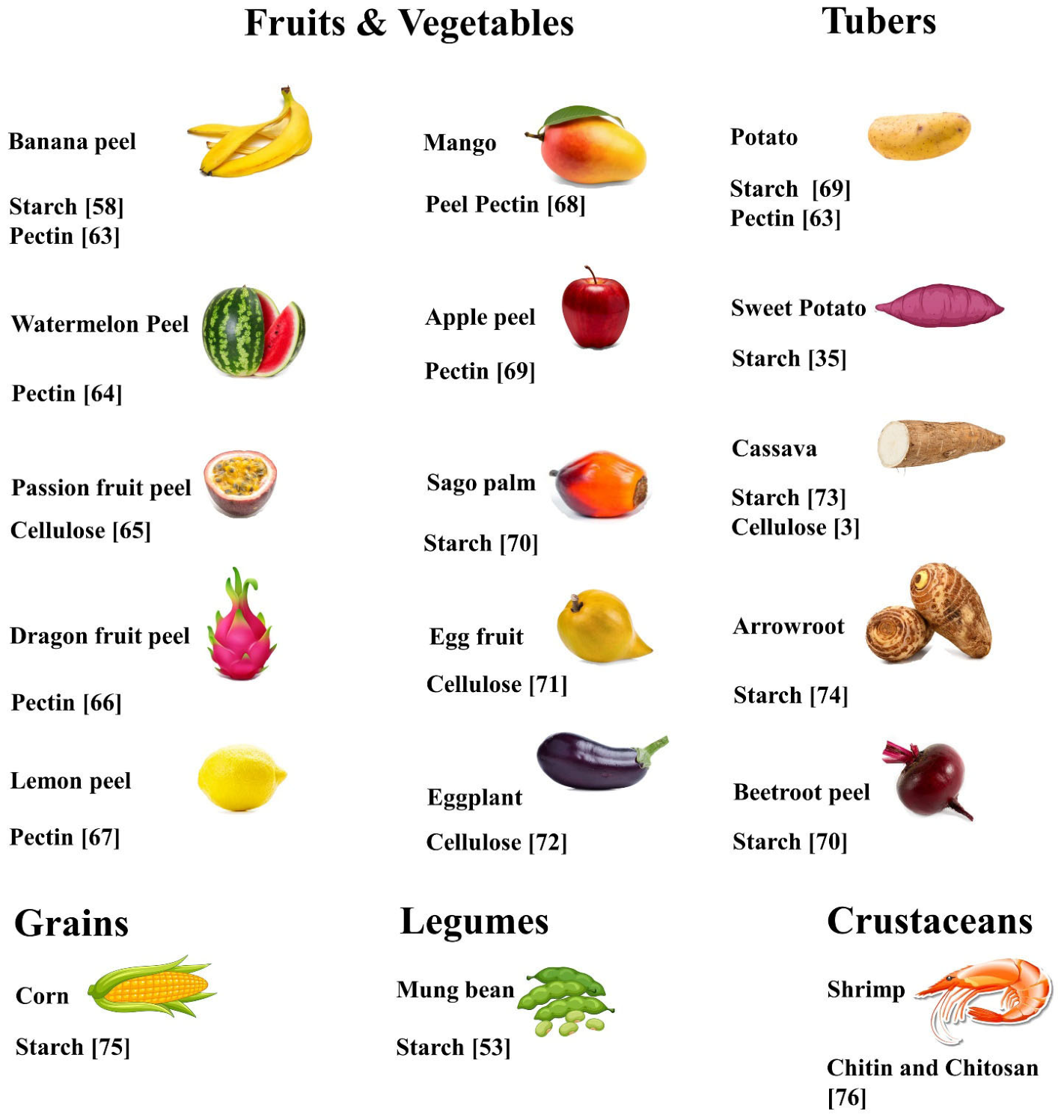
Different types of carbohydrates, i.e., cellulose, starch, pectin, chitosan, etc., derived from AFW, are used in EBFP fabrication. Suitable AFW sources of carbohydrates from grains, legumes, tubers, fruits, vegetables, and crustaceans for EBFP formation have been investigated and summarized in Figure 5. Cellulose is the principal structural element of plant cell walls from AFW and provides enhanced mechanical strength and gas barrier characteristics to EBFP [3]. Starch is a base component of corn, potatoes, cassava, and tropical fruits and is a popular choice in EBFP production, as it is available and inexpensive [4]. Chitosan is another abundant carbohydrate from chitin, which is present in the exoskeletons of crustaceans and insects [5]. It has proven antibacterial properties and film-forming capacity, and it is an appropriate biomaterial for EBFP for perishable foods. Pectin originates from the cell walls of tropical and citrus fruits [2] and is efficient in EBFP formation with strong mechanical qualities. EBFP made from AFW-derived carbohydrates emerged as a viable option for biodegradable packaging due to its biodegradability and favorable characteristics such as flexibility, transparency, and mechanical strength.

3.2.1. Starch

Starch is preferable due to its film-forming properties, impartial sensory characteristics, cost-effectiveness, and abundance [57]. Starch is one of the most explored materials in EBFP production and its application in meat and other food products. Biodegradability, renewability, low cost, and easy and abundant availability make starch a suitable base material for EBFP production [4]. Banana is a major tropical fruit, and its underutilized parts can be utilized in EBFP development. According to Vijayalaksmi et al. [58], banana peel starch was successfully used to fabricate a biodegradable and eco-friendly bioplastic material with superior physical and mechanical qualities, and it may be used in meat packaging.
HBEBFP was created using SC with cassava starch, pullulan, sodium caseinate, zein, and Litsea cubeba essential oil with increased mechanical properties, elongation at break, and enhanced barrier characteristics. This HBEBFP effectively reduced bacterial populations, retained color, texture, and pH with lower lipid oxidation in beef up to seven days [59]. Lang et al. [8] developed HBEBFP with potato starch, carrageenan, and crabapple peel using SC for pork preservation. This EBFP demonstrated strong antioxidative stability and potency against S. aureus and E. coli. Lipid oxidation was decreased in pork when packed with this EBFP. Tigernut starch, cinnamon, and curcumin were used to fabricate smart EBFP for beef preservation with significantly high antibacterial and antioxidative properties. During EBFP-packed beef storage, E. coli and S. aureus counts were lower. EBFP performed successfully as a freshness indicator with color-changing properties to assess beef spoilage [60]. Cassava starch and pomegranate peel powder were used to fabricate intelligent EBFP using SC for freshness detection of lamb meat during refrigerated storage. Tensile strength was increased in this EBFP compared to commercial starch film. EBFP color changed to green, serving as a freshness indicator due to an increase in TVB-N during three weeks of storage [61].
Tan et al. [62] developed a high antioxidative pH-sensitive HBEBFP with SC using cassava starch, cellulose, sodium alginate, and tea polyphenols. This HBEBFP demonstrated increased thickness and tensile strength. This HBEBFP was applied to pork to assess the color-changing activity during storage. There was a change in color with the increase in TVB-N and storage time, thus performing as a spoilage indicator of pork. An active EBFP was developed using SC with banana starch and banana peel extract and applied to pork during a day storage experiment. The mechanical properties of EBFP declined, but it possessed superior barrier characteristics and inhibitory activity against E. coli. The EBFP-packed pork sample had a lower TBARS value due to suppression in lipid oxidation [17].
Figure 5. Different carbohydrates applied in edible film formation from agricultural food waste [3,35,53,58,63,64,65,66,67,68,69,70,71,72,73,74,75,76].
Suschem 07 00023 g005
Fadhallah et al. [70] applied sago palm starch to form fine-layered EBFP, which successfully enhanced the shelf life of chicken meat and showed potential for other meat types. Researchers formulated HBEBFP with chitosan, potato starch, pectin, and thyme essential oil with superior mechanical properties, antioxidant, and antimicrobial efficacy. The application of this HBEBFP on mutton extended the shelf life up to two weeks by inhibiting E. coli and S. aureus during refrigerated storage [77]. Potato starch and watermelon peel pectin were used to develop EBFP infused with Chinese wolfberry leaf flavonoids to preserve Tan mutton. This synergistically blended EBFP possessed strong mechanical, barrier, and thermal characteristics. Furthermore, the controlled release of the infused flavonoids aided EBFP in suppressing the oxidation and bacterial counts in mutton during the storage experiment, which led to extended shelf life [64].
Intelligent EBFP was fabricated using cassava starch and anthocyanin extracts, which showed ideal mechanical parameters for application as a packaging material. The total color difference value was monitored during the storage study, and EBFP turned darker with the spoilage of the fish filet. This was suggested to be used as a freshness indication film for fish and other meat products. In addition, this EBFP efficiently reduced the oxidative parameters in fish filet and extended the shelf life [78]. A color-changing EBFP was developed with SC, using corn husk cellulose, canna tuber starch, and curcumin. This EBFP was applied to shrimp meat, and freshness was assessed by monitoring the color shift during storage. The color of EBFP was shifted from yellow to red with an increase in pH from acidic to alkaline, respectively [74]. Lopes et al. [10] developed EBFP with cassava starch and coconut oil with three times the tensile strength of synthetic starch film. The water vapor permeability was 70% lower than that of commercial polythene-based packaging. This EBFP shows high prospects for future application as a meat and food packaging material.

3.2.2. Cellulose

Afzia, Bora and Ghosh [3] used cassava peel cellulose to produce EBFP using SC for chicken meat preservation. Cellulose EBFP preserved the color and textural parameters and reduced weight loss during the 10-day storage study. Microbial investigation demonstrated a substantial decrease in mesophilic and psychotropic bacterial counts in EBFP-wrapped chicken meat compared to the control. EBFP with acceptable physical properties was prepared with cassava starch, gelatin, red cabbage extract, and eggshell powder [73]. The elongation at break and antioxidant activity of EBFP were increased. This EBFP was applied to steam chicken meat packaging with extended shelf life due to its strong antibacterial and antioxidative potency. Furthermore, the sensory quality of the EBFP-packed meat was also improved. Egg fruit cellulose was extracted to form EBFP with curcumin and applied to tilapia meat for preservation. This EBFP demonstrated a synergistic effect and eliminated bacteria on the meat surface. EBFP-packed samples had a slightly lower TVB-N compared to the control sample. Moreover, the shelf life of tilapia meat was extended by three days during refrigerated storage [71]. Later, Liu et al. [72] developed an antibacterial HBEBFP with eggplant cellulose, sodium alginate, and nisin. This film was applied to duck meat, and the microbial count was significantly reduced. Moreover, the shelf life of meat was increased by four days. Fan et al. [65] fabricated EBFP with ES using cellulose extracted from passion fruit peel, zein, and oregano oil. This EBFP had increased tensile strength and water vapor barrier properties. The shelf life of pork was extended using EBFP up to 7 days with lower TVB-N and TVC.

3.2.3. Pectin

Pectin-based EBFPs have been extensively utilized in both fresh and processed meat owing to their roles as carriers for functional compounds and barriers against moisture and gases, thereby aiding in the preservation of freshness and extension of shelf life without compromising sensory characteristics [2]. From 2023 to 2030, the pectin market is expected to continue growing at a compound annual growth rate (CAGR) of 6.8% and to exceed USD 1.9 billion. The majority of the commercial grades of pectin are obtained from citrus peels (85.5%) and apple pomace (14.0%) [79]. The expanding pectin market has been propelled by significant demand for its application in EBFP. Pectin derived from the cell walls of various AFW, including apple pomace, banana peels, mango peels, peaches, citrus fruits, and dragon fruit peels, is widely utilized in the manufacture of EBFP owing to its excellent non-toxicity, biocompatibility, biodegradability, and hydrophilicity [2,68].
Pectin combined with other biopolymers like gelatin, chitosan, PVA, etc., can enhance the quality of EBFP and extend the shelf life of food products [2]. Intelligent EBFP was developed using dragon fruit peel pectin, betalains, and PVA. The tensile strength and water vapor permeability were improved in EBFP. It was applied to beef as a color change indicator for packaging. EBFP color changed from red–pink to brown–yellow with increased TVB-N in meat at 6 days of storage. In a separate study, another intelligent EBFP was developed using SC with pectin from watermelon and beetroot extract to preserve beef [80]. This EBFP exhibited improved thermal stability, mechanical characteristics, and water vapor permeability. As a freshness indicator for beef, EBFP color changed from pink to brown at eight days of refrigerated storage, and it indicated the potential for monitoring meat quality. HBEBFP, composed of pectin from citrus waste and fish gelatin incorporated with beeswax, effectively inhibited lipid oxidation in raw beef during refrigerated storage. This investigation revealed that incorporating beeswax into EBFP boosted the oxygen barrier properties and improved the oxidative stability of beef compared to the control film, which lacked natural antioxidants, during chilled (4 °C) storage [81]. EBFP was developed using banana peel pectin and cinnamon extract and was applied to beef sausage. This EBFP efficiently inhibited fungal proliferation in sausage up to seven days during a storage study [63].
Guo et al. [82] prepared EBFP using SC with the application of pectin and watermelon polyphenols. This EBFP was formed with standard mechanical characteristics and thus applied to mutton for storage study. Lipid oxidation and bacterial counts were lowered in EBFP-treated mutton compared to the control group. Moreover, the CIE a* value was stable throughout the storage period.
Xiong et al. [83] fabricated EBFP with citrus peel pectin and oregano oil and applied it to pork. During refrigerated storage, this EBFP retained the pH and color parameters and significantly retarded lipid and protein oxidation. Moreover, the pork shelf life was extended due to lower bacterial counts. Mang et al. [68] fabricated a smart EBFP using PVA, dragon fruit peel pectin, and betalains. This synergistic blend provided ideal mechanical strength to EBFP. Furthermore, this EBFP acted as a color indicator packaging by changing color from pink to yellow when the beef TVB-N increased with the storage duration up to six days. Another freshness indicator, EBFP, was developed with watermelon pectin and betacyanins to assess the keeping quality of pork. The thermal stability and mechanical strength of this EBFP were ideal for use as a packaging material. EBFP showed dynamic color-changing characteristics during the pork storage study. The color of EBFP was red in fresh, violet in moderately fresh, and orange in rotten pork [14].
Han and Song [84] fabricated EBFP using watermelon peel pectin and kiwifruit peel extract, which had strong mechanical characteristics and water vapor permeability. This EBFP effectively reduced the TBARS value in chicken meat by lowering secondary lipid oxidation and extending the shelf life.
A multilayered HBEBFP was developed with pectin, gelatin, Mentha pulegium, and Lavandula angustifolia essential oil. This HBEBFP retarded the microbial growth in tilapia fish meat, especially against psychotropic and Enterobacteriaceae, and thus aided in extended shelf life [85].

3.2.4. Chitosan

Shrimp shell chitosan was extracted by Haddar, Sellami, Bouazizi, Sila and Bougatef [76] to fabricate EBFP with remarkable mechanical properties, elevated tensile strength, as well as antioxidant and antibacterial activity against E. coli and S. aureus. The application of this EBFP to beef had lowered the bacterial counts at seven days of refrigerated storage. During the soil degradation study, this EBFP was degraded within 14 days and showed its potential as an environmentally friendly packaging solution for meat.

4. Bioactive Compounds from AFW in EBFP Fabrication

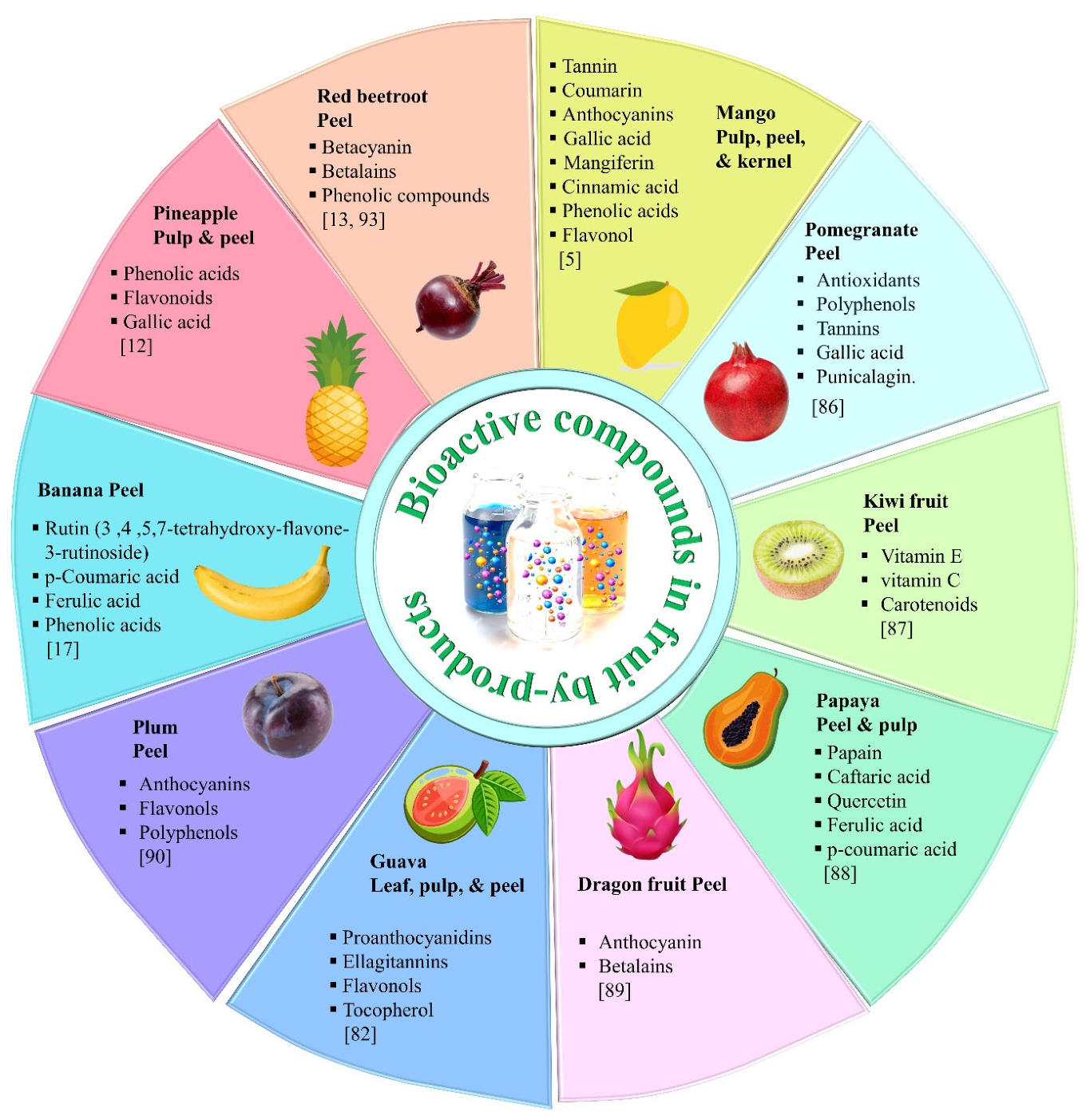
Fruit and vegetables are proven sources of bioactive compounds and can be extracted to incorporate into EBFP to enhance its mechanical, antioxidant, and antimicrobial properties. Furthermore, these types of compounds are capable of enhancing the shelf life, physicochemical, and sensory attributes of meat and meat products [6,11]. The present research involving bioactive compounds mainly focuses on fruit and vegetable peels, pulps, and seeds to extract essential oils, phenolics, and flavonoids. Byproducts of different parts of banana [17], mango [5], guava [15], pineapple [12], pomegranate [86], kiwi [87], papaya [88], dragon fruit [89], plum [90], and red beetroot [13] have been shown to have potent antioxidant and antimicrobial activity when incorporated in EBFP due to the presence of diverse bioactive compounds (Figure 6).
EBFP was developed with chitosan incorporated with mango, orange, and pomegranate extract for beef preservation. This EBFP had higher thickness and antimicrobial activity compared to the normal chitosan films. Furthermore, the EBFP-packed beef samples had lower lipid oxidation and superior sensory scores [5]. Tong et al. [91] developed intelligent HBEBFP using SC with sodium alginate, citrus peel pectin, and cinnamic acid, which was further applied to beef. This HBEBFP had strong mechanical properties and antibacterial activity. During storage study, it enhanced the shelf life of beef and acted as a color-changing spoilage indicator—light brown to dark brown—indicating spoilage. A novel HBEBFP was fabricated with corn starch, chitosan, pomegranate peel extract, and Thymus kotschyanus essential oil, applying SC. Although HBEBFP had weaker mechanical properties, it efficiently suppressed the bacterial counts and lipid oxidation in beef during the storage study for three weeks. The physicochemical and taste traits were acceptable at the end of the storage study [75]. Boateng et al. [87] fabricated EBFP using cellulose, Arabic gum, and kiwifruit peel powder extract for beef sausage casing. EBFP demonstrated strong bactericidal activity against Gram+ve (S. aureus, B. cereus) and Gram−ve (E. coli) bacteria. The color parameters, textural profile, and sensory attributes were stable in beef sausage during the storage period. HBEBFP was fabricated using gelatin and chitosan as base materials, and additionally incorporating guava leaf extract, with increased mechanical properties. When this HBEBFP was applied to beef, it stabilized the color parameters and enhanced the shelf life due to strong antibacterial efficacy during chilled storage [15]. EBFP was developed by Min et al. [92] with chitosan and pomegranate peel extract. This EBFP demonstrated higher tensile strength and lower solubility. Its application to beef extended the shelf life from four days to seven days due to suppressed growth of S. aureus during refrigerated storage. The incorporation of lemon peel extract into polylactic acid EBFP enhanced water vapor permeability and antioxidant activity [67]. This EBFP prohibited lipid oxidation and microbial growth up to eight days of storage in beef. Chaari et al. [93] developed an antioxidant EBFP with gelatin, sodium alginate, and beetroot peel extract. This EBFP demonstrated strong mechanical, antioxidative, and antibacterial features. During the application of this EBFP on beef, it preserved the color and sensory parameters at the end of the 14-day storage study. Moreover, the microbiological quality of the treated beef sample was improved compared to the control sample. Khalid et al. [86] developed a novel active EBFP using cellulose and pomegranate extract with strong antibacterial activity. This EBFP suppressed bacterial growth in beef and poultry meat, and extended shelf life up to 12 days of refrigerated storage. Chaari et al. [13] developed smart color indicator EBFP with cellulose, flaxseed gum, and beetroot peel betacyanin. This synergistic blend enhanced the thickness and antioxidant activity of this EBFP. The beef freshness was assessed using EBFP’s color shift from pink to purple, that is, from fresh to spoiled, respectively, during a 14-day storage study. EBFP was fabricated using cassava starch and papaya, which had strong mechanical properties. This EBFP was applied to beef, and it demonstrated a softer texture and hardness due to papain enzymatic activity [88]. Beltrán Sanahuja et al. [12] developed polycaprolactone EBFP infused with pineapple byproducts to improve beef burger meat preservation. EBFP possessed improved thermal stability and mechanical properties. This EBFP significantly decreased lipid oxidation in meat by lowering the TBARS value. Furthermore, the shelf life was increased with positive consumer feedback after tasting.
Figure 6. Antioxidant compounds that are available in major tropical fruits [5,12,13,17,82,86,87,88,89,90,93].
Suschem 07 00023 g006
Gasti et al. [94] developed HBEBFP with chitosan, PVA, and hog fruit pulp extract for lamb meat packaging. The fruit extract increased the mechanical strength, hydrophobicity, and water vapor transmission rate compared to the control EBFP group. Furthermore, HBEBFP was rapidly degraded in soil. Lamb meat shelf life was extended up to 30 days during refrigerated storage due to strong antioxidant activity and inhibition of B. cereus, E. coli, P. aeruginosa, S. aureus, and C. albicans. Guo et al. [95] used watermelon peel pectin and purple cabbage extract to fabricate color indicator intelligent EBFP. Formed EBFP had strong mechanical and barrier properties along with thermal stability. Moreover, the incorporation of purple cabbage extract improved the antioxidant and antibacterial efficacy of EBFP. The application of this EBFP to mutton effectively performed as a freshness indicator, with a change in color from pinkish (fresh) to bluish, indicating spoiled.
Bagri et al. [96] developed novel HBEBFP from alginate, straw silica, oak fruit extract, and quince seed mucilage, having enhanced flexibility and hydrophobicity. The application of this HBEBFP on pork enhanced the shelf life for 20 days during refrigerated storage due to strong antibacterial activity against S. aureus. Although red pitaya peel is a polysaccharide source, it also contains betacyanin with high antioxidative properties. EBFP made with red pitaya peel produced a thick structure with elevated tensile strength. This EBFP performed as a color-changing freshness detection indicator during pork storage. It successfully detected pork spoilage during refrigerated storage with color-changing sensitivity to ammonia production in the meat [97]. EBFP was fabricated with chitosan and rambutan peel extract with low water solubility, water vapor, and oxygen permeability. Furthermore, EBFP demonstrated increased tensile strength and elongation at break, including robust antioxidant and antibacterial properties. Finally, EBFP was applied to pork as packaging during eight days of storage at 4 °C. TVB-N, TBARS, and TVC in pork were reduced during the storage period. Furthermore, EBFP application improved the sensory attributes of pork at day eight of storage [98].
HBEBFP was developed by Sani, Geshlaghi, Pirsa and Asdagh [69] with potato starch, apple peel pectin, and Zataria multiflora essential oil. This was applied to quail meat, and the storage study revealed lower microbial counts after 12 days. In a study by Kanatt [99], the TBARS values were lower in chicken and fish packaged with EBFP fabricated with PVA, gelatin, and Amaranthus leaf extract. Moreover, fish and chicken packed with this EBFP had an extended shelf life due to lower lipid oxidation and microbial growth. Dalei et al. [66] fabricated HBEBFP with SC using dragon fruit peel pectin and cucumber peel extract for chicken meat packing. This EBFP had increased density and thickness with better tensile strength, antioxidant potential, and water barrier properties. The application of HBEBFP to chicken meat reduced pH, weight loss, and TVB-N during chilled storage. Antibacterial HBEBFP packaging was developed from mango peel waste and tea polyphenols for the preservation of chicken breast at 4 °C for a duration of 12 days. This HBEBFP effectively preserved the color, pH, and texture of chicken breast meat while inhibiting water loss and microbial proliferation. Furthermore, it protected the meat from oxidative degradation by reducing TBARS production, suggesting that chicken breast encased in this HBEBFP possesses an extended shelf life [100].
Beetroot peel waste is a ubiquitous AFW source containing robust natural colorant and antioxidants. The incorporation of beetroot peel waste in sago palm starch was successfully formed into EBFP as a color indicator intelligent packaging material, and was applied to chicken meat to detect spoilage during storage by assessing color and pH. There was a change in color from pink to yellow with an increase in pH in the meat during storage [70]. Kiwifruit peel extract incorporation into watermelon pectin formed a functional EBFP and inhibited lipid oxidation in chicken meat during nine days of storage [84]. Plum peel extract was incorporated into sodium alginate and gelatin to fabricate a pH-sensitive EBFP to assess the freshness of chicken. Although the mechanical properties of EBFP were improved, the water contact angle, water content, and water vapor permeability were reduced. During the storage experiment, the color of EBFP changed from orange–pink to yellow–green, signifying a freshness change in the meat. The findings indicated that this EBFP has the potential to be utilized as intelligent active packaging for freshness assessment [90].
EBFP was produced using pomegranate peel powder, which is abundant in phenolic compounds and natural antioxidants, and in combination with fish gelatin to pack ostrich meat during refrigeration for 10 days. The addition of bioactive ingredients from pomegranate peel into this novel EBFP decreased lipid oxidation, TVB-N, and bacterial counts in the meat sample. The results indicate the powerful antioxidative and antibacterial potency of this EBFP, which significantly retarded the degradation of meat quality during storage. Furthermore, the overall sensory qualities of the ostrich meat were within acceptable scores after 10 days of refrigerated storage, showing the potential of this EBFP in prolonging the shelf life [101].
Tea remains the most commonly consumed beverage in the world, and its production process produces an extensive amount of waste enriched with bioactive compounds, especially polyphenols. To enhance the economic significance of this waste, tea polyphenol was incorporated into starch, pullulan EBFP, for fish packaging. This EBFP showed high thermal stability, low water contact angle, and very high antibacterial and antioxidative characteristics. Moreover, the shelf life of fish filets was enhanced up to eight days due to lower bacterial counts and TVB-N compared to the control sample [102]. Color indicator EBFP was produced with red dragon fruit peel anthocyanin, cassava starch, and chitosan as bioactive materials. Dragon fruit peel anthocyanin enhanced the elongation break and antioxidant activity. An increase in the pH level in EBFP-packed shrimp changed the color from red to yellow under refrigerated storage conditions. The color change effect indicates the capacity of anthocyanin-incorporated EBFP as a smart packaging solution, and this can be used to detect the freshness of shrimp, fish, and meat products [89].

5. Industry Collaboration to Scale Up Production

Scaling up the production of AFW-based EBFP for meat requires robust industry and academia collaborations to bridge lab-scale innovations with commercial viability. Major EBFP company like Amcor PLC and Sealed Air Corporation are pioneering commercial films from AFW sources to extend meat shelf life. Moreover, Amcor’s solutions already support meat processors in sustainable supply chains by reducing plastic use [103]. Similarly, Pactiv Evergreen and Mondi Group emphasize recycled substrates and active packaging, aligning with AFW valorization for eco-friendly meat trays and wrapping materials [104]. Challenges include optimizing extraction (e.g., gelatin from meat trimmings) for consistent polymer quality and cost-effective fabrication techniques like ES and CS [105]. Partnerships between universities and EBFP companies should focus on AFW polymers. Regulatory alignment (e.g., the FDA/EFSA GRAS status for AFW polymers) and life cycle assessments research needed to ensure scalability in collaboration with companies investing in circular economy models. Future directions involve joint ventures for high-moisture extrusion of starch–protein films, targeting 20–30% cost reductions via AFW sourcing. Success stories, like chicken bone gelatin–tapioca films in pilot production, demonstrate feasibility for meat preservation. Collaborative R&D hubs could accelerate this, minimizing environmental impacts (e.g., 8–10% GHG from AFW) while meeting rising demand for sustainable meat packaging [106]. The United Nations Sustainable Goals (SDGs) act as an accelerator for the incorporation of AFW biomaterials in innovative food packaging on a global scale. Research and industry that comply with SDGs may strengthen their brand image by implementing sustainable packaging techniques like EBFP from AFW biomaterials. So, there is a significant need to build up a partnership between packaging companies and researchers to scale up the volume to make EBFP a sustainable solution for the meat industry. Furthermore, this kind of collaboration will facilitate the incorporation of innovative biopolymers from AFW, which will advance the circular economy principles [107]. The adoption of automated solutions for EBFP fabrication can enhance material efficiency, substantially minimize waste, and diminish global carbon emissions. These collaborations will enhance efficiency in EBFP of meat and ensure business sustainability and reduced environmental impacts.
While AFW-derived EBFP demonstrates strong lab-scale efficacy for meat preservation (e.g., 6–12 day shelf life extension via hybrids), industrial scalability requires an optimization of SC/ES techniques for continuous production, leveraging low-cost AFW biomaterials (e.g., peels at <$0.5/kg vs. synthetic PET $1.8–2.5 K/ton) to achieve material costs of $3.5–11.8 K/ton—potentially offset by 60–70% lower disposal ($50 vs. $150/ton landfill) and circular economy incentives [2,3,4]. Compared to commercial PET/PE films (TS 20–50 MPa, WVP ~10 g/m2/day but non-biodegradable), AFW EBFP hybrids match/exceed mechanicals (TS 20–35 MPa, WVP 10−11 g m−1 s−1 Pa−1) while offering edibility and AM/AO release, though limitations include hydrophilic sensitivity (needing nanocellulose crosslinking) and throughput scaling (ES / SC for mass production) [8,10]. Pilot successes (e.g., sago starch–CMC films with enhanced sealability) signal viability, urging techno-economic analyses for meat processors targeting eco-labels like EU Green Deal subsidies.
The production of EBFP is economically more costly than that of polyethylene and polystyrene. Attaining cost competitiveness necessitates improvements in production efficiency, economies of scale, and the optimization of the AFW raw material supply chain. Consumer acceptance is a critical aspect, as AFW based packaging must equal or surpass the performance of traditional plastics to secure trust and choice.
Future research should concentrate on material innovation, encompassing the creation of novel AFW biopolymer blends, composites, and additives to improve mechanical and barrier qualities. It is essential to create advanced processing procedures that retain the functional qualities of heat-sensitive materials while ensuring production efficiency. This encompasses the investigation of non-thermal techniques such as ES, cold extrusion, ultrasonic processing, and other novel techniques. Expanding pilot and commercial trials will yield critical insights into practical obstacles and consumer reactions, informing subsequent adjustments and closing the divide between laboratory research and market-ready goods. Cooperative initiatives in materials research, process engineering, regulatory advancement, and market evaluation are essential for the effective commercialization of EBFP.

6. Opportunities and Limitations

AFW has emerged as an efficient EBFP for a sustainable packaging solution for meat and meat products. AFW-based EBFP shows promising potential due to rising consumer demand for sustainable packaging solutions. Furthermore, with increasing environmental awareness, consumers are showing a higher preference for sustainable packaging materials by paying a premium price to limit plastic waste and reduce carbon emissions. The inexpensive processing, like SC and ES techniques, makes them potential candidates for AFW-based EBFP fabrication [19,21,108]. HBEBFP was found to be efficient for the encapsulation of bioactive compounds, which fulfill consumer preferences as a health-promoting packaging option. Active compounds available in AFW not only confer health benefits, but they also function as strong natural preservatives for extending the freshness and shelf life of meat and meat products.
The drawbacks of laboratory-scale film production encompass issues such as the inability to produce films continuously, prolonged drying durations, imprecise thickness regulation, elevated energy usage, and substantial costs. These questions must be addressed on an industrial basis, presenting a significant difficulty [109].
EBFP derived from AFW confronts a few technological barriers, such as physical properties, restricted treatment, and recycling facilities. Low water resistance for AFW-derived EBFP can be relieved through employing specific biopolymer combinations, which demonstrate superior moisture barrier performance suitable for meat packaging. AFW-based EBFP encounters constraints such as inadequate mechanical strength, heightened moisture sensitivity, and inferior oxygen barrier properties relative to synthetic alternatives, impeding their acceptance in industrial meat packing. The brittleness of protein and starch films, along with inconsistent quality of AFW polymers, complicates scalability. These challenges can be addressed through hybrid formulations (e.g., gelatin–chitosan composites enhancing tensile strength by 2–3 times), the incorporation of plasticizers such as glycerol for improved flexibility, and the use of nanocellulose reinforcements that decrease water vapor transmission rate by 50% [21]. Enhanced homogeneity is achieved through an optimized ES technique and enzymatic crosslinking, while the standardization of AFW extraction techniques guarantees consistency for meat applications [108].
Furthermore, the geographical resource distribution is also limited, which impedes the production and distribution of EBFP [110]. Although AFW-based EBFP has drawbacks of insufficient mechanical strength and inadequate water barrier qualities, it depends on the stability and quality of biomaterials [6]. Synergistic blends of multiple biomaterials have been found to be efficient in overcoming these concerns by fabricating multilayer HBEBFP [66].
Production cost substantially influences the profitability of AFW-based EBP. Current market pricing of conventional plastic packaging varies from USD 1–1.5 per Kg, while EBFP may cost six to seven times higher per Kg, rendering them commercially non-competitive. These elevated production costs are attributable to the sophistication of AFW biomaterials, comprehensive testing, and regulatory issues related to food safety requirements [111]. Consumer perception of AFW-based EBFP also poses a challenge. Although promoted as a sustainable substitute for traditional packaging, consumers may still remain unacquainted with the idea or be unwilling to consume meat and meat products along with edible packaging materials, despite their safety and nutritional value. Enhancing marketing initiatives and consumer knowledge to adopt EBFP is crucial for its effective integration into the meat industry.
There is an increasing awareness of sustainable packaging solutions for meat, making AFW-derived EBFP a promising alternative for the regulatory authorities. As environmental pollution increases, consumers are expected to pay more for EBFP-packed meat and meat products. Further developments in fabrication technologies of EBFP will improve the functionality and mechanical characteristics and enhance the shelf life of meat and meat products. The incorporation of bioactive materials from AFW can enhance the quality of active EBFP, which can assure the product’s shelf life and functional qualities to maintain consumer health.

7. Conclusions

This review provides an in-depth discussion on available biomaterials from AFW and their potential applications for EBFP fabrication. ES and SC are expanding the use of AFW biomaterials to the fabrication of EBFP as predominant techniques to improve the physical properties and functionality. This study investigates the development and opportunities associated with optimizing the mechanical, barrier, and thermal properties of AFW-based EBFP. Furthermore, the potential application of EBFP in meat and meat products has been discussed. Recent research outlined that AFW biomaterials, such as gelatin, zein, spy protein, cellulose, starch, and pectin, as a single compound or as HBEBFP in combination with other biomaterials, significantly enhance the mechanical properties, water, and gas barrier properties of EBFP. In most cases, HBEBFP stands out as the most promising packaging option in terms of lengthening the shelf life of meat. The integration of bioactive compounds from AFW into EBFP and HBEBFP has exhibited strong antioxidant, antibacterial, and antifungal potency for protecting against the spoilage of meat during the storage period. Furthermore, the incorporation of bioactive compounds demonstrated unique features like change in color with a change in meat pH or volatile compounds and serves as intelligent packaging for freshness or a spoilage indicator of meat during storage. Future research focus must transition toward enhancing the sourcing of diverse biomaterials from AFW for fabricating environmentally sustainable packaging to gradually replace a portion of synthetic packaging materials. Future studies should focus on hybrid EBFP from promising AFW sources such gelatin from meat trimmings, fruit peel cellulose, and starch. Standardizing AFW extraction techniques, improving ES parameters and application at industrial scales, and producing pH-sensitive intelligent films with anthocyanins for meat supply chain spoiling monitoring are key directions.

Author Contributions

Conceptualization, A.M.M.N.A.; methodology, A.M.M.N.A.; software, A.M.M.N.A.; validation, A.M.M.N.A.; investigation, A.M.M.N.A.; resources, A.M.M.N.A. and S.-T.J.; writing—original draft preparation, A.M.M.N.A.; writing—review and editing, A.M.M.N.A., S.-H.K., C.-J.K., A.S., S.K., S.-H.A., M.S.A., M.H., A.M., Y.-H.H. and S.-T.J.; visualization, A.M.M.N.A., S.-H.K., C.-J.K., A.S., S.K., S.-H.A., M.S.A., M.H., A.M., Y.-H.H. and S.-T.J.; supervision, S.-T.J.; project administration, Y.-H.H. and S.-T.J.; funding acquisition, Y.-H.H. and S.-T.J. All authors have read and agreed to the published version of the manuscript.

Funding

This study was supported by a National Research Foundation of Korea (NRF) grant funded by the Korean government (MSIT No. 2023R1A2C1004867) and the Korean Institute of Planning and Evaluation for Technology in Food, Agriculture, Forestry and Fisheries (IPET) through the Agri-Bioindustry Technology Development Program, funded by the Ministry of Agriculture, Food, and Rural Affairs (MAFRA), Korea, (Project No. 321028-5).

Institutional Review Board Statement

Not applicable.

Informed Consent Statement

Not applicable.

Data Availability Statement

No new data were created or analyzed in this study. Data sharing is not applicable to this article.

Conflicts of Interest

The authors declare no conflicts of interest.

References

  1. FAO (Ed.) Moving Forward on Food Loss and Waste Reduction; Food and Agriculture Organization of the United Nations: Rome, Italy, 2019; Volume 2019, Available online: https://openknowledge.fao.org/server/api/core/bitstreams/e3c09863-1747-4708-9fc9-242deae3148c/content (accessed on 21 December 2025).
  2. Syarifuddin, A.; Muflih, M.H.; Izzah, N.; Fadillah, U.; Ainani, A.F.; Dirpan, A. Pectin-based edible films and coatings: From extraction to application on food packaging towards circular economy—A review. Carbohydr. Polym. Technol. Appl. 2025, 9, 100680. [Google Scholar] [CrossRef]
  3. Afzia, N.; Bora, S.; Ghosh, T. Utilization of cassava peel based cellulose nanofiber for developing functionalized pectin/pullulan/olive oil nanocomposite film for cling wrapping of chicken meat. Int. J. Biol. Macromol. 2025, 305, 140879. [Google Scholar] [CrossRef] [PubMed]
  4. Parmar, N.; Roghelia, V. Development and evaluation of edible films using corn, raw banana and taro root starch. J. Appl. Hortic. 2025, 27, 44–50. [Google Scholar] [CrossRef]
  5. Ain, Q.U.; Waseem, M.; Iqbal, S.Z. The efficacy and evaluation of chitosan-essential oil and fruit peel extracts edible films in preserving the shelf life of beef meat samples. J. Food Meas. Charact. 2025, 19, 5806–5828. [Google Scholar] [CrossRef]
  6. Jebel, F.S.; Roufegarinejad, L.; Alizadeh, A.; Amjadi, S. Development and characterization of a double-layer smart packaging system consisting of polyvinyl alcohol electrospun nanofibers and gelatin film for fish fillet. Food Chem. 2025, 462, 140985. [Google Scholar] [CrossRef]
  7. Varghese, S.A.; Pulikkalparambil, H.; Promhuad, K.; Srisa, A.; Laorenza, Y.; Jarupan, L.; Nampitch, T.; Chonhenchob, V.; Harnkarnsujarit, N. Renovation of agro-waste for sustainable food packaging: A review. Polymers 2023, 15, 648. [Google Scholar] [CrossRef]
  8. Lang, X.; Wang, N.; An, X.; Wang, C. Crab-Apple (Mulus asiatica Nakai) Peel Extract-Enhanced Potato Starch/κ-Carrageenan Bioactive Films: Structural Characterization, Antioxidant-Antimicrobial Efficacy, and Application in Meat Preservation. Polymers 2025, 17, 1328. [Google Scholar] [CrossRef]
  9. Li, J.; Shi, X.; Yang, K.; Guo, L.; Yang, J.; Lan, Z.; Guo, Y.; Xiao, L.; Wang, X. Fabrication and characterization of carvacrol encapsulated gelatin/chitosan composite nanofiber membrane as active packaging material. Int. J. Biol. Macromol. 2024, 282, 137114. [Google Scholar] [CrossRef]
  10. Lopes, P.F.N.; de Medeiros Felipe, A.T.; de Medeiros, F.G.M.; de Bastos, M.S.R.; Mattos, A.L.A.; Matsui, K.N.; Hoskin, R.T. Biodegradable Cassava Starch-Based Films Formulated with Coconut Oil for Sustainable Food Packaging. Food Sci. Eng. 2025, 6, 140–154. [Google Scholar] [CrossRef]
  11. Wu, J.; Liao, J.; Hu, T.; Zong, M.; Wen, P.; Wu, H. Fabrication of multifunctional ethyl cellulose/gelatin-based composite nanofilm for the pork preservation and freshness monitoring. Int. J. Biol. Macromol. 2024, 265, 130813. [Google Scholar] [CrossRef]
  12. Beltrán Sanahuja, A.; Valdés García, A.; Cenitagoya Alonso, N.; Sánchez, R.; Tone, A.M.; Herranz Solana, N.; Sánchez Reig, C.; Monedero Prieto, M.; Todolí Torró, J.L. Pilot-Scale Development of Biodegradable Packaging Incorporating Pineapple By-product Antioxidants for Sustainable Meat Preservation Through Circular Economy. Food Bioprocess Technol. 2025, 18, 7365–7378. [Google Scholar] [CrossRef]
  13. Chaari, M.; Elhadef, K.; Akermi, S.; Tounsi, L.; Hlima, H.B.; Ennouri, M.; Abdelkafi, S.; Agriopoulou, S.; Ali, D.S.; Mellouli, L. Development of a novel colorimetric pH-indicator film based on CMC/flaxseed gum/betacyanin from beetroot peels: A powerful tool to monitor the beef meat freshness. Sustain. Chem. Pharm. 2024, 39, 101543. [Google Scholar] [CrossRef]
  14. Deng, Y.; Li, Z.; Wu, S.; Zheng, H.; Lei, H.; Ge, X.; Guo, Z. Intelligent packaging film using watermelon peel pectin and betacyanins with UiO-66 as the gas adsorption system for monitoring the freshness of chilled pork. Int. J. Biol. Macromol. 2025, 308, 142040. [Google Scholar] [CrossRef]
  15. Velarde, E.D.A.; Berasain, M.D.M.; Luckie, R.A.M.; Medina, D.I.M.; Lackner, M.; Garduño, G.V.; Salem, A.Z.M. Development and characterization of active gelatin-chitosan packaging incorporated with guava leaf extract for extending meat shelf life. J. Agric. Food Res. 2025, 19, 101555. [Google Scholar]
  16. Bhat, H.F.; Nasir, Z.; Farooq, S.; Bhat, Z.F.; Andrabi, S.M.; Aït-Kaddour, A. Development and characterization of edible film containing keratin nanocarriers loaded with N. nucifera seedpod extract. Food Hydrocoll. Health 2025, 7, 100216. [Google Scholar] [CrossRef]
  17. Taweechat, C.; Wongsooka, T.; Rawdkuen, S. Properties of banana (Cavendish spp.) starch film incorporated with banana peel extract and its application. Molecules 2021, 26, 1406. [Google Scholar] [CrossRef] [PubMed]
  18. Lalnunthari, C.; Devi, L.M.; Amami, E.; Badwaik, L.S. Valorisation of pumpkin seeds and peels into biodegradable packaging films. Food Bioprod. Process. 2019, 118, 58–66. [Google Scholar] [CrossRef]
  19. Alam, A.; Hwang, Y.-H.; Samad, A.; Joo, S.-T. Meat Quality Traits Using Gelatin–Green Tea Extract Hybrid Electrospun Nanofiber Active Packaging. Foods 2025, 14, 1734. [Google Scholar] [CrossRef] [PubMed]
  20. Wang, J.; Shan, H.; Qin, Y.; Qin, D.; Zhao, W.; Yang, Z.; Kong, L.; Li, S. Electrospinning zein with theaflavin: Production, characterization, and application in active packaging for cold-fresh pork. Int. J. Biol. Macromol. 2025, 287, 138594. [Google Scholar] [CrossRef] [PubMed]
  21. Alam, A.N.; Kim, C.-J.; Kim, S.-H.; Kumari, S.; Lee, E.-Y.; Hwang, Y.-H.; Joo, S.-T. Scaffolding fundamentals and recent advances in sustainable scaffolding techniques for cultured meat development. Food Res. Int. 2024, 189, 114549. [Google Scholar] [CrossRef]
  22. Pereira de Abreu, D.; Cruz, J.M.; Paseiro Losada, P. Active and intelligent packaging for the food industry. Food Rev. Int. 2012, 28, 146–187. [Google Scholar] [CrossRef]
  23. Alam, A.; Hossain, M.J.; Lee, E.-Y.; Kim, S.-H.; Hwang, Y.-H.; Joo, S.-T. Imitation of Hybrid Cultured Meat Patty and Compare the Quality Characteristics with Beef Patty and Plant-Based Patty. Food Sci. Anim. Resour. 2025, 45, 775–793. [Google Scholar] [CrossRef]
  24. Borbolla-Jiménez, F.V.; Peña-Corona, S.I.; Farah, S.J.; Jiménez-Valdés, M.T.; Pineda-Pérez, E.; Romero-Montero, A.; Del Prado-Audelo, M.L.; Bernal-Chávez, S.A.; Magaña, J.J.; Leyva-Gómez, G. Films for wound healing fabricated using a solvent casting technique. Pharmaceutics 2023, 15, 1914. [Google Scholar] [CrossRef] [PubMed]
  25. Amjadi, S.; Almasi, H.; Gholizadeh, S.; Hamishehkar, H. Double layer packaging based on active black chickpea protein isolate electrospun nanofibers and intelligent salep film containing black chickpea peel anthocyanins for seafood products. Int. J. Biol. Macromol. 2024, 278, 134897. [Google Scholar] [CrossRef]
  26. Mathura, S.; Maharaj, R.; Ratkovich, N. Emerging trends in biopolymer edible coatings for enhancing the shelf life of neglected and underutilized crops. Front. Food Sci. Technol. 2025, 5, 1641117. [Google Scholar] [CrossRef]
  27. Gao, S.; Zhang, Y.; Wang, R.; Li, F.; Zhang, Y.; Zhu, S.; Wei, H.; Zhao, L.; Fu, Y.; Ye, F. Fabrication and characterization of betulin/hydroxypropyl-beta-cyclodextrin inclusion complex nanofibers: A potential edible antibacterial and antioxidant packaging material. Food Chem. 2025, 481, 144059. [Google Scholar] [CrossRef]
  28. Zhang, J.; Huang, X.; Zhang, J.; Liu, L.; Shi, J.; Muhammad, A.; Zhai, X.; Zou, X.; Xiao, J.; Li, Z. Development of nanofiber indicator with high sensitivity for pork preservation and freshness monitoring. Food Chem. 2022, 381, 132224. [Google Scholar] [CrossRef]
  29. Huynh, N.-T.; Ha, N.-Y.N.; Luu, C.H.; Ngo, A.P.; Lam, N.T.; Ngo, H.L.; Tran, A.Q.; Tran, M.-H.T.; Do Ly, T.-N.; Nguyen, H.T.T. Sustainable, biodegradable and pH-sensitive colorimetric packaging film based on carrageenan/alginate and Ruellia simplex extract for meat preservation and spoilage monitoring. J. Ind. Eng. Chem. 2025, 157, 781–795. [Google Scholar] [CrossRef]
  30. Carvalho, A.C.F.; Nihues, T.C.; Souza, C.V.B.; Prestes, A.A.; Marafon, K.; Meinert, C.; Prudêncio, E.S.; Prebianca, J.; de Souza, C.K. Agro-Waste Materials in Sustainable Food Packaging. In Biomaterials for Sustainable Food Packaging: Challenges and Solutions; Springer: Berlin/Heidelberg, Germany, 2026; pp. 367–410. [Google Scholar]
  31. Zhang, J.; Zhang, J.; Huang, X.; Shi, J.; Muhammad, A.; Zhai, X.; Xiao, J.; Li, Z.; Povey, M.; Zou, X. Study on cinnamon essential oil release performance based on pH-triggered dynamic mechanism of active packaging for meat preservation. Food Chem. 2023, 400, 134030. [Google Scholar] [CrossRef]
  32. Tagrida, M.; Gulzar, S.; Nilsuwan, K.; Prodpran, T.; Zhang, B.; Benjakul, S. Polylactic acid film coated with electrospun gelatin/chitosan nanofibers containing betel leaf ethanolic extract: Properties, bioactivities, and use for shelf-life extension of Tilapia slices. Molecules 2022, 27, 5877. [Google Scholar] [CrossRef]
  33. Li, X.; Xu, J.; Lu, C.; Gao, X.; Niu, Z.; Li, L.; Wei, C. Achieving strong interfacial bonding and temperature-responsive actuation in multi-material additive manufacturing through bio-inspired interlocking structures. J. Mater. Sci. Technol. 2026, 272, 208–215. [Google Scholar] [CrossRef]
  34. Mus-León, I.; Muñoz-Núñez, M.; Villasante, J.; Codina-Torrella, I.; Almajano, M.P. Development and characterization of films containing Sichuan pepper extract to extend the shelf life of refrigerated beef patties. Foods 2025, 14, 3335. [Google Scholar] [CrossRef]
  35. da Cruz, E.P.; Jansen, E.T.; Fonseca, L.M.; dos Santos Hackbart, H.C.; Siebeneichler, T.J.; Pires, J.B.; Gandra, E.A.; Rombaldi, C.V.; da Rosa Zavareze, E.; Dias, A.R.G. Red onion skin extract rich in flavonoids encapsulated in ultrafine fibers of sweet potato starch by electrospinning. Food Chem. 2023, 406, 134954. [Google Scholar] [CrossRef]
  36. Hosseini, F.; Miri, M.A.; Najafi, M.; Soleimanifard, S.; Aran, M. Encapsulation of rosemary essential oil in zein by electrospinning technique. J. Food Sci. 2021, 86, 4070–4086. [Google Scholar] [CrossRef]
  37. Pires, J.B.; Fonseca, L.M.; Siebeneichler, T.J.; Crizel, R.L.; Dos Santos, F.N.; dos Santos Hackbart, H.C.; Kringel, D.H.; Meinhart, A.D.; da Rosa Zavareze, E.; Dias, A.R.G. Curcumin encapsulation in capsules and fibers of potato starch by electrospraying and electrospinning: Thermal resistance and antioxidant activity. Food Res. Int. 2022, 162, 112111. [Google Scholar] [CrossRef]
  38. Quintero-Borregales, L.M.; Vergara-Rubio, A.; Santos, A.; Famá, L.; Goyanes, S. Black tea extracts/polyvinyl alcohol active nanofibers electrospun mats with sustained release of polyphenols for food packaging applications. Polymers 2023, 15, 1311. [Google Scholar] [CrossRef]
  39. Lopresti, F.; Capuana, E.; Serio, G.; Gentile, C.; Botta, L. Polylactic Acid/Bamboo Leaf Extract Electrospun Mats with Antioxidant Activity for Food Packaging Applications. Antioxidants 2024, 13, 1555. [Google Scholar] [CrossRef] [PubMed]
  40. Avila, L.B.; Pinto, D.; Silva, L.F.; de Farias, B.S.; Moraes, C.C.; Da Rosa, G.S.; Dotto, G.L. Antimicrobial bilayer film based on chitosan/electrospun zein fiber loaded with jaboticaba peel extract for food packaging applications. Polymers 2022, 14, 5457. [Google Scholar] [CrossRef] [PubMed]
  41. Clerici, N.J.; Vencato, A.A.; Helm Júnior, R.; Daroit, D.J.; Brandelli, A. Electrospun poly-ε-caprolactone nanofibers incorporating keratin hydrolysates as innovative antioxidant scaffolds. Pharmaceuticals 2024, 17, 1016. [Google Scholar] [CrossRef] [PubMed]
  42. Chen, C.; Chaudhary, A.; Mathys, A. Nutritional and environmental losses embedded in global food waste. Resour. Conserv. Recycl. 2020, 160, 104912. [Google Scholar] [CrossRef]
  43. Guo, H.; Li, A.; Huang, G.; Jin, X.; Xiao, Y.; Gan, R.-Y.; Gao, H. Development of apple pectin/soy protein isolate-based edible films containing punicalagin for strawberry preservation. Int. J. Biol. Macromol. 2024, 273, 133111. [Google Scholar] [CrossRef]
  44. Mehdizadeh, M.; Abed, M.A.K.; Al-Taey, D.K.; Abideen, Z.; Morya, S.; Chameh, T. Valorization of Agricultural Waste into Biodegradable Nanocomposites for Sustainable Food Packaging: A Systematic Review. Circ. Econ. Sustain. 2026, 6, 25. [Google Scholar] [CrossRef]
  45. Hu, D.; Lv, Z.; Liu, H.; Jing, F.; Zhao, Y.; Zhang, S.; Du, H.; Wang, R. Characterization and mechanical modeling of interfacial damage in EB-PVD thermal barrier coatings considering multiple failure factors. J. Mater. Sci. Technol. 2024, 190, 42–55. [Google Scholar] [CrossRef]
  46. Shankar, S.; Jaiswal, L.; Rhim, J.-W. Gelatin-based nanocomposite films: Potential use in antimicrobial active packaging. In Antimicrobial Food Packaging; Elsevier: Amsterdam, The Netherlands, 2025; pp. 461–472. [Google Scholar]
  47. Jridi, M.; Abdelhedi, O.; Salem, A.; Kechaou, H.; Nasri, M.; Menchari, Y. Physicochemical, antioxidant and antibacterial properties of fish gelatin-based edible films enriched with orange peel pectin: Wrapping application. Food Hydrocoll. 2020, 103, 105688. [Google Scholar] [CrossRef]
  48. Azizah, F.; Nursakti, H.; Ningrum, A.; Supriyadi. Development of edible composite film from fish gelatin–pectin incorporated with lemongrass essential oil and its application in chicken meat. Polymers 2023, 15, 2075. [Google Scholar] [CrossRef] [PubMed]
  49. Gupta, P.; Toksha, B.; Rahaman, M. A review on biodegradable packaging films from vegetative and food waste. Chem. Rec. 2022, 22, e202100326. [Google Scholar] [CrossRef]
  50. Liang, S.; Song, J.; Wang, Y.; Wang, X.; Zheng, T.; Zhang, G.; Li, C.; Liu, L. Preparation, characterization and application of gel edible films based on galactomannan and casein. Food Hydrocoll. 2025, 163, 111143. [Google Scholar] [CrossRef]
  51. Khan, M.M.; Sun, S.; Shi, R.; Aichun, L.; Lee, O.-H.; Fu, X. Biodegradable and antibacterial edible films based on egg yolk granules/gelatin/CMC with e-poly-l-lysine: Application in fresh chicken meat preservation. Food Chem. 2025, 478, 143627. [Google Scholar] [CrossRef]
  52. Qin, X.; Chen, L.; Zhao, J.; Zhang, W.; Tian, H.; Bi, S.; Jin, G.; Zhou, Y.; Zhu, Q.; Cheng, Y. Crosslinked protein-polysaccharide nanocomposite coating for pork preservation: Impact on physicochemical properties and microbial structure. Food Chem. 2025, 470, 142721. [Google Scholar] [CrossRef] [PubMed]
  53. Arab Ahmadi, S.; Alemi, H. The Effect of Corn Zein Edible Coating Containing Coriander Extract on The Quality and Durability of Silver carp (Hypophthalmichthys molitrix). Food Res. J. 2025, 35, 61–77. [Google Scholar]
  54. Motalebinejad, H.; Bazargani-Gilani, B.; Pajohi-Alamoti, M. Corn Zein edible film containing Sumac fruit extract and encapsulated Thymus daenensis Celak essential oil to improving the shelf life of chicken fillet. J. Food Meas. Charact. 2023, 17, 5989–6002. [Google Scholar] [CrossRef]
  55. Thulasisingh, A.; Kumar, K.; Yamunadevi, B.; Poojitha, N.; SuhailMadharHanif, S.; Kannaiyan, S. Biodegradable packaging materials. Polym. Bull. 2022, 79, 4467–4496. [Google Scholar] [CrossRef]
  56. Wang, X.; Ullah, N.; Sun, X.; Guo, Y.; Chen, L.; Li, Z.; Feng, X. Development and characterization of bacterial cellulose reinforced biocomposite films based on protein from buckwheat distiller’s dried grains. Int. J. Biol. Macromol. 2017, 96, 353–360. [Google Scholar] [CrossRef]
  57. Oyom, W.; Zhang, Z.; Bi, Y.; Tahergorabi, R. Application of starch-based coatings incorporated with antimicrobial agents for preservation of fruits and vegetables: A review. Prog. Org. Coat. 2022, 166, 106800. [Google Scholar] [CrossRef]
  58. Vijayalaksmi, M.; Govindaraj, V.; Anisha, M.; Vigneshwari, N.; Gokul, M.; Nithila, E.E.; Bebin, M.; Prasath, T.A.; Chezhiyan, P. Synthesis and characterization of banana peel starch-based bioplastic for intravenous tubes preparation. Mater. Today Commun. 2022, 33, 104464. [Google Scholar] [CrossRef]
  59. Adame, M.Y.; Wang, Y.; Shi, C.; Aziz, T.; Al-Asmari, F.; Sameeh, M.Y.; Cui, H.; Lin, L. Fortification of pullulan/cassava starch-based edible films incorporated with LC-EO nanoparticles and the application for beef meat preservation. Int. J. Biol. Macromol. 2024, 279, 135629. [Google Scholar] [CrossRef] [PubMed]
  60. Wu, X.; Zhang, J.; Gong, X.; Hu, X.; Zhang, X.; Zhang, B.; Zhang, Q. A smart composite film derived from high amylose tigernut starch: Integrating antimicrobial and pH-indicating properties for beef preservation applications. Food Chem. X 2025, 28, 102552. [Google Scholar] [CrossRef]
  61. Esfahani, A.; Mohammadi Nafchi, A.; Baghaei, H.; Nouri, L. Fabrication and characterization of a smart film based on cassava starch and pomegranate peel powder for monitoring lamb meat freshness. Food Sci. Nutr. 2022, 10, 3293–3301. [Google Scholar] [CrossRef]
  62. Tan, S.; Zhou, C.; Rao, P.; Tan, H.; Wang, J. Antioxidant pH-sensitive films incorporating CMC/SA/starch, anthocyanins, and tea polyphenols for monitoring freshness of pork. Meat Sci. 2025, 225, 109808. [Google Scholar] [CrossRef] [PubMed]
  63. Nimah, L.; Makhyarini, I.; Normalina. Musa acuminata L. (banana) peel wastes as edible coating based on pectin with addition of Cinnamomum burmannii extract. Asian J. Chem. 2020, 32, 703–705. [Google Scholar] [CrossRef]
  64. Xie, Q.; Liu, X.; Zhang, Y.; Liu, G. Development and characterization of a new potato starch/watermelon peel pectin composite film loaded with TiO2 nanoparticles and microencapsulated Lycium barbarum leaf flavonoids and its use in the Tan mutton packaging. Int. J. Biol. Macromol. 2023, 252, 126532. [Google Scholar] [CrossRef] [PubMed]
  65. Fan, B.; Zhou, L.; Xing, L.; Zhang, W. Fabricating cellulose nanocrystals from passion fruit peel to enhance the properties of electrospun zein/poly (ethylene oxide) nanofibrous films. Food Hydrocoll. 2025, 166, 111355. [Google Scholar] [CrossRef]
  66. Dalei, G.; Jena, M.; Jena, D.; Pattanaik, C.; Das, B.R.; Das, S. Fabrication of cucumber peel extract-imbued dragon fruit peel pectin hydrogel packaging films: Assessment in preservation of chicken meat. Polym. Eng. Sci. 2024, 64, 1391–1403. [Google Scholar] [CrossRef]
  67. Andrade, M.A.; Barbosa, C.H.; Mariño-Cortegoso, S.; Barbosa-Pereira, L.; Sendón, R.; Buonocore, G.G.; Stanzione, M.; Coelho, A.; Correia, C.B.; Saraiva, M. LDPE and PLA active food packaging incorporated with lemon by-products extract: Preparation, characterization and effectiveness to delay lipid oxidation in almonds and beef meat. Foods 2023, 12, 2450. [Google Scholar] [CrossRef]
  68. Mang, T.T.; Dang-Bao, T.; Tran, U.P. A Smart Indicator of Beef Spoilage Using Pectin and Betalains from Red Dragon Fruit (Hylocereus polyrhizus) Peels. Waste Biomass Valorization 2025, 16, 3817–3832, Correction in Waste Biomass Valorization 2025, 16, 5151–5151. [Google Scholar]
  69. Sani, I.K.; Geshlaghi, S.P.; Pirsa, S.; Asdagh, A. Composite film based on potato starch/apple peel pectin/ZrO2 nanoparticles/microencapsulated Zataria multiflora essential oil; investigation of physicochemical properties and use in quail meat packaging. Food Hydrocoll. 2021, 117, 106719. [Google Scholar] [CrossRef]
  70. Fadhallah, E.; Rinjani, S.; Anantasya, A.; Pranata, A.; Triharto, R.; Dameswary, A. Potency of Betacyanin from Beetroot (Beta vulgaris) Peel Waste as Chicken Meat Freshness Indicator in Sago Starch-Based Biodegradable Smart Packaging. MOJ Ecol. Environ. Sci. 2023, 8, 186–190. [Google Scholar] [CrossRef]
  71. Liu, R.; Chen, Z.; Li, Y.; Zhang, L.; Wang, S.; Huang, C. Recycling of Pouteria campechiana pericarp waste for production of edible fresh-keeping film and its preservation effect on tilapia meat. J. Clean. Prod. 2024, 452, 142146. [Google Scholar] [CrossRef]
  72. Liu, R.; Li, K.; Fang, L.; Luo, W.; Wang, S.; Huang, C. Edible freshness-keeping film prepared by Pouteria campechiana pericarp residue and applied to the preservation of duck breast meat. Food Packag. Shelf Life 2024, 42, 101268. [Google Scholar] [CrossRef]
  73. Jati, I.R.A.; Kamaluddin, M.A.; Utomo, A.R.; Setijawaty, E.; Edward, E.; Nugraha, D.T. Red cabbage and eggshell powder as active agent on cassava starch-based edible films: Its physicochemical properties and application. Nutr. Food Sci. 2025, 55, 423–437. [Google Scholar] [CrossRef]
  74. Purwaningsih, H.; Yupa, N.P.; Kemala, T.; Kustiariyah, K.; Widiastuti, D. Intelligent food packaging from Ganyong starch (Canna Edulis Kerr.) modified with nanocellulose from corn husk (Zea mays) and curcumin as bioindicator. Pure Appl. Chem. 2025, 97, 609–623. [Google Scholar] [CrossRef]
  75. Mehdizadeh, T.; Tajik, H.; Langroodi, A.M.; Molaei, R.; Mahmoudian, A. Chitosan-starch film containing pomegranate peel extract and Thymus kotschyanus essential oil can prolong the shelf life of beef. Meat Sci. 2020, 163, 108073. [Google Scholar] [CrossRef]
  76. Haddar, A.; Sellami, E.; Bouazizi, O.; Sila, A.; Bougatef, A. Biodegradable Levan/Chitosan Composite Films: Development and Application in Beef Filet Packaging. Foods 2025, 14, 2133. [Google Scholar] [CrossRef]
  77. Wang, J.; Li, L.; Li, Y.; Song, Q.; Hu, Y.; Wang, Q.; Lu, S. Characterization of thyme essential oil microcapsules and potato starch/pectin composite films and their impact on the quality of chilled mutton. Food Chem. 2025, 464, 141692. [Google Scholar] [CrossRef]
  78. Handayani, N.A.; Purbasari, A.; Sumardiono, S.; Fatikah, A.F.; Nurrudina, F. The Development of Intelligent Film From Crosslinked–Acylation Cassava Starch and Purple Sweet Potato Anthocyanin for Monitoring Indian Mackerel Fish Freshness. J. Food Process Eng. 2025, 48, e70043. [Google Scholar] [CrossRef]
  79. Barrera-Chamorro, L.; Fernandez-Prior, Á.; Rivero-Pino, F.; Montserrat-de la Paz, S. A comprehensive review on the functionality and biological relevance of pectin and the use in the food industry. Carbohydr. Polym. 2024, 122794. [Google Scholar] [CrossRef] [PubMed]
  80. Guo, Z.; Ge, X.; Li, W.; Yang, L.; Han, L.; Yu, Q.-l. Active-intelligent film based on pectin from watermelon peel containing beetroot extract to monitor the freshness of packaged chilled beef. Food Hydrocoll. 2021, 119, 106751. [Google Scholar] [CrossRef]
  81. Bermúdez-Oria, A.; Rodríguez-Gutiérrez, G.; Rubio-Senent, F.; Fernández-Prior, Á.; Fernández-Bolaños, J. Effect of edible pectin-fish gelatin films containing the olive antioxidants hydroxytyrosol and 3, 4-dihydroxyphenylglycol on beef meat during refrigerated storage. Meat Sci. 2019, 148, 213–218. [Google Scholar] [CrossRef]
  82. Guo, Z.; Wu, S.; Lin, J.; Zheng, H.; Lei, H.; Yu, Q.; Jiang, W. Active film preparation using pectin and polyphenols of watermelon peel and its applications for super-chilled storage of chilled mutton. Food Chem. 2023, 417, 135838. [Google Scholar] [CrossRef] [PubMed]
  83. Xiong, Y.; Li, S.; Warner, R.D.; Fang, Z. Effect of oregano essential oil and resveratrol nanoemulsion loaded pectin edible coating on the preservation of pork loin in modified atmosphere packaging. Food Control 2020, 114, 107226. [Google Scholar] [CrossRef]
  84. Han, H.-S.; Song, K.B. Antioxidant properties of watermelon (Citrullus lanatus) rind pectin films containing kiwifruit (Actinidia chinensis) peel extract and their application as chicken thigh packaging. Food Packag. Shelf Life 2021, 28, 100636. [Google Scholar] [CrossRef]
  85. Aitboulahsen, M.; Chairi, H.; Laglaoui, A.; Zantar, S.; Abdelhay, A.; Bakkali, M.; Zerrouk, M.H. Gelatin/pectin-based film incorporated with essential oils: Functional characteristics and shelf life extension of tilapia fillets under refrigeration. J. Food Saf. 2020, 40, e12774. [Google Scholar] [CrossRef]
  86. Khalid, S.A.; Ghanem, A.F.; Abd-El-Malek, A.; Ammar, M.A.; El-Khateib, T.; El-Sherbiny, I.M. Free-standing carboxymethyl cellulose film incorporating nanoformulated pomegranate extract for meat packaging. Carbohydr. Polym. 2024, 332, 121915. [Google Scholar] [CrossRef]
  87. Boateng, E.F.; Yang, Z.; Zhang, J.; Zhou, L.; Xing, L.; Zhang, W. Incorporation of kiwifruit peel improved the property of carboxymethyl cellulose-gum Arabic active film and its effects on the quality of beef sausages. Food Prod. Process. Nutr. 2025, 7, 10. [Google Scholar] [CrossRef]
  88. Wongphan, P.; Khowthong, M.; Supatrawiporn, T.; Harnkarnsujarit, N. Novel edible starch films incorporating papain for meat tenderization. Food Packag. Shelf Life 2022, 31, 100787. [Google Scholar] [CrossRef]
  89. Pramitasari, R.; Gunawicahya, L.N.; Anugrah, D.S.B. Development of an indicator film based on cassava starch–chitosan incorporated with red dragon fruit peel anthocyanin extract. Polymers 2022, 14, 4142. [Google Scholar] [CrossRef]
  90. Chen, K.; Li, J.; Li, L.; Wang, Y.; Qin, Y.; Chen, H. A pH indicator film based on sodium alginate/gelatin and plum peel extract for monitoring the freshness of chicken. Food Biosci. 2023, 53, 102584. [Google Scholar] [CrossRef]
  91. Tong, W.Y.; Rafiee, A.R.A.; Leong, C.R.; Tan, W.-N.; Dailin, D.J.; Almarhoon, Z.M.; Shelkh, M.; Nawaz, A.; Chuah, L.F. Development of sodium alginate-pectin biodegradable active food packaging film containing cinnamic acid. Chemosphere 2023, 336, 139212. [Google Scholar] [CrossRef]
  92. Min, S.J.; Kong, I.; Rajan, E.M.; Phing, P.L.; Yusof, Y.A. Development of edible chitosan film incorporated with pomegranate peel extract for the packaging of beef. Malays. J. Anal. Sci. 2021, 25, 532–545. [Google Scholar]
  93. Chaari, M.; Elhadef, K.; Akermi, S.; Ben Akacha, B.; Fourati, M.; Chakchouk Mtibaa, A.; Ennouri, M.; Sarkar, T.; Shariati, M.A.; Rebezov, M. Novel active food packaging films based on gelatin-sodium alginate containing beetroot peel extract. Antioxidants 2022, 11, 2095. [Google Scholar] [CrossRef] [PubMed]
  94. Gasti, T.; Dixit, S.; Shastri, L.A.; Mudigoudra, B.S.; Chougale, R.B.; Masti, S.P. One-Pot Fabrication of Chitosan/Poly (vinyl alcohol) Films with Spondias Pinnata Fruit Extract-Mediated Silver Nanoparticles for Meat Preservation. ACS Food Sci. Technol. 2025, 5, 2430–2443. [Google Scholar] [CrossRef]
  95. Guo, Z.; Zuo, H.; Ling, H.; Yu, Q.; Gou, Q.; Yang, L. A novel colorimetric indicator film based on watermelon peel pectin and anthocyanins from purple cabbage for monitoring mutton freshness. Food Chem. 2022, 383, 131915. [Google Scholar] [CrossRef]
  96. Bagri, F.; Pircheraghi, G.; Imani, M.; Riahi, Z.; Douraghi, M.; Rhim, J.-W. Active packaging film based on quince seed mucilage/alginate integrated with biosilica nanoparticles containing oak extract for extending the shelf life of meat. Food Packag. Shelf Life 2025, 48, 101466. [Google Scholar] [CrossRef]
  97. Ai, Y.; Wang, G.; Fang, F.; Zhang, F.; Liao, H. Development of real-time intelligent films from red pitaya peel and its application in monitoring the freshness of pork. J. Sci. Food Agric. 2022, 102, 5512–5522. [Google Scholar] [CrossRef] [PubMed]
  98. Yun, D.; Qin, Y.; Zhang, J.; Zhang, M.; Qian, C.; Liu, J. Development of chitosan films incorporated with rambutan (Nephelium lappaceum L.) peel extract and their application in pork preservation. Int. J. Biol. Macromol. 2021, 189, 900–909. [Google Scholar] [CrossRef]
  99. Kanatt, S.R. Development of active/intelligent food packaging film containing Amaranthus leaf extract for shelf life extension of chicken/fish during chilled storage. Food Packag. Shelf Life 2020, 24, 100506. [Google Scholar] [CrossRef]
  100. Chen, Z.; Liu, R.; Wei, Y.; Li, B.; Luo, W.; Zhu, X.; Huang, C. A novel strategy to transform mango peel waste into useful product–Preparing antibacterial film containing tea polyphenols for chicken breast preservation. LWT 2024, 197, 115933. [Google Scholar] [CrossRef]
  101. Ghorbanlou, S.; Mahmoudi, R.; Ghajarbeygi, P.; Shahsavari, S.; Mehrabi, A.; Kazeminia, M. Investigate microbial, chemical properties and sensory evaluation of ostrich meat in bilayer films containing pomegranate peel powder during refrigerated storage, as an active packaging. J. Microbiol. Biotechnol. Food Sci. 2023, 12, e619. [Google Scholar] [CrossRef]
  102. Wang, J.; Si, Y.; Liu, Y.; Zhang, X.; Xu, J.; Xu, H.; Kang, Z.; Kong, L.; Li, S. Loading of tea polyphenols into electrospun starch-based nanofibrous films for active package of pre-processed fish fillets. Int. J. Biol. Macromol. 2025, 319, 145370. [Google Scholar] [CrossRef]
  103. Khan, A. Package industry growth. In Polymer-Based Nanostructured Barrier Materials; Elsevier: Amsterdam, The Netherlands, 2026; pp. 153–184. [Google Scholar]
  104. Fattouch, S.; Boulares, M.; Lakoud, A.; Moussa, O.B.; Belllakhal, N. The intersection of smart packaging advances with sustainable packaging trends. In Smart and Intelligent Food Packaging; Elsevier: Amsterdam, The Netherlands, 2026; pp. 431–455. [Google Scholar]
  105. Jaiswal, S.; Jaiswal, A.K. Introduction to smart and intelligent food packaging. In Smart and Intelligent Food Packaging; Elsevier: Amsterdam, The Netherlands, 2026; pp. 3–27. [Google Scholar]
  106. Rossi-Márquez, G.; Dávalos-Saucedo, C.A.; Di Pierro, P. Innovations, Trends, and Future Directions in Edible Films and Coatings. Coatings 2026, 16, 163. [Google Scholar] [CrossRef]
  107. Ali, M.Q.; Ahmad, N.; Azhar, M.A.; Munaim, M.S.A.; Ruslan, N.F. Fruit and vegetable by-products: Extraction of bioactive compounds and utilization in food biodegradable material and packaging. Food Mater. Res. 2025, 5, e004. [Google Scholar] [CrossRef]
  108. Alam, A.N.; Hwang, Y.-H.; Samad, A.; Joo, S.-T. Fabrication of gelatin-based hybrid films using solvent-casting and electrospinning to enhance the quality characteristics and shelf life of meat analog. Food Biosci. 2025, 72, 107415. [Google Scholar] [CrossRef]
  109. Jeevahan, J.J.; Chandrasekaran, M.; Venkatesan, S.; Sriram, V.; Joseph, G.B.; Mageshwaran, G.; Durairaj, R. Scaling up difficulties and commercial aspects of edible films for food packaging: A review. Trends Food Sci. Technol. 2020, 100, 210–222. [Google Scholar] [CrossRef]
  110. Raphael, A.; Iluz, D.; Mastai, Y. Agricultural Plastic Waste Challenges and Innovations. Sustainability 2025, 17, 7941. [Google Scholar] [CrossRef]
  111. Hussain, S.; Akhter, R.; Maktedar, S.S. Advancements in sustainable food packaging: From eco-friendly materials to innovative technologies. Sustain. Food Technol. 2024, 2, 1297–1364. [Google Scholar] [CrossRef]
Figure 1. The keyword co-occurrence network, which is generated from the literature published over the past 10 years (2015–2025) on the use of agricultural byproducts in active packaging.
Suschem 07 00023 g001
Figure 2. Research trend of agricultural food waste-based edible and biodegradable packaging for meat with geographical distribution.
Suschem 07 00023 g002
Figure 3. Schematic representation of the application of agricultural food waste into edible packaging options.
Suschem 07 00023 g003
Figure 4. (A). Basic mechanism in the solvent casting method for EBFP formation, (B). Schematic illustration of the electrospinning device and the parameters applied to the fabrication of nanofiber-based EBFP.
Suschem 07 00023 g004
Disclaimer/Publisher’s Note: The statements, opinions and data contained in all publications are solely those of the individual author(s) and contributor(s) and not of MDPI and/or the editor(s). MDPI and/or the editor(s) disclaim responsibility for any injury to people or property resulting from any ideas, methods, instructions or products referred to in the content.