


Abstract
This study investigates how next-generation digital infrastructures—terahertz (THz) communication and AI-driven network orchestration—shape perceived service quality, luxury perception, and loyalty within the context of luxury hospitality. An empirical survey was conducted among 693 guests at Torre Melina Gran Meliá (Barcelona) between June 2024 and June 2025. Using a refined 38-item Likert-scale instrument, a three-factor structure was validated: (F1) Network Performance (speed, stability, coverage, seamless roaming, and multi-device reliability), (F2) Luxury Perception (modernity, innovation, and brand image), and (F3) Service Loyalty (satisfaction, return intentions, recommendations, and willingness to pay a premium). The results reveal that superior network performance functions both practically and symbolically. Functionally, it enables uninterrupted video calls, smooth streaming, low-latency gaming, and reliable multi-device usage—now considered essential utilities for contemporary travelers. Symbolically, high-performing and intelligently managed connectivity conveys technological leadership and exclusivity, thereby enhancing the hotel’s luxury image. Collectively, these effects create a “virtuous cycle” in which technical excellence reinforces perceptions of luxury, which in turn amplifies satisfaction and loyalty behaviors. From a managerial perspective, advanced connectivity should be viewed as a strategic investment and brand differentiator rather than a cost center. THz-ready, AI-orchestrated networks support personalization, dynamic bandwidth allocation (i.e., real-time adjustment of network capacity in response to fluctuating user demand), and monetizable premium service tiers, directly strengthening guest retention and brand equity. Ultimately, next-generation connectivity emerges not as an ancillary amenity but as a defining pillar of luxury hospitality in the emerging 6G era.
1. Introduction
The hospitality industry is experiencing a structural transformation driven by technological innovation [1,2,3]. Traditionally, service quality in hospitality has been grounded in classical service quality theory, which conceptualizes service quality as a multidimensional construct encompassing reliability, responsiveness, assurance, empathy, and tangible service attributes. Within this framework, service excellence is primarily evaluated through interpersonal interactions between staff and guests, as well as via the physical characteristics of the service environment, such as room comfort, cleanliness, and design. These dimensions reflect a human-centered and materially oriented understanding of service quality, where value is created through direct service encounters and observable facilities. Whereas traditional determinants of service quality emphasized tangibles, personalized service, and design, digital infrastructures have now become essential to how guests evaluate, experience, and remember their stays [4]. Connectivity, in particular, has shifted from being a background amenity to functioning as an indispensable element of service quality [5]. For modern travelers—especially those with business and high technological demands—the expectation is not simply to have access to Wi-Fi [6], but to experience a connection that is ultra-fast, reliable, and seamless across multiple devices and locations within the hotel [7,8]. In this sense, digital infrastructures no longer support the service encounter but define it, directly shaping perceptions of comfort, efficiency, and exclusivity [9]. This transformation is especially visible in luxury hospitality, where differentiation increasingly depends on technological leadership as much as on material opulence or human service [10]. Luxury hotels are under pressure to not only meet the technical needs of their guests but also to signal innovation and prestige through the sophistication of their infrastructures [11].
Against this background, the present study focuses explicitly on how network performance operates simultaneously as a functional enabler and a symbolic driver of service quality, luxury perception, and guest loyalty in luxury hospitality contexts. Conceptually, the study is grounded in an extended service quality framework that integrates insights from technology-enabled service quality and luxury symbolism, allowing network performance to be examined simultaneously as a functional resource and a symbolic marker of prestige. Advanced systems such as terahertz (THz) communication—referring to ultra-high-frequency wireless transmission capable of supporting extremely high data rates and ultra-low latency, including multi-terabit connectivity—and AI-driven adaptive networks, which enable the real-time prediction and dynamic management of network demand, represent the frontier of this evolution [12,13]. In contrast to current 5G-based networks, which primarily enhance mobile speed and capacity, terahertz (THz) communication represents a qualitative leap in connectivity by enabling orders-of-magnitude higher data rates, near-zero latency, and the simultaneous support of a very high number of connected devices within confined spaces. For hospitality environments, this shift is critical: while 5G improves individual connection quality, THz-ready infrastructures allow hotels to reliably accommodate dense, multi-device usage scenarios—such as concurrent video conferencing, immersive VR/AR applications, cloud-based services, and AI-driven personalization—without performance degradation. From a managerial perspective, THz technology therefore does not merely represent “faster internet,” but a foundational enabler of new service logics and experience-intensive luxury offerings that are not feasible under existing network standards. At the same time, these infrastructures acquire symbolic significance: seamless and uninterrupted digital experiences function as markers of modernity, exclusivity, and technological leadership, reshaping how luxury itself is perceived and communicated [14,15,16,17,18].
In markets where traditional luxury attributes—such as opulent interiors, curated gastronomy, or personalized butler service—are widely imitated and standardized, the mastery of cutting-edge digital infrastructures offers a new axis of competitive differentiation [19,20]. This is particularly true for global elites whose professional and personal identities are bound up with constant digital immersion. According to Shukla [21], the quality of connectivity is inseparable from their ability to perform productivity, creativity, and exclusivity, making it a constitutive element of the luxury experience [22,23].
The present study was conducted in the Torre Melina Gran Meliá Hotel in Barcelona, Spain, which was selected as the research site because it represents one of the most ambitious attempts in Europe to integrate next-generation digital infrastructures into a luxury hospitality context [24]. As part of a broader collaboration between Huawei and Meliá, the hotel has positioned itself as a showcase for smart hospitality solutions, offering ultra-high-speed connectivity, seamless roaming, and AI-based network management [25]. Barcelona was chosen not only for its global reputation as a hub of innovation and tourism but also for its pioneering role in adopting digital transformation within luxury hospitality. This unique setting provided an unparalleled opportunity to investigate how advanced connectivity is perceived by guests and how it shapes their evaluation of service quality, luxury, and loyalty. Although terahertz communication and 6G architectures are often discussed as future technologies, the present study is based exclusively on empirical data collected from real hotel guests in an operational luxury environment equipped with advanced, AI-driven, high-performance network infrastructures that anticipate key features of forthcoming 6G systems; no simulated or hypothetical data were used.
In selecting this site, the study responds to a broader research gap: although there is a considerable body of literature on service quality, most contributions continue to privilege tangible or interpersonal dimensions, with technology being treated either as background infrastructure or as a minor operational factor. Studies that do recognize the role of digital transformation in hospitality tend to approach it through the lens of efficiency or customer convenience, leaving underexplored the symbolic and identity-forming power of technological infrastructures in luxury contexts. This lacuna is particularly striking given the increasing centrality of connectivity in daily life, where the digital is no longer an addition to the physical environment but an inseparable part of how individuals navigate social and professional worlds. The Torre Melina Gran Meliá, with its explicit ambition to merge luxury hospitality with next-generation connectivity, thus provides a fertile empirical ground to interrogate how technology functions not only as infrastructure but as a marker of prestige.
Despite the growing body of research on service quality and digital transformation in hospitality, existing studies predominantly conceptualize connectivity as a background utility or operational support rather than as a central component of guest experience and brand identity. Moreover, limited empirical attention has been devoted to the symbolic role of advanced digital infrastructures in shaping perceptions of luxury and loyalty, particularly within high-end hospitality contexts. As a result, the interrelationships between technical network performance, symbolic luxury perception, and loyalty-related outcomes remain insufficiently explored. The aim of this study is therefore to examine how next-generation digital infrastructures influence perceived service quality, luxury perception, and service loyalty in luxury hospitality, by empirically testing a three-dimensional model that integrates functional and symbolic mechanisms of value creation. In addition, the study aims to develop and validate a context-specific measurement scale that captures both the functional and symbolic dimensions of network performance in luxury hospitality environments.
Guided by this research gap, the central hypothesis of the study is that higher network performance enhances perceptions of hotel luxury and modernity, which in turn increase guest satisfaction and loyalty intentions. Specifically, the study proposes that technical reliability and performance exert both direct and indirect effects on loyalty-related outcomes by reinforcing symbolic perceptions of technological sophistication and exclusivity. To empirically examine these relationships, the study adopts a quantitative research design based on a large-scale guest survey conducted in a luxury hospitality context. The proposed conceptual model and associated hypotheses are tested using exploratory and confirmatory factor analytic techniques, as detailed in the subsequent sections. By integrating functional and symbolic perspectives on digital infrastructure, this study contributes to hospitality theory and provides actionable insights for luxury hotel managers navigating next-generation connectivity environments.
2. Literature Review
This study is grounded in service quality theory and symbolic consumption perspectives, drawing on technology-enabled service quality research and signaling theory to conceptualize digital connectivity as both a functional service attribute and a symbolic cue in luxury hospitality. Within this theoretical lens, service quality is understood as a multidimensional construct that shapes guest satisfaction and loyalty through the interaction of operational performance and experiential meaning. In digitally advanced luxury hotels, technological infrastructures—particularly network performance—operate simultaneously as utilitarian enablers and as signals of innovation, modernity, and prestige.
Service quality has long been recognized as one of the most influential predictors of guest satisfaction and loyalty in hospitality research [26]. Classical approaches—most notably the SERVQUAL framework developed by Parasuraman et al. [27]—conceptualize service quality as a multidimensional construct composed of reliability, responsiveness, assurance, empathy, and tangibles. These dimensions traditionally emphasize interpersonal service delivery and the physical environment of the hotel [28]. However, as the hospitality sector has evolved under the combined forces of globalization, digitalization, and changing guest expectations, scholars increasingly acknowledge that technology-enabled services play a central role in shaping perceptions of quality [29,30,31]. In particular, internet connectivity has emerged as a critical component of technological service quality. Morosan and DeFranco [32] argue that Wi-Fi has become a core service utility, comparable to essential amenities such as electricity or running water. Modern travelers—especially business guests and digital natives—no longer expect mere access but demand a seamless, fast, and stable connection across multiple devices and locations. As a result, connectivity has become a key determinant of perceived service quality and overall hotel competitiveness [33,34,35], blurring the traditional boundaries between physical, human, and digital determinants of service excellence.
Within this broader technological shift, network performance has increasingly developed into an independent dimension of service quality [36]. Connectivity encompasses not only technical parameters such as speed, latency, and stability, but also experiential attributes, including seamless roaming and reliable multi-device support [37]. Empirical research demonstrates that disruptions such as buffering, latency, or dropped connections immediately reduce perceptions of service quality and negatively affect the overall stay experience [38]. Conversely, smooth streaming, uninterrupted video calls, and stable multi-device connectivity are now reported as key expectations and benchmarks of quality [39]. From a managerial perspective, network performance directly influences guest productivity, communication, and entertainment—activities central to both leisure and business travel [40]. Consequently, the ability of a hotel to provide high-performing and reliable connectivity is no longer perceived as an operational detail but as a core indicator of service excellence, shaping guest evaluations in ways comparable to room comfort, food quality, or service responsiveness [41].
Luxury hospitality has traditionally been defined through notions of exclusivity, scarcity, and symbolic capital [42,43,44]. Architectural design, refined services, and personalized attention have historically served as the primary markers of luxury. However, as global luxury markets evolve and digitalization permeates everyday life, technological sophistication itself has emerged as a new signal of prestige [45]. From a signaling theory perspective, connectivity assumes a symbolic dimension, shaping how technological excellence functions as a marker of status and distinction [46]. Guests increasingly interpret robust network infrastructures as evidence of innovation, modernity, and leadership, aligning technological performance with traditional luxury attributes such as comfort and exclusivity [47]. Rizvanović et al. [48] emphasize that the experience environment plays a critical role in shaping luxury perceptions; in the digital era, connectivity becomes an integral part of this environment, reinforcing impressions of sophistication and status. This reconfiguration suggests that technological infrastructures operate simultaneously on functional and symbolic levels [49,50]: functionally, they enable seamless digital activities [51], while symbolically, they signal that a hotel belongs to an elite group of technologically advanced and future-oriented establishments [52].
The relationship between service quality, guest satisfaction, and loyalty has been extensively documented in marketing and hospitality research. Guest satisfaction is widely recognized as a key mediator between perceived quality and loyalty-related outcomes, including repeat patronage, recommendation intentions, and willingness to pay premium prices [53]. In luxury hospitality, this relationship is particularly pronounced, as guests expect service quality not only to meet utilitarian standards but also to deliver symbolic and emotional value [54]. With the increasing integration of digital infrastructures, ICT-enabled services have become important drivers of trust, perceived value, and differentiation [55]. Connectivity that is experienced as seamless and reliable enhances overall satisfaction, whereas failures in this domain can rapidly erode trust and weaken loyalty. As hotel offerings become more standardized, connectivity quality thus represents a distinctive source of competitive advantage, directly influencing both behavioral loyalty (repeat stays) and attitudinal loyalty (brand advocacy) [56].
Technological advancements such as terahertz (THz) communication and AI-driven adaptive networks represent the frontier of digital transformation in hospitality [57]. THz technologies are expected to deliver multi-terabit wireless speeds with ultra-low latency, enabling high-demand applications such as VR/AR conferencing, real-time 3D streaming, and cloud gaming [58]. At the same time, AI-based orchestration supports predictive load management, dynamic channel allocation, and personalized bandwidth distribution [59], ensuring stable performance even under peak demand conditions. Although large-scale commercial deployment of THz systems in hospitality remains in an early phase, pioneering implementations already illustrate the industry’s trajectory toward AI-enhanced connectivity [60]. The Huawei–Meliá “Global Smart Hotel Showcase” at the Torre Melina Gran Meliá in Barcelona demonstrates how luxury hotels are integrating fiber-to-the-room architectures, seamless roaming, and intelligent antenna systems into both their service operations and branding strategies [61,62,63]. These developments indicate that advanced digital infrastructures are no longer confined to back-end technical functions but increasingly form part of the visible value proposition and luxury positioning of hotels [64,65]. While THz communication is often discussed in relation to future 6G systems, the present study does not rely on simulated deployment scenarios; instead, it examines guest perceptions of high-performance, AI-managed network infrastructures currently operating in a luxury hospitality environment that anticipates key characteristics of forthcoming THz-enabled systems.
Taken together, the literature converges on three core insights. First, network performance has become a decisive determinant of perceived service quality. Second, advanced connectivity contributes to the symbolic construction of luxury by signaling innovation and prestige. Third, both functional performance and symbolic perception play crucial roles in shaping guest satisfaction and loyalty formation. Despite this convergence, empirical hospitality research continues to treat internet connectivity largely as a background utility rather than as a central dimension of guest experience and brand identity. Moreover, the interrelationships between functional network performance, symbolic luxury perception, and loyalty-related outcomes remain insufficiently explored, particularly in luxury hotels that act as early adopters of next-generation digital infrastructures. Addressing this gap, the present study develops and empirically tests a three-dimensional model linking Network Performance, Luxury Perception, and Service Loyalty.
Hypotheses Development
Based on the theoretical framework outlined above—integrating service quality theory, signaling theory, and luxury branding perspectives—the following hypotheses are proposed. Building on the preceding discussion, the literature consistently suggests that digital connectivity has evolved from a background utility into a central determinant of service quality, symbolic value, and competitive differentiation in luxury hospitality. Prior research in service quality and technology-enabled hospitality emphasizes that technical performance—particularly in terms of reliability, speed, and stability—shapes guest evaluations not only at a functional level but also at a symbolic one, signaling innovation, modernity, and leadership. As luxury hospitality increasingly incorporates advanced digital infrastructures, technological sophistication itself becomes embedded in guests’ perceptions of exclusivity and prestige.
Empirical studies demonstrate that technologically advanced service environments enhance perceptions of service excellence and innovation, particularly in luxury hotels where expectations exceed basic utilitarian performance [66,67]. Robust and seamless network performance thus operates as a visible marker of modernity and technological leadership, reinforcing luxury positioning in the minds of guests. Accordingly, the following hypothesis is proposed:
H1a:
Higher network performance is positively associated with stronger perceptions of hotel luxury and modernity.
Beyond its symbolic role, network performance also constitutes a critical functional component of the guest experience. Research on service quality and satisfaction consistently shows that technical reliability and performance directly influence guest satisfaction and subsequent loyalty-related behaviors. In hospitality contexts, ICT-enabled services have been found to affect intention to revisit, recommendation likelihood, and overall loyalty formation [68,69]. Given that connectivity disruptions can immediately undermine the guest experience, while seamless performance enhances trust and perceived value, network performance is expected to exert a direct influence on guest satisfaction and loyalty intentions. This leads to the second hypothesis:
H1b:
Higher network performance is positively associated with greater guest satisfaction and loyalty intentions.
Finally, the literature on luxury branding and consumer psychology highlights that perceptions of exclusivity, innovation, and technological leadership strengthen emotional attachment and long-term loyalty. Guests who identify hotels as technologically sophisticated and forward-looking are more likely to develop stronger affective bonds, engage in positive word-of-mouth, and exhibit a higher willingness to pay premium prices [70,71]. In this sense, luxury perception functions as a symbolic amplifier that translates technological excellence into behavioral and attitudinal loyalty outcomes. Therefore, the third hypothesis is formulated as follows:
H1c:
Stronger perceptions of hotel luxury and modernity are positively associated with guest satisfaction and loyalty intentions.
3. Materials and Methods
The epistemological stance of this study is positioned within a post-positivist paradigm, grounded in the assumption that guest perceptions and experiences can be systematically measured, modeled, and interpreted through quantitative methods. Constructs such as Network Performance, Luxury Perception, and Service Loyalty are conceptualized as latent variables that can be identified and validated through exploratory and confirmatory factor analyses. This reflects a positivist commitment to objectivity, replicability, and statistical rigor, where validity and reliability indicators (e.g., KMO, Bartlett’s test, CFA fit indices, CR, AVE) serve as evidence of measurement adequacy. At the same time, the study recognizes that constructs of luxury and technological modernity carry symbolic and context-dependent meanings that extend beyond purely numerical representation. This interpretive awareness introduces a post-positivist nuance, acknowledging that while quantitative models reveal structural relationships, the significance of digital infrastructures in luxury hospitality is also shaped by social, cultural, and symbolic contexts. Thus, the stance combines positivist methodological rigor with a post-positivist recognition of the socially constructed nature of meaning, ensuring both empirical robustness and theoretical depth.
The research was conducted between June 2024 and June 2025 at the Torre Melina Gran Meliá in Barcelona, one of Europe’s leading luxury hotels. The authors visited the hotel on several occasions in order to gain direct exposure to the research setting and ensure a precise understanding of the context in which guest perceptions are formed. The hotel was purposefully selected because of its position within the luxury segment and the fact that such establishments already depend heavily on high-quality network infrastructures. In particular, business travelers increasingly demand stable, ultra-fast, and reliable internet connectivity, which provided an appropriate context in which to examine the role of digital infrastructures, network performance, and perceptions of luxury. The study population consisted of guests who stayed at the Torre Melina Gran Meliá during the research period. Based on an estimated annual capacity of approximately 150,000 guests, Yamane’s [72] formula was applied with a 95% confidence level and a 5% margin of error, indicating that a representative sample would require at least 400 respondents. In total, the study collected 693 valid questionnaires, exceeding the minimum threshold and thereby ensuring both representativeness of the target population and sufficient statistical power for factor analysis and validation of the measurement model.
The development of the measurement scale followed a multi-stage procedure consisting of item generation, item refinement through expert evaluation and pilot testing, and empirical purification and validation using exploratory and confirmatory factor analyses. The survey instrument was constructed to capture guests’ evaluations of digital infrastructures in the luxury hospitality context. The statements were formulated as Likert-scale items and developed on the basis of established constructs in the service quality, luxury consumption, and hospitality management literature. A first set of statements focused on the technical performance of network services, addressing perceptions of speed, stability, coverage, seamless roaming, and the ability to support demanding digital activities such as video conferencing, streaming, or gaming. These indicators reflect insights from studies on technology-enabled service quality and ICT user experience, which emphasize reliability and responsiveness as central to guest satisfaction [73]. A second group of statements examined the symbolic and experiential value of connectivity, emphasizing how advanced digital infrastructures contribute to perceptions of luxury, modernity, and innovation. Prior research shows that luxury consumption is not limited to tangible attributes but also extends to intangible signals of prestige and technological sophistication [74]. In this context, connectivity is conceptualized as an integral element of brand image and as a marker of exclusivity and status. Finally, a third set of items addressed guest satisfaction and loyalty intentions, focusing on the extent to which high-quality digital services shape overall evaluations, return intentions, recommendations, and willingness to pay a premium. This design was grounded in the customer satisfaction and loyalty literature [75], as well as hospitality-specific research that highlights the role of technology in driving repeat patronage and brand attachment [76]. Together, these thematic groups ensured that the questionnaire captured both the functional and symbolic dimensions of connectivity, as well as their potential behavioral outcomes. The items were adapted from existing validated scales where appropriate and supplemented with new statements reflecting emerging technological trends in hospitality, thereby ensuring both content validity and contextual relevance.
The initial version of the survey instrument was developed on the basis of the established literature and comprised a comprehensive pool of statements designed to capture the functional, symbolic, and behavioral dimensions of digital infrastructures in hospitality. In order to ensure the quality and usability of the instrument, a pilot test was conducted prior to full-scale data collection. The pilot involved a group of guests and hospitality experts (n = 42) who were asked to complete the questionnaire and provide feedback on the clarity, wording, and relevance of the items. Feedback from the pilot phase highlighted areas of redundancy between closely related statements and indicated that several items were either too narrowly formulated or risked contributing little additional variance to the constructs of interest. At the same time, psychometric checks on the pilot data (item–total correlations, internal consistency reliability) suggested that some items could be safely removed without compromising the content coverage of the constructs. On the basis of this combined evidence—expert judgment, respondent feedback, and statistical diagnostics—the questionnaire was reduced to 21 statements. This streamlined version was designed to minimize respondent fatigue while preserving the theoretical and empirical richness of the constructs. The retained items represent the most conceptually robust and empirically sound measures, providing a balanced coverage of network performance, perceptions of luxury, and loyalty-related outcomes. For the sake of transparency and replicability, the full set of original statements, details of the reduction process, and the final instrument are presented in Appendix A. This allows readers to review the development trajectory of the scale and the rationale behind the final item selection.
The statistical analyses were conducted in multiple stages in order to evaluate the measurement instrument and test the hypothesized relationships among constructs. First, the Kaiser–Meyer–Olkin (KMO) measure of sampling adequacy and Bartlett’s test of sphericity were employed to assess whether the dataset was suitable for factor analysis. These preliminary checks ensured that correlations among items were sufficiently strong and that shared variance was adequate for uncovering latent constructs. Second, an exploratory factor analysis (EFA) was conducted using the Maximum Likelihood extraction method. The criterion of eigenvalues greater than 1 was applied to determine the number of factors to retain. A rotation procedure was subsequently used to enhance interpretability of the factor structure and to identify the underlying dimensions of guest evaluations. Third, to confirm the adequacy of the identified factor structure, a confirmatory factor analysis (CFA) was performed. Model fit was assessed through multiple indices, including absolute, incremental, and parsimonious fit measures. This step allowed the hypothesized three-factor model to be tested against the observed data, ensuring that the proposed constructs were empirically supported [77,78].
Fourth, reliability and validity tests were applied to the measurement model. Composite Reliability (CR) was used to evaluate internal consistency, while Average Variance Extracted (AVE) was examined to assess convergent validity [79]. Discriminant validity was evaluated using both the Fornell–Larcker criterion [80] and the Heterotrait–Monotrait (HTMT) ratio, following recommendations in the structural equation modeling literature [81]. Finally, the validated measurement model served as the foundation for structural analysis, where the proposed hypotheses (H1a–H1c) were empirically tested. This stage assessed the direction and strength of relationships between network performance, luxury perception, and service loyalty, providing a comprehensive evaluation of the conceptual framework. All analyses were conducted using established statistical procedures commonly applied in hospitality and social science research. The combination of exploratory and confirmatory approaches allowed for the identification and subsequent validation of latent constructs, while the application of reliability and validity tests supported the robustness of the measurement model. With the measurement structure confirmed, the empirical findings of the study were subsequently examined. Exploratory factor analysis and preliminary statistical procedures were conducted using IBM SPSS Statistics (version 26.0; IBM Corp., Armonk, NY, USA). Confirmatory factor analysis and structural equation modeling were performed using IBM SPSS AMOS (version 26.0; IBM Corp., Armonk, NY, USA).
4. Results
4.1. Sample Characteristics
The demographic and behavioral profile of the 693 respondents provides an overview of the characteristics of the hotel’s clientele. The sample shows a relatively balanced gender structure (55.1% male, 44.9% female) and a predominantly highly educated population, with 74.3% of respondents holding a university degree or higher. In terms of age, the majority of guests belong to the mid-career cohort (35–54 years, 81.8%). Regarding geographic origin, the sample is internationally diverse, with European guests representing the largest share. Spain accounts for 27.7% of respondents, followed by Germany (9.1%), the United Kingdom (8.9%), France (8.2%), Italy (7.4%), and the Netherlands (7.4%). Scandinavian countries collectively represent 11.7% of the sample, while guests from the United States account for 11.0%, complemented by a Latin American segment (8.7%). With respect to travel purpose, the distribution indicates a mixed-use profile: leisure tourism (35.4%), business travel (31.9%), and conference or event participation (28.4%). Short stays of three nights or fewer account for 62.7% of visits, while 36.4% of respondents report four or more hotel stays annually. Loyalty program participation is high, with 69.4% enrolled in the focal hotel chain’s program and an additional 16.5% participating in loyalty programs of other hotel brands.
4.2. Exploratory Factor Analysis
As presented in Table 1, the Kaiser–Meyer–Olkin (KMO) measure of sampling adequacy yielded a value of 0.863, which is considered “meritorious” according to Kaiser’s [82] guidelines. This result demonstrates that the partial correlations among the items are sufficiently low, and the shared variance is adequate for uncovering latent constructs. Bartlett’s test of sphericity further supported this conclusion, producing a highly significant outcome (χ2 = 3268.036, df = 210, p < 0.001). This indicates that the correlation matrix is not an identity matrix and that inter-item correlations are strong enough to warrant factor analysis. Together, the results provide strong evidence that the dataset is statistically appropriate for factor extraction, thereby justifying the use of exploratory factor analysis to identify underlying dimensions of guest experiences and perceptions in the hotel context.
Table 1.
KMO and Bartlett’s Test.
The results of the Maximum Likelihood extraction are presented in Table 2. Based on the eigenvalue > 1 criterion, three factors were retained. Together, these factors explained 44.64% of the total variance prior to rotation. After rotation, the distribution stabilized at 35.68%, with the three factors explaining 15.14%, 11.08%, and 9.46% of the variance, respectively. This level of explained variance is considered acceptable in social science research. The extracted factors correspond to Network Performance, Luxury Perception, and Service Loyalty, which together capture the latent dimensions underlying guest evaluations and provide the structural basis for interpreting experiences with next-generation digital infrastructures in hospitality.
Table 2.
Total Variance Explained.
The three-factor solution provides a meaningful representation of how guests perceive next-generation digital infrastructures in the hotel context (Table 3). Network Performance reflects the technical dimension of connectivity, encompassing perceptions of speed, stability, coverage, and seamless roaming. Guests’ evaluations on this factor highlight the role of uninterrupted video calls, smooth streaming, gaming latency, and multi-device use as critical markers of service quality. This suggests that, for technologically demanding travelers, network reliability is no longer a background amenity but a core utility comparable to water or electricity. Luxury Perception captures the experiential and symbolic dimension of advanced connectivity. Here, the emphasis is on how robust digital infrastructure enhances the feeling of exclusivity, sophistication, and modernity. Guests link high-quality networks with luxury branding, innovation, and hotel image. In this sense, connectivity functions not only as a service but as a signal of status and technological leadership, shaping how the hotel is positioned within the competitive luxury segment. Service Loyalty represents the behavioral and attitudinal outcomes of strong network performance and perceived luxury. This factor covers satisfaction, repeat intention, willingness to pay a premium, and recommendations. The presence of this factor indicates that connectivity directly influences loyalty formation and competitive differentiation, reinforcing the argument that next-generation infrastructures can serve as strategic assets for guest retention and long-term brand equity. Together, these dimensions demonstrate that technical quality (Network Performance), symbolic value (Luxury Perception), and behavioral response (Service Loyalty) are deeply intertwined in shaping guest experiences in technologically advanced hospitality environments. It is important to note that these results reflect guests’ subjective evaluations of currently operational, AI-managed high-performance network environments, rather than objective measurements of terahertz transmission or full 6G network deployment.
Table 3.
Rotated Factor Matrix.
The confirmatory factor analysis (CFA) results indicate that the proposed three-factor model demonstrates an excellent fit to the data. The chi-square statistic was non-significant (χ2 = 181.754, df = 186, p = 0.574), and the ratio of chi-square to degrees of freedom was well below the recommended threshold (CMIN/DF = 0.977), suggesting that the hypothesized model fits the sample covariance structure appropriately. Absolute fit indices support this conclusion: the Goodness-of-Fit Index (GFI = 0.976) and the Adjusted Goodness-of-Fit Index (AGFI = 0.970) both exceed the commonly accepted 0.90 criterion. The Root Mean Square Residual (RMR = 0.014) is very low, further indicating a good fit. The Root Mean Square Error of Approximation (RMSEA = 0.000, 90% CI [0.000, 0.016], PCLOSE = 1.000) confirms close model fit. Incremental fit indices are also strong. The Comparative Fit Index (CFI = 1.000), Tucker–Lewis Index (TLI = 1.002), and Incremental Fit Index (IFI = 1.001) all exceed 0.95, surpassing conventional benchmarks for excellent fit. The Normed Fit Index (NFI = 0.945) and Relative Fit Index (RFI = 0.938) approach or exceed the 0.90 guideline. Parsimony-adjusted indices (PNFI = 0.837; PCFI = 0.886) suggest a well-balanced model that is both parsimonious and explanatory. The Hoelter’s critical N further confirms model stability (N = 834 at p < 0.05; N = 891 at p < 0.01), well above the 200 threshold often considered sufficient for CFA robustness. Taken together, these indicators strongly support the adequacy of the three-factor structure representing Network Performance, Luxury Perception, and Service Loyalty, validating the measurement model and reinforcing the theoretical framework of the study (Figure 1).
Figure 1.
Structural Equation Modeling (SEM). Source: Prepared by the authors (2025).
Composite reliability (CR) and average variance extracted (AVE) were calculated to evaluate the internal consistency and convergent validity of the three latent constructs. All CR values were above the recommended threshold of 0.70 (F1 = 0.822; F2 = 0.788; F3 = 0.764), confirming that each construct demonstrates acceptable reliability and internal consistency. The AVE values ranged between 0.318 and 0.390, which are below the conventional 0.50 cut-off. Nevertheless, because the CR values exceed 0.70, the constructs can still be regarded as showing adequate convergent validity. Overall, the three extracted factors—Network Performance, Luxury Perception, and Service Loyalty—display good construct reliability and acceptable convergent validity, thereby supporting the robustness of the measurement model for subsequent structural analysis.
Discriminant validity was assessed using the Fornell–Larcker criterion and the HTMT ratio. The square roots of AVE for all three constructs (0.564 for F1, 0.615 for F2, and 0.625 for F3) exceeded their inter-construct correlations, thus meeting the Fornell–Larcker requirement (Table 4).
Table 4.
Fornell–Larcker Criterion.
In addition, the HTMT ratios among constructs were well below the conservative threshold of 0.85, further confirming that the latent variables are empirically distinct. Together, these results demonstrate that Network Performance, Luxury Perception, and Service Loyalty are separate and discriminant constructs within the measurement model.
5. Discussion
5.1. Network Performance as a Core Dimension of Contemporary Service Quality
The results of this study demonstrate that network performance has emerged as a core dimension of perceived service quality in technologically advanced hospitality environments. The identification of Network Performance as a distinct latent factor confirms that guests evaluate connectivity not merely as a supporting utility, but as a fundamental component of the service experience. This finding is consistent with prior hospitality research emphasizing the growing importance of ICT-enabled services in shaping service quality perceptions. However, the present study extends existing models by empirically showing that connectivity quality—encompassing seamless roaming, multi-device stability, and low latency—functions at a level comparable to traditional service quality dimensions. Unlike classical frameworks that focus primarily on interpersonal interactions and physical attributes, the findings suggest that digital infrastructures now constitute an integral layer of service excellence. In this respect, network performance transcends its technical role and becomes embedded in guests’ holistic evaluations of hotel quality. This result supports recent calls to reconceptualize service quality in smart hospitality contexts, where digital reliability is no longer optional but essential for guest comfort, productivity, and satisfaction. These findings reinforce and empirically substantiate earlier conceptual arguments in hospitality and service research that have called for an expanded understanding of service quality beyond interpersonal and tangible dimensions, incorporating digital reliability as a core evaluative criterion.
5.2. Connectivity and the Symbolic Construction of Luxury
Support for H1a indicates that network performance significantly influences perceptions of luxury and modernity, highlighting the symbolic role of digital infrastructures in luxury hospitality. This finding aligns with studies suggesting that technological sophistication increasingly functions as a marker of prestige and innovation in high-end service environments. However, the present research advances this literature by demonstrating that connectivity itself—rather than visible smart devices or automated services—acts as a symbolic signal of luxury. While earlier studies on luxury hospitality have emphasized architectural design, personalized service, and tangible amenities as primary sources of exclusivity, the current results reveal a shift toward “invisible luxury,” where seamless and uninterrupted digital experiences contribute to perceptions of status and refinement. Guests interpreted high-quality network performance as evidence of technological leadership, modernity, and future orientation, reinforcing the hotel’s luxury positioning. This symbolic reframing suggests that advanced digital infrastructures operate simultaneously as functional enablers and as status-signaling assets within competitive luxury markets.
5.3. From Network Performance and Luxury Perception to Service Loyalty
The confirmation of H1b and H1c underscores the central role of digital infrastructures in shaping loyalty-related outcomes. Consistent with established satisfaction–loyalty frameworks, the results show that high-quality service experiences translate into stronger intentions to return, recommend, and maintain brand loyalty. Importantly, this study extends prior research by identifying network performance as a direct antecedent of loyalty, rather than a background condition mediated solely through satisfaction. Moreover, the findings reveal that luxury perception amplifies the behavioral impact of technical quality. Guests who perceived the hotel as technologically sophisticated and innovative exhibited stronger emotional attachment and higher willingness to pay a premium. This demonstrates that loyalty formation in luxury hospitality is driven by both functional reliability and symbolic meaning. Digital infrastructures thus serve as a bridge between operational excellence and brand equity, reinforcing the idea that advanced connectivity constitutes a strategic resource for long-term competitiveness.
5.4. Theoretical Contributions
Taken together, the findings contribute to hospitality research in three key ways. First, they broaden the conceptualization of service quality by integrating network performance as a central dimension in smart hospitality contexts. Second, the study advances luxury hospitality theory by demonstrating that exclusivity and prestige are increasingly constructed through technological access and performance, rather than solely through tangible or interpersonal attributes. Third, the results extend loyalty research by showing that digital infrastructures function as both functional enablers and symbolic catalysts of loyalty, linking technical performance directly to behavioral and attitudinal outcomes. By empirically validating the interdependence between Network Performance, Luxury Perception, and Service Loyalty, this study provides a coherent framework for understanding how next-generation digital infrastructures reshape guest experiences and brand positioning in the hospitality industry. In addition, the study contributes methodologically by developing and empirically validating a multidimensional measurement scale that operationalizes network performance as both a functional service-quality dimension and a symbolic driver of luxury perception in hospitality contexts.
6. Conclusions
This study provides robust empirical and conceptual support for the central hypothesis that advanced digital infrastructures are not auxiliary components of luxury hospitality but core mechanisms through which service quality, exclusivity, and loyalty are co-produced and perceived. The evidence confirms that guests’ perceptions of terahertz (THz)-ready connectivity and AI-driven orchestration reshape the foundations of guest experience on both functional and symbolic levels. On the one hand, high-performance digital systems guarantee ultra-low latency, reliability, and seamless integration across devices, reinforcing perceptions of efficiency and comfort. On the other hand, these same infrastructures act as cultural signifiers, materializing technological prestige and signaling a brand’s leadership in innovation. Together, these dual functions transform connectivity from a technical background service into a defining attribute of luxury itself. The validation of the proposed model—linking Network Performance → Luxury Perception → Service Loyalty—confirms the main theoretical proposition of this research. Advanced connectivity significantly enhances guests’ perceptions of luxury, which in turn strengthens satisfaction and loyalty intentions. This chain of influence illustrates that the meaning of luxury is evolving from tangible opulence toward digitally mediated excellence. Guests interpret technological sophistication as an extension of brand identity and reliability, perceiving it as a marker of modernity, exclusivity, and trust. As a result, hotels that invest in THz-ready, AI-orchestrated systems position themselves not only as service providers but also as architects of digital prestige—institutions that embody the future of hospitality.
This redefinition carries important consequences for both theory and practice. Theoretically, the study expands classical service-quality frameworks (such as SERVQUAL and experiential-luxury models) by introducing digital-infrastructure performance as a foundational evaluative dimension. It also integrates insights from consumer-culture theory and the sociology of technology, demonstrating that connectivity functions as a new form of symbolic capital in the marketplace of experiences. The findings indicate that prestige is no longer derived solely from material refinement or interpersonal attentiveness but also from the invisible technological architectures that sustain seamless interaction, personalization, and emotional immersion. Managerially, the implications are equally transformative. In a market shaped by rapid digital convergence, luxury hotels can no longer treat network systems as background utilities or cost centers. Connectivity must be approached as a strategic investment that generates both operational efficiency and brand differentiation. AI-enabled orchestration, predictive load management, and context-aware personalization can transform infrastructure expenditure into measurable gains in guest retention, satisfaction, and willingness to pay. Moreover, tiered connectivity models—offering premium bandwidth, immersive digital amenities, or exclusive AR/VR content—can create new sources of value and reinforce a hotel’s symbolic positioning as technologically avant-garde.
The findings also extend to policy and urban development. As hospitality merges with smart-city ecosystems, luxury hotels will increasingly function as testbeds of urban innovation, where THz connectivity and intelligent systems demonstrate how digital infrastructure can enhance not only guest experience but also sustainability, crowd management, and resource efficiency. This convergence between hospitality and the wider digital economy positions hotels as active participants in shaping the connected urban future. Nevertheless, the study has limitations that suggest directions for future research. The sample was confined to a single luxury property and employed a cross-sectional design; therefore, causal inferences are tentative. Self-reported data may be subject to perceptual bias, and some constructs, while reliable, exhibited moderate convergent validity (AVE < 0.50). Further investigations should adopt longitudinal or multi-site designs to observe how symbolic and functional perceptions of connectivity evolve as technology matures. Comparative studies across cultures and market segments could reveal how local norms and expectations mediate the link between digital excellence, perceived luxury, and loyalty. Future work should also address the sustainability and energy trade-offs associated with THz technologies, ensuring that digital advancement aligns with environmental responsibility and social inclusiveness.
Ultimately, this study affirms that technological leadership is inseparable from brand leadership in contemporary luxury hospitality. The locus of competitive advantage is shifting from the visible opulence of materials to the invisible intelligence of systems—networks, algorithms, and data orchestration that anticipate and shape guest experience. Connectivity has crossed the boundary from being a precondition of comfort to becoming a determinant of status, meaning, and attachment. The luxury hotel of the future will not be defined merely by architecture or service rituals but by its capacity to embed next-generation infrastructures into the emotional, sensory, and symbolic fabric of the stay. In sum, smart hospitality in the 6G era will be defined not only by architectural splendor but by its mastery of AI-driven, terahertz-enabled infrastructures that fuse functionality and symbolism into a unified experience of digital luxury. While these conclusions are grounded in empirical evidence from a real operational luxury hotel, they reflect guests’ current evaluations of advanced, AI-managed connectivity environments rather than predictions about fully deployed 6G or terahertz infrastructures.
6.1. Managerial Implications
Digital infrastructures should be regarded not as ancillary amenities but as strategic assets redefining competitive positioning in hospitality. For managers—especially in the luxury segment—investments in terahertz communication and AI-driven orchestration should be framed as value-creating strategies rather than operational expenditures. When hotels provide ultra-fast, stable, and seamless connectivity, they are not merely satisfying technical requirements but setting new technological benchmarks that reinforce their brand identity. Connectivity must also be understood as an integral part of brand communication. Guests in this study consistently interpreted high-performing networks as signals of modernity and exclusivity, suggesting that digital infrastructures play a symbolic role comparable to architectural design or culinary excellence. By embedding narratives of seamless roaming, multi-device reliability, and ultra-low latency into their brand strategies, hotels can position themselves as technological pioneers, thereby enhancing both market visibility and guest trust. At the same time, the evidence highlights the transformative potential of AI-driven personalization. Smart infrastructures do not only guarantee performance but also enable dynamic allocation of bandwidth, predictive optimization of network loads, and tailored in-room services. Such capabilities allow managers to cultivate hyper-personalized forms of hospitality that extend beyond traditional service encounters and align with the trajectory of 6G-enabled environments. Crucially, the strategic significance of connectivity lies in its impact on long-term competitiveness. Guests who perceive a hotel as technologically advanced are more likely to express loyalty, recommend the property, and even accept premium pricing. This indicates that digital infrastructures, once considered peripheral, now serve as critical resources for guest retention and brand equity. Hotels that lead in adopting and effectively communicating 6G-ready infrastructures will not only elevate the immediate guest experience but also secure durable advantages in an industry where technological differentiation is rapidly becoming decisive.
6.2. Practical Implications
The practical relevance of these findings extends beyond hotel management to the design and implementation of digital infrastructures across hospitality environments. Technology providers, engineers, and operators must recognize that connectivity in hotels is not a generic service, but a mission-critical system shaped by distinctive patterns of guest use. This study demonstrates that seamless roaming, multi-device reliability, and ultra-low latency are essential for both business and leisure travelers. Consequently, terahertz and AI-based solutions must be tailored to these highly dynamic and user-intensive contexts. Successful implementation also requires interoperability between next-generation digital infrastructures and existing property-management and customer-relationship systems, ensuring that network intelligence translates into concrete service personalization. The evidence further highlights the monetization potential of connectivity: guests perceive high-quality digital services as a premium feature worth paying for. Hotels can therefore design tiered digital packages that meet diverse user needs while reinforcing their luxury positioning. Finally, digital infrastructures must be embedded into daily service practices. Advanced systems achieve full value only when supported by staff trained to communicate benefits, troubleshoot effectively, and integrate technology seamlessly into the guest experience. In practice, technological innovation must be matched by human facilitation, creating a holistic ecosystem in which digital performance and hospitality service coalesce.
6.3. Future Research Directions
The results of this study provide a robust empirical foundation while opening several promising avenues for further exploration. A natural next step is to examine how guest perceptions of advanced connectivity evolve over time as terahertz communication and AI-driven systems transition from early adoption to widespread diffusion. Longitudinal research would clarify whether the symbolic and experiential value of digital infrastructures represents a transient novelty or a lasting dimension of hospitality service quality. In addition, future research should extend the empirical scope beyond a single-hotel context to further assess the generalizability of the findings. While the present study intentionally focuses on a flagship luxury hotel operating as an early adopter of advanced digital infrastructures, subsequent studies could adopt multi-hotel or multi-destination designs to examine whether the observed relationships hold across different hotel categories, ownership structures, and cultural settings. Comparative analyses across cities or countries would allow researchers to disentangle hotel-specific effects from broader cultural or institutional influences, thereby strengthening the external validity of the proposed framework.
Cultural variability presents another important frontier. While this study was conducted within a European luxury context, the meaning of technological modernity and the perceived importance of connectivity may differ across markets such as Asia, North America, and the Middle East. Comparative studies could reveal how cultural norms and technological expectations shape the relationship between network performance, luxury, and loyalty. Environmental implications also merit attention. Although terahertz communication and AI-driven orchestration promise greater efficiency, they may introduce new energy demands. Future research should therefore explore how sustainability objectives intersect with technological luxury, examining whether hotels can balance digital excellence with ecological responsibility in ways that resonate with increasingly sustainability-oriented guests. Finally, mixed-method approaches that combine large-scale quantitative data with qualitative insights—such as interviews or ethnographic observations—could deepen understanding of the symbolic role of technology in guest experiences. Such approaches would capture not only measurable satisfaction and loyalty outcomes but also the subtle ways in which digital infrastructures influence perceptions of exclusivity, comfort, and identity. In summary, future scholarship should continue to investigate how technological infrastructures transform hospitality service and branding, moving beyond functional perspectives to incorporate cultural, ecological, and symbolic dimensions. In doing so, research will more accurately map the contours of the emerging 6G hospitality ecosystem, providing valuable guidance for both academics and practitioners navigating this rapidly evolving landscape.
Author Contributions
Conceptualization, A.V. and D.K.; methodology, A.V. and S.V.; software, D.K. and M.A.; validation, A.V., D.K. and V.M.; formal analysis, D.K. and S.V.; investigation, D.K., S.V. and V.M.; resources, A.V. and D.K.; data curation, A.V. and S.V.; writing—original draft preparation, A.V. and M.A.; writing—review and editing, D.K., S.V. and V.M.; visualization, A.V. and M.A.; supervision, D.K., A.V. and V.M. All authors have read and agreed to the published version of the manuscript.
Funding
This research received no external funding.
Institutional Review Board Statement
The study was conducted in accordance with the Declaration of Helsinki, and approved by the Ethics Committee of Singidunum University (protocol code 177, 28 May 2024) for studies involving humans.
Informed Consent Statement
Informed consent was obtained from all subjects involved in the study.
Data Availability Statement
The aggregated data analyzed in this study are available from the corresponding author(s) upon reasonable request.
Conflicts of Interest
The authors declare no conflicts of interest.
Appendix A
Appendix A.1. Main Survey Items (Likert 1–5) 1 = Strongly Disagree … 5 = Strongly Agree
- The hotel internet was fast enough for all my activities (Internet Speed)
- Websites and apps loaded without delay (Fast Loading)
- Video calls worked without interruption (Stable Calls)
- Streaming content (Netflix, YouTube) played without buffering (Smooth Streaming)
- Online games ran with no noticeable latency (Gaming Latency)
- The connection was stable throughout my stay (Stable Connection)
- I did not experience any connection drops (No Drops)
- I could move around the hotel without losing signal (Seamless Signal)
- Roaming between different Wi-Fi access points was unnoticeable (Seamless Roaming)
- Wi-Fi was available in all hotel areas (Wi-Fi Coverage)
- The signal in my room was strong (Room Signal)
- The signal in common areas (lobby, restaurant, conference rooms) was strong (Common Signal)
- The number of connected devices in the room did not affect network quality (Multi-Device)
- The quality of the network contributes to the feeling that the hotel is luxurious (Network Luxury)
- I consider the network infrastructure to reflect a high standard of the hotel (High Standard)
- The internet speed and stability gave the impression that the hotel invests in innovation (Innovation Impression)
- The hotel felt more modern thanks to advanced technology (Modern Image)
- The technological infrastructure increased the value of my stay (Value Added)
- I felt privileged because of the network quality (Premium Feeling)
- The internet experience made my stay more comfortable (Stay Comfort)
- I think such internet aligns the hotel with luxury brands (Luxury Alignment)
- The hotel services appeared more sophisticated thanks to the technology (Sophisticated Services)
- The hotel’s network contributes to its image as a technology leader (Tech Leader)
- This hotel seems more technologically advanced than most other hotels I have stayed in (More Advanced)
- The hotel network gives an impression of “premium” service (Premium Service)
- The hotel network is an important part of the perception of luxury similar to the room or restaurant (Luxury Perception)
- I am satisfied with the network services in this hotel (Network Satisfaction)
- The internet experience met my expectations (Met Expectations)
- The internet experience exceeded my expectations (Exceeded Expectations)
- Because of the good network I am more likely to stay at this hotel again (Return Intent)
- Because of the good network I feel more loyal to this hotel chain (Chain Loyalty)
- I would recommend this hotel to others because of the network quality (Recommend Hotel)
- The network infrastructure positively affects my overall rating of the hotel (Positive Rating)
- I am willing to pay more for a hotel with this kind of network service (Pay Premium)
- I think internet quality can be a decisive factor when choosing a hotel (Decisive Factor)
- The hotel network was a significant part of my overall satisfaction with the stay (Satisfaction Factor)
- The internet service of this hotel differentiates it from competitors (Competitive Edge)
- Overall the network experience at the hotel was outstanding (Outstanding Experience)
Appendix A.2. Demographic Questions
D1 Gender Male Female Non-binary/Other Prefer not to say
D2 Age Under 18 18–24 25–34 35–44 45–54 55–64 65+
D3 Education Level High school or below Vocational/Technical Bachelor’s Master’s Doctorate Other
D4 Residence Country of residence open-ended
D5 Purpose of stay Business Leisure/Tourism Conference/Event Other
D6 Frequency of hotel stays per year First time 1–2 3–5 6–10 More than 10
D7 Length of stay in this hotel 1 night 2–3 nights 4–7 nights More than 7
D8 Hotel loyalty program membership Yes with this chain Yes with another chain No
References
- Alam, S.S.; Kokash, H.A.; Ahsan, M.N.; Ahmed, S. Relationship between technology readiness, AI adoption and value creation in hospitality industry: Moderating role of technological turbulence. Int. J. Hosp. Manag. 2025, 127, 104133. [Google Scholar] [CrossRef] [Scilit]
- Fang, M.; Le Minh, T.; Louie, J.; Pham, L.N.; Hewson, C. Leadership networks: Shaping AI innovations through responsible practices in Vietnamese tourism and hospitality firms. Tour. Manag. 2026, 113, 105317. [Google Scholar] [CrossRef] [Scilit]
- Bekele, H.; Raj, S.; Singh, A.; Joshi, M.; Kajla, T. Digital transformation and environmental sustainability in the hospitality industry: A three-wave time-lagged examination. J. Clean. Prod. 2024, 484, 144263. [Google Scholar] [CrossRef] [Scilit]
- Oliveira-Cardoso, Q.J.D.; Martínez-González, J.A.; Álvarez-Albelo, C.D. Hotel Guest Satisfaction: A Predictive and Discriminant Analysis Based Only on TripAdvisor Ratings. Adm. Sci. 2025, 15, 264. [Google Scholar] [CrossRef] [Scilit]
- Tudorie, C.A.M.; Vallés-Planells, M.; Arroyo, R.; Galiana, F.; Gielen, E. User Satisfaction with Urban Green Infrastructure and Its Landscape Services in Campus Open Spaces. Int. J. E-Plan. Res. 2025, 14, 1–33. [Google Scholar] [CrossRef] [Scilit]
- Jinathissa, N.; Manjaree, S.; Langseth, M. Implementing Virtual Reality to Enhance Guest Experiences and Operational Practices in Luxury Hotels in Colombo, Sri Lanka. Procedia Comput. Sci. 2025, 256, 594–601. [Google Scholar] [CrossRef] [Scilit]
- Youssofi, A.; Jeannot, F.; Jongmans, E.; Dampérat, M. Designing the digitalized guest experience: A comprehensive framework and research agenda. Psychol. Mark. 2024, 41, 512–531. [Google Scholar] [CrossRef] [Scilit]
- Thongmun, S.; Soonsan, N.; Thai, N.T. The best of both worlds: Can smart hotels promote guests’ sustainable behaviours? Anatolia 2025, 36, 618–633. [Google Scholar] [CrossRef] [Scilit]
- Lei, B.; Liu, P.; Fujiwara, K.; Frei, M.; Miller, C.; Chua, Y.X.; Biljecki, F. Multidimensional analysis of human outdoor comfort: Integrating just-in-time adaptive interventions (JITAIs) in urban digital twins. Cities 2026, 168, 106443. [Google Scholar] [CrossRef] [Scilit]
- Chen, J.; Lehto, X. Shaping digital luxury perception: The impact of curvature in website design. Tour. Manag. 2025, 107, 105059. [Google Scholar] [CrossRef] [Scilit]
- Li, H.; Chu, C. Digital anthropomorphism of accommodation: The influence of contextual and content-based femininity imagery of hotels on tourist satisfaction. Ann. Tour. Res. 2025, 114, 103996. [Google Scholar] [CrossRef] [Scilit]
- Kumar, J.; Gupta, A.; Tanwar, S.; Khan, M.K. A review on 5G and beyond wireless communication channel models: Applications and challenges. Phys. Commun. 2024, 67, 102488. [Google Scholar] [CrossRef] [Scilit]
- Ahammed, T.B.; Patgiri, R.; Nayak, S. A vision on the artificial intelligence for 6G communication. ICT Express 2023, 9, 197–210. [Google Scholar] [CrossRef] [Scilit]
- Chelliah, P.R.; Sheng, K. Chapter Sixteen—6G communication for next-generation metaverse systems. In Advances in Computers; Raj, P., Asari, V.K., Ramachandran, M., Sakthivel, U., Susila, N., Eds.; Elsevier: Amsterdam, The Netherlands, 2025; Volume 139, pp. 473–505. [Google Scholar] [CrossRef] [Scilit]
- Chaccour, C.; Soorki, M.N.; Saad, W.; Bennis, M.; Popovski, P.; Debbah, M. Seven defining features of terahertz (THz) wireless systems: A fellowship of communication and sensing. IEEE Commun. Surv. Tutor. 2022, 24, 967–993. [Google Scholar] [CrossRef] [Scilit]
- Nathani, N.; Khatri, V.K.; Ahirwar, J.K. Chapter 16—Opportunities and challenges of 6G enabled smart infrastructure for a sustainable society. In Human-Centric Integration of 6G-Enabled Technologies for Modern Society; Tyagi, A.K., Tiwari, S., Eds.; Academic Press: Cambridge, MA, USA, 2025; pp. 227–254. [Google Scholar] [CrossRef] [Scilit]
- Ahmad, I.; Rodriguez, F.; Huusko, J.; Seppänen, K. On the dependability of 6G networks. Electronics 2023, 12, 1472. [Google Scholar] [CrossRef] [Scilit]
- Akbar, M.S.; Hussain, Z.; Ikram, M.; Sheng, Q.Z.; Mukhopadhyay, S.C. On challenges of sixth-generation (6G) wireless networks: A comprehensive survey of requirements, applications, and security issues. J. Netw. Comput. Appl. 2025, 233, 104040. [Google Scholar] [CrossRef] [Scilit]
- Radović, N.; Vujko, A.; Stanišić, N.; Ljubisavljević, T.; Lunić, D. Digital Hospitality as a Socio-Technical System: Aligning Technology and HR to Drive Guest Perceptions and Workforce Dynamics. World 2025, 6, 134. [Google Scholar] [CrossRef] [Scilit]
- Pereira, M.d.S.; de Castro, B.S.; Cordeiro, B.A.; Peixoto, M.G.M.; da Silva, E.C.M.; Gonçalves, M.C. Factors of Customer Loyalty and Retention in the Digital Environment. J. Theor. Appl. Electron. Commer. Res. 2025, 20, 71. [Google Scholar] [CrossRef] [Scilit]
- Demir, M.; Şen Demir, Ş. The relationship between technology investments, innovation strategies, and competitive performance in the hospitality industry: A mixed methods approach. Int. J. Hosp. Manag. 2025, 128, 104151. [Google Scholar] [CrossRef] [Scilit]
- Shukla, P. Luxury: Where Next? Psychol. Mark. 2025, 42, 2524–2534. [Google Scholar] [CrossRef] [Scilit]
- Debenedetti, A.; Philippe, D.; Dion, D. Balancing exclusivity and inclusivity through the strategic domestication of the luxury retail experience. Int. J. Res. Mark. 2025, 42, 32–54. [Google Scholar] [CrossRef] [Scilit]
- Roca. Gran Melià Torre Melina|Case study. Roca Professional Area 2024. Available online: https://www.roca.com/professional-area/custom-projects-support/case-studies/gran-melia-torre-melina (accessed on 5 October 2025).
- Meliá Hotels International. Torre Melina, a Gran Meliá Hotel. melia.com 2024–2025. Available online: https://www.melia.com/en/hotels/spain/barcelona/torre-melina-gran-melia (accessed on 5 October 2025).
- Chotisarn, N.; Phuthong, T. Impact of artificial intelligence-enabled service attributes on customer satisfaction and loyalty in chain hotels: Evidence from coastal tourism destinations in western Thailand. Soc. Sci. Humanit. Open 2025, 11, 101306. [Google Scholar] [CrossRef] [Scilit]
- Parasuraman, A.; Zeithaml, V.A.; Berry, L.L. SERVQUAL: A multiple-item scale for measuring consumer perceptions of service quality. J. Retail. 1988, 64, 12–40. [Google Scholar]
- Liu, W.; Yuan, Y.; Jiang, Y.; Mou, J. Reforming the SERVQUAL model for accommodation sharing services: A mixed-method approach. Data Inf. Manag. 2025, 9, 100102. [Google Scholar] [CrossRef] [Scilit]
- Fakfare, P.; Manosuthi, N.; Lee, J.S.; Han, H.; Jin, M. Exploring the drivers of hospitality and tourism customer loyalty for generative artificial intelligence (AI): A multi-analytic approach. Curr. Issues Tour. 2025, 1–21. [Google Scholar] [CrossRef] [Scilit]
- Rana, N.P.; Begum, N.; Faisal, M.N.; Mishra, A. Customer experiences with service robots in hotels: A review and research agenda. J. Hosp. Mark. Manag. 2024, 34, 145–174. [Google Scholar] [CrossRef] [Scilit]
- Nanu, L. Redefining the servicescape in hospitality through technology and artificial intelligence: A conceptual framework. Int. J. Contemp. Hosp. Manag. 2025, 37, 3042–3060. [Google Scholar] [CrossRef] [Scilit]
- Morosan, C.; DeFranco, A. Using interactive technologies to influence guests’ unplanned dollar spending in hotels. Int. J. Hosp. Manag. 2019, 82, 242–251. [Google Scholar] [CrossRef] [Scilit]
- Yao, Y.; Chen, J.; Chen, Y. Chinese senior travelers encounter with smart tourism: Why are they falling into the travel digital divide? J. Hosp. Tour. Manag. 2025, 65, 101336. [Google Scholar] [CrossRef] [Scilit]
- Song, B.; Xia, H.; Law, R.; Muskat, B.; Li, G. Discovery of Smart Hotels’ Competitiveness Based on Online Reviews. Int. J. Hosp. Manag. 2024, 123, 103926. [Google Scholar] [CrossRef] [Scilit]
- Mellinas, J.P.; Nicolau, J.L. Let’s hook up fast! Hotel reviews and Wi-Fi flaws. Ann. Tour. Res. 2020, 80, 102842. [Google Scholar] [CrossRef] [Scilit]
- Ayvaz-Çavdaroğlu, N.; Iyanna, S.; Foster, M. Smart service quality in hospitality—A quantitative assessment using MCDM and clustering methods. Int. J. Hosp. Manag. 2024, 123, 103931. [Google Scholar] [CrossRef] [Scilit]
- Chen, Z.; Chuah, S.H.-W.; Balasubramanian, K. Be Smart, but Not Humanless? Prioritizing the Improvement of Service Attributes in Smart Hotels Based on an Online Reviews-Driven Method. Sustainability 2025, 17, 4036. [Google Scholar] [CrossRef] [Scilit]
- Park, S.; Gim, J.; Kim, S.I.; Kim, H. From Guests to Owners: The Power of Reactive Personalization in Shaping Perceived Ownership in Hotels. J. Hosp. Tour. Manag. 2025, 64, 101300. [Google Scholar] [CrossRef] [Scilit]
- Dao, N.-N.; Tu, N.H.; Hoang, T.-D.; Nguyen, T.-H.; Nguyen, L.V.; Lee, K.; Park, L.; Na, W.; Cho, S. A review on new technologies in 3GPP standards for 5G access and beyond. Comput. Netw. 2024, 245, 110370. [Google Scholar] [CrossRef] [Scilit]
- Wong, I.P.; Yang, F.X. A quarantined lodging stay: The buffering effect of service quality. Int. J. Hosp. Manag. 2020, 91, 102655. [Google Scholar] [CrossRef] [Scilit] [PubMed]
- Hassan, S.; Tahir, F.; Ahmed, Z.; Raza, S.; Nawaz, M.K. Bridging high-performance work system and hotel’s innovation performance: A serial mediation of human resource flexibility and knowledge absorptive capacity. J. Hosp. Tour. Insights 2024, 8, 1825–1846. [Google Scholar] [CrossRef] [Scilit]
- Bartoli, C.; Baccelloni, A.; Di Leo, A.; Mattiacci, A. Blending digital and physical experiences in luxury wine hospitality: An experiential approach to technology integration. Br. Food J. 2025, 127, 72–95. [Google Scholar] [CrossRef] [Scilit]
- Eijdenberg, E.L.; Thirumaran, K.; Mohammadi, Z. Luxury hospitality revisited: A Cambodian perspective. J. Hosp. Tour. Manag. 2024, 58, 409–418. [Google Scholar] [CrossRef] [Scilit]
- Ben Saad, S. Anthropomorphic virtual agents in luxury travel booking: Enhancing perceived anthropomorphism and social presence. J. Consum. Behav. 2025, 24, 3123–3151. [Google Scholar] [CrossRef] [Scilit]
- Sanz-Lopez, F.; Gallego-Losada, R.; Montero-Navarro, A.; García-Abajo, E. Is the digitalisation the future of the luxury industry? Heliyon 2024, 10, e40029. [Google Scholar] [CrossRef] [Scilit] [PubMed]
- Suleri, J.; Meijer, R.; Tarus, E. Exploring hotel identity by focusing on customer experience analysis. Res. Hosp. Manag. 2021, 11, 113–120. [Google Scholar] [CrossRef] [Scilit]
- Castillo-Picón, J.; Angulo-Cabanillas, L.; Nagadeepa, C.; Rani, I. Guest perception of technology vs. human interaction in hotel check-in process: Implication for service quality. In Technology and Business Model Innovation: Challenges and Opportunities; Alareeni, B., Hamdan, A., Eds.; Lecture Notes in Networks and Systems; Springer: Cham, Switzerland, 2024; Volume 923, pp. 81–95. [Google Scholar] [CrossRef] [Scilit]
- Rizvanović, B.; Zutshi, A.; Grilo, A.; Nodehi, T. Linking the potentials of extended digital marketing impact and start-up growth: Developing a macro-dynamic framework of start-up growth drivers supported by digital marketing. Technol. Forecast. Soc. Chang. 2023, 186, 122128. [Google Scholar] [CrossRef] [Scilit]
- Geels, F.W. Technological transitions as evolutionary reconfiguration processes: A multi-level perspective and a case-study. Res. Policy 2002, 31, 1257–1274. [Google Scholar] [CrossRef] [Scilit]
- Al-Issa, N.; Thanasi, M. Mapping the Future of Tech-Infused Luxury: A Roadmap and Research Directions. Int. J. Consum. Stud. 2024, 48, e13103. [Google Scholar] [CrossRef] [Scilit]
- Bilancia, A.; Costa, F.; Portioli Staudacher, A. Achieving sustainability and circular economy in the luxury fashion industry through lean practices: A systematic literature review. Comput. Ind. Eng. 2025, 206, 111107. [Google Scholar] [CrossRef] [Scilit]
- Nam, S.; Heo, J. Rethinking smartness in hospitality and tourism: A critical reflection. Int. J. Contemp. Hosp. Manag. 2025, 37, 3121–3135. [Google Scholar] [CrossRef] [Scilit]
- Danurdara, A.B.; Masatif, A. Assessing the customer experience quality and customer loyalty: The mediating role of customer satisfaction. Innov. Mark. 2025, 21, 248–259. [Google Scholar] [CrossRef] [Scilit]
- El-Adly, M.I.; Souiden, N.; Khalid, A. The impact of emotional perceived value on hotel guests’ satisfaction, affective commitment and loyalty. Consum. Behav. Tour. Hosp. 2024, 19, 551–567. [Google Scholar] [CrossRef] [Scilit]
- Kleinschmidt, S.; Peters, C.; Leimeister, J.M. How to scale up contact-intensive services: ICT-enabled service innovation. J. Serv. Manag. 2018, 31, 793–814. [Google Scholar] [CrossRef] [Scilit]
- Turčinović, M.; Vujko, A.; Mirčetić, V. Algorithmic Management in Hospitality: Examining Hotel Employees’ Attitudes and Work–Life Balance Under AI-Driven HR Systems. Tour. Hosp. 2025, 6, 203. [Google Scholar] [CrossRef] [Scilit]
- E Silva, J.D.S.; Ribeiro, J.A.P.; Adanvo, V.F.; Mafra, S.B.; Mendes, L.L.; Li, Y.; de Souza, R.A.A. A Survey on the Impact of Intelligent Surfaces in the Terahertz Communication Channel Models. Sensors 2024, 24, 33. [Google Scholar] [CrossRef] [Scilit]
- Akyildiz, I.F.; Kak, A.; Nie, S. 6G and Beyond: The Future of Wireless Communications Systems. IEEE Access 2020, 8, 133995–134030. [Google Scholar] [CrossRef] [Scilit]
- Sun, K.; Zhang, J.; Gao, X.; Huang, W.; Zhang, H.; Leung, V.C.M. Dynamic channel allocation scheme based on traffic prediction in dense wireless networks. IEEE Trans. Wirel. Commun. 2024, 23, 12331–12342. [Google Scholar] [CrossRef] [Scilit]
- Alkhlefat, Y.; Ragheb, A.M.; Esmail, M.A.; Idrus, S.M.; Iqbal, F.M.; Alshebeili, S.A. Experimental Demonstration of Terahertz-Wave Signal Generation for 6G Communication Systems. Optics 2025, 6, 34. [Google Scholar] [CrossRef] [Scilit]
- Huawei; Meliá Hotels International. Meliá Hotels International and Huawei Launch a Global Smart Hotel Showcase at Torre Melina Gran Meliá, Barcelona. PR Newswire, 2025. Available online: https://www.prnewswire.com/apac/news-releases/melia-hotels-international-and-huawei-launch-a-global-smart-hotel-showcase-302398070.html (accessed on 5 October 2025).
- Huawei Enterprise. Global Smart Hotel Showcase: Reinventing Luxury with Intelligent Connectivity. Huawei Enterprise News, 2025. Available online: https://e.huawei.com/en/news/2025/solutions/enterprise-network/global-smart-hotel-showcase (accessed on 5 October 2025).
- Corning Optical Communications. Creating a Connected Space for Hyatt Studios. Corning Signal Network Blog, 2025. Available online: https://www.corning.com/optical-communications/worldwide/en/home/the-signal-network-blog/creating-a-connected-space-for-hyatt-studios.html (accessed on 5 October 2025).
- INWIT S.p.A. Over 50 Luxury Hotels and Resorts Connected through INWIT’s 5G-Ready Solutions. INWIT Stories, 2025. Available online: https://www.inwit.it/en/stories/over-50-luxury-hotels-and-resorts-connected-through-inwits-5g-ready-solutions/ (accessed on 5 October 2025).
- Huawei Technologies Co., Ltd. All-Optical Network Solutions for Smart Hotels: From FTTO to FTTR. Huawei White Paper, October 2024. Available online: https://www.huawei.com/en/news/2024/10/gitex-smart-hotel (accessed on 5 October 2025).
- Cain, L.N.; Trishna, G.M.; Douglas, S.; Rahman, I.; Moreo, A. Luxury hotel technology trends: A multigenerational analysis. Int. J. Contemp. Hosp. Manag. 2024, 36, 4031–4054. [Google Scholar] [CrossRef] [Scilit]
- Han, H.; Kim, S.; Badu-Baiden, F.; Al-Ansi, A.; Kim, J.J. Drivers of Hotel Guests’ Choice of Smart Products: Applying a Complexity Theory Involving TAM, Technology Readiness, TPB, and Emotion Factors. Int. J. Hosp. Manag. 2024, 120, 103755. [Google Scholar] [CrossRef] [Scilit]
- Daimah, D.; Anwar, S. The effect of customer experience on guest satisfaction and loyalty: A study on digital service-based hotels. Hosp. Manag. Oper. J. 2025, 2, 19–28. [Google Scholar] [CrossRef] [Scilit]
- Zhou, B.; Tian, T.; Hon, A. The impact of intelligent services on customer satisfaction in the China hotel industry. J. China Tour. Res. 2025, 21, 1087–1112. [Google Scholar] [CrossRef] [Scilit]
- Wu, M.-H. The impact of brand identification, brand image, and brand love on brand loyalty: The mediating role of customer value co-creation in hotel customer experience. Front. Commun. 2025, 10, 1626744. [Google Scholar] [CrossRef] [Scilit]
- Leutwiler Lee, M.J.; Kim, S. Identifying the relationships between luxury hotel attributes, luxury hotel experience values and their consequences. J. Hosp. Tour. Insights 2025, 1–17. [Google Scholar] [CrossRef] [Scilit]
- Ahmed, S.K. The pillars of trustworthiness in qualitative research. J. Med. Surg. Public Health 2024, 2, 100051. [Google Scholar] [CrossRef] [Scilit]
- Dai, A.; Zhang, J.; Pai, C.K.; Lee, T.J. The impact of the perception of smart hotel attributes and perceptions of service innovation on tourist happiness and brand loyalty. Int. J. Hosp. Manag. 2025, 127, 104107. [Google Scholar] [CrossRef] [Scilit]
- Yolcu, S.; Şahin, A.; Dirsehan, T. Gaining ground: How technology fuels hotel competitiveness—A systematic review of the literature. Tour. Plan. Dev. 2025, 1–31. [Google Scholar] [CrossRef] [Scilit]
- Ashfaq, M.; Amin, S.; Raza, A.; Kim, W.G. Critical determinants of intentions to revisit smart hotels: The role of smart service interactional experience. J. Hosp. Mark. Manag. 2025, 34, 627–650. [Google Scholar] [CrossRef] [Scilit]
- J.D. Power. 2025 North America Hotel Guest Satisfaction Index (NAGSI) Study—Redesigned Model Includes “Connectivity” as a Core Satisfaction Dimension. J.D. Power Press Release. 2025. Available online: https://www.jdpower.com/business/press-releases/2025-north-america-hotel-guest-satisfaction-index-nagsi-study (accessed on 5 October 2025).
- Kline, R.B. Principles and Practice of Structural Equation Modeling, 4th ed.; Guilford Press: New York, NY, USA, 2016. [Google Scholar]
- Byrne, B.M. Structural Equation Modeling with AMOS: Basic Concepts, Applications, and Programming, 3rd ed.; Routledge: London, UK, 2016. [Google Scholar] [CrossRef] [Scilit]
- Hair, J.F.; Risher, J.J.; Sarstedt, M.; Ringle, C.M. When to use and how to report the results of PLS-SEM. Eur. Bus. Rev. 2019, 31, 2–24. [Google Scholar] [CrossRef] [Scilit]
- Fornell, C.; Larcker, D.F. Evaluating Structural Equation Models with Unobservable Variables and Measurement Error. J. Mark. Res. 1981, 18, 39–50. [Google Scholar] [CrossRef] [Scilit]
- Roemer, E.; Schuberth, F.; Henseler, J. HTMT2—An Improved Criterion for Assessing Discriminant Validity in Structural Equation Modeling. Ind. Manag. Data Syst. 2021, 121, 2637–2650. [Google Scholar] [CrossRef] [Scilit]
- Kaiser, H.F. An Index of Factorial Simplicity. Psychometrika 1974, 39, 31–36. [Google Scholar] [CrossRef] [Scilit]
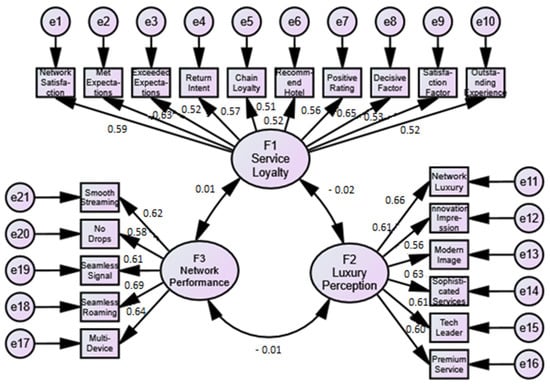
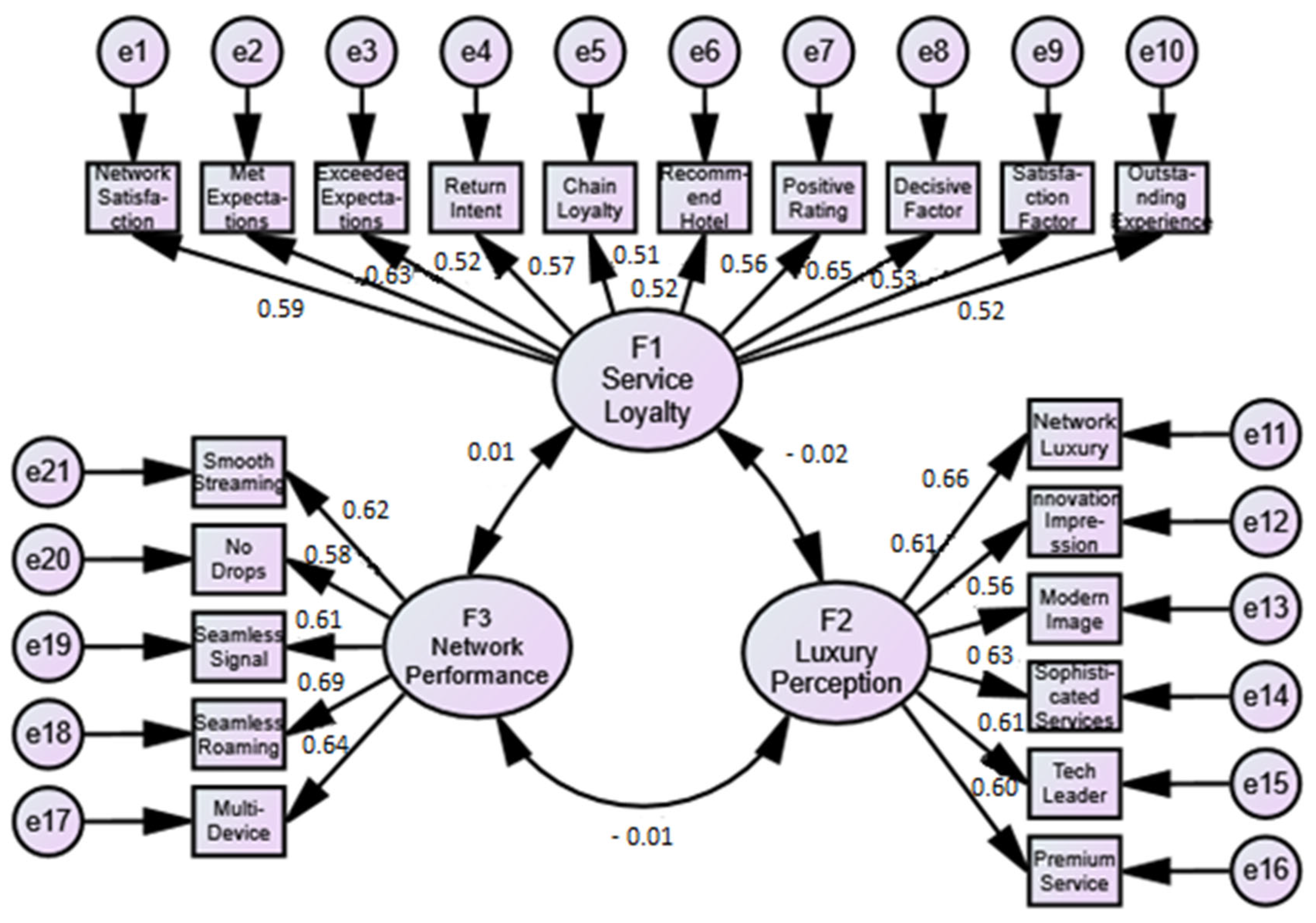

Disclaimer/Publisher’s Note: The statements, opinions and data contained in all publications are solely those of the individual author(s) and contributor(s) and not of MDPI and/or the editor(s). MDPI and/or the editor(s) disclaim responsibility for any injury to people or property resulting from any ideas, methods, instructions or products referred to in the content. |
© 2026 by the authors. Licensee MDPI, Basel, Switzerland. This article is an open access article distributed under the terms and conditions of the Creative Commons Attribution (CC BY) license.