
Article

Comparing the Effectiveness of Different Tacrolimus-Containing Medications Used in Daily Patient Care of Adult Kidney Transplant Patients in Transplant Centres of Eastern Hungary in a Prospective Non-Interventional Study (DeSz Study)

1
Department of Surgery, Division of Organ Transplantation, Faculty of Medicine, University of Debrecen, H-4032 Debrecen, Hungary
2
Chiesi Hungary Ltd., H-1138 Budapest, Hungary
3
Department of Biostatistics, University of Veterinary Medicine, H-1078 Budapest, Hungary
4
Department of Surgery, Division of Transplantation, University of Szeged Faculty of Medicine, H-6720 Szeged, Hungary
5
Cortex Hungary Ltd., H-1125 Budapest, Hungary
*
Author to whom correspondence should be addressed.
Transplantology 2026, 7(2), 10; https://doi.org/10.3390/transplantology7020010
Submission received: 21 January 2026 / Revised: 6 March 2026 / Accepted: 10 April 2026 / Published: 16 April 2026
(This article belongs to the Section Solid Organ Transplantation)

Abstract

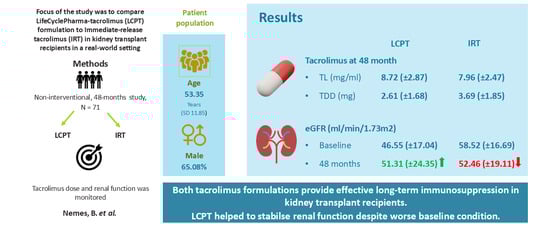
Background/Objectives: Given the narrow therapeutic range of tacrolimus and substantial inter-individual variability in trough levels, both total daily dose and the trough level-to-dose ratio are commonly used to guide dose optimization. In this study, Life-Cycle Pharma tacrolimus was compared with immediate-release tacrolimus in a real-world setting. Methods: This longitudinal observational study included kidney transplant recipients at two Hungarian university clinics. Sixty-three (63) patients completed the study and were included in the statistical analysis. They received either Life-Cycle Pharma-tacrolimus (n = 40) or immediate-release tacrolimus (n = 23) as maintenance therapy in the two study arms, each combined with everolimus or mycophenolic acid and corticosteroids. Patients were enrolled 4–6 weeks after transplantation and prospectively followed for 48 months. Tacrolimus trough level, total daily dose and their ratio were recorded at each of the seven follow-up visits during the 48-month study period. Epidemiological data, patient characteristics, laboratory parameters (including eGFR, de novo donor-specific antibodies, and CMV and BK virus incidence), and acute rejection episodes were monitored. Results: The mean age at enrolment was 53.35 years, and 41 patients (65.08%) were male. A stable therapeutic maintenance trough level was achieved in both study arms. Life-Cycle Pharma tacrolimus required a 30% lower total daily dose than immediate-release tacrolimus to achieve comparable exposure. A gradual decline in eGFR was observed in the immediate-release tacrolimus arm (a mean decrease of 6.06 mL/min/1.73 m2 over 4 years) from a baseline level of 58.52 mL/min/1.73 m2 (±16.69), whereas GFR increased in the Life-Cycle Pharma tacrolimus arm (a mean increase of 4.76 mL/min/1.73 m2 over the same period) from a significantly lower baseline level of 46.55 mL/min/1.73 m2 (±17.04). Conclusions: Both formulations provided effective long-term maintenance immunosuppression in kidney transplant recipients and maintained stable trough levels. Life-Cycle Pharma tacrolimus represents a potential option for dose minimization, and it also helped to stabilize renal function despite the worse baseline condition.

Graphical Abstract

1. Introduction

For kidney transplant (KT) recipients, prevention of graft rejection is essential; therefore, lifelong immunosuppressive therapy is required. The goal of immunosuppressive treatment is to preserve graft function and graft longevity while minimizing adverse effects, thereby maintaining patients’ quality of life.
Current immunosuppression regimens are primarily based on tacrolimus, a calcineurin inhibitor that forms the backbone of both induction and maintenance treatment [1,2,3]. Tacrolimus is most commonly combined with mycophenolic acid (MPA) or a mammalian target of rapamycin (mTOR) kinase inhibitor, along with corticosteroids (CSs).
Several tacrolimus formulations have been developed to improve bioavailability, enhance patient adherence and compliance, and optimize overall efficacy and safety of the active ingredient. Currently, three formulations are available: immediate-release tacrolimus capsules administered twice-daily (IRT: Prograf®, Astellas Pharma, München, Germany); a once-daily MeltDose tablet formulation (Life-Cycle Pharma tacrolimus [LCPT]; Envarsus®, Chiesi Farmaceutici S.p.A, Parma, Italy), and a once-daily extended-release tacrolimus capsule (ERT; Advagraf®, Astellas Pharma).
Tacrolimus levels below the lower therapeutic threshold may increase the risk of acute rejection and subsequent graft loss. Conversely, supratherapeutic levels are associated with an increased risk of opportunistic infections, malignancies, nephrotoxicity, tremor, diabetes, hypertension, and other metabolic adverse effects [4].
Tacrolimus has a narrow therapeutic range and exhibits a high degree of inter- and intra-individual variability in absorption and metabolism [4,5,6]. The total daily dose (TDD) is not considered a reliable predictor of drug levels [5,7]. The regularly monitored tacrolimus trough level (TL) is accepted as a valid measure of target tacrolimus exposure and remains the gold standard for monitoring the effectiveness of tacrolimus maintenance therapy, maintaining serum concentrations within the range of 5–10 ng/mL during the first year after transplantation, assuming combination therapy with MPA and CS following anti-CD25 monoclonal antibody induction [5,8,9].
The TL/TDD ratio (concentration-to-dose ratio, CD) has been proposed as a potential marker to guide tacrolimus dose requirements. CD may also serve to identify fast, intermediate, and slow metabolizers [10]. In addition to reflecting dose requirements, a low CD (indicative of fast metabolism) has been associated with worse clinical outcomes, including reduced graft survival, accelerated eGFR decline, higher rejection rates, increased calcineurin inhibitor (CNI)-related nephrotoxicity, and BK-associated nephropathy [10,11,12].
Higher daily doses of tacrolimus have been associated with increased cardiovascular morbidity and mortality and may exert direct harmful effects on renal epithelial cells, leading to CNI-related toxicity, deterioration of eGFR, and possible graft loss, and an increased incidence of infections and malignancies. Beyond total daily dose, elevated peak concentrations (Cmax) have been suggested to play a key role in neurotoxicity and histopathological renal changes [12]. CNIs, including tacrolimus, are commonly associated with tremor, which occurs in 34–54% of patients taking tacrolimus and imposes a considerable burden on quality of life. Dose reduction to mitigate tremor presents a clinical challenge, as excessive reduction may increase the risk of graft rejection. Several tacrolimus-sparing strategies have been investigated to reduce tacrolimus-related toxicity, while increasing patient survival. Owing to its improved bioavailability, LCPT may represent a potential option for reducing the burden of tacrolimus-associated toxicity [12,13,14,15].
Mycophenolic acid, as a standard immunosuppressive agent, and the second-generation mTORi everolimus (EVE) have been shown to be promising combination partners in tacrolimus-based regimens, allowing a reduction in tacrolimus dose. Corticosteroids are generally used as additional components of the immunosuppressive maintenance protocol [16,17,18].
Based on the above considerations, a prospective non-interventional observational study was designed to assess the efficacy and safety profile of tacrolimus-containing medications currently in use in adult KT recipients, as well as patient adherence in a real-world clinical setting.

2. Materials and Methods

2.1. Study Design and Protocol

This non-interventional study was conducted at two Hungarian transplant centres (Medical University Clinics of Debrecen and Szeged). The first patient was enrolled on 3 May 2018, and the last patient completed follow-up on 31 October 2023. The study was designed as a longitudinal, real-world investigation of adult patients receiving tacrolimus-containing regimens.
Patients were enrolled 4–6 weeks after KT. After the baseline visit, six additional follow-up visits were conducted as part of standard care over a 48-month follow-up period, at months 3, 6, 12, 24, 36 and 48. Tacrolimus TL was measured at each visit, and dosing was adjusted to keep TL within the target range of 5–20 ng/mL. At each visit, patients were assessed according to routine clinical practice, and relevant clinical and laboratory parameters were recorded.
The study design is presented in Table 1.

2.2. Study Population

Adult KT recipients receiving oral tacrolimus as part of the triple maintenance immunosuppressive treatment at the study centres were eligible for inclusion.
Other inclusion criteria were as follows: signed informed consent; age above 18 years; no contraindication to any tacrolimus formulation according the Summary of Product Characteristics (SmPC); KT performed 4–6 weeks prior to enrolment; tacrolimus-based immunosuppressive therapy initiated at least 4 weeks before enrolment; and receipt of triple-maintenance immunosuppressive therapy as per local protocol (tacrolimus in combination with mycophenolic acid [MPA] or mycophenolate mofetil [MMF] plus CS, or with an mTOR inhibitor plus CS).
Exclusion criteria were as follows: contraindications listed in the SmPC for tacrolimus-containing medications; failure to achieve stable trough levels (TL) (5–20 ng/mL during the first three months after KT and 5–15 ng/mL thereafter; infection within 2 weeks prior to enrolment; acute rejection; graft dysfunction or surgical complications influencing graft function (e.g., graft blood supply disorders, ureteral abnormalities); hospitalization due to an adverse drug reaction; use of medications known to affect tacrolimus levels within one week prior to enrolment or anticipated long-term use of such medications; kidney transplantation from an ABO-incompatible donor; cold-ischaemia time exceeding 30 h prior to implantation; hypersensitivity to tacrolimus; and known pregnancy at enrolment.

2.3. Objectives

The objective of the study was to assess the efficacy of tacrolimus-based maintenance treatment and patient adherence.
Primary efficacy endpoints included tacrolimus TL, TDD, CD, and changes in eGFR.
Secondary efficacy endpoints comprised the incidence of acute rejection, graft failure, vital signs, routine laboratory parameters, and dose adjustments.
Safety parameters included the incidence of viral and other infections, as well as mortality.

2.4. Variables

Parameters were assessed as part of routine clinical care using the local equipment and procedures of the transplant centres.
Systolic and diastolic blood pressure and heart rate were measured according to standard international guidelines after 10 min of rest in the outpatient clinics of the study centres.
Tacrolimus TL was measured using a standardized immunoassay.
Standard laboratory methods were used to assess routine parameters, including complete blood count (by fluorescent flow cytometry), kidney and liver function tests, lipid profile, CRP, metabolic parameters, and urinary protein level (measured using photometric and immunochemical methods); electrolyte levels were determined using ion-selective electrodes.
Additional routine laboratory parameters were determined by means of standardized assays, including fasting blood glucose, HBA1c, lipid profile (triglycerides, total cholesterol, LDL cholesterol, HDL cholesterol), and renal function parameters (eGFR, serum creatinine, and blood urea nitrogen). eGFR was determined using the CKD EPI equation as recommended by the Kidney Disease: Improving Global Outcomes (KDIGO) guidelines.
Patient adherence was assessed using the Basel Assessment of Adherence to Immunosuppressive Medication Scale (BAASIS) questionnaire (University of Basel, Basel, Switzerland). The BAASIS questionnaire is a validated instrument for assessing medication adherence through patient interviews [19]. On the adherence visual analogue scale (VAS; range 0–100), a score above 80 was considered indicative of adequate adherence.

2.5. Addressing Potential Sources of Bias

Patients received standard maintenance immunosuppression as per current local protocols after KT. Patients were enrolled in the study after signing informed consent forms. Owing to the observational design of the study, treatment decisions were guided by physicians’ routine clinical practice and were not influenced in any way, thereby fulfilling the criteria of a non-interventional study. In this real-world setting, randomization was not feasible; therefore, potential selection bias cannot be excluded and should be considered when interpreting the results.
No systematic differences in outcome assessment were identified between the treatment groups, and the protocol was designed in accordance with routine clinical practice to minimize detection bias throughout the study.
Missing data were not imputed and were reported as such.

2.6. Statistical Analysis

Descriptive analysis was performed for numerical variables, including mean, standard deviation (SD), median, minimum and maximum values; for categorical variables, the number and percentage of patients were calculated. A random-effects model was used to estimate the potential effects of different predictors on TDD, TL and CD ratios.
No formal hypothesis testing or a priori power calculation was performed. All statistical tests and confidence intervals (CIs) were interpreted in an exploratory manner. Vital signs were summarized using descriptive statistics (n, mean, standard deviation median, and range). Laboratory test results were also summarized using descriptive statistics (n, mean, SD, median, and quartiles).
A two-sided p value < 0.05 was considered statistically significant. Statistical analyses were performed using R software (version 4.3.1, R Core Team, Vienna, Austria).
Mixed models were used to estimate the association between different predictors and TDD, TL, CD ratios, and change in eGFR. The random intercept was specified at the patient level. The explanatory variables in the full model included type of tacrolimus product, immunosuppressive combination product, sex, time since study initiation, time from transplantation to enrolment, distance from the residential address, log-transformed creatinine value, baseline eGFR, presence of diabetes, and their pairwise interactions. A simpler model was selected by removing non-relevant interactions and covariates.
For sensitivity analysis, the same models were used for patients who completed the study.

3. Results

A total of 71 patients were enrolled in the study at the 2 study centres. Treatment allocation followed local standard-of-care protocols. 40 patients (56.34%) were treated with LCPT; 23 (32.39%) were treated with IRT, and 8 patients (11.27%) were treated with ERT. Owing to the small sample size, patients receiving ERT were excluded from the statistical analyses. Consequently, all subsequent analyses were restricted to the LCPT and IRT arms only, making up a total of 63 patients.
During long-term follow-up, the COVID-19 pandemic had a major impact on the care of immunosuppressed patients. Several outpatient visits were postponed during this period, after which routine clinical care was gradually resumed. These disruptions impacted the collection of certain laboratory parameters, resulting in multiple missing data and complicating the interpretation of some secondary endpoints.

3.1. Study Population and Baseline Characteristics

A total of 63 patients were included in the statistical analysis (age 53.35 ± 11.85 years; males n = 41 (65.08%)). Of these, 49 patients (77.78%) were enrolled at the University Clinic of Debrecen and 14 (22.22%) at the University Clinic of Szeged.
All patients had already received IRT for at least 4 weeks prior to enrolment. Subsequently, 40 patients (63.49%) were assigned to the LCPT arm, while 23 (36.51%) continued maintenance treatment in the IRT arm. Most patients received MPA or MMF in both treatment arms according to standard clinical practice. One patient in the IRT arm received mTORi as a second immunosuppressive agent, whereas in the LCPT arm, two patients initially received mTORi. The number of patients receiving mTOR inhibitors varied during the study, reaching a maximum of 6 patients at 36 months. There were no significant differences between treatment arms regarding the type or dose of mycophenolate combination therapies.
Demographic characteristics (age, sex, and height) were comparable between the two treatment arms. For the majority of patients (n = 55; 87.3%), this was their first kidney transplantation, while seven patients (11.11%) had undergone a second transplantation and one patient (1; 1.59%) had received a third transplant. The distribution of transplant history was similar across study centres and treatment arms. Almost all patients (n = 62; 98.41%) received a kidney from a deceased donor, with only one patient (1.59%) receiving a living donor transplant. Educational attainment ranged from primary education to university degree, with a similar distribution across both treatment arms. A comparable pattern was observed for employment status: during the observation period, 30.16% of patients had full-time jobs, 25.4% received disability-related social support, and others had part-time jobs. Unemployed and retired patients were also represented in the cohort. No significant differences were observed in patients’ residential distance from the transplant centres.
Among baseline clinical characteristics, no significant differences were found between treatment groups with respect to diastolic blood pressure, heart rate, body weight, height, BMI, type of dialysis prior to KT, HLA matching status, underlying diseases, the incidence of delayed graft function after KT, or clinical laboratory parameters, including ALT, serum Na, K, Cl, glucose, HbA1c, BUN, GOT, GPT, GGT, bilirubin, ALP, LDH, triglyceride, cholesterol, white blood cell and platelet count, CRP, and urine parameters including proteinuria and urine ACR ratio.
Baseline differences were observed in several parameters between the two treatment arms. Systolic blood pressure was higher in the LCPT group (146.95 mmHg, SD: 19.09) than in the IRT group (137.39 mmHg, SD: 16.3; p = 0.0404). Time on dialysis prior to transplantation was longer in the IRT arm (61.90 months, SD: 35.35) versus the LCPT arm (34.92 months, SD: 25.44; p = 0.0042). Almost all patients participating in the study received induction therapy following transplantation, with one patient in each arm not receiving induction. In the LCPT arm, 79.49% received anti-thymocyte globulin (ATG) and 20.51% basiliximab, whereas in the IRT arm, 50% received ATG and 50% basiliximab.
Baseline serum creatinine and eGFR levels were significantly different between the two treatment arms. Mean creatinine was higher in the LCPT arm (148.98 µmol/L, SD: 52.24) than in the IRT arm (119.22 µmol/L, SD: 30.34; p = 0.0058). Conversely, mean eGFR was lower in the LCPT arm (46.55 mL/min/1.73 m2, SD: 17.04) than in the IRT arm (58.52 mL/min/1.73 m2, SD: 16.69; p = 0.0091). Haemoglobin concentration and red blood cell count were higher in the IRT arm (haemoglobin: 128.48 g/L, SD: 17.08; red blood cell count: 4.29 T/L, SD: 0.72) than in the LCPT arm (haemoglobin: 116.38 g/L, SD: 12.54; red blood cell count: 3.89 T/L, SD: 0.45), with p values of 0.0053 and 0.024, respectively.
At Visit 1, tacrolimus TL values did not show significant differences between the LCPT and IRT treatment groups (LCPT: 11.76 ng/mL, SD: 4.69; IRT: 10.22 ng/mL, SD: 3.22; p = 0.1299). However, TDD was significantly lower in the LCPT arm (6.24 mg, SD: 2.83) than in the IRT arm (8.96 mg, SD: 3.4; p = 0.0024), resulting in a significantly higher CD in the LCPT group (2.25 [ng/mL]/mg, SD: 1.18 vs. 1.30 [ng/mL]/mg, SD: 0.63; p = 0.0001).
Baseline characteristics are summarized in Table 2. Statistically significant differences (p < 0.05) are indicated in bold. A table showing the most important baseline characteristics of completers versus non-completers per study arm is included in the Supplementary Materials.

3.2. Outcomes

A total of 63 patients started the study in the IRT and LCPT arms. During the 4-year follow-up period, 13 patients did not complete the study (11 in the LCPT arm and 2 in the IRT arm): 6 patients died and 7 were lost to follow-up. In addition, 11 patients (3 in the LCPT arm and 8 in the IRT arm) underwent a change in tacrolimus formulation during the study period. Following modification of maintenance therapy, their data were excluded from further statistical analyses. Overall, 39 patients completed the study according to protocol. Table 3 summarizes patient disposition throughout the follow-up period. It must be noted that there was a significant attrition observed during the study combined with the relatively low patient number, which resulted in only 13 patients remaining in the IRT arm (26 in LCPT) at month 48, thus limiting the statistical power to detect differences.

3.2.1. BMI

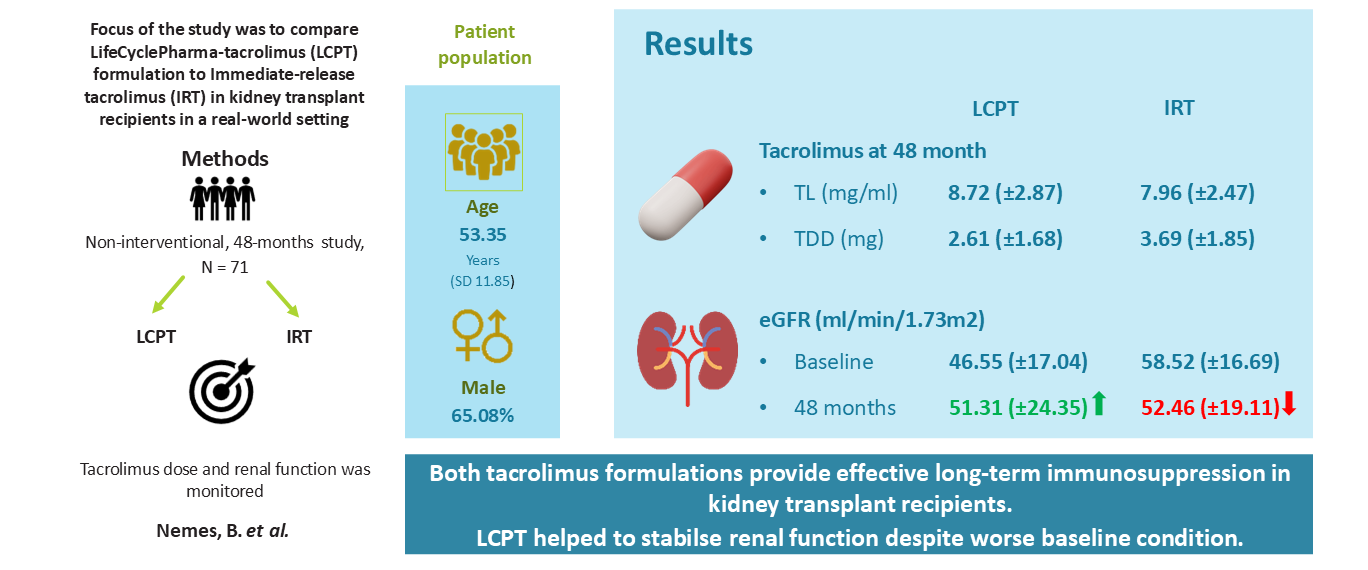
Body weight and BMI increased during the first year of follow-up. Thereafter, BMI remained stable in the LCPT arm, whereas it continued to increase in the IRT arm. In the mixed-model analysis, BMI was significantly associated with tacrolimus formulation, time since study initiation, time from transplantation to enrolment, and log-transformed serum creatinine. BMI trajectories over the study period are shown in Figure 1.

3.2.2. Renal Function

An unplanned significant between-group difference in renal function (eGFR and serum creatinine) was observed at baseline.
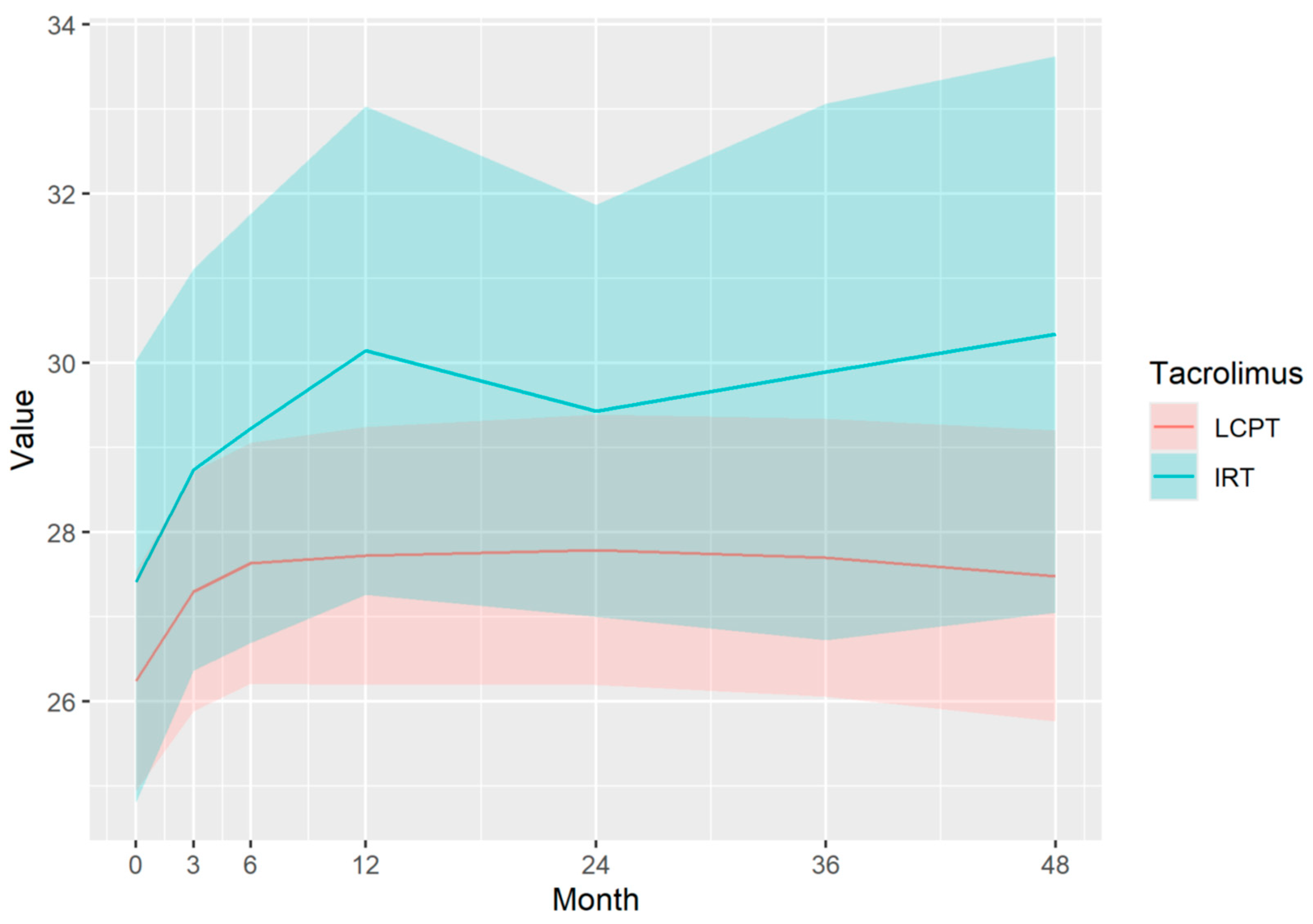
Mean baseline creatinine was higher in the LCPT arm (148.97 µmol/L, SD: 52.24) than in the IRT arm (119.22 µmol/L, SD: 30.34; p = 0.0058). During the follow-up, creatinine levels initially decreased in both groups. However, after 6 months, this trend reversed in the IRT arm, whereas renal function remained more stable in the LCPT arm, as shown in Figure 2.
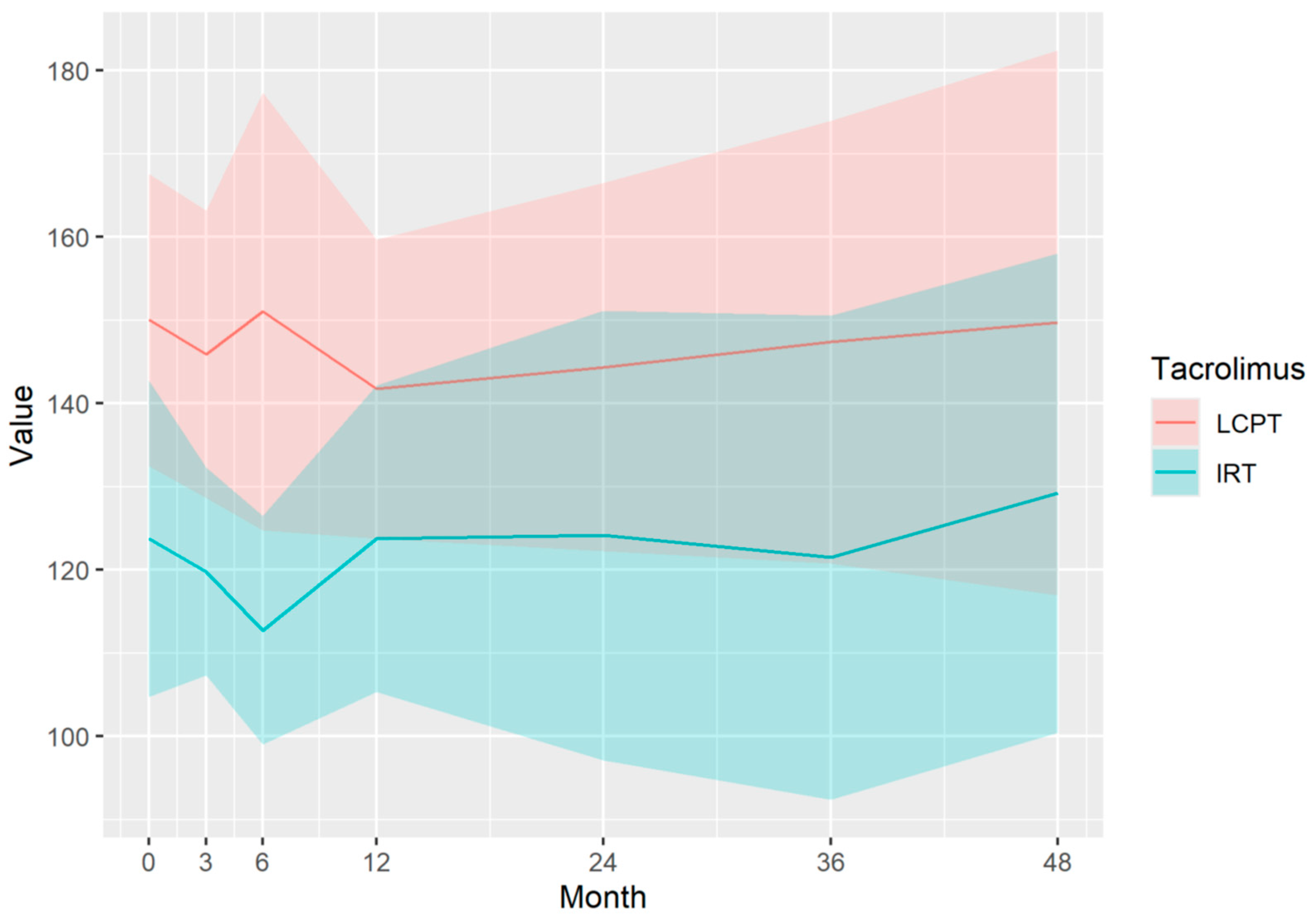
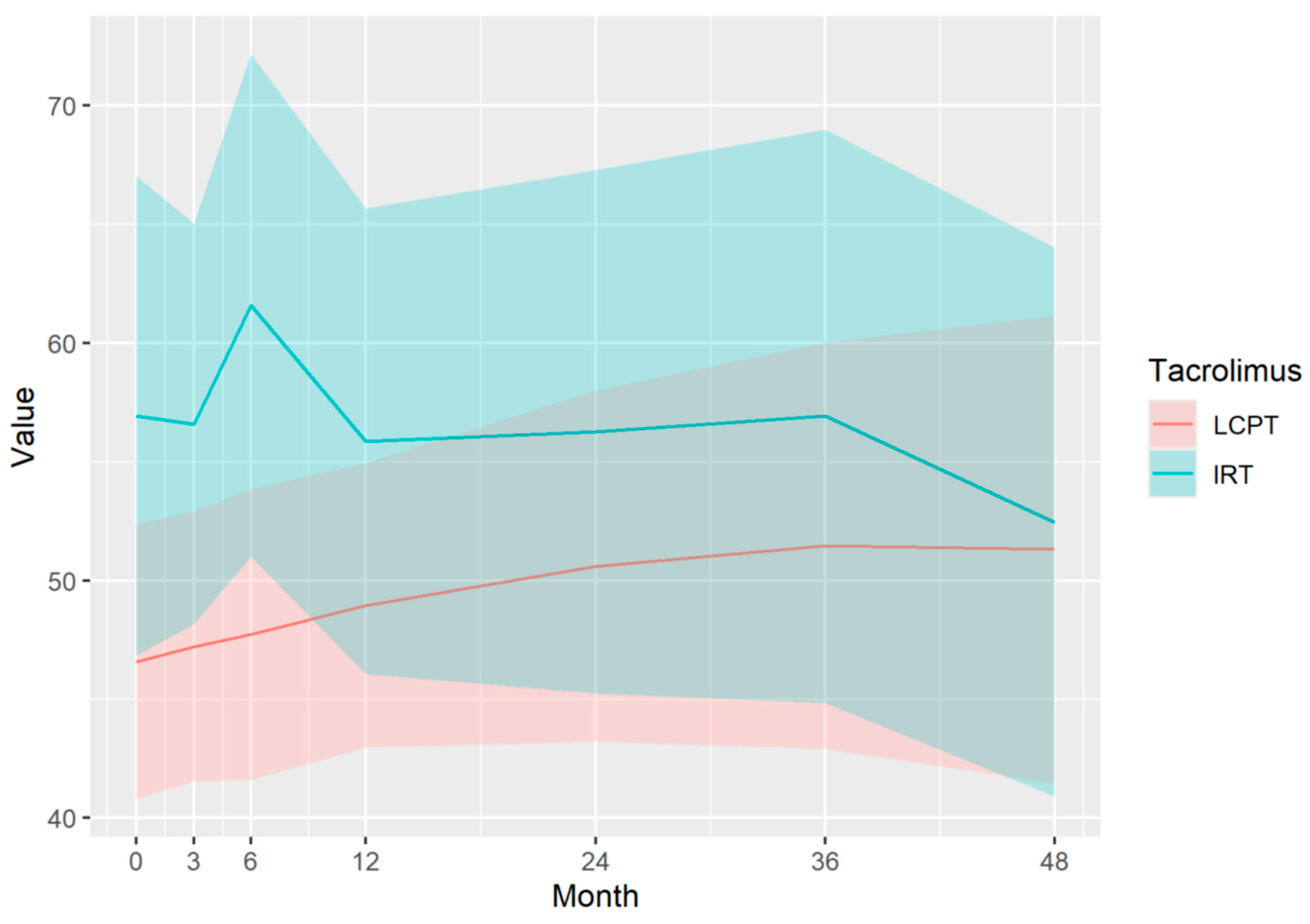
Baseline eGFR was lower in the LCPT arm (46.55 mL/min/1.73 m2, SD: 17.04) than in the IRT arm (58.52 mL/min/1.73 m2, SD: 16.69; p = 0.0091). During follow-up, eGFR increased in the LCPT arm and decreased in the IRT arm, resulting in nearly identical eGFR values at the end of the study period (LCPT: 51.31, SD: 24.35; IRT: 52.46, SD: 19.11), as shown in Figure 3.
Given the high rate of attrition, baseline eGFR was compared between completers and non-completers. Notably, no significant difference was observed between the study arms among those who completed the study (LCPT completer: 44.88 mL/min/1.73 m2, SD: 20.30, CI: 36.68–53.08; IRT completer: 52.46 mL/min/1.73 m2, SD: 19.11, CI: 33.31–64.69). Furthermore, non-completers in the IRT exhibited a higher mean baseline eGFR than completers (IRT completer: 49.00 mL/min/1.73 m2, SD: 25.96; IRT non-completer: 63.20 mL/min/1.73 m2, SD: 14.93), whereas no such disparity was found within the LCPT arm (LCPT completer: 44.88 mL/min/1.73 m2, SD: 20.30; LCPT non-completer: 42.57 mL/min/1.73 m2, SD: 19.07).
There was a wide variation in the individual eGFR curves; individual patient trajectories are included in the Supplementary Materials.
During the analysis, the change from baseline eGFR was assessed to factor in the baseline difference between the groups. The mixed-model analysis showed that change in eGFR correlated with time since study initiation, presence of diabetes as a comorbidity, type of concomitant immunosuppressive therapy (mTORi), and the interactions of tacrolimus formulation with time and with concomitant immunosuppressive regimen.
According to the model, eGFR increased by approximately 1.08 mL/min/1.73 m2 per year in the LCPT arm, while a 0.72 mL/min/1.73 m2 annual decline was estimated in the IRT arm. There was a significant difference (p = 0.0348) in the interaction of the treatment arm and time since study initiation.
MTORi as a second immunosuppressive treatment increased eGFR by an average of 19.84 mL/min/1.73 m2.
A sensitivity analysis was performed on patients with complete 48-month data, yielding consistent results—corresponding data can be found in the Supplementary Materials.

3.2.3. Tacrolimus Dosing

Tacrolimus Total Daily Dose
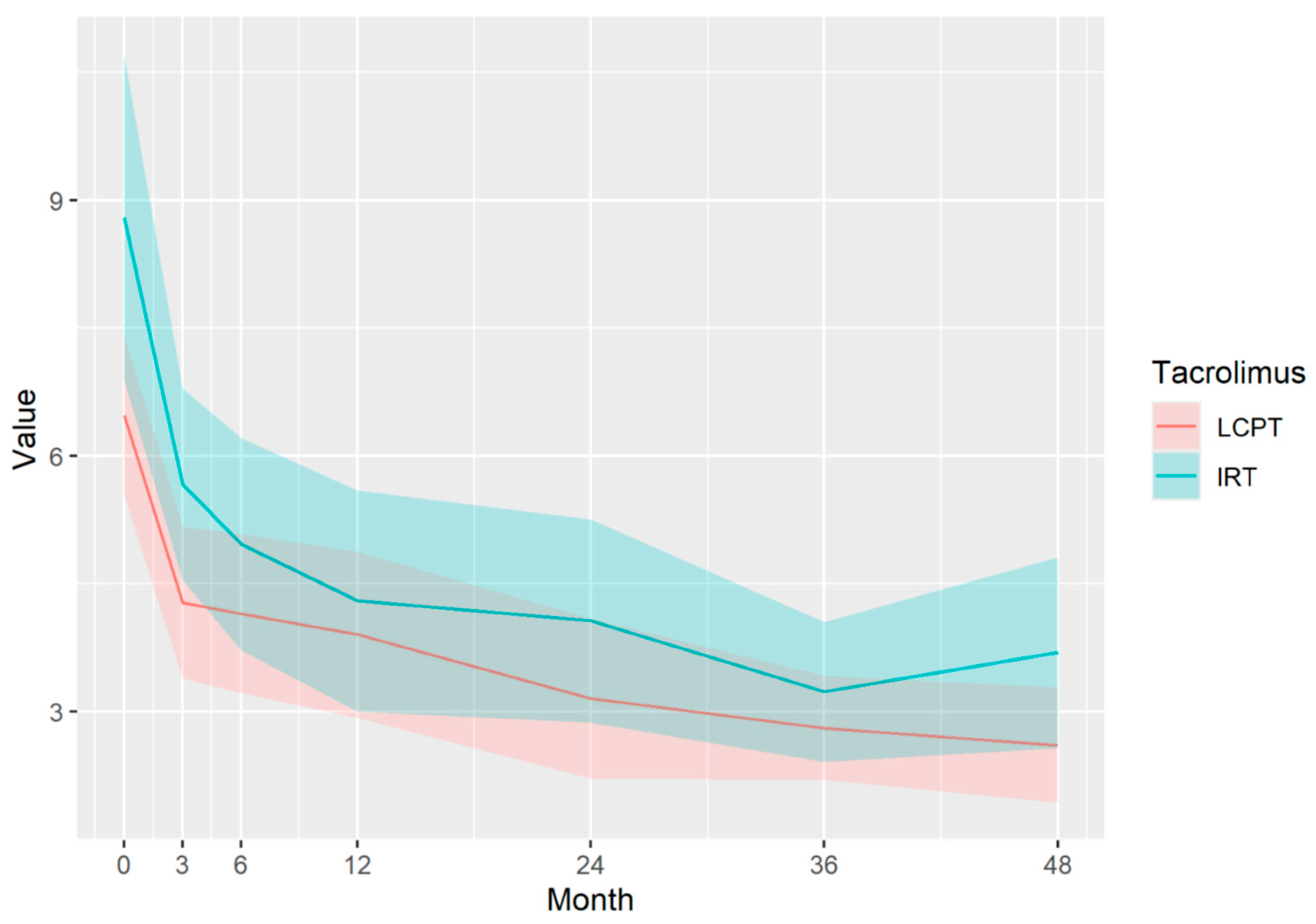
At baseline, tacrolimus TDD was higher in the IRT group (8.96 mg, SD: 3.40) than in the LCPT group (6.24 mg, SD: 2.83; p = 0.0024). In both treatment arms, doses decreased markedly during the first 3–6 months, followed by a more gradual decline throughout the remainder of follow-up, while the between-group difference was maintained. In the LCPT arm, the most pronounced dose reduction occurred within the first 3 months (mean TDD: 4.18 mg), followed by a steady but slower decline to a mean TDD of 2.61 mg at 48 months. In the IRT arm, dose reduction continued (although at a slower rate) until month 6 (mean TDD 5.93 mg at 3 months and 5.33 mg at 6 months). Thereafter, a gradual decline was observed, with a slight increase at the final visit (Figure 4).
Mixed-model analysis of TDD over time showed that the log-transformed TDD was associated with tacrolimus formulation and the log-transformed time since study initiation:
TDD = 5.42 × (month + 1) − 0.23
for LCPT and
TDD = 5.42 × (month + 1) − 0.23 × 1.41
for IRT.
Tacrolimus Trough Level
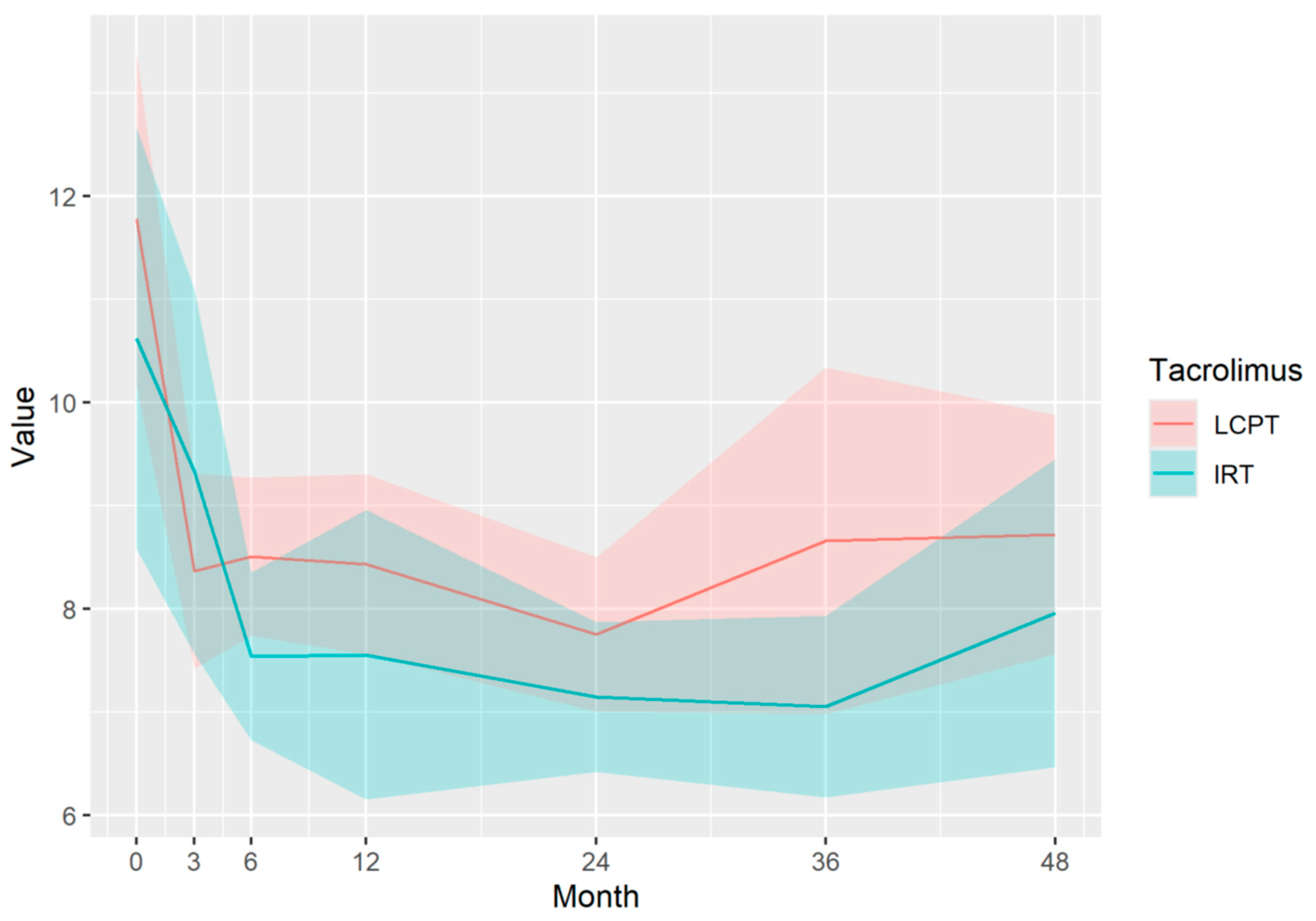
No significant difference in tacrolimus TL was observed between treatment groups at baseline. In both arms, lower TL values were achieved over the long-term follow-up. In the IRT group, steady-state TL was reached by Visits 3–4 and remained relatively stable thereafter. In contrast, the LCPT group achieved steady TL earlier, i.e., by Visit 2, and maintained this level throughout follow-up (Figure 5). Mixed-model analysis showed that TL was associated with tacrolimus formulation, concomitant immunosuppressive regimen, and renal function (baseline eGFR). TL values were slightly higher in the LCPT arm. In addition, receipt of an mTORi as a combination therapy was associated with a 32% reduction in TL (multiplicative factor 0.68).
Concentration-to-Dose Ratio (CD: TL/TDD)
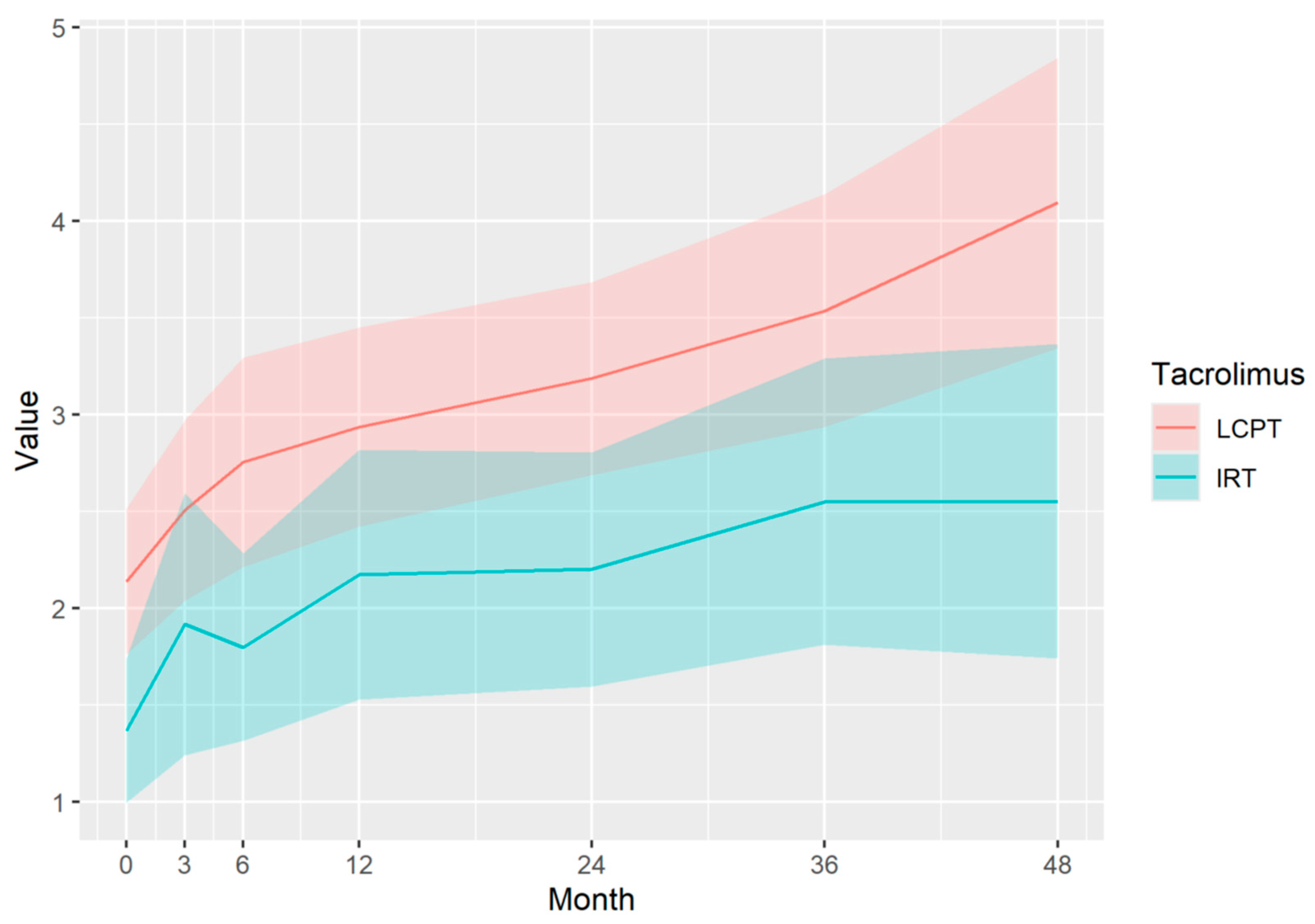
The CD ratio showed a significant difference between treatment arms at baseline (LCPT 2.25 [ng/mL]/mg, SD: 1.18; IRT 1.30 [ng/mL]/mg, SD: 0.63, p = 0.0001). In both groups, CD increased over time, and the between-group difference was maintained throughout the follow-up (Figure 6).
Mixed-model analysis demonstrated that CD was associated with tacrolimus formulation and increased over time.
CD = 2.54 − 0.96 × δ(IRT) + 0.03 × month − 0.62 × δ (mTORi)
According to the model, CD increased by an average of 0.36 units per year. It was 0.96 times lower in the IRT arm and 0.62 times lower in patients receiving mTORi combination therapy.
Table 4 summarizes model-based estimates of TDD, CD and eGFR derived from the mixed analysis. The data are presented graphically to illustrate temporal trends, with higher values indicated in green and lower values in yellow. Combination therapy with an mTORi was significantly associated with CD ratio. The values presented in the table reflect the model estimated for patients who did not receive mTORi therapy.

3.2.4. Treatment Adherence

High adherence to immunosuppressive therapy was observed throughout the study based on the BAASIS questionnaire. On the 0–100 VAS scale, adherence scores in the LCPT arm ranged from 90 to 100 (median 100), while in the IRT arm, scores ranged from 80 to 100 (median 100). According to the questionnaire results, patients in both treatment arms were adherent to their immunosuppressive medication.

3.2.5. Safety

During long-term follow-up, six deaths were recorded (causes: cardiac arrest, pancreas tumour, stroke, hepatitis B reactivation, 2 unknown). All deaths occurred in the LCPT arm and were assessed by the investigators as unrelated to study medication. A total of 36 adverse events (AEs) were reported: 30 in the LCPT arm and 6 in the IRT arm. Of these, 27 were classified as serious adverse events (SAEs), 24 in the LCPT arm and 3 in the IRT arm. No serious unexpected drug reactions were reported during the study.
BK viremia was observed in four cases affecting three patients in the LCPT arm and in two cases affecting two patients in the IRT arm. One case of CMV viremia was reported in each treatment arm. In addition, 12 cases of other infections were reported in 10 patients in the LCPT arm, and there were 4 infections in 3 patients in the IRT arm.
Given the low number of patients and events, formal statistical comparisons of infection rates between treatment arms were not feasible.
Biopsy-proven acute rejection occurred in three patients in the LCPT arm, and none was observed in the IRT arm. Due to the low number of cases, this difference is likely attributable to random variation.
No graft failure was recorded in either treatment arm.
Given the low number of events, survival analysis was only feasible for viral and bacterial infections, which are included in the Supplementary Materials.

4. Discussion

This observational study provides valuable long-term real-world data on the management of KT recipients. Baseline demographic data indicate that patients from diverse social backgrounds have access to kidney transplantation in Hungary, reflecting the coverage provided by the national social health insurance policy.
Baseline differences were identified between the two treatment arms. Renal function (eGFR and serum creatinine) and haematological parameters (red blood cell count and haemoglobin) as well as blood pressure were less favourable in the LCPT group. According to the KDIGO guidelines, ATG is preferred for patients at a higher immunological risk, which may explain the higher proportion of ATG induction therapy in the LCPT arm [3]. Conversely, time on dialysis prior to transplantation was significantly shorter in the LCPT arm, a factor known to influence patient mortality and graft survival [20,21]. Neither existing (national, international or institutional) guidelines nor physician reports suggested the presence of intentional indication bias (due to the observational nature of the study, treatment was not directed by the study but decided case-by-case by the treating physician). Nevertheless, the baseline differences suggest that selection bias cannot be excluded and should be considered when interpreting the results.
The mortality rate in the LCPT arm was slightly above 10%, which is comparable to rates reported in the literature among kidney transplant recipients treated with tacrolimus [22]. Although all deaths occurred in the LCPT arm, due to the low number of cases, the difference is likely attributable to random variation (Fisher’s exact test, p = 0.1645). This may also have been influenced by the less favourable baseline characteristics observed in the LCPT arm.
Both LCPT and IRT were effective as long-term immunosuppressive maintenance treatments in KT recipients. In both treatment arms, stable therapeutic tacrolimus TLs were achieved within the first months after transplantation and were maintained throughout the 4-year follow-up period. Mean TL values were slightly lower in the LCPT arm (7.75–8.72 ng/mL from month 3 onwards) than in the IRT arm (7.05–7.96 ng/mL from month 6 onwards); however, values in both groups remained within the target therapeutic range. Steady-state TL was achieved earlier in the LCPT arm at 3 months post-enrolment (corresponding to 4–5 months after transplantation), whereas in the IRT arm, steady-state levels were reached between 6 and 12 months.
Given its potential side effects, tacrolimus sparing is an important consideration in maintenance immunosuppressive treatment. Owing to its improved bioavailability, the LCPT formulation requires a lower TDD to achieve comparable TLs. In addition, LCPT is associated with reduced (30% lower) peak-to-peak fluctuation over 24 h compared with IRT or ERT formulations. Furthermore, LCPT demonstrates reduced peak-to-trough variability and a prolonged time to maximum concentration (Tmax) relative to other tacrolimus formulations [23]. In our study, therapeutic TLs were achieved with 30% lower TDD in the LCPT arm, consistent with the Summary of Product Characteristics (SmPCs). Furthermore, combination therapy with mTOR inhibitors was associated with additional TDD reduction, suggesting a potential role for tacrolimus-sparing strategies in maintenance immunosuppression, irrespective of tacrolimus formulation.
The TL/TDD ratio, also referred to as CD, can serve two distinct purposes. First, it may be used to characterize individual tacrolimus metabolism, which shows considerable interindividual variability. Tacrolimus metabolism is affected by multiple factors, including age, sex, and BMI. The drug is primarily metabolized by cytochrome P450 enzymes (CYP3A4 and CYP3A5) and transported by glycoprotein P. Patients expressing the CYP3A5*1 allele are generally classified as fast tacrolimus metabolizers, whereas slow metabolizers mostly express CYP3A5*3; in both groups, metabolic activity tends to decline with age [24]. Fast metabolizers require significantly higher TDDs to achieve comparable TLs and therefore are characterized by lower CD ratios. A lower CD ratio has been associated with delayed graft function, higher rejection rates, more frequent and severe adverse drug reactions, and increased mortality [10,11]. CYP 3A5 genotyping was not performed as part of routine patient care during the study period. In addition, given the low case number, subgroup analyses based on CD values were not feasible. Consequently, this aspect could not be explored further but may be an interesting area for further research.
A further application of the CD ratio is to characterize the tacrolimus formulation: higher CD values reflect lower tacrolimus exposure at comparable trough levels. Consistent with the observed differences in TDD (despite similar TL values) CD increased over time in both groups and remained higher in the LCPT group. CD ratio was further elevated in patients receiving mTORi combination therapy, supporting the importance of combination regimens as additional strategy for tacrolimus doze minimization.
Renal toxicity remains one of the major concerns associated with calcineurin inhibitors (CNI). Acute CNI-related renal toxicity may occur shortly after kidney transplantation and is potentially reversible with lower drug levels. Tacrolimus induces vasoconstriction of the afferent arterioles within the glomerulus. Another reported harmful effect of tacrolimus is the development of progressive, chronic, irreversible interstitial fibrosis and tubular atrophy, which contribute to poor graft function [25].
The eGFR slope after a kidney transplant typically exhibits a rapid initial rise as renal function is restored during the first weeks. This is generally followed by a period of stable function or a gradual long-term decline after the first year. On average, long-term graft function decreases at a rate of −1.12 to −3.42 mL/min/1.73 m2 per year, though significant interindividual variability exists [26,27,28]. In our study, patients in the LCPT arm showed improvement in renal function over time in contrast to a decrease in eGFR in the IRT arm. However, due to the baseline differences, these changes may partially represent a regression to the mean, resulting in both arms showing very similar levels at the conclusion of the study. Given that baseline eGFR was comparable between study arms for those who completed the 48-month follow-up, and the sensitivity analysis yielded consistent results, it is unlikely that regression to the mean was the primary driver of the observed changes.
Other authors have reported that LCPT formulation is associated with better renal function in transplant patients. The observed difference may be explained by lower tacrolimus dose exposure, potentially resulting in less renal toxicity and partial recovery of kidney function. Several mechanisms have been proposed to account for the nephron-protective properties of LCPT, including lower TDD, a more balanced pharmacokinetic profile with lower peak serum concentration (Cmax), a lower Cmax/Cmin fluctuation ratio, and reduced cumulative tacrolimus exposure [29,30,31,32]. An important question for future research is which characteristics define or trigger tacrolimus-related adverse drug reactions.
This real-world longitudinal study provided valuable data on standard-of-care management of kidney transplant recipients in Hungary. Patients from diverse educational (primary to university level) and social backgrounds (including unemployed individuals, retirees, recipients of disability benefits, and full-time employees) were represented during the 4-year follow-up after kidney transplant surgery.
Despite its results, this study has certain limitations due to its observational nature, which meant that only data available through standard of care were collected. The lack of randomization resulted in initial selection bias inherent to the real-world setting. Baseline renal and haematological differences indicate that despite no differences in treatment guidelines, physicians may have tended to treat a more severe patient population with LCPT. Owing to the baseline disparities, the eGFR benefit observed in the LCPT arm may be partially attributable to regression to the mean. Furthermore, the low case numbers and inclusion of only two study centres contributed to lower statistical power and the possible underestimation of differences between the two groups. The small sample size also precluded subgroup analyses. The attrition during the four-year follow-up period resulted in an even smaller sample size at month 48, limiting the reliability of the GFR slope, especially in the IRT group. Absence of genetic profiling data limits our understanding on the underlying mechanism of tacrolimus metabolism. As the study was conducted across only two Hungarian centres, the generalizability of the findings may be limited. The impact of the COVID-19 pandemic should also be acknowledged as a limitation (to minimize the risk of viral infection in immunosuppressed patients during study visits, only essential laboratory procedures were performed, thereby reducing the number of recorded parameters during this period.

5. Conclusions

Both LCPT and IRT were effective for long-term immunosuppressive maintenance treatment in KT recipients and maintained stable TLs. The use of LCPT required 30% lower TDD compared with IRT to achieve the therapeutic TL. Furthermore, a gradual decline in eGFR was observed in the IRT arm (a mean decrease of 6.06 mL/min/1.73 m2 over 4 years), in contrast to the LCPT arm, where eGFR increased by a similar magnitude (4.76 mL/min/1.73 m2). These results suggest that LCPT represents a potential option for dose minimization, and it also helped to stabilize renal function despite the worse baseline condition.

Supplementary Materials

The following supporting information can be downloaded at: https://www.mdpi.com/article/10.3390/transplantology7020010/s1, Table S1: Most significant baseline variables according to study groups and patient completer status; Table S2: Tacrolimus TDD during the study; Table S3: Tacrolimus TL during the study; Table S4: Mixed-model analysis for tacrolimus TL during the study final model; Table S5: Tacrolimus CD during the study; Table S6: Mixed-model analysis for tacrolimus CD during the study final model; Table S7: Creatinine blood levels during the study; Table S8: Mixed-model analysis for creatinine during the study final model; Table S9: eGFR during the study; Table S10: Mixed-model analysis for change of eGFR during the study final model complete population; Table S11: Mixed-model analysis for change of eGFR during the study final model 48 months completers only; Figure S1: Individual patient data of eGFR change from baseline; Figure S2: Kaplan-Meier survival analysis of viral infections throughout the study; Figure S3: Kaplan-Meier survival analysis of bacterial infections throughout the study.

Author Contributions

Conceptualization, B.N. and E.S.; formal analysis, Z.A.-T.; investigation, B.N., E.S., O.B. and A.D.; data curation, Á.S.; writing—original draft preparation, D.F.; writing—review and editing, B.N. and Á.S.; supervision, project administration and funding acquisition, Á.S. All authors have read and agreed to the published version of the manuscript.

Funding

This study was funded by Chiesi Hungary Ltd. [project number: 2017/DESZ/1), the local representative of the marketing authorization holder, Chiesi Farmaceutici S.p.A., for LCPT (Envarsus). The study reflects real-world experience in a prospective observational setting.

Institutional Review Board Statement

This study was designed and conducted in accordance with the principles of the Declaration of Helsinki and the relevant Hungarian regulations for non-interventional studies (Decree of the Minister of Health 23/2002. (V. 9) EüM on medical research on human subjects). This study was initiated following receipt of a favourable opinion from the central ethics committee (ETT TUKEB—Hungarian Medical Research Council, Scientific and Research Ethics Committee) (protocol code: DeSz TX-2017, 25 October 2017) and approval by the National Institute of Pharmacy and Nutrition (OGYÉI/57465-4/2017, 30 October 2017).

Informed Consent Statement

Patients were informed about the main objectives and procedures of the study, including data processing. Each patient provided written informed consent prior to enrolment, and data collection commenced thereafter. Patient treatment and care followed the local standard of care and were not influenced by study participation.

Data Availability Statement

The data underlying this article are available within the article and in its online Supplementary Materials.

Acknowledgments

The authors thank all transplant nephrologists, healthcare professionals, and nurses working in the transplantation departments of the participating centres for their assistance in conducting this study.

Conflicts of Interest

Chiesi Hungary Ltd., as the study funder, was involved in the study design, management of study conduct, data analysis, and publication. Author Ákos Szeredi was employed by the company Chiesi Hungary Ltd. (the study sponsor). Dóra Fazekas was employed by the company Cortex Hungary Ltd. The remaining authors declare that the research was conducted in the absence of any commercial or financial relationships that could be construed as a potential conflict of interest.

Abbreviations

The following abbreviations are used in this manuscript:
ATGAnti-thymocyte globulin
BMIBody mass index
CDConcentration-to-dose ratio
CIConfidence interval
CNICalcineurin
CRPC-reactive protein
CSCorticosteroids
CYPCytochrome P450
DSADonor-specific antibodies
eGFREstimated glomerular filtration rate
ERTExtended-release tacrolimus
EVEEverolimus
IRTImmediate-release tacrolimus
KDIGOKidney Disease: Improving Global Outcomes guidelines
KTKidney transplant
LCPTLife-Cycle Pharma Tacrolimus
MMFMycophenolate mofetil
MPAMycophenolic acid
mTORMammalian target of rapamycin
SDStandard deviation
SmPCSummary of product characteristics
TDDTotal daily dose
TLTrough level
VASVisual analog scale

References

  1. Ekberg, H.; Tedesco-Silva, H.; Demirbas, A.; Vítko, S.; Nashan, B.; Gürkan, A.; Margreiter, R.; Hugo, C.; Grinyó, J.M.; Frei, U.; et al. Reduced exposure to calcineurin inhibitors in renal transplantation. N. Engl. J. Med. 2007, 357, 2562–2575. [Google Scholar] [CrossRef]
  2. Azzi, J.R.; Sayegh, M.H.; Mallat, S.G. Calcineurin inhibitors: 40 years later, can’t live without. J. Immunol. 2013, 191, 5785–5791. [Google Scholar] [CrossRef] [PubMed]
  3. Kidney Disease: Improving Global Outcomes (KDIGO) Transplant Work Group. KDIGO clinical practice guideline for the care of kidney transplant recipients. Am. J. Transplant. 2009, 9, S1–S155. [Google Scholar] [CrossRef] [PubMed]
  4. Ruiz, R.; Kirk, A.D. Long-Term Toxicity of Immunosuppressive Therapy. In Transplantation of the Liver; Elsevier: Amsterdam, The Netherlands, 2015; pp. 1354–1363. [Google Scholar] [CrossRef] [PubMed Central]
  5. Wallemacq, P.; Armstrong, V.W.; Brunet, M.; Haufroid, V.; Holt, D.W.; Johnston, A.; Kuypers, D.; Le Meur, Y.; Marquet, P.; Oellerich, M.; et al. Opportunities to optimize tacrolimus therapy in solid organ transplantation: Report of the European consensus conference. Ther. Drug Monit. 2009, 2, 139–152. [Google Scholar] [CrossRef] [PubMed]
  6. Sapir-Pichhadze, R.; Wang, Y.; Famure, O.; Li, Y.; Kim, S.J. Time-dependent variability in tacrolimus trough blood levels is a risk factor for late kidney transplant failure. Kidney Int. 2014, 85, 1404–1411, Erratum in: Kidney Int. 2016, 89, 248. https://doi.org/10.1016/j.kint.2015.10.003. PMID: 24336032. [Google Scholar] [CrossRef]
  7. Bentata, Y. Tacrolimus: 20 years of use in adult kidney transplantation. What we should know about its nephrotoxicity. Artif. Organs 2020, 44, 140–152. [Google Scholar] [CrossRef] [PubMed]
  8. Ekberg, H.; Mamelok, R.D.; Pearson, T.C.; Vincenti, F.; Tedesco-Silva, H.; Daloze, P. The challenge of achieving target drug concentrations in clinical trials: Experience from the Symphony study. Transplantation 2009, 87, 1360–1366. [Google Scholar] [CrossRef] [PubMed]
  9. Grinyó, J.M.; Ekberg, H.; Mamelok, R.D.; Oppenheimer, F.; Sánchez-Plumed, J.; Gentil, M.A.; Hernandez, D.; Kuypers, D.R.; Brunet, M. The pharmacokinetics of mycophenolate mofetil in renal transplant recipients receiving standard-dose or low-dose cyclosporine, low-dose tacrolimus or low-dose sirolimus: The Symphony pharmacokinetic substudy. Nephrol. Dial. Transplant. 2009, 24, 2269–2276. [Google Scholar] [CrossRef]
  10. Schütte-Nütgen, K.; Thölking, G.; Steinke, J.; Pavenstädt, H.; Schmidt, R.; Suwelack, B.; Reuter, S. Fast Tac Metabolizers at Risk—It is Time for a C/D Ratio Calculation. J. Clin. Med. 2019, 8, 587, Erratum in: J. Clin. Med. 2019, 8, E1870. https://doi.org/10.3390/jcm8111870. PMID: 31035422; PMCID: PMC6572069. [Google Scholar] [CrossRef]
  11. Nowicka, M.; Górska, M.; Nowicka, Z.; Edyko, K.; Edyko, P.; Wiślicki, S.; Zawiasa-Bryszewska, A.; Strzelczyk, J.; Matych, J.; Kurnatowska, I. Tacrolimus: Influence of the Posttransplant Concentration/Dose Ratio on Kidney Graft Function in a Two-Year Follow-Up. Kidney Blood Press. Res. 2019, 44, 1075–1088. [Google Scholar] [CrossRef] [PubMed]
  12. Thölking, G.; Schütte-Nütgen, K.; Schmitz, J.; Rovas, A.; Dahmen, M.; Bautz, J.; Jehn, U.; Pavenstädt, H.; Heitplatz, B.; Van Marck, V.; et al. A Low Tacrolimus Concentration/Dose Ratio Increases the Risk for the Development of Acute Calcineurin Inhibitor-Induced Nephrotoxicity. J. Clin. Med. 2019, 8, 1586. [Google Scholar] [CrossRef]
  13. Wiseman, A.; Alhamad, T.; Alloway, R.R.; Concepcion, B.P.; Cooper, M.; Formica, R.; Klein, C.L.; Kumar, V.; Leca, N.; Shihab, F.; et al. Use of LCP-Tacrolimus (LCPT) in Kidney Transplantation: A Delphi Consensus Survey of Expert Clinicians. Ann. Transplant. 2024, 29, e943498. [Google Scholar] [CrossRef] [PubMed]
  14. Bunnapradist, S.; Ciechanowski, K.; West-Thielke, P.; Mulgaonkar, S.; Rostaing, L.; Vasudev, B.; Budde, K.; on behalf of the MELT investigators. Conversion from twice-daily tacrolimus to once-daily extended-release tacrolimus (LCPT): The phase III randomized MELT trial. Am. J. Transplant. 2013, 13, 760–769. [Google Scholar] [CrossRef] [PubMed]
  15. Thölking, G.; Tosun-Koç, F.; Jehn, U.; Koch, R.; Pavenstädt, H.; Suwelack, B.; Reuter, S. Improved Kidney Allograft Function after Early Conversion of Fast IR-Tac Metabolizers to LCP-Tac. J. Clin. Med. 2022, 11, 1290. [Google Scholar] [CrossRef] [PubMed]
  16. Oberbauer, R.; Bestard, O.; Furian, L.; Maggiore, U.; Pascual, J.; Rostaing, L.; Budde, K. Optimization of tacrolimus in kidney transplantation: New pharmacokinetic perspectives. Transplant. Rev. 2020, 34, 100531. [Google Scholar] [CrossRef]
  17. Ficher, K.N.; Dreige, Y.; Lins, P.R.G.; Ferreira, A.N.; Freschi, J.T.d.R.; Linhares, K.; Martins, S.S.M.; Custodio, L.; Cristelli, M.; Viana, L.M.; et al. Two-year outcomes in de novo renal transplant recipients receiving everolimus-facilitated calcineurin inhibitor reduction regimen from the TRANSFORM study. Am. J. Transplant. 2019, 19, 3018–3034. [Google Scholar] [CrossRef]
  18. Nunes Ficher, K.; Dreige, Y.; Gessolo Lins, P.R.; Nicolau Ferreira, A.; Toniato de Rezende Freschi, J.; Linhares, K.; Stopa Martins, S.; Custodio, L.; Cristelli, M.; Viana, L.; et al. Long-term Efficacy and Safety of Everolimus Versus Mycophenolate in Kidney Transplant Recipients Receiving Tacrolimus. Transplantation 2022, 106, 381–390. [Google Scholar] [CrossRef] [PubMed]
  19. BAASIS The Basel Assessment of Adherence to Immunosuppressive Medications Scale. Available online: https://baasis.nursing.unibas.ch/ (accessed on 8 February 2026).
  20. Meier-Kriesche, H.U.; Kaplan, B. Waiting time on dialysis as the strongest modifiable risk factor for renal transplant outcomes: A paired donor kidney analysis. Transplantation 2002, 74, 1377–1381. [Google Scholar] [CrossRef] [PubMed]
  21. Meier-Kriesche, H.-U.; Port, F.K.; Ojo, A.O.; Rudich, S.M.; Hanson, J.A.; Cibrik, D.M.; Leichtman, A.B.; Kaplan, B. Effect of waiting time on renal transplant outcome. Kidney Int. 2000, 58, 1311–1317. [Google Scholar] [CrossRef] [PubMed]
  22. Loucaidou, M.; McLean, A.G.; Cairns, T.D.H.; Griffith, M.; Hakim, N.; Palmer, A.; Papalois, V.; Van Tromp, J.; Loucaides, C.; Welsh, K.I.; et al. Five-year results of kidney transplantation under tacrolimus-based regimes: The persisting significance of vascular rejection. Transplantation 2003, 76, 1120–1122. [Google Scholar] [CrossRef]
  23. Tremblay, S.; Nigro, V.; Weinberg, J.; Woodle, E.S.; Alloway, R.R. A Steady-State Head-to-Head Pharmacokinetic Comparison of All FK-506 (Tacrolimus) Formulations (ASTCOFF): An Open-Label, Prospective, Randomized, Two-Arm, Three-Period Crossover Study. Am. J. Transplant. 2017, 17, 432–442. [Google Scholar] [CrossRef] [PubMed] [PubMed Central]
  24. Masuda, S.; Inui, K. An up-to-date review on individualized dosage adjustment of calcineurin inhibitors in organ transplant patients. Pharmacol. Ther. 2006, 112, 184–198. [Google Scholar] [CrossRef]
  25. Naesens, M.; Kuypers, D.R.; Sarwal, M. Calcineurin inhibitor nephrotoxicity. Clin. J. Am. Soc. Nephrol. 2009, 4, 481–508. [Google Scholar] [CrossRef]
  26. Bushljetikj, I.R.; Nikolov, I.; Stankov, O.; Dohcev, S.; Stavridis, S.; Spasovski, G. Factors Affecting Egfr Slope in Renal Transplant Recipients During 48 Months After Transplantation. Transplantation 2020, 104, S245. [Google Scholar] [CrossRef]
  27. Marcén, R.; Morales, J.M.; Fernández-Rodriguez, A.; Capdevila, L.; Pallardó, L.; Plaza, J.J.; Cubero, J.J.; Puig, J.M.; Sanchez-Fructuoso, A.; Arias, M.; et al. Long-term graft function changes in kidney transplant recipients. NDT Plus 2010, 3, ii2–ii8. [Google Scholar] [CrossRef] [PubMed] [PubMed Central]
  28. Kosinski, L.; Frey, E.; Klein, A.; O’DOherty, I.; Romero, K.; Stegall, M.; Helanterä, I.; Gaber, A.O.; Fitzsimmons, W.E.; Aggarwal, V.; et al. Longitudinal estimated glomerular filtration rate (eGFR) modeling in long-term renal function to inform clinical trial design in kidney transplantation. Clin. Transl. Sci. 2023, 16, 1680–1690. [Google Scholar] [CrossRef] [PubMed] [PubMed Central]
  29. von Einsiedel, J.; Thölking, G.; Wilms, C.; Vorona, E.; Bokemeyer, A.; Schmidt, H.H.; Kabar, I.; Hüsing-Kabar, A. Conversion from Standard-Release Tacrolimus to MeltDose® Tacrolimus (LCPT) Improves Renal Function after Liver Transplantation. J. Clin. Med. 2020, 9, 1654. [Google Scholar] [CrossRef] [PubMed] [PubMed Central]
  30. Baraldo, M. Meltdose Tacrolimus Pharmacokinetics. Transplant. Proc. 2016, 48, 420–423. [Google Scholar] [CrossRef]
  31. Bunnapradist, S.; Rostaing, L.; Alloway, R.R.; West-Thielke, P.; Denny, J.; Mulgaonkar, S.; Budde, K. LCPT once-daily extended-release tacrolimus tablets versus twice-daily capsules: A pooled analysis of two phase 3 trials in important de novo and stable kidney transplant recipient subgroups. Transpl. Int. 2016, 29, 603–611. [Google Scholar] [CrossRef]
  32. Suwelack, B.; Bunnapradist, S.; Meier-Kriesche, U.; Stevens, D.R.; Procaccianti, C.; Morganti, R.; Budde, K. Effect of Concentration/Dose Ratio in De Novo Kidney Transplant Recipients Receiving LCP-Tacrolimus or Immediate-Release Tacrolimus: Post Hoc Analysis of a Phase 3 Clinical Trial. Ann. Transplant. 2020, 25, e923278. [Google Scholar] [CrossRef] [PubMed] [PubMed Central]
Figure 1. Mean BMI and 95% CIs during the study period.
Transplantology 07 00010 g001
Figure 2. Mean serum creatinine and 95% CIs during the study period.
Transplantology 07 00010 g002
Figure 3. Mean eGFR and 95% CIs during the study period.
Transplantology 07 00010 g003
Figure 4. Mean tacrolimus TDD and 95% CIs during the study period.
Transplantology 07 00010 g004
Figure 5. Mean tacrolimus TL and 95% CIs during the study period.
Transplantology 07 00010 g005
Figure 6. Mean tacrolimus CD ratio and 95% CIs during the study period.
Transplantology 07 00010 g006
Table 1. Study protocol flowchart.
Visit Number1—Baseline234567—End of Study
Schedule since baseline (months)03612243648
Simple visit 1 XX
Complex visit 2Baseline 3 XXXX
1 Simple visits: type of tacrolimus medication, applied tacrolimus total daily dose, further medication for immunosuppressive combination, systolic blood pressure, diastolic blood pressure, heart rate, weight, body mass index (BMI), tacrolimus trough level, CD, haematology and blood chemistry (including renal parameters: creatinine, urea and estimated glomerular filtration rate (eGFR), ion levels, C-reactive protein (CRP)), urinalysis, renal ultrasound, mortality, graft loss, biopsy-proven acute rejection, loss to follow-up, infections (viral, bacterial), malignity, adverse events, BAASIS questionnaire according to local standard of care. 2 Complex visits: type of tacrolimus medication, applied tacrolimus total daily dose, further medication for immunosuppressive combination, donor-specific antibodies (DSAs), systolic blood pressure, diastolic blood pressure, heart rate, weight, BMI, tacrolimus trough level, CD, haematology and blood chemistry (including renal parameters: creatinine, urea and eGFR, ion levels, liver profile, lipid profile, CRP,), urinalysis, renal ultrasound, mortality, graft loss, biopsy-proven acute rejection, loss to follow-up, infections (viral, bacterial), malignity, adverse events, BAASIS questionnaire according to local standard of care. 3 Baseline visit: patient identification number, medical history, age, gender, height, education, family, education and social background, date of transplantation, type of transplantation, HLA A B C DR DQ mismatch number, baseline disease, comorbidities, dialysis time, dialysis type, induction therapy, tacrolimus therapy, applied tacrolimus total daily dose, further medication for immunosuppressive combination, DSA, systolic blood pressure, diastolic blood pressure, heart rate, weight, BMI, tacrolimus trough level, CD, panel reactive antibody, haematology and blood chemistry (including renal parameters: creatinine, urea and eGFR, ion levels, liver profile, lipid profile, CRP,) urinalysis, renal ultrasound according to local standard of care.
Table 2. Baseline characteristics.
VariablesAllLCPTIRTp-Value
Recipient-specific factors
n (%)63 (100%)40 (63.49%)23 (36.51%)NA
Age (year)53.35 (±11.85)54.05 (±12.25)52.13 (±11.28)0.5315
Gender (males, %)41 (65.08%)26 (65.0%)15 (65.22%)1.000
Height (cm)170.29 (±8.82)169.88 (±8.22)171.00 (±9.92)0.6476
Systolic blood pressure (mmHg)143.46 (±18.58)146.95 (±19.09)137.39 (±16.30)0.0404
Diastolic blood pressure (mmHg)83.33 (±12.18)83.45 (±11.33)83.13 (±13.80)0.9254
Pulse (/min)86.33 (±17.15)84.70 (±15.03)89.17 (±20.37)0.3641
Weight (kg)76.76 (±13.6)75.73 (±12.17)78.55 (±15.91)0.4774
BMI (kg/m2)26.52 (±3.88)26.28 (±3.70)26.93 (±4.23)0.5541
Education level (n, %) 0.3038
  Elementary school11 (17.46%)8 (20%)3 (13.04%)
  Apprenticeship23 (36.51%)11 (27.50%)12 (52.17%)
  High school18 (28.57%)13 (32.5%)5 (21.74%)
  University11 (17.46%)8 (20%)3 (13.04%)
Work circumstances (n, %) 0.1869
  Full time19 (30.16%)15 (37.5%)4 (17.39%)
  Part-time6 (9.52%)3 (7.5%)3 (13.04%)
  Unemployed4 (6.35%)2 (5%)2 (8.7%)
  Disabled16 (25.40%)7 (17.5%)9 (39.13%)
  Retired18 (28.57%)13 (32.5%)5 (21.74%)
Social environment (n, %)
In family
55 (87.3%)34 (85%)21 (91.3%)0.6977
Distance between home and the Transplant Centre (km)81.71 (±45.08) 86 (±44.01) 74.24 (±46.49)0.3328
Blood parameters
  Na (mmol/L)138.46 (±3.2)138.32 (±3.38)138.70 (±2.90)0.6481
  K (mmol/L)4.69 (±0.61)4.70 (±0.65)4.68 (±0.56)0.9145
  Cl (mmol/L)104.21 (±4.02)103.95 (±4.11)104.65 (±3.93)0.5049
  Glucose (mmol/L)6.27 (±2.95)6.2 (±2.63)6.39 (±3.50)0.8235
  HbA1C (%)5.61 (±0.86)5.67(±0.68)5.52 (±1.09)0.6512
  Creatinine (µmol/L)138.11 (±47.46)148.97 (±52.24)119.22 (±30.34)0.0058
  Urea (mmol/L)9.08 (±3.3)9.62 (±3.58)8.14 (±2.55)0.0614
  GFR (mL/min/1.73m2)50.92 (±17.75)46.55 (±17.04)58.52 (±16.69)0.0091
  GOT (U/L)13.9 (±6.07)13.77 (±6.64)14.14 (±4.97)0.8067
  GPT (U/L)26.07 (±19.3)24.33 (±15.42)29.29 (±25.11)0.4168
  GGT (U/L)46.55 (±41.97)49.38 (±50.12)41.29 (±19.43)0.3763
  Total bilirubin (µmol/L)7.68 (±3.35)7.41 (±3.41)8.22 (±3.26)0.3796
  ALP (U/L)94.65 (±51.22)87.59 (±29.95)107.76 (±75.88)0.2537
  LDH (U/L)244.89 (±53.47)244.88 (±52.58)244.90 (±55.81)0.9988
  Triglyceride (mmol/L)2.1 (±1.14)2.1 (±1.25)2.1 (±0.93)0.9989
  Total cholesterol (mmol/L)5.32 (±1.28)5.27 (±1.31)5.42 (±1.25)0.6861
  LDL cholesterol (mmol/L)3.05 (±1.12)2.94 (±1.12)3.24 (±1.12)0.3478
  HDL cholesterol (mmol/L)1.63 (±0.44)1.64 (±0.42)1.60 (±0.50)0.7595
  Hgb (g/L)120.79 (±15.39)116.38 (±12.54)128.48 (±17.08)0.0053
  RBC (T/L)4.04 (±0.59)3.89 (±0.45)4.29 (±0.72)0.024
  RDV (%)14.86 (±1.02)14.84 (±0.94)14.91 (±1.16)0.8033
  WBC (Giga/L)8.22 (±2.56)8.04 (±2.40)8.53 (±2.84)0.4986
  Platelets (Giga/L)221.7 (±71.93)224.95 (±75.72)216.04 (±66.04)0.6267
  CRP (mg/L)4.2 (±8.22)3.08 (±3.74)6.15 (±12.62)0.2655
Urine parameters
  pH5.7 (±0.55)5.7 (±0.55)5.7 (±0.57)0.9759
  Protein—quantitative (g/L)0.13 (±0.22)0.13 (±0.18)0.14 (±0.26)0.8338
  Albumin–creatine ratio (mg/mmol)10.89 (±21.35)10.38 (±18.74)12.17 (±27.75)0.8403
  Protein–creatinine ratio (mg/mmol)43.31 (±45.11)51.88 (±49.35)32.77 (±38.55)0.252
  Urine culture (positive)11 (17.46%)2 (5%)9 (39.13%)0.0005
Comorbidities (yes n, %)
  Previous heart attack1 (1.59%)0 (0%)1 (4.35%)0.3503
  Congestive heart failure1 (1.59%)0 (0%)1 (4.35%)0.3503
  Peripheral vascular disease6 (9.52%)5 (12.50%)1 (4.35%)0.3913
  Cerebrovascular disease without residual symptoms8 (12.7%)6 (15%)2 (8.70%)0.6977
  Cerebrovascular disease with hemiplegia2 (3.17%)1 (2.50%)1 (4.35%)1
  Chronic lung disease8 (12.7%)3 (7.50%)5 (21.74%)0.1209
  Connective tissue disease1 (1.59%)0 (0%)1 (4.35%)0.3503
  Peptic ulcer3 (4.76%)2 (5.00%)1 (4.35%)1
  Mild liver disease3 (4.76%)1 (2.50%)2 (8.70%)0.5427
  Moderate or severe liver disease1 (1.59%)1 (2.50%)0 (0%)1
  Diabetes—no complications2 (3.17%)1 (2.50%)1 (4.35%)1
  Diabetes with complications8 (12.7%)4 (10%)4 (17.39%)0.4393
  Tumour—leucaemia or lymphoma1 (1.59%)1 (2.50%)0 (0%)1
  Charlson comorbidity index (points)2.92 (±1.25)2.83 (±1.32)3.09 (±1.12)0.4076
Transplant specific factors
Number of kidney transplants (n, %) 0.8186
  First kidney transplant55 (87.3%)34 (85%)21 (91.3%)
  Second kidney transplant7 (11.11%)5 (12.5%)2 (8.7%)
  Third kidney transplant1 (1.59%)1 (2.5%)0 (0%)
Origin of transplanted organ (cadaver, %)62 (98.41%)39 (97.5%)23 (100%)1
Previous member of chronic dialysis program (yes, %)59 (93.65%)38 (95.00%)21 (91.3%)0.6222
Previously time spent on dialysis (months)44.53 (±31.84)34.92 (±25.44)61.90 (±35.35)0.0042
Previous dialysis type (peritoneal dialysis, %)17 (28.81%)14 (36.84%)3 (14.29%)0.1257
HLA-A mismatch (n, %)
HLA-A 0.084
  HLA-A 011 (17.46%)4 (10%)7 (30.43%)
  HLA-A 143 (68.25%)31 (77.5%)12 (52.17%)
  HLA-A 29 (14.29)5 (12.5%)4 (17.39%)
HLA-B 0.3533
  HLA-B 020 (31.75%) 13 (32.5%)7 (30.43%)
  HLA-B 130 (47.62%)21 (52.5%)9 (39.13%)
  HLA-B 213 (20.63%)6 (15%) 7 (30.43%)
HLA-C 0.1769
  HLA-C 024 (38.10%)13 (32.5%)11 (47.83%)
  HLA-C 129 (46.03%)22 (55%)7 (30.43%)
  HLA-C 210 (15.87%)5 (12.5%)5 (21.74%)
HLA-DR 0.1624
  HLA-DR 012 (19.05%)7 (17.5%)5 (21.74%)
  HLA-DR 126 (41.27%)20 (50%)6 (26.09%)
  HLA-DR 225 (39.68%)13 (32.5%)12 (52.17%)
HLA-DQ 0.1059
  HLA-DQ 111 (17.46%)7 (17.5%)4 (17.39%)
  HLA-DQ 121 (33.33%)17 (42.5%)4 (17.39%)
  HLA-DQ 231 (49.21%)16 (40%)15 (65.22%)
Previous circulating antigen before present transplant (yes, %)10 (15.87%)7 (17.5%)3 (13.04%)0.7341
Pretransplant DSA (yes, %)4 (7.02%)1 (2.7%)3 (15%)0.1184
Delayed Graft Function (yes, %)12 (19.05%)8 (20%)4 (17.39%)1
Baseline treatment data
Received induction therapy for this implantation (yes, %)61 (96.83%)39 (97.5%)22 (95.65%)1
Induction therapy 0.0357
  Basiliximab19 (31.15%)8 (20.51%)11 (50%)
  ATG42 (68.85%)31 (79.49%)11 (50%)
Tacrolimus TDD (mg)7.23 (±3.3)6.24 (±2.83)8.96 (±3.40)0.0024
Tacrolimus TL (ng/mL)11.2 (±4.25)11.76 (±4.69)10.22 (±3.22)0.1299
CD: TL/TDD ratio (ng/mL)/mg1.91 (±1.11)2.25 (±1.18)1.30 (±0.63)0.0001
Time between the last dose of tacrolimus and blood draw (min)1277.14 (±348.07)1520.62 (±116.22)853.70 (±149.11)0
Second immunosuppressant 0.0917
  Mycophenolate mofetil23 (36.51%)11 (27.5%)12 (52.17%)
  Mycophenol acid40 (63.49%)29 (72.5%)11 (47.83%)
  Daily dose of mycophenol (mg)1360.95 (±536.75)1253 (±444.58)1548.7 (±635.20)0.0566
Transplanted kidney US-RI value0.69 (±0.12)0.70 (±0.09)0.67 (±0.16)0.4688
Transplanted kidney abnormality on US (yes, %)34 (57.63%)19 (51.35%)15 (68.18%)0.3209
Transplanted kidney biopsy (yes, %)6 (9.52%)5 (12.5%)1 (4.35%)0.3988
First biopsy type (indicated)3 (50%)3 (60%)0 (0%)1
Adherence
  Patient agreement to complete the BAASIS questionnaire (yes, %)59 (93.65%)36 (90%)23 (100%)0.2744
  Missed any dose during the last 4 weeks (yes, %)1 (1.72%)0 (0%)1 (4.35%)0.3833
  Patient adherence self-assessment (of 100)99.12 (±3.26)99.69 (±1.18)98.26 (±4.91)0.1848
Bold text in the Variables column indicates categories of data. Bold values in the p-Value column highlight statistically significant differences (p < 0.05).
Table 3. Patient disposition per study centre and treatment.
Centre/ArmTimingDebrecen CentreSzeged CentreTotal
VisitsLCPTIRTLCPTIRT
Visit 10 months
(4–6 weeks after KT)
262314063
Visit 23 months242314061
Visit 36 months232114058
Visit 412 months222114057
Visit 524 months201812050
Visit 636 months191312044
Visit 748 months141312039
Table 4. Summary table: results of the mixed-model analysis on tacrolimus TDD, CD, and eGFR during the study period. In each category, yellow is the lowest, and green is the highest value.
MonthsArm03612243648
TDDLCPT5.423.943.463.002.592.362.21
IRT7.645.564.884.243.643.333.12
CD *LCPT2.542.632.722.93.263.623.98
IRT1.581.671.761.942.32.663.02
eGFRLCPT46.9947.2047.4147.8348.6749.5150.35
IRT57.8957.4757.0556.2154.5352.8551.17
* CD values calculated for patients who were not treated with an mTORi.
Disclaimer/Publisher’s Note: The statements, opinions and data contained in all publications are solely those of the individual author(s) and contributor(s) and not of MDPI and/or the editor(s). MDPI and/or the editor(s) disclaim responsibility for any injury to people or property resulting from any ideas, methods, instructions or products referred to in the content.