Review

Artificial Intelligence in Aorta Aneurysm Management: Translational Applications and Limits

1
Cellular, Molecular Clinical Pathological Laboratory, Department of Biomedicine, Neuroscience and Advanced Diagnostics (Bi.N.D.), University of Palermo, Corso Tukory, 211, 90134 Palermo, Italy
2
Cardiac Surgery Department, Department of Neuroscience, Imaging and Clinical Sciences, University “G.d’Annunzio” Chieti-Pescara, 66100 Chieti, Italy
3
PolitoBIOMed Lab, Department of Mechanical and Aerospace Engineering, Politecnico di Torino, 10129 Turin, Italy
4
Department of Engineering, Università Degli Studi di Palermo, 90123 Palermo, Italy
5
Cardiac Surgery Unit, Department of Precision Medicine in Medical Surgical and Critical Area (Me.Pre.C.C.), University of Palermo, 90134 Palermo, Italy
6
Department of Research, IRCCS ISMETT, Via Ernesto Tricomi, 5, 90127 Palermo, Italy
*
Author to whom correspondence should be addressed.
AI 2026, 7(6), 209; https://doi.org/10.3390/ai7060209 (registering DOI)
Submission received: 10 March 2026 / Revised: 27 May 2026 / Accepted: 4 June 2026 / Published: 8 June 2026
(This article belongs to the Section Medical & Healthcare AI)

Highlights

  • Aortic aneurysms (AAs) remain one of the most fatal cardiovascular diseases
  • Artificial intelligence (AI) could facilitate both AA risk prediction and complex management
  • AI could identify blood biomarkers and develop more appropriate treatments
  • Therefore, AI could represent an excellent tool for aortic aneurysm management

Summary

Artificial intelligence (AI), applied to all forms of aortic aneurysm (AA), facilitates both AA risk prediction and complex disease management. Therefore, AI could represent an excellent tool for AA management, demonstrating the potential not only to improve AA risk prediction, resulting in a reduction in mortality risk, but also to radically transform the way we understand, monitor, and manage AA patients, albeit with some limitations. AI could also identify blood biomarkers and develop more appropriate treatments, including differentiated treatments for men and women.

Abstract

Aortic aneurysms (AAs), both abdominal and thoracic, remain one of the most lethal cardiovascular diseases, with increasing prevalence and incidence, especially in sporadic forms, in our populations, primarily represented by elderly individuals. The high mortality risk is primarily due to delayed management, although their management has shown progress, particularly regarding imaging techniques that facilitate diagnosis and otherwise complex surgical procedures. This is due to the clinical decision-making approach, which, unfortunately, is still based, according to guidelines, on the maximum aortic diameter. The maximum aortic diameter, as repeatedly emphasized, fails to capture the biological and biomechanical complexity of these pathological conditions, which are influenced, among other things, by highly individual factors (genetics, gender, lifestyle, etc.). Thanks to the advent of network medicine and omics sciences, diverse and complex clinical, imaging, and biomarker datasets are available. Artificial intelligence (AI) could process this data to facilitate the complex management of aneurysms and accurately predict risk. AI could prove an excellent tool for aneurysm management, improving risk prediction and radically transforming the way we understand, monitor, and manage aneurysm patients, despite some limitations, as well as improving its therapeutic applications towards personalized strategies. This narrative review provides an overview of these aspects based on current evidence.

1. Introduction

In recent decades, network medicine has transformed the management of complex diseases such as aortic aneurysms (AAs), improving diagnosis, prognosis, clinical decision-making, and patient outcomes [1]. These advances are largely driven by artificial intelligence (AI), and particularly its subtypes machine learning (ML) and deep learning (DL), which can analyze multidimensional datasets, recognize patterns, and generate reliable evidence to support early diagnosis and evidence-based therapeutic or surgical decisions, complementing expert clinical judgment [2,3]. AI has also facilitated the discovery of blood biomarkers, identification of novel therapeutic targets through multi-omics analyses, and optimization of clinical trials [4,5]. In healthcare operations, AI enhances resource allocation, streamlines workflows, and supports patient interactions, including telemedicine [6,7,8,9,10,11]. Nevertheless, challenges remain, including data privacy, algorithmic bias, model transparency, and clinician acceptance. Ethical integration requires explainable AI, regulatory oversight, and interdisciplinary collaboration [12,13,14,15,16]. AI further holds promise in precision medicine, robotic surgery, personalized treatment planning, and medical education [17]. Its successful implementation depends on trust and thoughtful use, which can transform healthcare into a more accurate, efficient, and patient-centered system.

1.1. Review Scope and Novelty

This narrative review provides a comprehensive overview of the current role of AI in aortic aneurysm research and clinical management. While previous reviews have often addressed specific aspects of AI implementation, such as imaging segmentation, prediction models, or individual machine learning methodologies, the present review aims to provide an integrated perspective on multiple dimensions of AI application within a unified framework. Specifically, it combines methodological foundations of artificial intelligence, including machine learning and deep learning approaches, with their clinical implications in aneurysm assessment, imaging analysis, biomarker integration, risk stratification, outcome prediction, and decision-support strategies. Attention is also given to emerging topics that have received comparatively less emphasis in prior literature, including model interpretability, explainable artificial intelligence approaches, and challenges associated with translating AI systems into routine clinical practice. By integrating methodological and clinical perspectives, this review aims not only to summarize current evidence but also to identify current limitations and highlight future directions for research and implementation.

1.2. Methods of Literature Selection

Literature was identified through searches performed in major scientific databases, including PubMed, Scopus, and Web of Science. The search focused on studies published from January 2010 through March 2026 to capture the rapid evolution of machine learning and deep learning methodologies in this field. Search terms included combinations of keywords related to “artificial intelligence”, “machine learning”, “deep learning”, “aortic aneurysm”, “risk prediction”, “imaging analysis”, “biomarkers”, and “clinical decision support”. Articles were selected according to their relevance to the objectives of this review, prioritizing peer-reviewed original studies, systematic reviews, and key methodological studies addressing AI-based approaches in imaging analysis, risk prediction, biomarker integration, and clinical decision support in aortic aneurysm research. Since this work was designed as a narrative rather than a systematic review, PRISMA methodology was not applied; however, efforts were made to include representative studies reflecting the most relevant and current evidence available.

2. AI: Its Description with Benefits, Limitations, and Types

AI refers to computational systems capable of performing tasks that traditionally require human-like cognitive functions, including learning, pattern recognition, problem-solving, and decision-making [18]. In healthcare, AI supports data-driven tasks by integrating complex clinical, imaging, biomarker and procedural data to assist diagnosis, risk stratification, and treatment planning. Within this domain, ML refers to a subset of AI in which algorithms learn patterns directly from data, such as anonymized patient records, biomarker features, and medical images [19], and use them to make predictions, such as aneurysm growth, rupture risk, or postoperative complications. Unlike traditional statistics, which test specific pre-defined hypotheses, ML models optimize predictive accuracy by identifying multi-dimensional, non-linear relationships. These algorithms can be learned by training data in which a domain expert associates a specific output with a particular input (supervised learning). Common supervised ML methods used in aneurysm research include Random Forests, Gradient Boosting Machines, Support Vector Machines, and Naïve Bayes classifiers. Moreover, multiple individual models can be aggregated into a single, stronger predictor in techniques such as Extreme Gradient Boosting (XGBoost), Random Survival Forests, and hybrid frameworks like SHAP-FIRE or PSO-ELM-XGBoost. This is particularly effective in aneurysm research, where datasets contain many variables related to anatomical, physiological, and biochemical information but relatively few patients. ML methods also include unsupervised techniques, such as clustering of proteomic or transcriptomic profiles, which help uncover disease subtypes or molecular patterns. Recent efforts emphasized not only prediction but also interpretability. Tools such as LASSO regression and Permutation Importance help identify the variables most strongly associated with the prediction. SHAP (Shapley Additive Explanations) is increasingly used because it conveys information about the relative contribution of each model’s feature to the prediction.
Deep learning (DL), a further specialization within ML, employs interconnected nodes, called neurons, that process and transmit information from the input to the output layer [18,19,20]. DL can automatically learn, extract and categorize complex spatial features from raw imaging data [18,19,20,21,22,23], making it highly suited for 3D aortic imaging. Common architectures, such as U-Net, nnU-Net, ResNet, VNet, AlexNet, and VGG-16, are based on Convolutional Neural Networks (CNNs).

3. AI Clinical Application in the Complex Case of Aortic Aneurysms: Their Definition, Types and Features

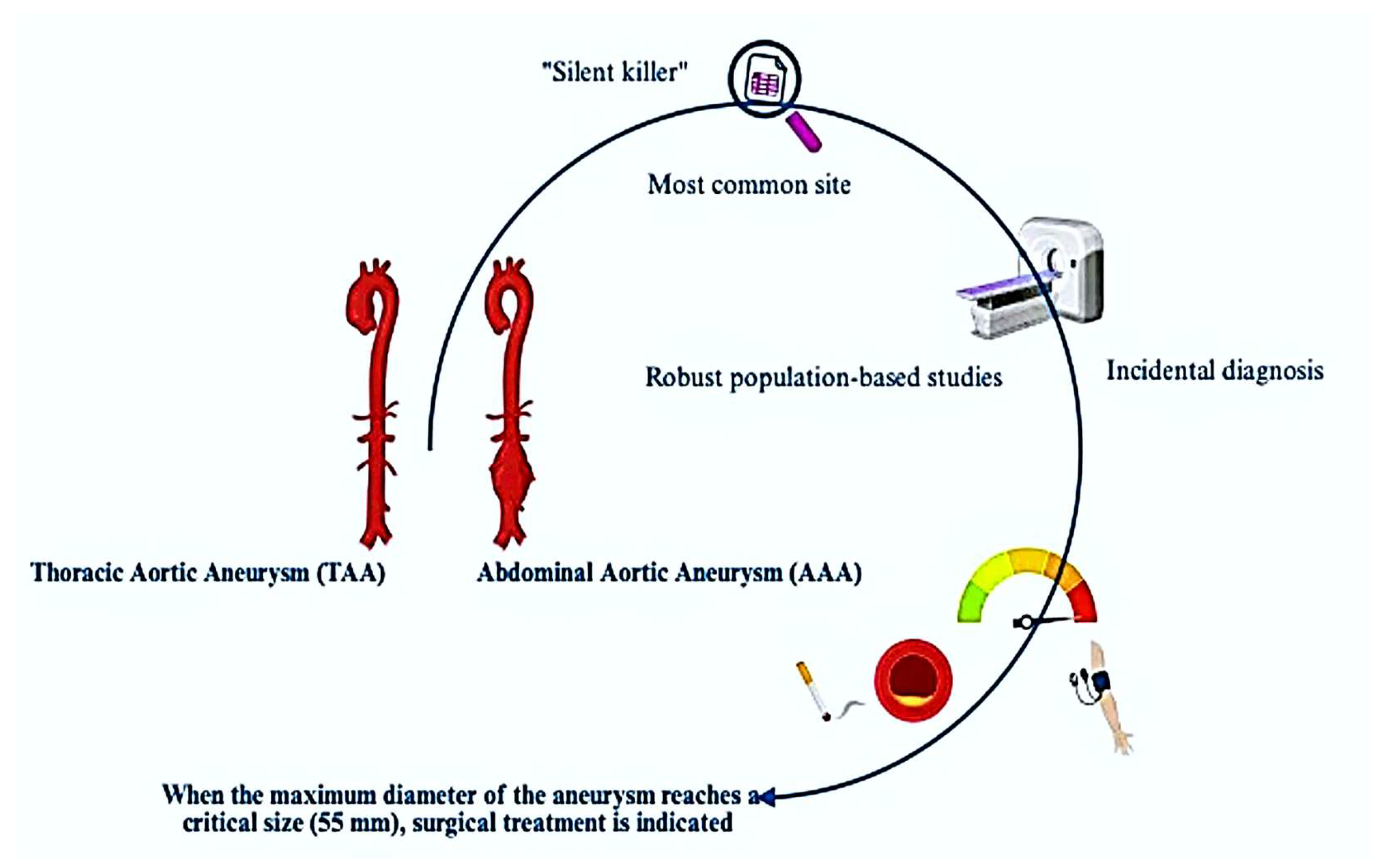
AA is defined as an aortopathy characterized by a permanent and localized arterial dilation of the human aorta, greater than 1.5 times the normal diameter of the vessel, involving all three layers of the aortic wall (different from pseudoaneurysm) [24]. The onset of AA is associated with several epidemiological factors, such as age, sex, ethnicity, family history, and smoking [25]. AA is often asymptomatic in the initial phase and is a life-threatening condition, associated with a high risk of rupture and death. Its treatment depends on surgical repair, which can be performed through open surgery or endovascular aneurysm repair (EVAR) [25]. AAs can develop at any level of the aorta and are typically classified as thoracic aortic aneurysms (TAA) or abdominal aortic aneurysms (AAA) [24,25,26,27]. Although both occur within the same vessel, they exhibit distinct pathogenesis and etiologies, as evidenced by histopathological differences in the aortic wall between the thoracic and abdominal segments [24,25,26,27,28]. AAA is the most frequent site of aneurysm formation, particularly affecting the infrarenal abdominal aorta [29,30,31,32] and is approximately five times more prevalent than TAA [29,30,31,32]. Epidemiological studies of TAA are limited by its asymptomatic course and diagnostic challenges [25]. Often termed the “silent killer,” TAA typically progresses without symptoms until rupture, with mortality rates between 94% and 100% [31]. Its thoracic location further complicates diagnosis, which is often made incidentally via echocardiography, chest CT, or autopsy [32,33]. In contrast, AAA is more accessible for screening and has been extensively studied in population-based cohorts.
Evidence indicates that TAA prevalence and treatment outcomes vary according to race, gender, and socioeconomic status, with incidence increasing in older adults [31,34]. Across both sexes, advanced age and larger body surface area (BSA) are general risk factors for AAs, regardless of anatomical location. While hypertension is a predominant risk factor for TAA, hypercholesterolemia and smoking are more strongly associated with AAA [34,35,36] (Figure 1).
Clinical management primarily relies on serial monitoring of aneurysm size [32,33]. Surgical intervention is recommended when the maximum diameter reaches 55 mm [32,33]. However, precise assessment of aortic size is often challenging due to sources of error such as vessel obliquity, asymmetry, and mismatched imaging planes, prompting the use of both echocardiography and CT/MRI for accurate evaluation. Notably, approximately 60% of patients experience complications before reaching this size, indicating that maximal diameter alone is an insufficient predictor of aneurysm-related risk.
Multiple factors contribute to the risk of rupture, including biochemical and biomechanical influences, sex, genetic predisposition [37,38], and connective tissue disorders such as Marfan and Ehlers-Danlos syndromes [32,33]. For example, our group and others have shown that arterial age and premature vascular aging, rather than chronological age, are significantly associated with accelerated aneurysm growth [35]. Consequently, leukocyte telomere shortening and altered telomerase activity may serve as biomarkers for AA onset and progression. Additionally, upregulation of pro-inflammatory pathways—including TGF-β, TLR-4, interferon-γ, and chemokines—correlates with specific allelic profiles and accelerates aortic dilation and growth [39,40,41,42,43].
Biomechanical factors also modulate aortic wall dilation and can be evaluated through computational modeling, which simulates stress distribution within theoretical aortic models. Imaging techniques such as ultrasound elastography (EEL), CT angiography (CTA), and MRI are used to assess rupture risk. CTA is considered the gold standard for surgical planning due to its high-resolution, three-dimensional images, which allow precise evaluation of aortic morphology, extent, and valve anatomy. It also detects concomitant occlusive or atherosclerotic diseases, informs surgical strategies, and enables 3D reconstructions and preoperative simulations, supporting safer interventions. CTA’s speed, availability, and ease of use make it ideal for both elective and urgent preoperative assessments [44,45,46,47,48,49,50,51,52]. Nonetheless, traditional screening methods remain limited in detecting small or atypical aneurysms [53,54].

Current Challenges and Emerging Approaches

Current research on aortic aneurysms is driven by the need for reliable methods to integrate diameter-based criteria into complication risk assessment and timing of elective repair. Circulating and tissue biomarkers, alongside computational biomechanics, offer promising avenues. Biomarker studies have identified molecules and genes—including variants linked to familial and sporadic forms—that correlate with disease onset and prognosis. Computational models of blood flow and wall mechanics provide biomechanical indicators, yet their clinical adoption is limited by computational demands, model complexity, and required expertise. Integrating multi-scale data, from molecular to organ levels, remains challenging. The disease’s complex, multifactorial nature—spanning molecular mechanisms, cellular responses, biomechanics, and aortic pathophysiology—continues to hinder comprehensive risk stratification [55,56].

4. AI Applications as Potential Support in AA Evaluation and Management: Literature Evidence

Advances in imaging and AI are revolutionizing the evaluation and management of aortic aneurysms. Visualization techniques are fundamental in identifying aorta dimensions, as they allow clinicians to interpret three-dimensional (3D) imaging data with high accuracy [32,33]. Unlike conventional two-dimensional (2D) imaging, 3D visualization provides a complete anatomical view of the aorta, facilitating the inspection of areas such as the ascending aorta, aortic arch, descending aorta and abdominal aorta, and enabling the evaluation of pathological conditions like aneurysms [44,45,46,47,48,49,50]. Central to this process is image segmentation, which isolates anatomical regions of interest and reduces image complexity, allowing subsequent analysis and application of advanced assessment techniques [47,48,49,50]. Traditional segmentation methods, such as flood-fill, graph-cut, grow cut, and watershed, have shown limitations; however, AI approaches, such as DL, have significantly improved segmentation performance, making clinical implementation increasingly feasible.
Several studies have demonstrated the practical application of DL in aortic segmentation. Lareyre et al. employed a threshold-based contour detection pipeline to automatically detect AAA features [44], while López-Linares et al. used deep convolutional neural networks (CNNs) for postoperative thrombus segmentation in computed tomography angiography (CTA) [45]. Wang et al. proposed a fully automated organ segmentation method using CNNs for pixel-level classification [57], and Roby et al. developed a dilated CNN-based approach for thoracic aorta detection across multiple CT planes [58]. Fantazzini et al. combined 2D multi-view CNNs for preoperative 3D aortic segmentation [46]. Other imaging modalities, including magnetic resonance angiography (MRA), have also benefited from automated segmentation, providing quantitative comparisons of native versus contrast-enhanced acquisitions [48]. Recently, Matsopoulos’s group proposed a fully automated 3D segmentation framework combining conventional image processing and machine learning to reconstruct accurate 3D aortic models from CT data [47]. These advances support standardization of diameter measurements and morphological assessments such as aortic length, which has been linked to dissection events [49,50]. Tools like “Aorta Report v1.0” demonstrate the potential of AI-assisted pipelines for automated aortic diameter extraction from CT scans [44].
AI also enables enhanced evaluation of biomechanical indicators critical for assessing aneurysm rupture risk. High-fidelity computational simulations, including computational fluid dynamics (CFD) and finite element analysis (FEA), remain the gold standard for estimating wall shear stress (WSS) and peak mechanical wall stress (MWS) [51,52,53,54] but these methods are computationally intensive. DL-based models have shown promise in accelerating these estimations. Liang et al. trained deep neural networks to predict steady-state pressure and velocity distributions in the thoracic aorta within one second [51], while Pajaziti et al. used large-scale CFD simulations to train machine learning models that reproduce 3D hemodynamics [52]. Similarly, Du et al. developed AI frameworks capable of reconstructing detailed pressure, velocity, and WSS patterns from anatomy alone in milliseconds [53]. AI has also facilitated structural wall stress prediction and surrogate constitutive modeling, improving patient-specific biomechanical analysis [54].
Beyond assessment, AI has advanced predictive modeling and synthetic data generation for risk stratification and rupture prediction. Models integrating imaging, computational biomechanics, and biomarkers improve the prediction of aneurysm expansion and rupture, which cannot be reliably assessed by diameter alone [55,56,57,58,59,60]. AI-driven approaches have also been used to estimate rupture stress, incorporating ex vivo data and computational models to produce accurate local failure indices [61,62,63,64,65]. Synthetic datasets generated via statistical shape modeling or deep learning techniques enable the creation of large, anatomically consistent virtual cohorts for in silico trials, supporting ML training and risk analysis [66,67,68,69,70,71,72,73,74,75]. These strategies allow the derivation of patient-specific rupture risk indices, the calibration of predictive models, and the exploration of device efficacy in virtual environments.
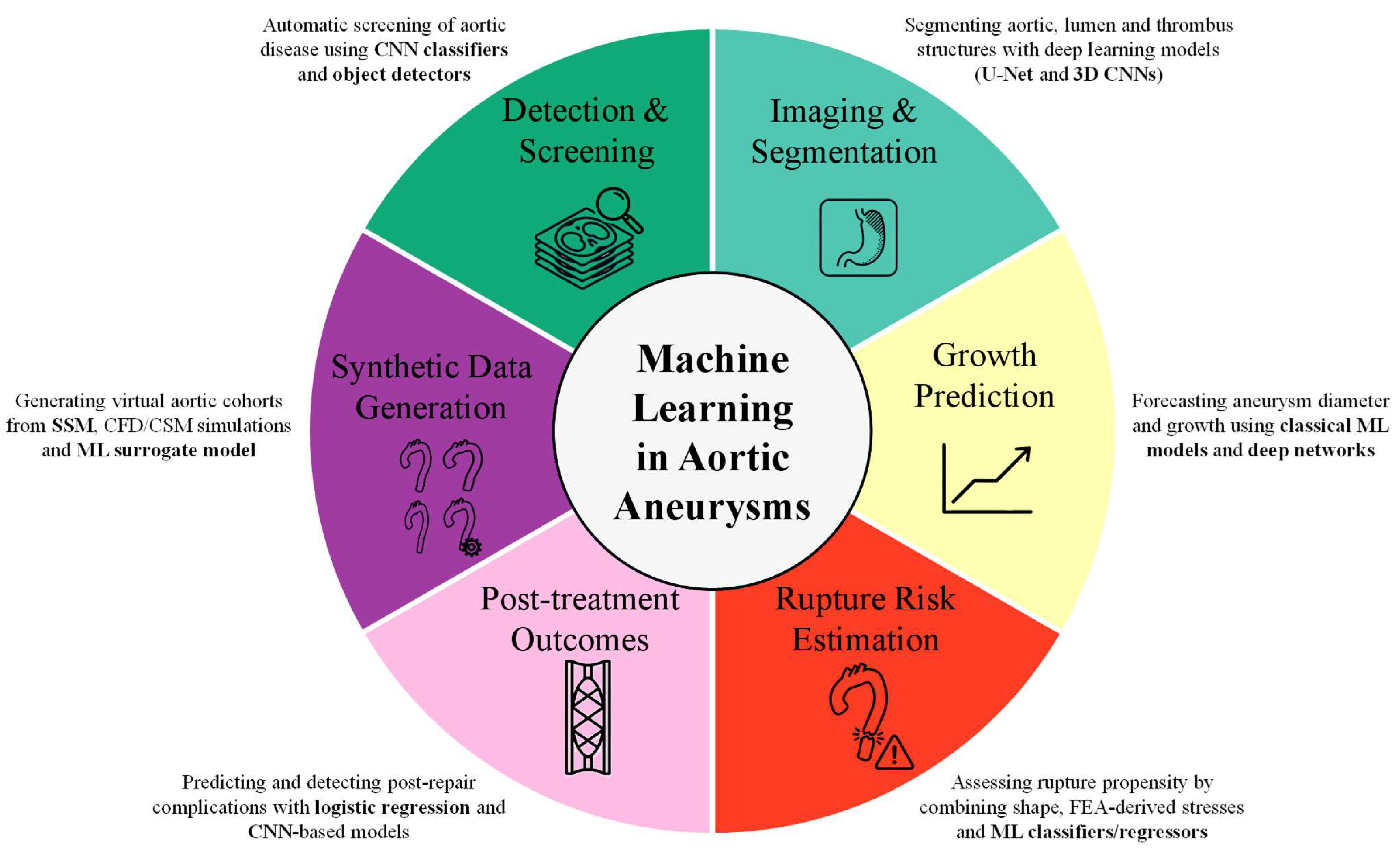
Overall, the integration of AI, advanced imaging, and biomechanical modeling holds transformative potential for the clinical management of aortic aneurysms. Ultrasound remains the primary screening tool, while CTA, MRA, and AI-assisted imaging enhance early detection and risk stratification [44,45,46,47,48,49,50]. The combination of automated 3D segmentation, biomechanical assessment, and predictive modeling offers a precision-based, multidisciplinary approach capable of improving patient outcomes while maintaining cost-effectiveness (see Figure 2).

5. Molecular Biomarkers and AI in Aortic Aneurysm

The pathogenesis of AA involves a multitude of complex mechanisms, including genetic predisposition, specific genetic mutations, and vascular inflammatory processes caused by the infiltration of T lymphocytes and macrophages, resulting in alterations of the extracellular matrix (ECM) and progressive weakening of the vascular wall, ultimately increasing susceptibility to aneurysmal disease [39,40,41,42,43,76,77]. Considering these features of AA, the application of AI, particularly ML techniques, may represent a fundamental contribution to the complex diagnostic process of these conditions. AI-based systems enable the integration of multiple pathways and biomarkers currently recognized in the pathogenesis of AA. These biomarkers include different categories, such as genetic and transcriptomic biomarkers (e.g., gene variants and expression profiles associated with inflammation and vascular remodeling), proteomic biomarkers (e.g., matrix metalloproteinases, inflammatory cytokines, and circulating proteins involved in vascular degeneration), and metabolomic biomarkers reflecting alterations in oxidative stress, energy metabolism, and tissue remodeling pathways [78,79]. Moreover, AI may represent a significant advancement in clinical practice, in addition to its potential role in the development of targeted therapies.
For this reason, studies investigating correlations between molecular biomarkers and pathogenic processes through AI and machine learning approaches are increasingly emerging [78,79]. Current evidence suggests that AI may represent a promising direction for future scientific research. The main studies discussed in this paragraph are summarized in Table 1. The large number of currently known biomarkers and variables considerably exceeds the number of available subjects, which is one of the main reasons why machine learning approaches have been successfully implemented. Traditional statistical analysis primarily focuses on inference, evaluating the strength of associations within predefined models [57]. In contrast, ML focuses on prediction through generic learning algorithms capable of identifying hidden patterns within complex datasets.
The complex etiopathogenesis of AA also makes the identification of precise diagnostic biomarkers particularly challenging. Therefore, the current challenge is to create integrated models capable of supporting clinical decision-making processes. However, much of the existing evidence primarily focuses on abdominal aortic aneurysms (AAA). Therefore, reviewing currently available evidence may be essential for identifying emerging trends and future perspectives. Momenzadeh et al. proposed a hypothesis for the differential diagnosis between descending thoracic aortic aneurysms and type B dissections by comparing conventional statistical analysis with ML algorithms [74]. Among the 1549 peptides and 198 proteins analyzed, statistical analysis identified only one significant correlation, namely hemopexin (HPX), between the two pathological conditions. In contrast, machine learning approaches initially grouped quantitatively similar proteins using hierarchical clustering analysis and subsequently evaluated them through six different classification algorithms. The five proteins with the highest Permutation Importance (PI) scores were immunoglobulin heavy variable 6-1 (IGHV6-1), lecithin–cholesterol acyltransferase (LCAT), coagulation factor XII (F12), HPX, and immunoglobulin heavy variable 4-4 (IGHV4-4). Furthermore, proteins involved in complement activation, humoral immune response, and blood coagulation pathways were more frequently represented in patients with type B dissection compared with those presenting descending thoracic aortic aneurysms. Therefore, compared with conventional statistical analysis, machine learning enabled the identification of specific plasma proteomic signatures that may facilitate the differential diagnosis between these closely related pathological conditions [74].
Another aspect of fundamental importance in aneurysm management is the prediction of aneurysm growth during follow-up. AI has also demonstrated considerable potential in this field. Forneris et al. evaluated three functional biomarkers, namely time-averaged wall shear stress, in vivo principal strain, and intraluminal thrombus thickness, and achieved an area under the curve (AUC) of 0.92 using a binary Extra Trees classifier algorithm, demonstrating excellent predictive performance for clinically relevant aneurysm growth compared with conventional geometric models. In particular, the authors reported significantly lower time-averaged wall shear stress values in patients with a baseline diameter >50 mm compared with those with a baseline diameter <50 mm (0.59 ± 0.37 Pa vs. 0.78 ± 0.48 Pa; p <0.001). These findings further support the predictive value of this biomarker for progressive aortic weakening and aneurysmal growth [56].
The ability to manage large datasets combined with the development of specific learning models has also improved understanding of poorly characterized pathogenic mechanisms, including the precise role of T lymphocytes. Li et al. investigated T-cell imbalance in aortic wall infiltration and identified eight different T-cell phenotypes characterized by distinct gene expression profiles and phenotype-specific markers. By applying two machine learning models, four key biomarkers—FOSB, JUNB, cystatin F (CST7), and TBC1 domain family member 4 (TBC1D4)—were identified across four independent datasets [59]. Dysregulation of these biomarkers was observed within the abdominal aortic wall. ROC curve analysis revealed particularly significant results for FOSB and JUNB, with AUC values of 0.911 and 0.917, respectively [59].
Similarly, by integrating multi-omics approaches with machine learning algorithms, Yong et al. investigated immune cell infiltration mechanisms involving macrophages and CD8-positive alpha-beta T cells in AAA pathogenesis. This approach led to the identification of two potential biomarkers, CCR7 and CBX6. Specifically, CCR7 expression positively correlated with naïve B cells, suggesting a potential role in modulating immune responses involved in AAA development. Conversely, the inverse correlation between CBX6 and neutrophils suggested a possible suppressive effect on neutrophil activity, potentially reducing aneurysmal progression [60].
Using a similar methodological approach, Xiong et al. demonstrated an association between G0S2 expressions and several inflammatory cell populations, including neutrophils, activated and resting mast cells, M0 and M1 macrophages, regulatory T cells, resting dendritic cells, and resting CD4 memory T cells, further supporting the central role of inflammatory infiltration in aneurysm pathogenesis [61].
In addition to confirming partially established pathological mechanisms, machine learning algorithms may facilitate the identification of novel biomarkers, including those associated with cuproptosis and ferroptosis pathways in AAA [80,81]. Cuproptosis is a recently discovered form of programmed cell death that depends on copper. Excess intracellular copper binds to lipoylated proteins in the mitochondrial tricarboxylic acid (TCA) cycle. This binding causes the aggregation of these proteins and destabilizes mitochondrial function, leading to mitochondrial stress, impaired respiration, and eventually cell death. In the context of AAA, cuproptosis may contribute to the loss of VSMCs. Since VSMC death weakens the aortic wall, disruptions in copper metabolism within vascular cells could promote aneurysm progression [80]. Ferroptosis is another form of programmed cell death, but it depends on iron and lipid peroxidation. When free iron accumulates in cells, it catalyzes the production of reactive oxygen species (ROS) through Fenton reactions. These ROS cause peroxidation of polyunsaturated fatty acids in cell membranes, which become lethal if protective systems such as glutathione peroxidase 4 (GPX4) are insufficient. In AAA, iron accumulation in the aortic wall can trigger ferroptosis in VSMCs and endothelial cells. This contributes to weakening of the aortic wall, aneurysm expansion, and increased risk of rupture [81].
Han et al., using three scRNA-seq datasets derived from different mouse models together with a bulk RNA-seq dataset from human peripheral blood mononuclear cells (PBMCs), analyzed through four machine learning algorithms, identified PIM1 upregulation as a potential biomarker involved in both cuproptosis and ferroptosis pathways [81]. Since both mechanisms contribute to vascular smooth muscle cell (VSMC) loss, a key event in AAA progression, these findings may provide new opportunities for therapeutic targeting and improved disease stratification [62].
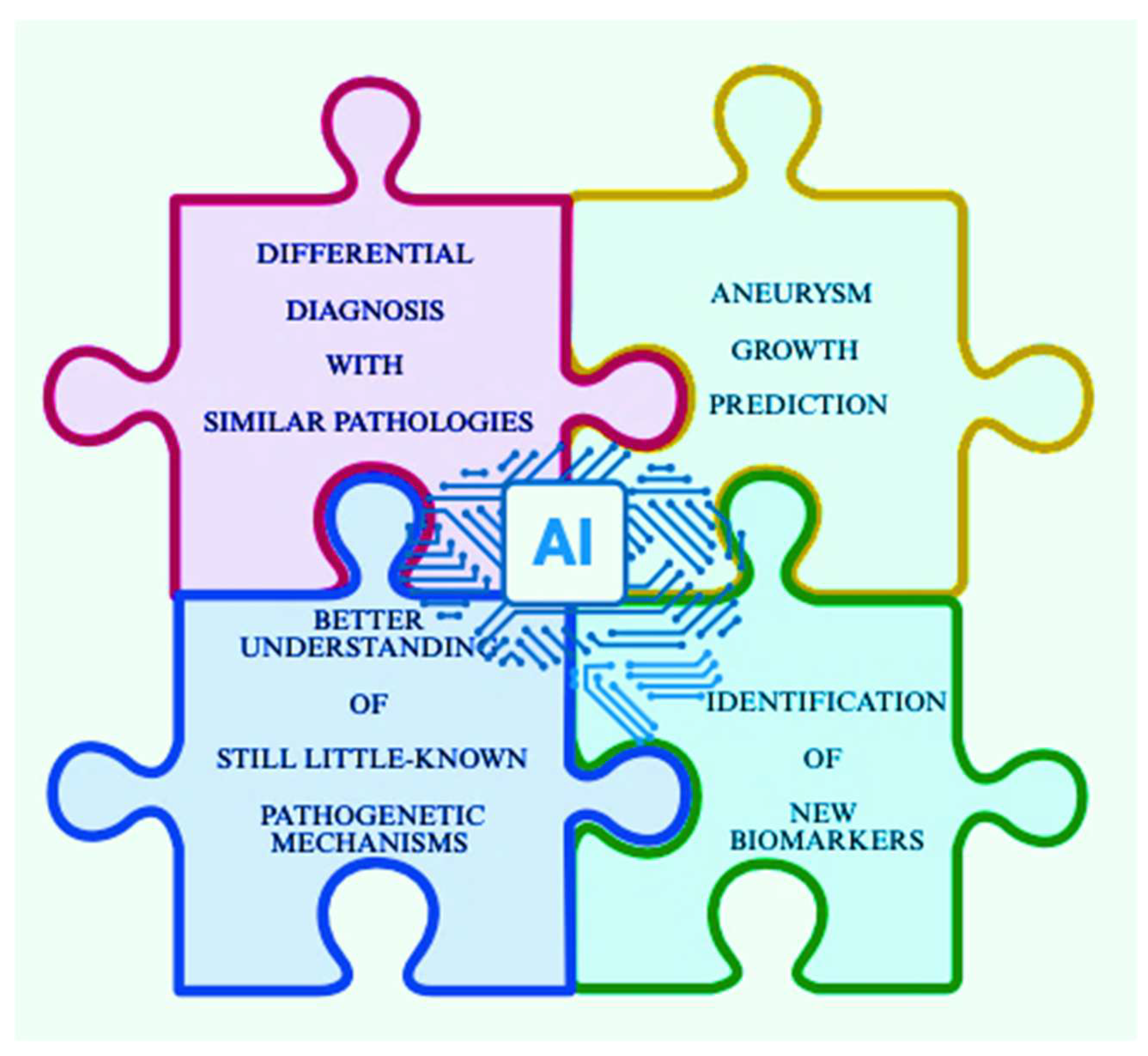
Although machine learning systems have experienced rapid growth in recent years, further development and validation of predictive models are still required before AI can be fully translated into clinical practice. Figure 3 summarizes the current major fields of application of machine learning algorithms in the management of biomarkers involved in the etiopathogenesis of aortic aneurysms.

6. AI in Prognosis and Therapeutic Decision-Making for Aortic Aneurysms

The growing use of AI in the management of aneurysmal disease is increasingly applied to the development of prognostic prediction models, demonstrating higher success rates than currently used approaches [76]. Predicting prognostic risk is fundamental in the clinical management of aneurysmal disease. Given that the condition is asymptomatic in most cases, determining the optimal timing for surgical intervention has always been challenging, requiring an accurate prediction of the risk of dilation and/or rupture that takes into account individual patient characteristics. When managing such large and complex datasets, AI can be extremely useful. The Danish team led by Skovbo JS et al. [68], analyzing a population of 637 individuals that included all cases of AAA rupture from January 2009 to December 2016 and elective surgeries with a 1:2 ratio, proposed a SHAPFire (SHapley Additive exPlanations Feature Importance Rank Ensembling) AI tool. This model, using 68 different characteristics, identified 20 key factors in assessing progression risk, achieving superior AUC and Youden index compared to aortic diameter alone. These characteristics included CT-based dimensional parameters (maximum transverse diameter, maximal luminal area, distance between iliac bifurcations, distance from lowest renal artery to aortic bifurcation, maximum right iliac artery diameter, distance between right and left iliac bifurcations from aortic bifurcation, distance from aortic bifurcation to sacrum, transverse outer-to-outer diameter of L3), anterior wall thickness, clinical factors (age, smoking, pulse pressure, hypertension, BSA, use of statins and platelet inhibitors), UniCa scores over 15 mm at maximum size and in thrombus, and the presence of suprarenal mural thrombus.
Another model, the APC (aneurysm prognosis classifier) from the University of Pittsburgh [70], analyzed data from 381 AAA patients with known clinical outcomes (aneurysm repair or rupture), categorized into clinical, biomechanical, and morphological data. Machine learning algorithms trained on this dataset generated a final classification model to guide clinicians regarding surgical timing, highlighting the importance of imaging-based biomechanical and morphological quantification, as also demonstrated by Lindquist Liljeqvist et al. in small aneurysms [71]. Similar findings have been reported in studies integrating machine learning with geometric and biomechanical variables for abdominal aortic aneurysm risk stratification [73,74,75]. Although several prognostic models have been proposed, their clinical applicability and generalizability remain limited by relatively small sample sizes and the need for external validation [74]. Therefore, AI and machine learning can play a key role in predicting outcomes for such complex pathologies, provided that models include sufficiently large patient populations to minimize statistical bias.
Therapeutic management of TAA, less studied than AAA, also benefits from AI-assisted risk stratification. The main therapeutic approaches are: (a) open surgery, the gold standard for ascending and arch TAA, involving replacement of the diseased aortic segment with a Dacron graft, often using cardiopulmonary bypass for maximum durability; (b) endovascular repair (TEVAR), a minimally invasive technique for descending aorta, reducing perioperative morbidity in frail patients. Effective TAA management requires careful stratification of dissection or rupture risk. AI, through machine learning and radiomics analysis, extracts subclinical information from CT images—such as wall stiffness or hemodynamic forces—complementing simple dimensional data. This enables more personalized and accurate risk stratification and supports clinicians in selecting the most appropriate intervention. AI distinguishes patients best suited for open surgery from those better candidates for TEVAR by analyzing complex anatomical constraints and predicting postoperative outcomes and complications, thus improving individual rupture risk prediction [82,83,84,85,86,87,88,89].
Moreover, AI combined with multi-omics approaches [82,83,84,85,86,87,88,89] is identifying molecular targets—such as TGF-β signaling pathways (e.g., ACTA2, SMAD2;), pro-fibrotic molecules (e.g., CTGF, MMPs), contractile/ECM proteins, and inflammatory mediators (e.g., TLR4 pathway [CB3.1])—which may respond to specific pharmacotherapies. This provides a scientific basis for developing or supporting pharmacological alternatives to surgery [39,40,41,42,43,63,64,65,76,77].

Experimental Evidence

Several studies have explored the application of AI, including ML and DL, in TAA and ATAAD risk assessment (see Table 2). Kennedy et al. [66] demonstrated that ML models integrating clinical, imaging, and genetic data more accurately predicted TAA tissue mechanical properties than diameter-based methods, with age and echocardiographic stiffness metrics as key predictors. Li et al. [75] developed XGBoost models for TEVAR and complex EVAR, achieving high accuracy in predicting one-year adverse outcomes, highlighting the value of ML in perioperative risk stratification and personalized care. Huang et al. [67] reviewed DL applications, showing that CNN-, U-Net-, and GAN-based models can accurately detect and segment aneurysms, assist in surgical planning, and predict prognosis, achieving near-radiologist-level performance.
In ATAAD, Zhang et al., [78] Li K et al., [79] Luo H. et al., [82] Cai et al., [83] and Han et al. [85] reported ML models capable of predicting perioperative mortality, requirements for CRRT, major adverse outcomes, long-term survival, and postoperative hepatic dysfunction, identifying key risk factors such as age, organ dysfunction, procedural complexity, and cardiovascular comorbidities. Kano et al. [84] used ML-based decision tree analysis to predict early mortality after TEVAR, highlighting patient age and nutritional status as critical determinants. Overall, these studies indicate that AI-based models improve prediction of structural, procedural, and long-term outcomes in aortic disease, offering tools for risk stratification, surgical planning, and personalized management, although challenges remain regarding dataset size, generalizability, and model interpretability [86,87,88] (see Table 3).

7. Conclusions

The field of CVD, such as AA, is undergoing significant transformation due to the integration of AI in disease management [90,91,92,93,94,95]. AI is expected to revolutionize clinical strategies, patient modeling, and personalized treatment, considering the unique onset, progression, therapeutic response, and outcomes of each patient. Significant innovations include the integration of omics data (genomics, transcriptomics, proteomics) with AI models and the use of big data, which are advancing prevention and treatment programs [23]. However, despite increasing interest, AI’s current role in AA management remains limited [96]. Main challenges include:
  • ML models not consistently outperforming traditional methods such as logistic regression [95];
  • Inadequate model validation and poor generalization to real-world cases [96,97];
  • High training times for deep learning (DL) models and significant costs of imaging, omics assessment, and GPU usage [91,95];
  • Limited dataset sizes, often single-center, lacking multicentric validation, increasing the risk of overfitting [98].
Nevertheless, AI shows great potential for:
  • Improved quantification and analysis of imaging data;
  • Risk prediction, notification, and diagnostic support;
  • Optimization of treatment strategies, especially surgical;
  • Detection of de novo aneurysms or prediction of recurrence after treatment.
Future implementation requires the development of multi-task AI algorithms capable of handling diverse aneurysm types and vascular features, leveraging advanced techniques such as convolutional residual networks, active learning, one-shot learning, and generative adversarial networks (GANs) [91]. Rigorous clinical validation is essential, including external validation, prospective cohort studies, and multicentric designs.
Regulatory considerations are also critical. Research-level AI tools require ethical and institutional oversight; clinical decision support (CDS) tools provide guidance but do not make autonomous treatment decisions; regulatory-approved AI systems for diagnosis, monitoring, or treatment are considered medical devices and require FDA clearance or approval. Clearly distinguishing these categories ensures safe and effective implementation [99,100,101,102].
In summary, the path toward fully reliable AI for AA management is long, but all conditions are in place for rapid progress toward clinically effective and scalable tools (see Table 4).

Author Contributions

Conceptualization: C.R.B. Data curation: L.A., S.N. and D.T.; Writing—original draft: C.R.B., L.A., S.N., C.P., S.N. and D.T.; Writing—review and editing: C.R.B. Supervision: C.R.B.; Funding: D.G., S.P. and C.R.B. All authors have read and agreed to the published version of the manuscript. In addition, C.P. had the role of co-first author.

Funding

This work was supported by the ASSOCIATE—ARTIFICIAL INTELLIGENCE-POWERED SUPPORT SYSTEM FOR ASCENDING AORTA ANEURYSMS” COD. 2022L7KK7L_002 CUP B53D23006200006 FUNDED UNDER PUBLIC NOTICE FROM THE MINISTRY OF UNIVERSITY AND RESEARCH (MUR) D.D. N. 104 OF 02/02/2022—PRIN 2022 CALL.

Institutional Review Board Statement

Not applicable.

Informed Consent Statement

Not applicable.

Data Availability Statement

No new data was generated or analyzed in support of this research.

Conflicts of Interest

The authors declare no conflicts of interest.

References

  1. Altucci, L.; Badimon, L.; Balligand, J.L.; Baumbach, J.; Catapano, A.L.; Cheng, F.; DeMeo, D.; Gupta, R.; Hacker, M.; Liu, Y.-Y.; et al. Artificial Intelligence and Network Medicine: Path to Precision Medicine. NEJM AI 2025, 2, AIra2401229. [Google Scholar] [CrossRef]
  2. Singla, B.; Afridi, S.; Vayolipoyil, S.; Ahmed, T.; Afzaal, S.; Saleem, K.; Malik, M.T.Z.; Qudsia, M. The Evolving Role of Artificial Intelligence in Medical Science: Advancing Diagnostics, Clinical Decision-Making, and Research. Cureus 2025, 17, e91514. [Google Scholar] [CrossRef] [PubMed]
  3. Chong, P.L.; Vaigeshwari, V.; Mohammed Reyasudin, B.K.; Hidayah, B.R.A.N.; Tatchanaamoorti, P.; Yeow, J.A.; Kong, F.Y. Integrating artificial intelligence in healthcare: Applications, challenges, and future directions. Future Sci. OA 2025, 11, 2527505. [Google Scholar] [CrossRef]
  4. Kant, S.; Deepika; Roy, S. Integrative Multi-Omics and Artificial Intelligence: A New Paradigm for Systems Biology. OMICS 2025, 29, 576–587. [Google Scholar] [CrossRef]
  5. Wörheide, M.A.; Krumsiek, J.; Kastenmüller, G.; Arnold, M. Multi-omics integration in biomedical research–A metabolomics-centric review. Anal. Chim. Acta 2021, 1141, 144–162. [Google Scholar] [CrossRef] [PubMed]
  6. Alghareeb, E.; Aljehani, N. AI in Health Care Service Quality: Systematic Review. JMIR AI 2025, 4, e69209. [Google Scholar] [CrossRef] [PubMed]
  7. Luo, X.; Li, Y.; Xu, J.; Zheng, Z.; Ying, F.; Huang, G. AI in Medical Questionnaires: Scoping Review. J. Med. Internet Res. 2025, 27, e72398. [Google Scholar] [CrossRef]
  8. Abdelmohsen, S.A.; Al-jabri, M.M. Artificial Intelligence Applications in Healthcare: A Systematic Review of Their Impact on Nursing Practice and Patient Outcomes. J. Nurs. Sch. 2025, 57, 957–966. [Google Scholar] [CrossRef]
  9. Wan, Y.; Nakayama, M.; Aldana, C.F.; Alvino, F. Persona-driven generative AI in pharmaceuticals. Drug Discov. Today 2025, 30, 104520. [Google Scholar] [CrossRef]
  10. Loriga, B.; Baglivo, F.; Bellini, V.; Adembri, C.; Montomoli, J.; Cascella, M.; Diedenhofen, G.; De Angelis, L.; Gentili, N.; Altini, M.; et al. Top three priorities for artificial intelligence integration into emergency, critical, and perioperative medicine. J. Anesth. Analg. Crit. Care 2025, 5, 77. [Google Scholar] [CrossRef]
  11. Maleki Varnosfaderani, S.; Forouzanfar, M. The Role of AI in Hospitals and Clinics: Transforming Healthcare in the 21st Century. Bioengineering 2024, 11, 337. [Google Scholar] [CrossRef] [PubMed]
  12. Tudor, S.; Bhatia, R.; Liem, M.; Wani, T.A.; Boyd, J.; Khan, U.R. Opportunities and Challenges of Using Artificial Intelligence in Predicting Clinical Outcomes and Length of Stay in Neonatal Intensive Care Units. J. Med. Internet Res. 2025, 27, e63175. [Google Scholar] [CrossRef]
  13. Fahim, Y.A.; Hasani, I.W.; Kabba, S.; Ragab, W.M. Artificial intelligence in healthcare and medicine: Clinical applications, therapeutic advances, and future perspectives. Eur. J. Med. Res. 2025, 30, 848. [Google Scholar] [CrossRef]
  14. Wubineh, B.Z.; Deriba, F.G.; Woldeyohannis, M.M. Exploring the opportunities and challenges of implementing artificial intelligence in healthcare. Urol. Oncol. Semin. Orig. Investig. 2024, 42, 48–56. [Google Scholar] [CrossRef]
  15. Younis, H.A.; Eisa, T.A.E.; Nasser, M.; Sahib, T.M.; Noor, A.A.; Alyasiri, O.M.; Salisu, S.; Hayder, I.M.; Younis, H.A. A Systematic Review and Meta-Analysis of Artificial Intelligence Tools in Medicine and Healthcare. Diagnostics 2024, 14, 109. [Google Scholar] [CrossRef]
  16. Daemi, A.; Kalami, S.; Tahiraga, R.G.; Ghanbarpour, O.; Barghani, M.R.R.; Hooshiar, M.H.; Özbolat, G.; Yönden, Z. Revolutionizing personalized medicine using artificial intelligence. Clin. Exp. Med. 2025, 25, 255. [Google Scholar] [CrossRef]
  17. Janiesch, C.; Zschech, P.; Heinrich, K. Machine learning and deep learning. Electron. Mark. 2021, 31, 685–695. [Google Scholar] [CrossRef]
  18. Olczak, J.; Pavlopoulos, J.; Prijs, J.; A Ijpma, F.F.; Doornberg, J.N.; Lundström, C.; Hedlund, J.; Gordon, M. Presenting artificial intelligence, deep learning, and machine learning studies to clinicians and healthcare stakeholders: An introductory reference with a guideline and a Clinical AI Research (CAIR) checklist proposal. Acta Orthop. 2021, 92, 513–525. [Google Scholar] [CrossRef]
  19. LeCun, Y.; Bengio, Y.; Hinton, G. Deep learning. Nature 2015, 521, 436–444. [Google Scholar] [CrossRef]
  20. Rivera, S.C.; Liu, X.; Chan, A.W.; Sydes, M.R.; Calvert, M.J.; Denniston, A.K. Guidelines for clinical trials using artificial intelligence: SPIRIT-AI extension. Trials 2021, 22, 11. [Google Scholar] [CrossRef]
  21. Liu, X.; Rivera, S.C.; Moher, D.; Calvert, M.J.; Denniston, A.K. Reporting guidelines for clinical trials involving AI: CONSORT-AI extension. Nat. Med. 2020, 26, 1364–1374. [Google Scholar] [CrossRef]
  22. Lekadir, K.; Feragen, A.; Fofanah, A.J.; Frangi, A.F.; Buyx, A.; Emelie, A.; Lara, A.; Porras, A.R.; Chan, A.W.; Navarro, A.; et al. FUTURE-AI: International consensus guideline for trustworthy AI in healthcare. BMJ Health Care Inform. 2024, 31, e100914. [Google Scholar]
  23. Collins, G.S.; Moons, K.G.M.; Dhiman, P.; Riley, R.D.; Beam, A.L.; Van Calster, B.; Ghassemi, M.; Liu, X.; Reitsma, J.B.; van Smeden, M.; et al. TRIPOD+AI statement for reporting prediction models using ML. BMJ 2024, 385, e078378. [Google Scholar] [CrossRef]
  24. Mian, O.; Santi, N.; Boodhwani, M.; Beauchesne, L.; Chan, K.; Dennie, C.; Wells, G.A.; Coutinho, T. Arterial Age and Early Vascular Aging Associated with Faster Thoracic Aortic Aneurysm Growth. J. Am. Heart Assoc. 2023, 12, e029466. [Google Scholar] [CrossRef]
  25. Paneni, F.; Costantino, S.; Cosentino, F. Molecular pathways of arterial aging. Clin. Sci. 2015, 128, 69–79. [Google Scholar] [CrossRef]
  26. Pham, M.H.C.; Sigvardsen, P.E.; Fuchs, A.; Kühl, J.T.; Sillesen, H.; Afzal, S.; Nordestgaard, B.G.; Køber, L.V.; Kofoed, K.F. Aortic aneurysms in a general population cohort. Eur. Heart J. Cardiovasc. Imaging 2024, 25, 1235–1243. [Google Scholar] [CrossRef] [PubMed]
  27. Ruddy, J.M.; Jones, J.A.; Ikonomidis, J.S. Pathophysiology of Thoracic Aortic Aneurysm. Prog. Cardiovasc. Dis. 2013, 56, 68–73. [Google Scholar] [CrossRef] [PubMed]
  28. Berger, T.; Dumfarth, J.; Kreibich, M.; Minatoya, K.; Ziganshin, B.A.; Czerny, M. Thoracic aortic aneurysm. Nat. Rev. Dis. Primers 2025, 11, 34. [Google Scholar] [CrossRef]
  29. Guirguis-Blake, J.M.; Beil, T.L.; Senger, C.A.; Coppola, E.L. Primary Care Screening for Abdominal Aortic Aneurysm. JAMA 2019, 322, 2219. [Google Scholar] [CrossRef]
  30. Freischlag, J.A. Updated Guidelines on Screening for Abdominal Aortic Aneurysms. JAMA 2019, 322, 2177. [Google Scholar] [CrossRef]
  31. Gouveia, E.; Melo, R.; Costa, J.; Silva, J.; Almeida, J.; Teixeira, F. Incidence and Prevalence of Thoracic Aortic Aneurysms: Systematic Review and Meta-analysis. Semin. Thorac. Cardiovasc. Surg. 2022, 34, 1–16. [Google Scholar] [CrossRef]
  32. Isselbacher, E.M.; Preventza, O.; Hamilton Black, J.; Augoustides, J.G.; Beck, A.W.; Bolen, M.A.; Braverman, A.C.; Bray, B.E.; Brown-Zimmerman, M.M.; Chen, E.P.; et al. 2022 ACC/AHA Guideline for Diagnosis and Management of Aortic Disease. Circulation 2022, 146, E334–E482. [Google Scholar] [CrossRef]
  33. Zettervall, S.L.; Schanzer, A. ESVS 2024 Clinical Practice Guidelines on Management of Abdominal Aorto-Iliac Artery Aneurysms. Eur. J. Vasc. Endovasc. Surg. 2024, 67, 187–189. [Google Scholar] [CrossRef]
  34. Wagner, C.M.; Marway, P.S.; Ferrel, M.N.; Jorge, C.A.C.; Fukuhara, S.; Hawkins, R.B.; Deeb, G.M.; Patel, H.J.; Ailawadi, G.; Yang, B.; et al. Sex differences in ascending aortic diameter at acute type A aortic dissection. Heart 2025, 112, 462–466. [Google Scholar] [CrossRef]
  35. Mazzolai, L.; Teixido-Tura, G.; Lanzi, S.; Boc, V.; Bossone, E.; Brodmann, M.; Bura-Rivière, A.; De Backer, J.; Deglise, S.; Della Corte, A.; et al. 2024 ESC Guidelines for management of peripheral arterial and aortic diseases. Eur. Heart J. 2024, 45, 3538–3700. [Google Scholar] [CrossRef]
  36. Gasser, T.C. Aorta. In Biomechanics of Living Organs; Elsevier: Amsterdam, The Netherlands, 2017; pp. 169–191. [Google Scholar] [CrossRef]
  37. Zhou, L.; Fan, M.; Hansen, C.; Johnson, C.R.; Weiskopf, D. A Review of Three-Dimensional Medical Image Visualization. Health Data Sci. 2022, 2022, 9840519. [Google Scholar] [CrossRef] [PubMed]
  38. Ma, Y.; Ding, P.; Li, L.; Liu, Y.; Jin, P.; Tang, J.; Yang, J. Three-dimensional printing for heart diseases: Clinical application review. Bio-Des. Manuf. 2021, 4, 675–687. [Google Scholar] [CrossRef] [PubMed]
  39. Scola, L.; Giarratana, R.M.; Marinello, V.; Cancila, V.; Pisano, C.; Ruvolo, G.; Frati, G.; Lio, D.; Balistreri, C.R. Polymorphisms of pro-inflammatory IL-6 and IL-1β cytokines in ascending aortic aneurysms. Biomolecules 2021, 11, 943. [Google Scholar] [CrossRef]
  40. Scola, L.; Di Maggio, F.M.; Vaccarino, L.; Bova, M.; Forte, G.I.; Pisano, C.; Candore, G.; Colonna-Romano, G.; Lio, D.; Ruvolo, G.; et al. Role of TGF-β pathway polymorphisms in sporadic thoracic aortic aneurysm. Mediat. Inflamm. 2014, 2014, 165758. [Google Scholar] [CrossRef]
  41. Pisano, C.; Terriaca, S.; Scioli, M.G.; Nardi, P.; Altieri, C.; Orlandi, A.; Ruvolo, G.; Balistreri, C.R. The endothelial transcription factor ERG mediates differential roles in aneurysmatic ascending aorta. Int. J. Mol. Sci. 2022, 23, 10848. [Google Scholar] [CrossRef] [PubMed]
  42. Ruvolo, G.; Pisano, C.; Candore, G.; Lio, D.; Palmeri, C.; Maresi, E.; Balistreri, C.R. Can TLR4-mediated signaling pathways promote sporadic TAA? Mediat. Inflamm. 2014, 2014, 349476. [Google Scholar] [CrossRef]
  43. Balistreri, C.R.; Pisano, C.; Candore, G.; Maresi, E.; Codispoti, M.; Ruvolo, G. Focus on unique mechanisms involved in thoracic aortic aneurysm formation in bicuspid versus tricuspid valve patients. Eur. J. Cardio-Thorac. Surg. 2013, 43, e180–e186. [Google Scholar] [CrossRef]
  44. Lareyre, F.; Adam, C.; Carrier, M.; Dommerc, C.; Mialhe, C.; Raffort, J. A fully automated pipeline for mining abdominal aortic aneurysm using image segmentation. Sci. Rep. 2019, 9, 13750. [Google Scholar] [CrossRef]
  45. López-Linares, K.; Aranjuelo, N.; Kabongo, L.; Maclair, G.; Lete, N.; Ceresa, M.; García-Familiar, A.; Macía, I.; Ballester, M.A.G. Fully automatic detection and segmentation of abdominal aortic thrombus in postoperative CTA images using deep convolutional neural networks. Med. Image Anal. 2018, 46, 202–214. [Google Scholar] [CrossRef] [PubMed]
  46. Fantazzini, A.; Esposito, M.; Finotello, A.; Auricchio, F.; Pane, B.; Basso, C.; Spinella, G.; Conti, M. 3D Automatic Segmentation of Aortic Computed Tomography Angiography Combining Multi-View 2D Convolutional Neural Networks. Cardiovasc. Eng. Technol. 2020, 11, 576–586. [Google Scholar] [CrossRef] [PubMed]
  47. Mavridis, C.; Economopoulos, T.L.; Benetos, G.; Matsopoulos, G.K. Aorta Segmentation in 3D CT Images by Combining Image Processing and Machine Learning Techniques. Cardiovasc. Eng. Technol. 2024, 15, 359–373. [Google Scholar] [CrossRef] [PubMed]
  48. Sidik, A.I.; Al-Ariki, M.K.; Shafii, A.I.; Hossain, L.; Najneen, F.; Ak, G.; Ahlam, D.; Shakiba, A.; Ghosh, D.; Bithi, M.A.A.; et al. Advances in Imaging and Diagnosis of Abdominal Aortic Aneurysm: A Shift in Clinical Practice. Cureus 2025, 17, e81321. [Google Scholar] [CrossRef]
  49. Pasta, S.; Gentile, G.; Raffa, G.M.; Bellavia, D.; Chiarello, G.; Liotta, R.; Luca, A.; Scardulla, C.; Pilato, M. In Silico Shear and Intramural Stresses Are Linked to Aortic Valve Morphology in Dilated Ascending Aorta. Eur. J. Vasc. Endovasc. Surg. 2017, 54, 254–263. [Google Scholar] [CrossRef]
  50. De Nisco, G.; Tasso, P.; Calò, K.; Mazzi, V.; Gallo, D.; Condemi, F.; Farzaneh, S.; Avril, S.; Morbiducci, U. Deciphering Ascending Thoracic Aortic Aneurysm Hemodynamics in Relation to Biomechanical Properties. Med. Eng. Phys. 2020, 82, 119–129. [Google Scholar] [CrossRef]
  51. Liang, L.; Mao, W.; Sun, W. A feasibility study of deep learning for predicting hemodynamics of human thoracic aorta. J. Biomech. 2020, 99, 109544. [Google Scholar] [CrossRef]
  52. Pajaziti, E.; Montalt-Tordera, J.; Capelli, C.; Sivera, R.; Sauvage, E.; Quail, M.; Schievano, S.; Muthurangu, V. Shape-driven deep neural networks for fast acquisition of aortic 3D pressure and velocity flow fields. PLoS Comput. Biol. 2023, 19, e1011055. [Google Scholar] [CrossRef]
  53. Du, P.; Zhu, X.; Wang, J.X. Deep learning-based surrogate model for three-dimensional patient-specific computational fluid dynamics. Phys. Fluids 2022, 34, 081906. [Google Scholar] [CrossRef]
  54. Bzdok, D.; Altman, N.; Krzywinski, M. Statistics versus machine learning. Nat. Methods 2018, 15, 233–234. [Google Scholar] [CrossRef] [PubMed]
  55. Yeh, C.H.; Chou, Y.J.; Tsai, T.H.; Hsu, P.W.-C.; Li, C.-H.; Chan, Y.-H.; Tsai, S.-F.; Ng, S.-C.; Chou, K.-M.; Lin, Y.-C.; et al. Artificial-Intelligence-Assisted Discovery of Genetic Factors for Precision Medicine of Antiplatelet Therapy in Diabetic Peripheral Artery Disease. Biomedicines 2022, 10, 116. [Google Scholar] [CrossRef] [PubMed]
  56. Forneris, A.; Beddoes, R.; Benovoy, M.; Faris, P.; Moore, R.D.; Di Martino, E.S. AI-powered assessment of biomarkers for growth prediction of abdominal aortic aneurysms. JVS Vasc. Sci. 2023, 4, 100119. [Google Scholar] [CrossRef]
  57. Wang, Y.; Zhou, Y.; Shen, W.; Park, S.; Fishman, E.K.; Yuille, A.L. Abdominal multi-organ segmentation with organ-attention networks and statistical fusion. Med. Image Anal. 2019, 55, 88–102. [Google Scholar] [CrossRef]
  58. Roby, M.; Restrepo, J.C.; Park, H.; Muluk, S.C.; Eskandari, M.K.; Baek, S.; Finol, E.A. Automatic Segmentation of Abdominal Aortic Aneurysm From Computed Tomography Angiography Using a Patch-Based Dilated UNet Model. IEEE Access 2025, 13, 24544–24554. [Google Scholar] [CrossRef]
  59. Li, D.; Zhang, G.; Du, P.; Cao, C.; He, X.; Lv, Y.; Yuan, P.; Wang, Y.; Wu, R.; Cao, Y.; et al. Machine learning combined with omics-based approaches reveals T-lymphocyte cellular fate imbalance in abdominal aortic aneurysm. BMC Biol. 2025, 23, 280. [Google Scholar] [CrossRef]
  60. Yong, X.; Hu, X.; Kang, T.; Deng, Y.; Li, S.; Yu, S.; Hou, Y.; You, J.; Dai, X.; Zhang, J.; et al. Identification of CCR7 and CBX6 as key biomarkers in abdominal aortic aneurysm using multi-omics and machine learning analysis. IET Syst. Biol. 2024, 18, 250–260. [Google Scholar] [CrossRef]
  61. Xiong, T.; Lv, X.S.; Wu, G.J.; Guo, Y.-X.; Liu, C.; Hou, F.-X.; Wang, J.-K.; Fu, Y.-F.; Liu, F.-Q. Single-cell sequencing analysis and machine learning methods identified G0S2 and HPSE as biomarkers for AAA. Front. Immunol. 2022, 13, 907309. [Google Scholar] [CrossRef]
  62. Han, Z.; Lu, X.; He, Y.; Zhang, T.; Zhou, Z.; Zhang, J.; Zhou, H. Integration of bulk/scRNA-seq and machine learning identifies PIM1 as a biomarker in AAA. Front. Immunol. 2024, 15, 1486209. [Google Scholar] [CrossRef] [PubMed]
  63. Rega, S.; Farina, F.; Bouhuis, S.; de Donato, S.; Chiesa, M.; Poggio, P.; Cavallotti, L.; Bonalumi, G.; Giambuzzi, I.; Pompilio, G.; et al. Multi-omics in thoracic aortic aneurysm: The complex road to simplification. Cell Biosci. 2023, 13, 131. [Google Scholar] [CrossRef]
  64. Tang, T.; Fan, W.; Zeng, Q.; Wan, H.; Zhao, S.; Jiang, Z.; Qu, S. The TGF-β pathway plays a key role in aortic aneurysms. Clin. Chim. Acta 2020, 501, 222–228. [Google Scholar] [CrossRef] [PubMed]
  65. Li, H.; Bai, S.; Ao, Q.; Wang, X.; Tian, X.; Li, X.; Tong, H.; Hou, W.; Fan, J. Modulation of immune-inflammatory responses in abdominal aortic aneurysm. J. Immunol. Res. 2018, 2018, 7213760. [Google Scholar] [CrossRef]
  66. Kennedy, L.; Bates, K.; Therrien, J.; Grossman, Y.; Kodaira, M.; Pressacco, J.; Rosati, A.; Dagenais, F.; Leask, R.L.; Lachapelle, K. Thoracic Aortic Aneurysm Risk Assessment: A Machine Learning Approach. JACC Adv. 2023, 2, 100637. [Google Scholar] [CrossRef]
  67. Huang, L.; Lu, J.; Xiao, Y.; Zhang, X.; Li, C.; Yang, G.; Jiao, X.; Wang, Z. Deep learning techniques for imaging diagnosis and treatment of aortic aneurysm. Front. Cardiovasc. Med. 2024, 11, 1354517. [Google Scholar] [CrossRef] [PubMed]
  68. Guo, J.; Lareyre, F.; Lee, R.; Teraa, M.; Delingette, H.; Raffort, J. Artificial Intelligence and Machine Learning for Risk Prediction of Abdominal Aortic Aneurysm Growth and Rupture. Angiology 2025, 33197251379127, Advance online publication. [Google Scholar] [CrossRef]
  69. Skovbo, J.S.; Andersen, N.S.; Obel, L.M.; Laursen, M.S.; Riis, A.S.; Houlind, K.C.; Diederichsen, A.C.P.; Lindholt, J.S. Individual risk assessment for rupture of abdominal aortic aneurysm using artificial intelligence. J. Vasc. Surg. 2025, 81, 613–622.e5. [Google Scholar] [CrossRef]
  70. Chung, T.K.; Gueldner, P.H.; Aloziem, O.U.; Liang, N.L.; Vorp, D.A. An artificial intelligence-based abdominal aortic aneurysm prognosis classifier to predict patient outcomes. Sci. Rep. 2024, 14, 3390. [Google Scholar] [CrossRef]
  71. Lindquist Liljeqvist, M.; Bogdanovic, M.; Siika, A.; Gasser, T.C.; Hultgren, R.; Roy, J. Geometric and biomechanical modeling aided by machine learning improves prediction of growth and rupture of small abdominal aortic aneurysms. Sci. Rep. 2021, 11, 18040. [Google Scholar] [CrossRef]
  72. Kontopodis, N.; Klontzas, M.; Tzirakis, K.; Charalambous, S.; Marias, K.; Tsetis, D.; Karantanas, A.; Ioannou, C.V. Prediction of abdominal aortic aneurysm growth by artificial intelligence considering clinical, biologic, morphologic, and biomechanical variables. Vascular 2023, 31, 409–416. [Google Scholar] [CrossRef]
  73. Jiang, Z.; Do, H.N.; Choi, J.; Lee, W.; Baek, S. A deep learning approach to predict abdominal aortic aneurysm expansion using longitudinal data. Front. Phys. 2020, 7, 235. [Google Scholar] [CrossRef]
  74. Momenzadeh, A.; Kreimer, S.; Guo, D.; Ayres, M.; Berman, D.; Chyu, K.-Y.; Shah, P.K.; Milewicz, D.; Azizzadeh, A.; Meyer, J.G.; et al. Differentiation between descending thoracic aortic diseases using machine learning and plasma proteomic signatures. Clin. Proteom. 2024, 21, 38. [Google Scholar] [CrossRef] [PubMed]
  75. Li, B.; Eisenberg, N.; Beaton, D.; Lee, D.S.; Aljabri, B.; Al-Omran, L.; Wijeysundera, D.N.; Rotstein, O.D.; Lindsay, T.F.; de Mestral, C.; et al. Using Machine Learning to Predict Outcomes Following Thoracic and Complex Endovascular Aortic Aneurysm Repair. J. Am. Heart Assoc. 2025, 14, e039221. [Google Scholar] [CrossRef] [PubMed]
  76. Balistreri, C.R.; Ruvolo, G.; Lio, D.; Madonna, R. Toll-like receptor-4 signaling pathway in aorta aging and diseases. J. Mol. Cell. Cardiol. 2017, 110, 38–53. [Google Scholar] [CrossRef] [PubMed]
  77. Balistreri, C.R. Genetic contribution in sporadic thoracic aortic aneurysm. Vasc. Pharmacol. 2015, 74, 1–10. [Google Scholar] [CrossRef]
  78. Zhang, S.; Li, L.; Wang, J.; Li, Y.; Zhou, Y.; Tao, Y.; Yu, C.; Sun, X.; Guo, H.; Zhao, D.; et al. An AI-driven machine learning approach identifies risk factors associated with 30-day mortality following total aortic arch replacement combined with stent elephant implantation. Ann. Med. 2025, 57, 2540018. [Google Scholar] [CrossRef]
  79. Li, K.; Li, Y.; Gao, Q.; Xu, L.; Hu, Q.; Ji, B.; Gao, G. Machine learning in risk prediction of continuous renal replacement therapy after surgical repair of acute type A aortic dissection. J. Cardiothorac. Vasc. Anesth. 2025, 39, 2739–2747. [Google Scholar] [CrossRef]
  80. Tsvetkov, P.; Coy, S.; Petrova, B.; Dreishpoon, M.; Verma, A.; Abdusamad, M.; Rossen, J.; Joesch-Cohen, L.; Humeidi, R.; Spangler, R.D.; et al. Copper induces cell death by targeting lipoylated TCA cycle proteins. Science 2022, 375, 1254–1261. [Google Scholar] [CrossRef]
  81. Friedmann Angeli, J.P.; Schneider, M.; Proneth, B.; Tyurina, Y.Y.; Tyurin, V.A.; Hammond, V.J.; Herbach, N.; Aichler, M.; Walch, A.; Eggenhofer, E.; et al. Inactivation of the ferroptosis regulator GPX4 triggers acute renal failure in mice. Nat. Cell Biol. 2014, 16, 1180–1191. [Google Scholar] [CrossRef]
  82. Luo, H.; Liu, X.; Yang, Y.; Tang, B.; He, P.; Ding, L.; Wang, Z.; Shi, J. Preoperative prediction of major adverse outcomes after total arch replacement in acute type A aortic dissection based on machine learning ensemble. Sci. Rep. 2025, 15, 20930. [Google Scholar] [CrossRef]
  83. Cai, H.; Shao, Y.; Liu, X.; Li, C.-Y.; Ran, H.-Y.; Shi, H.-M.; Zhang, C.; Wu, Q.-C. Interpretable prognostic modeling for long-term survival of type A aortic dissection patients using support vector machine algorithms. Eur. J. Med. Res. 2025, 30, 277. [Google Scholar] [CrossRef] [PubMed]
  84. Kano, M.; Nishibe, T.; Iwasa, T.; Matsuda, S.; Akiyama, S.; Iwahashi, T.; Fukuda, S.; Shimahara, Y.; Nishibe, M. Predicting early mortality after thoracic endovascular aneurysm repair: A machine learning-based decision tree analysis. Ann. Vasc. Dis. 2025, 18, 25-00009. [Google Scholar] [CrossRef]
  85. Han, X.; Wang, W.; Gu, T.; Shi, E. Development and validation of a predictive model for postoperative hepatic dysfunction in Stanford type A aortic dissection. Sci. Rep. 2025, 15, 22126. [Google Scholar] [CrossRef] [PubMed]
  86. Karatzia, L.; Aung, N.; Aksentijevic, D. Artificial intelligence in cardiology: Hope for the future and power for the present. Front. Cardiovasc. Med. 2022, 9, 945726. [Google Scholar] [CrossRef]
  87. Liu, T.; Hu, T.; Lu, W.; Yu, Y.; Xue, S.; Wu, K.; Liu, Y.; Lin, J.; Bai, H.; Yun, Z.; et al. Morphology and biomechanical index predict rupture location and rupture risk of abdominal aortic aneurysm. Sci. Rep. 2025, 15, 9604. [Google Scholar] [CrossRef]
  88. Wu, C.; Ren, Y.; Li, Y.; Cui, Y.; Zhang, L.; Zhang, P.; Zhang, X.; Kan, S.; Zhang, C.; Xiong, Y. Identification and Experimental Validation of NETosis-Mediated Abdominal Aortic Aneurysm Gene Signature Using Multi-omics, Machine Learning and Mendelian Randomization. J. Chem. Inf. Model. 2025, 65, 3771–3788. [Google Scholar] [CrossRef]
  89. Xia, Y.; Yin, Y.; Luan, F.; Liu, J.; Yang, J. GAN-PD: Generative adversarial networks for fabric defect generation towards precise detection. Sci. Rep. 2026, Advance online publication. [Google Scholar] [CrossRef]
  90. Johnson, K.W.; Torres Soto, J.; Glicksberg, B.S.; Shameer, K.; Miotto, R.; Ali, M.; Ashley, E.; Dudley, J.T. Artificial intelligence in cardiology. J. Am. Coll. Cardiol. 2018, 71, 2668–2679. [Google Scholar] [CrossRef] [PubMed]
  91. Sermesant, M.; Delingette, H.; Cochet, H.; Jaïs, P.; Ayache, N. Applications of artificial intelligence in cardiovascular imaging. Nat. Rev. Cardiol. 2021, 18, 600–609. [Google Scholar] [CrossRef]
  92. Siontis, K.C.; Noseworthy, P.A.; Attia, Z.I.; Friedman, P.A. Artificial intelligence-enhanced electrocardiography in cardiovascular disease management. Nat. Rev. Cardiol. 2021, 18, 465–478. [Google Scholar] [CrossRef]
  93. Makimoto, H.; Kohro, T. Adopting artificial intelligence in cardiovascular medicine: A scoping review. Hypertens. Res. 2024, 47, 685–699. [Google Scholar] [CrossRef]
  94. Anderer, S.; Hswen, Y. How Machine Learning Might Help Improve Cardiac Imaging. JAMA 2024, 331, 995–997. [Google Scholar] [CrossRef] [PubMed]
  95. Christodoulou, E.; Ma, J.; Collins, G.S.; Steyerberg, E.W.; Verbakel, J.Y.; Van Calster, B. A systematic review shows no performance benefit of machine learning over logistic regression for clinical prediction models. J. Clin. Epidemiol. 2019, 110, 12–22. [Google Scholar] [CrossRef]
  96. Wolff, R.F.; Moons, K.G.M.; Riley, R.D.; Whiting, P.F.; Westwood, M.; Collins, G.S.; Reitsma, J.B.; Kleijnen, J.; Mallett, S. PROBAST: A Tool to Assess Risk of Bias and Applicability of Prediction Model Studies. Ann. Intern. Med. 2019, 170, 51–58. [Google Scholar] [CrossRef]
  97. Benjamens, S.; Dhunnoo, P.; Meskó, B. The state of artificial intelligence-based FDA-approved medical devices and algorithms. npj Digit. Med. 2020, 3, 118. [Google Scholar] [CrossRef]
  98. Xu, Q.; Li, Y.; Zhu, M.; Cai, Y.; Cheng, X.; Wang, W.; Ju, J.; Xu, Y.; Liu, Y.; Liu, Y. Precision cardiovascular medicine with big data and AI. npj Digit. Med. 2026, 9, 339. [Google Scholar] [CrossRef]
  99. Esteva, A.; Robicquet, A.; Ramsundar, B.; Kuleshov, V.; DePristo, M.; Chou, K.; Cui, C.; Corrado, G.; Thrun, S.; Dean, J. A guide to deep learning in healthcare. Nat. Med. 2019, 25, 24–29. [Google Scholar] [CrossRef] [PubMed]
  100. Litjens, G.; Kooi, T.; Bejnordi, B.E.; Setio, A.A.A.; Ciompi, F.; Ghafoorian, M.; van der Laak, J.A.W.M.; van Ginneken, B.; Sánchez, C.I. A survey on deep learning in medical image analysis. Med. Image Anal. 2017, 42, 60–88. [Google Scholar] [CrossRef]
  101. Huang, S.C.; Pareek, A.; Jensen, M.; Lungren, M.P.; Yeung, S.; Chaudhari, A.S. Self-supervised learning for medical image classification: A systematic review and implementation guidelines. npj Digit. Med. 2023, 6, 74. [Google Scholar] [CrossRef] [PubMed]
  102. Goodfellow, I.J.; Pouget-Abadie, J.; Mirza, M.; Xu, B.; Warde-Farley, D.; Ozair, S.; Warde-Farley, D.; Ozair, S.; Courville, A.; Bengio, Y. Generative adversarial nets. Adv. Neural Inf. Process. Syst. 2014, 27, 2672–2680. [Google Scholar]
Figure 1. TAA and AAA with risk factors and diagnosis and parameter for surgical treatment.
Ai 07 00209 g001
Figure 2. An overview of the main applications of machine learning across the aortic aneurysm clinical and research pipeline, spanning detection and imaging to growth modeling, rupture risk estimation, and synthetic data generation. This shows how machine learning serves as a unifying framework to support risk stratification, biomechanical understanding, and the development of in silicon trials for the management of patients with aortic aneurysms.
Ai 07 00209 g002
Figure 3. The current main fields of application of ML algorithms in the management of biomarkers implicated in the etiopathogenesis of aortic aneurysms.
Ai 07 00209 g003
Table 1. Recent evidence about AA biomarkers and AI.
TitleAuthor, YearConclusions
Differentiation between Descending Thoracic Aortic Diseases using Machine Learning and Plasma Proteomic SignaturesMomenzadeh A. et al., 2023 [74]Proteins involved in complement activation, humoral immune response, and blood coagulation were associated with significantly more frequent pathways in the plasma of patients with type B dissection compared to those with descending thoracic aortic aneurysms.
AI-powered assessment of biomarkers for growth prediction of abdominal aortic aneurysmsForneris A. et al., 2023 [56]Significant difference for the time-averaged wall-shear stress: patients with a basal diameter >50 mm showed a lower value than patients with a basal diameter <50 mm.
Machine learning combined with omics-based approaches reveals T-lymphocyte cellular fate imbalance in abdominal aortic aneurysmLi D. et al., 2025 [59]Dysregulation of FOSB and JUNB was highlighted in the abdominal aortic wall.
Identification of CCR7 and CBX6 as key
biomarkers inabdominal aortic aneurysm: Insights from multi-omics data andmachine learning analysis
Yong X. et al., 2024 [60]CCR7 expression is upregulated, whereas CBX6 expression is downregulated, both showing significant correlations with immune cell infiltration.
Single-Cell Sequencing Analysis and Multiple Machine Learning Methods Identified G0S2 and HPSE as Novel Biomarkers for Abdominal Aortic AneurysmXiong T. et al., 2022 [61]Association between G0S2 expression and neutrophils, activated and quiescent mast cells, M0 and M1 macrophages, regulatory T cells (Treg), quiescent dendritic cells and quiescent CD4 memory T cells.
Integration of bulk/scRNA-seq and multiple machine learning algorithms identifies PIM1 as a biomarker associated with cuproptosis and ferroptosis in abdominal aortic aneurysmHan Z. et al., 2024 [62]The combined results of our bioinformatics and
Machine Learning Models Highlighted PIM1 as a valid biomarker for AAA.
Table 2. Detail on risk assessment studies.
Study AI Approach Objective Population/Sample Key Results/Metrics Clinical Implications
Kennedy et al. [66]ML (Gaussian Process Regression)Predict TAA tissue mechanical function158 resected TAA tissuesR2 = 0.63 vs. diameter R2 = 0.26; age strongest predictor; inclusion of echocardiographic stiffness improved R2 to 0.62Better risk stratification beyond diameter-based methods
Li et al. [75]ML (XGBoost, Random Forest, SVM, ANN, Naïve Bayes)Predict one-year outcomes after TEVAR/EVAR10,738 patients (VQI database)AUC 0.96–0.98; accuracy 89%; key predictors: procedure type, functional status, comorbiditiesPreoperative risk assessment, perioperative optimization, personalized patient management
Huang et al. [67]DL (CNN, U-Net, ResNet, GAN)Screening, segmentation, surgical planning, prognosis of AALarge CT/MRI datasets, >18,000 scans in some studiesAUC up to 0.97; Dice >0.95; automated aneurysm detection, segmentation, stent placement assessmentAutomated diagnosis, improved surgical planning, postoperative monitoring
Zhang et al. [78]ML (PSO-ELM-FLXGBoost)Predict 30-day mortality in ATAAD640 ATAAD patientsAUC 0.8687; top predictors: age, CPB time, ALT, D-DimerPreoperative mortality risk stratification
Li K et al. [79]ML (XGBoost)Predict CRRT requirement post-ATAAD surgery588 patientsAUC 0.96; key predictors: intraoperative lactate, RBC transfusion, renal artery involvementEarly identification of high-risk patients for CRRT
Luo H. et al. [82]ML ensemble (RSF + GBM)Predict major adverse outcomes (MAO) post-ATAAD surgery635 patientsPRC area highest; 11 strongest predictors identifiedGuide surgical strategy, preoperative optimization, patient monitoring
Cai et al. [83]ML (SVM)Predict long-term survival post-ATAADMulticenter, 2017–2020AUC 0.816; predictors: CA/CCA involvement, AF, HF, DMLong-term prognosis, therapeutic strategy guidance
Kano et al. [84]ML (Decision Tree Analysis)Predict early mortality post-TEVAR79 patientsOctogenarian status, poor nutrition, debranching procedures as main predictorsIdentification of ultra-high-risk subgroups for preoperative planning
Han et al. [85]ML + regression (LASSO, logistic)Predict postoperative hepatic dysfunctionATAAD surgical patientsC-statistic > 0.8; 6 key predictorsTargeted preventive interventions, postoperative management
Table 3. Main Message on Risk assessment.
AI Approach Main Message on Risk Assessment
ML (Gaussian Process Regression)ML models integrating clinical and imaging data better predict TAA tissue mechanical risk than diameter alone.
ML (XGBoost, others)ML can accurately predict one-year adverse outcomes post-TEVAR/EVAR, supporting perioperative risk stratification.
DL (CNN, U-Net, ResNet, GAN)DL enables automated detection, segmentation, and prognosis prediction of aortic aneurysms, improving risk evaluation for surgical planning.
ML (PSO-ELM-FLXGBoost)Advanced ML predicts 30-day mortality after ATAAD surgery, allowing early identification of high-risk patients.
ML (XGBoost)ML models identify patients at risk of postoperative CRRT after ATAAD surgery, enabling timely interventions.
ML ensemble (RSF + GBM)Preoperative ML ensemble predicts major adverse outcomes (MAO) in ATAAD, supporting surgical decision-making and patient optimization.
ML (SVM)ML predicts long-term survival post-ATAAD, highlighting critical clinical risk factors for prognosis.
ML (Decision Tree Analysis)Decision tree ML identifies early post-TEVAR mortality risk, particularly in elderly and malnourished patients.
ML + regression (LASSO, logistic)Predictive models can identify postoperative hepatic dysfunction risk, guiding targeted preventive strategies.
Table 4. Opportunities, Challenges, and Recommendations for AI in AA.
CategoryKey Points
Opportunities- Improved imaging quantification and analysis
- Risk prediction and outcome assessment
- Optimization of surgical strategies
- Detection of new or recurrent aneurysms
- Integration of omics and big data
Challenges- ML models may not outperform traditional approaches
- Limited and poorly validated datasets
- High DL training times and costs—Need for large-scale, multicentric studies
- Risk of overfitting due to single-center data
Recommendations- Develop advanced multi-task algorithms (CNN residuals, GANs, active learning)
- Follow rigorous clinical validation criteria (external validation, prospective multicentric studies)
- Perform cost-effectiveness evaluations
- Distinguish between research tools, CDS, and regulatory-approved medical devices
- Encourage cross-institutional collaboration and large-scale studies
Disclaimer/Publisher’s Note: The statements, opinions and data contained in all publications are solely those of the individual author(s) and contributor(s) and not of MDPI and/or the editor(s). MDPI and/or the editor(s) disclaim responsibility for any injury to people or property resulting from any ideas, methods, instructions or products referred to in the content.