Article

Marine Litter Monitoring on Apulian Beaches in the Decade 2014–2023: Some Evidence of a Decreasing Trend

Regional Agency for the Prevention and Protection of the Environment of Puglia, (ARPA Puglia), Corso Trieste 27, 70126 Bari, Italy
*
Author to whom correspondence should be addressed.
Oceans 2026, 7(2), 32; https://doi.org/10.3390/oceans7020032
Submission received: 13 October 2025 / Revised: 20 March 2026 / Accepted: 1 April 2026 / Published: 7 April 2026
(This article belongs to the Topic Conservation and Management of Marine Ecosystems)

Abstract

In recent decades, the issue of marine litter has emerged as a major environmental concern, particularly with regard to plastic litter. The European Marine Strategy Framework Directive (MSFD, 2008/56/EC) requires member states to monitor marine litter along the coast, in the water, and on the seabed. Since 2014, beach litter monitoring has been carried out in Italy’s coastal regions, an activity entrusted to the Regional Environmental Agencies System (ARPA). ARPA Puglia is responsible for monitoring the Apulian coastline, and this paper summarizes the main results obtained from 2014 to 2023. The monitoring, which was repeated twice a year, consists of a visual census of litter items along a 100-meter stretch of beach in six different locations across the Puglia region. During this period, an average of 506 litter items per 100 m were observed on the six target beaches in Puglia, 90% of which were plastic ones. Among these, single-use plastic items (SUPs) accounted for 37%. A trend analysis reveals a decline in the aggregate quantity of marine litter on Apulian beaches over the past decade, a phenomenon that is particularly evident when considering the SUP subcategory in isolation. This decreasing trend is consistent with the overall pattern observed along the Italian coastline and the coastlines of European seas. Consequently, it can be hypothesized that an increase in awareness of the issue, in conjunction with the implementation of European Directive 2019/904 for the reduction in single-use plastics, has resulted in more responsible practices. However, further efforts are needed to achieve the goal of 20 litter items per 100 m of beach to attain the Good Environmental Status under the Marine Strategy Framework Directive. The findings emphasize the importance of constant monitoring of litter items along the shoreline, as well as the integration of new and alternative methodologies (e.g., drone surveys) to evaluate the efficacy of European regulatory implementation.

1. Introduction

The issue of marine litter has emerged prominently in recent decades [1], with public awareness growing exponentially over the years. Marine litter consists of “persistent solid materials, whether raw materials or artifacts, that are used for different purposes by humans and subsequently released, abandoned, or lost in the marine environment” [2]. Plastic items are certainly the most concerning type of marine litter due to their widespread distribution, daily use, and consumption by most of the world’s population. Unfortunately, plastics’ unique properties, including resistance to degradation and durability, pose the greatest threat to the environment. Regarding potential impacts on the marine and coastal environment, these wastes can physically damage habitats (by occupying space, covering, etc.) [3], be hazardous to fauna (by ingestion, suffocation, entrapment, etc.) [4,5,6], can accumulate within the trophic web (especially microplastics) [7], and reduce the economic value of environmentally related goods, impacting tourism and even fisheries [8]. With particular reference to litter on beaches, the number of scientific papers has increased over time, also covering the Mediterranean and Italian seas [9,10,11,12,13].
In the context of European regional seas—including the North Sea, Baltic Sea, Atlantic Ocean margins, Mediterranean Sea, and Black Sea—marine litter exhibits distinct spatial patterns driven by differences in coastal population density, hydrodynamic circulation, socio-economic activity, and coastal management practices [9,14,15,16]. These seas collectively present a complex mosaic of environmental and anthropogenic pressures that shape litter distribution, composition, and temporal trends.
Recent assessment data from monitoring programs reveal both persistent challenges and signs of progress. Beach litter remains abundant across European shorelines, with plastic items far outnumbering other waste categories. In the OSPAR Maritime Area encompassing much of the North-East Atlantic and adjacent coasts, median beach litter remains significantly above the threshold of 20 items per 100 m of shoreline established for Good Environmental Status (GES), although recent assessments (2021–2023) show notable declines in total and plastic litter counts compared with earlier years. In this region, the Greater North Sea continues to register among the highest levels of beach litter, underscoring ongoing inputs from land-based sources and maritime activities [17].
In European seas, institutional monitoring of marine litter began with the implementation of the European Marine Strategy Directive (MSFD, 2008/56/EC) [18], transposed in Italy by the Legislative Decree 190/2010. Since 2013, the Italian Ministry of the Environment and Protection of Land and Sea (MATTM, now MITE—Ministry for Ecological Transition) has entrusted the System of Regional Environmental Protection Agencies (ARPAs) with the monitoring of most of the “Descriptors” provided by the MSFD, including No. 10 which is defined as follows: “The properties and quantities of marine litter do not cause damage to the coastal and marine environment.” This is in order to achieve the “Good Environmental Status” (GES) under the MSFD, which for this Descriptor was established as “The composition and quantity of marine litter on the shoreline, in the surface layer of the water column, on the seabed, micro-waste in the surface layer of the water column, and marine litter ingested by marine animals are such that they do not cause significant impacts on the coastal and marine ecosystem.”
This paper will therefore report the results of such monitoring, carried out by ARPA Puglia along the Apulian coastline during the decade 2014–2023.
The present study aims to provide an initial assessment, which is currently lacking, of the quantity and quality of marine litter accumulated on the Apulian sandy coastline, including both the Adriatic and Ionian sides. The utilization of a ten-year time frame, in conjunction with a methodology that has remained the same (in terms of sites, frequency, and codified items) over the monitoring period, facilitates the evaluation of not only the spatial distribution but also the identification of any significant temporal trends.

2. Materials and Methods

2.1. Study Sites

The protocol currently adopted in Italy for the monitoring of beach litter requires that the specific activity be carried out at the regional level on beaches chosen from the following types of coastal territory: (i) urbanized areas; (ii) river mouths; (iii) port areas or areas otherwise indicative of pollution from shipping and fishing; and (iv) remote areas that are not directly accessible by land or located in protected areas. Within each individual site, a linear stretch of beach that is 100 m long must be identified; in each beach stretch, litter monitoring is carried out from the shoreline to the dune system or any vegetation and/or artifacts that may be present (e.g., roads, buildings, etc.).
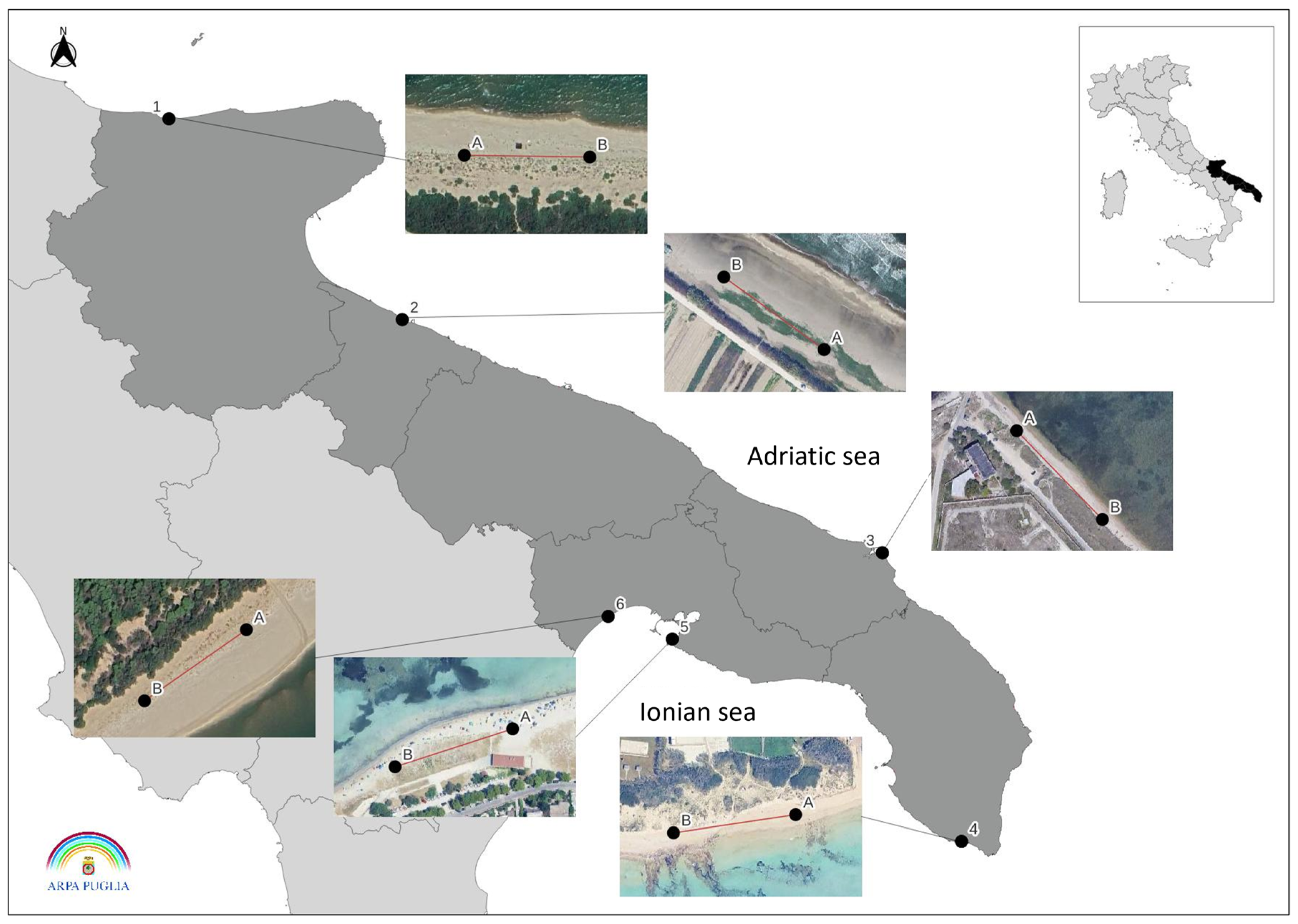
In compliance with the described protocol, six target beaches were chosen in the Puglia region, which remained the same over the decade of the survey, in coastal areas of “remote,” “port,” and “river” types, three on the Adriatic coast and three on the Ionian coast (Table 1 and Figure 1). The selection of sites was carried out according to two criteria. The first one was the choice of beaches according to the four categories previously enumerated and established in Module 4 of the POA. The second one was the need to replicate, in each of the two coastal areas (Adriatic and Ionian), an equal number of sites belonging to the same categories.

2.2. Data Acquisition

Monitoring for each site/tract is repeated twice a year, in the spring season (from 1 February to 30 April) and in the fall season (from 1 October to 31 December).
The seasonal distinction and the two monitoring periods were chosen at the national level in order to gather information on the litter presence on beaches during spring months (spring monitoring survey) after the stronger winter storms and before the seasonal cleaning operations (normally carried out at the start of the bathing season), and after the bathing season (fall monitoring survey) from 1 October to 31 December. This methodology provides two distinct datasets for each beach/year, allowing for greater accuracy in determining the amount of litter items present on the beach every year of the monitoring period.
Monitoring is carried out by proceeding on the stretch of beach in a systematic way along close paths (approx. 2 m) orthogonal or parallel to the coastline, going out to identify and count all visible litter on the beach with dimensions greater than 2.5 cm (except for cigarette butts); individual objects are identified according to a specific list with unique coding, prepared by taking inspiration from analogous lists used by the OSPAR Commission [19].
Each census was carried out by two or three operators. One operator, equipped with a reacher–grabber tool, was responsible for checking the type of litter and counting the items in each category. A second operator, equipped with a portable folder, was responsible for noting the number of litter items in each category on the sampling sheets.
The rationale for the use of linear meters as a unit of measure instead of square meters, with the purpose of ensuring the comparability of data, is reported in Table 2.
The data acquired during the beach litter monitoring carried out from 2014 to 2023 were organized into a dataset for subsequent statistical processing. This processing considered the total amount of beach litter as well as the different categories of waste. Specifically, the litter observed on beaches was grouped into the following categories: Plastic, Rubber, Wood, Metal, Glass/Ceramic, Paper and Cardboard, Textile, Other (meaning everything not included in the previous categories). In addition to the previously mentioned categories, the category “Plastic” underwent further subdivision into two subcategories: “SUP” (single-use plastic), which refers to single-use plastic items, and “Other Plastic,” which encompasses all other plastic items that do not fall under the category of SUP. According to the definition reported in Italian Legislative Decree 196/21, SUPs are defined as products “wholly or partly composed of plastic, with the exception of products derived from natural polymers that have not undergone chemical modification and that are not designed, intended, or marketed for the execution of more than one repositioning or rotation during their lifecycle, with the objective of being returned to the manufacturer for refilling or reuse for the original purpose for which they were designed.”
Therefore, for the purpose of data processing, the following plastic products were included in the SUP category: beverage straws and stirrers, cutlery, plates, cups, potato chip bags and candy wrappers, lollipop sticks, beverage bottles and various containers, lids, caps, bottle cap rings, food containers, can-holder packaging, and Q-tips.
Temporal analyses were performed using linear regression. The comparison between the Italian and Apulian trends was analyzed using Pearson’s correlation coefficient. The difference in marine litter values in the Adriatic Sea and the Ionian Sea was analyzed using the nonparametric Mann–Whitney test. A value lower than p < 0.05 was considered statistically significant for all the analyses.
All statistical analyses were performed using R software (version R-4.5.3; 2026).

3. Results

3.1. Marine Litter Composition

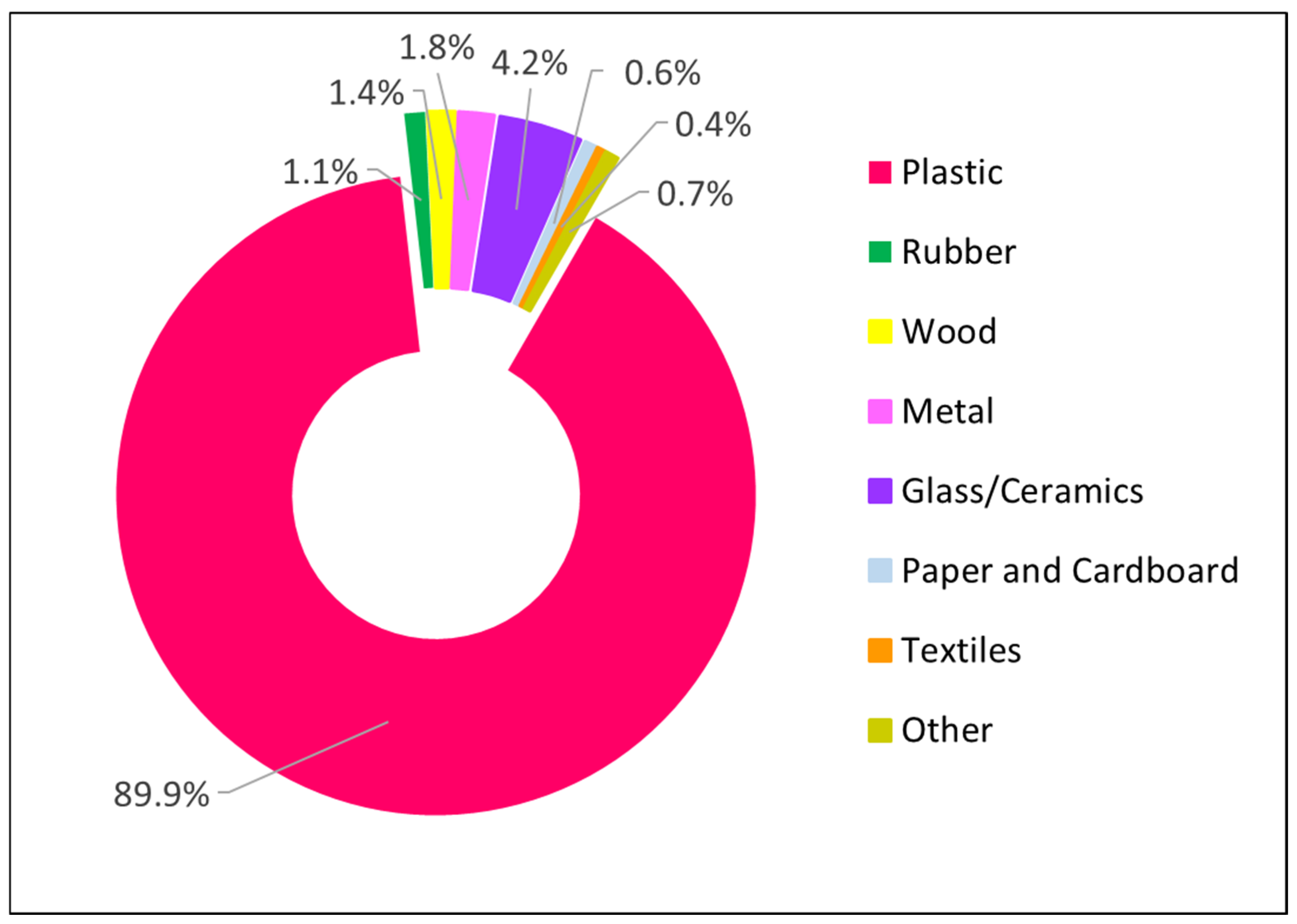
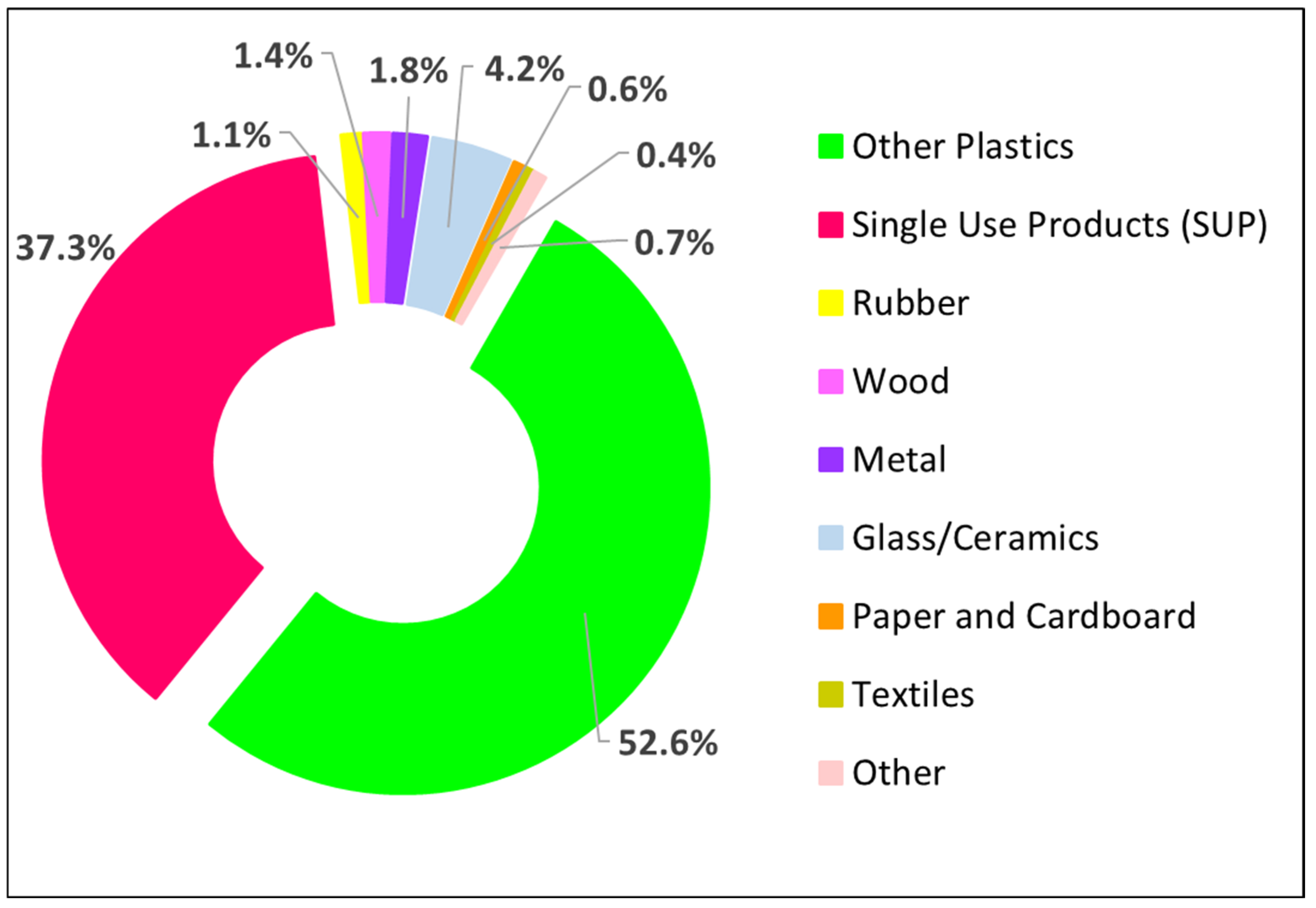
From 2014 to 2023, the average number of litter items (across all subcategories) recorded on the whole of the Apulian beaches was 506 per 100 m of shoreline. This estimate corresponds to approximately 23 objects per 100 square meters, if the reference is made not to the linear measure but rather to the overall surface of the beach trait investigated. The graph in Figure 2 presents a breakdown of the primary categories of litter observed over the whole monitoring period.
Table 3 shows the mean values of marine litter items for each site and category in the period 2014–2023.
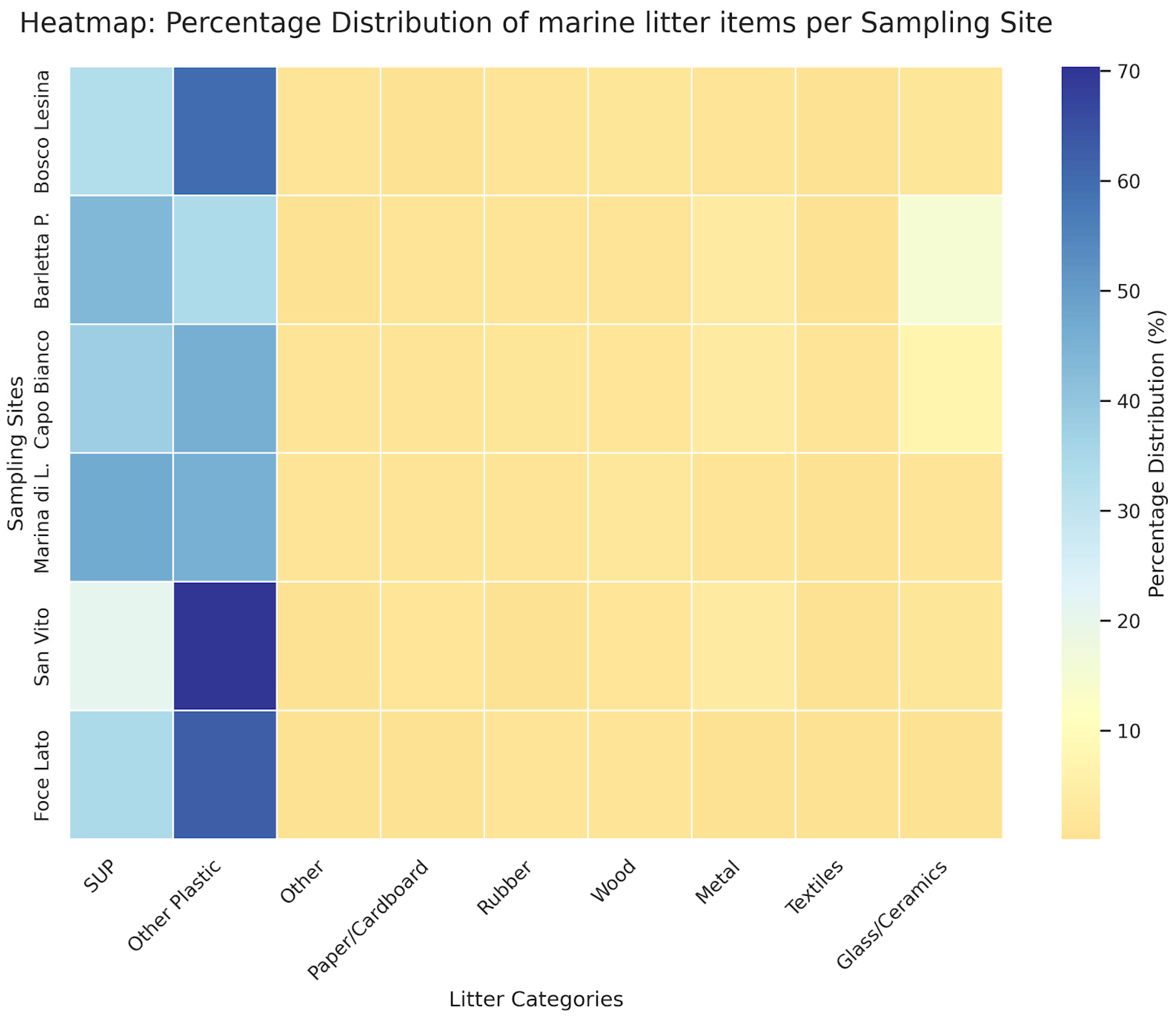
The dominance of plastic waste, both single-use plastic and other types of plastic, is clearly evident in the heat map in Figure 3.

3.2. Analysis of Time Trend

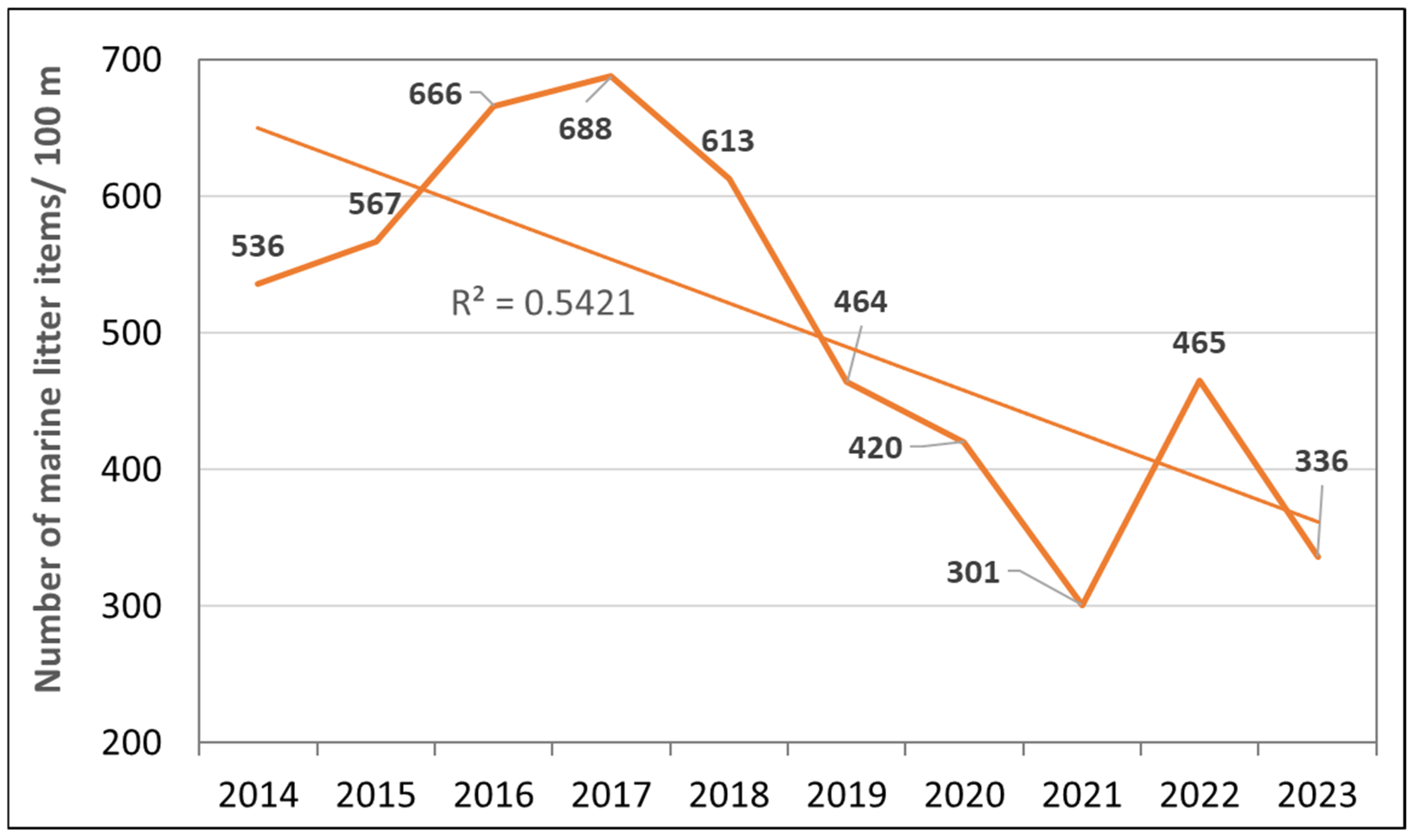
For the entire Apulian coastline, the analysis of the yearly beach litter average values over the period 2024–2023 reveals a downward trend (R = −73; p < 0.05) (Figure 4). The highest average value was estimated for the year 2017 (688 litter items/100 m), while the lowest was for the year 2021 (301 litter items/100 m) (Figure 4).
According to the above-reported results, the Apulian yearly average values estimated for the decade 2014–2023 are within the range of 450 to 1400 litter items/100 m of beach, defined by UNEP as the first baseline for the Mediterranean [20].
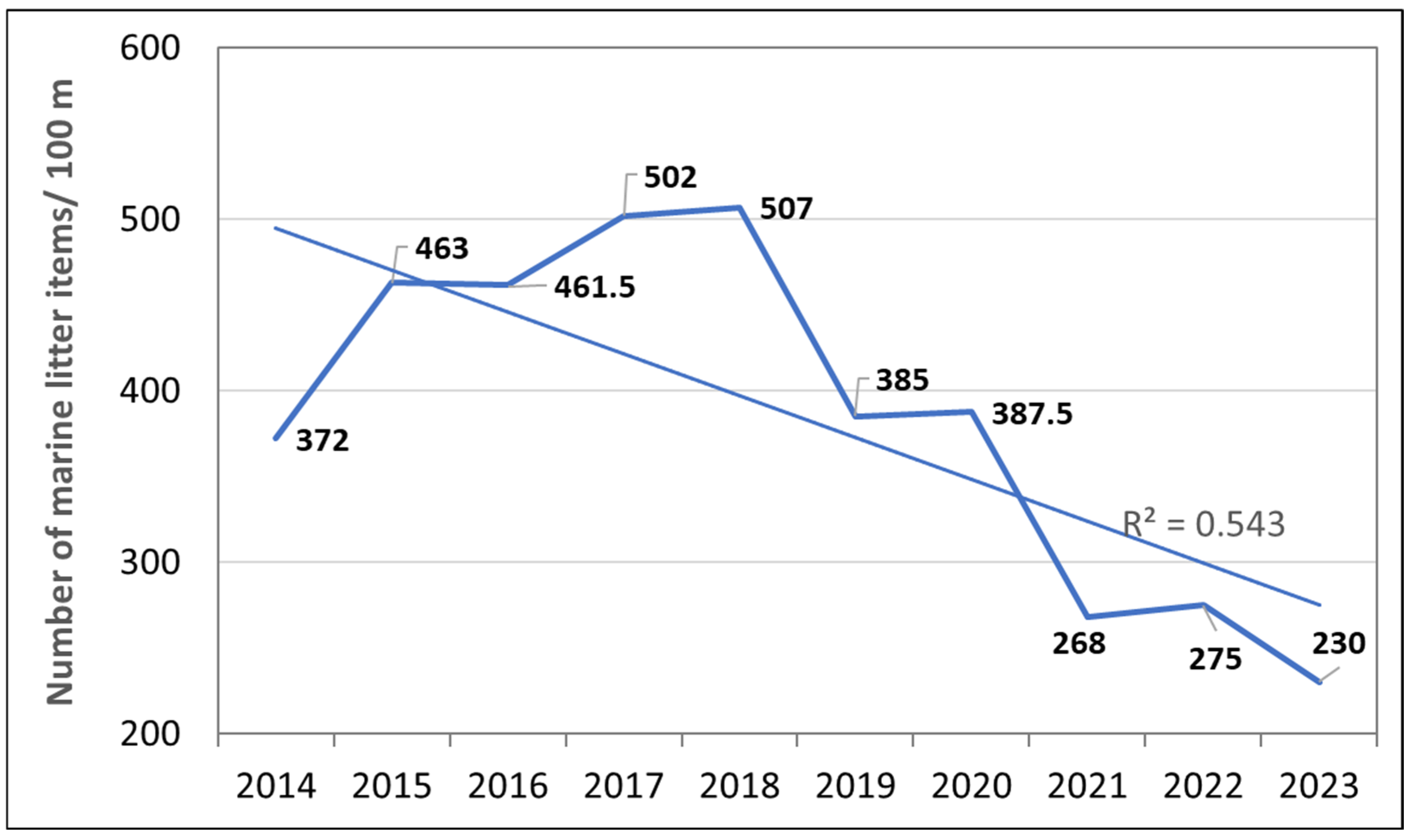
Similar trend and statistical results are obtained if the median value (R = −73; p < 0.05) is used instead of the yearly average (Figure 5).
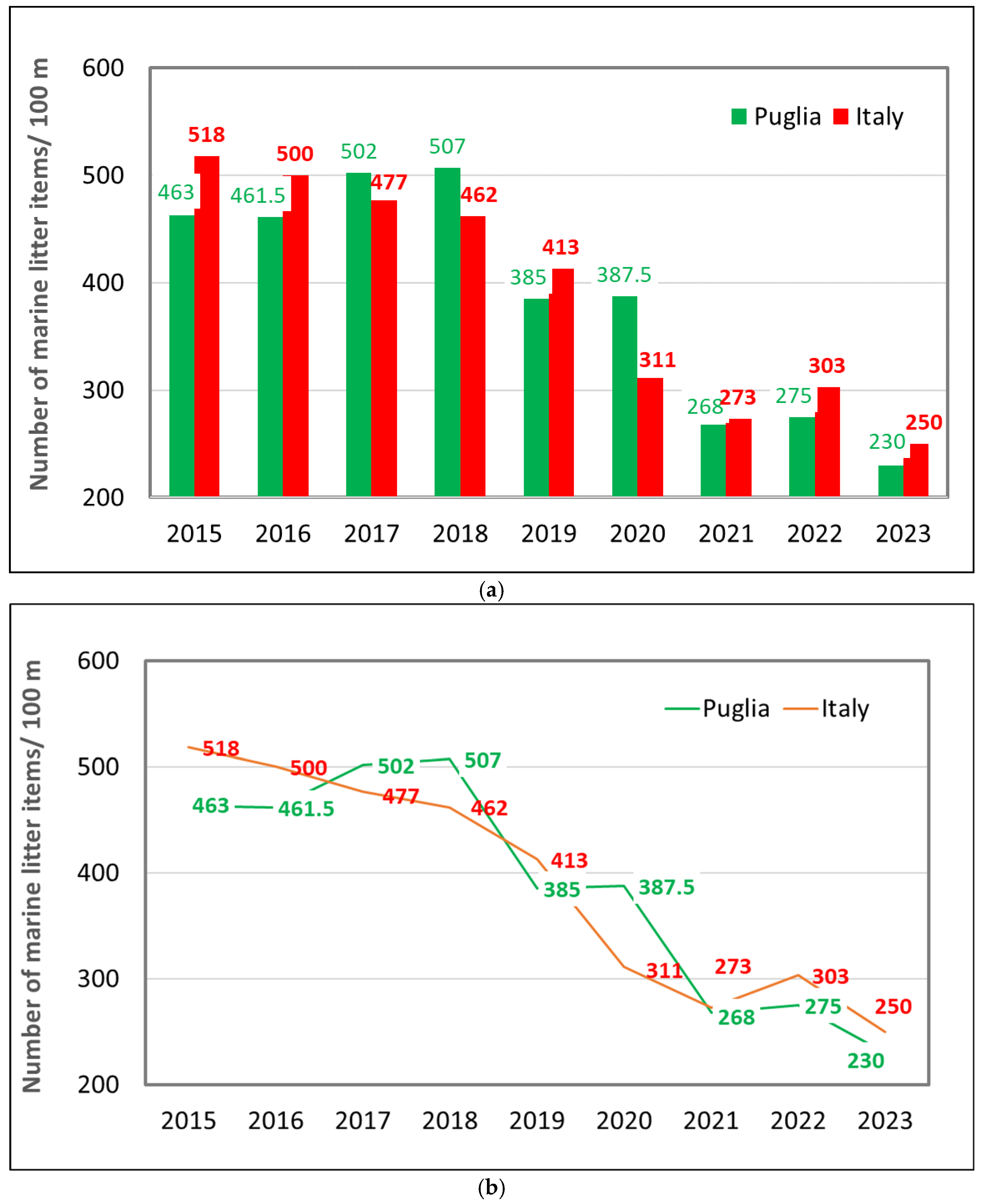
Moreover, a comparison was made between the Apulian beach litter dataset and the overall Italian one that includes the entire national coastline [21], both of them coming from the application of the same monitoring methods and protocols. The remarkable similarity between the yearly median values obtained and the respective time trends, confirmed by a Pearson correlation coefficient of 0.92 and a p-value < 0.001, is illustrated in Figure 6, which displays the compared series in two different graphical modes.
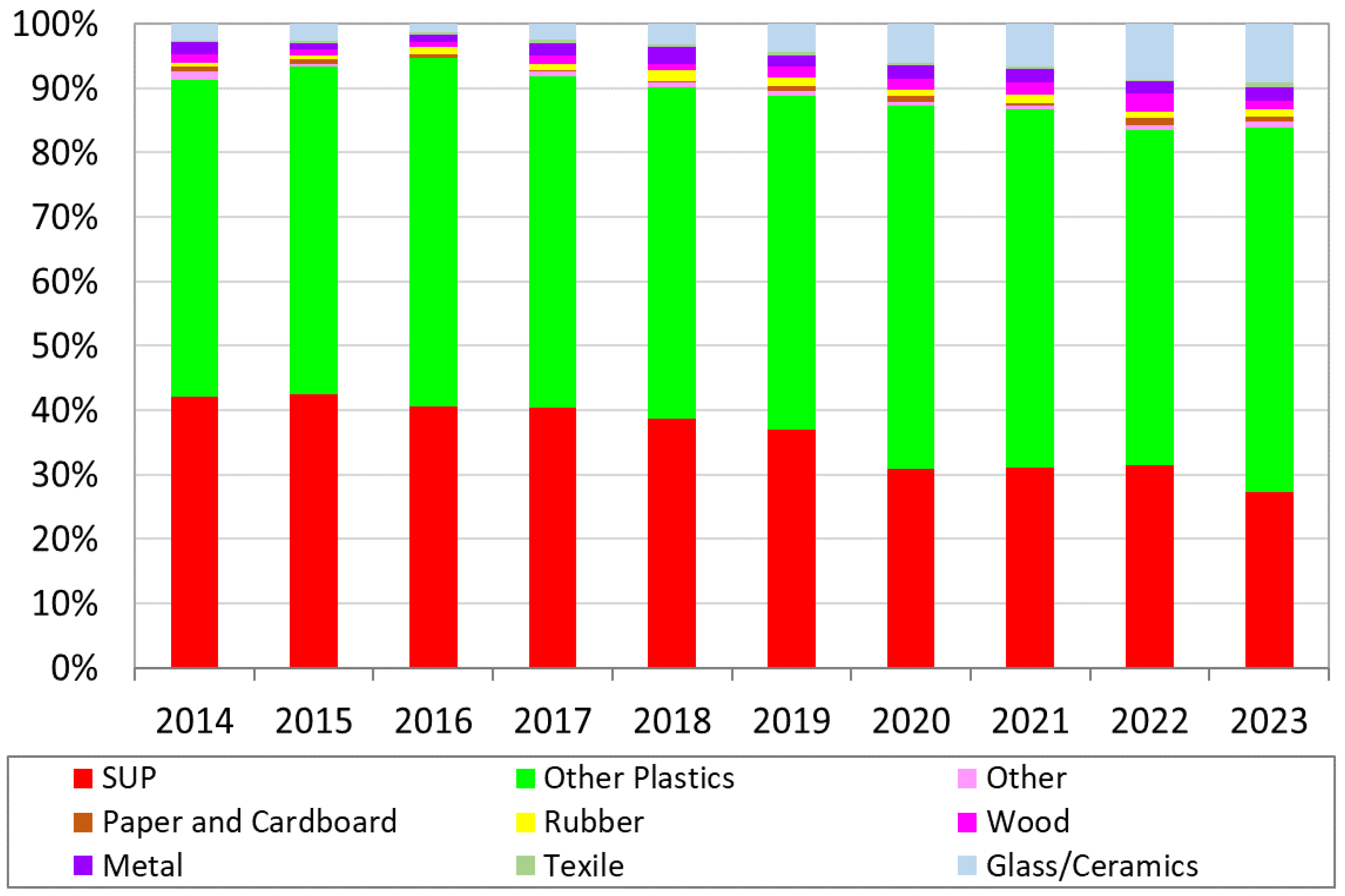
With reference to the different categories of litter observed on the Apulian coasts during the period 2014–2023, plastic materials were the most represented, as could also be expected, with an average of 454 items per 100 m of beach (close to 90% of the sum of all litter categories). Among these, of particular relevance are the SUPs; in fact, considering the whole monitoring period, SUPs alone accounted for 37% of the total litter observed on Apulian beaches, with an average of 188 items per 100 m, while all the “Other Plastics” accounted for 53%, with an average of 266 items per 100 m (Figure 7).
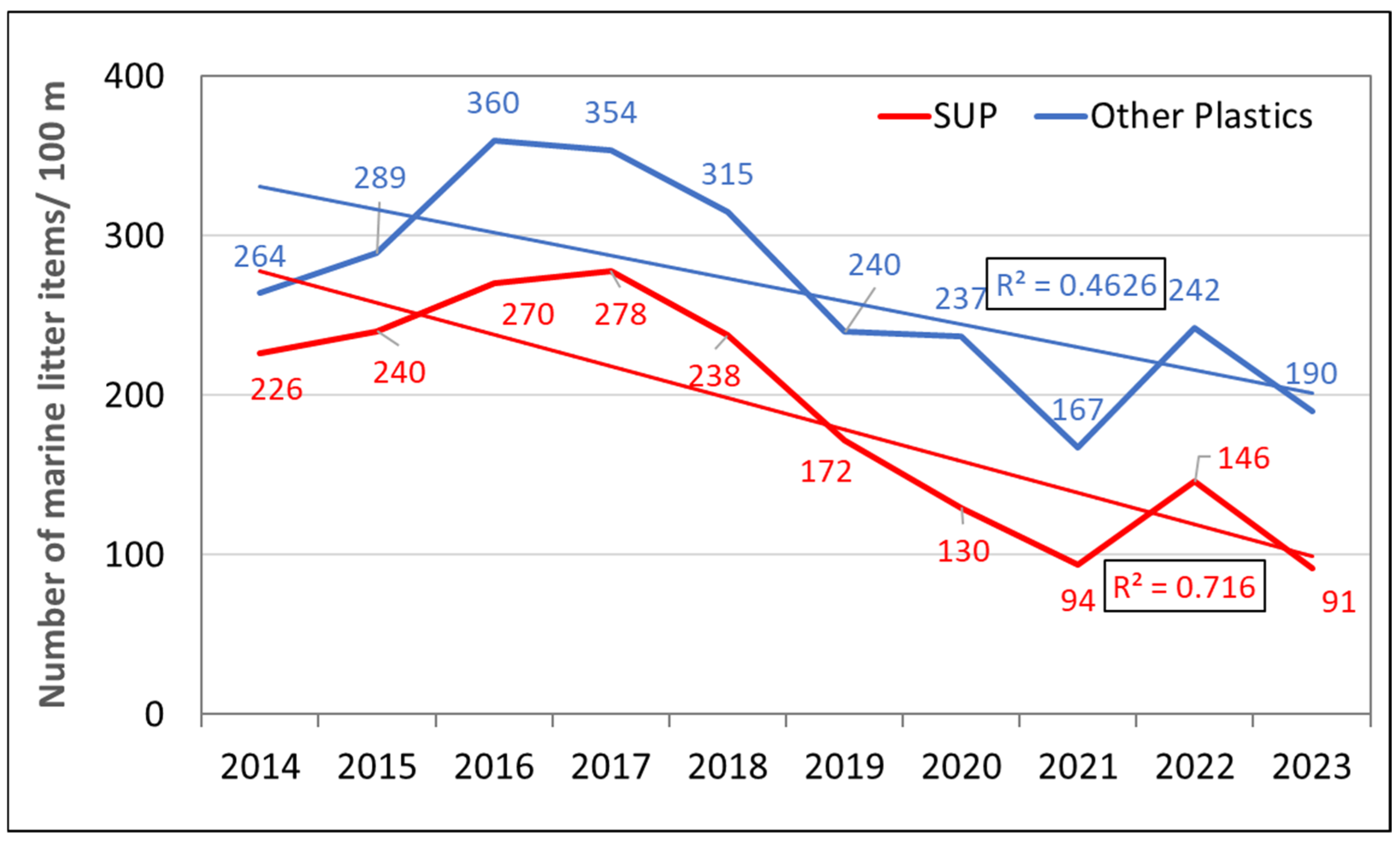
As observed for total litter yearly values, also in the case of plastic items, the trend appears to be decreasing over the decade 2014–2023 (R = −68; p < 0.05), especially for SUPs (R = −85; p < 0.005) as confirmed by the R2 value for the respective trend line (Figure 8).
In addition to the statistics, in the decade 2014–2023, the evidence of the more significant decrease in the SUPs compared to the other items is well illustrated in Figure 9, where the percentage incidence of each beach litter category over time is represented.
Among the “Other Plastic” litter items, polypropylene “mussel nets” stand out as a prevalent item. These nets have been observed in high numbers along beaches, mostly downstream of the offshore marine areas where mussel farms are located. This critical issue is common to other areas with the same characteristics, especially in the Adriatic Sea [22].
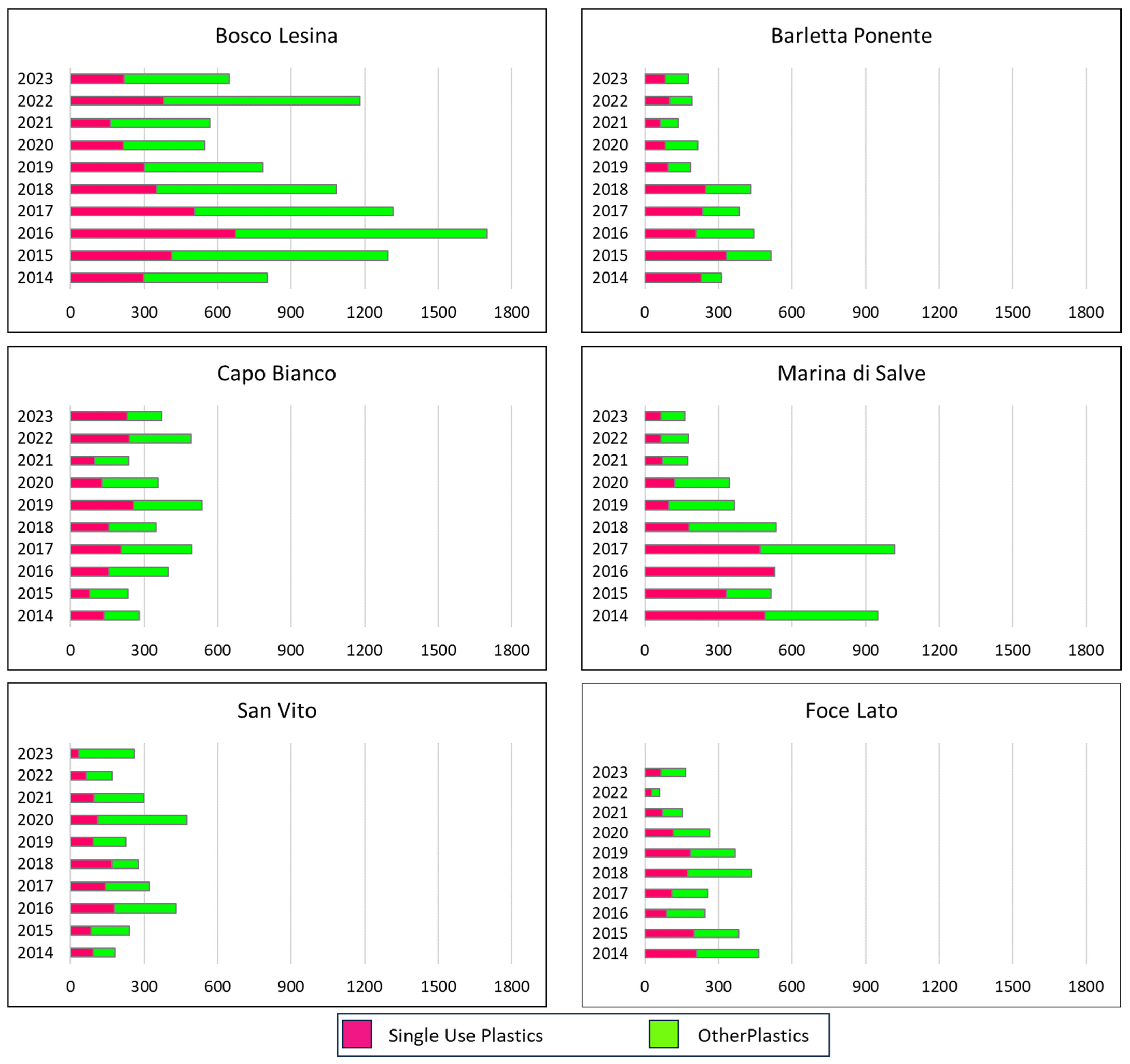
In the same decadal period, litter monitoring data from each individual Apulian beach revealed a substantial confirmation of the overall regional trend. Nevertheless, some quantitative differences were observed among the beaches, particularly with regard to the number of plastic litter items. The beaches “Bosco Isola Lesina,” “Marina di Salve,” and “Capobianco” are characterized by higher numbers of litter items, while the beaches “Barletta Ponente,” “San Vito,” and “Foce Lato” have the lowest numbers (Figure 10).

3.3. Differences Between Adriatic and Ionia Seas

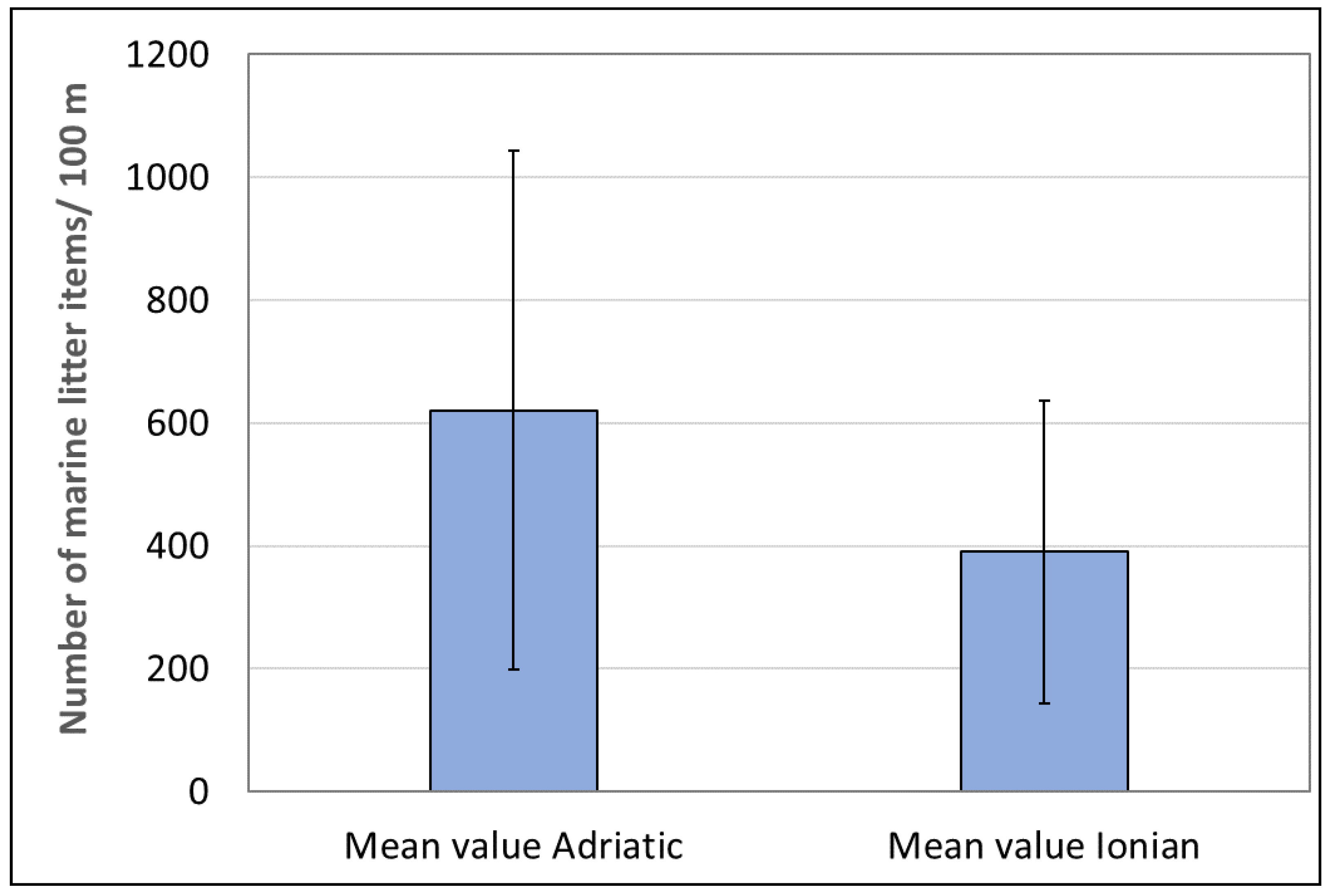
Considering the differences between the beaches and taking into account that the Apulian coast is divided into two sides, one facing the Adriatic Sea and the other the Ionian Sea, the two coastal sides have been analyzed separately. Over the entire 2014–2023 period, the average number of litter (all categories) resulted significantly higher for the Adriatic beaches (No. 621 per 100 m) than for the Ionian beaches (No. 390 per 100 m) (Mann–Whitney test, p < 0.001; Figure 11).

4. Discussion

4.1. Assessment of Marine Litter Distribution Patterns

As described above, the monitoring carried out by ARPA for the quantification of marine litter on Apulian beaches can be considered a useful tool for the assessment of the specific Descriptor in an application of the Marine Strategy Directive.
For the multi-year period under consideration, both the yearly average values and the historical series obtained by ARPA Puglia are in absolute alignment with the values and the trend represented at the national level by ISPRA for the overall Italian shoreline [21]. In particular, in both time series, there is a quite clear downward trend in the average number of litter items on beaches. In a comparable period, the same decrease has been observed along most of the European Union’s sandy shores [23], encompassing beaches in the North-East Atlantic and adjacent seas also [19].
The results of this study are consistent across the European Union’s regional seas, where harmonized macro litter trend data indicate a general decline along coastlines over the 2015–2021 period, with an overall reduction of approximately 29% among EU coastlines and significant decreases in single-use plastics and fishery-related items. Regionally, the Baltic Sea exhibited the largest proportional decrease (~45%), while the Black Sea and Mediterranean also showed substantial declines in absolute beach litter counts despite still exceeding the GES threshold [24,25]. In particular, in the Mediterranean Sea, the impact of tourism is a recurring theme: seasonal fluctuations are dramatic, with items per 100 m increasing by up to 400% during summer months in tourist-heavy regions [26].
The values for beach litter reported in this study, when compared with the most recent data on litter in the Mediterranean, are in line with most of the case studies (Table 4) from 2018.
Nevertheless, the criticality of plastics remains; in the decade 2014–2023, they represent approximately 90% of the litter items observed on Apulian beaches. This evidence is common to other Mediterranean contexts [32] as well as worldwide [33]. However, although the SUPs (single-use plastics) are the most prevalent plastic items along the Apulian coastline, they exhibited a more pronounced decrease in recent years.
As in other European and Mediterranean contexts, plastic represents the most common type of waste. This study also highlights the presence of plastic material derived from mussel farming activities, particularly in some areas.
Regarding the differences highlighted among the individual Apulian beaches, and between the Adriatic and Ionian sides, they can be explained taking into account multiple factors, including the geographical position, human use and visitation (i.e., for the touristic/bathing purposes), the presence of anthropogenic pressures in the vicinity, as well as the occurrence of shoreline cleaning operations. Without a doubt, general and local hydrology, considering also the two different basins involved (Adriatic and Ionian Seas), is of fundamental importance in the transport and deposition of litter on Apulian beaches, as confirmed by specific studies for the entire Adriatic–Ionian context [34]; moreover, some models confirm how passive transport of marine litter can also occur between the two sides of the Adriatic, with more or less relevant contributions depending on the type of sources on the coasts [35]. Still on the topic, with particular reference to passive transport of plastics, it is useful to report that some authors highlight their role also as “vectors” of human pathogens [36] or potentially toxic microalgae [37], thus increasing the risk of their potential impact.
In fact, it has recently been demonstrated that the persistence of marine litter in coastal ecosystems can lead to the release of contaminants, particularly in sandy sediments [38]. This phenomenon is complicated when marine litter accumulates on deposits of beached plant biomass, potentially transferring contamination to different compartments and making it impossible to reuse the beached biomass for other purposes [39].

4.2. Addressing Current Constraints in the Monitoring of Marine Litter Results

Despite a standardized protocol and a consistent time series, this study has limitations that must be considered when interpreting the results.
A primary constraint pertains to the challenge of accurately ascertaining the provenance of the stranded items. The distinction between sea-based sources (e.g., fisheries, shipping, offshore platforms) and land-based sources (e.g., riverine inputs, urban runoff, direct littering) remains a complex challenge. While certain indicator items suggest specific pathways, the lack of high-resolution hydrodynamic modeling or isotopic tracing in this study limits the ability to definitively determine the origin of marine litter, particularly for the degraded plastic fragments.
Despite the fact that the investigated coastline represents a substantial spatial extent, it constitutes merely a fraction of the broader Adriatic and Ionian littorals. The Adriatic–Ionian region is distinguished by a high degree of geomorphological diversity and varying degrees of anthropogenic pressure. Consequently, while the observed trends may be suggestive of regional pollution, they may not be entirely generalizable to the entire basin. However, it is important to exercise caution when extrapolating these results to areas exhibiting distinct coastal dynamics or proximity to major river mouths.
The accuracy of data pertaining to the presence of marine litter may be subject to variation due to the implementation of seasonal beach cleaning activities. In many of the surveyed areas, local authorities conduct mechanical or manual cleaning, particularly in the period leading up to the bathing season. These interventions can result in an underestimation of the “standing stock” of litter and obfuscate natural accumulation patterns. Despite endeavors to synchronize the sampling process with periods of minimal disturbance, the congruence between the scheduling of cleaning activities and monitoring periods gives rise to a certain degree of sampling bias, a factor that must be taken into account during the interpretation of total litter loads.

5. Conclusions

5.1. Summary of Key Findings

The apparent decrease in marine litter observed in recent years on Apulian beaches (both Adriatic and Ionian), particularly of single-use products (SUPs), suggests a positive trend. The implementation of the European Directive 2019/904, aimed at reducing single-use plastics, has likely enhanced awareness at all levels, from institutions to the public, encouraging more sustainable behaviors.
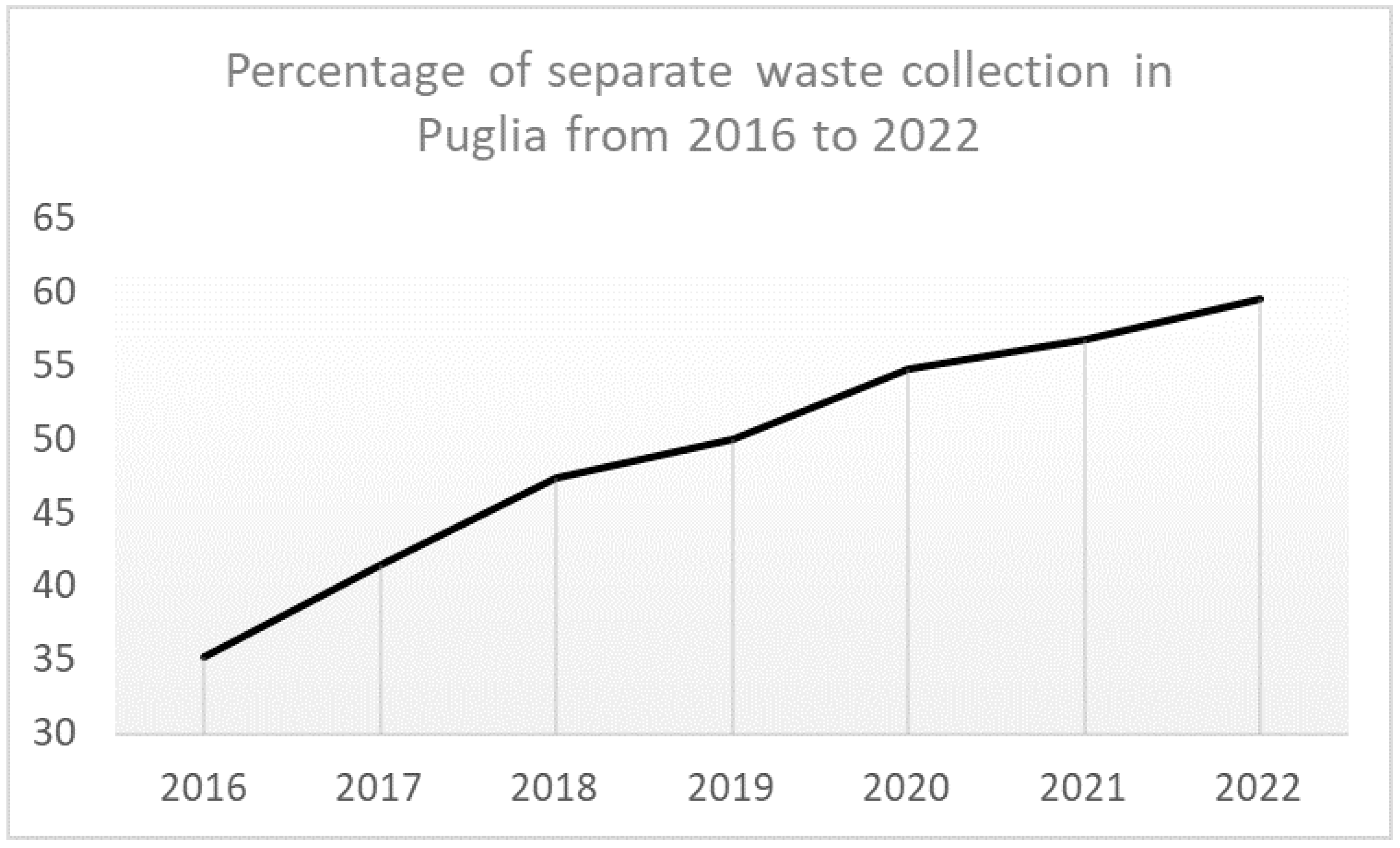
Another explanation for the reduction in the amount of marine litter on beaches, with particular reference to land-based litter, may be the greater awareness brought about by the increase in separate waste collection at the local level in the Puglia region (Figure 12).
However, achieving Good Environmental Status under the Marine Strategy Directive (2008/56/EC) requires a threshold of 20 litter items per 100 m of beach, which remains far from being met in Apulia, Italy, and across Europe. Although recent monitoring shows a decline in macro litter since 2015, particularly for SUPs, this improvement is linked to regulatory measures such as the Single-Use Plastics Directive and strengthened MSFD implementation. Nevertheless, most beaches still exceed the GES threshold, and plastics remain dominant, especially in the Mediterranean and Black Sea regions [24]. These results indicate that current efforts are only partially effective.
Consequently, upstream prevention measures must therefore be reinforced. High-frequency items such as cigarette butts, food packaging, and fishing-related plastics highlight shortcomings in product design and waste management [40]. Expanding extended producer responsibility (EPR), harmonizing deposit-return systems, and introducing eco-modulated fees could significantly reduce leakage into coastal environments. At the same time, riverine transport remains a major pathway for terrestrial litter entering European waters, particularly in semi-enclosed basins [41]. Integrating marine litter objectives into River Basin Management Plans and improving urban stormwater and waste systems are essential to limit land-to-sea transfer.
In northern European waters, fisheries and maritime activities continue to contribute significantly to beached litter, including lost or discarded gear [24,42]. These impacts can be mitigated through better gear marking, port reception facilities, and retrieval incentives. Despite progress from harmonized monitoring, greater methodological consistency and expanded microplastic surveys are still needed. Tourism-related litter also remains a concern in several Baltic and Mediterranean regions, indicating the need for behavioral interventions and seasonal enforcement [26,43].
Although regulatory measures have produced improvements, achieving lasting reductions in marine litter requires a systemic approach combining upstream product policies, stronger river basin governance, fisheries regulation, and harmonized long-term monitoring across European seas. Continued efforts, including institutional monitoring based on standardized protocols at least at the national level, are essential to assess impacts and implement mitigation measures.

5.2. Future Directions: Comparative Analysis and Potential Improvements in Marine Litter Monitoring

Integration with additional tools could further expand monitoring capacity. Recent studies highlight a multi-modal approach combining high-resolution remote sensing, automated detection, and predictive modeling to improve spatial and temporal coverage. The shift from operator-based visual surveys to UAV monitoring reduces human error and logistical costs while enabling access to remote coastal areas. Drones equipped with high-resolution RGB cameras can collect large datasets, processed using Convolutional Neural Networks (CNNs) to classify litter by material [44].
For large-scale monitoring, satellite imagery is becoming increasingly viable. Missions such as ESA’s Sentinel-2 can detect plastic spectral signatures using Multi-Spectral Instruments (MSIs). While resolution limits detection of individual items, these tools effectively identify large debris accumulations after storm events [45].
In addition to observational methods, numerical modeling provides predictive insights into litter distribution. By integrating sea surface currents, wind drag, and wave dynamics, models can identify accumulation zones and trace litter back to probable sources (riverine or maritime) [46]. Improving data quality also requires standardizing data collection: mobile applications (e.g., Marine LitterWatch) ensure that volunteer data follows international protocols (OSPAR or MSFD). Combining these “ground truth” data with drone and satellite observations strengthens validation for machine learning models.

Author Contributions

Conceptualization, N.U., A.P., F.L. and E.B.; methodology, N.U., A.P., F.L. and E.B.; formal analysis, N.U. and E.B.; investigation, N.U., A.P. and F.L.; data curation, F.L. and E.B.; writing—original draft preparation, N.U., F.L. and E.B.; writing—review and editing, N.U. and E.B.; supervision, E.B. and N.U. All authors have read and agreed to the published version of the manuscript.

Funding

Financial support was provided by the Italian Ministry for Environment, Land and Sea Protection in accordance with the Marine Strategy Project (MSFD: 2008/56/EC).

Data Availability Statement

The original contributions presented in this study are included in the article. Further inquiries can be directed to the corresponding author.

Acknowledgments

The authors thank the three anonymous reviewers for their helpful comments that improved the quality of the manuscript.

Conflicts of Interest

The authors declare no conflict of interest.

References

  1. UNEP. Marine Litter: A Global Challenge; UN: Athens, Greece, 2009; p. 232. [Google Scholar]
  2. UNEP. Marine Litter, an Analytical Overview; UN: Athens, Greece, 2005; p. 58. [Google Scholar]
  3. Gall, S.C.; Thompson, R.C. The Impact of Debris on Marine Life. Mar. Pollut. Bull. 2015, 92, 170–179. [Google Scholar] [CrossRef]
  4. Gregory, M.R. Environmental Implications of Plastic Debris in Marine Settings—Entanglement, Ingestion, Smothering, Hangers-On, Hitch-Hiking and Alien Invasions. Philos. Trans. R. Soc. B Biol. Sci. 2009, 364, 2013–2025. [Google Scholar] [CrossRef] [PubMed]
  5. Rochman, C.M.; Browne, M.A.; Underwood, A.J.; Van Franeker, J.A.; Thompson, R.C.; Amaral-Zettler, L.A. The Ecological Impacts of Marine Debris: Unraveling the Demonstrated Evidence from What Is Perceived. Ecology 2016, 97, 302–312. [Google Scholar] [CrossRef] [PubMed]
  6. Lusher, A.L.; Hernandez-Milian, G.; Berrow, S.; Rogan, E.; O’Connor, I. Incidence of Marine Debris in Cetaceans Stranded and Bycaught in Ireland: Recent Findings and a Review of Historical Knowledge. Environ. Pollut. 2018, 232, 467–476. [Google Scholar] [CrossRef] [PubMed]
  7. Galloway, T.S.; Cole, M.; Lewis, C. Interactions of Microplastic Debris throughout the Marine Ecosystem. Nat. Ecol. Evol. 2017, 1, 0116. [Google Scholar] [CrossRef]
  8. UNEP. Valuing Plastic: The Business Case for Measuring, Managing and Disclosing Plastic Use in the Consumer Goods Industry; UN: Athens, Greece, 2014; ISBN 92-807-3400-8. [Google Scholar]
  9. Cózar, A.; Sanz-Martín, M.; Martí, E.; González-Gordillo, J.I.; Ubeda, B.; Gálvez, J.Á.; Irigoien, X.; Duarte, C.M. Plastic Accumulation in the Mediterranean Sea. PLoS ONE 2015, 10, e0121762. [Google Scholar] [CrossRef]
  10. Ungaro, N.; Pastorelli, A.M.; Barbone, E. Una prima valutazione dei rifiuti spiaggiati lungo le coste pugliesi/A first assessment of litter on the apulian coast. Biol. Mar. Mediterr. 2015, 22, 150. [Google Scholar]
  11. Munari, C.; Corbau, C.; Simeoni, U.; Mistri, M. Marine Litter on Mediterranean Shores: Analysis of Composition, Spatial Distribution and Sources in North-Western Adriatic Beaches. Waste Manag. 2016, 49, 483–490. [Google Scholar] [CrossRef]
  12. Pasternak, G.; Zviely, D.; Ribic, C.A.; Ariel, A.; Spanier, E. Sources, Composition and Spatial Distribution of Marine Debris along the Mediterranean Coast of Israel. Mar. Pollut. Bull. 2017, 114, 1036–1045. [Google Scholar] [CrossRef]
  13. Schmid, C.; Cozzarini, L.; Zambello, E. A Critical Review on Marine Litter in the Adriatic Sea: Focus on Plastic Pollution. Environ. Pollut. 2021, 273, 116430. [Google Scholar] [CrossRef]
  14. Prevenios, M.; Zeri, C.; Tsangaris, C.; Liubartseva, S.; Fakiris, E.; Papatheodorou, G. Beach litter dynamics on Mediterranean coasts: Distinguishing sources and pathways. Mar. Pollut. Bull. 2018, 129, 448–457. [Google Scholar] [CrossRef]
  15. Van Sebille, E.; Aliani, S.; Law, K.L.; Maximenko, N.; Alsina, J.M.; Bagaev, A.; Bergmann, M.; Chapron, B.; Chubarenko, I.; Cózar, A.; et al. The physical oceanography of the transport of floating marine debris. Environ. Res. Lett. 2020, 15, 023003. [Google Scholar] [CrossRef]
  16. Vlachogianni, T. Marine Litter Assessment in the Adriatic and Ionian Seas; IPA-Adriatic DeFishGear Project: Venezia, Italy, 2020. [Google Scholar]
  17. OSPAR. Marine Litter Thematic Assessment Units. 2023. Available online: https://oap.ospar.org/en/ospar-assessments/quality-status-reports/qsr-2023/thematic-assessments/marine-litter (accessed on 30 March 2026).
  18. Galgani, F.; Hanke, G.; Werner, S.; De Vrees, L. Marine Litter Within the European Marine Strategy Framework Directive. ICES J. Mar. Sci. 2013, 70, 1055–1064. [Google Scholar] [CrossRef]
  19. OSPAR. Guideline for Monitoring Marine Litter on the Beaches in the OSPAR Maritime Area, 1st ed.; OSPAR: London, UK, 2010. [Google Scholar]
  20. UNEP/MAP/CORMON. 1st Report of the Informal Online Working Group on Marine Litter UNEP (DEPI)/MED WG.411/Inf.10; UNEP/MAP/CORMON: Athens, Greece, 2015; p. 59. [Google Scholar]
  21. Fortibuoni, T.; Ronchi, F.; Scannella, D. Monitoraggio Strategia Marina—Rifiuti Marini Spiaggiati. 2024. Available online: https://indicatoriambientali.isprambiente.it/it/acque-marino-costiere-e-transizione/monitoraggio-strategia-marina-rifiuti-marini-spiaggiati (accessed on 30 March 2026).
  22. Mazzoli, C.; Corbau, C. Plastic Litter in the Adriatic Basin; Greenpeace: Denver, CO, USA, 2021. [Google Scholar]
  23. Hanke, G.; Walvoort, D.; Van Loon, W.; Giorgetti, A.; Molina-Jack, M.E.; Vinci, M. European Coastline Macro Litter Trends (2015–2021): MSFD Report; Publications Office of the European Union: Luxembourg, 2025. [Google Scholar]
  24. Hanke, G.; Walvoort, D.; Ruiz-Orejón, L.F.; van Loon, W.M.G.M.; Giorgetti, A.; Molina-Jack, M.E.; Vinci, M. JRC-MSFD Technical Group on Marine Litter—European Coastline Macro Litter Trends 2015–2021; Publications Office of the European Union: Luxembourg, 2024. [Google Scholar] [CrossRef]
  25. Vlachogianni, T. Assessing the Amount of Marine Litter on Beaches of Mediterranean Coastal and Marine Protected Areas. In Filling in the Knowledge Gaps via a Participatory-Science Initiative; MIO-ECSDE: Athens, Greece, 2022. [Google Scholar]
  26. Grelaud, M.; Ziveri, P. The generation of marine litter in Mediterranean island beaches as an effect of tourism and its mitigation. Sci. Rep. 2020, 10, 20326. [Google Scholar] [CrossRef] [PubMed]
  27. Vlachogianni, T.; Fortibuoni, T.; Ronchi, F.; Zeri, C.; Mazziotti, C.; Tutman, P.; Varezić, D.B.; Palatinus, A.; Trdan, S.; Peterlin, M.; et al. Marine litter on the beaches of the Adriatic and Ionian Seas: An assessment of their abundance, composition and sources. Mar. Bull. 2018, 131, 745–756. [Google Scholar] [CrossRef]
  28. Vlachogianni, T. Marine Litter in Mediterranean Coastal and Marine Protected Areas—How Bad Is It. In A Snapshot Assessment Report on the Amounts, Composition and Sources of Marine Litter Foundon Beaches; Interreg Med ACT4LITTER & MIO-ECSDE: Athens, Greece, 2019. [Google Scholar]
  29. Federigi, I.; Balestri, E.; Castelli, A.; De Battisti, D.; Maltagliati, F.; Menicagli, V.; Verani, M.; Lardicci, C.; Carducci, A. Beach pollution from marine litter: Analysis with the DPSIR framework (driver, pressure, state, impact, response) in Tuscany, Italy. Ecol. Indic. 2022, 143, 109395. [Google Scholar] [CrossRef]
  30. Šubelj, G.; Veiga, J.M. Marine Litter Watch—Europe’s Beach Litter Assessment; ETC BE Report 2024/1; European Topic Centre on Biodiversity and Ecosystems: Oslo, Norway, 2024. [Google Scholar]
  31. Haseler, M.; Ben Abdallah, L.; El Fels, L.; El Hayany, B.; Hassan, G.; Escobar-Sánchez, G.; Robbe, E.; von Thenen, M.; Loukili, A.; Abd El-Raouf, M.; et al. Assessment of beach litter pollution in Egypt, Tunisia, and Morocco: A study of macro and meso-litter on Mediterranean beaches. Environ. Monit. Assess. 2025, 197, 123. [Google Scholar] [CrossRef]
  32. UNEP. Marine Litter Assessment in the Mediterranean; UN: Athens, Greece, 2015; p. 86. [Google Scholar]
  33. Barboza, L.G.; Cózar, A.; Gimenez, B.C.; Barros, T.L.; Kershaw, P.J.; Guilhermino, L. Macroplastics pollution in the marine environment. In World Seas: An Environmental Evaluation; Academic Press: Cambridge, MA, USA, 2019; pp. 305–328. [Google Scholar]
  34. Liubartseva, S.; Coppini, G.; Lecci, R.; Creti, S. Regional approach to modeling the transport of floating plastic debris in the Adriatic Sea. Mar. Pollut. Bull. 2016, 103, 115–127. [Google Scholar] [CrossRef]
  35. MARLESS Project. Model of Dispersion of Floating Waste. 2023. Available online: https://programming14-20.italy-croatia.eu/documents/2137147/0/MARLESS_D3.3.2_part_II%2BIII_model_dispersion_features_implementation.pdf/33a0cfb9-71b9-2d2b-044c-834fda9bf4f7?t=1694176413474 (accessed on 30 March 2026).
  36. Keswani, A.; Oliver, D.M.; Gutierrez, T.; Quilliam, R.S. Microbial hitchhikers on marine plastic debris: Human exposure risks at bathing waters and beach environments. Mar. Environ. Res. 2016, 118, 10–19. [Google Scholar] [CrossRef]
  37. Casabianca, S.; Capellacci, S.; Giacobbe, M.G.; Dell’Aversano, C.; Tartaglione, L.; Varriale, F.; Narizzano, R.; Risso, F.; Moretto, P.; Dagnino, A.; et al. Plastic-associated harmful microalgal assemblages in marine environment. Environ. Pollut. 2019, 244, 617–626. [Google Scholar] [CrossRef]
  38. Traverso-Soto, J.M.; Figueredo, M.; Punta-Sánchez, I.; Campana, O.; Ciufegni, E.; Hampel, M.; Buoninsegni, J.; Manzano Quiñones, M.A.; Anfuso, G. Assessment of Organic Pollutants Desorbed from Plastic Litter Items Stranded on Cadiz Beaches (SW Spain). Toxics 2025, 13, 673. [Google Scholar] [CrossRef]
  39. von Thenen, M.; von Loh, M.; Robbe, E.; Abdallah, L.B.; Escobar-Sánchez, G.; Haseler, M.; M’hiri, F.; Schernewski, G. Beach Wrack on Baltic and Mediterranean Sea Beaches: Litter Pollution and Management Perspectives. Estuaries Coasts 2025, 48, 61. [Google Scholar] [CrossRef]
  40. Veiga, J.M.; Winterstetter, A.; Murray, C.; Šubelj, G.; Birk, S.; Lusher, A.; van Bavel, B.; Aytan, Ü.; Andersen, J.H.; Sholokhova, A.; et al. Marine Litter in Europe—An Integrated Assessment from Source to Sea; ETC/ICM Technical Report 05/2022; European Topic Centre on Inland, Coastal and Marine Waters: Leipzig, Germany, 2022; p. 198. [Google Scholar]
  41. van Emmerik, T.; Vriend, P.; Roebroek, J. An Evaluation of the River-OSPAR Method for Quantifying Macrolitter on Dutch Riverbanks; Wageningen University: Wageningen, The Netherlands, 2020. [Google Scholar]
  42. Tekman, M.B.; Gutow, L.; Bergmann, M. Marine debris floating in Arctic and temperate Northeast Atlantic waters. Front. Mar. Sci. 2022, 9, 933768. [Google Scholar] [CrossRef]
  43. Zalewska, T.; Grajewska, A.; Maciak, J. Beach litter on the southern Baltic coast: Status after 10 years of MSFD implementation within Descriptor 10—SUP directive and pandemic signs. Mar. Pollut. Bull. 2026, 222, 118637. [Google Scholar] [CrossRef] [PubMed]
  44. Andriolo, U.; Topouzelis, K.; van Emmerik, T.H.; Papakonstantinou, A.; Monteiro, J.G.; Isobe, A.; Hidaka, M.; Kako, S.I.; Kataoka, T.; Gonçalves, G. Drones for litter monitoring on coasts and rivers: Suitable flight altitude and image resolution. Mar. Pollut. Bull. 2023, 195, 115521. [Google Scholar] [CrossRef]
  45. Biermann, L.; Clewley, D.; Martinez-Vicente, V.; Topouzelis, K. Finding plastic patches in coastal waters using optical satellite data. Sci. Rep. 2020, 10, 5364. [Google Scholar] [CrossRef]
  46. Liubartseva, S.; Coppini, G.; Lecci, R.; Clementi, E. Tracking plastics in the Mediterranean: 2D Lagrangian model. Mar. Pollut. Bull. 2018, 129, 151–162. [Google Scholar] [CrossRef]
Figure 1. Monitoring of marine litter on Apulian beaches: location of selected sites and respective survey areas. (1) Bosco Isola Lesina; (2) Barletta; (3) Capo Bianco; (4) Marina di Pescoluse; (5) San Vito; (6) Foce Lato.
Oceans 07 00032 g001
Figure 2. Percentage of the main categories of litter observed on Apulian beaches. Due to rounding errors at the first decimal level, the cumulative percentage is 100.1%.
Oceans 07 00032 g002
Figure 3. Percentage distribution among categories of marine litter items in the six sampling sites for the period 2014–2023.
Oceans 07 00032 g003
Figure 4. Marine litter on Apulian beaches: yearly average values trend for the period 2014–2023.
Oceans 07 00032 g004
Figure 5. Marine litter on Apulian beaches: yearly median values trend for the period 2014–2023.
Oceans 07 00032 g005
Figure 6. Beach litter median values: comparison between Apulian and overall Italian data in the period 2015–2023; (a) data represented by histograms; (b) data represented as a time series.
Oceans 07 00032 g006
Figure 7. Percentage of “SUP” and “Other Plastic” litter categories on Apulian beaches. Due to rounding errors at the first decimal level, the cumulative percentage is 100.1%.
Oceans 07 00032 g007
Figure 8. Plastic litter on Apulian beaches: yearly average values for the subcategories “SUP” and “Other Plastic.”.
Oceans 07 00032 g008
Figure 9. Litter on Apulian beaches: yearly percentage incidence of categories and subcategories.
Oceans 07 00032 g009
Figure 10. Plastic litter items on the Apulian coasts: yearly average values for each investigated beach.
Oceans 07 00032 g010
Figure 11. Average number (n./100 m +/− std. dev.) of litter items observed in the decade 2014–2023 on the beaches of the Adriatic and Ionian sides of Puglia.
Oceans 07 00032 g011
Figure 12. Percentage of separate waste collection in Puglia from 2016 to 2022 (source Regione Puglia (www.ecologia.regione.puglia.it, accessed on 10 January 2026)—data analysis—ARPA Puglia).
Oceans 07 00032 g012
Table 1. List of monitored beaches in Puglia: geographical coordinates of the centroid and average width for the respective sections surveyed.
Location (Province)Latitude NLongitude EAverage Width (m)
Bosco Isola Lesina (Foggia)41.9005515.3896225
41.9005315.39083
Barletta (Barletta Andria Trani)41.3325816.2518640
41.3331216.25090
Capo Bianco (Brindisi)40.6486217.9988310
40.6479517.99962
Marina di Pescoluse (Lecce)39.8353618.2507412
39.8352618.24959
San Vito (Taranto)40.4246117.2220322
40.4243517.22090
Foce Lato (Taranto)40.4923316.9895525
40.4918316.98857
Table 2. List of reasons for preferring linear meters to square meters.
ParameterRationale for Preferring Linear Meters to Square Meters as a Measure Unit
Accumulation dynamicsMarine litter does not scatter evenly across a beach. Instead, it follows a linear deposition pattern, accumulating where the waves and tides reach their highest point (the strandline). Measuring by area (m2) would dilute the results, as large empty spaces behind the tide line would make the data less representative of the actual pollution coming from the sea.
Variability of beach widthThe variability in the width of the beaches extends from small, rocky pocket beaches to extensive sandy stretches, thereby rendering the comparison of data from two disparate beaches infeasible. The utilization of linear meters as the measurement unit serves to focus exclusively on the ‘front’, thereby negating the influence of beach depth.
Monitoring reproducibilityThe MSFD protocol requires monitoring standard stretches of 100 linear meters. Indeed, it is a more straightforward task for operators to identify a 100-meter stretch of coast and traverse it from the shoreline to the edge of the vegetation (or the back side of the beach) than to map and precisely calculate the total area of an irregular surface.
This approach serves to minimize human error and ensure the consistency of data collected by different member states.
Surface beach fluctuationsThe surface area of exposed sand is subject to constant change, depending on the tide or storm surges. However, the linear meter of coastline remains a more stable and reliable geographical reference point for the assessment of changes in litter input over time.
Table 3. Mean values (±1 standard deviation) of marine litter items for each site and categories, in the period 2014–2023.
Sampling SitesSUPOther PlasticOtherPaper/CardboardRubberWoodMetalTextilesGlass/Ceramics
Bosco Lesina352 (±153)641 (±238)8 (±5)4 (±3)10 (±6)16 (±14)12 (±4)1 (±1)21 (±8)
Barletta Ponente168 (±94)131 (±54)2 (±1)4 (±3)3 (±2)4 (±2)14 (±4)2 (±1)58 (±42)
Capo Bianco169 (±62)206 (±59)4 (±3)4 (±3)7 (±5)6 (±4)17 (±10)5 (±3)33 (±22)
Marina di Salve243 (±193)234 (±175)5 (±6)5 (±2)5 (±3)11 (±4)5 (±5)1 (±1)5 (±3)
San Vito106 (±)363 (±84)1 (±1)7 (±4)2 (±4)7 (±3)18 (±10)3 (±2)9 (±6)
Foce Lato169 (±)308 (±71)1 (±1)1 (±1)5 (±1)4 (±1)1 (±1)1 (±1)2 (±1)
Table 4. Abundance of marine litter items in the Mediterranean seas from 2018.
Author(s) and YearRegion/Specific AreaAbundance (Items/100 m)
Vlachogianni et al., 2018 [27]Mljet National Park (Croatia), Protected Area of Kalamas-Acherontas-Corfu (Greece); MPA Torre del Cerrano (Italy); the Strunjan Landscape Park (Slovenia)Ranging from 92 to 10,554 items/100 m
Vlachogianni, 2019 [28]Coastal and marine protected areas located in Albania, Croatia, France, Greece, Italy, Slovenia, Spain, and TurkeyAverage of 1706 items/100 m
Vlachogianni, 2022 [16]Coastal and marine protected areas located in Croatia, Cyprus, France, and SloveniaAverage of 912 items/100 m
Federigi et al., 2022 [29]Tuscany and ItalyAverage of 603 items/100 m
Subelj et al., 2024 [30]Mediterranean SeaAverage of 310 items/100 m
Haseler et al., 2025 [31]Egypt, Tunisia,
and Morocco
Average of 5032 items/100 m
Disclaimer/Publisher’s Note: The statements, opinions and data contained in all publications are solely those of the individual author(s) and contributor(s) and not of MDPI and/or the editor(s). MDPI and/or the editor(s) disclaim responsibility for any injury to people or property resulting from any ideas, methods, instructions or products referred to in the content.