1. Introduction
Regardless of the effectiveness of Dynamic Message Signs (DMSs) in delivering real-time traffic information, optimizing the display remains crucial for maintaining clarity and ensuring driver understanding [
1,
2]. These tools, part of the Intelligent Transportation System (ITS), are either permanent or portable and use LED screens or flip-down panels to display alerts to road users in real time. These systems help drivers make confident decisions by providing updates about traffic, weather alerts, estimated travel times, and work sites, in addition to improving road safety.
Despite the crucial role of (DMS) in traffic management, there is still controversy regarding their accuracy and effectiveness [
3,
4,
5,
6]. While many believe they help reduce congestion and improve safety, others argue that their impact is limited and depends on factors such as message clarity, accuracy, and placement. Research has shown that drivers do not always respond to messages when the information provided does not align with pre-planned routes or contradicts navigation systems like GPS. Furthermore, the inability to understand DMS messages presents a challenge for drivers in accurately comprehending the displayed information [
6]. These challenges may impair drivers’ ability to recognize specific information, such as incident locations, particularly when messages contain unclear wording or excessive information. Multi-step or lengthy messages can degrade reading efficiency. Therefore, aligning DMS messages with drivers’ information needs is imperative [
1].
Moreover, understanding and compliance with DMS messages depend heavily on the display format used to convey the information. For example, researchers have found that graphical and color-coded messages are more effective than simple alphanumeric text. However, unclear or verbose content can undermine the purpose of the message by confusing drivers and reducing compliance. Generally, most drivers prefer messages that are accurate, appropriately framed, and delivered within a suitable time frame. Unclear or inaccurate messages can result in a loss of credibility, further diminishing the potential benefits of DMS in traffic management [
3].
Evaluating the performance of DMS requires a comprehensive analysis that incorporates both quantitative measures, such as travel time, accident frequency, and traffic flow changes, and qualitative measures, including driver comprehension and reliance on messages for decision-making [
7]. Factors such as location (urban or rural) and the availability of before-and-after deployment data directly influence the accuracy of the evaluation, as well as driver compliance and trust in DMS. In this context, case studies conducted in various environments—urban and rural—have revealed key challenges. Among the most significant were insufficient data to accurately assess DMS impact and the difficulty in precisely measuring DMS influence on driver behavior.
In the United States, DMS characteristics, criteria, and restrictions vary, particularly regarding the number of words, line count, and display duration, based on state-level implementation and authorization policies [
2,
8]. However, Michigan adopts a distinctive approach by categorizing DMS messages based on their function and purpose. These include regulatory messages, advisory warnings, and emergency alerts. DMS is also used for safety awareness campaigns, but only for limited periods and in coordination with national or governmental initiatives, such as seatbelt enforcement or drunk driving awareness. To ensure effectiveness, Michigan’s guidelines emphasize that messages must be clear, concise, and free from promotional content or informal language.
Phasing, one of the DMS criteria highlighted in Michigan’s guidelines, plays a major role in DMS effectiveness and can be a deal-breaker in terms of driver trust. This refers to displaying a message in multiple segments or stages. Rather than showing the entire message at once, it is broken into smaller parts, with each part appearing sequentially. Michigan’s structured approach to DMS includes phased messaging, a technique intended to improve message clarity and driver comprehension. As part of its Advanced Transportation Management System (ATMS), the state has established specific timing standards for phased messaging to ensure effective communication without causing driver distraction [
1].
Despite the importance of message phasing, limited research exists on how phasing intervals affect driver comprehension and behavior, especially in high-speed environments. Understanding these effects is crucial for optimizing DMS configurations and enhancing overall traffic safety and efficiency. Consequently, this study uniquely investigates the impact of various Dynamic Message Sign (DMS) phasing intervals on driver readability and comprehension. Notably, this research is one of the few to simultaneously combine the analysis of phasing durations, driver gaze behavior (eye-tracking), and information retention, utilizing survival modeling within a Virtual Reality (VR) driving simulation. This comprehensive approach contributes significantly to the development of more effective DMS strategies to improve both highway safety and traffic efficiency.
2. Literature Review
Dynamic Message Signs (DMSs) are widely employed to communicate real-time traffic information, offering drivers timely updates about road conditions, incidents, and hazards. Numerous studies have evaluated the influence of DMS on driver behavior, particularly in terms of speed adjustment and compliance [
9,
10,
11]. For instance, a field study along Interstate I-95 in Rhode Island found that certain DMS deployments contributed to traffic slowdowns near signalized intersections, particularly when messages were longer or more complex [
9]. The researchers recommended using concise, single-frame messages to improve clarity and reduce processing time. A supplementary survey of 150 drivers in the same study confirmed that hazard warning messages attracted the most attention and were most effective in slowing vehicles, especially when delivered in a direct, easy-to-read format [
12]. In addition, experimental studies have shown that message layout, arrow design, and spatial ordering significantly affect comprehension accuracy, with explicit and intuitively arranged visual elements enabling faster reading and improved understanding [
13,
14,
15].
Similarly, another field experiment assessed the impact of various traffic management signs on driver behavior at three different sites. It found that signs recommending safe following distances and alerting drivers to slippery roads reduced average vehicle speed and increased spacing between vehicles. For instance, a field study was conducted to examine how two traffic management systems affect driver behavior [
12]. Therefore, three investigation sites were used for pre and post-testing, where minimum vehicle distance and slippery road conditions were evaluated. According to the results, certain types of signs reduced the average speed on slippery roads by 1 km/hr. Furthermore, the proportion of time intervals between vehicles of less than 1.5 s was reduced by other types of signs, such as the minimum time interval between vehicle signs. These findings underscore the importance of effectively designed DMS content in enhancing safety outcomes under specific roadway conditions. On the other hand, some studies have explored how non-traffic messages influence driver responsiveness to subsequent critical information. One such experiment showed that drivers exposed to non-traffic messages (e.g., public service announcements) before critical road instructions displayed lower overall compliance and longer processing times [
10]. Although drivers in the experimental group showed more recognition of the message content, their behavioral responses (e.g., speed reduction) were not significantly better than those in the control group. This suggests that repeated exposure to non-essential messages may dilute the effectiveness of crucial alerts.
Message phasing, delivering content in sequential parts, is a critical element in DMS design. The Michigan Department of Transportation (MDOT) sets phasing durations between 2.5 and 5 s per frame, depending on message length and road context [
9]. However, studies indicate that phasing effectiveness is influenced by both driver characteristics and environmental conditions. For example, a simulator study conducted in Florida demonstrated that older drivers and non-native English speakers responded more slowly to two-phase messages, even when allowed slightly more display time [
10]. These findings suggest that the standard phasing intervals may not accommodate the processing needs of all driver groups. Another comparative study using 92 participants examined how message complexity (in terms of word count and phasing) affected driving behavior in work zones and low-visibility environments. It revealed that comprehension decreased when word count exceeded eight words, and shorter phasing intervals improved message recall [
16]. These results emphasize the need to match message complexity with optimal phasing strategies.
The interaction between driver demographics and DMS readability has also been a focus of recent research. In one study combining simulation and stated preference surveys, participants showed a preference for color-coded messages, particularly those using yellow or green schemes. Gender and age were found to affect comprehension, with younger participants favoring shorter messages and older drivers requiring longer phasing times to fully process the information [
9,
17]. The study recommended tailoring message timing and structure to driver profiles to maximize effectiveness. Moreover, several simulator experiments tested the number of information units (e.g., four vs. five) and phasing speed (e.g., 1 s/word vs. 0.5 s/word). Results showed that comprehension declined significantly when phasing was too rapid or when the number of message units increased without a corresponding adjustment in display time [
6,
18].
Beyond individual empirical studies, several recent literature and systematic reviews have provided a comprehensive synthesis of research on driver interaction with traffic signs [
5,
19,
20,
21]. These reviews consistently indicate that driver comprehension of dynamic messages is shaped by multiple interacting factors, including cognitive load, driver demographics (such as age and driving experience), message complexity, and the duration of message display. At the same time, they point to a lack of clear consensus on optimal temporal presentation strategies for dynamic signage. A systematic review showed that both driver’s age and driving experience significantly influence the reading and interpretation of DMS, with older drivers generally requiring more time to perceive and understand the displayed information [
5]. Together, these findings highlight the need to account for individual differences when evaluating driver comprehension performance. Previous studies have also assessed DMS effectiveness based on display location, use of graphics, and regional deployment strategies. One investigation using 52 participants found that the placement of DMS along curves or shortly before decision points negatively impacted comprehension [
22]. Another comprehensive evaluation of 273 DMS units in Michigan combined field data, stated preference surveys, and in-lab simulation experiments. It confirmed the strong influence of both message length and phasing on driver decision-making, particularly in route selection and hazard avoidance [
17].
Despite substantial evidence highlighting the importance of message structure and display timing, limited research has rigorously examined the interaction between message phasing intervals and content length using advanced methodologies. In particular, few studies have incorporated immersive virtual reality environments, real-time eye-tracking, and survival analysis to evaluate driver comprehension. This study addresses that gap by analyzing the effects of message phasing duration and length on driver gaze behavior, reading time, and comprehension in a high-fidelity VR driving simulator. The findings aim to support the development of more effective, evidence-based DMS configurations that enhance roadway safety and communication efficiency. Previous studies have reported inconsistent findings regarding the role of demographic characteristics, such as age and driving experience, in shaping driver comprehension of dynamic message signs. Therefore, a rigorous multivariate modeling approach is required to clarify their relative contributions while accounting for message-related and context-related factors.
3. Experiment Setup and Procedure
This study investigates driver gaze behavior toward Dynamic Message Sign (DMS) designs using a high-fidelity virtual reality (VR) driving simulator. Virtual Reality (VR) technology was selected as the experimental platform because it provides a level of visual immersion, depth perception, and field-of-view realism that cannot be achieved using a conventional fixed-screen driving simulator. DMS comprehension depends heavily on distance perception, head orientation, peripheral vision, and naturalistic scanning behavior-factors that VR captures more accurately by surrounding the participant with a 360° visual environment. In contrast, a standard monitor restricts the driver to a narrow frontal field of view and does not reproduce the spatial placement of overhead DMS structures relative to driver eye height and viewing angles. Moreover, the integrated eye-tracking in the VR headset allows precise measurement of fixation duration, saccades, and gaze transitions directly on the 3D DMS surface, eliminating calibration distortions associated with 2D screen setups.
To ensure replicable visual conditions that are critical for the readability of the DMS, the VR environment was designed using the Unity 3D engine (Unity Technologies). The resolution was set at 2880 × 1600 pixels per eye, and the refresh rate was 90 Hz. The field of view was approximately 110° per eye, and the 3D DMS models were scaled and placed accurately to match the dimensions and distances found on real-world highways. The graphical settings used for the VR environment were optimized to ensure a constant 90 FPS frame rate, which helps reduce motion sickness. These settings ensured that participants were able to see the messages on the DMS under conditions that approximate those found on the highway, enabling reliable measurement of the gaze behavior and message legibility. VR has been widely validated in transportation safety research as a reliable method for studying attention, hazard recognition, and message comprehension [
23,
24,
25]. However, there are some limitations associated with VR technology. Participants may experience simulator sickness, including nausea or eye strain, particularly during extended exposure. Additionally, VR depth perception and motion parallax cues can differ from real-world driving, potentially affecting distance estimation and gaze strategies. These limitations were mitigated in the current study through short trial durations, high refresh rates, and calibrated 3D spatial scaling, but they should be considered when interpreting results.
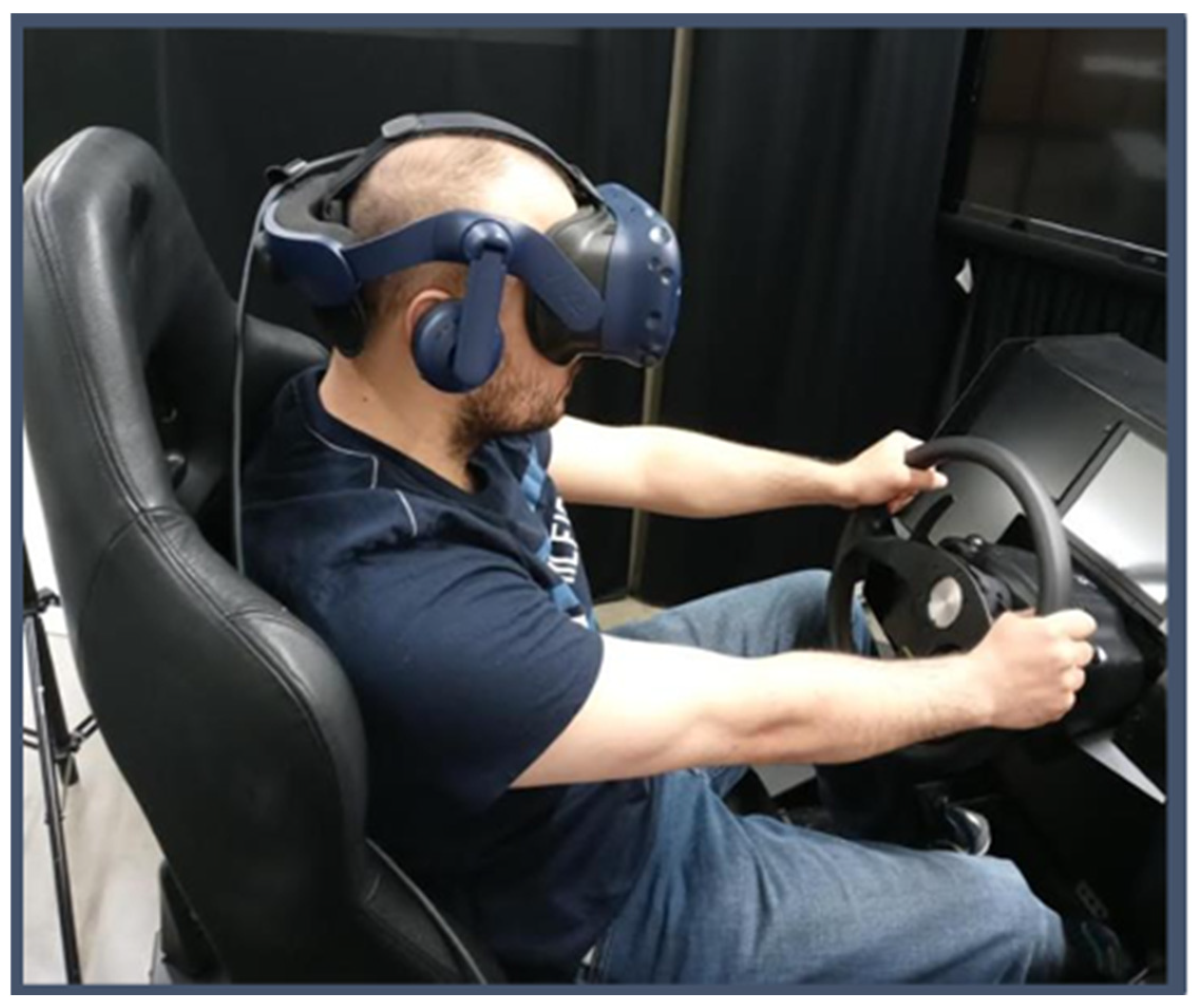
The study protocol was reviewed and approved by the Western Michigan University Institutional Review Board (IRB). All participants received an IRB-approved informed consent form detailing the study purpose, procedures, potential risks, confidentiality safeguards, and their right to withdraw at any time. Written consent was obtained prior to participation, and no data was collected from individuals who did not provide explicit voluntary consent. The experiment was conducted in a controlled laboratory at Western Michigan University (WMU), Kalamazoo, Michigan. A custom-built open-cockpit simulator was used, featuring a steering wheel, pedals, and an HTC Vive Pro headset with integrated eye-tracking and 3D audio capabilities (
Figure 1).
To assess driver gazing behavior in response to DMS, a driving scenario was developed on a simulated two-lane highway. Digital message signs were strategically placed along the highway to present different messages, enabling the investigation of driver reactions under varying conditions. Therefore, a total of 29 licensed drivers were recruited for the study, of whom 26 participants completed the experiment. Three participants were excluded because of simulator sickness and incomplete trials. Participants were selected based on having a valid driver’s license and the ability to operate a vehicle. The sample size is consistent with similar VR-based driving and eye-tracking studies in the human-factors literature, which typically use 20–40 participants due to the intensive nature of calibration, simulator operation, and trial repetition [
26]. Recruitment was conducted through email, social media, and flyer distribution, with applicants filling out an online form. The study was approved by the WMU Institutional Review Board, and all participants provided informed consent.
The experiment included four various conditions for different scenarios based on message length (short or long) and phasing duration (2.5 or 4 s), based on the Michigan Department of Transportation (MDOT) guidelines.
Table 1 presents the details of the Dynamic Message Sign (DMS) scenarios used in the study. These four conditions were created by combining two phasing durations (2.5 s and 4 s) with two message lengths (short and long). To avoid order bias, message sequences were randomized across participants.
The messages used in the simulation were realistic and adhered to Michigan Department of Transportation (MDOT) guidelines to ensure validity. After completing the simulation, participants filled out a post-experiment survey to evaluate the clarity, readability, and overall effectiveness of the messages.
The short and long messages used in the experiment were developed in accordance with MDOT’s Dynamic Message Sign guidelines. Short messages consisted of 2 information units (4–6 words), for example: “Crash Ahead… Use Caution.” Long messages consisted of 4 information units (10–12 words), for example: “Crash Ahead on I-94 Near Exit 72…Reduce Speed and Proceed Cautiously.” The content theme was identical across short and long conditions; only the message length and number of information units were varied to ensure that any observed differences in readability or gaze behavior were attributable strictly to temporal and length-related factors. Using the same message category (hazard warning) minimized cognitive variability and allowed direct assessment of phasing and length effects.
The simulation began with a setup phase to help participants get familiar with the virtual driving environment, during which an initial trial experiment was conducted to properly adjust the system for each individual and ease their adaptation to the system. After the trial session, they were then instructed to navigate the simulated highway, encountering four DMS signs displaying messages under varying experimental conditions.
In the simulation process, a custom script was developed to obtain readings for reading time, total time, and gazing frequency. The message display durations were set to 2.5 and 4 s, with a transition time of 0.35 s between the two messages. First, the phase durations (2.5 and 4 s) were applied, followed by a 0.35-s transition to the second message, all based on the MDOT guidelines. After passing each sign, participants paused momentarily (approximately 10–15 s) to complete a brief intermediate questionnaire. This form consisted of three items: (1) a forced-choice recall question on the main content of the message (e.g., “What did the sign indicate?” with options corresponding to the correct incident type and location plus distractors), (2) a yes/no item asking whether the participant believed they had read the entire message, and (3) a 5-point Likert-scale rating of perceived readability (1 = very difficult, 5 = very easy). Objective comprehension was defined as correct response to the forced-choice question, while the Likert rating was treated as a subjective readability measure. However, the survival study analysis focused on successful objective comprehension and an event defined as a correct answer to the forced-choice recall question. Subjective readability ratings were analyzed separately and were not used as event indicators. The pause duration and questionnaire sequence were identical for all four DMS scenarios to preserve comparability across conditions.
In addition, a specific generated code was developed to accumulate the data from the virtual reality simulator continuously and record key driving performance metrics, including vehicle speed, lane positioning, steering behavior, and gaze fixation points. Eye-tracking technology was also employed at a sampling rate of 120 Hz to measure fixation frequency and duration for each participant while interacting with DMS messages, providing insights into driver attention and cognitive processing. Afterwards, the collected data went through systematic analysis to quantify the effects of message length and phasing duration on driver perception, behavioral response, and overall traffic safety implications.
3.1. Descriptive Statistics
This study utilized virtual reality (VR) technology to simulate driver behavior in order to examine the effect of message timing on drivers’ ability to read and comprehend the DMS message information. A total of 29 participants were recruited for the study, with 26 participants driving through all scenarios. The limited sample size was due to the restrictions imposed by the COVID-19 pandemic, as it was difficult to hire due to safety requirements, regulations, and guidelines in place at that time. The data consists of demographic information, which was collected from participants upon their arrival at the experiment site, along with task performance data, response times, and gaze duration throughout the in-lab experiment.
Table 2 shows the collected covariates related to the ability to read and comprehend DMS messages, highlighting demographic and behavioral factors that influenced drivers during the lab experiment. These demographic and behavioral factors are crucial for subsequent hypothesis testing, as they highlight potential influences on drivers’ responses and gaze behavior, particularly regarding the comprehension of DMS with varying phasing times. For instance, the demographics of the drivers indicated a reasonably balanced distribution across younger (46.15%, 16–24 years) and older (53.85%, 25–40 years) age groups. This age distribution allows for the investigation of how age might contribute to variability in gaze behavior or message comprehension, potentially revealing age-related differences in processing dynamic information. It offers insights into how these factors affected their responses and gaze behavior, particularly regarding the comprehension of DMS with phasing time.
The demographics of the drivers indicated that 46.15% were in the younger age group (16–24 years), while 53.85% were in the older age group (25–40 years), showing a reasonably balanced distribution. The sample also consisted of 23.08% females and 76.92% males to determine if there is a difference by gender on DMS readability. Regarding highway driving experience, the majority of the sample (65.38%) drove one to two times per week, while the rest of the sample (34.62%) drove three to five times per week. On the other hand, 50% of the participants had less than five years of driving experience, 30.77% had between six and ten years, and 19.2% had between eleven and fifteen years of experience. This variation in experience may impact decision-making while driving. Regarding speed, 53.85% of the samples were within the range of 70 to 80 mph, while 39.46% of the samples were driving below the speed limit, and 7.69% of the samples were speeding, exceeding 80 mph, suggesting differences in driving styles. This variability in speed groups is particularly relevant for hypothesis testing, as it may contribute to differences in the time available for message processing, thereby influencing gaze behavior and message comprehension.
In addition, gaze behavior-related factors were collected using an eye-tracking experiment setup. Total time refers to the duration from the first glance at the DMS message until the last glance, ranging from 1 to 9 s (Mean = 3.74 sec, SD = 1.82), with an average total time of 4.74 s. Reading time, which represents the actual time spent by the driver reading the message, also ranges from 1 to 9 s, with an average reading time of 3.74 s. Additionally, the total number of times drivers looked (gazing frequency) at the sign ranged from 1 to 14, with an average of 4.39 times during the reading time.
3.2. Model Description
This study aims to understand how the display time of messages on (DMS) affects drivers’ ability to read and understand them. It focuses on how message length and timing influence driver behavior and traffic safety. To comprehensively evaluate the influence of DMS message length and timing on driver readability and comprehension, we employed a three-stage modeling framework: (1) Barnard’s test for scenario-level comparison, (2) survival analysis for time-to-reading estimation, and (3) LASSO regression for variable selection. Barnard’s test was used to measure whether there is a significant difference between the scenarios of DMS message readability across subjects. Survival analysis was applied to capture the impact of various factors on the time taken to read DMS messages. Additionally, a machine learning method (Lasso regression) was used to identify the impact rank of factors toward DMSs’ message readability.
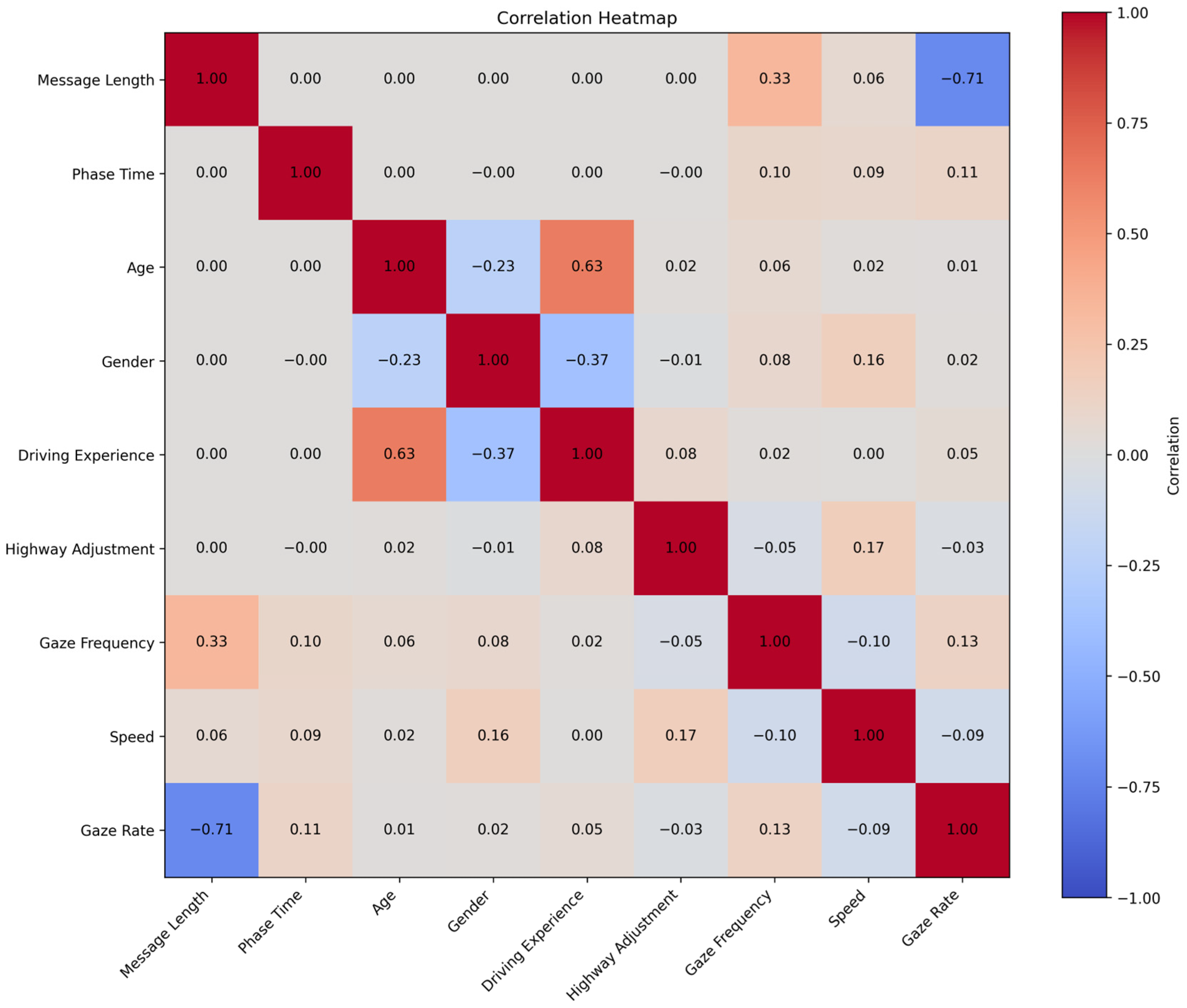
However, before model estimation, the correlations among predictors, including message length, gaze rate, and speed, were examined to assess potential multicollinearity. The correlation matrix is presented in
Figure 2. Significant moderate to strong correlations were also observed between some of the predictors. For instance, message length was strongly negatively correlated with gaze rate (r = −0.71), which implies that the longer the message, the lower the gaze rate. Other correlations were also moderate, such as the small positive correlation between message length and gaze frequency, which was 0.33. Overall, the correlations imply that some relationships are present between the predictors. However, the variance inflation factors are low, which implies that multicollinearity will not affect the analysis significantly.
Barnard’s test, a non-parametric test, was used to evaluate binary outcomes of message comprehension across DMS scenarios. Given the small sample size and potential imbalance in cell frequencies, Barnard’s test was favored for its greater statistical power. It assumes that each response is independent, making it suitable for various experimental designs, especially those involving repeated measures, such as the simulated DMS message scenarios. These features make Barnard’s test a valuable and efficient tool for detecting true associations in DMS message readability across each scenario in the experiment. The analysis considered several personal and behavioral characteristics of participants, including age, gender, years of driving experience, highway driving experience, and average driving speed.
Table 2 shows the tested covariates and the participants’ distribution across the scenarios.
Barnard’s Exact Test is an unconditional exact test used to compare two independent proportions. Unlike Fisher’s Exact Test, which conditions on fixed marginal totals, Barnard’s test evaluates all possible 2 × 2 table configurations to maximize statistical power, making it especially suitable for small-sample experiments like this one. In our study, the binary outcome was whether the participant correctly comprehended both phases of the DMS message (1 = correct recall, 0 = otherwise). Therefore, comprehension performance was incorporated in survival analysis as a status indicator, where participants who correctly recalled the message were coded as 1 (successful event), and those who failed to recall the message were coded as 0. For each display scenario, a 2 × 2 contingency table was formed comparing comprehension outcomes across groups of interest (e.g., gender, speed category). The test statistic was computed by evaluating the nuisance parameter over its full range (0–1), selecting the configuration with the largest p-value, and reporting the resulting exact p-value. This procedure provides a more robust measure of association in small-sample conditions and avoids the conservative bias associated with Fisher’s test.
In this study, survival analysis serves not only to estimate reading time but also to evaluate the temporal efficiency of different phasing durations. By modeling the hazard of message comprehension at each time point, the analysis provides quantitative evidence for identifying phasing intervals that maximize comprehension probability while minimizing visual demand
To account for repeated measures per driver, robust standard errors clustered at the participant level were applied in the repeated-measures survival analysis, using the assigned participant ID number to capture the impact of these factors on reading time for DMS messages. Survival analysis, also called duration analysis, is defined as a set of statistical methods for analyzing data where the impact of covariates on the time taken until an event of interest occurs is assessed. It is most commonly used in the medical field, such as for post-treatment survival time. However, several studies demonstrate its applicability in traffic safety [
27,
28].
Commonly, two key components must be identified: the event of interest and the time corresponding to that event. In this study, the ability to read the DMS message was identified as the event (1 = subject able to read), and the time-to-event was defined as the duration (in seconds) from the participant’s first fixation on the dynamic message sign to the final fixation before gaze disengagement, which was captured by a programmed script integrated into a VR headset. The survival function is usually expressed by the following equation:
where S(t) refers to the probability that the event (readability) has not occurred by time t, and T is a random variable representing the time (reading time) until the event.
To gain further insights into the impact of these factors, a Cox proportional hazards model was utilized. This embedded technique evaluates the effect of variables as hazard ratios influencing the subject’s survival. This model is considered semi-parametric, as it does not assume a specific distribution for the survival time. The Cox hazard rate estimate can be expressed as:
where h(t|X) is the hazard function at time t given covariates X, h
0(t) is the baseline hazard, representing the hazard when all covariates are zero (i.e., no interference in the hazard ratio), and exp(β) represents the hazard ratio, which indicates the change in hazard for a one-unit increase in the covariate. For example, if the hazard ratio is greater than 1, the risk of event occurrence (DMS readability) increases; if the hazard ratio is less than 1, this indicates a decrease in the probability of the event occurring in this study, the readability of DMS.
Moreover, the LASSO procedure was embedded within a Cox regression framework using Python 3.10. to identify the variables influencing the readability of DMS. Lasso is a form of linear regression that reduces the number of variables by applying a penalty, which can shrink some coefficients to zero. This capability enables it to select only the most important variables affecting DMS readability, thereby simplifying the model and improving its accuracy, especially when dealing with many predictors or correlated data. Furthermore, in this study, Lasso was combined with survival analysis to pinpoint the most influential variables impacting DMS readability, which enhanced both the predictive performance and interpretability of the model.
The LASSO penalty was incorporated into the Cox proportional hazards model by minimizing the following objective function:
where
is the partial log-likelihood of the Cox model,
are the regression coefficients, and
is the regularization parameter controlling the degree of shrinkage. The L1-penalty encourages sparsity by shrinking small coefficients to zero, thereby identifying the most influential predictors of DMS readability. The optimal
was selected using K-fold cross-validation.
4. Results
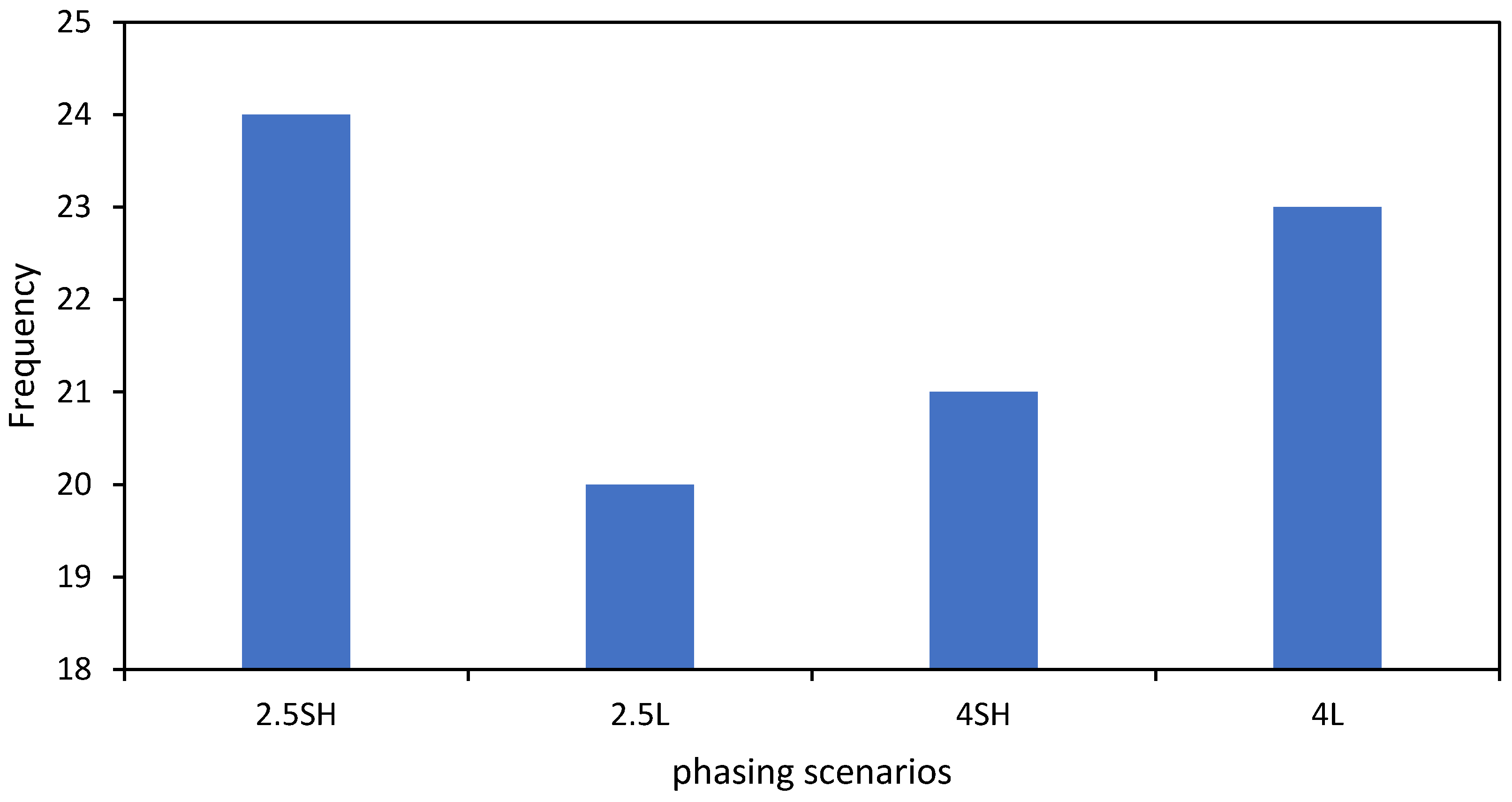
The overall results of DMS readability indicate a high percentage of driver ability to read DMS messages in all four scenarios (
Figure 3). However, the 2.5SH (S1) scenario had the highest readability, with 24 participants able to read the message at 92.4%. It was followed by the 4Long (S4) scenario, with 23 participants reading the message at 88.5%. The 4SH (S3) scenario had 21 participants reading the message at 80.8%, while the lowest value was in the 2.5Long (S2) scenario, where 20 participants read the message at 76.93%. In general, most participants were able to read the message in Scenario S1, making it the most effective in terms of clarity and ease of understanding.
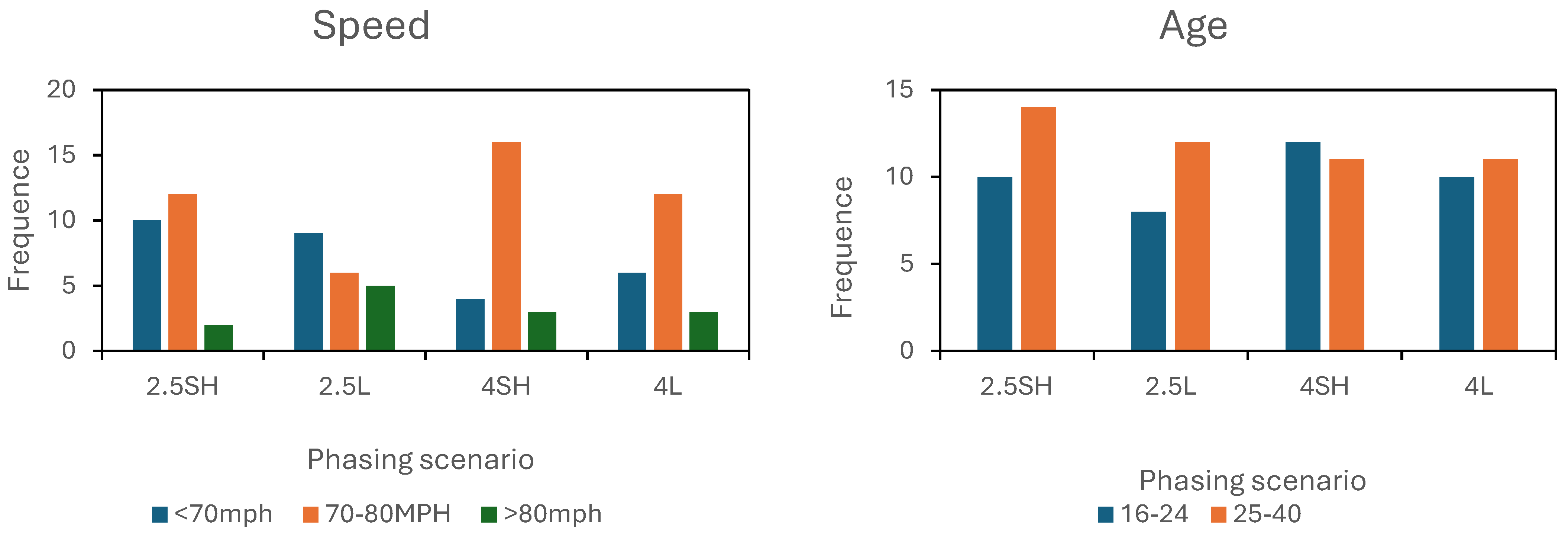
Figure 4 illustrates the readability of DMS messages at different speeds and age groups. Regarding speed, a notable difference was observed among the three speed categories in the 4SH scenario. Most participants preferred to adhere to the limited speed, where readability reached its highest level. In contrast, the 2.5L scenario showed the least variation in speed preference, with most participants favoring speeds below 70 mph. When examining age groups, the greatest differences appeared in the 2.5L and 2.5SH scenarios, where the highest reading rates were found among participants aged 25–40 years. On the other hand, the 4L and 4SH scenarios exhibited less variation; readability increased notably for the 16–24 years group in the 4SH scenario, while it peaked for the 25–40 years group in the 4L scenario.
Table 3 shows the relationship between driver characteristics, such as gender, age, driving experience, freeway experience, and average speed, and their ability to read messages on (DMS) across different display scenarios, using Barnard’s Exact Test. The analysis was conducted at both 90% and 95% confidence levels to determine the significance of each variable. Notably, gender and speed in the 2.5L scenario showed statistically significant differences in terms of DMS readability at the 95% confidence level (
p = 0.04 and
p = 0.012, respectively). Additionally, age, speed, freeway experience, and overall driving experience demonstrated statistically significant differences in DMS readability at the 90% confidence level in specific scenarios. In contrast, some variables, such as freeway experience, did not consistently show a significant impact across all scenarios.
Regarding the factors that impact DMS message reading time, the survival analysis results (
Table 4) showed a strong negative association with increasing message length (HR = 0.181,
p < 0.001). Especially as the message length increased, the likelihood of reading the DMS message decreased by 82% compared to shorter messages, indicating that longer messages are less likely to capture drivers’ attention. Additionally, male drivers responded faster in looking toward the DMS banner than female drivers, a difference that was statistically significant (
p = 0.062), suggesting that gender may influence interaction with DMS messages. Experienced drivers demonstrated a lower hazard of reading the DMS messages, although the effect was not statistically significant. For highway driving experience, the estimated hazard ratio was 0.699, indicating that drivers with greater highway experience were 30.1% less likely to read or attend to DMS messages. This suggests that increased exposure to highway driving is associated with reduced reliance on dynamic message signs. Interestingly, as the frequency of looking at the DMS increased, the probability of actually reading the messages decreased by 14.9%, possibly due to visual fatigue or message repetition. Drivers traveling at higher speeds also tended to look at the signs for shorter durations, which may reflect distraction or hesitation to engage with the messages while driving fast. This effect was statistically significant (
p = 0.072), with a hazard ratio of 0.76. Furthermore, longer viewing times were associated with lower hazard rates, suggesting that prolonged gazes increase the likelihood of reading the message. On the other hand, age, general driving experience, and the experimental phase did not show any statistically significant effects on drivers’ attention to DMS messages. This does not imply that phasing is unimportant; rather, within the MDOT-approved interval range, both durations provide sufficient time for reading short messages, thereby reducing the statistical contrast between them. It is also important to acknowledge that some non-significant effects may be attributable to sample size constraints rather than the absence of underlying behavioral differences.
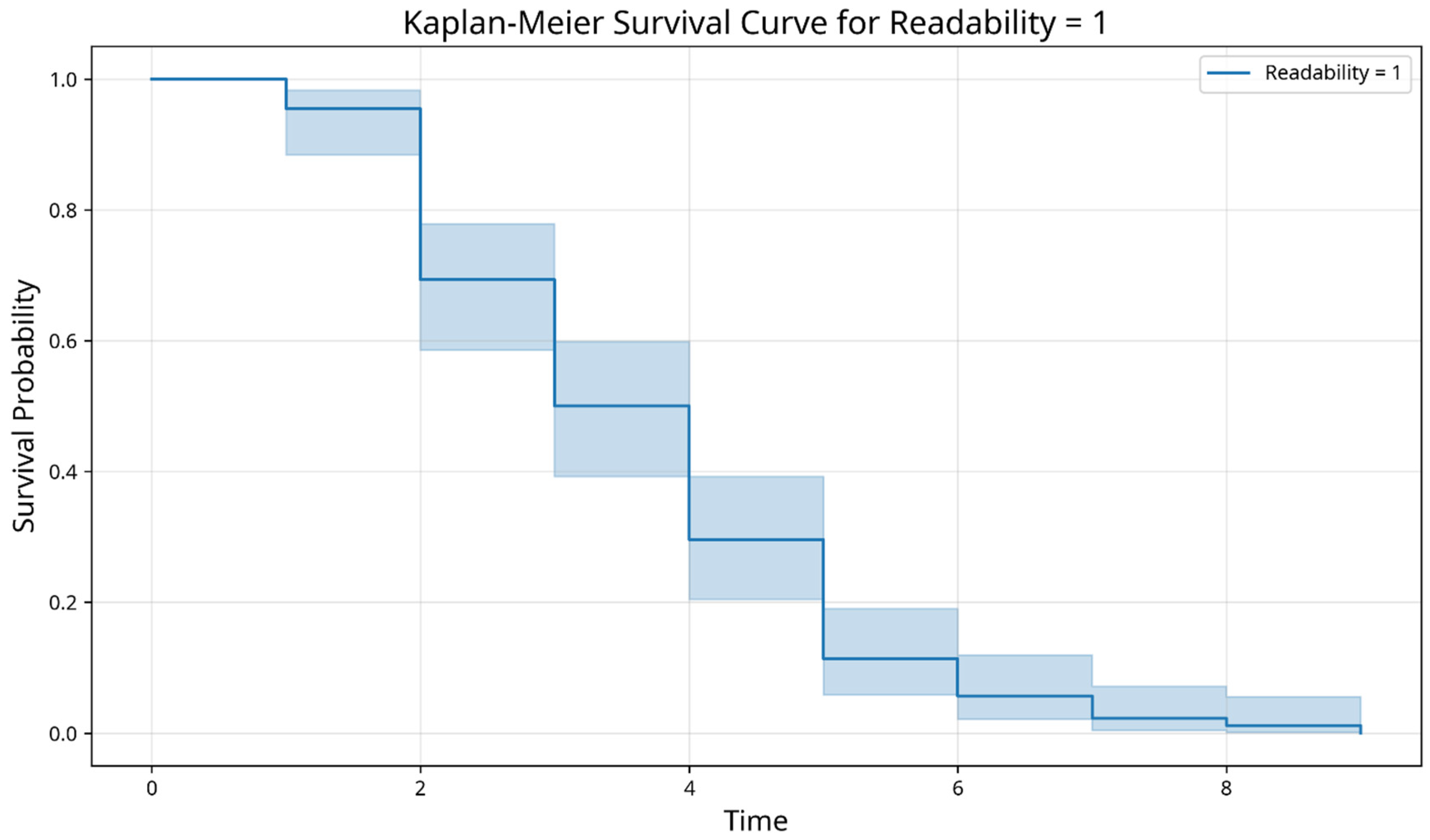
The Kaplan–Meier survival curve (
Figure 5) is a fundamental visualization in survival analysis that illustrates the probability of survival (or not experiencing the event of interest) over time.
Figure 5 illustrates a distinctive temporal pattern for DMS readability characterized by four distinct phases. Initially, the curve exhibited complete stability until approximately time point 1.5, indicating no events occurred (i.e., the ability to read the DMS message) during this early period.
In
Figure 5, the horizontal axis represents reading time—the duration (in seconds) from the participant’s first fixation on the DMS until comprehension occurred. The vertical axis shows the Kaplan–Meier estimate of the survival probability
, representing the probability that the message has not yet been comprehended by time
. Because survival represents “non-comprehension,” the curve naturally decreases over time as more participants comprehend the message. Steeper drops indicate times at which many participants successfully read the message. The curve, therefore, demonstrates the temporal dynamics of message comprehension and highlights time points (e.g., around 2–4 s) at which comprehension is most likely to occur.
This was followed by a major drop at time point 2, where survival probability decreased substantially from 1.0 to approximately 0.7 (70%), suggesting a cluster of events at this interval. Subsequently, the curve continued to decline in a stepwise fashion, with notable drops occurring at time points 3, 4, and 6. Beyond time point 6, the curve entered a terminal phase where the decline became more gradual, with smaller steps, until reaching near-zero probability by time point 8.5. The shape of the readability = 1 curve suggests a non-constant hazard rate throughout the observation period. The hazard appears highest around time points 2 and 4, where the steepest drops occur, while the relatively flat sections between steps suggest periods of lower hazard. This overall pattern indicates a time-dependent risk profile rather than a constant risk over time, which has important implications for understanding the temporal dynamics of the outcome in relation to readability.
The Kaplan–Meier estimator was used to compute the survival function , representing the probability that a participant had not yet successfully read the message at time . The KM curve does not represent the baseline hazard function of the Cox model. Instead, it provides a non-parametric view of the temporal distribution of comprehension events, complementing the Cox model’s multivariate analysis. The Kaplan–Meier curves exhibit distinct stepwise declines that correspond closely to the preset message phasing intervals. In particular, pronounced drops in survival probability occur near the 2.5 s and 4.0 s phase transitions, indicating increased likelihood of gaze disengagement following message updates. This pattern reflects the structured temporal design of the DMS presentation.
Feature Importance
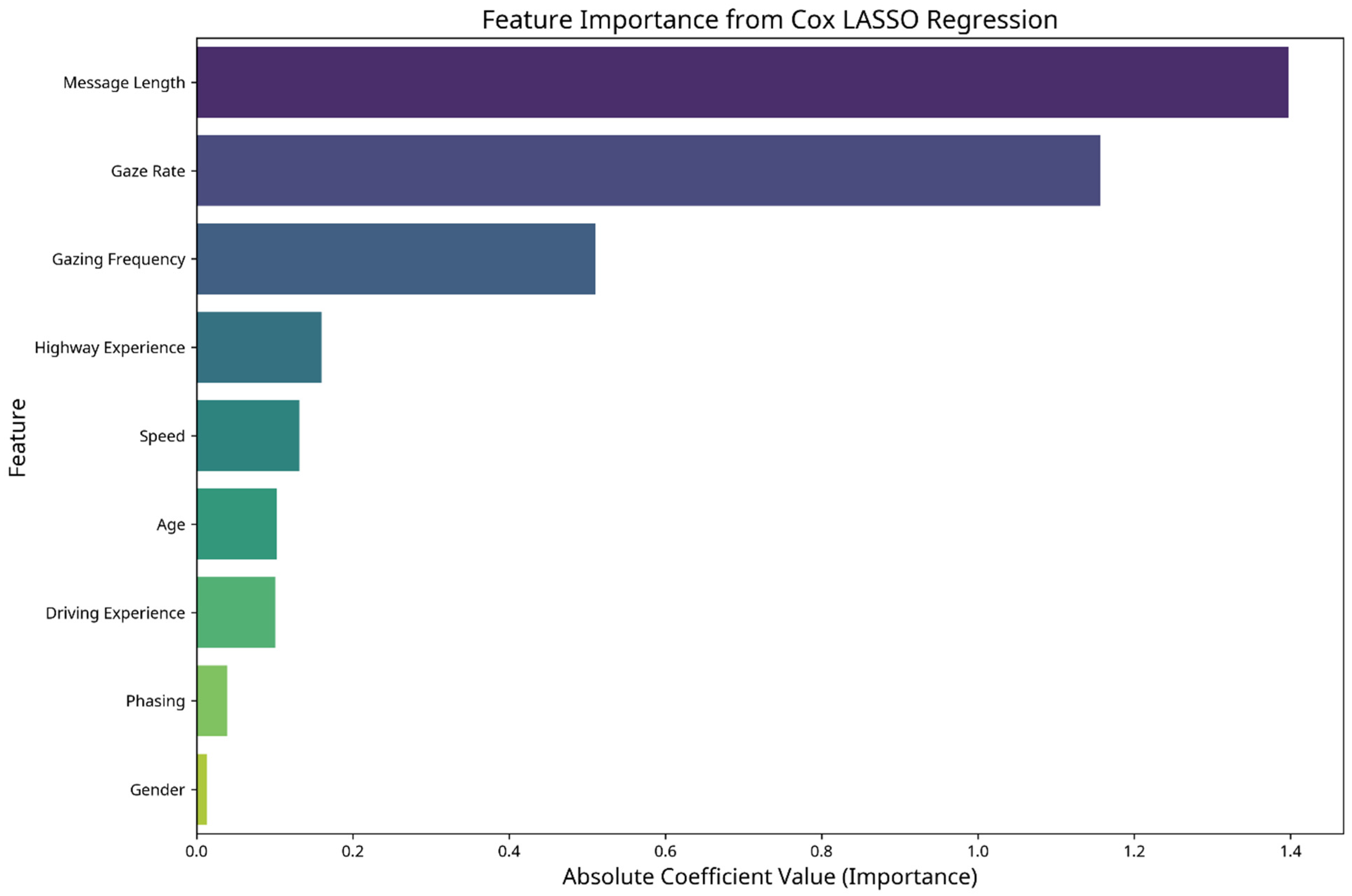
The Cox proportional hazards model with LASSO regularization revealed a clear hierarchy of predictors influencing survival outcomes regarding the driver’s DMS readability. The model results (
Figure 6) indicate that Message length emerged as the most influential factor (|β| = 1.40,
p < 0.01), with longer messages significantly increasing hazard rates, followed closely by gaze rate (|β| = 1.16,
p < 0.01), which demonstrated a similar negative relationship with survival probability. Frequency of gazing (|β| = 0.51,
p < 0.05) and highway adjustment (|β| = 0.16,
p < 0.05) showed moderate effects, while demographic variables such as age and gender exhibited minimal influence on survival outcomes. The strong negative correlation between message length and gaze rate (r = −0.71) suggests a potential compensatory mechanism whereby drivers may reduce visual attention when processing longer messages.
5. Discussion
This paper investigated the impact of different timing intervals and message lengths displayed on DMS on driver behavior during phasing. Multiple statistical analyses were conducted. Initially, Barnard’s test was used to identify statistically significant factors across several display scenarios. The results (
Table 3) illustrate that in the 2.5-s phasing scenario with long messages, both gender (
p = 0.04) and average speed (
p = 0.012) had a statistically significant difference at the 95% confidence level, indicating their clear influence on message readability. Additionally, highway experience (
p = 0.074) in the same scenario and speed (
p = 0.057) in the 2.5SH scenario, along with age in the 4SH scenario (
p = 0.09), were significant at the 90% confidence level, suggesting a moderate effect on readability.
While variables such as gender, speed, highway experience, and age showed significant associations in certain scenarios, others, like general driving experience, did not exhibit a consistent or statistically significant effect across all cases. Consistent with past findings [
3,
29], this study reconfirms that shorter messages are more readable. However, our use of LASSO-enhanced survival analysis provides a novel quantitative ranking of message length as the most dominant factor influencing gaze-based comprehension. For instance, the study conducted by [
2] demonstrated that variables such as gender, speed, highway driving experience, and age have varying effects depending on the type and context of messages displayed on (DMS). While some of these variables showed significant influence in certain scenarios, they did not exhibit the same level of impact across all cases. This highlights the importance of tailoring message design to both driver characteristics and situational context [
2].
Additionally, the study examined the impact of various factors on the reading time of messages displayed on DMS. Message length was found to be statistically significant. When displaying a longer message, it reduces the readability and increases the hazard rate of reading compared to shorter messages. These results are in line with the majority of previous studies, which indicate that short messages and concise messages improve DMS readability and comprehension [
7,
18,
30]. Earlier findings by Jacobs and Cole identified a positive correlation between the number of words in a message and the required reading time. Their research also noted that longer messages could cause drivers to reduce speed, sometimes unsafely, in an attempt to read the content. These patterns were confirmed under controlled conditions using a realistic driving simulator in a distraction-free environment, where messages were displayed on a straight road at two speeds [
30].
On the other hand, highway experience also showed a significant impact. The results indicated that as drivers’ familiarity with the road increased, the likelihood of reading the DMS messages decreased. This may be due to overconfidence or reliance on prior knowledge of the route, leading drivers to ignore new or updated messages. This trend aligns with findings from a previous study using the NADS MiniSim driving simulator, where experienced drivers showed reduced caution and weaker responses to DMS messages. In contrast, several studies have discussed the impact of highway experience on the ability to read DMS messages [
27,
31]. For example, a study by Jun-Seok Oh showed that drivers with more experience on highways demonstrated a better ability to comprehend DMS messages compared to those with less experience, who showed slower information processing or signs of distraction. This was tested in a simulation using VR technology, where participants drove on an 11.5-mile highway at 70 mph, encountering various DMS messages displayed for different durations. To avoid message repetition across multiple DMS boards, a single DMS board was selected in isolation on I-96 in the Grand Rapids area [
1].
Moreover, frequency also proved statistically significant. The study found that increased frequency of looking at DMS reduced the likelihood of message comprehension. This suggests that multiple glances do not necessarily enhance understanding, possibly due to message complexity [
32,
33], cognitive overload [
34,
35], or distraction [
35,
36]. Bakhsh et al. [
32] conducted a study to investigate how the complexity and distraction caused by misleading or hacked DMS affect driver behavior. This study was motivated by growing cybersecurity threats targeting intelligent transportation systems and their potential to compromise road safety. Through a web-based survey involving over 4000 participants exposed to both realistic and fictional DMS scenarios, the researchers found that the complexity of unexpected or illogical messages increases distraction and stress, prompting drivers to respond cautiously, most often by slowing down or stopping. While gaze rate also showed a significant impact, higher gaze rates were associated with a decrease in the likelihood of successfully reading the DMS. Since gazing rate refers to the time spent processing one unit of information, an increase in the complexity or density of information naturally leads to longer reading times, which can reduce the overall effectiveness of the message. However, the majority of the literature indicates that the number of units displayed on DMS has a critical role in message comprehension. Several studies indicate that fewer units lead to faster compression, while more units can create more complicated interactions that cause slower reading time. One research paper recommended that Dynamic Message Sign (DMS) messages should be designed in a direct and simplified manner to ensure effective reading and comprehension while driving. Messages should contain only 2 to 3 units of information, especially on highways, as messages with 6 to 7 units were found to slow drivers down, particularly those over the age of 55, who require more time to read and process information. In contrast, shorter messages (2–3 units) were easier and quicker to understand, with some younger drivers even increasing their speed after reading them. This reinforces the importance of simplifying DMS content to enable quick driver responses without negatively affecting traffic flow. The study tested six different message-length scenarios using a mid-level driving simulator on a virtual road representing MD-295 in Maryland, with 65 drivers participating [
29].
Regarding demographic characteristics, age did not show a significant effect, while the data revealed that gender had a clear impact on the readability of DMS messages. Male drivers recorded a higher reading rate compared to females. Male participants demonstrated higher readability in time-constrained scenarios, potentially due to decision-making styles or familiarity with digital signage systems. This difference is attributed to the general ability of males to make faster decisions in dynamic situations while driving, enabling them to process and respond to DMS messages more efficiently. This finding supports the results of Chunyang Pan and colleagues, whose study showed that males tend to make faster decisions on simple roads like highways. Their results were based on two experiments: the first using a driving simulator with 41 participants, and the second through a survey of 163 people. The results showed that male drivers drove significantly faster than female drivers on simple roads, whereas this difference did not appear on complex roads. This is attributed to the lower level of impulse control in males compared to females, making them more likely to make quick, sometimes reckless, decisions in low-complexity environments [
37]. However, females demonstrated better ability to read DMS messages than males, especially in conditions requiring high concentration. A high-fidelity dynamic situation was used to replicate real road conditions in Michigan, with variables such as speed and weather. It was found that females paid more attention to the messages and processed them more efficiently, highlighting the importance of designing DMS messages to be clear and easy to understand for all drivers, while considering gender differences to improve message effectiveness and road safety [
2].
The study also showed that speed had a statistically significant effect, with reading ability decreasing as speed increased. This may be attributed to a reduction in peripheral vision at higher speeds, making it more difficult for drivers to read and process DMS messages effectively. Several studies indicated that drivers on the highway have shown that vision impairment can significantly affect their ability to interact with traffic signs, leading to a reduction in driving speed [
38]. A study conducted by the University of Utah identified that the ability to read quickly is a crucial measure of age-related visual decline, particularly in individuals with conditions like age-related macular degeneration (AMD). The research shows that individuals with central vision loss struggle to read text quickly and efficiently, which directly impacts their driving speed. As speed increases, drivers are less able to process the information on traffic signs in time, leading to slower reactions and more cautious driving. Precise techniques were used to measure reading speed and assess the impact of vision impairment on decision-making speed on highways [
39].
Although two phasing durations (2.5 s and 4 s) were tested in accordance with MDOT regulations, the experiment generates several quantitative insights into temporal optimization. Survival analysis reveals distinct time-dependent hazard patterns, showing that shorter phasing intervals lead to earlier comprehension events. Eye-tracking data also demonstrates reduced visual load and shorter fixation periods under the 2.5-s condition. Together, these results indicate that shorter temporal cycles improve message uptake efficiency, especially when combined with concise message structures. While the current study focuses on regulatorily supported phasing durations, future work should expand the range of tested intervals (e.g., 1.5 s, 3 s, 5 s) to develop a more complete temporal optimization framework.
Although some variables, such as age, phasing duration, and general driving experience, did not reach statistical significance in this study, previous research suggests their potential influence under different conditions. These discrepancies highlight the complex and context-dependent nature of driver attention and underscore the need for larger-scale or longitudinal studies. Prior research has shown that younger drivers tend to read DMS messages more quickly than older drivers. Less experienced drivers took longer to read the messages, which may impact their decision-making due to the increased time spent interpreting the content [
2].
6. Conclusions
This study investigated how message length and phasing duration on Dynamic Message Signs (DMSs) affect driver behavior, particularly focusing on reading time, gaze fixation, and message comprehension. Through a controlled virtual reality driving simulation augmented with eye-tracking and advanced statistical modeling, the research demonstrated that short messages combined with a 2.5-s phasing interval significantly improved readability and comprehension.
The analysis further revealed that individual driver characteristics, such as gender, highway experience, and driving speed, played a meaningful role in influencing attention and responsiveness to DMS. These findings underscore the importance of tailoring message design not only to roadway context but also to user profiles.
A key limitation of this work is the modest sample size (n = 26), which reflects constraints associated with running high-fidelity VR simulations and eye-tracking calibration during early post-pandemic periods. Although repeated-measures analysis generated 104 scenario-level observations and provided sufficient statistical power for survival and LASSO modelling, larger samples would further strengthen generalizability. Future research will expand recruitment to 60–100 participants and validate the findings across more diverse age groups, roadway environments, and message types.
Nevertheless, the outcomes of this study offer practical implications for transportation agencies and system designers. The results advocate for the use of concise messages and carefully calibrated phasing intervals, particularly in high-speed environments, to enhance driver comprehension and safety. Incorporating these findings into DMS design guidelines can support the development of more intuitive, inclusive, and efficient traffic information systems, ultimately contributing to safer and smarter roadway infrastructure. The use of only two regulatorily approved phasing intervals (2.5 s and 4 s) may have reduced the ability to observe larger temporal effects; testing more extreme durations would likely produce stronger statistical differentiation.
This study examined only one message category (hazard-warning style) to maintain experimental control and isolate the effects of message length and phasing duration. Future research should incorporate multiple message types, such as speed advisories, detour instructions, travel-time messages, and lane-closure notifications, to examine whether temporal optimization varies by message function and semantic structure.



 ,
,