1. Introduction
Assessing the readiness of complex systems during their conceptual phase is a critical challenge in systems engineering, particularly for emerging multimodal mobility solutions. Traditional evaluation tools, such as the Technology Readiness Level (TRL) scale, have proven useful for measuring the maturity of individual technologies [
1]. However, these tools fall short when applied to integrated systems, where readiness depends not only on the maturity of isolated components but also on their ability to interact seamlessly within a dynamic operational environment. As transportation systems evolve toward highly adaptive and interconnected architectures, readiness must be understood as a multidimensional concept encompassing technological maturity, integration capability, and systemic performance.
To address this complexity, the concept of the Integration Readiness Level (IRL) has been introduced as a complementary metric to the TRL. While the TRL focuses on the development stage of individual technologies, the IRL evaluates the maturity of their interfaces and the degree to which subsystems can be integrated effectively. The IRL provides a structured way to measure the compatibility, interoperability, and interface stability, which are essential for achieving system-level functionality. Together, the TRL and IRL provide the foundation for estimating the SRL, a holistic indicator that reflects the overall maturity of a system by integrating component-level readiness with integration performance. In this work, SRLs are jointly estimated by accounting for stochastic dependencies and correlations between the TRL and IRL, ensuring a more realistic representation of system uncertainty and interrelationships [
2,
3].
Despite its conceptual advantages, estimating the SRL during early design phases remains inherently difficult [
4,
5]. This difficulty arises from several factors: limited empirical data on subsystem interactions, uncertainty regarding interface compatibility, and the absence of standardized methodologies for integrating the TRL and IRL into a unified readiness metric. These limitations hinder effective planning, risk management, and resource allocation, often resulting in delays or cost overruns during later stages of development.
Recent studies highlight how emerging and unconventional mobility modes can significantly reshape sustainable mobility patterns and introduce substantial uncertainty in their adoption pathways and system-level impacts [
6]. This reinforces the need for robust early-phase evaluation tools capable of addressing technological, operational, and integration uncertainties in novel mobility concepts—precisely the gap that the present framework seeks to address.
The need for robust and adaptable frameworks for SRL estimation is particularly evident in the context of innovative mobility concepts such as Pods4Rail [
7]. This European research initiative aims to develop an autonomous, modular, and multimodal transport system capable of operating across rail, road, and ropeway modes. The complexity of this concept—combining autonomous control, advanced coupling mechanisms, and multimodal logistics—introduces significant integration challenges that cannot be fully addressed through traditional readiness assessment methods. Furthermore, sustainability requirements and digitalization trends add layers of complexity, demanding a comprehensive approach that accounts for technical, operational, and regulatory dimensions.
To address these challenges, this paper proposes a hybrid framework that combines qualitative and quantitative methods for SRL estimation during early development stages. The qualitative component relies on expert judgment and visual heat maps to assess the TRL across subsystems, providing interpretative insights into technological maturity. The quantitative approach explicitly distinguishes between the probabilistic model—representing uncertainties in the TRL and IRL—the problem of propagating these uncertainties to estimate the SRL, and the algorithm used to solve this problem, which in this case is the Monte Carlo simulation. This structure enables SRL estimation under uncertainty, where explicit quantification of uncertainties is essential for sound decision-making. By applying this methodology to the Pods4Rail project, the study aims to deliver a replicable and transferable approach for readiness assessment in complex mobility systems. The framework not only supports informed decision-making but also facilitates risk mitigation and strategic planning, ensuring that technological innovation aligns with operational feasibility and long-term sustainability.
Beyond synthesizing existing approaches to TRL, IRL, and SRL assessment, the novelty of this work lies in the explicit separation of three methodological layers that are typically treated implicitly and often conflated in previous readiness-assessment studies: (i) the probabilistic representation of the TRL and IRL, (ii) the formal uncertainty propagation problem that influences system-level readiness, and (iii) the algorithmic implementation, in which Monte Carlo simulation is employed solely as a numerical solver.
Further details on these layers and their contribution to the framework’s originality are provided in
Section 1.4. This clear differentiation increases the methodological transparency and enables a reproducible early-stage system evaluation.
Furthermore, the proposed hybrid framework integrates qualitative expert-based TRL assessment with a quantitative SRL formulation that captures stochastic dependencies between subsystem and interfaces, an aspect seldom addressed in emerging multimodal mobility scenarios. Applied to the Pods4Rail concept, the study contributes a novel methodological foundation tailored to early design phases characterized by incomplete information, high uncertainty, and limited empirical integration data.
1.1. State of the Art
Assessing the System Readiness Level (SRL) is inherently challenging, because it requires the integration of technical, operational, and safety dimensions into a single metric while accounting for subsystem interdependencies and uncertainty. Unlike the Technology Readiness Level (TRL), which focuses exclusively on individual components, the SRL must capture the complexity of integration and the variability of future system performance. These factors, combined with subjective expert judgment and the absence of standardized benchmarks, make SRL evaluation particularly difficult.
Considering these challenges and based on the analysis of the existing literature, studies suggest that when only component-level technological maturity is known, and detailed information on subsystem interrelationships is lacking, a composite measure of system maturity can be achieved by supplementing the component scores with integration estimates. Building on these findings, this paper structures the review of current methodologies for SRL estimation through a taxonomy comprising five complementary categories. These categories reflect the main methodological perspectives identified in the literature and illustrate the diverse strategies employed by researchers to address integration challenges, manage uncertainty, and evaluate readiness in complex systems.
The proposed taxonomy is based on two guiding principles: (i) the nature of the method—whether it is primarily quantitative, qualitative, or hybrid, and (ii) the analytical focus—whether the approach emphasizes technology maturity, system integration, or stakeholder involvement. This classification enables a structured comparison of heterogeneous studies and highlights their individual contributions to SRL estimation. The state-of-the-art analysis considers the following categories:
Quantitative Evaluation Tools: These include methods that introduce mathematical or computational formalisms (e.g., probabilistic models, algebraic formulations, or Multi-Criteria-Decision Methods) to obtain numerical values as their core contribution. These approaches distinguish themselves from other categories by prioritizing formal quantification and automation over procedural guidance.
TRL/SRL Hybrid Approaches: These comprise frameworks distinguished by their explicit combination of the Technology Readiness Level (TRL), Integration Readiness Level (IRL), and, in some cases, the Manufacturing Readiness Level (MRL) into a unified SRL scale. They concentrate on establishing mathematical relationships between component-level maturity and integration maturity.
Readiness Assessment Models: These models offer structured frameworks or toolkits for assessing maturity across technological, programmatic, or organizational domains. Unlike the previous categories, they prioritize process-oriented guidance and decision-making support over formal mathematical modeling.
System Integration Frameworks: These concentrate on the architectural and interface dimensions of system development. What differentiates this category is its focus on integration readiness rather than evaluating the maturity of each technology in isolation.
Stakeholder-Centered Methods: These place stakeholder participation at the core of the readiness assessment process. They rely on co-design activities, expert consultation, and value-based weighting to ensure that diverse perspectives are fully represented.
This classification serves not only to enable systematic comparison across diverse SRL estimation approaches but also highlights emerging directions in current research.
Table 1 presents the five categories structured according to the two guiding principles previously described.
Table 2 summarizes the state-of-the-art analysis, which considers the presented taxonomy. This table includes the main references, a brief explanation of why they are considered relevant, and their content.
Across the reviewed literature, a variety of methodological strategies have been defined to estimate the SRL under conditions of partial knowledge and lack of data.
Mathematical and computational models—such as matrix algebra [
2,
20], tropical algebra [
13], and scalar contraction [
17]—represent early attempts to combine the TRL and IRL (in some studies, the MRL was also considered) into a composite System Readiness Level. While these approaches provide numerical outcomes, their limitations reside in their need of at least some estimation of integration readiness, which is often unavailable in early design phases.
Probabilistic approaches, including Monte Carlo simulation [
3] and Bayesian inference [
9], aim to address these limitations by assigning statistical distributions to main variables such as the TRL and IRL. These methods can accommodate uncertainty and lack of precise interrelationship data but still require assumptions or expert input about possible integration scenarios. These methods explicitly model uncertainty in component relationships, providing confidence intervals or distributions for the SRL.
Graphical and Architecture-Based Models, such as Petri nets [
8] or architecture views like Design Structure Matrix and Design Maturity Matrix [
36], focus on modeling system interactions, allowing for dynamic or iterative refinement as more information becomes available, and demonstrate that mapping of interconnections benefits from any notional system architecture.
Other studies rely on maturity gates [
28], checklists [
28], or staged criteria to assess readiness. These can be applied with limited information, but their minimal granularity or specificity may lead to overlooking emergent system-level behaviors.
In terms of application domains, most SRL-related studies have developed in sectors characterized by high system complexity—aerospace, defense, and energy—while emerging contributions have extended the concept to manufacturing, construction, and public sectors.
In the field of defense, representative works include [
3,
9,
11,
13,
16,
17,
18,
20,
32,
35].
Similarly, the aerospace and aviation domains have seen extensive application of SRL frameworks such as [
2,
8,
9,
10,
11,
13,
17,
20,
36].
In the energy sector—including nuclear, fusion and hydrogen system—recent studies such as [
8,
31,
38,
39,
40,
41,
42] highlight the growing relevance of readiness assessment for sustainable technologies.
Further applications can be found in manufacturing and industrial engineering, for instance, [
15,
25,
26,
27,
29,
43,
44].
Within Intelligent Transportation Systems (ITS) and automotive contexts, ref. [
19] presents an SRL-based model for highway ITS projects and analyses their spatiotemporal characteristics, such as distributed computing, uneven information and communication technologies (ICT) development, and existing infrastructure limitations. The study highlights the importance of economic factors in ITS planning and enhances the SRL model with value engineering.
Additionally, ref. [
45] presents the case study of the application of the 12 Principles of Green Engineering, currently in TRL 1–3, to an energy-harvesting platform in the early technology development phase.
When comparing the different approaches, mathematical and probabilistic methods—such as matrix algebra, probabilistic simulation, and automated validation metrics—provide numerical SRL outputs, often with sensitivity or uncertainty analysis. While these methods provide quantitative precision, their reliability depends strongly on input data and expert assumptions.
Conversely, qualitative methods such as maturity gates, checklists, expert panels, and multi-attribute decision-making (e.g., analytic hierarchy process (AHP), technique for order of preference by similarity to ideal solution (TOPSIS)) offer flexibility when quantitative data are missing but often lack precision or specificity.
Finally, hybrid frameworks combine quantitative scoring with qualitative expert input or stakeholder engagement (e.g., Systematic SME Technology Readiness Assessment, Integration System Readiness Level Matrix, Technology Performance Level), thus enabling more comprehensive readiness evaluation.
Recent works have also examined structured mappings between qualitative grading schemes and quantitative scoring functions to improve system-evaluation consistency, especially in intelligent and data-driven systems [
37]. Such approaches highlight the growing relevance of hybrid assessment methodologies that combine human judgment with formalized quantitative structures, reinforcing the need for readiness-assessment frameworks capable of managing heterogeneous information sources and early-stage uncertainty.
In summary, significant progress has been made in formalizing SRL estimation through quantitative, qualitative, and hybrid approaches that integrate technology maturity, system integration, and stakeholder involvement. However, a universally accepted methodology remains elusive for early design stages, particularly when only component TRLs are available, and system-level interdependencies are not yet defined. This persistent gap underscores the necessity for a structured hybrid framework that can effectively address uncertainty, guide integration assumptions, and facilitate decision-making in the initial phases of system development. The framework introduced in this study is designed to meet precisely these needs.
1.2. Objective of the Paper
Practitioner surveys indicate that system complexity represents the most critical challenge, with integration, interface management, and overall system maturity ranking as top concerns [
1]. Furthermore, ref. [
4] highlights the lack of guidance regarding the assessment scope, incremental improvements, and alignment with technology roadmaps as persistent obstacles. Ref. [
46] emphasizes the importance of clear definitions and the mapping of maturity and readiness concepts to the system development lifecycle, noting that inadequate understanding of these relationships often leads to unforeseen implementation issues.
Consequently, evaluating the SRL during early design stages requires a multidisciplinary approach that integrates model-based systems engineering (MBSE) tools [
47], advanced simulation of subsystem interactions [
48], expert judgment [
21], risk management strategies [
5], and progressive validation techniques [
49]. Until the system advances to later phases—where integration tests, prototype demonstrations, and verification under realistic conditions become feasible—the SRL remains primarily a qualitative indicator of potential readiness rather than a precise quantitative measure.
Overall, the early-phase evaluation of a new vehicular system concept is inherently challenging due to the limited empirical validation of subsystem integration, reliance on assumptions regarding interfaces and interoperability, the non-linear relationship between the TRL and SRL, and the absence of standardized assessment procedures.
To address these challenges, this paper introduces a structured framework for SRL estimation during early design phases characterized by high uncertainty. The proposed approach adopts a hybrid methodology that combines qualitative and quantitative assessments to evaluate system readiness. Its primary objective is to provide a practical tool for estimating SRL, thereby enabling informed planning and effective risk management throughout subsequent stages of the system lifecycle.
Then, this paper advances the state of the art in system readiness assessment by introducing a structured hybrid framework that explicitly addresses uncertainty during the early design phases of complex multimodal mobility systems. Unlike traditional TRL-based evaluations or existing SRL approaches that often rely on deterministic scoring or incomplete integration assumptions, our methodology combines qualitative expert-driven TRL assessment with a quantitative probabilistic model that distinguishes between three key elements: the model representing uncertainties in the TRL and IRL, the problem of propagating these uncertainties to estimate the SRL, and the algorithm used to solve this problem—Monte Carlo simulation. This distinction ensures methodological transparency and rigor, enabling the generation of SRL distributions rather than single-point estimates. Furthermore, the framework incorporates stochastic dependencies and correlations between the TRL and IRL, providing a more realistic representation of system-level uncertainty. By applying this approach to the Pods4Rail project, the study demonstrates its applicability to emerging mobility concepts characterized by high complexity and limited empirical data, offering a replicable and transferable tool for informed decision-making, risk mitigation, and strategic planning—capabilities that existing methods rarely achieve in early development stages.
1.3. The Pods4Rail Project
Pods4Rail [
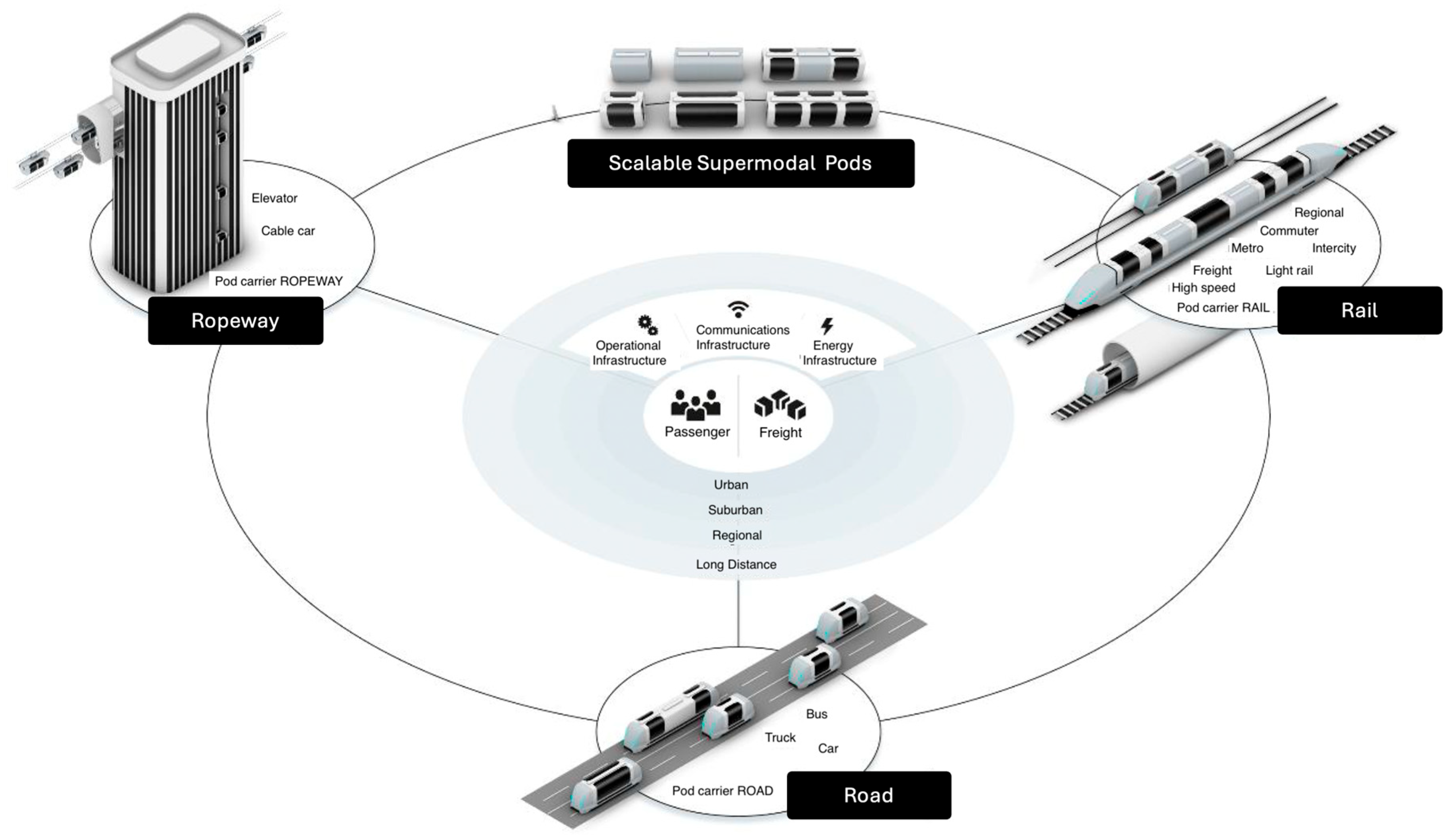
7] is a European research project supported by the EU-Rail Joint Undertaking that explores new concepts of intermodal rail-bound autonomous system and its autonomous transshipment to road and ropeway modes. Its design is intended to be coupled capsules/pods (Transport Units) with an autonomous electric-propulsed underframe (Rail Carrier Unit) that is primarily designed for rail mode but can be operated in other modes (
Figure 1). It is meant to serve passenger, freight, and combined transport needs using mainly already installed infrastructure. The on-development design includes a pod coordination and mobility management system for operations and logistics, as well as all aspects of on-demand mobility across multiple modes [
50].
This represents a completely new mobility concept and will constitute the main subject for the application of the proposed framework for system-readiness calculation.
1.4. Originality and Positioning of the Proposed Framework
A wide range of methodologies addressing the TRL, IRL, and SRL have been developed across domains such as aerospace, defense, energy, manufacturing, and intelligent transportation. Despite this extensive body of work, a systematic framework, specifically suited to early-stage multimodal mobility concepts, remains underdeveloped. Existing approaches generally fall into three categories: deterministic scoring methods, hybrid TRL–IRL matrices, and probabilistic formulations that only partially account for subsystem interdependencies.
Deterministic TRL–IRL matrices, widely used in aerospace, defense, and industrial engineering, treat technological and integration maturity as fixed values. As a result, they do not allow formal propagation of uncertainty from TRL and IRL inputs to system-level readiness. These approaches fail to capture the epistemic uncertainty arising from expert-based TRL assignments or incomplete knowledge regarding subsystem interfaces—limitations that are especially critical in early conceptual design phases.
Probabilistic and fuzzy-logic approaches provide partial solutions but typically focus on isolated aspects of the readiness-assessment problem. Bayesian methods, for instance, enable uncertainty modeling and evidence updating at the TRL level; however, only a limited number of studies extend these approaches to the SRL, and the integration maturity is typically represented using simplified or deterministic assumptions. Likewise, fuzzy MCDM frameworks address imprecision in expert judgments but usually produce aggregated readiness scores without explicitly propagating uncertainty through subsystem interdependencies. More recent qualitative–quantitative mapping frameworks attempt to reconcile subjective and objective readiness indicators, yet they are generally applied to high-TRL or operationally validated systems. Across these approaches, uncertainty is rarely treated as a system-level quantity that can be formally propagated from both TRL and IRL inputs to overall readiness.
In contrast, the proposed methodology explicitly distinguishes and models two complementary sources of uncertainty: (i) epistemic uncertainty in TRL assessment, arising from subjective expert judgment and represented through probabilistic TRL distributions, and (ii) interface uncertainty, associated with estimating the IRL across subsystem pairs in the absence of validated integration architectures.
The framework introduces an explicit separation between three methodological layers often conflated in prior studies: (i) the probabilistic representation of the TRL and IRL, reflecting the fact that subsystem technologies and interfaces are not characterized by fixed maturity values but by stochastic distributions, (ii) the formal uncertainty propagation problem, which explicitly addresses how uncertainties at the technology and integration levels combine and propagate to affect system-level readiness, and (iii) the algorithmic implementation, in which Monte Carlo simulation is employed solely as a numerical tool for the uncertainty propagation problem, while the readiness model is fully defined independently of the chosen algorithm. This distinction avoids conflating the conceptual model with a particular numerical solution.
This decomposition increases the conceptual transparency, strengthens the procedural consistency, and ensures reproducible results—addressing key limitations observed in deterministic or score based SRL frameworks. As a result, the framework produces SRL distributions rather than single point estimates, enabling percentile-based interpretation of readiness stages, confidence interval analysis, and exploratory sensitivity analysis. By simulating stochastic dependencies among subsystems and incorporating uncertainty in both technological maturity and interface readiness, the approach yields a more realistic characterization of system-level readiness during early-stage design—precisely when information is incomplete, architectures are evolving, and epistemic uncertainty predominates.
Beyond this structural contribution, the framework integrates qualitative expert-based TRL assessment with a quantitative SRL estimation that explicitly captures stochastic dependencies—an aspect seldom addressed even in more mature sectors. While hybrid or qualitative–quantitative readiness frameworks exist, they generally assume mature or well-validated systems. In contrast, the present methodology is tailored to early conceptual phases characterized by limited empirical integration data and ambiguous interface maturity providing a replicable, transparent, and domain-agnostic structure that advances current readiness assessment practices. As such, this framework offers one of the first uncertainty-aware SRL assessments for emerging multimodal mobility systems.
Moreover, the proposed structure remains compatible with future methodological extensions, including Bayesian TRL updating, fuzzy logic scoring, or hybrid evidence-based reasoning, as additional empirical data become available.
1.5. Paper’s Organization
The remainder of this paper is organized into five main sections.
Section 2, Materials and Methods, introduces the essential definitions of the Technology Readiness Level (TRL), Integration Readiness Level (IRL), and System Readiness Level (SRL). It then describes the hybrid methodology adopted in this study, which combines qualitative and quantitative approaches. This section explains the system breakdown structure, the procedure for TRL assessment using expert judgment and heat maps, and the probabilistic approach for SRL estimation through Monte Carlo simulation.
Section 3, Results, summarizes the findings from the qualitative and quantitative analyses, including TRL heat maps for key subsystems, descriptive statistics for individual SRLs and the Composite SRL (CSRL), confidence interval analysis, correlation matrices, and assessment of how subsystem interrelationships affect overall readiness.
Section 4, Discussion, interprets these results in the broader context of system readiness assessment. It emphasizes the role of integration readiness and uncertainty management, discusses the implications for system engineering practice, and identifies critical areas for improvement in Pods4Rail. This section also outlines recommendations for future research and methodological refinements.
Finally,
Section 5, Conclusions, summarizes the main contributions of the study. It highlights the effectiveness of the proposed hybrid framework for early-phase SRL estimation, its applicability to complex multimodal mobility systems, and its potential to support informed decision-making and risk management.
2. Materials and Methods
2.1. Definitions
To facilitate understanding and maintain consistency, the essential definitions are presented as follows:
Technology Readiness Level (TRL): A nine-level scale that measures the maturity of individual technologies, ranging from basic principles observed (TRL 1) to proven systems in operational environments (TRL 9). While widely used, the TRL does not account for integration challenges or system-level performance. The scale for the different TRLs is included in
Appendix A.
Integration Readiness Level (IRL): A complementary metric that evaluates the maturity of interfaces between technologies and subsystems. The IRL measures compatibility, interoperability, and interface stability, which are critical for achieving system-level functionality. The levels range from a conceptual understanding of integration (IRL 1) to proven integration in operational environments (IRL 9) [
5,
51,
52]. These levels and their corresponding descriptions are included in
Appendix B.
System Readiness Level (SRL): A holistic indicator that combines the TRL and IRL to assess overall system maturity. The SRL reflects not only component readiness but also integration performance and operational feasibility. In this study, the SRL is expressed on a five-level scale (1–5), corresponding to stages from concept refinement to operations and support [
5,
51,
52]. The mentioned scale can be found in
Appendix C.
2.2. General Methodology
Among the methodologies reviewed in the state-of-the-art analysis, several serve as the foundation for the approach proposed in this paper. As discussed, the framework combines both qualitative and quantitative methods to provide a comprehensive assessment of system readiness.
For the qualitative component, the approach draws on the taxonomy category of Readiness Assessment Models identified in the literature, particularly those described by [
22,
26,
27,
31,
32]. These models rely on expert judgment, checklists, document reviews, and consensus-based evaluations. In this study, TRLs were assigned using external references and the collective insights of project experts gathered during periodic meetings. Further details of this assignment process are provided in
Section 2.3. No formal method such as Delphi was used.
This approach is considered appropriate for several reasons. Expert judgment is widely recognized in the literature as a reliable mean of assessing readiness, particularly during the early conceptual stages of system development when empirical data are scarce. Additionally, documenting the discussions and rationale behind each TRL assignment enhances the transparency and ensures that the process can be reviewed or replicated. Finally, combining this qualitative assessment with quantitative methods results in a more complete and evidence-based evaluation.
For the quantitative component, this study follows the methodology described by [
3]. This approach, classified under the taxonomy category of TRL/SRL Hybrid Approaches, integrates component-level TRLs with IRLs to estimate overall system readiness. By incorporating both technological maturity and integration performance, this method provides a holistic perspective on system development.
The following sections present a detailed description of the qualitative and quantitative methods employed in this study, including the procedures, criteria, and tools used for system readiness assessment.
2.3. Methodology for Qualitative Analysis
As outlined in the General Methodology section, the Technology Readiness Levels (TRLs) were assigned based on both external references and the collective expertise of the project team. To provide a clearer context for this assessment, it is essential to define the system and its components prior to evaluation.
A structured breakdown of the Pods4Rail vehicle was developed to decompose the overall system into subsystems and components. This hierarchical structure was derived from the project’s Functional Requirements Specification (FRS), which establishes the functional and performance expectations for the system. The FRS [
53] was produced in an earlier work package dedicated to defining the initial set of requirements for the Pods4Rail concept.
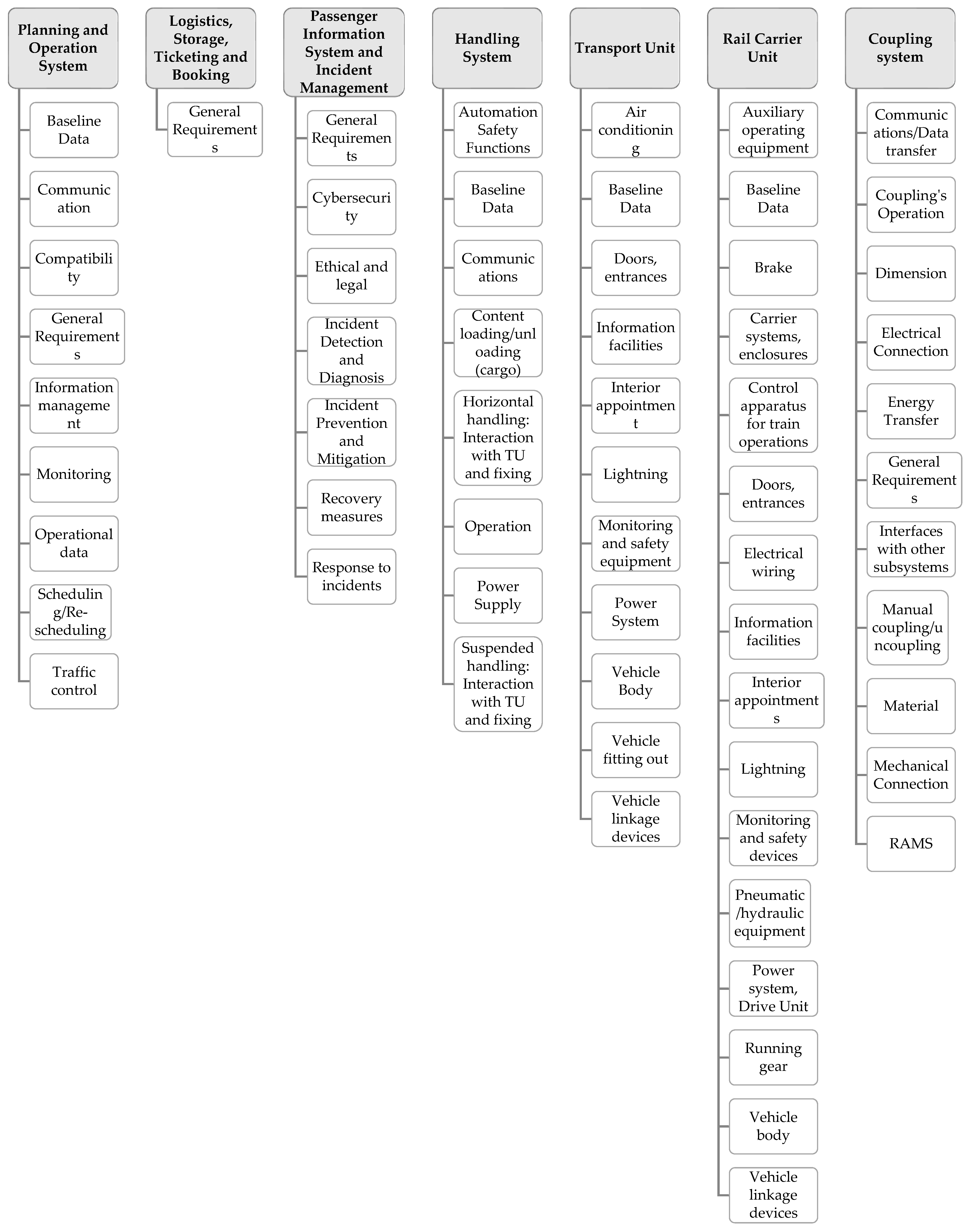
For the purpose of evaluating the readiness metrics described in this study, the conceptual design of the Pods4Rail vehicle was divided into seven primary subsystems. Each subsystem was further disaggregated into its constituent components to enable a detailed analysis of the technological maturity. The complete breakdown structure is illustrated in
Figure 2.
This structure serves as the basis for evaluating the TRL of the seven core subsystems in the Pods4Rail concept: 1 Planning and Operation System; 2 Logistics, Storage, Ticketing, and Booking; 3 Passenger Information System (PIS) and Incident Management; 4 Handling System; 5 Transport Unit; 6 Rail Carrier Unit; and 7 Coupling System.
Once these subjects were defined, the TRL assessment was carried out by evaluating them against specific criteria. These criteria are derived from the FRS. The FRS consolidates the high-level operational requirements for the Pods4Rail system and, therefore, serves as the reference framework for determining the TRL of each subsystem.
These evaluation criteria represent concrete measurable aspects of the subsystems and their components, allowing their level of technological readiness to be assessed. The criteria were derived from the requirements most relevant to maturity evaluation, ensuring a focused and coherent TRL assessment.
Each criterion is linked to a specific functional requirement and is used to evaluate an individual component through its associated technology, whose development level can be measured. For example, within the Rail Carrier Unit subsystem and its Brake component, an established criterion was “The braking system shall contemplate components related to the active safety of the vehicle (e.g., Wheel Slide Protection)”. In this case, the technology associated with meeting this criterion is WSP (Wheel Slide Protection) or similar solutions. Since these technologies are already well established and widely used, a TRL of 7 was assigned to this specific criterion–component–subsystem chain.
The TRL evaluation was conducted by a panel of five experts from the Pods4Rail consortium, including specialists in vehicle engineering, control systems, operations, safety, and multimodal system integration. The assessment took place across three structured meetings in which experts independently proposed TRL ranges for each component based on predefined criteria and then reached a shared consensus through moderated discussion. Because the process was explicitly designed to achieve consensus rather than aggregate independent ratings, statistical inter-rater reliability metrics (e.g., Kendall’s W, ICC) were not applicable. All criteria applied, together with the reasoning behind each TRL decision, were documented in the project’s internal evaluation records, ensuring traceability and reproducibility. The resulting TRL ranges were then used to define probabilistic TRL distributions, capturing the epistemic uncertainty in the early-stage assessment, thereby grounding the probabilistic SRL estimation in expert judgment while maintaining full transparency.
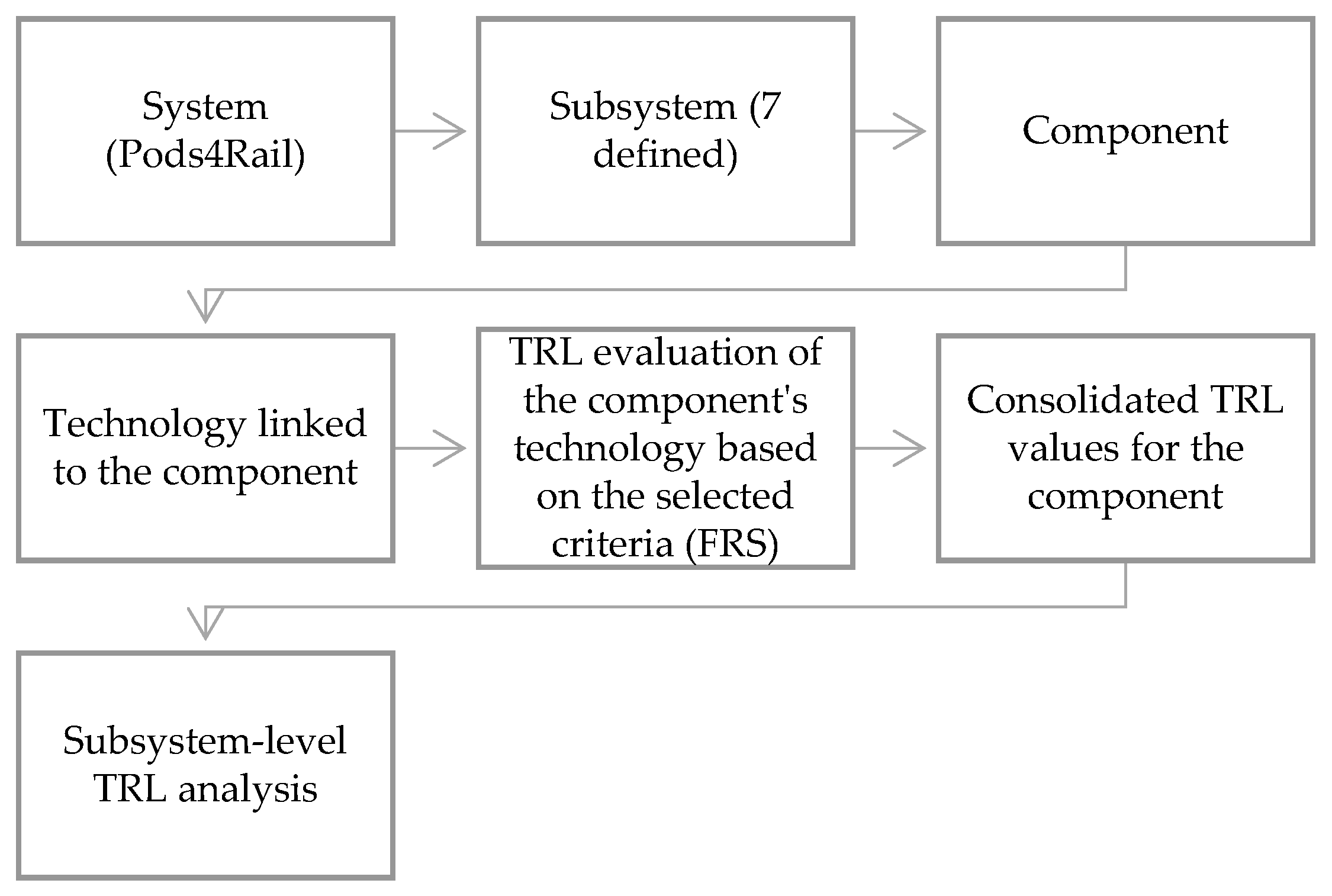
Each component could be evaluated against multiple criteria. Because TRL values were assigned during periodic expert meetings, some degree of uncertainty was inevitable. To capture this variability, the minimum and maximum TRL values for each component were identified, providing a concise representation of its maturity. This hierarchical approach—from system to subsystem, component, and associated technologies—offers a clear and structured view of the overall technological readiness (
Figure 3).
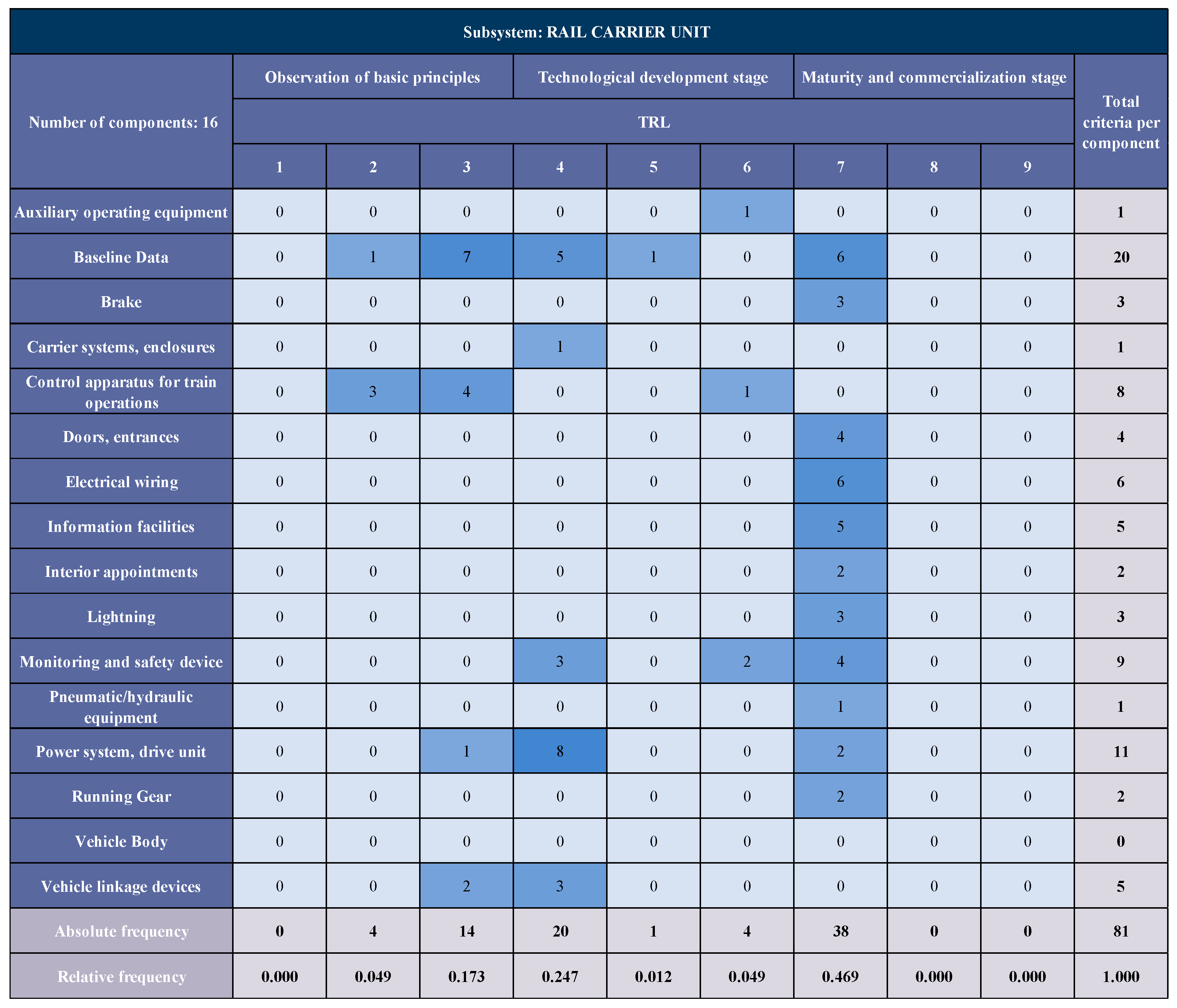
To facilitate interpretation, heat maps were created for each subsystem to display TRL assignments and related analyses. These visualizations highlight components with the highest and lowest technological readiness and link the number of evaluation criteria to their TRL values. This approach enables the calculation of absolute and relative frequencies, providing a clear overview of maturity levels across the Pods4Rail system.
The described methodology has been applied in one of the work packages of the Pods4Rail project [
54]. Accordingly, only the analysis and results of one of the most representative subsystems are presented here. For this paper, the Rail Carrier Unit subsystem was selected, as it represents one of the core subsystems of the Pods4Rail concept, given that the system is designed to operate through the coupling of pods with an autonomous underframe.
Table 3 shows the results of the TRL assignment process for the Rail Carrier Unit subsystem components. As an example, the Vehicle Linkage Devices component was evaluated against five requirements derived from the FRS (“Number of criteria” column). According to the table below, the five associated technologies or functionalities fall within a TRL range of 3 to 4, indicating that further development is required, as the component remains at the Observation of Basic Principles stage. TRL 8–9 components were intentionally excluded from this analysis. These elements correspond to fully mature technologies whose functionality is already well established in conventional railway systems. In this case, the only excluded element was the Vehicle body. Since it does not contribute to the technological feasibility or the innovative aspects of the Pods4Rail concept, its inclusion would provide no meaningful insight into system-level readiness. Moreover, incorporating such legacy technology would artificially inflate subsystem-level TRL distributions and mask the actual maturity gaps associated with the novel architectural and operational elements under development.
A broader interpretation of these findings can also be drawn from the corresponding heat map. This evaluation process was applied to all subsystems and their respective components.
Figure 4 presents the heat map for the Rail Carrier Unit, showing the distribution of TRL levels (1–9) across its components and the number of criteria used for each evaluation. Absolute and relative frequencies are also included, which are essential for the subsequent quantitative analysis. In
Figure 4, the blue intensity of each cell reflects its absolute frequency: zero appears as light blue, seven as the darkest shade, and all other frequencies are shown with proportional color levels, forming a heat map.
By combining hierarchical evaluation with visual representations, the methodology delivers a comprehensive view of the Pods4Rail concept’s technological maturity. It enables the detailed assessment of individual subsystems, components, and associated technologies, while supporting a robust evaluation of the system’s overall technical feasibility.
2.4. Methodology for Quantitative Analysis
Once the main subsystems and components were identified, TRL and IRL values were assigned based on expert judgment and external references, following the procedure described in the General Methodology section. Although structured approaches such as the Delphi method can reduce uncertainty, they cannot eliminate it entirely, and some variability remains inherent in human assessments. To address this subjectivity and the uncertainty regarding component contributions and integration effects, a statistical approach was adopted. Following [
3], Monte Carlo was applied to solve the propagation of uncertainties (from TRL and IRL to SRL) problem, thereby mitigating the risks associated with prescriptive metrics in early-phase evaluations.
To improve transparency, the input data used in the probabilistic model are now categorized as follows: for the TRL, (i) observed values for technologies that already exist in operational railway practice (e.g., braking, wiring, structural systems), (ii) expert-estimated values for components under development but with partial specifications or analogous references, and for the IRL, (iii) assumed distributions for IRL values, which reflect uncertainty in subsystem interactions at this early conceptual stage.
In this way, observed data were used when subsystem technologies already exist in operational railway markets (e.g., TRL 6–7 technologies such as braking, wiring, and structural components); expert-estimated values were used for technologies under development but with partial prototypes, architectural specifications, or analogous references; and assumed values were used exclusively for IRL distributions where empirical integration data are not yet available, following a conservative early-phase modeling strategy.
In this context, the calculation of the SRL for the Pods4Rail system follows these main steps:
Construction of TRL Scaled Matrix : TRL levels for each subsystem are identified and linked to their frequencies, which are interpreted as probabilities based on the qualitative heat map analysis. These probabilities serve as input for the Monte Carlo simulation. Using these probability inputs, the TRL scaled matrix is subsequently constructed to be employed in further matrix-based operations.
Construction of IRL Probability Matrix (
) and IRL Scaled Matrix (
between subsystems
i and
j : Relationships among the seven subsystems are defined under the assumption of full interaction.
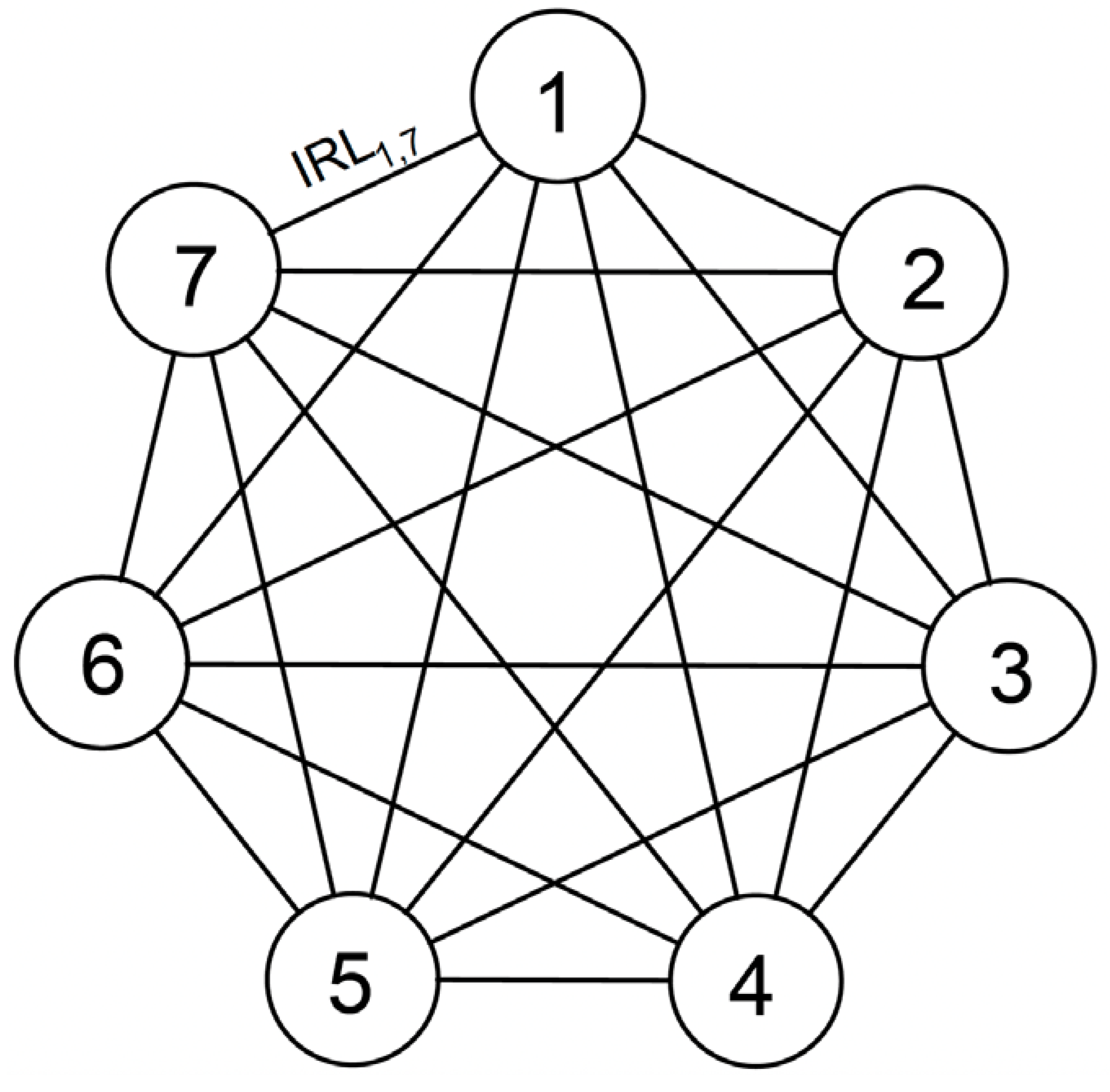
Figure 5 illustrates these connections, and IRL probabilities are assigned according to integration assumptions. In
Figure 5, the numbers represent the number assigned to each subsystem and the lines represent the relationships between subsystem
i and subsystem
j.
Construction of SRL Scaled Matrix
and determination of CSRL: Using the approach proposed in [
3], SRL values are computed for each subsystem through matrix-based operations, and the SRLs are linear combinations of the products of TRLs and IRLs. The Composite SRL (CSRL) is then obtained as the arithmetic mean of individual subsystem SRL values. The CSRL provides an overall measure of system maturity.
Figure 5.
Estimated relationships between the seven Pods4Rail subsystems.
Figure 5.
Estimated relationships between the seven Pods4Rail subsystems.
2.4.1. Construction of TRL Scaled Matrix
The Monte Carlo method relies on repeated random sampling (N iterations) to address uncertainty propagation, such as variability in TRL and IRL assignments. This approach enables the estimation of system behavior and the derivation of probability distributions, requiring predefined distributions for all uncertain variables. The first step involves constructing a TRL scaled matrix for the seven subsystems. To this end, probability distributions for the TRL levels of each subsystem are required.
In this and subsequent sections, as a convention, the different variables are represented in italics, in normal font for scalar variables and in bold for matrices.
Relative frequencies from the qualitative assessment (
Figure 4) are interpreted as probabilities associated with each TRL level, representing the likelihood of subsystem maturity. These probabilities form the basis for the simulation.
Table 4 summarizes the TRL probability values derived from the Pods4Rail project outcomes [
54], where the probabilities add up to 1 in each row.
During the Monte Carlo simulation, TRL values for each subsystem are sampled from their respective probability distributions. For each of the
N iterations, the algorithm randomly selects TRL levels from 1 to 9, weighted according to the subsystem’s probability distribution (which must sum to 1). This process generates a set of seven TRL values per sample, capturing the variability and uncertainty inherent in expert-based assessments. Unlike deterministic approaches, this method leverages probability distributions to represent maturity levels realistically. Once sampled, TRL values are linearly scaled to the [0–1] range, ensuring TRL 1 corresponds to 0 and TRL 9 to 1, thereby standardizing the values for subsequent matrix operations. The scaling function
is defined as in (1):
After generating
samples and applying the scaling, the resulting
matrix (
subindex denotes the scaled matrix) is structured as indicated in (2):
where
is a
matrix, with
representing the number of subsystems and
the number of samples, and
denotes the scaled TRL value of subsystem
in sample
.
This scaled matrix constitutes the input for the subsequent matrix-based calculations that combine TRL and IRL information to compute the SRL of each subsystem and, ultimately, the composite SRL (CSRL) of the overall system.
2.4.2. Construction of IRL Probability Matrix () and IRL Scaled Matrix (
Integration Readiness Level (IRL) values are generated to characterize subsystem interactions using a procedure similar to
matrix construction. Unlike the TRL, which spans nine levels, the IRL values in this study are restricted to levels 4, 5, and 6, reflecting the transition from Conceptual understanding of integration (IRL 4) to Implementation and testing in controlled or relevant environments (IRL 6) [
5]. This range aligns with the current maturity of Pods4Rail, where integration efforts are moving toward realistic testing.
The probabilities for IRL assignments are summarized in
Table 5. For self-interactions, IRL 6 is given the highest probability (0.8), as the subsystems are inherently integrated with themselves. For interactions between different subsystems, IRL 5 receives the highest probability (0.5), while IRL 4 and IRL 6 are each assigned 0.25. This ensures balanced distributions that sum to 1 and provide a coherent representation of the integration readiness. Note that self-interactions will later be recoded as IRL 9 to reflect full integration status.
To enhance the transparency of the probabilistic model, we explicitly document the assumptions underlying the IRL distributions. First, the IRL range was restricted to levels 4–6 because lower levels (1–3) correspond to preliminary interface identification already fulfilled by the conceptual system architecture, whereas higher levels (7–9) require empirical integration testing that is not yet feasible at this early stage. Second, higher probabilities are initially assigned to self-interactions to reflect the expectation that each subsystem will ultimately achieve full internal interoperability, consistent with systems-engineering practice. In the final IRL Scaled Matrix (), the diagonal elements representing self-interactions are set to one, explicitly reflecting the full integration of each subsystem with itself. Third, the absence of empirical integration data at this phase of Pods4Rail development necessitated the adoption of assumed IRL probability distributions; these assumptions follow a conservative modeling strategy commonly used in early-stage readiness assessment.
Once the IRL values and their corresponding probabilities are defined, the full IRL Probability Matrix () can be constructed. This is a three-dimensional matrix of size , where rows correspond to subsystem and columns to subsystem , and the third dimension represents the probability of IRL being equal to 4, 5, and 6 for each subsystem pair (three layers corresponding to the three restricted IRL values).
Each element of the matrix is a vector that describes the likelihood of each IRL level between a pair of subsystems. This structure ensures that the readiness assessment reflects both the current development stage and the practical feasibility of subsystem integration.
Mathematically, the three-dimensional
matrix can be represented as (3)
As an example, the second layer corresponding to the probabilities of IRL 5 (
) can be expressed as the following two-dimensional matrix (4). Each row and column represents a subsystem, and each element
indicates the probability that the interaction between subsystems
and
reaches IRL level 5. The other layers (IRL 4 and IRL 6) are structured in a similar way. The three probabilities for each
i,j pair also add up to 1.
Once is defined and constructed, the next step is to generate the IRL scaled matrix denoted as . Similar to the matrix, the values in are scaled to be in the range of 0 to 1 using the same scaling function as in (1).
The following conditions are applied when constructing : (Condition A) the probabilities used for the construction are stored in matrix, (Condition B) the matrix is symmetric where , and (Condition C) the scaled IRL values for self-interactions (diagonal elements) are set to one.
Considering these requirements, a three-dimensional IRL matrix of size is generated, composed of bi-dimensional matrices of size for each of the N samples, with random numbers in the [0, 1] range. These random IRL values are generated by sampling from the probability distributions defined in , ensuring that each layer reflects the assigned likelihoods rather than arbitrary randomness. Each layer of the resulting three-dimensional matrix is symmetric, and the diagonal elements are equal to 1. In the final structure, rows correspond to subsystem and columns to subsystem , and the third dimension corresponds to the sample index.
Mathematically, the resulting matrix can be expressed as
where
represents the scaled IRL value between subsystems
and
in the
-th sample.
2.4.3. Construction of SRL Scaled Matrix ( and Determination of CSRL
Following the formulation proposed in [
3], the SRL Scaled Matrix is computed as (6)
where
denotes the total number of evaluated subsystems, which, in this case, equals 7, and where
denotes matrix multiplication.
The normalization matrix
is a
diagonal matrix used to re-scale the SRL values from [0 −
] to [0 − 1]. It is defined as (7)
where
represents the total number of integrations of subsystem
with itself and with all other subsystems. Since each subsystem in Pods4Rail interacts with six other subsystems in addition to itself, all subsystems share the same value
. Consequently, the normalization matrix reduces to a 7
7 diagonal matrix with constant diagonal elements equal to 1/7. For simplicity, this matrix is hereafter denoted as
.
The proposed Monte Carlo method for SRL calculation combines the two bi-dimensional matrices,
and
, with the three-dimensional
, which contains
elements. At each iteration, the corresponding bi-dimensional IRL layer
is extracted and integrated with the normalization and TRL matrices. The SRL vector for iteration
is computed as (8):
where
corresponds to the
-th column of
matrix. This procedure is repeated across all
samples, where
is an auxiliary index running from 1 to
.
As a result, an SRL matrix of dimensions 7 is obtained, where each row corresponds to a subsystem, and each column contains the results for each sampled scenario from 1 to . This structure captures the variability in subsystem readiness arising from the uncertainty embedded in the TRL and IRL inputs.
The resulting
matrix can be expressed as (9)
where
represents the obtained SRL value for subsystem
in the
-th sample.
To obtain a system-level maturity indicator, the Composite SRL (CSRL) is introduced as the arithmetic mean of all the individual SRLs (10):
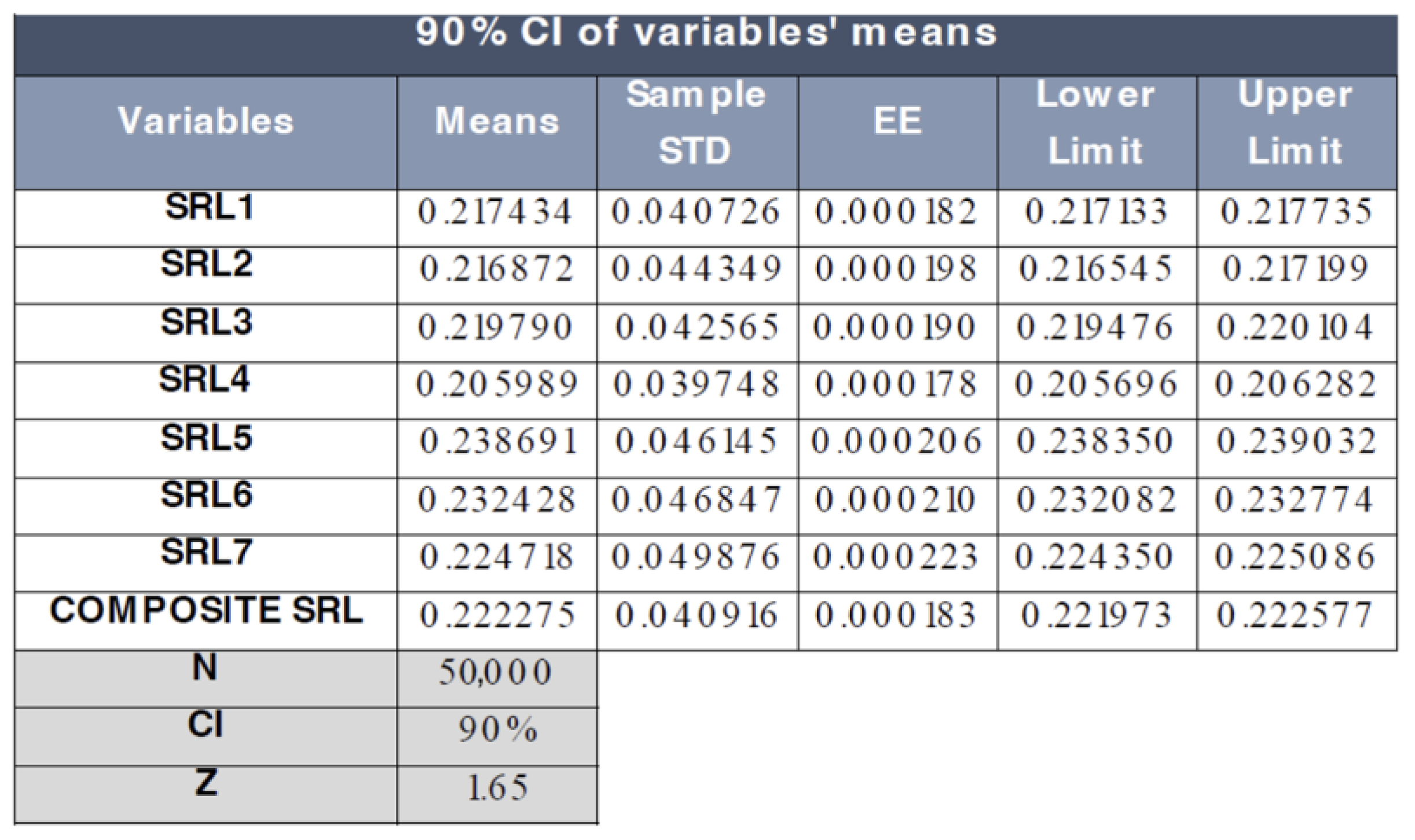
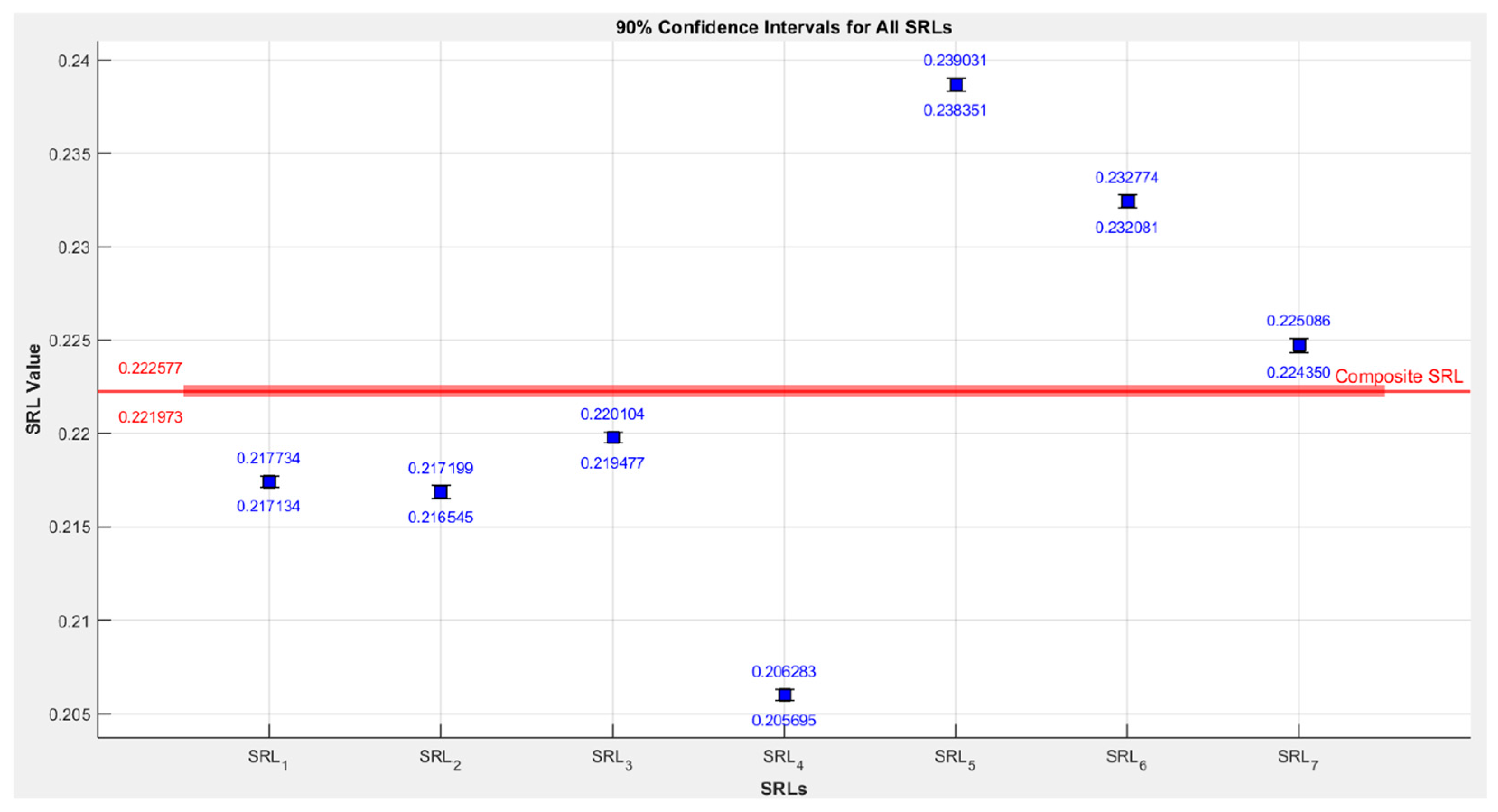
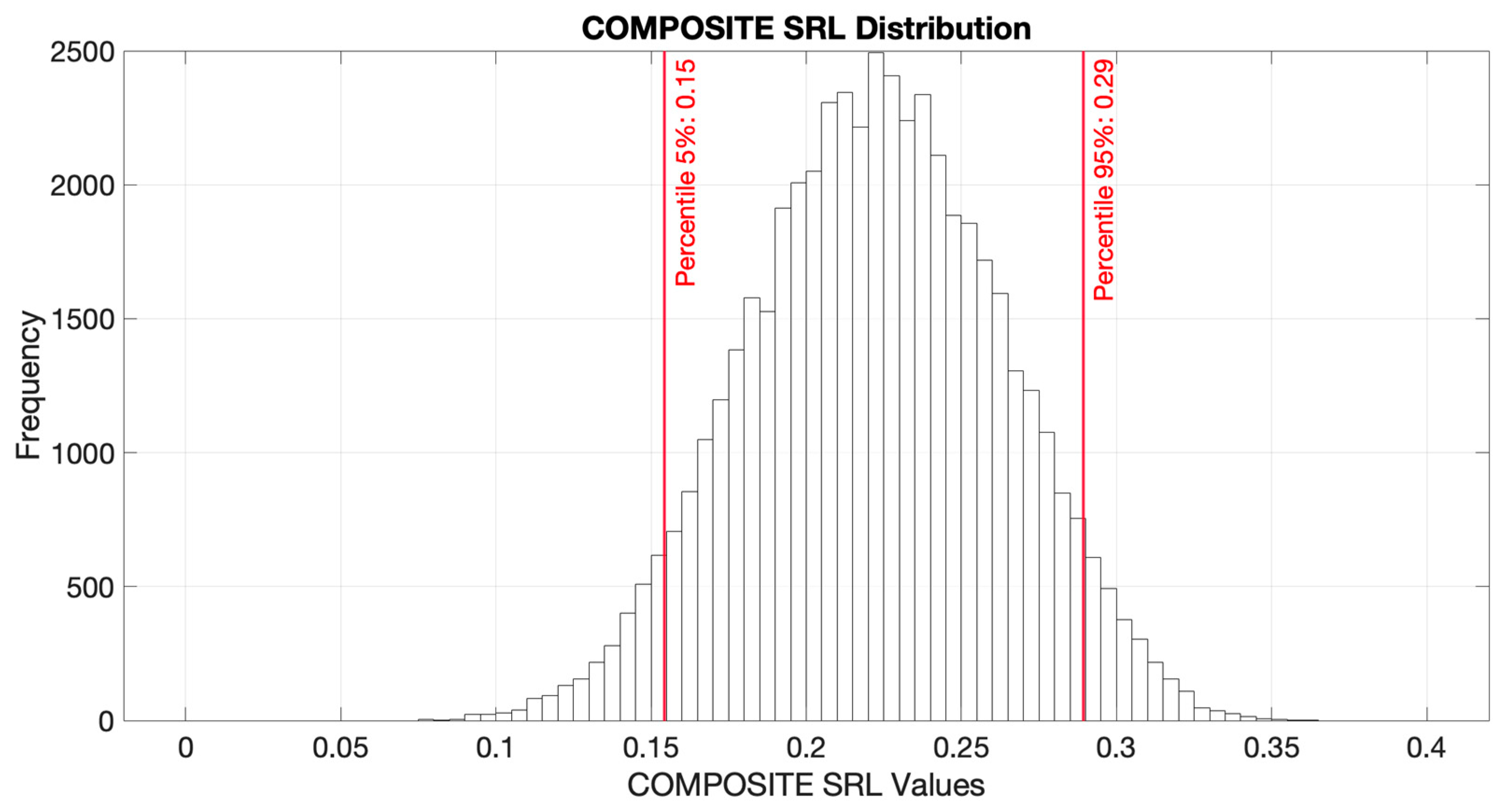
According to the Monte Carlo procedure, different results for the CSRL will be obtained. This empirical distribution will allow the statistical analysis of the resulting range and the study of the statistical related variables arising from the application of the Monte Carlo method and, in turn, arising from the subjective assignment of the TRL and IRL values.
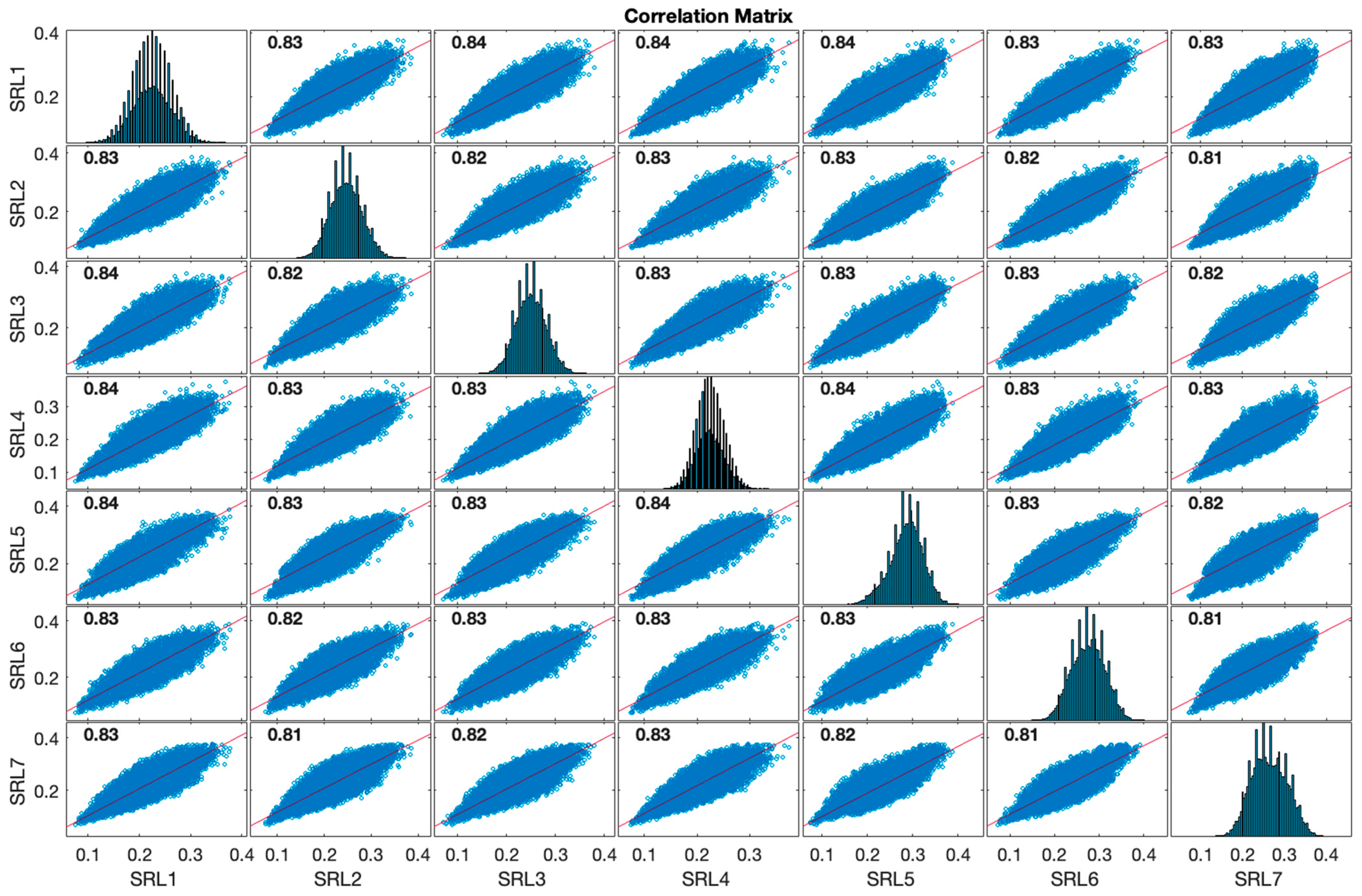
It is important to clarify how the stochastic dependence between the TRL and IRL is treated within the proposed probabilistic framework. At the input stage, the TRL and IRL values are sampled independently, because no empirical evidence or expert-elicited data currently supports defining a joint probability distribution between technological maturity and interface maturity during this early conceptual phase. However, dependence is introduced structurally through the SRL computation itself: in (6), every interacts multiplicatively with , causing subsystem-level readiness outcomes to become statistically correlated even if input marginals are sampled independently. In addition, TRL distributions derived from qualitative heat maps indirectly encode subsystem-level variability, which further contributes to correlated behavior across SRL outputs. Thus, correlation in the resulting SRL distributions emerges naturally through uncertainty propagation rather than being imposed a priori. This structural dependence explains the positive correlations observed in the simulated SRL outputs.
4. Discussion
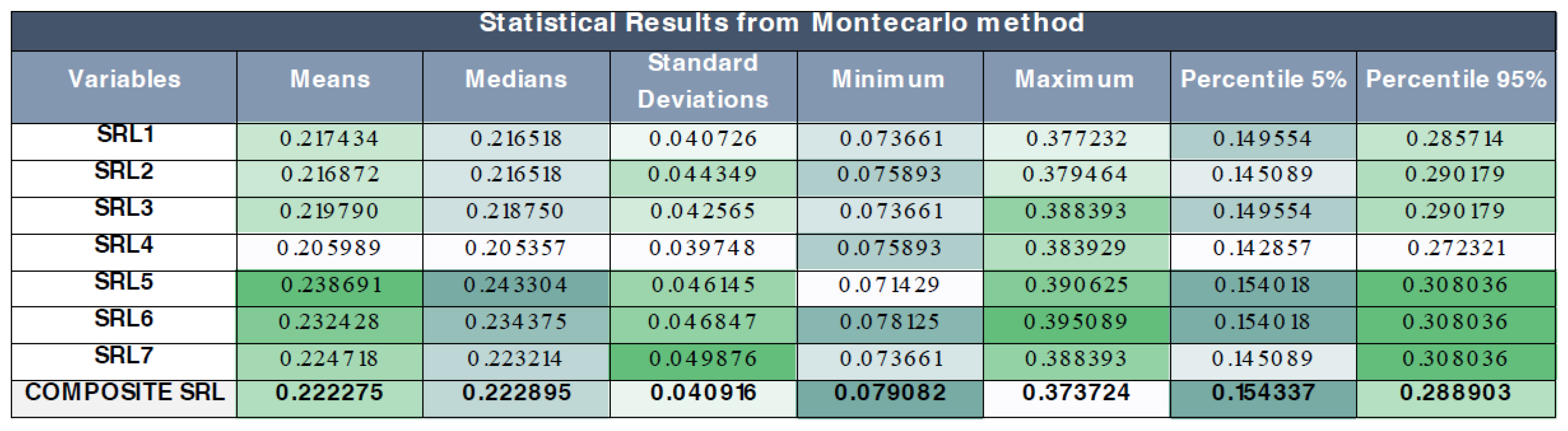
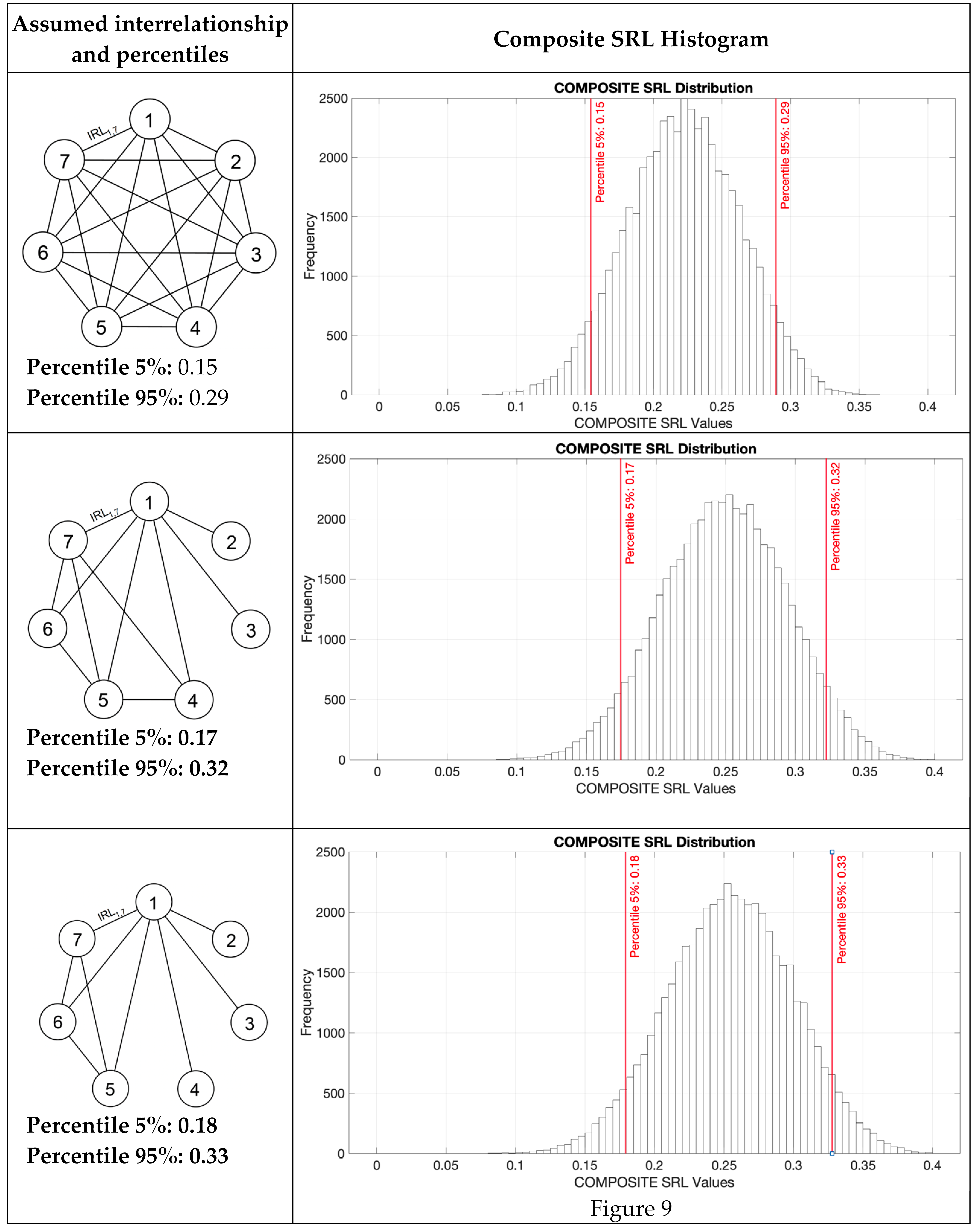
It is important to emphasize that this evaluation was conducted before the final system proposal was completed. While modifications to the connections between components have been considered, they do not result in significant changes to the system’s SRL. As seen in previous analyses, the Pods4Rail’s SRL considered percentiles range from 0.15 to 0.29, reinforcing the stability of the system’s readiness level, despite variations in interconnections.
The findings of this study underscore the complexity of evaluating system readiness in early design phases and highlight the advantages of adopting a hybrid approach that integrates qualitative and quantitative perspectives. The qualitative analysis provided a detailed view of technological maturity across Pods4Rail subsystems, revealing significant disparities that reflect the heterogeneous nature of the system architecture. Components such as braking systems, electrical wiring, and structural elements demonstrated high TRL values, indicating near-operational readiness. In contrast, subsystems related to planning, logistics, and incident management exhibited lower TRL levels, suggesting that these areas require substantial development before achieving integration feasibility. These findings emphasize the need for targeted resource allocation and development strategies to address critical gaps in automation, digitalization, and sustainability.
The quantitative analysis builds on the qualitative insights by incorporating the IRL into the estimation process, offering a more holistic view of system maturity. While the TRL reflects the technological development of individual components, the IRL captures the stability and compatibility of subsystem interfaces—an aspect often overlooked in early-phase assessments.
To address uncertainty, the proposed methodology integrates the TRL and IRL through a probabilistic model and applies Monte Carlo simulation to propagate these uncertainties toward an SRL estimation. This approach generates a distribution of SRL values rather than a single deterministic figure, providing a realistic representation of system readiness under incomplete information.
A key contribution of this work is the explicit handling of uncertainty across both technological and integration levels, which contrasts sharply with traditional SRL frameworks. Traditional deterministic approaches and matrix-based SRL methods assume fixed maturity values, which prevents the formal propagation of uncertainty and neglects the epistemic gaps present in early conceptual phases.
Bayesian approaches represent one alternative for uncertainty modeling; however, their focus typically remains at component-level maturity rather than full system integration.
Fuzzy-logic and MCDM-based methods (e.g., fuzzy-TOPSIS, fuzzy-AHP, COPRAS) offer another route for managing imprecision in expert judgment. Nevertheless, like Bayesian methods, they lack the capacity to model how uncertainty at lower levels affects the total system readiness, and they leave system-level stochastic dependencies largely unmodeled.
An additional clarification concerns the role of stochastic dependence in the proposed framework. Unlike Bayesian or fuzzy-logic approaches, which require the explicit specification of joint TRL–IRL relationships, the present method adopts a conservative early-phase strategy in which uncertainty is captured by independent marginal distributions while correlation is induced through the propagation mechanism. This allows the SRL outputs to reflect realistic interdependencies among subsystem readiness levels without introducing unsubstantiated assumptions at a stage where empirical integration data are not yet available.
The framework proposed in this work advances the state of the art by separating three methodological layers typically blended in previous studies: (i) the probabilistic model, (ii) the formal uncertainty-propagation problem, and (iii) the Monte Carlo algorithm used to solve this propagation problem. This structured separation improves reproducibility and clarifies how subsystem-level uncertainties influence overall system maturity. It also enables the generation of empirical SRL distributions and confidence intervals—capabilities largely absent in existing readiness-assessment methodologies.
The simulation results indicate that Pods4Rail currently falls between SRL 1 and SRL 2, corresponding to the concept refinement and technology development stages. This outcome aligns with the project’s lifecycle phase, where efforts focus on reducing technological risks, validating integration assumptions, and defining operational strategies. Subsystems such as the Transport Unit and Rail Carrier Unit exhibit higher readiness levels compared to planning and logistics components, suggesting that hardware development is advancing more rapidly than software-driven functionalities. Nevertheless, the IRL analysis reveals that even mature subsystems face integration challenges, particularly in data exchange, interface management, and coupling mechanisms. These findings confirm that achieving system-level readiness requires not only technological progress but also robust integration strategies.
Beyond the Pods4Rail case, the implications of this work are significant. First, the overall system readiness cannot be inferred solely from component maturity; integration readiness is a decisive factor for feasibility. Second, the quantitative approach explicitly distinguishes between the probabilistic model (representing uncertainties in TRL and IRL), the problem of uncertainty propagation to SRL, and the algorithm used to solve this problem—Monte Carlo simulation. This structure provides a robust mechanism for managing uncertainty, enabling decision-makers to plan for a range of possible outcomes rather than relying on single-point estimates. Such capability is particularly valuable in early design phases, where assumptions about subsystem interactions and operational conditions are subject to change. Finally, the methodology establishes a foundation for iterative refinement as new data become available, supporting continuous improvement throughout the system development lifecycle.
Future research should focus on validating the proposed framework with empirical integration data, incorporating advanced simulation techniques for subsystem interactions, and extending the approach to include economic and sustainability considerations. Additionally, integrating stakeholder perspectives into the readiness assessment process could enhance its comprehensiveness, ensuring that the technical feasibility aligns with operational requirements and strategic objectives. By addressing these dimensions, readiness assessment can evolve from a purely technical exercise into a holistic decision-support tool that guides innovation toward successful implementation.
5. Conclusions
This study demonstrates the effectiveness of a hybrid framework for assessing system readiness in the early design phases of complex multimodal mobility systems. By integrating qualitative and quantitative approaches, the methodology addresses the inherent uncertainty associated with limited empirical data and incomplete subsystem integration. The qualitative analysis, based on expert judgment and visual heat maps, provides a detailed view of technological maturity across Pods4Rail subsystems, highlighting critical challenges in automation, digitalization, and sustainability. These findings underscore the importance of prioritizing development efforts in areas that exhibit lower readiness levels, such as planning and logistics.
The quantitative analysis, implemented through Monte Carlo simulation, enabled the estimation of the SRL under uncertainty by combining the TRLs and IRLs. The results indicate that Pods4Rail currently falls between SRL 1 and SRL 2, corresponding to the concept refinement and technology development stages. While subsystems such as the Transport Unit and Rail Carrier Unit exhibit relatively higher maturity, others remain at early development stages, requiring significant progress to achieve system-level integration and operational feasibility.
Overall, the proposed methodology offers a replicable and transferable approach for evaluating readiness in emerging mobility systems. Its ability to combine interpretative insights with statistical rigor provides decision-makers with a robust tool for risk mitigation, resource allocation, and strategic planning. Future work should focus on refining integration assumptions, incorporating real-world testing data, and extending the framework to other domains where uncertainty and complexity pose similar challenges.
Compared with traditional deterministic SRL frameworks and qualitative-only readiness assessments, the proposed approach offers significantly enhanced capability for uncertainty management. By explicitly modeling TRL and IRL uncertainty and propagating it through a Monte Carlo-based formulation, the framework provides empirical SRL distributions, confidence intervals, and sensitivity insights that conventional methods cannot produce. This enables more robust and transparent early-stage decision-making, particularly for complex multimodal mobility systems characterized by incomplete information and evolving subsystem interactions.