
Review of Preparation, Application, and Microbiological Reaction of Magnetic Biochar for Heavy Metal Removal from Polluted Soils
 , , and
Abstract
1. Introduction
2. Materials Used in the Production of MBC
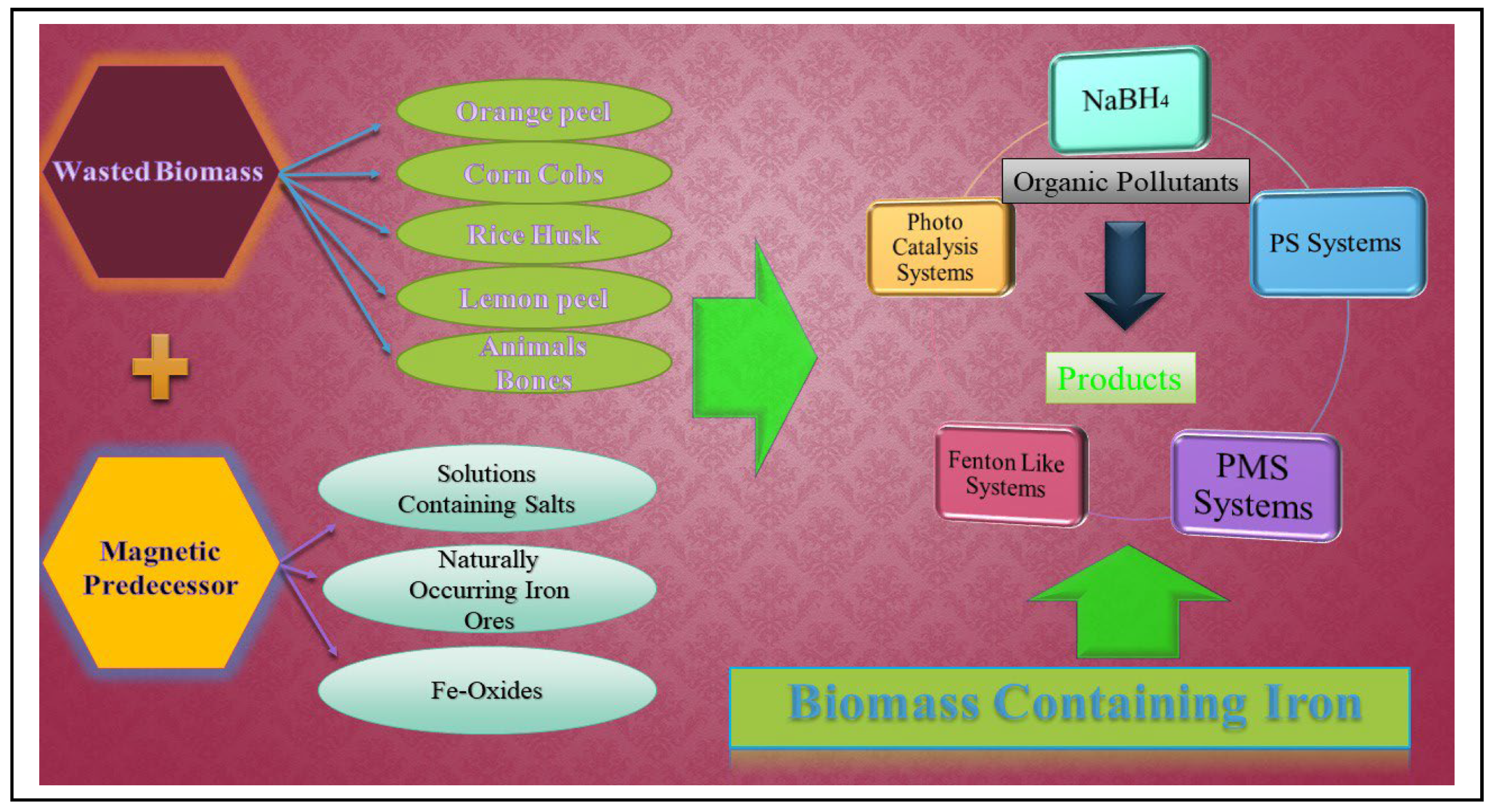
2.1. Biomass and Magnetic Precursors
2.2. Iron-Containing Waste Biomass
3. Magnetic Biochar (MBC) Preparation Procedures
3.1. Co-Precipitation
3.2. Impregnation Pyrolysis: A Robust Method for MBC Synthesis
3.3. Hydrothermal Carbonization: A Complex Yet Effective Method for MBC Synthesis
3.4. Leveraging Microwaves for Enhanced MBC Synthesis
3.5. Ball Milling: Crafting MBC Through Mechanical Precision
3.6. The Diverse Array of MBC Synthesis Techniques
3.7. Economic Feasibility and Comparative Analysis of MBC
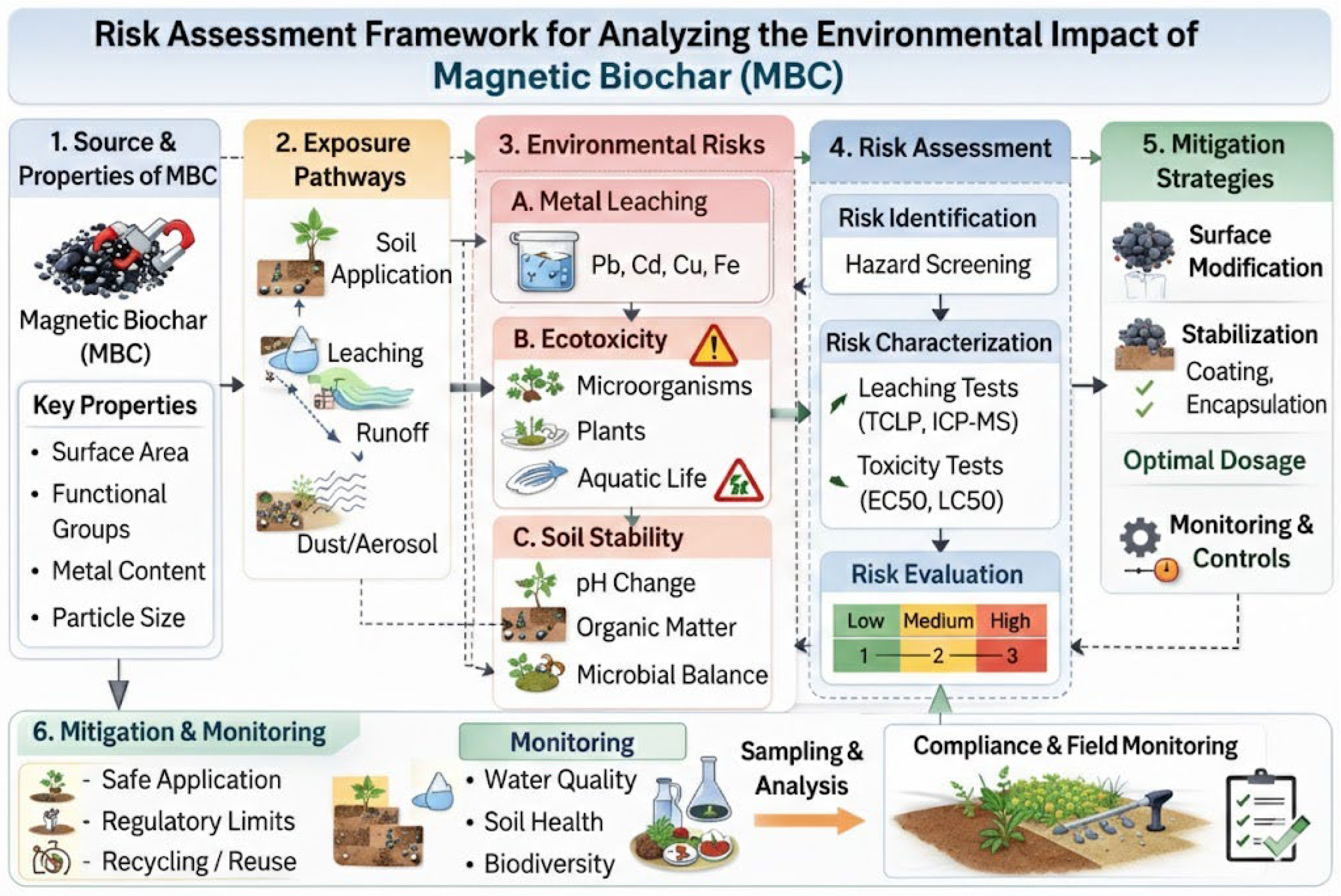
3.8. Assessing and Managing Environmental Risks of Trace Metal Ion Release
- Optimizing the desorption process.
- Integrating biosorbents with secondary treatment methods.
- Employing stabilization techniques.
4. MBC for Enhanced Heavy Metal Removal from Soil
4.1. Factors Influencing Heavy Metal Removal by MBC
4.1.1. Heavy Metal Intrinsic Properties
4.1.2. Soil Characteristics
4.1.3. The Raw Materials for MBC
4.1.4. The Temperature of Pyrolysis
4.1.5. The Dosage of MBC
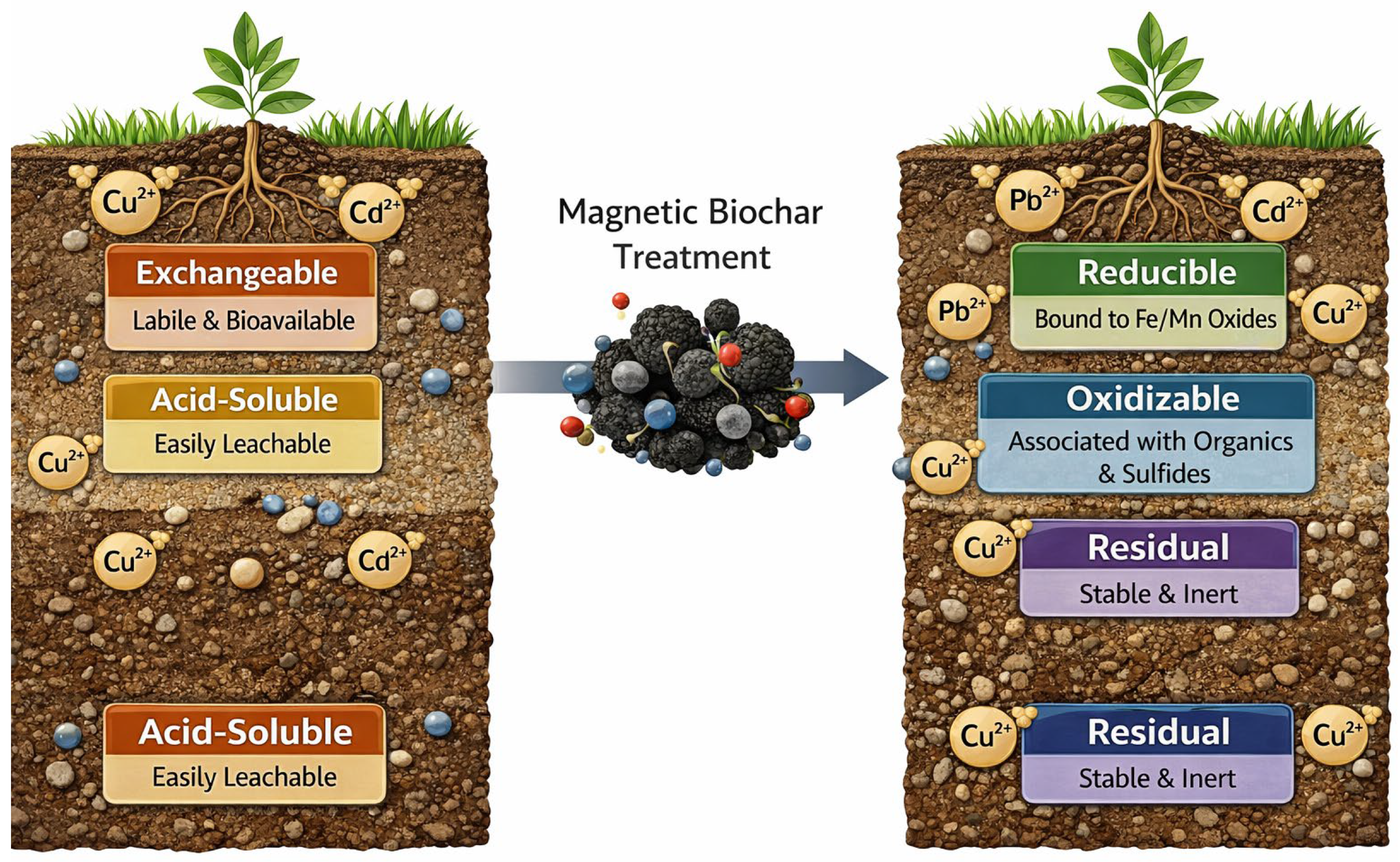
5. The Influence of Heavy Metal Forms in Soil and the Degree of Passivation After MBC Application
5.1. Mechanisms of Heavy Metal Removal from Soil by MBC
5.1.1. Physical Adsorption
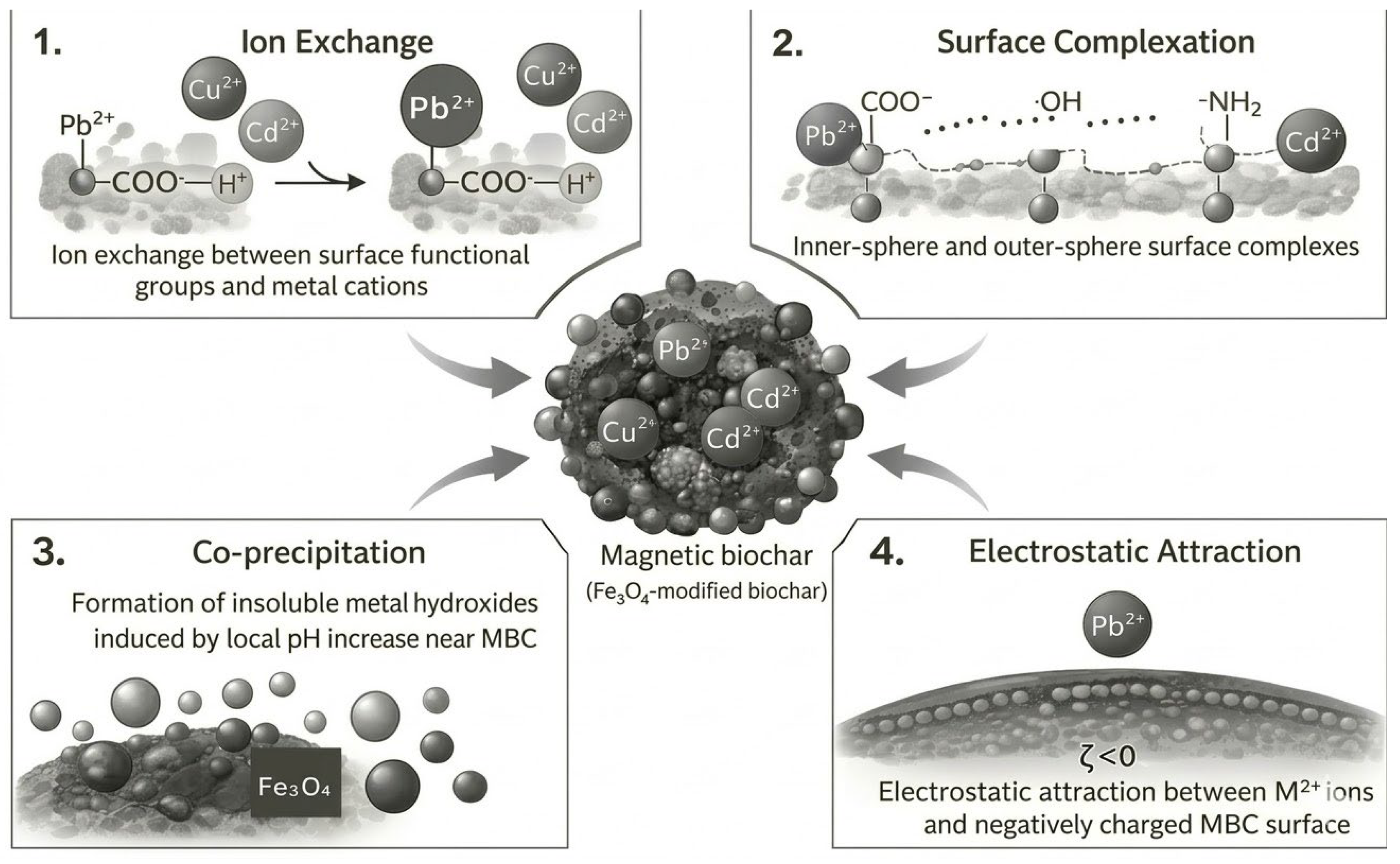
5.1.2. Ion Exchange
5.1.3. Surface/Co-Precipitation
5.1.4. Metal-Functional Group Complexation
5.1.5. Electrostatic Attraction
5.1.6. Interaction Between Oxidation and Reduction
5.1.7. π-π Interactions
5.2. MBC’s Ecotoxicity
6. Microbial Response in Soil Following MBC Application
6.1. Rise in Abundance and Diversity of Microbial Communities
6.2. Evolution of Microbial Communities
6.3. The Effects of Microbial Competition in Soil on the Environment
7. Conclusions
Author Contributions
Funding
Institutional Review Board Statement
Informed Consent Statement
Data Availability Statement
Conflicts of Interest
References
- Sanad, M.N.; El-Dek, S.I.; Eldemerdash, U.; ElFaham, M.M. Study of the adsorptive removal of (Fe+2) and (Ni+2) from water by synthesized magnetite/corn cobs magnetic nanocomposite. Nano Futures 2022, 6, 025004. [Google Scholar] [CrossRef]
- Farouz, M.; El-Dek, S.I.; ElFaham, M.M.; Eldemerdash, U. Ecofriendly sustainable synthetized nanocomposite for removal of heavy metals from aquatic environment. Appl. Nanosci. 2022, 12, 1585–1600. [Google Scholar] [CrossRef]
- Wan, X.; Li, C.; Parikh, S.J. Simultaneous removal of arsenic, cadmium, and lead from soil by iron-modified magnetic biochar. Environ. Pollut. 2020, 261, 114157. [Google Scholar] [CrossRef] [PubMed]
- Qu, J.; Akindolie, M.S.; Feng, Y.; Jiang, Z.; Zhang, G.; Jiang, Q.; Deng, F.; Cao, B.; Zhang, Y. One-pot hydrothermal synthesis of NaLa (CO3)2 decorated mag-netic biochar for efficient phosphate removal from water: Kinetics, isotherms, thermodynamics, mechanisms and reusability exploration. Chem. Eng. J. 2020, 394, 124915. [Google Scholar] [CrossRef]
- Wu, J.; Li, Z.; Huang, D.; Liu, X.; Tang, C.; Parikh, S.J.; Xu, J. A novel calcium-based magnetic biochar is effective in stabilization of arsenic and cadmium co-contamina-tion in aerobic soils. J. Hazard. Mater. 2020, 387, 122010. [Google Scholar] [CrossRef]
- Xu, Y.; Seshadri, B.; Sarkar, B.; Wang, H.; Rumpel, C.; Sparks, D.; Farrell, M.; Hall, T.; Yang, X.; Bolan, N. Biochar modulates heavy metal toxicity and improves mi-crobial carbon use efficiency in soil. Sci. Total Environ. 2018, 621, 148–159. [Google Scholar] [CrossRef]
- Zhang, Z.; Yang, X.; Wang, J.; Zhuang, T.; Liu, S.; Dou, M.; Huo, K.; Zhou, Y.; Ding, G. Magnetic biochar pyrolyzed from municipal sludge for Fenton-like degradation of thiamethoxam: Characteristics and mechanism. J. Water Process Eng. 2023, 51, 103391. [Google Scholar] [CrossRef]
- Patel, S.K.S.; Choi, S.H.; Kang, Y.C.; Lee, J. Eco-friendly composite of Fe3O4-reduced graphene oxide particles for efficient enzyme immobilization. ACS Appl. Mater. Interfaces 2017, 9, 2213–2222. [Google Scholar] [CrossRef]
- Samuel, M.S.; Shang, M.; Klimchuk, S.; Niu, J. Novel regenerative hybrid composite adsorbent with improved removal capacity for lead ions in water. Ind. Eng. Chem. Res. 2021, 60, 5124–5132. [Google Scholar] [CrossRef]
- Bolan, N.; Kunhikrishnan, A.; Thangarajan, R.; Kumpiene, J.; Park, J.; Makino, T.; Kirkham, M.B.; Scheckel, K. Remediation of heavy metal (loid) s contaminated soils–to mobilize or to immobilize? J. Hazard. Mater. 2014, 266, 141–166. [Google Scholar] [CrossRef]
- Ahmad, M.; Rajapaksha, A.U.; Lim, J.E.; Zhang, M.; Bolan, N.; Mohan, D.; Vithanage, M.; Lee, S.S.; Ok, Y.S. Biochar as a sorbent for contaminant management in soil and water: A review. Chemosphere 2014, 99, 19–33. [Google Scholar] [CrossRef]
- Dey, A.; Singh, R.; Purkait, M.K. Cobalt ferrite nanoparticles aggregated schwert-mannite: A novel adsorbent for the efficient removal of arsenic. J. Water Process Eng. 2014, 3, 1–9. [Google Scholar] [CrossRef]
- Lehmann, J. A handful of carbon. Nature 2007, 447, 143–144. [Google Scholar] [CrossRef] [PubMed]
- Novotny, E.H.; Auccaise, R.; Velloso, M.H.R.; Corrêa, J.C.; Higarashi, M.M.; Abreu, V.M.N.; Rocha, J.D.; Kwapinski, W. Characterization of phosphate structures in biochar from swine bones. Pesqui. Agropecuária Bras. 2012, 47, 672–676. [Google Scholar] [CrossRef]
- Tessier, A.; Campbell, P.G.; Bisson, M. Sequential extraction procedure for the speciation of particulate trace metals. Anal. Chem. 1979, 51, 844–851. [Google Scholar] [CrossRef]
- Vijayaraghavan, K.; Yun, Y. Bacterial biosorbents and biosorption. Biotechnol. Adv. 2008, 26, 266–291. [Google Scholar] [CrossRef]
- Zhang, Y.; Qu, J.; Yuan, Y.; Song, H.; Liu, Y.; Wang, S.; Tao, Y.; Zhao, Y.; Li, Z. Si-multaneous scavenging of Cd(II) and Pb(II) from water by sulfide-modified magnetic pinecone-derived hydrochar. J. Clean. Prod. 2022, 341, 130758. [Google Scholar] [CrossRef]
- Cheng, S.; Chen, T.; Xu, W.; Huang, J.; Jiang, S.; Yan, B. Application research of biochar for the remediation of soil heavy metals contamination: A review. Molecules 2020, 25, 3167. [Google Scholar] [CrossRef]
- Devi, P.; Saroha, A.K. Synthesis of the magnetic biochar composites for use as an adsorbent for the removal of pentachlorophenol from the effluent. Bioresour. Technol. 2014, 169, 525–531. [Google Scholar] [CrossRef]
- Li, X.; Wang, C.; Zhang, J.; Liu, J.; Liu, B.; Chen, G. Preparation and application of magnetic biochar in water treatment: A critical review. Sci. Total Environ. 2020, 711, 134847. [Google Scholar] [CrossRef]
- Liu, L.; Liu, X.; Wang, D.; Lin, H.; Huang, L. Removal and reduction of Cr(VI) in simulated wastewater using magnetic biochar prepared by co-pyrolysis of nano-zero-valent iron and sewage sludge. J. Clean. Prod. 2020, 257, 120562. [Google Scholar] [CrossRef]
- Liu, X.; Yang, L.; Zhao, H.; Wang, W. Pyrolytic production of zerovalent iron nanoparticles supported on rice husk-derived biochar: Simple, in situ synthesis and use for remediation of Cr(VI)-polluted soils. Sci. Total Environ. 2020, 708, 134479. [Google Scholar] [CrossRef] [PubMed]
- Yang, L.; Mei, H.; Fei, S.; Haiyan, G.; Qing, W. Investigations on cultivation methods for assessing the early phytotoxicity of biochar [investigations on cultivation methods for assessing the early phytotoxicity of biochar]. Asian J. Ecotoxicol. 2016, 11, 168–175. [Google Scholar] [CrossRef]
- Feng, Z.; Yuan, R.; Wang, F.; Chen, Z.; Zhou, B.; Chen, H. Preparation of magnetic biochar and its application in catalytic degradation of organic pollutants: A review. Sci. Total Environ. 2021, 765, 142673. [Google Scholar] [CrossRef] [PubMed]
- Yi, Y.; Huang, Z.; Lu, B.; Xian, J.; Tsang, E.P.; Cheng, W.; Fang, J.; Fang, Z. Magnetic biochar for environmental remediation: A review. Bioresour. Technol. 2020, 298, 122468. [Google Scholar] [CrossRef]
- Zheng, J.; Chen, J.; Pan, G.; Liu, X.; Zhang, X.; Li, L.; Bian, R.; Cheng, K.; Jinwei, Z. Biochar decreased microbial metabolic quotient and shifted community composition four years after a single incorporation in a slightly acid rice paddy from southwest China. Sci. Total Environ. 2016, 571, 206–217. [Google Scholar] [CrossRef]
- Kazemi Shariat Panahi, H.; Dehhaghi, M.; Ok, Y.S.; Nizami, A.; Khoshnevisan, B.; Mus-Satto, S.I.; Aghbashlo, M.; Tabatabaei, M.; Lam, S.S. A comprehensive review of engineered biochar: Production, characteristics, and environmental applications. J. Clean. Prod. 2020, 270, 122462. [Google Scholar] [CrossRef]
- Mandal, S.; Pu, S.; He, L.; Ma, H.; Hou, D. Biochar induced modification of graphene oxide & nZVI and its impact on immobilization of toxic copper in soil. Environ. Pollut. 2020, 259, 113851. [Google Scholar] [CrossRef]
- Mandal, S.; Pu, S.; Wang, X.; Ma, H.; Bai, Y. Hierarchical porous structured poly-sulfide supported nZVI/biochar and efficient immobilization of selenium in the soil. Sci. Total Environ. 2020, 708, 134831. [Google Scholar] [CrossRef]
- Philippou, K.; Anastopoulos, I.; Dosche, C.; Pashalidis, I. Synthesis and characterization of a novel Fe3O4-loaded oxidized biochar from pine needles and its application for uranium removal. Kinetic, thermodynamic, and mechanistic analysis. J. Environ. Manag. 2019, 252, 109677. [Google Scholar] [CrossRef]
- Wu, J.; Li, Z.; Wang, L.; Liu, X.; Tang, C.; Xu, J. A novel calcium-based magnetic biochar reduces the accumulation of As in grains of rice (Oryza sativa L.) in As-contaminated paddy soils. J. Hazard. Mater. 2020, 394, 122507. [Google Scholar] [CrossRef] [PubMed]
- Zubrik, A.; Matik, M.; Lovás, M.; Stefusova, K.; Danková, Z.; Hredzák, S.; Václavíková, M.; Bendek, F.; Briancin, J.; Machala, L. One-step microwave synthesis of magnetic biochars with sorption properties. Carbon Lett. 2018, 26, 31–42. [Google Scholar]
- Zhang, M.; Gao, B.; Varnoosfaderani, S.; Hebard, A.; Yao, Y.; Inyang, M. Prepara-tion and characterization of a novel magnetic biochar for arsenic removal. Bioresour. Technol. 2013, 130, 457–462. [Google Scholar] [CrossRef] [PubMed]
- Fauiod, O.G.; Fadel, M.; El-Hussein, A.; Fadeel, D.A. Aluminum phthalocyanine tetrasulfonate conjugated to surface-modified iron oxide nanoparticles as a magnetic targeting platform for photodynamic therapy of Ehrlich tumor-bearing mice. Photodiagnosis Photodyn. Ther. 2024, 50, 104356. [Google Scholar] [CrossRef]
- Li, P.; Yu, J.; Huangfu, Z.; Chang, J.; Zhong, C.; Ding, P. Applying modified biochar with nZVI/nFe3O4 to immobilize Pb in contaminated soil. Environ. Sci. Pollut. Res. 2020, 27, 24495–24506. [Google Scholar] [CrossRef]
- Li, Y.; Ma, S.; Xu, S.; Fu, H.; Li, Z.; Li, K.; Sheng, K.; Du, J.; Lu, X.; Li, X. Novel magnetic biochar as an activator for peroxymonosulfate to degrade bisphenol A: Emphasizing the synergistic effect between graphitized structure and CoFe2O4. Chem. Eng. J. 2020, 387, 124094. [Google Scholar] [CrossRef]
- Li, Y.; Zimmerman, A.R.; He, F.; Chen, J.; Han, L.; Chen, H.; Hu, X.; Gao, B. Solvent-free synthesis of magnetic biochar and activated carbon through ball-mill ex-trusion with Fe3O4 nanoparticles for enhancing adsorption of methylene blue. Sci. Total Environ. 2020, 722, 137972. [Google Scholar] [CrossRef]
- Luo, J.; Bo, S.; Qin, Y.; An, Q.; Xiao, Z.; Zhai, S. Transforming goat manure into sur-face-loaded cobalt/biochar as PMS activator for highly efficient ciprofloxacin degra-dation. Chem. Eng. J. 2020, 395, 125063. [Google Scholar] [CrossRef]
- Zhang, J.; Zhou, H.; Gu, J.; Huang, F.; Yang, W.; Wang, S.; Yuan, T.; Liao, B. Effects of nano-Fe3O4-modified biochar on iron plaque formation and Cd accumulation in rice (Oryza sativa L.). Environ. Pollut. 2020, 260, 113970. [Google Scholar] [CrossRef]
- Gong, H.; Huang, J.; Ding, Z.; Chi, J. A potential method using magnetically mod-ified wheat straw biochars for soil Cd extraction. Ecol. Eng. 2021, 166, 106240. [Google Scholar] [CrossRef]
- Gu, P.; Zhang, Y.; Xie, H.; Wei, J.; Zhang, X.; Huang, X.; Wang, J.; Lou, X. Effect of cornstalk biochar on phytoremediation of Cd-contaminated soil by Beta vulgaris var. cicla L. Ecotoxicol. Environ. Saf. 2020, 205, 111144. [Google Scholar] [CrossRef] [PubMed]
- Rong, X.; Xie, M.; Kong, L.; Natarajan, V.; Ma, L.; Zhan, J. The magnetic biochar derived from banana peels as a persulfate activator for organic contaminants degra-dation. Chem. Eng. J. 2019, 372, 294–303. [Google Scholar] [CrossRef]
- Thines, K.R.; Abdullah, E.C.; Mubarak, N.M.; Ruthiraan, M. Synthesis of mag-netic biochar from agricultural waste biomass to enhancing route for waste wa-ter and polymer application: A review. Renew. Sustain. Energy Rev. 2017, 67, 257–276. [Google Scholar] [CrossRef]
- Chaiyaraksa, C.; Lokham, N.; Kuikrong, R.; Artsanapaiboon, S. Immobilization of cadmium in soil using magnetic biochar derived from Eichhornia crassipes. ScienceAsia 2020, 46, 450–456. [Google Scholar] [CrossRef]
- Chen, B.; Chen, Z.; Lv, S. A novel magnetic biochar efficiently sorbs organic pollu-tants and phosphate. Bioresour. Technol. 2011, 102, 716–723. [Google Scholar] [CrossRef]
- Dong, J.; Shen, L.; Shan, S.; Liu, W.; Qi, Z.; Liu, C.; Gao, X. Optimizing magnetic functionalization conditions for efficient preparation of magnetic biochar and adsorption of Pb(II) from aqueous solution. Sci. Total Environ. 2022, 806, 151442. [Google Scholar] [CrossRef]
- Wang, S.; Gao, B.; Zimmerman, A.R.; Li, Y.; Ma, L.; Harris, W.G.; Migliaccio, K.W. Removal of arsenic by magnetic biochar prepared from pinewood and natu-ral hematite. Bioresour. Technol. 2015, 175, 391–395. [Google Scholar] [CrossRef]
- Oladipo, A.A.; Ifebajo, A.O.; Nisar, N.; Ajayi, O.A. High-performance magnetic chicken bone-based biochar for efficient removal of rhodamine-B dye and tetracy-cline: Competitive sorption analysis. Water Sci. Technol. 2017, 76, 373–385. [Google Scholar] [CrossRef]
- Shakoor, M.B.; Ali, S.; Rizwan, M.; Abbas, F.; Bibi, I.; Riaz, M.; Khalil, U.; Niazi, N.K.; Rinklebe, J. A review of biochar-based sorbents for separation of heavy metals from water. Int. J. Phytoremediat. 2020, 22, 111–126. [Google Scholar] [CrossRef]
- Lu, H.P.; Li, Z.A.; Gasco, G.; Mendez, A.; Shen, Y.; Paz-Ferreiro, J. Use of magnetic biochars for the immobilization of heavy metals in a multi-contaminated soil. Sci. Total Environ. 2018, 622, 892–899. [Google Scholar] [CrossRef]
- Zhu, Y.; Yi, B.; Hu, H.; Zong, Z.; Chen, M.; Yuan, Q. The relationship of structure and organic matter adsorption characteristics by magnetic cattle manure biochar prepared at different pyrolysis temperatures. J. Environ. Chem. Eng. 2020, 8, 104112. [Google Scholar] [CrossRef]
- Dai, S.; Zhao, Y.; Niu, D.; Li, Q.; Chen, Y. Preparation and reactivation of mag-netic biochar by molten salt method: Relevant performance for chlorine-containing pesticides abatement. J. Air Waste Manag. Assoc. 2019, 69, 58–70. [Google Scholar] [CrossRef]
- Luo, X.; Shen, M.; Liu, J.; Ma, Y.; Gong, B.; Liu, H.; Huang, Z. Resource utilization of piggery sludge to prepare recyclable magnetic biochar for highly efficient degradation of tetracycline through peroxymonosulfate activation. J. Clean. Prod. 2021, 294, 126372. [Google Scholar] [CrossRef]
- Tang, L.; Yu, J.; Pang, Y.; Zeng, G.; Deng, Y.; Wang, J.; Ren, X.; Ye, S.; Peng, B.; Feng, H. Sustainable efficient adsorbent: Alkali-acid modified magnetic biochar derived from sewage sludge for aqueous organic contaminant removal. Chem. Eng. J. 2018, 336, 160–169. [Google Scholar] [CrossRef]
- Jack, J.; Huggins, T.M.; Huang, Y.; Fang, Y.; Ren, Z.J. Production of magnetic biochar from waste-derived fungal biomass for phosphorus removal and recovery. J. Clean. Prod. 2019, 224, 100–106. [Google Scholar] [CrossRef]
- Luo, H.Q.; Zhang, Y.K.; Xie, Y.; Li, Y.L.; Qi, M.; Ma, R.Z.; Yang, S.H.; Wang, Y.B. Iron-rich microorganism-enabled synthesis of magnetic biocarbon for efficient adsorption of diclofenac from aqueous solution. Bioresour. Technol. 2019, 282, 310–317. [Google Scholar] [CrossRef]
- Liang, S.; Shi, S.; Zhang, H.; Qiu, J.; Yu, W.; Li, M.; Gan, Q.; Yu, W.; Xiao, K.; Liu, B. One-pot solvothermal synthesis of magnetic biochar from waste biomass: Formation mechanism and efficient adsorption of Cr(VI) in an aqueous solution. Sci. Total Environ. 2019, 695, 133886. [Google Scholar] [CrossRef]
- Li, R.; Deng, H.; Zhang, X.; Wang, J.J.; Awasthi, M.K.; Wang, Q.; Xiao, R.; Zhou, B.; Du, J.; Zhang, Z. High-efficiency removal of Pb(II) and humate by a CeO2–MoS2 hybrid magnetic biochar. Bioresour. Technol. 2019, 273, 335–340. [Google Scholar] [CrossRef]
- Zhang, H.; Xue, G.; Chen, H.; Li, X. Magnetic biochar catalyst derived from biological sludge and ferric sludge using hydrothermal carbonization: Preparation, characterization and its circulation in Fenton process for dyeing wastewater treatment. Chemosphere 2018, 191, 64–71. [Google Scholar] [CrossRef]
- Zhang, J.; Lu, W.; Zhan, S.; Qiu, J.; Wang, X.; Wu, Z.; Li, H.; Qiu, Z.; Peng, H. Adsorption and mechanistic study for humic acid removal by magnetic biochar derived from forestry wastes functionalized with Mg/Al-LDH. Sep. Purif. Technol. 2021, 276, 119296. [Google Scholar] [CrossRef]
- Duan, S.; Ma, W.; Pan, Y.; Meng, F.; Yu, S.; Wu, L. Synthesis of magnetic biochar from iron sludge for the enhancement of Cr(VI) removal from solution. J. Taiwan Inst. Chem. Eng. 2017, 80, 835–841. [Google Scholar] [CrossRef]
- Wang, F.; Zhao, B.; Zhang, F.; Gao, J.; Hao, H.; Zhang, S. A novel heavy metal chelating agent sixthio guanidine acid for in situ remediation of soils contaminated with multielements: Its synthesis, solidification, biodegradability, and leachability. J. Soils Sediments 2016, 16, 371–381. [Google Scholar] [CrossRef]
- Liu, J.; Jiang, J.; Aihemaiti, A.; Meng, Y.; Yang, M.; Xu, Y.; Gao, Y.; Zou, Q.; Chen, X. Removal of phosphate from aqueous solution using MgO-modified magnetic biochar derived from anaerobic digestion residue. J. Environ. Manag. 2019, 250, 109438. [Google Scholar] [CrossRef] [PubMed]
- Liu, Y.; Huang, J.; Xu, H.; Zhang, Y.; Hu, T.; Chen, W.; Hu, H.; Wu, J.; Li, Y.; Jiang, G. A magnetic macro-porous biochar sphere as vehicle for the activation and removal of heavy metals from contaminated agricultural soil. Chem. Eng. J. 2020, 390, 124638. [Google Scholar] [CrossRef]
- Siddiqui, M.T.H.; Nizamuddin, S.; Baloch, H.A.; Mubarak, N.M.; Dumbre, D.K.; Asiri, A.M.; Bhutto, A.W.; Srinivasan, M.; Griffin, G.J. Synthesis of magnetic carbon nanocomposites by hydrothermal carbonization and pyrolysis. Environ. Chem. Lett. 2018, 16, 821–844. [Google Scholar] [CrossRef]
- Lovás, M.; Znamenáčková, I.; Zubrik, A.; Kováčová, M.; Dolinská, S. The application of microwave energy in mineral processing–a review. Acta Montan. Slovaca 2011, 16, 137. [Google Scholar]
- Bai, X.; Tiwari, S.; Robinson, B.; Killmer, C.; Li, L.; Hu, J. Microwave catalytic syn-thesis of ammonia from methane and nitrogen. Catal. Sci. Technol. 2018, 8, 6302–6305. [Google Scholar] [CrossRef]
- Huang, Z.; Yi, Y.; Zhang, N.; Tsang, P.E.; Fang, Z. Removal of fluconazole from aqueous solution by magnetic biochar treated by ball milling: Adsorption performance and mechanism. Environ. Sci. Pollut. Res. 2022, 29, 33335–33344. [Google Scholar] [CrossRef]
- Shan, D.; Deng, S.; Zhao, T.; Wang, B.; Wang, Y.; Huang, J.; Yu, G.; Winglee, J.; Wiesner, M.R. Preparation of ultrafine magnetic biochar and activated carbon for pharmaceutical adsorption and subsequent degradation by ball milling. J. Hazard. Mater. 2016, 305, 156–163. [Google Scholar] [CrossRef]
- Li, J.; Zhang, Y.; Wang, F.; Wang, L.; Liu, J.; Hashimoto, Y.; Hosomi, M. Arsenic immobilization and removal in contaminated soil using zero-valent iron or magnetic biochar amendment followed by dry magnetic separation. Sci. Total Environ. 2021, 768, 144521. [Google Scholar] [CrossRef]
- Shepherd, B.J.; Ryan, J.; Adam, M.; Vallejo, D.B.; Castaño, P.; Kostas, E.T.; Robinson, J.P. Microwave pyrolysis of biomass within a liquid medium. J. Anal. Appl. Pyrolysis 2018, 134, 381–388. [Google Scholar] [CrossRef]
- Mubarak, N.M.; Sahu, J.N.; Abdullah, E.C.; Jayakumar, N.S. Plam oil empty fruit bunch based magnetic biochar composite comparison for synthesis by microwave-as-sisted and conventional heating. J. Anal. Appl. Pyrolysis 2016, 120, 521–528. [Google Scholar] [CrossRef]
- Mojiri, A.; Andasht Kazeroon, R.; Gholami, A. Cross-linked magnetic chitosan/activated biochar for removal of emerging micropollutants from water: Optimization by the artificial neural network. Water 2019, 11, 551. [Google Scholar] [CrossRef]
- Cui, Q.; Xu, J.; Wang, W.; Tan, L.; Cui, Y.; Wang, T.; Li, G.; She, D.; Zheng, J. Phosphorus recovery by core-shell γ-Al2O3/Fe3O4 biochar composite from aqueous phosphate solutions. Sci. Total Environ. 2020, 729, 138892. [Google Scholar] [CrossRef] [PubMed]
- Yang, J.; Zhao, Y.; Ma, S.; Zhu, B.; Zhang, J.; Zheng, C. Mercury removal by magnetic biochar derived from simultaneous activation and magnetization of sawdust. Environ. Sci. Technol. 2016, 50, 12040–12047. [Google Scholar] [CrossRef] [PubMed]
- Xiao, B.; Jia, J.; Wang, W.; Zhang, B.; Ming, H.; Ma, S.; Kang, Y.; Zhao, M. A review on magnetic biochar for the removal of heavy metals from contaminated soils: Preparation, application, and microbial response. J. Hazard. Mater. Adv. 2023, 10, 100254. [Google Scholar] [CrossRef]
- Yang, P.; Guo, D.; Chen, Z.; Cui, B.; Xiao, B.; Liu, S.; Hu, M. Removal of Cr (VI) from aqueous solution using magnetic biochar synthesized by a single step method. J. Dispers. Sci. Technol. 2017, 38, 1665–1674. [Google Scholar] [CrossRef]
- Li, H.; Mahyoub, S.A.A.; Liao, W.; Xia, S.; Zhao, H.; Guo, M.; Ma, P. Effect of pyrolysis temperature on characteristics and aromatic contaminants adsorption behavior of magnetic biochar derived from pyrolysis oil distillation residue. Bioresour. Technol. 2017, 223, 20–26. [Google Scholar] [CrossRef]
- Tu, Y.; Peng, Z.; Xu, P.; Lin, H.; Wu, X.; Yang, L.; Huang, J. Characterization and application of magnetic biochars from corn stalk by pyrolysis and hydrothermal treat-ment. Bioresources 2017, 12, 1077–1089. [Google Scholar]
- Zhang, H.; Hay, A.G. Magnetic biochar derived from biosolids via hydrothermal carbonization: Enzyme immobilization, immobilized-enzyme kinetics, environmental toxicity. J. Hazard. Mater. 2020, 384, 121272. [Google Scholar] [CrossRef]
- Mohamed, B.A.; Liu, Z.; Bi, X.; Li, L.Y. Co-production of phenolic-rich bio-oil and magnetic biochar for phosphate removal via bauxite-residue-catalysed microwave pyrolysis of switchgrass. J. Clean. Prod. 2022, 333, 130090. [Google Scholar] [CrossRef]
- Rocha, L.S.; Pereira, D.; Sousa, É.; Otero, M.; Esteves, V.I.; Calisto, V. Recent advances on the development and application of magnetic activated carbon and char for the removal of pharmaceutical compounds from waters: A review. Sci. Total Environ. 2020, 718, 137272. [Google Scholar] [CrossRef] [PubMed]
- Kumar, V.; Sharma, S.; Sharma, S.; Sharma, G. Electrochemical Properties of Biochar for Environmental Applications: Advances, Challenges, and Perspectives. Biochar Environ. Remediat. 2025, 281–305. [Google Scholar] [CrossRef]
- Kumar, A.; Bhattacharya, T. Biochar-Based Remediation of Heavy Metal Polluted Land. In Environmental Contamination Remediation and Management; Springer: Cham, Switzerland, 2023; pp. 317–352. [Google Scholar] [CrossRef]
- Wibowo, Y.G. Carbon-Based Adsorbents for Heavy Metal Removal in Wastewater: Green Technology or Environmental Burden? Environ. Nanotechnol. Monit. Manag. 2025, 23, 101051. [Google Scholar] [CrossRef]
- Ouf, S.A.; El-Amriti, F.A.; El-Yasergy, K.F.; Abu-Elghait, M.; El-Hussein, A.; Mohamed, M.S.M. Enhancing Zea mays L. seedling growth with HeNe laser-irradiated Alcaligenes sp. E1 to mitigate salinity stress. S. Afr. J. Bot. 2024, 173, 208–216. [Google Scholar] [CrossRef]
- Chen, M.; Tao, X.; Wang, D.; Xu, Z.; Xu, X.; Hu, X.; Xu, N.; Cao, X. Facilitated transport of cadmium by biochar-Fe3O4 nanocomposites in water-saturated natural soils. Sci. Total Environ. 2019, 684, 265–275. [Google Scholar] [CrossRef]
- Puga, A.P.; Abreu, C.A.; Melo, L.; Paz-Ferreiro, J.; Beesley, L. Cadmium, lead, and zinc mobility and plant uptake in a mine soil amended with sugarcane straw biochar. Environ. Sci. Pollut. Res. 2015, 22, 17606–17614. [Google Scholar] [CrossRef]
- Uchimiya, M.; Klasson, K.T.; Wartelle, L.H.; Lima, I.M. Influence of soil properties on heavy metal sequestration by biochar amendment: 1. Copper sorption isotherms and the release of cations. Chemosphere 2011, 82, 1431–1437. [Google Scholar] [CrossRef]
- Medyńska-Juraszek, A.; Ćwieląg-Piasecka, I.; Jerzykiewicz, M.; Trynda, J. Wheat straw biochar as a specific sorbent of cobalt in soil. Materials 2020, 13, 2462. [Google Scholar] [CrossRef]
- Ministry of Environmental Protection (MEP); Ministry of Land and Resources (MLR). National Soil Pollution Survey Bulletin. China Environ. Prot. Ind. 2014, 5, 10–11. [Google Scholar]
- Yuan, S.; Zhao, L.; Meng, H.; Shen, Y. The main types of biochar and their properties and expectative researches. J. Plant Nutr. Fertil. 2016, 22, 1402–1417. [Google Scholar]
- Wu, J.; Huang, R.; Zhou, Q.; Lu, H.; Li, F.; Wu, K.; Li, Z. Magnetic biochar reduces phosphorus uptake by Phragmites australis during heavy metal remediation. Sci. Total Environ. 2021, 758, 143643. [Google Scholar] [CrossRef] [PubMed]
- Zhao, L.; Cao, X.; Mašek, O.; Zimmerman, A. Heterogeneity of biochar properties as a function of feedstock sources and production temperatures. J. Hazard. Mater. 2013, 256, 1–9. [Google Scholar] [CrossRef] [PubMed]
- Li, X.; Thornton, I. Chemical partitioning of trace and major elements in soils contaminated by mining and smelting activities. Appl. Geochem. 2001, 16, 1693–1706. [Google Scholar] [CrossRef]
- Yao, Y.; Zhou, H.; Yan, X.; Yang, X.; Huang, K.; Liu, J.; Li, L.; Zhang, J.; Gu, J.; Zhou, Y. The Fe3O4-modified biochar reduces arsenic availability in soil and arsenic accumulation in indica rice (Oryza sativa L.). Environ. Sci. Pollut. Res. 2021, 28, 18050–18061. [Google Scholar] [CrossRef]
- Uchimiya, M.; Bannon, D.; Nakanishi, H.; McBride, M.B.; Williams, M.A.; Yoshihara, T. Chemical Speciation, Plant Uptake, and Toxicity of Heavy Metals in Agricultural Soils. J. Agric. Food Chem. 2020, 68, 12856–12869. [Google Scholar] [CrossRef]
- Marin, B.; Valladon, M.; Polve, M.; Monaco, A. Reproducibility testing of a sequential extraction scheme for the determination of trace metal speciation in a marine reference sediment by inductively coupled plasma-mass spectrometry. Anal. Chim. Acta 1997, 342, 91–112. [Google Scholar] [CrossRef]
- Rauret, G.; López-Sánchez, J.F.; Sahuquillo, A.; Rubio, R.; Davidson, C.; Ure, A.; Quevauviller, P. Improvement of the BCR three step sequential extraction procedure prior to the certification of new sediment and soil reference materials. J. Environ. Monit. 1999, 1, 57–61. [Google Scholar] [CrossRef]
- Reid, M.K.; Spencer, K.L.; Shotbolt, L. An appraisal of microwave-assisted Tessier and BCR sequential extraction methods for the analysis of metals in sediments and soils. J. Soils Sediments 2011, 11, 518–528. [Google Scholar] [CrossRef]
- Haroon, B.; Ping, A.; Pervez, A.; Irshad, M. Characterization of heavy metal in soils as affected by long-term irrigation with industrial wastewater. J. Water Reuse Desalination 2019, 9, 47–56. [Google Scholar] [CrossRef]
- Tan, Z.X.; Wang, Y.H.; Zhang, L.M.; Huang, Q.Y. Study of the mechanism of remediation of Cd-contaminated soil by novel biochars. Environ. Sci. Pollut. Res. 2017, 24, 24844–24855. [Google Scholar] [CrossRef] [PubMed]
- Huang, B.; Yuan, Z.; Li, D.; Zheng, M.; Nie, X.; Liao, Y. Effects of soil particle size on the adsorption, distribution, and migration behaviors of heavy metal (loid) s in soil: A review. Environ. Sci. Process. Impact. 2020, 22, 1596–1615. [Google Scholar] [CrossRef] [PubMed]
- Ruan, R.; Wu, H.; Yu, C.; Zhao, C.; Zhou, D.; Shi, X.; Cao, J.; Huang, B.; Luo, J. Impacts of magnetic biochar from reed straw on anaerobic digestion of pigment sludge: Biomethane production and the transformation of heavy metals speciation. Process Biochem. 2023, 125, 96–103. [Google Scholar] [CrossRef]
- Pu, S.; Yu, D.; Xiao, Y.; Shangguan, L. Study on the passivation and stabilization mechanism of calcium-based magnetic biochar on Cr (VI) polluted soil and its effect on soil microbes. Acta Scie. Circumstantiae 2022, 42, 390–402. [Google Scholar] [CrossRef]
- Hao, Z.; Wang, C.; Yan, Z.; Jiang, H.; Xu, H. Magnetic particles modification of coconut shell-derived activated carbon and biochar for effective removal of phenol from water. Chemosphere 2018, 211, 962–969. [Google Scholar] [CrossRef]
- Gouma, V.; Tziasiou, C.; Pournara, A.D.; Giokas, D.L. A novel approach to sorbent-based remediation of soil impacted by organic micropollutants and heavy metals using granular biochar amendment and magnetic separation. J. Environ. Chem. Eng. 2022, 10, 107316. [Google Scholar] [CrossRef]
- Hsu, C.; Cheng, Y.; Chung, A.; Huang, Y.; Ting, Y.; Hsi, H. Using recoverable sulfurized magnetic biochar for active capping to remediate multiple heavy metal contaminated sediment. Environ. Pollut. 2022, 316, 120555. [Google Scholar] [CrossRef]
- Fan, J.; Chen, X.; Xu, Z.; Xu, X.; Zhao, L.; Qiu, H.; Cao, X. One-pot synthesis of nZVI-embedded biochar for remediation of two mining arsenic-contaminated soils: Arsenic immobilization associated with iron transformation. J. Hazard. Mater. 2020, 398, 122901. [Google Scholar] [CrossRef]
- Wu, C.; Cui, M.; Xue, S.; Li, W.; Huang, L.; Jiang, X.; Qian, Z. Remediation of arsenic-contaminated paddy soil by iron-modified biochar. Environ. Sci. Pollut. Res. 2018, 25, 20792–20801. [Google Scholar] [CrossRef]
- Lei, C.; Sun, Y.; Tsang, D.C.W.; Lin, D. Environmental transformations and ecological effects of iron-based nanoparticles. Environ. Pollut. 2018, 232, 10–30. [Google Scholar] [CrossRef]
- Allison, S.D.; Martiny, J.B. Resistance, resilience, and redundancy in microbial communities. Proc. Natl. Acad. Sci. USA 2008, 105, 11512–11519. [Google Scholar] [CrossRef]
- Sahu, N.; Vasu, D.; Sahu, A.; Lal, N.; Singh, S.K. Strength of Microbes in Nutrient Cycling: A Key to Soil Health; Springer: Berlin/Heidelberg, Germany, 2017; pp. 69–86. [Google Scholar]
- Ameloot, N.; Graber, E.R.; Verheijen, F.G.; De Neve, S. Interactions between biochar stability and soil organisms: Review and research needs. Eur. J. Soil Sci. 2013, 64, 379–390. [Google Scholar] [CrossRef]
- Zhang, A.; Cui, L.; Pan, G.; Li, L.; Hussain, Q.; Zhang, X.; Zheng, J.; Crowley, D. Effect of biochar amendment on yield and methane and nitrous oxide emissions from a rice paddy from Tai Lake plain, China. Agric. Ecosyst. Environ. 2010, 139, 469–475. [Google Scholar] [CrossRef]
- Wu, C.; Shi, L.; Xue, S.; Li, W.; Jiang, X.; Rajendran, M.; Qian, Z. Effect of sulfur-iron modified biochar on the available cadmium and bacterial community structure in contaminated soils. Sci. Total Environ. 2019, 647, 1158–1168. [Google Scholar] [CrossRef] [PubMed]
- Siedt, M.; Schäffer, A.; Smith, K.E.; Nabel, M.; Roß-Nickoll, M.; van Dongen, J.T. Comparing straw, compost, and biochar regarding their suitability as agricultural soil amendments to affect soil structure, nutrient leaching, microbial communities, and the fate of pesticides. Sci. Total Environ. 2021, 751, 141607. [Google Scholar] [CrossRef] [PubMed]
- Diao, Y.; Zhou, L.; Ji, M.; Wang, X.; Dan, Y.; Sang, W. Immobilization of Cd and Pb in soil facilitated by magnetic biochar: Metal speciation and microbial community evolution. Environ. Sci. Pollut. Res. Int. 2022, 29, 71871–71881. [Google Scholar] [CrossRef]
- Lin, Y.; Ye, Y.; Hu, Y.; Shi, H. The variation in microbial community structure under different heavy metal contamination levels in paddy soils. Ecotoxicol. Environ. Saf. 2019, 180, 557–564. [Google Scholar] [CrossRef]
- Wang, L.; Chen, H.; Wu, J.; Huang, L.; Brookes, P.C.; Mazza Rodrigues, J.L.; Xu, J.; Liu, X. Effects of magnetic biochar microbe composite on Cd remediation and microbial responses in paddy soil. J. Hazard. Mater. 2021, 414, 125494. [Google Scholar] [CrossRef]
- Sahmoune, M.N. Performance of Streptomyces rimosus biomass in biosorption of heavy metals from aqueous solutions. Microchem. J. 2018, 141, 87–95. [Google Scholar] [CrossRef]
- Selvin, J.; Priya, S.S.; Kiran, G.S.; Thangavelu, T.; Bai, N.S. Sponge-associated marine bacteria as indicators of heavy metal pollution. Microbiol. Res. 2009, 164, 352–363. [Google Scholar] [CrossRef]
- Shariat, P.; Mitchell, W.J.; Boyd, A.; Priest, F.G. Anaerobic metabolism in Bacillus licheniformis NCIB 6346. Microbiology 1995, 141, 1117–1124. [Google Scholar] [CrossRef]



| Classification of Biomasses | Particular Kinds | Example | References |
|---|---|---|---|
| Plants | Cash crop squandering | Wheat straw, corn straw, rice straw, durian peel, banana peel, and other similar materials. | [5,40,41,42,43] |
| Waste from the forest | Rice straw, fenugreek, etc. | [44,45] | |
| Aquatic plants | Pine, cedar sawdust, eucalyptus, bamboo, etc. | [3,46,47] | |
| Animals | Poultry excrement | Chicken bones, pork bones, etc. | [14,48,49] |
| Bones from animals | Cow manure, pig manure, etc. | [50,51] | |
| Shells | - | [52] | |
| Sludge | Agricultural sludge | Sludge from pig houses, etc. | [53] |
| Sludge from municipal sewage | - | [54] | |
| Microbes | White rot fungus, N. crassa, etc. | [55,56] |
| Methods of Preparation | Material | Conditions | Place | Benefits and Drawbacks | References |
|---|---|---|---|---|---|
| Co-precipitation | Base/reducing agent, transition metal salt solution | (Chemical precipitation) pH from 9 to 11. | - | Short processing time, simple and stable reaction conditions, and high product purity; additional reagents raise costs and may be hazardous, and there are some safety concerns. | [63,73,77] |
| Impregnation–Pyrolysis | Transitioning metal salt solution, BC/biomass | Temperature from 300 to 1000 °C | Tube furnace/muffle furnace | Simple operation, good MBC stability, tight control of operational parameters (e.g., pyrolysis temperature, inert gas, and pyrolysis time); pyrolysis produces much energy, gaseous pollutants, and tar. | [35,74,78] |
| Hydrothermal carbonization | Alkaline salt/surfactant, transitional metal salt solution | Temperature from 130 to 260 °C | High-pressure reactor | The reaction can be considered moderate, requiring no high temperatures, strong bases, or reducing agents. insufficient stability | [79,80] |
| Microwave pyrolysis | Magnetic precursor, biomass | Temperature from 1000 to 2000 °C | Microwave oven | Rapid and uniform heating, high selectivity, and low cost; Lower yield than standard pyrolysis. | [43,71,81] |
| Ball milling | Biomass/BC, Grinding Ball | - | jar for grinding | Ball milling might hurt the MBC due to its ease of operation, efficiency, and low cost. | [35,68] |
| Other preparation methods | BC/Biomass, depending on the approach selected | - | - | Improved MBC stability and operation during preparation. | [69,82] |
| Step | Key Actions | Objectives | Reference |
|---|---|---|---|
| Identification of Risks |
| Determine the possible environmental risks of MBC use. | [3,5] |
| Data Collection |
| Develop baseline conditions and understand properties of MBC. | [5,31] |
| Risk Assessment |
| Measure MBC environmental impacts and risks. | [35] |
| Modeling and Prediction |
| Predict future risks and streamline MBC application strategies. | [5,31] |
| Mitigation Strategies |
| Reduce risks and enhance the performance of MBC. | [35,87] |
| Regulatory Compliance |
| Ensure safe and legal usage of MBC. | [5] |
| Field Trials and Monitoring |
| Confirm laboratory findings and assess actual effects. | [30,87] |
| Reporting and Decision-Making |
| Facilitate knowledge-based decision-making and foster ongoing improvement. | [5,30] |
| Case Study | Study | Results | Reference |
|---|---|---|---|
| Remediation of Arsenic and Cadmium Co-Contaminated Soil | Simultaneous removal of arsenic (As), cadmium (Cd), and lead (Pb) from soil using iron-modified magnetic biochar. | MBC had a significant impact on As and Cd levels, reducing them by up to 90% for As and 85% for Cd. This made toxic metals less mobile, reducing environmental and health risks. | [3] |
| Chromium (Cr) Removal from Contaminated Soil | MBC derived from rice husk and nano-zero-valent iron (nZVI) for the remediation of Cr(VI) contaminated soil. | MBC converted Cr(VI) to Cr(III) with over 95% success rate. MBC could be easily removed from the soil using a magnet, making it suitable for cleaning up large areas. | [20] |
| Lead (Pb) Immobilization in Agricultural Soil | MBC is derived from pig manure and straw for Pb-contaminated agricultural soil. | MBC reduced the availability of Pb by 70% and promoted the growth of various types of microbes. This indicated improved soil health while also sequestering heavy metals. | [22] |
| Phosphate Removal from Water-Saturated Soils | MBC synthesized from NaLa(CO3)2-decorated magnetic biochar to remove phosphate from water-saturated soils. | MBC removed over 80% of phosphate and could be regenerated and reused multiple times without significant loss of efficacy. | [24] |
| Cadmium (Cd) Passivation in Pigment Sludge | MBC derived from reed straw for the passivation of Cd and Pb in pigment sludge. | MBC increased the passivity of Cd by 41.9% and Pb by 40.5%, transforming mobile heavy metals into more stable forms that are less available to living organisms. | [31] |
| Mercury (Hg) Removal from Contaminated Soil | MBC is derived from sawdust for the removal of mercury (Hg) from contaminated soil. | MBC demonstrated the ability to remove over 90% of Hg and could be easily separated from the soil using a magnetic field, making it effective for cleaning up Hg-contaminated soil. | [103] |
| Zinc (Zn) and Copper (Cu) Immobilization in Acidic Soils | Applied calcium-based MBC to acidic soils contaminated with Zn and Cu. | MBC reduced Zn availability by 60% and Cu by 50% while also increasing soil pH and enhancing microbial activity. This indicates improved soil health and effective trapping of heavy metals. | [104] |
| Nickel (Ni) and Iron (Fe) Removal from Water-Saturated Soils | MBC is derived from switchgrass for the removal of Ni and Fe from water-saturated soils. | MBC showed over 85% efficiency in removing Ni and Fe and could be reused multiple times without significant loss of effectiveness. | [64] |
| Polycyclic Aromatic Hydrocarbons (PAHs) Removal from Contaminated Soil | MBC derived from bamboo biomass for the removal of PAHs from marine sediments. | MBCs eliminated over 90% of PAHs and could be easily extracted from the soil using a magnet, making it convenient for cleaning up PAH-contaminated soil. | [82] |
| Sulfur-Modified MBC for Cadmium (Cd) Immobilization | Sulfur-modified MBC (SMBC) for the immobilization of Cd in contaminated soils. | MBC reduced the uptake of Cd by living organisms by 70% and promoted the growth of various microorganisms in the soil, indicating improved soil health and effective immobilization of heavy metals. | [96] |
Disclaimer/Publisher’s Note: The statements, opinions and data contained in all publications are solely those of the individual author(s) and contributor(s) and not of MDPI and/or the editor(s). MDPI and/or the editor(s) disclaim responsibility for any injury to people or property resulting from any ideas, methods, instructions or products referred to in the content. |
© 2026 by the authors. Licensee MDPI, Basel, Switzerland. This article is an open access article distributed under the terms and conditions of the Creative Commons Attribution (CC BY) license.
Share and Cite
El-Hussein, A.; Ioanid, A.; Surour, A.A.; Ashry, M.M.; Sanad, M.N.; Farouz, M.; Elfaham, M.M.; Abd El-Sadek, M.S. Review of Preparation, Application, and Microbiological Reaction of Magnetic Biochar for Heavy Metal Removal from Polluted Soils. Chemistry 2026, 8, 47. https://doi.org/10.3390/chemistry8040047
El-Hussein A, Ioanid A, Surour AA, Ashry MM, Sanad MN, Farouz M, Elfaham MM, Abd El-Sadek MS. Review of Preparation, Application, and Microbiological Reaction of Magnetic Biochar for Heavy Metal Removal from Polluted Soils. Chemistry. 2026; 8(4):47. https://doi.org/10.3390/chemistry8040047
Chicago/Turabian StyleEl-Hussein, Ahmed, Alexandra Ioanid, Adel A. Surour, Mahmoud M. Ashry, M. N. Sanad, Mohamed Farouz, Mohamed M. Elfaham, and M. S. Abd El-Sadek. 2026. "Review of Preparation, Application, and Microbiological Reaction of Magnetic Biochar for Heavy Metal Removal from Polluted Soils" Chemistry 8, no. 4: 47. https://doi.org/10.3390/chemistry8040047
APA StyleEl-Hussein, A., Ioanid, A., Surour, A. A., Ashry, M. M., Sanad, M. N., Farouz, M., Elfaham, M. M., & Abd El-Sadek, M. S. (2026). Review of Preparation, Application, and Microbiological Reaction of Magnetic Biochar for Heavy Metal Removal from Polluted Soils. Chemistry, 8(4), 47. https://doi.org/10.3390/chemistry8040047