
Article

Transparent Seismic Design Spectra for the Urban Development Plan of Mexicali, B.C
by
Joaquín Raul Rodríguez
1,*,
Erik Esteban Ramírez
1 and
Mario González-Durán
2
1
Instituto de Ingeniería, Universidad Autónoma de Baja California, Álvaro Obregón S/N, Colonia Nueva, Mexicali 21100, Baja California, Mexico
2
Facultad de Ciencias de la Ingeniería y Tecnología (FCITEC), Unidad Valle de las Palmas, Universidad Autónoma de Baja California, Álvaro Obregón S/N, Colonia Nueva, Mexicali 21100, Baja California, Mexico
*
Author to whom correspondence should be addressed.
GeoHazards 2026, 7(1), 27; https://doi.org/10.3390/geohazards7010027
Submission received: 23 January 2026 / Revised: 19 February 2026 / Accepted: 19 February 2026 / Published: 1 March 2026
(This article belongs to the Special Issue Seismological Research and Seismic Hazard & Risk Assessments)

Abstract

Mexicali, capital of Baja California, has 1,049,792 inhabitants and lies in a high-seismic-hazard zone in northwestern Mexico, according to CENAPRED, the MDOC-CFE-2015 seismic regionalization, and the ASCE 7-22 “Hazard Toolkit”. This study develops a probabilistic seismic hazard map to estimate peak ground accelerations with a 2% probability of exceedance in 50 years, using the OpenQuake platform. The study area coincides with the 2025 urban development plan polygon for the central population area defined by the Municipal Institute for Research and Urban Planning of Mexicali. The Imperial and Cerro Prieto faults, the Pescaderos–Indiviso fault system, and the Laguna Salada fault were modeled as seismic sources. Four PEER-NGA ground motion prediction equations and regional geophysical and geotechnical data were employed to characterize shear-wave velocity (Vs30). Design response spectra were generated for each grid point for the 21 periods specified in ASCE 7-22. A representative Vs30 of 236 m/s was obtained, and the a, b, and Mc parameters were derived for the seismic catalog. Resulting peak ground accelerations range from 0.842 g to 1.221 g, with a maximum spectral pseudo-acceleration of 2.23 g at 0.30 s.

1. Introduction

Seismic hazard maps constitute a fundamental input to structural design codes, as they define the seismic actions used to estimate forces and deformations based on geographic location.
Probabilistic Seismic Hazard Analysis (PSHA) estimates the annual frequency of exceedance of ground-motion intensity measures at a given site by integrating seismicity rates, source characteristics, ground-motion prediction equations, and site conditions, while explicitly accounting for aleatory and epistemic uncertainties [1].
To perform a probabilistic seismic hazard analysis, it is necessary to define the intensity measure of interest; specify the properties that help predict ground-motion intensities; calculate the locations, characteristics, and occurrence rates of all ground motions capable of causing damage; and predict the distribution of motion intensity as a function of site characteristics and the properties of each rupture scenario. The uncertainty in the resulting motion intensity must also be explicitly considered [2].
One of the most widely used intensity measures is peak ground acceleration (PGA), expressed as a percentage of the acceleration due to gravity (g; 9.8 m/s2). Although spectral ordinates are more representative of structural response, peak ground acceleration (PGA) remains a key intensity measure for seismic zoning, code-based design spectra, and comparison with existing regulations. Based on this intensity parameter, seismic design spectra are developed for the complementary technical standards of the building codes of municipalities in the country.
OpenQuake-engine [3] is an open-source platform for seismic hazard and risk analysis, developed by the Global Earthquake Model Foundation. It follows current software development standards, such as test-driven development and continuous integration; the OpenQuake engine aims to become an open-source tool driven by the international scientific community.
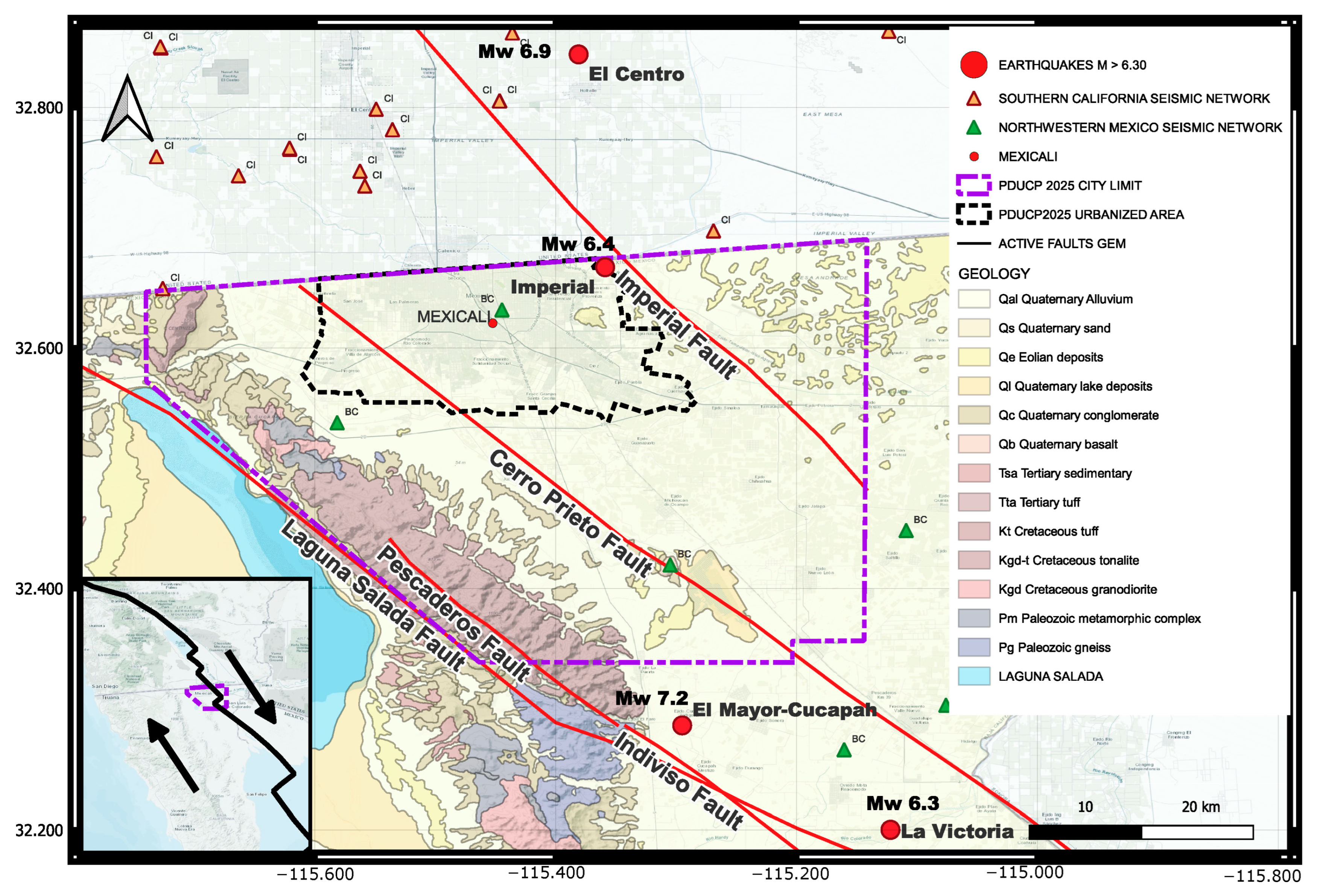
The city of Mexicali, Baja California, Mexico, is exposed to high seismic hazard due to its proximity to the San Andreas–Gulf of California fault system, where active faults intersect a densely populated urban basin filled with deep alluvial sediments (Figure 1). It lies on the tectonic boundary between the Pacific and North American plates, with a pattern of right-lateral faults striking northwest–southeast [4]. The region’s seismicity has been monitored by seismic networks in the United States and Mexico since 1950 and 1980, respectively [5,6]. From a geological standpoint, the Mexicali Valley region is a basin filled with Colorado River sediments up to ~5 km deep [7], which can favor the occurrence of site effects such as seismic amplification and soil liquefaction phenomena [8].
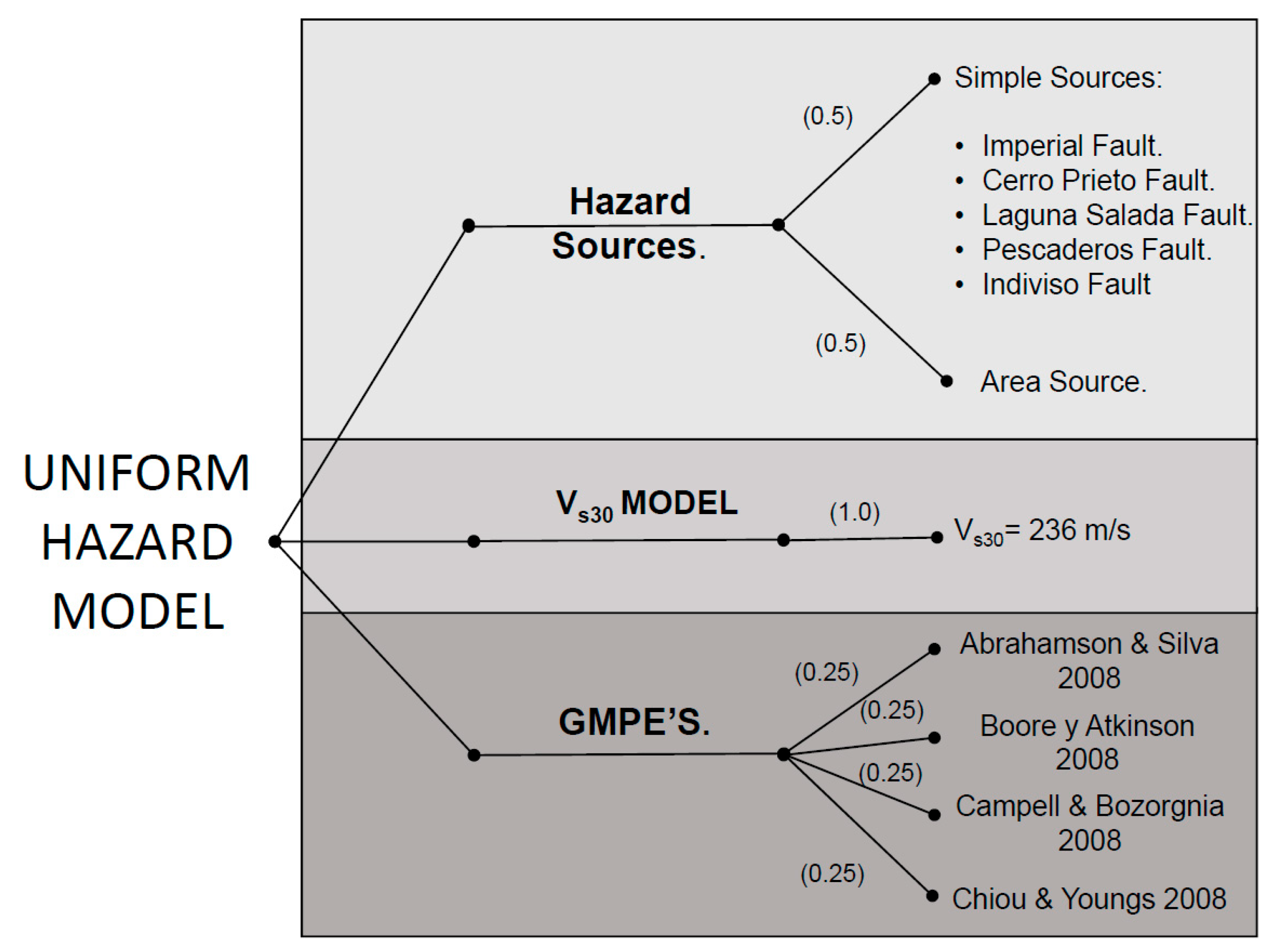
To capture the epistemic uncertainty associated with seismic sources and ground-motion models, a logic-tree approach was adopted. To assess the seismic hazard of the region, a probabilistic seismic hazard model was developed for the city of Mexicali based on a logic tree with five hazard sources (Figure 2): the Imperial, Cerro Prieto, Pescaderos, Indiviso, and Laguna Salada faults [9,10]; (Figure 1), and another branch considering the seismicity parameters of the cleaned seismic catalog (Area Source). For this purpose, a site model of shear-wave velocities (Vs30) was constructed, supported by several geophysical studies, geotechnical investigations conducted at different locations in the city, and the Hazard and/or Risk Atlas of the Municipality of Mexicali, Baja California [11].
For the seismic hazard calculations, one branch comprising four ground-motion prediction equations (GMPEs) from the PEER-NGA project [12], appropriate for tectonically active regions with shallow earthquakes, was used. Finally, a probabilistic seismic hazard analysis was performed for the 2025 central population polygon, approximately 56 × 39 km, divided into 500 × 500 m grid cells, using the OpenQuake platform.
There are several strategies for defining design accelerations [13]. In this case, we selected a uniform return period of 2475 years (2% probability of exceedance over a 50-year period). This return period has been used by the Building Seismic Safety Council (BSSC, 2019) in the United States as a reference to determine maximum considered earthquake (MCE) design accelerations from 1997 to 2009 [14]. After that date, the Council’s criterion for determining design spectra changed to the maximum considered earthquake with a target risk (MCER, Risk-Targeted Maximum Considered Earthquake), corresponding to a 1% probability of collapse in 50 years. However, it has been found that MCER amplitudes are lower than those observed for 2475-year return periods [15].
The objective of this study is to compute probabilistic seismic hazard and transparent design response spectra for the 2025 urban development polygon of the city of Mexicali, Baja California, using a PSHA framework with a 2% probability of exceedance in 50 years, incorporating local seismic sources, site conditions, and multiple GMPEs.
Figure 1. Map of the study area (purple dashed-line polygon) showing: earthquakes with magnitudes greater than M 6.0; seismic monitoring networks of southern California [16] and northwestern Mexico [17]; active faults from the GEM catalog [18]; regional geology [19]. The inset shows the study area, located in the interaction zone between the North American and Pacific tectonic plates, within the San Andreas–Gulf of California fault system.
Geohazards 07 00027 g001
Figure 2. Proposed uniform hazard logic tree for the probabilistic analysis of seismic hazard in the city of Mexicali, B.C. A branch of simple faults and a source area branch were used, each assigned a weight of 0.5, indicated in parentheses. A single branch with a uniform value of shear wave velocity, Vs30 = 236 m/s. For the ground motion prediction equations (GMPEs), four branches were used, with a weight of 0.25 for each equation.
Geohazards 07 00027 g002

2. Materials and Methods

2.1. Study Area and Seismic Sources

The study region includes the current urban area, expansion reserves, and the preservation area within the population center boundary polygon of Mexicali, B.C., as established in the Mexicali Population Center Urban Development Program 2025 [20]. The faults considered in the study, along with their geometries, were constructed from polygons obtained from the Global Earthquake Model Foundation (GEM) fault repositories [18]. Faults were selected based on their proximity to the urban area, historical seismicity, slip rates, and documented potential to generate damaging ground motions in Mexicali. The most important faults near the city of Mexicali were modeled in the boundary region between the North American and Pacific plates in northern Baja California: Imperial, Cerro Prieto, Pescaderos, Indiviso, and Laguna Salada (Figure 1).
The Imperial fault is the main connection between the San Andreas–Gulf of California fault systems, and is associated with the historical El Centro earthquake of 1940, ML 7.1, and the Imperial Valley earthquake of 1979, ML 6.9. On the Cerro Prieto fault, two historical earthquakes of magnitudes 6.5 and 7.1 were recorded in 1934, as well as the 1980 Victoria earthquake, magnitude 6.1 [9]. Because of their shallow depth (~15 km) and proximity to the city, the Imperial and Cerro Prieto faults are highly hazardous seismic sources for Mexicali and are the most likely to exceed M ≥ 6.7 over the next 30 years [21].
In addition to individual fault sources, a background area source was included to represent distributed seismicity not explicitly associated with mapped faults.

2.2. Earthquake Catalog and Declustering

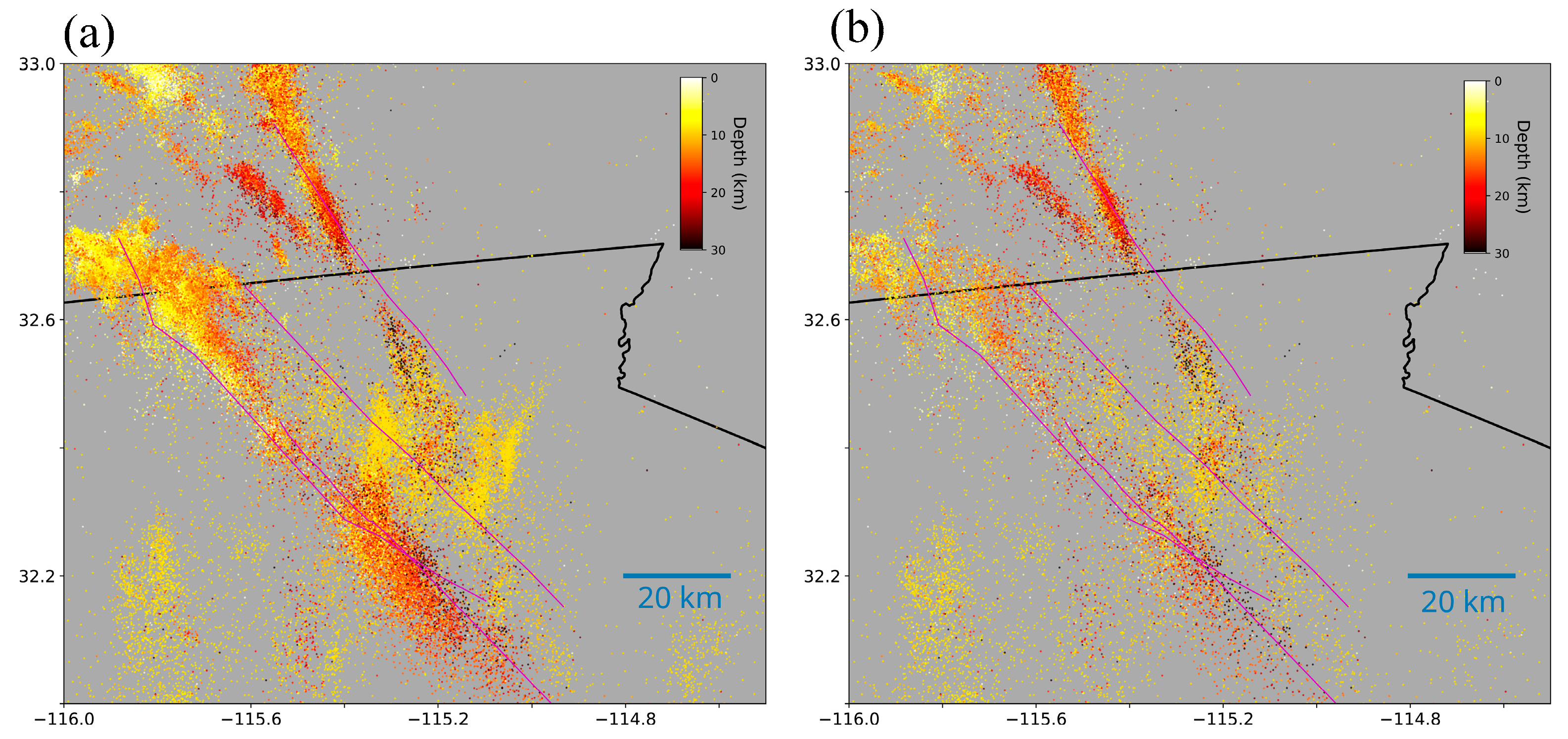
For the area-source analysis (Figure 2), a USGS catalog [22] containing 65,196 events with magnitudes greater than 1.0 from 1927 to 2024 was used within the polygon bounded by longitudes −116.00° to −114.40° and latitudes 32° to 33° (Figure 3a). The starting year of 1927 was selected to ensure a sufficiently long observation period while maintaining acceptable catalog completeness for moderate magnitudes. This catalog was declustered using the Reasenberg method [23], which is common in hazard studies, particularly for removing aftershocks. Declustering reduced the catalog from 65,196 to 23,126 events, ensuring that the seismicity rates used in the PSHA reflect independent earthquake occurrence. This method identifies potential aftershocks within a space–time window defined by Omori’s Law [24].

2.3. Seismic Parameters (a, b, Mc)

After declustering, 23,126 events remained (Figure 3b), which were analyzed in profiles to obtain the “a” and “b” values of the faults considered, taking into account the Gutenberg–Richter [25] distribution (Figures S1 and S2):
log 10 N = a - bM
where N is the number of catalog events per year with magnitudes greater than M, “a” is the seismicity rate, and “b” is the slope of the regression line.
For the Gutenberg–Richter frequency distribution of each fault, the “a” and “b” values were obtained from the seismicity associated with 10 km wide fault sections in the declustered catalog within the ZMAP platform [26]. The 10 km wide swath was adopted to balance the inclusion of fault-related seismicity with the minimization of contamination from adjacent structures. A truncated or modified version of the model was not applied, as the purpose of this stage was to obtain a general representation of the seismic occurrence rate without introducing additional uncertainty associated with estimating the maximum-magnitude parameter. This approach avoids introducing additional epistemic uncertainty associated with statistical estimates of maximum magnitude, which were instead constrained independently during source characterization. Although maximum magnitude values are considered for each fault in later stages of building the source model, they are based on historical records and tectonic criteria and are not incorporated as statistical parameters in fitting the frequency–magnitude distribution. The classical Gutenberg–Richter model provides a robust and consistent approximation given the catalog’s resolution and available time span, allowing for uniform comparison among different seismic sources.
The parameter Mc = 1.6 was determined using the EMR methodology [27]. In parallel, the complete catalog was analyzed using the Lillieforts maximum curvature test method [28], yielding similar values of Mc = 1.7.
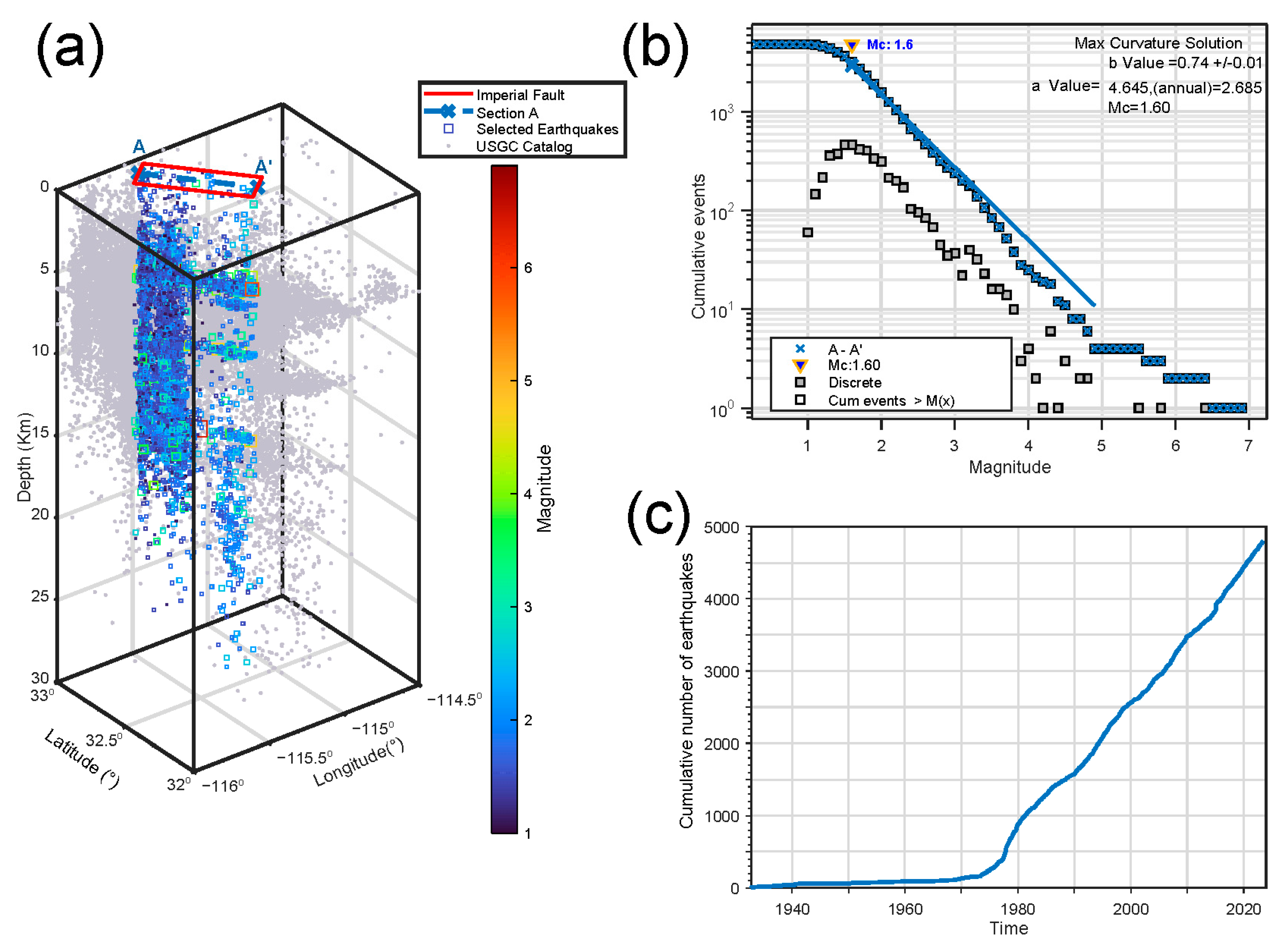
As an example, the analysis performed for the Imperial fault is shown, in which the seismicity from profile A–A’ (Figure 4a) was extracted, and the Gutenberg–Richter distribution was calculated. From this distribution, the parameters a, b, and Mc are obtained (Figure 4b), where Mc, or the magnitude of completeness, represents the minimum magnitude from which the catalog is considered complete and reliable [29]. The declustered seismicity extracted from profile A–A’ yields a completeness value of Mc = 1.6 for this particular fault (Figure 4b). Figure 4c shows that the cumulative number of earthquakes in the study area increases substantially beginning in 1970, a trend directly attributable to the expansion of seismic network coverage.

2.4. Maximum Magnitude and Source Geometry

The maximum magnitudes considered were: M = 6.9 for the Imperial fault; M = 7.1 for the Cerro Prieto fault [16]; for the Laguna Salada fault, a maximum value of M = 6.7 was estimated, associated with the 1982 earthquake [30]; and M = 7.2 for the Pescaderos–Indiviso system [31]. The minimum magnitude for the analysis was limited to M = 5.0 to remain within the valid range of the selected GMPEs from the PEER-NGA project (Pacific Earthquake Engineering Research Center’s Next Generation Attenuation) [32]. For GMPE compatibility, we used moment magnitude Mw. We used Mw when available in the catalog; when events were reported in other magnitude scales (e.g., ML), we converted them to Mw using an empirical linear calibration Mw = a ML + b [33], consistent with regional practice. The parameters used for the frequency–magnitude distribution are presented in Table 1.

2.5. Ground Motion Prediction Equations (GMPEs)

A logic tree with four equally weighted branches (0.25 each) was used, corresponding to the ground-motion prediction equations: Abrahamson and Silva (2008) [34], Boore and Atkinson (2008) [35], Campbell and Bozorgnia (2008) [36], and Chiou and Youngs (2008) [37]. Equal weights were assigned to the selected GMPEs because no region-specific performance metrics justified preferential weighting. The equations were selected from the list proposed by the review panel and from the Global GMPE project collection [12] and are suitable for shallow crustal earthquakes in tectonically active regions.
Table 1. Source parameters used for the PSHA [10,38]. The a and b values are the results of the analysis of each fault.
Minimum
Magnitude
Maximum MagnitudeOrientation, DipLength (Km)Depth
(Km)
a
(Annual)
b
Cerro Prieto Fault5.0 6.0 a 7.0NW, 90°10813.002.850.72
Imperial Fault5.06.9NW, 80°6514.62.680.76
Pescadero Fault5.07.2NW, 90°2415.03.070.80
Indiviso Fault5.07.2NW, 90°6115.03.070.80
Laguna Salada Fault5.07.0NW, 90°4215.02.880.68
Area5.07.2N/AN/A153.150.59
The Abrahamson and Silva equation is based on an empirical model of the average horizontal component for shallow crustal earthquakes, applicable to magnitudes 5 ≤ M ≤ 8.5 and distances of up to 200 km.
The main variables of the Boore and Atkinson equation are magnitude M, the closest distance to the fault plane, and the shear-wave velocity at the surface at 30 m depth (Vs30). It is valid for magnitudes 5 ≤ M ≤ 8.5, distances of up to 200 km, and Vs30 between 180 and 1300 m/s.
Campbell and Bozorgnia consider their model valid for magnitudes from 4.0 to 7.5–8 (depending on the fault mechanism) and distances from 0 to 200 km. Finally, Chiou and Youngs present a model for ground motions from shallow crustal earthquakes in active tectonic regions, with fault depths up to 15 km and a maximum hypocentral depth of 19 km.
The four selected GMPEs are part of the set of models proposed by the PEER-NGA project and are calibrated to produce peak ground acceleration (PGA), velocity (PGV), displacement (PGD), and 5%-damped spectral pseudo-accelerations, for periods between 0.01 s and 10 s.

2.6. Sites Conditions and Vs30 Model

A classical probabilistic seismic hazard analysis was carried out using the OpenQuake platform, based on the fault model for the study polygon, with a 500 × 500 m grid (purple box in Figure 1). A shear-wave velocity of Vs30 = 236 m/s was used, calculated as the weighted average of several sites distributed across the city of Mexicali, in accordance with the studies described in Figure 5 and Table 2. A uniform Vs30 value was adopted to isolate the influence of seismic sources and ground-motion models on the hazard results, while acknowledging that spatial variability of site effects represents a second-order contribution at the urban scale.
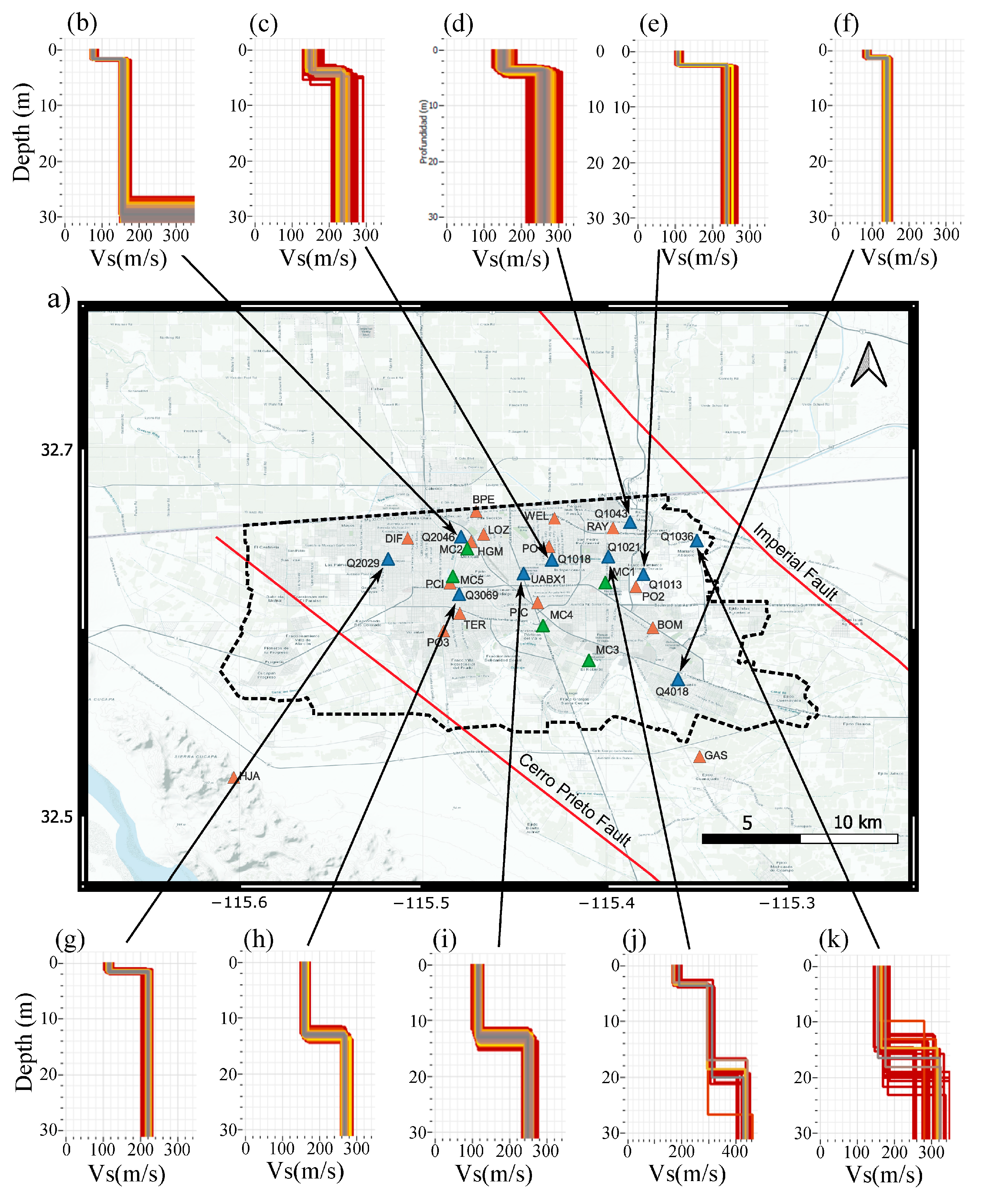
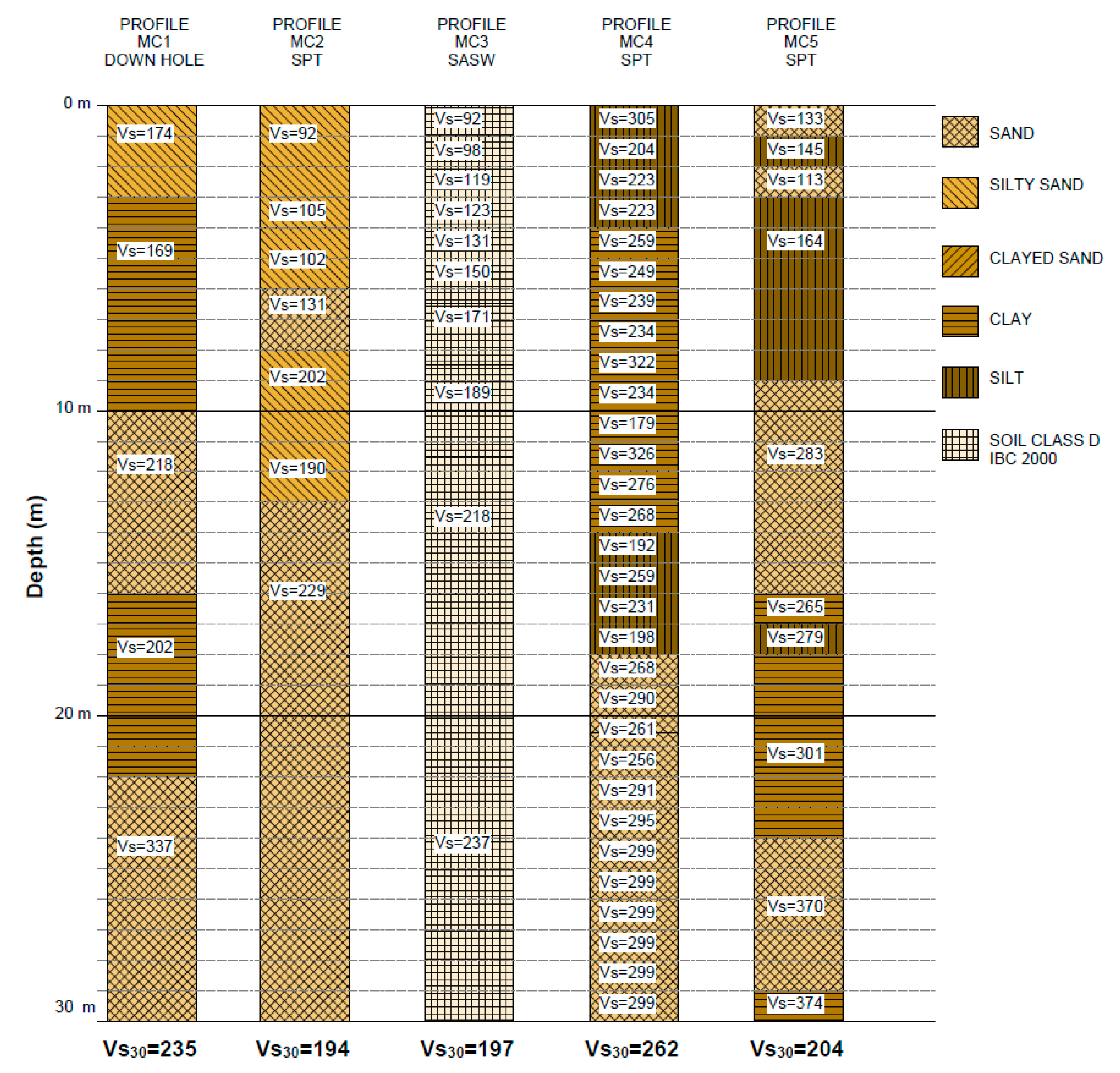
Table 2 lists the estimated Vs30 values for different sites in Mexicali. These results come from: (1) the 10 sites from the Mexicali seismic microzonation study [39]; (2) shear-wave velocity profiles obtained by means of an H/V analysis and a surface-wave inversion process (dinver algorithm) [40] at 10 ambient vibration points; these sites are part of the 2023 Mexicali Hazard and Risk Atlas database (Figure 5) [11]; and (3) the estimated wave velocities found in 4 geotechnical (soil mechanics) studies (prepared by private geotechnical consultants) and in a study commissioned by the Institute of Engineering for the installation of the borehole accelerometer at the Faculty of Administrative Sciences (Figure 6).
The Vs30 profiles obtained from existing geotechnical studies and those resulting from the inversion process show good agreement. For example, the profiles at sites Q3069 (Figure 5) and MC5 (Figure 6) show shear-wave velocities of 150–200 m/s in the first 10 m, with a subsequent increase to 250–300 m/s at depth.

2.7. PSHA Implementation in OpenQuake

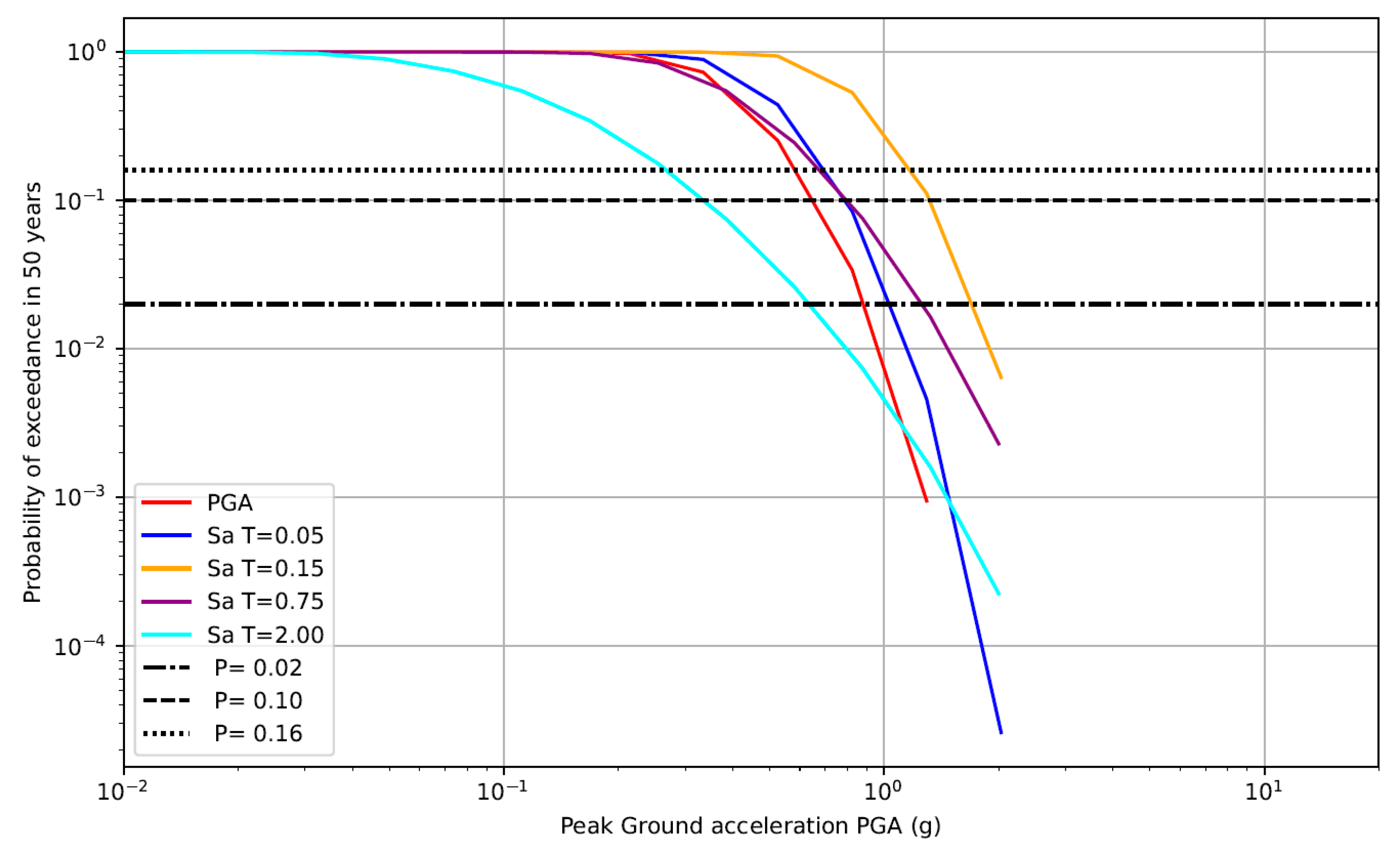
Once the parameter values, the geometries of the hazard sources, the Vs30 velocity, and the selected GMPEs were established, hazard curves were calculated for all the grid nodes (Figure 7). Although ASCE 7-22 adopts a risk-targeted MCER framework, this study employs a traditional uniform-hazard approach with a 2475-year return period to maintain compatibility with national regulations. We used as a criterion the maximum considered earthquake “MCE” with a 2% probability of exceedance over an investigation time of 50 years, according to the equation of Pagani [41]:
P ( X x | T ) = 1 i = 1 I j = 1 J i P r u p i j ( X < x | T )
where P(X ≥ x | T) indicates the probability that a ground-motion parameter X exceeds, at least once in a time interval T, a given intensity level x. Meanwhile, (P_rupij X < x | T) is the probability that the j-th rupture in the i-th source do not produce an exceedance, and Ji is the total number of ruptures generated by the i-th source.

3. Results

3.1. Analysis Results

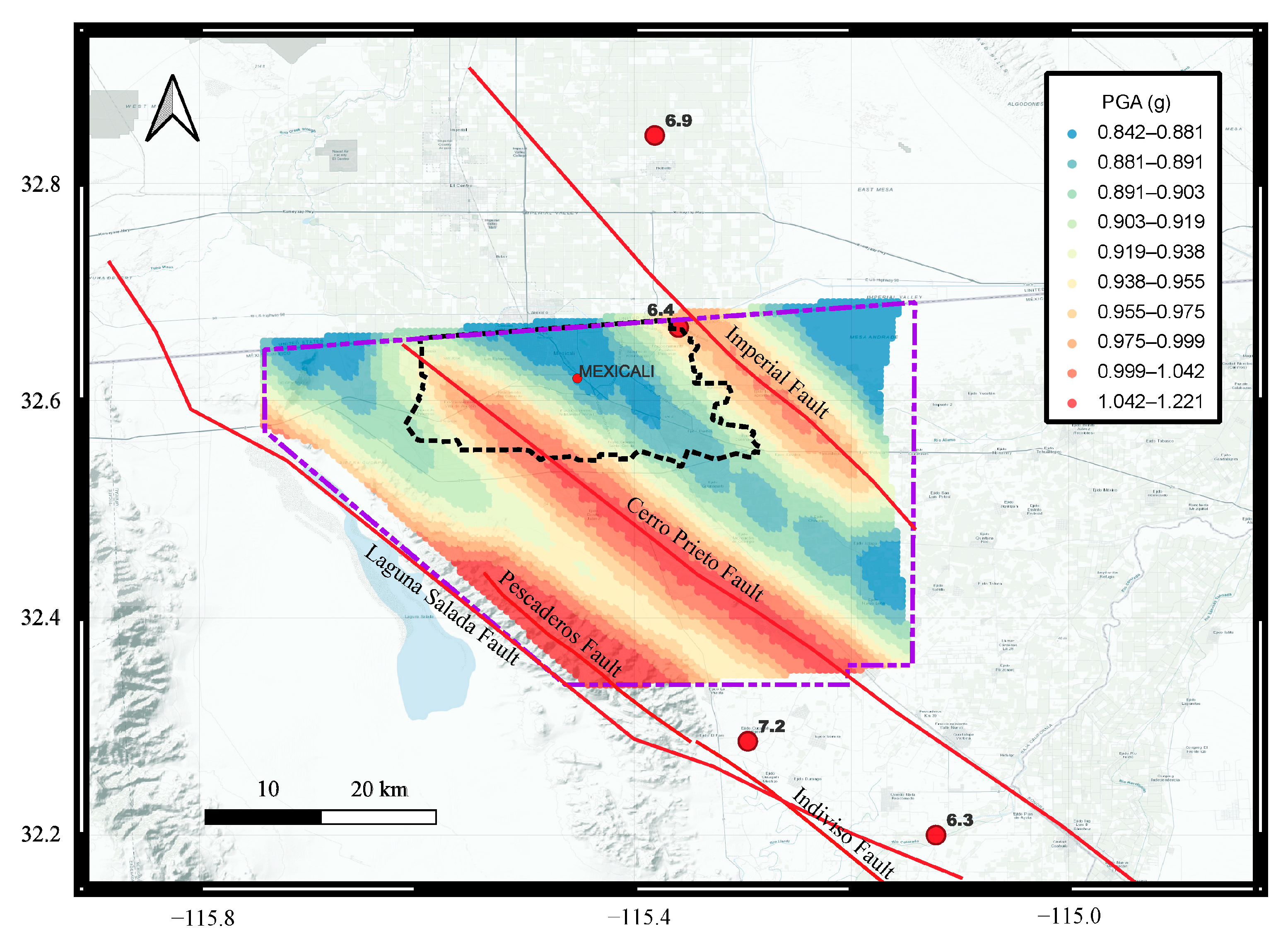
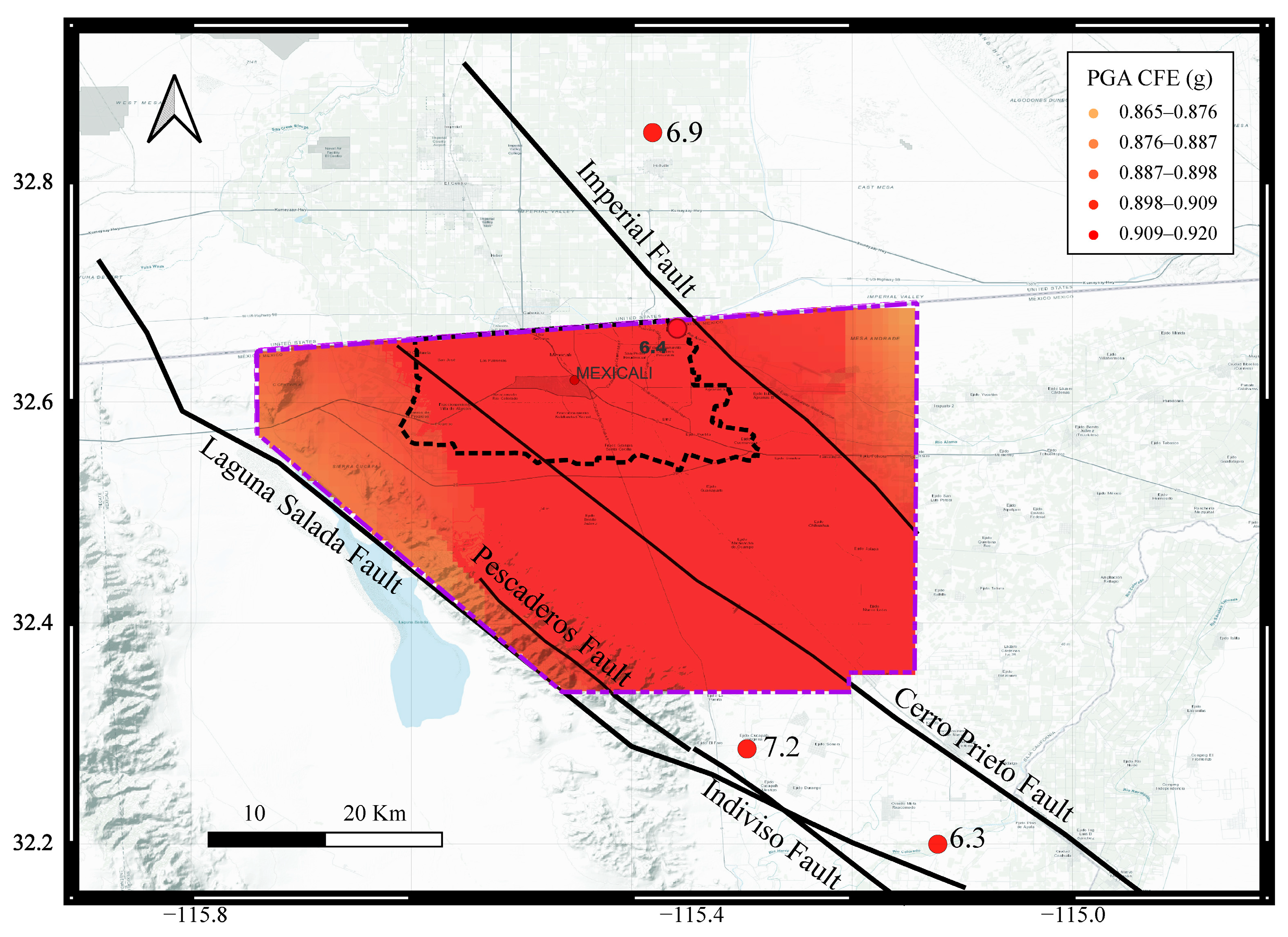
The peak ground accelerations from the PSHA (Probabilistic Seismic Hazard Analysis) for the study area are shown in Figure 8. The results for the 6436 points within the study polygon range from 0.842 g to 1.221 g, with an average of 0.950 g and a standard deviation of 0.0676 g. The highest values are located in the vicinity of the Cerro Prieto and Imperial faults, affecting the southwest and northeast areas of the urban footprint of the city, respectively. The expected acceleration decreases towards the city center, resulting in a spatial distribution of seismic hazard that does not match the uniform peak acceleration of 0.25 g established in the State Regulations [43] for similar soils.
The results of this work were compared with the Civil Works Manual of the Federal Electricity Commission [42], using a reference return period of 282 years. In that study, the average acceleration for the study polygon was 0.91 g, with a minimum of 0.86 g and a maximum of 0.92 g, across 1617 points (Figure 9).
In the Risk and Hazard Atlas of the Municipality of Mexicali 2023, a seismic hazard study was conducted for a return period of 2475 years using a regional fault model based on the interpretation of the GEM model, applied to the entire municipality. Accelerations ranging from 0.174 g to 1.317 g were obtained, depending on proximity to various regional faults. In the urban area, the values range from 0.518 g in the western sector to 1.089 g in the eastern sector. We found that, in the western part of the urban footprint, the Atlas values are lower near the Cerro Prieto fault and similar around the Imperial fault for the same return period used in this study.
In the seismic hazard map of the American Society of Civil Engineers ASCE 7-22 [44], Mexicali has an expected design peak acceleration of 0.72 g on soil type D, with a Vs30 = 260 m/s, for a return period of 2475 years. This value is lower than the minimum reported in this work (0.842 g), indicating the potential for underestimation relative to international standards in the local context.
The study of attenuation and acceleration for earthquakes of magnitude Mw 7.2 in the city of Mexicali also reports predicted accelerations near 0.90 g at distances of 5 km or less from the fault [8]. Although this data is useful, its applicability should be interpreted with caution due to the limited instrumental coverage at distances less than 10 km.

3.2. Spectral Accelerations

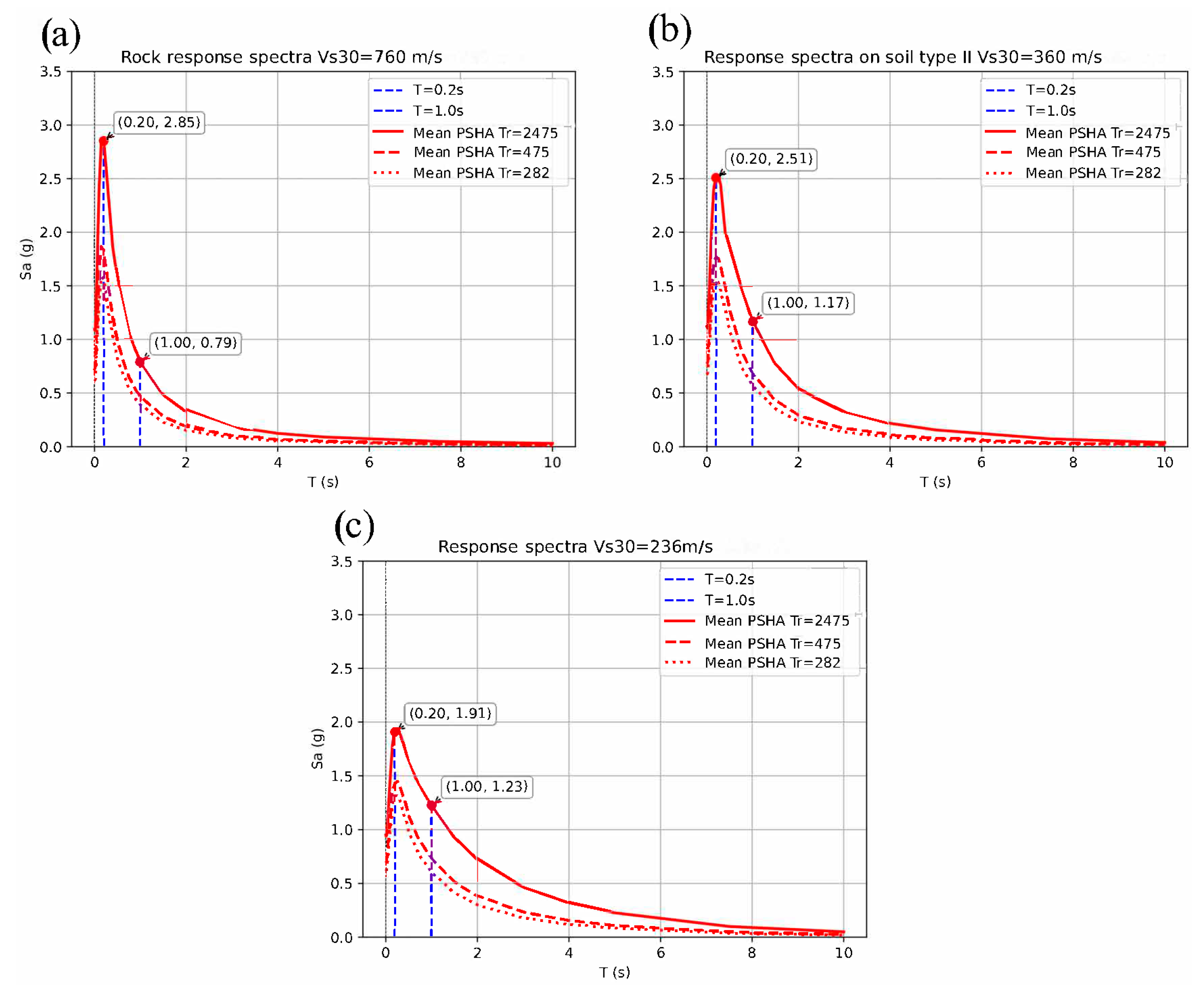
The response spectra for the different PSHA results at return periods of 2475, 475, and around 282 years, corresponding to the reference return period of the MDOC-CFE 2015 for the city of Mexicali, were plotted (Figure 10). For each return period, analyses were conducted at three different wave velocities. The Vs30 of 760 m/s is associated with rocky terrain; the Vs30 of 360 m/s is related to rigid terrain; and the Vs30 of 236 m/s was determined in this study for the city of Mexicali. Spectra were computed for three representative Vs30 values to illustrate the sensitivity of spectral ordinates to site stiffness. Each spectrum represents the average pseudo-acceleration computed from the 6436 spectra for each of the 21 periods recommended by ASCE-7-22. The obtained pseudo-acceleration values “Sa” (in units of g) correspond to the following periods: 0.01 s, 0.02 s, 0.03 s, 0.05 s, 0.075 s, 0.10 s, 0.15 s, 0.20 s, 0.25 s, 0.30 s, 0.40 s, 0.50 s, 0.75 s, 1.00 s, 1.50 s, 2.00 s, 3.00 s, 4.00 s, 5.00 s, 7.50 s, 10 s.
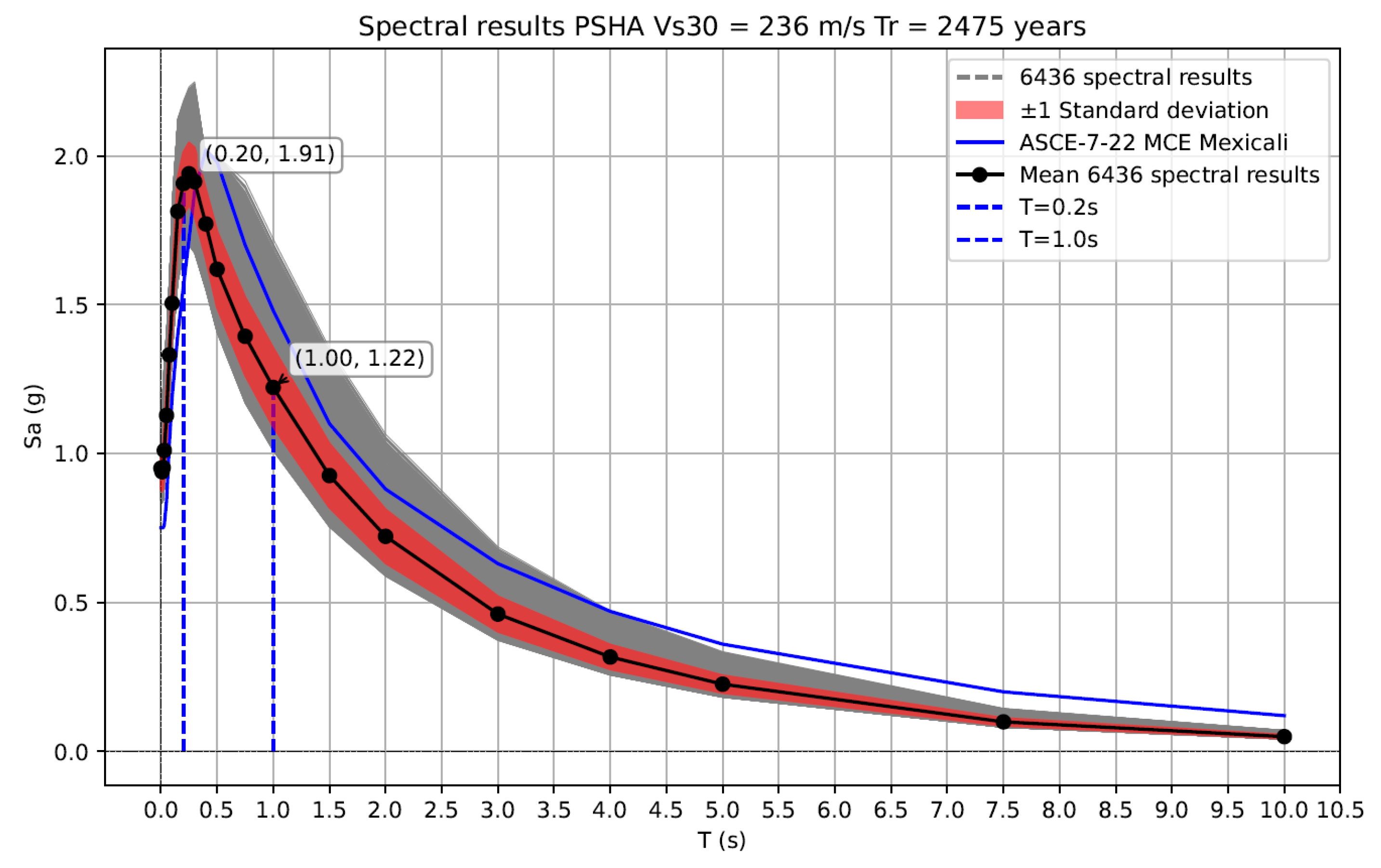
The selected calculations from the nine probabilistic seismic hazard analyses described above, which served as a reference to construct the design spectra used in this work, are shown in Figure 11 for the same 21 periods, with a probability of exceedance of 2% in 50 years (Tr = 2475 years) and a Vs30 of 236 m/s. The results are compared to the spectrum of the maximum considered earthquake (MCE), according to ASCE 7-22, at the point 32.62, −115.45, within the city of Mexicali, for a Vs30 of 260 m/s.
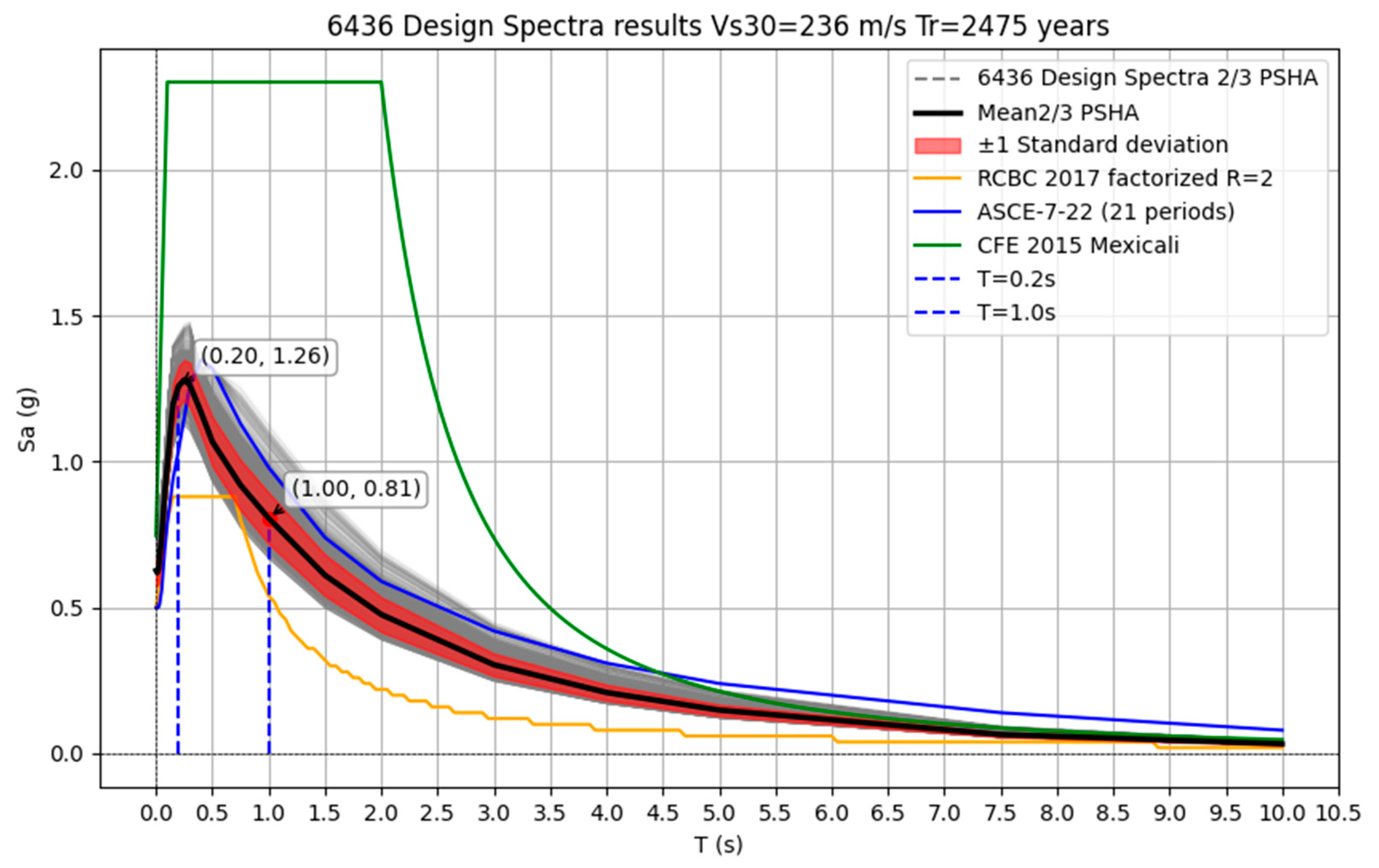
The results of this work are compared with the amplitudes of the design spectra calculated using the ASCE-7-22 methodology for Mexicali and with the recommendations of MDOC-CFE-2015 for soils with shear wave velocity similar to that in this study (Figure 12). This comparison is included for illustrative purposes, as each regulation employs different methodologies and philosophies for estimating seismic hazard.
The graphs in Figure 13 also include the regulatory design spectrum for the State of Baja California [43], constructed from Equation (3):
a = a o + ( c a o ) T T a   ; s i   T < T a a = c ;         i f   T a T T b   a = q c ;         s i   T >   T b
where a is the ordinate of the design spectra, expressed as a fraction of the acceleration due to gravity; T is the period; a0 is the peak ground acceleration when T = 0; Tₐ and Tb are characteristic periods of the design spectra; q = (Tb/T)3; and c is the seismic design coefficient.
According to the Technical Complementary Regulations of the Construction Law of the State of Baja California, the Municipality is classified as Zone D. Considering the characteristics of the soil in the city of Mexicali, which is very compressible soft soil, as well as the low average shear wave velocity at 30 m (236 m/s), the type of terrain is classified as Type III Soil, with the following parameters:
a = 0.50 g, Tₐ = 0.13, Tb = 0.70, c = 0.88, and r = 4/3.
Since no sources indicate whether the design spectrum established in the regulations of the State of Baja California already includes an overstrength factor, it was decided to compare it with the scaled design spectrum of MDOC-CFE-2015 for buildings, which can be reduced by a overstrengh factor R = 2.0. The state regulation [43] indicates that seismic intensities should be reduced by R = 1.0. In addition, the return period used in the state standard is not specified, underscoring the need for explicit, transparent design spectra for the city.
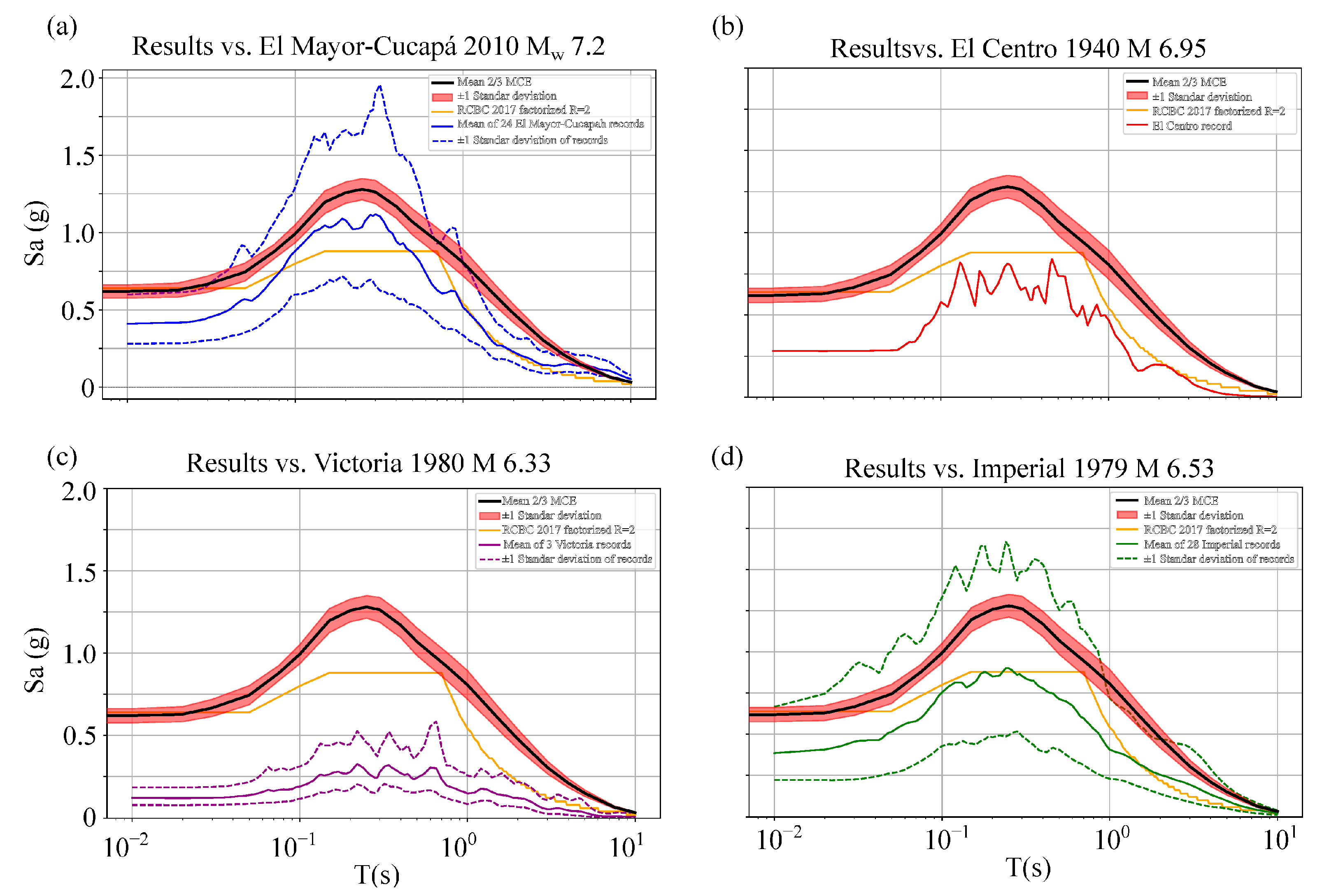
To validate the spectra obtained through PSHA, arithmetic averages plus or minus one standard deviation of the records from accelerometric stations (PEER-NGA database) located within 50 km of the 1949 Imperial Valley, 1979 Imperial, 1980 Victoria, and 2010 El Mayor–Cucapah earthquakes were calculated (Figure 13). These averages are compared with the regulatory spectrum for Mexicali, Baja California.
The average design spectra obtained through PSHA for the four analyzed earthquakes exceed the values established in the state regulations at all periods. The maximum average value occurs at a period of 0.25 s, with an amplitude of 1.29 g. The curve representing the average plus one standard deviation of the arithmetic means of the El Mayor–Cucapah earthquake records exceeds the average curve of the values obtained from the PSHA only in the interval from 0.03 s to 0.10 s (Figure 13a). For the 1949 El Centro earthquake, only one record is available (due to the limited station coverage at that time), and in no case do the values exceed the mean of the results (Figure 13b). A similar behavior is observed in the records of the 1980 Victoria earthquake (Figure 13c). Finally, the records from the 1979 Imperial earthquake, considering only one standard deviation above the mean, remain above the average PSHA design spectrum between 0 and 0.9 s (Figure 13d).

4. Discussion

A shear wave velocity of 236 m/s was determined, obtained from the average values (Vs30) of results from three sources: the microzoning study conducted by [39], the surface wave inversion analysis based on data from the Mexicali Risk Atlas 2023, and profiles from five geotechnical studies conducted for specific projects. The adopted Vs30 value should be interpreted as a representative average for the urban area rather than a site-specific parameter. Local variations in near-surface stratigraphy and non-linear site response may locally amplify or reduce spectral ordinates, but these effects are expected to be second-order at the scale of the present study. This value reflects the predominance of soft-to-very-soft soil conditions and plays a key role in the resulting seismic hazard levels in this study.
The results of this probabilistic seismic hazard analysis indicate average peak ground accelerations for the urban area of Mexicali, B.C., on the order of 0.95 g, with minimum and maximum values of 0.84 g and 1.22 g, respectively. Meanwhile, the current State Regulation [43] establishes a maximum acceleration of 0.25 g for Type III soil throughout the city, which may underestimate the actual acceleration when local source characteristics are not explicitly accounted for.
The average value of 0.91 g for peak ground accelerations reported in the MDOC-CFE [42] for the study area, with a return period of 282 years, is similar to the result obtained in this study. These values do not appear to reflect the proximity to active faults. The maximum earthquake considered in ASCE 7-22 has a peak ground acceleration of 0.72 g for the city of Mexicali, which is 26% lower than the calculated value, reinforcing the need to incorporate local methodologies into design criteria.
A total of 6436 transparent design spectra corresponding to Figure 12 were calculated. In this study, the amplitude reaches a maximum of 1.47 g at 0.25 s and averages 1.27 g over the same period. In comparison, the CFE spectrum has a maximum design value of 2.30 g between 0.10 s and 2.00 s, while the ASCE 7-22 design spectrum for the selected point shows a maximum of 1.30 g at 0.40 s. The maximum value of the regulatory spectrum of the State of Baja California for the city of Mexicali, scaled by R = 2, is 0.72 g in the plateau between 0.13 s and 0.7 s.
Differences between the obtained values and those from ASCE 7-22 reflect distinct modeling philosophies, spatial smoothing of seismic sources, and the adoption of risk-targeted design criteria rather than uniform hazard levels.
The design spectra generated by PSHA were compared with the averages of records from acceleration stations located within 50 km of the El Mayor-Cucapah 2010, El Centro 1949, Imperial 1979, and Victoria 1980 earthquakes in the PEER-NGA database. Limited station density and instrumental bandwidth for older events, such as the 1949 El Centro earthquake, constrain the robustness of record-based comparisons. In all four cases, the average curve of the results from this study exceeds the average of the records, and design amplifications greater than 1.00 g occur approximately between 0.1 s and 0.60 s.
The results indicate that the regulatory seismic hazard map for structural design in the city of Mexicali should be updated to incorporate criteria for variability based on proximity to faults and soil type. Evidence of liquefaction events in past earthquakes and in areas with Vs30 < 250 m/s [45] must be identified to mitigate subsequent risks.
The transparent design spectra calculated for the 6436 points in the attached database constitute a viable alternative to the current State of Baja California spectrum. The term “transparent design spectra” refers to spectra derived directly from uniform hazard analysis, without additional code-specific smoothing or scaling. These results are consistent with the seismic activity of the region and indicate that the ordinates of the state design spectrum are lower than those estimated by methodologies used in other international regulations and recommendations of federal agencies.
This study employs a simplified representation of site conditions by using a uniform Vs30 value and does not explicitly account for nonlinear soil behavior or liquefaction potential, which should be addressed in future hazard and risk assessments.

5. Conclusions

This study presents a probabilistic seismic hazard assessment for the city of Mexicali, Baja California, focused on the polygon defined by the 2025 Urban Development Plan for the Population Center. A comprehensive PSHA framework was implemented using the OpenQuake platform, incorporating local active faults, regional seismicity, multiple ground-motion prediction equations, and representative site conditions.
The probabilistic seismic hazard analysis yields peak ground acceleration values ranging from 0.84 g to 1.22 g for a 2% probability of exceedance in 50 years, with an average of 0.95 g across the study area. These values show a clear spatial dependence on proximity to the Imperial and Cerro Prieto faults, highlighting the strong influence of local seismic sources on urban-scale hazard.
A total of 6436 uniform hazard response spectra were computed for the 21 vibration periods specified by ASCE 7-22. The resulting transparent design spectra exhibit maximum pseudo-accelerations of 1.47 g at a period of 0.25 s, with an average value of approximately 1.27 g at the same period. For most engineering-relevant periods, these spectral ordinates exceed those prescribed by the current seismic design regulations of the State of Baja California.
Comparisons with ASCE 7-22, the MDOC-CFE-2015 methodology, and current state regulations indicate that simplified or regionally smoothed seismic design criteria may underestimate seismic demand in Mexicali when local fault geometry and site conditions are not explicitly accounted for. The observed differences among regulations are largely attributable to distinct modeling philosophies, return periods, and treatments of seismic sources rather than inconsistencies in the underlying hazard levels.
The design spectra obtained through PSHA show consistency with the statistical characteristics of recorded accelerometric data from historical earthquakes affecting the region, including the 2010 El Mayor–Cucapah, 1979 Imperial, 1980 Victoria, and 1949 El Centro events. Although this comparison is indirect, it provides independent evidence that the proposed spectra are consistent with observed ground-motion levels in the Mexicali region.
Overall, the results support the need to refine existing seismic design criteria for the city of Mexicali by incorporating spatial variability in seismic hazard, proximity to active faults, and locally derived site conditions. The transparent design spectra generated in this study provide a practical, technically robust basis for future updates to complementary technical standards and for applications in structural design, urban planning, and seismic risk mitigation.
Future work should address spatially variable site-response models, non-linear soil behavior, and liquefaction potential, as well as the integration of the present hazard results into probabilistic seismic risk assessments. Continuous updating of the hazard model as new seismic and geotechnical data become available will further enhance the resilience of the built environment in the city of Mexicali.

Supplementary Materials

The following supporting information can be downloaded at: https://www.mdpi.com/article/10.3390/geohazards7010027/s1, Figure S1. (a). Declustered catalog. Panel. (b). Frequency-Magnitude Distribution with “a”, “b” and “Mc” values. Panel. (c).Cumulative event curve vs time. Figure S2. (a). Declustered catalog. Panel. (b). Frequency-Magnitude Distribution with “a”, “b” and “Mc” values. Panel. (c).Cumulative event curve vs time.

Author Contributions

Conceptualization, E.E.R., J.R.R. and M.G.-D.; methodology, E.E.R., M.G.-D. and J.R.R.; software, J.R.R.; validation, E.E.R., M.G.-D. and J.R.R.; formal analysis, J.R.R.; investigation, J.R.R.; resources, E.E.R.; data curation, J.R.R. and E.E.R.; writing—original draft preparation, J.R.R.; writing—review and editing, E.E.R. and M.G.-D.; visualization, J.R.R. and E.E.R.; supervision, E.E.R.; project administration, J.R.R.; funding acquisition, M.G.-D., E.E.R. All authors have read and agreed to the published version of the manuscript.

Funding

This research was funded by UABC, research project number 111/1/c/14/7.

Data Availability Statement

The data presented in this study are openly available in [Espectros_Mexicali_BC] [https://github.com/jruabc/Espectros_Mexicali_BC], accessed on 8 January 2026.

Acknowledgments

We thank the Municipal Planning Institute of Mexicali (IMIP) for providing the database of ambient vibration records prepared for the 2023 Mexicali Risk and Hazard Atlas. We also thank the firms of “Ingenieria Estructural de Mexicali”, “EPGC” and “Vitega Geotecnia” for providing the information from the analyzed soil mechanics studies.

Conflicts of Interest

The authors declare no conflicts of interest.

Abbreviations

The following abbreviations are used in this manuscript:
CENAPREDNational Disaster Prevention Center (Centro Nacional de Prevención de Desastres)
MDOC-CFECivil Works Manual by the Federal Electricity Comision (Manual de Obras Civiles de la Comisión Federal de Electricidad.
ASCEAmerican Society of Civil Engineers.
PEER-NGAPacific Earthquake Engineering Research Center Next Generation Attenuation.
PSHAProbabilistic Seismic Hazard Analysis.
GEMGlobal Earthquake Model.
GMPEsGround Motion Prediction Equations.
USGSUnited States Geological Survey.
MCEMaximum Considered Earthquake.
MCERRisk-Targeted Maximum Considered Earthquake.
PGAPeak Ground Acceleration.

References

  1. McGuire, R.K. Probabilistic seismic hazard analysis: Early history. Earthq. Eng. Struct. Dyn. 2008, 37, 329–338. [Google Scholar] [CrossRef]
  2. Baker, J.; Bradley, B.; Stafford, P. Seismic Hazard and Risk Analysis; Cambridge University Press: Cambridge, MA, USA, 2021; ISBN 978-1-108-42505-6. [Google Scholar]
  3. User Guide—OpenQuake Engine 3.24.1 Documentation. Available online: https://docs.openquake.org/oq-engine/3.24/manual/user-guide/index.html#user-guide (accessed on 8 January 2026).
  4. Angelier, J.; Colletta, B.; Chorowicz, J.; Ortlieb, L.; Rangin, C. Fault tectonics of the Baja California Peninsula and the opening of the Sea of Cortez, Mexico. J. Struct. Geol. 1981, 3, 347–357. [Google Scholar] [CrossRef]
  5. Hutton, K.; Woessner, J.; Hauksson, E. Earthquake Monitoring in Southern California for Seventy-Seven Years (1932–2008). Bull. Seismol. Soc. Am. 2010, 100, 423–446. [Google Scholar] [CrossRef]
  6. Vidal-Villegas, J.A.; Munguía, L.; González-Ortega, J.A.; Nuñez-Leal, M.A.; Ramírez, E.; Mendoza, L.; Castro, R.R.; Wong, V. The Northwest Mexico Seismic Network: Real-Time Seismic Monitoring in Northern Baja California and Northwestern Sonora, Mexico. Seismol. Res. Lett. 2018, 89, 324–337. [Google Scholar] [CrossRef]
  7. Suárez-Vidal, F.; Mendoza-Borunda, R.; Nafarrete-Zamarripa, L.M.; Rámirez, J.; Glowacka, E. Shape and Dimensions of the Cerro Prieto Pull-Apart Basin, Mexicali, Baja California, Mexico, Based on the Regional Seismic Record and Surface Structures. Int. Geol. Rev. 2008, 50, 636–649. [Google Scholar] [CrossRef]
  8. Pérez-Arce, R.L.; Munguía, L.; Vidal-Villegas, J.A.; González-Escobar, M. Site response study based on seismic data recorded in sediments of the Mexicali valley, Baja California, Mexico. J. South Am. Earth Sci. 2023, 125, 104291. [Google Scholar] [CrossRef]
  9. Cruz-Castillo, M. Catálogo de las fallas regionales activas en el norte de Baja California, México. GEOS 2002, 22, 37–42. Available online: https://www.ugm.org.mx/publicaciones/geos/pdf/geos02-1/Cruz-Castillo02-1.pdf (accessed on 8 January 2026).
  10. Cid, G.; Mendoza, C.; Ferrari, L. Base de datos de fallas cuaternarias de México. Terra Digit. 2017, 1, 1–9. [Google Scholar] [CrossRef][Green Version]
  11. Atlas_Municipales_VF. Available online: https://anr.cenapred.unam.mx/portal/apps/dashboards/5d7d011646994a96a322c5a66a44d78d (accessed on 8 January 2026).
  12. Douglas, J.; Cotton, F.; Di Alessandro, C.; Boore, D.M.; Abrahamson, N.A.; Akkar, S. Compilation and critical review of GMPEs for the GEM-PEER Global GMPEs Project. In Proceedings of the 15th World Conference on Earthquake Engineering: 15th WCEE Proceedings, Lisbon, Portugal, 24–28 September 2012; p. 10. [Google Scholar]
  13. Ordaz, M.; Salgado-Gálvez, M.A.; Cardona, O.D. Review and comparison of different strategies to define earthquake design accelerations. Earthq. Eng. Struct. Dyn. 2023, 52, 3945–3961. [Google Scholar] [CrossRef]
  14. National Institute of Building Sciences. BSSC Project 17 Final Report Development of the Next Generation of Seismic Design Value Maps for the 2020 NEHRP Provisions; National Institute of Building Sciences: Washington, DC, USA, 2019. [Google Scholar]
  15. NEHRP Recommended Seismic Provisions for New Buildings and Other Structures|FEMA.gov. Available online: https://www.fema.gov/node/nehrp-recommended-seismic-provisions-new-buildings-and-other-structures (accessed on 8 January 2026).
  16. SCEDC. Southern California Earthquake Data Center; SCEDC: Pasadena, CA, USA, 2013. [Google Scholar] [CrossRef]
  17. Centro de Investigación Científica y de Educación Superior de Ensenada (CICESE). Ensenada Red Sísmica del Noroeste de México; CICESE: Ensenada, Mexico, 1980. [Google Scholar] [CrossRef]
  18. Styron, R.; Pagani, M. The GEM Global Active Faults Database. Earthq. Spectra 2020, 36, 160–180. [Google Scholar] [CrossRef]
  19. Cartas Impresas Disponibles del Servicio Geológico Mexicano. Available online: https://www.sgm.gob.mx/CartasDisponibles/ (accessed on 8 January 2026).
  20. Pducp Mexicali 2025—Google Search. Available online: https://www.google.com/search?q=pducp+mexicali+2025&rlz=1C1SQJL_enMX884MX884&oq=pducp+mexicali+2025&gs_lcrp=EgZjaHJvbWUyBggAEEUYOTIHCAEQABjvBTIHCAIQABjvBTIHCAMQABjvBdIBCDU3NzVqMGo3qAIAsAIA&sourceid=chrome&ie=UTF-8 (accessed on 8 January 2026).
  21. Field, E.H.; Biasi, G.P.; Bird, P.; Dawson, T.E.; Felzer, K.R.; Jackson, D.D.; Johnson, K.M.; Jordan, T.H.; Madden, C.; Michael, A.J.; et al. Long-Term Time-Dependent Probabilities for the Third Uniform California Earthquake Rupture Forecast (UCERF3). Bull. Seismol. Soc. Am. 2015, 105, 511–543. [Google Scholar] [CrossRef]
  22. Search Earthquake Catalog. Available online: https://earthquake.usgs.gov/earthquakes/search/ (accessed on 8 January 2026).
  23. Reasenberg, P. Second-order moment of central California seismicity, 1969–1982. J. Geophys. Res. Solid Earth 1985, 90, 5479–5495. [Google Scholar] [CrossRef]
  24. Taroni, M.; Akinci, A. Good practices in PSHA: Declustering, b-value estimation, foreshocks and aftershocks inclusion; a case study in Italy. Geophys. J. Int. 2021, 224, 1174–1187. [Google Scholar] [CrossRef]
  25. Gutenberg, B.; Richter, C.F. Seismicity of the Earth and Related Phenomena; Princeton University Press: Princeton, NJ, USA, 1954; Available online: https://www.scirp.org/reference/referencespapers?referenceid=2584918 (accessed on 17 February 2026).
  26. Wiemer, S. A Software Package to Analyze Seismicity: ZMAP. Seismol. Res. Lett. 2001, 72, 373–382. [Google Scholar] [CrossRef]
  27. Woessner, J.; Wiemer, S. Assessing the Quality of Earthquake Catalogues: Estimating the Magnitude of Completeness and Its Uncertainty. Bull. Seismol. Soc. Am. 2005, 95, 684–698. [Google Scholar] [CrossRef]
  28. Figlioli, A.; Vitale, G.; Taroni, M.; D’Alessando, A. Tremors—A Software App for the Analysis of the Completeness Magnitude. Geosciences 2024, 14, 149. [Google Scholar] [CrossRef]
  29. Mignan, A.; Woessner, J. Estimating the magnitude of completeness for earthquake catalogs. Community Online Resour. Stat. Seism. Anal. 2012. Available online: https://www.corssa.org/en/articles/theme_4/index.html (accessed on 8 January 2026).
  30. Mueller, K.; Rockwell, T. Late Quaternary structural evolution of the western margin of the Sierra de los Cucapas, Northern Baja California. In The Gulf and Peninsular Province of the Californias; Dauphine, J.P., Simoneit, B.R.T., Eds.; American Association of Petroleum Geologists: Tulsa, OK, USA, 1991; pp. 249–260. [Google Scholar]
  31. Fletcher, J.M.; Teran, O.J.; Rockwell, T.K.; Oskin, M.E.; Hudnut, K.W.; Mueller, K.J.; Spelz, R.M.; Akciz, S.O.; Masana, E.; Faneros, G.; et al. Assembly of a large earthquake from a complex fault system: Surface rupture kinematics of the 4 April 2010 El Mayor–Cucapah (Mexico) Mw 7.2 earthquake. Geosphere 2014, 10, 797–827. [Google Scholar] [CrossRef]
  32. Boore, D.M. Ground-Motion Prediction Equations (GMPEs) from a global dataset: The PEER NGA equations. In Earthquake Data in Engineering Seismology; Springer: Berlin/Heidelberg, Germany, 2011; Volume 14, pp. 3–15. [Google Scholar] [CrossRef]
  33. Yao, D.; Huang, Y.; Peng, Z.; Castro, R. Detailed Investigation of the Foreshock Sequence of the 2010 Mw7.2 El Mayor-Cucapah Earthquake. J. Geophys. Res. Solid Earth 2020, 125, e2019JB019076. [Google Scholar] [CrossRef]
  34. Abrahamson, N.; Silva, W. Summary of the Abrahamson & Silva NGA Ground-Motion Relations. Earthq. Spectra 2008, 24, 67–97. [Google Scholar] [CrossRef]
  35. Boorea, D.; Atkinson, G. Ground-Motion Prediction Equations for the Average Horizontal Component of PGA, PGV, and 5%Damped PSA at Spectral Periods between 0.01 s and 10.0 s. Earthq. Spectra 2008, 24. [Google Scholar] [CrossRef]
  36. Campbell, K.W.; Bozorgnia, Y. NGA Ground Motion Model for the Geometric Mean Horizontal Component of PGA, PGV, PGD and 5% Damped Linear Elastic Response Spectra for Periods Ranging from 0.01 to 10 s. Earthq. Spectra 2008, 24, 139–171. [Google Scholar] [CrossRef]
  37. Chiou, B.-J.; Youngs, R.R. An NGA Model for the Average Horizontal Component of Peak Ground Motion and Response Spectra. Earthq. Spectra 2008, 24, 173–215. [Google Scholar] [CrossRef]
  38. Field, E.H.; Dawson, T.E.; Felzer, K.R.; Frankel, A.D.; Gupta, V.; Jordan, T.H.; Parsons, T.; Petersen, M.D.; Stein, R.S.; Weldon, R.J., II; et al. Uniform California Earthquake Rupture Forecast, Version 2 (UCERF 2). Bull. Seismol. Soc. Am. 2009, 99, 2053–2107. [Google Scholar] [CrossRef]
  39. Acosta-Chang, J.G.; Arellano-Zepeda, G.; Ruiz-Cruz, E. Informe Final de Microzonificación Sísmica de Mexicali. CICESE.CEDEM. Available online: http://www.proteccioncivilbc.gob.mx/Doctos/temblores/InformeFinalMexicali2007.pdf (accessed on 8 January 2026).
  40. Wathelet, M. An improved neighborhood algorithm: Parameter conditions and dynamic scaling. Geophys. Res. Lett. 2008, 35. [Google Scholar] [CrossRef]
  41. Pagani, M.; Monelli, D.; Weatherill, G.; Danciu, L.; Crowley, H.; Silva, V.; Henshaw, P.; Butler, L.; Nastasi, M.; Panzeri, L.; et al. OpenQuake Engine: An Open Hazard (and Risk) Software for the Global Earthquake Model. Seismol. Res. Lett. 2014, 85, 692–702. [Google Scholar] [CrossRef]
  42. Hernández, U.; Rocha, L.; Aguilera, M.; Alarcón, N.; Albavera, C.; Arzola, I.; Fortunio, J.; García Carrera, J.; Hernandez, G.; García, N.; et al. C.1.3: Manual de Diseño de Obras Civiles—Diseño por Sismo CFE-IIE Versión 2015; Comisión Federal de Electricidad: Mexico City, Mexico, 2016. [Google Scholar]
  43. SIDURT Gobierno de Baja California. Available online: http://www.sidurt.gob.mx/marconormativo/normas.aspx (accessed on 6 January 2026).
  44. American Society of Civil Engineers. Minimum Design Loads and Associated Criteria for Buildings and Other Structures (7–22). Available online: https://sp360.asce.org/personifyebusiness/Merchandise/Product-Details/productId/276865145 (accessed on 8 January 2026).
  45. Ovando-Shelley, E.; Mussio, V.; Rodriguez, M.; Acosta, J. Evaluation of soil liquefaction from surface analysis. Geofísica Int. 2015, 54. [Google Scholar] [CrossRef][Green Version]
Figure 3. (a) Epicenters of the event catalog with 1.0 ≤ M ≤ 7.5 from 1927 to 2024 [22]. (b) Declustered map of USGS catalog events with 1.0 ≤ M ≤ 7.5 from 1927 to 2024. Fault geometries in purple lines. International border of Mexico and the United States of America in black line.
Geohazards 07 00027 g003
Figure 4. (a) Seismicity from the USGS catalog (gray points) and near the Imperial fault (colored points) associated with profile A–A’. (b) Gutenberg–Richter analysis of the seismicity selected in (a) to obtain the “a” and “b” values and the magnitude of completeness (Mc). (c) Cumulative number of earthquakes for section A–A’ versus the USGS catalog coverage period.
Geohazards 07 00027 g004
Figure 5. Vs30 modeling based on ambient seismic noise records (database of the 2023 Risk Atlas of the city of Mexicali) [11]. (a) Map of the urban area of Mexicali, B.C., showing the location of: ambient vibration records, blue triangles. Shear-wave velocity profiles from inversion process: (b) Q2046 station, (c) Q1018 station, (d) Q1043 station, (e) Q1013 station, (f) Q4018 station, (g) Q2029 station, (h) Q3069 station, (i) UABX1 station, (j) Q1021 station, (k) 1036 station; Vs30 profiles derived from geotechnical (soil mechanics) studies, green triangles; Vs30 estimates from the Mexicali seismic microzonation study [39], orange triangles. Urban area boundary of Mexicali in black dashed line.
Geohazards 07 00027 g005
Figure 6. Vs30 (m/s) profiles and results for five points in the city (green triangles in Figure 5), obtained from geophysical and geotechnical (soil mechanics) studies carried out using SPT-correlation, Down-Hole, and SASW techniques.
Geohazards 07 00027 g006
Figure 7. Example of hazard curves obtained for the point with coordinates −115.45, 32.61, where the values of PGA (Peak Ground Acceleration) and spectral pseudo-accelerations are compared for different vibration periods. The different types of dashed lines indicate the exceedance probabilities of 2% in 50 years, 10% in 50 years, and 16% in 50 years, corresponding respectively to return periods of 2475, 475, and 282 years, which are the return periods used by the MDOC-CFE-2015 [42] for the city of Mexicali.
Geohazards 07 00027 g007
Figure 8. Map of PGA results with a 2% probability of exceedance in 50 years or a return period of 2475 years. Urban development limit in purple dashed line. Urban area boundary in black dashed line.
Geohazards 07 00027 g008
Figure 9. Map of PGA results with a reference return period of around 282 years according to the methodology of the Civil Works Manual of the CFE 2015. Urban development limit in purple dashed line. Urban area boundary in black dashed line.
Geohazards 07 00027 g009
Figure 10. Graphs with the pseudo-acceleration amplitude Sa (g) on the vertical axis and period T (s) on the horizontal axis showing the average values of the 6436 spectra resulting from the PSHA in panels (ac), for Vs30 of 760 m/s, Vs30 of 360 m/s, and Vs30 of 236 m/s. The solid line in each panel indicates a return period of 2478 years; the dashed line, 475 years; and the dotted line, 282 years. The vertical blue dashed lines mark the maximum values for the reference periods Ss (T = 0.2 s) and S1 (T = 1.0 s) of ASCE-7-22.
Geohazards 07 00027 g010
Figure 11. Graphs with the pseudo-acceleration amplitude Sa (g) on the vertical axis and the period T (s) on the horizontal axis of the 6436 calculated spectra (gray lines). The curves for the average amplitudes of the PSHA results are plotted in black, with red shading representing plus or minus one standard deviation. In blue, the spectrum of the maximum considered earthquake “MCE” from ASCE-7-22 at the point 32.62, −115.45 for soil with a Vs30 of 260 m/s. The vertical blue dashed lines mark the maximum values for the reference periods Ss (T = 0.2s) and S1 (T = 1.0s) of ASCE-7-22.
Geohazards 07 00027 g011
Figure 12. Graphs with the pseudo-acceleration amplitude Sa (g) on the vertical axis and the period T (s) on the horizontal axis of the 6436 calculated design spectra (gray lines). The curves for the average amplitudes of two-thirds of the PSHA results are plotted as a black line with red fill, plus or minus one standard deviation. In blue, the multi-period design spectrum of ASCE-7-22 [44] at point 32.62, −115.45 for soil with Vs30 = 260 m/s. The vertical blue dashed lines mark the maximum values for the reference periods Ss (T = 0.2s) and S1 (T = 1.0s) of ASCE-7-22.
Geohazards 07 00027 g012
Figure 13. Comparison of pseudo-acceleration amplitudes Sa (g). The curves for the average amplitudes of the PSHA results, reduced by 2/3 (Design Spectra, following common practice for comparison with code-based design spectra), are plotted in black, with the ±1 standard deviation outlined in red. The arithmetic averages in lines of different colors, plus and minus one standard deviation represented in different colored dashed lines, represent the records from the PEER-NGA database for stations located less than 50 m from the following earthquakes: El Mayor-Cucapah 2010 (a), El Centro 1949 (b), Victoria 1980 (c), and Imperial 1979 (d). The design spectrum from the State of Baja California Regulations, scaled by R = 2, is plotted in orange. This comparison provides an independent consistency check rather than a direct validation, given differences in source characteristics and site conditions.
Geohazards 07 00027 g013
Table 2. Average values of the shear-wave velocity in the upper 30 m of the subsurface (Vs30) at the analyzed sites in the city of Mexicali (Figure 5). The results are presented as: 1, [39]; 2, results from surface-wave inversion analyses based on the Mexicali Risk Atlas 2023 [11]; 3, results from geotechnical (soil mechanics) studies.
SiteLocationLatitudeLongitudeVs30 (m/s)
1
PO1Potabilizadora32.6459°−115.4312°268
DIFDIF Desarrollo Integral de la Familia32.6504°−115.5082°233
PO3PO3 Potabilizadora32.6000°−115.4886°247
PICPIC Escuela Calmecac32.6155°−115.4374°232
PO2PO2 Potabilizadora32.6240°−115.3838°268
WELWEL Secundaria Siqueiros32.6613°−115.4282°237
BPEBPE Biblioteca Pública Estatal32.6651°−115.4709°265
RAYRAY Blvd. Las Américas, Raymundo32.6500°−115.3963°275
TERTER Anáhuac y Terán32.6096°−115.4798°206
LOZLOZ Escuela Miguel Alemán32.6526°−115.4668°267
BOMBOM Lázaro Cárdenas32.6018°−115.3746°274
2
Q1013according to the map32.6308°−115.3797°245
Q1036according to the map32.6492°−115.3506°250
Q1043according to the map32.6593°−115.3870°266
Q4018according to the map32.5735°−115.3609°139
Q2029according to the map32.6391°−115.5188°207
Q1021according to the map32.6404°−115.3989°330
Q1018according to the map32.6387°−115.4296°247
Q3069according to the map32.6198°−115.4801°222
Q2046according to the map32.6513°−115.4791°168
UABX1Instituto de Ingeniería UABC32.6313°−115.4450°193
3
MC1according to the map32.6263°−115.4094°235
MC2according to the map32.6474°−115.4757°194
MC3according to the map32.5838°−115.4094°197
MC4according to the map32.6211°−115.5569°262
MC5Facultad de Ciencias Administrativas UABC32.6297°−115.4835°204
Disclaimer/Publisher’s Note: The statements, opinions and data contained in all publications are solely those of the individual author(s) and contributor(s) and not of MDPI and/or the editor(s). MDPI and/or the editor(s) disclaim responsibility for any injury to people or property resulting from any ideas, methods, instructions or products referred to in the content.