Article

Hydrogen Embrittlement Risk Analysis of Drill Pipes During Gas Kick and Throttling Circulation in Deep Well Drilling of Tarim Oilfield: A Case Study


1
Research and Development Center for Exploration and Development Technology of Ultra-Deep Complex Oil and Gas Reservoirs, China National Petroleum Corporation, Korla 841000, China
2
China National Petroleum Corporation Offshore Engineering Co., Ltd., Beijing 100028, China
3
School of Petroleum Engineering, China University of Petroleum (East China), Qingdao 266580, China
*
Author to whom correspondence should be addressed.
Corros. Mater. Degrad. 2026, 7(1), 18; https://doi.org/10.3390/cmd7010018
Submission received: 21 January 2026 / Revised: 7 March 2026 / Accepted: 11 March 2026 / Published: 16 March 2026
(This article belongs to the Special Issue Hydrogen Embrittlement of Modern Alloys in Advanced Applications)

Abstract

When a H2S-containing gas kick occurs during drilling, the formation fluid containing hydrogen sulfide is mixed into the drilling fluid. Drilling fluid containing hydrogen sulfide is prone to causing hydrogen embrittlement when it comes into contact with the drill string during the upward return process. However, research on the risk and timing of hydrogen embrittlement in drill pipes remains limited. This study constructed a risk area and hydrogen embrittlement time analysis model. The risk area and time of hydrogen embrittlement in the drill pipe of the Jinyue 402 well in Tarim Oilfield were analyzed using the constructed model. The results indicate that the concentration of hydrogen sulfide in the Jinyue 402 well is in the area where the corrosion rate of steel increases rapidly, and the partial pressure of hydrogen sulfide is higher than the critical partial pressure at which corrosion cracking occurs. Taking into account the pH of the drilling fluid, fluid flow rate, hydrogen sulfide partial pressure, drill pipe tensile stress, hydrogen sulfide concentration, and gas partial pressure, the high-risk area for hydrogen sulfide corrosion damage in the Jinyue 402 well is 0–1680 m. The predicted highest risk point location and hydrogen embrittlement time are at a well length of 280 m and 21 h. Further predictions were made for the hydrogen embrittlement length and time of the Tazhong 83 and Zhonggu 503 wells in the Tarim Oilfield. The maximum prediction errors for the hydrogen embrittlement position and time of the drill pipe in the three wells were 4.8% and 5.2%, respectively. This indicates that the model can be applied to wells with different geological conditions and hydrogen sulfide concentrations.

1. Introduction

The hydrogen permeation effect exacerbated by hydrogen sulfide is the primary cause of hydrogen embrittlement damage and sulfide stress corrosion cracking in metallic materials [1,2,3,4]. The internal pressure changes induced by the diffusion of hydrogen atoms and ions into the metal are the main destructive mechanism of hydrogen permeation [5,6,7]. When hydrogen atoms generated by the electrochemical corrosion of steel in hydrogen sulfide environments diffuse into the steel and encounter cracks or defects, they recombine into hydrogen molecules. This causes volume expansion and generates significant internal pressure, leading to hydrogen blistering, internal microcracks, and ultimately, hydrogen embrittlement [8,9,10]. Hydrogen embrittlement refers to the phenomenon where metallic materials experience a decline in mechanical properties due to the absorption of hydrogen atoms or hydrogen gas. It is primarily manifested as reduced toughness, stress fracture, or weakened fatigue performance [11,12,13]. High-strength steels such as S135, which are commonly used as drill pipe materials in drilling, are sensitive to hydrogen embrittlement. When a gas kick occurs in drilling, formation fluids containing hydrogen sulfide mix with the drilling fluid. The hydrogen sulfide-containing drilling fluid comes into contact with the drilling tools during throttling circulation, which can then easily lead to hydrogen embrittlement. The occurrence of hydrogen embrittlement depends not only on the material properties of the drilling tools but also on factors such as hydrogen sulfide concentration, wellbore temperature, and pressure [14,15,16]. The duration of hydrogen embrittlement in drilling tools typically ranges from several hours to several months, while the throttling circulation during gas kick accident handling usually lasts from tens of hours to several days. If the hydrogen embrittlement duration of the drilling tools is not considered during the handling of overflow accidents, hydrogen embrittlement may occur during throttling circulation in wells containing hydrogen sulfide. The impact of hydrogen embrittlement on drilling operations is fatal. Sudden fractures can lead to major accidents such as well blowouts and wellbore abandonment. Therefore, research on the risk and duration of hydrogen embrittlement in throttling circulation is of great significance for on-site operations.
In recent years, some scholars have conducted research on the mechanism of hydrogen embrittlement and the corrosion behavior related to hydrogen embrittlement of steel. Sun et al. [17] investigated the corrosion behavior of X65 steel in supercritical CO2 and found that the addition of H2S not only accelerated corrosion but also altered its mechanism. Wei et al. [18] further investigated the corrosion behavior of carbon steel in a supercritical carbon dioxide system containing hydrogen sulfide. The addition of a small amount of hydrogen sulfide changed the composition of corrosion products and transformed localized corrosion behavior into widespread corrosion behavior. Mebel et al. [19] studied the reaction mechanism between iron atoms and hydrogen sulfide molecules and found that the reaction mechanism was similar to that of water molecules; however, the intermediate formed had a lower critical potential barrier, making it easier to generate iron sulfide and molecular hydrogen. Zhang et al. [20] used numerical simulation to study the corrosion behavior of carbon steel in the presence of hydrogen sulfide under different flow rates and shear stresses. Li et al. [21] showed that in a water-saturated H2S-CO2 system, at appropriate temperatures and H2S concentrations below 50 ppm, the corrosion products were conducive to forming a protective layer. However, when the temperature increased, the integrity of the FeS layer was compromised, accelerating corrosion. Choi et al. [22] showed that reducing the water content in the system to below 100 ppm significantly reduced the corrosion rate of pipeline steel in the H2S-CO2 system. Li et al. [23] studied the corrosion behavior of 110S steel under the coexistence of carbon dioxide and sulfur dioxide in a high-temperature and high-pressure sterilizer, and found that the corrosion process was dominated by hydrogen sulfide, with the corrosion products mainly being different types of iron sulfide. The corrosion rate first decreased and then increased with increasing temperature. Yin et al. [24] studied the degree of corrosion of SM 80SS steel under different partial pressure ratios of carbon dioxide to hydrogen sulfide, and found that severe corrosion occurred when the ratio ranged from 31 to 520. Choi et al. [25] studied the mechanism of low-concentration hydrogen sulfide inhibiting corrosion of carbon steel in acidic solutions. The results showed that the FeS film formed on the surface of carbon steel inhibited the anodic dissolution reaction. The dissociation of hydrogen sulfide and the electrochemical corrosion process of the anodic reaction are as follows. Among them, reactions (1) and (2) are two-step dissociation processes of H2S, while reactions (3)–(6) constitute the complete pathway for the anodic dissolution of Fe in H2S-containing solutions.
H2S(aq) + H2O → H3O+ + HS
HS + H2O → H3O+ + S2−
Fe + H2S + H2O → FeHSad + H3O+
FeHSad → FeHS+ad + 2e
FeHS+ad + H3O+ → Fe2+ + H2S + H2O
Fe2+ + HS → FeS + H+
According to the above anodic reaction equation, if the corrosion product iron sulfide film has good coverage and is dense, it will hinder the accumulation of hydrogen atoms at the cracks, thereby inhibiting hydrogen permeation and playing a protective role. However, if the generated iron sulfide film is loose and porous, the potential difference between the matrix and the iron sulfide film will accelerate corrosion. Akinfiev et al. [26] measured the permeation rate of hydrogen in the H2S-CO2 system and the corrosion rate of carbon steel. The results showed that the partial pressure of hydrogen sulfide controls the permeation rate of hydrogen, and the concentration of hydrogen sulfide controls the morphology of the corrosion film. However, there is no direct correlation between the permeation rate of hydrogen and the corrosion rate. Xiang et al. [27] studied the corrosion behavior of X70 steel and iron in sulfur dioxide using the weight loss method. The concentration of sulfur dioxide is a key factor affecting the corrosion rate. As the concentration of sulfur dioxide increases, the corrosion rate of X70 steel gradually increases, while the corrosion rate of iron first increases and then decreases. Zheng et al. [28] conducted a study on the corrosion mechanism of low-carbon steel in 1 wt% NaCl solution with hydrogen sulfide. The results showed that hydrogen sulfide affects both anodic and cathodic reactions. After overflow, hydrogen sulfide in the drilling fluid dissolves in water and easily dissociates into H+. In the drilling fluid environment, its cathodic and anodic reactions with the drill pipe are as follows:
Cathode reaction:
2H2S + 2e→ 2HS + H2
2HS + 2e → 2S2− + H2
xFe + yH2S → FexSy + yH2
Anode reaction:
Fe → Fe2+ + 2e
Fe + H2S(aq) → FeS1−x + xHS + (2 − x)H+ + 2e
FeHSads → FeHS+ads + 2e
FeHS+ads → FeS1−x + xHS + (1 − x)H+
Existing research has revealed the mechanism of hydrogen embrittlement corrosion of steel in the H2S-CO2 system and the corrosion rate at different hydrogen sulfide concentrations under experimental conditions. However, current research on the risk and duration of hydrogen embrittlement of drilling tools under field drilling overflow conditions remains very weak. Taking the Jinyue 402 well in the Tarim Oilfield as an example, this study comprehensively considers factors such as hydrogen sulfide concentration, hydrogen sulfide partial pressure, temperature, flow rate, and stress distribution to analyze the risk of hydrogen embrittlement of drilling pipes in different well length areas during throttling circulation. The critical well length and duration of hydrogen embrittlement of drilling tools are obtained, providing a reference for the safe well killing cycle of wells containing hydrogen sulfide. This study aims to address the research gap regarding the timing of hydrogen embrittlement in drill pipes during gas kicks involving hydrogen sulfide, and to construct an analysis model for the hydrogen embrittlement risk areas and hydrogen embrittlement time of drill pipes. The goal is to achieve a quantitative prediction of the location and occurrence time of hydrogen embrittlement in drill pipes, and to verify the applicability and accuracy of the model through multiple well examples.

2. Model Development

To analyze the hydrogen embrittlement risk of drilling pipes during throttling circulation, it is necessary to calculate the distribution of temperature and pressure along the well length, and determine the solubility and partial pressure of hydrogen sulfide under different temperature and pressure conditions. Therefore, the construction of a wellbore temperature and pressure calculation model and a hydrogen sulfide solubility calculation model during throttling circulation is required. The construction of the model is based on two assumptions:
(1) The thermodynamic equilibrium assumption states that the distribution of H2S between gas and liquid phases always satisfies instantaneous local thermodynamic equilibrium.
(2) Neglecting the heat and mass transfer in the radial direction of the wellbore, it is assumed that the parameters inside the wellbore only vary along the axial direction and are uniformly distributed radially.
These two assumptions have been widely applied in the research of gas solubility models and wellbore multiphase flow models, and have no significant impact on the calculation results [29,30,31,32].

2.1. Wellbore Temperature and Pressure Calculation Model

The drill pipe experiences single-phase flow of drilling fluid, while the annulus experiences two-phase flow of gas and liquid. The calculation models for temperature distribution within the drill pipe and the annulus are presented in Equations (14) and (15), respectively:
π r p i 2 ρ l C l T p t + ρ l q l C l T p z = 2 π r p U t ( T a T p ) + Q f p ,
π r w 2 r p o 2 ρ g C g φ g + ρ l C l φ l T a t + ρ g q g C g + ρ l q l C l T a z = 2 π r p o U t ( T p T a ) + 2 π λ f U f r w U f r w f ( t ) + 2 λ f ( T f T a ) + Q f a ,
where ρ l represents the density of the annular drilling fluid, kg/m3. C l is the specific heat capacity of the annular drilling fluid, J/(kg·K). q l represents the annular drilling fluid flow rate, m3/s. ρ g represents the density of the intrusive gas, kg/m3. C g is the specific heat capacity of the mixed gas, J/(kg·K). q g represents the gas flow rate, m3/s. r p i , r p o and r w are respectively the inner radius of the drill pipe, the outer radius and the wellbore radius, m. T a represents the temperature of the fluid in the annular space, K. T p represents the temperature of the fluid inside the drill pipe, K. T f represents the formation temperature, K. λ f is the thermal conductivity of the formation, W/(m·K). Q f p and Q f a represent the work power achieved by the frictional force per unit length of the drill pipe and the annular space, respectively, W/m. U t represents the overall heat transfer coefficient of the drill pipe and the annular space in the formation section, W/(m2·K). U f is the overall heat transfer coefficient of the formation and the annular space, W/(m2·K). f ( t ) is a dimensionless time function.
During the throttling circulation, the wellbore pressure field is solved using the continuity equation and the momentum equation. The continuity equation for the gas–liquid–solid three-phase in the annular drilling fluid is as follows [33]:
( A a E g ρ g ) t + ( A a E g ρ g v g ) z = 0 ,
( A a E l ρ l ) t + ( A a E l ρ l v l ) z = 0 ,
( A a E s ρ s ) t + ( A a E s ρ s v s ) z = 0 ,
where A a represents the annular area, m2. E g , E l , and E s represent the volume fractions of the gas phase, liquid phase, and solid phase in the annular, respectively, dimensionless. ρ g , ρ l , and ρ s represent the densities of the gas phase, liquid phase, and solid phase in the annular, kg/m3. v g , v l , and v s represent the velocities of the gas phase, liquid phase, and solid phase respectively, m/s.
According to the conservation of momentum, the momentum equation for gas–liquid–solid three-phase flow can be expressed as [34]:
( A a E g ρ g v g + A a E l ρ l v l + A a E s ρ s v s ) t + ( A a E g ρ g v g 2 + A a E l ρ l v l 2 + A a E s ρ s v s 2 ) z + ( A a ρ g E g + A a ρ l E l + A a ρ s E s ) g cos θ + d ( P a A a ) d z + d ( P f a A a ) d z = 0 .
After calculating the annular pressure, the partial pressure of hydrogen sulfide can be calculated according to the following formula:
P H 2 S = E H 2 S P a ,
where θ is the well inclination angle, °. P f a is the annular friction, Pa. g is the acceleration due to gravity, m/s2. P a is the annular pressure, Pa. E H 2 S is the volume fraction of hydrogen sulfide. P H 2 S is the hydrogen sulfide partial pressure, Pa.

2.2. Calculation Model for Hydrogen Sulfide Solubility

The solubility of hydrogen sulfide in drilling fluid needs to be calculated based on the distribution of annulus temperature and pressure with well length obtained from the temperature-pressure model. The solubility of hydrogen sulfide gas is calculated according to the semi-theoretical model proposed by Pitzer et al. [35].
ln γ s m , t = 2 m s t λ s s + 3 ( m s t ) 2 τ s s s + 2 m e B s e + 3 m e 2 C s e e + 6 m s t m e C s s e
γ s m , t = y s P a ψ s k H M l m s t
λ s s = a λ + b λ 100 T a 228 + c λ T a T a 760
B s e = b B 100 T a 228 + c B T a T a 760
Here, γ s m , t represents the activity coefficient in the drilling fluid system, dimensionless. m s t and m e represent the molar concentrations of hydrogen sulfide and sodium chloride in the drilling fluid system, respectively, mol/kg. y s represents the mole fraction of hydrogen sulfide in the hydrogen sulfide-rich phase. k H represents Henry’s law constant, dimensionless. M l represents the molar mass of the solvent, kg/mol. All other parameters are model parameters, with specific values provided in Pitzer et al. [35].

2.3. Calculation Model for Corrosion Rate of Drill Pipe Steel by Hydrogen Sulfide

During throttling circulation period, when the drilling fluid containing hydrogen sulfide and carbon dioxide comes into contact with the drill pipe, H+ and HS are consumed, leading to corrosion of the drill pipe. The partial pressure of hydrogen sulfide dominates the corrosion rate, but the corrosion rate is also affected by the partial pressure of carbon dioxide. Considering both the partial pressure of hydrogen sulfide and the partial pressure of carbon dioxide, a calculation model for the corrosion rate of the drill pipe is obtained:
ln α = K ln P C O 2 + K + A ln P H 2 S + B ln P H 2 S 2 + C ,
where α is the corrosion rate, mm/a. P C O 2 is the partial pressure of carbon dioxide, MPa. K , A , B and C are all model coefficients. The relevant parameters used for the calculations in Equations (21)–(25) are shown in Table 1.
The hydrogen atoms generated by the cathodic hydrogen evolution reaction during the corrosion process partially enter the drill pipe steel. Hydrogen diffuses in the lattice and is captured by microscopic defects. Local hydrogen concentration exceeding the critical value triggers brittle fracture. Different microstructures such as martensitic structure and grain size affect the diffusion coefficient and capture efficiency of hydrogen, thereby altering the critical corrosion depth. The critical corrosion depth was taken as 5% of the drill pipe wall thickness. The critical corrosion depth correlates the corrosion rate at the corresponding temperature with the hydrogen embrittlement time.
This section constructs a computational model for analyzing the risk of hydrogen embrittlement in drill pipes. Firstly, the wellbore temperature and pressure calculation model were used to obtain the temperature and pressure distribution along the wellbore depth. Subsequently, based on the semi-empirical H2S solubility model combined with the temperature and pressure field, the solubility and partial pressure of H2S in drilling fluid were calculated. Finally, considering the temperature and pressure conditions, hydrogen sulfide concentration, and partial pressure, the hydrogen embrittlement risk well section was determined, and the corrosion rate model was further used to calculate the hydrogen embrittlement time.

3. Modeling Results

3.1. Analysis of Gas Components

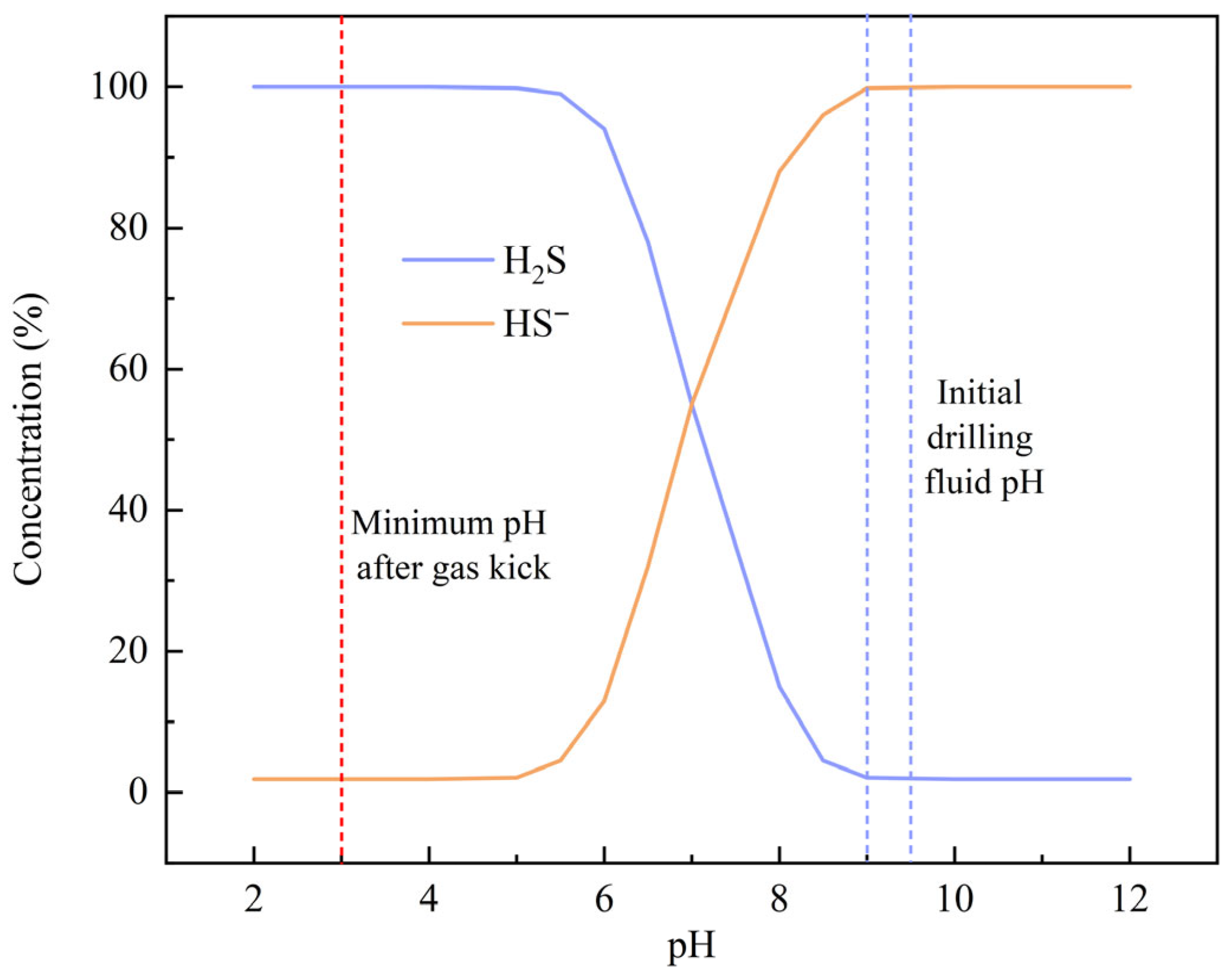
The reservoir section of the Jinyue 402 well is located between 7034 m and 7070 m. The composition of its natural gas is shown in Table 2. The contents of carbon dioxide and hydrogen sulfide are 1.96 mol/mol and 0.015 mol/mol, respectively. When gas kick occurs during drilling into the reservoir section, hydrogen sulfide dissolves into the drilling fluid; the concentration of sulfide ions in the drilling fluid is shown in Figure 1. When the pH is less than 5, hydrogen sulfide mainly exists in molecular form. When the pH value is between 5 and 9, hydrogen sulfide molecules coexist with HS. When the pH is greater than 9, hydrogen sulfide mainly exists in the form of HS. The polysulfonate drilling fluid system used in this well has an initial pH range of 9.0–9.5, and the corrosive ions in the drilling fluid within this pH range are mainly HS. After gas invasion, carbon dioxide and hydrogen sulfide dissolve in the drilling fluid, causing the pH to decrease. The uncontaminated drilling fluid after throttling circulation still maintains its original pH range, while the severely contaminated drilling fluid has an approximate pH as low as 3. In strongly acidic drilling fluid, the sulfide is only H2S, while in weakly acidic drilling fluid, the sulfide includes both H2S and HS. Under neutral to weak acidic conditions, H2S molecules can act as hydrogen composite poisons adsorbed on metal surfaces, inhibiting the reaction of two hydrogen atoms combining to form H2 molecules, thereby increasing the concentration of hydrogen atoms adsorbed on the metal surface. Under alkaline conditions, HS is not easily able to directly provide hydrogen atoms. However, its hydrolysis can still produce a small amount of H2S, and HS itself may participate in the formation or destruction of the surface facial mask, thus indirectly affecting hydrogen absorption.

3.2. Corrosion Parameter Research and Hydrogen Embrittlement Risk Assessment

The hydrogen embrittlement of drill pipes are influenced by multiple factors, including internal factors such as the strength and material of the drill tools themselves, as well as external factors such as the temperature, pressure, hydrogen sulfide concentration, hydrogen sulfide partial pressure, and gas–liquid flow rate within the wellbore. Therefore, it is necessary to analyze the risk of hydrogen embrittlement of drill pipes under the influence of different influencing factors, and also to consider the synergistic effects among these factors.
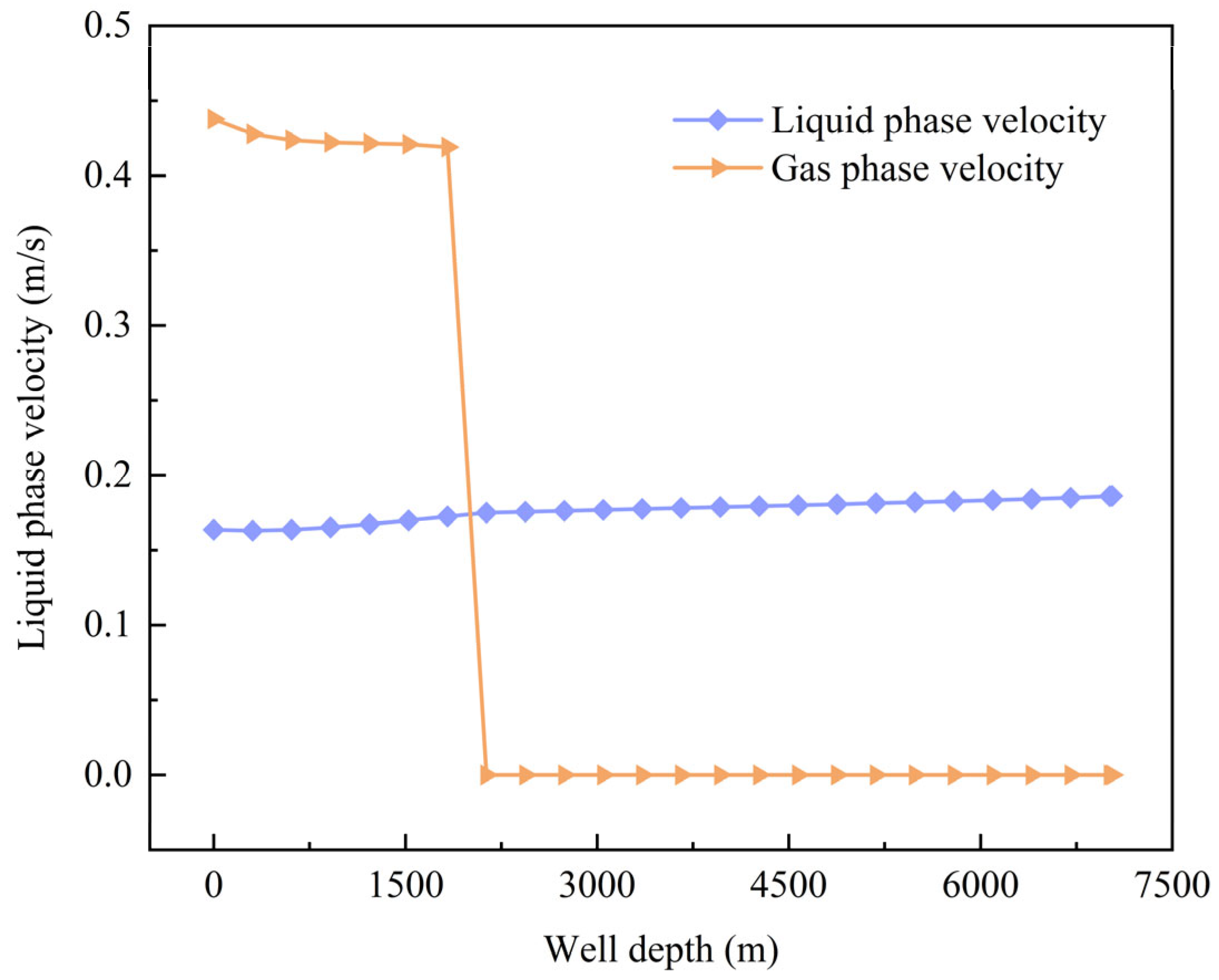
The Jinyue 402 well has a depth of 7070 m, with wellhead and bottomhole temperatures of 21 °C and 143 °C, and corresponding pressures of 38.22 MPa and 59.96 MPa, respectively. The drill pipe has an outer diameter of 11.18 cm, the wellbore diameter is 24.45 cm, and the blowout rate is approximately 7.5 L/s. Under wellhead conditions, the liquid phase density is 0.8207 g/cm3, and the gas specific gravity is 0.8764. Figure 2 illustrates the distribution of fluid flow velocity with well length obtained through calculations. In the well section below 1830 m, gas dissolved in the drilling fluid does not precipitate out, resulting in single-phase liquid flow. Above this section, gas precipitates out, transitioning to two-phase gas–liquid flow. The flow velocity range of the liquid phase is 0.16–0.19 m/s, while that of the gas phase is 0.42–0.44 m/s. This indicates that in the single-phase flow section of the choke circulation, the flow velocity is relatively low. The FeS film formed on the surface of the drill pipe by hydrogen sulfide corrosion products is less affected by fluid erosion, which can inhibit deep corrosion and thus provide protection. However, in the two-phase flow well section, hydrogen sulfide causes severe corrosion to the drill pipe. On the one hand, the higher flow velocity has a stronger erosive effect on the FeS film. On the other hand, the hydrogen permeation effect of gas is stronger than that of sulfide ions in the solution. Therefore, based on a preliminary analysis of fluid flow velocity, the risk area for hydrogen sulfide corrosion is determined to be within the well length range of 0–1830 m.
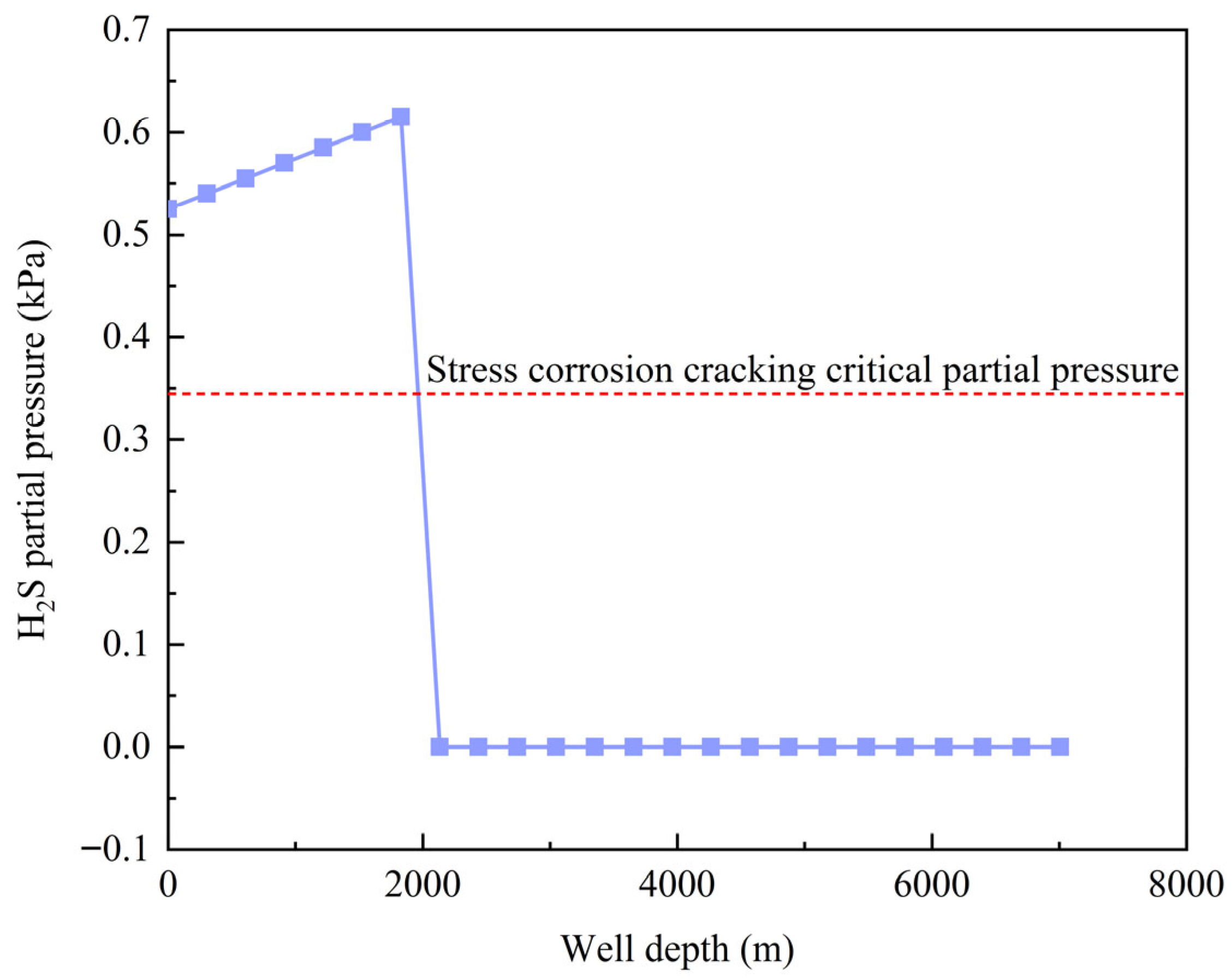
Figure 3 illustrates the distribution of hydrogen sulfide partial pressure with well length. In the well section below 1830 m, the gas dissolves in the drilling fluid, resulting in no free gas phase, thus the hydrogen sulfide partial pressure in this well section is 0. In the well section between 0 and 1830 m, gas precipitates, and the hydrogen sulfide partial pressure ranges from 0.525 to 0.615 kPa. According to the NACE MR0175-88 standard [36], the partial pressure limit for hydrogen sulfide stress corrosion cracking is 0.34 kPa. Below this partial pressure, hydrogen sulfide stress corrosion cracking does not occur. This indicates that the hydrogen sulfide partial pressure in the well section between 0 and 1830 m is higher than the critical partial pressure for hydrogen sulfide stress corrosion cracking.
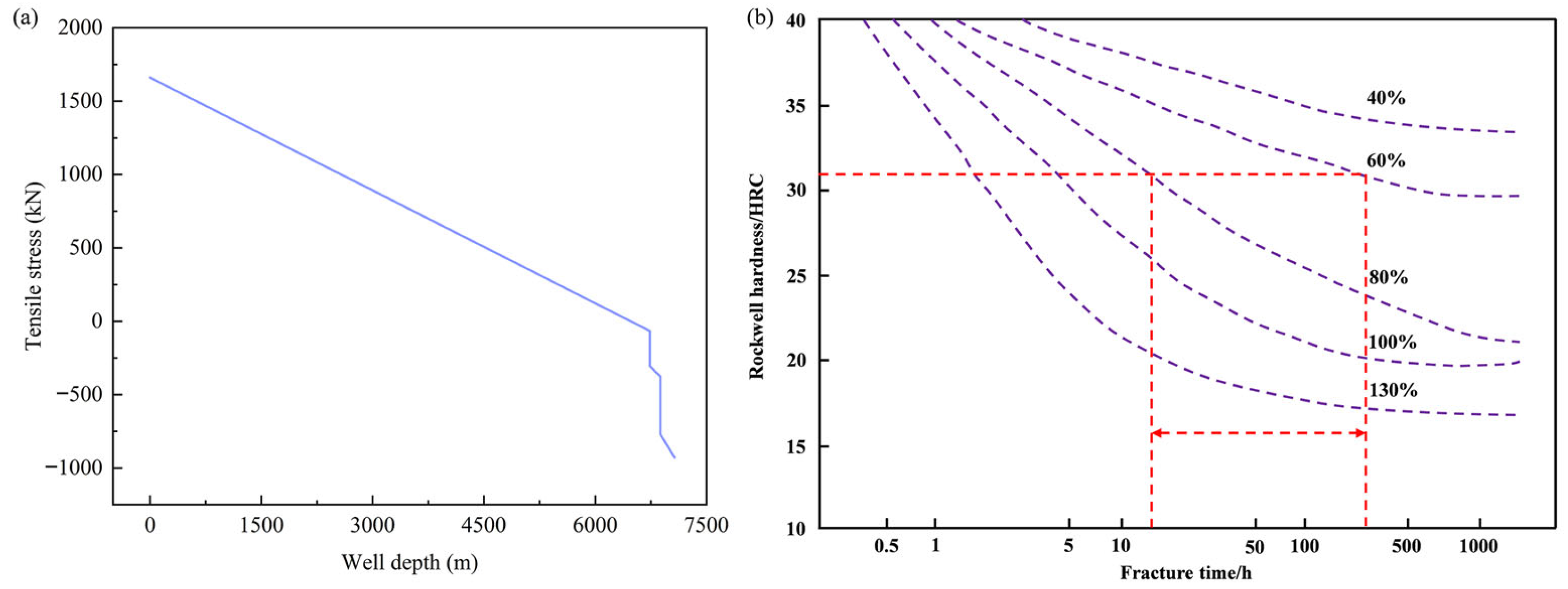
Based on the analysis of the distribution of drilling fluid flow rate and hydrogen sulfide partial pressure with well length, it is found that the range of 0–1830 m is a high-risk area for hydrogen sulfide corrosion. Figure 4a shows the distribution of drill pipe tensile stress with well length. The tensile stress increases closer to the wellhead and reaches its maximum value within this range, which is 1190–1661 kN. The drill pipe used is of S135 steel grade, with material of 28CrMnMo and a Vickers hardness of 295HV, corresponding to an HRC of approximately 31. The tensile strength within the risk area of well length is about 60–80% of the tensile strength of the drill pipe. Figure 4b shows the effect of stress on stress corrosion cracking of carbon steel sulfides. As the hardness of the drill pipe and the applied stress increases, the hydrogen embrittlement cracking time gradually decreases. At a stress intensity of 130% and an HRC hardness of 40, the hydrogen embrittlement cracking time is less than 0.5 h. This is because as the hardness of steel increases, its ability to resist crack propagation decreases. At the same time, high stress intensity can lead to stress-induced diffusion, where hydrogen atoms diffuse and accumulate towards microdefects or stress concentration points, such as crack tips. Based on the tensile stress range in the risk area of the Jinyue 402 well and the hardness value of the drill pipe used, it can be determined that the corresponding cracking time for hydrogen embrittlement of the drill pipe in the risk area is approximately 16–352 h (red line in Figure 4b).

3.3. Comprehensive Analysis of Risk Factors

Hydrogen sulfide concentration, partial pressure, and wellbore temperature do not affect drill pipe hydrogen embrittlement independently. They exhibit synergistic and interrelated effects. From the perspective of the mechanism of action, hydrogen sulfide concentration primarily controls the amount of sulfide ions generated by the decomposition of hydrogen sulfide molecules on the surface of drill pipes. These sulfide ions can strongly inhibit the recombination of hydrogen atoms into molecules and their escape, thereby significantly increasing the proportion of hydrogen atoms penetrating the interior of the drill pipes. The partial pressure of hydrogen sulfide provides the driving force for penetration into the interior of the drill pipes. According to the gas solubility law, high partial pressure directly increases the solubility of hydrogen in steel and the driving force for inward diffusion. Wellbore temperature plays a dual role in this process. Within an appropriate temperature range, an increase in temperature accelerates the electrochemical reaction of cathodic hydrogen evolution, increases the rate of hydrogen generation, and significantly enhances the diffusion coefficient of hydrogen atoms within the metal lattice, enabling them to enrich more rapidly at stress concentration sites. The synergistic effect of high hydrogen sulfide concentration and high partial pressure ensures that sufficient hydrogen enters the interior of the drill pipes, while an appropriate wellbore temperature accelerates the entire process of hydrogen penetration, diffusion, and enrichment, resulting in the hydrogen concentration inside the drill pipes reaching a critical value in a shorter time than that required by single factors. Therefore, further exploration is needed to investigate the synergistic effects of temperature, hydrogen sulfide concentration, and partial pressure.
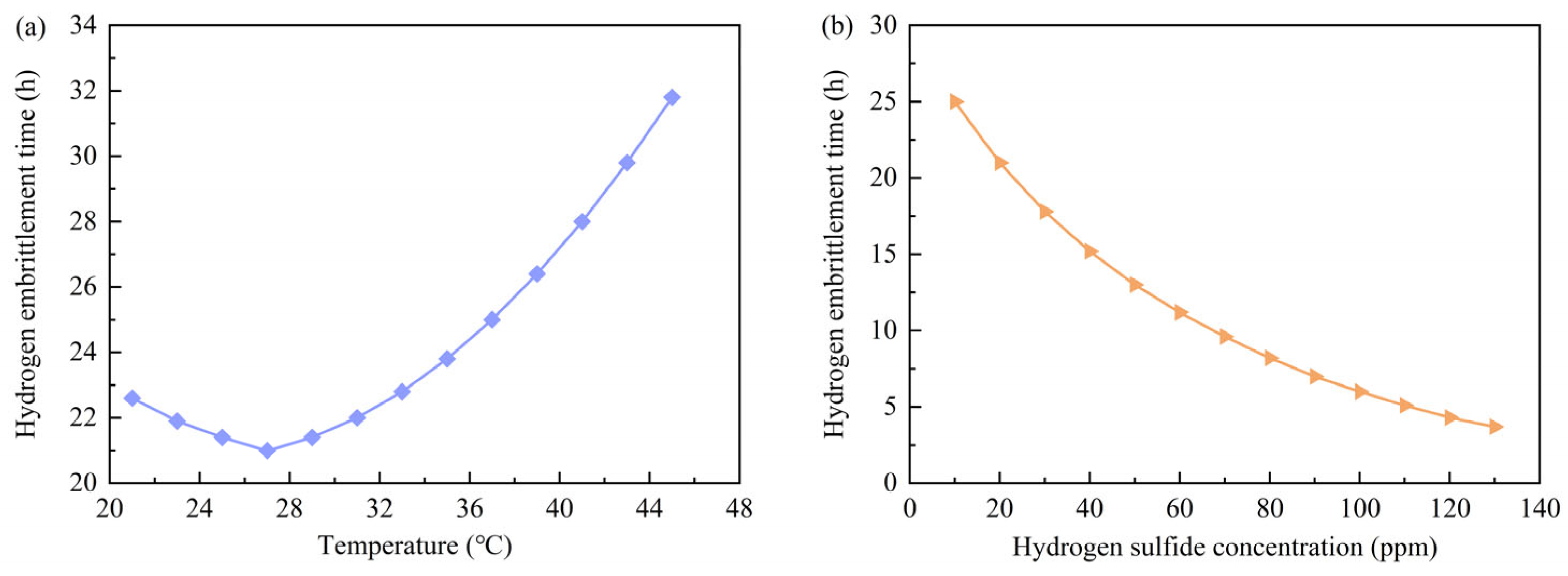
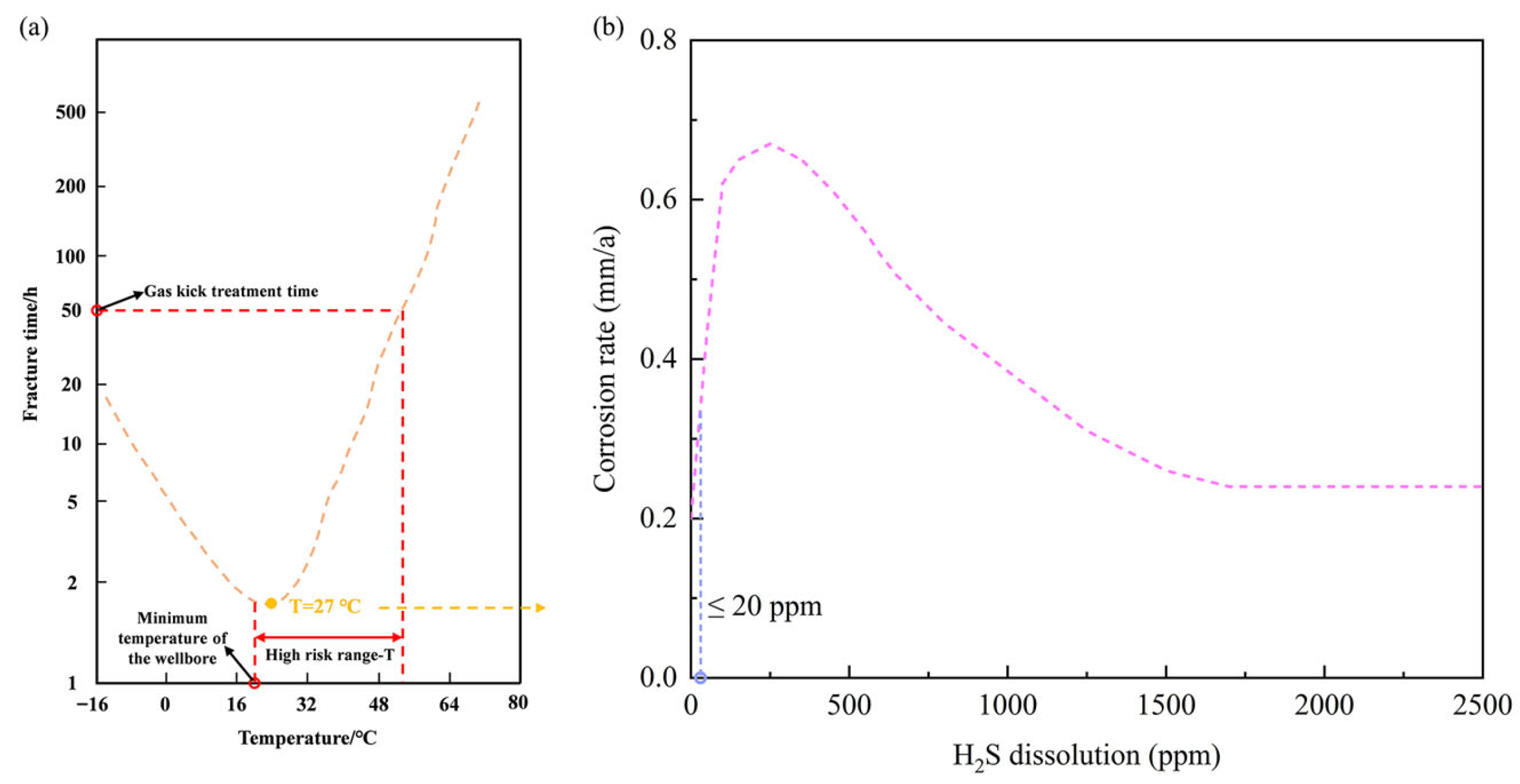
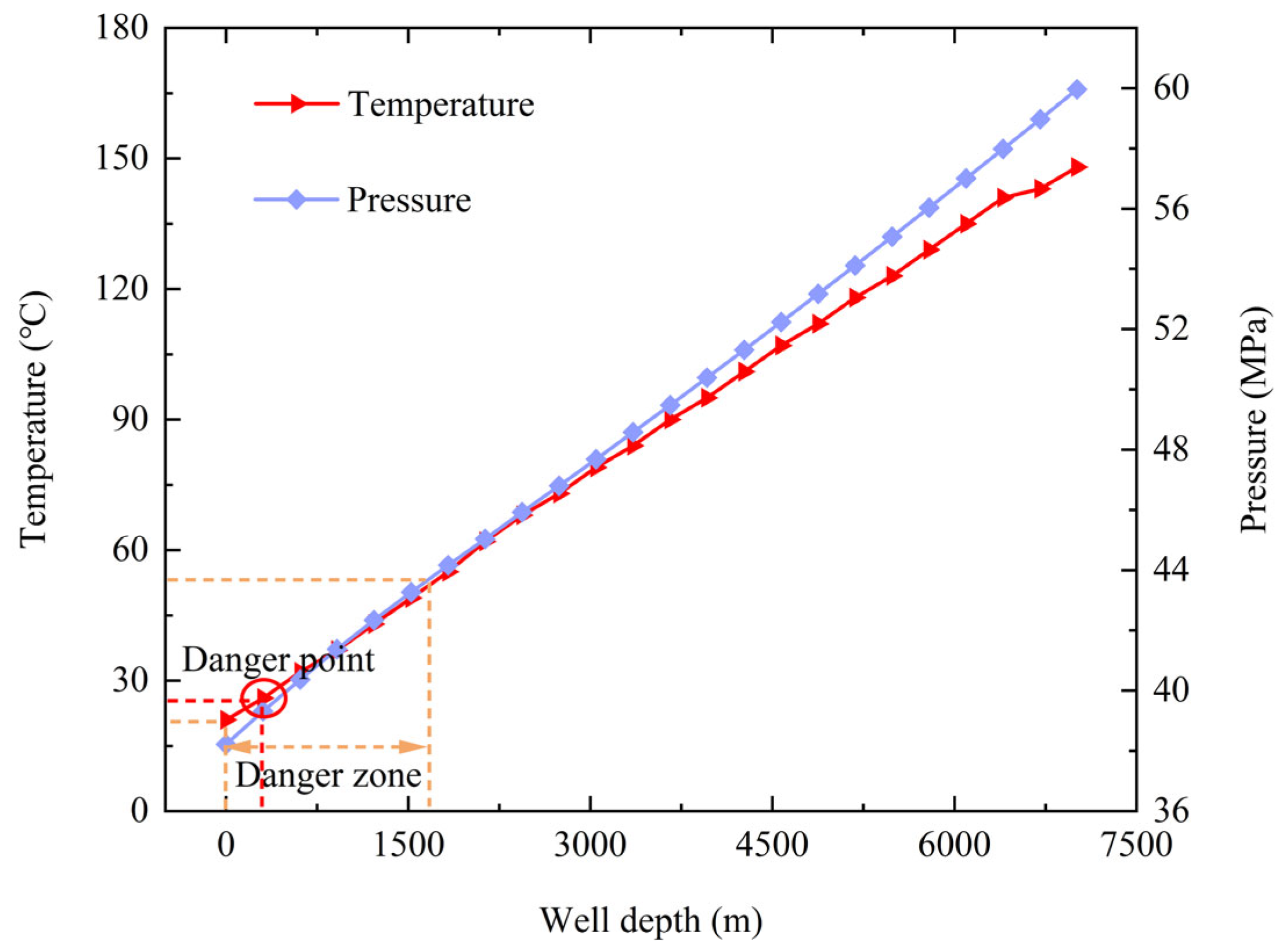
As shown in Figure 1, the drilling fluid in the gas-invaded section has a low pH, indicating strongly acidic conditions. Figure 5a shows the hydrogen embrittlement time of the drill string in an acidic solution containing NaCl at different temperatures, with a pH of approximately 3. The measured pH of the drilling fluid in the gas invasion section is also as low as around 3, indicating that the sulfide morphology in this area is highly consistent with the experimental conditions in Figure 5a. Therefore, it can be used to evaluate the risk of hydrogen embrittlement. Figure 5a is based on the constant load tensile test conducted by Hudgins et al. [37], which measured the fracture time of carbon steel and low-alloy steel in a H2S environment at different temperatures, revealing the influence of temperature on cracking sensitivity. It is usually most sensitive around room temperature. The damage time is prolonged due to the decrease in hydrogen fugacity at high temperatures. This study extracted failure time–temperature data for drill pipe steel from the literature and replotted it in Figure 5a to illustrate the effect of temperature on the risk of hydrogen embrittlement. As the temperature increases, the hydrogen embrittlement time first decreases and then increases, with the shortest hydrogen embrittlement time occurring at a wellbore temperature of approximately 27 °C. At this temperature, the variation in corrosion rate with hydrogen sulfide concentration is shown in Figure 5b. These data are derived from the corrosion rates of different carbon steels in H2S aqueous solution determined by the static weight loss method of Sardisco and Pitts [38]. This study extracted data points from the literature and redrew Figure 5b to support the discussion on the relationship between H2S concentration and corrosion rate. When the hydrogen sulfide concentration increases from 0 ppm to approximately 200 ppm, the corrosion rate of the metal rapidly increases and reaches a peak. However, when the hydrogen sulfide concentration continues to increase to 1600 ppm, the corrosion rate decreases due to the formation of an iron sulfide protective film on the surface of the metal material. The high flow rate and erosion of drilling fluid in the wellbore have a dual effect on FeS film [39]. Moderate flow can promote the mass transfer of corrosion reactants to the metal surface, facilitating the rapid formation and self-healing of FeS film. However, when the flow rate exceeds the critical value, the fluid shear force destroys the stability of the FeS film. In addition, the erosion of solid particles carried by drilling fluid can also damage the stability of FeS film. When the hydrogen sulfide concentration is higher than 1600 ppm, the corrosion rate remains essentially unchanged. Since the H2S concentration in the Jinyue 402 well ranges from 0 to 20 ppm, the corrosion rate lies within the increasing stage of the concentration–corrosion rate curve. The distribution of annulus temperature and pressure with well length during the overflow period in the Jinyue 402 well, calculated based on the temperature-pressure field model, is shown in Figure 6. The annulus temperature gradually decreases from the bottom of the well to the wellhead. The lowest temperature occurs at the wellhead, approximately 20 °C. Considering the on-site overflow blowout treatment time of approximately 50 h and referring to Figure 5a, the hydrogen embrittlement temperature corresponding to 50 h is approximately 53 °C (red line in Figure 5a). Therefore, the high-risk well section where hydrogen embrittlement occurs is further determined to be between 20 and 53 °C, corresponding to a well length of approximately 0–1680 m, with the highest risk point located at a well length of approximately 280 m (orange and red dashed lines in Figure 6).

3.4. Model Validation and Sensitivity Analysis

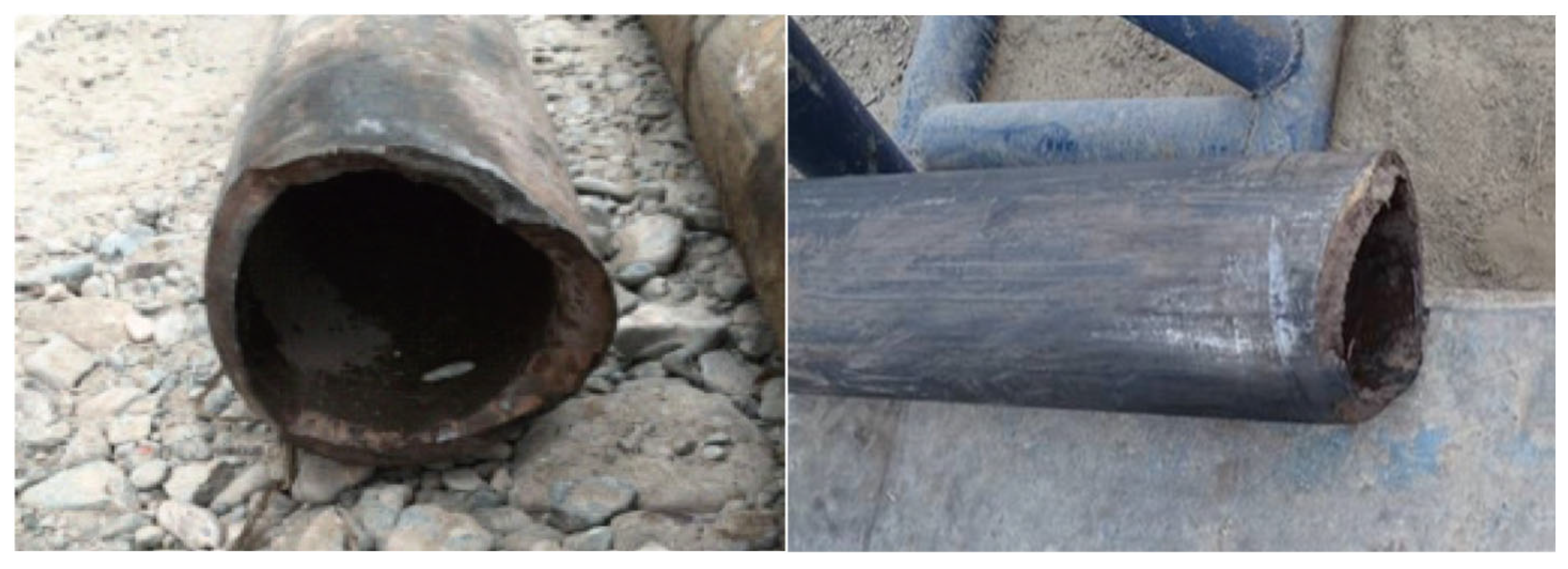
Figure 7 shows the on-site picture of hydrogen embrittlement of the drill pipe caused by hydrogen sulfide corrosion during throttling circulation in the Jinyue 402 well. The fracture surface shown in Figure 7 exhibits brittle characteristics without obvious macroscopic plastic deformation. Multiple crack initiation points can be seen on the fracture surface, and the cracks propagate in a stepped manner, which is a typical feature of hydrogen-induced fractures in high-strength steel. On-site data indicate that the hydrogen embrittlement fracture point of the drill string is located at a well length of 271 m, and the time when the drill pipe fracture occurred was 22 h. This indicates that the conclusions drawn from the above calculations and analyses are in good agreement with the hydrogen embrittlement fracture time of the drill pipe on site. Therefore, the method of this study can be adopted to analyze the hydrogen embrittlement risk of drilling pipes during throttling circulation of other wells.
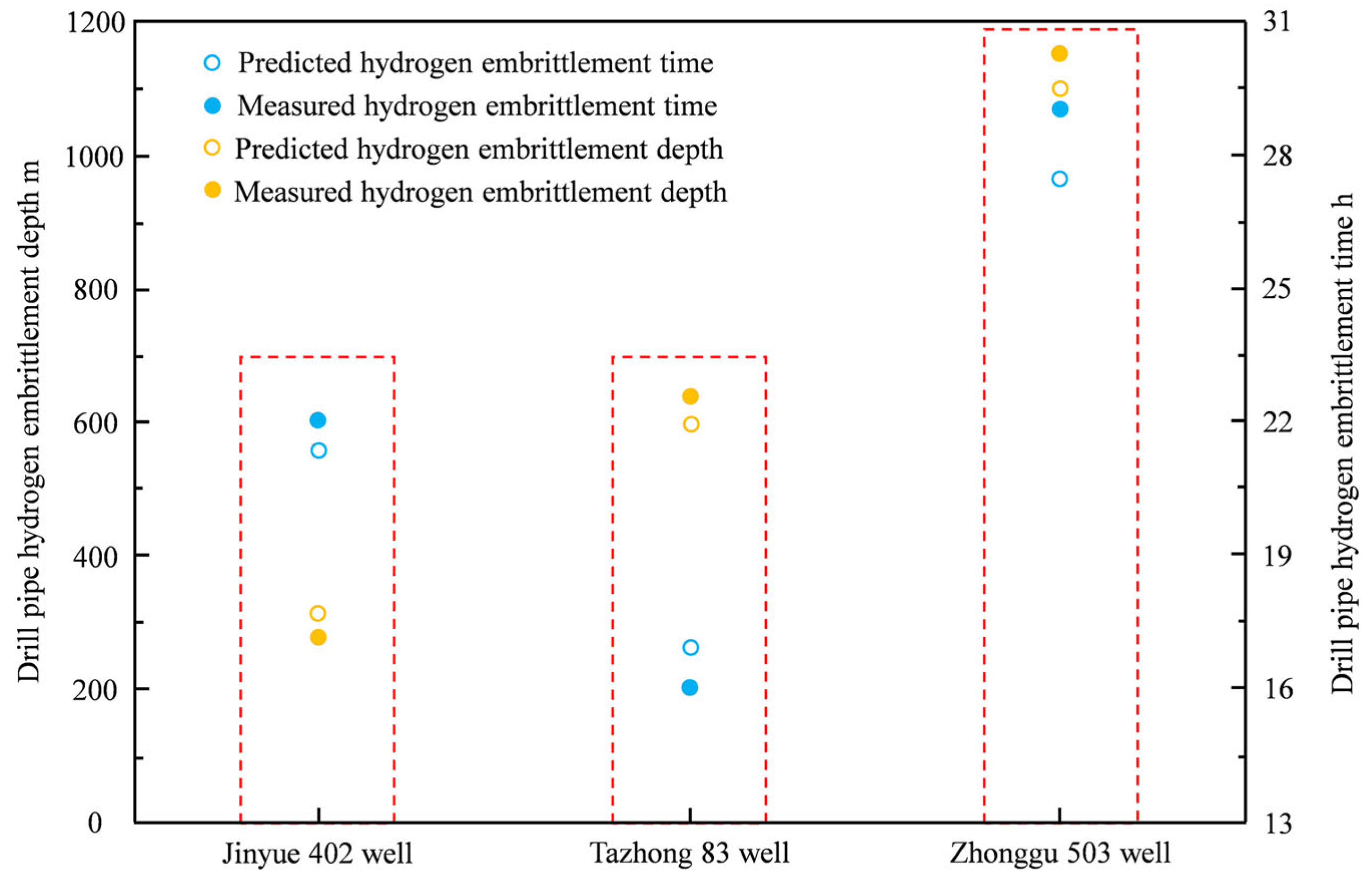
The prediction method developed in this study was further applied to predict the hydrogen embrittlement of drill pipes in the Tazhong 83 well and the Zhonggu 503 well. Table 3 compares well data for different cases of drill pipe hydrogen embrittlement. H2S concentration is measured at the wellhead, and a portable electrochemical H2S gas detector is installed at the outlet of the relief pipeline. The range is 0–200 ppm and the resolution is 0.1 ppm. The measurement points for temperature and pressure in the wellbore are located at the bottom of the well and the wellhead. The pressure sensor has a range of 0–100 MPa and a measurement accuracy of ±0.1% FS (full scale). The temperature sensor has a range of 0–180 °C and a measurement accuracy of ±0.5 °C. The data collection intervals are all 1 min. Figure 8 compares the errors between the calculated results and the measured results for three wells with drill pipe hydrogen embrittlement accidents. These three wells are located in different blocks of the Tarim Oilfield and vary in well length, temperature-pressure conditions, and H2S concentration. The maximum prediction errors for the location and time of drill pipe hydrogen embrittlement in the prediction results of these three wells are 4.8% and 5.2%, respectively. This indicates that the model can be applied to wells with different geological conditions and hydrogen sulfide concentrations.
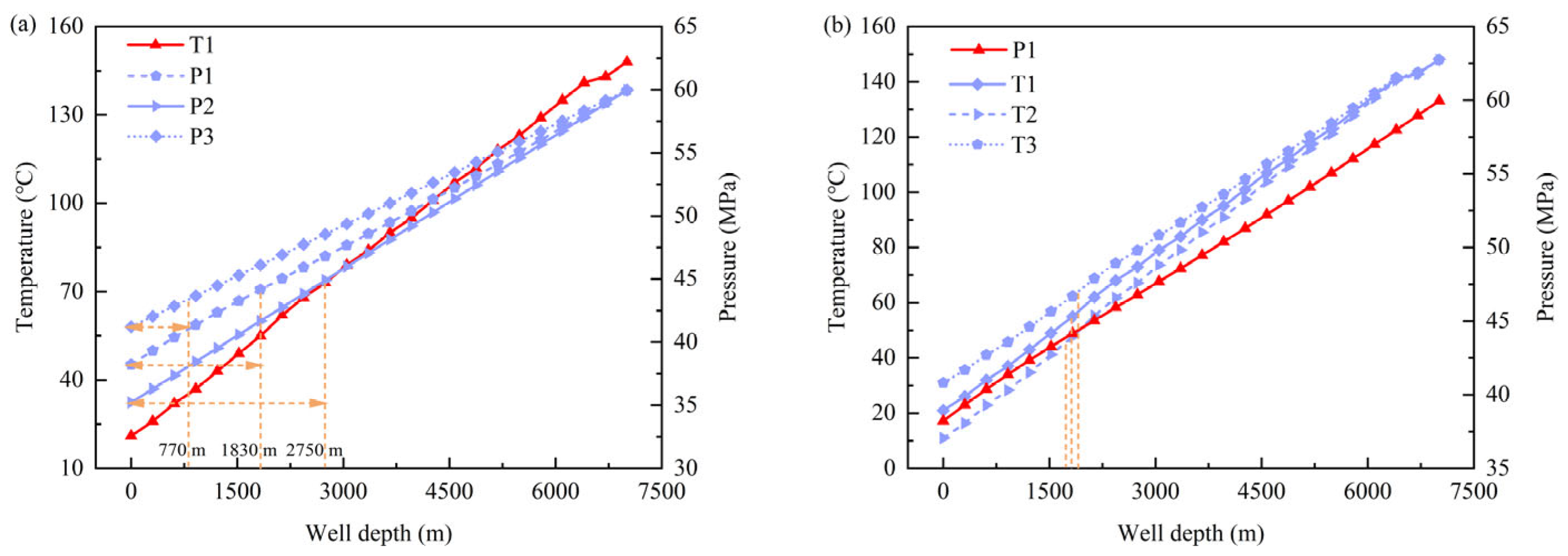
Annular pressure and temperature affect the hydrogen embrittlement risk area by influencing the location of hydrogen sulfide gas evolution. Figure 9a illustrates the impact of annular pressure changes on the hydrogen embrittlement risk area. The results show that after the wellhead pressure of the Jinyue 402 well was increased and decreased by 3 MPa, the initial evolution location of hydrogen sulfide gas shifted from 1830 m to 770 m and 2750 m, respectively. Consequently, the hydrogen embrittlement risk area also changed from 0 to 1830 m to 0–770 m and 0–2750 m (Figure 9a orange line), respectively. Figure 9b shows the effect of temperature variation on the hydrogen embrittlement risk area. When the wellhead temperature of the Jinyue 402 well was increased or decreased by 10 °C, the initial gas evolution depth shifted from 1830 m to 1880 m and 1790 m (Figure 9b orange line), respectively. This suggests that small changes in the wellhead temperature of the Jinyue 402 well have minimal impact on the hydrogen embrittlement risk area, which is primarily influenced by pressure variations. Both temperature and hydrogen sulfide concentration changes affect the hydrogen embrittlement time by influencing the corrosion rate. Figure 10a displays the hydrogen embrittlement time at different temperatures when pH is 3 and hydrogen sulfide concentration is 20 ppm. The results show that as the temperature increases from 21 °C (the wellhead temperature of the Jinyue 402 well) to 27 °C, the hydrogen embrittlement time gradually decreases. However, as the temperature continues to rise, the hydrogen embrittlement time gradually increases again. Figure 10b illustrates the variation in hydrogen embrittlement time with hydrogen sulfide concentration at pH 3 and a temperature of 27 °C. It shows that as the hydrogen sulfide concentration increases, the hydrogen embrittlement time gradually decreases. This indicates that both temperature and hydrogen sulfide concentration jointly control the hydrogen embrittlement time.
When drilling in wells containing hydrogen sulfide, to reduce the risk of hydrogen embrittlement of drilling pipes during throttling circulation and extend the safe well killing period, the following measures can be taken:
(1) The pH value of drilling fluid should be maintained at 11–12. Under high pH conditions, H2S mainly exists in the forms of HS and S2−, rather than in the molecular state, significantly inhibiting the generation and permeation of hydrogen atoms. However, a higher pH is not always better. When the pH exceeds 12, it may lead to intensified hydration and dispersion of clay in the drilling fluid, resulting in loss of rheological properties.
(2) It is recommended to use zinc-based complex desulfurizers. Zinc-based desulfurizers remove H2S by generating stable ZnS precipitates, and the dosage of desulfurizer is generally maintained at 1000–2000 ppm. This dosage accounts for a relatively low proportion of the total amount of drilling fluid treatment agents, and the main target of the sulfur removal agent is the invading H2S. The ZnS precipitate generated by the reaction has stable properties and will be discharged together with the drilling cuttings, with little impact on the environment.
The composition, microstructure, and surface condition of drill pipe materials are indeed key intrinsic factors that affect their resistance to hydrogen embrittlement. From the perspective of material composition, the design of alloy elements directly affects the type, morphology, and distribution of carbides. Chromium and molybdenum, as strong carbide-forming elements, can form dispersed alloy carbides when present in moderation. These carbides can act as irreversible hydrogen traps, effectively reducing the concentration of diffusible hydrogen and delaying the hydrogen embrittlement process. However, excessive content or improper heat treatment can lead to the precipitation of coarse carbides along grain boundaries, which may act as hydrogen enrichment zones and crack nucleation sites. At the microstructural level, the grain size, carbide distribution characteristics, and dislocation density all have a significant impact on hydrogen behavior in the typical tempered martensitic structure of S135 steel. Fine-grain structures can provide more grain boundaries as hydrogen traps and disperse the driving force for crack propagation, while coarse-grain structures may reduce the hydrogen embrittlement threshold stress. The surface state is also crucial as the first gateway for hydrogen to enter the material. The coating can effectively block direct contact between H2S and the substrate, prolonging the hydrogen embrittlement time. Therefore, optimizing the composition, surface treatment, and coatings of drill pipe materials can further enhance their resistance to hydrogen embrittlement.
This study preliminarily quantified the synergistic effect of temperature and H2S concentration on hydrogen embrittlement behavior, revealing the strengthening effect of concentration factors within the temperature-sensitive range. However, a coupled mathematical model describing the synergistic effects of H2S concentration, partial pressure, and temperature has yet to be developed—an important direction for future research in the field of hydrogen embrittlement. The coupled model can more accurately describe the hydrogen embrittlement failure of materials under the coupling effect of multiple factors.

4. Conclusions

This study constructs a calculation model for wellbore temperature and pressure, as well as hydrogen sulfide solubility during gas kick. Taking the Jinyue 402 well in Tarim Oilfield as an example, the risk of hydrogen embrittlement during throttling circulation of drill pipes at different lengths was analyzed. At 1830 m of the Jinyue 402 well, gas separated from the drilling fluid and transitioned to a gas–liquid two-phase flow. Considering the fluid flow rate, drill pipe hardness, and tensile stress, this interval is identified as a high-risk area for hydrogen sulfide corrosion. Taking into comprehensive consideration the pH of the drilling fluid, fluid flow rate, partial pressure of hydrogen sulfide, tensile stress of the drill pipe, concentration of hydrogen sulfide, and partial pressure of gas, it is determined that the high-risk area for hydrogen sulfide corrosion damage in the Jinyue 402 well is the 0–1680 m well section, with the highest risk point located at a length of approximately 280 m. Further predictions were made for the hydrogen embrittlement length and time of the Tazhong 83 and Zhonggu 503 wells in the Tarim Oilfield. The maximum prediction errors for the hydrogen embrittlement position and time of the drill pipe in the three wells were 4.8% and 5.2%, respectively. This indicates that the model can be applied to wells with different geological conditions and hydrogen sulfide concentrations.

Author Contributions

Conceptualization, P.W. and H.G.; methodology, P.W. and K.L.; software, J.D. and Y.Z.; validation, J.D. and Y.Z.; formal analysis, H.G., Y.G. and Y.Z.; investigation, K.L. and J.D.; data curation, F.Y.; writing—original draft preparation, P.W., F.Y. and K.L.; writing—review and editing, F.Y. and Y.G.; visualization, F.Y. All authors have read and agreed to the published version of the manuscript.

Funding

This research received no external funding.

Data Availability Statement

The data presented in this study are available from the corresponding author upon request.

Conflicts of Interest

Authors Pengcheng Wang, Kun Li and Haiqing Guo were employed by the China National Petroleum Corporation. Authors Jianwei Di and Yongde Zhang were employed by the China National Petroleum Corporation Offshore Engineering Co., Ltd. The remaining authors declare that the research was conducted in the absence of any commercial or financial relationships that could be construed as a potential conflict of interest.

References

  1. Han, Y.; Zhao, X.H.; Bai, Z.Q.; Yin, C.X. Applicability analysis of P110 steel in CO2/H2S containing environment. Corros. Sci. Prot. Technol. 2012, 24, 32–36. [Google Scholar]
  2. Gong, P.; Turk, A.; Nutter, J.; Yu, F.; Wynne, B.; Rivera-Diaz-del-Castillo, P.; Rainforth, W.M. Hydrogen embrittlement mechanisms in advanced high strength steel. Acta Mater. 2022, 223, 117488. [Google Scholar] [CrossRef]
  3. Zambrano, O.A.; Ton, K.; Islam, A. Towards the understanding of hydrogen embrittlement in pipeline steels using EBSD. Int. J. Hydrogen Energy 2025, 174, 151470. [Google Scholar] [CrossRef]
  4. Shah, M.; Ayob, M.T.M.; Rosdan, R.; Yaakob, N.; Embong, Z.; Othman, N.K. The Effect of H2S Pressure on the Formation of Multiple Corrosion Products on 316L Stainless Steel Surface. Sci. World J. 2020, 2020, 3989563. [Google Scholar] [CrossRef] [PubMed]
  5. Elkhodbia, M.; Negi, A.; Mubarak, G.; Barsoum, I.; AlFantazi, A. Review on sulfide stress cracking in sour service for OCTG and recent advances in modeling of hydrogen-assisted fracture. Geoenergy Sci. Eng. 2023, 230, 212174. [Google Scholar] [CrossRef]
  6. Meng, S.; Yue, P.H.; Zhang, S.C.; Li, H.B.; Zhao, Y.; Hua, Y.; Zhang, T.; Wang, F.H. Synergistic effects of CO2 and H2S on stress corrosion cracking of stainless steel 254SMo in extremely aggressive oilfield environment. Corros. Commun. 2024, 16, 81–95. [Google Scholar] [CrossRef]
  7. Sun, B.J.; Zhang, M.J.; Sun, Q.; Zhong, J.; Shao, G.H. Review on natural hydrogen wells safety. Nat. Commun. 2025, 16, 369. [Google Scholar] [CrossRef]
  8. Smith, S.N.; Joosten, M.W. Corrosion of carbon steel by H2S in CO2 containing oilfield environments. In Proceedings of the Corrosion/2006, San Diego, CA, USA, 12–16 March 2006; Paper No. 06115; NACE: Houston, TX, USA, 2006. [Google Scholar]
  9. Fan, X.; Cheng, Y.F. Hydrogen pipelines and embrittlement in gaseous environments: An up-to-date review. Appl. Energy 2025, 387, 125636. [Google Scholar] [CrossRef]
  10. Shah, M.S.; Tsapatsis, M.; Siepmann, J.I. Hydrogen sulfide capture: From absorption in polar liquids to oxide, zeolite, and metal-organic framework adsorbents and membranes. Chem. Rev. 2017, 117, 9755–9803. [Google Scholar] [PubMed]
  11. Zheng, Y.; Zhang, Y.; Sun, B.; Zhang, B.; Zhang, S.; Jin, S.; Xiao, Z.; Chu, S.; Jing, Y.; Zhang, Z. Corrosion Behavior and Mechanical Performance of Drill Pipe Steel in a CO2/H2S-Drilling-Fluid Environment. Processes 2024, 12, 502. [Google Scholar]
  12. Mohtadi-Bonab, M.A.; Szpunar, J.A.; Razavi-Tousi, S.S. A comparative study of hydrogen induced cracking behavior in API 5L X60 and X70 pipeline steels. Eng. Fail. Anal. 2013, 33, 163–175. [Google Scholar] [CrossRef]
  13. Liu, Z.Y.; Wang, X.Z.; Liu, R.K.; Du, C.W.; Li, X.G. Electrochemical and sulfide stress corrosion cracking behaviors of tubing steels in a H2S/CO2 annular environment. J. Mater. Eng. Perform. 2014, 23, 1279–1287. [Google Scholar] [CrossRef]
  14. Wen, X.L.; Bai, P.P.; Luo, B.W.; Zheng, S.Q.; Chen, C.F. Review of recent progress in the study of corrosion products of steels in a hydrogen sulphide environment. Corros. Sci. 2018, 139, 124–140. [Google Scholar] [CrossRef]
  15. Sun, J.B.; Sun, C.; Zhang, G.A.; Li, X.D.; Zhao, W.M.; Jiang, T.; Liu, H.F.; Cheng, X.K.; Wang, Y. Effect of O2 and H2S impurities on the corrosion behavior of X65 steel in water-saturated supercritical CO2 system. Corros. Sci. 2016, 107, 31–40. [Google Scholar] [CrossRef]
  16. Ziomek-Moroz, M. Environmentally Assisted Cracking of Drill Pipes in Deep Drilling Oil and Natural Gas Wells. J. Mater. Eng Perform 2012, 21, 1061–1069. [Google Scholar] [CrossRef]
  17. Sun, J.B.; Sun, C.; Lin, X.Q.; Cheng, X.K.; Liu, H.F. Effect of chromium on corrosion behavior of P110 steels in CO2–H2S environment with high pressure and high temperature. Materials 2016, 9, 200. [Google Scholar] [CrossRef]
  18. Wei, L.; Pang, X.L.; Gao, K.W. Effect of small amount of H2S on the corrosion behavior of carbon steel in the dynamic supercritical CO2 environments. Corros. Sci. 2016, 103, 132–144. [Google Scholar] [CrossRef]
  19. Mebel, A.M.; Hwang, D.Y. Theoretical Study of the Reaction Mechanism of Fe Atoms with H2O, H2S, O2 and H+. J. Phys. Chem. A 2001, 105, 7460–7467. [Google Scholar] [CrossRef]
  20. Zhang, G.A.; Zeng, Y.; Guo, X.P.; Jiang, F.; Shi, D.Y.; Chen, Z.Y. Electrochemical corrosion behavior of carbon steel under dynamic high pressure H2S/CO2 environment. Corros. Sci. 2012, 65, 37–47. [Google Scholar] [CrossRef]
  21. Li, K.Y.; Zeng, Y.M.; Luo, J.L. Influence of H2S on the general corrosion and sulfide stress cracking of pipelines steels for supercritical CO2 transportation. Corros. Sci. 2021, 190, 109639. [Google Scholar] [CrossRef]
  22. Choi, Y.S.; Hassani, S.; Vu, T.N.; Nesic, S.; Abas, A.Z.B. Effect of H2S on the Corrosion Behavior of Pipeline Steels in Supercritical and Liquid CO2 Environments. Corrosion 2016, 72, 999–1009. [Google Scholar] [CrossRef]
  23. Li, W.F.; Zhou, Y.J.; Xue, Y. Corrosion behavior of 110S tube steel in environments of high H2S and CO2 content. J. Iron Steel Res. Int. 2012, 19, 59–65. [Google Scholar] [CrossRef]
  24. Yin, Z.F.; Zhao, W.Z.; Bai, Z.Q.; Feng, Y.R.; Zhou, W.J. Corrosion behavior of SM 80SS tube steel in stimulant solution containing H2S and CO2. Electrochim. Acta 2008, 53, 3690–3700. [Google Scholar]
  25. Choi, Y.S.; Nesic, S.; Ling, S. Effect of H2S on the CO2 corrosion of carbon steel in acidic solutions. Electrochim. Acta 2011, 56, 1752–1760. [Google Scholar] [CrossRef]
  26. Akinfiev, N.N.; Majer, V.; Shvarov, Y.V. Thermo-dynamic description of H2S–H2O–NaCl solutions at temperatures to 573 K and pressures to 40 MPa. Chem. Geol. 2016, 424, 1–11. [Google Scholar] [CrossRef]
  27. Xiang, Y.; Wang, Z.; Xu, C.; Zhou, C.C.; Li, Z.; Ni, V.D. Impact of SO2 concentration on the corrosion rate of X70 steel and iron in water-saturated supercritical CO2 mixed with SO2. J. Supercrit. Fluids 2011, 58, 286–294. [Google Scholar] [CrossRef]
  28. Zheng, Y.; Brown, B.N.; Nešić, S. Electrochemical Study and Modeling of H2S Corrosion of Mild Steel. CORROSION 2013, 70, 351–365. [Google Scholar] [CrossRef] [PubMed]
  29. Livescu, S.; Durlofsky, L.J.; Aziz, K. A Semianalytical Thermal Multiphase Wellbore-Flow Model for Use in Reservoir Simulation. SPE J. 2010, 15, 794–804. [Google Scholar] [CrossRef]
  30. Hasan, A.R.; Kabir, C.S. Aspects of Wellbore Heat Transfer During Two-Phase Flow. SPE Prod. Facil. 1994, 9, 211–216. [Google Scholar] [CrossRef]
  31. Xu, Z.M.; Chen, X.J.; Song, X.Z.; Zhu, Z.P.; Zhang, W.P. Gas-Kick Simulation in Oil-Based Drilling Fluids with Nonequilibrium Gas-Dissolution and -Evolution Effects. SPE J. 2021, 26, 2549–2569. [Google Scholar] [CrossRef]
  32. He, H.K.; Sun, B.J.; Sun, X.H.; Wang, Z.Y.; Li, X.F. Effects of Gas Dissolution on Gas Migration during Gas Invasion in Drilling. ACS Omega 2022, 7, 42056–42072. [Google Scholar] [CrossRef] [PubMed]
  33. Yin, F.L.; Ni, X.Y.; Han, J.D.; Di, J.W.; Zhou, Y.W.; Zhao, X.X.; Gao, Y.H. Impact Assessment of Hydrate Cuttings Migration and Decomposition on Annular Temperature and Pressure in Deep Water Gas Hydrate Formation Riserless Drilling. Energies 2023, 16, 5903. [Google Scholar] [CrossRef]
  34. Gao, Y.H.; Sun, B.J.; Xu, B.Y.; Wu, X.R.; Chen, Y.; Zhao, X.X.; Chen, L.T. A Wellbore-Formation-Coupled Heat-Transfer Model in Deepwater Drilling and Its Application in the Prediction of Hydrate-Reservoir Dissociation. SPE J. 2017, 22, 756–766. [Google Scholar] [CrossRef]
  35. Pitzer, K.S. (Ed.) Ion interaction approach: Theory and data correlation. In Activity Coefficients in Electrolyte Solutions; CRC Press Inc.: Boca Raton, FL, USA, 1991; pp. 75–153. [Google Scholar]
  36. NACE TM0177; Laboratory Testing of Metals for Resistance to Sulfide Stress Cracking and Stress Corrosion Cracking in H2S Environments. Version 1; NACE: Houston, TX, USA, 2006; pp. 1–39.
  37. Hudgins, C.M.; McGlasson, R.L.; Mehdizadeh, P.; Rosborough, W.M. Hydrogen sulfide cracking of carbon and alloy steels. Corrosion 1966, 22, 238–251. [Google Scholar] [CrossRef]
  38. Sardisco, J.B.; Pitts, R.E. Corrosion of iron in an H2S–CO2–H2O system: Mechanism of sulfide film formation and kinetics of corrosion reaction. Corrosion 1965, 21, 245–253. [Google Scholar] [CrossRef]
  39. Pessu, F.; Barker, R.; Chang, F.; Chen, T.; Neville, A. Iron sulphide formation and interaction with corrosion inhibitor in H2S-containing environments. J. Pet. Sci. Eng. 2021, 207, 109152. [Google Scholar] [CrossRef]
Figure 1. Changes in the distribution of H2S and HS forms with pH based on the first dissociation equilibrium.
Cmd 07 00018 g001
Figure 2. Distribution of fluid flow rate with well length in Jinyue 402 well.
Cmd 07 00018 g002
Figure 3. Distribution of H2S partial pressure with well length in Jinyue 402 well.
Cmd 07 00018 g003
Figure 4. (a) Distribution of tensile stress with well length in Jinyue 402 well, and (b) the effect of stress on stress corrosion cracking of carbon steel sulfides.
Cmd 07 00018 g004
Figure 5. Hydrogen embrittlement time at different temperatures (a) and hydrogen attack rate at the highest risk temperature (b).
Cmd 07 00018 g005
Figure 6. Analysis of wellbore temperature, pressure distribution, and risk zones of Jinyue 402 well.
Cmd 07 00018 g006
Figure 7. Physical image of hydrogen embrittlement fracture of drill pipe on site in the Jinyue 402 well.
Cmd 07 00018 g007
Figure 8. Comparison between calculated results and field measured data.
Cmd 07 00018 g008
Figure 9. Impact of annulus (a) pressure and (b) temperature variations on hydrogen embrittlement risk areas.
Cmd 07 00018 g009
Figure 10. Effect of (a) temperature and (b) hydrogen sulfide concentration changes on hydrogen embrittlement time.
Cmd 07 00018 g010
Table 1. Model parameters.
ParameterValueParameterValue
aλ−0.2544K0.67
bλ0.1023A0.15
cλ−0.0445B−0.03
bB0.0267C−2.8
cB−0.0122τsss0
Ml0.018 kg/molCsee0
Table 2. Natural gas components of the Jinyue 402 well.
ComponentContent/% (mol/mol)
methane59.6
ethane11.5
propane7.28
isobutane1.56
N-butane2.67
isopentane0.821
N-pentane0.846
hexane0.692
heptane0.244
octane and heavier components0.031
nitrogen12.8
carbon dioxide1.96
hydrogen sulfide0.015
Table 3. Comparison of well data involving different hydrogen embrittlement accidents of drill pipes.
WellJinyue 402Tazhong 83Zhonggu 503
Drill pipe length/m707056736177
Wellhead temperature/°C213534
Bottom hole temperature/°C143126130
Inner diameter of drill pipe/cm10.168.8910.16
Temperature at hydrogen embrittlement breakpoint/°C24.745.252.7
Flow velocity at hydrogen embrittlement breakpoint/m·s−10.441.22.5
Hydrogen sulfide concentration range/ppm0–200–900–120
Partial pressure of hydrogen sulfide at hydrogen embrittlement breakpoint/kPa0.534.3615.20
Disclaimer/Publisher’s Note: The statements, opinions and data contained in all publications are solely those of the individual author(s) and contributor(s) and not of MDPI and/or the editor(s). MDPI and/or the editor(s) disclaim responsibility for any injury to people or property resulting from any ideas, methods, instructions or products referred to in the content.