1. Introduction
This study investigates the relationship between ancestral female textile knowledge in northern Portugal and the development of the local textile industry. It builds upon doctoral research exploring intangible cultural sustainability, fashion design education, and women’s textile heritage within this geographical context. This research emphasises the necessity of preserving, transmitting, and recognising the intangible cultural heritage associated with women’s textile knowledge.
Historical records indicate that although women have always worked, their activities have not consistently been interpreted or recognised as professions [
1]. In Portugal, rural sources dating back to the 16th century document women’s involvement in agriculture, flour milling, laundry work, cooking, and the sale of fish and chestnuts in urban centres, as well as in all stages of linen production, from planting to weaving [
2]. Given the historical significance of domestic, rural, and industrial labour contexts, it is crucial to elucidate how women’s roles were perceived and how labour relations were structured. This entails analysing not only the activities performed but also the methods employed and how women’s contributions were integrated into productive systems [
2].
These historically gendered forms of textile labour contributed, over time, to the development of a highly specialised regional textile economy in northern Portugal. Particularly in the Vale do Ave region,
1 the textile and clothing sector remains one of the most significant production hubs in Europe [
3]. The historical industrial development of the sector was closely linked to the Ave River and its tributaries, whose hydraulic resources and water availability constituted a determining factor in the location and expansion of textile manufacturing activities [
4]. Today, the sector is characterised by a dual structure. On the one hand, it comprises large-scale industrial units that are highly mechanised, technologically advanced, and export-oriented. These companies operate vertically integrated production systems involving spinning, weaving, knitting, dyeing, finishing, and garment manufacturing. Many of these companies supply international fashion brands and operate within global textile and apparel supply chains. On the other hand, the region also sustains a dense network of small and medium-sized enterprises, cooperatives, and artisan workshops that preserve regional craft traditions while supplying national and international markets oriented towards heritage production and slow fashion.
According to the 2021 AICEP census [
3], the Vale do Ave region accounted for 82% of all textile companies and 85% of the sector’s total turnover in Portugal. This industrial landscape did not emerge in isolation; rather, it was shaped decisively by the historical predominance of textile activity within the region, as well as by the textile knowledge accumulated through generations of women, whose domestic and rural expertise constituted a fundamental workforce long before the consolidation of mechanised industrial production.
By focusing on the relationship between ancestral female textile knowledge, cultural sustainability, and the development of the textile industry, this study asks how women’s textile practices contributed to the historical formation of the textile industry in northern Portugal, why these contributions have remained comparatively underrepresented within industrial and heritage narratives, and how this heritage continues to shape contemporary cultural and creative identities. In doing so, the article contributes to broader discussions surrounding gendered labour, intangible cultural heritage, and the cultural dimensions of industrial development.
This perspective aligns with Oliveira Martin’s [
5] reflections on the relationship between memory and life, emphasising memory as a crucial dimension for understanding cultural continuity and enabling creative practice. In the context of cultural sustainability, it is worth noting that in 2003, UNESCO adopted the “Convention for the Safeguarding of Intangible Cultural Heritage” [
6], highlighting traditions, oral expressions, places of memory, knowledge, and traditional manifestations. Although craftsmanship is recognised as one of the five domains contributing to sustainable development, the Portuguese list of intangible cultural heritage [
7], which includes seven assets, does not currently incorporate any traditional textile craftsmanship.
3. Ancestral Female Textile Practices
The ancestral textile practices of women in northern Portugal, and across the country more broadly, form an integral part of Portuguese cultural, industrial, textile, familial, and domestic history. A reality that mirrors broader European patterns in which women’s economic contributions to textile production were systematically absent from official records, as property and economic power were concentrated in the hands of male household heads [
14]. Textile knowledge has historically functioned as a gendered and predominantly female practice [
15]. The following analysis, therefore, traces the domestic and symbolic foundations of women’s textile knowledge in northern Portugal before industrialisation, drawing on evidence that spans several centuries. Where late 19th-century and early 20th-century sources are engaged, they serve to document the historical persistence of pre-industrial practices preserved in archival collections and introduce the industrial transformations examined in
Section 4. Despite the persistent invisibility of women’s contributions to the formation of the Portuguese textile industry, a growing body of documents has examined the feminisation of textile knowledge. This scholarship makes it possible to construct a historiography that situates women at the centre of textile production and transmission across successive generations and social contexts. In this context, the work of Pereira [
16] for the National Museum of Ethnology is particularly significant, as it brings together historical narratives that explore the relationship between textiles and Portugal, modes of labour, symbolism, syncretism, and the cultural meanings embedded in these practices.
Focusing on the symbolic relationships evident in the Minho and Douro regions,
2 Pereira [
16] demonstrates that many textile tools were incorporated into festivities and wedding processions. In contrast, textile activities themselves were often carried out collectively by women within the community. These moments created favourable conditions for the transmission of oral culture, including singing, dancing, ritual celebrations and communal meals [
16]. Within this symbolic framework, tools such as the distaff and the loom illustrate both the socio-economic organisation of the household and the gendered division of domestic labour. Linen work, an emblematic practice of northern Portugal, further underscores the existence of differentiated activities organised along gender lines, with women occupying a central role in its production [
16].
Within rural family contexts, textile activities undertaken by women were typically performed alongside domestic and agricultural responsibilities. Practices such as spinning and weaving linen served not only to produce goods for household consumption, such as shirts and bed linen forming part of the
bragal,
3 but also to fulfil external commissions. In this way, women’s textile labour functioned as a supplementary source of income and, in some cases, a means of paying land rent [
16]. Archival material from the historical archive of the SMS [
9], namely, a book record dated 1941 [
12] further reinforces the association between the distaff and the female figure, highlighting its role in domestic and social education. In Guimarães, distaff makers produced these tools specifically for children, particularly girls, facilitating early learning in spinning. Symbolic narratives reinforced this practice, with young women being told that “even the saints spun”, thus attributing moral values of virtue and merit to linen work [
12]. Within this discourse, textile labour emerges at the intersection of domestic knowledge and religious symbolism.
Historical evidence confirms that linen work was also carried out within female religious institutions in Guimarães, northern Portugal, notably at the local Recolhimento do Anjo de S. Miguel (1750), the Convento das Carmelitas (1751), and the Convento de Santa Clara (1759). In these contexts, the use of the distaff symbolised virtue, discipline, and moral merit, reinforcing socially constructed ideals of femininity [
8,
9]. From a complementary perspective, the cultivation, spinning, and weaving of linen constituted, for long periods, the primary form of education available to rural girls. This practice reflects the economic and symbolic weight of textile work not only within the domestic sphere but also as a defining characteristic of Guimarães, a key city in the Vale do Ave, a region historically shaped by its deep-rooted textile traditions [
17].
This historical framework is further supported by the research of Sequeira and Melo [
18], who examine women’s ancestral knowledge within the Portuguese textile sector during the late medieval period. According to the authors, women’s occupation in textile production was already firmly established in the Middle Ages, defining their social role and their intimate relationship with technical knowledge such as spinning and weaving, transmitted across generations [
18]. They emphasise that spinning was a strictly female, domestic activity, accompanying women throughout their daily routines in both household and rural contexts. Documentary sources from the sixteenth century, cited by Cabreira and Macedo, further corroborate this perspective. José Gentil da Silva reports that linen cultivation was under women’s care in various regions across the country, highlighting the importance of female labour in ensuring local supply, particularly in the northern Minho region, between Braga and Guimarães [
2].
Historical accounts demonstrate the remarkable persistence of spinning, linen weaving and related domestic practices over several centuries, despite ongoing socio-economic transformations. In the seventeenth century, records indicate that women constituted approximately 52% of the workforce in the textile and clothing sector in the Coimbra region, underscoring their economic relevance [
2]. The textile sector remained the principal source of employment in Portugal between 1850 and 1910, followed by ceramics, metallurgy and, from the mid-nineteenth century onwards, the canning and cork industries [
19].
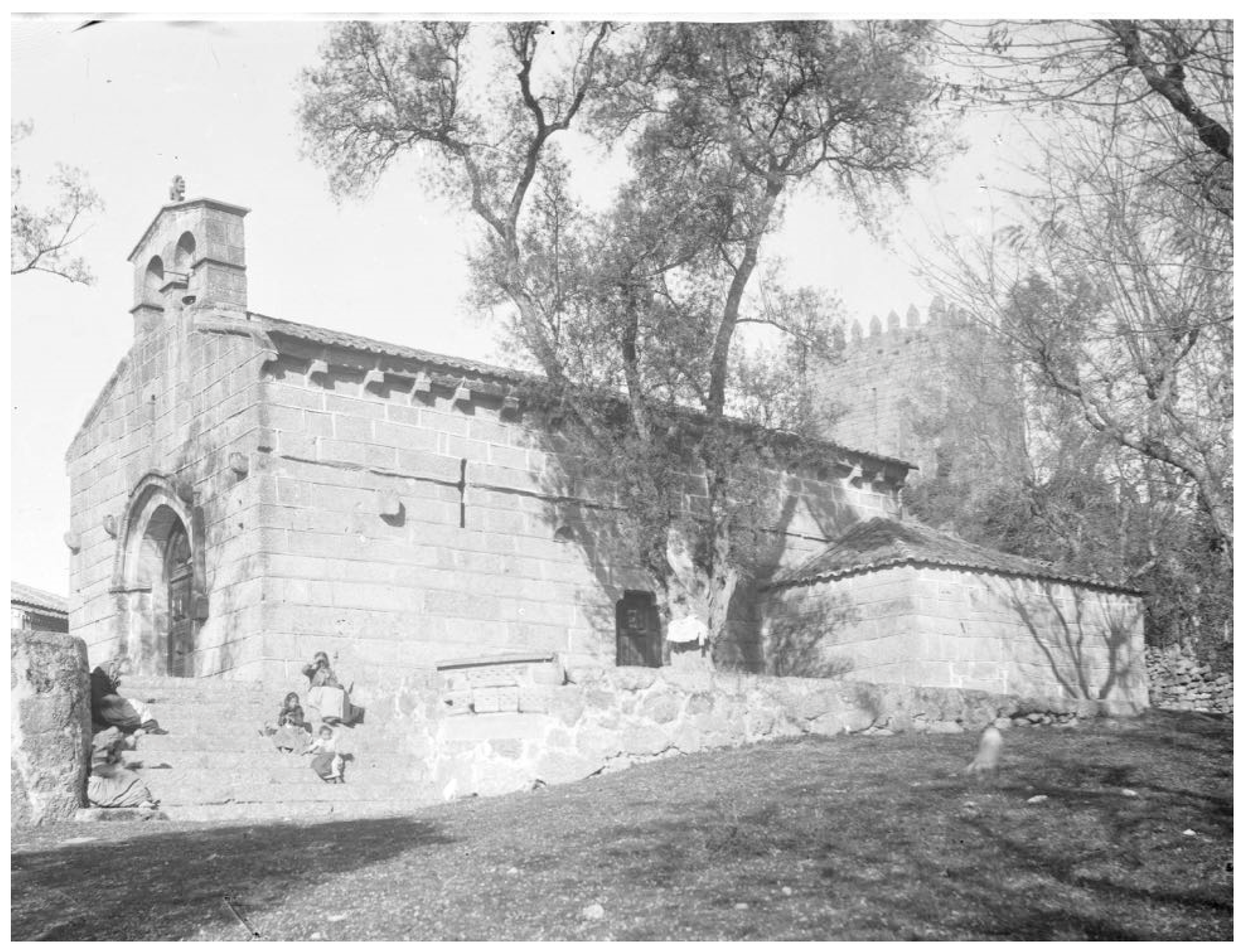
Despite this prominence, the intimate relationship between women and the distaff has often been overlooked by historians. Nevertheless, it is clearly visible in everyday life and in the visual culture of both rural and urban contexts. This connection is particularly evident in early twentieth-century photographs by the merchant and photographer Domingos Alves Machado of Guimarães, now part of the Muralha photographic collection [
11]. One urban scene from the 1920s depicts the Church of São Miguel do Castelo in Guimarães, traditionally associated with the baptism of D. Afonso Henriques (the first King of Portugal), while, in the foreground, women spinners from the Minho sit on the church steps, engaged in their traditional work. The juxtaposition of national historical symbols with women’s textile labour reinforces the cultural significance of these practices (
Figure 1).
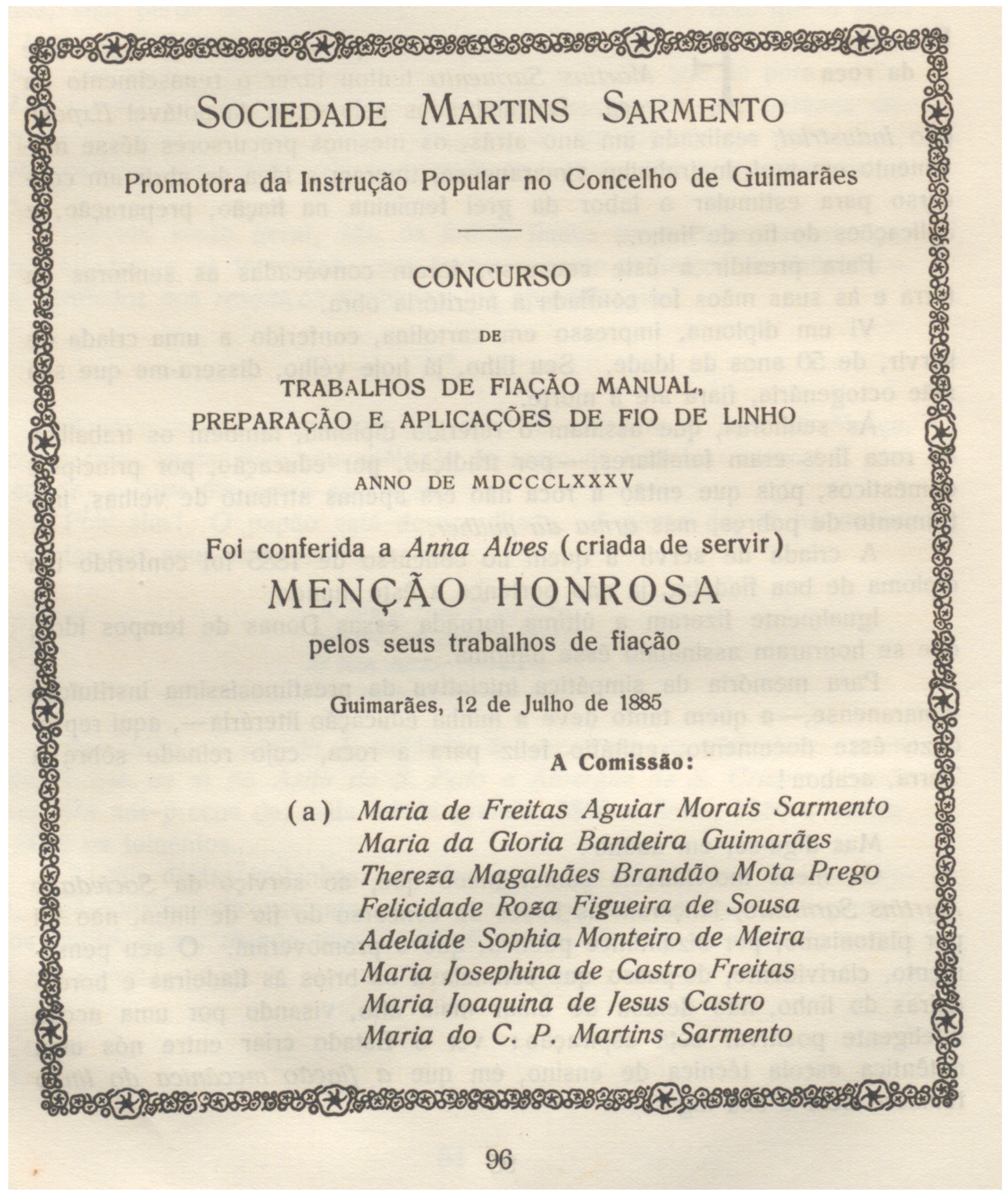
Beyond their presence in the visual and everyday imagination, the distaff and its association with women also manifested in social, symbolic and technical domains. In 1885, the Linen Yarn Contest was established by the SMS, one year after the Industrial Exhibition of Guimarães [
12]. The competition aimed to stimulate and valorise women’s spinning skills, as well as the preparation and application of linen thread, thereby enhancing the ancestral knowledge associated with this practice. To this end, the SMS appointed eight rural master spinners, women recognised for their mastery of traditional techniques, to form the judging committee. Documentation of this initiative appears in “Os Mestres de Guimarães II—Estudos Históricos e Etnográficos do Linho” [
12] (
Figure 2), one of the few surviving records of the competition, preserved in the SMS archive [
9].
The competition publicly acknowledged both the winning spinner and the group of master spinners (in Portuguese: a comissão), publicly affirming their skills. This initiative sought to preserve ancestral female knowledge by celebrating women’s expertise in spinning, weaving, and linen embroidery at a time of increasing mechanisation. References to the Francisco de Holanda Commercial and Industrial School in Guimarães, where mechanical linen spinning was already taking place, illustrate the broader transition from artisanal know-how to technical modernisation [
12]. In this sense, the competition can be understood as a form of cultural resistance, developed by the SMS in response to the erosion of traditional practices under industrial transformation.
Ancestral textile practices, including embroidery, knitting, crochet, sewing, spinning, and weaving, have traditionally belonged to the female and domestic sphere. Their continuity across generations is evident not only in material production but also in symbolic and cultural expressions. This persistence is documented in a collection of interviews by journalist Maria António Fiadeiro [
20], gathering testimonies from female artisans, artists, and pioneers in Portugal who have sustained textile knowledge through ancestral transmission. Among the examples presented are the embroidered linen handkerchiefs of the Vila Verde region, where girls and women historically practised cross-stitch embroidery from an early age, passing the skill down through successive generations [
20].
The work also includes a conversation between Fiadeiro and fashion designer Helena Cardoso, recognised for her efforts to revitalise and preserve female knowledge associated with wool,
burel,
4 and linen. In this dialogue, Cardoso emphasises that despite the transformations brought about by development, female artisans remain deeply connected to rural life. She describes scenes of linen weaving during family gatherings, where mothers and daughters worked collectively to produce essential domestic goods, reinforcing a model of communal labour shaped by necessity and tradition. According to Cardoso, these artisans played a crucial role in safeguarding Portugal’s cultural heritage and rural memory [
20]. Beyond the reproduction of ancient practices, such women contributed to broader social transformations by mobilising ancestral knowledge to reshape individual lives and community structures.
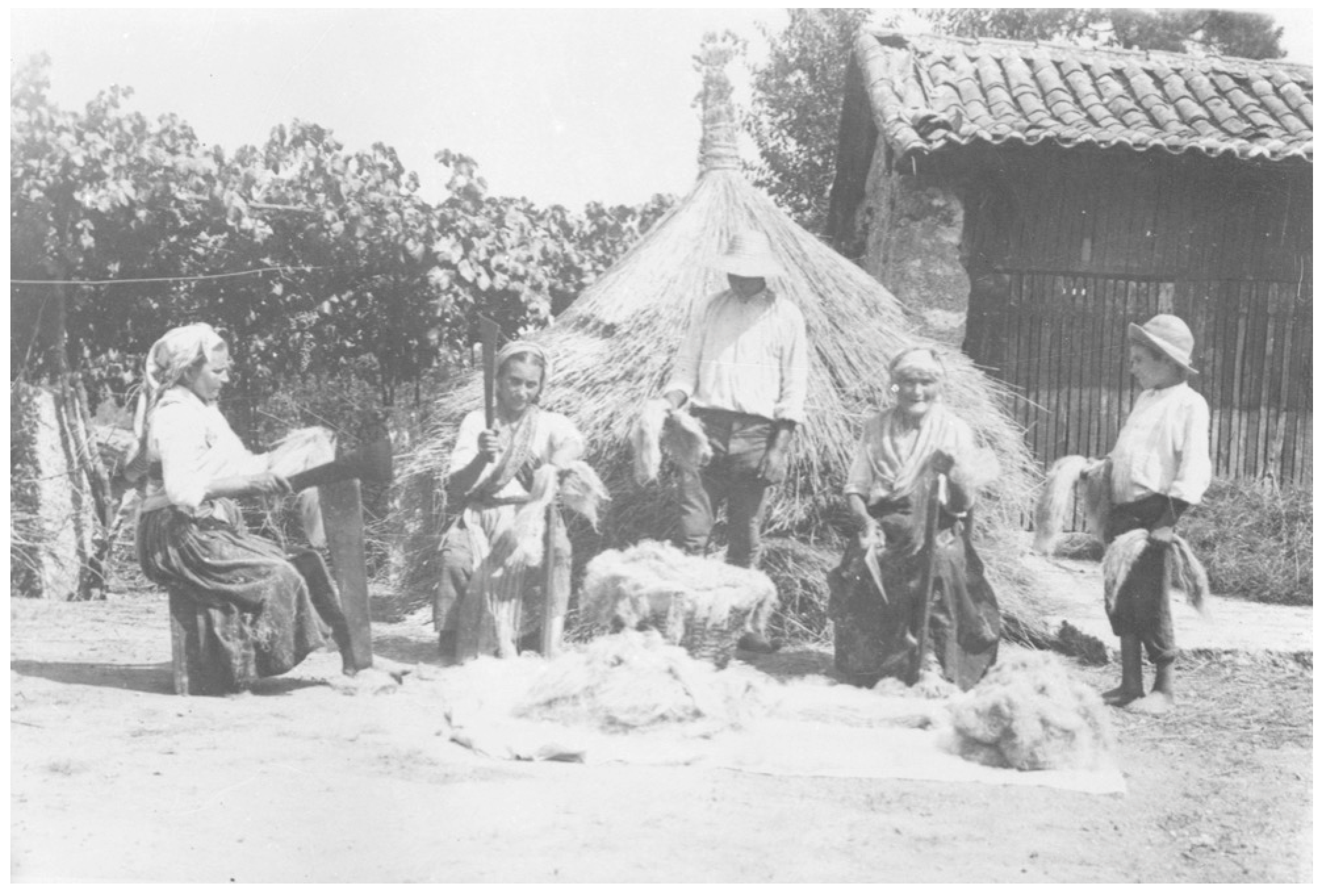
A further visual testament to these rural female practices is found in additional photographic records by Domingos Alves Machado from the early 20th century, which offer valuable insights into the rural past of the Minho region [
11] (
Figure 3). These images depict women engaged in linen preparation, capturing both the material reality of rural life and the fundamental role of women in sustaining this artisanal craft. Much like the Linen Yarn Contest promoted by the SMS in 1885 [
6,
9], these visual records underscore the historical significance of women’s work in spinning and weaving, standing in contrast to the advance of mechanisation and the socio-cultural changes that accompanied the transition to modernity and shaped the evolution of the textile industry in the Minho region.
Finally, documentation produced by the Centro de Interpretação—Museu do
Linho [
21] concerning the community of Cerva e Limões highlights the widespread presence of linen looms in local households, where it was rare to find a home without at least one loom. Initially symbolising a domestic obligation, this practice gradually evolved into a recognised profession, formalised with the founding of the Cooperativa Grupo de Tecelagem de Limões in 1986 [
21]. This case, alongside the examples presented by Fiadeiro [
20], illustrates a broader historical transformation throughout the Minho region. Women spinners, weavers and embroiderers, traditionally trained within family or community contexts, progressively entered new working environments, where ancestral knowledge was translated into professional trajectories. What was once confined to the domestic sphere expanded into cooperatives, workshops and local industries, becoming both a pillar of the regional economy and a key mechanism for cultural preservation.
4. Women’s Contribution to Northern Portugal’s Textile Industry: A Historical Perspective
Ancestral women’s textile knowledge, traditionally transmitted through oral and embodied practices within domestic and communal contexts, played a decisive role in the development of the textile industry in northern Portugal. This intergenerational transmission enabled women to occupy central positions across multiple stages of textile production and garment manufacture, particularly before the late-19th- and early-20th-century mechanisation processes [
17], which initiated a profound territorial and socio-economic reconfiguration, progressively distancing production from predominantly rural settings.
As noted by Nogueira [
17], women historically accumulated multiple social and productive roles, acting simultaneously as wives, mothers, caregivers, agricultural labourers, and factory workers. Before the advent of the Industrial Revolution and the introduction of steam-powered machinery, the textile sector was largely characterised by artisanal modes of production sustained by extensive networks of weavers, many of whom were rural women, frequently illiterate and earning low wages [
17]. Nogueira further observes that the feminisation of the textile industry accompanied the growth and proliferation of factories, reinforcing women’s numerical predominance within the sector.
In the context of the Vale do Ave, particularly in Guimarães, three interrelated factors underpinned the feminisation of textile factories: the perception of women as more compliant and manageable workers; the lower wages paid to women in comparison with men, which reduced production costs; and the recognition that women possessed superior technical knowledge of spinning and weaving, acquired through long-standing domestic and rural practice [
17]. Industrialisation nevertheless produced profound social transformations, including the depopulation of rural areas [
17] and the progressive masculinisation of industrial weaving roles associated with physically demanding labour [
16].
Within the textile industry of Guimarães, one of the most prominent industrial centres in northern Portugal, with a history extending over a century and a half, the participation of entire families is well documented, with women’s labour constituting an essential component of domestic production systems [
22]. Numerous authors corroborate the deep-rooted association between linen production and rural family economies in northern Portugal, where inherited wooden looms were widely used to produce goods for local industries and supplement household income [
8,
9,
10,
11,
14].
Despite its economic relevance, much of this domestic and informal labour remained undocumented. Textile work carried out within households was rarely recorded in accounting books, contracts, or commercial documentation. As Sequeira and Melo observe, “women’s labour constitutes a phenomenon that consistently eludes historical record, contributing to the persistent underrepresentation of women’s contributions within the textile sector” [
18]. Even when regulatory mechanisms such as the Carta de Exame (now the artisan’s licence) were enforced, property, looms, and professional recognition were almost exclusively attributed to male household heads, effectively erasing women’s labour from official records [
12].
Vaquinhas [
23] has similarly emphasised the extent to which institutional archives contributed to this erasure, producing forms of historical amnesia through absent or opaque documentation. Nevertheless, traces of women’s presence occasionally emerge in fiscal and legal documents, particularly in cases involving widows. Carvalho [
12] documents several examples drawn from the surety books of the Câmara da Vila de Guimarães (city hall) in 1715, which reveal the centrality of men in property ownership and family leadership, while simultaneously recording exceptional authorisations granted to widows through Cartas de Exame. These documents permitted women to continue spinning and weaving in place of deceased husbands, sons, or daughters, illustrating the conditional visibility of women’s labour within legal frameworks [
12]. A notable example appears in royal provisions issued by D. Maria I, granting Thereza Maria da Silva and her son Manuel José Teixeira the right to operate multiple looms formerly owned by the deceased Domingos Teixeira [
12].
The study of labour organisation during this period is further complicated by the emergence of craft guilds from the late 15th century onwards, which became firmly established throughout the 16th century [
1]. Within this system, the Carta de Exame functioned as a key regulatory instrument, invariably administered by male figures within the family unit. Over time, these regulatory practices were gradually incorporated into industrial structures, contributing to new models of labour organisation that only partially replaced earlier systems. The transition from domestic to industrial production was neither linear nor absolute. Manual looms and home-based production remained widespread in Portugal until the 1960s [
17].
The Industrial Inquiry—Factory Visits [
24], commissioned by government decree in 1881, further illuminates this transitional context. Although the inquiry omitted specific data on the linen and cotton industries in Guimarães, it reinforced the rural and domestic character of textile production, drawing attention to technological backwardness and precarious working conditions. In response to these omissions, reports prepared by Alberto Sampaio and Joaquim José de Meira for the Industrial Exhibition of Guimarães in 1884 offer a more detailed overview of the municipality’s industrial landscape [
13].
These reports emphasise women’s central role within the textile sector, which remained predominantly domestic during this period [
10,
18]. Linen spinning, for instance, is described as a home-based and overwhelmingly female activity. Rural women transformed this practice into a form of professional labour, gathering in collective evening sessions to process flax commissioned by industrial enterprises. Census data from 1878, as recorded in Sampaio and Meira’s report [
13], indicate that approximately 1559 women in the Minho region relied on this occupation, producing an average of 56 kg of thread per year and earning around 253 réis
5 per kilogram [
13].
Gradually, the production of twisted cotton threads began to replace traditional linen, altering the structure of the textile industry. Home-based production continued to rely heavily on women’s labour, with Dominican nuns in the Guimarães municipality also participating in thread preparation, bleaching, and market distribution. Although precise employment figures remain unclear, available records suggest that around 100 women were engaged in this manual labour, earning approximately 150 réis, supplemented by allowances for materials such as ashes and coal [
13].
Export-oriented textile production documented in the 1884 report [
13], including damask tablecloths, linen sheets and cloths, was supported by 692 looms operating across domestic workshops. Within this sector, women were primarily responsible for auxiliary tasks such as bobbin filling and dyeing. Of the 912 workers registered, 220 were women, earning average wages of 280 réis, with remuneration varying according to skill and workshop conditions [
13]. These data indicate an important structural transformation within Portugal’s export textile industry, as production increasingly shifted from domestic workshops to mechanised industrial facilities. In both contexts, however, large-scale loom operation was dominated by men, reinforcing a gendered division of labour that progressively marginalised women’s traditional expertise, a process described by Nogueira [
17] as central to the construction of ‘women’s work’.
Sewing and embroidery remained overwhelmingly female-dominated activities, encompassing the production of white garments, stockings, crocheted bedspreads, tablecloths, multicoloured embroidery, metallic thread work, and artificial flowers. According to the 1878 census, approximately half of the female population of Guimarães between the ages of 16 and 60 was engaged in such activities. Many worked on commission for shops, merchants, and industries, earning between 90 and 200 réis depending on the complexity of the work [
13]. The garment sector employed predominantly women, accounting for 94% of its workforce across six workshops, with wages ranging from 90 to 180 réis. Literacy was directly associated with higher earnings, as seamstresses who could read and write received better remuneration [
13].
The Industrial Exhibition of 1884 prominently showcased women’s labour in embroidery and ornamental textile production, recognising its exclusively female and domestically rooted character within the Guimarães region. Classified under Class 22, the exhibition featured 39 female exhibitors and received extensive press coverage. Newspapers such as Commercio do Porto, Commercio Portuguez, and Folha Nova praised the exceptional quality of the embroidery, frequently comparing it favourably with foreign examples and stressing the urgency of safeguarding this artisanal knowledge in the face of mechanisation and declining intergenerational transmission [
13].
Press accounts emphasised embroiderers’ technical mastery, patience, and dedication, portraying Guimarães embroidery
6 as a symbol of local cultural and economic identity. Contemporary articles described embroidery as “an auxiliary industry to the linen industry, as many hand towels, sheets, and pillows produced on the looms of the municipality are richly adorned with embroidery of rare perfection...”
7 [
13]. Statistical data included in the exhibition report indicate that embroidery-related activities employed approximately 747 women aged between 16 and 60, generating an annual value of 45 réis, while simultaneously calling for enhanced education and training to maintain competitiveness [
13].
Overall, the 1884 Industrial Exhibition report documents women’s numerical predominance within the textile sector, recording 2292 female workers and 120 girls across domestic and industrial settings, compared to 1250 men and 165 boys [
13]. Despite this dominance, a persistent gender wage gap consistently favoured male workers, even in unskilled positions, a pattern widely documented by several authors [
13,
16,
17].
Alves [
25] provides further statistical evidence regarding the cotton industry in the Vale do Ave between 1942 and 1951, highlighting the continued feminisation of the workforce. In 1941, the sector employed 28,232 women, including 1730 minors, compared to 15,107 men across 250 factories. By 1951, female employment had risen to 38,068 workers, maintaining numerical dominance despite increases in male employment [
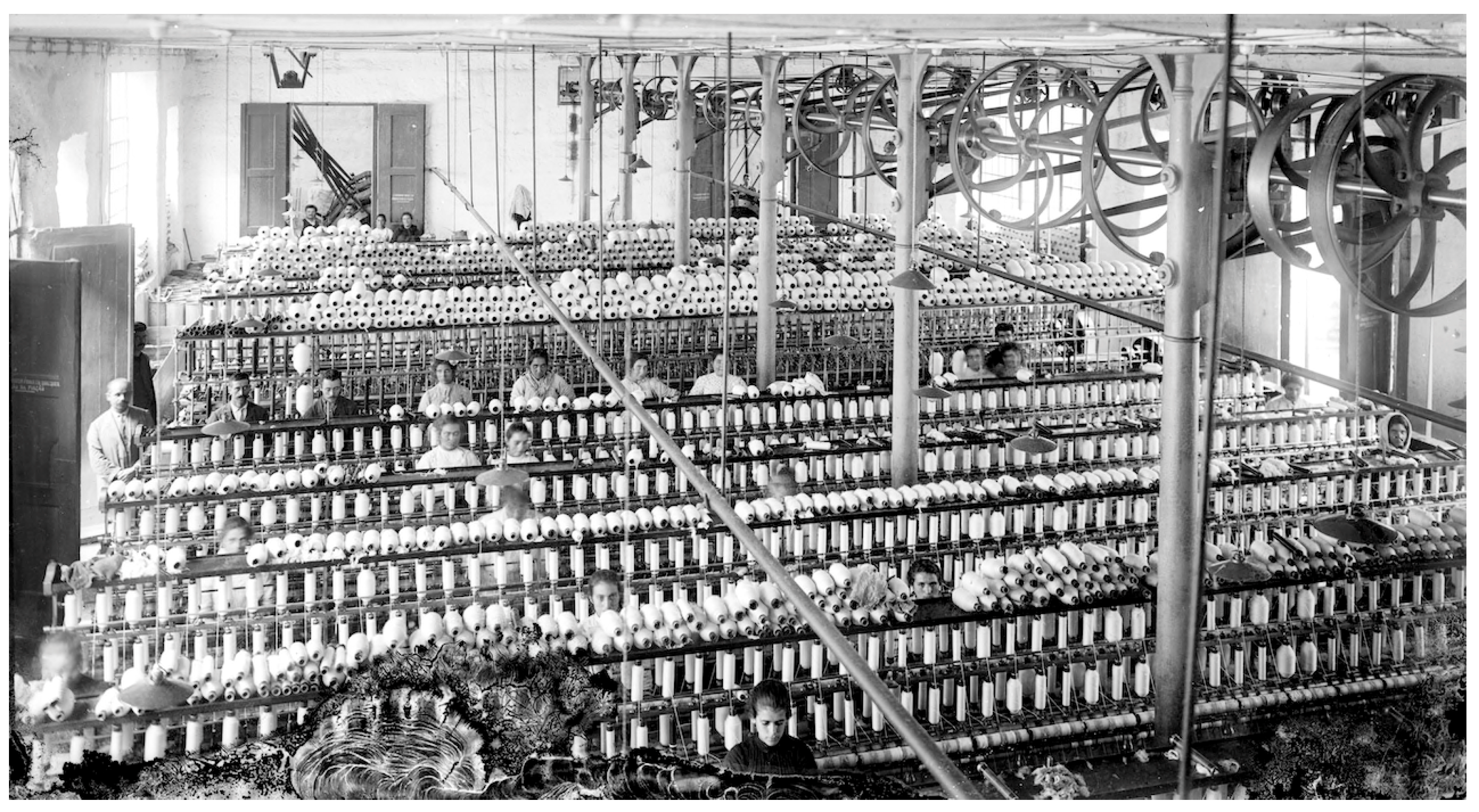
25]. Photographic records from Guimarães’ factory complexes visually corroborate this pattern (
Figure 4).
While linen remained strongly associated with Minho’s regional identity, colonial cotton increasingly supplemented or replaced it, reshaping the industry through technological innovation and expanded production capacity. Alves notes that crises affecting the Vale do Ave textile sector in the late 19th and early 20th centuries were exacerbated by national economic instability, trade imbalances and labour disputes over wages [
25]. Nevertheless, domestic loom production persisted across Guimarães’ parishes until the early 1970s, operating from homes, garages, workshops and small factories.
This historical panorama underscores the centrality of women’s labour to the development of Portugal’s textile industry, particularly in the Guimarães region, while also revealing the structural challenges in documenting and valuing this work. The historical invisibility of women’s contributions, often relegated to marginal press references or fragmentary records, stands in stark contrast to the decisive role played by ancestral female knowledge in shaping domestic economies, regional identities and industrial trajectories. As Nogueira [
17] has argued, the textile industry has long been feminised and continues to be so today, despite shifts in leadership structures and employment conditions. This theoretical perspective is reflected in contemporary statistical data, which confirms that such feminisation is not merely a historical legacy but a persistent reality. Indeed, data from Statistics Portugal [
26] indicate that women currently comprise 70% of the textile industry workforce, a figure that underscores both the historical continuity and the ongoing relevance of female labour within this sector.
Nevertheless, despite this overwhelming numerical presence in the modern industry, a significant gap remains in the recognition and visibility of women’s ancestral contributions to the historical construction of the Portuguese textile industry.
5. Ancestral Women’s Knowledge and Industry: A Legacy of Cultural Sustainability—Challenges and Opportunities
As previously mentioned, the transmission of ancestral female textile knowledge has shaped both the cultural identity and the industrial development of northern Portugal. Yet its persistent invisibility, rooted in scarce historical documentation and the systematic erasure of women’s roles, continues to hinder the preservation, transmission, and valorisation of these practices. This invisibility affects not only their recognition within historical and cultural narratives but also their integration into contemporary creative identities associated with Portuguese textile, fashion and design industries.
Ancestral textile techniques, including those examined in this study and the broader spectrum of Portuguese textile traditions, were fundamental to the construction and consolidation of the national textile industry, particularly in the northern regions of the country. Their incorporation into contemporary production systems presents significant challenges because it requires a careful balance between innovation and cultural preservation [
27]. Within this framework, it becomes necessary to critically reflect on the revaluation and reinterpretation of ancestral female textile knowledge, as well as on the transition from manual practices to automated or technologically mediated processes, while ensuring that these practices retain their cultural relevance. Although manual textile knowledge has been preserved through informal transmission across generations, its effective integration into modern fashion, textile and design industries depends on targeted initiatives capable of responding to evolving social and industrial demands.
The valorisation of ancestral female textile practices is therefore closely linked to the principle of cultural sustainability, understood as a mechanism that fosters meaningful connections between past and present. In this context, UNESCO identifies culture as a strategic dimension of the 2030 [
28] Agenda, particularly in relation to creative development. The UNESCO Convention for the Safeguarding of the Intangible Cultural Heritage [
6] recognises traditional craftsmanship as one of the domains requiring protection through preservation, valorisation and knowledge transmission, both in formal educational contexts and through the recognition of diverse cultural actors. This framework highlights women’s dual role as innovators and transmitters of textile knowledge systems, operating across both pre-industrial and mechanised modes of production. As UNESCO emphasises, women’s stewardship of intangible heritage contributes not only to cultural continuity but also to gender equity and cross-scale economic sustainability [
6].
The complexity of the concept of culture may be understood through its historical and contemporary dimensions. Following Morin, culture can be interpreted as a system of norms, symbols, myths and images intrinsically connected to multiple aspects of human life, transmitted, preserved and learned across generations [
29]. Within this perspective, the preservation of intangible cultural heritage, particularly knowledge, plays a fundamental role in the construction of individual and collective identities, whether of a people, an artist or a designer. This process is deeply connected to traditions, language and the geographical contexts in which such knowledge is embedded [
30].
Traditional craftsmanship, in this sense, is inseparable from the notion of territory, understood not merely as a geographical space but as a cultural construct shaped by social practices, knowledge transmission and historical adaptation [
31]. In the case of ancestral female textile practices in northern Portugal, this notion extends to encompass cultural heritage, popular cultures, identities and cultural diversity [
30]. This approach resonates with the theories of John Ruskin, a pioneer of heritage conservation, who defended the dialectical relationship between craftsmanship and industrialisation and emphasised the importance of sensory perception, manual skill and artistic mastery in preserving traditional techniques within modern production systems [
32]. Marques reinforces this understanding by addressing cultural heritage as comprising both material and immaterial dimensions [
33], while Martins conceptualises intangible heritage as a dynamic and evolving phenomenon, rooted in collective memory and continuously reshaped by the human condition [
5].
Within this conceptual framework, female textile knowledge, including spinning, weaving, embroidery and lacemaking, operates simultaneously as an economic livelihood strategy and a vehicle for intergenerational cultural continuity. Portugal encompasses a wide range of intangible traditional expressions across the mainland and island territories. Historically, oral culture predominated until the 13th century, when notarial practices emerged, and the first written records in the Portuguese language were produced [
33]. Despite the expansion of written documentation, artisanal knowledge continued to be transmitted predominantly through oral and embodied practices, frequently relegated to historical oblivion due to cultural, economic and technological transformations, as well as its strong association with women’s work [
34].
Examining the role of women in the historical, cultural, economic and technical development of the textile industry in northern Portugal allows for an understanding of the relationship between clothing, design and craftsmanship as a pathway for reintegrating cultural and symbolic values into contemporary society and fashion production [
34]. The invisibility of this knowledge not only compromises cultural memory but also marginalises women’s historical contributions to industrial development. During the 19th century, under increasingly rigid social norms, ancestral female knowledge was progressively redefined as domestic labour, in contrast to the prestige attributed to male knowledge associated with industrial production [
34].
In the Minho region context, specifically in the Vale do Ave, this domestication of technical skills was early institutionalised through the Escola Industrial e Comercial Francisco de Holanda
8 in Guimarães. Although founded in the mid-19th century, thus preceding the modern design movements, the school established a foundational precedent by segregating vocational curricula, effectively transforming traditional feminine crafts into a disciplined and specialised industrial workforce [
35]. By the 20th century, with the emergence of art and design institutions such as the Bauhaus, which profoundly reshaped global design methodologies, this pre-existing feminisation of textile work was intellectually codified. While women were already the backbone of the industry, these movements ensured that women were systematically channelled towards textile disciplines, systematising their trajectory under new pedagogical frameworks. The persistence of domestic connotations inherited from the previous century reinforced gendered discourses associating textile practices with attributes such as patience, obedience, delicacy, and submissiveness.
This educational structure in Guimarães represented the same phenomenon of gendered segregation that would later characterise the Bauhaus workshops. In both contexts, this division of labour provided the structural framework for a model of ‘modernisation’ that systematically relied on the subordination of female labour [
35]. At the Bauhaus, this exclusion was intellectually justified by design pioneers through the imposition of higher tuition fees for women and a pseudo-scientific restriction of their creative output to two-dimensional planes, specifically weaving, effectively barring them from three-dimensional architectural and industrial disciplines [
36]. While the feminisation of the textile industry in the Vale do Ave region was an earlier socio-economic phenomenon, driven by regional industrial needs, international pedagogical narratives subsequently contributed to legitimising the feminisation of textile education. This process ensured the continued marginalisation of women within the upper hierarchies of the textile industry [
17,
34], consolidating a system where technical education served to reproduce specific social and gendered destinies.
Despite enduring gaps in recognition, several initiatives have sought to address the historical, cultural, and social marginalisation of women’s textile knowledge. Collaborative efforts involving governmental institutions, museums, and artisan centres have played a significant role in this process. Among these initiatives is the Professional Training Centre for Craftsmanship and Heritage (CEARTE), established in 2017, which classifies, recognises and promotes various forms of craftsmanship, including spinning, weaving, embroidery and lacemaking, through training and cultural programmes [
37]. Complementary initiatives include the Programa Nacional Saber Fazer Portugal [
38], dedicated to safeguarding and sustaining artisanal production, and the Rota Saber Fazer [
39], which focuses on techniques specific to the Terra Quente Transmontana region.
9The preservation of ancestral textile knowledge is also sustained by communities and municipal cultural centres. The community of Cerva e Limões, in Ribeira da Pena, for example, independently develops museum activities dedicated to the preservation and dissemination of knowledge related to the linen cycle through the Centro de Interpretação Museu do Linho [
21]. Similar concerns are shared by cultural associations such as the Corredoura Folk Group, based in São Torcato, Guimarães, which documents and performs practices related to the linen cycle through initiatives such as the annual Linhal da Corredoura Festival [
40].
Beyond community-based initiatives, certain industrial practices have incorporated principles of intangible cultural sustainability into their production models. The Burel Factory [
41], founded in 1947 in Serra da Estrela, exemplifies the integration of craftsmanship, textile innovation and heritage preservation. By combining 19th-century looms with contemporary design and technological innovation, the company revitalises ancestral textile patterns while ensuring their transmission to new generations through master artisans [
41].
Another illustrative case is Terra de Sousa embroidery, a technique that emerged in the 19th century and was initially practised by noblewomen before being progressively disseminated among rural women. Transmitted primarily within village contexts to women who were often illiterate, this knowledge contributed to the consolidation of a domestic embroidery industry that remains active to this day. According to a census conducted in 2005, approximately 83% of the women in the region were involved in this activity [
42]. Closely connected to this technique, the establishment of Casa do Risco in Airães in 1997 marked the beginning of a systematic process aimed at refining the designs and patterns of Terra de Sousa embroidery [
42]. At the same time, efforts were undertaken to secure institutional recognition for the technique through CEARTE, supported by extensive historical research. Casa do Risco invested in developing technical solutions to ensure the accurate transfer of designs onto fabric. With the implementation of a plotter and the conversion of designs into DXF files, it became possible to digitise, create, and restore historical patterns using digital drawing technologies [
42]. This technological innovation improved both the precision and quality of embroidery designs while also enabling the recovery and long-term preservation of this heritage through the creation of a computerised archive. Furthermore, it facilitated the development of standardised designs for industrial and heritage institutions specialising in embroidery conservation. This case exemplifies how traditional female textile craftsmanship extends beyond its aesthetic and cultural value, incorporating technical, practical, and oral knowledge systems that both safeguard heritage and adapt to evolving socio-industrial contexts.
Within the framework of cultural sustainability and the growing demand for ethical and sustainable products, ancestral female textile knowledge has increasingly been mobilised within contemporary design practices. The Portuguese brand Marita Moreno, specialising in slow-fashion footwear and accessories, exemplifies this approach through a production model grounded in ethical principles, transparency, and social responsibility [
43]. In addition to prioritising nationally sourced raw materials, the brand incorporates traditional artisanal textiles from the Azores, produced by small cooperatives and family-run workshops. A distinctive feature of this practice is the explicit recognition of artisans and weavers certified by the Craft and Design Centre of the Azores (Centro de Artesanato e Design dos Açores—CADA), whose names are associated with the woven components used in each product, thereby reinforcing the visibility and value of individual craftsmanship [
44]. Beyond the safeguarding and reinterpretation of traditional practices, the brand aligns its activities with the United Nations Sustainable Development Goals, contributing in particular to SDG 8 (decent work and economic growth) and SDG 12 (responsible consumption and production) [
45].
The systematic documentation of textile techniques in northern Portugal provides a critical foundation for sustainable innovation in fashion and textile design, while simultaneously addressing historical gaps in the recognition of women’s expertise. In this context, training initiatives and collaborations between artisans and designers offer viable pathways for empowering women to safeguard intangible heritage while fostering innovation [
34]. Notable examples include Helena Cardoso’s collaborations with rural cooperatives such as Cooperativa Capuchinhas and initiatives like Casa da Lã das Terras de Basto, where female artisans transform local wool into contemporary textiles using manual looms [
46,
47]. These initiatives demonstrate how strategic partnerships can bridge heritage preservation and renewal of textile and cultural heritage.
While the initiatives described above represent significant and commendable efforts to preserve and valorise ancestral female textile knowledge, scholarship on cultural sustainability in fashion cautions that processes of classification, certification, and digitalisation are rarely straightforward or uncontested [
27]. The effective preservation of craft-based cultural heritage requires more than the documentation of techniques. It also depends upon conserving and regenerating the cultural beliefs and symbolic meanings embedded within traditional practices. However, such conditions are not always guaranteed by institutional frameworks and may be compromised when preservation is driven by external or commercial agendas [
27]. In the context of the initiatives examined, from the digitisation of embroidery designs at Casa do Risco to the certification frameworks promoted by CEARTE, these dynamics warrant ongoing critical attention, particularly regarding the extent to which female artisans retain meaningful agency over the uses and representations of their knowledge. Acknowledging these complexities does not diminish the value of preservation efforts; rather, it reinforces the need for participatory and community-centred approaches in which communities and knowledge holders occupy a central role, ensuring that traditional craft practices contribute effectively to sustainable development and cultural resilience.
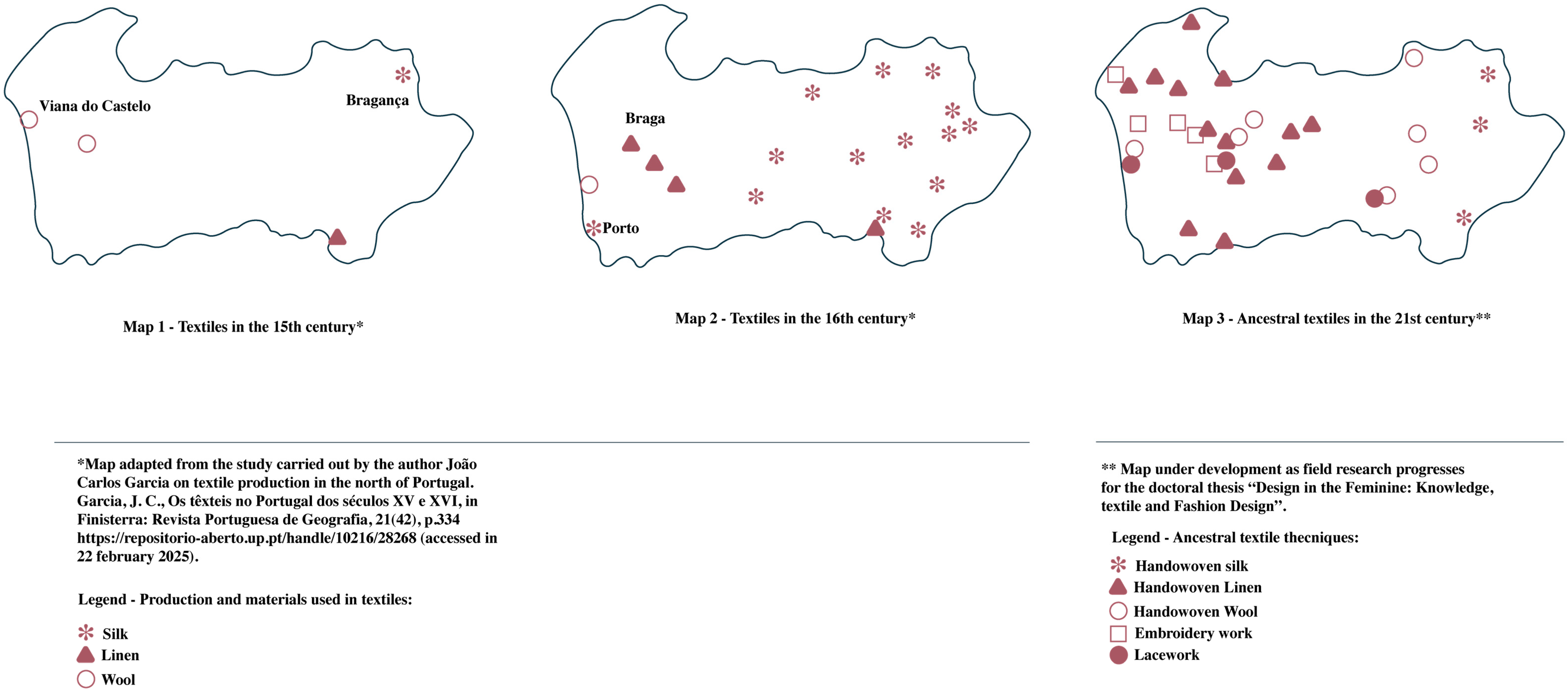
To deepen knowledge of female textile ancestry in northern Portugal, a territorial mapping project is currently underway as part of this doctoral research, “Design in the Feminine: Knowledge, Textile and Fashion Design”. By combining ethnographic methodologies with community engagement, including semi-structured interviews, informal talks, and participatory workshops, the study facilitates a nuanced documentation of techniques that remain in practice. These ancestral methods are increasingly gaining cultural and institutional recognition from entities such as CEARTE and Saber Fazer Portugal, further validating the necessity of this systematic mapping.
By contrasting historical data with contemporary evidence, it is possible to construct a broader understanding of female textile ancestries in northern Portugal.
Figure 5 presents a comparative reading of 15th- and 16th-century maps (Maps 1 and 2), which document textile commercial transactions in mainland Portugal [
48], alongside the ongoing territorial mapping developed within the doctoral project (Map 3). This comparative approach highlights not only the geographical persistence of ancestral techniques but also the cultural and historical relationships that have shaped the distribution of textile knowledge over time. The juxtaposition of these maps suggests a continuity grounded in artisanal labour, processes of modernisation, and the symbolic dimensions embedded in textile practices. Moreover, the analysis of historical records (Maps 1 and 2) demonstrates that textile regionalisation extends beyond strictly industrial or commercial frameworks, reflecting instead the circulation of rural and ancestral knowledge associated with production systems and socio-cultural modes of life. The 16th century emerges as a particularly significant period for the development of textile practices, notably through the consolidation of the silk industry in Bragança, which, supported by governmental incentives and the establishment of the Royal Silk Filatures between the 15th and 18th centuries [
48], forged a labour and cultural identity that persists to the present day.
The analysis of Map 3 further reveals both the historical persistence and the contemporary transformation of women’s textile knowledge in northern Portugal. It draws attention to two interrelated phenomena: the endurance of regional textile production techniques and the close relationship between women’s artisanal practices and gendered craft specialisations, especially embroidery and lacemaking, which constitute tangible expressions of ancestral female expertise. This multifaceted panorama, encompassing both commercial techniques linked to looms, weaving and decorative textile practices, provides a basis for articulating three central critical questions: 1. It underscores the persistent lack of historical documentation concerning female ancestral textile knowledge related to textile production, a gap frequently identified by numerous authors. 2. It reveals the systematic undervaluation and limited recognition of this knowledge, particularly decorative textile techniques, which nevertheless form an integral part of Portugal’s economic textile landscape. 3. It highlights the erasure of the role of northern Portuguese women in the historical construction of the national textile industry, which has long served as a reference point both nationally and internationally. Taken together, an integrated reading of the three maps reinforces the notion of continuity in the transmission of knowledge, while simultaneously exposing enduring gaps in the recognition of female ancestral textile expertise and emphasising the need to safeguard this intangible cultural heritage of Portuguese textile traditions.
Considering the historical and cultural significance of ancestral female textile knowledge in northern Portugal, the development of effective preservation and valorisation strategies becomes imperative. The continuity of these practices depends on approaches that reconcile tradition and innovation, integrating ancestral techniques into contemporary design and sustainable production chains without compromising their authenticity. Collaboration between artisans, designers, cultural institutions and educational bodies emerges as a critical mechanism for ensuring the transmission of this knowledge to future generations. By acknowledging women’s contributions to the historical construction and ongoing evolution of the textile industry, the centrality of cultural sustainability is reinforced, alongside the need to broaden institutional and academic spaces dedicated to the recognition and valorisation of this knowledge. Such recognition reaffirms the relevance of ancestral female textile expertise within the global contexts of fashion, design, the textile industry and cultural heritage. Moreover, the consolidation of this recognition contributes to strengthening the identity of Portuguese design and textiles on an international scale, restoring their historical, cultural and symbolic value and positioning them as distinctive references within the global landscape.
6. Future Perspectives and Concluding Remarks
The valorisation of ancestral female textile knowledge in Portugal faces significant challenges while also presenting concrete opportunities for its preservation, celebration, and reinterpretation. In this context, several future directions may be identified to ensure the continuity and relevance of this intangible cultural heritage.
Specifically, the preservation of female textile expertise gains strategic relevance through its integration into cultural and creative tourism. Rather than a static display, this heritage is “produced” as a contemporary experience, where traditional knowledge becomes a meaningful asset for engagement [
49]. Its value for heritage tourism lies in fostering emotional and performative connections between visitors and the territory’s identity, turning tourism into a platform for the social recognition of marginalised narratives [
50]. A practical example is the Guimarães Embroidery. By transitioning from a domestic craft to a certified product featured in design collections, cultural events, and schools, this technique has become a core identity asset for Guimarães. This shift ensures the craft’s economic viability and positions it as a hub for creative tourism, where visitors seek the authenticity of the ‘living history’ embedded in each stitch. Through initiatives, residents and visitors coexist in contemporary activities that celebrate and renew this ancestral craft.
One particularly promising pathway to sustain these dynamics lies in the integration of ancestral knowledge into fashion and textile design education. The inclusion of these techniques within academic curricula would not only safeguard and promote their legacy but also facilitate their adaptation to contemporary industrial demands. Promoting the teaching and practice of female textile techniques and ancestral knowledge may contribute to the consolidation of a design approach in which tradition engages in dialogue with modernity. This cross-disciplinary interaction between design and culture enables the construction of cultural and historical narratives that broaden students’ understanding of sustainability, beyond its environmental dimension, and innovation within the design, textile, and clothing sectors. The development of partnerships between artisans, designers, and educational institutions constitutes an effective strategy for linking empirical knowledge with innovation. The case studies presented in this article illustrate how such alliances can strengthen the textile industry without compromising cultural authenticity. Building upon this foundation, these collaborations foster the cultural valorisation of women’s ancestral textile knowledge, reinforcing its role within the sector’s identity. This dynamic shapes not only the aesthetic evolution of textile design but also the development of culturally and environmentally sustainable alternatives. Considering these impacts, it becomes essential to examine how such practices may be systematically integrated into contemporary production chains, ensuring that tradition and innovation coexist.
The integration of ancestral knowledge within the modern textile industry and emerging technologies, therefore, requires further investigation. There remains a lack of in-depth studies addressing the impact of ancestral textile knowledge on production chains and its potential application to contemporary challenges such as sustainability and ethical production. In addition, more detailed analyses are needed regarding educational methodologies and preservation programmes that integrate these techniques into modern fashion, design, and textiles curricula, fostering dialogues beyond the classroom to include communities, cultural centres, and creative heritage perspectives.
Regarding the strengthening of women’s roles, gender equity within the textile and fashion design sectors, and the historical recognition of women’s labour in the textile industry, it is essential that processes of valorisation be reinforced, particularly through public initiatives. The United Nations, in emphasising the importance of intangible heritage through the Convention for the Safeguarding of the Intangible Cultural Heritage [
6], underscores the need for measures that ensure the recognition and valorisation of knowledge transmitted by women throughout history. Although culture is not explicitly listed among the 17 Sustainable Development Goals (SDGs) [
45], it is addressed indirectly within several of their targets. The 2030 Agenda positions culture as a central dimension of sustainability, with UNESCO advocating for locally adapted cultural frameworks. These recommendations stem from the recognition that sustainable development strategies must be people-centred, drawing upon cultural approaches that, due to their humanistic and anthropological foundations, naturally foster a sense of belonging, individual and collective creativity, and the participation of diverse actors in support of sustainability. Aligning such strategies with the SDGs, particularly SDG 4 (Quality Education), SDG 5 (Gender Equality) and SDG 10 (Reduced Inequalities), can enhance the visibility of these practices, promote the recognition of ancestral female knowledge and facilitate its integration into contemporary textile and clothing markets.
The institutional and cultural valorisation of ancestral female textile knowledge, viewed through the lens of intangible cultural heritage, must be strengthened through policies that recognise it as a fundamental component of Portuguese identity. Although UNESCO has established guidelines for the promotion of intangible heritage, the absence of textile knowledge from the official list of Portuguese intangible cultural assets reveals a significant gap that remains to be addressed. As noted at the outset of this article, no textile practice is currently included in the national inventory of intangible cultural heritage for safeguarding. Programmes such as Saber Fazer Portugal, initiatives aimed at certifying artisanal techniques promoted by CEARTE, and the work carried out by various conservation centres and municipal museums nevertheless represent important steps towards addressing this omission.
Finally, this research demonstrates that female textile knowledge in northern Portugal has played an essential role in the construction of the national textile industry and continues to represent a valuable resource for cultural sustainability and innovation within the textile and design sectors. However, the historical invisibility of these contributions, long confined to the domestic sphere and inadequately documented in formal records, remains a significant obstacle to their full recognition. Within this context, the integration of ancestral knowledge into contemporary industry must be approached with care, ensuring that the modernisation of production processes does not lead to the erasure of traditional practices or the symbolic meanings embedded within local cultures. As emphasised by d’Oliveira Martins [
5], practices such as spinning, weaving, and embroidery, transmitted across generations, do not merely constitute a set of techniques but rather embody a complex system of knowledge, culture, and identity that must be remembered, celebrated, and safeguarded.
The mapping of ancestral female textile techniques currently underway within this investigation reveals the persistence of historical cultural patterns and underscores the need to expand knowledge of Portuguese design and textiles. In this light, this research emphasises the necessity of preserving, transmitting, and recognising the intangible cultural heritage associated with women’s textile knowledge as a fundamental act of historical and cultural justice. By consolidating this knowledge as a strategic element within the textile and fashion sectors, opportunities emerge to deepen cultural and creative connections, promoting a distinctive identity grounded in cultural sustainability and artisanal innovation.
The valorisation of ancestral female textile knowledge extends beyond the preservation of historical memory, the recognition of women’s expertise, and the acknowledgement of their foundational role in the textile industry; it emerges as a holistic paradigm of sustainable development (cultural, social, and environmental) that strengthens local economies, advances gender equity, and forges a distinctive textile identity capable of bridging tradition and innovation. By reaffirming the significance of this knowledge system, the present study identifies future pathways for its continuity, celebration, and creative reinterpretation. Ultimately, it demonstrates that recognising women’s ancestral textile knowledge is essential not only for preserving Portugal’s cultural heritage but also for fostering socially and culturally sustainable futures through dialogue between the textile, fashion and cultural sectors.