Review

Co-Creation of Immersive Learning for Cultural Heritage Education: A Scoping Review

1
Independent Researcher, Melbourne, VIC 3000, Australia
2
School of Art and Design, College of Creative Arts, Design and Humanities, Adelaide University, Adelaide, SA 5005, Australia
*
Author to whom correspondence should be addressed.
Heritage 2026, 9(5), 192; https://doi.org/10.3390/heritage9050192
Submission received: 1 April 2026 / Revised: 4 May 2026 / Accepted: 12 May 2026 / Published: 15 May 2026
(This article belongs to the Section Cultural Heritage)

Abstract

Immersive technologies—such as virtual reality (VR), augmented reality (AR), mixed reality (MR), and extended reality (XR)—are increasingly adopted in cultural heritage settings to support education, public engagement, and digital preservation. This scoping review systematically maps existing research on immersive learning within cultural heritage contexts, identifying major trends, pedagogical approaches, and reported outcomes. Following the PRISMA-ScR framework, nineteen studies were selected from 235 publications published between 2016 and 2025 across four databases: ACM Digital Library, Web of Science, ProQuest, and Scopus. Findings reveal a predominant focus on enhancing learner motivation, engagement, and the perceived authenticity of immersive experiences. However, empirical validation of learning outcomes—particularly regarding sustained knowledge retention, critical reflection, and inclusive participation—remains scarce. Persistent gaps are also evident in accessibility and scalability, alongside ethical concerns related to cultural sensitivity, power asymmetries, and the representation of diverse heritage voices. By foregrounding participatory and co-creation approaches, this review highlights how collaborative design processes can enhance learner engagement and support the sustainable digital preservation of cultural heritage.

1. Introduction

According to the 2003 Convention for the Safeguarding of the Intangible Cultural Heritage and the 1972 Convention Concerning the Protection of the World Cultural and Natural Heritage, cultural heritage encompasses both tangible artefacts passed down through generations and intangible practices, expressions, and knowledge that shape community identity and continuity [1,2]. The core function of cultural heritage education is to safeguard this heritage while contributing to broader social goals—enhancing cultural identity, fostering social cohesion, and promoting sustainable development [3]. Beyond protection, digitization has become a key component of heritage practice. Research suggests that digitization not only contributes to heritage preservation but also extends the social significance of cultural heritage through digital mediation, participation, and experiential engagement enabled by interactive technologies [4].
Amid this wave of digital transformation, immersive learning has emerged as a pedagogical approach that integrates technological innovation with human experience, drawing upon experiential and constructivist learning theories [5,6]. In the context of cultural heritage education, immersive environments allow learners to participate in multisensory and situated experiences [7]. Such experiences can enhance learners’ motivation for active learning, emotional connection, and long-term knowledge retention [8]. Systematic reviews also highlight the growing adoption of immersive technologies in museums and cultural heritage education, identifying virtual reality exhibitions, augmented reality storytelling, and gamified learning as key strategies [9,10,11]. However, technological innovation alone does not guarantee meaningful learning [12,13], as effective immersive heritage education requires the integration of ethical, educational, and community perspectives [14,15,16,17].
Information and communication technology (ICT) supports this integration by enabling multi-perspective representation and cross-media interaction [18,19]. Building on this foundation, immersive technologies—virtual, augmented, mixed, and extended reality—have further expanded the scope of cultural heritage education. When carefully designed, such forms of digital mediation can enhance accessibility and foster empathy across diverse audiences [20,21]. Yet sustainable digital heritage education also depends on the integration of ethical, educational, and community perspectives from the outset [12,22].
To achieve this integration, co-creation has been widely recognised as a collaborative approach that aligns technological development with human-centred learning and cultural sustainability. Rooted in participatory and design-led traditions [23,24], co-creation emphasises shared authorship, reciprocity, and dialogue among educators, learners, technologists, heritage professionals, and communities. In cultural heritage education, co-creation supports the integration of local and historical knowledge into digital design, positioning participants as active contributors. Pedagogically, co-creation aligns with experiential learning paradigms that view participation itself as a form of learning, transforming learners from recipients of information into active producers of knowledge and cultural interpretation. Empirical studies in the heritage and museum sectors demonstrate that such participatory processes can enhance public engagement, empathy, and a sense of belonging to cultural content [25,26].
However, research on co-creation in immersive heritage learning remains fragmented in both conceptual use and methodological approach. Related terms—such as co-design, participatory design, user-centred design, and human-centred design—are applied inconsistently across studies. These approaches differ in participation depth, distribution of decision-making power, and stages of involvement, but such differences are rarely made explicit. As a result, differences in how participation is defined and implemented limit comparison across studies.
This study treats co-creation not simply as a methodological label but as an analytical lens for examining participation in immersive heritage learning. Participation is considered across three interrelated dimensions: stakeholder involvement, the distribution of decision-making, and stages of participation. These dimensions provide a basis for distinguishing how co-creation-related concepts are applied across studies and for interpreting different participatory structures. Key conceptual definitions and operational interpretations used in this study are provided in Appendix A.
A scoping review is used to examine these differences and to analyse how participatory approaches are applied across existing studies. Unlike systematic reviews that focus on effectiveness, this method is better suited to contexts where concepts overlap and evidence is unevenly distributed [27,28]. The review maps the application of co-creation-related approaches in immersive heritage education, focusing on participation structures, stakeholder roles, and decision-making processes.
This scoping review aims to explore how co-creation has been applied in the development of immersive learning for cultural heritage education. To achieve this, the following research questions are addressed:
  • What types of immersive learning projects have been developed using co-creation approaches for cultural heritage education?
  • To what extent and in what ways are learners and other stakeholders involved in the participatory design process?
  • What are the reported co-creation approaches and frameworks in this context?
This review highlights the role of co-creation in shaping immersive heritage learning and outlines different forms of participation observed across studies, providing a basis for future research and design.

2. Materials and Methods

2.1. Scoping Review Framework

This scoping review was conducted in accordance with the Preferred Reporting Items for Systematic Reviews and Meta-Analyses extension for Scoping Reviews (PRISMA-ScR) guidelines, and the checklist is provided in the Supplementary Materials. The review aims to systematically map the application of co-creation approaches in the development of immersive technologies for cultural heritage education [27]. This methodology was selected for its suitability in identifying key concepts, types of evidence, and research gaps in this broad and emerging field. The review followed the five-stage framework developed by Arksey and O’Malley [28]: (1) identifying the research question; (2) identifying relevant studies; (3) study selection; (4) charting the data; and (5) collating, summarising, and reporting the results.
In this study, the scoping review is used not only for mapping existing research but also to support an analytical examination of participation. The analysis is guided by three dimensions, namely stakeholder involvement, distribution of decision-making power, and stages of participation. These dimensions are used to compare and interpret co-creation practices across studies.

2.2. Eligibility Criteria

The inclusion criteria for this scoping review were guided by the commonly used Population–Concept–Context (PCC) framework (Table 1), as recommended by the Joanna Briggs Institute [29]:
Population: Any population engaged in cultural heritage education, including formal and informal learners, educators, heritage professionals, technologists, and community participants. Studies were included if they addressed learning processes, pedagogical practices, or stakeholder collaboration within cultural heritage contexts. Research that explored the perspectives or experiences of key stakeholders involved in the design, implementation, or use of immersive technologies was also eligible, recognising their central role in shaping the co-creation process.
Concept: Studies that adopted or discussed co-creation approaches—including participatory design, co-design, user-centred design (UCD), human–computer interaction (HCI) methods, co-production, or other participatory frameworks that engaged people in the development, adaptation, or evaluation of immersive technologies for cultural heritage education—were considered. Both empirical and design-based studies were considered, provided they described a participatory process beyond simple user testing or consultation. These concepts were examined within a shared analytical framework of participation, which enabled a consistent comparison across studies.
Context: Any learning or educational setting related to cultural heritage, encompassing individual or group learning in both formal (e.g., classrooms, universities, museums, and galleries) and informal environments (e.g., community heritage sites, tourism, or digital heritage projects). This broad inclusion sought to capture how co-creation unfolds across diverse social and institutional learning environments.
Exclusion criteria comprised:
  • Studies describing immersive technology applications without substantive co-creation processes.
  • Non-peer-reviewed publications.
  • Publications not available in English.
The publication timeframe (2016–2025) was selected to capture recent developments in co-creation practices within immersive cultural heritage education, reflecting the period in which immersive technologies became increasingly integrated into participatory and design-led research. Screening was conducted in two stages (title/abstract and full text) according to these criteria, with disagreements resolved through consensus among the reviewers. No protocol was registered for this scoping review.

2.3. Literature Search

A comprehensive search was conducted in September 2025 across four major databases selected for their coverage of technology, education, and heritage studies: Scopus, Web of Science, ACM Digital Library, and ProQuest. The search strategy was built upon the PCC framework and consisted of the following components:
Search Concepts & Keywords: The strategy integrated three key concept groups:
Co-creation Approaches: “human centred design” OR “human centred design” OR “user-centred design” OR “user-centred design” OR “co-creation” OR “co-design” OR “co-production”.
Cultural Heritage Education: “cultural heritage education” OR “heritage education”.
Immersive Technologies: “immersive technology” OR “technology” OR “AR” OR “VR” OR “XR”.
Search Syntax: Keywords within each concept group were combined with the Boolean operator OR. The three concept groups were then intersected with AND to form the final search string.
Platform Specific Adaptation: The search syntax was tailored to each database’s protocol (e.g., using TITLE-ABS-KEY in Scopus and ab,ti() in ProQuest). The complete search strategy for the Scopus database serves as a representative example:
TITLE-ABS-KEY (“human centred design” OR “human centred design” OR “user-centred design” OR “user-centred design” OR “co-creation” OR “co-design” OR “co-production”) AND TITLE-ABS-KEY (“cultural heritage education” OR “heritage education”) AND TITLE-ABS-KEY (“immersive technology” OR “technology” OR “AR” OR “VR” OR “XR”)

2.4. Study Selection

A search was conducted in September 2025. The search strategy and eligibility criteria were applied. Citations from the search were screened according to these criteria. All identified records were imported into reference management software, Covidence, and duplicates were removed. Two reviewers independently screened titles and abstracts against the inclusion criteria. Full-text screening was conducted in the same manner, with discrepancies resolved through discussion.

2.5. Data Extraction and Synthesis

Data from all included studies were systematically extracted to capture key information, including study objectives, participant composition, application contexts, co-creation or participatory design approaches, immersive technologies employed, data collection and analysis methods, and main findings.
As this scoping review aimed to map and compare existing evidence rather than assess methodological quality, no formal quality appraisal was conducted. All data were coded and charted using a standardised extraction sheet, following the JBI Manual for Evidence Synthesis [29] and PRISMA-ScR [27] guidelines. In addition, a descriptive assessment of key methodological characteristics, such as the reporting of participant roles and stages of participation, was undertaken to support the interpretation of participation patterns.
Extracted data were narratively synthesised into three analytical dimensions:
  • Types of immersive technologies and learning projects.
  • Stakeholder involvement patterns and design frameworks.
  • Co-creation methodologies and emerging trends.
The classification of participation patterns was conducted by the first author and independently reviewed by the second author, based on the analytical framework and evidence extracted from the included studies. Discrepancies were discussed and resolved through consensus to ensure interpretive consistency. Given the interpretive and qualitative nature of the synthesis, no formal inter-coder reliability statistic was calculated.
Extracted data were narratively and comparatively synthesised to examine patterns across studies. Findings were presented through integrated tables and figures to illustrate the diversity and complexity of co-creation practices in immersive cultural heritage education.
In this review, “Serious Games” were operationally classified as a technology type (Technologies) to ensure consistency in the analysis of immersive applications.

3. Results

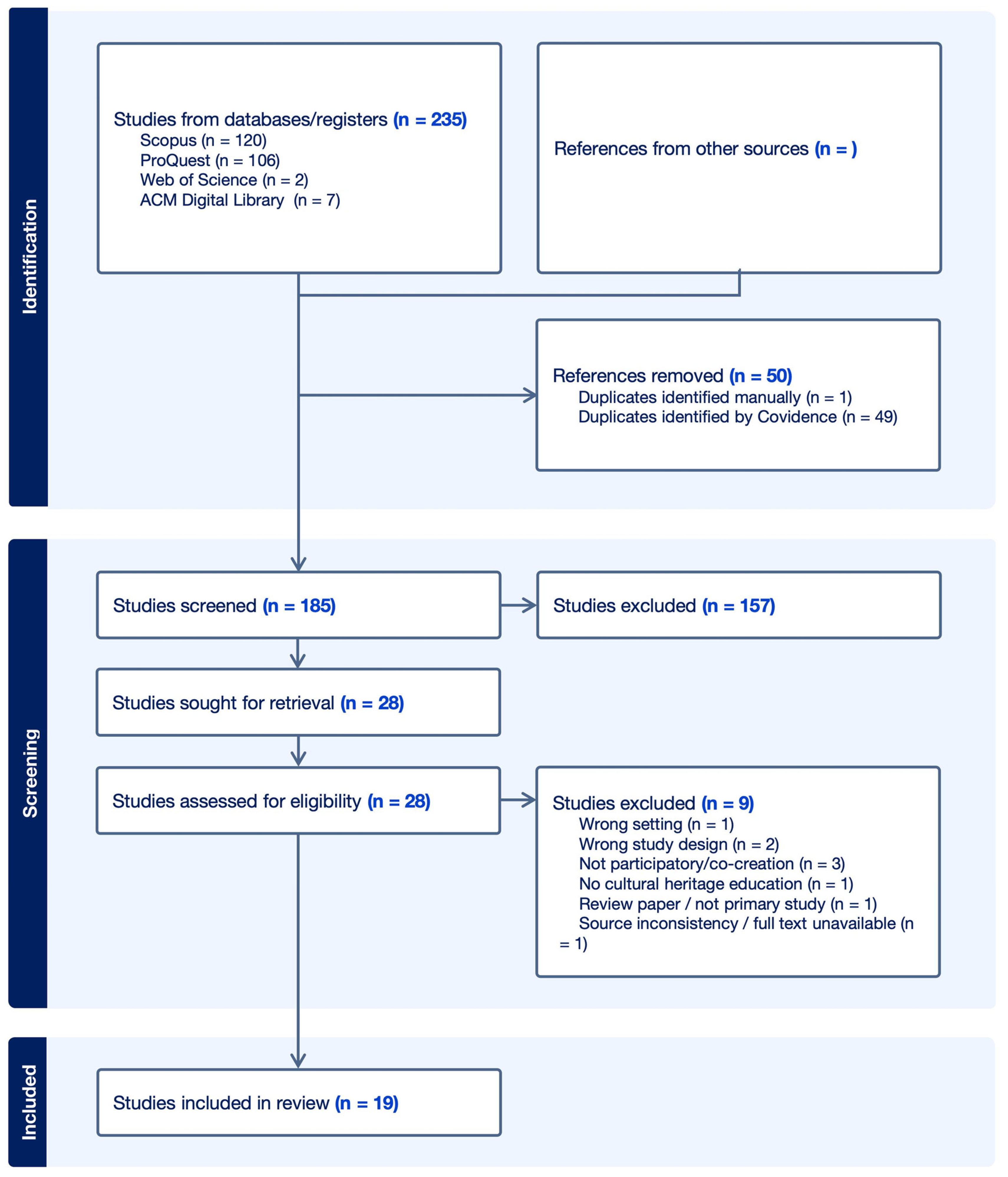
The search strategy yielded 235 records across all databases. Following deduplication, 185 unique records underwent title and abstract screening. Twenty-eight full-text articles were retrieved for detailed assessment. Nine articles were subsequently excluded due to inappropriate setting, study design, or insufficient co-creation focus. Inter-rater agreement reached 85.9% (Cohen’s Kappa = 0.55), which corresponds to moderate agreement beyond chance [30]. The final review included 19 publications (Figure 1).

3.1. Study Characteristics

Publications spanned from 2016 to 2025 (Table 2), with observable temporal clustering: six studies (32%) appeared between 2016 and 2020, while 13 studies (68%) were published between 2021 and 2025; the peak was observed in 2025 (n = 6, 31.6%). Geographically, studies originated from 12 countries. Europe dominated (n = 9, 47%), with Italy contributing five studies (27%). Asian research represented 27% (n = 5), predominantly from China (n = 4, 21%). Latin America contributed three studies (16%), while North America and international collaborations each contributed one study (5%).
The corpus comprised 14 journal articles (74%) and five conference papers (26%). Methodologically, qualitative approaches dominated (n = 8, 42%), followed by mixed methods (n = 7, 37%) and quantitative designs (n = 4, 21%). All studies employed multiple data collection methods, utilising between two and six distinct approaches per study (median = 4).
Sample sizes were reported in 15 studies (79%), ranging from 6 to 179 participants. Eight studies (42%) involved fewer than 30 participants, six studies (32%) reported 31–60 participants, and one study (5%) exceeded 60 participants. Four studies (21%) did not report sample sizes.

3.2. Immersive Technologies and Applications

Table 3 summarises the distribution of immersive technologies and their application contexts across the 19 included studies. Virtual reality (VR) appeared in 14 studies (74%), followed by augmented reality (AR) in 9 studies (47%), extended reality (XR) in 2 studies (11%), and mixed reality (MR) also in 1 study (5%). In addition, five studies (26%) integrated game engine technologies within immersive systems. Beyond these core modalities, a variety of complementary technologies were identified, including 360° video and panoramic capture [31,32,33,34], 3D modelling, scanning, and printing [33,35,36,37], photogrammetry [38], terrestrial laser scanning (TLS) [34], and motion capture [39].
In terms of application contexts, heritage sites and community-based settings were most frequently represented (n = 12, 63%), while museum and exhibition environments were discussed in 11 studies (58%), and formal educational institutions appeared in 6 studies (32%). Several studies addressed more than one setting, reflecting the overlapping nature of cultural, educational, and community applications.

3.3. Stakeholder Participation Patterns

The analysis focuses on stakeholder involvement, decision-making processes, and stages of participation to examine patterns of participation across studies. There were notable differences in the participatory methods reported across the included studies. Prototyping was the most frequently employed across the cases (n = 18, 95%), followed by user testing (n = 14, 73%), observations (n = 13, 68%), interviews (n = 13, 68%), and surveys or questionnaires (n = 12, 63%). Fewer studies used archival research (n = 5, 26%) or focus groups (n = 4, 21%), while document or thematic analysis appeared in only three studies [33,35,40]. With respect to temporal integration, stakeholder collaboration occurred in all studies during the preliminary exploration or needs assessment phase (n = 19, 100%), followed by the design and development phase (n = 18, 95%), and the evaluation or testing phase (n = 17, 90%). All the studies (n = 19, 100%) integrated stakeholders across multiple stages, indicating that participation was often embedded throughout the project lifecycle rather than confined to a single design phase.

3.4. Co-Creation Approaches and Frameworks

As summarised in Table 3, the reviewed studies adopted diverse methodological frameworks to guide participatory and co-design processes. Participatory Design was the most frequently reported approach (n = 9, 47%), followed by Human-Centred or User-Centred Design (HCD/UCD) (n = 7, 37%) and Co-design (n = 7, 37%). The explicit term “Co-creation” appeared in only two studies [41,42]. Overall, more than half of the studies (n = 10, 53%) referenced participatory or user-centred approaches without specifying an underlying theoretical framework.

4. Discussion

This scoping review examined how co-creation has been applied in the development of immersive learning for cultural heritage education between 2016 and 2025. The 19 included studies (Table 2) collectively mapped a diverse landscape of technological configurations, participatory strategies, and stakeholder compositions. Over time, co-creation has become increasingly recognised as an essential approach in human–technology interaction design for cultural heritage learning. However, this recognition remains uneven across studies, motivating the following analysis of technological diversity.
In this study, co-creation is treated not only as a participatory method, but also as a value-oriented framework through which decision-making is redistributed and immersive technologies are positioned as mediating tools in cultural heritage learning.

4.1. Diversity of Technologies and Design-Led Innovation

The landscape of immersive cultural heritage education reveals a gradual shift from technology-driven implementation toward design-led innovation, emphasising pedagogical objectives and stakeholder engagement [31,40,42]. Rather than deploying immersive technologies as standalone solutions, recent studies increasingly positioned them as mediating tools—bridging technological innovation with educational and cultural objectives through participatory and co-creative processes [33,39,43].
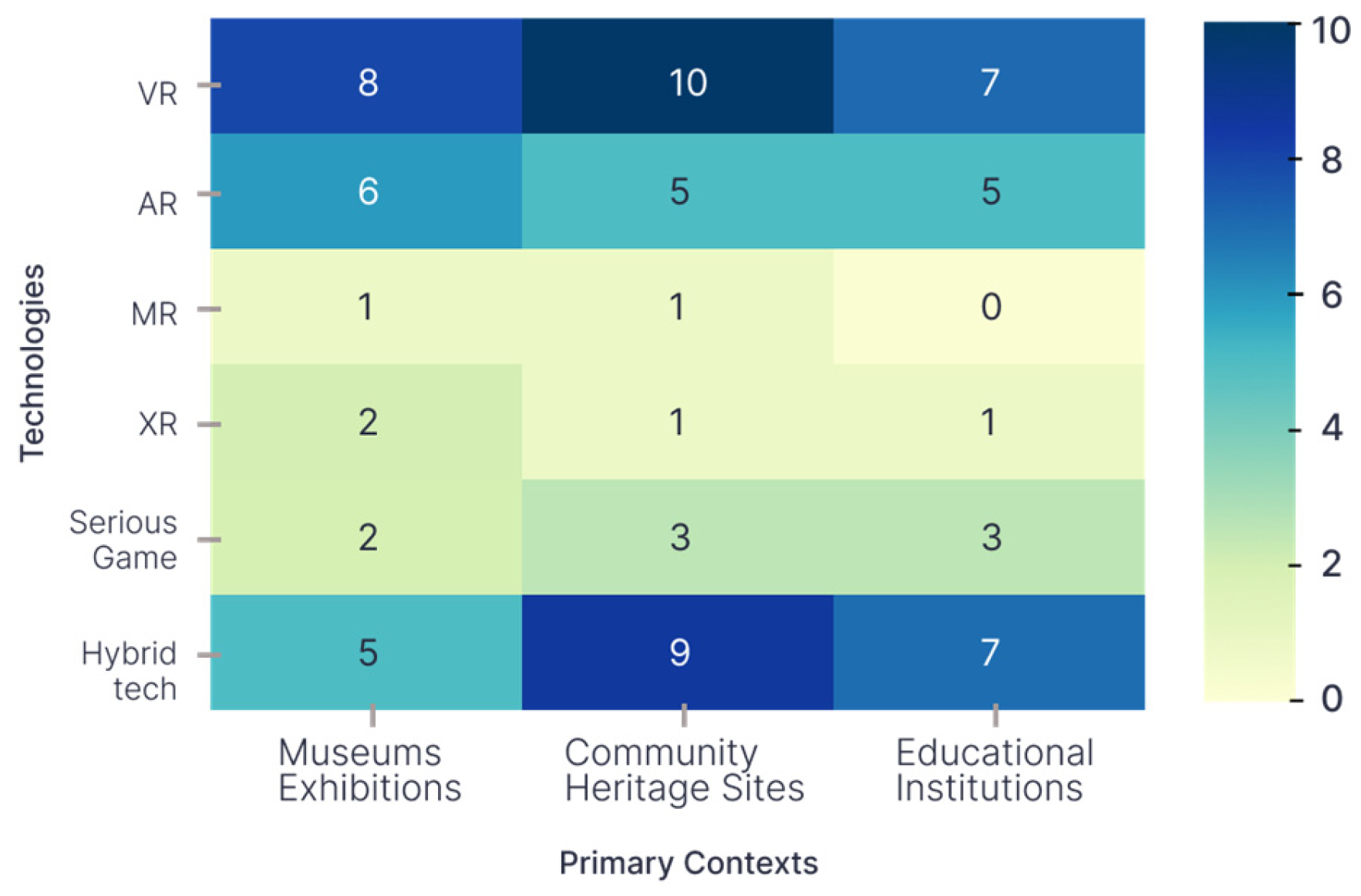
Across this evolving landscape, co-creation practices were distributed among three primary contexts: Galleries, Libraries, Archives, and Museums (GLAM) sector; community or tourism-based heritage sites; and formal educational institutions. Projects frequently adopted hybrid technological configurations, combining multiple immersive modalities (e.g., VR, AR, MR, XR) rather than treating them as discrete categories (Figure 2). This convergence highlights an emerging shift in how co-creation is conceptualised—from a participatory design method to an integrative strategy that connects technological affordances with educational and cultural design objectives.
Figure 2 illustrates this distribution. Because several studies employed multiple immersive modalities and operated across different contexts, the frequencies presented in Figure 2 represent occurrences rather than mutually exclusive study counts. VR was the most frequently applied technology across all contexts. It was commonly used to reconstruct exhibition spaces [31], enhance heritage storytelling [39], build digital heritage communities [42], and support professional training [44]. These applications reflect VR’s strong affordances for spatial reconstruction and presence, making it particularly suitable in situations where physical access is limited by distance, conservation requirements, or site deterioration [18]. In most cases, the co-creation process was primarily evident during the user needs analysis and narrative or content design stages, implemented through workshops and iterative prototyping, while technical interface refinements were achieved through participatory evaluations.
AR was also widely adopted, demonstrating strong potential for fostering locally situated and culturally rooted co-creation. AR facilitated participatory content co-creation between schools and museums [41], and its low technical barriers enabled on-site and mobile co-creation [45]. It further supported embodied learning and narrative co-design within educational settings [33], while enhancing place-based storytelling experiences [46,47]. Additionally, through non-physical interaction, AR improved learners’ understanding of physical exhibits and the interactivity of learning experiences [44].
In addition, a small number of studies (n = 3) employed MR (n = 1) and XR (n = 2) technologies. As noted above, some projects spanned multiple contexts, so these counts reflect occurrences rather than distinct studies. One study [38] implemented MR in both museum and community heritage settings, allowing users to experience contact-free “touch” interactions between physical and digital environments. As an umbrella term encompassing all immersive technologies [50], XR was identified as a core methodological approach for future cultural heritage applications. One study proposed a design framework that connects digital content with physical spaces, tangible artefacts, and time-based events [40].
Although Serious Games were originally conceived as a pedagogical method [51], recent reviews indicate that they have progressively evolved—through VR/AR-based immersive systems—into interactive digital platforms, rather than remaining purely instructional strategies [52,53,54]. Across various educational and cultural contexts, game engine technologies and Serious Games have been employed to transform learning content into narrative-driven, interactive, and emotionally resonant experiences [43]. These game-based environments have been further leveraged to reshape learning processes and act as experience-driven tools for cultural dissemination [41]. The convergence of serious games and immersive environments redefines them as technology-based learning platforms, better capturing their co-creative and experiential role in cultural heritage education.
A notable trend identified across the included studies is the integration of immersive technologies within hybrid ecosystems. In these contexts, immersive modalities are combined with complementary tools such as 3D scanning, motion capture, and haptic systems to foster interdisciplinary collaboration and enhance experiential learning. For instance, 3D scanning and printing were adopted to merge digital and physical heritage experiences [33]; unmanned aerial vehicles (UAVs) and terrestrial laser scanning generated 360° panoramic imagery for design and visualisation [34]; 360° static images enabled embodied spatial navigation [31]; motion capture technologies generated smooth virtual character animations in VR environments [39]; and haptic feedback systems improved accessibility for visually impaired users [48].
Overall, these patterns suggest that immersive technologies are most often used as tools for prototyping and engagement, rather than as fully integrated learning systems with sustained pedagogical impact.

4.2. Patterns in Stakeholder Engagement and Co-Design Frameworks

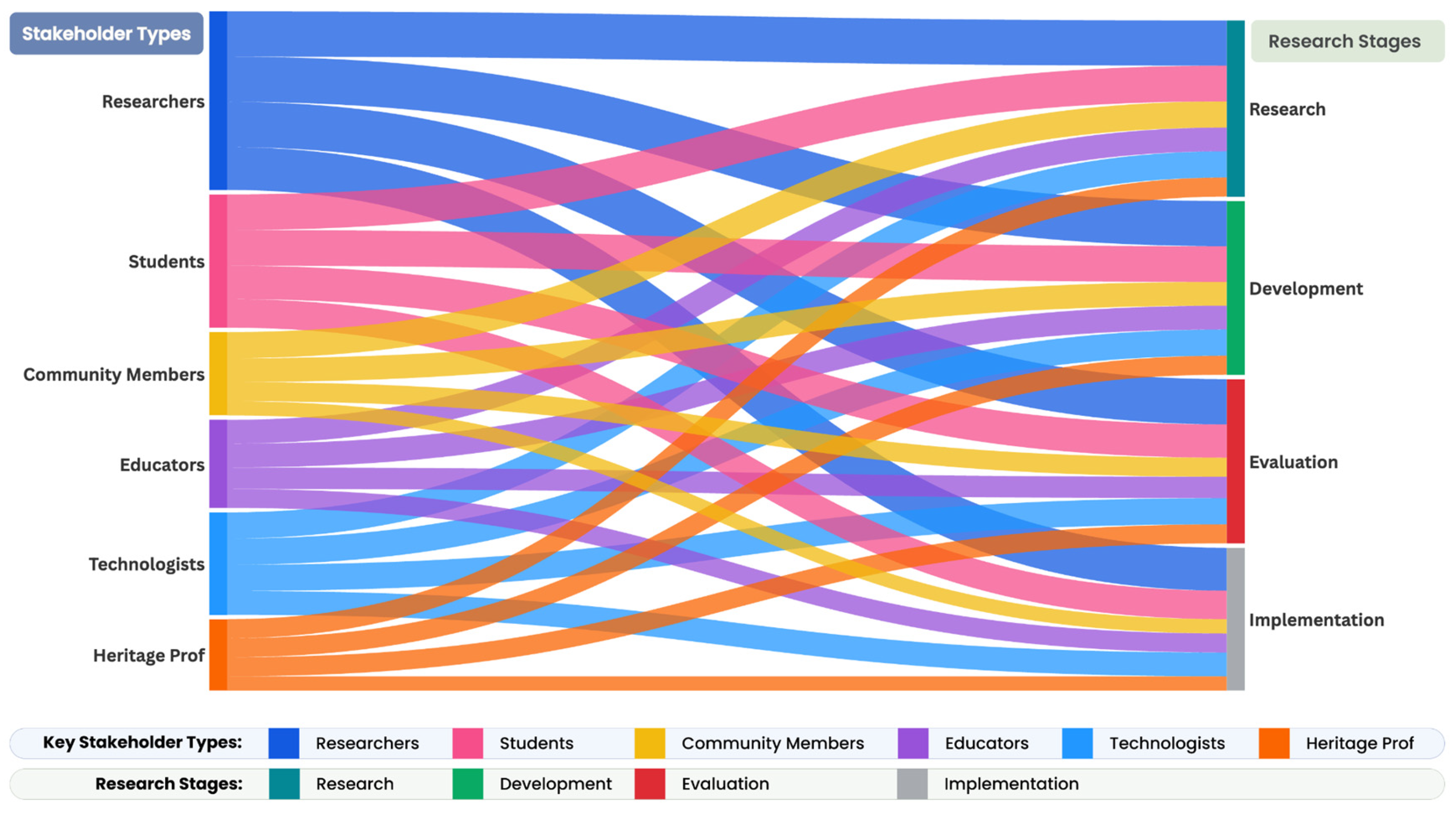
Analysis of stakeholder involvement across the 19 included studies reveals that structural asymmetries remain pervasive despite the widespread use of participatory and co-creation rhetoric (Figure 3). While many projects adopted participatory or co-creation frameworks, decision-making power largely remained concentrated among researchers and designers (Table 4).
Figure 3 illustrates the flow of stakeholder participation across different stages of the projects. The results suggest that the temporal configuration of participation significantly shapes its depth and role. Early stages tend to exhibit relatively high levels of participation; however, such involvement is often limited to knowledge contribution or experiential input [33,34], with less extension into substantive decision-making regarding the design framework [35,40]. As projects progress into the design and development phases (see Figure 3), collaboration appears to deepen, yet the scope of decision-making tends to narrow, with researcher-led prototyping emerging as the dominant mode [41,47]. During the evaluation phase, participation becomes increasingly technologized, with research and technical teams assuming greater authority, while the involvement of educators and community members declines [31,43,44]. Only a small number of studies achieved sustained, full-cycle participation. For example, Calvi (2022) [42] combined archival research with co-creation workshops to establish a more continuous participatory structure. This pattern indicates that participation varies across stages as projects evolve, particularly in the tendency for decision-making authority to recentralise within expert or institutional domains in later phases.
Table 4 summarises three distinct participation patterns identified across the reviewed studies, differentiated by the depth of stakeholder involvement and the distribution of decision-making authority: Full Co-creation, Iterative Refinement, and Consultative Validation. The classification was guided by two criteria: the extent of stakeholder involvement across project stages and the degree of decision-making authority shared between stakeholders and researchers. Studies were assigned based on reported evidence of participation depth and decision-making processes, rather than self-described terminology. The operational definitions and classification criteria used for this analysis are detailed in Appendix B. It outlines the decision-making distribution (Table A1), the participation pattern typology (Table A2), and the associated methodological frameworks (Table A3), which together clarify how participation depth and decision-making roles are operationalised in this study.
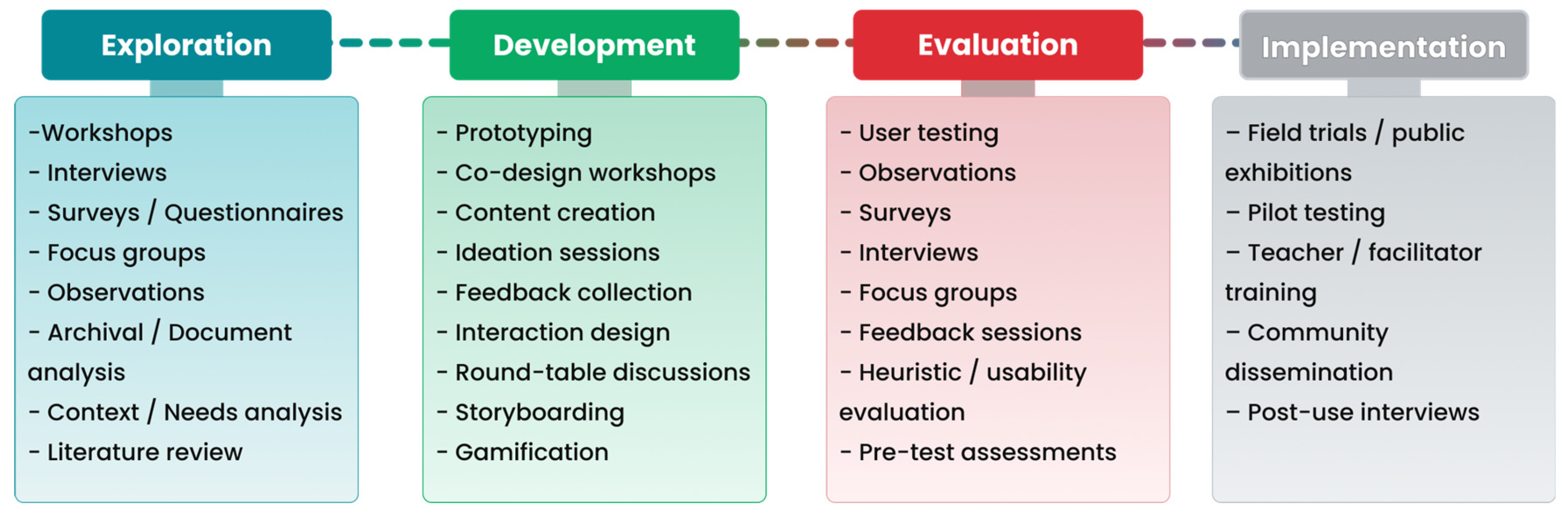
These classification criteria can also be applied in practice to support the design and evaluation of participatory processes, enabling researchers, designers, and cultural institutions to assess levels of participation and reflect on how stakeholder involvement and decision-making are organised across different project stages (Exploration, Development, Evaluation, and Implementation; see Figure 4).
Of the 19 included studies, 3 [33,39,42] were classified as Full Co-creation, 6 [32,35,36,41,47,48] as Iterative Refinement, and 10 [31,34,37,38,40,43,44,45,46,49] as Consultative Validation, indicating that most studies adopt only partial forms of co-creation.
Among the 19 studies, only three were classified as Full Co-creation, characterised by sustained stakeholder involvement across all stages and genuinely shared decision-making authority [33,39,42]. In these cases, co-creation functioned not only as a method but also, to some extent, as a structured process that enabled the redistribution of decision-making power. For instance, Kong (2021) [39] proposed a transparent four-phase model of co-design and reflective iteration, which recognised the role of cultural inheritors in determining content, direction, and representation, thereby transforming living heritage into digital form. Similarly, Calvi (2022) [42] established a traceable participatory framework that balanced community input with expert implementation through co-interpretation, co-collection, co-ideation, and co-creation. Videla (2024) [33] engaged Indigenous participants across all project stages, forming a consensus-based approach to content development. These examples suggest that, under certain conditions, co-creation can support more sustained and in-depth participatory structures.
By contrast, most studies exhibited only partial forms of co-creation, where stakeholder involvement was limited to specific phases or evaluative activities rather than full, shared decision-making. Within Partially Co-creation, Iterative Refinement represented a procedural and feedback-oriented mode of participation. Stakeholders were often involved through workshops, focus groups, and testing cycles, contributing feedback within bounded stages but rarely influencing overarching frameworks. Hodgson (2024) [36], for example, explicitly adopted a co-design methodology yet retained key decisions within the research team. Similarly, studies such as Newaz (2023) [41], Díaz-Granados (2020) [47], and Di Giuseppantonio (2019) [35] documented user feedback that improved prototypes without altering core design assumptions. This form of participation reflects a certain degree of ongoing interaction; however, decision-making authority remains only partially shared.
A second subtype under Partially Co-creation, Consultative Validation, appeared in over two-fifths of the reviewed studies and was typically grounded in Human-Centred or User-Centred Design frameworks. Here, participation was primarily evaluative: feedback was gathered in late stages through surveys, usability tests, or observations, while decision-making authority remained firmly researcher-led [31,40,44]. Some self-described co-creation projects also maintained hierarchical structures. For instance, Quattrini (2025) [34] provided no evidence of joint technological decisions, and Li (2025) [37], despite high levels of engagement, lacked cyclical mechanisms or shared control. Collectively, these cases reveal that the nominal adoption of participatory rhetoric often masks asymmetric power dynamics.
These patterns raise important ethical concerns, including the risk of tokenistic participation, the extraction of cultural knowledge without sustained community control, and the recentralisation of decision-making authority in later project stages.
Taken together, these patterns show that participation often narrows as projects progress—starting with inclusive consultation but eventually recentring authority under expert or institutional control. This highlights a central paradox: co-creation is frequently promoted in theory but rarely achieved as a genuinely shared practice.
Further analysis suggests that these participation patterns are not evenly distributed across contexts. Full co-creation cases tend to be associated with community-based and culturally embedded settings, particularly those involving intangible cultural heritage, where stakeholder knowledge plays a more central role in shaping content and decision-making. By contrast, consultative and iterative forms appear more commonly in institution-led environments, such as museums and formal educational settings, where immersive technologies are typically developed within predefined frameworks and decision-making remains largely researcher-led.

4.3. Co-Creation Methodological Approaches and Identified Gaps

Across the reviewed studies, co-creation approaches reveal both creativity and fragmentation. Despite the widespread emphasis on participation, methodological inconsistency continues to constrain cumulative knowledge building. Four recurring issues can be observed: (1) unclear conceptual foundations, (2) limited procedural transparency, (3) weak sustainability, and (4) the absence of evaluation standards. These challenges were identified through a comparative synthesis of reported participation structures, decision-making processes, and methodological descriptions across the included studies. Among these, conceptual ambiguity emerges as the primary challenge.
Terms such as co-design, participatory design, and co-creation are often used interchangeably, yet they lack clear methodological foundations. In some studies, participatory activities were described as “co-creation” but did not reflect shared decision-making [31,44]. In one study [37], researchers claimed to adopt participatory design and co-design, yet the distribution of decision-making power indicated that key decisions were controlled by the researchers rather than collaboratively determined. Other studies [39,42] demonstrated more profound forms of collaboration, aligning more closely with Sanders and Stappers’ (2008) [23] definition of collaborative value generation. This terminological inconsistency weakens analytical clarity and makes cross-study comparison difficult.
A lack of procedural transparency further constrains reproducibility. Few papers reported how participant input influenced final outcomes or how conflicts of interest and divergent perspectives were managed. As Liu (2024) [49] and Tromp-Jolanda (2025) [40] observed, even when decision-making remained researcher-led, user testing was frequently presented as a participatory process. In another study, participants were reported to have voting rights, yet no description of the process or outcomes was provided [36]. Strategic decisions—both technical and methodological—remained expert-controlled, with limited critical reflection on underlying power dynamics. Such selective reporting creates an illusion of seamless collaboration while obscuring the negotiations and tensions that participatory design scholars regard as essential to genuine co-creation [24].
To illustrate how these methodological inconsistencies unfold across different project stages, Figure 4 presents the main methods identified in the reviewed studies. It maps four core phases—exploration, development, evaluation, and implementation—and highlights the dominant techniques in each. Participatory activities were most common during the exploration and development phases, involving workshops, interviews, co-design sessions, and prototyping. In later stages, engagement was less sustained, with evaluation and implementation focusing mainly on user testing, pilot trials, and feedback collection. This distribution suggests that participation tends to be more extensive in the early stages and becomes more limited in later phases.
Issues of sustainability and continuity were rarely addressed. Many projects concluded once prototypes were completed, lacking plans for long-term use or ownership transfer. Even studies emphasising heritage continuity, such as Videla (2024) [33] and Kong (2021) [39], acknowledged dependence on temporary funding or voluntary engagement. This observation suggests that co-creation is often treated as a project-based method in practice, rather than being developed as a sustained collaborative mechanism.
In terms of evaluation, variations can also be observed across studies. Most studies focus on usability or participant experience, with relatively less attention given to the evaluation of the participatory process itself or to outcomes related to empowerment. Tromp-Jolanda (2025) [40] noted the absence of consistent UX evaluation frameworks, while Díaz-Granados (2020) [47] and Ferreira-Santos (2025) [45] illustrated how rhetorical co-creation coexists with hierarchical structures. Without shared evaluative benchmarks, assessment practices risk reinforcing surface participation rather than fostering genuine collaboration.
These methodological inconsistencies also directly influence human–technology interaction design in cultural heritage contexts. When co-creation frameworks lack transparency, sustained participation, or effective evaluation mechanisms, interaction design tends to focus on technical implementation while neglecting users’ experiential and cultural dimensions. Addressing these shortcomings requires repositioning co-creation as a human-centred interaction design practice that seeks to balance technological functionality with users’ understanding and emotional engagement. These observations also inform the development of the participation typology proposed in this study, particularly in distinguishing variations in stakeholder involvement and decision-making distribution.
Overall, these observations suggest that the field remains in a stage of ongoing development and refinement at both conceptual and methodological levels.

4.4. Emerging Themes and Trends

Co-creation in immersive cultural heritage education shows signs of ongoing consolidation and refinement. A notable trend across the reviewed studies is the increasing hybridization of technologies and methodological approaches. Rather than relying on single-medium applications, projects more frequently combine multiple modalities, such as immersive environments, interactive storytelling, and game-based elements. These configurations position immersive technologies not only as tools for representation but as environments that support interpretation and participatory meaning making.
At the same time, co-creation practices demonstrate an extension of participation across different stages of project development, although this continuity remains uneven. In several cases, stakeholder involvement moves beyond initial consultation to include iterative feedback and content development. There is also growing attention to inclusivity, cultural sensitivity, and the role of diverse stakeholders in shaping heritage representation. These developments indicate a gradual shift toward more integrative and reflective forms of co-creation in practice.
Building on these observations, co-creation can be understood not only as a design method but as a structuring approach that organises participation, coordination, and knowledge production within immersive heritage learning contexts. This shift highlights the evolving role of co-creation in aligning technological development with social and cultural processes.
At the same time, variations in how participation is structured across studies remain evident, reflecting differences in stakeholder roles, project contexts, and implementation strategies. Rather than indicating a uniform model, the literature suggests multiple co-existing approaches to co-creation.
The reviewed studies also show a concentration in Europe and parts of Asia, indicating that current understandings of co-creation may be shaped by a limited range of cultural and institutional contexts. This has implications for interpreting co-creation as an inclusive paradigm, as regions with strong community-based heritage practices may remain underrepresented.
These variations are synthesised in the three-level participation typology proposed in this review—Full Co-creation, Iterative Refinement, and Consultative Validation—which provides an analytical lens for interpreting how participation is organised across studies. The typology highlights how different participation structures correspond to varying degrees of stakeholder involvement and coordination.
Taken together, these trends suggest that the field is moving toward more integrated and context-sensitive co-creation practices, while continuing to evolve in how participation is structured and sustained across different settings.

5. Conclusions

This study provides a systematic synthesis of how co-creation has been applied in immersive cultural heritage education. The findings suggest that the field is gradually shifting from technology-driven applications toward more integrated and participatory approaches, where immersive systems increasingly support meaning-making, learning engagement, and collaborative knowledge construction. At the same time, notable variations remain in how participation is structured and how decision-making is distributed across studies.
This study makes two main contributions. First, it reconceptualises co-creation not merely as a design method but as an analytical and value-oriented framework for examining participation structures and decision-making relationships in immersive heritage learning. Second, it proposes a three-level participation typology—Full Co-creation, Iterative Refinement, and Consultative Validation—which offers a clear analytical lens for examining and comparing co-creation practices across studies. This typology can support practical application by helping researchers, designers, and cultural institutions identify levels of participation and reflect on how decision-making is distributed across project stages, while informing how these processes can be better structured in practice.
This study also has several limitations. First, limitations related to the literature should be acknowledged. The findings indicate that current understandings of co-creation are shaped, to some extent, by an uneven evidence base, with studies concentrated in particular geographical and institutional contexts. This suggests that the co-creation practices represented in the literature may be more reflective of well-resourced and institutionally supported environments, while diverse forms of community-based heritage engagement remain less visible. In addition, many of the reviewed studies are based on relatively small sample sizes, short intervention periods, and often rely on self-reported outcomes. A substantial proportion of studies are also conducted at the prototype or pilot stage, which limits the generalisability of findings.
Second, limitations related to the review design should be considered. The review is constrained by its database selection and language scope, as only English publications were included. Although the search strategy was designed to capture cultural heritage education contexts, studies using adjacent or domain-specific terminology, such as museum studies, digital humanities, or serious games, may not have been fully identified. As a scoping review, this study focuses on mapping and synthesis rather than formal quality appraisal; therefore, the findings should be interpreted as an analytical overview of existing patterns rather than a comprehensive evaluation of study quality.
Overall, the findings highlight the growing importance of co-creation, while also indicating that challenges remain in achieving meaningful and sustained participation in immersive cultural heritage education.

6. Future Research

Future research should further clarify the theoretical foundations of co-creation in immersive cultural heritage contexts. Distinguishing related concepts—such as participatory design, co-design, and user-centred design—remains important for improving conceptual consistency and comparability across studies.
Methodologically, clearer documentation of participatory processes is needed, particularly in terms of stakeholder involvement across project stages and how their input informs design decisions. Long-term and mixed-methods approaches, combining iterative prototyping, participatory workshops, and continuous evaluation, would provide a more comprehensive understanding of how stakeholder contributions evolve over time.
Establishing minimum criteria for full co-creation, such as multi-stage participation and shared decision-making authority, would support more consistent identification and evaluation of participatory practices across studies. In addition, open documentation and shared repositories could enhance reproducibility and collective learning across projects.
Future work should also strengthen evaluation frameworks by addressing both process-related dimensions (e.g., participation continuity and equity) and outcome-related dimensions (e.g., learning experience, cultural engagement, and long-term impact). Finally, greater attention to cross-cultural contexts and underrepresented regions is needed to ensure that co-creation practices reflect diverse heritage perspectives and avoid reinforcing existing structural imbalances.

Supplementary Materials

The following supporting information can be downloaded at https://www.mdpi.com/article/10.3390/heritage9050192/s1, PRISMA-ScR Checklist.

Author Contributions

Conceptualisation, J.Z. and F.P.; methodology, J.Z. and F.P.; investigation, J.Z. and F.P.; data curation, J.Z. and F.P.; formal analysis, J.Z. and F.P.; writing—original draft preparation, J.Z.; writing—review and editing, F.P.; supervision, F.P. All authors have read and agreed to the published version of the manuscript.

Funding

This research received no external funding.

Data Availability Statement

No new data were created or analysed in this study. Data sharing is not applicable to this article.

Conflicts of Interest

The authors declare no conflicts of interest.

Appendix A

Immersive technology: Immersive technology refers to digital systems designed to deliver multisensory input that simulates or extends real-world perception, including virtual, augmented, mixed, and extended reality environments that integrate physical and digital spaces. Through sensory engagement, these technologies foster presence and embodied interaction, supporting contextualised and experiential learning in educational and cultural heritage settings [18,55,56].
Co-creation: Co-creation denotes a collaborative and participatory process in which diverse stakeholders—such as learners, educators, technologists, heritage professionals, and community members—jointly define problems, design solutions, and contribute to implementation and evaluation. Originating in business and service research [57,58,59], the concept has been extended to design, education, and cultural heritage contexts, where it emphasises shared decision-making, collective creativity, and context-sensitive collaboration [23,60,61,62]. In this study, co-creation functions as a methodological bridge linking technological development with cultural meaning, and underpins the analytical typology proposed in this paper [15,63,64].
Cultural heritage: Cultural heritage encompasses the tangible and intangible legacies that communities inherit, value, and transmit across generations, including artefacts, sites, practices, and knowledge systems [1,2,3,4,17]. From the perspective of intangible cultural heritage (ICH), heritage is understood as a dynamic and socially embedded process that is continuously recreated in response to changing social and cultural contexts [2]. In educational settings, digital technologies enable more participatory, situated, and multi-perspective forms of heritage engagement [18,19,21].

Appendix B

This appendix outlines the operational criteria used to categorise the 19 included studies into the three participation patterns presented in Table 4. The classification framework builds upon established participatory design and co-creation models that conceptualise stakeholder influence through decision-making hierarchies and degrees of participation [23,59,65].
Two analytical dimensions—decision-making distribution and depth of stakeholder participation—were applied using explicit evidence reported in each study (e.g., descriptions of workshops, co-design activities, evaluation procedures, or stakeholder involvement statements). Studies were then grouped under Full Co-creation or Partially Co-creation, the latter divided into Iterative Refinement and Consultative Validation.
Table A1. Decision-Making Distribution and Participation Typology.
LevelDefinitionOperational Indicators
Full Co-creation
(High/Shared
Decision-Making)
Stakeholders engage across all project phases with sustained influence over core decisions. Power is redistributed through transparent mechanisms
ensuring shared ownership.
• Stakeholders involved in
defining project scope
• Jointly decide on technology selection or design framework
• Community determines
cultural or content elements
• Evidence of power
redistribution mechanisms (e.g., consensus voting,
co-leadership)
Iterative Refinement (Moderate/Partially Shared Decision-Making)Stakeholders contribute recurring
feedback within structured stages, improving designs without redefining overarching frameworks.
• Participate in design choices but not framework definition
• Can propose or modify but not veto decisions
• Operate with limited
autonomy within
researcher-defined parameters
Consultative Validation (Low/Researcher-Led)Stakeholder input occurs mainly in late or evaluative stages; researchers retain decision control and integrate feedback selectively.• Core decisions pre-defined by research team
• Stakeholders mainly validate or test outputs
• Feedback used for refinement rather than altering project
direction
Abbreviations: VR, virtual reality; AR, augmented reality; MR, mixed reality; XR, extended reality; UCD, user-centred design; HCD, human-centred design; HCI, human–computer interaction; PD, participatory design.
Table A2. Participation Pattern Typology.
Pattern TypeClassification BasisTypical Features
Full Co-creationDecision-making =
Shared + Full-cycle participation
Multi-phase stakeholder involvement across
exploration–design–evaluation–reflection stages; community co-monitoring and content
co-definition; adherence to cultural or ethical protocols; iterative feedback loops ensuring joint decision-making.
Iterative
Refinement
Decision-making =
Partially shared + multi-stage
participation
Prototype iteration, focus groups, and
user-feedback integration across design cycles;
stakeholder input guides refinement rather than redefining the overall framework.
Consultative ValidationDecision-making =
Researcher-led + Late-stage
participation
User testing, surveys, or usability evaluations conducted post-design; feedback used to
validate rather than reshape researcher-defined outputs.
Note: Participation patterns were classified based on decision-making roles and stages of stakeholder involvement. Classification was derived from direct textual evidence, including descriptions of design processes, stakeholder engagement, and participatory frameworks, to ensure transparent and replicable categorisation.
Table A3. Typical Frameworks Associated with Each Pattern.
Pattern TypeDominant FrameworkRationale for Classification
Full Co-creationParticipatory Design (PD)Emphasises sustained, multi-phase
participation and shared decision-making authority throughout the project lifecycle.
Iterative RefinementCo-design/Design-Based
Research (DBR)
Centres on iterative prototyping and
cyclical feedback within bounded
frameworks where decision power remains partially shared.
Consultative ValidationHuman-/User-Centred Design (HCD/UCD)Positions users primarily as testers or
informants in late-stage evaluation; design direction remains researcher-controlled.
Abbreviations: PD, participatory design; DBR, design-based research; HCD, human-centred design; UCD, user-centred design. Note: The table summarises the dominant frameworks associated with each participation pattern.

Notes on Application

Each study was assessed based on direct textual evidence, such as explicit statements about stakeholder decision-making, descriptions of design or evaluation phases, and references to participatory or co-creation frameworks, to support transparent and replicable classification.

References

  1. UNESCO. Convention Concerning the Protection of the World Cultural and Natural Heritage. Available online: https://whc.unesco.org/en/conventiontext/ (accessed on 2 October 2025).
  2. Kurin, R. UNESCO Votes New Intangible Cultural Heritage Convention. Anthropol. News 2003, 44, 21–22. [Google Scholar] [CrossRef]
  3. Jagielska-Burduk, A.; Pszczyński, M.; Stec, P. Cultural Heritage Education in UNESCO Cultural Conventions. Sustainability 2021, 13, 3548. [Google Scholar] [CrossRef]
  4. Ortega-Sánchez, D.; López-Sanvicente, A.B. Design, Content Validity, and Inter-Observer Reliability of the “Digitization of Cultural Heritage, Identities, and Education” (DICHIE) Instrument. Humanit. Soc. Sci. Commun. 2023, 10, 53. [Google Scholar] [CrossRef]
  5. Kolb, D. Experiential Learning: Experience as the Source of Learning and Development; Prentice Hall: Englewood Cliffs, NJ, USA, 1984; Volume 8. [Google Scholar]
  6. Vygotsky, L. Mind in Society: The Development of Higher Psychological Processes; Harvard University Press: Cambridge, MA, USA, 1978; ISBN 9780674076686. [Google Scholar]
  7. Xu, X.; Kang, J.; Yan, L. Understanding Embodied Immersion in Technology-Enabled Embodied Learning Environments. J. Comput. Assist. Learn. 2022, 38, 103–119. [Google Scholar] [CrossRef]
  8. Ribeiro, M.; Santos, J.; Lobo, J.; Araújo, S.; Magalhães, L.; Adão, T. VR, AR, gamification and AI towards the next generation of systems supporting cultural heritage: Addressing challenges of a museum context. In Proceedings of the 29th International ACM Conference on 3D Web Technology (Web3D ‘24); Association for Computing Machinery: New York, NY, USA, 2024; Art. no. 9; pp. 1–10. [Google Scholar] [CrossRef]
  9. Boboc, R.G.; Băutu, E.; Gîrbacia, F.; Popovici, N.; Popovici, D.-M. Augmented Reality in Cultural Heritage: An Overview of the Last Decade of Applications. Appl. Sci. 2022, 12, 9859. [Google Scholar] [CrossRef]
  10. Theodoropoulos, A.; Antoniou, A. VR games in cultural heritage: A systematic review of the emerging fields of virtual reality and culture games. Appl. Sci. 2022, 12, 8476. [Google Scholar] [CrossRef]
  11. Li, J.; Wider, W.; Ochiai, Y.; Fauzi, M.A. A bibliometric analysis of immersive technology in museum exhibitions: Exploring user experience. Front. Virtual Real. 2023, 4, 1240562. [Google Scholar] [CrossRef]
  12. O’Dwyer, N.; Young, G.W.; Johnson, N.; Zerman, E.; Smolic, A. Mixed reality and volumetric video in cultural heritage: Expert opinions on augmented and virtual reality. In Proceedings of the International Conference on Human-Computer Interaction; Springer: Cham, Switzerland, 2020; pp. 195–214. [Google Scholar]
  13. Dodgson, M.; Gann, D.M.; Salter, A. The Management of Technological Innovation: Strategy and Practice; Oxford University Press: Oxford, UK, 2008. [Google Scholar]
  14. Bekele, M.K.; Champion, E. A comparison of immersive realities and interaction methods: Cultural learning in virtual heritage. Front. Robot. AI 2019, 6, 91. [Google Scholar] [CrossRef]
  15. Xu, Z.; Liu, F.; Xia, G.; Wang, S.; Duan, Y.; Yu, L.; Zhao, S.; Li, M. Immersive HCI for intangible cultural heritage in tourism contexts: A narrative review of design and evaluation. Sustainability 2026, 18, 153. [Google Scholar] [CrossRef]
  16. Manoudakis, H.; Pentazou, I. Immersive technologies in cultural heritage: A critical approach of the Chronos project. In Transdisciplinary Multispectral Modeling and Cooperation for the Preservation of Cultural Heritage; Moropoulou, A., Georgopoulos, A., Ioannides, M., Doulamis, A., Lampropoulos, K., Ronchi, A., Eds.; Springer: Cham, Switzerland, 2026; pp. 56–69. [Google Scholar] [CrossRef]
  17. Lian, Y.; Xie, J. The evolution of digital cultural heritage research: Identifying key trends, hotspots, and challenges through bibliometric analysis. Sustainability 2024, 16, 7125. [Google Scholar] [CrossRef]
  18. Ott, M.; Pozzi, F. Towards a New Era for Cultural Heritage Education: Discussing the Role of ICT. Comput. Hum. Behav. 2011, 27, 1365–1371. [Google Scholar] [CrossRef]
  19. Mendoza, R.; Baldiris, S.; Fabregat, R. Framework to Heritage Education Using Emerging Technologies. Procedia Comput. Sci. 2015, 75, 239–249. [Google Scholar] [CrossRef]
  20. Buragohain, D.; Meng, Y.; Deng, C.; Li, Q.; Chaudhary, S. Digitalizing Cultural Heritage through Metaverse Applications: Challenges, Opportunities, and Strategies. Herit. Sci. 2024, 12, 295. [Google Scholar] [CrossRef]
  21. Du Cros, H.; B Salazar, N. Tourism and Intangible Cultural Heritage; United Nations World Tourism Organization: Madrid, Spain, 2012. [Google Scholar]
  22. Blackburn, D.C.; Boyer, D.M.; Gray, J.A.; Winchester, J.; Bates, J.M.; Baumgart, S.L.; Braker, E.; Coldren, D.; Conway, K.W.; Rabosky, A.D.; et al. Increasing the Impact of Vertebrate Scientific Collections through 3D Imaging: The OpenVertebrate (OVert) Thematic Collections Network. BioScience 2024, 74, 169–186. [Google Scholar] [CrossRef]
  23. Sanders, E.B.-N.; Stappers, P.J. Co-Creation and the New Landscapes of Design. CoDesign 2008, 4, 5–18. [Google Scholar] [CrossRef]
  24. Bjögvinsson, E.; Ehn, P.; Hillgren, P.-A. Design Things and Design Thinking: Contemporary Participatory Design Challenges. Des. Issues 2012, 28, 101–116. [Google Scholar] [CrossRef]
  25. Cook-Sather, A. Student-Faculty Partnership in Explorations of Pedagogical Practice: A Threshold Concept in Academic Development. Int. J. Acad. Dev. 2013, 19, 186–198. [Google Scholar] [CrossRef]
  26. Deeley, S.J.; Bovill, C. Staff Student Partnership in Assessment: Enhancing Assessment Literacy through Democratic Practices. Assess. Eval. High. Educ. 2015, 42, 463–477. [Google Scholar] [CrossRef]
  27. Tricco, A.C.; Lillie, E.; Zarin, W.; O’Brien, K.K.; Colquhoun, H.; Levac, D.; Moher, D.; Peters, M.D.J.; Horsley, T.; Weeks, L.; et al. PRISMA Extension for Scoping Reviews (PRISMA-ScR): Checklist and Explanation. Ann. Intern. Med. 2018, 169, 467–473. [Google Scholar] [CrossRef]
  28. Arksey, H.; O’Malley, L. Scoping studies: Towards a methodological framework. Int. J. Soc. Res. Methodol. 2005, 8, 19–32. [Google Scholar] [CrossRef]
  29. Pollock, D.; Peters, M.D.J.; Khalil, H.; McInerney, P.; Alexander, L.; Tricco, A.C.; Evans, C.; de Moraes, É.B.; Godfrey, C.M.; Pieper, D.; et al. Recommendations for the extraction, analysis, and presentation of results in scoping reviews. JBI Evid. Synth. 2023, 21, 520–532. [Google Scholar] [CrossRef] [PubMed]
  30. McHugh, M.L. Interrater reliability: The kappa statistic. Biochem. Medica 2012, 22, 276–282. [Google Scholar] [CrossRef]
  31. Luigini, A.; Parricchi, M.; Basso, A.; Basso, D. Immersive and Participatory Serious Games for Heritage Education, Applied to the Cultural Heritage of South Tyrol. Interact. Des. Archit. 2020, 43, 42–67. [Google Scholar] [CrossRef]
  32. Giaconi, C.; Ascenzi, A.; Del Bianco, N.; D’angelo, I.; Aparecida Capellini, S. Virtual and Augmented Reality for the Cultural Accessibility of People with Autism Spectrum Disorders: A Pilot Study. Int. J. Incl. Mus. 2021, 14, 95–106. [Google Scholar] [CrossRef]
  33. Videla, R.; Aguayo, C.; Aguilera, J.; Aros, M.; Ibacache, C.; Valdivia, P. Cultivating Cultural Heritage and Fostering Belonging in Communities through Digital and Non-Digital Technologies in Generative STEAM Education. Knowl. Cult. 2024, 12, 21. [Google Scholar] [CrossRef]
  34. Quattrini, R.; Ferretti, M.; Leo, B.D. Combining Digital Heritage and Design Thinking: A Methodological Bridge between Research and Practice for Inner Areas Regeneration. Heritage 2025, 8, 126. [Google Scholar] [CrossRef]
  35. Di Giuseppantonio Di Franco, P.; Winterbottom, M.; Galeazzi, F.; Gogan, M. Ksar Said: Building Tunisian Young People’s Critical Engagement with Their Heritage. Sustainability 2019, 11, 1373. [Google Scholar] [CrossRef]
  36. Hodgson, I.; Hoffmann, D.; Junge, L.; Theis, F.; Dittgen, N. Learning to Listen Properly: Participatory Digital Projects at the German Maritime Museum Based on Iterative Co-Creation. J. Comput. Cult. Herit. 2024, 17, 1–19. [Google Scholar] [CrossRef]
  37. Li, Y.; Qiu, R.; He, Z.; Wu, X.; Han, T.; Tong, X.; Zhao, Y.; Li, M. Enhancing Young Generation’s Heritage Identity through Emotional Responses to Virtual Cultural Heritage Experience: A Design Case with Azheke Community and Visitors at Hani Rice Terraces in China. Int. J. Hum.-Comput. Interact. 2026, 42, 144–167. [Google Scholar] [CrossRef]
  38. Tongpaeng, Y.; Nobnop, R.; Wongwan, N.; Arayaphan, W.; Intawong, K.; Puritat, K. Exploring Hand Gesture-Based Tangible Interactions in Mixed Reality for Ancient Fabric Exhibits: A Digital Humanities Approach to Enhancing Cultural Heritage Preservation and Visitor Engagement. Digit. Appl. Archaeol. Cult. Herit. 2025, 37, e00414. [Google Scholar] [CrossRef]
  39. Kong, C.; Zhang, L. Developing a co-design process model for the digital presentation of intangible cultural heritage: A case study of “warm inheritors digital diabolo”. ISPRS Ann. Photogramm. Remote Sens. Spat. Inf. Sci. 2021, VIII-M-1-2021, 89–94. [Google Scholar] [CrossRef]
  40. Tromp, J.; Schofield, D.; Raeisian Parvari, P.; Poyade, M.; Eaglesham, C.; Torres, J.C.; Johnson, T.; Jürivete, T.; Lauer, N.; Reyes-Lecuona, A.; et al. Designing and Evaluating XR Cultural Heritage Applications through Human–Computer Interaction Methods: Insights from Ten International Case Studies. Appl. Sci. 2025, 15, 7973. [Google Scholar] [CrossRef]
  41. Newaz, F.B.M.; Karlsen, J. Co-creation through design: Exploring the role of toolkits and prototypes in processes of co-creation in cross-disciplinary collaborations. In Proceedings of the OzCHI 2023, Wellington, New Zealand, 2–6 December 2023; ACM: New York, NY, USA, 2023; pp. 526–535. [Google Scholar] [CrossRef]
  42. Calvi, L.; Weber-Sabil, J.; Asmar, D.; Socías Perez, X. A Framework for Stakeholders’ Involvement in Digital Productions for Cultural Heritage Tourism. Multimodal Technol. Interact. 2022, 6, 52. [Google Scholar] [CrossRef]
  43. Liu, Z.; Yan, S.; Lu, Y.; Zhao, Y. Generating Embodied Storytelling and Interactive Experience of China Intangible Cultural Heritage “Hua’er” in Virtual Reality. In Proceedings of the CHI Conference on Human Factors in Computing Systems Extended Abstracts; Association for Computing Machinery: New York, NY, USA, 2022. [Google Scholar]
  44. Spadoni, E.; Carulli, M.; Bordegoni, M. A Conceptual Framework to Support a New Collaborative Design Process for Immersive Technology Integration in Museum Exhibitions. In Proceedings of the Lecture Notes in Computer Science; Springer: Cham, Switzerland, 2023; pp. 160–178. [Google Scholar] [CrossRef]
  45. Ferreira-Santos, J.; Pombo, L. The Art Nouveau Path: Promoting Sustainability Competences through a Mobile Augmented Reality Game. Multimodal Technol. Interact. 2025, 9, 77. [Google Scholar] [CrossRef]
  46. Mendoza-Garrido, R.; Cabarcas-Álvarez, A.; Puello-Beltran, J.J.; Fabregat-Gesa, R.; Baldiris-Navarro, S.M. Heritage Education Experience Supported in Augmented Reality. Rev. Fac. Ing. Univ. Antioq. 2021, 99, 52–62. [Google Scholar] [CrossRef]
  47. Díaz Granados, L. Itinerant Virtual Museum: An Innovate Technique to Learn Ancient History. In Proceedings of the Lecture Notes in Computer Science; Springer: Cham, Switzerland, 2020; pp. 70–75. [Google Scholar] [CrossRef]
  48. Marfoglia, A.; Santilli, T.; Generosi, A.; Mengoni, M.; Giaconi, C.; Ceccacci, S. Co-Designing a Virtual Museum Application with a Haptic Interface Involving People with Vision Impairments and Blindness. Int. J. Incl. Mus. 2025, 18, 201–230. [Google Scholar] [CrossRef]
  49. Liu, Z.; Chen, D.; Zhang, C.; Yao, J. Design of a Virtual Reality Serious Game for Experiencing the Colors of Dunhuang Frescoes. Herit. Sci. 2024, 12, 370. [Google Scholar] [CrossRef]
  50. Lowell, V. Extended Reality (XR) for Authentic Learning: New Frontiers in Educational Technology. J. Appl. Instr. Des. 2024, 13, 4. [Google Scholar] [CrossRef]
  51. Abt, C.C. Serious Games; University Press of America: London, UK, 1987; ISBN 9780819161482. [Google Scholar]
  52. Anderson, E.F.; McLoughlin, L.; Liarokapis, F.; Peters, C.; Petridis, P.; de Freitas, S. Developing Serious Games for Cultural Heritage: A State-of-The-Art Review. Virtual Real. 2010, 14, 255–275. [Google Scholar] [CrossRef]
  53. Mitsea, E.; Drigas, A.; Skianis, C. A Systematic Review of Serious Games in the Era of Artificial Intelligence, Immersive Technologies, the Metaverse, and Neurotechnologies: Transformation through Meta-Skills Training. Electronics 2025, 14, 649. [Google Scholar] [CrossRef]
  54. Borda, A.; Molnar, A. Immersive Serious Games: Shifting Paradigms from Activism to AI. In The Arts and Computational Culture: Real and Virtual Worlds; Giannini, T., Bowen, J.P., Eds.; Springer: Cham, Switzerland, 2024; pp. 443–469. [Google Scholar]
  55. Zhang, R.; Peng, F.; Gwilt, I. Exploring the Role of Immersive Technology in Digitally Representing Contemporary Crafts within Hybrid Museum Exhibitions: A Scoping Review. Digit. Creat. 2024, 35, 355–377. [Google Scholar] [CrossRef]
  56. Wang, H.; Gao, Z.; Zhang, X.; Du, J.; Xu, Y.; Wang, Z. Gamifying Cultural Heritage: Exploring the Potential of Immersive Virtual Exhibitions. Telemat. Inform. Rep. 2024, 15, 100150. [Google Scholar] [CrossRef]
  57. Bin, F.; Karlsen, J. Co-Creation through Design: Exploring the Role of Prototyping in Processes of Co-Creation in Cross Disciplinary Collaborations. In Proceedings of the OzCHI ’23: Proceedings of the 35th Australian Computer-Human Interaction Conference; Association for Computing Machinery: New York, NY, USA, 2023. [Google Scholar]
  58. Smith, L. Uses of Heritage; Routledge: Oxfordshire, UK, 2006; ISBN 9780203602263. [Google Scholar]
  59. Goertz, G. Social Science Concepts; Princeton University Press: Princeton, NJ, USA, 2006; ISBN 9780691124117. [Google Scholar]
  60. Zabar, M.; Peng, F.; Davis, A.; Kueh, C.; Gwilt, I. Co-Design for Sustainable Youth Mental Health in Australia. In Design for Dementia, Mental Health and Wellbeing; Routledge: Oxfordshire, UK, 2024; Volume 9, pp. 37–49. [Google Scholar]
  61. Sanders, E.B.-N.; Stappers, P.J. Probes, Toolkits and Prototypes: Three Approaches to Making in Codesigning. CoDesign 2014, 10, 5–14. [Google Scholar] [CrossRef]
  62. Leow, F.-T.; Ch’ng, E. Analyzing Narrative Engagement with Immersive Environments: Designing Audience-Centric Experiences for Cultural Heritage Learning. Mus. Manag. Curatorship 2021, 36, 342–361. [Google Scholar] [CrossRef]
  63. Fu, X.; Li, M.; Li, X.; Chen, W.; Yu, L.; Chen, Z.; Wen, S.; Li, Y.; Du, J.; Wang, Y.; et al. Emerging Computing Technology for Digital Culture Heritage Preservation and Inheritance: A Literature Review. IEEE Trans. Comput. Soc. Syst. 2025, 1–38. [Google Scholar] [CrossRef]
  64. Liu, Y. Evaluating Visitor Experience of Digital Interpretation and Presentation Technologies at Cultural Heritage Sites: A Case Study of the Old Town, Zuoying. Built Herit. 2020, 4, 14. [Google Scholar] [CrossRef]
  65. Arnstein, S.R. A Ladder of Citizen Participation. J. Am. Inst. Plan. 1969, 35, 216–224. [Google Scholar] [CrossRef]
Figure 1. PRISMA flow diagram for the scoping review process. Note: All numbers refer to studies screened and included in the scoping review. The diagram follows the PRISMA-ScR [27] framework to illustrate the identification, screening, eligibility, and inclusion process.
Heritage 09 00192 g001
Figure 2. Distribution of immersive technologies across primary contexts (N = 19). Note: Values indicate the number of occurrences within each context. Some studies were coded under multiple technologies and contexts, reflecting hybrid or multi-setting applications.
Heritage 09 00192 g002
Figure 3. Stakeholder participation flow across project stages (N = 19). Note: The figure visualises the flow of stakeholder participation across different stages of immersive heritage projects. Each ribbon represents the frequency and direction of involvement from stakeholder groups (e.g., researchers, students, educators, technologists, community members, and heritage professionals) across the four design stages: Exploration, Development, Evaluation, and Implementation. Data are synthesised from 19 included studies, with each study potentially contributing to multiple stages.
Heritage 09 00192 g003
Figure 4. Distribution of methods and participatory activities across design stages. Note: The figure summarises the methods used at each design stage, illustrating how participation and decision-making processes were distributed across Exploration, Development, Evaluation, and Implementation. It highlights how iterative collaboration and method diversity underpin co-creation in immersive cultural heritage projects, with each listed method extracted from evidence reported in the 19 included studies.
Heritage 09 00192 g004
Table 1. Summary of inclusion and exclusion criteria based on the PCC framework.
PCC FrameworkInclusion CriteriaExclusion Criteria
PopulationLearners, educators, heritage professionals, technologists, and community participants engaged in cultural heritage education.Studies not involving
cultural heritage education or stakeholder collaboration.
ConceptCo-creation or participatory approaches (e.g., participatory design, co-design, UCD, HCI, co-production) used in developing or evaluating immersive technologies for heritage learning.Studies using immersive technologies without
participatory or co-creation
processes.
ContextAny formal or informal learning setting related to cultural heritage.Studies unrelated to educational or heritage contexts.
Abbreviations: PCC, Population, Concept, Context; UCD, user-centred design; HCI, human–computer interaction.
Table 2. Publication characteristics of included studies (N = 19).
CategoryNumberPercentage
Publication Year
2016–2020632%
2021–20251368%
Geographic Region
Europe947%
Asia527%
Latin America316%
Africa15%
Multinational15%
Publication Type
Journal article1474%
Conference paper526%
Study Design
Qualitative842%
Mixed methods737%
Quantitative421%
Sample Size
Small (n < 30)842%
Medium (n = 31–60)632%
Large (n > 60)15%
Not reported421%
Note: n = number of studies; % = percentage of total included studies.
Table 3. Study Characteristics: Technologies, Stakeholder Participation, and Co-creation Approaches (N = 19).
Study IDTechnologiesContextStakeholdersMethods/StagesFramework
Luigini (2019) [31]VR;
360° static images; serious game
SchoolStudents; Teachers; Museum staff;
Researchers; School Manager; Technical developer
Surveys/Questionnaire;
Observations; Prototyping;
User testing
(Research → Design/Development (implementation & data
collection) → Evaluation)
Serious games; Constructivist learning theory; UCD
Giaconi (2021) [32]VR; AR;
360° spherical photography
MuseumStudents (ASD);
Special pedagogy
experts; Researchers; AR experts; Museum
didactics experts
Questionnaires; Prototyping; User testing; Feedback
Collection
(Research (needs analysis) →
Design/Development (data
collection; prototype development) → Evaluation (user testing) → Revision (ongoing))
Universal
design;
Inclusive
design;
Participatory design
Videla (2024) [33]VR; AR;
360° filming;
3D scanning;
3D printing
School;
Heritage site
Students; Teachers; Local elders; Local historian; Community members; ResearchersInterviews; Workshops;
Observations; Prototyping; Document analysis
(Research (field study) →
Design/Development
(co-design) → Evaluation
(participatory
reflection) → Implementation)
4E Cognition; Generative STEAM; CSDT.
Co-design; EESLD; DBR
Quattrini (2025)
[34]
VR;
360° environments; UAV; TLS
Heritage site; EducationalStudents; Educators; Local administrators; Community; ResearchersWorkshops; Observations;
Prototyping; Public presentations; Round table discussions
(Research (discovery) →
Design/Development
(interpretation) → Ideation→
Experimentation →
Evaluation)
IDEO;
Co-design;
Participatory design
Di Giuseppantonio (2019) [35]VR; 3D scanningSchool;
Heritage site; Museum
Researchers; Students; Teachers; Heritage Professors;
Community members; Institutions Partners; Technical teams;
Interviews; Focus groups; User testing; Prototyping; Thematic Coding Analysis
(Research (framework building) → Design (technical
development) → Evaluation →
post-deployment refinement)
Historical
inquiry; UCD; Critical heritage theory
Hodgson (2024) [36]AR;Museum; SchoolStudents; Visitors;
Educators; Museum staff; Institutional Partners;
Technologists
Interviews; Surveys;
Workshops; Observations;
Prototyping; User testing
(Research → Modelling →
Requirements → Framework → Refinement → Support →
Ongoing Co-creation)
Goal-directed design;
HCD;
UCD
Li (2025) [37]VR; Physiological sensors;
3D Modelling
Heritage site;Community members; Tourists; Students;
Institutional partners; Researchers;
Technologists
Interviews; Surveys;
Workshops; Field
Observations; Prototyping; User testing; Physiological
monitoring
(Research (field study) →
Design/Development (participatory workshops/VR design) → Evaluation (user study))
Participatory design; Scene theory;
Pleasure-arousal-dominance; Value-based approach
Tongpaeng (2025) [38]MR;
Photogrammetry
Museum; Heritage siteStudents; Visitors; Heritage Professors; Institutional partners; Researchers;
Technologists
Interviews; Prototyping;
User testing; Archival Research
(Research (concept/ define) → Preparation and Design
(prototyping design) → Implementation (design; user test) → Evaluation (user feedback)
Agile
methodology: Digital humanities approach; Standard metadata
protocols
Kong (2021) [39]VR;
Motion capture
Museum; Heritage siteHeritage
professionals;
Designers;
Researchers;
Community
members/Inheritors; Institutional partners; Audiences; Technical professionals
Interview; Workshops;
Observations; Prototyping;
Archival analysis; Co-design
sessions; Card sorting
(Research (initial contact &
embodied research) →
Design/Development (formal
cooperation co-design) →
Evaluation (iteration &
reflection))
Participatory design;
Co-design;
Respectful
design; IDS; Embodied
ethnography
Tromp-Jolanda (2025) [40]VR; AR; XR;
3D digital twins; Web3 tools
Museum;
Educational; Heritage site;
Students; Teachers; Tourists; Museum; Heritage managers; Developers; Policy makers; Community; ResearchersInterviews; Surveys;
Workshops; Observations;
Prototyping; User testing; Feedback; Document review
(Background and vision
Setting → Identify
Opportunities → Define
Projects → Scope and Planning → Testing and Refinement → Development and Support → Evaluation and Iteration)
HCD/UCD;
Participatory design; UX;
Newaz (2023) [41]AR; Serious gamesSchool;
Museum
Students/Learners; Museum educators; Teacher educators; Researchers; Pupils; GovernmentObservations; Interviews;
Surveys; Workshops;
Prototyping; User testing
(Research → Design/Development (multiple co-design workshops; prototyping) → Evaluation (field test) →
Reflection and Analysis)
Co-creation;
Co-design;
participatory design; Toolkits; Meta-design
Calvi (2022) [42]VR; AR; Heritage site; MuseumConsumers; Service Providers;
Institutional Content Providers; Local
Content Providers; Producers; Process Experts
Interviews; Workshops;
Field observations;
Focus groups; Archival research; Prototype testing
(Understand (communicate; define) → Explore (ideate; prototype) → Materialize (soft launch/BETA; launch products))
PD; Co-creation; Living Labs; HCD;
Co-interpretation;
Co-collection; Co-ideation;
Liu (2022) [43]VR;
Serious games; Virtual Avatar
Heritage siteParticipants
(students/users);
Heritage
professionals;
Local Community;
Researchers; Audiences
Interviews; Surveys;
Observations; Prototyping; User testing; Archival
Research
(Research (problem analysis) → Design/ Development
(system design) → Evaluation (data analysis/ discussion))
Embodied
storytelling;
Virtual avatars; Participatory performance; Serious games framework
Spadoni (2023) [44]VR; AR; XRMuseumVisitors; Heritage
professionals;
Company
professionals;
Institutional Partners; Researchers
Interviews; Surveys;
Observations; Prototyping;
User testing;
(Research → Design/Development (experimental case development) → Evaluation
→ Framework synthesis)
User-Centred Design (UCD); Immersive Technology; Collaborative design;
Participatory
action research
Ferreira-Santos (2025) [45]AR;
Serious games; Mobile AR Game
Heritage site;Teachers; ResearchersSurveys; Workshops; Prototyping; User testing; Validation
(Research → Design/Development → Evaluation
→ Implementation)
Green Comp; Design-based Research; MARG; Serious games
Mendoza-Garrido (2020) [46]AR;Heritage site; EducationalLearners (students, tourists); Heritage
experts; Content
creators; Platform
administrators;
Educational institutions; Researchers
Questionnaires; Feedback forms; Observations
(Research (framework deployment) → Design/Development (content creation; prototype implementation) → Evaluation (user testing; data analysis))
Heritage
education; LTSA
architecture; ARCS model; Co-design
approach
Díaz-Granados (2020) [47]VR;
IVM prototypes
SchoolStudents; Teachers;
Technical partners; Researchers
Workshops; Focus groups;
Observations; Prototyping;
User testing
(Research (Preparation) →
Exploration → Vision →
Operationalization (iterative) → Evaluation (ongoing))
Participatory design;
Co-design
Marfoglia (2025) [48]VRMuseumVisually impaired
users; Research team (education experts, designers,
developers); Italian Union of Blind;
Cultural institutions; Technology developers
Interview; Focus groups;
Survey; Prototyping;
Usability testing
(Prototype → Needs
discovery → Optimization → Improvement → Evaluation)
Co-design;
Participatory design;
Universal
design; WCAG; Accessibility Standard
Liu (2024) [49] VR; Serious gamesHeritage site; MuseumParticipants (students/users); Researchers; Heritage institutions (Academy);Surveys; Interviews;
Observations; Prototyping; User testing; Archival research
(Research→ Design/Development → Evaluation)
VR SG Design method; HCD principles;
Serious game design;
Abbreviations: VR, virtual reality; AR, augmented reality; MR, mixed reality; XR, extended reality; UCD, user-centred design; HCD, human-centred design; HCI, human–computer interaction; PD, participatory design. Note: Data were extracted from the included studies and categorised into technologies, contexts, stakeholders, methods, and frameworks. Development stages were synthesised and standardised by the authors to facilitate cross-study comparison.
Table 4. Participation Patterns and Decision-Making Distribution (N = 19).
Co-Creation LevelParticipation TypeProjects (%)Typical FrameworkKey MethodsDecision-MakingCases
Full
Co-creation
Co-creation3 (16%)Participatory DesignWorkshops, community monitoring,
archival
research
SharedKong 2021 [39];
Videla 2024 [33];
Calvi 2022 [42]
Partially
Co-creation
Iterative
Refinement
6 (32%)Co-designPrototyping, testing cycles, focus groupsPartially sharedNewaz 2023 [41]; Hodgson 2024 [36]; Marfoglia 2025 [48];
Di Giuseppantonio 2019 [35]; Giaconi 2021 [32]; Díaz Granados 2020 [47];
Consultative Validation10 (53%)HCD/UCDSurveys,
user testing, observations
Researcher-ledLuigini 2019 [31]; Liu 2022 [43]; Spadoni 2023 [44]; Quattrini 2025 [34]; Tongpaeng 2025 [38]; Liu 2024 [49]; Tromp-Jolanda 2025 [40]; Ferreira-Santos 2025 [45]; Mendoza Garrido 2020 [46];
Li 2025 [37]
Abbreviations: HCD, human-centred design; UCD, user-centred design. Note: Percentages are calculated based on the total number of included studies (N = 19). Studies are presented with corresponding reference numbers.
Disclaimer/Publisher’s Note: The statements, opinions and data contained in all publications are solely those of the individual author(s) and contributor(s) and not of MDPI and/or the editor(s). MDPI and/or the editor(s) disclaim responsibility for any injury to people or property resulting from any ideas, methods, instructions or products referred to in the content.