Article

From Gameplay to Cultural Heritage Engagement: How Black Myth Wukong Shapes Traditional Attitudes and National Pride Among Chinese Youth


1
Division of Communication & Media, Ewha Womans University, Seoul 03760, Republic of Korea
2
Department of Media Communication, University of Suwon, Hwaseong 18323, Republic of Korea
*
Author to whom correspondence should be addressed.
Heritage 2026, 9(5), 181; https://doi.org/10.3390/heritage9050181
Submission received: 23 February 2026 / Revised: 26 April 2026 / Accepted: 28 April 2026 / Published: 5 May 2026
(This article belongs to the Section Cultural Heritage)

Abstract

The global expansion of the gaming industry has intensified scholarly interest in the cultural and psychological implications of digital gameplay. This study examines how gameplay experiences are associated with adolescents’ and young adults’ attitudes toward traditional culture and national pride, focusing on how myth-based digital games can function as interactive vehicles for cultural heritage engagement. Using Black Myth: Wukong, a contemporary action role-playing game inspired by the Chinese literary classic Journey to the West, the study investigates the psychological mechanisms through which gameplay extends into longer-term cultural evaluation. Drawing on Self-Determination Theory, gameplay experience was conceptualized in terms of autonomy, competence, and relatedness, while Retrospective Imaginative Involvement (RII) was introduced to capture post-play imaginative recall and narrative elaboration. Survey data were collected from 312 Chinese adolescents and young adults who had played Black Myth: Wukong, and structural equation modeling was employed to test the relationships among gameplay experience, RII, traditional cultural attitudes, and national pride. The findings indicate that need-satisfying gameplay is positively associated with retrospective imaginative involvement, which in turn is linked to more favorable attitudes toward traditional culture and stronger national pride. The study suggests that the cultural influence of digital games extends beyond the moment of play and continues through reflective post-play processing. Theoretically, it contributes to research on media effects, narrative engagement, and digital heritage by identifying RII as a key post-play mechanism. Practically, it highlights the potential of culturally grounded games to support heritage communication and youth-oriented cultural engagement.

1. Introduction

Digital games have become an increasingly important site of cultural experience among Chinese adolescents and young adults. Their significance now extends beyond entertainment to include the circulation of narratives, symbols, and identity-related meanings [1,2]. In particular, myth-based digital games have drawn growing scholarly attention because they transform literary classics, traditional stories, and heritage symbols into interactive forms of cultural engagement [Figure 1]. Unlike linear media such as film or television, games allow cultural content to be encountered through action, choice, feedback, and exploration, making them especially relevant to questions of cultural transmission and heritage communication [3]. In recent years, a growing number of Chinese games grounded in mythology and historical narratives have incorporated traditional culture into both storytelling and gameplay systems, prompting renewed academic attention to the cultural implications of games [4,5]. As shown in Figure 1, Black Myth: Wukong transforms real-world architectural and cultural heritage references into interactive in-game environments, illustrating how myth-based digital games can translate traditional heritage into playable cultural experience.
Research on digital games has shown that immersion, narrative engagement, and emotional involvement during play are closely tied to players’ attitudes and evaluations [3,6]. Within this literature, Self-Determination Theory (SDT) has been widely used to explain how autonomy, competence, and relatedness support positive gameplay experiences and intrinsic motivation [7,8]. Most studies, however, concentrate on experiences that occur during gameplay itself, leaving the longer-term influence of games after play largely unexplored.
Players often continue to think about game narratives after play has ended. Storylines, characters, and symbolic scenes are recalled, reworked, and extended through imagination in everyday contexts. While post-exposure engagement has been examined in research on narrative transportation and retrospective imaginative involvement in other media domains [9,10], systematic empirical work on post-play psychological processes in video games remains limited. As a result, it is still unclear how, and under what conditions, need-satisfying gameplay experiences are translated—through specific post-play psychological processes—into more stable cultural attitudes or identity-related evaluations.
To address this issue, this study introduces Retrospective Imaginative Involvement (RII) and integrates it with Self-Determination Theory. RII refers to the ways in which individuals revisit, elaborate on, and imaginatively extend narrative content after a media experience has ended. It has been identified as a key mechanism linking media experiences to longer-term attitudinal change [11,12,13]. Gameplay experiences that satisfy autonomy, competence, and relatedness not only sustain engagement during play but also encourage continued imaginative reflection afterward. In doing so, this study focuses on the specific link between basic psychological need satisfaction during gameplay, post-play imaginative engagement, and downstream cultural outcomes—namely, attitudes toward traditional culture and national pride.
The present study focuses on Chinese youth aged 10–29, encompassing adolescents and young adults, and examines Black Myth: Wukong, an action role-playing game adapted from Journey to the West. Prior research suggests that games drawing on mythological and historical narratives can foster interest in traditional culture and generate emotional resonance among players [14,15]. Using structural equation modeling, this study examines the relationships among gameplay experience, retrospective imaginative involvement, traditional attitudes, and national pride, highlighting how interactive game experiences exert lasting influence through post-play psychological processes.

2. Literature Review

2.1. Myth-Based Cultural Games and Black Myth: Wukong

Myth-based cultural games are defined as digital games that draw on traditional myths, classics, and historical narratives as core narrative and symbolic resources, translating cultural heritage into interactive and playable forms [16,17]. Unlike linear media, games organize cultural meaning through player participation, allowing cultural symbols to be experienced and interpreted through action, feedback, and exploration rather than passive reception [3,18].
In the Chinese game industry, the incorporation of traditional cultural elements has become increasingly prominent, particularly in games targeting younger audiences who are deeply embedded in digital media environments [1,19]. Recent studies suggest that such games function not only as entertainment products but also as sites of cultural reinterpretation, where traditional narratives are re-mediated and circulated in contemporary digital forms [20,21]. Black Myth: Wukong represents a salient case of this trend. As an action role-playing game inspired by Journey to the West, it reworks well-known mythological materials through modern gameplay mechanics and narrative presentation. Existing research has examined its cultural symbolism and global communication, highlighting its role in reshaping the “Wukong” image within global digital culture [5,14].
While prior research has addressed cultural representation and narrative adaptation in myth-based games, less attention has been paid to the psychological processes through which gameplay experiences are translated into players’ cultural attitudes and identity-related evaluations once gameplay has ended. The present study addresses this gap by examining post-play mechanisms linking gameplay experience to traditional attitudes and national pride.

2.2. Self-Determination Theory and Game Experience

Self-Determination Theory (SDT) posits that individuals’ intrinsic motivation and sustained engagement in an activity depend on the satisfaction of three basic psychological needs: autonomy, competence, and relatedness [7,22]. Autonomy refers to the perception of volitional choice and self-direction, competence relates to feelings of effectiveness and mastery, and relatedness involves a sense of emotional connection with others or with the surrounding context.
Within video game contexts, these psychological needs are often simultaneously activated through interactive mechanics, feedback systems, and narrative structures. Prior studies have shown that when games allow players to make meaningful choices, experience clear progress in skill development, and establish emotional connections with characters or the game world, players are more likely to report positive and internalized gaming experiences [6,23]. Accordingly, need satisfaction in games goes beyond momentary enjoyment and reflects a deeper psychological state associated with meaning-making and personal involvement.
When basic psychological needs are satisfied during gameplay, players tend to perceive the experience as meaningful rather than merely entertaining. Such experiences are frequently accompanied by emotional investment in narrative developments, character trajectories, and world-building, fostering a subjective sense of being emotionally embedded in the story world [4]. This form of engagement provides an important foundation for the continuation of psychological effects beyond the point at which gameplay ends.

2.3. Retrospective Imaginative Involvement

Although psychological need satisfaction enhances immersion during gameplay, a temporal and psychological gap remains between in-game experience and post-game cognitive or emotional responses. To explain how gameplay experiences continue to exert influence after play has ended, this study introduces the concept of retrospective imaginative involvement (RII).
Retrospective imaginative involvement refers to the psychological process through which individuals continue to engage with narrative worlds after media exposure has ended by means of memory, imagination, and reflection [11,12]. This process involves more than simple recall; it represents an active and emotionally charged form of reflection, including imagining alternative plot developments, elaborating character motivations, or constructing hypothetical endings [24]. Conceptually, RII differs from immersion and narrative engagement in two key respects: temporality and locus of processing. Immersion denotes absorption during media exposure, characterized by loss of self-awareness and reduced access to real-world references [25]. Narrative engagement encompasses cognitive and emotional investment while the narrative unfolds, including attentional focus and emotional resonance with presented content [26]. In contrast, RII is fundamentally self-directed: it activates after gameplay concludes, driven by intrinsic motivation to extend the experience rather than by external narrative cues, and involves generative processing that constructs new possibilities rather than maintaining attention to presented content.
In video game contexts, retrospective imaginative involvement is particularly salient. Because games incorporate player agency, choice, and feedback, gameplay experiences are often highly personalized. These individualized experiences are more likely to be reactivated after gameplay and extended through imaginative processing rather than remaining confined to passive recollection of predefined narratives [10].
From an SDT perspective, game experiences that satisfy basic psychological needs are more likely to activate retrospective imaginative involvement. Prior research indicates that narrative experiences marked by high emotional and cognitive engagement often generate delayed effects, prompting sustained imaginative processing after media exposure has ended [9,27]. Thus, psychological need satisfaction not only shapes immediate immersion during gameplay but also facilitates continued imaginative engagement by triggering ongoing cognitive and emotional processing. Based on these considerations, the following hypotheses are proposed:
H1: 
Gameplay experience in Black Myth: Wukong is positively associated with retrospective imaginative involvement.
H1-1: 
Autonomy experience is positively associated with retrospective imaginative involvement.
H1-2: 
Competence experience is positively associated with retrospective imaginative involvement.
H1-3: 
Relatedness experience is positively associated with retrospective imaginative involvement.

Retrospective Imaginative Involvement, Traditional Cultural Attitudes, and National Pride

Retrospective imaginative involvement (RII) refers to the phenomenon wherein audiences spontaneously continue to engage with narrative content—reconstructing, supplementing, and sometimes adapting stories in their imagination long after the initial media exposure has ended [9,28]. RII is not mere memory but rather a process of re-experiencing emotions and reconstructing meaning. RII is characterized by its asynchronous nature, allowing individuals to mentally revisit and elaborate upon characters, events, and story worlds during everyday life [29]. This process is understood as significantly extending narrative influence: through reinterpretation, recipients develop new understandings of original events and characters, thereby imbuing the narrative with fresh meaning [30]. RII facilitates the transfer of values and cognitive structures from the story world to reality, extending storytelling effects beyond mere entertainment toward sustained social and cultural consequences [31].
Retrospective imaginative involvement may extend beyond sustained narrative engagement to influence players’ cultural attitudes and identity-related evaluations. Through repeated recollection and imaginative elaboration, players may reinterpret cultural symbols, value systems, and narrative meanings embedded in the game, thereby transforming media experiences into relatively stable attitudes and cultural orientations.
This process is particularly relevant in games grounded in traditional culture. Black Myth: Wukong draws extensively on Journey to the West as its cultural foundation, embedding traditional mythological narratives, symbolic imagery, and moral values into its story world. Retrospective imaginative involvement enables players to continue reflecting on these cultural elements after gameplay, potentially fostering deeper interest, identification, and emotional attachment to traditional culture.
Traditional cultural attitudes are commonly understood as individuals’ overall evaluations of their nation’s historical heritage, artistic traditions, and cultural values [32]. Previous studies suggest that positive attitudes toward traditional culture are closely linked to cultural identification and a sense of belonging, which play an important role in shaping collective identity [33,34]. Accordingly, when retrospective imaginative involvement promotes deeper engagement with traditional cultural elements, players’ attitudes toward traditional culture are likely to become more positive. Based on this reasoning, the following hypothesis is proposed:
H2: 
Retrospective imaginative involvement is positively associated with traditional cultural attitudes.
Furthermore, traditional cultural attitudes provide an important psychological basis for national pride. National pride reflects individuals’ positive evaluations of their country’s historical achievements, cultural heritage, and collective identity [32]. In this study, national pride is defined in evaluative and cultural terms, with emphasis on respondents’ positive orientation toward the nation’s cultural heritage and collective achievements rather than blind or exclusionary forms of national attachment [35]. This conceptual clarification is important because the effects observed in the present study are better understood as culturally grounded identification than as unconditional or antagonistic nationalism. Prior research suggests that positive evaluations of a nation’s cultural heritage and a stronger sense of national identity are associated with higher levels of national pride [32,36]. Thus, enhanced traditional cultural attitudes may translate into stronger national pride. Accordingly, the following hypotheses are proposed:
H3: 
Retrospective imaginative involvement is positively associated with national pride.
H4: 
Traditional cultural attitudes positively influence national pride.

2.4. The Mediating Role of Retrospective Imaginative Involvement

Although gameplay experiences provide psychological satisfaction in terms of autonomy, competence, and relatedness, such experiences may not directly translate into national pride or cultural attitudes. Instead, these relationships are likely to be mediated by specific psychological mechanisms. Retrospective imaginative involvement is proposed as a key mediator in this process. Through sustained imaginative reflection, players link narrative content, cultural symbols, and value systems encountered in the game to their own experiences and identities, facilitating the internalization of cultural meaning. In games that reinterpret traditional myths, such as Black Myth: Wukong, this process allows players to indirectly experience traditional cultural symbolism and worldviews through narrative engagement. Based on this mechanism, the following mediation hypotheses are proposed:
H5: 
Retrospective imaginative involvement mediates the relationship between gameplay experience (autonomy, competence, and relatedness) and national pride.
H5-1: 
Retrospective imaginative involvement mediates the relationship between autonomy and national pride.
H5-2: 
Retrospective imaginative involvement mediates the relationship between competence and national pride.
H5-3: 
Retrospective imaginative involvement mediates the relationship between relatedness and national pride.
H6: 
Retrospective imaginative involvement mediates the relationship between gameplay experience (autonomy, competence, and relatedness) and traditional cultural attitudes.
H6-1: 
Retrospective imaginative involvement mediates the relationship between autonomy and traditional cultural attitudes.
H6-2: 
Retrospective imaginative involvement mediates the relationship between competence and traditional cultural attitudes.
H6-3: 
Retrospective imaginative involvement mediates the relationship between relatedness and traditional cultural attitudes.
In addition, retrospective imaginative involvement may influence national pride indirectly through traditional cultural attitudes. As players repeatedly reflect on narrative events and cultural symbols, they reconstruct and integrate traditional cultural values into their cultural self-concept. This process may first enhance traditional cultural attitudes, which subsequently are linked to increased national pride. Accordingly, the final hypothesis is proposed:
H7: 
Traditional cultural attitudes mediate the relationship between retrospective imaginative involvement and national pride.
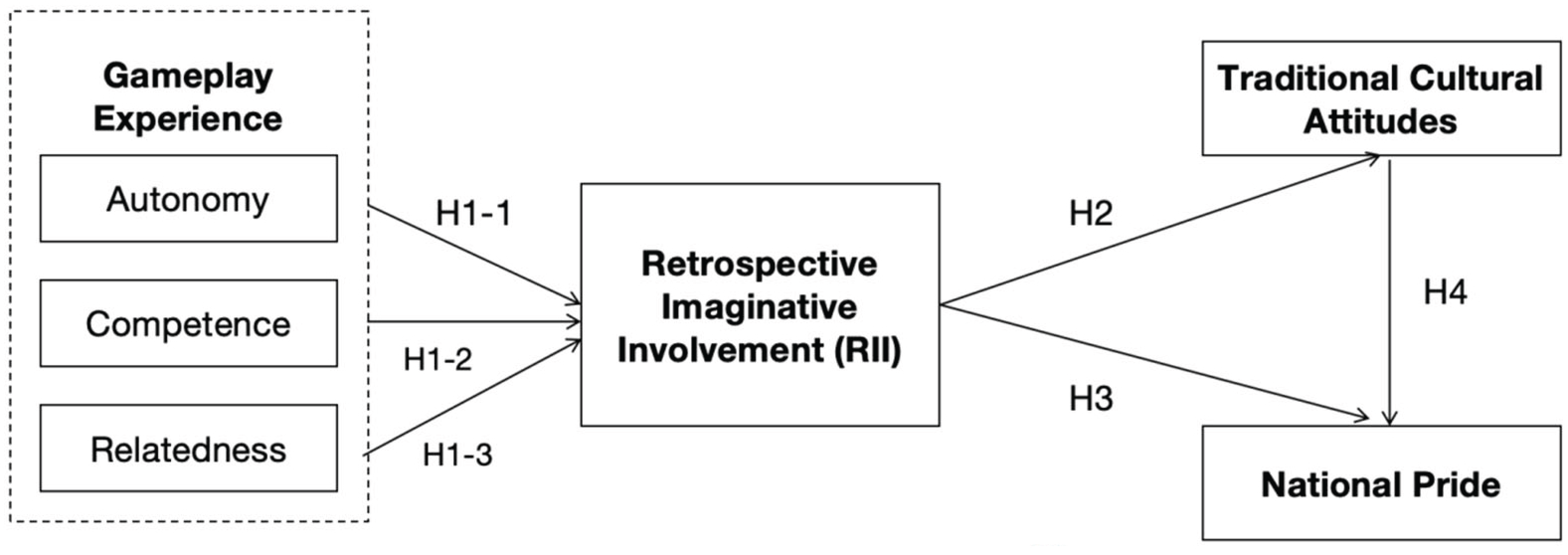
The proposed conceptual model, which integrates gameplay experience, retrospective imaginative involvement, traditional cultural attitudes, and national pride, is presented in Figure 2.

3. Materials and Methods

3.1. Sample and Data Collection

Data were collected through an anonymous online survey administered via Wenjuanxing (Changsha Ranxing Information Technology Co., Ltd., Changsha, China) between 1 November and 9 November 2025. Participants were recruited through Chinese online gaming communities based on a snowball sampling approach. The relatively short field period was feasible because the survey link circulated in several highly active online communities centered on Black Myth: Wukong, where peer-to-peer sharing enabled rapid diffusion within a concentrated player network. This recruitment context allowed us to reach a substantial number of eligible respondents within a limited time window. This non-probability recruitment strategy likely attracted relatively active and motivated players and therefore introduces self-selection bias. Accordingly, the sample should be interpreted as experienced Chinese players of Black Myth: Wukong rather than a representative cross-section of all Chinese youth, and the findings may not generalize to less-engaged or non-community-based players.
Only respondents who had actually played Black Myth: Wukong were included; individuals who had merely watched gameplay videos or accessed the game indirectly were excluded through screening questions. In addition to the eligibility screening questions, we applied multiple data-quality checks before final analysis. Incomplete responses were operationally defined as questionnaires with one or more missing values in the core study variables or required demographic items, and these cases were excluded before the validity screening stage. The remaining submitted questionnaires were then reviewed for inconsistent or clearly invalid response patterns, and cases showing clear response invalidity were excluded from the final dataset. Given that the sample includes minors aged 10 to 17, a screening question was placed on the first page of the questionnaire, requiring respondents in this age group to confirm that they had obtained consent from their parents or legal guardians before continuing to answer. All data were anonymized and did not include personally identifiable information.
After removing incomplete or invalid responses, a total of 312 valid cases were retained for analysis. The sample exhibited a balanced gender distribution, with 157 male respondents (50.32%) and 155 female respondents (49.68%), minimizing potential gender-based bias. Participants ranged in age from 10 to 29 years, with a mean age of 19.71 years. The age distribution was relatively even across groups: 10–15 years (n = 83, 26.6%), 16–20 years (n = 84, 26.9%), 21–25 years (n = 78, 25.0%), and 26–29 years (n = 67, 21.5%), indicating that the sample was concentrated among adolescents and young adults. In terms of educational background, 26.6% of respondents were enrolled in primary or middle school, 22.4% in high school, 37.2% were university students or graduates, and 13.8% were in or had completed graduate-level education. This distribution suggests that the sample covered a broad range of educational stages, with a concentration in higher education. Regarding gameplay characteristics, respondents reported relatively active gaming behavior. Average weekly gameplay time ranged primarily between 10 and 40 h, with a mean of 23.46 h (SD = 8.07). Specifically, 39.7% reported playing 10–20 h per week, 38.5% played 21–30 h, and 21.8% played 31–40 h. In addition, the duration of gameplay experience with Black Myth: Wukong ranged from 1 to 13 months, with a mean of 7.11 months (SD = 3.07), indicating sustained engagement rather than short-term exposure.
Overall, the demographic and gameplay characteristics suggest that the sample consisted of experienced and actively engaged players, providing an appropriate basis for examining the psychological and cultural effects of gameplay experience.

3.2. Measures

The questionnaire consisted of three sections: screening items, main variable measures, and demographic questions. All constructs were assessed using a five-point Likert scale ranging from 1 (strongly disagree) to 5 (strongly agree). All items were adapted from established scales and were revised to fit the context of Black Myth: Wukong and the study population.

3.2.1. Gameplay Experience (Autonomy, Competence, Relatedness)

Gameplay experience was measured based on the Player Experience of Need Satisfaction (PENS) scale, which operationalizes basic psychological need satisfaction in games in line with Self-Determination Theory [6]. Item wording was reconstructed with reference to the Korean version developed and validated by Jung et al. [37] While the original instrument contains multiple subscales, this study adopted three dimensions aligned with the research aims: autonomy, competence, and relatedness.
Autonomy captured perceived freedom of choice and exploration during gameplay. Competence assessed perceived effectiveness and mastery in completing difficult tasks and challenges. Relatedness in the original PENS is primarily designed for social interaction in multiplayer contexts; given that Black Myth: Wukong is a single-player RPG, relatedness was redefined as emotional connection with characters and the narrative world. Recent SDT-based research on single-player narrative games shows that players can experience relatedness by modeling in-game characters as social actors and forming affective bonds with them [38,39]. In this view, the need for relatedness is not fulfilled only through direct interaction with other human players [38]. Higher scores indicate higher levels of need-satisfying gameplay experience [6,37].

3.2.2. Retrospective Imaginative Involvement (RII)

Retrospective imaginative involvement refers to post-exposure engagement in which audiences continue to recall narrative events, imagine alternative scenarios, and elaborate on story-world elements after media contact has ended [12,13]. Items were constructed based on existing RII measures. The original scale includes a hierarchical structure with multiple first-order factors; however, prior work has reported difficulties reproducing the first-order factor model in some contexts, including concerns about problematic variance [24]. Following adaptations used in narrative media contexts, this study operationalized RII using three subdimensions: static recall, dynamic imagination, and backstory imagination. A total of 27 items were included (nine per subdimension). Items assessed, for example, recalling memorable scenes or lines (static recall), imagining how the story might change if different choices were made (dynamic imagination), and filling in the mythological background or world-building details (backstory imagination). Higher scores indicate stronger post-play imaginative engagement [12,13,24].

3.2.3. Traditional Cultural Attitudes

Traditional cultural attitudes were measured using a revised version of the General Perceived Cultural Identity Scale, developed and validated in the Chinese cultural context [36,40]. The scale was originally designed to assess identification with Chinese culture and behavioral commitment. In this study, item wording was adapted by replacing references to “Chinese culture” with “our country’s traditional culture” to evaluate youth participants’ perceptions and attitudes toward traditional culture. All items were assessed on a five-point Likert scale, with higher scores indicating more positive attitudes toward traditional culture [40].

3.2.4. National Pride

National pride was measured using items derived from the International Social Survey Programme (ISSP) 2013 national identity module, with a focus on items most closely related to cultural and identity-based pride rather than political or economic performance [41]. Item selection and wording were informed by prior research applying ISSP-based measures in East Asian contexts [41]. All items were assessed on a five-point Likert scale, with higher scores indicating stronger national pride. This study measures national pride using an evaluative judgment approach. The following considerations underlie this choice: (1) The design of the ISSP questionnaire requires respondents to assess performance in specific domains, and the question format clearly points to the assessment of the country’s achievements; (2) Evaluative judgments better reflect respondents’ differentiated perceptions of various aspects of the country, which aligns with the analytical objective of this study to explore the relationship between traditional cultural attitudes and national pride.

3.3. Statistical Procedures

Data were analyzed using IBM SPSS Statistics 26.0 and IBM SPSS AMOS 26.0 (IBM Corp., Armonk, NY, USA). Given that all variables were measured via self-report at a single time point, we assessed common method bias using Harman’s single-factor test. Unrotated principal component analysis revealed that the first factor accounted for 28.78% of the total variance, below the 50% threshold, suggesting that common method bias does not pose a significant threat to our findings [42]. First, reliability analysis was conducted in SPSS 26.0 to assess internal consistency and item performance. Confirmatory factor analysis (CFA) was then conducted in AMOS 26.0 to evaluate the measurement model and finalize the items for subsequent model testing. Descriptive statistics (means and standard deviations) were computed for the main variables, and Pearson correlation analysis was conducted to examine bivariate associations.
Hypotheses were tested using structural equation modeling (SEM) in AMOS. Model parameters were estimated using maximum likelihood estimation (MLE). To evaluate the indirect effects specified in the mediation hypotheses, bootstrapping procedures were applied to test the statistical significance of mediation paths. Based on theoretical and temporal considerations, the causal paths among variables were specified as unidirectional: gameplay experience was modeled as an antecedent formed during play, whereas retrospective imaginative involvement, traditional cultural attitudes, and national pride were treated as post-play outcomes.

4. Results

4.1. Analysis Results of Reliability and Validity

Internal consistency reliability was assessed using Cronbach’s alpha coefficients. All constructs exceeded the recommended threshold of 0.70, indicating satisfactory reliability Reliability and convergent validity were assessed before testing the structural model, and the results of the measurement model assessment are summarized in Table 1. Specifically, the Cronbach’s alpha values were 0.843 for autonomy experience, 0.807 for competence experience, 0.801 for relatedness experience, 0.955 for retrospective imaginative involvement (RII), 0.921 for traditional cultural attitudes, and 0.876 for national pride. Confirmatory factor analysis (CFA) was conducted using AMOS 26.0 to evaluate the measurement model The goodness-of-fit indices for both the CFA measurement model and the SEM structural model are presented in Table 2. The CFA results indicated an acceptable model fit: χ2 = 1540.895 (df = 1147, p < 0.001), CMIN/DF = 1.343, IFI = 0.960, TLI = 0.957, CFI = 0.959, GFI = 0.840, and RMSEA = 0.033. All standardized factor loadings were significant and exceeded 0.60. Composite reliability (CR) values ranged from 0.803 to 0.939, and average variance extracted (AVE) values ranged from 0.566 to 0.642, exceeding recommended thresholds. Discriminant validity was supported, as the square root of AVE for each construct was greater than the correlations with other constructs. Discriminant validity and inter-construct correlations were then examined, and the results are reported in Table 3.
Traditional cultural attitudes showed a mean of 3.75 (SD = 0.87), and national pride showed a mean of 3.67 (SD = 0.93), both exceeding the midpoint of the five-point scale. These descriptive results indicate that respondents reported moderately positive orientations toward both traditional culture and national pride. The relatively large standard deviations indicated sufficient variability among respondents. Inter-construct correlations were positive in direction, and the overall pattern was consistent with the proposed model. These results supported the suitability of the data for subsequent structural equation modeling. The structural equation model demonstrated a good overall fit to the data: χ2 = 333.069 (df = 290), CMIN/DF = 1.149, GFI = 0.918, IFI = 0.927, TLI = 0.912, CFI = 0.922, and RMSEA = 0.022. All fit indices met or exceeded commonly accepted criteria, indicating that the proposed model adequately represented the observed data.

4.2. Hypothesis Testing

4.2.1. Direct Effects Testing

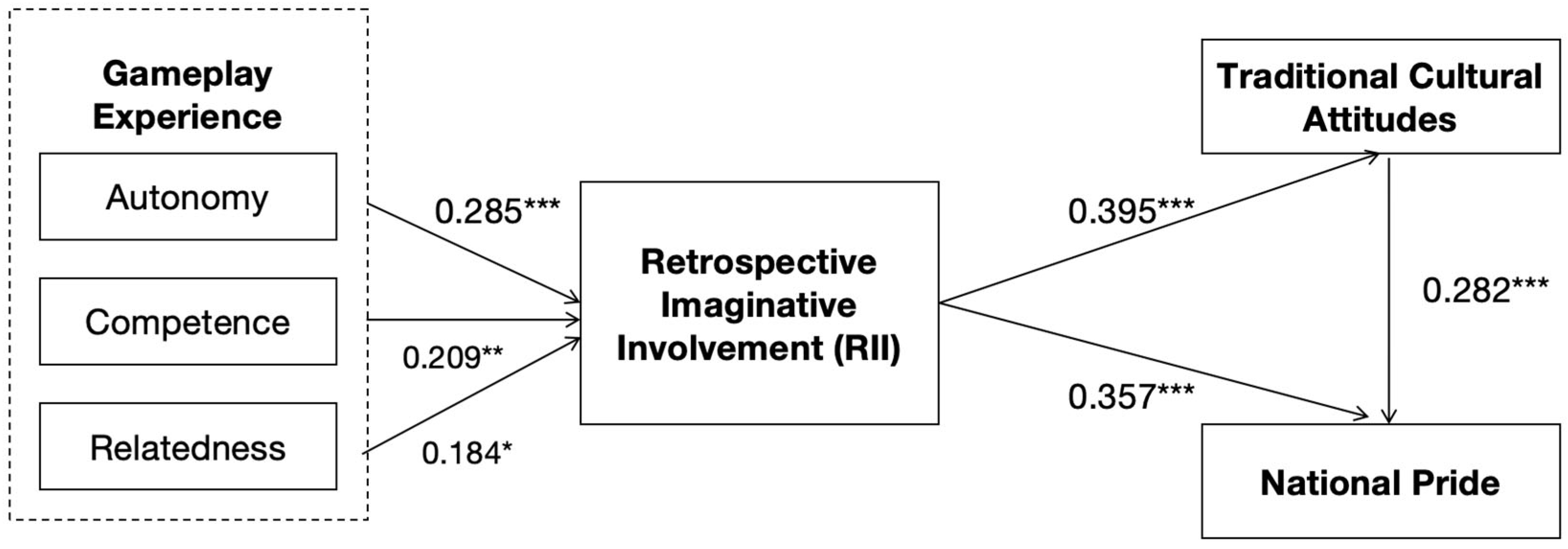
The direct effects results are presented in Table 4. Autonomy experience was significantly and positively associated with retrospective imaginative involvement (β = 0.285, C.R. = 3.784, p < 0.001), supporting H1-1. Competence experience also showed a significant positive effect on retrospective imaginative involvement (β = 0.209, C.R. = 2.761, p < 0.01), supporting H1-2. Relatedness experience likewise had a significant positive effect (β = 0.184, C.R. = 2.389, p < 0.05), supporting H1-3. Although autonomy showed the largest standardized coefficient among the three gameplay dimensions, we do not interpret the observed differences in coefficient magnitude as statistically significant because no formal pairwise comparison test was conducted. Rather, the pattern is consistent with the possibility that self-directed exploration may be particularly salient in a single-player RPG context, whereas relatedness in such a context may operate through emotional attachment to characters and the narrative world rather than direct social interaction. This interpretation remains provisional and should be tested explicitly in future research.
Retrospective imaginative involvement was significantly and positively associated with traditional cultural attitudes (β = 0.395, C.R. = 4.939, p < 0.001), supporting H2, and with national pride (β = 0.357, C.R. = 4.431, p < 0.001), supporting H3. Traditional cultural attitudes also positively influenced national pride (β = 0.282, C.R. = 3.906, p < 0.001), supporting H4.

4.2.2. Mediation Effects Testing

Bootstrapping analysis with 5000 resamples and 95% bias-corrected confidence intervals was conducted to test the mediation hypotheses. The results are presented in Table 5, which reports the decomposition of effects estimated within the mediation model. Accordingly, the direct effects shown in this table refer to the residual direct paths after inclusion of the mediator, whereas Table 4 presents the originally hypothesized structural paths. Bias-corrected 95% confidence intervals are reported for both direct and indirect effects in Table 5. Detailed examination of the mediation pathways revealed significant indirect effects across all hypothesized relationships. For national pride as the outcome, autonomy (indirect effect = 0.091, 95% CI [0.019, 0.232], p < 0.01) and competence (indirect effect = 0.084, 95% CI [0.010, 0.248], p < 0.05) exhibited partial mediation through RII, whereas relatedness showed full mediation (indirect effect = 0.054, 95% CI [0.002, 0.176], p < 0.05), as its residual direct path became non-significant after inclusion of the mediator. Similarly, for traditional cultural attitudes, autonomy demonstrated partial mediation (indirect effect = 0.048, 95% CI [0.014, 0.121], p < 0.01), whereas competence (indirect effect = 0.044, 95% CI [0.007, 0.125], p < 0.05) and relatedness (indirect effect = 0.028, 95% CI [0.003, 0.099], p < 0.05) operated through RII, indicating full mediation. The sequential mediation pathway (H7) from RII through traditional cultural attitudes to national pride was also significant (indirect effect = 0.144, 95% CI [0.042, 0.333], p < 0.01), supporting partial mediation. Taken together, these findings suggest that autonomy and competence may influence cultural outcomes through both residual direct and indirect pathways, whereas relatedness appears to depend more strongly on temporal extension through imaginative processing. The final structural equation model, including the significant direct and mediated pathways among the key constructs, is presented in Figure 3.

5. Conclusions

This study shows that the cultural influence of digital games does not end at the moment of play. By integrating Self-Determination Theory with Retrospective Imaginative Involvement, the present research demonstrates that need-satisfying gameplay can extend into post-play imaginative processing, which in turn shapes traditional cultural attitudes and national pride among young players. Theoretically, this finding extends media-effects research beyond immediate immersion and locates a meaningful part of cultural influence in the reflective period after gameplay. Practically, it suggests that culturally grounded games can function not only as entertainment products but also as interactive vehicles for heritage communication when they encourage continued narrative reflection after play.

5.1. Empirical Implications

This study offers three key empirical contributions to research on digital games, cultural psychology, and narrative. Firstly, this study demonstrates through a structural equation model that the game experience not only affects players during the act of play but also exerts continuing cultural effects through post-play psychological mechanisms. Existing research on games has mostly focused on immediate immersion, pleasure, or motivational outcomes, while the results of this study show Retrospective Imaginative Involvement as a key mediating variable linking gameplay experience with cultural attitudes. This finding challenges the “immediacy assumption” prevalent in game studies and media psychology, where effects are theoretically anchored to the moment of exposure. By identifying RII as a constitutive phase of influence rather than a decay period, the study extends the temporal boundary of media effects theory and establishes an asynchronous model of cultural attitude formation.
Secondly, within the framework of the Self-Determination Theory, this study empirically expands the cultural aftereffects of need satisfaction. The results show that autonomy, competence, and relatedness not only affect the degree of players’ game engagement but also significantly predict their imaginative recollections and narrative expansion after the game ends. Among them, the influence of the autonomy experience is the most prominent, indicating that when players feel a strong sense of self-determination and a broader range of choices in the game, they are more likely to repeatedly recall the game content and reprocess the narrative. This result offers a more detailed mechanistic explanation of how interactive gameplay experiences are transformed into cultural and psychological outcomes.
Thirdly, this study reveals how digital games affect traditional cultural attitudes and national pride. The results indicate that Retrospective Imaginative Involvement enhances positive attitudes towards traditional culture and national pride, with the latter relationship partially mediated by cultural attitudes. National pride is a multidimensional construct encompassing both constructive patriotism (critical appreciation of cultural achievements) and blind nationalism (unconditional loyalty regardless of national faults). This study measures evaluative judgment of cultural achievements rather than emotional nationalism. Consequently, the findings should be interpreted as reflecting cultural literacy and identity awareness rather than exclusionary nationalism. While culturally grounded games may contribute to national image formation, future research should continue to examine the ethical boundary between cultural communication and more instrumental forms of persuasion. Future research should examine potential risks, including whether game-based national pride fosters inclusive cultural appreciation or exclusionary nationalism, and whether different player populations (e.g., ethnic minorities within China) experience cultural games as inclusive or alienating.
These findings suggest that the pathway from game engagement to national identification may operate through multiple routes—sometimes via cultural attitude formation, sometimes more directly—depending on how players imaginatively engage with narrative content. This pattern indicates that the relationship between cultural and national identification is shaped by the mode of narrative engagement rather than content exposure alone. This suggests that cultural narratives in games are internalized through players’ imaginative reflection and transformed into stable cultural evaluations and identity emotions.

5.2. Practical Implications

The findings of this study offer clear practical implications for the development of culture-oriented games, digital cultural communication, and related cultural policies. First, at the level of culture-oriented game design, interactive structure appears more critical than the accumulation of cultural content. The results indicate that cultural meanings are more likely to be recalled and imaginatively elaborated after gameplay when players experience autonomy, competence, and emotional connection during play. Accordingly, games that aim to convey traditional culture might emphasize self-directed player experiences through mechanisms such as branching choices, exploratory paths, challenge-based feedback, and emotionally meaningful character relationships. These design principles are derived from a specific case (Black Myth: Wukong) and a particular demographic (Chinese youth aged 10–29); their generalizability to other cultural contexts, age groups, or game genres remains to be tested.
Second, this study highlights the importance of the post-play phase as a key window for cultural influence. Retrospective imaginative involvement suggests that cultural communication does not end when gameplay stops. Post-game practices—including fan creations, narrative discussions, world-building extensions, and cross-media adaptations—can further deepen players’ understanding of cultural narratives and strengthen emotional investment. From this perspective, games should be viewed as a starting point rather than an endpoint of cultural transmission. Game developers and cultural institutions may thus benefit from designing mechanisms that encourage players’ memory-based reflection and imaginative elaboration, effectively extending the temporal reach of cultural impact.
Third, for cultural communication targeting younger generations, digital games function as a low-threshold yet emotionally intensive cultural medium. The findings show that, through gameplay experiences and imaginative engagement, young players can develop more positive attitudes toward traditional culture, which may further translate into affective connections with national identity. This suggests an alternative pathway to cultural transmission that differs from formal education or didactic discourse—one that relies on immersive experience and imaginative participation to facilitate more organic and internalized forms of cultural identification.
Finally, at the level of cultural policy and digital heritage communication, the findings of this study may inform discussions of cultural transmission. Compared to static displays or one-way communication formats, the capacity of interactive games to foster cultural attitudes through emotional experience warrants further attention. Culture-oriented digital games may hold potential as interactive vehicles for cultural heritage, though this conclusion is grounded in a specific context (Chinese adolescent and young adult players, mythological adaptation games), and its generalizability to other populations, cultural settings, or policy objectives remains an empirical question.

5.3. Limitations and Future Research

This study has several limitations that should be acknowledged. First, the sample was limited to Chinese players aged 10–29 who had experience playing Black Myth: Wukong. Although this group represents an active segment of digital game users, differences in regional background, cultural exposure, and educational experience may affect how players interpret cultural narratives and symbols. The online snowball sampling method in this study has inherent limitations in strictly implementing the parents’ informed consent procedure. Although the questionnaire set confirmation items, it was unable to fully verify the authenticity of the parents’ consent. Future research should be approved by the institutional ethics committee and adopt a stricter electronic informed consent process. As such, the findings should be interpreted with caution and not generalized to broader age groups or cultural contexts. Future research may extend the sample to older age groups or adopt stratified sampling to examine the robustness of the proposed model across populations.
Second, survivorship bias limits representativeness. Our sampling only captured sustained players recruited from online gaming communities, systematically excluding those who discontinued gameplay due to frustration or low competence satisfaction. This restriction likely attenuates potential negative effects and may overestimate the positive associations between gameplay experience and cultural outcomes. Although procedural remedies and Harman’s single-factor test (with the first factor explaining 28.78% of the variance) suggest that common method bias does not pose a substantial threat, the self-report design inherently constrains causal inference and may still involve residual method and social desirability bias. Longitudinal or experimental designs could better capture how gameplay experiences translate into post-play imaginative engagement and longer-term cultural attitudes.
Third, participants’ prior familiarity with Journey to the West may moderate the observed effects but was not measured or controlled in this study. Chinese youth are extensively exposed to Wukong narratives through childhood education, television adaptations, and popular culture, creating pre-existing cultural schemas that shape gameplay interpretation. Players with strong prior cultural knowledge may experience confirmation effects, where gameplay reinforces existing attitudes rather than generating new cultural appreciation. Conversely, players with minimal prior knowledge may experience novelty effects, where gameplay serves as initial cultural exposure. These distinct processes would produce similar correlations in cross-sectional data but reflect fundamentally different psychological mechanisms.
Fourth, this study emphasizes positive outcomes but neglects potential negative pathways. Players experiencing need frustration (low competence, restricted autonomy) may develop adverse cultural attitudes or psychological disengagement. Future research should recruit discontinued players and measure need frustration to test whether competence frustration generates reverse effects, such as resentment toward traditional culture.
Lastly, there are also limitations in the measurement approach of national pride. This study relied on evaluative judgment questions from the ISSP and failed to incorporate an independent measurement of emotional identification. This means that the research findings more accurately reflect respondents’ cognitive assessment of the country’s cultural achievements rather than their overall emotional attachment to the country. For example, players’ higher evaluation of “the country’s democratic system” may reflect their recognition of the system’s performance (evaluative judgment), or it may reflect their emotional identification with the country (emotional identification). The current data cannot fully distinguish between these two mechanisms. Future research should design a mixed measurement strategy to directly compare the explanatory power of the two approaches.

Author Contributions

Conceptualization, H.J.J.; methodology, S.-C.Y. and H.J.J.; writing—original draft preparation, H.J.J.; writing—review and editing, S.K.; supervision, S.-C.Y. All authors have read and agreed to the published version of the manuscript.

Funding

This research received no external funding.

Data Availability Statement

The data supporting the findings of this study are not publicly available due to privacy and ethical restrictions, particularly because the survey included participants under the age of 18 and the consent procedure did not include permission for public data sharing. Anonymized data may be made available from the corresponding author upon reasonable request, subject to applicable institutional, ethical, and legal requirements.

Conflicts of Interest

The authors declare no conflicts of interest.

References

  1. Newzoo. How Consumers Engage with Games Today: Newzoo’s Global Gamer Study 2024; Newzoo: Amsterdam, The Netherlands, 2024. [Google Scholar]
  2. China Audio-Video and Digital Publishing Association. China Game Industry Report 2025; China Audio-Video and Digital Publishing Association: Beijing, China, 2025. (In Chinese) [Google Scholar]
  3. Gee, J.P. What Video Games Have to Teach Us about Learning and Literacy. Comput. Entertain. 2003, 1, 20. [Google Scholar] [CrossRef]
  4. Isbister, K. How Games Move Us: Emotion by Design; MIT Press: Cambridge, MA, USA, 2016. [Google Scholar]
  5. Wang, Z.; Zhou, B.; Zhong, Y.; Deng, S. A Three-Dimensional Study on the International Communication of Black Myth: Wukong. Int. Commun. Chin. Cult. 2025, 12, 587–606. [Google Scholar] [CrossRef]
  6. Ryan, R.M.; Rigby, C.S.; Przybylski, A. The motivational pull of video games: A self-determination theory approach. Motiv. Emot. 2006, 30, 344–360. [Google Scholar] [CrossRef]
  7. Ryan, R.M.; Deci, E.L. Self-determination theory and the facilitation of intrinsic motivation, social development, and well-being. Am. Psychol. 2000, 55, 68. [Google Scholar] [CrossRef]
  8. Przybylski, A.K.; Rigby, C.S.; Ryan, R.M. A motivational model of video game engagement. Rev. Gen. Psychol. 2010, 14, 154–166. [Google Scholar] [CrossRef]
  9. Green, M.C.; Brock, T.C. The role of transportation in the persuasiveness of public narratives. J. Pers. Soc. Psychol. 2000, 79, 701. [Google Scholar] [CrossRef]
  10. Wolf, M.J. (Ed.) Before the Crash: Early Video Game History; Wayne State University Press: Detroit, MI, USA, 2012. [Google Scholar]
  11. Slater, M.D.; Ewoldsen, D.R.; Woods, K.W. Extending conceptualization and measurement of narrative engagement after-the-fact: Parasocial relationship and retrospective imaginative involvement. Media Psychol. 2018, 21, 329–351. [Google Scholar] [CrossRef]
  12. Sethi, N. Retrospective imaginative involvement. In The International Encyclopedia of Media Psychology; Van den Bulck, J., Ed.; Wiley: Hoboken, NJ, USA, 2020; pp. 1–7. [Google Scholar] [CrossRef]
  13. Ulusoy, E.; Sethi, N.; Baldwin, J.; Grady, S.M.; Ewoldsen, D.R. Can’t stop thinking about Star Wars and the Office: Antecedents of retrospective imaginative involvement. Hum. Commun. Res. 2022, 48, 622–633. [Google Scholar] [CrossRef]
  14. Yuan, W. An imagological analysis of the video game Black Myth: WuKong. Signs Media 2024, 3, 55–75. [Google Scholar] [CrossRef]
  15. Meng, Q. Black Myth: Wukong–The internationalization of Chinese games. J. Mod. Soc. Sci. 2025, 2, 13–19. [Google Scholar] [CrossRef]
  16. Juul, J. Half-Real: Video Games Between Real Rules and Fictional Worlds; MIT Press: Cambridge, MA, USA, 2011. [Google Scholar] [CrossRef]
  17. Shaw, A. What is video game culture? Cultural studies and game studies. Games Cult. 2010, 5, 403–424. [Google Scholar] [CrossRef]
  18. Elson, M.; Breuer, J.; Ivory, J.D.; Quandt, T. More than stories with buttons: Narrative, mechanics, and context as determinants of player experience in digital games. J. Commun. 2014, 64, 521–542. [Google Scholar] [CrossRef]
  19. China Audio-Video and Digital Publishing Association. China Game Industry Report 2024; China Audio-Video and Digital Publishing Association: Beijing, China, 2024. [Google Scholar]
  20. Liu, L. Transmedia storytelling in Black Myth: Wukong. J. Commun. 2025, 13, 53. [Google Scholar] [CrossRef]
  21. Ouyang, Y. Representation and communication effects of traditional cultural symbols in game narratives: A case study of Black Myth: Wukong. J. Commun. 2025, 13, 648. [Google Scholar] [CrossRef]
  22. Deci, E.L.; Ryan, R.M. Intrinsic Motivation and Self-Determination in Human Behavior; Springer: New York, NY, USA, 1985. [Google Scholar] [CrossRef]
  23. Johnson, D.; Gardner, M.J.; Perry, R. Validation of two game experience scales: The player experience of need satisfaction (PENS) and game experience questionnaire (GEQ). Int. J. Hum. Comput. Stud. 2018, 118, 38–46. [Google Scholar] [CrossRef]
  24. Yoshimura, K.; Chauveau, P.D.V. Keep your head in the game: Retrospective imaginative involvement with video game narratives. Psychol. Pop. Media 2025. [Google Scholar] [CrossRef]
  25. Jennett, C.; Cox, A.L.; Cairns, P.; Dhoparee, S.; Epps, A.; Tijs, T.; Walton, A. Measuring and defining the experience of immersion in games. Int. J. Hum. Comput. Stud. 2008, 66, 641–661. [Google Scholar] [CrossRef]
  26. Busselle, R.; Bilandzic, H. Measuring narrative engagement. Media Psychol. 2009, 12, 321–347. [Google Scholar] [CrossRef]
  27. Slater, M.D.; Rouner, D. Entertainment–education and elaboration likelihood: Understanding the processing of narrative persuasion. Commun. Theory 2002, 12, 173–191. [Google Scholar]
  28. Ewoldsen, D.R.; Busselle, R.; Sethi, N.; Slater, M.D. Retrospective imaginative involvement and entertainment narratives: Initial forays. In The Oxford Handbook of Entertainment Theory; Klimmt, C., Vorderer, P., Eds.; Oxford University Press: New York, NY, USA, 2021; pp. 735–754. [Google Scholar] [CrossRef]
  29. Ott, J.M.; Slater, M.D. Postexposure engagement with more and less eudaimonic films: 10-year patterns of response and the role of parasocial relationship and retrospective imaginative involvement. Psychol. Pop. Media 2024, 13, 150–161. [Google Scholar] [CrossRef]
  30. Oliver, M.B.; Raney, A.A. Entertainment as pleasurable and meaningful: Identifying hedonic and eudaimonic motivations for entertainment consumption. J. Commun. 2011, 61, 984–1004. [Google Scholar] [CrossRef]
  31. Sherrick, B.; Hoewe, J.; Ewoldsen, D.R. Using narrative media to satisfy intrinsic needs: Connecting parasocial relationships, retrospective imaginative involvement, and self-determination theory. Psychol. Pop. Media 2022, 11, 266–274. [Google Scholar] [CrossRef]
  32. Evans, M.D.; Kelley, J. National pride in the developed world: Survey data from 24 nations. Int. J. Public Opin. Res. 2002, 14, 303–338. [Google Scholar] [CrossRef]
  33. Kim, H.G.; Lee, S.S. National pride, social capital, and perceived prosperity: Determinants of Koreans’ perceived quality of life. J. Northeast Asian Stud. 2012, 17, 293–320. [Google Scholar]
  34. Chae, S.H. Study on the effects of social capital on national pride. Korean Assoc. Gov. Stud. 2016, 26, 25–49. [Google Scholar]
  35. Schatz, R.T.; Staub, E.; Lavine, H. On the varieties of national attachment: Blind versus constructive patriotism. Political Psychol. 1999, 20, 151–174. [Google Scholar] [CrossRef]
  36. Yoon, I.J.; Peng, Z. Multicultural acceptance among Koreans and Taiwanese: Focusing on the effects of national identity and national pride. J. Asian Stud. 2021, 64, 245–288. [Google Scholar] [CrossRef]
  37. Jung, Y.J.; Jang, Y.J.; Shin, Y.J.; Ko, K.H.; Lee, D.Y.; Yoon, J.H. Development and validation of a need satisfaction scale for adolescent game users. Asian Educ. Res. 2022, 23, 755–786. [Google Scholar] [CrossRef]
  38. Grasse, K.M.; Kreminski, M.; Wardrip-Fruin, N.; Mateas, M.; Melcer, E.F. Reevaluating the role of relatedness in single-player roleplaying games. In Proceedings of the CHI 2022 Workshop on Self-Determination Theory in HCI: Shaping a Research Agenda, New Orleans, LA, USA, 1 May 2022; ACM: New York, NY, USA, 2022; 4p. [Google Scholar]
  39. Lu, A.S.; Moller, A.C. Elaborating the role of narrative and self-determination theory in video game design research. Interact. Comput. 2024, 38, 501–515. [Google Scholar] [CrossRef] [PubMed]
  40. Huang, W.; Bi, C. Development of a brief general cultural identity scale. Adv. Psychol. 2021, 11, 620–628. [Google Scholar] [CrossRef]
  41. ISSP Research Group. International Social Survey Programme: National Identity III–ISSP 2013; GESIS: Mannheim, Germany, 2015. [Google Scholar]
  42. Podsakoff, P.M.; MacKenzie, S.B.; Lee, J.Y.; Podsakoff, N.P. Common method biases in behavioral research: A critical review of the literature and recommended remedies. J. Appl. Psychol. 2003, 88, 879–903. [Google Scholar] [CrossRef] [PubMed]
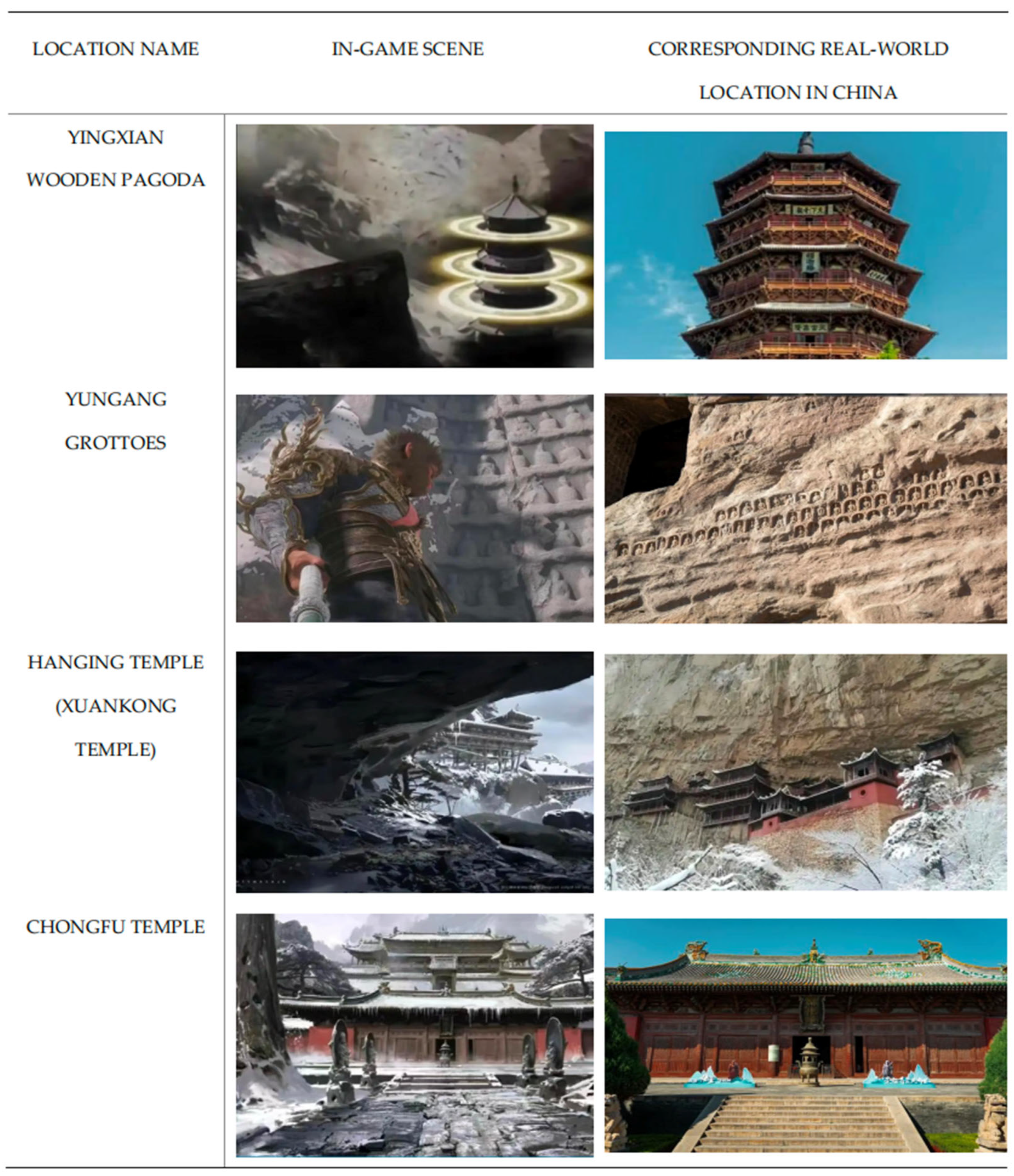
Figure 1. Comparison between in-game locations in Black Myth: Wukong and their real-world architectural references in China (Left panels: Screenshots from Black Myth: Wukong. Right panels: Photographs of corresponding heritage sites. Images used under fair use for academic purposes).
Heritage 09 00181 g001
Figure 2. Conceptual Model of Gameplay Experience, Retrospective Imaginative Involvement, and Cultural Outcomes.
Heritage 09 00181 g002
Figure 3. Results of the Structural Equation Model. * p < 0.05, ** p < 0.01, *** p < 0.001.
Heritage 09 00181 g003
Table 1. Measurement model assessment (CFA).
Factors/ItemsStandardized Loading (β)CRAVE
Autonomy Experience 0.8430.642
Choice and freedom of exploration0.777
Playing in a self-determined way0.823
Freedom of action in gameplay0.804
Competence Experience 0.8140.597
Ability to complete difficult tasks0.696
Full utilization of personal skills0.896
Capability to handle in-game challenges0.709
Relatedness Experience 0.8030.577
Satisfaction with character interactions0.760
Personal meaning of character relationships0.700
Emotional connection with game characters0.814
RII Static Imagination 0.9340.613
Mental replay of character actions0.720
Memory of specific scenes or dialogues0.781
Recall of impressive battles or events0.770
Reflection on characters’ emotions and motives0.779
Recall of narrative sequence0.792
Memory of key plot points0.803
Recall of combat or boss fights0.784
Vivid visualization of the storyline0.806
Recall of important story moments0.806
RII Dynamic Imagination 0.9310.599
Imagining alternative character choices0.831
Imagining alternative endings0.726
Imagining characters in real life0.755
Imagining alternative dialogues0.790
Imagining different character traits or relationships0.780
Imagining game events in real life0.826
Relating the story to personal experience0.719
Imagining altering the protagonist’s fate0.731
Recalling game events as personal experiences0.801
RII Background Narrative Imagination 0.9390.632
Imagining events before the journey0.802
Imagining post-game character outcomes0.799
Imagining untold past stories0.773
Imagining relationship formation between characters0.809
Imagining events before key battles0.802
Imagining hidden conflicts or secrets0.799
Imagining hidden legends of the game world0.773
Imagining origins of abilities or artifacts0.809
Expanding the game’s worldview0.806
Traditional Cultural Attitude 0.9210.566
Pride in Chinese traditional culture0.789
Sense of belonging to traditional culture0.719
Perceived personal significance of tradition0.759
Emotional attachment to traditional culture0.734
Personal pride from others’ praise0.751
Willingness to learn about tradition0.774
Willingness to inherit and promote traditions0.755
Willingness to introduce tradition to others0.674
Concern for the future of traditional culture0.809
National Pride 0.8760.586
Preference for Chinese national identity0.752
Positive evaluation of Chinese people globally0.781
Perceived national superiority0.729
Support for the country despite mistakes0.799
Pride in international sports performance0.762
Table 2. Goodness-of-fit indices.
χ2χ2/dfGFIRMSEACFITLI
CFA1540.895, df = 1147, p < 0.001.1.3430.8400.0330.9590.957
SEM333.069, df = 290, p < 0.001.1.1490.9180.0220.9220.912
Note: GFI (goodness-of-fit-index), RMSEA (root mean square error of approXimation), CFI (comparative fit index), TLI (Tucker–Lewis Index).
Table 3. Discriminant validity and inter-construct correlations.
Variables12345678
Autonomy0.801
Competence0.1670.773
Relatedness0.2440.2100.759
Static Imagination0.2250.1450.2060.786
Dynamic Imagination0.2300.1760.1500.4760.777
Background Narrative0.2310.1640.2000.4870.6560.792
Traditional Cultural Attitude0.2530.2360.2160.1570.2220.2780.753
National Pride0.3110.2430.2560.2680.2800.3230.4170.765
Diagonal elements represent the square root of AVE; off-diagonal elements represent correlations among constructs.
Table 4. Results of the direct effects hypothesis test.
Structural PathStd. EstimateC.R.Result
H1-1: Autonomy → RII0.285 ***3.784Supported
H1-2: Competence → RII0.209 **2.761Supported
H1-3: Relatedness → RII0.184 *2.389Supported
H2: RII → Traditional attitude0.395 ***4.939Supported
H3: RII → National pride0.357 ***4.431Supported
H4: Traditional attitude → National pride0.282 ***3.906Supported
Note: All path estimates are standardized. * p < 0.05, ** p < 0.01, *** p < 0.001.
Table 5. Results of the mediation effects hypothesis test.
Indirect PathDirect Effect (β)Direct 95% CIIndirect Effect (β)Indirect 95% CITotal Effect (β)Mediation Type
H5-1: Autonomy → RII → NP0.203 **[0.041, 0.365]0.091 **[0.019, 0.232]0.294 ***Partial
H5-2: Competence → RII → NP0.176 *[0.008, 0.344]0.084 *[0.010, 0.248]0.260 **Partial
H5-3: Relatedness → RII → NP0.148 (ns)[−0.021, 0.312]0.054 *[0.002, 0.176]0.202 *Full
H6-1: Autonomy → RII → TCA0.164 *[0.015, 0.307]0.048 **[0.014, 0.121]0.212 **Partial
H6-2: Competence → RII → TCA0.137 (ns)[−0.018, 0.289]0.044 *[0.007, 0.125]0.181 *Full
H6-3: Relatedness → RII → TCA0.109 (ns)[−0.030, 0.252]0.028 *[0.003, 0.099]0.137 *Full
H7: RII → TCA → NP0.244 ***[0.115, 0.382]0.144 **[0.042, 0.333]0.388 ***Partial
Note: this table reports the decomposition of effects estimated within the mediation model. Direct effects refer to the residual direct paths after inclusion of the mediator, whereas indirect effects represent bootstrapped mediation effects. Bias-corrected 95% confidence intervals are reported for both direct and indirect effects. RII = Retrospective Imaginative Involvement; TCA = Traditional Cultural Attitudes; NP = National Pride. * p < 0.05, ** p < 0.01, *** p < 0.001, ns = non-significant.
Disclaimer/Publisher’s Note: The statements, opinions and data contained in all publications are solely those of the individual author(s) and contributor(s) and not of MDPI and/or the editor(s). MDPI and/or the editor(s) disclaim responsibility for any injury to people or property resulting from any ideas, methods, instructions or products referred to in the content.