
Article

An Integrated Workflow from Reality-Based Survey to HBIM and Immersive Reconstruction: The Aeclanum Archaeological Park


by
Marco Limongiello
1,*,
Lorenzo Radaelli
2 and
Laura De Girolamo
2
1
Department of Civil Engineering, Pegaso Telematic University, 80132 Naples, Italy
2
Department of Cultural Heritage Sciences, University of Salerno, 84084 Fisciano, Italy
*
Author to whom correspondence should be addressed.
Heritage 2026, 9(5), 174; https://doi.org/10.3390/heritage9050174
Submission received: 28 February 2026 / Revised: 24 April 2026 / Accepted: 25 April 2026 / Published: 30 April 2026
(This article belongs to the Special Issue Applications of Digital Technologies in the Heritage Preservation)

Abstract

Archaeological sites present critical issues related to fragmented documentation systems, the difficulty of integrating stratigraphic analyses with three-dimensional survey data, and the lack of digital tools capable of connecting scientific documentation, conservation needs, and public dissemination. This study proposes an integrated digital workflow for the archaeological park of Aeclanum, in which reality-based multi-scale survey data are transformed into an HBIM model structured through stratigraphic interpretation, material analysis, and semantically organised information. The resulting three-dimensional dataset supports the subsequent Scan-to-BIM process, ensuring consistency between the digital representation and the existing remains. Within this framework, the HBIM model is conceived not only as a geometric representation of the current state, but also as an information environment incorporating data on construction techniques, materials, and decay conditions, thus providing a basis for conservation-oriented assessment and future intervention priorities. At the same time, the model supports digital reconstruction hypotheses consistent with archaeological evidence, later developed within an immersive environment that allows visitors to compare the present condition of the site with its reconstructed historical configuration. The workflow highlights the potential of HBIM as an interface between survey, knowledge organisation, conservation support, and digital enhancement.

1. Introduction

Archaeological heritage in Italy is characterised by a high degree of complexity, due to the geographical extent of the sites, their stratified nature, and the continuity of settlements over thousands of years that have shaped the historical landscape. The Italian territory preserves an extraordinary density of material evidence—including ancient urban centres, historical infrastructures, monumental complexes, and archaeological sites—which form interconnected systems where historical, architectural, landscape, and identity values overlap. Such complexity requires digital approaches capable of integrating spatial documentation, chronological interpretation, and conservation-related information within structured and interoperable environments. Recent literature has highlighted the growing role of digital tools in cultural heritage for combining geometric documentation, semantic content, and data on the state of conservation within coherent information systems [1].
Within this context, information models for cultural heritage have shown significant potential for integrating three-dimensional representations with non-geometric data, enabling more structured forms of documentation and knowledge organisation [2]. In archaeological contexts, however, this process becomes particularly complex because of the fragmentary nature of the preserved remains and the presence of multi-phase stratification. As a result, the integration of metric survey data, stratigraphic interpretation, and semantic information requires methods capable of combining geometric reliability with interpretative transparency [3].
Beyond these methodological issues, archaeological sites also involve significant operational and resource-related challenges. According to the 2017 ISTAT survey, 293 archaeological areas and parks in Italy are open to the public as cultural sites, under both public and private management [4]. This condition highlights the need to optimise available resources, to support conservation efforts according to priority criteria, and to rely on information tools capable of organising survey data and analytical knowledge within a coherent digital environment. From this perspective, the digitisation of archaeological sites should not be understood merely as a process of archiving, but rather as the construction of a dynamic knowledge infrastructure in which reality-based documentation and structured information can converge.
Within this framework, the archaeological site of Aeclanum was selected as a case study to test the proposed digital workflow. Its historical stratification, fragmented state of preservation, and strong relationship with the Via Appia make it a particularly suitable context for investigating the integration of multi-scale survey, HBIM, conservation-oriented information, and digital reconstruction.
In this perspective, the evolution of three-dimensional survey techniques—particularly Terrestrial Laser Scanning and digital photogrammetry—has made it possible to generate highly accurate and metrically controlled datasets, which now represent a fundamental basis for the digital documentation of archaeological heritage [5,6]. Rather than being limited to geometric recording, these datasets provide the objective reference needed to support subsequent interpretative and information-modelling processes, ensuring consistency between the surveyed remains and their digital representation.
The most critical step in the process is modelling. In the context of Heritage/Historical Building Information Modelling (HBIM), this phase cannot be considered neutral: modelling necessarily involves interpretation. Each modelled element is a synthesis of what is metrically detectable, what can be deduced from stratigraphic and material analysis, and what is formally necessary for the construction of a coherent information structure [7]. The process, therefore, involves explicit methodological choices: which elements to reconstruct by typological analogy, which to simplify to ensure readability and interoperability, and which to leave deliberately undefined but documented as knowledge gaps [8]. The issue is not exclusively geometric, but eminently semantic. The construction of the model requires clear criteria for associating information with digital objects, ensuring consistency, traceability and updatable over time [9].
It is therefore essential to distinguish between data acquired with certainty, information derived from documentary evidence, and reconstructive hypotheses, while explicitly declaring the different levels of reliability associated with each of them. From this perspective, HBIM—or, in the archaeological field, ArcheoBIM [10,11]—may be defined as an information environment that facilitates the organisation of heterogeneous knowledge and provides a robust basis for conservation-oriented assessments, the planning of future interventions, and the identification of priority areas [12,13]. At the same time, the integration of information modelling and immersive technologies has demonstrated the ability to transform the digital model into an active communication tool, reducing the gap between scientific research and public enjoyment. In small archaeological sites, the surviving structures often fail to convey the site’s original complexity and monumentality to visitors. In this context, digitisation assumes a dual role: on the one hand, it serves as a structured repository of information to support conservation and the planning of interventions; on the other, it provides the geometric and semantic foundation for the development of immersive environments and digital historical reconstructions capable of engaging visitors with the site’s historical evolution.
More broadly, this integrated perspective may also be understood as a step towards future Digital Twin-like developments, in which information models are progressively connected with dynamic monitoring and updating systems.

1.1. Advanced Tools for Studying and Managing Heritage

The digitisation of archaeological sites now relies on the integration of reality-based three-dimensional surveying techniques capable of producing geometrically reliable, metrically controlled models. Among these, Terrestrial Laser Scanning (TLS), close-range photogrammetry for the analysis of wall stratigraphy and materials, and aerial UAV photogrammetry for the overall documentation of the site represent some of the most established tools in the current scientific landscape [14].
Recent studies provide significant examples of digital applications in archaeological contexts. D’Aprile and Piscitelli applied image-based survey, orthophotomosaics, and photo-based 3D modelling to support the knowledge, stratigraphic reading, conservation, and enhancement of the archaeological park of Avella [15]. Ebolese et al. developed an integrated 3D survey workflow combining TLS, close-range photogrammetry, and UAV acquisition for the complete documentation and virtualisation of the archaeological environment of the “Sybil hypogeum” in the Archaeological Park of Lilibeo [16]. Condorelli and Bonetto, instead, showed how photogrammetry and virtual reality systems can support different archaeological goals, including stratigraphic analysis, virtual tours, and the digital visualisation of artefacts in the cases of Gortyn, Nora, and the Museo Civico agli Eremitani [17].
The integration of active and passive sensors allows for the intrinsic limitations of each technology to be overcome [18]. Photogrammetry guarantees high radiometric quality and detailed documentation of surface textures but can be problematic when dealing with homogeneous surfaces or uncontrolled lighting conditions. TLS, on the other hand, ensures high metric accuracy and is independent of lighting conditions, although it is less effective for colour rendering. The convergence of datasets into a single georeferenced point cloud allows for the construction of an integrated geometric base, overcoming the weaknesses of individual systems and providing a unified reference for subsequent modelling phases [19].
In addition to these established techniques, solutions based on SLAM (Simultaneous Localization and Mapping) systems are gaining increasing relevance, especially for the rapid documentation of large or difficult-to-access areas [20]. However, although these technologies offer important advantages in terms of acquisition speed and operational flexibility, they may also be affected by cumulative drift errors during data capture, particularly over long trajectories or in geometrically repetitive environments. This aspect, together with current limitations in texture quality and fine metric accuracy, may reduce their suitability for analytical applications and for the detailed documentation of wall stratigraphy in archaeological parks [21].
Following the survey phase, the digital workflow proceeds through the Scan-to-BIM process, in which the point cloud is interpreted and translated into parametric objects within an HBIM paradigm [22]. In archaeological contexts, this step is particularly critical, since the objective is not the literal reproduction of every geometric irregularity, but the construction of a semantically coherent model capable of representing masonry units, construction phases, stratigraphic relationships, and interpretative hypotheses as structured information entities. One of the central issues in HBIM for heritage concerns the reliability of the resulting model [23]. Excessive adherence to the point cloud may fragment the architectural object into discontinuous, non-parametric elements, thereby compromising the consistency and interoperability that are fundamental to the BIM process. In current practice, model quality is often assessed primarily based on the deviation between the model and the point cloud, with the implicit assumption that smaller deviations correspond to greater reliability. This approach has been formalised through the concept of Level of Accuracy (LoA), which classifies the model according to the acceptable tolerance with respect to measured reality. However, reducing reliability to geometric accuracy alone overlooks the informational and interpretative dimension of HBIM [24]. A model cannot be considered reliable merely because it is metrically accurate; rather, reliability also depends on the explicit declaration of sources, margins of error, modelling assumptions, and adopted approximations. While BIM processes for new buildings are typically structured according to criteria such as Level of Development (LOD) or Level of Information Need (LOIN) [25], HBIM in archaeological contexts requires a parallel assessment of the reliability of the information embedded in the model. For this reason, the concept of Level of Reliability (LoR) becomes particularly relevant, as it makes explicit the origin, verifiability, and interpretative status of the data associated with the digital representation [26,27].
In this context, the concept of Level of Reliability (LoR) is introduced as an index of the trustworthiness of the information contained in the model, relative to the origin, verifiability, and quality of the sources [24]. LoR is consistent with the principles of scientific transparency established by the London Charter and the Seville Principles, according to which each reconstruction choice should be traceable, justifiable, and replicable [28,29].
Operationally, HBIM should be constructed through a process of controlled abstraction. Masonry, for example, should not be fragmented into micro-elements that merely adhere to the point cloud, but rather modelled as coherent semantic units—such as Stratigraphic Masonry Units or homogeneous masonry entities—to which metric deviations, material characteristics, chronological information, and conservation data can be associated. In this way, geometry becomes a support for semantics rather than an end in itself. From a broader methodological perspective, digital tools applied to archaeological heritage should not be limited to static information models but may progressively evolve towards Digital Twin configurations [30,31]. In the field of structural and conservation monitoring, there are already successful cases in which the digital model is continuously updated with data from sensors and control systems, transforming it into a dynamic system that reflects the building’s actual conditions over time [32]. The parameters that can be monitored may vary depending on the application requirements and include, for example, humidity, displacement, acceleration, temperature or other environmental and structural variables [32]. In such configurations, the HBIM/BIM model serves as both an information container and a graphic scene for the Digital Twin: no longer a simple geometric representation, but a visual and semantic interface through which to view updated data, identify anomalies, and locate alerts directly on the architectural elements concerned. In this sense, the Digital Twin should not be understood as synonymous with BIM/HBIM. While the latter provides the structured geometric and semantic model, the Digital Twin introduces a dynamic dimension based on the continuous or periodic updating of the model through sensor data, monitoring systems, or other live information streams. The direction in which digital applications in cultural heritage should converge is therefore that of progressive integration between information modelling and real-time monitoring systems, so that the model becomes an active tool for management, prevention, and scheduled maintenance, rather than just as a digital archive of the current state.

1.2. A Case Study Along the via Appia: The City of Aeclanum

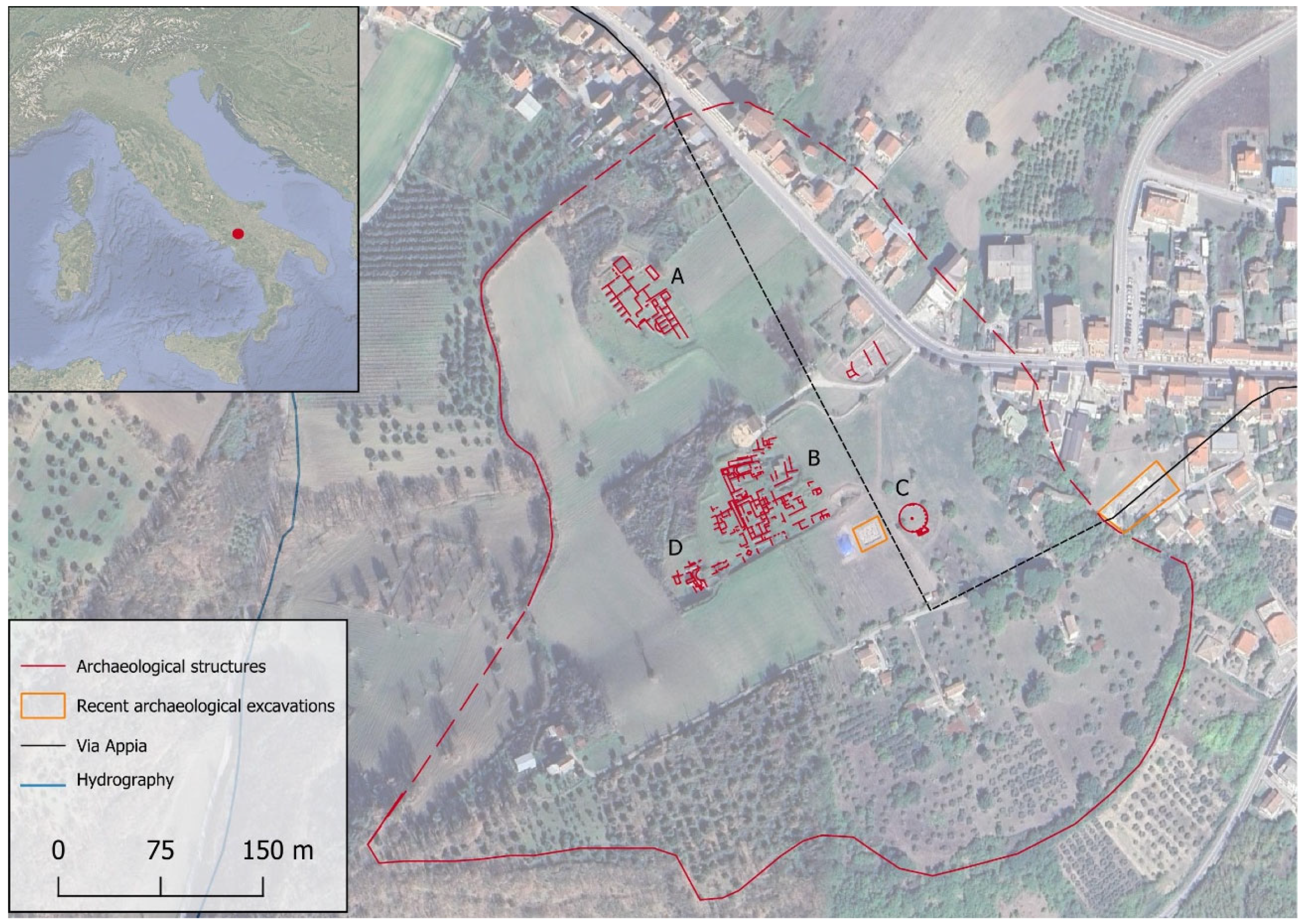
The ancient centre of Aeclanum is located at Passo di Mirabella, within the municipality of Mirabella Eclano (province of Avellino, Campania, Italy). It occupies a plateau in a strategic position between the Calore and Ufita valleys, covering an area of approximately 18 hectares. Its location along the Campanian section of the Via Appia—a major route connecting Rome with southern Italy—underpinned its political, economic, and military significance over several centuries, establishing it as a primary territorial hub within the Sannio Irpino region (Figure 1). Little is known about the Samnite settlement, which must have been structured as a synoecism during the 3rd century BC. It was later involved in the Social War, during which it was plundered (89 BC) [33]. Most of the known evidence can be traced back to the Roman city, which, after its reconstruction, was granted the status of municipium (1st century BC) and was surrounded by a walled circuit in opus quasi reticulatum extending for about 1800 m [34]. Subsequently (around 120 AD), it obtained the status of a colony, with the name of Colonia Aelia Augusta Aeclanum, and this marked the beginning of a complete urban redevelopment of the centre: during the 2nd and 3rd centuries AD, the thermal complex was built in opus mixtum [35], the forum area, which included the macellum, was subject to successive reorganisations, and a residential district with a domus a peristilio was developed. In addition to these elements, necropolises were located at the entrance and exit of the city along the Via Appia.
A final phase of renovation took place in late antiquity with the establishment of a bishopric and the construction of the Early Christian Basilica (late 4th–early 5th century AD), built atop a previous roman residential structure, around which the late antique urban centre was structured [36,37,38]. From the second half of the 6th century AD onwards, Aeclanum gradually disappeared from documentary sources, entering a phase of decline. The current archaeological area, extending across the northern half of the plateau, shows an overlap of construction phases, functional transformations and different building techniques: this is the result of complex urban stratification, now visible in the emerging structures but fragmented in the overall perception of the site [39,40]. It is precisely this historical and morphological articulation that makes Aeclanum a significant case study for the application of HBIM methodologies oriented towards the integration of survey data, stratigraphic interpretation, semantic modelling of masonry, and the representation of transformations over time. The site therefore provides an effective context for testing an integrated digital workflow that combines reality-based documentation, information modelling, and digital enhancement tools. In this sense, Aeclanum serves as a methodological test bed for approaches applicable to other archaeological sites characterised by high historical stratification and fragmented visibility of the built remains. Furthermore, the settlement’s deep connection with the Via Appia, which forms the backbone of the urban layout, and the latter’s inclusion on the UNESCO World Heritage List offer an opportunity to explore new lines of research and protection for a similar urban and territorial context.

2. Materials and Methods

2.1. Integrated 3D Survey Techniques

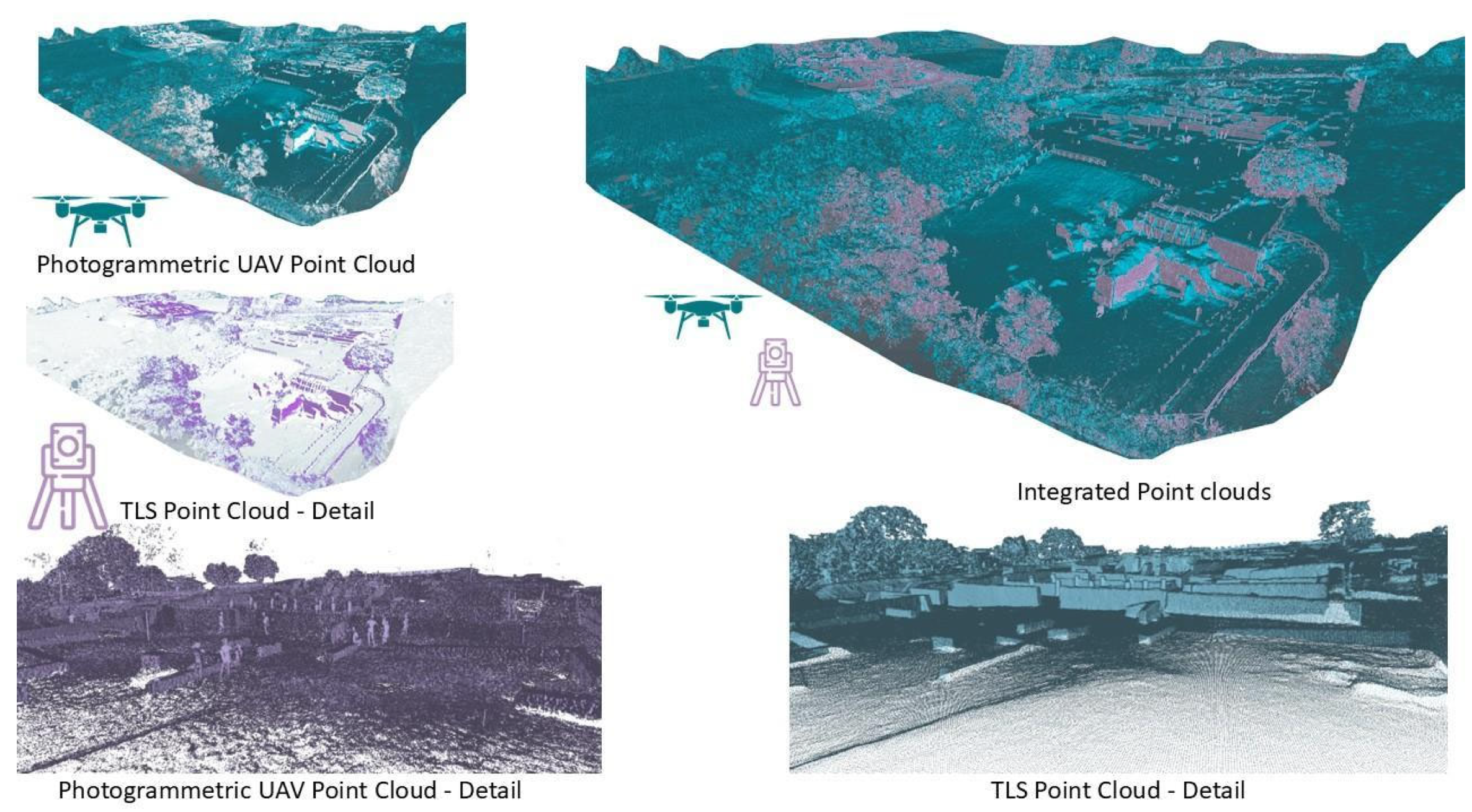
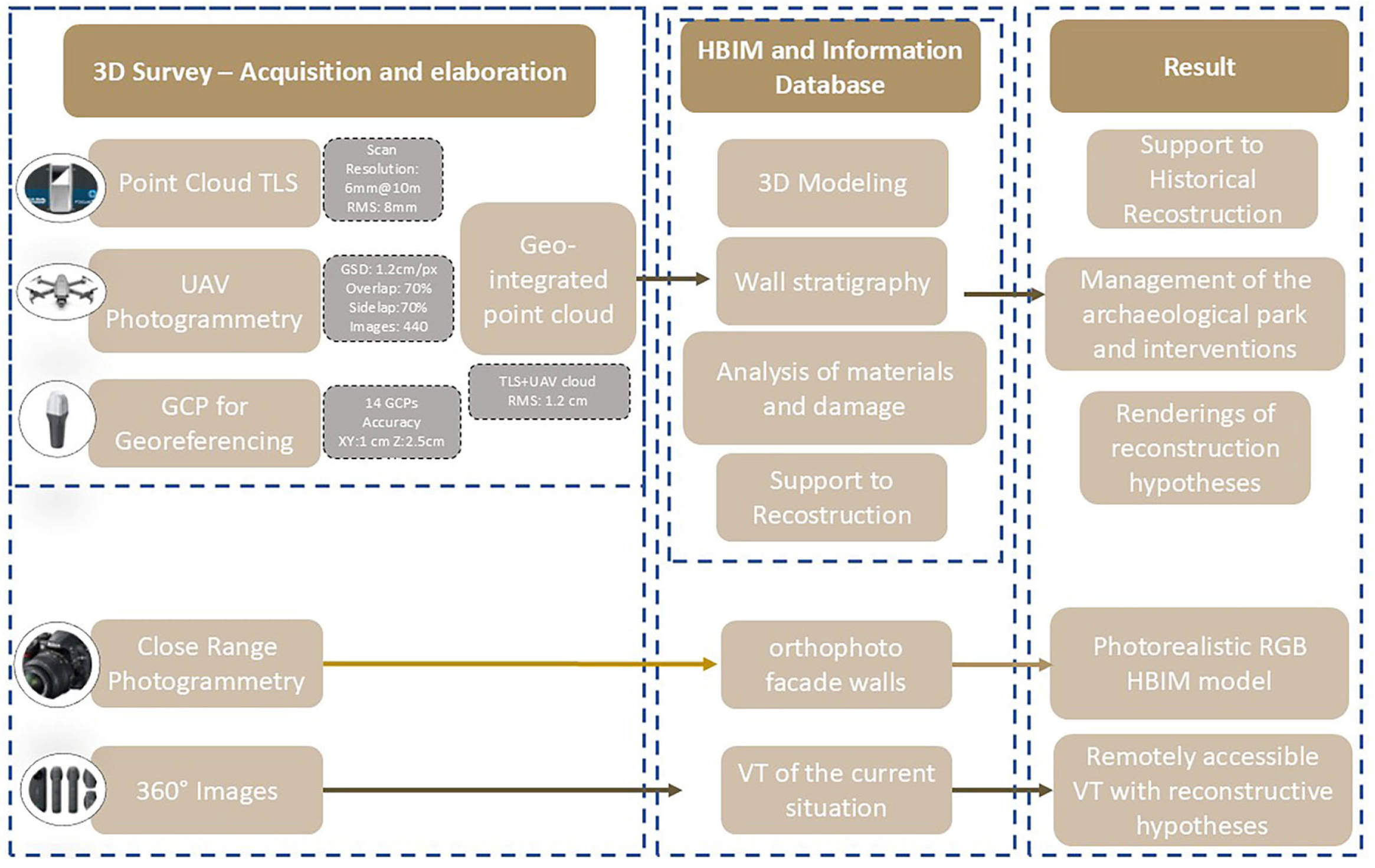
The three-dimensional surveying of the Ancient city of Aeclanum was set up as a preliminary phase essential for understanding, documenting and analysing the site, forming the basis for subsequent information modelling and studies of material characterisation and degradation. Given the morphological and stratigraphic complexity of the context, we used an integrated strategy that combined different reality-based technologies to converge on a single data environment and generate a high-density georeferenced point cloud. The integration involved the use of Terrestrial Laser Scanning (TLS), Remote Piloted Aircraft System (RPAS) photogrammetry, close-range photogrammetry for analysing wall stratigraphy and material feature, and GNSS measurements for plano-altimetric control and georeferencing of the entire system. The choice of a multi-scale methodology was determined by the need to document both the territorial and volumetric layout of the city and the construction details of the wall structures (Figure 2). The different techniques were designed to operate in a complementary manner, ensuring complete coverage, metric redundancy and spatial consistency between datasets. The methodological pipeline followed this sequence: survey design, data acquisition, post-processing and registration of datasets, integration into a common environment, and final delivery of two-dimensional and three-dimensional outputs. The alignment and merging operations enabled the creation of a three-dimensional georeferenced model in the EPSG:32633 reference system, which is metrically controlled and queryable.
The result is an integrated, measurable, and scalable three-dimensional dataset that provides the geometric reference basis for the subsequent Scan-to-HBIM process and supports thematic analyses related to materials, wall stratigraphy, and conservation conditions.

2.2. UAV Photogrammetric 3D Survey

The aerial photogrammetric acquisition of the city of Aeclanum was conducted using a DJI Mavic 2 Pro (DJI Innovations Technology Co., Ltd., Shenzhen, China) remote piloting system, equipped with a Hasselblad RGB camera with a 1″ sensor and 20-megapixel resolution. The flight was planned using DJI Ground Station (version 1.4.63), setting up a regular grid for nadir shots, which were then supplemented by manually acquired oblique shots to ensure complete coverage of vertical surfaces and wall facings. This combination reduced shadow areas and improved the quality of three-dimensional reconstruction, adapting to the site’s morphological conditions. The campaign involved the acquisition of 440 photogrammetric images, with an average Ground Sample Distance (GSD) of approximately 1.2 cm/px, covering a total area of approximately 14 hectares. The point cloud was georeferenced in the EPSG:32633 (WGS 84/UTM 33N) reference system using 14 Ground Control Points (GCPs) surveyed in nRTK (network real-time kinematics) mode with an Emlid Reach RX receiver (Emlid, Saint Petersburg, Russia). The accuracy of the control point measurements was maintained within 1.5 cm in both planimetry and altimetry, with an overall error of less than 2.5 cm. For the UAV photogrammetric survey, aerial targets measuring 60 cm per side were used as ground control markers for georeferencing and alignment. Photogrammetric processing was carried out using Agisoft Metashape software version 2.1.0, (St. Petersburg, Russia) setting the quality to ‘Maximum’ and disabling automatic filters in order to preserve maximum information density. The GCPs were included in the orientation process through a self-calibrating bundle adjustment, which allowed the estimation of the camera’s internal orientation parameters; these parameters were then kept constant throughout the entire Structure-from-Motion (SfM) process, ensuring consistency and stability in image orientation. At the end of processing, a dense point cloud consisting of over 110 million points was generated, from which a mesh with more than 40 million faces and approximately 20 million vertices was derived, subsequently textured with an 8192-pixel map. A colour orthophoto with a minimum resolution of 2 cm and a Digital Surface Model (DSM) with a resolution of 4 cm were also produced. The UAV survey thus enabled the overall morphological documentation, providing the general planimetric framework and geometric basis for integration with the data acquired through TLS and close-range photogrammetry.

2.3. The Terrestrial Laser Scanning (TLS) Survey

The three-dimensional survey of the archaeological site of Aeclanum was carried out using a Faro Focus3D S Series laser scanner (FARO Technologies, Inc., Lake Mary, FL, USA), a phase-difference instrument equipped with an integrated colour camera, GNSS system, and a biaxial compensator for verticality control. The instrument has an operating range of 0.6–150 m, an acquisition speed of up to 2 million points per second, and a declared linear error of ±2 mm, making it suitable for high-precision surveys in complex architectural contexts. The choice of this technology was driven by the need to acquire a high-density point cloud with millimetre accuracy, suitable for both the production of detailed graphic drawings and subsequent information modelling in an HBIM environment. In a context characterised by volumetric articulation, wall stratification and the presence of indoor and outdoor environments, TLS ensured geometric continuity and metric robustness regardless of lighting conditions. During the campaign, approximately 90 scans were performed, with an average resolution of 6 mm at 10 m, strategically distributed to reduce shadow cones and ensure adequate overlap between the different scanning stations. The scans were recorded using a cloud-to-cloud procedure, without the use of spherical or flat targets, optimising alignment with best-fit algorithms and subsequently verifying residual deviations. The alignment procedure between scans resulted in an average RMS across all scans of 8 mm. The resulting dataset was then integrated into the georeferenced reference system already adopted for the UAV survey (EPSG: 32633), ensuring spatial consistency between the different acquisition sources. The processing generated a comprehensive point cloud of approximately 300 million points, including the interior and exterior environments of the city walls, the Basilica, the domus, the macellum, and the thermal complex. This dataset constitutes the highly accurate metric basis for the subsequent Scan-to-HBIM phase, ensuring geometric continuity and dimensional reliability throughout the construction of the HBIM information model (Figure 3).

2.4. Close-Range Photogrammetry for RGB Orthophotos of Wall Surfaces

Close-range photogrammetry was used to produce high-resolution metric orthophotos of the wall surfaces, with particular focus on the characterisation of geomaterials and the mapping of degradation forms. The survey involved 13 wall samples selected within the archaeological area, considered representative of the different construction techniques and conservation conditions documented on the site. The photographic acquisitions were processed in Agisoft Metashape, including Ground Control Points, to estimate internal orientation parameters using self-calibrating bundle adjustment. The estimated parameters were kept constant throughout the Structure-from-Motion (SfM) process, ensuring metric stability and consistent image orientation. The produced orthophotos are georeferenced and at the correct metric scale, with a resolution of up to 2 mm/px, enabling detailed analysis of individual blocks, mortars, and surface discontinuities. Unlike the UAV and TLS datasets, the point cloud derived from close-range photogrammetry was not integrated into the site’s overall three-dimensional cloud. This choice was motivated by the desire to avoid potential alignment errors arising from the different acquisition scale, and, at the same time, by the redundancy of information relative to the data already acquired at the territorial and architectural scales. The TLS and UAV photogrammetric point clouds were first integrated through georeferencing based on the same set of control points. The alignment was then further refined by identifying a common surface between the two datasets and applying an Iterative Closest Point (ICP) procedure, resulting in a final RMS of 1.2 cm. Close-range photogrammetry was therefore used as a detailed analytical tool, independent but consistent with the general reference system.
The results produced formed the basis for mapping lithotypes, identifying weathering forms according to ICOMOS-ISCS guidelines, defining damage categories and calculating linear and progressive degradation indices. The methodological integration of TLS surveying, UAV aerial photogrammetry, and close-range photogrammetry enabled the operational limitations of the individual techniques to be overcome, converging towards a metrically controlled multi-scale documentation system with GNSS accuracy of approximately 1 cm in planimetry and 2.5 cm in altimetry.
This geometric and analytical basis provides the reference for the subsequent Scan-to-HBIM phase and for the attribution of information related to wall stratigraphy, material characterisation, and conservation conditions, thus enabling the morphological, material, and diagnostic dimensions of the site to be integrated into the digital model.

3. Result

3.1. Scan-to-BIM Architectural Modelling in the Archaeological Site

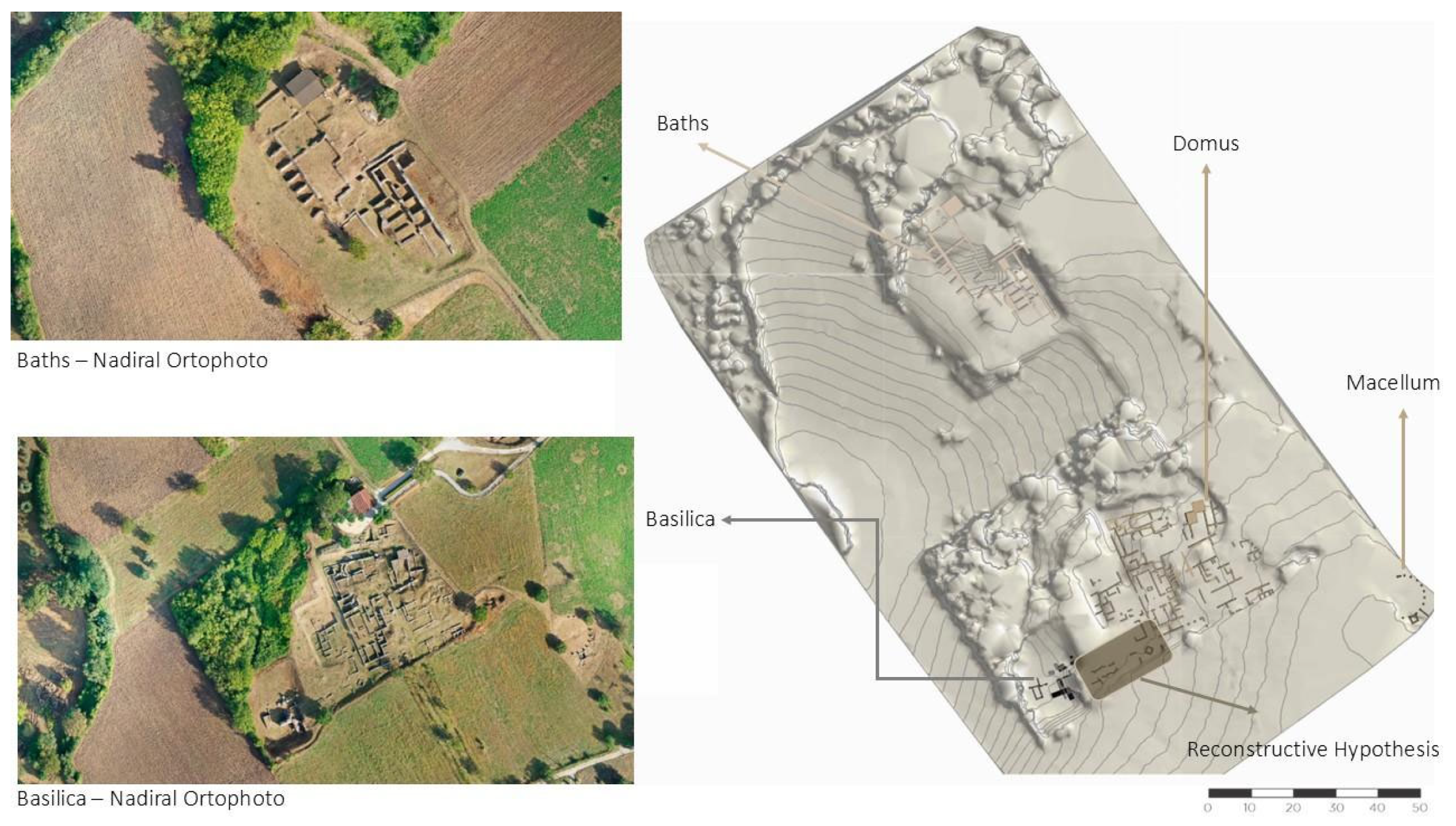
The HBIM model was developed from the architectural and geometric documentation obtained through the multi-scale three-dimensional survey described in the previous sections. The adopted Scan-to-BIM methodology is based on a structured process integrating metric acquisition, historical-architectural analysis, and parametric modelling, with the aim of constructing a three-dimensional representation that is not only geometrically accurate, but also semantically organised and consistent with the stratified nature of the archaeological site. The first phase involved the critical processing of the three-dimensional dataset, including TLS point clouds, UAV photogrammetric models and close-range orthophotos. The interpretation of the metric data was accompanied by a historical-architectural study to understand the construction rules, masonry techniques, and settlement transformations that characterised the site’s different phases. This step represented a central methodological moment, as it made it possible to move beyond purely descriptive modelling, orienting the process towards informed information construction. In this context, terrain modelling played a decisive role as a structural element of the settlement and an essential component for the correct interpretation of the spatial relationships between the archaeological features. The morphology of Aeclanum is characterised by significant altimetric variations distributed throughout the site, which directly affect the volumetric perception of the structures, the understanding of the original levels of frequentation, and the reconstruction of the area’s evolutionary dynamics. The topographic surface was processed from point clouds generated by integrating terrestrial laser scanner surveys and UAV aerial photogrammetry. In the first phase, the point cloud was cleaned in Autodesk Recap Pro (version 2024), isolating the terrain data and removing irrelevant architectural and vegetation components. Although this operation could also have been performed in Agisoft Metashape, the automatic filtering of anthropogenic structures for contour line extraction was not considered effective enough for this case study, preferring manual cleaning tools. For this reason, Autodesk Recap Pro was preferred for the preliminary cleaning of the dataset, after which the filtered cloud was imported into Autodesk Revit (version 2024) to directly generate the topographic surface from the three-dimensional data within the same environment adopted for the subsequent HBIM workflow. To ensure a balance between metric accuracy and the model’s manageability, an alternative strategy was adopted; the point cloud was suitably simplified and processed in Autodesk Civil 3D, enabling the extraction of contour lines from the collected altimetric data. This step made it possible to synthesise the morphological information while maintaining accuracy but significantly reducing the overall file size. The curves thus obtained were then used to generate the final georeferenced topographic surface in Autodesk Revit, ensuring a faithful representation of the terrain and more efficient management of the BIM model (Figure 4).
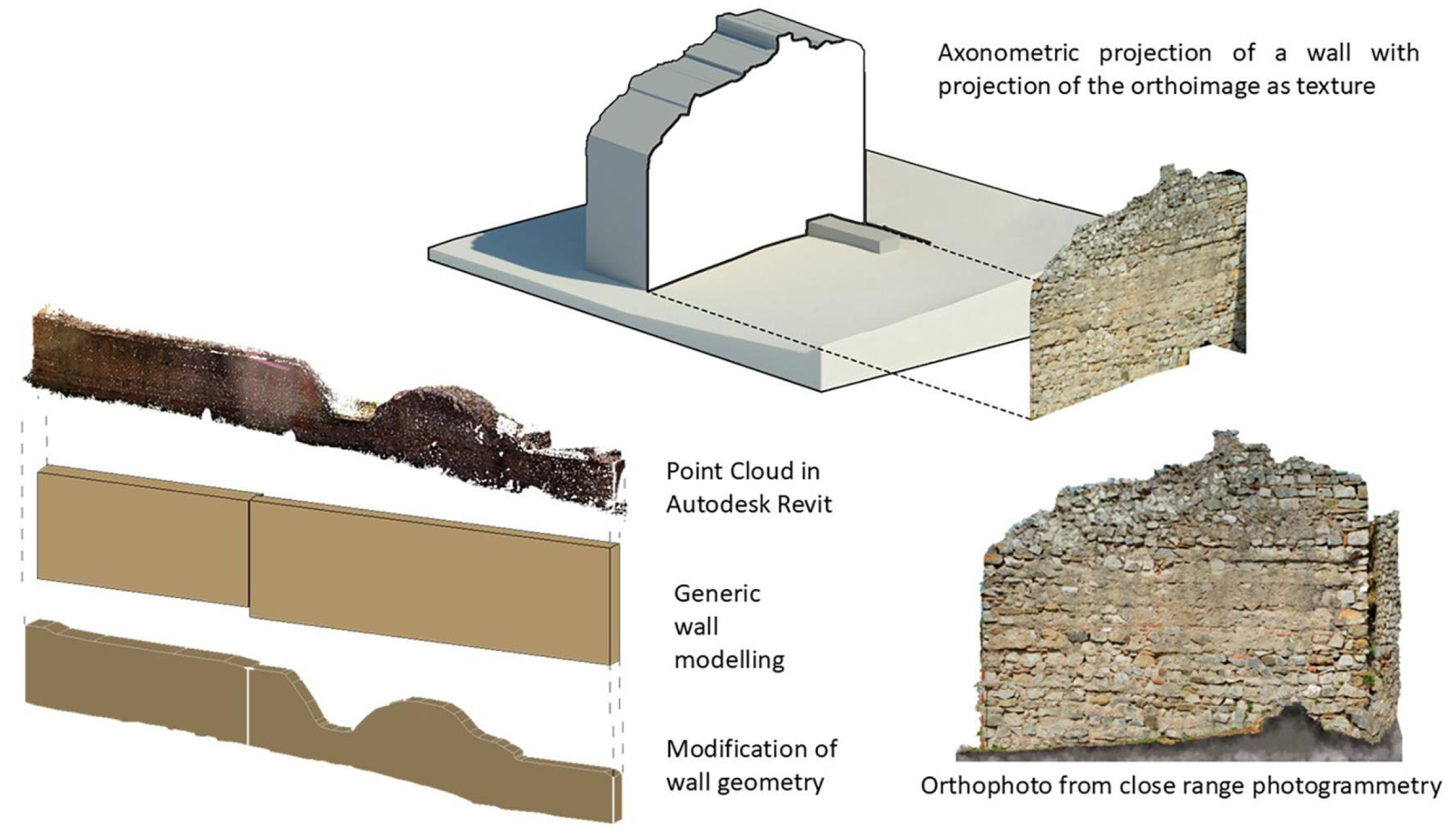
The emerging structures were then modelled. The walls were reconstructed through an integrated interpretation of the point cloud and stratigraphic reading, adopting a criterion of semantic simplification. Instead of fragmenting the wall surfaces into microelements that adhere precisely to the data collected, they were modelled as homogeneous entities consistent with the identified Stratigraphic Wall Units.
In this sense, the reliability of the model does not refer only to geometric correspondence with the survey data, but also to the semantic coherence of the represented structures, especially in the distinction between physically preserved masonry remains and interpretative reconstruction hypotheses.
This approach allows a balance to be maintained between geometric accuracy and informational consistency, avoiding the proliferation of non-parametric objects that would compromise the management and future updateability of the model [41] (Figure 5).
The HBIM methodology also involved creating a library of parametric objects, based on the architectural rules identified during the analytical phase. For elements not present in the software’s standard libraries, customised components were developed, calibrated to the proportions and geometric characteristics documented by the survey and historical research. This process was particularly relevant in modelling recurring architectural elements, for which a comparative approach was adopted to reconstruct the original spatial configuration, keeping the surveyed component distinct from the interpretative one [41]. The HBIM model was designed as an open, progressively implementable system, ready for continuous enrichment with geometric and information data relating to both the entire complex and individual architectural and structural components. The final phase of the process involved the automated extraction of graphic designs and informational documents—plans, sections, elevations and tables—for the scientific documentation of the site and to support analysis, conservation and management activities.

3.2. Informative Attribution and Semantic Structuring in the HBIM Model

The information attribution phase represents the moment when the three-dimensional model fully assumes the nature of an HBIM system. As highlighted in the literature, the modelling of historical heritage cannot be limited to the purposes of restoration interventions only, but must be based on an ontological structure capable of organising, hierarchising and making the information associated with individual construction elements queryable. In the case study, the masonry entities modelled in Autodesk Revit were enriched by associating shared and customised parameters, structured according to a hierarchy consistent with the site’s stratigraphic reading. Each element was assigned data on its chronological phase, construction technique, wall type, constituent materials, and state of preservation. This organization makes it possible to distinguish explicitly between information derived from metric surveys, documentary data from historical sources and reconstructive interpretations, avoiding overlaps between different levels of knowledge.
By combining the geometric survey of the structures with high-resolution texture acquisition and the mapping of materials and decay patterns, the model also provides a basis for a conservation-oriented management phase, supporting the comparison of different wall conditions and the programming of future interventions according to the documented state of preservation. A central aspect of the process concerns information transparency. In line with the methodological approach referred to in the literature, each modelled element has been conceived as a container of metadata that explains the origin of the information, the level of geometric accuracy, and the degree of interpretative reliability. In this way, the model operationally integrates the concept of Level of Reliability (LoR), making modelling choices traceable and distinguishing between certain data, deduction by analogy, and reconstructive hypotheses [42].
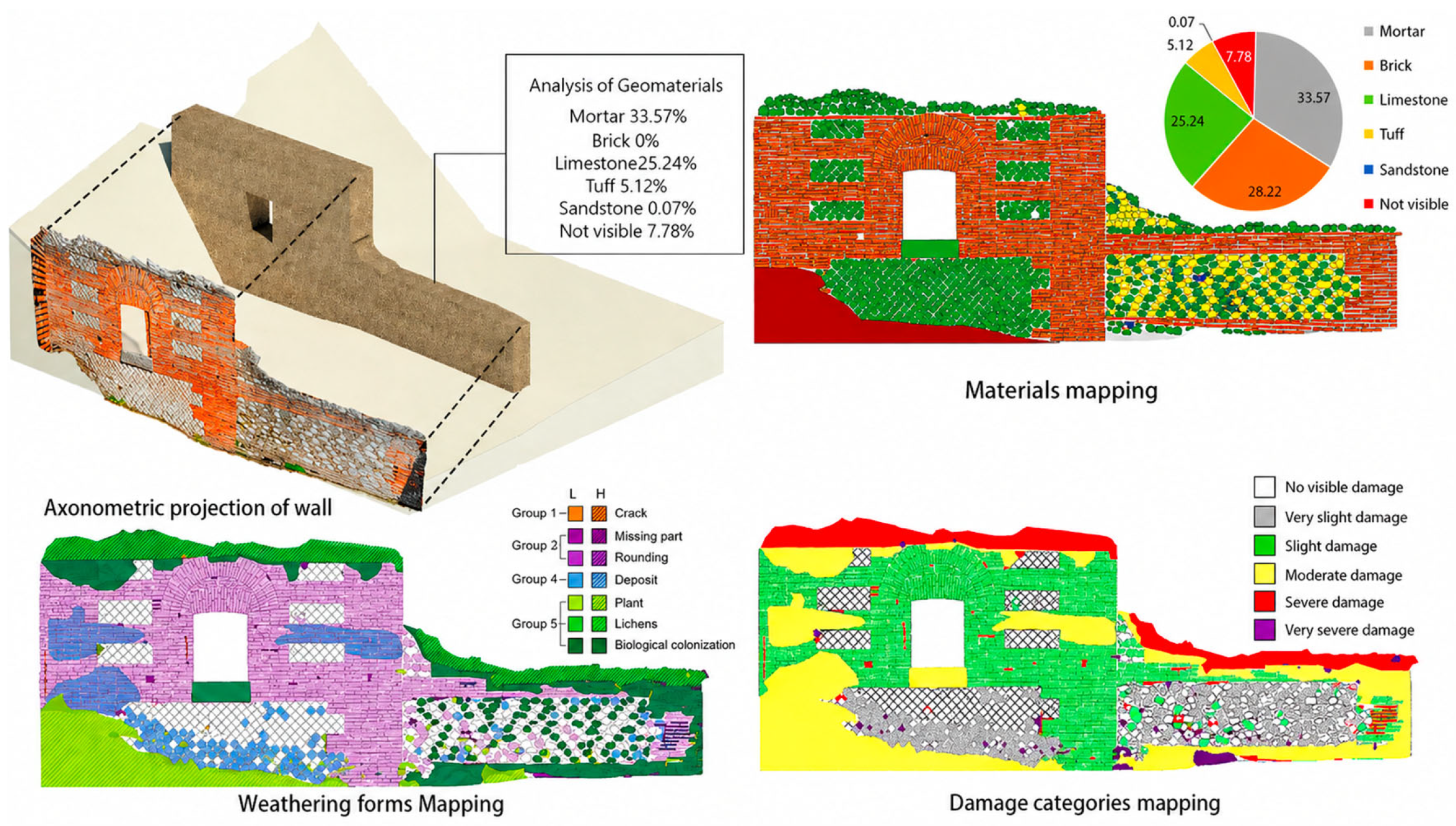
The semantic dimension thus becomes a structural element of the model, not merely an accessory attribute. At the same time, high-resolution metric orthophotos were used to project textures onto the modelled masonry surfaces, ensuring consistency between the photorealistic representation and the metric data. The visual component was not treated as a mere graphic coating, but as a tool to support stratigraphic and material reading. The information derived from the analysis of lithotypes and degradation forms was integrated into the objects’ information parameters, establishing a direct relationship among photographic evidence, metric data, and the model’s semantic structure [43]. The integration of results obtained using the evaluation method proposed by Fitzner & Heinrichs enabled quantitative damage indices to be associated with individual masonry entities [44], thereby allowing comparison between different portions of the site and supporting the identification of priority areas for future intervention [45,46]. The thematic maps were first vectorised from raster images derived from the orthophotos and then imported into the HBIM model, where they were associated with the corresponding masonry entities both as documentation outputs and as numerical indices linked to each wall unit. In this way, the attribution of linear and progressive damage indices transformed the model into an operational tool for conservation-oriented analysis, capable of supporting technical-scientific assessments and informed evaluation processes.
In this configuration, HBIM is not limited to serving as a digital archive of acquired information; it is configured as a dynamic knowledge platform, in which the geometric, material, and diagnostic dimensions converge into a coherent information system that can be verified and updated over time. The model thus becomes a decision-making infrastructure supporting the planned conservation and evolutionary management of archaeological heritage (Figure 6).

3.3. HBIM-Based Reconstruction Hypothesis of the Basilica

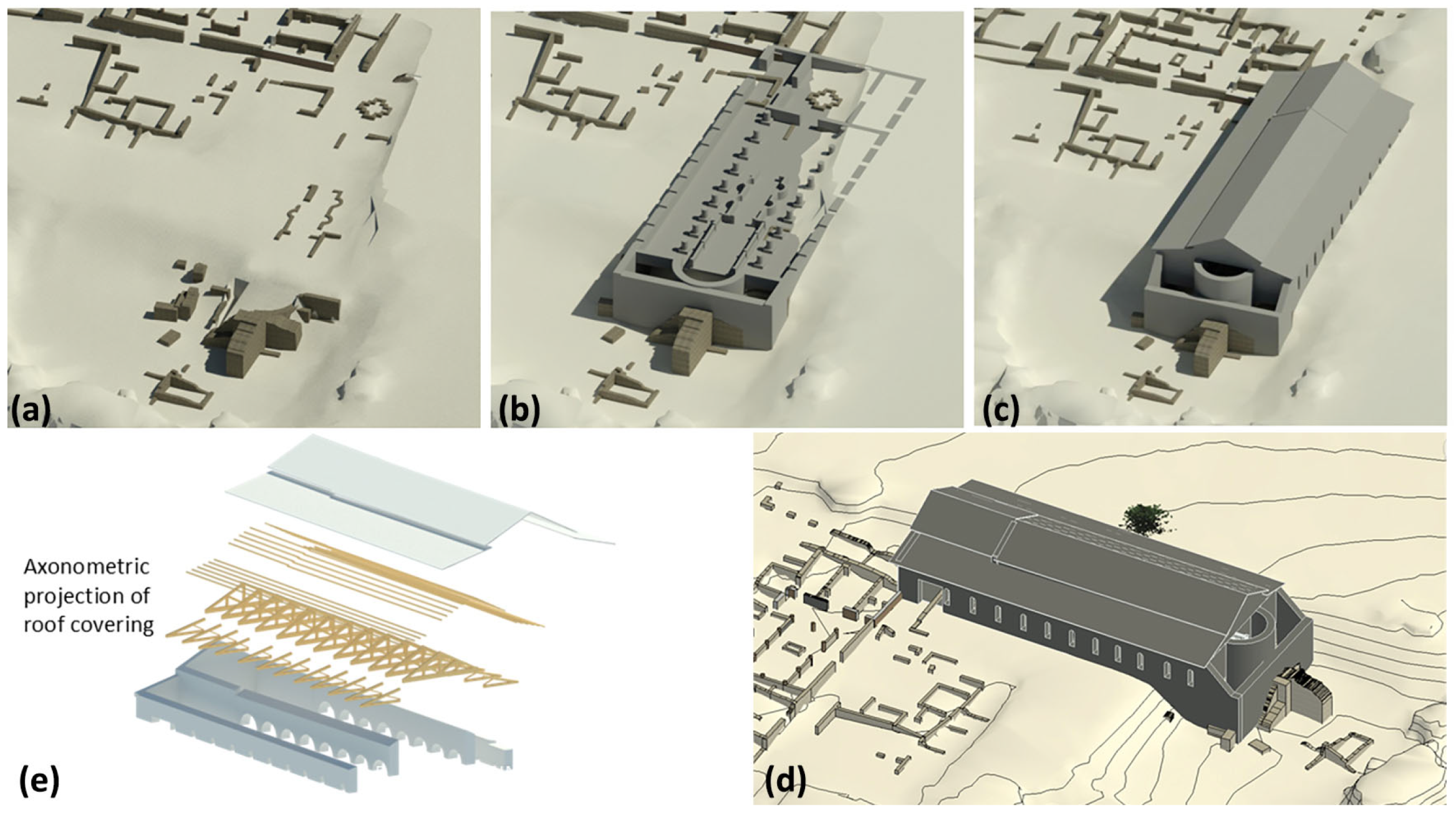
The integration of metric documentation, stratigraphic analysis, and historical-architectural data has enabled the construction of an HBIM model of the Basilica that not only represents its current state but also formulates reconstruction hypotheses consistent with the available evidence. The modelling of the Basilica was developed starting from the emerging masonry structures surveyed using TLS and close-range photogrammetry, on which an integrated analysis of construction techniques and stratigraphic relationships was conducted. Information relating to the construction phases, constituent materials, and degradation indices was associated with the masonry entities as parametric attributes, enabling an explicit distinction among preserved configuration, material gaps, and portions subject to interpretative reconstruction. In the HBIM model, the preserved structures were represented directly from the three-dimensional survey, while the parts that no longer exist were reconstructed using a comparative approach based on typological analogies with contemporary Basilicas, planimetric analysis, and documented stratigraphic relationships. The volumetric hypothesis of the naves, the roofing system, and the portico in front was developed as a separate level of information from the surveyed walls, clarifying the distinction between the data and interpretative proposals (Figure 7).
Particular attention was paid to the consistency between the building’s spatial configuration and liturgical organisation. The presence of the cruciform baptismal font and the tripartite articulation of the interior space guided the reconstruction of the elevations and the definition of the volumetric proportions. The model, therefore, does not reproduce an arbitrary form, but integrates material evidence, functional interpretation and typological comparison in a structured interpretative process. From a technical point of view, the hypothesised parts were modelled in Autodesk Revit as parametric families independent of the components surveyed. They are not derived from a direct replica of the point cloud, but from a controlled geometric reconstruction based on proportions deduced from the planimetric layout, typological comparisons, and analysis of residual heights.
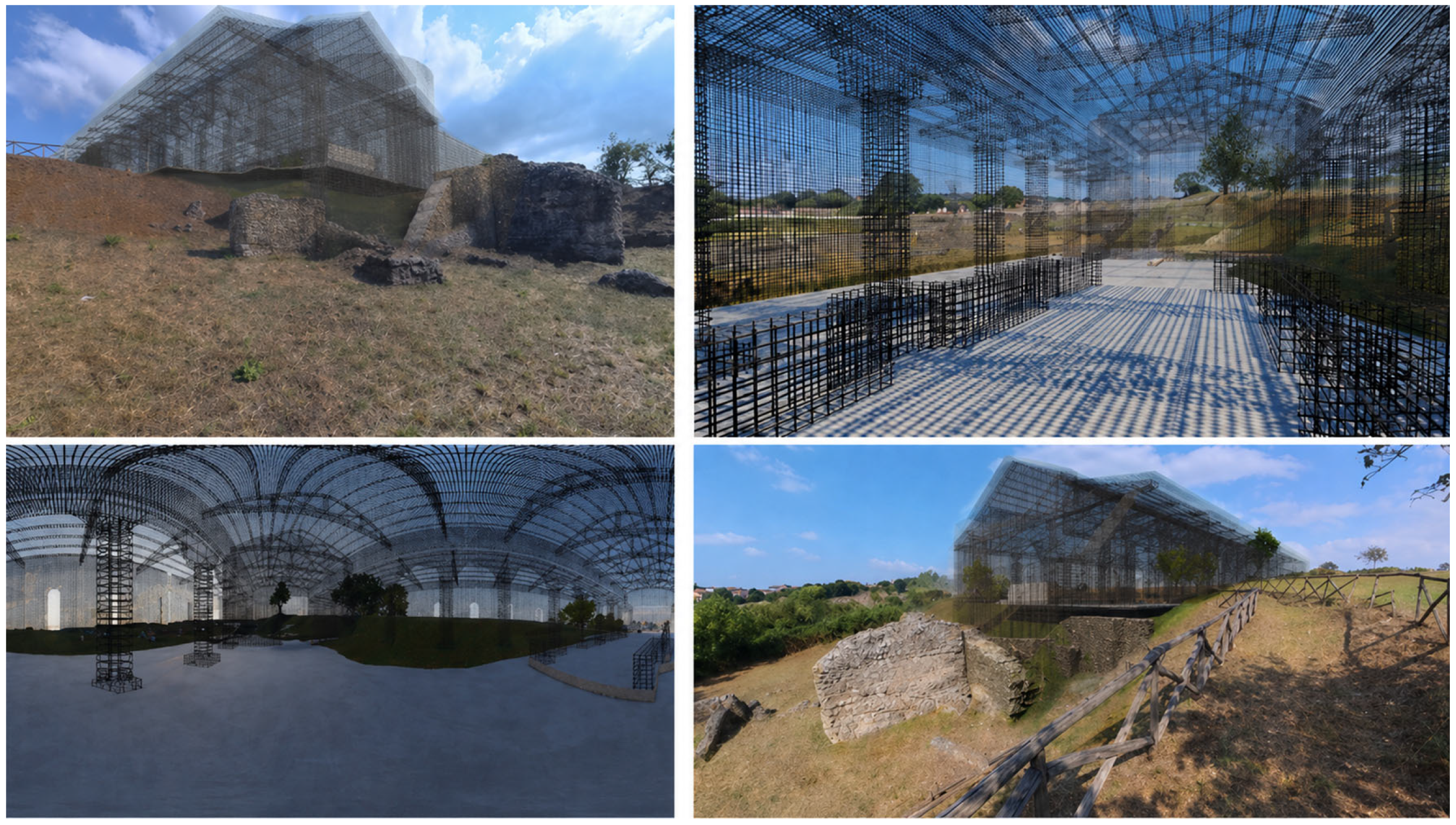
The roofs, elevations and portico system were developed as independent objects, associated with specific parameters that explicitly declare their interpretative nature and level of reliability. To make the distinction between the actual state and the hypothetical reconstruction immediately perceptible, a differentiated representation strategy was adopted. The parts documented by the survey are visualised with photorealistic textures derived from orthophotos, while the reconstructed elements are represented in wireframe mode or with semi-transparent neutral materials (Figure 8). This criterion was applied not only to the HBIM model itself, but also to the visual reintegration of the Basilica, in order to preserve the recognisability of the reconstructed parts and avoid ambiguity between surveyed data and interpretative reconstruction. This choice is not purely graphic but methodological and is consistent with other archaeological reconstruction approaches based on visually distinguishable restitutions, such as the cases of the Temple of Apollo of Veii and the Basilica of Siponto in Manfredonia.
This approach echoes the principle of recognisability inherent in restoration theory, according to which any additions must be distinguishable from the original without compromising its legibility. Similarly, in the digital model, the reconstruction is made visually distinct, avoiding ambiguity between real data and interpretation. The HBIM model not only makes explicit the different levels of information reliability but also translates these levels into a visual language that is understandable even to a non-specialist audience. Reconstruction thus becomes a critical and educational tool, capable of conveying the complexity of the interpretative process underlying archaeological knowledge.

3.4. Virtual Tour and Immersive Reconstruction Hypotheses

In parallel with the three-dimensional surveying operations using Terrestrial Laser Scanning, an immersive photographic acquisition campaign was conducted using an Insta360 X3 (Shenzhen, China) camera (COMS sensor 1/2″ 72 MP—11,968 × 5984 pixels), with the aim of creating an interactive Virtual Tour of the archaeological area. The objective was not exclusively documentary but rather to create a digital tool integrated with the HBIM model and the reconstruction hypotheses developed for the Basilica.
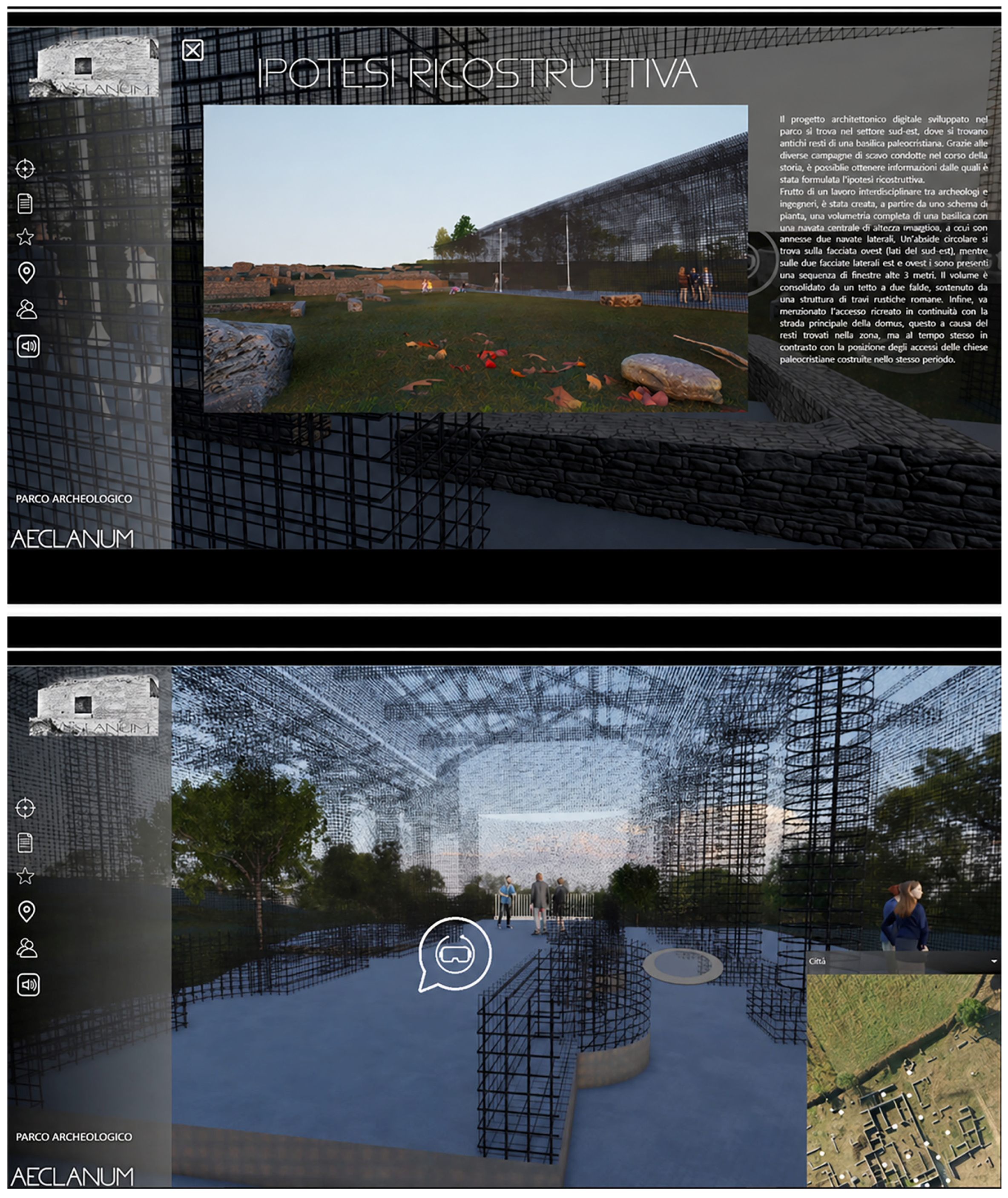
The 360° spherical images were processed using 3D Vista Pro software version 2023.3.2 (Granada, Spain.)which enabled the creation of a navigable virtual environment structured through information hotspots, connection points, and the integration of multimedia content. The Virtual Tour was designed to be accessible both remotely and in situ, via a QR code installed within the archaeological area. This solution allows two modes of use: on the one hand, remote access for users not physically present on the site; on the other hand, the integration of the real experience with digital content that can be consulted directly during the visit (Figure 8) [47,48]. The same digital reconstruction images may also support the preparation of on-site interpretative panels, combining QR codes and visual restitutions to help visitors better understand the original spatial configuration of the Basilica (Figure 9).
The HBIM model has been integrated into the Virtual Tour by including rendered views and video sequences of the reconstruction of the Basilica. This content allows the current configuration of the structures to be perceptually related to the hypothetical volumetric layout of the late antique building, facilitating understanding of the original spatiality and monumentality of the work, which today can only be perceived through fragmentary wall remains. The immersive environment thus becomes a communicative extension of the information model, translating stratigraphic data and volumetric hypotheses into a spatial experience that is understandable even to a non-specialist audience [49].
Even in the virtual context, the methodological distinction between real data and reconstructive hypotheses has been maintained. The documented parts are shown through high-resolution photographic images and textures derived from the survey, while the hypothesised components are represented in wireframe mode or with semi-transparent neutral materials. This choice, consistent with the principle of recognisability inherent in restoration theory, ensures a clear visual separation between what has been preserved and what has been digitally reconstructed, avoiding interpretative ambiguity and preserving the scientific transparency of the process.

4. Discussion and Conclusions

The Aeclanum case study demonstrates how the integration of multi-scale three-dimensional surveys, Scan-to-HBIM, and immersive tools can be structured into an integrated digital workflow for archaeologically stratified contexts. The approach adopted transcends the traditional separation between metric documentation, archaeological interpretation, and digital enhancement, proposing a unified process in which geometric data, semantic organization, and diagnostic information are closely interconnected. From a conservation perspective, the integration of degradation indices and material analysis into the HBIM model extends the role of digital representation beyond mere geometric documentation and provides an informed basis for identifying priority areas and planning future interventions, a particularly important aspect in contexts characterized by large archaeological surfaces and limited resources.
One of the study’s key methodological contributions lies in the explicit distinction between observed data and reconstructive hypotheses, implemented both at the informational and visual levels. The adoption of distinct parametric families for the hypothesized parts, along with their wireframe representation, translates the principle of recognizability inherent in restoration theory into the digital model, avoiding overlaps between material evidence and interpretation. In this way, the model becomes not only descriptive but also critically transparent.
In the broader perspective of historical documentation, HBIM does not merely record the present condition of the ruins but also provides a graphic and documentary basis for the development of reconstruction hypotheses anchored to surveyed geometry and archaeological interpretation. Within this broader workflow, the reconstruction of the Basilica represents a pilot application of the interpretive potential of the HBIM model. At the same time, the model’s integration into a virtual tour accessible via QR code enhances its communicative value.
Within this broader workflow, the reconstruction of the Basilica represents a pilot application of the interpretive potential of the HBIM model. At the same time, the model’s integration into a virtual tour accessible via QR code enhances its communicative value. The immersive representation allows the current state of the remains to be correlated with their hypothesized volumetric configuration, helping visitors understand the site’s original monumentality and its historical transformations, while maintaining methodological rigor.
The Aeclanum experience highlights that HBIM and immersive environments should not be understood as separate fields, but as complementary components of a broader digital ecosystem oriented towards documentation, conservation, and heritage valorisation. Looking ahead, periodic model updates through new survey campaigns and the potential integration of dynamic monitoring systems could further extend this approach toward Digital Twin-like configurations, strengthening the model’s role as a constantly evolving, non-static knowledge infrastructure.
The proposed workflow can therefore be considered a methodological framework applicable to archaeological sites characterized by high historical stratification, morphological complexity, and fragmented visibility of built remains. In this sense, the study offers a coherent approach in which surveying, interpretation, semantic modeling, and digital communication converge within a single verifiable system.

Author Contributions

Conceptualization, M.L., L.R. and L.D.G.; data curation, M.L.; formal analysis, M.L., investigation, M.L., L.R. and L.D.G.; methodology, M.L.; software, M.L.; validation, M.L., L.R. and L.D.G.; writing—review and editing, M.L., L.R. and L.D.G. All authors have read and agreed to the published version of the manuscript.

Funding

This research received no external funding.

Data Availability Statement

The original contributions presented in this study are included in the article. Further inquiries can be directed to the corresponding author.

Acknowledgments

We would like to express our sincere gratitude to the Direzione Regionale Musei Nazionali Campania, Alfonso Santoriello (Scientific Coordinator of the Appia Project at the University of Salerno), Angela Ferroni (Coordinator of the Technical-Scientific Committee for the nomination of the Via Appia Regina Viarum to the UNESCO World Heritage List), Gabriel Ezequiel Petrelli Heras, and the Mineralogy and Petrography Laboratory of the University of Sannio for their availability and for sharing the materials produced during the on-site analyses. We would also like to thank Sandra Lo Pilato for her valuable support in the interpretation and virtual reconstruction of the Basilica, based on her studies.

Conflicts of Interest

The authors declare no conflict of interest.

References

  1. Alshawabkeh, Y.; Baik, A.; Miky, Y. HBIM for Conservation of Built Heritage. ISPRS Int. J. Geoinf. 2024, 13, 231. [Google Scholar] [CrossRef]
  2. Banfi, F. The Evolution of Interactivity, Immersion and Interoperability in HBIM: Digital Model Uses, VR and AR for Built Cultural Heritage. ISPRS Int. J. Geoinf. 2021, 10, 685. [Google Scholar] [CrossRef]
  3. Nieto-Julián, E.; Bruno, S.; Moyano, J. An Efficient Process for the Management of the Deterioration and Conservation of Architectural Heritage: The HBIM Project of the Duomo of Molfetta (Italy). Remote Sens. 2024, 16, 4542. [Google Scholar] [CrossRef]
  4. ISTAT. I Musei, Le Aree Archeologiche e i Monumenti in Italia. Anno 2017; ISTAT: Rome, Italy, 2019. [Google Scholar]
  5. Aricò, M.; Lo Brutto, M.; Maltese, A. A Scan-to-BIM Approach for the Management of Two Arab-Norman Churches in Palermo (Italy). Heritage 2023, 6, 1622–1644. [Google Scholar] [CrossRef]
  6. Aricò, M.; Ferro, C.; La Guardia, M.; Lo Brutto, M.; Taranto, G.; Ventimiglia, G.M. Scan-to-BIM Process and Architectural Conservation: Towards an Effective Tool for the Thematic Mapping of Decay and Alteration Phenomena. Heritage 2024, 7, 6257–6281. [Google Scholar] [CrossRef]
  7. Banfi, F. HBIM, 3D Drawing and Virtual Reality for Archaeological Sites and Ancient Ruins. Virtual Archaeol. Rev. 2020, 11, 16–33. [Google Scholar] [CrossRef]
  8. Brusaporci, S.; Maiezza, P.; Marra, A.; Tata, A.; Vespasiano, L. Scan-to-HBIM Reliability. Drones 2023, 7, 426. [Google Scholar] [CrossRef]
  9. Stanga, C.; Banfi, F.; Roascio, S. Enhancing Building Archaeology: Drawing, UAV Photogrammetry and Scan-to-BIM-to-VR Process of Ancient Roman Ruins. Drones 2023, 7, 521. [Google Scholar] [CrossRef]
  10. Scianna, A.; Serlorenzi, M.; Gristina, S.; Filippi, M.; Paliaga, S. Sperimentazione di tecniche BIM sull’archeologia romana: Il caso delle strutture rinvenute all’interno della cripta della chiesa dei SS. Sergio e Bacco in Roma. Archeol. E Calc. Suppl. 2015, 7, 199–212. [Google Scholar]
  11. Garagnani, S.; Gaucci, A.; Govi, E. ArchaeoBIM: Dallo scavo al Building Information Modeling di una struttura sepolta. Il caso del tempio tuscanico di Uni a Marzabotto. Archeol. E Calc. 2016, 27, 251–270. [Google Scholar] [CrossRef]
  12. Bolognesi, C.M.; Fiorillo, F. Virtual Representations of Cultural Heritage: Sharable and Implementable Case Study to Be Enjoyed and Maintained by the Community. Buildings 2023, 13, 410. [Google Scholar] [CrossRef]
  13. Bellazzi, A.; Bellia, L.; Chinazzo, G.; Corbisiero, F.; D’Agostino, P.; Devitofrancesco, A.; Fragliasso, F.; Ghellere, M.; Megale, V.; Salamone, F. Virtual Reality for Assessing Visual Quality and Lighting Perception: A Systematic Review. Build. Environ. 2022, 209, 108674. [Google Scholar] [CrossRef]
  14. Limongiello, M.; Musmeci, D.; Radaelli, L.; Chiumiento, A.; di Filippo, A.; Limongiello, I. Parametric GIS and HBIM for Archaeological Site Management and Historic Reconstruction Through 3D Survey Integration. Remote Sens. 2025, 17, 984. [Google Scholar] [CrossRef]
  15. D’Aprile, M.; Piscitelli, M. Survey, stratigraphy of the elevations, 3D modelling for the knowledge and conservation of archaeological parks: The castle of Avella. In The International Archives of the Photogrammetry, Remote Sensing and Spatial Information Sciences, 8th International Workshop 3D-ARCH “3D Virtual Reconstruction and Visualization of Complex Architectures”, Bergamo, Italy, 6–8 February 2019; ISPRS: Hannover, Germany, 2019; Volume XLII-2/W9, pp. 289–296. [Google Scholar] [CrossRef]
  16. Ebolese, D.; Lo Brutto, M.; Dardanelli, G. The integrated 3D survey for underground archaeological environment. In The International Archives of the Photogrammetry, Remote Sensing and Spatial Information Sciences, 8th International Workshop 3D-ARCH “3D Virtual Reconstruction and Visualization of Complex Architectures”, Bergamo, Italy, 6–8 February 2019; ISPRS: Hannover, Germany, 2019; Volume XLII-2/W9, pp. 311–317. [Google Scholar] [CrossRef]
  17. Condorelli, F.; Bonetto, J. 3D digitalization and visualization of archaeological artifacts with the use of photogrammetry and virtual reality system. In The International Archives of the Photogrammetry, Remote Sensing and Spatial Information Science, 7th International Workshop LowCost 3D–Sensors, Algorithms, Applications, Würzburg, Germany, 15–16 December 2022; ISPRS: Hannover, Germany, 2022; Volume XLVIII-2/W1-2022, pp. 51–57. [Google Scholar] [CrossRef]
  18. Abate, N.; Ronchi, D.; Vitale, V.; Masini, N.; Angelini, A.; Giuri, F.; Minervino Amodio, A.; Gennaro, A.M.; Ferdani, D. Integrated Close Range Remote Sensing Techniques for Detecting, Documenting, and Interpreting Lost Medieval Settlements under Canopy: The Case of Altanum (RC, Italy). Land 2023, 12, 310. [Google Scholar] [CrossRef]
  19. Iliodromitis, A.; Tsilimantou, E.; Kopelou, P.; Anastasiou, D.; Koulidou, S.; Spanodimos, C.; Chrysostomou, G.; Dimou, V.; Pagounis, V. Three-Dimensional Digital Geospatial Documentation for Cultural Heritage Preservation and Sustainable Management of Tourism Through a Web Platform: The Case Study of the Archaeological Park of Dion, Greece. Land 2025, 14, 1062. [Google Scholar] [CrossRef]
  20. Maset, E.; Valente, R.; Haider, M.; Iamoni, M. Digital Documentation of the Ain Akrine Archaeological Site (Lebanon): A Hybrid UAV Photogrammetry and SLAM-Based Survey Approach. In The International Archives of the Photogrammetry, Remote Sensing and Spatial Information Sciences, 11th Intl. Workshop 3D-ARCH “3D Virtual Reconstruction and Visualization of Complex Architectures”, Ancona, Italy, 10–12 February 2026; ISPRS: Hannover, Germany, 2026; Volume XLVIII-2/W12-2026, pp. 287–294. [Google Scholar] [CrossRef]
  21. Aricò, M.; Cherif, S.; La Guardia, M.; Lo Brutto, M. Innovative Approaches Through 3D Survey and Virtual Technologies for the Geometric and Semantic Fruition of Built Heritage Sites on the Web; The Eurographics Association: Geneva, Switzerland, 2025. [Google Scholar] [CrossRef]
  22. D’Auria, S.; D’Agostino, P. scan-to-bim and segmentation processes for the conservation of cultural heritage. A workflow proposal. Disegnarecon 2024, 17, 131–139. [Google Scholar] [CrossRef]
  23. Bianchini, C.; Nicastro, S. From BIM to H-BIM. In Proceedings of the 2018 3rd Digital Heritage International Congress (DigitalHERITAGE) Held Jointly with 2018 24th International Conference on Virtual Systems & Multimedia (VSMM 2018), San Francisco, CA, USA, 26–30 October 2018; pp. 1–4. [Google Scholar]
  24. Bianchini, C.; Attenni, M.; Potestà, G. Regenerative Design Tools for the Existing City: HBIM Potentials. In Rethinking Sustainability Towards a Regenerative Economy; Andreucci, M.B., Marvuglia, A., Baltov, M., Hansen, P., Eds.; Springer International Publishing: Cham, Switzerland, 2021; pp. 23–43. ISBN 978-3-030-71819-0. [Google Scholar]
  25. Pham, T.-A.; Ioannou, P.G.; Likhitruangsilp, V. Designing a BIM-Enhanced Digital Twin Architecture for Construction Pollution Management in Building Renovation Projects. Int. J. Constr. Manag. 2026, 1–26. [Google Scholar] [CrossRef]
  26. Empler, T.; Caldarone, A.; Rossi, M.L. “BIM Survey”. Critical Reflections on the Built Heritage’s Survey. In Proceedings of the From Building Information Modelling to Mixed Reality; Bolognesi, C., Villa, D., Eds.; Springer International Publishing: Cham, Switzerland, 2021; pp. 109–122. [Google Scholar]
  27. Mazzei, A.; Martinelli, L.; Empler, T.; Cessari, L.; Gigliarelli, E. Modelling for Uncertainty in HBIM Processes. Vitruvio 2024, 9, 2–18. [Google Scholar] [CrossRef]
  28. López-Menchero, V.M.; Grande, A. The Principles of the Seville Charter. In Proceedings of the CIPA Symposium Proceedings; CIPA Heritage Documentation/CIPA–ICOMOS: Prague, Czech Republic, 2011; pp. 1–6. [Google Scholar]
  29. The London Charter for the Computer-Based Visualisation of Cultural Heritage. In Paradata and Transparency in Virtual Heritage; Routledge: Abingdon, UK, 2009.
  30. Colace, F.; Limongiello, M.; Lorusso, A.; Pellegrino, M.; Santaniello, D.; Santoriello, A. Digital Twin for Cultural Heritage: A Computational Approach to Predictive Conservation. Digit. Appl. Archaeol. Cult. Herit. 2026, 40, e00519. [Google Scholar] [CrossRef]
  31. Niccolucci, F.; Felicetti, A.; Hermon, S. Populating the Data Space for Cultural Heritage with Heritage Digital Twins. Data 2022, 7, 105. [Google Scholar] [CrossRef]
  32. Petti, L.; Lupo, C.; D’Angelo, T. Dynamic Monitoring of the Temple of Neptune in Paestum (Italy)-Preliminary Results. J. Phys. Conf. Ser. 2024, 2647, 222005. [Google Scholar] [CrossRef]
  33. Di Giovanni, V. Aeclanum romana: Le evidenze archeologiche. In Storia illustrata di Avellino e dell’Irpinia. L’Irpinia Antica; Sellino & Barra: Pratola Serra, Italy, 1996; pp. 241–255. [Google Scholar]
  34. De Simone, G.F.; Russell, B. Excavation and Survey at Aeclanum in 2018 (Comune Di Mirabella Eclano, Provincia Di Avellino, Regione Campania). Pap. Br. Sch. Rome 2019, 87, 336–340. [Google Scholar] [CrossRef]
  35. Grenzi Editore, C. Aerea Studi Di Aerotopografia Archeologica. In Archeologia Aerea; Claudio Grenzi Editore: Foggia, Italy, 2013; ISBN 9788884315502. [Google Scholar]
  36. Lo Pilato, S. Il territorio di Aeclanum in età tardoantica ed altomedievale. In Mons. Nicola Gambino (1921–2000). Sacerdote e storico dell’Irpinia Antica nel Ricordo di Amici ed Estimatori, Rocca San Felice, Italy, 10 December 2011; Atti del Convegno di Studi; Passaro, G., Ed.; Delta 3 Edizioni: Grottaminarda, Italy, 2013; pp. 59–96. [Google Scholar]
  37. Lo Pilato, S. La Via Appia tra Ponte Rotto e Aeclanum. Archeol. Aerea 2013, 7, 44–52. [Google Scholar]
  38. Lo Pilato, S. Il primo Tratto Irpino della Via Appia. In Via Appia Regina Viarum. Ricerche, Contesti, Valorizzazione; Marchi, M.L., Ed.; Polieion: Athens, Greece, 2019; pp. 153–185. [Google Scholar]
  39. Colucci Pescatori, G. Evidenze Archeologiche in Irpinia. In La Romanisation du Samnium aux IIe et Ier Siècles Av. J.-C.; Actes du Colloque International: Naples, Italy, 1988; pp. 85–122. [Google Scholar]
  40. Musmeci, D. Sui Sistemi Difensivi in Irpinia (IV–I Sec. a.C.). Un Quadro di Sintesi Tra Dati Archeologici e “Architettura Rappresentata”. Otium. Archeol. E Cult. Del Mondo Antico 2024, 15, 1–84. [Google Scholar]
  41. Park, J.J.; Kim, K.; Ji, S.Y.; Jun, H.J. Framework for BIM-Based Repair History Management for Architectural Heritage. Appl. Sci. 2024, 14, 2315. [Google Scholar] [CrossRef]
  42. Demetrescu, E.; Ferdani, D. From Field Archaeology to Virtual Reconstruction: A Five Steps Method Using the Extended Matrix. Appl. Sci. 2021, 11, 5206. [Google Scholar] [CrossRef]
  43. Grifa, C.; Barba, S.; Fiorillo, F.; Germinario, C.; Izzo, F.; Mercurio, M.; Musmeci, D.; Potrandolfo, A.; Santoriello, A.; Toro, P.; et al. The Domus of Octavius Quartio in Pompeii: Damage Diagnosis of the Masonries and Frescoed Surfaces. Int. J. Conserv. Sci. 2016, 7, 885–900. [Google Scholar]
  44. Trizio, I.; Savini, F. Archaeology of Buildings and HBIM Methodology: Integrated Tools for Documentation and Knowledge Management of Architectural Heritage. In Proceedings of the TC4 MetroArchaeo 2020 IMEKO TC4 International Conference on Metrology for Archaeology and Cultural Heritage, Trento, Italy, 22–24 October 2020. [Google Scholar]
  45. Germinario, C.; Gorrasi, M.; Izzo, F.; Langella, A.; Limongiello, M.; Mercurio, M.; Musmeci, D.; Santoriello, A.; Grifa, C. Damage diagnosis of Ponte Rotto, a roman bridge along the ancient Appia. Int. J. Conserv. Sci. 2020, 11, 277–290. [Google Scholar]
  46. Izzo, F.; Furno, A.; Cilenti, F.; Germinario, C.; Gorrasi, M.; Mercurio, M.; Langella, A.; Grifa, C. The Domus Domini Imperatoris Apicii Built by Frederick II along the Ancient Via Appia (Southern Italy): An Example of Damage Diagnosis for a Medieval Monument in Rural Environment. Constr. Build. Mater. 2020, 259, 119718. [Google Scholar] [CrossRef]
  47. Trizio, I.; Savini, F.; Marra, A.; Ruggieri, A. The Virtual Tour as a Digital Tool for Linking the Disciplines of the Drawing and the Archaeology of Buildings. Disegno 2021, 2021, 157–168. [Google Scholar] [CrossRef]
  48. Tommasi, C.; Fiorillo, F.; Jiménez Fernández-Palacios, B.; Achille, C. Access and web-sharing of 3d digital documentation of environmental and architectural heritage. In The International Archives of the Photogrammetry, Remote Sensing and Spatial Information Sciences, 8th Intl. Workshop 3D-ARCH “3D Virtual Reconstruction and Visualization of Complex Architectures”, Bergamo, Italy, 6–8 February 2019; ISPRS: Hannover, Germany, 2019; Volume XLII-2/W9, pp. 707–714. [Google Scholar] [CrossRef]
  49. Roggio, D.S.; Shokrollahi, S.; Forte, A.; Bitelli, G. Exploring Historical Changes to Architectural Heritage Through Reality-Based 3D Modeling and Virtual Reality: A Case Study. ISPRS Int. J. Geoinf. 2025, 14, 353. [Google Scholar] [CrossRef]
Figure 1. Passo di Mirabella. Aerial view of Aeclanum showing the principal archaeological remains: A = baths; B = residential quarter; C = forum; D = Basilica. The remains and the city walls are marked in red; the hypothetical urban course of the Via Appia is shown in black.
Heritage 09 00174 g001
Figure 2. Operational flowchart applied to the case study of the archaeological site of Aeclanum: from 3D surveying to the information model and remote access via a virtual tour.
Heritage 09 00174 g002
Figure 3. Integration of aerial UAV photogrammetric point clouds and TLS data, both georeferenced using the same GCP framework. The figure highlights the complementarity of the two datasets: the UAV survey provides broad areal coverage, mainly from a zenithal perspective, while the TLS survey is more concentrated on the masonry structures and produces a much denser dataset focused on the architectural remains.
Heritage 09 00174 g003
Figure 4. Representation of the terrain using contour lines generated by filtering anthropogenic elements from the point cloud and nadir orthoimages of the basilica area (south) and the thermal area (north).
Heritage 09 00174 g004
Figure 5. Examples of wall modelling from point clouds with projection of orthoimages produced in photogrammetry.
Heritage 09 00174 g005
Figure 6. Information attributed to the HBIM model for the maintenance phase: wall stratigraphy, material maps, damage and alteration maps on the wall.
Heritage 09 00174 g006
Figure 7. (ac) Plan and axonometric view of the virtual reconstruction of the Basilica; (d) integration of the volumetric model on the 3D surveys and the existing archaeological evidence; (e) reconstruction hypothesis of the Basilica’s roof.
Heritage 09 00174 g007
Figure 8. Rendering of the wireframe volumetric reconstruction of the Basilica.
Heritage 09 00174 g008
Figure 9. Virtual tour that includes the current situation through 360° images of the area and tags with renderings and video reconstructions of the Basilica.
Heritage 09 00174 g009
Disclaimer/Publisher’s Note: The statements, opinions and data contained in all publications are solely those of the individual author(s) and contributor(s) and not of MDPI and/or the editor(s). MDPI and/or the editor(s) disclaim responsibility for any injury to people or property resulting from any ideas, methods, instructions or products referred to in the content.