


Abstract
Paradoxically, whilst historic Environment, Culture, Heritage, and Arts (ECHA) organisations curate knowledge for the public, thousands of them lack the required operational knowledge to manage their rapidly changeable and demanding operations. Their management requires extensive up-to-date knowledge, in accessible recorded formats (knowledge artefacts) interacting with human experience. For decades, the ecosystem of interdependent ECHA organisations, here presented as ECHAsystem [EE-kah-siss-tuhm], has been in a protracted crisis resulting in reduction of service for, and closures of, thousands of these organisations. The purpose of this cross-sectional, parallel mixed methods applied research was to develop a beneficial operational knowledge curating design to improve the ECHAsystem’s organisational sustainability in the United Kingdom. Data derived from 40 interviews and 270 questionnaires, focusing on the United Kingdom, New Zealand, and Greece. The findings demonstrated that accessible and up-to-date knowledge significantly improves processes and organisational sustainability performance. Furthermore, a wise, allied development of knowledge resources produces the greatest results. The research proposed the Athena [ah-thee-NAH] design: a Knowledge Alliance coordinating the Operational Wisdom Library (OWL), informed by 31 networks across the ECHAsystem’s habitats and operations. The research advocates a unified ECHAsystem benefiting from collaborative application of knowledge to deliver its public-good, intergenerational, organisational sustainability objectives.
1. Introduction
Cultural and artistic values enrich the historic environment and heritage assets in which they reside [1,2,3]. (Historic) Environment, Culture, Heritage, and Arts (ECHA) organisations professionally curate (create, collect, store, conserve, and communicate) the historic environment, heritage assets, and cultural and artistic values [4,5]. They also curate interpretive knowledge about these intergenerational assets and values [6,7,8]. Paradoxically, however, thousands of these organisations lack the operational knowledge they need to manage their rapidly changeable, complex, and diverse operations [9,10,11,12,13,14,15]. Successful management of such operations requires human experience (tacit knowledge), interacting with recorded knowledge (explicit knowledge) in a variety of accessible formats (knowledge artefacts) [16,17]. For decades, ECHA organisations have been in a protracted crisis [18], due to social, technological, economic, environmental, political, and organisational culture pressures. The external pressures include: economic pressures, amplified by the credit-crunch austerity, COVID-19, and increasing national debt [9,10,19,20,21,22,23,24,25,26,27,28,29,30,31,32,33,34,35,36]; political swings, associated bureaucracy, and ineffective measurement for performance management [10,29,34,37,38,39,40,41,42]; conservation pressures exacerbated by climate change [35,43,44]; social challenges relating to demographic equality in participation, and democratic rights of being represented and owing one’s own cultural assets [13,45,46,47,48,49,50,51,52]; and challenges on keeping up with technological change and being able to utilise it [35,53,54,55].
The two main internal pressures have been (1) to change from a historically authoritative attitude toward audiences, to a participatory, inclusive engagement, whilst addressing historical and continuing colonial, racist, class, slavery, and patriarchal stances (2) and an increasing insular attitude because jobs and organisations are threatened by the external pressures. This is exacerbated as training budgets and personal development in struggling organisations are non-existent or superficial [7,27,31,35,56,57,58,59,60].
These pressures have been causing reduction of service, and closures of thousands of ECHA sites. Focusing in the United Kingdom (UK), thousands of museums, libraries, theatres, galleries, historic houses, archaeological sites and other ECHA organisations have been significantly cutting back on their levels of value-creating service provision, both in quantity and quality [59,61,62,63]. Since 2010, ‘773 [libraries] have closed … a fifth of the UK’s libraries’ [64]. In 2016/17, 88% of all museums reduced their opening hours compared to the previous year [63]. Museums also experienced an exponential rate of closures; 818 museums have closed in the 1960–2019 period in the UK [65], with continued reports of more closures [66,67,68]. Despite a multi-billion annual government funding, support packages during COVID-19, and additional financial provision (post 2024 UK elections), the reduction of value-creating service levels and the closures of ECHA organisations continue [69,70,71,72,73,74,75,76]. Furthermore, closures trigger loss of operational and interpretive knowledge, leading to knowledge discontinuity [77].
The purpose of this research was to develop an operational knowledge curating design for the UK ECHA ecosystem, or ECHAsystem [EE-kah-siss-tuhm], aiming to enable the long-term provision of the required knowledge to manage processes, and to improve organisational sustainability performance. The theoretical problem being addressed is how to sustainably manage experience-rich, up-to-date, accessible, and beneficial operational knowledge in organisations with intergenerational public-good objectives, and across their ecosystem.
The research question is:
How can knowledge artefacts inform an operational knowledge curating design that enables individual and team practice, and positively influences organisational performance within an ECHAsystem-supported population?
To address the problem, a balanced interdisciplinary approach was used, applying: (1) knowledge management, to (2) historic environment, culture, arts, and heritage management; an interdisciplinary application here termed as operational knowledge curation. This unifying attempt faced theoretical problems, alongside literature and methodological gaps. For the first discipline, the majority of knowledge management literature is concerned with organisations gaining competitive advantage. This is not compatible with a public-good ecosystem providing an intergenerational service that is supported by cultural policy accordingly. This research, therefore, focuses on the knowledge management theory and literature that enables knowledge sharing and collaboration. Furthermore, as with much organisational theory, knowledge management generally studies large organisations, and production industries. This is also unhelpful in ECHA studies and management, which relate to a service-provision ecosystem, with the vast majority of its organisations across the world being micro and small.
For the second discipline, when attempting the application of suitable knowledge management literature (collaboration in service provision) to the ECHAsystem, an ecosystem boundary was needed. Which organisations are included? This has been a major ECHAsystem research issue. As one report puts it, ‘is a Gilbert and Sullivan choir part of the heritage sector?’ [78]. There has been extensive fragmentation, also experienced in this research, with librarians not feeling as being relevant to culture, arts organisations not feeling associated with heritage, and nature conservationists not feeling that they relate to either heritage or culture.
The focus of the research has been the United Kingdom (UK). The UK has an extensive range of ECHA organisations, and its cultural policy has informed the policy and management across many countries in the world. The UK itself comprises four nations, so these have been examined for their uniqueness, rather than treating the UK as a uniform case. Additionally, looking inwards only can provide an incomplete picture. The ECHAsystem management from New Zealand and Greece have been included to enable such comparative perspectives. New Zealand’s policy framework has grown out of the UK tradition, but has a bicultural approach as a UK post-colonial nation with native Māori people. This provided a useful comparison to UK’s ECHA management and insight to its policy evolution. Greece, as the author’s birthplace, was of interest and was included due to its rich heritage, which is still mainly government owned and managed, but with a similar shift as the UK, towards independent charity governance.
Through literature, and iterative exploration (abduction), this research has looked at four common objectives (cultural education, social participation, economic development, environmental preservation) and the common operations of organisations delivering such objectives. Treated through a separate upcoming paper, Introducing the ECHAsystem and its organisational sustainability framework in the United Kingdom, an organisational sustainability framework was developed. It includes 15 habitats with 16 common operations, and provides a boundary for the ecosystem, as ECHAsystem. The habitats and their common operations were assigned through a literature synthesis, using iterative examination of monographs, governance documents, business plans, and guidance by UNESCO and leading policy organisations in the UK and New Zealand [10,45,46,58,72,79,80,81,82,83,84,85,86,87,88,89,90,91,92,93].
The 15 habitats used in this research are: (1) Aquariums and Zoos, (2) Archaeological sites, (3) Archives, (4) Artists, freelancers, consultants (5) Arts—performative (music, dance, other) (6) Arts—performative (Theatres), (7) Arts (visual, literature) and Crafts, (8) Castles and Palaces, (9) Countryside, coast, marine heritage, (10) Galleries, (11) Historic houses and Historic buildings, (12) Libraries, (13) Museums, (14) National parks and Botanic gardens, (15) Theme parks, historic sports (Figure 1).
Figure 1.
The 15 habitats of the ECHAsystem. Source: Author.
Their 16 common operations are grouped within four objectives that combine:
- (1)
- the four pillars of sustainable development (cultural, social, economic, environmental) that reflect UNESCO’s four thematic indicators, and
- (2)
- the four common intergenerational, public-good objectives (education, participation, development, preservation) across the 15 habitats. These are shown in relation to knowledge for continued learning, and organisational sustainability performance, as a continued improvement cycle (Figure 2).Figure 2. Macro-level placing of the operational framework between performance and professional development. Arrows show the continued improvement cycle. Source: Author.
The organisational sustainability framework enabled the mapping of knowledge artefacts and of organisational sustainability performance across the ECHAsystem operations. This research defined organisational sustainability as the continued ability of an organisation to achieve its cultural, social, economic, and environmental objectives, by ensuring its people have the practical knowledge and technological tools to perform their roles and to provide value co-creating quality service.
The research follows pragmatism as its philosophical foundation. It is based on evolutionary organisation theory [17,94,95] and then focuses from broad knowledge management to non-competitive knowledge management literature. Evolutionary organisation theory grew out of the neoclassical theory’s human centred approach to organising, focusing on organisational learning from experience [94]. It was selected because of its human centred approach, focus on knowledge and learning, study of change in an evolutionary, rather than static or transformational approaches, and a wide-ranging perspective (rather than economist only) of organising. Organisational knowledge as the enabler of learning (by individuals, groups, organisations, and groups of organisations) is central to the evolutionary organisation theory [94].
Pragmatism, evolutionary organisation theory, and human-centered aspects of knowledge management, all revolve around the concept of habit, ‘…the predisposition to act in certain ways…’, but habits are not fixed, they change and trigger change in us (p. 80, [96]). A habit relates to an individual person’s action, whilst an organisational routine is the habit’s equivalent to the organisation’s collective action [97]. Organisational routines ‘require more processing than habits because they involve choices, branches or decision points’ (pp. 96–97, [98]); ‘an organizational routine is a repetitive, recognizable pattern of interdependent actions, involving multiple actors’, (p. 96, [98]). Central to habits and organisational routines are organisational artefacts, physical and technological repositories of explicit knowledge [99,100]. Organisational artefacts that are not idle information repositories but purposely used to dynamically manage and share recorded knowledge, are here defined as knowledge artefacts [101]. Knowledge artefacts in this research are appreciated for revealing knowledge, not for concealing it as in competitive advantage strategies.
This empirical research developed the Boundary Dynamic Interaction of Knowledge Artefacts (BouDIKA) model, by integrating two significant theories (Dynamic Knowledge Creation [102,103,104], and Boundary object [105,106,107]), both having a common philosophical foundation (pragmatism). The full development of this model can be explored through two upcoming papers, The evolution of Nonaka’s et al. Dynamic Knowledge Creation model, and the Boundary Dynamic Interaction of Knowledge Artefacts (BouDIKA) model. The BouDIKA model was used to map knowledge artefact characteristics, the interaction of tacit and explicit knowledge, to synthesise the findings, and discuss enablers and barriers to knowledge application. Quantitative data was collected for each of the modes. In the Combination mode, data was collected for presence of knowledge artefacts, and the types of sources being used. In the Externalization mode, volumes of updated knowledge artefacts were measured. In the Internalization mode, levels of different types of access (permissions, directory (can find what the organisation has), accessibility). In the Socialization mode, data was collected on learning (training levels, training budgets) and networking (memberships to networking and accreditation schemes). The processes around the same data themes were studied through interview data (Figure 3).
Figure 3.
Boundary Dynamic Interaction of Knowledge Artefacts (BouDIKA) model. Source: Author.
270 questionnaires and 40 interviews were used, focusing on the United Kingdom (UK), and provided comparisons with New Zealand, and Greece. The collected data mapped knowledge artefact characteristics and organisational sustainability performance across the common ECHAsystem operations, to understand their relation across key demographics. The findings were explored through abduction, creating features (mini case studies), further informing the design. The research has demonstrated that the organisational sustainability in the ECHAsystem can be significantly improved by a wiser operational knowledge curation approach, and has presented a detailed operational knowledge curation design, the Athena [ah-thee-NAH] design, comprising the Knowledge Alliance and an ECHAsystem-wide Operational Wisdom Library (OWL).
The research made theoretical contributions to both knowledge management and to heritage (more broadly ECHA) studies. In knowledge management, it produced a comprehensive knowledge artefact model with measurable and enabling characteristics, the Boundary Dynamic Interaction of Knowledge Artefacts (BouDIKA) model. Having defined the ECHAsystem and its organisational sustainability framework, the theoretical contribution to historic environment, cultural, heritage, and arts (ECHA) studies, is to address operational knowledge curation; the interdisciplinary gap between knowledge creation and sharing theory, with ECHA studies. By filling such literature gap, the findings inform the practical application of the Athena knowledge curation design, as introduced by this paper. The paper also provides insights to future operational knowledge curation research directions.
Section 2 presents the theoretical foundations in ECHA literature and its barriers to knowledge sharing. Section 3 presents the mixed methods methodology, followed by the inductive, deductive and abductive findings in Section 4. The discussion in Section 5 links the research to literature, synthesises the findings, and summarises the Athena design. Section 6 concludes with future research directions and prompts for practical application.
2. Literature Review
This section first outlines the literature review process used in the research (Section 2.1). Then it elaborates on the barriers for knowledge sharing in the ECHAsystem (Section 2.2) and presents relevant knowledge management definitions and theory (Section 2.3).
2.1. Literature Review Process and Focus
‘Many problems occur when all organizations are treated as similar, which was the case with scientific management and administrative principles that attempted to design all organizations alike’(p. 47, [108])
This research addresses an interdisciplinary problem, of marrying-up suitable knowledge management theory with heritage (more broadly ECHA) studies. Their intersection has a gap, both of literature and of methodological application. The literature review has developed from historical (organisation theory, Dynamic Knowledge Creation model), scoping (knowledge management), and integrative (organisational routines, cultural heritage, resilience and organisational sustainability) literature reviews. Ongoing web search on grey literature (government departments, policy support, and curating organisations) took place throughout the research. Recent (2010 onwards) and top peer-reviewed sources were used for broadening the search regarding recent changes in legislation and technological advances.
To include appropriate, or exclude unsuitable, organisational theory for the ECHAsystem, five key organisational forms were examined: purpose, organisation size, staff turnaround, product type, and change cycle. These have been selected because they particularly affect interorganisational knowledge management and formed the inclusion and exclusion criteria for the literature reviews.
Purpose: public-good organisations operate participatory and collaborative strategies involving a wide range of government, charitable, local community, and commercial stakeholders [78,109]. The requirement for inimitable-knowledge to gain sustainable competitive advantage, as expected in the resource-based organisation theory, is not compatible with public good organisations. Aggressively competitive strategies are against the definition and ethos of ECHA management. The publicly funded development of manuals, toolkits and associated software in ECHA organisations has a requirement of open access, whilst partnerships, networks, and alliancing are encouraged [33,110].
Organisation size: the role of the knowledge artefact varies according to organisational size, as in large organisations the larger distance between top management and staff converts the knowledge artefact into a control mechanism [108].
‘More than 100 studies … indicate that large organizations are different from small organizations along several dimensions of bureaucratic structure, including formalization, centralization, and personnel ratios.’(p. 369, [108])
The research bias towards large organisations can erroneously generalise knowledge artefacts as being control mechanisms in all organisations [17].
Staff turnaround: associated with the size and type of the organisation, knowledge retention is affected by people turnaround, particularly in not-for-profit organisations in which volunteers often are the majority, or the entirety of the people managing an organisation [111].
‘Knowledge in NFPs [Not For Profit] is often fragmented, heterogeneous, rarely formalised and transient due to the considerable turnover of volunteer staff and the lack of operational maturity’(p. 130, [111])
Replacing people in a large commercial organisation can be a weekly occurrence. In a small organisation it is a major disruption and a considerable loss if their knowledge has not been retained within the organisation. Such loss is common in small public-good organisations relying on underpaid staff and largely on volunteers, who tend to either move-on once they have gained experience, or unfortunately pass away (elderly volunteers) [112,113,114].
Product (manufacturing versus service): manufacturing organisations vary significantly amongst them (low-batch, large-batch, and continuous-process production). Furthermore, they are distinct from service providing organisations which produce an intangible output with indirect quality service measures, are labour and knowledge intensive (rather than capital intensive in manufacturing), have direct interaction with the customer, and provide service in site-specific environments [108].
Change cycle: incremental change associated with sustainable development objectives is an appropriate approach to manage the extensive body of heritage assets that require continuous care, and the public support that is required to leverage private and public funding for this [44,89]. Conversely, mergers, acquisitions and similar transformational strategies found in existing studies are not generally applicable in the public-good sectors; different ECHA organisations relate to, or are managed by, a local community, specific heritage, or belief. Their diversity reflects the cultural heritage diversity that builds the cultural and heritage capital of a place [35]. The Burra Charter highlights the significance of each natural and cultural value, especially if they are under-represented and endangered [115,116].
The literature selection therefore focused on organisational theory with public good purpose, such as heritage studies, volunteering, and public sector literature. It treated organisational theory that has been informed by studying only large organisations with scepticism, because their findings are not transferable to smaller organisations, which form the majority of the ECHAsystem. It also excluded theory that relied solely on non-service provision, or transformational change that relies on competitive advantage, buy-outs or mergers.
2.2. Know Thy Self: The Sectorial Pie as Barrier to Knowledge Sharing
‘Is a Gilbert and Sullivan choir part of the heritage sector?’[78]
The literature has shown culture, heritage, and environment, being complementary, as cultural and artistic values enrich heritage assets all residing within the historic environment. Where does the sectorial fragmentation originate from then?
This section presents the sectorial fragmentation as a significant barrier to beneficial knowledge sharing. In the United Kingdom (UK) extensive cultural heritage expert knowledge stays dormant and unutilised [9]. The need to understand how to better share knowledge resources, was highlighted in the Mendoza review [10]. Collaboration ‘minimises the waste of overlap and duplication, and unlocks the potential of resources already existing but underexploited’ (p. 99, [11]). Whilst the knowledge flow in ECHA organisations is likely to be from larger, more established organisations, towards the smaller ones [12], networking benefits all participants to ‘build their skills, confidence and self-esteem’ (p. 57, [50]).
There is extensive networking activity, but the sharing of expertise, knowledge, and good sustainable practice, is limited and ineffective [9,10,12,13,15,117]. The barriers to effective knowledge curation and networking need to be understood to successfully develop and implement an operational knowledge curating design. Such barriers are being explored throughout this research, as they impact the development of a suitable methodology, the understanding of the findings, and the design implementation will need to address the historical foundations of such barriers.
The UK has the sixth largest economy (in GDP) [118] and ninth highest number of museums in the world [119]. Its culture, heritage, arts, and creative industries are managed by the Department for Digital, Culture, Media & Sport (DCMS), a ministerial department supported by 45 agencies and public bodies [120]. The DCMS funds two key non-departmental bodies, the Arts Council; and Historic England [121,122,123]. DCMS also funds directly the 15 UK national galleries and museums [73,124]. The DCMS classification of the cultural sector has a broad overlap with the creative industries, tourism, and the digital sector [125].
The Standard Industrial Classification (SIC) codes have been used for categorising industry activities within each sector [126]. The DCMS acknowledges the SIC codes have ‘significant limitations due to the limited granularity of the standard industrial classifications’ [125]. The acknowledgement that the categorisation is not sufficient to estimate the cost and value of culture and its subsectors, alongside the lack of a common language and boundaries for these, came to the fore more intensely in the 2010s. The inability to collect performance data, demonstrate impact, or fund accordingly, was raised in reports and reviews [10,127]. One resulting project was the Arts Council’s Impact and Insight Toolkit, launched in 2019 [128,129], and another project stream was the Culture and Heritage Capital (CHC) programme, launched by DCMS in January 2021 [85]. As part of the CHC programme, Historic England commissioned The Audience Agency and MyCake to establish the size of the heritage ecosystem [78]. The aim was ‘to bring a coherence and shared purpose to data collection, sharing and analysis across the sector’(p. 73, [130]). Their Knowing the sector research approached heritage not through SICs classification but by including organisations across six domains that heritage has impact upon (advocating, researching, conserving, educating, engaging, and managing). The flow of heritage data is then followed from data creation and collection, to information management, analysis interpretation, and use and reuse.
The Knowing the sector research is specific to the heritage habitat. More recent work within the CHC programme includes the Arts, Culture, and Heritage (ACH) taxonomy project, which lists three of the five functional benefits of such classification systems as ‘a unifying language’, ‘improved knowledge transfer [of metadata]’ and ‘improved knowledge management’. Whilst a review of the Arts Council had been in progress [131], it is noticeable that in the above taxonomy project the wording has expanded to include arts, alongside heritage and culture. This comes closer to the original conception of a museum in the antiquity, which incorporated the notions of a library, archive, and the arts [132]. An awareness is needed, however, that the Culture and Heritage Capital programme was fundamentally established due to important financing needs, rather than complementarity opportunities, so it could result in ever deeper separation of the sectors.
Additionally, what is not explicitly discussed, is nature conservation work and preservation. As mentioned earlier, some nature organisations did not take part as they did not feel included in culture, heritage, or the arts. Key nature conservation organisations in the UK are funded by the Department for Environment, Food & Rural Affairs [133,134,135], demonstrating further the sectorial fragmentation, created for financing and management reasons, rather than being a natural taxonomy (pun intended). But in daily life this is not a reflection of how such ecosystems evolve. One example can be a property from the National Trust, Europe’s biggest conservation charity [136]. A property may manage extensive collections within a historic building, and host indoors and outdoors cultural events, all within a managed natural setting of gardens, woodlands, farmsteads, and often coastlines or extensive countryside parks. How does one apportion its cultural and wellbeing benefits and costs, across the historic environment, or culture, or heritage, or arts, without fragmenting its complementary operations? Translating the example at national level shows that a purely economist sectorial classification collapses the economies of scale and associated complementary unity. It creates constructed barriers, and unnecessary competition for resources within and across these not-for-profit habitats. As a result, culture’s reliance on grant funding ‘is creating a relatively benign environment … that hides the need for innovative, sustained change’ [29].
Financial and social pressures have created a move towards ‘judicious withdrawal of hands-on government engagement’ across many countries, with privatisation of operations but ownership of heritage assets such as buildings and collection still under public ownership and legal protection (p. 124. [35]). The political reasoning behind the lack of coordination of operational knowledge is implied in the joint sector statement [41]. Its position is that the organisations, not the sector support, need to take direct responsibility. ‘Building cross-sector intelligence’ [25] is much needed but goes against the policy of ‘judicious withdrawal’ (p. 124, [35]). Purposeful sector fragmentation could be a means to divide (and conquer) subsectors, prior to withdrawing hands-on engagement. During the austerity decade (2010s) in the UK, the disbandment of the Museums, Libraries, and Archives council (MLA) in 2012 [137], was followed by a significant transition of state-managed cultural, heritage, and arts organisations to charitable status. This includes the Canal and River Trust (previously known as British Waterways) (2012), Historic Royal Palaces (2014), English Heritage (2015), and many local museums [10,121,138,139].
So, how does such shift towards independent organisations affect the Athena design? The deductive analysis shows that self-funding at around 67% relates to the highest levels of knowledge artefacts, and highest performance. Coupled with processual freedom which also relates to higher performance, a knowledge design ought to support a judicious level of an independent ecosystem. A balance is needed for artistic, political, and processual independence without compromising human rights to cultural participation due to creating financial barriers (of which paid entry is a contentious one [34,140], alongside ticketed events, and charged-for school visits). Several cultural, heritage, and arts support-organisations were historically set up to support a balanced transition of ECHA organisations to independent status. Key examples include the Association of Independent Museums (AIM) established in 1977 due to the increase and continuing move of museums to independent status, and The Heritage Alliance, set up in 2002 to promote heritage organisations’ move from government to independent status [141]. The Historic Houses grew out of the British Tourism Authority in 1973 as an independent association that supports the thousands of independently owned historic houses in the UK [142].
Even in independently governed organisations, many collections and buildings remain under state ownership, whilst limited central and local authority finances are understandably prioritised towards health and emergency services. In the UK, local authorities had ‘a budget reduction of 27%, from £426 m to £311 m for museums and galleries in the decade between 2009/10 and 2019/20′ [34]. Local authority museums have been affected by the financial environment the most, in addition to having operational limitations in setting and managing their own budgets [90], restrictions in income generation, and lack of marketing and digital freedom [10]. Additionally, ‘from 2010 the government grant to ACE was cut by 30% in real terms over four years’ and even further in 2015–16 (p. 2, [143]).
Museums in response to reduced funding have been faced with collections backlogs (p. 10, [10]) and have been ‘reducing opening hours, cancelling outreach work. Furthermore, they have been losing professional expertise, such as replacing permanent posts with short term roles, or professional posts with unpaid posts’ which can damage the museums’ value, relationships, and diversity of workforce and audiences’ (p. 31, [10]). Peripheral support services, however, usually get cut, without understanding of the impact on the delivery departments [144]. Additionally, the government’s total funding for Culture includes government funding and public (lottery) grants [10]. ‘… while these sources have decreased, since 2011/12 much of the decline has been mitigated by increased funding from the Heritage Lottery Fund and a significant growth in funding from tax measures’ (p. 24, [10]). The lottery grants, therefore, were no longer additional support but replacing reduced government funding; and increasing an unhealthy competitive environment for grant funding.
A further negative impact of the grant funding policy, specifically to knowledge sharing, can be explained by critically reviewing the support projects. For example, projects such as ‘Survive and Thrive’, supported networking in museums, with grand objectives of ‘establishing them into more dynamic, entrepreneurial and economically sustainable organisations’ (p. 79, [30]). However, those projects (and many like them) were short-lived, consultancy-delivered, one-directional workshops, not networks. They likely added to the information overload, without providing the ‘interface’ infrastructure needed, or the adoptive teaming routines to share ‘successfully demonstrated’ practice and practical knowledge (p. 241) [144,145,146]. The funding policy had been driving quick-win resilience projects. Short projects and associated consultancy work are quick fixes, not cost-effective solutions; building collaborative infrastructures requires commitment for the long term which pays back by providing long-term sustainability [147]. Alas, the following general quote reflects insightfully the knowledge management approach across ECHA organisations: a ‘tendency to recycle knowledge in organizations, rather than critically challenging and extending it’ (p. 71, [96]).
Another cause to ineffective knowledge sharing is the ‘wasted effort to recreate the same thing individually without collaboration’ (p. 15, [25]). Uncoordinated manuals, toolkits, and software are continually being developed by a range of individual sector support organisations [42,148,149,150,151,152,153]. Many sector support organisations provide access to knowledge resources through paid membership, charged courses, and conferences. Registering to the large number of memberships to cover the knowledge needed for all the operations, is beyond the financial ability of most of these small organisations [9]. In 2024, the total cost for joining at basic level the paid memberships of the Investment Principles Support Organisations (IPSOs), was £2331 for organisational membership, or £1441 for individuals, not including the additional cost for events, conferences and training (source: Author, excludes one membership of £2000). Additionally, there is currently no mechanism for the wider ecosystem support organisations or non-members, to find what is available behind the membership walls, or what is missing.
The continued closures and reductions of service provision, raise the practical question about the lack of a design for collaborative creation, open access, and up-to-date knowledge across an operationally knowledge-united ECHAsystem. Reports have asked for a ‘simple implementation toolkit providing accessible guidance on tools and models that are suitable for heritage organisations, including collating resources that are already available for free’ (p. 16, [12]). Further reports pointed out that ‘some kind of dedicated national information gathering would be ideal, so that people don’t have to reinvent the wheel’ (p. 28, [20]). The call for collaborative working and funding a shared infrastructure relating to toolkits, sources of information, and best practice, is also a Mendoza review recommendation [10].
We have therefore seen a linguistic, economist, and political fragmentation of the ECHAsystem as barriers to beneficial knowledge sharing. The sectorial division, results in not benefiting from economies of scale, or being able to measure performance; how can we measure or improve the performance of an ecosystem that has no defined boundaries? Organisational and personal performance awareness, and balanced feedback on performance, improve organisational competence [154,155]. Not having a clear goal and the knowledge to action it, leads to poor performance [156]. It is the goal setting and feedback on performance (that is below an aspiration level) that triggers search for the solutions, and organisational knowledge can cause behavioural change that leads to achieving the aspiration levels [155,157].
The following section presents the foundations of knowledge management theories that support the development of the Athena design.
2.3. The Nature of Knowledge
‘For any person, there are some things they know, and some things they don’t. What exactly is the difference?’(Paragraph 1, [158])
The nature of knowledge has been debated for thousands of years and there is no one universally agreed definition of knowledge. This author provides a pragmatism-based definition: knowledge is our current, empirically justified, understanding of a subject. We store data, we transmit it as information, we understand (empirically justified) information as knowledge, and we apply knowledge as wisdom for social benefit.
Being central to this research, the nuanced understanding of the distinction between explicit (recorded) and tacit (experiential) knowledge is credited to Polanyi [16,159,160,161,162]. Explicit (know-what) knowledge can be ‘easily transferred to others in traditional formats, such as printed or digital documents’, whilst tacit knowledge is not-easily transferred because it is personal know-how knowledge [163,164]. ‘Explicit knowledge is revealed by its communication … Tacit knowledge … through its application’ (p. 111, [154]).
Utmost subjective stances see knowledge as fully embedded and impossible to transmit intact, as certain unconscious nuances and processes are lost in translation. The broader subjective (practice theory) camp see explicit and tacit knowledge as complementary in a continuum, whilst objectivists (capability perspective) see the two types of knowledge as distinct and incompatible, although the perceived dichotomy is increasingly challenged [16]. In this pragmatism-based research, explicit and tacit knowledge are seen as different, but their relation is considered as complementary, not contradictory. In pragmatism, the recorded (explicit) knowledge and the embodied (experiential, tacit) knowledge, interact in a cycle of learning from one another. Explicit (objective) and tacit (subjective) knowledge can be likened to vision and hearing, together enabling a more comprehensive observation of the world (as know-why knowledge). In research, a variety of methodologies study explicit and tacit knowledge as complementary [165,166,167,168]. Knowledge management is here defined as a proactive management of explicit (recorded) knowledge and its interaction with tacit (experiential) knowledge to make knowledge accessible, actionable, and beneficial for individuals, organisations, and the society.
3. Methodology
The pragmatist philosophical orientation is introduced first, followed by the methodology. Pragmatism developed out of the work of Kant, who related the value of experience to the need for a causal concept, the two combined being interpreted through our understanding. ‘In this way, a subjective, sensory experience may … be transformed into objective conceptual knowledge’ (p. 138, [169]). Like most philosophical theories, pragmatism has been continually evolving, and literature has been addressing past criticisms [170,171,172,173,174]. Pragmatism is an evolving philosophical movement, mediating an all-encompassing empirical examination of the real but ever-changing natural and social world, informed by experience, multiple views, and ethical considerations, advocating action for cultural learning, social wellbeing, sustainable development, and active democratic participation.
Pragmatism has been a conscious movement for the synthesis of the rational with experience, therefore is justly seen as a worldview for mixed methods research [171,175,176]. Following pragmatism, this research utilised deduction, induction, and abduction. Each logic type answers different questions and has useful and limited applications.
The complexity of the ECHA operations makes the complementary use of mixed methods necessary. The nature ecosystem, within which both the subjective arts, and objective heritage operate, are all interconnected. This can be described at site level. An objective description of an ECHA site could be a monument in a historic setting, a classical temple of knowledge, linking the present with nostalgia about the past; it also describes its organisational structures and functions. A subjective understanding might visualize a site of public good and intergenerational values but also question its organisational culture, its operating environment of policy instability, lack of innovation, and misinterpreted significance. In developing an operational knowledge curating design, the researcher must be aware of the combined representation and consider the practicalities for its implementation. Such research has to be reflexive, as it impacts on social norms (organisational culture, decolonisation, nationalism, etc.), it is politically sensitive (who should manage the ECHAsystem and its habitats, at what risk, at what level of intervention and associated bureaucracy) and addresses difficult economic decisions: should the ECHAsystem receive more money when other vital services are underfunded, if not, what is the impact on social equality and equity, and on the wider economy?
Methodological Design
This cross-sectional applied research used a mixed methods parallel design, initially informed by the literature review. The use of the organisational sustainability concept and operational framework for mapping the knowledge artefacts were tested through a concept pilot utilising five semi-informal interviews. The concept pilot showed that manuals and toolkits were familiar and positively received knowledge artefacts in ECHA organisations, enabling the mapping of knowledge artefacts.
Next, a methodology pilot focused on a single management category. The 58 UK universities listed by University Museums and Collections (UMAC) were contacted as they manage museums, libraries, archives, botanical gardens, theatres, and other collections and sites, as part of their educational roles. Data was collected through nine completed questionnaires and one semi-structured interview. The pilot helped finetune the variables that data was collected for, and the questions used. The pilot findings were consistent with the main research.
The pilot also helped to determine the focal level of the research. The organisational routine, with the measurable knowledge artefact in its centre, was the unit of analysis, providing a context-aware understanding [177]. From a practice perspective it enables the study of processes, and from a capability perspective a bundle of routines represents a heritage site [178,179,180]. Studying one site’s knowledge artefacts, in an organisation that manages many different types of sites (e.g., museums, libraries, theatres, castles, and so on) and has many non-site specific departments (e.g., consultancy team) cannot be claimed to be a study of the whole organisation, as this would be an overgeneralisation of the findings (see reductionism in (p. 189, [181]). The focal level of the surveys, therefore, was set at site or department level, not organisation. This helped to improve the construct validity (data representing the reality more accurately) of the study. It also avoids issues of clustering in statistical analysis, as sites were studied by habitat, where a museum and a theatre, for example, operate relatively autonomously from each other, even if they are owned by the same organisation.
Selecting an approach for mapping knowledge artefacts was a crucial research design consideration. Not to audit organisations, but instead make it a positive engagement process. This was achieved by using Appreciative inquiry (Ai) [182,183,184] which ‘suggests that we look at what works in an organisation; we appreciate it’ (p. 5, [185]). The online questionnaire was adjusted to find out what the participants’ aspirations were, for their organisation. Similarly, interview questions included an appreciative, forward-looking section. The knowledge design then could be developed towards the fulfilment and delivery of such management and performance aspirations.
For the main phase, data collection was conducted in parallel (24 July 2023 until 26 July 2024) through 40 semi-structured interviews (induction) and 270 usable online questionnaires (deduction). Data was collected across two groups; knowledge artefact user organisations, and knowledge artefact provider organisations. An iterative examination followed, of raised questions and of developing patterns or standout findings (abduction) which are presented as features (mini case studies). The research background and participant information were made available on the research website which was approved by UCL Bartlett communications. The empirical steps are depicted in The Methodology supplement Figure S4. The methods used, and types of primary and secondary data collected, are shown in the Methodology supplement Figure S5).
Participants from the three focus countries, the UK mainly, Greece, and New Zealand, took part in interviews and questionnaires (plus a few participants from other countries completed questionnaires). Two distinct groups of participants were invited. The first comprised the users of knowledge artefacts, from the 15 habitats of the ecosystem, such as museums, libraries, and theatres. The second group comprised the providers of knowledge artefacts, including commercial providers, charities, and government departments. User participants were selected to achieve a representation across the subject categories, management types, nations, geographic regions, and user-volume size. Provider participants were selected for having key provision roles in creating, commissioning, or funding knowledge artefacts. The interview participating numbers by demographic are shown in the Methodology supplement Table S1.
Two sets of interview questions were used, reflecting each other: one of user organisations and one for providers. They included two questions on presence, three on creation or sourcing, three on updating processes, and three forward looking on knowledge appreciation and the participants’ aspirations. Each question had optional sub-questions to enable further exploration as needed. The set of questions for software providers had a list of software questions instead, reflecting the same themes. Interviews started with a brief introduction of the research, for which the research website pages proved very useful. The introduction helped reduce ambiguity on the purpose and in the content of the questions. Notes were taken when useful to explore answers further, but overall, the use of transcription on Teams was very useful, and it kept recording, even when there were brief losses of internet connection. Invitations were open for multiple participants to join in for each participating site. A number of interviews involved multiple participants, whom benefited from asking each other when unsure, and the plurality of information was extremely informative. The author consciously tried to follow the structure of questions to ensure that no topics were underrepresented. Some participants wanted to follow the exact structure, others presented their processes in blocks that were related to their circumstances.
The list of interview questions was offered on request prior to the interviews, and a few organisations found useful to check them before agreeing to take part. All semi-structured interviews were conducted online by the author and were transcribed on Teams. Thematic analysis was conducted by the author using the Braun and Clarke six-phase framework [186,187] on NVivo v14 software. The first four analysis phases were conducted twice, once for the users’ interviews and once for the providers’ interviews. Phase one involved anonymising and checking through the transcripts. Phase two initiated with a deductive approach of coding text across the interview questions. In phase three the initial themes were generated, and these were developed further and reviewed in phase four. Phase five had three parts, refining each group’s themes (Users (5aU) and Providers (5aP) followed by comparison of the User and Provider themes (5b). Phase six concluded with consolidating the main themes and writing the qualitative analysis chapter. The findings were assembled across four main themes for each of the user and provider groups. The themes, numbers of interview transcription files, codes, and of subthemes are shown in Table 1.
Table 1.
Findings from the qualitative analysis are grouped in four main themes and their subthemes. Source: Author.
Overall, participants were keen to contribute as they felt strongly that the research topic would be very beneficial for their sites and the ecosystem. Whilst the questions were normally covered within the allocated 45 min, many participants extended the interview and wanted to provide as much detail as possible. The interviews’ methodology design was planned to achieve qualitative research characteristics; credibility, transferability, dependability, and confirmability of the interview findings [188]. The consistency in the interview process helped the credibility of the findings, whilst the sizable volume of interviews and range of participants from across the ecosystem, from user sites and providing organisations, helped with transferability of the findings across the ecosystem. A structured interview booking, transcription, and analysis process, aided by a research-notes diary, helped improve the dependability of the findings. Adhering to the Braun and Clark six phase thematic analysis process created a methodical approach and a code book with a detailed record of all the steps, showing which interviews and how many coded instances created each theme.
Through the questionnaires, two alternative hypotheses were examined, firstly that there is association between demographic categories and knowledge characteristics, and secondly that there is association between the knowledge characteristics and performance. The quantitative data objectives and alternative hypotheses and data types are shown in the Methodology supplement Figure S6.
The online questionnaire was used to map out measurable characteristics of the knowledge artefacts, and the performance of the participating sites. A representative, stratigraphic sampling across the 15 habitats and their key demographics was used. For user and provider organisations official lists were sourced for each habitat, and were checked and supplemented with other lists publicly available. These lists for identifying and contacting participants is available in the Methodology Supplement Table S4. The process was repeated for each of the 16 operations, particularly for provider organisations. Every organisation in those lists was contacted by email, or their own website contact page, if no email was available. To reach the sample, a total of 6609 cultural heritage sites and provider organisations were contacted directly, from all specialisms across the four UK nations (5006), Greece (618), and New Zealand (770). And provider organisations from all three countries (215). They were only contacted once, avoiding putting any pressure to take part. Potential participants were also approached indirectly through articles published in the Heritage Alliance newsletters 502 and 507, the Association of Independent Museums (AIM) April 2024 bulletin, the Historic Environment Forum, and LinkedIn. The categories used as variables are shown in Table 2. The sample size calculations are shown in the Methodology supplement Table S2.
Table 2.
Demographic categories of ECHA organisations used as variables. Source: Author.
The questionnaires were accessible through the research website. During the data collection period the website received 1615 unique visitors and a total of 2066 sessions (average session duration 5 min 10 s), from 27 countries. The majority of the questionnaires were completed by the focus countries (UK n = 417, Greece n = 76, New Zealand n = 56), plus 12 surveys from four other countries. The median average completion time per questionnaire was 15 min and 15 s for users’ questionnaires, and 8 min 20 s for provider questionnaires. A total of 295 questionnaires were completed, 264 by user (curating organisations) and 31 by provider organisations. 19 user contributions that provided demographic data but no data on both the knowledge artefact characteristics and site performance were deemed as incomplete and filtered out. Similarly, five provider contributions provided insufficient key variables’ data and were filtered out. After filtering for incomplete contributions and removing one duplication, the final data set used included 244 user and 26 provider participations. The questionnaire demographics and their participation numbers are shown in the Methodology supplement Table S3.
This sample size of 270 participants reflects the population size with a confidence level of 95% and an error margin of 5.95%. Therefore, if the research is repeated 100 times, in 95 of them the results will correctly reflect the population within ±5.95% error margin [189]. The questionnaire set-up and data collection were conducted using the Qualtrics system. The data was analysed using IBM’s SPSSv29, utilising SPSS’s linear regression and descriptive analysis functions.
Descriptive analysis was used to map the presence, updating, and sourcing knowledge levels and characteristics across the demographic variables. Present knowledge artefacts were measured as updated if they were updated or created within the previous 12 months. Sourcing was measured using a rank-type question, in which participants clicked and dragged their most used source option to the top and the rest in reducing order. A few supplementary questions helped to build on the source characteristic data.
The organisational sustainability performance was self-rated by the participants, measured with a Likert scale (None delivered, Limited or low quality, Average, Good, Leading) for each of the four operational objectives (cultural education, social participation, economic development, environmental preservation). The ratings were then converted to a continuous variable using scores of 0%, 25%, 50%, 75%, and 100% respectively for each of the five Likert scale levels. To relate the knowledge characteristics to performance, linear regression was selected due to its suitability in relating the continuous outcome (organisational sustainability performance) to the predictor categorical variables (knowledge characteristics and demographic categories) [190].
The linear regression model was successfully tested [191] for symmetry of the distribution of the error (Figure 4), linear relationship (Figure 5), heteroscedasticity (Figure 6), outliers, and multicollinearity.
Figure 4.
Histograms showing symmetrical distribution when relating the performance data to the presence data (left hand side histogram) and to updated knowledge artefacts data (right hand side). Notes: Presence data (Mean = −2.31 × −1016; Std. Dev. = 0.999; n = 482); Update data (Mean = −1.13 × −1016; Std. Dev. = 0.999; n = 482). Source: Author using SPSS.
Figure 5.
Linear relationship of residuals of performance data for presence in blue (right hand side) and updating in grey (left hand side). Source: Author using SPSS.
Figure 6.
Positive homoscedasticity tests for performance versus present (left hand side) and updated (right hand side) knowledge artefact data using studentized residual versus standardised predicted value scatterplots (y: *ZRESID, x: *ZPRED). Source: Author using SPSS.
The residual values were checked for outliers (outside −3 and +3 range). For presence there were no outliers in the minimum area (Table 3). In the maximum area there were marginal outliers (up to 3.183 in studentised residuals and 3.190 for the standardised values). The Cook’s distance shown within the same Table 3, is 0.035, easily below the required value of 1.000, indicating no significant effect of those outliers. For the updated knowledge artefacts’ data there were no outlier values.
Table 3.
Values of studentised and standardised residuals and Cook’s distance showing no negative effect of outliers. Source: Author.
The next assumption tested was to establish that there was no multicollinearity, in which if the independent variables are too closely related the analysis is negatively affected. This is measured by the Variance Inflation Factor (VIF) [191,192]. In this research the value is 1.000 (Table 4). VIF values below 10.000 show no concern for multicollinearity [191,193]. Multicollinearity can also be tested by the Pearson correlation value, which is 0.383 for present and 0.297 for updated knowledge artefacts, below the required 0.700 value [194].
Table 4.
Linear regression analysis model showing coefficients, p value ≤ 0.001, confidence intervals and collinearity factor. Note Presence R Square = 0.146, Updated R Square = 0.088. Source: Author using SPSS.
Having set the confidence intervals at the standard 95%, all required assumptions were satisfied. The analyses for present and updated knowledge artefacts in relation to performance show a significance (Sig.) at p < 0.001, well below the p < 0.05 value required for showing a statistically valid relation (Table 4).
The statistical analysis was conducted across each of the categories shown in Table 2. Most of the used categories have only few options, such as being accredited or not, or team size (two options), mix of income (three variables), ranking, management system, budget level, conservation condition (four variables) and so on. Therefore, participant numbers (n) for each of these categories are n ≥ 30 and show statistical significance (Sig.) at p < 0.001. When studying the 16 habitats (subject of operations category), six of them have n < 30 (Aquariums and Zoos n = 5, Castles/Palaces n = 13, Countryside/National parks n = 17, Other/mixed n = 29, Theatres n = 14, Music/other performance n = 12, Theme/adventure parks n = 2). Findings relating to those six particular habitats need to be taken as indicative only. Habitat calculations, overall and for those six habitats in particular, however, are a tiny number of the categories examined and have no negative effect to the significance of the findings in any of the other categories. Similarly, findings relating to nations have been included only in relations that their n was ≥30.
The induction, deduction, and abduction findings were synthesised in the discussion using the BouDIKA model characteristics: the processes for their presence, updating, and sourcing were examined to understand operational practice, whilst the quantitative volumes of presence, updated, and of sourcing types was related to organisational performance. Referencing has been applied using Zotero v10.0.2 software. No Artificial Intelligence programs have been used for developing the research.
4. Results
The induction, deduction, and abduction findings are summarised in this section. The quotes by knowledge artefact user organisations are shown with a U and by provider organisations with a P, for example Participant U1 or Participant P1.
4.1. Findings
4.1.1. Inductive Analysis
‘If you create something so complex that you need another document to explain it, you might have shot yourself in the foot.’(Participant U12)
The pilot interview provided a useful initial understanding of the knowledge artefact use and updating processes, which are heavily context-dependent but impacted by the ecosystem’s reactive (rather than proactive) management.
The four resulting themes from the 40 main phase interviews looked at the processes and habits, system-wide considerations, role of technology, and participant views on a ECHAsystem-wide design.
Creating quality resources to fill gaps or meet changeable requirements, is avoided where possible by user organisations when existing knowledge artefacts can be adapted. Providers rely on funding and generally create isolated knowledge resources, with short lifespans. Access to knowledge artefacts is variable depending on the organisational culture, and overall, volunteers have less access to knowledge resources than they need. Sourcing is a minefield, hampered by a fog of duplications, lack of a centrally managed index or depository, unclear open access status of the knowledge artefacts, and the, collectively expensive, membership wall. Updating knowledge resources is low priority for user organisations, and a missing habit for most provider organisations, both groups being hampered by lack of capacity. Effective use and learning in ECHA organisations, require a more sophisticated planning for a variety of knowledge artefacts formats and media. The support networking structures and accreditation-type schemes have a significant positive impact on the presence of knowledge resources and updating habits. But there is misalignment of priorities, and the competitive funding environment discourages the social good and cooperative ethos of the fragmented ECHA habitats. Knowledge artefacts are ineffective without access to the supporting specialist networks, and are more efficacious when developed as a package of continued professional development. Technology, including AI, is increasingly used across every single operation, but the technological provision is still bitty, part of the era of bolt-on apps rather than comprehensive software systems. As such, constant costs, upgrades, and training needs are hampering the potential use of technology. Overall, participants would like to see a joined-up, planned approach to mapping gaps and needs, creation and distribution, of easy to access and easy to use variety of quality knowledge artefact formats, that are a package with continued professional development training and support specialist networks. They would like to see a joined-up curation of the knowledge resource stocks and flows.
The research started by assuming, based on literature and signposting approaches, that there are plenty of useful resources available across all the operations, that can be better accessed to provide the information needed to deliver those operations. The qualitative research shows that this is not the case, there are in fact too many similar, low quality and out-of-date knowledge resources, in too technical and inaccessible formats. It is difficult to find what is needed, and users cannot know if what they are looking for exists, or which knowledge artefact is the most authoritative or up-to-date.
By focusing inwards we attained a better understanding of the knowledge curating habits of ECHA sites and provider organisations. Next, the analysis focuses outwards, relating knowledge artefact characteristics to organisational sustainability performance, and offers an examination of how the characteristics and performance vary across the different demographics of the ECHAsystem.
4.1.2. Deductive Analysis
Two relations to knowledge artefacts were examined, their relation to demographic categories, and to performance. The overall findings are presented first, followed by the relations across geographic and organisational categories, social, financial, and technological demographics. Finally, we look at the relations of knowledge artefact sources and access, to levels of present and updated knowledge artefacts and to performance.
Managed by 244 participants, the survey of 561 sites or departments, shows a modest 20.26% presence of knowledge artefacts, under half of which are up-to-date (9.51%). Overall, the levels of knowledge artefacts are higher in operations with legal requirements. The data figures visually show, consistently across the main participating countries and nations, that the four ECHAsystem objectives tend to have an increasing level of present and updated knowledge artefacts, from the low levels in the intangible objectives (Cultural education and Social participation) towards the higher levels of the tangible objectives (Economic development and Environmental preservation). The conversion rate of present to updated knowledge artefacts, is similarly higher in the tangible operations. Having and maintaining recorded knowledge, therefore, appears more difficult in intangible, social-sciences related operations compared to tangible, physical, natural-sciences operations.
Performance with absence of knowledge artefacts is 47.93%, and with the current level of knowledge artefacts performance is 54.97%. For every 1% of operations with knowledge artefacts, performance increases by 0.59%, or by an additional 0.80% if the knowledge artefacts are up-to-date. Economic development is the objective with the lowest performance in all countries and nations, highlighting the financial difficulties across the ECHAsystem. The conversion rate of present to updated knowledge artefacts varies across these countries and nations, influencing the volumes of updated knowledge artefacts in each. High volumes of present knowledge artefacts do not always relate to equally high performance, hinting towards nation-wide barriers in some countries, perhaps bureaucratic, financing, or operational isolation, that limit the organisations’ ability to benefiting fully by the knowledge artefacts.
Local sites have high volumes of present and updated knowledge artefacts (presumably those need them the most), whilst regional sites have the lowest of both, possibly having organisational barriers to adopting ECHA-specific knowledge artefacts. These levels are directly reflected in the highest performance (by local sites) and lowest performance (by regional sites) respectively. National sites have better performance from lower levels of knowledge artefacts, possibly due to more expertise available in their teams. Local, private, and independent sites have higher levels of knowledge artefacts in the intangible operations, whilst regional and child-sites have more knowledge artefacts in the tangible operations.
Local sites, independent charities, and single-site organisations, whilst generally being smaller organisations, must still cover all operations. But they do so with smaller teams (less tacit knowledge), so they have and update more knowledge artefacts as they seem to depend more on the recorded, explicit knowledge. Their performance directly increases with the higher levels of knowledge artefacts. Volumes of knowledge artefacts increase when organisations have physical sites, and as visitors increase. The largest visitor sites, similar to multi-site organisations, achieve high performance as they potentially have more tacit knowledge to supplement lower levels of knowledge artefacts. Large paid-staff teams have much higher performance with more modest volumes of present and updated knowledge artefacts; here lies an opportunity as higher knowledge artefact levels in large teams produce exponentially increased performance. Volunteer teams of all sizes have and update more knowledge artefacts and in doing so, achieve increased performance, but not at the same high-performance rate as large paid-staff teams. Crucially, providing training and the tools that the teams need, relates to dramatic positive increase in knowledge artefacts and around a three-quarters increase in performance. Training and equipping teams is the single most important variable for improving not only the tacit knowledge within people, but also the recorded and up-to-date knowledge in the organisation, and makes the greatest difference in organisational performance increase (81% increase for staff teams, and 71% increase for volunteers).
The presence of knowledge artefacts across the habitats varies depending on their specialism. It follows naturally that different habitats have different priority objectives and therefore higher levels for those. The range starts at very low levels with presence of knowledge artefacts in only one in ten operational flutes (suboperations), to higher levels of one in three operational flutes, which is still relatively moderate. All habitats with buildings and collections are positively influenced in Environmental preservation by the better provision in that objective. Updating varies considerably, leading to some habitats with fewer present artefacts but higher updating conversion rate, to having more effective explicit knowledge and higher performance. There isn’t an apparent distinction in knowledge artefacts between arts and heritage sites. However, the Galleries from the GLAM cluster benefit much more from knowledge artefacts compared to the Library, Archive, and Museum (LAM) sites.
The role of legal requirements, national policy or culture, size of operations and teams, habitat specialism, but also the ease of updating for each habitat objective, are therefore significant factors to consider. And the most significant is the provision of training and tools for the teams to perform their tasks knowledgeably.
Next, the social demographic categories’ relations reveal some of the largest influences within specific objectives. A standout example is the complementarity of the accreditation and award schemes, which when combined relate to 23% higher levels of performance, but currently certain barriers (explored through abduction) obstruct such increase.
Accreditation had a consistent positive relation in all participating countries, mainly in the two tangible objectives, however, accreditation appeared to be hindered in countries and sites with tight parent organisation—child site control. Local (rather than regional) museums benefited the most from accreditation. Whilst both museum and archive accreditation related positively to development of knowledge artefacts and performance increase, museum accreditation related to higher volumes of knowledge artefacts than the archive equivalent, possibly because museum accreditation had a larger support mechanism behind it. However, the archive accreditation was more effective in increasing performance. Educational awards had a positive relation too, this time more in the intangible objectives. Presence of educational awards converted to high levels of updated knowledge artefacts and high performance. Visitor awards had a positive relation across the objectives, especially the middle socio-economic objectives, linking the tangible and intangible operations. The Visitor awards relation, however, varied by country, potentially depending on which objectives were supported more. The Other awards had a positive relation mainly across the intangible objectives but also on Economic development. Networking through memberships had the highest positive relation to Economic development, and also significant relation to the intangible objectives. However, easy and free membership access related to higher knowledge artefact and performance increases across all objectives.
Funding was around 55% self-generated. Government funding is associated with both security and parent organisation—child site restrictions, whilst grant funding provided a short-term boost and unsustainable effect on knowledge management. A self-funded level at two-thirds of the total operational cost, supplemented by the other two streams could relate to the highest levels of knowledge artefacts and highest performance. Grant funding had more positive relation in sites requiring intervention for their building’s or collection’s poor condition. Good building condition related to higher volumes of knowledge artefacts and higher performance in the tangible operations, whilst good collection condition related to benefits in all operations, as participation and education are enabled through the collections. Lack of budget for promotion, education, programming, and training, forced sites to better look after and update the few knowledge artefacts they had. With more adequate budgets, the knowledge artefacts and performance, however, did improve in all objectives. This was more evident with the training budget relating to 41% more present and 32% more updated knowledge artefacts, and 26% higher performance, compared to sites with no training budget.
The presence of software as knowledge artefacts, related to higher volumes of other knowledge artefacts and around 50% higher performance across all objectives. The software’s positive relation in Economic development performance was the highest compared to any of the other variables.
In-house creation of knowledge artefacts and the recruitment of an expert were the two most common sourcing options, but adoption of existing knowledge artefacts appeared difficult and an improvement opportunity for the knowledge curating design. In modelling the sourcing options, two aspects emerged that could help improve the volumes and effectiveness of knowledge in the sites: (1) make knowledge artefacts (explicit knowledge) easier to find and adopt, and (2) enhance continuity and the benefits of having knowledgeable people in the teams; this can be achieved through the judicious employment of experts within the teams, which appears to improve performance sufficiently to cover the payroll cost. What amplifies the connection of explicit and tacit knowledge, however, is for all the people in the teams, staff and volunteers, having access permission, being able to find what exists, and having equitable accessibility to internal knowledge artefacts. Enabled access related to 98% higher presence, 90% more updated knowledge artefacts, and increased performance by 26%.
The findings also showed that provision can be better informed and joined-up, by complementing the providers’ strengths. Schemes such as accreditation, education awards visitor awards, and memberships, relate to an average 13% higher performance. A complementary provision that could make their contribution easier, could, however, make that a 23% increase instead, even with the existing volumes of knowledge resources.
We can look for further complementarity opportunities for user organisations. The diversity in habitats relates to the different objectives that are more significant to each habitat’s purpose. The question arising is: do all habitats have the level of capacity required to manage that core objective without dropping the quality or performance in the other objectives? In general, for local sites, independent charities, single-sites, low visitor sites, and sites with small teams, the answer appears to be no. They have in common not only limited capacity, but also less internal expertise. They, therefore, depend more on the explicit knowledge encoded in knowledge artefacts. To utilise explicit knowledge, an applicable knowledge curating design will need to help overcome the barrier of limited capacity. Similarly, large operationally sites, and multisite or national organisations, have more expertise and can perform well by combining explicit and tacit knowledge, but are not utilising explicit knowledge effectively. Overall, substantial, but targeted and balanced, levels of updated knowledge artefact relate to best performance; not having too little explicit knowledge on one hand, and not being too bureaucratic on the other.
A final demographic pattern to keep in mind is the parent organisation—child site relation on conversion of present to updated knowledge artefacts. Whilst child sites have access to knowledge flows through their parent organisation larger teams and networks, and to stocks of (usually non-cultural heritage) knowledge artefacts which exist in the parent organisations, the child sites seem shackled and unable to utilise the ECHAsystem’s resources, such as those provided through accreditation.
We see, then, that there is a clear relation between the demographic categories and knowledge artefact characteristics (quantitative analysis objective 1). The presence, updating, and rate of conversion from present to updated, are all affected at different rates by different demographics. The observed levels of present and updated knowledge artefacts were low, however, simply having high volumes is not a wise aim. Knowledge artefacts are needed more in the absence of tacit knowledge, and for the objectives that are core to each habitat. Operating under limited capacity requires a judicious collection and management of knowledge artefacts, achieving a balance between bureaucracy and lack of accessible knowledge. Managing high levels of updated knowledge artefacts from a modest library of present knowledge artefacts is a wiser management strategy than being buried in a fog of out-of-date knowledge artefacts.
Wise sourcing and management of knowledge artefacts (by each specific habitat) has significant positive relation to performance (quantitative objective 2). Validating Nonaka’s consideration for continuous relation of tacit and explicit knowledge, we see that training provision, training budgets, and enabling internal access to the organisation’s quality and up-to-date recorded knowledge, are strategies that ECHA organisations can use to improve their knowledge and performance the most. As an ECHAsystem, the wise complementarity of available schemes and of existing funding can produce much higher levels of performance, compared to the existing fragmented approach. The role of knowledge artefacts on performance is currently dampened, and the potential is that the disconnected demographic categories can be wisely partnered to significantly increase performance in each of the four organisational objectives and significantly improve overall performance.
4.1.3. Abductive Analysis
Through literature, induction, and deduction so far, knowledge artefacts processes and their relation to performance are better understood. However, further questions were raised, grouped under three headings:
- (1)
- schemes as continued professional development;
- (2)
- accreditation variation;
- (3)
- knowledge artefact access and the role of technology;
These groups of questions were tackled through abduction, similar to a detective’s approach of finding the most plausible answer. Abduction is here applied to help better understand the patterns and exceptions found in the empirical setting.
Enabling Continued Professional Development
The interviews and questionnaires analysis brought to the fore an emerging theme first presented in literature. The issue of unconnected knowledge artefacts to training provision, and the issue of unconnected training sessions to a more comprehensive professional development plan. The author looked at two schemes that buck that patchy trend and instead plan more holistically: the Association of Independent Museum’s (AIM) Hallmarks scheme, and the Archaeology Skills Passport scheme. Then two vital streams of knowledge curating work were examined, provided by the two leading English support organisations: Historic England and the Arts Council England. Finally, the support approach of the Historic Houses, and a positive exception to local museum management are examined, before looking at knowledge provision as a package by Creative New Zealand, the equivalent to the Arts Council England.
The knowledge design findings steered the abductive detection towards strong examples of provision for continued professional development (AIM Hallmarks, Archaeology Skills Passport), and of associated platforms disseminating quality resources. There is a clear complementarity shown from these features that between them can raise performance across the tangible and intangible operations. The work and provision by Historic England on skills training, and by the Arts Council on partnership development are exceptional, but the knowledge resources between them are fragmented, and as seen from the quantitative analysis, not as effective as they could be if they were joined-up. The specialist networks could be a significant source of both experiential and recorded knowledge in an operational knowledge curating design, but seem to have little capacity to individually maintain the administrative workload. The Heritage Open Days are a significant example of multilayer networking for small organisations with a nationally wide organisation. The knowledge created within the Heritage Open Days team, as with the National Portfolio Organisations (NPO), IPSOs, and Museum Development officers, provides an invaluable pool of knowledge within a small number of people, but also risk of knowledge-loss.
Partnerships within user organisations are also beneficial; against the pattern, one governance partnership showed much above average high volumes of present (95.00%) and updated knowledge artefacts (53.33%), and high performance (68.75%). The governance set up in this site is reverse to the usual partnerships; the building and collection are owned by a charity and managed by the local authority. Such a partnership appears to sustainably produce high levels of knowledge artefacts and performance.
Furthermore, knowledge resources are needed for freelancers; Creative New Zealand’s Sustainable careers webpages provided knowledge resources across three themes; make connections, navigate the law, and navigate your personal finances. Each theme had an initial introductory short film, supplemented by links to associated resources and websites. These were all usefully grouped in sub-themes and accompanied by one or two explanatory sentences, making them brief and user-friendly. One subtheme had links to networks and support organisations, whilst longer films were available further down the webpages providing more detail as needed. It was all freely accessible, with downloadable PDFs, and all the weblinks worked [195].
Accreditation Variation
The review of accreditation schemes showed that accreditation standards provide guidance, motivation, and a method of assessing organisational health. The comparison of museum and archive accreditation schemes across the participating countries and nations shows that accreditation can be a bureaucratic and institutionalising process, or supportive and empowering; knowledge levels and performance benefit from offering a more approachable and open culture, and an easy process for using knowledge artefacts. Additionally, there is a knowledge curating opportunity to complement the wealth of tacit experiential knowledge in private heritage owners and commercial providers with the accreditation formal resources. The Museum Development programmes provide strong personal support and guidance for the accreditation scheme, which has complementarity opportunities with the education award. And having a leading user organisation for each habitat driving the accreditation provision, appears to contribute positively to the condition of knowledge artefacts and associated increase in performance.
Technology
Digital technology relates to very high increase in performance and enables more effective curation of knowledge resources (deductive analysis). Technology, however, innovates incrementally for the benefit of digital companies, making it very difficult for small organisations with limited capacity and funding to utilise it.
The investigation of technology application started by exploring the two most-mentioned websites (from the interviews and the online questionnaires) for hosting knowledge resources are investigated; CultureHive, and The Collections Trust. The high quality provision was evident, helped by having focused operational areas [196,197,198]. The Collections Trust does not seem to churn out high volumes of resources like some provider organisations do, but to create few core resources that have longevity and quality. Over time the Collections Trust has addressed the full spread of operations in its remit, which sits in the tangible objectives of the operational sustainability framework. As seen in the data analysis, its knowledge resources positively skew upwards the presence levels of knowledge artefacts for the entire Environmental preservation objective. In parallel, the resources hosted by CultureHive relate mainly to the intangible objectives (Cultural education and Social participation). One cannot but wonder then, the potential benefits of a closer partnership and sharing of expertise between these two key platforms and their organisations.
The mentioned websites host internally and externally created knowledge artefacts, and signpost to other websites. If a central website was to be used to coordinate knowledge resources, then its branding, design, and content would require significant planning (alongside costs and maintenance). Several Knowledge Management Systems (KMS) and Customer Manager Systems (CRM) were explored, and useful functions have been incorporated in the design. Open access and user-updated content were explored by engaging with the GLAM e-Lab, which supports open licence development, and Wikimedia UK [199,200]. Wikimedia provides support and guidance for setting up and maintaining wiki pages, and a Wikibase cloud can be set up specifically for the ECHAsystem, which can also link to existing Wikipedia pages ((pers. comm. WikimediaUK), [200]).
The use of Artificial Intelligence (AI) is a key consideration for the operational knowledge curating design. Organisations are exploring its use to improve (or replace) searching, and for provider and user organisations to create knowledge artefacts [201]. The National Archives researched the AI’s capability for categorising and finding documents, concluding that there were promising results if used as a tool [202,203].The application of AI by Stonnington Libraries in Australia highlighted the need for searchable metadata for every record [204]. A key recent AI research project is HAZEL, piloting a generative AI guidance assistant for Historic England. The quality of the AI outputs from the different service providers varies significantly, and some are less suited to heritage content (pers. comm. HAZEL project). The HAZEL researchers and many of this research’s participating organisations are aware of the AI hallucinations, which are ‘… incorrect or misleading results that AI models generate’ [205]. One example of a hallucination is that ‘it recommends books that don’t exist’ [206]. Work on reducing AI hallucinations, and improving the overall AI output is progressing at speed and its role is expected to be increasingly significant within the next few years ((pers. comm. AMACultureHive, pers. comm. HAZEL project), [207]). The quality of the AI output depends highly on training the programme on relevant, high quality, trusted sources. Otherwise, the output does not only include hallucinations, but also reflects existing prejudices in literature, for example reinforcing racism [208].
The technology, even with AI, is simply not user-friendly yet, it is driven by the software developers’ commercial strategies, not the user needs and abilities [209,210,211]. The technology changes quickly and a design ought to plan for the provider organisations to be fully trained and equipped, so they can utilise digital technology at ecosystem scale, and to be able to offer advice on tested systems. This would be more sensible than expecting thousands of small individual organisations to experiment with the variable quality of fast changing apps, and the associated costs. Overall, abductive logic suggests that significant digital investment needs to be focused on the provider organisations, as this will have a positive impact at large scale, across the whole ecosystem. Such approach could save time, hustle, and stress, across the thousands of user organisations.
4.1.4. Future Performance Predictions and Aspirations
The future performance forecast and aspirations of participants were examined, using both numerical and textual data from the online questionnaires. Participating user sites predicted their future performance to improve slightly from just above average towards good, from 54.97% to 60.87 (Table 5).
Table 5.
year prediction and long-term aspiration for the performance of user organisations. Notes: CE Cultural education objective; SP Social participation objective; ED economic development objective; EP Environmental preservation objective. Notes: The colours relate to the four objectives in the organisational sustainability framework. Source: Author.
User sites expected a modest increase in Social participation and Environmental performance, and a higher increase in Economic development to just above average. These were similar rates to the providers’ prediction for the user sites (matched by government departments but the performance rating was higher by commercial providers and support agencies). Both user sites and provider organisations aspired for the overall performance to be above good (75.62% and 80.51% respectively).
Many participants included text in their answers relating to future prediction and aspirations. Several were concerned about the survival of their sites and service, ‘I don’t know if there will be a library service in 10 years’ time, we suffered major cuts, and more cuts are planned in the future’ (Participant QU218). Participants would like their focus to shift from ‘surviving to thriving’ (Participant QU18), also reflected in the ratings provided in the previous table, aspiring to move from just average to good and higher. Regarding Cultural education, user participants would like to improve their programme on physical and online events and exhibitions, being able to employ education and outreach staff, [re]engage with schools, have better websites and interpretation, improve the promotion of their significance, and engage more diverse audiences even with difficult cultural topics such as slavery.
In Social participation, participants would like to work closer with their communities, including developing community-led events and engage audiences that are not currently connected, engage with young people regularly, improve training for staff and volunteers, and grow and manage better their volunteer teams. In Economic development, the common themes were the lack of staff and of funds, which are seen as barriers to make sustainable changes. Participants would like to be able to grow their existing income streams and diversify more their funds, particularly where costly heritage buildings are cared for. In Environmental preservation, participants want to improve energy efficiency towards net zero, which is harder in listed and other historic buildings, to improve collections care environmental controls and systems, and to have permanent professional collections care staff.
Participants from provider organisations aspired to see more inclusive and accessible engagement of communities, better staff diversity and training, ‘shift to a practitioner or artist-centric approach’ (Participant QP3), and develop longer-term funding. Measuring and evaluating performance and impact was a pattern in the comments, ‘…to be better at demonstrating the economic impact of our sector, and for it to be better recognised. Not being seen as a financial burden but a public benefit’ (Participant Q27).
5. Discussion
‘…agreeing a singularity of approach to things that are universally raised as challenges.’Participant P17
The findings are synthesised first, followed by the discussion and proposal of a collaborative design.
5.1. Findings Synthesis
The findings were synthesised across the four modes of the Dynamic Knowledge Creation model that have been adopted in the BouDIKA model.
5.1.1. Combination: Knowledge Artefact Sourcing Process and Presence
The discussion on the role of knowledge artefacts starts within the Combination mode, the home of knowledge artefacts [101,102]. Whilst one might have expected to find a good selection of available, useful, knowledge artefacts, the interviews showed that was not the case. There were in fact too many similar, low quality and out-of-date knowledge artefacts, in too technical and inaccessible formats. It was difficult for users to find what was needed, and they could not know if what they were looking for existed, or which knowledge artefact was the most authoritative or up-to-date (concept pilot interviews, interviews). Sourcing knowledge artefacts was a minefield, hampered by a fog of duplications, lack of a centrally managed index or depository, unclear open access status of the knowledge artefacts, and the, collectively expensive, membership wall (interviews). Although cultural heritage organisations preferred to adopt in and adapt existing knowledge artefacts, the difficulties involved in search meant that most of them created knowledge artefacts internally, even when they lacked capacity or expertise (methodology pilot, questionnaires, interviews).
The levels of present and updated knowledge artefacts were low, however simply having high volumes is not a wise aim. Operating under limited capacity appears to require a judicious collection and management of knowledge artefacts, achieving a balance between bureaucracy and lack of accessible knowledge. Managing high levels of updated knowledge artefacts from a modest library of knowledge artefacts is a wiser management strategy than being lost in a fog of out-of-date knowledge artefacts. However, the full range of objectives and their operations need to be managed. Whilst large organisations can rely on more available experience, organisations with small teams need knowledge artefacts the most, but also have the least capacity or expertise to source, create, or update them (questionnaires).
Local, privately owned, and independent sites have higher levels of knowledge artefacts in the intangible operations, whilst regional and child-sites have more knowledge artefacts in the tangible operations (questionnaires). Tangible operations and operations relating to legal requirements, have higher levels of present knowledge artefacts (questionnaires). Higher networking relates to higher levels of knowledge artefact presence. Schemes, such as accreditation, educational, visitor, or other awards, and provider organisations’ memberships all increase the levels of present knowledge artefacts, at different objectives and operations (methodology pilot interview, questionnaires). Additionally, the presence of software as knowledge artefacts relates to higher volumes of other knowledge artefacts and around 50% higher performance across all objectives. Overall, all habitats share common objectives and operations, yet each habitat has a different pattern of knowledge artefact needs, a unique fingerprint, depending on which of the four objectives is (/are) core to its mission, and on its organisational form (interviews, questionnaires). To fill gaps in core objectives, wise sourcing across the available provision is needed, to suit each habitat’s fingerprint.
However, overly bureaucratic cultures, lack of funds, and operational isolation limit the organisations’ ability to benefiting fully from the knowledge artefacts (questionnaires). Fragmented habitats and short intervention funding projects hamper the wise sourcing or combination of different types of knowledge resources, creating barriers in knowledge flows and in economies of scale, leading to reactive and ineffective knowledge management (interviews, abductive investigation). Lack of funds triggers better maintenance of the few knowledge artefacts that organisations do have, whilst available budgets relate to increased knowledge artefact presence. The one budget that makes the largest difference is the training budget, relating to 41% more present and 32% more updated knowledge artefacts, and 26% higher performance, compared to sites with no training budget (questionnaires). This moves the discussion from knowledge artefacts to knowledge resources, which alongside knowledge artefacts include the training, access to expert support and networks, and technological infrastructure that joins them. We perhaps need to think of knowledge curation as integral to a comprehensive, ecosystem-wide continued professional development. We ought to consider the Combination mode not just as accumulation of knowledge resources within individual organisations, but the strategic, skilful coordination of creating, updating, and sharing knowledge resources, and of a culture of trust, that enables such beneficial application, across thousands of organisations at ecosystem scale. This approach is consistent with a hands-off policy, enabling these organisations to take control of their operations and responsibility for their performance.
The model enablers for the Combination mode are collaboration, networking, and the ability to apply technology [212].
- Collaboration relates to strategic partnerships to create strength in numbers, economies of scale and time, knowledge sharing, and joined-up planning of the knowledge resources.
- The networking required in this function can describe the communities of practice as conduits of professional knowledge and as gatekeepers checking the knowledge quality.
- Ability to apply technology relates to (1) the cost and skills to maintain a suitable infrastructure for sourcing, creating, updating, storing, retrieving, and sharing recorded knowledge, in the required variety or accessible media, and (2) user training and access to the technology and its content.
Collaboration can be visualised as strategic partnerships that share intelligence on feedback, presence and gaps of knowledge resources, and by being well-informed to strategically plan provision, avoiding duplications [103,145]. Networking can ensure that expertise across each habitat, objective, and operational drum is connected, filtering in and out the right plurality of knowledge artefacts. The literature pointed out the potential of technology to help overcome barriers [213,214,215,216]. This research shows that technological ability needs to be enhanced at provider-level first, ensuring that the providers can gather and share intelligence, to create high-quality knowledge resources at a variety of media, to know what and if those need to be archived or updated, and have intuitive, user-friendly sharing platforms or processes for user organisations to search from. The research has demonstrated that, in general, such technological ability is lacking from the provision (interviews, questionnaires, abductive investigation). Signposting to knowledge resources has proved useful for pointing at corporate partners, corporate companies, and external suppliers (abductive investigation), but it has significant limitations. The strategic investment needs to be directed to the providers’ technological ability first, for provision to utilise better connected platforms, whether these are websites or other AI empowered applications (integrating KMSs, CRMs, LMSs, Wikis, and so on). Providers can then pass on such technological ability to the thousands of user organisations, ably; having first gained experience and expertise.
The role of provision is key, in enabling wise sourcing, access to support, and technological ability. The Collections Trust have definitely succeeded in enhancing accreditation by accumulating quality over time rather than churning out high volumes of knowledge resources (interviews, questionnaires, abductive investigation). The findings show that there is an opportunity for provision itself to be better informed and joined-up, by complementing the providers’ strengths. A closer knowledge curation partnership between accreditation (tangible objectives positive relation) and educational awards (intangible objectives positive relation) would strengthen organisations across the four objectives. Furthermore, such partnership linking with providers of knowledge resources from Other awards and with membership organisations, would strengthen organisational knowledge and performance in the middle objectives of Social participation and Economic development. If ECHA organisations could achieve the best performance per objective associated with these schemes, their average performance would be 67.51% compared to 54.97% at the time of the research. And knowledge curation collaboration in the software application would increase the performance further in all objectives and especially in Economic development. As seen with the funding streams and the source types modelling, it is the wise combination of the available resources that produce the greatest results (questionnaires).
5.1.2. Internalization: Knowledge Artefact Access and Use Process
The Internalization mode enablers are training, mentoring, active participation, and continuous self-development [103,212]. During the Internalization mode, people absorb recorded knowledge by putting it into practice over time. This can be examined through the access and use characteristics of knowledge artefacts. The findings show that Internalization enablers enhance continuity and performance by developing knowledgeable people in the teams. When people in the teams, both staff and volunteers, could find what knowledge resources existed, and had access permission and equitable accessibility to internal knowledge artefacts, the knowledge artefact presence was 98% higher, with 90% more updated knowledge artefacts, and performance was higher by 26% (questionnaires). Additionally, graded knowledge artefacts, having simple step-by-step introductory versions progressing to more detailed ones, available in a variety of media are easier to adopt and to use (concept pilot interviews, methodology pilot interview, interviews, questionnaires). Providing training and the tools that the teams need, related to dramatic positive increase in knowledge artefacts and a dramatic increase in performance by 81% for staff and 71% for volunteers. Training and equipping teams was the single most important demographic form for improving not only the tacit knowledge within people but also the recorded and up-to-date knowledge in the organisation, and related to the greatest performance increase (questionnaires). The research therefore showed that providing equitable access to a comprehensive package of knowledge resources that is accompanied by training, is the most beneficial activity an ECHA organisation can do to improve its organisational sustainability and performance across all four objectives.
The barriers internally (to the organisation) for providing such a package, are lack of capacity, limited financial resources, and organisational culture. Small teams did not have operational availability, or technological infrastructure, or budgets, to maintain a comprehensive professional development training programme (interviews, questionnaires). Many organisations did not have the processes, or good habits, for systematically collating, organising, and updating their knowledge resources (concept pilot interviews). Additionally, high competition for jobs negatively affects knowledge sharing within organisations. And volunteers are frequently seen as extra workload rather than help, often receiving minimal training, and have restricted access to knowledge resources, which makes them less useful or engaged (concept pilot interviews, interviews, questionnaires).
Externally, the difficulty of finding the right knowledge resources was a significant barrier. Furthermore, accessing external training, networking events, and knowledge artefacts, often involves cost and time, and is a piecemeal activity, provided through short-project funded support that leaves no continuity to those knowledge resources once the project ends (literature, interviews, questionnaires).
The Internalization enabling challenges for the knowledge curating design therefore are to develop a continuity and quality to the knowledge resources, and to nurture the organisational culture that empowers equitable access to them.
5.1.3. Externalization: Knowledge Artefact Updating Process
Up-to-date knowledge artefacts positively affect people and operations (concept pilot interviews, interviews, questionnaires). Alongside making the delivery of operations easier (interviews), 9.51% of operations with updated knowledge artefacts relate to 15% increase in performance (questionnaires).
In the Externalization mode, the enablers of updating knowledge, are dialogue and articulation skills [103,212]. Dialogue relates to learning from, and allowing, a plurality of viewpoints, in addition to having inter-personal, good listening skills (as individuals and as organisations). Articulation skills enable people to express the experience in a way that can be captured comprehensively and to then be understood [103]. As the media for recording knowledge evolve fast, continually-developing articulation skills and infrastructure are needed. The updating enablers need to be considered from the user and the provider perspectives. Both perspectives have three aspects in common. Firstly, the lack of capacity and financial resources, which make updating knowledge a much lower priority, and result in loss of tacit knowledge that is not being codified in knowledge artefacts (concept pilot interviews, interviews). Secondly, that articulation of intangible operations (Cultural education, Social participation) is more demanding than the articulation of tangible operational knowledge (Economic development, Environmental preservation) and accordingly the conversion rate of present to updated knowledge artefacts is higher in the tangible operations (questionnaires, interviews). Thirdly, regulatory intervention, such as accreditation, legal and funding requirements, national policy, and heritage listing or wider planning legislation, all trigger regular updating (by users and providers) on affected operations (questionnaires, interviews).
Additionally, updating by user organisations depends on the size of operations and teams, habitat specialism, and organisational culture (questionnaires). Alongside limited capacity, there is an absence of habitually recording processes as they happen. The dialogue about sharing experiences and learning, needs to be led by the organisation, and to take place in a culture of trust. As many staff and most volunteers have limited access to the organisation’s recorded knowledge (questionnaires), mutual trust is generally not demonstrated, limiting the motivation to share new experiences. Furthermore, availability of technology and skills to use technology, is a significant consideration; the transition from pen and paper, to cameras and software-based notebooks and process-capturing programmes, might be theoretically feasible but is not suitable for all conditions (for example visitor facing operations, remote locations, or by volunteers with no access or training to it) (questionnaires, interviews).
Provider organisations are hindered in updating knowledge artefacts by the short life of the project funding for creating such resources, and the limited levels or absence of horizon scanning and feedback about the knowledge resources (questionnaires, interviews). Because of the ecosystem fragmentation, any available feedback is not magnified, and planning is reactive. Often, knowledge resources are created after changes to legislation or regulations, not before. This, for example, makes it difficult for staff who provide guidance or training to know who is developing what, and whether and when the knowledge resources will be updated (interviews). The ecosystem is reactive, not proactive. A dialogue, therefore, is even more necessary between the provider organisations. Additionally, provider articulation skills and infrastructure have impact at large, ecosystem scale. Provider organisations need to become proficient in all the new codifying technology, and to have access to it. They need train-the-trainer knowledge resources and technological infrastructure. Their knowledge and their knowledge resources need to be up-to-date consistently, so they can pass on that knowledge and suitable advice to the user organisations. The policy and funding behind it, have focused to digitally upskill the user organisations, but instead funding (the same pot of money) needs to be focusing more on training-the-trainers, and to enable a large-scale knowledge-articulating technological infrastructure that benefits the whole ecosystem.
5.1.4. Socialization: The Social Learning and Networking Role of the Knowledge Artefact
Examining the knowledge artefact in the Socialization mode can help to evaluate the pollination of knowledge in the ECHA sites and across the ECHAsystem. The main enablers for the Socialization mode are trust and commitment. Trust in the Socialization mode relates to (1) trusted interactions within the people of the organisation, (2) trust within the networks, and (3) trust between provider organisations [103,212]. Commitment can also be assessed at (1) personal level (2) organisational level as commitment to professional development, and (3) ecosystem level as commitment to quality knowledge accumulation. Lack of commitment can be seen as loss of memory and skills [77], and loss of cultural and heritage value, a devaluation of the ECHAsystem [85].
Knowledge artefacts enable the accumulation and internalization of the organisational memory. They are perceived positively in the ECHAsystem as they provide confidence, direction, and enable personal development (concept pilot interviews, interviews). Knowledge artefacts are useful to share best practice and by keeping them simple they are easier to adapt to their new site (concept pilot interviews, methodology pilot interview, interviews). However, especially in a competitive and stressed ecosystem, it is understandable that some people hold back knowledge to safeguard their positions (concept pilot interviews, interviews).
Two characteristics make knowledge artefacts more useful in socializing experiential knowledge in the ECHAsystem, (1) being integral to continued professional development (interviews), and (2) being part of a proactive knowledge resources package, which includes access to specialist support (abductive examination). The scope of socialization, however, is limited. There was an appreciation of overlapping operations and common objectives, but participants felt they were in separate competing sectors, rather than belonging to an overarching unified ecosystem (concept pilot interviews, interviews, abductive investigation). Participants were aware that individual organisations were integral parts of broader systems and that there was an opportunity to learn from others, particularly from larger organisations (concept pilot interviews, interviews). However, policy, financial pressures, and competition for resources, have driven divisions, leading to ECHAsystem habitats being operationally fragmented, limiting the reach and scope of knowledge artefacts (literature, methodology pilot interview, abductive examination).
The financial pressures have also built up a membership wall in knowledge provision, with paid membership fostering exclusive clubs rather than inclusive knowledge sharing (literature, interviews). Compared to all demographic types examined, memberships had the highest positive relation to Economic development performance, and significant relation to the intangible objectives. This, however, might just be tautology; organisations that can afford to pay memberships are financially better off, irrespectively of the membership benefits. On the other hand, easy access and free membership related to more equal increases across all four objectives (questionnaires). Considering the lack of visibility to non-members of what knowledge artefacts a membership includes, people appear to join as members for the networking support, not for the access to unknown quality or levels of knowledge artefacts. The membership organisations’ strategy of churning out high volumes, of often rushed and quickly out of date, knowledge artefacts to attract members, seems to be unsubstantiated; membership organisations with limited capacity should instead be focusing on developing high quality continued professional development training packages to accompany their supportive networking provision. This quality socialization is what members value (interviews) and would be a better strategy to increase their membership.
Formal schemes and networks had a significant positive association with the processes around knowledge artefacts and with organisational performance. Accreditation schemes triggered the creation and updating of knowledge artefacts (concept pilot interviews, methodology pilot interview, interviews) but its positive influence was neutralized in all participating countries and sites with tight parent organisation—child site control (questionnaires). A more approachable, open, and user-friendly accreditation interface (even if the content is bureaucratically heavy) related to higher knowledge uptake. High-quality accreditation knowledge resources, accessibility to those, and intensity of supportive structure, amplified the performance (questionnaires, abductive examination). Having the leading user organisation of the habitat, assigned to the management of the accreditation scheme (such as the Archives accreditation in the UK, and the Museum accreditation in New Zealand) made the schemes more effective (questionnaires, abductive examination). In the UK, connecting the accreditation scheme with high quality and accessible knowledge artefacts (as in the partnership with the Collections Trust), supported by training and access to experts (as provided by the Museum Development regional teams and other support organisations) has positively impacted the whole Environmental development objective. And targeting specific demographic categories within the scheme, such as local museums, has had a significant positive impact for them (questionnaires). But such comprehensive infrastructure as for managing collections is not found for the other two accreditation-related headings, organisational health and user experience (abductive examination, questionnaires). Different high-quality schemes do exist that have positive relation on the other objectives, such as the Education awards (intangible objectives), the Visitor Awards (socio-economic objectives), and the Other awards (mainly across the intangible objectives but also on Economic development) but their knowledge resources provision is not joined-up with a high-profile programme such as the accreditation scheme (literature, questionnaires, abductive examination).
Equally, there are extensive professional networks creating alliances with commercial providers, bringing in missing technical skills, but their knowledge resources are not socializing with the other schemes, especially accreditation (abductive examination). Similarly, there are excellent provider organisations with extensive training programmes and professional development elements, but the funding, planning, and creation of their knowledge resources are not cohesive, nor do they create a complete professional development package (interviews, abductive examination). The hosting of knowledge resources is equally fragmented, making search for knowledge resources ineffective. The fragmentation makes a provision of knowledge resources (training, expert support, and knowledge artefacts) full of gaps, duplications, and uncoordinated use of funding for them (literature, interviews, questionnaires, abductive investigation). The provision limitations are reflected in the restrained organisational sustainability performance of user organisations (questionnaires).
A wide range of support networks rely on small teams of experts (interviews, abductive examination). Alongside the high risk of knowledge loss when these people leave a role, it is important to consider structured development provision for the experts, whether they are in a specific provider organisation, or the extensive, vulnerable, number of freelancers who cannot afford the costs of memberships as means of personal development (literature, abductive investigation). The ecosystem needs a professional development train-the-trainer package of knowledge resources for all the objectives and operations, and a comprehensive infrastructure to deliver professional development to the user organisations and individual artists, freelancers, and consultants.
So, instead of thinking of personal knowledge, user-organisation knowledge, provider-organisation knowledge, or sectorial knowledge, we can commit to ECHAsystem professional development knowledge. What knowledge does any individual need to join the ECHAsystem, to settle in, to continue developing professionally, and to help others learn from their experience? What knowledge do people need whether they join in as volunteers, apprentices, from university, from other ecosystems, and as they develop, work as independent freelancers, or move across roles and different organisations (with common public-good objectives and common operations). If individuals have access to knowledge they need, and they can build their personal professional development library, they will not hoard or hide organisational knowledge. If there is an ECHAsystem commitment to a live library of ECHA professional knowledge, the individual and organisational barriers to trust can break down.
Breaking the trust barriers then starts with leadership commitment, and would enhance the socialization of experiential knowledge. Professional development requires quality training joined up with training materials. We have seen that such socialization is negatively affected by short-lived networking programmes (literature, interviews, abductive investigation). Training and workshops are not providing long-term support, and crucially they do not contribute to updated knowledge. Even if such activity produces knowledge artefacts, once a project ends those are often lost once a website is no longer maintained, or go out of date with no one to review them. Users then end up lost out in sea, with a fog of out-of-date information making their knowledge search and selection harder. In an ECHAsystem-wide design, the role of provider organisations, therefore, takes a different purpose, they become leaders in the commitment, an alliance of lighthouses. Rather than competing for funds to provide ad-hoc, reactive knowledge resources, they could be funded (same pot of money) to lead a joined up professional development package for each of the four objectives, and each of their operational areas (drums) or suboperations (flutes) (or equivalent ones). Each of those operational areas could have a coordinated feedback process, and a plan for addressing gaps and needs, all informing the funding priorities; enabling funders to know how much and when each objective, drum, or flute, will need more funding. The provision commitment then becomes two-way; enabling commitment by provider organisations to an ECHAsystem knowledge design also becomes a longer-term, more secure, funding environment for these provider organisations.
There would likely be resistance to the design by provider organisations who might understandably fear they would be destabilised, lose out, or even close because of it. The numbers of provider organisations (and freelancers) increased while user organisations have been cutting-back or closing. Improving the knowledge resources, and therefore organisational performance across the ECHAsystem, would enable user organisations to reemploy and bring expertise and capacity in house. This would potentially create a natural reduction or consolidation of provider organisations (and freelancers) over time, easing off the competition. Additionally, provision across specific drums would not only reduce duplications of knowledge resources but also overlapping of provider organisations. Funders would be able to avoid funding overlaps of expert organisations, again ensuring that provider organisations with specific knowledge curating remits are more stable over the long term. It would allow provider organisations to develop their expertise in specific operations and to demonstrate the positive impact of their knowledge curating work. The knowledge curating design then also requires making a commitment, to set a principle that it would be governed and operated in a way that avoids harming provision organisations by its application.
A professional development approach in knowledge curation, would reach organisations that are network-shy or not accreditation-ready. Most museums, and many organisations in other habitats, are not accredited or formal members of knowledge sharing networks. Ongoing access to professional knowledge by individuals could be a starting socializing point for their organisations to engage with the ECHAsystem. Additionally, there is one more source of knowledge that has great potential to contribute to knowledge socializing: the (increasingly under-funded) local authorities. Their knowledge resources are created through public funds, and local authorities are exactly that, local, covering every county. They have templates for operations such as human resources, risk assessments, safeguarding and equality policies, and so on, that small ECHA organisations are thirsty for. We have seen that the parent—child relation of local authority-managed ECHA sites restricts the absorption of accreditation and other similar ecosystem-specific knowledge resources. But we have also seen one alternative relation that thrives. In the abductive investigation one governance partnership showed much above average high volumes of present (95.00%) and updated knowledge artefacts (53.33%), and high performance (68.75%). The governance set up site was reverse to the usual partnerships; the building and collection were owned by a charity, and managed by the local authority. Such a partnership produced high levels of knowledge artefacts and performance (deductive analysis and abductive examination). The role of local authorities therefore ought to be considered within the knowledge curating design as a beneficial provider of non-ECHA knowledge resources to ECHA organisations at each local area; enriching the knowledge artefacts of county-wide knowledge curating networks. Such approach would again utilise existing resources and raise the profile and role of local authorities in improving their county’s ECHAsystem, and increase its value, without (necessarily) having to manage sites themselves.
5.1.5. Organisational Culture Enablers
In addition to mode-specific enablers, the BouDIKA model has adopted the Dynamic Knowledge Creation model’s five organisational culture enablers: vision, communications, knowledge activists, sharing, and broad access [103].
Knowledge management was a surprising subject to participants, but they anticipated that having a knowledge management vision would have a significantly positive impact on their work (concept pilot interviews, interviews). The lack of capacity in (user and provider) organisations, and the ECHAsystem fragmentation, have made it difficult for cultural heritage to have a knowledge curating vision. The starting point is provided by this research. The knowledge vision requires to map the current state, to demonstrate what it could be, and show how to get there [212]. The research so far has mapped the ECHAsystem’s knowledge fog, and shown the individual excellent work that, if joined-up and complemented, can relatively quickly and inexpensively significantly improve processes and organisational sustainability in the ECHAsystem.
Initiating the vision requires leadership. The key organisations would need to manage conversations. That involves a conversational etiquette, setting the example of reflecting on the findings, being prepared to talk, and to actively encourage participation in the process [212]. The Athena design section provides a potential structure for such activity. Starting the implementation of the vision requires the ‘major players’ to be engaged as knowledge activists (p. 147, [212]).
The fourth enabler is creating the right context for sharing [212]. In the ECHAsystem this involves formalising partnerships and network roles, creating the technological infrastructure, and reigniting a professional development aspiration within the user organisations.
The final enabler is broadening the scope of knowledge [212,217]. This is a two-way relation, providing ECHAsystem-wide knowledge, in this case professional development knowledge, knowledge that can be utilised by everyone involved in the ECHAsystem, and enable everyone to socialize with that knowledge at team, organisational, and interorganisational level, for sharing their experience and knowledge viewpoints.
5.2. A Design for Collaboration
Literature pointed out that ‘some kind of dedicated national information gathering would be ideal, so that people don’t have to reinvent the wheel’ (p. 28, [20]). The call for collaborative working and funding a shared infrastructure relating to toolkits, sources of information, and best practice, was also a Mendoza review recommendation [10]. This research appointed the knowledge artefact to address the problem. To answer the research question, an empirical toolkit (induction, deduction, abduction) was placed upon an interdisciplinary (knowledge studies and ECHA studies) theoretical underlay (BouDIKA model). This section discusses disciplinary, ontological, epistemological, and sectorial fragmentations that had to be addressed to answer the research question.
The interdisciplinary nuptial of knowledge management and ECHA studies faced literature, methodological, and compatibility challenges. At first glance, knowledge management theory which flourished during the 1990′s, can appear incompatible with the public-good intergenerational objectives of the ECHAsystem. The majority of that knowledge management literature and the works that quote them religiously, utilise the Resource-Based View’s four core resource attributes (Valuable, Rare, Imperfectly imitable, and not-Substitutable (VRIN)), aiming to achieve competitive advantage [218]. The Knowledge-Based View of the firm [219] and a range of dynamic capability theoretical streams have developed from it:
‘…researchers have theorized that when firms have resources that are valuable, rare, inimitable, and nonsubstitutable (i.e., so-called VRIN attributes), they can achieve sustainable competitive advantage by implementing fresh value-creating strategies that cannot be easily duplicated by competing firms’(pp. 1105–1106, [220])
The theoretical term associated with competitive advantage is ‘strategy’; ‘The new corporate strategy’ (Ansoff) [221], ‘Using the balanced scorecard as a strategy system’ (Kaplan and Norton) [222], ‘The five competitive forces that shape strategy’ (Porter) [223], ‘Of strategies, deliberate and emergent’, and ‘Strategy safari’ (Mintzberg and Waters; Mintzberg) [224,225]. Leading knowledge management strategies were proposed by Grant, Spender, Nonaka and associated follow-on literature [226,227,228,229,230,231,232]. Competitive advantage strategies aim to control knowledge, and the people who have it. Such strategies tend to focus on codifying knowledge and rely on technology, especially with the increase of digitisation and AI. In markets focusing on gaining competitive advantage, knowledge is a resource to hide, not to share, ‘…manipulation of knowledge resources, in particular, is especially critical in such markets’(p. 1106, [220]).
Some knowledge management theory takes a more neutral stance utilising terms such as knowledge cycle, model, or framework, but they often still have their foundations on competitive advantage and aim to capture, and imprison, knowledge [233,234,235]. Model is a term used in approaches that try to balance the technological and human aspects of knowledge, or even focus in the human process and elements exclusively [236,237]. Knowledge management literature has been expanding beyond competitive advantage, focusing on knowledge for value co-creation and appreciative sharing [16,145,229,238], but as seen from the literature review, such literature has not yet accumulated in ECHAsystem studies.
While Nonaka, on whom the BouDIKA model is scaffolded upon, used the term strategy throughout his life, the context has changed. With co-author Hedlung, they discussed strategic processes in their 1993 publication that served as the preamble to Nonaka and Takeuchi’s seminal The Knowledge-Creating Company [217,239]. Nonaka’s work, however, has always focused on innovation through the cyclical interaction of tacit and explicit knowledge. Nonaka uses the word strategy as process leadership, not as an instrument of competitive advantage. The context of unifying, explicit with tacit knowledge, and western codification with eastern socialisation, is very important in his later human-centered work: Pragmatic Strategy (2012), Practical strategy as a co-creation collective narrative (2015), Humanizing Strategy (2021), Strategy as a way of life (2021) [146,232,240,241]. Nonaka’s work, just as we see in Aristotle, Dewey, Marx, Whitehead, and many other philosophers, does not stay static throughout one’s life; philosophers late-works tend to have a more all-encompassing understanding of our world [132,242,243]. The upcoming publication by this author, The evolution of Nonaka’s et al. Dynamic Knowledge Creation model, demonstrates that new research using Nonaka’s early work only, tends to have an objectivist, codifying, corporate focus, whilst research based on Nonaka’s later, or complete works, utilise more panoramic methodology and a balanced approach to managing knowledge codification and its interaction with experiential knowledge.
The term strategy was abandoned for this research, and the term design was adopted instead, hinting at a malleable and evolving proposal based on panoramic empirical perspectives. The application of dynamic capabilities was not abandoned all together as it has been useful to focus out, to understand the relation of knowledge resources and organisational performance. Also, being dynamic, they bring awareness of the change needed in processes, and by the processes. However, the unsettled dichotomous schools of Teece, Pisano and Shuen [244] and of Eisenhardt and Martin [220] on their definitions, process, applicability and outcomes, makes dynamic capabilities problematic to use [245]. Efforts to unify the schools [246] have led to more changes [247], creation of additional different definitions and approaches, and continued confusion on their application [248,249,250]. This research used questionnaires to measure dynamic capability characteristics (knowledge artefact presence, updating, and sourcing efficiency) based on Zollo and Winter (2002) [154] (and influenced by Grant [219]), predating the dynamic capability dichotomy conflicts.
Looking outwards only, however, is not sufficient. We need to understand the interaction cycle of those explicit knowledge characteristics with experiential knowledge. The processes around those characteristics can be understood through the practice perspective using routine dynamics. Interviews were used to provide understanding on how the processes affect presence, updating, and sourcing, but also to understand their effect on people, staff and volunteers, in the ECHAsystem.
We, therefore, reach an epistemological fragmentation, as the capability and practice perspectives have been seen as incompatible in organisational theory. The capability perspective is aligned with an objective, positivist epistemology, and sees ‘knowledge as a separate entity that can be collected and stored in repositories’ such as organisational artefacts; it perceives knowledge as recordable (codifiable) and measurable (p. 51, [16]). Practice has a subjective perspective, aligned with interpretivism and constructivism, and sees knowledge as tacit, embedded in people and in their social practices, not merely residing in manageable objects; therefore harder, or impossible to capture and measure [16].
Although the practice and capability ontological levels appear incompatible, both have common ground and need of each other to grasp a more complete understanding of a study subject. Routine dynamics [251] in practice theory look inwards only, claiming that the external environment does not affect them, and dynamic capabilities [179] in capability theory, look outwards, pretending that external influence alone can fully control the internal workings [177,179,252]. The two approaches ‘are interested in different interpretations of ‘performance’’; the actors’ or agents’ performing practices (practice zooming in), and organisational performance (capability zooming out) [178], (p. 476, [179]). Bridging practice and capability enables them to learn from each other, in order to produce a context-aware and more insightful understanding of the role of the artefact [177].
Acknowledging the call to bridge the two perspectives, led by Parmigiani and Howard-Grenville, Feldman, Salvato, Davies, and Rerup [177,179,180,252,253], this research reached out from a pragmatist practice perspective to study knowledge artefacts as enablers for individual and team performing practices and from a capability perspective as a relational link to organisational performance. The BouDIKA model developed by this research advances the work of Parmigiani and Howard-Grenville, by providing a compatible dual perspective that helps us understand more deeply the relation of knowledge resources to performing and to performance.
The foundation for such epistemological bridge is found in pragmatism. Pragmatism in this research has not been used superficially as some paradigm that opportunistically allows us to use mixed methods. On the contrary, pragmatism is here seen as the progression of Kant’s and Dewey’s academic fight against the traditional dualisms and paradigmatic dogmas. Unhelpfully, researchers have been increasingly pressurised to assign to a specific paradigm to ensure theoretical complementarity of ontology, epistemology, and methodology [169,170]. However, paradigms are ill-constructs:
‘the notion of paradigm is that it tends to bring under one heading a range of different ideas and assumptions that do not necessarily have to go together …. make the notion of paradigm into a container concept and leads to a situation in which paradigms have to be embraced or rejected in a wholesale manner.’(p. 6, [170])
Considering that pragmatism sees ontology, epistemology, methodology, and, axioms (value, ethical considerations) as continua, not dualities [171], it is more useful to see pragmatism as a unifying movement, not as a competing paradigm [172,254]. Furthermore, pragmatism advocates for a comprehensive empirical examination, utilising deduction which tests a theory, induction which creates a theory, and abduction which iteratively examines a phenomenon to incrementally approach the most plausible explanation [171,255,256]. Abduction is often used to inform early stages but is also used throughout a research. In this study it was used extensively after the deduction and induction analysis, to further explore and understand patterns and surprises from those analyses.
Having addressed the disciplinary, ontological, and epistemological fragmentations, a sectorial division had to be addressed. As presented in detail in Section 2.2, there is extensive literature highlighting the divided sectorial management of the historic environment, culture, heritage, arts, and their habitats. To develop an operational knowledge design that can be applied at ecosystem scale, the ecosystem and its boundary had to be defined. This was enabled by presenting their common objectives, and common operations for each objective. In doing so, the ecosystem was not only presented as unified, but it was also operationalised. It did not focus on capabilities (such as the trendy terms digital, or audience development) which apply top-down management, or at individual processes that form the bottom-up priorities. Currently, work focuses on skills (at operational level), and at valuation (at strategic level), but there is no common ground. How do we measure the relation of skills to the value created by the undefined sectors? The operationalisation in the organisational sustainability framework connects the two perspectives. Skills can be linked to competences. Competences can be used to measure operational performance in the 16 operations. Operational performance across bundles of the 16 operations can be used to measure capabilities (for example promoting significance, community, stakeholders, and so on, can be selected by an organisation to measure its audience development capability). And capabilities can be linked to value creation. Performance gaps in value creation can inform the needs for knowledge resources to improve knowledge and skills in the relevant operations, providing continuous improvement. The elements of this cycle will be researched as part of a postdoctoral grant application currently in progress.
Therefore, the position of this research, is one of anti-duality, and anti-fragmentation. Isolated theoretical perspectives, competing paradigms, mono-method research, competitive advantage, and silo working, can be ineffective, and even damaging. In advocating unity, this research aspires to initiate change by creating suitable ways of working based on trust and collaboration, all aligned with the public-good, intergenerational purpose of the ECHAsystem.
5.3. The Athena Design
‘The public organization of the future will be more collaborative … Silos … are increasingly seen as causing more harm than good.’(p. 159, [257])
The success of Pericles’ Athens (5th century B.C.) is attributed to the city’s organised management of dispersed knowledge [258]. Athens, and this design, are named after the goddess of wisdom, Athena [ah-thee-NAH]. The Athena design has 6 design elements: professional development, design principles, technological infrastructure, operational structure, sustaining the design, and policy recommendations (Figure 7).
Figure 7.
Knowledge curating design elements. Source: Author.
A partnership-coordinated digital platform, Operational Wisdom Library (OWL), would unite existing expertise and significantly upgrade the technological capability of provider organisations. It would enable users (students, apprentices, staff, volunteers, freelancers) a fast, trustworthy, and efficacious sourcing of knowledge resources as modular packages, for extracting templates and for bite-size learning; providing knowledge resources in a variety of media to suit accessibility needs and learning styles. Additionally, the knowledge resources would be supplemented by personal development records (not organisation-specific) that help individuals track their learning and demonstrate their knowledge to potential employers.
The Knowledge alliance comprises (1) a knowledge curating board which at strategic level co-ordinates the alliance, including the administration and technical support for the Operational Wisdom Library (OWL) platform, and (2) the knowledge curation networks across the 16 operational drums and the 15 habitats. Each of the knowledge curation networks would:
- (1)
- review and approve their network’s knowledge resources to be added to the OWL.
- (2)
- review feedback on their resources and have an updating schedule for all the resources of their network (supported by the administration team).
- (3)
- lead grant applications to create new resources to fill gaps and needs as required for their networks.
The accessible OWL platform (collaboratively curated, recorded operational knowledge) curated by an alliance of expert networks, utilises the collaborative benefits of the tacit and explicit knowledge integration in knowledge management theory. The overlap of knowledge across the 16 operations and 15 habitats creates a deliberate redundancy, allowing people to learn from each other, and understand and appreciate what others do (and why, and how) [217].
The design principles, and policy recommendations, and detailed operational structure, are included as a supplementary document, which also expands on the design benefits for knowledge resources’ user sites and organisations, for individuals’ personal development, for provider organisations, and for value co-creation across the ECHAsystem.
There is of course intellectual property in organisations to consider. The design is not aiming to access all knowledge, nor standardise it. Reflecting on the accreditation schemes and AIM’s Hallmarks, the aim is to enable thousands of organisations to transition out of the danger survival zone and to stand on a basic sustainable level. Each habitat and organisation has its own fingerprint, so the basic sustainability level and required knowledge will be different in each case. Having reached their sustainable level, they can then stretch and compete for higher hallmarks, achieve their aspirations, and, using the ACE strategy language, thrive [259]. Giving access to the variety of knowledge that can be selected, would enable organisations to create new knowledge for their own circumstances, and to innovate.
Thinking of knowledge as professional development knowledge produces a valuable organisational culture of trust and participation. A knowledge alliance would demonstrate leadership in a culture of appreciation and trust, and create a powerful ECHAsystem voice. It would provide long term stability, and would not be as affected by capacity issues and organisational changes in individual provider organisations. The Athena design is, therefore, beneficial for individuals’ professional development, for (user and provider) organisational sustainability, and is aligned with national strategies to help organisations and the ECHAsystem to thrive.
The Athena design has not been tested yet. Based at University College London (UCL), a UKRI-funded postdoctoral research grant application is in progress to continue this stream of work. It aims to establish knowledge curation as the leading variable in improving organisational sustainability in the ECHAsystem. It focuses on professional learning and associated technology, including the application of AI, and on linking to the current streams of performance management and valuation. Six leading UK ECHA organisations have joined as partners. Additionally, national funding bodies have been engaged, and have informally expressed interest, whilst a formal UK Knowledge Alliance partnership is currently being set up to plan a multi-year project to develop, pilot, and launch the OWL platform.
6. Conclusions: The Quest for Practical Wisdom
The designing process provided a clearer perspective on the interaction of the personal, passionate, custodian experience, and the recorded (but not habitually), and quickly out-dated operational knowledge in ECHA management. At first inspection, an abundance of knowledge artefacts existed, although it was difficult to find the most suitable knowledge artefacts for each operation. If a design could make sense of what was out there, surely it would help address the pressures. The research demonstrated that accessible and up-to-date knowledge significantly improves processes and organisational performance. It also showed that for ECHA organisations the fragmented sectorial approach is dampening such improvement.
The research kick started a discussion about knowledge management in the ECHAsystem; operational knowledge curation. The concept pilot showed that knowledge management was a surprising topic and challenging task for the participants. The pilot and main phase interviews (induction) straight away hinted that something was amiss. Instead of a wealth of useful knowledge artefacts, there was a thick fog of variable quality and out-of-date knowledge artefacts, without a directory of what existed or what the gaps were. Feedback on the knowledge artefacts and knowledge needs analysis were circumstantial, reactive, and uncoordinated. The sectorial fragmentation had driven a competitive and damaging culture, negatively impacting knowledge artefacts, perhaps metaphorically comparable to the devastating plastic pollution in the seas, or the space debris from satellites in the atmosphere.
Overall, presence of knowledge artefacts in 20.26% of the 16 operations related to 6% higher performance (50.54–47.93%)/50.54%). Having updated knowledge artefacts in (only) 9.51% of the 51 suboperations (flutes) related to 15% higher ((54.97–47.93%)/47.93%)) overall organisational performance. Knowledge artefacts had a positive impact, but such impact appeared constrained.
By abductively examining patterns, the need for a comprehensive curation of knowledge resources becomes apparent. The core theoretical contribution of this research is that it applies knowledge management not as competing economist or critical theories, but as complementary, appreciative approaches. This research unites organisational theory and ECHA management theory across three streams of theoretical research:
- ○
- Initiating the restoration of the fragmented sectors into a unified ECHAsystem.
- ○
- Bringing the ECHA objectives and their common operations under a unifying organisational sustainability framework, enabling the mapping of operational knowledge and learning development needs, and of associated ECHAsystem performance.
- ○
- Unifying collaborative knowledge management with ECHAsystem management as operational knowledge curation.
Addressing a new interdisciplinary nuptial was faced with literature and methodological gaps. The research had to propose boundaries for the ECHAsystem, and devise the BouDIKA methodological model. The use of mixed methods required longer periods for data collection and analysis to be planned, and empirically the data sets can be seen as relatively subjective. It is difficult for participants to know every knowledge artefact and its condition within their organisation. The self-reporting rather than auditing approach has therefore reliability limitations. Encouraging multiple participants to take part within each participating site, making the questions available online to check before taking part, and the option to exit and continue the questionnaire, allowed participants to better prepare and check the data. Whilst COVID-19 reduced any physical meetings and site visits, the use of technology for virtual meetings and (web)site exploration largely counteracted such deficit. The impact of COVID-19 on operations made the use of annual reports problematic and not a suitable option for this research. Financial statements were severely skewed by inability to create self-generated income and by a range of support grants, not necessarily of the same values or within the same financial years in which income would normally have been generated. The self-rating performance used in the questionnaires, therefore, also carries subjectivity. So, rather than taking one overall performance figure, data was instead built from the four objectives after information and questions about those objectives took place. This made the self-rated scores more reflective, and the average score moderated and potentially more accurate.
For both methods, interviews and questionnaires, the comparison between user versus provider ratings, from pilot and the main phase, also provided checks of the data collected. Even then, and with proven statistical significance, the rates of change should be taken as indicative proof, not quoted as absolute. The broad stratigraphic sampling provided powerful representation within the ECHAsystem, but as discussed regarding the organisational forms and its unique, public-good nature, the findings are not meant to be generalised beyond the ECHAsystem, or at least ones with extensive charitable and volunteering elements. The formal thematic analysis process followed during the interview analysis, and the extensive training and support on quantitative data analysis provided by UCL, helped to continually reflect on the quality of the processes used. Equally, following the formal ethical guidelines and application process, helped plan each stage of the research in greater detail and to present it in a more transparent light, thus keeping in check at every step the author’s potential bias due to extensive professional experience in the ECHAsystem.
Overall, whilst the above comprise imposed limitations, their negative impact has been moderated where possible or is not substantially damaging to the findings. There were also delimitations, limitations not external but set by the author. As a single-researcher doctoral study, it was not possible to conduct and compare repeated broad mappings (longitudinal research) or to conduct extensive ethnographic examination of ECHA sites. This research presented one, quite comprehensive snapshot. Repeated mapping in the future, perhaps at habitat level would create further new knowledge. It is hoped that the development of the BouDIKA model, and of the organisational sustainability framework, will be useful and enable more mixed-method research to progress the study and application of knowledge curation in ECHAsystem management. Alongside longitudinal studies, the knowledge curation in the 16 individual operational drums and 15 habitats can be explored in more detail. Additionally, the knowledge needs of the ECHAsystem could be mapped, ideally by 31 knowledge networks (16 operational drums and 15 habitats). The technology for the platform, and work on the AIs ongoing capability and for curing AI hallucinations, need ongoing research. Also relating to technology, the interaction of tacit and explicit knowledge can be studied further in an open access context [260].
The Athena design can be further researched relating to professional development skills, especially to leading heritage skills, and on the professional development needs of freelancers. Similarly, the ongoing DCMS work on arts, heritage, and culture valuation will be useful to provide more formal organisational performance criteria. Establishing agreed performance criteria for each operational drum is a significant stream of future research and will be key in evaluating the outcomes of the Athena design, and of the organisational sustainability for ECHA organisations, habitats, and the whole ECHAsystem. The performance criteria can be examined in relation to double loop performance feedback and in relation to a grant-funding reliance culture.
As the research demonstrated the benefits of diversified income, the mix of different sources and levels of self-generated, grant-funding, and direct government funding can be further explored. A particularly important finance-related area for research is the potential impact of charging for school visits, especially in more economically deprived areas, when considering school children as the future audience and curators of the ECHAsystem. Schools can be studied as the first stage of the professional development journey for ECHA management. Also, the benefits of improved access to expert (professional) knowledge for volunteers can also be studied against the background of barriers to voluntary contribution such as the increases of retirement age.
Studying professional knowledge, as opposed to personal or organisational, in ECHAsystem management can be examined as a comprehensive training and development journey (schooling and informal education, apprenticeships, university, continuing professional training, and experience sharing). The examination can take place across each of the four objectives (cultural, social, economic, environmental). This could be approached from two potential perspectives. Firstly, the quadruple helix lens examining the professional development journey across each of the four objectives as interacting helixes [261,262,263,264]. An alternative approach is heritage dynamics [265]. Using heritage dynamics, the professional development journey can be examined by perceiving the four objectives as assemblages of the tangible and intangible ECHA operations, including stakeholder and user practices. Such assemblages are dynamically composed, altered, and disassembled, enabling (1) the study of their constituents, and (2) of their change processes [265]. The four ECHAsystem objectives can be examined as open systems by researching the interaction in heritage dynamics across the objectives and their 16 operational areas.
This research demonstrated the positive processual and performance relation of tactile knowledge; experience rich, up-to-date, accessible, and beneficial knowledge. Knowledge provision by individual organisations, particularly of accreditation and award schemes, can deliver much improved results, if such provision is designed to be allied. The research showed that providing a more cohesive, equitable access to a comprehensive package of knowledge resources that is accompanied by training, is the most beneficial knowledge curating activity that the ECHAsystem can do to improve its organisational sustainability. Instead of thinking of personal knowledge, user-organisation knowledge, provider-organisation knowledge, or sectorial knowledge, we can commit to ECHAsystem professional development knowledge. What knowledge does any individual need to join the ecosystem, to settle in, to continue developing professionally, and to help others learn from their experience? What knowledge do people need whether they join in as volunteers, apprentices, from other ecosystems, from university, and as they develop, work as independent freelancers, or move across roles and different organisations (with common public-good objectives and common operations)? If individuals have access to knowledge they need and can build their personal professional development library, they will not hoard or hide organisational knowledge. If there is an ecosystem commitment to a live, reliable library of credible ecocultural heritage professional knowledge, the individual and organisational barriers to trust can break down. The focus of the Athena design, therefore, is not on how to signpost to quickly outdated existing resources, but to enable continuous knowledge curation of a comprehensive package of knowledge resources (knowledge artefacts, training, and expert support) with synergic knowledge contribution by users and providers in the ECHAsystem.
The proposed Athena design provides the vision, principles, and structure to apply professional development knowledge in the ECHAsystem, more economically and effectively than short projects do, to produce significant performance improvement that exceeds the aspirations of user and support organisations. For governments, the knowledge curating design offers an enabling, hands-off, low-risk, and high-reward policy, which requires the major players to engage and lead the knowledge discussions now taking place. For user and provider organisations, it is an opportunity to demonstrate leadership that breaks down barriers to trust, and which improves organisational sustainability at large scale, across the ECHAsystem. The ECHAsystem potentiality requires the right conditions and action; with the wise synergy of existing structures and resources, the whole ECHAsystem can grow healthier. Nurturing ECHAsystem potentiality to a thriving actuality requires knowledge leadership and commitment to wise action.
Supplementary Materials
The following supporting information can be downloaded at: https://www.mdpi.com/article/10.3390/heritage9100383/s1, The Athena design full description; Figure S1: Knowledge curating design elements; Figure S2: Knowledge curating board with strategic leadership and coordination of the alliance and the technological administration; Figure S3: The 31 knowledge curation networks across the 16 operations and 15 habitats; Figure S4: Methodology structure; Figure S5: Summary of the methods used, and types of primary and secondary data collected; Figure S6: Hypotheses and data types for the two objectives; Table S1: Participant summary demographics for the main phase interviews; Table S2: Sample size calculations and direct email contact. Notes: NZ New Zealand, UK United Kingdom; Table S3: Participants’ summary demographics; Table S4: Lists for identifying and contacting participant organisations.
Author Contributions
Conceptualization, methodology, investigation, analysis, writing A.V.; Supervision K.F. All authors have read and agreed to the published version of the manuscript.
Funding
This research received no external funding.
Data Availability Statement
Data sets are available on request.
Acknowledgments
No GenAI has been used for this research.
Conflicts of Interest
The author declares no conflict of interest.
References
- Black, G. The Engaging Museum: Developing Museums for Visitor Involvement; Heritage; Routledge: London, UK; New York, NY, USA, 2005. [Google Scholar]
- Blake, J. On Defining the Cultural Heritage. Int. Comp. Law Q. 2000, 49, 61–85. [Google Scholar] [CrossRef] [Scilit]
- Historic England. Identification and Designation of Heritage Assets|Historic England. Available online: https://historicengland.org.uk/advice/hpg/has/ (accessed on 20 January 2022).
- George, A. The Curator’s Handbook: Museums, Commercial Galleries, Independent Spaces; Illustrated Edition; Thames and Hudson: New York, NY, USA, 2015. [Google Scholar]
- Fouseki, K. ‘Community Voices, Curatorial Choices’: Community Consultation for the 1807 Exhibitions. Mus. Soc. 2010, 8, 180–192. [Google Scholar] [CrossRef] [Scilit]
- Howard, P. Heritage: Management, Interpretation, Identity; Continuum: London, UK; New York, NY, USA, 2003. [Google Scholar]
- Messenger, P.M.; Smith, G.S. (Eds.) Cultural Heritage Management: A Global Perspective; Cultural Heritage Studies; University Press of Florida: Gainesville, FL, USA, 2010. [Google Scholar]
- Taylor, K.; Verdini, G. Management Planning for Cultural Heritage: Places and Their Significance, 1st ed.; Routledge: London, UK, 2021; ISBN 978-1-315-71848-4. [Google Scholar]
- ACE. What Is Resilience Anyway? A Review|Arts Council England. Available online: https://www.artscouncil.org.uk/publication/what-resilience-anyway-review (accessed on 28 December 2021).
- Mendoza, N. The Mendoza review: An independent review of museums in England. Cult. Trends 2018, 27, 154–158. [Google Scholar] [CrossRef] [Scilit]
- MLA. Renaissance in the Regions: A New Vision for England’s Museums; Council for Museums, Libraries, and Archives: London, UK, 2001; p. 152. [Google Scholar]
- BOP Consulting. Heritage Organisations and Resilience. 2012. Available online: https://historicengland.org.uk/content/heritage-counts/pub/2012/bop-heritage-organisations-resilience-pdf (accessed on 29 December 2021).
- ACE. Now and the Future. Formal Learning in Museums. Arts Council England. 2016. Available online: https://www.artscouncil.org.uk/sites/default/files/download-file/Now_and_the_future_formal_learning_in_museums_NOV2016.pdf (accessed on 30 January 2022).
- Collections Trust. Collections Trust–Collections Trust Helps Museums Capture and Share the Information That Gives Their Objects Meaning. Available online: https://collectionstrust.org.uk/what-we-do/ (accessed on 24 January 2022).
- Darlow, S.; Essex, S.; Brayshay, M. Sustainable heritage management practices at visited heritage sites in Devon and Cornwall. J. Herit. Tour. 2012, 7, 219–237. [Google Scholar] [CrossRef] [Scilit]
- Hislop, D.; Bosua, R.; Helms, R. Knowledge Management in Organizations: A Critical Introduction, 4th ed.; Oxford University Press: Oxford, UK; New York, NY, USA, 2018. [Google Scholar]
- Aldrich, H.; Ruef, M.; Lippmann, S. Organizations Evolving, 3rd ed.; Edward Elgar Publishing Limited: Cheltenham, UK; Northampton, MA, USA, 2020. [Google Scholar]
- Olinsson, S.B.; Fouseki, K. Social entrepreneurship for sustainable heritage management–the case of open-air museums. J. Cult. Herit. Manag. Sustain. Dev. 2019, 9, 486–499. [Google Scholar] [CrossRef] [Scilit]
- ACE. Culture & Heritage Capital|Arts Council England. Available online: https://www.artscouncil.org.uk/publication/culture-heritage-capital (accessed on 19 January 2022).
- ACE. Sector Resilience|Arts Council England. Available online: https://www.artscouncil.org.uk/innovation-and-resilience/sector-resilience#section-1 (accessed on 1 March 2022).
- Brekke, A.A. Changing Practices: A Qualitative Study of Drivers for Change in Norwegian Museums and Archives. Ph.D. Thesis, University of Leicester, Leicester, UK, 2018. [Google Scholar]
- Carroll, D.A.; Stater, K.J. Revenue Diversification in Nonprofit Organizations: Does it Lead to Financial Stability? J. Public Adm. Res. Theory 2009, 19, 947–966. [Google Scholar] [CrossRef] [Scilit]
- Dorpalen, B. Towards Better Valuation: The Culture and Heritage Capital Approach; Historic England: London, UK, 2021; p. 14. [Google Scholar]
- English Heritage Annual Reports. English Heritage. Available online: https://www.english-heritage.org.uk/about-us/annual-reports/ (accessed on 21 January 2022).
- GMV. A Review of “Resilience” in the Heritage Sector. 2018. Available online: https://www.heritagefund.org.uk/sites/default/files/media/attachments/Resilience%20report%20March%202020.pdf (accessed on 28 December 2021).
- GOV.UK. UK Charity Tax Relief Statistics. Available online: https://www.gov.uk/government/collections/charitable-donations-and-tax-reliefs-statistics (accessed on 5 March 2022).
- Historic England. 2012—The Historic Environment and Resilience|Historic England. Available online: https://historicengland.org.uk/research/heritage-counts/2012-the-historic-environment-and-resilience/ (accessed on 26 December 2021).
- Historic England. Culture and Heritage Capital|Historic England. Available online: http://historicengland.org.uk/research/current/social-and-economic-research/culture-and-heritage-capital/ (accessed on 21 February 2022).
- Marks, N.M. The Impacts of Austerity on Local Authority Museums in England. Doctoral Thesis, UCL (University College London), London, UK, 2018. [Google Scholar]
- MLA. Capturing_Outcomes_Hub_Museums_Sustainability_Case_Study_Report.pdf. 2011. Available online: https://www.artscouncil.org.uk/sites/default/files/download-file/Capturing_outcomes_hub_museums_sustainability_case_study_report.pdf (accessed on 30 December 2021).
- Museums Association. New Lockdown Leaves Museums ‘Fighting for Survival’. Museums Association. Available online: https://www.museumsassociation.org/museums-journal/news/2021/01/new-lockdown-leaves-museums-fighting-for-survival/ (accessed on 23 January 2021).
- National Trust. Annual Reports. National Trust. Available online: https://www.nationaltrust.org.uk/features/annual-reports (accessed on 21 January 2022).
- NLHF. Advice: Understanding Our License Requirement|The National Lottery Heritage Fund. Available online: https://www.heritagefund.org.uk/stories/advice-understanding-our-licence-requirement (accessed on 29 December 2021).
- Rex, B.; Campbell, P. Local Authority Museums After a Decade of Austerity. Museums Association. Museums Association. Available online: https://www.museumsassociation.org/campaigns/advocacy/la-funding-report/ (accessed on 24 January 2022).
- Throsby, D. (Ed.) Cultural Heritage. In The Economics of Cultural Policy; Cambridge University Press: Cambridge, UK, 2010; pp. 106–130. [Google Scholar]
- UNESCO. The Tracker Culture & Public Policy. Available online: https://en.unesco.org/culture-development/tracker (accessed on 19 January 2022).
- Audit Commission (Ed.) The road to Wigan Pier? managing local authority museums and art galleries. In Audit Commission Local Government Report; H.M.S.O: London, UK, 1991. [Google Scholar]
- Hatton, A. The legislation and institutional context: Museums. In Manual of Heritage Management; Harrison, R., Ed.; Butterworth-Heinemann: Oxford, UK; Boston, MA, USA, 1994; pp. 157–170. [Google Scholar]
- GOV.UK. 2010 to 2015 Government Policy: Arts and Culture. Available online: https://www.gov.uk/government/publications/2010-to-2015-government-policy-arts-and-culture/2010-to-2015-government-policy-arts-and-culture (accessed on 8 February 2022).
- Steel, P. ACE Spends Reserves as Lottery Income Falls. Museums Association. Available online: https://www.museumsassociation.org/museums-journal/news/2017/08/08082017-ace-spends-reserves-as-lottery-income-falls/ (accessed on 6 January 2022).
- Joint Sector Statement. Statement on Heritage Museums and Collections at Risk. 2020. Available online: https://www.artscouncil.org.uk/document/joint-statement-heritage-museums-and-collections-risk (accessed on 20 January 2022).
- Icon. Horizon Scanning. Available online: https://www.icon.org.uk/resource-report/horizon-scanning.html (accessed on 27 January 2022).
- Cassar, M. Climate Change and the Historic Environment; Centre for Sustainable Heritage, University College London: London, UK, 2005. [Google Scholar]
- UNESCO. Policy Document on World Heritage and Sustainable Development; UNESCO: Paris, France, 2015; p. 18. Available online: https://whc.unesco.org/document/139747 (accessed on 20 January 2022).
- Corsane, G. (Ed.) Heritage, Museums and Galleries: An Introductory Reader; Routledge: London, UK; New York, NY, USA, 2005. [Google Scholar]
- Edginton, C.R. Managing Recreation, Parks, and Leisure Services: An Introduction, 4th ed.; Sagamore Pub: Urbana, IL, USA, 2014. [Google Scholar]
- Graham, B.; Ashworth, G.J.; Tunbridge, J.E. The uses and abuses of heritage. In Heritage, Museums and Galleries: An Introductory Reader; Corsane, G., Ed.; Routledge: London, UK; New York, NY, USA, 2005; pp. 26–37. [Google Scholar]
- Lumley, R. The debate on heritage rewarded. In Heritage, Museums and Galleries: An Introductory Reader; Corsane, G., Ed.; Routledge: London, UK; New York, NY, USA, 2005; pp. 15–25. [Google Scholar]
- Morse, N. Patterns of accountability: An organizational approach to community engagement in museums. Mus. Soc. 2018, 16, 171–186. [Google Scholar] [CrossRef] [Scilit]
- Museums Association. Museums Change Lives. 2013. Available online: https://www.museumsassociation.org/campaigns/museums-change-lives/delivering-social-justice-with-our-communities/ (accessed on 7 January 2022).
- Thompson, J.; Wijesuriya, G. From ‘Sustaining heritage’ to ‘Heritage sustaining broader societal wellbeing and benefits’: An ICCROM perspective. In World Heritage and Sustainable Development; Routledge: Abingdon, UK, 2018. [Google Scholar]
- UNESCO. UNESCO in Brief-Mission and Mandate|UNESCO. Available online: https://www.unesco.org/en/introducing-unesco (accessed on 19 January 2022).
- Verwayen, H. Business Model Innovation in Digital Libraries: The Cultural Heritage Sector. In Business Planning for Digital Libraries; Leuven University Press: Leuven, Belgium, 2010. [Google Scholar]
- Manžuch, Z. Collaborative networks of memory institutions in digitisation initiatives. Electron. Libr. 2011, 29, 320–343. [Google Scholar] [CrossRef] [Scilit]
- Simetrica-Jacobs. Rapid Evidence Assessment: Culture and Heritage Valuation Studies. GOV.UK. Available online: https://www.gov.uk/government/publications/rapid-evidence-assessment-culture-and-heritage-valuation-studies (accessed on 19 January 2022).
- Flynn, N. Public Sector Management, 5th ed.; SAGE: London, UK; Los Angeles, CA, USA, 2007. [Google Scholar]
- Scott, C.A. An Introduction to Museums and Public Value; Scott, C.A., Ed.; Ashgate Publishing Ltd.: Aldershot, UK, 2013; pp. 1–13. [Google Scholar]
- Lord, G.D.; Markert, K. Manual of Strategic Planning for Cultural Organizations: A Guide for Museums, Science Centers, Gardens, Zoos, Heritage Sites, Libraries, and … Heritage Sites, Libraries, Archives and Zoos; Rowman & Littlefield Publishers: Lanham, MD, USA, 2017. [Google Scholar]
- Museums Association. MUSEUMS IN THE UK 2018 REPORT 2018. Available online: https://archive-media.museumsassociation.org/31012018-museums-in-the-uk-2018.pdf (accessed on 28 January 2022).
- UNESCO. Competence Framework for Cultural Heritage Management: A Guide to the Essential Skills and Knowledge for Heritage Practitioners-UNESCO Digital Library. Available online: https://unesdoc.unesco.org/ark:/48223/pf0000379275 (accessed on 19 January 2022).
- Adams, G.K. River & Rowing Museum to ‘Cease Current Operation’ as It Considers Future Plans [WWW Document]. Museums Association. Available online: https://www.museumsassociation.org/museums-journal/news/2025/02/river-rowing-museum-to-cease-operating-as-it-considers-future-options/ (accessed on 28 February 2025).
- Adams, G.K. Crisis-Hit Councils in Nottingham and Birmingham Approve Culture Cuts. Available online: https://www.museumsassociation.org/museums-journal/news/2024/03/crisis-hit-councils-in-nottingham-and-birmingham-approve-culture-cuts/ (accessed on 18 April 2024).
- House of Commons. Local Museums CDP-2018-0059.pdf. 2018. Available online: http://researchbriefings.files.parliament.uk/documents/CDP-2018-0059/CDP-2018-0059.pdf (accessed on 28 January 2022).
- Lyons, M. 800 Libraries Closed in Britain Since 2010. Available online: https://governmentbusiness.co.uk/news/06122019/800-libraries-closed-britain-2010 (accessed on 11 October 2021).
- Museums Mapping. Available online: http://museweb.dcs.bbk.ac.uk/browseproperties#tab4 (accessed on 22 January 2021).
- Adams, G.K. Scottish Museums’ Finances Are “More Fragile than Ever”. Available online: https://www.museumsassociation.org/museums-journal/news/2024/11/scottish-museums-finances-are-more-fragile-than-ever-mgs-report-finds/#msdynttrid=IEsnH6Vn6m9yaGmzVpYjoj1c7iFI-NUqqvVrAE6gDoc (accessed on 8 November 2024).
- Adams, G.K. Warning over Closure of Sites as Museum Wales Grapples with Budget Cut. Available online: https://www.museumsassociation.org/museums-journal/news/2024/04/warning-over-closure-of-sites-as-museum-wales-grapples-with-budget-cut/ (accessed on 17 April 2024).
- Hardaker, A. Leeds City Council Proposes Closure of Thwaite Watermill to Cut Costs. Available online: https://advisor.museumsandheritage.com/news/leeds-city-council-proposes-closure-of-thwaite-watermill-to-cut-costs/ (accessed on 22 March 2024).
- ACE National Portfolio Investment. Our Investment Narratives|Arts Council England. Available online: https://www.artscouncil.org.uk/national-portfolio-2018-22/narratives#section-2 (accessed on 21 January 2022).
- Culture Recovery Board. Culture Recovery Fund. GOV.UK. Available online: https://www.gov.uk/government/groups/culture-recovery-board (accessed on 5 February 2024).
- DC Research and Wavehill. Research to Understand the Levels of Public Investment in Museums. Arts Council England. Available online: https://www.artscouncil.org.uk/research-and-data/research-understand-levels-public-investment-museums (accessed on 24 February 2024).
- DCMS. DCMS Sectors Economic Estimates: Monthly GVA (to September 2021). GOV.UK. Available online: https://www.gov.uk/government/statistics/dcms-sectors-economic-estimates-monthly-gva-to-september-2021 (accessed on 25 January 2022).
- DCMS. Total Income of DCMS-Funded Cultural Institutions 2019/20. GOV.UK. Available online: https://www.gov.uk/government/statistics/total-income-of-dcms-funded-cultural-institutions-201920 (accessed on 28 January 2022).
- Heritage Fund. Culture Recovery Fund for Heritage–Continuity Support|The National Lottery Heritage Fund. Available online: https://www.heritagefund.org.uk/funding/culture-recovery-fund-continuity-support (accessed on 16 March 2023).
- National Lottery Good Causes. Distributors-Funding. Available online: https://www.lotterygoodcauses.org.uk/funding/distributors (accessed on 28 February 2022).
- NLHF. Welcome|The National Lottery Heritage Fund. Available online: https://www.heritagefund.org.uk/ (accessed on 3 February 2022).
- Comunian, R.; England, L. Creative clusters and the evolution of knowledge and skills: From industrial to creative glassmaking. Geoforum 2019, 99, 238–247. [Google Scholar] [CrossRef] [Scilit]
- The Audience Agency and MyCake. Historic England–Knowing the Heritage Sector. Available online: https://theaudienceagency.org/en/news/historic-england-knowing-heritage-sector (accessed on 16 January 2025).
- UNESCO. Charter on the Preservation of the Digital Heritage-UNESCO Digital Library. Available online: https://unesdoc.unesco.org/ark:/48223/pf0000179529 (accessed on 18 March 2022).
- UNESCO. UNESCO-Text of the Convention for the Safeguarding of the Intangible Cultural Heritage. Available online: https://ich.unesco.org/en/convention (accessed on 20 August 2020).
- UNESCO. Official Texts|United Nations Educational, Scientific and Cultural Organization. Available online: http://www.unesco.org/new/en/culture/themes/underwater-cultural-heritage/2001-convention/official-text/ (accessed on 20 February 2022).
- UNESCO. Convention Concerning the Protection of the World Cultural and Natural Heritage. Available online: https://whc.unesco.org/en/conventiontext/ (accessed on 20 August 2020).
- Carman, J. Assessing possible futures for cultural heritage: National, global, public, private, commercial? In Culture and Perspective at Times of Crisis: State Structures, Private Initiative and the Public Character of Heritage; Antoniadou, S., Vavouranakis, G., Poulios, I., Raouzaiou, P., Eds.; Oxbow Books: Oxford, UK; Philadelphia, PA, USA, 2018. [Google Scholar]
- Singh, N.; Mthuli, S.A. The Big Picture of Non-Profit Organisational Sustainability: A Qualitative System Dynamics Approach. Syst. Pract. Action Res. 2020, 34, 229–249. [Google Scholar] [CrossRef] [Scilit]
- Sagger, H.; Philips, J.; Haque, M.; DCMS. Valuing Culture and Heritage Capital: A Framework Towards Informing Decision Making. GOV.UK. Available online: https://www.gov.uk/government/publications/valuing-culture-and-heritage-capital-a-framework-towards-decision-making/valuing-culture-and-heritage-capital-a-framework-towards-informing-decision-making (accessed on 19 January 2022).
- Museums Mapping Categories. Available online: https://museweb.dcs.bbk.ac.uk/browseproperties (accessed on 3 February 2022).
- Leask, A.; Yeoman, I. Heritage Visitor Attractions: An Operations Management Perspective; Thomson: London, UK, 2009. [Google Scholar]
- Prentice, R. Heritage. A key sector in the “new” tourism. In Heritage, Museums and Galleries: An Introductory Reader; Corsane, G., Ed.; Routledge: London, UK; New York, NY, USA, 2005; pp. 243–256. [Google Scholar]
- UNESCO CDIS. UNESCO Culture for Development Indicators (CDIS)|Diversity of Cultural Expressions. Available online: https://en.unesco.org/creativity/activities/cdis (accessed on 18 January 2022).
- Swarbrooke, J. The Development and Management of Visitor Attractions, 2nd ed.; Routledge: London, UK; New York, NY, USA, 2011. [Google Scholar]
- Ambrose, T.; Paine, C. Museum Basics: The International Handbook, 4th ed.; Heritage: Care-preservation-management; Routledge Taylor & Francis Group: London, UK; New York, NY, USA, 2018. [Google Scholar]
- ACE Accreditation Scheme, UK Museum Accreditation Scheme|Arts Council England. Available online: https://www.artscouncil.org.uk/supporting-arts-museums-and-libraries/uk-museum-accreditation-scheme (accessed on 28 August 2020).
- Museum of New Zealand; Te Papa Tongarewa. Running a Museum|Te Papa. Available online: https://tepapa.govt.nz/learn/for-museums-and-galleries/how-guides/running-museum (accessed on 21 January 2025).
- Aldrich, H.E.; Ruef, M. Organizations Evolving, 2nd ed.; SAGE: Los Angeles, CA, USA, 2011. [Google Scholar]
- Nelson, R.R.; Winter, S.G. An Evolutionary Theory of Economic Change; Belknap Press: Cambridge, MA, USA, 1982. [Google Scholar]
- Elkjaer, B.; Simpson, B. Pragmatism: A lived and living philosophy. What can it offer to contemporary organization theory? In Philosophy and Organization Theory; Tsoukas, H., Chia, R., Eds.; Research in the Sociology of Organizations; Emerald Group Publishing Limited: Leeds, UK, 2011; Volume 32, pp. 55–84. [Google Scholar]
- Becker, M.C. Organizational routines: A review of the literature. Ind. Corp. Change 2004, 13, 643–678. [Google Scholar] [CrossRef] [Scilit]
- Feldman, M.S.; Pentland, B.T. Reconceptualizing Organizational Routines as a Source of Flexibility and Change. Adm. Sci. Q. 2003, 48, 94. [Google Scholar] [CrossRef] [Scilit]
- D’Adderio, L. Artifacts at the centre of routines: Performing the material turn in routines theory. J. Institutional Econ. 2011, 7, 197–230. [Google Scholar] [CrossRef] [Scilit]
- Pentland, B.T.; Feldman, M.S. Organizational routines as a unit of analysis. Ind. Corp. Change 2005, 14, 793–815. [Google Scholar] [CrossRef] [Scilit]
- Holsapple, C. Handbook on Knowledge Management 1: Knowledge Matters, International Handbooks on Information Systems; Springer: Berlin/Heidelberg, Germany, 2002. [Google Scholar] [CrossRef] [Scilit]
- Nonaka, I.; Toyama, R.; Konno, N. SECI, Ba and Leadership: A Unified Model of Dynamic Knowledge Creation. Long Range Plan. 2000, 33, 5–34. [Google Scholar] [CrossRef] [Scilit]
- Nonaka, I.; Toyama, R. The knowledge-creating theory revisited: Knowledge creation as a synthesizing process. Knowl. Manag. Res. Pract. 2003, 1, 2. [Google Scholar] [CrossRef] [Scilit]
- Nonaka, I.; Toyama, R.; Hirata, T. Managing Flow: A Process Theory of the Knowledge-Based Firm, Paperback ed.; Palgrave Macmillan: Basingstoke, UK, 2015. [Google Scholar]
- Star, S.L. This is Not a Boundary Object: Reflections on the Origin of a Concept. Sci. Technol. Hum. Values 2010, 35, 601–617. [Google Scholar] [CrossRef] [Scilit]
- Star, S.L. The Structure of Ill-Structured Solutions: Boundary Objects and Heterogeneous Distributed Problem Solving. In Distributed Artificial Intelligence; Elsevier: Amsterdam, The Netherlands, 1989; pp. 37–54. [Google Scholar]
- Star, S.L.; Griesemer, J.R. Institutional Ecology, ‘Translations’ and Boundary Objects: Amateurs and Professionals in Berkeley’s Museum of Vertebrate Zoology, 1907–1939. Soc. Stud. Sci. 1989, 19, 387–420. [Google Scholar] [CrossRef] [Scilit]
- Daft, R.L. Organization Theory and Design, 10th ed.; South-Western Cengage Learning: Mason, OH, USA, 2010. [Google Scholar]
- ACE. Key Information for 2023-26 NPOs and IPSOs. Available online: https://www.artscouncil.org.uk/NationalPortfolio23/key-information-2023-26-npos-and-ipsos (accessed on 18 January 2025).
- ACE. Sector Support Organisations Sector Support Organisations|Arts Council England. Available online: https://www.artscouncil.org.uk/how-we-invest-public-money/sector-support-organisations (accessed on 20 August 2020).
- Hume, C.; Hume, M. The strategic role of knowledge management in nonprofit organisations. Int. J. Nonprofit Volunt. Sect. Mark. 2008, 13, 129–140. [Google Scholar] [CrossRef] [Scilit]
- Casselden, B.; Pickard, A.J.; McLeod, J. The challenges facing public libraries in the Big Society: The role of volunteers, and the issues that surround their use in England. J. Librariansh. Inf. Sci. 2015, 47, 187–203. [Google Scholar] [CrossRef] [Scilit]
- McCurley, S.; Lynch, R. Essential Volunteer Management; Directory of Social Change: London, UK, 1994. [Google Scholar]
- Millar, S. Volunteers in Museums and Heritage Organisations: Policy, Planning, and Management; HMSO: London, UK, 1991. [Google Scholar]
- Australia ICOMOS and ICOMOS. The Burra Charter: The Australia ICOMOS Charter for Places of Cultural Significance 2013. 2013. Available online: http://australia.icomos.org/wp-content/uploads/The-Burra-Charter-2013-Adopted-31.10.2013.pdf (accessed on 28 December 2021).
- Esen, S.Y.; Altinoz, A.G.B. The Heritage Resilience Scorecard: Performance Measurement in Risk Governance of Cultural Heritage. Hist. Environ.-Policy Pract. 2021, 12, 222–251. [Google Scholar] [CrossRef] [Scilit]
- Collections Trust. Getting it Together–Collections Trust. Available online: https://collectionstrust.org.uk/tapping-our-collections-potential/ (accessed on 23 February 2022).
- World Bank Group. World Bank Open Data. Available online: https://data.worldbank.org (accessed on 8 January 2025).
- Statista. Top Countries Worldwide by Number of Museums 2021. Available online: https://www.statista.com/statistics/1201825/top-countries-by-number-of-museums-worldwide/ (accessed on 8 January 2025).
- DCMS. Department for Digital, Culture, Media & Sport. GOV.UK. Available online: https://www.gov.uk/government/organisations/department-for-digital-culture-media-sport (accessed on 19 January 2022).
- Historic England. Annual Report and Accounts 2020–2021. 2021. Available online: https://historicengland.org.uk/images-books/publications/he-ann-rep-accounts-20-21/ (accessed on 20 January 2022).
- ACE. Arts Council England. Available online: https://www.artscouncil.org.uk/ (accessed on 20 January 2022).
- Historic England. Heritage Indicators; Historic England: London, UK, 2021; p. 24. Available online: https://historicengland.org.uk/research/heritage-counts/indicator-data/ (accessed on 21 January 2022).
- DCMS. Total Income of DCMS-Funded Cultural Organisations 2022/23: Headline Release. GOV.UK. Available online: https://www.gov.uk/government/statistics/total-income-of-dcms-funded-cultural-organisations-20222023/total-income-of-dcms-funded-cultural-organisations-202223-headline-release (accessed on 8 January 2025).
- DCMS. DCMS Sector Economic Estimates Methodology. GOV.UK. Available online: https://www.gov.uk/government/publications/dcms-sectors-economic-estimates-methodology/dcms-sector-economic-estimates-methodology (accessed on 8 January 2025).
- Companies House. Nature of Business: Standard Industrial Classification (SIC) Codes. Available online: https://resources.companieshouse.gov.uk/sic/ (accessed on 8 January 2025).
- Alma Economics. Research Report: Heritage Sector Statistics Methodology. GOV.UK. Available online: https://www.gov.uk/government/publications/research-report-heritage-sector-statistics-methodology (accessed on 20 September 2024).
- CountingWhatCounts, ‘Analysis & Reports’, Impact & Insight Toolkit. Available online: https://impactandinsight.co.uk/resources-guidance/analysis-reports/ (accessed on 3 March 2025).
- Culture Counts. Arts Council England. Available online: https://culturecounts.cc/blog/arts-council-england (accessed on 3 March 2025).
- The Audience Agency and MyCake. Knowing the Sector Description Final Draft; Historic England: London, UK, 2024. [Google Scholar]
- DCMS. Independent Review to Ensure Access to High Quality Arts and Culture in Every Region. GOV.UK. Available online: https://www.gov.uk/government/news/independent-review-to-ensure-access-to-high-quality-arts-and-culture-in-every-region (accessed on 8 January 2025).
- Sellars, J. Aristotle; Pelican Books: London, UK, 2023. [Google Scholar]
- DEFRA. Department for Environment, Food & Rural Affairs. GOV.UK. Available online: https://www.gov.uk/government/organisations/department-for-environment-food-rural-affairs (accessed on 27 February 2025).
- Natural England. GOV.UK. Available online: https://www.gov.uk/government/organisations/natural-england (accessed on 20 January 2022).
- Natural England. Designations Natural England Designations Programme for Areas, Sites and Trails. GOV.UK. Available online: https://www.gov.uk/government/publications/natural-england-designations-programme-for-areas-sites-and-trails (accessed on 20 January 2022).
- National Trust. What Does the National Trust Do? Available online: https://www.nationaltrust.org.uk/our-cause (accessed on 18 January 2025).
- GOV.UK. MLA Responsibilities to Transfer. GOV.UK. Available online: https://www.gov.uk/government/news/mla-responsibilities-to-transfer (accessed on 10 June 2026).
- Canal & River Trust. Available online: https://canalrivertrust.org.uk/ (accessed on 24 January 2022).
- Charity Commission. HISTORIC ROYAL PALACES-Charity 1068852. Available online: https://register-of-charities.charitycommission.gov.uk/charity-search/-/charity-details/3944422 (accessed on 27 January 2022).
- AIM. Admissions Pricing Policy Report. 2023. Available online: https://aim-museums.co.uk/wp-content/uploads/2024/11/AIM-Admissions-Pricing-Policy-Report-FINAL.pdf (accessed on 15 December 2024).
- The Heritage Alliance. Available online: https://www.theheritagealliance.org.uk/ (accessed on 24 January 2022).
- Historic Houses Our Story. Available online: https://www.historichouses.org/our-story/ (accessed on 17 January 2025).
- Gupta, S.; Gupta, A.-Y. “Resilience” as a policy keyword: Arts Council England and austerity. Policy Stud. 2019, 43, 279–295. [Google Scholar] [CrossRef] [Scilit]
- Simon, H.A. Administrative Behavior: A Study of Decision-Making Processes in Administrative Organizations, 4th ed.; Free Press: New York, NY, USA, 1997. [Google Scholar]
- Grayson, C.J.; O’Dell, C. If Only We Knew What We Know: The Transfer of Internal Knowledge and Best Practices; Simon and Schuster: New York, NY, USA, 2011. [Google Scholar]
- Nonaka, I.; Hirose, A. Practical Strategy as a Co-Creating Collective Narrative: A Perspective of Organizational Knowledge-Creating Theory. Kindai Manag. Rev. 2015, 3, 9–24. [Google Scholar]
- Griffin, J. Strategic linkages and networks. In Manual of Heritage Management; Harrison, R., Ed.; Butterworth-Heinemann: Oxford, UK; Boston, MA, USA, 1994; pp. 43–53. [Google Scholar]
- AMA. Arts Marketing Association Membership-Join Our Community of Members Today. Available online: https://www.a-m-a.co.uk/membership/ (accessed on 29 August 2020).
- AHI. Association for Heritage Interpretation-a Diverse Network. Available online: https://ahi.org.uk/ (accessed on 29 August 2020).
- AIM. Join AIM. Available online: https://www.aim-museums.co.uk/for-aim-members/join-aim/ (accessed on 29 August 2020).
- Institute of Fundraising. Membership for Individuals, Organisations and Suppliers-Institute of Fundraising. Available online: https://www.institute-of-fundraising.org.uk/membership/ (accessed on 29 August 2020).
- Museums Association. ‘Join’, Museums Association. Available online: https://www.museumsassociation.org/join/ (accessed on 29 August 2020).
- Icon. Icon—The Institute of Conservation. Available online: https://www.icon.org.uk/ (accessed on 24 January 2022).
- Zollo, M.; Winter, S.G. Deliberate Learning and the Evolution of Dynamic Capabilities. Organ. Sci. Provid. RI 2002, 13, 339–351. [Google Scholar] [CrossRef] [Scilit]
- Greve, H.R. Organizational routines and performance feedback. In Handbook of Organizational Routines; Becker, M.C., Ed.; Edward Elgar: Cheltenham, UK; Northampton, MA, USA, 2010; pp. 187–204. [Google Scholar]
- Bingham, C.B.; Eisenhardt, K.M.; Furr, N.R. What makes a process a capability? Heuristics, strategy, and effective capture of opportunities. Strateg. Entrep. J. 2007, 1, 27–47. [Google Scholar] [CrossRef] [Scilit]
- Becker, M.C. The past, present and future of organisational routines: Introduction to the Handbook of Organisational Routines. In Handbook of Organizational Routines; Becker, M.C., Ed.; Edward Elgar: Cheltenham, UK; Northampton, MA, USA, 2010; pp. 3–14. [Google Scholar]
- Ichikawa, J.J.; Steup, M. The Analysis of Knowledge. Available online: https://plato.stanford.edu/archives/fall2024/entries/knowledge-analysis/ (accessed on 15 February 2025).
- Easterby-Smith, M.; Prieto, I.M. Dynamic Capabilities and Knowledge Management: An Integrative Role for Learning? Br. J. Manag. 2008, 19, 235–249. [Google Scholar] [CrossRef] [Scilit]
- Polanyi, M. (Ed.) The Logic of Personal Knowledge: Essays Presented to M. Polanyi on His Seventieth Birthday, 11th March, 1961; Routledge Library Editions Epistemology; Routledge, Taylor & Francis Group: London, UK; New York, NY, USA, 2015. [Google Scholar]
- Polanyi, M. The Tacit Dimension; P. Smith: Gloucester, MA, USA, 1983. [Google Scholar]
- Polanyi, M. Personal Knowledge: Towards a Post-Critical Philosophy, 1st ed.; Routledge & Kegan Paul: London, UK, 1973. [Google Scholar]
- Nonaka, I. A Dynamic Theory of Organizational Knowledge Creation. Organ. Sci. 1994, 5, 14–37. [Google Scholar] [CrossRef] [Scilit]
- Cullom, C.; Cullom, R.S. Knowledge Management for Nonprofits: A Strategy for Organizational Sustainability. Commun. IIMA 2011, 11, 12. [Google Scholar]
- Jasimuddin, S.M. A holistic view of knowledge management strategy. J. Knowl. Manag. 2008, 12, 57–66. [Google Scholar] [CrossRef] [Scilit]
- Kumar, J.A.; Ganesh, L.S. Balancing knowledge strategy: Codification and personalization during product development. J. Knowl. Manag. 2011, 15, 118–135. [Google Scholar] [CrossRef] [Scilit]
- Ng, A.H.H.; Yip, M.W.; Din, S.b.; Bakar, N.A. Integrated Knowledge Management Strategy: A Preliminary Literature Review. Procedia Soc. Behav. Sci. 2012, 57, 209–214. [Google Scholar] [CrossRef] [Scilit]
- Hesamamiri, R.; Mahdavi Mazdeh, M.; Bourouni, A. Knowledge-based strategy selection: A hybrid model and its implementation. VINE J. Inf. Knowl. Manag. Syst. 2016, 46, 21–44. [Google Scholar] [CrossRef] [Scilit]
- Collinson, D.; Plant, K. Fifty Major Philosophers, 2nd ed.; Routledge key guides; Routledge: London, UK, 2006. [Google Scholar]
- Biesta, G. Pragmatism and the Philosophical Foundations of Mixed Methods Research. In SAGE Handbook of Mixed Methods in Social & Behavioral Research; SAGE Publications, Inc.: Thousand Oaks, CA, USA, 2010. [Google Scholar] [CrossRef] [Scilit]
- Greene, J.C.; Hall, J.N. SAGE Handbook of Mixed Methods in Social & Behavioral Research; SAGE Publications, Inc.: Thousand Oaks, CA, USA, 2010. [Google Scholar]
- Howe, K.R. Against the Quantitative-Qualitative Incompatibility Thesis or Dogmas Die Hard. Educ. Res. 1988, 17, 10–16. [Google Scholar] [CrossRef] [Scilit]
- Onwuegbuzie, A.J.; Leech, N.L. Taking the “Q” Out of Research: Teaching Research Methodology Courses Without the Divide Between Quantitative and Qualitative Paradigms. Qual. Quant. 2005, 39, 267–295. [Google Scholar] [CrossRef] [Scilit]
- Onwuegbuzie, A.J.; Leech, N.L. On Becoming a Pragmatic Researcher: The Importance of Combining Quantitative and Qualitative Research Methodologies. Int. J. Soc. Res. Methodol. 2005, 8, 375–387. [Google Scholar] [CrossRef] [Scilit]
- Creswell, J.W.; Plano Clark, V.L. Designing and Conducting Mixed Methods Research, 3rd ed.; International student edition; Sage: Los Angeles, CA, USA; London, UK; New Delhi, India; Singapore; Washington, DC, USA; Melbourne, VIC, Australia, 2018. [Google Scholar]
- Denscombe, M. The Good Research Guide: For Small-Scale Social Research Projects; McGraw-Hill Education: Maidenhead, UK, 2007. [Google Scholar]
- Parmigiani, A.; Howard-Grenville, J. Routines Revisited: Exploring the Capabilities and Practice Perspectives. Acad. Manag. Ann. 2011, 5, 413–453. [Google Scholar] [CrossRef]
- Howard-Grenville, J.; Rerup, C.; Langley, A.; Tsoukas, H. Introduction: Advancing a process perspective on routines by zooming out and zooming in. In Organizational Routines: How They Are Created, Maintained, and Changed; Howard-Grenville, J.A., Rerup, C., Langley, A., Tsoukas, C.K., Eds.; Perspectives on Process Organization Studies; Oxford University Press: Oxford, UK, 2017; pp. 1–18. [Google Scholar]
- Salvato, C. Dynamic Capabilities and Routine Dynamics. In Cambridge Handbook of Routine Dynamics; Pentland, B.T., Rerup, C., Seidl, D., Dittrich, K., D’Adderio, L., Feldman, M.S., Eds.; Cambridge University Press: Cambridge, UK, 2021; pp. 460–480. [Google Scholar]
- Feldman, M.S.; Pentland, B.T.; D’Adderio, L.; Lazaric, N. Beyond Routines as Things: Introduction to the Special Issue on Routine Dynamics. Organ. Sci. 2016, 27, 505–513. [Google Scholar] [CrossRef] [Scilit]
- Neuman, W.L. Social Research Methods: Qualitative and Quantitative Approaches, 7th ed.; Pearson custom library; Pearson new internat. ed.; Pearson: Harlow, UK, 2014. [Google Scholar]
- Reed, J. Appreciative Inquiry; SAGE Publications, Inc.: Thousand Oaks, CA, USA, 2007. [Google Scholar]
- Cooperrider, D.L.; Whitney, D.; Stavros, J.M. Appreciative Inquiry Handbook: For Leaders of Change, 2nd ed.; Crown Custom Publishing, Inc.: Brunswick, OH, USA, 2008. [Google Scholar]
- Bushe, G.R. Appreciative Inquiry: Theory and Critique. Routledge Companion to Organizational Change. 2013. Available online: https://www.academia.edu/40426491/Appreciative_inquiry_Theory_and_critique (accessed on 20 February 2023).
- Hammond, S.A. The Thin Book of Appreciative Inquiry, 3rd ed.; Thin Book Publishing Co.: Bend, OR, USA, 2013. [Google Scholar]
- Braun, V.; Clarke, V. One size fits all? What counts as quality practice in (reflexive) thematic analysis? Qual. Res. Psychol. 2021, 18, 328–352. [Google Scholar] [CrossRef] [Scilit]
- Braun, V.; Clarke, V. Using thematic analysis in psychology. Qual. Res. Psychol. 2006, 3, 77–101. [Google Scholar] [CrossRef] [Scilit]
- Symon, G.; Cassell, C. Qualitative Organizational Research: Core Methods and Current Challenges; SAGE: Los Angeles, CA, USA; London, UK, 2012. [Google Scholar]
- Frost, J. Margin of Error: Formula and Interpreting. Available online: https://statisticsbyjim.com/hypothesis-testing/margin-of-error/ (accessed on 18 December 2024).
- Nahhas, R.W. 2.2 Why Use Regression?|Introduction to Regression Methods for Public Health Using R. Available online: https://www.bookdown.org/rwnahhas/RMPH/overview-why.html (accessed on 9 December 2024).
- Field, A. Discovering Statistics Using IBM SPSS Statistics, 6th ed.; Sage: Los Angeles, CA, USA; London, UK; New Delhi, India; Singapore; Washington, DC, USA; Melbourne, VIC, Australia, 2024. [Google Scholar]
- Murel, J.; Kavlakoglu, E. What Is Multicollinearity?|IBM. Available online: https://www.ibm.com/topics/multicollinearity (accessed on 17 November 2024).
- DATAtab t-Test, Chi-Square, ANOVA, Regression, Correlation. Available online: https://datatab.net/tutorial/linear-regression (accessed on 28 November 2024).
- Duda, S. Identifying and Addressing Multicollinearity in Regression Analysis. Medium. 2022. Available online: https://scottmduda.medium.com/identifying-and-addressing-multicollinearity-in-regression-analysis-ca86a21a347e (accessed on 9 December 2024).
- Creative New Zealand Sustainable Careers. Available online: https://creativenz.govt.nz/development-and-resources/sustainable-careers-resources (accessed on 19 January 2025).
- AMA. Arts Marketing Association. Available online: https://www.a-m-a.co.uk/ (accessed on 24 January 2022).
- AMA. CultureHive Home. Available online: https://www.culturehive.co.uk/ (accessed on 23 February 2022).
- Collections Trust. Available online: https://collectionstrust.org.uk/ (accessed on 21 January 2025).
- GLAM-E Lab. Available online: https://glamelab.org/ (accessed on 2 April 2025).
- The Wikibase Consultancy. What is Wikibase? Available online: https://www.wikibase.consulting/what-is-wikibase/ (accessed on 12 January 2025).
- Analytics Engines. How the Private and Public Sectors are Leveraging AI-Enabled Search. Available online: https://analyticsengines.com/resources/insights/how-the-private-and-public-sectors-are-leveraging-ai-enabled-search/ (accessed on 12 January 2025).
- Ranade, S. Using AI for Digital Records Selection in Government. 2021. Available online: https://cdn.nationalarchives.gov.uk/documents/using-ai-digital-selection-in-government.pdf (accessed on 12 January 2025).
- The National Archives. The National Archives-Homepage. The National Archives. Available online: https://www.nationalarchives.gov.uk/information-management/manage-information/preserving-digital-records/research-collaboration/using-ai-for-digital-selection-in-government/ (accessed on 12 January 2025).
- ZDNET. How an AI Archive Platform Is Helping a Victorian Library Keep Up with Data. Available online: https://www.zdnet.com/article/how-an-ai-archive-platform-is-helping-a-victorian-library-keep-up-with-data/ (accessed on 12 January 2025).
- Google Cloud. What Are AI Hallucinations? Available online: https://cloud.google.com/discover/what-are-ai-hallucinations (accessed on 12 January 2025).
- Toews, R. The Next Generation of Large Language Models. Available online: https://www.forbes.com/sites/robtoews/2023/02/07/the-next-generation-of-large-language-models/ (accessed on 12 January 2025).
- University of Oxford. Major Research into ‘Hallucinating’ Generative Models Advances Reliability of Artificial Intelligence|University of Oxford. Available online: https://www.ox.ac.uk/news/2024-06-20-major-research-hallucinating-generative-models-advances-reliability-artificial (accessed on 12 January 2025).
- Noble, S.U. Algorithms of Oppression: How Search Engines Reinforce Racism; NYU Press: New York, NY, USA, 2018. [Google Scholar]
- Jones, T. Benefits of Incremental Innovation in Digital Commerce. Available online: https://commercetools.com/blog/embracing-agility-resilience-the-strategic-advantage-of-incremental-innovation-in-digital-commerce (accessed on 26 February 2025).
- TechTarget What Is Incremental innovation?|Definition from TechTarget. Available online: https://www.techtarget.com/searchcio/definition/incremental-innovation (accessed on 26 February 2025).
- Zhang, X. Incremental Innovation: Long-Term Impetus for Design Business Creativity. Sustainability 2022, 14, 14697. [Google Scholar] [CrossRef] [Scilit]
- Krogh, G.V.; Ichijo, K.; Nonaka, I. Enabling Knowledge Creation: How to Unlock the Mystery of Tacit Knowledge and Release the Power of Innovation; Oxford University Press: New York, NY, USA, 2000. [Google Scholar]
- Nova, N.A.; González, R.A.; Beltrán, L.C.; Nieto, C.E. A knowledge management system for sharing knowledge about cultural heritage projects. J. Cult. Herit. 2023, 63, 61–70. [Google Scholar] [CrossRef] [Scilit]
- Piedra, N.; Mosquera Arévalo, J.P. Linked Data and Musical Information to Improvement the Cultural and Heritage Knowledge Management. In Proceedings of the Trends and Applications in Software Engineering; Mejia, J., Muñoz, M., Rocha, Á., Calvo-Manzano, J.A., Eds.; Springer International Publishing: Cham, Switzerland, 2020; pp. 141–155. [Google Scholar]
- Chigwada, J.P.; Chisita, C.T. Introduction to the Fourth Industrial Revolution and Libraries. In Examining the Impact of Industry 4.0 on Academic Libraries; Phiri Chigwada, J., Maria Nwaohiri, N., Eds.; Emerald Publishing Limited: Leeds, UK, 2021; pp. 3–15. [Google Scholar]
- Rowley, J.; Fullwood, R. Knowledge Sharing in Context: The Case of Volunteer Development at a Heritage Site. In Proceedings of the European Conference on Knowledge Management; Academic Conferences International Limited: Kidmore, UK, 2017; pp. 856–862. [Google Scholar]
- Nonaka, I.; Takeuchi, H. The Knowledge-Creating Company: How Japanese Companies Create the Dynamics of Innovation, 1st ed.; Oxford University Press, Incorporated: Oxford, UK, 1995. [Google Scholar]
- Barney, J. Firm Resources and Sustained Competitive Advantage. J. Manag. 1991, 17, 99–120. [Google Scholar] [CrossRef] [Scilit]
- Grant, R.M. Toward a Knowledge-Based Theory of the Firm. Strateg. Manag. J. 1996, 17, 109–122. [Google Scholar] [CrossRef] [Scilit]
- Eisenhardt, K.M.; Martin, J.A. Dynamic Capabilities: What Are They? Strateg Manag. J. 2000, 21, 1105–1121. [Google Scholar] [CrossRef] [Scilit]
- Ansoff, H.I. The New Corporate Strategy; Wiley: New York, NY, USA, 1988. [Google Scholar]
- Kaplan, R.S.; Norton, D.P. Using the balanced scorecard as a strategic management system. Harv. Bus. Rev. 1996, 74, 75–85. [Google Scholar]
- Porter, M.E. The Five Competitive Forces That Shape Strategy. Harv. Bus. Rev. 2008, 86, 78–93. [Google Scholar]
- Mintzberg, H.; Waters, J.A. Of strategies, deliberate and emergent. Strateg. Manag. J. 1985, 6, 257–272. [Google Scholar] [CrossRef] [Scilit]
- Mintzberg, H. Strategy Safari: A Guided Tour Through the Wilds of Strategic Management; Prentice Hall: London, UK, 1998. [Google Scholar]
- Grant, R.M. The knowledge-based view of the firm: Implications for management practice. Long Range Plan. 1997, 30, 450–454. [Google Scholar] [CrossRef] [Scilit]
- Spender, J.-C. Making Knowledge the Basis of a Dynamic Theory of the Firm. Strateg. Manag. J. 1996, 17, 45–62. [Google Scholar] [CrossRef] [Scilit]
- Bratianu, C. Knowledge Strategies; Elements in Business Strategy; Cambridge University Press: Cambridge, UK, 2022. [Google Scholar] [CrossRef] [Scilit]
- Vorakulpipat, C.; Rezgui, Y. Value creation: The future of knowledge management. Knowl. Eng. Rev. 2008, 23, 283–294. [Google Scholar] [CrossRef] [Scilit]
- Shannak, D.R.O. Knowledge Management Strategy Building. Eur. Sci. J. 2012, 8, 27. [Google Scholar]
- Spender, J.-C.; Strong, B.A. Strategic Conversations: Creating and Directing the Entrepreneurial Workforce; Cambridge University Press: Cambridge, UK, 2014. [Google Scholar]
- Nonaka, I.; Zhu, Z. Pragmatic Strategy: Eastern Wisdom, Global Success; Cambridge University Press: Cambridge, UK; New York, NY, USA, 2012. [Google Scholar]
- Dalkir, K. Knowledge Management in Theory and Practice; Routledge: London, UK, 2013. [Google Scholar]
- Bukowitz, W.R.; Williams, R.L. The Knowledge Management Fieldbook, Rev. ed.; Financial Times Management: London, UK, 2000. [Google Scholar]
- Garfield, S. The Five Cs of KM:: Lucidea’s Lens: Special Librarians & Information Specialists, 1st ed.; Lucidea Press: Richmond, BC, Canada, 2022. [Google Scholar]
- Choo, C.W. The Knowing Organization: How Organizations Use Information to Construct Meaning, Create Knowledge, and Make Decisions, 2nd ed.; Oxford University Press: New York, NY, USA, 2006. [Google Scholar]
- Wiig, K.M. Integrating intellectual capital and knowledge management. Long Range Plan. 1997, 30, 399–405. [Google Scholar] [CrossRef] [Scilit]
- Thatchenkery, T.J.; Chowdhry, D. Appreciative Inquiry and Knowledge Management: A Social Constructionist Perspective; New horizons in management; Edward Elgar: Cheltenham, UK; Northampton, MA, USA, 2007. [Google Scholar]
- Hedlund, G.; Nonaka, I. Models of Knowledge management in the West and Japan. In Implementing Strategic Processes: Change, Learning and Co-Operation; Lorange, P., Ed.; Blackwell Business: Oxford, UK, 1993; pp. 117–144. [Google Scholar]
- Nonaka, I.; Takeuchi, H. Humanizing strategy. Long Range Plan. 2021, 54, 102070. [Google Scholar] [CrossRef] [Scilit]
- Nonaka, I.; Takeuchi, H. Strategy as a Way of Life. Available online: https://sloanreview.mit.edu/article/strategy-as-a-way-of-life/ (accessed on 23 February 2025).
- Allan, G. Pragmatism and Process. In Handbook of Whiteheadian Process Thought; Weber, M., Ed.; De Gruyter: Berlin, Germany, 2013; pp. 325–338. [Google Scholar]
- Myers, W.T. Dewey, Whitehead, and Process Metaphysics. In The Oxford Handbook of Dewey; Fesmire, S., Ed.; Oxford University Press: Oxford, UK, 2019; pp. 53–72. [Google Scholar]
- Teece, D.J.; Pisano, G.; Shuen, A. Dynamic Capabilities and Strategic Management. Strateg. Manag. J. 1997, 18, 509–533. [Google Scholar] [CrossRef] [Scilit]
- Arndt, F.; Bach, N. Evolutionary and Ecological conceptualization of dynamic capabilities: Identifying elements of the Teece and Eisenhardt schools. J. Manag. Organ. 2015, 21, 701–704. [Google Scholar] [CrossRef] [Scilit]
- Peteraf, M.; Di Stefano, G.; Verona, G. The elephant in the room of dynamic capabilities: Bringing two diverging conversations together. Strateg. Manag. J. 2013, 34, 1389–1410. [Google Scholar] [CrossRef] [Scilit]
- Teece, D.J. The Foundations of Enterprise Performance: Dynamic and Ordinary Capabilities in an (economic) Theory of Firms. Acad. Manag. Perspect. 2014, 28, 328–352. [Google Scholar] [CrossRef] [Scilit]
- Galvin, P.; Rice, J.; Liao, T.-S. Applying a Darwinian model to the dynamic capabilities view: Insights and issues. J. Manag. Organ. 2014, 20, 250–263. [Google Scholar] [CrossRef] [Scilit]
- Pisano, G.P. Toward a prescriptive theory of dynamic capabilities: Connecting strategic choice, learning, and competition. Ind. Corp. Change 2017, 26, 747–762. [Google Scholar] [CrossRef] [Scilit]
- Kurtmollaiev, S. Dynamic Capabilities and Where to Find Them. J. Manag. Inq. 2020, 29, 3–16. [Google Scholar] [CrossRef] [Scilit]
- Feldman, M.S. Practice Theory and Routine Dynamics. In Cambridge Handbook of Routine Dynamics; Feldman, M.S., Pentland, B.T., D’Adderio, L., Dittrich, K., Rerup, C., Seidl, D., Eds.; Cambridge University Press: Cambridge, UK, 2021; pp. 21–36. [Google Scholar]
- Howard-Grenville, J.; Rerup, C. A Process Perspective on Organizational Routines; Sage: London, UK, 2017; pp. 323–339. [Google Scholar]
- Davis, G.F.; DeWitt, T. Organization Theory and the Resource-Based View of the Firm: The Great Divide. J. Manag. 2021, 47, 1684–1697. [Google Scholar] [CrossRef] [Scilit]
- Lakomski, G.; Evers, C.W. Analytic philosophy and organization theory: Philosophical problems and scientific solutions. In Research in the Sociology of Organizations; Tsoukas, H., Chia, R., Eds.; Emerald Group Publishing Limited: Leeds, UK, 2011; Volume 32, pp. 23–54. [Google Scholar]
- Smith, N.D. Introduction to Philosophy; OpenStax, Rice University: Houston, TX, USA, 2022. [Google Scholar]
- Ketokivi, M.; Mantere, S. Two Strategies for Inductive Reasoning in Organizational Research. Acad. Manag. Rev. 2010, 35, 315–333. [Google Scholar] [CrossRef] [Scilit]
- Feldman, M.S. Managing the Organization of the Future. Public Adm. Rev. 2010, 70, s159–s163. [Google Scholar] [CrossRef] [Scilit]
- Chen, J. Outlook on Knowledge Management. In The Routledge Companion to Knowledge Management; Routledge: London, UK, 2022; pp. 3–14. [Google Scholar] [CrossRef] [Scilit]
- ACE. Our Strategy 2020–2030. Available online: https://www.artscouncil.org.uk/our-strategy-2020-2030 (accessed on 13 March 2025).
- Giudice, M.D.; Cillo, V. The Spiral of Knowledge Creation in a Dynamic and Evolving Business Environment. In The Routledge Companion to Knowledge Management; Routledge: London, UK, 2022. [Google Scholar]
- Campbell, D.F.J.; Carayannis, E.G.; Rehman, S.S. Quadruple Helix Structures of Quality of Democracy in Innovation Systems: The USA, OECD Countries, and EU Member Countries in Global Comparison. J. Knowl. Econ. 2015, 6, 467–493. [Google Scholar] [CrossRef] [Scilit]
- Del Giudice, M.; Carayannis, E.G.; Maggioni, V. Global knowledge intensive enterprises and international technology transfer: Emerging perspectives from a quadruple helix environment. J. Technol. Transf. 2017, 42, 229–235. [Google Scholar] [CrossRef] [Scilit]
- Carayannis, E.G.; Grigoroudis, E.; Campbell, D.F.J.; Meissner, D.; Stamati, D. The ecosystem as helix: An exploratory theory-building study of regional co-opetitive entrepreneurial ecosystems as Quadruple/Quintuple Helix Innovation Models. R Manag. 2018, 48, 148–162. [Google Scholar] [CrossRef] [Scilit]
- Schütz, F.; Heidingsfelder, M.L.; Schraudner, M. Co-shaping the Future in Quadruple Helix Innovation Systems: Uncovering Public Preferences toward Participatory Research and Innovation. She Ji J. Des. Econ. Innov. 2019, 5, 128–146. [Google Scholar] [CrossRef] [Scilit]
- Fouseki, K. Heritage Dynamics: Understanding and Adapting to Change in Diverse Heritage Contexts; UCL Press: London, UK, 2022; Available online: https://uclpress.co.uk/book/heritage-dynamics/ (accessed on 6 December 2022).
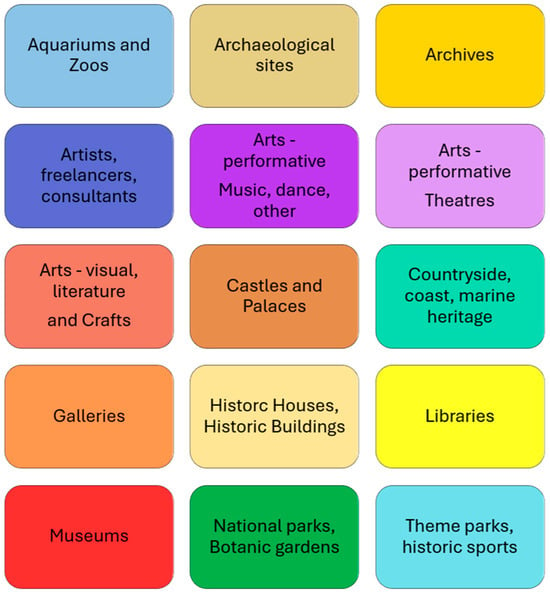
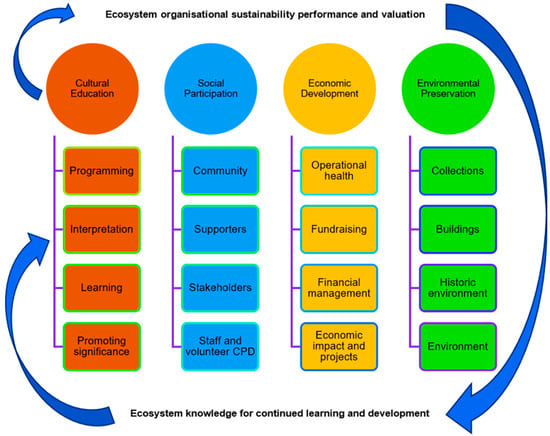
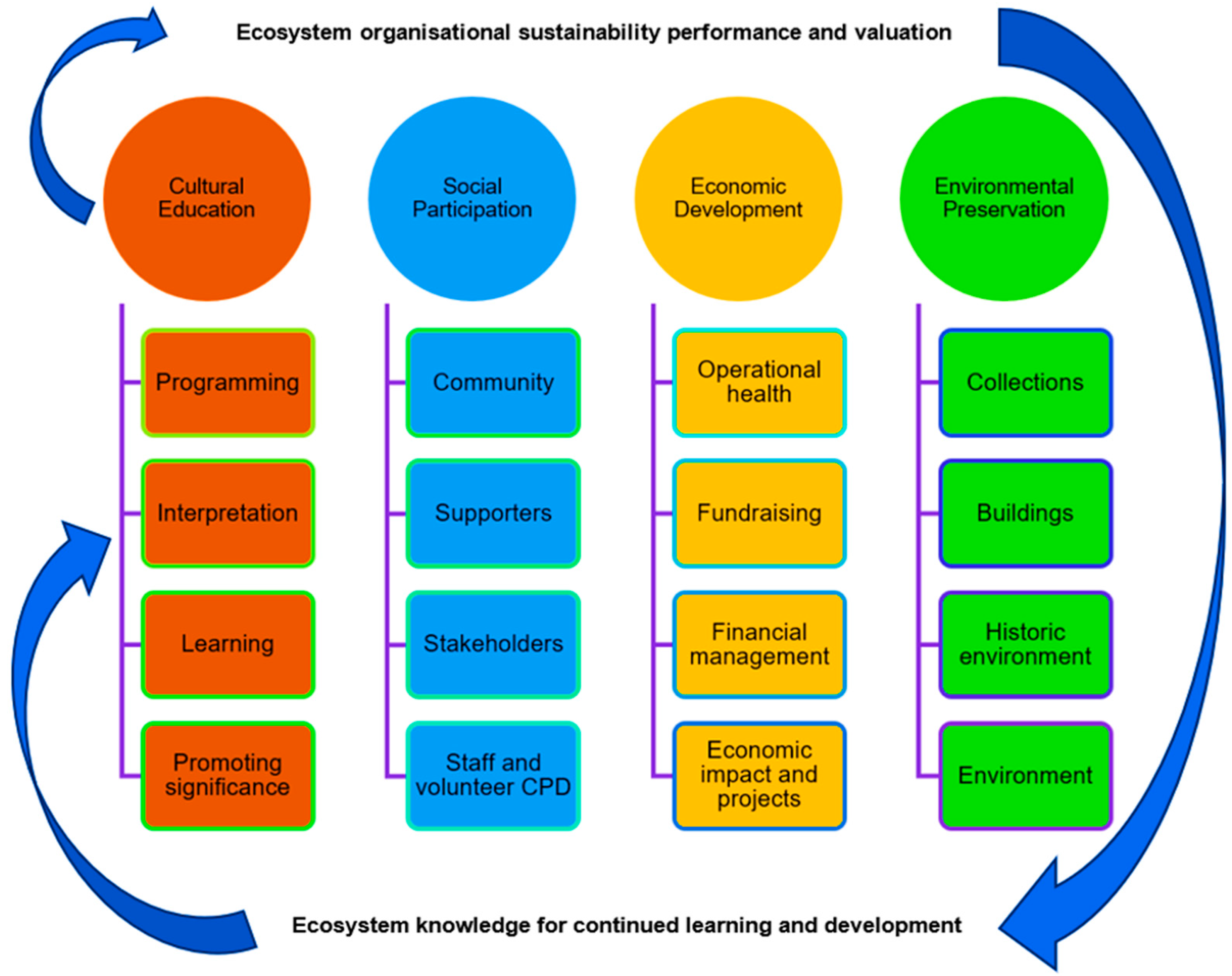
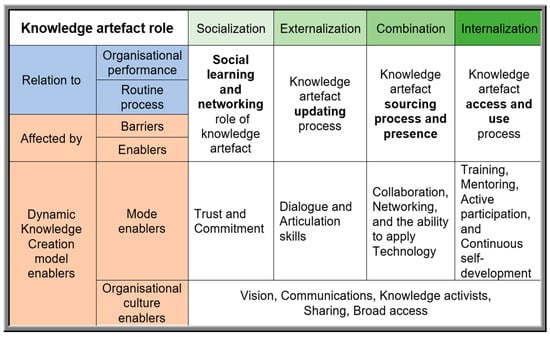
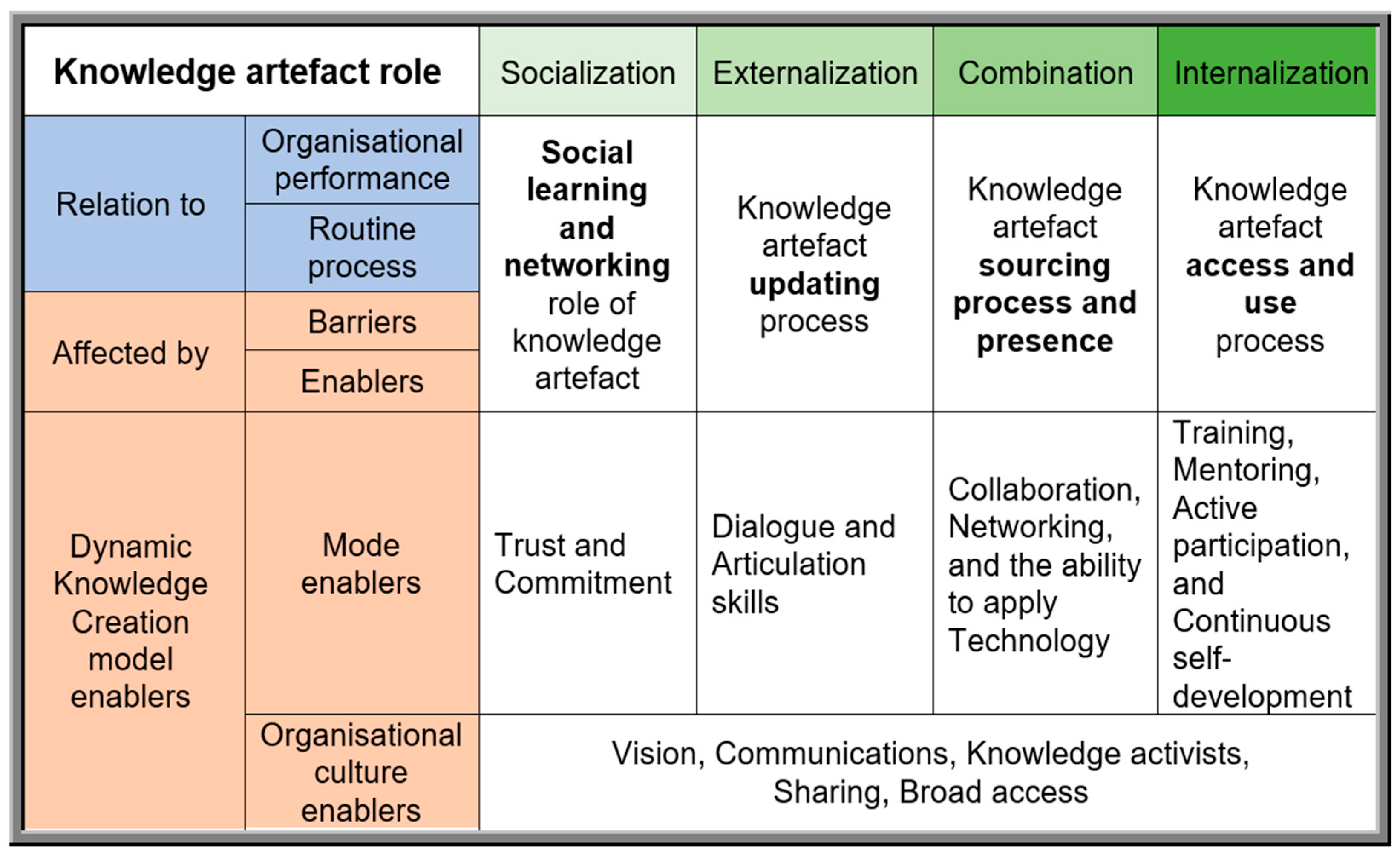
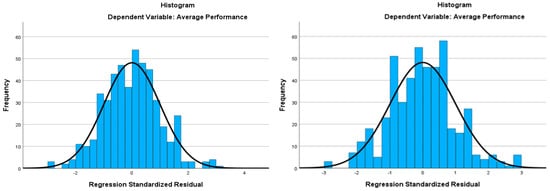
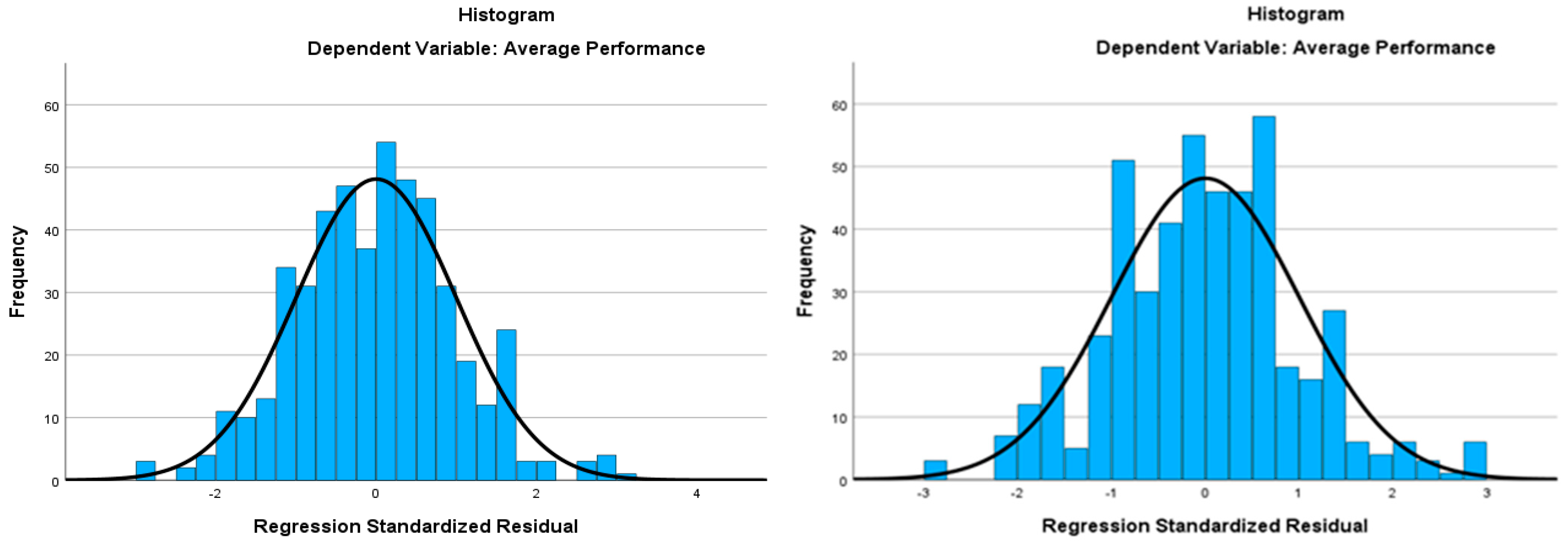
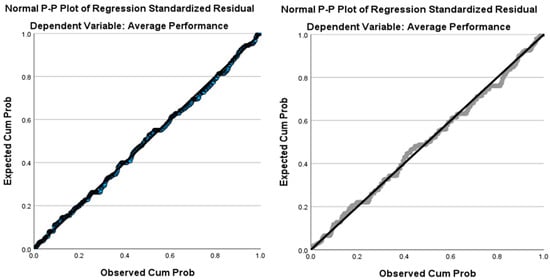
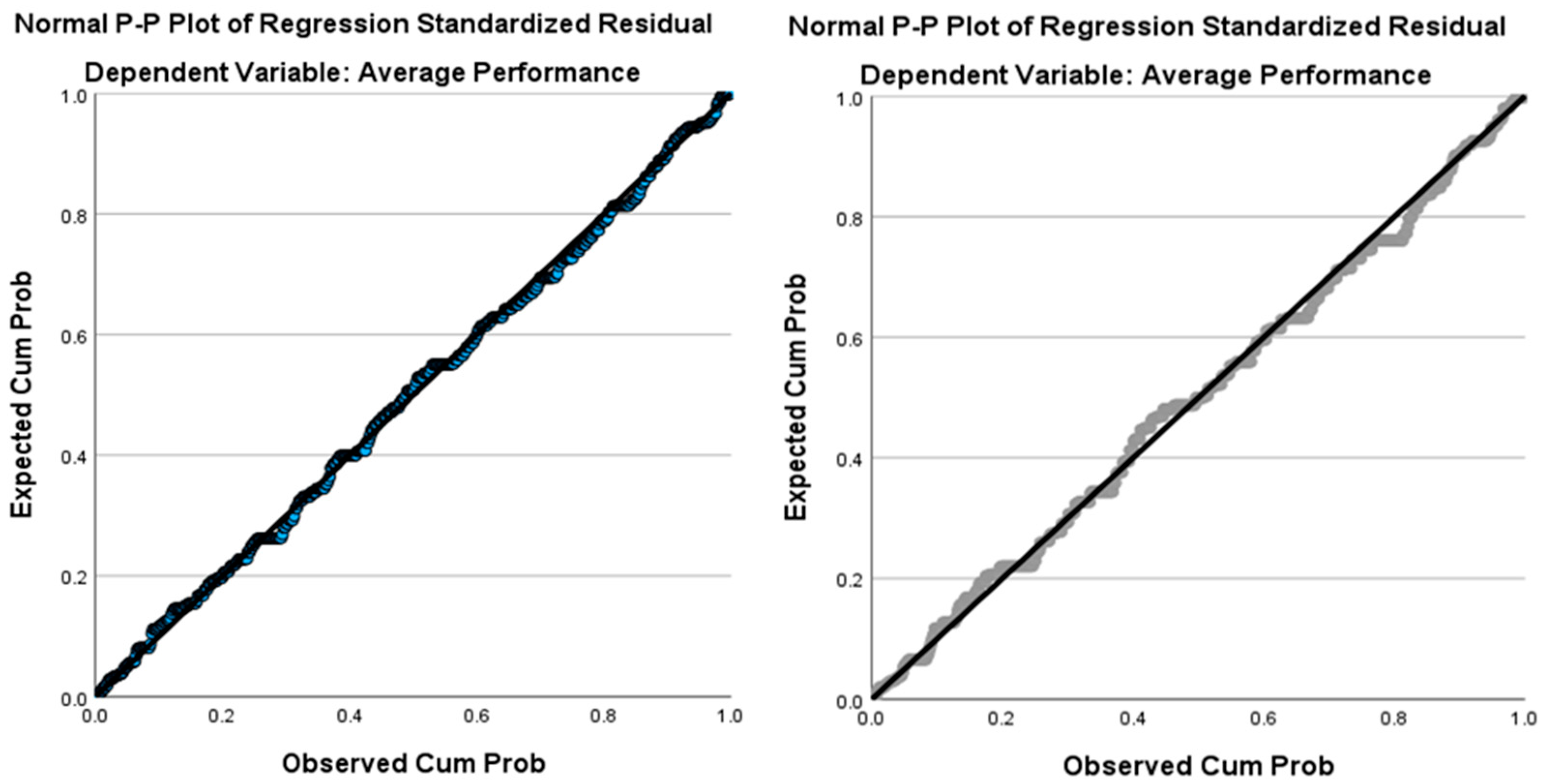
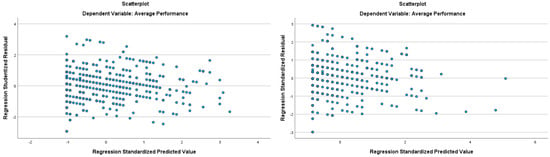
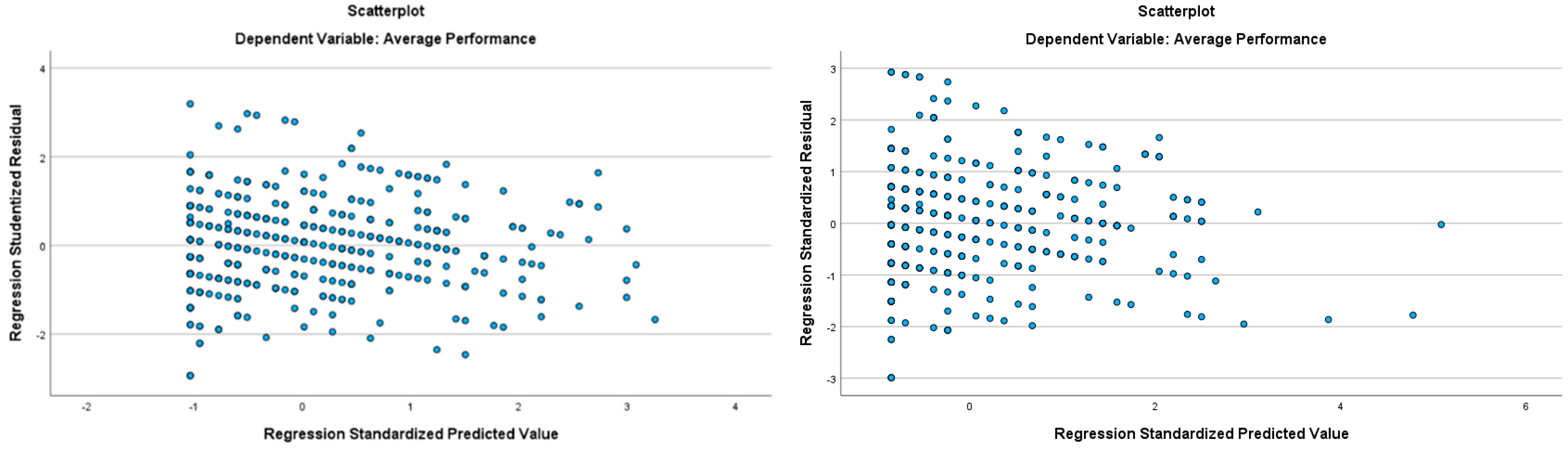
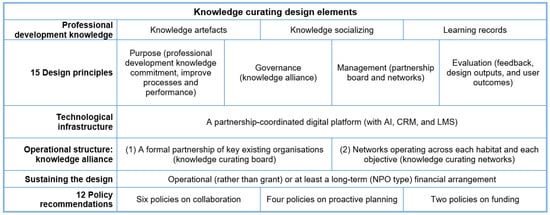
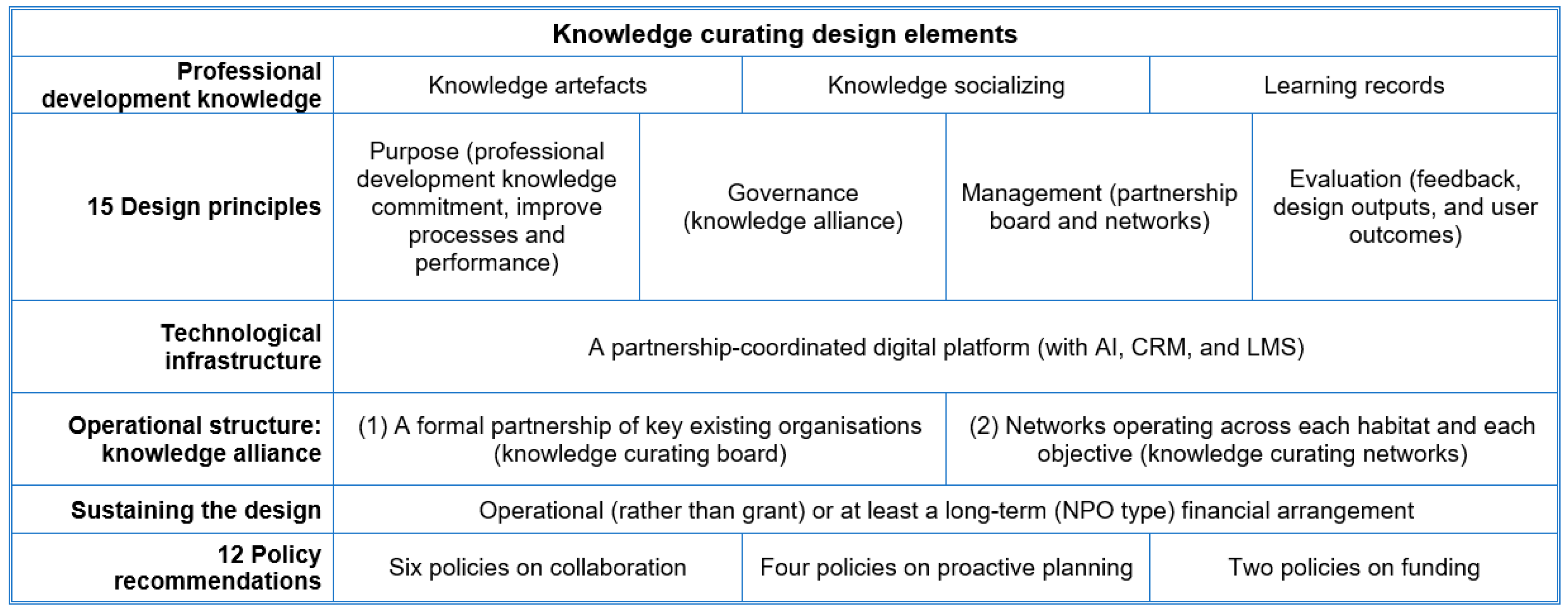

Disclaimer/Publisher’s Note: The statements, opinions and data contained in all publications are solely those of the individual author(s) and contributor(s) and not of MDPI and/or the editor(s). MDPI and/or the editor(s) disclaim responsibility for any injury to people or property resulting from any ideas, methods, instructions or products referred to in the content. |
© 2026 by the authors. Licensee MDPI, Basel, Switzerland. This article is an open access article distributed under the terms and conditions of the Creative Commons Attribution (CC BY) license.