1. Introduction
Municipal Solid Waste (MSW) management represents one of the most pressing environmental and governance challenges of the 21st century [
1]. Rapid urbanization, population growth, changing consumption patterns, and expanding middle-class economies have led to a sustained increase in global waste generation [
2]. According to recent global assessments, MSW production is projected to continue rising significantly over the coming decades, particularly in low- and middle-income countries where infrastructure development often lags behind waste generation rates [
3].
Recent global benchmark assessments further reinforce these trends. According to the IPCC [
4], the waste sector is a significant contributor to anthropogenic greenhouse gas emissions, particularly due to methane generation from landfills. Similarly, the World Bank [
5] projects that global waste generation will reach approximately 3.4 billion tonnes by 2050, with the fastest growth occurring in low- and middle-income countries where waste management infrastructure often remains insufficient.
These large-scale assessments highlight not only the environmental urgency but also the structural disparities in waste management systems, emphasizing the need for integrated, context-sensitive, and low-carbon solutions aligned with circular economy principles.
Disposal practices remain highly heterogeneous across regions [
6,
7]. While high-income countries have largely transitioned toward engineered sanitary landfills, advanced recycling systems, and waste-to-energy (WtE) facilities, many developing regions still rely on open dumping or semi-controlled landfills [
8]. These practices are associated with substantial environmental burdens, including methane emissions, groundwater contamination through leachate infiltration, accumulation of heavy metals in soils, and uncontrolled air pollutant emissions from open burning [
9].
Landfills remain a dominant global disposal pathway, contributing significantly to anthropogenic methane emissions [
10]. Methane (CH
4) from solid waste disposal is a potent greenhouse gas with a global warming potential substantially higher than carbon dioxide over short-term horizons [
11].
At the same time, thermal treatment technologies and biological processes such as anaerobic digestion offer opportunities for energy recovery and material circularity [
12,
13]. Although some of these studies focus on wastewater and sludge treatment systems, they provide transferable insights into energy recovery mechanisms, process efficiency, and environmental performance assessment (e.g., life cycle analysis and techno-economic evaluation), which are directly applicable to MSW management, particularly for organic waste treatment through anaerobic digestion.
However, their comparative environmental performance depends strongly on system boundaries, technological maturity, energy system context, and institutional capacity [
14].
Despite extensive literature evaluating specific technologies through life cycle assessment (LCA), exergy analysis, or scenario-based modeling, current research remains fragmented [
15]. Many studies focus narrowly on greenhouse gas emissions without integrating energy performance, material recovery, infrastructure containment, and governance determinants into unified analytical frameworks [
16]. Although this study is not specific to MSW systems, it highlights the broader role of ESG-related governance factors in shaping greenhouse gas emissions, which is directly relevant for assessing environmental performance in waste management systems.
Moreover, technological performance is often assessed independently from socio-economic and institutional conditions, even though regulatory enforcement, financial capacity, and data transparency critically influence real-world outcomes [
17]. In this context, advances in digital regulatory governance (RegTech) provide transferable insights into monitoring, compliance, and transparency mechanisms that are directly applicable to MSW system management.
However, previous review studies on MSW management have predominantly focused on specific analytical dimensions. For instance, several works have concentrated on life cycle assessment (LCA) evidence and methodological aspects [
18,
19], while others have emphasized system-level implications of waste-to-energy technologies [
20]. Additional studies have explored indicator frameworks or governance challenges, particularly in developing countries [
21,
22].
Despite these contributions, previous reviews generally analyze these dimensions independently, without explicitly linking environmental performance metrics with Technological Maturity Levels (TML) and governance conditions. As a result, existing approaches provide valuable but partial insights, limiting their capacity to support consistent cross-technology comparisons and integrated sustainability assessments.
Furthermore, previous studies have evaluated MSW management systems using quantitative environmental indicators such as greenhouse gas emissions, energy recovery efficiency, and eco-efficiency metrics [
23,
24,
25]. In parallel, other studies have emphasized the role of structural determinants, including socio-economic development, governance capacity, and institutional quality, in shaping waste management performance [
22,
26,
27]. However, these research streams have largely evolved independently, with limited integration between quantitative environmental metrics and systemic determinants. As a result, existing approaches provide partial insights, highlighting the need for unified frameworks that explicitly link environmental performance indicators with technological maturity, infrastructure capacity, and governance conditions.
In contrast, this study adopts a multidimensional methodological approach that explicitly integrates environmental indicators (e.g., greenhouse gas emissions, energy performance, material recovery), infrastructure-based technological classification, and governance-related variables. This integrative perspective enables a more comprehensive evaluation of MSW systems and supports the identification of context-sensitive transition pathways toward low-carbon and circular waste management systems.
Similarly, as waste systems increasingly intersect with climate mitigation policies, circular economy strategies, and energy transition pathways, there is a growing need for integrative analytical approaches capable of linking environmental indicators with technological maturity and institutional capacity [
28]. Sustainable MSW management is not solely a technical challenge; it is a socio-technical transition process requiring coordinated evolution across infrastructure, governance, financing, and behavioral systems [
27].
The present review addresses the following research questions:
How can MSW disposal and treatment systems be systematically classified according to technological maturity, infrastructure containment, and recovery pathways?
How do open dumping, controlled landfills, sanitary landfills, biological treatments, and thermal conversion technologies compare in terms of climate performance, energy balance, material recovery, and environmental containment?
What ranges of greenhouse gas emissions, energy recovery efficiencies, and landfill diversion rates are reported across different technological configurations, and how sensitive are these findings to system boundary assumptions?
How do economic capacity, governance quality, regulatory enforcement, and data availability influence the environmental performance and controlled disposal rates of MSW systems?
What transition pathways and emerging technological trends are shaping the evolution toward low-carbon and circular municipal waste systems?
The central hypothesis of this review is that sustainable transformation of MSW systems is not driven by isolated technological substitution, but by integrated socio-technical configurations that combine environmental performance optimization, infrastructure containment capacity, institutional robustness, and alignment with energy system decarbonization trajectories. Consequently, the objective of this study is to provide a comprehensive and methodologically rigorous synthesis that integrates quantitative environmental indicators with TML and structural governance determinants.
By linking climate mitigation metrics, energy recovery performance, material circularity indicators, and institutional capacity variables within a unified analytical framework, this review aims to support evidence-based waste management planning, inform policy development, and identify priority research directions for accelerating the transition toward resilient, circular, and low-carbon MSW systems.
This paper is structured as follows.
Section 1 provides the Introduction, outlining the global environmental challenges associated with MSW generation and disposal, the need for integrated and climate-aligned waste management strategies, the research gaps identified in existing literature, and the objectives and scope of this systematic review.
Section 2 presents the Materials and Methods, describing the systematic literature review protocol, search strategy, screening process, and the analytical framework adopted for comparative sustainability assessment.
Section 3 reports the Results, synthesizing evidence on technological classification, environmental impacts, quantitative performance indicators, infrastructure components, and determinant interactions.
Section 4 provides a Discussion, critically evaluating trade-offs between disposal pathways, examining socio-economic and institutional constraints, and identifying research gaps and transition priorities. Finally,
Section 5 presents the Conclusions, summarizing principal insights and outlining strategic directions for advancing integrated and low-carbon MSW management systems.
2. Materials and Methods
2.1. PRISMA Systematic Review Protocol
The present systematic review was conducted following the PRISMA 2020 methodology (Preferred Reporting Items for Systematic Reviews and Meta-Analyses) [
29], which constitutes a widely accepted international standard for conducting and reporting systematic reviews. PRISMA provides a structured methodological framework that enables the identification, selection, evaluation, and synthesis of relevant scientific literature through a transparent and reproducible process based on explicit inclusion and exclusion criteria.
The PRISMA approach is based on a flow diagram that describes the progressive reduction in the number of studies, from initial identification to final inclusion, ensuring traceability and minimizing selection bias. This method is particularly suitable for complex systems such as MSW management, where multiple technologies, methodological approaches, and contextual factors coexist.
This review was conducted in accordance with PRISMA 2020 guidelines. The review protocol was retrospectively registered in the Open Science Framework (OSF) (
https://doi.org/10.17605/OSF.IO/52NG4, accessed on 24 April 2026) to enhance transparency and reproducibility. The OSF repository is publicly accessible and contains all relevant materials associated with the review protocol.
The review protocol was registered retrospectively in the OSF, which constitutes a methodological limitation, as prospective registration is generally recommended to minimize potential bias and enhance transparency in systematic reviews. Nevertheless, the protocol includes detailed documentation of the review design, search strategy, eligibility criteria, and analytical framework. Main elements of the protocol—including the literature search strategy (
Section 2.2), study selection process (
Section 2.3), and bibliometric analysis (
Section 2.5)—are explicitly described within the Materials and methods
Section 2 to ensure clarity and facilitate reproducibility.
The completed PRISMA 2020 checklist is provided as
Supplementary Material and is available to reviewers as part of the submission. The study selection process was performed by two independent reviewers. Titles, abstracts, and full-text articles were screened independently, and discrepancies were resolved through discussion until consensus was reached.
Furthermore, a qualitative assessment of study robustness was conducted to evaluate methodological transparency, availability of quantitative indicators, and comparability across studies (see
Section 2.4).
2.2. Literature Search Strategy
The scientific literature search was conducted using the Scopus database, selected due to its broad coverage of high-impact peer-reviewed journals and its multidisciplinary indexing, which is particularly suitable for capturing research on MSW management across environmental, engineering, and socio-economic domains.
The search strategy was designed to ensure comprehensive coverage of relevant studies by combining key terms related to MSW systems, disposal and treatment technologies, environmental performance, and sustainability transitions.
The search query was structured using Boolean operators as follows:
TITLE-ABS-KEY ((“municipal solid waste” OR “MSW”) AND (“landfill” OR “sanitary landfill” OR “open dumping” OR “waste-to-energy” OR “WtE” OR “anaerobic digestion” OR “recycling”) AND (“environmental performance” OR “life cycle assessment” OR “LCA” OR “circular economy” OR “climate change” OR “GHG emissions”)) AND PUBYEAR > 2017 AND PUBYEAR < 2027 AND (LIMIT-TO (DOCTYPE, “ar”) OR LIMIT-TO (DOCTYPE, “re”)) AND (LIMIT-TO (LANGUAGE, “English”)).
This strategy resulted in an initial dataset of 1915 records, ensuring comprehensive coverage of the relevant scientific literature while maintaining consistency and reproducibility of the search process.
However, it is important to mention that Scopus was selected as the primary database due to its extensive coverage of peer-reviewed literature and its multidisciplinary indexing, which is particularly relevant for capturing studies on MSW management across environmental, engineering, and socio-economic domains.
While the use of a single database may introduce potential selection bias, this limitation is mitigated through the application of a comprehensive search strategy and is explicitly acknowledged in this study. Future work may expand the database scope by incorporating additional sources such as Web of Science and ScienceDirect.
2.3. Study Selection Process Based on PRISMA
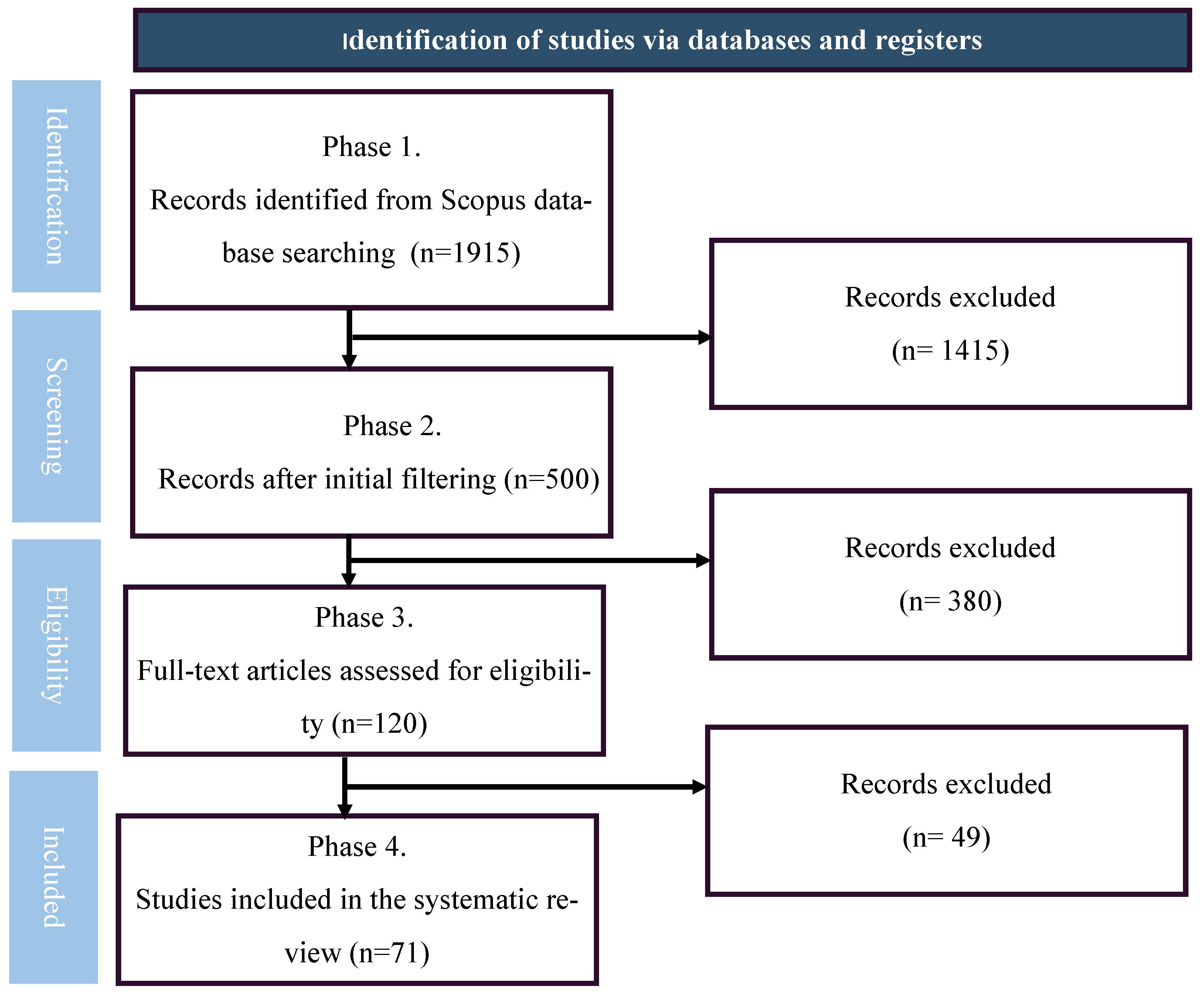
The study selection process was conducted in four phases following the PRISMA methodology (
Figure 1).
In the identification phase, a total of 1915 records were retrieved from the Scopus database using the defined search strategy. After removal of duplicates and initial filtering, records were subjected to screening based on titles and abstracts to evaluate their relevance to MSW management systems.
During the screening phase, 1415 records were excluded due to a lack of relevance to the research scope. Excluded studies primarily addressed non-municipal waste streams, did not include environmental performance indicators, or were not directly related to disposal or treatment technologies. As a result, 500 records were retained for further evaluation.
In the eligibility phase, 120 full-text articles were assessed to verify their scientific and methodological relevance. At this stage, 380 studies were excluded due to the absence of quantitative environmental indicators, insufficient methodological transparency, or highly specific case studies that limited comparability across different systems.
Finally, in the inclusion phase, a total of 71 studies met all the predefined inclusion criteria and were incorporated into the systematic review. These studies provided relevant and comparable data for the analysis of MSW disposal and treatment technologies.
The substantial reduction from the initial dataset to the final sample reflects the systematic application of predefined screening and eligibility criteria. This process ensures transparency and reproducibility in the selection of studies included in the analysis.
It is important to note that the 71 studies included in the PRISMA flow diagram correspond to the core articles selected for systematic analysis. Additional references cited throughout the manuscript support the conceptual framework, methodological discussion, and contextual interpretation of results.
2.4. Study Quality and Robustness Assessment
A qualitative assessment of the included studies was conducted to evaluate methodological robustness and relevance. The assessment was based on the following criteria:
Clarity and transparency of the methodological approach
Availability of quantitative environmental indicators
Consistency and comparability of results across studies
Given the heterogeneity of study designs, system boundaries, technologies, and reported indicators, a formal quantitative risk-of-bias assessment tool was not applied. However, studies lacking sufficient methodological transparency or comparable data were excluded during the eligibility phase.
This approach enables a consistent evaluation of the robustness of the evidence while maintaining methodological coherence across diverse study types.
2.5. Bibliometric Analysis
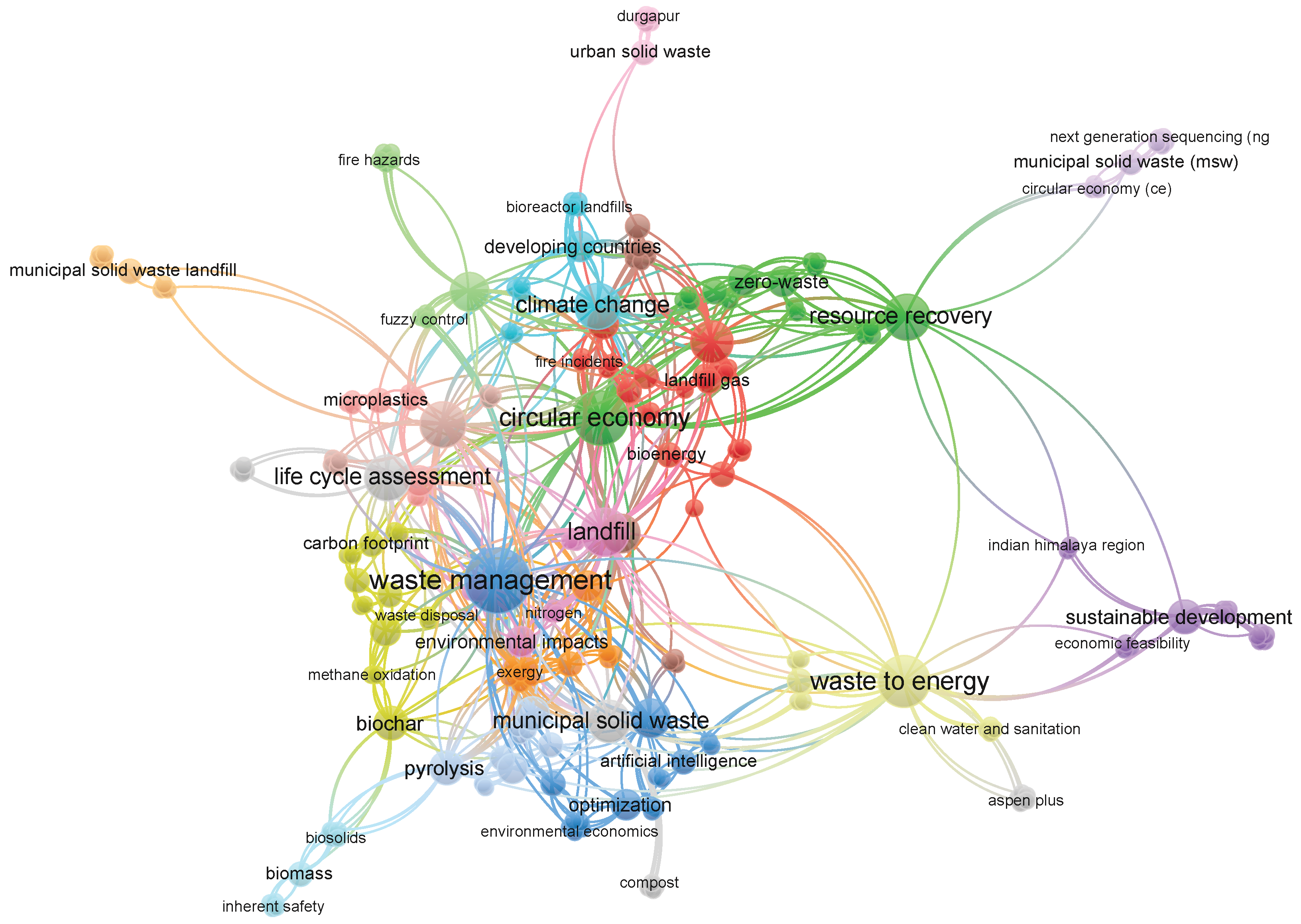
Figure 2 presents the bibliometric co-occurrence network of keywords related to MSW management, generated using VOSviewer (1.6.20). The map visualizes structural relationships among terms based on frequency (node size) and co-occurrence strength (link intensity), allowing identification of thematic groupings within the research field.
In addition to the structural interpretation of keyword relationships, the co-occurrence network reveals the presence of distinct thematic clusters that reflect the multidimensional nature of the research field. These clusters can be broadly interpreted as: (i) landfill systems and emissions-related processes, including landfill gas and bioenergy recovery; (ii) circular economy and resource recovery approaches, including zero-waste strategies; (iii) technical and optimization-oriented studies focused on MSW systems, including artificial intelligence and modeling tools; (iv) conventional waste management and environmental impact assessment; and (v) socio-economic and sustainability-related dimensions, including economic feasibility and sustainable development.
The network shows that terms such as “waste management” and “landfill” are among the most frequently occurring keywords, while “circular economy,” “recycling,” and “waste-to-energy” appear as strongly connected themes within the network, reflecting the coexistence of multiple research directions.
From a temporal perspective, the distribution and connectivity of keywords suggest a progressive transition from traditional landfill-centered approaches toward more integrated frameworks emphasizing circular economy principles, resource recovery, and climate change mitigation. The coexistence of highly central terms such as “landfill” and “circular economy” suggests that this transition remains partial and constrained by structural, technological, and institutional factors.
Regarding citation impact, although not quantitatively assessed, nodes associated with life cycle assessment, waste-to-energy, and circular economy exhibit higher connectivity and centrality within the network, suggesting their dominant influence in shaping the scientific discourse and their role as key analytical frameworks in evaluating environmental performance.
It is important to note that, due to the high heterogeneity across the included studies—particularly regarding system boundaries, functional units, methodological approaches (e.g., life cycle assessment, exergy analysis, and scenario modeling), and reported indicators—a formal meta-analysis was not conducted. Instead, a structured qualitative and comparative synthesis was adopted to ensure methodological consistency and interpretability of results.
The bibliometric analysis is included as a complementary descriptive tool to support contextual understanding of the research field and is not used as a primary analytical basis for the comparative assessment presented in this study.
It should be noted that keyword co-occurrence analysis provides a structural overview of thematic relationships but does not allow direct inference of conceptual dominance, technological maturity, or temporal consolidation of specific research paradigms.
2.6. Analytical and Conceptual Modeling Framework for Comparative Sustainability Assessment of MSW Systems
To ensure methodological coherence between technological classification, environmental indicators, and structural determinants, this review develops an analytical and conceptual framework for the comparative sustainability assessment of MSW disposal and treatment systems.
The framework integrates three core dimensions: (i) environmental performance (climate, energy, and material recovery), (ii) technological maturity and infrastructure containment, and (iii) socio-economic and institutional determinants.
It is important to clarify that this framework is not intended as a unified empirical aggregation model. Instead, it is proposed as a conceptual and integrative analytical structure designed to harmonize the interpretation of environmental performance indicators across heterogeneous studies.
Due to substantial variability in system boundaries, functional units, methodological assumptions, and reported data across the reviewed literature, direct quantitative aggregation using these formulations was not considered methodologically robust. Therefore, the equations presented in this section serve as a decision-support and comparative interpretation tool, rather than as operational models applied to a single dataset.
2.6.1. Functional Unit and System Boundaries
For comparative interpretation across heterogeneous studies, results are conceptually normalized to a functional unit (FU) of one ton of MSW treated.
It is important to note that MSW composition varies significantly across regions, particularly in terms of organic fraction, moisture content, calorific value, and recyclable material content [
30]. These variations can substantially influence environmental performance indicators such as greenhouse gas emissions, energy recovery potential, and treatment efficiency.
To ensure comparability across studies, all reported indicators are normalized on a mass basis (per ton of MSW), enabling consistent cross-study comparison despite differences in geographical context, waste composition, and technological configurations.
However, it is acknowledged that such normalization does not fully eliminate the influence of compositional heterogeneity, and results should therefore be interpreted considering these underlying variations.
In this way, the system boundaries follow a life-cycle perspective and may include collection and transport, treatment processes, direct emissions (CH
4, CO
2, N
2O), energy recovery credits, and residual disposal [
31].
2.6.2. Climate Performance Indicator
Net greenhouse gas emissions [
32] are conceptually defined as:
where:
represents the net greenhouse gas emissions per functional unit (t CO
2-eq/t MSW),
denotes direct emissions generated during the treatment or disposal process (t CO
2-eq/t MSW),
corresponds to upstream emissions associated with energy consumption, auxiliary materials, and operational activities (t CO
2-eq/t MSW),
represents avoided emissions due to material substitution effects or energy recovery credits (t CO
2-eq/t MSW).
2.6.3. Energy Performance Indicator
For energy-recovery technologies [
33], net energy balance is expressed as:
where:
is the net energy output per ton of MSW (kWh/t or MJ/t),
denotes the gross energy generated through thermal or biological conversion (kWh/t or MJ/t),
represents internal energy consumption required for plant operation (kWh/t or MJ/t).
Likewise, thermodynamic efficiency [
34] may additionally be evaluated using exergy efficiency:
where:
is the exergy efficiency (dimensionless),
represents the useful exergy output (MJ/t),
denotes the exergy content of the incoming waste stream (MJ/t).
2.6.4. Material Recovery and Diversion Performance
Material recovery rate [
35] is defined as:
where:
is the material recovery rate (%),
represents the mass of materials recovered for recycling or reuse (t),
denotes the total mass of MSW entering the system (t).
Likewise, landfill diversion [
36] is defined as:
where:
is the landfill diversion rate (%),
represents the mass of waste diverted from final disposal through recycling, composting, or energy recovery (t).
2.6.5. Eco-Efficiency Indicator
Eco-efficiency [
37] is conceptually expressed as:
where:
represents eco-efficiency (economic or energetic value per unit of emissions),
denotes the economic or energy value generated from recovered materials or energy (e.g., USD/t or MJ/t),
represents net greenhouse gas emissions (t CO
2-eq/t MSW).
2.6.6. Technological Maturity Index
A conceptual Technological Maturity Index (TMI) [
38] is defined as:
where:
represents the aggregated technological maturity score (dimensionless),
denotes the performance level of each critical infrastructure component (e.g., liner systems, gas capture mechanisms, leachate treatment units, and monitoring systems),
represents the weighting factor assigned according to its relative contribution to environmental risk mitigation, and
n is the total number of infrastructure components evaluated.
This formulation is not applied as a quantitative scoring model within the review, but rather serves as a heuristic construct to support comparative interpretation across systems.
It is important to note that the TMI is proposed as a conceptual and flexible indicator intended to integrate multiple infrastructure components rather than as a fixed or empirically calibrated metric.
The weighting factors () are defined to reflect the relative contribution of each component to environmental risk mitigation, based on evidence reported in the literature.
The scoring of each component () is conceptually based on performance levels, such as absence, partial implementation, or full implementation of critical infrastructure elements (e.g., liner systems, gas capture, leachate treatment, and monitoring systems).
It is acknowledged that the weighting factors () are not derived from empirical calibration or formal expert elicitation within this study, which limits the direct operational applicability of the TMI as a quantitative decision-making tool.
Instead, the index is intended as a conceptual framework for comparative interpretation across heterogeneous systems. Future research may refine the weighting scheme using formal multi-criteria decision-making methods, such as the Analytic Hierarchy Process (AHP), entropy-based approaches, or expert-driven weighting, depending on data availability and regional context.
2.6.7. Integrated Sustainability Positioning
Overall sustainability positioning [
39] is conceptually defined as:
where:
represents integrated sustainability performance (dimensionless conceptual index),
is net greenhouse gas emissions,
is net energy balance,
is material recovery rate,
is the technological maturity index,
G represents governance and institutional quality variables, including regulatory enforcement, monitoring capacity, financial resources, and data transparency.
The functional form of is not specified for computational purposes; instead, it represents a conceptual integration of key dimensions influencing sustainability performance, as identified in the literature.
It is important to clarify that the proposed equations are not derived from a single empirical dataset nor intended as predictive or calibrated models. Instead, they constitute a conceptual and integrative analytical framework that synthesizes relationships widely reported in the literature between environmental performance, technological characteristics, and socio-institutional conditions.
The purpose of these formulations is to enable consistent comparative interpretation across heterogeneous studies rather than to provide site-specific quantitative predictions.
In this context, the governance variable (G) is conceptualized as a composite index reflecting institutional capacity, regulatory enforcement, economic resources, and data availability. Although not explicitly quantified within this study, G is used to capture the influence of socio-institutional conditions on system performance and is interpreted qualitatively based on the literature.
In this way, this conceptual formulation emphasizes that sustainability performance emerges from the interaction between technological efficiency [
40], environmental containment [
41], recovery performance [
42], and institutional capacity [
43].
On the other hand, it is important to clarify that several figures presented in this study are conceptual illustrations developed by the authors to support comparative interpretation. These figures are constructed using normalized qualitative scales derived from the synthesis of consistent trends reported across the reviewed literature, rather than direct quantitative aggregation of empirical datasets.
The axis values in these figures represent relative positioning based on ranges and patterns identified in the literature, including greenhouse gas emissions (kg CO2-eq/t), energy recovery (kWh/t), material recovery rates (%), and implementation complexity indicators. Therefore, they do not correspond to absolute measured values but to normalized comparative scales.
Accordingly, these figures are intended as interpretative tools to visualize multidimensional trade-offs and systemic relationships among technologies and should not be interpreted as empirical or predictive models.
3. Results
3.1. Classification and Sustainability Transition of Solid Waste Disposal Practices
Solid waste disposal systems differ substantially in technological complexity, environmental containment capacity, operational control, and resource recovery potential [
44]. These differences directly influence greenhouse gas emissions, groundwater contamination risks, public health impacts, and long-term sustainability outcomes [
45].
To systematize the heterogeneity observed in global waste management systems, disposal practices were classified according to their technological maturity and environmental control capacity. The classification presented in
Table 1 reflects a progressive transition from non-engineered systems toward advanced facilities integrating environmental safeguards and energy recovery mechanisms.
Table 1 summarizes the technological gradient across disposal practices, from low-control systems to advanced recovery-oriented technologies. Open dumping (Level I) represents the lowest level of environmental control, associated with limited infrastructure, weak regulatory enforcement, and high environmental externalities, including uncontrolled methane emissions and leachate infiltration [
57,
58].
Controlled landfills (Level II) introduce partial operational improvements but lack comprehensive containment, resulting in variable environmental performance depending on management conditions [
59,
60]. In contrast, sanitary landfills (Level III) incorporate engineered barriers such as liners, leachate collection, and gas capture systems, reducing environmental risks while requiring higher institutional and financial capacity [
19,
46].
Level IV technologies, including incineration and waste-to-energy (WtE), shift from containment toward resource recovery, enabling volume reduction and energy generation. Their performance depends on advanced emission control systems and regulatory enforcement [
19,
51,
52]. Complementary biological treatments, such as composting, contribute to reducing landfill-bound organic waste and methane generation [
53,
56].
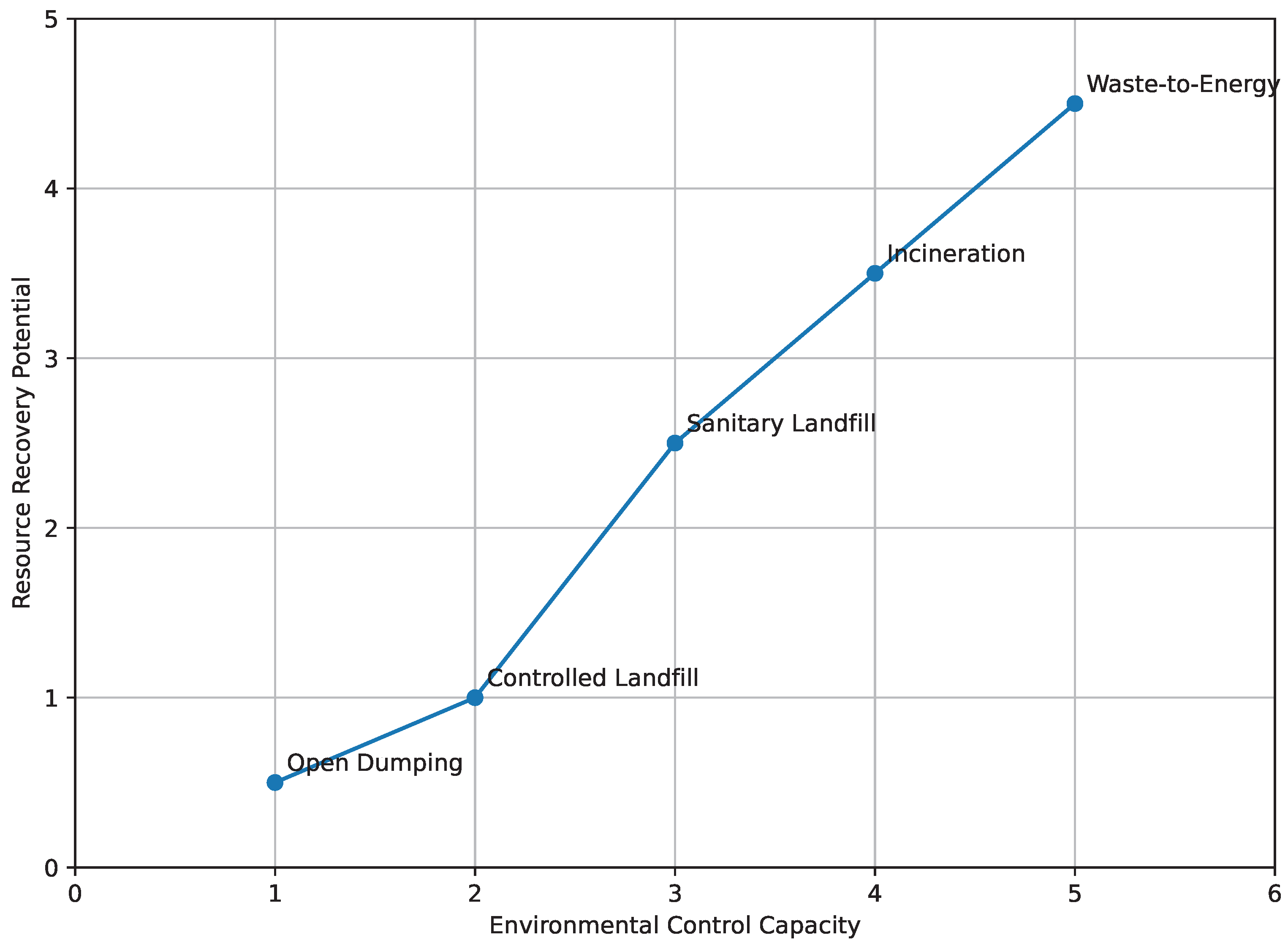
Figure 3 provides a conceptual visualization of this progression, highlighting the relationship between environmental control capacity and resource recovery potential. The transition from open dumping to WtE systems reflects a shift toward higher sustainability performance, although this evolution depends not only on technological advancement but also on governance capacity, regulatory frameworks, and financial resources.
Together,
Table 1 and
Figure 3 support a comparative interpretation of disposal pathways, linking technological maturity with environmental performance and recovery potential within a broader socio-technical context.
While the classification presented is consistent with established categories in the literature, its contribution lies in its integration within the proposed analytical and conceptual framework. Rather than functioning as a purely descriptive taxonomy, this classification serves as a structural basis for linking disposal practices with quantitative environmental indicators (e.g., greenhouse gas emissions, energy performance, and material recovery), TML, and socio-institutional determinants.
This integrative approach enables a systematic and comparable evaluation of different disposal pathways, supporting quantitative differentiation across technologies and facilitating the identification of transition pathways toward more sustainable and circular waste management systems.
3.2. Technological Maturity Levels in Solid Waste Disposal Systems
Technological advancement plays a decisive role in determining the environmental impact, operational efficiency, and long-term sustainability of solid waste disposal systems [
61]. As disposal practices evolve, improvements in containment infrastructure, monitoring mechanisms, and resource recovery technologies significantly influence risk mitigation and environmental performance [
62].
To systematize these differences, disposal systems were categorized into four TML reflecting increasing degrees of engineering sophistication and environmental control.
Table 2 synthesizes the recognized levels, their defining characteristics, and associated disposal practices.
Table 2 shows the progressive increase in engineering sophistication and environmental control across technological levels. Level I–II systems present greater environmental vulnerability due to limited containment and monitoring, while Level III systems incorporate engineered barriers that reduce contamination risks and methane emissions when properly managed.
Level IV systems extend this progression by integrating energy recovery and advanced emission control, aligning waste management with climate mitigation and circular economy strategies. However, higher technological maturity entails greater capital and operational costs, requiring technical expertise, financial resources, and institutional capacity [
64].
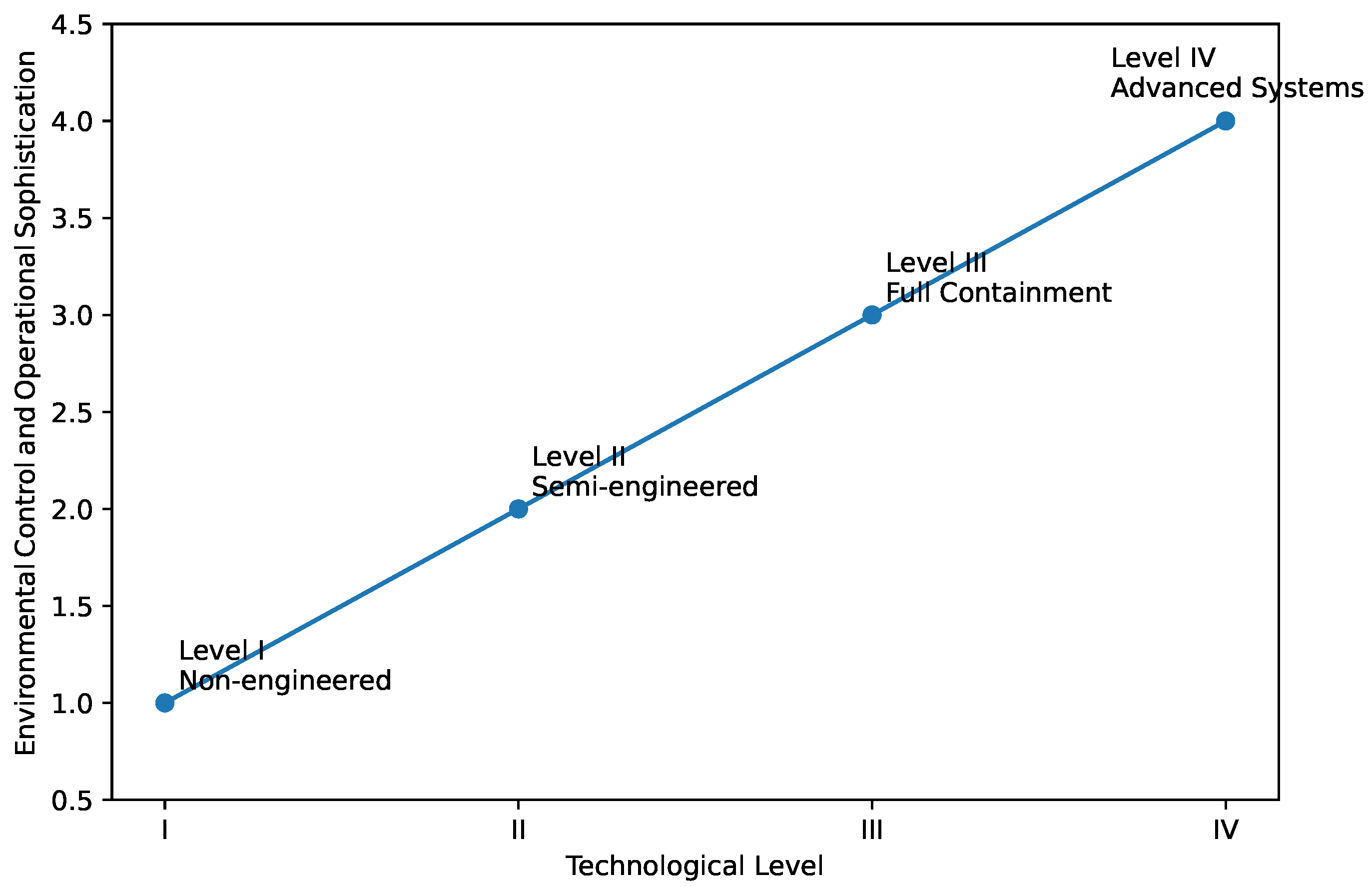
Figure 4 conceptually illustrates the relationship between technological maturity and environmental control capacity. Although higher levels improve environmental performance, their implementation depends on enabling conditions such as governance, regulatory enforcement, and investment capacity.
In particular, Level IV systems support landfill diversion and greenhouse gas mitigation through energy recovery, reinforcing their role in sustainability strategies [
19,
51]. Overall, technological maturity should be understood as a multidimensional transition involving engineering, institutional, and financial dimensions [
65].
The proposed TML represents a simplified categorization of real-world waste management systems. In practice, many systems operate as hybrid configurations combining multiple technologies, such as mechanical-biological treatment with landfill disposal or integrated recycling and energy recovery processes.
These hybrid systems are represented according to their dominant technological characteristics and environmental control level, and may fall between maturity levels depending on configuration and performance.
The TML classification is not an empirically validated model, but a conceptual and comparative framework to support systematic evaluation across diverse contexts.
3.3. Critical Infrastructure Components for Environmentally Secure Waste Disposal
The environmental performance of solid waste disposal systems is fundamentally determined by the presence and integration of important infrastructure components [
66]. While TML defines the overall system classification, it is the incorporation of specific engineering barriers and control mechanisms that ultimately mitigates long-term environmental risks [
67].
Infrastructure components function as protective layers designed to prevent groundwater contamination, reduce greenhouse gas emissions, and monitor environmental performance.
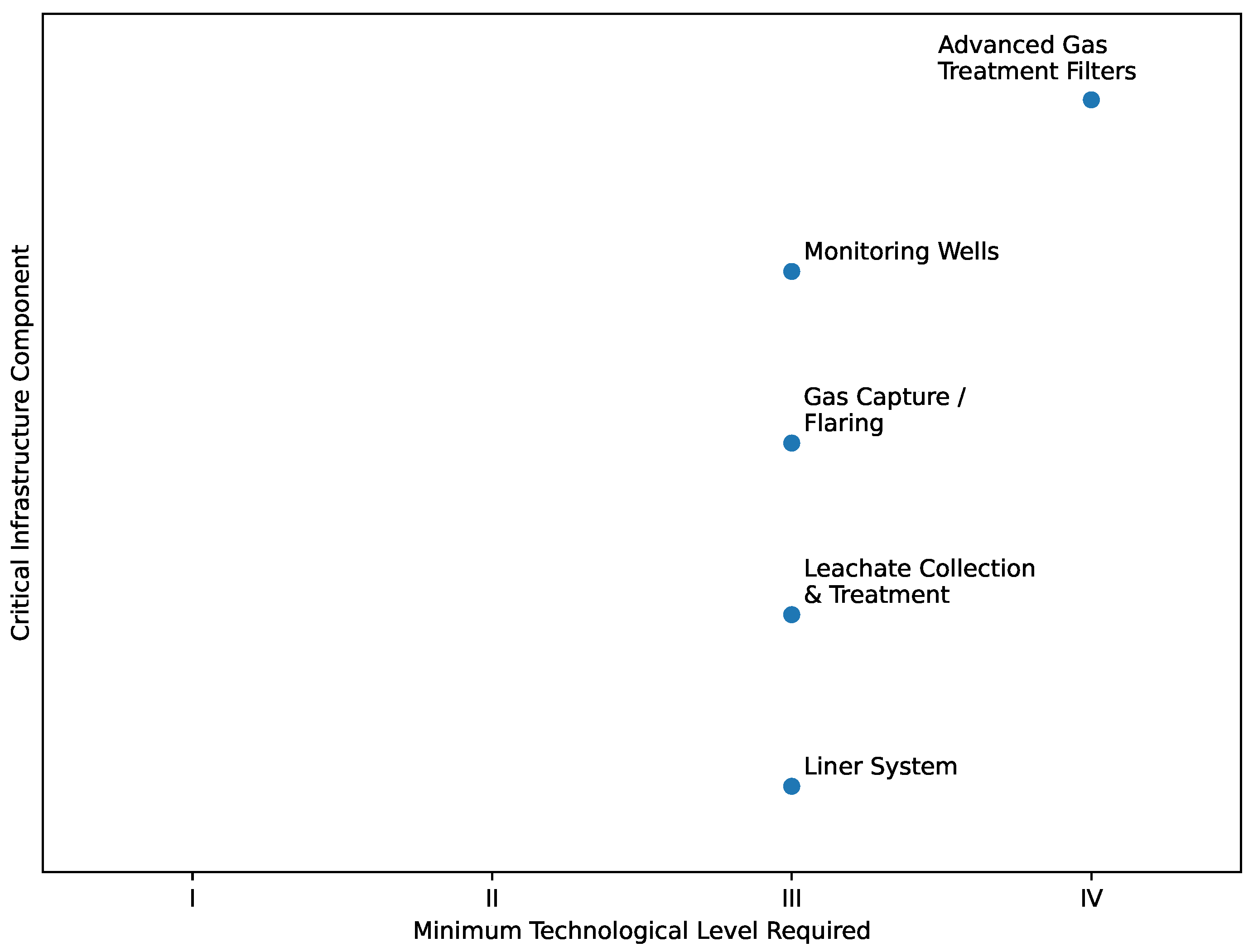
Table 3 summarizes the critical infrastructure elements identified in advanced disposal systems and their associated technological levels.
Table 3 shows that critical infrastructure components are primarily associated with Level III and IV systems, whereas lower-level systems (I–II) lack essential containment and monitoring elements, resulting in higher environmental risks.
Key components such as liners, leachate collection systems, and gas capture infrastructure play a central role in reducing contamination and emissions. Liners act as primary barriers preventing leachate migration, while collection and treatment systems enable controlled drainage and mitigation of groundwater impacts. Gas capture systems reduce methane emissions and may support energy recovery, whereas monitoring wells and advanced gas treatment filters enhance environmental control and regulatory compliance.
To provide quantitative context to the role of these infrastructure components, representative performance indicators reported in the literature can be considered. For example, well-engineered liner systems typically exhibit hydraulic conductivity values on the order of 10
−9 to 10
−7 m/s, depending on material type and installation quality, significantly limiting leachate migration [
69,
70].
Similarly, methane capture efficiency in modern landfill gas collection systems generally ranges between 50% and 90%, depending on system design, operational conditions, and waste composition [
71,
72,
73].
These quantitative ranges highlight the critical influence of infrastructure quality, design, and operational management on the environmental performance of solid waste disposal systems.
Figure 5 provides a conceptual visualization of the technological dependency of these components, indicating that their implementation is concentrated in higher technological maturity levels.
As illustrated, higher-level systems integrate multiple protective layers, combining physical containment, emission control, and environmental monitoring, whereas lower-level systems lack these barriers and exhibit greater vulnerability.
The effectiveness of these components depends not only on their installation but also on maintenance, operational oversight, and regulatory enforcement, as inadequate management may compromise long-term performance [
74]. Consequently, environmentally secure waste disposal should be understood as the result of integrated infrastructure design, institutional capacity, and sustained financial investment [
50,
63].
3.4. Comparative Environmental Impacts According to Disposal Practice
Environmental impacts associated with solid waste disposal practices vary substantially depending on technological maturity, containment infrastructure, and operational management [
75]. The main environmental concerns include greenhouse gas (GHG) emissions, leachate generation and infiltration, heavy metal accumulation in soils and water bodies, and atmospheric pollutant emissions [
76].
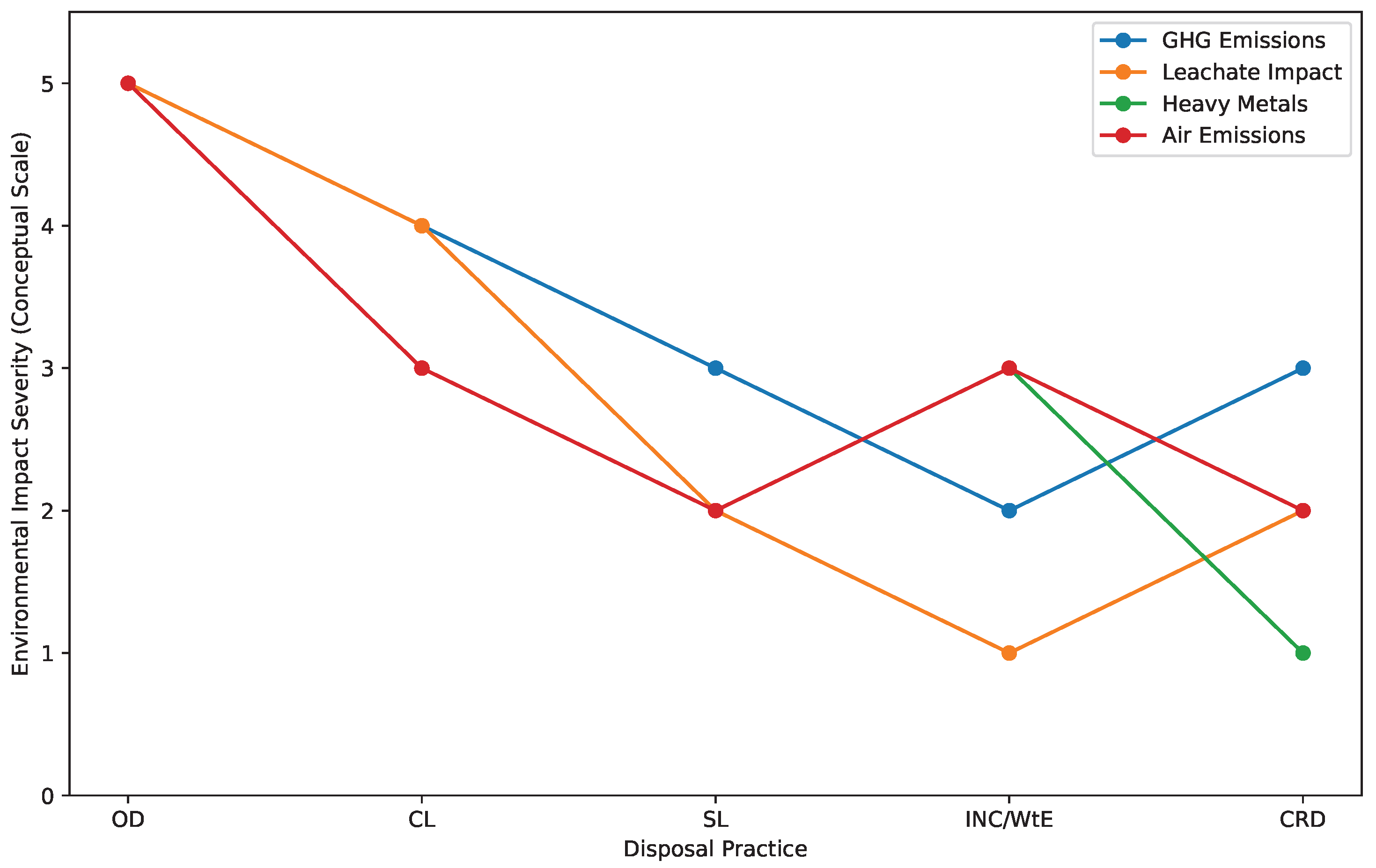
Table 4 presents a comparative synthesis of the primary environmental impacts associated with each disposal practice, based on recent literature.
Table 4 shows that open dumping is consistently associated with the highest environmental impacts, including elevated greenhouse gas emissions, leachate infiltration, heavy metal contamination, and uncontrolled air pollution.
Controlled landfills reduce some impacts but remain vulnerable due to incomplete containment and limited gas management. In contrast, sanitary landfills mitigate risks through engineered liners, leachate treatment, and methane capture. Incineration and waste-to-energy systems generally achieve lower net greenhouse gas emissions when energy substitution is considered, although their performance depends on advanced emission controls to prevent pollutants such as dioxins and furans. Composting systems typically present lower impacts but may generate methane or volatile organic compounds under suboptimal conditions.
Figure 6 conceptually illustrates these patterns, showing the relative severity of impacts across disposal practices.
Open dumping occupies the highest impact levels, while more advanced systems reduce burdens through improved containment and emission control. However, even advanced systems require proper operation and monitoring to avoid secondary pollution.
Environmental impact values in
Table 4 vary significantly due to differences in methodological assumptions and system boundaries in life cycle assessment (LCA) studies. Boundaries may include or exclude stages such as collection, transport, infrastructure, operations, energy recovery, and final disposal, leading to divergent results.
Additional variability arises from waste composition, local energy mix, technological efficiency, and allocation methods (e.g., system expansion vs. substitution), affecting both magnitude and direction of impacts, particularly for greenhouse gas emissions.
Therefore, direct comparisons require caution when assumptions are not harmonized. This variability highlights the value of integrative frameworks, such as the one proposed, to support more consistent evaluation of waste management systems.
Overall, the results support transitioning from uncontrolled disposal to engineered and recovery-oriented systems to reduce environmental risks and align with climate mitigation and circular economy goals [
77,
78,
79,
80,
81].
3.5. Technical Determinants of Environmental and Operational Performance
The environmental performance of solid waste disposal systems is shaped by technical factors related to waste composition, infrastructure design, and operational management [
44]. These determinants influence greenhouse gas emissions, leachate generation, contaminant migration, odor formation, and system stability [
84].
Technical variables define the baseline environmental risk and the effectiveness of containment and mitigation technologies [
85]. Inadequate consideration may lead to increased methane emissions, groundwater contamination, inefficient energy recovery, and infrastructure degradation [
86].
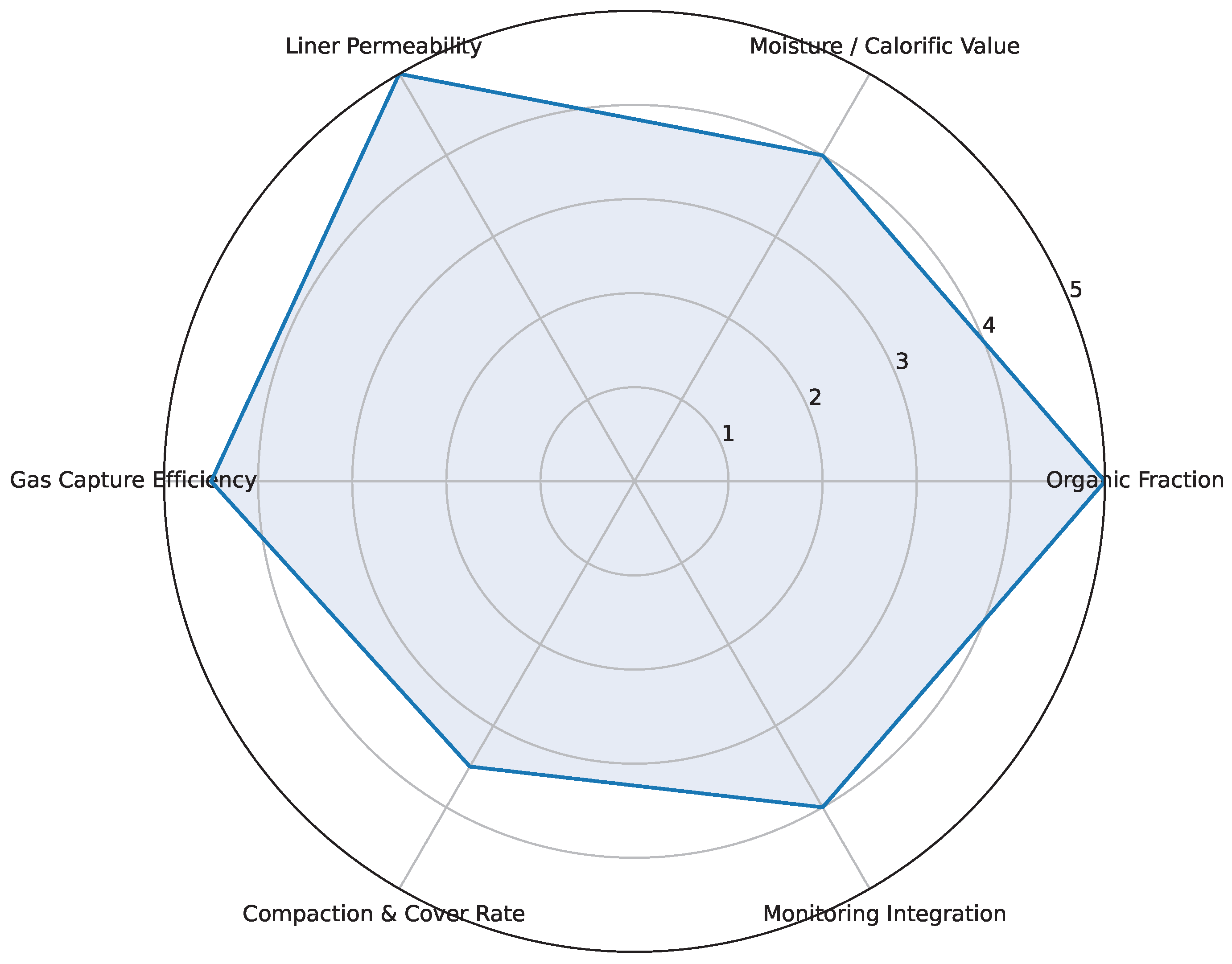
Table 5 summarizes the main technical determinants and their environmental influence.
Table 5 highlights waste composition as a key determinant. A high organic fraction increases methane generation and elevates BOD
5 and COD in leachate, especially in poorly contained systems [
77,
78,
82].
Moisture content and calorific value are critical for thermal systems: high moisture reduces efficiency, while optimal calorific values enhance energy recovery [
80,
82]. Infrastructure parameters such as liner permeability and gas capture efficiency directly influence containment, though their effectiveness depends on maintenance [
8,
77].
Operational practices (compaction and cover) reduce exposure and improve stability, while monitoring systems enhance reliability through early failure detection [
8,
87,
88].
Figure 7 illustrates the interdependent and multidimensional nature of these determinants.
Environmental performance results from the combined influence of these parameters. Organic fraction, liner permeability, and gas capture affect emissions and contaminant pathways, while moisture and calorific value influence energy recovery. Operational and monitoring practices support system stability and reliability.
These relationships can be interpreted within the analytical framework in
Section 2.6. Indicators such as
,
, and
depend on waste composition, infrastructure design, and operational efficiency.
Higher organic fraction and moisture increase , while improved gas capture and liner performance reduce emissions. Calorific value and moisture affect , and operational practices influence recovery rates ().
Thus, environmental performance emerges from non-linear interactions among determinants, conceptually expressed as .
This study does not propose a calibrated model, but a structured conceptual framework to support consistent comparison across systems.
Overall, technical determinants define environmental control capacity, while long-term performance depends on economic and institutional conditions.
3.6. Economic and Institutional Determinants of Waste Management Performance
While technical determinants define the intrinsic environmental risk and mitigation capacity of disposal systems, economic and institutional variables determine whether these technologies can be effectively implemented, maintained, and regulated over time [
26]. In many contexts, performance is constrained less by technological availability than by financial limitations, governance weaknesses, and insufficient regulatory enforcement [
89].
Economic feasibility and institutional robustness, therefore, act as enabling conditions that translate technical design into sustained operational performance.
From a macroeconomic perspective, differences in waste management performance reflect income level, public investment capacity, and institutional efficiency [
26]. Higher-income countries allocate greater resources to infrastructure, regulation, and innovation, achieving higher rates of controlled disposal, recycling, and energy recovery [
27]. In contrast, low- and middle-income contexts often rely on open dumping or poorly controlled landfills due to budget constraints and competing priorities [
77].
Waste management can be framed as an economic allocation problem, where short-term cost minimization conflicts with long-term environmental and social welfare [
90]. Practices such as open dumping generate significant externalities—including greenhouse gas emissions, ecosystem degradation, and health risks—that are rarely internalized [
78]. This highlights the role of economic instruments, public financing, and policy incentives in enabling sustainable transitions.
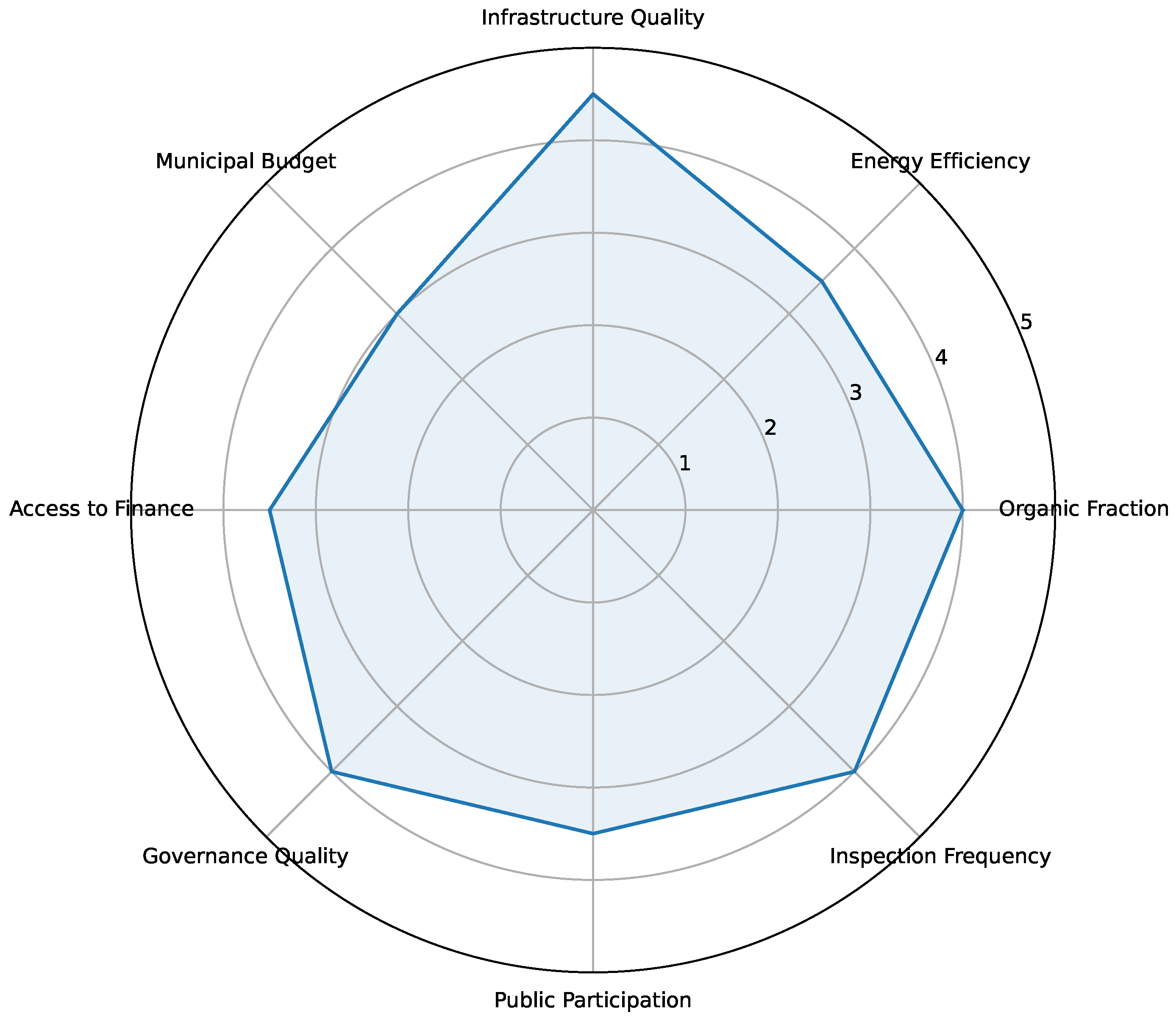
Table 6 synthesizes key economic and institutional determinants.
Table 6 highlights financial capacity as a key driver of technological adoption. Budget constraints often limit transitions to advanced systems, while high operational costs may compromise maintenance and environmental performance [
77,
87,
91].
Access to international financing and carbon credits supports technological upgrading, particularly for methane capture and energy recovery [
8,
77]. Institutional quality is equally critical: strong governance enables enforcement and monitoring, whereas weak institutions may undermine performance even where infrastructure exists [
8,
78,
88].
Governance deficits are documented in semi-arid developing contexts. At the Oujda controlled landfill (Morocco), leachate production averaged 126 m
3/day, with annual accumulation exceeding storage capacity and degrading air quality [
92].
At the former Sidi Yahya landfill, analyses revealed persistent groundwater contamination, with chloride, nitrates, and heavy metals exceeding regulatory standards [
93]. These cases show how insufficient monitoring allows long-term environmental liabilities to accumulate.
Public participation improves social acceptance and waste segregation, while inspection and auditing strengthen compliance by identifying system failures [
40,
78,
87,
88].
At the Mediouna landfill (Casablanca), leachate production exceeded 800,000 m
3/year, with evidence of heavy metal transfer through the food chain under leachate irrigation [
94].
Spatial tools such as GIS and MCDA support evidence-based siting. In Casablanca, 80% of the territory was unsuitable for landfill development, highlighting persistent planning gaps [
95,
96,
97].
Local-scale studies (e.g., Zhytomyr, Ukraine) demonstrate that bioindication and sensory methods provide reliable, low-cost monitoring of landfill-related air pollution [
98].
Overall, these findings highlight the consequences of weak institutional enforcement and the need for sustained investment and integrated planning [
99].
Figure 8 illustrates the interaction between technical, economic, and institutional determinants.
System performance depends on the interaction between technical capacity, financial feasibility, and institutional robustness; limitations in any dimension may compromise outcomes.
Overall, effective waste management requires coordinated investment in infrastructure, financial planning, regulatory enforcement, and stakeholder engagement [
40,
77,
78,
87].
3.7. Alternative Global Strategies for Sustainable Solid Waste Management
Beyond conventional landfill-based disposal systems, alternative waste management strategies have gained global relevance due to their contribution to resource conservation, greenhouse gas mitigation, and circular economy integration [
100]. These strategies prioritize material recovery, biological treatment of organic fractions, energy generation, and waste prevention [
101].
Table 7 presents a structured synthesis of alternative strategies to sanitary landfills, integrating information reported across the reviewed literature, including their indicative global prevalence, key benefits, implementation challenges, and representative references. This synthesis is intended for comparative purposes and should not be interpreted as a standardized or universally accepted classification.
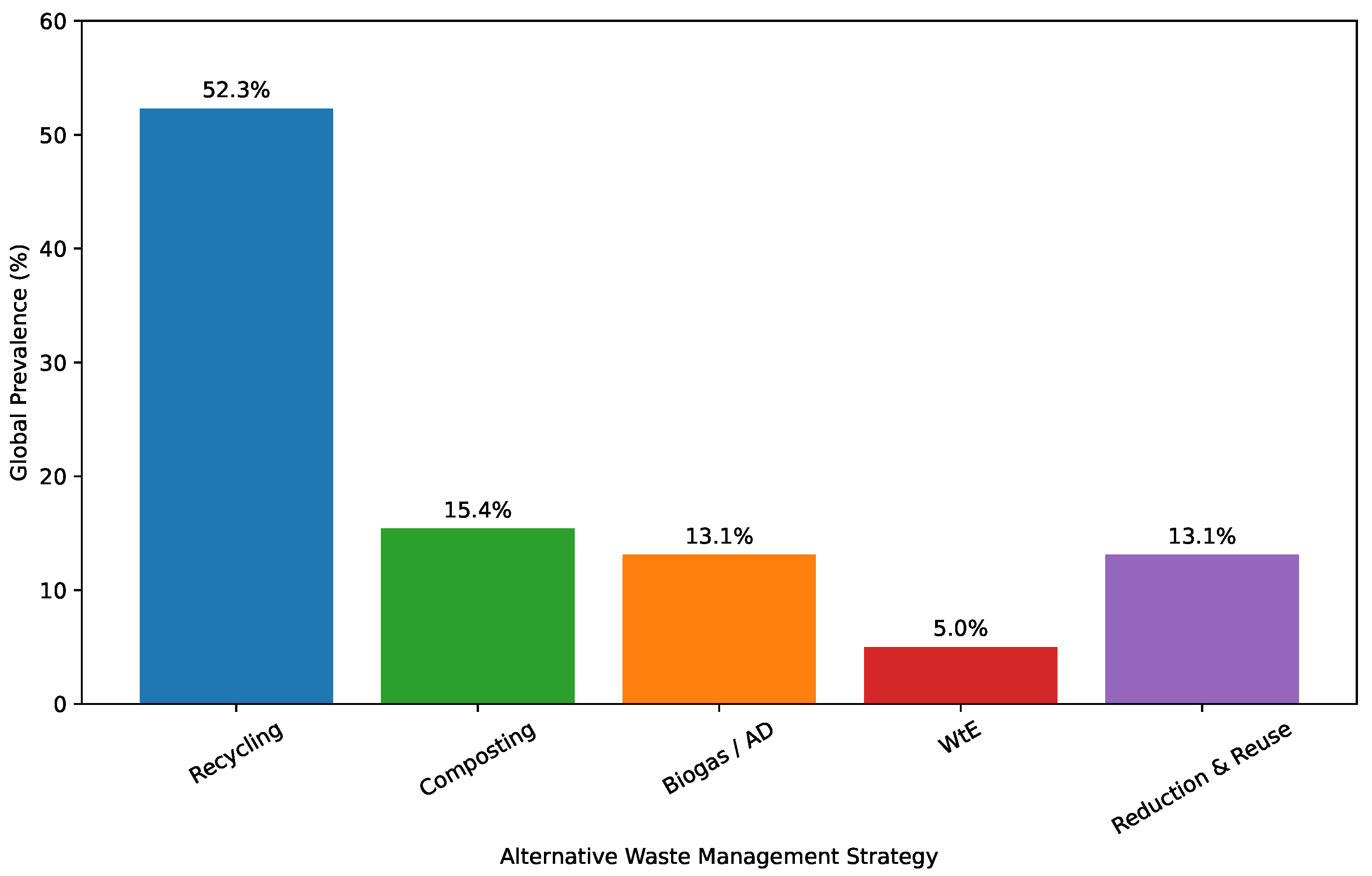
It is important to note that the prevalence percentages reported in
Table 7 and illustrated in
Figure 9 are derived from a specific study [
102]. These values depend on the dataset, regional coverage, and methodological assumptions of that study and may differ from other global estimates. Therefore, they should be interpreted as indicative rather than universally representative.
Table 7 indicates that recycling is among the most widely reported alternative strategies in the literature, reflecting its alignment with resource efficiency and circular economy principles.
Waste-to-energy systems offer volume reduction and energy recovery benefits, especially in densely populated urban areas where landfill space is limited. However, these systems require advanced emission control technologies and substantial financial investment to prevent secondary environmental impacts [
111].
Reduction and reuse strategies represent the most sustainable long-term approach by minimizing waste generation at the source. Nevertheless, their implementation depends heavily on consumer behavior, regulatory incentives, and education programs [
112].
To visualize the comparative global adoption of these strategies,
Figure 9 presents the relative prevalence of alternative waste management approaches.
Figure 9 illustrates the dominant position of recycling in global waste management practices. Its high adoption rate reflects lower technological barriers compared to advanced thermal systems and its compatibility with material recovery markets.
Composting and anaerobic digestion play critical roles in managing biodegradable fractions, particularly in regions with high organic waste composition. These biological treatments contribute directly to methane mitigation and soil health improvement [
113].
Waste-to-energy systems, although less prevalent globally, are increasingly adopted in high-income countries with strong regulatory frameworks. Their lower share reflects financial and technological barriers rather than limited environmental relevance.
The graphical comparison suggests that no single strategy is universally applicable across all contexts. Instead, a context-adapted combination of recycling, biological treatment, energy recovery, and waste prevention is necessary to achieve sustainable waste management outcomes [
102,
103,
104,
106]. Integrated systems tailored to regional waste composition, economic capacity, and institutional strength offer the most effective pathway toward circular economy objectives and climate mitigation targets.
To ensure consistency with the analytical framework developed in
Section 2.6, alternative waste management strategies can be interpreted through their influence on key performance indicators, including net greenhouse gas emissions (
), net energy balance (
), material recovery rate (
), and technological maturity (
). In this context, strategies such as waste-to-energy, recycling, and circular economy approaches contribute differently to environmental performance depending on their technological efficiency and implementation conditions.
Furthermore, the global percentages reported in this section are based on widely recognized datasets and international reports. According to the World Bank and UNEP, approximately 33% of global municipal solid waste is openly dumped, while only about 19% is recovered through recycling and composting, and nearly 11% is treated through incineration or waste-to-energy systems. These figures reflect global averages and may vary significantly across regions depending on economic development and institutional capacity [
5,
114].
These data sources provide a robust empirical basis for contextualizing alternative strategies and reinforce the need to interpret their performance within region-specific socio-economic and technological conditions.
3.8. Source Separation Methods and Multidimensional Technological Preferences
Source separation plays a decisive role in determining the optimal technological configuration for MSW management [
115]. The level of segregation directly influences material recovery efficiency, organic fraction quality, technological feasibility, and overall environmental performance [
116].
Technological performance under multidimensional evaluation frameworks (environmental, economic, social, and technical criteria) varies according to the degree of source separation [
117].
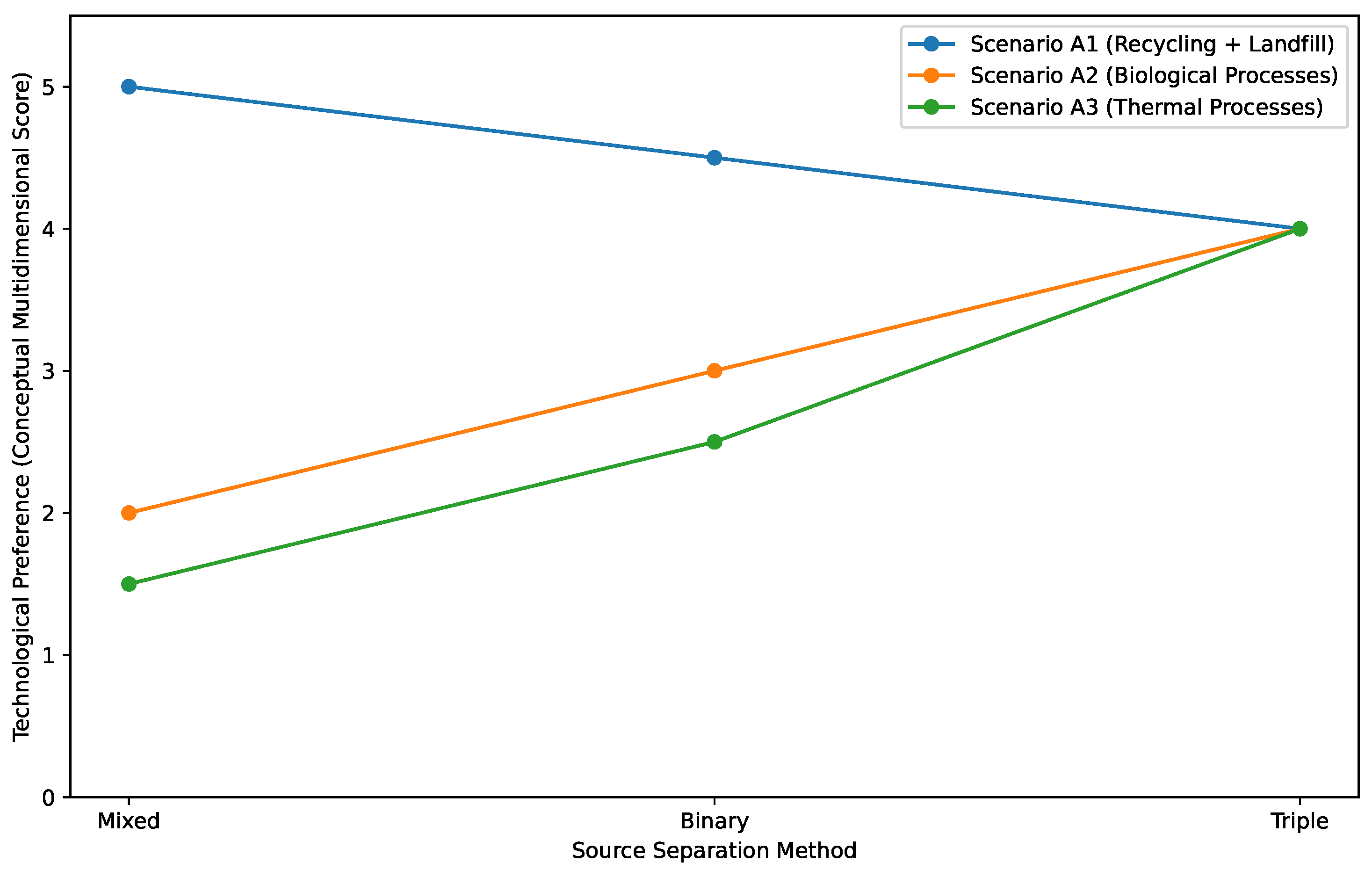
Table 8 presents a comparative synthesis of technological configurations reported in the literature under different separation conditions. This synthesis is intended to support comparative interpretation and should not be understood as defining universally optimal or prescriptive scenarios. These configurations represent an integrative interpretation of findings reported in the literature and are intended to illustrate general patterns rather than define universally optimal technological pathways.
Table 8 indicates that under limited separation (mixed systems), integrated recycling combined with sanitary landfill (Scenario A1) tends to perform consistently across multiple criteria, balancing environmental control, economic feasibility, and technical reliability.
With binary separation, the partial isolation of organic fractions improves the feasibility of biological treatments, reducing the relative advantage of A1 as alternative technologies become more viable.
Under triple separation systems, where organic, recyclable, and residual fractions are more effectively segregated, biological (A2) and thermal (A3) processes gain relevance due to improved feedstock quality, enabling higher efficiency and better environmental performance.
Figure 10 provides a conceptual visualization of these trends, illustrating how technological preference shifts with increasing separation complexity.
As illustrated, increasing separation complexity expands the feasibility of alternative technologies, particularly biological and thermal processes, while reducing dependence on mixed-system configurations.
This relationship reflects improvements in feedstock purity, reduced contamination, and enhanced recovery potential, indicating that technological performance is structurally conditioned by separation strategies rather than being independent of them.
Multidimensional evaluation frameworks, including approaches based on non-separable preference modeling and multi-criteria decision analysis, provide theoretical support for understanding how waste characteristics influence technological efficiency and selection in MSW systems [
115,
118,
119,
120,
121,
122].
Overall, increasing source separation enhances the range of viable technological configurations and supports improved environmental and operational performance in MSW systems.
4. Discussion
4.1. Critical Comparative Assessment of Disposal and Treatment Technologies
While the
Section 3 presented structural classifications and quantitative performance ranges across disposal and treatment pathways, a deeper comparative evaluation reveals substantial multidimensional trade-offs that shape overall sustainability outcomes. Technologies differ not only in greenhouse gas mitigation potential, but also in resource recovery capacity, infrastructure complexity, capital intensity, operational robustness, and long-term environmental containment performance [
123].
Technological performance, therefore, cannot be assessed solely through isolated environmental indicators. Climate mitigation results, energy recovery benefits, and diversion rates are strongly conditioned by waste composition, regional energy system carbon intensity, infrastructure maturity, regulatory enforcement, and governance capacity. Consequently, the relative sustainability of each pathway is context-dependent rather than universally fixed [
124].
Table 9 synthesizes the principal technological pathways identified in the literature, highlighting their primary function, key reported performance indicators, and comparative environmental and operational insights. This structured comparison provides the analytical basis for examining transition feasibility and multidimensional trade-offs within integrated MSW management systems.
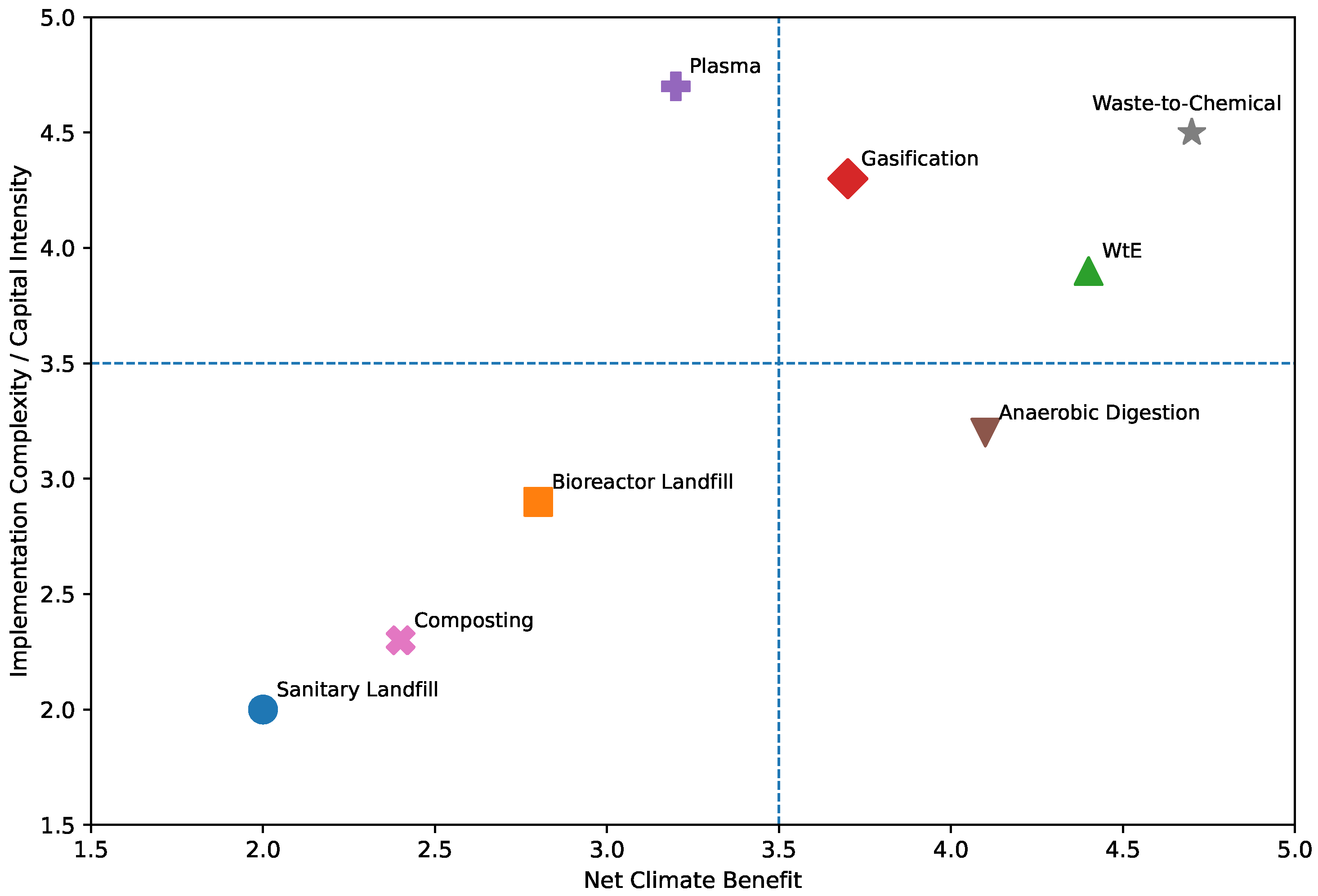
To complement the tabulated comparison, a strategic positioning framework was constructed to visualize multidimensional trade-offs among technologies (
Figure 11). The framework integrates three dimensions consistently reported in the literature: (i) relative net climate mitigation benefit, (ii) relative implementation complexity and capital intensity, and (iii) technological positioning within integrated waste management systems.
The net climate benefit dimension is derived from the combined interpretation of key quantitative environmental indicators, including greenhouse gas (GHG) emissions (kg CO2-eq per ton of waste), net energy balance (kWh or MJ per ton), and material recovery rates (%). These indicators provide the analytical basis for comparing the relative environmental performance of each technology under heterogeneous system boundaries.
The axes represent normalized qualitative scales derived from comparative literature synthesis rather than exact empirical aggregation. Positioning reflects relative performance trends across reviewed studies.
Figure 11 provides a conceptual comparison of waste management technologies based on relative climate mitigation potential and implementation complexity.
Conventional sanitary landfills are positioned in the lower-complexity range, reflecting their operational simplicity, although their climate mitigation performance depends strongly on the presence of methane capture systems. Bioreactor configurations may improve performance through enhanced stabilization and gas recovery.
Thermal processes, including waste-to-energy and gasification, tend to exhibit higher mitigation potential, particularly when offsetting carbon-intensive energy sources, but are associated with greater capital requirements and technical complexity.
Biological processes, such as anaerobic digestion, combine mitigation potential with moderate infrastructure requirements under conditions of effective source separation, while composting generally provides more limited mitigation benefits depending on process control.
Emerging waste-to-chemical pathways illustrate high potential for emissions reduction but involve significant technological complexity and implementation challenges.
Overall, the comparison suggests that no single technology consistently optimizes environmental, economic, and operational performance. Instead, effective waste management strategies require context-dependent combinations of technologies, integrating material recovery, biological treatment, controlled disposal, and selective energy recovery.
4.2. Quantitative Environmental Performance Indicators in Waste Disposal Systems
Comparative assessment of MSW disposal and treatment technologies relies on a structured set of quantitative environmental performance indicators. These indicators enable cross-technology benchmarking, scenario modeling, and policy evaluation across regional and international contexts [
131].
However, indicator selection strongly influences perceived technological performance. Climate-focused metrics may favor energy recovery systems, while material-based indicators highlight recycling performance, and energy-based metrics emphasize thermodynamic efficiency. A multidimensional interpretation is therefore required to avoid biased technology ranking [
132].
Table 10 synthesizes the principal quantitative indicators reported in the reviewed literature, including their typical units, technological application scope, and comparative relevance.
The literature indicates a predominance of climate-oriented indicators (t CO2-eq/t), reflecting the alignment of waste management research with decarbonization objectives. Energy-based metrics provide complementary insight into thermodynamic performance, particularly for thermal and biological processes, while material-based indicators are associated with circular economy strategies and landfill diversion targets.
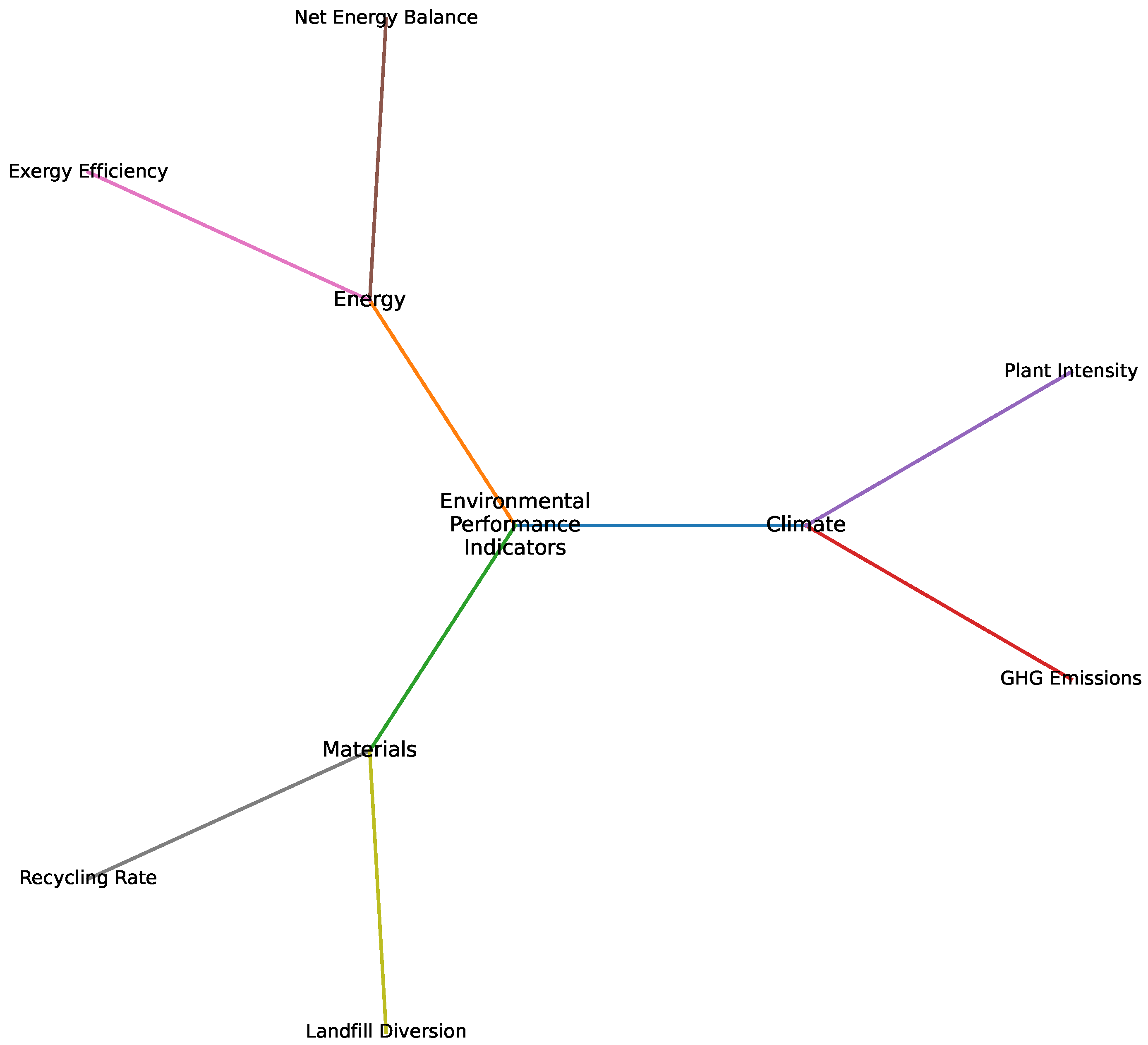
Figure 12 presents a conceptual synthesis of these relationships through a hierarchical radial representation of the main indicator categories and their associated sub-indicators.
As illustrated, climate indicators constitute a central dimension in comparative assessments, while energy and material indicators provide complementary perspectives necessary for a more comprehensive evaluation. The relationships among these dimensions highlight the interconnected nature of system performance, where improvements in one domain may influence outcomes in others.
Advanced metrics such as eco-efficiency and exergy-based indicators extend conventional approaches by enabling integrated environmental–economic interpretation. Although less widely applied, these metrics are increasingly relevant for the design of integrated waste management systems and circular bioeconomy strategies [
25].
Overall, the results suggest that comparative assessment benefits from the integration of multiple indicator dimensions rather than reliance on single-metric approaches, improving both analytical consistency and policy relevance.
4.3. Determinants of Performance in Solid Waste Management and Disposal Systems
Technological configuration alone does not determine environmental performance in MSW systems [
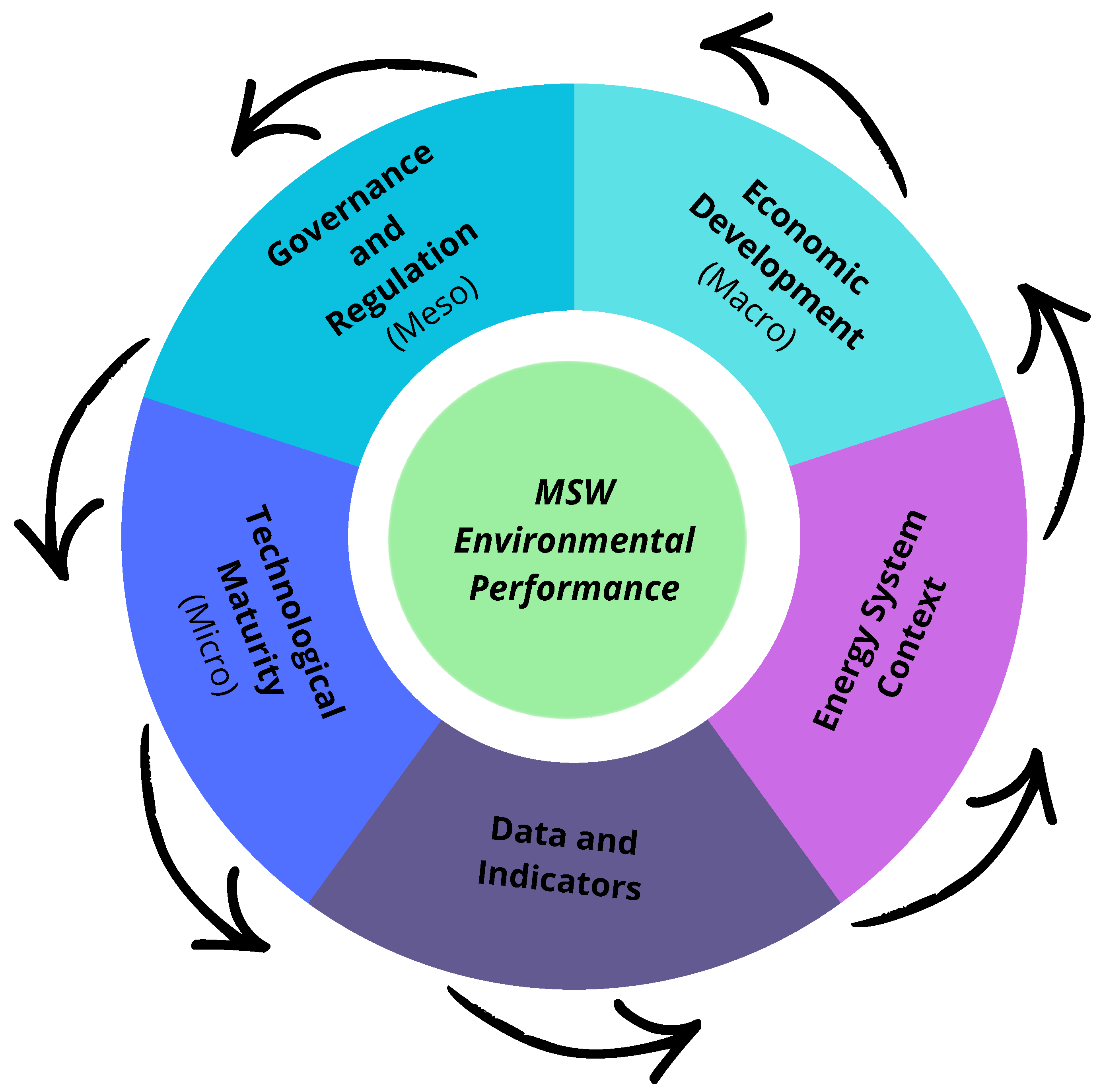
23]. Evidence from cross-country and urban-level studies consistently shows that macro-structural conditions (economic development and energy-system context), meso-level institutional factors (governance and regulation), and micro-level operational and data-related constraints (landfill practices, indicator frameworks, and reporting quality) jointly shape the effectiveness of controlled disposal and resource recovery.
Accordingly, the determinants summarized in
Table 11 are presented as a systems set rather than as independent predictors, since multiple factors interact to influence collection coverage, controlled disposal rates, recovery performance, and greenhouse gas (GHG) mitigation outcomes.
The reviewed evidence indicates that economic development is closely associated with controlled disposal and recovery performance, as higher-income contexts tend to exhibit stronger institutional capacity, broader collection coverage, and greater investment in engineered infrastructure. Urban benchmarking (e.g., WABI) highlights disparities between income groups, with lower-income cities generally exhibiting lower levels of controlled disposal, suggesting that governance effectiveness and infrastructure maturity are critical factors alongside technological availability.
Data availability and methodological heterogeneity remain important constraints for global comparability, as inconsistencies in reporting limit cross-country evaluation and reduce the strength of evidence-based policy design. In parallel, the predominance of technically oriented indicators suggests a relative underrepresentation of socio-institutional determinants, despite their relevance for implementation and compliance.
Landfill regulation and operational control influence climate performance, as insufficient gas capture and weak enforcement may increase sectoral greenhouse gas emissions. Transition pathways toward recycling and energy recovery can reduce emissions; however, outcomes depend on system boundaries and the carbon intensity of displaced energy systems.
Figure 13 presents a conceptual representation of these interacting determinants, highlighting the systemic nature of MSW performance.
As illustrated, MSW system outcomes emerge from the interaction of multiple domains rather than isolated drivers. Economic conditions influence both investment capacity and institutional strength, governance affects compliance and operational quality, technological maturity defines achievable performance levels, data quality supports monitoring and accountability, and energy system context mediates climate mitigation outcomes.
Overall, the determinants summarized in
Table 11 and represented in
Figure 13 suggest that sustainable improvements depend on coordinated development across technical, economic, and institutional dimensions, supporting the need for context-adapted and system-oriented waste management strategies.
4.4. Positioning of This Review Within the State-of-the-Art Literature
To contextualize the contribution of this work within the existing body of knowledge, a comparative assessment of representative reviews on MSW disposal and treatment was conducted. Previous studies have addressed life cycle assessment (LCA) methodologies, waste-to-energy (WtE) technologies, global waste trends, and indicator frameworks. However, integration across technological, environmental, and systemic determinants remains limited.
Table 12 compares the scope, methodology, strengths, and limitations of selected state-of-the-art reviews and highlights the positioning of the present study.
While previous reviews offer deep insights into specific domains—such as LCA methodology, WtE performance, or governance challenges—few studies integrate these dimensions into a cohesive systems-oriented framework. The present review addresses this gap by linking environmental performance indicators with TML, infrastructure components, and macro-level determinants.
To further clarify thematic coverage,
Table 13 compares the extent to which representative reviews address key technological pathways and evaluation dimensions.
The thematic comparison confirms that existing reviews tend to specialize in either technological evaluation (e.g., WtE), methodological aspects (LCA), or governance contexts. In contrast, this work simultaneously addresses landfill engineering, thermal and biological technologies, recycling systems, environmental indicators, life cycle evidence, and macro-institutional determinants.
This integrative positioning enables a systemic interpretation of waste management transitions, emphasizing that environmental performance emerges from the interaction between technological configuration, regulatory enforcement, infrastructure maturity, energy system context, and data quality. By bridging these domains, the present review advances beyond technology-centric analysis and supports the development of context-adapted, low-carbon, and circular MSW management strategies.
Uncertainties, Limitations, and Comparison with Previous Reviews
Despite the structured approach adopted in this study, several sources of uncertainty and limitations must be acknowledged. First, the included studies exhibit significant heterogeneity in terms of system boundaries, functional units, methodological approaches, and reported indicators. Variations in life cycle assessment (LCA) assumptions—such as inclusion of upstream processes, allocation methods, and energy substitution credits—can lead to substantial differences in reported environmental impacts, particularly for greenhouse gas emissions and energy performance.
Second, regional variability in waste composition, moisture content, and calorific value introduces additional uncertainty in cross-study comparisons. These factors directly influence methane generation potential, energy recovery efficiency, and treatment performance, limiting the generalizability of results across geographical contexts.
Third, data availability and reporting quality vary considerably across studies. In some cases, incomplete methodological transparency or a lack of quantitative indicators restricts the robustness of comparative analysis. This limitation is particularly evident in studies conducted in low- and middle-income regions, where data gaps and inconsistencies are more frequent.
In comparison with previous systematic reviews, the present study extends existing analyses by integrating technological, environmental, and institutional dimensions within a unified analytical framework. While prior reviews have often focused on specific technologies—such as landfill systems, waste-to-energy processes, or recycling performance—this work provides a more comprehensive and multidimensional perspective on municipal solid waste management systems.
However, consistent with previous literature, this study confirms that the lack of standardized methodologies and harmonized datasets remains a major challenge in the field. The absence of uniform system boundaries and performance indicators continues to limit the comparability of results and the development of generalized conclusions.
Future research should prioritize the development of standardized assessment frameworks, improved data transparency, and region-specific analyses that account for local waste characteristics, economic conditions, and institutional capacity. These advances are essential to reduce uncertainty and support evidence-based decision-making in sustainable waste management.
4.5. Research Gaps and Future Directions
Despite substantial advances in the evaluation of MSW disposal and treatment systems, several critical research gaps remain, limiting the robustness, comparability, and long-term applicability of current frameworks.
- 1.
Limited Integration of Multi-Dimensional Indicators
Current research remains dominated by greenhouse gas (GHG) metrics, often neglecting the integrated assessment of energy recovery, material substitution, toxicity, and governance factors. Future studies should prioritize multi-criteria frameworks that harmonize environmental, energetic, and institutional indicators, including exergy-based and eco-efficiency metrics.
- 2.
Inconsistent LCA System Boundaries
Significant heterogeneity persists in life cycle assessment (LCA) assumptions, including system boundaries, allocation methods, and energy substitution scenarios. Future research should adopt standardized and transparent methodological frameworks, supported by sensitivity analyses aligned with energy system decarbonization pathways.
- 3.
Underrepresentation of Governance Determinants
Technological performance is often assessed independently of governance quality, regulatory enforcement, and financial capacity. Integrating socio-institutional variables into quantitative models remains a key research priority.
- 4.
Limited Dynamic Transition Modeling
Most studies rely on static comparisons, overlooking long-term system evolution. Future research should incorporate dynamic modeling approaches, including feedback mechanisms, infrastructure lifecycles, and transition pathways.
- 5.
Data and Standardization Constraints
Data heterogeneity and lack of standardized reporting limit global comparability. The development of harmonized databases and reporting protocols is essential.
- 6.
Emerging Conversion Technologies
Emerging waste-to-chemical and biorefinery pathways remain underexplored. Further research is required to assess their scalability and long-term sustainability.
- 7.
Strategic Outlook
Future research should adopt integrated, systems-level approaches combining LCA, exergy analysis, governance modeling, and transition dynamics to support sustainable MSW planning.
4.6. Temporal Evolution of Scientific Production
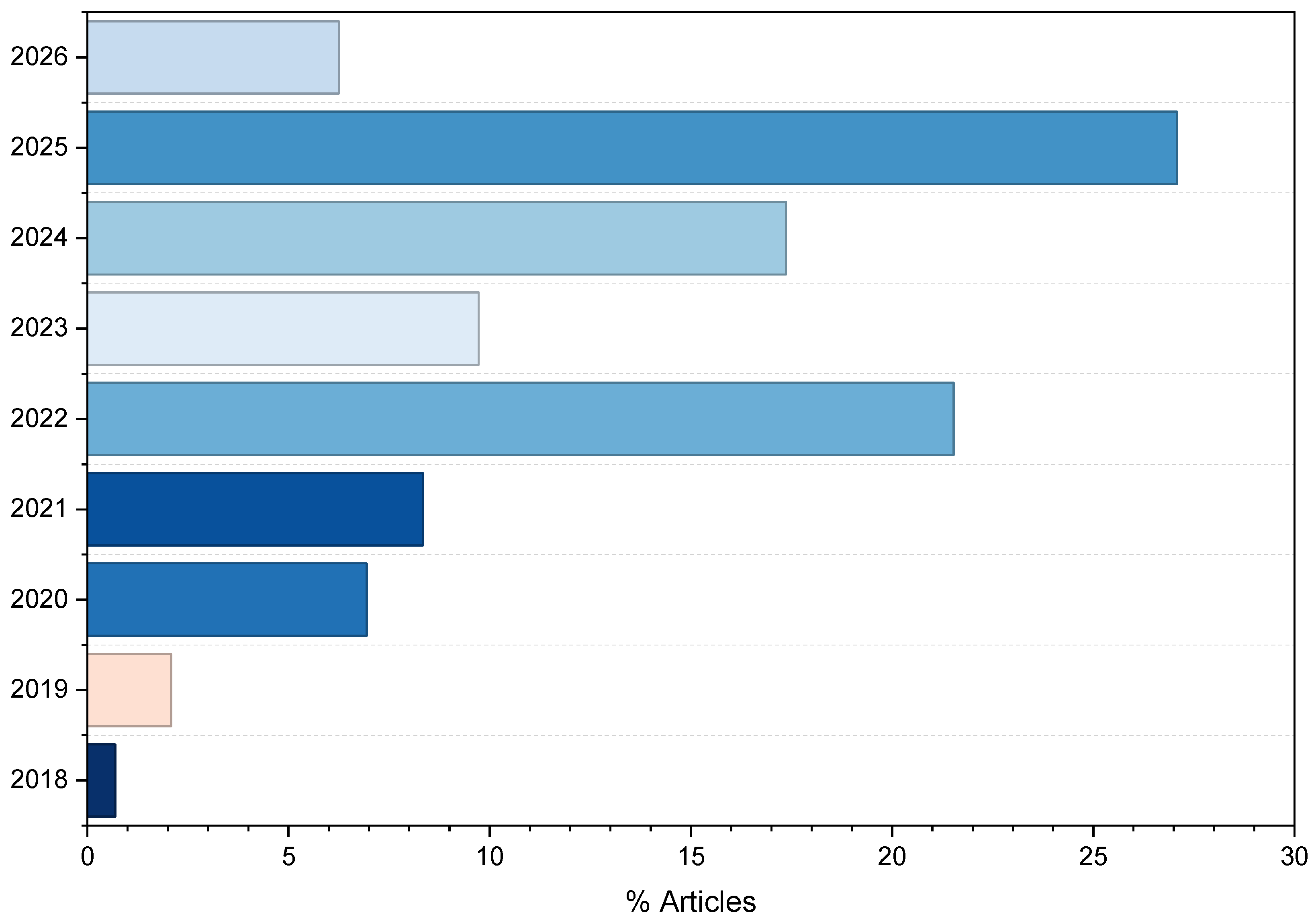
Figure 14 presents the temporal evolution of the articles included in the systematic review, showing an increase in scientific production over the analyzed period.
In the early stage (2018–2020), the number of publications remained relatively low, indicating a limited volume of studies within the selected dataset. From 2021 onwards, a noticeable increase in publication output is observed, suggesting growing research attention to municipal solid waste (MSW) management.
This upward trend continues in subsequent years, reaching a peak in 2025. The increase in the number of publications may be associated with the expanding relevance of topics such as environmental impacts, circular economy strategies, and climate change mitigation within the MSW research domain.
The slight decrease observed in 2026 should be interpreted with caution, as it may be related to indexing delays rather than a reduction in scientific activity.
Overall, the results indicate an increasing level of scientific attention to MSW management over time within the analyzed dataset.
5. Conclusions
This review provides a systematic and integrated assessment of MSW disposal and treatment systems by linking environmental performance indicators, TML, and institutional determinants within a unified analytical framework.
The evidence confirms that open dumping remains the most environmentally harmful disposal practice, characterized by elevated methane emissions, uncontrolled leachate generation, and significant local pollution risks. Controlled and sanitary landfills substantially reduce these impacts through engineered containment systems; however, their climate performance depends critically on methane capture efficiency and operational standards.
Thermal and biological treatment technologies, including waste-to-energy (WtE) and anaerobic digestion, demonstrate higher landfill diversion potential and energy recovery capacity. Nevertheless, their net greenhouse gas mitigation benefits are strongly conditioned by electricity grid carbon intensity, system boundary assumptions in life cycle assessments, and integration with material recovery pathways. Consequently, technological superiority cannot be generalized independently of regional context.
A main finding of this review is that sustainability performance emerges from the interaction between environmental indicators, technological maturity and infrastructure containment (TMI), and governance capacity. Technological upgrades alone are insufficient if not supported by regulatory enforcement, financial resources, and monitoring systems.
The analysis further reveals persistent methodological inconsistencies across life cycle studies, particularly regarding boundary definitions, energy substitution assumptions, and reporting standards. Harmonization of performance indicators and improved integration of exergy-based and eco-efficiency metrics are required to enhance cross-study comparability.
Overall, the transition toward low-carbon and circular MSW systems should be conceptualized as a socio-technical process rather than a purely technological shift. Effective transformation requires coordinated advancement in infrastructure design, institutional capacity, and alignment with broader energy decarbonization trajectories.
The integrated framework developed in this study provides a structured basis for context-sensitive evaluation of waste management portfolios and supports evidence-based planning aimed at climate mitigation, resource efficiency, and long-term system resilience.
From a quantitative perspective, the findings of this review indicate that environmental performance varies substantially across disposal practices, with greenhouse gas emissions ranging from high values in open dumping systems (often exceeding 800–1500 kg CO2-eq/t) to lower ranges in engineered systems such as sanitary landfills and waste-to-energy facilities (typically below 600 kg CO2-eq/t, depending on system configuration and energy recovery). Similarly, global waste management patterns remain dominated by disposal pathways, while recycling, biological treatment, and energy recovery represent a comparatively smaller share of total treatment.
Despite these contributions, several methodological limitations must be explicitly acknowledged. The reviewed studies exhibit considerable heterogeneity in system boundaries, functional units, and assessment methodologies, particularly in life cycle assessment approaches. In addition, regional variability in waste composition and inconsistencies in data reporting introduce uncertainty in cross-study comparisons and limit the generalizability of results.
These limitations highlight the need for standardized assessment frameworks, harmonized indicators, and improved data transparency to support more robust and comparable evaluations. Nevertheless, the integrative framework developed in this study provides a comprehensive basis for advancing sustainable and circular MSW management strategies.





 ,
,