Technical Note

Toward Expanding the Utilisation of Deep Eutectic Solvents: Rare Earth Recovery from Primary Ores and Process Tailings


1
Western Australian School of Mines, Faculty of Science and Engineering, Curtin University, Kalgoorlie, WA 6430, Australia
2
Western Australian School of Mines, Faculty of Science and Engineering, Curtin University, Bentley, WA 6102, Australia
*
Author to whom correspondence should be addressed.
Clean Technol. 2025, 7(4), 111; https://doi.org/10.3390/cleantechnol7040111
Submission received: 1 August 2025 / Revised: 5 October 2025 / Accepted: 26 November 2025 / Published: 5 December 2025

Abstract

The increasing emphasis on green chemistry has led numerous researchers to focus on environmentally friendly solvents for mineral extraction. Among them, deep eutectic solvents (DESs) have garnered significant attention due to their eco-friendly, non-toxic, and biodegradable properties. These solvents possess comparable physicochemical properties to conventional ionic liquids but are more cost-effective and environmentally friendly. While DESs have been widely studied for extracting metals from synthetic minerals and end-of-life products, its use with primary ores and associated wastes remains relatively unexplored. This study aims to bridge that gap by assessing the effectiveness of choline chloride- and ethylene glycol-based DESs in extracting rare earth elements from primary feedstocks with varied grades and mineralogy, including sub-economic ores, monazite flotation tailings, and acid-crack and leach residue. The study also examines the practical challenges in preparing DES and assesses the applicability of the solvents for primary materials. By examining both solvent preparation challenges and the variable responses of different feed materials, this work provides a high-level scoping analysis to better understand the suitability and limitations of DES for primary resource extraction. This study highlights the challenges with physical properties and mineral breakdown in using DES.

1. Introduction

Rare earth elements (REEs) are 17 elements that include the lanthanide series, scandium, and yttrium. These elements are widely used in high-tech applications due to their unique magnetic, optical, and electronic properties and are commonly extracted from monazite, bastnasite, and xenotime [1]. Due to their increasing applications in diverse sectors, these elements have been classified as critical minerals by the USGS, European Commission, and the Australian Government [2,3,4].
As the global shift toward clean technologies accelerates, so does the demand for these metals. It is advisable to process these elements from low-grade ores and secondary sources, such as mine tailings and discarded electronic waste [5,6,7]. However, treating these feedstocks through a conventional processing route is challenging, as the pyrometallurgical route tends to be uneconomical for low-grade feeds [8]. Hydrometallurgical processing would consume significant amounts of acidic solution, and it has very poor selectivity, producing impure leachates [7]. Alkaline solutions, on the other hand, have increased selectivity only for specific metals. Therefore, it is essential to look for alternative options for processing REEs from low-grade materials [8].
As sustainability and economic viability become increasingly important, the development of greener, more efficient processing methods is essential. One such alternative is solvometallurgy, which utilises non-aqueous solvents, including organic solvents, ionic liquids, deep eutectic solvents, and certain inorganic solvents such as concentrated sulfuric acid and supercritical carbon dioxide [8]. These solvents operate under minimal water content rather than anhydrous conditions [8]. Numerous studies have explored the extraction of REEs using ionic liquids and deep eutectic solvents. Ionic liquids are known for their high selectivity and low vapour pressure [9]. However, these solvents can be expensive and quite toxic to the environment [9]. Deep eutectic solvents have overcome these limitations and have garnered attention because of their low toxicity and the affordability of their constituent components [9].
Deep Eutectic Solvents (DESs) are characterised by their significant depressions in melting points compared to their individual components. DES is described as a mixture of hydrogen bond acceptors (HBA) and hydrogen bond donors (HBD) in defined ratios [10]. There are five types of DES, and they are listed in Table 1.
DES are typically prepared by heating and stirring the components under an inert atmosphere until a homogeneous liquid is formed [8,10,14]. Alternative preparation techniques include vacuum evaporation, grinding, and freeze-drying [17]. A summary of studies exploring the extraction of REEs using different DES is given below.
Chen et al. (2019) investigated the solubility of different rare earth oxides in DES and found that ethylene glycol and maleic acid (4:1) were effective for separating rare earth oxides. They reported significant solubility differences between the light (La2O3 and CeO2) and heavy rare earth oxides (Y2O3 and Sm2O3), enabling efficient separation [18]. Liu et al. (2020) explored the extraction of neodymium from spent NdFeB magnets by using a GUC + lactic acid DES, achieving a high separation between Fe and Nd [19]. Another study examined the dissolution of single carbonate salts of La, Y, Ce, Nd, and Sm and reported improved dissolution rate with DES based on choline chloride, malonic acid, and urea [20]. This system also demonstrated selective dissolution of heavy rare earth elements over light rare earth elements [20]. These studies proposed that oxalic acid would be suitable for precipitating the REEs from the leach solution [18,19,20]. Additionally, a DES system using choline chloride and levulinic acid was utilised to recover yttrium and europium from spent fluorescent lamps. It was observed that the solubility of YOX phosphor (Y2O3:Eu3+) was high, while HALO phosphor ((Sr, Ca)10(PO4)(Cl, F)2:Sb3+, Mn2+) had low solubility [21]. After optimisation, the performance was comparable to that of ionic liquids like ([Hbet][NTf2]), but at a lower cost [21]. However, for this DES system, oxalic acid was unsuitable for precipitating the elements due to its tendency to dissolve choline chloride [21]. The authors recommended using D2EPHA for solvent extraction, followed by stripping with aqueous hydrochloric acid [21].
From the aforementioned studies, it is seen that DES exhibit enhanced selectivity for certain elements, thereby facilitating the separation of REEs. However, most of these studies have focused on secondary sources such as NdFeB magnets and electronic waste. Limited work has been carried out using DES for REE extraction from primary sources and primary wastes, such as ores and process tailings. It is to be noted that the difference in mineralogy, particle size, and physical characteristics between the ores and fabricated materials can significantly influence their leaching behaviour. Therefore, this study aims to develop an initial assessment of the potential of DES for extracting REEs from various primary sources, such as ores with varying mineralogy and process tailings, such as flotation tails and acid-crack leach residue.

2. Materials and Methods

2.1. Sample Preparation and Characterisation

The samples used in the study include sub-economical ores, flotation tailings, and acid-crack leach tailings sourced from a currently operating REE processing plant. The samples were rod milled to ensure surface liberation and homogeneity. Then, the ground sample was analysed using X-Ray diffraction (XRD) (Pan Analytical, Worcestershire, UK) to identify the main mineral phases. The elemental composition of the feed samples was determined by subjecting them to aqua regia digestion followed by Inductively Coupled Plasma–Optical Emission Spectroscopy (ICP-OES) using an Agilent 5100 Synchronous Vertical View-SVDV Spectrometer (Boulder, CO, USA).

2.2. Reagent Preparation

The deep eutectic solvents used in this study and their properties are listed in Table 2.
The solvents can be prepared using several methods, and the heating and stirring method proposed by [24] was followed to prepare the above solvents. HBA and HBD components were measured according to the required molar ratios for each solvent in separate weigh boats. These were covered using parafilm and stored overnight in a desiccator to minimise moisture absorption. The next day, the salts were weighed again to confirm that no significant mass loss or increase had occurred due to the hygroscopic nature of choline chloride. For ChCl + Urea, urea was placed in a conical flask and heated to around 80 °C, as it has a lower melting point compared to ChCl. Once the first droplet appeared, ChCl was added. Stirring and heating were continued until a homogeneous liquid was formed. In cases where ethylene glycol was used, it was added first due to its liquid state at room temperature, then the other salt was added. The same procedure was followed to prepare the solvents. The prepared DESs were then tested on feed samples of varying grades and mineralogy to evaluate their applicability and performance.

2.3. Leaching Experiments

Batch leaching experiments were carried out in a conical flask fitted with a rubber stopper and placed on a heating mantle. To ensure thorough mixing and prevent solid settling, the mixture was stirred using a magnetic stirrer at 250 rpm, and a 1:10 solid-to-liquid ratio was maintained. The effect of temperature and time was investigated. Samples were collected at 1, 6, 24, and 48 h, and the collected samples were centrifuged to separate the solids. The obtained supernatant solutions were diluted in a 1:20 ratio with 2% HNO3 to determine the concentration of the dissolved elements using ICP-OES.

3. Results and Discussion

3.1. Sample Preparation and Characterisation

The ground feed samples were subjected to aqua regia digestion to find the elemental composition. The composition of the different feeds is given in Table 3. The total rare earth element is the summation of all of the elemental concentrations of the REEs and is abbreviated to TREE for ease.
In ore A, the rare earths are primarily hosted as low-grade monazite ore [5]. In the case of ore B, REEs were found in sub-micron particles within the florencite matrix, rendering them refractory to the conventional processing technique. The gangue minerals associated with both ores include goethite and apatite. The conventional processing route for REE produces two main waste streams: float tails and leach tails. The float tails predominantly consist of apatite, florencite, and goethite [5]. On the other hand, leach tails are composed of iron phosphates and the rare earth elements are hosted in unreacted monazite (phosphates) and sulphates, indicating partial conversion and leaching under standard conditions during conventional processing [25]. The ground feeds were subjected to laser sizing, and it was noted that the samples are all relatively fine. A value for the ACL residue was not reported as the fine nature of the particles led to agglomeration, which affected the reliability of the results. The results obtained are presented in Table 4.

3.2. Leaching Experiments

3.2.1. Reline

A mixture of choline chloride (ChCl) and urea at a 1:2 molar ratio is called reline. While studies have reported varying eutectic temperatures, the first solid appeared when the temperature dropped below 35 °C in this study. The prepared solvent (Figure 1) was highly viscous and consistent with previous studies that reported a viscosity of 750 cP at 25 °C and 129 cP at 40 °C [17].
To mitigate hydrodynamic limitations associated with high viscosity, experiments were conducted at 80 °C. As discussed, experiments were initially planned to run for 48 h, with leach samples to be obtained at 1, 6, 24, and 48 h. However, when samples were taken at the first hour, solid–liquid separation was challenging due to the high viscosity of the reagent. Centrifuging and vacuum filtration were attempted, but effective solid–liquid separation could not be achieved. For example, the collected samples were centrifuged for 15–20 min at 4000 rpm; however, no clear separation was observed due to the high viscosity of the slurry. As a result, the experiment did not progress further. A reliable solid–liquid separation method is required. Once this is achieved, leach tests can be conducted, and the resulting solutions can be analysed using ICP-OES to determine the concentration of dissolved elements. This will allow us to assess the effectiveness of the leaching solution.

3.2.2. Ethaline

Ethaline is a eutectic mixture of ChCl and ethylene glycol (EG) at a 1:2 molar ratio. The reported eutectic transformation temperature for this solvent is −66 °C. Although ethylene glycol is liquid at room temperature, the formation of the eutectic solvent was very slow. Therefore, the mixture was mildly heated to accelerate the process. This solvent was less viscous than reline, and the reported viscosity values are 36 cP at 20 °C [17]. Hence, solid–liquid separation was comparatively easy. The same experimental design was used for this solvent as well. The solution sample was centrifuged for 10–15 min at 4000 rpm and then separated using a syringe filter. The pregnant liquor was then subjected to ICP-OES, and the results obtained are presented in Table 5.
As seen in Table 5, the elemental dissolution for different feeds was very low. The highest dissolution was achieved in the first 24 h, after which the concentration of elements in solution decreased, indicating precipitation or instability in solution. It is to be noted that ore B exhibited a relatively high calcium dissolution of 23.75%, a trend not observed with other feeds and warrants further investigation. While solid–liquid separation was successfully achieved, the conditions required to attain this were neither economically nor practically feasible for industrial application. Therefore, further optimisation of this solvent system is necessary to enhance its efficiency for extracting elements from primary sources.

3.2.3. EG-Based Deep Eutectic Solvents

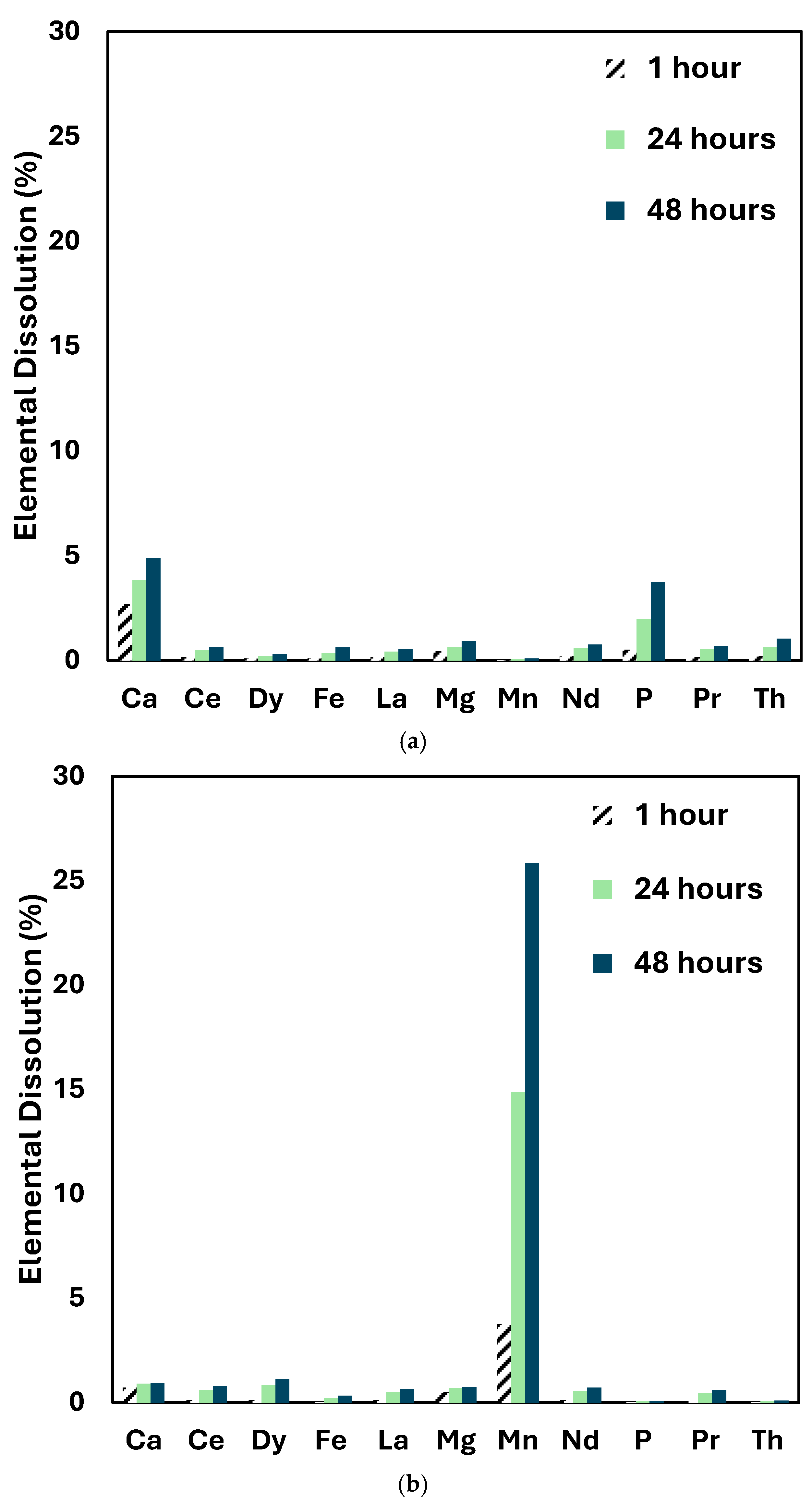
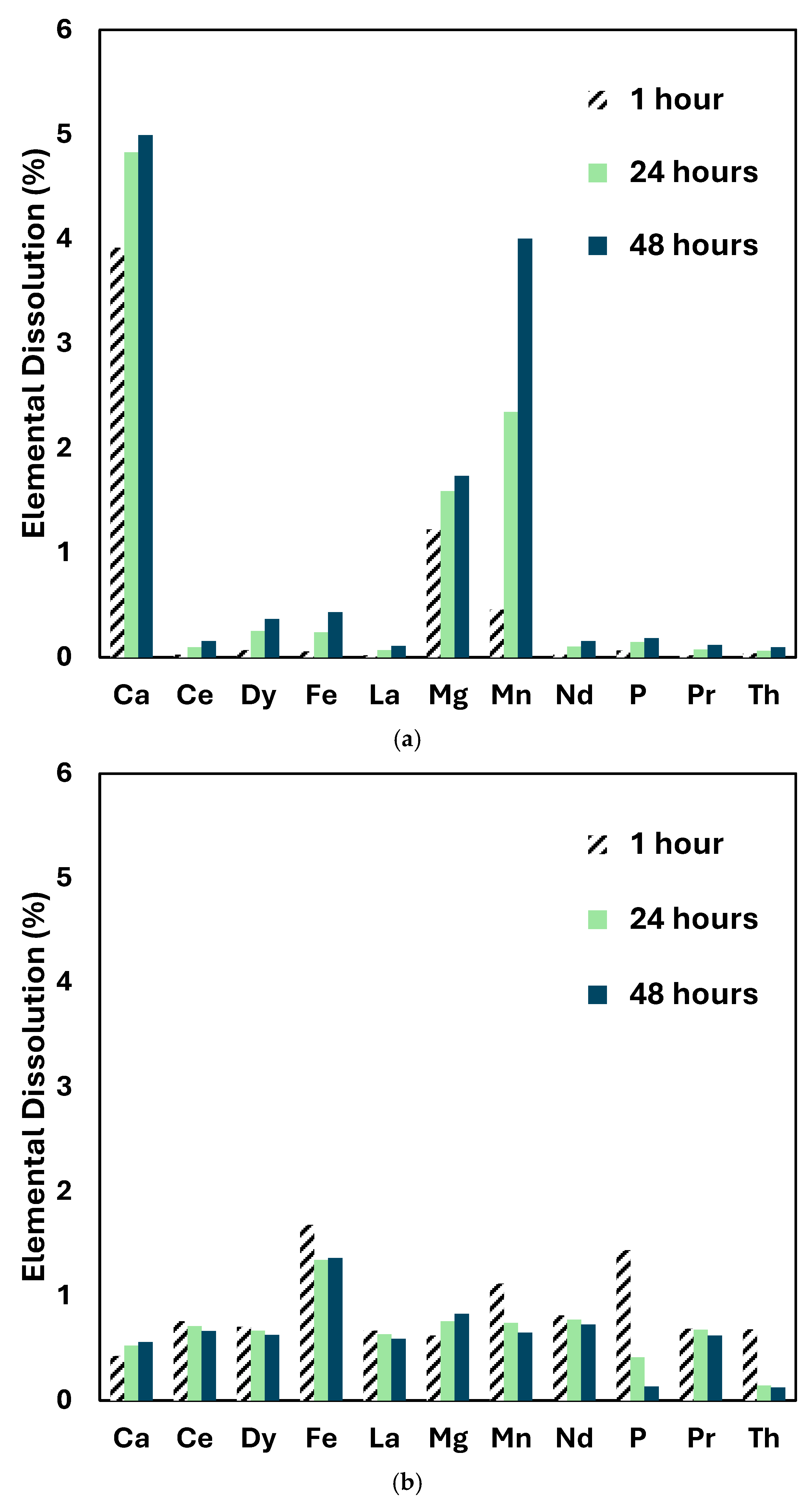
As observed from the results above, the overall elemental recovery from all four feed materials was quite low. Consequently, selected feeds were subjected to further testing based on their mineralogy. Ore A and flotation tailings exhibited similar mineralogical characteristics, with ore A having a higher REE grade. Although ore B has a comparable REE concentration, it has a different mineral composition, which is enriched in aluminophosphates. Since ore A reacts more readily at lower temperatures among these three feeds, it was selected for experimentation with this solvent to evaluate its effectiveness in extracting from a relatively high-grade material. The ACL residue was also chosen because of its significantly different mineralogical and chemical association, which causes it to be highly reactive in other systems. This would enable the assessment of whether the reagent would perform effectively for either type of mineralogy or both. This would aid in evaluating the applicability of the EG-based DES across different feed types. The results obtained from these two feeds, using two types of EG-based DES, are presented in Figure 2 and Figure 3.
From Figure 2 and Figure 3, it is evident that the overall recovery of all elements was low, except for Mn in ACL residue treated with the EG + maleic acid system. This indicates the limited effectiveness of this system as ACL residue is readily soluble in any media, including water. This residue has previously achieved over 50% REE and approximately 80% Fe and P recovery within an hour of leaching with oxalic acid [25].

3.2.4. Vat Leaching

Given the negligible recoveries observed in prior experiments, vat leaching was considered for Ore B and ACL residue. This was performed to evaluate whether extended leaching duration at high pulp density would enhance elemental dissolution. Ore B was selected because Ore A proved unresponsive to the above leach systems, and the ACL residue is readily soluble in most systems. This would also help in deciding if kinetics played a role in the leaching process. For this test, ChCl + EG DES was used for vat leaching, and the recoveries obtained from these feeds after a month are shown in Table 6.
The recoveries shown in Table 6 are the highest that were achieved over the duration of the leaching experiment. As seen in Table 6, ACL residue exhibited slightly better overall recovery than Ore B. However, the trend was reversed for Mn, with Ore B showing higher Mn recovery. It is to be noted that Ore B and ACL residue have significantly lower Mn content compared to the other feeds. This is attributed to the sample variability and the fact that the Mn distribution within the deposit is irregular [5]. While DES demonstrates promising capabilities for recoveries from secondary waste, its practicality for primary sources remains questionable. Further studies are required to address key challenges such as high viscosity, variable leaching efficiency, and the operational costs associated with maintaining the system.
In conventional REE processing, a recovery percentage of 80–90% is typically achieved. With a two-stage organic acid leach system [26], a leach recovery of approximately 40–50% was obtained for Ore A, Ore B, and flotation tailings and around 65% from ACL residue [5,25]. In contrast, the DES trialled in this work, which has demonstrated significant ability to recover REEs from end-of-life products, yielded negligible recoveries. Despite the highly reactive nature of ACL residue, it showed very little dissolution in a deep eutectic system, with viscosity posing an additional limitation. While certain DES formulations with comparatively lower viscosities exist, further investigation into the applicability of such systems was considered beyond the scope of this study.

4. Conclusions

This study investigated the leaching behaviour of REE-bearing primary ores and REE processing wastes using different DES systems across feeds with different mineralogy to assess the suitability of DES for primary resource extraction. The study carried out showed significant limitations in DES performance, particularly due to their high viscosity, which affected solid–liquid separation, particularly with reline. Development of a tailored separation approach is required for reline due to its high viscosity. While separation was technically achieved with ethaline, it required extreme conditions that challenge practical implementation. Overall dissolution percentages were low across all systems, even for highly soluble materials such as ACL residue. Extended leaching trials with ethaline using vat leaching at high pulp densities did not yield significant improvements. Although some recovery of manganese and selected rare earth elements was observed under specific conditions, recoveries remained inconsistent. Despite the significant potential of deep eutectic solvents as an environmentally friendly alternative for metal extraction, several challenges remain in their application to primary resources. These include high viscosity, suboptimal leaching efficiency, and concerns around process control. Future research should focus on addressing these challenges, potentially through a more comprehensive testing of DES systems and evaluating their integration into existing flowsheets. Until these challenges are resolved, the practical applicability of DES in large-scale processing will remain limited.

Author Contributions

Conceptualisation, K.Y. and L.G.D.; Methodology, K.Y. and L.G.D.; Validation: K.Y.; Formal analysis, K.Y.; Investigation, K.Y.; Data curation, K.Y.; Writing—original draft, K.Y.; Writing—review and editing, K.Y., L.G.D., R.D.A. and B.T.; Visualisation, K.Y. and L.G.D.; Supervision, L.G.D.; Project administration, L.G.D.; Funding acquisition: L.G.D. All authors have read and agreed to the published version of the manuscript.

Funding

This research was supported by Lynas Rare Earths Limited, Minerals Research Institute of Western Australia (Project M0541), and Destination Australia.

Data Availability Statement

Data available upon request.

Acknowledgments

This research was supported by Lynas Corporation Ltd., Destination Australia, and the Mineral Research Institute of Western Australia (MRIWA). The authors thank the Western Australian School of Mines for supporting this research. Special thanks are extended to Mujesira Vukancic, Jared Olsen, Colin Taylor, and Bernard Mwango for their assistance with laboratory equipment and ICP analysis. The authors also wish to thank Kylie Blackwell for her valuable support during the experimental work.

Conflicts of Interest

The authors declare no conflicts of interest.

References

  1. Gupta, C.K.; Krishnamurthy, N. Extractive Metallurgy of Rare Earths. Int. Mater. Rev. 1992, 37, 197–248. [Google Scholar] [CrossRef]
  2. U.S. Geological Survey. U.S. Geological Survey Mineral Commodity Summaries 2025; USGS: Reston, VA, USA, 2025. [Google Scholar]
  3. Departmernt of Industry, Science and Resources, Commonwealth Government of Australia. Australian Critical Minerals Strategy Critical Minerals Strategy 2023–2030; Departmernt of Industry, Science and Resources, Commonwealth Government of Australia: Canberra, Australia, 2023. [Google Scholar]
  4. European Commission. Directorate-General for Internal Market, Industry, Entrepreneurship and SMEs. In European Commission Fifth List 2023 of Critical Raw Materials for the EU; European Commission: Brussels, Belgium, 2023. [Google Scholar]
  5. Yamini, K.; Dyer, L. Extraction of Rare Earth Elements from Low-Grade Ore and Process Waste Stream. In Proceedings of the 26th World Mining Congress, Brisbane, Australia, 26–29 June 2023. [Google Scholar]
  6. Hajdu-Rahkama, R.; Kinnunen, P. Tailings Valorisation: Opportunities to Secure Rare Earth Supply and Make Mining Environmentally More Sustainable. J. Clean. Prod. 2025, 520, 146147. [Google Scholar] [CrossRef]
  7. Binnemans, K.; Jones, P.T.; Blanpain, B.; Van Gerven, T.; Pontikes, Y. Towards Zero-Waste Valorisation of Rare-Earth-Containing Industrial Process Residues: A Critical Review. J. Clean. Prod. 2015, 99, 17–38. [Google Scholar] [CrossRef]
  8. Binnemans, K.; Jones, P.T. Solvometallurgy: An Emerging Branch of Extractive Metallurgy. J. Sustain. Metall. 2017, 3, 570–600. [Google Scholar] [CrossRef]
  9. Vanda, H.; Dai, Y.; Wilson, E.G.; Verpoorte, R.; Choi, Y.H. Green Solvents from Ionic Liquids and Deep Eutectic Solvents to Natural Deep Eutectic Solvents. Comptes Rendus Chim. 2018, 21, 628–638. [Google Scholar] [CrossRef]
  10. Abbott, A.P.; Capper, G.; Davies, D.L.; Rasheed, R.K.; Tambyrajah, V. Novel Solvent Properties of Choline Chloride/Urea Mixtures. Chem. Commun. 2003, 39, 70–71. [Google Scholar] [CrossRef]
  11. Omar, K.A.; Sadeghi, R. Database of Deep Eutectic Solvents and Their Physical Properties: A Review. J. Mol. Liq. 2023, 384, 121899. [Google Scholar] [CrossRef]
  12. Abbott, A.P.; Capper, G.; Davies, D.L.; Munro, H.L.; Rasheed, R.K.; Tambyrajah, V. Preparation of Novel, Moisture-Stable, Lewis-Acidic Ionic Liquids Containing Quaternary Ammonium Salts with Functional Side Chains. Chem. Commun. 2001, 7, 2010–2011. [Google Scholar] [CrossRef]
  13. Xu, P.; Zheng, G.-W.; Zong, M.-H.; Li, N.; Lou, W.-Y. Recent Progress on Deep Eutectic Solvents in Biocatalysis. Bioresour. Bioprocess. 2017, 4, 34. [Google Scholar] [CrossRef]
  14. Abbott, A.P.; Boothby, D.; Capper, G.; Davies, D.L.; Rasheed, R.K. Deep Eutectic Solvents Formed between Choline Chloride and Carboxylic Acids: Versatile Alternatives to Ionic Liquids. J. Am. Chem. Soc. 2004, 126, 9142–9147. [Google Scholar] [CrossRef]
  15. Abranches, D.O.; Martins, M.A.R.; Silva, L.P.; Schaeffer, N.; Pinho, S.P.; Coutinho, J.A.P. Phenolic Hydrogen Bond Donors in the Formation of Non-Ionic Deep Eutectic Solvents: The Quest for Type V DES. Chem. Commun. 2019, 55, 10253–10256. [Google Scholar] [CrossRef]
  16. Abranches, D.O.; Coutinho, J.A.P. Type V Deep Eutectic Solvents: Design and Applications. Curr. Opin. Green Sustain. Chem. 2022, 35, 100612. [Google Scholar] [CrossRef]
  17. Zhang, Q.; De Oliveira Vigier, K.; Royer, S.; Jérôme, F. Deep Eutectic Solvents: Syntheses, Properties and Applications. Chem. Soc. Rev. 2012, 41, 7108–7146. [Google Scholar] [CrossRef]
  18. Chen, W.; Jiang, J.; Lan, X.; Zhao, X.; Mou, H.; Mu, T. A Strategy for the Dissolution and Separation of Rare Earth Oxides by Novel Brønsted Acidic Deep Eutectic Solvents. Green Chem. 2019, 21, 4748–4756. [Google Scholar] [CrossRef]
  19. Liu, C.; Yan, Q.; Zhang, X.; Lei, L.; Xiao, C. Efficient Recovery of End-of-Life Ndfeb Permanent Magnets by Selective Leaching with Deep Eutectic Solvents. Environ. Sci. Technol. 2020, 54, 10370–10379. [Google Scholar] [CrossRef] [PubMed]
  20. Entezari-Zarandi, A.; Larachi, F. Selective Dissolution of Rare-Earth Element Carbonates in Deep Eutectic Solvents. J. Rare Earths 2019, 37, 528–533. [Google Scholar] [CrossRef]
  21. Pateli, I.M.; Abbott, A.P.; Binnemans, K.; Rodriguez Rodriguez, N. Recovery of Yttrium and Europium from Spent Fluorescent Lamps Using Pure Levulinic Acid and the Deep Eutectic Solvent Levulinic Acid-Choline Chloride. RSC Adv. 2020, 10, 28879–28890. [Google Scholar] [CrossRef]
  22. Gilmore, M.; Swadzba-Kwasny, M.; Holbrey, J.D. Thermal Properties of Choline Chloride/Urea System Studied under Moisture-Free Atmosphere. J. Chem. Eng. Data 2019, 64, 5248–5255. [Google Scholar] [CrossRef]
  23. Smith, E.L.; Abbott, A.P.; Ryder, K.S. Deep Eutectic Solvents (DESs) and Their Applications. Chem. Rev. 2014, 114, 11060–11082. [Google Scholar] [CrossRef]
  24. Farooq, M.Q.; Abbasi, N.M.; Anderson, J.L. Deep Eutectic Solvents in Separations: Methods of Preparation, Polarity, and Applications in Extractions and Capillary Electrochromatography. J. Chromatogr. A 2020, 1633, 461613. [Google Scholar] [CrossRef]
  25. Yamini, K.; Dyer, L. Technospheric Mining of Rare Earth Elements from Acid-Crack Leach Tailings. In Proceedings of the XXXI Internation Mineral Processing Congress, Washington, DC, USA, 29 September–3 October 2024; pp. 1237–1244. [Google Scholar]
  26. Lazo, D.E.; Dyer, L.G.; Alorro, R.D.; Browner, R. Treatment of Monazite by Organic Acids II: Rare Earth Dissolution and Recovery. Hydrometallurgy 2018, 179, 94–99. [Google Scholar] [CrossRef]
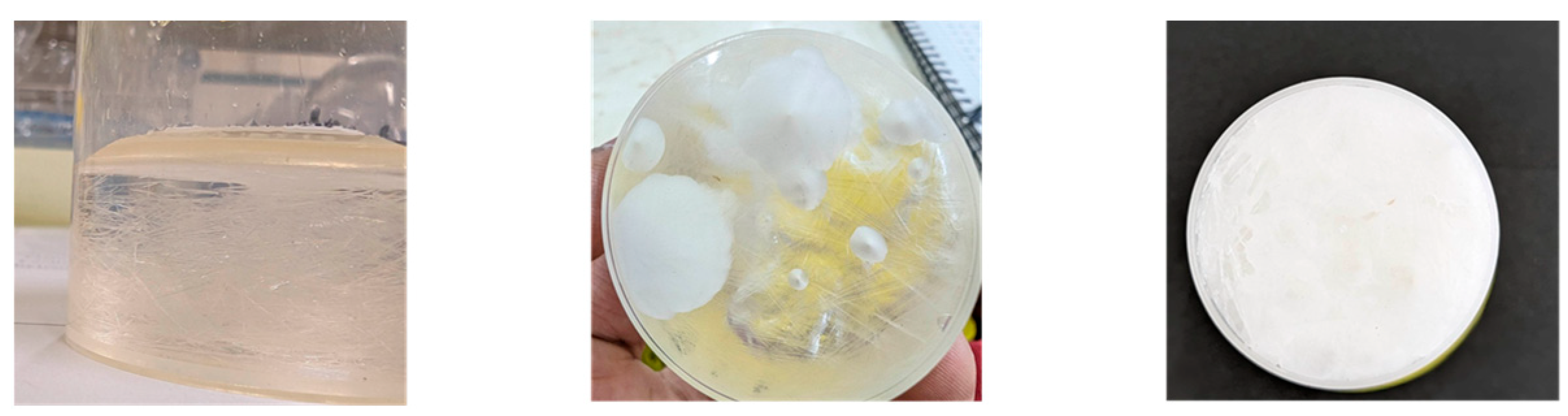
Figure 1. Different stages of eutectic mixture formation in reline as temperature decreases below 35 °C.
Cleantechnol 07 00111 g001
Figure 2. Performance of EG + Maleic acid with (a) Ore A (b) ACL Residue (Room temperature, S/L ratio = 1:10, 250 rpm).
Cleantechnol 07 00111 g002
Figure 3. Performance of EG + Malonic acid with (a) Ore A (b) ACL Residue (Room temperature, S/L ratio = 1:10, 250 rpm).
Cleantechnol 07 00111 g003
Table 1. Deep eutectic solvents classification.
TypesHBAHBDFormulaReferences
Type IQuaternary Ammonium salts of chloroaluminate/imidazoliumMetal Chlorides like copper chloride, ferrous chlorideCat+XzMClx
(M = Zn, Sn, Fe, Al, Ga, In)
[8,11,12]
Type IIQuaternary Ammonium saltsMetal Halide HydratesCat+XzMClx.yH2O
(M = Cr, Co, Cu, Ni, Fe)
[8,11,13]
Type IIIQuaternary Ammonium, sulphonium, and phosphonium saltsOrganic molecules like carboxylic acid, amide, or polyolCat+XzRZ
(Z = CONH2, COOH, OH)
[10,11,14]
Type IVMetal HalidesHBDMClx + RZ
(M = Zn, Al and Z = CONH2, OH)
[8,11]
Type VNon-ionicNon-ionicNon-ionic[11,15,16]
Table 2. Properties of DES used in the study.
HBATm (°C)HBDTm (°C)Eutectic Temperature (°C)Molar RatioViscosity (cP)References
Choline Chloride (ChCl)302Urea13412, 321:2750 (25 °C), 169 (40 °C)[10,17,22]
Choline Chloride (ChCl)302Ethylene Glycol−13−661:236[17,23]
Ethylene Glycol−13Malonic Acid135−102.74:1-[18]
Ethylene Glycol−13Maleic Acid130.5−98.94:1-[18]
Table 3. Elemental composition of the slag.
Composition (%)AlCaCeFeLaMnNdPPrThT-REE
Ore A1.750.373.2435.81.582.661.672.410.390.226.94
Ore B2.680.223.2126.51.680.531.592.210.390.246.87
Float Tails1.730.302.1733.80.962.841.021.220.220.144.39
ACL Residue2.421.631.2320.70.610.210.748.160.180.202.79
Table 4. Particle size distribution of the sample.
Feed SamplesOre AOre BFloat TailsACL Residue
p80 (µm)56.670.934.8-
Table 5. Elemental dissolution of the samples (80 °C, 24 h, S/L ratio = 1:10, 250 rpm).
Composition (%)AlCaCeFeLaMnNdPPrThT-REE
Ore A0.098.680.030.020.031.390.030.030.030.020.03
Ore B0.1523.750.100.030.100.150.100.130.100.040.10
Float Tails0.082.870.030.010.050.910.030.030.040.020.04
ACL Residue0.040.310.190.510.150.490.230.030.210.310.20
Table 6. Elemental Dissolution of Ore B and ACL Residue in ChCl + EG DES (50 °C, 30 days).
Composition (%)CeDyFeLaMnNdPPrThT-REE
Ore B0.010.000.010.0196.80.210.010.010.020.01
ACL Residue4.357.490.807.1243.454.860.114.002.045.10
Disclaimer/Publisher’s Note: The statements, opinions and data contained in all publications are solely those of the individual author(s) and contributor(s) and not of MDPI and/or the editor(s). MDPI and/or the editor(s) disclaim responsibility for any injury to people or property resulting from any ideas, methods, instructions or products referred to in the content.