1. Introduction
Artificial intelligence (AI) has strong potential to support the United Nations agenda. It can reduce inequalities, promote inclusivity, and accelerate progress toward the Sustainable Development Goals (SDGs) [
1]. In recent years, AI technologies have increasingly transformed decision-making processes in tertiary education. Universities now adopt AI-driven systems to improve efficiency, optimise resource allocation, and support sustainability initiatives [
2]. These developments position AI as a core component of modern Decision Support Systems (DSS) in complex institutional environments.
Within this context, institutional sustainability performance has become a strategic priority in higher education. In this study, Sustainability Impact Performance (GGIP) is defined as a multidimensional construct representing environmental, social, and governance outcomes at the institutional level. These outcomes include resource efficiency, carbon reduction, sustainability governance, and institutional accountability [
3,
4].
The term “Green Gown” is conceptually inspired by sustainability initiatives in higher education, such as frameworks that recognise institutional excellence in sustainability. However, in this study, GGIP is not operationalised as an award-based or ranking measure. Instead, it is defined as a generalised construct of institutional sustainability performance, grounded in sustainability theory and the Triple Bottom Line framework. This clarification ensures that the construct reflects measurable outcomes of sustainability-oriented decision-making rather than symbolic recognition [
2,
5].
The integration of AI into sustainability-oriented decision-making introduces additional challenges, including uncertainty, ethical concerns, and reduced transparency in algorithmic outputs [
2]. Consequently, decision-making processes become more complex and require interpretable and uncertainty-aware AI-driven support systems.
Academic leaders play a central role in shaping AI-enabled sustainability strategies because they determine how AI systems are implemented and aligned with institutional priorities. However, these decisions are often made under conditions characterised by incomplete information, probabilistic outcomes, and risks such as bias and AI hallucinations [
6,
7]. Traditional statistical approaches can explain structural relationships but provide limited support for prediction and scenario evaluation. In contrast, many machine learning models offer strong predictive capability but lack interpretability, which is essential in policy and leadership settings [
8]. This creates a methodological gap in AI-driven decision support under uncertainty.
Previous studies have examined AI adoption, sustainability, and decision-making as largely separate research domains. Structural equation modelling has been widely used to analyse relationships among perceived value, institutional support, and behavioural outcomes [
1,
9]. Bayesian Networks and data mining approaches have demonstrated strong capability in modelling uncertainty and complex dependencies [
10]. However, these approaches are rarely integrated within a unified decision-support framework.
From a data mining perspective, decision environments are high-dimensional systems that require methods capable of extracting latent patterns while modelling probabilistic relationships. Existing approaches often separate causal modelling from probabilistic inference, thereby limiting their ability to support system-level decision-making and sustainability-oriented innovation [
11]. Therefore, a significant gap remains in the development of AI-driven DSS frameworks that integrate structural explanation with probabilistic reasoning, particularly in sustainability contexts.
In addition, prior research has focused primarily on technology adoption and has paid limited attention to Responsible Decision-Making under uncertainty. Cognitive factors, such as AI competence and risk awareness, also remain underexplored despite their importance. Furthermore, sustainability outcomes, such as GGIP, are often treated as secondary consequences rather than as central performance indicators in AI-enabled systems [
10]. This limits the ability to assess how AI contributes to broader sustainability transformation.
To address these gaps, this study proposes a hybrid Bayesian–PLS framework for AI-driven decision support. The framework integrates Partial Least Squares Structural Equation Modelling (PLS-SEM) with Bayesian Network (BN) inference, combining structural analysis with probabilistic reasoning within a unified system architecture. The framework is intended to support interpretable and uncertainty-aware decision analysis rather than causal discovery.
This study makes four contributions. First, it proposes a hybrid framework that integrates PLS-SEM and Bayesian Networks within a unified DSS architecture. Second, it develops a scenario-based decision-support approach using probabilistic inference. Third, it identifies AI Risk and Hallucination Awareness (ARHA) as a more influential factor in decision quality than technical competence alone. Fourth, it applies the framework to sustainability decision-making in higher education, examining how institutional and leadership factors relate to sustainability performance outcomes (GGIP).
Previous research has generally examined behavioural adoption, probabilistic modelling, and optimisation separately. Comparatively few studies integrate these perspectives into a unified framework that can both explain and evaluate decision-making under uncertainty. This fragmentation limits the practical applicability of existing approaches in complex institutional environments.
In this study, the term AI-driven Decision Support System (DSS) refers to an integrated framework that combines structural modelling (PLS-SEM) and probabilistic inference (BN). Responsible Decision-Making (RADM) refers to the quality of decisions under uncertainty, while Sustainability Impact Performance (GGIP) refers to institutional sustainability outcomes. This terminology is used consistently throughout the manuscript to improve conceptual clarity and alignment across AI, DSS, and sustainability domains.
2. Theoretical Review and Research Hypothesis
2.1. AI-Driven Decision Support Under Uncertainty
Artificial intelligence (AI) has substantially advanced decision-making through predictive analytics and data-driven optimisation. Existing research can generally be grouped into three main streams. First, behavioural and adoption-oriented studies, frequently based on structural equation modelling frameworks such as UTAUT, examine perceived value, ease of use, and institutional factors as predictors of technology adoption [
2,
7,
8]. These studies provide strong explanatory capability but are primarily limited to linear and deterministic relationships. As a result, they provide limited support for uncertainty modelling and scenario-based decision analysis.
Second, probabilistic and data mining approaches, including Bayesian Networks and optimisation-based methods, focus on modelling uncertainty and complex dependencies [
1,
9,
12]. These approaches support probabilistic inference and predictive analysis under uncertain conditions. However, they often provide limited behavioural interpretation and do not explicitly explain how institutional or cognitive factors influence decision-making processes.
Third, machine learning and optimisation-based frameworks, including approaches integrating AI algorithms with efficiency evaluation models such as the DEA–Malmquist productivity index, primarily focus on performance optimisation and system efficiency [
13,
14]. For example, prior work comparing machine learning algorithms for eco-efficiency evaluation demonstrates the effectiveness of optimisation-oriented AI approaches in improving system performance. Nevertheless, such models generally prioritise predictive accuracy and optimisation efficiency rather than interpretability, behavioural mechanisms, or uncertainty-aware cognition.
Despite these developments, the literature remains fragmented. Behavioural models explain decision factors but provide limited predictive capability. Probabilistic models support prediction but often lack behavioural grounding. Optimisation-oriented approaches prioritise efficiency while providing limited insight into decision processes and interpretability [
9,
15].
Several conceptual tensions also remain unresolved. Machine learning approaches frequently prioritise predictive performance at the expense of interpretability, whereas behavioural models emphasise interpretability but lack probabilistic reasoning capability. Similarly, probabilistic models assume structured dependencies but often omit cognitive mechanisms such as risk awareness and AI competence.
Accordingly, the key research gap extends beyond the lack of integration between PLS-SEM and Bayesian Networks. Existing approaches rarely provide a unified framework capable of simultaneously: (i) explaining behavioural and institutional drivers, (ii) modelling uncertainty through probabilistic inference, and (iii) supporting scenario-based and adaptive decision-making.
This study addresses this gap by proposing a hybrid Bayesian–PLS framework for AI-driven decision support. The framework integrates structural explanation from PLS-SEM with probabilistic inference from Bayesian Networks within a unified Decision Support System (DSS). In addition, the framework incorporates cognitive mechanisms, particularly awareness of AI risk and hallucination, as important determinants of decision quality under uncertainty.
To improve conceptual clarity, Sustainability Impact Performance (GGIP) is defined as an institutional-level sustainability outcome grounded in sustainability theory and the Triple Bottom Line framework. The construct captures environmental, social, and governance (ESG)-related outcomes, including resource efficiency, carbon reduction, sustainability governance, and institutional accountability.
In this study, the term “Green Gown” is used solely as a conceptual inspiration, drawing on sustainability initiatives in higher education. GGIP is not operationalised as an award-based or ranking measure. Instead, it is treated as a generalised sustainability performance construct that reflects measurable institutional outcomes, rather than symbolic recognition or participation in formal sustainability award schemes.
To improve conceptual consistency, only literature directly related to sustainability performance, institutional governance, and AI-enabled decision-making in higher education is retained. Irrelevant references unrelated to institutional sustainability contexts have been removed. For consistency throughout the manuscript, the following abbreviations are used uniformly across the conceptual model, hypotheses, figures, and result tables.
The following abbreviations are applied throughout the manuscript: AI-Driven Sustainable Value (AISV), Responsible AI Ease of Use (RAIU), Institutional Sustainability Support (ISS), Ethical Leadership Norms (ELN), Responsible AI Competence (RAC), AI Risk and Hallucination Awareness (ARHA), Responsible Decision-Making (RADM), and Sustainability Impact Performance (GGIP). Accordingly, the following hypotheses are proposed:
H1: AI-Driven Sustainable Value (AISV) positively influences Responsible Decision-Making (RADM).
H2: Responsible AI Ease of Use (RAIU) positively influences Responsible Decision-Making (RADM).
H3: Institutional Sustainability Support (ISS) positively influences Responsible Decision-Making (RADM).
H4: Ethical Leadership Norms (ELN) positively influence Responsible Decision-Making (RADM).
H5: Responsible AI Competence (RAC) positively influences Responsible Decision-Making (RADM).
H6: AI Risk and Hallucination Awareness (ARHA) positively influence Responsible Decision-Making (RADM).
H7: Responsible Decision-Making (RADM) positively influences Sustainability Impact Performance (GGIP).
To strengthen the model’s theoretical foundation, the principal constructs are anchored in established frameworks from decision theory, behavioural science, and AI ethics. Responsible Decision-Making (RADM) is grounded in decision theory, which conceptualises decisions as evaluations of alternatives under uncertainty through probabilistic reasoning and expected utility [
11]. In practice, decision-makers operate under bounded rationality, where limited information and cognitive constraints affect judgement [
16].
Responsible AI Competence (RAC) is grounded in human capital theory, which emphasises the role of knowledge and skills in improving performance and technology use [
17]. However, competence alone may not ensure effective decision-making under uncertainty, as technical knowledge does not necessarily entail effective evaluation of uncertainty.
AI Risk and Hallucination Awareness (ARHA) is grounded in risk perception theory and AI ethics frameworks. Risk perception theory explains how individuals evaluate uncertainty, ambiguity, and potential negative outcomes [
18]. AI ethics frameworks further emphasise transparency, accountability, and awareness of system limitations [
19]. These perspectives position ARHA as a central cognitive mechanism in interpreting AI outputs and managing uncertainty during decision-making.
Together, these theoretical perspectives provide a coherent foundation for integrating behavioural, cognitive, and probabilistic dimensions within the proposed AI-driven DSS. (see
Table 1)
All constructs and hypotheses are consistently defined and aligned across the conceptual model, measurement model, and structural analysis.
2.2. Institutional Factors and Leadership Influence
Building on the fragmentation identified in prior research, this section focuses on institutional and leadership mechanisms that remain underrepresented in probabilistic and optimisation-oriented decision models.
Institutional and leadership factors play an important role in AI-driven decision-making. Institutional Sustainability Support (ISS) includes governance structures, organisational policies, resources, and training mechanisms that facilitate responsible AI implementation and sustainability-oriented decision processes. Ethical Leadership Norms (ELN) reflect principles such as transparency, accountability, and responsible AI governance [
32]. These leadership mechanisms help align AI-enabled decision systems with institutional sustainability objectives.
Previous research frequently treats leadership as a contextual variable rather than modelling it as a direct determinant of decision quality within AI-enabled systems. Similarly, sustainability studies often examine institutional sustainability independently of probabilistic decision-support mechanisms [
13]. This limits understanding of how institutional and leadership conditions influence Responsible Decision-Making under uncertainty.
Cognitive mechanisms also shape AI-enabled decision processes. Responsible AI Competence (RAC) and AI Risk and Hallucination Awareness (ARHA) influence how decision-makers interpret AI outputs and evaluate uncertainty. However, prior studies primarily focus on direct relationships and rarely examine indirect or context-dependent pathways within integrated analytical frameworks.
This study extends existing research by incorporating mediation relationships within the hybrid Bayesian–PLS framework. This allows indirect and conditional relationships to be examined through probabilistic dependencies while maintaining theoretical interpretability. Accordingly, the following hypotheses are proposed:
H8: Responsible AI Competence (RAC) mediates the relationship between AI-Driven Sustainable Value (AISV) and Responsible Decision-Making (RADM).
H9: Responsible AI Competence (RAC) mediates the relationship between Institutional Sustainability Support (ISS) and Responsible Decision-Making (RADM).
H10: Responsible AI Competence (RAC) mediates the relationship between Ethical Leadership Norms (ELN) and Responsible Decision-Making (RADM).
H11: AI Risk and Hallucination Awareness (ARHA) mediates the relationship between AI-Driven Sustainable Value (AISV) and Responsible Decision-Making (RADM).
H12: AI Risk and Hallucination Awareness (ARHA) mediates the relationship between Responsible AI Ease of Use (RAIU) and Responsible Decision-Making (RADM).
H13: AI Risk and Hallucination Awareness (ARHA) mediates the relationship between Institutional Sustainability Support (ISS) and Responsible Decision-Making (RADM).
3. Materials and Methods
3.1. Sample and Research Population
The study was conducted in tertiary education institutions in Saudi Arabia. The target population comprised academic leaders involved in governance and strategic decision-making, such as deans, vice-deans, department heads, digital transformation leaders, and sustainability officers. This group was selected because of its direct involvement in AI adoption and sustainability-related institutional decisions.
Saudi universities operate within a multicultural academic environment that includes both Saudi nationals and expatriates from diverse professional and educational backgrounds. In this study, nationality is used as a descriptive indicator of sample diversity rather than as a precise proxy for culture. Culture is inherently multidimensional and cannot be fully represented by nationality alone. Accordingly, cultural interpretation is intentionally limited.
The study does not aim to examine cross-cultural differences or cultural moderation effects. No subgroup or moderation analyses based on nationality were conducted. Therefore, the analysis focuses primarily on institutional and system-level dynamics rather than cultural comparisons.
As shown in
Table 2, a total of 713 valid responses were collected from participants representing ten national groups within a unified institutional environment. This diversity reflects variation in professional and educational backgrounds rather than distinct cultural systems.
Sample adequacy was confirmed using the inverse square root and gamma-exponential methods [
1]. The final sample size provided sufficient statistical power to estimate both direct and indirect relationships within the proposed model.
3.2. Research Design and Model Specification
The study adopts a quantitative design based on an AI-driven Decision Support System (DSS). It employs a hybrid modelling approach that integrates Partial Least Squares Structural Equation Modelling (PLS-SEM) with Bayesian Network (BN) modelling.
The integration is sequential and theory-driven, rather than simultaneous. First, PLS-SEM is used to estimate associations between constructs using cross-sectional survey data. These relationships are grounded in theory and evaluated using path coefficients (β), statistical significance, and model quality indicators. The PLS-SEM model provides a structural explanation but does not imply causal identification.
The structural model is specified as:
Second, the Bayesian Network is constructed using the conceptual structure derived from theory and supported by PLS-SEM results. Specifically, statistically significant and theoretically justified paths are translated into directed edges in the BN. Non-significant relationships are excluded unless supported by a strong theoretical justification.
Importantly, the BN structure is not learned directly from the data. Instead, it is specified using theoretical assumptions and empirical support from the PLS-SEM analysis. The BN encodes these relationships as conditional dependencies and estimates Conditional Probability Tables (CPTs) using observed data.
Consistency between the two modelling components is maintained by aligning the structural relationships identified in PLS-SEM with the dependency structure specified in the BN. This approach preserves interpretability while avoiding contradictions between explanatory and probabilistic components.
Hence, the framework separates two complementary functions: (i) PLS-SEM provides a structural explanation of relationships, and (ii) the Bayesian Network enables probabilistic inference, scenario simulation, and prediction under uncertainty. This integration combines explanation and probabilistic reasoning within a unified DSS without claiming causal discovery from cross-sectional data.
Although PLS-SEM provides structural interpretation, the BN contributes predictive and scenario-based capabilities that extend beyond standard structural modelling. The BN component is implemented through a reproducible modelling pipeline involving structure specification, discretisation, parameter estimation, and probabilistic inference.
3.3. Instrument and Data Collection
Data were collected using a structured questionnaire adapted from validated scales in prior studies. All constructs were measured using a five-point Likert scale. The instrument included measures related to AI-driven value, Responsible AI Ease of Use, Institutional Sustainability Support, ethical leadership, AI competence, AI risk awareness, Responsible Decision-Making, and sustainability outcomes.
Content validity was established through expert review. A pilot study was conducted to refine item wording and improve clarity, reliability, and contextual relevance.
Each construct was measured using multiple reflective indicators to ensure reliability and construct validity. The questionnaire items were adapted from established scales with minor contextual modifications to reflect the AI-enabled sustainability context. The measurement items and corresponding sources are provided in
Appendix A.
The GGIP construct was operationalised using a multi-item reflective scale adapted from higher education sustainability performance and organisational sustainability assessment literature. The scale captures environmental efficiency, governance quality, and social responsibility outcomes. GGIP does not measure participation in a specific award programme; instead, it reflects perceived institutional sustainability performance.
3.4. Data Analysis: PLS-SEM
PLS-SEM analysis was conducted using SmartPLS 4.0. The measurement model was evaluated using established reliability and validity criteria. Composite Reliability (CR) and Cronbach’s alpha (α) were required to exceed 0.70, while Average Variance Extracted (AVE) was required to exceed 0.50 [
33].
Structural relationships were assessed using bootstrapping. Statistical significance was evaluated using t-values:
Model explanatory power was assessed using the coefficient of determination (R2), while predictive relevance was evaluated using the Stone–Geisser criterion (Q2 > 0).
Effect size was assessed using:
Indirect effects were evaluated using bootstrapping with 5000 resamples. Standard errors and bias-corrected 95% confidence intervals were computed for all indirect relationships. Mediation effects were considered significant when the confidence interval excluded zero [
34].
These procedures ensured robust evaluation of both the measurement and structural components of the proposed DSS framework.
3.5. Bayesian Network Modelling
A Bayesian Network (BN) was used to model probabilistic dependencies within the AI-driven DSS. The BN was specified as a Directed Acyclic Graph (DAG), where nodes represent constructs and edges represent conditional dependencies.
The network structure was theory-driven and expert-defined rather than learned directly from the data. The topology followed the conceptual model and was informed by the structural relationships identified through PLS-SEM. Only statistically significant and theoretically supported relationships were included as directed edges.
This approach preserves interpretability and avoids inappropriate causal inference from cross-sectional data. Continuous latent variables were discretised into three ordinal states: low, medium, and high. Discretisation was performed using quantile-based thresholds derived from empirical distributions to ensure balanced state representation and stable probabilistic estimation.
Conditional Probability Tables (CPTs) were estimated using Maximum Likelihood Estimation (MLE). Bayesian estimation with Dirichlet priors was additionally applied to smooth sparse probability estimates.
The BN model was implemented in Python (v3.10) using the pgmpy library (v0.1.23). Network construction, parameter estimation, and probabilistic inference were performed using standard graphical modelling procedures. Exact inference was conducted using the Variable Elimination algorithm.
Posterior probabilities were computed using Bayes’ theorem:
Scenario-based inference was performed by assigning evidence variables and computing posterior probabilities for:
The integration between PLS-SEM and BN is operationalised as follows: (i) the conceptual model defines theoretical relationships, (ii) PLS-SEM validates these relationships empirically, (iii) significant paths are mapped into BN edges, and (iv) BN encodes dependencies and performs probabilistic inference. This procedure ensured consistency between explanatory and predictive components.
3.6. Simulation and Validation
Simulation analysis was conducted to evaluate the DSS under different hypothetical scenarios. Scenario-based inference focused on estimating:
Dynamic updating was implemented through sequential Bayesian inference:
Sensitivity analysis was applied to assess parameter influence:
These procedures support analytical validation of the DSS under simulated uncertainty conditions. However, because the study relies on cross-sectional survey data, the framework does not empirically implement adaptive or real-time updating functionality. Therefore, adaptive DSS capability should be interpreted as a conceptual extension of the framework rather than as an operational feature validated in this study.
Model validation was conducted using several procedures to improve robustness and reproducibility. First, internal consistency checks compared BN-derived probabilities with observed data distributions. Second, scenario validation assessed whether simulated outcomes followed theoretically expected patterns, such as improved sustainability outcomes under higher levels of institutional support and AI risk awareness.
Third, sensitivity analysis evaluated the stability of posterior probabilities under parameter variation. Predictive validation was additionally assessed by comparing BN predictions with structural relationships identified through PLS-SEM to ensure consistency between modelling approaches.
Although no external dataset was used, these procedures provide internal validation of the BN component within the proposed DSS framework. Importantly, the simulation procedures reflect analytical model-driven inference rather than operational real-time implementation. Accordingly, the results should be interpreted as an analytical validation of the DSS’s capability under hypothetical conditions rather than as evidence of deployed adaptive system functionality.
4. Results
4.1. Measurement Model and Data Representation
The proposed framework follows an AI-driven Decision Support System (DSS) pipeline that includes data representation, latent pattern extraction, probabilistic modelling, and decision inference. Input variables are treated as high-dimensional features and analysed within the Bayesian Network structure to model conditional dependencies among constructs.
As shown in
Table 3, all constructs satisfy the recommended thresholds for reliability and convergent validity. Composite Reliability and Cronbach’s alpha values exceed 0.70, while Average Variance Extracted (AVE) values exceed 0.50. Indicator loadings fall within the acceptable range (0.70 ≤ λ
i ≤ 0.92), indicating satisfactory internal consistency and measurement stability.
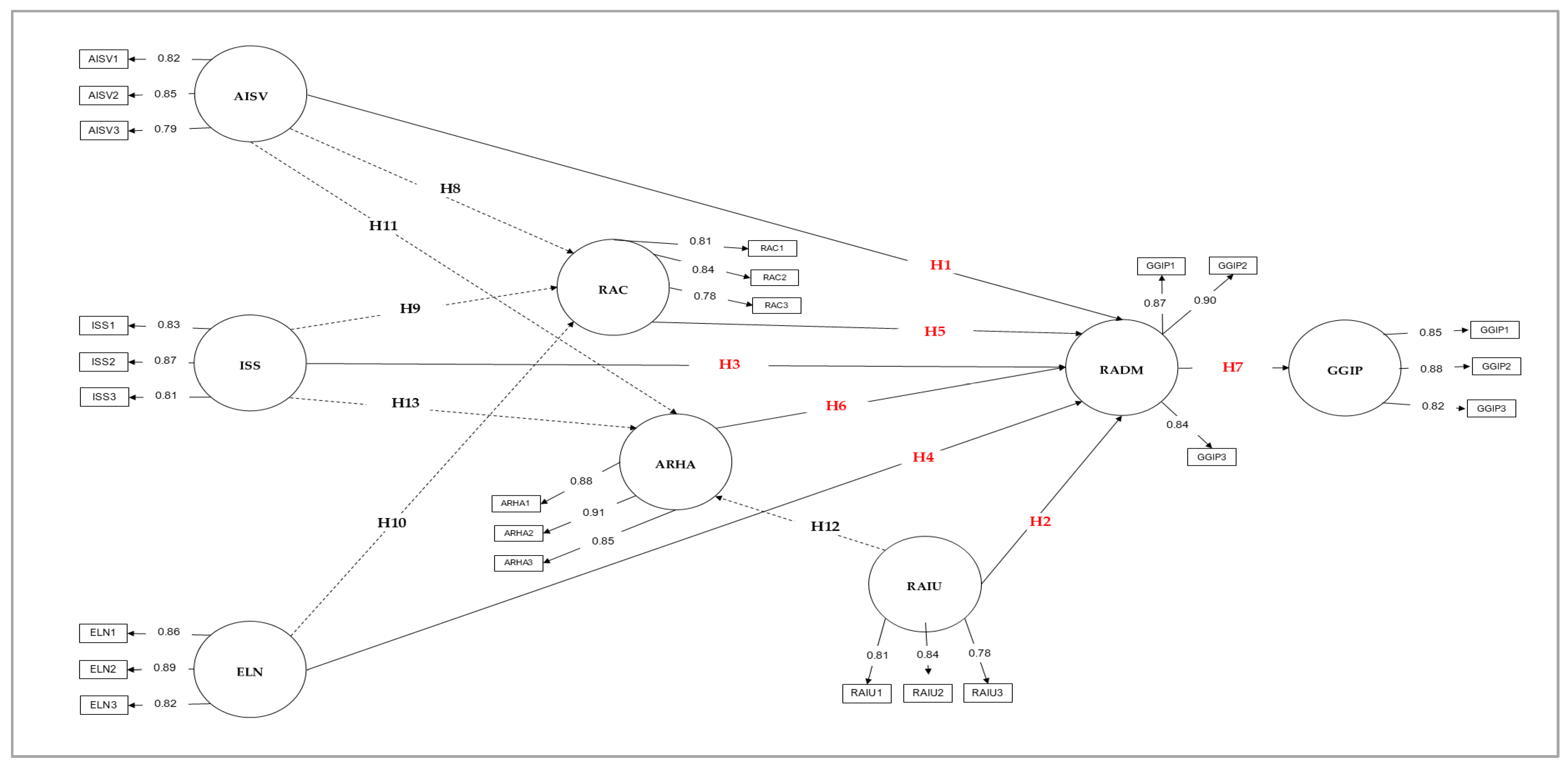
To improve consistency throughout the manuscript, the construct labels in
Figure 1 are aligned with the terminology used in the hypotheses, measurement model, and structural results tables.
Figure 1 presents the conceptual structure underlying the proposed DSS framework. The model specifies the relationships among institutional, cognitive, and technological constructs associated with Responsible Decision-Making and sustainability performance.
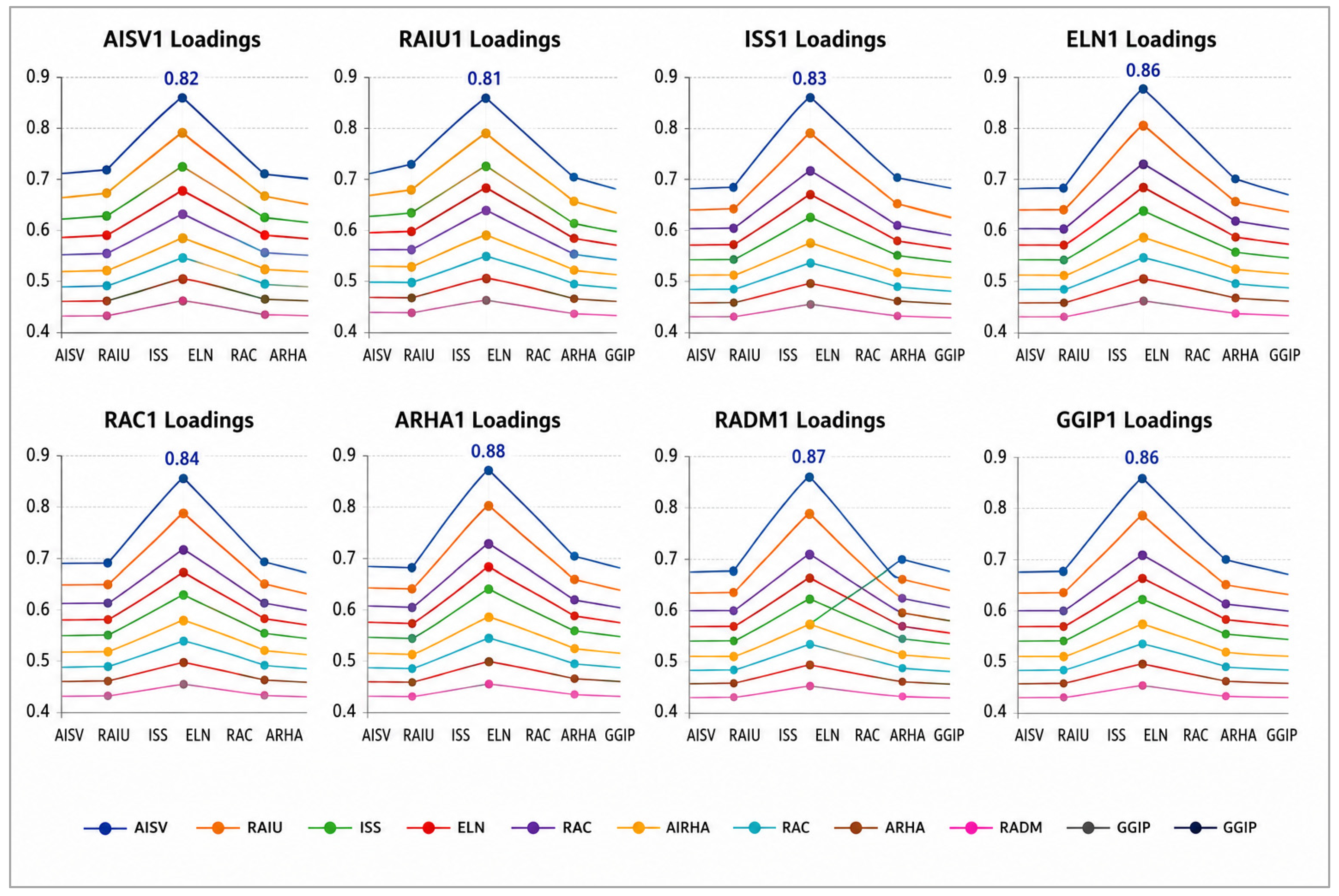
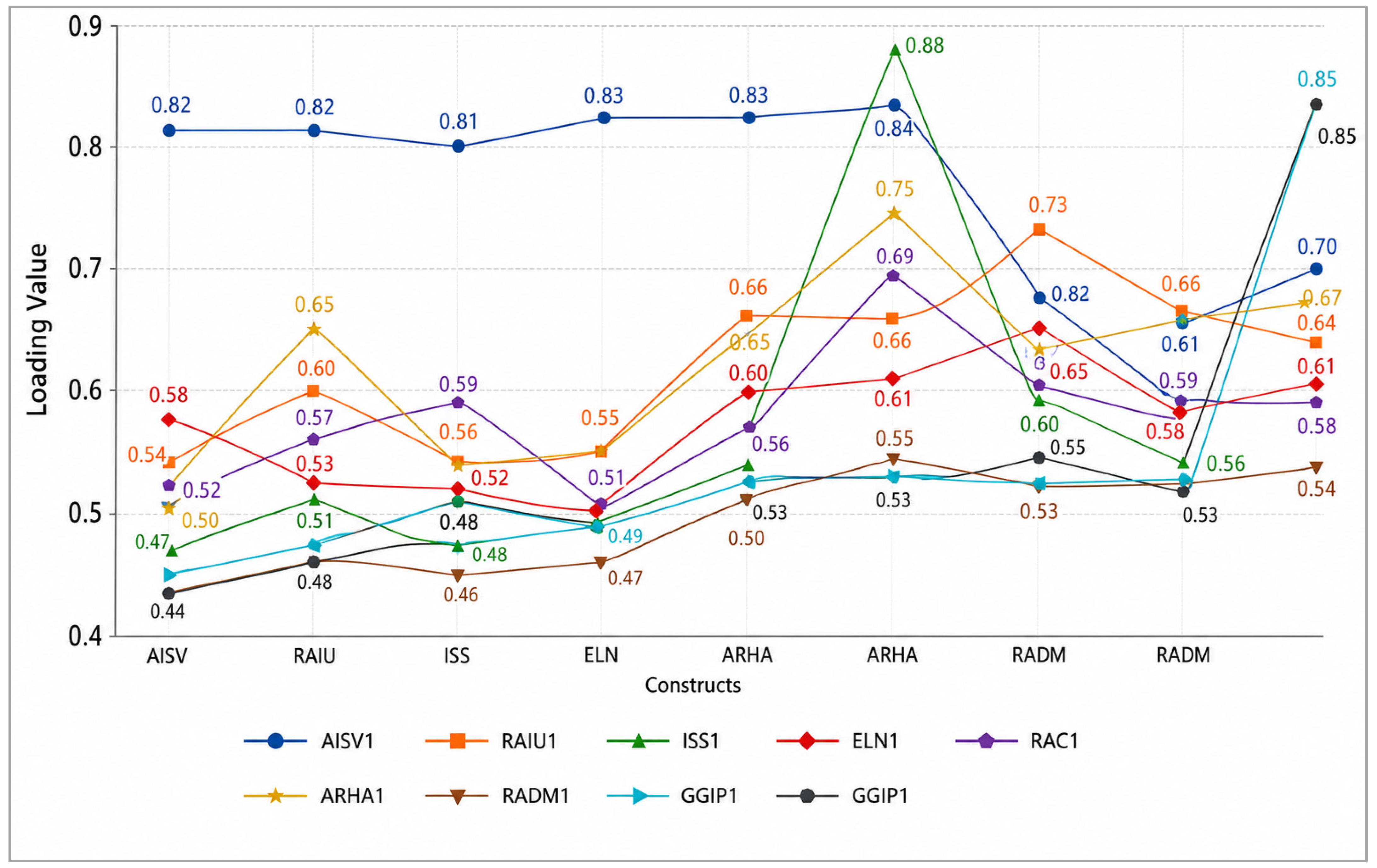
Figure 2 and
Figure 3 support discriminant validity. Each indicator loads highest on its assigned construct (λ
ii > λ
ij), indicating adequate construct separation. Moderate cross-loadings between ARHA and RADM, and between ELN and RADM, are theoretically consistent and do not indicate measurement instability.
Table 4 further confirms discriminant validity using the Fornell–Larcker criterion. The square root of AVE for each construct exceeds the corresponding inter-construct correlations, indicating adequate construct distinction and suitability for structural analysis.
4.2. Structural Model and Decision Relationships
The structural model evaluates relationships among the key constructs within the proposed AI-driven DSS.
Table 5 presents the structural results. Ethical Leadership Norms (ELN) and AI Risk and Hallucination Awareness (ARHA) demonstrate significant positive effects on Responsible Decision-Making (RADM). AI-Driven Sustainable Value (AISV) and Responsible AI Ease of Use (RAIU) also show significant positive effects, although their effect sizes are comparatively smaller.
In contrast, Institutional Sustainability Support (ISS) and Responsible AI Competence (RAC) do not demonstrate significant direct effects on RADM. Among the significant predictors, ARHA shows the strongest effect (β = 0.29, p < 0.001), highlighting the importance of awareness of uncertainty and risk evaluation in AI-enabled decision-making.
The non-significant effect of RAC requires careful interpretation. The findings suggest that technical competence alone may be insufficient for effective decision-making under uncertain AI-driven conditions. While competence reflects knowledge and technical capability, it does not necessarily enable decision-makers to effectively evaluate ambiguity, probabilistic outputs, or AI-related risks.
The results also suggest that contextual conditions may shape the practical relevance of competence. Institutional structures and ethical leadership may provide the organisational conditions required for competence to translate into effective decision quality. Accordingly, competence appears to operate within broader institutional and cognitive contexts rather than as an isolated determinant.
In addition, the strong effect of ARHA suggests that decision-makers rely more heavily on uncertainty evaluation and risk interpretation than on technical proficiency alone. In complex AI environments, awareness of system limitations, bias, and uncertainty appears more influential than technical capability itself.
These findings support a context- and cognition-oriented interpretation of decision-making, in which institutional and cognitive mechanisms jointly shape decision quality.
The results further show that Responsible Decision-Making (RADM) has a significant positive effect on Sustainability Impact Performance (GGIP) (β = 0.41, p < 0.001). This supports H7 and indicates that sustainability outcomes are closely associated with decision quality.
The hypothesis numbering in
Table 5 follows the same order as in
Section 2.1 to ensure consistency between the theoretical framework and the empirical analysis.
4.3. Mediation Effects and Cognitive Mechanisms
The mediation results involving Responsible AI Competence (RAC) warrant cautious interpretation, as the direct effect of RAC on RADM is non-significant (p = 0.270). Therefore, the conditions for classical mediation are not fully satisfied.
Although some indirect effects involving RAC (H9 and H10) are statistically significant, these relationships should be interpreted as indirect-only or context-dependent associations rather than strong evidence of mediation. The findings suggest that competence may contribute to decision-making primarily within supportive institutional and leadership environments.
Accordingly, RAC should not be interpreted as a dominant or independent predictor of Responsible Decision-Making. Instead, its influence appears conditional and secondary to contextual and cognitive mechanisms, particularly ethical leadership and AI risk awareness.
Table 6 indicates that competence alone is insufficient to explain decision quality. Its influence appears conditional on institutional and leadership structures. In contrast, ARHA demonstrates both significant direct and indirect effects, indicating a more stable and consistent relationship with RADM.
4.4. Model Quality and Predictive Power
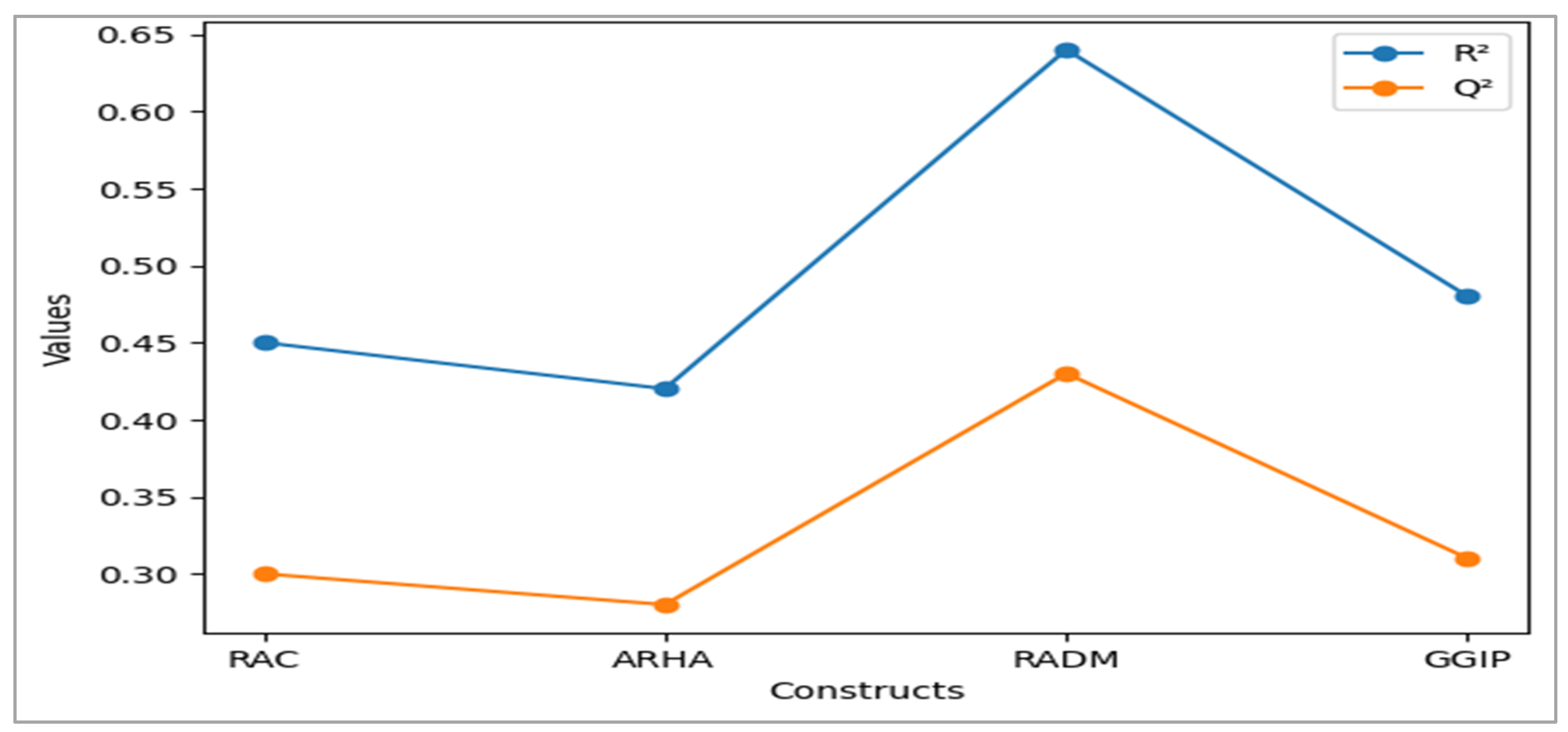
Figure 4 presents the structural model quality. The model demonstrates strong explanatory capability, with coefficients of determination:
These values indicate that the model explains a substantial proportion of variance in both RADM and GGIP.
Predictive relevance is supported by the Stone–Geisser criterion (), indicating acceptable predictive capability.
Effect size results are presented in
Table 6 ARHA demonstrates the strongest effect size (
), while ISS and ELN show moderate effects. AISV and RAIU demonstrate comparatively smaller effects.
The strongest relationship is observed between RADM and GGIP:
This finding indicates that Responsible Decision-Making is the principal mechanism associated with sustainability outcomes within the proposed DSS framework. (see
Figure 4)
4.5. Bayesian Network Inference and Scenario-Based DSS
The Bayesian Network (BN) provides analytical probabilistic inference within the AI-driven DSS. The BN models conditional dependencies among variables using a theory-driven structure informed by the PLS-SEM results.
Importantly, the BN outputs reported in this section are model-based estimates derived from cross-sectional data, not results from real-time system implementation. Accordingly, the probabilities should be interpreted as analytical scenario-based outcomes under hypothetical evidence conditions.
Scenario analysis indicates strong sensitivity to contextual conditions. Under low-resource conditions, the estimated probabilities of achieving high decision quality and sustainability performance are comparatively low. When institutional and cognitive conditions improve, the probabilities increase substantially. (see
Table 7)
The BN extends the explanatory role of PLS-SEM by enabling scenario-based evaluation. While PLS-SEM identifies statistically significant relationships, the BN allows estimation of outcome probabilities under alternative conditions.
Two analytical decision scenarios illustrate this functionality:
Scenario 1 (Resource Allocation): Increasing Institutional Sustainability Support (ISS) is associated with higher probabilities of improved sustainability performance, suggesting that institutional investment may enhance outcomes.
Scenario 2 (Policy Intervention): Increasing AI Risk and Hallucination Awareness (ARHA) substantially improves the probability of high-quality decisions, highlighting the importance of AI ethics and uncertainty-awareness training.
These scenarios represent analytical decision-support applications rather than operational real-time implementations. (see
Table 8).
The effect size pattern is consistent with the BN inference results, indicating that uncertainty-aware cognition and institutional context are more influential than technical competence alone.
BN also provides sensitivity-oriented insights by identifying variables with the greatest influence on outcomes. ARHA, ISS, and ELN emerge as the most influential variables, suggesting that governance structures, leadership, and AI risk awareness are central to decision quality.
Although the BN enhances analytical prediction and scenario evaluation, adaptive real-time functionality is not empirically implemented in this study because the analysis relies on cross-sectional data. Future research using longitudinal or streaming data is required to validate the functionality of adaptive DSS empirically.
Accordingly, the BN should be interpreted as an analytical probabilistic decision-support component rather than a fully operational adaptive DSS deployed in real-time institutional environments.
4.6. Predictive Performance and DSS Capability
The predictive model demonstrates stable performance across different analytical scenarios. Prediction accuracy, evaluated using Root Mean Square Error (RMSE), indicates consistent predictive performance under varying conditions.
The findings further suggest that decision quality is more strongly associated with uncertainty-aware cognition than with technical competence. Sustainability outcomes remain conditional on decision quality, as represented by:
This relationship indicates that higher levels of Responsible Decision-Making increase the probability of improved sustainability outcomes.
The integration of PLS-SEM and BN combines structural explanation with probabilistic prediction within a unified framework. This integration enhances the proposed DSS’s analytical capabilities in complex and uncertain institutional environments.
4.7. Integrated DSS Architecture and System Implications
The proposed framework integrates structural modelling and probabilistic inference within a unified AI-driven DSS. PLS-SEM provides a structural explanation of relationships among variables, while the BN enables probabilistic reasoning under uncertainty. Together, these components support three analytical functions: (i) structural explanation; (ii) probabilistic prediction; (iii) scenario-based evaluation.
The findings indicate that ARHA and ELN are the strongest direct predictors of Responsible Decision-Making. Although ISS does not demonstrate a significant direct effect, it contributes indirectly through contextual pathways involving institutional and cognitive mechanisms.
BN contributes practical analytical value by enabling scenario evaluation under alternative conditions. For example, administrators can compare the estimated effects of increasing sustainability support versus strengthening ethical leadership programmes on decision quality and sustainability outcomes.
BN also provides sensitivity-oriented insights by identifying variables with the greatest influence on outcomes. ARHA, ISS, and ELN consistently emerge as the most influential factors, underscoring the importance of governance, leadership, and awareness of uncertainty in AI-enabled decision-making.
Overall, the integration of PLS-SEM and BN extends the framework beyond conventional explanatory analysis by incorporating probabilistic evaluation capabilities. However, adaptive real-time DSS functionality is conceptual rather than empirically implemented in the current study because the analysis is based on cross-sectional data.
5. Analytical Simulation and DSS Capability
5.1. Simulation Design Within AI-Driven DSS
This section presents an analytical simulation of the proposed AI-driven Decision Support System (DSS). The simulation is based on the estimated Bayesian Network (BN) and uses probabilistic scenario analysis derived from cross-sectional data. Accordingly, the purpose of this section is to demonstrate the framework’s analytical capability for uncertainty-aware decision evaluation rather than to validate real-time system deployment or adaptive implementation.
The system state is defined as:
The input vector is defined as:
Each scenario is represented as evidence observed:
Four analytical scenarios are examined: (i) low-resource conditions; (ii) high-value institutional conditions; (iii) leadership-driven conditions; (iv) fully optimised conditions.
The objective is to estimate the conditional probabilities:
This formulation supports systematic evaluation of decision-making outcomes under alternative hypothetical conditions and enables probabilistic reasoning within uncertain institutional environments.
5.2. Bayesian Inference and Dynamic DSS Analysis
The Bayesian Network models probabilistic dependencies through a Directed Acyclic Graph (DAG). The joint probability distribution is represented as:
where Pa(X
i) denotes the parent nodes associated with variable X
i.
Probabilistic inference is conducted using Bayes’ theorem:
Decision probabilities are computed as:
Analytical simulation results suggest that improvements in AI-Driven Sustainable Value and Institutional Sustainability Support are associated with higher probabilities of positive decision outcomes. AI Risk and Hallucination Awareness further strengthen this relationship.
Marginal effects are represented as:
These findings indicate that the proposed DSS is particularly sensitive to institutional and cognitive conditions associated with uncertainty-aware decision-making.
Importantly, these results are analytical probabilistic estimates derived from the BN structure rather than empirical observations collected through dynamic system deployment.
5.3. Conceptual Extension: Dynamic Updating and Adaptive DSS
The proposed framework can theoretically support dynamic updating through sequential Bayesian inference. Sequential updating may be represented as:
This formulation illustrates how posterior probabilities could be updated when new evidence becomes available over time.
However, dynamic updating is not empirically implemented or validated in the current study because the dataset is cross-sectional rather than longitudinal. Therefore, adaptive DSS functionality should be interpreted as a conceptual extension of the framework rather than as an operational capability demonstrated in this research.
Future studies using longitudinal, streaming, or real-time institutional data are required to implement and evaluate adaptive DSS functionality empirically.
5.4. System Architecture and Sensitivity Analysis
The analytical simulation framework follows a three-layer DSS architecture: (i) input layer (observable variables); (ii) inference layer (Bayesian probabilistic reasoning); (iii) decision layer (predicted outcomes). The transformation process is represented as:
Sensitivity analysis was conducted to identify influential variables within the DSS framework:
The results indicate that:
This finding suggests that awareness of AI risk and hallucination exerts the strongest influence on decision outcomes. Accordingly, decision quality appears more strongly associated with uncertainty evaluation than with technical or institutional factors alone.
Therefore, sensitivity analysis supports the interpretation that cognitive awareness mechanisms play a central role in AI-enabled decision-making under uncertainty.
5.5. Data Generation, Calibration, and DSS Validation
To support analytical simulation, input variables were represented as stochastic signals:
Observed values were represented as:
Model parameters were estimated using Maximum Likelihood Estimation (MLE):
Bayesian parameter estimation was additionally represented as:
These formulations support probabilistic calibration and consistency between simulated and observed distributions within the analytical framework.
The simulation results demonstrate the proposed DSS’s analytical capability to support probabilistic reasoning and scenario-based evaluation under uncertainty. However, because the framework was evaluated using cross-sectional data, the results should not be interpreted as evidence of operational real-time adaptation.
The findings further indicate that Institutional Sustainability Support (ISS), Ethical Leadership Norms (ELN), and AI Risk and Hallucination Awareness (ARHA) substantially influence Responsible Decision-Making (RADM) and Sustainability Impact Performance (GGIP). Therefore, the integration of structural modelling and Bayesian inference enhances both explanatory interpretation and probabilistic evaluation capability.
The results also highlight the importance of abstraction in AI-enabled decision-making. The framework transforms complex AI outputs into structured and interpretable probabilistic relationships, thereby reducing informational complexity and improving analytical clarity. Prior research suggests that abstract representations preserve decision-relevant structure even when input conditions vary [
20,
35].
This interpretation also helps explain why ARHA demonstrates a stronger influence than Responsible AI Competence (RAC). Decision-makers appear to rely more heavily on meaningful representations of uncertainty and risk evaluation than on technical capability alone.
6. Conclusions
This study contributes to research on AI-driven Decision Support Systems (DSS) by proposing a hybrid Bayesian–PLS framework for uncertainty-aware decision-making in tertiary education. The framework integrates structural analysis through Partial Least Squares Structural Equation Modelling (PLS-SEM) with probabilistic inference using Bayesian Networks (BN). This integration combines explanatory and probabilistic capabilities within a unified and interpretable analytical framework.
The findings indicate that AI-Driven Sustainable Value (AISV), Responsible AI Ease of Use (RAIU), Ethical Leadership Norms (ELN), and AI Risk and Hallucination Awareness (ARHA) significantly influence Responsible Decision-Making (RADM). In contrast, Institutional Sustainability Support (ISS) and Responsible AI Competence (RAC) do not demonstrate significant direct effects on RADM. However, ISS shows indirect effects through contextual and cognitive pathways associated with institutional and leadership mechanisms.
The results further suggest that technical competence alone is insufficient to support effective decision-making in AI-enabled environments. Instead, decision quality appears more strongly associated with the ability to interpret uncertainty, evaluate AI-related risks, and recognise system limitations. Among the examined factors, ARHA exerts the strongest influence on RADM, underscoring the central role of uncertainty-aware cognition in AI-supported decision-making processes.
The structural relationships identified in the model indicate that technological, institutional, and cognitive factors jointly shape decision-making outcomes. In addition, the positive relationship between RADM and Sustainability Impact Performance (GGIP) suggests that sustainability outcomes depend more on decision quality than on AI adoption alone.
Bayesian inference further indicates that favourable institutional and cognitive conditions are associated with higher probabilities of achieving strong sustainability outcomes. The analytical scenario results demonstrate the potential value of probabilistic evaluation for supporting uncertainty-aware planning and decision analysis in complex institutional environments.
The findings should be interpreted within the context of the study. The data were collected from tertiary education institutions in Saudi Arabia, and no external or cross-contextual validation was conducted. Therefore, the applicability of the framework to other geographical, cultural, or private-sector contexts remains limited and requires further empirical investigation. Future research should evaluate the framework across different institutional settings and employ longitudinal or real-time data to examine adaptive DSS functionality under dynamic conditions.
7. Theoretical and Practical Contributions
This study contributes to research on AI-driven Decision Support Systems (DSS) by proposing a hybrid framework that integrates structural explanation with probabilistic inference. Partial Least Squares Structural Equation Modelling (PLS-SEM) is used to examine relationships among institutional, technological, and cognitive variables. At the same time, the Bayesian Network (BN) supports probabilistic reasoning and scenario-based evaluation under uncertainty.
The findings contribute to AI-enabled decision-making research by demonstrating that AI Risk and Hallucination Awareness (ARHA) is more strongly associated with Responsible Decision-Making (RADM) than Responsible AI Competence (RAC). This suggests that effective decision-making in AI-enabled environments depends not only on technical capability but also on the ability to evaluate uncertainty, interpret probabilistic outputs, and recognise AI-related risks and limitations.
The non-significant direct effect of RAC provides an additional theoretical insight. The findings indicate that technical competence alone may be insufficient to support effective decision-making under uncertain conditions. Although some indirect associations involving RAC were identified, these relationships should be interpreted with caution, as RAC does not have a significant direct effect on RADM. Accordingly, the influence of competence appears conditional and context-dependent rather than independently determinative.
The results further indicate that Ethical Leadership Norms (ELN) exert a strong direct influence on decision quality. Institutional Sustainability Support (ISS), although not directly significant, demonstrates indirect associations through contextual pathways linked to leadership and cognitive mechanisms. These findings suggest that institutional structures and ethical governance conditions may enable individuals to apply technical competence more effectively in AI-supported environments.
Collectively, the evidence supports a shift from a purely competence-oriented interpretation of AI decision-making toward a context- and cognition-oriented perspective. Decision-making in AI-enabled systems appears more strongly associated with uncertainty evaluation, ethical interpretation, and risk awareness than with technical proficiency alone. In this context, awareness of AI limitations, bias, and uncertainty emerges as an important mechanism influencing decision quality.
The study also contributes to sustainability research by positioning Responsible Decision-Making (RADM) as a central mechanism associated with Sustainability Impact Performance (GGIP). The positive relationship between RADM and GGIP suggests that sustainability outcomes depend more on decision quality than on AI adoption alone. Institutional and leadership conditions further influence how AI-supported decisions contribute to sustainability-oriented outcomes.
From a practical perspective, the proposed DSS supports probabilistic and scenario-based evaluation under uncertainty. The framework enables decision-makers to compare alternative institutional conditions and evaluate their potential influence on sustainability outcomes. The findings further highlight the practical importance of governance structures, ethical leadership, and AI risk awareness in supporting responsible, sustainability-oriented decision-making processes.
8. Opportunities, Limitations, and Future Research
This study has several limitations that should be acknowledged. First, the analysis is based on cross-sectional data. Accordingly, the findings reflect associational relationships rather than causal effects. The Bayesian Network (BN) follows a theory-driven structure and is used for probabilistic inference rather than causal discovery.
A second limitation concerns external validity and boundary conditions. The sample was drawn from tertiary education institutions in Saudi Arabia. Although participants represent diverse national backgrounds, the data remain embedded within a specific institutional and regional context. Institutional governance structures, leadership practices, and regulatory environments may influence how AI systems are interpreted and applied in decision-making processes.
Therefore, the findings should not be generalised to other geographical regions or organisational settings, including private-sector environments, without caution. In addition, neither cross-validation nor an external dataset was used. As a result, the framework’s robustness across different contexts has not been empirically verified.
Third, the cross-sectional design limits the analysis of temporal dynamics. Decision-making processes may evolve, but such changes cannot be examined within the current design. Fourth, cultural context was operationalised using nationality, which provides only a simplified and indirect representation of cultural diversity. Culture is inherently multidimensional, encompassing values, organisational norms, behavioural expectations, and contextual influences that cannot be fully captured by nationality alone.
In this study, nationality is used only as a descriptive indicator of sample diversity rather than as a precise measure of cultural effects. Accordingly, no subgroup or moderation analyses based on nationality were conducted, and cultural interpretations are intentionally limited.
Fifth, the BN requires variable discretisation to support probabilistic inference. Although discretisation improves interpretability and computational stability, it may reduce informational precision. In addition, the assumption of conditional independence may not fully capture the complexity of real-world dependencies within institutional systems.
Despite these limitations, the study provides several opportunities for advancing AI-driven Decision Support Systems (DSS) in sustainability contexts. The proposed hybrid Bayesian–PLS framework provides a conceptual basis for extending AI-enabled DSS toward adaptive, uncertainty-aware decision support. In particular, future implementations using longitudinal or streaming data may support Bayesian updating and continuous probabilistic learning under dynamic conditions.
However, adaptive real-time functionality was not implemented or empirically validated in the current study because the analysis relied exclusively on cross-sectional survey data. Therefore, dynamic updating should be interpreted as a conceptual extension rather than as an operational capability demonstrated in this research.
The framework also demonstrates potential applicability across multiple domains, including healthcare, smart cities, and environmental management, where decision environments are characterised by uncertainty and complex interdependencies. In addition, the framework may support multi-objective evaluation by enabling decision-makers to balance sustainability, risk, and operational efficiency within probabilistic decision contexts.
Future research should extend this work in several directions. First, longitudinal and experimental research designs are needed to evaluate causal mechanisms and temporal dynamics rigorously. Second, Dynamic Bayesian Networks (DBNs) should be explored to model evolving decision processes over time. Third, future studies may integrate advanced machine learning techniques to improve predictive performance and probabilistic calibration.
Finally, future research should adopt multidimensional cultural frameworks and examine institutional, cultural, and sectoral moderators across different geographical and organisational contexts, including private-sector environments. Such extensions would improve the robustness, transferability, and contextual understanding of AI-driven decision-support frameworks under uncertainty.