1. Introduction
Attention-deficit/hyperactivity disorder (ADHD) is a neurodevelopmental disorder defined in the Diagnostic and Statistical Manual of Mental Disorders, Fifth Edition, Text Revision (DSM-5-TR) as persistent patterns of inattention and/or hyperactivity-impulsivity that interfere with functioning or development [
1]. At its core, ADHD is a descriptive diagnosis based on patterns of behavior objectively assessed by highly trained healthcare professionals. Additionally, it is a developmental diagnostic, where the observed patterns or behaviors must be assessed in relation to developmentally appropriate behaviors of their peers. This distinctive diagnostic pattern is due to symptoms of ADHD varying across developmental stages [
2]. Furthermore, ADHD is a syndrome rather than a single, uniform disorder. Symptoms of ADHD vary considerably, tending to manifest in unique ways between patients. Epidemiological studies estimate that approximately 5–10% of U.S. children are affected by ADHD, with a substantial proportion of cases persisting into adulthood [
3]. Prevalence of ADHD across the population is widely influenced by demographic factors such as gender, socioeconomic status, and ethnicity [
4]. Epidemiological studies have generally reported higher diagnosed rates of ADHD in males than females during childhood, although this pattern is influenced by under recognition of inattentive presentations in girls and women [
5,
6]. Additionally, patients with psychiatric conditions have been shown to have a higher prevalence of ADHD when compared to the general population, meaning ADHD is more common in individuals with other mental health disorders [
7]. Recent epidemiological studies using DSM-5 criteria have generally supported similar prevalence estimates while highlighting ongoing concerns regarding underdiagnosis in females and variability across regions. A systematic review by Gerhand et al. established that ADHD rates in patients with an auxiliary psychiatric condition ranged from 6.9% to 38.8% [
7]. ADHD prevalence estimates may be influenced by underdiagnosis in certain populations [
8,
9,
10], particularly females, who are more likely to present with inattentive symptoms rather than hyperactivity [
5,
11]. This can lead to delayed recognition and diagnosis [
6], as well as misconceptions among caregivers that ADHD is primarily characterized by overt hyperactive behavior [
12].
A sport-related concussion (SRC) is defined according to the most recent international consensus statements as a traumatic brain injury induced by biomechanical forces, resulting in a range of clinical symptoms affecting physical, cognitive, and emotional domains [
13,
14]. These injuries occur due to a direct or indirect blow that is associated with a graded set of syndromes characterized by neurometabolic events rather than gross structural damage, making them difficult to diagnose [
15]. Sport-related concussions are characterized by a wide variety of presenting symptoms, including loss of consciousness, amnesia, confusion, headache, and nausea [
16]. Physical symptoms commonly include dizziness and impairments in postural control [
16]. Sport-related concussion may also cause patients to exhibit a multitude of cognitive symptoms such as difficulty concentrating, memory loss, and slower processing speed. Emotional responses such as irritability, anxiety, and depression are also commonly seen in patients with SRC, potentially leading to sleep disturbances or other secondary complications [
16]. The symptoms of SRC vary depending on the individual and the severity of the injury. Neurodevelopmental disorders like ADHD can complicate the assessment and management of SRC symptoms as there is often overlap between SRC-like symptoms and the baseline symptoms of ADHD [
17].
The purpose of this narrative review is to explore the intersection of attention deficit hyperactivity disorder (ADHD) and SRC in athletes. By examining the prevalence, characteristics, and impact of ADHD in the athletic population, as well as the increased risk and recovery challenges associated with SRCs, this review aims to provide a comprehensive understanding of how ADHD influences concussion risk, assessment, management, and recovery outcomes. The review seeks to highlight the unique challenges faced by athletes with ADHD, inform best practices for management and treatment of SRC, and identify gaps in current research to guide future studies. From a translational neuroscience perspective, understanding how neurodevelopmental alterations in attention and executive function interact with brain injury mechanisms is critical for optimizing clinical assessment and recovery strategies in athletes. This review specifically advances the argument that ADHD-related neurocognitive characteristics contribute to increased concussion risk, complicate clinical assessment, and influence recovery trajectories, and it synthesizes current evidence within a translational neuroscience framework to clarify these relationships.
2. Methods
A targeted narrative review of the literature was conducted to synthesize current evidence on ADHD and sport-related concussion. Databases including PubMed, Google Scholar, and SPORTDiscus were searched for relevant articles. SPORTDiscus was included due to its strong coverage of sports science and athletic populations, which are central to the focus of this review. Literature published primarily within the past 10–15 years was emphasized, although earlier studies were included where they provided foundational insight into ADHD neurocognitive characteristics or concussion mechanisms. Articles were selected based on relevance to the following domains: (1) concussion risk in athletes with ADHD, (2) neurocognitive and symptom assessment, and (3) recovery trajectories and clinical outcomes. Both observational (cross-sectional and longitudinal) and experimental studies were considered. Studies were prioritized based on methodological rigor, sample size, and relevance to athletic populations. Case reports and non-peer-reviewed sources were excluded unless they provided unique conceptual insight. Search terms included combinations of: (“ADHD” OR “attention-deficit/hyperactivity disorder”) AND (“concussion” OR “mild traumatic brain injury”) AND (“athletes” OR “sport-related concussion”).
3. ADHD in Athletes
Evidence suggests that ADHD may be more common in athletes compared to the general population, with prevalence ranging from 4.2% to 8.1% in young athletes [
18]. This may be due in part to sports providing an outlet for increased activity levels, as well as the potential attraction of structured, high-stimulation environments that align with behavioral traits such as impulsivity and sensation-seeking. Athletes with ADHD face numerous challenges that can affect their performance in competitive environments. In addition, the impulsive behavior associated with ADHD can lead to increased risk-taking during play, which may result in higher rates of injuries [
19,
20]. Furthermore, inattention symptoms can interfere with an athlete’s ability to follow game strategies, maintain situational awareness, and respond to changing dynamics in competitive sports [
20]. Athletes with ADHD may also struggle with emotional regulation during competition, potentially leading to outbursts or poor sportsmanship under pressure [
21].
Despite these challenges, certain ADHD-related behavioral characteristics may align with specific demands of athletic performance, although evidence supporting true performance advantages remains limited. Impulsivity, characterized by rapid, less inhibited responses, can enable quick decision-making and the spontaneity required in skilled positions like quarterback or point guard [
22]. Evidence also indicates a statistically significant decrease in markers of anxiety and depression among ADHD subjects with higher levels of sports participation [
22].
Research has found that non-medicated boys with ADHD show greater disturbances in both postural and gait balance in cross-sectional studies [
23]. The functional impact of these balance difficulties extends to social and academic spheres, as motor skill problems affect a substantial proportion of children with ADHD, estimated to be between 45% and 70% [
24]. Importantly, balance deficits in ADHD can reduce an individual’s stability and postural control under various sensory conditions [
23]. Conversely, children with ADHD who take medication regularly demonstrate postural stability comparable to that of typically developing children, suggesting that medication can enhance some balance-related impairments [
25].
4. Sport-Related Concussions in Athletes
Sport-related concussions (SRCs) have emerged as a significant public health problem, primarily based on U.S. data, affecting athletes across all levels of competition [
26]. Approximately 1.6–3.8 million SRCs occur annually in the United States [
27]. Among high school athletes alone, an estimated 300,000 U.S. adolescents, based on self-reported survey data, sustain SRCs annually during participation in organized sports. Recent research suggests these numbers may be underestimated, as studies indicate that up to 43% of SRCs go unreported and untreated [
27]. While concussion underreporting is well documented in athletic populations, there is currently limited evidence to determine whether underreporting is more prevalent among neurodiverse athletes, representing an important area for future research. The prevalence of SRCs varies significantly across different sports and athlete populations, with contact and collision sports presenting the highest rates of injury [
28]. Gender disparities have also been noted, with female athletes showing greater vulnerability compared to their male counterparts [
28]. A comparative study of female college athletes found that soccer players demonstrated a significantly higher rate of SRCs compared to non-contact athletes [
29]. It was also found that an athlete’s position in soccer played an important role in their risk for sustaining an SRC [
29].
Additional risk factors contributing to an athlete’s susceptibility to SRCs can be grouped into injury history and personal health characteristics [
30]. Previous history of SRC is one of the strongest predictors of future concussive injuries [
31]. Personal health factors also play a significant role, with evidence indicating that a history of migraines, a family history of migraines, and a family history of psychiatric disorders are associated with an increased risk of repeated SRCs [
31].
The diagnosis of SRCs is challenging because of the lack of visible injury and the varied presentations of symptoms [
32]. Typically, a comprehensive clinical evaluation is completed that includes an assessment of level of consciousness, orientation, memory, concentration, and neurological function. Several standardized assessment tools have been developed to help diagnose SRCs. These include symptom-based evaluations, cognitive assessments, balance testing, and more specialized examinations. Some of the most popular assessment tools include the Sport Concussion Assessment Tool (SCAT), the Immediate Post-Concussion Assessment and Cognitive Testing (ImPACT), and the King-Devick Test, with the SCAT showing the greatest diagnostic utility [
33].
5. Impact of ADHD on Sport-Related Concussion Risk in Athletes
From a conceptual perspective, ADHD-related differences in executive function, a core feature of ADHD, and attentional regulation may influence behavioral patterns that increase susceptibility to sport-related concussion. From a neurocognitive perspective, these differences may reflect altered functioning in frontostriatal and frontoparietal networks, which are critical for attention regulation, motor planning, and inhibitory control. Impairments in these systems may lead to delayed response times, reduced hazard perception, and difficulty adapting to rapidly changing environments during sport participation. In high-speed or contact sports, these subtle deficits may increase exposure to collision events or reduce the ability to avoid potentially injurious situations. Several studies suggest that athletes diagnosed with ADHD are at increased risk of sustaining a SRC, with a reported odds ratios generally ranging from approximately 1.6 to 2.5 compared to non-ADHD peers [
34,
35,
36]. Recent work by Maietta et al. supports this association, demonstrating increased concussion risk and altered symptom profiles among athletes with ADHD, highlighting the role of neurocognitive and behavioral factors in injury susceptibility [
37]. Behavioral characteristics of ADHD, such as executive dysfunction, impaired inhibitory control, and attentional dysregulation, may elevate risk by altering frontostriatal cognitive control processes and reducing situational awareness and promoting participation in high-risk maneuvers during play [
38]. Studies comparing SRC incidence rates demonstrate elevated odds ratios among athletes with ADHD relative to non-ADHD peers [
39]. However, the magnitude of risk varies across studies, likely reflecting differences in sport-specific exposure and contact levels, sex-related differences in injury patterns and reporting, and variability in ADHD symptom severity and associated behavior characteristics that influence risk taking and situational awareness [
38,
39].
ADHD symptomatology profoundly impacts SRC symptom reporting and assessment [
40]. Athletes with ADHD commonly exhibit elevated baseline symptoms, lower neurocognitive performance, and higher rates of invalid baseline profiles, complicating interpretation of post-injury testing [
41,
42]. This overlap complicates distinguishing new SRC symptoms from pre-existing ADHD manifestations and increases the risk of false-positive classifications.
The role of stimulant medication in modulating SRC risk and recovery remains complex and somewhat contradictory [
34]. Some longitudinal cohort studies have reported that stimulant therapy may be associated with a reduced incidence of SRC, potentially reflecting improved attention and impulse control during athletic participation [
34]. However, other investigations reveal no significant impact or lack sufficient evidence to draw causal conclusions [
40]. Taken together, the current evidence remains inconclusive, with variability likely influenced by differences in study populations, medication adherence, and study design.
In addition, safety considerations surrounding stimulant use, including cardiovascular effects and heat intolerance, must be considered in clinical decision-making, emphasizing the need for individualized management in collaboration with sports medicine personnel and regulatory bodies [
43].
Collectively, ADHD appears to function as both a contributor to increased concussion risk and a complicating factor in clinical evaluation. Differences in cognitive control and attention may elevate injury susceptibility, although the extent of this risk varies across populations and contexts. At the same time, overlapping symptom profiles and lower baseline neurocognitive performance make it more difficult to distinguish injury-related changes, introducing challenges for accurate assessment and management. Evidence regarding stimulant medication remains mixed, suggesting potential benefits in some cases but no clear consensus. Overall, these factors highlight the importance of individualized, context-aware approaches when evaluating and managing concussion in athletes with ADHD.
6. ADHD and Sport-Related Concussion Recovery
The impact of ADHD on concussion recovery may be mediated by underlying neurocognitive and behavioral differences that influence symptom progression and functional outcomes. Emerging evidence suggests that ADHD may contribute to prolonged functional recovery following SRC [
44]. These differences may be partially explained by alterations in cognitive control networks and neurochemical regulation, which can influence both symptom perception and recovery trajectories. Variability in executive function, attentional capacity, and emotional regulation may contribute to differences in how symptoms are experienced, reported, and resolved over time. In addition, the interaction between pre-existing neurodevelopmental characteristics and injury-related neurometabolic changes may further complicate recovery patterns in this population. A recent study in high school athletes demonstrated that individuals with ADHD experienced significantly longer return-to-learn and return-to-sport timelines compared to their non-ADHD peers, with delays of approximately 4 to 6 days, and ADHD status independently predicting delayed recovery [
44,
45]. These findings suggest that clinicians need to consider ADHD status when developing return-to-learn and return-to-play protocols.
The trajectories of neurocognitive recovery following injury in athletes diagnosed with ADHD have garnered considerable attention in recent research. Some studies report that overall recovery duration is comparable to that of non-ADHD peers [
46], whereas other studies suggest that specific cognitive domains, such as memory and reaction time, may remain impaired for a longer period [
34]. These differences likely reflect variation in outcome measures, with some studies assessing global recovery timelines and others examining domain specific neurocognitive performance [
47]. The longitudinal assessment of symptom resolution alongside cognitive testing performance highlights the necessity for tailored evaluation protocols that take into consideration pre-injury neurocognitive profiles to prevent the erroneous interpretation of recovery delays. Variability in these findings may be attributable to differences in study populations, including age, level of competition, medication status, and methodological differences across study designs.
Psychological and emotional determinants have been found to potentially impact the recovery process from SRCs in athletes diagnosed with ADHD [
48]. Increased rates of depression and anxiety following injury have been observed in this population, which may contribute to prolonged symptom reporting, delayed return to activity, and greater perceived symptom burden [
7,
48]. Specific affective symptoms, such as irritability, sadness, and emotional dysregulation, may exacerbate cognitive deficits such as impaired concentration and slowed reaction time, while also intensifying physical symptoms like headache and fatigue [
48]. These symptom interactions may compound overall recovery burden and contribute to extended recovery timelines, supporting the need for integrated psychological support within SRC management [
48].
Severity of ADHD symptoms and compliance with ADHD treatment both impact clinical recovery [
49]. Pre-season evaluations of ADHD symptoms, including those obtained on the Strengths and Weaknesses of ADHD Symptoms and Normal Behavior (SWAN) rating scale, a validated measure that assesses ADHD symptom severity across a continuum of both strengths and deficits, have the potential to act as post-concussion outcome moderators [
47]. Medication compliance and optimal management strategies, especially involving stimulant therapy, impact the rates and magnitudes of return to baseline [
34]. Existing evidence argues in favor of needing individualized SRC care pathway strategies that incorporate ADHD symptom management strategies to maximize functional resolution and ensures safe return to play [
34].
ADHD may influence concussion recovery through differences in cognitive function, symptom burden, and behavioral regulation, although findings remain somewhat inconsistent. Some evidence suggests longer return to learn and return to sport timelines in athletes with ADHD, while other work indicates similar overall recovery durations with potential delays in specific cognitive domains. Recovery trajectories appear to be shaped by baseline neurocognitive function, symptom severity, comorbid conditions, and treatment adherence. In addition, psychological factors such as anxiety and depression may exacerbate symptoms and prolong recovery. Taken together, these factors emphasize the need for individualized management strategies that account for both neurocognitive and psychosocial considerations when guiding recovery in athletes with ADHD. Differences in recovery trajectories may also be influenced by age-, sex-, and sport-related factors, as well as variability in executive functioning, which may affect symptom resolution and return-to-play decision-making.
7. Assessment Tools and Considerations for ADHD Athletes
The assessment of SRC in athletes with ADHD is uniquely challenging due to the interaction between baseline neurodevelopmental characteristics and acute injury-related changes. There are unique difficulties with test sensitivity and specificity when using neurocognitive tests, like ImPACT
® and SCAT, in athletes with ADHD [
40,
50]. Pre-existing cognitive deficits inherent in ADHD contribute to lower baseline performance levels, increased variability, and a higher likelihood of invalid test classifications, such as failed baseline assessments due to elevated impulse control errors or attentional lapses, which can compromise post-injury comparisons [
40]. Research shows that athletes with ADHD demonstrate higher, meaning worse, impulse control scores on ImPACT
® at both baseline and return to activity assessments. Recent evidence further supports these findings, showing that athletes with ADHD demonstrate significantly worse ImPACT
® impulse control scores compared to non-learning disorder controls, while other cognitive domains may not differ significantly [
51]. Additionally, higher anxiety and depression scores have been observed in ADHD cohorts, which may further complicate interpretation of post-injury assessments [
52]. Additionally, higher baseline symptom reporting raises injury false-positive rates [
50]. To improve test reliability and interpretability, clinicians should implement modified baseline testing protocols, including administering at least two baseline assessments and using the best or most consistent score, as well as integrating corroborative clinical history [
50]. Given the increased variability and higher rate of invalid baseline performance in athletes with ADHD, structured testing procedures should also be used, such as providing clear, standardized instructions, minimizing environmental distractions, and monitoring for attentional lapses during testing. These approaches may improve test validity, although they have not been directly evaluated in this population [
40,
50]. Additionally, baseline cognitive variability related to executive function, as well as demographic factors such as age and sex, may further influence test performance and complicate interpretation of assessment tools. While some of these strategies are supported by existing evidence, others are based on clinical reasoning and extrapolation from broader neurocognitive testing literature. These challenges highlight the limitations of relying solely on standardized cutoff scores or normative comparisons when evaluating athletes with ADHD. Instead, assessment approaches should emphasize intra-individual change over time and incorporate contextual clinical information to improve diagnostic accuracy. This is particularly important given the high variability in baseline performance and symptom reporting observed in this population.
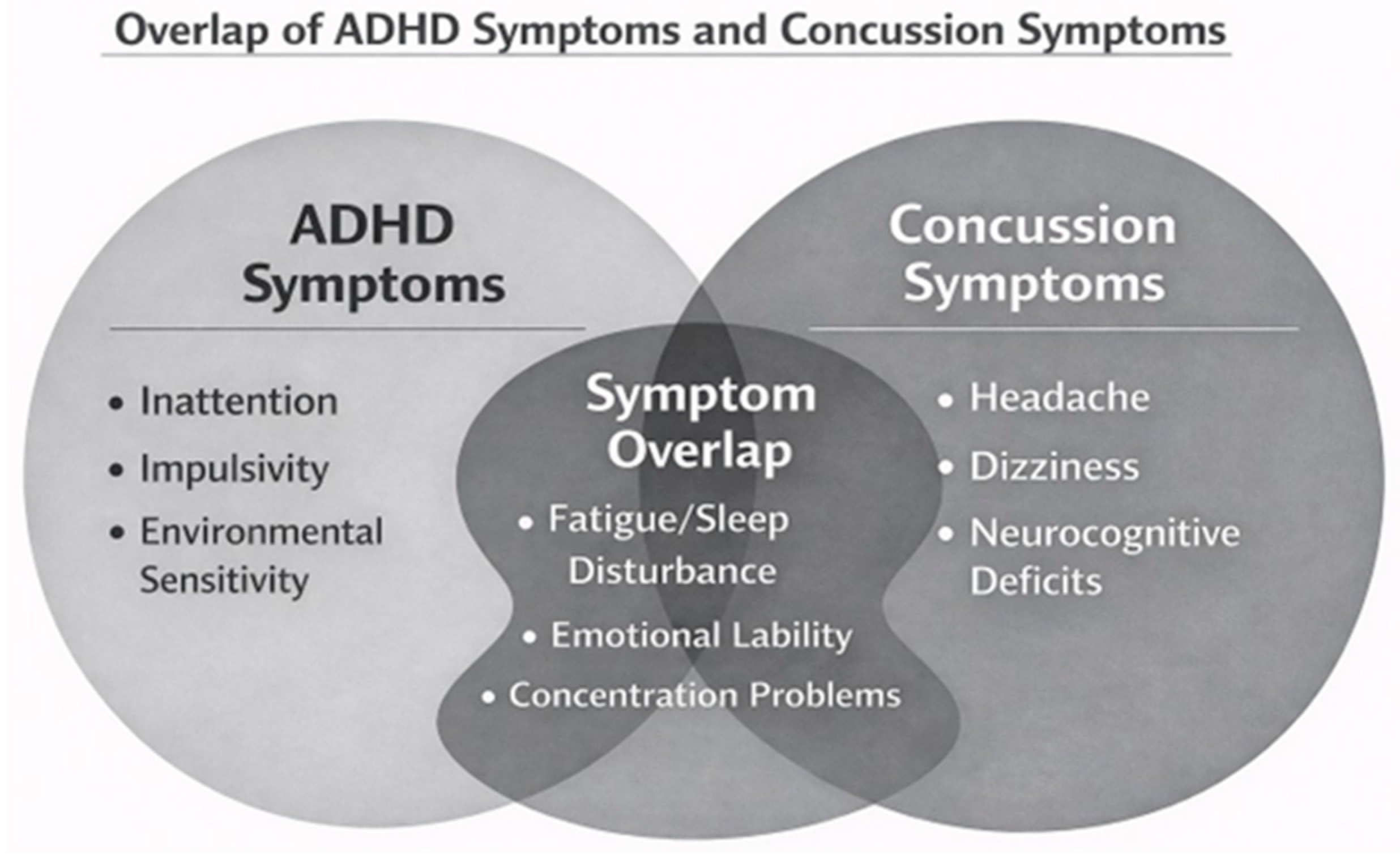
Separating ADHD from SRC remains a significant diagnostic challenge due to overlap in cognitive, behavioral, and emotional symptoms [
43]. Recent advancements utilizing symptom-network analysis show potential in distinguishing symptom clusters more closely associated with ADHD as opposed to acute SRC effects [
48]. Clinical guidelines increasingly underscore the significance of thorough, multidisciplinary evaluations that include psychological assessments and dynamic testing to improve diagnostic precision in this demographic [
43]. The overlap in symptom presentation between ADHD and SRC is illustrated in
Figure 1.
For athletes with ADHD undergoing SRC assessment and treatment, it is critical to integrate multidisciplinary approaches involving neuropsychologists, athletic trainers, doctors, and mental health providers [
13]. Testing interpretations are informed by comprehensive clinical histories, examination of pre-injury symptomatology, and assessment of developmental trajectories [
43]. Neurocognitive assessments are supplemented by psychological interventions that address emotional and behavioral regulation, creating a comprehensive care model that is attentive to the particular requirements of athletes with ADHD [
13,
14].
Assessment of concussion in athletes with ADHD is complicated by baseline cognitive differences, increased symptom reporting, and greater variability in neurocognitive testing, which can reduce test accuracy and increase the risk of misclassification. Standard tools may be less reliable without careful baseline procedures and contextual interpretation, particularly given overlap between ADHD and concussion symptoms. Emerging approaches, such as symptom pattern analysis, may help improve differentiation, but clinical evaluation remains inherently complex. This diagnostic complexity requires clinicians to interpret neurocognitive and symptom data within the context of individual baseline variability, rather than relying solely on standard cutoff scores or normative comparisons. As a result, effective assessment requires a comprehensive, multidisciplinary approach that integrates clinical history, neurocognitive testing, and psychological evaluation.
8. Prevention and Management Strategies in Athletes with ADHD
It is crucial to implement targeted educational programs designed for athletes, coaches, and medical workers [
53]. These may include brief, structured sessions delivered preseason or during early season meetings, such as 15 to 30 min workshops or digital modules, that focus on symptom overlap between ADHD and SRC, increased injury risk, and the importance of accurate symptom reporting to facilitate timely diagnosis and intervention [
21,
53,
54]. Effective communication and support systems encourage adherence to management protocols and reduce stigma surrounding neurodevelopmental conditions within athletic communities [
21,
54].
Medication management must align with regulatory frameworks (e.g., WADA and NCAA policies) while balancing therapeutic benefits and potential risks, including cardiovascular effects and heat intolerance, emphasizing the need for individualized clinical decision-making [
34,
43]. Stimulant therapy may improve attention and impulse control, which can support symptom recognition and potentially reduce injury risk, but these benefits must be weighed against the associated physiological risks during athletic participation. These strategies are particularly important given the neurocognitive and behavioral factors described earlier in this review, which contribute to both increased injury risk and challenges in symptom recognition.
Psychosocial interventions and mental skill training represent new emerging strategies for SRC prevention and rehabilitation among athletes who have ADHD [
21]. Mental skill development programs that aim to improve attention control, emotional control, and coping efficacy have been associated with reductions in injury risk, improved recovery outcomes, and enhance sports performance, although much of the evidence is derived from small samples or heterogeneous study designs [
48]. Implementation of these interventions may be considered as part of comprehensive treatment plans to address the wide-ranging needs of athletes with ADHD [
21,
35].
Prevention and management strategies for athletes with ADHD emphasize education, individualized care, and integrated support systems. Increasing awareness of symptom overlap, injury risk, and the importance of accurate reporting can improve early recognition and adherence to care. Medication management requires careful consideration of both therapeutic benefits and regulatory requirements, with attention to safety and clinical context. In addition, psychosocial interventions and mental skills training may support attention, emotional regulation, and coping, contributing to both injury prevention and recovery. These approaches should be implemented in a manner that accounts for baseline cognitive variability and the diagnostic complexities outlined in earlier sections. Overall, effective management relies on a comprehensive approach that addresses the cognitive, behavioral, and environmental factors influencing outcomes in this population.
9. Current Research Gaps and Future Directions
Despite recent progress in ADHD-SRC interaction studies, research gaps remain outstanding. Previous studies have been limited by small sample sizes, cross-sectional research designs, and highly heterogeneous methodologies, limiting generalizability and causal inference. Large longitudinal studies are needed to better comprehend SRC risk trajectory and recovery in athletes with ADHD, particularly regarding medication status and symptom variability. Future studies should include prospective cohort designs with clearly defined ADHD subgroups, standardized neurocognitive and symptom assessment batteries, and follow up periods extending at least 3 to 6 months post injury to capture recovery trajectories. Standardized research protocols that control for ADHD-related features, such as baseline symptom burden and medication use, would improve comparability and clinical relevance. In addition, much of the existing literature relies on self-reported concussion history and symptom reporting, which may introduce recall and reporting bias. Variability in ADHD diagnostic criteria and symptom severity across studies further complicates interpretation and comparison of findings. Potential confounding factors, including medication status, sport type, and level of competition, are not consistently controlled, limiting the ability to isolate the independent effects of ADHD on concussion outcomes. These factors collectively constrain the generalizability and interpretation of current evidence.
Future modalities, such as advanced neuroimaging techniques, biochemical markers, and complex network symptom analysis, have the potential to improve diagnostic precision and prediction of SRC outcomes in ADHD athletes [
53]. For example, functional neuroimaging may help identify alterations in attention and executive control networks, while blood-based biomarkers could assist in detecting injury severity or monitoring recovery progression, and symptom network analysis may improve differentiation between ADHD related and concussion related symptom clusters [
53]. Genetic markers could also potentially be used to identify profiles of vulnerability and to better individualize management, such as identifying athletes at greater risk for prolonged recovery, but need to be validated before clinical use [
53]. Future studies should more explicitly examine how age, sex, sport type, executive function profiles, and medication status moderate the relationship between ADHD and SRC risk, assessment, and recovery. These research directions have direct implications for clinical decision-making, including improving risk stratification, refining return-to-play protocols, and enhancing individualized management strategies for athletes with ADHD.
Clinical research and practice should adopt a multidisciplinary approach to develop personalized care plans for patients. Integrating knowledge from neuropsychology, sports medicine, psychiatry, and athletic training is crucial. Focusing on patient-centered education, prevention, and rehabilitation programs is also essential. Advocating for individualized return to play protocols is important, considering the unique challenges faced by those with ADHD.
10. Conclusions
In summary, ADHD appears to meaningfully influence SRC risk, assessment, and recovery in athletic populations. Neurodevelopmental differences in attention and executive function may shape both injury vulnerability and post-injury recovery patterns, while also complicating clinical evaluation due to overlapping symptoms. These findings highlight the importance of accounting for baseline neurocognitive and behavioral profiles when managing concussion in athletes with ADHD, including consideration of medication effects and the use of multidisciplinary, multimodal care approaches. This review synthesizes current evidence to clarify the clinical implications of ADHD in concussion care and support more individualized, context-aware approaches to assessment and management. Although the literature continues to evolve, particularly in longitudinal outcomes and emerging diagnostic tools, further research is needed to refine clinical strategies and improve outcomes in this population.