Article

Sustainable Valorization of Kenaf Fiber Waste in Polymer Composites for Drone Arm Structure: A Finite Element Analysis Approach

by
Navaneetha Krishna Chandran
1,
Mohamed Thariq Hameed Sultan
1,2,3,*,
Farah Syazwani Shahar
3 and
Andrzej Łukaszewicz
4,*
1
Laboratory of Biocomposite Technology, Institute of Tropical Forestry and Forest Products (INTROP), Universiti Putra Malaysia, Serdang 43400, Selangor, Malaysia
2
Aerospace Malaysia Innovation Centre (944751-A), Prime Minister’s Department, MIGHT Partnership Hub, Jalan Impact, Cyberjaya 63000, Selangor, Malaysia
3
Department of Aerospace Engineering, Faculty of Engineering, Universiti Putra Malaysia, Serdang 43400, Selangor, Malaysia
4
Institute of Mechanical Engineering, Faculty of Mechanical Engineering, Bialystok University of Technology, Wiejska St. 45C, 15-351 Bialystok, Poland
*
Authors to whom correspondence should be addressed.
J. Compos. Sci. 2025, 9(9), 505; https://doi.org/10.3390/jcs9090505
Submission received: 4 August 2025 / Revised: 3 September 2025 / Accepted: 8 September 2025 / Published: 19 September 2025
(This article belongs to the Special Issue Sustainable Polymer Composites: Waste Reutilization and Valorization)

Abstract

This study investigates the feasibility of kenaf fiber, which is a natural fiber, used as a polymer composite for use in quadcopter arm structures through finite element analysis. The research emphasizes the mechanical performance of various fiber orientations and cross-sectional configurations of the quadcopter arm, focusing on optimizing stress resistance, displacement, and strain characteristics. By relating the relationship between deflection and area moment of inertia of the quadcopter arm, a comparative analysis was conducted for circular hollow tubes, hollow rectangular tubes, and solid rectangular tubes, with the circular hollow tube configuration demonstrating the highest stiffness and minimal deflection. The result from the theoretical calculation and the simulation result of deflection are compared. The study also evaluates the influence of kenaf fiber orientations on the mechanical properties of the composite. Among the seven tested orientations, the sequence 0°, 30°, 45°, 30°, 0° yielded the highest maximum stress (0.3427 MPa), indicating optimal load distribution. Conversely, the 0°, 45°, 0°, 45°, 0° orientation provided the least displacement, making it ideal for high rigidity applications. These findings confirm the potential of kenaf fiber-reinforced polymer as an eco-friendly, lightweight alternative to synthetic fibers for UAV applications, offering a balance of strength, flexibility, and structural stability, and promoting sustainable value in the field of aerospace, as it proves the utilization of waste product into a high-value product.

1. Introduction

Drones, also known as unmanned aerial vehicles (UAVs), are being developed and widely used around the world. Unmanned aerial vehicles (UAVs) are increasingly used across diverse applications, including cargo transportation, medical supply delivery, monitoring, detection, and search and rescue missions [1]. Although UAVs are smaller in size compared to manned aircraft, such as those used for passenger or cargo transport, or military operations, they still require a high level of engineering expertise to ensure proper assembly and airworthiness. A UAV must be capable of operating under diverse environmental conditions and performing missions autonomously with minimal human intervention [2]. Hence, one of the most critical aspects of UAV design is the structural integrity of the airframe. The structure must be sufficiently rigid to support the payload in flight without experiencing structural distress while also being capable of withstanding diverse operational environments.
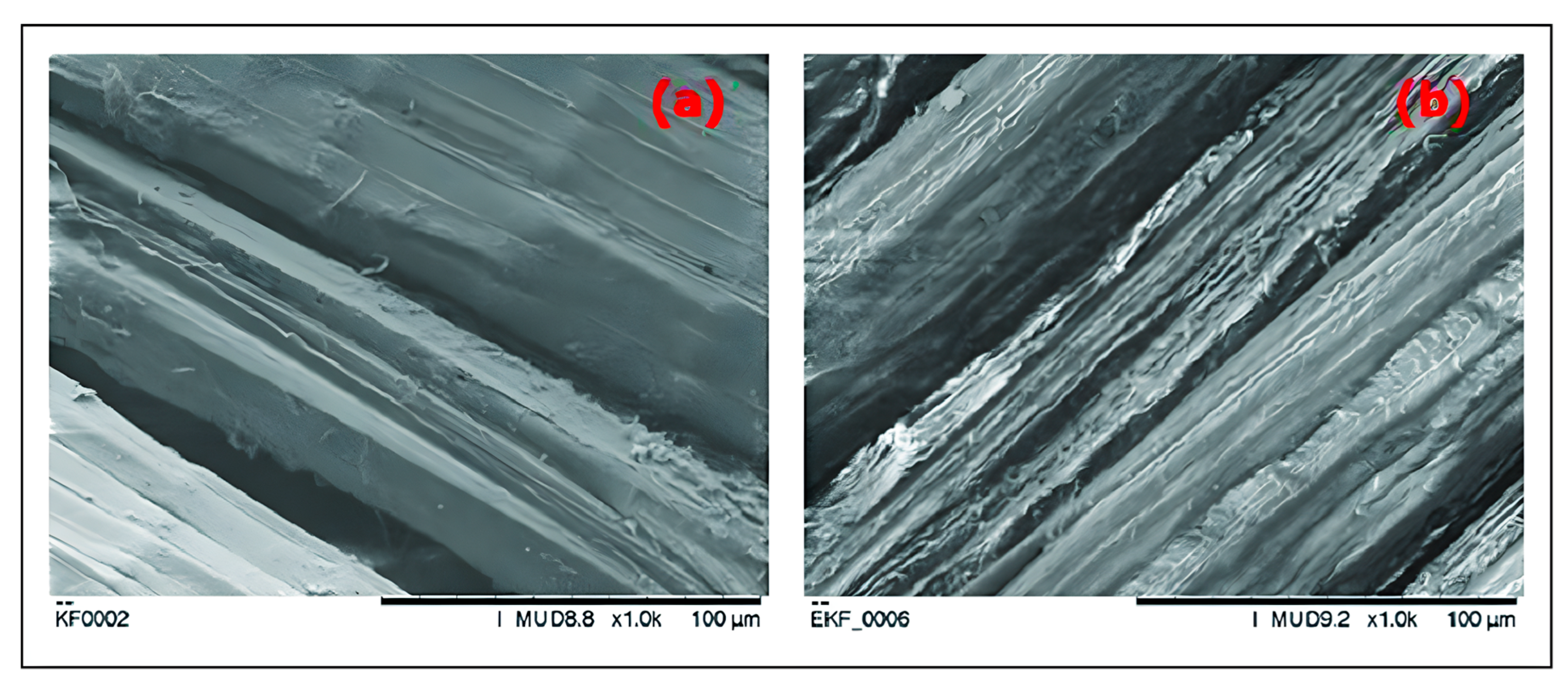
Kenaf (Hibiscus cannabinus, L., family Malvaceae) is a fast-growing herbaceous plant widely cultivated in Malaysia, particularly in the northern regions. It is well-suited to various climatic conditions and can reach maturity within just three months, achieving a height of up to 3 m [3]. Kenaf is primarily cultivated for its fibers, which are extracted from its stems and utilized in various applications, including the production of rope, canvas, and composite panels [4]. To minimize the reliance on logging, kenaf is also utilized as an alternative source of raw material for pulp and paper production [5]. Recently, fiber extracted from kenaf has been processed into woven mat and non-woven mat, and they are being used in the automotive industry [6], textile [7] and boards [8]. Woven mat and non-woven mat of kenaf fiber can be a good matrix for a composite. Figure 1 shows SEM micrograph of surface morphology of raw kenaf fiber.
Kenaf fiber, a natural fiber, serves as an excellent substitute for synthetic fibers due to its ability to offer both environmental and economic benefits [10]. Although kenaf fiber is considered agricultural waste, it has great potential to be used in polymer composites [11]. Utilizing kenaf fiber as a commercial raw material is cost-effective due to its abundant availability and renewable nature. Furthermore, kenaf fiber exhibits mechanical properties comparable to those of synthetic fibers, making it a viable alternative for various applications. Kenaf fiber, an agricultural waste, exhibits mechanical benefits that can be adapted into structural applications in the engineering industry [12]. Two types of fibers can be extracted from the kenaf plant, bast fibers and core fibers, which constitute approximately 35% and 65% of the plant, respectively [13,14]. Research indicates that kenaf fiber can serve as an excellent substitute for glass fiber in polymer composites, offering remarkable mechanical properties that make it suitable as a reinforcing material [15,16,17]. Table 1 shows the mechanical properties of natural fibers and synthetic fibers.
Kenaf is widely used in engineering fields as a matrix in the fiber-reinforced epoxy composite sector due to its property of polymeric composites as a reinforcement material beneath flexural loading circumstances [16,17]. Hence, utilizing kenaf fiber as a substitute for synthetic fibers such as glass fiber and carbon fiber for flexural structural and non-structural applications is widely implemented in engineering industries [18]. Referring to Table 1, the density of kenaf fiber is lower compared to pineapple leaf fiber, sisal fiber, and E-glass fiber. Although carbon fiber has lower density and higher tensile strength compared to kenaf fiber, kenaf has an advantage in biodegradability and biocompatibility. Natural fiber composite can absorb more energy, specifically vibration, compared to carbon fiber, which has higher stiffness compared to kenaf fiber composite. kenaf fiber content in an epoxy composite increase (20–35 wt%), the damping vibration factor correspondingly decreases, with the lowest value being 0.033 at 35 wt% [19].
This property makes the kenaf fiber suitable for being implemented in aerospace applications as the material exhibits a high strength-to-weight ratio, aside from its biodegradable and biocompatible characteristics. In addition, kenaf fiber also has higher tensile strength compared to other types of natural fibers listed in Table 1. Although the feasibility of using kenaf fiber in aircraft applications is still low, kenaf fiber can still be utilized in UAV applications as a reinforced composite.
Over the years, extensive research has been conducted on kenaf fiber-reinforced polymer composites to investigate their comprehensive mechanical behavior under various conditions [20,21,22,23,24]. Numerous studies indicate that the mechanical properties of natural fiber-reinforced polymer composites largely depend on the matrix-fiber adhesion between the polymer matrix and the fibers [25,26,27]. Furthermore, pre-treatment of natural fibers before processing them into technical textiles significantly enhances fiber-matrix adhesion, thereby improving the overall performance of the composite material. Fiber loading also greatly affects the mechanical properties of the fiber-reinforced polymer, especially the tensile strength and flexural properties [28]. Alkaline treatment is a widely used method to remove amorphous hemicellulose, surface impurities, and lignin content of the kenaf fiber. This greatly improves the adhesion between the fiber and the matrix, which improves the mechanical strength of the composite. However, excessive use of alkaline in alkaline solution may also degrade the structure of the fiber [29,30,31]. In short, these surface modifications and process controls significantly improve interfacial adhesion, load transfer, and the mechanical integrity of kenaf fiber composites.
In a kenaf fiber-reinforced polymer, the shape and the appearance (surface) will be contributed by the matrix, while the kenaf fiber will bear the load and stress acts on the composite. In short, the fiber provides stiffness and strength to the composite [18]. Thus, the orientation of the kenaf fiber in the composite plays an important role in the mechanical strength of the polymeric composite [32,33,34]. This study focuses on the application of kenaf fiber-reinforced epoxy in a quadcopter structural application. The most crucial part of a quadcopter’s structure is the quadcopter arm, where the maximum bending occurs. The traditional material that used in the quadcopter structure is aluminum, plastic, or glass fiber. Through this study, the feasibility of kenaf fiber-reinforced epoxy will be studied. However, the material still exhibits less tensile strength compared to synthetic materials, so this weakness can be overcome by fabricating the kenaf fiber-reinforced epoxy into various shapes that can withstand the load exhibited at the quadcopter arm.
Bending stiffness of a material to resist deflection when a bending moment is applied to the structure [35]. The deflection due to the bending moment can be calculated using the formula below:
δ = F L 3 3 E I ,
where δ is deflection,
F is the applied force,
L is the length of the rod,
E is the modulus of elasticity,
I is the area moment of inertia.
According to the formula above, the deflection is affected by three parameters, which are M, E, and I, the parameters E and I describe the bending stiffness of the structure. Hence, the bending stiffness is greatly affected by the area moment of inertia. The area about an axis through the center of an object’s cross-section is described by the area moment of inertia [36]. Different cross-sectional areas have specific formulas to be calculated. Table 2 shows the specific formula for the area moment of inertia for three specific cross-sectional areas that will be analyzed in this study.
A quadcopter’s arm must resist deflection due to the load applied at the end of the arm. One end of the quadcopter’s arm will be secured to the body of the quadcopter, while the other end will be the free end, where the motor of the quadcopter will be attached. In a static condition, the quadcopter arm should resist the downward force exerted by the motor’s weight. While in flying condition, the arm should exhibit minimal deflection due to the upward thrust force exerted by the propeller at the free end of the quadcopter arm. Thus, to achieve the minimal deflection, it is important to implement a suitable cross-sectional area of the drone arm. The purpose of this study is to show the relation between how the cross-sectional area of the quadcopter arm affects the deflection of the arm due to the load at the free end of the arm. Since kenaf fiber-reinforced epoxy is an orthotropic material, it is essential to run the simulation to find the deflection under the load, which will be shown below.

2. Materials and Methods

2.1. Relationship Between the Cross-Sectional Area of the Kenaf FiberReinforced Epoxy Quadcopter Arm and the Deflection

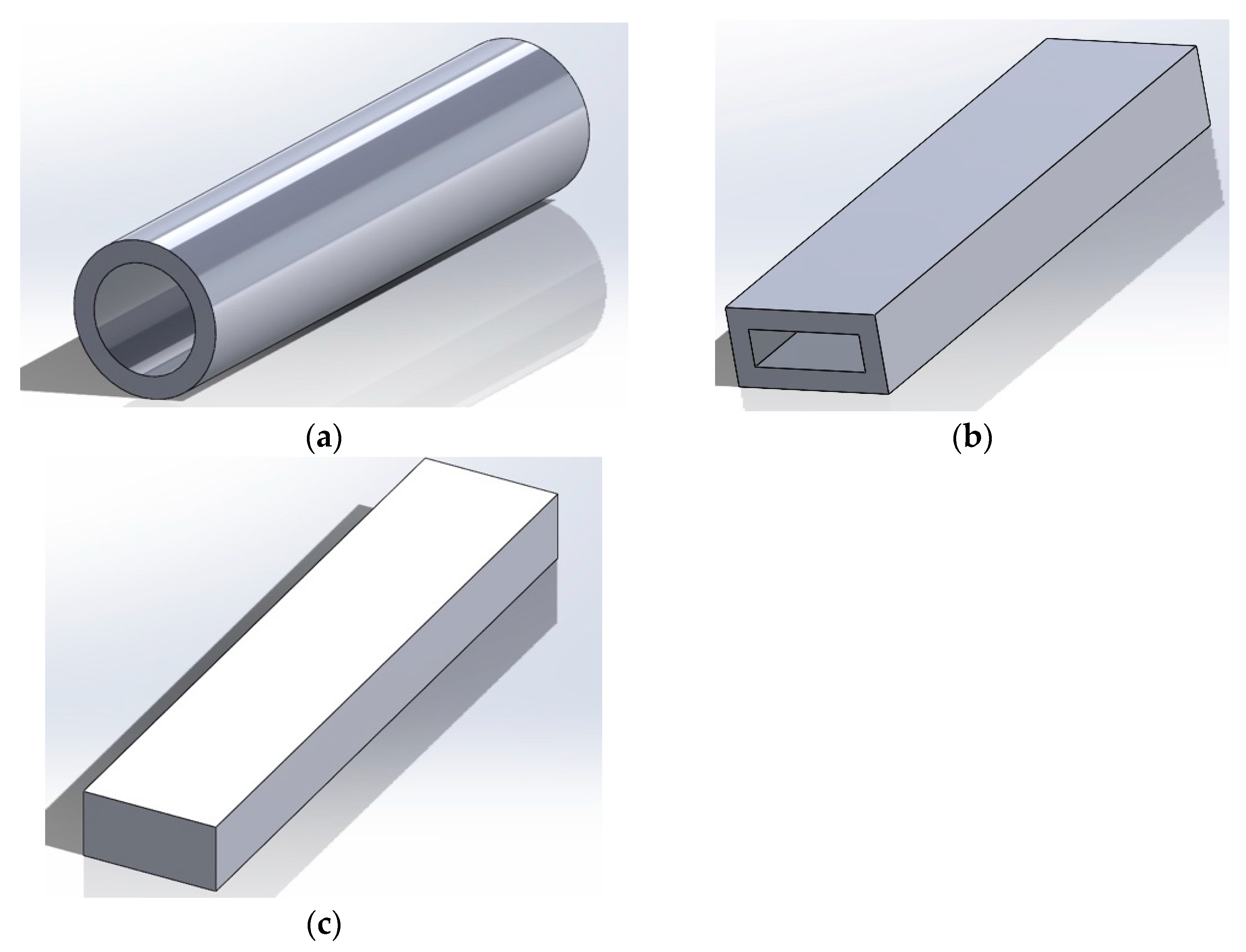
Three models of quadcopter arms were developed using SolidWorks CAD software (SolidWorks 2022, Dassault Systèmes, Kuala Lumpur, Malaysia). The geometric design of the quadcopter was established based on specifications for a quadcopter capable of carrying a 3 kg payload, equipped with 11-inch propellers. Table 2 shows the front view and side view of the quadcopter’s arm together with the dimensions. The length of each quadcopter arm is constant, 150 mm. Figure 2 shows the three quadcopter arms with different cross-sections. The thickness of the wall of each quadcopter arm design is also set constant to 5 mm, where 5 layers of kenaf fiber-reinforced epoxy will be stacked on the wall, where each layer of kenaf fiber-reinforced epoxy being 1 mm thick. Upon completing the design process, the area moment of inertia for each arm was calculated using the formula respective for each cross-sectional area of the quadcopter arm. The computed values of the area moment of inertia for each quadcopter arm design are presented in Table 3.
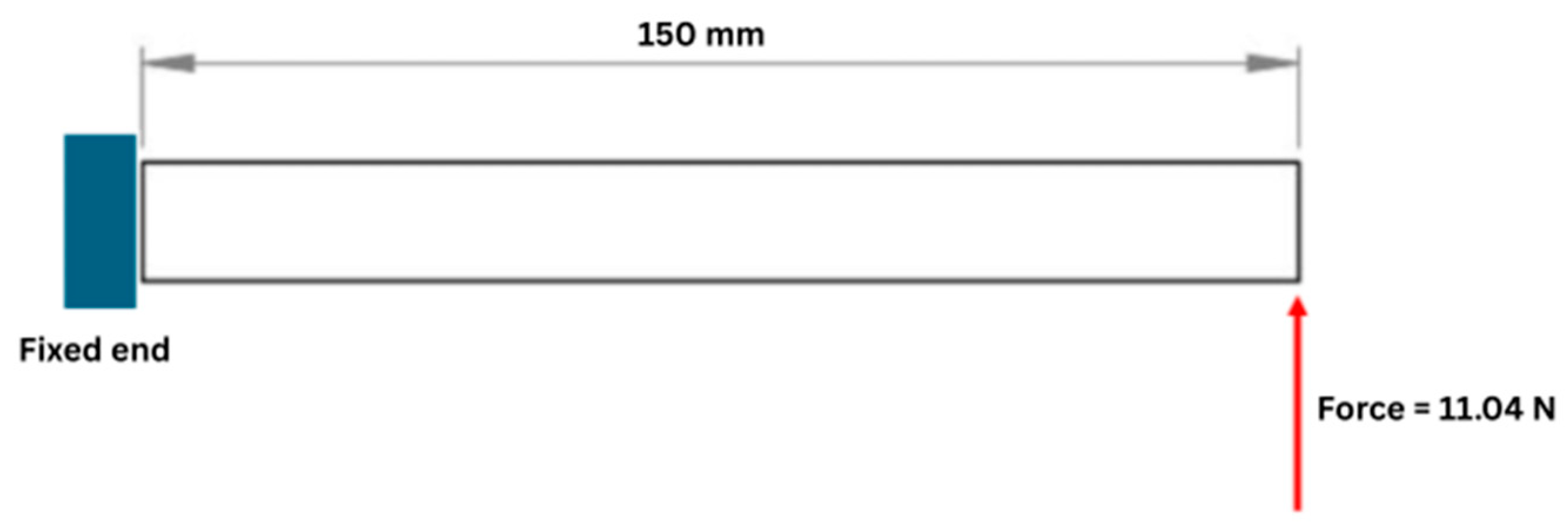
The results indicate that the circular hollow tube exhibits the highest area moment of inertia at 54,487 mm4, outperforming both the hollow rectangular and flat rectangular tubes. Consequently, it can be concluded that the circular hollow tube offers the highest stiffness, as deflection is inversely proportional to the area moment of inertia, a higher area moment of inertia results in lower deflection. The theoretical deflection was calculated using the provided formula, which requires parameters such as the force at the free end of the quadcopter arm during flight, the length of the quadcopter arm, the area moment of inertia, and the modulus of elasticity. The modulus of elasticity (E) for kenaf fiber-reinforced epoxy with 40% volume fraction is 9.18 GPa [37]. Figure 3 illustrates the graphical representation of the load acting on the quadcopter arm.
According to Figure 3, the upward thrust force applied at the end of the quadcopter arm is 11.04 N. As discussed previously, the total mass of the quadcopter is estimated to be 3 kg. Hence, the thrust required for the quadcopter to hover can be calculated by multiplying the mass of the quadcopter by gravitational acceleration, 9.81 ms−2. The hovering thrust required by the quadcopter is 29.43 N. A safety factor of 1.5 was applied to the thrust to compensate for the dynamic random loads, motor gyroscopic effect, and motor vibration, which results in 11.04 N of thrust acting on each quadcopter arm. The theoretical maximum deflection that has been calculated using the moment of inertia of quadcopter arm is presented in Table 4.

2.2. Relation Between the Kenaf Fiber Orientation in the Kenaf Fiber-Reinforced Polymer with the Mechanical Properties of the Quadcopter Arm

The simulation of the finite element analysis (FEA) for the quadcopter arms was conducted by defining the parameters and boundary conditions. Initially, the mechanical properties of kenaf fiber-reinforced epoxy were assigned to the quadcopter arms. These mechanical properties, detailed in Table 5, were obtained from previous research. In this study, kenaf fiber was utilized in the form of a woven mat for reinforcement within the epoxy matrix. The material exhibits orthotropic behavior, with mechanical properties varying along three different axes. However, since the kenaf is in a woven mat form, the properties along the x and y axes remain uniform [38]. The tensile strength of kenaf fiber provided in Table 1 is higher compared to the tensile strength of kenaf fiber-reinforced epoxy provided in Table 5. This is because the tensile strength of kenaf fiber is tested individually under a controlled environment. However, composites are often considered mixtures, as they consist of bulk fibers, resin, and voids. This may reduce the structural integrity of the composite, which causes the lower tensile strength [39].
After assigning the material properties to the quadcopter arms, the shell definition for the structure was established. The kenaf fiber-reinforced epoxy consists of five layers of woven mat kenaf fiber, with the orientation of the layers kept consistent at 0°, 45°, 0°, 45°, and 0°. Once the shell structure was defined, the boundary conditions were specified. One end of the quadcopter arm, 30 mm from the end, was designated as fixed geometry to represent the attachment point to the quadcopter, as illustrated in Figure 3. An 11.04 N upward load was applied at the free end of the quadcopter arm to simulate the thrust force exerted by the quadcopter’s propeller. Following the assignment of boundary conditions, the mesh was applied to the structure, with the mesh quality set to “fine” to ensure accurate simulation results. Mesh breaks the continuous structure into smaller sections, where the computation of displacement, stress, and strain is calculated in each section. The smaller the section, the higher the accuracy of the simulation, with the cost of high computational power required. The parameters for the assigned mesh are detailed in Table 6.
The maximum element size and minimum element size are set at 2.17 mm, which are uniform sizes to avoid abrupt transitions that cause poor element quality. The minimum number of elements in a circle is set to 8, which is to measure circumferential stress variation. Mesh independence was verified by performing a mesh refinement study, wherein successive reductions in element size were tested until the variation in maximum von Mises stress became negligible (<5%). The selected 2.17 mm element size was found to be a convergence-optimized value, balancing accuracy with manageable computational cost.
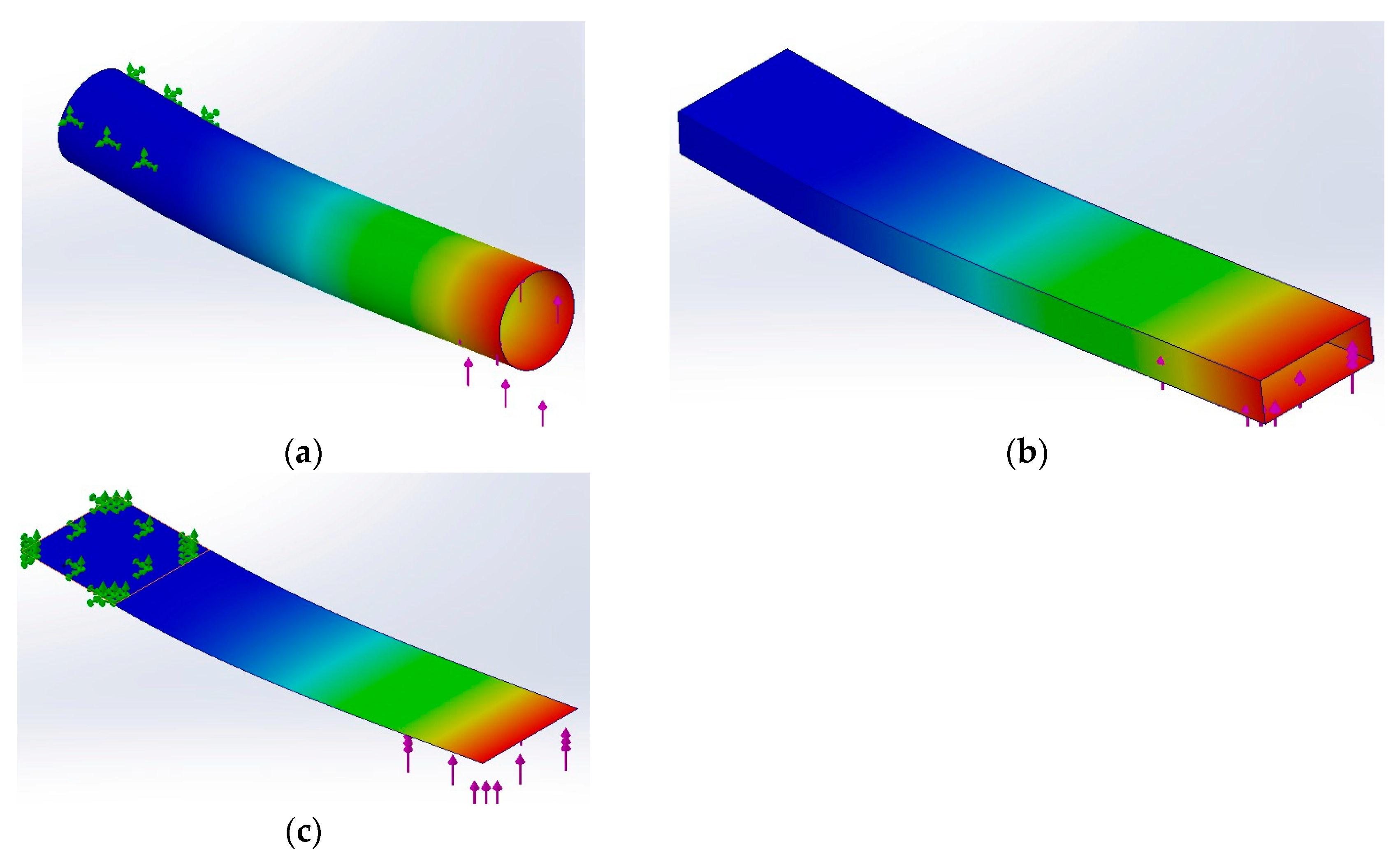
The simulation was conducted after assigning the necessary boundary conditions. As shown in Figure 3, the quadcopter arm has been set to be fixed at one end and the other end set to be free, as one end will be mounted to the quadcopter body. An upward trust is being assigned at the free end of the quadcopter arm, at which the resultant upward force will act on the quadcopter end. However, other external in-flight effects such as aerodynamic effects, vibration, gust, and motor gyroscopic effects have been neglected. To compensate for this, a load factor of 1.5 has been assigned to the free end of the quadcopter arm to represent aggressive maneuvers, thrust transients, and gusts.
The displacement of the quadcopter arm, corresponding to three different cross-sectional configurations, was analyzed under the thrust force applied by the propeller at the free end of the arm. The simulation results were validated by comparing them with theoretical displacement values calculated earlier, as presented in Table 4. The cross-sectional configuration of the quadcopter arm that demonstrated the least displacement was selected for further investigation in Part B of the study.
The simulation was conducted after assigning the necessary boundary conditions. The displacement of the quadcopter arm, corresponding to three different cross-sectional configurations, was analyzed under the thrust force applied by the propeller at the free end of the arm. The simulation results were validated by comparing them with theoretical displacement values calculated earlier, as presented in Table 4. The cross-sectional configuration of the quadcopter arm that demonstrated the least displacement was selected for further investigation in Part B of the study.
Part B of the study focuses on evaluating the strength of the quadcopter arm by varying the fiber orientation in the kenaf fiber-reinforced epoxy composite. The selected cross-sectional configuration of the quadcopter arm from Part A was subjected to simulations with different fiber orientations, while maintaining constant boundary conditions. The results of the simulations identified the optimal kenaf fiber orientation that provides the highest strength. This orientation will be applied to the best cross-sectional configuration identified in Part A, ensuring the most suitable design for the quadcopter arm.

3. Results and Discussion

3.1. Simulation of Different Cross-Sectional Area of the Kenaf Fiber-Reinforced Epoxy Quadcopter Arm and the Deflection

Part A of the study investigates the relationship between the cross-sectional configuration of the quadcopter arm and its stiffness. The stiffness of the arm is inversely represented by its deflection; the higher the stiffness, the lower the deflection caused by the thrust acting on the free end of the arm. The simulation results provided displacement data for three quadcopter arms with different cross-sectional configurations. Figure 4 shows the maximum deflection obtained from FEA of three types of quadcopter arms. These displacement values were compared to the theoretical values of displacement, and the percentage error between the simulation and theoretical results was calculated. Table 7 presents the maximum displacement for each type of quadcopter arm and includes a comparison with the theoretical displacement values due to the thrust at the free end.
According to the results obtained, the circular hollow tube exhibits the lowest deflection compared to the other two quadcopter arm configurations. Based on the deflection formula, the stiffness of a structure is influenced by both the modulus of elasticity and the area moment of inertia. Since all three quadcopter arms were assigned the same material—kenaf fiber-reinforced polymer—the modulus of elasticity (E) for each arm remains constant at 9.18 GPa. However, the cross-sectional configuration significantly affects the area moment of inertia. Among the three configurations, the circular hollow tube has the highest area moment of inertia, followed by the rectangular hollow tube and the rectangular plane arm. As a result, the circular hollow tube quadcopter arm demonstrates the lowest deflection under load, making it the most rigid and suitable configuration for UAV applications.
The displacement results obtained from the simulation were validated by comparing them to the theoretical values calculated, with a percentage error of less than 5%, confirming the accuracy of the simulation. Additionally, the fabrication process for hollow cylindrical tubes is simpler compared to hollow rectangular tubes, making them more feasible for use in the UAV industry as quadcopter arms. Compared to rectangular designs, circular hollow tubes are lighter due to the hollow section in the middle, making them particularly suitable for UAV applications where weight is a critical factor. Structures exhibiting high deflection are unsuitable for use as quadcopter arms, as the arms are expected to maintain rigidity. Therefore, based on this study, it can be concluded that the circular hollow tube is the most suitable cross-sectional configuration for quadcopter arms, as it demonstrates the lowest deflection under applied load.

3.2. Simulation of Different Kenaf Fiber Orientation in the Kenaf Fiber-Reinforced Polymer with the Mechanical Properties of the Quadcopter Arm

The orientation of kenaf fibers in kenaf fiber-reinforced epoxy composites plays a critical role in determining the mechanical properties of the material, particularly its tensile strength. Previous studies have demonstrated that woven mats with stacked fiber orientations exhibit superior tensile strength compared to composites with randomly oriented fibers [42]. Additionally, unidirectional woven mats of kenaf fibers have been found to contribute to higher tensile strength compared to non-woven mats [41]. In the present study, five different orientations of unidirectional woven kenaf fiber mats were evaluated for their mechanical performance. Moreover, seven distinct kenaf fiber orientations were incorporated into the design of a circular hollow tube quadcopter arm. Among these orientations, the configuration analyzed in Part A of this study exhibited the lowest deflection. The results, including maximum stress, maximum displacement, and maximum strain for the circular hollow tube quadcopter arm with the seven kenaf fiber orientations, are presented in Table 8.
According to Table 8, the orientation 0°, 30°, 45°, 30°, 0° provides the highest maximum stress (0.5589 MPa). This suggests that the layering sequence optimally distributes the load, reducing stress concentrations. Other orientations, such as 30°, 0°, 30°, 0°, 30°, have lower maximum stress (0.3337 MPa), likely due to less effective load distribution and alignment along the stress direction. Properly oriented fibers align closer to the primary load direction, increasing the load-bearing capacity. Orientation sequences incorporating 0° layers are better at handling longitudinal loads, which results in higher stress resistance. Orientations 45°, 30°, 0°, 30°, 45° and 30°, 45°, 0°, 45°, 30° produce the highest displacements (4.442 × 10⁻⁵ and 4.425 × 10⁻⁵ m, respectively), while 0°, 45°, 0°, 45°, 0° yields the least (2.527 × 10⁻⁵ m). Displacement increases with less stiffness in the fiber orientation. Orientations involving higher angles (45° or 30°) introduce shear deformation, resulting in higher displacement. Conversely, orientations with more 0° layers provide higher stiffness and reduce displacement.
The highest strain (8.998 × 10⁻⁵) occurs in orientations 45°, 30°, 0°, 30°, 45°, and 30°, 45°, 0°, 45°, 30°, while 0°, 45°, 0°, 45°, 0°, has the lowest (4.376 × 10⁻⁵). Orientations with higher angular components (30°, 45°) experience more significant strain under stress because of their ability to deform in shear. Lower strain occurs in 0° dominant orientations due to better axial stiffness. Orientations combining 0° with 45° leverage both axial and shear load-bearing capabilities, balancing strength and deformation. Configurations maximizing stress resistance, such as 0°, 30°, 45°, 30°, 0°, tend to have moderate displacement and strain. Conversely, orientations with more 45° layers exhibit higher flexibility but lower stress resistance. Hence, the 0°, 45°, 0°, 45°, 0° kenaf fiber orientation is the most suitable fiber orientation for the circular hollow tube quadcopter arm, since the application requires high resistance against displacement.
However, the manufacturing process of the quadcopter’s cylindrical hollow tube arm will be challenging, especially with complex fiber orientation, like 0°, 30°, 45°, 30°, 0°. This is because the fabrication process will require a high level of precision, which eventually increases the cost of production. So, to mitigate this challenge, the raw material (kenaf fiber) must be ensured must be constant in terms of fiber content, tow size, areal weight, moisture content, and weave geometry. Using a woven mat of kenaf fiber will greatly reduce the risk of inconsistency in material parameters. In addition, utilizing advanced equipment, such as a CNC machine for the preparation of material and robotic fabric placement or automated fiber placement for fabrication, will greatly increase the accuracy of the fabrication process. Although manual fabrication methods, like the hand lay-up method, are cost-saving, they reduce the accuracy of the process since there might be human errors involved in the process. Hence, through these mitigation methods, the challenge in achieving the complex fiber orientation in kenaf fiber-reinforced epoxy composite can be overcome.
Kenaf fiber-reinforced epoxy undergoes degradation like most composite structures. Kenaf fiber-reinforced epoxy is capable of absorbing humidity at a high rate at the beginning until it reaches the saturated point, similarly to a Fickian diffusion pattern. This may cause micro-cracking and degradation along the fiber-matrix interference [43]. This can be overcome by storing the composite in low-humidity area or applying a thin layer of hydrophobic material on the surface of the composite to reduce the humidity penetration. Apart from humidity, excessive exposure to ultraviolet (UV) light will also degrade the fiber, where a previous study shows exposure to UV light up to 1500 h induces photo-oxidation, which eventually reduces the performance of the composite [44]. These are the long-term behaviors of kenaf fiber-reinforced epoxy, which may likely degrade without proper maintenance. Hence, proper maintenance of the composite structure to maintain the structural integrity of the composite.
In addition, repetition in obtaining mechanical data will be performed to achieve more accurate data. This is because kenaf fiber-reinforced epoxy consists of fiber, matrix, and void. The void is inevitable, especially when the fabrication method used is the traditional hand lay-up process. Other than that, the inconsistent fiber volume fraction, local orientation deviations, and microstructural heterogeneities will exhibit slight variability in the result. Spatial variability in fiber density and orientation prominently influences local strain responses [45,46]. However, this paper focuses on a simulation study as a primary method to evaluate the mechanical performance of the quadcopter arm under assigned load, which enables rapid iteration on geometry, lay-up, and material options before committing resources to tooling and manufacturing.

4. Conclusions

Kenaf fiber-reinforced polymer can be a great substitute for synthetic material applications in UAVs. As kenaf fiber has a density of 1400 kg/m3, which is lower compared to fiberglass, this shows that kenaf fiber is suitable to be used in aerospace industries, especially in UAV applications, as material used in aerospace must be lower in weight to avoid the reduction in performance of the UAV. However, compared to glass fiber and carbon fiber, the kenaf fiber exhibits lower mechanical strength, especially tensile strength, which is 295–930 MPa. This can be overcome by altering the shape of the structure. This study also analyzed the effect of the area moment of inertia of a structure on the deflection. It has been concluded that a tube with a hollow circular cross-section has the highest area moment of inertia, which exhibits the lowest deflection, which was 54,487 mm4. The theoretical value has been calculated. A simulation study is also being carried out, where the deflection value of three quadcopter rod models has been created and assigned a load. The value of deflection obtained from the simulation is then compared with the theoretical value, with a percentage error of less than 1.77%.
This study also analyzed the effect of woven kenaf fiber mat orientation on the mechanical strength of the structure. The quadcopter rod continuously undergoes bending and twisting throughout the flying cycle. Hence, fiber mat orientation is crucial to achieve the optimum mechanical strength. Hence, five combinations of fiber are being tested in the simulation. A total of five layers of fiber were being stacked in the kenaf fiber-reinforced polymer.
The performance of kenaf fiber-reinforced epoxy can be further enhanced by performing surface treatment on the kenaf fiber. Alkaline treatment, where the kenaf fiber will be treated with sodium hydroxide, removes lignin, hemicellulose, and impurities on the fiber and enhances the fiber-matrix adhesion. Ultimately, treated fibers exhibit high tensile and flexural strength, stiffness, and dimensional stability. Hence, fiber treatment is crucial in enhancing the mechanical reliability and durability of the fiber composite. This simulation does not quantify fatigue life, progressive moisture uptake, UV aging, or biological degradation explicitly. As a further study, the data that has been obtained from this study becomes the groundwork to carry out the physical manufacturing and testing that provides the real environmental analysis data. Hence, through the simulation, it can be concluded that the orientation sequence of 0°, 45°, 0°, 45°, 0° exhibits the minimum displacement, which is 1.548 × 10⁻⁵ m. With the combination of a hollow circular cross-sectional tube and woven kenaf fiber with orientation of 0°, 45°, 0°, 45°, 0°, a quadcopter arm, with sufficient strength, can be made, and it is feasible to be used in UAV structural applications.

Author Contributions

Conceptualization, N.K.C., F.S.S., M.T.H.S., and A.Ł.; methodology, N.K.C.; writing—original draft preparation, N.K.C.; writing—review and editing, F.S.S., M.T.H.S., and A.Ł.; visualization, N.K.C.; supervision, M.T.H.S., and A.Ł.; project administration, F.S.S.; funding acquisition, A.Ł. and M.T.H.S. All authors have read and agreed to the published version of the manuscript.

Funding

This research was funded by the Ministry of Higher Education Malaysia (MOHE) under the Higher Institution Centre of Excellence grant number [HICOE2.0/5210004] at the Institute of Tropical Forestry and Forest Products. This research was funded by the Ministry of Science and Higher Education of Poland, allocated to the Faculty of Mechanical Engineering, Bialystok University of Technology, under the academic project in the discipline of mechanical engineering grant number [WZ/WM-IIM/5/2023].

Institutional Review Board Statement

Not applicable.

Informed Consent Statement

Not applicable.

Data Availability Statement

The original contributions presented in this study are included in the article. Further inquiries can be directed to the corresponding authors.

Acknowledgments

The authors would like to thank the Department of Aerospace Engineering, Faculty of Engineering, Universiti Putra Malaysia, and the Laboratory of Biocomposite Technology, Institute of Tropical Forestry and Forest Products (INTROP), Universiti Putra Malaysia, for their close collaboration in this study.

Conflicts of Interest

The authors declare no conflicts of interest.

References

  1. Zaitseva, E.; Levashenko, V.; Mukhamediev, R.; Brinzei, N.; Kovalenko, A.; Symagulov, A. Review of Reliability Assessment Methods of Drone Swarm (Fleet) and a New Importance Evaluation Based Method of Drone Swarm Structure Analysis. Mathematics 2023, 11, 2251. [Google Scholar] [CrossRef]
  2. Abdul, A.; Bisma, P.; Nagma, P.; Sher, A.K.; Md Abdul, R.; Jalal, M.Z.; Omar, S. Reviews on Design and Development of Unmanned Aerial Vehicle (Drone) for Different Applications. J. Mech. Eng. Res. Dev. 2022, 45, 53–69. [Google Scholar]
  3. Amaducci, S.; Amaducci, M.T.; Benati, R.; Venturi, G. Crop Yield and Quality Parameters of Four Annual Fibre Crops (Hemp, Kenaf, Maize and Sorghum) in the North of Italy. Ind. Crops Prod. 2000, 11, 179–186. [Google Scholar] [CrossRef]
  4. Nishino, T.; Hirao, K.; Kotera, M.; Nakamae, K.; Inagaki, H. Kenaf Reinforced Biodegradable Composite. Compos. Sci. Technol. 2003, 63, 1281–1286. [Google Scholar] [CrossRef]
  5. Pande, H.; Roy, D. Influence of Fibre Morphologyand Chemical Composition on the Papermaking Potential of Kenaf Fibers. Pulp Pap. Can. 1998, 99, 31–34. [Google Scholar]
  6. Magurno, A. Vegetable Fibres in Automotive Interior Components. Angew. Makromol. Chem. 1999, 272, 99–107. [Google Scholar] [CrossRef]
  7. Ramaswamy, G.N.; Craft, S.; Wartelle, L. Uniformity and Softness of Kenaf Fibers for Textile Products. Text. Res. J. 1995, 65, 765–770. [Google Scholar] [CrossRef]
  8. Kawai, S.; Ohnishi, K.; Okudaira, Y.; Zhang, M. Manufacture of Oriented Fiberboard from Kenaf Bast Fibers and Its Application to the Composite Panel. Proc. Int’l Kenaf Symp. 2000, 144–148. [Google Scholar]
  9. Owen, M.M.; Achukwu, E.O.; Arukalam, I.O.; Romli, A.Z. Effect of Varying Processing Temperatures on the Mechanical and Microstructural Properties of Kenaf Fibre-ABS Composites for Moderate Temperature Applications. Polym. Renew. Resour. 2022, 13, 154–169. [Google Scholar] [CrossRef]
  10. Tholibon, D.; Tharazi, I.; Sulong, A.B.; Muhamad, N.; Ismail, N.F.; Md Radzi, M.K.F.; Mohd Radzuan, N.A.; Hui, D. Kenaf Fiber Composites: A Review on Synthetic and Biodegradable Polymer Matrix. J. Kejuruter. 2019, 31, 65–76. [Google Scholar] [CrossRef]
  11. Jawaid, M.; Abdul Khalil, H.P.S. Cellulosic/Synthetic Fibre Reinforced Polymer Hybrid Composites: A Review. Carbohydr. Polym. 2011, 86, 1–18. [Google Scholar] [CrossRef]
  12. Saba, N.; Jawaid, M.; Alothman, O.Y.; Paridah, M.T. A Review on Dynamic Mechanical Properties of Natural Fibre Reinforced Polymer Composites. Constr. Build. Mater. 2016, 106, 149–159. [Google Scholar] [CrossRef]
  13. Karimi, S.; Tahir, P.M.; Karimi, A.; Dufresne, A.; Abdulkhani, A. Kenaf Bast Cellulosic Fibers Hierarchy: A Comprehensive Approach from Micro to Nano. Carbohydr. Polym. 2014, 101, 878–885. [Google Scholar] [CrossRef] [PubMed]
  14. Abdul Khalil, H.P.S.; Yusra, A.F.I.; Bhat, A.H.; Jawaid, M. Cell Wall Ultrastructure, Anatomy, Lignin Distribution, and Chemical Composition of Malaysian Cultivated Kenaf Fiber. Ind. Crops Prod. 2010, 31, 113–121. [Google Scholar] [CrossRef]
  15. Tahir, P.M.; Ahmed, A.B.; SaifulAzry, S.O.A.; Ahmed, Z. Retting Process of Some Bast Plant Fibres and Its Effect on Fibre Quality: A Review. Bioresources 2011, 6, 5260–5281. [Google Scholar] [CrossRef]
  16. Saba, N.; Paridah, M.T.; Jawaid, M. Mechanical Properties of Kenaf Fibre Reinforced Polymer Composite: A Review. Constr. Build. Mater. 2015, 76, 87–96. [Google Scholar] [CrossRef]
  17. Faruk, O.; Bledzki, A.K.; Fink, H.-P.; Sain, M. Biocomposites Reinforced with Natural Fibers: 2000–2010. Prog. Polym. Sci. 2012, 37, 1552–1596. [Google Scholar] [CrossRef]
  18. Yousif, B.F.; Shalwan, A.; Chin, C.W.; Ming, K.C. Flexural Properties of Treated and Untreated Kenaf/Epoxy Composites. Mater. Des. 2012, 40, 378–385. [Google Scholar] [CrossRef]
  19. Rajamanickam, S.K.; Ravichandran, V.; Sattanathan, S.; Ganapathy, D.; Arockia Dhanraj, J. Experimental Investigation on Mechanical Properties and Vibration Damping Frequency Factor of Kenaf Fiber Reinforced Epoxy Composite. In Proceedings of the International Conference on Advances in Design, Materials, Manufacturing and Surface Engineering for Mobility (ADMMS2019), Tamilnadu, India, 11 October 2019. [Google Scholar]
  20. Akil, H.M.; Omar, M.F.; Mazuki, A.A.M.; Safiee, S.; Ishak, Z.A.M.; Abu Bakar, A. Kenaf Fiber Reinforced Composites: A Review. Mater. Des. 2011, 32, 4107–4121. [Google Scholar] [CrossRef]
  21. Chow, P.; Lambert, R.J.; Bowers, C.T.; McKenzie, N.; Younquist, J.A.; Muehl, J.H.; Kryzsik, A.M. Physical and Mechanical Properties of Composite Panels Made From Kenaf Plant Fibers and Plastics. In Proceedings of the 2000 International Kenaf Symposium, Hiroshima, Japan, 3–14 October 2000. [Google Scholar]
  22. Sanadi, A.R.; Caulfield, D.F.; Jacobson, R.E.; Rowell, R.M. Renewable Agricultural Fibers as Reinforcing Fillers in Plastics: Mechanical Properties of Kenaf Fiber-Polypropylene Composites. Ind. Eng. Chem. Res. 1995, 34, 1889–1896. [Google Scholar] [CrossRef]
  23. Omar, M.F.; Md Akil, H.; Ahmad, Z.A.; Mazuki, A.A.M.; Yokoyama, T. Dynamic Properties of Pultruded Natural Fibre Reinforced Composites Using Split Hopkinson Pressure Bar Technique. Mater. Des. 2010, 31, 4209–4218. [Google Scholar] [CrossRef]
  24. Rowell, R.M.; Sanadi, A.; Jacobson, R.; Caulfield, D. Kenaf Properties, Processing and Products; Mississippi State University: Starkville, MS, USA, 1999. [Google Scholar]
  25. Herrera-Franco, P.J.; Valadez-González, A. Mechanical Properties of Continuous Natural Fibre-Reinforced Polymer Composites. Compos. Part A Appl. Sci. Manuf. 2004, 35, 339–345. [Google Scholar] [CrossRef]
  26. Sapuan, S.M.; Leenie, A.; Harimi, M.; Beng, Y.K. Mechanical Properties of Woven Banana Fibre Reinforced Epoxy Composites. Mater. Des. 2006, 27, 689–693. [Google Scholar] [CrossRef]
  27. Ochi, S. Mechanical Properties of Kenaf Fibers and Kenaf/PLA Composites. Mech. Mater. 2008, 40, 446–452. [Google Scholar] [CrossRef]
  28. Kwon, H.J.; Sunthornvarabhas, J.; Park, J.W.; Lee, J.H.; Kim, H.J.; Piyachomkwan, K.; Sriroth, K.; Cho, D. Tensile Properties of Kenaf Fiber and Corn Husk Flour Reinforced Poly(Lactic Acid) Hybrid Bio-Composites: Role of Aspect Ratio of Natural Fibers. Compos. B Eng. 2014, 56, 232–237. [Google Scholar] [CrossRef]
  29. Bichang’A, D.O.; Aramide, F.O.; Oladele, I.O.; Alabi, O.O. A Review on the Parameters Affecting the Mechanical, Physical, and Thermal Properties of Natural/Synthetic Fibre Hybrid Reinforced Polymer Composites. Adv. Mater. Sci. Eng. 2022, 2022, 7024099. [Google Scholar] [CrossRef]
  30. Ismail, N.F.; Mohd Radzuan, N.A.; Sulong, A.B.; Muhamad, N.; Che Haron, C.H. The Effect of Alkali Treatment on Physical, Mechanical and Thermal Properties of Kenaf Fiber and Polymer Epoxy Composites. Polymers 2021, 13, 2005. [Google Scholar] [CrossRef]
  31. Asim, M.; Jawaid, M.; Abdan, K.; Ishak, M.R. Effect of Alkali and Silane Treatments on Mechanical and Fibre-Matrix Bond Strength of Kenaf and Pineapple Leaf Fibres. J. Bionic Eng. 2016, 13, 426–435. [Google Scholar] [CrossRef]
  32. Jacob, M.; Thomas, S.; Varughese, K.T. Mechanical Properties of Sisal/Oil Palm Hybrid Fiber Reinforced Natural Rubber Composites. Compos. Sci. Technol. 2004, 64, 955–965. [Google Scholar] [CrossRef]
  33. Ku, H.; Wang, H.; Pattarachaiyakoop, N.; Trada, M. A Review on the Tensile Properties of Natural Fiber Reinforced Polymer Composites. Compos. B Eng. 2011, 42, 856–873. [Google Scholar] [CrossRef]
  34. Brahim, S.B.; Cheikh, R. Ben Influence of Fibre Orientation and Volume Fraction on the Tensile Properties of Unidirectional Alfa-Polyester Composite. Compos. Sci. Technol. 2007, 67, 140–147. [Google Scholar] [CrossRef]
  35. Muir, P.; Johnson, K.A.; Markel, M.D. Area Moment of Inertia for Comparison of Implant Cross-Sectional Geometry and Bending Stiffness. Vet. Comp. Orthop. Traumatol. 1995, 8, 146–152. [Google Scholar] [CrossRef]
  36. Myers, E.R.; Hecker, A.T.; Rooks, D.S.; Hipp, J.A.; Hayes, W.C. Geometric Variables from DXA of the Radius Predict Forearm Fracture Load in Vitro. Calcif. Tissue Int. 1993, 52, 199–204. [Google Scholar] [CrossRef] [PubMed]
  37. da Silva, T.T.; Silveira, P.H.P.M.d.; Figueiredo, A.B.H.d.S.; Monteiro, S.N.; Ribeiro, M.P.; Neuba, L. de M.; Simonassi, N.T.; Garcia Filho, F. da C.; Nascimento, L.F.C. Dynamic Mechanical Analysis and Ballistic Performance of Kenaf Fiber-Reinforced Epoxy Composites. Polymers 2022, 14, 3629. [Google Scholar] [CrossRef] [PubMed]
  38. Nettles, A.T. Basic Mechanics of Laminated Composite Plates; NASA Reference Pulication: Huntsville, AL, USA, 1994. [Google Scholar]
  39. Bhat, A.R.; Kumar, R.; Mural, P.K.S. Natural Fiber Reinforced Polymer Composites: A Comprehensive Review of Tribo-Mechanical Properties. Tribol. Int. 2023, 189, 108978. [Google Scholar] [CrossRef]
  40. Abare, A.Y.; Jawaid, M.; Hamid, N.H.; Bakar, B.F.A.; Ismail, A.S.; Sarmin, S.N.; Fouad, H.; Midani, M. Evaluation of Physical, Mechanical, and Thermal Properties of Woven Kenaf/Bio-Epoxy Composites. J. Ind. Text. 2023, 53, 15280837231163342. [Google Scholar] [CrossRef]
  41. Mahjoub, R.; Yatim, J.M.; Mohd Sam, A.R.; Raftari, M. Characteristics of Continuous Unidirectional Kenaf Fiber Reinforced Epoxy Composites. Mater. Des. 2014, 64, 640–649. [Google Scholar] [CrossRef]
  42. Hamdan, A.; Mustapha, F.; Ahmad, K.A.; Mohd Rafie, A.S.; Ishak, M.R.; Ismail, A.E. The Effect of Customized Woven and Stacked Layer Orientation on Tensile and Flexural Properties of Woven Kenaf Fibre Reinforced Epoxy Composites. Int. J. Polym. Sci. 2016, 2016, 6514041. [Google Scholar] [CrossRef]
  43. Nosbi, N.; Akil, H.M.; Ishak, Z.A.M.; Bakar, A.A. Effect of Water Absorption on the Mechanical Properties of Pultruded Kenaf Fibre Reinforced Polyester Composites. Adv. Compos. Lett. 2011, 20, 096369351102000103. [Google Scholar] [CrossRef]
  44. Salim, M.S.; Ariawan, D.; Ahmad Rasyid, M.F.; Mat Taib, R.; Ahmad Thirmizir, M.Z.; Mohd Ishak, Z.A. Accelerated Weathering and Water Absorption Behavior of Kenaf Fiber Reinforced Acrylic Based Polyester Composites. Front. Mater. 2020, 7, 26. [Google Scholar] [CrossRef]
  45. Alzweighi, M.; Mansour, R.; Lahti, J.; Hirn, U.; Kulachenko, A. The Influence of Structural Variations on the Constitutive Response and Strain Variations in Thin Fibrous Materials. Acta Mater. 2021, 203, 116460. [Google Scholar] [CrossRef]
  46. Gheribi, H.; Teyar, S.; Boumaaza, M.; Belaadi, A.; Chai, B.X.; Abdullah, M.M.S.; Gelgelu, A.A.; Klimkina, I. Statistical Study of the Mechanical Behavior of the New Fiber from the Strelitzia Juncea Plant Fibers: Application in Ecological Yarns. J. Nat. Fibers 2024, 21, 2396905. [Google Scholar] [CrossRef]
Figure 1. SEM micrograph of surface morphology of raw kenaf fibre (KF) at 500× g and 1000× g magnifications [9]. Owen, M.M.; Achukwu, E.O.; Arukalam, I.O.; Romli, A.Z., Polym. Renew. Resour, Effect of Varying Processing Temperatures on the Mechanical and Microstructural Properties of Kenaf Fibre-ABS Composites for Moderate Temperature Applications (13(3)) pp. 154–169. Copyright © 2022 by (Sage Publications) Reprinted by Permission of Sage Publications.
Jcs 09 00505 g001
Figure 2. Quadcopter arm models; (a) circular hollow tube; (b) rectangular hollow tube; (c) rectangular plane.
Jcs 09 00505 g002
Figure 3. Load action on the quadcopter arm.
Jcs 09 00505 g003
Figure 4. Maximum deflection from FEA of quadcopter arm models; (a) circular hollow tube; (b) rectangular hollow tube; (c) rectangular plane. Green arrow shows the fixed end boundary of quadcopter arm and red arrow shows the load assigned to the quadcopter arm.
Jcs 09 00505 g004
Table 1. Mechanical properties of natural fibers and synthetic fibers [16,17].
FiberDensity (kg/m3)Tensile Strength (MPa)Elastic Modulus (GPa)Elongation at Break (%)
Kenaf1450295–930531.6
Sisal1500511–6359.4–222.0–2.5
Pineapple1560170–162760–822.4
E-glass25003400713.4
Carbon14004000230–2401.48–1.8
Table 2. Front view and side views of the quadcopter’s arm and the dimensions.
Cross-Sectional AreaFront ViewSide View
Hollow Cylindrical TubeJcs 09 00505 i001Jcs 09 00505 i002
Hollow CuboidJcs 09 00505 i003Jcs 09 00505 i004
Solid CuboidJcs 09 00505 i005Jcs 09 00505 i006
Table 3. Area moment of inertia of each cross-sectional area of the quadcopter arm.
Quadcopter ArmFormulaArea Moment of Inertia
Circular hollow tube I y = D 4 d 4 · π 64
I z = D 4 d 4 · π 64
where D = 35 mm and d = 25 mm
I y = 54,487 mm4
I z = 54,487 mm4
Rectangular hollow tube I y = W H 3 w h 3 12
I z = H W 3 h w 3 12
where W = 38.08 mm, H = 19.04 mm, w = 28.08 mm and h = 9.04 mm
I y = 20,175 mm4
I z = 70,935 mm4
Rectangular plane I y = w h 3 12
I z = h w 3 12
where h = 15.35 mm and w = 30.7 mm
I y = 9253 mm4
I z = 37,012   mm4
Table 5. Mechanical properties of kenaf fiber-reinforced epoxy.
Mechanical PropertiesValueReferences
Elastic Modulus in X9.18 GPa[40]
Elastic Modulus in Y9.18 GPa[37]
Poission’s Ratio in XY0.32[41]
Mass Density 1450 kg/m3[15,16]
Tensile Strength in X92.50 MPa[40]
Tensile Strength in Y92.50 MPa[40]
Table 6. Parameters of mesh.
ParametersValue
Maximum element size2.17 mm
Minimum element size2.17 mm
Minimum number of elements in a circle8
Element size growth ratio1.4
Table 4. Theoretical value of maximum deflection of quadcopter arms.
Quadcopter ArmMoment of Inertia (mm4)Maximum Deflection (m)
Hollow circular tube 54,487 5.41 × 10⁻⁶
Hollow rectangular tube 20,175 1.46 × 10⁻⁵
Rectangular Plane 9253 3.81 × 10⁻⁵
Table 7. Displacement result of three quadcopter arms with different cross-sectional areas.
Quadcopter ArmMaximum Displacement (Simulation), mMaximum Displacement (Theoretical), mPercentage Error, %
Circular hollow tube2.527 × 10−52.483 × 10−51.77
Rectangular hollow tube6.816 × 10−56.706 × 10−51.64
Rectangular plane1.524 × 10−41.462 × 10−44.24
Table 8. Maximum stress, maximum displacement, and maximum strain for the circular hollow tube quadcopter arm with the seven kenaf fiber orientations.
Fiber OrientationMaximum Stress, MPaMaximum Displacement, mMaximum Strain
0°, 45°, 0°, 45°, 0°0.43762.527 × 10−54.376 × 10⁻⁵
45°, 0°, 45°, 0°, 45°0.32513.221 × 10−55.866 × 10⁻⁵
0°, 30°, 0°, 30°, 0°0.44042.675 × 10−54.563 × 10⁻⁵
30°, 0°, 30°, 0°, 30°0.33373.340 × 10−56.533 × 10⁻⁵
0°, 30°, 45°, 30°, 0°0.55893.037 × 10−55.549 × 10⁻⁵
45°, 30°, 0°, 30°, 45°0.39614.442 × 10−58.998 × 10⁻⁵
30°, 45°, 0°, 45°, 30°0.41864.425 × 10−58.989 × 10⁻⁵
Disclaimer/Publisher’s Note: The statements, opinions and data contained in all publications are solely those of the individual author(s) and contributor(s) and not of MDPI and/or the editor(s). MDPI and/or the editor(s) disclaim responsibility for any injury to people or property resulting from any ideas, methods, instructions or products referred to in the content.