
Article

Defect Visualization in the Bridge Underpass Arch Structure: A Photogrammetry Assessment Using UAV-Captured Imagery


1
Department of Communications and Computer Engineering, Faculty of ICT, University of Malta, MSD2080 Msida, Malta
2
Faculty for the Built Environment, University of Malta, MSD2080 Msida, Malta
3
Department of Artificial Intelligence, Faculty of ICT, University of Malta, MSD2080 Msida, Malta
4
College of Civil Engineering and Architecture, Zhejiang University, Hangzhou 310058, China
*
Authors to whom correspondence should be addressed.
J. Compos. Sci. 2025, 9(12), 665; https://doi.org/10.3390/jcs9120665
Submission received: 2 October 2025 / Revised: 12 November 2025 / Accepted: 21 November 2025 / Published: 2 December 2025

Abstract

Concrete structures develop several defects as the structure ages. One of the common concerns in structural integrity is the formation of cracks, which demands regular inspection with precision. In this study, a bridge underpass arch structure was inspected with the help of an Unmanned Aerial Vehicle (UAV) in a coastal region of the Mediterranean Sea, where 2D captured images were transferred into a 3D model for better visualisation from a Structural Health Monitoring (SHM) perspective. The images with cracks were manually annotated, using the VGG tool, by an expert. Using the 3DF Zephyr software, from sparse to dense point clouds, and 3D mesh to orthophoto, all 3D models were constructed from the annotated and unannotated images of the structure. The 3D model achieved a Ground Sampling Distance of 0.0046 m/pixel, with an image alignment of 60%. The Bundle Adjustment Mean Reprojection Error confirmed satisfactory internal model accuracy. The final assessment through the orthophoto, where a resolution of 4531 × 2433 pixels was achieved, revealed that the images were of sufficient quality to capture the details and the defects present, and better visualisation could be made. This output demonstrates that UAV-based photogrammetry is time- and cost-efficient and surpasses the traditional visual inspection of confined structures.

1. Introduction

In the construction industry, concrete is one of the primary construction materials, playing a crucial role in infrastructure development [1]. It is the most widely used material in modern civil engineering, due to its low maintenance, as well as high durability and strength. Due to such properties, it boosted the construction industry and has become a support for critical infrastructures [2,3]. The statistics reveal that concrete is the second most-used material in the world after water, with a consumption of 30 billion tonnes per year [4]. Being durable, concrete led to the development of large-scale urban development and transport networks [5]. However, due to its environmental impacts, ageing, and cyclic loading, concrete structures deteriorate with time, which impacts its structural serviceability and integrity, and demands timely monitoring [6,7]. The most common defect in concrete structures is the formation of cracks [8]. The allowable crack width differs with different types of concrete structures and also highly depends on their utilisation. Buildings, bridges, water retaining structures, dams, pavements, and offshore structures have different allowable widths; however, most structures have a crack width limit of 0.2 to 0.3 mm [9,10,11].
To keep concrete structures safe and functional, Structural Health Monitoring (SHM) has emerged as a key strategy in sustaining structural integrity [12]. SHM follows a systematic process of observing and analysing critical structures for potential deterioration [13]. Regarding bridges, it is important to conduct timely monitoring, since the structures are under continuous loadings and often face extreme environmental conditions [14,15]. Recently, Unmanned Aerial Vehicle (UAV) photogrammetry-based 3D reconstruction has gained attention in infrastructure monitoring and inspection, due to its high-resolution imaging, supported by accurate georeferencing and image overlapping features [16,17]. In recent years, significant progress has been made in achieving centimetre-level accuracy and precision through the use of UAV systems equipped with Real-Time Kinematic (RTK) and Post-Processed Kinematic (PPK) acquisition methods, applied across various geoscientific contexts. These technologies play key roles in enhancing the geometric reliability of photogrammetric products, enabling the generation of highly accurate 3D models with spatial orientation and positioning errors typically below a few centimetres [18,19]. The photogrammetry technique was developed in the mid-19th century. Although it coincided with the invention of photography, it is associated with the expansion of image processing through digital photography [20,21].
Zhao, Kang [16] introduced a three-dimensional (3D) reconstruction model utilising UAV imagery for emergency dam monitoring and inspection. The Structure-from-Motion technique creates a high-precision 3D dam model with scene geometry by aligning features in overlapping images. Mirzazade, Popescu [22] introduced a novel method for semi-automated damage detection in tunnel linings and bridges, utilising a hybrid approach that combines photogrammetry and deep learning. The initial method entails employing photogrammetry to create a three-dimensional model. Following the elimination of noise, a model with sub-centimetre precision can be achieved. Nevertheless, noise removal diminishes point cloud density, rendering the 3D point cloud inadequate for quantifying minor damages, such as fine cracks. Maboudi, Backhaus [23] conducted comprehensive tests using an 18.5 m long research reinforced concrete bridge, which may be subjected to a specified load by ground anchors. High-resolution image blocks were recorded before, during, and after the application of regulated loads. The mobility of specific places on the bridge was tracked using the images, and dense point clouds were generated to assess the efficacy of surface-based data collection. Unlike traditional point or profile measurements, the authors demonstrated that utilising the proposed UAV-based monitoring method enables comprehensive area-wide quantification of deformation. Yiğit and Uysal [24] established a UAV photogrammetry technique to create 3D digital twins of the Elvanlı Bridge in Mersin, Turkey. The DTs were further evaluated with sophisticated image processing methods for automated fracture detection. The detected fissures were included in the 3D model, resulting in a damage-augmented digital twin (DADT). The study examined the revolutionary effects of integrating emerging technologies, such as UAV photogrammetry and virtual reality, with civil engineering, facilitating more systematic and accurate infrastructure evaluations.
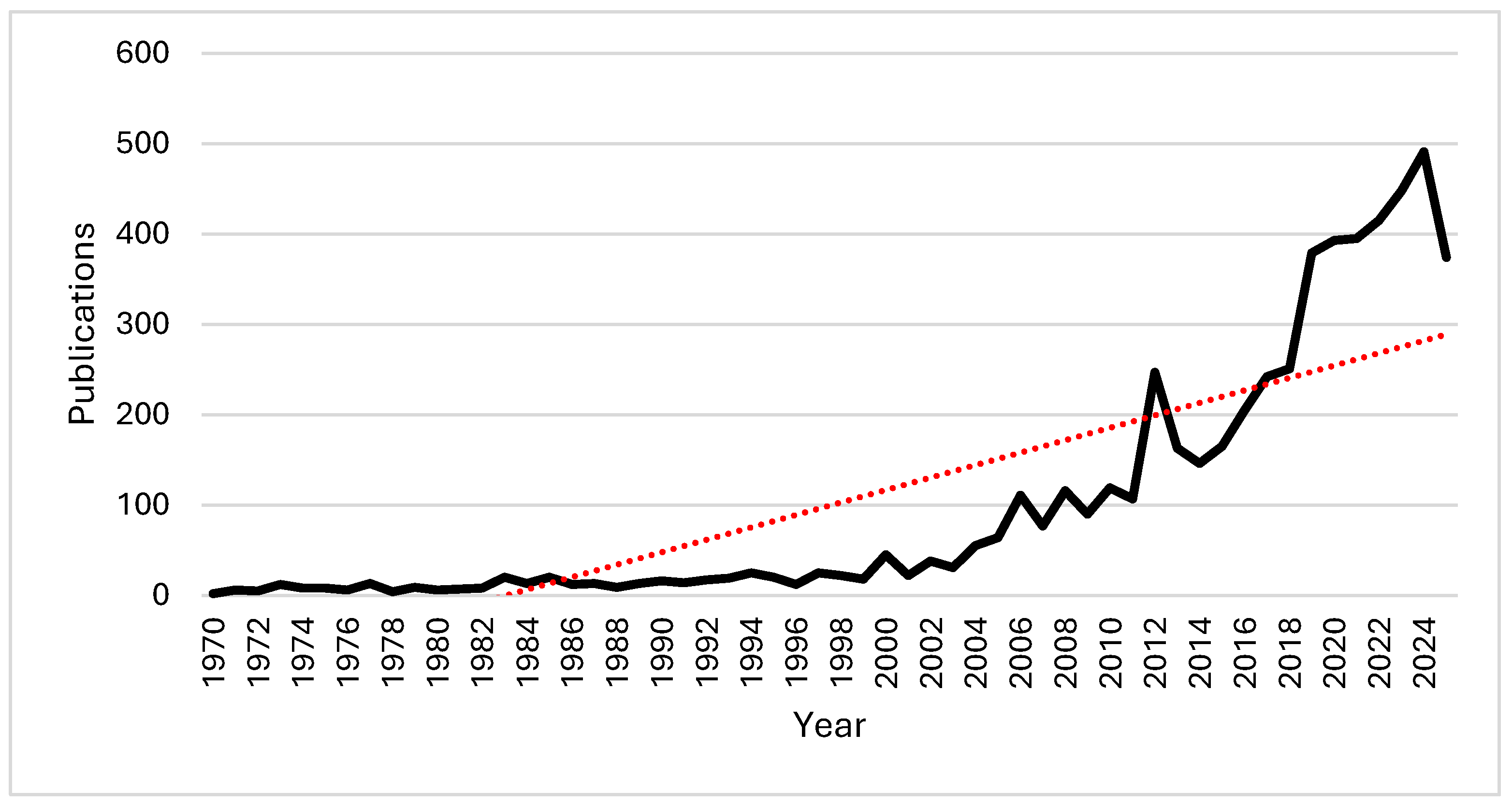
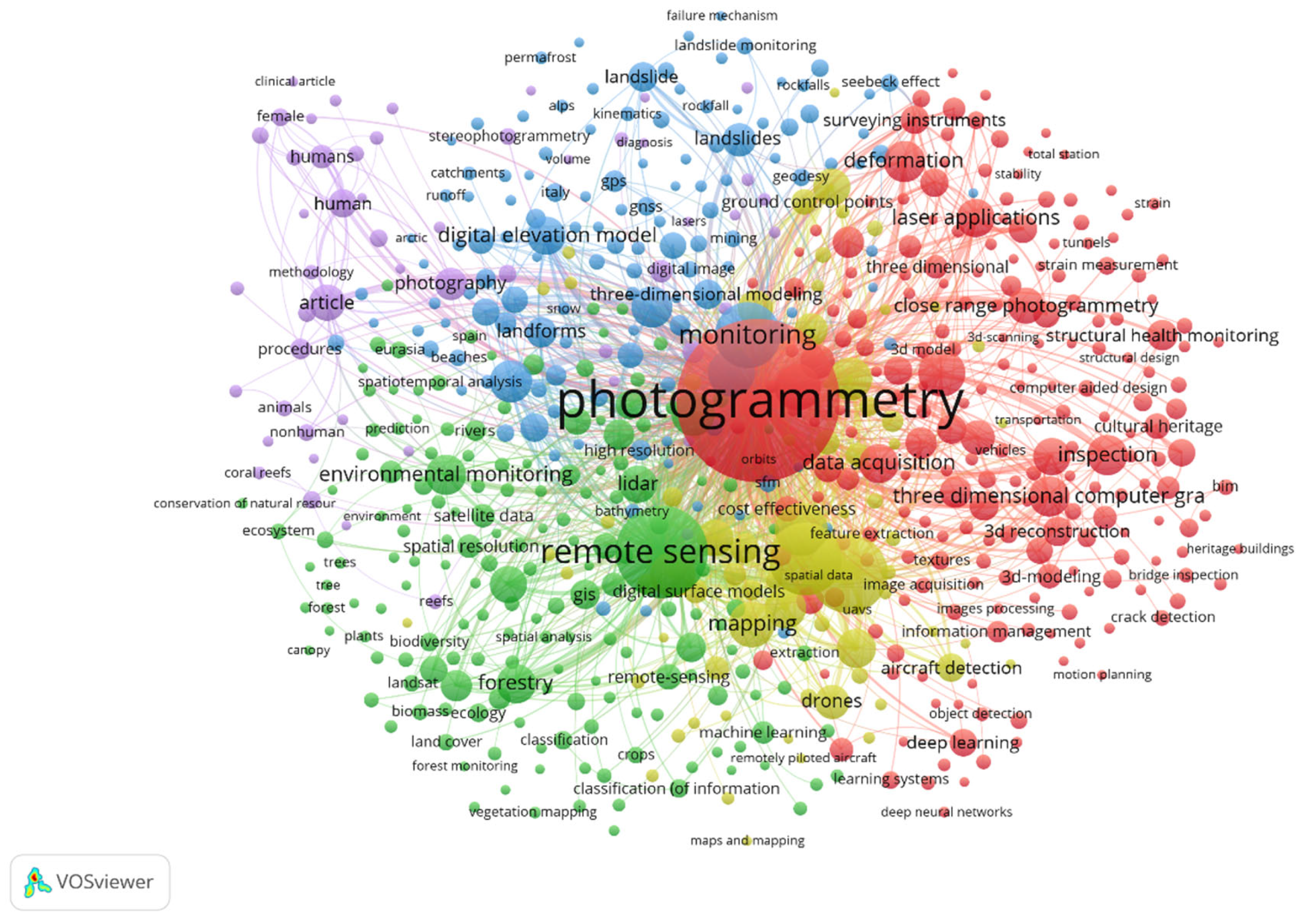
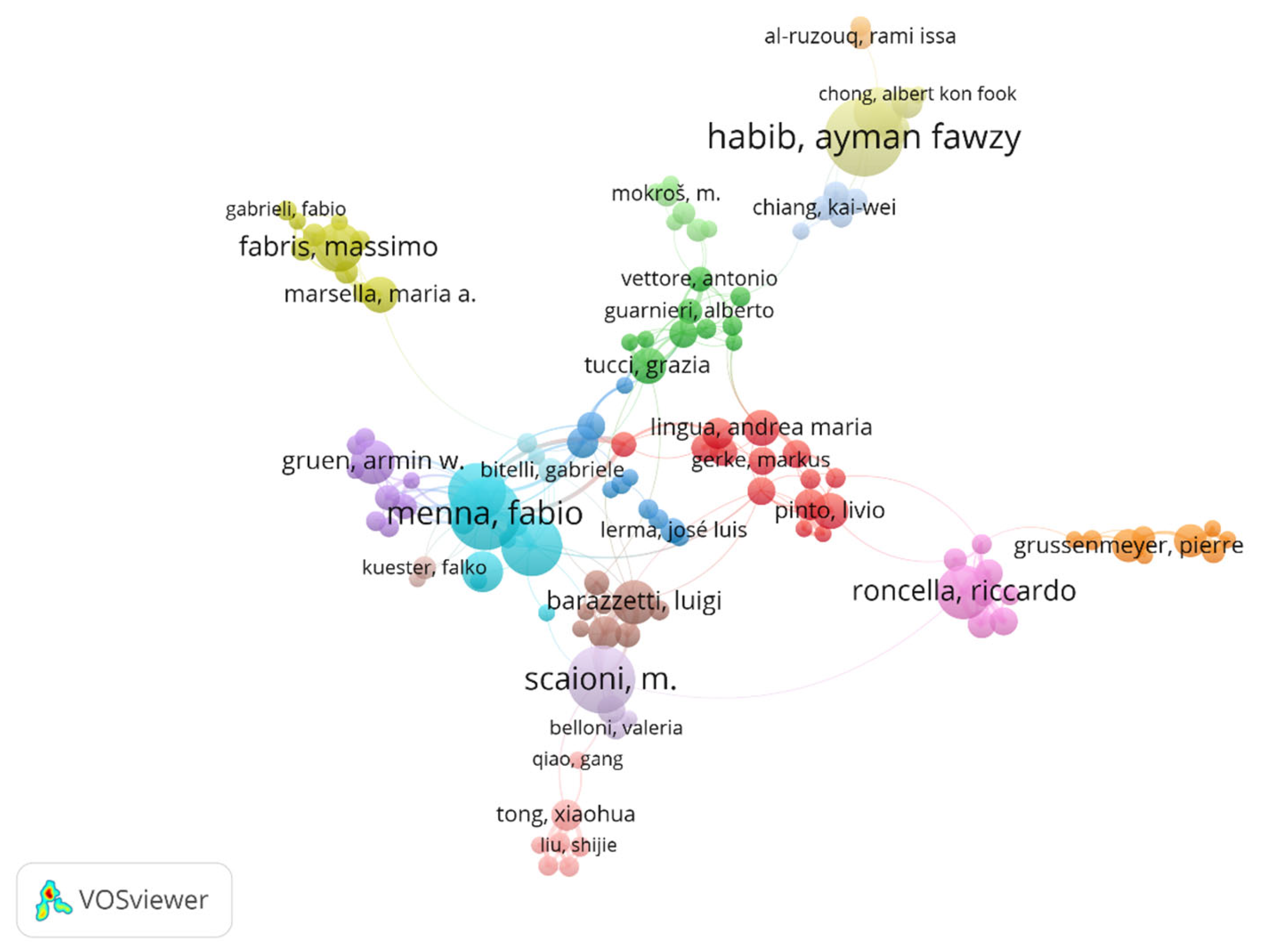
As per the Scopus database [25], Figure 1 shows the research trend related to photogrammetry and SHM based on the following keyword combination: (“Photogrammetry” AND (“SHM” OR “Structural Health Monitoring” OR “Monitoring” OR “Inspection”)). It is evident that, over time, the research trend has gained popularity and shows a linear behaviour, indicating the effectiveness of photogrammetry in SHM. Although the number of publications is not much higher, it indicates further potential that must be explored. The existing traditional inspection methods are limited in spatial coverage and are also labour-intensive, which is why automated and remote sensing-based SHM methods are the recent research focus. To elaborate this stance further, based on the same dataset from the Scopus database [25], keyword analysis via VOSviewer version 1.6.20 was also performed; the output is presented in Figure 2. To have co-occurrences of the keywords, the value of a minimum number of occurrences of a keyword was selected as 20, providing a 641 threshold out of 29,926 keywords. The top three occurrences were highlighted for “photogrammetry”, “remote sensing”, and “unmanned aerial vehicles (uav)”, with the values of 3619, 1277, and 939, respectively. Co-authorship analysis was also performed using the same tool to observe the most prominent researchers in this field. The value of a minimum number of documents for an author was selected as 5, providing a threshold of 357, among 16,266 authors. The top three authors were “menna, fabio”, “nocerino, erica”, and “jaud, marion”, with 27, 21, and 15 published documents, obtaining citations as 544, 303, and 542, and the total link strengths as 60, 53, and 51. Further details are provided in Figure 3.
While studies related to UAV-based SHM on other infrastructures are available [26,27], only a few focus on bridge underpass arches [28,29]. Hence, this study identifies and visualises cracks in a bridge underpass arch structure to perform an effective and low-cost SHM. The traditional inspection methods have limited coverage and are subjective, while this study emphasises the development of a 3D mesh through 2D captured images with the support of a UAV for better inspection and visualisation. A photogrammetry strategy was applied to reconstruct the 3D mesh of the structure using the 3DF Zephyr software, with an additional output in the form of orthophoto analysis showing the Digital Surface Model and a Heatmap of the structure. Although in this study, the photogrammetric reconstruction was solely performed using the 3DF Zephyr, highlighting its usefulness as an efficient tool for SHM, the methodological workflow is conceptually compatible with other solutions, including open-source tools. Before importing the images into the software, they were visualised for the cracks. The identified cracks were annotated using the VGG tool v.2.0.8, which helps to give a better visualisation while viewing the 3D model of the structure. It is evident that a UAV combined with photogrammetry is a promising solution for infrastructure monitoring. The cameras mounted on the UAV enable high-resolution images, and, with precise overlapping, they help in processing the sparse and dense point clouds, along with a high-resolution 3D mesh and orthophotos. Compared to traditional inspection methods, UAV-based inspection is safe, efficient, and less time-consuming, and can also cover the inaccessible areas. This study emphasises the single-unit software analysis that is useful for construction industry practitioners to perform SHM in a quick and efficient way. Moreover, this method offers quantifiable insights into the structure, which are difficult to acquire through traditional methods, underscoring its potential in long-term proactive maintenance.

2. Methodology

A bridge underpass arch, making a tunnel structure, in the coastal region of Malta, was inspected using a UAV. The collected data was annotated for defects in the structure, and was further analysed using the 3DF Zephyr. Further details on the adopted method are discussed below.

2.1. Site Selection

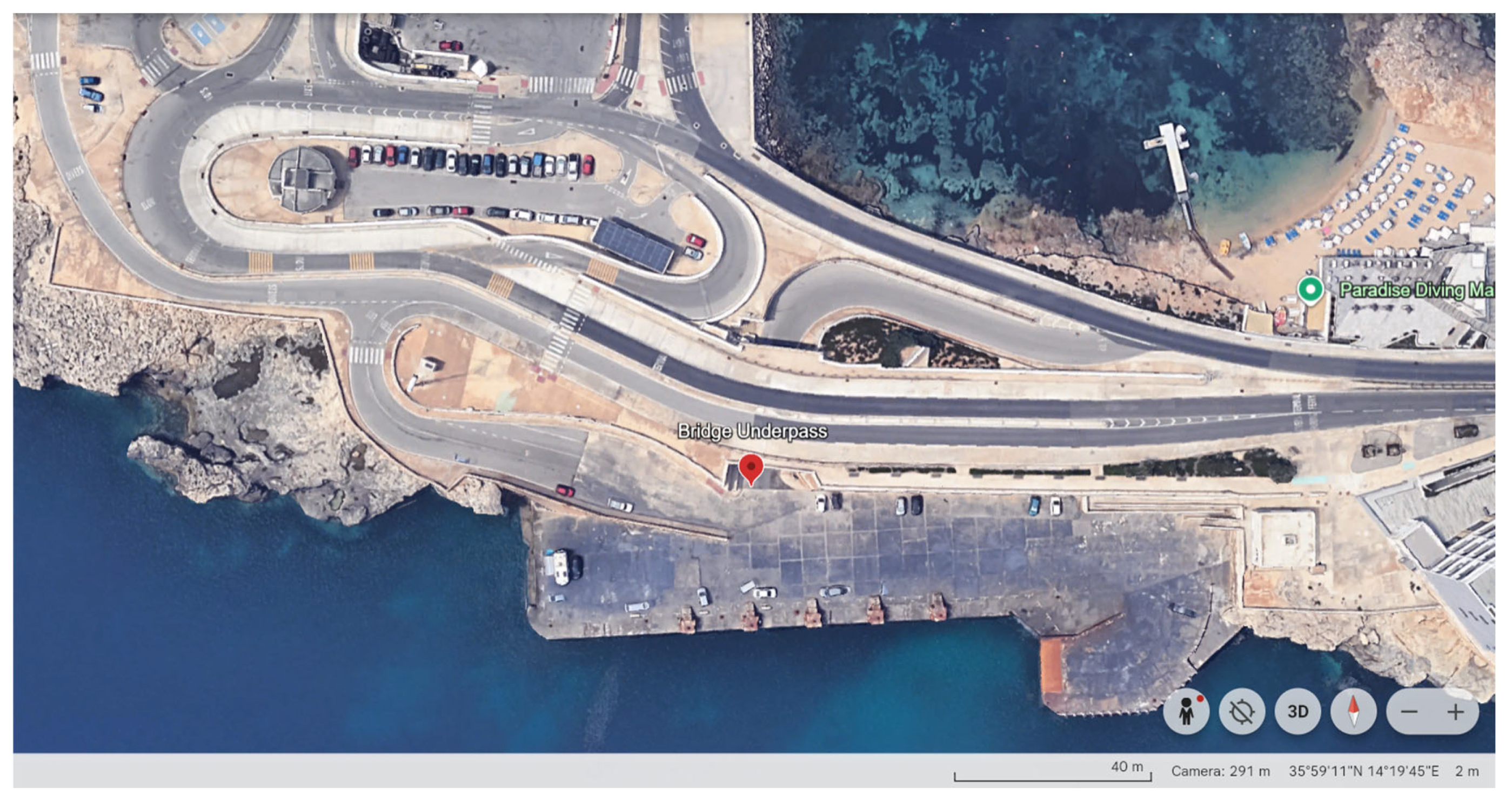
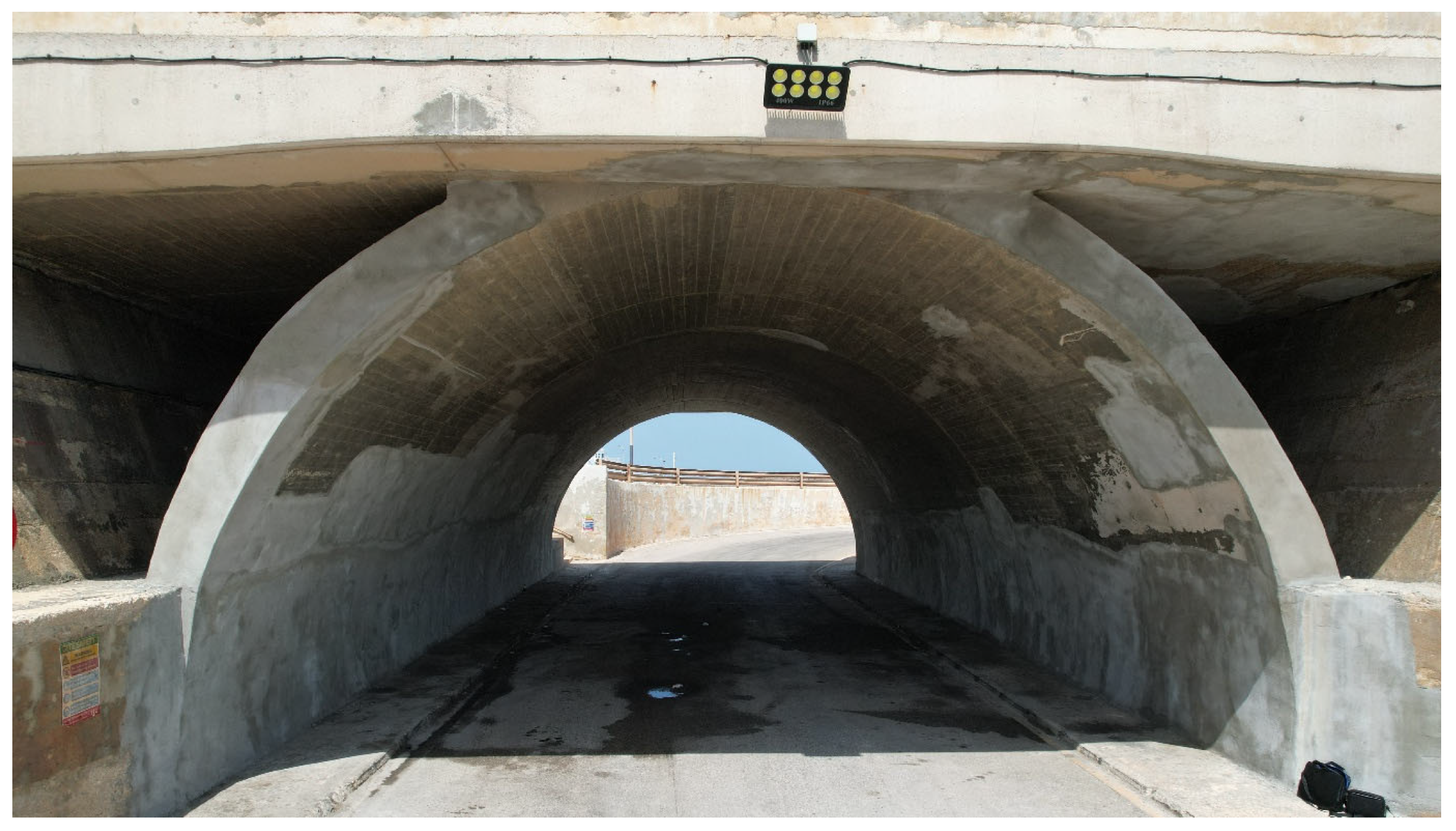
A bridge underpass arch structure, which is operational for one-way traffic in Cirkewwa, Malta, with coordinates 35°59′12.2″ N 14°19′46.7″ E, was chosen for the image data collection and analysis. Based on Google Maps, the geographic map of this site (location highlighted with a red marker) can be seen in Figure 4. Although this structure was recently repaired by Infrastructure Malta (a government entity), it was still selected, since, even after the repair works, several defects were left untreated. The defects, mainly cracks, were the primary focus of the carried out inspection. The overall structure of the bridge underpass arch is shown in Figure 5.

2.2. Data Collection

The image data collection was made using the DJI Air 2S drone, with a flight surface distance of ≈1.5 m. Here, the Ground Sampling Distance (GSD) calculation was not taken into consideration, as, due to the wind thrust, the closest distance was achieved while operating the UAV, providing a considerable ground resolution. The allowable tilt of the drone camera ranges from −90 to 0 degrees, with an extended controllable range up to +24 degrees. The structure was an arch shape, so at some points, mainly to cover the top section, the drone was used as a handycam, without flying, to capture the images at 0 degrees. To ensure the appropriate readability of cracks, this technique helps to capture the images at 0 degrees, with a front overlap of 80% and a side overlap of 70%. Additionally, instead of the interval capturing option, the images were captured one by one to avoid a blurring effect due to low light, as, in low lighting, cameras often reduce shutter speed, causing a delay in capturing time. The images were manually assessed, and all the ones that contained blur or were duplicate ones were removed, leaving 253 images in total for further assessment.

2.3. Annotation of Cracks in Structure

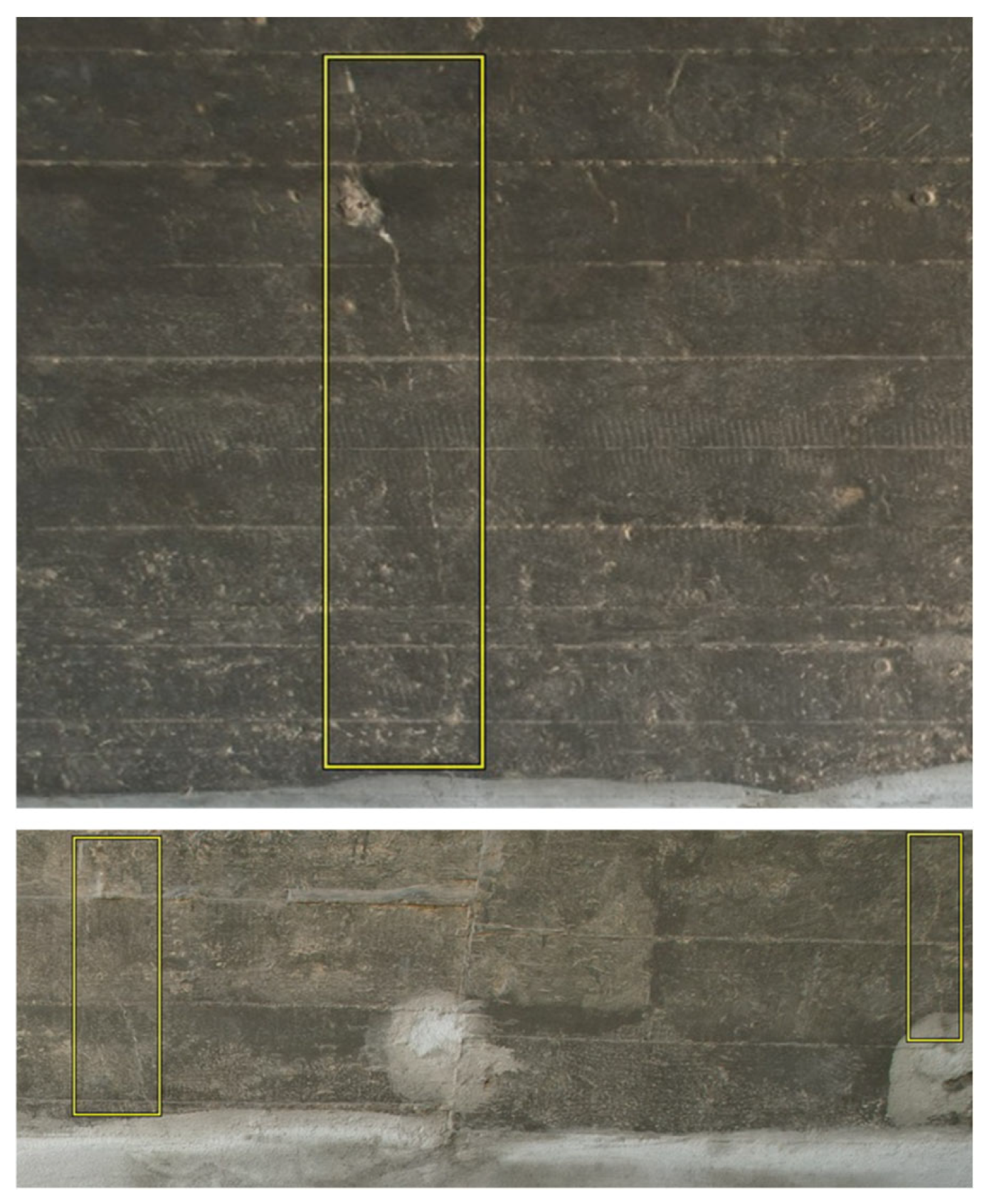
The VGG Image Annotator (VIA) tool was used to annotate the cracks in the structure. This open-source manual annotation software was developed and is maintained by the Visual Geometry Group (VGG) at the University of Oxford [30] and is freely accessible online. The collected images were imported into the tool and were visually observed one by one, and, wherever there was a crack, it was annotated manually with a yellow rectangular box. Once completed, the 13 annotated images were downloaded and replaced with the original images for further analysis. Although the bridge underpass arch was recently repaired, considerable cracks were observed in the structure and were annotated. Before starting the annotation of the cracks, the metadata of all the images were extracted and stored in an Excel file, which was later overwritten on the annotated images. This process ensures that all the images are embedded with the original metadata, as, when the images are downloaded from the VIA tool after annotation, the metadata becomes compromised. Figure 6 shows a few annotated images highlighting the cracks in the structure.

2.4. Three-Dimensional Mesh Analysis

The image data (annotated and unannotated) were analysed using the 3DF Zephyr version 8.0 [31] to create a 3D mesh of the bridge underpass arch; 3DF Zephyr utilises Structure-from-Motion (SfM) and Multi-View Stereo (MVS) techniques on unstructured image datasets for 3D mesh reconstruction. After importing the images into the software, initially, image alignment was conducted, followed by the creation of the sparse point cloud, dense point cloud, and 3D mesh, and, in the end, orthophoto analysis via 3D mesh was performed. The analysis was performed with a laptop comprising an AMD Ryzen 5 6600H with Radeon Graphics 3.30 GHz Processor, NVIDIA GeForce RTX 3050 GPU, 8.00 GB RAM, and 64-bit operating system.

3. Results and Discussion

This section provides a detailed interpretation of the 3D mesh reconstruction and orthophoto analysis, along with the quality assessment parameters.

3.1. Photogrammetric Reconstruction

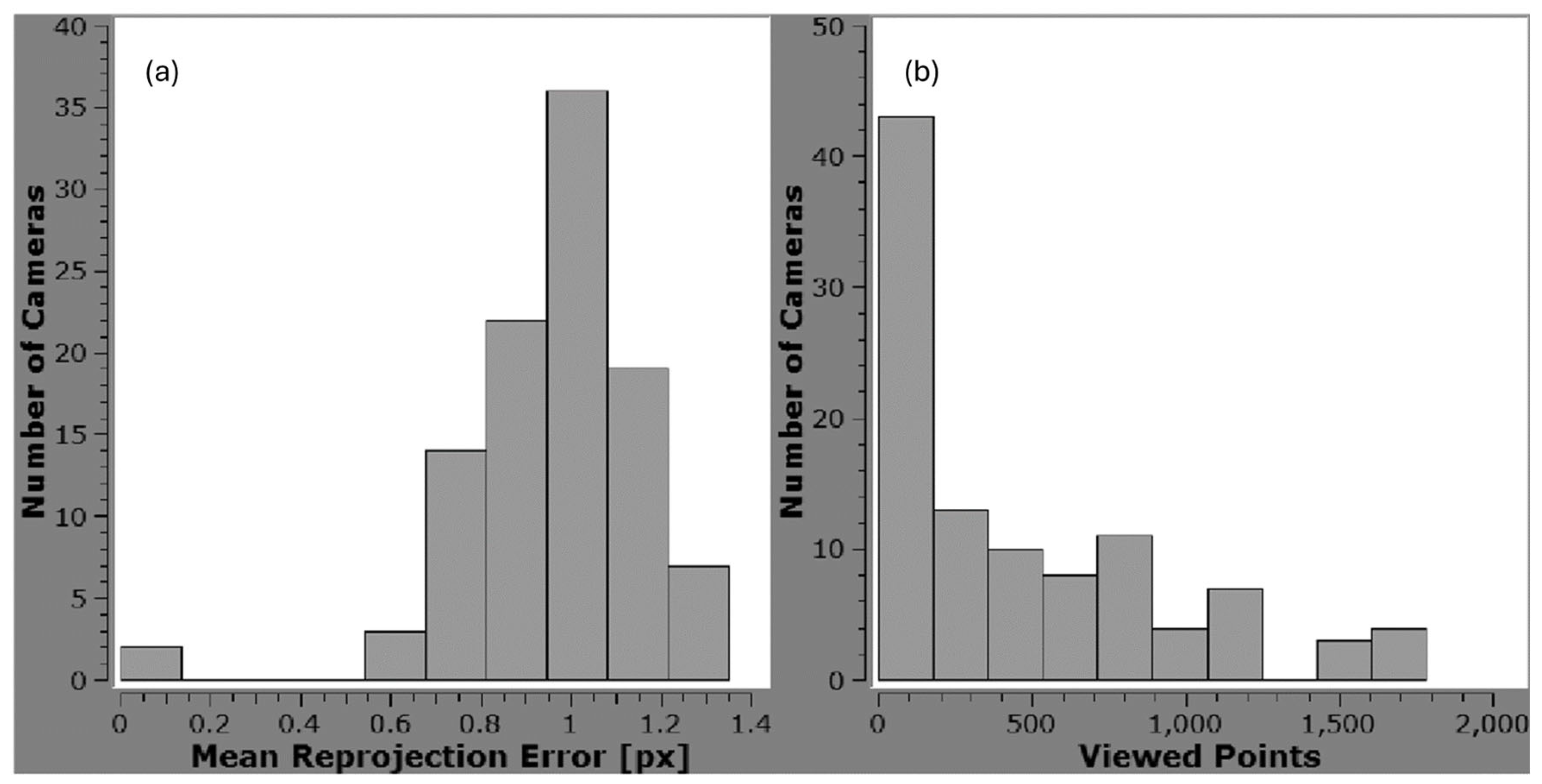
The photogrammetric reconstruction is essential for quality assessment through several statistical parameters. Among the key aspects are the photogrammetric metrics, as described in Table 1. It can be observed that, for the photogrammetric reconstruction, the captured images showed a 60% alignment. This moderate alignment rate was due to the low lighting conditions under the bridge structure, and also the UAV camera sensor limitations. Although the alignment percentage is on the borderline (between 60 and 70%), it is adequate to construct the arch substructure. The dense point cloud and 3D mesh were generated successfully, without any significant data gaps. The model’s average GSD was 0.00455513, which is suitable for highlighting large cracks. GSD represents the physical size of one pixel on the ground and is computed to measure image resolution. The mean 3D points per image was 465 (acceptable range 200–1000 points/image), while the Bundle Adjustment (BA) Mean Square Error (MSE) was 1.23678 (acceptable range 1–2 px), with a BA reference variance of 2.14496 (acceptable range 1–2 px). BA indicates the improved camera parameters and enhanced model accuracy. Overall, the output parameters are satisfactory and are in acceptable ranges for UAV-based photogrammetry assessment. Table 2 shows the details of the internal parameter calibration for the captured images. The camera’s focal length was 8.4 mm, while the recorded resolution was 5472 × 3648. The Mean Reprojection Error (MRE) and Visible Points (VPs) were also estimated, reflecting the camera pose and density coverage. The MRE further highlights the average discrepancy among the projected positions and image points. Figure 7a shows MRE in the range of 0.6 to 1.4 pixels, with an observed peak at 1.0. Figure 7b shows the viewed point distribution; it can be observed that the camera coverage surpasses the 1000 threshold. This indicates a moderate coverage density and a reasonable geometric reliability of the dataset, sufficient for image inspection.

3.2. Camera Trajectory

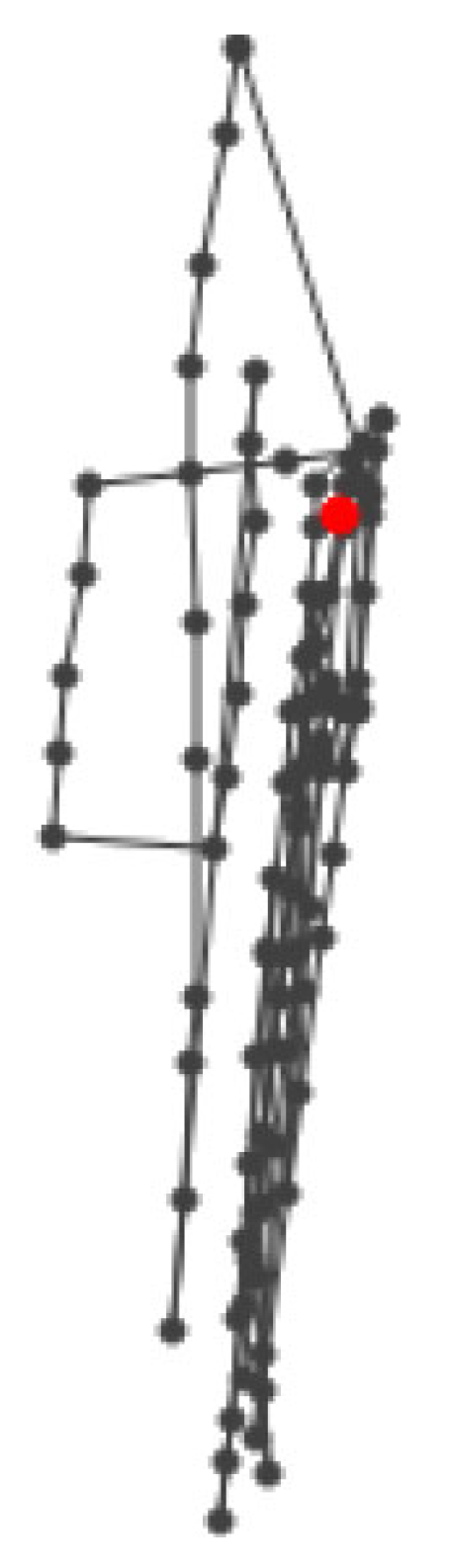
Figure 8 provides the spatial distribution of camera poses. The red dot reflects the initial camera position. The camera trajectory is linear, facing the flight path, and the clustering is dense, reflecting a high degree of overlap. This indicates that the rigorous camera points, i.e., 3D points fully optimised, will support better SfM.

3.3. Three-Dimensional Mesh Analysis and Crack Visualisation

The initial reconstruction of a 3D geometry based on the image dataset is portrayed through a sparse point cloud. This is the initial stage of the 3D reconstruction, where the unnecessary image points covering redundant information can be trimmed manually, and only the main object can be purged for better visualisation. After constructing a sparse point cloud, a point count of 13,231, BA MSE of 1.23678, and BA reference variance of 2.14496 were reported. After obtaining the sparse point cloud, the next step was the reconstruction of a dense point cloud. The dense point cloud is a refined version of the sparse point cloud, with more closely spaced points. Upon its reconstruction, a seed point count of 594,590 was observed, which showed a wide coverage. These higher seed point counts reflect significant image alignment, which helps detail the structure.
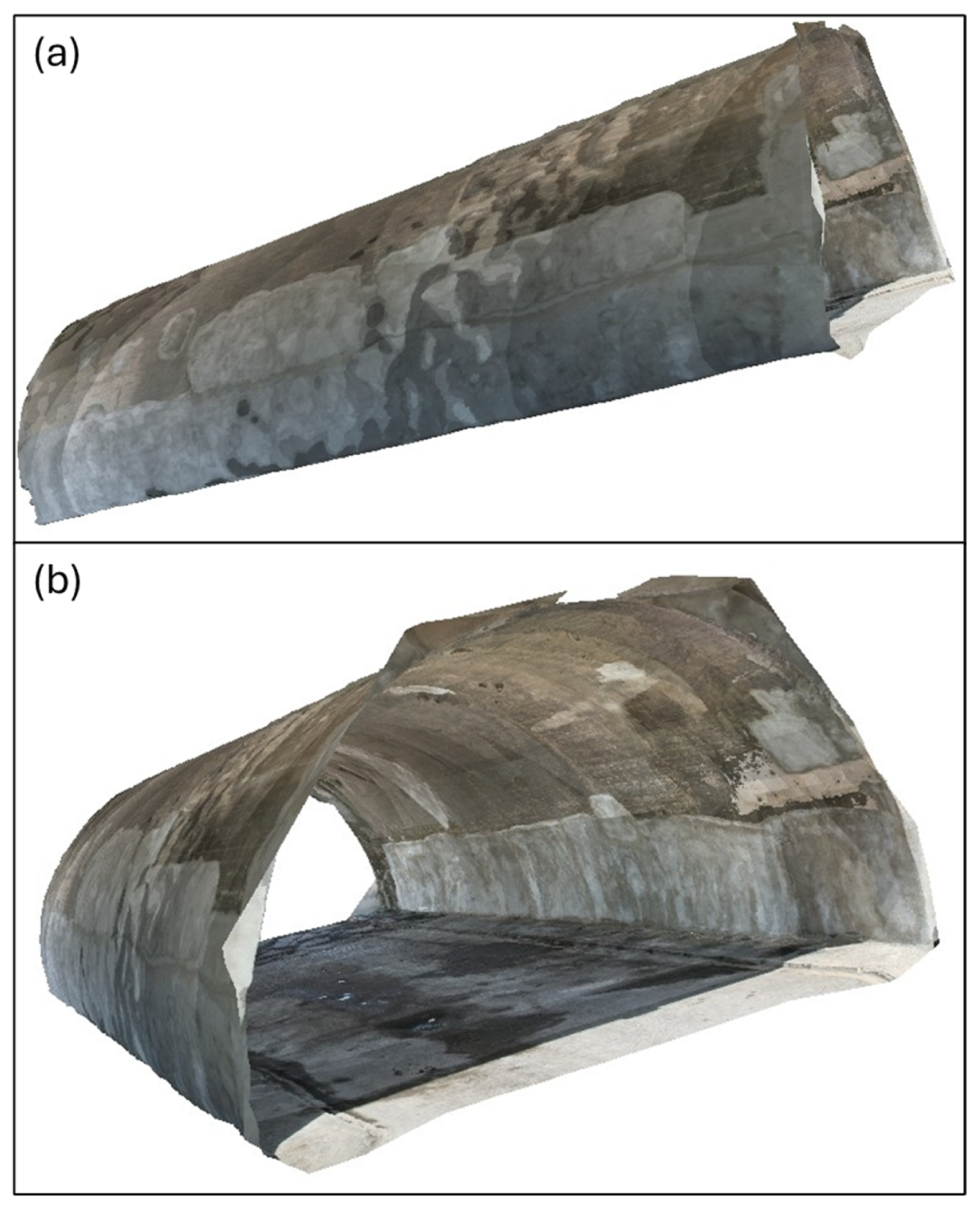
To observe the annotated images in a 3D reconstruction, it is essential to construct a 3D mesh after a dense point cloud. A 3D mesh gives clearer visuals of the structure, making it easier to identify the locations of the defects. Figure 9 shows the 3D mesh of the bridge underpass arch structure. The reported triangle count to reconstruct the 3D mesh was 10,370,012, with the Photoconsistency-Based Optimisation applied filter. Figure 10 shows the inside visuals of the 3D mesh, where the annotated cracks are visible, providing an efficient visualisation of the defects, which would be helpful for inspection and monitoring purposes.

3.4. Orthophoto Analysis

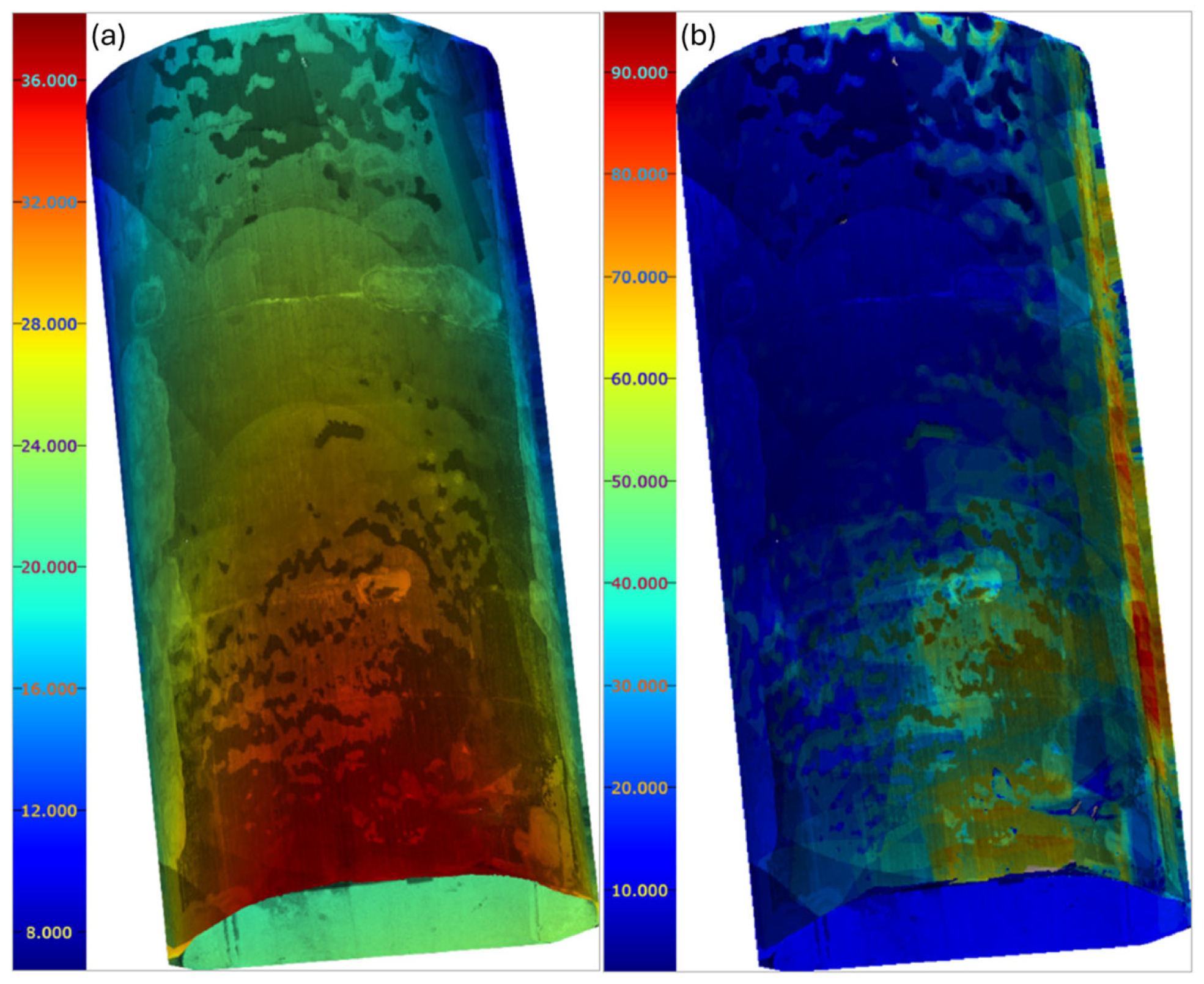
Based on the 3D mesh, an orthophoto was generated using the 3DF Zephyr. It is produced from textured mesh without tiling, resulting in a single, seamless image. This analysis provides a Digital Surface Model (DSM) and a reconstruction quality heatmap. In orthophotos, the elevation values are determined by the DSM, while the heatmap visualises the number of cameras contributing to the surface component. This indicates the reliability of the reconstruction of the structure. The GSD defines the orthophoto resolution, and, in this case, the average GSD was observed as 0.00455513. The height and width of the generated orthophoto were reported as 4531 × 2433 px. In the DSM output, as shown in Figure 11a, the colours represent elevation values of each point in the orthophoto; meanwhile, Figure 11b shows the heatmap, in which values represent the number of cameras viewing each point of the orthophoto. The areas highlighted with blue and green colours show more reliable reconstructions. In contrast, the yellow and red colours indicate the regions that may be affected by the coverage and impacts in defect detection. Both of these assessments provide better geometric accuracy and reconstruction reliability, which is essential in SHM.
Figure 10. Zoomed-in view of a localised section of the 3D mesh of bridge underpass arch structure showing annotated cracks.
Jcs 09 00665 g010
Figure 11. Orthophoto of bridge underpass arch structure: (a) Digital Surface Model; (b) heatmap.
Jcs 09 00665 g011

4. Conclusions

Structural Health Monitoring has evolved over time and demands new techniques for effective and efficient inspection methods. Looking into the scenario, this study focused on inspecting a bridge underpass arch structure to identify and visualise defects, mainly cracks, in a 3D model. Initially, the images were collected through a UAV, which was imported into the VGG tool for annotating the cracks. Afterwards, all the annotated and unannotated images were imported into 3DF Zephyr software, where, at first, a sparse point cloud was generated. Then, a dense point cloud, a 3D mesh, and, in the end, an orthophoto, were generated. All these steps were evaluated with statistical checks and were found sufficient for inspection through the 3D model. The orthophoto provides a clear dominance of the image overlapping, indicating that these 2D images, while converting into a 3D mesh, have efficiently captured the details, including the annotated cracks, which were clearly visible. This technique is useful in SHM as a time- and cost-saving approach and is sufficient for making major decisions on time. Additionally, the current study contributes to expanding the literature related to UAV-based structural inspection by illustrating its applicability in the field for low-visibility environments. Contrary to prior work focused on open environment structures, this study exhibits robust 3D reconstruction and defect visualisation, which ire highly achievable even in confined places with budget-friendly devices and readily available software. This current workflow can further be extended to similar structures, such as arch bridges, tunnels, or culverts, by following the described image processing strategy.

5. Limitations and Future Direction

A significant limitation was present while conducting this study; hence, based on it, future directions have been highlighted, which are discussed below:
  • The current study was performed on a compact bridge underpass structure, having limited lighting and controlled image acquisition. Hence, when the same strategy has to be applied to a larger or more complex structure, it is essential to automate the UAV flight to ensure smooth image coverage and overlap. Moreover, a UAV with a higher-resolution camera and a rotation up to +90 degrees will also be required to cover the entire structure in a single attempt.
  • The current study emphasises demonstrating UAV photogrammetry as a feasible alternative to traditional inspection, and mainly focuses on 3DF Zephyr-based analysis. Hence, due to the logistical constraints, other validation or accuracy assessments cannot be performed at this stage. However, in future work, ground truth crack measurements and comparison with other inspection methods could be performed to measure accuracy.
  • Another limitation of the current study was the moderate image alignment, due to the low lighting conditions under the bridge structure. Hence, to improve the image alignment rate, it is advisable to utilise high-resolution UAV cameras capable enough to achieve coverage in low light.
  • No validation of annotated cracks was made at this stage; however, in future work, a systematic crack measurement can be incorporated to highlight the crack length and width, as well.

Author Contributions

Conceptualization, M.A.M., C.J.D., R.P.B., D.S., J.S. and W.D.; Methodology, M.A.M., C.J.D., V.P., R.P.B. and D.S.; Software, M.A.M.; Validation, C.J.D.; Formal analysis, M.A.M.; Investigation, M.A.M., V.P., J.S. and W.D.; Resources, D.S. and G.H.; Data curation, M.A.M., R.P.B. and G.H.; Writing—original draft, M.A.M. and V.P.; Writing—review & editing, C.J.D., R.P.B., D.S., G.H., J.S. and W.D.; Visualization, M.A.M. and V.P.; Supervision, C.J.D. and R.P.B.; Project administration, C.J.D.; Funding acquisition, C.J.D. All authors have read and agreed to the published version of the manuscript.

Funding

This project (DiHICs) received funding from Xjenza Malta, grant number SINO-MALTA2023-16, and the Ministry for Science and Technology of the People’s Republic of China (MOST) through the SINO-MALTA Fund 2023 Call (Science and Technology Cooperation). The APC was funded by Xjenza Malta.

Data Availability Statement

Data sharing is not applicable to this article.

Conflicts of Interest

The authors declare no conflict of interest.

References

  1. de Azevedo, A.R.; Marvila, M.T.; Tayeh, B.A.; Cecchin, D.; Pereira, A.C.; Monteiro, S.N. Technological performance of açaí natural fibre reinforced cement-based mortars. J. Build. Eng. 2021, 33, 101675. [Google Scholar] [CrossRef]
  2. Almutairi, A.L.; Tayeh, B.A.; Adesina, A.; Isleem, H.F.; Zeyad, A.M. Potential applications of geopolymer concrete in construction: A review. Case Stud. Constr. Mater. 2021, 15, e00733. [Google Scholar] [CrossRef]
  3. Naik, T.R. Sustainability of Concrete Construction. Pr. Period. Struct. Des. Constr. 2008, 13, 98–103. [Google Scholar] [CrossRef]
  4. UNSUSTAINABLE: Concrete and Cement. 16 September 2025. 2025. Available online: https://2150-vc.medium.com/unsustainable-concrete-and-cement-d501d38c764d (accessed on 16 September 2025).
  5. Pan, W.; Zhang, Z. Benchmarking the sustainability of concrete and steel modular construction for buildings in urban development. Sustain. Cities Soc. 2023, 90, 104400. [Google Scholar] [CrossRef]
  6. Santhanam, M.; Otieno, M. 5—Deterioration of Concrete in the Marine Environment; Woodhead Publishing: Cambridge, UK, 2016; pp. 137–149. [Google Scholar]
  7. Qu, F.; Li, W.; Dong, W.; Tam, V.W.; Yu, T. Durability deterioration of concrete under marine environment from material to structure: A critical review. J. Build. Eng. 2021, 35, 102074. [Google Scholar] [CrossRef]
  8. Golewski, G.L. The Phenomenon of Cracking in Cement Concretes and Reinforced Concrete Structures: The Mechanism of Cracks Formation, Causes of Their Initiation, Types and Places of Occurrence, and Methods of Detection—A Review. Buildings 2023, 13, 765. [Google Scholar] [CrossRef]
  9. ACI PRC-224.1-07; Causes, Evaluation, and Repair of Cracks in Concrete Structures. ACI Committee: Farmington Hills, MI, USA, 2007. Available online: https://www.concrete.org/store/productdetail.aspx?ItemID=224107&Format=DOWNLOAD&Language=English&Units=US_AND_METRIC (accessed on 16 September 2025).
  10. BS 8110; Structural Use of Concrete. British Standards Institution: London, UK, 2024. Available online: https://landingpage.bsigroup.com/LandingPage/Series?UPI=BS%208110 (accessed on 16 September 2025).
  11. EN 1504; BASF: Ludwigshafen, Germany, 2009. Available online: https://www.scribd.com/document/101506674/DIN-EN-1504-basf (accessed on 16 September 2025).
  12. Sakiyama, F.I.H.; Lehmann, F.; Garrecht, H. Structural health monitoring of concrete structures using fibre-optic-based sensors: A review. Mag. Concr. Res. 2021, 73, 174–194. [Google Scholar] [CrossRef]
  13. Padmapoorani, P.; Senthilkumar, S.; Mohanraj, R. Machine Learning Techniques for Structural Health Monitoring of Concrete Structures: A Systematic Review. Iran. J. Sci. Technol. Trans. Civ. Eng. 2023, 47, 1919–1931. [Google Scholar] [CrossRef]
  14. He, Z.; Li, W.; Salehi, H.; Zhang, H.; Zhou, H.; Jiao, P. Integrated structural health monitoring in bridge engineering. Autom. Constr. 2022, 136, 104168. [Google Scholar] [CrossRef]
  15. Deng, Z.; Huang, M.; Wan, N.; Zhang, J. The Current Development of Structural Health Monitoring for Bridges: A Review. Buildings 2023, 13, 1360. [Google Scholar] [CrossRef]
  16. Zhao, S.; Kang, F.; Li, J.; Ma, C. Structural health monitoring and inspection of dams based on UAV photogrammetry with image 3D reconstruction. Autom. Constr. 2021, 130, 103832. [Google Scholar] [CrossRef]
  17. Prakash, V.; Debono, C.J.; Musarat, M.A.; Borg, R.P.; Seychell, D.; Ding, W.; Shu, J. Structural Health Monitoring of Concrete Bridges Through Artificial Intelligence: A Narrative Review. Appl. Sci. 2025, 15, 4855. [Google Scholar] [CrossRef]
  18. Cirillo, D.; Tangari, A.C.; Scarciglia, F.; Lavecchia, G.; Brozzetti, F. UAV-PPK Photogrammetry, GIS, and Soil Analysis to Estimate Long-Term Slip Rates on Active Faults in a Seismic Gap of Northern Calabria (Southern Italy). Remote Sens. 2025, 17, 3366. [Google Scholar] [CrossRef]
  19. Štroner, M.; Urban, R.; Reindl, T.; Seidl, J.; Brouček, J. Evaluation of the Georeferencing Accuracy of a Photogrammetric Model Using a Quadrocopter with Onboard GNSS RTK. Sensors 2020, 20, 2318. [Google Scholar] [CrossRef]
  20. Valença, J.; Júlio, E.; Araújo, H. Application of photogrammetry to bridge monitoring. In Proceedings of the Structural Faults & Repair, 12th International Conference, Shanghai, China, 8–10 October 2008. [Google Scholar]
  21. Valença, J.; Júlio, E.; Araújo, H. Applications of Photogrammetry to Structural Assessment. Exp. Tech. 2011, 36, 71–81. [Google Scholar] [CrossRef]
  22. Mirzazade, A.; Popescu, C.; Gonzalez-Libreros, J.; Blanksvärd, T.; Täljsten, B.; Sas, G. Semi-autonomous inspection for concrete structures using digital models and a hybrid approach based on deep learning and photogrammetry. J. Civ. Struct. Health Monit. 2023, 13, 1633–1652. [Google Scholar] [CrossRef]
  23. Maboudi, M.; Backhaus, J.; Mai, I.; Ghassoun, Y.; Khedar, Y.; Lowke, D.; Riedel, B.; Bestmann, U.; Gerke, M. Very high resolution bridge deformation monitoring using UAV-based photogrammetry. J. Civ. Struct. Health Monit. 2025, 15, 3489–3508. [Google Scholar] [CrossRef]
  24. Yiğit, A.Y.; Uysal, M. Virtual reality visualisation of automatic crack detection for bridge inspection from 3D digital twin generated by UAV photogrammetry. Measurement 2024, 242, 115931. [Google Scholar] [CrossRef]
  25. Scopus. 16 September 2025. Available online: https://www.scopus.com/results/results.uri?st1=%22photogrammetry%22+AND+%28%22SHM%22+OR+%22Structural+Health+Monitoring%22+OR+%22Monitoring%22+OR+%22Inspection%22%29&st2=&s=TITLE-ABS-KEY%28%22photogrammetry%22+AND+%28%22SHM%22+OR+%22Structural+Health+Monitoring%22+OR+%22Monitoring%22+OR+%22Inspection%22%29%29&limit=10&origin=searchbasic&sort=plf-f&src=s&sot=b&sdt=b&sessionSearchId=5949de48286831eca946255f75b68c28 (accessed on 16 September 2025).
  26. Hajjar, M.; Zappa, E.; Bolzon, G. The State of the Art and Potentialities of UAV-Based 3D Measurement Solutions in the Monitoring and Fault Diagnosis of Quasi-Brittle Structures. Sensors 2025, 25, 5134. [Google Scholar] [CrossRef]
  27. Evans, A.D.; Gardner, K.H.; Greenwood, S.; Still, B. UAV and Structure-From-Motion Photogrammetry Enhance River Restoration Monitoring: A Dam Removal Study. Drones 2022, 6, 100. [Google Scholar] [CrossRef]
  28. Chen, Z.; Zhou, X.; Wang, X.; Dong, L.; Qian, Y. Deployment of a Smart Structural Health Monitoring System for Long-Span Arch Bridges: A Review and a Case Study. Sensors 2017, 17, 2151. [Google Scholar] [CrossRef] [PubMed]
  29. Toriumi, F.Y.; Bittencourt, T.N.; Futai, M.M. UAV-based inspection of bridge and tunnel structures: An application review. Rev. IBRACON Estrut. Mater. 2023, 16, e16103. [Google Scholar] [CrossRef]
  30. Dutta, A.; Zisserman, A. The VIA Annotation Software for Images, Audio and Video. In Proceedings of the 27th ACM International Conference on Multimedia, Nice, France, 21–25 October 2019; pp. 2276–2279. [Google Scholar] [CrossRef]
  31. DFLOW. 3DF ZEPHYR FREE. Available online: https://www.3dflow.net/3df-zephyr-free/ (accessed on 16 September 2025).
Figure 1. Research trend as per Scopus.
Jcs 09 00665 g001
Figure 2. Co-occurrence analysis.
Jcs 09 00665 g002
Figure 3. Co-authorship analysis.
Jcs 09 00665 g003
Figure 4. Geographic map of bridge site (Google Maps).
Jcs 09 00665 g004
Figure 5. Bridge underpass arch inspection site.
Jcs 09 00665 g005
Figure 6. Examples of annotated cracks in bridge underpass arch structure.
Jcs 09 00665 g006
Figure 7. Camera pose and density coverage: (a) Mean Reprojection Error; (b) 3D Visible Points. Graph generated through 3DF Zephyr Analysis.
Jcs 09 00665 g007
Figure 8. Camera trajectory of bridge underpass arch structure viewed from above (Z axis).
Jcs 09 00665 g008
Figure 9. Three-dimensional mesh of bridge underpass arch structure: (a) side view; (b) front view.
Jcs 09 00665 g009
Table 1. Photogrammetric metrics.
ParametersValue
Oriented Cameras103/170 (60%)
Average GSD0.00455513
Mean 3D points per image465
BA MSE (pixels)1.23678
BA Reference Variance (pixels)2.14496
Table 2. Internal parameter calibration.
Camera ModelSkewFocalsOptical CentreRadial DistortionTangential Distortion
DJI FC34110.000000X: 3585.108872
Y: 3585.108872
X: 2725.646912
Y: 1803.866606
K1: −0.076680
K2: 0.057422
K3: 0.019599
P1: 0.000222
P2: 0.002653
Disclaimer/Publisher’s Note: The statements, opinions and data contained in all publications are solely those of the individual author(s) and contributor(s) and not of MDPI and/or the editor(s). MDPI and/or the editor(s) disclaim responsibility for any injury to people or property resulting from any ideas, methods, instructions or products referred to in the content.