
Cooperative Online 3D Path Planning for Fixed-Wing UAVs



Highlights
- The proposed Cooperative-3D-Quick-Dubins-RRT* algorithm integrates an offline Dubins motion-primitive database specifically tailored for RRT* and four acceleration strategies, enabling real-time kinodynamically feasible planning for fixed-wing UAVs in complex 3D environments.
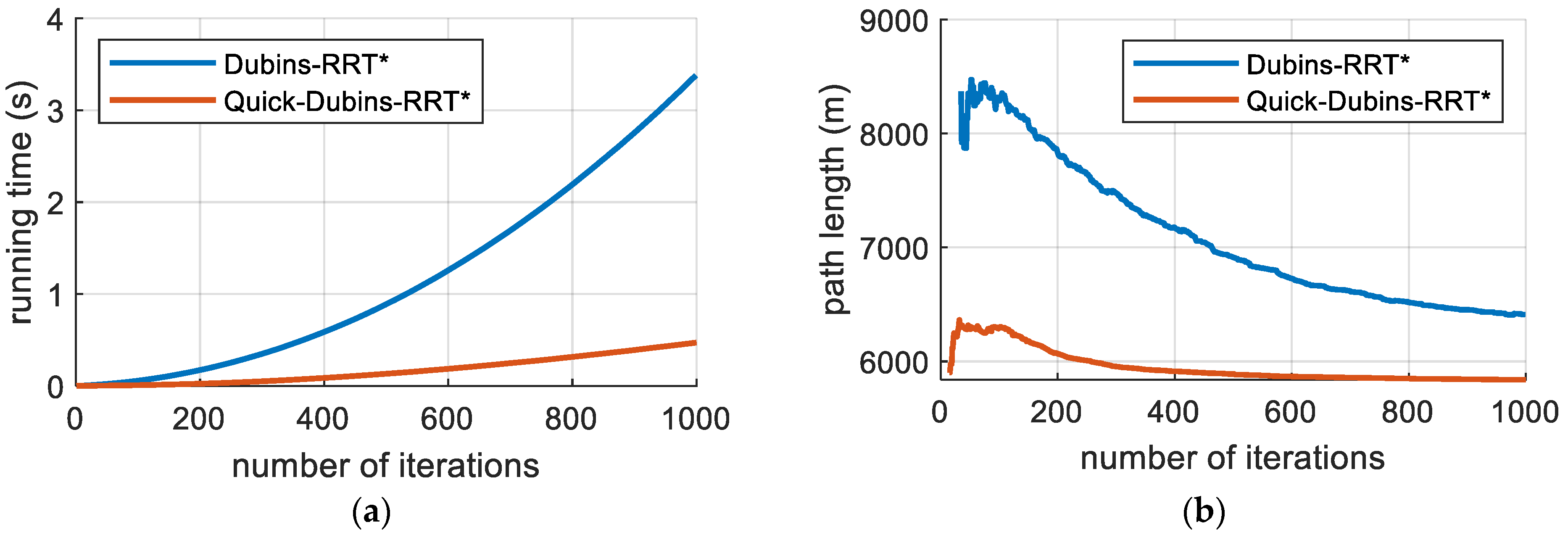
- Experimental results show an 86.04% reduction in runtime and 22.63% shorter path lengths compared to conventional Dubins-RRT*, while achieving collision-free trajectories in cluttered terrains and no-fly zones. Hardware-in-the-loop simulations further validate the strong engineering applicability of the proposed method under real onboard execution conditions.
- This study demonstrates that offline primitive and online search can be effectively combined to overcome the computational bottleneck in UAV path planning, enabling online replanning in dynamic scenarios.
- The successful deployment in complex 3D environments with restricted zones provides a scalable solution for multi-UAV cooperative missions, paving the way for autonomous swarm navigation in real-world urban or mountainous terrains.
Abstract
1. Introduction
- (1)
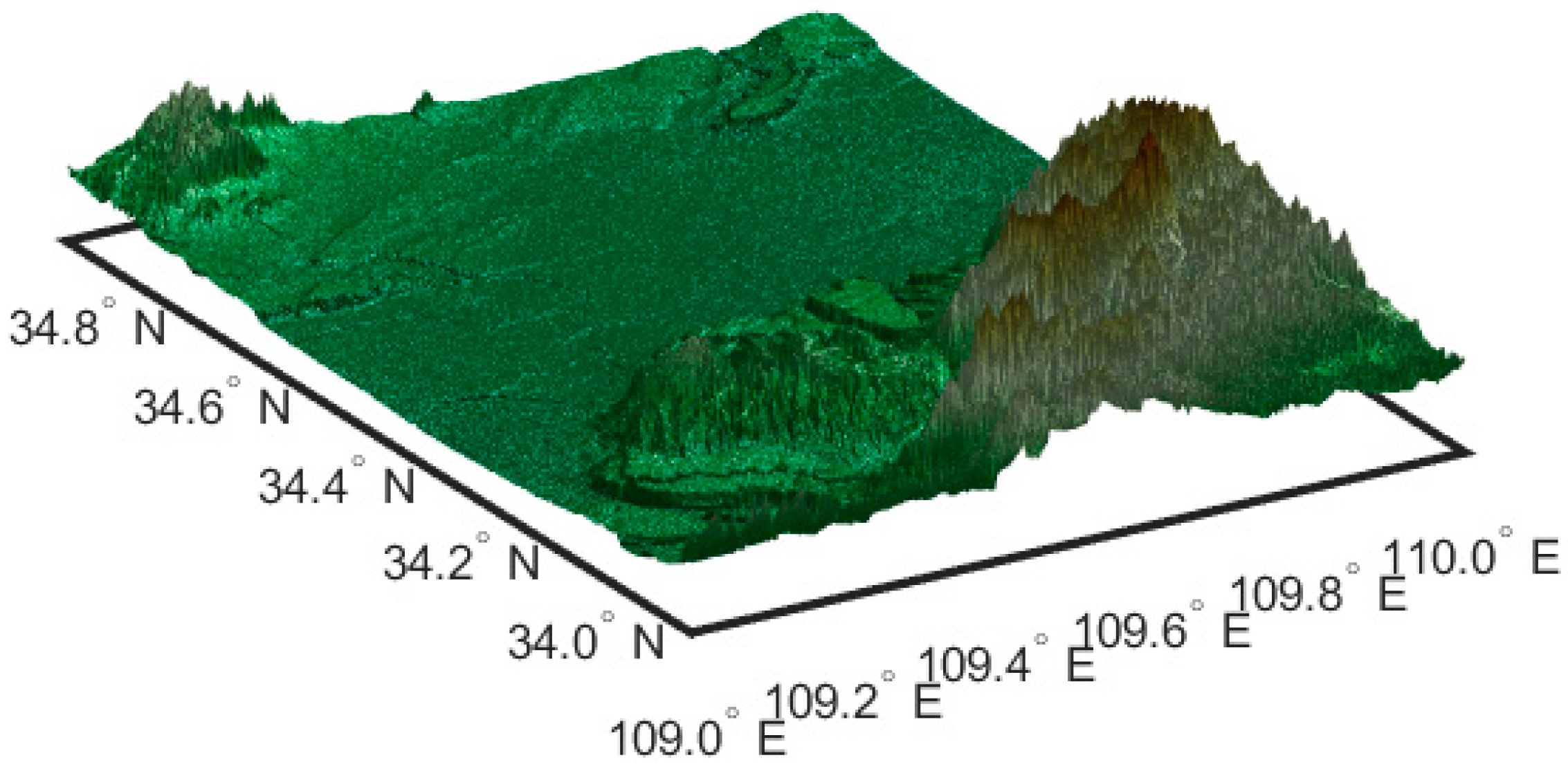
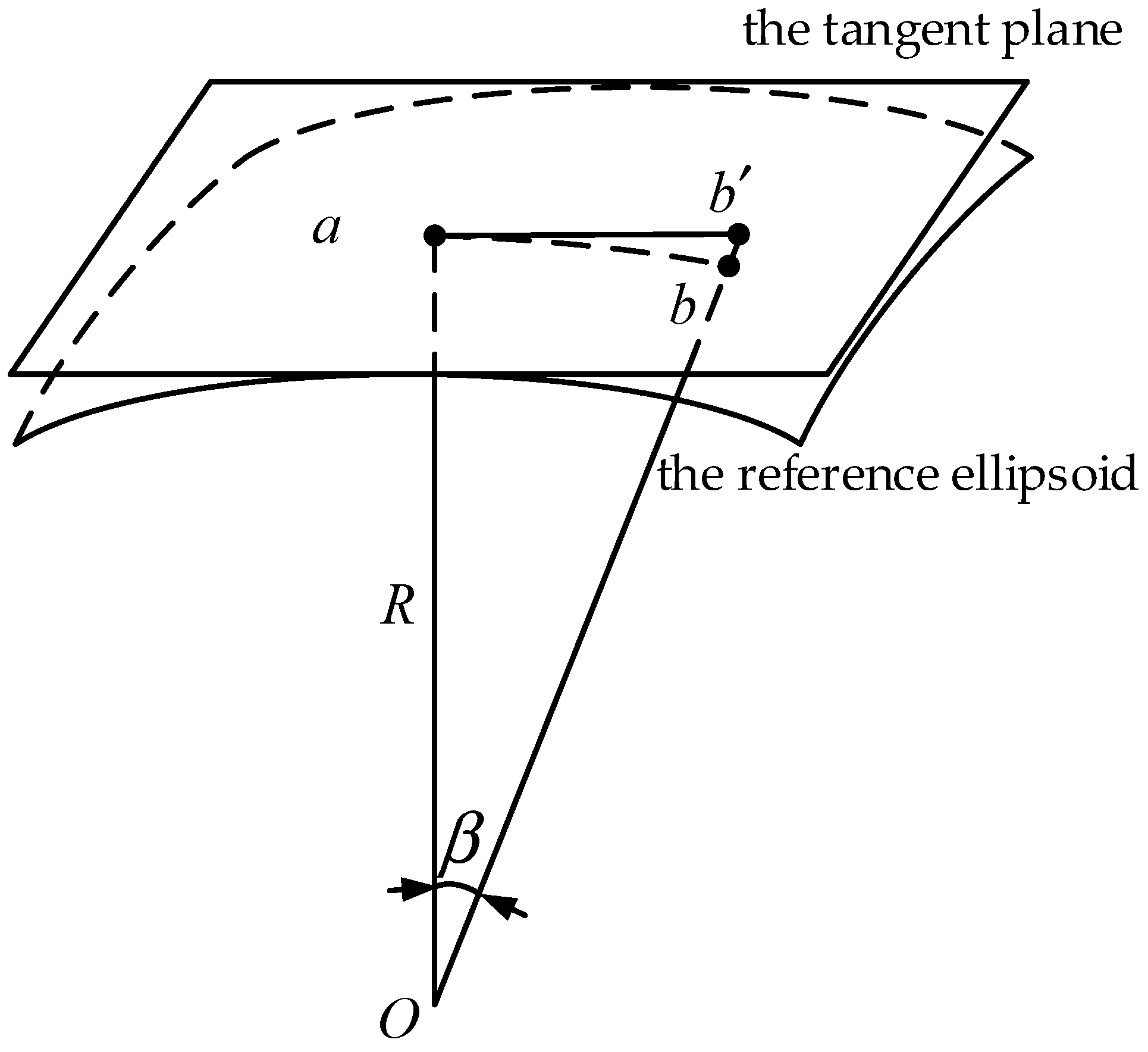
- Modeling: A fixed-wing UAV kinodynamic model and a Digital Elevation Model (DEM) for realistic terrain are established. A constrained optimization model is developed, incorporating non-holonomic constraints, no-fly zones (NFZs), altitude limits, and spatiotemporal coordination requirements.
- (2)
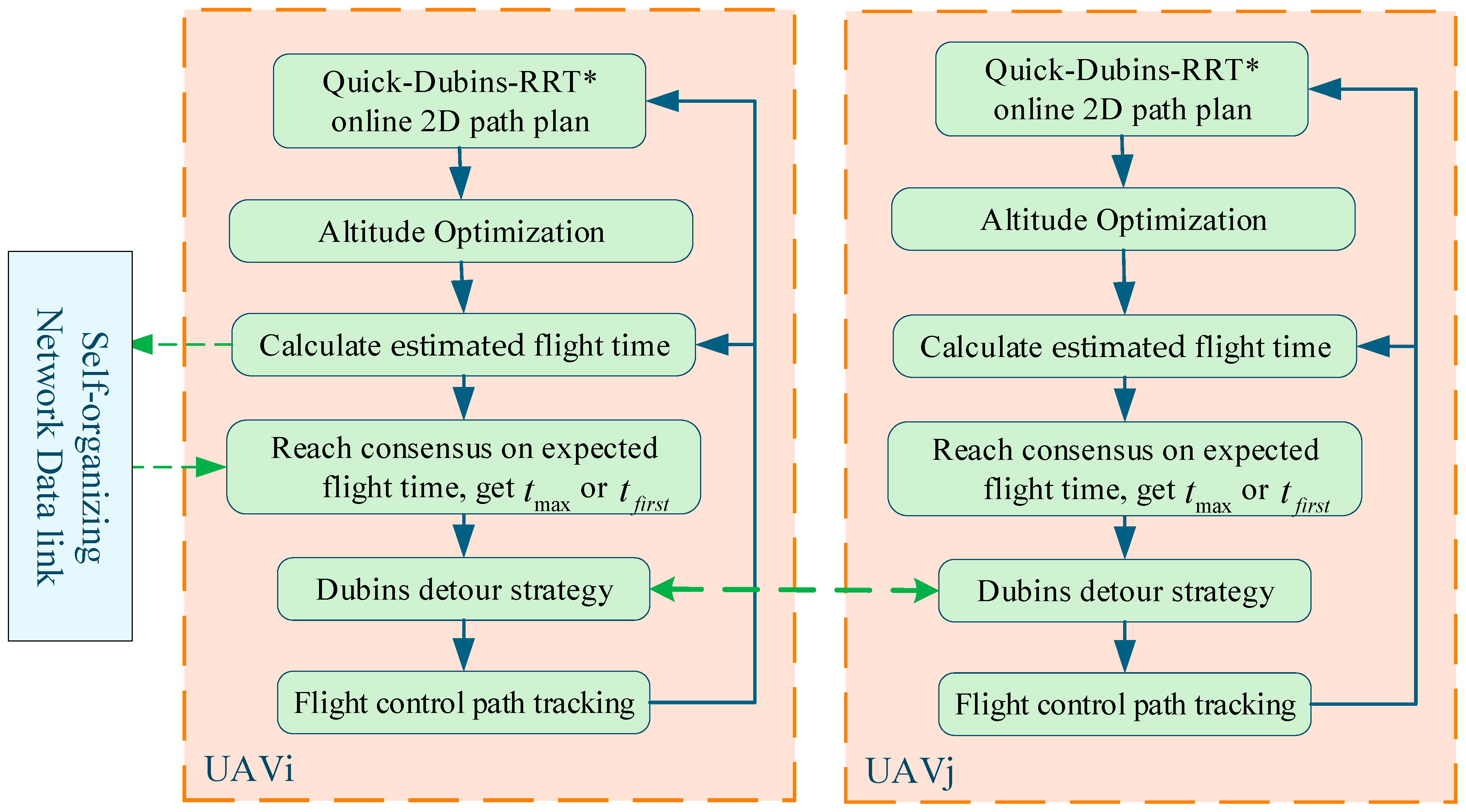
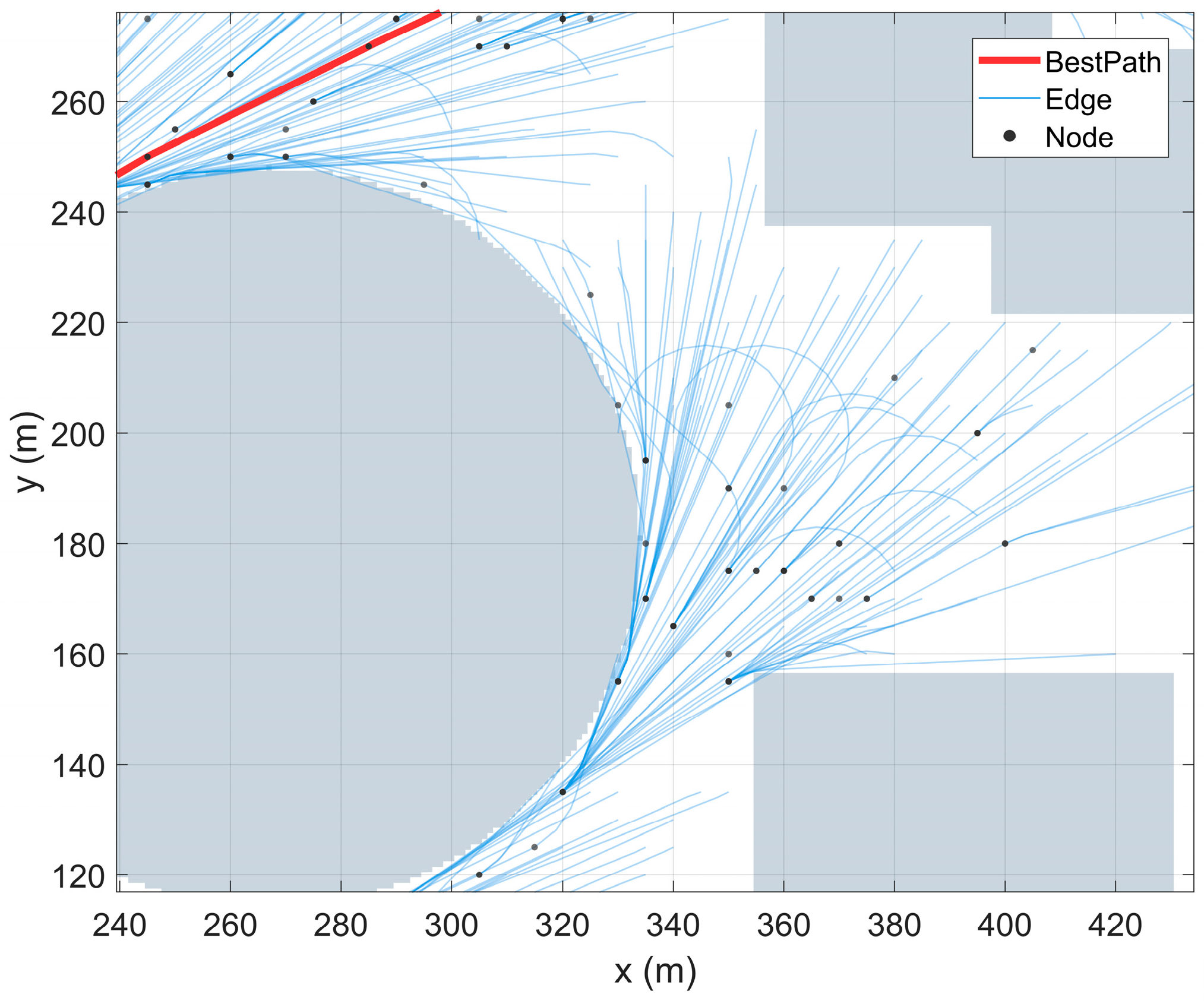
- Method: A multi-UAV cooperative online trajectory planning architecture is proposed, featuring a dual-mode offline motion-primitive database (inspired by [29]) tailored to the expansion and rewiring processes of RRT*. Through the integration of sampling space dimensionality reduction, elliptical heuristic sampling, tree pruning, and pre-discretized collision checking, the computational load is shifted from intensive online numerical solving to efficient index matching. Additionally, a time-coordination scheme leveraging Dubins detours is presented to ensure synchronization by determining feasible path-length adjustment intervals.
- (3)
- Validation: A series of comparative experiments are conducted, including multi-UAV cooperative planning simulations, parameter sensitivity analysis, comparisons with conventional Dubins-RRT*, and hardware-in-the-loop (HIL) simulations.
2. Problem Description
2.1. Scenario Description
2.2. Problem Formulation
2.2.1. Fixed-Wing UAV Motion Model
2.2.2. 3D Terrain Model
2.2.3. Constraints
- (1)
- Non-holonomic Constraint
- (2)
- No-Fly Zone Constraints
- (3)
- Flight Altitude Constraints
- (4)
- Terminal State Constraints
- (5)
- Time Coordination Constraints
2.2.4. Objective Function
3. Methodology
3.1. Overall Framework of Cooperative Trajectory Planning
3.2. Quick-Dubins-RRT* Algorithm Based on Offline Dubins Motion Primitives
3.2.1. Motion-Primitives-RRT*
| Algorithm 1. Motion-Primitives-RRT* Algorithm |
| Input: initial state , terminal state , motion primitives database, |
| Output: trajectory |
| ; |
| ; |
3.2.2. Dubins Motion Primitive Database
3.3. Search Efficiency Enhancement Strategies
3.3.1. Sampling Space Dimensionality Reduction
3.3.2. Elliptical Prediction Domain
| Algorithm 2. Informed-Sample |
| Input: start point , end point , the lengths of the three axes , , |
| Output: sample point |
3.3.3. Pruning Strategy
3.3.4. Improved Collision Detection
3.3.5. Computational Complexity and Efficiency Analysis
3.4. Altitude Optimization and Temporal Coordination Mechanism
3.4.1. Altitude Optimization Based on Gradient Descent
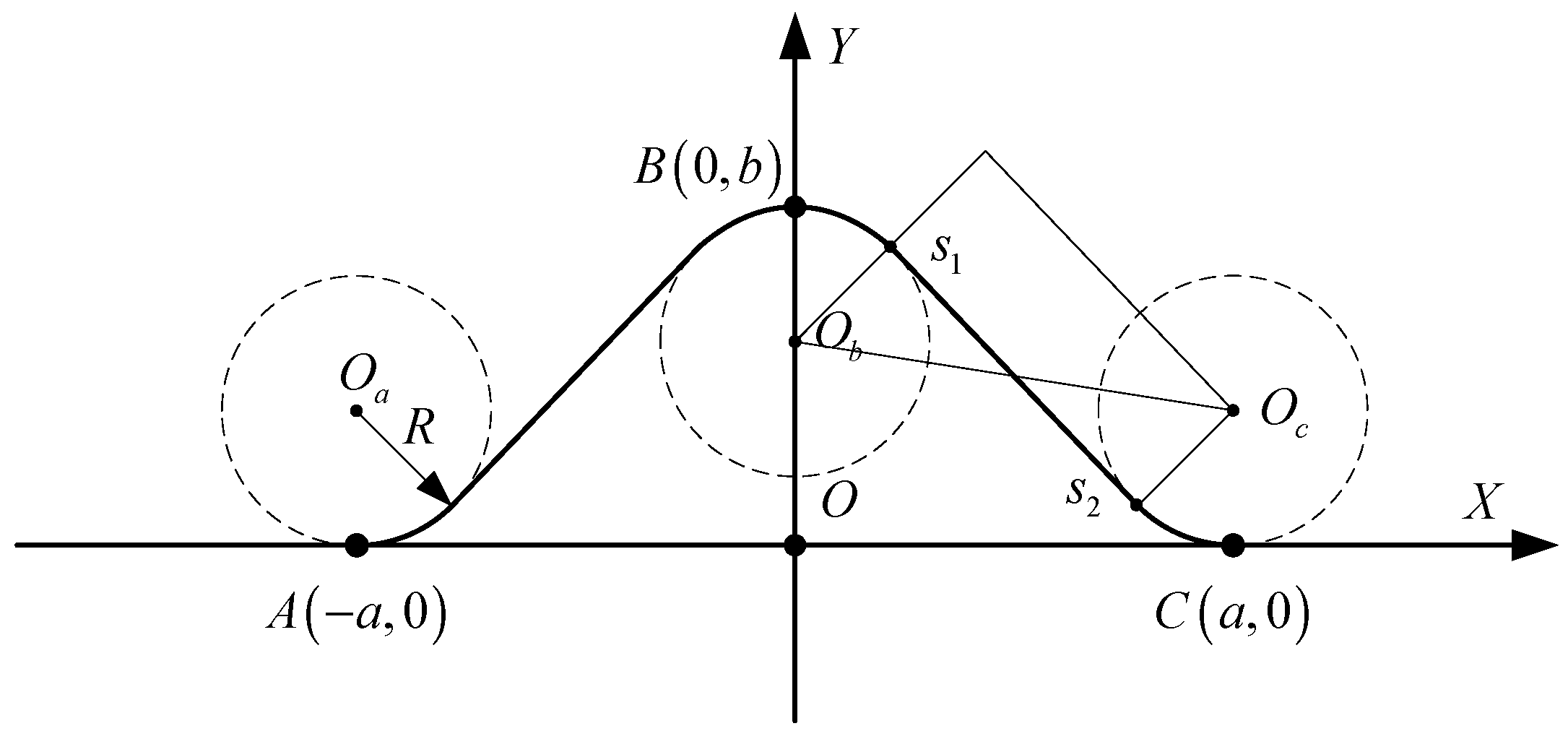
3.4.2. Dubins Detour Strategy for Temporal Coordination
3.5. Algorithmic Procedure and Computational Complexity Analysis
| Algorithm 3. Cooperative-3D-Quick-Dubins-RRT* |
| Input: Initial state , terminal state , maximum iterations , extension step size step, pruning neighborhood parameter , motion primitive database without terminal constraints DataBaseVF, motion primitive database with terminal constraints DataBase |
| Output: 3D path |
| ; ; |
| ; |
4. Simulation and Experimental Results
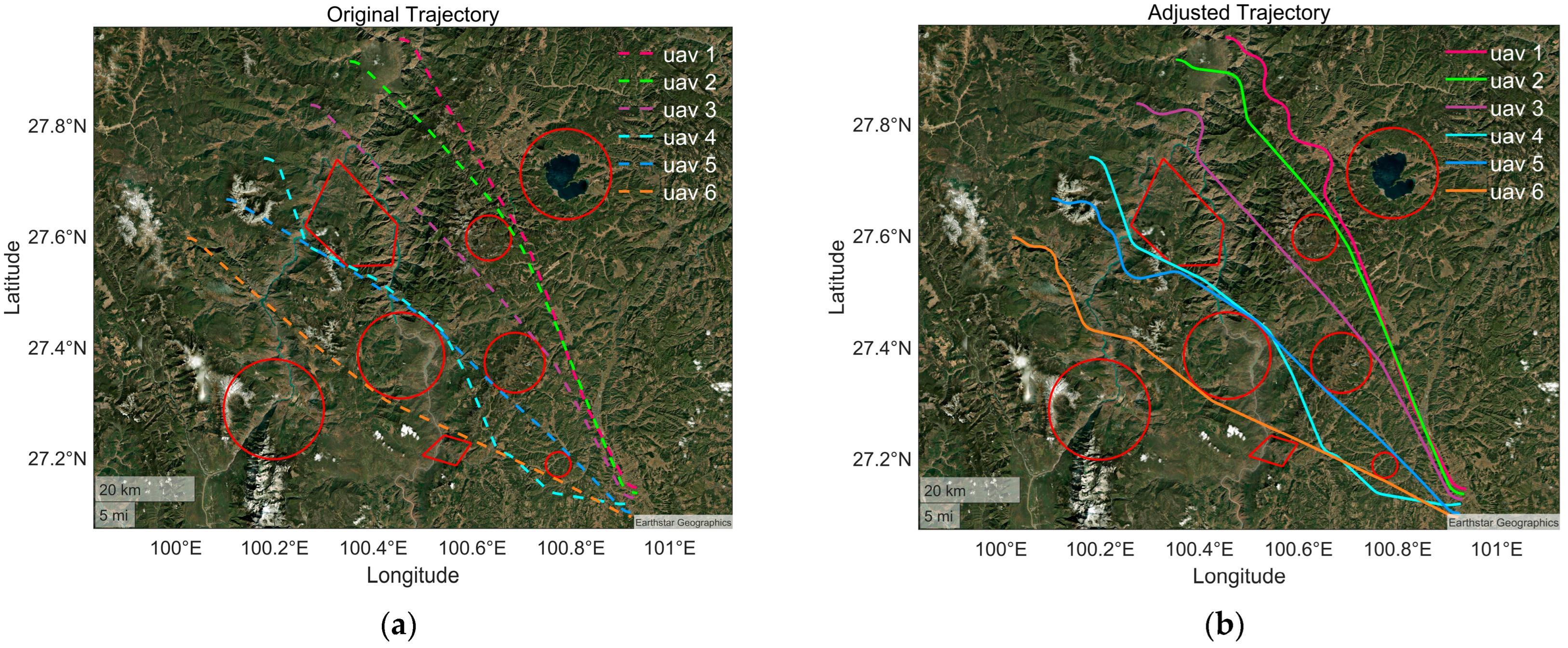
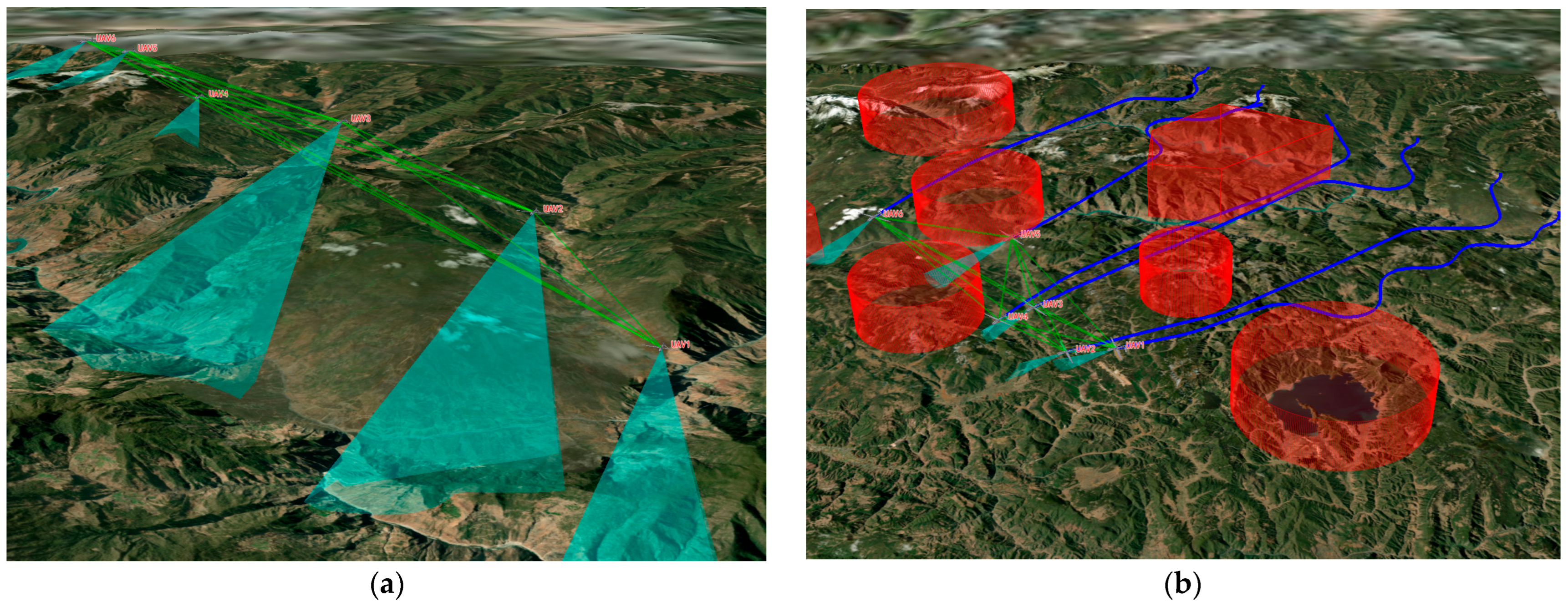
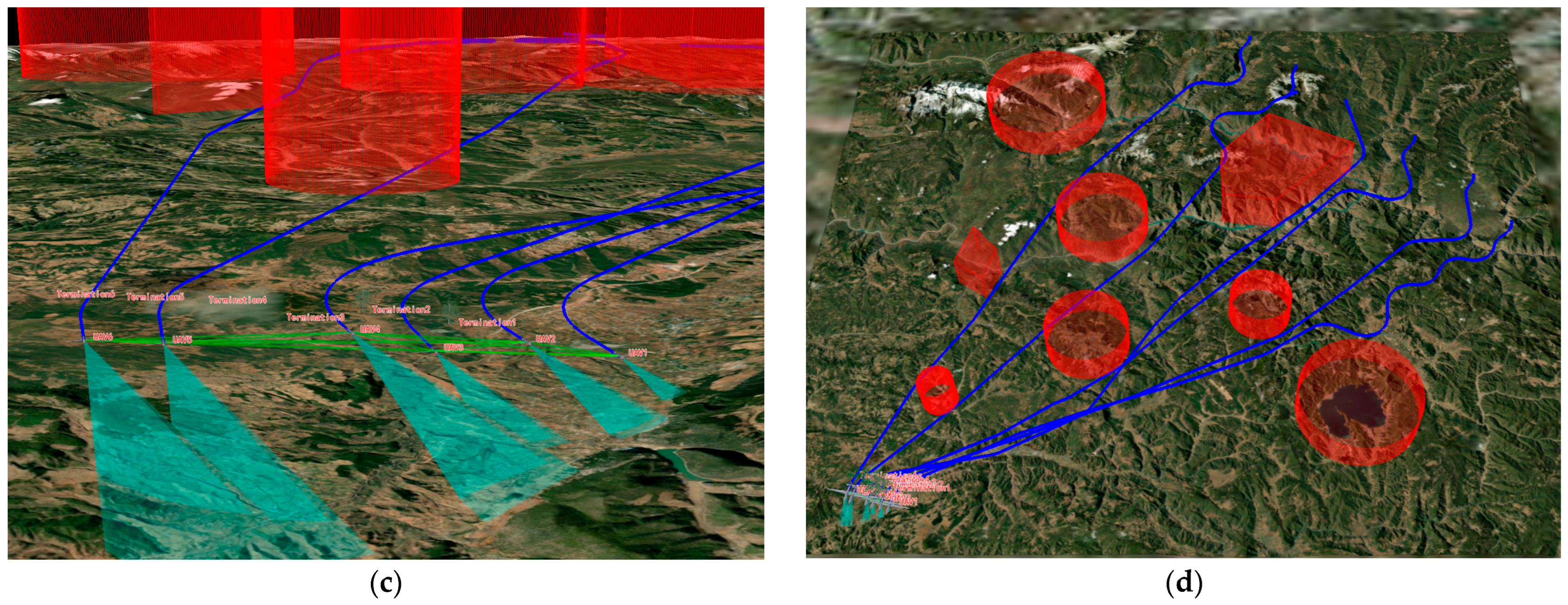
4.1. Multi-UAV Cooperative Path Planning Simulation
4.1.1. Scenarios and Parameter Settings
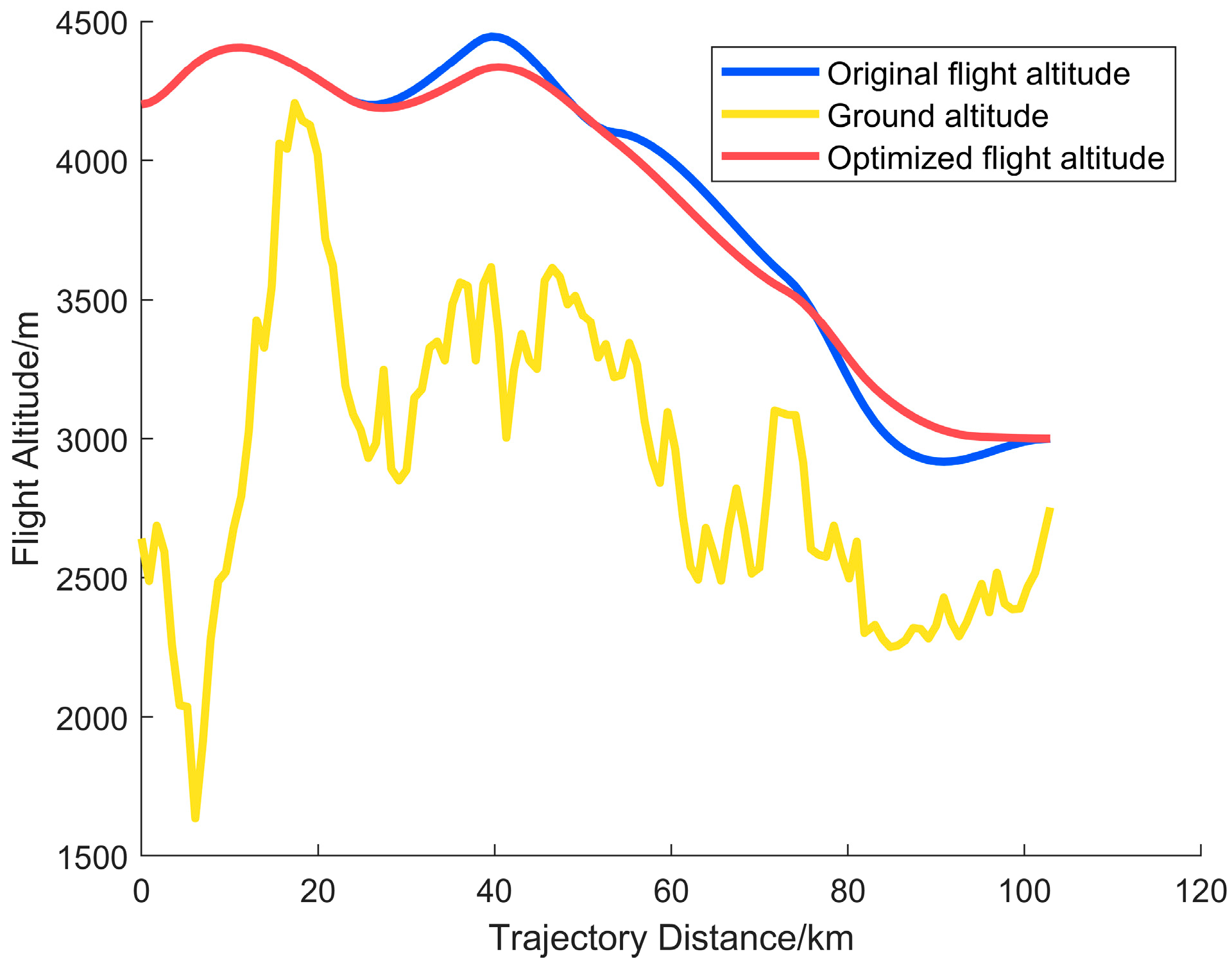
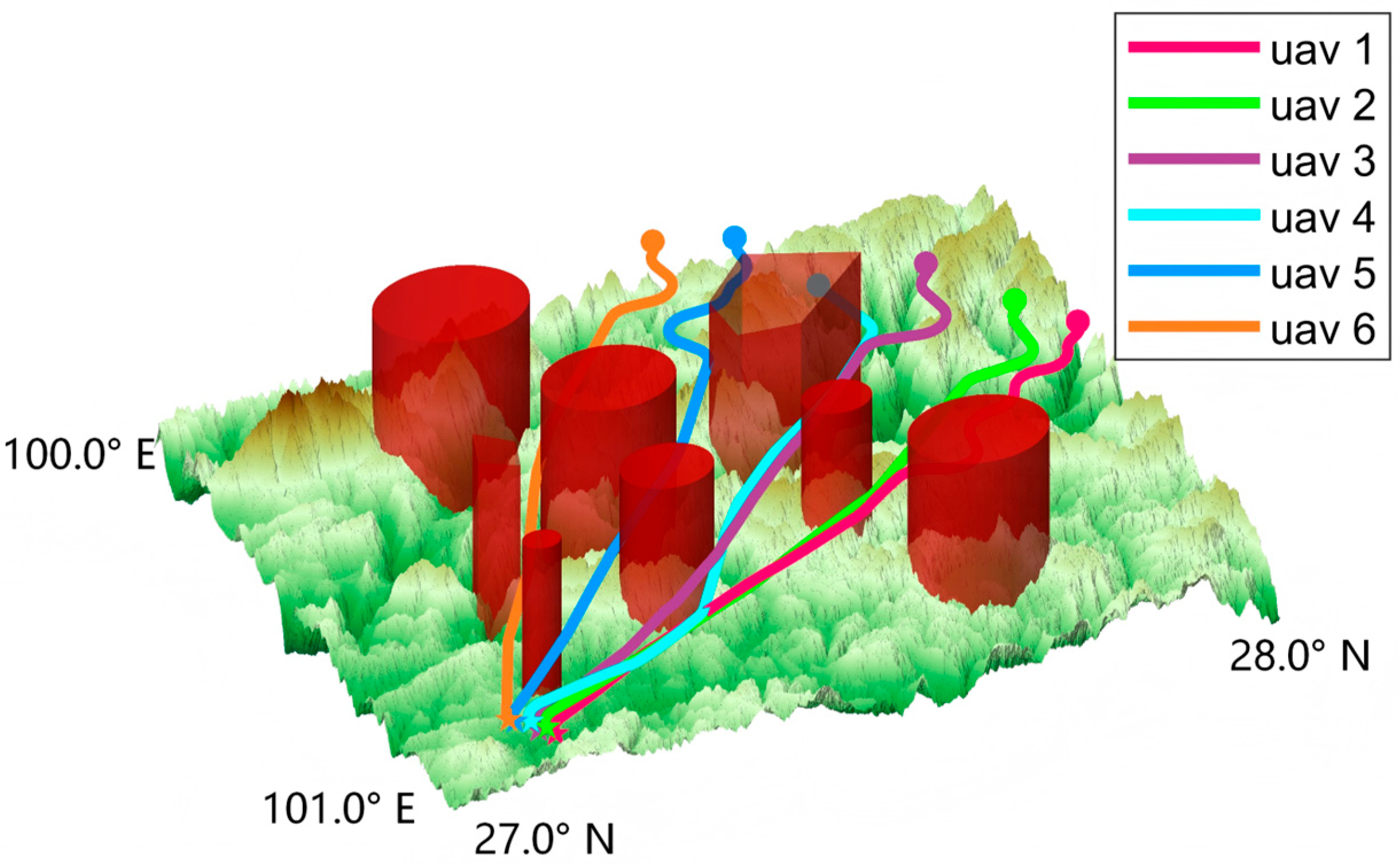
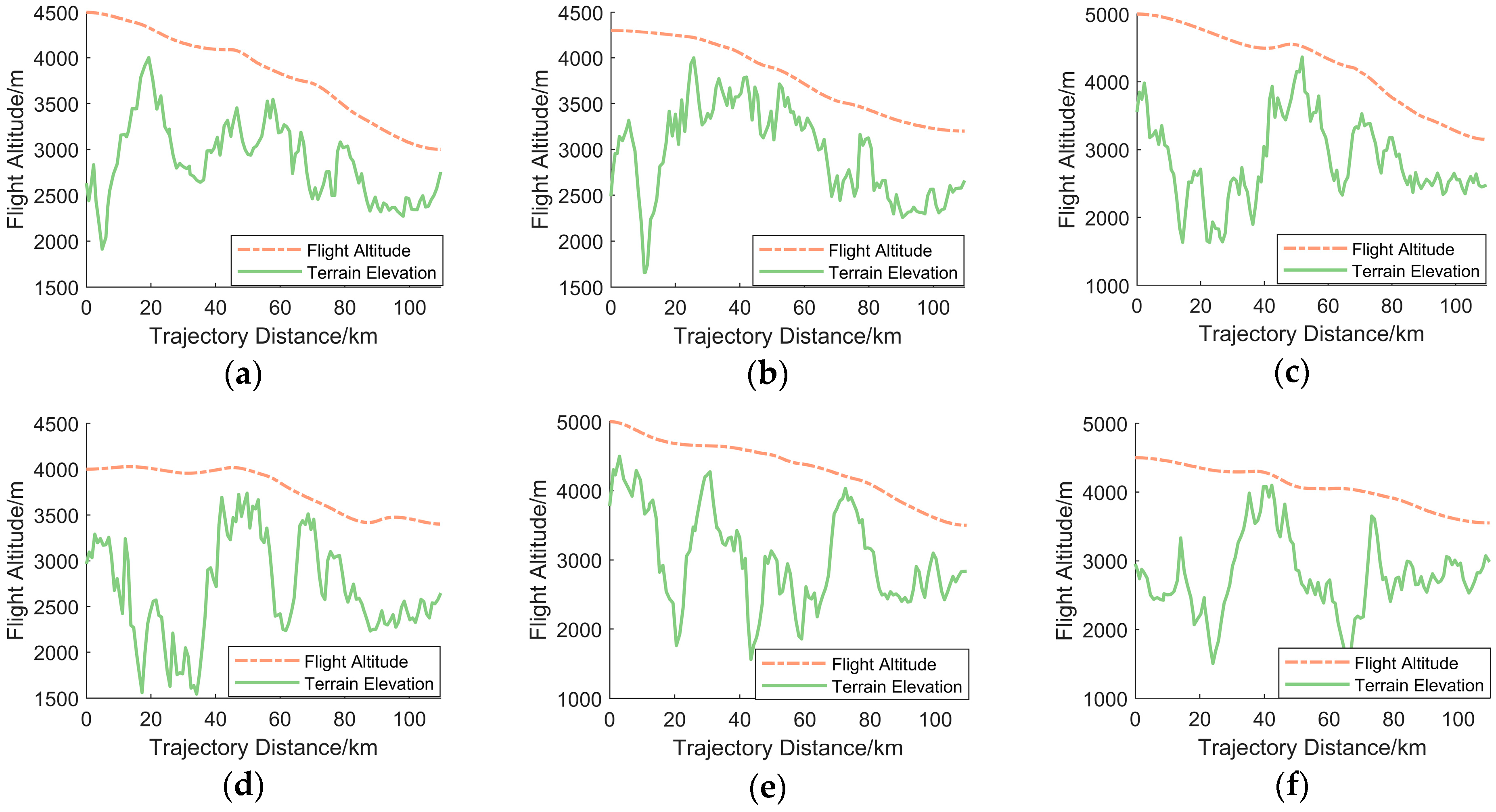
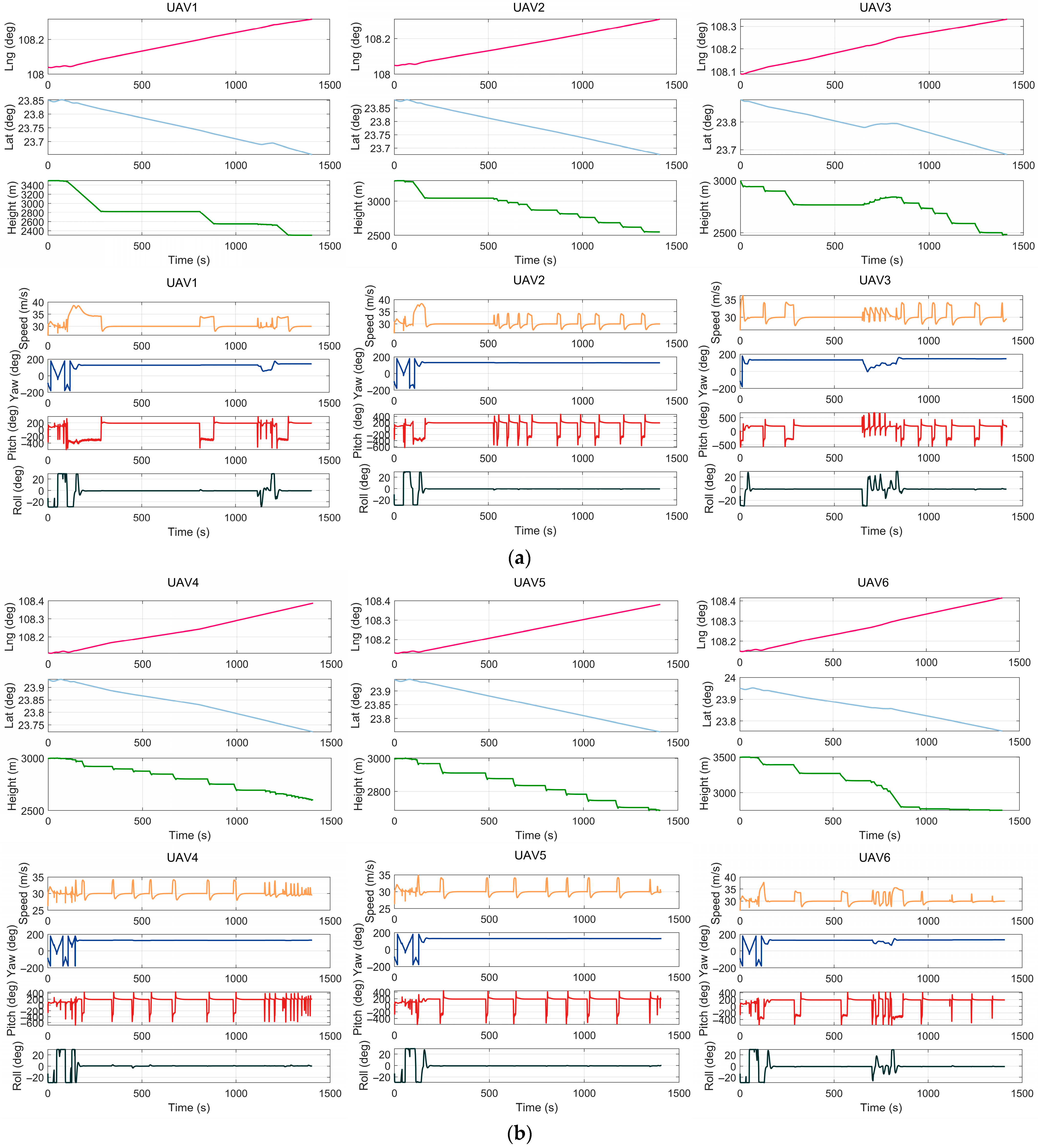
4.1.2. Results and Analysis
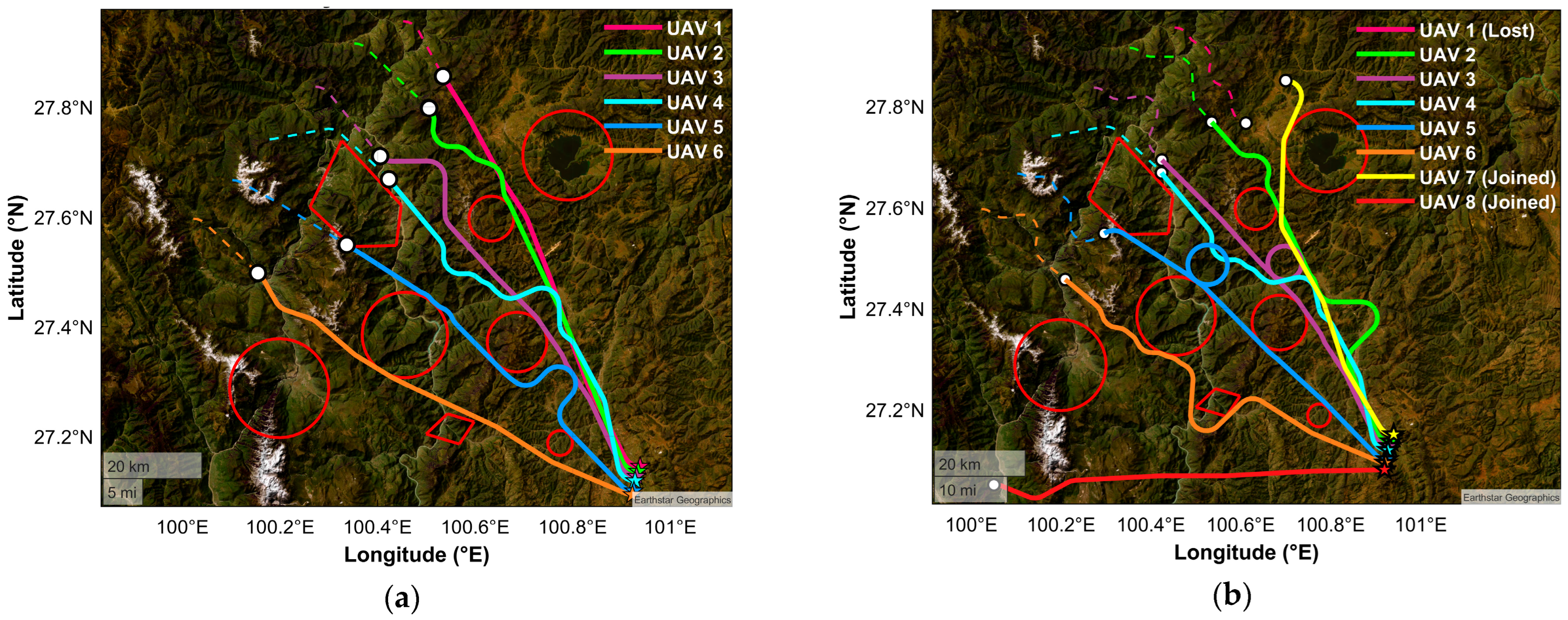
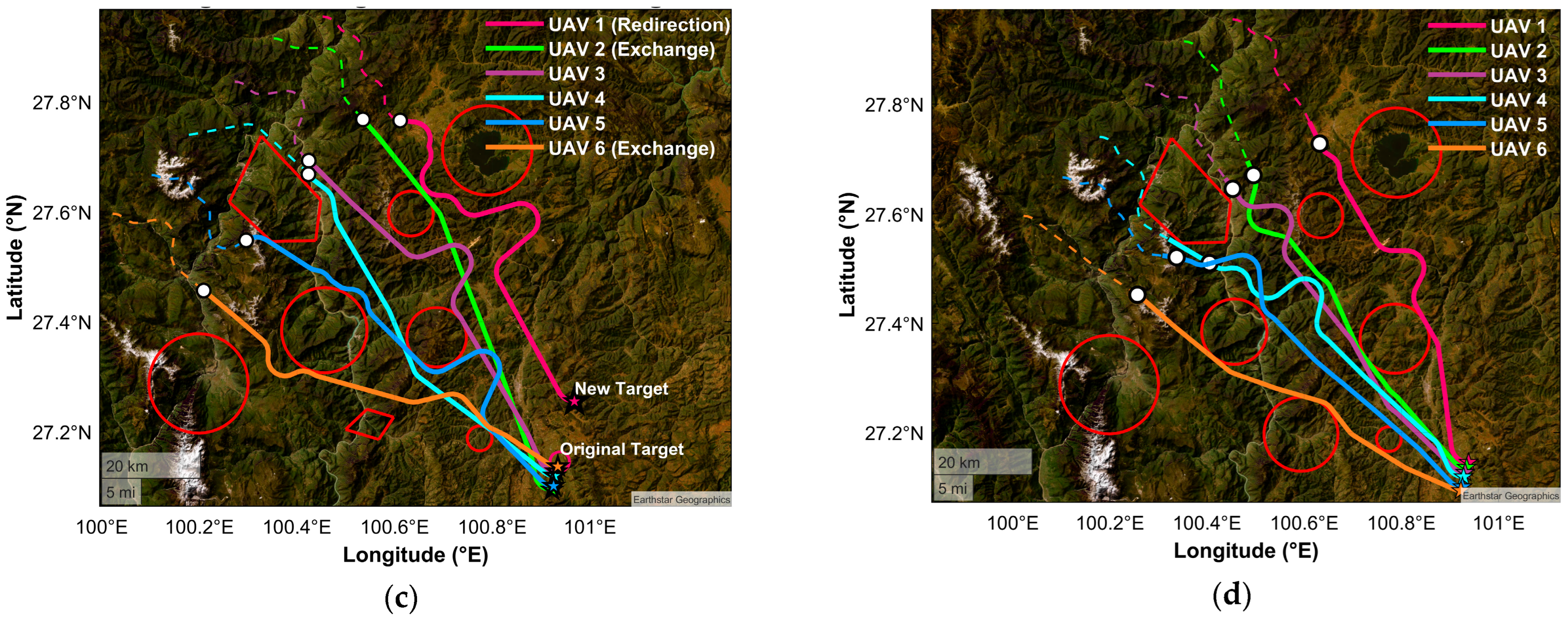
4.1.3. Simulation and Analysis in Dynamic Scenarios
- (1)
- Scenario 1 (Delayed Coordination): After independently completing shortest-path planning, all six UAVs trigger the coordination mechanism simultaneously at 100 s to adjust the remaining segments via Dubins detours.
- (2)
- Scenario 2 (Team Scale Reconfiguration): At 200 s, UAV 1 exits the formation (e.g., due to signal loss), while UAV 7 and UAV 8 join from new start points, triggering a team-scale expansion.
- (3)
- Scenario 3 (Target Reallocation): At 200 s, UAV 1’s delivery target is reassigned to a new location, and UAV 2 and UAV 6 swap targets. The three affected UAVs trigger local replanning, while the others maintain their original segments. The fleet then performs coordinated detours.
- (4)
- Scenario 4 (Global Map Switching): At 200 s, the layout of no-fly and threat zones undergoes a global update. The algorithm automatically detects collisions between remaining paths and the new map. UAVs with conflicts trigger online replanning, while conflict-free UAVs maintain their paths. The fleet then performs unified coordination.
4.2. Parameter Sensitivity Analysis
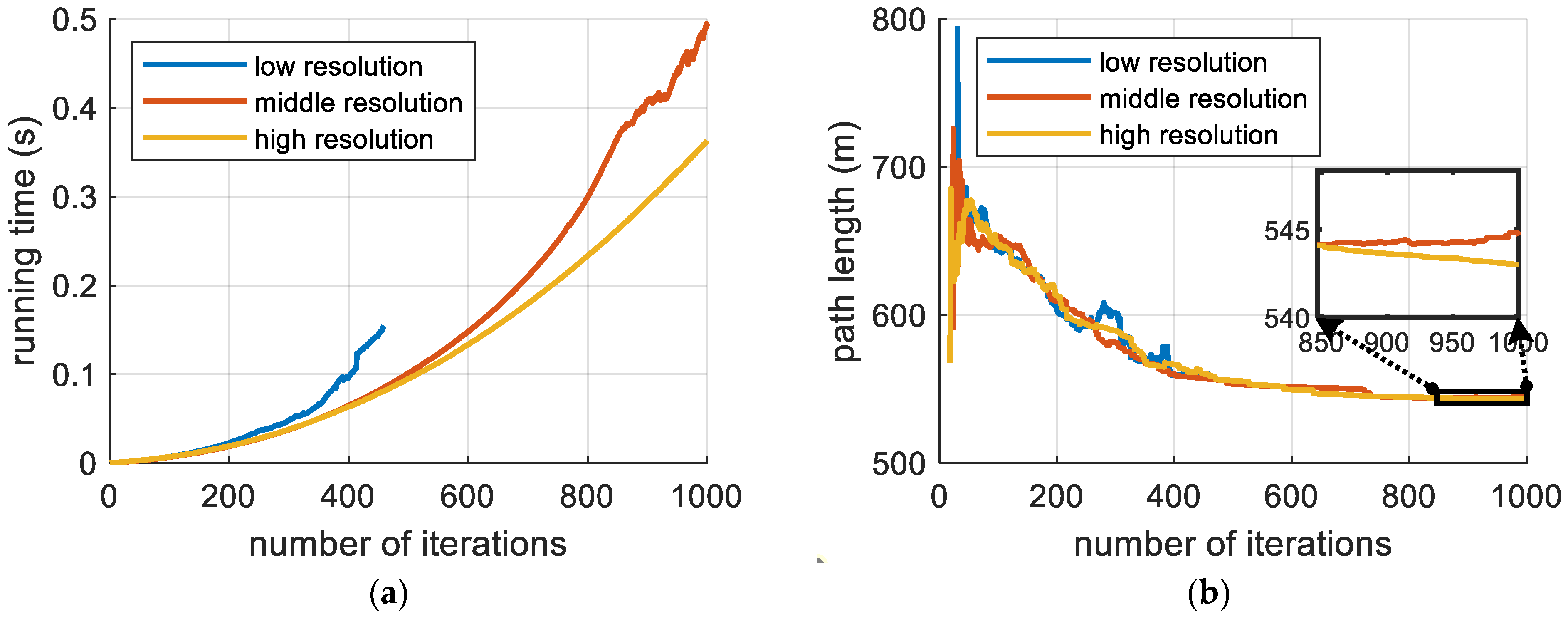
4.2.1. Effect of Motion Primitive Resolution
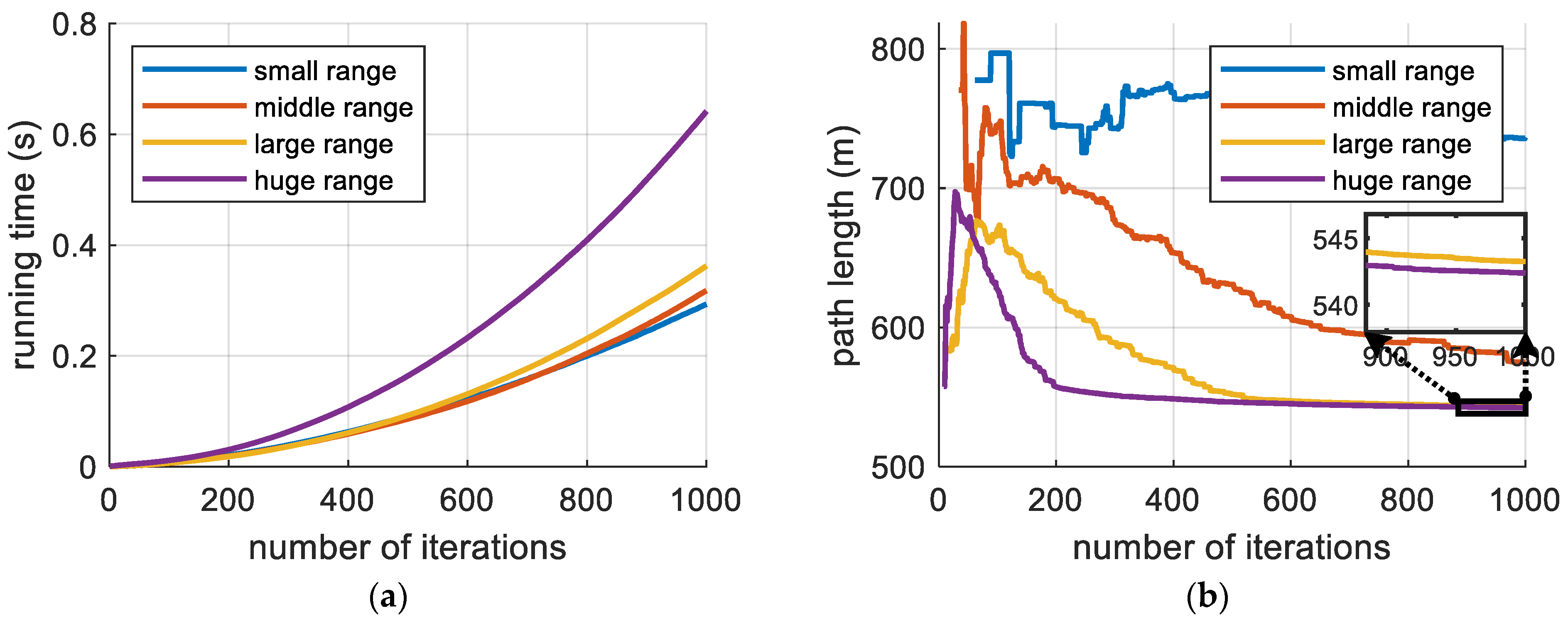
4.2.2. Effect of Motion Primitive Sampling Range
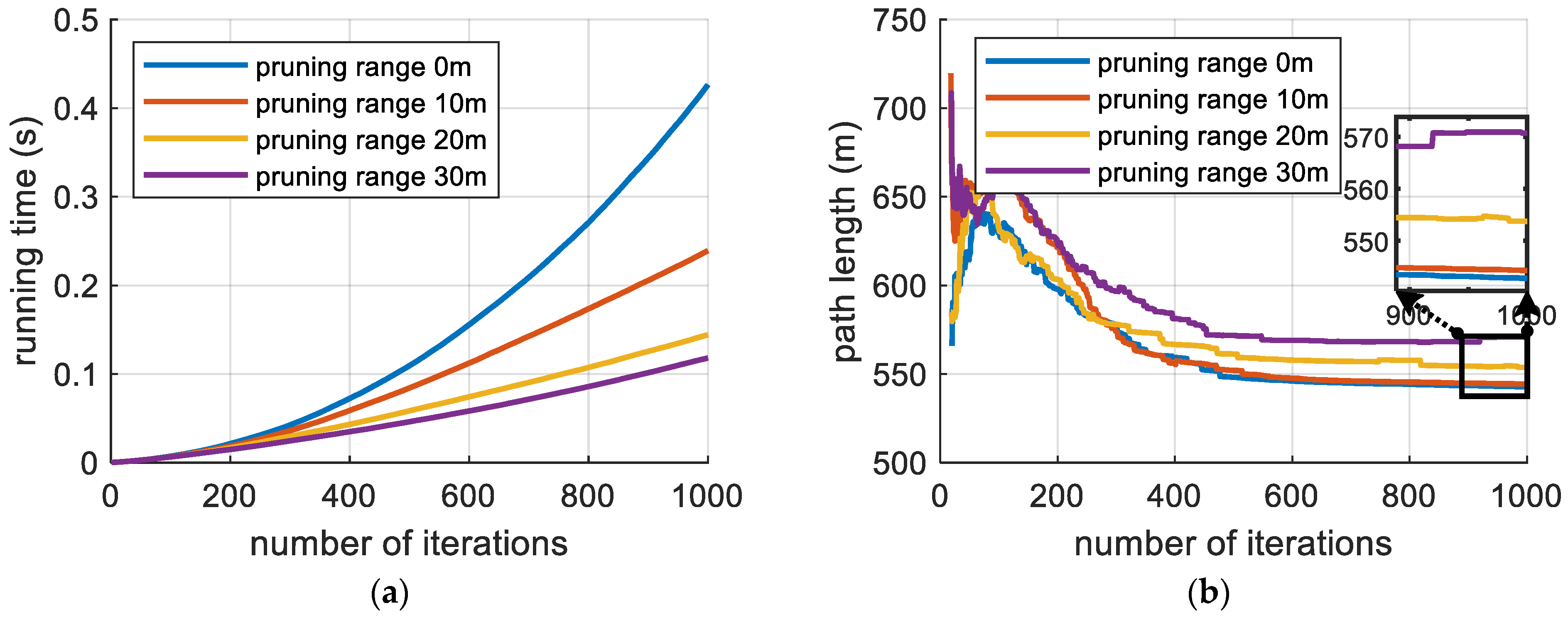
4.2.3. Effect of Pruning Neighborhood Size
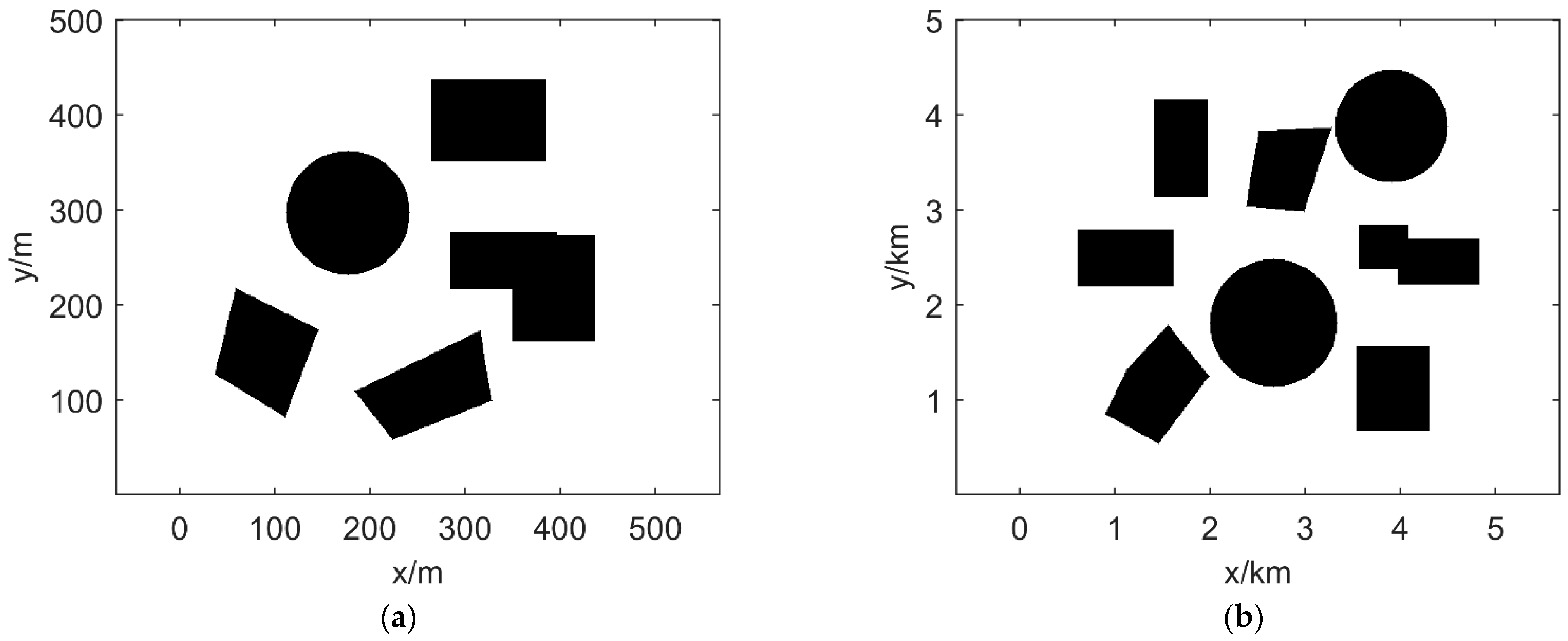
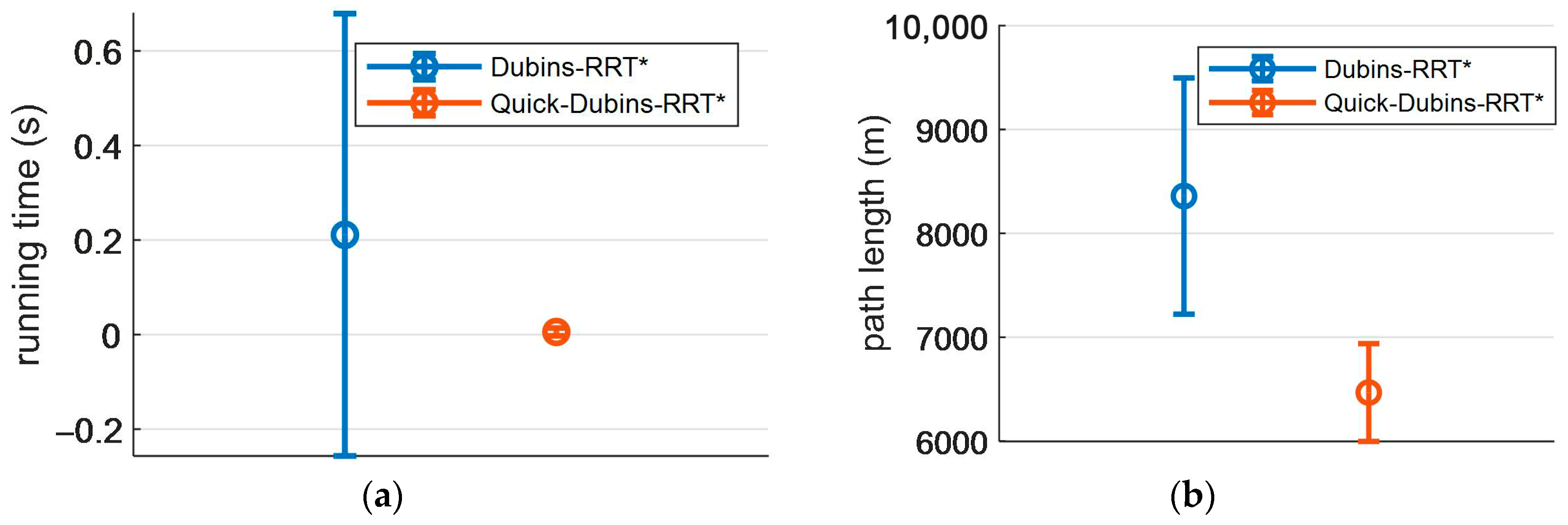
4.3. Comparison with Conventional Dubins-RRT*
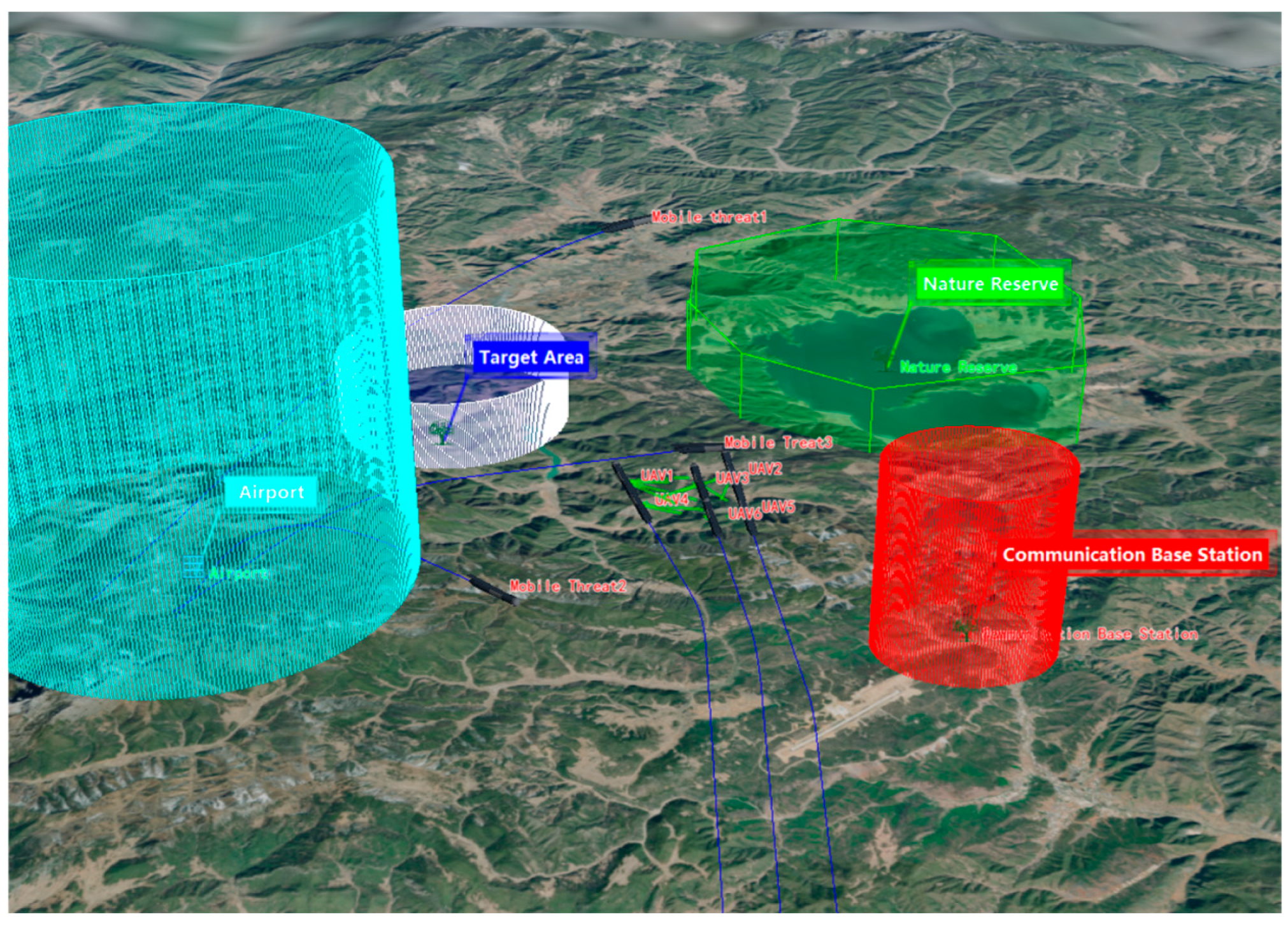
4.4. Hardware-in-the-Loop Simulation Validation
- (1)
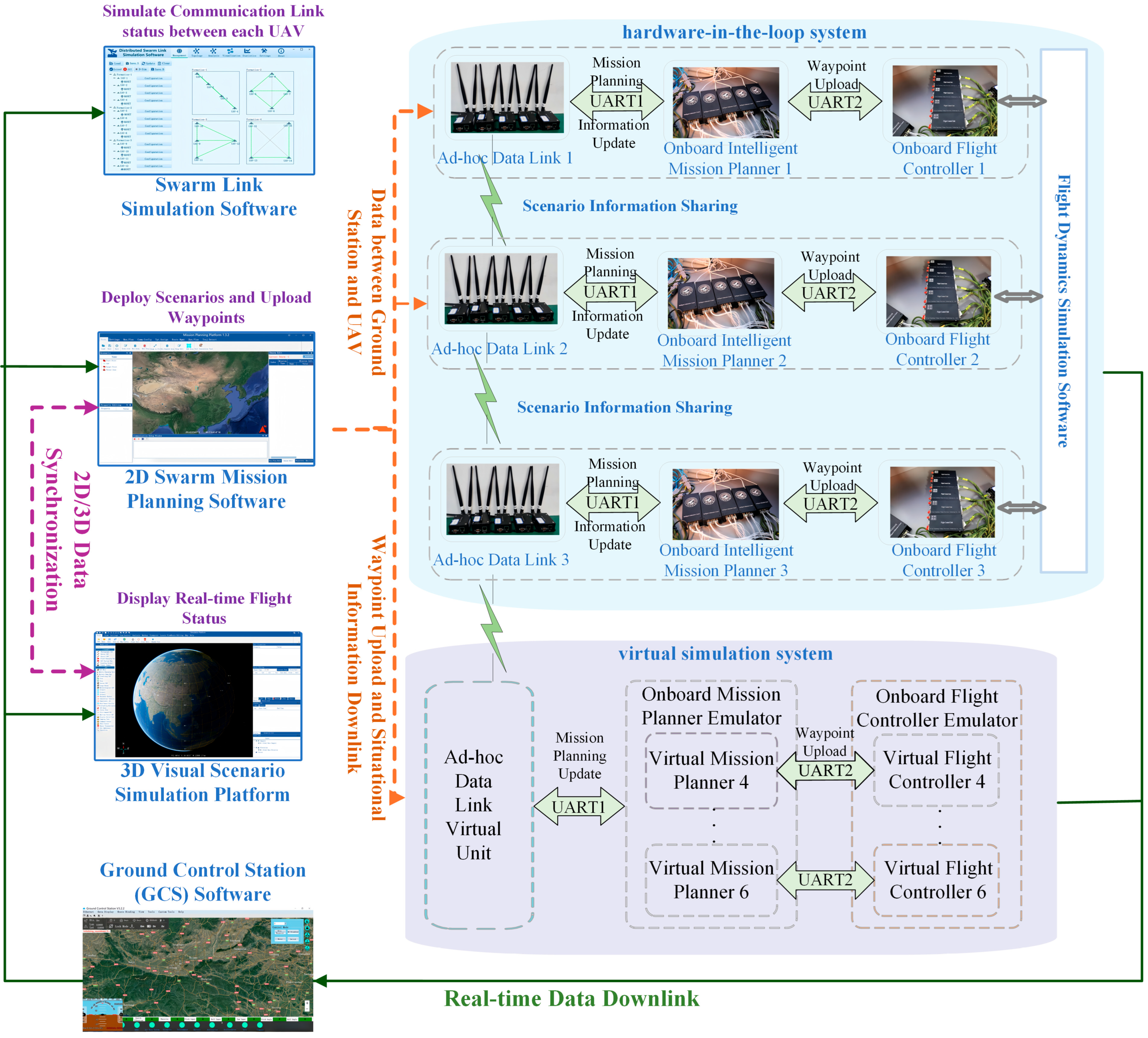
- The swarm mission planning software provides functionalities including UAV scenario configuration, human–machine interaction for command generation, construction of swarm-level command sets, loading of preplanned waypoints, and visualization of two-dimensional operational trajectories of the UAV swarm.
- (2)
- The hardware-in-the-loop (HIL) simulation system is constructed based on key components such as an intelligent mission planner, a flight control module, an ad hoc communication datalink, and flight dynamics simulation software. This subsystem enables real-time hardware-based simulation of UAV mission planning and autonomous decision-making processes, serving as a core architecture for the integrated virtual–physical simulation framework.
- (3)
- The virtual simulation system is developed based on digital simulation techniques, incorporating a fixed-wing UAV six-degree-of-freedom (6-DOF) model as well as trajectory tracking and control models. It enables online validation of UAV behaviors in a purely simulated environment and operates in conjunction with the HIL subsystem to support real-time hybrid simulation of swarm operations.
- (4)
- The hybrid ad hoc communication simulation system is established using both physical ad hoc datalink hardware and a corresponding simulated communication module. By designing appropriate communication strategies, this system forms a unified communication network for the hybrid simulation framework, ensuring reliable data exchange between the virtual and HIL subsystems during cooperative UAV simulations.
- (5)
- The flight dynamics simulation software provides the flight control module with simulated environmental inputs, including atmospheric conditions and sensor disturbances. This enables realistic emulation of UAV flight processes within a laboratory environment, effectively approximating real-world operating conditions.
- (6)
- The ground control station primarily features swarm visualization for trajectory display, a graphical interface for flight attitude, and the reception of cluster simulation data. It enables 2D visualized simulation monitoring and telemetry of UAV trajectories and attitude data.
- (7)
- The dynamic visualization and simulation system supports performance evaluation of swarm mission execution, synchronization of simulation scenarios, and three-dimensional visualization of UAV trajectories. It facilitates comprehensive assessment of swarm operational effectiveness and enables intuitive visualization of coordinated UAV behaviors within the hybrid simulation environment.
5. Conclusions
Author Contributions
Funding
Data Availability Statement
Conflicts of Interest
Abbreviations
| UAV | Unmanned Aerial Vehicle |
| RRT | Rapidly exploring Random Tree |
| PRM | Probabilistic Road Map |
| PSO | Particle Swarm Optimization |
| TPBVP | Two-Point Boundary Value Problem |
| ACO | Ant Colony Optimization |
| SCASL | Sine Cosine optimization Algorithm with Self-learning strategy and Levy flight |
| DEM | Digital Elevation Model |
| GISs | Geographic Information Systems |
| HIL | Hardware-in-the-Loop |
| OSG | Open Scene Graph |
| UDP | User Datagram Protocol |
References
- Duan, H.B.; Qiao, P.X. Pigeon-inspired optimization: A new swarm intelligence optimizer for air robot path planning. Int. J. Intell. Comput. Cybern. 2014, 7, 24–37. [Google Scholar] [CrossRef]
- Zeng, Z.; Sammut, K.; Lian, L.; He, F.; Lammas, A.; Tang, Y. A comparison of optimization techniques for AUV path planning in environments with ocean currents. Robot. Auton. Syst. 2016, 82, 61–72. [Google Scholar] [CrossRef]
- Hota, S.; Ghose, D. Optimal path planning for an aerial vehicle in 3D space. In Proceedings of the 49th IEEE Conference on Decision and Control (CDC), Atlanta, GA, USA, 15–17 December 2010; pp. 4902–4907. [Google Scholar]
- Qi, Z.; Shao, Z.; Ping, Y.S.; Hiot, L.M.; Leong, Y.K. An Improved Heuristic Algorithm for UAV Path Planning in 3D Environment. In Proceedings of the 2nd International Conference on Intelligent Human-Machine Systems and Cybernetics, Nanjing, China, 26–28 August 2010; pp. 258–261. [Google Scholar]
- Uras, A. Path planning on a cuboid using genetic algorithms. Inf. Sci. 2008, 178, 3275–3287. [Google Scholar] [CrossRef]
- Miller, B.; Stepanyan, K.; Miller, A.; Andreev, M. 3D path planning in a threat environment. In Proceedings of the 50th IEEE Conference on Decision and Control and European Control Conference, Orlando, FL, USA, 12–15 December 2011; pp. 6864–6869. [Google Scholar]
- Pehlivanoglu, Y.V. A new vibrational genetic algorithm enhanced with a Voronoi diagram for path planning of autonomous UAV. Aerosp. Sci. Technol. 2012, 16, 47–55. [Google Scholar] [CrossRef]
- Yu, J.; Wu, X.; Jiang, A.; Yong, E. Research on UAV path planning method based on the multi-precision planning windows. Syst. Eng. Electron. 2024, 46, 1767–1776. [Google Scholar]
- Ren, M.; Huo, X. Real time path planning method for unmanned aerial vehicles based on asynchronous dual precision rolling window. Sci. China Inf. Sci. 2010, 40, 561–568. [Google Scholar]
- Zhou, Y.; Su, Y.; Xie, A.; Kong, L. A newly bio-inspired path planning algorithm for autonomous obstacle avoidance of UAV. Chin. J. Aeronaut. 2021, 34, 199–209. [Google Scholar] [CrossRef]
- Wu, J.; Wang, H.; Wang, Y.; Liu, Y. UAV Reactive Interfered Fluid Path Planning. Acta Autom. Sin. 2023, 49, 272–287. [Google Scholar] [CrossRef]
- Yao, P.; Wang, H.; Su, Z. UAV feasible path planning based on disturbed fluid and trajectory propagation. Chin. J. Aeronaut. 2015, 28, 1163–1177. [Google Scholar] [CrossRef]
- LaValle, S.M. Rapidly-Exploring Random Trees: A New Tool for Path Planning; Technical Report; Iowa State University: Ames, IA, USA, 1998. [Google Scholar]
- Kavraki, L.E.; Svestka, P.; Latombe, J.C.; Overmars, M.H. Probabilistic Roadmaps for Path Planning in High-Dimensional Configuration Spaces. IEEE Trans. Robot. Autom. 1996, 12, 566–580. [Google Scholar] [CrossRef]
- Yang, K.; Sukkarieh, S. 3D smooth path planning for a UAV in cluttered natural environments. In Proceedings of the IEEE/RSJ International Conference on Intelligent Robots and Systems, Nice, France, 22–26 September 2008; pp. 794–800. [Google Scholar]
- Karaman, S.; Frazzoli, E. Incremental sampling-based algorithms for optimal motion planning. Int. J. Robot. Res. 2011, 30, 846–894. [Google Scholar] [CrossRef]
- Cui, R.; Li, Y.; Yan, W. Mutual information-based multi-AUV path planning for scalar field sampling using multidimensional RRT*. IEEE Trans. Syst. Man Cybern. Syst. 2017, 46, 993–1004. [Google Scholar] [CrossRef]
- Du, M.; Mei, T.; Liang, H.; Chen, J.; Huang, R.; Zhao, P. Drivers’ visual behavior-guided RRT motion planner for autonomous on-road driving. Sensors 2016, 16, 102. [Google Scholar] [CrossRef]
- Schopferer, S.; Benders, S. Minimum-Risk Path Planning for Long-Range and Low-Altitude Flights of Autonomous Unmanned Aircraft. In Proceedings of the AIAA Scitech 2020 Forum, Orlando, FL, USA, 6–10 January 2020. [Google Scholar]
- Liu, T.; He, X.; Niu, Y.; Li, J.; Li, Z. TICOP: Time-Critical Coordinated Planning for Fixed-Wing UAVs in Unknown Unstructured Environments. IEEE Robot. Autom. Lett. 2024, 9, 9629–9636. [Google Scholar] [CrossRef]
- Tal, E.; Ryou, G.; Karaman, S. Aerobatic Trajectory Generation for a VTOL Fixed-Wing Aircraft Using Differential Flatness. IEEE Trans. Robot. 2023, 39, 4805–4819. [Google Scholar] [CrossRef]
- Cui, P.; Yan, W.S.; Guo, X.X. Path Planning for Robot with Pose Constraints Using Dubins-RRT*. In Proceedings of the 2018 3rd IEEE International Conference on Advanced Robotics and Mechatronics (ICARM), Shenzhen, China, 18–20 July 2018; pp. 560–565. [Google Scholar]
- Pharpatara, P.; Herisse, B.; Bestaoui, Y. 3-D Trajectory Planning of Aerial Vehicles Using RRT*. IEEE Trans. Control Syst. Technol. 2017, 25, 1116–1123. [Google Scholar] [CrossRef]
- Niendorf, M.; Schmitt, F.; Adolf, F. Multi-query Path Planning for an Unmanned Fixed-Wing Aircraft. In Proceedings of the AIAA Guidance, Navigation, and Control (GNC) Conference, Boston, MA, USA, 19–22 August 2013. [Google Scholar]
- Liu, X.; Su, Y.; Wu, Y.; Guo, Y. Multi-Conflict-Based Optimal Algorithm for Multi-UAV Cooperative Path Planning. Drones 2023, 7, 217. [Google Scholar] [CrossRef]
- Bai, H.; Fan, T.; Niu, Y.; Cui, Z. Multi-UAV Cooperative Trajectory Planning Based on Many-Objective Evolutionary Algorithm. Complex Syst. Model. Simul. 2022, 2, 130–141. [Google Scholar] [CrossRef]
- Huang, Y.; Tang, J.; Lao, S. Cooperative Multi-UAV Collision Avoidance Based on a Complex Network. Appl. Sci. 2019, 9, 3943. [Google Scholar] [CrossRef]
- Wang, K.; Song, M.; Li, M. Cooperative Multi-UAV Conflict Avoidance Planning in a Complex Urban Environment. Sustainability 2021, 13, 6807. [Google Scholar] [CrossRef]
- Sakcak, B.; Bascetta, L.; Ferretti, G.; Prandini, M. Sampling-based optimal kinodynamic planning with motion primitives. Auton. Robot. 2019, 43, 1715–1732. [Google Scholar] [CrossRef]
- Zheng, D.; Tsiotras, P. Accelerating Kinodynamic RRT* Through Dimensionality Reduction. In Proceedings of the IEEE/RSJ International Conference on Intelligent Robots and Systems (IROS), Prague, Czech Republic, 27 September–1 October 2021; pp. 3674–3680. [Google Scholar]
- Gammell, J.D.; Srinivasa, S.S.; Barfoot, T.D. Informed RRT*: Optimal sampling-based path planning focused via direct sampling of an admissible ellipsoidal heuristic. In Proceedings of the 2014 IEEE/RSJ International Conference on Intelligent Robots and Systems, Chicago, IL, USA, 14–18 September 2014; pp. 2997–3004. [Google Scholar]
- Olfati-Saber, R.; Fax, J.A.; Murray, R.M. Consensus and cooperation in networked multi-agent systems. Proc. IEEE 2007, 95, 215–233. [Google Scholar] [CrossRef]
- Ren, W.; Beard, R.W. Consensus seeking in multiagent systems under dynamically changing interaction topologies. IEEE Trans. Autom. Control 2005, 50, 655–661. [Google Scholar] [CrossRef]
- Feng, H.; Hu, Q.; Zhao, Z.; Feng, X. Smooth path planning under maximum curvature constraints for autonomous underwater vehicles based on rapidly-exploring random tree star with B-spline curves. Eng. Appl. Artif. Intell. 2024, 133, 108583. [Google Scholar] [CrossRef]








| Calculation Method | Motion Primitive Database | 3D Dubins | GPOPSII |
|---|---|---|---|
| Average time (ms) | 0.0208 | 0.29913 | 3268.431 |
| Minimum time (ms) | 0.0120 | 0.2355 | 1870.385 |
| Maximum time (ms) | 0.02981 | 16.6679 | 14,432.608 |
| Procedure | Standard RRT* [16] | Conventional Dubins-RRT* | Proposed Quick-Dubins-RRT* |
|---|---|---|---|
| Search (nearest-neighbor query) | (dominant cost) | ||
| Steer | Simple straight-line interpolation (low cost) | Online TPBVP solving (computationally expensive) | Database retrieval (near-constant time) |
| Sample | Uniform random sampling | Uniform random sampling | Reduced sampling space (guided + constrained) |
| Obstacle Free | Global collision checking (high cost) | Discretized Dubins curve checking | Localized subset + adaptive discretization |
| Storage | Minimal | Minimal | Precomputed motion primitive database (compressed) |
| Parameters of UAV | Numeric Value |
|---|---|
| Maximum flight path angle | 30° |
| Maximum roll angle | 30° |
| Maximum fly height | 7000 m |
| Cruising speed | 140 m/s |
| Minimum height above ground | 500 m |
| Number of UAV | Position | Heading Angle | Flight Path Angle |
|---|---|---|---|
| 1 | (100.452348°, 27.954586°, 4500.0 m) | 0° | 0° |
| 2 | (100.352348°, 27.914586°, 4300.0 m) | 0° | 0° |
| 3 | (100.272580°, 27.836248°, 5000.0 m) | 0° | 0° |
| 4 | (100.178415°, 27.740273°, 4000.0 m) | 0° | 0° |
| 5 | (100.102122°, 27.666560°, 5000.0 m) | 0° | 0° |
| 6 | (100.022122°, 27.596560°, 4500.0 m) | 0° | 0° |
| Number of UAV | Position | Heading Angle | Flight Path Angle |
|---|---|---|---|
| 1 | (100.938226°, 27.145075°, 3000) | 0° | 0° |
| 2 | (100.934318°, 27.135888°, 3200) | 0° | 0° |
| 3 | (100.931072°, 27.126711°, 3150) | 0° | 0° |
| 4 | (100.927853°, 27.118753°, 3400) | 0° | 0° |
| 5 | (100.925587°, 27.100253°, 3500) | 0° | 0° |
| 6 | (100.922434°, 27.093504°, 3550) | 0° | 0° |
| Number of Obstacles | Position | Type of Obstacles |
|---|---|---|
| 1 | Vertex (100.4486°, 27.6211°), (100.4382°, 27.5478°), (100.3477°, 27.5460°), (100.2613°, 27.6175°), (100.3265°, 27.7379°) | no-fly zone |
| 2 | Vertex (100.5982°, 27.2263°), (100.5675°, 27.1858°), (100.4996°, 27.2040°), (100.5433°, 27.2408°) Vertex | Threat zone |
| 3 | Center position (100.6332°, 27.5967°), range 4500 m | no-fly zone |
| 4 | Center position (100.6860°, 27.3718°), range 6000 m | no-fly zone |
| 5 | Center position (100.7896°, 27.7116°), range 9000 m | no-fly zone |
| 6 | Center position (100.4559°, 27.3847°), range 8600 m | Threat zone |
| 7 | Center position (100.1983°, 27.2877°), range 10,000 m | Threat zone |
| 8 | Center position (100.7742°, 27.1877°), range 2500 m | Threat zone |
| Parameters | Numeric Value |
|---|---|
| Database sample range | 20,000 m |
| Course angle resolution | 15° |
| Grid resolution | 1000 m |
| Prune range | 1500 m |
| Maximum expend step | 10,000 m |
| Number of UAV | Path Length Before Adjustment | Path Length After Adjustment |
|---|---|---|
| 1 | 103.2012 km | 108.63 km |
| 2 | 105.8713 km | 108.65 km |
| 3 | 103.1137 km | 108.63 km |
| 4 | 108.6725 km | 108.67 km |
| 5 | 103.2006 km | 108.64 km |
| 6 | 105.4413 km | 108.65 km |
Disclaimer/Publisher’s Note: The statements, opinions and data contained in all publications are solely those of the individual author(s) and contributor(s) and not of MDPI and/or the editor(s). MDPI and/or the editor(s) disclaim responsibility for any injury to people or property resulting from any ideas, methods, instructions or products referred to in the content. |
© 2026 by the authors. Licensee MDPI, Basel, Switzerland. This article is an open access article distributed under the terms and conditions of the Creative Commons Attribution (CC BY) license.
Share and Cite
Nie, Y.; Zhang, X.; Li, C.; Zhang, D. Cooperative Online 3D Path Planning for Fixed-Wing UAVs. Drones 2026, 10, 297. https://doi.org/10.3390/drones10040297
Nie Y, Zhang X, Li C, Zhang D. Cooperative Online 3D Path Planning for Fixed-Wing UAVs. Drones. 2026; 10(4):297. https://doi.org/10.3390/drones10040297
Chicago/Turabian StyleNie, Yonggang, Xinyue Zhang, Chaoyue Li, and Dong Zhang. 2026. "Cooperative Online 3D Path Planning for Fixed-Wing UAVs" Drones 10, no. 4: 297. https://doi.org/10.3390/drones10040297
APA StyleNie, Y., Zhang, X., Li, C., & Zhang, D. (2026). Cooperative Online 3D Path Planning for Fixed-Wing UAVs. Drones, 10(4), 297. https://doi.org/10.3390/drones10040297