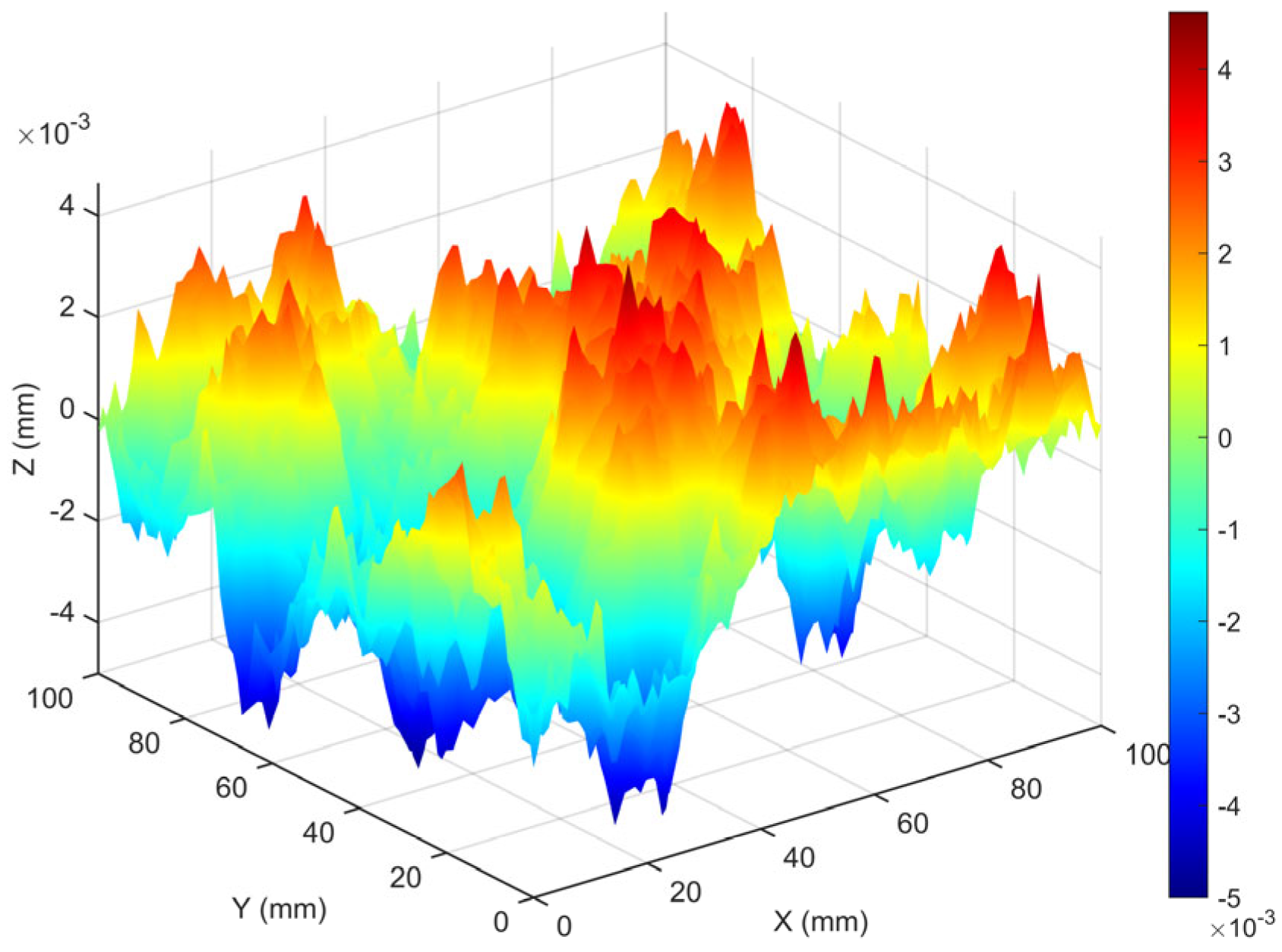
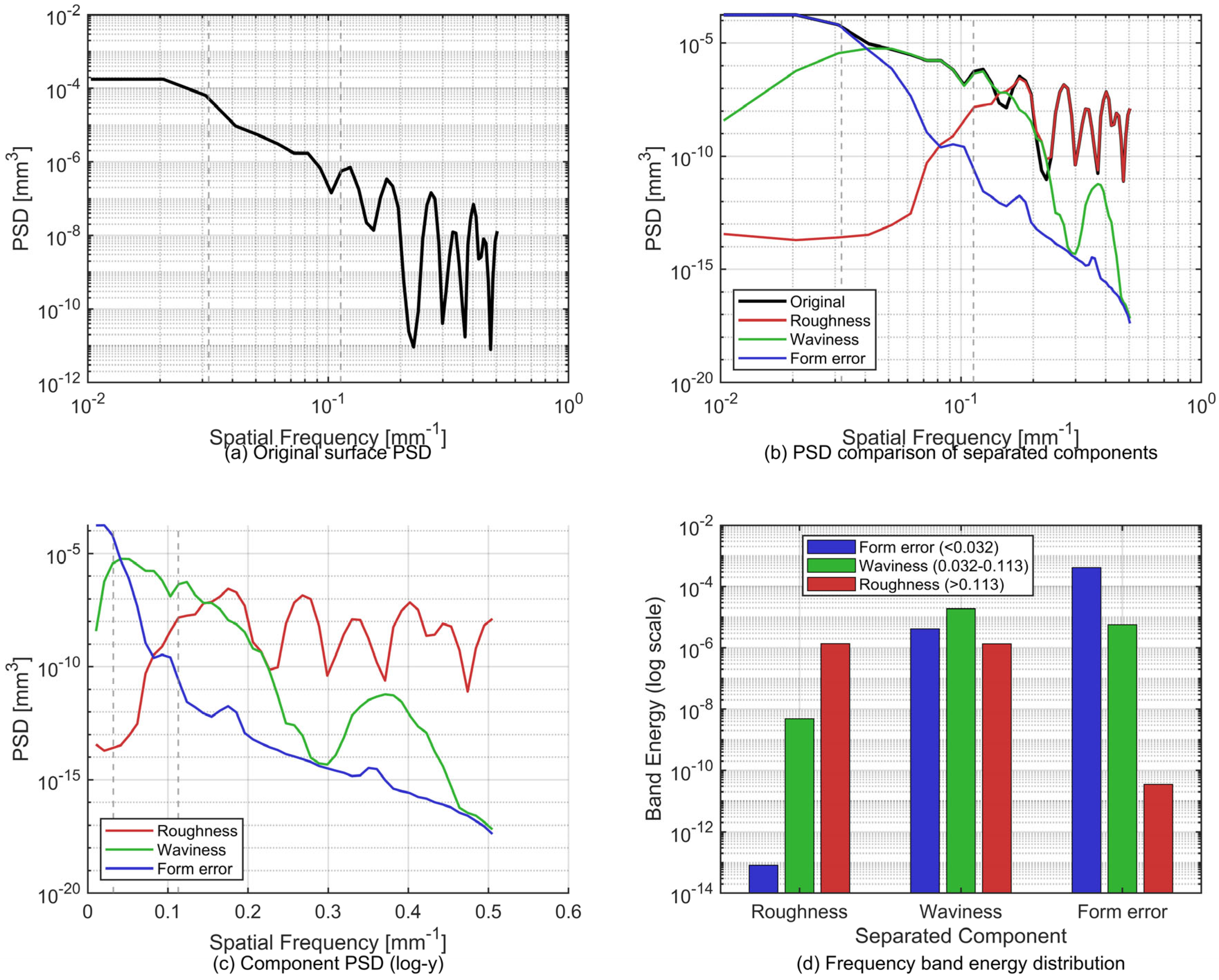
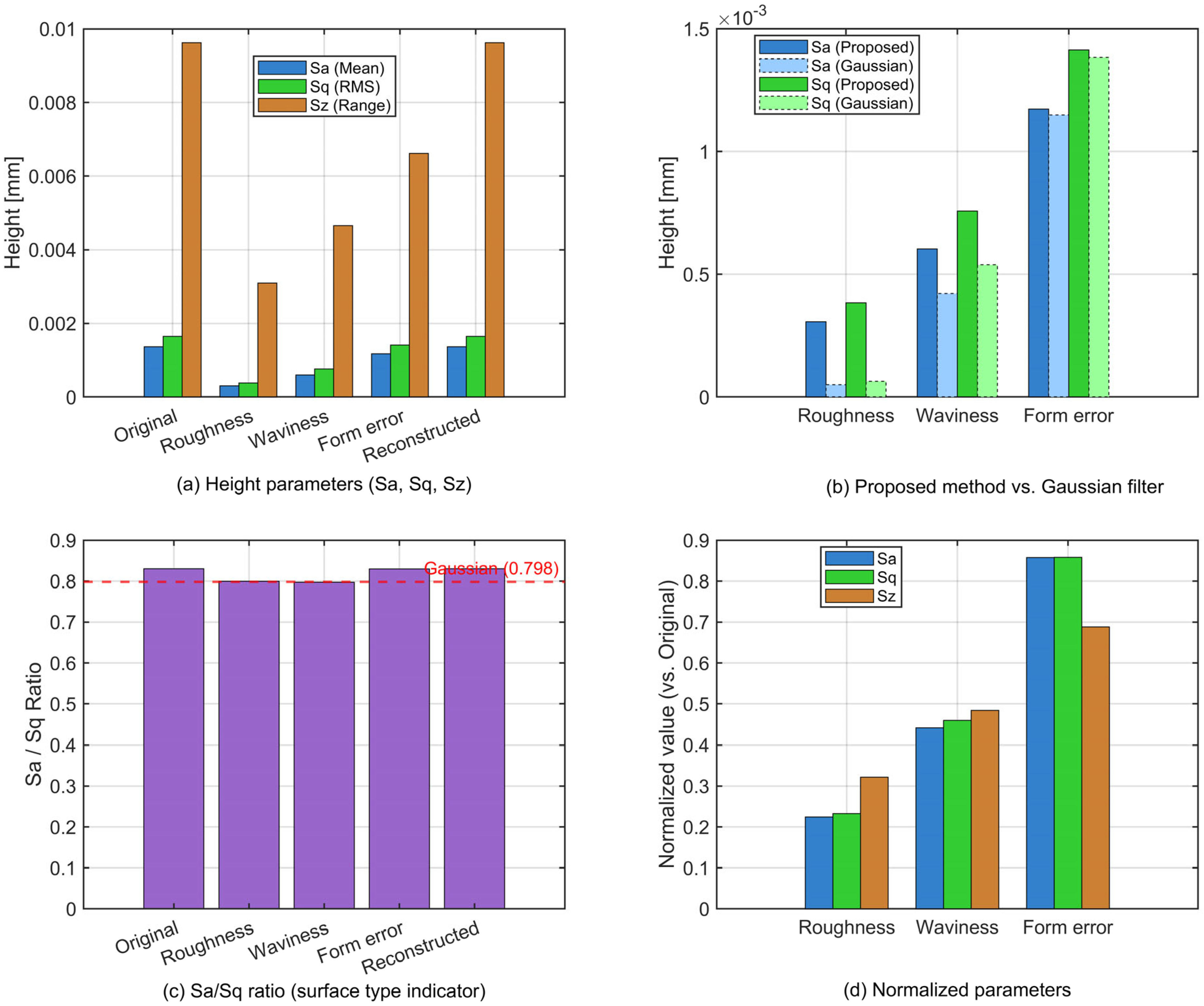
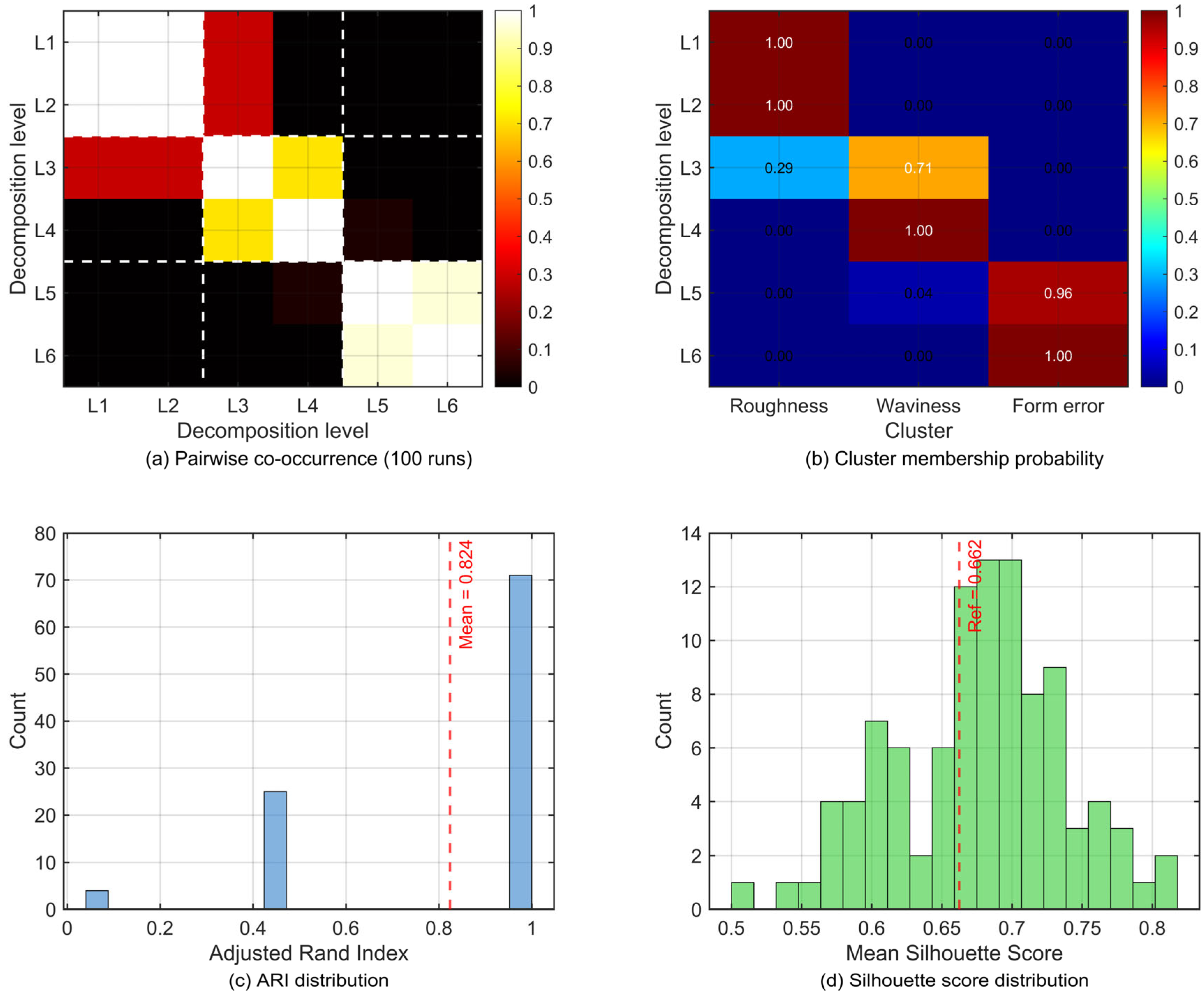
Assembly interface topography refers to the geometric surface morphology formed under the combined effects of multiple machining parameters and influencing factors during the manufacturing process. It contains various components, including roughness, waviness, and form error, and exhibits pronounced multi-scale characteristics. Direct use of the interface topography simulated by Equation (3) in assembly accuracy studies may render the problem excessively complex and may even lead the analysis to converge to a local solution; for instance, in assembly positioning analysis, contact points may occur only in local regions of the interface topography. Therefore, it is necessary to extract and reconstruct the multi-scale information of the assembly interface topography to better satisfy the requirements of assembly accuracy analysis. In this section, wavelet analysis is adopted to extract topographical information from the interface, thus providing a foundation for the multi-scale decomposition and reconstruction of assembly interface topography.
3.1. Wavelet Analysis Procedure for the Interface Topography Height Field
Wavelet analysis is essentially a filtering process. By decomposing a signal into wavelet basis functions at different scales, it enables multi-resolution analysis and the extraction of characteristic information across multiple scales. When applied to the extraction and analysis of interface topography, wavelet analysis hierarchically decomposes the height information of a random spatial surface into a series of sub-signals with different frequency and spatial localization characteristics. These sub-signals correspond to the detailed features of the interface topography at different scales, thereby achieving multi-level and multi-scale feature extraction. This approach not only reveals the macroscopic characteristics of the interface topography but also captures microscopic details that have a significant influence on assembly accuracy. For the multi-scale decomposition of assembly interface topography, the choice of a computationally efficient and mathematically rigorous decomposition algorithm is essential. In this study, the Mallat pyramid algorithm [
46] is adopted for the following reasons:
(1) Computational efficiency. The Mallat algorithm implements the discrete wavelet transform through a cascade of conjugate mirror filter (CMF) banks followed by downsampling, achieving a computational complexity of for one-dimensional signals and for two-dimensional data of size . This is significantly more efficient than direct computation of wavelet coefficients, which would require operations. For the assembly interface topography height fields considered in this study, this efficiency advantage is critical for enabling repeated decomposition within Monte Carlo tolerance analysis loops.
(2) Compatibility with regular grid data. The Mallat algorithm operates on uniformly sampled discrete data, which is naturally compatible with the regular grid structure of the height field generated by the W-M fractal function in Equation (3). The decimated Mallat decomposition produces a critically sampled representation, meaning that the total number of wavelet coefficients equals the number of original data points. This property ensures: (a) no redundancy in the representation, which facilitates unambiguous scale classification; and (b) exact reconstruction capability, which is essential for building multi-scale surface models from the decomposition results.
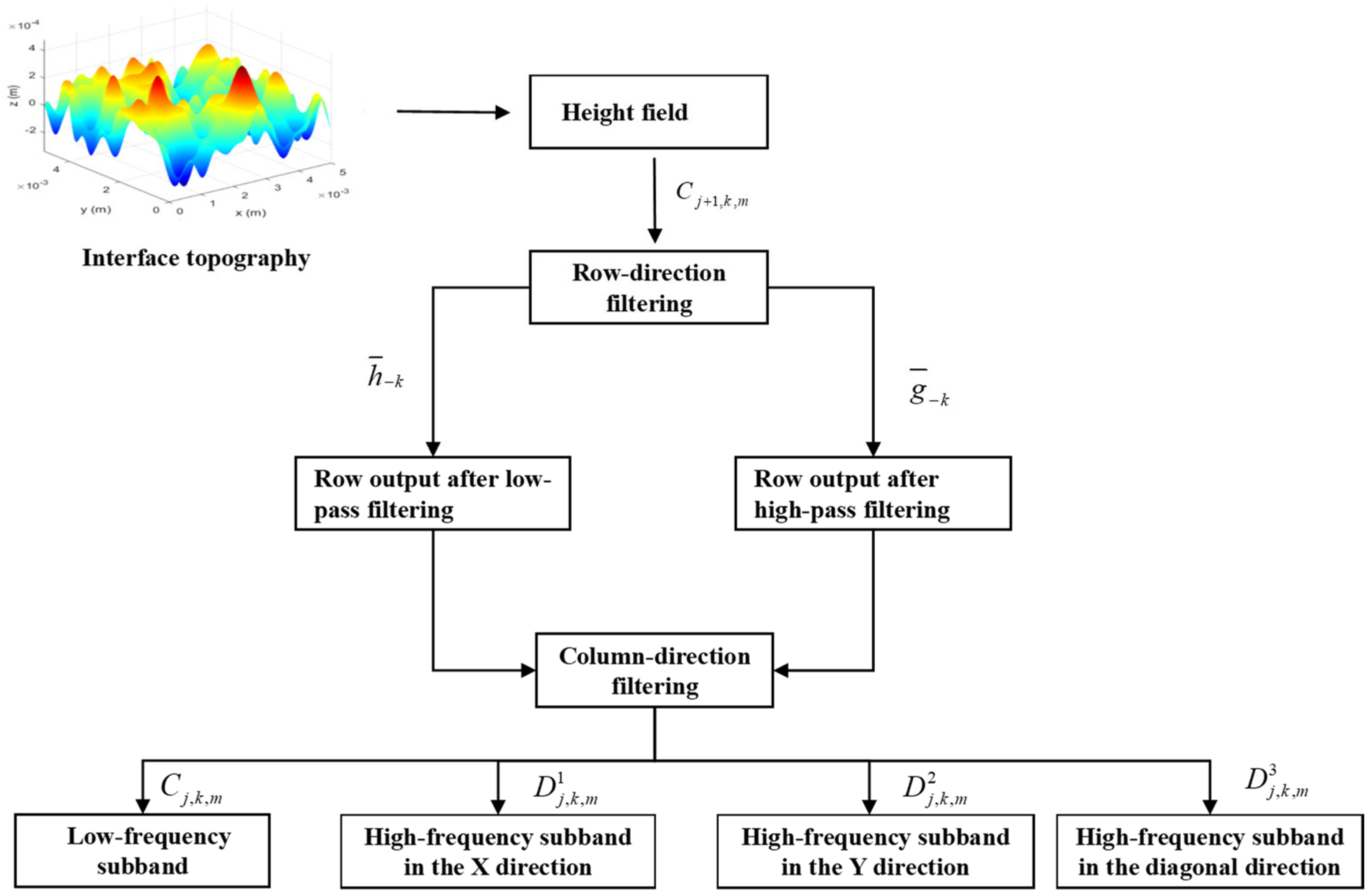
As illustrated in
Figure 5, the input signal for wavelet analysis is the height field of the interface topography, namely the initial height field
. A multilevel wavelet transform is then performed in sequence. For the
i-th decomposition level, the procedure is described as follows. First, row-wise filtering is conducted using the low-pass filter
and high-pass filter
, respectively. The filtered outputs are then sampled by retaining the even-indexed components, so that the height field is decomposed into two parts: the low-frequency sub-band on the left and the high-frequency sub-band on the right. Subsequently, each sub-band is filtered column-wise by two groups of filters. The outputs are again sampled by retaining the even-indexed samples, resulting in the low-frequency sub-band
, the horizontal high-frequency sub-band
, the vertical high-frequency sub-band
, and the diagonal high-frequency sub-band
. This completes the first-level wavelet decomposition. The
i-th level decomposition process can be expressed as follows:
where
represents the current decomposition level,
represents the final decomposition level,
and
denote the indices of the wavelet basis functions associated with the variables
and
, respectively. The resulting low-frequency sub-band
can be further decomposed at the next level into the low-frequency sub-band
, the horizontal high-frequency sub-band
, the vertical high-frequency sub-band
and the diagonal high-frequency sub-band
, until further decomposition is no longer necessary.
An important practical consideration in applying the Mallat algorithm to finite-size topography patches is the treatment of boundary effects. Because the convolution operation underlying wavelet filtering requires data values beyond the boundaries of the height field, an appropriate signal extension strategy must be employed. Three commonly used extension modes are:
(1) Zero-padding extension: the signal is extended with zeros beyond the boundaries ( for outside the domain). This method is simple but introduces artificial discontinuities at the boundaries, which may generate spurious high-frequency coefficients in the wavelet decomposition.
(2) Periodic extension: the signal is treated as periodic, i.e., and . This mode is appropriate when the surface topography exhibits approximate periodicity, as is the case for surfaces generated by periodic machining processes (e.g., milling with regular feed marks). However, if the topography values at opposite boundaries do not match, this extension may also introduce boundary artifacts.
(3) Symmetric (half-point) extension: the signal is reflected symmetrically about its boundary, i.e., and . This extension ensures continuity at the boundaries and is the most widely adopted strategy in surface metrology applications, as it preserves the local trend of the surface height field near the edges.
In this study, the symmetric extension mode is adopted for the following reasons. First, the assembly interface topography generated by the W-M fractal function in Equation (3) does not inherently possess periodicity at its boundaries, making periodic extension inappropriate. Second, symmetric extension preserves the continuity of the first derivative at the boundary, which minimizes the generation of spurious high-frequency wavelet coefficients near the edges. This is particularly important for the wavelet energy analysis, where artificial boundary energy could distort the clustering results.
To quantify the influence of boundary effects, let denote the number of boundary-affected coefficients at each decomposition level. For a wavelet filter of length (e.g., the db12 wavelet has ), the number of boundary-affected samples at level is approximately: . As the decomposition level increases, the sub-band size decreases by a factor of 2 at each level, while also decreases. Consequently, the relative proportion of boundary-affected coefficients is given by: , which is independent of the decomposition level . For the grid size and the db12 wavelet () used in this study, . This indicates that the vast majority (over 80%) of the wavelet coefficients at each level are unaffected by boundary treatment. Moreover, since the symmetric extension is employed, the boundary-affected coefficients exhibit smooth continuity rather than abrupt discontinuities, further mitigating their influence on the overall energy distribution and clustering results.
By repeatedly performing the procedure illustrated in
Figure 5 up to the maximum decomposition level, the interface topography information at different levels can be obtained. The information at each level represents different geometric structural characteristics and error components embedded in the interface topography. Combined with the scale decomposition criterion, reconstruction of the information at different levels makes it possible to establish an interface topography model suitable for precision assembly accuracy analysis. The scale decomposition criterion and the topography reconstruction method will be presented in the following sections.
3.2. Wavelet Function Selection for Interface Topography Decomposition
In the extraction of interface topography information using wavelet analysis, the choice of an appropriate wavelet function is a crucial step. As the fundamental mathematical tool in wavelet analysis, the properties of the selected wavelet function directly affect the quality of topography decomposition, the accuracy of feature extraction, and the reliability of subsequent analyses. In practice, however, no wavelet function can be regarded as universally optimal for all engineering problems, owing to methodological constraints and the discrepancy between theoretical assumptions and practical engineering requirements. Although different wavelet functions may exhibit certain advantageous properties, they inevitably possess limitations in other respects. Therefore, in practical applications, the selection of a wavelet function should be made through a comprehensive trade-off among its various properties, in accordance with the specific problem under consideration and the intended objective.
Existing wavelet function selection methods are often characterized by strong subjectivity and uncertainty. In many cases, researchers select wavelet functions on the basis of personal experience, intuitive knowledge of specific application scenarios, or their understanding of the properties of certain wavelet families. Such a selection strategy, lacking systematic and comprehensive evaluation, may easily lead to a suboptimal choice, thereby compromising the quality and effectiveness of the overall research or application process. To overcome this problem, this study develops a wavelet function selection method by considering two factors: the arithmetic mean deviation of the reconstructed topography and the degree of asperity simplification. The aim is to identify wavelet functions suitable for the extraction of interface topography information. Specifically, the arithmetic mean deviation is defined in Equation (8) and is mainly used to evaluate the accuracy of topography separation and reconstruction, whereas the degree of asperity simplification is quantified by the number of reconstructed asperities, as expressed in Equation (9).
where
is the mean value of the surface height, i.e.,
;
and
denote the number of sampling points in the
X- and
Y-directions, respectively;
is the topography height matrix;
is the height value of the
i-th point.
This study concentrates on three key factors influencing wavelet function performance, namely compact support length, regularity, and the number of vanishing moments. A comparative analysis is performed on commonly used wavelet basis functions to identify those most suitable for the application requirements. As listed in
Table 1, the Daubechies (dbN), Coiflets (coifN), and biorthogonal (BiorNr.Nd) wavelet families are typically representative with respect to these characteristics. Therefore, the present study focuses primarily on these three wavelet families.
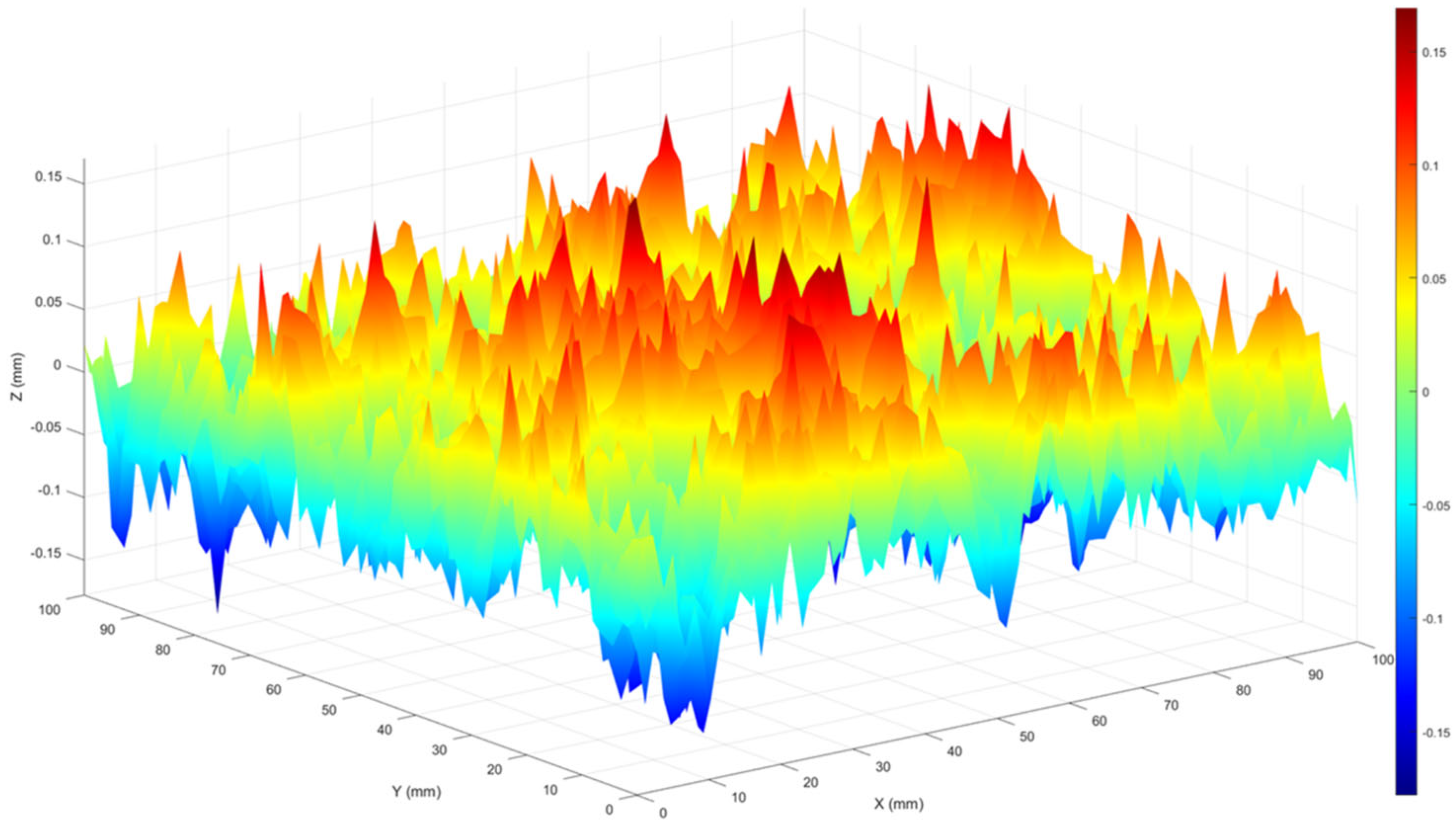
As shown in
Figure 6, to ensure a consistent comparison among different wavelet basis functions, the following parameters are selected according to Equation (3):
,
,
,
,
,
. Based on these parameters, a complex interface topography sample is generated, whose arithmetic mean deviation is 0.04 mm.
3.2.1. Influence of Compact Support Length on Topography Decomposition
According to
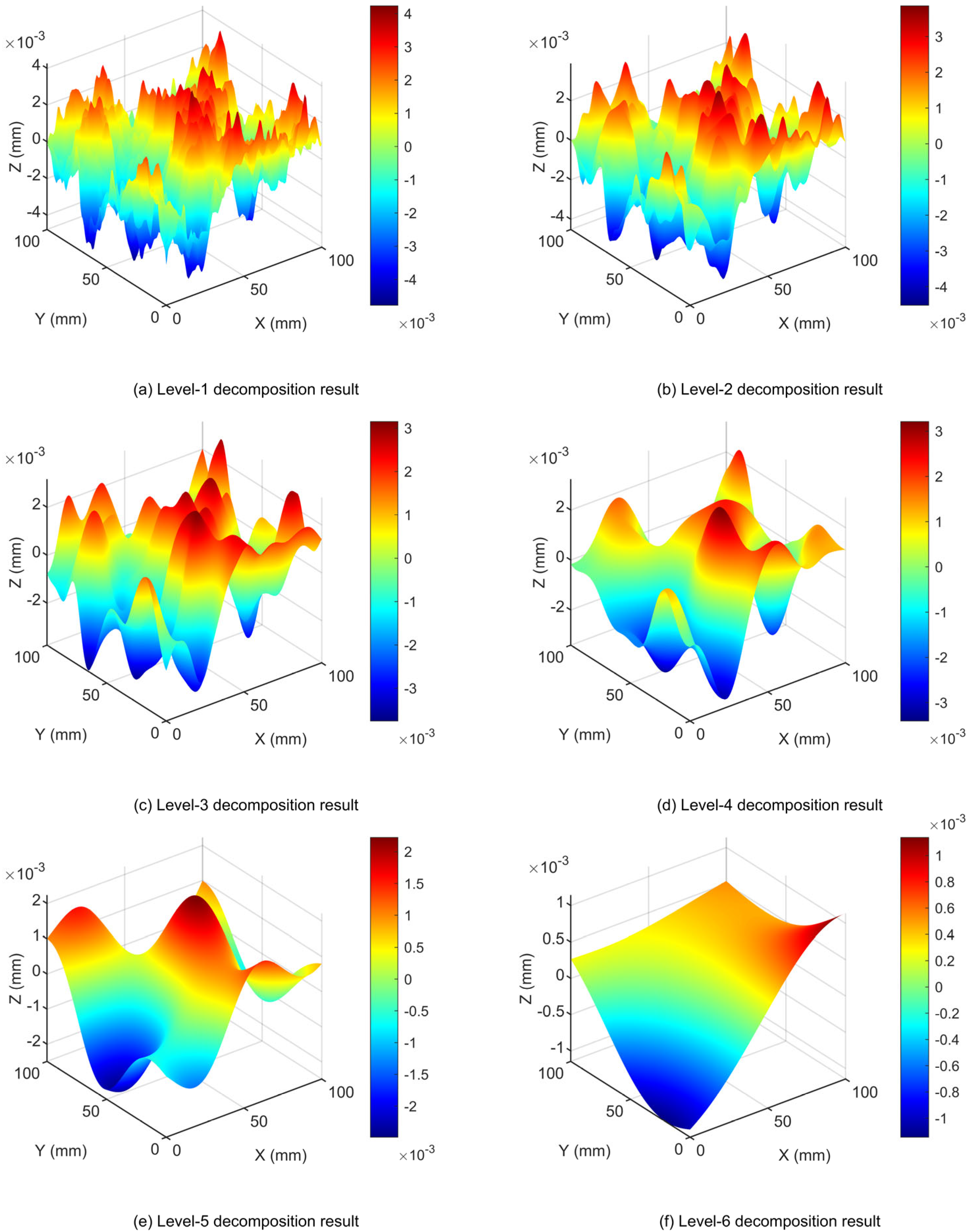
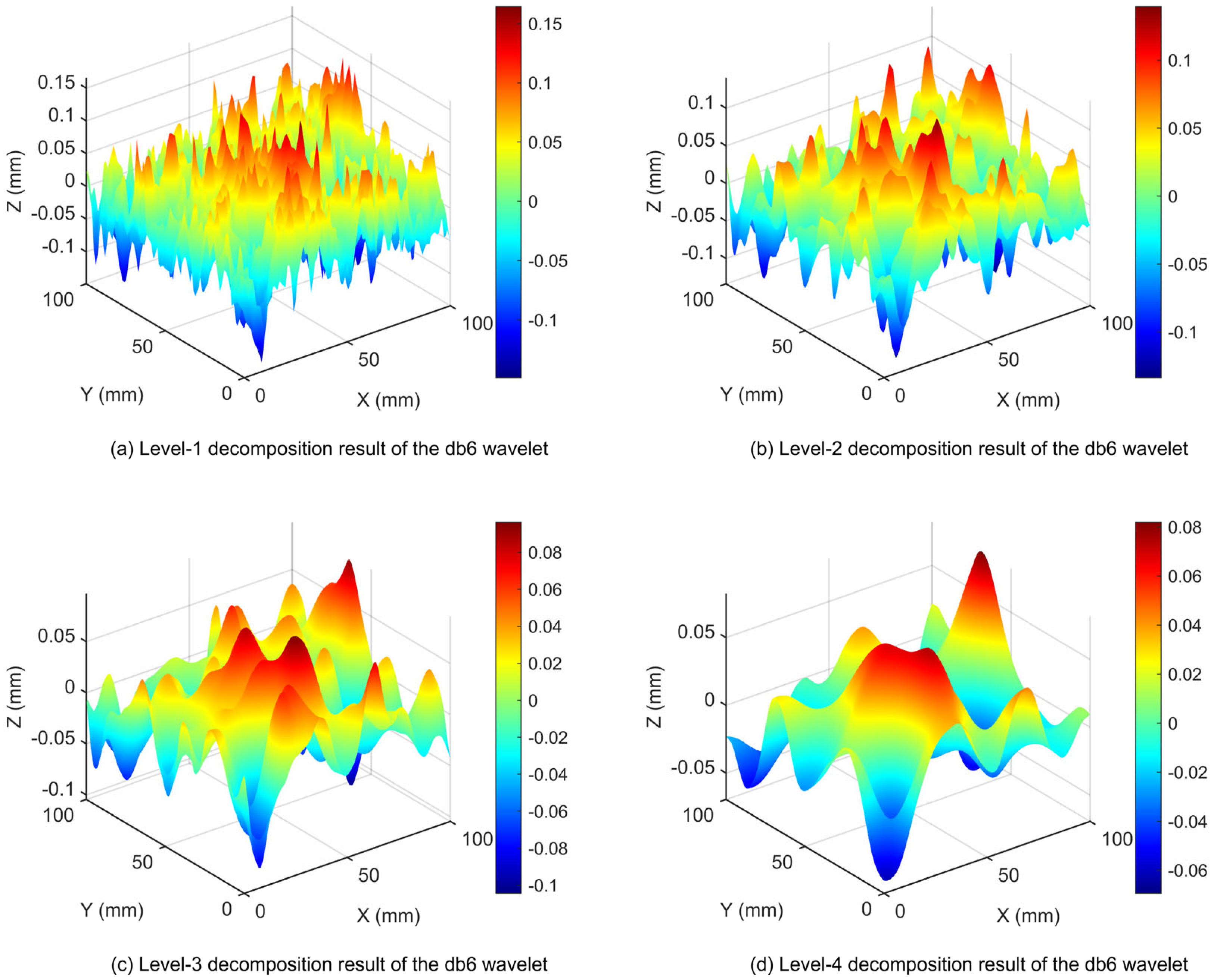
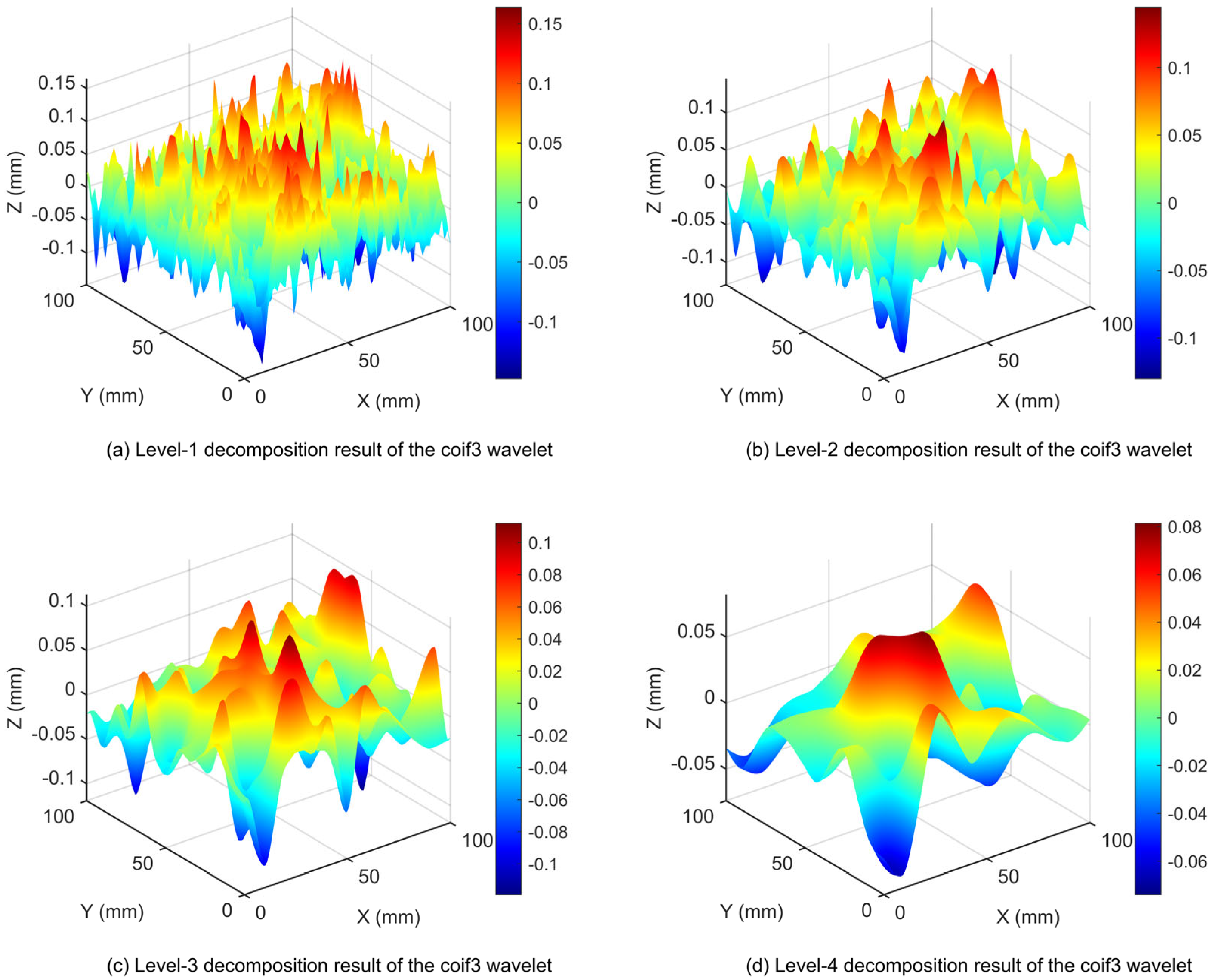
Table 1, the db6 and coif3 wavelet functions have comparable numbers of vanishing moments and similar regularity, while the compact support length of the coif3 wavelet is 6 units longer than that of db6. Therefore, these two wavelet functions are selected to investigate the effect of compact support length on the reconstructed signal. The db6 and coif3 wavelet functions are, respectively, applied to perform four-level decomposition and single-level reconstruction of the surface topography. The three-dimensional topographies of the low-frequency information at the four reconstructed scales are shown in
Figure 7 and
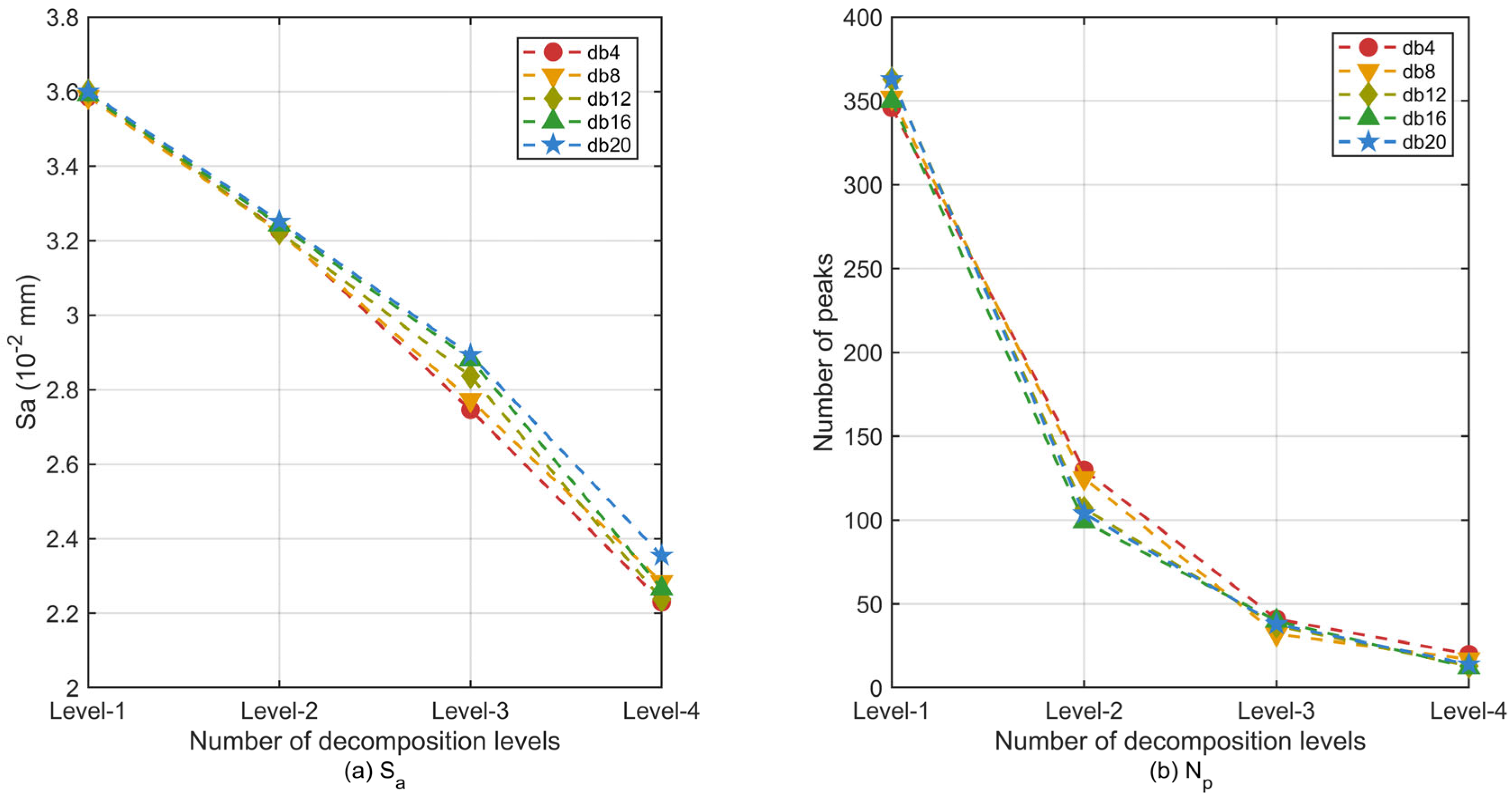
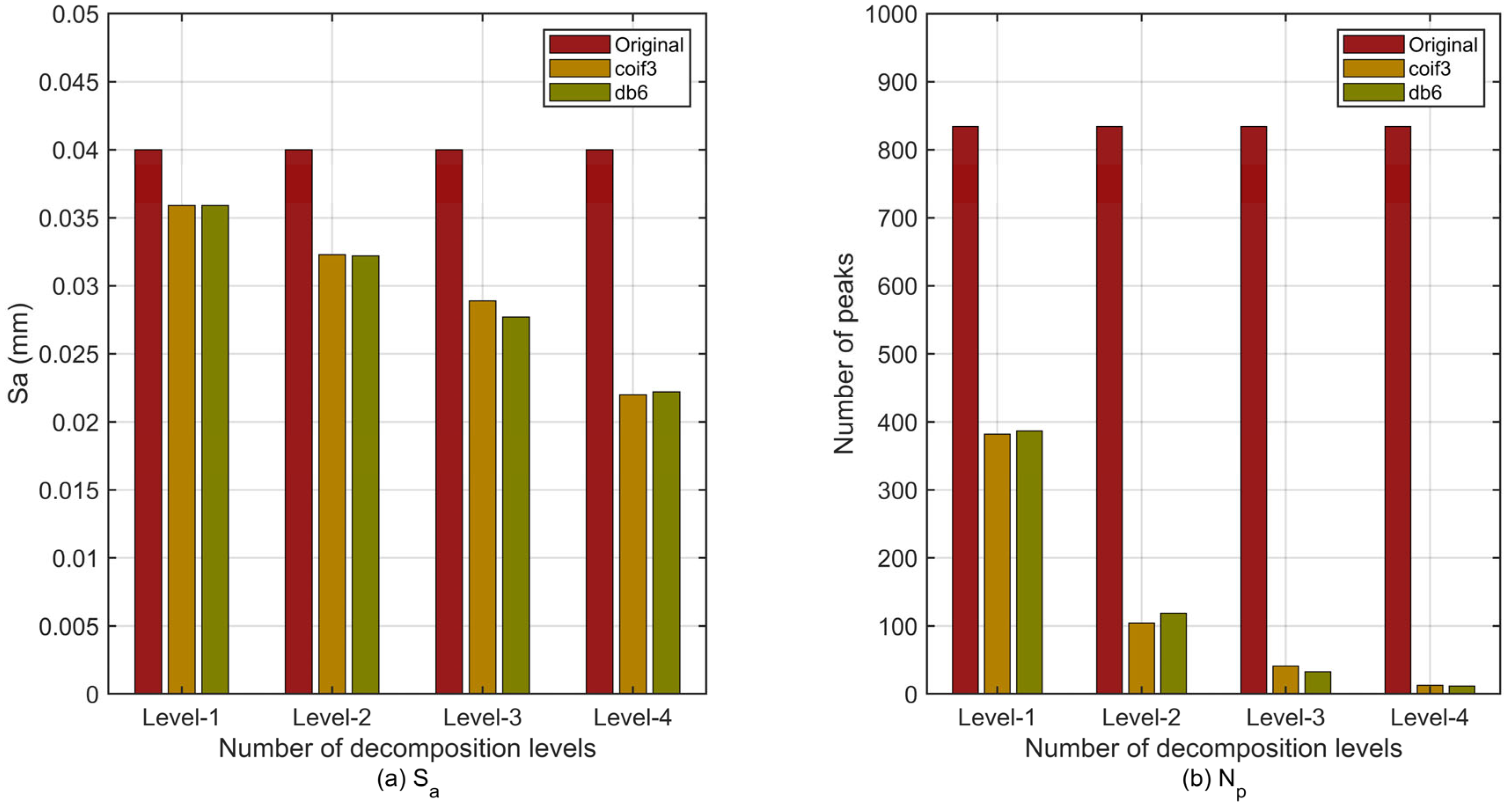
Figure 8, respectively. In addition, the three-dimensional arithmetic mean deviation and the number of asperity peaks before and after wavelet transform are calculated, and the comparison results are presented in
Figure 9a,b. By comparing the low-frequency information images obtained by the two wavelet functions, it can be seen that, for two wavelet functions with similar regularity and numbers of vanishing moments, both can produce clear topographies and reflect the shape characteristics of the rough surface.
In terms of the accuracy of three-dimensional roughness evaluation parameters, the arithmetic mean deviation and the number of asperity peaks at the four decomposition levels obtained using the two wavelet functions show only minor differences (relative deviations less than 2%). Similarly, the reconstructed surfaces exhibit only small discrepancies in both arithmetic mean deviation and asperity peak count. In addition, the resulting three-dimensional topographies are clear, with no block-like artifacts or other distortions observed.
These results indicate that, for the machined surface topography examined in this study, the compact support length has a limited influence on the reconstruction accuracy of the wavelet transform, provided that the regularity and vanishing moment properties are comparable. However, it should be noted that this conclusion is drawn from a specific type of interface topography with moderate fractal characteristics. For surfaces with significantly different frequency content distributions—such as highly anisotropic textures, surfaces dominated by periodic tool marks, or topographies with abrupt discontinuities—the influence of compact support length may become more pronounced. In such cases, a longer compact support may provide better localization of sharp features, while a shorter compact support may introduce boundary artifacts at discontinuities. Therefore, while the results of this study suggest that compact support length is not the primary factor governing wavelet selection for typical machined surfaces, its effect should be re-evaluated when the method is applied to surface topographies with substantially different spectral characteristics.
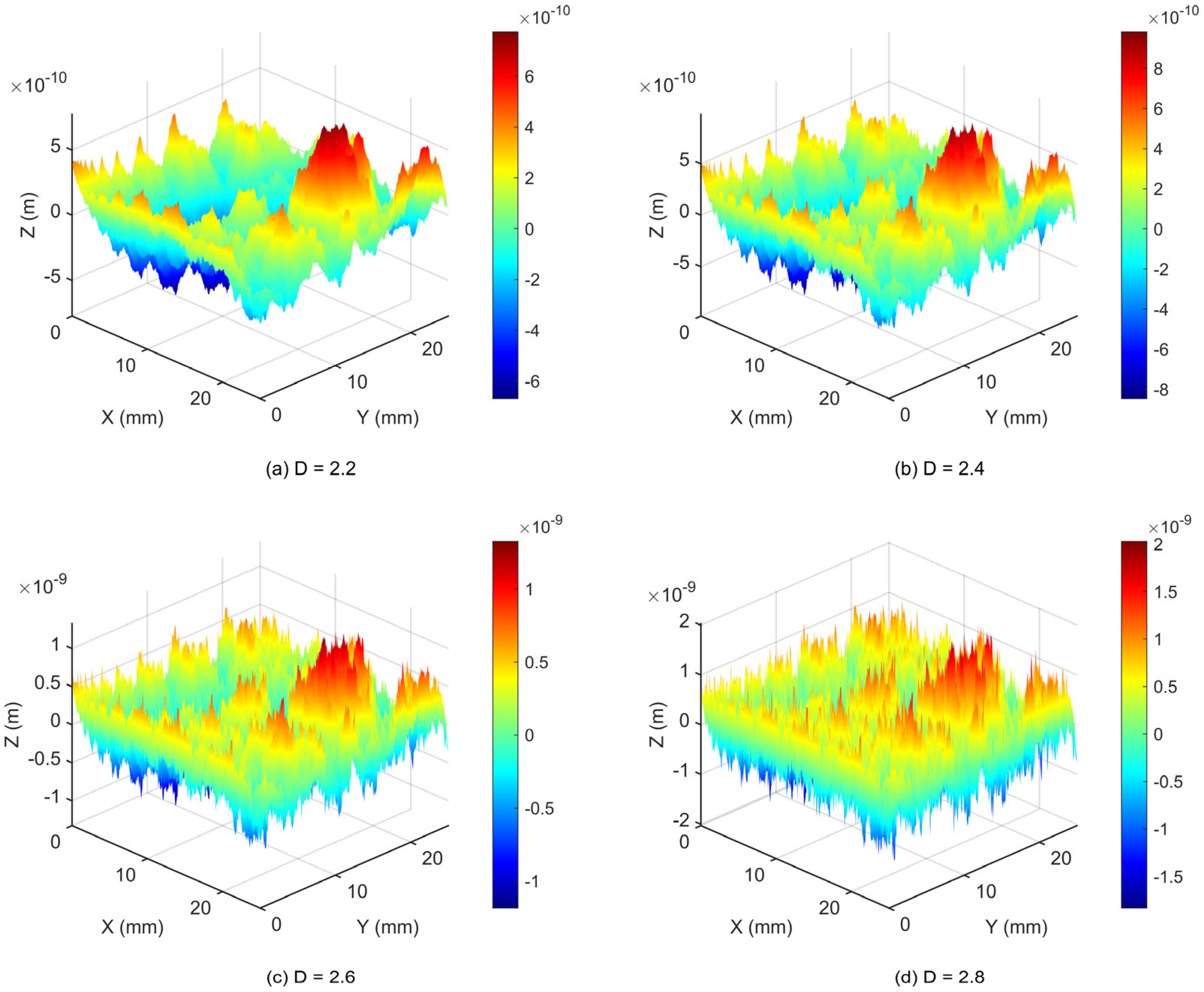
To further assess the robustness of this conclusion, additional numerical tests were conducted using W-M fractal surfaces with different fractal dimensions (D = 2.2, 2.4, 2.6, 2.8). For each surface, the db6 and coif3 wavelets were applied under identical decomposition conditions. The relative differences in remained below 3% across all tested fractal dimensions, and the peak count differences were consistently within 5%. These supplementary results confirm that the limited influence of compact support length is not an artifact of a single test case but holds across a range of surface roughness conditions representative of precision machining.
3.2.2. Influence of Vanishing Moments on Topography Decomposition
The regularity of the dbN series wavelet basis functions increases with the order
N of vanishing moments. In contrast, the biorNr.Nd series wavelet basis functions do not possess regularity. Given that the regularity of the dbN series is positively correlated with the order of vanishing moments, the dbN series is adopted in this study to analyze the effects of regularity and vanishing moments on topography decomposition, with the biorNr.Nd series used as a reference for comparison. For the interface topography shown in
Figure 6, bior1.5 and the db series wavelet basis functions are specifically selected for analysis. To enable a rapid comparison of the performance of different wavelet functions, a two-level decomposition and single-level reconstruction are first carried out using the different wavelet functions.
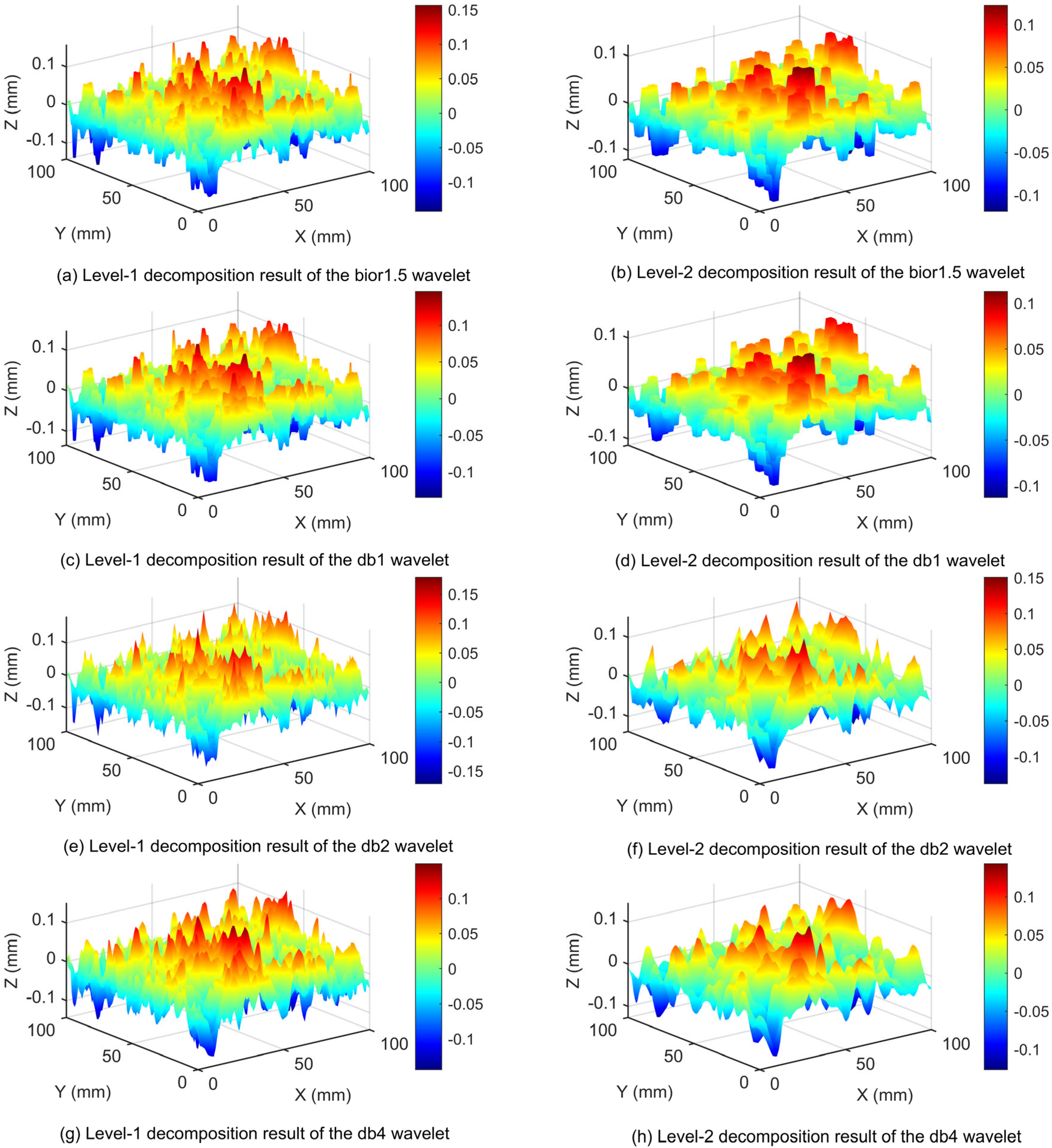
As shown in
Figure 10, the corresponding topography decomposition results are obtained after two-level decomposition and single-level reconstruction using bior1.5, db1, db2, and db4. The physical interpretation of the observed differences in wavelet performance is rooted in the mathematical relationship between vanishing moments and polynomial representation capability. A wavelet with
vanishing moments satisfies the condition:
. This mathematical property means that the wavelet is orthogonal to all polynomials of degree less than
N. In practical terms, a wavelet with
N vanishing moments can perfectly separate and represent low-order polynomial trends. For machined surface topography, the low-frequency components (waviness and form error) are locally approximated by low-order polynomials. When a wavelet function has insufficient vanishing moments to represent these polynomial trends, spectral leakage occurs: the polynomial-like content that the wavelet cannot suppress leaks from the approximation coefficients into the detail coefficients, causing the reconstructed approximation to exhibit discontinuous step-like behavior. Specifically for this study:
bior1.5: This wavelet has only 1 vanishing moment for decomposition, meaning it can only suppress constant (degree-0) polynomials. Any linear, quadratic, or higher-order trends in the topography are not orthogonal to the wavelet, resulting in spectral leakage between approximation and detail coefficients. This manifests as the characteristic block-like artifact distribution observed in the reconstructed surface.
db1: The Haar wavelet is the simplest Daubechies wavelet with only 1 vanishing moment and is a piecewise constant function. Its extremely compact support of length 2 means it captures only point-to-point differences, completely ignoring any polynomial structure. This severe limitation produces the characteristic block-like discontinuities in the reconstruction, as the wavelet has no capacity to represent even linear trends.
db2: With 2 vanishing moments, db2 provides orthogonality to linear polynomials, which eliminates the block artifacts observed with bior1.5 and db1. However, db2’s limited regularity and smaller compact support cause the reconstruction to exhibit oscillatory ringing near sharp features, a manifestation of the Gibbs phenomenon. The wavelet smoothness is insufficient to eliminate these artifacts completely.
db4: With 4 vanishing moments, db4 can suppress polynomials up to degree 3 (cubic). This capability, combined with higher regularity (measured by the Holder exponent, which scales approximately as for dbN), yields smooth reconstructions with less ringing and more accurate height distribution. The block artifacts are eliminated, and the ringing is significantly reduced.
It can be seen from the
Figure 10 that the surfaces obtained using the bior1.5 and db1 wavelet functions exhibit a block-like distribution, with blurred topographic features, making it difficult to effectively extract three-dimensional characteristics. The surface obtained using the db2 wavelet function shows sharp peaks and obvious topographic abrupt changes, but distortion is also observed. For the topography decomposed using the db4 wavelet function, although the peaks and valleys remain relatively sharp, the height distribution is more uniform, enabling more effective data simplification and separation of high-frequency detail components, with a relatively lower degree of distortion. Therefore, based on the above analysis, the bior1.5, db1, and db2 wavelet functions are excluded from the subsequent study, and the focus is placed on db4 and higher-order dbN wavelet functions (
N > 4).
In this study, multiple wavelet functions from db4 to db20 were subjected to four-level decomposition and single-level reconstruction. The arithmetic mean deviation
and the number of asperity peaks of the resulting topographies at each decomposition level were calculated, and the results are presented in
Figure 11a,b. The figures show that, with the increase in the vanishing moment order
N,
exhibits a gradually increasing trend, approaching the preset value, while the number of asperity peaks gradually decreases. However, when
N increases to 12, both
and the number of asperity peaks become essentially stable. These results indicate that increasing the vanishing moment order
N within a certain range can improve the reconstruction accuracy of the topography while reducing the number of features, thereby enabling effective data simplification while preserving the key topographic characteristics.
3.2.3. Unified Optimization Criterion for Wavelet Selection
The separate analyses presented in
Section 3.2.1 and
Section 3.2.2 clarified how the compact support length, the regularity, and the number of vanishing moments each influence the decomposition performance. In engineering practice, however, these three factors must be balanced simultaneously rather than considered in isolation. To eliminate the residual subjectivity associated with visually inspecting reconstructed surfaces, and to provide a single reproducible decision rule for the choice of wavelet basis, a unified optimization criterion that integrates the three factors into one composite objective is formulated in this section.
Three normalized sub-objectives are introduced, each evaluated across all decomposition levels so that the criterion captures the multi-scale nature of the decomposition rather than relying on a single reconstruction scale. Let denote a candidate wavelet from the dbN family with vanishing-moment order N and compact support length , and let be the total number of decomposition levels.
(1) Multi-scale reconstruction fidelity. Because no closed-form ground truth exists for the multi-scale decomposition of a measured surface, the ensemble average over all
candidate wavelets at each level is adopted as the best available reference, in a manner analogous to ensemble averaging in uncertainty quantification. The multi-scale fidelity error is defined as:
where
is the arithmetic mean deviation of the reconstructed topography at level
,
is the ensemble mean at level
, and
are level-dependent weights satisfying
. Because the inter-wavelet differences are negligible at the finest reconstruction scale (Level-1; as shown in
Figure 11a) but become progressively more pronounced at deeper levels, which correspond to the waviness and form-error components that dominate the contact-pressure prediction, the level weights are set to
so that deeper levels receive higher priority. A wavelet whose
trajectory deviates systematically from the consensus—either by retaining excessive fine-scale detail (under-decomposition) or by removing too much energy (over-decomposition)—incurs a large
.
(2) Multi-scale feature-simplification index. Similarly, the feature-simplification index is generalized to a weighted sum across decomposition levels:
where
is the number of asperity peaks at level
,
, and
.
(3) Computational-complexity index. The complexity index remains , is the support length of the largest candidate. All three sub-objectives are dimensionless and lie in the interval .
The three sub-objectives are combined through a convex weighted aggregation to form the unified criterion:
Reconstruction fidelity is prioritized because biased values propagate directly into contact-pressure and interference predictions; feature simplification is the second priority because an over-dense asperity field complicates the downstream contact model; and support length is retained as the least-weighted factor so that, among wavelets with comparable fidelity and simplification, the shorter (more computationally efficient) one is preferred. In this study the weights are set to .
To exclude the severely distorted wavelets identified in
Section 3.2.2 (bior1.5, db1, and db2) from the feasible set, the optimization is formally posed as the constrained problem:
This constraint is the mathematical expression of the minimum regularity requirement and guarantees that only wavelets with at least four vanishing moments—sufficient to suppress polynomials up to degree three, which covers the low-order polynomial trends typical of machined surfaces—enter the candidate set. Within the feasible set the objective is a scalar function of a single discrete parameter , so the optimum can be obtained by direct enumeration.
Applying the unified criterion to the dbN family (
) using the
and
data of
Figure 11, the trajectory of
exhibits a U-shaped behaviour. For small
(e.g., db4),
is elevated because the wavelet under-decomposes at deeper levels, producing
values that lie above the ensemble consensus;
is also relatively high because fewer asperity peaks are removed. For large
(e.g., db20),
rises again because the wavelet over-decomposes, and
reaches its maximum. The minimum of
is attained at
, confirming that
offers the best compromise among fidelity, simplification, and computational cost, and is therefore selected as the wavelet basis used in the case study of
Section 4.
3.2.4. Development of a Multi-Scale Classification Criterion for Interface Topography
Existing studies have shown that interface topography exhibits multi-scale characteristics, including roughness, waviness, and form error. This study focuses on assembly accuracy analysis, and, in view of the characteristics of this problem, the consideration of interface topography is mainly concentrated on waviness and form error. In general, roughness is regarded as a microscopic geometric error, with peak-to-peak spacing less than 1 mm; waviness is considered a microscopic geometric error (between the microscopic and macroscopic scales), with peak-to-peak spacing ranging from 1 to 10 mm; form error, by contrast, is a macroscopic geometric error, with peak-to-peak spacing greater than 10 mm. It should be noted that the above classification criteria are mainly derived from practical experience and lack rigorous theoretical support. Moreover, under different machining conditions or assembly accuracy requirements, the applicability of these ranges may vary. Therefore, in order to more accurately investigate the mechanism by which interface topography affects assembly accuracy, it is necessary to explore a multi-scale classification criterion for interface topography and to establish a multi-scale interface topography model suitable for assembly accuracy analysis.
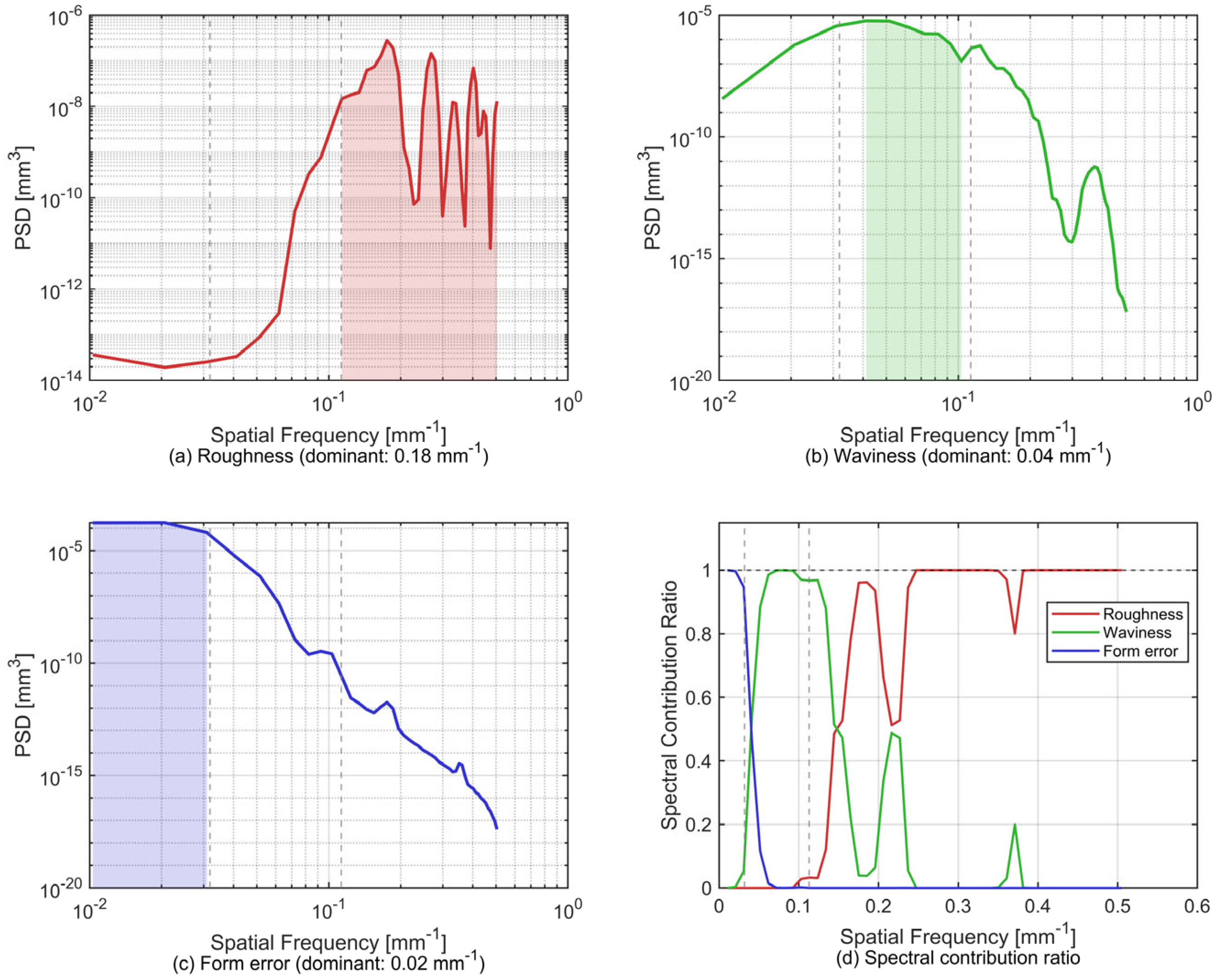
To overcome the subjective uncertainty associated with empirical judgment, this study investigates a multi-scale separation criterion for assembly interface topography errors based on wavelet energy. The wavelet energy criterion is selected as the basis for multi-scale classification because it satisfies the fundamental principle of energy conservation in signal processing. By Parseval’s theorem, the total energy of a signal is preserved under the wavelet transform: the sum of energies in the approximation (low-frequency) and detail (high-frequency) bands equals the total energy of the original signal. This energy conservation property ensures that the wavelet energy distribution accurately reflects the contribution of each frequency scale to the overall topographic structure without introducing spurious artifacts or losing information. Furthermore, the energy at each decomposition level represents the spectral power concentrated at that particular scale, establishing a direct and physically meaningful correspondence between wavelet energy and scale-specific signal content. Alternative metrics such as entropy or variance do not carry the same energy conservation guarantee: entropy is defined differently for each scale relative to the local signal magnitude and does not satisfy Parseval’s theorem, while variance measures dispersion rather than total power. By contrast, wavelet energy provides a scale-invariant, additive measure of contribution, making it the optimal choice for multi-scale classification.
Building on this theoretical foundation, wavelet energy can characterize the energy variation in interface topography across scales, from microscopic roughness to macroscopic form error. Specifically, high-frequency wavelet energy peaks correspond to fine surface micro-structures, the concentration region of medium-frequency energy maps waviness features, and low-frequency energy dominates the overall contour trend. By quantifying the gradient variation and cumulative effects of energy at each scale, the critical scales of roughness, waviness, and form error can be objectively identified without preset thresholds, thereby enabling adaptive characterization of interface topography under different process conditions. The specific analysis procedure is as follows:
Step 1: According to Equation (14), calculate the maximum decomposable scale of the original interface topography, and then perform wavelet decomposition level by level until the maximum-scale decomposition is completed.
where
denotes the maximum decomposition level;
is the number of sampling points; and
represents taking the floor of the real number in the brackets.
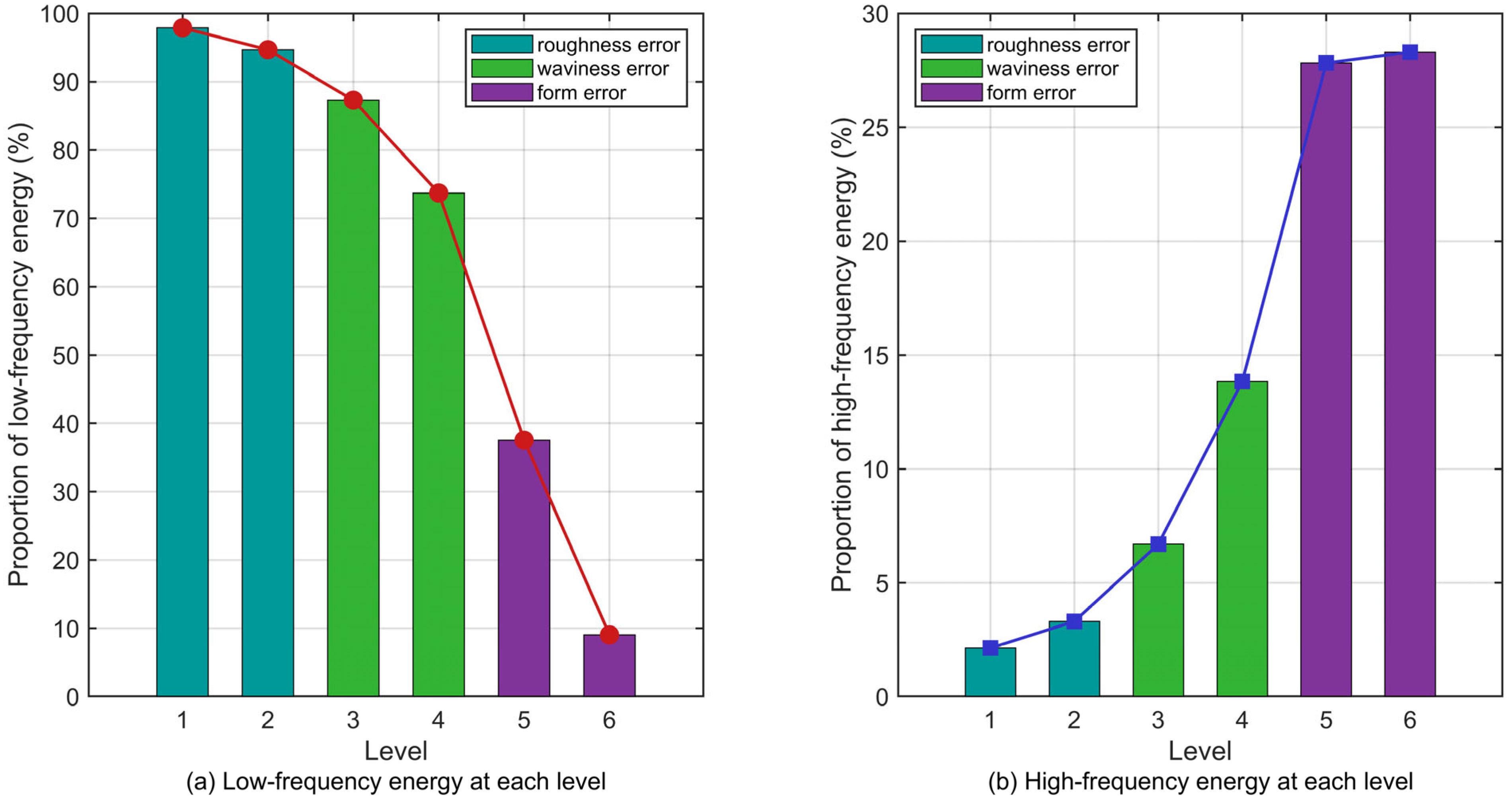
Step 2: According to Equation (15), calculate the wavelet energy at each level, including both the low-frequency energy and the high-frequency energy at the corresponding level. The energy at the
j-th decomposition level is partitioned into low-frequency (approximation) and high-frequency (detail) components. According to reference [
46], for a 2D discrete wavelet decomposition of the surface topography matrix, the energy equations are defined as follows:
where
,
,
, and
are the approximation, horizontal detail, vertical detail, and diagonal detail coefficients, respectively, at the
j-th decomposition level; and
is the coefficient matrix dimension at level
j. By Parseval’s theorem, the total energy is conserved:
Step 3: Perform adaptive K-means clustering on the decomposition levels based on the wavelet energy, classifying levels belonging to the same cluster into one scale. The maximum number of candidate cluster centers is set to
, grounded in the physical basis of surface metrology. In accordance with ISO 4287 [
47] and ISO 25178 [
48], interface topography is fundamentally classified into three geometric error scales:
(1) roughness: high-frequency micro-scale features created by material removal or deformation processes;
(2) waviness: mid-frequency features arising from machine tool dynamics, spindle runout, or feed variations;
(3) form error: low-frequency macro-scale deviations from the nominal geometry, determined by machine capability and part clamping.
These three scales are not arbitrary; they reflect the intrinsic multi-scale structure of manufacturing processes and are universally recognized in surface metrology standards. However, not all surfaces exhibit all three scales with equal prominence. Therefore, the optimal number of clusters
is determined adaptively using the silhouette coefficient, which measures both the cohesion and separation quality of the clustering result:
where
is the mean intra-cluster distance (cohesion: how tightly clustered a point is with other points in its cluster) and
is the mean nearest-cluster distance (separation: how well-separated a point is from the nearest neighboring cluster) for the
i-th data point. The silhouette coefficient ranges from −1 to +1: values close to +1 indicate strong clustering structure, values near 0 indicate overlapping or ambiguous clusters, and negative values indicate points assigned to the wrong cluster. The average silhouette coefficient
is computed for
. The value of
that maximizes
is selected as the optimal number of scale classes
:
.
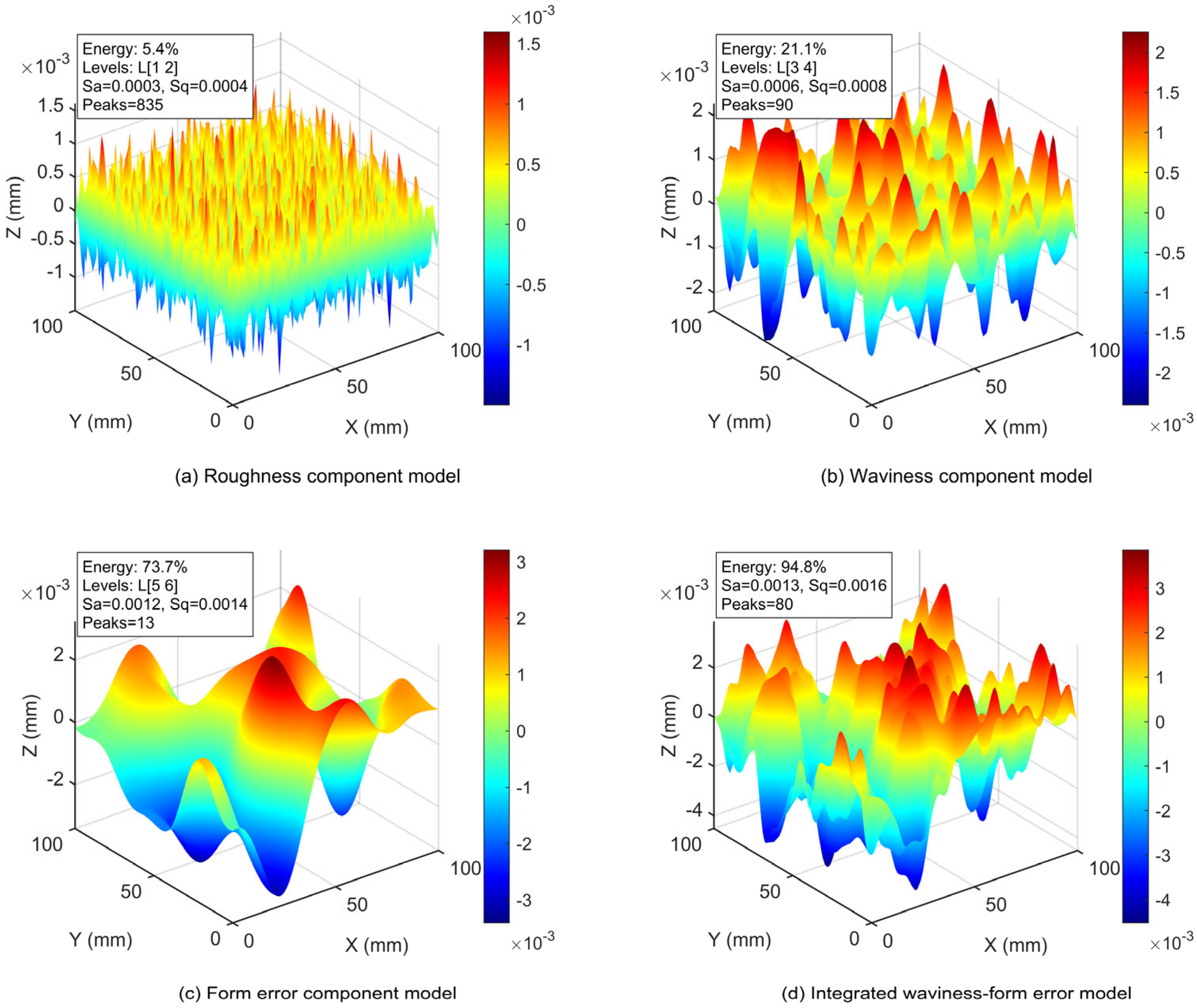
Step 4: Fuse the high-frequency components of all levels belonging to the same scale, and reconstruct the component models of the assembly interface topography at each scale, including the single-scale roughness model, the single-scale waviness model, the single-scale form-error model, and the two-scale fused model of waviness and form error.